Did Jews steal Palestine?
Introduction to the Conflict
The video begins with a provocative question: "Did Jews steal Palestine?" This question encapsulates a deeply contentious issue that has sparked heated debates among activists on both sides. The speaker, Ken Lort, acknowledges his initial confusion regarding the historical context of the conflict and expresses a desire to explore its origins comprehensively. He aims to present a balanced view of how both Jews and Arabs came to believe that the land in question is rightfully theirs, emphasizing the complexity of the narrative.
Historical Overview
Lort traces the history of the land now known as Israel or Palestine, noting that it has been inhabited for over 10,000 years. Archaeological evidence indicates that hunter-gatherers lived there during the Stone Age, followed by some of the earliest agricultural settlements, such as Jericho, which dates back to around 9,000 BC. During the Bronze Age, around 3000 BC, the region was known as Canaan, characterized by a mosaic of city-states inhabited by various peoples, including Egyptians, Hittites, Assyrians, and Babylonians, all vying for control due to its strategic trade routes.
By 1200 BC, the political landscape shifted dramatically as Hebrew tribes emerged in the hill country of Canaan, establishing their own kingdoms. King David made Jerusalem his capital, and his son Solomon constructed the first temple, solidifying the city's significance in Jewish history. However, Jewish sovereignty was short-lived, as subsequent conquests by the Persians, Greeks, and Romans led to the eventual renaming of Judea to Syria Palestina, a move some historians interpret as an attempt to erase Jewish identity.
By the 600s, the arrival of Muslim armies brought Arabic language and Islamic governance to the region, resulting in the construction of significant religious sites in Jerusalem, such as the Dome of the Rock and Al-Aqsa Mosque. The region remained predominantly Islamic for centuries, with small Christian and Jewish communities persisting. The Christian Crusades in the 11th century saw Jerusalem captured and later lost again, followed by Ottoman rule from the early 1500s until World War I.
The British Mandate and Conflicting Promises
In the early 20th century, the Holy Land was a rural, impoverished area under Ottoman control, with a predominantly Muslim population. During World War I, Britain encouraged Arab revolts against the Ottomans, promising independence post-war. However, Britain simultaneously made conflicting promises to Jews and French interests regarding the same territory. The Balfour Declaration of 1917 became a pivotal moment, as it expressed British support for a "national home for the Jewish people," while also committing to protect the rights of non-Jewish communities.
This declaration ignited tensions, as it marked the first time a major power publicly favored one group over another in the region. The League of Nations later granted Britain the mandate to govern, leading to increased Jewish immigration and land purchases, often from absentee Arab landlords. While these transactions were legally executed, local Arabs perceived them as encroachments on their ancestral lands, leading to rising tensions and violence.
Escalation of Conflict
Throughout the 1920s and 1930s, tensions escalated into violent confrontations, including riots and the Arab Revolt aimed at halting Jewish immigration. The British response was brutal, leading to significant casualties among Arabs and the eventual realization that reconciling the two sides was increasingly untenable. The British Peel Commission of 1937 proposed partitioning Palestine into separate Jewish and Arab states, which was reluctantly accepted by Jews but outright rejected by Arabs.
As World War II unfolded, the plight of European Jews intensified, culminating in the Holocaust. Despite this, British policies limited Jewish immigration to Palestine, leading to frustration among Zionist groups, who began attacking British targets. By 1947, Britain, exhausted and financially strained, referred the issue to the United Nations, which proposed partitioning Palestine into Jewish and Arab states, a plan that was met with mixed reactions.
The 1948 War and Its Aftermath
On November 29, 1947, the UN General Assembly voted for partition, granting approximately 55% of the land to the Jewish state, despite Jews constituting only about one-third of the population. The plan was seen as a lifeline for Jews but a betrayal by Arabs, leading to immediate civil unrest and violence. Following the declaration of the state of Israel in 1948, neighboring Arab countries invaded, resulting in a protracted conflict that saw Israel expand its territory significantly beyond the UN's original borders.
This conflict led to the mass displacement of approximately 700,000 Palestinians, an event referred to as the Nakba, or "catastrophe." Concurrently, around 800,000 Jews were expelled from Arab countries, many resettling in Israel. The aftermath of the war solidified the divide between Israelis and Palestinians, with the latter left stateless and scattered across refugee camps.
Evolution of Palestinian Identity
Before 1948, Palestinians did not identify as a separate nation but rather as local communities within the broader Arab identity. However, the events of the Nakba and subsequent struggles fostered a distinct Palestinian identity, particularly as the Palestinian Liberation Organization (PLO) emerged as a representative body. The PLO's actions, including armed resistance and international diplomacy, brought global awareness to the Palestinian cause, yet the conflict persisted, characterized by cycles of violence and failed peace attempts.
Conclusion
The video concludes by reflecting on the complexity of the Israeli-Palestinian conflict, emphasizing that it is not merely a story of victims and villains but a nuanced historical narrative involving two national movements with deep-rooted histories and traumas. Ken Lort encourages viewers to seek a deeper understanding of the conflict, acknowledging the challenges of summarizing such a multifaceted issue in a brief format.
The transcript outlines the changes in the size of the Jewish and non-Jewish populations in Palestine through various historical epochs. Initially, during the late 19th century and early 20th century, the Jewish population in Palestine was relatively small, forming about one-third of the overall population by the time of the UN partition proposal in 1947. The speaker notes that the Jewish community owned less than 10% of the land at that time. Conversely, the Arab population was significantly larger, comprising approximately 80% to 95% of the population in the 19th century, predominantly Muslim, with smaller Christian and Jewish communities.
As Jewish immigration increased during the late 19th and early 20th centuries, particularly following the Balfour Declaration of 1917, tensions arose due to a growing perception among the Arab population that their land was being progressively appropriated. The transcript mentions that the Jewish population's growth was facilitated by land purchases made legally, often from absentee landlords, which created fears among local Arab peasants who had historically cultivated the land.
By the time of the 1948 war, the Jewish population had swelled due to the influx of Jewish refugees following the Holocaust, increasing their numbers significantly. The establishment of the State of Israel in 1948 resulted in the displacement of around 700,000 Palestinians, drastically reducing the non-Jewish population within Israel's newly defined borders. This marked a significant demographic shift, as the Jewish population established a sovereign state while many Palestinians became stateless refugees.
- [01:21] "The land that we now call Israel or Palestine has been inhabited for over 10,000 years."
- [10:02] "The rest would go to an Arab state. But some argue that statistic can be a little misleading because much of the Jewish portion was the Ngev Desert."
- [12:36] "Roughly 700,000 of them, more than half of their population, fled or were expelled."
The transcript describes various actions taken by European powers, particularly the United Kingdom and their role in shaping the geopolitical landscape of Palestine between 1850 and 1948. Initially, during the late Ottoman period, the region was characterized by a lack of distinct national borders, and the population was a mix of Arabs, Jews, and Christians living under Ottoman rule.
In 1915, as World War I commenced, Britain encouraged Arabs to rise up against the Ottoman Empire with the promise of supporting their independence after the war. However, during the same period, Britain also made conflicting promises, including the Balfour Declaration in 1917, which expressed support for a Jewish national home in Palestine. This declaration was pivotal as it marked the first time a major power publicly committed to establishing a Jewish presence in the region.
Following the war, Britain was given the mandate to govern Palestine by the League of Nations, tasked with balancing the interests of Jewish and Arab communities. The British government's attempts to manage tensions between these groups often resulted in violent clashes, notably in 1920 and 1929, due to perceived threats to Muslim holy sites. By the mid-1930s, the Arab Revolt emerged in response to increasing Jewish immigration and land purchases, leading to violent suppression by British authorities.
The situation became increasingly strained, culminating in the 1937 Peel Commission's proposal to partition Palestine into separate Jewish and Arab states. This proposal was reluctantly accepted by Jewish leaders but outright rejected by Arab leaders. The British response was further limitation of Jewish immigration through the 1939 White Paper, which marked a significant reversal of earlier commitments. The culmination of these conflicting policies and actions by the British and other European states led to increased animosity and conflict that shaped the future of the region.
- [03:12] "In 1915, at the beginning of World War I, Britain encouraged the Arabs to rise up against the Turks to help defeat the crumbling Ottoman Empire and promised to back their independence after the war."
- [04:10] "In 1917, they made perhaps the most famous promise of all, the Balfour Declaration. It pledged support for a national home for the Jewish people."
- [07:03] "The Arabs rejected it. By 1939, as Hitler rose in Europe, Britain issued a white paper limiting Jewish immigration and promising an Arab majority state within 10 years."
The transcript elucidates the complex identities and ancestral connections of Jewish and Palestinian communities residing in Palestine during the early twentieth century. The historical context provided indicates that the land has been inhabited for over 10,000 years, with various peoples and cultures influencing its development.
By the 1800s, the Holy Land was predominantly Arab, with a population that was approximately 80% to 95% Muslim, alongside smaller Christian and Jewish communities. The speaker notes that there was no independent Palestine or Jewish state during this time; it was essentially a rural area within the Ottoman Empire. As Jewish immigration began to rise, particularly in the late 19th century, it was driven by Zionist aspirations for a national homeland, which were formalized with the Balfour Declaration in 1917.
Throughout the early 20th century, the Jewish population in Palestine began to identify more strongly with their ancestral homeland, which they viewed as a sacred connection to their historical roots, particularly centered around Jerusalem, where King David established a Jewish capital. Conversely, the Palestinian identity was still in a formative stage, as many individuals identified more closely with their localities or religious affiliations rather than as a distinct national group.
However, the struggles against British colonial rule and Jewish immigration catalyzed a more defined Palestinian identity. The collective experiences of displacement and opposition to external control contributed to a growing sense of unity and shared identity among Palestinians, eventually leading to a more organized political representation in the later decades.
- [12:43] "For the Arabs, the outcome was devastating. Roughly 700,000 of them, more than half of their population, fled or were expelled."
- [14:27] "Their sense of belonging was local. They were members of their city or religious. They were Muslims, Christians, or Jewish."
- [15:09] "Early on, it was geographic. Anyone living in the British mandate could be called Palestinian."
The transcript outlines various aims, strategies, decisions, and internal divisions among Zionist organizations and Palestinian leaders before and after the establishment of the State of Israel in 1948. Throughout the late 19th and early 20th centuries, Zionist leaders aimed to establish a national homeland for the Jewish people in Palestine, which was articulated through legal land purchases and the establishment of new settlements. The Balfour Declaration of 1917 was pivotal, as it publicly endorsed the creation of a Jewish national home, energizing Zionist efforts and increasing Jewish immigration.
In the early 1930s, tensions escalated between Jewish and Arab communities, leading to a series of violent confrontations, notably in 1920 and 1929, which were driven by fears among Arabs about Jewish intentions regarding holy sites. By the mid-1930s, the Arab Revolt emerged as a coordinated response to British rule and Jewish immigration, which the British suppressed with brutal force, ultimately leaving the Palestinian leadership fragmented and weakened.
The British Peel Commission in 1937 proposed partitioning Palestine into separate Jewish and Arab states, a plan that was reluctantly accepted by Jewish leaders but categorically rejected by Arab leaders. The conflicting promises and actions of the British government culminated in the 1939 White Paper, which limited Jewish immigration and promised an Arab majority state within ten years, a significant reversal of their earlier commitments.
After World War II and the Holocaust, the urgency for a Jewish homeland intensified, leading to the declaration of the State of Israel in 1948. This declaration was met with immediate military responses from neighboring Arab states, resulting in a protracted conflict that saw the displacement of approximately 700,000 Palestinians. The internal divisions within both the Jewish and Arab communities, along with the external pressures of colonial powers, shaped the trajectory of the conflict and continue to influence the politics of the region today.
- [07:01] "In 1937, the British Peel Commission proposed a fix. Partition Palestine into separate Jewish and Arab states."
- [12:51] "The Jewish leadership declared the independent state of Israel. Within hours, five Arab armies invaded."
- [10:25] "The Jews accepted it reluctantly. The Arabs rejected it."
The transcript discusses several significant historical events from 1948 to the present day, each playing a critical role in shaping the current situation in Israel and Palestine. The first major event is the establishment of the State of Israel in 1948. This declaration led to immediate military conflict as five Arab armies invaded, a response to the perceived illegitimacy of the new state and its implications for the Palestinian population, resulting in the displacement of around 700,000 Palestinians, which is referred to as the Nagba, or catastrophe.
Another significant event is the Six-Day War in 1967, during which Israel expanded its territory significantly, gaining control over the Sinai Peninsula, Gaza Strip, the West Bank, East Jerusalem, and the Golan Heights. This war established a long-lasting military occupation of Palestinian territories, further complicating the conflict and leading to the establishment of Israeli settlements in these areas.
Throughout the decades following these events, numerous attempts at peace negotiations have occurred, but none have resulted in a lasting resolution. The transcript notes that there are still significant divides, as the territories of Gaza and the West Bank remain divided and governed separately. The ongoing Israeli occupation and settlement expansion continued to be contentious issues, preventing the establishment of a Palestinian state, despite various international efforts and peace treaties.
Overall, these events highlight the deep-seated complexities and historical grievances that continue to define the Israeli-Palestinian conflict today.
- [12:51] "The Jewish leadership declared the independent state of Israel. Within hours, five Arab armies, Egypt, Trans Jordan, Syria, Iraq, and Lebanon invaded."
- [16:24] "It was the Six-Day War in 1967, and it changed everything."
- [14:08] "1948 cemented the divide that defines the conflict to this day."
[00:00] Did Jews steal Palestine? It's a[00:02] conflict that so many people argue about[00:05] and I've heard activists on both sides[00:06] make statements that just sounded off.[00:09] But I realized that I didn't really[00:11] understand the history of how it began.[00:13] And when you hear the arguments about[00:15] it, they all have this element of yes,[00:17] but before that this happened. So it's a[00:20] long history and it's understandable to[00:22] be confused. I decided to start at the[00:25] beginning of recorded human history and[00:27] see what I could learn. I'm Ken Lort. My[00:29] deal here is that I find a question I[00:31] find interesting, research it, and do my[00:34] best to present it to you as fairly as I[00:36] can manage. And this is one of the most[00:38] complicated and argued over stories in[00:41] human history. So, here's what I learned[00:43] about how both Jews and Arabs came to[00:46] believe that the world's most contested[00:48] real estate is rightfully theirs. I also[00:51] tried hard to make it digestible without[00:53] dumbing it down. And I really believe[00:55] that within 20 minutes, you're going to[00:57] be a lot smarter about this whole thing.[00:59] We'll start with the very beginning that[01:02] saw a lot of players from history[01:03] converge into one place. Then we'll look[01:06] at Britain's impossible balancing act[01:08] after World War I. A history of[01:10] partition, war, and displacement that[01:12] followed, and how a Palestinian identity[01:15] was born. So, let's start as close to[01:17] the beginning as we can. The land that[01:19] we now call Israel or Palestine has been[01:21] inhabited for over 10,000 years.[01:23] Archaeological evidence shows hunter[01:25] gatherers living there in the Stone Age,[01:27] followed by some of the world's first[01:29] agricultural settlements. Jericho, one[01:31] of the oldest continuously inhabited[01:33] cities on Earth, was founded around[01:36] 9,000 BC. These weren't nations or[01:39] kingdoms. They were more like scattered[01:41] communities. By the Bronze Age, around[01:43] 3000 BC, the land was called Canaan. It[01:47] was a patchwork of city states and[01:49] various peoples. Egyptians, Hittites,[01:51] Assyrians, and Babylonians. They all[01:53] fought for control of it because of its[01:55] trade routes. By around 1,200 BC, the[01:58] Bronze Age collapsed and the political[02:00] map was once again redrawn. Out of that[02:03] chaos, sometime around 1,000 BC, Hebrew[02:06] tribes emerged in the hill country of[02:08] Canaan and began forming their own[02:11] kingdoms. King David made Jerusalem his[02:13] capital and his son Solomon built the[02:15] first temple there. That's how the city[02:17] became sacred for Jews. But Jewish rule[02:20] didn't last long. Their kingdoms fell[02:22] and they were exiled. Persia took over[02:24] next and let the Jews return and[02:26] rebuild. Then came the Greeks, the[02:28] Romans, then the Byzantines. Each empire[02:31] left behind language, culture, and[02:33] architecture. After crushing two major[02:35] Jewish revolts, the Romans renamed the[02:37] province from Judea to Syria Palestina.[02:41] Some historians say it was intended as[02:42] an insult meant to erase the Jewish[02:45] identity. But in any event, Jewish[02:47] sovereignty essentially ended there for[02:49] almost 2,000 years. By the 600s, Muslim[02:52] armies came in, bringing the Arabic[02:54] language and Islamic rule. Jerusalem[02:56] gained the Dome of the Rock and the[02:58] Alaka mosque, which are holy to Muslims[03:00] as the site of Muhammad's night journey.[03:02] For centuries, Islam defined the region[03:05] with small groups of Christians and Jews[03:07] still in the mix. Then came the[03:09] Christian crusaders who captured[03:11] Jerusalem and slaughtered thousands only[03:13] to lose it again to Saladine. The[03:15] Ottomans took it over in the early 1500s[03:17] and ruled it for the next 400 years. By[03:20] the 1800s, the Holy Land was really a[03:23] little corner of the Ottoman Empire. It[03:25] was rural, poor, mostly Arab. It was[03:28] roughly 80 to 95% Muslim with small[03:31] Christian and Jewish communities. There[03:33] was no independent Palestine, no Jewish[03:35] state, and no national borders, just one[03:38] big empire that was starting to have[03:40] trouble. In 1915, at the beginning of[03:43] World War I, Britain encouraged the[03:45] Arabs to rise up against the Turks to[03:47] help defeat the crumbling Ottoman Empire[03:49] and promised to back their independence[03:51] after the war. [music] Actually, during[03:53] the war, Britain promised the same land[03:55] to three different groups, Arabs,[03:57] French, and Jews. Soon though, the[04:00] Ottoman Empire did fall apart, and[04:02] Britain took over during the war. For[04:04] Britain, it would [clears throat] turn[04:05] out to be an impossible balancing act.[04:07] And in 1917, they made perhaps the most[04:10] famous promise of all, the Balffor[04:12] Declaration. It pledged support for a[04:14] national home for the Jewish people. It[04:17] also vowed to protect the civil and[04:19] religious rights of existing non-Jewish[04:21] communities. Now, Britain had various[04:23] political reasons to do it, and the[04:25] declaration excited Zionists, and it[04:27] horrified local Arabs. For the first[04:30] time, a major power publicly promised[04:32] the area to one group. And in doing so,[04:35] it came face tof face with an unsolvable[04:38] problem. The League of Nations gave[04:39] Britain the mandate to govern the land[04:41] and to turn that vague national home[04:43] into reality while somehow keeping Arab[04:46] majorities calm. The Jewish National[04:48] Fund and other Zionist groups began[04:50] buying tracks of land in Ottoman and[04:52] later British Palestine. Now, they did[04:54] it legally according to Ottoman and[04:56] later British law. They often bought the[04:58] land from absentee Arabs or Ottoman[05:00] landlords, and they paid a lot of money[05:02] for it. They called it Aaliyah,[05:04] literally ascent, and it meant waves of[05:06] immigrants who built new towns,[05:08] including Tel Aviv. But for the Arabs[05:10] already living there, the sight of[05:12] newcomers buying land, fencing it off,[05:14] and setting up self-contained[05:15] settlements was frightening. The sales[05:17] were legit. I mean, money was paid,[05:19] deeds were signed, but to the local[05:21] farmers, it being legal was well beside[05:24] the point. For century, these Arab[05:26] families had worked the same plots under[05:28] a patchwork of Ottoman laws that weren't[05:30] very clear on ownership versus use. Land[05:33] was tied to your lineage, not paperwork.[05:36] If your grandfather and your father[05:37] plowed and planted it, it was yours, no[05:39] matter whose name was on some record.[05:41] So, when wealthy absentee landlords sold[05:44] those same fields to Jewish people,[05:46] peasants realized they were now living[05:47] on land someone else legally owned. They[05:50] didn't see it as a real estate[05:51] transaction. They saw foreign investors[05:53] using foreign rules to take the ground[05:56] beneath their feet. Over time, what[05:58] looked to Zionists like progress,[06:00] draining swamps, building roads,[06:02] planting orchards, looked to Arabs like[06:04] encroachment. So Britain found itself[06:06] trapped between two truths. Jews[06:08] believed their land purchases and[06:10] development proved legitimacy. Arabs[06:12] believed their continuous presence and[06:14] cultivation did. The British tried to[06:16] honor both, and no surprise, they[06:19] managed to make everyone unhappy.[06:21] Tensions erupted again and again in 1920[06:25] 1929. Rumors that Jews were trying to[06:27] take over the Muslim holy sites sparked[06:29] riots that left hundreds of people dead.[06:31] By the mid 1930s, those clashes had[06:34] evolved into the Arab Revolt. An[06:36] insurgency aimed at halting Jewish[06:38] immigration and forcing Britain out.[06:41] Britain crushed the revolt brutally,[06:42] killing thousands, exiling the leaders,[06:45] and leaving the Arab side without a[06:46] leader right before another world war.[06:49] and also realizing that they just[06:51] couldn't reconcile the two sides. In[06:53] 1937, the British Peel Commission[06:56] proposed a fix. Partition Palestine into[06:59] separate Jewish and Arab states. The[07:01] Jews accepted it reluctantly. The Arabs[07:03] rejected it. By 1939, as Hitler rose in[07:07] Europe, Britain issued a white paper[07:09] limiting Jewish immigration and[07:11] promising an Arab majority state within[07:13] 10 years. It was a total reversal of[07:15] their Balffor pledge. Then came World[07:17] War II. 6 million Jews were murdered in[07:20] Europe while British ships turned away[07:22] Jewish refugees at Palestine's ports.[07:24] Underground Zionist groups began[07:26] attacking British targets. And by 1947,[07:30] exhausted and broke, Britain had had[07:32] enough. They handed the entire problem[07:34] to the UN and walked away. After three[07:37] decades of ruling Palestine, the empire[07:40] that once dominated the world couldn't[07:42] control that sliver of land. Hey, I[07:44] researched this carefully, but but I'm[07:46] not a Middle East scholar, and I'm[07:48] trying to unpack thousands of years of[07:50] history in a fairly short video, so I'm[07:52] going to leave stuff out. Now,[07:53] nevertheless, if I make a mistake or if[07:56] I leave out something super important,[07:57] let me know and I'll address it in the[07:59] comments. I also want to take a quick[08:00] break to talk about how the media twists[08:03] the truth. Not by what they say, but by[08:06] what they leave out. Think about it. If[08:08] a reporter makes something up, they'll[08:10] be fired. Outright lies are rare. But[08:14] leave out one key fact. Skip a crucial[08:16] quote and suddenly the truth bends. It's[08:19] like watching a movie with half the[08:20] scenes missing. You can walk out[08:22] thinking the hero is a villain. That's[08:24] where today's sponsor, Ground News,[08:26] comes in. They collect and compare[08:27] stories from over 50,000 sources,[08:30] showing how the same event is framed[08:31] across the political spectrum. You see[08:33] who covers what and who ignores it. And[08:36] with one click, you can see what they[08:38] call blind spots. Stories that get[08:40] covered more by one side than the other.[08:42] Take this story out of Montana. A[08:44] Democrat running for city commissioner[08:46] had left voicemails with Senator Tim[08:48] Sheihy repeatedly wishing death on him.[08:51] Things like, "I hope one day you get[08:53] pancreatic cancer and it spreads[08:55] throughout your body." It's no surprise[08:57] the conservative media was all over that[08:59] story, but only one outlet on the left[09:01] covered it, and that was a local[09:02] newspaper. Or another story that seems[09:04] pretty important, Vladimir Putin is[09:06] having his deputies drop plans to resume[09:08] nuclear testing because of Trump's[09:10] recent pledge to do the same. Over twice[09:12] as much coverage was found on the left[09:14] than there was on the right. To me,[09:16] seeing stories like these and blind[09:18] spots is totally worth the subscription[09:20] price. It lets you avoid being[09:22] manipulated. I use the Vantage plan[09:24] every day. And if you want to give it a[09:26] try, you can get 40% off with my link in[09:28] the description, ground.news/elephants,[09:30] news/elephants[09:32] or scan the QR code here. I think it's a[09:34] mustave. Okay, so Britain literally gave[09:37] their headache to the UN which came up[09:40] with a simple solution, at least in[09:41] theory. On November 29th, 1947, the[09:45] General Assembly voted to partition[09:47] Palestine into two states, one Jewish,[09:50] one Arab, with Jerusalem set aside as an[09:53] international city. That was supposed to[09:55] settle everything. Again, the Jewish[09:57] state would get about 55% of the land,[10:00] even though Jews made up only about 1/3[10:02] of the population by then and own less[10:04] than 10% of it. The rest would go to an[10:06] Arab state. But some argue that[10:08] statistic can be a little misleading[10:10] because much of the Jewish portion was[10:11] the Ngev Desert. It was empty, dry, and[10:14] mostly uninhabitable. The Arab state[10:17] would have gotten most of the fertile[10:18] land and towns, a decision made in part[10:20] to avoid displacing large Arab[10:23] populations. Jews saw the plan as a[10:25] lifeline, a legal and moral foundation[10:28] for the country they've dreamed of for a[10:30] long time. Arabs saw it as a betrayal.[10:33] It was their land and their majority,[10:35] and now half of it was being handed over[10:36] to people they saw as recent arrivals[10:39] backed by a colonial power. The UN vote[10:41] triggered celebration in Jewish towns[10:43] with dancing and singing. But in the[10:45] Arab towns, it triggered rage. The day[10:47] after the resolution passed, civil war[10:49] broke out between Arabs and Jews inside[10:52] Palestine. For about 6 months, violence[10:55] consumed the region while British troops[10:57] stood by. They were ready to leave. Arab[10:59] militias blocked the road to Jerusalem,[11:01] cutting off food and supplies to 100,000[11:03] Jews in the city. Jewish convoys were[11:05] ambushed. Dozens of doctors and nurses[11:08] were killed on their way to the Hadisa[11:09] hospital. By spring, the Jewish forces[11:12] regrouped under a unified command,[11:14] launching what they called plan D, an[11:17] effort to secure the territory the UN[11:19] had assigned them, plus some strategic[11:21] areas beyond that. That plan remains one[11:23] of the most debated parts of the war. In[11:26] April, Jewish paramilitaries attacked an[11:28] Arab village near Jerusalem. Roughly a[11:30] 100 villagers were killed, including[11:32] women and children. The massacre was[11:34] condemned by Jewish leaders, but[11:36] broadcast across the Arab world as proof[11:39] of what lay ahead. Panic spread and tens[11:42] of thousands of Palestinians fled their[11:44] home. Some from fear, others being[11:46] pushed out by fighting or by direct[11:48] expulsions. Shortly after, Jewish[11:51] leadership declared the independent[11:53] state of Israel. Within hours, five Arab[11:57] armies, Egypt, Trans Jordan, Syria,[11:59] Iraq, and Lebanon invaded. The Arab[12:02] state said they were coming to defend[12:04] Palestine, but really they were probably[12:06] also competing for it. The war seessawed[12:08] for months, but Israel held its ground[12:10] and over the next year pushed back on[12:13] nearly every front. By the time a peace[12:15] deal was signed in early 1949, Israel[12:18] had expanded well beyond the UN's[12:20] original borders, and they now[12:22] controlled about 78% of the former[12:24] mandatory Palestine. The rest, the West[12:27] Bank and Gaza, they were taken over by[12:30] Jordan and Egypt. For the Arabs, the[12:33] outcome was devastating. Roughly 700,000[12:36] of them, more than half of their[12:37] population, fled or were expelled.[12:40] Entire villages were emptied, and only[12:42] about 150,000 Arabs remained within[12:45] Israel's new borders, and they became[12:47] the Arab citizens of the new state. That[12:49] exodus was known as the Nagba, the[12:51] catastrophe. But not as many people seem[12:53] to remember that there was another[12:55] exodus happening literally at the same[12:57] time. Between 1948 and the early 1950s,[13:01] Jews had a knock of their own. Roughly[13:03] 800,000 Jews were forced out of Arab[13:06] countries, many from places like Iraq,[13:08] Yemen, and Egypt, where their families[13:10] had lived for centuries. Most resettled[13:12] in Israel, which then doubled in[13:14] population in 3 years. Two groups of[13:17] people lost their homes almost[13:18] simultaneously. One side built a new[13:21] nation. The other side was left[13:22] stateless, scattered across refugee[13:24] camps in Gaza, the West Bank, Lebanon,[13:27] and Syria. After the war, Jordan took[13:29] over the West Bank and gave many Arabs[13:31] citizenship. Egypt controlled Gaza, but[13:33] never offered any citizenship there. No[13:36] Palestinian state emerged, and when the[13:38] UN later called for the refugees return[13:40] or compensation, neither Israel nor the[13:42] Arab states made that happen. Most Arab[13:45] states didn't let the displaced[13:46] Palestinians relocate within their[13:48] borders. I did a video about why, and so[13:50] far it's the most popular video I've[13:52] ever made. So, the 1948 war determined[13:55] that a Jewish state would exist. But[13:57] what would happen to the Palestinians[13:58] who had lost their land? Israelis saw[14:00] the war as a matter of survival and[14:02] independence. To Palestinians, it was[14:05] dispossession. Either way, 1948 cemented[14:08] the divide that defines the conflict to[14:10] this day. Now, let me pull back and talk[14:13] about the Palestinian identity for a[14:15] minute, because it's changed a lot over[14:17] the past century. Before 1948, Arabic-sp[14:20] speakaking Muslims and Christians who[14:22] lived in Palestine, they didn't really[14:23] think of themselves as a separate[14:25] nation. Their sense of belonging was[14:27] local. They were members of their city[14:29] or religious. They were Muslims,[14:31] Christians, or Jewish. Under Ottoman[14:33] rule, the area wasn't even an official[14:35] province called Palestine. Most people[14:38] saw themselves as Ottoman subjects, but[14:40] gave their real loyalties to their[14:42] family, their clan, and their hometown[14:44] rather than to a nation. Under British[14:46] rule, the word Palestinian still didn't[14:49] mean what it does today. Early on, it[14:51] was geographic. Anyone living in the[14:53] British mandate could be called[14:54] Palestinian. In fact, some of the best[14:56] known Palestinian institutions were[14:58] actually Jewish, like the Palestine Post[15:01] newspaper, which later became the[15:02] Jerusalem Post, and the Palestinian[15:04] Symphony Orchestra. Palestinian[15:07] basically described where you lived. But[15:09] newspapers, political committees, local[15:11] leaders, they started using the term[15:13] Palestinian to describe themselves as a[15:16] distinct community within the Arab[15:17] world, even though they remained Arab[15:20] just like you could be both French and[15:21] European. Then that Arab revolt against[15:24] the British rule and Jewish immigration[15:26] helped solidify their identity. Peasants[15:28] from villages fought alongside urban[15:30] militants and the shared struggle gave[15:33] birth to a more unified sense of a[15:35] Palestinian people.[15:36] >> [music][15:36] >> Then came 1948 and the Nagba turned[15:39] Palestinians literally into a far-flung[15:42] group of people. The old landowning[15:44] families and the village hierarchies[15:45] collapsed. They were replaced by refugee[15:48] camps and scattered groups abroad. And[15:50] for 20 years, the Palestinian cause was[15:53] folded into a larger Arab cause. Leaders[15:56] like Egypt's president Nasser promised[15:58] that all Arabs would unite and that one[16:00] day they would liberate Palestine. They[16:02] tried and once again made things worse.[16:06] The war came when President Nasser[16:08] kicked out UN peacekeepers from the[16:10] Sinai, closed the Straits of Tea,[16:12] Israeli shipping, and gathered troops on[16:14] Israel's border. Syria and Jordan joined[16:16] in a military pack with Egypt, and[16:18] Israel saw what was coming and struck[16:21] first. It was the Six-Day War in 1967,[16:24] and it changed everything. The result[16:26] was devastating for the Arab side.[16:28] Israel destroyed Egypt's air force while[16:30] it sat on runways and Israeli ground[16:33] forces took huge amounts of land. When[16:35] the ceasefire came, Israel controlled[16:37] the Sinai, Gaza, the West Bank, East[16:40] Jerusalem, and the Golan Heights.[16:42] Roughly 1 million Palestinians were then[16:44] under Israeli military rule. In less[16:46] than a week, Israel tripled its[16:48] territory and created the occupation[16:50] that defines the conflict today,[16:52] although they didn't keep all that land.[16:54] Israeli settlement started going up in[16:55] occupied territories almost immediately.[16:58] By the 1970s, what began as military[17:01] outposts became permanent civilian[17:03] communities. For Israelis, the[17:06] occupation was about security. For[17:08] Palestinians, the occupation was theft.[17:10] In slow motion, Yaser Arafat and the[17:12] Palestinian Liberation Organization[17:14] became the political and symbolic home[17:17] of Palestinian identity. And through the[17:19] 70s, the PLO's armed struggle and global[17:21] diplomacy made Palestinian a household[17:24] word. The PLO staged hijackings and[17:27] terrorist attacks against Israelis and[17:29] Western targets. Another Palestinian[17:31] faction attacked Jewish athletes at the[17:33] Munich Olympics, killing nine of the[17:35] athletes. This terrorism hardened Israel[17:38] and a lot of American attitudes, and it[17:40] made peace seem impossible. More cycles[17:43] of armed resistance and terror attacks[17:45] followed over the decades, as well as[17:47] peace deals that have always looked[17:49] promising and then faded away. There's[17:51] still no Palestinian state. Israeli[17:53] settlements have multiplied and Gaz and[17:56] the West Bank, they're still divided.[17:58] Was it thievery or really a clash of two[18:01] national movements with lots of shared[18:03] history and trauma? Too many people want[18:05] stories with simple victims and simple[18:07] villains. I usually can't give that to[18:10] you and I certainly can't give that to[18:11] you here. The world is too nuanced and[18:14] now you're among a very small percentage[18:16] of people who actually have a handle on[18:18] how this whole thing really began. You[18:20] know, I never expected to do so many[18:22] videos on the Middle East, but people[18:24] seem to like them, and I certainly[18:26] learned a lot in producing them. If[18:28] you're interested in more, here's my[18:29] playlist for the whole batch. Thanks so[18:32] much for watching, and if you think[18:33] these videos are worthwhile, consider[18:35] telling a friend. That would be pretty[18:37] cool. Until next time.

The 5,000-Year History Behind the Israel-Palestine Conflict
Historical Context of the Israeli-Palestinian Conflict
In 1948, two groups, Israelis and Palestinians, both claimed the right to the same land, asserting it as their ancestral home. This situation is not merely a contradiction but highlights a complex conflict rooted in two truths that cannot coexist in the same space. To grasp the current state of affairs, particularly the war in Gaza as of October 2023, one must delve into a history that spans 5,000 years, tracing the various peoples who inhabited the region now known as Israel and Palestine.
The conflict is not a recent phenomenon but rather the culmination of millennia of history, where each layer of occupation and settlement has contributed to the present-day claims and grievances. Understanding this historical context is crucial in comprehending why the conflict remains unresolved.
Early Inhabitants and Civilizations
The earliest known inhabitants of the region were not identifiable by name, as they lived around 9,000 years before Christ in Jericho, one of the oldest permanent settlements. These early people constructed stone walls and towers, establishing a community long before monumental structures like the Great Pyramid of Giza were built. Their legacy is found in tools, structures, and human remains, rather than written records.
A significant civilization emerged around 3,500 years before Christ, referred to as the Canaanites. This group was not a monolithic entity but a collection of independent city-states that shared cultural and linguistic traits. They engaged in trade with neighboring civilizations, including Egypt, and had a rich cultural life characterized by polytheism and temple worship. A pivotal study in 2020 revealed that modern Jews and Arabs share over half of their genetic ancestry with the ancient Canaanites, suggesting that both groups are descendants of the same ancient population, complicating the narrative of foreign versus native claims to the land.
The Rise of the Israelites
As the Canaanite civilization began to fragment around 1,220 years before Christ, a new group known as the Israelites emerged. The origins of the Israelites are debated among historians, with biblical accounts describing an exodus from Egypt and a subsequent conquest of Canaan. However, archaeological evidence suggests that the Israelites likely emerged from within the Canaanite civilization itself, developing a distinct identity over time, including the revolutionary concept of monotheism.
By around 900 years before Christ, two Israelite kingdoms, Israel and Judah, were established. The kingdom of Israel, located in the north, had its capital in Samaria, while Judah, in the south, was centered in Jerusalem. The existence of these kingdoms is supported by archaeological findings and inscriptions from neighboring empires. However, both kingdoms faced conquests, with the Assyrian Empire conquering Israel in 722 BC and the Babylonian Empire destroying Jerusalem and the First Temple in 586 BC, leading to the exile of the Jewish elite.
The Jewish Diaspora and Return
Unlike many ancient nations that dissolved into the cultures of their conquerors, the Jewish people maintained their identity and religious practices during the Babylonian exile. They codified their laws and rituals, creating a framework for survival without a homeland. In 538 BC, the Persian Empire, under Cyrus the Great, allowed Jews to return to their land and rebuild their temple, marking the beginning of the Jewish diaspora and the gradual return of some Jews to Jerusalem.
Over the following centuries, the region changed hands multiple times, including conquests by Alexander the Great and the Romans. The Roman occupation led to significant Jewish revolts, culminating in the destruction of the Second Temple in 70 AD and the renaming of Judea to Syria Palestina by Emperor Hadrian in 135 AD, an act intended to erase Jewish identity from the region.
The Islamic Conquest and Arabization
In 636 AD, the Muslim conquest of the region began, leading to the gradual Islamization and Arabization of the population. Importantly, the Arab populations residing in Palestine today are largely descendants of the same ancient peoples who lived there, rather than newcomers. This continuity is crucial for understanding the current demographic and cultural landscape.
The Crusades and Ottoman Rule
The arrival of the Crusaders in 1099 marked a violent chapter in the region's history, with significant massacres of Muslims and Jews. The Crusaders established the Kingdom of Jerusalem, which lasted nearly a century before being retaken by Saladin in 1187. The region then fell under the control of various empires, including the Ottomans, who ruled from 1516 to 1917, during which time the population was predominantly Muslim and Christian Arabs, with a small Jewish community.
The Rise of Zionism
In the late 19th century, European Jews faced increasing anti-Semitism, prompting the rise of Zionism as a response to the need for a Jewish homeland. The movement gained momentum with waves of Jewish immigration to Palestine, leading to the establishment of agricultural communities and the revival of Hebrew as a spoken language. This influx raised concerns among the Arab population, who began to perceive the growing Jewish presence as a threat to their own national aspirations.
The British Mandate and Partition Plan
After World War I, Britain took control of Palestine and issued the Balfour Declaration, expressing support for a Jewish national home while also promising to protect the rights of existing non-Jewish communities. This contradictory mandate set the stage for escalating tensions between Jewish and Arab populations. The demographic changes during the British Mandate, coupled with the aftermath of the Holocaust, intensified Jewish immigration and further complicated the situation.
In 1947, the United Nations proposed a partition plan to create separate Jewish and Arab states. While Jewish leaders accepted the plan, Arab leaders rejected it, leading to civil unrest and violence. The declaration of the State of Israel in May 1948 was met with immediate conflict, resulting in the displacement of hundreds of thousands of Palestinians, an event known as the Nakba, or catastrophe.
Conclusion
The historical narrative of the Israeli-Palestinian conflict is complex, with both sides holding deep-rooted claims to the land based on their respective histories. The events following the 1948 partition attempt have led to ongoing violence and instability, with the question of how to reconcile these competing narratives remaining unresolved. Understanding this intricate history is essential for any meaningful dialogue about the future of the region.
The transcript discusses the changes in the size of the Jewish and non-Jewish populations in Palestine, particularly during the late 19th and early 20th centuries. By the end of the 19th century, the Jewish population in Palestine was relatively small, making up about 3% of the total population. However, significant changes began to occur with the waves of Jewish immigration, known as aliyah, that started around the late 1800s. The first aliyah (1882-1903) saw approximately 25,000 to 35,000 Jewish immigrants settle in Palestine. This influx continued with the second aliyah (1904-1914), which brought another 35,000 to 40,000 Jews, leading to a growing Jewish community.
By 1936, the Jewish population had reached nearly 400,000, accounting for about one-third of the total population of Palestine. This dramatic increase was facilitated by various factors, including rising anti-Semitism in Europe, particularly during the Holocaust from 1939 to 1945, which further accelerated Jewish immigration. During this period, many Jewish immigrants brought not only their numbers but also capital and resources that contributed to the development of Jewish institutions, including schools, hospitals, and agricultural communities.
In contrast, the Arab population, which included Christians and Muslims, remained the majority before the establishment of the State of Israel in 1948. The demographic transformation resulting from these migrations created tensions, as Arab Palestinians began to see the establishment of a national project that threatened their own claims to the land.
- [14:04] "About 3% were Jewish. A small but continuous Jewish community present for millennia concentrated in sacred cities like Jerusalem, Sephed, Hebrin, and Tiberius."
- [20:22] "By 1936, the Jewish population of Palestine had reached nearly 400,000, about one-third of the total population."
- [22:51] "The solution to European anti-semitism, a Jewish state, would be built on the territory of people who had not committed European anti-semitism."
The transcript outlines several crucial actions taken by the governments of the United States, the United Kingdom, and other European powers that significantly influenced developments in Palestine from 1850 to 1948. One of the pivotal moments was the Balfour Declaration issued by the British government on November 2, 1917. This declaration expressed support for the establishment of a national home for the Jewish people in Palestine, while also stating that nothing should undermine the civil and religious rights of existing non-Jewish communities in the area. However, it failed to address the political rights of the Arab population, who constituted about 90% of the population at that time. This ambiguity set the stage for future conflicts.
Following World War I, the League of Nations granted Britain the mandate over Palestine in 1920, which included an obligation to implement the Balfour Declaration while protecting the rights of local inhabitants. This dual responsibility proved challenging and led to tensions between Jewish and Arab communities as Jewish immigration increased, particularly during the 1920s and 1930s.
In the context of rising anti-Semitism in Europe, especially during the Holocaust, Jewish immigration surged. The transcript notes that by 1936, the Jewish community had grown to approximately 400,000, significantly affecting the demographic balance in Palestine. The pressure from Jewish communities in Europe for a safe haven further complicated the situation, as local Arab populations began to feel threatened by the increasing presence and influence of Jewish settlers.
In summary, the actions of European powers, especially the Balfour Declaration and subsequent governmental mandates, played a crucial role in shaping the demographic and political landscape of Palestine leading up to 1948, setting the stage for enduring conflict.
- [18:11] "His Majesty's government view with favor the establishment in Palestine of a national home for the Jewish people..."
- [19:23] "The League of Nations grants Britain the mandate over Palestine with the explicit mission of implementing the Balfour Declaration while protecting the rights of the local inhabitants."
- [22:37] "The pressure to open Palestine to Jewish immigration becomes morally irresistible."
The transcript provides insight into the origins, identities, and social relationships of Jewish and Palestinian communities in the early 20th century. It highlights that the Jewish community in Palestine, though small in size, had been continuously present for millennia, constituting about 3% of the population by the late 19th century. This community had strong historical and religious ties to the land, which were deeply rooted in their ancestral connections to the region, as indicated by the notion of Palestine being the biblical land of their ancestors.
On the other hand, Palestinian Arabs, who made up about 90% of the population, were depicted as descendants of the same ancient peoples who had lived in the region for thousands of years, including Canaanites, Israelites, Greeks, and Romans. The transcript notes that the Arab populations currently living in Palestine did not arrive with the 7th-century Muslim conquests, but are rather descendants of earlier inhabitants who gradually adopted Arabic and Islam over centuries of coexistence.
This historical continuity created a complex social fabric where both communities had deep-rooted connections to the land, complicating the political landscape. The early 20th century saw rising tensions as both Jewish and Palestinian communities began to articulate their national aspirations amid the backdrop of increasing immigration and demographic changes.
- [02:48] "In other words, the two peoples who today dispute this land are, in large part, descendants of the same people who lived there 4,000 years ago."
- [11:41] "Most are descendants of the same populations that were always there: Canaanites, Israelites, Greeks, Romans who progressively adopted Arabic and Islam over centuries of coexistence and cultural assimilation."
- [14:04] "About 3% were Jewish. A small but continuous Jewish community present for millennia concentrated in sacred cities like Jerusalem, Sephed, Hebrin, and Tiberius."
The aims, strategies, and internal divisions of both the Zionist organizations and Palestinian political leaders are discussed in the context of the events leading up to and following the establishment of the State of Israel in 1948. The transcript highlights the emergence of Zionism as a response to rising anti-Semitism in Europe. The movement was notably galvanized by the actions of figures like Theodore Herzl, who, after witnessing anti-Semitic violence, concluded that the only solution to anti-Semitism was the establishment of a Jewish state. Herzl organized the first Zionist Congress in 1897, marking the formalization of the Zionist movement.
As waves of Jewish immigration began to flow into Palestine, the Jewish community established various institutions and began to buy land, aiming to create a national home. The aliyah movements facilitated this process, with significant immigration occurring between 1882 and 1936. However, this influx of Jewish settlers led to increasing tensions with the Arab population, who felt threatened by the growing national project being developed within their homeland.
On the Palestinian side, the transcript notes that the Great Arab Revolt began in April 1936, as local Arab Palestinians reacted to the demographic changes and the perceived threat posed by Jewish immigration. This revolt highlighted the fragmentation and lack of cohesive leadership among Palestinian political factions, which would prove detrimental in the face of impending challenges during the critical years of 1947-1948.
When the UN proposed the Partition Plan in November 1947, the Jewish community accepted it, viewing it as a starting point for future negotiations, while Palestinian leaders and Arab states rejected it due to the disproportionate allocation of land. The subsequent outbreak of violence and the civil war that followed led to the declaration of the State of Israel on May 14, 1948, culminating in the Nakba for Palestinians, marking a profound division between both communities.
- [16:00] "Zionism, the Jewish national movement, is born as a political response to a European problem."
- [20:50] "The Great Arab revolt begins with a general strike. It evolves into armed conflict against both the British and the Jews."
- [24:12] "The Jewish agency, the proto government of the future Jewish state, accepts the plan with reservations viewing it as a starting point, not a final boundary."
The transcript highlights several important historical events from 1948 to the present day, illustrating the ongoing conflict and complexities surrounding the region. Here are key events discussed:
- 1948: The establishment of the State of Israel occurred on May 14, when David Ben-Gurion proclaimed its formation. This event marked the beginning of the Arab-Israeli conflict, leading to the first Arab-Israeli war when neighboring Arab states invaded, which Palestinians refer to as the Nakba or catastrophe, due to the mass displacement of Palestinians.
- 1949: The war concluded with Israel controlling 78% of the territory of mandatory Palestine, significantly more than the 56% allocated by the UN partition plan. Between 600,000 and 700,000 Palestinians became refugees, which has had lasting implications for the region.
- 1948-2023: The ongoing narrative of wars, occupations, peace agreements, uprisings, attacks, and settlements reflects the inability to resolve the conflict. Each step in this timeline has contributed to an entrenched situation and recurring violence.
These events illustrate the profound and evolving nature of the conflict, shaped by historical grievances, territorial disputes, and profound human loss, underlining the challenges that have persisted for over seven decades.
- [26:16] "For Palestinians, it was the Nakba, in Arabic, the catastrophe."
- [26:31] "Israel controls 78% of the territory of mandatory Palestine, significantly more than the 56% allocated by the UN plan."
- [29:15] "What happened after 1948? The wars, the occupations, the peace agreements, the attacks, the uprisings, the settlements, and October 7th, 2023 is the story of how that attempt failed and why it keeps failing."
[00:00] In 1948, two groups claimed the right to[00:02] the same land using the same argument.[00:05] This is our ancestral home. Both were[00:08] right and both were only partially[00:10] right. That's not a contradiction. That[00:13] is exactly the problem. Because the[00:15] conflict between Israelis and[00:16] Palestinians is not a dispute between a[00:19] truth and a lie. It is a dispute between[00:22] two truths that cannot occupy the same[00:24] space at the same time. And to[00:27] understand how we got here to October[00:29] 2023, to the war in Gaza, to an impass[00:32] that seems to have no exit, you need to[00:35] go back much further than 1948. You need[00:38] to go back 5,000 years. In this video,[00:42] we are going to trace the entire history[00:44] of the region we now call Israel and[00:46] Palestine. Who lived there? Who[00:48] conquered it? Who was expelled? and how[00:51] each layer of history created a new[00:53] claim that was never fully resolved.[00:56] Because what is happening today is not a[00:59] conflict that came out of nowhere. It is[01:01] the result of 5,000 years of history[01:03] compressing into a single place. And[01:06] once you understand that, you will[01:08] understand why this conflict is so[01:10] difficult to resolve.[01:12] Let's start with a simple question. Who[01:14] were the first inhabitants of this[01:16] region? The archaeological answer is[01:18] nobody you know by name. Jericho, today[01:22] a city in the West Bank, is one of the[01:24] oldest permanent human settlements in[01:26] the world. Around 9,000 years before[01:29] Christ, people were already living there[01:31] in an organized way. They built stone[01:33] walls, a tower, a community. To put that[01:37] in perspective, the Great Pyramid of[01:39] Giza was built about 4,500 years ago.[01:42] Jericho is twice as old. These people[01:46] had no recorded name. They left no[01:48] texts. What they left behind were tools,[01:51] structures, and bones. Later, around[01:54] 3,500 years before Christ, a more[01:57] recognizable civilization emerges in[01:59] this same region. Historians call it[02:02] Canaanite. The Canaanites were not a[02:04] single people. They were a collection of[02:07] independent citystates similar to the[02:09] ancient Greek cities spread across what[02:11] is today Israel, Palestine, Lebanon,[02:14] Jordan, and parts of Syria. They spoke[02:17] Semitic languages, traded with Egypt,[02:19] had gods, temples, and a rich cultural[02:22] life. And here is the first thing that[02:24] will surprise many people. In 2020, a[02:28] study published in the scientific[02:29] journal Cell analyzed the DNA of 93[02:33] ancient individuals from this region.[02:35] The result, modern Jews and modern Arabs[02:39] share more than half of their genetic[02:40] ancestry with the Bronze Age Canaanites.[02:43] In other words, the two peoples who[02:45] today dispute this land are, in large[02:48] part, descendants of the same people who[02:50] lived there 4,000 years ago. This is not[02:54] a dispute between foreigners and[02:55] natives. It is a dispute between very[02:58] distant cousins who lost contact for[03:00] millennia. Remember that, it will matter[03:03] later. Around 12,200 years before[03:05] Christ, the Canaanite civilization[03:07] begins to fragment. The Bronze Age[03:10] collapse, a mysterious event that[03:12] brought down entire empires across the[03:14] Mediterranean within decades, weakens[03:16] the Canaanite citystates. And it is into[03:19] that vacuum that a new group emerges,[03:21] the Israelites. Where did the Israelites[03:24] come from? That is a question historians[03:26] and archaeologists still debate. The[03:29] Bible describes an escape from Egypt, a[03:32] generation in the desert, a conquest of[03:34] Canaan. The archaeology tells a[03:36] different story, or at least a more[03:38] complicated one. Israel Finkelstein, one[03:41] of the leading Israeli archaeologists of[03:43] our time, reached a conclusion that many[03:45] find unsettling. The Israelites probably[03:48] did not come from outside. They emerged[03:51] from within the Canaanite civilization.[03:53] They are in large measure Canaanites who[03:56] developed a distinct identity over time,[03:58] including one of the most radical[04:00] innovations in human history,[04:02] monotheism, the worship of a single god.[04:06] This does not deny the Israelite[04:07] identity. It makes it more complex and[04:10] deeper. Around 900 years before Christ,[04:13] there is clear archaeological consensus.[04:16] Two Israelite kingdoms dominated the[04:18] region. The kingdom of Israel in the[04:20] north with its capital at Samaria. the[04:22] kingdom of Judah in the south with its[04:25] capital at Jerusalem. The Bible speaks[04:27] of an earlier united kingdom under David[04:29] and Solomon. Historians debate the[04:32] extent of that kingdom. What is not[04:34] debated is that from the 9th century BC[04:37] onward, Israel and Judah existed as[04:39] functioning states. That is confirmed by[04:42] inscriptions on stone, records from[04:44] neighboring empires, archaeological[04:46] evidence. But independence did not last[04:48] long. In 722 BC, the Assyrian Empire[04:53] conquers the kingdom of Israel. The[04:55] capital Samaria falls. Part of the[04:58] population is deported to other[04:59] territories of the empire and disappears[05:02] from history. These are the so-called 10[05:05] lost tribes. The kingdom of Judah[05:07] survives for another 136 years. In 586[05:12] BC, the Babylonian king Nebuchadnezzar[05:14] II marches on Jerusalem. He destroys the[05:17] city, destroys the first temple, the[05:20] spiritual center of Judaism, and deports[05:22] the elite of Judah to Babylon. It is the[05:25] end of the first independent Jewish[05:27] state. But it is not the end of the[05:29] Jewish people. And here is what makes[05:32] this moment extraordinary. Unlike[05:34] virtually every other ancient nation[05:36] that suffered mass deportations, the[05:39] Jews did not dissolve into the culture[05:40] of their conquerors. They kept their[05:43] religion, their written language, their[05:45] identity. In Babylon, without a temple,[05:48] without land, without a state, they[05:50] codified their stories, their laws,[05:53] their rituals. They created a way to[05:55] survive without territory. That will be[05:58] relevant 2,500 years from now. In 538[06:02] BC, a new power changes the game. Cyrus[06:06] the Great, King of the Persian Empire,[06:08] conquers Babylon and issues a historic[06:11] decree. The Jews may return to their[06:13] land and rebuild their temple. The Cyrus[06:16] cylinder, a physical artifact that[06:18] exists to this day housed at the British[06:20] Museum in London, records Cyrus's[06:23] broader policy of returning displaced[06:25] peoples to their homelands. Some Jews[06:28] return. The second temple is built, but[06:31] most stayed in Babylon, and other Jewish[06:34] communities already existed in Egypt.[06:37] The diaspora, the dispersal of the[06:39] Jewish people across the world, had[06:41] begun. In the centuries that follow, the[06:44] region passes from hand to hand.[06:46] Alexander the Great conquers it in 332[06:49] BC. Greece gradually helanizes the[06:52] culture, Greek language, Greek[06:54] philosophy, Greek architecture. But in[06:58] 167 BC, the Seucid King Antiochus IV[07:02] makes a catastrophic strategic mistake.[07:05] He desecrates the temple in Jerusalem[07:07] and bans Jewish religious practices. The[07:10] response is the Makabian revolt, an[07:13] armed uprising led by the Makabe family[07:15] that against all odds expels the Greek[07:18] occupiers. In 164 BC, the Mcabes retake[07:23] and purify the temple. This is the event[07:26] that Jews commemorate to this day in the[07:29] holiday of Hanukkah. In 142 BC, the Jews[07:33] achieve full political independence[07:35] under the Hasminian dynasty. And here is[07:38] a fact that very few people know.[07:41] Between the fall of Jerusalem in 586 BC[07:45] and the creation of the state of Israel[07:47] in 1948, there was exactly one period of[07:50] independent Jewish sovereignty over this[07:52] land, the Hasminian dynasty. From 142 to[07:58] 63 BC, 80 years after that, Rome. In 63[08:04] BC, the Roman general Pompei enters[08:07] Jerusalem. Rome does not destroy the[08:10] temple, at least not yet. It governs[08:12] through client kings, collects taxes,[08:15] maintains order with violence when[08:17] necessary. For a century, Jews live[08:20] under Roman rule with relative autonomy.[08:23] But the tension is constant. In 66 AD,[08:27] it explodes. The first Jewish revolt[08:30] begins with a massacre of Jews in[08:32] Cesaria, a violation of the temple by[08:34] Roman officials and a refusal to pay[08:37] tribute. At first, the Jews win. They[08:40] drive the Romans out of Jerusalem. They[08:42] establish an independent government.[08:45] Rome responds with the general Vespasian[08:47] and then with his son Titus. In 70 AD,[08:51] after a devastating siege, Titus enters[08:54] Jerusalem. What follows is one of the[08:57] most defining catastrophes in Jewish[08:59] history. The second temple is destroyed[09:01] to its foundations. The Western Wall,[09:04] the only remnant that exists to this[09:06] day, is what remained of the retaining[09:09] walls of the temple complex. Jews are[09:12] killed, enslaved, deported. The diaspora[09:15] accelerates dramatically. But the final[09:18] blow comes 65 years later. In 132 AD,[09:23] Simeon Bar Kokba leads the second Jewish[09:26] revolt against Rome. For three years,[09:29] Jewish forces control significant parts[09:31] of Judea. In 135, Rome crushes the[09:35] revolt. Emperor Hadrien makes a[09:38] calculated decision to ensure this never[09:41] happens again. He renames the province[09:43] of Judea to Syria Palestina, derived[09:46] from the Philistines, the ancient[09:48] biblical rivals of the Israelites. a[09:50] deliberately humiliating choice. He[09:53] rebuilds Jerusalem as a Roman city, Alia[09:56] Capalina, and bans Jews from entering[09:59] it. The name Palestine, which will carry[10:01] such enormous weight millennia later,[10:04] does not have Arab origins. It has Roman[10:07] origins, and it was chosen specifically[10:10] to erase the Jewish identity from the[10:12] region. In the centuries that follow,[10:15] the composition of the region changes[10:16] gradually. The Roman Empire adopts[10:19] Christianity in the 4th century.[10:21] Palestine becomes a Christian holy land.[10:24] Churches are built in Bethlehem,[10:26] Nazareth, Jerusalem. The local[10:29] population is majority Christian with[10:31] Jewish and Samaritan minorities. But in[10:34] 636 AD, everything changes again. In the[10:38] summer of 636, a Muslim general named[10:41] Khaled Iben Alwalid commands the army of[10:44] the Rashidan Caliphate against the[10:46] Byzantine Empire along the banks of the[10:49] Yarmmuk River. The battle lasts 6 days.[10:53] The Byzantine army, larger in number, is[10:55] destroyed. With that single victory, the[10:58] entire region lies open. Jerusalem holds[11:01] out for another year. In 637 the city[11:04] surrenders not to armies but personally[11:08] to the caiff Umar who travels from[11:10] Medina to receive the capitulation.[11:13] Umar does something unexpected for the[11:15] era. He guarantees the safety of[11:17] Christian churches and allows Jews[11:20] banned from the city since the year 135[11:23] to return and live in Jerusalem. The[11:27] Islamization of the region happens[11:29] gradually over the following centuries.[11:31] The Arabization is faster. And here is[11:34] something important for understanding[11:35] this conflict. The Arab populations that[11:38] live in Palestine today did not arrive[11:41] with the 7th century armies. Most are[11:43] descendants of the same populations that[11:46] were always there. Canaanites,[11:48] Israelites, Greeks, Romans who[11:51] progressively adopted Arabic and Islam[11:54] over centuries of coexistence and[11:56] cultural assimilation. They are not the[11:59] outsiders who came later. They are a[12:01] layer of historical continuity. In 1099,[12:05] the crusaders arrive. Knights from[12:07] Western Europe in the name of Pope Urban[12:09] II cross the Mediterranean to liberate[12:13] Jerusalem from the Muslims. What happens[12:15] when they take the city is a massacre.[12:18] Sources from the time, including[12:20] crusader sources, describe the[12:22] extermination of much of the Muslim and[12:24] Jewish population of Jerusalem. The[12:27] crusaders establish the kingdom of[12:29] Jerusalem. They rule for nearly a[12:31] century. In 1187, a Kurdish Syrian[12:35] Muslim leader named Saladin defeats the[12:37] crusaders at the Battle of Hatin in July[12:40] and takes Jerusalem in October. Saladin[12:44] does not massacre the Christian[12:45] population. He allows the inhabitants to[12:48] leave the city safely upon payment of a[12:50] ransom. That distinction between the[12:54] crusader violence of 1099 and the[12:56] relative clemency of 1187 is remembered[13:00] to this day. The crusaders attempt to[13:03] reconquer. There will be other crusades,[13:06] but they never retake Jerusalem[13:08] permanently. The region passes through[13:10] the Iubids, the Mammlukes, the Mongols,[13:13] and then the Ottomans arrive. In 1516,[13:18] the Ottoman Empire conquers the region[13:20] from the Mammlukes. For approximately[13:22] 400 years, from 1516 to 1917, Palestine[13:28] is an Ottoman province, not a nation,[13:31] not a state, a collection of[13:33] administrative districts within an[13:35] empire. Who lived there? We have[13:38] estimates. They are imperfect. Ottoman[13:42] censuses were inaccurate by nature with[13:44] Bedawin populations going uncounted and[13:47] widespread tax evasion. But the best[13:50] academic estimates based on records from[13:52] the period suggest around 1880 the total[13:56] population of the region was[13:58] approximately 468,000[14:01] people. About 87% were Muslim and[14:04] Christian Arabs. About 3% were Jewish. A[14:09] small but continuous Jewish community[14:11] present for millennia concentrated in[14:14] sacred cities like Jerusalem, Sephed,[14:16] Hebrin, and Tiberius.[14:19] The coexistence was not idyllic. There[14:22] were tensions, discrimination, episodes[14:24] of violence, but there was also[14:26] commerce, neighborhood, decades and[14:29] decades of shared life. And then in the[14:32] second half of the 19th century,[14:34] something begins to change. Not in[14:37] Palestine, in Europe. In the late 19th[14:40] century, Jews across Europe live under[14:43] constant threat. In the Russian Empire,[14:46] pograms organized mass attacks tolerated[14:49] or sponsored by the state, kill and[14:52] displace entire Jewish communities. In[14:55] 1881,[14:57] following the assassination of Zsar[14:59] Alexander II, a wave of anti-Jewish[15:02] violence sweeps Eastern Europe. In[15:05] France, considered the most enlightened[15:07] and liberal nation in Europe, a Jewish[15:10] officer named Alfred Drifus is falsely[15:13] convicted of treason in 1894[15:16] in the midst of a public outbreak of[15:18] anti-semitism that shocks the continent.[15:21] An Austrohungarian journalist named[15:23] Theodore Herzel covers the Drifus case[15:26] in Paris. What he witnesses changes him[15:29] forever. If France France allows this,[15:34] then no Jew is safe anywhere in Europe.[15:37] Herzel reaches a conclusion. The only[15:40] solution to anti-semitism is a Jewish[15:43] state. In 1896, he publishes Dear[15:47] Udenat, the Jewish state. In 1897, he[15:51] organizes the first Zionist Congress in[15:54] Basil, Switzerland. Zionism, the Jewish[15:57] national movement, is born as a[16:00] political response to a European[16:02] problem. Herzel was not necessarily[16:04] religious. He even considered other[16:06] territories, including Uganda. But the[16:09] emotional and historical pool of[16:11] Palestine, the biblical land of the[16:13] ancestors, where a Jewish community[16:15] still existed, was irresistible to most[16:18] of the movement. Palestine was the[16:20] destination.[16:22] And so the aliot begin the waves of[16:25] Jewish immigration to Ottoman Palestine.[16:28] The first aliyah from 1882 to 1903[16:32] between 25,000 and 35,000 immigrants[16:35] settle permanently mostly from Russia.[16:39] The second aliyah from 1904 to 1914[16:43] another 35 to 40,000. They buy land.[16:47] They found agricultural communities.[16:49] They revive Hebrew as a spoken language,[16:52] one of the most extraordinary linguistic[16:54] achievements in modern history,[16:56] transforming a language of sacred text[16:59] into a language of markets and[17:00] conversation.[17:03] And the Arab Palestinians who live[17:04] there, they begin to see what is coming[17:07] and they begin to worry. In 1914, the[17:11] First World War begins. The Ottoman[17:14] Empire enters on the losing side[17:16] alongside Germany and Austrohungary.[17:19] Britain fighting the Ottomans in the[17:21] Middle East makes promises to everyone.[17:24] It promises Arab leaders, including[17:26] Sharif Hussein of Mecca, that if the[17:28] Arabs revolt against the Ottomans,[17:31] Britain will support Arab independence[17:33] after the war. At the same time, it[17:36] secretly negotiates with France an[17:38] agreement to divide the Middle East[17:40] between the two empires after the war.[17:43] The Sykes Pico agreement of 1916 draws[17:46] lines on the map that will define[17:48] borders to this day. And on November the[17:51] 2nd, 1917, the British Foreign Secretary[17:55] Arthur Balffor sends a letter to Lord[17:58] Rothschild, the leader of the British[18:00] Jewish community. The letter contains 67[18:04] words. Those 67 words will change the[18:08] world. His Majesty's government view[18:11] with favor the establishment in[18:13] Palestine of a national home for the[18:15] Jewish people and will use their best[18:18] endeavors to facilitate the achievement[18:20] of this object. It being clearly[18:22] understood that nothing shall be done[18:25] which may prejudice the civil and[18:27] religious rights of existing non-Jewish[18:29] communities in Palestine or the rights[18:32] and political status enjoyed by Jews in[18:35] any other country. Look at what that[18:37] declaration does and what it does not[18:39] do. It promises a national home for the[18:43] Jewish people, not a state. It defines[18:46] no borders. It promises not to undermine[18:50] the civil and religious rights of the[18:51] Arabs, who were 90% of the population,[18:55] but it says nothing about their[18:56] political or national rights. And it[18:59] does not even call them by name. An[19:01] ambiguous promise made without[19:04] consulting the people who lived there.[19:06] This is the Bowfor declaration. It[19:09] exists to this day as one of the most[19:11] consequential and contested documents of[19:14] the 20th century. In 1917, British[19:18] troops enter Jerusalem. After the war in[19:20] 1920, the League of Nations grants[19:23] Britain the mandate over Palestine with[19:26] the explicit mission of implementing the[19:28] Balffor Declaration while protecting the[19:30] rights of the local inhabitants.[19:33] Two contradictory obligations,[19:35] one single power responsible for[19:38] fulfilling both. What could go wrong?[19:41] During the 1920s and 30s, British[19:43] mandatory Palestine undergoes a[19:45] demographic transformation without[19:47] precedent. The third aliyah from 1919 to[19:52] 1923 40,000 immigrants. The fourth[19:55] aliyah from 1924 to 1928[19:59] around 80,000. And then in 1933[20:04] Adolf Hitler comes to power in Germany.[20:06] The numbers explode. 1933,000[20:11] immigrants. 1934[20:14] 42,000.[20:15] 1935[20:17] 61,000.[20:18] By 1936, the Jewish population of[20:22] Palestine had reached nearly 400,000,[20:26] about onethird of the total population.[20:28] The arrival in mass was not just people.[20:32] It was capital, institutions, a national[20:35] infrastructure under construction,[20:37] hospitals, universities, newspapers,[20:40] paramilitary forces. Arab Palestinians[20:43] watch a national project being built[20:46] inside their land. In April 1936, the[20:50] tension explodes. The Great Arab revolt[20:53] begins with a general strike. It evolves[20:56] into armed conflict against both the[20:58] British and the Jews. It lasts 3 years.[21:02] It leaves approximately 5,000[21:04] Palestinian Arabs and 500 Jews dead. But[21:08] beyond the death toll, the revolt has a[21:10] less visible and more devastating[21:12] consequence for the Palestinians. Arab[21:15] political leadership is fragmented,[21:17] exiled, weakened, precisely when it[21:20] would need to be most united. When the[21:23] decisive moment arrives in 1947 and 48,[21:27] the Palestinians will not have a[21:29] cohesive leadership to face it. From[21:32] 1939 to 1945, Europe lives through the[21:36] Holocaust. 6 million Jews murdered by[21:38] Nazi Germany and its collaborators.[21:41] Onethird of the entire Jewish people on[21:43] Earth, entire families, entire[21:46] communities, the Jewish cultural world[21:49] of central and eastern Europe, which had[21:51] flourished for centuries destroyed.[21:54] After 1945, the world faces a question[21:57] that has no easy answer. What do you do[22:00] with the survivors? Hundreds of[22:03] thousands of Jews lived in displaced[22:05] persons camps across Europe with no[22:08] home, no family, no country willing to[22:11] take them back. Many nations, including[22:14] the United States, maintained[22:16] immigration quotas that excluded most of[22:18] them. And Zionism, which before the war[22:21] was an important but minority movement[22:24] within Judaism, becomes the dominant[22:26] aspiration of a generation that had seen[22:29] with its own eyes what happens to a[22:31] people without a state. The pressure to[22:34] open Palestine to Jewish immigration[22:37] becomes morally irresistible. But there[22:40] are 1.2 million Arabs living in[22:42] Palestine. And here is the structural[22:45] tragedy of the problem. The solution to[22:48] European anti-semitism, a Jewish state,[22:51] would be built on the territory of[22:53] people who had not committed European[22:56] anti-semitism.[22:57] There is no way to present that fact[23:00] that is comfortable for everyone because[23:02] there isn't one. In 1947, Britain,[23:06] exhausted, indebted, unable to control[23:09] the escalating violence from all sides,[23:12] announces it will hand the problem over[23:14] to the United Nations. The UN creates a[23:17] special committee. The committee travels[23:19] to Palestine. It listens to Jews. It[23:22] listens to Arabs. It assesses the[23:25] territory. And it arrives at a solution.[23:28] Divide Palestine into two states. On[23:31] November the 29th, 1947, the UN General[23:35] Assembly passes resolution 181, the[23:39] Partition Plan. A Jewish state would[23:42] receive 56% of the territory. An Arab[23:46] state would receive 43%.[23:48] Jerusalem would be placed under[23:50] international administration. At that[23:52] moment, Jews were about 1th3 of the[23:55] total population and owned less than 7%[23:58] of the land in Palestine. The Jewish[24:01] agency, the proto government of the[24:03] future Jewish state, accepts the plan[24:07] with reservations viewing it as a[24:09] starting point, not a final boundary.[24:12] Arab Palestinian leaders and the[24:14] neighboring Arab states reject it. For[24:16] the Palestinians who were about 70% of[24:19] the population, receiving 43% of the[24:22] territory was unacceptable. They had not[24:25] been consulted on the Balffor[24:27] Declaration. They had not committed the[24:29] Holocaust. And now they were expected to[24:32] seed more than half their land to solve[24:35] a problem that Europe had created. That[24:38] argument has a clear logic. The Jewish[24:40] argument has one too. With the passage[24:43] of the partition plan, the war begins[24:46] immediately.[24:48] Not in May 1948.[24:50] In December 1947,[24:53] attacks and counterattacks between[24:55] Jewish and Arab communities erupt across[24:58] the territory. It is a civil war that[25:01] precedes the international war. In April[25:04] 1948, Jewish military forces launched[25:07] what is known as Plan Dallet, an[25:10] offensive to consolidate control over[25:12] the territories allocated to the future[25:14] Jewish state and some areas beyond those[25:17] boundaries. On April the 9th, 1948,[25:21] Jewish militias attack the village of[25:23] Der Yasin on the outskirts of Jerusalem.[25:27] More than 100 Palestinians are killed.[25:30] The massacre at Der Yasin is a turning[25:33] point. News spreads through Arab[25:36] communities across Palestine. Panic[25:38] accelerates what was already an ongoing[25:41] flight. On May the 14th, 1948, at 4 in[25:46] the afternoon, David Bengurian gives a[25:49] speech at the Tel Aviv Museum. He[25:52] proclaims the state of Israel. 11[25:54] minutes later, the United States[25:56] recognizes the new state. The next day,[26:00] May the 15th, the armies of Egypt,[26:03] Jordan, Iraq, Syria, and Lebanon cross[26:06] the borders and attack. For Israel, what[26:09] followed was the Muhammmed hats, the war[26:13] of independence. For Palestinians, it[26:16] was the Nakba, in Arabic, the[26:18] catastrophe. Both names describe the[26:21] same set of events. The difference is[26:24] the point of view. When the war ends in[26:27] 1949, the numbers tell the story. Israel[26:31] controls 78% of the territory of[26:34] mandatory Palestine, significantly more[26:37] than the 56% allocated by the UN plan.[26:42] And between 600,000 and more than[26:45] 700,000 Palestinians left their homes.[26:48] Some fled out of fear of the fighting[26:50] and the violence. Some were expelled by[26:53] Israeli military forces. Some left their[26:56] homes intending to return when the war[26:58] was over and found they could not go[27:01] back. Since the 1980s, Israeli[27:03] historians known as the new historians,[27:06] gained access to declassified Israeli[27:08] military archives. Benny Morris, one of[27:10] the most important among them,[27:12] documented that there were deliberate[27:14] expulsions in several cases alongside[27:16] flight driven by fear and the chaos of[27:18] war. The debate about the precise causes[27:21] of each individual case continues to[27:24] this day. What is not in debate is the[27:27] outcome. 700,000 people without a home.[27:32] In December 1948, the United Nations[27:34] passes resolution 194 recognizing the[27:38] right of return of Palestinian refugees.[27:41] More than 75 years later, that right has[27:44] never been implemented. The refugees and[27:46] their descendants, today counted at more[27:49] than 5 million by UNRWA,[27:52] the UN Agency for Palestinian refugees,[27:55] live in camps in Lebanon, Jordan, Syria,[27:58] the West Bank, Gaza, waiting. About[28:03] 150,000 Palestinians remained inside the[28:06] borders of the new state of Israel. They[28:08] and their descendants make up today[28:10] about 21% of the Israeli population.[28:14] They are Israeli citizens with voting[28:16] rights and representation in parliament[28:18] with a history that does not fit easily[28:21] into any simple narrative. Let's return[28:23] to the question we started with. How did[28:26] the same strip of land accumulate such[28:28] deep and legitimate claims from two[28:31] different peoples at the same time? The[28:34] answer is 5,000 years of history. The[28:37] Israelites lived here, were expelled,[28:40] never forgot. The Arabs arrived,[28:43] intermingled, stayed. They built lives,[28:46] families, cities for centuries.[28:50] The Jewish diaspora carried the memory[28:52] of a home that had not existed as a[28:54] state since the year 135 AD.[28:58] Palestinians carry the memory of a home[29:00] that existed and was lost in 1948.[29:04] Two kinds of longing, two kinds of loss[29:08] in a space that cannot hold them both at[29:10] the same time.[29:12] In 1948, humanity attempted to solve[29:15] that problem by dividing the land. It[29:18] did not work. What happened after 1948?[29:22] the wars, the occupations, the peace[29:24] agreements, the attacks, the uprisings,[29:27] the settlements, and October 7th, 2023[29:31] is the story of how that attempt failed[29:34] and why it keeps failing. That is the[29:36] subject of the next video. But before[29:39] you go, one question with no right[29:41] answer. If you had been a delegate at[29:44] the United Nations in November 1947,[29:47] knowing everything we know now, how[29:49] would you have voted? And what does that[29:52] say about the impossibility of certain[29:54] historical decisions? The history we[29:57] just covered spans 5,000 years. Every[30:00] period we looked at, the Canaanites, the[30:03] Israelite kingdoms, Rome, Islam, the[30:06] Crusaders, the Ottomans, the British[30:08] mandate, 1948 has been simplified. There[30:13] is a lot more. If you want to go deeper[30:16] into any of these periods, the sources[30:18] are in the description, including the[30:20] historians who disagree with each other,[30:22] because they do, and you deserve to know[30:24] that. The next video starts in 1948 and[30:27] goes to the present day. It is harder,[30:30] more recent, more painful, and more[30:34] important.

The History Behind Today's Israel-Palestine Conflict
In September 2020, a significant diplomatic event occurred when Israeli Arab officials signed documents on the White House lawn, marking the end of decades of hostility between Israel and several Arab nations. This moment was hailed by commentators as the dawn of a new Middle East. However, just three years later, the region witnessed the deadliest and most destructive period in its history, with a death toll surpassing that of all previous conflicts combined. The documentary seeks to explore why attempts to resolve this conflict often lead to even worse outcomes.
The narrative begins in 1948, a pivotal year when Israel declared independence, resulting in approximately 700,000 Palestinians becoming refugees, a tragedy known as the Nakba, or "catastrophe." This year marked the beginning of a long-standing conflict, with both sides interpreting the events from their perspectives. Following this, a prolonged period of tension ensued, characterized as a 'war on pause' until the Six-Day War in June 1967, which drastically altered the geopolitical landscape by adding the West Bank and Gaza to Israeli control.
In the aftermath, the United Nations proposed a simple formula: land for peace. However, it took over a decade and another devastating war before any serious attempts were made to implement this idea. The PLO, after being expelled from Jordan during Black September, re-established itself in Lebanon, only to face further challenges from Israel in subsequent conflicts, including the Yom Kippur War in 1973.
Despite military victories, Israel began to seek peace, culminating in the 1978 Camp David Accords, where Egypt became the first Arab nation to recognize Israel. However, this peace was between governments, not the peoples involved, leaving unresolved tensions. The 1982 invasion of Lebanon aimed to eliminate the PLO but led to tragic civilian casualties in the Sabra and Shatila refugee camps, further complicating the situation.
The first Intifada began in 1987, sparked by a tragic incident in Gaza, leading to widespread protests and the emergence of Hamas. By 1993, secret negotiations in Oslo resulted in mutual recognition between Israel and the PLO, representing the closest the conflict had come to resolution. However, the assassination of Israeli Prime Minister Yitzhak Rabin in 1995 by a right-wing Israeli undermined the peace process, leading to further violence.
In 2000, the Camp David Summit failed to resolve key issues, particularly regarding Jerusalem, igniting the second Intifada, which was marked by increased violence on both sides. By 2005, Israel unilaterally withdrew from Gaza, but this did not lead to lasting peace. Instead, Hamas gained control after winning elections in 2006, leading to a blockade that has persisted, exacerbating the humanitarian crisis.
Over the years, multiple rounds of conflict ensued, with significant casualties on both sides. Each cycle of violence ended with temporary ceasefires but failed to address the underlying issues, leading to a continuous state of tension. The Abraham Accords in 2020, which saw the UAE and Bahrain normalize relations with Israel, further sidelined the Palestinian issue, causing feelings of abandonment among Palestinians.
The situation escalated dramatically on October 7, 2023, when Hamas launched a coordinated attack on Israel, resulting in the deadliest day in Israeli history. Israel's subsequent military response initiated a new phase of conflict, leading to unprecedented destruction in Gaza. The humanitarian toll has been catastrophic, with estimates of casualties reaching alarming numbers.
As the conflict continues, international bodies have become involved, with the International Criminal Court issuing warrants against Israeli leaders for alleged war crimes, and the International Court of Justice addressing accusations of genocide. Despite these developments, the situation remains unresolved, with ongoing violence and humanitarian crises persisting.
The documentary concludes by reflecting on the cyclical nature of the conflict, where each peace attempt has inadvertently sown the seeds for future violence. The peace agreements have often excluded the voices of the people directly affected, leading to a persistent cycle of conflict. As the situation remains fluid, the documentary leaves viewers with a poignant question: what fundamental changes are necessary for a lasting resolution to this enduring conflict?
The transcript does not provide specific details regarding the changes in the size of the Jewish and non-Jewish populations in Palestine over the past centuries. It starts its narrative with the year 1948, when a new state declared independence, coinciding with a significant displacement of approximately 700,000 people who became refugees. This event marked a pivotal moment in the demographic landscape of the region but does not delve into the historical population changes leading up to that point.
- [00:05] "...ending decades of official hostility."
- [00:55] "...roughly 700,000 people become refugees."
- [01:03] "...Israelis call it their war of independence. Palestinians call it the Nagba, the catastrophe."
The transcript highlights the impact of various actions taken by foreign governments on the developments in Palestine between 1850 and 1948, although it does not provide exhaustive details. The narrative begins with the establishment of the State of Israel in 1948 and reflects on the historical context leading up to this event. Notably, it mentions that in the 12 months surrounding Israel's declaration of independence, roughly 700,000 Palestinians became refugees, marking a significant outcome of international political actions. The transcript emphasizes the dual narratives of this period, with Israelis referring to it as their 'war of independence,' while Palestinians label it as the 'Nakba,' meaning catastrophe. It indicates that the decisions made by European powers and the United States during this period played a part in shaping the conflict and the demographic realities of the region.
- [00:41] "...we're not starting in 2023. We're starting in the same 12 months that created one nation and unmade another."
- [01:31] "...the UN handed down a formula that sounds simple on paper. Trade the land for peace."
- [02:30] "...notice who wasn't at that table. Two peoples were sharing a piece of land the size of a small US state."
The transcript does not delve deeply into the origins, identities, ancestral connections, or social and political relationships of Jewish and Palestinian communities in Palestine during the early twentieth century. It begins its discussion around 1948, focusing on specific events such as the declaration of independence by the Jewish state and the resulting refugee crisis for Palestinians. It does imply that both groups have historical claims to the land, with the Israelis framing their conflict as a struggle for independence, while Palestinians view it as a disaster. However, the transcript does not provide specific details about the earlier histories or identities of these communities.
- [01:12] "...they're just describing the same event from opposite ends of it."
- [01:47] "In Jordan, the PLO was crushed and expelled in what's remembered as Black September."
- [03:59] "It called itself Hamas. Remember that name."
The transcript outlines several key aims and actions of Zionist organizations and Palestinian leaders before and after the establishment of Israel in 1948. In 1948, Israel declared independence, which the transcript notes was accompanied by the displacement of around 700,000 Palestinians. This duality is reflected in the terms used by each side: Israelis view the event as their 'war of independence,' while Palestinians call it the 'Nakba,' highlighting the conflicting narratives that have shaped their respective histories.
In the years that followed, significant events unfolded. For instance, the PLO was expelled from Jordan in 1970 during Black September and later rebuilt in Lebanon. The transcript mentions that in 1978, Egypt's President Anwar Sadat and Israeli Prime Minister Menachem Begin agreed to peace with U.S. President Jimmy Carter mediating, leading to Egypt becoming the first Arab nation to recognize Israel. However, it notes that the peace was between governments and did not involve the Palestinian people directly.
Further, the Oslo Accords in 1993 marked a significant moment when the PLO and Israel recognized each other and aimed toward Palestinian self-governance. However, this process was undermined by internal divisions, as the assassination of Israeli Prime Minister Yitzhak Rabin in 1995 by an Israeli radical demonstrated. The transcript indicates that the ongoing strategies of both Israeli and Palestinian leaders often resulted in vacuums of power, as seen with the rise of Hamas in Gaza after the Israeli withdrawal in 2005.
- [00:48] 'A new state declares independence.'
- [01:08] 'Palestinians call it the Nakba, the catastrophe.'
- [04:17] 'In secret talks in Oslo, Israel and the PLO agreed to recognize each other and build toward Palestinian self-government.'
The transcript discusses several critical historical events from 1948 to the present day, emphasizing their significance in the ongoing Israeli-Palestinian conflict. Each event marks a distinct phase in the protracted struggle between the two groups:
- 1948: The establishment of Israel led to the displacement of approximately 700,000 Palestinians, a pivotal moment known as the Nakba or catastrophe for Palestinians.
- 1967: The Six-Day War resulted in Israel's acquisition of the West Bank and Gaza Strip, adding to the existing tensions.
- 1978: The Camp David Accords resulted in Egypt becoming the first Arab nation to recognize Israel, but it did not address Palestinian rights.
- 1993: The Oslo Accords represented a major breakthrough as the PLO and Israel recognized each other and aimed for Palestinian self-governance, although this peace was later disrupted by internal conflict.
- 2000: The Camp David Summit failed to resolve key issues, particularly concerning Jerusalem, leading to a second intifada.
- 2005: Israel unilaterally withdrew from Gaza, which eventually led to Hamas taking control of the territory.
- 2020: The Abraham Accords facilitated normalization between Israel and several Arab states, sidelining the Palestinian issue and contributing to further unrest.
- 2023: The October 7th attack by Hamas initiated a significant escalation in violence, marking one of the deadliest chapters in the conflict.
These events illustrate the complex interplay of diplomatic efforts, military actions, and their profound implications for both Israeli and Palestinian communities.
- [01:00] "...In 1948, a new state declares independence."
- [02:21] "...Egypt became the first Arab nation to recognize Israel."
- [05:00] "...Camp David again. Clinton, Israeli Prime Minister Ahoud Barack and Yaser Arafat trying to finish what Oslo started."
[00:00] In September 2020, Israeli Arab[00:02] officials stood on the White House lawn[00:03] and put their names on a set of[00:05] documents, ending decades of official[00:07] hostility. Handshakes, flags side by[00:10] side. Commentators called it the dawn of[00:12] a new Middle East. Three years later,[00:15] this conflict entered the deadliest,[00:17] most destructive stretch in its entire[00:19] history. Not the worst week, the worst[00:21] years. with a death toll higher than[00:24] every previous war and uprising in this[00:26] conflict combined and a war that as of[00:28] this video still hasn't ended. So here's[00:31] the question this documentary is built[00:33] around. Why does every attempt to end[00:36] this conflict seem to plant the seeds of[00:38] the next one, a worse one? To answer[00:41] that, we're not starting in 2023. We're[00:43] starting in the same 12 months that[00:45] created one nation and unmade another.[00:48] 1948, a new state declares independence.[00:52] In the same 12 months, roughly 700,000[00:55] people become refugees. No home to[00:58] return to, no country of their own. Two[01:00] names exist for that one war. Israelis[01:03] call it their war of independence.[01:05] Palestinians call it the Nagba, the[01:08] catastrophe. Neither side is wrong.[01:10] They're just describing the same event[01:12] from opposite ends of it. For 18 years,[01:14] what followed wasn't peace. It was a war[01:17] on pause. Then in June 1967, six days[01:22] changed the map completely. Israel[01:24] didn't just win. It inherited two more[01:26] populations it hadn't planned for. The[01:28] West Bank and Gaza. That November, the[01:31] UN handed down a formula that sounds[01:33] simple on paper. Trade the land for[01:36] peace. It would take 11 more years, one[01:39] more devastating war, and thousands of[01:41] lives before anyone actually tried it.[01:44] First though came the reckoning. In[01:47] Jordan, the PLO was crushed and expelled[01:49] in what's remembered as Black September.[01:51] It rebuilt itself next door in Lebanon.[01:54] 3 years later, Egypt and Syria hit[01:56] Israel with a surprise attack on its[01:58] holiest day of the year. Israel won. But[02:02] for the first time, it didn't feel[02:03] invincible. And that shock did something[02:06] unexpected. It made peace for the first[02:09] time look possible. In 1978, Egypt's[02:13] president and Israel's prime minister[02:15] sat down with an American president as[02:16] referee. And a year later, Egypt became[02:19] the first Arab nation to recognize[02:21] Israel. It was real. It held. Egypt got[02:25] its land back. Israel got a neighbor who[02:27] no longer wanted a war. But notice who[02:30] wasn't at that table. Two peoples were[02:33] sharing a piece of land the size of a[02:35] small US state. And this peace treaty[02:38] was between two governments, not between[02:40] the people actually living on it. That[02:42] gap wouldn't stay empty for long. In[02:45] 1982, Israel invaded Lebanon to crush[02:48] the PLO once and for all. By September,[02:51] it had worked. The PLO evacuated,[02:53] relocating all the way to Tunisia, over[02:56] a thousand miles from home. But[02:58] something happened in Beirut before the[03:00] PLO even finished leaving. A Lebanese[03:02] militia allied with Israel entered two[03:05] refugee camps. Sabra and Chhatila and[03:08] killed civilians over three days.[03:10] Estimates range from several hundred to[03:12] well over 3,000 depending on who's[03:14] counting. Israel's own commission of[03:17] inquiry called its army indirectly[03:19] responsible. The defense minister[03:21] resigned. Here's what actually mattered[03:23] for what came next. The PLO, the[03:26] movement that had led Palestinian[03:28] resistance for two decades, was now a[03:30] continent away. Back home in the actual[03:33] West Bank in Gaza, there was a[03:35] leadership vacuum. Someone was about to[03:38] fill it. In December 1987, a car[03:41] accident in a Gaza refugee camp killed[03:43] four Palestinians. Within days, the West[03:46] Bank and Gaza were in open revolt. This[03:49] was the first inifat. Years of strikes[03:52] and protests that Israel struggled to[03:54] put down. And in the middle of it, a new[03:57] group announced itself in a leaflet. It[03:59] called itself Hamas. Remember that name.[04:03] It will matter more than anyone in 1987[04:05] could have guessed. For now, though, the[04:08] story was still moving toward hope. By[04:11] 1993, exhaustion on both sides opened a[04:14] door that had been shut for 45 years. In[04:17] secret talks in Oslo, Israel and the PLO[04:20] agreed to recognize each other and build[04:22] toward Palestinian self-government.[04:24] Rabbine and Arafat shook hands on the[04:26] White House lawn. It was by most[04:28] measures the closest this conflict has[04:31] ever come to a real negotiated peace.[04:34] Two years later was shot dead, not by a[04:37] Palestinian, but by an Israeli who[04:40] believed giving up land was a betrayal[04:42] of his own people. The peace process[04:44] didn't legally end that night, but[04:46] something did. In July 2000, one more[04:49] attempt. Camp David again. Clinton,[04:52] Israeli Prime Minister Ahoud Barack and[04:54] Yaser Arafat trying to finish what Oslo[04:57] started. It collapsed mainly over[05:00] Jerusalem. Who's to blame is still[05:02] argued today. Israeli and American[05:05] accounts point to Arafat. Palestinian[05:07] accounts and a number of independent[05:09] historians say all three sides share[05:12] responsibility.[05:14] Two months later, a visit to a site[05:16] sacred to both religions lit the match.[05:18] The second inifat was far bloodier than[05:21] the first. Suicide bombings in Israeli[05:23] cities, Israeli military operations in[05:26] Palestinian ones. It finally wound down[05:28] in 2005, not with a peace deal, with[05:32] Israel walking away, unilaterally,[05:34] pulling every soldier and every settler[05:37] out of Gaza. It looked for a moment like[05:40] deescalation.[05:42] It wasn't a resolution. And in politics,[05:45] the difference between those two things[05:47] has a way of showing up later. In[05:49] January 2006, Palestinians voted and[05:52] Hamas won. Not a coalition seat, a[05:56] majority. The world's response was[05:58] sanctions. 18 months later, Hamas didn't[06:02] wait for another election. It took Gaza[06:04] by force. Israel and Egypt sealed the[06:07] borders. What had been an occupation[06:09] without soldiers on the ground became[06:11] something else. A blockade that has[06:13] never fully lifted since. A group born[06:16] in a leaflet in 1987 now governed 2[06:20] million people. Nobody watching in 2007[06:23] knew yet how far this would go. What[06:26] followed was the same sequence four[06:28] times in 13 years. Rockets, a major[06:31] Israeli operation, a ceasefire that[06:34] solved nothing underneath it. 2008 and[06:37] 2009, roughly 1,200 to 1,400[06:41] Palestinians killed, 13 Israelis. 2012,[06:45] about 167 Palestinians, six Israelis.[06:50] 2014, the worst of the four, around[06:53] 2,200 Palestinians, most of them[06:56] civilians, and 72 Israelis, mostly[06:59] soldiers. 2021, at least 260[07:03] Palestinians, roughly 13 Israelis in[07:06] just 11 days.[07:09] Every round ended the same way. An[07:12] informal truce and the underlying[07:14] pressure left completely untouched. The[07:17] blockade stayed. Gaza's economy kept[07:19] collapsing, and each cycle reset the[07:22] clock instead of stopping it. Then in[07:25] 2020, something shifted that had nothing[07:28] to do with Gaza at all. The UAE and[07:30] Bahrain normalized relations with[07:32] Israel, the first Arab states to do so[07:35] since Egypt and Jordan decades earlier.[07:38] Israel agreed to shelve a plan to annex[07:41] parts of the West Bank. Analysts called[07:43] it historic proof that Arab recognition[07:46] of Israel no longer had to run through a[07:48] Palestinian state first. For the 2[07:51] million people in Gaza and the millions[07:53] more in the West Bank, it looked like[07:55] something else entirely. the rest of the[07:58] region making peace and moving on[08:00] without them in the room. That's where[08:02] we started this video. A handshake, a[08:05] photo op, a sense that this conflict was[08:07] finally becoming smaller, more[08:09] manageable, more contained. It wasn't.[08:13] On the morning of October 7th, 2023,[08:16] Hamas and Allied fighters launched a[08:18] coordinated assault from Gaza. Rockets[08:20] and fighters breaching the border fence[08:22] by land, sea, and air. Around 1,200[08:27] people were killed inside Israel, most[08:29] of them civilians. Roughly 250 were[08:32] taken hostage back into Gaza. It was the[08:34] deadliest single day in Israel's history[08:37] since its founding in 1948.[08:40] This is usually where a documentary[08:42] about this conflict would end its[08:44] climax. It's not where this one ends.[08:47] Because what followed wasn't just[08:49] Israel's response to that day. It became[08:51] the deadliest, most destructive chapter[08:54] this conflict has ever produced, and it[08:57] is still unfolding as this video is[08:59] being made. Israel declared war the next[09:02] day with a stated goal of destroying[09:04] Hamas and freeing the hostages. What[09:07] followed was a ground invasion and a[09:09] bombing campaign at a scale this[09:11] conflict had never seen. The numbers are[09:14] contested and every serious source[09:16] frames them differently. Gaza's health[09:18] ministry has identified more than 72,000[09:21] people by name. In January 2026,[09:25] Israel's own military accepted that[09:27] figure as plausible for the first time.[09:29] Independent researchers using[09:31] statistical modeling, not just body[09:33] counts, estimate the true toll,[09:36] including deaths from collapsed[09:38] hospitals and starvation, may be well[09:40] over 100,000. On the Israeli side, the[09:43] Defense Ministry has recorded more than[09:45] 1,150[09:46] total fatalities connected to the war.[09:48] Soldiers, reserveists, security[09:50] personnel. In October 2024, Israeli[09:53] forces killed Yaha Sinoir. The Hamas[09:56] leader believed to have engineered the[09:57] October 7th attack in a firefight in[10:00] southern Gaza. One month later, the[10:02] International Criminal Court did[10:04] something it had never done before. It[10:06] issued arrest warrants for the sitting[10:08] leader of a westernbacked democracy,[10:10] Israeli Prime Minister Benjamin[10:11] Netanyahu, and his former defense[10:13] minister, alleging war crimes, including[10:16] the use of starvation as a method of[10:18] warfare. Israel rejects the court's[10:20] jurisdiction entirely and denies the[10:22] allegations. At the same time, a[10:24] separate case was unfolding at the[10:26] International Court of Justice, where[10:28] South Africa accused Israel of genocide.[10:30] In January 2024, the court ruled it was[10:34] plausible that Palestinians rights under[10:36] the genocide convention were at risk and[10:38] ordered Israel to prevent genocidal acts[10:41] and allow humanitarian aid. That is not[10:44] a final ruling that genocide occurred.[10:46] As of this recording, the case is still[10:48] open and the court has not decided it.[10:51] In August 2025, the UN's hunger[10:54] monitoring system made a declaration it[10:56] had made only four times before anywhere[10:59] in the world. famine confirmed in Gaza[11:02] City. The UN Secretary General called it[11:05] a man-made disaster. Israel's government[11:07] called the finding an outright lie. In[11:10] September 2025, a ceasefire framework[11:13] was announced. It took effect on October[11:16] 10th. Within 3 days, every living[11:19] Israeli hostage came home. Palestinian[11:21] prisoners were released. For a moment,[11:23] it looked like an ending. It wasn't one.[11:26] Not fully. Israel's withdrawal stalled[11:28] at roughly half of Gaza. Talks over[11:31] disarming Hamas and governing what's[11:33] left of the territory broke down almost[11:35] immediately. Strikes continued. So did[11:39] the deaths. As of this video, nobody[11:42] involved in this war is calling it[11:44] peace. The most anyone will say is that[11:46] it's a pause. So, back to the question[11:50] we started with. Why does every attempt[11:53] to end this conflict seem to plant the[11:55] seeds of the next one? Look at the[11:57] pattern. Egypt's peace with Israel was[12:00] real and it left the Palestinians out of[12:02] the room entirely. Oslo's peace was the[12:05] closest this conflict ever came to[12:07] resolution and it was undone by an[12:09] assassin from inside the country that[12:11] signed it. Gaza's withdrawal looked like[12:14] retreat from occupation and it left a[12:16] vacuum that Hamas filled within 2 years.[12:19] The Abraham Accords looked like the[12:21] region moving past this conflict. And[12:24] three years later, this conflict[12:26] produced its deadliest chapter in[12:28] history. Every one of those solutions[12:30] solved something real. A war between two[12:33] states, a diplomatic standoff, a[12:37] security threat. But every single one of[12:39] them solved it for governments. while[12:42] leaving the actual people living on this[12:44] land on both sides of every line ever[12:47] drawn here outside the negotiation.[12:50] That's the seed every time. There's a[12:54] ceasefire in place right now as you're[12:56] watching this. It might hold. It might[12:59] become the seed of the next chapter[13:01] instead. Nobody currently involved in[13:03] this conflict can honestly tell you[13:05] which one it will be. What do you think[13:08] would actually have to change after more[13:10] than 75 years for the answer to finally[13:14] be

The Israeli-Palestinian Conflict explained on a map
Understanding the Israeli-Palestinian Conflict: A Historical Overview
The Israeli-Palestinian conflict is deeply rooted in a complex history that spans centuries, involving various peoples, cultures, and political dynamics. To grasp the nuances of this conflict, it is essential to explore the historical narrative of the Jewish people, as presented in Israel and as interpreted by historians.
Jewish Historical Narrative in Israel
In Israel, the history of the Jewish people is largely derived from biblical texts. According to this narrative, the Hebrews were enslaved in Egypt and, during their exodus, received the Torah from God, along with the promise of a homeland in Canaan. Following their conquest of this land, they established the Kingdom of David and Solomon, which included the construction of Solomon's Temple in Jerusalem. However, this kingdom eventually fractured into the separate Kingdoms of Israel and Judah. In the 6th century BC, the region fell under Babylonian control, leading to the destruction of Solomon's Temple and the exile of the Jewish people to Babylon. After fifty years, they were permitted to return and constructed the Second Temple in Jerusalem.
Historically, the narrative aligns with archaeological findings. By the 13th century BC, the New Kingdom of Egypt dominated Canaan, but as Egypt weakened due to external pressures, the Kingdoms of Israel and Judah emerged, likely founded by local populations. The Babylonian conquest in the 6th century BC led to further upheaval, with Jerusalem being razed and the elite exiled. Following Persian conquest, the Jewish people returned to Jerusalem, where the Second Temple was built, and the Torah was likely codified from oral traditions and ancient texts.
Hellenistic and Roman Periods
In 333 BC, Alexander the Great conquered the region, which subsequently fragmented into Hellenistic dynasties. The Torah was translated into Greek, facilitating its spread throughout the Eastern Mediterranean. A Jewish revolt led to the establishment of the Hasmonean dynasty, which expanded Jewish territory and converted neighboring populations to Judaism. However, this dynasty was eventually conquered by the Romans, who suppressed major revolts in 70 AD and 132 AD, leading to the destruction of the Second Temple and the renaming of Jerusalem to Aelia Capitolina. Jews were banned from the city but remained in the region, which was now called Syria-Palaestina.
During the subsequent centuries, Jews faced marginalization, particularly after the rise of Christianity in the 4th century. The Arab conquests in the 7th century brought a degree of tolerance for Jews and Christians, provided they paid a special tax. The 8th century saw the conversion of the Khazar elite to Judaism, while in the Iberian Peninsula, Jews faced persecution following the Catholic reconquista, leading many to migrate to the Maghreb and the Ottoman Empire.
The Rise of Modern Zionism
By the 18th century, the Jewish population worldwide was approximately one million, with a significant number residing in the Polish-Lithuanian Commonwealth. However, the partitions of Poland between 1772 and 1795 displaced many Jews into Russia, where they faced severe repression, particularly after the assassination of Tsar Alexander II in 1881, which triggered a wave of pogroms. This violence prompted some Jews to consider migrating to Palestine, leading to the formation of groups like the "Lovers of Zion." At that time, around 25,000 Jews, primarily Sephardic, lived in the Ottoman Empire's major cities, forming the "Old Yishuv." From 1882 onwards, waves of Ashkenazi Jewish migrants from Europe established the "New Yishuv," arriving through organized migrations known as Aliyahs.
The Dreyfus Affair in France in the late 19th century highlighted the pervasive anti-Semitism in Europe and galvanized Jewish nationalism. Theodore Herzl, an Austrian-Jewish journalist, emerged as a key figure in the Zionist movement, advocating for a Jewish state in Palestine. The First Zionist Congress in 1897 marked a significant step in this direction, despite initial rejections from the Ottoman Empire and offers from other regions, such as British East Africa.
World War I and the Balfour Declaration
As World War I commenced, the Ottoman Empire sided with the Central Powers. The British sought to undermine Ottoman control by encouraging Arab revolts while simultaneously promising support for a Jewish homeland in Palestine through the Balfour Declaration of 1917. Following the war, the Ottoman Empire was dismantled, and Britain established a mandate over Palestine, despite the presence of a significant Arab population.
During this period, Jewish immigration surged, leading to tensions with the Arab population, who viewed the newcomers as invaders. The British administration struggled to manage the growing conflict, which escalated into violence and civil unrest. The Arab Higher Committee was formed in response to the influx of Jewish immigrants, leading to organized strikes and guerrilla warfare against British and Jewish targets. In retaliation, Jewish paramilitary groups, such as Irgun, began to conduct their own attacks.
The Interwar Years and World War II
The rise of Adolf Hitler in Germany and the subsequent persecution of Jews led to another wave of Jewish migration to Palestine. The Arab response included the formation of the Arab Higher Committee, which demanded an end to Jewish immigration. The British, realizing the difficulty of governing a bi-national state, proposed partitioning Palestine into separate Jewish and Arab states, a plan met with opposition from both sides.
World War II brought further challenges, as the Holocaust revealed the extent of Nazi atrocities against Jews. Despite the urgency to assist Holocaust survivors, British policies continued to restrict Jewish immigration. In response to British intransigence, Jewish armed groups intensified their campaigns against British authorities, leading to violent confrontations.
The Creation of Israel and Subsequent Conflicts
In 1947, the United Nations proposed a partition plan that was accepted by the Zionists but rejected by the Arab states, leading to civil war in Palestine. On May 14, 1948, David Ben-Gurion proclaimed the establishment of the State of Israel, prompting immediate military intervention from neighboring Arab countries. The ensuing conflict resulted in significant territorial gains for Israel and the displacement of approximately 700,000 Arabs, creating a refugee crisis that persists today.
In the years following independence, Israel faced ongoing conflict with its Arab neighbors and internal strife, including the rise of the Palestine Liberation Organization (PLO) and various militant groups. The Six-Day War in 1967 further altered the landscape, with Israel capturing the West Bank, Gaza Strip, and Golan Heights, leading to increased tensions and settlement activities in occupied territories.
Recent Developments and Ongoing Challenges
In the late 20th and early 21st centuries, peace efforts, including the Oslo Accords, sought to address the conflict but were often undermined by violence and political divisions. The rise of Hamas in Gaza and the ongoing Israeli settlement expansion have complicated peace negotiations. The humanitarian situation in Gaza remains dire, exacerbated by blockades and military actions.
As of October 2023, the conflict has reached a critical juncture, with a recent major offensive by Hamas resulting in significant casualties and further military escalation by Israel. The unresolved issues of refugee status, the future of Jerusalem, and the rights of settlers continue to pose formidable challenges to achieving lasting peace in the region.
In conclusion, the Israeli-Palestinian conflict is characterized by a complex interplay of historical grievances, national aspirations, and geopolitical dynamics. The path to resolution remains fraught with difficulties, requiring sustained dialogue, mutual recognition, and a commitment to addressing the legitimate rights and concerns of both peoples.
The transcript illustrates significant fluctuations in both the Jewish and non-Jewish populations in Palestine over several centuries. These changes are marked by historical migrations, conflicts, and political decisions that shaped demographic trends.
In the early periods, around the 18th century, the Jewish population in the area, primarily Sephardic Jews, was relatively small, estimated at about 25,000. This population was concentrated in major cities within the Ottoman Empire, particularly near holy sites.
From 1882 onwards, waves of Jewish migration, known as Aliyahs, began, mainly driven by persecution in Eastern Europe and the rise of Zionism. These migrations saw an influx of Ashkenazi Jews, which led to the formation of the New Yishuv. This demographic shift was significant as it contributed to the establishment of Jewish agricultural communities and urban development.
By the eve of World War I, the Jewish population had increased, although they still constituted a minority compared to the approximately 600,000 Muslims and 70,000 Christians living in the region. This minority status was maintained even as Jewish immigration accelerated post-World War I, particularly following the Balfour Declaration in 1917, which supported the establishment of a Jewish homeland in Palestine.
After the establishment of the State of Israel in 1948, the demographic landscape shifted dramatically. About 700,000 Arabs became refugees due to the conflict, while the Jewish population grew significantly, doubling within three years to approximately 1.4 million. This increase included new immigrants from Yemen, Iraq, and other regions, as Jewish communities sought refuge from persecution.
The current situation depicts a complex demographic landscape where about 5.9 million Palestinian refugees still aspire to return to their ancestral lands, highlighting the ongoing tensions and unresolved issues regarding population movements in the region.
- [05:52] "From 1882, the new migrants, mainly Ashkenazi Jews from Europe, form the 'New Yishuv.'"
- [19:32] "Within just three years, Israel's population doubles to about 1.4 million people."
- [32:00] "First, there is the status of the 5.9 million refugees, 1.5 million of whom still live in camps with the hope of one day returning to the land of their ancestors."
The transcript outlines a series of pivotal actions taken by the governments of the United States, the United Kingdom, and other European countries that significantly influenced developments in Palestine between 1850 and 1948. These actions included political promises, military interventions, and immigration policies that shaped the trajectory of Jewish and Arab relations in the region.
In 1917, the British government issued the Balfour Declaration, expressing support for the establishment of a national home for the Jewish people in Palestine. This declaration marked a significant turning point, as it provided international legitimacy to the Zionist movement, despite the opposition from the local Arab population.
During World War I, the United Kingdom sought alliances in the region. It encouraged Hussein bin Ali, the Sharif of Mecca, to revolt against the Ottoman Empire, promising him an independent Arab state. However, this promise was not fulfilled after the war, leading to disillusionment among Arab leaders.
Post-war, the League of Nations granted Britain a mandate over Palestine, further entrenching British control. The United Kingdom facilitated Jewish immigration, which alarmed the Arab population, leading to rising tensions and violence. In 1933, the rise of Adolf Hitler in Germany prompted many Jews to flee to Palestine, intensifying the demographic changes in the region. The Arabs, perceiving this influx as an invasion, organized opposition, leading to further conflict.
As the 1940s progressed, the United Kingdom grappled with the increasing violence and demands from both communities. By 1947, faced with the untenable situation, Britain referred the Palestinian issue to the newly formed United Nations, which proposed partitioning the territory into separate Jewish and Arab states. This proposal was met with fierce opposition from Arab nations, setting the stage for further conflict.
Ultimately, these geopolitical maneuvers by Western powers deeply impacted the sociopolitical fabric of Palestine, contributing to a complex legacy of conflict that resonates to this day.
- [08:57] "The Foreign Minister, Arthur Balfour, publishes an open letter in which he announces that the country is favorable to the creation of a national home for the Jewish people in Palestine."
- [14:24] "The United Kingdom fails to forge an agreement between the Zionists and the Arab nationalists, and decides to transfer the Palestinian problem to the UN, which had just been created."
- [12:40] "At the start of World War II, Italy bombs Palestine, and launches an offensive from Libya towards Egypt."
The transcript provides insights into the origins, identities, ancestral connections, and social or political relationships of Jewish and Palestinian communities in Palestine during the early twentieth century. It highlights a complex interplay of historical narratives and migration patterns that shaped these communities.
Jewish communities in Palestine, by the early twentieth century, consisted of approximately 80,000 Jews, primarily organized into two distinct groups: the Old Yishuv and the New Yishuv. The Old Yishuv mainly included Sephardic Jews who had lived in the region for generations, often maintaining ties to their religious heritage and traditional practices. These communities were concentrated in urban centers and near holy sites, embodying a historical connection to the land.
In contrast, the New Yishuv, which began forming from 1882 onwards, was primarily composed of Ashkenazi Jews migrating from Europe. This group was driven by the desire to escape persecution and establish a Jewish homeland in Palestine, following the rise of the Zionist movement. Their arrival marked a significant demographic transformation, as they instigated agricultural development and modernized Hebrew, which had been primarily used for religious purposes into a spoken language.
On the other hand, the Palestinian population at the same time was predominantly composed of Muslims and Christians, totaling around 600,000 individuals. These communities had deep-rooted connections to the land, with historical ties that predated the arrival of Jewish immigrants. The Arab populace viewed the new Jewish immigrants as encroachers on their land, leading to growing tensions.
Social and political relationships between these two communities were characterized by conflict and misunderstanding. While Jewish organizations began to establish themselves with the intent of creating a national home, the local Arab population perceived these developments as a threat to their own aspirations for self-determination and sovereignty.
This complex historical backdrop set the stage for the tumultuous events that would follow in the mid-twentieth century, as both communities sought to assert their identities and claims to the land.
- [05:42] "They form what is called the 'Old Yishuv.'"
- [05:44] "From 1882, the new migrants, mainly Ashkenazi Jews from Europe, form the 'New Yishuv.'"
- [09:29] "Despite the opposition of the 600,000 Muslims and 70,000 Christians living there."
The transcript details the aims, strategies, decisions, and internal divisions of Zionist organizations and leaders, as well as Palestinian political leaders and organizations, particularly before and after the establishment of the State of Israel in 1948.
In the late 19th century, the Zionist movement gained momentum under the leadership of figures such as Theodore Herzl, who is noted for organizing the First Zionist Congress in 1897. His aim was to create a national homeland for the Jewish people, initially considering options like Palestine and Argentina. Herzl's efforts marked the beginning of organized Zionist activity, emphasizing the need for a Jewish state as a refuge from anti-Semitism.
Following Herzl, the Zionist movement became more structured, with the formation of various organizations, including the Haganah, which was established as a self-defense group for the Jewish community. As Jewish immigration increased, the Haganah also played a crucial role in organizing and protecting these new arrivals from Arab opposition.
On the Palestinian side, the emergence of the Arab Higher Committee in the 1930s, led by figures such as Amin al-Husseini, signified an organized response to Jewish immigration and the British mandate. The committee sought to unify Arab efforts against the increasing Jewish presence and advocated for the cessation of Jewish immigration.
After World War II and the Holocaust, the urgency for a Jewish homeland intensified, leading to a clandestine campaign by the Haganah and other groups to facilitate Jewish immigration to Palestine, defying British restrictions. The Irgun, a more radical faction, also conducted violent reprisals against British authorities to secure Jewish interests.
On May 14, 1948, David Ben-Gurion proclaimed the establishment of the State of Israel. This moment was marked by immediate conflict, as neighboring Arab states opposed the new state. Ben-Gurion's military strategies aimed at territorial expansion and population displacement further complicated the situation, as they were often characterized by violence against Arab communities.
In summary, the internal divisions within both Jewish and Palestinian leadership, alongside their differing objectives, significantly influenced the trajectory of the conflict, with the Jews aiming for statehood and the Palestinians striving for self-determination and recognition.
- [06:55] "On August 29th, 1897, he organizes the First Zionist Congress in Basel, Switzerland, with the goal of preparing for the establishment of a homeland for the Jewish people."
- [11:41] "For the first time, neighboring Arab countries unite and announce that they oppose the partitioning of Palestine and the creation of a Jewish state."
- [17:34] "On May 14th, 1948, in Tel Aviv, Ben-Gurion proclaims the independence of the State of Israel."
The transcript discusses several pivotal historical events from 1948 to the present day, each of which has played a significant role in shaping the ongoing Israeli-Palestinian conflict.
- 1948: The establishment of the State of Israel was proclaimed by David Ben-Gurion on May 14, marking a critical turning point in the conflict. This event led to the first Arab-Israeli war, resulting in approximately 700,000 Arabs being displaced and becoming refugees.
- 1967: The Six-Day War resulted in Israel capturing significant territories, including the Sinai Peninsula, Golan Heights, and Palestinian territories. The subsequent establishment of Israeli settlements in these areas further complicated the conflict.
- 1978: The Camp David Accords, mediated by U.S. President Jimmy Carter, led to a peace treaty between Israel and Egypt, where Egypt recognized Israel in exchange for the return of the Sinai Peninsula.
- 1993: The Oslo Accords marked a historic agreement between Israel and the Palestine Liberation Organization (PLO), where both sides recognized each other and aimed for a two-state solution. However, this agreement faced opposition from hardline factions on both sides, leading to ongoing violence.
- 2000: The second Intifada erupted following Ariel Sharon's visit to the Temple Mount, which Palestinians viewed as a provocation. This uprising resulted in a significant escalation of violence.
- 2006: Hamas won elections in Gaza, leading to increased tensions with Fatah and resulting in a blockade imposed by Israel on the Gaza Strip, exacerbating humanitarian crises.
- 2020: The normalization of relations between Israel and several Arab countries, facilitated by President Donald Trump, occurred without Palestinian involvement, leading to further marginalization of Palestinian aspirations.
- 2023: On October 7, Hamas launched a significant offensive against Israel, leading to extensive violence and a retaliatory bombing campaign by Israel in Gaza, resulting in high casualties on both sides.
These events illustrate the deep-rooted and multifaceted nature of the Israeli-Palestinian conflict, with each incident contributing to the ongoing tensions and challenges in achieving peace in the region.
- [17:34] "On May 14th, 1948, in Tel Aviv, Ben-Gurion proclaims the independence of the State of Israel."
- [24:13] "With the southern border secured, Israel now focuses on Lebanon, where political instability benefited the PLO, which continues its attacks against Israel."
- [31:52] "As of the writing of this text, at least 32,000 Palestinians have died."
[00:01] To fully understand the Israeli-Palestinian conflict,[00:04] I will first briefly summarize the history of the Jews,[00:08] first as it is taught in Israel, and then as it is generally established by historians.[00:15] In Israel, the history of the Jews is mainly inspired by biblical texts.[00:20] According to this account, the Hebrews were enslaved in Egypt.[00:25] During their flight to Sinai, they received the Torah from God, and a promised land in Canaan.[00:32] After conquering it, the Kingdom of David and Solomon was founded,[00:37] and Solomon's Temple was built in Jerusalem.[00:41] The kingdom then split to form the Kingdoms of Israel and Judah.[00:45] But in the 6th century BC, the region was conquered by the Babylonians,[00:51] who destroyed Solomon's Temple, and took the people into exile in Babylon.[00:57] Fifty years later, they were allowed to return to Jerusalem, where they built the Second Temple.[01:03] In 70 AD and again in 132 AD, while the region was under Roman control,[01:09] two major revolts were violently suppressed.[01:13] Jerusalem was destroyed, and the Jews were expelled from Judaea, condemned to live in exile, far from their land.[01:22] If we now rely solely on historical facts, confirmed notably by archaeological discoveries,[01:29] in the 13th century BC, the New Kingdom of Egypt dominates the region called Canaan.[01:36] But the empire is weakened by the Hittites to the north, and by the Philistines, sea peoples who settle on the coasts.[01:44] Egypt gradually withdraws from the region, and the Kingdoms of Israel and Judah appear,[01:50] probably founded by local populations.[01:53] In the 6th century BC, the Babylonians conquer the region, raze Jerusalem,[01:58] and forcibly take the elite to Babylon.[02:02] After conquest by the Persians, they are allowed to return to Jerusalem.[02:07] The Second Temple is then built, and it is likely that the Torah is written during this period,[02:13] based on ancient texts and orally transmitted stories.[02:17] In 333 BC, Alexander the Great conquers the region, which is then divided into Hellenistic dynasties.[02:26] The Torah is then translated into Greek, which is spoken throughout the Eastern Mediterranean.[02:32] After a Jewish revolt, the Hasmonean dynasty is founded, which conquers neighboring territories[02:38] and converts the people there to Judaism.[02:41] Hasmoneans are then conquered by the Romans,[02:45] who, in 70 AD, suppress a major revolt in Jerusalem and destroy the Second Temple.[02:52] In 132, another revolt is violently suppressed.[02:56] Jerusalem is renamed Aelia Capitolina and Jews are banned from it,[03:02] but they are not expelled from Judaea, now called Syria-Palaestina.[03:07] However, it is well established that by this time there are already many Jewish communities[03:13] all around the Mediterranean basin,[03:15] resulting from migrations and conversions.[03:19] In the 4th century, Emperor Constantine converts to Christianity[03:23] and spreads the religion throughout the empire.[03:26] Jews are progressively marginalized.[03:29] In the 7th century, during the Arab conquests, Jews and Christians in the conquered territories are tolerated[03:36] and allowed to practice their faith, provided they pay an additional tax.[03:41] In the 8th century, the Khazar King Bulan and his elite convert to Judaism.[03:47] In the Iberian Peninsula, after the Catholic reconquista, a significant Jewish community, called Sephardic,[03:54] must convert to Catholicism or leave the territory.[03:59] Many go to the Maghreb and the Ottoman Empire, where they are tolerated.[04:04] In Europe, starting from the period of the Crusades, Jews are regularly persecuted.[04:10] Many take refuge in Poland, where they are well-received, and where they form what is called the Ashkenazi Jews.[04:17] By the 18th century, there are about one million Jews in the world.[04:22] Most live in the Polish-Lithuanian Commonwealth,[04:26] but the country is threatened by its powerful neighbors Russia, Prussia, and Austria.[04:35] Between 1772 and 1795, Poland-Lithuania is entirely partitioned among its three neighbors.[04:45] The majority of Jews now find themselves in Russia, where they are tolerated but heavily controlled.[04:51] In 1881, following the assassination of Tsar Alexander II,[04:56] his son and heir Alexander III ascends to the throne and begins to implement authoritarian and repressive policies,[05:05] targeting Jews in particular.[05:07] As a result, about a hundred pogroms - meaning violent and often deadly attacks against Jews -[05:13] break out across the country, with no reaction from the state.[05:18] Many Jews then flee to the United States and Western Europe.[05:21] But some consider migrating to Palestine.[05:25] There they form the group “the Lovers of Zion”, Zion being a hill in Jerusalem.[05:31] At that time, about 25,000 Jews, mainly Sephardic, live in the major cities of the Ottoman Empire,[05:39] close to the holy places of Judaism.[05:42] They form what is called the "Old Yishuv."[05:44] From 1882, the new migrants, mainly Ashkenazi Jews from Europe, form the "New Yishuv".[05:52] They arrive in waves of migration called Aliyahs.[05:56] However, the vast majority of Jews fleeing the pogroms in Russia prefer to go to the United States,[06:02] the United Kingdom, and France.[06:08] In France, Alfred Dreyfus, a Jewish captain, is falsely accused of providing secret information to the Germans.[06:17] The affair gains prominence as anti-Semitism rises in the country.[06:22] In 1895, Dreyfus is publicly cashiered in Paris.[06:26] Among the crowd is Theodore Herzl, an Austrian-Jewish journalist.[06:32] The following year, the latter publishes a book in which he unites Jews worldwide into a single People[06:38] who are not assimilable, and who, to escape persecution, must establish their own state, in Palestine or Argentina.[06:47] On August 29th, 1897, he organizes the First Zionist Congress in Basel, Switzerland,[06:55] with the goal of preparing for the establishment of a homeland for the Jewish people.[07:01] Herzl then goes to Constantinople to defend his cause with the Ottoman Sultan, but without success.[07:08] London then offers to provide lands in British East Africa for a Jewish colony,[07:14] but the offer is refused, with the Zionists now interested only in Palestine.[07:21] At the same time, in Russia, a new wave of very deadly pogroms occur,[07:25] prompting new departures.[07:28] This time, over roughly 10 years, about 40,000 Jews settle in Palestine.[07:34] On the coast, they found Tel Aviv, and in the countryside they buy lands and marshes,[07:40] which they develop to form autonomous agricultural communities without private property.[07:47] Additionally, Hebrew, which for nearly 15 centuries has been used only for religious worship,[07:53] is gradually modernized, so as to be spoken again within the Jewish community.[08:03] In 1914, World War I begins.[08:06] The Ottoman Empire sides with the Central Powers.[08:10] Several fronts open against the United Kingdom,[08:13] one towards the strategic Suez Canal, another in the Dardanelles, where an Allied landing is repelled,[08:20] and a third in Mesopotamia, where a significant British army is defeated.[08:26] Finding itself in a difficult situation, the United Kingdom searches for new support in the region.[08:32] On the one hand, the country encourages Hussein bin Ali, the Sharif of Mecca, to revolt against the Ottoman Empire,[08:40] promising him an independent Arab state.[08:43] On the other hand, a secret agreement is signed with France[08:47] for the partitioning of the Ottoman Empire after its defeat.[08:51] And finally, in 1917, as the British army is about to enter Palestine,[08:57] the Foreign Minister, Arthur Balfour, publishes an open letter in which he announces[09:02] that the country is favorable to the creation of a national home for the Jewish people in Palestine.[09:09] At the end of the war, the Ottoman Empire is dismantled, mainly to the benefit of France and the United Kingdom.[09:16] Winston Churchill then places two sons of Hussein bin Ali at the heads of Transjordan and Iraq,[09:23] and retains Palestine west of the Jordan to establish a national home for the Jewish people,[09:29] despite the opposition of the 600,000 Muslims and 70,000 Christians living there.[09:40] Although in the minority, the 80,000 Jews living in Palestine organize themselves.[09:46] They create a union for Jewish workers, set up the Haganah, an armed self-defense group,[09:52] and create the Jewish Agency for Palestine, which serves as an unofficial government for the Yishuv.[10:00] Jewish immigration from Europe accelerates with the support of the United Kingdom.[10:05] However, the Arabs perceive these new migrants as invaders and organize demonstrations[10:11] that often degenerate into massacres of Jews.[10:14] But, although largely in the majority, the Arabs do not have a strong common structure,[10:20] and are divided by conflicts between influential families.[10:25] In 1933, in Germany, Hitler comes to power, and begins a policy of persecution of Jews[10:32] with the aim to excluding them from society.[10:35] Many then flee to Palestine.[10:38] Faced with this new influx, the Arabs come together to create the Arab Higher Committee,[10:44] with Amin al-Husseini, the Grand Mufti of Jerusalem, at its head.[10:48] He organizes a general strike against the British administration[10:53] and demands the immediate end of Jewish immigration.[11:01] The strike rapidly degenerates into guerrilla warfare,[11:04] and a series of attacks are organized against the British and the Jews.[11:09] In reaction, the Irgun, a military organization founded by the most radical members of the Haganah,[11:15] avenges the assaults by organizing its own attacks.[11:20] On its side, the United Kingdom sends significant military reinforcements to violently suppress the revolt.[11:27] But the country realizes that it would be complicated to create a state that encompass both communities,[11:34] and considers for the first time dividing Palestine into a Jewish state and an Arab state,[11:41] while retaining under British mandate a strip of land up to Jerusalem.[11:45] But, for the first time, neighboring Arab countries unite and announce that they oppose the partitioning of Palestine[11:53] and the creation of a Jewish state.[11:56] However, on the eve of World War II, the United Kingdom needs allies in the region[12:01] to maintain control of the Eastern Mediterranean through which Iraqi oil passes,[12:07] and also to protect the Suez Canal.[12:10] The country then radically changes its policy and commits to create, within the next ten years,[12:16] a unified state which will not be comprised of more than one-third Jews.[12:22] As a result, Jewish immigration is now heavily restricted.[12:27] While this turnaround eases tensions with the Arabs, and ends the revolt,[12:32] on the other side it provokes the anger of the Jews, who feel betrayed.[12:40] At the start of World War II, Italy bombs Palestine, and launches an offensive from Libya towards Egypt.[12:48] But after being repelled by the British, significant German reinforcements land and take the upper hand.[12:54] Fearing an invasion of Palestine, the Haganah creates the Palmach, an elite unit trained for war.[13:01] Finally, the Germans are repelled from Egypt.[13:05] Around 1943, information about the genocide of Jews by Nazi Germany begins to circulate.[13:12] David Ben-Gurion, the president of the Jewish Agency,[13:17] prepares a plan to allow the immigration of one million Jews to Palestine,[13:21] with the main goal of strengthening the Zionist project.[13:25] At the end of the war, at least 250,000 Jewish Holocaust survivors want to join Palestine,[13:33] but the United Kingdom maintains its policy and blocks their arrival.[13:38] The Haganah then clandestinely organizes Jewish immigration.[13:42] Those intercepted by the British are sent to camps in Cyprus.[13:47] Faced with British intransigence, the Palmach, the Irgun, and the Lehi,[13:52] a new armed terrorist group dreaming of establishing a Jewish state between the Nile and the Euphrates,[13:58] organizes a campaign of sabotage and bombings against the British.[14:07] On July 22, 1946, in Jerusalem, the Irgun commits a very deadly attack against the British administration.[14:17] Put in some difficulty, the United Kingdom fails to forge an agreement between the Zionists and the Arab nationalists,[14:24] and decides to transfer the Palestinian problem to the UN, which had just been created.[14:31] The latter set up an international committee that proposes dividing the territory into two states,[14:38] with Jerusalem under international control.[14:41] The plan, which is supported by the United States, is adopted, despite the opposition of Muslim countries.[14:48] For the Zionists, this is an important victory, as they obtain their first international recognition.[14:55] But on the other side, the entire Arab world opposes this plan and the creation of a Jewish state.[15:02] In major cities, violence quickly escalates between Jews and Arabs, and turns into a civil war.[15:10] Ben Gurion, aware that the Arab States will enter the war after the departure of the British,[15:15] prepares the Yishuv for war.[15:18] The population of fighting age is conscripted,[15:21] emissaries are secretly sent to Europe to buy arms, immunition, and surplus equipment from World War II.[15:28] And finally Golda Meir, an influential woman originally from Kyiv, is sent to the United States,[15:34] where she obtains - from the very important Jewish community there -[15:39] nearly 30 million dollars in donations for the war.[15:46] Quickly, the conflict moves from the cities to the countryside.[15:51] With the Jewish community scattered, the Arabs attack supply convoys and take control of the roads.[15:57] The 100,000 Jews living in Jerusalem find themselves besieged,[16:02] while the first volunteers from the brand new Arab Liberation Army enter the territory.[16:08] Faced with the escalating violence, the United States contemplates reconsidering the UN partition plan.[16:15] For Ben Gurion, there is urgency, and he initiates a military plan aimed at establishing territorial continuity.[16:23] The idea is that no Arab village behind the line should be an internal threat or a support point for future Arab armies.[16:32] Therefore, they must be destroyed, or their populations expelled, or strictly controlled.[16:38] There is still debate today as to whether this plan is solely military, or whether it has a purpose of ethnic cleansing.[16:46] The Haganah, which begins to clandestinely receive arms from Czechoslovakia, goes on the offensive.[16:53] It regains control of the road to Jerusalem, and takes over the Arab villages that overlook it.[17:00] The Irgun and Lehi then commit a massacre at Deir Yassin,[17:04] which provokes terror among the Arab population, pushing many to flee.[17:10] On their side, the neighboring Arab countries prepare for war, but each defends its own interests.[17:16] Abdullah I wants to integrate Palestine into Jordan, promising to protect the Jews living there.[17:23] The other states insist on control of their own armies, meaning the attack will not be coordinated.[17:34] On May 14th, 1948, in Tel Aviv, Ben-Gurion proclaims the independence of the State of Israel.[17:43] At midnight, the British mandate ends, and the next day, Arab armies enter the war against Israel.[17:50] Ben-Gurion, now Prime Minister, unifies all Jewish armed forces into a national army[17:56] called the Israel Defense Forces, or IDF.[18:01] On June 11th, the UN secures a truce that primarily benefits Israel, as the country continues to import arms,[18:09] notably heavy weaponry from Czechoslovakia, with Moscow's support.[18:14] At the end of the ceasefire, over just 10 days, the IDF captures major cities between Tel Aviv and Jerusalem,[18:22] expelling the Arab populations eastward.[18:25] Nazareth in the north is also taken, this time without expelling its important Christian population.[18:33] A second truce then begins, during which a Palestinian government is formed in Gaza,[18:38] supported by Arab countries with the exception of Jordan, which still wants to annex the territory.[18:45] Separate negotiations start with Israel leading to the signing of different armistices.[18:51] Israel gains numerous territories, including West Jerusalem.[18:56] Egypt takes control of the Gaza Strip, and Jordan integrates the West Bank into its territory.[19:03] Approximately 700,000 Arabs were displaced or fled the war, and are now refugees in camps in Gaza,[19:11] the West Bank, and neighboring countries.[19:13] The Arab League and the UN want to allow their return, but Israel refuses.[19:19] Only 150,000 Arabs now live in Israel.[19:24] The country opens up to Jewish immigration, notably from Yemen and Iraq,[19:29] where ancient Jewish communities are targeted.[19:32] Within just three years, Israel's population doubles to about 1.4 million people.[19:42] With the new border being porous, some Arab refugees attempt to return to their former villages,[19:49] while others organize looting raids, or attack Jews.[19:53] Israel then creates Unit 101, led by Ariel Sharon, to organize retaliations.[20:00] On October 14, 1953, this unit launches a nighttime raid against the village of Qibya,[20:07] which is razed, its population massacred.[20:11] In the south, tensions are also high around the Egyptian border, where many raids and attacks occur.[20:18] In 1956, Egypt's new president, Gamal Abdel Nasser, nationalizes the Suez Canal,[20:25] to the detriment of France and the United Kingdom.[20:28] In response, these countries secretly approach Israel to organize an offensive against Egypt.[20:35] The Israeli army quickly conquers the Sinai.[20:38] However, in the context of the Cold War, the USSR and the United States intervene to put an end to the offensive.[20:46] Israel must return the Sinai to Egypt, but gains a significant alliance with France, which provides weapons,[20:55] and helps build a nuclear reactor.[20:57] In 1963, this reactor is inaugurated, allowing for the production of plutonium.[21:04] But Israel maintains ambiguity about its nuclear program, leaking no information.[21:15] In 1964, the Arab League unites the main Palestinian groups[21:20] to form the Palestine Liberation Organization, or PLO.[21:25] It begins an armed struggle against Israël via terrorist attacks.[21:29] One target is the brand-new aqueduct that diverts some of the waters from the Sea of Galilee[21:35] to help develop agriculture and populate the country's center.[21:39] Arab countries try to block this project by starting construction of canals to divert the lake's sources.[21:46] However, taking advantage of a border incident, Israel bombs this construction site.[21:52] Tensions rise again, and Nasser deploys his troops to the border with Israel,[21:57] and organizes the blockade of the Straits of Tiran, closing access to the port of Eilat.[22:03] Israel sees this as a declaration of war, and launches an offensive against Egypt and its allies Syria and Jordan,[22:12] who are bombing Israel.[22:13] In just six days, Israel wins and takes control of the Sinai, the Golan Heights, and Palestinian territories.[22:22] The first Israeli settlers begin establishing communities there,[22:26] despite the UN's call for withdrawal from what it calls the occupied territories.[22:32] Yasser Arafat, the new strongman of the PLO, takes refuge in Jordan, where he intensifies attacks against Israel.[22:41] He gains power, and even attempts to overthrow the Jordanian king, but without success.[22:48] The latter then attacks the Palestinians in the country.[22:51] Yasser Arafat then flees to Lebanon, where he continues the armed struggle against Israel,[22:58] including terrorist attacks worldwide.[23:00] In 1972, during the Munich Olympics,[23:04] a Palestinian commando team takes the Israeli delegation hostage and kills 11 athletes.[23:15] On October 6, 1973, Egypt and Syria launch a surprise attack against Israel,[23:22] with the goal of recovering the Sinai and the Golan Heights.[23:26] Initially, Israel is at a disadvantage, but within a week manages to gain the upper hand,[23:32] notably with the support of the United States, which sends weapons via an airlift.[23:37] In response, Arab oil-producing countries reduce production to raise the price of oil,[23:43] and also impose an oil embargo on Israel's allies.[23:48] A ceasefire is then signed, and initial negotiations take place between Israel and Egypt.[23:54] In 1977, Egyptian President Anwar el-Sadat becomes the first Arab head of state to make an official visit to Israel.[24:04] Two years later, the two countries sign a peace treaty.[24:08] Egypt recognizes Israel, in exchange for which the country regains the Sinai.[24:13] With the southern border secured, Israel now focuses on Lebanon,[24:18] where political instability benefited the PLO, which continues its attacks against Israel,[24:24] with Syria's support.[24:26] Israeli forces invade southern Lebanon, and after the siege of Beirut, obtain the departure of the PLO to Tunisia.[24:35] But in 1985, Israel bombs the new PLO headquarters in Tunis.[24:44] At the end of 1987, in the Gaza Strip, the Palestinian population revolt against the Israeli occupation,[24:53] armed with stones and Molotov cocktails, marking the start of the First Intifada.[24:59] The violence quickly escalates, and spreads across all occupied territories.[25:04] The spontaneous revolt is taken over by more radical organizations,[25:09] such as Hamas, an islamist organization created for the occasion by members of the Muslim Brotherhood,[25:17] advocating jihad against Israel.[25:19] In contrast, Yasser Arafat softens his policy.[25:23] In Algiers, he proclaims the State of Palestine, recognizes Israel, and renounces all forms of terrorism against it.[25:32] Within a year, 87 countries recognize Palestine.[25:37] Initial meetings then take place, and culminate in 1993[25:42] with the signing of an historic first agreement between Yasser Arafat and Yitzhak Rabin, the Israeli Prime Minister.[25:49] They mutually recognize each other, and Israel commits to gradually withdrawing from major Palestinian cities.[25:57] However, radicals from both sides oppose this rapprochement, seeking to thwart any agreement.[26:04] On February 25th, 1994, in Hebron, an Israeli terrorist kills 29 Palestinians in a mosque.[26:13] The following year, a Jewish extremist student assassinates Yitzhak Rabin in Tel Aviv.[26:19] Conversely, Hamas, which opposes the recognition of Israel,[26:24] organizes a wave of terrorist attacks across the country.[26:32] In 2000, U.S. President Bill Clinton invites the new Israeli Prime Minister, Ehud Barak,[26:39] and Yasser Arafat, for new negotiations.[26:42] This time, they fail on more sensitive issues, such as the return of Palestinian refugees,[26:48] the status of Jerusalem, which each wants as their capital, and the control of the city's holy sites.[26:55] Muslims control the Temple Mount, which houses the Dome of the Rock and the al-Aqsa Mosque.[27:02] But the place is also a Holy site for Jews,[27:05] as the ruins of the Second Temple and perhaps those of Solomon's Temple are located there.[27:10] On September 28th, 2000, Ariel Sharon, now a politician, visits the site.[27:17] For Palestinians, this is seen as a provocation.[27:20] Protests are organized and quickly degenerate.[27:24] Faced with violent Israeli repression, a new wave of terrorist attacks is organized across the country.[27:31] The Arab League then offers Israel peace, the recognition of the country,[27:36] and the normalization of their relationship, in exchange for a complete withdrawal from the occupied territories.[27:44] But Ariel Sharon, now Prime Minister, refuses,[27:48] and even instructs the Israeli army to retake full control of the West Bank.[27:53] Concurrently, he begins the construction of a separation barrier all along the border,[27:58] officially to protect against terrorist attacks, but its route incorporates new territories.[28:05] The barrier is widely condemned, including by the UN and the International Court of Justice.[28:11] To ease tensions, Ariel Sharon dismantles the 21 Israeli settlements in the Gaza Strip and evacuates the territory.[28:23] In 2006, Palestinian elections are held.[28:28] Hamas, considered a terrorist organization by the European Union and the United States,[28:34] wins, and its leader Ismail Haniyeh becomes Prime Minister.[28:38] But soon, armed conflict breaks out between Hamas and its main rival Fatah.[28:44] The latter takes control of the West Bank, while Hamas takes full control of the Gaza Strip.[28:51] Israel then imposes a blockade on the territory, supported by Egypt.[28:56] Two million people are trapped on a strip of land 365 kilometers square,[29:02] without international aid, and in the hands of Hamas, which regularly fires rockets into Israel.[29:10] In retaliation, the Israeli army bombs and then invades the Gaza Strip.[29:15] After destroying any infrastructure that could be used by Hamas, including public facilities, the IDF withdraws.[29:24] In 2012, Palestine obtains the status of a non-member observer state at the UN.[29:31] The following year, new peace negotiations are organized at the call of U.S. President Barack Obama.[29:37] But these fail, partly because during the negotiations,[29:41] Israeli Prime Minister Benjamin Netanyahu accelerates colonization of the occupied territories,[29:48] and additionally because Fatah and Hamas attempt to reconcile,[29:52] which angers Netanyahu, who ends the negotiations.[29:56] Netanyahu then launches a new offensive against the Gaza Strip in response to rockets fired into Israel by Hamas.[30:05] 18,000 homes are destroyed, along with much public infrastructure, including the only power plant.[30:12] After the war, Israel begins the construction of a wall along the entire border,[30:18] which also reaches tens of meters deep into the ground to prevent tunnel passage.[30:27] In 2017, Donald Trump becomes President of the United States.[30:33] That same year he recognizes Jerusalem as the capital of Israel, and prepares to move his embassy there.[30:40] For Palestinians, this is seen as a new provocation.[30:44] In the Gaza Strip, an officially peaceful march is organized,[30:49] also demanding an end to the blockade, and the return to their land for the many refugees.[30:55] But Israel retaliates to some attacks by firing on the crowd.[31:00] In 2020, Trump achieves the normalization of relations between Israel,[31:06] the United Arab Emirates, Bahrain, Morocco, and Sudan.[31:10] But the Palestinians are ignored during these meetings and gain no advantage.[31:15] On October 7, 2023, Hamas launches a major offensive against Israel.[31:22] The security wall is breached and the terrorists massacre 1,139 people and about 250 people are taken hostage.[31:31] It takes Israel a week to regain control.[31:34] It then retaliates by massively bombing the entire Gaza Strip, and begins an invasion of the territory.[31:42] As of the writing of this text, at least 32,000 Palestinians have died.[31:52] Today, more than ever, the Israeli-Palestinian conflict seems to be without resolution.[31:57] Many questions remain unresolved.[32:00] First, there is the status of the 5,9 million refugees, 1,5 million of whom still live in camps[32:08] with the hope of one day returning to the land of their ancestors.[32:12] There is also the status of Jerusalem, which each side would like as its capital,[32:17] as well as control of the holy sites located there.[32:21] Some Jews today dream of building a Third Temple on the Temple Mount.[32:25] There is also the question of the 700,000 Jewish settlers living in the West Bank and East Jerusalem.[32:32] They are subject to Israeli law and therefore have more rights than Palestinians,[32:37] who, for example, risk 10 years in prison if they demonstrate.[32:42] In the event of peace, what will happen to the settlers, and how will the border between Israel and Palestine be defined?[32:50] In the Gaza Strip, the current humanitarian situation is catastrophic,[32:56] and everything will need to be rebuilt.[32:59] Internationally, the United States and the European Union remain Israel's biggest allies.[33:04] Conversely, Iran is its greatest enemy.[33:07] The country militarily supports Hezbollah, which regularly attacks from Lebanon,[33:14] the Houthis of Yemen who target Israeli and its allies’ ships in the Red Sea,[33:19] and Palestinian groups such as Hamas and Islamic Jihad.[33:24] Hamas also receives significant support from Qatar, which hosts its leaders.
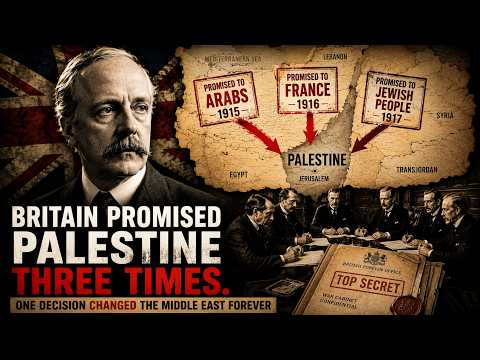
Britain Promised Palestine Three Times. One Decision Changed the Middle East Forever
Historical Context of British Promises in Palestine
In 1915, Britain made a promise to the Arabs regarding Palestine, which was followed by a secret agreement in 1916 with France for the same territory. By 1917, Britain extended its promises to the Jewish people, creating a complex web of commitments concerning a single piece of land. This situation arose during World War I, a conflict that significantly altered the geopolitical landscape of the Middle East.
The onset of World War I saw the Ottoman Empire align with Germany, placing Palestine, Syria, and Iraq at the forefront of military strategies. Britain aimed not only to defeat Germany but also to dismantle the Ottoman Empire, which had ruled these regions for centuries. The Suez Canal, a crucial route for British trade and military logistics to India, became a focal point for British interests, influencing their decisions in the region throughout the war.
As Britain faced military setbacks, such as the disastrous Gallipoli campaign, they sought new alliances. British officials in Cairo approached Sharif Hussein of Mecca, offering support for Arab independence in exchange for an uprising against the Ottomans. This led to a series of letters exchanged between Hussein and British High Commissioner Henry McMahon, wherein Britain appeared to promise Arab independence across vast territories, although ambiguities regarding specific regions, including Palestine, left room for interpretation and future disputes.
Simultaneously, Britain was negotiating with France and Russia through the Sykes-Picot Agreement, which divided the Ottoman territories between the British and French empires. This secret pact directly contradicted the promises made to Hussein, as it predetermined the fate of the region without Arab input. The existence of this agreement remained hidden until it was revealed by Russian revolutionaries, further complicating the situation for Britain.
In 1917, as the war reached a critical juncture with Russia on the verge of collapse, Britain sought to secure Jewish support for the Allied cause. Key Zionist figures, including Chaim Weizmann, advocated for a British declaration supporting a Jewish homeland in Palestine, arguing it would galvanize Jewish communities in America and Russia. This culminated in the Balfour Declaration, issued on November 2, 1917, which expressed Britain's support for establishing a national home for the Jewish people in Palestine, while also stating that the civil and religious rights of non-Jewish communities should not be harmed.
The declaration was significant not only for its content but also because Britain did not yet control Palestine, which was still under Ottoman rule. This promise to a minority population in a land promised to others set the stage for future conflicts. Following the war, the Allied powers incorporated the Balfour Declaration into international law, granting Britain a mandate over Palestine, which led to protests from Arab leaders who felt betrayed by the abandonment of McMahon's promises.
As Jewish immigration to Palestine increased throughout the 1920s and surged in the 1930s due to the rise of Nazi Germany, tensions escalated between Jewish and Arab populations. This culminated in a violent uprising against British rule in 1936, which took years for Britain to suppress. By the end of World War II, Britain was financially and politically exhausted, leading to its decision to transfer the issue of Palestine to the newly formed United Nations in 1947.
In May 1948, Israel declared independence, with Weizmann becoming its first president. The initial promises made by Britain during the war evolved into one of the most enduring conflicts in modern history. The Balfour Declaration remains a pivotal document, still referenced in contemporary discussions about the Israeli-Palestinian conflict. The overlapping claims established during this period have persisted, shaping the region's political landscape and continuing to influence international relations today.
This historical analysis underscores the complexities and contradictions inherent in Britain's wartime promises, which were made to secure strategic advantages without fully accounting for the long-term consequences. The Sykes-Picot Agreement and the Balfour Declaration exemplify the tangled web of diplomacy that has left a lasting impact on the Middle East.
The transcript provides a succinct overview of the demographic changes in Palestine, particularly focusing on the Jewish and non-Jewish populations. It notes that by the time of the Balfour Declaration in 1917, the Jewish community represented "less than 10% of the people already living there" while the vast majority, approximately "90%", were non-Jewish communities. This significant imbalance highlights the complex socio-political landscape of the region during this period.
Throughout the early twentieth century, particularly in the 1920s and 1930s, there was a notable increase in Jewish immigration to Palestine. This surge in immigration was largely a response to the rising anti-Semitism and the brutal conditions faced by Jewish communities in Europe, particularly during the rise of Nazi Germany. The influx of Jewish immigrants contributed to a growing Jewish population in Palestine, which began to alter the demographic composition of the territory.
As tensions escalated, the Arab population observed this demographic shift with increasing concern, feeling that their position in their homeland was being compromised. The transcript notes that this growing tension culminated in a full uprising against British rule in 1936, indicating a direct result of the changing population dynamics and the policies surrounding Jewish immigration and settlement.
- [08:54] "...to a population that made up less than 10% of the people already living there while having already promised the same land to two other parties entirely."
- [10:30] "...the Arab population, watching its position in its own homeland shift under policies it had never agreed to, responded with growing protest."
The transcript details a series of significant actions taken by the governments of the United States, the United Kingdom, and other European countries from the mid-19th century until 1948 that shaped the developments in Palestine. Starting in 1915, Britain made a commitment to the Arab leader Sharif Hussein, promising support for an independent Arab state, which implied a recognition of Arab claims to Palestine.
However, in 1916, Britain secretly negotiated the Sykes-Picot Agreement with France, which divided the Ottoman territories in the Middle East between them, including Palestine, which was marked for international administration. This clandestine agreement contradicted the promises made to the Arabs.
In 1917, the Balfour Declaration emerged as a pivotal moment. Britain, under Prime Minister David Lloyd George and Foreign Secretary Arthur Balfour, promised to support the establishment of a "national home for the Jewish people" in Palestine. This declaration was perceived as a betrayal by Arab leaders who had relied on the earlier British promises.
By 1920, the Balfour Declaration was incorporated into international law during the San Remo Conference, establishing Britain's mandate over Palestine, which led to increased Jewish immigration and further tensions with the Arab population. The British mandate lasted until 1948, during which time the situation in Palestine became increasingly unmanageable, leading to Britain handing the issue over to the newly formed United Nations. The culmination of these actions directly influenced the eventual establishment of the State of Israel in May 1948.
- [00:12] "...it promised it again, this time to the Jewish people."
- [08:21] "For Zionist leaders, it was the moment they’d worked toward for decades."
The transcript discusses the complex identities and relationships of the Jewish and Palestinian communities in early twentieth-century Palestine. The Jewish community, having a historical connection to the land, was represented by leaders such as Chaim Weizmann, a prominent Zionist who advocated for a Jewish homeland. The transcript notes that this community had spent years building relationships with British officials, highlighting their active political engagement in the region.
On the other hand, the Palestinian community, led by figures such as Sharif Hussein, who was a descendant of the Prophet Muhammad, sought to assert their own claims to self-determination as they faced the threat of external colonial ambitions from European powers. Hussein believed that Palestine was included in the promises made by the British for Arab independence, which fueled the Arab revolt against Ottoman rule. This revolt was characterized by a coalition of local leaders and fighters who aimed to resist external control and assert their rights to the land.
The transcript highlights that the Arab population consisted of the vast majority of those living in Palestine, approximately 90%, while Jewish individuals constituted less than 10%. This demographic reality set the stage for the emerging conflicts over national identity and territorial claims, illustrating the competing narratives and historical grievances that would shape the region's future.
- [02:30] "...Hassin and the British High Commissioner Henry McMahon traded 10 letters."
- [03:33] "Hassin believed Palestine was included."
The transcript outlines the aims and strategies of both Zionist organizations and Palestinian leaders in the tumultuous years leading up to and following the establishment of the State of Israel in 1948. The Zionist movement, represented by figures like Chaim Weizmann, sought to establish a Jewish homeland in Palestine. In 1917, they successfully lobbied the British government to issue the Balfour Declaration, which promised to support the establishment of a national home for the Jewish people in Palestine. This was a strategic move aimed at garnering support from Jewish communities globally, particularly in the United States and Russia, as the Allies needed their backing during World War I.
On the other side, Palestinian leaders, including Sharif Hussein, were engaged in their own struggle for independence from Ottoman rule, believing that they had been promised autonomy by the British. The Arab revolt, which began in 1916, was an effort to assert their claims and was supported by British officers, including Lawrence of Arabia.
However, internal divisions also plagued both groups. The Zionist movement was divided over the means and extent of their ambitions, while the Palestinian leadership faced pressures from both local and external pressures, leading to a lack of cohesive strategy. After the Balfour Declaration and the subsequent British mandate, tensions escalated as Jewish immigration increased, leading to widespread protests and violence from the Arab population.
The ultimate decision to establish the State of Israel in May 1948 marked a significant outcome of these competing ambitions and the unresolved contradictions of British promises. Weizmann, who was instrumental in securing the Balfour Declaration, became the first president of Israel, while Palestinian aspirations for statehood were unmet, sowing the seeds for ongoing conflict.
- [07:55] "...Britain would use its best efforts to make that happen."
- [09:05] "This is the moment the three promises collided..."
The transcript captures several critical historical events from 1948 onwards that significantly impacted the region. In 1948, the State of Israel declared its independence. This declaration followed a complex backdrop of conflicting promises made by the British government during the previous decades and resulted in a dramatic shift in the geopolitical landscape of the Middle East.
The transcript notes that the events leading up to this moment were characterized by increasing tensions between Jewish and Arab populations, as well as the responses of British governance. British officials had handed over the problem of Palestine to the newly formed United Nations in 1947, marking a pivotal point in international involvement in the region.
Following the establishment of Israel, the transcript does not provide explicit details about events occurring after 1948, suggesting that the focus remains primarily on the lead-up to the state's founding and the implications of British promises. The ongoing conflict that emerged as a result of the establishment of Israel is acknowledged, but specific events post-1948 are not mentioned in the provided transcript.
- [11:08] "...the state of Israel declared its independence."
- [11:16] "...the man who had lobbied for that 125-word letter three decades earlier became its first president."
[00:00] In 1915,[00:02] Britain promised Palestine to the Arabs.[00:05] In 1916,[00:07] it secretly promised the same land to[00:09] France. In 1917,[00:12] it promised it again, this time to the[00:15] Jewish people. Three promises, one piece[00:18] of land. Britain never planned to keep[00:20] all three. To understand this, you need[00:23] to go back to 1914.[00:26] World War I had just started. By[00:29] November of that year, the Ottoman[00:31] Empire had joined the war on Germany's[00:33] side. That single decision put[00:36] Palestine, Syria, and Iraq directly on[00:39] the front line of a European war. Three[00:42] regions that had lived under Ottoman[00:45] rule for four centuries. Britain didn't[00:48] just want to beat Germany. It wanted the[00:50] Ottoman Empire gone for good. The Sewish[00:52] Canal ran through Egypt and it was[00:54] Britain's lifeline to India. Losing[00:57] control of that route wasn't an option.[00:59] Every ship carrying troops, grain, or[01:02] gold between London and the East had to[01:04] pass through it, protecting that canal[01:06] shaped almost every decision Britain[01:09] made in the region for the next four[01:11] years. It's the single fact that[01:13] explains why a small desert territory[01:16] like Palestine suddenly mattered so much[01:19] to an empire fighting a war thousands of[01:22] miles away in the trenches of France.[01:24] So, Britain started making deals, lots[01:27] of them. And here's the detail most[01:29] people miss. The men negotiating these[01:32] deals barely talked to each other. They[01:35] worked out of different offices,[01:37] answered to different ministers, and[01:40] often had no idea what the others had[01:43] already agreed to. The Foreign Office[01:45] ran one set of negotiations. The India[01:48] office ran another. Military[01:51] intelligence in Cairo ran a third.[01:54] Different offices, different priorities,[01:56] same land promised three separate times.[01:59] That's where the story really begins. By[02:02] mid 1915, Britain was losing ground at[02:05] Galipoli. Tens of thousands of soldiers[02:08] were dying for barely any territory, and[02:11] the campaign was turning into a[02:13] humiliating stalemate. London needed a[02:16] new front against the Ottomans fast. So,[02:19] British officials in Cairo reached out[02:22] to Shahiff Hassin, the ruler of Mecca[02:25] and a man with real religious authority[02:27] across the Arab world as a direct[02:30] descendant of the prophet Muhammad.[02:33] Their offer was simple. Rise up against[02:36] the Ottomans and Britain will back an[02:39] independent Arab state. Over 10 months,[02:42] Hassin and the British High Commissioner[02:44] Henry McMahon traded 10 letters. In[02:48] October 1915,[02:51] Mcmahan wrote that Britain was ready to[02:54] recognize Arab independence across huge[02:57] stretches of the Middle East. It sounded[03:00] like a real commitment, but the wording[03:02] left room to argue. Certain regions were[03:05] excluded for reasons that were never[03:07] fully explained. Nobody defined the[03:10] borders with any precision, and whether[03:13] Palestine itself was actually included[03:15] in that promise. That question would[03:18] haunt British diplomacy for decades, and[03:21] historians are still arguing about it[03:23] today. Some later British officials[03:26] insisted Palestine had never been part[03:28] of the deal. Others admitted privately[03:30] that it clearly had been. Hassin[03:33] believed Palestine was included. He[03:37] launched the Arab revolt in 1916 on that[03:41] belief, sending his own sons into battle[03:43] against Ottoman forces supported by[03:46] British officers, including the man[03:48] later known as Lawrence of Arabia.[03:51] Thousands of Arab fighters died in a[03:54] brutal desert campaign. But while Hassin[03:57] was preparing to fight, and while his[03:59] men were dying for a promise he thought[04:01] was solid, London was making a very[04:04] different deal behind his back. In May[04:07] 1916,[04:08] two diplomats, Britain's Mark Sykes and[04:11] France's France Georgees Picot signed a[04:15] secret agreement with Russia's approval.[04:18] It carved up the Ottoman Middle East[04:20] between the British and French empires[04:23] drawn out on a map with a ruler and a[04:25] colored pencil in rooms Hassin never[04:28] saw. Britain would control areas around[04:31] Iraq. France would take Syria and[04:34] Lebanon and Palestine. It was marked out[04:37] for some form of international[04:39] administration controlled by neither[04:41] power outright with the exact[04:43] arrangement left deliberately vague.[04:46] This agreement directly contradicted[04:49] what Britain had just promised Hassin.[04:52] Arab fighters were dying for[04:54] independence while the men in London had[04:57] already quietly split their homeland[04:59] between two European powers.[05:02] Hassin didn't know this deal existed.[05:05] Almost nobody did. It stayed secret for[05:09] over a year until Russian[05:11] revolutionaries seized power, found the[05:13] agreement in the old Sarist archives,[05:16] and published it specifically to[05:18] embarrass Britain and France. But this[05:21] is only two promises. A third one was[05:24] coming, and it would be the one that[05:26] changed history. What no one expected[05:29] was who Britain would turn to next. By[05:32] 1917,[05:34] the war had reached a breaking point.[05:36] Russia was collapsing into revolution[05:39] and its army was falling apart on the[05:42] Eastern Front. If Russia dropped out of[05:45] the war entirely, Germany could move its[05:48] eastern armies west and threatened to[05:50] overwhelm Britain and France before[05:53] American troops arrived in any real[05:55] numbers. The United States had just[05:58] entered the war in April, but its[06:00] soldiers were still months away from[06:03] reaching Europe. Britain's new prime[06:05] minister, David Lloyd George, wanted[06:08] every possible advantage he could find[06:10] on every front, financial, political,[06:13] and psychological. One man saw an[06:17] opening. Shame Wisman, a chemist and[06:19] leading Zionist based in Manchester, had[06:22] spent years building relationships with[06:24] British officials, including Balfur[06:27] himself, whom he'd first met back in[06:30] 196.[06:31] Wiseman and fellow Zionist leader Nahim[06:34] Sakalo argued that a British promise to[06:36] support a Jewish homeland in Palestine[06:39] could rally Jewish opinion across[06:40] America and Russia behind the Allied war[06:43] effort at the exact moment Britain[06:45] needed that support most. Foreign[06:47] Secretary Arthur Balfur already[06:50] personally sympathetic to Zionism took[06:52] the idea to the war cabinet in the[06:54] summer of 1917.[06:57] For months, the cabinet argued over the[06:59] exact wording. Every phrase mattered.[07:02] Every word would be read by Arabs, by[07:05] French officials watching their own[07:07] claims in the region, and by Jewish[07:09] communities around the world, all[07:12] searching the text for what it meant for[07:14] them. Cabinet ministers debated draft[07:17] after draft, softening some language,[07:20] sharpening other parts, fully aware that[07:23] whatever they published couldn't be[07:25] taken back. On November 2nd, 1917,[07:31] Balfur signed a short letter addressed[07:33] to Lord Rothsky, a leader of Britain's[07:36] Jewish community. It was barely 125[07:40] words long, but those words would[07:42] reshape the Middle East for the next[07:44] century. The letter said Britain viewed[07:47] in its own words with favor the[07:50] establishment in Palestine of a national[07:52] home for the Jewish people. It promised[07:55] Britain would use its best efforts to[07:57] make that happen. And then it added a[08:00] condition that nothing would be done to[08:02] harm the civil and religious rights of[08:04] Palestine's non-Jewish communities who[08:07] at the time made up the vast majority of[08:09] the population living there close to[08:12] 90%.[08:13] The declaration became public a week[08:16] later, printed in newspapers across[08:18] Britain and around the world. For[08:21] Zionist leaders, it was the moment[08:23] they'd worked toward for decades. For[08:26] Arab leaders who'd trusted Mcmahan's[08:28] promise just two years earlier, it read[08:31] like a betrayal in plain sight. Here's[08:34] what makes this moment so extraordinary.[08:36] Britain didn't even control Palestine[08:39] when it made this promise. The Ottomans[08:42] still ruled it. British troops wouldn't[08:44] take Jerusalem for another 5 weeks.[08:47] Britain was promising land it hadn't[08:49] conquered yet to a population that made[08:52] up less than 10% of the people already[08:54] living there while having already[08:57] promised the same land to two other[08:59] parties entirely. This is the moment the[09:02] three promises collided and Britain[09:05] never publicly resolved the[09:07] contradiction. It just moved forward[09:10] betting the details could be worked out[09:12] later. They couldn't. By the end of[09:15] 1918,[09:16] Britain and its allies had defeated the[09:18] Ottoman Empire. Palestine was now[09:21] Britain's to govern. In 1920,[09:25] the Allied powers met at San Ramo and[09:28] folded the Balfur declaration directly[09:30] into international law. 2 years after[09:33] that, the League of Nations made it[09:35] official, handing Britain a mandate over[09:38] Palestine built directly on Balfur's[09:40] promise. Arab leaders protested almost[09:44] immediately. They pointed back to[09:46] Mcmahan's letters and asked why that[09:48] promise had been quietly abandoned while[09:51] Balfur's had become official policy.[09:54] Britain never gave a clean answer.[09:56] Officials argued for years over whether[09:59] Palestine had truly been included in the[10:01] Hussen agreement in the first place.[10:04] That argument was never fully settled[10:06] and it still shapes how each side[10:09] remembers this history. The[10:11] contradiction didn't stay theoretical[10:13] for long. Jewish immigration to[10:16] Palestine grew steadily through the[10:18] 1920s[10:20] and sharply after the rise of Nazi[10:23] Germany in the 1930s.[10:26] The Arab population, watching its[10:28] position in its own homeland shift under[10:30] policies it had never agreed to,[10:33] responded with growing protest. By 1936,[10:37] that tension exploded into a full[10:39] uprising against British rule. One that[10:41] took years and tens of thousands of[10:44] troops for Britain to put down. By the[10:46] time the Second World War ended, Britain[10:49] was exhausted financially and[10:52] politically, and Palestine had become[10:55] close to ungovernable. In 1947,[10:59] Britain finally handed the entire[11:01] problem to the newly formed United[11:03] Nations and withdrew. The following[11:05] year, in May of 1948, the state of[11:08] Israel declared its independence. Chame[11:10] Wisman, the man who had lobbed for that[11:13] 125 word letter three decades earlier,[11:16] became its first president. What started[11:19] as three wartime promises made by[11:22] different British offices for different[11:24] strategic reasons became the foundation[11:27] for one of the long distrunning[11:30] conflicts of the modern era. The letter[11:33] that Balfur signed in just 125 words is[11:37] still cited today in speeches in legal[11:40] arguments in history classrooms over a[11:43] century after he wrote it. Remember that[11:46] map from the beginning. Those three[11:48] overlapping claims never went away. They[11:51] just moved from paper into reality and[11:54] they are still being contested right[11:56] now. Britain made these promises to win[11:59] a war. It never fully answered for what[12:02] came after. If you want to understand[12:05] how the Sykesote agreement carved up the[12:08] rest of the Middle East, that's a story[12:10] on its own and it's just as messy as[12:13] this one. Subscribe if you want more[12:16] deep dives like this into the decisions[12:19] that quietly built the world we live in
How the Israeli-Palestinian Conflict Began | History
Israel: A Historical Overview
Israel is recognized as the only Jewish nation globally, officially established in 1948. However, its existence is often overshadowed by the ongoing conflict with Palestine, which centers around disputes over land, political control, and resources. To comprehend the roots of this conflict, it is essential to delve into history, tracing back approximately 4,000 years to Abraham, who is regarded as the patriarch of both Judaism and Islam.
According to the Old Testament, God instructed Abraham and his descendants to inhabit a region known as Canaan, which corresponds to modern-day Israel. In 1,000 BCE, King Saul founded the Israelite monarchy, which was succeeded by King David and his son Solomon, who constructed the first Jewish temple in Jerusalem. This historical narrative forms a significant part of the Jewish claim to the land of Israel.
The region has experienced numerous conquests and governance by various groups, including Persians, Greeks, Romans, Arabs, Egyptians, Fatimids, Seljuks, Crusaders, Mamluks, and Ottomans, who referred to the area as Palestine. Throughout these changes, many Jews were forced to flee, resulting in a diaspora that spread Jewish communities across the globe.
In Europe, the Jewish diaspora faced severe oppression and persecution, prompting many to return to their ancestral homeland in the 1880s, during the Ottoman Empire's control of Palestine. By 1914, the Jewish population in the area had grown to over 75,000. Following World War I, Great Britain assumed control over modern-day Israel, Palestine, and Jordan, and in 1922, the League of Nations endorsed a British declaration promising a national home for the Jewish people in Palestine. However, it took over two decades for this promise to materialize.
The outbreak of World War II in 1939 led to the Holocaust, during which over six million Jews were murdered, and millions more were displaced. In 1947, the United Nations proposed a partition plan to create two states: a Jewish state of Israel and an Arab state of Palestine. While Israel accepted the partition, many Arab residents viewed it as unjustly favoring the Jewish population, leading to violence.
On May 14, 1948, Israel was declared a state, with David Ben-Gurion as its prime minister. The Arab League immediately rejected the partition and launched an attack, resulting in a protracted conflict. After nine months of fighting, Israel's armed forces occupied much of the land designated for the Arab state of Palestine, while Egypt and Jordan took control of the Gaza Strip and the West Bank, respectively. This conflict is remembered in Hebrew as the War of Independence and in Arabic as The Catastrophe, with around 720,000 Arabs fleeing or being expelled from their homes.
The subsequent decades saw ongoing tensions and conflicts between Jews and Arab Muslims. The Palestine Liberation Organization (PLO) was formed in 1964 to unify various Palestinian factions. The Six-Day War in 1967 resulted in Israel defeating the armies of Egypt, Syria, and Jordan, significantly expanding its territory. In 1987, the First Intifada erupted following an incident involving the Israeli defense forces, leading to widespread violence and casualties.
Following the First Intifada, peace efforts culminated in the Oslo Accords, which aimed to establish a framework for peace. However, further negotiations in 2000 failed to resolve critical issues, including the status of Jerusalem and the rights of refugees. The Second Intifada was triggered by Ariel Sharon's visit to the Temple Mount, leading to violent protests and attacks that lasted nearly five years, effectively ending the peace process initiated by the Oslo Accords.
In 2005, Israel withdrew from Gaza, but the region remained volatile. In 2006, Hamas, a militant group, won the Palestinian legislative elections, and its refusal to recognize Israel led to ongoing conflicts. Hamas has been labeled a terrorist organization by many countries due to its violent tactics and calls for Israel's destruction.
In 2017, Hamas proposed the establishment of a Palestinian state based on the 1967 borders but did not recognize Israel, resulting in Israel's rejection of the proposal. Today, Palestine continues to strive for statehood amidst ongoing Israeli settlement activities in the West Bank. Various nations have advocated for peace agreements, often proposing a two-state solution. Despite these efforts, a lasting peaceful resolution remains elusive, and the region continues to hold significant importance for diverse ethnic and religious groups.
The transcript outlines significant changes in the Jewish and non-Jewish populations in Palestine over the centuries, particularly emphasizing the historical context that influenced these demographic shifts. Beginning with the establishment of the Israelite monarchy around 1,000 BCE, it notes that both Jews and Muslims have maintained a long-standing connection to the region, tracing their ties to approximately 4,000 years ago with Abraham, a pivotal figure in both religions.
As history progressed, various conquests and rule by empires such as the Persians, Greeks, Romans, and the Ottomans led to a Jewish diaspora, where Jews were forced to leave their homeland, resulting in the dispersion of their population. This diaspora was compounded by persecution faced in Europe, prompting a significant return of Jewish people to Palestine in the 1880s. By 1914, the Jewish population in the area had grown to more than 75,000.
Following World War I and the end of Ottoman control, the British took over the region, and in 1922, the League of Nations endorsed a British declaration to support a Jewish national home in Palestine. This support catalyzed further Jewish immigration, albeit amidst rising tensions with the Arab population who felt this favoring of Jewish interests was unjust.
The partition plan proposed by the United Nations in 1947 aimed to create separate Jewish and Arab states, which led to violence and conflict as many Arab residents viewed the arrangement as biased. The establishment of Israel in 1948 was marked by the displacement of approximately 720,000 Arabs, further altering the demographic landscape of Palestine.
- [00:12] "A violent dispute over land, political control, and resources."
- [01:58] "Approximately 720,000 Arabs fled or were expelled from their homes, many taking refuge in the Gaza Strip and the West Bank."
- [02:22] "The United Nations decided to partition Palestine into two countries, the Jewish state of Israel and the Arab state of Palestine."
The transcript provides a concise overview of the actions taken by the United States, the United Kingdom, and other European countries regarding developments in Palestine between 1850 and 1948. It mentions that the Jewish diaspora faced significant oppression and persecution in Europe, which led to a wave of Jewish emigration back to Palestine in the 1880s. During this period, the Ottoman Empire controlled Palestine, and the returning Jewish population sought to establish a presence in the region.
Following World War I, the geopolitical landscape shifted dramatically when Great Britain took control of modern-day Israel, Palestine, and Jordan from the Ottomans in 1919. The British government endorsed a declaration in 1922 approved by the League of Nations, which promised a national home for the Jewish people in Palestine. This declaration marked a significant turning point, as it provided a political backing for Jewish aspirations in the region, despite growing tensions with the Arab population.
In 1947, the United Nations intervened further by proposing a partition plan to create separate Jewish and Arab states. While Israel accepted this plan, many Arab residents opposed it, seeing it as disproportionately favoring the Jewish population. This culminated in violence and conflict, leading to the establishment of Israel in 1948, an action that was met with immediate military opposition from neighboring Arab nations, further impacting the demographics and political situation in Palestine.
- [01:38] "So in the 1880s many Jewish people started emigrating back to the promised land in Ottoman controlled Palestine."
- [01:52] "After World War I, Great Britain took control of modern day Israel, Palestine, and Jordan from the Ottomans."
- [02:22] "In 1947 after the war was over, the United Nations decided to partition Palestine into two countries, the Jewish state of Israel and the Arab state of Palestine."
The transcript describes the origins, identities, and ancestral connections of Jewish and Palestinian communities living in Palestine in the early twentieth century, highlighting their deep historical ties to the region. Both groups trace their roots back approximately 4,000 years to Abraham, who is recognized as a foundational figure in Judaism and Islam. This connection is central to both communities' claims to the land.
As the transcript mentions, the Jewish people experienced a significant diaspora due to various conquests and persecutions over the centuries, leading to their dispersion from their homeland. However, during the 1880s, a notable return of Jewish individuals to Palestine began, driven by the desire to establish a national home in response to oppression in Europe.
By 1914, more than 75,000 Jews had settled in the area. This influx was facilitated by the British mandate post-World War I, which aimed to create a national home for Jews in Palestine, as endorsed by the League of Nations in 1922. In contrast, the local Arab population, which had long inhabited the land, began to feel increasingly marginalized and threatened by the growing Jewish presence.
The political and social relationships between the Jewish and Palestinian communities became increasingly complex as tensions escalated over land, cultural identity, and political rights, particularly following the establishment of Israel in 1948. This period marked a pivotal moment in the evolving identities of both groups, as they navigated the challenges of nationalism, statehood, and communal rights within a fraught geopolitical landscape.
- [00:20] "Both Jews and Muslims have strong religious and cultural ties to the region dating back about 4,000 years to Abraham considered the father of the two religions."
- [01:33] "During these transitions Jews were forced to flee the area creating a diaspora, dispersion of people from their homeland."
- [02:06] "In 1922 the League of Nations approved a British declaration that promised a national home for the Jewish people in Palestine."
The transcript outlines the aims, strategies, and significant decisions made by both Zionist organizations and Palestinian political leaders before and after the establishment of the State of Israel in 1948. The Zionist movement, which sought to establish a Jewish homeland in Palestine, gained momentum in the late nineteenth century, particularly after the persecution faced by Jews in Europe. By the 1880s, many Jewish individuals began emigrating to Palestine, motivated by both religious and nationalistic aspirations.
Following World War I, the British took control of Palestine, and in 1922, the League of Nations endorsed a declaration supporting a Jewish national home. This political backing was pivotal for Zionist leaders who aimed to consolidate Jewish immigration and establish settlements in the region. However, this strategy faced opposition from the Arab population, leading to rising tensions.
In 1947, the United Nations proposed partitioning Palestine into Jewish and Arab states. Zionist leaders accepted the plan, but Arab residents rejected it, leading to violence. When Israel was established on May 14, 1948, under Prime Minister David Ben-Gurion, the Arab League attacked, marking the beginning of significant conflict. The ensuing war resulted in Israel occupying much of the land designated for the Arab state, leading to the displacement of approximately 720,000 Arabs, an event known in Hebrew as the War of Independence and in Arabic as The Catastrophe.
In the following decades, Palestinian political organizations, including the Palestine Liberation Organization (PLO) formed in 1964, aimed to consolidate efforts among various Palestinian factions. Despite sporadic peace efforts, including the Oslo Accords post-First Intifada, divisions within both the Jewish and Palestinian communities hindered lasting resolutions.
- [02:11] "In 1947, the United Nations decided to partition Palestine into two countries, the Jewish state of Israel and the Arab state of Palestine."
- [02:58] "Almost immediately the Arab League rejected the partition and attacked."
- [04:23] "After the First Intifada Israel and the PLO created a timetable for peace, the Oslo Accords."
The transcript discusses several important historical events from 1948 to the present day, which have significantly shaped the Israeli-Palestinian conflict. Here are the key events:
- 1948: The establishment of the State of Israel occurred on May 14, 1948, led by Prime Minister David Ben-Gurion. This event marked the culmination of Zionist efforts but resulted in immediate conflict, as neighboring Arab countries rejected the partition plan and attacked Israel. This war is referred to in Hebrew as the War of Independence and in Arabic as The Catastrophe.
- 1964: The Palestine Liberation Organization (PLO) was formed to unify the Palestinian factions and represent their interests in the struggle for statehood.
- 1967: The Six-Day War took place, during which Israel defeated the armies of Egypt, Syria, and Jordan, gaining significant territory that altered the geopolitical landscape further.
- 1987: The First Intifada began in response to Israeli military actions, leading to a Palestinian uprising that resulted in hundreds of deaths and highlighted the ongoing tensions between the two communities.
- 2000: Peace talks aimed at resolving the conflict following the Oslo Accords failed, primarily over disputes regarding Jerusalem, refugee rights, and the status of Jewish settlements in Palestinian territories.
- 2005: Israel withdrew its forces from Gaza, marking a significant shift in the conflict dynamics.
- 2006: Hamas won the Palestinian legislative elections, further complicating the political situation as many countries classify Hamas as a terrorist organization due to its methods and objectives.
- 2017: Hamas called for the formation of a Palestinian state using the 1967 borders but did not formally recognize Israel, perpetuating the conflict.
These events illustrate the complexity and ongoing nature of the Israeli-Palestinian conflict, which remains unresolved despite numerous attempts at peace.
- [02:44] "On May 14th, 1948 the state of Israel was established With David Ben-Gurion as it's prime minister."
- [04:41] "Later that year Ariel Sharon... visited the Temple Mount, home to the Al-Aqsa Mosque in Jerusalem, an act many Palestinians found offensive."
- [05:08] "The violence ended in 2005 when Israel withdrew from Gaza."
[00:00] NARRATOR: Israel.[00:01] It's the only Jewish nation in the world,[00:04] and it didn't officially exist until 1948.[00:07] But many people associate Israel with its ongoing conflict[00:10] with Palestine.[00:12] A violent dispute over land, political control,[00:14] and resources.[00:16] To understand why, we have to look back a few thousand years.[00:20] [00:23] Both Jews and Muslims have strong religious and cultural[00:26] ties to the region dating back about[00:28] 4,000 years to Abraham considered the father[00:31] of the two religions.[00:34] According to the Old Testament, God told Abraham and his people[00:38] to settle in a land called Canaan,[00:40] which is in the approximate region of modern day Israel.[00:44] In 1,000 BCE King Saul established[00:46] the Israelite monarchy, which continued under King David[00:50] and his son, Solomon who built the first Jewish temple[00:54] in Jerusalem.[00:55] This historical legacy became part of the Jewish claim[00:58] to the land of Israel.[01:02] The land would continue to be conquered and ruled[01:04] by various groups, including Persians, Greeks, Romans,[01:08] Arabs, Egyptians, Fatimids, Seljuks,[01:11] Crusaders, Mamluks, and the Ottomans, who[01:13] called the region Palestine.[01:15] It would become home to many sites[01:17] considered sacred by Jews, Muslims, and Christians alike.[01:23] During these transitions Jews were[01:24] forced to flee the area creating a diaspora, dispersion[01:28] of people from their homeland.[01:29] [01:33] But in Europe, the Jewish diaspora also faced[01:36] oppression and persecution.[01:38] So in the 1880s many Jewish people[01:40] started emigrating back to the promised land in Ottoman[01:43] controlled Palestine.[01:46] By 1914 there were more than 75,000 Jews in the area.[01:52] After World War I, Great Britain took control of modern day[01:55] Israel, Palestine, and Jordan from the Ottomans.[02:00] In 1922 the League of Nations approved a British declaration[02:03] that promised a national home for the Jewish people[02:06] in Palestine, but it would be more than two decades[02:08] before that promise was fulfilled.[02:11] In 1939 World War II broke out.[02:13] More than 6 million Jews were murdered in the Holocaust[02:16] with millions more displaced.[02:18] [02:22] In 1947 after the war was over, the United Nations[02:25] decided to partition Palestine into two[02:27] countries, the Jewish state of Israel[02:30] and the Arab state of Palestine.[02:33] Israel agreed to the partition and borders were drawn for two[02:36] states, but many Arab residents thought the partition unfairly[02:40] favored the Jewish population.[02:42] Violence soon broke out.[02:44] On May 14th, 1948 the state of Israel[02:47] was established With David Ben-Gurion[02:49] as it's prime minister.[02:51] Almost immediately the Arab League,[02:53] a group of surrounding Arab countries,[02:55] rejected the partition and attacked.[02:58] Israel fought back and after more than nine months[03:01] of conflict, it's armed forces occupied[03:03] much of the land designated to become[03:05] the Arab state of Palestine.[03:08] Egypt took control of the Gaza Strip.[03:10] Jordan, then called Transjordan, took control of the West Bank.[03:14] The original plan for a Palestinian state was scrapped.[03:18] This historic event was a victory for many Jewish people,[03:22] but approximately 720,000 Arabs fled or were expelled[03:26] from their homes, many taking refuge in the Gaza Strip[03:30] and the West Bank.[03:31] This war would be remembered in Hebrew[03:33] as the War of Independence and in Arabic as The Catastrophe.[03:38] Tension between Jews and Arab Muslims in the region[03:41] would continue for decades.[03:42] [03:45] Fighting between Israel and its Arab neighbors[03:47] continued on and off for the next 60 years.[03:50] In 1964 the Palestine Liberation Organization[03:53] formed to consolidate the power of[03:56] many small Palestinian groups.[03:59] In the 1967 six-day war Israel defeated the armies[04:02] of Egypt, Syria, and Jordan, and gained control[04:05] of significant territory.[04:09] In 1987 following an incident with the Israeli defense forces[04:13] that left four Palestinian refugees dead,[04:15] Palestinian militia led a violent uprising[04:18] known as the First Intifada that resulted in hundreds of deaths.[04:23] After the First Intifada Israel and the PLO[04:26] created a timetable for peace, the Oslo Accords.[04:30] Further peace talks in 2000 proved unsuccessful[04:33] when agreements could not be reached[04:35] on issues like the status of Jerusalem,[04:36] the rights of refugees, and increased Jewish settlements[04:39] in Palestinian lands.[04:41] Later that year Ariel Sharon, who[04:43] would become Israel's prime minister,[04:45] visited the Temple Mount, home to the Al-Aqsa Mosque[04:48] in Jerusalem.[04:49] An act many Palestinians found offensive.[04:52] Violent protests, riots, attacks,[04:55] and suicide bombings broke out.[04:59] This period of violence called the Second Intifada[05:01] lasted nearly five years and marked[05:03] the end of any peace that had come from the Oslo Accords.[05:08] The violence ended in 2005 when Israel withdrew from Gaza.[05:14] In 2006, a militant Sunni Islamist group, Hamas,[05:17] won the Palestinian legislative elections.[05:20] Many countries consider Hamas a terrorist group because[05:22] of their methods, such as carrying out suicide bombings,[05:25] and calling for the destruction of Israel.[05:28] Hamas and Israel continued to clash violently.[05:32] [05:37] In 2017, Hamas called for the formation[05:39] of a Palestinian state using the 1967 borders,[05:43] but it did not formally recognize Israel as a state.[05:46] So Israel did not accept.[05:48] Today, Palestine continues to fight for statehood.[05:52] The conflict is further complicated[05:53] by Israelis who continue to settle in the West Bank.[05:57] Several countries have pushed for peace[05:59] agreements in recent years, and many[06:01] suggest a two state solution.[06:03] Though a peaceful solution has yet to be achieved,[06:06] the region remains a place of significance[06:08] for people of many ethnic and religious backgrounds.[06:12]

The ENTIRE History of Israel (Documentary)
The History of Israel: A Comprehensive Overview
The history of Israel is a complex tapestry woven from threads of faith, power, and survival. This land, once a beacon of prophecy and promise, has been the focal point of empires, the birthplace of religions, and the catalyst for unending conflict. From the enslavement of its people by the Egyptians to the destruction of its temples by the Babylonians and the Romans' attempts to obliterate its identity, Israel's history is marked by a relentless struggle for survival and identity. Despite the many conquerors who sought to claim it, none could truly possess it. Revolts shattered empires, exiles nurtured resilience, and generations fought to reclaim what was lost. Yet, with each triumph came new adversaries, and with each resurrection, new challenges arose. To comprehend the wars, the faith, and the indomitable spirit of its people, we must journey back to the very beginning.
The narrative commences on the eastern coast of the Mediterranean Sea, in the region known as the Levant, specifically in Canaan. This area, bordered by the Mediterranean Sea and the Jordan River, has left an indelible mark on the contemporary world as it sits at the crossroads of civilizations. To the west, the sea connected it with Europe; to the south, the Arabian Peninsula; to the east, Mesopotamia; and to the north, it linked with the ancient civilizations of Anatolia and the Caucasus. This crossroads facilitated trade and cultural exchange, with the Phoenicians emerging as adept traders who gifted the world with a phonetic alphabet still in use today.
During the late Paleolithic and early Neolithic periods, life thrived in this fertile region. The abundance of fertile plains, highlands, and crucial coastal access naturally attracted prehistoric settlers. One of the earliest continuously inhabited cities in the world, Jericho, located in the Jordan River valley, stands testament to this early flourishing. Archaeological evidence reveals that Jericho's inhabitants constructed defensive walls and towers nearly 11 millennia ago, making it one of the oldest cities still in existence today. Over these millennia, various tribes inhabited the land, but the emergence of the Canaanites in the third millennium BC marked a significant turning point. These Semitic peoples established city-states, and trade flourished as they communicated with neighboring Mesopotamian states and Egypt.
As the crossroads of civilizations, Canaanite states absorbed foreign cultural customs while also disseminating their own. The ancient Canaanites practiced polytheism, worshipping multiple deities akin to their Egyptian neighbors. However, a transformative shift occurred in this land destined to become the Holy Land, heralding the inception of the world's first monotheistic religion. This pivotal moment is encapsulated in the story of Abraham, a figure born in the Chaldees of Mesopotamia. According to tradition, Abraham received a divine message instructing him to journey to Canaan and propagate God's word. Leaving the security of his father's home, he was promised that the land of Canaan would belong to him and his descendants, accompanied by God's blessings.
Abraham's journey was fraught with challenges, including harsh weather and treacherous landscapes. His adventures, though often fragmented in narrative, include a sojourn in Egypt. Abraham's grandson, Jacob, fathered twelve sons who became the progenitors of the twelve tribes of Israel. Jacob, who also adopted the name Israel, faced numerous trials, including a seven-year famine that compelled him to relocate to Egypt, where he was welcomed by Pharaoh due to the presence of his son Joseph, who had risen to prominence after being sold into slavery by his brothers.
The narrative of Moses emerges from the shadows of oppression in Egypt. After fleeing to Midian, Moses encountered a burning bush from which God commanded him to liberate the Israelites from their bondage. Confronting Pharaoh with God's decree to "let my people go," Moses unleashed a series of plagues upon Egypt, culminating in the death of all firstborn Egyptian children, including Pharaoh's own. Relenting, Pharaoh allowed the Israelites to leave, but soon changed his mind, sending his army after them. In a miraculous event, Moses parted the Red Sea, enabling the Israelites to escape while the pursuing Egyptian forces were drowned. This Exodus not only established Moses as a leader but also as a prophet, as he received the Ten Commandments atop Mount Sinai. Despite facing numerous hardships during decades of wandering in the desert, Moses led his people to the brink of the Promised Land, though he himself was forbidden to enter it. He died on Mount Nebo, leaving behind a legacy as one of history's most revered leaders.
After Moses' death, the Israelites, under the leadership of Joshua, entered the Promised Land. However, the presence of Canaanites necessitated a campaign of conquest, with Jericho being one of the first cities to fall. Yet, unity among the tribes was short-lived, leading to the era of the judges, a time characterized by leaders who were both warriors and prophets, emerging during crises to restore temporary stability. This period was marked by a cyclical pattern of faithfulness, sin, oppression, and redemption that persisted for generations.
In the 11th century BC, a significant transformation occurred with the rise of a unified kingdom of Israel, as chronicled in the Old Testament. Although not entirely reliable, the biblical narrative serves as a primary source for this era. The kingdom is believed to have been established in the late 11th century BC, when the twelve tribes of Israel, scattered across Canaan, unified under the leadership of Saul. The primary impetus for this unification was the need for protection against external threats, particularly from the Philistines, a formidable people with a powerful navy who frequently raided the southern coastal regions.
Saul, hailing from the tribe of Benjamin, was initially reluctant to accept kingship despite being anointed by the prophet Samuel. His reign, which some historians date to around 1020 BC, was marked by military successes against the Ammonites and Philistines. However, Saul's disobedience to God's commands led to his rejection as king, culminating in his defeat and death at Mount Gilboa around 1000 BC. Following a period of turmoil, David, Saul's son-in-law, ascended to the throne.
David's origins were humble; he was the youngest son of a shepherd family. His life took a dramatic turn when he confronted Goliath, a giant Philistine warrior. Armed only with a sling and five stones, David's faith in God led him to victory, slaying Goliath and earning the respect of the Israelites. However, this victory sowed seeds of jealousy in Saul, who viewed David as a threat and sought to kill him. David fled, living as an outlaw for years until Saul's death allowed him to become king. Initially ruling from Hebron, David eventually consolidated power and established Jerusalem as the new capital around 993 BC, marking a golden age for Israel.
David's reign, characterized by prosperity and centralization, saw the expansion of Israel's territory at the expense of traditional enemies like the Philistines and Moabites. However, personal scandals, including his affair with Bathsheba and the murder of her husband, led to internal strife and rebellion. Consequently, God forbade David from constructing a monumental temple in Jerusalem, a task that would fall to his son Solomon, who inherited the throne around 970 BC.
Solomon's reign was marked by peace and extensive building projects, including the completion of the First Temple in Jerusalem around 957 BC. This temple, built on Mount Moriah, became the spiritual heart of Israel, housing the Ark of the Covenant and symbolizing the nation's wealth and power. However, as Solomon's rule progressed, heavy taxation and forced labor led to widespread discontent among the populace. Following Solomon's death, his son Rehoboam's refusal to alleviate these burdens resulted in a schism, with ten northern tribes forming the Kingdom of Israel under Jeroboam I, while Rehoboam retained control over Judah in the south.
The division of the kingdom weakened both states, making them vulnerable to external threats. In 722 BC, the Kingdom of Israel fell to the Assyrian Empire after a three-year siege, leading to the forced deportation of its inhabitants, known today as the Lost Tribes of Israel. The southern Kingdom of Judah survived longer but faced its own challenges, culminating in the Babylonian conquest of Jerusalem in 586 BC. The Babylonians destroyed the First Temple and exiled many prominent figures to Babylon, marking a significant crisis for the Israelite people and their faith.
Despite the hardships of exile, the Jewish community maintained their traditions and faith, giving rise to new prophets like Ezekiel and Jeremiah. The long-awaited return to their homeland was realized in 539 BC when the Persian ruler Cyrus the Great conquered Babylon and allowed the Jews to return. Led by Zerubbabel, a descendant of the Davidic line, they began the arduous task of rebuilding the temple, facing hostility from neighboring peoples and internal doubts. The construction of the Second Temple commenced in 516 BC, symbolizing resilience and the revival of Jewish identity.
During this transformative period, the foundation of Judaism as it is known today began to take shape. The Torah was compiled and canonized, providing a written form to the oral traditions that had sustained the Jewish people through exile. Synagogues emerged as centers for worship and learning, proving vital for the survival of Judaism in subsequent centuries. Ezra the scribe played a pivotal role in this era, leading a second wave of exiles back to Jerusalem and reestablishing the laws of Moses as central to Jewish life.
Ezra's efforts to renew Jewish identity through public readings of the Torah and the establishment of the Great Assembly helped formalize prayers and blessings, ensuring the teachings reached the community. His dedication to the Torah earned him the title "Father of Judaism," as he awakened a renewed sense of religious identity among the Jewish people.
However, the period of Persian rule was not without challenges. As the Jewish community thrived, tensions arose with non-Jewish populations, leading to controversies over intermarriage and strict adherence to the Torah. The fragile peace of the Persian era would soon be disrupted by the rise of a new power in the west: Greece, united under Macedonian rule and led by Alexander the Great.
Alexander's conquests in the 4th century BC brought new cultural influences to Israel, as Hellenization began to permeate Jewish society. While some Jews embraced this blending of cultures, others resisted, leading to tensions that would culminate in the Maccabean Revolt against the Seleucid king Antiochus IV Epiphanes, who sought to impose Hellenistic practices and suppress Jewish religious observance.
The revolt, ignited by the refusal of the priest Matathias to sacrifice to a pagan god, marked a significant turning point in Jewish history. Under the leadership of his son Judah Maccabee, the Jewish forces employed guerrilla tactics to achieve remarkable victories, culminating in the liberation of Jerusalem and the rededication of the temple, an event commemorated by the festival of Hanukkah. However, the revolt also exposed internal divisions within the Jewish community, as differing factions emerged.
Following the Maccabean Revolt, the Hasmonean dynasty was established, granting the Jewish people a rare period of self-rule. However, internal strife and external pressures from the expanding Roman Republic ultimately led to the annexation of Judea by Rome in 6 AD. Roman rule in Judea was marked by tension, as heavy taxation and oppression fueled resentment among the Jewish population.
The first Jewish-Roman War erupted in 66 AD, sparked by discontent over taxation and Roman governance. Initially, Jewish rebels achieved significant victories, liberating Jerusalem and establishing a brief period of independence. However, the Roman response was brutal, culminating in the siege of Jerusalem in 70 AD, which resulted in the destruction of the Second Temple and the scattering of the Jewish people across the empire.
Despite the devastation, the Jewish community remained resilient, continuing to practice their faith and traditions in exile. The aftermath of the war saw the rise of new Jewish leadership, with figures like Rabbi Yohanan ben Zakkai advocating for the preservation of Jewish identity through the study of the Torah and the establishment of synagogues.
As centuries passed, the Jewish diaspora spread across Europe, North Africa, and the Middle East, often facing persecution and marginalization. The rise of Christianity in the Roman Empire further complicated the situation for Jews, as they became scapegoats for societal ills and faced increasing restrictions on their rights and practices.
The arrival of Islam in the 7th century brought a new dynamic to the region. Under Muslim rule, Jews experienced periods of relative tolerance and prosperity, particularly during the Golden Age of Jewish culture in Spain. However, the rise of anti-Semitism in Christian Europe, particularly during the Crusades, led to widespread violence and persecution against Jewish communities.
Despite these challenges, Jewish life continued to evolve, with communities adapting to their circumstances while maintaining their distinct identity. The 19th century saw the emergence of modern Zionism, a movement advocating for the establishment of a Jewish homeland in Palestine, driven by a desire for self-determination and safety in the wake of rising anti-Semitism.
Theodor Herzl, a key figure in the Zionist movement, convened the First Zionist Congress in 1897, laying the groundwork for the establishment of a Jewish state. The movement gained momentum as waves of Jewish immigrants arrived in Palestine, seeking to rebuild their homeland amidst growing tensions with the Arab population, who viewed the influx as a threat to their land and way of life.
World War I marked a turning point for the Jewish community in Palestine. The British government's Balfour Declaration in 1917 expressed support for a national home for the Jewish people, but it also ignited tensions with the Arab population, leading to conflict over competing national aspirations. The end of the war saw Britain assume control over Palestine under a League of Nations mandate, further complicating the situation as Jewish immigration continued to rise.
As the 1930s unfolded, the rise of Nazism in Germany prompted a surge of Jewish refugees seeking safety in Palestine, exacerbating tensions with the Arab population. The Arab revolt of 1936-1939 highlighted the growing discontent among Arabs over Jewish immigration and British policies, leading to violent clashes between the two communities.
The Holocaust during World War II underscored the urgent need for a Jewish homeland, as millions of Jews perished in the genocide. The aftermath of the war saw a renewed push for Jewish statehood, culminating in the United Nations' proposal to partition Palestine into separate Jewish and Arab states in 1947. While the Jewish community accepted the plan, the Arab community rejected it, leading to escalating tensions.
On May 14, 1948, David Ben-Gurion declared the establishment of the State of Israel, fulfilling a long-held dream for the Jewish people. However, this declaration was met with immediate opposition from neighboring Arab states, leading to the outbreak of the 1948 Arab-Israeli War. Despite being outnumbered, Israeli forces fought valiantly to defend their newly established state, ultimately securing territorial gains beyond the UN partition plan.
The war resulted in the displacement of over 700,000 Palestinian Arabs, creating a refugee crisis that persists to this day. The aftermath of the conflict left deep scars on both sides, as Israelis celebrated their independence while Palestinians mourned the loss of their homeland, a narrative that continues to shape the Israeli-Palestinian conflict.
In the years following independence, Israel faced numerous challenges, including ongoing hostilities from neighboring Arab states and internal divisions within its own society. The geopolitical landscape remained fraught with tension, as Israel navigated its relationships with both allies and adversaries.
The 1967 Six-Day War marked a significant turning point, as Israel achieved a stunning military victory against its Arab neighbors, capturing territories such as the West Bank, Gaza Strip, and Golan Heights. However, this victory also brought new dilemmas, as the Palestinian issue remained unresolved, and Arab states sought revenge for their losses.
The Yom Kippur War of 1973 further underscored the fragility of peace in the region, as Arab forces launched a surprise attack on Israel. Although Israel ultimately repelled the invasion, the war shattered the illusion of invincibility and highlighted the need for diplomatic solutions.
The Camp David Accords in 1978 marked a historic moment in Israeli-Arab relations, as Egypt became the first Arab nation to recognize Israel in exchange for the return of the Sinai Peninsula. However, tensions persisted, and the Palestinian struggle for self-determination continued to evolve, particularly under the leadership of Yasser Arafat and the Palestine Liberation Organization (PLO).
The Oslo Accords of 1993 represented a significant step toward peace, as Israel officially recognized the PLO and granted limited autonomy to the Palestinian Authority. However, the peace process faced numerous obstacles, including internal divisions within both Israeli and Palestinian societies, leading to renewed violence during the Second Intifada in the early 2000s.
In the years that followed, Israel continued to grapple with the complexities of its geopolitical situation, facing threats from groups like Hamas and Hezbollah, as well as ongoing tensions with Iran. The rise of new technologies and the strengthening of alliances, particularly with the United States, have played a crucial role in shaping Israel's modern identity as a regional power.
Today, Israel stands as a testament to resilience and renewal, a nation that has transformed from a fledgling state into a technological powerhouse. Despite the challenges that persist, the story of Israel is one of survival, innovation, and a quest for peace amidst a tumultuous history.
As we reflect on the journey of Israel and its people, we recognize the enduring significance of their history, shaped by the struggles and triumphs of generations. The path forward remains fraught with challenges, but the hope for a peaceful resolution to the Israeli-Palestinian conflict endures, as both sides seek to navigate the complexities of their shared history and aspirations for the future.
The transcript illustrates a complex narrative of demographic changes in Palestine, particularly highlighting the shifts in the Jewish and non-Jewish populations over centuries. Initially, the Jewish presence in Palestine was significant, but after the destruction of the Second Temple in 70 AD and subsequent events, including the Roman conquests, the Jewish population began to dwindle. This decline was exacerbated by the dispersal of Jews throughout the Roman Empire, leading to what is known as the Jewish diaspora.
In the following centuries, the land saw a gradual influx of various non-Jewish groups, particularly Arabs, who settled in the region over time. The transcript notes that during the Ottoman Empire's rule, which began in the 16th century, the demographic landscape shifted as the Arab population increased, further marginalizing the Jewish community.
By the late 19th century, the rise of Zionism prompted a new wave of Jewish immigration, known as the First Aliyah, with approximately 30,000 Jews arriving in Palestine between 1882 and the early 20th century. This was driven by the desire to escape persecution in Europe and reclaim their ancestral homeland. The Jewish population started to establish agricultural settlements, leading to tensions with the existing Arab communities.
As the 20th century progressed, particularly after World War II and the Holocaust, the Jewish population surged again due to the influx of Holocaust survivors seeking refuge. In contrast, the Arab population began to feel threatened by the growing Jewish presence, leading to conflict and the eventual displacement of over 700,000 Palestinian Arabs during the 1948 Arab-Israeli War. This demographic transformation underscores the historical complexities of Jewish and non-Jewish relationships in Palestine and sets the stage for ongoing conflicts.
-
- [12:05] "...this led to open mutiny and 10 northern tribes formed the kingdom of Israel with Jeroboam I as the king while Rihoboam retained control over Judah in the south."
- [12:32] "...the kingdom of Israel fell to the Assyrian Empire after a 3-year siege. People were forcibly deported and scattered across the empire."
- [13:36] "...the Persian conquest of Babylon was actually a liberation. The moment the Persian king Cyrus the Great entered Babylon meant the world for all the people forcibly exiled into Babylon, including Jews."
The transcript outlines the significant roles played by the governments of the United States, the United Kingdom, and other European countries in shaping the developments in Palestine between 1850 and 1948. In the mid-19th century, the rise of nationalism across Europe, including the Jewish nationalist movement known as Zionism, became a focal point for the Jewish population in Europe. This period saw increased interest in establishing a Jewish homeland, particularly in Palestine, which was then part of the Ottoman Empire.
In 1917, the British government issued the Balfour Declaration, expressing support for a national home for the Jewish people in Palestine. This declaration was pivotal as it marked a significant shift in British foreign policy and directly influenced Jewish immigration to Palestine. The Balfour Declaration effectively ignored the rights of the Arab population, leading to rising tensions in the region.
Further complicating matters, the Sykes-Picot Agreement of 1916 divided the Ottoman territories between Britain and France, establishing mandates that facilitated European control over Middle Eastern lands. The British mandate for Palestine, sanctioned by the League of Nations in 1920, aimed to prepare the territory for self-rule while simultaneously supporting the establishment of a Jewish homeland.
Throughout the 1920s and 1930s, Jewish immigration increased, driven by the rise of anti-Semitism in Europe, particularly with the advent of Nazi Germany. This influx heightened tensions with the Arab population, leading to violent outbreaks against Jewish settlers and British authorities. The British, caught in a precarious position, attempted to manage the escalating conflict by imposing immigration quotas and land purchase restrictions through the White Paper of 1939, which promised to establish an independent Arab state.
By the end of World War II, increasing pressures from both Jewish and Arab populations, coupled with the dire consequences of the Holocaust, placed immense strain on British rule in Palestine, ultimately leading to their withdrawal in 1948. The impact of these international actions set the stage for the establishment of the State of Israel and the ongoing conflict in the region.
-
- [55:40] "This document, just 67 words long, carried the seed of many changes and conflicts."
- [56:11] "...this declaration completely ignored the Arab population, the overwhelming majority of Palestine's inhabitants."
- [58:01] "This declaration created a conflict that lasted for more than a century and is far from any solutions."
The transcript provides a detailed examination of the Jewish and Palestinian communities in Palestine during the early twentieth century, focusing on their origins, identities, and social relationships. The Jewish community, which had faced centuries of displacement and persecution, was invigorated by the rise of Zionism, a nationalist movement seeking to re-establish a Jewish homeland in their ancestral land of Palestine. This movement gained momentum in the late 19th and early 20th centuries, particularly in response to rising anti-Semitism in Europe.
Many Jews immigrated to Palestine during this period, primarily from Eastern Europe, driven by the desire for a safe haven after enduring pogroms and systemic discrimination. This influx was part of the First Aliyah, which began in 1882 and saw about 30,000 Jews arrive in Palestine. The Jews viewed their settlement in Palestine not merely as a return to their homeland but as a revival of their national identity and cultural heritage.
Conversely, the Palestinian Arab population, which had been living in the region for generations, viewed the influx of Jewish immigrants with growing trepidation. They felt as though their land and livelihoods were being threatened by what they perceived as colonization. The transcript indicates that the Arab community was largely composed of Muslims and Christians, who had deep historical and cultural ties to the land.
As tensions escalated between the Jewish immigrants and the Arab residents, the two communities began to develop distinct identities shaped by their respective historical narratives and experiences. The Jewish community sought to reclaim their historical heritage and establish a state, while the Palestinian Arabs aimed to protect their rights and existence in their homeland. This complex interplay of identities and aspirations laid the groundwork for the ongoing conflict that would emerge in the years to come.
-
- [49:39] "...the first aliyah, a Hebrew word meaning ascent, referring to immigration to the Holy Land. It began in 1882 and lasted into the early 20th century."
- [50:17] "...the settlers needed help. That help came from wealthy Jewish philanthropists in Europe."
- [51:13] "...the dream of Zionism was running into the harsh reality of geopolitics."
The transcript delineates the aims and strategies of both Zionist organizations and Palestinian political leaders in the turbulent years leading up to and following the establishment of the State of Israel in 1948. During the late 19th century, the rise of Zionism, advocated by figures such as Theodor Herzl, aimed to secure a Jewish homeland in Palestine as a response to rampant anti-Semitism in Europe. Herzl convened the first Zionist Congress in 1897, where the movement unified under the creation of a Jewish state, laying the groundwork for future immigration waves.
As the 20th century unfolded, particularly following World War I, Jewish immigration increased significantly, encouraged by the Balfour Declaration of 1917, which expressed British support for a Jewish homeland in Palestine. This influx led to the establishment of agricultural settlements and heightened tensions with the local Arab population, who viewed these developments as a colonial threat. The Arab community began to organize politically in response, culminating in the formation of the Palestine Liberation Organization (PLO) in 1964, which aimed to represent Palestinian interests.
After the Holocaust and the end of World War II, the urgency for a Jewish state intensified. In 1947, the United Nations proposed a partition plan to create separate Jewish and Arab states, which the Jewish community accepted but the Arab community rejected. On May 14, 1948, David Ben-Gurion proclaimed the establishment of the State of Israel, leading to immediate conflict with neighboring Arab states.
During the war that followed, known as the Arab-Israeli War, many Palestinians were displaced, leading to a refugee crisis that persists today. The actions of both sides during this period set the stage for ongoing conflict, with internal divisions emerging within both the Jewish and Arab communities. In the Jewish community, differing opinions arose regarding the treatment of Arabs and the future of the occupied territories, while Palestinian leaders struggled to unify their efforts against the new Israeli state.
-
- [48:01] "...the first Zionist Congress in 1897, uniting Jewish leaders and thinkers under one purpose, the creation of a Jewish homeland."
- [56:11] "...the overwhelming majority of Palestine's inhabitants."
- [12:24] "...the one who started the era in Egypt was Joseph."
The transcript outlines several important historical events from 1948 to the present day, each of which has had significant implications for the Israeli-Palestinian conflict and the broader Middle East. Here are some key events:
- 1948 - Establishment of the State of Israel: On May 14, David Ben-Gurion declared the establishment of Israel, marking the end of Jewish exile from their ancestral homeland. This declaration prompted immediate military intervention from surrounding Arab states, leading to the Arab-Israeli War.
- 1948 - Arab-Israeli War: Following Israel's declaration of independence, a war broke out against neighboring Arab nations, resulting in significant territorial gains for Israel and the displacement of over 700,000 Palestinian Arabs, which they refer to as the Nakba.
- 1967 - Six-Day War: On June 5, Israel launched a preemptive strike against Egypt, Syria, and Jordan, capturing vast territories, including the Sinai Peninsula, Gaza Strip, West Bank, and Golan Heights. This war fundamentally changed the regional balance of power.
- 1973 - Yom Kippur War: On October 6, Egypt and Syria launched a surprise attack against Israel during the Jewish holy day of Yom Kippur, aiming to reclaim lost territories. The war highlighted the vulnerability of Israel and led to subsequent peace negotiations.
- 1978 - Camp David Accords: A landmark peace agreement between Egypt and Israel, mediated by U.S. President Jimmy Carter, where Egypt became the first Arab nation to officially recognize Israel, in exchange for the return of the Sinai Peninsula.
- 1993 - Oslo Accords: A significant step towards peace, these accords established mutual recognition between Israel and the PLO, granting limited autonomy to Palestinians in some areas, though many issues remained unresolved.
- 2000-2005 - Second Intifada: A period of intensified violence and conflict sparked by Ariel Sharon's visit to the Al-Aqsa Mosque, leading to significant casualties on both sides and a deepening of mutual distrust.
- 2023 - Ongoing Conflict with Hamas: Recent escalations of violence, including military operations and terrorist attacks, indicate that the conflict remains unresolved, with the potential for further instability in the region.
These events illustrate the enduring complexities and challenges that have shaped the Israeli-Palestinian conflict and the geopolitical landscape of the Middle East.
-
- [09:20] "...the establishment of the State of Israel..."
- [20:22] "...Israel launched a preemptive strike..."
- [22:38] "...a landmark moment. Peace once unimaginable was now within reach..."
[00:01] The history of Israel has always been a battleground of faith, power, and[00:06] survival. Once a land of prophecy and promise, it became the obsession of empires, the birthplace of religions,[00:13] and the spark of endless conflict. The Egyptians enslaved its people, the Babylonians burned its temples, and the[00:20] Romans sought to erase its identity. Yet, no conqueror could truly claim it.[00:25] Revolts shattered empires, exiles fueled resilience, and generations fought to[00:30] reclaim what was lost. But with each victory came new enemies, and with each rebirth, new struggles. But what[00:37] happened next in the history of Israel? To understand the wars, the faith, and[00:45] the unbreakable will of its people, we must go back to the very beginning.[00:59] The story starts on the eastern coast of the Mediterranean Sea known as the Levant, more specifically in Canaan.[01:06] Bordered by the Mediterranean Sea and the Jordan River in the east, Canaan has left a lasting legacy on today's world[01:12] since it is settled at a crossroads of civilizations. On the west, the sea connected it with Europe. On the south[01:19] there was the Arabian Peninsula. On the east there was Mesopotamia and on the north Canaan was connected with the old[01:26] civilizations in Anatolia and the Cauasus region. And that crossroad could lead on many sides. Phoenicians became[01:33] skillful traders who gifted the world with a phonetic language known as the alphabet that is still used today.[01:40] During the late Paleolithic and early Neolithic periods, life flourished in this part of the world. With a lot of[01:46] fertile plains, highlands, and most importantly, coastal access, it was natural that the prehistoric people[01:52] would settle in Canaan. The main center and one of the earliest continuously inhabited cities in the world was[01:59] Jericho in the valley of the Jordan River. Archaeological discoveries show that people living in Jericho even had[02:05] defensive walls and towers. Almost 11 millennia old, Jericho still exists[02:10] today, which makes it one of the oldest continuously inhabited cities in the world. During these millenniums, many[02:17] different tribes lived in these lands. But the emergence of Canaanites in the 3rd millennium BC changed everything.[02:24] Very soon, these Semitic people founded city states and trading began to flourish. Their states, including[02:31] Jericho, Megado, and others communicated with Mesopotamian states and Egypt.[02:37] Being the crossroads of these civilizations, these Canaanite states accepted some foreign cultural customs,[02:43] but also spread theirs. And the ancient Canaanites also worshiped multiple deities like their neighbors in Egypt.[02:50] But in this crossroad that was destined to become the Holy Land, something soon changed. And the stories of the founding[02:56] of the world's first monotheistic religion. These stories cross the thin line between ancient history and[03:02] mythology, mystifying even more the origins of Judaism. It all started with[03:08] Abraham, a man born in of the Chaldes in Mesopotamia. The myth further says that[03:13] he received a message from God to travel to Canaan and spread God's word. Abraham[03:19] left the safety of his father's home and he was promised that the land of Canaan would become his and his family's along[03:25] with God's blessing. His journey was full of obstacles like weather conditions and long wandering through[03:31] inhospitable lands. Stories of his adventures are incoherent and some even state that he visited Egypt. Jacob later[03:39] had 12 sons who became the founding fathers of 12 tribes of Israel. Jacob also introduced the name Israel, but[03:46] circumstances like the 7-year famine and especially finding his son Joseph made him relocate to Egypt where he was[03:53] greeted by the Pharaoh himself. With Jacob, the period of the patriarch was concluded and the Israeli people entered[04:00] the new era in Egypt. The one who started the era in Egypt was Joseph.[04:05] Sold in slavery by his brother, Joseph quickly broke his shackles and became wellresected by Pharaoh who trusted[04:12] Joseph to interpret Pharaoh's dreams. Moses' story begins in the shadows of the greatest oppression. After that, he[04:19] fled Egypt to Midian and the history of the people of Israel was changed. One[04:24] day, a burning bush caught his attention, and from that bush, God spoke, appointing Moses to deliver the[04:30] Israelites from Egypt's oppression. Moses confronted the new Pharaoh with God's command to let my people go. After[04:38] a negative response, Moses unleashed a series of plagues upon Egypt. The one that made the Pharaoh allow them to[04:44] leave was the angel's killing of all firstborn Egyptian children, including Pharaohs. The Pharaoh soon changed his[04:51] mind and ordered the army to kill the Israelites. But Moses spread the Red Sea with his stick, saving his people. The[04:59] sea later drowned the Egyptian army. In this Exodus, Moses became not only a[05:04] leader, but also a preacher, receiving the Ten Commandments at top Mount Si.[05:09] Although there were some hard times and choices, Moses led his people through decades of wandering in the desert. As[05:16] they neared the promised land, his journey came to an end. Forbidden to enter Canaan himself, he climbed Mount[05:22] Nebo, where he saw the land from afar. There he died, leaving behind a legacy[05:27] as one of history's greatest leaders. After Moses' death, the Israelites, led by Joshua, entered the promised land.[05:35] Since there were already Canaanites there, the settling of the promised land turned into conquest. Jericho was one of[05:41] the first cities to fall under their rule. However, their unity soon fractured and the era of the judges[05:48] began. These leaders who were both warriors and prophets rose during times of crisis. These people brought[05:54] temporary stability. But the cycle of faithfulness, sin, oppression, and[06:00] redemption marked this period for generations. But everything changed in the 11th century BC when from the ashes[06:07] of chaos rose a dynasty that united the tribes and carved their names in the Israeli national identity.[06:13] [Music][06:23] To study closely the period of the unified kingdom of Israel, we once again must consult the Old Testament.[06:31] Although it is not a very reliable source in the lack of any other, we must turn to it.[06:38] The kingdom of Israel is said to have been formed in the late 11th century BC.[06:43] Then the 12 tribes of Israel scattered across the land of Canaan finally unified under the rule of Saul.[06:51] There are a few reasons why the tribes did that and the main one was protection from external threats mostly from the[06:57] Philistines. The Philistines were a very powerful people with a formidable navy in that[07:03] time and they often raided the southern coastal regions. Now the first real state could finally[07:10] resist their attacks and Saul was in charge. Saul from the tribe of Benjamin, like Moses before him, was reluctant to[07:17] unify the tribes and become a king, although anointed by the prophet Samuel.[07:22] It is uncertain when this exactly happened, but some historians give us the year 1,20 BC. Saul proved himself in[07:30] battles against the Ammonites and Philistines. But the problem was that during his[07:35] reign, Saul didn't work according to God's plan and God didn't accept him as king anymore. Saul became too[07:43] disobedient and the punishment soon arrived. Somewhere around the year 1,000[07:48] BC, Saul lost a battle, his army, and his life in the battle at Mount Gilboa[07:54] against the Philistines when he intentionally fell on his sword, aware of inevitable defeat.[08:00] Three of Saul's sons also perished in the battle and after two years of turmoil, David, his son-in-law, became[08:07] the new king. David had modest origins.[08:12] Although when God rejected Saul as king, the prophet Samuel selected David, his life didn't change. The youngest son in[08:20] his household and a humble shepherd, David had little chance for any notable life before he encountered Goliath.[08:28] Goliath was a Philistine warrior of imposing size. Although the height of 9[08:33] ft was clearly exaggerated, Goliath was a giant and the greatest weapon of the Philistine army. No one was brave enough[08:41] to challenge him. David had come to the battlefield only to deliver food to his[08:46] brothers. There he heard Goliath cursing God. And that is when David lost sight[08:52] of Goliath's size. He was sure God was on his side and even refused any weapons[08:58] except for five stones. While approaching Goliath, David taunted him[09:03] and aimed with his sling. One shot in the forehead was enough to beat Goliath,[09:08] whom David beheaded with his own sword. Israel won, and David became very[09:14] respected and King Saul's son-in-law. Soon, they became enemies. Although[09:19] unaware of David's destiny, Saul was afraid of David's influence and possible power and wanted him dead. Saul's[09:27] attempts to kill him forced David to flee, leading to years of living as an outlaw.[09:34] After Saul's untimely death, David was initially accepted as king only by his[09:39] own tribe, Judah, ruling from Hebron for 7 years. As time passed, David managed[09:45] to consolidate power and became king of Israel, supported by all tribes. It was[09:50] he who established a new capital around 993 BC.[09:56] This new capital, Jerusalem, is one of the most important cities, if not the[10:01] most important of all time. Living his life according to God's wishes, David's[10:07] reign was prosperous and is still remembered as the golden age of Israel.[10:12] The state was centralized and the old enemies like the Philistines and Moabites lost some of their land in[10:18] Israel's favor. Yet, there were some problems, especially in his personal life. David's[10:26] affair with Ba Sheeba and the murder of her husband were scandalous and even led to some rebellions.[10:32] Because of the bloodshed, God didn't allow David to construct a monumental temple in Jerusalem.[10:38] That task was left to his son from Ba Sheeba Solomon who inherited his father[10:43] somewhere around 970 BC. Unlike his father, Solomon's rule was[10:50] marked by peace and building projects. The state of Israel was rapidly developing.[10:56] Following David's death, his son Solomon inherited the throne, and the first temple in Jerusalem was finally[11:02] completed around 957 BC.[11:08] Built on Mount Mariah, the temple became the spiritual heart of Israel. Almost[11:14] immediately after the construction was finished, the temple became home to the Ark of the Covenant. The luxury of the[11:20] temple clearly showed how wealthy Solomon and Israel had become.[11:25] Still, by the end of his rule, Solomon wasn't universally loved anymore. Heavy taxation needed to finance his[11:32] projects turned the people against Solomon and forced labor on these projects made them hate their king. He[11:39] wasn't one of them anymore. He became distant. Also, many foreigners moved to[11:44] Israel and Solomon declared religious tolerance which was one more thing the Israelites didn't like.[11:52] an already unhappy kingdom completely fragmented after Solomon's death because his son Rehoboam refused to reduce taxes[11:59] and forced labor. Although there were not many projects anymore, this led to[12:05] open mutiny and 10 northern tribes formed the kingdom of Israel with Jeroboam I as the king while Rihoboam[12:12] retained control over Judah in the south. These two kingdoms of the same people[12:17] became rivals, though both much weaker than a once united nation. Soon, both kingdoms became prey for[12:24] powerful empires in their neighborhood. In 722 BC, the kingdom of Israel fell to the[12:32] Assyrian Empire after a 3-year siege. People were forcibly deported and[12:37] scattered across the empire. Today they are known as the lost tribes of Israel[12:42] and their fate is still unknown. The southern kingdom survived the[12:48] Assyrian Empire but in 586 BC the Babylonian Empire conquered Jerusalem.[12:55] The Babylonians burned the city, destroyed the first temple and exiled many important figures to Babylon.[13:03] This loss of independence and another period of exile really represented a challenge for the Israelite people and[13:10] their faith. However, the Jewish community in exile stuck to their faith and continued[13:16] practicing their traditions only without the temple. There were even new prophets[13:21] like Ezekiel and Jeremiah. Returning to the homeland was the dream they achieved in 539 BC after almost 50[13:30] years of exile. The one who saved them was another conqueror.[13:36] Only this time it was the Persian ruler who conquered Babylon.[13:42] They came back home. But their world was forever changed and the Israelite people needed to come to terms with that.[13:55] For the Jewish people, the Persian conquest of Babylon was actually a liberation. The moment the Persian king[14:02] Cyrus the Great entered Babylon meant the world for all the people forcibly exiled into Babylon, including Jews.[14:11] Interestingly, even the Babylonian elite had little problems with foreign rule. For Israelis, it was a return to their[14:18] old ways of faith. Words of prophets Ezekiel and Jeremiah turned out to be true.[14:25] They promised that their suffering would end and that a return to Zion was just around the corner. Cyrus the Great[14:32] proclaimed tolerance and he allowed the Jews returning from exile to rebuild their temple. Among those who journeyed[14:39] back was Zerubbabel, a descendant of the Davidic line who took up the leadership in the formidable task of rebuilding the[14:46] temple. Imagine the scene. caravans winding[14:51] their way through deserts and valleys, carrying not only supplies, but also the hopes and prayers of scattered people.[14:58] The challenges were difficult to overcome, similar to those when the Jewish people first arrived. Hostility[15:04] from neighboring peoples, resource shortages, and internal doubts. But the[15:09] vision of a restored Zion was above everything.[15:15] The second temple's construction began in 516 BC.[15:21] This new temple, though less luxurious than Solomon's, symbolized a new beginning and resilience of the people[15:27] of Israel. The prophet Hagi spoke passionately to the people, urging them[15:32] to complete the work despite their hardships. Is it time for you to live in your[15:38] houses while this house lies in ruins? The return to Zion was not merely[15:44] physical as it was deeply spiritual and cultural as well. During this period, the foundation of[15:51] Judaism as we know it today began to take shape.[15:56] The Pentatuk or Torah was compiled and canonized, finally giving a written form[16:02] to the oral traditions that had sustained the Jewish people through exile. During this era, besides the[16:08] temple that was being built, believers started to construct synagogues as centers for worship and learning.[16:15] The development of synagogues later proved very important for the survival of Judaism in later centuries.[16:24] One figure who stands out during this transformative period is Ezra the writer.[16:30] A scholar and priest, Ezra led a second wave of exiles back to Jerusalem decades after the temple's reconstruction. His[16:38] mission was clear to reestablish the laws of Moses as the most important for Jewish life.[16:44] One of the first things Ezra did when he arrived in Jerusalem was to gather people on the square and read the Torah.[16:53] These words from the sacred text were a reminder to the people who they were[16:59] a renewal of identity. From that moment, the Torah was no longer a distant relic,[17:04] but a living guide for the community. In that way, during the uncertain times[17:10] for the temple, Judaism became the fate more turned to the sacred texts rather than to the one special sacred monument.[17:19] And Ezra still influences the Jewish community because he founded the great assembly where 120 leaders gathered to[17:25] codify all the Jewish customs. Under Ezra's guidance, the great[17:31] assembly formalized prayers and blessings and also added public readings of the Torah.[17:38] that helped the teachings to reach the community. Ezra's dedication to the Torah was above all else. For Ezra had[17:45] set his heart to study the law of the Lord and to do it and to teach its statutes and rules in Israel. The[17:52] scriptures note, Ezra's efforts once again awakened Jewish religious identity. With public[17:59] reading of the Torah, Ezra brought all people to the only righteous path, and that gave him the nickname father of[18:06] Judaism. His reforms were not without controversy. Marriages with non-Jewish populations had become common, and[18:13] Ezra's insistence on strict obedience to the Torah created tensions within the community. That period of Persian rule[18:20] was full of respect for local customs and religions that allowed for a relatively harmonious coexistence of[18:26] cultures. The Jews as loyal subjects thrived under[18:32] Persian patronage while maintaining their distinct identity. They also had a degree of autonomy under the governance[18:38] of high priests and local leaders. But that time didn't last forever. The return to Zion and religious tolerance[18:45] were not the end of the story. Something was changing and soon their world would be overwhelmed by an unknown power. The[18:52] fragile piece of the Persian era would give way to the storm of wars and conquests, setting the stage for a new[18:58] chapter of survival of Jewish people.[19:05] In 336 BC, a new threat from the west emerged.[19:11] Greece was finally united under Macedonian rule and the new young king wanted to even the score with Persia[19:18] more than 100 years after Persia attacked the Greek world.[19:24] His name was Alexander and this name will remain in the echoes of history for eternity.[19:31] Besides conquering Persia, Alexander the Great influenced Israel in many ways.[19:36] First, once again, these people got new foreign masters. But this one also wanted to change the culture of many[19:43] nations that he ruled over and blend them into one nation.[19:48] Born in Macedonia, Alexander was tutored by Aristotle and raised in Greek traditions.[19:54] From a young age, he believed he was destined for greatness. Alexander was a military genius and very[20:01] ambitious in his quest for glory. Still, he was surprised that something that had begun as a mere Greek campaign to avenge[20:09] earlier Persian invasions soon became something monumental that changed the course of history in this part of the[20:14] world. From Greece, Alexander led his armies across Asia Minor, Syria, and Egypt[20:22] before striking deep into Persia and eventually reaching as far as the Indis Valley. And among all those places was[20:29] Israel. And that's how the hellistic period began where Greek language, art, and[20:36] philosophy influenced societies from Egypt to India. This influence also[20:41] affected Judea, but with significant resistance. Although some Jews accepted this[20:47] blending of Greek and Eastern cultures, others fiercely defended their traditions, openly opposing the[20:53] Macedonian rulers. The highlight of this tension happened[20:58] almost two centuries after Alexander when his empire was already divided by his officers.[21:04] Seucid king Antiochus IV epiphanies decided to completely unify his kingdom[21:10] through helenization although his predecessors had tolerated Jewish faith.[21:15] Antiochus forbold Jewish religious practices and even desecrated the temple in Jerusalem where he put an altar[21:22] dedicated to Zeus. In a matter of days, the whole of Judea rose to revolt.[21:30] The revolt began in the town of Modian where the authorities demanded that the Jewish priest Matathias sacrificed to a[21:37] pagan god. Matathias refused and killed both the officer and a Jewish[21:42] collaborator. Soon he led the guerilla resistance.[21:48] After Mattathias's death in 166 BC during the second year of the revolt,[21:54] the leadership passed to his son Judah Makabe, also known as Judah the Hammer[21:59] for his ferocity in battle. This Makabian revolt got its name from this[22:04] leader. Judah Makabe was a skillful military leader who masterfully used guerilla tactics to attack the stronger[22:12] Seucid forces. Rebel forces grew stronger by the day, strong enough to attack fortified cities[22:18] and even liberate Jerusalem after the battle of Bethzour. This wellorganized ambush in64[22:26] BC allowed the Mcabes to liberate their capital and once again restore the[22:31] temple to its original purpose. That victory is marked by the festival of Hanukkah, still celebrated today among[22:38] the Jewish community. Sadly, the revolt was also partially a[22:44] civil war between anti-Greek and Greek friendly Jews. Although Judah Makabe[22:49] perished in 160 BC, the revolt did not end with his death as his brothers took[22:55] over. Eventually, this revolt secured fragile autonomy followed by occasional[23:01] skirmishes between the Mcabes and Seucids. During this period, Simon Thasi, one of[23:08] the brothers, was recognized as both the high priest and ruler of Judea. He[23:13] established the Hasminian dynasty. But one new power also took part in this[23:20] Jewish struggle. The Roman Republic used diplomatic means to help Judea against[23:25] the Seucids and in doing so gained influence in this semi-independent[23:30] state. Still, this was a rare period of self-ruule for the Jewish people. But[23:37] like it always happened before, internal divisions swed the seeds of downfall, and Rome also helped. For decades, Rome[23:45] had been expanding eastward, eventually conquering the Seucid Empire. In the 70s[23:51] BC, two brothers from the Hasminian dynasty, Hercanis II and Aristobulus,[23:58] claimed the throne and both factions turned to Pompy for support, practically inviting Rome to establish influence.[24:08] Pompy saw the opportunity to bring Judea under Roman control. Initially attempting diplomacy, he was[24:15] met with resistance when Aristobulus fortified Jerusalem. Pompy marched on the city leading to a[24:22] brutal siege. After 3 months, the city walls fell and bloodshed followed. From[24:28] that moment, Judea became a client kingdom ruled by Roman controlled figures like Herod the Great.[24:35] His reign showed that the fire shines the brightest before the end. Grand projects like the expansion of the[24:42] second temple, the fortress at Msada, and the port city of Cesaria Maritima stand as proof of this.[24:49] Yet his heavy taxation and allegiance to Rome made him hated among his subjects.[24:56] After Herod's death in 4 BC, the kingdom was divided among his sons who couldn't control the state and Rome annexed Judea[25:04] in 6 AD. Roman rule in Judea was fraught with tension as the Jewish people[25:09] resisted another foreign domination. Although some governors like Pontius[25:15] Pilate occasionally cooperated with Jewish leaders, it all led to open rebellion in the following decades.[25:23] In 66 AD, the first Jewish Roman war started due to heavy taxation.[25:29] At first, the Jewish rebels surprised the Romans and achieved significant success. Led by groups such as the[25:36] Zealots and the Sakari, they even liberated Jerusalem. For four years, they defied Rome's[25:42] might, but their ultimate defeat brought unprecedented punishment. The Romans won[25:48] the siege of Jerusalem in 70 AD by starving the city and breaching the walls of its severely weakened[25:54] defenders. The punishment was the destruction of the second temple, the most devastating[26:00] event any Jew had to witness and endure. The only part still remaining is the[26:06] Western Wall, today known as the Whailing Wall, probably the most sacred place for any Jew.[26:13] Before being destroyed, the temple was robbed and its treasures were carried off to Rome. The Arch of Titus, who led[26:20] the Roman army and later became emperor, clearly depicts these events.[26:26] The Jews scattered across the empire. However, they once again rebelled four decades later during the Kos War. But[26:33] the Roman response was even harsher and Emperor Trajan quickly suppressed the rebellion. Yet the Jewish people were[26:40] not done resisting. In 132, under the leadership of Simon Bar Kokba, they[26:47] launched another desperate revolt against Rome. Initially successful, Bar[26:52] Kokba's forces even reclaimed Jerusalem. However, the Romans methodically destroyed fortresses one by one. The[27:00] last one standing was Betar, where Bar Kokba met his end in a brutal massacre.[27:07] After this revolt, Rome erased Judea's name, renaming it Syria Palestina and[27:13] banned Jews from Jerusalem. The Jewish population was forcibly dispersed throughout the Roman Empire. From that[27:21] moment on, Jewish history continued beyond Israel, shaping the diaspora legacy.[27:28] Eventually, Rome fell and new nations arose on its ruins. In the neighborhood[27:33] of Judea, a new religion and a new strong nation decided to make its mark.[27:39] What came next was not merely the continuation of history, but the beginning of a transformative new[27:45] chapter for humanity.[27:54] In the next few centuries, Jerusalem stood as another proud Roman city, Alia[27:59] Capalina, with pagan temples standing where the Jewish temple once was. For[28:05] the remaining Jews in Palestine, life became a quiet struggle to preserve their traditions in the ruins of a[28:11] shattered society. Soon, they became a minority.[28:16] Jewish villages still existed in Galilee and other rural and far-reachable areas where small communities tried to rebuild[28:23] lives centered on agriculture and local trade. They gathered in small synagogues[28:29] clinging to their faith and shared history.[28:34] As the centuries passed, Rome paved the way for the Christian Bzantine Empire and Jerusalem was also a holy city for[28:41] Christians. This new religion, a state religion, represented a new challenge for Jews and[28:48] some new restrictions for them were imposed. They were forbidden to work in[28:53] administration and the construction of synagogues was strictly limited. In Jerusalem, Christian leaders[29:00] reinforced the ban on Jewish entry, turning the city into a symbol of exclusion, blaming Jews for the[29:06] crucifixion of Jesus Christ. By the 6th century, emperors, especially[29:11] Justinian the Breurst, added harsher measures, including interference in Jewish religious practices.[29:19] This made many more leave their homeland. In exile, Jewish life evolved in remarkable ways.[29:26] Once again, they found peace under Persian rule, especially in Babylon, where they had religious freedom.[29:33] There, rabbis compiled the Babylonian Talmud, further codifying religious practices. Elsewhere in the[29:39] Mediterranean world, Jewish communities adapted to their circumstances.[29:46] In Egypt, North Africa, and parts of Europe, Jews worked as merchants, artisans, and scholars, contributing to[29:53] the economies of the cities they inhabited. But their safety was never guaranteed.[29:59] The arrival of Islam and the Muslim conquest of Judea in the 7th century[30:04] changed the landscape of Jewish life in the Levant and beyond. When Muslim armies swept through Palestine, they[30:11] ended Bzantine rule and started a new era. Once again, the change of foreign[30:17] masters influenced the remaining Jews in Palestine and improved their position.[30:22] Under the Rashidun and Umayad caliphates, Jews were allowed to return to Jerusalem.[30:28] Although they paid a special tax, they were protected as people of the book, which was much better than under the[30:34] Byzantine Empire. In cities like Tiberius and Saf, Jewish[30:40] communities began to revive. Galilee became a hub for Jewish mysticism and study with scholars[30:47] interpreting ancient texts and preserving traditions. Still, this period of relative calm was not without[30:53] its challenges. Whenever there were problems under the Abbassad caliphate, economic hardship,[31:01] increased taxes, and occasional persecution disrupted the fragile balance between Muslim rulers and their[31:07] Jewish subjects. Diaspora, on the other hand, experienced much harsher anti-semitism, but in some[31:15] places unprecedented freedom. In Spain, under Muslim rule, Jewish[31:22] communities experienced the golden age of cultural flourishing. Jewish poets, philosophers, and[31:29] scientists became integral to the intellectual life of Alandaloo. In Christian Europe, anti-semitism[31:36] prevailed. As medieval Christendom solidified its power, Jews found themselves[31:42] increasingly marginalized. Restrictions on professions, accusations[31:47] of heresy, and violent outbreaks were common. Blood liels, false accusations that Jews[31:54] use the blood of Christian children in rituals spread fear and hatred, setting the stage for centuries of persecution.[32:03] And that persecutions maximally increased at the end of the 11th century.[32:08] The series of wars nobody expected shook the Holy Land. And although the Jews didn't directly participate, they were[32:14] very important pieces in the puzzle of history.[32:23] Western Europe survived the dark ages stronger and more devout, which heavily influenced the Jewish people, not in a[32:29] good way. The pope in Rome became the main political force in Europe. On the false pretext of helping the Bzantines,[32:36] Pope Urban II decided to show his might. His goal became Jerusalem, now the holy[32:42] city for all three major religions under Muslim fatimid control. The crusader[32:47] call to arms promised liberation of the holy land, though only for Christians, and the people responded. Christian[32:53] fanatics even went on foot even though they were not soldiers. As this so-called people's crusade marched[33:00] through the Rhineland, these mobs turned against Jews who were massacred. Some Jews chose martyrdom over forced[33:06] conversion. It was just a sinister prelude to what followed. When the crusaders finally captured Jerusalem in[33:12] 1099, they started slaughtering randomly. Tens of thousands of Muslims and Jews were killed. In one of the[33:18] city's synagogues, Jews who had taken refuge were burned alive by the invaders. Jerusalem, once the hope of[33:24] restoration, became a city of death for its Jewish inhabitants. The kingdom of Jerusalem was established alongside[33:31] other crusader states like Antioch, Tripoli, and Adessa. Christian knights[33:36] governed a population that included Muslims and Jews. At times, trade and cultural exchange flourished, but[33:42] occasional violence was always a possibility. The first one to fall was Adessa less than 50 years after the[33:49] Crusade, which led to the new one. This one was a complete failure, but the second crusade also included a campaign[33:55] in Iberia, where they captured Muslim-held cities like Lisbon and Alriia, severely limiting any rights of[34:02] the Jewish population. Under crusader rule, Jerusalem was transformed into the heart of the Latin Kingdom. Governed by[34:09] feudal lords and defended by military orders such as the Knights Templar, it was a real embassy of Western Europe in[34:15] the east. While Christians celebrated their dominance, the city's Jewish and Muslim populations faced oppression.[34:22] Jews were once again expelled from the city and stripped of religious freedoms while Muslims endured heavy taxation and[34:28] the desecration of sacred sites like the Dome of the Rock. The lack of any resistance from the Jews showed the[34:34] desperate situation they were in. But nothing lasts forever. By the mid12th century, Muslim unity began to[34:41] crystallize under strong leaders who sought to reclaim the Holy Land. Among them, Nure Alin Zeni played a crucial[34:48] role in consolidating power in Syria and northern Iraq. His successor, Saladine,[34:53] expanded this legacy dramatically. An intellectual who could have possibly become a scholar if he wanted to. A[34:59] charismatic and devout leader, Saladine became the Sultan of Egypt and Syria, uniting much of the Islamic world under[35:06] his banner. He was the best thing that could have happened to the Muslim world at the time of the Crusades. Righteous[35:12] and a military genius, Saladine prioritized the religious and strategic importance of Jerusalem as both a[35:18] political goal and a sacred duty. The crusader states, meanwhile, were suffering from deep internal problems[35:24] and external threats. The kingdom of Jerusalem was weakened by a succession crisis and a lack of strong leadership.[35:31] King Baldwin IV suffered from leprosy which limited his ability to lead. After his death in 1185, the rivalry for[35:39] succession began. This disunityity made the kingdom increasingly vulnerable to Saladine's expanding power. After a[35:45] dominant win in the Battle of Hatton in 1,187, Saladine launched a campaign against the[35:52] crusader states. During the battle, the crusaders were surrounded, exhausted, and without access to water. Most of the[35:59] crusader army was either killed or captured. Saladin followed this victory with a series of attacks, capturing[36:05] Jerusalem in October of the same year. He was much more merciful, allowing the Christians to leave the city unharmed[36:11] after paying ransom. This led to the third crusade led by the king of England, Richard the Lionheart. After he[36:18] arrived in Acre, Richard wanted to conquer Jerusalem, but eventually decided to secure Jaffa where after a[36:24] few battles, he signed the Treaty of Jaffa. There they decided that Jerusalem would remain in Muslim hands while[36:30] Christians had open access to their churches unarmed. Jews were not mentioned in this arrangement, but[36:36] something was changing. Something that would ignite a new age of exploration, trade, and conquest. The world was about[36:42] to be overwhelmed by an unknown power and the age of empires was just beginning.[36:50] After the Crusades, the Holy Land was depleted. Since it was a battleground for so many[36:56] decades with slaughtering and massacres that followed, many villages basically disappeared from the face of the earth.[37:03] Still, Jerusalem was the spiritual heart of three great religions, and no one wanted to give up.[37:10] Christians still had their small and weakened crusade states while the Muslims were on the rise. The Jews, on[37:17] the other, had only had a dream. A dream of their city once again in their possession. A dream that was more than a[37:24] thousand years long at that point. The crusader states continued to weaken, losing territories in favor of Muslim[37:31] rulers. By 1291, the last stronghold, Acre, fell, marking the end of crusader[37:38] rule in the Holy Land. and how expelled them. Once enslaved[37:43] soldiers from the Caucasian region who were probably Turks rose and became leading figures in many Muslim states,[37:50] especially in the Iubid Sultanate in Egypt. They were known as the Mamlukes[37:55] and they managed to overthrow the Iubid dynasty in 1250 creating the Mamluke[38:00] Sultanate. They were a strong military state that even managed to fight with the Mongols. After consolidating their[38:08] power in Egypt, the Mamluks turned their attention to the remaining crusader states and in 1291 finally destroyed the[38:15] last political legacy of these wars. This victory was more than just a military triumph as it represented[38:22] Islamic dominance in a region that had been a battleground between Christian and Muslim forces for two centuries. But[38:29] three decades before the expulsion of the crusaders, Mammlukes took control of Jerusalem when they entered the city[38:35] after the victory in the battle of Ain Jalut. The period between 1230 and 1260[38:42] was particularly unstable and Jerusalem had few sieges and even a brief Christian rule. The Mamlux triumph[38:49] brought an era of stability since the Mammluks ruled their possessions with a firm grip, constantly being afraid of[38:56] rebellion. However, this era had many bright sides for Jerusalem and its[39:01] population. It was during the Mamluke rule that the important defensive project of the fortification of[39:08] Jerusalem's walls was being done. Also, the Islamic rule in these centuries[39:13] could be considered as much more prosperous than the European with the Mluks encouraging trade, learning and[39:19] architectural development. But there were some downsides also. The Mamluk's[39:25] encouragement of trade didn't include Jerusalem and it became only a religious center where people of other religions[39:31] had to pay special heavy taxes other than the Muslims. Also, the persecutions[39:37] in 1267 and forcible conversions in the 14th century didn't help the Jewish[39:42] community in the city. The region remained restless with tensions between Muslims, Christians, and Jews. Although[39:50] the Mamluks tried to establish the time of peace, for the time being they imposed strict Muslim rule. But as their[39:57] nation started to weaken, the new Muslim nation wanted their territory, including Jerusalem.[40:04] The Ottoman Empire, now firmly in control of the Balkans and most of Panonian plain, still wasn't considered[40:11] the Muslim powerhouse nation. And Sultan Salem, oh, I decided to change that.[40:19] Also known as Salem the Grim, he was very ambitious and ruthless. The most[40:24] important thing during his rule was his authority imposed by harsh measures if needed. The other important trait was[40:31] Salem's deep devotion to religion and he viewed himself as a protector of Sunni Islam. Also, he was a brilliant military[40:39] leader offended by some Mamluk's actions. His answer was swift. Selim[40:45] lured the Mammluks to the battlefield at Marge Dabik and in one decisive battle effectively ended the existence of their[40:52] nation in 1516.[40:57] The Ottomans took control of Palestine including Jerusalem. The fall of the[41:02] Mammluks and the Ottoman takeover changed everything in this region. The Ottomans brought with them new[41:08] administrative structures, architectural designs, and a shift in governance that[41:13] would have a lasting impact on the region. One thing though didn't change.[41:19] The holy city was still under Islamic rule. Unlike the Mamlukes, the Ottomans were[41:26] careful to respect the religious significance of Jerusalem to Jews, Christians, and Muslims, at least in the[41:31] beginning. This would allow the city to maintain its status as a center of pilgrimage for all three Abrahamic[41:37] faiths. Under Ottoman rule, the region experienced a period of real stability[41:43] because for the first time since being a part of the Roman Empire, Jerusalem was in the hands of one of, if not the[41:50] mightiest nation in the world. The Jews still had to pay the protection tax, but were allowed to practice their[41:56] faith freely. And the Jewish community flourished, especially after the expulsion of Jews from Spain and[42:02] Portugal. These people who left Europe mostly settled in Thessaloniki or back[42:07] home in Jerusalem. The Ottomans focused on developing the infrastructure and constructed roads, bridges, and markets.[42:15] Sultan Sullean once again repaired the walls. Still from time to time there[42:20] were periods of hardship for the Jews and the city itself faced economic decline starting from the early 17th[42:27] century. But other Jewish centers progressed at least in a religious way.[42:33] Cities like ST or Tiberius also had strong religious leaders and groups particularly in Saft where Cabala the[42:40] mystical interpretation of the Torah began to take root. As the centuries progressed, the Ottoman[42:48] Empire started to lose the technology race against the European powers. That also led to their military defeats. Once[42:56] mighty empire became a battleground for the European powers looking to establish influence and take as much wealth as[43:02] possible from the Ottomans. Also, these European powers became very interested[43:07] in the Holy Land. Britain, France, and Russia began to fight for influence in[43:13] Palestine, using religious and political alliances to further their agendas. This[43:18] foreign interest had a direct impact on the region's Jewish population as it led to an increase in Jewish immigration.[43:25] Although many Jews already returned from all across Europe in previous centuries, as the Ottoman Empire weakened, Jews[43:32] from Eastern Europe and the Russian Empire began to rush to Palestine, seeking to build new lives in the land[43:38] they considered their home. The weakening of Ottoman control over Palestine, unsettled local populations,[43:44] particularly the Jews and Arabs, who began to seek greater autonomy. But what happens next will change the[43:52] Jewish world forever. Only Jews themselves could fight for their cause. And the spark came from the[43:59] most unexpected place.[44:07] After so much destruction and devastation in Judea, particularly under Roman rule, Jewish communities were[44:13] scattered across the globe in what became known as the Jewish diaspora.[44:18] For centuries, they lived as minorities in foreign lands. sometimes tolerated but often persecuted. By the 19th[44:26] century, their longing for a homeland had not vanished. It remained a quiet undercurrent in Jewish life, a memory[44:33] passed through generations. And then came a turning point.[44:38] The 19th century was the age of nationalism. Across Europe, multithnic empires ruled[44:45] over diverse populations, and many of these groups began demanding self-determination.[44:51] The checks, the Poles, the Hungarians, the Serbs, nations without states[44:56] started to rebel against imperial rule, asserting their right to form independent homelands. But they weren't[45:03] alone. The Jews, though scattered and stateless, also felt the stirrings of national revival.[45:10] In this era, people began to define themselves not just by religion or local identity, but by language, shared[45:18] history, and the dream of nationhood. For Jews, however, things were far more[45:23] complex. Living as a minority in every country with no territory to call their[45:29] own, they were often regarded as outsiders, suspect, alien, and sometimes[45:35] dangerous. In many nationalist movements, anti-semitism was not an accidental feature. It was a defining[45:42] element. Anti-semitism was spreading rapidly across Europe. And it was no longer just[45:48] confined to old religious prejudices. It took new racial and political forms. It[45:55] wasn't just about social exclusion or legal restrictions. It turned violent.[46:00] Pros, organized massacres and riots swept through Eastern Europe, especially[46:05] in the Russian Empire. Synagogues were torched, Jewish homes looted, and[46:11] communities destroyed. It was terror, and it was often state sanctioned or[46:16] ignored. Western Europe, though more liberal, was not immune. The Drifus affair in France[46:23] became a symbol of this growing hatred. Captain Alfred Drifus, a Jewish officer[46:29] in the French army, was falsely accused of treason in 1894. Despite the lack of credible evidence,[46:36] he was convicted and sent into exile. Why? Because he was Jewish. The French[46:43] public was bitterly divided. Even when Drifus was proven innocent, many refused[46:48] to admit it. The scandal revealed a deep rot in even the most enlightened European societies. Jews could never[46:56] truly belong. This rising tide of hatred convinced many Jews that they could no longer rely[47:03] on the promise of assimilation. Among them was Theodore Herzel, a Jewish journalist and playwright born in[47:09] Budapest in 1860. He was highly educated, well integrated into European[47:15] society, and at first believed that Jews could find acceptance by adopting the customs of the majority. But the Drifus[47:23] affair shattered that illusion. Reporting from Paris as a correspondent, Herzel saw firsthand how fragile Jewish[47:30] safety truly was. For Herdzel, the answer became painfully[47:36] clear. The Jews needed their own homeland, a place where they could live free of fear, rebuild their identity,[47:43] and control their future. He imagined a state, not just a refuge, but a rebirth.[47:49] In 1897, he turned vision into action. He convened the first Zionist Congress[47:54] in Basil, Switzerland, uniting Jewish leaders and thinkers under one purpose, the creation of a Jewish homeland. At[48:01] the end of the Congress, Herdzel wrote in his diary, "At Basil, I founded the Jewish state. If not in 5 years, then[48:08] certainly in 50, everyone will see it." The proposed homeland was in Palestine,[48:15] or as Jews often called it, Erits Israel, the land of Israel. At the time,[48:21] Palestine was still under Ottoman rule. The once mighty Ottoman Empire was in decline, struggling to hold on to its[48:28] distant provinces. Palestine had become a backwater, rural, underdeveloped, and[48:33] overlooked. Cities like Jerusalem, Jaffa, and Hifa were small, fragmented[48:39] places surrounded by villages populated by Muslims, Christians, and a small number of Jews.[48:46] But to Zionist thinkers, Palestine was not just a piece of land. It was the historical and spiritual homeland of the[48:52] Jewish people, where kings like David and Solomon once ruled, where prophets walked, and where the Jewish temple once[48:59] stood. The vision of return, long cherished in Jewish prayers and texts, now began to take political form.[49:07] In the 1880s, long before Herdzel's Congress, the first Jewish migrants had already begun arriving. Many came not as[49:15] ideologues, but as refugees. Pgrams tore through towns and villages. Jewish[49:21] communities were devastated. The trauma forced many to leave. Some went to[49:26] America, others to Western Europe. But a small group turned south toward[49:32] Palestine. This wave became known as the first aliyah, a Hebrew word meaning ascent,[49:39] referring to immigration to the Holy Land. It began in 1882 and lasted into[49:45] the early 20th century. About 30,000 Jews arrived in Palestine during this[49:50] period, mostly from Eastern Europe and Yemen. Many were driven by ideology Zionist dreamers who believed they were[49:57] rebuilding the Jewish homeland. Others were simply escaping the horrors of pgrams.[50:03] But life in Palestine was not easy. The climate was harsh, the land unfamiliar[50:09] and disease widespread. Many of the settlers were urban Jews who had no farming experience.[50:17] Struggled to cultivate the land and clashed with local populations. Tensions emerged not only with Muslims[50:23] who made up the majority in Palestine, but sometimes with Christians and even existing Jewish communities who viewed[50:29] the newcomers with suspicion. To survive, the settlers needed help.[50:36] That help came from wealthy Jewish philanthropists in Europe. Chief among them was Baron Edmund Rothschild, a[50:43] French Jewish banker who believed in the Zionist cause. He funded agricultural[50:48] settlements, built infrastructure, and sent European experts to guide the colonists. Rothschild's support was[50:56] crucial. Without it, many early communities might not have survived. But[51:01] his involvement also came with strings attached. He exercised heavy control over the settlements, limiting their[51:07] independence. Some settlers resented this, feeling like employees instead of pioneers.[51:14] Still, despite hardship, disease, and local hostility, the first aliyah laid[51:19] the groundwork for what would come. New towns were established, such as Rishon Lejon, Petatikva, and Zikron YaKov. A[51:28] new Jewish presence was forming, not just spiritual, but physical. The Ottoman Empire, already suspicious[51:35] of foreign influence, viewed Zionist immigration with growing alarm. Fearing[51:41] unrest in a religiously sensitive area like Palestine, the Ottomans began placing restrictions on Jewish land[51:47] purchases and immigration. But their control, especially in distant provinces, was limited. In many areas,[51:55] local Arab leaders and communities held more sway than the government in Istanbul.[52:00] And they too began to see the Zionists not as mere refugees, but as colonizers[52:05] with a political agenda. Tensions grew. The dream of Zionism was running into[52:10] the harsh reality of geopolitics. The early Zionists believed in peaceful[52:16] settlement, diplomacy, and cooperation. Herzel envisioned negotiations with the[52:21] Ottomans, the European powers, and even local Arabs. But history would soon show[52:27] how fragile that dream was. Competing nationalisms, Jewish and Arab, would begin to clash in the decades to come.[52:35] And so as the 19th century faded into the 20th, Zionism stood at a crossroads.[52:41] It had transformed from a dream into an organized movement. It had planted roots[52:46] in the soil of Palestine. But the land was complex, crowded, and contested. The[52:52] road ahead would be full of obstacles, rival empires, political resistance, and[52:58] violent conflict. But for many Jews, there was no turning back. The old world[53:04] had shut its doors. The promise of equality in Europe had failed. Zionism[53:09] had become not just a hope but a necessity. As Herzel once wrote, "If you will it,[53:16] it is no dream." Now the challenge was to turn that dream into reality in a land sacred to many and watched closely[53:23] by the world. [Music][53:39] World War I began in 1914 during the time of Jewish migration to their ancestral home. Still belonging to the[53:46] Ottoman Empire. The Ottoman Empire sided with Germany and its territories became desirable for[53:53] the Allied powers. The Ottoman provinces were very diverse[53:58] in ethnicities, languages, and faiths. Palestine, a fertile yet strategically[54:05] modest region, suddenly became a prize. The war reality transformed life for all[54:12] its inhabitants, including the Jewish community. The Ottoman administration in Jerusalem,[54:18] led by the harsh military governor Jamal Pasha, implemented oppressive policies.[54:25] Jews, particularly recent Zionist immigrants from Russia and Europe, found themselves in an awful position.[54:32] The Ottomans, suspicious of foreign loyalties, deported many Jews as enemy nationals, while others were conscripted[54:39] into the Ottoman army under harsh conditions. The Jewish community, estimated at[54:46] 85,000 in 1914, suffered under wartime shortages, disease, and poverty, and the[54:53] constant flow of funds from Jewish philanthropies abroad declined due to war difficulties.[54:59] Zionist organizations struggled to maintain agricultural colonies, many of which faced ruin.[55:06] On the other side, major European forces shared the Ottoman Empire, including Palestine among themselves.[55:15] The 1916 Sykes Pico agreement divided the region between Britain and France.[55:21] This new circumstance had one important consequence, decades and decades of unrest because they didn't care about[55:28] the people inhabiting them. But there was another promise, a public[55:33] one that carried even more consequences. In 1917, the British government issued[55:40] the Bow for Declaration, a statement of support for a national home for the[55:45] Jewish people in Palestine. This document, just 67 words long,[55:51] carried the seed of many changes and conflicts. Jews fleeing European persecution viewed[55:57] Palestine as both a sanctuary and a rebirth of biblical promises.[56:03] Yet, this declaration completely ignored the Arab population, the overwhelming majority of Palestine's inhabitants.[56:11] But why did the Brits do that? There were two reasons.[56:17] The first one was Palestine's proximity to the Suez Canal, the most important route of the British imperial trade and[56:24] military operations. By supporting Zionist aspirations, Britain hoped to secure influence in the[56:31] region post war and the second one was of a personal nature.[56:37] Some of the leaders of the Zionist movement like Kim Widesman developed close relations with influential British[56:43] leading politicians. Vitzman was a chemist who had many connections with high society and he[56:50] used that to promote Zionists cause. Britain's government saw an opportunity[56:56] to influence this area economically promoting humanitarian causes.[57:01] That way with the declaration, Great Britain clearly chose a side in the rising Arab Jewish conflict.[57:09] The British Declaration came as a fulfillment of a long awaited dream for all the Zionists.[57:16] Jewish people who lived in Palestine got hope of a better tomorrow under the protection of the world's largest[57:22] empire. The moment of a long awaited national home was just around the corner. From[57:29] this point on, many more Jews decided to move to Palestine, feeling the support they would have. But some other people[57:36] also lived there and they were not Jewish and they were far from happy. The[57:42] Arab population in Palestine saw the Balffor Declaration as an attack on their homeland.[57:48] They lived for generations in that place and didn't want to live in the Jewish state. They also started the question of[57:55] Britain's right to divide other nations lands especially without consulting anyone like the Arab leaders.[58:01] This declaration created a conflict that lasted for more than a century and is far from any solutions. Although in the[58:09] time of the fragmentation of empires, it would be very hard to resolve that mixture of people in Palestine without[58:15] conflicts. Obviously, everpresent tensions between Arab and Jewish communities soon[58:21] escalated into violence. Even Arthur Balffor himself later[58:27] confirmed that the area of the Holy Land is very complex and the declaration didn't help in resolving any problems.[58:34] But from Britain's point of view, it was the best possible decision.[58:40] Actually, Balffor and the British government only cared about their interests and influence in the region[58:45] and the Middle East in general. And one more important thing, Balffor's[58:50] declaration was just a promise of hope, nothing else. But it shaped one of the most stubborn and bloodstained conflicts[58:57] in the 20th century. As the Great War drew to a close,[59:03] British forces under General Edmund Allenbe advanced into Palestine, expelling the Ottoman armies.[59:10] The fall of Jerusalem was especially celebrated in Britain.[59:15] Today, Alan B proclaimed, "The crusaders have returned."[59:21] These words couldn't be far from the truth since Great Britain was an empire that split nations with straight lines[59:27] on the map. With the League of Nations blessing in 1920, Britain assumed the[59:32] mandate for Palestine, tasked with preparing the territory for self-ruule,[59:38] also using the resources from the land. This mandate had a lot of problems[59:43] because the British wanted to make the Jewish home possible and also protect the rights of the Arabs who were the[59:49] majority by the way. And on top of all that, the Jewish migrations continued[59:55] and intensified. These new settlers drained swamps and built collective farms.[01:00:02] One of their main achievements was the establishment of the new urban center on the seaside.[01:00:07] Tel Aviv became a modern city from the moment of its foundation, showing the European customs of these settlers.[01:00:16] Arabs in Palestine couldn't allow the loss of their land since they viewed these migrations as colonization, taking[01:00:23] their land and threatening their way of life. "We are not against Jews as people, but we reject their colonial[01:00:30] ambitions in our land," said Amin al- Husini, the Grand Mui of Jerusalem.[01:00:36] Riots started almost immediately in Jerusalem in 1920 and Jaffa in 1921 left[01:00:42] hundreds dead and wounded on both sides. The British couldn't handle the situation and tried to ease the Arabs by[01:00:49] declaring immigration quotas for the Jews in order to slow down the migration.[01:00:56] That didn't help but enraged the Zionists. In the 1930s, it became even worse.[01:01:03] The greatest evil in the history of our planet was on the rise in Germany, targeting especially Jews. Many sought[01:01:10] refuge in Palestine, fleeing from the Nazis, which led to thousands more arriving.[01:01:15] Each arrival added to Arab fears of demographic and political displacement. So they revolted.[01:01:22] The Arab revolt of 1936 lasted until 1939 and was pointed against the Jews,[01:01:28] but also against the British. These two Allied and the British forces relied on Jewish militias to help them[01:01:35] fight the Arabs. Atrocities against civilians became regular on both sides. Finally, Arabs[01:01:43] couldn't fight anymore and the revolt crashed, but the British changed their policy by issuing the white paper. The[01:01:50] white paper severely restricted the migration of Jews and put restrictions on their buying of land. It also[01:01:56] promised the Arabs their own state. The moment couldn't be worse for the Jews since their world in Europe was[01:02:03] crashing and they were trying to find home. But that was just the beginning and the[01:02:09] worst episode in the history of the Jewish people was about to start.[01:02:23] The year was 1933 in the government change in Germany. A moment that happened so often in every European[01:02:29] nation, but also the moment that shaped the history of the world and led to the annihilation of Jews. Adolf Hitler took[01:02:37] power in Germany and started fulfilling his ambition. People without their homeland became persecuted. Hitler, an[01:02:43] unsuccessful painter, spread his agenda about the betrayal that led to the loss of the Great War and the Jews as the[01:02:50] ones who committed that betrayal. In his plans and in the Nazi program, he proclaims the purity of the race and the[01:02:56] Jewish menace. Although he was not taken seriously by many, from that cold January morning in 1933,[01:03:04] everything changed for the Jews in Europe. From the first moment, Jews in Germany[01:03:09] were increasingly marginalized by a series of anti-semitic laws that restricted their rights. Many lost jobs,[01:03:16] scholarships, and the right to participate in public life. The next step was the Nazis launching their[01:03:22] infamous Nuremberg laws in 1935, which excluded Jews from all aspects of public[01:03:28] life, including citizenship, professions, and cultural participation.[01:03:33] But besides his personal war against Jews, Hitler also worked on increasing Germany's size. Soon, the situation Jews[01:03:41] had to endure in Germany became mirrored in the countries occupied by the Nazis. Actually, in the occupied territories,[01:03:48] the Nazis were even more brutal, and a systematic approach was taken. The spread of Nazi Germany is very[01:03:54] wellknown, so there is no need to get into many details about that. During[01:03:59] this yet relatively peaceful period in 1938 and 1939, they annexed Austria and[01:04:06] most of Czechoslovakia. Of course, this period wasn't at least peaceful, especially the one night in 1938.[01:04:14] It was a breezy autumn day when a Polish Jew named Hershel Ginspon heard the news about his parents. They were expelled[01:04:20] from Germany, stuck on the border, homeless and hopeless. His reaction was quick and without thought because he[01:04:27] decided to assassinate the German diplomat in France where Grin Pon lived.[01:04:32] The Nazis couldn't wish for a better excuse to unleash brute terror on Jews, the terrorist element in their country.[01:04:39] The night between the 9th and 10th of November was lawless. That night, across Germany and Austria, the SS and[01:04:46] civilians started a bloody orgy of death and destruction through Jewish neighborhoods. Synagogues were burned,[01:04:52] Jewish owned businesses were smashed and looted, and their glass storefronts shattered, looked like crystals, giving[01:04:58] the pag its grim name. Homes were invaded, and families were dragged into the streets, beaten and humiliated. The[01:05:07] summary of the night was devastating. Over 1,400 synagogues had been[01:05:12] destroyed, plus numerous Jewish businesses and homes. Almost 100 Jews[01:05:18] were murdered, while 30,000 Jewish men were arrested and sent to concentration camps. On top of all that, the Jewish[01:05:25] community had to pay a hefty fine for the damage. And it was just the beginning of even more sinister plans in[01:05:32] the following years. After 1939 and the beginning of World War II, Germany and[01:05:38] its satellites controlled most of Europe and the Jews living in those places had to run for their lives, mostly failing.[01:05:45] The Nazis were not just at war with other nations. They were at war with an entire race of people. And the man who[01:05:51] was one of the main architects of Cristalln had new ideas, even darker than before.[01:05:58] Reinhardt Hydrich was a very intelligent man whose intelligence could only be measured by his ambition. Also, the lack[01:06:06] of moral compass and human compassion helped in shaping this man as one of the most memorable Nazi leaders. Born in[01:06:14] 1904, Hydrich was described as brilliant and arrogant. After a scandal ruined his[01:06:20] career in the Navy in 1931, his only chance was the SS and Hinrich Himmler.[01:06:27] There he again progressed with astonishing speed and Hitler even gave him a nickname, the man with the iron[01:06:34] heart. Soon Heddrich became one of the architects of the Holocaust.[01:06:39] His cold efficiency where he observed people as numbers made him perfect for that new plan made in 1941.[01:06:47] After all, he truly believed in the Nazi vision of racial purity. With Hdrich's[01:06:52] help, the Nazis started working on their plan for the final solution, which was a systematic genocide.[01:06:59] Systematic genocide that should have wiped the Jewish name from the face of the earth. People were dehumanized,[01:07:06] treated as numbers, killed on the spot, buried at mass graves, and sent in cargo[01:07:11] trains to places like Avitz and Trebinka. There, millions of Jews were killed in gas chambers through[01:07:17] starvation and by brutal force. It was gut-wrenching and no one was[01:07:23] spared, not even children. Brutal sadists even made these dying moments of[01:07:28] poor people even worse. And as the war progressed, it became clear the[01:07:33] Holocaust was not spontaneous, but the culmination of years of escalation.[01:07:38] And when they started losing the war, the full extent of the Holocaust became tragically clear. Everyone was shocked.[01:07:47] Still, the question remains. Was the anti-semitism present in other nations that some of them turned a blind eye to[01:07:53] the horrific reports? Or did everything seem too incredible for them? 6 million[01:07:58] Jews became victims of deranged culture along with millions of other victims of various nations. It is the most tragic[01:08:06] story of the 20th century. With so many Jewish communities destroyed, the[01:08:11] survivors were scattered across Europe. The question of what to do with the Jewish refugees was often brought up.[01:08:19] The Jews mostly wanted to go to the place they called home and create a Jewish state in Palestine.[01:08:26] By the end of World War II, the British were under enormous pressure from both Jews and Arabs who wanted this territory[01:08:32] for themselves. For the Jews, the Holocaust clearly showed they would never be protected[01:08:38] without their own state. The Zionist movement also gained many followers after the war. Jewish survivors of[01:08:46] concentration camps rushed to Palestine and the British eventually decided to withdraw after they created large[01:08:52] problems in Palestine. They messed up and let the international community resolve it. In 1947, the[01:09:01] United Nations proposed a division of Palestine into separate Jewish and Arab states. The Jewish community accepted[01:09:08] the plan, but the Arab community rejected it. In 1948, as British rule[01:09:13] officially ended, the Jews barely survived probably the world's worst genocide organized in just a few years.[01:09:20] But their struggle was far from over, and they had to fight once again. But even in the shadow of this darkest[01:09:27] chapter, the Jewish people found a way to rise again. Their journey was not[01:09:32] over. It had just begun. And in 1948, everything changed for the better.[01:09:48] It was the spring of 1948 and the British had left the Holy Land after three decades of colonial rule. Jews and[01:09:54] Arabs were left to solve their differences alone without anyone in between. The main problem was that these[01:10:00] differences were irreconcilable. Although the Jewish side agreed to the division a year before and since there[01:10:06] was no possibility of compromise, one side decided to take drastic actions.[01:10:11] These drastic actions became monumental, a fulfillment of a two millennium long dream of an independent Jewish state and[01:10:19] all that in the middle of the century that saw the worst that could possibly happen to any nation. The state of[01:10:25] Israel was born from the ashes of a century filled with persecution and warfare. All the centuries of wandering,[01:10:31] suffering, and hope led to this moment. And although it may look like an impulsive and drastic action taken[01:10:37] without worries about any consequences, nothing could be further from the truth. The moment when the Israeli side went in[01:10:44] the direction of completely taking control of the disputed land was after the United Nations partition plan of[01:10:51] 1947 fell through. To further explain, the UN proposed a solution that[01:10:56] satisfied no one. But it was a compromise. The partition of Palestine into two states, one Jewish and one[01:11:04] Arab. And while these two states should have been completely independent, the actual city of Jerusalem awaited a[01:11:10] different fate, particularly the international administration. This proposal was passed as a resolution by[01:11:16] the United Nations General Assembly in November 1947. Still, these two states[01:11:22] wouldn't have been of equal size. The proposed Jewish state would stretch to around 55%.[01:11:28] While the Arab counterpart would hold 45%. Although the plan was supposed to[01:11:33] balance these two sides, it had its flows. The Jewish community completely let the Zionist movement represent its[01:11:40] side, and they mostly accepted this plan. Jews were tired of war, conflicts,[01:11:45] escalations, and massacres. They were still healing their wounds from the Holocaust and weren't ready to jump[01:11:51] right into another conflict. Also, it was a crucial step toward the establishment of a Jewish state[01:11:57] internationally recognized. And after already mentioned Kim Visman, who still[01:12:02] held a large role, and Theodore Herzel, there was another important figure who took the leading role in establishing an[01:12:09] independent state. His name was David Bengurion, a leader of the Jewish Agency. Born as David Grun in 1886 in[01:12:17] the Russian Empire, he grew up surrounded by the ideas of Zionism, but also socialism. Since the state in the[01:12:24] collapsing Russian Empire wasn't good even for the Russians, not to mention Jews, Bengurion immigrated to Palestine[01:12:31] when he was 20. There he worked physical jobs as a laborer and soon became a leader of the workers movement. Yet his[01:12:38] dream was to lead the Zionist movement and he worked tirelessly to achieve it. Since 1920, when he already established[01:12:45] a name for himself, Bengurion dedicated himself to one goal only, the free state[01:12:51] of Israel. During the hard years, he became an undisputed leader of Jews in Palestine, building infrastructure and[01:12:58] preparing this area for independence. His choice for the leader of the new state was obvious. But there was one[01:13:04] problem. The Arabs and their allies in the neighboring states didn't accept the partition. And since the British had[01:13:09] already left, there was only one solution. On May 14th, 1948, David[01:13:15] Bengurion declared the establishment of the state of Israel. This proclamation made from Tel Aviv was both a triumph[01:13:22] and a challenge. It marked the end of Jewish exile from their ancestral homeland. But although this exile[01:13:28] reached an end, it was not time for celebration. It was a time for defending the declaration since it met with[01:13:35] violent opposition. The surrounding Arab nations launched a military intervention with only one goal, to prevent the[01:13:41] foundation of Israel and eradicate it from the map. What happened next would ignite a conflict that would shape the[01:13:47] future of the region for decades. The war of independence has begun. The new Israeli state, which had an untrained[01:13:54] military force, had to face large armies of five much stronger armies at once.[01:13:59] There was the shortage of everything, especially military equipment. In the first few days of the war, this[01:14:05] difference was quite visible and the outnumbered Jewish forces struggled to defend the borders of their young state.[01:14:11] But there was one thing that drove Israelis. Their forces fought to keep the dream alive. Determined to protect[01:14:17] their homeland and their survival, they fought with everything they had very effectively. And piece by piece, the[01:14:24] tide had turned and they took the upper hand, gradually securing crucial territories. At this point, the front[01:14:30] lines extended from the northern border with Lebanon through central Palestine and down into the Ngev Desert in the[01:14:37] south. The Israeli forces, however, managed to reclaim key cities such as Hifa, Jaffa, and Jerusalem. But the[01:14:44] victory wasn't complete. Jerusalem had to be divided into two parts. One under[01:14:49] Israeli control and the other under Jordanian control. The year was 1949 and[01:14:54] Israel defended its independence. The Arabs got much less than the UN partition plan intended for them. But[01:15:01] the Israeli side paid a costly price for this victory. Still recovering from the Holocaust, this war added new scars to[01:15:08] these tormented people. But the Arabs also had to recover. They lost everything. It was also their homeland,[01:15:13] and their options were to become a minority under foreign rule or leave. And some were forced to leave. More than[01:15:20] 700,000 Palestinian Arabs were displaced from their homes during the conflict,[01:15:25] many of whom became refugees in neighboring Arab countries. The crisis was far from over. It was just a round[01:15:32] one. At that moment, Israeli people finally had time to breathe again and recover from their wounds. But what was[01:15:39] next? And how much time until the Arab nations once again form an alliance against Israel? And what if, like every[01:15:45] time, Jews destroy their own nation from the inside in internal conflicts? The Palestine area was still very restless[01:15:52] and always on the edge of conflict and international diplomacy would become closely involved in Middle Eastern[01:15:58] politics.[01:16:05] Against all odds and through intense military conflict, Israel not only survived the 1948 Arab-Israeli war, but[01:16:13] expanded its territory beyond what had been granted by the United Nations. Despite this military success, the[01:16:19] future remained uncertain. Israel was surrounded by hostile neighbors, all refusing to accept the legitimacy of a[01:16:26] sovereign Jewish state. The territorial gains Israel made during the war, while unplanned, created new complications.[01:16:33] Ironically, some Palestinian Arabs who had initially rejected the UN partition plan were now willing to accept it. But[01:16:41] Israel had changed its stance. Victorious on the battlefield, Israeli leaders saw little reason to accept[01:16:47] anything less than the territory they had secured. Now Israel faced enormous challenges. The state was permanent, but[01:16:54] its survival depended on addressing serious problems, closed borders, trade isolation, and constant threats. Yet one[01:17:02] issue took priority, absorbing an overwhelming influx of Jewish immigrants. In the aftermath of the[01:17:08] Holocaust, Jews from across Europe and the Middle East flocked to the new state, seeking safety and a fresh start.[01:17:15] These new citizens came from diverse cultures, many speaking no Hebrew, and integration proved difficult. But they[01:17:22] had no alternative. The Israeli government had to lead with resolve to unify the population. Although the[01:17:28] process was painful, the everpresent external threats created a strong sense of solidarity among the people. In 1956,[01:17:36] one of those threats escalated into war. Egyptian President Gaal Abdel Nasser, a[01:17:42] military officer who had led the 1952 revolution that overthrew Egypt's monarchy, nationalized the Suez Canal.[01:17:49] Nasser was a passionate Arab nationalist, a fierce opponent of Israel, and a staunch anti-imperialist.[01:17:56] His move aimed to reclaim Egypt's resources and prestige, but it provoked Britain and France who depended on the[01:18:02] canal for trade. At the same time, Egypt blocked the Straits of Tyran, critically damaging Israel's economy. In response,[01:18:10] Israel joined Britain and France in a secret plan to invade Egypt. Nasser was also supporting Palestinian Fedí,[01:18:17] operating against Israel. Israel launched Operation Cadesh, quickly advancing through the Sinai Peninsula.[01:18:23] The initial military success was impressive. However, international reaction was harsh. In one of the rare[01:18:30] moments during the Cold War, both the United States and the Soviet Union demanded an immediate halt to[01:18:35] hostilities. Under pressure, the three invading nations agreed to a ceasefire. While the blockade was lifted, Nasser[01:18:42] emerged as a symbol of Arab resistance. Israel won militarily, but it paid a diplomatic price. Many began viewing it[01:18:49] as a belligerent state seeking expansion. As the 1960s began, Israel turned to secrecy and intelligence. One[01:18:57] man embodied this new strategy. Eli Cohen, a legendary spy. Born in Egypt in[01:19:03] the 1920s to a Jewish family, Cohen faced persecution and moved to Israel in 1957. There he was recruited by Mossad[01:19:11] and sent undercover to Syria. Assuming the identity of a wealthy Syrian businessman, Cohen skillfully[01:19:17] infiltrated the country's military and political elite. Cohen gained access to top secret information, even touring[01:19:23] military positions in the Golan Heights. In a clever act of espionage, he proposed planting trees to shade Syrian[01:19:30] troops, unwittingly marking military locations for Israeli intelligence. Over[01:19:35] time, Cohen transmitted detailed maps and defense plans back to Israel. But in 1965, during a radio transmission,[01:19:43] Syrian authorities traced his signal. He was arrested, tortured, and publicly executed in Damascus despite[01:19:50] international appeals. To this day, Syria has refused to return his body. While Israel conducted covert[01:19:56] operations, Arab hostility remained overt. Border clashes between Israel and Syria intensified. Meanwhile, Nasser[01:20:04] sought to reassert his leadership in the Arab world by once again blocking the Straits of Thran, cutting Israel off[01:20:10] from the Red Sea. War seemed inevitable. Egypt, Syria, and Jordan mass troops on[01:20:16] Israel's borders. On June 5th, 1967, Israel launched a preemptive strike. The[01:20:22] result was stunning. In just 6 days, Israel defeated the combined Arab forces, capturing vast territories. the[01:20:29] Sinai Peninsula, Gaza Strip, West Bank, and Golan Heights. In Golan, Israeli[01:20:35] forces had an edge. Thanks to Cohen, they knew Syrian soldiers were stationed under trees. The 6-day war radically[01:20:42] altered the regional balance. Israel's survival was no longer in question. Arab leaders now faced the difficult truth of[01:20:48] a permanent Jewish state in their midst. Despite securing its existence, Israel was now burdened with new dilemmas. The[01:20:55] Palestinian issue remained unresolved and Arab states yearned for revenge. That opportunity came 6 years later. In[01:21:02] the meantime, Israel's newly expanded borders became points of tension and the Arab world planned a coordinated strike.[01:21:09] On October 6th, 1973, Yom Kipur, Judaism's holiest day Egypt[01:21:15] in Syria, launched a surprise attack. The objective was not to destroy Israel, but to reclaim lost land and restore[01:21:23] pride. This time the Arab militaries were better organized and equipped with Soviet arms. Israel was caught off[01:21:29] guard. In the early days, Arab forces made alarming progress. But with critical support from the United States,[01:21:36] Israel rebounded. After weeks of fierce combat, Israeli troops crossed the Suez Canal, threatening Cairo and[01:21:43] simultaneously advanced toward Damascus. The tables had turned. What began as a war to force Israel into negotiations[01:21:50] now forced the Arab states to seek international mediation. By the end of October, the war ended. Israel had[01:21:57] repelled the invasion, but its confidence was shaken. The illusion of invincibility had vanished. Both sides[01:22:03] had suffered too much to continue down the path of endless war. Diplomacy was now essential. 5 years later, diplomacy[01:22:10] triumphed. In 1978, under the mediation of US President Jimmy Carter, Egyptian[01:22:16] President Anoir Sadat, and Israeli Prime Minister Menachim, Began signed the historic Camp David Accords. After 13[01:22:24] days of tense negotiations, Egypt became the first Arab nation to recognize Israel. In exchange, Israel withdrew[01:22:31] from the Sinai Peninsula. It was a landmark moment. Peace once unimaginable was now within reach, though it required[01:22:38] bitter compromises. Still, the peace was fragile. Tensions persisted. Some Arab[01:22:44] groups and nations continued to reject Israel's right to exist. And for them,[01:22:49] there was no room for negotiation. With them, war took a more shocking and unpredictable form.[01:23:03] When Israel declared independence, all Arabs living in the neighborhood acted against it and it ended badly for them.[01:23:11] And after the wars, Israel became even larger and the Arab people in the country became even more numerous. They[01:23:18] were still against any new Jewish migration to Israel, but had no power to prevent it. And they were under foreign[01:23:24] rule, treated like a minority, treated like an enemy. In 1948, the Jewish paramilitary forces[01:23:33] massacred villagers of Deer Yasin, although the village was part of the non-aggression pact. Although the[01:23:39] official Israeli state wasn't involved, the death of 107 civilians spread fear[01:23:45] throughout the Palestinian villages that were just waiting to be next in line. Many families fled their homes, taking[01:23:52] only the necessities, hoping for a quick return that never came.[01:23:58] By the end of the 1948 Arab-Israeli war, over 750,000 fled or were expelled. The[01:24:06] Jews were not a minority in their state anymore. More than 400 villages were destroyed and what was left of goods was[01:24:13] taken by Israeli forces. By law, those who left were forbidden to return.[01:24:19] The refugees turned to friendly countries that hated Israel, and even more spread that hatred against the ones[01:24:25] who made them leave their homes. The West Bank, Gaza, Jordan, Lebanon, and[01:24:31] Syria were full of refugee camps that became permanent settlements for the people who had nowhere else to go.[01:24:38] The conditions in these were different, but nowhere good. The memory of this event, known as the Nagba, still hurts[01:24:45] all generations of Palestinians and still fuels the tensions. They want to[01:24:50] return and erase this symbol of injustice. On the other hand, Israelis see these events as a fight for the[01:24:56] survival of a nation surrounded by enemies. But the Palestinians didn't want to[01:25:02] leave the matter without a response. In 1964, the Palestine Liberation[01:25:08] Organization was formed. At first, it was under the tutorship of neighboring Arab governments and had more of a[01:25:14] symbolic status without any real influence. The moment a new young and charismatic[01:25:21] leader took charge of the PLO was in 1969 when all seemed lost. But he[01:25:26] changed the course of the organization and the region's history. His name was Yaser Arafat.[01:25:33] He was the salvation for Palestinians after the disaster of the 6- day war and the Israeli occupation of almost all the[01:25:40] refugee camps in the West Bank and Gaza among other territories. Although born[01:25:46] in Cairo in 1929, Arafat's family had ties to Jerusalem and he felt the urge[01:25:51] of the homeland. Orphaned as a young boy, he didn't have an easy early life.[01:25:58] During the greatest conflicts in 1948, Arafat was a student in Cairo studying[01:26:03] civil engineering where he firsthand witnessed the growing hatred towards Jews. It was then that he became[01:26:09] politically active, organizing protests and fighting for the Palestinian cause.[01:26:14] He also turned to military tactics and in 1959 he became one of the founders of[01:26:20] Fata aiming to wage guerilla war and free Palestine.[01:26:26] Fata was different. It was independent and didn't rely on Arab nations money. So it didn't need to obey them. They[01:26:32] wanted Palestinians to fight for Palestine. Arafat became highly influential and[01:26:38] instantly recognizable, always wearing a kei draped around his head. People[01:26:43] either saw him as the symbol of Palestinian resistance and suffering or as a dangerous terrorist unwilling to[01:26:50] negotiate. He wasn't afraid to organize attacks on Israel, which brought attention to the Palestinian cause[01:26:56] internationally. He gained both followers and enemies.[01:27:01] Those closest to him described him as warm and inspiring. He was the face of the movement, or at least the one they[01:27:08] wanted to show the world. Their suffering drew the attention of the UN, especially after the 6- day war[01:27:16] when more problems arose, particularly in refugee camps now under Israeli control. There, the Israeli government[01:27:23] began building new settlements for Jewish settlers. The UN issued resolution 242,[01:27:30] clearly siding with the Palestinians and urging Israel to withdraw from newly occupied territories.[01:27:37] The PLO didn't give up and continued its guerilla war from Jordan, but problems arose when the PLO started acting[01:27:43] independently. Tensions with Jordan escalated and eventually led to military incidents involving the Syrian army[01:27:50] while Israel remained a constant threat. After the events of Black September,[01:27:56] which could be described as a Jordanian civil war, Arafat and his forces were forced out of Jordan and relocated to[01:28:03] Lebanon, now Israel's new enemy, number one. After the Camp David Accords,[01:28:09] Palestinians felt betrayed and responded with continued violent actions, some called terrorism, others liberation.[01:28:17] This led to the Israeli Lebanese war of 1982. Israel devastated Lebanon's economy and[01:28:24] massacres occurred on all sides. This war also involved the PLO whom[01:28:30] Israel blamed for the conflict. Meanwhile, Lebanese militias fought for power and the Syrian army again tried to[01:28:38] intervene. Ultimately, Israel demonstrated its military power and occupied South Lebanon for 15 years,[01:28:46] securing its borders but giving rise to a new enemy, Hezbollah.[01:28:51] As the 1980s progressed, so did the tensions. The political situation in the[01:28:56] Holy Land was like a knot pulling tighter. There seemed to be no solution that could satisfy more than one side,[01:29:03] and neither was willing to compromise. Then everything changed in 1987. On[01:29:10] December 9th, a truck driven by a Jew collided with a vehicle in the Jabalia refugee camp, killing four Palestinians.[01:29:18] Just days earlier, an Israeli had been killed by a Palestinian. Many viewed the incident as revenge. Combined with poor[01:29:26] living conditions and police treatment, this event was the final spark.[01:29:32] Palestinians began revoling, showing civil disobedience, spraying graffiti, chanting, barricading roads, and[01:29:39] throwing Molotov cocktails at Israeli forces. Settlements and towns became[01:29:44] targets. The Inifatada had begun. Although Israel had superior military[01:29:51] technology, Palestinians showed remarkable resistance, sometimes throwing stones at tanks. The first[01:29:57] inifat wasn't as bloody as earlier clashes, but brought persistent fear on both sides. Israelis feared hidden[01:30:04] bombs. Palestinians couldn't know if they'd be treated as civilians or combatants.[01:30:11] More than 2,000 people lost their lives, but there were countless other victims. Teenagers and children were regularly[01:30:18] beaten with clubs and eventually the UN had to intervene.[01:30:23] The conference in Madrid in 1991 is considered the first attempt since 1948[01:30:29] to reconcile some of the differences between these two nations. This conference once again united the United[01:30:35] States and the Soviet Union in a common cause, stopping the conflict in the Holy[01:30:40] Land. During these two days, the Israelis negotiated with Palestinian, Jordanian, Lebanese, and Syrian[01:30:48] diplomats. All sides were satisfied as some big loans were promised to help heal the[01:30:54] economy, and a few new countries recognized Israel, including Qatar, Oman, and Tunisia, all Arab nations.[01:31:03] On the other hand, the Palestinians were happy to hear that they were recognized as a people who had been oppressed and[01:31:09] that their matter needed to be resolved. Although the Madrid conference didn't end the conflict, it was the beginning[01:31:15] of peace talks that would culminate in 1993 in the very north of Europe.[01:31:21] The Israeli side also had a towering figure to match Arafat. Born in 1922,[01:31:27] Yeetszak Rabin was a Jerusalem native born in a settler's family. From early[01:31:32] childhood, he adopted the vision of a free Israel state. He was part of the war in 1948 where he became known as a[01:31:39] capable leader, pragmatic and calm. By 1967, he became chief of staff of the[01:31:45] Israel Defense Forces and one of the main heroes of the victory in the 6-day war.[01:31:51] Still, he wasn't satisfied with the direction Israel was going, establishing rule by brute force. That's why Robin[01:31:59] entered politics and even became Israel's first native-born prime minister in 1974.[01:32:05] It was during his second term that he paved his way into the history books with his peaceful intentions.[01:32:12] From the Madrid conference, the secret negotiations continued, mostly in Oslo.[01:32:18] Curiously, even though these treaties are named after the Norwegian capital, they were signed elsewhere, mainly in[01:32:23] Washington and Taba in Egypt. Norway was the mediator in the process.[01:32:30] And although the Oslo Accords of 1993 didn't actually resolve the conflict,[01:32:35] they were the beginning of the process of reconciliation, a process that was never completed.[01:32:42] Some of the main outcomes were that Israel for the first time officially recognized the PLO and Arafalt as the[01:32:49] ones who represent the Palestinian people. The Palestinian Authority was also established and the Palestinians[01:32:55] got some autonomy in specific areas while others remained disputed.[01:33:00] The handshake between Rabin and Yazer Arafat became a powerful symbol of hope[01:33:06] and courage and brought them the Nobel Prize for peace. But many didn't see it[01:33:11] that way. Many Palestinians felt betrayed by their leadership and continued with terrorist actions and[01:33:17] planting bombs. Others were happy because they were allowed to return to their homes.[01:33:24] In Israel, the treaty also had mixed reception. Many felt that Rabin gave away territories that were conquered by[01:33:31] Israeli blood. One group even organized and carried out the assassination of Robin, who left the stage of life in[01:33:37] 1995. Like Robin's life, after the Accords, the peace was short-lived. But before[01:33:45] his death, Rabin made one more step toward peace. This one was with King Hussein of Jordan. These two leaders[01:33:52] signed an agreement formally ending a 46-year state of war between the two nations.[01:33:59] Unlike the one with the Palestinians, this treaty remained firm. But with[01:34:04] Palestine, the most important questions weren't resolved.[01:34:09] Uncertainty continued and soon enough the second inifatada began. Unlike the[01:34:15] first one, this uprising which broke out in September 2000 was much bloodier on both sides. Ariel Sharon, the leader of[01:34:23] the opposition in Israel, decided to visit the Al Axa mosque. Sharon, a former military commander during the[01:34:29] wars, was known for his firm and often violent approach to the crisis. Although the visit itself was peaceful, it was[01:34:36] seen as a provocation and riots began almost immediately.[01:34:42] Protests turned into conflict and the massive uprising lasted for 5 years.[01:34:48] Sharon became prime minister the following March and led the Israeli side. Palestinian militants began using[01:34:54] suicide bombings and armed attacks against Israeli civilians. On the other hand, Israel started assassinating[01:35:01] notable Palestinian figures and occupied key areas, often violently.[01:35:07] The West Bank was the main place of violence. There, Israel had a military objective. Destroy Palestinian military[01:35:15] structures and disarm people. Fertile soil for atrocities. They created the[01:35:20] West Bank barrier, which made the Palestinians feel even worse. As the years passed, nothing changed.[01:35:29] The expansion of Israeli settlements in the West Bank continued, and Palestinian factions were divided over how best to[01:35:35] achieve their goals. Yaser Arafat couldn't establish control over these groups, and he passed away in 2004.[01:35:44] After his death, the Islamist group Hamas became the main Palestinian organization in Gaza. While Fata[01:35:51] controlled the West Bank, the peace process stopped and Israel returned to unilateral solutions.[01:35:59] The Inifata ended in 2005 in Sharm Elshik, Egypt, where Sharon and[01:36:05] Palestinian President Mahmud Abbas signed a treaty pledging to contain their forces, but without any real[01:36:11] arrangements. Israel promised to leave the once again occupied territories and[01:36:16] released 900 Palestinian prisoners. Still the problems and disputes remained.[01:36:23] But during these wars, Israel survived and progressed, even becoming the main force in the region. And these people[01:36:31] have only themselves to thank for that. Because the progress of a nation that was and still is surrounded by enemies[01:36:37] and with limited natural resources is astonishing.[01:36:55] Today, Israel is one of the most technologically advanced nations in the world. And the Jews are one of the most[01:37:01] efficient executives in the world. And how come the nation that faced so much oppression and genocide survived all[01:37:08] that and rose above it to become what it is today?[01:37:16] Well, the rapid transformation of Israel into a technological powerhouse started from bare necessity. This nation was[01:37:24] surrounded by enemies who didn't want anything to do with them. So, any trade was out of the question.[01:37:33] So, the Israelis were on their own. The next step was to find people who were creative. Luckily, there were and still[01:37:41] are many Jewish people who are among the most talented people in the world. The last thing was a national strategy to[01:37:47] improve the nation in these fields needed for great functioning and progress.[01:37:53] The first and the most important task in 1948 was to become self-reliant.[01:38:00] And one of the most important figures in this progress to innovation was Shimon Perez.[01:38:07] Paris, today mostly known as the architect of Israel's nuclear power as the prime minister of Israel in the[01:38:14] 1980s and the '90s, was one of the pioneers of the vital cooperation between the government, scientists, and[01:38:21] the private sector. His actions led to the creation of the Iron Dome Missile Defense System, a technological marvel,[01:38:28] but also a necessity for Israel and its development under pressure.[01:38:35] However, military advancement in technology are not everything, and some of the budget for inventions needed to[01:38:41] go in the direction of other technologies. Technologies that would make the Israeli[01:38:46] name famous in the world.[01:38:51] And this is the moment where the story leads us to Yosi Vardy. Yosi Vardy was a[01:38:57] dreamer who saw potential in every situation, no matter how difficult the circumstances were. Born in Israel, he[01:39:04] started his journey believing in the power of ideas. In the mid 1990s, he became the most[01:39:12] important person in the company that created ICQ, the world's first instant messaging platform. This possibility[01:39:20] changed the world of the internet in a matter of seconds.[01:39:25] His success was something that inspired others. Soon his discovery was sold to[01:39:31] AOL and after him Israel became the startup nation.[01:39:38] But Vardy isn't just a man in pursuit of profit. His passion for innovation is his driving force.[01:39:46] Also, Vardy proved to be a great mentor capable of spotting talent among others.[01:39:51] His journey personified Israel's desire to become what it is today.[01:39:58] Following his footsteps or even going in front of him, many Jews started founding startups in the 1990s and early 2000s.[01:40:07] And many major high-tech companies established centers in Israel because it is fertile soil for ideas among them[01:40:14] Intel and Microsoft. And the results soon arrived in[01:40:19] technologies like ways, mobile and checkpoint software.[01:40:25] Yet, it is very symptomatic that these technologies mostly involve security, which is connected with the Israeli[01:40:32] situation and possible terrorist attacks. But Israel today is so much more than[01:40:38] just technological advancement. Many people who consider Israel a home today[01:40:43] have descendants who arrived in the Holy Land from all across Europe and even other continents.[01:40:54] in their families and their way of thinking and life. There are still many habits typical of their former[01:40:59] homelands. This cultural diversity and mixture of ideas plays an equally significant role[01:41:05] in the nation's character as technology. Each of these groups of settlers contributes to the society with unique[01:41:12] traditions, cuisines, and artistic expressions.[01:41:17] Figures such as Amos Oz and David Grossman have used literature to explore the complexities of Israeli identity.[01:41:24] And in music, artists like Aiden Rachel mix traditional sounds with modern influences, showing how tradition can[01:41:31] always be modern. Many famous world stars today are from Israel or have[01:41:36] roots in Israel and among them Galgado and Natalie Portman. Some other Jewish[01:41:42] actors have ties with Israel like Jeff Goldblum. But this diversity also made some[01:41:48] internal divisions, especially economic differences. This economic inequality[01:41:53] and the ever growing gap between the country's prosperous high-tech sector and its peripheral agricultural[01:42:00] communities. Also, there are political differences,[01:42:05] especially the question of how much religion should be included in state politics. Current Prime Minister[01:42:11] Benjamin Netanyahu is also a polarizing figure among the people where most of the nation is happy with how he conducts[01:42:18] times of external crisis and his actions while there are many dissatisfied with his internal politics and his actions[01:42:24] that led to festering this economic polarization of the society.[01:42:29] Still, despite all other problems, the main preoccupation for Israel remains the geopolitical situation dynamics[01:42:36] surrounding Israel, which is much more dangerous than its internal affairs.[01:42:42] As the years progressed, the main partner and ally for Israel became the United States. The most powerful nation[01:42:48] in the world helped Israel beat the political regional isolation. The Abraham Accords, mostly supported by the[01:42:55] United States under President Donald Trump, really changed these regional relations. These agreements normalized[01:43:02] ties between Israel and several Arab nations, including the United Arab Emirates and Bahrain.[01:43:09] These nations now have flights between them and even started trade relations as the safest path to peace. Figures such[01:43:16] as Jared Kushner and Yosi Cohen, former head of Mossad, were the leaders of these negotiations that could bring more[01:43:23] certainty to this region in the future. Still, there are always new or old[01:43:29] enemies. Iran and Turkey have disputes over[01:43:34] territory with Israel. These are powerful nations, and the tensions with them are never easy.[01:43:43] The main advantage that Israel has is its relationship with the United States as a diplomatic protector that can[01:43:49] provide military aid tied with shared research initiatives and economic agreements.[01:43:56] But that's not all. Israel also improved its relations with India where Israeli experts helped in developing the[01:44:03] technology of this most populous nation. But the problem remains in the[01:44:08] neighborhood. And that not only remains, it intensifies.[01:44:14] And the story will once again take a sinister turn[01:44:27] today. Although there are some exceptions, Israel is still surrounded by hostile nations. Even if the[01:44:33] governments of these nations sign treaties with Israel, there is still hatred among people. And some of these[01:44:38] people who hate Israel even live in Israel in refugee camps in bad conditions, not fearing anything because[01:44:45] they have nothing to lose. The most well-known and one that is the most difficult to resolve is the Israeli[01:44:50] Palestinian conflict. After the partial resolution, after the second inifat, the deep mistrust between the two people[01:44:57] remained, fueled by occasional massacres committed by either of these sides. The construction of the West Bank barrier,[01:45:04] like the Berlin Wall of the East, physically represents that barrier and the division between the two[01:45:09] communities. And from that moment, it all went from bad to worse. The main problems of the conflict are the status[01:45:16] of Jerusalem, the expansion of Israeli settlements in the West Bank, and the[01:45:21] blockade of the Gaza Strip. These three differences today seem inevitable. Jerusalem, a city sacred to all three[01:45:28] major religions, remains a flash point since it is the capital city of Israel. The Israeli side claims over the entire[01:45:35] city and won't accept any other solution. While the Palestinian aspirations for East Jerusalem as their[01:45:41] capital, some negotiations between the two sides, led by SAB Ericat, a longtime[01:45:47] Palestinian negotiator, and successive Israeli prime ministers, including Benjamin Netanyahu, ultimately failed.[01:45:54] There is also the blockade of Gaza enforced by Israel in 2007 since that is[01:46:00] the year when Hamas took control over this territory. This blockade further heightened the tensions. The Hamas side[01:46:06] claims that this blockade causes humanitarian catastrophe while the Israeli side has a different explanation[01:46:13] in order to avoid militant attacks from this aggressive group. Hamas leaders like Ismile Haneier and Yaha Sinoir have[01:46:20] led the organization towards both governance and armed confrontation. leading to repeated cycles of violence.[01:46:26] Israel's military operations such as the 2014 Gaza war highlight its strategy of[01:46:32] preemptive strikes and robust defense, exemplified by the Iron Dome missile defense system. And the last terrorist[01:46:39] attack on Israeli civilians at the music festival started a new war that is still in progress and this time bloodier than[01:46:46] ever. Historians have yet to give their opinion on this moment in time, but this is far from the only problem in the[01:46:52] close proximity. In the last few decades, Israel's main rival in the region became the Islamic Republic of[01:46:58] Iran, and the tensions just rise. Iran is very different from the other Arab[01:47:03] nations, and Israel's alliance with the US even more fuels the hatred. Iran's[01:47:08] ideological opposition to Israel's existence and its support for groups like Hezbollah and Hamas have created[01:47:14] even more hostilities. Iran's nuclear program is an existential threat to Israel and the number one subject of[01:47:21] every Israeli security concern. Covert operations, including cyber attacks and targeted strikes on Iranian facilities,[01:47:29] show Israel's approach to preventing Iran from acquiring nuclear capabilities. New missiles from both[01:47:35] sides launched in the last few months brought these two nations to the very edge of war. On the other side,[01:47:41] Hezbollah, as an Iranian ally, operates from southern Lebanon and presents a[01:47:46] significant security challenge. Its leader, Hassan Nasalla, has transformed[01:47:51] the organization into a dangerous military force supported by Iranian funding and weaponry. The 2006 Lebanon[01:47:59] war showed how dangerous this enemy is. Preventive air strikes against it didn't[01:48:04] neutralize the organization. Unlike these, the tensions with Turkey are not that dangerous, and these are more[01:48:10] diplomatic than and change from time to time. The same applies to the relations with the Gulf states. The main reason[01:48:17] why Israel still exists is the Mossad and their operations. As one of the most capable secret intelligence in the[01:48:24] world, from the abductions of the infamous Nazis to the assassination of the main enemies, this organization does[01:48:31] everything to protect Israel, no matter what it takes. In 2018, Mossad managed[01:48:37] to extract Iranian nuclear documents and weaken their nuclear program. Today,[01:48:42] when we look back on the history of Israel and its people, their very existence is an act of heroism and a[01:48:48] testament to resilience and renewal. A story that begins in the biblical era as the beginning of monotheism. Notable[01:48:55] people like King David and Solomon still remain very important in the history of the world, and the destruction of this[01:49:01] state still captivates artists. Many nations ruled over the holy land from the Romans to Christians and Muslims up[01:49:08] until the modern era and Israel. All of them carved their presence in the spirit of this land. But the moment that[01:49:15] changed everything happened with the modern rebirth of Israel in 1948.[01:49:20] After centuries of diaspora, persecution, and struggle against all odds, this state survived the horrors of[01:49:27] the Holocaust and successfully defended its statethood in the early days. Over time, the defender became the attacker[01:49:34] who significantly enlarged its nation and grew into a technological powerhouse and a beacon of innovation, balancing[01:49:40] ancient traditions with modern achievements. Still, there are many challenges along the road, especially[01:49:46] the Israeli Palestinian conflict that need to be resolved. In these relations, lies the key to peace in the Middle[01:49:52] East. But this area was never peaceful. Today, Israel is not only a regional power, but also an important player in[01:49:59] the world scene. With cuttingedge technology and strong alliances, it still remains one of the most important[01:50:05] nations in the world in every way.
How Israel Was Created
The Book of Genesis and the Origins of the Jewish People
The Book of Genesis, which marks the beginning of the Hebrew Bible, is believed by researchers to have been composed over a span of approximately 500 years, from the 10th to the 5th century B.C.E. This foundational text narrates the story of the creation of humanity and the emergence of a distinct group known as the Jews, who were promised a land by a singular creator God, the creator of the earth. At the time the Hebrew Bible was written, its authors were living in a region characterized by competition and conflict, which contributed to a stressful existence for the Jewish people.
Historical Context of Jewish Existence
The Jewish people faced significant challenges throughout their history. They were displaced by the Assyrians from the northern kingdom of Israel to the southern kingdom of Judah. Subsequently, they were exiled by the Babylonians, allowed to return under Persian rule, and later governed by the Hellenistic and Roman empires. Following a revolt against the Romans, Jews were largely expelled from their homeland, leading to a continued existence marked by stress and persecution. This pattern of displacement and minority status persisted as Jews spread across the globe, maintaining their identity through the common text of the Hebrew Bible while often living apart from the societies around them.
Throughout history, Jews received protection in both Christian and Muslim societies, yet they also faced persecution from these same groups. By the 18th and 19th centuries, the majority of Jews resided in Europe. The philosophical movements of this era presented Jews with a unique opportunity to redefine their identities, allowing them to assimilate into the nations surrounding them. However, this opportunity was met with controversy, as many Jews and non-Jews rejected the idea of assimilation.
The Rise of Anti-Semitism and the Birth of Zionism
As the 19th century progressed, anti-Semitism in Europe intensified, leading some Jews to abandon the idea of assimilation altogether. In response to growing resentment and persecution, a movement emerged advocating for Jews to unite as a distinct nation, seeking to establish a homeland where they could govern themselves. This movement became known as Zionism, with its proponents choosing Palestine, the biblical home of the Jews, as the desired territory for their nation. However, Palestine was already inhabited, raising questions about the implications of Zionism for the existing population.
The groundwork was laid for a dual struggle: one for Jewish self-determination and another for the land that was already home to a diverse population. The movement gained momentum under the leadership of Theodore Herzl, who was profoundly affected by the anti-Semitism he witnessed in Europe. Herzl believed that the Jewish question was not going to disappear but was instead worsening, awakening a sense of Jewish nationalism that necessitated the establishment of a Jewish state.
Herzl's Vision and the First Zionist Congress
In 1896, Herzl articulated his vision for a Jewish state in his pamphlet titled "The Jewish State." Despite facing significant opposition from many Jews who were still committed to assimilation, Herzl's ideas began to resonate with a growing number of supporters. To formalize the movement, he organized the first Zionist Congress, where delegates from around the world convened to discuss and promote the goals of Zionism. The Congress officially stated that the aim of Zionism was to create a home for the Jewish people in Palestine, secured by public law. The wording intentionally avoided the term "state," opting for the more ambiguous "home" to present their goals as reasonable and less ambitious.
Despite Herzl's efforts, he faced numerous challenges, including a lack of support from wealthy Jewish patrons and the need for funding to sustain the movement. He attempted to secure financial backing from influential figures like Baron Edmund de Rothschild, who had previously funded Jewish colonization efforts in Palestine. However, Rothschild viewed Herzl's political ambitions as a threat and refused to support him. In response, Herzl established the World Zionist Organization, which generated funds through membership fees, enabling the movement to continue its activities and discussions about the future of a Jewish state.
The Challenges of Establishing a Jewish State
Herzl's vision for a Jewish state faced significant obstacles in a modern, bureaucratic world. The establishment of a Jewish state in Palestine conflicted with the wishes of the majority of the population living there. Herzl disapproved of the colonization methods being employed, which he referred to as "infiltration." Instead, he advocated for a more direct approach, focusing on lobbying powerful authorities to gain official support for the establishment of a Jewish state.
Herzl sought the backing of the Ottoman Sultan, who controlled Palestine, but the Sultan was unwilling to grant any territorial concessions. Herzl then turned to other powers, including Germany and Russia, but found limited success. The British Empire emerged as a potential ally for the Zionist movement, given their interests in the region and their cultural sympathies towards the Jewish cause. However, both Britain and France were cautious about taking actions that might alienate the Ottomans, who were still considered a significant geopolitical player.
Despite Herzl's death in 1904, his efforts brought greater visibility and organization to the Zionist movement. The movement gained recognition from major world powers, and in 1903, Britain even offered Zionists unrestricted immigration to a territory they controlled, referred to as Uganda. However, this proposal was met with strong opposition from Russian Jews, who were deeply committed to the idea of returning to Palestine. The Uganda proposal was ultimately abandoned, and the Zionist movement entered a period of relative quiet without a clear leader.
The Growth of Jewish Nationalism and Tensions with Arabs
During this time, Jewish immigration to Palestine continued, albeit on a smaller scale. The establishment of Tel Aviv in 1909 marked a significant milestone, as it represented the first all-Jewish city in the region. The city symbolized a break from European influence and a step towards self-determination. Socialism became a dominant ideology among Zionists, allowing them to implement their ideals with relatively little resistance. However, tensions began to rise between the Jewish settlers and the Arab population, primarily over land disputes.
As the 1910s progressed, organized resistance from the Arab population began to emerge. A newspaper owned by Greek Orthodox Arabs published excerpts from Herzl's "Jewish State" and warned that Zionism aimed not just for immigration but for the takeover of Palestine. This marked the beginning of Palestinian nationalism, which was initially linked to broader Arab nationalist sentiments. However, the number of organized Arab nationalists remained small, and their influence was limited.
The Impact of World War I
World War I presented both challenges and opportunities for the Zionist movement. The Ottoman Empire, which sided with Germany, faced significant internal strife, and Zionists sought to capitalize on this situation. A prominent Zionist named Chaim Weizmann played a crucial role during the war by offering the British a solution to their acetone shortage, which was vital for munitions production. In return for his assistance, Weizmann lobbied for support for the Jewish cause.
Weizmann's efforts led to the issuance of the Balfour Declaration in 1917, which expressed the British government's support for the establishment of a national home for the Jewish people in Palestine. This declaration was met with mixed reactions; while it was celebrated by Zionists, it also fueled outrage among the Arab population, who felt betrayed by the British promises made during the war regarding their own aspirations for independence.
The Aftermath of World War I and the British Mandate
After the war, the Ottoman Empire collapsed, and the legal status of Palestine became uncertain. The British were granted a mandate over Palestine in 1922, which they viewed as a duty rather than an asset. The British attempted to balance the interests of both Jews and Arabs while implementing the Balfour Declaration. The Jewish Agency was established to represent Jewish interests, while Arabs were offered advisory councils, which they largely rejected.
Despite the British efforts to maintain a balance, tensions continued to escalate. Jewish immigration increased significantly due to rising anti-Semitism in Europe, particularly following the Bolshevik Revolution in Russia. The Arab population, feeling threatened by the growing Jewish presence, began to organize politically and assert their own national identity.
The Rise of Arab Nationalism
As Arab nationalism gained momentum, it became increasingly linked to the opposition against Zionism. The Arab population in Palestine began to articulate their grievances and resist the imposition of a Jewish state. The first Palestinian Arab Congress in 1919 marked a significant step in organizing Arab political identity, although their initial focus remained tied to a broader Arab identity linked to Syria.
As the 1920s progressed, the dynamics between Jews and Arabs in Palestine shifted. The Jewish community, buoyed by immigration and the support of the British, sought to establish a foothold in the region. In contrast, the Arab population, feeling marginalized, began to view the Jewish presence as a direct threat to their rights and identity.
The 1929 Riots and Escalating Violence
The tensions culminated in the 1929 riots, sparked by disputes over access to holy sites in Jerusalem. The violence that erupted resulted in significant casualties on both sides, with British authorities struggling to maintain order. In the aftermath, the British government launched an investigation and decided to further limit Jewish immigration and land purchases, leading to increased despondency among the Jewish population.
The Rise of Revisionist Zionism
In response to the challenges faced by the Zionist movement, a more militant faction emerged, known as revisionist Zionism, led by figures like Vladimir Jabotinsky. This group advocated for a more assertive approach to Zionism, emphasizing the need for a strong military presence to secure Jewish interests in Palestine. Jabotinsky argued that the only way to achieve Zionist goals was through force, advocating for an "iron wall" to protect Jewish settlers from Arab resistance.
As the 1930s progressed, the political landscape in Palestine became increasingly polarized. The British government shifted its policies in response to the rising tensions, ultimately leading to the 1939 White Paper, which limited Jewish immigration and sought to appease Arab concerns. This shift further alienated the Jewish community, who felt increasingly threatened by both British policies and Arab nationalism.
The Impact of World War II and the Holocaust
World War II brought about significant changes in the dynamics of the Jewish population in Europe, as anti-Semitic policies intensified under Nazi Germany. The Holocaust resulted in the systematic extermination of millions of Jews, leading to a humanitarian crisis that further fueled the urgency for a Jewish homeland. In Palestine, the Jewish community mobilized to assist Jewish refugees fleeing Europe, leading to increased tensions with the Arab population.
The Creation of the State of Israel
As the war came to an end, the political landscape in Palestine shifted dramatically. The United Nations proposed a partition plan to create separate Jewish and Arab states, which was met with mixed reactions. The Jewish leadership, recognizing the opportunity for statehood, voted in favor of the plan, while Arab leaders rejected it outright. The declaration of the state of Israel on May 14, 1948, marked a pivotal moment in Jewish history, but it also ignited conflict as neighboring Arab states launched an attack against the newly established nation.
Conclusion
The complex history of the Jewish people and their quest for a homeland is marked by resilience, conflict, and the interplay of national identities. The establishment of Israel in 1948 was not merely the culmination of Zionist aspirations but also the beginning of a new chapter fraught with challenges and ongoing struggles for both Jews and Arabs in the region. The historical context surrounding the creation of Israel continues to shape the political landscape of the Middle East today.
The transcript outlines a historical overview of the Jewish and non-Jewish populations in Palestine, detailing the shifts and changes over centuries. Initially, it notes that the Jewish people, described as a distinct chosen people, faced numerous challenges and were often persecuted, leading to a scattered diaspora. The transcript states, "[01:11] A stressed existence would continue to categorize the Jewish people going forward. They spread across the earth, held together by a common text, the Hebrew Bible, but living apart, living as minorities everywhere." This highlights that Jews often lived as minorities, which influenced their population dynamics.
As the 18th and 19th centuries progressed, many Jews began to live in Europe, where they encountered both opportunities and rising antisemitism. The transcript notes, "[01:34] By the 18th and 19th century, most Jews lived in Europe," indicating a significant demographic shift. The emergence of Zionism in the late 19th century aimed to establish a Jewish homeland in Palestine, a territory that was already inhabited. This created a complex demographic situation, as the Jewish population's aspirations for a state conflicted with the existing Arab population.
The transcript also indicates that Jewish immigration to Palestine increased, particularly in the early 20th century due to rising antisemitism in Europe, with many fleeing to escape persecution. By 1909, the transcript mentions, "[12:21] the first all-Jewish city was founded, Tel Aviv," emphasizing the establishment of Jewish communities during this period. However, the growth of the Jewish population was met with resistance from the Arab inhabitants, leading to tensions that would characterize the region's history.
- [01:11] "A stressed existence would continue to categorize the Jewish people going forward. They spread across the earth, held together by a common text, the Hebrew Bible, but living apart, living as minorities everywhere."
- [01:34] "By the 18th and 19th century, most Jews lived in Europe."
- [12:21] "By 1909, the first all-Jewish city was founded, Tel Aviv."
The transcript describes the significant impact of actions taken by various governments, particularly the United States and the United Kingdom, on the developments in Palestine from 1850 to 1948. It begins by highlighting the emergence of Zionism as a response to antisemitism in Europe, which led to calls for a Jewish homeland in Palestine. During the late 19th century, Theodore Herzl became a pivotal figure, advocating for Jewish statehood. However, he faced substantial opposition from both Jewish and non-Jewish communities. The transcript mentions, "[04:19] Zionism was widely even seen as a threat to them" as many Jews were committed to assimilation rather than nationalism.
As the 20th century unfolded, the geopolitical landscape shifted dramatically. The British government, recognizing its interests in the region, issued the Balfour Declaration in 1917, which stated, "[26:11] His majesty's government view with favor the establishment in Palestine of a national home for the Jewish people." This declaration was significant as it marked the first official endorsement of a Jewish homeland by a major power, directly impacting the political landscape of Palestine. It was meant to garner support among Jews worldwide, particularly during World War I.
The transcript further illustrates the complexities of British policy, noting that it aimed to balance the interests of both Jews and Arabs while managing the mandate over Palestine. However, this balancing act soon proved untenable as tensions escalated, leading to increased violence and conflict. The resistance from Arab populations against Jewish immigration and land purchases is emphasized, creating an environment of hostility and unrest that characterized the region leading up to the establishment of Israel in 1948.
- [04:19] "Zionism was widely even seen as a threat to them."
- [26:11] "His majesty's government view with favor the establishment in Palestine of a national home for the Jewish people."
The transcript elaborates on the origins, identities, and relationships of Jewish and Palestinian communities in early 20th-century Palestine. It establishes that the Jewish people, who had long faced persecution and displacement, began to rally around the idea of a national homeland through the Zionist movement. The text describes how, in the late 19th century, many Jews in Europe felt the need for a state, influenced by rising antisemitism. Herzl's vision for a Jewish state was a response to these pressures, as he believed that Jews needed their own nation for safety and self-determination.
On the other hand, the Palestinian Arab community was also beginning to form its nationalist identity. The transcript states, "[14:04] It is a gross error to believe that Arab and Jew may come to an understanding if only each of them exchanges his code of extremism for another of moderation." This quote reflects the growing realization among Palestinian leaders that the ambitions of Zionism were incompatible with their own aspirations for self-determination. The Palestinian identity began to crystallize as a reaction to the Jewish immigration and the policies of foreign powers.
Furthermore, the transcript highlights that the local dynamics were heavily influenced by the intercommunal relationships between Jews and Arabs, which, prior to this period, had been more mingled. However, as national identities solidified, tensions increased. The text notes, "[38:00] Social life in Palestine had previously been heavily mingled," suggesting that social interactions were common, yet the emergence of distinct national narratives led to estrangement. This shift in identity and community dynamics set the stage for the conflicts to come, as both groups sought to assert their rights over the land of Palestine.
- [14:04] "It is a gross error to believe that Arab and Jew may come to an understanding if only each of them exchanges his code of extremism for another of moderation."
- [38:00] "Social life in Palestine had previously been heavily mingled."
The transcript provides insight into the aims, strategies, decisions, and internal divisions of Zionist organizations and leaders, as well as Palestinian political leaders and organizations, before and after the establishment of the State of Israel in 1948. Initially, Zionist leaders like Theodore Herzl focused on promoting Jewish nationalism and establishing a homeland in Palestine. Herzl's publication of "The Jewish State" in 1896 helped galvanize the movement, despite facing significant opposition from both Jews who preferred assimilation and from traditionalists who awaited a messianic return to Palestine.
The first Zionist Congress in 1897 solidified the aims of Zionism, officially stating, "[05:41] The aim of Zionism is to create for the Jewish people a home in Palestine secured by public law." This event marked a crucial organizational milestone, though the wording was intentionally ambiguous, reflecting a strategic decision to temper ambitions to gain broader support.
As tensions escalated, both communities began to organize politically. The Palestinian Arab response to Zionism began to coalesce into a nationalist movement, albeit in its infancy. The transcript notes the emergence of organized resistance by Arabs, as shown when a newspaper published excerpts from Herzl's writings, indicating growing awareness of Zionist goals among Palestinians. By the time World War I began, the situation had intensified, with both communities increasingly at odds over land and governance. The British mandate further complicated these dynamics, as both sides sought to assert their claims in the tumultuous political landscape.
Post-1948, the establishment of Israel was met with immediate conflict, as Arab states opposed the newly declared Jewish state. Palestinian leaders, having previously fragmented in their responses to Zionist ambitions, faced the challenge of creating a unified front against the burgeoning Israeli state. The internal divisions within both the Zionist and Palestinian movements, as well as their distinct strategies for statehood, would continue to shape the conflict in the decades to come.
- [05:41] "The aim of Zionism is to create for the Jewish people a home in Palestine secured by public law."
- [12:15] "Immigration continued, but on a relatively small scale."
The transcript covers a range of significant historical events from 1948 to the present day, detailing their implications for the Israeli-Palestinian conflict. The most pivotal moment mentioned is the establishment of the State of Israel in 1948. This event marked the culmination of the Zionist movement's efforts to create a sovereign Jewish state, which was met with immediate opposition from neighboring Arab nations, leading to conflict. The transcript states, "[01:04:24] David Bengurian declared the establishment of the state of Israel," indicating a decisive shift in the geopolitical landscape of the region.
Following the establishment of Israel, the transcript does not provide specific subsequent events or years, leaving a gap in the timeline of significant occurrences. It notes the immediate military responses from Arab states, indicating that the conflict was far from resolved. The lack of comprehensive details regarding events post-1948 suggests a focus on the establishment itself rather than the ensuing decades of conflict.
Overall, while the transcript articulates the founding of Israel as a crucial turning point, it does not delve into the subsequent historical developments leading up to the present day, leaving the reader with an incomplete picture of this ongoing conflict.
- [01:04:24] "David Bengurian declared the establishment of the state of Israel."
[00:03] The book of Genesis, the beginning of[00:05] the Hebrew Bible, was written,[00:08] researchers think, across about a[00:10] 500year period between 10th and 5th[00:13] [music] century B.C.E.[00:15] It tells the story of the creation of[00:17] humanity. From that humanity emerges a[00:20] distinct chosen people known now[00:23] collectively [music] as Jews.[00:26] It was a people in Genesis who were[00:28] promised [music] a land, a land promised[00:31] by a single creator God, the creator of[00:34] earth.[00:36] When the Hebrew Bible was written, its[00:38] writers were living in that land. But[00:40] they lived in a competitive area leading[00:42] to a stressed existence in that area.[00:45] They were pushed by the Assyrians from[00:47] the northern kingdom of Israel down to[00:50] the southern kingdom of Judah. Jews were[00:52] then exiled by the Babylonians, allowed[00:55] to return under the Persians, ruled[00:57] under the [music] Helens, then under the[00:59] Romans, then after revoling against the[01:02] Romans, were pushed more or less out of[01:05] the region entirely.[01:07] A stressed [music] existence would[01:09] continue to categorize the Jewish people[01:11] going forward. They spread across the[01:13] earth, held together by a common text,[01:15] the Hebrew Bible, but living apart,[01:19] living as minorities everywhere.[01:21] Typically receiving protection in[01:23] Christian and Muslim societies on one[01:25] hand, but also historically enduring[01:28] persecution from those same societies on[01:30] the other. By the 18th and 19th century,[01:34] most Jews lived in Europe. The[01:36] philosophy of the time then gave them a[01:38] historic chance, a chance to stop[01:41] thinking of themselves primarily as Jews[01:44] and to assimilate [music] into the[01:45] nations forming around them, into the[01:48] nations in which they lived. It was a[01:50] controversial opportunity that many[01:53] Jewish and non-Jewish rejected. Towards[01:56] the end of the 19th century, popular[01:58] resentment and popular action against[02:01] Jews grew and grew, causing some to give[02:05] up. They renounced assimilation and[02:07] decided to go their own way, forming a[02:09] movement, a movement calling for Jews of[02:12] the world to band together as their own[02:14] nation, to live on a territory where[02:17] they could govern [music] themselves as[02:18] Jews. The movement was given a name,[02:21] Zionism.[02:23] The territory they chose was their[02:25] biblical home, the land that was then[02:28] called Palestine.[02:30] Palestine though was inhabited. What[02:33] Zionism meant exactly for the[02:35] inhabitants of Palestine at the time was[02:38] an open question, but it clearly spelled[02:40] a problem in the least [music] for even[02:42] the remotely politically aware. Within[02:45] that, the groundwork was set on one hand[02:47] for a struggle. a struggle for Jews, the[02:50] ones who wanted to escape persecution[02:52] and form their own nation, their own[02:55] state, their own homeland, and on the[02:58] other, a conflict. A conflict over the[03:01] homeland they chose, Palestine.[03:07] Where we left off last time, a man,[03:09] Theodore Herzel, had been shocked by[03:11] anti-semitism in Europe. He believed[03:14] that the Jewish question wasn't going[03:16] away. It was worsening. It had awakened[03:19] a sense of Jewish nationalism in him[03:21] which made him believe that as a matter[03:23] of national pride and even for questions[03:26] of safety, Jews needed their own state.[03:29] But it was an idea in its infancy. He[03:31] believed that a mass movement needed to[03:33] sweep that state into being and that a[03:35] leader, him needed to head it. He began[03:39] by publishing a short book to popularize[03:41] his ideas called the Jewish state. We're[03:45] going to trace now how that went from[03:46] being an idea in Herzel's pamphlet to[03:49] becoming a reality with the state of[03:50] Israel in 1948. And we're going to start[03:53] by putting ourselves in Theodar Herzel's[03:56] shoes.[03:58] Herzel in 1896 had articulated his dream[04:01] but had a number of technical factors[04:03] preventing him from realizing it. For[04:06] one, even the Jews of the world at the[04:08] time were overwhelmingly against him.[04:11] For most Jews still, the anti-semitism[04:14] in Europe was not enough to shake their[04:16] commitment to assimilation. Zionism was[04:19] widely even seen as a threat to them. If[04:21] Jews were a nation with a land somewhere[04:23] else, it seemed to undermine the[04:25] relation that many Jews felt with the[04:27] nation in which they lived. Zionism was[04:30] even thought of as a tool for[04:31] anti-semites, who could now point out[04:34] that Jews, [music] by their own[04:35] admission, were not one of them. They[04:37] were strangers in the midst of other[04:39] nations. The novelist [music] Stefan Zv[04:42] summed up the Jewish reaction around him[04:44] in Vienna to Herzel by saying, "What has[04:48] happened to this otherwise intelligent,[04:50] witty, and cultivated writer? Why should[04:52] we go to Palestine? Our language is[04:55] German, not Hebrew, and beautiful[04:57] Austria is our homeland." For[04:59] traditionalists, Zionism was essentially[05:02] heresy, as they still believed that a[05:04] messiah [music] needed to guide their[05:06] return to the homeland. But still,[05:08] Herzel benefited from being relatively[05:10] known in the Jewish world, both as a[05:12] journalist and a playwright. His turn to[05:15] Zionism was seen as surprising, but to[05:17] some it was inspiring. His book was[05:20] widely circulated, and a following[05:22] formed around him. His next major step[05:24] was to hold an event that would announce[05:26] Zionism [music] to the world. An event[05:28] that would imbue it with respect,[05:30] cohesion, and legitimacy. It was the[05:32] first Zionist Congress where Zionists[05:35] from around the world met and debated.[05:38] In that congress, [music] choosing their[05:39] words carefully, they made the goal of[05:41] Zionism official. It read, "The aim of[05:45] Zionism [music][05:45] is to create for the Jewish people a[05:47] home in Palestine secured by public[05:50] law." It's worth pointing out that they[05:52] just say a home in Palestine and not a[05:54] state. It was ambiguous wording that[05:57] they thought made their goal sound less[05:58] ambitious and more reasonable. It was a[06:01] conscious strategy of publicly[06:02] downplaying their goal, a theme in[06:05] Zionism from the start and a continuous[06:07] theme going forward. Herzel soon noted[06:10] that his heart was behaving erratically.[06:12] His heart was in fact [music] failing[06:14] him. He spent the rest of his life[06:17] almost singularly focused on trying[06:18] [music] to bring a Jewish state into[06:20] being. Another technical problem he had[06:23] to deal with was a lack of funds. He[06:26] petitioned wealthy Jewish patrons around[06:28] the world, but was disappointed by their[06:30] support. Baron Edmund de Rothschild had[06:34] funded the discrete colonization of[06:36] Palestine up until that point. But he[06:38] saw Herzel's overt politics as a [music][06:41] threat, and when Herzel approached him[06:43] for funding, they fought. "You were the[06:45] keystone of the entire combination,"[06:47] Herzel told him. "If you refuse,[06:49] everything I have fashioned so far will[06:51] fall to pieces. I shall then be obliged[06:54] to do it in a different way. I shall[06:56] start a mass agitation. Herzel then did[06:59] look for funds in his own way as he put[07:01] it to a supporter. After all, all the[07:04] Jews combined have more money than the[07:06] Rothschilds.[07:07] He then gave Zionism steady [music][07:09] revenue by creating the World Zionist[07:11] organization and charging its members a[07:14] shekele. Combined with Herzel investing[07:16] his own money, it was enough for Zionism[07:18] under Herzel to get by during the early[07:21] years, allowing them, for example, to[07:23] repeatedly meet and decide on things,[07:26] like what they thought a flag for a[07:27] future Jewish state should look like. A[07:29] flag that ended up being rather close to[07:31] the one that Israel actually chose.[07:34] There was then easily the biggest[07:36] problem of all, the problem of bringing[07:38] a Jewish state into being in a modern,[07:41] international, and bureaucratic world. a[07:44] state no less that quite clearly[07:46] conflicted with the wishes of the[07:48] overwhelming majority of people living[07:49] there. Herzel disapproved of the style[07:52] of colonization that was happening in[07:54] Palestine, a style he called[07:56] infiltration. He believed that the best[07:59] path forward was a slightly more[08:01] straightforward one where Zionists would[08:03] deal directly with official authorities[08:05] which essentially meant shifting their[08:07] focus to lobbying. They would work to[08:09] gain the support of the highest, most[08:11] powerful authorities possible. The goal[08:14] was to get official sanction to build a[08:16] Jewish state. If they could officially[08:18] build their own state, then they could[08:20] set their own immigration policies in[08:22] regard to Jews in the diaspora. It also[08:25] meant that anything they built would be[08:26] permanent and legally respected. It is[08:29] stupid, as Herzel put it, to build a[08:31] house without getting title to the[08:33] building plot.[08:35] The support he needed most, the support[08:37] that would more or less solve his[08:39] problem was that of the Ottoman Sultan,[08:42] the man who legally controlled[08:44] Palestine.[08:45] But that support would not be[08:46] forthcoming. The Ottoman Empire was[08:49] deeply in debt. As the Ottomans were[08:51] weakening across the 19th century,[08:53] European states vied for power in the[08:55] region. The French took control of much[08:58] of Ottoman northwest Africa while the[09:00] British took Egypt from the Ottomans,[09:02] giving them control of the Suez Canal.[09:05] Herzel saw the Ottomans weakness and[09:07] debt problem as a potential political[09:09] opening and approached the Sultan,[09:11] apparently at least [music] to some[09:13] extent bluffing, offering to use[09:15] Rothschild wealth to solve the Ottomans[09:17] debt problem in exchange for territorial[09:20] concessions for Jews [music] in[09:21] Palestine. But the Sultan was close to[09:24] negotiating. He responded, "The Turkish[09:27] Empire belongs not to me but to the[09:29] Turkish people. I cannot give away any[09:31] part of it. Let the Jews save their[09:34] billions. When my empire is partitioned,[09:37] they may get Palestine for nothing. Our[09:39] corpse will be divided." Herzel tried[09:42] the Germans, petitioning the Kaiser, who[09:44] met with Herzel and expressed interest[09:46] in developing a protectorate for Jews in[09:48] Palestine. But the Kaiser ultimately[09:50] drew closer to the Sultan, pulling him[09:52] away from Zionist's interests. Herzel[09:55] petitioned the Russian government,[09:56] hoping to find a mutual interest in that[09:58] both parties wanted to move Jews out of[10:00] Russia. And in response, they[10:02] acknowledged that Jews were living bad[10:04] lives in Russia, but were unwilling to[10:07] do anything, deviating from their[10:08] existing policies. The United States was[10:11] still an isolated country. So, in terms[10:13] of major powers, Zionists were left with[10:16] Britain and France. Of the two, the[10:19] British seemed to show greater interest.[10:21] They were seen to have greater regional[10:23] interests [music] as having a friendly[10:25] power in Palestine would give them a[10:27] buffer to the Suez Canal, which in turn[10:29] [music] gave them a pathway by water to[10:31] their treasured colony of India. The[10:34] British also culturally seemed to[10:36] empathize with Zionists. But crucially[10:38] for the Zionists, neither Britain or[10:40] France were willing to make a strong[10:42] move that would alienate the Ottomans or[10:45] Turkey, as they were still a potential[10:47] powerful geopolitical ally in the[10:49] region.[10:51] The diplomatic [music] breakthrough that[10:52] Herzel was looking for in his lifetime[10:54] never happened. He died in 1904.[10:58] But still, [music] his actions brought[11:00] Zionism greater cohesion, greater[11:03] visibility, organization, greater public[11:06] legitimacy. It was becoming something[11:09] that people, Jewish or non-Jewish, had[11:11] to take notice of. The great powers of[11:14] the world were granting Zionists[11:15] audience. They were paying them the[11:18] honor of granting their interests[11:19] attention. One of those powers had even[11:22] made an offer. In 1903, Britain had[11:25] offered Zionists [music] unrestricted[11:27] immigration to a territory they[11:28] controlled, what they called Uganda. It[11:32] was land east of Lake Victoria. So in[11:34] our contemporary terms, they were[11:36] actually talking about Kenya. Herzel[11:38] urged Zionists to consider it even as a[11:41] temporary solution for Jews who needed[11:43] it most. By which he then mostly meant[11:45] Russian Jews who by then had suffered[11:47] yet another pilgrim in 1903.[11:50] But Russian Jews were an especially[11:52] religious block and were especially[11:54] devoted to Palestine and only Palestine.[11:57] So they ironically formed the largest[11:59] block against Herzel and even called him[12:02] a traitor against Zionism. And the[12:04] Uganda idea, as they called it, was[12:07] scrapped shortly after Herzel's death.[12:10] Zionism then went through a relatively[12:12] quiet leaderless period. In Palestine,[12:15] immigration continued, but on a[12:17] relatively small scale. By 1909, the[12:21] first allJewish city was founded, Tel[12:23] Aviv. Its name in Hebrew, roughly[12:26] translating to a spring on a hill,[12:28] marking an ancient site. It symbolized[12:31] for Jews in a way a clean break, a city[12:35] they could build away from European[12:36] influence and away from Arab influence.[12:40] Socialism among Zionists was popular,[12:42] even [music] dominant. There was little[12:44] in the way of, you could say, bourgeoa[12:47] resistance there, or built up power[12:48] structures. [music] No revolution needed[12:51] to occur. They could take socialism[12:53] under the influence of Europe [music][12:55] and face relatively little resistance[12:57] implementing their ideals. Most[12:59] popularly taking shape in the form of a[13:01] collective farm, a kabutz.[13:04] Disputes happened between Arabs and[13:06] Jews, but usually on a local level,[13:08] typically over individual plots of land.[13:11] There was some violence, typically from[13:13] the native population towards the[13:15] oncoming settlers. But for the entire[13:17] history of Zionism up until 1909, almost[13:20] three decades, only around 13 Jews were[13:23] killed in that way and only two for[13:25] apparently national reasons.[13:28] Around that [music] time, after about 3[13:30] decades, the first signs of organized[13:32] resistance began [music] to appear. In[13:35] 1910, a newspaper owned by Greek[13:37] Orthodox Arabs published excerpts from[13:39] Herzel's [music] Jewish state and some[13:41] resolutions from the Zionist Congress[13:43] the year after. Its editor wrote a[13:45] pamphlet explaining the aims of Zionism[13:47] [music] and warned that its goal was not[13:49] just immigration, but to take over[13:51] Palestine. He pleaded to Arabs not to[13:54] sell [music] land to the colonists.[13:56] Palestinian nationalism was beginning to[13:58] take shape, but typically in the broader[14:00] form of Arab nationalism. For the[14:03] moment, it was [music] even then a small[14:04] sentiment held by so few that academics[14:07] have literally tried to count them.[14:09] perhaps 126 or 180 around that [music][14:12] time in the region, making about three[14:14] for every 100,000 people living in[14:16] Palestine.[14:18] A well-known Arab nationalist in[14:20] Jerusalem wrote his analysis of the[14:22] scene in [music] his diary in 1914.[14:25] What I despise is this principle which[14:27] the Zionist movement has set up, which[14:29] is that it should subjugate another[14:31] national movement to make [music] itself[14:32] strong and that it should kill an entire[14:35] nation so that it might live. because[14:37] this is as if it is trying [music] to[14:39] steal its independence and take it by[14:41] deceit out of hand of destiny. This[14:44] independence [music][14:44] which is acquired by cash whereby the[14:47] opportunity of other nations lethargy,[14:49] weakness and indolence is exploited[14:51] [music] is indeed a feeble independence[14:54] founded on sand. What will the Jews do[14:57] if the national feeling of the Arab[14:58] nation is aroused? How will they be able[15:01] to stand up to the Arabs?[15:03] A question we'll return to.[15:11] That same year, World War I began.[15:15] As more and more powers were drawn[15:17] [music] into the conflict, Turkey joined[15:19] and joined Germany's side.[15:22] In that decision for Zionists, an[15:24] opportunity was made. An opportunity[15:26] that was spotted and capitalized on[15:28] [music] by a rising Zionist named Heim[15:32] Visman, a chemist who came from a small[15:35] town, as he put it, from one of the[15:37] darkest and remote corners of the pale[15:39] of settlement.[15:41] In 1915, [music][15:42] the British were running low on acetone,[15:45] a chemical compound needed for[15:47] explosives. Visman had already made a[15:49] discovery with acetone. When he learned[15:52] of Britain's problem, he positioned[15:53] himself to [music] the British as the[15:55] man who could solve it. He met with[15:58] Lloyd George, the soon-to-be prime[16:00] minister, but at that time the minister[16:02] of munitions, and claimed that he could[16:04] devise for the British a method [music][16:06] that would let them produce acetone[16:08] themselves on an industrial scale. How[16:11] long can you give me? [music] Visman[16:12] asked. Lloyd George responded, "I cannot[16:15] give you very long. It is pressing."[16:18] Visman replied, "I will go at it [music][16:20] night and day."[16:22] Viseman did successfully industrialize[16:24] acetone for the British, a method he[16:27] gave them free of charge. The British[16:29] asked how they could honor the service[16:31] in return. And Viseman replied, [music][16:33] "There is nothing I want for myself. I[16:36] would like you to do something for my[16:38] people." What that effectively gained[16:40] for Visemen and Zionists [music] was not[16:42] a direct breakthrough, but access.[16:45] access to lobby their interests [music][16:47] within the highest circles of the[16:49] British political elite. His sense of a[16:52] wartime opportunity with the British was[16:54] correct. Early in his lobbying, with[16:56] hardly any proddding, a high-ranking[16:58] official told him what he wanted to[17:00] hear. Since Turkey had entered the war,[17:02] he had given the problem much[17:04] consideration. Realization of the[17:06] Zionist dream was [music] possible. Big[17:09] things would have to be done in[17:10] Palestine.[17:12] Visman then requested a meeting with[17:14] Arthur Balfur, a former [music] British[17:16] prime minister and member of the[17:18] parliament. Visman focused on Balfur for[17:21] a reason. Balfur was a devout Christian[17:24] who believed that Jews had been[17:26] historically wronged and that Christians[17:28] [music] owed Jews an immeasurable debt.[17:32] Viseman had previously met him, but now[17:34] felt that it was time to advance his[17:35] interests more fully. He explained to[17:38] him the Zionist position on jewelry in[17:40] Europe. And Balffor, [music] he[17:42] recalled, was moved to tears. He took me[17:45] by the hand, Viseman said, and said I'd[17:48] eliminated for him the road [music][17:50] followed by a great suffering nation.[17:54] Herzel and Viseman had a similar[17:56] diplomacy forward take on Zionism,[17:58] lobbying the great powers of the world[18:00] to try to get official sanction to build[18:02] a Jewish state. But they had differences[18:04] in their approach. And one could begin[18:07] to understand that by looking at the[18:08] fact that while Herzel urged Zionists to[18:12] keep an open mind and explore the Uganda[18:14] issue, Viseman led the opposition[18:16] against Herzel, holding the stance that[18:18] Zionists shouldn't even consider it.[18:21] To pause for a moment and spoil where[18:23] this is going, the story of Zionism has[18:26] an arc. It's a story of a group of[18:28] people moving farther and farther to the[18:30] right. To say that isn't controversial.[18:33] It's the common understanding of it. But[18:35] in all my research, I've never seen[18:37] anyone say what exactly it means to move[18:39] to the right. What in Zionist politics[18:41] is right. So before we go any further, I[18:44] think I should try to sort this out. You[18:47] might say right means more[18:48] nationalistic. But all Zionism is[18:51] nationalism. Zionism is a nationalist[18:53] movement. It's just Jewish nationalism[18:55] that says its home is in Palestine.[18:57] Others might say, well, okay, left means[18:59] there's more socialism. That works as a[19:02] supplemental consideration, but it's not[19:04] necessary. Again, Zionism is a[19:06] nationalist movement. All major[19:08] ideologies can be put on their own[19:10] leftright spectrums without bringing in[19:12] others as supplements. And nationalism[19:14] is no exception. For example, with[19:16] socialism, farther left means you want[19:18] flatter hierarchies and more equality.[19:21] With the farthest left, like communism,[19:23] it's theoretically perfectly flat. While[19:25] farther right, like democratic[19:27] socialism, is more tolerant of[19:28] hierarchies and inequality relative to[19:31] other socialists. With liberalism,[19:34] farther left means you're more in favor[19:35] of controlling mechanisms, say to[19:37] stabilized markets, while farther right[19:40] means you want fewer controlling[19:41] mechanisms in your society, like a freer[19:44] market. So, what about nationalism then?[19:47] I've seen academics hint at it, so I'm[19:49] not entirely making this up, but I've[19:51] never seen anyone clearly spell it out,[19:52] and I think for our purposes, I should[19:54] do it. The only leftright access that[19:57] makes sense to me for nationalism is to[19:59] put universalism on the left and[20:02] particularism on the right.[20:05] Universalists try to think broadly. They[20:08] think of their own needs, but they also[20:09] think of needs outside of their own[20:11] nation. They typically emphasize things[20:13] like international cooperation, building[20:16] up and protecting weak nations, and[20:17] peace and solidarity between nations.[20:20] The United Nations, for example, is a[20:22] left-wing nationalist idea. It's an[20:25] organization that sees the world as made[20:26] up of sovereign nations, but believes[20:29] those nations should communicate with[20:30] one another, cooperate, especially to[20:33] help weaker nations, and peacefully work[20:36] out their conflicting needs.[20:38] Woodro Wilson was an earlier left-wing[20:41] nationalist thinker, essentially laying[20:43] the intellectual framework that would[20:45] eventually lead to the United Nations.[20:48] Simone Bolivar with his wars of[20:50] liberation across the Americas was[20:52] another great example. And the French[20:54] revolutionaries were arguably the first[20:56] example as they invented modern[20:58] nationalism and then tried in theory to[21:01] create a Europe of sovereign equal[21:03] nations going on what they call the[21:05] crusade for universal freedom.[21:08] Particularists in comparison are much[21:11] more concerned with the specific[21:12] characteristics and the needs of their[21:14] own nation. Germany provided an early[21:17] and leading example of particularism[21:20] emphasizing their own particular[21:21] culture, their language, their feelings,[21:24] and their national needs.[21:26] So, particulars have a more inward view[21:29] on nationalism. They're more inclined to[21:31] be interested in other nations in so far[21:33] as they could benefit them or be a[21:35] potential ally or enemy. In extreme[21:38] cases, they might strive for the[21:40] supremacy of their own nation, sometimes[21:42] justified on racial grounds. Germany[21:45] would continue to be the leading[21:46] particularist until the middle of the[21:48] 20th century.[21:50] Herzel came from a Europe where[21:52] universalist nationalism was popular and[21:54] embodied in his Zionism left-wing[21:57] nationalism. He believed that Jews[21:59] deserved equal footing with other[22:00] nations of the world. He believed that[22:02] Jews needed to act carefully in a way[22:05] that would bring [music] them respect[22:06] and honor in the eyes of the rest of the[22:08] world. He could be criticized for having[22:11] a perhaps intentional blind spot towards[22:14] the effect Zionism would have on the[22:15] Arabs of Palestine. And there's an often[22:18] quoted passage in his diary about[22:20] someday spiriting the penniles[22:22] population across the border. But for[22:24] what it's worth, I think the biggest[22:26] [music] public statement he made was in[22:27] a fictionalized novel he wrote about a[22:30] future Jewish state where an Arab sums[22:32] up their relationship by saying, "The[22:34] Jews have brought us wealth and health.[22:36] Why should we harbor evil thoughts about[22:38] them? They live among us like brothers.[22:41] Why should we not return their kindly[22:42] feelings?" A relationship that's, you[22:45] could say, perhaps naive, but clearly[22:47] universalist.[22:49] By Visman's time, nationalist politics[22:52] were shifting. By the 1930s, the term[22:55] nationalism became associated almost[22:57] exclusively with particularist movements[23:00] with right-wing principles.[23:02] Right-wing Zionism got its start from a[23:05] man named Asher Ginsburg, best [snorts][23:07] known by his pen name Ahad Haam, who[23:10] developed what became known as cultural[23:12] Zionism. His main idea was that Zionists[23:15] needed to emphasize and develop their[23:17] own particular Jewish character. For[23:20] Zionism to succeed, he thought they[23:22] needed to focus on their Jewishness and[23:24] go through a Jewish cultural revival.[23:27] Visman was heavily influenced by both[23:29] Herzel and Aadhaam.[23:32] His politics were somewhere in between[23:33] the two. Not fully particularist and not[23:36] fully universalist. But he importantly,[23:39] for our purposes, took a step away from[23:41] Herzel, a step politically to the right.[23:44] It was a direction, a rightward shift in[23:47] Zionist politics that would begin under[23:49] him and will go on to be a more or less[23:52] continuous theme across the rest of the[23:55] series.[23:58] Going back to our story, in the context[24:00] of Viseman courting the British to get[24:02] support for Zionism, it meant he often[24:04] did it with a particularist view, doing[24:07] whatever he thought he needed to do to[24:08] achieve Zionist goals, regardless of[24:11] external consequences, which sort of[24:13] inherently brought controversy to his[24:15] actions. Probably the most extreme[24:17] example of that was his ongoing effort[24:19] to prevent a peace deal that would have[24:21] ended World War I.[24:23] The balance of power in the first world[24:24] war was remarkably even. But among the[24:28] central powers, the Ottomans [music] or[24:30] Turkey didn't have anywhere near the[24:32] unity or the resolve to fight that the[24:33] Germans did. Many efforts were made by[24:36] the Allies to form [music] a peace deal[24:37] with Turkey, which would have upset the[24:39] balance of power in the war and almost[24:42] certainly ended it. But in Visman's[24:44] particularist eyes, [music] the peace[24:46] was a threat to Zionism.[24:48] The best outcome for Zionists, he[24:50] thought, would be if Turkey lost the war[24:52] and lost the war badly. If that[24:54] happened, the ownership of Palestine[24:56] might be opened up and Zionists might be[24:58] able to claim it.[25:01] So, as he learned of attempts by the[25:02] Allies to make a peace deal with Turkey,[25:04] Visman would actively work to undermine[25:06] [music] them. That doesn't mean that he[25:08] alone was necessarily responsible for[25:10] preventing a peace deal from happening.[25:12] For example, at one point, the British[25:14] tasked [music] him with blocking an[25:15] American diplomat. So with him out of[25:17] the way, they could readily send their[25:18] own.[25:20] But it does show his behaving in a way[25:22] that I think is hard to imagine under[25:23] Herzel. We're talking about prolonging a[25:26] war costing millions of lives [music][25:28] for the sake of potential political[25:30] gains in Palestine.[25:32] But for better, for worse, for Zionists,[25:34] there were gains that were realized. In[25:36] the later years of the war, Lloyd George[25:38] became prime minister. By then, Visman[25:41] had three key allies in the upper[25:42] echelons of the British government.[25:44] Lloyd George, Arthur Balffor and Winston[25:47] Churchill. Leveraging them, he was able[25:49] to get the British to issue an official[25:51] statement of support. Zionists prepared[25:53] a statement for the British, which they[25:55] then gave to a high status Britain, a[25:58] Rothschild who [music] had converted to[25:59] Zionism to gift to the British[26:01] government. The British then in 1917[26:04] [music][26:05] issued what became known as the Balffor[26:07] Declaration. The key passage read, "His[26:11] majesty's government view with favor the[26:13] establishment in Palestine of a national[26:15] home for the Jewish people, and will use[26:17] their best endeavors to facilitate the[26:19] achievement of this object. It being[26:21] clearly understood that [music] nothing[26:23] shall be done which may prejudice the[26:24] civil and religious rights of existing[26:27] non-Jewish communities in Palestine, or[26:29] the rights and political status enjoyed[26:31] by Jews in any other country."[26:34] We could go quickly into why the[26:35] declaration was made. For some it was[26:38] propaganda.[26:39] Visman had played into a stereotype and[26:41] had convinced the British government[26:43] that international jury or world jury[26:46] was this immense underground power that[26:48] supported Zionism and would rally behind[26:50] the British if they made a declaration[26:52] in favor of it which as far as I'm aware[26:54] isn't true on any level and perhaps[26:57] needless to say didn't happen. Others[26:59] genuinely wanted to help Jews and were[27:01] convinced that Zionism was the means to[27:03] do it. Viseman had also convinced the[27:05] British, again falsely, that Germany was[27:08] about to issue their own Zionist[27:09] declaration, which made the British[27:11] believe they had to beat Germany to it.[27:14] Importantly, for our purposes, the[27:15] declaration was made, and once it was[27:18] made, it was something the British felt[27:19] they couldn't go back on. Britain,[27:21] furthermore, was the country that was[27:23] poised to inherit and did inherit[27:25] custodianship of Palestine in the[27:27] aftermath of the First World War. Among[27:29] Zionists, it was celebrated as a major[27:31] breakthrough. the first major promise of[27:34] a concrete legal existence in Palestine.[27:38] Arabs, though, for more than one reason,[27:40] were outraged. To understand why, we[27:43] need to rewind a little. Arabs were in[27:46] the process of forming their own[27:48] nationalist movements. It was unclear[27:50] exactly what would come from it. It was[27:52] held by many that Arabs should form one[27:54] large nation stretching across the[27:56] Middle East.[27:57] >> [music][27:57] >> The British were interested because it[27:59] potentially meant yet another source of[28:01] pressure against the Ottomans. Arabs in[28:04] turn wanted [music] British support to[28:05] help stage an uprising that would free[28:07] them from the Ottomans. They initiated[28:09] contact with the British and the British[28:11] in turn in a series of messages gave[28:14] them a pledge of support. They would[28:16] help the Arabs overthrow the Ottomans[28:18] and afterwards they would support an[28:20] Arab kingdom across the Middle East, a[28:23] kingdom that Arabs believed included[28:25] Palestine. The author of the messages[28:28] later insisted that the British never[28:29] meant to include Palestine, but the[28:31] reality was that his wording was[28:33] intentionally vague. "What we have to[28:35] arrive at now is to tempt the Arab[28:37] people into the right path," he told a[28:39] colleague. "Detach them from the enemy[28:41] and bring them on to our side. This, on[28:43] our part, is at present largely a matter[28:45] of words. And to succeed, we must use[28:48] persuasive terms and abstain from[28:50] academic haggling over conditions."[28:53] Based on that correspondence, the Arabs[28:55] went into action, staging a small war[28:57] against the Ottomans with British[28:59] support, famously depicted in Lawrence[29:02] of Arabia. It also meant that they went[29:04] to war with misconceptions regarding[29:05] Palestine. Misconceptions that the[29:08] British never corrected.[29:10] If that wasn't all enough, in the chaos[29:12] and insecurity of the period, there was[29:14] yet another development. France and[29:17] Britain had historically been rivals and[29:19] had only recently become allies. trying[29:22] to ease tensions between one another[29:23] about their intentions in the Middle[29:25] East. Two representatives met named[29:27] Sykes from Britain and Pico from France[29:30] who drew up a secret agreement sketching[29:33] on a map [music] two broad spheres of[29:34] influence for the powers to be[29:36] implemented at the war's end. A design[29:39] that conflicted with promises [music][29:40] made both to Arabs and Zionists.[29:43] What that all meant in practice was that[29:45] at the end of World War I, the Ottoman[29:47] Empire fell and [music] the legal status[29:49] of Palestine became an open question.[29:52] There were then three conflicting ideas[29:54] about the shape of power in the Middle[29:56] East. Zionist ideas, Arab nationalist[29:59] ideas, and ideas arrived at privately[30:02] between Britain [music] and France. A[30:04] new map of the Middle East was drawn at[30:06] the Paris Peace Conference of 1919.[30:09] In it, new polities were created [music][30:11] and placed under the supervision of more[30:14] powerful foreign states in a setup[30:16] called a mandate. The great powers would[30:19] supervise these new polities, help them[30:21] develop, and eventually theoretically[30:23] [music][30:24] give them autonomy. Britain was given a[30:26] mandate over Palestine in 1922. To them,[30:30] it [music] was perhaps more of a duty[30:31] than an asset, as it was quickly[30:32] becoming clear that governing Palestine[30:34] would require an immense amount of[30:35] resources.[30:37] In an attempt [music] to implement the[30:39] Balffor Declaration, they tried to[30:41] govern Palestine with balance. Giving[30:43] voice to both Arabs and Jews while not[30:46] overtly favoring one or the other. Jews[30:49] were allowed to establish a national[30:50] representative body, the Jewish Agency,[30:53] which could now manage the affairs of[30:55] Jews in Palestine with British oversight[30:58] essentially acting as a provisional[30:59] government. It was a major achievement[31:02] for Zionism. Jews had gone from having[31:04] theoretical power to now having an[31:06] official voice in Palestine [music][31:08] legitimized by Britain and its mandate.[31:11] Arabs were offered councils, bodies to[31:13] advise the British on policy. For the[31:15] most part, their offers were rejected,[31:17] though Arabs did create a supreme Muslim[31:19] council, [music] giving Arabs leadership[31:21] through the lens of religion, headed by[31:24] a mufty of Jerusalem.[31:26] Despite obvious Arab reticence, there[31:28] was hope among the British that it was[31:30] an arrangement that would work for[31:31] everyone. Visman and the head of the[31:33] Arab revolt, Prince Visel, [music] had[31:36] exchanged pledges of mutual support.[31:38] There was an expectation that Arabs and[31:40] Jews would talk with one another to[31:42] peacefully work out their differences[31:44] and [music] perhaps even cooperate.[31:46] Winston Churchill visiting Palestine and[31:49] speaking to a group of Jews in 1922[31:52] tried to begin the mandate on an[31:53] optimistic note saying, "Every step you[31:56] take should be for the moral and[31:58] material benefit of all Palestinians. If[32:00] you do this, Palestine will be happy and[32:03] prosperous and peace and concord will[32:05] always reign. It will turn into a[32:07] paradise and will become, as is written[32:09] in the scriptures you have just[32:10] presented to me, a land flowing with[32:12] milk and honey in which sufferers of all[32:15] races and religions will find a rest[32:17] from their sufferings. You Jews of[32:20] Palestine have a very great[32:21] responsibility. You are the[32:23] representatives of the Jewish nation all[32:25] over the world, and your conduct should[32:27] provide an example for and do honor to[32:30] Jews in all countries. I am now going to[32:33] plant a tree and I hope that in its[32:35] shadow peace and prosperity may return[32:38] once more to Palestine. As the tree was[32:40] handed to Churchill, it broke. There was[32:43] no spare. Balffor visited Palestine for[32:46] the first time 3 years later in 1925.[32:50] During his trip, he stayed at a hotel in[32:51] Damascus. Arabs learned where he was and[32:54] thousands gathered. Violence broke out[32:56] between the protesters and law[32:58] enforcement. Balffor's Arab companion[33:00] tried to explain to him what was[33:01] happening while Balffor looked on musing[33:04] that it was extraordinarily interesting.[33:07] What Balfur was witnessing was the rise[33:10] of Arab nationalism.[33:12] The Arab uprising against the Ottomans,[33:14] what became known as the great Arab[33:16] revolt, served as a foundational story[33:18] for that nationalism, helping unite and[33:21] spread it across the Arab world. As it[33:24] took shape, it took on a particularist[33:26] character and in its particularist view,[33:29] [music] it became highly[33:30] anti-imperialistic.[33:32] Something helped along by Britain's[33:34] perceived betrayal during the uprising[33:36] regarding Palestine and the removal of[33:38] an Arab nationalist government in Syria[33:40] [music] in 1920 by France as France was[33:42] given a mandate and essentially[33:44] implemented Sykes Pico.[33:47] as Arab nationalism organized in[33:49] Palestine. [music] They created their[33:50] first Congress in 1919 independent of[33:53] the British, a body that enabled them,[33:55] like the Zionists, to make official[33:57] statements. But their nationalist[34:00] identity at first [music] was linked to[34:02] Syria, which had historically been[34:04] linked to Palestine. As the first[34:06] Palestinian Arab [music] Congress put[34:08] it, "We consider Palestine as part of[34:10] Arab Syria, as it has never been[34:12] separated from it at [music] any time.[34:14] We are connected with it by national,[34:16] religious, linguistic, natural,[34:18] economic, and geographical bonds. But[34:21] when France took over Syria, Arab[34:23] Palestinians gave up on the idea,[34:26] focusing their identities instead on[34:27] Palestine. As a leading politician put[34:30] it, after the recent events in Damascus,[34:33] we must change our plans entirely.[34:35] Southern Syria is no more. We must[34:37] defend Palestine.[34:40] As all nationalist movements were doing,[34:41] they needed a shared narrative around[34:43] which [music] to build their identity.[34:45] And the Jewish and British imposition in[34:47] Palestine was the natural and even[34:49] obvious issue to [music] focus on. And[34:52] the story it told, you could say again[34:54] naturally, was not a happy one. Arabs[34:57] had tolerated a Jewish presence in[34:59] Palestine for centuries. But it was a[35:01] small presence almost entirely in[35:03] Jerusalem [music] and there for[35:04] religious purposes. It was entirely[35:07] different to expect Arabs to tolerate a[35:09] rapidly growing Jewish presence. One[35:11] that demanded [music] in that moment[35:12] something like equal political voice in[35:14] Palestine and one that wanted perhaps[35:16] someday to take over Palestine entirely.[35:19] It was more than Arabs or perhaps any[35:21] people would be willing to bear. They[35:23] believed it was unjust and identified[35:25] the Balffor Declaration as the tipping[35:27] point, the imperial decision that[35:30] imposed Zionism on them.[35:32] The British mandate in Palestine began[35:34] with visible tension. Jews, happy with[35:37] how things were developing, found it was[35:39] in their interest to generally cooperate[35:41] with the British through immigration,[35:43] greater prosperity, and a greater and[35:45] greater presence in Palestine. They[35:47] could gradually take over more and more[35:49] of it, eventually they thought, forming[35:51] a majority and somehow creating a state.[35:55] As Visman put it in a Zionist meeting[35:57] after the declaration was made, we all[36:00] agree on the final aim and from now it[36:02] is simply a question of tactics as to[36:04] how to achieve it. We need an[36:06] evolutionary tactic. The declaration[36:08] affords us the opportunity to become the[36:10] masters of Palestine. As long as we do[36:13] not have people and money, we cannot[36:15] demand more than that. There is a[36:17] British proverb about the camel in the[36:19] tent. At first, the camel sticks in one[36:21] leg and eventually it occupies the whole[36:24] tent. This must be our policy.[36:27] Arabs held essentially the opposite[36:29] view. Every advance that Jews made in[36:32] their [music] eyes was a loss. Something[36:35] that further threatened their claim to[36:36] their homeland. They believed that if[36:39] they cooperated with the British, it[36:41] would recognize the legitimacy of the[36:42] mandate, which in turn would recognize[36:44] legitimacy of the Jewish presence there.[36:47] Arabs, therefore, took a stance of[36:49] non-ooperation.[36:51] They focused instead on spreading their[36:52] message, on creating a unified,[36:55] energized political body that could[36:57] stand up to the challenge of Zionism.[36:59] They had numbers on their side, but[37:01] faced challenges. Perhaps most[37:03] significantly, only a small minority[37:05] were literate, making it difficult for[37:07] Arabs to follow news outside of their[37:09] local politics. For example, even a[37:12] decade later in the 1930s, a Palestinian[37:15] teacher tried rallying locals in Trans[37:16] Jordan in a protest against Balffor as[37:19] he and his students chanted down with[37:21] Balffor, more joined and started[37:24] uncomprehendingly chanting the name of a[37:26] local shoemaker.[37:28] But still, Arab nationalism spread and[37:31] as it spread, it brought a new dynamic[37:33] to Palestine. There were now two[37:35] concrete nations competing for power. a[37:38] Palestinian nation made up of Arabs and[37:40] a Jewish nation. The Jewish nation had[37:43] been organized for decades thanks to[37:44] Zionism. The Palestinian nation too was[37:48] becoming organized. As the 20s went on,[37:51] both sides clarified and polarized, each[37:53] side seeing itself in relation to and in[37:56] contrast of the other.[38:00] Social life in Palestine had previously[38:02] been heavily mingled. If you look at[38:04] photographs from before then, for[38:05] example, it's often hard to tell who is[38:08] Arab or Jewish or a Christian. But as[38:11] identities crystallized into[38:13] particularist nationalisms, [music] and[38:15] nationalisms framed each other as[38:16] opponents, things changed. As a leading[38:19] Zionist at the time put it, "What[38:21] continually worries me is the[38:23] relationship between Jews and Arabs in[38:25] Palestine. Superficially, it has[38:27] improved in so much as there is no[38:29] danger of pilgrims. But the two people[38:31] have become much more estranged in their[38:33] thinking. Neither has any understanding[38:35] of the other. In 1924, the Palestinian[38:39] Arab Congress commented from their side.[38:42] It is a gross error to believe that Arab[38:44] and Jew may come to an understanding if[38:46] only each of them exchanges his code of[38:48] extremism for another of moderation.[38:50] When the principles underlying two[38:52] movements do clash, it is futile to[38:54] expect their meeting halfway. Many[38:57] Zionists still ignored the conflict. But[38:59] when it was discussed, it was, in a[39:02] historical irony, broadly referred to as[39:04] the Arab question.[39:08] Across the 1920s, [music] Zionist[39:10] progress seemed to stall. Developments[39:12] in Palestine didn't seem to be bringing[39:14] them closer to a Jewish state.[39:16] Immigration increased significantly[39:17] under the British thanks to their more[39:20] open policies, but also due to a rise of[39:22] anti-semitism in Europe. European Jews[39:25] were blamed for all sorts of things[39:27] after the Bolevik takeover in Russia and[39:29] were most damningly [music] blamed for[39:30] the Bolevik Revolution itself. In the[39:33] chaotic civil war that followed the[39:35] Russian Revolution, Jews were brutally[39:37] attacked from all sides. Something like[39:39] 100,000 or 200,000 were killed.[39:43] Many fled to Palestine, but immigration[39:45] quotas kept Jews from building towards a[39:47] majority. The Arab population growth was[39:50] still higher. The lack of a sense of[39:52] progress [music] then gave Zionism its[39:54] first major internal challenger. It was[39:57] a group that took the Jewish claim[39:59] towards Palestine and vocally drove it[40:01] to an extreme.[40:04] For context, Jews have been thought of[40:06] for a long time stereotypically as a[40:08] meek group of people. people who were[40:11] submissive and physically weak. But it[40:14] was something that Zionists were[40:15] starting to depart from and even[40:17] disdain. For example, Ahad Haam[40:20] critiqued the behavior of Jews in a[40:21] Russian pilgrim by saying, "It is a[40:24] disgrace for 5 million human souls to[40:26] unload themselves in others, to stretch[40:28] their necks to the slaughter and cry for[40:30] help without as much as attempting to[40:32] defend their honor and lives."[40:35] It was thought that there was a new type[40:37] of Jew being fashioned in Palestine.[40:39] what a prominent Zionist called muscular[40:42] Judaism. Tough and assertive. Zionism in[40:46] general can be thought of as an[40:47] expression of that. Jews becoming active[40:50] and assertive, moving to Palestine and[40:52] building up the land with hard labor.[40:54] But some believed they weren't going far[40:56] enough. They needed to be even tougher,[40:59] more assertive. There was a key[41:01] ingredient they believed Zionists were[41:02] missing. Violence.[41:06] A man from Odessa named Vladimir[41:08] Jabatinsky emerged as the leading figure[41:11] of that belief. In two essays in 1923[41:14] and 1925,[41:16] he unlike other Zionists dealt with the[41:18] Arab question headon and gave it a clear[41:21] policy. First, like other Zionists,[41:23] [music][41:24] he believed that Jews around the world[41:26] were suffering and needed somewhere to[41:27] go. It is said that we Jews number 15[41:31] million people scattered throughout the[41:32] world. He said half of them are now[41:35] literally homeless, poor, hunted[41:37] wretches.[41:39] One could fault them for choosing[41:40] Palestine as the Jewish home over[41:42] somewhere else like Uganda. But if we[41:45] look more closely into the matter, he[41:46] said, we shall find that the same evil[41:49] exists there, too. At that point in[41:51] time, all habitable land on Earth was[41:54] taken. Everywhere Jews went, they would[41:56] be a [music] colonizer and all native[41:59] populations would resist them. Which[42:01] meant that the problems they were having[42:02] in Palestine [music] now would be a[42:05] problem anywhere. Every native[42:07] population in the world, he said,[42:09] resists colonists as long as it has the[42:11] slightest hope of being able to rid[42:13] itself of the danger of being colonized.[42:15] That is what the Arabs in Palestine are[42:17] doing and what they will persist in[42:19] doing as long as there remains a[42:20] solitary spark of hope that they will be[42:23] able to prevent the transformation of[42:24] Palestine [music] into the land of[42:26] Israel. So Arabs could not be expected[42:29] to cooperate with Zionists. They could[42:31] only [music] be expected to resist.[42:34] From there, Jabotinsky was willing to[42:36] say something that other Zionists[42:38] wouldn't say out loud. Zionism was[42:41] moving forward anyway without Arab[42:43] consent. even against Arab consent. For[42:46] Japotinsky, that wasn't a problem.[42:49] Considering Jews situation, he believed[42:51] it was the right thing to do. There is[42:53] no other morality, he said.[42:55] The logic to Jabotinsky [music][42:57] then was simple. Since Zionism couldn't[43:00] operate in Palestine through the[43:01] politics [music] of consent, all that[43:03] was left were the politics of force.[43:06] Zionism needed to operate, as he put it,[43:09] behind an iron wall, something that[43:12] would protect them from the native[43:13] population while they expanded into it.[43:17] He argued that as a sort of bonus, it[43:19] was the only path that would ever bring[43:21] moderation from Arabs. When a living[43:23] people yields in matters of such a vital[43:25] character, he said, [music] it is only[43:27] when there is no longer any hope of[43:28] getting rid of us, because they can make[43:30] no breach in the Iron Wall. Not till[43:33] then will they drop their extremist[43:34] leaders whose watchword is never and the[43:37] leadership will pass to the moderate[43:38] groups who will approach us with a[43:40] proposal that we should [music] both[43:41] agree to mutual concessions.[43:44] In other words, the only way to reach an[43:46] agreement in the future is to abandon[43:47] [music] all idea of seeking an agreement[43:50] at present.[43:52] This is considered a decidedly[43:53] right-wing take on Zionism. It concerns[43:56] itself with the particular interests of[43:58] Jews [music] and says it's willing to do[43:59] just about anything to achieve them. in[44:02] this case by subjugating another[44:04] population by force. It was that[44:06] emphasis on violence that set Jabatinsky[44:08] apart from other leaders of his time. Of[44:11] all the necessities of national rebirth,[44:13] he said shooting is the most important[44:15] of them. This wasn't happening in a[44:17] vacuum. Jabotinsky was influenced by the[44:20] rise of right-wing nationalisms in[44:21] Europe that also emphasized violence as[44:23] a means to their ends, especially Italy[44:26] where Italian fascism had just taken[44:28] power under Mussolini. There had also[44:31] been a trend towards militarism and[44:33] right-wing thinking among Jews in[44:34] Palestine for decades. Perhaps the first[44:37] clear example was the Hashim, Hebrew for[44:40] the watchmen, a guard organization that[44:42] predicted and even glorified an armed[44:44] struggle over Palestine. Their slogan[44:47] went, "In blood and fire, Judea fell. In[44:50] blood and fire, Judea shall arise."[44:54] As this new way of thinking emerged,[44:56] Jabatinsky became established as the[44:58] figure at the head of it. Serving as[45:00] something of a moderate within a range[45:02] of militant voices, their politics[45:04] became known as revisionism, meaning[45:07] they wanted to revise Zionist policies,[45:10] typically in a more assertive, less[45:11] compromising direction.[45:14] Their stance towards what was then[45:15] called Trans Jordan served as a[45:17] prominent example. The British had[45:20] originally meant to include Trans Jordan[45:21] as part of Palestine in the mandate. But[45:24] when Arabs lost Syria to the French, the[45:26] British gave them Trans Jordan as an[45:28] attempt at compensation. Revisionists[45:31] uncompromisingly believed it was theirs.[45:34] There are two banks to the Jordan went[45:36] their slogan referencing the river. One[45:38] is ours and so is the other.[45:42] As revisionism became established,[45:44] militant groups sprung up across[45:45] Palestine. The biggest of which was the[45:48] Hagana, Hebrew for defense.[45:52] Two other notable groups were the[45:54] Urggon, a solidly revisionist group in[45:56] Palestine, and Petar, [music][45:59] a youth group more heavily concentrated[46:01] in Europe. Politically in Palestine,[46:04] revisionists were still a minority,[46:06] [music] but for a minority, they were[46:08] loud. There had been a slow escalation[46:10] in violence in Palestine all the way up[46:12] until the British assumed the mandate in[46:14] 1922.[46:16] Then there was a quiet period, a period[46:18] that was technically peaceful but with[46:20] rising tension. Land sales and[46:23] immigration were the key issues driving[46:25] it. And of the two, immigration proved[46:28] to be the biggest source of tension. The[46:30] British tried to open immigration enough[46:32] to appease Jews, but limited enough to[46:35] protect the Arab majority in Palestine.[46:37] Both parties were left perpetually[46:39] unsatisfied. Jews always wanted more[46:42] immigration, and Arabs always wanted[46:44] less.[46:45] As the Jewish population grew and grew[46:48] in Palestine, they became more and more[46:50] assertive about their claim to it, which[46:52] in turn made Arabs feel ever more[46:55] threatened. As tensions rose and rose,[46:58] attention became focused on the whailing[47:00] wall in Jerusalem. To Jews, an ancient[47:03] retaining wall for their sacred second[47:05] temple and a wall to Muslims where[47:07] Muhammad tied his horse before ascending[47:09] to heaven.[47:11] Muslims accuse Jews of violating the[47:13] status quo by installing a gender[47:15] barrier during Yam Kapor. The Muslims of[47:18] Palestine are determined to sacrifice[47:20] body and soul in order to safeguard[47:22] their religious rights, warned a[47:23] newspaper. It is enough that their[47:25] national rights have been stolen from[47:27] them. The Muy then encouraged a rumor.[47:30] He warned of the unlimited greedy[47:32] aspirations of the Jews who were[47:34] plotting to gradually take possession of[47:36] the mosque on the Temple Mount. As[47:38] tensions kept rising, Jews held a large[47:41] demonstration at the wall that broke[47:43] their permit, making political speeches,[47:45] [music] waving the Zionist flag and[47:47] singing their national anthem, the[47:49] Hitikva.[47:51] The year was 1929, and a tipping point[47:54] was reached. Arab protests broke out and[47:57] spread and spread, developing into[47:59] rioting and violence across Palestine.[48:03] Revisionists were still a minority and[48:05] the Jewish response was dictated by[48:07] moderates. who insisted on the usual[48:09] policy [music] of Havla, self-restraint,[48:12] even when attacked.[48:15] By the time the British regained order,[48:17] more than 100 were killed on both sides,[48:19] most of the Arabs, by British police.[48:22] In the aftermath of the violence,[48:24] Britain launched an investigation and[48:26] decided to further limit Jewish[48:27] immigration and land purchases.[48:30] Jews were becoming despondent. Visman[48:33] acknowledged the lack of progress with[48:34] his British policy and resigned as the[48:36] head of the Jewish agency.[48:39] Revisionists had been present at the[48:40] wall demonstrations and were blamed by[48:42] the British for the uprising.[48:44] Jabatinsky, while abroad, was banned[48:46] from returning to Palestine.[48:49] Visman was declining in health and[48:51] influence. His major contribution to[48:53] Zionism had already been made. Questions[48:56] about his replacement and the future of[48:58] Zionism were surfacing. There were two[49:00] major contenders. revisionism led by[49:03] Japotinsky from abroad and the politics[49:06] of David Bengurian, a man who built his[49:08] political base by allying the socialist[49:10] left of Zionism. As a socialist,[49:13] Bengurian was center-le essentially[49:15] wanting strong public services. Like the[49:18] other Zionists of his time, though,[49:20] nationalism was the pressing issue. Jews[49:23] needed to come together as a nation and[49:24] create a state. Everything else was[49:26] secondary.[49:28] As a nationalist, Bengurian wasn't far[49:30] from Heindbisman's politics, perhaps a[49:33] little farther right. He focused more on[49:35] national segregation. A major issue for[49:38] him was emphasizing Hebrew labor, which[49:40] was a soft way of saying, excluding[49:42] Arabs from the Jewish economy. Without[49:45] Hebrew labor, he said, there is no way[49:47] to absorb the Jewish masses. Without[49:50] Hebrew labor, there will be no Jewish[49:52] economy. Without Hebrew labor, there[49:54] will be no homeland. And anyone who does[49:57] anything counter to the principle of[49:58] Hebrew labor harms the most precious[50:01] asset we have for fulfilling Zionism.[50:04] Bengurian's leftist coalition proved to[50:06] be successful. By 1935, he was elected[50:10] by the Zionist Congress to be the head[50:11] of the Jewish agency, making him[50:14] effectively the next leader of Zionism.[50:18] Meanwhile, in Europe in 1933, Hitler[50:21] came to power.[50:24] It was unclear exactly where things were[50:25] heading, but their anti-Semitic platform[50:28] made many German Jews [music] anxious to[50:30] leave.[50:31] Their leaving suited the Germans so long[50:33] as they gave up much of their wealth and[50:35] belongings. The Jewish agency penned a[50:38] controversial agreement with Hitler's[50:39] government, using Jewish German money to[50:42] buy German goods and fund Jewish German[50:45] immigration to Palestine.[50:47] The increase in immigration led[50:49] Palestinians to respond with riots.[50:54] The outlook for Jews worsened and[50:56] worsened in Europe. Jews on mass tried[50:59] to flee. Immigration continued into[51:02] Palestine at unprecedented rates for 3[51:04] years.[51:06] As it continued, tensions rose and rose[51:09] between [music] Arabs and Jews until it[51:11] reached a boiling point. In April 1936,[51:15] Arabs [music] stopped two cars on the[51:16] road, killing two Jewish civilians.[51:20] This time, militant Jews gave an [music][51:21] aggressive response, killing two random[51:24] Arabs in return. If they imagined that[51:26] would put an end to the bloodshed,[51:28] commented the Hagana in retrospect. They[51:30] were soon to be disappointed.[51:33] More killings [music] followed with[51:34] revenge killings that escalated into an[51:37] Arab riot spreading across the country.[51:40] A general strike [music] was called.[51:42] The British sent a prestigious[51:44] commission, a royal commission, to try[51:46] to find a solution [music] to[51:47] Palestine's problems. In 1937, they gave[51:51] their report. An irrepressible conflict[51:53] has arisen between [music] two national[51:55] communities within the narrow bounds of[51:57] one small country. About a million Arabs[52:00] are in strife, open or latent, with some[52:02] 400,000 [music] Jews. There is no common[52:05] ground between them. Partition seems to[52:07] offer at least some chance of ultimate[52:09] peace. We can see none in any other[52:12] plan. The plan would have ended the[52:14] mandate and split Palestine into two[52:16] states. Palestinians [music] would have[52:18] the much bigger state. Jews were offered[52:21] around 20% of Palestine. Zionists[52:24] debated it. For evisionists, it [music][52:26] was ridiculous. The state being offered[52:28] was far too small. Viseman and Bengurian[52:31] were in favor of it. To them, borders[52:33] could be expanded later. As Bengurian[52:35] put it, Herzel would have accepted as a[52:37] godsend a charter for any part of[52:39] Palestine and put his stake in the[52:41] Jewish state without any commitment that[52:43] this and only this will always be the[52:46] Jewish [music] state. There were two[52:48] words of huge consequence to Bengurian[52:50] as he put it in the plan forced[52:53] transfer.[52:54] Arabs would be forced [music] to[52:55] immigrate out of Jewish lands.[52:58] Arabs as usual rejected any compromise.[53:01] An Arab Congress met in Syria and made a[53:03] statement. Palestine was an integral[53:06] part of the Arabian homeland. Britain[53:08] had to choose between our friendship and[53:10] the Jews. The Arab revolt continued.[53:14] Arabs had made their first provisional[53:16] government, the Arab higher committee at[53:18] the start of the revolt. Britain saw it[53:20] as being behind the revolt and banned[53:21] it, exiling many of its members. The[53:25] Arab revolt intensified, now attacking[53:27] not just Jewish targets, but the British[53:29] as well.[53:31] Towards the end of 1938, a British[53:33] general officer summed up the situation[53:35] by saying, "The rebel gangs have now[53:38] acquired by terrorist methods. Such a[53:40] hold over the mass of the population[53:42] that it is not untrue to say that every[53:44] Arab in the country is a potential enemy[53:46] of the government."[53:48] Germany, meanwhile, spread at surprising[53:50] speed, taking Austria and the Sudatan[53:53] land of Czechoslovakia,[53:55] then followed that with its first[53:56] pilgrim, a crystal knocked.[53:59] The leadup to World War II was[54:01] beginning. Britain believed [music] it[54:03] needed order in Palestine. Through a[54:05] massive show of force, the Arab revolt[54:07] was crushed. About a tenth of Arab males[54:10] between 20 and [music] 60 were killed,[54:13] wounded, or exiled. In Britain's [music][54:16] eyes, maintaining order was their[54:18] foremost concern. Visman's politics had[54:20] made it clear to them that they had[54:22] Zionist support. Arab support they could[54:24] still lose. [music] So, it was on that[54:26] which they concentrated. Britain shifted[54:28] its policy. In a white paper, they[54:31] announced that an independent Jewish[54:32] state was out of the question. They[54:34] severely limited Jewish land sales and[54:36] immigration and pledge that in 5 years[54:39] all immigration would be subject to Arab[54:41] consent.[54:42] Zionists were outraged, increasingly[54:45] seeing enemies in both the British and[54:47] the fascist powers of Europe. Viseman,[54:50] closing the Zionist Congress that year,[54:52] spoke to the impending dark time that[54:54] Jews seemed to be faced with everywhere.[54:57] If, as I hope, we are spared in life and[55:00] our work continues, who knows, perhaps a[55:03] new light will shine upon us from the[55:05] thick black gloom.[55:08] Germany, meanwhile, took the rest of[55:11] Czechoslovakia and began World War II[55:13] with its invasion of Poland.[55:16] For most of the war, Palestine was[55:18] relatively quiet. Arabs and Jews[55:21] essentially sat as spectators to bigger[55:23] events happening across the world. For[55:26] Arabs, the British white paper didn't go[55:28] far enough. During the war, they[55:30] overwhelmingly sided with the Axis[55:32] powers. The MUI openly allied with[55:35] Mussolini and Hitler and did so fully[55:38] understanding their intentions. Hitler[55:40] had told him that Germany was resolved[55:42] step by step to ask one European nation[55:44] after another to solve its Jewish[55:46] problem. As soon as German armies[55:49] reached the southern exit of Caucasia,[55:51] he said, Germany's objective would then[55:53] solely be the destruction of the Jewish[55:55] element residing in the Arab sphere.[55:58] Arab public opinion, meanwhile, [music][56:00] sat around 88% in favor of the German[56:03] war effort. Though for most Arabs, it[56:05] was probably a matter of their simply[56:07] being against Britain. A musician in[56:09] Jerusalem recalled the mood there. They[56:12] hated the British for their injustice,[56:14] dishonesty, and the Balffor declaration[56:16] and hoped Germany would win the war.[56:19] They used to sit listening to the news,[56:21] waiting for headlines of German victory,[56:23] grieving over good news for England. For[56:26] Jews in general, the dynamic was[56:28] reversed. As Germany spread and its[56:31] anti-semitic politics became more and[56:33] more extreme, more Jews than ever wanted[56:36] to flee Europe, but found immigration[56:39] virtually everywhere had closed.[56:41] Palestine included. Jews in Palestine[56:44] found the situation intolerable.[56:47] Many focused on illegal immigration,[56:49] trying to get as many Jews out of Europe[56:51] as possible.[56:52] Jabatinsky, meanwhile, visiting a petar[56:55] camp in New York, died of a heart[56:56] attack.[57:00] Germany appeared unstoppable. As its[57:03] armies entered Egypt, moving closer and[57:05] closer to Palestine, Jews there had[57:08] nowhere to go.[57:10] They prepared for the worst. There was[57:12] talk among Jews of mass suicide while[57:15] the Hagana drew up plans for a last[57:17] stand in Hifa.[57:19] Tens of thousands volunteered to help[57:21] the British fight in Africa. The Jews of[57:24] Palestine were, of course, spread from[57:26] disaster. Germany never made it there.[57:29] It was in Europe where Germany found,[57:31] you could say, the most success,[57:34] spreading itself through 1941 and 1942[57:37] [music] across the length and breadth of[57:39] it, taking France, most of Scandinavia[57:42] and the Balkans, and crucially for Jews,[57:45] virtually all of Eastern Europe. The[57:48] Jews on the continent of Europe were[57:49] trapped.[58:04] When news of the Holocaust emerged, then[58:07] it shocked the world. No one was[58:09] prepared for what happened.[58:11] It was in a sense the ultimate[58:14] vindication of Zionism. It was harder[58:16] than ever to argue that Jews could be[58:18] kept safe if their fate was left to[58:20] other nations. But even the most[58:22] pessimistic Zionists [music] hadn't[58:24] predicted the magnitude, the extremity[58:26] of what happened.[58:28] Anti-semitism before then had been so[58:31] widespread that it was normal, even[58:33] mundane.[58:34] Now much of the world experienced[58:37] something like closure to the Jewish[58:38] question, at least closure in the realm[58:41] of public debate.[58:43] Jews suddenly experienced unprecedented[58:46] levels of sympathy and approval. The[58:49] access powers of course lost the war,[58:51] but the temperature of politics in[58:53] Palestine was rising. Arabs believed[58:56] they couldn't concede [music] victimhood[58:57] status to Jews. To do so would risk[59:00] their home. A shakeup of power had just[59:02] occurred and statethood in Palestine was[59:04] becoming an open question. There were[59:07] many displaced Jews to consider and many[59:09] of them did not want to go back to[59:11] Europe. Jews in Palestine were inflamed.[59:14] They wanted to be free from the British[59:16] and they wanted their own state for[59:18] [music] themselves and for the refugees[59:19] of the world to immigrate. They were[59:21] tired of waiting. They wanted it now.[59:24] During the Second World War,[59:26] revisionists had already been attacking[59:27] the British. Now, moderates with the[59:30] Hagana joined with them. In 1946,[59:33] [music][59:33] they essentially started a terror[59:35] campaign, carrying out a series of[59:37] attacks on the British, including[59:39] damaging the railway network and[59:41] destroying the prestigious King David[59:43] Hotel in Jerusalem, something that[59:45] Hagana helped plan but didn't[59:47] participate [music] in.[59:49] Britain was exhausted from Palestine and[59:51] exhausted from the war. It felt it was[59:54] losing control. It decided then to[59:56] surrender the question of Palestine to[59:58] the newly created United Nations.[01:00:03] The United Nations created a commission[01:00:04] to study the issue, intentionally led by[01:00:07] disinterested states. After 3 months, it[01:00:10] presented its preferred plan, what it[01:00:12] considered the best course of action for[01:00:14] Palestine to take to partition Palestine[01:00:17] into separate Arab and Jewish states[01:00:19] with Jerusalem kept under international[01:00:21] control. This time, Jews would get a[01:00:24] little more than half of Palestine[01:00:25] [music] thought to make room for[01:00:27] European refugees. It was space mostly[01:00:29] created by including the negative[01:00:31] desert.[01:00:33] The issue then was put to a vote. The[01:00:36] conflict had in a span of 50 years gone[01:00:39] from being a subtle one, infiltration as[01:00:41] Herz called it, to being in the[01:00:43] spotlight of world affairs. A yes vote[01:00:46] from the UN would mean that Jews and[01:00:48] Arabs would both have international[01:00:49] sanction to build their own states. The[01:00:52] vote had two major supporters. the[01:00:54] Soviet Union, which was historically[01:00:56] anti-ionist, but thought the vote would[01:00:58] give them leverage over the British in[01:01:00] the Middle East. The other major[01:01:02] supporter was the United States. When[01:01:05] the United States entered the Second[01:01:06] World War, vitzmen, Bengurian, and the[01:01:09] majority of the Zionist lobby recognized[01:01:11] it was about to emerge on the world[01:01:13] stage as the next dominant power. They[01:01:15] shifted their lobbying efforts into the[01:01:17] US in 1941.[01:01:19] Between their efforts and the pressure[01:01:21] from the public, which by then had[01:01:22] become radically more in favor of[01:01:24] Zionism, American politicians felt[01:01:27] unprecedented levels of pressure.[01:01:29] President Truman later recalled that it[01:01:31] was the most pressure and propaganda he[01:01:32] had experienced during his presidency.[01:01:35] The United States voted yes and lobbyed[01:01:37] for other powers to do the same. Despite[01:01:40] their support, the vote needed a[01:01:41] twothirds majority. And even with the[01:01:44] widespread sympathy Jews were[01:01:45] experiencing as an effect of the[01:01:46] Holocaust, it was widely expected to[01:01:49] fail. Uruguay filibustered, buying time[01:01:52] for the Zionist lobby to convince more[01:01:54] states.[01:01:56] The delay worked. When the vote was[01:01:58] held, the resolution to partition[01:02:00] Palestine narrowly passed. 33 countries[01:02:04] for 13 against with 10 abstensions.[01:02:07] >> Britain being one. abstain.[01:02:10] [clears throat][01:02:10] >> Arab and Muslim states had been the[01:02:12] opposition and were outraged. A Syrian[01:02:15] delegate acted as a spokesman. Lobbying[01:02:18] had forced a result on Palestine that[01:02:20] the majority living there did not want.[01:02:22] It was the greatest political scandal of[01:02:23] the century. He said Bengurian shouted[01:02:26] from the balcony of the Jewish agency,[01:02:28] "We are a free people."[01:02:30] Palestinians could have used the[01:02:32] opportunity to build their own state,[01:02:34] but to do so would recognize legitimacy[01:02:36] of the UN vote and the Jewish state it[01:02:38] endorsed. They had for decades been[01:02:41] maximalist and absolutist. They would[01:02:43] accept nothing but sovereignty over all[01:02:45] of Palestine. As the Muy put it, the[01:02:48] vote was null and void.[01:02:51] Arabs rided in Jerusalem and back and[01:02:54] forth violence quickly escalated.[01:02:57] The British mostly remained neutral[01:02:59] while Palestine entered a state of civil[01:03:01] war.[01:03:04] Arabs though were more or less in a[01:03:06] state of anarchy. They had little in the[01:03:08] way of governing institutions or an[01:03:10] authority that could hold them together.[01:03:12] The middle and upper classes widely fled[01:03:14] from the chaos and violence into[01:03:16] neighboring Arab countries.[01:03:18] Arabs fought guerrilla warfare against[01:03:20] the far better organized and far better[01:03:22] equipped Hagana.[01:03:25] After months of fighting, it became[01:03:27] clear that without help, they would be[01:03:28] [music] crushed.[01:03:30] A newly created League of Arab states[01:03:32] decided to intervene. With the combined[01:03:35] might of Iraq, Egypt, Syria, Lebanon,[01:03:39] and [music] Jordan, they would attack[01:03:40] from all sides as soon as the British[01:03:42] withdrew, saving Palestinians and[01:03:44] demonstrating to the world their Arab[01:03:46] unity.[01:03:48] Seeing the Arab armies building on[01:03:49] [music] the border, Jews faltered.[01:03:52] In Tel Aviv, 10 leaders gathered in a[01:03:55] room. A vote was held. Should they[01:03:57] create a state now and almost [music][01:03:59] certainly provoke an Arab attack or wait[01:04:02] for a safer opportunity?[01:04:04] The vote to create a state narrowly[01:04:06] passed. 64 for against. As Bengurian[01:04:10] argued, the opportunity to create a[01:04:12] state may not come again. It was perhaps[01:04:15] now or never. On May 14th, 1948, Britain[01:04:20] withdrew. As it happened, David[01:04:22] Bengurian declared the establishment of[01:04:24] the state of Israel.[01:04:26] Arabs surrounding Israel gave the order[01:04:29] to attack.[01:04:32] To be continued.
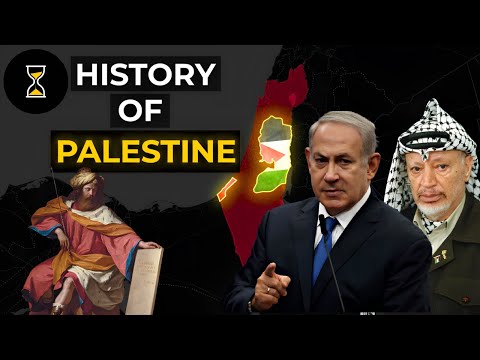
The ENTIRE History of Palestine | Documentary
Comprehensive Summary of the Video Transcript on the History of Palestine
The documentary presents a detailed exploration of Palestine's historical significance, tracing its evolution over three millennia, from ancient city-states to modern geopolitical conflicts. The narrative begins with an overview of Palestine's rich and complex history, characterized by a tapestry of cultures, empires, and religious traditions. The documentary aims to provide a strictly informational and nonpartisan account, utilizing maps, archival materials, and contextualized testimonies to present verifiable facts, while avoiding graphic imagery.
Palestine's historical narrative is introduced with the olive tree, a symbol of endurance and peace, revered across various cultures and religions, including ancient Egyptian, Greek, Hebrew, Christian, and Islamic traditions. The documentary asserts that the name "Palestine" predates its Roman origins, being referenced by the Greek historian Herodotus to describe the southern Levant. The term likely derives from the "Paliset," a group mentioned in ancient texts, indicating that the identity of this land has been multifaceted throughout history.
The narrative begins in the Neolithic period, progressing through the Bronze Age, where Palestine evolved into a complex society with urban and rural settlements influenced by major powers such as Egypt and Mesopotamia. Canaanite cities engaged in trade and cultural exchanges, and the late Bronze Age saw the emergence of the Sea Peoples, including the Peliset, linked to the name "Palestine." The documentary challenges traditional views of mass invasions causing the Bronze Age collapse, suggesting instead a transition to a decentralized Iron Age.
During the Iron Age, Palestine became a mosaic of diverse cultures and political entities, including the kingdoms of Moab, Edom, and Israel. The documentary notes the first mention of Israelites outside biblical texts in the 13th century BCE, with the kingdoms of Israel and Judah emerging, supported by archaeological evidence for figures like King David. Religious practices transitioned during this time, with monolatric worship of Yahweh becoming more prominent amidst a backdrop of polytheism.
The narrative continues through the late Iron Age, detailing interactions between Israel, Judah, and neighboring kingdoms, as well as the influence of empires such as Assyria and Babylon. The fall of the kingdom of Israel in 720 BCE and Judah in 586 BCE marked significant turning points, leading to the Babylonian exile, which transformed Judaism from a regional sect to a more monotheistic faith influenced by various cultures.
The documentary discusses the return of Jewish elites to Palestine under Persian rule, the construction of the Second Temple, and the emergence of new religious practices. It highlights cultural and intellectual exchanges during this period, including the influence of Zoroastrianism on Jewish thought.
As the narrative progresses, it covers the Hellenistic period following Alexander the Great's conquests, the subsequent cultural schisms within Judaism, and the establishment of the Hasmonean dynasty. The Roman period is described as pivotal for Jewish identity, marked by the rise of various Jewish factions and the eventual destruction of the Second Temple in 70 CE, leading to significant demographic changes and the Jewish diaspora.
The documentary notes the complex interplay of Jewish, Christian, and pagan communities in Palestine during late antiquity, culminating in the Christianization of the region under Constantine. It outlines the religious and cultural transformations that occurred, including the construction of significant Christian sites and the continued presence of Jewish communities, despite periods of persecution.
As the narrative enters the early Islamic period, it describes the arrival of Islam in Palestine, beginning with Muhammad's night journey to Jerusalem. The subsequent Arab conquests, particularly the Battle of Yarmouk in 636 CE, are detailed, emphasizing the peaceful surrender of Jerusalem and the establishment of Islamic rule under the Umayyad Caliphate. The construction of the Dome of the Rock is highlighted as a significant architectural achievement and a symbol of Islamic presence in the region.
The documentary concludes this segment by discussing the prosperity and cultural synthesis that characterized Palestine under early Islamic rule, including the flourishing of trade, agriculture, and scholarship. It emphasizes the region's strategic importance and the continued coexistence of diverse religious communities, setting the stage for the subsequent historical developments that would shape Palestine's complex identity.
Medieval Military Architecture and Daily Life in Crusader Palestine
The documentary then shifts its focus to the Crusader period, discussing the evolution of military architecture, daily life, cultural exchanges, and significant historical events during this time, as well as the subsequent Ottoman rule.
Medieval Military Architecture
During the Crusader period, military architecture reached new heights with the construction of formidable castles such as Kra de Shavalier, Belvoir, and Montfort. These stone fortresses featured concentric walls, towers, and advanced defensive mechanisms, enabling small garrisons to manage extensive territories and endure long sieges. The architectural innovations of this era reflected the military needs of the Crusaders while also showcasing the cultural influences of the region.
Daily Life in Crusader Palestine
Despite the backdrop of religious conflict, daily life in Crusader Palestine was marked by cultural exchange and coexistence. The Frankish settlers, numbering around 120,000 at their peak, governed a diverse population of approximately 350,000 Muslims, Eastern Christians, and Jews. Arab chronicler Usama Ibn Monqid noted that some Franks had acclimatized and integrated with the local Muslim population, distinguishing between established crusader families and newcomers from Europe. Intermarriage between Frankish nobles and local Christians led to a unique Levantine nobility that blended European and Middle Eastern traditions.
Cultural Synthesis and Trade
Crusader courts adopted local customs, including food and clothing, and many Frankish nobles learned Arabic, employing Muslim administrators. Trade thrived despite military conflicts, with Muslim merchants operating in Crusader ports and Frankish traders establishing networks throughout the eastern Mediterranean. Italian maritime republics like Venice, Pisa, and Genoa set up permanent trading posts in Crusader cities, fostering wealth that supported military campaigns and cultural exchanges.
Architectural Legacy
The architectural legacy of this period reflects cultural synthesis, with Crusader churches incorporating Islamic elements and vice versa. Notably, the Church of the Holy Sepulchre underwent extensive reconstruction, combining Romanesque and Byzantine styles with local traditions. This blending of architectural styles illustrates the complex interactions between different cultures during the Crusader period.
Initial Muslim Response to Crusader Conquest
The Muslim response to the Crusader conquest was initially fragmented due to divisions among the Islamic world, including the Sunni Abbasid Caliphate in Baghdad and the Shiite Fatimid Caliphate in Cairo. This disunity allowed Crusaders to establish their states. However, the concept of jihad gradually gained traction as a response to the Crusader presence. Notable leaders like Imad ad-Din Zengi began organizing resistance, with Zengi capturing Edessa in 1144, prompting the Second Crusade.
Rise of Saladin
Saladin, a Kurdish military commander, rose to prominence under Nur ad-Din, who emphasized military victory and Islamic unity. Saladin's conquest of Damascus in 1154 solidified his control over Muslim Syria. He became known for his piety, generosity, and chivalrous treatment of prisoners, earning respect even from his enemies. His strategic focus was on reclaiming Jerusalem, culminating in the decisive Battle of Hattin on July 4, 1187, where Saladin's forces defeated the Crusaders, leading to the fall of Jerusalem on October 2, 1187.
Contrast in Conquest
Saladin's capture of Jerusalem starkly contrasted with the Crusader conquest of 1099, where the latter had massacred the city's population. Saladin, however, showed restraint, allowing Christians to leave safely and even paying ransoms for the poor. His actions sent shockwaves through Western Europe, leading to the Third Crusade.
The Third Crusade
The Third Crusade, led by powerful monarchs like Richard the Lionheart, aimed to reclaim Jerusalem. The siege of Acre became a focal point, marked by controversy when Richard ordered the massacre of Muslim prisoners. Despite mutual respect between Richard and Saladin, Richard's ultimate goal of retaking Jerusalem was thwarted by logistical challenges and political pressures back in England. The Third Crusade concluded with the Treaty of Ramla in 1192, establishing a truce and defining territorial boundaries, allowing Christian pilgrimage rights to Jerusalem.
Decline of Crusader Presence
Following Richard's departure, Saladin's death in 1193 led to the fragmentation of his empire, weakening Muslim resistance. Subsequent Crusades, including the Fourth and Fifth, faced challenges, with the Fourth Crusade diverting to Constantinople. The Mamluks eventually conquered remaining Crusader strongholds, culminating in the fall of Acre in 1291, marking the end of Crusader states in Palestine.
Ottoman Rule and Transformation
The Ottoman conquest began in 1516, ending Mamluk rule. Sultan Selim I's campaign aimed to control pilgrimage routes and assert Sunni leadership. The Ottomans established a system of religious autonomy for Christians and Jews, integrating existing governance structures. Under Suleiman the Magnificent, Palestine experienced prosperity, marked by architectural achievements like the reconstruction of Jerusalem's walls and the Dome of the Rock.
Economic and Cultural Flourishing
The early Ottoman period saw economic prosperity, with Palestine integrated into vast trade networks. Agricultural developments, particularly in olive oil and citrus production, thrived. However, the empire faced challenges in the late 16th century, leading to local autonomy and the rise of strongmen like Zahir al-Umar.
European Influence and Jewish Immigration
The 19th century witnessed increased European involvement in Palestine, with consulates proliferating and archaeological interests rising. Jewish immigration, driven by anti-Semitism and Zionist ideology, began to reshape the demographic landscape. The establishment of agricultural settlements faced challenges, leading to tensions with Arab peasants.
World War I and British Mandate
World War I brought devastation to Palestine, with the Ottoman Empire's involvement leading to suffering and economic decline. The British conquest began with the capture of Jerusalem in December 1917, followed by the establishment of military administration. However, conflicting promises made during the war, including the Balfour Declaration, created tensions that would shape future British policies in the region.
Conclusion
The Ottoman legacy left a rich architectural and administrative heritage in Palestine, fostering a complex society that would face challenges from emerging national movements and colonial influences in the 20th century. The British conquest marked a new chapter, but the Ottoman influence continued to resonate in Palestine's turbulent modern history.
The British Mandate and Rise of Nationalism
The documentary then delves into the complex historical events surrounding the British mandate in Palestine, the rise of nationalist movements among both Jews and Arabs, and the subsequent conflicts that arose from these tensions.
Initially, a British official noted the dilemma of promising the same land to two different peoples, highlighting the challenges of reconciling the conflicting aspirations of Jewish and Arab communities in Palestine. The end of Ottoman rule catalyzed nationalist movements, with both groups envisioning different futures for the region. The Zionist movement, bolstered by the Balfour Declaration, saw British rule as a chance to establish a Jewish national home. Key figures like Chaim Weizmann, who led the Zionist commission to Palestine in 1918, emphasized a vision of building rather than destroying, though this vision implied significant demographic and political changes.
The third Aliyah (1919-1923) saw an influx of 35,000 Jewish immigrants, primarily young Labor Zionists committed to creating a new society based on collective principles. The Histadrut Labor Federation emerged, providing essential services to the Jewish community. David Ben-Gurion, who would later become Israel's first prime minister, articulated a vision of returning to their ancestral land as masters rather than guests.
In response, Arab nationalism also intensified. The first Palestine Arab Congress in 1919 rejected the Balfour Declaration and called for independence, asserting that Palestine was an integral part of Arab Syria. Musa Kazim al-Husini emerged as a prominent leader, advocating for representative government and boycotting British institutions, arguing that the mandate violated self-determination principles.
The clash of these nationalisms led to violence, exemplified by the Nebi Musa riots in April 1920, which were sparked by inflammatory speeches during a Muslim pilgrimage. The riots resulted in anti-Jewish violence, and Jewish self-defense units were formed in response. British reports attributed the disturbances to the collision of rival nationalisms.
The San Remo Conference in April 1920 formalized the British mandate over Palestine, incorporating the Balfour Declaration into international law. The mandate stipulated that Britain was responsible for establishing a Jewish national home while ensuring the rights of existing populations. Herbert Samuel, the first high commissioner, was a Jewish appointee, which raised suspicions among Arabs. Samuel's attempts to balance competing claims were met with limited success, as Arab boycotts of British institutions hampered effective governance.
Jewish immigration continued to rise, with subsequent Aliyahs bringing tens of thousands of Jews fleeing persecution in Europe. This influx transformed Palestine's demographics and economy, heightening Arab fears of displacement. The Jewish National Fund's land purchases displaced Arab tenant farmers, exacerbating tensions. The Arab community, lacking unified leadership, responded by establishing their own institutions, such as the Supreme Muslim Council.
The Western Wall incident in 1929, which revolved around Jewish prayer rights at a site Muslims considered sacred, escalated into violence, resulting in significant casualties on both sides. British investigations into the violence highlighted the underlying Arab grievances regarding political and economic aspirations.
The Great Arab Revolt from 1936 to 1939 marked a significant challenge to British rule, fueled by mass Jewish immigration and land purchases. The Arab Higher Committee demanded an end to Jewish immigration and land sales, leading to a general strike and violent confrontations. The British response included harsh counterinsurgency tactics, which further alienated the Arab population.
World War II and its aftermath brought new challenges. The British white paper of 1939 limited Jewish immigration and promised a Palestinian state with an Arab majority, provoking outrage among Jewish leaders. Despite opposition, many Jews volunteered for British military service during the war, while Arab leaders like Hajj Amin al-Husini collaborated with Nazi Germany, complicating the Palestinian cause.
Post-war, pressures mounted for Jewish immigration, especially for Holocaust survivors. The Anglo-American Committee of Inquiry recommended admitting 100,000 refugees, but British resistance continued. Jewish resistance to British rule intensified, leading to coordinated attacks against British infrastructure.
The UN's partition plan in 1947 proposed dividing Palestine into Jewish and Arab states, which was accepted by Jewish leaders but rejected by Arab leaders, leading to immediate violence. The civil war between Jewish and Arab communities escalated as both sides prepared for the British withdrawal.
The conflict culminated in the establishment of the state of Israel on May 14, 1948, followed by an invasion from neighboring Arab states. Despite initial advantages, the Arab armies faced challenges in coordination and equipment. The Israeli forces, motivated and organized, ultimately gained control over a significant portion of the territory.
The aftermath of the 1948 war resulted in the displacement of approximately 750,000 Palestinians, a traumatic event referred to as the Nakba (catastrophe) by Palestinians. The conflict established a refugee crisis that persists today, with many Palestinians living in various countries across the region.
The British mandate ended, leaving behind a legacy of unresolved tensions and conflicts that would shape the Middle East for generations. The establishment of Israel marked the beginning of a new chapter in the long and troubled history of Palestine, leading to ongoing conflicts that would define the region throughout the 20th century and beyond.
The Israeli-Palestinian Conflict from the 1970s to Present
The documentary concludes by discussing the complex history of the Israeli-Palestinian conflict, focusing on key events and shifts in power dynamics from the 1970s to the present.
Initially, it highlights the growing power of the Palestine Liberation Organization (PLO) in Jordan, which led to tensions with King Hussein's government. The PLO's influence resulted in the establishment of a "state within a state," controlling refugee camps and challenging Jordanian sovereignty. King Hussein expressed his concerns, stating, "The Fedí have created a state within my state." This tension culminated in the violent conflict known as Black September in 1970, during which Jordanian forces suppressed the PLO presence, resulting in approximately 3,000 Palestinian deaths and forcing PLO leadership, including Yasser Arafat, to relocate to Lebanon. Arafat's defiance was evident as he stated, "They want to liquidate the Palestinian resistance, but we will never surrender."
The narrative then transitions to the October War of 1973, where Egypt and Syria launched a surprise attack on Israel, shattering the perception of Israeli invincibility. Egyptian President Anwar Sadat articulated a strategy focused on reclaiming occupied land. The aftermath of the war saw significant diplomatic developments, including the Arab oil embargo, which underscored the strategic importance of the Palestinian cause to Arab states. Arafat's historic address to the UN in 1974 marked a pivotal moment for Palestinian recognition, where he famously stated, "I have come bearing an olive branch and a freedom fighter's gun."
Following the PLO's relocation to Lebanon, the weak Lebanese government allowed Palestinian factions to operate autonomously, launching attacks against Israel. The Cairo Agreement of 1969 had granted the PLO considerable autonomy in Lebanese refugee camps. A Palestinian commander expressed determination, stating, "From Lebanon, we will liberate Palestine." This led to Israeli military operations, including Operation Litani in 1978 and Operation Peace for Galilee in 1982, aimed at dismantling the PLO's infrastructure in Lebanon. Defense Minister Ariel Sharon's aggressive stance culminated in the siege of Beirut, where Arafat vowed, "We will not surrender. Beirut will be the Stalingrad of the Arabs." The Sabra and Shatila massacre in September 1982, where thousands of Palestinian civilians were killed by Christian Phalangist militias under Israeli control, became a highly controversial event, leading to the Kahan Commission's conclusion that Israeli leaders bore responsibility for the massacre.
The PLO's evacuation to Tunisia marked the end of its military presence on Israel's borders. Arafat's declaration upon leaving Beirut emphasized the enduring Palestinian claim to their homeland. The first Intifada began in December 1987, sparked by a traffic incident that killed four Palestinians. This uprising was characterized by civil disobedience and mass protests, with a Palestinian youth declaring, "We have nothing left to lose. We will throw stones until we are free." The Intifada represented a shift towards popular resistance rather than armed struggle, with calls for strikes and boycotts.
The emergence of Hamas in 1987, founded by Sheikh Ahmed Yassin, introduced a new Islamic nationalist alternative to the secular PLO. Hamas's charter declared that Palestine is an Islamic land, emphasizing religious claims over nationalistic ones. In response to the Intifada, Israeli Defense Minister Yitzhak Rabin adopted a policy of force, resulting in significant casualties on both sides. The Intifada garnered international sympathy for the Palestinian cause and highlighted the urgent need for a political solution.
The PLO's Declaration of Independence in 1988 marked a strategic shift towards accepting a two-state solution, with Arafat proclaiming the establishment of the State of Palestine. The PLO's renunciation of terrorism opened dialogue with the United States, leading to the Oslo Accords in 1993, which represented a significant breakthrough in Israeli-Palestinian relations. The secret negotiations in Norway resulted in mutual recognition and a framework for Palestinian self-government, culminating in a historic handshake between Rabin and Arafat, witnessed by President Bill Clinton.
The Oslo II agreement in 1995 established the Palestinian Authority and divided the West Bank into areas with varying degrees of control. However, Israeli settlement expansion continued during this period, leading to tensions. The assassination of Prime Minister Yitzhak Rabin by a Jewish extremist in 1995 severely impacted the peace process, with Rabin's final speech warning against violence.
The election of Benjamin Netanyahu in 1996 slowed the peace process, as he prioritized security over concessions. The Camp David Summit in 2000 represented a final attempt at a comprehensive agreement, with significant Israeli concessions offered, including 91% of the West Bank. However, Arafat's refusal to compromise on key issues, such as the right of return for refugees and sovereignty over East Jerusalem, led to the collapse of negotiations.
The second Intifada began in September 2000, following Ariel Sharon's visit to the Temple Mount, escalating into violence that included suicide bombings and armed attacks. The death of a young Palestinian boy became a poignant symbol of the conflict's toll on civilians. Israeli military responses intensified, leading to operations that reoccupied West Bank cities and besieged Arafat's compound.
The construction of a security barrier by Israel in 2002, justified as a means to prevent attacks, became a controversial aspect of the conflict, with significant implications for Palestinian communities. The International Court of Justice ruled that the barrier's construction violated international law.
Ariel Sharon's Gaza disengagement plan in 2005, which involved withdrawing settlements and military forces from Gaza, faced intense opposition from settlers. The victory of Hamas in the 2006 Palestinian legislative elections shocked the international community, as Hamas refused to recognize Israel and rejected conditions for engagement. The subsequent Gaza civil war in 2007 resulted in Hamas taking control of Gaza, leading to a blockade imposed by Israel and Egypt.
The ongoing conflict between Israel and Hamas saw several military operations, including Operation Cast Lead in 2008-2009, Operation Pillar of Defense in 2012, and Operation Protective Edge in 2014, each resulting in significant casualties. The international community remained divided on the conflict, with calls for peace processes failing to gain traction.
The demographic landscape of historic Palestine continues to evolve, with approximately equal populations of Jews and Arabs, and settlement expansion ongoing. The international community's recognition of Palestine as a state remains contentious, with calls for Palestinian rights growing amid continued Israeli settlement activity.
The narrative concludes with reflections on the enduring nature of the conflict, emphasizing the human toll and the persistent hope for peace among ordinary people on both sides. Palestinian and Israeli voices express a desire for reconciliation and a better future, highlighting the complexities and challenges that continue to shape the story of Palestine. The olive tree, a symbol of resilience and hope, represents the enduring connection to the land and the aspiration for peace amidst ongoing struggles.
The transcript outlines the fluctuations in the Jewish and non-Jewish populations in Palestine, particularly focusing on the 20th century. It indicates that significant demographic changes occurred, especially during the waves of Jewish immigration driven by various socio-political factors. These changes were marked notably by the Aliyahs, which were waves of Jewish immigration to Palestine. The first Aliyah occurred in the late 19th century, while the fifth Aliyah took place during the rise of Nazi persecution in Europe, bringing approximately 250,000 Jewish immigrants to Palestine.
As a result of these immigration waves, the Jewish population expanded dramatically, doubling between 1948 and 1951, with an influx of around 700,000 immigrants during that period. This growth was facilitated by the Law of Return, which granted automatic citizenship to any Jew immigrating to Israel. In contrast, the Arab population faced displacement and demographic changes due to the establishment of the State of Israel in 1948, which led to approximately 750,000 Palestinians becoming refugees.
The transcript emphasizes that by the end of the British mandate in 1948, the Jewish population had increased significantly, while the Arab population was characterized by loss and displacement as many were forced to flee their homes during the conflicts surrounding the establishment of Israel. The historical context highlights that the dynamics of population changes in Palestine were deeply intertwined with the political struggles and conflicts of the era.
- [01:44:22] "We hereby declare the establishment of a Jewish state in Israel..."
- [01:54:29] "Israel will not be complete until every Jew in the world has the opportunity to immigrate."
- [12:50] "The destruction of the first temple and the Babylonian conquest marked the end of the first great chapter in Palestine's history."
The transcript outlines several significant actions taken by the governments of the United States, the United Kingdom, and other European countries, which greatly impacted developments in Palestine from 1850 to 1948. One major event was the British Balfour Declaration issued on November 2, 1917, where Britain promised support for the establishment of a national home for the Jewish people in Palestine. This declaration was pivotal as it encouraged Jewish immigration and settlement in the region, altering the demographic landscape.
Additionally, the McMahon-Hussein Correspondence during World War I indicated Britain's promise of Arab independence, which subsequently clashed with the Balfour Declaration's commitment to the Jewish community. The Sykes-Picot Agreement further complicated matters by secretly dividing the Middle East between Britain and France, disregarding the aspirations of the Arab population.
As British forces gained control over Palestine following World War I, they established the Palestine Mandate in 1920, which incorporated the Balfour Declaration into international law. This created tensions between Jewish and Arab communities, as the British attempted to balance the conflicting promises made to both groups. The transcript notes that throughout the mandate period, the British struggled to manage these competing nationalisms, leading to unrest and violence.
In summary, the actions of these foreign governments, particularly Britain's conflicting promises, significantly influenced the political landscape in Palestine, setting the stage for ongoing conflict and tension which persisted through the establishment of Israel in 1948.
- [01:21:52] "We have promised the same land to two different peoples, and now we must somehow make it work."
- [01:21:40] "The mandatory shall be responsible for placing the country under such political, administrative, and economic conditions as will secure the establishment of the Jewish national home."
- [01:22:10] "The Zionist movement energized by the Balfour declaration saw British rule as an opportunity to build the Jewish national home."
The transcript provides an insightful depiction of the origins, identities, and social relationships of Jewish and Palestinian communities in early 20th century Palestine. It highlights that the Jewish community, invigorated by the Zionist movement, viewed Palestine as their ancestral homeland and sought to establish a national home there. This movement was characterized by waves of immigration, particularly during the Aliyahs, which were driven by persecution and the desire for self-determination.
On the other hand, the Palestinian Arab community had deep historical ties to the land, viewing it as an integral part of their national identity. The transcript reveals a duality of aspirations: while Jews aimed to reconstruct their national identity in their historical homeland, Palestinians strove to preserve their rights and existence amidst growing Jewish settlement.
The social and political dynamics were further complicated by the conflicting national aspirations. The Palestinian Arab Congress of 1919 rejected the Balfour Declaration, asserting Palestine as part of Arab Syria and demanding independence. Key figures like Musa Kazim al-Husini emerged to voice Palestinian nationalism, advocating for representative government and self-determination.
This tense relationship between the communities evolved as Jewish immigration increased, leading to fears among Palestinians of displacement and loss of their cultural identity. The community’s response included the establishment of political organizations aimed at defending their rights and seeking autonomy, creating a complex social landscape filled with both cooperation and conflict between these two distinct groups.
- [01:22:13] "The Zionist movement energized by the Balfour declaration saw British rule as an opportunity to build the Jewish national home."
- [01:23:39] "We consider Palestine as part of Arab Syria... connected with it by national, religious, linguistic, natural, economic, and geographical bonds."
- [01:21:37] "The Palestinian Arab Congress convened in 1919 rejected the Balfour declaration and demanded independence."
The transcript highlights the aims, strategies, and internal divisions of both Zionist organizations and Palestinian political leaders in the tumultuous period leading up to and following the establishment of the State of Israel in 1948. The Zionist movement, particularly through figures like David Ben-Gurion, aimed to establish a Jewish state in Palestine, viewing British rule as an opportunity to fulfill their national aspirations. Ben-Gurion's declaration upon the establishment of Israel emphasized the hope and continuity of Jewish life in the land.
Prior to 1948, the Zionist movement was characterized by various factions, some emphasizing labor and socialist principles while others focused on political advocacy and negotiation. The Jewish Agency played a crucial role in organizing immigration and settlement, while the Haganah and groups like Irgun utilized armed struggle as tensions escalated.
On the Palestinian side, the political landscape was more fragmented. Leaders like Hajj Amin al-Husini sought to unify Palestinian Arabs against the Zionist influx and British policies. The Palestinian Arab Congress formed in 1919 rejected the Balfour Declaration, asserting their claims to independence and opposing Jewish immigration. Despite their aspirations, the Palestinian leadership lacked the organizational cohesion that characterized the Zionist movement.
Following the establishment of Israel, the conflict intensified, leading to significant violence and the displacement of Palestinians. The Nakba, or catastrophe, saw mass exodus and the destruction of Palestinian society. The differences in strategy and leadership between the two communities became pronounced, with Zionist leaders advocating for statehood while Palestinian leaders struggled to articulate a unified response to the ongoing crisis.
- [01:44:20] "We hereby declare the establishment of a Jewish state in Israel..."
- [01:23:22] "We are not coming to Palestine as guests, but as masters, returning to their inheritance."
- [01:23:38] "The scheme of partition is inadmissible for it prejudices the right of the people of Palestine against the will of the majority."
The transcript discusses several pivotal historical events from 1948 to the present day that have shaped the ongoing Israeli-Palestinian conflict. Each event is crucial in understanding the complexities and challenges that have persisted over the decades:
- 1948 - Establishment of Israel: On May 14, 1948, David Ben-Gurion proclaimed the establishment of the State of Israel, leading to the Nakba, where approximately 750,000 Palestinians were displaced, marking a significant turning point in the conflict.
- 1967 - Six-Day War: From June 5 to 10, 1967, Israel engaged in a conflict with its Arab neighbors, resulting in the occupation of the West Bank and Gaza Strip, significantly altering the territorial landscape and creating an influx of 200,000 Palestinian refugees.
- 1973 - October War: In October 1973, Egypt and Syria launched a surprise attack on Israel, challenging the notion of Israeli invincibility and leading to significant diplomatic developments in subsequent years.
- 1993 - Oslo Accords: The Oslo Accords, signed in September 1993, marked a historic attempt at peace, establishing mutual recognition and a framework for Palestinian self-governance, though the peace process faced significant challenges thereafter.
- 2000 - Second Intifada: Triggered by Ariel Sharon's visit to the Temple Mount on September 28, 2000, this uprising saw escalated violence and a shift in Palestinian resistance strategies.
- 2021 - Gaza Conflict: In May 2021, tensions around the Sheikh Jarrah neighborhood and Al-Aqsa Mosque escalated into an 11-day conflict, marking the most recent outbreak of violence, highlighting the ongoing volatility of the situation.
These events illustrate the long-standing and multifaceted nature of the conflict, demonstrating how historical actions and responses have shaped the current realities faced by both Israelis and Palestinians.
- [01:44:22] "We hereby declare the establishment of a Jewish state in Israel..."
- [02:00:42] "The war's aftermath saw significant diplomatic developments..."
- [02:08:36] "The Oslo Accords... represented the most significant breakthrough in Israeli Palestinian relations since 1948."
[00:00] On a narrow hinge of land between desert[00:02] and sea, a story of faith, empire, and[00:05] modern warfare has unfolded.[00:09] Palestine was forged across three[00:10] millennia. Bronze Age citystates, the[00:14] kingdoms of Israel and Judah,[00:16] Hellenistic dynasts, Roman and Byzantine[00:19] provinces, early Islamic caliphates,[00:22] crusader fortresses, Mamluke roads, the[00:25] long Ottoman centuries.[00:28] In the last 100 years, the map was[00:30] redrawn again and again. British mandate[00:33] 1948 1967.[00:36] Interarders, shifting borders, sieges[00:39] and ceasefires, missiles and drones,[00:42] targeted raids and air strikes,[00:44] propaganda and counter propaganda,[00:47] turning words into weapons. Homes,[00:50] schools, and screens became part of the[00:52] battlefield.[00:54] This documentary is strictlyformational[00:56] and nonpartisan. No advocacy, only[00:59] context, sources, and verifiable facts.[01:03] To comply with YouTube's guidelines, and[01:05] audience sensitivities, we will not show[01:08] graphic imagery. We'll rely on maps,[01:11] archival material, declassified records,[01:14] satellite analysis, and carefully[01:17] contextualized testimony.[01:21] But how did one of history's oldest[01:22] crossroads become the most dramatic[01:25] place of our time?[01:27] This is the entire history of Palestine.[01:39] The olive tree stands as one of[01:41] humanity's most enduring symbols.[01:45] sacred to Isis in ancient Egypt called[01:48] liquid gold by Homer's Greeks, a symbol[01:51] of peace in the Hebrew Psalms. For[01:54] Christians, it evokes Gethsemane where[01:56] Christ prayed. For Muslims, it connects[01:59] to the prophet Muhammad himself.[02:01] Cultivated as early as the 8th[02:03] millennium BCE in the Levant, this[02:06] ancient tree has witnessed the rise and[02:08] fall of civilizations across a land[02:11] known by many names. Canaan, Eretz,[02:14] Israel, and Palestine.[02:17] Contrary to common misconceptions, the[02:20] name Palestine appears in texts far[02:22] older than its supposed Roman origin.[02:25] The Greek historian Heroditus, writing[02:28] centuries before Rome's dominance, used[02:30] this name to describe the southern[02:32] Levant. The word likely derives from the[02:35] Paliset, one of the mysterious sea[02:38] peoples who appeared in both[02:39] Mesopotamian and Egyptian sources during[02:42] the late Bronze Age. The name Palestine,[02:45] when referring to both place and people,[02:48] predates its Roman usage by millennia.[02:51] Yet, this land has carried many[02:53] identities throughout history.[02:56] Israel, the land of Israel, appears in[02:59] biblical sources with boundaries that[03:01] sometimes included parts of Lebanon and[03:04] Syria while excluding southern regions[03:06] the Bible called the land of Edom. The[03:09] Holy Land emerged as a Christian[03:11] designation in the Middle Ages, focusing[03:14] primarily on Jerusalem and other sites[03:16] sacred to Christianity. Canaan broadly[03:19] referred to the southern Levant in[03:21] ancient texts.[03:23] The historical kingdoms of Israel and[03:26] Judah ruled parts of this territory, but[03:28] never reigned over all of Canaan or the[03:31] promised land.[03:33] Throughout the ages, the boundaries of[03:35] what people considered Israel,[03:36] Palestine, Canaan, Judea, and the Holy[03:39] Land shifted dramatically, sometimes[03:42] including various parts of modern[03:44] Israel, Palestine, contracting or[03:47] expanding beyond them at different[03:48] times.[03:52] The story begins in the Neolithic Stone[03:54] Age when agricultural societies were[03:56] already forming along the Levventine[03:59] coast. By the Bronze Age, these[04:01] settlements had grown in size and[04:03] complexity and Palestine entered a long[04:05] period of contact with the eastern[04:07] Mediterranean world.[04:10] Bronze Age Palestine or Canaan was[04:13] primarily a clan-based society, a[04:16] collection of urban and rural[04:17] settlements decorating the rich[04:19] countryside. These would eventually[04:22] develop into the various kingdoms known[04:24] from biblical sources. Moab, Edom,[04:27] Israel, and Judah. The religious[04:30] composition of the time was likely a[04:32] broader Semitic polytheism, much like[04:34] their northern cousins who had become[04:36] the Phoenetians.[04:39] The interplay of this common religious[04:41] millure appears in how the storm god[04:43] Bal, a popular Phoenician deity,[04:46] influenced later deities like L and[04:48] Yahweh. Their hybridization would[04:52] eventually lead to the god of the Hebrew[04:54] Bible. Like any land straddling the[04:56] crossroads between empires, Canaan was[04:59] caught in the geopolitics of the[05:01] period's giants.[05:03] Throughout the Bronze Age, ancient Egypt[05:06] proved to be a steady influence on the[05:08] broader Near East, while Canaanite[05:10] cities continued trading with both Egypt[05:13] and ancient Mesopotamia as the trade[05:15] networks of the epoch expanded.[05:20] As the late Bronze Age dawned in the[05:23] 1500s B.CE, CE the sun god of the[05:25] Egyptians. Ra wrestled in the sky with[05:29] the storm god of the Hittites. Tarhuna[05:32] for control of the lands where Yahweh[05:35] and L would emerge. Canaan became one of[05:38] the battlegrounds between the mighty[05:40] Hittite and Egyptian empires. During[05:42] this period, eventually falling under[05:44] Egyptian control.[05:47] The Egyptians left a physical mark on[05:49] the region, building various[05:51] administrative complexes throughout[05:53] Canaan. Under Egyptian rule, local[05:56] Canaanite clan structures survived,[05:59] though the local culture became infused[06:01] with Egyptian elements. This cultural[06:04] entanglement was common throughout the[06:05] late Bronze Age. Canaanite populations[06:08] during this time worshiped a mixture of[06:11] Egyptian and local deities as evidenced[06:14] in the Fos Temple at Tel Lakish where a[06:17] local protoculted with worship of the[06:20] Egyptian goddess Hor.[06:23] The end of the Bronze Age in the 1200s[06:25] B.CE brought significant turbulence and[06:28] marked a crucial turning point for the[06:30] region. During this period, a name[06:33] approximating Palestine appears,[06:35] possibly through the Peliset tribe of[06:37] the so-called sea peoples. The Peliset[06:40] may have originated from Greece, though[06:42] this remains unconfirmed, and their name[06:45] first appears in Egyptian records.[06:49] The Sea Peoples are often blamed for[06:50] causing the Bronze Age collapse through[06:53] mass raids. However, modern scholars[06:56] question the paradigm of mass invasions[06:58] and migrations as well as the notion[07:00] that these were one cohesive ethnic[07:02] group. Cultural mixture between new[07:05] arrivals and existing populations was[07:08] probably extensive. While evidence[07:11] exists for social disruption, it's[07:13] better understood as Palestine[07:15] undergoing a transition into the more[07:17] decentralized Iron Age.[07:22] Throughout the Iron Age, Palestine[07:24] became a diverse tapestry of many[07:26] cultures.[07:28] This was also an era of political[07:30] consolidation when kingdoms began[07:32] appearing along the coast and in the[07:34] hintterlands.[07:36] In the coastal region of Pentapoulos, a[07:39] confederation of five primarily[07:41] Philistine cities formed.[07:44] In the south, the kingdom of Edom[07:46] reigned over what is today the Negv[07:48] desert. In the east, the kingdom of Moab[07:50] controlled the east bank of the Jordan[07:53] River.[07:55] In 1208 B.CE, the first mention of[07:58] Israelites as a people outside the[08:00] Hebrew Bible appears in the Meptasale.[08:03] During this period, biblical accounts[08:06] begin to correspond more definitively[08:08] with historical events. In the central[08:11] hintterlands and the north, the kingdoms[08:14] of Judah and Israel form from the[08:17] consolidation of tribal clans.[08:20] The biblical King David is likely a real[08:23] historical figure from the 9th century[08:25] BCE as archaeologists have discovered[08:28] records mentioning him by name in the[08:31] land of the historical kingdom of Israel[08:34] dating to a few decades after his[08:36] supposed reign.[08:38] Religious life across the Levventine[08:40] realms during this time was in[08:43] transition. Rituals like keeping kosher[08:46] appeared, but polytheism remained the[08:48] norm in most kingdoms. Canaanite[08:51] polytheism was similar to Phoenician[08:53] religion as they were related peoples[08:56] whose languages both belong to the[08:58] Semitic family. However, Phoenician and[09:02] Canaanite religions had regional[09:04] differences.[09:06] As kingdoms consolidated, a single god[09:09] would emerge from their polytheistic[09:10] pantheons as the chief and patron deity[09:13] of each kingdom. The first temple of[09:16] Judaism appeared in Jerusalem during[09:18] this period, a religious complex devoted[09:21] to Yahweh, the patron god of Israel.[09:26] First temple Judaism differed[09:28] significantly from later Judaism. The[09:31] Jewish people during this period were[09:33] monolatric, meaning they believed in[09:35] other gods, but devoted their worship[09:38] specifically and singularly to Yahweh.[09:41] The various kingdoms of the region[09:43] traded and wared with each other as[09:45] frequently as their Mediterranean[09:46] neighbors did.[09:49] The two kingdoms of Israel and Judah[09:51] were most likely one kingdom that split[09:53] into two sometime in the 10th century[09:56] BCE due to internal strife. However,[10:00] recent scholarly debates consider the[10:02] opposite possibility that the two[10:04] kingdoms merged at some point during the[10:06] reigns of kings Josiah and Hezekia,[10:10] though the exact timing remains[10:11] uncertain.[10:15] As the early Iron Age transitioned into[10:17] the late Iron Age, Palestine's kingdoms[10:19] fought one another while empires began[10:22] forming around them. During this era,[10:24] biblical sources become more useful as[10:27] historical primary sources with the[10:29] Kingdom of Judah taking center stage.[10:33] A PaleoHebrew writing system based on[10:36] the Phoenician alphabet began appearing[10:38] during this period. Pentapoulos, Moab,[10:42] and Edom continued to exist and interact[10:44] with both the kingdoms of Israel and[10:46] Judah.[10:48] Biblical stories of kings like Josiah[10:51] who probably initiated the shift toward[10:53] monotheism in Judaism and Hezekia who[10:56] withstood a siege by the Assyrian king[10:58] Senakaribb come to the four during this[11:00] period.[11:02] However, many of these biblical books[11:05] were written centuries after these kings[11:06] reigns.[11:08] The historical legacy of these legendary[11:11] Jewish kings is sometimes evident in the[11:13] archaeological record, such as in the[11:16] systems underneath Jerusalem, which were[11:18] built during Hezekiah's reign.[11:22] Eventually, the heyday of the Hebrew[11:24] kingdoms ended when the armies of Marduk[11:27] marched from Babylonia, sweeping into[11:29] the Levant, the Babylonian Empire[11:32] descended from Syria and destroyed the[11:34] kingdom of Israel around 720 B.CE. CE.[11:38] Judah survived for two more centuries[11:41] until 587 B.CE. when it too was[11:44] destroyed and the first temple in[11:47] Jerusalem was ruined. Other local[11:49] Canaanite kingdoms were also annexed by[11:52] the Babylonians.[11:54] For Judaism, this marked the start of[11:57] the Babylonian exile, where biblical[11:59] sources claimed the Jewish people were[12:01] expelled from Palestine to Babylon.[12:04] However, it was primarily the elites who[12:06] were exiled to Babylon.[12:09] This would prove a seminal turning point[12:11] in Judaism's history, transforming it[12:14] from a regional sect with roots in local[12:16] Canaanite religious ideals to one[12:19] influenced by Canaanite, Babylonian, and[12:22] eventually Iranian sources.[12:25] The destruction of the first temple and[12:28] the Babylonian conquest marked the end[12:30] of the first great chapter in[12:32] Palestine's history. The land that had[12:34] seen the rise of Bronze Age city states,[12:37] the emergence of the Israelite and[12:39] Judahite kingdoms, and the development[12:41] of early Judaism now faced a new era[12:44] under foreign rule.[12:47] Yet, the seeds of return and restoration[12:50] were already being planted in the exile[12:52] communities of Babylon, setting the[12:54] stage for the next chapter in[12:56] Palestine's long and complex history.[13:07] The destruction of Jerusalem in 586 BCEE[13:11] marked not an ending but a[13:13] transformation.[13:15] As smoke rose from the ruins of[13:17] Solomon's temple, the Jewish elite found[13:19] themselves in the sophisticated cities[13:21] of Babylon, one of the ancient world's[13:24] great cultural hubs. This exile would[13:26] fundamentally reshape not only Judaism[13:29] but the entire character of Palestine[13:31] itself.[13:33] Babylon was a cosmopolitan center where[13:36] local Jewish elites were allowed to[13:37] trade and purchase land. While in exile,[13:40] they encountered Babylonian intellectual[13:43] traditions resulting in a cultural[13:45] cross-pollination that revolutionized[13:48] Jewish religion through the innovations[13:50] of Jewish priests and judges.[13:53] Judaism emerged from this period rigidly[13:56] monotheistic having evolved into[13:58] something more recognizable as the[14:00] Judaism known today. The coming of the[14:04] Persian Akeid Empire to the Levant under[14:06] Cyrus the Great allowed the exiled[14:08] elites to return and consolidate local[14:11] rule in Palestine.[14:14] Called a Messiah in the Hebrew Bible,[14:16] Cyrus allowed the return of the elites[14:19] in 538 B.CE CE and is celebrated for[14:23] this in Jewish tradition. During this[14:26] era, the name Palestine first appears in[14:29] Heroditus' histories to describe at[14:31] least the coastal region.[14:34] The second temple of Jerusalem was built[14:36] during this period, serving as the[14:38] center of a now fully monotheistic faith[14:41] with elaborate rituals such as Yum[14:43] Kipur, where the divine name of Yahweh[14:45] was uttered in the Holy of Holies within[14:48] the temple. While not celebrated in[14:50] exactly the same way, this festival[14:53] survives in Judaism to this day,[14:56] testament to the antiquity of the Jewish[14:58] tradition.[15:00] Judaism's theology underwent a major[15:02] shift during Persian rule as[15:04] Zoroastrianism's moral and dualistic[15:07] cosmology gave birth to notions of[15:09] angels and demons within Jewish[15:12] religion.[15:14] In Palestine itself, Persian satraps[15:16] cooperated with local Jewish and[15:18] Canaanite elites to rule the region. The[15:22] Persians maintained a policy of[15:24] religious tolerance and preferred to[15:26] rule their outlying territories through[15:28] native intermediaries.[15:30] By this time, the Philistine Confederacy[15:33] of Pentapoulos was no more, likely[15:35] destroyed after the Babylonian Empire's[15:37] conquest and incorporated into the[15:40] Persian Empire's administrative[15:42] apparatus.[15:44] Another intriguing development during[15:46] this period was the emergence of the[15:48] Samaritans, cousins to the Jews. This[15:51] sect claims descent from the kingdom of[15:53] Israel like the Jews and maintains its[15:56] own version of sacred texts and laws.[15:59] They conduct rituals including[16:01] sacrifices on Mount Gerisim.[16:04] Trade played a significant role during[16:06] this period as various cities and[16:08] peoples competed for trading privileges[16:11] including the Phoenetians to the north[16:13] and the Kdorites in the south.[16:18] In the 4th century BCE the armies of[16:21] Alexander the Great marched into[16:23] Palestine after devastating tire on[16:25] their way to Egypt. In Jewish legends,[16:29] the Macedonian world conqueror is said[16:31] to have prostrated before the high[16:33] priest of the second temple upon[16:35] arriving in Jerusalem, though this may[16:37] be propaganda.[16:40] After Alexander's death and his empire's[16:42] fragmentation, the wars of the diadeoki[16:45] began. During this time, the kingdom of[16:49] Nabata, ruled by northern Arabian[16:51] peoples, took control of the southern[16:53] Levant around the Nekv desert. The north[16:57] was initially controlled by the Tamies,[16:59] then by the Seucids, two Hellenistic[17:02] kingdoms ruled by Greekeaking elites[17:04] based in Egypt and Syria, respectively.[17:08] Judaism and Henism became complex for[17:10] enemies, just as Babylonian and Persian[17:13] religion had influenced Judaism before.[17:16] Henistic philosophy now shaped Jewish[17:19] thought, as did Greek theater on[17:21] biblical tales. The cultural influence[17:24] that the Hellenistic Seucids exerted[17:27] over Judea soon caused a cultural schism[17:30] between more helanized Jews and more[17:32] conservative Jews.[17:34] This alongside issues such as the Seucid[17:37] King Antiochus IV attempting to extract[17:40] money from the second temple caused the[17:42] Makabian revolt in 161 BCE. This revolt[17:48] which was also a civil war between[17:50] helanized and traditional Jews.[17:53] This dynasty was initially a powerful[17:55] regional player asserting independence[17:57] from the Seucids and even conquering[18:00] Edom supposedly converting the region to[18:02] Judaism. Eventually the Hasminian[18:06] dynasty was replaced by the Herodian[18:08] kingdom.[18:10] This kingdom ruled by Herod the great[18:12] eventually became part of the Roman[18:14] Empire after over two centuries of on[18:17] andoff vaselage between the Tmies,[18:19] Seucids, Paththeians and eventually the[18:22] Romans.[18:26] The Roman period proved seminal for[18:28] Judea and the world. New Jewish factions[18:31] had appeared in the previous period. The[18:33] Pharisees, Sadducees, Zealots and[18:36] Essenes.[18:38] Eventually, Henistic and Jewish thought[18:41] continuously in conflict and dialogue[18:44] produced two new religious movements.[18:47] One was rabbitic Judaism, the Judaism[18:50] that dominates today and places emphasis[18:53] on legal and ritual obligations.[18:56] The other was early Christianity whose[18:58] founding figure Jesus of Nazareth was[19:01] educated in these very rabbitical[19:03] circles as evidenced by his knowledge of[19:05] Jewish law or Haka in the New Testament.[19:09] The Nabotan kingdom continued to thrive[19:12] as a hub of Arabian and Henistic culture[19:15] while the Herodian dynasty splintered[19:17] into the Herodian tetrarchy.[19:20] Judaism continued to be present in the[19:22] region as Christianity grew. But after[19:25] the Jewish revolt of 66 CE and bloody[19:29] battles like the one fought at Msada[19:32] Fortress, the Romans ethnically cleansed[19:35] parts of Judea Palestine of its Jewish[19:38] populations.[19:40] The Jewish diaspora, already present[19:42] since the Babylonian exile and further[19:45] grown through trade in the Roman Empire,[19:47] was already more populous and received[19:50] additional numbers in various[19:51] Mediterranean and Middle Eastern cities.[19:55] Despite their losses, the Jewish people[19:57] continued to rebel against the Romans,[20:00] such as in the Ketos war of 115 to 117[20:05] CE and eventually the Bar Cockba revolt[20:09] of 132 to 136 CE, compelling the Romans[20:14] to continue their crackdowns and ethnic[20:17] cleansing of Jews in the region.[20:20] Contrary to popular belief, there is no[20:23] definitive evidence that Hadrien[20:24] forcibly changed the region's name from[20:27] Judea to Syria Palestina. It is more[20:30] likely that the names Judea and[20:32] Palestina had coexisted in the region[20:35] for centuries with Palestine becoming[20:38] more dominant after the Jewish revolts.[20:41] However, despite the demographic impact[20:44] of Roman rule in Palestine, rabbitic[20:46] Judaism survived in the region and[20:49] remained active in judicial and communal[20:52] debates among Jewish communities.[20:56] As late Roman antiquity dawned upon[20:59] Palestine, increasing numbers of[21:01] Christians of various sects changed the[21:03] region's religious and cultural[21:05] ecosystem alongside the Jewish community[21:08] that continued to exist there. By the[21:11] time of Constantine, Palestine was as[21:14] diverse as it had been in the Bronze Age[21:16] with Jews, Samaritans, Pagans, Gnostics,[21:19] and Christians living side by side in a[21:21] tapestry of Greek, Egyptian, Semitic,[21:25] Jewish, and Neareastern cultural[21:27] influences.[21:29] The Eastern Roman Empire, which survived[21:32] into the Middle Ages after the fall of[21:33] its Western counterpart, established[21:36] three separate provinces. Palestina[21:38] Primer, Palestina Skakunda and Palestina[21:42] Salutaris, controlling the local[21:44] territories from Constantine's reign to[21:46] the Arab conquest with a brief Cissanian[21:50] interreknum in the 600s.[21:53] Constantine's conversion to Christianity[21:56] and the Christianization of the empire[21:58] brought dramatic changes to Palestine.[22:01] The construction of the church of the[22:03] holy sephila and the development of[22:06] Christian pilgrimage transformed[22:08] Jerusalem into a major Christian center.[22:11] Monasticism flourished in the Judeian[22:13] desert and the translation of the Bible[22:16] into local languages spread Christian[22:18] influence throughout the region.[22:22] Despite the Christianization of the[22:23] empire, Jewish communities persisted[22:26] throughout Palestine. Jews were[22:28] generally banned from Jerusalem except[22:30] on Tishab, the day commemorating the[22:33] destruction of the temple. Occasional[22:36] persecution and forced conversions[22:38] occurred, but Jewish life.[22:41] The Persian invasion of 614 CE brought[22:46] temporary relief for some Jewish[22:48] communities as Persian forces supported[22:51] by some local Jews conquered much of[22:54] Palestine from the Byzantines. The[22:57] Sassinid conquest resulted in the deaths[23:00] of an estimated 26,000 Christians and[23:03] the destruction of many churches,[23:05] including the Holy Sephila.[23:08] However, the Persian occupation was[23:09] brief. In 628 CE, the Byzantine Emperor[23:14] Heraclus reconquered Palestine, restored[23:17] the true cross to Jerusalem, and[23:19] initiated persecution of Jews for their[23:22] alleged collaboration with the Persians.[23:25] This weakening of both empires through[23:27] constant warfare would prove crucial as[23:30] it left the region vulnerable to the[23:32] next great transformation that was[23:34] already stirring in the Arabian[23:36] Peninsula.[23:37] By the early 7th century, Palestine had[23:40] experienced nearly a millennium of[23:42] foreign rule. The land had been shaped[23:45] by Persian administrative practices,[23:47] Henistic cultural influences, Roman[23:50] legal systems, and Christian religious[23:53] transformation.[23:54] Yet through all these changes, the[23:56] diverse communities of Palestine,[23:59] Jewish, Samaritan, Christian, and Pagan,[24:02] had maintained their distinct identities[24:05] while adapting to successive imperial[24:07] overlords.[24:09] The stage was now set for another[24:11] dramatic transformation. As Byzantine[24:14] and Persian forces exhausted themselves[24:16] in their final conflicts, a new power[24:19] was emerging from the south. The message[24:21] of Islam carried by Arab armies would[24:24] soon reach the walls of Jerusalem,[24:26] bringing yet another chapter to[24:28] Palestine's complex history.[24:43] In the scorching heat of August 636[24:47] CE, two armies faced each other across[24:50] the dusty plains of Yarmmuk.[24:53] On one side stood the disciplined[24:54] legions of Bzantium, heirs to a thousand[24:57] years of Roman military tradition. On[25:00] the other, the swift cavalry of the Arab[25:02] tribes, united under the banner of a new[25:05] faith that had emerged from the Arabian[25:07] Peninsula. The outcome of this battle[25:09] would determine not just the fate of[25:10] Palestine, but the entire course of[25:13] Middle Eastern history.[25:17] The story of Islam's arrival in[25:19] Palestine begins not with conquest, but[25:21] with a miraculous night journey.[25:23] According to Islamic tradition, the[25:26] prophet Muhammad was transported from[25:27] the sacred mosque in Mecca to the[25:30] farthest mosque, Al- Mashid alaka, in[25:33] Jerusalem, from where he ascended to[25:35] heaven. This event known as the Isra and[25:38] Mirage established Jerusalem's sacred[25:40] status in Islam from the religion's[25:43] earliest days. The Quran refers to[25:46] Palestine as Alard al- Mukadasar, the[25:49] Holy Land, connecting the new faith to[25:51] the ancient traditions of the region.[25:53] When Muhammad died in 632 CE, his[25:57] successors, the Rashidun caiffs, began[26:00] expanding beyond the Arabian Peninsula[26:02] with remarkable speed and success.[26:05] The Byzantine Empire, exhausted by[26:08] decades of warfare with Persia, proved[26:10] unable to resist the Arab advance. At[26:13] the battle of Yamuk, the brilliant[26:15] tactics of Khalidwalid, known as Sallall[26:19] Allah al- Maslul, the drawn sword of[26:21] God, shattered Bzantine resistance. The[26:24] victory opened the path to Jerusalem and[26:27] all of Palestine.[26:29] The conquest of Jerusalem itself was[26:32] notably peaceful. In 638 CE, Khiff Umar[26:37] Katab personally traveled to the city to[26:40] receive its surrender from the Byzantine[26:42] patriarch Sphronius. The pact of Umar,[26:45] as this agreement became known,[26:47] guaranteed the safety and religious[26:49] freedom of Jerusalem's Christian[26:51] population.[26:53] Jews who had been largely banned from[26:55] the city under Bzantine rule were once[26:58] again permitted to live and worship in[27:00] Jerusalem.[27:02] Umar's first act upon entering the city[27:04] was to clear the temple mount which had[27:06] been used as a garbage dump by the[27:08] Byzantines. He ordered the construction[27:11] of a simple wooden mosque on the site,[27:14] laying the foundation for what would[27:16] become the magnificent dome of the rock[27:18] and Alexa mosque.[27:22] Under the Umiad Caliphate with its[27:25] capital in Damascus, Palestine[27:27] experienced unprecedented prosperity and[27:30] architectural achievement. The Umayad[27:33] califfs, particularly Abdal Malik Iban[27:36] Marwan, invested heavily in Palestine,[27:39] seeing it as a crucial part of their[27:41] empire's heartland.[27:43] The construction of the Dome of the[27:45] Rock, completed in 691 CE, stands as one[27:49] of the greatest architectural[27:51] achievements in human history. This[27:55] magnificent octagonal structure with its[27:57] golden dome and intricate mosaics was[28:00] not merely a religious building, but a[28:02] political statement. Its inscriptions[28:05] taken from the Quran subtly challenged[28:08] Christian doctrines while affirming[28:10] Islamic monotheism.[28:12] The Dome of the Rock was complemented by[28:15] the construction of Alaka Mosque,[28:17] creating a vast religious complex on the[28:20] Temple Mount that could accommodate[28:22] thousands of worshippers. These[28:24] buildings transformed Jerusalem's[28:26] skyline and established the city as[28:29] Islam's third holiest site after Mecca[28:32] and Medina.[28:34] The Umiad period saw remarkable[28:36] religious tolerance and cultural[28:38] synthesis.[28:40] Christians continued to serve in high[28:42] administrative positions. Jewish[28:44] communities flourished and Samaritans[28:46] maintained their ancient traditions. The[28:48] Arabic language gradually became the[28:50] lingua frana of administration and[28:53] commerce, though local languages and[28:56] customs persisted.[28:58] Archaeological evidence from this period[29:00] reveals a thriving economy based on[29:03] agriculture, trade, and craftsmanship.[29:07] Palestinian olive oil, soap and textiles[29:10] were exported throughout the Islamic[29:11] world. The famous knobless soap made[29:14] from local olive oil and ash became[29:16] renowned from Spain to Central Asia.[29:23] Cities like Ramla, founded by the Umiads[29:26] as an administrative capital, grew[29:28] rapidly. Gaza flourished as a major port[29:32] connecting Palestine to Egypt and the[29:34] broader Mediterranean world. Jerusalem[29:37] while maintaining its religious[29:39] significance also became an important[29:41] center of Islamic learning and[29:43] juristprudence.[29:46] The Abbassid revolution of 750 CE[29:50] brought significant changes to[29:52] Palestine. With the caliphate's capital[29:55] moved from Damascus to Baghdad,[29:57] Palestine found itself on the periphery[30:00] rather than at the center of Islamic[30:02] power. However, this did not diminish[30:04] the region's prosperity or significance.[30:08] Under Abbisid rule, Palestine became[30:11] increasingly integrated into the broader[30:13] Islamic world's intellectual and[30:15] commercial networks. Scholars from[30:18] Palestine traveled to Baghdad's House of[30:20] Wisdom, while students from across the[30:22] Islamic world came to study in[30:24] Jerusalem's religious schools.[30:26] The Abbassid period saw the development[30:29] of sophisticated agricultural[30:31] techniques, including the introduction[30:33] of new crops from Asia and Africa.[30:36] Sugarcane, cotton, and various fruits[30:39] transformed Palestine's agricultural[30:41] landscape.[30:42] The famous terrace hillsides that still[30:45] characterize much of the Palestinian[30:46] landscape were largely developed during[30:49] this period.[30:51] Trade flourished under Abbisid rule.[30:54] Palestinian merchants established[30:56] networks stretching from Spain to India,[30:59] dealing in everything from spices and[31:01] silk to manuscripts and precious stones.[31:05] The port cities of Gaza, Ascalon and[31:08] Akre became major commercial hubs while[31:10] inland cities like Nablus and Hebron[31:13] prospered as manufacturing centers.[31:18] The early Islamic period in Palestine[31:20] was marked by remarkable cultural[31:22] creativity and religious development.[31:25] The region became a meeting point where[31:27] Islamic, Christian, and Jewish[31:29] traditions interacted and influenced[31:32] each other.[31:33] Islamic scholarship flourished in[31:35] Palestine during this period. The Alaka[31:38] mosque became a major center of Islamic[31:40] learning, attracting scholars from[31:42] across the Muslim world. Legal schools[31:45] developed distinctive Palestinian[31:47] characteristics and local scholars made[31:50] significant contributions to Islamic[31:53] juristprudence, theology, and[31:55] philosophy.[31:57] Christian communities adapted to Islamic[32:00] rule while maintaining their distinct[32:02] identity. Many Christians learned Arabic[32:05] and participated in the broader Islamic[32:07] cultural renaissance. Some Christian[32:10] scholars translated Greek philosophical[32:12] and scientific works into Arabic,[32:15] contributing to the preservation and[32:17] transmission of classical knowledge.[32:21] Jewish communities experienced a[32:23] renaissance under early Islamic rule.[32:27] After centuries of persecution under[32:29] Bisantine rule, Jews found new[32:32] opportunities in the Islamic world,[32:35] Jewish scholars in Palestine contributed[32:37] to the development of Hebrew poetry,[32:40] biblical commentary, and Jewish law. The[32:43] Karit movement, which rejected rabbitic[32:45] authority in favor of direct[32:48] interpretation of scripture, found[32:50] particular support in Palestine.[32:53] The Samaritan community, though much[32:55] reduced from its ancient size, continued[32:58] to maintain its unique traditions.[33:00] Samaritan scholars produced important[33:03] works on their history and religious[33:05] practices, many of which survive to this[33:08] day.[33:11] The early Islamic period brought[33:13] unprecedented economic prosperity to[33:15] Palestine. The region's strategic[33:18] location between the Islamic heartlands[33:20] and the Mediterranean made it a crucial[33:23] link in international trade networks.[33:26] Agriculture formed the backbone of[33:28] Palestine's economy. The Islamic[33:30] agricultural revolution introduced new[33:33] crops, improved irrigation techniques,[33:36] and more efficient farming methods. The[33:39] famous Palestinian olive groves expanded[33:41] significantly during this period and[33:44] olive oil became one of the region's[33:46] most important exports.[33:48] Manufacturing also flourished.[33:51] Palestinian craftsmen became renowned[33:53] for their skill in producing soap,[33:55] textiles, glassear, and metal work. The[33:59] soap industry of Nablas based on local[34:02] olive oil became particularly famous and[34:04] profitable.[34:06] Urban centers grew rapidly during this[34:09] period. The development of sophisticated[34:13] financial instruments, including letters[34:15] of credit and banking networks,[34:17] facilitated long-distance trade.[34:21] Palestinian merchants established[34:23] trading houses in cities from Cordoba to[34:25] Samakand, creating wealth that funded[34:28] the construction of mosques, schools,[34:30] and other public buildings.[34:35] In 969[34:37] CE, Palestine came under the rule of the[34:39] Fatimid Caliphate based in Cairo. The[34:43] Fatimids who claimed descent from the[34:45] prophet Muhammad's daughter Fatima[34:47] brought Shiite rule to a predominantly[34:50] Sunni region. However, their rule was[34:53] generally tolerant and pragmatic.[34:56] Under Fatimid rule, Palestine continued[34:59] to prosper economically and culturally.[35:02] The Fatimids invested heavily in trade[35:04] and commerce and Palestinian merchants[35:07] benefited from improved access to Indian[35:10] Ocean trade routes through Egypt.[35:13] The Fatimid period saw continued[35:15] religious tolerance. Christians and Jews[35:18] maintained their communities and[35:19] institutions while Sunni Muslims were[35:22] generally left undisturbed in their[35:24] religious practices. This tolerance[35:26] extended to various Islamic sects and[35:29] schools of thought, creating a diverse[35:31] and vibrant religious landscape.[35:35] Jerusalem remained a major pilgrimage[35:37] destination for Muslims, Christians, and[35:41] Jews alike. The Fatimids maintained and[35:43] improved the city's religious buildings,[35:46] including renovations to the Dome of the[35:49] Rock and Alaxa Mosque.[35:52] Christian pilgrimage to the Holy Land[35:54] continued, bringing both religious[35:56] significance and economic benefit to the[35:59] region.[36:09] On a scorching July morning in 1099, the[36:13] walls of Jerusalem echoed with the clash[36:15] of steel and the cries of battle. After[36:19] 3 years of marching across Europe and[36:20] Anatolia, the armies of the First[36:23] Crusade had finally reached their[36:24] ultimate goal, the Holy City.[36:28] What followed would be remembered as one[36:30] of history's most brutal conquests,[36:32] marking the beginning of two centuries[36:34] of conflict that would reshape Palestine[36:37] and leave scars lasting to this day.[36:42] The call to crusade had originated in[36:44] the papal court of Urban II in 1095.[36:48] Responding to a request for aid from the[36:50] Bzantine Emperor Alexio I, the Pope[36:53] proclaimed a holy war to reclaim the[36:56] Holy Land from Muslim rule.[36:58] Deos Vult, God wills. It became the[37:01] battlecry that echoed across Western[37:03] Europe as nobles, knights, and common[37:06] people took up the cross. The first[37:09] crusade was unlike anything the Islamic[37:11] world had experienced. Previous[37:13] Christian Muslim conflicts had been[37:15] largely political or territorial.[37:19] This was different. A religiously[37:21] motivated war of conquest that combined[37:23] spiritual fervor with military ambition.[37:27] The crusader armies that reached[37:28] Palestine in 1099 were hardened by 3[37:31] years of warfare. They had captured[37:33] Antioch after a grueling siege and had[37:36] learned to adapt their European fighting[37:38] techniques to Middle Eastern conditions.[37:41] When they reached Jerusalem, they found[37:43] a city defended by a fatimid garrison[37:46] under the command ofikar aldawa.[37:50] The siege of Jerusalem lasted 5 weeks.[37:53] The crusaders constructed massive siege[37:55] towers and employed sophisticated[37:57] military engineering.[37:59] On July 15th, 1099, they breached the[38:02] walls near Herod's gate. What followed[38:04] was a massacre that shocked even[38:07] medieval sensibilities. Contemporary[38:10] accounts describe scenes of unimaginable[38:13] brutality.[38:14] Raymond of Aguiler, a crusader[38:17] chronicler, wrote, "Men rode in blood up[38:20] to their knees and bridal reigns.[38:22] Indeed, it was a just and splendid[38:24] judgment of God that this place should[38:26] be filled with the blood of the[38:27] unbelievers."[38:29] Muslim chronicler Iben al-Ayia recorded[38:33] the population of the holy city was put[38:35] to the sword and the Franks spent a week[38:37] massacring Muslims.[38:40] Modern estimates suggest that between[38:41] 10,000 and 70,000 people were killed in[38:45] the conquest of Jerusalem. The Jewish[38:48] community which had fought alongside the[38:50] Muslims in defending the city was burned[38:52] alive in their synagogue. The massacre[38:55] sent shock waves throughout the Islamic[38:57] world and created a legacy of bitterness[39:00] that would influence Christian Muslim[39:01] relations for centuries.[39:06] Following their conquest of Jerusalem,[39:08] the crusaders established four states in[39:10] the Levant. The Kingdom of Jerusalem,[39:13] the Principality of Antioch, the county[39:16] of Adessa, and the county of Tripoli.[39:19] These became known collectively as[39:21] Utramare, the land beyond the sea.[39:25] The kingdom of Jerusalem, stretching[39:27] from Beirut to the Red Sea, became the[39:30] most important of these states.[39:33] Godfrey of Buong, one of the crusades[39:35] leaders, became its first ruler, though[39:37] he refused the title of king, preferring[39:40] to be called defender of the Holy[39:42] Sephila.[39:44] His brother Baldwin I who succeeded him[39:46] in 1100 had no such qualms about royal[39:49] titles and established the kingdom on a[39:52] firm footing. The crusade states faced[39:55] enormous challenges from the beginning.[39:57] They were surrounded by hostile Muslim[39:59] territories dependent on reinforcements[40:02] and supplies from Europe and ruled by a[40:04] small Frankish minority over a[40:07] predominantly Muslim and Eastern[40:09] Christian population.[40:11] To address these challenges, the[40:13] crusaders developed innovative military[40:15] and administrative solutions. The most[40:18] famous of these were the military[40:20] orders, the Knights Templar, founded in[40:23] 1119 and the Knights Hospitaler, which[40:26] evolved from a medical order into a[40:28] military one. These orders combined[40:30] monastic vows with military service,[40:33] creating elite fighting forces that[40:35] became the backbone of crusader defense.[40:39] The Templars, taking their name from[40:41] their headquarters near the Temple[40:42] Mount, became legendary for their[40:44] discipline and fighting proess. Their[40:47] rule stated to each knight are assigned[40:50] three horses and one squire. And if the[40:52] squire wishes to bring more horses, he[40:55] may do so with the permission of the[40:57] master. These warrior monks took vows of[41:00] poverty, chastity, and obedience, yet[41:03] collectively amassed enormous wealth and[41:05] political influence.[41:10] The crusaders also constructed an[41:12] impressive network of fortifications[41:13] across Palestine. Castles like Kra de[41:16] Shavalier, Belvoir and Montfor[41:19] represented the pinnacle of medieval[41:21] military architecture.[41:23] These massive stone fortresses with[41:25] their concentric walls, towers, and[41:28] sophisticated defensive features allowed[41:30] small garrisons to control large[41:32] territories and withstand prolonged[41:35] sieges.[41:36] Despite the religious rhetoric and[41:38] military conflicts, daily life in[41:40] Crusader Palestine was characterized by[41:42] remarkable cultural exchange and[41:45] coexistence. The Frankish settlers[41:48] numbering perhaps 120,000 at their peak[41:51] ruled over a population of roughly[41:53] 350,000 Muslims, Eastern Christians, and[41:57] Jews.[41:58] The Arab chronicler Usama Ibn Monkid who[42:01] spent considerable time in crusader[42:03] territories observed[42:06] among the Franks there are some who have[42:07] become acclimatized and have associated[42:10] long with the Muslims.[42:12] These are much better than the recent[42:14] comas from the Frankish lands.[42:17] This distinction between established[42:19] crusader families and new arrivals from[42:21] Europe became increasingly important as[42:24] the decades passed.[42:26] Intermarriage between Frankish nobles[42:28] and local Christian families was common,[42:31] creating a unique Levantine nobility[42:34] that blended European and Middle Eastern[42:36] traditions.[42:38] The crusader courts adopted local[42:40] customs, foods, and even clothing[42:42] styles. Many Frankish nobles learned[42:45] Arabic and employed Muslim[42:47] administrators and advisers.[42:50] Trade flourished despite the military[42:52] conflicts. Muslim merchants continued to[42:55] do business in crusader ports while[42:57] Frankish traders established networks[42:59] throughout the eastern Mediterranean.[43:01] The Italian maritime republics Venice,[43:04] Pisa, and Genua established permanent[43:06] trading posts in crusader cities,[43:09] creating wealth that funded both[43:11] military campaigns and cultural[43:13] exchange.[43:14] The architectural legacy of this period[43:17] reflects this cultural synthesis.[43:19] Crusader churches incorporated Islamic[43:22] architectural elements while Muslim[43:24] buildings in crusader territories[43:26] sometimes adopted European features. The[43:30] church of the holy sephila was[43:32] extensively rebuilt during this period[43:34] combining romanesque and bzzantine[43:36] styles with local traditions.[43:41] The initial Muslim response to the[43:43] crusader conquest was fragmented and[43:46] ineffective.[43:47] The Islamic world was divided between[43:49] the Sunni Bassid caliphate in Baghdad,[43:52] the Shiite Fatimid Caliphate in Cairo[43:55] and various Turkish Emirates in Syria[43:57] and Anatolia.[43:59] This disunityity allowed the crusaders[44:01] to establish and consolidate their[44:04] states.[44:05] However, the concept of jihad, holy war[44:09] in defense of Islam, gradually gained[44:11] momentum as a response to the crusader[44:14] presence. Immadin Zeni, the Turkish[44:17] Atabbeg of Mosul and Aleppo, became the[44:20] first Muslim leader to effectively[44:22] organize resistance to the crusaders. In[44:24] 1144, he captured Adessa, the first[44:28] crusader state to fall, sending shock[44:30] waves through Western Europe and[44:32] prompting the second crusade.[44:35] Zeni's son, Nur Adin, continued his[44:38] father's work with even greater success.[44:40] Nur Adin understood that military[44:43] victory alone was insufficient. He also[44:45] needed to present himself as the[44:47] champion of Islamic orthodoxy and unity.[44:51] He promoted the ideology of jihad while[44:53] working to unify the fractured Muslim[44:55] territories of Syria and northern[44:58] Mesopotamia.[45:00] Nuradin's greatest achievement was his[45:02] conquest of Damascus in 1154 which[45:05] brought most of Muslim Syria under his[45:07] control. He also promoted religious and[45:10] educational reforms, founding madrasas,[45:13] religious schools and promoting Sunni[45:15] Orthodoxy.[45:17] His court became a center of Islamic[45:19] learning and culture, attracting[45:21] scholars and poets from across the[45:22] Muslim world.[45:26] The most famous Muslim leader of the[45:28] crusader period was Salah Adin Yusf Iban[45:31] Aub known in the west as Saladin, a[45:34] Kurdish military commander who had[45:36] served under Nur Adin. Saladine rose to[45:39] power in Egypt in 1169 initially as[45:42] Vizier to the last Fatimid caiff.[45:45] Saladine's rise to power was marked by[45:47] political brilliance as much as military[45:50] skill. After the death of the last[45:52] Fatimid caiff in 1171, he abolished the[45:56] Shiite caliphate and restored Egypt to[45:59] Sunni Orthodoxy, nominally under the[46:02] authority of the Abbassid caiff in[46:03] Baghdad. This move won him support from[46:06] Sunni Muslims throughout the region.[46:09] Following Nur Adin's death in 1174,[46:13] Saladine moved to unite Egypt and Syria[46:15] under his rule. This process took over a[46:19] decade and involved as much diplomacy as[46:22] warfare. Saladine presented himself as[46:24] the heir to Nuradin's legacy and the[46:27] champion of Islamic unity against the[46:29] crusader threat.[46:34] Saladine's character impressed even his[46:36] enemies. He was known for his personal[46:39] piety, his generosity to the poor, and[46:42] his chivalous treatment of prisoners and[46:44] non-combatants.[46:45] These qualities combined with his[46:47] military and political successes made[46:50] him a legendary figure in both Islamic[46:52] and Western traditions.[46:54] Contemporary sources reveal Saladine's[46:56] strategic thinking. He wrote, "I have[46:59] not slept one night in comfort, nor have[47:01] I eaten one meal with pleasure since the[47:03] Franks took Jerusalem." This statement,[47:06] whether literally true or not, captures[47:08] his single-minded focus on reclaiming[47:11] the holy city.[47:15] The decisive confrontation between[47:17] Saladin and the crusaders came at the[47:19] Battle of Hatin on July 4th, 1187.[47:24] The battle was the culmination of a[47:25] carefully planned campaign by Saladin to[47:28] draw the crusader army away from its[47:30] fortified positions and into the open[47:32] field.[47:34] The immediate cause of the battle was a[47:36] raid by Reald of Shationg, the Lord of[47:39] Karak, against a Muslim caravan. Reald,[47:42] known for his aggressive and often[47:44] reckless behavior, had repeatedly[47:46] violated truses with Saladin. When he[47:49] allegedly captured Saladin's sister in[47:52] one of these raids, it provided the[47:54] perfect pretext for war.[47:57] King Guy of Lucin, the weak and[47:59] indecisive ruler of Jerusalem, was[48:02] pressured by his nobles to respond to[48:04] Saladin's invasion of the Galilee.[48:07] Against the advice of experienced[48:09] commanders like Raymond of Tripoli, Guy[48:11] decided to march his entire army to[48:14] relieve the besieged fortress of[48:15] Tiberius.[48:17] Saladin's strategy was masterful. He[48:20] positioned his forces to cut off the[48:22] crusader army from water sources while[48:25] subjecting them to constant harassment[48:27] by mounted archers. The crusaders,[48:30] weighed down by heavy armor and[48:32] suffering from thirst in the July heat,[48:34] became increasingly desperate.[48:37] The battle itself was a catastrophe for[48:39] the crusaders. Trapped on the horns of[48:42] Hatin, a double peaked hill near the Sea[48:44] of Galilee, the crusader army was[48:47] systematically destroyed. King Guy was[48:49] captured along with most of his nobles[48:52] and the relic of the true cross which[48:54] had been carried into battle. Iban[48:57] Alathya described the aftermath.[49:00] This was the most severe blow that the[49:02] Muslims inflicted on the Franks since[49:04] they conquered the coast.[49:06] The victory at Hatin opened the way for[49:09] Saladin's reconquest of most crusader[49:11] territories, including Jerusalem itself.[49:17] On October 2nd, 1187, after a brief[49:20] siege, Jerusalem surrendered to Saladin.[49:23] The contrast with the crusader conquest[49:25] of 1099 could not have been more stark.[49:29] Where the crusaders had massacred the[49:31] city's population, Saladin showed[49:33] remarkable restraint and mercy. Saladin[49:37] initially threatened to treat the city[49:39] as the crusaders had in 1099, but he was[49:42] persuaded by the city's defender, Balian[49:44] of Ebellin, to accept a negotiated[49:47] surrender. The terms were generous.[49:49] Christians could leave safely upon[49:51] payment of a ransom, and those who could[49:54] not pay would be allowed to depart[49:56] anyway. Saladine personally paid the[49:59] ransoms for many poor Christians and[50:01] provided safe conduct to the coast. The[50:03] Muslim chronicler Immadin al-Isvahani[50:07] recorded Saladin's orders regarding the[50:09] dome of the rock. Saladin ordered that[50:12] the crosses on top of the cup be cast[50:14] down and the templars had adorned the[50:17] outside with marble which they had[50:19] covered with gold so that it caught the[50:21] rays of the sun and could be seen from a[50:23] great distance. This was all cleaned[50:26] off. The recapture of Jerusalem sent[50:29] shock waves through Western Europe and[50:31] prompted the third crusade led by three[50:34] of Europe's most powerful monarchs.[50:36] Frederick Barbarosa of the Holy Roman[50:39] Empire, Philip II, Augustus of France,[50:42] and Richard I lionheart of England.[50:49] The third crusade represented the high[50:51] watermark of crusader military effort.[50:54] The arrival of Richard the Lionheart in[50:56] particular brought new energy and[50:58] tactical innovation to the crusader[51:00] cause.[51:01] The siege of Achre became the focal[51:04] point of the Third Crusade. This 2-year[51:06] siege involved some of the largest[51:08] armies ever assembled in the medieval[51:11] Middle East.[51:13] The city's eventual fall to the[51:14] crusaders was marked by controversy when[51:17] Richard ordered the massacre of 2,700[51:20] Muslim prisoners, an act that tarnished[51:23] his reputation even among his own[51:25] followers.[51:27] The relationship between Richard and[51:28] Saladine became the stuff of legend.[51:31] Despite being enemies, they developed a[51:33] mutual respect that was unusual for the[51:35] period. Richard reportedly said of[51:38] Saladine, "He is the greatest and most[51:40] powerful leader in Islam and beyond[51:43] doubt the most merciful."[51:45] Saladine, for his part, praised[51:47] Richard's courage and military skill.[51:53] The Battle of Ars, September 7th, 1191,[51:57] demonstrated Richard's tactical[51:59] brilliance. Facing Saladin's mobile[52:02] army, Richard maintained strict[52:04] discipline among his troops, absorbing[52:07] repeated cavalry charges before[52:09] launching a devastating counterattack[52:11] that scattered the Muslim forces.[52:14] However, Richard's ultimate goal, the[52:16] recapture of Jerusalem, proved beyond[52:18] his reach. Two factors prevented this.[52:22] the enormous logistical challenges of[52:24] besieging such a well-fortified city so[52:27] far from the coast and the political[52:29] situation in England which demanded[52:31] Richard's return.[52:33] The Third Crusade ended not with a[52:35] decisive battle but with a negotiated[52:38] settlement. The Treaty of Ramla signed[52:41] on September 2nd, 1192 established a[52:45] three-year truce and defined the[52:47] boundaries between Crusader and Muslim[52:49] territories.[52:50] Under the treaty's terms, the Crusaders[52:53] retain control of a coastal strip from[52:55] Ty to Jaffa, while Saladin kept[52:58] Jerusalem and the interior.[53:01] Crucially, the treaty guaranteed[53:02] Christian pilgrimage rights to[53:04] Jerusalem, allowing unarmed pilgrims to[53:07] visit the holy sites.[53:09] The treaty text stated, "There shall be[53:12] peace between the Muslims and the Franks[53:14] in all the land." This phrase captured[53:17] the warw weariness of both sides and[53:19] their recognition that neither could[53:21] achieve total victory.[53:23] Richard's departure from the Holy Land[53:26] in October 1192 marked the end of the[53:28] most famous phase of the Crusades. He[53:31] never returned to Palestine, dying in[53:34] France in 1199 from a crossbow wound[53:37] received while besieging a minor castle.[53:42] Saladin's death in 1193 led to the[53:45] fragmentation of his empire among his[53:47] sons and brothers, weakening Muslim[53:49] resistance to future crusader[53:51] expeditions. The fourth crusade was[53:54] diverted to Constantinople where the[53:56] crusaders sacked the Byzantine capital,[53:59] but subsequent expeditions did target[54:01] the Holy Land. The fifth crusade focused[54:04] on Egypt, recognizing that control of[54:07] the Nile Delta was key to controlling[54:09] Palestine. The crusaders captured[54:12] Dametta, but were ultimately forced to[54:14] withdraw after their advance on Cairo[54:16] was halted by flooding.[54:19] The Sixth Crusade was unique in that it[54:21] was led by the excommunicated Holy Roman[54:24] Emperor Frederick II, who achieved[54:27] through diplomacy what his predecessors[54:29] had failed to accomplish through[54:30] warfare. Frederick negotiated with[54:33] Saladine's nephew, Al Camel, and secured[54:36] the return of Jerusalem to Christian[54:38] control for 10 years. Frederick's[54:42] success was temporary. In 1244,[54:45] Jerusalem was recaptured by Quarresmian[54:47] Turks allied with the Aubids and the[54:50] city's Christian population was[54:51] massacred.[54:53] The battle of Laorby later that year saw[54:55] the destruction of the largest crusader[54:57] army ever assembled, effectively ending[55:00] crusader hopes of reconquering[55:01] Jerusalem.[55:05] The final chapter of the crusader[55:07] presence in Palestine was written by the[55:08] Mamluks, the slave soldier dynasty that[55:12] had overthrown the Aubids in Egypt under[55:15] Sultans like Bibbars I and al- Ashraf[55:18] Khalil. The Mamluk systematically[55:20] conquered the remaining crusader[55:22] strongholds.[55:23] Bibbar's known as Albundukari[55:26] the crossbow was a master of siege[55:28] warfare and psychological intimidation.[55:31] His letter to the prince of Antioch[55:33] after capturing that city in 1268 gives[55:36] a sense of his methods.[55:38] You would have seen your knights[55:40] prostrate beneath the horse's hooves,[55:42] your houses stormed by pillagers. Your[55:45] women sold four at a time and bought for[55:47] a diner of your own money.[55:50] The fall of Achre on May 18th, 1291[55:54] marked the end of the crusader states.[55:57] Alashshraf Khalil ordered the city to be[56:00] raised to the ground so that should the[56:02] Franks return, they would find no[56:04] foothold there. The last crusader[56:07] strongholds fell shortly afterward,[56:10] ending nearly two centuries of Frankish[56:12] rule in the Levant.[56:14] The crusader period left an indelible[56:16] mark on Palestine and the broader Middle[56:18] East. The physical legacy is still[56:21] visible today in the massive castle[56:23] ruins that dot the landscape and in the[56:26] architectural influences that can be[56:28] seen in both Christian and Muslim[56:29] buildings.[56:31] More importantly, the Crusades[56:33] fundamentally altered the relationship[56:35] between Christianity and Islam. The[56:37] initial massacre at Jerusalem in 1099[56:40] created a legacy of bitterness while the[56:43] subsequent period of coexistence[56:46] demonstrated the possibility of peaceful[56:48] interaction between the faiths.[56:51] The crusades also had profound effects[56:53] on European society, introducing new[56:56] ideas, technologies, and goods from the[56:58] east. The military orders pioneered new[57:01] forms of banking and finance while the[57:04] cultural exchanges of the crusader[57:05] period contributed to the European[57:08] Renaissance.[57:10] For the Islamic world, the crusades[57:12] strengthened the concept of jihad and[57:15] contributed to the eventual unification[57:17] of Egypt and Syria under single rulers.[57:21] The period also saw a flowering of[57:23] Islamic culture and learning as rulers[57:26] like Nuradin and Saladin patronized[57:29] scholars and artists.[57:31] Perhaps most significantly, the Crusader[57:33] period established patterns of conflict[57:35] and coexistence that would influence the[57:37] region for centuries to come. The memory[57:40] of the Crusades would be invoked by[57:42] later rulers and movements, while the[57:45] example of leaders like Saladin would[57:47] inspire future generations of Muslim[57:49] leaders.[57:51] As the last crusader ship disappeared[57:53] over the Mediterranean horizon in 1291,[57:57] Palestine entered a new phase of its[57:59] history under Mamel rule. The age of the[58:02] Crusades was over, but its legacy would[58:04] continue to shape the Holy Land for[58:06] centuries to come.[58:16] In the winter of 1516, as snow fell on[58:19] the Anatolian highlands, Sultan Salim[58:22] the first, the Grim, prepared for a[58:25] campaign that would reshape the Middle[58:26] East. His target was not the familiar[58:30] enemy of Christian Europe, but his[58:32] fellow Muslims, the Mamluk Sultanate[58:35] that had ruled Egypt and the Levant for[58:37] over two centuries. By the time the[58:39] campaign ended, Palestine would begin[58:42] four centuries under Ottoman rule. An[58:45] era that would see the land transform[58:47] from a medieval backwater into a[58:49] province of one of the world's great[58:51] empires.[58:52] The battle of Marge Davik on August[58:55] 24th, 1516 marked the end of Mamluk rule[58:58] in the Levant.[59:01] Sultan Kansu algawa, the aging Mamluk[59:04] ruler, died on the battlefield as his[59:06] traditional cavalry was shattered by[59:08] Ottoman firearms and disciplined[59:10] janisary infantry. The victory[59:13] demonstrated the military revolution[59:15] that had made the Ottomans the dominant[59:17] power in the Islamic world. Selim the[59:21] first's conquest was driven by both[59:22] strategic and religious considerations.[59:26] The Mamluks had allied with the[59:27] Safavidid Persians. the Ottomans Shiite[59:30] rivals, making them enemies of the Sunni[59:33] Ottoman state. Moreover, control of the[59:36] Levant would give the Ottomans dominion[59:38] over the pilgrimage routes to Mecca and[59:41] Medina, enhancing their claim to[59:43] leadership of the Islamic world. The[59:46] conquest of Jerusalem in December 1516[59:50] was notably peaceful. The city's[59:52] notables, recognizing the futility of[59:55] resistance, opened the gates to the[59:57] Ottoman forces. An Ottoman chronicler[01:00:00] recorded, "The holy city opened its[01:00:02] gates to the commander of the faithful[01:00:04] without resistance." As if welcoming a[01:00:07] long-awaited liberator,[01:00:09] Selim the First's approach to governing[01:00:11] his new territories reflected Ottoman[01:00:13] administrative genius.[01:00:16] Rather than imposing wholesale changes,[01:00:18] he adapted existing systems while[01:00:20] integrating them into the broader[01:00:22] Ottoman framework. Palestine was divided[01:00:25] into sanjacks of Jerusalem, Gaza, and[01:00:28] Safad, all part of the Damascus Ilet.[01:00:32] The famous Ottoman millet system granted[01:00:34] religious autonomy to Christians and[01:00:36] Jews, allowing them to govern their[01:00:38] internal affairs according to their own[01:00:40] laws and customs.[01:00:42] In my state, the Christians shall be as[01:00:45] safe as in their mother's arms, Selenoi[01:00:48] proclaimed, establishing a policy of[01:00:50] religious tolerance that would[01:00:52] characterize much of Ottoman rule in[01:00:54] Palestine.[01:00:57] The reign of Sullean the Magnificent[01:01:00] marked the zenith of Ottoman power and[01:01:02] brought unprecedented prosperity to[01:01:05] Palestine. Known in the Islamic world as[01:01:08] Sullean al- Kanuni, he combined military[01:01:11] conquest with administrative reform and[01:01:14] architectural patronage.[01:01:16] Sulleman's most visible legacy in[01:01:18] Palestine was the reconstruction of[01:01:20] Jerusalem's walls between 1537 and 1541.[01:01:25] These magnificent fortifications, which[01:01:27] still define the old city today, were[01:01:29] built not for military purposes.[01:01:31] Jerusalem was no longer a frontier city,[01:01:34] but as a symbol of Ottoman grandeur and[01:01:37] Islamic piety. The walls incorporated[01:01:40] seven gates with an eighth sealed[01:01:42] according to Jewish and Islamic[01:01:44] traditions regarding the day of[01:01:45] judgment.[01:01:47] I have rebuilt the walls of Jerusalem[01:01:49] for the honor of Islam and the[01:01:50] protection of the faithful, Sullean[01:01:52] declared. Though protection was less[01:01:54] important than prestige in this peaceful[01:01:57] era. The Dome of the Rock received[01:02:00] extensive renovations during Sullean's[01:02:02] reign, including the beautiful blue and[01:02:05] white tile work that adorns its exterior[01:02:07] today. Calligraphic inscriptions were[01:02:10] renewed proclaiming, "There is no God[01:02:13] but Allah. Muhammad is the messenger of[01:02:15] Allah."[01:02:17] These renovations transformed the dome[01:02:19] into one of the world's most beautiful[01:02:21] buildings, a fitting crown jewel for the[01:02:23] Ottoman Empire's holiest city after[01:02:26] Mecca and Medina.[01:02:30] The Ottoman millet system created a[01:02:32] unique form of religious pluralism in[01:02:35] Palestine. Each religious community was[01:02:38] granted autonomy over its internal[01:02:40] affairs, including marriage, divorce,[01:02:44] inheritance, and religious education.[01:02:47] This system allowed diverse communities[01:02:49] to coexist while maintaining their[01:02:51] distinct identities.[01:02:54] The Muslim majority followed the Hannafi[01:02:56] school of Islamic law, which was the[01:02:58] official legal tradition of the Ottoman[01:03:00] Empire. A cardi appointed from Istanbul[01:03:04] administered Islamic law while a local[01:03:06] muti provided religious guidance. As[01:03:09] Ottoman law stated, "The Sultan is the[01:03:13] shadow of Allah on earth and the refuge[01:03:15] of all the people in the world."[01:03:18] Christian communities flourished under[01:03:20] Ottoman rule, often enjoying more[01:03:22] freedom than they had experienced under[01:03:24] previous crusader or Mamlook[01:03:26] administrations. The Greek Orthodox[01:03:29] community centered around the patriarch[01:03:32] of Jerusalem formed the largest[01:03:34] Christian denomination.[01:03:36] Armenian apostolic Christians though[01:03:39] smaller in number became vital players[01:03:41] in trade and crafts. Meanwhile, Latin[01:03:44] Catholics maintained their presence[01:03:46] through the Franciscan custody of the[01:03:48] Holy Land, which had been established[01:03:50] during the Crusader period but now[01:03:52] operated under Ottoman protection.[01:03:55] Under the Turk, we enjoy more freedom[01:03:58] than we ever did under the Latins, noted[01:04:00] a Franciscan chronicler, reflecting the[01:04:03] Ottoman policy of religious tolerance[01:04:05] that contrasted sharply with the[01:04:07] religious wars then ravaging Europe. The[01:04:10] Jewish community experienced a[01:04:12] remarkable renaissance during this[01:04:13] period. Sephardic Jews expelled from[01:04:16] Spain in 1492 found refuge throughout[01:04:19] the Ottoman Empire, bringing advanced[01:04:22] knowledge of medicine, printing, and[01:04:24] commerce to Palestine. They were joined[01:04:26] by smaller Ashkanazi communities from[01:04:29] Eastern Europe, all finding new[01:04:31] opportunities in Ottoman Palestine.[01:04:34] Safe emerged as a major center of Jewish[01:04:37] mysticism during the 16th century. Rabbi[01:04:41] Isaac Lura, known as the Ahri, developed[01:04:44] revolutionary forms of cabalistic[01:04:46] thought that would influence Jewish[01:04:48] spirituality worldwide. In the same[01:04:51] city, Rabbi Joseph Caro authored the[01:04:54] Schulchan Aruk, which became the[01:04:56] standard code of Jewish law. As he[01:04:58] wrote, "The heir of the land of Israel[01:05:01] makes one wise."[01:05:05] The early Ottoman period brought[01:05:06] unprecedented economic prosperity to[01:05:09] Palestine, integrating it into vast[01:05:12] trade networks that stretched from the[01:05:14] Balkans to the Indian Ocean. The[01:05:16] Damascus Cairo caravan route passing[01:05:19] directly through Palestine became one of[01:05:21] the empire's most important commercial[01:05:23] arteries. Impressive stone caravan sur[01:05:26] were constructed at regular intervals[01:05:28] serving as hotels, warehouses, and[01:05:30] trading centers. Many of which survive[01:05:33] today as testaments to this golden age[01:05:35] of commerce.[01:05:37] Mediterranean ports like Jaffa, Hifer,[01:05:39] and Akre thrived as export hubs.[01:05:42] Palestinian olive oil, soap, cotton, and[01:05:46] citrus fruits found eager markets[01:05:48] throughout the empire and beyond. An[01:05:50] Ottoman tax register proudly noted. The[01:05:54] revenues of Jerusalem Sanjuk have[01:05:56] increased three-fold since the conquest.[01:05:59] Agricultural development transformed the[01:06:01] landscape. Olive groves expanded across[01:06:04] the hill country, providing raw material[01:06:07] for Palestine's renowned soap industry.[01:06:10] Neblas became the epicenter of soap[01:06:12] production. Its distinctive olive oil[01:06:14] based products reaching markets from[01:06:16] Istanbul to Venice. Cotton cultivation[01:06:19] in the coastal plane supplied textile[01:06:22] workshops in Damascus and Aleppo. While[01:06:24] the naent citrus export trade to Europe[01:06:27] laid foundations for what would become[01:06:29] one of Palestine's defining industries.[01:06:32] The Ottomans invested heavily in[01:06:34] infrastructure, improving roads,[01:06:37] constructing bridges, and establishing[01:06:39] postal systems that bound Palestine ever[01:06:41] more closely to the broader Ottoman[01:06:43] world.[01:06:47] Sulleman the Magnificent's death in 1566[01:06:49] marked a turning point as the empire[01:06:52] faced mounting challenges from European[01:06:54] powers, internal rebellions and economic[01:06:57] difficulties. Central authority weakened[01:07:00] the Dev Shurmer system which had[01:07:02] recruited Christian boys for the elite[01:07:04] Janisary Corps and Ottoman[01:07:06] administration was abandoned in the late[01:07:08] 16th century. The Janiseries transformed[01:07:11] into a hereditary cast, more interested[01:07:14] in protecting their privileges than[01:07:16] serving the state.[01:07:18] The empire that once struck fear into[01:07:20] the hearts of kings now struggles to[01:07:22] collect taxes from its own subjects,[01:07:24] lamented an Ottoman historian, capturing[01:07:27] the spirit of decline in Palestine. This[01:07:30] vacuum of central authority gave rise to[01:07:33] local strongmen known as Ayan. The most[01:07:36] remarkable was Zahir al- Umar who ruled[01:07:40] the Galilee from 1750 to 1775.[01:07:44] Operating from his base in Akre, Zahir[01:07:47] transformed the city into a major[01:07:49] commercial center while asserting[01:07:51] virtual independence from Istanbul. He[01:07:53] rebuilt Akre's fortifications, courted[01:07:56] European merchants, and promoted[01:07:58] agricultural development.[01:08:01] I am the master of this land and[01:08:02] Eastanbul is far away, Zahir reportedly[01:08:05] declared, embodying the era's spirit of[01:08:08] local autonomy.[01:08:10] His successor, Ahmad Pasha Al Jazza,[01:08:13] continued these policies despite his[01:08:15] fearsome nickname, proving an effective[01:08:17] administrator from 1775 to 1804.[01:08:22] Al Jazza's finest hour came in 1799 when[01:08:26] he successfully defended Achre against[01:08:27] Napoleon siege effectively ending the[01:08:30] French emperor's eastern ambitions.[01:08:33] Yet this period also brought significant[01:08:35] hardships. Bedawin tribes from the[01:08:38] Arabian Peninsula increasingly raided[01:08:40] settled areas during periods of weak[01:08:43] authority, disrupting agriculture and[01:08:46] forcing villages to abandon their homes.[01:08:49] Urban centers shrank as commerce[01:08:51] declined and security deteriorated.[01:08:54] The once fertile plains lie waste and[01:08:57] the villages are abandoned to jackals,[01:08:59] observed a French consul.[01:09:02] European commercial penetration further[01:09:04] undermined local prosperity. The[01:09:06] capitulation system granted European[01:09:09] merchants extr territorial privileges[01:09:11] and favorable trading terms, allowing[01:09:14] cheap manufactured goods to flood[01:09:16] Ottoman markets and destroy local[01:09:18] crafts.[01:09:20] European manufacturers have destroyed[01:09:22] the native industries of Palestine,[01:09:24] noted a British consul with[01:09:26] characteristic understatement.[01:09:30] The most dramatic interruption of[01:09:32] Ottoman rule came in 1831 when Muhammad[01:09:35] Ali of Egypt having established virtual[01:09:38] independence sent his son Ibrahim Pasha[01:09:41] to conquer the Levant. This Egyptian[01:09:44] occupation brought sweeping[01:09:46] modernization efforts, centralized[01:09:48] bureaucracy, modern taxation systems,[01:09:51] and Palestine's first systematic[01:09:53] population census. Roads improved,[01:09:56] postal systems expanded, and telegraph[01:09:59] lines were planned. "We shall bring the[01:10:01] light of civilization to these backward[01:10:04] provinces," declared an Egyptian[01:10:06] administrator.[01:10:08] Yet Ibrahim Pasha's policies of[01:10:09] conscription and heavy taxation proved[01:10:12] deeply unpopular, sparking the[01:10:14] Palestinian peasant revolt of 1834.[01:10:18] We will not give our sons to die in[01:10:20] foreign wars, declared a rebel leader,[01:10:23] capturing the widespread resistance to[01:10:25] Egyptian reforms.[01:10:27] The occupation ended in 1840 when[01:10:30] European powers concerned about[01:10:32] Mediterranean balance of power forced[01:10:34] Muhammad Ali's withdrawal. Lord[01:10:36] Palmerston explained, "The integrity of[01:10:38] the Ottoman Empire is essential to[01:10:40] European balance."[01:10:44] The restoration of Ottoman rule[01:10:46] coincided with the Tanzimat period. The[01:10:49] empire's ambitious attempt at[01:10:50] comprehensive reform. The Hat Sharif of[01:10:53] Gulhan and the Hati Hayan promised[01:10:56] revolutionary changes, equality before[01:10:59] the law regardless of religion, security[01:11:02] of life and property, and fair taxation.[01:11:06] These imperial concessions extend to all[01:11:08] our subjects, whatever religion or sect[01:11:12] they may belong to, proclaimed the Hati[01:11:14] Sharif, marking a radical departure from[01:11:17] traditional Islamic governance.[01:11:19] The land law of 1858 proved particularly[01:11:23] consequential, establishing private[01:11:25] property rights through the tapoo[01:11:27] system. This fundamentally altered land[01:11:29] tenure patterns and would later[01:11:31] facilitate Jewish land purchases by[01:11:34] creating a legal framework for[01:11:36] agricultural land sales.[01:11:38] The land shall belong to those who can[01:11:40] prove ownership and pay taxes, explained[01:11:43] an Ottoman official.[01:11:45] Municipal councils emerged in major[01:11:47] cities providing limited self-governance[01:11:49] with mixed religious membership.[01:11:52] The Jerusalem municipality established[01:11:55] in 1863[01:11:56] symbolized this new approach to urban[01:11:58] governance.[01:12:02] The 19th century witnessed dramatically[01:12:05] increased European involvement in[01:12:07] Palestine. Consulates proliferated in[01:12:09] Jerusalem as European powers competed[01:12:12] for influence over holy sites and local[01:12:15] Christian communities.[01:12:18] Every Christian in Palestine looks to[01:12:20] Europe for protection, observed the[01:12:23] British consul.[01:12:25] Archaeological interest exploded during[01:12:27] this period. Edward Robinson conducted[01:12:30] systematic surveys in 1838 and 1852,[01:12:34] while Charles Warren carried out[01:12:36] extensive Jerusalem excavations in 1867.[01:12:40] The Palestine Exploration Fund,[01:12:43] established in 1865,[01:12:45] sponsored numerous expeditions that[01:12:47] mapped and documented ancient sites.[01:12:51] Every stone in Jerusalem has a story to[01:12:53] tell, Warren wrote, capturing European[01:12:56] fascination with Palestine's biblical[01:12:58] heritage, though this activity also[01:13:00] reflected colonial attitudes that[01:13:02] Western scholars better understood the[01:13:04] land's significance than its current[01:13:06] inhabitants.[01:13:10] The final Ottoman decades witnessed[01:13:12] organized Jewish immigration motivated[01:13:15] by European anti-semitism and emerging[01:13:18] Zionist ideology.[01:13:20] Russian pgrams following Sar Alexander[01:13:22] II's assassination in 1881 prompted the[01:13:26] first Aaliyah.[01:13:28] Leo Pinska's auto emancipation[01:13:31] articulated the new thinking. We must[01:13:34] seek our own salvation in the[01:13:35] establishment of a Jewish nationality of[01:13:37] a people living upon its own soil. The[01:13:41] Hov Zion movement established[01:13:43] agricultural settlements like Rishon[01:13:45] Leeon, Zikron, Yaakov and Geda with[01:13:49] crucial support from Baron Edmund D.[01:13:51] Rothschild.[01:13:54] I have undertaken to support the Jewish[01:13:55] colonies in Palestine and I shall[01:13:57] continue to do so. he declared. These[01:14:01] settlements faced enormous challenges.[01:14:04] Malaria, harsh conditions, and land[01:14:06] disputes with Arab peasants.[01:14:09] We came to build and be built, but the[01:14:11] land is harder than we imagined, wrote[01:14:13] an early settler.[01:14:15] Arab responses grew increasingly[01:14:17] concerned. Najib Zuri preiently observed[01:14:20] in 1905.[01:14:22] Two important phenomena of the same[01:14:24] nature but opposed are emerging at this[01:14:27] moment in Asiatic Turkey. These are the[01:14:30] awakening of the Arab nation and the[01:14:32] latent effort of the Jews to[01:14:33] reconstitute on a very large scale the[01:14:36] ancient kingdom of Israel.[01:14:41] The second Aaliyah brought young[01:14:43] idealists committed to creating a new[01:14:44] Jewish society based on manual labor and[01:14:48] collective principles. future leaders[01:14:50] like David Bengurian arrived with[01:14:53] transformative visions.[01:14:55] We came to the land of Israel to build[01:14:57] and be built by it. He wrote a D Gordon[01:15:01] articulated labor Zionist ideology.[01:15:05] We come to our homeland in order to be[01:15:07] planted in our natural soil from which[01:15:09] we have been uprooted to strike our[01:15:11] roots deep into its life-giving[01:15:13] substances.[01:15:14] This period saw the establishment of[01:15:16] Deania in 1910 and Tel Aviv's founding[01:15:20] in 1909 as the first modern Hebrew city.[01:15:24] Eleaza Ben Yehuda's Hebrew revival began[01:15:28] transforming the ancient lurggical[01:15:30] language into modern speech. Hebrew in[01:15:33] the home, Hebrew in the school, Hebrew[01:15:36] in the street, he proclaimed. The[01:15:38] Hashima Self-Defense Organization,[01:15:41] founded in 1909, reflected new Jewish[01:15:44] emphasis on protection. Their oath[01:15:47] declared, "I will be faithful to my[01:15:49] people and my land until my last[01:15:51] breath."[01:15:55] World War I brought catastrophe to[01:15:57] Palestine. The Ottoman alliance with[01:15:59] Germany led to involvement in a global[01:16:02] conflict for which the empire was[01:16:04] unprepared. Jamal Pasha imposed harsh[01:16:08] military rule, declaring, "I will drive[01:16:11] the British into the sea and restore[01:16:13] Ottoman glory.[01:16:15] Instead, his policies brought suffering.[01:16:18] A 1915 locust plague destroyed crops[01:16:21] while Ottoman requisitions and[01:16:23] conscription devastated the economy.[01:16:25] Foreign nationals were expelled and[01:16:28] Jewish settlements faced suspicion.[01:16:30] Tel Aviv was evacuated in 1917 as Jamal[01:16:34] Pasha threatened.[01:16:36] I will make the Zionists forget their[01:16:38] dreams of a Jewish state.[01:16:40] The Arab revolt launched in June 1916[01:16:43] opened a new front. Shariff Hussein of[01:16:46] Mecca proclaimed, "We have decided to[01:16:49] sever our connection with the Turkish[01:16:51] government and to declare the[01:16:53] independence of the Arab nation." Te[01:16:56] Lawrence served as British liaison and[01:16:58] the capture of a carba in July 1917[01:17:02] brought Arab forces to Palestine's[01:17:04] doorstep.[01:17:05] On November 2nd 1917, Britain issued the[01:17:09] Balffor Declaration promising support[01:17:12] for the establishment in Palestine of a[01:17:14] national home for the Jewish people[01:17:17] while protecting the civil and religious[01:17:19] rights of existing non-Jewish[01:17:21] communities.[01:17:23] The British conquest began with the[01:17:25] battle of Beersa on October 31st, 1917[01:17:29] where Australian Lighor captured the[01:17:31] town in a dramatic cavalry charge.[01:17:34] General Edmund Alani advanced northward,[01:17:37] entering Jerusalem on December 11th,[01:17:40] 1917.[01:17:42] Dismounting to enter on foot, he[01:17:44] declared, "I enter the holy city with[01:17:46] reverence and humility." A calculated[01:17:49] contrast to Kaiser Wilhelm II's mounted[01:17:52] entry in 1898.[01:17:55] The Ottoman defeat at Megiddo in[01:17:56] September 1918 completed the conquest.[01:18:00] Four centuries of Turkish rule had[01:18:02] ended.[01:18:06] The Ottomans bequeethed Palestine a rich[01:18:08] architectural heritage. From Sulleman's[01:18:11] Jerusalem walls to countless mosques,[01:18:13] schools, and public buildings, their[01:18:15] administrative systems, including land[01:18:18] registration, and municipal governance,[01:18:20] provided foundations for future[01:18:22] development.[01:18:23] The millet system had allowed diverse[01:18:26] religious communities to coexist while[01:18:28] maintaining distinct identities,[01:18:30] creating a model of pluralism that would[01:18:33] face severe tests ahead. Economic[01:18:36] integration into global trade networks[01:18:38] during Ottoman rule established[01:18:40] agricultural techniques, commercial[01:18:43] relationships, and urban centers crucial[01:18:46] for Palestine's modern development.[01:18:48] Yet, this period also saw the emergence[01:18:50] of forces that would dominate the 20th[01:18:53] century. European colonialism, Zionist[01:18:56] settlement, and Arab nationalism.[01:19:00] As British forces assumed control in[01:19:02] 1917 to 1918, they inherited not merely[01:19:05] territory, but a complex society shaped[01:19:08] by Ottoman governance. The challenge of[01:19:10] administering this diverse land with its[01:19:13] competing religious communities and[01:19:15] emerging national movements would prove[01:19:17] far more difficult than military[01:19:19] conquest.[01:19:21] The Ottoman chapter had closed, but its[01:19:23] influence would resonate through[01:19:25] Palestine's turbulent modern history,[01:19:28] providing both foundation and[01:19:30] complication for all that followed.[01:19:43] On a crisp December morning in 1917,[01:19:45] General Edmund Alani walked through the[01:19:48] Jaffa gate into Jerusalem, becoming the[01:19:51] first Christian ruler to enter the holy[01:19:53] city since the Crusades.[01:19:55] His modest entrance on foot, carefully[01:19:58] choreographed to contrast with Kaiser[01:20:00] Wilhelm II's grandiose mounted[01:20:02] procession in 1898, symbolized Britain's[01:20:06] claim to be a different kind of imperial[01:20:08] power.[01:20:09] Yet within three decades, this same[01:20:11] empire would abandon Palestine in chaos,[01:20:14] leaving behind a legacy of conflicting[01:20:17] promises, communal violence, and[01:20:19] partition that continues to shape the[01:20:21] region today.[01:20:26] The British conquest of Palestine was[01:20:28] completed with remarkable speed.[01:20:30] Following the capture of Jerusalem in[01:20:32] December 1917, British forces under[01:20:34] Alenby pushed northward, defeating the[01:20:37] Ottomans at the Battle of Megiddo in[01:20:39] September 1918.[01:20:41] By October, all of Palestine was under[01:20:44] British military administration.[01:20:46] The Occupied Enemy Territory[01:20:48] Administration established by the[01:20:50] British maintained Ottoman[01:20:52] administrative structures while[01:20:54] introducing British military law. Alan's[01:20:57] proclamation to the inhabitants of[01:20:59] Jerusalem reflected the careful balance[01:21:01] the British sought to maintain. Every[01:21:04] sacred building, monument, holy spot,[01:21:07] shrine, traditional site, endowment,[01:21:10] pious bequest or customary place of[01:21:13] prayer will be maintained and protected.[01:21:16] However, the British faced an immediate[01:21:18] challenge. They had made contradictory[01:21:20] promises to different groups during the[01:21:22] war. The McMman Hussein correspondence[01:21:25] had promised Arab independence though[01:21:28] with ambiguous boundaries.[01:21:30] The secret Sykespico agreement had[01:21:32] divided the Middle East between Britain[01:21:34] and France. Most controversially, the[01:21:37] Balffor Declaration had promised British[01:21:40] support for a Jewish national home in[01:21:42] Palestine.[01:21:43] These conflicting commitments would[01:21:45] haunt British policy throughout the[01:21:47] mandate period. As one British official[01:21:50] later observed, "We have promised the[01:21:52] same land to two different peoples, and[01:21:54] now we must somehow make it work."[01:21:59] The end of Ottoman rule unleashed[01:22:00] powerful nationalist forces that had[01:22:03] been developing during the final decades[01:22:04] of Turkish administration. Both Arab and[01:22:08] Jewish communities had clear but[01:22:10] incompatible visions for Palestine's[01:22:13] future.[01:22:14] The Zionist movement energized by the[01:22:16] Balffor declaration saw British rule as[01:22:20] an opportunity to build the Jewish[01:22:22] national home. Kaim vitzman who had[01:22:25] played a crucial role in securing the[01:22:27] Balfur declaration led the Zionist[01:22:30] commission that arrived in Palestine in[01:22:32] 1918. We have come to Palestine to[01:22:35] build, not to destroy, Bitesman[01:22:37] declared. But his vision of building[01:22:39] necessarily involved fundamental changes[01:22:42] to Palestine's demographic and political[01:22:44] structure.[01:22:46] The third Aaliyah 1919 to 1923 brought[01:22:50] 35,000 Jewish immigrants to Palestine,[01:22:53] mostly young Labour Zionists, committed[01:22:55] to creating a new form of Jewish society[01:22:58] based on manual labor and collective[01:23:00] principles.[01:23:02] The Histadrret Labor Federation, founded[01:23:04] in 1920, became a state within a state,[01:23:08] providing employment, health care, and[01:23:10] education for the growing Jewish[01:23:12] community.[01:23:14] David Bengurian, who would later become[01:23:16] Israel's first prime minister,[01:23:18] articulated the Zionist vision. We are[01:23:21] not coming to Palestine as guests, but[01:23:24] as masters, returning to their[01:23:25] inheritance.[01:23:27] The Arab response was equally[01:23:28] determined. The first Palestine Arab[01:23:31] Congress convened in 1919 rejected the[01:23:35] Balffor declaration and demanded[01:23:37] independence. The Congress resolution[01:23:39] declared, "We consider Palestine as part[01:23:42] of Arab Syria as it has never been[01:23:44] separated from it at any time. We are[01:23:47] connected with it by national,[01:23:49] religious, linguistic, natural,[01:23:52] economic, and geographical bonds."[01:23:55] Musa Kazim al-Husini, elected president[01:23:58] of the Arab Executive Committee, became[01:24:00] the leading voice of Palestinian Arab[01:24:02] nationalism. The Arab Executive[01:24:04] boycotted British institutions and[01:24:07] demanded representative government,[01:24:09] arguing that the mandate violated the[01:24:11] principle of self-determination[01:24:13] proclaimed by President Wilson.[01:24:18] The collision between these competing[01:24:20] nationalisms produced immediate[01:24:22] violence. The Nebi Musa riots of April[01:24:25] 1920 saw anti-Jewish violence in[01:24:27] Jerusalem's old city sparked by[01:24:30] inflammatory speeches during the[01:24:32] traditional Muslim pilgrimage.[01:24:34] Haj Amin al- Husini who would later[01:24:36] become Grand Mui was among those who[01:24:39] incited the crowds.[01:24:41] Zev Jabatinski organized Jewish[01:24:43] self-defense units leading to his arrest[01:24:46] by British authorities. A British report[01:24:48] concluded the disturbances were the[01:24:51] result of a collision between two rival[01:24:53] nationalisms.[01:25:00] These early clashes established patterns[01:25:02] that would persist throughout the[01:25:04] mandate period. Arab fears of[01:25:06] displacement by Jewish immigration and[01:25:08] land purchases, Jewish determination to[01:25:11] build their national home regardless of[01:25:13] Arab opposition, and British attempts to[01:25:16] balance irreconcilable demands.[01:25:21] The Sanreo Conference of April 1920[01:25:24] formally awarded the Palestine mandate[01:25:26] to Britain, incorporating the Balffor[01:25:28] Declaration into international law. The[01:25:32] mandate text stated, "The mandatory[01:25:34] shall be responsible for placing the[01:25:35] country under such political,[01:25:38] administrative, and economic conditions[01:25:40] as will secure the establishment of the[01:25:42] Jewish national home." Herbert Samuel,[01:25:45] appointed as the first high commissioner[01:25:47] in 1920, was himself Jewish, a choice[01:25:50] that symbolized British commitment to[01:25:52] the Balffor declaration while creating[01:25:54] suspicions among Arabs. Samuel attempted[01:25:57] to balance competing claims, declaring,[01:26:00] "The British government's policy is to[01:26:02] foster the establishment of a Jewish[01:26:04] national home in Palestine while[01:26:06] ensuring that the rights of the existing[01:26:08] population are not prejudiced.[01:26:11] The mandate administration established[01:26:13] separate institutions for different[01:26:15] communities. The Jewish Agency[01:26:18] recognized as the representative body of[01:26:20] the Jewish community developed[01:26:22] sophisticated political and economic[01:26:25] institutions. The Arab community lacking[01:26:28] unified leadership and rejecting the[01:26:30] mandate's legitimacy remained[01:26:32] politically fragmented.[01:26:35] The British introduced the Palestine[01:26:37] pound as the official currency and[01:26:39] established an advisory council with[01:26:42] appointed members from different[01:26:43] communities. However, Arab boycott of[01:26:46] British institutions limited the[01:26:48] effectiveness of these arrangements.[01:26:53] Jewish immigration to Palestine[01:26:55] accelerated under British rule. The[01:26:58] third Aaliyah was followed by the fourth[01:27:00] Aaliyah which brought 82,000 immigrants,[01:27:03] mainly middleclass Jews, fleeing[01:27:05] economic difficulties in Poland and[01:27:08] restrictions on immigration to the[01:27:09] United States.[01:27:11] This wave differed from earlier labor[01:27:13] Zionist immigration, focusing more on[01:27:16] urban development and private[01:27:17] enterprise. Tel Aviv grew rapidly,[01:27:20] becoming a major city with a distinctly[01:27:23] Hebrew character. By 1925, it had 34,000[01:27:27] residents, making it larger than[01:27:29] Jerusalem.[01:27:31] The fifth aliyah brought 250,000[01:27:33] immigrants driven primarily by Nazi[01:27:36] persecution in Germany and growing[01:27:38] anti-semitism across Europe. This[01:27:42] massive influx transformed Palestine's[01:27:44] demographics and economy, but also[01:27:46] intensified Arab fears and opposition.[01:27:50] Kle Vitzman observed, "The world is[01:27:52] divided into two parts. Those places[01:27:55] where Jews cannot live and those where[01:27:57] they may not enter.[01:27:59] Jewish land purchases facilitated by[01:28:02] organizations like the Jewish National[01:28:04] Fund displaced Arab tenant farmers and[01:28:07] created new sources of tension. The[01:28:10] Zionist policy of Hebrew labor excluded[01:28:13] Arabs from employment in Jewish[01:28:15] enterprises, further deepening communal[01:28:17] divisions.[01:28:21] The Arab community developed its own[01:28:22] institutions in response to Zionist[01:28:24] growth. The Supreme Muslim Council[01:28:27] established in 1922 with Hajj Amin[01:28:30] Al-Husini as Grand MUI controlled[01:28:33] Islamic endowments and religious[01:28:35] affairs. Hajamin declared, "Palestine is[01:28:38] a sacred trust. We shall never allow it[01:28:41] to be alienated from the Muslim world."[01:28:44] The Arab Executive Committee[01:28:46] representing various Palestinian Arab[01:28:48] factions demanded representative[01:28:50] government and an end to Jewish[01:28:52] immigration. Their position was clear.[01:28:55] We demand the establishment of a[01:28:57] national government responsible to a[01:28:59] parliament elected by the people of[01:29:01] Palestine.[01:29:03] However, Arab political organization[01:29:06] remained fragmented, weakened by clan[01:29:08] rivalries, ideological differences, and[01:29:11] the fundamental rejection of the mandate[01:29:13] system that made constructive engagement[01:29:16] difficult.[01:29:19] The Western Wall incident of 1929[01:29:22] demonstrated how religious disputes[01:29:24] could escalate into communal violence.[01:29:27] The conflict began over Jewish prayer[01:29:29] rights at the Western Wall, which[01:29:31] Muslims considered part of the Haram al[01:29:33] Sharif and therefore Muslim property.[01:29:36] The Shaw Commission later observed, "The[01:29:39] question of the rights at the Wailing[01:29:40] Wall is one of great complexity and[01:29:43] difficulty."[01:29:45] On August 24th, 1929, Arab mobs attacked[01:29:49] the ancient Jewish community of Hebrin,[01:29:51] killing 67 Jews and forcing the[01:29:54] survivors to flee. The safe massacre[01:29:57] claimed 20 Jewish lives, while Jewish[01:29:59] retaliation resulted in 116 Arab deaths[01:30:03] overall.[01:30:10] A Hagana report noted, "We must defend[01:30:13] ourselves, but we must not become like[01:30:16] our enemies." The British response[01:30:18] included three major investigations. The[01:30:21] Shaw Commission report blamed Arab[01:30:23] feeling of disappointment of their[01:30:25] political and national aspirations and[01:30:28] fear for their economic future. The Hope[01:30:31] Simpson report concluded that there was[01:30:33] limited land available for additional[01:30:35] Jewish settlement without reducing Arab[01:30:37] living standards.[01:30:39] The Parsfield white paper proposed[01:30:42] restrictions on Jewish immigration, but[01:30:44] was effectively reversed by the[01:30:45] Macdonald letter following intense[01:30:47] Zionist pressure. Prime Minister Ramsey[01:30:50] Macdonald assured Zionist leaders. His[01:30:54] Majesty's government did not prescribe[01:30:55] the policy embodied in the Passfield[01:30:57] white paper.[01:31:01] The Great Arab revolt represented the[01:31:03] most sustained challenge to British rule[01:31:05] and Zionist settlement during the[01:31:07] mandate period. The revolt was triggered[01:31:10] by several factors. Massive Jewish[01:31:13] immigration during the fifth aliyah,[01:31:15] continued land purchases that displaced[01:31:18] Arab farmers, and the exclusion of Arabs[01:31:20] from the growing Jewish economy.[01:31:23] The revolt began in April 1936 with the[01:31:26] formation of the Arab Higher Committee[01:31:29] under Hajj Amin Al-Husini's leadership.[01:31:32] A general strike was declared and the[01:31:34] committee demanded an end to Jewish[01:31:36] immigration, prohibition of land sales[01:31:39] to Jews, and the establishment of[01:31:41] representative government. The Arab[01:31:44] Higher Committee proclaimed, "The Arabs[01:31:46] of Palestine will continue their general[01:31:47] strike until the British government[01:31:50] changes its present policy.[01:31:52] The revolt was inspired partly by the[01:31:54] martyrdom of Islasam,[01:31:58] a Syrian-born preacher who had organized[01:32:00] armed resistance against British rule[01:32:02] and Jewish settlement. Killed by British[01:32:05] forces in 1935,[01:32:07] Al-Cassum became a symbol of Palestinian[01:32:10] resistance. His final words were[01:32:12] reported as, "This is jihad, victory, or[01:32:15] martyrdom."[01:32:19] As the revolt intensified, the British[01:32:21] government appointed the Peel Commission[01:32:23] to investigate the situation. The[01:32:26] commission's report published in July[01:32:28] 1937 reached a momentous conclusion. The[01:32:32] mandate was unworkable and Palestine[01:32:34] should be partitioned into separate[01:32:36] Jewish and Arab states.[01:32:38] Lord Peele declared, "Partition offers a[01:32:41] chance of ultimate peace. No other plan[01:32:44] does."[01:32:46] The proposed partition would have given[01:32:48] the Jews a small state in the Galilee[01:32:50] and coastal plane comprising about 20%[01:32:53] of mandate Palestine while the Arabs[01:32:56] would receive the remainder minus a[01:32:58] British controlled corridor from[01:33:00] Jerusalem to the sea. The Zionist[01:33:03] response was mixed. David Bengurian[01:33:06] accepted the principle of partition[01:33:08] while harboring larger ambitions.[01:33:11] The acceptance of partition does not[01:33:13] commit us to renounce Trans Jordan. One[01:33:16] does not demand from anybody to give up[01:33:18] his vision. We shall accept a state in[01:33:20] the boundaries fixed today. But the[01:33:22] boundaries of Zionist aspirations are[01:33:25] the concern of the Jewish people and no[01:33:27] external factor will be able to limit[01:33:29] them. The Arab higher committee rejected[01:33:33] partition entirely.[01:33:35] The scheme of partition is inadmissible[01:33:38] for it prejudices the right of the[01:33:40] people of Palestine against the will of[01:33:42] the majority.[01:33:45] The rejection of partition led to an[01:33:47] escalation of the revolt. Voy Alcowgi, a[01:33:51] former Ottoman officer, arrived to[01:33:53] command Arab forces while the British[01:33:55] declared martial law and deployed[01:33:57] 100,000 troops to suppress the[01:34:00] rebellion.[01:34:01] The British employed harsh[01:34:03] counterinsurgency tactics, including[01:34:05] collective punishment, house[01:34:07] demolitions, and administrative[01:34:09] detention.[01:34:11] Villages suspected of harboring rebels[01:34:13] were fined or had their houses[01:34:14] destroyed. A British commander[01:34:16] explained, "We must show these people[01:34:18] that rebellion does not pay."[01:34:21] The Jewish community cooperated[01:34:23] extensively with British forces. The[01:34:26] Hagener provided intelligence and[01:34:28] manpower while Jewish settlement police[01:34:30] and supernumemerry police units totaling[01:34:33] 15,000 men assisted in suppressing the[01:34:36] revolt. Bengurian articulated the Jewish[01:34:39] position. We shall fight the war as if[01:34:42] there were no white paper and fight the[01:34:44] white paper as if there were no war.[01:34:47] Captain or Winggate, a British officer[01:34:50] who trained Jewish forces in[01:34:51] counterinsurgency tactics, became a[01:34:53] Zionist hero.[01:34:56] I count it as my privilege to help you[01:34:57] fight your battle. To that purpose, I[01:35:00] want to devote my life, Winggate[01:35:02] declared.[01:35:04] By 1939, the revolt had been crushed,[01:35:06] but at enormous cost. Approximately[01:35:09] 5,000 Arabs, 400 Jews, and 200 British[01:35:12] personnel had been killed. The Arab[01:35:15] political leadership was destroyed with[01:35:17] Hajamin al- Husini fleeing to Lebanon[01:35:20] and the Arab Higher Committee banned. A[01:35:23] British report concluded, "The Arab[01:35:25] rebellion has been crushed, but at[01:35:26] enormous cost to Arab society."[01:35:31] The suppression of the Arab revolt[01:35:32] coincided with the approach of World War[01:35:34] II, forcing Britain to reconsider its[01:35:36] Palestine policy. The white paper of[01:35:39] 1939, issued by Colonial Secretary[01:35:42] Malcolm Macdonald, represented a[01:35:44] dramatic reversal of British policy. The[01:35:48] white paper limited Jewish immigration[01:35:50] to 75,000 over 5 years, after which[01:35:53] further immigration would require Arab[01:35:56] consent. Land sales to Jews were[01:35:58] restricted and Britain promised to[01:36:00] establish an independent Palestinian[01:36:02] state within 10 years with an Arab[01:36:05] majority.[01:36:06] Macdonald explained, "His Majesty's[01:36:09] government believed that the framers of[01:36:11] the mandate could not have intended that[01:36:13] Palestine should be converted into a[01:36:14] Jewish state against the will of the[01:36:16] Arab population."[01:36:18] The Jewish response was one of outrage[01:36:20] and betrayal. The Jewish agency[01:36:23] declared, "The policy of the white paper[01:36:26] is a breach and repudiation of the Balfa[01:36:29] declaration and of the mandate."[01:36:32] Bengurian formulated the famous Zionist[01:36:35] strategy. Fight Hitler as if there were[01:36:38] no white paper. Fight the white paper as[01:36:40] if there were no Hitler.[01:36:44] The outbreak of World War II transformed[01:36:46] the Palestine situation. Despite their[01:36:49] opposition to the white paper, 27,000[01:36:52] Palestinian Jews volunteered for British[01:36:54] military service, including the Jewish[01:36:57] brigade formed in 1944.[01:37:00] Bengurian explained the Jewish position.[01:37:03] We must help Britain win the war, but we[01:37:05] must also prepare for the struggle that[01:37:07] will come after. The Holocaust, which[01:37:10] claimed 6 million Jewish lives,[01:37:12] fundamentally altered the moral and[01:37:14] political landscape. Chime Vitzman[01:37:17] argued, "Two things remain, the Jewish[01:37:20] people and the land of Israel. Hitler[01:37:23] has destroyed onethird of the Jewish[01:37:25] people. Let the other two/3s live in[01:37:27] their own land.[01:37:29] The Zionist movement organized illegal[01:37:32] immigration to bring Holocaust survivors[01:37:34] to Palestine. The Mossad Leali bet[01:37:38] coordinated refugee ships, though many[01:37:40] were intercepted by the British. The[01:37:43] Strummer disaster of 1942 in which 768[01:37:47] refugees drowned when their ship was[01:37:49] sunk became a symbol of British callir[01:37:53] declared, "We cannot and will not accept[01:37:56] that there should be no future for our[01:37:58] people." The Arab position during the[01:38:00] war was more complex. While most[01:38:03] Palestinian Arabs remained neutral, Hajj[01:38:05] Amin al-Husini's collaboration with Nazi[01:38:08] Germany damaged the Palestinian cause.[01:38:11] from Berlin. He broadcast Nazi[01:38:13] propaganda and recruited Muslim[01:38:15] volunteers for the German army. Hajamin[01:38:19] told Hitler, "The Arabs are Germany's[01:38:21] natural friends because they have the[01:38:23] same enemies, the English, the Jews, and[01:38:26] the Communists."[01:38:28] However, most Palestinian Arabs did not[01:38:30] support the Nazis, and some served in[01:38:32] British forces. As one Arab moderate[01:38:35] observed, "This is not our war, but we[01:38:38] will not help the Nazis.[01:38:42] The end of World War II brought new[01:38:44] challenges for British rule in[01:38:45] Palestine. President Harry Truman's[01:38:47] demand that 100,000 Holocaust survivors[01:38:51] be admitted to Palestine put additional[01:38:53] pressure on Britain. While the cost of[01:38:55] maintaining 100,000 troops in Palestine[01:38:58] strained the war exhausted British[01:39:00] economy. Truman declared, "I know what[01:39:03] it is to be a member of a persecuted[01:39:05] minority."[01:39:07] The Anglo-American Committee of Inquiry[01:39:09] recommended admitting the 100,000[01:39:11] refugees, but British Foreign Secretary[01:39:14] Ernest Beaven resisted. We cannot afford[01:39:17] to police Palestine indefinitely.[01:39:20] Jewish resistance to British rule[01:39:22] intensified after the war. The United[01:39:25] Resistance Movement coordinated actions[01:39:27] by the Haga, Urggon, and Lehi. The night[01:39:31] of the bridges saw simultaneous attacks[01:39:33] on transportation infrastructure while[01:39:35] the King David hotel bombing killed 91[01:39:37] people including British officials,[01:39:40] Arabs and Jews. Men Begin, leader of the[01:39:43] Urggon declared, "We fight, therefore we[01:39:46] are."[01:39:49] Unable to resolve the Palestine problem,[01:39:51] Britain announced its intention to[01:39:53] withdraw and referred the matter to the[01:39:55] United Nations. The UN special committee[01:39:58] on Palestine recommended partition with[01:40:01] a majority report favoring the creation[01:40:03] of separate Jewish and Arab states.[01:40:06] Yuncott concluded the mandate has proved[01:40:09] unworkable in practice and that the only[01:40:12] way of solving the Palestine problem is[01:40:14] by terminating the mandate and dividing[01:40:16] Palestine into two independent states.[01:40:20] On November 29th, 1947, the UN General[01:40:23] Assembly voted 33-13[01:40:26] to adopt resolution[01:40:29] 181, partitioning Palestine into Jewish[01:40:32] and Arab states, with Jerusalem under[01:40:34] international administration.[01:40:37] The proposed Jewish state would comprise[01:40:39] 56% of mandate Palestine despite Jews[01:40:42] constituting only onethird of the[01:40:45] population.[01:40:46] Soviet representative Andre Gromiko[01:40:49] supported partition.[01:40:51] The Jewish people have been closely[01:40:53] linked with Palestine for a considerable[01:40:55] period in history. The Jewish agency[01:40:58] accepted the partition plan though with[01:41:00] reservations about the proposed borders.[01:41:03] Benurian declared, "We accept the UN[01:41:05] decision.[01:41:07] Even though it gives us less than we[01:41:08] hoped for, it gives us the most[01:41:10] essential thing, a Jewish state in[01:41:13] Erits, Israel.[01:41:15] The Arab Higher Committee and Arab[01:41:17] League rejected partition entirely. The[01:41:20] Arab Higher Committee stated, "Palestine[01:41:22] Arabs will never accept the partition of[01:41:24] Palestine and will oppose it by all[01:41:26] means at their disposal."[01:41:30] Arab League Secretary General Abdul[01:41:32] Rahman Aam made an ominous prediction.[01:41:36] This will be a war of extermination and[01:41:38] momentous massacre which will be spoken[01:41:40] of like the Mongolian massacre and the[01:41:43] Crusades.[01:41:46] The UN partition vote triggered[01:41:48] immediate violence between Jewish and[01:41:50] Arab communities. The period from[01:41:53] November 1947 to May. 1948 saw[01:41:58] escalating civil war as both sides[01:42:00] prepared for the British withdrawal.[01:42:03] Initially, Arab forces had the[01:42:04] advantage, besieging Jewish settlements[01:42:07] and cutting off supply routes to[01:42:09] Jerusalem.[01:42:10] The convoy of 35, a Hagana relief force,[01:42:14] was wiped out attempting to reach[01:42:16] besieged settlements in the Hebrin[01:42:18] Hills. An Arab commander boasted, "We[01:42:22] will strangle the Jewish settlements one[01:42:24] by one."[01:42:26] However, the tide turned in spring 1948[01:42:29] with the implementation of plan Dallet,[01:42:31] the Hagenar strategy to secure the[01:42:34] borders of the proposed Jewish state and[01:42:36] establish territorial continuity between[01:42:39] Jewish settlements.[01:42:41] Plan Dale stated the operations will be[01:42:44] carried out in the following manner.[01:42:46] Encirclement of hostile bases and their[01:42:48] isolation from one another. The deer[01:42:51] Yasin massacre of April 9th, 1948 became[01:42:55] one of the most controversial events of[01:42:56] this period. Gun and Lehey forces killed[01:43:00] 107 Arab villagers, including women and[01:43:04] children, in an attack that the Hagana[01:43:06] condemned, but which had devastating[01:43:08] psychological effects on the Arab[01:43:09] population.[01:43:11] The Urgun announced, "This is the[01:43:13] beginning of the conquest."[01:43:16] The Hagana leadership condemned the[01:43:18] massacre. The Hagana Command expresses[01:43:21] its disgust and regret at the shameful[01:43:24] act committed by the dissident groups.[01:43:27] The massacre along with other military[01:43:29] operations and psychological warfare[01:43:31] contributed to the mass flight of[01:43:33] Palestinian Arabs. An Arab refugee later[01:43:36] recalled, "We left thinking we would[01:43:39] return in a few days when the Arab[01:43:41] armies drove out the Jews."[01:43:44] By May 1948, major Arab cities had[01:43:47] fallen to Jewish forces. Hifur fell on[01:43:50] April 23rd with 65,000 Arabs fleeing.[01:43:54] Golden Mayor observed, "I don't know[01:43:57] something more tragic than our having to[01:43:59] fight and shoot at Arabs who only a few[01:44:01] months ago worked with us." Jaffa fell[01:44:05] on May 13th with 50,000 Arabs fleeing.[01:44:08] The Arab mayor declared, "The city is[01:44:10] lost. Save yourselves.[01:44:15] On May 14th, 1948, as the British[01:44:18] mandate officially ended, David[01:44:20] Bengurian proclaimed the establishment[01:44:22] of the state of Israel at the Tel Aviv[01:44:24] Museum. The declaration of independence[01:44:27] stated, "We hereby declare the[01:44:29] establishment of a Jewish state in[01:44:32] Israel to be known as the state of[01:44:34] Israel."[01:44:35] The declaration promised that the new[01:44:37] state would be based on freedom, justice[01:44:41] and peace as envisaged by the prophets[01:44:43] of Israel and would ensure complete[01:44:46] equality of social and political rights[01:44:48] to all its inhabitants irrespective of[01:44:50] religion, race or sex.[01:44:54] President Truman recognized Israel de[01:44:56] facto within 11 minutes of the[01:44:58] declaration while the Soviet Union[01:45:00] granted the jur recognition 3 days[01:45:02] later. However, the Arab League had[01:45:05] already declared its intention to[01:45:06] prevent the establishment of a Jewish[01:45:09] state. As Bengurian spoke in Tel Aviv,[01:45:12] Arab armies were massing on Israel's[01:45:14] borders, preparing for what they hoped[01:45:16] would be the final battle for Palestine.[01:45:20] For Palestinians, the events of 1947 to[01:45:24] 1948 represented the Nagba, the[01:45:27] destruction of Palestinian society and[01:45:29] the creation of a refugee problem that[01:45:32] persists to this day. Approximately[01:45:34] 750,000 Palestinians were displaced from[01:45:37] their homes with 531 villages destroyed[01:45:41] or depopulated. Palestinian historian[01:45:44] Wal Khaledi observed the Palestinian[01:45:47] exodus was not a voluntary departure but[01:45:50] a flight induced by fear. Israeli[01:45:53] historian Benny Morris concluded the[01:45:56] refugee problem was born of war, not by[01:45:59] design, Jewish or Arab. It was largely a[01:46:02] byproduct of Arab and Jewish fears and[01:46:05] of the protracted bitter fighting that[01:46:08] characterized the first Israeli Arab[01:46:10] war. The UN relief and works agency[01:46:13] established in 1949 to provide temporary[01:46:16] assistance to Palestinian refugees found[01:46:19] itself administering a permanent[01:46:20] problem. An Unar report noted the[01:46:24] refugees live in the hope of return[01:46:27] sustained by the belief that their exile[01:46:29] is temporary. Sum the refugees were[01:46:32] distributed across the region. 200,000[01:46:35] in Gaza, 280,000 in the West Bank,[01:46:39] 100,000 in Lebanon, 75,000 in Syria, and[01:46:43] 70,000 in Jordan.[01:46:46] The British mandate for Palestine[01:46:48] officially ended at midnight. On May[01:46:50] 14th, 1948,[01:46:53] 31 years after General Alenbe's[01:46:55] triumphant entry into Jerusalem, the[01:46:58] last British high commissioner, Sir Alan[01:47:00] Cunningham, departed from Hifer Port[01:47:03] under cover of darkness. The mandate[01:47:06] period had seen remarkable achievements.[01:47:09] The development of modern institutions,[01:47:11] economic growth, and the establishment[01:47:13] of thriving Jewish and Arab communities.[01:47:17] Tel Aviv had grown from sandjunes to a[01:47:19] major city while Jerusalem had been[01:47:21] transformed from an Ottoman provincial[01:47:23] town into a modern capital. Yet the[01:47:26] mandate had also failed in its[01:47:28] fundamental purpose. The impossible[01:47:31] promise of the Balffor Declaration to[01:47:34] establish a Jewish national home while[01:47:36] protecting the rights of existing[01:47:38] non-Jewish communities had proved[01:47:41] exactly that impossible.[01:47:43] The British had governed Palestine for[01:47:45] 31 years, but they had never resolved[01:47:48] the fundamental contradiction at the[01:47:50] heart of their policy. They had promised[01:47:52] the same land to two peoples with[01:47:54] incompatible national aspirations. And[01:47:57] when forced to choose, they had chosen[01:47:59] neither, leaving both communities to[01:48:02] fight for their survival. As the last[01:48:04] British soldiers departed Palestine,[01:48:06] they left behind a land in flames.[01:48:10] The civil war that had begun with the UN[01:48:12] partition vote was about to escalate[01:48:14] into a full-scale regional conflict. The[01:48:18] state of Israel had been born, but its[01:48:20] Arab neighbors were determined to[01:48:22] strangle it in its cradle. The age of[01:48:24] the British mandate was over, but its[01:48:27] legacy would shape the Middle East for[01:48:29] generations to come.[01:48:31] The borders drawn by British officials,[01:48:34] the institutions they established, and[01:48:36] above all, the unresolved conflict[01:48:38] between Jewish and Arab nationalisms[01:48:41] would continue to influence events long[01:48:43] after the Union Jack was lowered for the[01:48:45] last time over the Holy Land. The stage[01:48:48] was now set for the next chapter in[01:48:50] Palestine's long and troubled history.[01:48:53] The Arab-Israeli conflict that would[01:48:55] define the region for the remainder of[01:48:57] the 20th century and beyond.[01:49:06] At 400 p.m. on May 14th, 1948, David[01:49:10] Bengurion's voice echoed through the Tel[01:49:12] Aviv Museum as he proclaimed the[01:49:14] establishment of the state of Israel.[01:49:17] Within hours, the armies of five Arab[01:49:19] nations were crossing Palestine's[01:49:21] borders, determined to prevent the birth[01:49:23] of the Jewish state.[01:49:25] What followed was not just a war, but[01:49:28] the beginning of a conflict that would[01:49:29] reshape the Middle East and capture the[01:49:31] world's attention for generations to[01:49:33] come.[01:49:36] The Arab invasion began at midnight on[01:49:38] May 15th, 1948 as the British mandate[01:49:42] officially ended. Egyptian forces[01:49:44] advanced toward Tel Aviv. Syrian troops[01:49:47] attacked Galilee settlements. Iraqi[01:49:50] forces crossed the Jordan River.[01:49:52] Lebanese units entered northern[01:49:53] Palestine. and the Arab Legion of Trans[01:49:56] Jordan moved toward Jerusalem. King[01:49:59] Abdullah of Jordan had declared, "We[01:50:01] will sweep the Jews into the sea."[01:50:04] Echoing the confident predictions of[01:50:05] Arab leaders who expected a swift[01:50:07] victory over the naent Jewish state.[01:50:11] However, the Arab armies faced[01:50:12] significant challenges. Despite their[01:50:15] numerical superiority on paper, they[01:50:18] lacked unified command, suffered from[01:50:20] poor coordination, and were often[01:50:22] equipped with outdated weapons. The[01:50:25] Israeli forces, though initially[01:50:27] outnumbered, were highly motivated,[01:50:29] better organized, and fighting for their[01:50:32] survival. Bengurian rallied his people.[01:50:36] We are fighting for our lives and our[01:50:37] future. There is no alternative to[01:50:40] victory.[01:50:41] The war's turning point came during the[01:50:43] first truce.[01:50:44] While Count Folk Bernardot, the UN[01:50:47] mediator, attempted to broke a peace,[01:50:50] both sides used the ceasefire to rearm[01:50:52] and reorganize.[01:50:54] The arms embargo favored the Arabs[01:50:56] initially, but Israeli agents managed to[01:50:58] acquire weapons from Czechoslovakia and[01:51:01] other sources. Bernardot observed, "The[01:51:04] right of innocent people uprooted from[01:51:06] their homes to return should be[01:51:08] affirmed."[01:51:09] The 10 days campaign saw Israeli forces[01:51:12] go on the offensive, capturing the[01:51:14] strategic towns of LA and Ramley. The[01:51:19] conquest of these towns resulted in the[01:51:21] expulsion of 50,000 Arab residents, an[01:51:24] event that would later become[01:51:25] controversial.[01:51:27] Yeetsak Rabin, then a young officer,[01:51:29] later recalled, "We walked outside[01:51:33] Bengurion accompanying us. Alan repeated[01:51:36] his question. What is to be done with[01:51:38] the population? Bengurian waved his hand[01:51:41] in a gesture which said, "Drive them[01:51:43] out." By the war's end in 1949, Israel[01:51:47] controlled 78% of mandate Palestine,[01:51:50] significantly more than the 56%[01:51:53] allocated by the UN partition plan. The[01:51:56] West Bank was occupied by Jordan while[01:51:59] Egypt controlled the Gaza Strip.[01:52:01] Jerusalem was divided with Israel[01:52:04] holding the western part and Jordan[01:52:06] controlling the eastern section[01:52:08] including the old city. Israeli[01:52:11] commander Mosha Dian reflected on the[01:52:13] outcome. We have no solution and you[01:52:16] will continue living like dogs and[01:52:18] whoever wants to can leave.[01:52:22] The 1948 war created approximately[01:52:25] 750,000 Palestinian refugees, an event[01:52:29] Palestinians call the Nagba. The causes[01:52:32] of this mass displacement remain[01:52:33] contentious, involving military[01:52:35] operations, psychological warfare,[01:52:38] direct expulsions, and voluntary flight[01:52:41] in expectation of a quick return.[01:52:43] Palestinian historian Wed Khaledi[01:52:45] concluded the Palestinian exodus was not[01:52:48] a voluntary departure, but a flight[01:52:51] induced by fear. Israeli historian Benny[01:52:54] Morris offered a more nuanced view. The[01:52:58] refugee problem was born of war, not by[01:53:00] design, Jewish or Arab. It was largely a[01:53:03] byproduct of Arab and Jewish fears and[01:53:06] of the protracted bitter fighting that[01:53:08] characterized the first Israeli Arab[01:53:10] war.[01:53:12] The United Nations Relief and Works[01:53:14] Agency established in 1949 was intended[01:53:17] to provide temporary assistance to[01:53:19] Palestinian refugees.[01:53:21] However, the temporary became permanent[01:53:24] as the refugees were distributed across[01:53:26] the region. 200,000 in Gaza, 280,000 in[01:53:31] the West Bank, 100,000 in Lebanon,[01:53:34] 75,000 in Syria, and 70,000 in Jordan.[01:53:38] An Unarawa report noted, "The refugees[01:53:42] live in the hope of return, sustained by[01:53:44] the belief that their exile is[01:53:46] temporary."[01:53:49] The armistice agreement signed in 1949[01:53:52] established the Green Line, which became[01:53:54] the de facto border between Israel and[01:53:56] its Arab neighbors. These agreements[01:53:59] were intended as temporary measures[01:54:00] pending a final peace settlement, but[01:54:03] they endured for nearly two decades.[01:54:06] Israel used this period to absorb[01:54:08] massive immigration. Between 1948 and[01:54:11] 1951,[01:54:13] 700,000 immigrants arrived, doubling the[01:54:16] Jewish population.[01:54:17] Operation Magic Carpet brought Yemeni[01:54:20] Jews while Operation Ezra and Nehemiah[01:54:23] evacuated Iraqi Jews. Bengurian[01:54:26] declared, "Israel will not be complete[01:54:29] until every Jew in the world has the[01:54:31] opportunity to immigrate.[01:54:33] The law of return granted automatic[01:54:36] citizenship to any Jew immigrating to[01:54:38] Israel.[01:54:40] Every Jew has the right to come to this[01:54:42] country as an Ole."[01:54:45] Meanwhile, Palestinian political[01:54:47] development took different paths in[01:54:49] different locations. The all Palestine[01:54:52] government established in Gaza in 1948[01:54:55] with Hajj Amin al- Husini as president[01:54:58] remained under Egyptian control and had[01:55:00] little real authority.[01:55:03] Jordan annexed the West Bank in 1950,[01:55:06] making Palestinians Jordanian citizens,[01:55:08] though this annexation was recognized by[01:55:11] only Britain and Pakistan. King Abdullah[01:55:15] justified the annexation. We are all[01:55:17] Arabs and Palestine is part of the Arab[01:55:20] nation.[01:55:23] The 1950s saw increasing tensions along[01:55:25] Israel's borders, particularly with[01:55:27] Egypt and Jordan. Palestinian Federin[01:55:31] self-sacrifices[01:55:32] launched crossber raids from Gaza and[01:55:34] the West Bank, prompting Israeli[01:55:37] retaliation operations. These raids[01:55:39] reflected Palestinian frustration with[01:55:42] their stateless condition and the[01:55:44] failure of Arab governments to achieve[01:55:46] their return. Israeli responses, often[01:55:49] disproportionate, were designed to[01:55:51] pressure Arab governments to control[01:55:53] Palestinian activities. Mosha Diane[01:55:56] explained Israeli strategy. We cannot[01:55:59] guard every water pipe from explosion or[01:56:01] every tree from uprooting. We cannot[01:56:04] prevent every murder of a worker in an[01:56:06] orchard or a family in their beds.[01:56:09] The Chibia massacre of October 1953[01:56:12] exemplified the cycle of violence.[01:56:14] Israeli unit 101 commanded by aerial[01:56:18] Sharon killed 69 Jordanian civilians in[01:56:22] retaliation for a Fedí attack. A UN[01:56:25] observer reported bullet riddled bodies[01:56:28] near the doorways and multiple bullet[01:56:30] hits on the doors of the demolished[01:56:32] houses indicated that the inhabitants[01:56:34] had been forced to remain inside until[01:56:37] their homes were blown up over them.[01:56:41] The Suez crisis of 1956 marked a[01:56:44] significant escalation in Arab-Israeli[01:56:47] tensions.[01:56:48] Egyptian President Gamal Abdel Nasa's[01:56:51] nationalization of the Suez Canal in[01:56:54] July 1956 combined with his arms deals[01:56:57] with the Soviet block and support for[01:56:59] Palestinian Fedí alarmed Israel and its[01:57:02] western allies. NASA declared, "We shall[01:57:06] build the high dam as we desire. The[01:57:08] annual income of the Suez Canal is $100[01:57:10] million. Why not take it?" The secret[01:57:14] sea protocol of October 1956 coordinated[01:57:18] Israeli, British and French action[01:57:20] against Egypt. Bengurion saw this as an[01:57:23] opportunity.[01:57:25] This is our opportunity to settle[01:57:27] accounts with NASA. Operation Kadesh,[01:57:30] Israel's invasion of Sinai, achieved[01:57:33] rapid success.[01:57:35] Israeli forces reached the Suez Canal[01:57:37] within 100 hours, demonstrating the[01:57:40] effectiveness of their military[01:57:41] doctrine, emphasizing speed, surprise,[01:57:45] and decisive action. Moshe Dian[01:57:48] reported, "Our forces have reached the[01:57:50] Suez Canal. The Sinai Peninsula is in[01:57:53] our hands." However, international[01:57:56] pressure, particularly from the United[01:57:58] States and Soviet Union, forced Israel[01:58:00] to withdraw from Sinai in March 1957.[01:58:04] President Eisenhower declared, "We[01:58:06] cannot have one law for the weak,[01:58:08] another for the strong." The crisis[01:58:11] established the UN Emergency Force in[01:58:13] Sinai and Gaza, providing a temporary[01:58:15] buffer between Egyptian and Israeli[01:58:18] forces. While Israel gained freedom of[01:58:20] navigation through the Straits of Thran,[01:58:22] the fundamental issues underlying the[01:58:24] ArabIsraeli conflict remained[01:58:27] unresolved.[01:58:30] The failure of Arab states to achieve[01:58:32] Palestinian goals led to the emergence[01:58:34] of independent Palestinian political[01:58:36] organizations.[01:58:38] The Palestine Liberation Organization,[01:58:41] PLO, founded in 1964 at the first[01:58:44] Palestinian National Council, marked a[01:58:47] new phase in Palestinian Nationalism.[01:58:50] Ahmad Shukeri, the PLO's first chairman,[01:58:53] articulated Palestinian aspirations in[01:58:56] the Palestinian National Charter. The[01:58:59] partition of Palestine in 1947 and the[01:59:02] establishment of the state of Israel are[01:59:04] entirely illegal regardless of the[01:59:06] passage of time.[01:59:09] More significant was the emergence of[01:59:11] Farta founded by Yasa Arafat and other[01:59:14] Palestinian exiles in 1959.[01:59:17] Unlike the PLO, which was initially[01:59:20] controlled by Arab governments, Fatar[01:59:22] emphasized Palestinian self-reliance and[01:59:25] armed struggle. Arafat declared, "We[01:59:28] will not bend or fail until the[01:59:30] Palestinian flag flies over the walls[01:59:32] and minouetses of Jerusalem."[01:59:35] Fat's first attack on January 1st, 1965[01:59:39] targeted an Israeli water installation.[01:59:42] Though the operation failed, it marked[01:59:44] the beginning of sustained Palestinian[01:59:46] guerrilla warfare. A Farta communique[01:59:49] proclaimed, "Revolution until victory."[01:59:53] The 6-day war of June 5th to 10th, 1967[01:59:58] fundamentally transformed the Middle[01:59:59] East. The war's origins lay in[02:00:02] escalating tensions between Israel and[02:00:05] its Arab neighbors, particularly Syria[02:00:07] and Egypt. In May 1967, NASA closed the[02:00:12] Straits of Tran to Israeli shipping and[02:00:14] demanded the withdrawal of UN forces[02:00:16] from Sinai. He declared, "The Jews[02:00:19] threaten war. We tell them, "You are[02:00:22] welcome. We are ready for war." Jordan's[02:00:26] King Hussein, despite Israeli warnings,[02:00:29] joined the Egyptian Syrian alliance. All[02:00:32] of the Arab nation is now prepared to[02:00:33] act as commandos in the battle for[02:00:36] Palestine.[02:00:37] Israel's preemptive strike on June 5th,[02:00:40] Operation Focus, destroyed the Arab air[02:00:43] forces on the ground. An Israeli pilot[02:00:45] recalled, "The entire Egyptian air force[02:00:49] was destroyed on the ground. It was like[02:00:51] a turkey shoot. The conquest of the West[02:00:54] Bank and Gaza brought over 1 million[02:00:56] Palestinians under Israeli military[02:00:59] occupation. The battle for Jerusalem was[02:01:02] particularly significant with Israeli[02:01:04] paratroopers reaching the Western Wall[02:01:06] for the first time since 1948.[02:01:09] Colonel Mugura's famous radio message[02:01:12] captured the moment. The Temple Mount is[02:01:15] in our hands. The Temple Mount is in our[02:01:18] hands. Defense Minister Mosha Diane[02:01:20] proclaimed, "We have returned to the[02:01:22] holiest of our holy places, never to[02:01:25] part from it again." The war created[02:01:28] 200,000 new Palestinian refugees, many[02:01:31] of whom had been displaced for the[02:01:33] second time. A Palestinian refugee[02:01:35] observed, "We became refugees twice.[02:01:38] once in 1948 and again in 1967.[02:01:43] UN Security Council resolution[02:01:45] 242 passed in November 1967 established[02:01:50] the land for peace formula that would[02:01:52] guide subsequent peace efforts. The[02:01:55] resolution called for withdrawal of[02:01:58] Israeli armed forces from territories[02:02:00] occupied in the recent conflict and[02:02:03] acknowledgement of the sovereignty,[02:02:05] territorial integrity, and political[02:02:08] independence of every state in the area.[02:02:13] The 1967 defeat discredited Arab[02:02:17] governments and strengthened Palestinian[02:02:19] organizations.[02:02:21] The Battle of Carame on March 21st,[02:02:23] 1968, where Palestinian fighters and[02:02:26] Jordanian forces jointly resisted an[02:02:29] Israeli raid, became a turning point for[02:02:31] Palestinian morale. Arafat declared,[02:02:34] "Carame was the turning point. We proved[02:02:37] that Arabs can fight." PLO membership[02:02:40] soared from 5,000 to 50,000 following[02:02:43] Carame. However, the PLO's growing power[02:02:46] in Jordan created tensions with King[02:02:49] Hussein's government.[02:02:50] Palestinian organizations established a[02:02:53] state within a state, controlling[02:02:55] refugee camps and challenging Jordanian[02:02:57] sovereignty.[02:02:59] King Hussein warned, "The Fedí have[02:03:02] created a state within my state." The[02:03:05] crisis culminated in Black September[02:03:08] when Jordanian forces crushed the PLO[02:03:10] presence in Jordan. Approximately 3,000[02:03:13] Palestinians were killed in the fighting[02:03:16] and the PLO leadership was forced to[02:03:18] relocate to Lebanon.[02:03:20] Arafat reflected, "They want to[02:03:22] liquidate the Palestinian resistance,[02:03:24] but we will never surrender." A[02:03:26] Palestinian fighter added, "We leave[02:03:28] Jordan, but we will return to[02:03:31] Palestine."[02:03:34] The October War of 1973 marked another[02:03:37] turning point in the Arab-Israeli[02:03:38] conflict. Egypt and Syria's coordinated[02:03:42] surprise attack on Yamapour caught[02:03:44] Israel unprepared and shattered the myth[02:03:46] of Israeli invincibility.[02:03:49] President Anoir Sadat explained his[02:03:51] strategy. We will fight until we recover[02:03:54] every inch of our occupied land. The[02:03:56] war's aftermath saw significant[02:03:58] diplomatic developments.[02:04:00] The Arab oil embargo demonstrated the[02:04:02] Palestinian strategic value to Arab[02:04:05] states. While Arafat's address to the UN[02:04:07] General Assembly in November 1974 marked[02:04:11] Palestinian diplomatic recognition, King[02:04:14] Fisel of Saudi Arabia declared, "We will[02:04:17] use oil as a weapon in the battle for[02:04:19] Jerusalem." Arafat's UN speech was[02:04:22] historic. I have come bearing an olive[02:04:25] branch and a freedom fighter's gun. Do[02:04:28] not let the olive branch fall from my[02:04:30] hand. The UN granted the PLO observer[02:04:33] status and recognized it as the sole[02:04:36] legitimate representative of the[02:04:37] Palestinian people.[02:04:41] The PLO's relocation to Lebanon after[02:04:43] Black September created new dynamics in[02:04:46] the Arab-Israeli conflict. Lebanon's[02:04:48] weak central government allowed[02:04:50] Palestinian organizations to establish[02:04:53] autonomous areas and launch attacks[02:04:55] against Israel. The Cairo Agreement of[02:04:59] 1969 had granted the PLO significant[02:05:02] autonomy in Lebanese refugee camps. A[02:05:06] Palestinian commander explained, "From[02:05:08] Lebanon, we will liberate Palestine."[02:05:12] Israel's operation Leani in 1978,[02:05:15] responding to the coastal road massacre,[02:05:17] was followed by the more ambitious[02:05:19] Operation Peace for Galilee in 1982.[02:05:22] Defense Minister Ariel Sharon's goal was[02:05:25] to destroy the PLO infrastructure in[02:05:27] Lebanon and install a friendly[02:05:29] government in Beirut. Sharon declared,[02:05:33] "We will destroy the PLO infrastructure[02:05:36] in Lebanon once and for all." The siege[02:05:39] of Beirut lasted 88 days with Israeli[02:05:42] forces surrounding the Lebanese capital.[02:05:45] Arafat vowed, "We will not surrender.[02:05:48] Beirut will be the Stalingrad of the[02:05:50] Arabs." the Sabra and Chhatila massacre[02:05:53] of September 1982 where Christian[02:05:56] Philangist militias killed between 800[02:05:59] and 3,500 Palestinian civilians while[02:06:03] Israeli forces controlled the area[02:06:06] became one of the most controversial[02:06:08] events of the conflict. The Israeli[02:06:10] Kahan Commission concluded[02:06:13] Israeli leaders bear personal[02:06:14] responsibility for the massacre. The[02:06:17] PLO's evacuation to Tunisia marked the[02:06:20] end of its military presence on Israel's[02:06:22] borders. Arafat declared as he departed[02:06:24] Beirut, "We will return. Palestine is[02:06:28] our homeland."[02:06:31] The first inifard began spontaneously in[02:06:34] Gaza following a traffic incident on[02:06:36] December 8th, 1987 when an Israeli truck[02:06:40] killed four Palestinians. The uprising[02:06:42] quickly spread throughout the occupied[02:06:44] territories characterized by civil[02:06:46] disobedience, stonethrowing, and mass[02:06:49] protests. A Palestinian youth explained,[02:06:52] "We have nothing left to lose. We will[02:06:55] throw stones until we are free." The[02:06:57] Interifard represented a new form of[02:06:59] Palestinian resistance, emphasizing[02:07:02] popular participation over armed[02:07:04] struggle. Interard leaflets called for[02:07:07] strikes, boycots, and civil[02:07:09] disobedience.[02:07:10] Strike, strike, strike until the[02:07:13] occupation ends. The uprising also saw[02:07:16] the emergence of Hamas in 1987. Founded[02:07:19] by Shik Ahmed Yasin, Hamas represented a[02:07:22] new Islamic nationalist alternative to[02:07:25] the secular PLO. The Hamas charter[02:07:28] declared Palestine is an Islamic wak[02:07:30] land consecrated for Muslim generations[02:07:33] until judgment day.[02:07:35] Israel's response directed by Defense[02:07:37] Minister Yeetszac Rabin emphasized force[02:07:40] over political solutions.[02:07:42] Rabin's ironfist policy resulted in over[02:07:46] 1,000 Palestinian and 100 Israeli[02:07:49] deaths. Rabin declared, "We will break[02:07:52] their bones." The Interard's[02:07:54] international impact was significant,[02:07:57] generating sympathy for Palestinian[02:07:59] suffering and pressure for a political[02:08:01] solution. The PLO's Declaration of[02:08:04] Independence in 1988 marked a strategic[02:08:07] shift toward accepting a two-state[02:08:10] solution. Arafat proclaimed, "In the[02:08:13] name of God and the Palestinian people,[02:08:15] the Palestine National Council declares[02:08:18] the establishment of the State of[02:08:19] Palestine.[02:08:21] The PLO's renunciation of terrorism[02:08:24] opened dialogue with the United States."[02:08:26] Arafat declared, "We totally and[02:08:29] absolutely renounce all forms of[02:08:31] terrorism."[02:08:34] The Oslo Accords signed in September[02:08:36] 1993 represented the most significant[02:08:39] breakthrough in Israeli Palestinian[02:08:42] relations since 1948.[02:08:44] The secret negotiations in Norway[02:08:46] produced a declaration of principles[02:08:48] that established mutual recognition and[02:08:51] a framework for Palestinian[02:08:52] self-government.[02:08:54] The White House ceremony on September[02:08:56] 13th, 1993[02:08:59] featured the historic handshake between[02:09:01] Rabin and Arafat witnessed by President[02:09:04] Bill Clinton. Rabin declared, "We who[02:09:08] have fought against you, the[02:09:09] Palestinians, we say to you today in a[02:09:12] loud and a clear voice, "Enough of blood[02:09:14] and tears. Enough." Arafat responded,[02:09:18] "The battle for peace is the most[02:09:20] difficult battle of our lives." Clinton[02:09:23] observed, "Today, we bear witness to an[02:09:26] extraordinary act in one of history's[02:09:28] defining dramas. A drama that began in a[02:09:31] time of our ancestors when the word went[02:09:33] forth from a sliver of land between the[02:09:36] River Jordan and the Mediterranean Sea.[02:09:39] The Oslo 2 agreement of 1995 established[02:09:42] the Palestinian Authority and divided[02:09:45] the West Bank into areas A, B, and C[02:09:48] with varying degrees of Palestinian and[02:09:51] Israeli control.[02:09:53] Arafat proclaimed, "We are building the[02:09:55] foundations of our state stone by[02:09:57] stone." However, Israeli settlement[02:10:00] expansion continued during the Oslo[02:10:02] period with the settler population[02:10:04] doubling. A settlement leader declared,[02:10:07] "Osslo will not stop us from building[02:10:09] our homeland."[02:10:12] The assassination of Prime Minister[02:10:14] Yitsak Rabbin on November 4th, 1995 by[02:10:18] Jewish extremist Yagal Amir dealt a[02:10:21] severe blow to the peace process. Amir[02:10:23] justified his action. I acted alone on[02:10:26] God's orders and I have no regrets.[02:10:29] Rabin's final speech had warned,[02:10:31] "Violence erodess the basis of Israeli[02:10:33] democracy. We must condemn it and[02:10:36] isolate it."[02:10:40] President Shiman Perez reflected. Yetsac[02:10:43] Rabin was murdered because he wanted to[02:10:45] make peace. The election of Benjamin[02:10:48] Netanyahu in 1996 slowed the peace[02:10:51] process significantly. Netanyahu[02:10:53] declared peace with security, not peace[02:10:57] at any price.[02:11:00] The Camp David Summit of July 2000[02:11:03] hosted by President Clinton represented[02:11:05] the final attempt to achieve a[02:11:06] comprehensive Israeli Palestinian[02:11:09] agreement based on the Oslo framework.[02:11:12] Israeli Prime Minister Ehoud Barak[02:11:14] offered significant concessions[02:11:17] including 91% of the West Bank and[02:11:19] shared sovereignty over Jerusalem. Barak[02:11:23] later claimed, "I offered Arafat[02:11:26] everything and he said no to[02:11:28] everything." Arafat's rejection was[02:11:30] based on his refusal to compromise on[02:11:32] core Palestinian demands, particularly[02:11:35] the right of return for refugees and[02:11:37] full sovereignty over East Jerusalem.[02:11:40] Arafat declared, "I will not be the one[02:11:42] to sign away Jerusalem and the right of[02:11:44] return."[02:11:48] The second inifada began on September[02:11:50] 28th, 2000 following Ariel Sharon's[02:11:53] visit to the Temple Mount Haram[02:11:56] al-Sharif. Sharon declared, "The Temple[02:11:59] Mount is in our hands and will remain in[02:12:02] our hands. It is the holiest site in[02:12:04] Judaism." The uprising quickly escalated[02:12:07] beyond the stonethrowing of the first[02:12:09] Inifard to include suicide bombings and[02:12:12] armed attacks. The death of 12-year-old[02:12:15] Muhammad Aldura, caught in crossfire[02:12:18] between Israeli and Palestinian forces,[02:12:20] became a symbol of the conflict's impact[02:12:23] on civilians.[02:12:24] The father's anguished cry was captured[02:12:27] on camera. They are killing my boy. They[02:12:30] are killing my boy. Palestinian suicide[02:12:33] bombings, including the Passover[02:12:35] massacre of 2002 that killed 30[02:12:37] Israelis, prompted massive Israeli[02:12:40] military responses. Hamas declared,[02:12:43] "This is the price of occupation."[02:12:46] Israel's operation defensive shield in[02:12:48] 2002 saw the reoccupation of West Bank[02:12:51] cities and the siege of Arafat's[02:12:53] compound in Ramala. Sharon declared,[02:12:56] "Israel will hunt down the terrorists[02:12:58] wherever they are."[02:13:01] Israel's construction of the security[02:13:03] barrier begun in 2002 became one of the[02:13:06] most controversial aspects of the[02:13:08] conflict. The 440 m barrier, combining[02:13:12] walls, fences, and electronic sensors,[02:13:15] significantly reduced suicide bombings,[02:13:17] but also separated Palestinian[02:13:18] communities and farmers from their land.[02:13:22] An Israeli official justified the[02:13:23] barrier. Good fences make good[02:13:26] neighbors. A Palestinian farmer[02:13:28] protested, "This wall separates me from[02:13:31] my olive trees, my livelihood, my life."[02:13:35] The International Court of Justice ruled[02:13:37] in 2004 that the barrier's construction[02:13:40] in occupied territory violated[02:13:42] international law. The construction of[02:13:45] the wall being built by Israel in the[02:13:47] occupied Palestinian territory is[02:13:50] contrary to international law.[02:13:54] Ariel Sharon's Gaza disengagement plan[02:13:56] of 2005 saw Israel withdraw all[02:13:59] settlements and military forces from[02:14:01] Gaza, evacuating 8,000 settlers. Sharon[02:14:05] explained, "It is not possible to[02:14:07] continue holding 3.5 million[02:14:09] Palestinians under occupation. It is bad[02:14:12] for Israel, bad for the Palestinians,[02:14:15] and bad for the Israeli economy."[02:14:18] Settler resistance was intense with one[02:14:20] leader declaring, "This is the beginning[02:14:23] of the end of the Zionist dream."[02:14:26] Hamas's victory in the 2006 Palestinian[02:14:29] legislative elections, winning 74 of 132[02:14:33] seats, shocked the international[02:14:35] community. Hamas leader Ismael Haneier[02:14:38] declared, "We will never recognize[02:14:40] Israel. This is a matter of principle."[02:14:43] The international community impose[02:14:45] conditions for engagement, recognize[02:14:48] Israel, renounce violence, and accept[02:14:51] previous agreements. Hamas responded,[02:14:54] "We will not sell our principles for[02:14:56] Western money." The 2007 Gaza civil war[02:14:59] saw Hamas take complete control of Gaza[02:15:02] while Fata retain control of the West[02:15:04] Bank. A Hamas commander declared, "Gaza[02:15:08] is liberated. Now we prepare to liberate[02:15:10] the West Bank and Jerusalem.[02:15:13] Israel and Egypt imposed a blockade on[02:15:15] Gaza, severely restricting movement of[02:15:17] people and goods. An Israeli official[02:15:20] explained, "We will put the people of[02:15:22] Gaza on a diet, but not make them die of[02:15:24] hunger."[02:15:27] The blockade and continued rocket[02:15:29] attacks led to a series of conflicts[02:15:31] between Israel and Hamas. Operation[02:15:34] Castle Lead was a 22-day war that killed[02:15:38] 1,400 Palestinians and 13 Israelis.[02:15:43] Prime Minister Ahudal Mert declared, "We[02:15:46] will not allow Hamas to continue[02:15:48] terrorizing our citizens." A Hamas[02:15:51] leader responded, "We will continue to[02:15:54] resist until the last breath." The UN's[02:15:57] Goldstone report alleged war crimes by[02:16:00] both sides.[02:16:01] Both sides committed actions amounting[02:16:04] to war crimes, possibly crimes against[02:16:06] humanity.[02:16:08] Operation Pillar of Defense 2012 was an[02:16:11] 8-day conflict triggered by the[02:16:13] assassination of Hamas's military chief.[02:16:16] Netanyahu declared, "Israel will not[02:16:19] tolerate rocket attacks on its[02:16:21] citizens."[02:16:22] Operation Protective Edge in 2014 was[02:16:26] the longest and most destructive Gaza[02:16:28] war, lasting 50 days and killing 2,200[02:16:32] Palestinians and 73 Israelis. The[02:16:35] conflict revealed Hamas's extensive[02:16:37] tunnel network beneath Gaza. An Israeli[02:16:40] soldier observed, "We found a city under[02:16:43] the city. Tunnels everywhere." A Gaza[02:16:46] resident lamented, "Where can we run?[02:16:49] There is nowhere safe in Gaza.[02:16:53] Despite numerous attempts, the peace[02:16:54] process remained stalled throughout the[02:16:56] 2000s and 2010s.[02:16:59] The road map for peace 2003 proposed by[02:17:03] the quartet failed to gain traction.[02:17:06] President Bush declared a call upon the[02:17:08] Palestinians to elect new leaders,[02:17:10] leaders not compromised by terror. The[02:17:13] Annapolis conference represented Bush's[02:17:16] final attempt at comprehensive peace,[02:17:18] but no agreement was reached.[02:17:20] Palestinian President Abbas stated, "The[02:17:23] time has come to end the suffering of[02:17:26] both peoples." The Obama[02:17:28] administration's efforts, including a[02:17:29] settlement freeze demand, and Secretary[02:17:32] of State John Kerry's intensive shuttle[02:17:34] diplomacy, also failed to achieve[02:17:36] breakthrough. Obama declared, "The[02:17:40] United States does not accept the[02:17:41] legitimacy of continued Israeli[02:17:44] settlements."[02:17:45] Kerry warned, "The window for a[02:17:47] two-state solution is closing.[02:17:52] The Trump administration brought[02:17:54] significant changes to US policy toward[02:17:56] the Israeli Palestinian conflict. The[02:17:59] recognition of Jerusalem as Israel's[02:18:01] capital and the relocation of the US[02:18:04] embassy in 2018 marked a dramatic shift.[02:18:08] Trump declared, "It is time to[02:18:10] officially recognize Jerusalem as the[02:18:13] capital of Israel."[02:18:15] Abbas responded, "These deplorable and[02:18:17] unacceptable measures deliberately[02:18:19] undermine all peace efforts." The deal[02:18:22] of the century peace plan released in[02:18:26] 2020 proposed Israeli sovereignty over[02:18:29] settlements and a Palestinian state on[02:18:31] 70% of the West Bank. Trump claimed this[02:18:35] is the opportunity of the last century.[02:18:38] Palestinians rejected the plan entirely.[02:18:41] While the Abraham Accords normalized[02:18:43] relations between Israel and several[02:18:45] Arab states, including the UAE and[02:18:48] Bahrain,[02:18:49] Netanyahu hailed the Accords. This is a[02:18:52] pivot of history. It heralds a new dawn[02:18:55] of peace. A Palestinian official[02:18:58] condemned them. This is a stab in the[02:19:01] back of the Palestinian people.[02:19:04] The May 2021 crisis demonstrated the[02:19:07] conflict's continued volatility.[02:19:10] Tensions over Shikjara.[02:19:12] Evictions and clashes at Al Axa Mosque[02:19:15] escalated into an 11-day war between[02:19:17] Israel and Hamas. A Palestinian resident[02:19:21] of Shik Jara declared, "This is our[02:19:24] home. We will not leave." The 11-day[02:19:28] conflict killed 250 Palestinians and 13[02:19:31] Israelis before a ceasefire brokered by[02:19:33] Egypt took effect. President Biden[02:19:36] affirmed, "Israel has a right to defend[02:19:38] itself."[02:19:40] The demographic landscape of historic[02:19:42] Palestine continues to evolve. Today,[02:19:46] approximately 7 million Jews and 7[02:19:49] million Arabs live between the Jordan[02:19:51] River and Mediterranean Sea, with the[02:19:54] Palestinian population growing faster[02:19:56] than the Jewish population. Israeli[02:19:59] settlement expansion has continued with[02:20:01] over 700,000 settlers now living in the[02:20:04] West Bank and East Jerusalem. A[02:20:06] settlement leader declared, "This is our[02:20:08] biblical homeland. We are here to stay."[02:20:12] Palestinian demographers note, "Time is[02:20:14] on our side. Demographics don't lie."[02:20:18] The physical reality on the ground has[02:20:20] changed dramatically since Oslo. The[02:20:23] West Bank is now divided by settlements,[02:20:25] bypass roads, and military checkpoints,[02:20:28] making the creation of a viable[02:20:30] Palestinian state increasingly[02:20:32] difficult.[02:20:34] The international community remains[02:20:36] divided on the conflict. The[02:20:38] international criminal court opened a[02:20:40] war crimes investigation in 2021[02:20:44] with the prosecutor stating, "Palestine[02:20:47] is a state party to the Rome Statute[02:20:50] since 2015.[02:20:52] Currently[02:20:54] 138 countries recognize the state of[02:20:56] Palestine, though major powers like the[02:20:58] United States remain opposed. A[02:21:01] Palestinian UN observer declared, "We[02:21:04] will continue our struggle for[02:21:06] recognition and statethood."[02:21:08] European Union policy has evolved toward[02:21:11] greater criticism of Israeli settlement[02:21:14] expansion and support for Palestinian[02:21:16] rights while maintaining Israel's right[02:21:18] to security. Young Palestinians and[02:21:20] Israelis have grown up knowing only[02:21:22] conflict. Yet some express hope for a[02:21:25] different future. A young Palestinian[02:21:27] activist declared, "We are the[02:21:29] generation that will see freedom. We[02:21:31] will not accept the status quo." A young[02:21:34] Israeli responded, "We want peace, but[02:21:37] we also want security. The question is[02:21:39] how to achieve both."[02:21:41] Social media and technology have[02:21:43] transformed how the conflict is[02:21:44] perceived and fought with both sides[02:21:47] using digital platforms to advance their[02:21:49] narratives and mobilize support.[02:21:53] The fundamental questions that have[02:21:55] defined the Israeli Palestinian conflict[02:21:57] remain unresolved. The viability of the[02:22:00] two-state solution, long considered the[02:22:03] international consensus, is increasingly[02:22:05] questioned by analysts and participants[02:22:07] alike. A Palestinian intellectual[02:22:10] observed, "The two-state solution is[02:22:12] dead. We must think of new paradigms."[02:22:15] An Israeli peace activist countered. "We[02:22:18] must not give up on the dream of two[02:22:20] peoples, two states. The status of[02:22:23] Jerusalem, the right of return for[02:22:25] Palestinian refugees, the future of[02:22:27] Israeli settlements, and the borders of[02:22:30] any future Palestinian state remain as[02:22:32] contentious as ever.[02:22:35] The conflict has exacted an enormous[02:22:37] human toll. Since 1948, an estimated[02:22:41] 100,000 people have died in various[02:22:44] Arab-Israeli wars and Palestinian[02:22:46] Israeli violence. Millions of[02:22:48] Palestinians remain refugees or[02:22:51] displaced persons, while Israelis have[02:22:53] lived under the constant threat of[02:22:54] terrorism and war. A berieved parent[02:22:58] from both sides might echo the same[02:23:00] sentiment. I have lost my child to this[02:23:02] conflict. When will it end?[02:23:05] Organizations like the Parents Circle[02:23:07] Families Forum and Combatants for Peace[02:23:10] bring together berieved families and[02:23:12] former fighters from both sides in[02:23:14] pursuit of reconciliation.[02:23:16] A berieved father declared, "I refuse to[02:23:19] hate. Hatred will not bring back my[02:23:22] son."[02:23:24] Despite the seemingly intractable nature[02:23:26] of the conflict, voices of hope persist[02:23:29] on both sides. Palestinian poet Mahmud[02:23:32] Darwish wrote, "We have on this earth[02:23:35] what makes life worth living. April's[02:23:37] hesitation, the aroma of bread at dawn,[02:23:40] a woman's point of view about men, the[02:23:42] works of Escilus, the beginning of love,[02:23:45] grass on a stone, mothers living on a[02:23:48] flute sigh, and the invader's fear of[02:23:50] memories." Israeli author Amos Oz[02:23:53] observed, "The Israeli Palestinian[02:23:56] conflict is not a war between right and[02:23:58] wrong, but a tragedy in the ancient[02:24:01] sense, a clash between right and right."[02:24:04] Now, the story of Palestine remains[02:24:06] unfinished. The ancient olive trees that[02:24:08] have witnessed millennia of history[02:24:10] continue to grow in the hills of[02:24:12] Palestine and Israel. their roots deep[02:24:14] in soil that has known Canaanites and[02:24:17] Israelites, Romans and Bzantines, Arabs[02:24:20] and Crusaders, Ottomans and British,[02:24:23] Palestinians and Israelis. An anonymous[02:24:26] Palestinian grandmother plants olive[02:24:28] trees. I plant olive trees not for[02:24:30] myself but for my grandchildren. One day[02:24:34] they will sit in their shade and[02:24:36] remember that their grandmother believed[02:24:37] in tomorrow. An anonymous Israeli[02:24:40] grandfather reflects, "I came here as a[02:24:43] refugee seeking a home. I pray my[02:24:45] grandchildren will live in peace with[02:24:47] their neighbors. That this land will[02:24:49] fainly know quiet." The sun sets over[02:24:52] the Mediterranean, casting long shadows[02:24:54] across a land where ancient dreams and[02:24:56] modern realities continue to collide,[02:24:59] where the past informs the present and[02:25:02] where the future remains unwritten. The[02:25:04] story of Palestine continues, shaped by[02:25:07] each generation that calls this[02:25:09] contested land home. From the Bronze Age[02:25:12] settlements of Jericho to the modern[02:25:14] cities of Tel Aviv and Ramala, from the[02:25:17] ancient temple of Solomon to the Dome of[02:25:19] the Rock. From the Crusader castles to[02:25:22] the Israeli settlements and Palestinian[02:25:24] refugee camps, Palestine's history is[02:25:27] one of continuous change, conflict, and[02:25:30] coexistence.[02:25:32] The olive tree endures, offering its[02:25:34] shade to all who seek shelter beneath[02:25:36] its branches, Christian, Jewish, Muslim,[02:25:40] or secular. In its persistence lies[02:25:43] perhaps the only certainty in[02:25:45] Palestine's uncertain future. That this[02:25:48] land, sacred to so many, will continue[02:25:50] to challenge and inspire those who call[02:25:52] it home. The entire history of Palestine[02:25:55] is not yet complete. Each day adds new[02:25:58] chapters to this ancient story. Written[02:26:00] by ordinary people seeking extraordinary[02:26:03] peace in a land that has known too much[02:26:05] war. The story continues one day at a[02:26:08] time, one generation at a time, one hope[02:26:10] at a time.