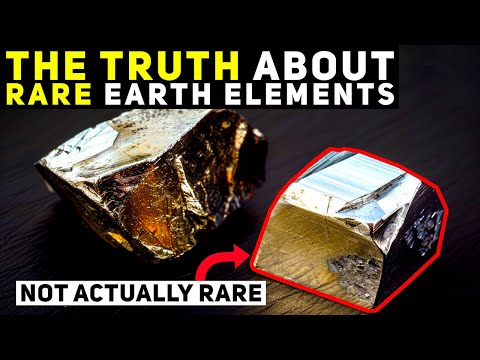
The Big Lie About Rare Earth Elements: They’re Not Rare at All!
Understanding Rare Earth Elements
Rare earth elements, despite their name, are not particularly rare in terms of abundance in the Earth's crust. They consist of 17 metallic elements, including neodymium, cerium, and dysprosium, which are integral to modern technologies such as electric vehicles, wind turbines, and smartphones. The misconception of their rarity arises from the difficulty in finding them in economically viable concentrations.
The geological formation of these elements is complex. As magma rises from the Earth's interior, it carries a mix of elements. However, rare earths are often left behind during the crystallization process due to their larger atomic sizes, making them incompatible with common minerals. This results in their concentration in specific geological environments, such as carbonatites and peralkaline igneous rocks, which are crucial for forming economically viable deposits.
Carbonatites, for example, are rare volcanic rocks that release fluids rich in rare earths as they cool, forming minerals like bastnäsite and monazite. Notable deposits include Mount Weld in Australia and Mountain Pass in California. Additionally, weathering processes in tropical regions can create ion absorption deposits, commonly found in southern China, which have made it a leading producer of rare earths.
Mining these elements is not solely about finding them in nature but involves a combination of geological, geographical, and economic factors. Although rare earth elements are widespread, the specific conditions needed to create mineable deposits are uncommon. The rarity lies in the perfect geological conditions that allow for their concentration, making the search for these elements a significant challenge in mineral exploration today.
In conclusion, while rare earths are abundant in the Earth's crust, their economic rarity stems from the geological processes required to concentrate them into viable deposits. Understanding this distinction is essential as these elements play a crucial role in advancing modern technology and sustainable energy solutions.
Rare earth elements (REEs) are a collection of 17 metallic elements, which include neodymium, cerium, and dysprosium. Despite the term 'rare', these elements are not actually scarce in the Earth's crust. In fact, elements like cerium are as abundant as copper, and neodymium is roughly as common as nickel. Even some of the so-called heavy rare earths, such as dysprosium, are found in concentrations that are greater than silver. The misconception stems from the fact that while these elements are widely distributed, they are not typically found in rich concentrations necessary for economical mining.
To illustrate this, the speaker likens the distribution of rare earth elements to gold dust on a beach: gold may be present everywhere, but if it is scattered too thinly, it cannot be mined effectively. This is due to the geological processes that dictate their concentration. Rare earths are often left behind during the crystallization of magma, as they do not fit well into the minerals that solidify first. Instead, they remain dissolved in the magma until specific conditions allow them to crystallize into their own minerals.
Thus, when we discuss 'rare earth deposits', we are referring to locations where geological conditions have combined perfectly to allow these elements to concentrate sufficiently for mining. This rarity of economically viable deposits is what truly makes them 'rare'.
The formation of rare earth elements is heavily dependent on specific geological conditions. When molten rock or magma rises from deep within the Earth, it carries a mix of chemical ingredients, including rare earths. As the magma cools, most elements crystallize into minerals, but rare earths, due to their larger and more awkward atomic structures, do not fit well into these minerals and remain dissolved in the magma. This is where they begin to concentrate.
Geologists refer to the rare earths as incompatible elements since they do not integrate easily into common minerals. Instead, the process of crystallization and cooling must be just right, allowing rare earths to crystallize into minerals like bastnasite and monazite—the primary sources of rare earths today. The conditions necessary for this process include the right type of magma, slow cooling, and the presence of specific elements and gases, such as fluorine, carbon dioxide, and chlorine.
Rare earth deposits are predominantly found in two types of geological environments: carbonatites and peralkaline igneous rocks. Carbonatites, which are volcanic rocks formed from magmas rich in carbon dioxide, release fluids loaded with rare earth elements during cooling. Meanwhile, peralkaline rocks evolve over extended periods, concentrating heavy rare earth elements, which are particularly valuable for high-tech applications.
- [01:22] "The answer lies in the geology behind it all. When molten rock or magma rises from deep inside the planet, it’s carrying a whole mix of chemical ingredients."
- [02:09] "If the process continues long enough, and if the chemistry is just right, those rare earths can finally start to crystallize into their own minerals."
- [02:36] "The biggest and richest rare earth deposits in the world come from something called carbonatites."
The mining, extraction, and refining of rare earth elements involve several complex processes. First, the minerals containing rare earths must be located and extracted from the earth. This requires a detailed understanding of geological processes such as magmatic differentiation, fluid movement, and weathering. After extraction, the rare earth minerals are processed to separate the valuable elements from other materials.
The extraction process can be challenging due to the presence of other elements that may complicate the mining process. For instance, rare earths are often found in conjunction with thorium, which is radioactive, necessitating careful handling and processing to ensure safety and compliance with environmental regulations. The transcript highlights that advanced chemistry and environmental management are crucial in processing these elements safely and cleanly.
Furthermore, the transcript emphasizes that while rare earths are common in the crust, turning them into usable materials is still a rare achievement due to the technical complexities involved. The need for modern processing methods and the presence of other tricky elements make this endeavor challenging. Countries like Australia, Canada, and the US are ramping up exploration efforts, indicating a growing emphasis on developing efficient mining and processing technologies to reduce reliance on imports, particularly from China.
- [06:01] "To turn scattered elements into an ore body, a few key things need to happen."
- [07:53] "Processing them safely and cleanly requires advanced chemistry and careful environmental management."
- [08:05] "So, while they’re common in the crust, turning them into usable materials is still a rare achievement."
The environmental costs and health effects associated with rare earth mining are significant concerns. The transcript does not delve deeply into specific pollutants or biological risks; however, it does mention that the presence of thorium—a radioactive element—alongside rare earths can pose serious health risks to miners and nearby residents. This highlights the need for stringent safety measures during extraction and processing.
Moreover, the environmental management required for safe processing of rare earth elements is critical. The complexities involved in mining these materials often lead to environmental degradation if not properly managed. The transcript implies that geologists and mining companies must prioritize environmental considerations to mitigate the risks associated with pollution and health hazards.
While specific pollutants are not cataloged, it is clear that the mining processes can lead to contamination of local water sources and soils, which can have long-term consequences for local ecosystems and human health. This underscores the importance of developing cleaner and more sustainable mining practices as the demand for rare earth elements continues to grow.
- [07:55] "Processing them safely and cleanly requires advanced chemistry and careful environmental management."
- [08:01] "So, while they’re common in the crust, turning them into usable materials is still a rare achievement."
China occupies a unique position in the rare earth market, having become the world’s top producer of these elements. This dominance is largely attributed to the presence of low-grade ion absorption deposits, primarily found in southern China. Although these deposits are not rich in rare earths, they are relatively easy to mine compared to other sources. The transcript notes that mining these deposits does not require explosives or heavy machinery, which lowers operational costs.
However, the situation is complicated by illegal mining activities, which further disrupt the market and pose environmental risks. These illegal operations can undermine regulated mining efforts and create challenges for sustainable practices in the industry. The scale of illegal mining in China has raised concerns about the sustainability of rare earth supplies and the potential impact on global markets.
China’s monopoly on rare earth production has significant implications for global supply chains and international politics. As other countries, particularly the US, seek to reduce their dependency on Chinese imports, the dynamics of the rare earth market are shifting. This has led to increased investment in rare earth exploration and production in countries like Australia and the US.
- [05:04] "This is why China became the world’s top producer of rare earths."
- [05:54] "These deposits can be an easy source of rare earth elements, especially in beach sands already being mined for titanium minerals."
The role of rare earth elements in international politics is becoming increasingly significant, particularly as countries seek to secure their supply chains against over-reliance on China. The transcript mentions that the US strategy under the Trump administration aimed to reduce dependency on Chinese imports, highlighting the geopolitical stakes involved in the rare earth supply chain. The need for these elements is critical for various technologies, including green technologies, which are vital for future sustainability efforts.
As the US ramps up exploration and production efforts, there is a clear shift towards enhancing domestic capabilities. This includes looking for geological signs that could indicate the presence of rare earth deposits, such as magnetic anomalies and carbonatite rings. The goal is to establish a more self-sufficient supply chain that can support the technological and industrial demands without relying heavily on imports.
Furthermore, the competition for rare earths can also affect diplomatic relations, as countries vie for access to these essential materials. The growing emphasis on rare earth exploration in countries like Australia and Canada reflects a broader strategic initiative to counterbalance China's market dominance.
- [07:41] "Projects like Mount Weld and Nolan’s bore show that the right geology can make a big difference, especially when paired with modern processing methods."
- [07:27] "The search for rare earths has become one of the biggest mineral exploration challenges of our time."
Several countries are known to have significant reserves of rare earth elements, with Australia, Canada, and the US being key players in the global market. Australia is noted for having some of the highest-grade rare earth deposits, particularly at Mount Weld, while California's Mountain Pass has historically been a major supplier. The transcript indicates that both of these locations are examples of carbonatites, which are rich in rare earths due to their unique geological formations.
Emerging players in the rare earth market include several nations that are ramping up exploration efforts to capitalize on their geological advantages. Countries such as India and Sri Lanka are also mentioned, particularly with regard to their placers deposits, which can be an easier source of rare earth elements.
As the demand for rare earths increases, these countries are working to establish themselves as competitive suppliers in a market that has been historically dominated by China. The strategic importance of rare earths in modern technology drives this exploration, as nations seek to secure their own supplies and reduce dependency on single-source countries.
- [03:14] "One of the best examples is Mount Weld in Western Australia, one of the highest grade rare earth deposits on the planet."
- [03:26] "Another famous one is Mountain Pass in California, which was the main global supplier for decades."
In the context of rare earth elements, the term 'critical' often refers to specific elements that are essential for modern technology yet are subject to supply chain vulnerabilities. The transcript does not specify which elements are labeled as 'critical', but it does emphasize that rare earths are crucial for technologies such as electric vehicles, wind turbines, and other green technologies.
Given the supply chain dynamics, the organizational structure is characterized by a few dominant players, primarily China, which has a near-monopoly on the production of rare earths. This creates vulnerabilities for countries dependent on imports, as disruptions in supply from China could have significant repercussions on global technological development.
The need for a diversified supply chain is critical, as countries like the US and Australia work to establish their own sources of rare earths, aiming to mitigate the risks associated with reliance on a single country. As exploration intensifies, understanding the vulnerabilities in the existing supply chains will be essential for ensuring a stable supply of these important elements.
- [07:19] "Without them, much of our high-tech world would grind to a halt."
- [07:54] "Rarity isn’t always about quantity. Sometimes it’s about circumstance."
The transcript does not mention any specific alternative technologies or innovations that reduce or eliminate the need for rare earth elements. It focuses primarily on the geological formation, mining, and processing challenges associated with these elements. The discussion is centered around the importance of rare earths in various technologies and the geopolitical implications of their supply.
As such, there is no detail provided regarding any substitutes or alternative materials that could potentially replace rare earth elements in technology. The emphasis remains on the critical role these elements play in modern applications and the ongoing search for economically viable deposits.
- [07:25] "The search for rare earths has become one of the biggest mineral exploration challenges of our time."
- [07:41] "The right geology can make a big difference, especially when paired with modern processing methods."
The transcript provides limited information regarding the recycling of rare earth elements. It does not delve into specific methods or processes for recycling, nor does it outline economic and technical criteria that countries or companies must consider before initiating mining operations. However, it does indicate that the complexity of processing rare earth elements poses challenges that must be addressed to make mining viable.
Moreover, the focus remains on the extraction and processing challenges faced by the industry, emphasizing the need for safe and environmentally responsible practices. As such, while recycling of rare earths is a relevant topic in the broader discussion of sustainability, it is not explored in detail within the transcript.
- [08:01] "So, while they’re common in the crust, turning them into usable materials is still a rare achievement."
- [08:07] "Turning them into usable materials is still a rare achievement."
[00:00] Rare Earths. The name sounds mysterious,[00:03] doesn't it? It makes you think of[00:04] something hidden deep inside the planet.[00:06] Strange metals found only in tiny[00:08] amounts in secret mines halfway around[00:11] the world. You'd imagine they must be[00:13] incredibly scarce. But here's the funny[00:15] thing. Rare earths aren't actually rare[00:17] at all. But let's start with what these[00:19] things actually are.[00:21] Rare earths are a group of 17 metallic[00:24] elements that include names like[00:25] neodymium, serium, and dprosium. They're[00:28] the unsung heroes of modern technology,[00:30] hiding in everything from electric cars[00:32] and wind turbines to smartphones,[00:35] headphones, and even fighter jets.[00:37] They're what make electric motors[00:38] powerful, magnet strong, and screens[00:41] glow with color. So, you'd think these[00:43] elements must be incredibly scarce to[00:44] make them so valuable. But here's the[00:46] surprising bit. Elements like serium are[00:49] about as common in the Earth's crust as[00:51] copper. Neodymium, the one used in[00:53] magnets, is roughly as common as nickel.[00:55] Even some of the so-called heavy rare[00:57] earths like Dprosium are more abundant[00:59] than silver. They're not hard to find,[01:01] they're just hard to find together in[01:03] rich concentrations. It's like gold dust[01:06] sprinkled evenly through a beach. You[01:08] might have gold everywhere, but if it's[01:10] spread one atom thick across a[01:11] continent, you're not setting up a mine[01:13] anytime soon. That's exactly how rare[01:15] earths exist everywhere, but too thinly[01:18] spread to matter. So, if they're common,[01:20] what stops us from mining them anywhere?[01:22] The answer lies in the geology behind it[01:24] all. When molten rock or magma rises[01:27] from deep inside the planet, it's[01:28] carrying a whole mix of chemical[01:30] ingredients. Silicon, iron, aluminium,[01:33] and lots of others, including rare[01:34] earths. As that magma cools and starts[01:37] to crystallize, most of those elements[01:39] fit neatly into the minerals that form[01:41] first. Things like felspar and pyroxine.[01:44] But the rare earths, they don't fit.[01:46] Their atoms are a bit too big and a bit[01:47] too awkward. So, they get left behind in[01:49] the remaining melt. Geologists call[01:52] these incompatible elements because[01:53] they're incompatible with most common[01:55] minerals. Instead, they stay dissolved[01:57] in a leftover magma, getting more and[01:59] more concentrated as everything else[02:01] turns solid. It's like making syrup. As[02:03] you boil off the water, the sugar[02:05] becomes thicker and more concentrated.[02:07] If the process continues long enough,[02:09] and if the chemistry is just right,[02:11] those rare earths can finally start to[02:12] crystallize into their own minerals. But[02:14] that takes a very unusual set of[02:16] conditions. The magma has to be the[02:18] right type. The cooling has to happen[02:20] slowly, and there needs to be the right[02:22] mix of other elements and gases, things[02:24] like florine, carbon dioxide, and[02:26] chlorine, to keep the rare earths moving[02:28] in fluids instead of being locked away[02:30] too early. It's a geological balancing[02:32] act, and nature doesn't pull it off very[02:34] often. That's why economic rare earth[02:36] deposits, ones rich enough to mine, are[02:38] genuinely rare. But there are a few main[02:41] environments where this magic[02:42] combination happens. The biggest and[02:44] richest rare earth deposits in the world[02:46] come from something called carbonetites.[02:49] These are strange volcanic rocks that[02:50] form from magmas rich in carbon dioxide[02:53] instead of the usual silica. They're[02:55] incredibly uncommon, less than 1% of all[02:57] ignous rocks, but they're powerhouses[02:59] when it comes to rare earths. As these[03:01] carbonide magmas cool, they release[03:03] fluids loaded with rare earth elements.[03:06] Those elements crystallize into minerals[03:08] like basnosite and monazite, which are[03:10] the main sources of rare earths today.[03:12] One of the best examples is Mount Weld[03:14] in Western Australia, one of the highest[03:16] grade rare earth deposits on the planet.[03:18] I've made a video on this deposit and[03:20] you can find a link to that below.[03:22] Another famous one is Mountain Pass in[03:24] California, which was the main global[03:26] supplier for decades. Both are cabonetes[03:29] and both owe their richness to that rare[03:31] blend of carbonri magma and latestage[03:33] fluid activity that concentrated the[03:35] elements into minimal ore. So when we[03:37] say rare earth deposit, what we're[03:39] really saying is this place had the[03:40] perfect geological chemistry and[03:42] depositional setting for rare earths and[03:44] almost nowhere else did. Another kind of[03:47] rare earth deposit forms in peralkaline[03:49] ignous rocks. These are magmas that are[03:51] unusually rich in sodium and potassium[03:53] and poor in aluminium. A very odd mix.[03:56] They evolve slowly like a thick stew[03:58] simmering for ages and as they do they[04:01] become packed with all sorts of exotic[04:03] elements. zirconium, nobbium, uranium,[04:06] and of course, rare earths. These rocks[04:09] tend to concentrate the heavy rare earth[04:11] elements, which are especially valuable[04:12] for magnets and high-tech electronics.[04:15] Deposits like Nolan's bore in the[04:16] Northern Territory, and some deposits in[04:18] green land form this way. They're rare[04:21] because they need a long, stable[04:22] geological setting where magma can[04:24] evolve without being disturbed. A[04:26] patient process measured in millions of[04:27] years. Then there's a completely[04:30] different kind of deposit, one that[04:31] forms not from magma, but from weather.[04:34] In warm tropical regions, rocks slowly[04:36] break down over millions of years under[04:38] constant rain and humidity. As this[04:40] happens, small amounts of rare earths[04:42] are leeched out of the minerals and[04:43] carried downward by water. But instead[04:45] of being washed away, they stick or[04:47] absorb to the surfaces of clay particles[04:49] in the soil. This creates what[04:52] geologists call ion absorption deposits.[04:54] Soft earthy layers where the rare earths[04:56] are held loosely enough that they can be[04:58] washed off with mild chemical solutions.[05:01] Most of these are found in southern[05:02] China, which is why China became the[05:04] world's top producer of rare earths.[05:06] They're lowgrade, but they're easy to[05:08] mine. You don't need explosives or big[05:10] crushes, just the right kind of gentle[05:12] leeching. However, these deposits can[05:14] only form where the climate stays hot,[05:16] wet, and stable for millions of years.[05:18] So they're geographically limited.[05:21] Lastly, some rare earths are found in[05:22] placida deposits much like gold. When[05:24] rocks weather and erode, heavy minerals[05:26] like monzite or xenotime wash[05:28] downstream. Because they're dense, they[05:30] settle in river beds or along[05:32] coastlines. Over time, waves and[05:34] currents sort these heavy grains into[05:36] sandy layers rich in rare earth[05:38] minerals. These deposits are common in[05:40] places like India, Sri Lanka, and parts[05:42] of Australia. In fact, there's currently[05:44] a dispute between miners and farmers in[05:46] Australia over the mining of rare earth[05:48] plaet deposits in Victoria. I made a[05:51] video on this, and you'll also find that[05:52] in the description below. These deposits[05:54] can be an easy source of rare earth[05:56] elements, especially in beach sands[05:58] already being mined for titanium[05:59] minerals. So, what actually makes a[06:01] deposit minable? To turn scattered[06:03] elements into an or body, a few key[06:05] things need to happen. The rock or magma[06:08] has to contain rare earths. To begin[06:09] with, the elements must be separated and[06:12] gathered by geological processes like[06:13] magmatic differentiation, fluid[06:15] movement, or weathering. The deposit has[06:18] to remain intact long enough for us to[06:19] find it, not eroded away or buried too[06:22] deep. It must be located in a way that[06:24] makes mining practical. Good grade,[06:26] reasonable depth, and stable ground.[06:28] Even a rich deposit can be useless if[06:30] it's too costly or damaging to extract.[06:33] That's why rare earth mining isn't just[06:35] about finding the right rocks. It's[06:36] about finding the right balance of[06:38] geology. geography and economics. So,[06:41] now that we know these elements aren't[06:42] rare in the crust, why do we still call[06:44] them rare earths? The short answer is[06:46] habit and a bit of truth. Even though[06:48] the elements themselves are common, the[06:50] deposits that can be mined economically[06:52] are not. It's those deposits that are[06:54] truly rare. For every thousand places on[06:56] Earth with rocks containing rare earths,[06:58] maybe one or two will have enough[07:00] concentrated to make a mine worthwhile.[07:02] That's what the name really means today.[07:04] Rare Earths isn't about chemistry[07:06] anymore. It's about geology and[07:07] economics. the rarity of finding[07:09] nature's perfect concentration. And that[07:11] rarity matters because these minerals[07:13] are essential to modern life. They're in[07:15] wind turbines, electric vehicles,[07:17] satellites, and all the green technology[07:19] that's driving our future. Without them,[07:21] much of our high-tech world would grind[07:23] to a halt. The search for rare earths[07:25] has become one of the biggest mineral[07:27] exploration challenges of our time.[07:29] Geologists are looking for subtle hints,[07:31] magnetic anomalies, carbonetite rings,[07:33] trace mineral patterns that point to[07:35] hidden deposits underground. Australia,[07:38] Canada, and the US are all ramping up[07:40] exploration to reduce reliance on[07:41] imports from China. Projects like Mount[07:44] Weld and Nolan's bore show that the[07:45] right geology can make a big difference,[07:48] especially when paired with modern[07:49] processing methods. But it's not easy.[07:51] Rare earths often occur with other[07:53] tricky elements like thorium, which is[07:55] radioactive, or in minerals that are[07:57] hard to separate. Processing them safely[07:59] and cleanly requires advanced chemistry[08:01] and careful environmental management.[08:03] So, while they're common in the crust,[08:05] turning them into usable materials is[08:07] still a rare achievement.[08:09] In the end, rare earths are a perfect[08:11] reminder that rarity isn't always about[08:13] quantity. Sometimes it's about[08:15] circumstance. The Earth made plenty of[08:17] these elements. They're sprinkled[08:18] through almost every rock, every[08:20] mountain range, and every grain of sand.[08:22] But nature seldom gathered them in one[08:24] place. And when she did, she made us[08:26] work hard to find them. So the next time[08:28] you're using your phone, driving an[08:30] electric car, or turning on a wind[08:31] powered light, remember you're using[08:34] something built from metals that aren't[08:35] rare because there's little of them, but[08:37] because it's rare for nature to serve[08:38] them up in a minable form. The rare[08:41] product of perfect geological conditions[08:43] that only come together once in a blue[08:45] moon. Hope you found this as interesting[08:47] as I did. And as always, thanks for[08:50] watching.[08:53] Before I end this video, I'd like to[08:54] give a big shout out to my Patreon and[08:56] YouTube members. Thank you so much to[08:58] everyone that helps to support this[09:00] channel.

Rare earth elements
Overview of Rare Earth Elements
Rare earth elements (REEs) are a group of soft metals primarily found in the lanthanoid series. Contrary to their name, they are not particularly rare in terms of abundance in the Earth's crust, as their concentrations are comparable to more familiar metals like copper and nickel. The term "rare" refers to the complexities involved in concentrating these elements into economically viable deposits, which is challenging due to their unique chemical properties.
Challenges in Extraction
REEs require specific geological conditions to form deposits, and their strong chemical bonds with other compounds make them stable and difficult to extract. Processing these elements often demands significant energy, typically involving strong acids and high temperatures. As a result, mining REEs necessitates handling large volumes of ore with low concentrations.
Applications of Rare Earth Elements
REEs are crucial in various modern technologies, earning the label "high-tech metals." They are integral to the manufacturing of electronics, including touch screens, flat-screen TVs, and high-performance magnets used in smartphones and electric vehicles. Notably, neodymium and praseodymium are essential for producing powerful permanent magnets in wind turbines and electric vehicle engines.
Geological Occurrence
REEs are found in three main types of deposits: sedimentary, magmatic, and weathering products. Sedimentary deposits, like placer deposits, accumulate through water flow sorting heavier minerals. Magmatic deposits arise from specific types of alkaline rocks and carbonatites. Weathering processes can also enrich REEs at the Earth's surface, forming laterite deposits.
Global Supply and Recycling Challenges
China dominates the global production and refining of REEs, raising concerns about supply chain vulnerabilities. Furthermore, recycling rates for REEs remain low, with less than 1% being reclaimed from waste due to technological and economic challenges. As demand for REEs grows, particularly driven by the energy transition, research into more efficient extraction and recycling methods is ongoing.
Rare Earth Elements (REEs) are a group of soft metals primarily belonging to the lanthanoid series. Despite their name, they are not particularly rare in terms of their abundance in the Earth's crust. In fact, many rare earth elements occur in concentrations similar to more familiar metals like copper, cobalt, and nickel. The term 'rare' reflects the challenges associated with the extraction of these elements rather than their scarcity.
The unique characteristics of rare earth elements include their particular chemical properties that make it challenging for them to concentrate into economically minable deposits. Unlike other metals such as copper or gold, which are easier to react with other compounds and form deposits through various geological processes, rare earths require very specific conditions to create viable concentrations. This difficulty arises because the chemical bonds formed by rare earth elements with other compounds are notably strong, making them chemically stable and requiring significant energy input, typically involving strong acids and high temperatures, for processing.
As a result, the extraction of rare earth metals is complex and energy-intensive. The presence of rare earth elements in the environment often requires processing large volumes of ore to obtain even small quantities of the metals. Thus, while they are not rare in abundance, the complexity of their geological and chemical properties contributes to their classification as rare.
The formation of rare earth elements is contingent upon specific geological processes that allow for their concentration in a form that is economically viable for mining. These elements do not easily react with common compounds, which complicates their incorporation into mineral deposits. Their ions are relatively large and possess high field strength, leading to their incompatibility with many common rock-forming minerals like feldspars or mica.
Rare earth elements can be found in three main types of deposits: sedimentary, magmatic, and weathering products. Sedimentary deposits, particularly placer deposits, are formed through the sorting of sediments by water flow, where denser minerals accumulate in slower-flowing sections of rivers. Magmatic deposits originate from alkaline rocks and carbonatite magmas, which are known for their ability to incorporate significant amounts of rare earths during partial melting processes deep within the Earth.
In terms of technological developments, the transcript does not specify detailed advancements that make prospecting and mining more efficient or viable. However, it does mention that the geological conditions under which these elements form are vital in determining their location and concentration. Understanding these conditions helps guide exploration efforts in search of economically viable deposits.
- [06:30] 'Compared with most other metals, rare earth elements don’t easily react with compounds that would allow them to get enriched into or deposits.'
- [08:17] 'These rare earth or deposits can be broadly divided into three categories: sedimentary, magmatic and weathering products.'
- [12:34] 'The melt then rises through the crust and typically undergoes a process called fractional crystallization as it cools down.'
The mining, extraction, and refining of rare earth elements are complex processes characterized by significant technical challenges. The transcript outlines that rare earth elements require concentrated deposits to be economically viable for extraction. This process often involves mining large volumes of ore due to the low concentrations of these elements in the earth's crust.
Once the ore is extracted, it undergoes a refining process that includes the use of strong acids and high temperatures to break the chemically stable bonds of the rare earth minerals. The transcript emphasizes that this processing is energy-intensive, which poses logistical and environmental challenges. The technical complexity of these processes is a notable barrier, particularly for countries seeking to enter the rare earth market.
Moreover, the transcript indicates that refining capabilities are largely concentrated in China, which controls a significant portion of the global supply chain. This centralization poses risks for other countries that rely on these elements, particularly if geopolitical tensions arise. Countries are encouraged to enhance their refining and mining capabilities to mitigate the impact of potential supply disruptions, which are not explicitly detailed in the transcript.
- [18:22] 'This is due to inefficient collection infrastructure for waste containing rare earth elements, low rare earth concentrations in most waste products and technological difficulties.'
- [17:10] 'The refining of rare earth elements ores and the production of permanent magnets are almost completely controlled by just one country, China.'
- [10:56] '...the concentrations are too low to allow for economic extraction.'
The transcript does not provide specific details regarding environmental costs or health effects related to rare earth mining. It does mention that the extraction and processing of rare earth elements are energy-intensive and require the use of strong acids and high temperatures. This implies potential environmental risks due to chemical usage and energy consumption, although the transcript does not explicitly discuss pollutants or biological risks associated with mining activities.
However, it is important to highlight that mining activities, in general, can pose risks to both miners and surrounding communities, including exposure to hazardous materials, air and water pollution, and habitat destruction. The absence of specific health effects or pollutants in the transcript indicates a need for further research and investigation into these aspects.
- [16:40] '...the concentrations are too low to allow for economic extraction.'
- [19:36] '...potentially posing a little bit of a challenge in terms of resourcing our modern way of life and the energy transition.'
- [18:11] 'Recycling of rare earths is at present not very efficient.'
China's position in the rare earth market is notably dominant, as it is currently the largest producer of rare earth elements globally. The transcript outlines that while the USA and Myanmar follow in production, the scale of China's operations significantly overshadows others. This monopoly extends to the refining of rare earth elements and the production of permanent magnets, which are largely controlled by China. Such a concentration of power raises concerns about market disruptions and the vulnerability of the global supply chain.
The transcript notes that there have been instances where China has restricted the export of refined rare earth elements, which raises alarms for countries dependent on these materials for various industrial applications. In response, other nations are beginning to enhance their mining operations, but the transcript highlights that refining and manufacturing capabilities also need to be significantly improved to ensure a stable supply chain. This suggests that while efforts are underway to diversify sources, the geopolitical landscape remains fraught with challenges.
- [16:49] 'At present, China is the largest producer of rare earth elements ores followed by the USA and Myanmar.'
- [17:14] 'The reliance on a single country means that the global supply chain for rare earth elements is very susceptible to disruption.'
- [17:34] 'China having a history of restricting the export of refined rare earth elements and permanent magnets.'
The transcript does not specifically mention the role of rare earth elements in international politics or the US strategy under the Trump administration to reduce dependency on China. However, it does highlight the growing concerns regarding the global availability of these elements and the reliance on a single country for their supply. The implications of this dependence suggest potential geopolitical tensions, especially as other nations seek to establish their own mining and refining capabilities.
While direct details about the US strategy are absent, the context implies a push for greater independence in sourcing rare earth elements. This is likely driven by the recognition of the strategic importance of these materials in technology and energy transition, as highlighted by the ongoing efforts in various countries to enhance their rare earth production capabilities.
- [17:26] 'The global supply chain for rare earth elements is very susceptible to disruption.'
- [18:06] '...recycling of rare earths is at present not very efficient.'
- [19:34] '...potentially posing a little bit of a challenge in terms of resourcing our modern way of life and the energy transition.'
The transcript outlines that rare earth reserves are primarily located in countries such as China, the USA, and Myanmar, with production from these nations being the most significant on a global scale. While other countries are mentioned to have minor production capabilities, the focus remains on these three nations as the main players in the market. The transcript does not specify any 'new players' entering the market but implies that other countries are stepping up their efforts to mine rare earth elements as they seek to reduce dependency on China.
This development suggests that nations are recognizing the strategic importance of securing their own sources of rare earths, particularly in light of the geopolitical factors affecting supply chains. However, specific countries or companies that are emerging as 'new players' are not explicitly detailed in the transcript, indicating a potential area for further exploration and research.
- [16:58] 'At present, China is the largest producer of rare earth elements ores followed by the USA and Myanmar.'
- [17:04] 'Production elsewhere is very minor.'
- [17:48] 'Other countries are stepping up their efforts to mine rare earth elements...'
The transcript does not explicitly label which specific rare earth elements are deemed 'critical' nor does it provide a detailed breakdown of the organizational structure and vulnerabilities of the global supply chains. However, it does emphasize the importance of rare earths in modern technology and their essential role in various applications, such as electronics, magnets, and renewable energy technologies. The growing demand for these elements, particularly in the context of the energy transition, highlights the need for a robust supply chain.
While vulnerabilities are implied through the discussion of China's dominant position in the market, specific details on organizational structures or critical elements are not provided in the transcript. This leaves a gap for further inquiry into which elements are considered critical and the related supply chain dynamics.
- [06:18] 'The demand for most rare earth elements is growing and much of this is driven by the energy transition.'
- [17:22] 'The global supply chain for rare earth elements is very susceptible to disruption.'
- [17:12] 'The production of permanent magnets are almost completely controlled by just one country, China.'
The transcript does not mention any alternative technologies or innovations designed to reduce or eliminate the need for rare earth elements. Instead, it focuses on the essential role that these elements play in current technologies, particularly in high-performance magnets, electronics, and renewable energy applications. The discussion around rare earths primarily revolves around their extraction, processing, and the geopolitical implications of their supply, rather than exploring potential substitutes or alternative materials.
Given the growing demand for rare earth elements, further exploration into alternative technologies or innovations is warranted. The absence of this information in the transcript indicates an area where additional research could be beneficial, particularly in the context of sustainability and reducing reliance on rare earth materials.
- [19:34] 'Rare earth elements, not so rare in fact, but nevertheless potentially posing a little bit of a challenge in terms of resourcing our modern way of life.'
- [19:56] 'It’s going to be really exciting to see what the future holds for these intriguing earth resources.'
- [18:54] '...we still need to produce pretty much all of our rare earths from mining.'
The recycling of rare earth elements is currently a significant challenge, as highlighted in the transcript. It states that commercial recycling rates of rare earths are extremely low, with less than 1% being recycled from waste. This inefficiency arises from multiple factors: inadequate collection infrastructure for waste containing rare earth elements, low concentrations of rare earths in most waste products, and technological difficulties in extracting these elements once they have been blended with other metals.
Moreover, the transcript emphasizes that extracting rare earth elements from electronic waste, for instance, requires processing similar to that of primary ore, which can be economically unviable given the small quantities involved. This lack of economic incentive and technical viability poses significant barriers to recycling efforts. Researchers are actively working on new techniques aimed at improving the efficiency of rare earth recycling, but as of now, the industry remains heavily reliant on mining as the primary source for these critical materials.
- [18:14] 'Commercial recycling rates of rare earths is still extremely low with less than 1% of rare earths being recycled from waste.'
- [18:44] 'Extracting them out again can be very hard because you essentially have to process the material as you would process primary ore.'
- [19:24] '...we still need to produce pretty much all of our rare earths from mining.'
[00:06] Well, we all know that we need metals[00:08] like iron, zinc, copper, and and so on[00:12] to build all the things we need. But[00:14] you've probably also heard about[00:16] something called rare earth elements.[00:19] But what are these rare earth elements?[00:21] What do we need them for? And what's so[00:23] rare about them in the first place?[00:25] Well, let's find out.[00:29] Rare earth elements or rare earth metals[00:32] are a group of soft metals mostly[00:35] belonging to the so-called lanthnoid[00:37] series.[00:39] Most of them are actually not rare at[00:41] all. If we consider the concentration of[00:44] elements in the earth's crust, most rare[00:47] earth elements occur in similar[00:49] concentrations as the more familiar[00:51] metals like copper, cobalt, and nickel.[00:56] Gold and platinum for instance are much[00:58] rarer.[01:01] So why are they called rare earths? Then[01:06] these elements have particular chemical[01:08] properties that makes it quite difficult[01:10] for them to concentrate into one place[01:12] in the earth's crust.[01:15] And to make a minable or deposit, you[01:17] need to concentrate an element typically[01:20] by hundreds or even thousands of times[01:23] compared to the average crystal[01:24] abundance.[01:27] Most other metals such as copper,[01:29] cobalt, and gold have properties that[01:32] makes it relatively easy for these[01:34] metals to react with other compounds and[01:36] form or deposits via various geological[01:39] processes.[01:41] but not so for rare earths which require[01:44] very special conditions to form or[01:46] deposits. And we'll look at these a bit[01:48] more closely later in this video.[01:52] But even where these elements do form an[01:54] or deposit, the concentration is fairly[01:57] low, meaning you have to process a very[02:00] large volume of ore.[02:03] What's more, the chemical bonds that[02:05] rare earths form with other compounds[02:08] are very strong, much stronger than for[02:11] most other or minerals.[02:15] This means that rare earth minerals are[02:17] chemically very stable. So, you have to[02:19] put a lot of energy into the processing[02:22] to break those bonds, typically using[02:25] very strong acids and very high[02:27] temperatures.[02:30] So rare earths are not called rare[02:32] because they are scarce. The term is[02:34] actually reflecting the difficulty for[02:37] these elements to form minable or[02:38] deposits and for us humans to extract[02:41] the metals.[02:44] >> So what do we need these rare earths for[02:47] then? Let's have a closer look.[02:51] The general term rare earth elements[02:53] covers 15 to 17 elements depending on[02:56] the exact definition of the term.[03:00] Most of these you won't hear about very[03:02] often but they all have some really[03:04] important uses in the modern world and[03:07] the applications of rare earths is[03:10] continuously expanding as researchers[03:12] find new uses for them.[03:16] Rare earth elements are sometimes called[03:18] high-tech metals and for a good reason.[03:22] Rare earths are all around us in foam[03:25] touch screens, flat screen TVs and other[03:28] electronics, metal alloys, lead lights,[03:32] optical fibers, lasers, self cleaning[03:36] ovens and so on.[03:40] Serium, neodymium and lanthanum are the[03:43] most used rare earth elements globally.[03:47] Most rare earths are used as catalysts[03:49] in the chemical industry and in the[03:52] production of high performance magnets.[03:55] Particularly neodymium, praodmium,[03:59] turbium and disprosium are used in super[04:02] strong magnets which are a vital[04:04] component in electronics including[04:06] smartphones and electric car engines.[04:11] Then there are various types of lasers[04:14] where rare earth ions absorb energy and[04:17] then remit that energy as light.[04:21] Other important applications are for[04:24] example fiber optics which are used in[04:27] things like telecommunications.[04:31] So rare earth elements are very[04:34] important for all kinds of modern[04:36] technology. So really really important[04:39] for our modern way of life. But an[04:42] increasingly important application for[04:45] rare earth elements[04:47] is that stuff over there.[04:51] Wind turbines converts the kinetic[04:54] energy provided by the wind to[04:56] electrical energy.[04:59] This conversion happens in the generator[05:01] which is hosted in the N cell of the[05:03] turbine and that generator needs[05:06] powerful permanent magnets[05:09] and that's where the rare earth elements[05:11] come in.[05:13] Neodymium and praodmium for example[05:16] strengthen the metals used in the[05:18] magnets and disprosium and turbium make[05:22] them resistant to demagnetization.[05:27] So these rare earths are essential for[05:29] building wind turbines that can produce[05:31] energy for longer and more efficiently.[05:36] So rare earths play an important role in[05:39] the energy transition not only in terms[05:41] of the permanent magnets for the wind[05:44] turbines but also things like electric[05:46] vehicles.[05:49] The engines within electric vehicles[05:51] also need permanent magnets similar to[05:54] those used in wind turbines.[05:57] In addition, some rare earths are[05:59] already used in certain types of[06:01] batteries. But research is also going on[06:04] into whether rare earth elements such as[06:06] itrim could enhance the performance of[06:09] lithium ion batteries that are used in[06:11] electric vehicles and many other[06:13] everyday electronics.[06:16] The demand for most rare earth elements[06:18] is growing and much of this is driven by[06:21] the energy transition. So building wind[06:24] turbines and electric vehicles.[06:28] >> Let's now have a look at where in the[06:30] geological environment rare earth[06:32] elements occur.[06:36] Compared with most other metals, rare[06:39] earth elements don't easily react with[06:41] compounds that would allow them to get[06:43] enriched into or deposits.[06:47] Rare earth element ions are essentially[06:50] larger than many other ions and they[06:52] also have high field strength which[06:55] basically means that they have strong[06:57] electromagnetic fields.[07:00] These properties make rare earth[07:02] elements incompatible which means it is[07:05] difficult for rare earths to get[07:06] incorporated into most common rock[07:09] forming minerals like felspars or mica.[07:14] Rare earth elements don't react with[07:16] sulfur either. So unlike most other[07:19] metals like copper and cobalt, they[07:21] won't get enriched as sulfides.[07:25] But there are some minerals that are[07:28] capable of incorporating significant[07:30] amounts of rare earths. The trouble is[07:33] these minerals don't usually make up a[07:36] very large portion of any given volume[07:40] of rock or or sediment. There are[07:42] exceptions.[07:45] There are minerals that can incorporate[07:48] rare earth elements in small amounts and[07:50] some of these are fairly common. But it[07:53] is rare for them to contain significant[07:55] amounts of rare earths or for these[07:58] minerals to occur in large enough[07:59] quantities to make aminable or deposit.[08:05] But sometimes in very specific[08:07] conditions rare earth elements and[08:09] minerals containing them do get[08:12] concentrated in sufficient quantities to[08:14] make an or deposit.[08:17] These rare earth or deposits can be[08:19] broadly divided into three categories[08:22] sedimentary[08:24] magmatic and weathering products.[08:28] Let's look at the sedimentary deposits[08:30] first.[08:33] The most important of these are the[08:35] so-called placer deposits, also called[08:38] aluvial deposits.[08:42] These form when the flow of water sorts[08:44] the sediments depending on the[08:46] differences in the density of the[08:49] different minerals.[08:52] The minerals are initially eroded from a[08:54] source rock. So in river systems for[08:57] example, the rivers transport the[08:59] minerals gradually downstream from the[09:02] source upstream.[09:06] When the water reaches a slower portion[09:08] of the river, the heavier minerals[09:10] accumulate in areas where the velocity[09:13] of the water flow drops significantly.[09:17] This is because a slower velocity of[09:20] water can't keep moving the heavier[09:22] particles even when the river is[09:24] flooding.[09:27] So for example in meandering rivers the[09:31] inside bends where the water flow is[09:33] slower are ideal for depositing the[09:36] heavier particle as the water loses its[09:39] capability to transport the heavier[09:41] material.[09:44] You can see this process in action in[09:46] any river. So the boulders and the[09:48] gravel which are heavy tend to[09:51] accumulate as gravel bars on the inside[09:53] bends of rivers whilst the outside bend[09:56] of the river is eroded and steep as all[09:59] material gets carried away.[10:04] Some minerals that can contain a lot of[10:06] rare earth elements can be accumulated[10:08] in this way because they are relatively[10:11] dense and resist weathering in surface[10:14] conditions.[10:16] The most important of these is the[10:18] mineral called monazite[10:20] which can contain economic amounts of[10:23] for example serium, lanthanum and[10:26] neodymium.[10:28] Also cenotine which contains things like[10:32] itrium, disprosium or turbium can form[10:35] minable placid deposits.[10:39] Monocytes and xenotime sands are[10:41] currently mined for example in India and[10:44] Australia. Although in most cases[10:47] placits are mined for other commodities[10:50] such as tin or phosphates and the rare[10:52] earths are a byproduct.[10:56] And apart from these rather special[10:58] types of sediments, there are also some[11:00] rare types of magmas that can also[11:03] contain significant amounts of rare[11:05] earths.[11:07] Magmas, which of course are volumes of[11:10] molten rock, can form at various depths[11:13] within the earth.[11:16] The magmatic rocks that can be rich in[11:18] rare earth elements are usually either[11:20] so-called alkaline rocks such as[11:22] cyamides or certain types of granits and[11:25] pigmatides or carbonetite magmas.[11:30] Carbonetite magmas are themselves quite[11:33] special as they contain at least 50% of[11:36] carbonate minerals which is very rare[11:39] for magmatic rocks.[11:42] Carbonet and alkaline magmas are closely[11:45] related and they often occur together.[11:49] They both originates from great depths[11:51] within the earth, the mantle.[11:56] Very early in the earth's history, the[11:59] rare earth elements were incorporated[12:01] preferentially into the mantle rocks.[12:05] When the mantle rocks undergo partial[12:07] melting such as happens in areas where[12:10] the continents are rifting, the[12:12] incompatible elements such as the rare[12:15] earths are among the first to go into[12:17] the melt.[12:20] Particularly the so-called light rare[12:22] earth elements such as serium and[12:24] neodymium go easily into these partial[12:27] melts because they form larger ions than[12:30] the so-called heavy rare earths.[12:34] The melt then rises through the crust[12:36] and typically under goes a process[12:39] called fractional crystallization as it[12:41] cools down.[12:44] This helps to further enrich rare earth[12:46] elements.[12:49] In this process, the crystals that form[12:51] first do not easily incorporate the[12:54] incompatible elements such as the rare[12:56] earths,[12:58] particularly those lighter rare earths[13:00] that have larger ions.[13:03] Instead, these get enriched in the[13:06] remaining magma.[13:09] Rare earth rich minerals can then[13:11] crystallize from this remaining magma or[13:14] the remaining magma can be transported[13:16] elsewhere to form new rare earth rich[13:19] intrusions.[13:22] Magmatic rocks are at the moment the[13:24] main source of rare earth elements[13:26] globally. Particularly the carbonetite[13:29] rocks and rocks around these intrusions[13:31] that have been intruded by the rare[13:33] earth rich magmatic fluids.[13:37] Rare earth carbonetite ores contain very[13:39] special rare earth minerals such as[13:42] bastonite parasites[13:45] and cisite[13:47] all of which are typically enriched in[13:49] light rare earths like serium and[13:51] neodymium[13:53] but even more common minerals that are[13:55] found in these flocks such as appetite[13:58] or monazite can contain lots of rare[14:01] earths[14:03] for example the bayan ober mine in[14:05] northern China is hosted in rocks[14:07] affected by carbonetite magmatic fluids[14:11] and is presently the largest rare earth[14:13] element mine on earth.[14:17] Now the third important deposit type for[14:20] rare earth elements forms right here at[14:23] the earth's surface via the process of[14:25] weathering and weathering can be a very[14:28] efficient way of enriching all kinds of[14:30] metals into minable or deposits.[14:36] The deposits that are formed via[14:38] weathering are called laterite deposits.[14:41] Laterite is in fact a soil type that[14:44] forms via deep weathering in tropical[14:46] and subtropical regions, particularly[14:49] those with alternate wet and dry[14:51] periods.[14:53] When the weathering rocks include rocks[14:55] that contain rare earth elements such as[14:57] carbonet, the rare earths can be[15:00] enriched into nor deposit even if the[15:03] original rock might not be very rich in[15:05] valuable metals and elements.[15:08] Surface waters gradually weather the[15:10] bedrock, breaking down the minerals that[15:13] contain the rare earth elements.[15:16] The rare earths and other compounds then[15:19] travel downwards and accumulate within[15:21] specific layers within the soil profile.[15:26] A good example of this is the Mount Weld[15:28] mine in Australia where weathering of a[15:32] carbonetide rock has resulted in the[15:34] formation of a laterite zone up to 70 m[15:37] thick enriched in specific rare earth[15:40] minerals.[15:42] But slerite soils also contain clay[15:45] minerals. And clay minerals are often[15:48] electrically slightly charged.[15:52] So they can actually attract rare earth[15:55] ions that have been removed from the[15:57] original rock so that the rare earth[15:59] ions attach themselves onto the surface[16:02] of the clay minerals.[16:05] These are so-called iron absorption clay[16:08] deposits. They are not usually very high[16:11] grade but they are relatively easy to[16:14] process to extract the rare earth[16:16] elements compared to rare earth[16:18] minerals.[16:20] The majority of the heavier rare earth[16:22] elements such as disposium and turbium[16:25] are actually currently extracted from[16:27] iron absorption clay deposits.[16:30] So geologically the sources for rare[16:33] earth elements are quite diverse even[16:35] though in most cases the concentrations[16:38] are too low to allow for economic[16:40] extraction.[16:42] And as the demand for rare earth and[16:44] indeed all other metals keeps increasing[16:47] there are also some geopolitical[16:49] concerns regarding the global[16:51] availability of rare earth elements.[16:55] At present, China is the largest[16:58] producer of rare earth elements ores[17:01] followed by the USA and Myanmar, whilst[17:04] production elsewhere is very minor.[17:08] What's more, the refining of rare earth[17:10] elements ores and the production of[17:12] paranid magnets are almost completely[17:14] controlled by just one country, China.[17:19] The reliance on a single country means[17:22] that the global supply chain for rare[17:24] earth elements is very susceptible for[17:26] disruption.[17:30] There have already been some concerns[17:32] about this with China having a history[17:34] of restricting the export of refined[17:37] rare earth elements and permanent[17:38] magnets. Most recently this year,[17:43] other countries are stepping up their[17:45] efforts to mine rare earth elements, but[17:48] refining and magnet manufacturing[17:51] capabilities also need to be[17:53] significantly enhanced to reduce the[17:56] impact of potential supply disruptions.[18:00] So there are concerns globally about the[18:02] availability of rare earth elements and[18:06] this is not helped by the fact that[18:08] recycling of rare earths is at present[18:11] not very efficient.[18:14] Commercial recycling rates of rare[18:16] earths is still extremely low with less[18:19] than 1% of rare earths being recycled[18:22] from waste.[18:24] This is due to inefficient collection[18:26] infrastructure for waste containing rare[18:28] earth elements, low rare earth[18:31] concentrations in most waste products[18:34] and technological difficulties.[18:37] In electronics and permanent magnets,[18:40] the rare earths have been blended with[18:42] other metals. So extracting them out[18:44] again can be very hard because you[18:47] essentially have to process the material[18:50] as you would process primary ore.[18:54] But perhaps more critically, a[18:56] computer's hard disk drive, for example,[18:59] might contain just a few grams of rare[19:01] earth elements. So a major hurdle in[19:04] recycling rare earths is the lack of[19:06] economic incentive and viability.[19:11] Researchers are continuously working on[19:14] new techniques that hopefully make it[19:16] easier and therefore more viable to[19:18] refine and recycle rare earth elements.[19:22] But at present, we still need to produce[19:24] pretty much all of our rare earths from[19:26] mining.[19:29] So rare earth elements, not so rare in[19:32] fact, but nevertheless potentially[19:34] posing a little bit of a challenge in[19:36] terms of resourcing our modern way of[19:39] life and the energy transition.[19:42] Research into rare earth elements is a[19:44] relatively new field in earth sciences[19:47] and indeed in terms of their industry[19:50] applications. So it's going to be really[19:53] exciting to see what the future holds[19:56] for these intriguing earth resources.
French-American chemist makes major breakthrough in recycling of rare earths • FRANCE 24 English
The video discusses the critical role of rare earth elements in modern technology, including wind turbines, smartphones, and electric cars, emphasizing their importance for the global economy and the green transition. However, the rising demand for these elements is leading to resource depletion, with current mining practices being both costly and environmentally damaging. Notably, only 1% of rare earth elements are recycled, highlighting a significant gap in sustainability efforts.
A company near Paris is showcased for its innovative waste collection and recycling processes, which include electronic appliances. Despite their efforts, the company notes that extracting rare earth elements from devices is not financially viable, as the complexities and costs involved in recycling these materials remain prohibitively high.
As Europe and the US seek to reduce reliance on China, which currently produces over 60% of the world's rare earth elements, there is a growing interest in untapped resources. The video features a chemist in Zurich who identifies light bulbs as rich sources of rare earth elements, particularly europium. These bulbs, often discarded as toxic waste, contain significantly higher concentrations of europium than natural sources, indicating a lost opportunity for resource recovery.
Additionally, the video introduces Marip, a young scientist who has made a breakthrough in recycling rare earth elements without generating toxic waste. Her unexpected discovery involves using sulfur to separate these elements from other materials, achieving a high purity level in a single step, contrasting sharply with traditional methods that are slow and polluting. This innovative approach could revolutionize the recycling of rare earth elements, making the process more efficient and sustainable.
Rare earth elements (REEs) are a group of 17 metals that possess unique properties, such as magnetic, optical, and electronic attributes. They are not actually rare in terms of abundance in the Earth's crust; rather, their occurrence is highly dispersed and typically found in low concentrations. This makes mining and extraction particularly challenging. The transcript highlights that these elements include europium, scandium, and others that are vital in various modern technologies, including smartphones, electric vehicles, and renewable energy technologies.
The distinction between rare earth minerals and processed metals is crucial. Rare earth minerals are naturally occurring compounds that contain these elements, often mixed with other minerals. In contrast, processed metals are refined products obtained after extensive extraction and separation processes. The complexity of these processes is illustrated by the statement that producing one ton of rare earths generates at least 2,000 tons of toxic waste, which includes radioactive materials.
Moreover, the current recycling rate for rare earth elements is alarmingly low, at just 1%. The complexity and cost associated with recycling these elements from products such as smartphones and electronics further highlight the challenges in transitioning to a more sustainable use of rare earths. As the demand for these elements increases, the need for efficient recycling methods and new extraction technologies becomes increasingly urgent.
Formation and Location of Rare Earth Elements
Rare earth elements are formed through various geological processes, primarily during the formation of igneous rocks and the weathering of certain minerals. They are typically found in granite and pegmatite formations, as well as in some sedimentary deposits. The transcript does not provide specific geological conditions or mechanisms for their formation, but it emphasizes that these elements are not necessarily rare in terms of abundance; they are simply difficult to extract due to their low concentrations and the intricate processes required for separation.
The transcript mentions that significant reserves of rare earth elements are primarily located in China, where more than 60% of the world's supply is mined. This monopolistic control over supply chains poses a geopolitical risk, especially as Western countries seek to reduce their dependence on Chinese sources. Additionally, the identification of alternative sources and the development of new mining technologies are critical for future supply security.
Although specific technical developments are not detailed in the transcript, there is a suggestion that innovations in extraction methods could enhance the viability of prospecting and mining activities. Advances in chemical processes, such as the unexpected discovery by a young scientist who used sulfur to separate rare earth elements, indicate potential pathways for improving extraction efficiency.
- [01:44] "More than 60% of the world's rare earth elements are mined in China."
- [02:06] "These light bulbs are extremely rich in rare earth elements, including one called europium."
- [04:34] "Sulfur molecules had never been applied to rare earth elements until now."
The process of mining, extraction, and refining rare earth elements is characterized by its technical complexity and substantial environmental impact. Mining typically involves extracting ore that contains rare earth minerals, which are then subjected to a series of processes to isolate the individual elements. The transcript highlights that producing one ton of rare earths generates at least 2,000 tons of toxic waste, which includes hazardous and radioactive materials, indicating the significant environmental costs associated with this industry.
Once mined, the ore undergoes crushing, grinding, and chemical processing to separate the rare earth elements from other materials. This process is not only technically intricate but also expensive, which poses a barrier to efficient extraction. The transcript mentions that recovering rare earth elements from electronic waste is currently not financially viable due to the high costs involved and the complexity of extraction methods. As a result, only a minimal percentage of these elements are recycled, leading to a waste of resources.
A significant challenge identified in the transcript is that while there is interest in recycling rare earths, the current practices remain slow, energy-intensive, and highly polluting. This has led to calls for more sustainable and efficient recycling technologies, which could help mitigate some of the environmental impacts associated with traditional mining methods.
- [03:01] "Producing one ton of rare earths generates at least 2,000 tons of toxic waste, including radioactive material."
- [01:19] "Extracting them from smartphones isn’t financially viable."
- [04:44] "The entire process could be achieved in a single container."
The environmental costs associated with rare earth mining are substantial and multifaceted. The transcript indicates that the production of rare earth elements generates a significant amount of toxic waste, with the staggering figure of at least 2,000 tons of toxic waste produced for every ton of rare earths mined. This waste often includes harmful substances such as radioactive materials, which pose serious health risks to miners and local residents.
In addition to the direct health hazards faced by workers in the mining industry, the environmental degradation resulting from mining activities can have profound impacts on surrounding communities. The transcript does not delve into specific health effects on miners or residents but implies that the presence of toxic waste and pollutants can lead to long-term ecological damage and potential health issues.
Furthermore, the current recycling rate of rare earth elements is alarmingly low, at only 1%. This inefficiency in recycling not only contributes to resource depletion but also exacerbates environmental pollution, as discarded electronic products often end up in landfills, where valuable rare earth elements are lost. The need for more efficient recycling methods is underscored as a critical component in reducing the environmental impact of rare earth mining.
- [03:01] "Producing one ton of rare earths generates at least 2,000 tons of toxic waste, including radioactive material."
- [00:30] "Only 1% are currently recycled."
- [02:30] "It’s a huge waste of resources."
China's Position in the Market
China holds a dominant position in the global market for rare earth elements, as it is responsible for mining more than 60% of the world's supply. This monopolistic control has significant geopolitical implications, especially as Western countries, including the United States, seek to reduce their dependency on Chinese sources for these critical materials. The transcript notes that the race to break China's stranglehold over rare earths is intensifying, particularly in Europe and the US.
The impact of illegal mining activities is also a concern, although the transcript does not provide specific details regarding the scale or effects of these operations. However, the overarching theme suggests that illegal mining could disrupt market stability and contribute to environmental degradation.
China's extensive control over the rare earth supply chain raises questions about security and reliability for countries reliant on these materials for their technology and green energy initiatives. This situation compels nations to explore alternative sources and to invest in new mining technologies that could potentially lessen their dependence on China.
- [01:44] "More than 60% of the world's rare earth elements are mined in China."
- [00:20] "As demand rises, resources are fast depleting."
- [01:41] "As Europe and the US race to break China’s stranglehold over the precious minerals."
International Politics and Rare Earth Elements
Rare earth elements are increasingly intertwined with international politics, particularly as nations strive to secure their supplies amid growing demand. The transcript mentions the efforts by the United States, particularly under the Trump administration, to reduce reliance on China for these critical materials. This strategy was driven by concerns over national security and the implications of being dependent on a single country for essential resources that are integral to advanced technologies and green energy transitions.
The urgency to break away from Chinese dominance in the rare earth sector has led to increased exploration and investment in domestic mining operations in the United States and Europe. The race for self-sufficiency in rare earth elements is not just about economic considerations but also about ensuring national security in an increasingly competitive global landscape.
Although the transcript does not provide specific details regarding the policies implemented during the Trump administration, it highlights the broader geopolitical context in which rare earth elements operate. This context underscores the importance of these materials in shaping international relations and influencing economic strategies among competing nations.
- [01:44] "As Europe and the US race to break China’s stranglehold over the precious minerals."
- [00:15] "They’re vital for the global economy and the green transition."
- [00:20] "As demand rises, resources are fast depleting."
Global Reserves and New Players in the Market
The transcript does not provide a comprehensive list of countries where rare earth reserves are located. However, it emphasizes that China is currently the leading player, mining more than 60% of the world's rare earth elements. As the global demand for these materials increases, there is a growing interest from other nations to explore and develop their own resources.
The concept of new players entering the market is mentioned, indicating that there may be emerging countries or companies looking to capitalize on the demand for rare earth elements. Specific details regarding their current progress or strategic importance, however, are not provided in the transcript.
As nations seek to secure their supply chains and reduce dependence on China, the potential for new mining operations and investments in rare earth exploration is likely to expand. This shift could lead to a more diversified market landscape, though the transcript does not elaborate on specific developments or countries that are currently positioning themselves as alternatives to China.
- [01:44] "More than 60% of the world's rare earth elements are mined in China."
- [02:02] "We’re sitting on a pile of unexploited minerals."
- [02:30] "It’s a huge waste of resources."
Critical Rare Earth Elements
The transcript mentions specific elements such as europium and scandium as part of the group of 17 rare earth metals that possess unique properties. However, it does not provide a definitive list of which specific elements are labeled as 'critical' in the context of international supply chains.
The vulnerabilities in global supply chains for rare earth elements are significant, especially given the monopolistic control of China over production. The lack of efficient recycling processes (only 1% of rare earth elements are currently recycled) exacerbates these vulnerabilities, making countries reliant on a single source for essential materials.
The geopolitical implications of these vulnerabilities are profound, leading to increased scrutiny of supply chain security and the need for nations to develop alternative sources. The transcript does not elaborate on the organizational structure of these supply chains, but the overarching theme indicates a pressing need for diversification to mitigate risks associated with dependency on a single country.
- [01:53] "This French American chemist based in Zurich says we’re sitting on a pile of unexploited minerals."
- [02:06] "These light bulbs are extremely rich in rare earth elements, including one called europium."
- [00:30] "Only 1% are currently recycled."
Alternative Technologies and Innovations
The transcript mentions a significant breakthrough by a young scientist who has developed a method for recycling rare earth elements without producing toxic waste. This innovative approach utilizes sulfur in a chemical reaction that allows for the separation of rare earth elements from other materials. The scientist discovered that rare earth elements can interact with sulfur molecules, a finding that was previously counterintuitive to conventional chemistry.
This new method enables a high level of efficiency, achieving 90% purity of rare earth oxide in a single step, compared to the thousands of steps required by traditional industrial processes. The ability to conduct the entire extraction process in a single container not only simplifies the operation but also minimizes the environmental footprint associated with rare earth extraction.
The mechanics of this technology represent a significant advancement in the field, potentially transforming how rare earth elements are recycled and extracted in the future. By minimizing the toxic waste generated during the process, this innovation could pave the way for a more sustainable approach to managing these critical materials.
- [04:41] "We can achieve 90% purity of rare earth oxide in a single step compared to thousands of steps using industrial products currently on the market."
- [04:33] "Sulfur molecules had never been applied to rare earth elements until now."
- [03:38] "They do interact and that sulfur can break rare earth elements apart."
Recycling of Rare Earth Elements
The transcript indicates that the current recycling rate for rare earth elements is a mere 1%, highlighting a significant gap in efficient resource management. This low rate of recycling is attributed to the high costs and technical complexity involved in extracting these materials from electronic waste, such as smartphones and other appliances.
Before initiating mining operations, countries or companies must consider several economic and technical criteria, although the transcript does not explicitly list these factors. However, the challenges associated with recycling suggest that potential operators should evaluate the financial viability of their processes, the environmental impact of mining, and the technological advancements that could facilitate more efficient extraction.
As nations and companies look to secure their supplies of rare earth elements, the development and implementation of effective recycling strategies will be critical. This includes investing in technologies that can enhance the recovery of rare earths from waste, thereby reducing the reliance on primary mining and mitigating environmental damages associated with traditional extraction methods.
- [00:30] "Only 1% are currently recycled."
- [01:19] "Extracting them from smartphones isn’t financially viable."
- [04:44] "The entire process could be achieved in a single container."
[00:04] wind turbines, smartphones, drones,[00:07] electric cars, and even missiles.[00:12] All relying on rare earth elements.[00:15] They're vital for the global economy and[00:17] the green transition. But as demand[00:20] rises, resources are fast depleting.[00:24] Mining them is not only expensive, it's[00:26] highly polluting. and only 1% are[00:30] currently recycled.[00:33] Outside Paris, this company collects all[00:36] kinds of waste, including electronic[00:39] appliances.[00:41] >> Some are brand new. We truly live in a[00:44] consumer society.[00:46] >> Waste is sorted and [music] sent for[00:48] recycling. From cardboard to gold,[00:51] nothing goes to waste except rare earth[00:55] elements.[00:58] They're in smartphones, computer[01:00] screens,[01:02] and you can also find them in[01:03] motherboards and in memory chips.[01:10] >> The company says the highly coveted[01:12] minerals trapped in these [music][01:14] appliances don't have a buyer.[01:17] Extracting them from smartphones isn't[01:19] financially viable.[01:24] Recovering a small amount of rare earth[01:26] elements from equipment like this is[01:28] very complex and expensive. There's an[01:31] interest in doing it, but the cost of[01:32] recycling is too high.[01:38] >> But perhaps not for long. As Europe and[01:41] the US race to break China's strangle[01:44] hold over the precious minerals, more[01:46] than 60% of the world's rare earth[01:49] elements are mined in China. This French[01:53] American chemist based in Zurich says[01:56] we're sitting on a pile of unexploited[01:58] minerals. [music][02:02] >> These light bulbs are extremely rich and[02:04] rare earth elements, including one[02:06] called europium, known for its[02:08] luminescent properties. When you shine a[02:10] UV light on the bulbs, they get a[02:12] reddish pink hue.[02:15] This bin right here is a treasure trove[02:17] of rare earths. Each bulb contains up to[02:20] 20 times more europium than natural[02:22] minerals.[02:23] Made with mercury, they're labeled as[02:26] toxic waste and destined to be[02:28] landfilled.[02:30] >> It's a huge waste of resources.[02:37] Europium, scandium, or atrium. A group[02:40] of 17 metals with unique magnetic,[02:44] optical, and electronic properties.[02:46] They're actually abundant throughout the[02:48] Earth's crust, only highly dispersed in[02:52] low concentrations [music] and blended[02:54] together, making them difficult to mine[02:57] and separate. [music][02:58] Producing one ton of rare earths[03:01] generates at least 2,000 tons of toxic[03:04] waste, including radioactive material.[03:09] At just 28 years old, Marip has made a[03:13] major breakthrough in efforts to recycle[03:16] rare earth elements without any toxic[03:19] waste. The young scientist had no[03:22] intention of extracting the crucial[03:23] minerals, but made the unexpected[03:26] discovery while trying to make[03:28] fertilizers in her lab using sulfur.[03:32] >> This was quite counterintuitive from a[03:34] chemist point of view because rare earth[03:36] elements don't necessarily interact with[03:38] sulfur molecules, but we realize that[03:40] they do interact and that sulfur can[03:42] break rare earth elements apart.[03:47] >> [laughter][03:53] >> A light bulb is just a glass tube with[03:55] phosphor powder. And this white powder[03:57] contains rare earth elements like[03:59] europium.[04:01] Now this liquid is our extracting[04:03] solution made with metal and sulfur.[04:06] We're going to add a mix of rare earth[04:08] elements which are commonly found in[04:09] light bulbs.[04:13] One rare earth element will crystallize[04:15] and turn solid while the other remains[04:17] trapped in the liquid solution. An[04:20] almost instant chemical reaction.[04:24] >> You can see the separation quite clearly[04:29] commonly used in the prochemical[04:31] industry. Sulfur molecules had never[04:33] been applied to rare earth elements[04:36] until now.[04:39] We can achieve 90% purity of rare earth[04:42] oxide in a single step compared to[04:44] thousands of steps using industrial[04:46] products currently on the market.[04:49] The entire process could be achieved in[04:52] a single container. She says installed[04:55] within the premises of manufacturing and[04:57] recycling companies. Radical break with[05:00] current practices which remain slow,[05:03] energyintensive and highly polluting.
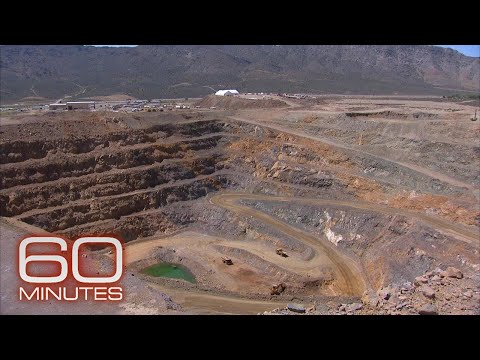
Rare Earth Elements | 60 Minutes Archive
Summary of Rare Earth Elements and Their Global Implications
The video discusses the critical role of rare earth elements in modern technology and the geopolitical tensions surrounding their supply. Rare earths, while not actually rare, are predominantly sourced from China, which controls approximately 90% of their mining and processing. This monopoly became evident in 2010 when China disrupted global supply, highlighting the reliance of countries like the United States on these essential materials.
The origins of the rare earth industry trace back to the Mountain Pass mine in California, where significant deposits were discovered in the 1960s. Initially viewed as geological curiosities, elements such as europium and neodymium became vital for various applications, including electronics, energy-efficient appliances, and hybrid vehicles. For instance, a Prius contains around 25 pounds of rare earths, underscoring their ubiquity in everyday life.
Despite their name, rare earths are found in many places but are only economically viable in a few regions due to the low concentrations required for mining. The extraction process is environmentally hazardous, leading to regulatory challenges and the temporary closure of the Mountain Pass mine in 1998. This gap allowed China to invest heavily in the rare earth industry, ultimately gaining a competitive edge through lower labor costs and fewer environmental regulations.
The U.S. has become increasingly aware of its dependence on Chinese rare earths, particularly for defense systems. The 2010 incident involving Japan served as a wake-up call, prompting the U.S. to formally address these supply chain vulnerabilities. Although efforts are underway to revive the domestic rare earth industry, such as the reopening of the Mountain Pass mine, challenges remain, including financial difficulties and a lack of substantial governmental support.
Rare earth elements are a group of 17 chemical elements that are critical in various high-tech applications. They are located in the periodic table at atomic numbers 57 through 71, encompassing elements such as lanthanum, cerium, neodymium, and europium. Despite being termed 'rare', these elements are not necessarily scarce in the earth's crust; rather, they are rarely found in concentrated forms that are economically viable for mining.
The unique characteristics of rare earth elements include their distinct chemical properties, which enable them to be used in a multitude of applications. For instance, europium enhances red color in television screens, while neodymium is crucial for the functioning of vibration motors in mobile phones. These elements possess various functionalities, including phosphorescence, magnetism, and optical amplification, making them indispensable in modern technology.
Furthermore, rare earth minerals refer to the naturally occurring forms of these elements found within ores, while processed metals are the refined forms obtained after extraction and separation processes. Mining rare earths involves complex techniques due to their low concentrations in ores, often requiring advanced separation technologies to isolate the individual elements effectively.
Formation and Location of Rare Earth Elements
Rare earth elements are typically formed through geological processes that involve the crystallization of minerals under specific conditions over millions of years. This process often occurs in igneous rocks and is influenced by the presence of granite and other alkaline rocks. Rare earth minerals are often located in regions where these geological processes have taken place, such as the Mojave Desert in California, where significant deposits were identified.
Prospecting for rare earth elements can be challenging due to their low natural concentrations; however, the transcript does not specify any technical developments aimed at enhancing the efficiency of prospecting and mining operations. It does highlight that the Mountain Pass mine in California is one of the largest mines globally, indicating that certain locations have been identified as having economically viable concentrations of these elements.
- [01:18] 'Rare earth chemistry is fascinating.'
- [02:01] 'So, what are rare earth elements?'
The process of mining, extraction, and refining rare earth elements is complex and involves several stages. Initially, rare earth minerals are extracted from the earth through conventional mining techniques, including open-pit mining, as seen at the Mountain Pass mine in California. Once the minerals are collected, they undergo a series of chemical processes to separate and purify the individual elements from the ore.
The extraction process typically requires the use of toxic acids and large amounts of water, making it environmentally hazardous. The transcript notes that the Mountain Pass mine was shut down in 1998 due to radioactive contamination, highlighting the significant challenges associated with the mining process. The complexity of this extraction process can act as a barrier for countries that may lack the necessary technology or regulatory frameworks to manage these environmental risks effectively.
Moreover, the transcript suggests that there are environmental constraints in the United States that are less stringent in countries like China, where lower labor costs and fewer environmental regulations have allowed for more aggressive mining operations. This disparity has enabled China to dominate the rare earth market.
- [04:19] 'In fact, the mine was shut down by the state of California in 1998 after radioactive water seeped into the surrounding Mojave Desert.'
- [05:02] 'Those lines crossed somewhere around 1986.'
The environmental costs and health effects related to rare earth mining are significant and concerning. The transcript mentions that the extraction process is not only technically complex but also poses serious environmental risks. The use of toxic acids in the extraction process can lead to contamination of local water sources and soil, as evidenced by the incident at the Mountain Pass mine, which was closed due to radioactive water contamination.
Moreover, the mining operations in China have led to severe pollution issues. It is noted that entire villages have been relocated due to the saturation of air, land, and water with chemical toxins resulting from mining activities. This not only affects the miners but also the surrounding communities who may suffer from exposure to harmful pollutants, leading to potential long-term health effects.
In summary, the environmental and health implications of rare earth mining are profound, with the potential for widespread ecological damage and health risks for individuals living near mining sites.
- [04:22] 'In fact, the mine was shut down by the state of California in 1998 after radioactive water seeped into the surrounding Mojave Desert.'
- [06:38] '...where the air, land, and water are so saturated with chemical toxins.'
China's position in the rare earth market is characterized by a near-total monopoly, controlling roughly 90% of the global supply chain, including mining, refining, and processing. This dominance was solidified in the 1980s when U.S. production declined while Chinese production ramped up. The transcript notes that the Chinese government made a deliberate decision to dominate this sector, with Dang Xiaoping famously stating, 'The Middle East has oil. China has rare earths.' This declaration signaled China's intent to leverage its rare earth resources strategically.
Additionally, the transcript indicates that China's lower labor costs and lax environmental regulations have allowed it to offer rare earth products at significantly lower prices than competitors, thereby pushing them out of the market. The impact of this monopoly is profound, as it extends to critical industries within the United States, including defense systems. The reliance on China for rare earth elements has raised national security concerns, with officials acknowledging that many U.S. weapon systems depend on these materials.
- [05:13] 'The Chinese also had orders from the top.'
- [09:30] 'Yes, China threatens our national security unchecked.'
The role of rare earth elements in international politics is significant, particularly concerning the United States' dependency on China for these critical resources. The transcript highlights a pivotal moment in 2010 when a territorial dispute between China and Japan led to China halting rare earth shipments to Japan for 30 to 40 days. This incident served as a wake-up call for the U.S. government regarding the strategic implications of relying on a single country for such vital materials.
In response to these concerns, President Obama announced a formal complaint to the World Trade Organization against China for creating shortages for foreign buyers. This move signified an acknowledgment of the strategic importance of rare earth elements and the need for the U.S. to reduce its dependency on China.
The Trump administration's strategy to address this dependency involved efforts to stockpile rare earths and promote the development of domestic sources of these materials. However, the transcript indicates that significant government support, such as tax breaks or subsidies, is still lacking, making it challenging for the U.S. to restore its rare earth industry effectively.
- [10:14] 'Finally, 20 years after Dang Xiaoping's speech, rare earths were on the US radar screen.'
- [10:26] '...against China for creating shortages for foreign buyers.'
The transcript does not provide specific information regarding the countries where reserves of rare earth elements are located, nor does it mention any 'new players' entering the market. It primarily focuses on China's dominant position in the rare earth industry and the historical context of how the U.S. lost its competitive edge in this sector.
While the Mountain Pass mine in California is identified as one of the largest sources of rare earths, the transcript lacks details on other countries or companies that may be emerging in this industry. Thus, it is unclear what current progress or strategic importance these potential new players may hold in the global market.
The transcript identifies several specific rare earth elements that are critical for modern technology and strategic industries. Elements such as neodymium and europium are highlighted for their essential roles in various applications, including electronics and defense systems. While the transcript does not label any elements as 'critical' explicitly, it emphasizes the dependence of modern technology on rare earths.
As for the organizational structure of the global supply chains, the transcript illustrates that China has effectively established itself as the dominant supplier, creating vulnerabilities for other countries, particularly the U.S. This dependency on Chinese rare earth supplies poses risks for critical industries, including defense.
- [09:22] '...that would not have a rare earth component in.'
- [09:34] 'Yes, China threatens our national security unchecked.'
The transcript does not mention any specific alternative technologies or innovations that reduce or eliminate the need for rare earth elements. It primarily focuses on the current state of the rare earth market, the implications of dependency on China, and the extraction processes involved.
Thus, there is no detailed educational overview of substitutes or alternative technologies provided in the transcript.
The transcript does not provide detailed information regarding the recycling of rare earth elements. It primarily addresses the mining, extraction, and refining processes, along with the implications of dependency on rare earths sourced from China. As a result, there is no discussion on the economic and technical criteria that a country or company must consider before initiating mining operations.
[00:02] 60 Minutes rewind.[00:06] Unusual metals that are sprinkled inside[00:08] almost every piece of high tech you can[00:11] think of. Most people have never heard[00:13] of them, but we have become so reliant[00:16] on rare earths that a few years ago an[00:18] intense global power struggle broke out[00:21] over their free flow. The reason is that[00:24] one country has a virtual monopoly.[00:27] roughly 90% of the mining, refining, and[00:30] processing of rare earths, China. And in[00:34] 2010, it used that power to disrupt the[00:36] world supply. It's especially troubling[00:40] because it was the United States that[00:42] started the rare earth revolution in the[00:44] first place.[00:47] It all began here at this mine in[00:50] Mountain Pass, California, an hour west[00:52] of Las Vegas, when geologists first[00:55] identified rare earth elements deep in[00:57] the Mojave Desert. They were considered[01:00] geological oddities until the 60s when[01:04] it was discovered that one of these[01:05] elements, europium, enhanced the color[01:08] red in TV sets. And soon the rare earth[01:12] industry was born. CBS presents this[01:15] program in color.[01:18] Rare earth chemistry is fascinating.[01:20] There's so many more things that we[01:22] could be doing with rare earths.[01:24] Constantine Kerionopoulos, chairman of[01:26] Molly Cororp, which has owned and[01:28] operated the Mountain Pass mine for six[01:30] decades, took us to the heart of the[01:33] operation. Is this considered a big[01:36] mine?[01:36] In terms of rare earth standards, yes,[01:39] it's a it's one of the biggest in the[01:41] world. Are we actually walking on rare[01:43] earth elements right now?[01:45] We're physically on the or body.[01:48] We are right on it.[01:49] It starts at the top of the mine and[01:51] comes down and we're walking on it and[01:54] it goes in that direction.[01:58] So, what are rare earth elements? If you[02:01] ever took high school chemistry, you[02:02] learned that they're clumped together at[02:04] the end of the periodic table, atomic[02:07] numbers 57 through 71, and they have[02:10] difficult to pronounce Greek or[02:13] Scandinavian names.[02:14] Lanthanum, serium, neodymium, praodmium,[02:17] samarium, turbium.[02:19] Some of them are phosphorescent. Herbium[02:22] amplifies light and is used in fiber[02:25] optic cables. Gatalinium has magnetic[02:28] properties and is used in MRI machines[02:31] and X-rays. As for neodymium, you may be[02:35] carrying some of it in your pocket.[02:37] Next time your phone vibrates, think of[02:39] us because the vibration motor is a[02:42] small motor that contains a tiny[02:44] neodymium magnet in it. Caronopoulos[02:47] showed us around a new model home to[02:50] illustrate that rare earths are making[02:52] our appliances energy efficient like[02:55] state-of-the-art refrigerators,[02:57] touchscreen thermostats,[03:00] energy efficient light bulbs, the air[03:02] conditioning systems. They're also in[03:05] our cars in the form of catalytic[03:07] converters, sensors, and hybrid car[03:10] batteries. Hybrids in particular use a[03:13] lot more because they contain electric[03:15] motors that would not function without[03:18] rare earths.[03:19] A Prius has roughly 25 pounds of rare[03:22] earths. And they're hidden in plain[03:24] sight in our everyday lives, in our[03:27] computers and gadgets. Even the lights[03:30] and cameras we use to film this story[03:32] are chock full of rare earths. What I'm[03:35] getting from you is that modern life[03:38] depends on these elements.[03:40] Absolutely.[03:42] Despite their name, rare earths are not[03:45] rare. Small amounts can be found in your[03:48] backyard.[03:50] They're trapped in what looks like[03:52] ordinary rock. But there are only a few[03:55] places on Earth with concentrations high[03:58] enough to mine.[04:00] Rare earths normally are found in very,[04:02] very low concentrations. This is[04:04] probably running something in the 25%[04:07] grade, which is remarkable.[04:09] To anyone who has ever worked with rare[04:12] earths, this is a thing of beauty.[04:13] But getting the rare earths out of that[04:16] rock is nasty business, requiring toxic[04:19] acids and lots of water. In fact, the[04:22] mine was shut down by the state of[04:24] California in 1998 after radioactive[04:27] water seeped into the surrounding Mojave[04:30] Desert from an underground pipe. The[04:33] mine lay dormant for a decade, giving[04:35] China an opportunity.[04:37] The Chinese made a very conscious[04:39] decision to enter that industry.[04:42] Dan McGrerty was special assistant to[04:44] President George HW Bush and today[04:47] advises the US government on critical[04:50] materials. When the Molly mine closed,[04:53] he says China was already well on its[04:56] way to becoming the king of rare earths.[04:59] There's a point at which the lines[05:00] cross. the United States production[05:02] declines, the Chinese production is[05:03] ramping up. Those lines crossed[05:05] somewhere around 1986.[05:06] So, how did they pull it off? What what[05:08] were the factors that allowed them to[05:11] basically take this away from us?[05:13] Well, uh the advantage of lower labor[05:14] costs would be a place to start. Also,[05:17] environmentally, very almost no[05:20] environmental constraints around mining,[05:23] safety considerations for the miners[05:24] doing the mining in huge contrast to[05:26] United States. So, that translates[05:28] directly into lower pricing. Yeah.[05:30] And lower pricing can push other people[05:31] out of the market.[05:32] And that's basically what happened.[05:34] It's basically what happened.[05:35] The Chinese also had orders from the[05:38] top. In a little notice speech in 1992,[05:41] Dang Xiaoping signal China's intention[05:44] to corner the market.[05:45] What exactly did he say?[05:47] Yeah. The Middle East has oil. China has[05:50] rare earths.[05:51] He actually said that. Yeah. I think[05:53] it's fair to say at that point people in[05:55] the rest of the world would have been[05:56] saying, "What are what is he talking[05:58] about?" just went right over our heads.[05:59] I think so.[06:00] Did we just not foresee what they[06:03] foresaw?[06:04] It's extraordinary if they actually[06:05] foresaw all the uses. Our designers and[06:08] developers advanced the miniaturized[06:13] applications for laptops and cell phones[06:15] while the Chinese were going after the[06:17] metals and materials out of which these[06:18] things are actually built.[06:19] How did they get the knowhow?[06:21] An enormous amount of investment. Like[06:23] it's kind of like the Chinese moonshot,[06:25] the moon program. China poured billions[06:27] into the industry, ignoring the[06:30] consequences. We obtained this video[06:32] from a freelance cameraman showing the[06:35] area near Baoto, China's rare earth[06:38] capital, where the air, land, and water[06:41] are so saturated with chemical toxins.[06:44] The Chinese have had to relocate entire[06:46] villages. This is one of the few places[06:49] where rare earths are turned into[06:51] metals, which are then alloyed or[06:53] blended into things like permanent[06:56] magnets.[06:57] These are magnets that once you[06:58] magnetize them, they stay that way.[07:00] Ed Richardson, president of the US[07:03] Magnetic Materials Association, says the[07:06] most important use of rare earths is in[07:08] magnets. Only a small amount can produce[07:11] magnets able to lift a thousand times[07:14] their weight.[07:15] This is a cell phone. He showed us how[07:17] miniaturized rare earth magnets can be.[07:19] So, I'm going to take it apart layer by[07:21] layer, and we're going to get to the[07:23] point where we can actually see the[07:25] magnets, the rare earth magnets that are[07:26] inside them.[07:27] Oh, let me see this.[07:28] Magnetic. There's three little magnets[07:31] in there.[07:32] Oh, one, two, three.[07:35] Right. And if you put the paper clip on[07:36] there, you can see how it sticks.[07:38] And this little tiny thing is the is the[07:40] speaker.[07:41] Right. This is how devices have gotten[07:43] small, very powerful because you don't[07:46] because the magnets are so powerful, you[07:47] don't have to use much of it.[07:49] The US developed this technology, but[07:52] China bought most of it right out from[07:55] under us. For instance, in 1995, China[07:58] bought the biggest American rare earth[08:00] magnet company, Magnaquench, which was[08:03] based in Indiana. When they bought the[08:06] factory, they now had the patents, they[08:08] now had the equipment, and they actually[08:10] had some of the Magna Quench employees[08:12] in the United States go to China and[08:14] teach the people how to make the[08:16] products.[08:17] Did we not understand the strategic[08:19] importance of keeping that industry[08:22] here?[08:22] We didn't get it. And unfortunately, the[08:24] technology was transferred to China[08:26] before that technology was appreciated.[08:29] And now we're seeing so many for[08:31] instance defense systems that are[08:34] dependent on it.[08:35] Does that make us dependent on China for[08:38] our defense systems?[08:39] Oh, we are very dependent on China.[08:40] We are dependent on China for our[08:43] weaponry.[08:44] Right.[08:47] A prime example of that is the new F-35[08:51] fighter jet. The most technologically[08:53] advanced weapon system in history.[08:57] Each one contains nearly half a ton of[09:00] rare earths. Former White House official[09:03] Dan McGory says that's just for[09:05] starters.[09:06] The guidance systems on weapon systems[09:08] and Tomahawk cruise missile, any of the[09:10] smart bombs have rare earths in them. um[09:14] lasers. I I'd be hardressed to name[09:18] anything that we consider worth building[09:20] today[09:21] today and going forward that would not[09:22] have a rare earth component in[09:24] because of this because of the monopoly[09:26] on rare earths. Does China threaten our[09:29] national security[09:30] unchecked? Yes.[09:34] What finally woke up the US government[09:36] was an incident at sea in 2010. A[09:40] Chinese fishing twler rammed a Japanese[09:43] Coast Guard ship in a territorial[09:45] dispute.[09:46] [Applause][09:51] The Japanese seized the boat's captain[09:54] and two weeks later, China stopped[09:56] shipping rare earths to Japan.[09:58] The Chinese cut them off and for 30 to[10:01] 40 days, the rare earth did not flow to[10:03] Japan. So it was a real shot across the[10:04] bow to the Japanese that this is[10:08] something that you have to be worried[10:09] with.[10:10] It was a wakeup call. Finally, 20 years[10:14] after Dang Xiaoing's speech, rare earths[10:16] were on the US radar screen.[10:19] This case involves something called rare[10:21] earth materials.[10:22] President Obama announced a formal[10:24] complaint to the World Trade[10:26] Organization against China for creating[10:29] shortages for foreign buyers. And last[10:31] August, the WTO ruled against Beijing.[10:35] No one in the Obama administration would[10:37] talk to us on camera about rare earths[10:40] and our dependence on China, including[10:42] the Department of Energy, the Pentagon,[10:45] or the US Trade Representative. Even the[10:48] private sector didn't want to discuss[10:50] the problem. The story will continue[10:53] after this.[10:58] We tried to get interviews with heads of[11:01] companies that use the magnets and other[11:04] products coming out of China and they[11:06] would not talk to us.[11:07] Is there fear[11:09] in in high-tech companies that if they[11:12] say something negative, maybe China[11:15] won't sell them what they need?[11:17] I think that there is grave concern in[11:20] these companies, but perhaps not a[11:22] willingness to talk about that on the[11:24] street corner.[11:25] So what is the US doing to restore the[11:28] industry here? Out in California, Molly[11:32] Corp was allowed to reopen after it[11:34] developed new technology that protects[11:36] the environment. But even when it's at[11:39] full capacity, the mine will only[11:41] produce a fraction of the world's supply[11:44] of rare earths.[11:46] The Pentagon has begun stockpiling rare[11:48] earths, and industry is researching new[11:51] technologies that would replace them. Do[11:54] you get any help from the US government?[11:56] They want to have a rare earth industry[11:58] here.[11:59] Encouragement. Yeah,[12:00] encouragement.[12:02] That's it.[12:03] Yeah.[12:04] The government is not offering[12:06] incentives like tax breaks or subsidies[12:09] that would lure businesses into the[12:11] market.[12:12] What needs to to change to bring more of[12:15] the industry back to the United States?[12:17] Well, first of all, we need to take a[12:18] long-term view. It took 20 years to lose[12:22] the dominant position, at least 20[12:24] years. And it's probably going to take[12:26] us 10, 15 years if we execute for some[12:30] of these supply chains to start coming[12:32] back.[12:34] But trouble is once again looming for[12:36] the US rare earth industry. Since[12:38] restarting operations two years ago,[12:41] Molly Corps Mountain Pass mine has yet[12:43] to turn a profit and is so deeply in[12:46] debt that just last week its own auditor[12:48] warned it may not be able to stay in[12:51] business.
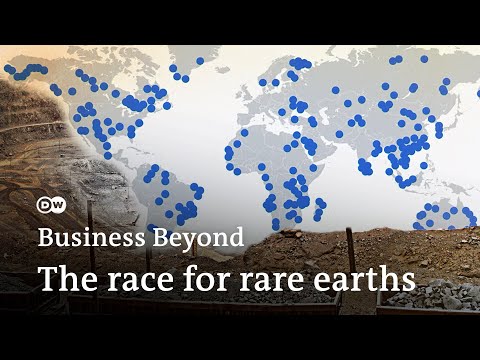
Rare earths crunch? Why we need them and who has them | Business Beyond
Overview of Rare Earth Elements
Rare Earth elements are critical for modern technology and clean energy solutions, found in devices such as LCD screens, smartphones, and electric vehicles. Their demand is expected to surge, particularly as the world strives for carbon neutrality, with predictions indicating a three-fold increase by 2040. Despite their name, these elements are not rare in abundance but are challenging to extract economically and environmentally.
Challenges in Supply and Environmental Impact
The mining of rare Earths poses significant environmental risks, including pollution from leaching pools that can contaminate air and groundwater. This has led to severe ecological damage, particularly in regions like Baotou, China, where waste disposal has created hazardous conditions for local communities. The geopolitical landscape is heavily influenced by China's dominance in rare Earth production, controlling a substantial share of global reserves and refining capabilities.
Geopolitical Dynamics
China's strategic control over rare Earths has resulted in geopolitical tensions, especially with countries like Japan and the United States, which have experienced supply disruptions. The U.S. relies heavily on China for its rare Earth imports, leading to initiatives aimed at boosting domestic production and diversifying supply chains.
Future Directions
Efforts to secure rare Earth supplies include enhancing recycling initiatives and developing alternative extraction methods. Companies like Apple and BMW are exploring ways to reduce reliance on rare Earths through innovative technologies. As global demand rises, the challenge remains to balance the need for these essential materials with environmental sustainability, ensuring that the pursuit of clean energy does not exacerbate ecological harm.
Conclusion
Addressing the complexities of rare Earth supply requires a multifaceted approach, combining environmental responsibility with strategic resource management. The ongoing discourse emphasizes the importance of adapting market rules to foster sustainable practices in the rare Earth industry.
Definition and Unique Characteristics of Rare Earth Elements
Rare Earth Elements (REEs) consist of a group of 17 metallic elements that are essential to various modern technologies. Despite being termed 'rare,' they are not scarce in terms of availability; rather, they are found in low concentrations across many regions worldwide. The term 'rare' is somewhat misleading as these elements can be located in various concentrations in nearly all countries, with certain areas like China having a higher prevalence.
These elements possess unique properties that make them invaluable in numerous applications. For example, they can exhibit high magnetic properties, which are crucial in the manufacturing of electric vehicle motors and wind turbines. The particular attributes of REEs, like their magnetic capabilities, enable advancements in clean energy technologies, which are increasingly vital in the global fight against climate change.
Furthermore, there is a distinction between rare earth minerals and processed metals. Rare earth minerals are the raw ores mined from the earth, while processed metals refer to the purified forms of these elements that are used in manufacturing. The process of refining these minerals into usable metals is complex and requires advanced techniques to extract and separate the individual elements from the mined ore.
Formation and Location of Rare Earth Elements
The formation of Rare Earth Elements occurs through geological processes that often span millions of years. They are primarily found in igneous and metamorphic rocks, as well as in the minerals that form from these rocks. The distribution of REEs across the globe varies, with significant reserves located in countries such as China, Vietnam, Brazil, and Russia. While the elements can be found in various geological formations, their extraction poses significant challenges due to the complexities involved in mining and refining.
The transcript does not provide specific technical developments that improve the efficiency of prospecting or mining these elements. However, it implies that advancements in mining technologies and techniques are necessary to make the extraction process more viable, particularly as the demand for these elements is expected to increase sharply in the coming decades, driven by clean energy technologies.
- [01:26] "What are rare Earths? Well, rare Earths refer to the 17 metallic elements... they run your life."
- [02:12] "The International Energy Agency predicts that demand for rare Earths driven by clean energy technology will rise more than three-fold by 2040."
Mining, Extraction, and Refining Processes
The process of mining, extraction, and refining Rare Earth Elements is multifaceted and involves several technical complexities. Initially, mining involves extracting ores that contain REEs, which are then transported to processing facilities. The extraction process often leads to the generation of tailings, or waste materials, that can contain hazardous substances.
Once the ore is mined, it undergoes a refining process where chemicals are used to separate the REEs from other elements. This step is critical but also poses environmental challenges, as the chemicals utilized can be dangerous if not managed properly. The refined Rare Earth metals are then used in various applications, including electronics and clean energy technologies.
The transcript does highlight that the economics of mining REEs can be problematic. Specifically, the costs associated with refining and processing can be high, and the economic viability of extraction is often hampered by fluctuating market demands for various REEs. Additionally, the technical complexity of mining and processing can act as a barrier for countries lacking the necessary technology and resources.
- [04:20] "Once the ore containing the rare Earths has been dug up, it will often end up in a big leeching pool where chemicals are used to separate them out from all the other elements."
- [03:58] "The issue is not just the supply but also the pricing... there’s been a huge environmental price to pay because of rare earth mining."
Environmental Costs and Health Effects of Rare Earth Mining
The environmental costs associated with Rare Earth mining are significant and have dire implications for both the ecosystem and human health. Mining operations can lead to the contamination of air and water sources due to the release of hazardous chemicals during the refining process. The leaching pools used for separating REEs from ores can emit dangerous pollutants into the atmosphere and can also seep into groundwater, which may contain radioactive elements mixed with the rare Earths.
The effects on local communities can be severe. For instance, in China, waste products from refineries have resulted in the creation of toxic lakes, often referred to as 'Hell on Earth.' These toxic materials can render land infertile and make drinking water unsafe, leading to a host of health issues for residents and miners alike. The transcript emphasizes that while Rare Earths are crucial for modern technologies, the environmental and health impacts of their extraction cannot be overlooked.
- [04:58] "Environmentalists have made the point that in order to save the Earth, you’re in fact ending up destroying the Earth because of the pollution emitted..."
- [05:24] "Drinking water has become unsafe while we’re talking about China... a vast man-made lake full of dumped toxic materials has been likened to Hell on Earth."
China's Special Position in the Rare Earth Market
China holds a dominant position in the global Rare Earth market, controlling a significant share of the world's reserves as well as the processing capabilities. The transcript indicates that China not only has the largest deposits of Rare Earths but also leads in refining and processing them, which grants the country substantial strategic power in this sector. This dominance was established over decades, beginning with significant investments in heavy industry and the military industrial complex shortly after the establishment of the People's Republic of China in 1949.
The monopolistic nature of China's position allows it to leverage its control over Rare Earth supplies, which has been a point of contention in international relations. For example, in 2010, China was accused of deliberately withholding Rare Earth exports to Japan, which resulted in a dramatic spike in prices and served as a wake-up call for many countries reliant on these elements.
The transcript does not explicitly mention illegal mining activities, but it does imply that China's control has a profound impact on global supply chains and international politics, marking it as a crucial player in the ongoing geopolitical struggle over these essential materials.
- [05:34] "China controls by far the biggest share of the world’s Rare Earth reserves... gives China enormous strategic power."
- [06:33] "Rare Earths have become a source of geopolitical contention because of how key they are to different countries’ technological ambitions."
Rare Earth Elements in International Politics: The US Strategy
The role of Rare Earth Elements in international politics is underscored by their strategic importance to technological and environmental ambitions of nations. The transcript highlights the U.S. strategy under the Trump administration aimed at reducing dependency on China for Rare Earth supplies. This concern was particularly pronounced due to the fact that the U.S. imports almost 80% of its Rare Earths directly from China, making its economy vulnerable to supply disruptions.
In response to these challenges, President Trump signed an executive order to boost funding for domestic mining operations. This strategic move was aimed at fostering a self-sufficient supply chain for Rare Earths within the U.S., thereby mitigating the risks associated with foreign reliance. The urgency of this initiative reflects the broader geopolitical dynamics where supply chain security has become a pivotal aspect of national security discussions.
- [10:11] "The U.S. imports almost 80% of its rare Earths directly from China and it’s heavily reliant on China for the processing of the rare Earths mined in America."
- [10:30] "Efforts on the part of say Europe to expand its network of suppliers is running into complications."
Countries with Rare Earth Reserves and New Players in the Market
Rare Earth Elements are found in various countries, with significant reserves located in China, Vietnam, Brazil, and Russia. The transcript indicates that while China dominates the market, there are emerging players that are starting to explore their own Rare Earth resources. For instance, Japan has looked to Mongolia and Vietnam for potential Rare Earth sources after experiencing supply disruptions from China in 2010.
The strategic importance of these new players is heightened by the geopolitical implications of Rare Earth supply chains. As countries like Vietnam seek to develop their mining capabilities, the competition for securing these resources may lead to a diversification of the supply chain, which is critical in reducing reliance on a single country.
- [05:31] "China controls by far the biggest share of the world’s Rare Earth reserves... there’s also a high concentration of them in Vietnam, Brazil, and Russia."
- [09:45] "Japanese businessmen... were turning up in places like Mongolia and Vietnam both of which have rare Earths to explore the possibilities."
Critical Rare Earth Elements and Global Supply Chain Vulnerabilities
The transcript identifies certain Rare Earth Elements as 'critical' due to their essential roles in advanced technologies and clean energy applications. Elements such as neodymium and dysprosium are mentioned specifically, as they are crucial for manufacturing high-performance magnets used in electric vehicles and wind turbines.
The organizational structure of the global supply chains for these critical elements is complex and fraught with vulnerabilities. The dependence on a few countries, particularly China, for both mining and refining creates a precarious situation where geopolitical tensions could disrupt supply. Additionally, the interconnectedness of global markets means that shifts in one region can have ripple effects worldwide.
- [01:29] "Rare Earths refer to the 17 metallic elements... that are essential to various modern technologies."
- [12:20] "China’s dominance in the rare earth and critical material sector has to do with producing the technological components that contain rare earth elements."
Alternative Technologies and Innovations for Rare Earth Substitutes
While the transcript does not delve into specific alternative technologies in detail, it does mention ongoing research aimed at reducing or eliminating the need for Rare Earth Elements. One area of focus is the use of bacteria for separating elements instead of relying on traditional chemical processes, which are often environmentally harmful.
Furthermore, the potential for extracting Rare Earths from tailings left after discontinued mining operations is highlighted as a promising avenue for reducing demand. This approach not only makes use of existing waste materials but also diminishes the need for new mining ventures. The transcript emphasizes the critical nature of developing these alternatives as a means to address the growing demand for Rare Earths without further environmental degradation.
- [15:38] "Scientists are also looking into ways to separate elements using bacteria instead of chemicals."
- [16:26] "Apple says its latest offering, the iPhone 13, has 98% recycled Rare Earth elements."
Recycling of Rare Earth Elements
The recycling of Rare Earth Elements is becoming an increasingly important topic, especially in light of the environmental concerns associated with mining. The transcript indicates that there has been progress in the science of recycling these elements, although the current recycling rates remain low. Companies are beginning to recognize the economic and environmental benefits of reclaiming Rare Earths from discarded products.
Before initiating mining operations, certain economic and technical criteria must be considered. These include the cost-effectiveness of mining versus recycling, the availability of technologies for efficient extraction, and the environmental regulations that govern these processes. The transcript suggests that companies and countries should weigh these factors carefully to determine the best approach to securing a sustainable supply of Rare Earths.
- [15:29] "There are ways to stem demand by benefiting from what’s already there... without necessarily having to rush around opening as many new mines as possible."
- [16:10] "There has been progress in the science to help make this efficient although that isn’t likely to help stem demand in a really significant way just yet."
[00:00] you might not know it but rare Earths[00:03] they run your life we need them for LCD[00:06] screens lasers headphones microphones[00:08] smartphones they're also found in space[00:11] rockets and satellites and even in some[00:13] Modern Cancer drugs and their use in[00:16] wind turbines and electric cars means[00:19] they've become a key part of developing[00:21] clean energy technology and therefore of[00:24] the fight against climate change we use[00:27] them a lot and we're only going to need[00:29] more there's reason to worry about how[00:31] we're getting them if we don't take[00:34] right steps right now of course there[00:37] will be uh problems that we will not be[00:40] able to meet the the the required demand[00:43] in future restricting export of rare[00:46] earth would be a good way of inflicting[00:50] pain on your geopolitical Rivals even if[00:55] a mining company uh want to do things in[00:59] the greenest greatest most[01:00] environmentally friendly way possible[01:03] the market incentives aren't there in[01:06] this video we'll talk about the rare[01:08] Earths we need who controls them and why[01:11] and how securing Supply is a social[01:13] environmental and geopolitical problem[01:16] the world has to resolve that's all[01:19] coming up on business[01:22] Beyond first up the science bit what are[01:26] rare Earths well rare Earths refer to[01:29] the 17 metallic elements many of which[01:32] you've probably never heard of some have[01:35] futuristic sounding names like neodymium[01:38] or promethium others are barely[01:40] pronounceable like prmium or erbium and[01:44] they have certain properties that make[01:45] them extremely useful for example they[01:48] can be highly magnetic this comes in[01:51] handy when turning movement into energy[01:54] rare earth magnets help make electric[01:56] vehicle Motors and wind turbines lighter[01:58] and more efficient[02:00] as economies around the world strive to[02:02] become more carbon neutral the[02:05] International Energy agency predicts[02:07] that demand for rare Earths driven by[02:09] Clean Energy technology will rise more[02:12] than three-fold by 2040 in what they[02:15] call the stated policy scenario and[02:17] Sevenfold in the sustainable development[02:19] scenario that's where all net zero[02:22] emissions pledges are reached in a[02:24] statement the agency's executive[02:26] director Fati bur said today the data[02:30] shows a looming mismatch between the[02:32] world's strengthened climate Ambitions[02:34] and the availability of critical[02:36] minerals that are essential to realizing[02:39] those Ambitions now rare Earths are just[02:42] one kind of critical mineral you might[02:44] have heard of others like lithium and[02:47] nickel but having established that we[02:49] need them and that we should be[02:51] concerned we might not have enough[02:53] here's one slightly confusing thing that[02:56] any expert will tell you they are not[03:00] actually rare they actually quite[03:02] abundant you can find these elements in[03:04] various concentration in almost all[03:06] countries of the world so again rare[03:09] Earth's not rare but everywhere also[03:12] according to this map from the US[03:14] Geological[03:15] Survey but just because rare Earths can[03:18] be found in a lot of places doesn't mean[03:20] they're easily obtainable the economics[03:23] of mining them is not exactly[03:25] straightforward when you produce rare[03:27] Earths you often produce use together um[03:31] substances that are in higher demand and[03:34] substances that are in lower demand[03:36] simply because they are[03:38] collocated and what this can do is that[03:42] as substances which are in very high[03:45] demand will lead to increase in the[03:49] supply of those that are less demanded[03:52] the price of those less demanded Rare[03:55] Earth will go down and that's going to[03:58] increase the cost and lower the profits[04:02] for the producers so they will have to[04:04] increase the price of the highly[04:06] demanded substances so the issue is not[04:10] just the supply but also the pricing and[04:13] it's not just about the financial cost[04:15] there's been a huge environmental price[04:17] to pay because of rare earth mining once[04:20] the ore containing the rare Earths has[04:22] been dug up it will often end up in a[04:25] big leeching pool where chemicals are[04:27] used to separate them out from all the[04:29] other elements but these pools can[04:32] release dangerous chemicals into the air[04:35] and if they're badly sealed chemicals[04:37] can also seep into the ground getting[04:39] into the groundwater that includes the[04:41] radioactive elements that were mixed in[04:44] with the rare[04:45] Earths environmentalists have made the[04:49] point that in order to save the Earth[04:52] you're in fact ending up destroying the[04:54] Earth because of the pollution emitted[04:58] in getting these Rare Earth and scarce[05:00] Metals there's also the dumping of the[05:03] waste products from the refineries in[05:05] the Chinese city of BTO a vast man-made[05:09] lake full of dumped toxic materials has[05:11] been likened to Hell on Earth this can[05:14] have enormous and terrible KnockOn[05:16] effects for communities around these[05:18] sites land can no longer be farmed and[05:21] drinking water has become unsafe while[05:24] we're talking about China it's important[05:26] to know how they're Central to the story[05:28] of rare earth and anxiety over Supply[05:32] China controls by far the biggest share[05:34] of the world's Rare Earth reserves but[05:37] there's also a high concentration of[05:39] them in Vietnam Brazil and Russia also[05:42] control a substantial[05:44] amount however when it comes to actually[05:47] refining and processing China is even[05:50] further[05:51] ahead controlling most of the global[05:53] trade in rare Earths gives China[05:56] enormous strategic power and that's[05:58] something Beijing is fully aware of[06:01] three decades ago China's then leader D[06:05] shaing was quoted saying the Middle East[06:08] has its oil China has rare Earths this[06:11] was stated in the context of a larger[06:14] discussion about the vulnerability of[06:17] the Middle East to uh intervention from[06:21] other Western Powers because of its oil[06:24] resources and that China needed to then[06:27] Be watchful and prudent to make sure[06:29] that the same didn't happen with respect[06:31] to its Rare Earth reserves suffice to[06:33] say rare Earths have become a source of[06:36] geopolitical contention because of how[06:39] key they are to different countries[06:40] technological Ambitions and now also to[06:43] their climate protection objectives but[06:45] let's take a step back how did China[06:48] come to dominate the rare Earth's trade[06:50] let me take you back to[06:53] 1949 one of the very first industrial[06:56] projects that was prioritized by uh the[07:00] newly founded People's Republic of China[07:02] uh was actually building a vertically[07:04] integrated uh heavy industry and[07:07] military industrial complex around the[07:09] iron and rare earth reserves in Bay an[07:11] oo and so with a lot of investment from[07:14] the former Soviet Union a lot of work um[07:17] over a couple of decades uh China built[07:19] up a really robust uh industrial[07:22] foundation and also uh sent experts all[07:25] over the world to Europe to Russia to[07:27] other parts of the world to uh gather[07:30] expertise and then to come back uh to[07:33] China and help uh crack the puzzle of[07:38] how you better refine and uh produce[07:41] Alloys with Rare Earth elements this was[07:42] in now we're in sort of like the 70s and[07:45] then uh D shaing comes along uh and does[07:48] the open up and reform and starts[07:50] selectively requesting and attracting[07:53] foreign direct investment in specific[07:55] sectors in China and this happened to be[07:57] right around the time uh when when uh[08:00] Ronald Reagan and Margaret Thatcher in[08:02] the west removed Capital controls to[08:04] make it easier for uh Western firms to[08:08] look for places that had the greatest[08:10] competitive Advantage uh the lowest[08:12] labor costs um and of course the uh[08:16] least amount of regulatory burden us[08:19] producers went bankrupt because they[08:21] couldn't survive uh with the prices the[08:24] Chinese could uh offer at the same time[08:27] the en Environmental regul is not as[08:31] tough as in uh developed countries over[08:35] time the market share of Chinese[08:37] producers uh Rose and nobody actually[08:41] noticed about that for a long time[08:44] because it's it was just too convenient[08:46] to get uh the materials without uh the[08:49] environmental problems at home and at[08:52] low prices and that's how China built up[08:55] Mastery of the sector over time and how[08:57] that Lake we showed you in BAU got to be[09:00] that way but some of China's trading[09:02] partners would learn the hard way that[09:05] dependency from one side translates to[09:07] leverage for the[09:09] other back in 2010 technological[09:13] Powerhouse Japan accused its gigantic[09:15] Regional rival of deliberately[09:17] withholding Rare Earth exports the[09:20] subsequent r with China saw the prices[09:22] of some rare Earths increase 30 fold[09:25] obviously it was a wakeup call to Japan[09:28] and I watched Japan politics very[09:30] closely and I noticed that within weeks[09:33] of the Chinese threatening that embargo[09:36] Japanese businessmen you know people who[09:39] work for the big firms like Mitsubishi[09:42] and mitsui they were turning up in[09:45] places like Mongolia and Vietnam both of[09:48] which have rare Earths to explore the[09:52] possibilities so the rest of the world[09:55] should have been alert for a longer time[09:58] more recently in 2020 concern that China[10:01] would use rare Earths as a bargaining[10:04] chip in its ongoing trade battle with[10:06] the United States saw then president[10:09] Donald Trump sign an executive order[10:11] boosting funding for domestic mining the[10:14] US Imports almost 80% of its rare Earths[10:18] directly from China and it's heavily[10:20] reliant on China for the processing of[10:22] the rare Earths mind in America and its[10:25] one and only Rare Earth mine mountain[10:27] pass in California and efforts on the[10:30] part of say Europe to expand its network[10:33] of suppliers is running into[10:36] complications to to reduce dependence on[10:38] China uh Europe went uh to um to Russia[10:43] but uh the only uh Rare Earth processing[10:46] facility in Europe is in Estonia and it[10:49] is almost completely fed by feed stock[10:52] from Russia so this is now something[10:54] which maybe there's a reversal so we we[10:57] now turn to China again to Source uh the[11:01] material that we got from Russia in the[11:05] past couple of years um and if China is[11:09] would now uh[11:12] um turn to an aggressive uh stance with[11:17] respect to supply to the world markets[11:20] that would be actually big problem at[11:22] the moment an aggressive stance and[11:25] disrupted Supply means higher prices and[11:28] therefore inflated costs all the way[11:30] down the chain and more expensive[11:32] products in your hands that would also[11:34] slow down the uptake of Green Technology[11:37] but experts warn that the global economy[11:40] being as interlined as it is means that[11:43] the race for rare Earths defies[11:45] characterization as a simple win or take[11:48] all story for the first time since 1985[11:52] in 2018 China imported more rare Earths[11:55] than it exported and this is consistent[11:58] with the policy strategy of uh the PRC[12:02] government which was to move out of[12:04] primary resource extraction and to move[12:06] into value added[12:08] processing so now China's dominance in[12:12] the rare earth and critical material[12:13] sector has to do with producing actually[12:16] the technological components that[12:18] contain Rare Earth elements and other[12:20] critical materials these technological[12:23] components are then uh exported all over[12:25] the world a lot of them are also you[12:27] know consumed within China uh but then[12:29] the part that I think is often left out[12:31] of the picture is that China is an[12:33] important destination market for[12:35] finished goods from the West that[12:38] contain these Rare Earth bearing[12:40] technological components and so our[12:43] economies our global economy is quite a[12:46] bit more integrated than this West[12:49] versus China or US versus China[12:51] narrative would represent the rare earth[12:54] industry Association says environmental[12:57] regulations becoming stricter in China[12:59] means their production costs are going[13:02] up too China should then have a harder[13:05] time undercutting Rare Earth producing[13:07] Rivals potentially loosening their hold[13:09] on the trade some of the latest[13:12] regulations put forward in China uh or[13:16] the environmental standards or or[13:18] regulations that actually you can[13:20] compare with that with European[13:23] standards so if if that standards are in[13:26] place China can No More Produce produce[13:29] and provide a material for that price[13:32] that you used to get so that price[13:35] increase actually allow other companies[13:37] to compete with China naturally this[13:40] might be a good moment for a recap one[13:42] rare Earths like the odium and[13:43] dysprosium while in themselves not all[13:46] that rare are in tight Supply two mining[13:48] them is socially environmentally and[13:50] economically fraud three the supply is[13:52] still not terribly Diversified China[13:54] still dominates in terms of controlling[13:56] large Rare Earth reserves and refining[13:58] capacity[13:59] even though the gap between itself and[14:01] other countries in that regard might be[14:03] narrowing so here's the question what[14:05] can be done to secure the rare Earths[14:07] that countries need diversifying Supply[14:11] and ensuring better Behavior among all[14:13] actors in The Rare Earth space would be[14:15] a start but that's obviously not easy a[14:19] lot has to come together to achieve that[14:21] the highest social environmental health[14:24] and safety standards combined with a[14:26] will to punish Rare Earth players for[14:28] not meeting them or to incentivize them[14:31] so that they do so for example if um if[14:35] a downstream company if a refiner if uh[14:39] a technological components[14:40] manufacturer uh elected to pay the[14:43] premium to um to purchase[14:48] environmentally and socially[14:50] responsible Rare Earth elements then[14:53] maybe they should be reimbursed right um[14:56] and this reimbursement can happen can[14:58] take a number of forms forms of uh[15:00] already very familiar policy instruments[15:02] such as tax rebates tax incentives that[15:06] sort of thing uh and so there's nothing[15:10] really profoundly revolutionary or even[15:14] very novel or original uh that needs to[15:17] be applied here in order to uh create a[15:20] market that Fosters this kind of Greener[15:23] and greater Rare Earth production and[15:25] then there are ways to stem Demand by[15:27] benefiting from what's already there[15:29] without necessarily having to rush[15:30] around opening as many new mines as[15:32] possible there's a lot of research going[15:35] into extracting rare Earths from Kash or[15:38] from tailings left after discontinued[15:40] mining operations scientists are also[15:43] looking into ways to separate elements[15:45] using bacteria instead of chemicals then[15:48] there are also programs aimed at reusing[15:50] the rare earth that consumers like us[15:52] just end up throwing away so recycling[15:55] is a big issue in these elements which[15:59] um to a large extent are um uh uh[16:04] disposed without uh recycling at the[16:07] moment and here there has been progress[16:10] in the um science to um help help uh[16:14] make this efficient although that isn't[16:17] likely to help stem demand in a really[16:19] significant way just yet it's a step[16:22] that more Tech manufacturers are[16:24] increasingly taking Apple says its[16:26] latest offering the iPhone 13 has 98%[16:30] recycled Rare Earth elements other[16:33] companies are trying to reduce their[16:35] dependence on rare Earth's full stop[16:37] German car maker BMW says it's reined[16:41] its electric vehicle technology around a[16:43] lack of rare Earths and more solutions[16:46] towards either securing Rare Earth[16:48] Supply or developing Alternatives could[16:51] yet still come some of these new[16:54] technologies are very[16:56] promising and there could be some[16:59] technology being worked on we don't even[17:01] know about yet technology May rescue us[17:05] until then however the debate around[17:07] Rare Earth Supply continues the most[17:10] important part of which remains how to[17:12] get what we need to save the planet[17:14] without wrecking it any further it's[17:17] neither easy nor impossible but it is[17:19] imperative because um climate change is[17:22] the greatest challenge of our times[17:26] anything that would make it more[17:29] difficult is very unwelcome and it's[17:33] quite actually good that we are having[17:35] this conversation thinking about ways of[17:39] mitigating possible future shortages how[17:42] do we then[17:44] adjust uh the rules of our market[17:48] economy to make it so that um the bottom[17:51] line isn't just a race to the bottom I[17:54] think whatever we do it will be[17:56] inadequate[17:59] and I think that's fine I think it's[18:01] better to go part of the way to go as[18:03] far as we can than to continue business[18:06] as usual and that's all for this edition[18:09] of business Beyond if you like this[18:12] video why not watch some of our other[18:14] stuff I'd recommend our Deep dive into[18:16] the global weapons trade or the battle[18:18] to capture the new space economy thanks[18:21] for watching see you again soon
How China controls the elements that power your life
Overview of Rare Earth Elements
Rare earth elements (REEs) are a group of 17 metals that are essential for the production of various modern electronic goods, including electric vehicles, wind turbines, lasers, and screens. Notably, neodymium is used for magnets, gadolinium for MRI contrast agents, and europium for displays. Despite their designation as "rare," these elements are not scarce, with over 15 countries possessing significant reserves. China dominates the market, supplying approximately 70% of the ore and over 90% of refined materials, with the U.S. relying heavily on Chinese imports.
Market Dynamics and Challenges
The rare earth industry gained momentum after significant discoveries in California in the late 1940s. By the early 2000s, China had emerged as the primary producer, largely due to its extensive mining operations and lower environmental regulations. However, recent geopolitical tensions, including U.S. tariffs and Chinese export controls, have raised concerns about supply disruptions, prompting discussions on alternative sourcing and recycling strategies.
Future Directions
- Investment in Domestic Production: The U.S. Department of Defense has become a major shareholder in MP Materials, the nation’s sole rare earth producer, while Australia and Brazil are exploring collaborative mining projects.
- Recycling Initiatives: Companies like Apple are investing in recycling technologies to reclaim rare earths from existing products, although this process will take time due to the current lifecycle of electric vehicles.
- Research into Alternatives: Innovations such as heavy rare-earth-free magnets and synthetic materials like tetrataenite are being explored as substitutes for traditional rare earth applications.
Overall, consistent investment and strategic planning are crucial for mitigating reliance on Chinese supplies and ensuring a stable supply chain for rare earth elements in the future.
Rare earth elements (REEs) are a group of 17 metals that are essential components in a variety of modern electronic devices, such as smartphones, electric vehicles, and wind turbines. These elements include neodymium, which is used to produce powerful magnets; gadolinium, which serves as a contrast agent in medical imaging; and europium, which is critical for the coloration in displays.
Despite their designation as "rare", these elements are not particularly scarce in terms of natural abundance; rather, they are called rare earths because they are often dispersed and not found in concentrated deposits. The term "rare" refers more to the difficulties associated with their extraction and processing rather than their actual availability. More than 15 countries possess reserves of these elements, with notable contributors being Brazil and Australia. China, however, dominates the market, supplying nearly 70% of the ore from which these metals are extracted and over 90% of the refined materials used worldwide.
The distinction between rare earth minerals and processed metals is crucial for understanding the supply chain. Rare earth minerals are the raw materials mined from the earth, which then undergo extensive processing to separate and purify the individual metals. This processing is technically complex, requiring substantial investment in time and resources, which is often a barrier for countries outside of China. The high cost of labor and stringent environmental regulations in Western nations contribute to their reliance on Chinese supplies.
The formation of rare earth elements involves geological processes that occur over millions of years. These elements are typically found in igneous rocks and are often associated with minerals such as bastnasite and monazite. The specific conditions under which these elements are formed include high temperatures and specific chemical environments that facilitate their concentration.
Locating these elements involves geological prospecting methods that have evolved over the years. The transcript does not detail specific technical developments in prospecting and mining, but it does imply that the vast reserves in countries like Brazil and Australia can be utilized. The efficiency of rare earth mining is further influenced by technological advancements in extraction methods, although these are not explicitly mentioned in the transcript.
China’s extensive mining and processing capabilities have led to a significant advantage in the global market, enabling it to dominate the supply chain. The transcript notes that the industry flourished significantly after the discovery of rare earths in California in 1949 and that the opening of hundreds of mining operations in China during the 1980s allowed the country to surpass the United States as the main producer by the turn of the century.
- [01:07] "the industry really flourished after they were found in California in 1949"
- [01:15] "China began opening hundreds of mining and processing firms"
- [01:19] "China surpassed America as the main producer at the turn of this century"
The process of mining, extraction, and refining rare earth elements is intricate and multifaceted. Initially, mining involves the extraction of ore that contains a low concentration of rare earth minerals. This step can be labor-intensive and is often performed in regions rich in these minerals, such as parts of China, Brazil, and Australia.
Once the ore is mined, it undergoes a series of processes to extract the rare earth elements. The first step is crushing the ore, followed by separation and purification of individual rare earth elements. This is a complex procedure that requires substantial technical expertise and investment, particularly in terms of time and resources. The transcript highlights that this complexity is a significant barrier for many countries outside of China, where labor is more expensive and environmental regulations are stricter.
The transcript reflects on the challenges faced by Western nations in competing with China's dominance in the market due to its lower costs and less stringent environmental controls. As a result, countries like the U.S. have become heavily reliant on Chinese supplies, which poses strategic risks in terms of supply chain vulnerabilities.
- [01:31] "Mining rare earths is only part of the process"
- [01:39] "In the West, labour is more expensive and there are stricter environmental regulations"
- [01:44] "China's dominance, though, is now creating a problem"
The environmental costs associated with rare earth mining are significant and have raised serious concerns regarding public health and ecological sustainability. Mining operations are known to produce considerable amounts of pollutants, which can have detrimental effects on both miners and local populations. The processes involved in extracting rare earths are highly polluting, contributing to the degradation of air and water quality in surrounding areas.
The transcript does not detail specific health effects on miners or residents, but it emphasizes that the work is extremely polluting. This pollution can lead to a range of health issues due to exposure to hazardous materials during both the mining and processing stages. The inherent risks of mining rare earths are exacerbated by the lack of stringent environmental regulations in some producing countries, particularly in China, where the industry has thrived.
Furthermore, the environmental implications extend beyond immediate health risks. The long-term impact of mining can result in the contamination of local water supplies and soil, affecting agriculture and biodiversity. The transcript indicates a growing recognition of these issues, suggesting that the need for more responsible mining practices is becoming increasingly critical as global demand for these elements rises.
- [01:31] "Mining rare earths is only part of the process"
- [01:40] "there are stricter environmental regulations"
- [01:44] "China's dominance, though, is now creating a problem"
China's position in the rare earth market is characterized by a substantial degree of control and dominance. The country is noted to supply nearly 70% of the ore from which rare earths are extracted and over 90% of the refined materials used globally. This level of dependency creates significant vulnerabilities for countries reliant on these materials, particularly the United States, which sources 80% of its rare earths from China.
The transcript discusses how China's control over the market has been established over decades, beginning with its rise as the main producer at the turn of the century after opening hundreds of mining and processing firms in the 1980s. The scale of China’s operations has allowed it to dominate the sector, partly due to lower production costs and less stringent environmental regulations.
Additionally, the transcript mentions the potential for market disruption due to geopolitical tensions. For instance, following tariffs imposed by the U.S. on China, China responded by placing export controls on rare earths, which underscored the strategic importance of these elements in international relations. This scenario illustrates the delicate balance of power in the global supply chain and highlights the potential for illegal mining activities to exacerbate market instabilities.
- [00:51] "China's firms supply nearly 70% of the ore"
- [01:23] "China now controls the market, partly because of its huge scale"
- [02:14] "China's become more willing to hold up the supply of rare earths"
The role of rare earth elements in international politics has become increasingly significant, particularly in the context of the United States' strategy to reduce dependency on Chinese supplies. During the Trump administration, a concerted effort was made to bolster domestic production and lessen reliance on China, which is depicted as a strategic adversary in the context of rare earth supply chains.
The transcript highlights that the U.S. defense department became the largest shareholder in MP Materials, the country’s only rare-earths producer. This move was part of a broader strategy to ensure a consistent supply of these critical materials necessary for defense and technology sectors. Additionally, the partnership between the U.S. and Australia, under Prime Minister Anthony Albanese, signifies a collaborative approach to mining projects aimed at diversifying sources of rare earths.
Furthermore, the geopolitical tensions exacerbated by tariffs and export controls illustrate how rare earths are not just commodities but also tools of political leverage. The U.S. tariffs on China prompted China to implement export restrictions, highlighting the critical nature of these elements in international trade relations. This scenario has led to a pressing need for alternative sources and technologies to mitigate risks associated with supply chain disruptions.
- [01:36] "Donald Trump's defence department has become the largest shareholder in the country’s only rare-earths producer"
- [02:36] "To reduce America's reliance on China"
- [02:28] "China knows the power of its rare-earth weapon"
Countries with significant reserves of rare earth elements include Brazil, which is noted to have the world’s second-largest reserves, and Australia, which is also highlighted for its large deposits. The transcript mentions that there are over 15 countries and territories that have been identified as having reserves of these critical metals, indicating a more diversified global landscape for potential production.
Emerging players in the market include MP Materials, the U.S. company that has garnered attention due to its strategic importance as the only rare-earths producer in the country. With the U.S. government backing, it is positioned to play a crucial role in reducing reliance on foreign supplies, particularly from China.
In addition to these established players, the cooperation between the U.S. and Australia on mining projects signifies a strategic alliance aimed at increasing production and ensuring a stable supply chain. This partnership, however, will take years to ramp up production to meet the anticipated demand, reflecting the long-term nature of investments required in the sector.
- [00:42] "Brazil, for example, has the world’s second-largest reserves"
- [02:49] "Brazil and Australia also have large reserves"
- [02:52] "signed a deal with Trump to cooperate on mining projects"
Several rare earth elements are identified as critical due to their essential roles in modern technology and industry. Elements like neodymium, used in electric vehicle magnets, gadolinium, utilized in medical imaging, and europium, vital for display technologies, are particular examples of these critical materials.
The global supply chains for these elements are characterized by their vulnerabilities, largely stemming from the concentration of production in China. The transcript highlights that China supplies nearly 70% of the ore and over 90% of the refined materials, creating a dependency that poses risks for other nations. This reliance highlights the organizational structure of the supply chain, which is heavily skewed towards a single country, leading to potential disruption during geopolitical tensions.
As the demand for rare earth elements continues to grow, the vulnerabilities within these supply chains become increasingly apparent. The need for alternative sources and innovations in recycling and substitution technologies is underscored by the challenges presented by China's dominant market position.
- [00:21] "Neodymium makes magnets that go into electric vehicles and wind turbines"
- [00:25] "Gadolinium is used in lasers and as a contrast agent for MRIs"
- [00:30] "Europium is used in television and computer screens"
Alternative technologies and innovations are being explored to reduce or eliminate the need for rare earth elements, driven by the geopolitical landscape and supply chain vulnerabilities. One significant example mentioned in the transcript is the development of a heavy rare-earth-free magnet by Japanese firms following China's export restrictions in 2010. This innovation aimed to create viable alternatives for hybrid vehicle motors, showcasing how industry players can adapt to supply challenges.
Another promising area is the synthesis of tetrataenite, a material found in meteorites that exhibits magnetic properties similar to those of rare-earth metals. Although scientists have been able to synthesize tetrataenite in laboratories since the 1960s, the process has been slow and expensive. Recent efforts focus on accelerating this synthesis and reducing costs, making it a viable substitute for rare earths in various applications.
These developments reflect a growing recognition of the need for consistent investment in alternatives and innovations. As China's control over rare earth supplies becomes more pronounced, the urgency to find substitutes that can mitigate risks associated with dependency on a single supplier is increasing.
- [04:03] "Japanese firms developed a heavy rare-earth-free magnet for hybrid-vehicle motors"
- [04:14] "scientists have been synthesising tetrataenite... similar to those of rare-earth metals"
- [04:30] "they're looking at ways to speed things up and get the price down"
The recycling of rare earth elements is emerging as a crucial strategy to mitigate the need for newly mined materials and to address supply chain vulnerabilities. The transcript highlights Apple’s commitment to a $500 million partnership with MP Materials, aimed at creating a recycling line in Mountain Pass, California, which will focus on producing magnets from recycled rare earths. This initiative demonstrates a proactive approach to reducing the dependency on newly mined rare earths.
However, the recycling process is not straightforward and involves several economic and technical criteria that must be considered before initiating mining operations or recycling programs. The transcript does not provide specific details on the economic criteria, but it emphasizes that the concentration of rare earths in existing products is a challenge, primarily because many electric vehicles on the road are relatively new and will not appear in scrap yards for years.
The chicken and egg problem mentioned in the transcript highlights the interdependence between the availability of rare earths for recycling and the presence of products that can be recycled. This dynamic underscores the need for sustained investments in both recycling technologies and the development of products designed for easier recovery of rare earth elements.
- [02:23] "the world still needs them"
- [02:26] "the year-long truce might lead companies and governments to relax"
- [03:34] "on a cutting-edge rare-earth recycling line in Mountain Pass, California"
[00:00] What makes rare earths[00:01] so critical?[00:03] These 17 metals[00:05] are crucial components[00:06] of the products[00:06] you use every day,[00:08] even the device[00:09] you're watching this on[00:16] Rare earths are in almost[00:18] every modern electronic good[00:20] Neodymium, for example,[00:21] makes magnets[00:22] that go into electric vehicles[00:24] and wind turbines[00:25] Gadolinium is used in lasers[00:27] and as a contrast agent[00:28] for MRIs[00:30] And europium[00:30] is used in television[00:32] and computer screens[00:34] But despite their name[00:35] rare earths[00:36] aren’t actually very rare[00:38] There are more than 15 countries[00:40] and territories[00:40] listed as having reserves[00:42] Brazil, for example,[00:43] has the world's[00:44] second-largest reserves[00:45] of rare-earth elements[00:47] The world leader, though,[00:49] is China[00:50] Its firms supply[00:51] nearly 70% of the ore[00:53] from which rare earths[00:54] are extracted,[00:56] and more than 90%[00:57] of the refined materials[00:59] America gets[01:00] 80% of its rare earths[01:02] from China[01:03] The first rare earths[01:05] were discovered in the 1700s,[01:07] but the industry really flourished[01:09] after they were found[01:10] in California in 1949[01:12] Then in the 1980s[01:14] China began opening[01:15] hundreds of mining[01:16] and processing firms[01:17] The country surpassed America[01:19] as the main producer[01:20] at the turn of this century[01:22] China now controls[01:23] the market,[01:24] partly because of[01:25] its huge scale,[01:26] and partly[01:27] because other countries[01:28] were happy to avoid[01:29] the extremely polluting work[01:31] Mining rare earths[01:32] is only part of the process[01:33] Separating and purifying[01:35] the minerals[01:35] takes time and money[01:37] In the West[01:38] labour is more expensive[01:39] and there are stricter[01:40] environmental regulations[01:42] China's dominance, though,[01:44] is now creating a problem[01:47] In April 2025[01:48] Trump declared[01:49] 34% tariffs on China,[01:52] sparking fears of a trade war[01:54] Two days later[01:55] China put export controls[01:57] in place,[01:58] meaning that rare earths[01:59] could no longer be[02:00] sent out of the country[02:01] without a special licence[02:03] Further restrictions[02:04] were announced in October—[02:05] though a one-year delay[02:06] was agreed[02:07] after talks in South Korea[02:09] From zero to ten,[02:10] with ten being the best,[02:11] I would say the meeting[02:12] was a 12[02:13] China's become more willing[02:14] to hold up the supply[02:15] of rare earths,[02:16] but the world[02:17] still needs them[02:20] The year-long truce[02:21] might lead companies[02:22] and governments to relax[02:23] But China knows the power[02:25] of its rare-earth weapon[02:26] and will only be tempted[02:27] to use it again[02:29] That means alternative options[02:30] need to be developed[02:31] So what could they be?[02:34] To reduce America's[02:35] reliance on China,[02:36] Donald Trump's defence department[02:37] has become the largest shareholder[02:40] in the country's[02:40] only rare-earths producer,[02:42] MP Materials[02:45] Brazil and Australia[02:47] also have large reserves[02:49] Anthony Albanese,[02:50] Australia's prime minister,[02:51] has signed a deal with Trump[02:52] to cooperate on mining projects[02:54] across the two countries[02:56] Today will be seen[02:57] as a really significant day[02:59] in our relationship[03:00] But it will take years[03:01] to ramp up production[03:02] to the levels needed[03:03] to satisfy demand[03:06] Alternatively, recycling[03:08] could reduce the amount[03:09] of new rare earths[03:11] that need to be extracted[03:12] in the first place[03:14] The ores that contain rare earths[03:15] have quite low concentrations,[03:17] so the best source of the metals[03:19] is in the products[03:20] that already exist[03:22] Apple has committed[03:23] to a $500m partnership[03:25] with MP Materials[03:26] to make magnets[03:28] from recycled rare earths[03:29] We're thrilled to work together[03:31] on a cutting-edge[03:32] rare-earth recycling line[03:34] in Mountain Pass, California[03:36] This, too, will take years[03:38] because there's a[03:38] “chicken and egg” problem[03:40] Having a lot of rare earths[03:41] come from recycling[03:43] relies on having a lot of products[03:44] out there to recycle[03:46] At the moment[03:47] most of the electric cars[03:48] on the road[03:48] are relatively new[03:49] and so they aren't[03:50] going to show up[03:51] in the scrap yard[03:51] for many years[03:53] Another approach[03:54] is to find alternatives[03:55] to rare earths[03:57] After China[03:58] banned the export[03:59] of the elements to Japan[04:00] in 2010,[04:01] Japanese firms developed[04:03] a heavy rare-earth-free[04:04] magnet for hybrid-vehicle motors[04:07] Other carmakers[04:08] are now following suit[04:10] Alternative materials[04:11] are also gaining favour[04:12] For example, scientists[04:14] have been synthesising tetrataenite[04:16] In nature it's found[04:18] in some meteorites[04:19] It has magnetic properties[04:21] similar to those[04:21] of rare-earth metals[04:23] Scientists have been able[04:24] to make tetrataenite in labs[04:26] since the 1960s,[04:27] but it's slow and expensive[04:29] Now they're looking at ways[04:30] to speed things up[04:31] and get the price down[04:34] Consistent investment[04:35] is perhaps the most[04:36] important way[04:37] to see change[04:39] In the past,[04:39] when China has restricted[04:41] and then restored[04:41] the supply of rare earths,[04:43] companies have reduced[04:44] investment into alternatives[04:45] But now that[04:46] China is using its power[04:48] over rare earths more often,[04:50] the rest of the world[04:51] has a strong reason[04:52] to keep investing
How China won the rare earth race against the U.S. | About That
China's Dominance in Rare Earth Elements
China holds a significant monopoly over rare earth elements (REEs), essential for modern technology and defense systems. With control over 90% of the world’s REE refining, China has established itself as the leading supplier of materials crucial for manufacturing fighter jets, smartphones, and renewable energy technologies.
Historically, the US led the global market for REEs until the mid-1990s, but a shift toward outsourcing and environmental concerns allowed China to capitalize on the opportunity. The Chinese government invested heavily in its rare earth industry, providing infrastructure, subsidies, and a workforce trained in mineral engineering. This strategic planning has allowed China to dominate the entire supply chain, from mining to magnet production, capturing nearly 60% of global REE mining and 92% of magnet production.
China's approach has included strict export controls on critical elements, which has raised alarms in the US regarding national security and technological independence. The US has attempted to respond, including initiatives to bolster domestic production and reduce reliance on Chinese supplies, but these efforts are hampered by a lack of infrastructure and workforce development.
Furthermore, China's Belt and Road Initiative has expanded its influence in the global mining sector, with significant investments made in countries across Africa, Latin America, and Asia. This initiative not only secures raw materials for China but also strengthens its geopolitical leverage.
As the competition for REEs intensifies, the US must urgently address its vulnerabilities in this critical sector to avoid falling further behind in technological and military capabilities.
Rare earth elements (REEs) are a group of 17 chemically similar elements crucial for modern technology, often referred to in connection with high-tech applications. They include elements such as Prometheium, Gadolinium, and Disprosium, which are essential in the manufacturing of various advanced technologies, including fighter jets, smartphones, and wind turbines. While the term 'rare earth' might suggest scarcity, these elements are relatively abundant in the Earth's crust, but they are seldom found in economically exploitable concentrations.
The distinction between rare earth minerals and processed metals is significant. Rare earth minerals are naturally occurring ores that contain these elements in their raw form, often mixed with other minerals. The challenge lies in extracting and refining these minerals into purified metals that can be used in manufacturing. The refining process involves complex chemical separation techniques to isolate the desired elements from the surrounding material. This is where the technical complexity arises, and it is noted that this process can be up to 9 to 13 times more energy-intensive than simply mining the ores themselves.
Furthermore, it is important to highlight that China has established a dominant position in this market, controlling about 90% of the world's rare earth refining. This monopoly not only stems from their extensive reserves but also from their ability to refine these elements efficiently, making them indispensable in the global supply chain for various technologies.
Rare earth elements (REEs) are formed through various geological processes over millions of years, often found in igneous and metamorphic rocks. They are typically located in deposits that require extensive exploration to identify. The transcript indicates that China possesses the most substantial reserves of these elements, with other countries like Brazil having significantly smaller amounts. The ability to locate and extract these elements efficiently is determined by a combination of geological knowledge and technological advancements.
While the transcript does not specify technical developments directly, it alludes to the challenges involved in prospecting and mining REEs. The process of separating these elements from the surrounding rock is complex and energy-intensive, which implies that advancements in geological surveying technology and extraction methods would be critical for improving the efficiency and viability of mining operations.
Moreover, it is mentioned that separating rare earths takes significantly more energy than extraction. This energy requirement underscores the need for reliable power sources, which China supports with its extensive coal-fired power plant network, thereby providing a competitive edge in production. As a result, the conditions under which REEs are formed and the methods used to locate them are pivotal in understanding the global dynamics of this market.
- [00:39] "Just to find these rare earth elements underground, there's no better place to go than China."
- [06:19] "...there's a saying when you talk about rare earths that they're more earth than rare..."
- [07:03] "Good thing then for China that it could rely on its expansive and expanding network of coal fired power plants."
The entire process of mining, extraction, and refining rare earth elements is intricate and multifaceted. Initially, the mining begins with locating rare earth deposits, which are often embedded within complex geological formations. Once identified, the extraction involves physically removing the ore from the ground, which is just the start of a series of more complex processes.
After mining, the ore must be crushed and ground into a fine powder to facilitate the separation of rare earth elements. This is followed by a chemical separation process, where various techniques, such as solvent extraction or ion exchange, are employed to isolate the specific elements from other materials. This refining stage is crucial as it transforms raw minerals into usable, purified rare earth metals.
However, the transcript highlights that this process is not only energy-intensive but also poses a significant barrier for countries attempting to compete with China in the REE market. For instance, it is stated that the separation of rare earths requires 9 to 13 times more power than simply extracting them, making the refining process a substantial challenge. Furthermore, China's dominance in this area is attributed to its extensive infrastructure and lower energy costs, primarily due to a reliance on coal power.
Ultimately, the complexity of these processes and the associated energy demands create a significant barrier for countries like the United States, which are struggling to catch up in terms of both production capacity and refining technology.
- [07:01] "Separating rare earths takes 9 to 13 times as much power as simply taking them out of the ground."
- [00:46] "...if the US mined what China mines in a year, it would completely exhaust its own reserves in well under a decade."
- [01:20] "...90% of the world's rare earth refining happens in China."
The environmental costs associated with rare earth mining are significant and multifaceted. The transcript notes that the extraction and refining processes can have devastating impacts on local ecosystems, including soil degradation, water contamination, and potential health issues among nearby residents. Specifically, it mentions that the mining and refining of rare earths can lead to harmful levels of pollutants being released into the environment.
For instance, the transcript references specific health effects, including potential developmental disorders among children who live in proximity to mining operations, as well as the presence of rare earth elements in their urine. This indicates a concerning link between mining activities and public health risks. Additionally, there is an acknowledgment of the long-term consequences of mining, highlighting that while these practices may be economically beneficial in the short term, they can lead to long-lasting environmental damage.
Furthermore, the environmental regulations in China are notably less stringent than those in the United States, allowing for an aggressive approach to rare earth mining. The transcript states that China does not worry as much about the environmental ramifications, which has historically allowed them to dominate this industry. The lack of concern for environmental protection contributes to a competitive edge but raises substantial ethical and health-related questions about the sustainability of these practices.
- [05:29] "...China didn’t worry as much as the United States about just how damaging to the land, to the soil, to crops, to groundwater that this mining and refining of rare earths might end up being."
- [05:42] "Were there intellectual development disorders among children...potentially harmful levels of rare earths in their urine? Sure."
- [05:14] "...let other countries do that dirty work."
China's position in the rare earth elements market is characterized by a significant monopoly and a well-coordinated strategy that has led to its dominance on a global scale. The transcript highlights that China controls nearly 60% of all rare earth mining worldwide and an even more staggering 92% of global magnet production. This extensive control not only allows China to dictate prices but also to exert substantial influence over international supply chains.
One of the key factors contributing to this monopoly is China's aggressive investment in mining infrastructure, including research funding, subsidies, and the construction of essential facilities. Over the years, China has invested over $96 billion into the mining industry globally through initiatives like the Belt and Road Initiative. This strategic move has enabled China to extend its influence and secure access to rare earth resources beyond its borders.
Moreover, the transcript mentions that China's government has imposed strict regulations to prevent its mining talent from working on rare earth projects outside its borders without explicit authorization. This tactic effectively locks down critical expertise and technology, further consolidating China's leading position. Such measures ensure that any advancements in rare earth extraction and processing remain within China's control, making it increasingly difficult for other countries to compete.
In summary, China's monopoly on rare earth elements not only disrupts the market but also raises significant concerns about international dependency, particularly for countries reliant on these critical resources.
- [09:00] "China owns a whopping 92% of global magnet production."
- [08:10] "...more than half the current domestic mining workforce will need to be retired and replaced by 2029."
- [11:26] "Since 2013, China has pumped over $96 billion into the mining industry globally."
The role of rare earth elements in international politics has become increasingly pronounced, especially concerning the United States and China. The transcript outlines that the U.S. has recognized its dependency on Chinese rare earths, particularly in strategic sectors such as defense and technology. In response, the Trump administration prioritized strategies to reduce this dependency, seeking to bolster domestic production and processing capabilities of rare earth elements.
One specific strategy mentioned was Trump's focus on acquiring resources abroad to ensure a stable supply. This included his controversial interest in Greenland for its mineral wealth, which he proposed as a means to secure access to essential materials for national security. The transcript states that Trump insisted on terms that included rare earth agreements being tied to U.S. involvement in international conflicts, such as in Ukraine.
Furthermore, the U.S. administration's approach was characterized by a recognition of the critical weakness posed by China's dominance in the rare earth market. The transcript notes that the Chinese government has expanded export controls on rare earth elements, which poses additional challenges for the U.S. as it attempts to navigate this complex geopolitical landscape. The overarching theme is that the competition for rare earth elements is akin to historical struggles for oil and energy, highlighting its importance for national and international security.
- [10:05] "We need Greenland for national security and even international security."
- [05:06] "...some work was just too dirty to do and maybe it was better to let other countries do that dirty work."
- [09:26] "China has expanded export controls on rare earth elements."
The transcript does not provide specific details on new players entering the rare earth market. It primarily focuses on China's dominant position and the challenges faced by the United States and other countries in securing their own rare earth resources. However, it does emphasize that certain countries and companies are attempting to explore and develop their own rare earth capabilities in response to China's monopoly.
It mentions that while countries like Brazil have some reserves, they are significantly less than China's, with Brazil having less than half of the rare earth reserves compared to China. The United States is also noted to have substantial challenges, particularly in the context of the current mining workforce needing significant replacement by 2029.
Overall, while the transcript touches on the broader implications of rare earth dependency and competition, it lacks specific references to emerging countries or companies making notable advances in the sector.
- [00:41] "Brazil has less than half what it has. And no other country comes close, including the United States."
- [08:39] "...the current domestic mining workforce will need to be retired and replaced by 2029."
- [09:11] "Not only do they have the minerals, they then separate them and they actually manufacture them."
Several rare earth elements are identified as critical due to their essential roles in various technologies and applications. For instance, elements like Samarium and Terbium are highlighted as critical for military applications, such as missile guidance systems and night vision goggles. The demand for these elements arises from their unique properties that make them indispensable in advanced technologies.
The transcript indicates that the global supply chains for these elements are vulnerable due to their concentration in China, which controls the majority of both mining and refining processes. This centralized control creates significant risks for countries dependent on these materials, as any disruptions in supply can lead to serious consequences in industries ranging from defense to consumer electronics.
Furthermore, the organizational structure of the supply chain is such that it is heavily reliant on a few key players, predominantly China. This dominance not only raises concerns about supply security but also about pricing power, as China can dictate terms to other nations seeking to access these critical resources.
- [03:19] "Samarium, a critical element of Samarium cobalt magnets...incredibly reliable at high temperatures..."
- [03:39] "...if you're a US Marine carrying out a nighttime raid, that's useful in night vision goggles..."
- [05:28] "...controlling the elements that allow the manufacture of everything from fiber optics to semiconductors to MRI machines..."
The transcript does not provide specific information on alternative technologies or innovations aimed at reducing or eliminating the need for rare earth elements. It focuses primarily on the current state of rare earth mining, refining, and China's dominance in the market. This suggests that while there may be ongoing research into alternatives, the transcript does not delve into any particular innovations or technologies that might serve as substitutes for these critical materials.
The transcript does not contain detailed information regarding the recycling of rare earth elements. It primarily discusses the mining and refining processes, the environmental and health impacts associated with these activities, and the geopolitical aspects of rare earth dependency. As such, specific economic and technical criteria for initiating mining operations are also not mentioned.
[00:00] China has the US in a periodic table[00:03] chokeold. 17 of them really, one for[00:06] each of the so-called rare earth[00:07] elements found in nature. China has a[00:09] monopoly on space age sounding stuff[00:12] like Prometheium and gatalinium and[00:14] disprosium and without which you cannot[00:17] make things like today's fighter jets[00:19] and submarines, smartphones and TVs,[00:22] wind turbines and nuclear reactors,[00:25] radar, sonar, camera lenses, fuel cells.[00:28] You want those things. you have no[00:29] choice but to go to China. Because let's[00:32] set aside for a moment that just to find[00:35] these rare earth elements underground,[00:36] there's no better place to go than[00:39] China. Brazil has less than half what it[00:41] has. And no other country comes close,[00:43] including the United States, by the way.[00:46] And just to put that inequality in[00:48] context, if the US mined what China[00:50] mines in a year, it would completely[00:52] exhaust its own reserves in well under a[00:55] decade. Not good. if you still want to[00:57] be in the fighter jet business 10 years[00:59] from now. But more important than where[01:01] you can find these rare earths is where[01:03] you can do the much more difficult job[01:05] of turning those clumps of dirt, rock,[01:08] and metal that you dig up into something[01:10] pure enough you can actually use. China[01:13] is one of the only places in the world[01:16] with the expertise and the[01:18] infrastructure to do that kind of[01:20] processing. 90% of the world's rare[01:23] earth refining happens in China. And[01:25] this is enormous leverage.[01:28] >> China is doing that with rare earths.[01:30] It's limiting this critical ingredient[01:32] that no one else is producing. This is[01:33] why we need to be able to make our own[01:35] chips and our own computers and our own[01:36] products downstream because it takes[01:38] away leverage from China. They do have a[01:40] lot of leverage right now[01:41] >> among Donald Trump's many day one[01:43] priorities. Start playing catchup. But[01:46] the US is so far behind. It's worth[01:49] asking exactly how did China win the[01:53] rare earth race so decisively.[01:56] [Music][02:01] China gave itself such a huge lead first[02:03] by realizing there was something worth[02:05] racing for. One of the most important[02:08] and easily the most valuable uses of[02:10] rare earth elements is making magnets.[02:13] Except these aren't just like regular[02:15] iron magnets. They're many, many times[02:17] stronger. 10, 15 fold. And magnets are[02:21] important because they're like the[02:23] little invisible muscles that make[02:25] everything in modern technology move. In[02:28] a motor, for example, magnets can make[02:30] things spin. If you make one strong[02:33] enough, you can make a mag left train[02:36] float. Make one small enough, and you[02:39] can pack more and more electronics into[02:41] something like this. And if you combine[02:44] strength with small size, that's called[02:46] efficiency. Now all of a sudden you can[02:48] make something like a wind turbine spin[02:51] with less wind. These rare earth magnets[02:55] are what make modern, increasingly[02:57] miniaturaturized technology possible.[03:00] They're what make clean and green[03:02] technology possible. And they're what[03:03] make the world's most powerful military[03:05] technology possible. Consider just some[03:09] of those rare earth elements China[03:11] locked down back in April under strict[03:14] export controls, picking and choosing[03:15] which countries get access to them.[03:17] Something like Samarium, a critical[03:19] element of Samarium cobalt magnets,[03:22] incredibly reliable at high[03:23] temperatures, so you might use one in a[03:25] missile guidance system or an F-35 jet[03:29] engine. Are both China and the US keenly[03:32] aware of what this kind of dependence[03:34] means? Yeah, absolutely. Or how about[03:37] turbium if you're a US Marine carrying[03:39] out a nighttime raid that's useful in[03:41] night vision goggles turning infrared[03:43] light into something visible. Scandium[03:46] used in ultralight applications where[03:48] weight matters. So aircraft, naval,[03:51] aerospace applications because scandium[03:54] is strength, durability, resistance to[03:57] fatigue. The same way that we competed[04:00] for oil and energy sources in the 19th[04:03] and 20th centuries is how we are going[04:06] to and how we already are competing for[04:09] these minerals in the 21st century. We[04:11] are in a competition for these minerals[04:13] now and that competition is going to[04:15] last probably the rest of my lifetime.[04:17] So you can start to see why controlling[04:19] the elements that allow the manufacturer[04:21] of everything from fiber optics to[04:23] semiconductors to MRI machines, why that[04:26] might be helpful to the national[04:28] security interests of one of the fastest[04:30] growing and most important economies in[04:32] the world, especially when they start to[04:35] notice a glaring weakness in their most[04:38] formidable competitor.[04:40] [Music][04:45] If step one for China in establishing[04:47] rare earth dominance was recognizing[04:49] potential, step two was recognizing[04:53] opportunity. From the early 1960s to the[04:56] mid90s, the US was the global leader[04:59] when it came to rare earths. But what[05:01] gradually began to take hold was this[05:03] view that some work was just too dirty[05:06] to do and maybe it was better to let[05:09] other countries do that dirty work. We[05:11] were always very happy for this[05:13] environmentally[05:14] uh negative industry to take place[05:16] somewhere else and China does not have[05:18] the same environmental restrictions.[05:20] >> So, China went allin making it all but[05:22] impossible for the US to even compete[05:25] because China didn't worry as much as[05:28] the United States about just how[05:29] damaging to the land, to the soil, to[05:32] crops, to groundwater that this mining[05:35] and refining of rare earths might end up[05:37] being. Were there intellectual[05:39] development disorders among children and[05:42] even 15 years later potentially harmful[05:44] levels of rare earths in their urine?[05:47] Sure. And this would become a real focal[05:49] point of recovery later on. But at the[05:52] time it was a cost of doing business.[05:54] >> You can look at every single uh[05:57] five-year plan China has put out for the[06:00] last 30 years. every single one China[06:03] talks about the importance of strategic[06:05] industrial capacity which is almost[06:08] entirely a code word for this type of[06:10] refining capacity. At first it was[06:12] purely an engine of economic development[06:14] and now it is a strategic asset.[06:17] >> China also realized very early on how[06:19] demanding it would be because there's a[06:22] saying when you talk about rare earths[06:24] that they're more earth than rare[06:26] meaning you can find them in lots of[06:29] places. The difficulty is in separating[06:32] out these sometimes trace elements from[06:34] all the other junk that you dig up.[06:35] Because it's not like you just find a[06:37] pure vein of praiseium somewhere. It's[06:40] more like you have this this mound of[06:42] material that you need to crush. You[06:44] need to grind it up and then chemically[06:46] separate and then refine and[06:48] reconstitute it as something useful.[06:50] This is hugely energy intensive. just[06:53] for some context that separating rare[06:55] earths takes 9 to 13 times as much power[06:59] as simply taking them out of the ground.[07:01] >> Good thing then for China that it could[07:03] rely on its expansive and expanding[07:07] network of coal fired power plants.[07:10] >> Energy costs in China are much lower[07:13] because it is super lowcost coal power.[07:15] And all of this only begins to hint at[07:18] the massive scale on which the Chinese[07:20] government built this industry from[07:22] nothing. Providing land, research[07:25] funding, subsidies, loans, tax credits.[07:28] >> The state also built a lot of the[07:30] infrastructure that you need. The mining[07:31] industry and especially the rare earth[07:33] industry is extremely energy intensive,[07:35] water intensive. It requires[07:37] transportation infrastructure. So the[07:39] Chinese state played a very active role[07:41] in that. It also developed a series of[07:44] rules designed to keep all of its talent[07:47] inside Chinese borders.[07:49] >> China has essentially banned that[07:51] Chinese nationals from being able to[07:53] work on rare earth projects anywhere in[07:56] the world without explicit authorization[07:58] from the Chinese government. So what[08:00] China is really doing is locking down on[08:02] any leakage of technology or human[08:05] capabilities. This is a huge problem for[08:07] the United States in particular when you[08:10] consider that according to one[08:11] Washington think tank more than half the[08:13] current domestic mining workforce will[08:15] need to be retired and replaced by 2029.[08:18] That's an overwhelming challenge[08:20] compared to the just 327[08:23] degrees awarded in 2020 in mining and[08:26] mineral engineering. And in stark[08:28] contrast with China, where just one[08:30] program at one university has 1,000[08:33] undergraduates and 500 graduate students[08:36] alone. The net result of this all-in[08:39] hyperco competitive approach, complete[08:42] top-down dominance. This innermost ring,[08:45] China's share of all rare earth mining[08:48] worldwide, close to 60%. Not even the US[08:51] comes close here. And as you go further[08:53] down the supply chain, separating,[08:55] refining, and making magnets of the rare[08:58] earth that's pulled from the ground,[09:00] China owns a whopping 92% of global[09:03] magnet production.[09:05] >> Not only do they have the minerals, they[09:07] then separate them and they actually[09:09] manufacture them. So what China has done[09:11] is managed to master the entirety of[09:12] this supply chain.[09:15] [Music][09:18] >> China understands full well what[09:20] leverage it now has over the US.[09:23] >> China has expanded export controls on[09:26] rare earth elements. This measure is[09:28] aimed at industries such as defense and[09:30] semiconductors.[09:31] >> This as the White House plans to hit an[09:33] additional 100% tariff on Beijing[09:36] starting November 1st. The US and others[09:38] have stockpiles, but they will go[09:40] through those stock piles relatively[09:42] quickly. Uh, and the Chinese are[09:44] counting on this being one pressure[09:46] point.[09:46] >> And Donald Trump likely understands this[09:48] critical weakness, which he has tried to[09:51] shore up with his early obsession with[09:53] Greenland.[09:54] >> To guarantee access to these precious[09:56] materials, Trump wants to buy Greenland.[09:59] And if that doesn't work, simply take[10:02] it. We need Greenland for national[10:05] security and even international[10:07] security.[10:08] >> And his insistence that American[10:09] involvement in Ukraine come with mineral[10:12] deal strings attached.[10:14] >> We want something for our efforts and we[10:17] said rare earth. They're very good rare[10:20] earth. We're looking for rare earth all[10:21] the time and uh they have a lot.[10:24] >> But even on this global scale searching[10:26] for advantages abroad, China has a[10:29] year'sl long head start. its belt and[10:31] road initiative. This massive[10:33] infrastructure project spanning[10:35] basically the entire eastern half of the[10:37] world building railroads, pipelines,[10:39] ports, shipping lanes. It's become this[10:42] trillion dollar project that's really[10:44] now about extending Chinese influence[10:46] and investment around the world. Its[10:49] biggest expenditure under this umbrella[10:51] is in energy, but mining comes second.[10:54] Since 2013, China has pumped over $96[10:57] billion into the mining industry[11:00] globally. And last year in 2024, it hit[11:03] an all-time high with 12.6 billion in[11:08] investment for the mining industry[11:10] through the Belt and Road Initiative.[11:12] So, not only has China made the most of[11:14] its own natural abundance of rare earths[11:16] and leaned hard into extracting and[11:19] processing and making things with it,[11:21] it's also managed to increasingly tap[11:23] into the rest of the world's capacity to[11:26] produce rare earths as well. Sourcing[11:28] raw materials from Africa, from Latin[11:31] America, and from the rest of Asia.[11:32] >> As much as folks would like to reduce[11:34] interdependence and vulnerabilities, uh[11:37] you can't do that at the snap of a[11:38] fingers or the signing of a pen. So,[11:40] we're warp speeding our capabilities now[11:43] at a time when we should have done it 15[11:44] years ago when China first gave us the[11:47] wakeup call.[11:48] >> This is China's choke hold on America[11:51] that the US is desperately trying but[11:53] has so far been unable to break.[11:58] [Music]
How China outsmarted Europe and the US on rare earths | Business Beyond
Itrium oxide is a rare earth element essential for various applications, including lasers, dental ceramics, and fighter jets. Its recent restriction by China highlights the geopolitical tensions surrounding critical resources, particularly between China, the EU, and the US. The episode delves into the complexities of rare earth production, which involves mining, processing, and refining—areas where China holds a significant global dominance, accounting for up to 70% of mining and 87% of processing.
Despite being called "rare," these elements are not scarce; they are abundant but difficult to extract economically. The challenges of developing a sustainable supply chain for rare earths have led to increased scrutiny of China's role, especially after its export restrictions in April 2023 affected European companies reliant on these materials. Interviewees, including experts and industry leaders, express concerns about the reliability of China as a business partner and the implications for EU-China relations.
Europe's quest for self-sufficiency in rare earths is fraught with challenges. For instance, efforts in Germany to explore local deposits faced economic viability issues, while recent discoveries in Sweden have sparked hope. However, experts caution that simply discovering deposits is insufficient; a comprehensive supply chain must be established, akin to China's integrated model.
As the episode concludes, it emphasizes the strategic importance of rare earths for Europe. The path to independence from China will require not only investment but also patience and long-term planning. The situation reflects broader themes of globalization and the need for Europe to reassess its industrial strategies in a changing geopolitical landscape.
Rare earth elements (REEs) are a group of 17 chemically similar elements located in the periodic table, specifically numbers 57 to 71, known as the lanthanide series, and including numbers 21 and 39, which are scandium and yttrium. Despite their name, these elements are not particularly rare in terms of availability in the Earth's crust; rather, they are challenging to extract and process economically.
The term rare earth minerals refers to the naturally occurring ores that contain these elements in various concentrations. However, the real challenge lies in the processing of these minerals to obtain refined metals. The processing of rare earth minerals involves several complex stages, including the separation of the various elements from one another, which is technically challenging due to their similar chemical properties.
Once mined, the ore must undergo refining to isolate the desired rare earth elements, which are then used in various applications, from lasers to dental ceramics to advanced technologies in defense and renewable energy sectors. The distinction between raw minerals and processed metals is crucial as the latter are utilized in high-tech applications that require specific purity levels and compositions.
The formation of rare earth elements occurs through geological processes that take place over millions of years. These elements are typically found in igneous and metamorphic rocks, where they are concentrated through geological activity. Rare earths are located in various deposits worldwide, with China holding a significant share of the known reserves.
According to the transcript, there are approximately 100 known deposits of rare earth elements globally, but China dominates the mining, processing, and refining stages. The technical developments that enhance the efficiency of prospecting and mining are not explicitly detailed in the transcript. However, the mention of various companies exploring the viability of extraction and the ongoing search for innovative mining technologies suggests an industry-wide effort to improve efficiency.
New methods and technologies in the mining sector could potentially lower costs and enhance the economic viability of extracting these essential materials. Furthermore, the complexity of separating and processing rare earth elements remains a significant barrier, particularly for countries attempting to establish their supply chains and reduce dependency on Chinese imports.
- [01:41] "They have a multitude of industrial and technological uses covering everything from the car industry to defense to healthcare."
- [02:54] "This map shows almost 100 located in various places around the world."
- [05:12] "They are very difficult to separate one from the other."
The process of mining, extraction, and refining rare earth elements is multifaceted and involves three primary stages: mining, processing, and refining. Mining involves extracting rare earth ore from the Earth's crust, often through open-pit mining techniques. The transcript notes that China accounts for up to 70% of all rare earth mining worldwide.
Once the ore is mined, the next step is processing, which entails the intricate task of separating different rare earth elements from one another. China processes approximately 87% of the world's rare earths, indicating its dominance in this critical stage as well.
The final stage is refining, which purifies the separated elements. China leads this stage as well, accounting for over 90% of the global refining process. The transcript emphasizes that the entire operation is complex, highly industrial, expensive, and often leads to significant environmental pollution.
This complexity and cost present substantial barriers for other countries seeking to establish their rare earth supply chains. As noted, the economic challenges associated with producing rare earth elements often deter companies from entering the market, particularly when competing against China's established infrastructure and state support.
- [03:23] "There are three main stages in rare earths production: mining, processing, and refining."
- [03:46] "China accounts for up to 70% of all rare earth mining around the world."
- [04:08] "China accounts for over 90% of this highly complex process globally."
The environmental costs and health effects associated with rare earth mining are significant and multifaceted. The transcript highlights that the mining process itself is highly industrial and polluting, leading to various environmental hazards. The extraction of rare earth elements often involves dealing with radioactive materials such as thorium and uranium, which can pose serious health risks to miners and surrounding communities.
Moreover, the complexity of mining operations means that radioactive waste management is a critical concern. The presence of these hazardous materials in mining areas underscores the importance of implementing effective safety measures to protect both workers and local residents.
In addition to radioactive risks, the processes involved in mining and refining rare earth elements generate pollutants that can contaminate air and water sources, further affecting public health and environmental integrity. The transcript does not specify particular pollutants or biological risks, but the overall implications of mining practices indicate a pressing need for stringent regulations and sustainable practices in the industry.
- [05:09] "Sometimes those other materials are radioactive materials such as thorium and uranium."
- [05:14] "Radioactive waste management situation."
- [04:34] "It’s complex, highly industrial, expensive, and polluting work."
China's unique position in the rare earth market is characterized by its substantial control over the entire supply chain, which includes mining, processing, and refining. According to the transcript, China processes a staggering 87% of the world's rare earths and dominates 90% of the refining process. This dominance stems from a combination of strategic investments, state subsidies, and a long-term vision for the industry.
The monopolistic nature of China's control over rare earth elements has raised concerns globally, particularly regarding potential market disruptions. The transcript mentions that this year, China restricted the export of seven specific rare earth elements in response to trade tensions, particularly targeting the US defense sector. This move highlights the strategic leverage that China holds over countries dependent on these critical resources.
Illegal mining activities also pose a challenge, but specific details regarding the scale or impact of these activities were not mentioned in the transcript. However, the overarching narrative illustrates the significant risks and vulnerabilities associated with over-reliance on a single country for essential materials.
- [06:31] "China's dominance of rare arts has come into sharp focus this year."
- [06:36] "Beijing restricted the export of seven specific rare earth elements and related rare earth magnets."
- [06:50] "China picked metals and magnets that are important to the US economy, particularly its defense sector."
Rare earth elements play a critical role in international politics, particularly in the context of trade relations between the US, China, and Europe. The transcript highlights the strategy employed by the Trump administration to reduce dependency on Chinese rare earth elements, particularly in the defense sector. In April, China implemented export restrictions on several key rare earth elements, which the US heavily relied upon for its technological and military applications.
This geopolitical maneuvering underscores the increasing significance of rare earth elements as strategic resources. The US strategy aimed to secure alternative sources of these materials to mitigate risks associated with over-reliance on China. This approach reflects broader concerns about supply chain vulnerabilities in an era defined by trade conflict and strategic uncertainty.
The implications of this policy shift resonate within Europe as well, where companies are experiencing collateral damage from China's restrictions. European firms are increasingly questioning the reliability of China as a business partner, raising concerns about the long-term viability of their supply chains.
- [06:02] "A combination of smart long-term planning and state subsidies has given it a unique advantage."
- [06:34] "China restricted the export of seven specific rare earth elements and related rare earth magnets in response to Donald Trump's so-called liberation day tariffs."
- [07:12] "These are dual use, right? They not only have civilian applications for automakers, etc., but also they have defense applications as well."
Rare earth reserves are located in various countries across the globe, with China being the dominant player. The transcript mentions that there are approximately 100 known deposits of rare earth elements worldwide, but the specifics of where these deposits are located were not detailed. However, it is noted that China has more successful mining operations than any other country.
New players are emerging in the rare earth market, particularly in Europe. For instance, the Swedish state-owned mining company LKAB announced the discovery of Europe's largest deposit of rare earth metals in the Kiruna area. This discovery signifies a significant development in the European context, as it presents an opportunity for countries to reduce their reliance on Chinese imports.
The ongoing exploration and development of rare earth resources in Europe highlight the strategic importance of securing a stable supply chain for these critical materials. Companies like LKAB are focusing on environmentally sustainable and economically viable extraction methods, indicating a shift towards more responsible mining practices.
- [16:22] "The Swedish state-owned mining company LKAB said it had discovered Europe's largest deposit of rare earth metals in the Karuna area."
- [13:00] "The experience of companies like Tradium suggest it might be time for Europe to find its own supply."
- [17:00] "Since the breakthrough in 2023, Wilson says the goal has been to come up with a plan to make the extraction of rare earths as environmentally sustainable and economically viable as possible."
The specific elements labeled as 'critical' in the context of rare earths were not explicitly mentioned in the transcript. However, the overall discussion emphasizes the strategic importance of rare earth elements in various high-tech applications, particularly in the automotive, defense, and renewable energy sectors. The organizational structure of the global supply chains is heavily reliant on China's dominance, particularly in mining, processing, and refining.
Vulnerabilities in the supply chains arise from the concentration of production in one country, which can lead to significant disruptions in the event of geopolitical tensions, trade restrictions, or other unforeseen circumstances. China's control over the majority of the supply chain poses risks for countries that depend on these materials for their technology and defense industries.
Efforts to establish alternative supply chains in Europe and elsewhere are ongoing, but the complexities involved in developing a robust and competitive supply chain similar to China's are daunting. The transcript suggests that a comprehensive approach, including investment in research and development, is necessary to build resilience against potential supply disruptions.
- [07:34] "The most crucial piece of China's export restrictions are rare earth magnets, permanent magnets, right?"
- [08:10] "This is something that only adds to this feeling in many parts of Europe that maybe China is not as reliable, as predictable, as stable a business partner as we would need it to be."
- [18:26] "What’s really needed is sustained coordinated investment in supply chain development."
The transcript does not mention any specific alternative technologies or innovations that reduce or eliminate the need for rare earth elements. However, it does imply that there is a growing recognition of the importance of rare earths in modern technologies and the critical need to secure stable supply chains for these materials.
While some discussions around substitutes exist in the broader context of material science, the transcript does not provide detailed information about the mechanics of how such substitutes would work or their potential effectiveness in replacing rare earth elements in technological applications.
As the demand for high-tech applications continues to rise, the search for alternative materials and technologies that can complement or replace rare earth elements remains an important area of research, but specifics were not covered in this transcript.
- [16:57] "The company is confident that the deposits are there and that it has the knowhow to get them out in a way that makes economic sense."
- [22:26] "How it approaches it will tell us much about its capacity to deal with other challenges."
- [22:02] "It’s not just tons of cash that will be required, but tons of patience as well."
Details regarding the recycling of rare earth elements were not explicitly mentioned in the transcript. However, the conversation surrounding the need for sustainable practices in mining and extraction indirectly suggests that recycling could be a viable option for reducing dependency on newly mined materials.
Before initiating mining operations, a country or company must consider various economic and technical criteria. These include the cost of extraction, the purity of the rare earth elements, and the existing infrastructure for processing and refining. The transcript emphasizes the complex and expensive nature of establishing a rare earth supply chain, indicating that these factors must be carefully evaluated to ensure the viability of mining projects.
Additionally, companies must navigate the regulatory landscape, particularly concerning environmental impacts and community health, as the mining of rare earths can lead to significant public concerns. While the specifics of recycling were not discussed, it is evident that a comprehensive approach to resource management is crucial for the future of rare earth production.
- [12:17] "He says there’s no getting away from the gravity of the situation facing companies like his and its customers."
- [22:04] "If we’re daunted by that and the amount of time, it won’t happen."
- [22:10] "If we expect it to happen very fast, it won’t happen."
[00:00] This is itrium oxide. It's a rare earth[00:03] element which has been bound with[00:04] oxygen. But why should you care? Well,[00:07] it's needed for quite a lot of things[00:09] from lasers to dental ceramics to[00:12] fighter jets. And it's one of seven rare[00:15] earth elements which China this year has[00:17] restricted the export of.[00:20] This is a story about how control of[00:22] critical resources has become a new[00:24] front in the rivalry between China, the[00:26] EU, and the US. It's about the merging[00:29] of economics and geopolitics and about[00:32] the risks of being dependent on other[00:33] countries in an era of trade conflict[00:36] and strategic uncertainty.[00:38] In this episode, we speak to a European[00:40] firm right at the heart of the global[00:42] battle for rare earths.[01:01] And we'll ask if Europe really can find[01:03] its own supply.[01:14] Welcome to Business Beyond. Before going[01:17] any further, here's a quick guide to[01:19] rare earths.[01:23] So-called rare earths are a set of 17[01:25] chemically similar elements. In the[01:28] periodic table, they're numbers 57 to 71[01:31] known as the lanthnide series. And[01:34] there's numbers 21 and 39, scandium and[01:37] itrium.[01:40] They have a multitude of industrial and[01:41] technological uses covering everything[01:44] from the car industry to defense to[01:47] healthcare.[01:49] They are also the basis of what are[01:51] known as rare earth magnets. They're[01:53] alloys or mixtures of different rare[01:55] earth elements which when combined[01:57] produce very strong magnets known as[02:00] permanent magnets. These two are vital[02:03] across the broad spectrum of modern[02:06] technology.[02:09] Julie is a geographer at the University[02:11] of Delaware and the author of the book[02:14] Rare Earth Frontiers. We asked her why[02:16] rare earths matter.[02:18] because of their fantastic magnetic and[02:21] conductive properties, they're used in[02:23] just about every kind of technological[02:24] application you can think of, right? Uh[02:27] people are may be more familiar with uh[02:29] their role in permanent magnets that are[02:31] used in uh in the automotive sector as[02:33] well as in uh renewable energy[02:35] generation technologies, but they're[02:37] also used in super alloys in space tech[02:40] and aerospace and defense um[02:43] applications. And here's the thing,[02:45] they're not actually that rare.[02:49] >> As this map shows, rare earths are quite[02:51] abundant. The blue dots show areas of[02:54] known deposits. This map shows almost[02:58] 100 located in various places around the[03:01] world. But what is rare are mines where[03:04] rare arts are successfully extracted and[03:06] processed in large quantities. We see[03:09] these here with the red dots. And China[03:13] has more of those than any other[03:15] country. China's dominance of rare arts[03:18] is key to understanding this story.[03:21] There are three main stages in rare[03:23] earths production. Mining, processing,[03:25] and refining. And China dominates all[03:28] three.[03:30] It's complex, highly industrial,[03:32] expensive, and polluting work. Mining[03:35] rare earth ore involves extracting[03:37] elements from the Earth's crust, often[03:39] through open pit mining. According to[03:41] various estimates, China accounts for up[03:43] to 70% of all rare earth mining around[03:46] the world.[03:48] The next step is processing.[03:51] This is the complex work of actually[03:53] separating different rare earth elements[03:56] from one another. And China processes[03:59] 87% of the world's rare earths.[04:02] Then there's refining, the purification[04:05] process. China accounts for over 90% of[04:08] this highly complex process globally.[04:12] Once the rare earths are isolated and[04:14] refined, they get towards the end use[04:16] stage. A major role for the metals here[04:18] is for the production of industrial[04:20] magnets which combine certain refined[04:22] rare earths. They are vital across the[04:25] whole range of industrial and[04:27] technological production. And on this,[04:30] China is most dominant. 94% of so-called[04:34] permanent magnets are made in China.[04:39] Chinese supremacy is rooted in the[04:41] complexity and cost of developing entire[04:44] rare earth supply chains. As Julie[04:46] Clinger explains,[04:48] >> they are very difficult to separate one[04:50] from the other. Remember, we're talking[04:51] about 17 chemically similar elements,[04:54] all of which occur in some proportion in[04:56] each rare earth deposit that's[04:58] identified. And they often co-occur with[05:01] other m I mean that's just a fact of[05:03] geology. They co-occur with other[05:05] materials as well. Sometimes those other[05:07] materials are radioactive materials such[05:09] as thorium and uranium. And then you[05:12] also have a radioactive waste management[05:14] situation. Now another thing to keep in[05:17] mind are the economics of this.[05:20] >> For most companies in most countries the[05:23] economics rarely make sense. Rare arts[05:26] are typically needed in very small[05:28] quantities,[05:29] >> but the expense required to extract[05:31] these small quantities means it's[05:33] usually not worth the trouble.[05:37] >> It's really hard for a single company to[05:40] actually make a profit if they're[05:42] producing rare earth elements because[05:44] they're selling low volumes specialized[05:46] applications generally fairly early on[05:48] in the supply chain. As you move down[05:51] the supply chain to magnet manufacturing[05:53] or super alloy production, then the[05:55] profit margins uh start to look a little[05:57] bit better. For decades, Beijing eyed[06:00] rare earth production as a strategic[06:02] investment, a combination of smart[06:05] long-term planning and state subsidies[06:07] has given it a unique advantage[06:11] >> because it's difficult to do that in a[06:13] kind of competitive uh free market[06:15] context. um a context where there are[06:17] robust state subsidies in place to[06:20] sustain this industry has proven[06:22] absolutely vital to building a robust uh[06:25] rare earth industry and robust rare[06:27] earth supply chains as China has[06:28] demonstrated.[06:30] >> China's dominance of rare arts has come[06:31] into sharp focus this year. Back in[06:34] April, Beijing restricted the export of[06:36] seven specific rare earth elements and[06:39] related rare earth magnets in response[06:41] to Donald Trump's so-called liberation[06:44] day tariffs.[06:46] China picked metals and magnets that are[06:48] important to the US economy,[06:50] particularly its defense sector.[06:52] >> The most crucial piece of of China's[06:57] export restrictions are rare earth[06:59] magnets, permanent magnets, right? And[07:02] the justification is that these are dual[07:04] use, right? They not only have uh[07:07] civilian applications for automakers,[07:09] etc. Um but also they have uh defense[07:12] applications as well. And this is no[07:14] secret, right? Um you know, for the past[07:16] 15 years, reporting on rare earth[07:18] elements has really emphasized uh or[07:20] reporting on rare earth magnets has[07:22] really emphasized their importance for[07:24] military technologies.[07:26] >> But China's restrictions have also had a[07:28] major impact on European companies. To[07:31] learn more about this, we spoke to Yen's[07:33] Escalant. He's the president of the[07:35] European Union Chamber of Commerce in[07:37] China.[07:39] There are a number of companies that[07:41] have been very severely impacted by[07:43] these restrictions and and we do hear[07:46] anecdotally about a few companies[07:49] actually having had to stop the their[07:51] production uh in Europe simply because[07:54] of the fact that um they have run out of[07:57] some of these minerals that they need[07:59] for their manufacturing. While Yen's[08:01] Escalon says that Europe is effectively[08:03] collateral damage in a wider US China[08:06] route, he believes the situation is[08:08] contributing to a general sense of[08:10] unease about the trajectory of future EU[08:14] China relations.[08:16] This is something that only adds to uh[08:19] this feeling in many parts of Europe[08:22] that maybe China is not as reliable, as[08:25] predictable, as stable a business[08:26] partner as we would need it to be if we[08:29] are to retain a relationship at the very[08:32] high level of dependency that Europe has[08:34] right now on goods, minerals,[08:37] intermediary goods, components coming[08:39] from China.[08:41] >> And another angle has recently emerged.[08:44] Companies that want to obtain export[08:45] licenses from China for rare earths are[08:48] being increasingly asked by Beijing for[08:51] sensitive data about what they use the[08:53] rare arts for and exactly how they're[08:56] going to use them.[08:58] Some companies also feel uncomfortable[09:00] about sharing uh the amount of[09:03] information that's required because for[09:04] some companies they feel that either[09:06] they will have to share sensitive[09:08] customer information or maybe uh[09:11] insights into the production that are so[09:13] sensitive that in essence it's about uh[09:16] it's equivalent to giving away parts of[09:18] your intellectual uh uh property.[09:20] >> So what's actually going on? To better[09:22] understand how companies are navigating[09:24] the changed world of 2025, we've come[09:27] here to Frankfurt to visit a company[09:29] whose business literally is the purchase[09:31] of rare earths.[09:33] Behind this reinforced steel door is a[09:36] rare earths treasure trove. This bunker[09:39] in suburban Frankfurt belongs to[09:41] Tradeium, a rare earths and precious[09:43] metals trader which supplies a range of[09:45] sectors across the globe.[10:02] Matias Root is Tradium's managing[10:04] director. He founded the company in 1999[10:07] and since the late 2000s has been[10:09] focused on rare earths and developing[10:11] extensive commercial contacts with[10:13] China.[10:20] while[10:26] flies.[10:37] Tradium supplies a range of industries[10:39] such as ceramics, magnets, and[10:41] electronics, not just with rare earths,[10:44] but also with other sought after raw[10:46] materials such as gallium and geranium,[10:49] also now subject to export restrictions.[10:52] While there is some hope that the[10:53] restrictions are gradually easing as a[10:55] result of trade negotiations, Matias[10:58] Ruth thinks the situation has shone a[11:00] light on fundamental vulnerabilities.[11:12] industry[11:16] yet[11:18] [Music][11:42] income. Um,[11:43] >> but what about the reports of China[11:45] seeking increasingly sensitive data from[11:47] companies before granting them licenses?[11:50] [Music][12:13] is a prize.[12:15] >> Although Matias Routt is relatively[12:17] optimistic that things will improve, he[12:19] says there's no getting away from the[12:21] gravity of the situation facing[12:23] companies like his and its customers.[12:28] Fore.[12:56] The experience of companies like Tradium[12:59] suggest it might be time for Europe to[13:00] find its own supply, but that's not a[13:03] new goal, and some say it's not even a[13:05] realistic one.[13:07] To understand a little more about the[13:09] challenge of finding a stable European[13:11] supply of rare earths, we visited the[13:13] village of Stokfititz near Leipig.[13:17] This small town in the former East[13:19] Germany located around 2 hours south of[13:21] Berlin is the site of what was thought[13:24] to be a major rare arts discovery in the[13:27] 1970s.[13:29] Manfred Vilda has been the mayor of Dich[13:32] which includes Shvitz since 2008.[13:35] He told us how it was discovered that[13:38] this quiet rural area had significant[13:40] rare earth deposits.[13:52] [Music][14:00] When the results of the drilling were[14:02] chemically analyzed, extensive rare[14:04] earth deposits were identified. At that[14:07] time, though, they weren't quite the hot[14:09] commodity they are today and had limited[14:11] industrial uses. In the early 2010s,[14:14] companies began to consider the[14:16] viability of exploration and possible[14:19] extraction of deposits right here. One[14:22] of those companies, Stowitz Rare Earths,[14:24] began a drilling operation.[14:45] However, it soon became clear that going[14:48] further did not make economic sense.[14:50] Although rare earths are present, their[14:53] relatively low proportion in the ore[14:55] meant the cost involved in mining and[14:57] processing would have been astronomical[14:59] and all at a time when China had total[15:02] control over market prices.[15:06] [Music][15:21] So after that initial optimism, reality[15:24] bit hard. But what does the experience[15:26] of tell us about European efforts on the[15:29] whole to end its reliance on China and[15:32] find its own supply?[15:35] Although the drills and machines are[15:36] long gone from this quiet corner of[15:38] Germany, Manfred Vilda is following the[15:41] news of restrictions from China with[15:43] interest.[16:03] It may not have worked out here, but[16:05] there are other places in Europe where[16:07] optimism still prevails around a[16:08] possible rare earth's bounty. And one of[16:11] those places has been grabbing a lot of[16:12] headlines in the last couple of years.[16:16] Back in January 2023, the Swedish[16:19] state-owned mining company LKAB said it[16:22] had discovered Europe's largest deposit[16:23] of rare earth metals in the Karuna area[16:26] in Sweden's far north.[16:29] To learn more about this and how things[16:31] have developed since the discovery was[16:32] announced, we spoke to Darren Wilson.[16:34] He's LKAB's senior vice president of[16:37] special products, which includes rare[16:39] earths. If we start to accept as[16:41] societies that we do need mining, we[16:44] have a challenge in Europe in[16:46] recognizing that after decades of[16:48] globalization and moving manufacturing[16:51] of things and also critical supply[16:52] chains away from Europe, we perhaps do[16:55] need to take greater responsibility.[16:57] >> Back in 2018, LKAB began looking into[17:00] the possibility of mining for rare[17:02] earths as part of its existing mining[17:04] operations. Since the breakthrough in[17:07] 2023, Wilson says the goal has been to[17:10] come up with a plan to make the[17:11] extraction of rare earths as[17:12] environmentally sustainable and[17:14] economically viable as possible.[17:16] >> We know the chemistry works, but then[17:17] you've got to know that you can do it[17:19] with the right operating cost and it's[17:21] economically viable.[17:23] >> The company is confident that the[17:24] deposits are there and that it has the[17:27] knowhow to get them out in a way that[17:29] makes economic sense. But Julie Clinger,[17:32] the rare arts expert we spoke to, is[17:34] always cautious about these types of[17:36] things.[17:37] >> One thing that I've noticed is that[17:39] every headline about a rare earth[17:42] deposit or discovery seems to be[17:44] announcing the world's largest uh known[17:47] deposit, right? Uh valued in if not[17:49] billions, then in the trillions of[17:51] dollars. She says that when the deposits[17:53] are indeed all that they're cracked up[17:55] to be, the key is to develop an entire[17:58] supply chain, as China has done, and[18:01] that's what makes the whole operation so[18:04] daunting.[18:05] >> There's this perennial air of urgency[18:09] and emergency that surrounds rare earth[18:11] elements, which is why I think they[18:12] continue to be called rare, even though[18:14] they're not. there's this kind of[18:16] imaginary that well if we can just get[18:18] these things out of the ground then the[18:20] supply chain will take care of itself[18:22] but in fact um what's really needed is[18:26] uh sustained coordinated investment in[18:30] supply chain development[18:33] is well aware of that challenge it has[18:35] already invested in a Norwegian company[18:37] to streamline a possible future[18:39] processing operation but Darren Wilson[18:42] says it will take a lot of time and[18:43] patience It's complex in developing[18:46] these supply chains and and of course if[18:49] we want to take control of a supply[18:51] chain you have to have yourself or with[18:55] partners have every stage of that. So[18:58] we've got to build a a complete European[19:02] value chain um to make this work. The[19:05] country that has mastered that complex[19:07] supply chain is obviously China and[19:09] those we spoke to were united in their[19:12] admiration for how the country has[19:14] conquered the market and gained a[19:16] strategic upper hand as a result. If you[19:20] uh look back at um globalization from[19:23] the late 80s and early 90s, you have to[19:26] say China has done a superb job at they[19:29] very systematically in full sight in in[19:32] encouragement of the west really because[19:34] we've been wanting to not do these[19:36] things that we used to do on[19:37] manufacturing or mining and and and[19:40] China has a very detailed plan[19:44] down to all elements of of components[19:47] and where they're[19:49] China's dominance of the rare earth[19:50] supply chain comes from sustained[19:53] multi-deade investments in building[19:55] industrial capacity in funding the[19:57] requisite uh research and development[20:00] and also using investments in R&D and[20:03] rare science as a kind of international[20:06] uh collaboration tool as well in order[20:08] to um in order to send China's experts[20:12] to different parts of the world. The[20:13] fact that China has significantly[20:17] um dominated the rare earth space really[20:19] shouldn't come as any surprise.[20:21] >> And that brings us to the central[20:23] question. Can Europe realistically hope[20:25] to catch up with China on rare earths or[20:27] is it doomed to always play the game[20:30] according to Beijing's rules?[20:33] Tradeium's Matias root is skeptical.[20:35] [Music][20:44] He once sat on the board of the company[20:46] that explored for rare arts in Stofitz[20:48] and he thinks that project embodies the[20:50] stark reality of the challenge.[21:08] [Music][21:13] But there is also the belief that as the[21:15] century goes on, the strategic interests[21:18] of European governments will trump all[21:20] other concerns.[21:22] [Music][21:42] I would think that there are governments[21:44] today sitting and studying very[21:45] carefully when that point in time comes[21:48] where it simply becomes a strategic[21:50] necessity to ensure that industry will[21:53] have access uh to these minerals coming[21:56] from somewhere us.[21:57] >> If we are indeed approaching that point,[22:00] it's not just tons of cash that will be[22:02] required, but tons of patience as well.[22:04] >> If we're daunted by that and the amount[22:06] of time, it won't happen. If we expect[22:10] it to happen very fast, it won't happen.[22:14] >> Rare Earths aren't rare and to the[22:16] untrained eye look pretty insignificant,[22:19] but they represent a strategic conundrum[22:21] for Europe. How it approaches it will[22:23] tell us much about its capacity to deal[22:26] with other challenges.[22:28] That's all from this episode of Business[22:30] Beyond. If you'd like to see more from[22:31] us, I recommend you check out our recent[22:33] video on the curious economics of this[22:35] city, Berlin. Thanks a lot for watching.[22:38] Until the next time, take care.[22:48] [Music]
Can China's rare earth dominance ever be challenged?
The escalating competition for rare earth minerals has raised critical questions about global supply chains and the dominance of China in this sector. Rare earths, essential for various technologies from smartphones to military equipment, are predominantly mined and refined in China, which currently controls nearly 90% of the global market. This monopoly has led to accusations of China weaponizing its resources, while some argue that competing nations have neglected their own mining and refining capabilities.
China's recent tightening of export controls has significantly impacted industries in Europe and the United States, prompting urgent responses such as stockpiling and seeking alternative suppliers. The European Union is particularly vulnerable, as it relies heavily on rare earths for key sectors. In contrast, the United States and Japan are actively collaborating to establish their own supply chains, including investments in refining capacities.
Experts debate whether the rest of the world can catch up with China's advancements in rare earth production and at what cost. Australia, for instance, has made significant investments in its rare earth sector, but challenges remain in processing and refining capabilities, which China currently dominates. The conversation highlights a broader issue of national security, as countries reassess their dependencies on Chinese resources amid rising geopolitical tensions.
Ultimately, the panelists suggest that while there is potential for other nations to strengthen their positions in the rare earth market, the timeline for achieving parity with China is uncertain. The interplay of technological innovation and strategic partnerships will be pivotal in reshaping the global landscape of rare earth production and supply.
The term rare earth elements (REEs) encompasses a group of 17 chemically similar metallic elements that are crucial for a variety of high-tech applications, including smartphones, electric vehicles, and defense systems. Despite their name, rare earth elements are not particularly rare in terms of abundance in the Earth's crust; rather, they are challenging to extract economically due to their dispersed nature and the complexities involved in their processing.
Rare earth minerals differ from processed metals in that they exist in a naturally occurring state within ores, requiring extensive processing to extract and purify the individual elements. This extraction process is often labor-intensive and environmentally damaging, which has led to significant concerns regarding sustainability and health implications associated with mining activities.
In the context of global supply chains, China currently dominates the market, refining approximately 90% of the world's rare earths. This monopoly is a result of decades of state planning and investment, creating a substantial gap between China and other potential producers regarding the ability to refine and produce rare earth components.
As nations worldwide seek to secure their own supplies, the understanding of the distinction between raw rare earth minerals and their processed forms becomes critical. This distinction underscores the technical expertise and infrastructure required to move from raw mineral extraction to the production of usable materials.
Rare earth elements are typically formed through geological processes that involve high-temperature and high-pressure conditions deep within the Earth. They are often found in igneous rocks and are associated with minerals such as monazite and bastnäsite. These elements tend to accumulate in certain geological formations due to their unique chemical properties, making them relatively easier to prospect in specific locations.
While the transcript does not specify technical developments in prospecting and mining, it highlights the significant challenges and complexities involved in refining these elements. China’s strategic investments over the past decades have led to the development of advanced extraction and processing technologies that have allowed it to dominate the market.
Furthermore, the need for sustainability in mining practices has prompted the exploration of new methods that could potentially minimize environmental impact, although specific innovations were not discussed in the transcript. As countries seek to enhance their mining capacities, understanding the geological conditions and the necessary technologies for efficient extraction becomes increasingly critical.
- [02:11] 'China doesn't just mine rare earths, it dominates the market.'
- [01:38] 'Through decades of state planning and relentless investment, Beijing has established itself as a central player in the global supply chain.'
- [02:36] 'Production lines in some automotive and tech hubs slowed as China's new rare earth export controls bit into critical inputs.'
The process of mining, extraction, and refining rare earth elements is multifaceted and involves several stages that require significant technical expertise. Initially, the mining phase involves extracting ore that contains rare earth minerals, followed by extraction, where the ore is crushed and chemically treated to separate the desired elements from the waste materials. This stage is often chemically intensive, requiring the use of hazardous substances that can pose environmental risks.
Once extracted, the next phase is refining, which transforms the raw materials into usable metals. This is where the technical complexity increases significantly, as the process involves separating individual rare earth elements, which often occur in mixtures. The transcript emphasizes that China controls around 98% of the heavy processing required for creating essential components like magnets, which are critical for various technologies.
This technical complexity, coupled with a lack of infrastructure and expertise in other countries, presents a formidable barrier to entry for nations attempting to compete in the rare earth market. The transcript suggests that even if minerals can be sourced from outside of China, the absence of necessary refining technology and capabilities is a significant hurdle for many potential competitors.
- [01:09] 'Even if the minerals can be mined outside of China, getting the expertise and infrastructure to refine and make the products does not come easily.'
- [03:01] 'The EU is now racing to adapt, boosting stockpiles, investing in refineries...'
- [07:04] '...China controls 98% of the heavy processing that goes into these magnets that are very important.'
The environmental costs associated with rare earth mining are significant and multifaceted, often encompassing severe ecological damage and health risks for workers and local residents. Mining and refining processes tend to release pollutants into the environment, which can lead to long-term degradation of ecosystems. The transcript mentions that mining activities are often dirty and hazardous, with potential health effects on miners and those living near mining operations.
Specific health risks include exposure to toxic substances used in the extraction processes, which can result in illnesses among workers and nearby populations. The discussion reflects on China's historical approach to rare earth mining, which was characterized by lax environmental regulations and practices that compromised both human health and the environment.
Moreover, the transcript highlights that the industry has faced scrutiny over the past decade, leading to the shutdown of smaller, less regulated operations in favor of larger, more controlled mining practices. This shift was aimed at reducing the environmental footprint and protecting the health of those living around mining sites. However, the legacy of pollution and health issues persists, indicating a complex challenge that ongoing and future mining operations must address.
- [05:27] 'For years, China invested in this industry at huge cost, not just financial but environmental...'
- [06:11] 'They shut down these small mines that were being run by individuals.'
- [06:36] 'It's a security issue.'
China holds a unique and dominant position in the rare earth market, having established itself as a key player through extensive state planning and investment over several decades. The transcript notes that China refines nearly 90% of the world's rare earths and has been accused of monopolizing the market and using its control as a form of leverage against competing nations. This has raised concerns regarding the potential for China to disrupt global supply chains.
The discussion also touches upon the issue of illegal mining activities, which have been a persistent problem in the rare earth sector. While the transcript does not provide specific details regarding the scale or impact of illegal mining, it underscores the challenges faced by countries trying to establish a foothold in this market, particularly in light of China's stringent export controls. These restrictions serve to tighten China's grip on the global supply chain, reinforcing its strategic advantages.
In essence, the monopolistic tendencies exhibited by China not only impact economic relations but also raise national security concerns among other countries that rely on these critical minerals for various technologies and defense applications. As nations seek to secure alternative sources, understanding China's market dynamics becomes essential for navigating future geopolitical landscapes.
- [01:24] 'China doesn't just mine rare earths, it dominates the market.'
- [01:38] 'Today, it refines nearly 90% of the world's rare earths.'
- [02:30] 'While Beijing calls it regulation, its competitors call it leverage.'
Rare earth elements have emerged as critical components in international politics, particularly as nations strive to reduce dependency on Chinese supplies. The transcript highlights the US strategy under the Trump administration, which involved a proactive approach to securing alternative sources of rare earths and critical minerals. This included a framework for cooperation with Japan to enhance joint investments, refining capacities, and shared reserves within six months.
The urgency for this strategic pivot is underscored by the realization that dependence on China poses significant risks to national security and technological advancement. The transcript illustrates how the US and Europe are racing to adapt, investing in stockpiles and refineries, while seeking new trade partners to diversify their supply chains and reduce reliance on Chinese production.
Moreover, the discussions around the geopolitical implications of rare earths suggest that the race for control of these resources is not merely an economic issue but also a matter of maintaining competitive advantages in global markets. As nations look to rebuild supply chains beyond China's reach, the role of rare earth elements in shaping international relations and national strategies will continue to grow in importance.
- [03:41] 'Washington and Tokyo are already charting theirs.'
- [04:20] 'The agreement forms part of Japan's $550 billion investment in the US economy.'
- [05:00] 'At what cost can the rest of the world catch up to China when it comes to rare earth's production?'
The transcript highlights several countries where rare earth reserves are located, primarily focusing on China, which is the predominant player in the market. However, it suggests that other nations are also seeking to establish themselves as significant contributors to the global supply of rare earths. Australia is mentioned as a key player, with a $3 billion investment in the sector aimed at enhancing its mining and processing capabilities.
In addition to Australia, the transcript hints at Japan and the United States forming cooperative agreements to bolster their positions in the rare earth market. This collaboration is framed as a strategic response to reduce dependency on China and secure critical resources for various applications, including military and industrial needs.
While specific new players were not identified, the transcript indicates that countries like Canada are also vying for a competitive position in the rare earth landscape. The ongoing investments and initiatives from these nations signal a shift towards greater diversification in the sources of rare earth elements, reflecting the urgency for countries to address the vulnerabilities associated with reliance on China.
- [03:40] 'As nations rush to rebuild supply chains, control of these elements defines the new global order.'
- [04:20] 'The agreement forms part of Japan's $550 billion investment in the US economy.'
- [11:00] 'The world outsourced the dirt and China kept the power.'
The elements classified as 'critical' in the context of rare earths typically include those necessary for advanced technologies and military applications. While the transcript does not provide a specific list of critical elements, it emphasizes the importance of rare earths in manufacturing components for technologies like electric vehicles, semiconductors, and military equipment.
The organizational structure of the global supply chain for these elements is heavily influenced by China's dominance in the market, which controls almost all the refining and processing stages. This concentration creates vulnerabilities for countries dependent on these resources, as any disruptions in China's supply chain can have cascading effects on global industries.
Moreover, the increasing geopolitical tensions surrounding rare earths highlight the need for countries to reassess their supply chains and seek alternative sources to mitigate risks associated with over-reliance on a single nation. The discussions in the transcript reflect an urgent call for nations to diversify their supply chains and enhance their resilience against potential market disruptions.
- [01:30] 'Today, it refines nearly 90% of the world's rare earths.'
- [02:33] 'China's implementation of export controls is a legitimate practice to refine the export control system.'
- [06:19] 'The decisions announced by the Chinese government pose a significant risk.'
The transcript does not provide detailed information regarding alternative technologies or innovations that reduce or eliminate the need for rare earth elements. However, it does allude to the potential for innovation in response to the scarcity of these materials. For instance, it mentions that when certain inputs become scarce, industries often adapt and develop substitutes.
This notion indicates that while current technologies may rely heavily on rare earths, there is a possibility for future advancements to create alternatives that do not depend on these elements. The transcript refers to instances of innovation in sectors like AI, where developments have occurred despite the absence of critical components.
While no specific technologies were outlined, the discussion around the need for innovation suggests that industries might be incentivized to explore alternative materials and methods as geopolitical tensions and supply chain vulnerabilities increase. This evolving landscape underscores the importance of research and development to ensure long-term sustainability in technology without over-reliance on rare earth elements.
- [11:00] 'Innovation does tend to overcome some of these shortages.'
- [10:56] 'The need for these supplies and the current technology might not be guaranteed in the longer term.'
- [11:42] 'China will have to know and will figure out how to do this artfully.'
The transcript does not contain specific information regarding the recycling of rare earth elements. It primarily discusses the mining, extraction, and refining processes, along with the geopolitical implications surrounding these materials. However, the need for sustainable practices in the mining industry is implicitly suggested through the discussions on environmental costs and health effects associated with mining activities.
When considering the initiation of mining operations, countries or companies must weigh several economic and technical criteria. These may include the costs associated with extraction and processing, the availability of technology and infrastructure, and the regulatory environment governing environmental safety standards.
Additionally, companies must assess market demand for rare earth elements and the potential return on investment. Given China's substantial control over the market, understanding the competitive landscape and developing strategies to mitigate risks associated with dependency on a single source will also be essential for any nation or company looking to enter the rare earth market.
- [01:43] 'With each new restriction, that control tightens.'
- [03:29] 'The EU is now racing to adapt, boosting stockpiles, investing in refineries.'
- [04:29] 'The world outsourced the dirt and China kept the power.'
[00:00] As the [music] battle for rare earths[00:02] escalates, can anyone compete with[00:04] China? The rarest of rare earth minerals[00:07] have become the planet's most [music][00:08] coveted, used in everything from our[00:11] smartphones to submarines. But with[00:13] China arguably decades ahead in the[00:15] manufacturing of crucial rare earth[00:17] magnets, can competitors [music][00:19] really catch up and at what cost?[00:23] I'm Andrea Seni and this is the[00:25] Newsmakers.[00:41] Now, while some accuse China of[00:43] monopolizing, even weaponizing its[00:45] mining and refining of critical rare[00:47] earth minerals, others argue competing[00:50] powers only have themselves to blame.[00:52] For decades, China did the dirty,[00:54] cost-intensive work of mining and[00:57] producing the rare earth products used[00:59] in everything from vehicle motors to TVs[01:02] and fighter jets. Wealthy nations around[01:04] the world were happy to rely on Chinese[01:06] supplies until now. But the problem is,[01:09] even if the minerals can be mined[01:11] outside of China, getting the expertise[01:14] and infrastructure to refine and make[01:16] the products does not come easily.[01:18] Here's a look.[01:21] China doesn't just mine rare earths, it[01:24] dominates the market. Through decades of[01:27] state planning and relentless[01:28] investment, Beijing has established[01:30] itself as a central player in the global[01:33] supply chain, and it's now rewriting the[01:35] rules that govern it. Today, it[01:38] refineses nearly 90% of the world's rare[01:40] earths. And with each new restriction,[01:43] that control tightens. This month,[01:46] Beijing [music] tightened export curbs[01:48] once more, proving that control of[01:50] supply chains is control of progress.[01:56] >> Rare earths and related items possess[01:58] distinct dual use attributes of military[02:01] and civilian purposes. China's[02:03] implementation of export controls is a[02:06] legitimate practice to refine the export[02:08] control system, safeguard national[02:10] security and interests, and fulfill[02:12] international obligations. The recent[02:15] rare earth export control measures[02:17] represent the Chinese government's[02:19] lawful refinement of its export control[02:21] system and are not targeted at specific[02:24] countries or regions. [music][02:27] >> While Beijing calls it regulation, its[02:30] competitors call it leverage. Within[02:33] days, the impact was felt in Europe.[02:36] Production lines in some automotive and[02:38] tech hubs slowed as China's new rare[02:41] earth export controls bit into critical[02:44] inputs.[02:45] >> In recent weeks and months, China has[02:48] dramatically tightened export controls[02:52] over rare earth and battery materials.[02:56] At least to some extent, this is part of[02:59] wider economic friction between China[03:01] and the United States. But it has a huge[03:03] impact [music] on us here in the[03:05] European Union.[03:08] We all know how important rare earths[03:10] are for our industry, whether for cars,[03:14] semiconductors, or military equipment.[03:18] The decisions announced by the Chinese[03:20] government on October 9th poses a[03:23] significant risk. The EU is now racing[03:26] to adapt, boosting stockpiles, investing[03:29] in refineries, and seeking new trade[03:32] partners. But decades of lost capacity[03:36] won't return overnight. And while Europe[03:38] looks for alternatives, Washington and[03:41] Tokyo are already charting theirs. In[03:45] Tokyo, President Donald Trump and Prime[03:48] Minister Sanay Takichi signed a new[03:50] framework on rare earths and critical[03:52] minerals, committing to joint[03:54] investment, new refining capacity, and[03:58] shared reserves within 6 months, aimed[04:01] at rebuilding supply chains beyond[04:03] China's reach. Uh we're just signing a[04:06] new deal and it's a very fair deal and[04:09] we look forward to welcoming Japan into[04:12] the United States and a continuation and[04:15] it's something that everybody is very[04:17] very excited about. The agreement forms[04:20] part of Japan's $550 billion investment[04:24] in the US economy and comes just days[04:27] before Trump's meeting [music] with[04:29] Xiinping at the Apex summit in South[04:32] Korea where rare earths and tariffs are[04:35] expected to dominate the talks. The[04:38] world outsourced the dirt and China kept[04:42] the power. Now, as nations rush to[04:46] rebuild supply chains, control of these[04:48] elements defines the new global order,[04:51] one China shaped long before the race[04:55] began.[04:56] >> So, at what cost can the rest of the[04:58] world catch up to China when it comes to[05:00] rare earth's production, and is it worth[05:02] it? Joining me now to debate that and[05:04] more are from Perth, Australia,[05:06] professor of sustainability at Curtain[05:08] University, Peter Newman. From London,[05:11] financial journalist Lorie Leard. And[05:13] from Beijing, senior fellow at the Tah[05:16] Institute, Inar Tangen. Thanks all so[05:18] much for being with me. Anar, I'll start[05:19] with you in China because for years,[05:22] China invested in this industry at at[05:25] huge cost, not just financial but[05:27] environmental[05:29] uh even many argue at at a human cost as[05:32] well because many people around the[05:33] mines uh and refining got got sick. So,[05:36] does China now deserve[05:40] this what some call strategic control of[05:43] supply and has it been worth it for[05:45] China?[05:46] >> Well, when you say deserve, I I think[05:48] that's a little uh you know, hard to[05:50] quantify. I mean, what they did is they[05:51] made investments and early on it was an[05:54] extremely dirty, hazardous business as[05:56] you put out. But starting about 10 years[05:59] ago, uh China changed all that. They[06:02] shut down these small mines that were[06:04] being run by individuals. They[06:06] consolidated and they put a tremendous[06:08] amount of money and effort into creating[06:11] the technology to process uh these rare[06:16] earth elements into usable uh materials.[06:19] And that's really what we're talking[06:21] about. China is not trying to shut off[06:24] the world uh in terms of advancement or[06:27] it's it's one of the prime movers in[06:29] terms of the environment. What they're[06:31] really trying to do is make sure that[06:34] people aren't making weapons that are[06:37] going to be used against China with[06:39] their rare earths.[06:41] >> H Let me just ask you quickly though[06:43] because some accuse China of breaking[06:45] WTO rules in the process by investing to[06:51] the point of subsidizing unfairly these[06:53] industries so that no one could be[06:54] Costco competitive.[06:57] >> Well, I I don't think that's true. um[07:00] they where they subsidized heavily was[07:03] in the technology. Now any any country[07:06] could have done that in the United[07:08] States uh until Donald Trump uh the vast[07:11] majority of investment or funding for[07:16] any kind of research through the[07:18] universities funded by the US[07:20] government. That's why you're having all[07:21] these lawsuits against Harvard etc etc[07:25] what taking away $60 billion.[07:28] So it is a game that everybody plays.[07:31] You want to be on top. You want to have[07:33] innovation. Um and generally it's the[07:36] government that puts that in. So you[07:38] have situations in Europe where they're[07:39] investing in all sorts of things. It[07:41] hasn't been as productive as China. Uh[07:43] the US has put a tremendous amount of[07:46] money. The internet never made money for[07:48] years. It was controlled by the[07:49] government. So I think this rings a[07:51] little bit hollow. Just quickly though,[07:52] would China even be restricting any of[07:54] this supply if it weren't for Trump or[07:58] would that have come anyway?[08:00] >> No, I think it really has come to a head[08:03] with Trump. Uh but they also realize I[08:05] mean when when you have a country that[08:07] asks Australia,[08:09] um Japan, Philippines, and also South uh[08:13] South uh Korea whether they would go to[08:16] war over uh Taiwan. uh and they have a[08:19] white paper identifying you as an enemy[08:21] and they have 400 bases around you. I I[08:24] think you at some point you have to come[08:26] to the realization that you do not want[08:28] to provide the bullets or in this case[08:31] the bombs uh and missiles that would be[08:34] used against you and I think that would[08:35] be a prudent thing for any government.[08:38] Okay,[08:38] >> it's that is truly a security issue.[08:41] >> Let me ask Lori that question then. I[08:42] mean, is China only doing what the US[08:44] and any other country would do if it had[08:48] this same kind of strategic supply,[08:51] especially in its own national security[08:53] interest?[08:55] >> Well, the US and Europe have really it's[08:57] it's sort of a a paradoxical situation[09:00] here. Until very recently, the US was[09:03] pursuing a a a semi-green agenda,[09:05] perhaps less actively than Europe has[09:08] been. But it it worked out quite nicely[09:10] to subcontract some of this dirty[09:13] business, the dirty mining of elements[09:15] that are key in the energy transition,[09:17] some of these rare earths. Uh and and[09:19] these these these minerals aren't[09:21] necessarily rare. They're all over the[09:24] place. But it has suited the West to let[09:26] China mine and process them. But it's a[09:29] dirty business. Yet they're coming up[09:31] with these elements that are crucial in[09:34] making electric vehicles and making wind[09:36] turbines. So I think everybody was[09:39] complicit in allowing this bottleneck to[09:42] happen. I think we've had a long period[09:45] of prosperity. We forgot that wars[09:47] happen for a little bit at least until[09:49] 2022. And I don't think countries looked[09:53] very strongly at bottlenecks, potential[09:55] bottlenecks. We didn't learn a whole lot[09:57] from co we had a situation where Germany[09:59] was so reliant on Russia for for cheap[10:03] energy and and and so reliant on China[10:06] for its export market. We have another[10:08] bottleneck. Um I'm digressing in a[10:10] moment but I think it's important we[10:12] talk so much about this this strangle[10:14] hold China has over rare earth. It also[10:16] has a strangle hold in pharmaceuticals.[10:19] So many of the components that go into[10:22] everyday pharmaceuticals that are that[10:24] are needed all across America and other[10:26] points in the west are sourced from[10:29] China. So there are many of these um in[10:32] imbalances that have been developing[10:34] over the past couple of decades.[10:36] >> Right. So I mean Lori, I mean do you[10:38] think there's a real chance now then for[10:40] the United States and and Europe to[10:42] whatever extent to catch up? Uh because[10:46] I mean also there's the issue that the[10:48] need for these supplies and the current[10:50] technology might not be guaranteed in[10:54] the longer term. We might phase out this[10:56] technology that requires rare earths for[10:59] something else.[11:00] A[11:01] >> and that's the interesting question[11:03] isn't it? Because China has a lot of[11:06] leverage here. America and Europe have[11:08] talked about different ways of trying to[11:10] to gain more of these rarers to[11:13] stockpile these rare earths. It's not[11:14] something that can happen next week. But[11:18] you're absolutely right. We have seen[11:20] when things are scarce, we have seen[11:22] innovation. Look at Chinese AI deep.[11:26] Look at DeepSeek, which was an AI system[11:28] that was developed without these really[11:31] wizzy chips that America has been[11:33] withholding from China. So, innovation[11:35] does tend to overcome some of these[11:37] shortages. It does take some time. It[11:40] gives China leverage. China will have to[11:42] know and will figure out how to do this[11:45] artfully, how to withhold just the right[11:48] amount that doesn't encourage that[11:50] innovation to, you're right, sort of[11:52] skip over some of the stages that[11:54] require these rarests.[11:55] >> Okay. So, Peter, I mean, having heard[11:58] that, we now have Australia boasting[12:00] this $3 billion investment in the[12:03] sector. It's cooperating with the United[12:04] States. Is it really economically and[12:08] environmentally beneficial for for[12:11] Australia for this point? Or do you fear[12:13] that maybe it's too far behind to get[12:15] the production side of the value chain[12:18] in action in Australia?[12:23] No, it's not far behind because we've[12:26] been producing minerals and critical[12:28] minerals and rare earths uh in this[12:32] state that I live in as part of[12:34] Australia uh for a long time. In the[12:37] last eight years, we put together a[12:40] report to try and show that the world[12:43] was changing to get more uh need for[12:48] them for these critical minerals and[12:50] rare earths because of the energy[12:53] transition. That was going to become a[12:55] mainstream thing. It would not be just a[12:58] small boutique operation like we were[13:01] doing. But China has been investing in[13:03] our mining industry and taking the[13:06] product, dig it up and ship it out and[13:09] we would give it to them and they'd make[13:11] all the money out of processing and[13:12] controlling the market. So that blockade[13:15] of the market meant that we were never[13:17] able to develop the industries to[13:20] process and provide them to a bigger[13:23] global market. That will now change. we[13:27] now have an opportunity with the uh[13:31] American money and the American[13:33] interventions that they're doing to try[13:36] and open up that market. And I believe[13:39] that the world will need it because[13:42] China wouldn't have been able to provide[13:44] it all. We've got a a a crustal element[13:48] that enables it to be cheaply produced.[13:52] It is sitting on the surface. uh you[13:55] remember that they were talking about uh[13:58] giving critical minerals to America from[14:03] Ukraine[14:04] they were 50 meters underneath the[14:09] >> the surface[14:10] >> oils of agriculture that they have which[14:12] we don't so it is a new era that's[14:15] starting and I think the Australian[14:19] minerals will provide and will we will[14:22] together process them and make available[14:25] on the world market.[14:27] >> Okay, judging from your facial[14:29] expressions, you seem to doubt that.[14:33] >> Well, okay. Um, I've talked to experts[14:35] in the industry and I've done my[14:36] research and it would take five to seven[14:38] years[14:40] just to answer the critical needs of the[14:42] defense industry. Um and it would take[14:45] 10 to 15 years assuming uh China stands[14:48] still uh to get some sort of parody in[14:51] terms of production not price just in[14:54] terms of production uh in in terms of[14:57] being able to supply what is necessary[14:59] outside of China. So I mean it's it's[15:02] kind of a it's nice. I like the[15:05] boosterism uh for Australia. You[15:08] certainly have the rare earths there.[15:10] They're easy to get at, cheap to mine,[15:12] but that does not mean you know how to[15:14] process them. And as you as I'm sure[15:18] even as an environmentalist, I think you[15:20] know that uh there are four parts to uh[15:23] this whole uh area. One is the[15:25] collection. The second is to[15:28] differentiate all the uh products I mean[15:30] all the minerals separate ones and put[15:33] them into different areas. Then you have[15:35] the light processing and the heavy[15:36] processing. China controls 98% of the[15:40] heavy processing that goes into the[15:42] these magnets that are very important.[15:44] Now, Australia doesn't have that. You're[15:46] starting uh you're certainly in the most[15:49] in the second position in terms of doing[15:52] this, but you're a long ways away when[15:54] you start looking at the figures in[15:56] terms of doing it. And three billion,[15:58] I'm sorry to say, is a drop in the[16:00] bucket compared to what's going to be[16:01] necessary to bring this up. And it's[16:03] going to take time. uh you don't have[16:05] the processing technology now and it's[16:08] going to take time to do that and I do[16:10] think that China will[16:12] >> slow play this as you mentioned[16:14] >> but uh Peter quickly and please I mean[16:17] if you think that's untrue you can go[16:18] ahead and say so but there's also the[16:19] issue of the critical skills in[16:22] engineering for example that many say[16:24] Australia and the US for that matter are[16:27] missing China has been training the[16:29] right kind of engineers and skills base[16:31] while the US Australia and Europe have[16:33] not Do you believe you have the[16:35] technical skills and all the rest that[16:38] was describing in Australia to do this?[16:44] >> I think needs to come out to Australia[16:46] and have a look. You'll see that there[16:48] is already a rare earth uh processing[16:51] plant in Calguli and that is operating.[16:55] Uh we have lots of other processing[16:58] plants for the critical minerals and for[17:02] things like nickel and cobalt. They are[17:05] operating now. I have been to them. They[17:07] are working well. They are highly[17:11] uh technologically sophisticated because[17:15] um we can't compete on on labor markets[17:19] with China but we can compete on[17:22] technology. We are a mining state that's[17:24] very wealthy because we actually do[17:27] something with these mines. We don't[17:29] just dig it up and ship it out any[17:31] longer. And uh I I think it's you're[17:33] getting the wrong information there. Uh[17:36] we will be competitive because we have[17:39] the technology, we have the training, we[17:43] have the commitments now and we've now[17:45] got the money to process more of this.[17:50] We do certainly have started that. Let[17:52] let me get Lor's opinion here. I mean[17:54] Lori, should China feel threatened not[17:56] just by this Australia US cooperation[17:59] but also by this US Japan cooperation as[18:02] well on the rare earth front?[18:05] >> Before we get to that, Andre, if you[18:07] don't mind, Peter, do you mind if I ask[18:09] um you mentioned that that the[18:10] technological expertise in Australia, do[18:13] you have the labor supply? Do you have[18:15] sufficient labor that's willing to work[18:18] uh at at at at a cost that's reasonable[18:21] to mine this stuff to process this[18:23] stuff? Because certainly uh going back[18:25] to one of your earlier points, Andrea,[18:27] this will be an issue in the US. I mean,[18:30] the US is trying to accelerate uh the,[18:33] you know, opening of mines,[18:35] identification of of reserves, uh[18:37] opening of mines, looking at processing.[18:39] But there's a real big question of who[18:41] is going to staff this stuff. I have[18:44] young adult working age kids. They don't[18:46] want to mine. You know, this is not[18:48] considered a career uh that it was[18:51] generations ago in in Western countries.[18:53] So, do you have the labor supply?[18:58] >> I'm at Curtain University. We have a[19:00] very big minerals uh and mining[19:05] component and hundreds of people come[19:07] from around the world to study here, do[19:09] masters and PhDs and to get jobs here[19:12] because there is plenty of jobs around.[19:15] This is not the problem that we have.[19:19] It's a myth that somehow or other[19:21] Australia are dunderheads that don't do[19:23] this sort of thing. We do and our whole[19:27] economy is based around this and we are[19:31] not going to go away and can laugh but[19:34] it's not true what you're being fed[19:37] about the fact that we will be providing[19:41] a very large proportion of the world's[19:43] critical minerals and rare earths in the[19:46] future because we now will be able to[19:49] process and make them available very[19:52] cheaply because of the technology.[19:54] technology and the expertise that we[19:56] have.[19:56] >> Okay, Inar, I can see you're still[19:58] skeptical, but let's look forward then[20:01] if we can because we have presidents[20:03] Trump and she meeting in the coming[20:06] days. How do you think they're going to[20:08] approach this together? Will they find[20:10] some symmetry here? Because the way it[20:13] sounds on this panel at least, there's[20:15] uh a lot of room for confrontation and[20:17] disagreement.[20:19] >> Okay. Uh first uh I was not I was[20:22] laughing because I'm I'm quite close to[20:24] Australia. The two two previous[20:26] ambassadors uh have been close friends.[20:29] I do believe Australia is very good in[20:31] minerals and I think that they[20:32] eventually will get there. In terms of[20:35] cost, no, in terms of ramping up[20:37] technology and the kind of scale that[20:39] we're talking about, I think Peter that[20:41] you're uh glossing over quite a bit. I[20:44] know you're very proud of your area, but[20:46] that does not pride does not equal uh[20:48] action and results. So in terms of Xi[20:51] Jinping and also uh[20:55] >> it's on the ground.[20:56] >> It's in terms[20:58] Thank you. Uh in terms of Xi Jinping and[21:00] Donald Trump, uh you can expect to be a[21:04] um very cautious approach. As I said at[21:07] the very beginning, uh no country wants[21:09] to arm another country that is going to[21:11] attack it. So I think what you'll see[21:14] here is it's going to be made very clear[21:15] that for commercial pro processes and[21:18] even maybe dual use processes uh it will[21:21] be easy to get rare earth as long as[21:24] it's clear that they're not being[21:26] diverted to military use. But for purely[21:29] military use, I just cannot believe that[21:32] the Chinese would be willing to arm uh[21:35] the US in its numerous wars and its[21:38] threats against it um so that they could[21:41] in fact carry through those threats. So[21:44] yes, it's a it's a matter of national[21:46] security for the Chinese to go very[21:48] slow. Uh they talking about a one-year[21:51] trial period. Um they've talked about[21:54] auditing. uh they've said to close[21:56] allies like Pakistan, look we're not[21:58] going to sell you rare earths if we[22:01] think you are selling those to other uh[22:04] parties. Uh obviously there is still a[22:07] small percentage of rare earths that are[22:09] out there. A lot of it's made in um[22:11] Australia, not all of it. Uh there are[22:14] other areas. Canada is vying for this as[22:17] you also heard. Japan is as well. Um[22:20] everyone's going to be talking about it.[22:21] It's going to be an area of interest,[22:23] but to get it done takes a lot of time[22:25] planning. Uh you have to have the right[22:28] pricing[22:29] >> because in the end, if you're going up[22:30] against China commercially, it's going[22:32] to be tough.[22:32] >> Okay. Let me get Lor's take on how much[22:35] leverage you think each man has going[22:38] into this uh Trump she meeting when it[22:41] comes to rare earths. Go ahead.[22:44] >> That that's the big question, isn't it?[22:46] And I think that the US seems to have[22:49] underestimated the strength of its[22:51] position. We have heard Donald Trump say[22:54] famously to Vladimir Zalinski in the[22:56] Oval Office, you don't have the cards.[22:59] I'm not sure America realized how weak[23:02] its hand is as well. I think the US in[23:05] designing its trade policy thought,[23:07] okay, we buy a lot of goods, a lot of[23:10] goods from China, many, many more than[23:13] we sell to China. Therefore, they're[23:15] depend more dependent on us than we are[23:18] on them. What what doesn't seem to have[23:21] been considered is the the composition[23:24] of trade. So, the stuff that America[23:26] sends to China is things like soybeans.[23:29] America sends more soybeans in value[23:31] terms than it does aircraft engines.[23:33] Soybeans are funible. China can buy[23:35] soybeans from Argentina from Brazil and[23:38] it has been doing that where the sort of[23:41] stuff that China is sending to the US[23:43] isn't so easily substituted like rare[23:46] earth. So this um the balance the[23:51] consideration of this trade war but in[23:53] Washington I don't think um looked much[23:56] below the surface and at the moment I[23:58] think Xiinping and China have a much[24:00] much better um sense of leverage and[24:03] that's again before even talking about[24:05] where these other strangle holds are[24:07] like pharmaceuticals. Okay, Peter, one[24:10] minute on your thoughts for the she[24:13] meeting here and who has the leverage[24:15] over whom.[24:19] >> Well, I think we have often[24:22] underestimated Trump and I certainly[24:24] have myself. But on this critical[24:26] minerals deal, there is very significant[24:31] potential to unblock the blockade that[24:35] China has had. And this may h may hurt[24:39] but it is better for the world. It is[24:41] better for the net zero agenda because[24:44] we need these critical minerals for[24:47] solar, batteries, electric vehicles and[24:49] all of the smarts that is needed to make[24:52] it all happen. uh I'm not worried about[24:55] the defense side of it and maybe that is[24:58] a a small part of the market but the big[25:01] market is for doing the energy[25:05] transition and that is going to be made[25:08] available so much more now because of[25:12] the unblocking of this blockade.[25:14] >> Okay, Peter Newman, that will have to be[25:17] the final word for this edition of the[25:18] newsmakers. I'd like to thank sincerely[25:20] all three of my panelists so much for[25:22] being with me and our viewers for[25:24] joining us as well. Remember, you can[25:26] follow us on social media and do be sure[25:27] to subscribe to our YouTube channel. I'm[25:29] Andrea. Thank you. We'll see you next[25:30] time.[25:34] [music][25:45] Heat. Heat.[25:49] [music][25:56] [music]

First Ever Discovery of a Rare Earth Crystal Inside a Strange Plant
The video discusses the critical role of rare earth elements (REEs) in modern technology and energy production, focusing on their importance for clean energy solutions. The elements, including neodymium, lanthanum, and cerium, are essential for advanced technologies such as electric vehicles and wind turbines, yet their extraction poses significant environmental challenges, primarily due to China's dominance in production and the toxic waste generated during mining.
Despite the name "rare earth elements," these materials are not particularly rare but are difficult to extract efficiently. The video highlights recent scientific efforts aimed at developing sustainable extraction methods, particularly through biotechnological innovations involving plants and microorganisms. One promising technique discussed is phytomining, where hyperaccumulator plants draw metals from the soil, potentially leading to a cleaner extraction process.
Recent studies reveal that certain plants, like the blacknum oriental fern, can not only accumulate rare earth elements but also grow rare earth crystals within their tissues, suggesting a new, efficient pathway for mineralization. This discovery could revolutionize phytomining, making it more effective than traditional geological methods.
Additionally, the video explores biolaching, a process utilizing bacteria, particularly Gluconobacter oxydans, which can extract rare earth elements while also capturing carbon dioxide. Recent advances in genetic engineering have enhanced the efficiency of this bacterium, allowing for significant improvements in metal extraction and CO2 reduction.
Overall, the video emphasizes the potential of these innovative methods to address both the demand for rare earth elements and environmental concerns. While still in the early stages, these biotechnological approaches present exciting possibilities for sustainable resource management in the future.
Rare Earth Elements (REEs) are a group of 17 chemical elements in the periodic table that include the lanthanides along with scandium and yttrium. Despite their name, these elements are not particularly rare in terms of abundance; rather, they are called 'rare' because they are difficult to extract due to their dispersed nature in the Earth's crust. The term encompasses elements such as neodymium, cerium, lanthanum, samarium, and gadolinium, among others.
These elements possess unique properties, especially their magnetic characteristics, which make them critical for modern technology. Neodymium, for instance, is used in the production of powerful magnets essential for electric vehicles and wind turbines. A single wind turbine can contain up to 600 kg of rare earth elements, highlighting their importance in clean energy production.
In discussing the distinction between rare earth minerals and processed metals, the transcript indicates that while the minerals occur naturally, the processed metals are extracted through complex methods that often involve significant environmental costs. The separation and purification techniques used to obtain metals from ores are crucial, as they transform raw minerals into usable forms for technology. This processing is not only technically demanding but also often environmentally damaging, leading to the generation of toxic waste.
Thus, while rare earth minerals are widely available, the challenge lies in the extraction and processing of these elements into forms that can be utilized in advanced technologies, making them a focal point of scientific and geopolitical interest.
The formation of rare earth elements occurs under specific geological conditions, typically deep within the Earth's crust where they are often found dispersed in trace amounts. These elements are usually located in minerals such as monazite, which require significant geological processes, including high heat and pressure, for their formation. The extraction of these elements has been greatly influenced by technological advancements that improve the efficiency of prospecting and mining.
The transcript notes a crucial aspect of mining: while many countries have historically overlooked the potential of rare earth elements, China successfully established itself as a leader in this field during the 1980s by discovering methods to extract these elements more efficiently. This includes optimizing logistics for a continuous supply chain, which has become a model for other countries seeking to develop their own rare earth mining capabilities.
However, the technical development that has made prospecting more viable is not explicitly mentioned in the transcript. It implies that while extraction techniques have been refined, the commercial viability of mining these elements has been a barrier for many nations, particularly those lacking the necessary infrastructure or technological expertise.
Overall, the combination of geological factors, historical neglect by other nations, and China's strategic advancements in extraction technology underlines the complexities involved in locating and mining rare earth elements.
-
- [02:17] "...rare earth elements have become a relatively hot topic."
- [01:45] "China found a way to extract them relatively easily and established all of the necessary logistics required for a continuous production and continuous supply."
- [02:20] "...there are very few sources that can obtain these elements in any economically feasible way."
The process of mining, extraction, and refining rare earth elements is multi-faceted and involves several technical complexities. Initially, the mining process generally entails locating deposits of rare earth minerals, which are often found in low concentrations and require extensive geological surveys to identify. Once identified, mining operations may begin, which typically involve extracting ore through conventional drilling practices.
After extraction, the ore undergoes a series of processing steps to separate and refine the rare earth elements from the surrounding material. This process can include crushing the ore, followed by chemical treatments to extract specific elements. The transcript highlights that this extraction often produces significant environmental costs, including toxic waste and pollution, particularly in regions like China, where mining practices have raised serious ecological concerns.
One of the major barriers to efficient mining identified in the transcript is the technical complexity involved in these processes. For many countries, the high costs and environmental regulations associated with conventional mining methods have deterred investment in rare earth extraction. Although there are emerging alternative methods, such as phytomining and biomining, which utilize plants and microorganisms to extract these elements more sustainably, they remain in the early stages of research and development.
In conclusion, while the mining and extraction of rare earth elements present significant potential, the technical complexity and environmental implications pose substantial barriers, especially for nations lacking the necessary infrastructure or investment in cleaner technologies.
-
- [03:35] "Extracting this stuff can be very environmentally damaging."
- [03:39] "...it does produce quite a lot of very dangerous toxic waste, including some radioactive waste that’s extremely difficult to get rid of."
- [02:30] "...the reason these elements are so important is mostly because they possess very specific magnetic properties."
The environmental costs associated with rare earth mining are significant and multifaceted. The transcript notes that the extraction processes used today often lead to severe ecological damage. For instance, it mentions that the extraction generates substantial amounts of toxic waste, which can include radioactive materials that are challenging to dispose of safely. This is particularly concerning in countries like China, which dominate the market and where mining activities have raised alarm over pollution and health risks.
Additionally, the health effects on miners and residents living near mining operations can be dire. The presence of toxic substances can lead to various health issues, including exposure to harmful chemicals and potential long-term illnesses. This aspect of mining underscores the urgent need for more sustainable practices.
Environmental pollution from rare earth mining can affect local ecosystems, contaminating soil and water supplies. The transcript implies that if other countries begin to engage in mining activities without addressing these environmental concerns, they could replicate the detrimental effects observed in regions where mining is already prevalent.
In summary, the environmental costs of rare earth mining are not just limited to toxic waste and pollution; they extend to the health of miners and communities, necessitating a shift toward more sustainable extraction methods that prioritize ecological integrity.
-
- [03:37] "As a matter of fact, it does produce quite a lot of very dangerous toxic waste, including some radioactive waste that’s extremely difficult to get rid of."
- [03:43] "And though right now this is mostly a problem in China, if other countries decide to mine this and produce their own rare earth elements, well, this is definitely going to be bad news for the environment."
- [03:30] "...extracting this stuff can be very environmentally damaging."
China's position in the rare earth elements market is particularly dominant and reflects a strategic advantage that has been cultivated over several decades. The transcript highlights that by the 1980s, China had developed effective methods for the extraction of these elements, allowing it to become the world leader in the production of rare earth oxides. This early investment in extraction technology and logistics established China as a powerhouse, controlling a significant percentage of the global supply chain.
The impact of this monopoly is profound, as it has led to concerns about market disruption and dependency among other nations. The transcript suggests that most other countries ignored the potential of rare earth elements until very recently, which has amplified the challenges they face in competing with China's established operations.
Additionally, illegal mining activities in China further complicate the landscape. The transcript does not provide specific details about the scale of these illegal operations, but it implies that they contribute to environmental degradation and may undermine legitimate mining efforts. The lack of stringent regulations and enforcement in some regions allows for these illegal activities to proliferate, exacerbating the environmental and economic challenges associated with rare earth extraction.
In summary, China's unique position in the market not only reflects its historical advancements in extraction methods but also raises concerns about monopolistic practices and illegal mining activities that could disrupt global supply chains and environmental standards.
-
- [01:45] "China found a way to extract them relatively easily and established all of the necessary logistics required for a continuous production and continuous supply."
- [02:17] "...rare earth elements have become a relatively hot topic."
- [02:20] "There are very few sources that can obtain these elements in any economically feasible way."
The role of rare earth elements in international politics is increasingly significant, as these elements are critical to various technological and military applications. The transcript indicates that demand for these minerals has surged, particularly driven by the shift towards renewable energy and electric vehicles. This growing reliance on rare earth elements has led to strategic concerns, especially for the United States.
During the Trump administration, efforts were made to reduce dependency on foreign sources of rare earth elements, particularly from China, which has historically dominated the market. The transcript implies that this geopolitical strategy was driven by a desire to secure supply chains for essential technologies and mitigate risks associated with over-reliance on a single source.
This strategy reflects broader concerns about national security, as rare earth elements are crucial for many defense technologies. The U.S. approach indicates a recognition of the importance of developing domestic sources of rare earth materials, alongside fostering international partnerships to diversify supply chains.
In conclusion, the strategic role of rare earth elements in international politics is underscored by their essential applications in technology and defense, prompting nations to reconsider their supply chain dependencies and seek ways to secure a more stable and sustainable supply.
-
- [02:22] "...the demand for these elements have dramatically increased and mostly driven by the transition to renewable energies and of course electric vehicles."
- [03:11] "For the US, they’re also important for military technologies because a lot of high precision systems use them in almost every component."
- [02:30] "...the reason these elements are so important is mostly because they possess very specific magnetic properties."
The transcript does not provide specific details regarding the countries where rare earth reserves are located or mention any new players entering the market. However, it implies that the global landscape for rare earth elements is shifting as countries and companies begin to recognize the strategic importance of these resources. While it is noted that China remains the dominant force in production, there is a growing awareness among other nations about the potential for domestic mining operations and the need to develop alternative sources.
Additionally, the references to the United States' strategy to reduce dependency on China suggest that there may be an interest in exploring domestic reserves or collaborating with other nations to establish a more resilient supply chain. This reflects a broader trend among various countries to engage in prospecting and mining activities as they seek to secure access to rare earth elements.
In conclusion, while the transcript does not enumerate specific countries or new entrants into the market, it suggests that there is a renewed interest in the exploration and development of rare earth resources outside of China, as nations seek to enhance their strategic positions in the global market.
-
- [02:17] "...rare earth elements have become a relatively hot topic."
- [02:20] "There are very few sources that can obtain these elements in any economically feasible way."
- [01:47] "China found a way to extract them relatively easily and established all of the necessary logistics required for a continuous production and continuous supply."
The transcript does not explicitly identify which rare earth elements are labeled as 'critical,' nor does it delve deeply into the organizational structure and vulnerabilities of global supply chains related to these elements. However, it does emphasize the essential role that specific rare earth elements, such as neodymium, cerium, and lanthanum, play in advanced technologies and clean energy applications.
These elements are critical due to their unique magnetic properties, which are essential in the production of high-performance magnets used in electric vehicles and renewable energy technologies. The increasing demand for renewable energies and electric vehicles underscores the strategic importance of securing a stable supply of these elements. The transcript implies that vulnerabilities exist in the supply chain, particularly due to the concentration of production in China, which poses risks for countries reliant on these imports.
In summary, while specific critical elements are not identified, the overarching theme suggests that the reliance on a limited number of countries for essential rare earth elements creates vulnerabilities that could impact technological advancements and energy transitions globally.
-
- [02:30] "...the reason these elements are so important is mostly because they possess very specific magnetic properties."
- [03:30] "Extracting this stuff can be very environmentally damaging."
- [03:11] "For the US, they’re also important for military technologies because a lot of high precision systems use them in almost every component."
The transcript discusses innovative methods such as phytomining and biomining that aim to reduce or eliminate the need for traditional rare earth mining techniques. Phytomining involves using plants, specifically hyperaccumulators, to extract metals from the soil. This technique has shown promise as it not only minimizes environmental damage but also potentially improves soil health.
In a remarkable discovery, researchers found that certain plants, such as the blacknum oriental fern, were able to not only accumulate rare earth elements but also grow rare earth crystals within their tissues. This process occurs under normal conditions, unlike traditional methods that require extreme heat and pressure. Such advancements suggest that phytomining could become a more efficient alternative to geological mining.
Biomining, on the other hand, leverages microorganisms such as the gluconobacter oxidans bacterium, which can extract rare earth elements while simultaneously capturing carbon dioxide from the atmosphere. This dual benefit positions biomining as a potentially sustainable solution for both rare earth extraction and climate change mitigation.
In conclusion, these innovative technologies present exciting opportunities for reducing reliance on conventional mining practices by utilizing biological processes that are more environmentally friendly and less resource-intensive.
-
- [04:18] "...this concept involves using plants, specifically those known as hyperaccumulators, to try to pull out a lot of different metallic compounds, especially heavy metals from inside the soil."
- [05:29] "...this fern was not just collecting this stuff; it was actually growing rare earth crystals inside its tissues."
- [07:15] "...this year we also had a few studies about biomining that did have some progress."
The transcript does not provide specific details regarding the recycling of rare earth elements. However, it implies that recycling could be a viable method for reducing the demand for newly mined rare earth materials. As the technology becomes more widespread, the recycling of these elements from used electronics, batteries, and other materials could play a significant role in addressing supply chain vulnerabilities.
When initiating mining operations, companies or countries must consider several economic and technical criteria, although specific criteria are not detailed in the transcript. Factors likely include the cost of extraction, environmental regulations, the efficiency of the extraction method, and the potential market demand for the recovered materials.
In conclusion, while the transcript does not delve deeply into recycling processes or specific criteria for mining operations, it suggests a growing recognition of the importance of recycling and efficient extraction methods as part of a broader strategy to secure rare earth element supplies sustainably.
-
- [02:20] "...there are very few sources that can obtain these elements in any economically feasible way."
- [11:06] "...this could become an extremely efficient and relatively cheap process to essentially extract a lot of rare earth elements while also dramatically reducing CO2 levels in the air."
- [11:18] "...these recent discoveries show us that there’s definitely a lot of new renewed interest in trying to figure out how we can actually do this mining process without the hassle and the pollution that’s usually produced."
[00:00] The very strange powder you see behind[00:02] me is something that's become a kind of[00:04] a fundamental conflict at the heart of[00:07] modern civilization. These are rare[00:09] earth elements and specifically[00:11] piodmium, serium, lantinum, neodymium,[00:14] samarium and gdelinium, specialized[00:17] materials that as you might be aware[00:20] have become central to various political[00:22] agreements and to a lot of political[00:24] minations. And that's because these[00:25] materials are used in almost every piece[00:28] of advanced technology we use today. And[00:31] as of 2025, have become pivotal in the[00:33] quests to find cleaner, greener, and[00:36] more sustainable way to produce energy.[00:38] But as you're probably also aware, right[00:40] now, China seems to control the[00:42] production of most of these elements.[00:44] And they're not really doing it in a[00:46] very clean way. But trying to find a[00:49] more sustainable and more importantly[00:51] more environmentally friendly way of[00:52] producing these elements has actually[00:54] become a recent scientific pursuit for[00:56] quite a few teams out there. And so in[00:58] this video, we're going to be discussing[01:00] some of the most recent research about[01:02] this and some of the more bizarre[01:03] discoveries from the plant kingdom and[01:06] also certain bacteria. But before we[01:08] discuss the research, I guess let's[01:10] discuss so what exactly is this and why[01:13] do we need it so much? And the reality[01:15] is that the name rare earth elements is[01:17] a bit of a misnomer. It essentially[01:19] refers to 17 different elements from the[01:21] periodic table. And well, pretty much[01:23] none of them are rare. As a matter of[01:25] fact, things like lantinites, itrium and[01:27] scandium are extremely common. And[01:30] serium is even more abundant than[01:32] copper, but they are called rare because[01:35] they're kind of difficult to extract. As[01:37] a matter of fact, here's a map of where[01:39] you can usually find these elements. but[01:41] extremely clever move in China back in[01:43] the 1980s resulted in China becoming[01:45] number one in global production of these[01:47] oxides and that's because China found a[01:49] way to extract them relatively easily[01:51] and established all of the necessary[01:53] logistics required for a continuous[01:55] production and continuous supply and so[01:58] even though most of these elements are[01:59] usually found in very thin and somewhat[02:01] dispersed trace amounts basically[02:03] representing impurities inside various[02:05] minerals China found a way to extract[02:08] them and purify them producing enormous[02:10] those quantities over the years, but[02:13] most other countries pretty much ignored[02:15] it until now, which is why in 2025, rare[02:17] earth elements have become a relatively[02:20] hot topic. And so, right now, there are[02:22] very few sources that can obtain these[02:24] elements in any economically feasible[02:26] way. And the reason these elements are[02:28] so important is mostly because they[02:30] possess very specific magnetic[02:32] properties. They're actually some of the[02:34] most essential building blocks for a lot[02:36] of very powerful magnets we use today.[02:38] And a lot of this is used in clean[02:40] energy. For example, neodymium iron[02:43] boring magnets are up to 10 times[02:45] stronger than any other magnets we use.[02:47] And so they're actively used in both[02:49] electric vehicles and of course wind[02:51] turbines. And a single wind turbine can[02:53] use up to 600 kg of these materials.[02:56] Likewise, they're also vital for a lot[02:58] of advanced electronics. many computer[03:01] components, high-end camera lenses,[03:03] fiber optics, and even most of these[03:05] smartphones we use today all use at[03:07] least some of these elements inside. But[03:10] for the US, they're also important for[03:11] military technologies because a lot of[03:14] high precision systems use them in[03:16] almost every component. And so in just[03:18] the last few years, the demand for these[03:20] elements have dramatically increased and[03:22] mostly driven by the transition to[03:24] renewable energies and of course[03:26] electric vehicles. But this growth also[03:29] presents us with a bit of a problem[03:30] environmental problem because extracting[03:33] this stuff can be very environmentally[03:35] damaging. As a matter of fact, it does[03:37] produce quite a lot of very dangerous[03:39] toxic waste, including some radioactive[03:41] waste that's extremely difficult to get[03:43] rid of. And though right now this is[03:45] mostly a problem in China, if other[03:47] countries decide to mine this and[03:48] produce their own rare earth elements,[03:50] well, this is definitely going to be bad[03:52] news for the environment, which is why a[03:54] lot of teams are trying to find a[03:55] cleaner and more efficient way to try to[03:58] extract this by possibly using some kind[04:00] of a biotechnology and specifically[04:03] using plants and microorganisms. And[04:05] well, I guess so let's start with this[04:07] new study that just came out that[04:09] surprisingly does discover something[04:11] super cool inside one of the plants. And[04:14] it basically involves an extremely[04:16] promising mining technique referred to[04:18] as phytomining. Sometimes also referred[04:21] to as aggro mining. This concept[04:23] involves using plants, specifically[04:25] those known as hyperaccumulators, to try[04:28] to pull out a lot of different metallic[04:30] compounds, especially heavy metals from[04:32] inside the soil. And these plants[04:34] naturally possess special compounds that[04:36] bind with specific metal ions. And in[04:39] principle, this concept doesn't just not[04:41] cause any environmental damage, it[04:44] obviously improves the environment[04:45] because now we have plants producing[04:47] actual ecological systems that can also[04:50] benefit other life as well. But at the[04:52] moment, the commercial viability for[04:54] this has been kind of limited. Mostly[04:56] because this is a slow, inefficient[04:58] process and does take at least several[05:00] months to pay off. But this recent study[05:03] from 2025 highlights a somewhat[05:05] incredible discovery that we've never[05:07] seen anywhere. A new pathway that seems[05:09] to be more powerful and more efficient[05:12] than we've seen previously. Here this[05:13] focuses on a form referred to as[05:15] blacknum oriental which has already been[05:18] known as a very active hyperaccumulator[05:21] capable of collecting a lot of rare[05:23] earth elements. But this new discovery[05:25] is truly remarkable because here[05:27] scientists discovered that this fern was[05:29] not just collecting this stuff. it was[05:31] actually growing rare earth crystals[05:33] inside its tissues. And so here by using[05:36] powerful imaging scientists observed[05:38] rare earth rich compounds specifically[05:40] monite accumulating as a kind of a[05:43] chemical garden inside the plant with[05:45] many of these crystals self-organizing[05:48] and containing a lot of different[05:49] elements including neodymium lantinum[05:52] and serium and this is the first time[05:54] scientists have seen this in any plant.[05:56] This essentially reveals some kind of an[05:58] alternative pathway to produce monzite[06:00] mineralization and that actually seems[06:03] to be done in normal conditions without[06:05] anything else required. And normally[06:07] monozy is produced using extreme heat[06:10] and extreme pressure and usually forms[06:12] deep underground. And just to I guess[06:14] explain this very quickly, monite is an[06:17] extremely important source of rare earth[06:19] elements making this one of the most[06:20] important discoveries in terms of phyto[06:22] mining. Here's one of these rocks[06:24] discovered in Bolivia. And so this[06:26] discovery potentially finally makes[06:28] phyto mining way more efficient than[06:31] actual geological mining. Mostly because[06:33] in this case these plants are able to[06:35] create something that would otherwise[06:37] require extreme conditions underground[06:39] and would also require drilling,[06:41] blasting and using harsh chemicals to[06:43] extract. Yet here these plants are able[06:45] to do this without anything by just[06:47] growing on the surface. And so here the[06:50] commercial potential for this idea may[06:52] actually work. But we're not going to[06:54] know until someone actually tries. And[06:56] right now there seem to be only a few[06:57] startups that basically are trying phyto[06:59] mining, but they're mostly focusing on[07:01] nickel. No one has actually done monite[07:04] yet. But honestly, this is a really[07:06] promising idea. And if that doesn't[07:09] work, we have bacteria. Although here[07:11] this is not called phytoining and[07:13] instead is referred to as biolleaching[07:15] or biomining. And so this year we also[07:18] had a few studies about biommining that[07:20] did have some progress. For example,[07:22] Cornell researchers published a series[07:24] of papers discussing one breakthrough[07:26] involving a small but mighty bacterium[07:29] referred to as gluconobacttor oxidants.[07:32] The bacterium that seems to contain at[07:34] least two superpowers. First of all, it[07:37] seems to be able to safely extract rare[07:39] earth elements and other critical[07:40] elements and store it inside its body.[07:43] But second of all, it can also capture[07:45] carbon dioxide. And so here in a series[07:47] of papers, scientists discuss several[07:49] major breakthroughs focusing on what[07:51] this bacterium can do and how we could[07:54] potentially been use it in order to[07:55] extract elements and even capture CO2[07:58] directly from the atmosphere. And so for[08:00] 7 years, scientists have been optimizing[08:02] this bacterium to efficiently dissolve[08:04] rocks. And this is actually not a new[08:07] discovery and not even a new method. And[08:09] that's because the idea behind microbial[08:11] mining is already actually used. For[08:13] example, approximately 25% of copper[08:16] extraction is already done through this[08:18] biolleaching process. It usually relies[08:20] on microbes that use either iron or[08:22] sulfur for energy. But in this case,[08:25] this bacterium is what's known as a[08:26] heterotroof and converts sugars like[08:29] glucose into a mineral dissolving liquid[08:32] referred to as a biolivient. Something[08:34] that's mostly made out of organic acids[08:37] and something that seems to be pretty[08:38] effective at extracting rare earth[08:40] elements from various minerals. and[08:43] actually even from waste materials like[08:45] for example old smartphones. And so here[08:48] in 2025 scientists focused on trying to[08:50] maximize the efficiency of this[08:52] bacterium by mostly conducting genetic[08:54] engineering and by optimizing the[08:56] extraction process. And they did find[08:59] quite a few different ways to improve[09:00] this bacterium and make it super[09:02] efficient at all of this. For example,[09:04] by editing its genome that seem to[09:06] accelerate the acid production inside[09:08] this bacterium. They managed to increase[09:10] the efficiency of biology by up to 73%.[09:14] Here this involved edilation of one gene[09:16] and an overexpression of a different[09:18] gene. They also realized that this[09:20] bacterium seems to use more than just[09:22] acid to get metals out of rocks. And so[09:24] here they discovered 89 additional genes[09:27] that seem to produce additional chemical[09:29] reactions such as creating various[09:30] complexes between metals and organic[09:32] compounds that seem to increase[09:34] efficiency even more. And in some[09:36] strains, this resulted in 111%[09:39] efficiency. Basically accelerating this[09:41] process dramatically. And surprisingly,[09:43] this also resulted in what's known as[09:45] bioacelerated weathering. Basically[09:47] removing CO2 from the air and turn it[09:50] into rocks. And so here by interacting[09:52] with what's known as a ultramathic[09:54] minerals, minerals that have a lot of[09:56] magnesium and iron, they were able to[09:58] accelerate the production of limestone,[10:00] which is what usually happens when CO2[10:02] is added to various minerals and is[10:04] removed from the air. And most[10:06] surprisingly, the use of this bacterium[10:08] accelerates this natural process by[10:10] approximately 58 times. And so this kind[10:14] of presents us with a very interesting[10:16] two-fold solution. removal of CO2 and[10:19] the extraction of these very critical[10:20] and important elements. But there's[10:23] obviously still a bit of a hurdle and[10:25] mostly in regards to the cost of sugar[10:27] feed stock or basically the fuel for[10:30] these microbes and this is usually[10:31] created from crops like sugar cane,[10:33] sugar beet or corn and is used in a lot[10:36] of industries to for example produce[10:38] sugar but to also produce bofuels such[10:40] as for example ethanol or in a lot of[10:43] reactions requiring fermentation. And at[10:45] the moment for this particular reaction,[10:47] the overall amount of sugar feed stock[10:49] required is just a little bit too high[10:51] or at least it was too high initially.[10:54] But through genetic engineering once[10:56] again, scientists were able to reduce[10:58] this dramatically and actually drop it[10:59] by approximately 500 times. Which means[11:02] that one day this could become an[11:04] extremely efficient and relatively cheap[11:06] process to essentially extract a lot of[11:09] rare earth elements while also[11:10] dramatically reducing CO2 levels in the[11:13] air. especially if scientists find an[11:14] effective way to use some kind of a[11:16] agricultural waste such as cellulose[11:18] biomass as the feed stock for these[11:20] bacteria. And well, what these recent[11:22] discoveries show us is that there's[11:24] definitely a lot of new renewed interest[11:26] in trying to figure out how we can[11:28] actually do this mining process without[11:30] the hassle and the pollution that's[11:32] usually produced. And though this unique[11:34] crystallization mechanism is definitely[11:36] exciting, right now this process is[11:38] definitely in its infancy. We don't[11:40] really know how effective this is. We[11:42] just know that it seems to work. But in[11:44] contrast, using the gluconabactor[11:46] oxidants may actually be super efficient[11:48] and may result in the emergence of[11:50] viable alternatives even in the next few[11:52] years. And so here we have some really[11:54] exciting scientific solutions to at[11:56] least two pressing economic and[11:58] environmental issues, being able to[12:00] extract rare earth elements and reducing[12:02] the amount of CO2. And though this is[12:05] still just a proof of concept and has[12:07] not been tried on a large scale, both[12:09] phytoining and biommining are definitely[12:11] really exciting concepts and hopefully[12:13] will become a lot more prominent because[12:15] they're definitely a lot more[12:17] environmentally friendly. But once there[12:19] are some additional discoveries or once[12:20] someone else discovers another exciting[12:22] way to extract rare earth elements,[12:24] we'll come back and discuss this more in[12:25] some of the future videos. Until then,[12:27] thank you for watching. Subscribe. Come[12:29] back tomorrow to learn something else.[12:30] Support the channel on Patreon where you[12:31] can find additional videos, videos[12:33] without any ads and condemn it directly[12:35] or by joining your membership that[12:36] grants you early access. You can also[12:38] buy the wonderful person t-shirt in the[12:40] description below. Stay wonderful. I'll[12:41] see you tomorrow and as always, bye-bye.[12:51] [Music][13:02] [Music][13:11] [Music][13:47] [Music][14:04] [Music]
Rare Earths Processing: Past, Present, and Future
In Inner Mongolia, a vast lake of radioactive sludge highlights the environmental challenges of rare earth element processing, a critical step in the supply chain dominated by China, which controls nearly 90% of global processing capacity. Despite their name, rare earth elements are not geologically rare; the real issue lies in their processing. Traditional methods, such as roasting and solvent extraction, are not only inefficient but also produce significant toxic waste, including radioactive byproducts and greenhouse gases. This unsustainable practice has led to stricter regulations in the US and EU.
Innovations in rare earth processing are underway globally. Researchers are exploring greener alternatives, including new ligands that improve separation efficiency and reduce waste. For instance, Oak Ridge National Laboratory has developed a new extractant, DGA, which shows promise in enhancing separation power while minimizing stages needed for high purity. Additionally, membrane-based extraction systems are being tested, which could lead to more efficient and contained processes.
Moreover, the recycling of electronic waste is gaining traction as a potential source of rare earths, with initiatives in Japan and the US focusing on reclaiming valuable materials from discarded electronics. Techniques such as biolleaching, which utilizes microbes to extract metals, and supercritical fluid extraction are also being investigated for their lower environmental impact.
As nations strive to diversify their rare earth supply chains, public-private partnerships are critical in advancing these new technologies. The successful implementation of these innovations could lead to a more resilient and sustainable supply chain, reducing dependence on any single country and mitigating environmental harm. The future of rare earth processing is poised for a renaissance, driven by the need for cleaner, more efficient methods to meet the rising demand for technologies reliant on these essential materials.
Rare earth elements (REEs) are a group of 17 metals that play a crucial role in modern technology, powering devices from smartphones to electric vehicles (EVs) and advanced military equipment. Despite their name, these elements are not actually rare in geological terms; rather, the difficulty lies in their processing. Rare earths are typically found in minerals such as bastnasite and monazite, which contain a mixture of these elements. The real challenge is in separating and refining these elements from their ores, as this requires advanced technological processes.
The transcript highlights that while rare earths are geologically abundant, the processing capacity is largely concentrated in China, which controls nearly 90% of the world's rare earth processing. This creates a bottleneck in the supply chain, whereby even ores mined from other countries often need to be sent to China for refining, indicating that the processing stage, not just mining, is where the real rarity exists.
Moreover, the processing of rare earths involves intensive methods such as acid leaching and solvent extraction, which are both complex and environmentally damaging. Traditional methods are inefficient and generate significant waste, including radioactive byproducts. Thus, understanding the distinction between rare earth minerals and the processed metals is key to appreciating the challenges involved in their supply and use.
The formation and location of rare earth elements (REEs) are intricately linked to geological processes. While these elements are termed 'rare,' they are not geologically uncommon; rather, the challenge lies in their extraction and processing. The transcript indicates that rare earth elements are critical for modern technology, which includes applications in smartphones, electric vehicles (EVs), and military equipment. Their extraction is primarily focused on ores such as bastnasite and monazite, which require extensive processing methods.
Recent technical developments aim to enhance the efficiency of prospecting and mining. For instance, innovations in extraction technology, such as the use of supercritical fluids and biological methods, are being explored. These methods are designed to minimize waste and energy consumption, which aligns with the pressing need for sustainable mining practices. The aim is to develop processes that not only boost recovery rates but also reduce environmental impacts.
-
- [00:10] "These 17 metals are the unseen backbone of modern technology, critical for everything from smartphones and EV motors to fighter jets."
- [02:12] "The environmental toll is severe."
The process of mining, extraction, and refining rare earth elements is complex and involves multiple stages. Initially, the mining of ores like bastnasite and monazite is performed, which can take place in various locations globally. However, the transcript emphasizes that the real bottleneck in the supply chain is not the mining itself, but the refining process. This involves intensive methods such as roasting, acid leaching, and solvent extraction. These techniques require strong acids and typically involve over 100 stages of mixing and separating solutions.
This high degree of technical complexity poses significant barriers for countries outside of China, which currently dominates the rare earth processing market, controlling nearly 90% of the global capacity. As such, ores mined elsewhere often have to be sent to China for refining, making the global supply chain vulnerable to geopolitical tensions and export restrictions.
-
- [00:31] "In fact, processing rare earths, not mining them, is the real bottleneck in the global supply chain."
- [01:02] "The lesson: securing rare earth supply isn’t just about finding mines. It’s about innovating how we separate and purify these metals."
The environmental costs and health effects associated with rare earth mining are substantial and alarming. The transcript outlines that traditional refining processes generate significant amounts of radioactive waste, specifically thorium-laced byproducts, which can have devastating consequences for local ecosystems and communities. Additionally, the roasting and acidification involved in refining contribute to greenhouse gas emissions and produce acidified tailings, further stressing the environment.
Specifically, the transcript highlights that solvent extraction alone accounts for approximately 30% of the environmental impact in rare earth oxide production. This process generates huge volumes of acidic wastewater and chemical sludge, exemplified by the toxic lake in Inner Mongolia. Such pollution poses serious health risks to miners and residents, as well as long-term ecological damage to the surrounding areas.
-
- [02:14] "Traditional rare earth refining generates radioactive thorium laced waste, greenhouse gas emissions from roasting and acidified tailings."
- [02:30] "One study noted that solvent extraction alone accounts for about 30% of the environmental impact in rare earth oxide production."
China's unique position in the rare earth market is characterized by its overwhelming control over the processing of these critical elements. The transcript reveals that China dominates nearly 90% of the world's rare earth processing capacity, creating a significant dependency for other nations. This monopoly has far-reaching implications, particularly in times of diplomatic tensions or trade disputes, where entire industries can be affected by China's export restrictions.
Moreover, the transcript touches on the issue of illegal mining activities, which are prevalent in China. These illegal operations not only undermine regulatory frameworks but also exacerbate environmental degradation and health risks associated with rare earth extraction. The combination of state-controlled production and illicit mining activities creates a complex landscape that poses challenges for global supply chains and market stability.
-
- [00:38] "China controls nearly 90% of the world’s rare earth processing capacity... This chokehold has huge implications."
- [01:57] "The world learned this in 2010 when a cut of Chinese exports sent rare earth prices soaring."
The role of rare earth elements in international politics has gained prominence, particularly in light of supply chain vulnerabilities. The transcript specifically mentions the US strategy under the Trump administration, which focused on reducing dependency on Chinese rare earths following the 2010 export crisis. This strategy involved significant investments in domestic mining and processing initiatives to bolster the US’s self-sufficiency in critical materials.
Furthermore, the transcript emphasizes the establishment of a Critical Materials Institute aimed at fostering innovation in extraction and refining technologies. This initiative reflects a strategic pivot to ensure that the US can secure a stable supply of rare earth elements, thereby mitigating risks associated with geopolitical tensions and reliance on foreign powers.
-
- [16:11] "The EU has imported up to 98% of its rare earth elements from China."
- [16:35] "Japan has launched urban mining initiatives to recycle rare metals from used electronics driven by lessons from past supply scares."
Several countries possess reserves of rare earth elements, with China being the predominant player. However, the transcript indicates that new players are entering the market, including nations like Australia and Canada, which are rich in rare earth resources. These countries are launching their own processing plants and R&D efforts to diversify the supply chain. For instance, Australia’s Linus Corporation operates a major separation plant in Malaysia and is building another in the US.
Additionally, companies in Japan and the EU are investing in technologies to recycle rare earth metals from electronic waste, highlighting a significant shift towards circular economies. This strategy is particularly important as global demand for these elements surges, driven by advancements in technology and renewable energy.
-
- [16:35] "Australia and Canada, rich in rare earth resources, are launching their own processing plants and R&D efforts."
- [12:19] "Governments and companies in Japan, the EU, and the US are investing in technologies to do just that."
Among the rare earth elements, specific ones are labeled as 'critical' due to their essential roles in various high-tech applications and the challenges associated with their supply. The transcript does not explicitly list these elements but emphasizes their importance in technologies such as electric vehicles, wind turbines, and military applications. The geopolitical landscape surrounding these elements reveals vulnerabilities in global supply chains, particularly given that a single country, namely China, dominates processing capabilities.
This concentration creates a significant risk of supply chain disruptions, as seen during past export restrictions. The organizational structure of the supply chain is heavily reliant on Chinese processing, illustrating the fragility of this system. As nations seek to diversify their sources and enhance resilience, the emphasis on developing alternative processing technologies becomes paramount.
-
- [01:09] "Securing rare earth supply isn’t just about finding mines. It’s about innovating how we separate and purify these metals."
- [01:05] "The lesson: securing rare earth supply isn’t just about finding mines."
The transcript discusses various alternative technologies and innovations aimed at reducing or eliminating the need for rare earth elements. One such approach is the use of supercritical fluids, which can act as tunable solvents at high pressure. Researchers are exploring methods to extract rare earths from coal fly ash using supercritical CO2, yielding results that produce no liquid or organic waste and significantly lower energy use compared to traditional roasting methods.
Additionally, biological techniques like biolleaching are being employed, where microbes are used to dissolve rare earth-bearing minerals. This eco-friendly approach not only reduces energy consumption but also minimizes pollution associated with conventional extraction methods. The ongoing research in these areas reflects a shift towards greener practices and the potential for sustainable production of rare earth elements.
-
- [06:26] "Scientists at Washington University in St. Louis developed a method to extract rare earths from coal fly ash using supercritical CO2 with added chillating agents."
- [07:30] "Biolleaching, using microbes to extract metals, has long been used in copper and gold mining. Now researchers are applying it to rare earths."
The recycling of rare earth elements is a growing focus as global demand increases and the environmental costs of mining become more apparent. The transcript highlights various initiatives aimed at reclaiming these elements from electronic waste (e-waste), where discarded devices contain significant amounts of rare earths. For instance, Japan has initiated urban mining projects to recycle rare metals from used electronics, while the US Department of Defense has funded projects to extract rare earth magnets from old equipment.
Economically, countries must consider the cost-effectiveness of these recycling operations compared to traditional mining. Factors include the availability of technology, the scale of e-waste, and the regulatory environment. The transcript indicates that currently, less than 1% of rare earth magnets are recovered from end-of-life products, but pilot programs are vital steps toward a circular economy where waste is reused effectively.
-
- [12:43] "Less than 1% of rare earth magnets are currently recovered from end-of-life products, but even small pilot programs are important steps toward a circular economy."
- [14:15] "Recovering and reusing them could massively reduce the need for new mining."
[00:00] In Inner Mongolia, China, a vast crusty[00:03] lake of radioactive black sludge[00:05] stretches out. A toxic byproduct of[00:07] refining rare earth elements. These 17[00:10] metals are the unseen backbone of modern[00:13] technology, critical for everything from[00:15] smartphones and EV motors to fighter[00:17] jets. Yet, despite their name, rare[00:20] earths aren't geologically rare. The[00:23] real rarity is the ability to process[00:26] them. In fact, processing rare earths,[00:29] not mining them, is the real bottleneck[00:31] in the global supply chain. Today, China[00:35] dominates this stage. It controls nearly[00:38] 90% of the world's rare earth processing[00:40] capacity, meaning even ore mined[00:43] elsewhere often must be sent to China[00:45] for refining. This chokeold has huge[00:48] implications. When diplomatic spats or[00:50] export restrictions arise, entire[00:52] industries feel the shock. The world[00:55] learned this in 2010 when a cut of[00:57] Chinese exports sent rare earth prices[01:00] soaring and jolted policy makers awake.[01:02] The lesson: securing rare earth supply[01:05] isn't just about finding mines. It's[01:07] about innovating how we separate and[01:09] purify these metals. How are rare earths[01:12] processed today? Usually through[01:14] intensive roasting, acid leeching and[01:16] solvent extraction. Oes like basinosite[01:19] or monzite are roasted and dissolved in[01:21] strong acids. Then the mixed rare earths[01:24] are separated by liquid liquid solvent[01:26] extraction. Essentially mixing of the[01:28] acidic solution with an organic solvent[01:31] often kerosene plus special extractant[01:33] molecules and repeating hundreds of[01:35] times. This method largely developed in[01:38] the midentth century requires over 100[01:41] stages of mixer settlers and uses toxic[01:44] flammable solvents. It's effective at[01:46] isolating each element but notoriously[01:49] inefficient and polluting. The[01:51] separation process is not selective[01:52] enough. It has to be repeated many[01:54] times. The whole method is cumbersome[01:56] and creates unnecessary waste, admits[01:59] chemical engineer Kathleen Ste. Huge[02:02] volumes of acidic waste water and[02:04] chemical sludge result, the kind[02:06] responsible for that poisoned lake in[02:08] China. The environmental toll is severe.[02:12] Traditional rare earth refining[02:14] generates radioactive thorium laced[02:16] waste, greenhouse gas emissions from[02:18] roasting and acidified tailings. One[02:21] study noted that solvent extraction[02:23] alone accounts for about 30% of the[02:25] environmental impact in rare earth oxide[02:27] production. It's no wonder strict[02:30] regulations have shut down processing in[02:32] the US and EU, leaving producers to ship[02:34] concentrate to Asia. The status quo is[02:38] clearly unsustainable. But around the[02:40] world, scientists and engineers are[02:42] racing to rewrite the script. One[02:44] approach rethinks the chemistry itself.[02:46] Can we separate rare earths with fewer[02:49] steps, less waste, and greener reagents?[02:52] Recent breakthroughs suggest yes. For[02:55] example, researchers at Oakidge National[02:57] Lab and Idaho National Lab develop new[03:00] ligan extractants that dramatically[03:02] outperform the old reagents. The current[03:05] industry workhorse is a phosphorus-based[03:07] extractant[03:09] PC88A with low selectivity. It barely[03:12] prefers one rare earth over another,[03:14] forcing countless stages and generating[03:16] heaps of waste. The team at Oakidge[03:19] designed a better molecule, a[03:21] Diglyolomide or DGA that binds certain[03:24] rare earths much more strongly. In[03:27] tests, this new solvent extraction agent[03:30] had over double the separation power of[03:32] the conventional extractant. Fewer[03:34] stages would be needed to get high[03:36] purity, meaning a simpler, cleaner[03:38] process with far less chemical sludge.[03:42] In 2021, this technology was licensed to[03:45] a US company to scale up production of[03:48] these improved solvents, a step toward[03:51] greener solvent extraction that could[03:52] cut the toxic footprint of rare earth[03:55] refining. Others are reinventing the[03:58] equipment. Traditional solvent[04:00] extraction uses open vats, but[04:03] membrane-based extraction promises a[04:05] more contained, efficient system. Oak[04:08] Ridg's Romesh Barve spent a decade[04:10] developing a membrane solvent extraction[04:12] process or MSX, which is now being[04:16] tested at the Pidge Mine in Missouri.[04:18] The MSX system uses porous hollow fibers[04:21] impregnated with a neutral extractant[04:24] acting like a chemical filter. As mixed[04:27] rare earth solutions pass through, the[04:29] fibers coating acts as a traffic cop,[04:31] selectively letting rare earth ions[04:33] diffuse across the membrane while[04:35] keeping unwanted elements out. This[04:38] yields a concentrated rare earth[04:40] solution that can be refined to over[04:43] 99.5% pure[04:45] oxides. Compared to brute force acid[04:48] separation, the membrane method uses far[04:50] less energy and solvent.[04:53] In late 2023, Oakidge signed a deal with[04:56] Caldera Resources, which owns Pidge, to[05:00] integrate MSX into a pilot plant, a[05:02] public private push to prove this[05:04] cleaner technology at scale. Meanwhile,[05:07] ion exchange resins, the very technology[05:10] used to first discover rare earths, are[05:12] making a comeback in high-tech form.[05:14] Instead of hundreds of solvent fils,[05:16] imagine columns of specialized resin[05:18] beads that capture rare earth ions as[05:21] solution flows through. In Florida, a[05:23] company called K Technologies is[05:25] pioneering a continuous ion exchange or[05:27] CIA eggs and ion chromatography process[05:30] to separate rare earths from a South[05:32] African feedtock. Rainbow rare earths[05:35] which is developing the fallible[05:36] tailings project reports that this[05:38] resin-based method replaces traditional[05:41] solvent extraction entirely eliminating[05:43] the toxic organic solvents and massive[05:46] mixer settler arrays. The pilot plant[05:48] launched in 2024 has begun successfully[05:51] pulling out high purity neodymium,[05:54] praodmium, dprosium, and turbium, the[05:57] key magnet metals. This innovative use[06:00] of an old technology ion exchange shows[06:03] promise for a cleaner modular separation[06:05] plant that could be deployed closer to[06:06] mines or even at recycling facilities.[06:10] Even superc critical fluids, essentially[06:12] tunable solvents at high pressure, are[06:14] being explored to avoid harsh acids[06:17] altogether. Scientists at Washington[06:19] University in St. Louis developed a[06:21] method to extract rare earths from[06:23] coalfly ash using supercritical CO2 with[06:27] added chillating agents. The results are[06:30] well striking. No liquid or organic[06:32] waste is produced. Energy use is much[06:35] lower than roasting and the process[06:37] yielded rare earths at 10 times higher[06:40] purity than conventional[06:42] leeching. In fact, the team showed the[06:44] approach works with superc critical[06:46] nitrogen or air as well, highlighting[06:49] its flexibility. While still in the lab[06:52] or pilot stage, such supercritical fluid[06:56] extraction could potentially be a dry[06:58] mining technique that sidesteps the huge[07:00] volumes of waste water in current[07:03] refineries. Other groups like CF[07:06] Technologies in Massachusetts are also[07:08] piloting supercritical CO2 to strip rare[07:11] earths from ore and recycled magnets in[07:13] a cleaner way. Not all solutions are[07:17] chemical or mechanical. Some are[07:18] biological. Biolleaching, using microbes[07:21] to extract metals, has long been used in[07:24] copper and gold mining. Now researchers[07:26] are applying it to rare earths. Certain[07:29] bacteria and fungi can dissolve rare[07:31] earthbearing minerals by producing[07:34] organic acids. This process works even[07:37] on low-grade oes or mine waste that[07:39] would be uneconomical to process[07:41] conventionally. The advantages lower[07:43] energy use and less pollution than[07:45] roasting and strong acids. For example,[07:48] acidophilic bacteria have been shown to[07:50] leech rare earths from clays and[07:52] phosphor powder waste, freeing the[07:54] metals into solution. Researchers have[07:56] even experimented with two-stage[07:59] bio-reovery. First, bacteria leech the[08:01] rare earths, then algae or other[08:04] microbes absorb and concentrate them.[08:06] One study demonstrated combining[08:08] bacteria with algae like uglina and[08:11] clamidamonas to recover utrium and[08:13] europium from fluorescent lamp waste.[08:16] Though biolleaching is slower than[08:18] chemical methods and not yet widely[08:19] commercial for rare earth elements, it[08:21] holds appeal as an eco-friendly mining[08:24] technique. Perhaps one day literally[08:26] growing our rare earth supply in[08:28] bioreactors instead of open pits. In a[08:31] similar vein, scientists are looking to[08:33] biomolecules for smarter separation.[08:36] Molecular recognition technology seeks[08:38] to mimic nature's exquisite selectivity[08:41] to grab one metal over others. A team at[08:44] University of Pennsylvania, for[08:46] instance, is designing peptide molecules[08:48] inspired by calcium binding proteins to[08:51] selectively latch on to specific rare[08:54] earth ions. By copying the EF hand motif[08:57] that in our bodies can tell calcium[08:59] apart from magnesium, they've created[09:02] peptide fragments that preferentially[09:04] bind lanthnides despite their chemical[09:07] similarity. The goal is an eco-friendly[09:10] bioinspired separation process. Imagine[09:13] an aqueous solution where these peptide[09:16] hands pluck neodymium or dprosium out of[09:19] a mix with surgical precision without[09:21] kerosene or toxic reagents. It's still[09:24] experimental but supported by the US[09:26] Department of Energy highlighting how[09:28] important such breakthroughs could be.[09:30] Another exciting avenue is using[09:32] advanced materials as custom separators.[09:35] Metal organic frameworks or Moffs. These[09:38] porous crystalline structures sometimes[09:40] called molecular sponges are being[09:43] tailored to trap rare earths. At Sandia[09:46] National Labs, researchers have been[09:48] tweaking zirconium based MOFS to[09:50] selectively absorb certain rare earth[09:52] element ions from solution. By adding[09:55] functional groups to the MOF's internal[09:57] surfaces, they achieve significant[09:59] uptake of rare earths. Interestingly,[10:02] they also found that defects in the Moff[10:04] like missing linkers can actually[10:06] improve metal capture. This work[10:09] suggests a future where we could[10:11] essentially dial in a material that[10:13] soaks up say disprosium while ignoring[10:15] others then recover the disposium by[10:18] switching conditions. MOF based[10:20] separation could reduce the need for[10:22] multi-step solvent processes basically[10:25] acting as a civ on the molecular level.[10:28] Finally, artificial intelligence and[10:30] machine learning are lending a hand to[10:32] accelerate innovation. Rather than[10:35] relying on trial and error in the lab[10:37] for each new extractant or resin,[10:40] researchers are deploying AI to predict[10:43] what works. A 2022 study used deep[10:47] neural networks to predict solvent[10:50] extraction outcomes for different ligant[10:52] molecules training on past experimental[10:55] data. The AI model successfully[10:58] identified new extractant candidates[11:00] with better performance which were then[11:02] synthesized and validated in real life.[11:05] This kind of high throughput in silicone[11:08] screening can really speed up the[11:09] discovery of optimal separation[11:11] chemistry. Similarly, AI and robotics[11:14] are being used to optimize process[11:16] conditions. For instance, adjusting pH,[11:19] temperature, and flow in a pilot plant[11:21] on the fly to maximize separation[11:24] efficiency. Now, these digital tools[11:26] won't replace the physical tech, but[11:28] they can shave years off development and[11:31] help ensure we zero in on the most[11:32] promising solutions faster. Beyond[11:35] improving how we process mind ore, a[11:38] parallel revolution is underway.[11:40] Extracting rare earths from[11:41] unconventional resources, basically[11:44] mining the waste of modern society.[11:46] Electronic waste or e-waste is a huge[11:49] target. Discarded smartphones,[11:52] computers, and appliances contain[11:54] significant amounts of rare earths in[11:56] components like hard drive magnets,[11:58] speakers, and fluorescent phosphorus.[12:01] With over 52 million tons of e-waste[12:03] generated globally in 2021, there's a[12:06] vast urban mine of rare earths waiting[12:08] to be tapped. The challenge, of course,[12:11] is economically collecting and[12:12] extracting them. Governments and[12:14] companies in Japan, the EU, and the US[12:16] are investing in technologies to do just[12:19] that. For instance, Japan has launched[12:22] urban mining initiatives to recycle rare[12:24] metals from used electronics driven by[12:26] lessons from past supply scares. In the[12:29] US, the Department of Defense has funded[12:31] projects to recycle rare earth magnets[12:34] from old equipment, recognizing that[12:36] reclaiming these materials could help[12:38] buffer against supply disruptions. For[12:41] now, e-waste recycling of rare earth[12:43] elements is still limited. Less than 1%[12:46] of rare earth magnets are currently[12:49] recovered from end of life products, but[12:51] even small pilot programs are important[12:54] steps toward a circular economy. Coal[12:58] and mining wastes are another[13:00] frontier. Coal ash and acid mine[13:02] drainage, usually seen as liabilities,[13:05] contain diluted rare earth values that[13:07] can be concentrated. In West Virginia, a[13:10] pilot plant is extracting rare earths[13:13] from acid mine drainage fluids.[13:15] simultaneously cleaning up polluted[13:17] water while obtaining oxide[13:19] concentrates. The United States[13:21] Department of Energy has invested in[13:23] several such projects, seeing a win-win[13:25] for coal communities to produce critical[13:27] minerals from the billions of tons of[13:29] coal waste. And as mentioned, processes[13:32] like the superc critical carbon dioxide[13:34] method can turn coal ash into a rare[13:37] earth element source with no liquid[13:39] waste. Similarly, companies are eyeing[13:42] mine tailings, leftover ore dumps from[13:44] earlier mining as potential resources.[13:48] For example, in South Africa, Rainbow is[13:49] sourcing rare earths from old phosphate[13:52] mine gypsum piles at Falabora, proving[13:54] that yesterday's waste can truly be[13:56] today's feed stock. Perhaps the most[13:59] headline grabbing recycling effort is[14:01] magnettomagnet recycling. Neodymium iron[14:04] boron magnets or NDFEB magnets are the[14:08] most important rare earth product by[14:10] value. They're used in electric vehicle[14:12] motors, wind turbines, and electronics.[14:15] Recovering and reusing them could[14:17] massively reduce the need for new[14:18] mining. Several startups have developed[14:21] ways to do this. In the UK, Hypermag[14:24] uses a hydrogen-based process known as[14:26] HPMS to break down scrap magnets into a[14:30] powder that can be recined into new[14:32] magnets. Over in the US, Novon[14:35] Magnetics, formerly Urban Mining[14:37] Company, has built a plant in Texas to[14:39] produce new magnets from recycled ones[14:41] with backing from the Department of[14:43] Defense. The appeal is, well, pretty[14:45] clear. A recent life cycle analysis[14:48] found that directly recycling NDFEB[14:50] magnets can save up to 90 to 95% of the[14:54] energy compared to producing them from[14:56] min oxides. That translates to a huge[14:59] reduction in carbon footprint and[15:01] resource use. Additionally, recycling[15:04] keeps these critical materials in[15:06] country, improving supply chain[15:08] security. And as volumes of end of life[15:10] magnets grow, an estimated 600,000 tons[15:14] of NDB magnets will be retired by[15:18] 2035. Magnet recycling could become a[15:21] major piece of the rare earth puzzle.[15:24] All these innovations carry profound[15:27] implications. If successful, they[15:30] promise to diversify and democratize the[15:32] rare earth supply chain, making it more[15:35] resilient and sustainable.[15:37] Right now, as we've seen, a single[15:39] country's chokeold on processing can[15:41] send geopolitical shock waves. By[15:44] investing in new processing[15:46] technologies, nations are effectively[15:48] trying to break China's monopoly on the[15:50] high ground of the supply chain. The[15:53] United States, for instance, has created[15:55] a critical materials institute and is[15:57] funding pilot plants from California to[16:00] Florida to prove homegrown separation[16:02] methods. Europe is actively supporting[16:05] rare earth processing projects from[16:07] Estonia's new separation facilities to[16:09] recycling programs as it seeks to cut[16:11] near total dependence. The EU has[16:14] imported up to 98% of its rare earth[16:17] elements from China. In recent years,[16:20] Japan, after its 2010 scare, not only[16:23] stockpiled materials, but also poured[16:25] money into both upstream mining in[16:27] friendly countries and downstream[16:29] innovations like recycling and even deep[16:32] sea mud extraction research. Australia[16:35] and Canada, rich in rare earth[16:37] resources, are launching their own[16:38] processing plants and R&D efforts.[16:41] Australia's Linus Corporation runs a[16:43] major separation plant in Malaysia and[16:46] is building one in the US, while[16:47] Canadian firms are piloting advanced[16:50] separation technologies like Ukor's[16:52] Rapid 6[16:54] system. This system uses an accelerated[16:57] solvent extraction technique with[16:59] computer automation. Even China is[17:01] exploring cleaner processes. Chinese[17:04] researchers have proposed electric field[17:06] separation to reduce the environmental[17:08] damage of ion absorption clay mining.[17:12] It's a reminder that innovation is[17:13] needed globally to make using rare[17:15] earths[17:17] sustainable. Crucially, many of these[17:19] efforts involve public private[17:21] partnerships. Governments bring funding[17:23] and urgency while private firms and[17:25] research labs bring technical expertise.[17:28] We see this hybrid model in action. The[17:31] Missouri MSX pilot, a collaboration[17:33] between ONL and Caldera, the Florida ion[17:37] exchange pilot combining Rainbow and[17:39] Keech, the Texas Magnet Recycling Plant[17:42] backed by the Department of Defense and[17:44] Novon, and many more. Such[17:47] collaborations are accelerating the[17:48] translation of lab discoveries like new[17:51] solvents, membranes, and bioprocesses[17:54] into real world plants. They also[17:56] illustrate how solving the rare earth[17:58] challenge isn't just a scientific quest,[18:00] but a strategic one. Supply chain[18:03] resilience, national security, and[18:05] environmental sustainability all[18:07] intersect here. A more diverse set of[18:10] processing technologies and locations[18:12] means no single point of failure.[18:14] Creating a global market less prone to[18:17] crisis. And cleaner technologies mean we[18:20] can ramp up rare earth production to[18:22] meet surging demand for electric[18:24] vehicles, wind turbines, and electronics[18:26] without poisoning communities or the[18:28] planet. After decades in the shadows,[18:31] the unsexy work of rare earth processing[18:34] is entering a renaissance. From bacteria[18:36] that biomine metals to designer[18:38] molecules that outsmart chemistry to[18:41] high-tech recycling that treats old[18:43] gadgets as ore, these innovations could[18:45] redefine how we supply the critical[18:47] elements of the 21st century. The stakes[18:50] are high, get it right, and we build a[18:52] supply chain that is secure,[18:54] sustainable, and scalable. Fall behind,[18:57] and we remain vulnerable to bottlenecks,[19:00] geopolitical tensions, and boom bust[19:02] cycles. The momentum is building around[19:04] the world as engineers, chemists, and[19:07] entrepreneurs tackle one of the most[19:09] challenging industrial puzzles of our[19:11] time. In the coming years, watch for[19:14] these pilot projects scaling up and new[19:17] ideas emerging. The rare earth race is[19:20] on, and it's not about finding[19:21] resources, but about unlocking them[19:23] cleanly and efficiently. Which[19:25] technology to do, think has the most[19:27] promise? Subscribe for more and let's[19:30] discuss.
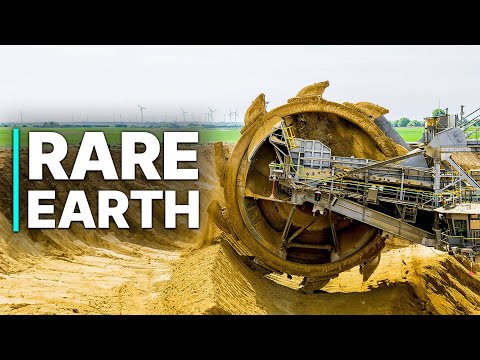
Rare Earth | The Toxic Truth Behind Clean Energy
The video discusses the critical role of rare earth elements, which were historically overlooked but are now essential for modern technology. These elements, often found in the lower rows of the periodic table, possess unique properties that make them invaluable in various applications, including smartphones, electric vehicles, and renewable energy technologies.
Currently, 97% of the world’s rare earth supply is sourced from China, which has established itself as the dominant player in the market. The country began exploring and mining these resources in the mid-20th century, and its methods have raised environmental concerns due to their outdated and polluting practices. Despite the risks, global demand for rare earths continues to rise, driven by advancements in technology and the push for greener energy solutions.
Researchers are actively searching for alternative sources, including deep-sea mining and previously abandoned sites in Europe, such as a potential deposit in Saxony. However, the extraction processes are complex and environmentally sensitive, prompting debates over the sustainability of such operations.
Moreover, the video highlights the challenges faced by industries reliant on rare earths, particularly in Europe and North America, where dependence on Chinese supplies creates vulnerabilities. Efforts are underway to develop recycling methods for rare earths from waste materials, which could alleviate some supply pressures and environmental impacts.
Innovative projects are emerging, such as new magnetic compounds that reduce reliance on rare earths, showcasing a shift towards more sustainable practices. As the global population grows and technological demands increase, the need for a more circular economy in resource management becomes imperative.
In conclusion, while rare earth elements are vital for future technologies, their extraction and usage must be managed sustainably to mitigate environmental damage and ensure long-term availability.
Rare earth elements (REEs) are a group of 17 chemically similar metallic elements that are often found together in nature and are critical for modern technologies. These elements include the lanthanides (such as neodymium, europium, and lanthanum), as well as scandium and yttrium. Despite their name, rare earths are not actually rare; they are relatively abundant in the Earth's crust but are rarely found in economically exploitable concentrations. This makes their extraction and processing particularly complex and costly.
The unique characteristics of rare earth elements include their ability to stick together like glue, which complicates their separation. They are chemically very similar, which means that extracting one specific element from a mixture requires sophisticated and energy-intensive processes. As a result, rare earths are often considered a group rather than individual elements, making their processing a significant challenge in metallurgy.
In the context of mining and industry, a distinction is made between rare earth minerals and rare earth metals. Rare earth minerals are naturally occurring, unprocessed ore that contains a mixture of rare earth elements along with other minerals. In contrast, processed rare earth metals are purified forms of these elements that have been chemically isolated and refined for industrial use. This processing is crucial for the production of high-tech devices, electric vehicles, and renewable energy technologies, as pure rare earth metals exhibit unique properties necessary for these applications.
Rare earth elements are formed in various geological environments, primarily through magmatic and hydrothermal processes. These elements are often found in minerals that have undergone extensive geological activity, such as volcanic eruptions and the movement of tectonic plates. The transcript mentions that rare earths occur in groups rather than as individual elements, which complicates their isolation and extraction. The chemical similarity among these elements necessitates complex separation techniques to achieve purity.
Prospecting for rare earth elements has evolved significantly with advancements in technology. For instance, the use of diving robots is highlighted as a method for scouring the seabed for manganese nodules that may contain rare earths. Remote sensing technologies have also improved the ability to locate potential deposits. This is essential given the increasing demand for these materials driven by developments in green technology.
Furthermore, the transcript notes that the conditions for mining are often challenging. Many natural deposits are located in remote areas or sensitive ecosystems, which can deter exploration. However, deep-sea mining is presented as a promising alternative that could mitigate some of the environmental impacts associated with land-based mining. Researchers are exploring deep-sea deposits, particularly in the Pacific, where significant amounts of rare earths are believed to be present.
-
- [06:55] "The demand for raw materials is rising. And we're now more interested in these elements because of their economic value."
- [12:10] "For metals like iron, chromium, zinc, lead, copper and so on, there are very specific deposits."
- [13:23] "Geologists drill deep into the rock. 4.4 million tons of ore are supposed to be here."
The process of mining, extraction, and refining rare earth elements is complex and multifaceted. Initially, rare earths are mined from deposits, either from land or sea. The transcript describes how rare earths are often found in groups within minerals, making their separation challenging. Once mined, the ore undergoes various processes to extract the desired elements.
In the refining stage, sophisticated chemical processes are employed to isolate individual rare earth metals from the ore. These techniques require significant amounts of chemicals and energy due to the similar chemical properties of the elements involved. As Matias Buket from the Institute for Applied Ecology explains, "You have to bear in mind that rare earths never occur on their own, but always in groups." The transcript suggests that this technical complexity is a barrier to countries attempting to establish their own rare earth production capabilities.
Additionally, the environmental impact of these processes is significant. The use of harsh chemicals in extraction can lead to pollution and health risks for workers and local communities. For example, the Mountain Pass mine in California faced severe environmental challenges, leading to its closure in 2002 due to the failure to comply with stricter regulations. This highlights how technical difficulties, combined with regulatory pressures, can hinder the viability of rare earth mining in certain regions.
-
- [18:52] "In 1998, the worst-case scenario happened. A billion liters of radioactive and chemically contaminated wastewater leaked from a collecting pond."
- [24:45] "Entire industries cannot function without rare earths anymore."
- [49:28] "Rare earths, however important they may be for the future of our modern technologies, their environmental problems are hard to control."
The environmental costs associated with rare earth mining are substantial and multifaceted. The transcript highlights that mining activities can lead to significant pollution, including the release of toxic chemicals into nearby water sources. For example, at the Mountain Pass mine in California, a catastrophic leak in 1998 resulted in a billion liters of radioactive and chemically contaminated wastewater spilling into a nature reserve. This incident underscores the potential dangers posed by mining operations not only to the environment but also to the health of nearby communities.
Furthermore, the mining processes often involve the use of hazardous chemicals, such as sulfuric and hydrochloric acids, which can produce highly toxic waste. The transcript notes that these processes generate radioactive effluents that pose risks to both miners and local residents. The health implications for those living near mining sites can be severe, including exposure to harmful pollutants that can lead to long-term health issues.
In addition to direct health risks, the environmental degradation caused by mining operations can disrupt local ecosystems. The transcript points out that complex life forms exist in the deep sea, where rare earths are being prospectively mined. Environmentalists caution that any interference with these ecosystems could have unpredictable and possibly irreversible consequences, given the slow regeneration rates of deep-sea habitats.
-
- [11:12] "How green is our future if we have to destroy pristine ecosystems?"
- [22:13] "The problem of the reduced exports from China really is one that's been in the making for a long time."
- [50:19] "We must work hard to ensure that the use of these elements doesn't have any adverse effects."
China's position in the rare earth market is uniquely dominant, as the transcript highlights that approximately 97% of the world's supply of rare earth metals is sourced from the country. This concentration of production capabilities has led to significant geopolitical implications, as many nations now find themselves heavily reliant on Chinese rare earths for their high-tech and green technologies. The transcript notes that this dependency has raised concerns among governments in the US, Europe, and Japan, prompting them to seek alternatives to mitigate risks associated with supply disruptions.
The impact of illegal mining activities is also a significant factor shaping the market dynamics. The transcript suggests that illicit mining operations in China have exacerbated the challenges of sustainable sourcing and environmental protection. These activities not only contribute to environmental degradation but also undermine the efforts of legitimate mining operations to maintain regulatory compliance and ethical standards.
Moreover, China's government has occasionally restricted rare earth exports to bolster its domestic manufacturing capabilities. This strategic maneuvering has underscored the geopolitical leverage China wields over global supply chains. As noted in the transcript, when China reduced its rare earth exports in 2011, prices surged on the world market, highlighting the vulnerability of other countries reliant on Chinese supplies.
-
- [21:30] "The world is now almost entirely dependent on China's rare earths."
- [22:04] "The mines reduce their output accordingly. The world gets a feel of how powerful China has become."
- [24:29] "We have become overly dependent on Chinese exports."
Rare earth elements play a critical role in international politics, particularly in the context of the United States' strategy to reduce its dependency on foreign sources, especially China. The transcript describes how the US has historically relied on imports of rare earths to meet the demands of its high-tech industry. However, under the Trump administration, there was a concerted effort to reassess this dependency in light of geopolitical tensions and supply chain vulnerabilities.
This strategic shift is characterized by initiatives aimed at revitalizing domestic production capabilities. The transcript emphasizes that the US government has taken steps to reopen the Mountain Pass mine, which once held a significant share of the global rare earth production. This move is seen as a response to the pressing need for self-sufficiency in the face of potential disruptions caused by reliance on Chinese supplies.
Moreover, the geopolitical significance of rare earths is underscored by the competitive landscape in which countries seek to secure their own resources. The transcript indicates that the US, Europe, and Japan have filed complaints with the World Trade Organization regarding China's export restrictions, signaling a broader concern about the monopolistic control China exerts over the market. This reflects an urgent need for alternative sourcing strategies and greater investment in domestic mining and processing capabilities.
-
- [24:58] "The governments of the US, Europe, and Japan have filed complaints with the World Trade Organization against China."
- [25:51] "Geostrategically, it makes sense to protect your own mines and not to ransack your own deposits."
- [50:56] "A cell phone is like a mine. We speak of urban mining, and we do need to recycle it."
The global landscape for rare earth reserves features several significant countries that host these critical resources. The transcript highlights that apart from China, which dominates the market, there are emerging players that are beginning to explore and develop their own rare earth deposits. Countries such as the United States, particularly through the reopening of the Mountain Pass mine, are attempting to regain a foothold in the rare earth industry.
In addition to the US, the transcript mentions Germany as a country exploring potential rare earth deposits, especially in Saxony, where testing is currently underway to confirm the presence of substantial reserves. This indicates a growing interest among European nations to diversify their sources of rare earth elements amidst concerns over reliance on China.
Moreover, the transcript outlines the significance of new players entering the market, such as research initiatives targeting deep-sea mining in the Pacific Ocean. These efforts aim to tap into manganese nodules believed to contain rare earth elements, which could provide new avenues for resource extraction without disturbing terrestrial ecosystems.
-
- [12:02] "To build more wind turbines and solar energy plants around the world, we have to exploit new rare earth deposits."
- [47:35] "The investors hope for a 15 to 20% global market share and stable prices."
- [45:20] "We need these raw materials for our economy. Our industry needs it."
Several rare earth elements are classified as critical due to their essential roles in high-tech applications and renewable energy technologies. The elements mentioned in the transcript include neodymium, which is crucial for strong magnets used in electric vehicles and wind turbines, and dysprosium, which provides heat resistance in magnets. These elements are deemed critical due to their limited availability and the complexity involved in their extraction and processing.
The global supply chains for rare earth elements are characterized by significant vulnerabilities. As highlighted in the transcript, approximately 97% of the world's rare earth production is concentrated in China, creating a monopolistic environment that poses risks for countries dependent on these materials. The reliance on a single country for such vital resources raises alarms, especially considering the potential for supply disruptions due to geopolitical tensions or environmental regulations.
Efforts to diversify supply chains are increasingly important as countries recognize the need for self-sufficiency in rare earth production. The transcript indicates that various nations, including the US and European countries, are actively seeking new deposits and developing recycling technologies to mitigate the risks associated with reliance on Chinese supplies.
-
- [16:17] "Neodymium makes magnets stronger. Dysprosium makes the magnets of electric car motors heat resistant."
- [24:34] "Without them, the lights will go out quite literally because, for instance, energy saving light bulbs contain rare earths."
- [50:56] "We need to start thinking in circular flows of potentially recyclable resources."
The exploration for alternative technologies that reduce or eliminate the need for rare earth elements is gaining momentum, especially in light of the environmental concerns associated with their extraction. The transcript outlines several initiatives aimed at developing new materials and methods that can substitute for rare earths in critical applications.
For example, the research mentioned in Ames, Iowa, focuses on creating new magnetic compounds for electric motors that do not rely on the expensive and environmentally damaging dysprosium. Instead, researchers are experimenting with materials that could replace dysprosium with more abundant elements like cerium. Though cerium's magnetic properties are weaker, the secret lies in optimizing the mixture to enhance performance while minimizing reliance on rare earths.
Additionally, the transcript notes that companies like Tesla have developed electric motors that operate without conventional magnets, showcasing an innovative shift in design that bypasses the need for rare earth materials altogether. This approach represents a significant technological advance that could influence future electric vehicle designs and reduce dependency on rare earth supplies.
-
- [34:31] "To solve this problem, the scientists at Ames laboratory are experimenting with new magnetic compounds."
- [38:09] "Other manufacturers are now working on similar devices."
- [47:10] "They work without conventional magnets."
The recycling of rare earth elements is emerging as a critical strategy to combat the challenges posed by their extraction and to ensure a sustainable supply chain. The transcript details innovations in recycling processes aimed at recovering rare earths from industrial waste, such as that generated during the production of permanent magnets.
Chemist Vulfran Palage is noted for his work on developing methods to isolate individual rare earth substances from magnetic waste. The process begins with heating the waste in a blast furnace, which allows for the separation of valuable components like neodymium and dysprosium. This approach not only mitigates the environmental impact of mining but also addresses economic concerns related to fluctuating prices for newly mined materials.
However, the transcript emphasizes that recycling is only economically viable when the prices for recycled materials are lower than those for primary raw materials. Currently, this is not the case, which limits the widespread adoption of recycling technologies. As commodity prices continue to rise, the feasibility of recycling rare earths may improve in the future, presenting a potential solution to the supply crisis.
-
- [31:19] "Instead of mining and processing rare earths with environmentally damaging techniques, we could simply recycle them from our waste."
- [45:20] "We need these raw materials for our economy. Our industry needs it."
- [47:27] "If commodity prices continue to rise, it'll be profitable one day."
[00:07] Invisibly they hide beneath our feet.[00:12] [Music][00:13] For centuries we didn't even know they[00:16] existed.[00:21] But now they shape our future.[00:24] [Music][00:28] They open up amazing possibilities,[00:33] but at the same time threaten to destroy[00:35] our environment.[00:38] [Music][00:45] If you look at the periodic table,[00:47] there's a couple of rows that appear to[00:49] be kind of kicked out.[00:51] uh they don't quite fit in there and[00:54] they're down at the bottom and people[00:56] tend to ignore them.[00:59] [Music][01:04] The reason why we started focusing on[01:06] them is that they have a number of very[01:08] exciting technological properties.[01:14] Their[01:19] essential characteristic is that they[01:21] stick together like glue. It's actually[01:23] very difficult to pry them apart.[01:29] [Music][01:33] When I think about it, I view them as[01:36] being catalyst for future development in[01:39] the 21st century. No real development is[01:42] going to happen without them.[01:46] In here simmers the hope for a bright[01:48] future.[01:53] Chemical elements considered useless for[01:55] a long time. Their properties were[01:58] simply too weird.[02:01] Only a few years ago, researchers[02:03] discovered their true value, and that[02:06] triggered a technological revolution.[02:11] Today they are more valuable than oil or[02:14] gold[02:17] rare earth metals.[02:20] These elements are considered rare[02:22] because they were very difficult to[02:24] chemically isolate.[02:26] But once isolated, they have properties[02:29] that allow a myriad of modern[02:32] technologies.[02:35] smartphones and tablet computers, hybrid[02:38] cars, and electric vehicles.[02:41] All our modern gadgets contain rare[02:44] earths.[02:50] [Music][02:52] Bowu, China. The world's largest rare[02:55] earth mine.[02:58] 97% of the world's supply of rare earths[03:01] is mined in China.[03:13] Apart from Prometheium which is very[03:15] scarce, all the other rare earth[03:17] elements can be found in China. And when[03:20] you talk about rare earths at the[03:21] moment, you automatically talk about the[03:23] resources in China.[03:32] The opencast pit of Bau is in fact an[03:35] iron or mine.[03:38] It started production in 1927.[03:43] For decades, rare earths were considered[03:45] a waste product until prices began to[03:48] rise on the world market. A couple of[03:51] decades ago, the Chinese discovered that[03:53] the material which was above iron ore at[03:57] a place in uh Inner Mongolia[04:01] was in fact rare earth ore and that they[04:04] could from this material that had been[04:06] dug up and cast aside. Uh they could[04:09] separate rare earths uh and they started[04:13] producing unseparated rare earth oxides.[04:17] >> So has China become the world market[04:19] leader? only by chance. The head of the[04:22] Chinese Society for Rare Earths thinks[04:25] differently.[04:30] In the 50s, China began the exploration[04:32] of rare earths.[04:35] In the 60s, we built our own processing[04:37] system and began mining operations.[04:42] In the 80s and 90s, we started mass[04:44] production.[04:50] No doubt by now we all depend on China.[04:57] Rare earths mined and refined in China[04:59] with dirty and outdated methods are[05:02] bought by high-tech companies around the[05:04] world to produce smartphones, electric[05:07] cars, and wind turbines.[05:13] Matias Buket from the Institute for[05:15] Applied Ecology in DHtat knows how[05:18] difficult it is to produce rare earths.[05:24] You have to bear in mind that rare[05:26] earths never occur on their own, but[05:28] always in groups.[05:31] They're chemically very similar. To[05:33] separate them, you need very[05:35] sophisticated processes that need lots[05:37] of chemicals and energy.[05:39] Only then you end up with the pure[05:41] elements or metals.[05:45] [Music][05:47] >> Braymond, Germany.[05:55] Rare earths are already in short supply[05:58] and they're expensive.[06:00] Global consumption has doubled during[06:02] the past 20 years and is still rising[06:04] steeply. Therefore, researchers are[06:06] looking for new deposits around the[06:08] world.[06:10] Andrea Koshinsky from the Institute of[06:12] Geocchemistry investigates rare earth[06:15] deposits in the Pacific Ocean. She's[06:18] particularly interested in these strange[06:20] nodules which are full of useful raw[06:22] materials.[06:25] There's a demand for raw materials and[06:26] there are deposits on land. But many[06:29] natural deposits are in remote sensitive[06:31] ecosystems in the rainforest for example[06:34] or in coastal areas or they're mined in[06:37] countries where people are working under[06:39] inhuman conditions. All these things[06:41] could be avoided with deep sea mining.[06:46] [Music][06:49] >> Hawaii.[06:55] In the port of Honolulu, a research ship[06:58] sets sail. On board, scientists[07:01] searching for rare earths.[07:08] We've known for some time that manganese[07:10] nodules and manganese crusts on the[07:12] ocean floor have a relatively high metal[07:14] content, especially nickel, cobalt, and[07:17] zinc. But due to new technologies like[07:20] green energy generation and so on, the[07:23] demand for rare earths is rising. And[07:26] we're now more interested in these[07:27] elements because of their economic[07:29] value.[07:33] >> Diving robots are scouring the seabed[07:35] for manganese nodules.[07:42] [Music][07:45] Since 2006, the German Federal Institute[07:48] for Geossciences and Natural Resources[07:50] has been exploring two sites in the[07:52] Pacific Ocean.[07:54] A video camera shows images of the ocean[07:56] floor.[07:59] But is it really so easy to simply pick[08:01] up natural resources from the seabed?[08:06] Environmentalists are worried about the[08:08] destruction of the ocean floor.[08:11] [Music][08:13] There are quite complex life forms down[08:15] there and processes in the deep sea are[08:17] very very slow. Everything grows and[08:20] regenerates slowly. So if we interfere[08:22] with such a system, it's difficult to[08:24] predict how long it will take before it[08:26] regenerates.[08:30] >> Scientists hope to find millions of tons[08:32] of rare earths in the Pacific. Enough to[08:35] make us independent of China's supplies.[08:44] [Music][08:46] This is an area of research we've only[08:48] just started to explore, but we already[08:51] feel that it'll have a much greater[08:52] importance in the future. This is one of[08:55] our big challenges if we want to harvest[08:57] these nodules. How do we get the raw[08:59] materials out of them? For example, rare[09:01] earths.[09:06] Andrea Kashinsky wants to find out[09:08] what's hidden inside these manganese[09:10] nodules[09:13] and how to get it out.[09:15] [Music][09:26] >> Yeah.[09:28] You can see here that both these[09:29] manganese nodules have a core.[09:32] They need some kind of seed to start[09:34] growing.[09:37] This seed, like this little stone here[09:38] in the middle, just sits somewhere on[09:40] the seabed in the sediment at a depth of[09:44] four or 5,000 mters.[09:48] It could be a fragment of a rock or a[09:51] fish tooth.[09:55] And deep down there where this seed is,[09:58] chemical processes start depositing this[10:01] black material,[10:03] manganese and iron oxide around this[10:06] inner core here.[10:08] [Music][10:11] >> But what exactly is this little nodule[10:13] made of that took millions of years to[10:15] grow on the ocean floor?[10:23] We focus on high-tech elements like rare[10:25] earths for example, but we also look at[10:28] the entire spectrum of elements to get[10:30] an idea of the makeup.[10:32] If you want to extract rare earths, you[10:34] have to get them out of this black[10:36] material first.[10:39] There are no distinct lumps of rare[10:40] earth minerals that you can simply pick[10:42] out mechanically.[10:44] It's a compound. We have to understand[10:46] first what this black stuff is made of.[10:49] Only then can we develop methods to pick[10:51] out certain elements.[10:56] >> Analyses show that manganese nodules[10:58] contain high amounts of rare earths, raw[11:01] materials that are urgently needed for[11:03] the green technologies of the future.[11:10] But is it okay to ransack our oceans to[11:13] produce solar panels, electric cars, and[11:16] wind turbines?[11:18] [Music][11:21] How green is our future if we have to[11:23] destroy pristine ecosystems?[11:30] [Music][11:34] You have to consider that there are many[11:36] countries in the world that still have[11:38] some way to go to build an[11:39] infrastructure for an adequate standard[11:41] of living.[11:43] And if these countries are to use green[11:45] technologies to get there, then they[11:48] need new resources like for example rare[11:51] earths.[11:55] >> To build more wind turbines and solar[11:57] energy plants around the world, we have[11:59] to exploit new rare earth deposits. The[12:02] difficulty is finding them in the first[12:04] place.[12:10] >> For metals like iron, chromium, zinc,[12:13] lead, copper and so on. There are very[12:15] specific deposits. So we have zinc[12:18] deposits, we have lead deposits, well-[12:20] definfined structures from which we can[12:21] easily obtain the metals. This is not[12:24] the case with rare earth.[12:35] Right in the middle of a cornfield in[12:36] Saxony, geologists follow a hot lead.[12:40] During GDR times, scientists were[12:42] looking for uranium here, but instead[12:45] they found rare earths.[12:47] Nobody was interested in these strange[12:49] elements back then, so the mine shaft[12:51] was closed. But now, a mining company is[12:54] test drilling again, hoping to tap into[12:57] the largest deposit of rare earths in[12:59] Europe.[13:04] >> If you're looking for investors and you[13:05] tell them, "We have some GDR documents,"[13:08] then most investors will say,[13:10] Well, yes, but they were written during[13:12] the socialist GDR period, so we don't[13:14] really trust them.[13:16] This means we need to reconfirm the old[13:18] data.[13:23] >> Geologists drill deep into the rock. 4.4[13:26] million tons of ore are supposed to be[13:28] here. A blessing for the German[13:30] high-tech industry, which is completely[13:32] dependent on rare earth imports from[13:34] abroad.[13:37] But how to excavate the treasure?[13:43] A huge open pit mine in the middle of[13:45] Germany is not an option.[13:53] This rare earth deposit has a diameter[13:55] of 130 m and a depth of 1,000 m. This[13:59] would make a gigantic hole. We can't do[14:02] this. Our best option is to build an[14:04] underground mine shaft.[14:06] This means we only need a deep pit with[14:08] a small tower at the surface and a few[14:10] buildings around it. The entire mining[14:12] operation would happen underground,[14:18] an expensive, technically complex deep[14:20] mining shaft for a tiny deposit. Is this[14:23] economically viable?[14:26] The data from the test drilling needs to[14:28] determine the concentration of rare[14:30] earths in New York.[14:34] To the naked eye, they are invisible.[14:43] >> Gold sparkles beautifully. Diamonds can[14:46] also be seen easily. As for rare earths,[14:49] they're very inconspicuous.[14:51] This stuff looks like cement. It's gray[14:54] and nothing sparkles. Nothing catches[14:57] the eye. We only know from geochemical[15:00] analyses that there are rare earths in[15:01] here.[15:03] Knowing that we can of course look at[15:04] the samples and say yes rare earths are[15:07] in fact present but we can't see them[15:09] with the naked eye.[15:13] >> Neodymium makes magnets stronger. Itrium[15:16] ensures vivid colors on computer screens[15:19] and lanthanum makes electric car[15:20] batteries more efficient.[15:23] But for a long time scientists simply[15:25] didn't know what to do with these[15:26] strangely named chemical elements. Syri,[15:30] for example, was discovered in 1803, but[15:33] it took more than 100 years until an[15:35] inventor came up with a bright idea of[15:37] what to do with it.[15:48] potentially limited to the element[15:50] serium.[15:52] There were two applications.[15:54] One was using it for lighter flints[15:58] and the other one was making[15:59] incandescent mantles for gas lamps out[16:02] of it. This was basically the reason why[16:05] people mined rare earths at all.[16:12] Later other applications were found for[16:14] rare earths. Lanum for example made the[16:17] production of gasoline much easier and[16:19] cheaper.[16:26] >> The price of gasoline would probably be[16:28] between 10 and 30% higher than what it[16:31] is right now if it wasn't for rare[16:32] earths and it's already quite high.[16:38] >> Mountain Pass, California.[16:41] Long before China, the US was the main[16:44] producer of rare earths.[16:46] >> A lot of people ask the question of[16:48] where do you find rare earths? And the[16:51] simple answer to this is you can find[16:53] them in your backyard. It's just that[16:55] the concentration is so low you could[16:57] never get it out. The trick is finding[17:00] deposits of rare earth that are rich and[17:04] large.[17:07] For decades, the mine at Mountain Pass[17:10] was considered the most important rare[17:11] earth deposit in the world.[17:14] [Music][17:20] Start of the Mountain Pass district was[17:23] in about 1949[17:26] when prospectors found a radioactive[17:28] signature on on some outcropping of[17:31] rock.[17:33] They analyzed it and found that it was a[17:35] remarkably rich ore of rare earth[17:38] minerals.[17:42] The problem with deposits like mountain[17:44] pass is that rare earth elements are[17:46] usually closely bound to other elements.[17:49] Many of these contaminants are[17:51] radioactive.[17:54] To isolate rare earths, mining companies[17:56] use sulfuric acid, nitric acid, and[17:58] hydrochloric acid. This produces highly[18:01] toxic radioactive effluence.[18:06] The reason why rare earths do not exist[18:08] as individual elements in nature lies in[18:10] the geological formation of the[18:12] deposits.[18:16] Geologists tell us that there were eight[18:18] volcanic intrusions in which molten[18:21] carbonetite rock came up through that[18:24] crack and then just deposited in layers[18:26] one after another and built up the whole[18:29] deposit.[18:30] [Music][18:34] >> Between 1965 and 1995, the mine in[18:37] Mountain Pass was the world's largest[18:39] producer of rare earths.[18:42] The raw materials were needed for making[18:44] lighters, gas lamps, color television[18:47] sets, and for producing gasoline.[18:50] However, the production processes at[18:52] Mountain Pass were complicated and prone[18:55] to failure.[19:01] In 1998, the worstc case scenario[19:04] happened.[19:06] A billion lers of radioactive and[19:08] chemically contaminated waste water[19:10] leaked from a collecting pond and[19:12] polluted a nature reserve.[19:15] [Music][19:19] Stricter environmental regulations made[19:22] the mine unprofitable.[19:24] [Music][19:26] In 2002, Mountain Pass closed.[19:32] [Music][19:36] >> Note that you already have a meeting[19:38] about budgets at 12 p.m. Shall I[19:40] schedule this anyway?[19:42] >> Move it to 2.[19:43] >> Shortly after the closing of Mountain[19:45] Pass, a technological revolution[19:47] happened. Smartphones and flat screens[19:50] took the world by storm.[19:54] At the same time, environmentally[19:55] friendly cars and alternative energy[19:58] sources became popular.[20:02] All these modern technologies need rare[20:05] earths. Happy birthday.[20:14] We're currently 7 billion people. In 40[20:18] years, we'll have an additional 2 to[20:19] three billion.[20:21] These people need resources, not only[20:24] food and drinking water, but also rare[20:27] earth metals which are used in mobile[20:29] phones or cars or wind turbines.[20:32] This means that the demand for raw[20:34] materials will increase tremendously in[20:36] the future.[20:41] [Music][20:43] Beijing, China.[20:48] At the same time as the Americans[20:50] withdraw from the rare earth's business,[20:52] the Chinese take over.[20:55] The new economic superpower is able to[20:57] produce raw materials and finished[20:59] products are dumping prices.[21:03] In China's boom towns, skyscrapers are[21:05] mushrooming and the domestic demand for[21:07] consumer goods is rising. For example,[21:10] China has the largest number of mobile[21:12] phone users worldwide.[21:14] As demand for smartphones and flat panel[21:17] displays rises, China's production of[21:19] rare earths increases accordingly.[21:22] One by one, mines in other countries[21:24] close down, unable to compete with[21:27] China. The world is now almost entirely[21:30] dependent on China's rare earths.[21:37] During the last 10 to 15 years, China[21:40] has taken over not only mining[21:42] operations, but also the separation and[21:45] production of refined rare earths.[21:48] Around 97% of all rare earths are now[21:51] produced in China. They are in a very[21:53] dominant position.[21:58] But in 2011, China's government suddenly[22:01] restricts its rare earth's exports.[22:04] The mines reduce their output[22:06] accordingly. The world gets a feel of[22:09] how powerful China has become[22:13] because prices shoot up on the world[22:15] market. Energy saving light bulbs, for[22:17] example, suddenly get 25% more[22:20] expensive.[22:24] >> The problem of the reduced exports from[22:26] China um really is one that that that's[22:30] been in the in the making for a long[22:32] time.[22:33] uh uh China reduced the exports for a[22:36] number of reasons. One of which they[22:38] have a very rapidly growing internal[22:40] market and that they want to manufacture[22:43] finished goods within their country[22:45] rather than ship uh unfinished rare[22:48] earth oxides to us.[22:51] >> The world wonders about the reasons for[22:53] this export restriction.[22:55] Is it because of environmental problems[22:58] or are the Chinese simply flexing their[23:00] muscles?[23:08] I don't want to rule out that the[23:09] restriction of rare earth metal exports[23:11] has something to do with the tightening[23:13] of environmental regulations,[23:16] but it almost certainly has also got[23:18] something to do with China's power over[23:19] the world market.[23:21] I'm certain about that.[23:28] So far, China's forte has been mining.[23:32] But a lot of money can be made with[23:33] processing which is complicated and[23:36] difficult.[23:40] Right now processing takes place in[23:42] Japan, Europe and the US.[23:47] Many experts think that China also wants[23:49] to control rare earth refining too.[23:53] Soon China could also dominate the[23:55] market for processed rare earths.[23:59] [Music][24:10] The reason why China supplies 97% of[24:13] rare earth metals worldwide is because[24:15] of cheap labor costs.[24:17] Mining there is much cheaper than, for[24:19] example, in the US.[24:24] with are[24:27] >> we have become overly dependent on[24:29] Chinese exports. Entire industries[24:32] cannot function without rare earths[24:34] anymore. Without them, the lights will[24:36] go out quite literally because, for[24:39] instance, energy saving light bulbs[24:41] contain rare earths.[24:45] The governments of the US, Europe, and[24:47] Japan have filed complaints with the[24:49] World Trade Organization against China[24:52] and are making plans to look for new[24:54] deposits around the world.[24:58] [Music][25:11] Geostrategically, it makes sense to[25:13] protect your own mines and not to[25:15] ransack your own deposits.[25:17] For example, the United States have[25:19] their own oil wells, which they haven't[25:21] touched yet. Instead, they bought oil on[25:24] the world market. I would do the same. I[25:28] wouldn't use my own supplies if I can[25:29] get the same product cheaper on the[25:31] world market.[25:33] And it also makes sense to protect raw[25:35] material deposits.[25:40] Bees glad Germany.[25:51] China's restrictive export policy[25:53] affects particularly those who need[25:55] large amounts of rare earths for their[25:57] daily business.[25:59] Like the magnet manufacturing company[26:01] Max Bearman,[26:03] the company founder once invented the[26:05] magnetic fridge door.[26:08] Today, the company mainly works for the[26:10] automotive industry.[26:13] A special magnet for each application.[26:20] We currently produce more than 50[26:22] different types of magnets for our[26:24] customers.[26:29] [Music][26:36] We produce 100 million magnets per year,[26:39] which equals about 1,000 tons of[26:41] material, including 50 tons of rare[26:43] earths.[26:52] Nowadays, all modern high-tech magnets[26:55] use neodymium and dprosium.[26:58] These rare earth metals ensure that the[27:01] magnets are stronger and have a longer[27:02] life.[27:13] The neodymium iron boron magnets are[27:15] used for sensors in windscreen wipers,[27:18] interval switches,[27:21] and in steering systems where they[27:23] control rotational or angular movements.[27:26] This makes driving more comfortable,[27:31] >> but expensive or failing supplies of[27:33] rare earths make life difficult for the[27:35] magnet makers.[27:47] We noticed that the shortage triggered[27:48] speculation.[27:50] Prices for neodymium oxide rose rapidly.[27:54] They exploded. They tripled, even[27:56] quadrupled within two or three months.[28:11] >> We had to shut down production and[28:13] couldn't deliver on time.[28:16] >> Missed deadlines and exploding costs.[28:19] The crisis hit the company hard.[28:28] Some projects had to be cancelled. The[28:31] industry desperately tries to avoid this[28:33] dilemma of expensive raw materials and[28:35] failing supplies.[28:41] >> What has happened to the magnet makers[28:43] is happening to many other industries[28:44] too.[28:46] [Music][28:50] The entire rare earth consuming[28:52] industrial sector in central Europe and[28:54] North America is suffering from the twin[28:56] problems of high prices for raw[28:58] materials and a strategic dependence on[29:00] a single supplier. In this case, China[29:08] >> village Germany[29:15] right here in idyllic Saxony an inventor[29:17] tries to help the high-tech industry.[29:21] Chemist Vulfran Palage is working on a[29:24] method to recycle rare earths from[29:25] industrial waste.[29:28] He enters uncharted territory. Here[29:35] on this plate we have waste from the[29:37] production of permanent magnets. Iron[29:39] plays an important role but also rare[29:42] earths such as neodymium, dprosium and[29:45] preodmium.[29:47] In principle we're now trying to isolate[29:49] these individual substances.[29:53] >> The magnetic waste is first heated in[29:55] the blast furnace. The first step in the[29:58] recycling process.[30:04] There are numerous types of high-tech[30:06] and green tech waste.[30:08] We know that during the production of[30:10] magnets, a lot of waste is accumulated.[30:12] And we've just started to develop[30:14] recycling processes for this waste.[30:18] We separate the basic components to get[30:20] pure uncontaminated rare earth compounds[30:24] which can then be recycled back into the[30:26] economy.[30:35] The recycling processes that exist today[30:37] are usually only capable of extracting[30:39] one valuable component from waste[30:41] material.[30:44] But Vulfran Palage is not happy with[30:46] that.[30:47] He wants to recycle all the materials[30:49] contained in the magnet.[30:57] It's not enough to just recycle gold[30:59] from electronic waste. For example, if[31:02] you then discard all the other elements,[31:10] it makes perfect sense. Instead of[31:12] mining and processing rare earths with[31:14] environmentally damaging techniques, we[31:17] could simply recycle them from our[31:19] waste.[31:23] But the technology is still in its[31:25] infancy and doesn't work for all rare[31:27] earths.[31:32] Pallet is currently working on a process[31:34] for recycling the element neodymium.[31:46] We basically extract all the water here.[31:49] This is done in a rotary evaporator.[31:52] And here in the case of neodymium, the[31:55] dry substance underos a color change and[31:57] goes from pink to blue.[32:04] [Music][32:11] Now it's turned quite a nice blue.[32:13] >> As a chemist, you always have something[32:15] nice to look at. Good for your soul.[32:21] [Applause][32:24] >> Here in the lab, the procedure is[32:26] already working.[32:29] But can Panic make his recycling process[32:31] work on an industrial scale?[32:35] Could his method solve our commodity[32:36] crisis?[32:42] [Applause][32:47] It's definitely the right idea at the[32:49] right time.[32:52] We all know that petrol cars are[32:53] outdated.[32:55] Electric vehicles are the future, but[32:58] their engines need strong magnets with[33:00] lots of rare earths in them.[33:03] When these uh devices are operating,[33:06] they actually generate a fair amount of[33:08] heat within them. Any inefficiency in[33:11] the motor or the wind generator is[33:13] realized as heat within uh the machine.[33:17] And so they have to operate at at[33:19] temperatures much higher than one might[33:21] expect when one talks about an electric[33:23] car. Uh and without dprosium, this is[33:27] not possible. Disprosium[33:30] makes the magnets of electric car motors[33:32] heat resistant, but it's expensive and[33:35] environmentally damaging. Therefore, car[33:37] makers would rather not use it.[33:42] [Music][33:44] Ames, the United States.[33:50] [Music][33:53] >> Here in the small university town of[33:55] Ames in Iowa, Bill McCllum has set out[33:57] to revolutionize the design of electric[33:59] motors.[34:02] >> His research is considered so[34:04] revolutionary that the US government[34:06] decided to get involved in the project.[34:09] >> Yeah, that might reaction. He and his[34:11] team analyze one of their latest[34:13] magnetic compounds with an electron[34:15] microscope.[34:18] >> For the electric motor of the future,[34:20] Macallum needs an entirely new magnetic[34:22] compound that doesn't contain expensive[34:25] raw materials.[34:31] Under current technologies, the magnets[34:33] which are suitable for largecale[34:36] applications meaning vehicles and and[34:38] wind energy[34:40] need to have dprosium in them.[34:42] Disprosium is a heavy rare earth. The[34:44] heavy rare earths are much rarer than[34:47] the lights. Dprosium makes up only a[34:50] couple of percent of the total rare[34:52] earths in natural abundance in the[34:54] earth's crust. Yet in the magnets that[34:57] we are currently using in electric[35:00] vehicles, there's as much as eight[35:02] weight% of the magnet and this is not[35:05] sustainable.[35:08] To solve this problem, the scientists at[35:10] Ames laboratory are experimenting with[35:12] new magnetic compounds.[35:15] They would prefer to replace this proium[35:17] with serium because it exists in[35:20] abundance.[35:22] Unfortunately, the magnetic properties[35:24] of serium are quite poor. However, the[35:27] secret is in the mixture.[35:30] To start with, the compound is heated[35:32] vigorously.[35:33] >> Desposium is a huge problem. It's a[35:37] problem uh for the Chinese and it's[35:41] going to be a problem for the rest of us[35:42] because we use disposium at a higher[35:46] rate with respect to neodyinium[35:50] pedinium. the other rare earths than its[35:52] natural abundance.[35:58] >> The freshly mixed magnetic compound now[36:00] has to be prepared for analysis.[36:07] >> It's reheated and poured onto a rapidly[36:09] rotating wheel.[36:17] A vacuum prevents air from coming into[36:19] contact with the compound and[36:20] contaminating it.[36:25] [Music][36:26] The result is an ultra thin metallic[36:28] band that breaks up into small pieces.[36:32] These pieces contain only tiny amounts[36:34] of the expensive element dprosium.[36:37] But the scientists still hope it makes[36:39] for a strong magnet.[36:42] We really only take advantage of[36:44] disposium at certain locations[36:48] around the magnet itself. So if I have[36:52] desposium at the very middle of the[36:53] magnet, it's not doing me any good. It's[36:56] wasted. So there are processes being[36:59] developed to put the despros only where[37:03] it is required. So this can greatly[37:05] reduce the amount of despros.[37:11] In the laboratory next door, the[37:13] shavings of the new mixture are prepared[37:15] for analysis.[37:18] The ultra thin metal strips are fixed on[37:20] the specimen holder with glue.[37:26] For Bill McCllum, every new compound is[37:28] an attempt to get closer to the perfect[37:30] magnet.[37:32] [Music][37:34] >> You all set over here?[37:36] >> Yeah, everything's ready to go. We're[37:37] loading.[37:39] [Music][37:42] The search for the super magnet is a[37:44] difficult process that takes a lot of[37:46] time and money. However, the involvement[37:49] of the US government shows that[37:50] politicians too are starting to see the[37:53] importance of such projects for our[37:55] future.[38:01] >> This is a pretty good curve. Now we're[38:04] seeing that there are uh various[38:07] tradeoffs that that we can make and and[38:10] we believe that we can really make[38:13] materials where we have reduced the[38:15] disposium or eliminated the disposium[38:18] and reduced the neodyinium and still uh[38:20] have the performance necessary for use[38:23] in electric vehicles.[38:27] the production facilities at the[38:28] American sports car manufacturer Tesla.[38:33] The small company only produces electric[38:35] cars and doesn't use any rare earths in[38:38] their motors.[38:40] How is that possible?[38:43] The secret lies in the design of the[38:46] motors. They work without conventional[38:49] magnets.[38:53] Other manufacturers are now working on[38:54] similar devices.[38:58] >> One of the things we're observing or[38:59] have observed over the last two years[39:01] and this was spurred by unstable, very[39:04] high pricing uh from materials coming[39:06] out of China has been an effort by[39:10] automobile manufacturers and other uh[39:13] users to uh re-engineer their products[39:16] away from rare earth. If the price for[39:19] the magnets reaches a certain point,[39:22] it's an invariant point and they're[39:24] going to go to something else.[39:27] >> Just recently, a big international car[39:29] manufacturer has started cooperation[39:31] with a small Californian company. The[39:33] idea getting rid of rare earths in all[39:36] electric vehicles, even inexpensive[39:39] everyday cars.[39:45] [Music][39:47] Zero emission cars, zero emission power[39:50] plants.[39:54] Wind turbines are spreading quickly.[40:02] In 2020, they will account for 6% of[40:06] global electricity generation.[40:12] This equals an output of 130 nuclear[40:15] power plants.[40:31] The problem.[40:33] The latest large scale offshore wind[40:36] turbines are very powerful and require[40:38] little maintenance, but they work with[40:40] large magnets that contain huge amounts[40:43] of rare earths,[40:45] a massive problem for the environment.[40:48] [Music][40:54] In general, rare earths play an[40:56] important role for alternative energy[40:58] generation.[41:00] You could say that renewable energy[41:01] generation requires non-renewable raw[41:04] materials and rare earths are a prime[41:06] example of that.[41:09] A 5 megawatt wind turbine, for example,[41:11] contains 800 kg of neodymium and 200 kg[41:15] of dprosium.[41:17] In total, 1 ton of rare earths for a[41:20] single 5 megawatt wind turbine.[41:27] The largest emerging market for wind[41:29] power is China.[41:34] Here too, manufacturers rely on rare[41:36] earth metals for their turbines.[41:40] The latest models need up to 4 tons of[41:42] the valuable raw materials, a huge[41:45] strain on resources.[41:49] [Music][41:52] Verzborg, Germany.[42:01] Researchers at the Frownh Haller[42:03] Institute for Silicut Research are[42:05] interested in the massive amounts of[42:06] rare earths that are used in wind[42:08] turbines and electric vehicles, but also[42:11] in the tiny amounts found in computers[42:13] and mobile phones.[42:17] They see today's gadgets as tomorrow's[42:20] raw material warehouses.[42:30] How effectively do we recycle rare[42:32] earths from our waste?[42:34] We don't recycle them at all.[42:37] This has something to do with the fact[42:39] that in most devices, rare earth metals[42:42] are used only in tiny amounts and in[42:44] many different components. Our current[42:47] recycling methods can only recover[42:48] standard materials such as copper but[42:50] not rare earth metals.[42:53] So we need to separate the different[42:54] components first and then concentrate[42:57] them to get out the rare earth metals.[43:03] However, recycling complex devices such[43:06] as mobile phones is difficult because no[43:09] one knows the basic materials they're[43:11] made of, not even the manufacturers[43:13] themselves.[43:15] Many parts come from suppliers who in[43:17] turn get their raw materials from other[43:19] suppliers.[43:24] First, we need to know what are the[43:26] basic materials.[43:28] Right now, we're building up a database[43:30] for various consumer products like[43:32] mobile phones.[43:34] We want to know where is what.[43:37] Once we know that, then we can start[43:39] separating and concentrating raw[43:41] materials to make recycling worthwhile.[43:45] Currently, it's simply not economical to[43:47] extract small quantities out of a big[43:49] pile of electronic waste like mobile[43:51] phones.[43:55] [Music][43:57] With a scanning electron microscope,[43:59] researchers hunt for even the tiniest[44:01] amounts of rare earths.[44:06] If we want to turn dirt into gold, we[44:09] need to get down to the nitty-gritty.[44:14] At molecular level, the discarded gadget[44:17] reveals its hidden values.[44:26] If manufacturers realize that they are[44:28] wasting valuable raw materials, if they[44:31] stop thinking about the money they get[44:33] from simply selling products, then they[44:36] will understand that this old device is[44:38] a source for making new devices.[44:41] Only then will we start to have a[44:42] recycling economy.[44:49] >> The electron microscope shows the basic[44:51] ingredients of a device.[44:54] The gray patches indicate rare earths.[45:00] The computer only takes a few seconds to[45:02] find out what the small gray spots are[45:04] made of.[45:06] They contain neodymium and dprosium,[45:09] valuable rare earth metals.[45:11] But it's still a long way to the[45:12] recycling process.[45:18] Europe certainly has the chance to lead[45:20] the way in recycling.[45:23] We need these raw materials for our[45:25] economy. Our industry needs it.[45:30] But our countries are poor in natural[45:32] resources.[45:35] On the other hand, we've developed[45:36] recycling methods in the past, so we[45:38] aren't starting from scratch, and I[45:41] think this is our chance.[45:45] I'm not only talking about recycling[45:47] rare earth metals, but about recycling[45:49] all materials, including copper and[45:52] aluminium.[45:56] I myself am working on recycling the raw[45:58] materials from old waste disposal sites.[46:02] We're pioneers in this field and it's a[46:04] huge opportunity for Germany and Europe.[46:12] [Music][46:19] We as citizens and as consumers need to[46:22] be aware what is actually in the[46:24] products we use. What is their commodity[46:27] value?[46:29] When we look at household waste, we[46:30] often discover more than 10 or 20 mobile[46:33] phones in the rubbish. Usually, they're[46:35] simply incinerated.[46:37] But this is wrong. This is no longer[46:39] sustainable. A cell phone is like a[46:42] mine. We speak of urban mining, and we[46:45] do need to recycle it. This is[46:47] important.[46:52] [Music][47:07] Recycling is only economically viable if[47:09] prices for recycled raw materials are[47:12] lower than the prices for primary raw[47:13] materials. At the moment, this isn't the[47:16] case. So, we're now developing[47:18] technologies that will be used in 5, 10,[47:21] or 15 years. If commodity prices[47:24] continue to rise, it'll be profitable[47:26] one day.[47:27] [Music][47:33] The Americans have reopened Mountain[47:35] Pass, which used to be the world's[47:37] largest rare earth mine.[47:41] Rising prices on the world market drive[47:43] the project, and the prospect of[47:45] independence from Chinese suppliers.[47:49] [Music][47:51] The investors hope for a 15 to 20%[47:53] global market share and stable prices.[47:57] [Music][48:00] They use sophisticated technology to[48:02] protect the environment.[48:05] The mining company promises to use[48:07] cleaner processes in the future than in[48:09] the past[48:11] and still hopes to be cheaper than the[48:13] all powerful Chinese competition.[48:23] In the processes that have typically[48:26] been used in China, they use acids that[48:29] are so aggressive that uh they chew away[48:33] on the thorium oxide that's present and[48:35] it literally goes in solution. So for[48:38] instance, if you take sugar and you put[48:40] it in water and it disappears into[48:41] water, that's dissolving or it's going[48:44] into solution. So these strong chemicals[48:47] will do the same thing with thorium and[48:50] the thorium ions go in solution. Then it[48:52] becomes a wastewater problem and it can[48:55] leak into the groundwater and[48:57] contaminate it. In our system we have[49:00] we've designed we've redesigned our[49:03] chemistry such that we avoid the[49:06] dissolution of the thorium. So it stays[49:10] insoluble and it stays as solid and then[49:13] we just pull the rarest away from it.[49:15] And it took a while to figure out how to[49:17] do that.[49:21] Rare earths,[49:23] however important they may be for the[49:25] future of our modern technologies. Their[49:28] environmental problems are hard to[49:30] control.[49:32] Yet many experts believe that these[49:34] difficulties can be overcome.[49:38] So, our goal is to be the true rare[49:40] earth innovator in the world, the key,[49:42] you know, the the most innovative[49:44] company out there. So, we're going to[49:47] continue to be looking for new platform[49:50] opportunities and uh trying to stand[49:52] these things up as quickly as possible.[49:55] >> But still, aren't all those tons of rare[49:57] earths used in electric cars and wind[50:00] turbines exacerbating the environmental[50:02] problems they're supposed to solve?[50:07] At least for the moment, the benefits[50:09] outweigh the detriments.[50:12] Obviously, we have to do everything we[50:13] can to keep it that way.[50:17] So, we must work hard to ensure that the[50:19] use of these elements doesn't have any[50:20] adverse effects.[50:28] We all know that the supply of raw[50:30] materials is dwindling.[50:34] We need to start thinking in circular[50:36] flows of potentially recyclable[50:38] resources.[50:41] Only then can we really take advantage[50:44] of the benefits of rare earths.[50:54] We talk with politicians. We talk with[50:57] industry representatives.[50:59] We talk with the EU Commission.[51:02] And things start to change. Two or three[51:05] years ago, people thought you were a[51:07] fool when you talked about the commodity[51:08] crisis. Today, everybody talks about it.[51:12] And everybody talks about rare earth.[51:15] Just like we need a more sustainable[51:16] approach for producing our food. We need[51:19] one for sourcing our raw materials.[51:25] [Music]
As More Countries Race To Mine Rare Earths, Can China’s Dominance Be Broken? | When Titans Clash
Summary of Rare Earth Elements and Geopolitical Implications
In May 2025, escalating trade tensions led China to restrict exports of rare earth magnets to the US, causing significant disruptions in American manufacturing sectors, including defense and automotive. By October, additional restrictions on rare earth elements and processing technologies were enforced, heightening global concerns about supply vulnerabilities.
The situation reflects a broader geopolitical struggle, with nations like Japan having previously reduced their reliance on Chinese rare earths from 90% to 50% through strategic investments in recycling, alternative sourcing, and technology development. Japan's proactive measures included stockpiling and developing new refining technologies to mitigate dependence on Chinese supplies.
As the demand for rare earths surges, Southeast Asian countries such as Malaysia and Vietnam are positioning themselves as potential players in the global market. Malaysia, with its existing processing capabilities, aims to expand production, while Vietnam faces challenges due to a lack of technical expertise and reliance on Chinese technology.
In Myanmar, ongoing civil conflict has raised concerns about illegal mining operations funding military activities, with rare earth exports to China compounding the humanitarian crisis. Reports indicate severe environmental degradation resulting from mining practices, further complicating the geopolitical landscape.
China's dominance in the rare earth supply chain, particularly in processing capabilities, poses ongoing challenges for global competitors. The US and its allies are exploring strategies to reduce this dependence, including investments in domestic mining and refining projects. However, experts caution that achieving self-sufficiency in rare earth production and processing remains a complex and time-consuming endeavor.
Ultimately, the race for rare earths underscores the critical need for countries to enhance their supply chain resilience while addressing environmental and ethical concerns associated with mining practices.
Rare earth elements (REEs) are a group of 17 chemically similar elements that are crucial for various modern technologies. They include elements like neodymium, europium, and dysprosium, which are essential for manufacturing products ranging from electric vehicles (EVs) to mobile phones and advanced military equipment. Despite their name, rare earth elements are not particularly rare in terms of abundance in the Earth's crust; rather, they are rarely found in economically exploitable concentrations, making their extraction and processing complex.
The distinction between rare earth minerals and processed metals is significant. Rare earth minerals are naturally occurring ores that contain these elements in various forms, such as bastnäsite and monazite. In contrast, processed metals refer to the refined forms of these elements that are extracted through complex chemical processes. The processing involves separating the desired rare earth elements from the ore and purifying them, which is both technically intensive and environmentally taxing.
As highlighted in the transcript, securing supplies of these minerals is only the initial step; the processing of rare earth elements is equally critical. [00:58] "Securing supplies is only a first step. The processing of these metals is just as critical." This implies that while countries may focus on mining, the absence of advanced processing capabilities can hinder their ability to utilize these resources effectively.
Rare earth elements are formed under specific geological conditions, typically in igneous and metamorphic rocks. They are often found in conjunction with other minerals, making their location challenging to pinpoint. The transcript does not provide detailed technical information on the specific conditions required for their formation or the geological processes involved.
However, it does mention that Japan has managed to reduce its dependence on Chinese rare earths significantly, which highlights the importance of investing in mining technologies and developing new methodologies. For example, Japan's approach included stockpiling, recycling, and creating refineries to enhance their resilience against supply disruptions from China. [12:50] "Do everything you can. I mean recycling, investing in other countries, creating a refinery..." This indicates that a multi-faceted strategy is necessary for efficient prospecting and mining.
Additionally, the transcript refers to Southeast Asian nations gearing up for mining activities, suggesting that there are ongoing efforts to enhance mining efficiency in regions with rich deposits. It mentions that many countries, including Myanmar and Malaysia, are exploring their potential to become significant players in the rare earth market, but specific technical developments improving prospecting and mining efficiency were not detailed.
- [12:50] "Do everything you can. I mean recycling, investing in other countries, creating a refinery..."
- [04:34] "The story begins on 7th September 2010..."
- [04:17] "Japan is the only country that managed to reduce its dependence on Chinese rare earths from 90% in 2010 to 50% today."
The process of mining, extraction, and refining rare earth elements is complex and multi-stage. Initially, mining involves the extraction of ore from the ground, which contains rare earth minerals. These minerals are then subjected to various methods of extraction, including flotation, leaching, and smelting, to isolate the rare earth elements.
Once extracted, the refining process begins, which entails purifying the rare earth elements to obtain their metallic forms. This step is critical because it dictates the quality and usability of the final product. The transcript emphasizes that the technical complexity involved in this process can be a significant barrier for countries attempting to develop their rare earth industries. [26:56] "China dominates the refinery process, and without refinery, no matter how many mines that you have, doesn’t matter." This highlights that while many nations may have access to raw materials, they often lack the necessary infrastructure and technology for processing.
Moreover, the transcript points out that Japan undertook substantial investments in both stockpiling and recycling to enhance its resilience against supply chain disruptions. [06:10] "The price of rare earths soared by 10 times in the year following the incident." This indicates that external shocks can drastically affect the mining and refining landscape, underscoring the need for a robust strategy to mitigate vulnerabilities related to rare earth supply chains.
- [26:56] "China dominates the refinery process, and without refinery, no matter how many mines that you have, doesn’t matter."
- [04:10] "The incident was eventually resolved by the release of the fishing boat's captain, but the price of rare earths soared by 10 times in the year following the incident."
- [12:44] "Today, Tokyo continues its efforts for rare earth supply chain resilience."
The environmental costs associated with rare earth mining are significant and multifaceted. The transcript highlights that the processes involved in extracting and refining these minerals often lead to severe ecological damage. For instance, rare earth processing can generate low-level radioactive waste, which poses risks to both the environment and human health. [21:36] "Environmental groups say that rare earth processing produces low-level radioactive waste; the fear air, soil, and water contamination." This indicates a clear concern for the potential pollution that mining activities can cause.
Moreover, the document mentions that the mining operations in Myanmar are particularly problematic, as illegal mining activities are reported to fund ongoing conflicts. [29:02] "Reports have emerged that much of the rare earth mining takes place in Kachin state in northern Myanmar near the China border." This emphasizes how mining can intersect with human rights issues and regional instability.
Additionally, the lack of regulatory oversight exacerbates these environmental impacts. [33:34] "Our concern is the lack of the regulatory body and the lack of compliance on the environmental practice." This suggests that without proper governance, the ecological consequences of rare earth mining could be dire, affecting local communities and ecosystems.
- [21:36] "Environmental groups say that rare earth processing produces low-level radioactive waste; the fear air, soil, and water contamination."
- [33:34] "Our concern is the lack of the regulatory body and the lack of compliance on the environmental practice."
- [30:20] "Myanmar's lucrative trade in the mineral is worth 1.4 billion in 2023."
China's position in the rare earth market is unparalleled, essentially controlling a significant portion of the global supply chain. The transcript states that China has developed the capacity to cover the entire value chain of 17 rare earth elements, which includes extraction, processing, and recycling. [42:01] "China has developed advantages in not just technology but also waste management." This indicates that China not only dominates production but also effectively manages the environmental implications of rare earth mining, giving it an edge over other countries.
Moreover, the issue of monopolies is compounded by illegal mining activities that are reportedly funding conflicts in regions like Myanmar. [30:20] "Myanmar's lucrative trade in the mineral is worth 1.4 billion in 2023." This highlights how illegal mining not only disrupts market stability but also intertwines with human rights and geopolitical issues.
The transcript suggests that the United States and its allies are becoming increasingly aware of the need to diversify their sources of rare earths to reduce dependence on China. [43:32] "Make no mistake, this is China versus the world. They have put these unacceptable export controls on the entire world." This underscores the geopolitical tensions surrounding rare earth elements and the urgency for other nations to develop their own capabilities.
- [42:01] "China has developed advantages in not just technology but also waste management."
- [30:20] "Myanmar's lucrative trade in the mineral is worth 1.4 billion in 2023."
- [43:32] "Make no mistake, this is China versus the world. They have put these unacceptable export controls on the entire world."
The role of rare earth elements in international politics is increasingly significant, particularly as countries strive for self-sufficiency and security in their supply chains. The transcript details the strategies employed by the Trump administration to reduce dependency on Chinese rare earths. This included signing deals with other nations for access to critical minerals. [02:23] "President Trump needs rare earths. He signed a deal with Ukraine for access to the material and has talked about buying or even invading Greenland, citing its mineral wealth." This statement underscores the lengths to which the U.S. government is willing to go to secure rare earth supplies.
Additionally, the transcript mentions the establishment of strategic reserves as part of the U.S. response to supply chain vulnerabilities. [44:34] "...we will build up strategic reserves where supply is at risk." This highlights the proactive measures being taken to mitigate risks associated with reliance on a single source for critical materials.
Furthermore, the G7's announcement to loosen China's grip on rare earths illustrates a collective political will among allied nations to address this issue. [44:42] "The G7 has also announced plans to loosen China's grip on rare earths." This indicates a broader geopolitical strategy at play, as countries seek to diversify their supply chains away from China.
- [02:23] "President Trump needs rare earths. He signed a deal with Ukraine for access to the material and has talked about buying or even invading Greenland, citing its mineral wealth."
- [44:34] "...we will build up strategic reserves where supply is at risk."
- [44:42] "The G7 has also announced plans to loosen China's grip on rare earths."
Several countries are known to possess rare earth reserves, with China remaining the dominant player in the market. However, the transcript identifies emerging players such as Malaysia and Australia as significant contributors to the global supply chain. For instance, Malaysia's Lionus plant has become a key player in refining rare earths, accounting for about 4% of the global supply and 13% of the U.S. supply. [15:55] "Malaysia is the second largest provider of refined rare earths to the world." This illustrates Malaysia's rising prominence in the industry.
Additionally, Japan has made significant investments in Australia to secure its supply chain, showcasing the interconnectedness of these nations in the rare earth market. [10:14] "Japan also invested $250 million US in Australia's Lionus and its refining facility in Malaysia..." indicating strategic partnerships aimed at reducing dependency on Chinese sources.
Other countries mentioned include Vietnam, which has unveiled a national plan for rare earth production but faces challenges in acquiring the necessary technologies. [24:20] "A couple of years ago, Vietnam unveiled a national plan to produce approximately 60,000 tons of rare oxides per year, which is enormous." This indicates that while Vietnam is aiming to become a player in the market, its progress is hindered by technological limitations.
- [15:55] "Malaysia is the second largest provider of refined rare earths to the world."
- [10:14] "Japan also invested $250 million US in Australia's Lionus and its refining facility in Malaysia..."
- [24:20] "A couple of years ago, Vietnam unveiled a national plan to produce approximately 60,000 tons of rare oxides per year, which is enormous."
Within the context of rare earth elements, certain elements are categorized as 'critical' due to their essential roles in modern technology and the limited availability of substitutes. The transcript discusses how these critical elements are integral to various applications, such as electric vehicles, mobile phones, and advanced military systems. However, the specific elements labeled as 'critical' are not explicitly mentioned in the transcript.
The organizational structure of the global supply chains for rare earths reveals significant vulnerabilities. For instance, the transcript notes that while many countries are attempting to secure their supplies, the processing stage remains dominated by China. [44:21] "Today China controls the global processing industry." This indicates a crucial bottleneck in the supply chain, as countries can mine rare earths but struggle with refining them effectively.
Moreover, the transcript emphasizes the need for strategic projects throughout the entire supply chain, from extraction to recycling, to enhance resilience against supply disruptions. [44:32] "...we will build up strategic reserves where supply is at risk." This illustrates a proactive approach to address vulnerabilities and ensure a steady flow of critical rare earth elements.
- [44:21] "Today China controls the global processing industry."
- [44:32] "...we will build up strategic reserves where supply is at risk."
- [12:50] "Do everything you can. I mean recycling, investing in other countries, creating a refinery..."
The transcript highlights several innovative technologies and strategies aimed at reducing or eliminating the reliance on rare earth elements. Among these, Japan has been notably proactive, developing alternative materials and refining techniques. For instance, companies like Proterial have created magnets primarily composed of iron oxide, which can serve as substitutes for traditional rare earth magnets. [08:55] "Proterial developed magnets primarily composed of iron oxide." This innovation reflects the ongoing effort to find alternatives that can mitigate dependency on rare earths.
Additionally, a company named Nex Core has developed a new method of metal refining that prevents high-performance motors from overheating, thereby eliminating the need for certain rare earth magnets. [08:26] "Engineers have created a new method in metal refining and processing which prevents high-performance motors from getting too hot." This signifies a significant technical advancement that could reshape the landscape of magnet manufacturing.
The mechanics of these substitutes rely on understanding the properties of alternative materials and their performance in applications traditionally dominated by rare earth elements. This innovative approach not only addresses supply chain vulnerabilities but also aligns with environmental sustainability goals.
- [08:55] "Proterial developed magnets primarily composed of iron oxide."
- [08:26] "Engineers have created a new method in metal refining and processing which prevents high-performance motors from getting too hot."
- [09:11] "...which also developed a magnet requiring no rare earths for Honda."
The recycling of rare earth elements is gaining momentum as countries seek to mitigate their dependency on primary sources. The transcript emphasizes the critical role of recycling in enhancing resilience and reducing environmental impact. Japan, for instance, has invested in developing a recycling ecosystem to reclaim rare earths from used products and industrial waste. This strategy not only helps secure a supply of these precious materials but also aligns with sustainability goals.
Specific economic and technical criteria that countries or companies must consider before initiating mining operations include the cost of extraction, refining capabilities, market demand, and environmental regulations. The transcript mentions that Japan had a budget of 100 billion Japanese yen to enhance rare earth resilience, which underscores the level of investment necessary for successful operations. [06:36] "More money was to follow in the years after." This indicates that ongoing funding and research are essential for maintaining competitiveness in the rare earth market.
Moreover, the processing of rare earths is described as technically complex, which presents a barrier to entry for many countries. As noted, [11:29] "This is one of the reasons why it’s very difficult for the companies in Australia, United States, Canada, and elsewhere to struggle because of the cost." This highlights the intricate balance between economic viability and technical capability, which is crucial for successful mining initiatives.
- [06:36] "More money was to follow in the years after."
- [11:29] "This is one of the reasons why it’s very difficult for the companies in Australia, United States, Canada, and elsewhere to struggle because of the cost."
- [12:50] "Do everything you can. I mean recycling, investing in other countries, creating a refinery..."
[00:00] China. First row, China.[00:02] >> In May 2025, as the trade war[00:04] intensified, China choked off exports of[00:08] rare earth magnets to the US.[00:11] Within a week, US factories producing[00:14] everything from F-35 fighters and[00:16] missiles to automobiles ground to a[00:19] halt.[00:24] In October, China put further[00:26] restrictions on the export of more rare[00:28] earth elements[00:31] and any technology or equipment used to[00:34] process them.[00:36] >> Make no mistake, this is China versus[00:40] the world. They have put these[00:43] unacceptable export controls on the[00:46] entire world.[00:48] >> The panic was felt not only in America[00:50] but also in Europe. Securing supplies is[00:55] only a first step. The processing[00:58] of these metals is just as critical.[01:02] >> A pause in the rare earth export[01:04] restrictions for one year was announced[01:06] when the leaders met on October 30th,[01:09] but the minerals remain a vulnerability.[01:14] This pain over rare earths stretches[01:17] back decades.[01:19] >> We're bringing a new trade case against[01:20] China. This case involves something[01:23] called rare earth materials.[01:25] >> Why is the world still facing this[01:27] conundrum? What lessons are there from[01:30] Japan, which managed to reduce its[01:32] dependence on China's rare earths from[01:35] 90% to about 50% over the last 15 years.[01:40] >> Do everything you can. I mean,[01:42] recycling, investing in other countries,[01:46] creating a refinery.[01:48] Many Southeast Asian nations are gearing[01:50] up to start mine tomagnet productions.[01:53] How quickly can they get it done?[01:56] >> Strike while the iron is hot.[01:59] >> And in Myanmar, where civil war is[02:02] raging?[02:04] Are rare earths funding the conflict?[02:07] >> One thing clear is to get the weapon[02:09] they need a lot of big fund. And we know[02:12] that illegal marriage mining is one of[02:14] the major source. That's how they get[02:17] all the weapons and then then back to[02:19] killing us.[02:21] >> President Trump needs rare earths. He[02:23] signed a deal with Ukraine for access to[02:26] the material and has talked about buying[02:29] or even invading Greenland, citing its[02:32] mineral wealth.[02:35] But could the Asia-Pacific hold the key?[02:38] And with all these developments, is[02:40] China at risk of losing its monopoly on[02:43] rare earths? In about a year from now,[02:46] we'll have so much critical mineral and[02:49] rare earths that you won't know what to[02:50] do with them.[03:03] That's what you[03:16] rare earth elements. They are these 17[03:19] elements on the periodic table needed[03:22] for much of modern living.[03:24] They're found in many things like EVs,[03:28] mobile phones, electrical gadgets,[03:31] wind turbines, and even fighter jets.[03:36] >> Well, you can take your own home.[03:39] Everything that you can switch on and[03:41] off very likely has rare earth in them.[03:44] um say your air condition, your lights,[03:47] your washing machine, uh the the kitchen[03:51] equipment, if you have mixers or things[03:53] like that. If you have a car, your car[03:56] won't run right without rare earth.[04:17] Japan is the only country that managed[04:20] to reduce its dependence on Chinese rare[04:22] earths from 90% in 2010 to 50% today.[04:28] How did they do it?[04:34] The story begins on 7th September 2010.[04:39] On that day, a Chinese fishing boat[04:41] collided with the Japanese Coast Guard[04:43] vessel off the Skaku or Daoyu Islands in[04:46] the East China Sea.[04:52] The islands are a site of territorial[04:54] disputes between the two nations.[04:57] >> Japanese Coast Guard arrested the[04:59] captain of the fishing boat.[05:05] Anger ensued in China.[05:25] As diplomatic tensions escalated, one of[05:28] Beijing's responses was to stop the[05:30] export of rare earth minerals to Japan.[05:36] >> Immediate response was the panic. you[05:39] know, we didn't expect that u China is[05:43] going to violate the uh WTO rules and[05:47] stop exporting the rare earth mineral.[05:49] First damage was uh was immediately felt[05:52] by the uh automobile sector. The hybrid[05:56] car has just simply were not able to to[05:59] produce.[06:02] The incident was eventually resolved by[06:04] the release of the fishing boat's[06:05] captain,[06:07] but the price of rare earths soared by[06:10] 10 times in the year following the[06:12] incident.[06:16] Alarmed by this choke point, the[06:18] Japanese government put together a[06:19] package to enhance rare earth[06:22] resilience. A budget of 100 billion[06:25] Japanese yen, worth$1.2 2 billion US at[06:29] the time was prepared in the month[06:31] following the incident.[06:34] More money was to follow in the years[06:36] after.[06:39] >> Stockpiling is the the first uh uh first[06:43] agenda and then building up the[06:46] recycling takes the time but recycling[06:49] uh ecosystem was there. So investing[06:52] more for the recycling was another. And[06:56] then this uh supplementary budget also[06:59] uh pays for the compensations for the[07:02] companies as well and force the[07:06] investment in Australia. Basically, you[07:09] know, doing everything we can to uh[07:11] enhance the resilience.[07:14] Another key strategy in the resilience[07:16] package was to develop new technologies[07:19] to reduce reliance on rare earth[07:21] minerals. It's a mission that continues[07:24] today.[07:26] Here at Nex Core, engineers have created[07:29] a new method in metal refining and[07:31] processing which prevents[07:33] high-performance motors from getting too[07:35] hot.[07:37] Hence, doing away with the need for[07:39] certain rare earth magnets.[08:09] Do you know[08:34] I[08:42] Efforts undertaken by Next Core[08:44] Technologies represent just one of many[08:47] initiatives that corporate Japan[08:50] undertook to reduce or replace rare[08:52] earth use. Other examples include the[08:55] work of companies like Proterial which[08:58] developed magnets primarily composed of[09:00] iron oxide. Denso which created magnets[09:04] using iron and nickel.[09:06] Daido Steel, which also developed a[09:09] magnet requiring no rare earths for[09:11] Honda, and Toshiba, which worked[09:14] together with To<unk>hoku University to[09:16] develop samarium iron isotropic bonded[09:19] magnets, which is another type of magnet[09:21] that reduces the use of rare earths.[09:26] For 15 years, Japanese companies[09:29] engineered new ways to replace or reduce[09:32] Chinese magnets. But there was one major[09:35] hurdle.[09:37] Yes, technologically it's possible. The[09:40] question is it's too expensive. It's not[09:44] commercially viable.[09:47] >> Japan also searched far and wide for[09:50] sites outside of China with rare earth[09:52] mineral deposits.[09:55] That search brought it to Mongolia.[09:59] In November 2010, Japan and Mongolia[10:02] signed a deal to push for joint[10:04] exploitation of rare earth minerals in[10:06] the central Asian country.[10:10] Japan also invested $250 million US in[10:14] Australia's Lionus and its refining[10:16] facility in Malaysia, which by 2023 was[10:20] supplying 90% of Japan's neodymium and[10:24] preodmium rare earth needs, up from[10:27] virtually none before the Chinese[10:29] embargo.[10:32] The investment to the company Linus in[10:35] Australia was heavily subsidized by the[10:38] Japanese government in terms of the[10:40] supply and on the demand side the[10:43] companies are also taking this as the[10:45] insurance policy. Those companies like[10:48] Itachi or Daido are procuring not just[10:51] from China but also uh coming from the[10:54] recycling and coming from Australia.[10:57] Even though these are expensive,[11:00] >> without the Japanese government[11:02] subsidizing these mines and without the[11:05] companies willing to pay a higher price[11:07] than market price, do you think that[11:10] these rare earth mines outside of China[11:12] could have survived?[11:14] >> No. I I mean, if you let everything in[11:18] the in a market, it is very[11:21] difficult to survive in the market.[11:23] Chinese bar is much more competitive.[11:26] This is one of the reason why it's it's[11:29] very difficult for the companies in[11:31] Australia, United States, Canada and[11:34] elsewhere is struggling because of the[11:37] cost.[11:39] Other countries in which Japan had[11:41] significant investments, Kazakhstan[11:45] and also Namibia in Africa.[11:51] According to Japanese media, between[11:53] 2004 and 2020, the Japan Organization[11:56] for Metals and Energy Security or Jog[12:00] invested over 600 million in more than[12:03] 100 rare earths projects globally and[12:07] today overseas operations in 15[12:10] countries.[12:14] Today, Tokyo continues its efforts for[12:16] rare earth supply chain resilience.[12:20] Efforts include investments in deep sea[12:23] mining within Japan's waters,[12:28] research on new ways to recycle rare[12:30] earth metals from scrap metal and[12:32] industrial waste[12:36] and continued new investments in mining[12:39] sites.[12:44] What do you think are the lessons that[12:46] the US and Europe can draw from the[12:48] Japanese experience?[12:50] >> Do everything you can. I mean recycling,[12:53] investing in other countries, creating a[12:56] refinery in uh you know much lower cost[13:00] countries or you know building a[13:03] stockpile[13:05] trying to find alternatives just in case[13:08] you know and try to make it cheaper. We[13:10] have done everything we can and we[13:12] reduce the but we still depend you know[13:16] 50 some percent to China. We initially[13:20] started from 90% over 90%. So we are[13:23] reducing half of the dependency but[13:26] still we are dependent on China because[13:29] that is more economically reasonable.[13:32] >> Japan and China have had a long and deep[13:34] cooperation in rare earth. There are[13:37] numerous Japanese Chinese joint ventures[13:39] in China for the development of rare[13:42] earth and rare earth related products[13:44] and applications. So this is this is a[13:46] deep connection that is there. Um of[13:49] course uh Japan is painfully aware of[13:52] its vulnerability. So you say uh oh I'm[13:56] only 50% dependent. Yeah. Which as a[13:59] global number is correct. But if you[14:01] look into the details the dependency are[14:03] enormous. particular uh minerals in rare[14:07] earths. We can't get from outside of[14:10] China. So yeah, I mean it is impossible[14:14] to be 100% autonomous independent from[14:17] China. You know, we need to deal with[14:20] it. Of course, it requires a diplomatic[14:22] work. It requires a more commercial and[14:25] economic work. So do everything you can[14:28] to make make your supply chain resilient[14:32] and try to you know maintain the stable[14:35] relationship with China. So that's the[14:37] two lessons that we we learn.[14:53] As demand for rare earth minerals turn[14:56] redot, countries around the world are[14:58] racing against time to meet supply.[15:01] Malaysia is a frontr runner.[15:08] This is Quantan, a port city just a[15:11] three-hour drive away from Malaysia's[15:13] capital city of KL.[15:16] Not far from the hustle and bustle of[15:18] the city, is this a rare earth[15:21] processing plant owned by an Australian[15:23] mining firm, Lionus.[15:26] The plant has been here for more than 10[15:28] years, processing feed stock from[15:31] Western Australia and sending them on to[15:33] buyers globally.[15:35] It has shaken up the status quo,[15:38] breaking a near monopoly held by[15:41] companies in China.[15:43] >> Lionus is the only firm outside China[15:46] that has successfully progressed to full[15:49] production.[15:50] Because of Lionus, Malaysia is the[15:53] second largest provider of refined rare[15:55] earths to the world, making up an[15:58] estimated 4% of global supply and 13% of[16:02] the United States supply.[16:06] Malaysia wants to build on its existing[16:08] expertise to expand its rare earth[16:11] production even more.[16:27] The plan was turbocharged when President[16:30] Trump visited Malaysia and signed a[16:32] critical minerals deal.[16:36] >> So according to government estimates,[16:38] there are about 16.1 uh million tons of[16:42] uh rare earth deposits. The signaling[16:45] from um the government is that they are[16:48] very much committed to developing this[16:50] sector. There is a special committee[16:52] that looks into three things essentially[16:56] the upstream, the midstream, downstream[16:58] as well as research development in[17:01] Malaysia. So this could be a major new[17:04] area of industrial growth for Malaysia[17:07] >> potentially um now that uh there is a[17:12] push to diversify supply chains um in[17:16] the interest of national security and[17:18] therefore there are sectors who are[17:20] willing to pay uh good money for secure[17:24] supply chain.[17:28] The government isn't just looking at[17:29] developing the mining of rare earths.[17:32] It's also looking at the making of rare[17:34] earth magnets. The government's[17:36] strategic task force projects that the[17:39] super magnet production will generate $3[17:42] billion US in revenue by 2030.[17:46] It's often said that rare earths are not[17:48] that rare and it is the refining process[17:52] as well as the actual making of the[17:54] magnets that's going to capture a lot of[17:56] the value. So can you tell us more about[17:59] Malaysia's plans for the midstream and[18:02] downstream[18:04] >> uh of the rare earth industry?[18:06] >> The real value yes is in refining. It's[18:09] in magnet manufacturing but you need the[18:12] ecosystem right now. The ecosystem is uh[18:18] still building. It's it's still nent but[18:20] in some sense because of liners Malaysia[18:24] has a head start in building that[18:26] ecosystem particularly around the[18:28] chemicals uh industry because to refine[18:30] it you need a lot of chemical input and[18:33] uh a lot of it does come from Malaysia.[18:36] Uh Malaysia does have a very capable[18:38] chemical sector.[18:40] >> Producing rare as permanent magnets is[18:42] not a piece of cake. It's not a walk in[18:45] the park. And you you never talk about[18:48] one product, one commodity. You are[18:50] talking about roughly a dozen types. And[18:54] then they come in all shapes and sizes.[18:56] This is a uh very long industrial chain[19:00] which you do not uh get off the ground[19:03] just deciding we do this and then we[19:06] march in 5 years. This doesn't happen.[19:10] >> Malaysia is moving as fast as it can. In[19:13] November 2025, Prime Minister Anoir said[19:16] the development of a $140 million magnet[19:19] manufacturing facility close to the[19:22] Lionus plant is underway. This project[19:25] is done in partnership with Australia's[19:27] Lionus and South Korea's JS Link.[19:32] During Presidenc's visit in May, the[19:34] Chinese leader had also conveyed[19:36] Beijing's readiness to help Malaysia in[19:39] its rare earth's ambitions.[19:42] China is the market leader of rare earth[19:44] magnets by far, supplying 94% of global[19:48] demand.[20:11] In October, China ruled that it requires[20:14] export licenses for companies using[20:17] Chinese rare earths technologies even if[20:20] they are outside China.[20:23] If Malaysia were to export these magnets[20:27] or even refined rare earths that were[20:30] made using Chinese technology, it could[20:33] potentially be subjected to China export[20:36] controls.[20:37] >> That's very well a possibility. But um[20:39] also that we need to be mindful here[20:42] that uh Malaysia's approach to its uh[20:45] foreign policy is always trade oriented.[20:48] So we always try to um seek the middle[20:51] ground.[20:53] >> When President Trump visited Malaysia, a[20:56] deal was signed between the two leaders[20:58] for Malaysia to prioritize investment[21:01] from the United States in critical[21:03] minerals assets.[21:07] >> Malaysia will need to walk a[21:09] geopolitical tightroppe between the two[21:12] superpowers.[21:15] There is also the question of mining[21:17] impact.[21:19] There has long been concerns about the[21:21] environmental costs of rare earth[21:23] processing in Malaysia.[21:26] >> Liners liners.[21:29] We don't want your toxic waste.[21:33] >> Environmental groups say that rare earth[21:36] processing produces low-level[21:38] radioactive waste. the fear air soil and[21:42] water contamination[21:46] >> environmentally.[21:48] Um I will speak on the technique of ISL[21:52] mining. You see ISL can be done[21:55] environmentally. It can also be done[21:56] recklessly.[21:58] >> What does ISL stand for?[21:59] >> Uh insitue leeching. So uh the process[22:04] is that you um typically you want to[22:07] inject a uh a weak uh solution like[22:10] ammonium sulfate into the ground whereby[22:14] it is uh it dissorbs a lot of the rare[22:17] earths and h you collect it. the[22:20] environmentalists also warn about is[22:22] that if if it's not controlled these uh[22:26] leeches solutions can leech and it can[22:29] contaminate uh uh surrounding areas and[22:33] groundwater.[22:34] But the good news is that there are many[22:39] mitigation measures available and it can[22:41] be done environmentally.[22:44] >> The Lionus plant demonstrates how things[22:47] can be done.[22:56] It's good.[23:28] Motherchech.[23:41] Ultimately[23:47] the responsibility of the government is[23:49] also towards the people not only to the[23:52] environment but also for the people's[23:53] livelihoods. So uh in that sense you[23:57] need uh economic development. So the[23:59] government has to play the sort of[24:01] balancing balancing role.[24:09] Vietnam is another Southeast Asian[24:12] country where rapid changes are[24:14] underfoot in the rare earth mineral[24:16] sector.[24:17] >> A couple of years ago, Vietnam unveiled[24:20] a national plan to um produce[24:23] approximately 60,000 tons of rare oxides[24:26] per year, which is enormous. But uh very[24:29] soon after they they were stumbling[24:32] because they needed the knowhow and[24:34] China is not ready to share the knowhow[24:37] for the known reasons. So Vietnam is a[24:40] little bit stuck.[24:42] According to Vietnamese media,[24:44] Australian, Korean, and Japanese[24:46] companies have entered partnerships with[24:48] the Vietnamese to mine new sites.[24:52] It remains to be seen if a chin-free[24:55] rare earth supply chain can be created[24:57] there.[24:59] Thailand too will be opening its rare[25:01] earth mineral sector to US investments[25:04] according to anou signed when the[25:06] leaders met in October 2025.[25:10] But this announcement was met with a[25:13] protest.[25:15] >> Do you think that Southeast Asia could[25:17] become a major player in the global rare[25:20] earth minerals industry[25:22] >> with the support of China? Yes. without[25:25] China's support.[25:27] Don't try.[25:34] Another major rare earth minerals player[25:36] in the Asia-Pacific is Australia.[25:39] This is the site of a Linus processing[25:42] plant that just opened in November 2024.[25:46] Australia will be massively scaling up[25:49] production. In October 2025, Australia[25:52] and the United States signed a deal to[25:55] jointly invest 3 billion in critical[25:58] mineral projects over the next 6 months,[26:01] aiming to unear minerals worth an[26:03] estimated 53 billion.[26:12] We are discussing uh critical minerals[26:16] and rare earths and we're going to be[26:17] signing an agreement that's been[26:18] negotiated over a period of four or five[26:20] months. In about a year from now, we'll[26:23] have so much critical mineral and rare[26:25] earths that you won't know what to do[26:27] with them.[26:28] >> I think Mr. Trump is too optimistic. U[26:32] nothing happens in one year. It requires[26:34] a lot of work. Of course the Australia[26:36] has mines and rare earth is not the rare[26:39] actually you can find the miner you know[26:42] mines uh in a different places in[26:46] Australia, Canada or even the United[26:48] States. The question is the refinery.[26:52] China dominates the refinery process and[26:56] without refinery no matter how many[26:59] minds that you have doesn't matter.[27:14] They're right now in a panic mode. So[27:17] they try to um they try to source[27:20] whatever they can get, whatever contains[27:23] rare earth in any way. Um but they lack[27:28] a little bit the details. There are a[27:30] couple of companies in the US who uh[27:34] look pretty good in terms of being able[27:37] to process rare earth but you cannot use[27:40] today this raw material and tomorrow[27:43] another one on the same unit. You have[27:45] to gear everything to the particular raw[27:48] material that you are using. Yeah.[27:50] Otherwise it it becomes uh a little bit[27:53] difficult and also very expensive and it[27:57] takes a long time on top of that.[28:19] Myanmar has been gripped by civil war[28:21] and economic contraction since 2021.[28:25] But it is a country rich in natural[28:28] resources.[28:30] And outside of China, Myanmar has some[28:32] of the best geology for heavy rare[28:35] earths.[28:37] According to a study published by the US[28:39] Geological Survey in 2024, Myanmar is[28:43] the world's third largest minor of rare[28:45] earths, behind China and the US, but[28:48] ahead of Australia.[28:53] Since 2021, the Myanmar diaspora has[28:56] been trying to raise awareness on how[28:59] rare earth is funding the civil war.[29:02] This was an event that took place in[29:05] Australia.[29:06] >> Our heart goes out to the people of[29:08] Myamar fighting for democracy, human[29:10] rights, and we will host a candlelight[29:12] vigual to pay tribute to their bravery[29:15] and sacrifice.[29:17] >> Amongst the pro-democracy posters, there[29:20] were these messages.[29:29] In February 2021, military overthrown[29:32] the civilian governments. Uh since then,[29:35] we know that they increased a lot of[29:37] illegal mining.[29:39] >> Reports have emerged that much of the[29:41] rare earth mining takes place in Kachin[29:43] state in northern Myanmar near the China[29:46] border.[29:48] Activists[29:50] like Lewis believe the mining is being[29:52] used to fund the war that the military[29:54] is waging on rebel groups.[29:59] >> One thing clear is to get the weapon[30:01] they need a lot of big fun and then we[30:03] know that illegal marriage mining is one[30:05] of the major source. That's how they get[30:09] all the weapons and then back to killing[30:11] us.[30:13] Myanmar civil society groups and[30:15] international human rights organizations[30:18] say the rare earth from Myanmar is sold[30:20] to China.[30:22] Myanmar's lucrative trade in the mineral[30:24] is worth 1.4 billion in 2023.[30:51] Many reports have emerged about the[30:54] severe damage to the environment caused[30:56] by rare earth mining.[31:19] Myanmar journalists in Kachin State took[31:22] these photos and conducted the following[31:24] interviews.[31:25] The interviewees chose to remain[31:27] anonymous for safety reasons.[31:51] Photos captured on the sites of these[31:53] rare earth mines show the worker wearing[31:55] no mask and no protective gear.[32:00] Oxley acid. Acid.[32:23] >> Videos show pipes running down the hill.[32:26] The locals say that the liquid has a[32:28] strong smell and definitely isn't water.[32:32] The contamination extends far beyond the[32:35] mining sites.[33:00] Tun a representative from the civil[33:02] government shows us the extent of the[33:05] damage in rare earth sites in Kachin[33:07] state.[33:08] >> So as you know the current political[33:11] crisis in my is very difficult to put[33:13] inside. These are the illegal rare earth[33:16] mining area. So these blue spots are[33:19] filled with the very toxic material. So[33:22] they dig the ground and then they line[33:24] up with the plastic sheets and then they[33:26] put all these chemicals. If the plastic[33:28] sheet here the chemical go inside the[33:31] soil and then damage the environment.[33:34] Our concern is the lack of the[33:36] regulatory body and the lack of[33:38] compliance on the environmental[33:40] practice. These are owned by Chinese[33:42] business firms and local owners.[33:44] rare ads are going to China.[33:48] >> In a turn of events, the Kachin[33:50] Independence Army seized control of[33:52] swasts of northern Myanmar's Kachin[33:54] state, including the rare earth mining[33:57] sites in October 2024.[34:02] Since the time there have been reports[34:04] about the Kachin Independence[34:06] Organization or KIO engaging with both[34:09] India as well as the United States to[34:13] discuss the sale of rare earths.[34:17] >> I'm from Kachin State. I I that is my[34:20] native native uh state and I grow up[34:24] there in the in the mountain area.[34:26] What's the latest situation with regards[34:29] to the rare earth mining in Kachin[34:32] state?[34:32] >> As soon as they occupy, they stop for a[34:35] while for some months. But after why[34:38] afterward they allow to the old mining[34:42] to to operate they need a lot of[34:44] revenue. So they they really have to uh[34:49] have to earn the the revenue from these[34:52] resources. It's been widely reported[34:55] that China was the largest buyer of rare[34:58] earths. Now with the KIO in charge, will[35:02] they sell it to them?[35:03] >> Since we have been conflict, uh they[35:07] we have no bargaining power. We have no[35:10] choice and just need to sell to them to[35:13] earn the month the revenue. But on the[35:16] other hand,[35:18] the they they they also really need to[35:22] to other option you know to sell to the[35:26] other other other other[35:29] country not just the ch China but[35:33] unfortunately[35:35] all this uh situation ground situation[35:39] because the whole country have the[35:41] conflict armed conflict so it's really[35:44] uh difficult to manage to to how to say[35:47] to diversify to selling to the other[35:52] people like India or other countries. So[35:56] they have no choice and they really uh[35:59] have to uh sell to China.[36:03] >> You've been following the rare earth[36:04] situation for many years. As a Christian[36:07] person, what kind of outcomes do you[36:09] hope to see? I really wish you know[36:12] actually to stop totally because the[36:15] impacts are so so huge and you know so[36:19] bad and this is also the really upstream[36:23] because Kachistic is the watershed area[36:26] of the area of the river of Neymar which[36:29] is the largest and longest river. So[36:32] entire population of the Mymma are[36:35] utilizing this river. So because of this[36:38] toxics mining now all these shrimp and[36:41] river are eluted already billions of[36:44] billions of revenue should be contribute[36:47] to the local development not the very uh[36:51] good one but just basic infrastructure[36:54] like health education uh the road[36:58] transportation something like that but[37:00] now it's zero it's no nothing we have[37:03] Nothing.[37:16] The Middle East has oil. China has rare[37:20] earth. These were the words of China's[37:22] leader Tang Xiaoping back in 1992.[37:26] And his goal was for China to become a[37:29] rare earth minerals powerhouse.[37:57] When Tong Xiaoing died, the mission was[38:00] passed to a geologist named Wen. Japa.[38:03] He had earned a master's degree in rare[38:05] earth sciences in the late 1960s.[38:09] One went on to become China's premier[38:12] from 2003 to 2013. During a visit to[38:16] Europe, he said that little happened on[38:18] rare earth policy in China without his[38:20] personal involvement.[38:23] As Beijing invested heavily in[38:25] state-owned mining firms to build up[38:27] China's rare earth industries, the[38:30] country incurred high environmental[38:32] costs.[38:34] This news report from 2012 showed how a[38:37] forest on a mountain was turned into a[38:40] rare earth mine. The toxic waste water[38:43] discharged from rare earth washing here[38:46] turned 53 hectares of local farmland[38:48] into a wasteland.[38:58] The United States was the global leader[39:00] in rare earth production back in the[39:02] 1950s to the 1980s. What happened?[39:06] >> You're talking about one particular mine[39:08] that is mountain pass in California[39:11] which is a basis deposit um that[39:14] contains lansenum and serium. These two[39:17] elements were very popular in the 50s[39:19] and 60s but the popularity faded and[39:23] other um rare earths took the the place[39:26] and uh mountain pass also has had its[39:29] fair share of environmental problems. In[39:32] the 1980s and 1990s we had this[39:37] uh environmental consciousness[39:39] developing in our countries in the early[39:42] 1990s. Then in in France re production[39:47] separation stopped simply if they can do[39:51] it cheaper why don't we buy it from them[39:53] yeah[39:57] it wasn't just China's willingness to[39:59] tolerate the long-term environmental[40:01] cost[40:04] the same formula that helped China build[40:06] a global competitive edge in EVs that is[40:10] original research education techn[40:13] technology upgrades, access to bank[40:15] credit, stateguided industrial policy,[40:18] and sheer hard work. Well, all of that[40:22] was also applied to the rare earths and[40:24] magnet sector.[40:56] Marina Uang who lives in Australia[40:59] studies innovation in China.[41:04] There are enough deposits in the world[41:09] that can supply rare earth. But I quote[41:13] max he once said whoever controls the[41:16] deposits of the minds of those rare[41:18] earth actually are not important. The[41:21] critical point is who controls the[41:23] processing technologies. United States[41:26] actually has its own rare earth metals[41:28] and access to mines but they have to[41:31] export most of those products to China[41:34] for the final processing high value[41:36] added processing.[41:40] >> It was only in April 2025 as the US[41:44] China trade dispute escalated that the[41:46] US stopped sending its rare earths to[41:49] China for processing.[41:52] China is the only country in the world[41:54] that has developed capacity to cover the[41:58] entire value chain of 17 real earth[42:01] elements. China has developed advantages[42:03] in not just technology but also waste[42:07] management. Another advantage is China[42:10] has the largest manpower in real earth.[42:13] I think this is the number a few years[42:15] ago. If there are only a hundred PhDs in[42:18] rare earth, guess how many the west has.[42:23] The number at the time was zero. China[42:26] has employed educated engineers of[42:29] thousands. So no other country can[42:33] compete with China on that front.[42:36] >> 2025 is not the first time that China[42:39] has restricted rare earth exports.[42:42] We're bringing a new trade case against[42:44] China and we're being joined by Japan[42:46] and some of our European allies. This[42:49] case involves something called rare[42:51] earth materials.[42:53] >> Despite many policy papers written on it[42:56] over the years, the US did not act until[43:00] now. At its core, China's new measures[43:04] include a rule saying that any product[43:06] of which more than.1%[43:09] of minerals consist of minerals mined or[43:11] processed in China, one must seek[43:13] approval from the Chinese government[43:15] before trading it. Since many important[43:18] semiconductors, for example, have these[43:20] critical minerals and semiconductors are[43:23] in nearly everything, uh this rule gives[43:25] China control over basically the entire[43:27] global economy and the technology supply[43:29] chain. And make no mistake, this is[43:32] China versus the world. They have put[43:36] these unacceptable export controls on[43:39] the entire world.[43:42] >> The United States is in the middle of an[43:44] AI data center boom, which requires rare[43:47] earths for its construction.[43:50] The military-industrial complex needs it[43:53] just as much.[43:56] Countries around the globe are now[43:58] racing to mine rare earths. But that is[44:01] just the first of many steps needed.[44:06] Securing supplies is only a first step.[44:11] The processing of these metals is just[44:15] as critical[44:17] and today China controls the global[44:21] global processing industry. So we will[44:24] identify strategic projects all along[44:26] the supply chain from extracting to[44:29] refining from processing to recycling[44:32] and we will build up strategic reserves[44:34] where supply is at risk.[44:39] >> The G7 has also announced plans to[44:42] loosen China's grip on rare earths.[44:45] >> This table can produce reliable supplies[44:47] and critical minerals for the future.[44:51] Foreign[45:41] Fore.[46:06] How long do you think it's going to take[46:07] the world to wean itself off China rare[46:10] earth minerals and magnets?[46:13] >> Never. It's not possible. China has[46:16] built up a capacity particularly in rare[46:20] earth permanent magnets which is huge.[46:23] We can come up with crude solutions for[46:26] several products. Yeah. for several[46:28] applications. But the whole range of[46:31] dozens of different products of[46:33] different purities and all that very[46:36] difficult
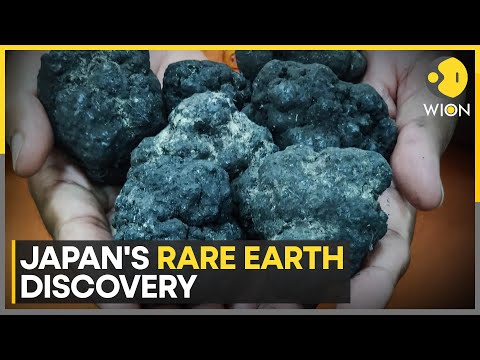
Japan Finds Rare Earth in Deep-Sea Mission; Discovery Amid Rising Tensions with China | WION
Japan's Landmark Deep Sea Mining Discovery
Japan has announced a significant breakthrough in its efforts to secure rare earth minerals, claiming to have successfully retrieved sediment from a depth of 6,000 meters beneath the ocean surface. This operation is part of a deep-sea test mission aimed at reducing Japan's dependence on China, the world's dominant supplier of these critical resources.
The Japanese government has characterized this operation as the first attempt globally to access rare earth resources at such extreme depths. Following the retrieval, detailed analysis is underway to assess the volume and quality of the rare earth elements contained in the samples. The mission was conducted using the deep-sea scientific drilling vessel, Chiku, which collected the sediment near the remote Pacific island of Minami Toishima.
According to reports from Japan's Nikkei Business Daily, the Minami Toishima area is believed to hold over 16 million tons of rare earths, potentially making it the third-largest known reserve globally. These deposits are expected to include materials such as dysprosium, essential for high-strength magnets, and erbium, crucial for laser technology.
The development comes amid rising tensions with China, particularly following comments from Japanese Prime Minister Fumio Kishida regarding military responses to potential Chinese aggression toward Taiwan. In response, Beijing has restricted exports of certain dual-use items to Japan, raising concerns about future limitations on rare earth supplies.
Rare earth elements, which comprise a group of 17 metals, are vital for various modern technologies, including electric vehicles, advanced missiles, and hard drives. However, environmental groups have raised alarms about the potential ecological damage from deep-sea mining, highlighting the need for a balanced approach as global debates on seabed mining intensify.
Currently, the International Seabed Authority is working towards a global regulatory framework for mining in international waters, while Japan has conducted its operations within its territorial waters. Analysts suggest that successful continuous extraction in the Minami Toishima area could significantly enhance Japan's domestic supply chains for key industries.
Rare earth elements (REEs) are a group of 17 metals that possess unique physical and chemical properties, which are critical for various modern technologies. These elements include lanthanides (from lanthanum to lutetium), along with scandium and yttrium. The term 'rare' is somewhat misleading, as many of these elements are relatively abundant in the Earth's crust; however, they are rarely found in economically exploitable concentrations.
One of the unique characteristics of rare earth elements is their reactivity. They tend to form complex compounds and are often found in the same mineral deposits. This grouping makes them difficult to separate and process, which is a significant factor in their classification as rare. Unlike common metals, the extraction and refining of rare earth minerals require advanced technological processes due to their chemical properties and the need for selective separation.
In the context of the transcript, it is important to distinguish between rare earth minerals and processed metals. Rare earth minerals refer to the raw materials containing these elements in a naturally occurring state, while processed metals are the refined products that have been extracted and purified for industrial use. The transition from minerals to metals involves complex processes including mining, extraction, and refining, which are essential to making these metals available for use in high-tech applications.
Rare earth elements are formed under specific geological conditions, often associated with igneous rocks and metamorphic processes. They are typically located in minerals such as bastnäsite and monazite, which are the primary sources of these elements. The extraction process involves mining these minerals, which can occur in surface or underground operations, depending on the deposit's characteristics.
The transcript does not provide specific technical developments that enhance the efficiency of prospecting and mining rare earth elements. However, it does mention Japan's landmark deep-sea test mission, which indicates a potential advancement in exploration techniques aimed at accessing rare earth resources at unprecedented depths of 6,000 meters beneath the ocean surface. The vessel used for this mission, the Chiku, signifies a move towards deep-sea mining capabilities.
Moreover, the Minami Torosima area, noted for its potential to contain over 16 million tons of rare earths, highlights the importance of geological surveys and modern technology in identifying significant reserves. This area’s discovery could mark a shift in the global supply dynamics, particularly as nations seek to reduce reliance on traditional suppliers.
- [00:21] "The operation marks the world's first attempt to access rare earth resources at such an extreme depth."
- [01:20] "According to Japan's Nikay Business Daily, the Minami Torosima area may contain more than 16 million tons of rare earths."
The process of mining, extraction, and refining rare earth elements is multifaceted and technically complex. Initially, mining involves the extraction of rare earth minerals from the earth, which can be done through both open-pit and underground methods. Once the minerals are obtained, they undergo a series of steps for extraction. This typically includes crushing and grinding the ores, followed by chemical processing to separate the rare earth elements from other materials.
The transcript does not detail the specific methods of extraction and refining used in Japan's recent mission; however, it highlights the challenges associated with these processes. The difficulty in extracting rare earth elements stems from their chemical similarities and the need for advanced separation techniques. This complexity can act as a barrier for countries lacking the necessary technology and infrastructure for efficient processing.
Furthermore, the mention of Japan's efforts to secure its supply chains indicates an awareness of these barriers. By establishing a continuous extraction process, particularly in the Minami Torosima area, Japan aims to mitigate its dependence on external sources, particularly from China, where much of the world’s rare earth supply is concentrated.
- [00:28] "Detailed analysis is now underway to determine the volume and the quality of these rare earth's elements contained in the sample."
- [01:02] "The sample was collected by the deep sea scientific drilling vessel Chiku."
The environmental costs associated with rare earth mining are significant and raise concerns among various stakeholders. The transcript indicates that environmental groups have warned about the potential damage that deep sea mining could inflict on fragile marine ecosystems. The disruption of the ocean floor during mining operations poses a severe risk to biodiversity, as these ecosystems are often delicate and slow to recover from disturbances.
Specific health effects on miners or local residents are not mentioned in the transcript; however, it is well-documented in the broader context that rare earth mining can expose workers to hazardous materials and pollutants. The extraction and processing of these elements often involve toxic chemicals, which can lead to serious health issues, including respiratory problems and other long-term effects.
Moreover, the debate surrounding the future of seabed mining has intensified, emphasizing the need for a global regulatory framework to address these environmental and health concerns. The International Seabed Authority is currently working towards establishing such regulations to ensure sustainable practices in mining operations.
- [02:26] "Environmental groups have warned that deep sea mining could damage fragile marine ecosystems and disrupt the ocean floor."
- [02:34] "The issue has also become a geopolitical flash point as international debate intensifies over the future of seabed mining."
China holds a dominant position in the global rare earth market, often described as a monopoly due to its extensive reserves and production capacity. The transcript mentions that rising tensions with China have prompted Japan to seek alternative sources for rare earth elements. China has historically supplied a significant portion of the world's rare earths, making Japan's recent deep-sea mining endeavors a strategic move to reduce dependency.
The mention of strained relations following Japanese Prime Minister Shinzo Abe's remarks regarding potential military responses to Chinese aggression towards Taiwan highlights the geopolitical implications of rare earth supply chains. In response to these tensions, Beijing has restricted exports of certain dual-use items to Japan, raising alarms about the potential for further limitations on rare earth supplies.
Illegal mining activities also pose challenges in the rare earth sector, although the transcript does not provide specific details regarding the scale or impact of such operations. The presence of illegal mining can disrupt market prices and create additional environmental hazards, complicating efforts to manage resources sustainably.
- [01:43] "The development comes amid rising tensions with China, the world's dominant supplier of rare earths."
- [01:57] "Beijing has since restricted exports of certain dual-use items to Japan, raising concerns in Tokyo that China could further limit rare earth supplies."
The role of rare earth elements in international politics is increasingly significant, particularly as nations navigate their dependencies on these critical materials. The transcript discusses Japan's strategic efforts to enhance its economic security by reducing reliance on China, the world's foremost supplier of rare earths. The tensions between Japan and China, especially regarding Taiwan, further complicate this dynamic, as Japan seeks to secure its supply chains in light of potential geopolitical conflicts.
During the Trump administration, the United States outlined strategies to lessen its own dependency on Chinese rare earths, although the transcript does not provide specific details on these strategies. The broader context implies a global trend where nations are recognizing the strategic importance of rare earth elements in technology and defense industries, prompting them to explore domestic sources and alternative partnerships.
This geopolitical landscape necessitates a concerted effort among nations to ensure stable supply chains for these materials, as they are essential for various high-tech applications, including electric vehicles and advanced military systems. Japan's recent deep-sea mining mission can be viewed as a proactive step in this context, aiming to bolster its position in international markets.
- [01:49] "Relations have been strained since Japanese Prime Minister Shinzo Abe suggested last year that Japan could respond militarily if China were to attack Taiwan."
- [02:05] "Raising concerns in Tokyo that China could further limit rare earth supplies."
The transcript does not provide a comprehensive list of countries where rare earth reserves are located, nor does it identify any 'new players' entering the market. However, it highlights Japan's Minami Torosima area as a significant site that may contain substantial reserves of over 16 million tons of rare earths. This discovery positions Japan as a potential contender in the rare earth market, aiming to secure its own supply chains amid geopolitical tensions.
While specific details about other countries or companies are not mentioned, it can be inferred that nations with existing rare earth deposits or technological capabilities for extraction may be looking to exploit these resources further. The global interest in rare earth elements is likely to attract both established players and new entrants seeking to capitalize on the growing demand for these materials.
In summary, the transcript indicates Japan's strategic move to explore its own reserves but lacks detailed context on the broader landscape of rare earth reserves and the involvement of other countries or companies in this space.
- [01:29] "Making it the world's third largest known reserve."
- [01:20] "According to Japan's Nikay Business Daily, the Minami Torosima area may contain more than 16 million tons of rare earths."
The transcript mentions specific rare earth elements that are deemed critical for various high-tech applications. These include dasporicium, which is used in high-strength magnets, and etherum, essential for lasers. The critical nature of these materials stems from their unique properties that are indispensable in modern technologies, particularly in sectors such as electronics, renewable energy, and defense.
While the transcript does not provide an in-depth breakdown of the organizational structure of global supply chains for rare earth elements, it does highlight Japan's strategic move to establish a domestic supply chain. This effort is crucial as it reflects vulnerabilities in the current global supply chains, primarily dominated by China. The reliance on a single source for critical materials poses risks to nations, prompting them to explore alternative sources and develop their own extraction capabilities.
The geopolitical implications of these supply chains are significant, as they can influence international relations and economic security. Ensuring a stable supply of critical rare earth elements is vital for maintaining technological advancement and national security.
- [01:35] "The deposits are estimated to include dasporicium used in high strength magnets and etherum, which is essential for lasers."
- [02:17] "They are used in electric vehicles and turbines, hard drives, missiles, and other advanced systems."
The transcript does not mention any alternative technologies or innovations that reduce or eliminate the need for rare earth elements directly. However, the ongoing search for alternative sources and methods in the industry implies a growing interest in developing substitutes that can mitigate reliance on rare earths.
In a broader context, alternatives may involve the use of different materials or technologies that can perform similar functions as rare earth elements in various applications. For instance, researchers are exploring permanent magnets made from alternative materials that do not rely on rare earth elements, which could reduce the demand for these critical materials without sacrificing performance.
Moreover, innovations in recycling methods for rare earth elements are also being explored, which could help reclaim valuable materials from electronic waste and reduce the need for new mining operations. By enhancing recycling capabilities and developing substitutes, industries can create a more sustainable approach to resource management.
- [02:42] "The international seabed authority is currently working toward a global regulatory framework for mining in international waters."
The transcript does not provide detailed information regarding the recycling of rare earth elements. However, it is important to note that recycling is a critical aspect of managing rare earth resources sustainably. The process involves recovering valuable materials from electronic waste and other products that contain rare earth elements.
Before initiating mining operations, countries or companies must consider several economic and technical criteria. These criteria can include the cost of extraction, the environmental impact of mining activities, and the technological capabilities required for efficient processing. Additionally, the potential market demand for rare earth elements plays a crucial role in determining the feasibility of mining projects.
Countries must also assess the geopolitical landscape, especially in regions where rare earth resources are concentrated. Understanding the implications of international relations and trade dynamics is essential for ensuring stable supply chains and maintaining economic security.
- [02:44] "Japan, however, carried out its test mission within its own territorial waters."
- [02:55] "If Japan can establish continuous extraction around the Manami Toishima area, it would help secure domestic supply chains for key industries."
[00:00] Japan has made a new discovery. It[00:02] claims that it has successfully[00:04] retrieved sediment containing rare earth[00:07] minerals from a depth of 6,000 meters[00:10] beneath the ocean surface. This in a[00:12] landmark deep sea test mission aimed at[00:15] reducing its dependence on China. The[00:18] Japan government said that the operation[00:19] marks the world's first attempt to[00:21] access rare earth resources at such an[00:24] extreme depth. Officials added that[00:27] detailed analysis is now underway to[00:30] determine the volume and the quality of[00:32] [music] these rare earth's elements[00:34] contained in the sample.[00:48] Now the government spokesperson[00:50] described this mission as a meaningful[00:51] achievement for both Japan's economic[00:53] security and its broader maritime[00:56] development strategy. The sample was[00:58] collected by the deep sea scientific[01:00] drilling vessel Chiku. The vessel[01:02] departed last month for waters near the[01:04] remote Pacific island of Minami[01:06] Toishima.[01:14] According[01:20] to Japan's Nikay Business Daily, the[01:22] Minami Torosima area may contain more[01:24] than 16 million tons of rare earths,[01:27] making it the world's third largest[01:29] known reserve. The deposits are[01:31] estimated to include dasporicium used in[01:35] high strength magnets and etherum, which[01:38] is essential for lasers. The development[01:41] comes amid rising tensions with China.[01:43] Remember the world's dominant supplier[01:45] of rare earths. Relations have been[01:47] strained since Japanese Prime Minister[01:49] Saiaki had suggested last year that[01:51] Japan could respond militarily if China[01:54] were to attack Taiwan. Beijing has since[01:57] restricted exports of certain dualuse[02:00] items to Japan, raising concerns in[02:02] Tokyo that China could further limit[02:05] rare earth supplies. Some of these[02:07] materials fall under China's export[02:10] control list. Rare earth elements, which[02:13] is a group of 17 metals that are[02:15] difficult to extract, are critical to[02:17] modern technology. They're used in[02:19] electric vehicles and turbines, hard[02:22] drives, missiles, and other advanced[02:24] systems. Environmental groups have[02:26] warned that deep sea mining could damage[02:28] fragile marine ecosystems and disrupt[02:31] the ocean floor. The issue has also[02:34] become a geopolitical flash point as[02:36] international debate intensifies over[02:38] the future of seabed mining. The[02:40] international seabed authority is[02:42] currently working toward a global[02:44] regulatory framework for mining in[02:47] international waters. Japan however[02:49] carried out its test mission within its[02:52] own territorial waters. Analysts say[02:55] that if Japan can establish continuous[02:57] extraction around the Manami Toishima[03:00] area, it would help secure domestic[03:02] supply chains for key industries.

This invisible Norwegian mine could solve Europe's rare earth problem
This video discusses a mining project in Ulefoss, Norway, which is situated above Europe's largest deposit of rare earth elements (REEs). These elements are crucial for various technologies, including electric vehicles and missile systems, and the European Union currently relies heavily on imports from China for their supply. The urgency to secure a domestic source of REEs has prompted the exploration of the Fen deposit in Ulefoss, which could potentially become Europe's first internal supply of these critical materials.
Historically, Ulefoss has been a mining community, with iron mining dating back to the 1600s. Rare Earths Norway, which owns 90% of the mining rights to the Fen deposit, plans to extract high concentrations of REEs using innovative methods. Their approach involves creating an 'invisible mine' that minimizes surface disruption by drilling tunnels and extracting ore without open-pit mining, which has raised concerns in other regions.
The company aims to begin a pilot operation in the coming year, using a nearby closed mine as an entry point to extract 6,000 tonnes of rare earth ore. While many residents are excited about the potential economic benefits, there are concerns regarding safety, noise, and environmental impacts, particularly related to tailings management. However, a recent survey indicated that 80% of locals support the project.
As the EU looks to reduce its reliance on foreign REE supplies, the Fen project aligns with the Critical Raw Materials Act, which aims to bolster domestic production by 2030. Although challenges remain, including the need for significant investment and the long timeline for operations, the project represents a strategic opportunity for both Norway and the EU in securing essential materials for future technologies.
Rare earth elements (REEs) are a group of 17 metals that play a crucial role in various high-tech applications, including mobile phones, electric vehicles (EVs), and missile systems. Despite their name, these elements are not particularly rare in terms of their abundance in the Earth's crust; rather, they are rarely found in economically exploitable concentrations. The term rare earths refers to their geological rarity in commercial quantities and the complex processes required to extract them.
REEs are often categorized into two groups: light rare earth elements (LREEs), which include elements such as cerium, lanthanum, and neodymium, and heavy rare earth elements (HREEs), which include elements like dysprosium and terbium. The distinction between rare earth minerals and processed metals is significant. Rare earth minerals are naturally occurring ores that contain REEs, while processed metals are the refined products obtained after extracting REEs from these minerals through various chemical and physical methods.
In the context of mining operations, companies focus on extracting these rare earth minerals from deposits that have a high concentration of REEs. For example, the Fen deposit in Norway is noted to have a concentration of approximately 2-3% rare earth elements, which is considered economically viable for extraction. This percentage reflects the mineral's richness and potential for profitable mining.
The importance of securing a reliable supply of rare earth elements has prompted changes in legislation, as seen in the European Union's recognition of the strategic necessity of these elements in their technological supply chain.
Rare earth elements are formed under specific geological conditions often related to volcanic activity. The Fen deposit in Norway, for instance, is situated within ancient volcanic limestone rocks, which are known to contain high concentrations of these elements. This geological formation process is crucial for the existence of economically viable deposits.
The identification of these deposits involves extensive geological surveys and the extraction of core samples, which serve to better understand the mineral composition of the area. In the case of the Fen deposit, Rare Earths Norway is extracting approximately 10,000 meters of core samples to evaluate the deposit's potential for mining.
Technological advancements in drilling and extraction techniques have also significantly enhanced the efficiency of locating and evaluating rare earth deposits. For example, the company plans to implement a technique they refer to as an 'invisible mine', where automated drills will create long, narrow tunnels to access the ore without disturbing the surface above. This method aims to minimize the environmental impact typically associated with conventional open-pit mining.
Additionally, the ability to return waste material back underground, mixed with cement for stability, is a significant development that could mitigate subsidence issues faced by towns situated above mining operations, thereby addressing both economic and environmental concerns.
-
- [01:34] "If you go 580 million years back in time, we’re now standing inside of a volcano."
- [03:18] "We are extracting a lot of information at this stage..."
- [05:24] "The idea is to create an 'invisible mine', the first of its kind in the world."
The mining, extraction, and refining process for rare earth elements is complex and requires a multi-step approach. Initially, the mining companies conduct geological surveys to locate deposits rich in rare earth minerals. Once identified, the extraction begins, often using drilling techniques to create tunnels into the earth.
In the case of the Fen project, the plan is to drill approximately 4 kilometers away from the surface to access the deposit. Automated drills will create large sections of approximately 300 by 50 meters, which will then be crushed and processed. The pulverized material is subsequently transported via conveyor belts to a processing site where the rare earth elements are separated from the ore.
The extraction process is technically intricate, involving both physical and chemical methods to isolate the desired metals. The refining process can be labor-intensive and time-consuming, often taking several years before a mine becomes operational. This complexity presents barriers for countries aiming to establish their own rare earth supply chains, particularly those that lack the necessary technological infrastructure and investment.
Additionally, the logistical challenges of transporting extracted materials and the need for extensive environmental assessments can further complicate operations. As noted in the transcript, despite the potential of the Fen deposit, realizing these plans is not straightforward and will require careful management of both environmental concerns and community relations.
-
- [04:24] "Using this mine as an entry point to extract 6,000 tonnes of rare earth ore..."
- [10:11] "Even if Rare Earths Norway gets this tick of approval, there’s still a long way to go..."
- [11:11] "The company hopes to start operations by 2035..."
The environmental costs and health effects associated with rare earth mining are significant and raise concerns among local populations. Mining operations often lead to surface disruption, which can result in habitat destruction and pollution of nearby ecosystems. The transcript mentions a specific case in Kiruna, Sweden, where mining activities caused the surface to sink, crack, and collapse, ultimately necessitating the relocation of over 6,000 residents.
In terms of health effects, residents living above mining operations express fears regarding the structural integrity of their homes and potential noise pollution. Some local inhabitants worry that mining could lead to catastrophic failures, such as houses collapsing into craters due to subsidence caused by underground mining activities.
Moreover, the handling of tailings—waste materials resulting from the mining process—poses another environmental challenge. The transcript outlines that tailings will be stored in nearby lakes, and residents have raised concerns about the risk of contamination. The company intends to mitigate these worries by using membranes to ensure that runoff is purified, but the effectiveness of such measures remains a topic of discussion among those living in the vicinity.
While the company aims to create an 'invisible mine' to minimize surface impacts, the reality is that mining inherently carries risks to both the environment and public health. As such, ongoing community engagement and transparent communication about safety measures are crucial to gaining public support.
-
- [06:08] "...the nearby underground iron mine was slowly causing the earth's surface to sink, crack and collapse."
- [07:38] "...they’re scared that our houses are going to fall down in a big crater..."
- [08:00] "...there’s some people that have seen things from other places..."
China's dominance in the rare earth elements market is a critical concern for many countries, particularly the European Union and the United States. The transcript highlights that the EU relies on China for the vast majority of its rare earth elements, with some elements being sourced entirely from Chinese suppliers. This reliance raises significant strategic vulnerabilities, as any disruption in the supply chain could have wide-ranging implications for technology production and national security.
China's control over the supply chain extends from extraction to processing and manufacturing, effectively granting it a monopoly on rare earth elements. The transcript suggests that this situation mirrors other geopolitical challenges, such as Europe's previous dependency on Russian gas before the Ukraine crisis. The urgency for the EU to establish its own supply chains is underscored by the fears of being 'locked out' from essential resources.
Additionally, the impact of illegal mining activities in China has been a topic of concern, as these operations can lead to environmental degradation and further complicate the global supply of rare earths. The transcript does not provide specific details about the scale of illegal mining, but it implies that such activities contribute to the overall challenges faced by countries attempting to diversify their sources of rare earth elements.
Recognizing these vulnerabilities, countries are increasingly looking to develop their own resources, with Norway's Fen project being one such effort to reduce dependence on Chinese supplies.
-
- [09:03] "...the entire rare earths supply chain are all completely dominated by China."
- [09:40] "There is a fright, that, that, we can be locked out from supply chains."
- [10:01] "...we have to invest a lot, very early and you get the incomes many years later."
The role of rare earth elements in international politics has become increasingly significant, particularly in the context of supply chain security. The transcript indicates that the United States, under the Trump administration, initiated strategies to reduce its reliance on foreign sources of rare earth elements, predominantly from China. This effort was driven by national security concerns, as the U.S. recognized that dependency on a single country for critical materials posed a risk to its technological and military capabilities.
In response to the geopolitical landscape, the U.S. aimed to ramp up domestic production of rare earth elements and encouraged partnerships with allied nations to secure a more stable supply chain. The transcript illustrates this by referencing the EU's need to secure its internal supply of critical materials, which aligns with the broader strategy of diversifying sources to mitigate risks associated with geopolitical tensions.
Norway, while not part of the EU, is recognized as a strategic ally with significant resources that can contribute to the EU's goals. The Fen project in Norway is positioned as a vital initiative to help the EU establish a more secure supply of rare earth elements, thereby reducing its dependence on China. The urgency of these initiatives is underscored by the perception of vulnerability within both the EU and U.S. supply chains, echoing similar past experiences with energy resources.
-
- [09:25] "...the bloc had to go through the painful process of finding different, and more secure, sources."
- [10:12] "...the Act lets the EU designate Strategic Projects, both within the EU and with close allies like Norway."
- [10:43] "It’s like a window of opportunity."
Rare earth element reserves are located in several countries around the world, with significant deposits found in China, the United States, and Australia. The transcript suggests that while these countries dominate the market, there are emerging players, such as Norway's Fen project. This project is significant as it represents Europe's largest known deposit of rare earth elements and is poised to play a crucial role in the EU's strategy to secure its own supply chain.
Other notable locations for rare earth deposits include Greenland, which is reported to have substantial reserves. However, accessing these resources poses challenges, particularly due to environmental concerns and geopolitical interests, as the U.S. is also looking to secure rare earth supplies from Greenland.
The transcript indicates that the Fen project is not only important for Norway but also has strategic implications for Europe as a whole. By developing its own resources, Europe aims to reduce its dependency on Chinese supplies and establish a more resilient supply chain that can withstand geopolitical fluctuations.
As new companies enter the market, the landscape of rare earth mining is evolving, with increasing interest in sustainable practices and innovative extraction technologies. Such developments are essential for meeting the growing global demand for rare earth elements, particularly as industries shift towards greener technologies.
-
- [01:22] "He’s the community go-between for Rare Earths Norway, which owns 90% of the mining rights for the ancient mineral deposit here..."
- [11:13] "The company hopes to start operations by 2035, scaling up to meet 30% of the EU's demand by 2050."
- [11:18] "...there are other alternatives that the EU is looking into in the meantime."
The elements labeled as 'critical' in the context of rare earth elements are those that are essential for various high-tech applications but are at risk of supply disruptions. These elements are crucial for manufacturing products such as electric vehicles, smartphones, and military technology. Although the transcript does not specify which exact elements are considered critical, it implies that those primarily sourced from China are under scrutiny due to geopolitical tensions.
The global supply chains for rare earth elements exhibit several vulnerabilities, primarily due to the concentration of production and processing in a few countries, specifically China. The transcript highlights that the entire supply chain, from extraction to manufacturing, is dominated by Chinese companies, creating a bottleneck that can lead to significant disruptions if geopolitical conflicts arise.
Moreover, the reliance on Chinese supplies means that any shifts in trade policies or sanctions can have immediate and severe impacts on industries dependent on these materials. The Critical Raw Materials Act mentioned in the transcript aims to address these vulnerabilities by setting targets for internal production within the EU and designating strategic projects that can help mitigate these risks.
Through these initiatives, the EU hopes to create a more resilient supply chain that is less dependent on any single source, thereby increasing the stability of critical materials availability.
-
- [10:14] "...it sets non-binding targets for how much critical materials the EU should produce itself by 2030."
- [09:13] "...the EU imports basically all of its rare earth magnets from there."
- [09:47] "...we have to invest a lot, very early and you get the incomes many years later."
While the transcript does not mention specific alternative technologies or innovations that can reduce or eliminate the need for rare earth elements, it does imply that the industry is evolving. The shift towards greener technologies and sustainable practices is becoming increasingly important as the demand for rare earth elements continues to rise.
Innovations in materials science may lead to the development of substitutes that can replace rare earth elements in certain applications. For instance, advancements in battery technology and magnet manufacturing could potentially lessen the reliance on rare earth metals for electric vehicles and energy storage systems.
Furthermore, research into recycling methods for rare earth elements could provide a sustainable solution, as recovering these elements from end-of-life products could help alleviate the pressure on primary mining operations.
The integration of these alternative technologies will likely play a crucial role in addressing the environmental and geopolitical challenges associated with rare earth mining, although specific examples or methods were not detailed in the transcript.
-
- [11:18] "...there are other alternatives that the EU is looking into in the meantime."
- [09:36] "...makes it harder for Europe to compete at every stage of the process..."
- [09:57] "...you have to have some kind of endurance, if when you go, go into it."
The transcript does not provide detailed information regarding the recycling processes for rare earth elements. However, it does suggest that recycling could be a valuable approach to mitigate the demand for newly mined materials. The development of efficient recycling technologies is crucial, as they can help recover rare earth elements from discarded electronics and other products, thus reducing the environmental impact of mining operations.
Before initiating mining operations, companies or countries must consider several economic and technical criteria, including:
- Resource Availability: Assessing the concentration and quantity of rare earth elements in the deposit.
- Environmental Compliance: Ensuring that mining practices adhere to environmental regulations and community standards.
- Technological Capability: Evaluating the technologies needed for efficient extraction and processing.
- Market Demand: Understanding current and projected market needs for rare earth elements.
- Community Engagement: Involving local communities in discussions about mining activities and potential impacts.
These factors play a critical role in determining the feasibility and sustainability of mining projects, particularly in areas with existing communities and environmental sensitivities.
-
- [11:11] "The company hopes to start operations by 2035, scaling up to meet 30% of the EU's demand by 2050."
- [10:31] "...giving the project more access to funding, and wider public acceptance."
- [10:39] "...making it quicker and easier to get the approvals and permits needed."
[00:01] This old mining town in Norway[00:03] is sitting on top of a gold mine.[00:05] But I don't mean actual gold.[00:07] "We are now on top of Europe's, by far,[00:10] largest deposit of rare earth elements."[00:13] It's the stuff[00:14] that makes EVs accelerate so fast,[00:16] phone screens glow so bright,[00:18] and missile systems so accurate.[00:21] They're so important that[00:22] having a secure supply of them[00:23] is now part of European Union law.[00:25] But today, the EU gets the vast majority[00:28] of its rare earth elements[00:29] from China.[00:29] For some rare earths, that's 100%.[00:32] And that's starting to feel[00:33] like a pretty big problem.[00:35] "We have more of a sense of urgency[00:38] than we had before."[00:40] If this mine gets going,[00:41] it would become Europe's first internal source[00:43] of rare earth elements.[00:44] But to get to this hidden treasure,[00:46] they'll have to get underneath a village[00:47] of over 2,000 people.[00:49] And they've got a pretty crazy plan[00:51] for how to do it.[00:52] Can it work?[00:55] About a 2 hour drive from Norway's capital Oslo[00:57] is Ulefoss,[00:58] one of Europe's oldest industrial communities.[01:01] People have been mining iron here since the 1600s,[01:04] until the last mining project[01:06] shut down in the 1960s.[01:09] "Ulefoss is a mining community without a mine.[01:13] Growing up in Ulefoss, many people have said[01:15] that one day there will be new mining activity.[01:18] We just don't know when."[01:20] That's Tor Espen Simonsen.[01:22] He's the community go-between[01:23] for Rare Earths Norway,[01:24] which owns 90% of the mining rights[01:26] for the ancient mineral deposit here,[01:28] known as Fen.[01:30] "If you go 580 million years back in time,[01:34] we're now standing inside of a volcano.[01:37] The Norwegian geologist, Brøgger,[01:40] described this area[01:41] for the first time in the 1920s,[01:44] and discovered that[01:45] this was a limestone volcano."[01:47] And this discovery could change[01:49] the fate of the region today:[01:51] because volcanic limestone rocks[01:52] like the ones he discovered[01:54] usually contain something special.[01:57] Rare earth elements, a group of 17 metals[01:59] that have become essential components[02:01] of pretty much everything,[02:02] from mobile phones, to microchips,[02:04] to missile defence systems.[02:06] Despite their name,[02:06] they're actually pretty common.[02:08] Tiny amounts can be found everywhere.[02:10] But it only makes sense to extract them[02:12] from areas with a really high concentration.[02:15] And Rare Earths Norway thinks[02:16] this is the right place to do it.[02:19] "Everything you see around you here[02:20] is part of the Fen deposit.[02:27] We are extracting 10,000m of core samples[02:30] to better understand the deposit[02:33] and strengthen the quality[02:35] of our resource estimates,[02:38] telling us much more about[02:41] the composition of the resources in the ground."[02:46] These samples from deep inside the old volcano[02:49] give the company their first look at[02:50] what they're working with.[02:52] "These brown minerals here are[02:55] the ore for rare earth elements.[02:57] So in this specimen we have[03:01] around 2-3% rare elements,[03:04] and that is actually very good."[03:06] The company says they've got high concentrations[03:08] of these specific rare earth metals,[03:10] which are used to make the permanent magnets[03:11] that go into wind turbines and EVs.[03:14] "We are extracting[03:15] a lot of information at this stage...[03:18] and also we can put a number[03:20] on the upcoming resource,[03:23] on the value."[03:24] That number?[03:25] Almost 9m tonnes of rare earth oxides,[03:28] which is less than the biggest deposits in China[03:30] and the USA, but much more than[03:32] any other known deposit in Europe.[03:37] And size isn't the only thing that matters.[03:42] The company says this deposit[03:43] has a lot of other advantages[03:44] that make it stand out on the global stage.[03:47] Fen has easy access[03:48] to clean energy[03:49] from the local hydropower plant.[03:51] And it's only 30km from Heroya,[03:53] which has both a deep water port,[03:55] connecting it to the global market,[03:56] and Europe's first[03:58] rare earth elements separation plant, REEtec.[04:01] But just because it's big and well connected,[04:03] doesn't mean it'll be quick, or easy,[04:04] to get out of the ground.[04:10] And the company[04:10] still has a lot to learn about[04:14] what's actually inside Fen.[04:17] This old mine,[04:17] which just happens to border the deposit,[04:19] gives them the chance to do that.[04:21] Tor Espen says the company[04:22] is beginning a pilot operation next year,[04:24] using this mine as an entry point[04:26] to extract 6,000 tonnes of rare earth ore,[04:29] and processing that in a pilot factory.[04:32] "This old closed mine[04:33] will not be a part of the future operation,[04:35] but it is important...[04:36] to just have the feeling[04:39] of being inside the Fen deposit.[04:41] You can feel it when you are in this room[04:43] that we are underneath[04:45] the living areas on top of us,[04:47] and we can almost smell[04:48] the rare earth elements[04:50] further down the tunnel."[04:53] What he calls "living areas"[04:54] are the company's big problem.[04:56] Like many of the worlds[04:57] biggest rare earth mines,[04:58] the Fen deposit is really close to the surface,[05:00] beginning only about 100m below.[05:03] But pretty much all of those mines[05:05] look like this.[05:06] Open-pits,[05:07] which extract the biggest possible yield,[05:09] but completely destroy[05:10] everything on the surface.[05:12] So, for Ulefoss to survive,[05:14] they'll have to go under it instead.[05:16] And the company has a plan[05:18] to still get as much out of this deposit[05:19] as they possibly can,[05:21] without affecting the people[05:22] only a few hundred meters above.[05:24] The idea is to create an 'invisible mine',[05:27] the first of its kind in the world.[05:30] Starting about 4km away,[05:32] they'll drill a long,[05:33] narrow tunnel diagonally[05:34] into the heart of the deposit.[05:36] Then, using automated drills,[05:38] they'll dig out giant,[05:39] 300 by 50m sections of the deposit.[05:42] That material is dropped[05:43] into a crusher right below,[05:45] and once pulverised[05:47] it's all sent up on conveyer belts[05:48] to be separated at the processing site.[05:51] But that still leaves a giant holes[05:52] underneath the town.[05:54] And that can create some serious problems.[05:57] In 2004,[05:58] the Swedish mining company LKAB[06:01] informed the city of Kiruna[06:02] that their nearby underground iron mine[06:04] was slowly causing the earth's surface to sink,[06:06] crack and collapse.[06:08] To keep the city alive,[06:10] they began relocating over 6,000 residents,[06:12] moving the town center 3km away.[06:15] And a 2020 earthquake[06:16] triggered by the mining activity[06:17] there hasn't helped the reputation[06:19] of underground mining either.[06:21] So to avoid this,[06:22] the company plans to send[06:23] most of the waste material back down,[06:25] filling in the holes they were extracted from,[06:27] mixed with cement[06:28] to strengthen the rock enough[06:29] to avoid the same problems faced by Kiruna.[06:31] If all goes to plan,[06:33] it will be like nothing was removed at all.[06:35] An 'invisible' mine.[06:39] But despite the company's promises,[06:41] the people that live here must be completely[06:42] opposed to the idea of a mine[06:44] being dug underneath their homes...[06:46] right?[06:47] Well...[06:49] no.[06:50] A lot of them are actually[06:51] really excited about it.[06:53] It's something I've grown up with,[06:55] hearing the histories of the mining community...[06:58] and now that, history repeats itself,[07:01] possibly, that's exciting.[07:04] At the local school,[07:05] which Rare Earth Norway hopes to hire[07:07] a lot of its future workforce from,[07:09] the idea of mining coming back[07:10] to this old mining town is pretty appealing.[07:13] The company says it has signed agreements[07:15] with the school and local businesses in Ulefoss[07:17] to involve students and residents[07:19] in the pilot mine next year.[07:21] "It's a big operation.[07:22] So it's exciting to watch on the news[07:25] and see what's going to happen."[07:29] But some residents say[07:30] there's still a lot of unanswered questions.[07:32] "There's some people that are,[07:34] have seen things from other places,[07:37] like, yeah,[07:38] they're scared that our houses[07:40] are going to fall down[07:41] in a big crater[07:42] or something is going to be destroyed,[07:45] or if it's a lot of going to be a lot of noise[07:48] or stuff like that."[07:50] There's also the issue of the tailings[07:51] that aren't sent back down into the mine.[07:54] Dealing with waste material[07:55] is something every mining project worldwide[07:57] has to face.[07:58] But some residents are concerned[08:00] about the nearby lakes that will[08:01] be used to store these tailings.[08:03] The company says that these lakes[08:04] would be reworked with membranes[08:06] to ensure that any run-off is purified.[08:08] And these concerns[08:09] don't seem to be a dealbreaker[08:10] for the residents here.[08:12] A 2023 survey found 80% in favour,[08:14] with only 3% opposed.[08:16] "This place has been important in the past,[08:19] and it's kinda cool that it's important right now,[08:22] this little place in Norway."[08:25] But it's not just the people here[08:26] who think it's important.[08:27] The Fen project is setting up right[08:29] as the EU rushes to secure[08:30] an internal supply of critical materials.[08:33] While Norway isn't a part of the EU,[08:35] it's a close ally with strong trading ties.[08:38] "We are far behind and I think,[08:40] both in the EU and of course[08:41] in Norway and other European,[08:44] countries,[08:44] we see that we are vulnerable."[08:47] That's Tomas Norvoll,[08:48] he's the state secretary of the Norwegian ministry[08:51] responsible for the mining sector,[08:52] including approving projects like Fen.[08:55] "There is a fright, that,[08:58] that, we can be locked out,[09:01] from supply chains."[09:02] Those supply chains,[09:03] from extraction,[09:04] to separation,[09:05] to processing and manufacturing,[09:07] are all completely dominated by China."[09:10] That means the EU imports[09:11] basically all of its rare earth magnets[09:13] from there.[09:15] And that sounds a lot like another[09:16] pickle the bloc found itself in recently.[09:19] Until 2022,[09:20] Europe relied heavily on imported Russian gas[09:22] to power their industry and heat their homes[09:24] because it was cheaper[09:25] than producing it themselves.[09:28] After Russia's invasion of Ukraine,[09:30] the bloc had to go through the painful process[09:31] of finding different,[09:32] and more secure, sources.[09:35] But China's dominance[09:36] of the entire rare earths supply chain[09:38] makes it harder for Europe[09:39] to compete at every stage of the process,[09:41] let alone trying to build the whole thing[09:43] from scratch.[09:45] "One thing that that is difficult[09:47] in this industry,[09:48] of course, is, that we have to invest a lot,[09:51] very early and you get the incomes[09:53] many years later.[09:54] So, so you have to have some kind of endurance,[09:57] if when you go, go into it.[09:59] So therefore, of course, our,[10:01] what we can do is to,[10:02] to be there in the very beginning,[10:04] and make the,[10:05] the first process as easy as possible."[10:09] And in 2024, Europe made a plan to do that.[10:12] It's called the Critical Raw Materials Act,[10:14] and it sets non-binding targets[10:16] for how much critical materials[10:17] the EU should produce itself by 2030.[10:20] To get there as fast as it can,[10:22] the Act lets the EU designate Strategic Projects,[10:25] both within the EU[10:26] and with close allies like Norway.[10:29] This is basically a stamp of approval,[10:31] giving the project more access to funding,[10:33] and wider public acceptance.[10:35] But most importantly,[10:36] it puts them on a fast-track list,[10:38] making it quicker and easier[10:39] to get the approvals and permits needed[10:41] to get the project up and running.[10:43] For Rare Earths Norway,[10:45] this could be life or death.[10:48] It's like a window of opportunity.[10:52] For every hour[10:52] we are working on this project,[10:55] it costs a lot of money...[10:56] we cannot just be investigating[10:58] and investigating for 10 years..."[11:01] But even if Rare Earths Norway[11:03] gets this tick of approval,[11:04] there's still a long way to go[11:05] before the rare earth goldmine underneath Fen[11:07] can see the light of day.[11:09] The company hopes to start operations by 2035,[11:12] scaling up to meet 30%[11:13] of the EU's demand by 2050.[11:15] And while Fen is the biggest deposit in Europe[11:17] that we know of,[11:18] there are other alternatives[11:19] that the EU is looking into in the meantime.[11:22] Greenland, an independent territory of Denmark,[11:24] has very large amounts of rare earths.[11:27] But getting to them is very difficult,[11:28] especially since the US now wants them as well.[11:31] So for now,[11:32] the people in Ulefoss[11:33] feel like their new mine[11:34] will have a pretty big role to play.[11:36] "I hope that's gonna make a better situation[11:40] for our continent in the future."[11:43] So how would you feel[11:44] if there was a mine being drilled underneath your home?[11:46] Let us know in the comments below,[11:47] don't forget to subscribe,[11:48] and check out dw.com[11:50] for more stories like this.
Rare Earths Are China’s Trump Card In The trade war — How The U.S. Is Trying To Fix That
The video discusses the increasing importance of rare earth elements (REEs) in modern technology and the efforts of the U.S. to develop a domestic supply chain for these critical materials. Energy Fuels, operating at the White Mesa mill in Utah, processes monazite, a high-value feedstock containing over 50% rare earth oxides. REEs are essential for various applications, including electric vehicles, wind turbines, and defense systems.
Historically, the U.S. led in rare earth production until the 1980s but has since become reliant on China, which currently dominates the market, controlling about 70% of mining and 90% of processing. Trade tensions and China's export restrictions have prompted the U.S. to seek independence in this sector, fearing geopolitical vulnerabilities. Experts highlight that global demand for rare earth magnets is expected to double by 2035, intensifying the urgency for the U.S. to establish its supply chain.
The extraction and processing of REEs are complex and environmentally challenging, often involving harsh chemicals that can lead to significant pollution. Despite these challenges, the U.S. is making strides, with the Department of Defense investing $400 million in MP Materials, the only operational rare earth mine in the U.S. This investment aims to bolster domestic production capabilities and reduce reliance on China.
While there is optimism about increasing U.S. production, experts caution that achieving self-sufficiency will take time. The U.S. currently imports substantial quantities of finished rare earth magnets, and challenges such as workforce development and dependence on Chinese supply chains for processing chemicals remain. Nevertheless, incremental progress in domestic production could signal a shift in the geopolitical landscape and encourage a more resilient supply chain.
Rare earth elements (REEs) are a set of 17 elements on the periodic table that are known for their unique atomic structures, which confer special magnetic properties. These elements include lanthanum, cerium, neodymium, and others. Despite their name, rare earths are relatively abundant in the Earth’s crust, but they are rarely found in large concentrated deposits. Instead, they are typically co-mingled with other minerals, making extraction and processing more complex and costly.
There is a crucial distinction between rare earth minerals and processed metals. Rare earth minerals refer to the naturally occurring ores that contain REEs, while processed metals are the refined and separated forms of these elements that can be used in manufacturing. The processing of rare earth minerals involves several technical steps, including cracking, leaching, and solid-liquid separation, which are necessary to isolate the individual elements from their ores.
As noted in the transcript, the U.S. ranks seventh in terms of available reserves of rare earth elements, while China holds the highest concentration of these resources. This positioning of resources is significant as it highlights the geopolitical implications of REEs; nations with abundant reserves can exert considerable influence over the global supply chain.
The formation of rare earth elements occurs in specialized geological environments, often within igneous rocks and sedimentary deposits. Over millions of years, geological processes such as weathering and erosion can concentrate these elements, although they are seldom found in pure form. This complexity adds to the challenges of locating and extracting them.
In the transcript, it is noted that the mining process for rare earths is complicated, expensive, and requires advanced technology and technical skills. There is no specific mention of technical developments that improve mining efficiency or viability, but the general consensus is that the extraction process is labor-intensive and often fraught with environmental concerns.
Furthermore, the U.S. is currently seeking to enhance its domestic supply chain, which was historically undermined by reliance on China. Experts suggest that the U.S. needs to develop better prospecting technologies and methods to locate and extract these resources effectively.
- [00:17] "These materials are crucial to modern-day technology."
- [02:20] "Rare earths are abundant in Earth's crust, but they're often found co-mingled with other elements rather than in large deposits."
The process of mining, extraction, and refining rare earth elements is intricate and involves several stages. Initially, the rare earth minerals are mined from the earth, often requiring the use of heavy machinery. Once extracted, they undergo cracking, leaching, and solid-liquid separation to isolate the individual elements from their ores. These processes are performed in large tanks, as noted in the transcript, where the materials are mixed with various chemicals to facilitate separation.
One of the significant barriers to effective rare earth mining is the technical complexity involved in these processes. As the transcript indicates, the mining of these elements is not only labor-intensive but also requires specialized equipment and skills, which are not readily available in all countries. This complexity contributes to the dominance of Chinese companies in the global rare earth supply chain, which control approximately 70% of the mining and 90% of the processing. The high level of specialization and investment needed for effective mining and refining presents a formidable challenge for nations outside of China that wish to enter this market.
- [00:50] "Once they get into these tanks, we take them through a variety of processes, that includes cracking, leaching, solid liquid separations, and some impurity removal."
- [02:34] "The process to separate rare earths from these other minerals is complicated, expensive and requires specialized equipment and technical skills."
The environmental costs and health effects associated with rare earth mining are significant, particularly in regions where extraction processes are not closely regulated. The transcript highlights that the mining of rare earths, especially in China, is considered highly polluting. The extraction processes often involve the use of harsh chemicals that can seep into the groundwater, leading to contamination and detrimental effects on local ecosystems and human health.
Specific pollutants mentioned include those that can kill vegetation and damage water bodies. The techniques used to extract heavy rare earths often involve underground chemicals that can result in soil degradation. Additionally, the mining of light rare earths typically requires blasting rocks, which generates clouds of dust that can spread pollutants over wide areas.
The health risks for miners and nearby residents include exposure to toxic substances that can lead to long-term health complications. These environmental and health concerns underscore the pressing need for stricter regulations and more sustainable mining practices to mitigate the risks associated with rare earth extraction.
- [02:46] "The mining of rare earths, especially in China, is considered very polluting."
- [03:01] "That material ultimately seeps into the ground and pollutes the water body and kills the vegetation."
China's position in the rare earth market is characterized by a significant monopoly, as highlighted in the transcript. The country controls approximately 70% of the actual mining and 90% of the processing of rare earth elements globally. This dominance has been facilitated by a combination of lower labor costs, weaker environmental standards, and strong government support, which have allowed Chinese companies to produce rare earths at significantly lower prices than their international competitors.
Furthermore, the transcript discusses how illegal mining activities have compounded the challenges faced by other nations. These unregulated operations not only lead to environmental degradation but also undermine legitimate market prices, making it difficult for producers outside China to compete effectively. China's monopoly is further reinforced by the development of a comprehensive export control toolkit that allows it to leverage its dominance in the rare earth supply chain against geopolitical adversaries.
- [03:35] "About 70% of the actual mining of these materials rest in the hands of Chinese companies, and 90% of the processing."
- [04:55] "China has had the monopoly in this market for a really long time."
The role of rare earth elements in international politics is becoming increasingly prominent, particularly in the context of U.S.-China relations. The transcript outlines a series of strategic moves made by the U.S. under the Trump administration aimed at reducing dependency on Chinese rare earth elements. This included the imposition of heavy tariffs on Chinese goods intended to disrupt China's Made in China 2025 initiative, which aimed to position China as a global leader in high-tech manufacturing.
These geopolitical tensions escalated further when China enacted export controls on rare earth elements in April, a response to U.S. tariffs that effectively restricted the flow of these critical materials to the U.S. The transcript emphasizes that the U.S. is currently held hostage by its reliance on Chinese rare earths, particularly for defense applications, indicating that this dependency poses a significant risk to national security and economic stability.
Experts noted that this competition between the U.S. and China is not just economic but existential, making the development of a domestic rare earth supply chain a top priority for U.S. policymakers.
- [01:12] "The United States has so depended on a number of these critical materials, we are absolutely held hostage by companies that are geopolitical foes."
- [04:19] "Experts say that the current U.S.-China standoff with regard to rare earth elements can be traced back to 2018."
The distribution of rare earth reserves is not uniform across the globe. The transcript identifies several countries where significant reserves are located, including China, which has the highest concentration, followed by Brazil, India, and Australia. The U.S. ranks seventh in terms of available reserves. This geographical distribution is crucial as it reflects the power dynamics within the global supply chain for rare earth elements.
New players entering the market include companies such as MP Materials, which operates the only operational rare earth mine in the U.S. at Mountain Pass, California. The transcript also mentions Ramco Resources in Wyoming, which is exploring rare earth extraction from a coal mine, and Vulcan Elements in North Carolina, focusing on manufacturing rare earth magnets for the U.S. military. These emerging players are strategically important as they represent attempts to diversify the supply chain and reduce reliance on China.
- [02:25] "Worldwide, China has the highest concentration of rare earth reserves, followed by Brazil, India and Australia."
- [07:07] "MP Materials owns the only operational rare earth mine in the U.S. at Mountain Pass, California."
Critical rare earth elements are those deemed essential for various high-tech applications and defense systems. While the transcript does not explicitly list which elements are classified as 'critical,' it implies that elements such as neodymium and praseodymium, which are crucial for manufacturing permanent magnets, hold significant importance. The demand for these elements is projected to increase substantially, with global demand for rare earth permanent magnets expected to double by 2035.
The transcript indicates vulnerabilities in the global supply chains, particularly due to the dominance of China. The reliance on Chinese processing capabilities for rare earth elements suggests that any disruptions—whether through geopolitical tensions or environmental policies—could severely impact global markets. This dependency creates a precarious balance, where countries must navigate their supply strategies while managing relationships with China and other stakeholders in the supply chain.
- [01:40] "Rare earth magnets are essential, and so if we don't bring this supply chain on now, then we're really leaving trillions of dollars at risk."
- [01:59] "Global demand for rare earth permanent magnets is expected to more than double by 2035."
The transcript discusses several alternative technologies and innovations aimed at reducing the dependency on rare earth elements. One significant development is the push for recycling of rare earth materials, which is gaining traction among companies like Apple. The company has announced a $500 million investment in MP Materials to produce rare earth magnets from recycled materials. This approach not only mitigates the need for newly mined materials but also addresses environmental concerns associated with traditional mining.
Another technology mentioned is deep-sea mining, which is still in its infancy. While this method presents an alternative source for rare earth elements, it also raises environmental concerns that need to be carefully evaluated. The potential for these alternative technologies to contribute to a more sustainable supply chain is significant, suggesting a shift towards innovative methods of acquiring these critical materials without the extensive environmental damage associated with conventional mining.
- [12:01] "One of those is recycling. Apple is betting on this technology."
- [12:20] "Deep sea mining is also being considered, though that technology is still in its infancy and comes with its own environmental concerns."
The recycling of rare earth elements is emerging as a vital strategy for reducing reliance on new mining operations. The transcript highlights Apple’s investment in MP Materials to produce rare earth magnets from recycled materials, with shipments expected to begin in 2027. This initiative underscores the economic potential of recycling, as it can provide a sustainable source of rare earths while minimizing environmental impacts associated with mining.
Before initiating mining operations, several economic and technical criteria must be considered. These include the cost of extraction, the availability of technology, and the environmental impact of mining activities. The complexity of separating rare earth elements from other minerals, as mentioned in the transcript, poses additional challenges. Companies must also evaluate market conditions to ensure that the prices of rare earth elements are economically viable for production.
In summary, the approach to mining must be multifaceted, considering not only the immediate economic gains but also long-term sustainability and environmental stewardship.
- [12:07] "The company would buy rare earth magnets produced at MP Materials' Fort Worth, Texas facility."
- [12:12] "The magnets will be made from recycled materials, with shipments expected to begin in 2027."
[00:00] These feeds here, each of these bags hold two metric[00:03] tons of monazite and they're 50 plus percent rare earth oxide.[00:08] So a very, very high value feedstock here.[00:11] Here at the White Mesa mill in Utah,[00:13] mineral company Energy Fuels is processing rare earth elements.[00:17] These materials are crucial to modern-day technology.[00:20] Rare earths refer to 17 elements on the periodic table whose atomic[00:24] structure gives them special magnetic properties.[00:27] Rare earth magnets power everything from electric vehicles and wind[00:29] turbines to defense equipment, data centers,[00:32] and high-tech consumer electronics.[00:34] So now we're inside our processing facility.[00:37] Our rare earth oxides enter here.[00:39] We lift them up with a big crane, and we dump them into these tanks[00:43] here behind me. These are 100,000 gallon tanks.[00:46] And once they get into these tanks,[00:48] we take them through a variety of processes.[00:50] That includes cracking, leaching, solid liquid separations,[00:54] and some impurity removal.[00:56] The United States used to be an industry leader of rare earth[00:58] production up until the 1980s.[01:00] But for the last several decades, the U.S.[01:02] and the rest of the world have largely depended on China for the[01:05] majority of their rare earths.[01:07] Now, escalating trade tensions between the two countries have[01:09] forced the U.S. to seek to develop a domestic supply chain,[01:12] after China enacted stringent export controls of rare earths back[01:16] in April.[01:16] The United States is so dependent on a number of these critical[01:21] materials, we are absolutely held hostage by companies that are[01:26] geopolitical foes.[01:28] This is the feedstock to physical AI.[01:29] We've had on your air, we've had Jensen Wong,[01:32] Elon Musk and many others talking about robotics,[01:35] drones being the largest industry in the history of the world.[01:38] Well, rare earth magnets are essential.[01:40] And so if we don't bring this supply chain on now,[01:42] then we're really leaving trillions of dollars at risk.[01:45] This is all hands on deck warfare right now between the U.S.[01:50] and China. It's a competition that is an existential competition,[01:53] in my view. And so nothing is off the table.[01:56] Global demand for rare earth permanent magnets is expected to[01:59] more than double by 2035.[02:02] But can the U.S. wean itself off of China's rare earths?[02:05] CNBC spoke to experts and stakeholders about what it will[02:08] take to mine and process rare earths domestically.[02:17] Contrary to their name, rare earths are abundant in Earth's[02:20] crust, but they're often found co-mingled with other elements[02:23] rather than in large deposits.[02:25] Worldwide, China has the highest concentration of rare earth[02:27] reserves, followed by Brazil, India and Australia.[02:31] The U.S. ranks seventh in terms of available reserves.[02:34] The process to separate rare earths from these other minerals is[02:37] complicated, expensive and requires specialized equipment and technical[02:40] skills. The mining of these minerals also comes with the risk[02:43] of potentially significant environmental damage.[02:46] The mining of rare earths, especially in China,[02:50] is considered very polluting.[02:52] When they extract these heavy rare earths,[02:55] what they do is they use really harsh chemicals underground to[02:58] extract this material in the form of clay,[03:01] and that material ultimately seeps into the ground and pollutes the[03:06] water body and kills the vegetation.[03:09] And if you were to extract light rare earths,[03:11] which are primarily concentrated in something called as hard rock[03:15] mines, you need to use really harsh agents to blast off the rocks which[03:20] release clouds of dust, and they potentially pollute the[03:25] entire environment.[03:26] Experts say that lower labor costs,[03:28] weaker environmental standards and strong government support have all[03:31] helped Chinese companies become dominant in the rare earths supply[03:34] chain.[03:35] About 70% of the actual mining of these materials rest in the hands[03:40] of Chinese companies, and 90% of the processing.[03:45] That's an incredible amount of dependency when you think about how[03:50] important these materials are to running a modern economy.[03:55] China has had the monopoly in this market for a really long time.[03:58] The reason being is that the cost of production of these separated[04:03] rare earths and magnets is very low in China,[04:08] and any producer outside of China cannot enter the market because[04:14] these prices are what we called as sub rational prices.[04:19] Experts say that the current U.S.-China standoff with regard to[04:22] rare earth elements can be traced back to 2018.[04:25] During the first Trump administration, the U.S. levied[04:27] heavy tariffs on Chinese goods in an attempt to hamper China's Made[04:30] in China 2025 initiative, which focused on transforming China[04:34] into a global manufacturing powerhouse,[04:36] particularly with regard to high-tech industries.[04:39] During the Biden administration, the U.S. also enacted restrictions[04:42] around exports of advanced microchips to China, though these[04:45] restrictions have since been reversed.[04:48] The final straw in the collapse of trade relations between the two[04:51] countries seems to have been the enactment of more tariffs by[04:53] President Trump during his second administration,[04:56] with tariff rates on Chinese goods reaching a high of 145% in April.[05:01] On April 4th, China decided to retaliate to this tariff escalation[05:07] by implementing an export control on seven medium and heavy rare[05:12] earths. Also, this restriction applies to sending the material for[05:16] any dual use items.[05:18] What this means is that any military organizations were[05:23] considered as a primary target, so defense supply was completely[05:28] cut off.[05:28] China has slowly built out this export control toolkit,[05:33] really mimicking and copying U.S.[05:35] export controls to hit back at U.S.[05:38] and other countries for actions that China believes are unfair to[05:43] China. So although we are seeing it actualized over the last seven[05:47] months, China has spent the last several years building out this[05:52] toolkit.[05:54] The Chinese export controls on rare earths disrupted a number of[05:56] industries, with the EV sector being particularly hard hit.[06:00] Suzuki and Japan had to stop their production.[06:03] Ford had to stop their production.[06:06] Tesla raised concerns about their supply being disrupted because they[06:11] had submitted applications for their humanoid production,[06:14] and China assumed that it would be used for military applications.[06:19] While initially slow to approve licenses for exports of its rare[06:21] earth materials, China has picked up the pace.[06:24] This growth in exports came after Washington and Beijing agreed on a[06:27] trade framework that included easing controls on Chinese rare[06:31] earth exports in exchange for the rollback of some American tech[06:34] restrictions for shipments to China. Still,[06:36] experts say U.S. dependance on Chinese rare earths remains the[06:39] country's biggest weapon in the trade war.[06:41] Once we can reduce it as an effective weapon,[06:45] then we can get back to normal trade.[06:47] But right now for the Chinese, it's an extremely effective cudgel[06:52] because we are so dependent.[06:55] The United States seems to be getting serious about establishing[06:58] a domestic rare earth supply chain.[07:00] In July, the Department of Defense announced a $400 million investment[07:04] in U.S. rare earth miner and producer MP Materials.[07:07] MP Materials owns the only operational rare earth mine in the[07:10] U.S. at Mountain Pass, California.[07:13] Goldman Sachs and JPMorgan also backed the company with a $1[07:16] billion loan to fund the expansion of MP Materials' magnet-making[07:19] operations.[07:20] The deal consists of three main parts.[07:22] It's an investment in MP.[07:24] It is price support for our commodity because as we know,[07:29] the Chinese have kept the market well below levels where anyone can[07:32] adequately make money or get a return on capital in the free[07:35] market. And then lastly, is an offtake contract for us to[07:39] accelerate investment.[07:41] And so when you add up this package,[07:43] what it is, it is going to significantly accelerate the the[07:48] development of this entire full supply chain.[07:51] MP material says that this investment will allow the company[07:53] to ramp up production of its rare earth magnets from 1000 metric tons[07:57] in 2025 to 10,000 metric tons by 2028.[08:01] The company already has one magnet-making facility in Texas,[08:04] but is planning a second U.S. plant it calls "10X" to help it scale.[08:09] The Department of Defense declined to be interviewed for this story,[08:12] but in a statement to CNBC, a defense official said,[08:15] "DoD selected a unique approach to this agreement to account for the[08:18] difficulties in establishing and sustaining production of critical[08:22] rare earth magnets in a market environment in which China controls[08:25] much of the supply chain.[08:26] By leveraging preferred equity loans,[08:28] price floors and other approaches, DoD is ensuring access to critical[08:32] defense capabilities while also sharing the risk inherent in a[08:35] commercially dominated market space.[08:38] The official went on to say that the Defense Department has invested[08:41] almost $540 million to support the domestic and allied rare earth[08:45] element and critical minerals supply chain.[08:47] The Chinese have spent so much time building out their state-owned[08:51] enterprise in the sector, fully integrated,[08:55] you know, from from mines to buyers,[08:57] you know, price support, all sorts of things.[09:00] We have tried to rely on just the pure market mechanism to do this.[09:06] MP Materials, however, I have to admit,[09:09] is a game changer.[09:11] DoD has given a price floor commitment of $110 per kilogram of[09:16] NdPr, which is almost double of the current prices.[09:20] So this $110 a kilogram will obviously make MP Materials more[09:25] bankable, but it will also enable a lot of these junior miners and[09:29] marginal producers to gain investments and come online at[09:34] these prices.[09:36] Shares of MP Materials soared by about 50% following the[09:39] announcement and have continued to climb.[09:42] Other projects are also in the works.[09:44] In Wyoming, Ramco Resources is working to extract rare earths from[09:48] a coal mine the company had purchased about 15 years ago.[09:51] Durham, North Carolina-based startup Vulcan Elements has said[09:53] that it will make rare earth magnets for the U.S. military.[09:56] Meanwhile, in San Marcos, Texas, rare earth magnet maker[09:59] Noveon Magnetics has a deal to make rare earth magnets for Japanese[10:02] motor company Nidec. Mark Chalmers says his company,[10:05] Energy Fuels, began refining rare earths about five years ago at[10:08] their White Mesa facility in Utah.[10:10] The company has historically mined and refined uranium, a radioactive[10:14] material, and realized they could also use a similar process to[10:17] extract rare earths from monazite.[10:19] This is our most newly arrived monazite.[10:21] This comes from Georgia, Chemours company.[10:24] This is a byproduct of their heavy mineral sand mines in Georgia,[10:27] and they're shipping it to us. We're using monazite because it's a[10:31] very cheap feedstock.[10:32] It also has a really good distribution of rare earths.[10:36] Monazite is radioactive, and not many places in the world[10:39] are able to process it.[10:41] And where we're a uranium facility,[10:43] you know, radioactivity is something that we're very[10:45] accustomed to handling.[10:46] And so it suited us very well for a lot of reasons.[10:49] The stock price of Energy Fuels has also benefited from general[10:52] interest in rare earths. The company produces[10:55] neodymium-praseodymium oxide, or NdPr material,[10:58] at commercial scale for use in permanent magnets,[11:01] but says that it can expand its offerings to include other rare[11:03] earth elements with the right financial support. The company is[11:06] already running pilot scale production of some of those other[11:09] rare earth oxides.[11:10] Right now, we have the capability to process up to 1000 tons of NdPr.[11:16] And to put that in a context, that would be approximately a[11:20] million electric vehicles or hybrid vehicles.[11:23] Our plans are and what we call phase two,[11:26] to increase that up to 6000 tonnes of NdPr,[11:31] which would be up to 6 million electric vehicles.[11:34] We also have the capabilities that are advancing our abilities to[11:39] produce a number of the other heavy rare earths,[11:42] mainly dysprosium, terbium and samarium and other[11:46] elements as required by the United States government,[11:50] if they choose to have us recover those products in due course with[11:54] the proper incentives.[11:56] Alternative sources of rare earth mining are also being explored. One[11:59] of those is recycling.[12:01] Apple is betting on this technology. In July,[12:03] the phone maker announced a $500 million investment in MP Materials,[12:07] whereby the company would buy rare earth magnets produced at MP[12:09] Materials' Fort Worth, Texas facility.[12:12] The magnets will be made from recycled materials, with shipments[12:15] expected to begin in 2027.[12:18] Deep sea mining is also being considered,[12:20] though that technology is still in its infancy and comes with its own[12:23] environmental concerns.[12:25] Some U.S. companies are confident that they can meet the country's[12:28] needs for rare earth oxide supply.[12:30] We have about 1.7 million tons that we've discovered using about only a[12:36] third of the site.[12:37] So the other two thirds we expect to have similar type of results.[12:41] The U.S. only uses 10,000 tons a year.[12:43] So at that basis, we've got probably well over 100[12:47] years of supply just in this one spot.[12:50] We believe that we will be able to produce between 50 and 100% of the[12:55] United States' requirements of these rare earth elements in[13:00] approximately 3 to 4 years time.[13:03] But experts say the U.S.[13:04] is far from breaking its dependance on rare earths from China,[13:07] especially when it comes to finished rare earth magnets.[13:10] There's a lot of effort going on to build a supply chain that is more[13:15] resilient and that is diversified from China.[13:19] However, this is not enough.[13:21] At the moment, USA is importing almost 30,000 tons per annum of[13:26] magnet and that is expected to stay through up until 2030 as well,[13:32] even though they are building their own capacity. That is because the[13:35] demand for rare earth permanent magnets is also increasing.[13:39] Additionally, China's chokehold on rare earths extends beyond the[13:41] minerals themselves.[13:43] We talked about earlier reagents and the need to use reagents in[13:46] order to separate some of this material to get magnets and,[13:50] well, reagents, most of that chemical is still in the Chinese[13:55] supply chain or in countries that rely on the Chinese supply chain.[13:59] We've lost a lot of our metallurgical labor skills.[14:03] Most of that exist in China, so workforce development is going[14:07] to have to be a part of this deal at some point.[14:10] Despite these challenges, McNeal believes that U.S.[14:12] commitment to a domestic rare earth supply chain could pay off.[14:16] I don't think that it's realistic to think that this is going to get[14:19] done in two or 4 or 5 years.[14:22] I think the challenges are too great,[14:25] and I think the needs are still very,[14:28] very high. If we're showing incremental progress,[14:32] if we're showing resolve, if we're taking words,[14:36] policies, legislation, rhetoric and translating that into[14:40] real action, I think the signal that it sends to China is enough to[14:45] signal China to change its policy approach.
Why Mining In Greenland Is So Hard | Business Insider
Overview of Greenland's Mineral Wealth and Mining Challenges
The video discusses the critical importance of Greenland's vast mineral deposits, particularly rare earth minerals, which are essential for modern technology and military applications. Currently, the global supply of these minerals is heavily dominated by China, raising concerns about national security and economic vulnerability for countries reliant on these resources.
Greenland is viewed as a potential alternative source for these minerals, yet mining operations on the island face significant challenges. The harsh Arctic environment, logistical difficulties, and political hurdles have historically impeded mining efforts. Currently, only one mine operates year-round, and it does not produce rare earth elements.
Local voices, such as sheep farmer Dupanic Kle, express concerns about the environmental impact of mining, particularly regarding uranium contamination. The Greenlandic government has banned uranium mining, complicating the development of certain mining projects. Despite these challenges, there is optimism about the potential for mining to provide economic benefits to Greenland, especially as the global demand for rare earths is expected to rise.
Experts emphasize the need for careful and responsible mining practices that involve local communities and respect the environment. The Greenlandic population, predominantly Inuit, seeks to maintain control over their land and resources while navigating the complex dynamics of international interest in their mineral wealth.
As global powers eye Greenland's resources, the future of mining on the island will depend on balancing economic opportunities with environmental conservation and the rights of the local population. The prospect of mining in Greenland represents both a potential boon for the economy and a source of contention regarding sovereignty and environmental stewardship.
Rare earth elements (REEs) are a group of 17 metals critical to modern technology, particularly in the manufacture of high-tech devices, clean energy systems, and military equipment. Despite their name, these elements are not actually rare; rather, their extraction and processing pose significant challenges due to their frequent occurrence alongside other minerals, which complicates their separation. The collection of rare earths includes metals like lanthanum, cerium, neodymium, and europium, each with unique properties that make them indispensable in various applications.
In the context of mining and industry, it is vital to differentiate between rare earth minerals and processed metals. Rare earth minerals are the naturally occurring compounds that contain these metals, while processed metals refer to the refined and purified forms that are used in manufacturing. The processing of rare earth minerals into usable metals involves complex chemical processes that may release hazardous byproducts, making the entire operation environmentally sensitive.
Moreover, the dependency on a singular source for these elements, notably China, which controls approximately 99.5% of the heavy rare earth processing capabilities, poses risks to global supply chains. This has prompted nations like the United States to seek alternatives and establish their own mining operations to ensure a steady supply of these critical materials.
The formation of rare earth elements occurs through geological processes that involve the concentration of these metals in specific types of rock formations. These elements are typically found in igneous and metamorphic rocks, where they can be concentrated through hydrothermal processes or in sedimentary environments. However, locating these deposits is challenging due to the remote locations and lack of infrastructure in many regions where rare earth minerals are found.
In the transcript, it is mentioned that the world holds significant deposits of rare earths, particularly in Greenland, which has been noted as a potential key player in the global resource race. Specific technical developments that enhance the efficiency of prospecting include the adoption of advanced geological survey techniques and improved processing technologies that facilitate the extraction of rare earth elements from mixed ores.
Despite these advancements, mining operations in Greenland have faced obstacles due to its harsh weather conditions and logistical challenges. The need for infrastructure is a critical barrier, as many potential mining sites are not easily accessible. The transcript highlights the isolation of operational mines, which underscores the difficulties in establishing a viable mining industry in such remote areas.
-
- [06:01] "The island's minerals have drawn mining ventures for decades."
-
- [06:22] "Today, there is only one mine that fully operates year round, and the only way to get there is by helicopter or boat."
-
- [05:59] "Companies across the world seek permits to explore for minerals."
The mining, extraction, and refining process of rare earth elements is intricate and multifaceted. Initially, mining involves extracting ore that contains a mixture of rare earth minerals. Once extracted, the ore undergoes several stages of processing, which may include crushing, grinding, and chemical treatments to separate the rare earth elements from the waste materials. The transcript notes that the rock containing these elements can often be mixed with uranium, making mining operations even more complex and environmentally sensitive.
The transcript mentions that one of the largest known deposits of rare earths is located in Greenland, yet for decades, mining efforts have been stymied by severe weather and logistical difficulties. The complexity of extracting these elements is compounded by the need for advanced processing techniques to handle the mixed nature of the ores. As a result, only one mine in Greenland is fully operational, and it does not produce rare earths.
Additionally, the transcript highlights the challenges of isolation in Greenland, where logistics play a major role in the success of mining operations. As noted, "the only way to get there is by helicopter or boat," which limits the feasibility of large-scale mining operations. This isolation and the technical complexity of refining rare earth elements present significant barriers to the development of a robust mining industry in Greenland and similar regions.
-
- [02:08] "One of the world's largest known deposits of rare earths is locked inside this mountain."
-
- [04:02] "They’re usually mixed with other minerals."
-
- [12:23] "For years, the mine has been operating at a loss, but James believes it is finally close to breaking even."
The environmental costs and health effects associated with rare earth mining are substantial and complex. The transcript highlights concerns from local residents, particularly regarding the potential pollution that mining activities could introduce into their environment. Tupanx, a sheep farmer, expresses significant apprehension about the effects of a nearby mine on the health of their livestock. She states, "I'm not a geologist, but you know who would like to buy the meat that's been just right beside them a big mine that contains uranium? I wouldn't." This quote emphasizes the fear of contamination and its implications for both animal and human health.
In 2021, the Greenlandic government took a proactive stance by banning all uranium mining, which effectively halted the development of a mine that was controversial due to its dual content of rare earth minerals and uranium. The potential for radioactive pollution raises serious health risk concerns, not just for miners but also for the local community, who rely on natural resources for their livelihood.
Furthermore, the transcript indicates that the extraction and processing of rare earth elements can lead to contamination of water sources and soil, which could result in long-term ecological damage. The transcript does not delve deeply into specific pollutants or biological risks, but the overarching theme underscores a critical need for careful management of mining operations to protect both the local environment and the health of communities.
-
- [03:28] "If the mine opens that could result that our sheep or the area of the farm actually will be polluted and we will decide to close this farm."
-
- [03:04] "In 2021, the government banned all uranium mining, which effectively halted the development of this mine."
-
- [02:50] "You know who would like to buy the meat that's been just right beside them a big mine that contains uranium? I wouldn't."
China's position in the rare earth market is notably dominant, with the transcript indicating that it produces approximately 60% of the world's rare earth elements and processes about 90% of the global supply. This concentration of control provides China with significant leverage over key supply chains that the West relies on, particularly in high-tech and defense sectors. The U.S. military's dependency on rare earths for fighter jets, missiles, and other equipment illustrates the strategic importance of these elements.
The transcript also touches upon the risks associated with this monopoly, stating, "we were okay with it until they started weaponizing it." This comment suggests that China's control over rare earths has implications not just for economic competition, but also for national security, as disruptions in supply could have severe consequences for military readiness.
Additionally, there are mentions of illegal mining activities, although the transcript does not provide extensive details on these operations. However, the existence of such activities typically indicates a lack of regulatory oversight and can lead to environmental degradation, further complicating the geopolitical landscape regarding rare earth elements.
-
- [13:20] "China produces about 60% of the world's rare earth. They process about 90% of the world's rare earths."
-
- [14:12] "We were okay with it until they started weaponizing it."
-
- [14:19] "A global power grab for the supply chains around the world."
The role of rare earth elements in international politics has gained heightened attention, particularly regarding the U.S. strategy under the Trump administration to reduce dependency on foreign sources, especially China. The transcript notes that the U.S. faces a severe level of vulnerability concerning access to critical minerals, which are essential for national and economic security. Gracelyn Basran, a mining economist, underscores that demand for rare earths will continue to rise, while domestic capabilities in the U.S. are lacking.
During Trump's administration, the emphasis on securing domestic supply chains was clear. The transcript states, "We are absolutely operating on the back foot today," indicating an urgent need to develop local sources of rare earths. This shift in policy highlights a strategic pivot towards reducing reliance on China, which has been characterized as a dominant player that has begun to leverage its control over rare earth supplies.
Furthermore, the discussion around Greenland as a potential alternative source for these minerals emphasizes the geopolitical interest in the region. The U.S. has shown interest in supporting Greenland's development as a critical mineral supplier, which could be beneficial in achieving energy and national security goals.
-
- [13:24] "We are absolutely operating on the back foot today."
-
- [13:22] "The U.S. faces a severe level of vulnerability in its access to minerals that underpin national, economic, and energy security."
-
- [15:12] "Greenland is truly the land of opportunity."
Reserves of rare earth elements are located in various countries around the globe, with notable mentions including the United States, Australia, and Russia, among others. The transcript highlights Greenland as a potential new player in the rare earth market, as it is home to significant mineral deposits. The interest in Greenland is driven by its vast untapped resources, which could help alleviate global dependence on China for these critical materials.
In terms of progress, the transcript indicates that there has been interest from mining companies worldwide seeking permits to explore Greenland's mineral wealth. However, the development of these resources remains slow due to various factors, including regulatory challenges and the harsh Arctic environment. For instance, the only operational mine in Greenland does not produce rare earth elements, illustrating the complexities of establishing a mining industry in the region.
As countries and companies look to enter the market, Greenland's strategic importance is underscored by the potential for partnerships and investments that could enhance its mining capabilities. This could position Greenland as a crucial player in the global context of rare earth supply chains.
-
- [06:03] "The island's minerals have drawn mining ventures for decades."
-
- [01:19] "I believe Greenland is the best alternative."
-
- [12:57] "In 2025, Luminina secured a new exploration license to branch out in search of more valuable materials."
The critical elements in the context of rare earths are those that play a crucial role in technology, military applications, and energy systems. The transcript identifies these elements not just by name but also by their importance, particularly in equipment utilized by the U.S. military, including fighter jets, missiles, and drones. The reliance on rare earths for such critical applications highlights the vulnerabilities within global supply chains.
Furthermore, the organizational structure of these supply chains is heavily influenced by China's dominant position in processing and production. With China controlling the vast majority of processing capabilities, any disruption to this supply chain poses significant risks to industries reliant on these materials. As the transcript mentions, "a disruption to any of these supply chains becomes a crucial vulnerability."
In summary, the vulnerability of the global supply chains is exacerbated by the concentration of processing in China, with the need for countries like the U.S. to develop alternate sources of rare earth elements becoming increasingly urgent to ensure security and stability in technology and defense sectors.
-
- [13:29] "Demand for rare earth is going to go up and we don't have a lot of capabilities here in the U.S."
-
- [23:24] "It's not a shovel ready project."
-
- [14:33] "A disruption to any of these supply chains becomes a crucial vulnerability."
The transcript does not mention any specific alternative technologies or innovations that reduce or eliminate the need for rare earth elements. However, the growing demand for these critical materials has spurred interest in finding substitutes and alternatives that could mitigate reliance on rare earth mining. Such alternatives may include the development of new materials or recycling processes that can reclaim rare earths from existing products.
Innovations in recycling could potentially reduce the demand for newly mined rare earths by making use of existing stockpiles of materials. The recycling of electronic waste, for instance, is an area of increasing focus, where rare earth elements can be recovered from discarded devices. This approach not only addresses resource scarcity but also helps to minimize the environmental impact of mining.
While the transcript emphasizes the issues faced in mining and extraction, the absence of detailed discussions on alternative technologies indicates a potential area for future exploration and research in reducing dependency on rare earth elements.
-
- [23:30] "Mining needs to develop organically with the population, with the politicians."
-
- [21:19] "As long as they can preserve as much of the nature and the land and we can earn some money... it's a win-win."
-
- [24:11] "Inuit face mounting pressure to keep control of their riches and protect their land."
The transcript contains no specific information regarding the recycling of rare earth elements. Recycling is an essential component of resource management, particularly for rare earths, as it presents an opportunity to reclaim valuable materials from existing products. In practice, recycling involves sophisticated processes that can separate rare earth elements from mixed materials in electronic waste, batteries, and other products.
Before initiating mining operations, both countries and companies must consider several economic and technical criteria. These include the projected cost of extraction, the infrastructure required to support mining activities, and the environmental impact assessments mandated by regulatory bodies. The transcript emphasizes the importance of clear benefits for local communities and adherence to stringent environmental regulations, which are critical for obtaining mining permits.
In summary, while the transcript does not delve into recycling specifics, the broader context of mining operations highlights the importance of understanding both the economic feasibility and the potential environmental implications before proceeding with extraction activities.
-
- [17:12] "Today, around 90% of Greenland's population is Inuit."
-
- [21:39] "We have the minerals. America needs it."
-
- [20:30] "Our country is not for sale."
[00:03] These glowing spots are minerals that[00:06] contain rare earths.[00:13] >> Right now, they're among the most[00:14] desired metals on the planet. And they[00:17] came from behind this door.[00:21] >> That door closed and it's been locked[00:24] hopefully forever.[00:27] This closed mine lies in Greenland, an[00:30] island that holds vast deposits of[00:32] critical raw materials. And everyone[00:35] seems to want a peace.[00:36] >> We need Greenland for national security[00:39] and even international security.[00:41] >> Greenland's significant mineral deposits[00:43] have the promise of meeting some of the[00:45] world's growing demand for these[00:47] materials.[00:48] >> Rare earth minerals used in nearly all[00:50] the equipment the US military relies on.[00:53] fighter jets, missiles, tanks,[00:55] computers, AI chips, drones, electric[00:58] cars. Today, almost all of it depends on[01:01] one country.[01:04] China has 99.5% of heavy rare earth[01:07] processing capabilities.[01:09] >> If we're not able to find a new[01:11] alternative to the the Chinese choco[01:14] that they currently have, you know,[01:15] we'll find ourselves at the mercy of[01:16] China. I believe Greenland is the best[01:19] alternative.[01:21] But for decades, most mining dreams in[01:23] Greenland have collapsed, crushed by[01:25] brutal weather, impossible logistics,[01:28] and politics.[01:30] Today, there is only one fully operating[01:32] mine on the island, and it doesn't[01:34] produce rare earths.[01:36] >> If someone came to me and said, "There's[01:39] a really good opportunity to build a[01:41] mine in Greenland," I would say they're[01:42] nuts. We traveled 8,000 m by plane,[01:46] boat, and ATV to understand what's[01:49] holding the industry back and if[01:52] Greenland could really become the next[01:54] big player in the global resource race.[02:03] One of the world's largest known[02:05] deposits of rare earths is locked inside[02:08] this mountain.[02:10] The rock that holds them is mixed with[02:12] uranium[02:14] and mining one means mining the other.[02:22] Dupanet Kle is a sheep farmer.[02:26] >> Our farm is around 50 to 60 km this way.[02:32] And it happens that some of the sheeps[02:34] actually do arrive in this area too.[02:42] Dupanic has spent years protesting the[02:45] opening of this mine.[02:48] >> I'm not geologist or anything, but you[02:50] know who would like to buy the meat[02:54] that's been just right beside them a big[02:56] mine that contains uranium.[02:59] I wouldn't.[03:02] In 2021, the government banned all[03:04] uranium mining,[03:06] which effectively halted the development[03:08] of this mine.[03:11] The samples that were extracted now sit[03:13] in a warehouse just down the hill.[03:31] Yeah.[03:42] Rare earths are a group of 17 metals[03:45] that modern technology depends on.[03:47] They're used to make powerful magnets[03:50] found in electronics, clean energy[03:52] systems, and military equipment.[03:55] They're not actually rare, but they are[03:58] hard to extract and process because[04:02] they're usually mixed with other[04:03] minerals.[04:16] Tupanic and her husband have lived on[04:18] this farm with their two children since[04:20] 2013.[04:25] About 80% of Greenland is covered in[04:27] ice, but in the south, a milder climate[04:30] makes agriculture possible.[04:34] >> The main income of this farm is the[04:37] sheeps, and we have approximately 700[04:41] mother sheeps.[04:44] So, it's a quite big farm. It's been our[04:47] living by generations.[04:50] >> During the summer months, the sheep[04:51] graze throughout the mountains and[04:53] valleys.[04:55] Now, this region is becoming a focal[04:57] point for mining as companies across the[04:59] world seek permits to explore for[05:02] minerals.[05:04] And the company that holds the rights to[05:05] the mine close to Tupanx farm is suing[05:08] the government for 11.5 billion. It says[05:11] the mine can safely operate.[05:22] >> Give me[05:23] >> today. We live peacefully in our farm.[05:28] But if the mine opens[05:31] that could result that our seeps or the[05:34] area of the farm actually will be[05:36] polluted[05:38] and we will decide to close this farm.[05:42] We're not going to risk anything.[05:51] Greenland has more than 12,200[05:53] identified mineral sites from copper to[05:55] gold and iron and companies have tried[05:59] to extract them before.[06:01] The island's minerals have drawn mining[06:03] ventures for decades.[06:06] Up until the 1980s, this giant open pit[06:08] was a major source of kryolyte, a[06:11] mineral the US depended on to build[06:12] fighter planes. But mining projects here[06:15] have come and gone, and many were beaten[06:18] back by the harsh Arctic conditions[06:22] and the almost total lack of[06:23] infrastructure.[06:26] Today, there is only one mine that fully[06:28] operates year round, and the only way to[06:30] get there is by helicopter or boat.[06:35] The boat departs from the capital city,[06:37] Nuke, traveling 170 mi through the[06:39] winding fjords for 8 hours.[06:50] Bent Olsi Yensen is the managing[06:53] director of Luminina.[06:54] >> At the moment, we have the only fully[06:57] operative mine in Greenland. Uh, and it[07:00] has taken a long time.[07:04] The mine is totally isolated. There's no[07:08] infrastructure supporting us. Here,[07:20] Lumina extracts a norite, a rock used in[07:23] paints, glass fibers, and construction[07:26] materials.[07:28] >> The deposit is most likely uh the[07:31] largest known anorocite deposit in the[07:34] world.[07:38] The mining company began looking for[07:40] minerals here in 2008.[07:44] Between construction, financing, and[07:46] permits, it took 11 years to become[07:48] operational.[07:55] >> I've been working here for almost 7[07:57] years now. I've been a part of building[08:00] up the the place here, infrastructure[08:02] and everything. Yeah.[08:05] It's roads. It's camp. It's the harbor.[08:12] >> There was nothing here. Yeah.[08:17] >> Normally we blast around uh 10,000 tons.[08:20] Uh at the time[08:25] we have a very good crew now, a good[08:27] core.[08:29] It's not everybody can work in a in a[08:31] remote site like this.[08:42] The mine depends on a small workforce[08:45] that lives at this camp for month-long[08:47] rotations.[08:57] I'm the chef in the mine in Luminina[09:00] mine. I like it. Yes. Yeah, I love to be[09:04] out here.[09:09] We have 25 people out here eating night[09:11] and day.[09:15] The breakfast is from 6:30,[09:18] but I'm finished with everything at[09:22] 6:15.[09:25] If you're away from your family,[09:28] the only place where you can relax is in[09:31] the dining hall.[09:38] We are many many different kinds of[09:41] people. We have a lot to talk about.[09:45] >> So we are like a little family up here.[09:54] >> Half a year in the mine and half a year[09:56] at home. And when I'm home, I'm full I'm[10:00] daddy on full time. Then my wife is[10:04] having her day off.[10:11] >> I'm scared.[10:16] >> Yeah.[10:23] >> Yeah.[10:25] The the first two days are difficult. We[10:28] we see each other[10:30] in facetime two three times[10:34] a day at least.[10:37] Isolation is a challenge not just for[10:40] the people who work here but for the[10:42] operation itself.[10:44] >> My name is Yan Nielson. I'm from Nuke.[10:47] Been working here at the mine for a year[10:50] and a half.[10:52] When something breaks, operations grind[10:55] to a halt.[10:59] >> The plant won't be running for the next[11:01] couple of hours. Uh, we need to fix this[11:04] first.[11:05] >> We work 7 days a week, 12 hours a day.[11:08] It's a job. I don't know whether I love[11:11] it, but I like it.[11:13] >> We got spare parts here on the site, but[11:16] this conveyor we don't have, so we need[11:18] to repair and then order a new one.[11:22] We're out in the middle of nowhere. So,[11:23] it's not just to go in the convenience[11:25] store.[11:26] >> We have to be prepared for what if[11:29] because if we have a breakdown of a[11:31] critical piece of equipment, we come to[11:32] a stop and then we just sit there.[11:43] >> And um what would you say to someone[11:45] considering opening a mine in Greenland?[11:50] Uh,[11:52] sorry.[11:53] >> Yeah, sorry.[11:54] >> Well, that's a question that I asked[11:57] myself often over the last 10 years.[12:00] >> James Kenan is honorary chairman of[12:03] Luminina's largest shareholder. This was[12:06] his first time visiting the mine.[12:08] >> Marcus, this makes sense. I needed to[12:10] visit the mine to understand the[12:13] situation to fully appreciate the[12:16] logistical issues that are quite[12:19] apparent when you are at the mine site.[12:21] >> For years, the mine has been operating[12:23] at a loss, but James believes it is[12:26] finally close to breaking even.[12:28] >> We made an $85 million bet, so uh I[12:31] guess I have to be confident. If[12:34] Luminina can turn a profit in one of the[12:36] toughest environments on Earth, it could[12:38] show foreign investors that Greenland is[12:40] worth the risk.[12:43] >> It is extremely important that we get a[12:46] proof of concept so that the investors[12:49] that has put money into this can see[12:52] that there's a return.[12:54] >> In 2025, Luminina secured a new[12:57] exploration license to branch out in[12:59] search of more valuable materials. We[13:02] have had 10 years of operating[13:04] experience in Greenland. Now we can do[13:06] further expeditions for other minerals[13:09] and those minerals would be rare earths.[13:16] >> It's no secret to anyone in this room[13:18] that the US faces a severe level of[13:20] vulnerability in its access to minerals[13:22] that underpin national, economic, and[13:24] energy security. So the question is what[13:27] should the US do? We are absolutely[13:29] operating on the back foot today.[13:32] Gracelyn Basran is a mining economist[13:35] who advises US policy makers on critical[13:37] minerals.[13:39] >> So demand for rare earth is going to go[13:41] up and we don't have a lot of[13:43] capabilities here in the US. So[13:45] geologically we don't have everything[13:47] that we need to meet our own consumption[13:51] >> today. Much of the world's rare earth[13:52] supply comes from China. That dominance[13:56] gives Beijing significant leverage over[13:58] key supply chains the West depends upon.[14:01] >> China produces about 60% of the world's[14:04] rare earth. They process about 90% of[14:07] the world's rare earths. We were okay[14:09] with it until they started weaponizing[14:11] it.[14:12] >> China is reportedly tightening its grip[14:14] on critical minerals it supplies to[14:16] Western defense companies. A global[14:19] power grab for the supply chains around[14:22] the world.[14:23] So here's a fighter jet and here are all[14:25] the minerals that I need to produce a[14:27] fighter jet. There are 50 minerals that[14:29] I need to produce that. A disruption to[14:31] any of these supply chains becomes a[14:33] crucial vulnerability[14:41] >> right now. If we don't take corrective[14:42] action, the situation is dire. We are in[14:45] an existential crisis right now.[14:47] >> Drew Horn used to work for the White[14:49] House during the first Trump[14:50] administration.[14:52] Now he's CEO of Greenmet, a private[14:54] company that connects investors with[14:56] mineral projects in Greenland.[14:58] >> Drew, how are you?[15:00] >> It's been pretty wild here in[15:01] Washington.[15:02] >> Drew, I'm expecting at some point in[15:04] time you're going to just have to jump[15:05] to talk to the president or something[15:07] boring like that. So[15:09] >> yeah, I think Greenland is truly the[15:12] land of opportunity.[15:14] It's a geological paradise. We think[15:17] that it's going to be one of the key[15:18] areas of rare earth and critical[15:21] minerals development um in the near[15:23] future.[15:26] You know, we're looking at literally[15:27] trillions of dollars worth of resources.[15:29] We just have tons of investment that is[15:31] going to build it up in the next few[15:32] years.[15:32] >> Well, we've heard President Trump talk[15:34] about Greenland, but until you came[15:36] along, Drew, I didn't actually know that[15:38] much about it. When I'm there in[15:40] Greenland and I'm looking at these[15:42] massive, beautiful mountains, I see[15:44] endless potential of rare earths and[15:46] other critical minerals that are[15:47] essential for humanity's technology[15:49] advancement.[15:51] Right there is just a piece that was[15:53] readily available right there on the[15:54] beach.[15:55] >> This rock comes from Tanre, a mining[15:58] site in southern Greenland where Drew is[15:59] helping attract US investors.[16:02] >> We do believe it is one of the most[16:04] valuable heavy rare earth deposits on[16:06] the globe. Our goal is that we would[16:09] have extraction and exportation of at[16:12] least some of those materials in 12 to[16:13] 18 months.[16:21] But in Greenland, it can take more than[16:22] a decade to open a mine. That's partly[16:25] because the government enforces strict[16:26] environmental rules and requires clear[16:29] benefits for local communities before[16:31] approving projects.[16:36] On a global level, it takes 16 years to[16:39] develop a mine. Right from the first[16:41] idea to the actual mine in this 16 years[16:44] on average span, you spend money. You[16:47] don't make a lot of money.[16:49] >> Greenland's government has only been[16:51] responsible for the island's subs soil[16:53] since 2010. Before then, Greenland's[16:56] resources were controlled by Denmark.[16:59] Denmark colonized Greenland in 1721,[17:02] imposing its language, schools, and[17:04] culture on the island. Over the past 50[17:07] years, Greenlandic people have gained[17:09] significant autonomy.[17:12] Today, around 90% of Greenland's[17:14] population is Inuit.[17:17] But the island remains financially[17:19] dependent on Copenhagen.[17:22] Denmark provides Greenland with about[17:23] $700 million a year, more than half of[17:26] the island's public budget.[17:31] Now, another power wants to take over[17:33] the island. And I also have a message[17:36] tonight for the incredible people of[17:38] Greenland.[17:40] >> We strongly support your right to[17:42] determine your own future. And if you[17:44] choose, we welcome you into the United[17:46] States of America. We need Greenland for[17:49] national security and even international[17:51] security. And we're working with[17:53] everybody involved to try and get it. We[17:55] will make you rich. And together we will[17:58] take Greenland to heights like you have[18:00] never thought possible before.[18:02] Trump is a businessman.[18:05] He sees the resources of making money in[18:08] Greenland. Of course he does.[18:09] >> We don't appreciate being talked about[18:11] as a commodity, as something you can buy[18:13] or sell or acquire or take. That is of[18:16] course offensive to all people.[18:18] >> Can you assure the world that you are[18:21] not going to use military or economic[18:23] coercion?[18:24] >> You're talking about Panama and[18:26] Greenland. No, I can't assure you on[18:27] either of those two. The White House is[18:30] explicitly putting the threat of[18:31] military action against a NATO ally on[18:34] the table in the case of Greenland.[18:36] >> We're not going to have Russia or China[18:39] occupy Greenland. So, we're going to be[18:41] doing something with Greenland, either[18:42] the nice way or the more difficult way.[18:46] >> Trump has said his interest in Greenland[18:47] is mostly driven by its strategic Arctic[18:50] location.[18:55] The threat of US military intervention[18:57] has been a wakeup call for Greenland.[19:00] But with no army of its own, the island[19:02] relies on the Danish military for its[19:04] defense.[19:05] >> The Danish defense has the uh the task[19:08] to defend the the Kingdom of Denmark in[19:10] order to uh to uh to defend Greenland.[19:15] In June 2025, the head of military[19:17] operations in Nuke was already holding[19:20] town halls to address concerns about the[19:22] increasing Danish army presence on the[19:24] island.[19:34] We will get green one way or another. If[19:37] not by deal, then by military.[19:43] I think[20:06] >> people living living in Greenland. We[20:08] we're worried about that that day after[20:10] tomorrow we could be yeah invaded by us[20:13] and he want us to be a US citizen and[20:16] telling about the Greenlandic people if[20:18] people they love us very much. No we[20:21] don't we don't love USA.[20:24] >> Greenlanders overwhelmingly say they[20:26] don't want their island to become part[20:28] of the United States.[20:30] >> Our country is not for sale.[20:36] After months of rising tensions, Trump[20:38] said in January he reached a framework[20:40] for a deal with NATO over the future of[20:42] Greenland.[20:43] >> People thought I would use force. I[20:45] don't have to use force. I don't want to[20:46] use force. I won't use force.[20:48] >> For most people in Greenland, the[20:49] question isn't who should control the[20:51] island, but how to become fully[20:53] independent.[20:55] But without Danish subsidies, the[20:56] economy would need a new backbone.[20:59] And mining could be it.[21:16] The mining industry is just coming. I[21:18] don't think it's necessarily a bad[21:19] thing. As long as they can preserve as[21:24] much of the nature and the land and we[21:27] can earn some money and they can earn[21:28] some money, I think it's a win-win.[21:33] >> We still want to do business with the[21:36] US. It makes a lot of sense. We have the[21:39] minerals. Uh, America needs it.[21:48] Kubern, a mining engineer turned[21:50] influencer, uses her platform to amplify[21:53] Inuit voices.[21:57] When you come here, you're not coming to[21:59] a western country. You're coming to an[22:03] Inuit country.[22:05] >> If they want to do any mining[22:07] activities, they need to do it in[22:09] business with us directly. And they need[22:12] to do it following our requirements.[22:32] We still need to be able to hunt. We[22:35] still need to be able to fish near the[22:38] mines. What we appreciate the most in[22:42] life as Greenlanders is being one with[22:45] the nature.[22:49] Every gold rush starts with big[22:51] promises. In Greenland, the real[22:53] question is how fast mining can happen[22:56] >> and who stands to gain.[22:58] >> I believe there's, you know, multiple[22:59] trillions of dollars that can be[23:01] developed here if it's done the right[23:02] way.[23:04] >> I think there's a beautiful future for[23:05] everybody to win here. And if anyone[23:08] questions my, you know, ability to[23:10] deliver that, I would say, please let me[23:12] prove it to you.[23:19] Greenland is not going to give us the[23:20] rare earth that we need to compete with[23:22] China in the next two years. It's not a[23:24] shovel ready project.[23:25] >> Is it a good long-term bet? Absolutely.[23:30] >> Mining needs to develop organically with[23:32] the population, with the politicians.[23:35] So, it will happen slowly.[23:38] It will be one mine at a time.[23:42] For us having a 100 mines in operation[23:45] is not necessarily a success or the[23:48] ambition.[23:50] But the existence of let's say three to[23:53] five mines at any given time that would[23:56] be of big importance for us. So for us a[24:00] little also goes a long way.[24:03] >> Extracting mineral wealth here is a long[24:05] game. And as global powers eye[24:07] Greenland's resources, Inuit face[24:09] mounting pressure to keep control of[24:11] their riches and protect their land.[24:26] >> I'm a very patriotic person.[24:31] I put a lot of pride in our language,[24:35] our culture, our nature, our norms, our[24:38] myth, our religion, our way of living.[24:44] as a Greenlandic person.[24:56] An Inuit is a person that has uh the[25:00] respect for nature, the respect of the[25:03] animals.[25:06] I'm not against all mining,[25:10] but I'm against mining that's not for[25:13] the benefit of Greenland in the long[25:16] term.
China's secret ingredient in warfare found in Australian rare earth | 60 Minutes Australia
At a covert site north of Perth, Australia, lies a significant stockpile of rare earth minerals, often mistaken for ordinary sand, valued at over a billion dollars. These minerals are essential in manufacturing advanced military weaponry, including missiles and fighter jets, with 3,400 U.S. weapon systems relying on them. Former Australian Defense Minister Kim Beasley emphasizes their critical role in global security, highlighting that this issue extends beyond the U.S. to conflicts involving Russia and Ukraine.
Historically, China recognized the value of these minerals, establishing a monopoly on their processing while the Western world underestimated their importance. This oversight has left countries reliant on Chinese supplies, raising concerns about trust and security. Australia, possessing twice the reserves of China, is now strategically positioned to capitalize on its resources and reduce dependency on Chinese processing.
Efforts are underway in Australia to develop its rare earth industry, with a significant government investment of $1.25 billion to build a processing refinery. This initiative aims to ensure that Australia can process its minerals domestically rather than exporting them to China. The refinery is expected to foster a more robust industry, enhancing national security and economic independence.
Beasley warns of the geopolitical ramifications of continued reliance on China, noting recent legislative actions that could restrict exports to adversaries. The potential for conflict over access to these resources underscores their strategic importance. As Australia advances its capabilities in processing rare earths, it positions itself as a crucial player in the global market, ensuring its contributions to both defense and clean energy technologies.
In summary, Australia's vast reserves of rare earth minerals present a unique opportunity to enhance national security and economic resilience while addressing the growing global demand for these critical resources.
Rare Earth Elements (REEs) are a group of seventeen chemical elements that are crucial for various high-tech applications, including defense technologies and green energy solutions. Despite their name, they are not necessarily rare; rather, they are often dispersed and not found in concentrated deposits, making their extraction challenging. The transcript specifically mentions that Australia has an abundance of these critical minerals, with reserves that are more than double that of China. This unique positioning allows Australia to potentially play a significant role in the global supply chain of rare earths.
In the context of the transcript, it is highlighted that these minerals, referred to as heavy metal minerals, are vital in the manufacture of advanced weaponry, including missiles and fighter jets. The term processed metals refers to the refined forms of these minerals that have been extracted and treated to be usable in manufacturing processes. For instance, the US military utilizes rare earths in approximately 3,400 weapon systems, showcasing their importance in defense.
Furthermore, the distinction between rare earth minerals and processed metals is critical. While the minerals are the raw materials extracted from the earth, processed metals are the end products that have undergone refining to remove impurities and enhance their usability in various applications, especially in the technology and defense sectors. The growing demand for these processed metals has led to a renewed interest in rare earth mining, particularly in Australia, which is seen as a strategic partner for countries like the United States.
The formation of rare earth elements involves complex geological processes that typically occur in certain types of mineral deposits. These elements are often found in granitic rocks and in some cases are associated with mining operations for other metals. However, the transcript does not delve into specific geological conditions or the precise technical developments that facilitate the prospecting of these minerals.
What is clear from the transcript is that Australia, with its significant reserves of rare earths, is now focusing on harnessing these resources effectively. The transcript indicates that a combination of advancements in mining technology and government support—such as nearly $6 billion in loans for mining companies—is aimed at developing the capacity to process these elements domestically, rather than exporting them in raw form.
Although the transcript does not provide detailed descriptions of specific technical innovations or advancements in mining efficiency, it does imply that the Australian government is actively encouraging the development of local processing capabilities to reduce dependency on foreign sources, particularly China. This strategic move is expected to enhance the viability of rare earth mining in Australia.
-
- [01:14] "These are tiny grains of the most powerful metals in the world."
- [04:14] "We’re not going to run out."
- [12:02] "Anthony Albanese announced nearly $6 billion in government loans is now on offer to help mining companies keep and process our critical minerals here."
The process of mining, extraction, and refining rare earth elements is intricate and requires advanced technology. While the transcript does not provide a step-by-step account of these processes, it does highlight the importance of the Aluca Resources stockpile, which is currently the only one of its kind in the world. This stockpile contains heavy minerals that are essential for producing processed rare earths.
Mining typically begins with the extraction of ore from the earth, which is then crushed and subjected to various chemical processes to separate the valuable rare earth elements from other materials. The transcript mentions that the mining company had the foresight to keep a stockpile of what was once considered "worthless," as they recognized the potential future value of these minerals.
Refining is an equally complex process that can involve multiple stages, including separation, purification, and chemical processing. The complexity of these operations can pose significant barriers for countries lacking the necessary technology or infrastructure, particularly in comparison to China, which has historically dominated the rare earths market. The transcript suggests that Australia is making strides to build its own processing capabilities to ensure that these minerals are not exported raw but instead refined locally, enhancing national security and independence in the global market.
-
- [04:27] "Now we’re going to be smart. That’s what we’ve got to do."
- [05:05] "This billion-dollar sand pit of rare earths is owned by mining company Aluca Resources."
- [14:24] "It’s hoped the refinery when built will encourage other mining companies to stop selling their precious resources to China."
The transcript does not provide explicit information regarding the environmental costs or specific health effects related to rare earth mining. However, it is well-known in broader discussions surrounding rare earth mining that the extraction and processing of these minerals can lead to environmental degradation, including soil and water pollution, as well as health risks for miners and local communities.
Typically, mining operations can release toxic substances into the environment, which may lead to biological risks for both the miners who extract the materials and residents living near mining sites. For example, rare earth mining often involves the use of hazardous chemicals, which can contaminate water supplies and harm local ecosystems.
In the context of the transcript, while specific pollutants or health risks are not detailed, the underlying implication is that the shift towards local processing of rare earths in Australia is not only aimed at economic independence but also at mitigating potential environmental impacts associated with exporting raw materials to countries with less stringent environmental regulations.
-
- [08:40] "They’ve positioned themselves to do it."
- [10:27] "It’s devastating."
- [15:21] "It’s our potentially biggest contribution."
China's position in the rare earth market is described as dominant and strategic in the transcript. Historically, China has held a virtual monopoly on the processing of rare earth elements, having invested heavily in refining capabilities while the rest of the world was unaware of their true value. Consequently, the Chinese government has enacted laws that allow them to control exports, particularly to nations they consider adversaries. This legislative power positions China to potentially disrupt global supply chains.
The transcript mentions that in 2010, China restricted the export of processed rare earth products to Japan, which served as a wake-up call for the international community regarding the risks of depending on a single source for critical minerals. This incident marked a significant turning point, leading to increased awareness and efforts globally to diversify sources of rare earths.
Additionally, the transcript implies that illegal mining activities may also be a concern, although specific details are not provided. The overall impact of China's market dominance is significant, as it raises concerns about national security and the reliability of supply chains for countries reliant on these crucial materials for defense and technology.
-
- [02:58] "Considered almost worthless by the rest of the world, the Chinese were busy building refineries to process the stuff."
- [08:29] "They said that they would not send rare earth product to anybody who was an adversary of China."
- [09:54] "Possibly war."
The transcript indicates that the role of rare earth elements in international politics has become increasingly significant, especially in the context of the US strategy under the Trump administration. The United States recognized the need to reduce its dependency on China for rare earth elements, which are essential for manufacturing defense systems. This dependency was highlighted by the fact that approximately 3,400 weapon systems in the US military utilize these materials.
Former Federal Defense Minister Kim Beasley emphasizes that the reliance on a single source for critical minerals, such as China, poses a risk to national security. Australia is strategically positioned to become a key supplier for the US and other allied nations, especially as they seek to build their own processing capabilities. The sentiment in the transcript suggests that Australia's abundant reserves and the push for local refinement are part of a broader strategy to ensure that allied nations are not held hostage by a potentially adversarial supplier.
Moreover, the transcript highlights the urgency of this situation, as it states, "100%" of the US's need for these materials relies on Australia, which underscores the geopolitical importance of rare earths in the context of current global tensions.
-
- [04:46] "100% they know that we’ve got what needs to be supplied."
- [10:30] "It’s devastating."
- [15:14] "Because we want to live. Because we want to still be here."
The transcript mentions that Australia has significant reserves of rare earth elements, placing it in a strategic position within the global market. In addition to Australia, the specific countries where reserves are located are not detailed in the transcript. However, it does indicate that Australia has twice the reserves of China, which highlights its potential as a new player in the rare earth market.
Furthermore, the transcript suggests that there is a growing interest in developing local supply chains for rare earths, with Aluca Resources already receiving substantial government support to build the first rare earth processing refinery outside of Asia. This indicates that Australia is positioning itself as a critical player in the market, potentially reducing dependence on Chinese processing capabilities.
While the transcript does not specifically name any other new players entering the market, it does imply that the global landscape may be shifting as countries recognize the significance of rare earths for both technological and defense applications.
-
- [04:57] "China’s not omnipotent in mining."
- [12:10] "We need to have more availability of those processed minerals."
- [15:39] "It’s a good position for us to be in."
In the context of the transcript, critical elements primarily refer to rare earth metals used in advanced technologies and defense applications. However, the specific elements classified as 'critical' are not explicitly mentioned in the transcript. The importance of these elements is underscored by their essential role in the production of military equipment, electric cars, and renewable energy technologies.
The transcript highlights the vulnerabilities of global supply chains for these critical minerals, particularly due to the concentration of processing capabilities in China. The legislative power that China holds allows it to control the supply chain, which poses risks for countries that rely heavily on these materials. This situation is exacerbated by geopolitical tensions, where countries may find themselves at the mercy of a single supplier.
As countries like Australia strive to develop their own processing capabilities, they aim to mitigate these vulnerabilities and create more resilient supply chains that are less dependent on potentially adversarial nations.
-
- [08:29] "They said that they would not send rare earth product to anybody who was an adversary of China."
- [10:30] "It’s devastating."
- [13:05] "We need to have more availability of those processed minerals to make more of the products here."
The transcript does not provide specific information regarding alternative technologies or innovations that reduce or eliminate the reliance on rare earth elements. It largely focuses on the current status of rare earths and their critical role in defense and technological applications.
However, it is suggested that the increasing focus on local processing capabilities in Australia serves as a response to the challenges posed by dependency on Chinese supply chains. The transcript highlights that advancements in mining technology and government support are aimed at enhancing the domestic production of critical minerals, which may ultimately lead to the development of alternatives or substitutes in the future.
Without explicit mention of alternative technologies, the transcript leaves the reader with the understanding that the current geopolitical climate is pushing nations to innovate and seek other solutions to ensure a consistent supply of essential materials without relying on a potentially adversarial source.
-
- [05:01] "Australia’s fight back starts here."
- [12:02] "Nearly $6 billion in government loans is now on offer to help mining companies keep and process our critical minerals here."
- [15:42] "It’s about building sovereign capability."
The transcript does not elaborate on the details of recycling rare earth elements. Instead, it focuses on the mining and processing challenges faced by countries wanting to develop their own rare earth industries. It emphasizes the need for Australia to build a local processing capability to avoid exporting raw materials to countries like China, which has dominated the market.
Furthermore, the economic criteria a country or company must consider before initiating mining operations are not specified in the transcript. However, it can be inferred that factors such as investment in technology, environmental regulations, and market demand for processed rare earths would be crucial considerations for any country or company looking to enter the rare earths market.
Overall, the transcript does not provide substantial information on recycling processes or the specific economic and technical criteria necessary to initiate mining operations.
-
- [12:52] "That’s why we’re developing a rare earth industry here in Australia."
- [14:29] "The stockpile is produced through the refinery."
- [15:37] "It’s a good position for us to be in."
[00:00] At a secretive location a few hundred[00:02] kilometers north of Perth, there's a[00:05] stockpile of what looks like ordinary[00:07] sand. At first glance, it's undeserving[00:10] of a second look. But it's not sand.[00:13] It's actually a mountain of money. A[00:16] stash of in demand heavy metal minerals[00:19] that's worth more than a billion[00:21] dollars. Australia has an abundance of[00:24] these so-called rare earths. But until[00:27] recently, we didn't care. China though[00:30] has long known how valuable this[00:33] resource is and has been buying it up[00:35] and processing it to make defense[00:38] weaponry. And as nine's Christina Hearn[00:41] reports, that has a lot of people very[00:44] worried.[00:57] In the early morning light, this sandy[01:00] moonscape [music] isn't the setting for[01:02] a Star Wars movie battle, but it is[01:05] literally ground zero in the global arms[01:09] race.[01:11] So, what is this all worth? What we're[01:13] standing in?[01:14] Well, as it sits here today, it's worth[01:15] over a billion dollars.[01:21] It might look like the world's most[01:23] expensive sand pit, but incredibly it's[01:27] not even sand. These are tiny [music][01:30] grains of the most powerful metals in[01:32] the world. They're called rare earths,[01:35] and they've turned this place into a[01:38] treasure chest because they're[01:40] absolutely critical in the manufacturer[01:43] of weapons like missiles and fighter[01:46] jets.[01:49] In the US military, 3,400 weapon systems[01:54] have rare earths in them.[01:57] So, in an F-35, there's about uh 400 kg[02:01] of it.[02:03] Kim Beasley knows more than most [music][02:06] about war and weapons. He's one of[02:09] Australia's most famous former federal[02:11] defense ministers and is now an adviser[02:14] to [music] US arms manufacturer Loheed[02:17] Martin.[02:19] So he knows the power [music] these tiny[02:21] mineral grains hold in the world's[02:24] military buildup.[02:27] When you've got 3,400 US defense systems[02:30] that are reliant on rare earths, how[02:33] important then are they to global[02:34] security?[02:35] It's not just the US. This is not[02:37] something unique about US weapon[02:38] systems. Uh, every day of the week, uh,[02:42] Russians and Ukrainians are throwing[02:43] rare earths at each other.[02:52] But for decades, the only country that[02:55] understood the tremendous value of the[02:58] [music] metallic grains was China.[03:02] Considered almost worthless by the rest[03:04] of the world, the Chinese were busy[03:07] building refineries to process the[03:09] stuff. Soon they had a virtual monopoly[03:13] on rare earth's processing. By the time[03:16] everyone else had caught on, it was too[03:19] late.[03:21] Why did it take the Western world so[03:23] long to clue on?[03:25] Didn't have the eye on the ball. And[03:27] it's not a good thing.[03:30] These days, everyone is now stuck buying[03:33] fully processed rare earths for weapon[03:36] making from a superpower we increasingly[03:40] cannot trust.[03:43] But Australia, blessed with [music] more[03:45] of the crucial minerals than almost any[03:48] other country, finds itself in a unique[03:51] position of sitting on an abundant[03:54] resource.[03:55] Australia has twice the reserves of[03:57] China. China's not omnipotent in mining.[04:03] They've got a degree of desperation[04:05] themselves.[04:06] And irrespective of what we think about[04:08] them, they're going to run out. We're[04:11] not going to run out.[04:14] So, in [music] a dramatic game of[04:16] catchup, a new battle plan has been[04:19] drawn up to keep rare earths here.[04:23] One looks at that and one can be bitter[04:25] about it or one can say smart fellas.[04:27] Now we're going to be smart. That's what[04:30] we've got to do. We can't afford to wait[04:32] cuz it's our survival. Our survival on[04:35] multiple fronts. Our survival in defense[04:38] terms. This is uh one of the next big[04:42] things for the country.[04:43] How much do the US need us right now for[04:46] their defense systems?[04:47] 100%.[04:49] uh they know that we've got what what[04:51] needs to be uh supplied and they know[04:54] we're getting in place the the[04:56] mechanisms for processing it[04:59] and Australia's fight back [music][05:01] starts here. This billiondoll sand pit[05:05] of rare earths is owned by mining[05:07] [music] company Aluca Resources.[05:10] Can I pick it up?[05:11] You certainly can. I mean this is the[05:13] mixture [music] of the sands here.[05:14] They're heavy minerals.[05:15] It is heavy. It's very heavy. It's at[05:16] least twice the weight of ordinary beach[05:18] sand.[05:19] Their head of rare earths, Dan McGra, is[05:22] the gatekeeper [music][05:23] of the only stockpile of its type in the[05:26] world. But that's only because of a[05:29] stroke of unbelievable luck. 30 years[05:33] ago, as China was realizing [music] the[05:36] value of these heavy metals, so too did[05:39] one very savvy Aluka worker. The company[05:43] considered it worthless, but he [music][05:46] convinced them to keep it.[05:49] Was it worth zero?[05:51] Not zero, but was worth very little.[05:53] And so why keep it?[05:55] Well, I think because of the range of[05:57] different rare earths and the speed of[05:59] technological change, it was expected[06:01] that at some point in time there may be[06:03] some new uses for some of those rare[06:05] earth elements. So, someone back then[06:08] had the foresight to go, it's worth very[06:11] little, but maybe one day it's worth a[06:14] lot.[06:15] That's right. And who that was, I don't[06:16] know. But it was a very clever choice.[06:21] You'd [music] like to find that guy and[06:22] thank him, wouldn't you?[06:23] You'd like to buy him a beer, I think.[06:24] Yeah. That one decision would turn out[06:28] to [music] be incredibly lucrative.[06:30] Because apart from being vitally [music][06:33] important for weapons, these metallic[06:35] grains are also equally crucial in the[06:39] worldwide race to be clean and green.[06:43] You can't produce an electric car[06:44] [music] battery or wind turbine without[06:48] rare earths.[06:50] About 30% of a permanent magnet contains[06:53] rare earth elements. So the the magnet[06:55] is a small part of the motor and the[06:56] rare earths are a minor part of the[06:58] magnet. It's important because it's what[07:00] makes the performance of those magnets[07:02] so high.[07:02] So it's all about the magnets.[07:04] It's all about the magnets.[07:06] Kim Beasley believes Aluca's stockpile[07:09] spearheads the beginning of Australia's[07:11] efforts to cut off the monopoly China[07:14] holds on rare earths.[07:17] You don't have to be anti-Chinese or[07:19] frightened of Chinese or whatever to say[07:22] to have only one source of supply. Dumb.[07:24] You don't know what's going to happen[07:25] with that. You don't know whe they cut[07:27] it off. You don't know how this is going[07:28] to work.[07:30] The problem is no one trusts China or[07:33] the games it [music] plays.[07:36] Back in 2010, as a form of retaliation,[07:40] China refused to sell processed rare[07:43] earth products to Japan. The punishment[07:46] showed the rest of the world the dangers[07:49] of letting China control the market.[07:53] It was considered [music] a massive[07:55] turning point. Governments worldwide[07:58] started to take notice. That's when this[08:01] went from being just a pile of sand[08:03] [music][08:04] to an incredibly lucrative asset to the[08:06] country. One the rest of the world[08:10] desperately wanted.[08:17] In its latest act of dominance, China[08:20] has now passed powerful new laws to[08:23] allow the communist government to turn[08:25] the tap off whenever they want.[08:29] They said that they would not send rare[08:32] earth product to anybody who was an[08:35] adversary of China. So technically[08:38] speaking, they've already legislated[08:40] against the United States or us for that[08:42] matter and um they've just not[08:45] implemented it. So they've positioned[08:47] themselves to do it.[08:49] Hypothetically, if China did decide to[08:51] swing the axe, what would be the[08:53] repercussions?[08:54] Possibly war.[09:03] As the world falls deeper into global[09:06] conflict, it's becoming an increasingly[09:09] dangerous prospect that China controls[09:12] the worldwide supply chain of processed[09:15] rare herbs, crucial ingredients in[09:18] defense weaponry.[09:21] Worse still, new laws passed by the[09:24] Chinese Communist Party now give them[09:27] the power to literally stop exporting[09:30] the stuff to any opponent of China. That[09:33] means the US and even Australia.[09:38] Former Federal Defense Minister Kim[09:40] Beasley hopes this never happens. If[09:44] China did decide to swing the axe, what[09:47] would be the repercussions?[09:48] Possibly war. I don't think it'd be a[09:51] very sensible thing for for China to do.[09:55] Yet last month, China restricted exports[09:59] of another critical mineral.[10:02] Germanmanium is vital in the making of[10:06] night vision goggles. [music] And like[10:08] rare earths, China dominates the world[10:12] market.[10:13] They've just cut that off. That's[10:15] applying right now as we speak. Uh, and[10:18] that's I think that's a signal.[10:21] How dangerous is it if we keep China as[10:24] having this strangle hold on rare earths[10:27] and critical minerals?[10:29] Well, it's devastating.[10:30] So, they're basically hanging the axe[10:32] over us.[10:34] Well, uh, you can look at it that way or[10:36] they can say they're incentivizing us.[10:42] And [music] Kim Beasley is right.[10:45] China's hardline attitude is starting to[10:47] [music] work against them. People like[10:50] Dao Webb, the CEO of Nearstar, are[10:53] trying to work out other ways to [music][10:56] get geranium.[10:58] At his century old zinc smelter in[11:00] Hobart, the critical mineral can be[11:04] extracted as a byproduct. It's an[11:07] expensive process, but it's possible. So[11:10] here in Hobart, you could get geranium[11:13] to a point, process it to a point that[11:16] you can basically sell it to our defense[11:18] forces and make it into that those night[11:21] vision goggles.[11:22] We can make the different types of[11:24] products be able to be used in in the[11:26] building of the infrared goggles or[11:28] other application within the defense[11:30] industry. [snorts][11:31] Right here is where we can separate[11:33] germananium from the other minerals.[11:35] So you'd have to build more equipment[11:37] right here. Yeah, we'd have to build[11:38] more tanks and filters. All things we[11:40] know how to do, prove a technology, and[11:42] it's something we know the world needs.[11:45] But to make the Germanmanium refinery a[11:48] reality, Dale admits his company will[11:51] need some government help. And lucky for[11:54] him, there's definitely money up for[11:58] grabs.[11:59] Last Wednesday in Washington, Anthony[12:02] Albanzi announced nearly $6 billion in[12:06] government loans is now on offer to help[12:09] mining companies keep and process our[12:13] critical minerals [music] here[12:16] to build a plant to get the geranium[12:19] from the zinc and process it. What are[12:21] we talking about? Tens of millions,[12:22] hundreds of millions.[12:23] So to do that project and the equipment[12:25] that's required, it would be less than[12:27] the hundreds of millions of dollars. but[12:29] certainly something that would require[12:30] that partnership to accelerate these[12:32] types of projects going forward.[12:35] Maline King, the federal minister for[12:37] resources, will decide who gets the[12:40] money, but the critical minerals and[12:42] rare earths on display in her office are[12:46] a clue. She knows how important this is.[12:51] I think a lot of people would be[12:52] surprised that China has all these[12:55] processed rare earths that we can't make[12:57] fighter jets without.[12:59] Well, that is why we're developing a[13:01] rare earth industry here in Australia[13:03] because we need to have more[13:05] availability of those uh processed[13:08] minerals to make more of the products[13:10] here uh and with our partners uh in in[13:12] the region so that we are not vulnerable[13:15] to others and other interests. That's[13:17] exactly the purpose. We now need to[13:19] compete and we need to catch up.[13:25] Aluca Resources in Western Australia has[13:28] already received government help, a[13:30] massive $1.25[13:33] billion to build the first rare earths[13:37] processing refinery outside of Asia. But[13:41] Dan McGrath says the money comes with an[13:45] important condition.[13:48] Did the company go to the government and[13:49] say, "Look, we've got this stockpile.[13:52] Can we get some money to actually build[13:55] a refinery? Otherwise, we're going to[13:57] just ship it off to China and take a[13:58] quick buck."[13:59] I think it kind of happened a little[14:00] more organically. It it is a loan and[14:03] it's paid back and with interest and it[14:06] is to build the refinery cuz it's about[14:07] building an industry.[14:09] Is it a condition of the $1.25 billion[14:11] loan that you don't sell that stockpile?[14:14] um that is the most important condition[14:16] of the finance facility is that the[14:18] stockpile is produced through the[14:20] refinery.[14:22] It's hoped the refinery when built will[14:24] encourage other mining companies to stop[14:27] selling their precious resources to[14:29] China and start processing here [music][14:32] instead. So at the end of 2026,[14:35] Australia will finally have a place[14:37] where we can get these rare earths and[14:40] start to process them ourselves. It's[14:42] about building sovereign capability.[14:44] It's about bringing modern manufacturing[14:46] back to Australia instead of picking up[14:49] material out of the ground and and[14:50] selling it to China.[14:52] Kim Beasley knows countries with a[14:55] strong defense have a better chance of[14:58] ensuring peace. And that's why he says[15:01] critical minerals and rare earths are so[15:04] vital for Australia's future.[15:09] Why should the Australian public care[15:11] about rare earths and critical minerals?[15:14] Because we want to live. Because we want[15:18] to still be here. It's our potentially[15:21] biggest contribution.[15:23] Because if we give the United States and[15:25] the UK security of things that are[15:28] essential for production for their[15:30] weapons systems, uh you can do no better[15:32] favor for them.[15:33] So Australia's ground zero. Well,[15:35] Australia's ground zero. Compared to our[15:37] other two partners, that is certainly[15:39] the case. So, it's a good position for[15:42] us to be in.[15:43] Hello, I'm Amelia Adams. Thanks for[15:45] watching 60 Minutes Australia. Subscribe[15:48] to our channel now for our brand new[15:50] stories and exclusive clips every week.[15:53] And don't miss out on our extra minute[15:56] segments and full episodes of 60 Minutes[15:59] on 9now.com.au[16:00] AU and the N now

How rare earth mining threatens traditional ways of life in Sweden | Focus on Europe
In northern Sweden, the stark yet vibrant landscape is home to the Sami, the last indigenous people of Europe, who depend on reindeer herding for their livelihood. As depicted in the video, the harsh environment is rich in life, but this traditional way of life faces significant threats due to encroaching industrial activities. The Sami herder, Yona, navigates the challenges posed by a shrinking habitat for reindeer, exacerbated by new mining operations that threaten both the land and the herds.
The mining industry, particularly in the town of Kiruna, has a long history, with iron ore extraction dating back over a century. Currently, expansions are underway to mine rare earth elements, which are crucial for Sweden's green energy ambitions. However, this expansion comes at a cost; local residents are being displaced, with homes and community structures slated for demolition to make way for new mining infrastructure. Yona expresses concern for the future of his herd and the cultural heritage of the Sami people, emphasizing the need for sustainable practices, such as recycling rare earths, to mitigate environmental destruction.
As the video illustrates, the tension between economic development and indigenous rights is palpable. The Sami community, represented by Yona and others, is determined to protect their way of life against industrial pressures. They argue that the preservation of their traditional practices is essential not only for their culture but also for the ecological balance of the region. Yona's commitment to protest against the mine underscores a broader struggle for indigenous rights and environmental stewardship, highlighting the urgent need for dialogue and sustainable solutions that respect both cultural heritage and economic progress.
Rare Earth Elements (REEs) are a group of 17 chemically similar elements that are critical to many modern technologies, including electronics, renewable energy systems, and defense applications. The distinction between rare earth minerals and processed metals is significant. Rare earth minerals are naturally occurring ores that contain REEs in their raw form, while processed metals are the refined, usable forms of these elements that have undergone extraction and purification processes.
In the context of the transcript, it is noted that Sweden is seeking to exploit large deposits of valuable rare earths underground to drive forward its green energy transition. This indicates that the country is aiming to shift from raw mineral extraction to the production of processed metals that can be utilized in technology and manufacturing.
Moreover, the mining of these elements is often fraught with environmental and social challenges, as seen in the case of the Sami people, who rely on the land for reindeer herding. The shrinking habitat for reindeer due to mining activities underscores the tension between resource extraction and indigenous rights.
Despite their name, rare earth elements are not particularly rare in abundance but are challenging to mine and refine due to their complex geological formations and the environmental impacts of extraction processes.
The transcript does not provide specific technical details on how rare earth elements are formed or located. It mentions that mining companies believe there is a significant deposit of valuable rare earths underground, indicating that advanced geological surveys and technology likely play a role in identifying these deposits. However, no detailed technical developments or conditions for formation were discussed.
The transcript outlines a broad view of the mining process, including extraction and the challenges faced by local communities. It mentions that a team from the state mining company is already digging deep into the frozen earth to extract rare earths. The process likely involves drilling new shafts, which is a significant technical undertaking in the harsh Arctic conditions.
Furthermore, the transcript notes that the expansion of mining operations in the town of Kiroda is set to lead to the demolition of local buildings, including 2500 apartments and even an old wooden church. This indicates a complex interplay between mining operations and the local populace, as they are often forced to adapt or relocate.
Despite the technical complexity of mining operations, the transcript does not specifically identify this as a barrier for Sweden or other countries involved in rare earth mining. The focus seems to be on the social and environmental ramifications rather than the technical challenges of extraction and refining.
The environmental costs associated with rare earth mining are significant, though the transcript does not delve deeply into specific pollutants or health effects. The discussion highlights the impact on the Sami people, who depend on the land for their livelihood and whose way of life is threatened by mining activities.
Yona, a reindeer herder, expresses concern over the loss of habitat for reindeer, stating, "we need large areas for our herds but with every intrusion here the situation gets worse." This reflects the ecological disruption caused by mining operations, including habitat fragmentation and potential threats from dangerous road crossings and railway lines.
Moreover, the transcript indicates that there are broader implications for water and land quality resulting from mining activities. Yona’s desire to protest against the mine underscores the community’s recognition of the long-term environmental costs that could affect their health and lifestyle.
-
- [01:56] "This is about more than reindeer herders; it's about Sweden and the EU."
- [04:57] "If we stop fighting, we stop believing in the future."
The transcript does not explicitly mention China's position in the market for rare earth elements, nor does it provide details on monopolies or market disruptions caused by illegal mining activities. However, it does suggest that there is an increasing global awareness of the need for countries to adapt their strategies, which may imply a reaction to existing market dynamics, including those influenced by China.
Given the strategic importance of rare earth elements in technology and energy sectors, the competitive landscape is likely influenced by leading producers and their policies. Yet, the transcript does not provide insights into any specific actions taken by China or the scale of illegal mining that may disrupt the market.
The transcript does not contain information regarding the role of rare earth elements in international politics or any specific strategies employed by the US under the Trump administration to reduce dependency on these resources. It primarily focuses on the local impacts of mining on the Sami people and their traditional ways of life, without addressing broader geopolitical implications or policy frameworks.
Details regarding specific countries where rare earth reserves are located, or mentions of new players entering the market, are absent from the transcript. It primarily discusses Sweden's plans for mining in the far north and the implications for the indigenous Sami population. The transcript does not elaborate on the global landscape of rare earth reserves or the strategic importance of emerging countries or companies in this sector.
The transcript does not identify which specific elements are labeled as 'critical' or provide a detailed breakdown of the organizational structure and vulnerabilities of global supply chains related to rare earth elements. It focuses more on the local ramifications of mining activities and the struggles faced by the Sami people rather than on the technical categorization of elements or the complexities of supply chains.
Alternative technologies or innovations that reduce or eliminate the need for rare earth elements are not mentioned in the transcript. The focus remains on the mining activities and the associated challenges faced by the Sami community. There is a call for better recycling practices, with a mention that only 1% of rare earths are currently recycled, but no specific alternative technologies are discussed.
The transcript highlights the need for better recycling of rare earth elements, noting that only 1% of these materials are currently recycled. This emphasizes the economic and technical criteria a country or company must consider before initiating mining operations: the sustainability of resource extraction, the environmental impact, and the ability to manage waste and pollution effectively.
Yona, a reindeer herder, notes that "we have to start using and recycling the rare earths we already have," which indicates a growing recognition of the need for sustainable practices alongside mining to mitigate the ecological footprint of resource extraction.
[00:01] in April Sweden's far north is still[00:04] covered in ice and snow it may look[00:07] Bleak but it's teeming with life[00:15] reindeer follow their ancient Roots[00:17] through the land of the Sami the last[00:20] indigenous people of Europe[00:22] [Music][00:26] is Sami he's heading out to tend his[00:29] herd which roams freely in the[00:32] snow-covered landscape[00:34] but this way of life is in danger for[00:37] years the reindeer's habitat has been[00:39] shrinking[00:43] [Applause][00:47] This Is Our Land and we work the land[00:52] we need large areas for our herds[00:56] but with every intrusion here the[00:59] situation gets worse[01:04] yona's dog Lexi Pricks up her ears[01:08] reindeer have lost their way[01:10] they're headed to an area where there is[01:13] a dangerous road crossing and a railway[01:15] line[01:15] [Applause][01:21] the reindeer were going the wrong[01:23] direction[01:24] but we've sent them back onto the right[01:26] track[01:28] Ido[01:30] only a few kilometers away a new mine is[01:33] being built with many roads and power[01:35] lines which will also endanger the herds[01:39] a team from the state mining company is[01:41] already digging deep into the Frozen[01:43] Earth[01:45] they believe there's a huge deposit of[01:48] valuable rare Earths Underground[01:51] Sweden hopes to profit from the deposits[01:54] and drive forward the green energy[01:56] transition[01:59] we're not saying it will be easier[02:02] Problem free and yes it could be hard[02:04] for the Sami but this is about more than[02:07] reindeer herders it's about Sweden and[02:10] the EU everyone around the world has to[02:13] adapt we have to stop emitting so much[02:15] CO2 we all have to make sacrifices[02:20] [Music][02:23] the town of kiroda north of the Arctic[02:26] Circle is at the center of Sweden's[02:28] mining industry[02:30] iron ore has been mined here for more[02:32] than a hundred years now the mines are[02:35] slated to expand to extract the rare[02:38] earth[02:39] new shafts are being drilled[02:43] life here has long been defined by the[02:46] mining industry when a new shaft is[02:49] drilled local residents have to give way[02:56] buildings threatened by the mine are[02:58] slated for demolition including 2500[03:01] Apartments[03:03] even the old wooden church will be[03:05] relocated[03:08] dalberg grew up in kirona[03:11] her former home now stands behind a[03:14] construction fence she had to move out a[03:17] year ago the mine operators have given[03:19] her a new apartment[03:23] The Ore has to come out[03:28] ordinary people can't stop it[03:31] who wants to live here the way it looks[03:33] now anyway we have to build a new kirona[03:40] every second bro we'll manage[03:44] but it's still sad to lose your own[03:46] history in historia[03:49] [Music][03:53] it's even worse to lose your livelihood[03:55] which is what Yona is worried about it's[03:58] something he often talks about with[04:00] carving a herder from the next Village[04:05] Her Herd is also at risk and she[04:08] believes it's not truly necessary[04:13] we have to start using and recycling the[04:16] rare Earths we already have only one[04:19] percent of rare Earths are recycled[04:21] we need to do better with recycling[04:23] before we destroy even more land and[04:25] water[04:29] Yana's daughter also hopes to become a[04:32] reindeer herder one day the Sami passed[04:35] down their knowledge through the[04:36] generations[04:38] [Music][04:39] Yana plans to continue protesting the[04:42] mine to protect the sami's way of life[04:44] here in Sweden's Far North[04:47] [Music][04:53] if we stop fighting we stop believing in[04:57] the future[04:59] the reindeer herds need a lot of room to[05:01] roam we have to fight for that so that[05:04] we can keep this going[05:06] foreign[05:12] foreign[05:13] when the snow melts the herds will move[05:16] High into the mountains and Yona alas[05:18] will go with them
Trade War Explained: The Rare Earth Metals China Dominates and US needs
The video discusses the significance of rare earth elements (REEs), which are crucial for various modern technologies. These elements, while termed "rare," are not uncommon in the Earth's crust but are often found in low concentrations, making extraction challenging. The speaker emphasizes that REEs are essential in enhancing the performance of materials, particularly in alloys, and play a vital role in the production of powerful magnets.
Key applications of REEs include:
- Defense: Fighter jets, destroyers, and submarines utilize substantial amounts of REEs, such as 418 kg in an F-35 fighter jet.
- Consumer Electronics: Neodymium, a significant REE, is essential in earbuds and other electronic devices, providing the necessary magnetic strength for compact speakers.
- Automotive Industry: REEs are used in electric vehicle motors, seat controls, and airbags, highlighting their omnipresence in everyday life.
The video also delves into the geopolitical landscape surrounding REEs. A staggering 91% of processed REEs come from China, raising concerns about supply chain vulnerabilities. The speaker notes that while countries like Brazil and Australia have abundant REEs, they are not mining them at significant levels due to various factors, including environmental concerns and economic viability.
Furthermore, the production of REEs is environmentally taxing, resulting in high carbon emissions. This has led to a reliance on Chinese production, which is cheaper but raises ethical questions about sustainability. In light of recent trade tensions, particularly with the U.S., the potential for restrictions on REE exports from China could impact global supply chains and technology production.
In conclusion, the importance of REEs in modern technology and their geopolitical implications underscore the need for strategic management of these resources as demand continues to rise.
Rare earth elements (REEs) are a group of 17 chemically similar elements that are found in the periodic table. They include the 15 lanthanides plus scandium and yttrium. These elements are crucial for a wide variety of modern technologies due to their unique properties. Despite their name, rare earth elements are not actually rare in terms of abundance in the Earth's crust; rather, they are often difficult to extract and process economically.
The significance of rare earths lies not in their individual characteristics, but in their ability to enhance the properties of other materials when combined. For instance, when added to alloys, they can increase strength and heat resistance. They are also essential in producing powerful magnets. An example provided in the transcript includes neodymium, which, when combined with iron and boron, creates the strongest magnets available.
Moreover, the distinction between rare earth minerals and processed metals is crucial. Rare earth minerals are raw materials extracted from the earth, often containing low concentrations of the desired elements. In contrast, processed metals are refined products that have undergone extensive extraction and purification processes, enabling them to be used in high-tech applications. This transformation typically involves complex methods to separate REEs from other minerals, which can be a barrier for many countries that lack the technical capabilities or resources for efficient processing.
The formation of rare earth elements occurs naturally in the Earth's crust, typically in ores that contain low concentrations of these elements. They are often found in minerals such as bastnäsite and monazite. The process of locating and extracting these elements involves geological surveys and mining operations, which can be complex due to the need for specific geological conditions. However, the transcript does not provide explicit technical developments that enhance the efficiency of prospecting and mining for rare earths.
- [00:12] "We’ll start with that question of what are they?"
- [05:08] "When you’re looking at where these rare earths are coming out of the ground, the vast majority come out of the ground in China."
The mining, extraction, and refining of rare earth elements is a multi-step process that begins with locating the ore, followed by mining operations, and then processing to isolate the desired elements. The transcript highlights that producing rare earths involves about 100 different processes to extract the metals from the ore, which can be extremely complex and energy-intensive.
After the ore is mined, it undergoes crushing and grinding to liberate the rare earths from other minerals. The next steps typically involve chemical processes such as flotation, leaching, and separation, which require significant technical expertise and resources. This complexity is noted as a barrier for countries that lack the necessary infrastructure or technology to carry out these processes effectively.
Overall, the process is not only technically demanding but also leads to significant environmental impacts, as noted in the transcript, where it mentions the carbon emissions associated with these activities. Consequently, many countries have opted to leave rare earth mining primarily to China, which has developed the capabilities to handle these complex processes at scale.
- [07:49] "Producing rare earths is a really dirty process. It is really hard to do basically because you’re having to do about 100 different processes to go from the ore to that final metal."
- [04:20] "No rare earths and you just don’t have jet engines, at least modern jet engines."
The environmental costs associated with rare earth mining are substantial, as indicated in the transcript. The process of extracting and refining these elements is highly polluting and generates significant carbon emissions. The transcript specifically mentions that the production of neodymium—an essential rare earth for creating powerful magnets—results in more carbon emissions per kilogram than any other metal in the world.
Additionally, the environmental toll extends to the health of miners and nearby residents. The mining operations can lead to the release of toxic substances, which pose risks not only to the workers but also to the surrounding communities. The presence of tailing dams, where mining waste is stored, raises concerns about potential contamination of local water sources and ecosystems.
Such environmental and health risks have led many countries to impose stringent regulations on mining activities. As a result, the transcript suggests that this has contributed to the dominance of China in the rare earth market, as other nations have opted out of engaging in the
- [08:25] "There is more carbon emissions coming per kilogram of rare earths than any other metal in the world."
- [07:44] "Producing rare earths is a really dirty process."
China occupies a critical position in the global rare earth market, controlling a staggering 69% of the total volume of rare earths mined and an even higher percentage of processed outputs—91% as mentioned in the transcript. This dominance is a result of several factors, including the country's investment in mining operations and processing facilities, which have made it the go-to source for these essential materials.
The scale of illegal mining activities is also a concern, as it disrupts market stability and can lead to environmental degradation. However, specific details on illegal mining were not extensively covered in the transcript. The focus remains largely on how China's strategic decisions have allowed it to control the supply chain from extraction to processing, effectively creating a monopoly in the market.
Furthermore, the Chinese government has actively sought to maintain this dominance by limiting exports and implementing restrictions on rare earth shipments, further consolidating its position within the global arena.
- [05:14] "69% of the total...comes from China."
- [05:33] "91% of global supplies is Chinese."
- [06:05] "China has decided years ago that they wanted to be dominant in these supply chains."
The role of rare earth elements in international politics is becoming increasingly critical, as evidenced by the transcript's discussion of the U.S. strategy under the Trump administration to reduce dependency on Chinese rare earths. The administration recognized the strategic importance of these elements, particularly in defense and technology sectors, and initiated moves to bolster domestic production.
This included discussions surrounding tariffs on Chinese imports, particularly in response to China's imposed restrictions on rare earth exports. The transcript suggests that the U.S. government was prepared to raise tariffs significantly—up to 100%—as a measure to protect its interests and encourage domestic production. This reflects a broader trend of geopolitical tension surrounding rare earths, as nations grapple with the implications of relying on a single source for materials essential for modern technology.
Furthermore, the ongoing trade war, as outlined in the transcript, highlights how rare earths have become a critical point of leverage in international relations. The U.S. strategy indicates a recognition of the need for diversification in supply chains to mitigate risks associated with over-dependence on China.
- [10:02] "Trump has said well no not happy with that. I’m going to raise tariffs on you again."
- [10:21] "It raises a question. Is there anything similar that the US could do?"
- [05:51] "China is really dominant in all of this."
Reserves of rare earth elements are not confined to China; significant deposits exist in several other countries. The transcript mentions Brazil, India, and Australia as notable locations for these reserves. Specifically, Australia is cited to have approximately 6 million tons of rare earths, though it is currently not extensively mining them. This indicates a potential for new players to enter the market, should they choose to develop their resources.
Brazil, while possessing substantial reserves, has not engaged in significant mining activities to date, which suggests an opportunity for future exploration and extraction. India also has considerable reserves, yet like Brazil, it has not fully capitalized on them.
As countries look to diversify their sources of rare earths, these nations may emerge as strategic players in the global market, contingent upon their ability to invest in mining infrastructure and processing capabilities.
- [06:31] "There’s a lot in India, there’s a lot in Australia as well, 6 million tons in Australia."
- [06:28] "China, yes, has a lot, 44 million tons..."
Among the rare earth elements, those labeled as 'critical' typically include neodymium and dysprosium due to their essential roles in high-performance magnets and other advanced technologies. The transcript underscores the vulnerabilities of global supply chains in relation to these critical elements, particularly as the vast majority of processing takes place in China.
The organizational structure of the supply chain is heavily centralized, with China controlling a significant portion of both extraction and refinement processes. This centralization poses risks to other nations that rely on these materials for defense, technology, and renewable energy applications. The potential for supply disruptions or increased prices due to geopolitical tensions further exacerbates these vulnerabilities.
As countries seek to secure their technological and strategic interests, the reliance on a single source for critical rare earths raises significant concerns about supply chain resilience and sustainability in the face of global challenges.
- [05:57] "91% of global supplies is Chinese."
- [08:40] "Everyone else out there with all of their carbon targets has said well we just don’t want to do this in our countries."
The transcript does not provide specific information regarding alternative technologies or innovations that reduce or eliminate the need for rare earth elements. It primarily focuses on the significance of rare earths in existing technologies and the geopolitical implications of their supply chain. Therefore, a detailed educational overview of substitutes or innovations is not available in the provided text.
The recycling of rare earth elements is a critical topic but is not explicitly covered in the transcript. There is no mention of specific economic or technical criteria that a country or company must consider before initiating mining operations. However, it can be inferred that the complexities and environmental impacts associated with mining processes, as well as the centralized nature of supply chains, would be significant factors influencing decisions regarding mining ventures.
[00:00] Now, you've probably heard people[00:01] talking recently about rare earths, rare[00:03] earth elements. But you might be[00:05] wondering to yourself, well, what are[00:06] they? How much of a big deal are they?[00:08] And should we be worried about them?[00:10] Well, over the course of the next few[00:11] minutes, we're going to go through that.[00:12] We'll start with that question of what[00:14] are they? And, you know, do we actually[00:16] kind of encounter them? Do you encounter[00:17] them in your everyday life? The short[00:19] answer, spoiler, yes. This is the[00:21] periodic table. You might well recognize[00:23] it. Where are the rare earth elements?[00:26] Well, look, it's this kind of area here.[00:28] So, look at that. There there they all[00:30] are all lined up kind of obscure. You[00:33] know, no one's talking all that much[00:35] about scandium or itrium or neodymium or[00:39] at least until they were they were not[00:40] talking about it much until a few years[00:41] ago. But this is all really important[00:44] stuff. And the reason that rare earths[00:46] matter, it's not so much because of what[00:48] they do on their own. It's because of[00:50] what they do when combined with other[00:52] materials. So you add them to an alloy[00:54] and it makes things stronger. It makes[00:56] it more heat resistant. It makes magnets[00:58] more powerful. Let me just kind of give[00:59] you an example of that. I mean, so, so[01:01] three tangible places where you're going[01:02] to see quite a lot of rare earths. Um,[01:05] fighter jets, this is particularly the[01:06] kind of defense side of it. Fighter[01:07] jets, you're talking about kind of 418[01:09] kg in an F-35 fighter jet. Type 51[01:13] destroyer, 2.6 tons of rare earths uh in[01:16] them. Something like a Virginia class[01:18] submarine, 4.6 tons of rare earths in[01:22] there. Now, all of that seems kind of,[01:24] you know, obviously important but quite[01:26] abstract. But there's another place[01:28] where we all see it in our everyday[01:29] lives and that is magnets. So neodymium[01:33] when it's added to boron and iron is[01:35] basically the best magnet in the world.[01:37] I'll show you a kind of reason for that[01:38] in a moment. But um you might be[01:40] wondering so where is it in your life?[01:42] Well if you have something like this so[01:44] some earbuds you've got neodymium.[01:47] You're dependent on neodymium because[01:49] you need really powerful magnets to[01:52] create speakers that are so tiny tiny as[01:54] the ones in here. And also by the way[01:56] when I take this here are the little[01:58] things that wouldn't you wouldn't have[01:59] that without rare earth. When you close[02:01] that you get that satisfying snap that[02:03] is also neodymium iron boron magnets. So[02:07] rare earth may may seem abstract but[02:09] actually it's in all of our lives. Uh[02:11] and it's elsewhere as well basically[02:13] pretty much any electronic device uh[02:14] these days and you know in your car. So[02:17] in your car for instance think about[02:19] sitting in your car the seat controls.[02:21] So being able to lift that seat to move[02:22] that seat forward and backwards if it's[02:24] electronic. Well, that is a it's it's a[02:26] motor. It's a little rare earth motor[02:28] being able to raise electric windows and[02:30] close them. Again, that's rare earth[02:32] magnets going in there, making that[02:33] function. And airbags, there are even[02:36] rare earths in airbags as well. In other[02:38] words, if you can't get rare earths,[02:40] then you're in trouble. And it's not[02:42] just inside cars as well. I mean, think[02:43] about like a car factory. The motors[02:45] that go into robots, that's rare earths[02:48] as well. You need those really powerful[02:50] magnets to make them work. And it's not[02:52] just that as well as within EVs. Okay,[02:56] so this is an EV motor. You can see the[02:58] copper there. Those are the kind of[02:59] copper uh windings. But inside most EV[03:03] motors, you have a lot of magnets as[03:04] well. And those magnets are rare earth[03:07] magnets. So it's all invisible, but it's[03:10] really important. And when I talk about[03:12] those magnets, just give you a sense of[03:13] why this is kind of important. What this[03:16] is showing you. So, the higher these[03:18] bars are, the more powerful, the more[03:19] magnetic power you're getting from[03:21] different types of magnets. And you've[03:22] got a range of different kind of[03:24] elements and compounds uh and in recipes[03:27] for magnets there. These are[03:28] conventional magnets. Now, look at rare[03:32] earth magnets. Just look at how much[03:34] more powerful they are than the other[03:36] type. And that's the point. Magnets are[03:38] incredibly important for any kind of[03:40] motion, for any speakers, for[03:42] microphones, for anything else. Uh and[03:45] we need quite a lot of them. But[03:47] actually the scale of what we're talking[03:48] about is not enormous. You only need[03:50] quite a small amount of rare earths to[03:52] make something function really well. And[03:54] another good example of that is consider[03:56] a jet engine. So the blades in a jet[03:58] engine, they need to function at a[04:01] temperature that is higher than the[04:03] metal's melting point. If you can get[04:05] that into your head. Um, and in order to[04:07] do that, they need what's known as anria[04:10] stabilized zuconia uh film on the[04:13] outside. And that enables them not to[04:15] melt. So no rare earths and itrium is a[04:18] rare earth. No rare earths and you just[04:20] don't have jet engines, at least modern[04:22] jet engines. So this is incredibly[04:24] essential. It's it's part of the bedrock[04:26] of how we make civilization work these[04:29] days. And if you're looking at just what[04:31] the functions of these rare earths are.[04:33] So so we talked about jet engines a[04:35] moment ago. That would come in the the[04:36] metallergy section of things. There's,[04:38] you know, glass polishing, ceramics,[04:39] catalysts as well. So it goes into[04:41] catalytic converters. But magnets is by[04:44] far and away. This is just looking at[04:46] the volume of rare earths coming out out[04:47] of the ground. Magnets is by far in the[04:49] way the biggest and actually when you[04:50] look at the value so the amount that[04:52] people are spending on rare earths[04:54] across the uh the planet the majority of[04:57] that is magnets. So it's magnets that[04:59] are going into motors for the most place[05:01] uh as well as things like speakers and[05:03] airpods and so on. And here's where the[05:06] political side of things comes in.[05:08] Because when you're looking at where[05:09] these rare earths are coming out of the[05:11] ground, the vast majority come out of[05:14] the ground in China. 69% of the total uh[05:18] of of the volume mined out of the[05:20] ground, the oxides uh comes from China.[05:22] And actually that's 69%. But then when[05:24] you consider the processing, so the[05:27] post-processing stuff, because most of[05:29] most of the the rare earths are then[05:30] turned into products in China, actually[05:33] 91% of global supplies is Chinese. And[05:37] that's not just the case, by the way,[05:38] for rare earth. Look at things like[05:40] copper. Look at lithium, manganese,[05:42] graphite, cobalt. China is really[05:44] dominant in all of this. They have[05:45] decided years ago that they wanted to be[05:47] dominant in these supply chains. and not[05:49] just the supply chains but also making[05:51] the stuff afterwards. So graphite's[05:53] there. They also want to be the dominant[05:55] player when it comes to making the[05:56] anodess that go into batteries. That's[05:57] why they're in graphite, cobalt for[05:59] batteries as well. Manganesees too,[06:01] lithium, copper as well. So that is, you[06:04] know, it's part of this bigger story[06:05] about Chinese dominance. But here's[06:07] where there are a few kind of myths that[06:08] are worth busting. The first of them is[06:10] that despite the name, rare earths[06:13] aren't actually that rare. So there's[06:15] quite a lot of these elements in bits of[06:18] the ground. You know, actually if you if[06:19] you pull a chunk of rock of earth out of[06:21] the ground, you will find some rare[06:22] earth elements in there, albeit in small[06:24] quantities. But even when you look at[06:26] decent ores, well, China, yes, has a[06:28] lot, 44 million tons, but there's a lot[06:31] of it also in Brazil, and they're not[06:32] really mining much of it at the moment[06:33] in Brazil. Uh there's a lot in India,[06:36] there's a lot in Australia as well, 6[06:37] million tons in Australia. Now, most of[06:40] those countries aren't doing all that[06:41] much in the way of mining. Most of it's[06:43] happening in China. Why is that? Well,[06:46] let's just kind of zoom in and focus on[06:49] the biggest of all the mines in China.[06:51] So, that's Bayan Obo. It's just in kind[06:53] of Inner Mongolia uh there in China. And[06:55] have a look at this mine. Okay, we're[06:57] going to kind of zoom out uh or zoom in[06:59] there and have a look at how much this[07:01] mine has expanded in recent years. And[07:04] you're going to notice other things as[07:05] well. So, this is the primary mining[07:06] site. This is back in 2001.[07:09] And look at what happened in the[07:10] intervening years. Okay. So, you can see[07:13] 2006, you've got these excavations[07:15] happening over there to the west. And[07:18] now, keep your eye on this area here.[07:20] And we'll zoom on. We'll kind of fast[07:22] forward to the present day. Look at[07:24] that. So, this has been an enormous[07:27] expansion. And you have a whole new[07:28] mining area over there. This place is[07:31] pumping out basically most of the[07:32] world's rare earths in China. And the[07:35] other thing you'll probably have noticed[07:36] looking at it is look at all of these[07:38] tailing dams where the waste is being[07:40] disposed of. Producing rare earths is a[07:44] really dirty process. It is really[07:46] dirty. It's really hard to do basically[07:48] because you're having to do about 100[07:49] different processes to go from the ore[07:51] to that final metal that you're turning[07:54] into magnets. And to give you a sense of[07:56] that, okay, so this is showing you the[07:57] amount of carbon emissions from various[07:59] different metal processing. And you[08:01] you're probably familiar with the fact[08:02] that making steel is really carbon[08:04] intensive. You know, think of all those[08:05] blast furnaces. Well, that's steel[08:07] there. It's actually quite small in[08:09] comparison with other things like copper[08:11] and nickel and aluminium at least per[08:13] weight uh per amount of kilogram that[08:16] you're producing. But now compare all of[08:18] that to neodymium which is that that[08:20] kind of key rare earth in all of those[08:22] magnets. And look at that. Boy, I mean[08:25] there is more carbon emissions that[08:27] coming per kilogram of rare earths than[08:29] any other metal in the world. It is[08:31] really dirty to produce. And one of the[08:33] upshots of that is everyone else out[08:36] there with the you know all of their[08:38] carbon targets has said well we just[08:40] don't want to do this in our countries.[08:42] So now it is mostly happening in China[08:44] and it's happening at scale as you saw a[08:46] moment ago and it's happening at such a[08:48] scale that China is able to produce[08:50] these things at a far lower cost than[08:52] almost anyone else in the world. Well[08:54] actually clear by far and away anyone[08:56] else in the world. This is just showing[08:57] you a couple of examples. Dsposium and[08:58] turbium two rare earths rare earth[09:01] elements. Look at how much Chinese[09:03] prices are. And now let's compare that[09:05] with European prices because there are[09:06] some producers outside uh of China. But[09:10] just look at how much more expensive it[09:11] is to get European rare earths versus[09:14] the Chinese stuff. And that's the issue.[09:17] Stuff like those earbuds are cheap right[09:20] now because you can get cheap Chinese[09:22] rare earths but is produced with all[09:23] these carbon emissions at the same time.[09:26] But people aren't thinking about all[09:27] this. They are thinking about it a bit[09:29] more now though because China has[09:30] basically said we are going to impose[09:32] restrictions on the rare earths coming[09:33] out of China. You're going to have to[09:35] sign up to get licenses. And as a[09:37] result, Donald Trump has said well no[09:39] not not happy with that. I'm going to[09:41] raise tariffs on you again. And so this[09:43] is where the the latest kind of state of[09:45] play this ever moving map of tariffs uh[09:47] that the US is imposing on other[09:49] countries around the world. You'll[09:50] recall not re not that long ago uh it[09:53] said there were going to be secondary[09:54] tariffs on India for all of the the[09:56] refining it's doing of Russian gas uh[09:58] Russian oil rather. Now Donald Trump has[10:00] said there's going to be an extra 100%[10:02] tariff on China. We'll have to see[10:05] whether that eventually happens. But[10:07] this trade war we've been talking about[10:08] a lot recently seems like it might be[10:10] back on again. But finally, I just want[10:13] to kind of raise that question. So,[10:14] China is doing that with rare earths.[10:16] It's limiting this critical ingredient[10:18] that no one else is producing. And that[10:21] raises a question. Is there anything[10:22] similar that the US could do? And here's[10:25] something interesting. Okay, so we'll go[10:26] back to that map. Okay, so there's[10:28] China. That's where the rare earths are.[10:29] Swing across to the US and there's[10:33] somewhere called Spruce Pine. It's[10:34] another mining site. It's in North[10:36] Carolina. They don't produce rare earths[10:38] here, but they produce something perhaps[10:40] even more special in there. They are[10:42] mining what's known as ultra high purity[10:45] quartz. And this is a type of basically[10:48] sand, really pure sand that you need to[10:51] make the wafers that go into silicon[10:54] chips. If you don't have this place, you[10:56] don't have silicon chips or solar[10:58] panels. So perhaps one thing, who knows[11:02] that the US may end up thinking about is[11:04] whether it can do the same thing that[11:06] China is doing with its mine on the[11:07] other side of the world with this[11:09] critical ingredient. But who knows? What[11:12] we do know is that we're on a roller[11:14] coaster and there's going to be more of[11:16] this stuff in the coming months.
THE HUGE ENVIRONMENTAL COST AND ADVERSE HEALTH EFFECTS ON RARE EARTH MINING
The Green Energy Myth
The video discusses the hidden environmental costs associated with green energy technologies, particularly wind power and electric vehicles. Despite the perception that these alternatives are eco-friendly, the production of components like wind turbines and batteries can lead to significant ecological damage.
One major focus is on the mining and refining of rare earth elements in Baotou, China, which supplies 95% of the world's needs for these materials. The environmental consequences are severe, resulting in toxic lakes filled with harmful chemicals and radioactive waste that render the water unsafe for humans and animals alike.
Key Points:
- Environmental Impact: The process of extracting rare earth elements is highly polluting, leading to the destruction of local ecosystems and the displacement of communities.
- Rare Earth Elements: While these elements are not particularly rare in the earth's crust, they are only found in economically viable concentrations in specific locations, predominantly in China.
- Usage in Technology: Rare earths are essential for various technologies, including wind turbines and electric vehicle batteries, with each Prius requiring approximately 11 kilograms of these materials.
- Need for Regulation: Environmental advocates, including former politicians, emphasize the necessity for stricter regulations on sourcing these materials to minimize ecological harm.
- Awareness and Responsibility: There is a call for consumers to be informed about the origins of the products they purchase and the environmental implications of their production.
The video concludes by highlighting the importance of understanding the full lifecycle of green technologies and advocating for responsible sourcing practices to mitigate their environmental footprint.
Rare Earth Elements (REEs) are a group of 17 chemically similar elements that are vital for modern technology and are critical components in various high-tech applications. The term 'rare earth' is somewhat misleading; these elements are not particularly rare in terms of their availability in the Earth's crust. Instead, they are often found in low concentrations, making them economically challenging to extract. As Professor Nigel Cook from Adelaide University states, "rare Earths are not particularly rare; they are actually very well widespread in the Earth crust... but they occur in pretty rare occurrences in sufficient concentrations for them to be economic to mine."
These elements include lanthanum, cerium, neodymium, europium, and others, each possessing unique properties that make them essential for manufacturing a range of products. For example, neodymium is crucial in the production of strong permanent magnets used in wind turbines and electric vehicle motors.
The distinction between rare earth minerals and processed metals lies in their state of refinement. Rare earth minerals are the naturally occurring ores that contain these elements, often found in combination with other minerals in complex geological formations. In contrast, processed metals refer to the refined forms of these elements, which have been extracted and purified through mining and refining processes, making them suitable for industrial applications.
The formation of rare earth elements occurs under specific geological conditions. While the transcript does not detail the geological processes involved, it suggests that these elements are typically found in formations that are not easily accessible or economically viable for extraction. As indicated by Professor Cook, the extraction process relies heavily on the concentration of these elements within the ore, and only certain locations, like China, have the requisite concentrations that make mining profitable.
Rare earth elements are often located in igneous and metamorphic rocks, where they may occur in various minerals. The mining of these elements involves complex geological assessments to identify viable deposits. The conditions for finding rare earths include the geological history of the region, the presence of specific minerals that host these elements, and the economic feasibility of extraction.
While specific technical developments regarding prospecting and mining efficiencies are not mentioned in the transcript, advancements in geological surveying and extraction technologies play a crucial role in enhancing the viability of rare earth mining. Techniques such as geophysical surveys and geochemical analysis are typically employed to locate concentrations of rare earths, although these are not explicitly detailed in the transcript.
- [01:40] "Rare Earths are something of a misnomer in that they are not particularly rare; they’re actually very well widespread in the Earth crust."
- [02:00] "China has that [the concentrations of rare earths]."
The process of mining, extraction, and refining rare earth elements is complex and involves several stages. Initially, the mining process typically begins with the identification of ore deposits that contain rare earth minerals. Once located, these ores are extracted using traditional mining techniques, which may include open-pit or underground mining methods.
After extraction, the ore undergoes a series of processes to separate and concentrate the rare earth elements. This includes crushing the ore, followed by chemical treatment processes such as leaching to dissolve the desired elements. The resulting solution then undergoes precipitation and filtration to isolate the rare earths from other impurities.
Refining these elements into usable forms is technically complex and often requires further processing to achieve the purity levels needed for industrial applications. The transcript highlights that this process can lead to significant environmental damage, particularly in regions like China, where the mining practices have been linked to severe pollution and public health issues. This complexity in mining and refining is a barrier for many countries, as evidenced by the environmental concerns raised in the transcript.
- [02:03] "Rare Earths produced here are used in TV screens, computers, micro switches."
- [02:29] "A 3 megawatt turbine uses two tons of rare Earths."
The environmental costs associated with rare earth mining are significant, as highlighted in the transcript. Notably, the mining and refining processes can lead to the creation of toxic waste, which poses severe risks to both the environment and human health. The transcript states that the area surrounding rare earth mining operations in China has become a "vast cauldron of acids, chemicals, and radioactive tailings," rendering the local environment uninhabitable.
Specific health effects on miners and residents include chronic illnesses due to exposure to hazardous materials. The transcript notes that local villages near mining sites have experienced drastic population declines, with individuals suffering from various health issues attributed to pollution. "Every one of those has, they say, at least one family member sick," indicating the widespread impact on community health.
The presence of pollutants such as heavy metals and radioactive materials not only affects those directly involved in mining but also poses risks to local ecosystems. The contamination of water sources renders them unsafe for consumption, as evidenced by the environmental tests conducted by the BTO Environmental Bureau, which concluded that the water in the area "shouldn't be drunk by people or animals." This highlights the biological risks posed by rare earth mining operations.
- [01:22] "It can't be used for irrigation."
- [02:38] "It now looks like this; local Villages fled this hell where 2,000 once lived there are now 300."
- [02:54] "No one cares about the people whether they live or die not to mention the pollution."
China's position in the rare earth elements market is both dominant and controversial, as it controls approximately 95% of the world's supply of these critical minerals. This monopoly has raised significant concerns regarding market disruption and geopolitical power dynamics. The transcript mentions that regions within China, specifically where rare earths are mined, have experienced extensive environmental degradation, which has implications for both local populations and global supply chains.
Illegal mining activities are also a noted problem in China, contributing to the already significant environmental issues and raising questions about regulatory oversight. The scale of these operations is not detailed in the transcript, but the implications are clear: illegal mining can exacerbate environmental damage and undermine legitimate mining practices.
Additionally, the reliance on China for rare earths has prompted other nations, particularly the United States, to reevaluate their strategies. This has resulted in increased pressure on companies to ensure that their sourcing practices adhere to environmental controls and ethical standards. As stated by Sandra K, a former State Democrat MP, there is a strong need to "put pressure on them to make sure that they are sourcing the rare Earths from somewhere where there are proper environmental control."
- [01:01] "This is BEO 2 China; it's where 95% of the world's rare Earths used in green wind turbines are mined and refined."
- [03:34] "We have to put pressure on them to make sure that they are sourcing the rare Earths from somewhere where there are proper environmental control."
The transcript does not provide specific information regarding the role of rare earth elements in international politics or details about the US strategy under the Trump administration to reduce dependency on these materials. However, it can be inferred that the significant reliance on China for rare earth elements has led to a reevaluation of the supply chain dynamics and foreign policy strategies of other nations, particularly in the context of national security and technological independence.
The transcript emphasizes the environmental and ethical implications of sourcing rare earths, which are increasingly becoming focal points in international discussions about trade and sustainability. The need for countries to secure alternative sources and reduce dependency on China can be viewed as a strategic move to ensure a stable supply chain that aligns with global environmental standards.
The transcript does not specify the countries where reserves of rare earth elements are located or mention any new players entering the market. It primarily focuses on China's dominance in the rare earth supply chain. The only country mentioned in detail is China, which is noted for its substantial reserves and the environmental controversies surrounding its mining practices. While it is known that countries such as the United States, Australia, and India also possess rare earth reserves, this information is not detailed in the transcript.
As the transcript lacks specifics on strategic importance or current progress of any new players in the rare earth market, it does not provide a comprehensive overview of the global landscape regarding rare earth reserves.
The transcript does not provide specific details on which rare earth elements are labeled as 'critical', nor does it break down the organizational structure and vulnerabilities of global supply chains related to these elements. However, it implies that elements such as neodymium and europium are critical due to their essential roles in technology and renewable energy systems.
The vulnerability of global supply chains can be inferred from the emphasis on China's monopolistic control over rare earth production and the environmental and ethical concerns that arise from sourcing these materials. The dependence on a single country for such vital resources poses significant risks to supply chain stability and raises questions about the sustainability of production practices.
The transcript does not mention any alternative technologies or innovations that reduce or eliminate the need for rare earth elements. It primarily focuses on the environmental consequences of current rare earth mining practices and the reliance on these materials for renewable energy technologies.
While there are ongoing developments in alternative materials and technologies that aim to minimize the use of rare earths, such as advancements in battery technology and energy efficiency improvements, these topics are not covered in the transcript.
The transcript does not provide detailed information on the recycling of rare earth elements. It does not discuss the economic and technical criteria a country or company must consider before initiating mining operations. However, it highlights the significant environmental costs associated with rare earth mining and the need for proper environmental controls in sourcing practices.
Given the context of the discussion, it can be inferred that recycling could be a viable alternative to reduce the demand for newly mined rare earths, but specific strategies or practices are not mentioned. The emphasis remains on the environmental and health implications of current mining practices rather than on recycling initiatives.
[00:00] the green energy myth you might think[00:02] you're helping the planet by supporting[00:04] wind power and driving a hybrid or[00:06] electric car but as Hendrick gout[00:08] reports there can be a terrible price to[00:16] pay clean green[00:22] renewable is dirty poisonous deadly[00:27] because what you don't know is that[00:30] making these green eco-friendly[00:33] non-polluting sustainable wind turbines[00:36] means making this a lake so toxic so[00:40] deadly a vast cauldron of acids[00:43] chemicals and Radioactive tailings It's[00:46] Not Just wind farms and solar panels and[00:49] batteries I mean it's a collective issue[00:51] for the planet nothing can live in it no[00:54] fish no algae but it's a problem not[00:57] only for the companies but also for the[00:59] whole of the world world and Mankind[01:01] this is beo 2 China it's where 95% of[01:06] the world's rare Earths used in green[01:10] wind turbines are mined and[01:13] refined BTO environmental Bureau tested[01:16] our water and the result was it[01:18] shouldn't be drunk by people or animals[01:20] and it can't be used for irrigation[01:22] you've probably never heard of rare[01:24] Earths elements high on the periodic[01:27] table with names like marum europium[01:33] [Music][01:38] gumii rare is something of a misnomer in[01:40] that they are not particularly rare[01:42] they're actually very well widespread um[01:45] in the Earth crust at Adelaide[01:47] University chemical engineer Professor[01:50] Nigel cook but it's only in pretty rare[01:53] occurrences if you actually got them in[01:55] sufficient concentrations for them to be[01:57] economic to M and China has that those[02:00] concentrations rare Earths produced here[02:03] are used in TV screens computers micro[02:07] switches they make the components which[02:10] make your mobile phone[02:15] vibrate and they're used by the tens of[02:19] tons to generate wind power turned into[02:22] the permanent magnets for fitment into[02:25] the towers a 3 megawatt turbine uses two[02:29] t of rare Earths so in China there is an[02:33] awful lot of environmental damage it[02:35] used to look like this it now looks like[02:38] this local Villages fled this hell where[02:42] 2,000 once lived there are now 300 and[02:46] every one of those has they say at least[02:49] one family member[02:51] sick no one cares about the people[02:54] whether they live or die not to mention[02:57] the pollution rare Earths are a comp[02:59] component of energy efficient light[03:02] bulbs you think you're saving the earth[03:04] when you buy a hybrid I bought the Prius[03:07] because it is probably one of the most[03:09] environmentally sustainable cars that[03:11] there is it's costing the Earth each and[03:14] every Toyota Prius uses 11 kilos of rare[03:18] Earths in its batteries fully electric[03:20] cars much more Sandra K a former State[03:24] Democrat MP and a longtime[03:26] environmentalist was shocked by the[03:29] evidence[03:30] we have to put pressure on them to make[03:32] sure that they are sourcing the rare[03:34] Earths from somewhere where there are[03:36] proper environmental control and green[03:38] MP Mark Parnell agrees it is important[03:42] to understand where things come from and[03:44] how they're made had you been aware of[03:46] this issue before I hadn't heard about[03:49] what had been happening in China but it[03:51] doesn't surprise me because it's not a[03:53] country that has had high environmental[03:56] standards just like there's lots of[03:58] goods that we buy where when we[03:59] discovered that they're made with child[04:01] labor or with slave labor we're[04:03] horrified
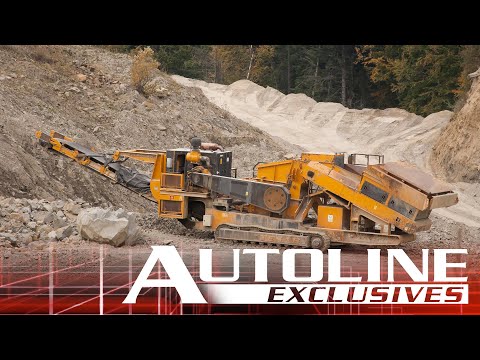
Ramping Up Rare Earth Mining In The USA - Autoline Exclusives
Overview of Rare Earth Materials in the U.S. Automotive Industry
In a recent discussion, John Mroy interviews Josh Ballard, CEO of USA Rare Earth, to explore the United States' capacity to source raw materials for electric vehicles (EVs), specifically rare earth elements. Ballard emphasizes the critical role of rare earths in modern technologies, particularly in the production of magnets that convert electricity into motion. Despite the U.S. having the necessary raw materials, China currently dominates the rare earth supply chain, having invested heavily in this sector over the past few decades.
Ballard highlights California's significant rare earth mine, which is rich in light rare earths, yet most processing occurs in China. He notes the importance of heavy rare earths, essential for enhancing magnet performance in EVs, where China controls over 98% of supply. The conversation shifts to new discoveries in Wyoming and Texas, where deposits of rare earths are found but require significant development and scientific expertise for extraction and processing.
USA Rare Earth is actively working on establishing a domestic magnet facility in Oklahoma and developing a unique deposit in Texas rich in heavy rare earths. Ballard discusses the environmental challenges associated with rare earth processing, particularly the use of acids and the need for responsible mining practices. He acknowledges that while U.S. production may be more costly than China's, the U.S. government is increasingly supportive of developing a self-sustaining rare earth industry.
Ballard concludes by asserting that the U.S. can achieve self-sufficiency in rare earth production, although it will take time and collaboration with global partners. He emphasizes the national security implications of relying on foreign sources for these critical materials, stating that the U.S. must invest in and support the development of its own resources to maintain technological and defense capabilities.
Rare earth elements (REEs) are a group of 17 chemically similar elements that play a crucial role in modern technology, especially in the production of magnets used in electric vehicles (EVs) and other applications. They are categorized into two primary groups: light rare earths and heavy rare earths. The distinction between these categories is significant due to their varying abundance and applications. Light rare earths, such as neodymium and praseodymium, are more abundant and constitute about 30% of the components in powerful magnets. In contrast, heavy rare earths, which include dysprosium and terbia, are less common but are essential for enhancing the performance and heat resistance of these magnets.
According to Josh Ballard, CEO of USA Rare Earth, the United States possesses the raw materials necessary to produce these elements, but the processing and refining typically occur in China, which dominates over 90% of the global processing market. This creates a dependency that raises concerns regarding national security and technological advancement.
The mining process for rare earth elements is complex and differs from that of traditional minerals. Rare earths are often dispersed throughout rock formations rather than located in concentrated veins, necessitating advanced extraction and processing techniques to isolate these elements into usable forms, such as oxides and metals.
The formation of rare earth elements occurs in geological environments that are rich in specific minerals. These elements are generally found in igneous and metamorphic rocks, where they can crystallize and become concentrated over time. The prospecting and mining of these elements require a combination of geology, mineralogy, and advanced mining technologies. As noted by Josh Ballard, the extraction of rare earths from rock formations is not straightforward, as these minerals are dispersed throughout the rock rather than concentrated in veins like traditional coal or metal deposits.
The technical developments that facilitate the mining and extraction of rare earths include the advancement of leaching technologies, which allow miners to extract minerals from the surrounding rock efficiently. Leaching involves using acids and other chemicals to dissolve the minerals, which can then be separated and processed into usable forms. This process, however, demands precise conditions and is considered scientifically challenging.
Furthermore, the mining industry is making strides in developing environmentally friendly practices to mitigate the impact of mining operations. Innovations in recycling and reusing chemicals used during extraction processes are being explored to minimize environmental harm, ensuring that the mining of rare earths can be conducted in a more sustainable manner.
- [03:54] "With rare earths, it’s actually dispersed throughout the rock. You have to actually literally leech it out of the rock to get bulk minerals."
- [05:10] "We’re developing the processing technology over the past few years in order to get the minerals out of that deposit that are so important."
The process of mining, extraction, and refining rare earth elements is multifaceted and technically complex. Initially, mining involves extracting rock from deposits where rare earths are located. As stated by Josh Ballard, the minerals are dispersed throughout the rock, meaning that mining rare earths is not as simple as excavating a concentrated vein.
Once the rock is extracted, the leaching process begins, which involves using acids to extract the desired minerals from the rock. This process is intricate and requires careful handling to isolate the elements needed for further processing. The extracted minerals must then be processed into oxides, which can eventually be converted into metals for use in magnets and other applications.
Ballard emphasizes the technical complexity of this process, noting that it is a science that the United States has largely given up, allowing countries like China to take the lead in rare earth processing. This reliance on foreign processing presents a significant barrier for the U.S. as it seeks to re-establish its own supply chain for these critical materials.
- [04:10] "It’s a very hard science. It’s a science that we’ve given up on. We gave it up to China."
- [04:34] "We still have work to do, but we’ve made a lot of progress. We’ve actually separated out a lot of the minerals now."
The environmental costs associated with rare earth mining are significant and have raised concerns regarding the health effects on both miners and local residents. The process of mining often involves open pit mining, which creates large holes in the ground that can generate substantial dust. This dust poses risks to air quality and can lead to respiratory issues for workers and nearby communities.
Moreover, the leaching process, which uses acids to extract minerals, presents additional environmental hazards. As noted by Josh Ballard, the use of these chemicals can result in pollutants entering local water systems, which could have detrimental effects on both the environment and public health. The reliance on acids during extraction raises concerns over the potential contamination of water supplies and soil degradation.
While China has been criticized for its environmental practices in rare earth mining, Ballard indicates that there is a need for responsible practices in the U.S. as well. He acknowledges that while their methods may be cost-effective, they do not prioritize environmental health, making it essential for U.S. operations to focus on mitigating these impacts through better practices.
- [06:34] "It’s those acids in particular and water that can be an environmental concern."
- [07:15] "We need to be good humans and we need to be thoughtful about the land that we’re going to be working on."
China holds a dominant position in the rare earth market, controlling over 90% of the processing capacity for these critical materials. This monopolistic control has significant implications for global supply chains and international relations, particularly as the demand for rare earths continues to rise with advancements in technology and the push for electric vehicles.
Josh Ballard explains that this situation arose from a historical decision in which the U.S. chose not to compete in the rare earth sector, allowing China to invest heavily in this industry. As a result, China has established itself as a key player, not only in production but also in the processing of rare earth elements, which creates a dependency for nations like the U.S.
The impact of illegal mining activities in China further complicates the market dynamics. Although specifics regarding the scale of illegal mining were not discussed, the implication is that such activities could disrupt both supply and pricing structures in the rare earth market, as illegal operations often bypass environmental regulations and labor standards.
- [01:19] "What happened is a few decades ago, China decided to focus on it. We decided to give it away."
- [03:16] "China still controls over 98% of those today."
In the realm of international politics, rare earth elements play a pivotal role, particularly for the United States, which is seeking to reduce its dependency on Chinese supplies. Under the Trump administration, there was a concerted effort to revive the domestic rare earth industry. This strategy aimed to bolster the U.S. supply chain for these elements, which are critical not only for electric vehicles but also for national defense. As noted by Josh Ballard, the reliance on China for these essential materials puts the U.S. in a vulnerable position.
The administration has been aggressive in its approach, aiming to support all stages of the rare earth supply chain—from mining and processing to the manufacturing of metals and magnets. This initiative reflects a broader recognition of the strategic importance of rare earths in maintaining technological competitiveness and ensuring national security. Ballard highlights that the current U.S. strategy is akin to a "Manhattan project moment," emphasizing the urgent need for investment and partnership between the government and the private sector to develop a self-sustaining rare earth industry.
- [08:11] "The federal government is really looking closely at how they can support this industry all stages."
- [14:00] "Right now, quite literally, in order to make many of the technologies that we need for our national security, we have to ask permission to China."
Reserves of rare earth elements are located in several countries beyond China, including significant deposits in the United States, Australia, and parts of Africa. The U.S. has identified a few promising sites, such as the Stillwater region in Oklahoma and a unique deposit in West Texas, which is rich in heavy rare earths. Furthermore, Wyoming has been noted for its light rare earth finds, although these deposits still require development.
In addition to the U.S., countries like Australia and Greenland are recognized for their rare earth reserves, with Australia already emerging as a significant player in the market. However, the timeline for exploiting these resources can extend over decades, particularly in Greenland, where development is still in its infancy.
Other nations like Malaysia and Vietnam are also mentioned as potential contributors to the global supply chain of rare earths. While they have reserves, their current capacity for processing remains limited, with few companies actively engaged in the extraction and refinement of these elements.
- [12:45] "They’re not as rare as you might think, even though we call them rare earth. They’re rare because they’re just hard."
- [12:44] "There’s quite a few countries that have these. They’re pretty prevalent."
Several rare earth elements are labeled as critical due to their essential roles in modern technologies and industries. Specifically, elements like dysprosium and terbium are crucial for enhancing the performance of magnets used in electric vehicles and other applications. These elements contribute to the strength and heat resistance of magnets, which are vital for efficient motor operation.
The organizational structure of the global supply chain for rare earths is heavily influenced by China, which controls a significant portion of the processing capacity. As a result, the vulnerabilities within this supply chain stem from the over-reliance on a single country for critical materials. The processing of rare earths requires specialized knowledge and technology, which further complicates efforts to diversify the supply chain.
Ballard points out that while the U.S. has the raw materials, developing the infrastructure and technology for processing is a significant hurdle. The challenge lies in creating a self-sufficient system that can withstand market disruptions and geopolitical tensions, particularly as demand for these elements grows in the context of transitioning to cleaner technologies.
- [08:30] "These rare earths are critical for our defense. They’re used throughout the defense industry."
- [09:11] "These are very important minerals. They’re used throughout a myriad of technologies well outside just EVs."
While the transcript does not detail specific alternative technologies that eliminate the need for rare earth elements, it mentions that the automotive industry is exploring asynchronous motors that do not utilize magnets. However, the discussion suggests that such alternatives present challenges.
The main advantage of rare earth magnets, especially neodymium-iron-boron (NDFE) magnets, lies in their compact size and power. They provide exceptional torque and energy efficiency, which are crucial for high-performance applications such as electric vehicles. Alternatives may not deliver the same performance metrics, often resulting in increased vehicle weight and reduced efficiency.
As the industry looks towards the future, the exploration of alternative technologies will be essential, especially in the context of reducing reliance on rare earths. However, the current consensus, as expressed by Ballard, indicates that these alternatives may not be easily integrated into existing systems without significant trade-offs in performance.
- [10:28] "Right now they’re the best answer for what the technologies that we have today by a long shot."
- [09:36] "The auto industry is looking at asynchronous motors that don’t use any magnets at all."
The recycling of rare earth elements is a crucial aspect of sustainable resource management. Although the transcript does not provide specific details on recycling processes, it highlights the importance of developing methods to recycle and reuse chemicals employed during the extraction of rare earths. This is essential for minimizing environmental impact and enhancing the sustainability of mining operations.
Before initiating mining operations, a country or company must consider various economic and technical criteria. These include the feasibility of extracting minerals from the deposit, the cost of processing, environmental regulations, and the need for advanced technologies to ensure efficient extraction and minimal waste. As Josh Ballard indicates, achieving environmental sustainability in mining operations is not only a regulatory requirement but also a moral obligation to mitigate the environmental impacts.
Furthermore, the economic implications of mining rare earths often involve significant upfront investments and long-term planning to ensure operational viability. Companies must weigh the potential profitability against the costs of adhering to environmental standards and the technological challenges associated with processing these complex minerals.
- [06:01] "There are ways that you can recycle and reuse the chemicals that are used in the process."
- [05:59] "We need to be good humans and we need to be thoughtful about the land that we’re going to be working on."
[00:03] [Music][00:07] Hi, John Mroy here talking all things[00:09] automotive. Hey, can the US really get[00:12] all the raw materials it needs for[00:14] electric vehicles and even beyond that,[00:16] particularly rare earth? We're going to[00:20] find out today because we've got Josh[00:21] Ballard. He is the CEO of an[00:24] organization called USA Rare Earth.[00:27] Josh, great to have you here and tell[00:30] the audience what is USA Rareear. Thank[00:33] you, John. USA Rareear is a company[00:35] whose mission is to build out the rare[00:37] earth and rare earth magnet supply[00:39] chain. And what a lot of people don't[00:41] realize, but what's really come up in[00:43] conversation a lot here over the last[00:45] couple of months is that rare earths[00:46] literally drive a lot of our[00:48] technologies here today. They're[00:50] critical for EVs, uh, but they're[00:52] frankly critical for a lot of modern[00:53] technology. And they're especially in[00:55] the sense of what how we use them in[00:57] magnets. And magnets are are the[00:58] technology that translate electricity[01:00] into motion. And that happens in in many[01:03] many different ways and throughout a car[01:05] as you think about whether it's an EV or[01:07] even a gas powered car. This was[01:09] technology largely developed in the[01:11] United States. We've got the raw[01:12] materials needed to make it in the US,[01:14] but China dominates the segment. What[01:17] happened there? What happened is a few[01:19] decades ago, China decided to focus on[01:22] it. We decided to give it away. So, in[01:23] the early 90s, there was a vice premier[01:25] in China who said, "The Middle East has[01:27] oil. We have rare earths." And they[01:31] really drilled into that, no pun[01:32] intended, they really went deep into[01:34] rare earths. Uh they've been building[01:36] out this industry for the last few[01:37] decades. And along the way, we just let[01:39] it go. We didn't want to compete. We[01:41] decided we wanted uh to let somebody[01:43] else do it. You know, it happens in it's[01:44] happened in a lot of industries, but[01:46] unfortunately in this one, it's happened[01:47] with a pretty critical key component to[01:50] so many modern technologies, and it's[01:52] really left us in tough tough spot. My[01:54] understanding is that California has the[01:57] largest hard rock rare earth mine in the[02:00] world. Is that right? Yeah. Not in the[02:03] world. In the United States, it's it's[02:05] operating one for sure. But you have to[02:08] think about rare earths. There's two[02:10] kinds. There's light rare earths and[02:11] there's heavy rare earths. And there's[02:13] important there's an important[02:15] distinction. Light rare earths are much[02:17] more abundant. The key light rare earth[02:19] is neodymium praodymium are the two[02:21] minerals that make up about 30% of these[02:23] magnets. So boy, that trips off your[02:25] tongue very easily. You must have said[02:27] Yeah, I I've said I practice. And uh[02:31] this mine in California is very rich in[02:33] these light rails. However, they've been[02:35] shipping most of that to to China to be[02:37] processed. China still controls over 90%[02:40] of the processing of these minerals. But[02:42] importantly, and this is especially[02:43] important for the EV industry, by the[02:45] way, is that you need what's called[02:47] heavy rare earths in order to increase[02:49] the performance of these magnets. heavy[02:51] rare earths despium and turbium in[02:53] particular the two that are used to[02:56] increase performance meaning they they[02:57] make the magnet stronger and they also[02:59] make the magnets more heat resistant to[03:02] more resistant to heat or to eddy[03:04] currents electrical currents that can[03:06] occur especially in a motor in a car so[03:08] when you use a magnet in the motor or a[03:10] car you're using a lot of these heavy[03:11] rare earths to increase the performance[03:13] China still controls over 98% of those[03:16] today those are not in this uh this uh[03:19] deposit that's in California. We happen[03:22] to be rich in them, but we're not mining[03:23] them yet. Uh, and the world really needs[03:25] to find new sources in order to mitigate[03:27] this this issue with China. Josh, tell[03:29] me, I I I've read about this massive[03:31] find in Wyoming. What do we have there?[03:35] Yeah, we've had a few massive finds.[03:37] Wyoming is one. It has it's a great[03:39] light rare earth find in Wyoming.[03:41] However, as with many of the deposits,[03:44] uh, it still needs to be developed. And[03:47] what the difference with rare when you[03:49] talk about finding rare earths is if you[03:50] find a vein of coal, you've got a rich[03:52] vein and you're just going to go in[03:54] there and excavate it out in order to[03:55] use it for electricity. But with rare[03:57] earths, it's actually dispersed[03:59] throughout the rock. So you can take out[04:00] all the rock you want, but you have to[04:02] actually literally leech it out of the[04:04] rock to get bulk minerals and then[04:06] separate out each of those minerals[04:07] individually into what's called oxides[04:10] that eventually become metal that we use[04:12] in magnets and other alloys. It's a very[04:14] hard science. It's a science that we've[04:16] given up on. We gave it up to China.[04:18] China's very good at it, by the way, and[04:20] we're bringing it back. And so each of[04:22] these deposits are very different from[04:23] each other. And then you have to develop[04:25] the science around the deposit in order[04:28] to tease out the minerals to actually[04:30] get them to use in the metal alloys that[04:32] we need. So we're we're many years away[04:34] with many of these deposits today before[04:36] we can actively use them in production[04:38] and in technologies. You you say we're[04:41] bringing you back uh getting to know.[04:42] How are we doing that? So, we're doing[04:45] it a couple ways. So, we as a company,[04:46] we have both a large we're building one[04:49] what we consider the largest domestic[04:51] magnet facility in the US in Stillwater,[04:53] Oklahoma. And we also have a a very[04:56] unique deposit in West Texas that we're[04:58] developing that's what I call heavy in[05:00] the heavies. We have lots of the heavy[05:01] rare earths I was describing earlier.[05:03] We're rich in those. And what we're[05:05] doing is is two things. One, on the[05:07] magnet side, we're executing. So, what[05:10] we're bringing in the equipment. We're[05:11] going to build this facility that[05:13] ultimately will do roughly 5,000 tons of[05:16] magnets per year, which is hundreds of[05:18] millions of magnets. It's a lot of these[05:20] little guys coming out of there. Uh, and[05:22] probably 700 to $800 million of revenue[05:24] at its peak. And then in the deposit[05:27] side, uh, we're developing the[05:29] processing technology over the past few[05:31] years in order to get the minerals out[05:32] of that deposit that are so important.[05:34] So, we've been working very diligently[05:36] on this the last few years. We still[05:38] have some work to do, but we've made a[05:39] lot of progress. We've actually[05:40] separated out a lot of the minerals now.[05:43] We've got a lot of the We figured out a[05:44] lot of the ways we're going to mine the[05:46] mine, but we still have work to do and[05:48] we're still a few years away. My[05:49] understanding is that the processing is[05:52] not environmentally clean, and that's[05:54] one of the reasons why it left this[05:56] country. How are you able to process the[05:59] these rare earths and do it in an[06:01] environmentally benign way? Yeah, it's[06:04] it's a challenging environment[06:06] environmentally. Uh however there are[06:08] ways that you can recycle and reuse the[06:11] chemicals that are used in the process.[06:12] So in particular in mining we'll be[06:15] using an open pit mine which you know[06:17] will have a big hole in the ground[06:18] essentially and slowly work down and[06:21] after you excavate that rock one there[06:23] can be a lot of dust that you want to[06:24] mitigate. Um and then also you use a lot[06:27] of acids in order to leech the minerals[06:29] out of the rock. It's those acids in[06:31] particular and water that can be an[06:34] environmental concern. And so what we're[06:35] looking at closely doing is looking at[06:37] how we can recycle as much of that acid[06:39] as possible and reagents throughout the[06:41] process so that we're keeping it down to[06:43] a minimum where we can while we're while[06:46] we're leeching and getting those[06:47] important minerals that we need so much[06:48] in this country. You know, my[06:50] understanding again was that China took[06:52] this on. They didn't care that much[06:54] about the environment, but I've heard[06:55] that they're really starting to clean it[06:57] up. Yeah. Well, no. I mean, there's[06:59] still challenges in China. Uh I'm sure[07:01] they've gotten a little better over the[07:02] years, but the reality is is that uh the[07:05] environmental side is always challenging[07:07] there. And uh it's it's a it's a larger[07:10] cost, right? It'll be more expensive to[07:11] do it that way. But I like to say we[07:13] need to be good humans and we need to be[07:15] thoughtful about the land that we're[07:16] going to be working on. And we need to[07:18] do our best to mitigate those those[07:20] environmental concerns everywhere we[07:21] can. Can you produce these uh process[07:24] these rare earths and uh do it in an[07:26] environmentally clean way and and still[07:29] be cost competitive?[07:31] We will definitely cost more than China.[07:33] I mean the reality is is China is[07:34] subsidized by the government. These[07:36] industries for example magnets[07:38] themselves are sold essentially at break[07:40] even or cost and then they they get they[07:43] get credits back from the government[07:44] which is where they make their money. I[07:45] mean this is this is not a uh a[07:48] competitively fair environment by any[07:50] means. And I think what's exciting today[07:52] is that the certainly the American[07:54] government the federal government's[07:55] really looking closely at how they can[07:58] support this industry all stages. I[07:59] mean, it starts with the actual mining.[08:02] It goes to processing and making the[08:04] oxides that we need, then making the[08:06] metals, and then making the actual[08:07] magnets. And the federal government[08:09] under the Trump administration is[08:10] actually being very aggressive. They're[08:12] on fire to figure this out currently and[08:14] really do everything they can to uh to[08:16] help us get on our feet so that we can[08:18] have a self-sustaining industry over the[08:19] long term. Yeah. The the the Trump[08:21] administration isn't exactly keen on[08:23] electric cars, but these rare earths are[08:26] needed in a lot more than just them,[08:28] right? Oh, absolutely. These rare earths[08:30] are critical for our defense. Uh they're[08:32] used throughout the defense industry,[08:33] whether it's the metal alloys themselves[08:35] or the actual magnets that we'll be[08:36] producing in Oklahoma. They're used in[08:39] uh semiconductors. They're critical for[08:41] semiconductors. They're used in MRI[08:44] machines. For example, in the export[08:46] control list that came out a few weeks[08:47] ago from China controlling the export of[08:49] these rare earths, there's listed[08:51] gatalinium. Gatalinium is the[08:53] contrasting agent we used when we get[08:55] MRI scans, right? So you can see all[08:57] your organs. So this is a very personal[08:59] event that's happening to us now as[09:01] well. This could affect how well we can[09:03] get MRI scans done or itrium is used to[09:05] actually fight cancer certain types of[09:07] cancer. So these are very important[09:09] minerals. They're used throughout a[09:11] myriad of technologies well outside just[09:14] EVs. Even in a gas powered car you could[09:17] have them in your power stealing, your[09:18] power steering. You could have them in[09:20] your actuators uh your your driver[09:23] assistant technologies braking and so[09:25] forth. It's all over a car. So these are[09:27] these are critically important uh and[09:29] something that we need to develop here[09:30] in America.[09:33] Um so the auto industry is looking at[09:36] asynchronous motors that don't use any[09:38] magnets at all. Is is are there other[09:41] workarounds on on this? There are[09:44] challenges to that. You know, I'd never[09:46] say never, but as we're looking over the[09:48] next 10, 15 years or so, the challenge[09:51] is is what is great about these what are[09:54] called neomagnets, these rare earth[09:56] centered neoagnets, NDFE magnets is what[09:59] they're called, is that they're[10:01] incredibly powerful. And so, you can[10:02] have an incredible amount of power in a[10:04] very small package. And that reduces the[10:06] weight in a car. Uh it allows you to[10:09] have more torque. You put Tesla into[10:11] beast mode and you go and you go so[10:12] fast, you know, you feel like you're on[10:13] a on a roller coaster. That's these[10:15] magnets. And it's the power of these[10:18] centered rare earth magnets. And if you[10:19] when you use other technologies, at[10:21] least everything we know today, you add[10:23] a lot more weight. They're not quite as[10:25] powerful and there's other challenges[10:27] with them. So, it's not going to be an[10:28] easy fix. Uh there may be times when you[10:31] can find other fixes around it, but[10:32] right now they're the best answer for[10:34] what the technologies that we have today[10:36] by a long shot. It's great to see you[10:38] working on this, but you know,[10:40] permitting in the United States seems to[10:42] take forever. It takes a decade or more[10:44] to open a mine. I I've got to believe as[10:47] you go to to process these things and[10:49] you're going to have to have all kinds[10:50] of environmental impact statements. Is[10:53] there any way to accelerate the process[10:55] here? Yeah, there's two things in our[10:57] favor. Uh one is that our deposits on[11:00] state land in Texas, so it's less of a[11:02] federal issue for us. Not that the state[11:05] of Texas won't have its own permitting,[11:06] but it's going to be a much different[11:08] scenario than if we were on federal land[11:10] without a doubt. But also even for those[11:12] deposits on federal land, the Trump[11:14] administration, that's where they're[11:15] actually moving quite quickly. They're[11:17] doing a lot right now to re reduce the[11:19] burden of that permitting. And then[11:21] hopefully we can find a balance that we[11:22] can hold to over the long term that[11:24] allows mines to get developed in a[11:25] meaningful meaningfully normal amount of[11:28] time, not not decades, but one of which[11:30] we're doing it responsibly for our land[11:32] as well. Can the US realistically become[11:35] self-sufficient in rare earths?[11:37] Absolutely we could. Yeah, we've got[11:39] plenty of of minerals here in the US. We[11:41] just we need to be able to get to them[11:43] and and get them out of the ground and[11:44] do it responsibly. But yeah, absolutely.[11:46] I believe it'll take a while. I mean,[11:48] we're going to have to augment with the[11:49] rest of the world in the next couple of[11:51] decades for sure. We, you know, I think[11:53] we should do that in a more diversified[11:55] and thoughtful manner than having it all[11:56] depend on one country. But I think over[11:59] time we we can develop this in America[12:00] and have a good balance between uh using[12:04] and and and purchasing what we need from[12:06] our neighbors and allies as well as[12:07] developing what we have and the great[12:09] resources we have here in America. Oh,[12:11] that's a good point. Who other than[12:12] China has has got these and processes[12:14] them? Well, very few process them. Many[12:18] countries have them. I mean, the Trump[12:20] administration has talked a lot about[12:21] Ukraine and Greenland. Ukraine honestly[12:24] doesn't actually have very many rare[12:25] earths. They have many other critical[12:27] minerals. Rare earth is not one of them.[12:29] Uh Greenland has a lot, but they're[12:31] decades away, at least a couple decades[12:32] away from really exploiting those[12:34] minerals, but they're abundant in[12:36] Australia and Africa. There's other[12:38] areas in Asia, Malaysia, Vietnam.[12:42] There's there's quite a few countries[12:43] that have these. They're pretty[12:44] prevalent. They're not as rare as you[12:45] might think, even though we call them[12:47] rare earth. They're rare because they're[12:48] just hard. That's really why they're[12:50] rare. So, they're we can find them. uh[12:52] it's just a matter of of looking and and[12:54] getting down into the science in order[12:56] to extract them from the rock. But[12:59] pretty much nobody else processes them[13:01] then. Pretty much no one else. I mean[13:03] there is a couple companies now. Lionus[13:05] out of Australia is one of the bigger[13:07] ones and then there is uh MP materials[13:10] here in the US who's just beginning to[13:12] process their own but they're at the[13:14] beginning stages. Then there are a[13:16] couple other smaller companies who are[13:17] working on it. Uh and then ourselves of[13:19] course who are we're progressing our own[13:21] technologies. But we're still we've got[13:23] work to do as a nation without a doubt.[13:25] And so I what I call this is this is the[13:27] Manhattan project moment right for the[13:29] United States at least in terms of rare[13:31] earths is we need to invest. We need[13:33] support in order to partner with with[13:35] the government, the great scientists we[13:37] have in the government in order to[13:38] figure this out and do this as quickly[13:40] as we possibly can to stand ourselves on[13:42] our own feet. Yeah. What you're talking[13:44] here is not just uh helping the US auto[13:46] industry keep pace with China's auto[13:48] industry. You you're talking national[13:50] security issues here. Yes, we are. Right[13:52] now, quite literally, in order to make[13:54] many of the technologies that we need[13:56] for our national security, we have to[13:58] ask permission to China. That's where[14:00] we're at today. Yeah. Yeah. Josh[14:04] Ballard, thanks so much for your time.[14:05] Very interesting, encouraging, but boy,[14:08] there's a big hill to climb here. There[14:10] is. Thank you for having me on, John. I[14:11] appreciate it. It's an exciting time.[14:13] We're building hell of an asset out[14:14] there in Oklahoma and we're excited to[14:16] get that out there so we can start[14:17] supporting the the automobile industry[14:19] as well as defense and[14:24] [Music][14:27] others. Do you want to see the[14:29] automotive industry grow and thrive? So[14:32] do we. That's why we dedicate our shows[14:34] to providing the people in the industry[14:36] with important data and information and[14:40] access to the people who are driving the[14:42] industry forward with the guests that we[14:45] bring on our shows and the interviews[14:47] that we conduct. But we need your help[14:50] to continue doing it. That's why I'm[14:52] asking you to support outline with a[14:55] YouTube or Patreon membership. It'll get[14:58] you extra content that will be available[15:00] only to members, but it will especially[15:03] make sure that you and out of line[15:06] continue to drive the automotive[15:08] industry forward.
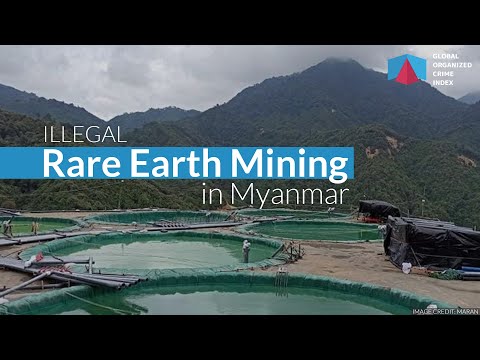
Illegal Rare Earth Mining in Myanmar | The Index Podcast
Summary of Rare Earth Mining in Myanmar
Rare Earth minerals are essential for modern technologies, including smartphones and electric vehicles, leading to a surge in demand. However, the extraction processes are often illegal and environmentally damaging, particularly in Myanmar, where the mining industry has thrived amidst political instability and conflict since the military coup in February 2021. This situation has exacerbated human rights abuses and environmental degradation.
The mining practices in Myanmar involve toxic methods such as in-situ leaching, which contaminates land and waterways, posing risks to biodiversity and public health. The illegal mining operations are largely controlled by militia groups that exploit local communities, leading to severe human rights violations. The absence of legal mining permits indicates that profits from the industry primarily benefit armed factions and the military, further entrenching the cycle of violence and instability.
Research indicates that Myanmar has become a significant source of heavy Rare Earth minerals, with operations largely funded and run by Chinese businesses. Despite the illicit nature of these activities, minerals are declared at border points as legitimate exports to China, where they enter global supply chains. This lack of transparency obscures the extent of human rights abuses and environmental harm associated with these operations.
As the global demand for Rare Earth minerals rises, it is crucial for companies to take responsibility for their supply chains. The ongoing exploitation highlights the urgent need for regulatory frameworks that prioritize environmental and social justice. Stopping the sourcing of minerals from Myanmar could disrupt the cycle of violence and exploitation, ensuring that the green transition does not come at the expense of human rights and ecological integrity.
Rare Earth Elements (REEs) are a group of 17 chemically similar elements that are crucial for modern technologies, including smartphones, electric vehicles, and wind turbines. These minerals are not actually 'rare' in terms of abundance; rather, they are rarely found in economically exploitable concentrations. The distinction between rare earth minerals and processed metals lies in their state of refinement. Rare earth minerals are naturally occurring compounds from which REEs are extracted, while processed metals refer to the refined, purified forms of these elements that can be used in various applications.
The unique characteristics of REEs include their high reactivity, which contributes to their utility in various advanced materials and technologies. They possess distinct physical and chemical properties, such as high magnetic strength and electrical conductivity, making them essential for manufacturing high-performance magnets and catalysts.
The growing demand for these elements in the context of climate goals has led to increased mining activities, particularly in regions like Myanmar, where the extraction processes are often associated with significant environmental and human rights issues. Understanding this distinction is crucial for addressing the complexities of the supply chain and the geopolitical implications surrounding the extraction and use of these vital minerals.
The transcript does not provide specific technical details regarding the formation and location of rare earth elements. However, it highlights the fact that the mining of these elements in Myanmar is relatively new, having started around 2016 and expanding rapidly until 2021. The mining techniques mentioned include a method called leaching, where ammonium sulfate solution is injected into mountains to extract the minerals. This process is noted for its environmental hazards, but no additional technical developments or conditions for efficient prospecting are discussed.
Furthermore, the transcript does not elaborate on how these elements are formed in the earth's crust or the geological conditions necessary for their occurrence. Instead, it emphasizes the operational environment of the mining industry in Myanmar, which is marred by conflict and illicit activities rather than technical advancements in mining practices.
The process of mining, extraction, and refining of rare earth minerals in Myanmar is fraught with environmental and ethical challenges. Mining in Myanmar has expanded to cover an area the size of Singapore, with the technique of leaching being a primary method of extraction. This method involves injecting ammonium sulfate solution into mountains, where it percolates through the rock, allowing minerals to be precipitated out. However, this process generates a significant amount of toxic waste, with approximately 2,000 tons produced for every ton of rare earth mineral mined.
Once the minerals are extracted, they are typically transported across the border to China, where they are processed. The transcript does not indicate specific barriers for countries regarding the technical complexity of mining, but it does highlight that the industry operates largely illegal, with no permits issued for rare earth mining. This illegal status compounds the challenges related to regulation and oversight.
- [02:03] "Rare Earth mining in Myanmar is relatively new; it started really in around 2016."
- [02:30] "They use this technique called leaching, which basically means that they inject ammonium sulfate solution into the mountains."
- [02:42] "Once the entire mountain has been injected with chemicals... they abandon the site and they move on."
The environmental costs associated with rare earth mining in Myanmar are substantial and multifaceted. The leaching process utilized in extracting these minerals is particularly damaging; it results in the contamination of land and waterways with hazardous waste. As noted in the transcript, toxic waste flows into rivers that are tributaries of the Ayeyarwady, Myanmar's largest river, which is crucial for the drinking water of approximately two-thirds of the country's population.
This pollution poses significant risks to both the environment and biodiversity. The heavy metals and chemicals used in mining have detrimental effects on local ecosystems, potentially harming flora and fauna far beyond the immediate mining sites. The health effects on miners and local residents are alarming, with reports indicating exposure to harmful substances without adequate safety measures or information about the risks involved.
Furthermore, there are indications of serious human rights issues, including child labor and forced labor, exacerbated by the illegal and informal nature of the mining operations. Local communities are often unable to voice their concerns due to fear of violence from militia groups controlling the area. This environment of intimidation compounds the health risks faced by those living in proximity to mining activities.
- [02:58] "These chemicals are polluting the land; they're polluting the waterways."
- [03:17] "It also has a huge impact on biodiversity both around the mining site and likely probably a long way further downstream."
- [12:54] "Labor rights are non-existent... they handle harmful chemicals but they're not given any information about the risks."
China holds a dominant position in the market for rare earth elements, largely due to its extensive control over the supply chain. The transcript indicates that China's mining and processing operations have become highly consolidated, with state-owned enterprises managing most of the industry. This consolidation allows China to maintain a near-monopoly on the processing of rare earth elements, significantly impacting global supply and pricing.
The illegal mining activities in Myanmar are portrayed as a substantial contributor to this dynamic. As Myanmar has become the world's largest source of heavy rare earth minerals, the trade has flourished under conditions of instability and illegality. The revenue generated from these mining operations is reportedly substantial, with imports of rare earths from Myanmar to China worth around $2 billion since the military coup in 2021.
This illicit industry operates with little oversight, and the profits are believed to enrich armed groups, including the military regime itself. The lack of regulation and the informal nature of the mining operations pose significant challenges to establishing a transparent and ethical supply chain in the industry.
- [05:34] "Imports of rare Earths from Myanmar to China since the military coup in 2021 are worth $2 billion."
- [05:10] "Not a single mining permit for Rare Earth has been given out despite the fact that heavy rare Earths from Myanmar are now the world's largest source of supply."
- [06:06] "The armed militia group and Myanmar's military are very much involved... they control the investment, the permitting, the security, the taxation..."
The transcript does not provide specific information regarding the role of rare earth elements in international politics, particularly in the context of the US strategy under the Trump administration to reduce dependency on these elements. Instead, it focuses on the situation in Myanmar, where the extraction of rare earth minerals is occurring in a context of political instability and human rights abuses. The emphasis is on the urgent need for increased transparency and regulation in the supply chain to prevent complicity in these issues by companies relying on these minerals.
The transcript does not specify which countries possess reserves of rare earth elements or identify any new players entering the market. It primarily focuses on Myanmar as a significant source of heavy rare earth minerals, particularly in the context of illegal mining activities. While it elaborates on the complexities and challenges within this specific region, it does not provide a broader overview of the global landscape of rare earth reserves or the dynamics involving other countries or companies.
The transcript does not explicitly identify which specific elements are labeled as 'critical' or provide a breakdown of the organizational structure and vulnerabilities of global supply chains related to rare earth elements. It emphasizes the importance of these minerals in modern technologies but does not delve into classifications or the structural complexities of the supply chain. The lack of transparency in how these minerals are sourced and the involvement of armed groups and the military in Myanmar suggests that vulnerabilities exist, but no detailed analysis is provided in the transcript.
The transcript does not mention any specific alternative technologies or innovations that reduce or eliminate the need for rare earth elements. It focuses primarily on the extraction processes and the associated environmental and social issues in Myanmar, without discussing any innovations that could serve as substitutes for these critical minerals.
The recycling of rare earth elements is not addressed in the transcript. Consequently, there is no information provided regarding the economic and technical criteria that a country or company must consider before initiating mining operations. The focus remains on the current state of mining in Myanmar, the illegal activities surrounding it, and the impacts on the environment and human rights, rather than on recycling or the broader implications of resource management.
[00:00] [Music][00:03] Rare Earth minerals they're used to make[00:05] smartphones electric vehicles and wind[00:08] turbines it's no surprise that as the[00:11] world Works to meet its climate goals[00:13] they're high in demand but the process[00:16] used to extract these minerals is toxic[00:19] and often illegal it fuels deforestation[00:22] threatens biodiverse ecosystems and[00:24] causes human right[00:26] abuses for every ton of rare Earth[00:29] mineral mind approximately 2,000 tons of[00:33] toxic waste is[00:35] generated in Myanmar the country where I[00:38] am from this illegal industry is booming[00:42] Myanmar has been marred by conflict[00:44] since February 2021 when the military[00:47] ceased control later jailing the elected[00:50] civilian leaders executing activists and[00:53] using violence to maintain control over[00:55] the country and the people who live[00:57] there this instability has created a[01:00] breeding ground for organized crime in[01:03] Myanmar we've seen an increase in human[01:05] smuggling as people seek to flee illegal[01:08] arms are flowing into Myanmar as the[01:10] demand for weapons increase and the[01:12] country is now the world's second[01:14] largest opium producer this is a trade[01:16] which helps to finance non-state armed[01:19] actors the government and Military[01:22] entities alike and myanmar's natural[01:24] resources are also being exploited with[01:28] devastating impacts on the environment[01:30] and the people who work and live there[01:33] high value Timber has created a[01:35] considerable illicit logging industry[01:38] and the country is also a significant[01:40] source of metallic minerals such as gold[01:43] copper pressure stones and rare earth[01:48] minerals now according to research by[01:51] global witness a mountainous corner of[01:53] Myanmar known as kitchen special region[01:56] one has become the world's largest[01:58] source of heavy Rare Earth[02:01] minerals Rare Earth mining in Myanmar is[02:03] relatively new it started really in[02:06] around[02:07] 2016 and over a 5-year period until 2021[02:11] it had expanded to cover an area the[02:13] size of Singapore that's CLA Hammon[02:16] she's an investigative journalist[02:18] covering critical minerals for Global[02:20] witness she has also been reporting on[02:23] Myanmar for almost a decade the biggest[02:26] problem on the environment is that they[02:27] use this technique called in[02:30] leeching which basically means that they[02:33] inject ammonium sulfate solution into[02:36] the mountains and the chemicals[02:38] percolate through the mountain side and[02:40] are collected in pools and the minerals[02:42] are precipitated out but once the entire[02:45] Mountain has been injected with[02:46] chemicals and it doesn't take very long[02:48] just a few years then they abandon the[02:51] site and they move on so these chemicals[02:54] are polluting the land they're polluting[02:56] the waterways you've got hazardous waste[02:58] flowing into the rivers that come[03:01] through the mining area and these rivers[03:03] are tributaries of the air which is[03:05] myanmar's largest river and 2third of[03:09] its population of 50 54 million people[03:11] live in the Basin of the AOW uh and they[03:14] rely on it for drinking water uh it also[03:17] has a huge impact on biodiversity both[03:19] around the mining site and likely[03:21] probably a long way further Downstream[03:23] thanks for that CLA and it's very[03:25] concerning you know just listening to[03:28] you sort of Explain how it actually[03:30] works in practice and of course the IRA[03:32] is also culturally very important in[03:34] Myanmar right but you in addition to the[03:37] environmental and biodiversity problems[03:40] you also mentioned the fact that mining[03:41] has always had a long history of Human[03:43] Rights abuses in Myanmar so can you tell[03:45] us a bit about some of the concerns[03:46] beyond the environmental issues[03:49] absolutely it's not just an[03:50] environmental problem there are a whole[03:53] load of other different problems they[03:55] can broadly be grouped in two categories[03:57] and and one is human rights abuse es and[04:00] the other category would be[04:02] illegality and just like the[04:04] environmental impacts the um the human[04:07] rights impacts can be felt around the[04:09] mining site and also for the entire[04:12] population of Myanmar so at the mining[04:15] site the mines are controlled by a[04:17] militia leader and his militias are part[04:20] of myanmar's military chain of command[04:23] and the militia controls this region[04:25] with guns so the impacted local[04:28] communities have no ility to speak out[04:31] the groups who have spoken out who we've[04:33] spoken to have been threatened with[04:35] violence they don't have any rights and[04:38] the companies are operating basically[04:40] with[04:41] impunity and the secondary problem is[04:44] that the funding from this industry is[04:46] going to the local armed actors but also[04:49] to myanmar's Military and the likelihood[04:52] is that the revenue from these mines is[04:55] being used to fund human rights abuses[04:57] all across the country[05:00] the second problem and and again it's[05:02] it's very much interrelated that I[05:04] referred to is illegality so not a[05:07] single mining permit for Rare Earth has[05:10] been given out despite the fact that[05:13] heavy rare Earths from Myanmar are now[05:15] the world's largest source of Supply so[05:18] all of the revenues are captured by[05:20] armed actors and we don't have the exact[05:24] information about how the revenue flows[05:26] work between specific actors but it is a[05:29] huge amount of money so I think the[05:31] latest data suggested that Imports of[05:34] rare Earths from Myanmar to China since[05:37] the military coup in 2021 are worth $2[05:40] billion that that's a lot of money yeah[05:44] and from what you said though it sounds[05:46] like you know armed groups and militias[05:49] as well as the military regime they're[05:52] all very much um interl and very much[05:56] involved in the illegal mining of R[05:59] Earth min minals in me is that accurate[06:00] to say that yeah absolutely they're[06:02] they're very much involved so the I[06:06] think we could best characterize their[06:07] involvement as they are[06:10] Brokers so the armed militia group and[06:14] my's military and and it's part of the[06:17] chain of command it operates[06:18] semi-independently but it's part of the[06:20] same system they control the Border uh[06:24] so they control who crosses the Border[06:27] they take fees for the workers that[06:29] across the border they procure the[06:32] land uh and they'll either seize the[06:35] land from local people um or money will[06:38] pass hands when they procure the land[06:42] they control the investment the[06:43] permitting the security the Taxation and[06:46] this is all illegal informal effectively[06:49] so they're taking a cut of all of these[06:51] things they control the front companies[06:55] because overseas investment in myanmar's[06:57] mining sector is illegal Al so they[07:00] create front companies for the Chinese[07:02] investment and they take a cut of the[07:05] profits they control checkpoints and[07:08] fees access to the mines and they[07:10] control trade so at every point at every[07:14] stage in the mining operations they're[07:16] making money the role that the Myanmar[07:19] military regime plays is less clear but[07:22] they're definitely involved through the[07:23] units that they have on the ground uh[07:26] and also through their broader[07:29] regulatory role it's not it's not a[07:31] regulatory role that's legitimate um but[07:35] they go in there's an inspection going[07:36] on at the moment and they've shut down[07:38] the mining site um which gives them an[07:41] opportunity to to make money from the[07:43] industry as well once you know once[07:45] these um righte minerals are mined what[07:48] happens to them where do they go all of[07:50] the minerals that are mined go across[07:52] the border to China and this is an[07:55] illicit industry but it doesn't function[07:58] in the way that you normally think of[07:59] with an illicit industry and lots of[08:01] smuggling all of the minerals are[08:03] declared at Chinese border points and[08:06] are written down as as Chinese Imports[08:09] so all of the rare earth mined in[08:11] Myanmar goes across straight across the[08:12] border to China and the mines are right[08:14] along the edge of the Chinese border uh[08:17] and so they're taken straight across[08:18] when they're[08:19] mind then they make their way and[08:22] there's very little transparency about[08:24] this step of the supply chain but they[08:26] make their way through[08:29] a number of intermediaries to the[08:32] Chinese state-owned processes and we[08:35] know that all of these rare RS are[08:37] processed by Chinese state owned[08:38] companies because China has cleaned up[08:41] the industry and Consolidated control[08:44] over processing by these large dat owned[08:46] Enterprises and at that point they're[08:49] processed they go to large Chinese[08:52] magnet manufacturers and then these[08:54] magnet manufacturers will supply[08:57] companies around the world and that[08:59] would include the main clients would be[09:02] electric vehicle manufacturers and[09:04] winter by manufacturers because at the[09:07] moment heavy rare Earths are an[09:09] essential component of these[09:11] Technologies and we can assume that many[09:16] of the heavy rare that are being used in[09:17] these products come from Myanmar the[09:20] problem is that there's very little[09:22] supply chain[09:23] transparency we know that in 2016 when[09:27] China cleaned up its heavy Rare Earth[09:29] mining industry there was A Rush of[09:31] Chinese workers into Northeastern[09:35] Myanmar some say thousands some say tens[09:37] of thousands of people came over and[09:40] started setting up Rare Earth mines in[09:42] Myanmar we know that the mines are[09:45] funded and run by Chinese business[09:47] people and we know that all of the[09:50] minerals that are mined are exported to[09:53] China where they're processed and then[09:55] they enter the global Supply chains what[09:58] we don't know is how comp Lex the supply[09:59] chain is now this is really important[10:02] because for the companies that use rare[10:04] Earths in their products it can be very[10:07] convenient to imagine that the supply[10:09] chain is very complex and that there are[10:11] many stages removed from what's[10:12] happening in Myanmar but that may well[10:14] not be the[10:16] case either way I think the fact that we[10:19] know so little highlights that there's[10:22] an urgent need for a transparency and B[10:26] regulation so companies need to[10:29] responsibility for their entire Supply[10:31] chains they rely on these minerals[10:33] they're using these minerals and they[10:35] need to be held accountable for the[10:36] harms that are been caused by their[10:38] extraction that's a really good point I[10:40] want to also talk about um corruption[10:45] you know from State officials and[10:46] institutions in Myanmar um is that part[10:49] of the problem here and is it[10:52] significant in Myanmar it's definitely[10:54] significant the problem of corruption[10:57] and we saw that under the civilian[10:59] government uh Anansi civilian Government[11:02] tried to intervene in the rare earth[11:04] mining industry they tried to impose a[11:07] mining ban and also an export ban and[11:10] those[11:11] failed there have never been licenses[11:14] and Mar Earth mining in Myanmar has[11:16] never contributed to the state revenue[11:19] and yet the industry is booming trade[11:22] isn't even recorded on the myamar side[11:23] of the border so no benefits are going[11:25] to the country as a whole at all on the[11:29] Chinese side it's more complex and there[11:33] may be corruption at the border and at[11:36] an individual level but there's also a[11:38] degree of formality to this industry[11:41] it's a highly strategic mineral for[11:43] China and there's no way that this would[11:46] be happening without some level of buyin[11:49] from the highest level so it's not so[11:51] much a question of corruption at an[11:53] individual or corporate level but it's a[11:55] nation state enabling an illicit harmful[11:57] industry in a neighboring country[11:58] country and I think that's a really big[12:01] problem CLA earlier you talked about how[12:04] controlled um you know the ENT Tre and[12:06] the exit these mins are and who's[12:09] responsible for those control what does[12:10] it mean for the workers in these mines[12:14] exactly it's really really tightly[12:16] controlled and it's been very difficult[12:18] for us and for other groups looking into[12:21] this industry including local community[12:23] groups to get access to the mining areas[12:26] but from the workers that we have spoke[12:28] spoken to and those who have spoken to[12:30] local groups it seems that labor rights[12:33] are[12:34] non-existent the skilled jobs are[12:38] usually done by Chinese technicians so[12:40] around 30% of the workers at each mine[12:43] would be from China uh 70% of the[12:46] workers and the ones who do the manual[12:48] work are are Myanmar workers and they[12:51] handle harmful chemicals but they're not[12:54] given any information about the risks[12:56] and they're rarely given adequate safety[12:58] equip equipment and they've reported to[13:01] us impacts on health child labor also[13:04] seems to be an issue again access is a[13:07] problem to confirm the extent of this[13:09] but there are reports of child labor[13:12] there are also reports of widespread[13:14] drug abuse including by children and[13:17] recently concerning reports of Myanmar[13:20] women being forced into sex work by[13:22] Chinese Miners and reports of landslides[13:26] at the mining sites with reports that[13:28] were workers have died so for the[13:32] workers and there has been a rush to[13:34] these Minds because employment[13:37] opportunities in Myanmar have become[13:39] hard to come by since the coup um and[13:44] they are paid relatively well uh not as[13:48] well as their Chinese counterparts but[13:50] their their rights are practically[13:51] non-existent and would you say that[13:54] these activities are contributing to the[13:57] ongoing instability or are they actually[14:00] benefiting from the instability or[14:03] perhaps both sadly it is both it's a[14:07] vicious cycle the mining activities fund[14:09] the armed actors who become more[14:11] powerful they can expand their[14:13] activities and this creates more[14:16] instability and that's an ideal[14:18] environment for them to operate in we've[14:20] seen the same pattern repeating itself[14:23] for decades across myanmar's[14:25] resource-rich[14:26] Borderlands and the problem is that[14:28] Chinese companies and their customers[14:31] all over the world are profiting from[14:33] this situation and they're driving it as[14:36] well the good news if there's any good[14:38] news here is that these companies can do[14:41] something about it sourcing from Myanmar[14:44] has to stop that's been a very clear[14:46] message from uh communities and from[14:48] opposition groups and when the demand[14:51] stops then the mining stops so we've got[14:55] a situation where the green transition[14:56] is moving quickly to the top of policy[14:58] the agendas around the world and we have[15:01] this incredible opportunity to get[15:03] things[15:04] right what's happening in mamar is a[15:07] devastating example of how if we don't[15:09] put additional Protections in place then[15:12] the green transition will cause[15:13] extensive new harms and it's really[15:17] really important that the transition is[15:18] not at the expense of environmental and[15:21] social[15:27] justice[15:35] for more information on how Myanmar is[15:38] impacted by organized crime as well as[15:41] the country's resilience to the threats[15:43] it faces please visit OC index. net and[15:47] you can also read cla's report on the[15:49] global witness[15:57] website
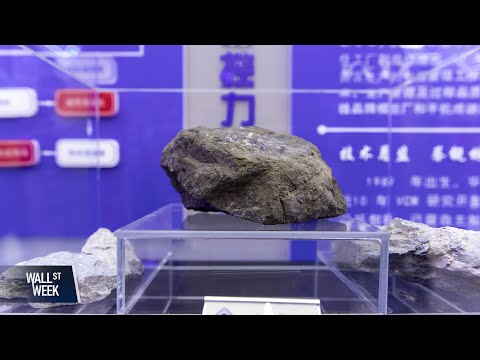
How Brazil is Taking on China’s Grip on Rare Earths
Summary of Rare Earth Elements Mining and Geopolitical Implications
The video discusses the critical role of rare earth elements (REEs), specifically focusing on the extraction of disprosium and turbium from clay in Brazil. These heavy rare earths are vital for manufacturing magnets used in electric vehicles and renewable energy technologies, such as wind turbines. The CEO of Aclara Resources emphasizes the small-scale production of REEs in Brazil, which currently lags behind China's dominance in the market, particularly due to China's access to unique ionic clay deposits.
China's historical advantage in REE mining and processing has allowed it to control approximately 60% of the global market, with heavy rare earths nearing 100%. This dominance poses a significant vulnerability for the U.S., which now imports 95% of its rare earths from China, including those used in defense systems. The geopolitical implications are profound, as China has leveraged its market control to influence global trade dynamics.
In response, U.S. policymakers are pursuing strategies to enhance domestic production and processing capabilities. Investments have been made in rare earth processing plants, and there is a concerted effort to establish a "mine to magnet" strategy to reduce reliance on foreign sources. However, challenges remain, including environmental concerns and the need for a skilled workforce.
Brazil is positioning itself as an alternative supplier, with Aclara Resources implementing innovative, environmentally friendly extraction processes. The Brazilian government is supportive, aiming to attract more mining companies to develop its mineral resources. Despite the competitive landscape, collaboration among companies in Brazil is emerging in response to the pressing global demand for a non-China-based REE supply chain.
Ultimately, the video highlights the strategic importance of rare earth elements in modern technology and the ongoing geopolitical competition surrounding their supply.
Rare earth elements (REEs) are a group of 17 metallic elements that are critical in the production of various high-tech devices and renewable energy technologies. This group includes disprosium and turbium, which are identified as heavy rare earths. These elements are valued for their ability to create powerful magnets used in electric vehicles, wind turbines, and robotics, highlighting their significance in an increasingly electrical world.
It's important to differentiate between rare earth minerals and processed metals. Rare earth minerals refer to the naturally occurring ores that contain these elements, typically found in specific geological formations. In contrast, processed metals are the refined products obtained after mining and refining these ores. The process involves extracting the rare earth elements from the raw minerals, which can be a complex and expensive endeavor.
The transcript indicates that the concentration of these elements in the raw form is relatively low; for example, from a ton of clay, only about 100 grams of heavy rare earths can be extracted, making the mining process resource-intensive. The rarity and unique properties of these elements contribute to their classification as 'rare', although they are not necessarily scarce in the Earth's crust. The processing stage is crucial because it transforms these minerals into usable metals, which are then utilized in various high-performance applications.
The formation of rare earth elements occurs under specific geological conditions, often associated with igneous and metamorphic processes. These elements are typically found in mineral deposits that form over millions of years through the natural processes of the Earth. The transcript indicates that China has been mining these elements for over 50 years, having discovered the unique clay deposits that are particularly rich in rare earths during the 1970s. This long history has given China a significant head start in both mining and processing these materials.
In Brazil, where Aclara Resources is operating, the process of prospecting for rare earth elements involves identifying and mapping out mineral resources, a critical first step in developing a mining strategy. The president of Brazil's geological service emphasizes the importance of mapping to catch up with China's established dominance in the rare earth market.
Technical developments in the mining industry, such as Aclara's circular mineral harvesting system, aim to make extraction more efficient. This innovative approach avoids the use of explosives, crushing, and milling, which are energy-intensive processes that contribute to high operational costs. Instead, this method seeks to minimize environmental impact while maximizing the efficiency of resource extraction. However, the economic viability of these operations remains contingent on securing favorable conditions, including capital investment and government support.
-
- [01:05] "It is very small. We can process several tons of clays here, but out of one ton, we extract around 100 grams."
- [02:10] "They have been mining these elements for 50 years now."
- [07:34] "We have created a system called the circular mineral harvesting that we do not use explosives."
The process of mining, extracting, and refining rare earth elements is intricate and involves several stages. Initially, mining entails locating deposits rich in rare earth minerals, which are often found in specific geological formations, such as ionic clays. Mining companies, like Aclara Resources in Brazil, aim to extract these elements from the clay deposits through a combination of physical and chemical processes.
Once the minerals are extracted, the next step is extraction, which involves separating the valuable rare earth elements from the ore. This process can be technically complex and is often the most costly part of the operation. The transcript highlights that the extraction process is challenging, particularly for countries like Brazil that are trying to establish themselves in a market dominated by China. China’s experience and established infrastructure give it a significant advantage in processing these materials.
The refining stage follows extraction, where the raw rare earth materials undergo further processing to achieve the desired purity and chemical form for industrial use. This stage is crucial, as the quality of the refined product determines its usability in various high-tech applications. The transcript indicates that around 60% of the global market for rare earth elements is controlled by China, with nearly 100% of heavy rare earths being processed there, underscoring the technical complexity and competitive barriers faced by other countries.
-
- [01:02] "We went to Goyana, Brazil to see one step in the long process of turning clay into some of the most valuable material on the planet."
- [02:01] "Another more expensive part is processing the raw materials. And that’s where China really calls the shots."
- [02:28] "In the case of heavy rivers, it’s probably very close to 100% of the market."
The environmental costs associated with rare earth mining are significant and multifaceted. The transcript hints at the messiness and expense of mining operations, which can lead to substantial environmental degradation. This includes soil and water pollution, habitat destruction, and other ecological impacts that arise from both the mining process and the chemical processes used in refining the extracted materials. As noted, the mining and processing of rare earth elements are often accompanied by environmental issues that can pose serious risks to local ecosystems and communities.
Moreover, the health effects on miners and nearby residents can be severe. The chemicals used in processing rare earth elements can lead to harmful exposures, raising concerns about long-term health implications. Residents living near mining sites may face risks from pollutants that can contaminate air and water supplies, leading to potential health problems over time.
The transcript does not specify particular pollutants or biological risks but emphasizes the need for environmentally responsible practices in the mining industry. This underscores the importance of developing sustainable mining operations that minimize ecological footprints while ensuring the health and safety of workers and surrounding communities.
-
- [06:44] "From our standpoint, mining and processing of rare earth is messy. It’s expensive."
- [06:50] "Environmental issues that come up as a result."
- [07:00] "Sometimes it’s a lot easier to import these things rather than to produce them domestically."
China holds a unique and dominant position in the rare earth market, significantly influencing both global supply and pricing dynamics. The transcript notes that China controls approximately 60% of the overall market for rare earth elements, with an even more staggering nearly 100% control over heavy rare earths. This dominance is attributed to several factors, including the country's early discovery and extensive mining of rare earth deposits, particularly the ionic clay deposits that facilitate easier extraction.
Additionally, China's strategic use of its market dominance has been linked to its geopolitical ambitions. The country has been known to leverage its control over the rare earth supply chain to negotiate favorable trade terms and exert influence over global competitors. For instance, the transcript mentions that China has utilized its rare earth resources to manipulate markets, which poses a challenge for countries reliant on these materials.
The issue of illegal mining activities also surfaces in the context of China's market strategy. While the transcript does not delve deeply into specifics regarding illegal mining, the implications of such activities can disrupt market stability and further complicate international relations. China's approach to maintaining a tight grip on its rare earth resources has raised concerns among other nations, particularly the United States, which seeks to reduce its dependency on Chinese rare earth imports.
-
- [02:26] "In rare earth in general, they control around 60% of the market."
- [02:30] "In the case of heavy rivers, it's probably very close to 100% of the market."
- [02:34] "China has also used its dominance in the rare earth supply chain to further its geopolitical ambitions."
The role of rare earth elements in international politics is increasingly significant, particularly in the context of the United States' strategy to reduce reliance on China. The transcript highlights that the U.S. is currently importing approximately 95% of its rare earth elements from China, including those critical for defense systems. This dependency presents a vulnerability that U.S. policymakers are keen to address.
Under the Trump administration, there was a concerted effort to develop a rare earth strategy aimed at revitalizing domestic production capabilities. The transcript notes that substantial investments were made to establish rare earth processing plants and magnet factories, with both the Trump and Biden administrations recognizing the need to expand domestic production. The goal was to regain a competitive edge and diminish reliance on Chinese imports.
Furthermore, the transcript mentions the concept of minerals diplomacy, wherein the U.S. aims to leverage its relationships with other countries, including Canada and Japan, to secure access to rare earths. This includes considering the geopolitical implications of trade negotiations and establishing a strategic position in the global supply chain. This multifaceted approach reflects an awareness of the critical role that rare earth elements play not only in technology but also in national security and economic stability.
-
- [03:39] "It’s a very real vulnerability when we know... China’s willingness to use their dominance of rare earth to manipulate markets."
- [04:48] "Over the past 5 years, the U.S. has allocated hundreds of millions of dollars to rare earth processing plants and magnet factories."
- [05:03] "I will also take historic action to dramatically expand production of critical minerals and rare earths here in the USA."
The global landscape of rare earth reserves is diverse, with significant deposits located in several countries. The transcript specifically mentions that China is the primary player in the rare earth market, followed by Brazil, which comes in a distant second regarding deposits. The importance of Brazil's mineral reserves is underscored by efforts to attract mining companies like Aclara Resources, which aims to exploit these resources to establish a more competitive position in the market.
Beyond China and Brazil, the transcript does not provide detailed information on other countries with rare earth reserves or identify new players entering the market. However, it does suggest that there is an increasing interest in alternative sources of rare earths outside of China, indicating a potential shift in the global supply chain dynamics.
For Brazil, the involvement of numerous rare earth companies, with at least 40 already operating in the country, highlights the growing competitive industry. Yet, Aclara Resources emphasizes that they do not view these companies as direct competition, focusing instead on those capable of producing heavy rare earths effectively. This collaborative approach reflects the pressing need for a non-China-centric rare earth supply chain, making Brazil a strategic player in a changing global market.
-
- [02:06] "Brazil comes in a distant second behind China in deposits."
- [10:46] "Very recently I saw an article that there were 40 rare earth companies already in Brazil."
- [10:41] "The need for a non-China rare earth supply chain is so great that among countries and companies a competitive industry has morphed into a forced collaboration."
Among the critical elements identified in the transcript are disprosium and turbium, which are categorized as heavy rare earths. These elements are deemed critical due to their essential roles in producing high-performance magnets used in various applications, including electric vehicles and renewable energy technologies. Their significance arises from the unique properties they possess, which are not easily replicated by other materials.
The global supply chain for rare earth elements is characterized by several vulnerabilities. The transcript indicates that China dominates both the mining and processing stages, controlling about 60% of the market overall and nearly 100% of the market for heavy rare earths. This concentration creates a dependency for countries like the United States, which imports the majority of its rare earths from China. This reliance exposes U.S. industries, particularly defense, to risks associated with supply disruptions or geopolitical tensions.
In terms of organizational structure, the current supply chain is heavily influenced by China's strategic positioning and the established relationships it has cultivated with various countries over decades. The U.S. and other nations are now recognizing the necessity of diversifying their sources of rare earths to mitigate these inherent vulnerabilities and ensure a stable supply chain for critical technologies.
-
- [00:10] "Disprosium and turbium are two of the 17 metallic elements that make up what are known as rare earth elements."
- [02:26] "In rare earth in general, they control around 60% of the market."
- [05:29] "We do know that they discovered the only clay deposits in the 1970s."
The transcript does not mention any specific alternative technologies or innovations aimed at reducing or eliminating the need for rare earth elements. However, the transition toward more sustainable practices in the mining industry is implied through discussions about Aclara Resources' circular mineral harvesting system, which seeks to minimize environmental impacts while improving efficiency in the extraction of rare earth materials.
This innovative approach emphasizes the importance of reducing energy consumption and avoiding conventional methods that involve explosives and crushing, which are typically energy-intensive and environmentally damaging. By adopting such alternatives, companies may potentially lessen their reliance on rare earth elements by improving the efficiency of the mining process and reducing operational costs.
While the transcript does not provide specific details on substitute materials or technologies that could replace rare earth elements, it suggests a growing awareness within the industry of the need for sustainable practices and the exploration of more efficient mining methods. The overall focus remains on improving current processes rather than identifying substitutes for the critical elements themselves.
-
- [07:34] "We have created a system called the circular mineral harvesting that we do not use explosives."
- [07:40] "There’s no crushing and no milling which are the two stages that consume most of the energy in the industry."
- [07:57] "The name of the game right now is to try to secure the lowest cost of capital possible."
The transcript provides limited specific information regarding the recycling of rare earth elements. However, it emphasizes the importance of establishing a sustainable supply chain that could include recycling as a vital component to reduce reliance on newly mined materials. The discussion highlights the necessity of considering both economic and technical criteria before initiating mining operations.
Economic considerations include the cost of capital required for mining operations, which can significantly impact overall profitability and competitive viability. For companies like Aclara Resources, securing low-cost financing is crucial to remain competitive with dominant players like China. Additionally, government support through grants and low-interest loans could facilitate the establishment of mining operations.
Technical criteria encompass the need for effective extraction and processing technologies that align with environmental standards. The complexity of mining operations, along with the environmental implications, necessitates a thorough understanding of the local geological conditions and the potential impacts of mining activities on the ecosystem. While the transcript does not delve deeply into specific recycling methods or practices, it suggests a broader trend toward sustainability within the rare earth mining sector.
-
- [07:52] "The name of the game right now is to try to secure the lowest cost of capital possible."
- [08:10] "We are prepared to pass through that lower cost of capital into our customers in order to become a producing asset."
- [09:19] "One of the AY’s main functions is to map out the country’s mineral resources."
[00:00] This is a very pure concentrate of[00:02] rivers. It contains around 95%[00:05] of concentration of rivers. And in this[00:07] bag, there's around 5 to 6% of dprosium[00:10] and turbium. These are two of the 17[00:13] metallic elements that make up what are[00:15] known as rare earth elements. Disprosium[00:18] and turbium are heavy rare earths used[00:20] to create magnets in electric vehicles.[00:23] We went to Goyana, Brazil to see one[00:26] step in the long process of turning clay[00:29] into some of the most valuable material[00:31] on the planet. But most of us already[00:33] interact with rare earth elements every[00:35] day. As the world becomes more[00:39] electrical, we are going to be[00:40] converting a lot of electricity into[00:42] movement. No, we're seeing that in in[00:44] electric vehicles. We see that in wind[00:46] turbines. We're going to see that a lot[00:48] in robotics. So, we care about the[00:50] rivers that go into the permanent[00:52] magnets. Ramon Buucasta is the CEO of[00:55] Aclara Resources, a mining company based[00:58] in Chile. This is the company's pilot[01:00] plant in Brazil.[01:02] >> Help me understand scales. Compare what[01:04] you're producing here to what you would[01:05] need to produce going forward. How far[01:07] from that are you?[01:08] >> It is very small. It is very small. We[01:10] can process several tons of clays here,[01:13] but out of one tone, we extract around[01:15] 100 grams. No. So, it's around 0.1% of[01:18] production. So for demonstration[01:20] purposes it works very very well. It[01:22] will provide this pilot plant also will[01:24] provide the material that we need in[01:26] order to prove our separation facility.[01:29] >> The chlor gets mineral deposits that it[01:32] processes but what it can process is a[01:35] drop in the bucket.[01:36] >> China has an advantage because they have[01:38] a type of deposit that is called an[01:41] ionic clay and they use it to extract[01:43] these these elements. They are so[01:45] important and so scarce that China has[01:48] been restricted precisely these[01:50] elements.[01:50] >> Brazil comes in a distant second behind[01:53] China in deposits. But deposits are just[01:56] one part of the story. Another more[01:58] expensive part is processing the raw[02:01] materials. And that's where China really[02:04] calls the shots.[02:05] >> We do know that they discovered the only[02:08] clay deposits in the 1970s. So they have[02:10] been mining these elements for 50 years[02:13] now. We know that they are also[02:15] extracting uh rivers from Myanmar and we[02:18] know that in the case of heavy rivers[02:20] the quota of production in China has[02:23] been very stable for the last 15 years.[02:25] In rare earth in general they control[02:26] around 60% of the market. In the case of[02:28] heavy rivers is probably very close to[02:30] 100% of the market.[02:32] >> China has also used its dominance in the[02:34] rare earth supply chain to further its[02:36] geopolitical ambitions. A tactic that[02:39] Laura Taylor Kala saw firsthand as[02:41] assistant secretary of defense for[02:43] industrial-based policy under President[02:45] Biden.[02:46] >> It's China that dominates in mining.[02:49] When we take a look at processing of[02:52] rare earth elements, it's also China,[02:56] Malaysia of Japan that account for 100%[03:00] of the processing with China completely[03:02] dominating that that process. Taylor[03:05] Kala was responsible for setting[03:07] America's rare earth strategy in the[03:08] Biden administration. She remembers when[03:11] the US was holding the strongest hand.[03:14] >> It was a time when the United States was[03:17] the dominant producer of rare earth[03:19] elements and processing and over the[03:21] years that has changed significantly. Uh[03:24] we are now um importing 95% 95% of our[03:29] rare earths from China. um including the[03:33] ones that for a while even including the[03:35] ones that we use in major defense[03:37] systems. So, it's a very real[03:39] vulnerability and a very real[03:41] vulnerability when we know and have seen[03:44] um a recent and over the years China's[03:47] willingness to use um their dominance of[03:51] rare earth uh mining and processing to[03:54] um um to to manipulate markets and to[03:58] sty uh competitors, global competitors.[04:01] For the past 15 years, China has used[04:04] its dominance in rare earths to get more[04:06] favorable terms in trade deals.[04:09] >> We need to continue this kind of[04:11] minerals diplomacy[04:13] as well as take it into account in these[04:16] economic and trade negotiations. Again,[04:19] you could play hard ball with Canada and[04:22] with Japan and with other countries,[04:23] South Africa, DRC, but we also they also[04:27] have things that we need um including[04:29] these rare earth elements, whether it's[04:31] in the raw form and mining or also in[04:34] potential processing capacity and[04:36] industrial capacity.[04:38] >> American policy makers also know that[04:40] diplomacy alone isn't enough. Over the[04:44] past 5 years, the US has allocated[04:46] hundreds of millions of dollars to rare[04:48] earth processing plants and magnet[04:50] factories with President Trump picking[04:52] up the baton from the Biden[04:54] administration.[04:55] >> I will also take historic action to[04:57] dramatically expand production of[05:00] critical minerals and rare earths here[05:03] in the USA.[05:04] >> The United States hasn't completely uh[05:07] been out of the game and hasn't[05:08] completely been blind to this. uh we[05:12] also have within I'll just speak within[05:15] defense in particular because I think[05:17] it's an important national security case[05:21] within defense we have taken over the[05:24] years the notion of looking at our[05:26] defense in terms of short-term um uh[05:30] priorities particularly under the Biden[05:32] administration according to the national[05:34] defense industrial strategy that I[05:36] helped um launch and author uh out of[05:39] the defense department, we made a[05:42] concerted push for a mind to magnet um[05:46] uh uh strategy for rare earth elements[05:49] in particular. Understanding that you[05:52] know the F-35[05:55] magnets were a particular vulnerability[05:57] as well as other key systems like the[05:59] Virginia class submarines and the[06:01] Colombia class submarines. We made[06:03] investments in MP materials through the[06:06] defense logistics agency which[06:08] administers the national defense[06:09] stockpile through the defense production[06:12] act title three as well as through the[06:14] industrial base fund. All of these[06:16] things are are in existence now and[06:19] because of the investments that we made[06:22] over the last four years and in[06:25] particular of showing Congress that we[06:28] could effectively use the authorities[06:30] that we have as long as we had[06:32] appropriations. I think we've gotten to[06:34] a point where this administration can[06:37] really run um run fast.[06:39] >> But Taylor Klay admits that today it's[06:41] become a game of catchup for the US. I[06:44] think from our standpoint, mining and[06:46] processing of a rare earth is messy.[06:48] It's expensive. There's a lot of um[06:50] environmental issues that come up as a[06:52] result. Sometimes it's a lot easier to[06:55] import these things rather than to[06:57] produce them domestically. We also don't[07:00] have the workforce uh that can really[07:05] support[07:06] uh the processing uh and mining of rare[07:09] earth elements and other critical m[07:12] critical minerals. China dominates in[07:14] that sense as well.[07:16] >> Back in Brazil, Aclares Burua knows just[07:18] how expensive and timeconuming it is to[07:21] get a foothold in the rare earth supply[07:23] chain.[07:24] >> I think the work that we have been able[07:25] to accomplish uh will allow us to have a[07:29] marginal cost of production that is[07:31] competitive with China.[07:34] We have created a system called the the[07:36] circular mineral harvesting that we[07:38] where we do not use explosives. There's[07:40] no crushing and no milling which are the[07:42] two stages that consume most of the[07:43] energy in the industry. We need to make[07:45] the investment and that cost of capital[07:48] is adding to our cost of production and[07:50] that's where we lose competitiveness[07:52] visav China. So the name of the game[07:55] right now is try to secure the lowest[07:57] cost of capital possible. Governments[07:59] play a fantastic role there. There are[08:01] grants available. We've seen them[08:03] deployed[08:04] in several other companies. Erh lowcost[08:07] loans will also help achieve that and we[08:10] at the we are prepared to e pass through[08:14] that lower cost of capital into our[08:15] customers in order to become a a[08:18] producing asset.[08:19] >> Brazil is doing its part to attract[08:21] miners like a chlora to its mineral[08:23] reserves.[08:46] Inosomelo is the president of Brazil's[08:49] geological service which is part of its[08:51] ministry of mining.[09:19] One of the AY's main functions is to map[09:22] out the country's mineral resources. a[09:24] critical first step in catching up with[09:26] China. Even there, the odds are long.[09:40] Australia.[09:55] technology.[10:11] The reception that we have had in Brazil[10:14] has been incredibly good both from the[10:16] federal government and from the local[10:18] government of the state of Goas. I think[10:21] something that should not be taken for[10:23] granted is that Brazil has a vision in[10:26] terms of the role that they want to play[10:27] in the future and that is a I I would[10:30] say I would call it a country vision.[10:32] Everybody shares this and and so when[10:35] you present them with a project like[10:36] this every everyone wants to help. That[10:39] need for a non-China rare earth supply[10:41] chain is so great that among countries[10:43] and companies a competitive industry has[10:46] morphed into a forced collaboration.[10:49] Very recently I saw an article that[10:51] there were 40 rare earth companies[10:53] already in Brazil. But again we don't[10:55] feel that they are a direct competition[10:57] of ours. No we we care only about those[11:00] who can produce heavy rers[11:03] effectively. How we are differentiating[11:05] ourselves. I think we we we have two[11:07] main factors that make a cla very[11:09] different. We want to do it all. No,[11:12] that opens strategic opportunities,[11:14] commercial opportunities that other[11:17] miners don't necessarily have. And the[11:20] other thing that I believe is a very[11:22] strong advantage of of of the ALA[11:24] proposition is our shareholders. No,[11:27] right now the Hogill group owns 57% of a[11:30] cla and the CAP group owns 10% of ALA.[11:33] If I start with a Hongi group, this is a[11:35] group that has more than a hundred years[11:37] operating in in in in Latin America,[11:41] doing mining, doing industry, doing[11:43] innovation and becoming suppliers, you[11:45] know, of very sophisticated industries[11:47] all around the world. So, it's in our[11:50] DNA to be long-term suppliers. And[11:52] again, I think that what this industry[11:54] is looking for is not molecules. No,[11:56] they're not looking for neodymium,[11:58] prodmium, disproium, or turbium. They're[12:00] looking for permanent magnets. No. So[12:02] they need and the key word right now[12:04] even much more than price is[12:06] reliability.[12:08] >> Brazil is betting that it can offer that[12:10] reliability to the world. Buoua thinks[12:13] Brazil has what could be a winning hand.[12:16] It just has to play its cards,

How This Tech Can Break China’s Rare Earth Monopoly | Dr. James Tour
Overview of Critical Minerals and Recycling Technology
In a world where resource scarcity drives conflicts, most wars are fought over essential materials like water, oil, and minerals. China currently holds a near monopoly on the production of critical minerals, which poses a significant challenge for the United States as it seeks to rebuild its industrial capabilities. Dr. James Tour, a chemist and nanotechnologist at Rice University, has developed an innovative method to extract critical minerals from electronic waste and mine tailings, presenting a cleaner and faster solution to the problem.
Challenges of Current Mineral Supply Chains
Recent export controls imposed by the Chinese Communist Party on rare earths have highlighted the vulnerability of the Western world. The U.S. has offshored much of its manufacturing capabilities over the past three decades, leading to a reliance on China for processing metals like copper, indium, gallium, and tantalum. This dependency threatens the production of electric vehicles and semiconductor manufacturing in the U.S.
Flash Jewel Heating Technology
Dr. Tour's technology, known as flash jewel heating, involves applying high voltage and current to materials with low conductivity, causing them to heat rapidly. This method can convert carbon materials into graphene and extract rare earth elements from industrial and consumer waste. By introducing chlorine during the process, the extraction of metals becomes more efficient, allowing for the separation of individual metals based on their boiling points.
Environmental and Economic Benefits
- The process is significantly cleaner and faster than traditional methods, which often involve toxic chemicals and extensive water usage.
- Recycling metals from electronic waste is economically viable, as it can be done at a fraction of the cost of mining new ores.
- Dr. Tour estimates that the new technology could solve the U.S. dependence on foreign critical minerals within five years, provided that it is scaled effectively.
Scaling and Future Prospects
While the technology shows promise, the challenge lies in scaling it to handle large volumes of waste. The first factory is set to open outside Houston, Texas, with plans for additional facilities in Massachusetts and Virginia. The U.S. government is supportive of these initiatives, recognizing the importance of reducing reliance on foreign sources of critical materials.
Conclusion
Dr. Tour's innovative approach to recycling critical minerals represents a significant step towards achieving U.S. independence in this vital sector. By leveraging domestic waste and reducing environmental impact, this technology not only addresses economic concerns but also has the potential to mitigate future conflicts over resources.
Rare earth elements (REEs) are a group of 17 chemically similar metallic elements that are critical in various high-tech applications, including electronics, renewable energy technologies, and military equipment. The unique characteristics of these elements include their specific atomic structure, which allows them to exhibit unique optical and magnetic properties. This makes them essential for the production of high-performance magnets, phosphors, catalysts, and other advanced materials.
In the context of the transcript, the distinction between rare earth minerals and processed metals is significant. Rare earth minerals refer to the naturally occurring ores that contain these elements, which require processing to extract the valuable metals contained within. The processed metals, on the other hand, are the refined products obtained after extracting and purifying REEs from their ores. The transcript discusses how the US has shifted much of its rare earth processing to China over the past few decades, leading to a dependency that jeopardizes domestic manufacturing capabilities.
Additionally, the speaker highlights that rare earth elements can be extracted from waste materials, such as electronic waste, making them infinitely recyclable. This process emphasizes the potential for sustainability within the sector and the economic advantages of recycling over traditional mining methods.
The formation of rare earth elements typically occurs in igneous rocks and certain sedimentary deposits. These elements are usually found in concentrations that make them challenging to mine and process. The transcript does not provide specific geological conditions for the formation of REEs but mentions their extraction from various sources like electronic waste and mine tailings. The process involves separating these elements from other materials through innovative techniques, such as flash jewel heating, which is a method developed to quickly heat and extract metals from waste through high voltage and current.
In terms of efficiency, the speaker notes that traditional methods for processing these metals are lengthy and complicated, often requiring substantial infrastructure. The transcript indicates that the new technologies developed allow for a more streamlined operation, where the application of chlorine during the heating process significantly lowers the boiling point of the metals, facilitating their extraction. This technical advancement makes the prospecting and mining of rare earth elements more viable and less environmentally damaging.
-
- [03:18] "Flash jewel heating... it’s much like your toaster."
- [04:09] "We can predict when they’re going to come out and we can separate them coming out."
- [06:30] "This is much shorter, much shorter. And it will do it much faster than what’s traditionally used."
The process of mining, extraction, and refining rare earth elements as described in the transcript involves several innovative techniques aimed at improving efficiency and reducing environmental impact. Initially, the raw materials, such as electronic waste or mine tailings, are subjected to a process called flash jewel heating. This involves placing the materials between electrodes and applying high voltage and current. The heat generated is sufficient to convert the materials into their respective metal chlorides, which are then distilled out for further processing.
The complexity of this process lies in the precise control of temperature and the introduction of chlorine gas, which aids in the separation of the metals. The speaker notes that traditional methods involve lengthy processes that can stretch over 500 meters in length, whereas the new method is significantly shorter and faster, making it more feasible for implementation in various regions.
However, the transcript also highlights a barrier concerning the scaling of this technology. While it has been successful on a smaller scale in laboratory settings, scaling it to a ton-per-day operation presents challenges, primarily due to the need for specialized equipment and processes that have not been widely adopted yet.
-
- [05:57] "It’s a very simple operation."
- [06:30] "This is much shorter, much shorter. And it will do it much faster than what’s traditionally used."
- [18:36] "The catch is that nobody’s ever done a process like this before."
The environmental costs and health effects associated with rare earth mining are significant and multifaceted. Rare earth mining operations often lead to the contamination of local water supplies, soil degradation, and the generation of toxic waste. The transcript mentions that the majority of rare earth processing has been offshored to China, where the environmental regulations may not be as stringent as in Western countries.
Specific pollutants from rare earth mining can include heavy metals, acid mine drainage, and radioactive materials that pose potential health risks to miners and local residents. The speaker refers to the toxic environments created by mining activities in China, indicating that some cities have been heavily contaminated due to improper waste management.
Moreover, the health effects can extend beyond immediate contamination, impacting the community's long-term well-being due to exposure to hazardous materials. The transcript underscores the importance of developing cleaner methods for extracting these elements to mitigate damage to the environment and protect human health.
-
- [07:28] "It’s just toxic to live there because of the waste that normally comes from some of these processes."
- [11:15] "You generated what was called secondary waste streams from all of this processing."
- [25:20] "If we can’t get these there will be wars fought over this."
China's position in the global rare earth market is notably dominant, with the country holding a near-monopoly on the production of critical minerals. The transcript highlights that over the last 30 years, the US has offshored much of its production capabilities to China, resulting in a significant dependency on Chinese processing for essential metals. This reliance poses risks to US manufacturing, particularly in sectors such as automotive and technology.
Illegal mining activities have also been a concern, with the potential for market disruption. The speaker implies that the scale of illegal mining can undermine legitimate operations and further complicate the geopolitical dynamics surrounding rare earth elements. The Chinese government's export controls on these materials have affected not only the US but the entire Western world, signaling a need for strategic shifts in sourcing and production.
The implications of this monopoly extend to national security, as the US needs to secure its supply chains for critical materials. The transcript emphasizes the urgency of developing domestic capabilities to reduce reliance on foreign sources, particularly in light of rising geopolitical tensions.
-
- [01:17] "The Chinese Communist Party basically put unprecedented export controls on rare earths... affecting the whole Western world."
- [02:52] "We have very little capability to manufacture these metals in the US."
- [25:20] "If we can’t get these there will be wars fought over this."
Rare earth elements play a crucial role in international politics, particularly in the context of the US strategy under the Trump administration to mitigate dependence on foreign sources. The transcript indicates that the administration recognized the strategic importance of securing rare earth elements for national security and economic stability.
The US government has taken steps to support domestic production capabilities, including initiatives to develop technologies that can extract rare earth elements from waste materials rather than relying on mining operations that may be environmentally damaging. This shift is seen as essential to overcoming the challenges posed by China's monopoly in the market.
Moreover, the speaker mentions that the Trump administration provided a guaranteed floor price for rare earth elements to ensure that US companies could compete against artificially low prices set by foreign competitors. This approach aims to create a sustainable environment for the domestic production of critical materials and reduce the risk of being held hostage to geopolitical tensions.
-
- [25:57] "If you take your electronics that you’re getting rid of... this is patriotic."
- [26:12] "The US government is already doing preemptively saying we will guarantee you this price."
- [27:21] "We’re trying to reshore a lot of that... because we see what can happen."
The transcript does not provide specific details regarding countries with rare earth reserves or mention any new players entering the market. However, it does imply the existence of significant tailings and waste sites within the United States that can serve as alternative sources for rare earth elements. The speaker notes that these tailings contain pre-concentrated materials that can be economically viable for extraction, thus reflecting the potential for US-based operations beyond traditional mining.
While the emphasis is on developing domestic capabilities, the discussion centers primarily on the US's need to secure its own supply chains. The lack of specific references to other countries or companies entering the market suggests that the focus is squarely on American initiatives to reduce dependency on foreign sources, particularly from China.
-
- [22:12] "We can deal off of other types of waste."
- [22:34] "These waste sites, they will gladly let you take it off their hands."
- [24:23] "We would rather get their tailings because the tailings for me are useful."
The transcript identifies several elements as 'critical', including rare earth elements such as lithium, cobalt, and various others essential in advanced technologies and renewable energy systems. These metals are characterized by their importance in the production of batteries, magnets, and other electronic components. The speaker suggests that the identification of these elements as critical stems from their necessity in sustaining modern technological infrastructure.
Moreover, the organizational structure of global supply chains for these materials is notably vulnerable due to the concentration of production in specific regions, particularly China. The implications of this vulnerability include geopolitical tensions and market fluctuations that can disrupt supply and affect prices. The inability of the US to produce these elements domestically poses a significant risk, leading to strategic moves to develop local capabilities and reduce dependence on foreign sources.
-
- [01:46] "There’s now calling them critical metals... copper, indium, gallium, tantalum, antimony, and several others."
- [02:16] "This would shut down our manufacturing of our automobiles."
- [25:20] "If we can’t get these there will be wars fought over this."
The transcript does not specifically mention alternative technologies or innovations that reduce or eliminate the need for rare earth elements, focusing instead on the methods of recycling and extracting these elements from waste. However, it emphasizes the efficiency of the flash jewel heating process as a means of enhancing the recovery of rare earth elements from electronic waste and mine tailings. This innovative technique allows for the rapid heating of materials, facilitating the extraction of metals while minimizing environmental impact.
This method is touted as a cleaner and faster alternative to traditional mining processes, which often involve significant waste and pollution. By converting waste materials into valuable resources, the process not only provides a sustainable solution to the challenge of rare earth element scarcity but also potentially alleviates the environmental burden associated with mining.
-
- [00:33] "We can pull out one metal and then the next and the next and the next."
- [01:00] "This will solve the problem."
- [06:21] "It’s much cleaner and much faster."
Recycling rare earth elements is highlighted in the transcript as a vital strategy to address the challenges associated with their scarcity. The process involves extracting these elements from electronic waste and mine tailings, which contain pre-concentrated materials that can be processed efficiently. The method of flash jewel heating is noted for its ability to rapidly extract metals while minimizing environmental impact.
Before initiating mining operations, countries or companies must consider several economic and technical criteria, including:
- Cost of Technology: The initial investment for setting up recycling facilities is significantly lower than traditional mining operations, with estimates indicating around $40 million for a processing plant compared to $200 million for a new mining operation.
- Environmental Impact: Companies must assess the potential environmental costs and ensure that their processes are sustainable and comply with regulations.
- Supply Chain Stability: Evaluating the stability and reliability of their supply of raw materials is crucial for ensuring long-term viability.
- Market Demand: Understanding the market dynamics and demand for recycled materials is essential for assessing the economic feasibility of the operation.
-
- [10:14] "If you recycle it, metals are infinitely recyclable."
- [12:18] "We can often have less than 50% the amount of CO2 emission."
- [14:01] "Overall, it’s a very competitive business."
[00:00] Most wars are fought over resources, water, oil, minerals.[00:06] China has a near monopoly on global critical minerals production. As America struggles to rebuild these industrial[00:13] capabilities domestically, chemist and nanotechnologist Dr. James Tour at Rice[00:18] University has found an ingenious solution. We can pull out one metal and then the next and the next and the next.[00:26] He's pioneered a process to quickly extract critical minerals from something we have readily available, electronic[00:33] waste. It's much cleaner and much faster. The same method can be used to extract rare earths from mine tailings.[00:40] The leftover material of old mines that was too expensive to process in the past. There's huge availability of this and if[00:48] you recycle it, metals are infinitely recyclable. This will solve the problem.[00:53] Now, it won't solve it overnight because we have to gear up, but it could solve the whole problem within five years.[01:00] This is American Thought Leaders and I'm Ya Kell.[01:05] Jim Tour, such a pleasure to have you on American Thought Leaders. Thank you for having me.[01:10] So, recently the Chinese Communist Party basically put unprecedented export[01:17] controls on rare earths, frankly affecting the whole Western world. There[01:22] was a deal reached. There seems to be some backtracking since. What were you[01:27] thinking when you saw this? Well, it's it's not just rare earths. It's it's it's a number of other metals,[01:34] too. There's now calling them critical metals. So, it it's it's copper, it's[01:40] indium, gallium, tantelum, uh uh antimony, and and several several[01:46] others. We've turned over manufacturing to them over the last 30 years and so we[01:52] have very little capability to manufacture these these metals in the US[01:57] and a lot of times if they're mined here uh they'll go to China for processing.[02:03] So we don't have the capability to take the ores and to turn them into the base metals that we can use. It's a big[02:10] problem and and uh we wouldn't be able to build electric vehicles here. We wouldn't this this would shut down our[02:16] manufacturing of our automobiles. It it's over. Uh uh this would shut down our Intel plants, our our our chip[02:24] manufacturing. So it's a very big deal. And even just the threat of it shakes up[02:29] the markets. And now you're working on technology that's directly related to this issue.[02:36] Yes. Yeah. So explain that to me. We developed a technology in my group[02:42] called flash jewel heating. And it's not a name that we coined that that's been[02:47] around where you put you put a high voltage and a high current through a[02:52] material that is that is not highly conductive. Some that that is has about[02:58] a 1 ohm resistance which means that you can conduct electricity to through it. It's much like your your toaster. your[03:04] toaster, you you you have this this coil that you put a voltage across it and you run this current through, but there's[03:11] enough resistance that coil gets red hot very quickly. That's flash jewel heating. And uh it's like the old[03:18] incandescent light bulbs and and you see this big glow. And what we learned is that we can put any carbon material[03:24] between electrodes and flash heat it turn it into graphine. Graphine is this[03:30] space age material and we started a company around that that's up and going. But then we realized that we could take[03:36] we could take uh uh certain materials say industrial waste like fly ash which is the residue that's left over after[03:42] burning coal the inorganic material we could flash it and we could get rare earth elements to come out and so we we[03:49] we could do that we get other metals from industrial waste and then also consumer waste consumer electronics and[03:55] and you can put a high voltage high current and then we learned if you if you put chlorine in during the process[04:02] then they come out much more easily because you convert them from metal zero or metal oxides to metal chlorides which[04:09] are much more volatile. You lower the boiling point by 3,000°[04:14] and and and then they'll come out and just based on the reactivity of a certain metal to chlorine at these[04:22] higher temperatures. We can predict when they're going to come out and we can separate them coming out. So we[04:28] developed this technology. We started doing this uh uh in 2020. We started[04:33] doing this on metals and then it was after that that the metals that the China put this kibash on sending us[04:40] metals and it became a much more important. So I found myself in this[04:46] very important area. Okay. So let me get this straight. You're taking electronic waste or[04:52] tailings or something like this. You're putting them between two plates. You're[04:58] putting a massive amount of current through through it. Wait, you're adding chlorine to lower the temperature that[05:04] you to to get them this red hot to separate everything out and then you're[05:09] somehow collecting each uh metal chloride as it basically distills out.[05:16] Is this do I understand it right? You you you have it right. So what happens is when the chlorine comes in at[05:22] at these high temperatures, the chlorine will react with the metal oxides. or the[05:28] metal zero by metal zero I mean the base metal you can have a metal oxide or a[05:33] base metal and it will make the metal chloride and then the metal chlorides distill out and the thing we control is[05:40] at what temperature are we heating this to to react with the chlorine and then at what temperature are we distilling it[05:46] out and based on those two parameters we can separate we can pull out one metal[05:52] and then the next and the next and the next so that's that's Right. It's it's[05:57] really that simple. It's a very simple operation. Now, remember the rare earth[06:03] elements right now, the plants that are separating rare earth elements are 500 m[06:09] long is their process. Now, it won't be a building that long. You know, it'll snake back and forth, but the the it has[06:16] to traverse that long. This is much shorter, much shorter. And and uh and it[06:21] will it will do it much faster than what's traditionally used. And we're not bringing it through in water or acids,[06:30] none of that. It's just through this flashing process. So, it's much cleaner and much faster. As as you know, most[06:36] wars are fought over resources, water, oil, minerals. People fight over this[06:44] and they kill each other over this. So, when I was I was presenting this to a group of of generals from NATO and the[06:52] head guy there, he stood up. He says, "This is going to prevent wars." He says, "I I don't have to fight for this[06:58] now. If you can do this, if you can take our waste and be producing this for us,[07:04] I don't have to fight wars over this. And we we can set up these factories." So, the first factory was is is like $40[07:09] million, but it's cheaper the next factory we build because we've worked out all the technology. And so if we can[07:17] put these together and they're they're small localized factories that are now generating a bunch of waste that China[07:23] has absolutely contaminated some of their cities. I mean it it it's it's[07:28] just you it's just toxic to live there because of the waste that normally comes[07:33] from some of these processes. Now you don't have to run them that way. You can run a hydromemetal process and be very[07:40] quite clean but you have to be able to trap all these secondary wastes. These are clean, easy to set up, and that's[07:47] why uh uh we're building these companies. The first one is is just outside of Houston in Texas. Uh the next[07:55] one we we have a site pre-permanent site in Massachusetts, another one in in uh[08:01] uh in Virginia because these are very clean and uh we've been asked by by the[08:07] federal government to set up more of these entities around the country and and uh think about this to be able to[08:14] not be dependent upon other countries. Look at our president. He's going from place to place setting up deals on rare[08:21] earth elements. here he's talking with with with w with with with uh with Ukraine to to say, "Hey, we'll move in[08:28] there with you and that will help prevent future wars." I mean, this is dangerous stuff and it's expensive. And[08:35] uh uh but if we don't have to do this, this is a win-win all around.[08:41] Thank you for tuning in to American Thought Leaders. In a world where spin and agendas dominate the headlines, I'm[08:48] proud to bring you unfiltered insights from the brightest minds in America from a relative outsider Canadian[08:55] perspective. To keep this possible and to access even more exclusive content, in-depth documentaries, and our daily[09:02] digital newspaper, consider subscribing to the Epoch Times today. It's your way[09:07] to support independent journalism. Just hit the link in the description below to subscribe and unlock the full American[09:14] Thought Leaders Experience and so much more. You can try it today for just $1 a week. So, just hit the link in the[09:20] description below. And now back to the interview. It's sort of astonishing. I[09:25] I've been learning a bit about this particular process and big big question[09:32] first of all is you when you think of these circuit let's say circuit boards, right? This is an example of the type of[09:38] waste that you're using, right? There's a lot of this stuff out there. I[09:43] mean, we're shipping some of it, as I understand, to Africa to, you know, to to basically waste to to landfill it. I[09:51] I I don't even know what they're what what they're doing over there with it. So, we we we take this waste, electronic[09:56] waste, a lot of it we just ship to Africa, and they will go through a number of processes to try to reclaim[10:02] that metal. it's ne in many times it wasn't wasn't worthwhile to us to try to[10:07] do this. uh they will take it apart and do this but but things have changed and and now there's more money in it and so[10:14] there's a number of companies but we have for example printed circuit boards I'm not going to individual houses[10:20] saying would you give me your old cell phones these data centers the every time you store something to the cloud that is[10:26] going to a data center that is that is uh uh storing in some flash drive on some chip somewhere and on a printed[10:33] circuit board and they will retire these every 1 to 3 years. So you have a huge[10:39] number of these things that are made by by many different manufacturers and uh[10:45] uh and so there's mountains of these and these are considered a toxic waste. Not by me, just by the government because[10:51] there's a lot of metals and you can't just you can't just throw this in the trash. You can't just easily landfill[10:57] it. And so there's huge availability of this and if you recycle it, metals are[11:03] infinitely recyclable. So you can recycle it, recycle it again. And it's just a matter of the traditional ways of[11:10] purifying this were really messy. You needed a lot of acid, a lot of water,[11:15] and uh you you generated what was called secondary waist streams from all of this this processing. And the[11:22] pyometallergical methods of just just melting it all down uh wasn't able to[11:27] pull these individual metals out as well. And so our method turned out to be[11:32] quite fruitful, much cleaner, and much cheaper. Okay, so wait a sec. Cleaner, cheaper.[11:39] What kind of numbers are we talking about here? Well, when when we we always crunch the numbers now for for any of the papers we[11:46] publish, we have to do what's called a life cycle uh assessment and a technoeconomic analysis. So we have to[11:53] look at greenhouse gas emissions, which is mainly CO2 emissions. We have to look at water usage, acid usage, chemical[12:01] usage, and we have to look at it from the cradle to the gate to where we sell it or the cradle to grave where it's[12:10] ultimately going to be disposed of again. What what's what's the cost of this this this entire process? And so we[12:18] have to look at all of these parameters and the numbers that we get. We we can often have uh less than 50% the amount[12:27] of of CO2 emission. Sometimes just 10% the amount of CO2 emissions. Our costs[12:32] are significantly less. Many times 80% less, sometimes 50% less, but but uh uh[12:40] and and then if we take into account the this is where we really win if we take[12:46] into account the shipping costs. So when something say is mined in Australia,[12:51] Australia doesn't process anything. This is this is a mining country. Then it is[12:56] shipped put on barges goes to China where it's processed and then from China it's shipped to places like the United[13:04] States. So they'll take the raw ore which is just metal oxides and they'll they'll convert it to to uh the base[13:10] metals all separate and then those come on barges to the US. So look at all that's involved in the shipping. If we[13:17] could just have it right here in the United States, we don't have any of that shipping charge. And a mining operation[13:24] is huge. Just the the capex in a new mining operation is $200 million. $200[13:30] million. We could set up one of our factories for for processing this[13:35] material. Somewhere in the order of about $40 million. So So 5x difference[13:41] based on that. We don't have that huge amount of shipping costs all over the world. of moving things back and forth[13:47] and we don't have the shipping ch when we shipping cost of sending these off to Africa when we're done. So if we're[13:54] looking at at the at to the grave site uh uh uh we save all of that. So overall[14:01] it it it's a very competitive business. I understand it's something like 75% of[14:07] these circuit boards are actually still in in the consumer the consumer level at[14:12] homes and so forth. Is that right? Yes. So, so that's always a problem when it comes to waste. How do you get it?[14:20] Now, the nice thing about the printed circuit boards from the data centers there there mountains of this that they[14:26] have. There's but uh uh the the things that are in in households, that's always[14:32] hard to get. That's what makes the recycling of plastic very difficult. People have to throw their plastic away[14:38] and then they're they're hand sorted and things like that. It's a difficult thing. And plastics that have been[14:43] recycled are never as good as the base plastic because a lot of these polymer chains break. Whereas with metals, you[14:49] don't have that. Metal goes to metal. Uh they're infinitely recyclable. They they don't go bad, but it's yes, it's[14:56] accumulating. How do you get these things? But there are other sources that you don't you're not dependent upon[15:02] that. So there's there's things called tailings where there's been mining operations and there were things that[15:09] just weren't pure enough for them to go the next step. They had other impurities.[15:14] They have they have huge ponds full of these things that are that are a[15:20] nightmare for them because they have to maintain these ponds that have a plastic lining to make sure they don't leech[15:25] into the water system or they're stacked up in piles and and and uh uh accumulated. Those are just sitting[15:31] there. That to us is a treasure because we can take those bring them through this flashing process and bring them up[15:38] from from 20% purity which might be unusable to them to 95% purity in an[15:46] instant. I mean it takes us seconds to to to bring it up that high and we use very little water and our only cost is[15:53] electricity but overall our electricity is much lower than the traditional processes because we're so fast. We use[16:00] a lot of electricity for a very short time and overall our electricity usage is small.[16:06] Let me understand this though. So it's the same technology that you're using for the tailings and for this recycle[16:14] waste that you're going to recycle from the consumer waste and from the data centers. I mean is it still the same[16:20] technology for just actual ore? Is it it's it's the same technology for[16:25] the actual ore. problem with ores is they're they're they can be a thousand[16:31] times lower concentration of the metals than what I can get in an electronic[16:36] waste in in a consumer waste. And so I have to flash a thousand times more[16:43] volume of material in order to get the same amount of metal. It is much more profitable for us to not work off of[16:51] ores. And the ores come from some mining operation where they've spent a lot, you[16:57] know, huge capital equipment to do mining and then transporting it here. If that mine is outside the United States,[17:03] again, all this shipping charge. So, so, and then it's volume. It's a volume problem. I'd much rather work off of[17:10] electronic waste where you might have a printed circuit board could be 25% metal, whereas an ore might be 1% metal.[17:19] and and uh so it's it's just a it's just a a big big difference or less than 1% metal. So it it it's much better. And so[17:27] from a from an environmental standpoint, it's much better. From an energy[17:32] standpoint, it's much better. And if we can just think about using our waste and[17:37] recycling it, it's a good story all around. So the electronic waste is a[17:43] thousand times more concentrated with these metals that we want compared to regular ore. What about the tailings?[17:50] The the tailings can be quite high. It's not as good as the electronic waste that[17:55] I can get from a printed circuit board, but the the tailings have already been[18:01] preurified from the ores. So, they've taken the ores and they've they've they've[18:07] concentrated it and they have something that's just not high enough for them to bring on the next step. They'd like to[18:13] use it, but there's too much other things in there, but it's still a preconcentrate.[18:18] So, what's the catch here? I mean, it it seems like this this is the the perfect[18:25] solution to actually, you know, getting the US up and running in terms of[18:30] production of these metals. The catch here is that nobody's ever done a process like this before. So, we had to[18:36] go from my laboratory where we start on 50 milligrams and then we bring it up to[18:42] 2 or three grams and then it has to go to where they're going to be processing[18:48] many tons a day. 20 tons a day is what the projection is is. So the they'll[18:54] start with a ton a day in January of 2026 and by by September October they[19:00] hope to be 20 tons a day of printed circuit boards where where they would get uh uh some some portion of that may[19:08] maybe maybe uh uh uh two tons per day to to four tons per day of of metals out of[19:16] that. So the catch is how do you scale this? So we spent 2 years working with[19:22] engineering companies to be able to scale up this process. And that was[19:27] actually it was actually if you look at it it was actually more than two years because on the graphine side when we[19:33] were making graphine we spent from 2019 until 2025[19:40] before we hit the one ton a day mark. It was so we learned a lot doing that.[19:47] Then when we started the metal separation company, it took another two years to for the chlorine introduction[19:53] part and the separating of the metals from that because it's not exactly the same technology. It's related to the[19:59] graphine. But so so it it it it had to be developed. All of this had to be[20:05] discovered. So you you hold these new patents. Are you are you worried anyone wants to get[20:12] their hands on them? Well, the so so the patents are all owned by the university.[20:17] When we start these companies, we license that technology from the universities and uh we file patents[20:24] broadly. We file it in Europe. We we we file in in in many parts of Asia[20:30] including China. And and uh patents are is is you know there's they give you[20:36] protection but you have to enforce that. Now there are domains and countries that violate these especially if they[20:43] consider it important for their economy. They will violate uh they cannot sell it[20:49] into the United States or they can't technically sell it into anywhere where we have patent protection. Uh but there[20:55] are violations on that and so so sometimes you have to go to court to protect these things. Uh so that's a[21:01] costly business. But but uh uh going into a country like China and trying to enforce your patents. First of all, it's[21:08] hard for me to get patents in China. They all know me in the patent office there. I I I patent a lot. I file one[21:14] disclosure a month for the last 26 years. So there's there's a lot of patents that I have. And China, unless I[21:20] have a Chinese partner, they'll never approve my patent. They just give me the runaround, give me office a office[21:26] actions and slow walk this thing. And uh so it's it's really not a fair process in some of these countries. And then[21:33] it's not just China. I mean, we don't even bother filing patents in Russia because if you go to defend it, you get[21:39] run over on your way to the courthouse or something. I mean, so so so you you[21:45] don't even bother with Russia. And uh uh but you you try to gain some some space[21:50] and operating room as you can. Ho how long would this waste electronic waste[21:57] possibly last? Because we're going to need a lot of this and we're only going to need more and more year after year.[22:03] Right. Right. So, so because we have so many tailings all[22:10] over the country from former mines that are sitting there that that that are waste sites that have to be managed and[22:17] and uh uh these waste sites, they will gladly let you take it off their hands.[22:22] They have to manage it, make sure it doesn't get into the environment or they're they're they're Now, we can also[22:28] deal off of other types of waste. we can deal off of uh uh what's called uh uh uh[22:34] red mud, which is boite residue. It's the residue that's left o over after[22:39] after uh aluminum production. As far as the eye can see, you can see these these red fields, big kinks that are that are[22:46] 10 ft high and just as far as the eye can see. This is hematite. It is iron[22:52] mixed in with the aluminum and some titanium. How do you get these are tailings, meaning that they're too[22:59] contaminated with iron to get at the aluminum that still resides in there?[23:04] So, we can just flash this in an instant. We pull out the iron and that can then go right back into the normal[23:11] aluminum purification. So, we're cleaning up waste sites, uh, things that[23:17] were too expensive. But when you when you make it so that it's economical, you[23:23] make money by cleaning up the site. Not only do they pay you to clean it up, then you take that material, you make[23:28] money. That's the only way to get these sites cleaned up. So, we we have the red mud and then we also have mountains[23:36] of fly ash in this country. Fly ash is the inorganic residue from coal burning.[23:41] So, you burn coal, the carbon burns away, you're left with the inorganic material. It's it's aluminum, calcium,[23:48] silicon, and then it has other metals in it. So, we can get these metals out. We've demonstrated it. Now, I would[23:54] rather work off of electronic waste because because it has a higher percentage of the metals that I want,[24:00] but we we've demonstrated it. So, you have these huge waste facilities that[24:05] are there. So, we could run for a long time based on this. But if we had to supplement with with uh uh these waste[24:12] wi with ores, we might use ores, but I would rather get their tailings because[24:18] the tailings for me are useful. So for example uh e even in in lithium mining[24:23] again lithium is a critical metal we need it for all our lithium ion batteries every electric vehicle every[24:29] cell phone has lithium so so the tailings a lot of times the the the particles are too small for them to deal[24:36] with that doesn't affect me at all I I can run off the small particles so I can take the things that have no value to[24:43] them and use them there are other minds that that that are are what are called[24:49] what they They'll have the rare earth elements but not as oxides in these mines. They'll be as phosphates. That's[24:55] useless to them. It's hard for them to process the rare earth element phosphates. Doesn't bother this process.[25:02] We can take what is to them useless material and turn it into into good[25:07] material. And so it takes off the table this idea of we've got to get our[25:12] elements because if we can't get these if if really we can't get these there will be wars fought over this. I can[25:20] guarantee you that. The one thing that strikes me here is that um you know this[25:26] is also something that Americans could actually be rallied around because there[25:31] is a lot of this electronic waste at home for example, right? And I I mean I[25:37] think this um these export controls which the Chinese Communist Party[25:42] threatened America and frankly the entire West with are kind of were a crystallizing moment at least. I I hope[25:49] they were a crystallizing moment. So I I wonder if this isn't even have a kind of a patriotic dent in it to it or element[25:57] to it. Yes. If you could tell people that that that if you take your electronics that you're getting rid of and you put them[26:04] in a certain container to be carded off, this is patriotic. I mean, that that[26:09] would be a further incentive for people to do it. Uh uh so so so these things[26:15] are there, but but also also what we're getting from from the Trump[26:20] administration is we're getting a um a guaranteed floor price. So they're[26:26] saying we will pay you X amount for your rare earth elements because what will happen is this is the way[26:33] some countries operate. So they they they don't like us developing this business. They will artificially lower[26:40] their price in a way that we could never compete and drive us out of business. As soon as we're out of business, they will[26:46] raise the price back up. So what the US government is already doing preemptively saying we will guarantee you this price.[26:54] And it's not really the US government supplementing it. It is that's the price that it's going to ultimately be sold[27:00] for. And so so by doing this, they they will allow us to get this start that we[27:07] won't be driven out of business. So we're getting actually a lot of help and and consideration from the US government[27:13] to say, hey, we we really have to do this. So this is an important thing for the country and uh we we we offshored so[27:21] much of our manufacturing uh we're trying to reshore a lot of that[27:26] and because we we see what can happen and President Trump went and he recently as you know made a deal and China said[27:33] okay we'll start selling this to you again you know I wonder I wonder how[27:38] much of that was just out of the goodness of their hearts or because they saw these other technologies[27:46] coming online because when you when you make it difficult for somebody to get something they will figure out another[27:52] way. It always happens. I saw it happened in oil and gas industry with guar for fracking. The Indians kept[27:58] raising the price and then boom they came out to something called slick water which you had polyacryamid a chemical to[28:05] so you pump at a fast rate. you find a way around. But interestingly, after[28:10] President Trump left a couple weeks later, they say, "Uh, yeah, we will sell it to the US, but it can't go into any[28:16] of your military hardware." So, so, uh, so again, we have to have[28:22] our own capability. We can't be held to the whims of other people around this.[28:27] And that technology that the Chinese are using that was developed in the US. Actually, it was developed in the US[28:33] during the Manhattan project because we had to get the rare because when you get uranium, you get rare earth elements[28:40] with it. We had to separate the rare earth elements to get the uranium. So, we figured out how to do all of this[28:45] separation. That technology was purchased in uh by China. Uh uh actually[28:52] it started to get purchased in the 60s again heavily in the 1980s. uh and because the US was getting out of the[28:59] business because in the rare earth element business you were pulling up uranium with it. Now we want the rare earth elements. We didn't need the[29:05] uranium and that was for us a a uh uh a radioactive waste which is very[29:11] expensive to get rid of and so the Chinese bought the technology and again we didn't realize that we were selling[29:17] something that that turned out to be very important to our country. Before we continue just tell me a little[29:24] bit about yourself. I mean, you seem to know quite a bit about all this. I know you do.[29:29] Well, I I I am I'm trained as an organic chemist, but I work quite broadly. I've[29:34] been a professor for 36 years. I'm a professor of chemistry of of material[29:40] science and nanoengineering and computer science. So, I I I have to know things across many different fields. But I've[29:47] started 17 companies that range from pharmaceutical companies to materials[29:52] companies to electronics companies. So, so I've I've worked in this space broadly uh always from the chemical[29:59] perspective but then even building devices and and and thinking of things electronically. So, so my my group I[30:07] have a big research group and and so it it thinks quite broadly and and I've consulted a lot on the department of[30:12] defense served on on committees related to the defense science board and the defense science study group. So, I've[30:19] looked at it from the military side as well. I I should add, you know, you you said[30:24] you started 17 companies, but quite a number of these companies have been quite successful. Well, they they've made some people some[30:31] money and so so you're also you're also attuned in the business realm. I guess[30:37] that's Yeah, I don't like it, but I I I let other people do that. And I'm never an[30:42] officer director in the companies. That's how I can have 17. I don't run it. Other people do. I I[30:48] don't particularly like the business side. I'm I'm forced to balance my checkbook, so I have to know a little[30:53] bit, but uh uh other other people run it, but I'm I'm familiar with how businesses work. Yes.[30:59] Right. Well, exactly. And it it's, you know, the the right product at the right[31:06] time. Is there It's kind of a mantra like this, right, of how you get business success,[31:11] right? The the thing that makes this a little bit hard is that is that these[31:16] metal prices can fluctuate a lot. So you're subject to that. Now, one of the metals that does not fluctuate a lot is[31:23] gold. Now, still gold can go up and down, but it doesn't it it's not as big[31:28] of a fluctuation as many of these other metals. And so what we're always going to have is the gold operation. Now, gold[31:36] is not considered a critical metal. It's not that China is not selling us gold, but but uh that's not a problem.[31:44] But we are we are we've now been solicited by by jewelry manufacturers[31:50] say that for them the electronic waste gold is a great selling point because[31:58] some people don't want to buy jewelry that has caused people to have mining[32:04] because mining operations are inherently hard on the environment and gold mining[32:09] often is is cyanide based and so it's it's a messy dirty toxic operation.[32:14] And they say that there's a good market for gold jewelry that is made from gold[32:21] that is reclaimed from waste. People like that. So they will pay us top dollar for that gold. So So the gold[32:28] will be for us like a buffer that will always be be purifying gold because a lot of electronic waste has[32:35] gold in it. Sometimes touch screen displays which we say are indium tin oxide has indium and tin. There's[32:42] actually more gold in a lot of these than there is indium and tin. So, we grab all of that gold. We're not going[32:48] to discard gold because because there's a very high price on it. The other thing that for us is very good that we're[32:54] moving into is catalytic converters. If you've ever had a catalytic converter[32:59] stolen from underneath your car, which a lot of it's $2,000 to replace it, that is just a a a uh a metal oxide that's[33:08] that has platinum, palladium, and roodium. Those three metals are needed to take the carbon monoxide that is[33:16] comes out of an exhaust and create and convert it to carbon dioxide to take it from a a very toxic gas to a much less[33:23] toxic gas and and uh uh then some people would say not toxic at all. So you convert it to carbon dioxide. You have[33:29] to have that. But the catalytic converters after about 10 years don't don't work very well anymore. So all of[33:36] those are are recycled. For us to pull the platinum, palladium and roodium out[33:42] is much cheaper than for the traditional processes and platinum, palladium and roodium are very high price particularly[33:49] roodium uh uh and then platinum and then then third palladium. But all of these are pre what are called precious metals[33:56] and uh uh not just critical metals but precious metals which means that the price on them is much higher. So we can[34:03] get a much higher return from these and already in place is a system to reclaim[34:09] catalytic converters. Catalytic converters are already claimed reclaimed. There are companies that all[34:14] they do is they have the equipment that tears these things open and reclaims[34:19] this material and then we would get this material from them and turn it around because our process will be cheaper. And[34:26] also we're not popping over in cell phones and things like that. There are already companies that do that because[34:32] they are trying to reclaim certain parts of these phones to reuse in refurbished[34:38] phones. So, we get from them something and this this is good for the bottom line of their business because now they[34:45] have an avenue to sell parts to us that they wouldn't use anyway. And then we[34:50] would reclaim those parts just by con just by pulling the metals back out. And actually, we've been talked to by other[34:57] companies that really want the glass, the glass that's on the iPhone, the[35:02] glass that's on the cell phones because that glass has lithium in it. And that to them is a good recovery source. That[35:09] lithium makes it a very tough glass. So, they are reclaiming the lithium that's in the glass. So, so in in many ways,[35:16] it's it's sort of like uh American Indians where where they used every part of the animal. uh even in these printed[35:23] circuit boards we've already got in place in this company because when they flash it the plastic is turned into[35:29] carbon monoxide and hydrogen why hydrogen the hydrogen hydrogen bond is[35:35] much stronger than the carbon hydrogen bond so the hydrogen atoms prefer to come out as H2 that H2 is a tremendous[35:43] fuel source so you can use that to to run generators to run your company or[35:48] you can take the carbon monoxide hydrogen mixture which is what's called sin gas s yn sin gas and that is used in[35:56] the chemical industry every day for making a lot of the chemicals that we use on a routine basis that mixture of[36:03] carbon monoxide and hydrogen is very good it's it's used in a reaction called the hydroformmulation reaction and and[36:10] the plant we're building is very close to the Houston ship channel that uses a lot of sin gas so there's an outlet for[36:17] that so even even the plastic from the printed circuit boards is to less valuable. B[36:22] basically you're telling me that there really is very very little waste here in the process. Very little waste in the process. There[36:29] will be some things that we can't use but very little waste. And so so it's it's a it's a big win. It's a big win[36:36] for our country. It's a big win for for the the environment. So uh uh the company has already been taken public[36:43] and and uh so people can just invest. There's also military waste. That's another piece, right?[36:49] Huge. Military waste is huge, right? You you you get a retired aircraft. So So retired aircraft that has a lot of[36:56] the rare earth elements and the critical metals, uh a a retired submarine, uh[37:03] retired batteries, lots of military waste and lots of flame material in the military. Uh all that[37:10] antimony we we can get back out. So yes, that is for us a constant source. And I'm trying to imagine what this[37:16] looks like. And in my mind, I was sort of imagining, you know, a sort of a chipper that that is fed all these[37:22] different basically types of waste, but a very, you know, very industrial. What does this actually look like? Paint me a[37:28] picture. So, so I have never walked into the company. Yeah. We I start the company[37:34] and there's a reason for that is that I'm a professor. I'm trained to speak and so I don't even want to[37:41] learn about their knowhow, how they do the conversion. Yeah. I'm a I'm a scientific adviser. I say you can try[37:47] this, try try that. But I can tell you the basic layout. It's exactly what you[37:52] say. There is a way to take large pieces. It chops it up into small. So[37:57] grinding and breaking things up. The machines for that are already well known[38:02] in the industry. We don't have to develop that. So it breaks it up into small pieces. It will go into an[38:09] environment where it's heated to extremely high temperatures and uh uh uh[38:14] the way we do it in our labs is what's called resistive heating and and and so it goes into resistive heater. It heats[38:21] up very high while chlorine gas is injected in. Chlorine is a commodity chemical. It's used in very large[38:28] volumes. all of PVC, polyonylchloride, plastic, I mean it's all all uh uh use[38:34] chlorine in very large amounts and so the the the chemical engineering for the use of chlorine gas is extremely worked[38:42] out well worked out. It safety operations for capturing it. Any excess[38:48] is recycled and brought on through. So you heat it up under chlorine and then these metals come distilling out and you[38:54] trap the metals as they come distilling out and you individually distill them out based on their boiling point of[39:01] their temperature and based on what's called a free energy of formation of the[39:06] chloride. At what temperature do the chloride form the metal chloride and then at what temperature does the metal[39:11] chloride come distilling out? But metal chlorides distill out at relatively low temperature compared to metals and metal[39:18] oxides. sometimes 3,000 degrees lower temperature. We can distill out these metal chlorides and then we will sell[39:25] them as some metal chlorides or you expose them to air and air oxidation and[39:30] they'll convert back to metal oxides and we'll trap the HCL that comes out. That that that's basically how the operation[39:37] runs. Comes in as these printed circuit boards and comes out as metals in[39:43] different metal streams and then those are sold. Something that I really like about this[39:50] uh model that you're describing is that you for a relatively small investment[39:55] you it's almost like I don't know want to use the term modular but you can imagine you know people licensing this[40:02] technology and sort of you know starting up these relatively small operations you[40:09] know all over the country to and this is act it feels like an actual method to[40:14] within a year's time because That's kind of the rough window that I think the US has to figure this out. Actually,[40:22] it would it be possible to get independent within a year's time. Is that[40:27] uh I I don't think we'd be able we'd be running that fast to get the US US independent in a year's time. But uh uh[40:35] um what it would do is it would it would it would give us a map to get independent. I could see it happening[40:41] within 5 years where we're really independent on this. But if if we had if we had help because we are licensing it[40:48] out. Uh we're licensing it out in some of the the for example for the uh uh for[40:53] the boxite residue the aluminum work. We're licensing that out and uh we could[40:59] build many of these companies and yes they are modular. They go in and and for a manufacturing site that you can do[41:05] that you can get these things going for a few tens of millions of dollars that's not very much when it comes to this type[41:11] of manufacturing. The the one thing that strikes me is you did mention that it takes a lot of electricity, a lot of[41:17] energy and you know that that said I was just at an energy a round table of energy experts and and you know the[41:24] discussion is entirely around how do we deliver enough power to run the data[41:30] centers for AI essentially I mean that's that's the bottom line this would sort of fit into that the rubric of trying to[41:38] you know increase you know build we're talking nuclear nuclear all of a sudden is you know okay uh uh again um you know[41:46] basically any anything goes yes overall our energy is less than the[41:51] traditional recycling operations and traditional mining our energy is less we[41:57] need a lot of power for short intervals of time when we do that flash it may[42:03] only be seconds that we bring in high high electricity our electricity overall[42:09] demand is much less than the data center. In fact, one of the ways to get cheaper[42:15] electricity is you you build something next to a data center because they're already bringing in a lot of electricity[42:21] and you pay fractionally more than what the data center pays. So, the electric[42:26] company will gladly siphon it off to you in those bursts when you need it.[42:31] So, there there ways to do that, but compared to the data centers, we're nowhere close and we are less than the[42:37] normal industry. But what we need, which is unusual, we need bursts of[42:43] electricity. So there's where we may bring in a 4 megawatt line into the[42:48] system so that we can bring in a lot all at once, but then it's turned off between these operations. So you flash[42:55] and you're done. New material is brought in, flash, and you're done. And so it comes in on a belt.[43:01] So bottom line, does this solve the entire problem with communist China when[43:06] it comes to these metals? Yes, the these metals are now called critical metals[43:11] because we can't get them anymore. So, they've been named critical metals, which is rare earth elements plus a[43:17] number of other metals. This will solve the problem. Now, it won't solve it overnight because we have to gear up.[43:25] And so, but it could solve the whole problem within 5 years. If we push this process, it could solve our problem[43:31] within 5 years where we would get to a steady state where we're able to produce as much as we use. If we have to bring[43:38] in more, we have these mountains of tailings that we can access and and we have these these uh constant mountains[43:45] of of printed circuit boards. If we had to supplement, we can run off the ores. So, if you had to do mining again, we[43:51] can always run off the ores, but this would solve it. We would be able to manufacture what we need.[43:57] Well, Jim, this has been an absolutely fascinating conversation for me. A quick final thought as we finish.[44:04] Uh this this for me is is so much fun to be able to go in a laboratory,[44:10] devise something new, publish papers, graduate students. That's my business. That's what I do. But then to see this[44:17] translate into a company always brings it up enough another level. But now[44:23] where it has so much need for this country to be able to solve a critical problem for the country, this is like uh[44:30] every scientist's dream. Well, Jim Tour, it's such a pleasure to have had you on.[44:36] Thank you. Thank you all for joining Jim Tour and me on this episode of American Thought Leaders. I'm your host Ya Kell.[44:43] [Music]
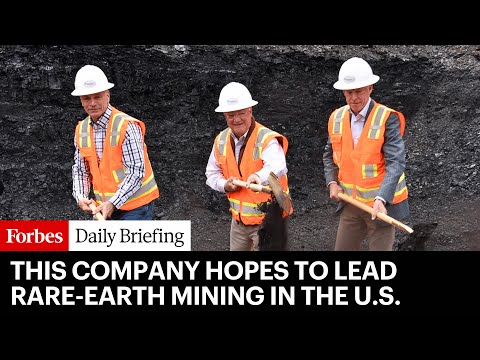
Why Ramaco Says It Can Beat Its Government-Backed Rival For Rare Earth Supremacy
Overview of Ramaco Resources' Strategic Positioning in Rare Earth Elements
Ramaco Resources recently initiated operations on a new coal mine in Sheridan, Wyoming, marking the first such development in the state in 50 years. The mine aims to extract 2.5 million tons of coal annually, which is expected to contain significant quantities of rare earth elements (REEs) such as dysprosium, neodymium, scandium, and gallium. These minerals are essential for various advanced technologies, including powerful magnets and semiconductors.
Chairman and CEO Randall Atkins asserts that critical minerals are as vital to the 21st century as oil was to the 20th century. Ramaco's stock has surged by 80% this year, reaching a market cap of $1 billion, fueled by $670 million in sales. The company anticipates that its pilot processing plant, slated for completion by late 2026, will fulfill over 10% of the United States' annual REE demand, which is predominantly met by China.
The U.S. government's push for domestic production is exemplified by the Pentagon's recent $400 million investment in MP Materials, Ramaco's main competitor, which operates the only currently producing REE mine in Mountain Pass, California. Despite this, Atkins claims that Ramaco's Brook Mine is superior, primarily yielding heavier and more valuable REEs without the radioactivity issues faced by Mountain Pass.
Geological assessments indicate that Wyoming's Power River Basin harbors high concentrations of REEs, attributed to ancient volcanic activity. Ramaco plans to prioritize the extraction of coal to access approximately 500,000 tons of REEs annually. However, a significant concern remains regarding the pricing and market dynamics for REEs, given China's monopolistic control over the sector. While Atkins acknowledges the importance of government backing, he believes Ramaco can independently finance its growth.
For further insights, refer to Christopher Helman's article on Forbes.com.
Rare Earth Elements (REEs) are a group of 17 chemically similar elements that play a crucial role in modern technology and energy solutions. These elements include lanthanum, cerium, praseodymium, neodymium, promethium, samarium, europium, gadolinium, terbium, dysprosium, holmium, erbium, thulium, ytterbium, lutetium, scandium, and yttrium. They are not actually 'rare' in terms of their abundance in the Earth's crust; rather, they are rarely found in economically exploitable concentrations.
The distinction between rare earth minerals and processed metals is significant. Rare earth minerals are naturally occurring ores that contain REEs and are mined from the Earth. These ores must undergo extensive processing to extract the individual elements in usable forms, which are then classified as processed metals. This processing involves several stages, including crushing, grinding, and chemical treatment, to separate the REEs from other materials and impurities.
One of the unique characteristics of rare earth elements is their high demand in advanced technologies. They are essential for manufacturing items such as powerful magnets, semiconductors, and various defense applications. The growing reliance on these materials in high-tech industries has elevated their strategic importance on a global scale. As Randall Atkins, CEO of Ramaco Resources, stated, "[01:19] Critical minerals and rare earths are to this century what oil was to the 20th century."
The formation of rare earth elements (REEs) is often attributed to geological processes involving ancient volcanic activity. In the transcript, Randall Atkins mentions that the concentrations of rare earth elements found at the Brook Mine are a result of this ancient volcanic activity that pushed mineral-laden magma to the surface. This geological backdrop is fundamental in understanding where REEs can be located.
Specifically, the Brook Mine in Wyoming has revealed rare earth concentrations as high as 10,000 parts per million. Such high concentrations are not commonly found in coal deposits around the world, making Brook unique. This level of concentration is key for prospecting, as it indicates a viable economic opportunity for extraction.
The transcript does not provide detailed technical developments regarding prospecting methods or technologies; however, it does highlight how engineering work by Flu has aided in identifying these high concentrations and suggests an enhancement in mining efficiency. The implication is that modern technological approaches can streamline locating and extracting these valuable minerals, but specific methods or innovations are not elaborated upon.
The mining, extraction, and refining process of rare earth elements is a complex endeavor, which begins with the excavation of coal or rock containing the REEs. In the case of Ramaco Resources, the company expects to extract 2.5 million tons of coal annually, primarily to access approximately 500,000 tons of higher concentration rare earth materials.
As described in the transcript, the process aims to be surgical rather than broad, with Atkins stating, "[04:00] We won't have gigantic pits." This suggests a focus on precision in extraction to minimize environmental impact and maximize efficiency. Once the raw materials are excavated, they undergo processing to separate the REEs from other minerals, which involves multiple stages of chemical treatment and refining.
The technical complexity of this operation can be a barrier, especially in regions where mining regulations and technological capabilities differ. However, the transcript indicates that Ramaco believes it can finance its own expansion, suggesting that it may be less dependent on governmental assistance than competitors like MP Materials, which have received significant federal investment.
The environmental costs associated with rare earth mining are significant and complex. Although the transcript does not provide specific details on pollutants or health effects, it does hint at the potential risks linked to mining processes. For instance, the competition between Ramaco and MP Materials highlights the different geological challenges each faces. MP Materials has to deal with the presence of radioactivity in its ore, which is a known health risk for miners and surrounding communities.
Moreover, while the transcript does not delve into specific pollutants, the extraction and processing of rare earth elements can lead to various environmental damages, including soil contamination and water pollution. These issues are critical as they can affect not only the miners but also local residents who rely on clean environments for their livelihoods. The statement by Atkins about the geological uniqueness of Brook Mine suggests that the mining methods employed there might mitigate some of these risks, but the overall environmental impact of rare earth mining remains a concern that is not fully addressed in the transcript.
China's significant influence in the rare earths market is primarily characterized by its control over supply chains and pricing structures. The transcript highlights that nearly all of America's rare earth demands—estimated at 10,000 tons per year—are currently sourced from China. This monopoly allows China to manipulate global supply and pricing, posing challenges for other countries attempting to establish their own rare earth industries.
The impact of illegal mining activities is another critical aspect of this situation, although the transcript does not provide specific details on these activities. However, it can be inferred that illegal mining could disrupt market stability and contribute to environmental degradation, further complicating efforts to develop sustainable practices in the industry.
Atkins emphasizes the importance of domestic production in reducing America's reliance on Chinese supplies, particularly as the U.S. government seeks to bolster its rare earth capabilities. The competitive landscape is shifting, as new players like Ramaco look to enter the market and offer alternatives to Chinese sources.
The role of rare earth elements in international politics has become increasingly pronounced, particularly under the Trump administration, which emphasized the necessity for the United States to reduce its dependency on foreign sources, especially China. The transcript indicates that the Pentagon has taken active steps to invest in domestic production of rare earths, including a substantial $400 million investment in MP Materials, which operates the only currently producing rare earth mine in Mountain Pass, California.
This move is part of a broader strategy to enhance national security by securing a stable supply of critical minerals that are vital for advanced technologies and defense systems. As Randall Atkins notes, the goal is to establish a domestic supply chain that can meet the growing demand for these elements.
The competitive tension between companies like Ramaco and MP Materials reflects the urgency of this strategy. Atkins asserts that Ramaco can fulfill a significant portion of the U.S. demand for rare earths, which currently relies heavily on imports from China. This shift towards domestic production is seen as essential for mitigating the risks associated with foreign dependency and ensuring the U.S. remains competitive in global technology and defense sectors.
While the transcript does not explicitly list the countries with rare earth reserves, it highlights the significant role that the United States is trying to play in the global market with players like Ramaco Resources. The mention of Wyoming's Brook Mine suggests that the U.S. is looking to expand its capabilities in rare earth extraction, particularly as competition with established producers like China intensifies.
New players entering the market, such as Ramaco, are attempting to leverage their unique geological advantages to challenge the existing dominance of Chinese suppliers. The transcript notes that Ramaco's Brook Mine is expected to produce high concentrations of rare earths, which could offer a strategic advantage in the global market.
In addition, the competitive landscape is evolving, with MP Materials' recent federal funding indicating a consolidation of resources among existing players. The U.S. is also positioning itself to reduce its reliance on imports, further highlighting the strategic importance of rare earths in global geopolitics.
The transcript identifies several critical elements among the rare earths, including neodymium, dysprosium, and gallium. These elements are deemed critical due to their essential roles in advanced technologies such as powerful magnets, semiconductors, and various military applications—including hypersonic missiles and night vision goggles.
The organizational structure of the global supply chain for these elements is heavily influenced by China's monopolistic practices, which allow for manipulation of supplies and prices. This creates vulnerabilities for countries and companies reliant on imports of these critical minerals. The current situation is exacerbated by the fact that nearly all of the United States' demand for rare earths is met through imports from China, leading to concerns about supply stability and national security.
As Atkins notes, "[01:21] Critical minerals and rare earths are to this century what oil was to the 20th century," emphasizing the urgent need for countries like the U.S. to establish their own supply chains to mitigate these vulnerabilities.
-
- [01:21] "Critical minerals and rare earths are to this century what oil was to the 20th century."
The transcript does not provide specific information on alternative technologies or innovations that reduce or eliminate the need for rare earth elements. However, it emphasizes the strategic importance of these materials in various high-tech applications and the implications of dependency on foreign sources.
Given the critical role of rare earths in technologies such as semiconductors and powerful magnets, research might be ongoing in the field to explore substitutes or alternative materials. Nonetheless, the transcript lacks detailed descriptions of any specific innovations or technologies that could serve as substitutes for rare earth elements.
Details regarding the recycling of rare earth elements are not mentioned in the transcript. Furthermore, there is no discussion about the economic or technical criteria that a country or company must consider before initiating mining operations. The focus of the transcript is primarily on the mining and extraction processes, as well as the geopolitical implications of rare earth production.
Given the current landscape, countries looking to improve their domestic production capabilities will likely need to consider factors such as market demand, environmental regulations, and the technological feasibility of extraction methods. However, specific criteria for recycling or initial mining operations are not addressed.
[00:00] Today on Forbes, why Ramaco says it can[00:03] beat its governmentbacked rival for rare[00:05] earth supremacy.[00:08] Ramaco resources broke ground last month[00:10] on a new coal mine in Sheridan, Wyoming,[00:13] the first one in the state in 50 years.[00:16] By early July, Ramaco had excavated 100[00:19] ft down, exposing a 20 foot wide coal[00:22] seam and was holding an official ribbon[00:24] cutting with energy secretary Chris[00:26] Wright and retired West Virginia Senator[00:29] Joe Mansion in attendance. But despite[00:32] their shared enthusiasm for fossil[00:33] fuels, it wasn't old-fashioned[00:36] electricity generating coal that[00:37] attracted those big shots to the Brook[00:39] Mine. Ramiko chairman and CEO Randall[00:43] Atkins expects the 2.5 million tons of[00:46] coal he plans to extract over the next[00:48] 12 months will contain within it some of[00:51] the world's most sought-after rare earth[00:53] elements and other critical minerals[00:55] specifically deposium neodymium scandium[01:00] and gallium vital stuff for making[01:02] powerful magnets semiconductors night[01:05] vision goggles hypersonic missiles and[01:08] much more.[01:09] Atkins, a 69-year-old lawyer and Ramico[01:12] founder whose resume includes stints in[01:15] private equity, investment banking, and[01:17] real estate development, declares,[01:19] quote, "Critical minerals and rare[01:21] earths are to this century what oil was[01:23] to the 20th century.[01:26] Publicly traded Ramico is up 80% year to[01:28] date to a $1 billion market cap on 11[01:31] million in earnings and $670 million in[01:35] sales. The company says that once its[01:37] pilot processing plant is completed as[01:39] early as late 2026, it will be able to[01:42] meet more than 10% of America's 10,000[01:44] tons per year of total rare earth's[01:47] demand, nearly all of which is currently[01:49] sourced from China.[01:52] The Trump administration is leaning[01:53] heavily into domestic production of rare[01:55] earths. Earlier this month, the Pentagon[01:58] announced that it would invest $400[01:59] million into Ramico's rival, publicly[02:02] traded MP Materials, which operates[02:05] America's only currently producing rare[02:07] earth's mine at Mountain Pass,[02:09] California. The federal cash injection[02:11] will go in part to build a new magnet[02:14] factory 10 times the size of the one MP[02:16] recently built in Fort Worth, Texas. MP[02:19] shares jumped 45% on the news, giving it[02:22] a $7.3 billion market cap. But Atkins[02:26] says his brook mine resource is far[02:28] superior to MPs. Mountain Pass yields[02:31] mostly the so-called lighter rare[02:33] earths, especially serium used in water[02:36] treatment. MP also has to contend with[02:39] radioactivity in its ore, which is not[02:41] present at Brookke. Ramico, Atkins says,[02:44] will be the sole domestic supplier of[02:46] the heavier, more valuable rare earths.[02:49] MP for its part points out that although[02:52] so-called heavies make up only 2% of its[02:54] mountain pass output, that does add up[02:56] to several hundred tons of heavy oxides[02:58] per year.[03:00] The geology of Wyoming's power to river[03:02] basin is rich with fossil fuels. The[03:05] nation's biggest coal mines, some[03:07] extracting 100 million tons a year, are[03:10] there. Oil production in the region is[03:12] growing quickly, but no one knew there[03:14] were rare earths there until a few years[03:16] ago. Atkins explains, quote, "It's not[03:19] that these elements are rare. They're[03:21] just not often found in concentrations[03:23] that are economic to develop."[03:26] At Brookke, with the help of engineering[03:28] work by Flu, they found rare earth[03:31] concentrations as high as 10,000 parts[03:33] per million, which so far appears to be[03:35] unique among coal accumulations anywhere[03:37] on Earth. Atkins attributes this to[03:40] ancient volcanic activity that pushed up[03:42] mineral laden magma.[03:44] Most of the 2.5 million tons of[03:46] excavation Ramaco expects to do a year[03:48] aims to get regular old coal out of the[03:51] way to reach about 500,000 tons a year[03:54] with high rare earth concentrations.[03:56] Atkins says, quote, "We're ultimately[03:58] trying to be surgical. We won't have[04:00] gigantic pits."[04:02] In all of this, a big question remains.[04:05] How much can it get paid for rare earths[04:07] once it starts mining and refining them?[04:10] There's no free market. China's[04:12] state-controlled rare earth monopolies[04:14] manipulate supplies and prices to the[04:16] rest of the world, a key impetus for the[04:18] Pentagon's move to invest in MP. Atkins[04:21] says he appreciates government support,[04:23] but that Ramaco can finance its own[04:25] expansion.[04:27] For full coverage, check out Christopher[04:28] Helman's piece on Forbes.com.[04:32] This is Kieran Meadows from Forbes.[04:35] Thanks for tuning in.
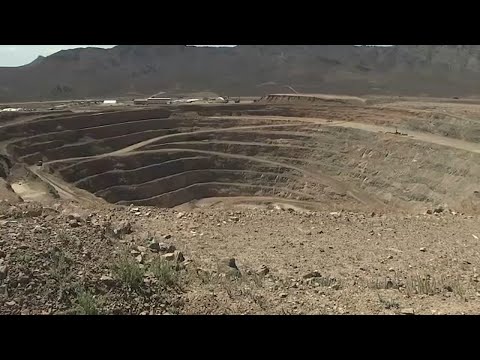
Industry leans on large SoCal rare-earth mine amid growing trade war
Overview of the Mountain Pass Rare Earth Mine
The Mountain Pass rare earth mine, located in California's San Bernardino County, is one of the largest rare earth mines globally. Situated near the heavily traveled Interstate 15, this mining operation features a significant 500-foot deep pit that has garnered attention for its unique geological formations. Ryan Corbett, the Chief Financial Officer of MP Materials, emphasizes the mine's exceptional concentrations of rare earth elements, particularly neodymium, which is crucial for modern technology.
Significance of Rare Earth Elements
Neodymium, although less glamorous than gold or platinum, is integral to various consumer electronics, including electric vehicle motors and wind turbines. Corbett explains that the mine's proximity to the surface and the form in which these minerals are found make extraction and refinement efficient, setting it apart from other global sources.
Historical Context and Recent Developments
The mine's significance has been amplified by geopolitical events, particularly the trade tensions initiated during the Trump administration, which highlighted the United States' reliance on foreign sources for rare earth materials. Recent export restrictions from China have underscored the vulnerability of the U.S. defense industrial base, prompting increased attention to domestic mining operations.
Future Prospects
- The Mountain Pass mine is expected to remain operational for another 30 years.
- Recent agreements, including a multi-billion dollar partnership with the Department of Defense and a substantial investment from Apple, signal growing recognition of the mine's strategic importance.
- As the demand for neodymium continues to rise, its value is increasingly viewed as critical to ensuring a secure supply chain for various industries.
In summary, the Mountain Pass mine plays a pivotal role in the future of technology and defense, reflecting the intricate relationship between natural resources and global economic stability.
Rare earth elements (REEs) are a group of 17 metallic elements that are critical to various high-tech and industrial applications. They are not "rare" in the sense of scarcity; rather, they are widely distributed in the Earth's crust but are difficult to extract economically. The transcript highlights that one of the most valuable rare earth elements mined at the Mountain Pass site is neodymium, which is essential for the production of strong permanent magnets used in consumer electronics and electric vehicles.
The unique characteristics of rare earth minerals lie in their atomic structure, which confers specific optical, electrical, and magnetic properties. They are typically found in complex ores and require extensive processing to separate the individual elements from the ore. This processing often involves a variety of chemical and physical methods, including crushing, grinding, and various forms of extraction, such as flotation and leaching.
Distinguishing between rare earth minerals and processed metals is crucial. Rare earth minerals refer to the naturally occurring ores that contain these elements, while processed metals are the refined products obtained after extensive extraction and purification processes. The transcript emphasizes that the neodymium found at Mountain Pass is in a form that is "easily digestible" for downstream processes, indicating the mine's unique geological conditions that allow for efficient extraction and refining.
The formation of rare earth elements, such as those found at the Mountain Pass mine, is a result of geological processes that occurred over billions of years. The transcript notes that the specific geological conditions in this region, including the formation of fault lines, have led to the concentration of rare earth-bearing minerals at the surface. This unique geological history is described as a "freak of nature," highlighting the rarity of such deposits.
Prospecting for these elements involves geological surveys and the use of Geiger counters to detect radiation, which can indicate the presence of uranium or, as it turned out in this case, neodymium. The Geiger counter's response during searches in the 1940s led to the discovery of the Mountain Pass site, originally intended for uranium mining.
Recent technological developments have enhanced the efficiency of locating and extracting these elements. The transcript mentions that the proximity of rare earth minerals to the surface at Mountain Pass allows for easier and more cost-effective mining operations. Companies like MP Materials utilize advanced refining technologies that make the extraction process more viable compared to other regions where similar deposits may be buried deeper and require more complex, costly mining methods.
-
- [01:51] "It probably happened many billions of years ago."
- [01:56] "The way that fault lines formed here to allow the rock formations to come to the surface..."
- [02:47] "The Geiger counter started going off at this very location."
The mining, extraction, and refining process at the Mountain Pass site is a multifaceted operation that begins with the excavation of rare earth ore. The transcript describes a massive 500-foot deep pit at the site, which indicates extensive mining activity. Once extracted, the ore undergoes a series of processes to separate the valuable rare earth elements from the surrounding rock.
The extraction process involves several stages, including crushing, grinding, and chemical treatment to isolate the rare earth elements. The transcript highlights that the neodymium found in this mine is present in a form that is "easily digestible," which implies that the refining techniques employed are less complex compared to other mining operations around the world.
Furthermore, the transcript does not explicitly mention any significant barriers faced by specific countries regarding the technical complexity of mining and refining rare earth elements. However, it does imply that the advanced technology used at Mountain Pass positions it favorably compared to other regions that may not have the same level of technological capability. This efficiency in extraction and processing is crucial, especially considering the increasing global demand for these elements.
-
- [01:43] "One of the largest rare earth mines in the world."
- [01:27] "In a form that is so easily leveraged and refined with our technology."
- [01:40] "There are 17 rare earth elements on the periodic table."
The transcript does not provide specific information regarding the environmental costs or health effects associated with rare earth mining. It focuses primarily on the economic and strategic importance of the Mountain Pass mine and the rare earth elements extracted from it.
While it is known generally that rare earth mining can lead to environmental degradation, including soil and water contamination, and can pose health risks to miners and local residents, these aspects are not directly addressed in the provided transcript. The full implications of pollutants or biological risks related to rare earth mining are not discussed.
Therefore, the environmental and health impact of rare earth mining, including potential pollutants, remains an area that is not covered in this transcript. This omission highlights a gap in the understanding of the broader implications of mining operations like those at Mountain Pass.
-
- [00:20] "In an eyewitness news exclusive."
- [02:38] "The industrial economy of the United States."
China's position in the market for rare earth elements is described as overwhelmingly dominant, controlling over 92% of the global mining and processing operations. This monopoly status is a significant concern for the United States, particularly regarding national security and economic independence. The transcript references a recent shift in awareness about this reliance due to export restrictions imposed by China on rare earths during the Trump administration's trade war.
The restrictions have highlighted the vulnerabilities within the U.S. supply chain and the need for diversification in sourcing rare earth materials. The transcript discusses a multi-billion dollar agreement between MP Materials and the Department of Defense, indicating a strategic effort to bolster domestic production capabilities and reduce dependency on Chinese supplies.
While the transcript does not elaborate on the scale or impact of illegal mining activities, the implications of such monopolistic control by China suggest that any disruption in the supply chain could have far-reaching effects on various industries reliant on these elements.
-
- [02:22] "There were export restrictions from China placed on rare earths and rare earth permanent magnets."
- [02:35] "How reliant we are on a single point of failure for our entire defense industrial base."
- [02:30] "China dominates over 92% of mining and processing."
The transcript emphasizes the critical role of rare earth elements in international politics, particularly in the context of the United States' strategy to reduce dependency on foreign sources. This shift became particularly pronounced during the Trump administration when trade tensions with China escalated. The imposition of export restrictions by China on rare earth elements brought the issue to the forefront of U.S. consciousness, highlighting the reliance on a single point of failure for essential materials needed for defense and technology.
The U.S. response has included strategic agreements, such as the multi-billion dollar pact between MP Materials and the Department of Defense, aimed at enhancing domestic production capabilities. This move underscores an urgent need for the U.S. to establish a more secure and independent supply chain for rare earth elements, which are crucial for a variety of applications, from electronics to defense systems.
The transcript also mentions that the importance of these elements has only grown in recent months, as awareness of their strategic significance has increased, especially in light of geopolitical tensions and market vulnerabilities.
-
- [02:29] "How reliant we are on a single point of failure for our entire defense industrial base."
- [02:20] "There were export restrictions from China placed on rare earths."
- [02:34] "The importance of it really came into focus in recent months."
The transcript does not provide specific details regarding the countries where rare earth reserves are located or mention any new players entering the market. It focuses primarily on the Mountain Pass mine in California and its strategic significance in the context of U.S. reliance on rare earth elements. The discussion centers on the mine's unique geological features and the importance of neodymium, rather than a broader overview of global reserves or emerging markets.
Due to this limitation, there is no comprehensive list of countries or companies involved in rare earth mining mentioned in the transcript. Therefore, the exploration of the current progress or strategic importance of these potential new players remains unaddressed.
-
- [00:06] "Rare earth mines in the world is in California."
- [00:58] "The company that took control over this mine in 2017."
The transcript identifies neodymium as a critical rare earth element, particularly due to its applications in various technologies, including electric vehicles and consumer electronics. It is highlighted as essential for producing strong permanent magnets, which are integral to devices that involve motion. This includes everything from electric motors in vehicles to vibration motors in smartphones.
The organizational structure of the global supply chains for rare earth elements is not detailed in the transcript, nor does it provide insights into specific vulnerabilities. However, it does suggest a significant dependence on a limited number of sources, particularly China, which raises concerns about supply chain stability.
Overall, while neodymium is singled out as crucial for its wide-ranging applications, further details about the organizational framework of supply chains and their vulnerabilities are not discussed in the provided transcript.
-
- [01:46] "What's most valuable at this mine is something called neodymium."
- [02:03] "All of that requires a neodymium magnet."
- [03:07] "Everything that we count on for the products that we use... touch a rare earth permanent magnet in some way."
The transcript does not mention any alternative technologies or innovations aimed at reducing or eliminating the need for rare earth elements. It focuses primarily on the extraction and importance of neodymium from the Mountain Pass mine and does not provide information regarding potential substitutes or advancements in technology that could decrease reliance on these materials.
As a result, the exploration of alternative methods or innovations that could impact the demand for rare earth elements remains unaddressed in the transcript. This omission limits the understanding of evolving technologies that could play a significant role in the future of rare earth element usage.
-
- [00:20] "In an eyewitness news exclusive."
- [02:06] "That will start here at Mountain Pass."
The transcript does not provide any details regarding the recycling of rare earth elements. It focuses primarily on the mining and extraction processes at the Mountain Pass site and the strategic significance of neodymium. There is no mention of the economic and technical criteria that a country or company must consider before initiating mining operations.
As such, the topic of recycling and its implications for the rare earth market is not addressed, leaving a gap in understanding how recycling efforts might influence supply chains or the economic viability of mining rare earth elements.
-
- [00:20] "In an eyewitness news exclusive."
- [02:06] "That will start here at Mountain Pass."
[00:06] RARE EARTH MINES IN THE WORLD[00:08] IS IN CALIFORNIA.[00:08] >> IT'S IN THE SAN BERNARDINO[00:10] COMMUNITY OF MOUNTAIN PASS,[00:12] RIGHT BY THE 15 FREEWAY ON THE[00:13] WAY TO LAS VEGAS. INLAND EMPIRE[00:15] BUREAU CHIEF ROB MCMILLAN SHOWS[00:17] YOU THE IMPORTANCE OF WHAT'S[00:18] GETTING MINED. IN AN EYEWITNESS[00:20] NEWS EXCLUSIVE.[00:20] >> IT'S ONE OF THE MOST[00:22] TRAVELED STRETCHES OF FREEWAY[00:23] IN THE ENTIRE COUNTRY.[00:25] INTERSTATE 15 FROM LA TO LAS[00:27] VEGAS. TO GET THERE, DRIVERS[00:29] HEAD THROUGH MOUNTAIN PASS,[00:31] PASSING BAILEY ROAD AT NEARLY[00:33] 5000FT IN ELEVATION. BUT WHAT[00:35] MOST DRIVERS PROBABLY DON'T[00:37] NOTICE IS THE MINING OPERATION[00:40] JUST OFF THE FREEWAY. MORE[00:41] SPECIFICALLY, THE MASSIVE 500[00:43] FOOT DEEP PIT AT THE SITE, ONE[00:46] OF THE LARGEST RARE EARTH MINES[00:47] IN THE WORLD.[00:49] >> IT PROBABLY HAPPENED MANY[00:51] BILLIONS OF YEARS AGO. REALLY[00:51] IS WHAT MADE THIS SO SPECIAL.[00:53] IT'S IT'S IT'S ALMOST A FREAK[00:55] OF NATURE.[00:55] >> RYAN CORBETT IS THE CHIEF[00:57] FINANCIAL OFFICER FOR MP[00:58] MATERIALS, THE COMPANY THAT[00:59] TOOK CONTROL OVER THIS MINE IN[01:02] 2017. HE SAYS THIS PLACE[01:03] CONTAINS SOME OF THE LARGEST[01:05] CONCENTRATIONS OF RARE EARTH[01:07] ELEMENTS IN THE WORLD.[01:07] >> YOU KNOW, THE WAY THAT, YOU[01:09] KNOW, FAULT LINES FORMED HERE[01:12] TO ALLOW, YOU KNOW, THE ROCK[01:14] FORMATIONS TO COME TO THE[01:16] SURFACE AND HAVE RARE EARTH[01:19] BEARING MINERALS IN SUCH A[01:21] CONCENTRATION AND IN A FORM[01:24] THAT IS SO EASILY LEVERAGED AND[01:25] REFINED WITH OUR TECHNOLOGY, IS[01:27] SOMETHING THAT YOU REALLY DON'T[01:29] SEE ANYWHERE ELSE IN THE WORLD[01:31] BECAUSE.[01:31] >> IT'S SO CLOSE TO THE.[01:32] >> SURFACE. EXACTLY, SO CLOSE[01:35] TO THE SURFACE, AND IN A FORM[01:35] THAT IS EASILY DIGESTIBLE, IF[01:38] YOU WILL, IN THE DOWNSTREAM.[01:39] >> THERE ARE 17 RARE EARTH[01:40] ELEMENTS ON THE PERIODIC TABLE,[01:43] BUT WHAT'S MOST VALUABLE AT[01:44] THIS MINE IS SOMETHING CALLED[01:46] NEODYMIUM. AND WHILE IT'S NOT[01:47] AS SEXY AS, SAY, GOLD OR[01:51] PLATINUM, IT'S SOMETHING THAT'S[01:51] CRITICAL IN ALMOST EVERY PIECE[01:53] OF CONSUMER ELECTRONICS USED[01:55] TODAY.[01:55] >> EVERYTHING WITH MOTION,[01:56] WHETHER IT'S A WIND TURBINE, AN[01:58] ELECTRIC VEHICLE MOTOR, THE[01:59] VIBRATION MOTOR IN YOUR IPHONE,[02:01] ALL OF THAT REQUIRES A[02:03] NEODYMIUM MAGNET. AND SO FOR[02:04] THE FORESEEABLE FUTURE, THAT[02:06] WILL START HERE AT MOUNTAIN[02:07] PASS.[02:08] >> AND WHILE THIS MINE HAS BEEN[02:10] IN EXISTENCE FOR DECADES, THE[02:11] IMPORTANCE OF IT REALLY CAME[02:13] INTO FOCUS IN RECENT MONTHS[02:15] WITH THE BEGINNING OF THE TRUMP[02:16] ADMINISTRATION'S TRADE WAR.[02:17] >> IN APRIL OF THIS YEAR, THERE[02:20] WERE EXPORT RESTRICTIONS FROM[02:20] CHINA PLACED ON RARE EARTHS AND[02:22] RARE EARTH PERMANENT MAGNETS. I[02:25] THINK THAT BROUGHT INTO[02:26] EVERYONE'S CONSCIOUSNESS HOW[02:29] RELIANT WE ARE ON A SINGLE[02:31] POINT OF FAILURE FOR OUR ENTIRE[02:34] DEFENSE INDUSTRIAL BASE. AND[02:35] FRANKLY, YOU KNOW, THE[02:37] INDUSTRIAL ECONOMY OF THE[02:38] UNITED STATES.[02:38] >> SO HOW DID THEY FIND THIS[02:41] PLACE? WELL, WAY BACK IN THE[02:42] 1940S, WHEN THEY WERE LOOKING[02:44] FOR URANIUM, THE GEIGER COUNTER[02:45] STARTED GOING OFF AT THIS VERY[02:47] LOCATION. UNFORTUNATELY, WHEN[02:47] THEY STARTED DIGGING, THEY[02:49] DIDN'T FIND ANY URANIUM, BUT[02:50] THEY DID FIND NEODYMIUM,[02:52] ALTHOUGH THEY PROBABLY DIDN'T[02:54] REALIZE JUST HOW IMPORTANT A[02:55] RESOURCE IT WOULD BE IN THE[02:58] FUTURE.[02:58] >> EVERY AUTOMOTIVE FACTORY,[02:59] EVERY AEROSPACE AND DEFENSE[03:01] MANUFACTURER, YOU KNOW,[03:02] EVERYTHING THAT WE COUNT ON FOR[03:04] THE PRODUCTS THAT WE USE AND[03:07] AND THE JOBS THAT, YOU KNOW,[03:08] PUT FOOD ON THE TABLE, ALMOST[03:09] ALL OF THEM TOUCH A RARE EARTH[03:12] PERMANENT MAGNET IN SOME WAY,[03:13] SHAPE OR FORM.[03:13] >> AND RECENTLY, EMP MATERIALS[03:15] ANNOUNCED A MULTI-BILLION[03:16] DOLLAR AGREEMENT WITH THE[03:18] DEPARTMENT OF DEFENSE AND A[03:20] $500 MILLION INVESTMENT FROM[03:22] APPLE. REPRESENTATIVE YUNG KIM[03:23] RECENTLY TOURED THE FACILITY.[03:25] >> WHEN WE LEARNED THAT CHINA[03:27] DOMINATES OVER 92% OF MINING[03:30] AND PROCESSING, AND THERE IS A[03:32] CRITICAL NEED FOR UNITED STATES[03:35] TO REALLY PAY MORE ATTENTION TO,[03:37] WHERE ARE WE LACKING IN TERMS[03:40] OF MINING AND PROCESSING.[03:42] >> MATERIALS, SAYS THE MINE HAS[03:44] ANOTHER 30 YEARS OF LIFE, AND[03:45] WHILE AN OUNCE OF NEODYMIUM HAS[03:47] NOWHERE NEAR THE WORTH OF, SAY,[03:49] AN OUNCE OF GOLD, CORBETT SAYS[03:51] ITS VALUE, ESPECIALLY TODAY, IS[03:54] INCALCULABLE.[03:54] >> EVERY SINGLE ROBOT, EVERY[03:56] SINGLE PIECE OF CONSUMER[03:58] ELECTRONICS WILL HAVE NEODYMIUM[03:59] IN IT. AND SO, YOU KNOW, IT'S[04:01] KIND OF HARD TO PUT A VALUE ON[04:03] ENSURING THAT WE'VE GOT A[04:04] SECURE SUPPLY CHAIN FOR THAT[04:05] TYPE OF MA

Can Australia solve the world's Rare Earths problem? | If You're Listening
If you received an SD card without any note or return address, would you open it? In 2010, CNN's Tokyo Bureau faced this dilemma and chose to discard it. Had they opened it, they would have discovered a video of a Chinese fishing boat aggressively ramming a Japanese coast guard vessel near the disputed Senkaku Islands. This incident heightened tensions between Japan and China, particularly after Japan arrested the fishing boat's captain, leading to a diplomatic crisis.
The situation was exacerbated by China's decision to cut off exports of rare earth elements to Japan, a critical resource for its electronics industry. In 2010, China controlled the global supply of these elements, slashing exports by 72%, which caused prices to soar. The panic lasted until 2011, but the issue resurfaced in 2020 when U.S. President Donald Trump began seeking rare earth elements from various countries, including Canada and Australia.
Rare earth elements, while not particularly rare in abundance, are vital for modern technology and military applications. They are found in everyday devices like smartphones and electric vehicles. Despite their importance, the mining and processing of these elements generate significant toxic waste, making them economically challenging to produce outside of China, which dominates the market.
Australia has been positioning itself as a reliable supplier of rare earths, with companies like Lynas establishing operations to reduce reliance on China. The U.S. government is also investing in domestic rare earth production and recycling efforts. However, the geopolitical landscape complicates matters, especially with discussions about Ukraine's potential mineral wealth amidst its ongoing conflict with Russia.
Ultimately, the quest for rare earth elements raises questions about market dynamics, environmental concerns, and international relations, particularly regarding the balance of power between the U.S., China, and emerging economies like Ukraine.
Rare earth elements (REEs) are a group of seventeen chemical elements that are vital to modern technology and industry, particularly in electronics, renewable energy, and military applications. It's important to clarify that the term rare earth elements does not imply scarcity; rather, these elements are more abundant than many precious metals, including silver. The confusion arises from their extraction and processing, which are often complicated and environmentally damaging.
The distinction between rare earth minerals and processed metals is crucial. Rare earth minerals are typically found in trace amounts within ores and require extensive mining and refining processes to extract usable forms. This extraction yields various processed metals, which are then utilized in manufacturing high-tech products such as smartphones, electric vehicles, and military equipment.
To illustrate, the 17 rare earth elements include neodymium, which is essential for creating powerful magnets used in electric motors, and cerium, which is used in catalytic converters. Understanding these differences is paramount for grasping the geopolitical and economic significance of rare earth elements.
In summary, while the name suggests rarity, the abundance of these elements in the Earth's crust belies the complexities associated with their mining and processing. The global supply chain for these materials is heavily influenced by the monopolistic practices of countries like China, which controls a significant portion of the world's rare earth production.
The formation of rare earth elements (REEs) occurs through geological processes over millions of years, typically within igneous rocks and sedimentary deposits. These elements are often located in minerals that are not exclusively rare but are found in trace amounts throughout the Earth's crust. The extraction process is technically challenging due to the difficulty in separating these elements from other minerals and ensuring that the extraction process is economically viable.
Specific technical developments that enhance the efficiency of prospecting and mining include advanced geological surveying techniques, which help in identifying areas with high concentrations of REEs. The use of more effective extraction methods, such as hydrometallurgical processes, has improved the yield of rare earth elements from ores. Additionally, innovations in environmental controls and waste management are critical, as the mining of REEs can generate toxic byproducts.
In the transcript, it was mentioned that the Chinese government has a monopoly on these elements, which allows them to dictate prices and control the global supply chain. This monopolistic position has raised concerns about the sustainability of supplies and the geopolitical implications of relying heavily on one nation for such critical materials.
-
- [09:02] "They mine 97% of the world’s rare earth supplies."
- [12:10] "They would be more expensive thanks to our hesitation to create production facilities that look like hellmouths."
The process of mining, extraction, and refining rare earth elements (REEs) is multifaceted and technically complex. Initially, mining involves extracting ore containing rare earth minerals from various geological formations. This is often done through traditional mining methods or through more modern techniques such as open-pit mining. Once the ore is extracted, it undergoes crushing and milling to break it down into smaller pieces.
Following milling, the ore is subjected to various separation processes to isolate the desired rare earth elements. Hydrometallurgical techniques, which utilize chemical solutions to dissolve and separate the elements, are frequently employed. This method can be highly efficient but also generates significant waste. The refining stage involves further purification to yield commercially viable REEs, which are then converted into metal alloys or compounds suitable for industrial use.
The transcript highlights the significant technical complexity involved in this process, which can pose barriers for countries attempting to establish their own rare earth mining operations. For example, the advanced techniques and environmental safeguards required to mitigate the impact of mining are often not economically feasible for nations lacking the necessary infrastructure and investment.
-
- [08:20] "The Rare Earths facility nearby is primarily a steel mill. They just happen to make the rare earths as a byproduct."
- [11:56] "Their waste products aren’t just burped out as raw sludge into a lake."
The environmental costs and health effects associated with rare earth mining are significant and multifaceted. Mining operations often lead to the generation of large quantities of waste materials, including toxic byproducts that can contaminate local environments. The transcript discusses how the tailings pond in Baotou, China, serves as a stark illustration of the environmental risks. Waste from rare earth mining can seep into nearby water sources, such as the Yellow River, which is essential for drinking and irrigation.
Moreover, the health effects on miners and local residents can be severe. Exposure to toxic materials can lead to chronic health issues, including respiratory problems and increased cancer risk due to the radioactive nature of some byproducts. The transcript mentions the creation of radioactive waste as a consequence of the extraction process, indicating a severe risk to public health and safety.
In summary, while rare earth elements are critical for modern technology, the environmental and health implications of their extraction and processing raise serious concerns. The balance between meeting industrial demands and protecting public health and the environment remains a challenging issue.
-
- [08:09] "The Yellow River isn’t China’s second most important source of drinking and irrigation water. Oh, wait."
- [06:06] "...which is now also radioactive."
China's position in the global rare earth market is unique and significantly influential. As of the transcript's context, China controls about 97% of the world’s rare earth supplies, which has allowed it to establish a virtual monopoly over these critical materials. This control enables China to dictate prices, thus making it challenging for countries with less efficient mining operations to compete. The monopolistic practices of the Chinese government have raised alarms in various countries, particularly in the United States, regarding national security and economic independence.
The impact of illegal mining activities also compounds the challenges faced by other nations. The transcript alludes to concerns that unregulated mining in China could lead to further environmental degradation and market instability. By monopolizing the market, China not only dominates supply but also influences the global economic landscape, making it imperative for other nations to develop alternative sources of rare earths.
In summary, the scale of China’s rare earth production has significant implications for international trade and diplomacy, necessitating strategic responses from other countries aiming to reduce their dependency on Chinese supplies.
-
- [09:04] "Because the Chinese government has a monopoly on rare earth elements, they set the price."
- [09:33] "The funny thing is, if not for the fishing boat incident and the subsequent export reductions back in 2011, they probably would have retained a permanent monopoly."
Rare earth elements play a pivotal role in international politics, particularly in the context of the United States' strategy under the Trump administration to reduce dependency on Chinese supplies. The transcript indicates that the U.S. military's reliance on rare earths for essential technologies, such as the F-35 fighter jet, has raised concerns about national security. The fact that a significant portion of these materials comes from China, perceived as a potential adversary, has prompted the U.S. to seek alternatives.
To mitigate this dependency, the Trump administration actively pursued agreements with countries like Australia and Ukraine to secure rare earth supplies. The transcript notes that Australia is investing in rare earth mining and processing capabilities, while the U.S. Department of Defense is also funding initiatives to restart old mines and create recycling operations at home.
This strategy reflects a broader recognition of the strategic importance of rare earths, as they are essential not only for civilian technologies but also for military applications. The geopolitical implications of this dependency have led to a concerted effort to diversify supply sources and ensure a stable and reliable supply chain.
-
- [10:08] "The military obviously are very concerned because rare earth magnets provide the guidance for their weapon systems on tanks, the tail fins on their smart rockets and bombs."
- [12:32] "We’re signing a deal very shortly with respect to rare earths with Ukraine which they have tremendous value in rare earth."
Countries with significant reserves of rare earth elements (REEs) include China, which dominates the global market, as well as Australia, the United States, and Malaysia, which are emerging as alternative suppliers. The transcript highlights the strategic importance of these nations in reshaping the global supply chain.
Australia has been proactive in establishing its rare earth mining operations, with companies like Lionus leading efforts to develop processing facilities and ensure compliance with environmental standards. The Australian government supports these initiatives, recognizing the geopolitical significance of being a reliable supplier of rare earths to countries like Japan.
Ukraine has also been mentioned as a potential new player in the rare earth market, with claims of substantial mineral deposits. However, the actual existence of these deposits remains uncertain, and geological experts have expressed skepticism about Ukraine's ability to contribute significantly to the global market anytime soon.
In summary, while established players like China and Australia currently dominate the market, the potential entry of countries like Ukraine could alter the dynamics of rare earth supply chains, depending on the successful development of their mining and processing capabilities.
-
- [10:24] "Former Australian Prime Minister Kevin Rudd has been on the case since 2010."
- [12:10] "We could supply the world with rare earths for decades if China ever decided to stop exporting them."
Critical elements are those that are essential for modern technology and industry, particularly in the context of renewable energy and advanced manufacturing. The transcript highlights rare earth elements as critical due to their vital roles in various applications, such as electric vehicles, smartphones, and military technology. However, the discussion around critical elements extends beyond rare earths to include other metals that are not classified as rare earths, such as lithium, copper, nickel, and cobalt.
The global supply chain for these critical elements is characterized by vulnerabilities stemming from high dependency on a limited number of suppliers, particularly China. This has raised concerns among governments regarding the stability of supply chains, especially in times of geopolitical tension. The organizational structure of the supply chain in rare earths is heavily influenced by China's monopoly, which allows it to dictate terms and prices, thereby impacting the global market.
In summary, the critical nature of these elements in modern technology and their supply chain vulnerabilities necessitate strategic planning and diversification of sources to ensure long-term availability.
-
- [03:11] "Critical materials and rare earth elements aren’t the same thing, though sometimes they do overlap."
- [12:14] "...the flow of information is so dreadful in Trump’s White House that he’s trying to shape foreign policy based on ideas that make no sense."
While the transcript does not explicitly mention any alternative technologies or innovations that eliminate the need for rare earth elements, it does suggest that the search for substitutes is ongoing, driven by the strategic necessity to reduce dependency on a monopolistic supplier like China. The challenge lies in the critical nature of rare earth elements in various applications, such as in electric vehicles and military technologies, where they are essential for performance and efficiency.
In the broader context, innovations in recycling rare earth elements are gaining attention. The U.S. Department of Defense is investing in developing recycling operations to recover these materials from used products, which could reduce the need for new mining operations. This represents a significant step toward sustainability and could alleviate some of the environmental concerns associated with rare earth mining.
In summary, while specific alternative technologies were not detailed in the transcript, the focus on recycling and sustainable practices reflects a growing awareness of the need to innovate in the field of rare earth elements.
-
- [11:45] "The U.S. Department of Defense is also investing hundreds of millions of dollars in restarting an old rare earths mine in California and building up rare earth recycling operations across America."
The recycling of rare earth elements is an emerging area of interest as nations seek to reduce their reliance on mining and promote sustainability. The transcript indicates that the U.S. Department of Defense is prioritizing the establishment of rare earth recycling operations as part of its strategy to mitigate supply chain vulnerabilities. These recycling initiatives aim to recover rare earth elements from electronic waste and other products, thus providing an alternative source of these critical materials without the environmental costs associated with traditional mining.
Before initiating mining operations, a country or company must consider several economic and technical criteria. These include the assessment of market demand for rare earth elements, the cost of extraction and processing, and the regulatory environment regarding environmental impacts. Additionally, potential environmental consequences must be evaluated, including the management of waste products and the sustainability of mining practices.
In conclusion, while the transcript offers insights into recycling and the need for sustainable practices, it emphasizes the complexity of establishing new mining operations and the importance of strategic planning in navigating the economic and environmental landscape.
-
- [11:25] "...to provide an alternative to China for sourcing rare earths."
- [12:22] "They could scale up if necessary."
[00:00] If you received an SD card in the mail[00:03] with no note attached and no return[00:05] address, what would you do with it?[00:07] Well, here at the ABC, we are definitely[00:09] not meant to do[00:12] this. Officially, we are meant to call[00:14] it or chuck it in the bin. In 2010,[00:17] CNN's Tokyo Bureau had exactly this[00:20] experience. They received a rogue SD[00:22] card and they chucked it in the bin. If[00:25] they had opened it, here's what they[00:27] would have found.[00:34] It's a video of a Chinese fishing boat[00:36] harassing and ramming a Japanese coast[00:39] guard patrol boat near the disputed[00:41] Skaku Islands northeast of[00:44] Taiwan. And this video was hot property.[00:47] Every news organization in Asia was[00:49] looking for it.[00:51] Ever since a diplomatic dispute was[00:53] triggered by the arrest of the Chinese[00:56] fishing boat's captain. Japan says he[00:58] used his ship to deliberately ram one of[01:01] their coast guard vessels near these[01:03] disputed islands. China wants Japan to[01:06] release the captain. One of the Japanese[01:08] coast guardsmen was confused. Why wasn't[01:11] the government releasing the video that[01:13] clearly showed the Chinese boat was at[01:16] fault? Well, it's because the Japanese[01:18] government was actually quite spooked.[01:21] Japan appears to be trying to cool down[01:23] the situation. See, China had cut off[01:26] exports of rare earth elements to Japan,[01:29] and it has Japanese electronics[01:32] producers panicking. Japan is the land[01:34] of electronics, and modern electronics[01:37] all need rare earth elements. In 2010,[01:41] China was the world's only source of[01:43] rare earths, and they were cutting back[01:46] exports in order to use them in their[01:48] domestic electronics industry. China[01:50] suddenly slashed its exports by 72%.[01:55] That sent prices soaring. Some elements[01:58] have gained as much as five-fold in just[02:00] the last few months. The panic lasted[02:02] most of 2011, but then Chinese supply[02:05] returned and everyone kind of forgot[02:07] about it until February this year. It's[02:10] a very big deal. Look, it's it could be[02:12] a trillion dollar deal. It could be[02:14] whatever, but it's rare earths and other[02:16] things. US President Donald Trump in[02:18] particular has been suddenly expressing[02:20] a huge interest in rare earth elements.[02:24] You know, we need the rare earth and we[02:26] have some here, but we don't have[02:27] enough. He's been frantically hunting[02:29] for rare earth elements in Canada,[02:31] Greenland, and Ukraine, and even here in[02:34] Australia. We're also signing agreements[02:37] in various locations to unlock uh rare[02:41] earths and minerals and lots of other[02:43] things all over the world. But this[02:45] whole debate over rare earths, it's a[02:48] lot stranger than it seems. So what's[02:51] really going on here? Is Donald Trump on[02:53] a wild goose chase or is he on the brink[02:56] of a gold rush? Tons of gold. I'm Matt[02:59] Beavenon and this is if you're[03:02] [Music][03:07] listening. I've got to start here by[03:09] saying that the terminology in this area[03:11] is very messy. Critical materials and[03:14] rare earth elements aren't the same[03:16] thing, though sometimes they do overlap.[03:19] Today, we're talking specifically about[03:22] rare earth elements, which does not[03:24] include lithium, copper, nickel, and[03:27] cobalt. We'll get to those another day.[03:30] Rare earth elements kind of have the[03:33] vibe of science fiction or fantasy about[03:35] them. The rings of power, the infinity[03:38] stones, something like that. In this[03:40] case, though, there's not six stones.[03:42] There's 17. And these rare earth[03:45] elements are extremely important in the[03:47] modern world. They're in your phone,[03:50] your speakers, your hard drives, your[03:52] cameras, your TV, your EV battery, your[03:55] wind turbine, your attack helicopter,[03:57] your anti-tank missile, your fighter[03:59] jet. Okay, maybe you don't have all[04:02] those things. Neither do I yet.[04:07] One of the commonly used rare earths is[04:09] called neodymium which is used to make[04:12] powerful magnets. Each electric vehicle[04:15] needs between 1 and 2 kilos of neodymium[04:18] to build its motor. The neodymium iron[04:20] boron magnets are also used in the[04:23] drives of hybrid vehicles. This is a[04:26] neodymium magnet.[04:28] It's got it extremely powerful given its[04:31] size. Check this out.[04:36] But here's the exciting thing about this[04:37] magnet. I can actually make one myself.[04:41] Off you go. Bye-bye, little magnet.[04:44] Bye-bye. Good boy. I can actually make[04:46] one myself. We're in a cost of living[04:48] crisis, and building artisal magnets[04:50] could be a good opportunity to diversify[04:52] my revenue streams. The cool thing is[04:56] rare earths are located in trace amounts[04:58] in the ground all around us, even in our[05:01] backyards. So, I've dug a kilo of dirt[05:04] up out of my yard and I've crushed it up[05:08] kind of and I'm going to pop it into[05:11] this jar full of mysterious and[05:14] horrifying chemicals. Here we[05:21] [Music][05:26] go. Now, I need to blow bubbles into it.[05:28] Uh,[05:30] straw. blow bubbles through it. The bits[05:33] that I want are going to float to the[05:38] top.[05:40] Okay, this is taking a lot longer than I[05:43] expected. Can we fast forward through[05:44] this bit a little[05:45] bit? And voila.[05:48] It's only taken a few months and about[05:50] 50 more steps, but I[05:54] have the equivalent of one rice grain[05:59] worth of[06:00] neodymium. Also, I have this jar of[06:03] horrifying waste products, which is now[06:06] also[06:08] radioactive. Uh, but that's not a[06:10] problem because there[06:13] is there is a pond at the end of my[06:15] street. I'll just put that into the hose[06:18] there. Grab the other end. One[06:25] moment. Now, say I do this to my entire[06:29] yard until I get to a kilo of neodymium.[06:32] I'll end up with roughly 50,000 L of[06:36] toxic radioactive waste. Those ducks in[06:39] that pond will love it, though.[06:42] So once I've done all that, the market[06:45] will pay me about[06:48] $95 for my kilo of[06:51] neodymium. Because see, the thing about[06:54] rare earths is they're not rare. They're[06:55] more abundant than silver.[06:58] Yeah, they're not rare at all. Guess[07:01] where I got my little neodymium magnet[07:04] from? I just got it from Hammer Barn.[07:07] Oo, we're going to Hammer Barn. Yeah,[07:10] Hammer Barn. Yeah, Hammer Barn. You can[07:14] get a big chunk of rare earth elements[07:17] from[07:18] Hammer for about 10[07:20] bucks. Even though these elements are[07:22] vital for modern life and modern[07:24] military technology, they're not[07:26] precious metals. They're not valuable in[07:29] small quantities. You've got to mine and[07:31] process tons of it and create even more[07:34] tons of toxic byproducts before you[07:37] start making any money. So, if they're[07:40] so important, why are they so cheap?[07:43] Well, it has something to do with[07:49] this. This is the tailings pond of the[07:52] rare earths facility in the city of[07:54] Baoto in northern China. Note the lack[07:57] of[07:58] ducks. Ideally, this sludge is meant to[08:02] stay in the pond, but occasionally it[08:04] seeps into the Yellow River just to the[08:07] south. Thankfully though, the Yellow[08:09] River isn't China's second most[08:11] important source of drinking and[08:13] irrigation water. Oh, wait. I'm being[08:15] I'm being told that actually it is. The[08:17] Rare Earths facility nearby is primarily[08:20] a steel mill. They just happen to make[08:22] the rare earths as a byproduct, and it's[08:26] not exactly a modern[08:28] operation. Until 2008, they used steam[08:32] trains to shunt the slag wagons around.[08:35] The cranes overhead play haunting music[08:37] when they move to warn people to watch[08:39] their head, but that only makes the[08:42] place more[08:46] dystopian. By 2010, when the Chinese[08:48] fishing boat rammed the Japanese Coast[08:51] Guard, about 2/3 of the global rare[08:53] earth supply was coming from Bau. The[08:56] rest was coming from similar facilities[08:59] elsewhere in China. They mine 97% of the[09:02] world's rare earth supplies. And because[09:04] the Chinese government has a monopoly on[09:05] rare earth elements, they set the price.[09:08] And the price is so cheap, it's[09:11] virtually impossible for democratic[09:14] countries to compete. Now, if China[09:15] would simply let the market work on its[09:17] own, we'd have no objections. But their[09:20] policies currently are preventing that[09:22] from happening. The funny thing is, if[09:24] not for the fishing boat incident and[09:26] the subsequent export reductions back in[09:28] 2011, they probably would have retained[09:31] a permanent monopoly. But the incident[09:33] created a panic in the US defense[09:36] department. Building each one of their[09:39] flagship F-35 fighter jets needs 400[09:43] kilos of rare earths. Running your[09:46] military on a product that you can only[09:48] buy from your likely World War II enemy[09:51] is a bit of a military strategy[09:53] oopsie.[09:55] The military obviously are very[09:57] concerned because uh rare earth magnets[09:59] provide the guidance for their weapon[10:01] systems on tanks, the tail fins on their[10:03] smart uh rockets and bombs. Presently,[10:06] they all come from China. Oddly enough[10:08] though, I actually have good news about[10:10] this situation. The Australian[10:11] government understands uh the strategic[10:14] significance of rare earths globally.[10:16] Former Australian Prime Minister Kevin[10:17] Rudd has been on the case since 2010.[10:20] That Australia stands ready to be a[10:22] long-term, secure, reliable supplier of[10:25] rare earths to the Japanese economy in[10:27] the future. For the last 15 years, an[10:29] Australian company called Lionus has[10:32] been setting up a large rare earth[10:34] mining operation in Western Australia's[10:36] Goldfields region and a processing plant[10:38] in Malaysia. Go back to Australia. It[10:42] hasn't exactly been easy, though. Black[10:44] lakes aren't popular. Stop liners. Stop[10:48] lers. Because the nearest community to[10:50] the WA mine is 30 kilometers away. The[10:53] push back was primarily in Malaysia.[10:56] Lers get lost. Lers get lost. But[10:59] they've built a solid reputation for[11:01] compliance with environmental standards[11:04] in both Australia and Malaysia. Their[11:07] waste products aren't just burped out as[11:09] raw sludge into a lake. In the last few[11:12] years, they've been expanding the[11:13] operation with additional processing[11:16] facilities in the outback town of[11:18] Calguli and in the US state of Texas.[11:22] All of this has been done with financial[11:23] support from the Australian government[11:25] and the US Department of Defense to[11:28] provide an alternative to China for[11:30] sourcing rare earths. You see, Australia[11:32] equals the periodic table. We also have[11:35] the biggest and best mining companies in[11:37] the world. Oh boy, do we love mining[11:39] here. We are uniquely positioned to be[11:41] able to do this. Meanwhile, the US[11:43] Department of Defense is also investing[11:45] hundreds of millions of dollars in[11:47] restarting an old rare earths mine in[11:50] California and building up rare earth[11:52] recycling operations across America.[11:55] None of these operations are running at[11:57] full capacity thanks to the low market[11:59] price of rare earths, but they could[12:02] scale up if necessary. The US,[12:04] Australia, and Malaysia could supply the[12:07] world with rare earths for decades if[12:10] China ever decided to stop exporting[12:12] them. They would be more expensive[12:14] thanks to our hesitation to create[12:17] production facilities that look like[12:19] hellmouths, but they are[12:21] available. So, if that's the case,[12:24] what's this about? One of the things we[12:26] are doing is signing a deal very shortly[12:29] with respect to rare earths with Ukraine[12:32] which they have tremendous value in rare[12:34] earth and we appreciate that. Why would[12:37] you sign a deal to get rare earths from[12:39] Ukraine when you've already got Chinese[12:42] supply and a backup in Australia and[12:46] California? Let's figure it[12:49] out. In the middle of 2024, Republican[12:52] Senator Lindsey Graham made this[12:54] argument on CBS for why the US should[12:57] continue assisting Ukraine in their war[13:00] against Russia. They're sitting on 10 to[13:02] 12 trillion of critical minerals in in[13:05] Ukraine. They are definitely not. By the[13:07] way, he might as well say a bajillion[13:09] dollars. I want a cajillion bajillion[13:12] dollars. But anyway, they could be the[13:15] richest country in all of Europe. I[13:18] don't want to give that money and those[13:20] assets to Putin to share with China.[13:22] Now, this doesn't really make any sense.[13:25] Russia and China have access to all the[13:27] minerals they need for the next several[13:29] centuries. But a couple of months later,[13:32] Senator Graeme traveled to Ukraine to[13:34] make sure they understood his message.[13:36] I'm here with President Sinsky. I am[13:38] such a admire what you and your country[13:41] have done. You're trying to stop the[13:42] Russians so we don't have to fight them.[13:44] They're sitting on trillion dollars[13:46] worth of minerals that could be good to[13:47] our economy. Ukraine needed a plan for[13:50] what to do if Donald Trump was elected[13:53] and Senator Graeme provided it to them.[13:55] While Trump was skeptical of the need[13:57] for the US to pay to support Ukraine,[14:00] he's also the art of the deal guy. So,[14:03] Zalinski came to Trump Tower with a[14:06] plan. where we are together. I think we[14:08] have common view that the war in Ukraine[14:12] has to be stopped and Putin can't win[14:14] and Ukraine have to prevail. And I want[14:16] to discuss with you the details of our[14:19] plan of victory. Our plan of victory,[14:22] not our plan of peace, of victory. Two[14:25] weeks after he was elected, Lindsey[14:27] Graham was on Fox News talking about a[14:29] deal. Donald Trump's going to do a deal[14:31] to get our money back to enrich[14:34] ourselves with air rare earth minerals.[14:36] Interesting. But you know the richest[14:38] country in all of Europe for rare earth[14:41] minerals is Ukraine. 2 to7 trillion[14:44] worth of minerals. That is a bit of a[14:46] jump down from 10 to 12 trillion which[14:49] was what he was saying before but okay[14:50] Ukraine's ready to do a deal with us not[14:54] the Russians. So it's in our interest to[14:56] make sure that Russia doesn't take over[14:58] the place. And by February, President[15:00] Trump was in on this, too. He seems to[15:02] have got it into his head, primarily[15:04] thanks to Senator Graham, that under the[15:06] battlefields of eastern Ukraine was some[15:08] kind of Aladdin's cave full of sparkly[15:11] magnets. We're telling uh Ukraine they[15:14] have very valuable rare earth. So, we're[15:17] looking to do a deal with Ukraine where[15:19] they're going to secure what we're[15:21] giving them with their rare earth and[15:23] other things. He told Fox News that he'd[15:26] help them out in exchange for the[15:28] contents of the cave. I told them that I[15:31] want the equivalent like 500 billion[15:34] dollars worth of rare earth and they've[15:37] essentially agreed to do that. So, at[15:38] least we don't feel stupid. Otherwise,[15:40] we're stupid. Right. Yeah. So, to start[15:45] with, Ukraine doesn't have 12 trillion[15:49] of rare earths. It doesn't even have[15:51] $500 billion of rare earths. That's[15:54] because nobody does. The total global[15:57] rare earth market is worth less than $5[15:59] billion each year. So $500 billion is[16:03] the total global rare earth market for[16:07] the next century. In fact, geological[16:11] experts say that Ukraine actually has no[16:15] notably large deposits of rare earths at[16:18] all. Modern surveys indicate the closest[16:21] economically significant deposit is in[16:24] Romania. And even if that weren't all[16:27] the case, and Ukraine could profitably[16:30] mine their non-existent rare earth[16:33] deposits under a battlefield, it would[16:35] take decades to build the[16:37] infrastructure. Infrastructure which[16:39] already exists in California and[16:43] Australia. It doesn't make any sense. It[16:46] would be like Australia threatening to[16:47] bomb another country if they don't give[16:49] us all their chicken salt. They don't[16:51] have any and we have more than enough.[16:54] So what's going on here? Has Trump been[16:57] ficking about in the Donbass and[16:58] discovered something about Ukrainian[17:00] geology that nobody else knows? Is Trump[17:03] engaging in a Machavelian scheme where[17:06] he crafts a deal demanding something he[17:09] knows Ukraine cannot provide so that he[17:11] has an excuse to reneg on it? Is it a[17:14] way to justify cutting off support for[17:16] Ukraine because they can't pay up? Or is[17:19] it possible that the flow of information[17:21] is so dreadful in Trump's White House[17:24] that he's trying to shape foreign policy[17:26] based on ideas that make no[17:29] sense? I hope it's not that last one.[17:33] Otherwise, we're stupid. Yeah.[17:35] [Music]
Why Trump’s Rare Earth Deal with Ukraine Doesn’t Make Sense
This video discusses the recent tensions between U.S. President Donald Trump and Ukrainian President Volodymyr Zelensky, characterized by public accusations. Trump labeled Zelensky a dictator, while Zelensky accused Trump of engaging in Russian disinformation. Initial speculation suggested these tensions arose from a meeting between American and Russian officials. However, it appears that a significant factor in their fallout may be a proposed mineral deal granting the U.S. preferential access to Ukraine's mineral resources.
The video outlines Ukraine's rich mineral deposits, including titanium, graphite, lithium, and uranium, primarily located along the Ukrainian Shield. Despite these resources, development has been limited due to historical underinvestment and geopolitical disruptions, particularly following Russia's annexation of Crimea and subsequent invasion. The U.S. is negotiating a deal that would allow American companies privileged access to these deposits, but Zelensky reportedly refused to sign the original agreement, seeking better terms.
Details of the proposed deal revealed that the U.S. would receive a significant percentage of Ukraine's mineral revenues and control over licensing, raising concerns about economic colonization. Critics argue that the deal's terms were excessively favorable to the U.S., with Zelensky fearing it would be too one-sided for Ukrainian Parliament approval.
Moreover, there is uncertainty regarding the actual value of Ukraine's mineral wealth. Estimates vary widely, with figures ranging from $500 billion to $26 trillion, yet experts caution that these numbers may be inflated. The video concludes by highlighting the transactional nature of Trump's foreign policy, which could jeopardize Ukraine's sovereignty and economic independence.
Rare earth elements (REEs) are a group of seventeen chemical elements in the periodic table that are critical for the manufacturing of various modern technologies. These elements are not actually rare in terms of their abundance in the Earth's crust; rather, they are called 'rare' due to the technical challenges associated with their extraction and processing. REEs include elements such as lanthanum, cerium, neodymium, and yttrium. They play a crucial role in the production of high-strength magnets, catalysts, and phosphors, which are essential in electronics, renewable energy technologies, and defense applications.
One unique characteristic of rare earth elements is their geochemical behavior. They are often found together in ores and do not occur in concentrated forms, making their extraction complex and costly. This complexity is compounded by the environmental impacts related to their mining and processing. The extraction of REEs typically involves large-scale mining operations, followed by a series of chemical processes to separate and purify the metals from the ores. Unlike processed metals, which are refined and used in manufacturing, raw rare earth minerals require significant processing to be converted into usable forms.
Furthermore, the term 'processed metals' refers to rare earth elements that have undergone refining and are in a state suitable for industrial use. This distinction highlights the challenges faced by countries seeking to develop their own rare earth resources, as they must invest in both mining infrastructure and the technological capabilities required for processing these elements efficiently.
The transcript does not provide specific details on the formation and conditions under which rare earth elements are located. It mentions that Ukraine has substantial underground deposits of various in-demand metals, including rare earth minerals, but does not delve into the geological processes or specific technical developments related to their formation or prospecting.
However, it is noted that the extraction and development of these mineral resources have been hindered by historical factors, such as insufficient investment during the Soviet era and subsequent geopolitical challenges. The Ukrainian Geological Survey claims large deposits exist, but the lack of modern assessment techniques has left some uncertainty regarding the actual quantities of recoverable resources.
- [02:21] "...Ukraine didn’t receive enough investment..."
- [02:51] "...Ukraine's unexplored mineral wealth has apparently drawn Trump's attention..."
- [02:10] "...only 10% of its proven reserves are being developed..."
The transcript does not outline a detailed process of mining, extraction, and refining rare earth elements. It briefly mentions that the proposed mining deal between the US and Ukraine would cover not only mineral reserves but also oil and gas, indicating a broad scope for resource extraction. However, the technical complexities involved in these processes and any associated barriers for specific countries are not elaborated upon.
It is implied that the extraction of resources requires substantial investment and technical expertise, which Ukraine has historically lacked. The mention of Ukraine's need for international partnerships and the failure to sign a mining deal with the Biden administration suggests that these complexities are significant barriers to development.
- [04:12] "...the US would get 50% of recurring revenues received by Ukraine..."
- [03:02] "...American company privileged access to these deposits..."
- [02:45] "...Russia's full-scale invasion in 2022 again got in the way..."
The transcript highlights significant environmental costs and health effects associated with rare earth mining, although it does not provide extensive detail. It suggests that the extraction of rare earth elements, while essential for modern technology, poses severe environmental challenges, primarily due to pollution associated with the mining processes. This pollution can have dire consequences for local ecosystems and the health of communities surrounding mining operations.
While specific pollutants and biological risks are not enumerated in the transcript, it is well-known in the field that the mining and processing of rare earth elements can lead to soil and water contamination, impacting both human health and biodiversity. Such impacts often include elevated levels of toxic elements that can harm miners and local residents.
- [06:44] "...the extraction is severely polluting..."
- [07:10] "...the value of all the world’s Rare Earth production... rounds to 15 billion a year..."
- [05:04] "...control all of Ukraine's extractable mineral wealth..."
The transcript does not specifically address China's special position in the rare earth market, monopolies, or market disruptions due to illegal mining activities. However, it mentions that China accounts for about 60% of all rare earth mining and approximately 90% of rare earth processing, indicating a significant dominance in the global supply chain for these critical materials. This heavy reliance on China for rare earth elements can pose risks for countries looking to diversify their supply chains and reduce dependency.
While the transcript does not detail any illegal mining activities, it is widely acknowledged in the industry that illegal mining can disrupt markets and lead to environmental degradation. Countries seeking to establish rare earth mining operations must consider these factors, as well as the implications of relying on a single dominant player like China for access to these vital resources.
- [03:35] "...his anxieties about China rare Earths..."
- [03:42] "...China currently accounts for about 60% of all rare earth Mining..."
- [05:04] "...the economic colonization of Ukraine in legal perpetuity..."
The transcript illustrates how rare earth elements are intertwined with international politics, particularly under the Trump administration. It discusses a proposed mineral deal between the US and Ukraine, which was intended to give the US preferential access to Ukraine's mineral reserves. This is a clear example of a transactional approach to foreign policy, where the US's support for Ukraine was linked to access to its mineral wealth.
Trump's strategy appears to be motivated by a desire to reduce dependency on China for rare earth elements, as he expressed concerns about China's dominance in this sector. The transcript notes that Trump suggested he would be open to supporting Ukraine in exchange for access to its resources, emphasizing the transactional nature of international alliances during his presidency. This approach raises questions about the sustainability of such relationships and the potential economic implications for Ukraine if it were to become overly reliant on American interests.
- [03:21] "...they're going to secure what we're giving them with their rare Earths..."
- [05:15] "...the economic colonization of Ukraine in legal perpetuity..."
- [04:05] "...was disappointed that it wasn't accompanied by any US security guarantees..."
The transcript does not provide specific information regarding countries with rare earth reserves or identify new players entering the market. It primarily focuses on Ukraine's mineral resources and its negotiations with the US for preferential access to these reserves. While it mentions that Ukraine has substantial deposits of titanium, graphite, lithium, uranium, and rare earth elements, it does not detail other countries with similar resources or their progress in the market.
Given the geopolitical context, it is clear that countries looking to develop or enhance their rare earth mining capabilities must navigate complex international relationships, but the transcript does not specify which countries are emerging as significant players in this sector.
- [01:40] "...large underground deposits of certain in demand Metals..."
- [02:40] "...Ukraine launched a new energy strategy to accelerate the licensing of mineral extractions..."
- [06:44] "...they're not actually that rare..."
The transcript does not specify which elements are labeled as 'critical' or provide a detailed breakdown of the organizational structure and vulnerabilities of the global supply chains related to rare earth elements. It does, however, emphasize the importance of rare earth elements in the context of international politics and resource negotiations, particularly between the US and Ukraine.
While it implicitly suggests that certain rare earth elements are critical due to their applications in advanced technologies, specific elements and their criticality are not identified within the transcript. This omission highlights a broader gap in information regarding the strategic importance of various rare earth elements and how they are integrated into global supply chains.
- [02:02] "...Ukraine's mineral wealth has apparently drawn Trump's attention..."
- [03:44] "...China accounts for about 90% of rare earth processing..."
- [04:48] "...the terms of any future projects..."
The transcript does not mention any alternative technologies or innovations that reduce or eliminate the need for rare earth elements. The focus remains primarily on the geopolitical implications of rare earth mining and the negotiations surrounding resource extraction between the US and Ukraine. There is no discussion of technological advancements or substitutes that could potentially mitigate dependence on rare earth elements in manufacturing or technology.
This absence suggests a lack of awareness or acknowledgment of the ongoing research and development aimed at finding alternatives to rare earths, which is critical in a world increasingly focused on sustainability and reducing environmental impacts.
- [05:13] "...the US basically gets to control all of Ukraine's extractable mineral wealth..."
- [06:08] "...the price of lithium has fallen by more than 80% in the past 2 years..."
- [07:05] "...the value of all the world’s Rare Earth production... rounds to 15 billion a year..."
The transcript does not provide specific details regarding the recycling of rare earth elements or the economic and technical criteria a country or company must consider before initiating mining operations. It primarily discusses negotiations over resource access between Ukraine and the US but does not delve into the lifecycle of rare earth elements, including recycling efforts or the criteria for sustainable mining practices.
This lack of information underscores the need for further exploration into the recycling of rare earth elements, which is becoming increasingly important as the world grapples with resource scarcity and environmental sustainability. Without a focus on recycling and the criteria for responsible mining, countries may struggle to balance economic interests with ecological considerations.
- [07:08] "...the US would need to secure 150 plus years of Ukrainian outputs..."
- [04:02] "...was disappointed that it wasn't accompanied by any US security guarantees..."
- [05:06] "...all of Ukraine's extractable mineral wealth..."
[00:00] this video is brought to you by ground[00:02] news over the last few days US president[00:04] Donald Trump and Ukrainian President[00:06] Vladimir zelinski have had a pretty[00:09] public falling out with Trump calling[00:11] zalinski a dictator and zilinski[00:13] accusing Trump of living in a Russian[00:15] disinformation space until recently it[00:18] was widely assumed that this was a[00:20] consequence of the meeting between[00:21] American and Russian officials in Saudi[00:24] Arabia earlier this week but while that[00:27] meeting obviously didn't help in the[00:29] last few days there has been some[00:31] suggestion that quite a lot of trump and[00:33] zelinsky's falling out has actually been[00:36] about a prospective mineral deal that[00:38] would see the US get preferential access[00:40] to Ukraine's mineral reserves on[00:42] Thursday axius claimed that the US and[00:44] Ukraine fell out after zalinski refused[00:47] to sign the original deal and a few[00:49] hours later Mike Waltz America's[00:51] national security adviser publicly urged[00:53] vlodimir zalinski to take quote a hard[00:56] look at a proposed deal so in this video[00:59] we're going to look at this proposed[01:01] mineral deal why it's proved so[01:03] controversial and what might happen[01:05] [Music][01:17] next could you rank every single[01:20] politician in the world hear our[01:22] thoughts and argue with us on our[01:24] podcast the world leader leaderboard[01:26] find it over on the tldr podcast YouTube[01:28] channel or in your favorite podcast app[01:30] first though what mineral resources does[01:32] Ukraine actually have well according to[01:35] Ukraine's own Geological Survey Ukraine[01:38] has large underground deposits of[01:40] certain in demand Metals including[01:42] titanium graphite lithium and uranium as[01:45] well as a handful of rare earth reserves[01:48] with all these deposits generally[01:49] occurring along the so-called Ukrainian[01:52] Shield a strip of land that runs along[01:54] the right Bank of the denpro river[01:57] however these deposits have not[01:59] undergone any any significant[02:00] exploration or development for instance[02:03] Ukrainian officials claimed some of the[02:05] world's largest deposits of titanium[02:07] used for missiles planes and ships but[02:10] only 10% of its proven reserves are[02:12] being developed so why haven't these[02:15] reserves been developed well it's at[02:17] least in part because during the Soviet[02:19] and much of the post-soviet era Ukraine[02:21] didn't receive enough investment then in[02:24] the 2010s when Ukraine began drawing up[02:26] plans for it offering outside investors[02:28] tax breaks and investment rights[02:29] including a major oil and gas[02:31] privatization effort in 2013 these[02:33] efforts were interrupted by Russia's[02:35] annexation of Crimea in[02:38] 2014 then in 2017 Ukraine launched a new[02:41] energy strategy to accelerate the[02:43] licensing of mineral extractions but[02:45] Russia's fullscale invasion in 2022[02:48] again got in the way anyway Ukraine's[02:51] unexplored mineral wealth has apparently[02:53] drawn Trump's attention and Ukraine and[02:55] the US are now negotiating some sort of[02:58] deal that would give American compan[02:59] company privileged access to these[03:02] deposits the New York Times actually[03:04] reported that Ukraine actually refused[03:06] to sign a mining deal with Biden so they[03:09] could use it as leverage over Trump and[03:11] originally it looked like this strategy[03:13] had worked earlier this month Trump[03:15] seemed to imply that he'd be happy to[03:17] continue supporting Ukraine in exchange[03:19] for access to its mineral wealth saying[03:21] quote they're going to secure what we're[03:23] giving them with their rare Earths and[03:25] other things and that he expected $500[03:28] billion worth of Rare Earth minerals[03:31] Trump's enthusiasm for Rare Earth[03:33] specifically is probably related to his[03:35] anxieties about China rare Earths are[03:38] used in a whole load of Advanced[03:40] Technologies but China currently[03:42] accounts for about 60% of all rare earth[03:44] Mining and about 90% of rare earth[03:48] processing however it seems like the[03:49] deal collapsed on Wednesday last week[03:52] when treasury secretary Scott bessent[03:53] visited Kev to sign it off apparently[03:56] because zalinsky decided it was too[03:57] one-sided to get through the Ukraine[04:00] Parliament and was disappointed that it[04:02] wasn't accompanied by any US security[04:05] guarantees this would be consistent with[04:07] a slightly astonishing report from the[04:08] telegraph earlier this week who[04:10] published parts of the original draft[04:12] agreement according to that draft[04:14] agreement the us would get 50% of[04:16] recurring revenues received by Ukraine[04:19] from extraction of resources and 50% of[04:22] the financial value of all new licenses[04:24] issued to third parties until it had[04:27] received half a trillion dollars way[04:29] more than than the $ 175 billion the US[04:32] has so far spent on Ukraine but this[04:35] agreement wouldn't just cover metal[04:37] reserves it also covered oil and gas[04:39] ports and quote other infrastructure as[04:42] agreed the US would also get to decide[04:45] who got those licenses and the terms of[04:48] any future projects with the draft also[04:50] stating that quote the agreement should[04:52] be governed by New York law without[04:54] regard to conflict of laws principles[04:57] and that the government of Ukraine waves[04:59] sovereign immunity with respect to its[05:01] liability in short the US basically gets[05:04] to control all of Ukraine's extractable[05:06] mineral wealth and any infrastructure[05:08] until the country has paid back roughly[05:11] three times what the US has spent in Aid[05:13] which is why the telegraph describes it[05:15] as quote the economic colonization of[05:17] Ukraine in legal perpetuity perhaps more[05:20] importantly though it's not clear[05:22] Ukraine would ever be able to pay off[05:24] $500 billion for the simple reason that[05:28] while Ukraine has clearly done a great[05:29] job in advertising its mineral wealth to[05:31] Trump there's a fair bit of uncertainty[05:34] about how much mineral wealth Ukraine[05:36] actually has you hear massive numbers[05:39] being banded around at the moment Trump[05:41] claimed Ukraine had $500 billion in rare[05:44] Earth's alone the New York Times put[05:46] Ukraine's total mineral wealth at 11.5[05:48] trillion while the Washington Post put[05:51] it at an astonishing $26[05:53] trillion but to be totally honest none[05:56] of these numbers seem remotely plausible[05:58] while it's true that Ukraine has pretty[06:00] substantial lithium and titanium[06:02] reserves neither of these metals are[06:04] really that expensive the price of[06:06] lithium has fallen by more than 80% in[06:08] the past 2 years for instance it's not[06:12] even clear Ukraine is that well endowed[06:14] when it comes to rare Earths while the[06:16] Ukrainian Geological Survey claims some[06:18] rare earth deposits in Ukraine the US[06:21] Geological Survey doesn't list Ukraine[06:23] as having any reserves of the 15 key[06:25] Rare Earth elements in fact the former[06:28] director of the Ukraine olical survey[06:30] said recently that there has been no[06:32] modern assessment of rare earth reserves[06:34] in Ukraine and estimates were based on[06:37] Old Soviet era studies this speaks to a[06:40] more General truth about rare Earths[06:42] contrary to what the name suggests[06:44] they're not actually that rare[06:45] geologically the issue is mainly that[06:47] their extraction is severely polluting[06:50] and their value is massively overhyped[06:52] according to Bloomberg's Javier blast[06:54] the value of all the world's Rare Earth[06:57] production at best rounds to 15 billion[06:59] a year a fraction of the value of annual[07:02] Global oil or copper output to reach the[07:05] $500 billion moted by Trump the US would[07:08] need to secure 150 plus years of[07:10] Ukrainian outputs so if Ukraine doesn't[07:13] really have trillions of dollars of[07:15] mineral wealth what's zinski doing[07:17] talking it up well some Ukrainian[07:19] officials have come out to say that[07:21] zinski talked up Ukraine's Minal riches[07:24] to Curry favor with Trump but also in an[07:27] attempt to draw American companies and[07:29] capital into Ukraine which would give[07:31] Trump an incentive to take Ukraine's[07:33] security more seriously whether this[07:35] strategy works or ends up with Ukraine[07:37] turning into an American economic Colony[07:40] remains uncertain either way this all[07:42] demonstrates a transactional attitude[07:44] towards alliances under Trump which[07:47] doesn't bode well for[07:49] Ukraine as this whole Rare Earth Saga[07:51] demonstrates following along with the[07:53] news is pretty difficult in the current[07:55] landscape we're increasingly being[07:57] flooded by misleading content[07:59] algorithmic feeds that just back up our[08:01] biases and reductions in factchecking[08:04] efforts it almost feels like people are[08:06] intentionally making it harder to get to[08:08] the truth one way you can cut through[08:10] the noise is with ground news a website[08:13] and app on a mission to give readers an[08:15] easy datadriven objective way to read[08:18] the news every day ground news ingests[08:20] over 50,000 articles from all over the[08:23] world every story comes with a quick[08:25] visual breakdown of the political bias[08:27] factuality and ownership of the sources[08:30] reporting all backed by ratings from[08:33] three Independent News monitoring[08:35] organizations for example here's a story[08:37] about JD Vance warning zalinski against[08:39] badmouthing Trump right away you can see[08:42] that the story had at least 33 Outlets[08:44] reporting on it 31% lean left while 50%[08:48] lean right every story also comes with a[08:50] detailed view of the bias distribution[08:52] factuality scores and even specific[08:55] ownership information so you can see how[08:57] reliable the reporting actually is you[09:00] can also swipe through some of the[09:01] headlines to reveal that the left was[09:03] more likely than the right to report[09:05] zalinski calling on Trump to be more[09:07] truthful and noting that Trump operates[09:09] in a disinformation space but my[09:12] favorite part has to be their blind spot[09:14] feed which highlights stories that are[09:16] being underreported on one side of the[09:18] political Spectrum or the other this not[09:20] only helps you redress your personal[09:22] news bias by reading stories you might[09:24] otherwise have missed but also gives you[09:26] a better perspective on how the media[09:28] ecosystem is being manipulated and[09:30] shifted to fit political objectives[09:33] ground news is such a useful tool for[09:35] our current media landscape cutting[09:36] through opinion and Noise with a feed[09:39] free for manipulation or algorithms and[09:42] I can't recommend it enough in fact if[09:44] you subscribe today you'll get 40% off[09:46] their Vantage plan that's under $5 a[09:48] month for unlimited access to every[09:50] incredible ground news feature this[09:52] offer is only available here so make[09:54] sure you go to ground. news/ tldr or[09:58] click the link in the description to get[09:59] started and support an independent news[10:02] platform working to make the media[10:04] landscape more transparent
US seeks critical minerals trading block with allies to break China's dominance | DW News
The video discusses a US-led initiative aimed at reducing China's dominance in the global critical minerals market, which includes essential components like lithium, cobalt, and graphite. These minerals are crucial for various high-tech applications, yet China currently controls a significant portion of their supply chains. In response, over 50 countries participated in talks in Washington to establish a trading block focused on critical minerals, with the intention of creating a more competitive and resilient supply chain.
The Trump administration proposes a preferential trade zone for these minerals, aiming to enforce price stability and safeguard against external disruptions. This initiative emphasizes the need for international cooperation among like-minded nations to diversify mineral supplies and enhance economic security.
Elena Boredina, a researcher at ODI Global, elaborates on the distinction between critical minerals and rare earth elements, highlighting the unique supply chains and geopolitical implications associated with each. China's near-monopoly over production and processing of these materials has raised concerns among governments worldwide, particularly as Beijing has leveraged this dominance in trade negotiations.
The US strategy includes the creation of a critical minerals trading block to weaken China's grip. Boredina notes that while the US has made strides in establishing partnerships and investing in raw material projects, its success in forming solid alliances remains uncertain due to unilateral actions. The concept of strategic stockpiling is also discussed, presenting both opportunities for leverage in negotiations and vulnerabilities in economic security.
As Europe considers its own stockpiling strategy, the urgency for decisive action is emphasized. Boredina warns that the escalating race for stockpiling could undermine transparency in supply chains, leading to increased geopolitical tensions and potential long-term risks for communities involved in mineral production.
Rare Earth Elements (REEs) are a group of 17 chemically similar elements that are critical for various high-tech applications. They include the 15 elements of the lanthanide series plus scandium and yttrium. The distinction between rare earth minerals and processed metals is important to understand, particularly in the context of global supply chains and geopolitical dynamics.
The transcript indicates that critical minerals are not synonymous with rare earth elements. While rare earths form a subset of critical minerals, the broader category includes other essential minerals such as lithium, cobalt, and graphite. Each of these minerals has unique characteristics, applications, and supply chain complexities.
Elena Boredina points out that the supply chains for critical minerals and rare earths differ significantly, as do the actors involved in their processing and distribution. This complexity is crucial for policymakers and industries that rely on these materials. For instance, the extent of China's dominance in the production and processing of rare earth elements poses a significant concern for other nations seeking to diversify their supply sources.
Understanding these distinctions helps to clarify the risks associated with over-reliance on any single country, particularly China, which has leveraged its near-monopoly status in rare earth supply chains as a geopolitical tool. As nations strategize to secure their mineral needs, recognizing the unique characteristics of each mineral and its supply chain becomes increasingly essential.
Not mentioned.
Not mentioned.
Not mentioned.
China's position in the critical minerals market is characterized by its virtual monopoly on both the production and processing of essential materials, particularly rare earth elements. This dominance is a growing concern for governments worldwide as it grants China significant leverage in international trade and geopolitical negotiations.
The transcript highlights that over the past decade, China has increasingly utilized its control over these supply chains as a tool for geoeconomic influence. For instance, it successfully leveraged its dominance in trade negotiations with the United States, showcasing its ability to impact global supply chains and economic security.
Illegal mining activities also pose a threat to market stability. While the transcript does not provide specific details on the scale or impact of illegal mining, it is generally known that unregulated mining can lead to environmental degradation, loss of resources, and undermining of legal mining operations. This creates an atmosphere of uncertainty and potential disruption within the market.
As countries like the United States seek to establish trading blocs and reduce dependency on China for critical minerals, it becomes evident that addressing the monopoly and potential illegal activities will be crucial in ensuring a secure and resilient supply chain.
-
- [02:56] "China has a virtual monopoly on both production and processing of some of those materials..."
- [03:10] "China has been increasingly looking to use and leverage its dominance of those supply chains as a geoeconomic tool."
The Trump administration's strategy to reduce dependence on China for critical minerals involves the establishment of a critical minerals trading block with allied nations. This initiative aims to combat China's grip on global supply chains by fostering collaboration among like-minded countries that also seek a diverse and secure supply of these essential resources.
Elena Boredina notes that the U.S. is making decisive moves to loosen China’s control over these supply chains, including taking equity stakes in raw materials projects and signing trade partnerships with various actors. The administration's proposed initiative—referred to as Project Vault—is positioned as a response to concerns regarding China's leverage in international trade.
Despite these efforts, there are challenges in building strong alliances. Some unilateral actions by the U.S. have raised questions about the extent to which allies will be involved in these initiatives. The success of Project Vault will depend not only on U.S. actions but also on the willingness of allies to collaborate effectively, which is crucial for creating a robust and resilient supply chain.
Ultimately, the ongoing geopolitical tensions surrounding these resources highlight the importance of transparency and cooperation among nations in efforts to mitigate potential vulnerabilities associated with reliance on any single country.
-
- [03:38] "The US wants to create a critical minerals trading block with its allies explicitly to loosen China's grip on supply chains."
- [04:16] "It remains to be seen to what extent is going to be the US-led Project Vault project..."
Not mentioned.
Not mentioned.
Not mentioned.
Not mentioned.
[00:00] We begin the day with a US-led effort to[00:02] limit China's monopoly over much of the[00:05] world's supply of critical minerals.[00:07] Lithium, cobalt, and graphite, just to[00:10] name a few, may not top the list of[00:12] geopolitical weapons, but they are the[00:15] components that make our 21st century[00:17] high-tech world, from smartphones to car[00:20] batteries possible. As it stands[00:22] tonight, China has a strangle hold over[00:24] most of the market and Beijing does not[00:27] shy away from making the point to other[00:29] countries. In response, the US is[00:31] launching its own trading block to try[00:33] and shore up supply chains. Today, more[00:36] than 50 countries attended talks in[00:38] Washington aimed at getting them on[00:40] board. Here's how the Trump[00:42] administration is selling MAGA[00:44] multilateralism.[00:46] The Trump administration is proposing a[00:49] concrete mechanism to return the global[00:51] critical minerals market to a healthier,[00:54] more competitive state. A preferential[00:57] trade zone for critical minerals[00:59] protected from external disruptions[01:01] through enforcable price floors. This[01:04] initiative here today may be one that[01:06] started with us, but this is not solely[01:08] an American initiative. This must be an[01:10] international, global initiative with[01:12] like-minded countries who all have one[01:13] thing in common. We want to see a[01:15] diverse supply of critical minerals and[01:17] a secure and resilient supply chains[01:19] across the world so all of our economies[01:22] can prosper without ever having these[01:24] things be susceptible at worst case[01:26] scenario being used as leverage against[01:28] us or any other disruption that could[01:31] come to the market that would undermine[01:33] our economic collective economic[01:34] security.[01:37] >> Well, I'm joined now by Elena Boredina.[01:39] She's a researcher at ODI Global where[01:41] she tracks the geopolitics of critical[01:43] minerals and how supply chains are[01:46] reshaping global power. Elena, it's good[01:48] to have you with us. First, some clarity[01:51] here. Critical minerals are not the same[01:54] as rare earths. I mean, rare earths are[01:56] just one subset, but when we blur that[01:58] line, what are we getting wrong and why[02:00] does it matter?[02:04] >> I suppose what? Thank you for first of[02:06] all, thank you for having me here. I[02:08] suppose it's useful to understand the[02:10] distinction because the we're talking[02:13] about different minerals and metals to[02:17] be to begin with but the supply chains[02:20] for those minerals and metals look very[02:22] different and the extent of China's[02:23] domination for example of those minerals[02:26] is also quite different. So we're think[02:28] if we are thinking about critical raw[02:30] material or strategies, we need to be[02:32] thinking about quite distinct groups of[02:34] minerals and metals and their supply[02:36] chains. Um and sort of and the actions[02:38] and the actors um that are involved in[02:40] those supply chains are also quite[02:42] different.[02:44] >> I understand that China has this virtual[02:46] monopoly over many of these resources.[02:48] Why is that a concern for other[02:51] governments around the world?[02:54] >> Um yes, that's right. uh China has[02:56] virtual monopoly on both production and[02:59] processing of some of those um materials[03:01] particularly in rare earth and what[03:03] we've seen over the past decade is that[03:05] China has been increasingly looking to[03:07] use um and leverage its dominance of[03:10] those supply chains as a geconomic tool[03:12] most recently um in 2025 we've seen that[03:16] China has successfully leveraged um its[03:19] dominance of those supply chains in[03:21] trade negotiations with the US and[03:23] project vault which President Trump has[03:26] announced um this week is looking to[03:29] address some of those concerns.[03:31] >> Yeah, I want to pick up on that. The the[03:32] US wants to create a critical minerals[03:35] trading block with its allies explicitly[03:38] to loosen China's grip on supply chains.[03:40] Do you think that this strategy will[03:42] succeed?[03:46] >> I think the US, especially the second[03:48] Trump administration, has been moving[03:50] quite decisively to loosen China's grip[03:53] of those supply chains. We've seen um in[03:56] 2025 the US taking equity stakes in some[03:59] of the raw materials projects. We've[04:01] seen the US sign trade partnerships with[04:04] quite a number of actors. Um I think the[04:06] US has been less successful in building[04:09] alliances because some of its moves have[04:11] been quite uni unilateral. So it remains[04:14] to be seen to what extent is going to be[04:16] the US-led project vault project um and[04:19] whether it will involve allies or it's[04:22] going to be focused on the US um in[04:25] which case it's probably going to be[04:27] quite quite successful at bringing in[04:29] those resources to the country. The[04:31] question is what what will that mean for[04:33] allies and and indeed how China is going[04:35] to respond.[04:36] >> Yeah. I when we're talking about this[04:37] project vault, I mean it is strategic[04:40] stockpiling that the US wants to do. And[04:42] and what does stockpiling what does it[04:44] do? Does it create leverage for the US[04:47] or does it reveal vulnerabilities?[04:52] >> So it's a little bit of both. Um it is a[04:55] vulnerability for the US both um a[04:58] defense vulnerability but also um an[05:00] economic security vulnerability in that[05:03] it is dependent on China and China can[05:05] leverage those res those resources to[05:08] and implement export controls to[05:10] undermine US defense buildup for[05:12] example. Um but re we also need to start[05:17] addressing some of those[05:18] vulnerabilities. So creating a strategic[05:21] stockpile does give you leverage. Um if[05:23] you are in trade negotiations for[05:25] example if China does want to impose[05:28] export controls it does give you it buys[05:31] you a little bit more time I suppose to[05:34] um to go through those negotiations to[05:37] what how China will respond to project[05:39] vault um will be something that we we're[05:41] going to watch in the in the coming[05:43] months. I[05:44] >> I know there are reports that Europe is[05:45] also planning its own stockpile. Um[05:48] we're hearing it's a very EU division of[05:50] labor. France financing, Germany[05:53] sourcing, Italy storing. I is this a[05:56] smart move in your opinion for Europe? I[05:59] mean, is it going to work for the EU?[06:03] >> I I think it's a it's a long overdue[06:06] move for the EU. I I suppose the[06:07] question is, is the EU going to move[06:09] fast enough to create the strategic[06:11] stockpile? Because some of these[06:13] discussions have been going on for years[06:15] and we're yet to see decisive moves. Um[06:18] hopefully the EU realizes the urgency of[06:21] their action whether they're going to[06:23] move fast enough um is is what is[06:26] something to watch.[06:28] >> Are there alternative sources for these[06:31] minerals? I mean US President Trump, he[06:33] has mentioned Greenland. Is is Greenland[06:36] a credible option?[06:40] >> I suppose it depend it depends on the[06:42] timeline that we're talking about. Um,[06:44] and it depends on how much money the the[06:46] US, for example, is willing to invest.[06:49] Greenland has been open to investors for[06:51] a long time, but there is a reason why[06:53] those projects haven't gone ahead yet[06:55] because they are not commercially[06:56] viable. So, it depends how on how much[06:59] money they're willing to sink into some[07:01] of those projects.[07:03] >> And I want to get back to President[07:04] Trump for just a moment. He has[07:06] aggressively pushed his America first[07:09] policies, but we see that he will need[07:12] international cooperation if he wants to[07:14] counter Chinese dominance of these[07:17] resources. How can he manage that[07:20] challenge? I mean, multilateral today,[07:23] unilateral tomorrow. You know, a lot of[07:25] allies say he's he's speaking with a[07:27] fork tongue many times.[07:31] I think it depends on on how how much[07:34] allies want to move ahead on some of[07:36] those projects and stockpiles and to[07:38] what extent that's going to be sort of a[07:40] symbolic discussion because um it it's[07:43] unlikely that for instance in Germany[07:46] there's going to be much trust in that[07:49] type of alliance or perhaps it is seen[07:51] as as one of ways to shore up an[07:53] alliance with the US but I I suspect[07:57] that given some of the rhetoric that's[08:00] coming out from the US administration.[08:02] There's going to be very little trust in[08:04] creating that stockpile and that the[08:06] European allies would have access to[08:08] when needed.[08:10] >> And I understand you have written that[08:12] we are moving into a more unstable[08:14] minerals era more geopolitical pressure[08:18] not less. What do you see then is the[08:21] single biggest risk in 2026 and beyond?[08:28] I think I think the race for my my[08:31] concern that the race for stockpiling is[08:34] undermining some of the efforts that[08:36] we're making in terms of transparency of[08:38] those supply chains because we are going[08:40] to see um a ramp up of geopolitical[08:44] tensions over those raw materials. China[08:47] is going to be publishing its 15th[08:49] 5-year plan uh where it will outline[08:51] which industries it is prioritizing and[08:55] China will require raw materials for[08:57] those uh minerals. At the same time we[08:59] have the US buildup, we have the[09:00] European buildup. All of those um[09:03] factors put pressure on supply chains[09:05] but they also mean that the cooperation[09:07] in terms of transparency[09:09] um of those supply chain is probably[09:11] declining. I think that creates a[09:13] longerterm risk over the quality of[09:16] those supply chains and some of the[09:18] downstream risk that creates um in[09:21] communities and in countries that are[09:23] producing those minerals.[09:24] >> Okay, Elena Boredina, we appreciate your[09:27] time and your insights tonight. Thank[09:29] you.[09:32] >> Thank you.