












































































































































The Confident Incompetent
Podcast VidS-013 The Confident Incompetent


The confident Incompetent
Why do we so often entrust power to the very people least equipped to exercise it? From corporate boardrooms to the highest offices of state, the same paradox recurs: individuals who display unearned confidence, charisma, and a talent for manipulation are elevated above those with genuine expertise and integrity. This is not a random failure of judgment. As the psychological and institutional evidence reveals, our selection systems are often rigged in favour of the "Confident Incompetent."
What follows is an examination of how these leaders rise, how they govern through fear and silence, and the catastrophic "bill" that institutions must eventually pay for their tolerance. Drawing on extensive research and case studies–from the NASA Challenger disaster to the Volkswagen emissions scandal–we explore a culture where impression management has replaced actual competence. It is a journey into the heart of modern leadership, revealing that our preference for strong, certain voices may be the very thing hollowing out our organisations and nations from within.
AI-director: Eric Wassink
Published: 9 August 2026
Why We Choose the Wrong Leaders
A leadership failure rarely begins with an obvious warning. More often, it begins with applause. In a boardroom, a candidate speaks in clean, certain sentences. They have a plan, an answer and an unmistakable sense of personal authority. In national politics, a figure promises to cut through complexity, restore order and make difficult problems simple again. The appeal is immediate. When institutions feel slow, uncertain or remote, certainty can look like competence.
But it is not the same thing.
Across the material examined here, a persistent pattern emerges. Organisations and electorates repeatedly struggle to distinguish demonstrated capability from its performance. They reward confidence, charisma, speed and theatrical decisiveness while overlooking the less visible qualities on which sound leadership depends: judgement, humility, integrity, evidence-based thinking and a willingness to hear unwelcome information.
The result is a paradox. The people most skilled at appearing ready to lead may not be those most able to do so.
The seduction of certainty
Uncertainty creates demand for confidence. During a crisis – whether financial, political, organisational or social – people understandably want someone who seems in control. A leader who communicates absolute certainty can offer emotional reassurance, even when the issue itself is complex and the proposed solution is implausibly simple.
The sources argue that this preference can become a cognitive shortcut: perceived confidence is treated as evidence of competence [21096]. Candidates who project certainty gain an advantage over those who acknowledge trade-offs, uncertainty or the limits of their knowledge – yet those admissions may be signs of sound judgement rather than weakness.
This is where the material invokes the Dunning-Kruger effect: people with limited knowledge may overestimate their abilities, while more knowledgeable people may express greater caution about what they do not know [21096]. In leadership selection, that imbalance can be decisive. The overconfident candidate appears decisive; the expert appears hesitant. One gives a reassuring answer; the other explains why the answer requires more evidence. The danger is not merely that people make occasional errors of judgement. It is that
whole systems can be structured to favour the wrong signal. Democracies may elevate candidates who campaign effectively rather than govern effectively. Organisations may promote employees who are highly visible and adept at managing impressions rather than those whose work creates durable value [21102; 21088].
The confidence on display may be real. It may even be sincere. But sincerity is not proof of competence.
Two arenas, one vulnerability
National politics and organisational leadership differ in their scale, consequences and formal methods of selection. A chief executive answers to a board, investors and internal governance structures; a national leader answers to an electorate, a party and democratic institutions. Yet both environments share a central vulnerability: selectors can mistake persuasive performance for leadership ability.
In democratic systems, charisma can create an emotional bond between a candidate and their supporters. Leaders who present themselves as direct, authentic or rebellious can appear to offer clarity in situations that feel chaotic or neglected. During economic uncertainty or social upheaval, a promise of decisive action may carry more weight than detailed competence or ethical consistency [21099].
This helps explain why voters can support leaders whose moral conduct or practical qualifications are contested. Fear, group identity, political loyalty and the desire for immediate results can all encourage people to set aside concerns about integrity [21089; 21092]. The leader becomes more than a candidate: they become a vehicle for a group’s hopes, grievances or need for reassurance.
In organisations, the equivalent figure is often the political operator. Rather than winning votes, this person wins influence through office dynamics: triangulation, informal alliances, ambiguity and careful management of perception [21086]. Their value may be difficult to assess because their influence lies partly in making their own contribution visible while rendering the contribution of others less clear.
In both cases, selection rewards the person who controls the story rather than the person who can do the work.
The action fallacy
There is a third error in leadership selection, and it is perhaps the most seductive of all: the assumption that leadership is demonstrated through visible activity [21093].
Bold announcements, rapid interventions, dramatic gestures and constant motion are easy to see. They are also easy to mistake for effectiveness. A leader who creates urgency can look energetic. A leader who declares a crisis can look courageous. A leader who offers a sweeping answer can look decisive. Yet none of these behaviours necessarily demonstrate that they have understood the problem, assessed the evidence or considered the consequences.
The action fallacy is especially powerful because prevention is difficult to celebrate. A methodical leader who avoids a crisis through planning, careful risk assessment and quiet competence may seem less heroic than one who takes charge after a crisis has already erupted. The former leaves little spectacle behind; the latter leaves a compelling story.
This distorts how organisations and nations define success. Leaders are praised for being forceful in emergencies, while those who ask difficult questions, slow a decision down or insist on evidence may be seen as obstructive. Yet the sources repeatedly suggest that effective leadership depends precisely on these less dramatic practices: listening, identifying risks, acknowledging uncertainty and creating conditions in which dissent can be voiced safely [21090; 21091].
Visible noise is not governance. Nor is it management.
When style overwhelms substance
Charisma is not inherently harmful. Confidence is not a vice. Decisiveness can be necessary. The problem begins when these qualities are treated as substitutes for competence, accountability and moral judgement.
The evidence in the source material points to a wider selection failure. Systems privilege the candidate who seems strongest, loudest or most certain, while under-rewarding humility, emotional intelligence and a demonstrated record of sound decisions. The consequence is that leaders can acquire authority before they have shown they deserve trust.
This failure is reinforced by public and organisational impatience. Complex problems rarely have simple solutions, but simple solutions are easier to communicate. Genuine expertise involves qualification, ambiguity and difficult trade-offs; performative certainty removes these discomforts. It gives followers a clearer story, even if it offers a weaker basis for action.
The confident incompetent thrives in this gap between appearance and proof. The challenge, then, is not simply to find more capable individuals. It is to change what selectors – voters, boards, senior managers and institutions – choose to reward. Until leadership selection places greater weight on evidence, integrity, accountability and the capacity to learn, charisma will continue to outrun competence. And the applause will keep coming before the damage is visible.
How Power Becomes Toxic
The incompetent leader is not always recognisable by obvious failure. Some arrive with impressive reputations, persuasive narratives and a record of short-term victories. Others appear capable because they are forceful in a crisis, comfortable with conflict or skilled at making difficult decisions look simple.
The more troubling cases are not merely leaders who lack the necessary knowledge or judgement. They are leaders whose personal qualities actively damage the people and systems around them. Arrogance, dishonesty, insecurity, narcissism and a lack of empathy can combine to produce a style of leadership that is not simply ineffective, but corrosive.
The distinction matters. A leader may fail because a situation exceeds their experience, because the system around them is defective or because they do not recognise their own limitations. Another leader may respond to the same uncertainty by manipulating information, suppressing disagreement and protecting their self-image at the expense of the organisation or the public. The first is a failure of capacity. The second is a failure of character – one that can turn an individual weakness into a collective danger.
When confidence becomes blindness
Arrogance is among the clearest warning signs identified in the source material. It is not merely a matter of unpleasant manners or an inflated sense of importance. Arrogance alters how a leader processes information.
A leader who overestimates their own ability is less likely to recognise a gap in their knowledge. They may interpret expert advice as an inconvenience, disagreement as disloyalty and caution as weakness. Because they are convinced they understand the situation, they no longer need to examine it closely. Their confidence becomes a barrier between themselves and reality.
The consequences can be severe. Valuable insights from team members are dismissed, alternative interpretations are ignored and strategic decisions are made without a proper understanding of the risks [21101]. The leader may still appear decisive – and may even become more decisive as the evidence against their judgement accumulates. But decisiveness without self-awareness is not strength. It is a form of strategic blindness.
The material connects this directly to the Dunning-Kruger effect introduced in the previous chapter: the person who knows least may speak as though they know most, while the genuine expert hesitates [21096]. In a selection process that rewards certainty, this creates a structural advantage for the wrong candidate. At national level, the consequences may take the form of poor governance – a leader who presents a complex public problem as one requiring only willpower or an uncomplicated pledge. In an organisation, the same pattern appears in the executive who dismisses technical specialists or the manager who believes that authority alone compensates for inadequate understanding.
The scale is different. The psychological mechanism is the same.
The insecurity beneath the display
Arrogance and insecurity may appear to be opposites. In practice, the sources present them as closely connected. An insecure leader can become preoccupied with controlling how they are perceived, particularly when they feel threatened by the competence of those around them.
This produces micromanagement, defensiveness and an inability to accept constructive criticism [21101]. The leader does not experience disagreement as useful information. They experience it as a challenge to their status.
From there, the organisation’s attention shifts. Instead of asking whether a decision is sound, people begin asking how it will be received. Instead of identifying risks, they consider who might be blamed if the risks become visible. Instead of improving an idea, they learn how to avoid embarrassing the person who proposed it. This is how personal insecurity becomes a collective condition.
In organisations, an insecure leader may surround themselves with people who are less likely to challenge them, favouring loyalty over expertise and familiarity over independent judgement. In national politics, a similar leader may frame criticism as an attack on the wider group – the party, the movement, the nation. The dispute is no longer about whether a policy has failed. It becomes a test of loyalty.
That transformation protects the leader. It also makes honest assessment more difficult. Once criticism is presented as betrayal, followers must choose between belonging and candour. Many will choose belonging, particularly when the leader has made their identity central to the group’s sense of itself [21099].
The dark triad of leadership
To understand the most destructive forms of incompetence, it is necessary to examine what psychologists often call the "Dark Triad": the overlapping traits of narcissism, Machiavellianism and psychopathy. The source material discusses these qualities not as clinical diagnoses of specific individuals, but as profound risks to the health of any institution.
The common thread is the instrumentalisation of others – the habit of using people as tools rather than treating them as stakeholders.
Narcissism centres attention on the leader’s own image and perceived importance. Success becomes inseparable from personal credit, while failure must be redirected elsewhere. Information is valued according to whether it supports the leader’s preferred story: positive signals are amplified, warnings are minimised, and those who reinforce the leader’s image are treated as constructive while those who expose weaknesses may be treated as disloyal [21096]. In a company, this can mean that a leader’s ambition takes precedence over the long-term health of the organisation. In national leadership, personal popularity or symbolic victory can become more important than the practical consequences of policy.
Machiavellian behaviour treats relationships, information and institutions as instruments for acquiring or retaining power [21086]. The political operator who embodies this trait does not resolve disagreements directly. They communicate different versions of events to different people, rely on informal understandings that can later be denied and use ambiguity as a source of control. Their influence depends on keeping responsibilities unclear – because when contributions are difficult to measure, credit can be claimed selectively and blame can be redirected.
Psychopathic traits, as they appear in the examined material, relate to a fundamental absence of empathy and a willingness to disregard the harm caused to others in pursuit of a goal [21087; 21101]. A leader with these tendencies may be highly effective at navigating power while being destructive at the task of leadership itself. Political skill is not the same as leadership competence. A person can be a master at managing impressions while being entirely incapable of governing fairly or building a resilient organisation.
While these categories overlap, they should not be collapsed into one another. Each contributes a different type of toxicity. A narcissistic leader demands admiration; a Machiavellian leader manufactures division; a leader with psychopathic tendencies may simply be indifferent to the lives they disrupt.
The appeal of unrestrained power
The material approaches toxic leadership through a further lens, drawing on Nietzschean ideas about the Übermensch – the figure associated with strength, exceptionalism and the rejection of conventional morality [21084; 21086]. The purpose is not to suggest that Nietzsche provides a simple explanation for every dominant leader. Rather, the sources use the concept to explore why the image of a leader who stands above ordinary rules can be so appealing.
In periods of crisis or uncertainty, conventional restraints may appear to many people as obstacles rather than safeguards. Compromise looks like weakness. Procedure looks like delay. The leader who promises to break through these constraints can therefore seem liberating.
Followers who feel powerless may project their desire for control onto a leader who appears to possess it. The leader becomes a symbol of mastery over chaos. Their refusal to apologise, their contempt for convention and their willingness to confront enemies can be experienced as a form of vicarious strength [21099]. This helps explain why ethical violations do not always reduce support. They may be reinterpreted as evidence that the leader is strong enough to ignore rules – the same behaviour that would normally suggest dishonesty or irresponsibility recast as authenticity, courage or independence.
The danger is clear. Once conventional morality is treated as weakness, there may be no agreed limit to what the leader is permitted to do. The rejection of restraint can begin as an attractive promise of renewal and end as a justification for domination.
Why toxic traits survive selection
If these traits are so damaging, why do they continue to reach positions of power?
Part of the answer lies in the gap between visible performance and underlying capability. Arrogant leaders often look certain. Narcissistic leaders may possess compelling visions. Ruthless leaders can appear decisive. During uncertainty, these qualities become even more attractive because they promise order and mastery [21094; 21099].
Another part of the answer is systemic. Selection processes can favour the candidate who is most persuasive, visible or politically connected rather than the one who has shown the greatest integrity or judgement. In democratic systems, charisma may outweigh expertise. In organisations, social connections and perception management may outweigh actual contribution [21088].
The people best equipped to lead may also be less willing to pursue power. Humility can make a person less likely to claim exceptional ability. Awareness of complexity can make them less comfortable offering absolute answers. Ethical restraint can make them less competitive in systems that reward aggression.
That creates a vacuum. When capable people hesitate, those who are more ambitious, more certain or less constrained by moral considerations may find it easier to advance. Power then selects for the qualities that help people acquire it, rather than the qualities required to use it well.
The toxic leader does not always seize power by appearing dangerous. Often, they first appear reassuring – offering certainty when others feel confused, strength when others feel exposed and a simple explanation when reality has become difficult to bear.
By the time the confidence has been revealed as blindness, the system may already have been reorganised around it.
The Culture of Silence
Bad leadership is rarely sustained by one disastrous decision. More often, it survives through a sequence of smaller behaviours: a warning dismissed, a mistake concealed, a critic isolated, an informal promise left deliberately vague.
Each act may appear manageable in isolation. Together, they create a system in which people stop speaking openly, leaders hear only what confirms their own beliefs and failure becomes difficult to distinguish from normal practice. The result is not simply an unpleasant workplace or an unpopular government. It is a culture of compliance – one that protects authority while weakening the institution beneath it.
Spillers and fillers
The source material offers a foundational distinction between two broad leadership styles: "spillers" and "fillers" [21085].
Spillers motivate through fear and anxiety. They create pressure, uncertainty and insecurity, relying on the knowledge that people will work harder – or at least obey more quickly – when they fear punishment, humiliation or exclusion. Fillers operate differently. They encourage growth, confidence and development. Their aim is not merely to extract compliance but to create the conditions in which people can contribute, learn and take responsibility [21085].
The difference may not be immediately visible in a set of results. A spiller can produce rapid movement. Targets may be met, deadlines reached and difficult decisions may appear to have been taken without hesitation. But the apparent efficiency conceals a deeper deterioration. Employees begin to focus on self-preservation rather than the quality of their work. They avoid risks – not because the risks are unacceptable, but because being associated with a failed decision may be dangerous.
The organisation becomes quieter, but not healthier.
A filler leader may seem less dramatic. They may spend more time listening, explaining and allowing others to develop. Such methods can appear slower, especially in a culture that treats visible activity as proof of effectiveness. But the purpose is different: to build the confidence and judgement of the people who must identify problems before they become crises.
Fear can enforce silence. It cannot create candour.
The short life of fear
Fear-based leadership is attractive because it produces an immediate response. A leader threatens consequences, sets an uncompromising demand or makes an example of someone who has failed. The message travels quickly: do not challenge the leader; do not bring bad news; do not become the next person blamed.
For a time, this can look like control.
The longer-term effects are more damaging. Fear discourages employees from reporting errors, weakens trust and undermines the willingness to speak openly [21084; 21085]. Instead of treating mistakes as information, the organisation treats them as evidence of personal failure. The response is predictable: people hide problems until they can no longer be hidden.
The Volkswagen emissions scandal illustrates this dynamic precisely. A culture of blame and fear discouraged transparency and contributed to employees prioritising immediate demands over integrity [21084]. The pressure to deliver was not neutral. It operated within a system in which failure carried consequences, while concealment could appear to offer temporary protection. No single employee needed to believe that deception was admirable. It was enough for them to believe that honesty was unsafe.
The same pattern operates in national politics, though through different instruments. Political supporters may be encouraged to fear opponents, outsiders or the consequences of dissent. Criticism is then presented not as information that could improve governance, but as a threat to the group’s survival. In an organisation, the fearful employee conceals a defect. In a nation, the fearful citizen may conceal disagreement. In both cases, the leader receives a less accurate account of reality.
The political web
Not all corrosive behaviour is loud. Some of it operates through ambiguity.
The source material describes political operators who use triangulation, informal agreements and perception management to manipulate their environment [21086]. Their influence depends partly on keeping relationships and responsibilities unclear. Rather than resolving a disagreement directly, they communicate different versions of events to different people. Rather than establishing a clear agreement, they rely on informal understandings that can later be denied or reinterpreted.
Triangulation turns colleagues into intermediaries and competitors. Trust weakens because no one is certain which conversations are taking place elsewhere. Ambiguity then becomes a source of power: if responsibility is unclear, credit can be claimed selectively and blame can be redirected.
The political operator’s power diminishes when individual contributions are clearly visible [21086]. Transparency is therefore not merely an administrative virtue. It is a direct threat to manipulation. Clear responsibilities, explicit decisions and visible contributions make it harder to rewrite events after the fact. This is one reason principled professionals can be disadvantaged in political environments. They may assume that competence and hard work will speak for themselves. But where perception is being actively managed, performance does not automatically become reputation. Someone else may be deciding what the performance means.
When loyalty replaces truth
The most dangerous political culture is not one in which everyone openly agrees. It is one in which disagreement becomes costly.
Leaders who surround themselves with compliant followers and yes-people create an echo chamber that filters reality [21096]. These followers reinforce the leader’s assumptions, confirm the leader’s preferred interpretation and avoid introducing information that might provoke anger or embarrassment. At first, the leader may appear to benefit. Meetings are orderly. Public statements are consistent. The team seems united. But unity achieved by suppressing disagreement is fragile. It gives the leader confidence without necessarily giving them accurate information.
Over time, the organisation loses the capacity to challenge itself. Ideas become narrower. Alternative perspectives disappear. Evidence that contradicts the established view is treated as a nuisance or an attack.
This pattern is starkly evident in the NASA Challenger and Columbia disasters. The sources describe a culture in which expert warnings were minimised, dissent was suppressed and repeated safety concerns became normalised [21089; 21091]. Management’s commitment to mission success contributed to a false sense of security: because earlier problems had not produced catastrophe, continuing to accept them began to seem reasonable [21091; 21092]. The lesson is not that every expert warning is automatically correct. It is that a serious institution must be able to examine warnings without treating the act of raising them as disloyal.
A leader who demands loyal followers may believe they are protecting unity. In practice, they may be eliminating the very mechanism that allows an organisation to detect danger.
The messenger becomes the problem
One of the oldest ways to preserve a failing system is to punish the person who identifies the failure.
Scapegoating, blame and the suppression of bad news are recurring characteristics of poor leadership [21084; 21095]. When a leader refuses to accept responsibility, the problem must be located elsewhere. An employee is careless. A department is incompetent. An adviser is obstructive. A critic is malicious. This response serves two purposes: it protects the leader’s image and warns others not to raise similar concerns.
The organisation learns that the safest course is not to solve a problem but to avoid being associated with it. People stop asking who made a flawed decision and start asking who can be held responsible. The energy that might have gone into correction is redirected towards defence.
In a company, this can turn an error into a concealed liability. In a national government, it can turn policy failure into a contest over enemies and excuses. The scale differs, but the governing instinct is the same: preserve the appearance of competence by externalising blame.
The cost is cumulative. Employees lose trust in one another because they cannot be sure who will be sacrificed when something goes wrong. Citizens lose confidence in institutions that appear incapable of acknowledging error. The leader may remain secure for a time, but the system becomes less able to respond honestly to new problems.
Normalisation of deviance
The most dangerous stage of institutional decline arrives when abnormal behaviour becomes ordinary.
The source material uses the term "normalisation of deviance" in its discussion of NASA’s safety failures [21089]. The pattern begins when a departure from an accepted standard occurs without immediate disaster. Because nothing visibly terrible happens, the departure is tolerated. It happens again, and familiarity makes it less alarming. Eventually, the risk is no longer treated as an emergency. It is treated as part of the job.
This is not the same as consciously deciding that safety no longer matters. It is a gradual adjustment in what the organisation considers acceptable. A warning is discounted because it has been raised before. A technical irregularity is reclassified as familiar. A deadline is prioritised over a safeguard. Each compromise becomes evidence that the previous compromise was survivable.
The false sense of security is powerful. Past survival is mistaken for proof that the system is safe. Yet the absence of catastrophe may simply mean that the organisation has been fortunate – or that the consequences have not yet arrived. The NASA examples show the danger of this process in a high-stakes setting. Repeated safety concerns were downplayed while management continued to place weight on mission success and operational demands [21089; 21091; 21092]. The organisation did not merely fail to hear a warning once. It developed a culture in which warnings could be heard and still fail to change decisions.
That is a more profound failure than ignorance. It is the institutionalisation of dismissal.
When compliance looks like success
A corroded system can look successful from the outside.
Targets may be met because employees are afraid to report that they are unrealistic. Public confidence may appear high because criticism has been delegitimised. A company may present a smooth performance because internal warnings are not reaching the public. A government may project unity because dissent has been reframed as disloyalty [21087].
Fear may increase output while reducing honesty. Loyalty may create unity while excluding truth. Decisiveness may accelerate action while preventing reflection. Political skill may secure influence while damaging trust.
The institution does not fail because no one sees the problem. It fails because the system has learned to treat seeing the problem as more dangerous than living with it.
Once that happens, compliance becomes more valuable than competence. The people who remain are not necessarily those who know the most, but those who have learned what must not be said.
And when silence is mistaken for agreement, failure has already begun.
The Bill That Arrives Later
Leadership failure is rarely a single event. It is a process – one that can take years to become visible and decades to repair. By the time the damage is undeniable, the people who created the conditions for it may have long since moved on, leaving others to manage the consequences of decisions they did not make.
This is the central paradox of tolerating bad leadership: the costs are real, but they are deferred. Short-term results can look like success. Compliance can look like unity. Silence can look like agreement. And by the time the bill arrives, the connection between cause and consequence has become difficult to trace.
The false comfort of short-term success
The source material is unambiguous on this point: short-term financial or political gains can encourage institutions to tolerate destructive behaviour [21087]. A leader who produces immediate results may be protected from scrutiny even when their methods are weakening the organisation’s future capacity.
This is one of the central paradoxes of bad leadership. The behaviours that make a leader appear effective in the short term can undermine the conditions required for lasting effectiveness. Fear may increase output while reducing honesty. Loyalty may create unity while excluding truth. Decisiveness may accelerate action while preventing reflection. Political skill may secure influence while damaging trust.
The institution does not fail because no one sees the problem. It fails because the system has learned to treat seeing the problem as more dangerous than living with it.
Delay makes responsibility difficult to assign. The people who created the culture may no longer be present when the consequences arrive. Those who inherit the damage are then expected to repair it – without necessarily understanding what produced it, or being given the resources to address it.
A leader may claim achievement while leaving behind reduced trust, damaged morale, weakened procedures and a public less able to agree on reality. The catastrophe is not always the final event. Sometimes it is the gradual loss of the capacity to prevent one.
NASA: when warnings become inconvenient
The NASA cases are presented in the source material not simply as technical failures, but as failures of leadership, communication and institutional culture [21089].
The central problem was not that expert concerns did not exist. Warnings from engineers and other specialists were raised – and were not adequately integrated into management decisions. Operational pressure and the demand for mission success took precedence over the concerns of those who understood the risks [21089; 21092].
This is a recurring feature of bad leadership. The warning is not necessarily denied outright. It may be acknowledged, discussed and then set aside. The process can appear reasonable: the risk is described as familiar, the problem is considered manageable, or the institution points to the fact that similar difficulties have not yet produced disaster. That response creates a dangerous form of reassurance. The absence of an earlier catastrophe is treated as evidence that the underlying practice is safe. Risk is not removed; it is reclassified.
The source material describes this as the "normalisation of deviance" [21089]. A departure from accepted safety practice occurs. Nothing immediately goes wrong. The departure is tolerated. It happens again, and familiarity makes it less alarming. Over time, the abnormal becomes part of the accepted operating environment.
The organisation has not solved the problem. It has adjusted its expectations around it.
The false sense of security that follows is powerful. Repeated exposure to risk makes the risk feel ordinary. A system begins to measure safety by what it has survived rather than by the standards it is supposed to maintain. In the NASA examples, the source material connects this directly to the minimisation of evidence and the suppression of dissent [21089; 21091; 21092]. The institution’s confidence in mission success became stronger than its willingness to reconsider the assumptions on which that success depended.
Engineers who raised concerns could be portrayed – explicitly or implicitly – as slowing progress. Managers felt pressure to defend an established decision rather than reopen it. Once a mission had acquired symbolic importance, questioning it appeared to threaten the organisation itself.
But an institution is not protected by preventing criticism. It is protected by being able to examine criticism before the consequences become irreversible.
Volkswagen: when fear becomes a business practice
The Volkswagen emissions scandal provides a different illustration of the same cultural mechanism [21084].
In the source material, the scandal is linked to a culture of blame and fear. Engineers faced pressure to meet aggressive goals, while the organisation discouraged the open reporting of failure [21084]. The problem was not simply that a product failed to meet expectations. The surrounding culture made it dangerous to admit that the expectations could not be met honestly.
This is how fear can turn an organisational demand into an ethical crisis.
If employees believe that reporting a problem will bring punishment, humiliation or professional consequences, they have an incentive to conceal the problem. If leaders celebrate only success, bad news becomes a threat to the person carrying it rather than information the organisation needs. Concealment can develop into deception, particularly when the original demand remains in place and no acceptable solution is offered.
The source material presents the Volkswagen case as an example of employees being driven towards concealment by unrealistic pressure and a punitive culture [21084]. No single employee needed to believe that deception was admirable. It was enough for them to believe that honesty was unsafe.
The cost then arrived on several levels: damage to reputation, financial penalties, loss of trust and a weakening of operational integrity [21084]. A culture that once appeared to be demanding excellence was revealed as having made honesty structurally unsafe.
It is tempting to describe such scandals as the misconduct of a few individuals. Individual responsibility remains important, but the material insists on a wider interpretation. A culture of fear changes the behaviour of many people at once. It shapes what employees report, what managers pass upwards and what leaders are able – or willing – to know. If everyone understands that failure will be punished but that meeting the target will be rewarded, the organisation has created an incentive structure in which concealment can seem rational.
That does not make deception acceptable. It explains how an institution can move towards it while continuing to describe itself as successful.
From institutional failure to social fracture
The consequences of poor leadership extend beyond the boundaries of any single organisation. The source material describes a broader social pattern in which communities that feel ignored or excluded become vulnerable to resentment and political exploitation [21100; 21101].
Where people believe that decisions are made without understanding their lives, confidence in institutions weakens. This creates an opening for leaders who present themselves as the voice of the overlooked. Such leaders may identify genuine grievances. But the source material warns that grievances can also be channelled towards division and political control [21100].
The leader’s task then changes. Instead of addressing the causes of discontent, they cultivate the emotion produced by it. Resentment becomes evidence of belonging. Opponents become representatives of the distant system that has supposedly ignored the community. A complicated failure of governance is reduced to a conflict between "us" and "them".
The political reward can be considerable. A leader who gives people an enemy may gain loyalty without solving the problem that created the anger. Recognition can be confused with representation. A leader may speak forcefully about people’s grievances while using those grievances to strengthen their own position. The community is mobilised, but not necessarily served.
In this way, national leadership can reproduce the same pattern found in toxic organisations: criticism is redirected, responsibility is externalised and loyalty is made more important than evidence.
The different scales of collapse
An organisation and a nation do not fail in precisely the same way.
A corporate failure may destroy a product, damage a reputation, impose financial costs and weaken employee morale. The Volkswagen example illustrates how a culture built around fear can compromise both ethical standards and institutional credibility [21084]. A national failure can affect a much wider social fabric. When leaders exploit resentment or disregard the needs of marginalised communities, the consequences may include deeper division, injustice and weakened trust in public institutions [21100; 21101]. The damage is not confined to one balance sheet or one workforce. It can shape how citizens understand one another and whether they believe collective governance is possible at all.
Yet the underlying structure is familiar. Both systems can prioritise short-term results over long-term integrity. Both can reward leaders for confidence and visible action. Both can suppress information that threatens the preferred narrative. Both can preserve a leader’s authority by blaming others for consequences the leadership helped create.
The difference is not whether the pattern exists, but how far its effects travel.
Refusing the bargain
The source material ultimately points towards a different standard: transparency, accountability, ethical consideration and the protection of open communication [21101].
That standard requires more than removing one failed leader after the damage is visible. It requires institutions to examine the conditions that allowed the failure to continue. Were warnings heard? Were dissenters punished? Were targets unrealistic? Did the system reward concealment? Did leaders measure only outcomes, or also the methods used to achieve them?
For organisations, this means treating safety, honesty and employee confidence as part of performance rather than as obstacles to it. For nations, it means taking public grievances seriously without allowing them to be converted into instruments of division.
Neither setting can eliminate risk or guarantee wise leadership. But both can decide whether warnings are treated as an asset or a threat.
The disasters and collapses described in the source material are therefore not only stories about leaders who made mistakes. They are stories about systems that tolerated the behaviour surrounding those mistakes – fear, silence, denial, pressure and the refusal to learn.
The most expensive failure may not be choosing the wrong leader.
It may be allowing that leader to remain in place until everyone can finally see the cost.
Video sources
Just Culture Conversations with Tony & Paul - Part 1: The Problem of Fear and Blame
Introduction to Just Culture
In this video, Tony Power, the founder and principal consultant at Just Culture Consulting based in Melbourne, Australia, introduces the concept of just culture. He emphasizes the importance of fostering fair and just workplace cultures to enhance productivity, innovation, and overall business performance. Joining him is Paul Stron, an expert in the field, who shares his extensive experience working with high-risk organizations and his insights into the cultural dynamics that influence workplace behavior.
Understanding Just Culture
Tony highlights that while just culture is a well-known concept in industries like aviation and healthcare, its application is less recognized in other sectors. He expresses a desire to raise awareness about just culture, which is often mistakenly viewed solely as a safety measure. Instead, he argues that just culture can significantly benefit various aspects of organizational performance. The video aims to demystify the concept, explore different models of just culture, and discuss their strengths and weaknesses, moving beyond the often polarized discussions found on social media platforms.
Characteristics of Blame and Fear Cultures
Paul discusses the detrimental effects of blame and fear within organizations. He describes how such cultures discourage open communication, leading to a reluctance to report problems or mistakes. In environments where employees fear repercussions, they may avoid bringing bad news to management, which can result in scapegoating and punitive measures against individuals rather than addressing systemic issues. He notes that this culture often perpetuates the belief that poor outcomes are solely the result of individual failings, rather than organizational shortcomings.
Case Studies: Volkswagen and Healthcare
To illustrate the consequences of a blame culture, Paul references the Volkswagen emissions scandal, where a culture of fear led engineers to implement deceptive practices to meet unrealistic goals set by management. The eventual fallout from this scandal resulted in significant financial penalties and damage to the company’s reputation, demonstrating how a temporary facade of success can mask deeper systemic failures.
Similarly, he recounts a tragic incident in the U.S. healthcare system involving a nurse who administered the wrong medication, leading to a patient’s death. Despite her attempts to be transparent about the error, she faced severe repercussions, including termination and criminal charges. This case exemplifies how fear of blame can hinder transparency and ultimately compromise patient safety.
The Need for a Just Culture
The discussion leads to the conclusion that organizations must recognize the negative impacts of blame and fear on morale, productivity, and safety. Paul and Tony advocate for the adoption of a just culture, which encourages open dialogue and learning from mistakes rather than punishing individuals. They emphasize that fostering such an environment can lead to improved organizational performance and better outcomes for all stakeholders.
Conclusion and Future Discussions
As the video concludes, Tony invites viewers to engage with the content by sharing their thoughts and questions. He expresses excitement for future discussions on just culture, aiming to provide deeper insights into how organizations can transition from blame-oriented practices to a more constructive and supportive culture. The conversation sets the stage for ongoing exploration of just culture and its transformative potential in various organizational contexts.
In the transcript, poor leadership is characterized primarily through the lens of a culture of blame and fear. This culture is exemplified by behaviors and character traits that foster an environment where employees are discouraged from voicing concerns or reporting mistakes. For instance, it is noted that in organizations with such a culture, 'messengers are shot,' indicating that individuals who bring bad news or highlight issues are often punished rather than supported. This leads to a pervasive fear where employees feel they should not come forward with problems for fear of repercussions, resulting in a lack of transparency.
Additionally, the transcript cites the example of Martin Winterkorn, the former CEO of Volkswagen, who is described as having a management style characterized by severe consequences for failure. Phrases such as 'succeed or lose your job' illustrate the intense pressure placed on employees. This fear-driven leadership style manifested in actions that prioritized short-term success over ethical decision-making, as employees chose to hide problems rather than risk their jobs.
Moreover, the consequences of such leadership are dire. The Volkswagen emissions scandal serves as a cautionary tale, demonstrating how a fear-based management approach led to unethical practices, ultimately culminating in severe reputational harm and financial penalties for the organization. The illusion of success created by this culture masked underlying weaknesses, which eventually resulted in catastrophic failure.
-
- [02:34] 'If we get rid of the bad people then we solve the problem and our organization will be better.'
- [04:40] 'Winterkorn... was characterized by fear and blame... don't come to me with problems.'
- [06:19] 'A culture of fear and blame created an illusion of success... setting the company up long term for massive failure.'
The transcript highlights particular personal qualities associated with bad leaders, especially in contexts where fear and blame dominate workplace culture. Although traits such as arrogance, dishonesty, and ruthlessness are not explicitly mentioned, the behaviors exhibited by leaders like Martin Winterkorn suggest a level of arrogance and an inability to accept failure. Winterkorn's management style, characterized by threats and punitive measures, reflects a lack of empathy towards employees, revealing a deeper insecurity masked by a façade of strength.
Furthermore, the fear of repercussions for admitting mistakes indicates a lack of support from leadership, reinforcing the notion that such leaders may be insecure. This insecurity often manifests in their need to control narratives through blame, leading to a culture where team members feel they must hide errors rather than learn from them. Such a leadership style not only stifles innovation but also fosters an environment where incompetence can thrive, as employees prioritize self-preservation over transparency.
Ultimately, while the transcript does not delve deeply into traits like narcissism or incompetence, it clearly illustrates how the fear-driven behaviors of leaders can create a toxic environment that stifles open communication and accountability, suggesting that these traits may exist but are not explicitly outlined.
-
- [02:19] 'There is no one-size-fits-all approach to these things.'
- [04:41] 'He had a reputation for hitting the roof when things went wrong.'
- [07:03] 'The nurse... realized the mistake... she was trying to be open and transparent.'
The transcript does not provide explicit information regarding whether bad leaders are viewed as attractive by voters, boards, employees, or selectors. However, it does imply that leaders like Martin Winterkorn may initially appear confident and decisive due to their authoritarian management style. This perception can create an illusion of strength and control, which might attract followers who value decisiveness and results, even if those results are achieved unethically.
Winterkorn's leadership style, characterized by fear and the pressure to succeed, may have initially garnered support from stakeholders who prioritized short-term gains over ethical considerations. The drive to triple sales in the U.S. within a decade reflects a focus on ambitious goals, which can appeal to those looking for a strong leader capable of delivering immediate results.
However, the long-term ramifications of such leadership, as evidenced by the Volkswagen scandal, reveal that what might seem attractive in the short term can lead to catastrophic consequences. This tension between perceived strength and actual ethical integrity raises questions about what qualities are truly valued in leadership and where the balance lies between results and morality.
-
- [01:49] 'In this series, we like to talk a little bit about what just culture is.'
- [04:02] 'The company would have to reduce the emissions...'
- [06:10] 'A culture of fear and blame created an illusion of success.'
The transcript provides insights into why individuals might choose to support a leader despite being aware of their low moral standards, particularly through the lens of fear and short-term interests. For example, the pressure exerted by leaders like Winterkorn creates an environment where employees feel compelled to prioritize job security over ethical concerns. The fear of losing one’s job can lead individuals to overlook unethical practices in favor of maintaining their positions, illustrating how desperation can drive support for leaders who may not possess integrity.
Moreover, the example of the Volkswagen emissions scandal illustrates that employees may choose to follow directives that are clearly unethical due to the threats posed by their leaders. The narrative indicates that the leadership's fear-driven approach can result in decisions that align with short-term organizational goals, even when those decisions compromise moral standards. This cycle perpetuates a culture where ethical lapses are tolerated as long as they produce results.
In healthcare, the case of D V highlights how the fear of repercussions can lead to a culture of silence where mistakes are hidden rather than openly reported. This fear of blame may discourage individuals from reporting errors, which could lead to further systemic failures. Therefore, the transcript indicates that short-term interests, fear of consequences, and a desire for group identity can all contribute to the support of morally questionable leaders.
-
- [02:12] 'You end up in a certain tribe or brand...'
- [07:19] 'It's not surprising that we know that people are going to work fearful of the consequences.'
- [09:04] 'That's why it's really important that organizations are mindful of the role that fear and blame plays.'
The transcript suggests a complex relationship between moral character and leadership effectiveness. It highlights that while moral integrity is essential for fostering a healthy organizational culture, immoral leaders can sometimes appear effective in the short term. This dichotomy is particularly evident in the case of Martin Winterkorn, whose management style, characterized by fear and a focus on immediate results, led to short-lived success for Volkswagen.
However, the long-term consequences of his leadership reveal that such effectiveness is often built on a fragile foundation. The Volkswagen emissions scandal serves as a poignant example of how unethical practices can yield attractive results initially, only to culminate in significant organizational failure and reputational damage. This indicates that while immoral leaders might achieve short-term goals, they ultimately jeopardize the organization's sustainability and ethical standing.
In contrast, the transcript advocates for the necessity of a just culture, which emphasizes transparency and accountability—qualities that are essential for genuine effectiveness in leadership. The emphasis on moving away from blame and fear suggests that moral integrity is not just a desirable trait but a fundamental component of effective leadership that is crucial for long-term success. Thus, while immoral individuals might produce attractive short-term results, their lack of ethical grounding often leads to systemic failures.
-
- [01:32] 'One of the things I'm really passionate about just culture...'
- [05:22] 'When they detected an emissions test...'
- [09:30] 'What's the effect of that on the system?'
[00:00] hello I'm Tony power I'm the founder and[00:03] principal consultant at just culture[00:05] Consulting based in Melbourne Australia[00:08] we specialize in helping organizations[00:10] build fair and just workplace cultures[00:12] to improve productivity Innovation and[00:15] ultimately the bottom line I'm[00:18] absolutely thrilled to be joined today[00:19] by someone who I think is one of the[00:21] most Innovative thinkers in the just[00:23] culture space Paul stron welcome Paul[00:26] would you like to talk a little bit[00:28] about your background[00:31] thank you Tony for your your kind[00:32] introduction and my name is Paul Str and[00:34] I've worked in high-risk organizations[00:37] for over a decade looking at their[00:39] systems and in particular their culture[00:42] and this has led me to write and publish[00:44] some papers in academic journals looking[00:46] at the current approaches to tackling[00:48] blame and fear really and the strengths[00:50] and weaknesses within them and that was[00:53] something that I was able to explore a[00:54] little bit more in my recent book[00:55] Quantum safety and I'm really look[00:58] forward to having these conversations[00:59] with with you Tony and in particular[01:02] given your background both from a a[01:03] legal professional perspective and from[01:06] the aviation industry I think that'll be[01:08] really interesting and informative for[01:10] us to be able to explore these ideas[01:12] around just culture and moving away from[01:14] blame and fear and I suppose at that[01:17] point it might be helpful Tony if you[01:18] want to explain what we'd like to try[01:19] and Achieve with this video[01:22] series yeah absolutely um you know I[01:25] think just culture is one of those[01:26] things Concepts that's well known in in[01:28] aviation and in healthcare but not a lot[01:31] outside of that so it' be great to[01:32] increase the awareness of just culture[01:35] and particularly it's often known as as[01:36] just a safety thing um but in reality[01:39] one of the things I'm really passionate[01:40] about just culture is because it is can[01:42] help organizations in all sorts of areas[01:44] of[01:46] performance um so in this series we like[01:49] to sort of talk a little bit about uh[01:51] what just culture is how it helps[01:52] organizations demystify some of the[01:54] concepts and talk about some of the[01:56] different models of just culture or the[01:58] strengths and weaknesses and and perhaps[02:00] have a bit of a just a conversation and[02:02] get away from some of the the LinkedIn[02:03] Wars that can sometimes accompany those[02:06] sorts of[02:08] fits yeah I think that's the nature is[02:10] it's only with social media in general[02:12] that you end up in a either an echo[02:13] chamber or you end up being in a a[02:16] certain tribe or brand and I don't[02:19] that's necessarily helpful because there[02:20] is no one- siiz fits all approach to[02:22] these things and so if we can explore[02:24] the different components and different[02:25] ideas in around this space that might be[02:27] helpful then for organizations to choose[02:28] their their own path when they're[02:30] looking at and recognizing the[02:32] importance of tackling blame and fear in[02:34] the workplace and so I suppose what[02:36] would be the initial things that you'd[02:38] look for when we're looking at blame and[02:41] fear[02:43] problems I think uh if you've got[02:46] organizations that have a culture of[02:49] blame and fear some of the S of[02:50] characteristics of that is things of[02:53] where Messengers are are shot you know[02:55] sort of don't don't bring you bad news[02:58] uh when things go wrong you find a[03:00] scapegoat uh where mistakes are met with[03:03] recriminations and and blame and[03:05] Punishment and ultim sort of it's[03:07] underlying idea that well bad outcomes[03:10] are due to bad people making bad choices[03:14] and so if we get rid of the bad people[03:16] then we solve the problem and our[03:17] organization will be better so it's[03:19] interesting is when an organization does[03:21] fail when there is a particular event[03:24] It's Not Unusual for phrases like[03:26] culture of blame or Culture of Fear[03:29] become part of the narrative and I[03:32] wonder when you're looking at this are[03:34] there any examples of organizations or[03:37] situations that come to mind the the[03:40] good examples of that that vulture in[03:43] action I think one of the most prominent[03:46] examples of recent years is the[03:48] Volkswagen emission Scandal uh this[03:51] started around 2007 uh there was a new[03:54] CEO of Volkswagen Martin wintercorn and[03:57] he set a very ambitious goal for the[03:58] company to triple its sales in the US uh[04:02] within the next 10 years uh and in order[04:04] to achieve that the company would have[04:07] to um reduce the emissions of its uh[04:11] clean diesel cars in order to meet us uh[04:15] environmental regulations and so the[04:17] engineers at Volkswagen would tasked[04:19] with achieving that goal but[04:21] unfortunately try as they might they[04:23] weren't able to do it um and but then[04:27] there was a problem they could couldn't[04:29] tell the CEO that they couldn't do it[04:33] well why not winter Corn's management[04:36] style was one that was characterized by[04:38] fear and blame he was don't come to me[04:41] with problems succeed or lose your[04:44] job winter corn he had a reputation for[04:47] hitting the roof when things went wrong[04:49] for becoming quite unpleasant and loud[04:52] and demeaning and so the engineers they[04:55] feared that they went to him and said[04:57] look we we can't achieve what you want[04:58] us to achieve that[05:00] they would get sacked and so going to[05:02] him was not an an option so thinking[05:05] about it they came up with an[05:07] alternative solution cheap the[05:10] system and so they programmed the cars[05:13] that when they detected an emissions[05:15] test was taking place they would run it[05:17] at a reduced performance setting which[05:19] alled them to pass the test but in[05:22] actual fact when they're out on the road[05:23] they were emitting about 40 times the[05:26] maximum allowable Level under the[05:28] environmental regulations[05:31] now for about 10 years everything[05:33] appeared to be going very well the[05:34] company actually may beat its goal four[05:37] years early but of course inevitably[05:40] eventually the Scandal came to light um[05:44] and it was a massive Scandal that the[05:46] company's reputation was absolutely[05:48] destroyed to dat there's been more than[05:51] 42 billion US uh that the companies had[05:54] to pay in fines in settlement costs[05:57] recall costs various penalties[06:00] uh worldwide a number of Executives have[06:03] been sent to prison and Martin[06:04] wintercorn himself is currently facing[06:07] uh charges in Germany and so you have[06:10] this situation where a a culture of of[06:13] fear and of of blame created an[06:16] temporary illusion of success but[06:19] ultimately was setting the company up[06:21] long term for massive[06:24] failure I think Tony that last point is[06:27] particularly interesting about the fact[06:29] that initially it looks like we're[06:30] succeeding and the weaknesses in the[06:33] system are being masked because of the[06:35] fear and because of that the reprisal[06:38] but[06:39] ultimately the system is too weak and[06:41] that's why you get the the catastrophe[06:44] and it's interesting when I work with[06:46] groups and organizations often we we get[06:48] down to the individual level of fear and[06:51] blame and the effect uh that that has an[06:55] example of that would been in the US[06:56] healthcare system and it was Boxing Day[06:59] 20 17 lady Charlene Murphy was[07:03] tragically given an incorrect drug and[07:05] she sadly passed away the following day[07:09] now the nurse that administered that[07:11] drug A lady called D vort immediately[07:15] realized the mistake that she had made[07:18] she upset obviously about that and the[07:22] contribution to to to the events spoke[07:24] to her managers about it reported it so[07:27] she was trying to be open and[07:28] transparent and all the things you like[07:29] to think that someone would do when they[07:32] made a mistake[07:34] um unfortunately for d v in in the[07:38] January then she was sacked from her[07:41] employment it's also interesting from[07:43] the organization's point of view when[07:44] they were then reporting to the K[07:47] medical examiner the error where they[07:49] didn't actually mention the error at all[07:50] so they mentioned the event but they[07:51] didn't mention the the error that they[07:53] were aware of so they were not as open[07:56] and as transparent as Devon d been and[07:59] they were cing it up uh but for d vs The[08:03] Journey didn't end there and in 2019 she[08:05] was arrested and charged with Reckless[08:08] homicide and impaired adult abuse and[08:11] she was subsequently prosecuted and[08:13] sentenced to three years[08:14] probation so it's not surprising that we[08:17] know that people are going to work[08:19] fearful of the consequences of Adverse[08:22] Events or mistakes and things like that[08:25] and it leads us to I think to consider[08:27] whether the appropriateness of[08:30] that criminalization in this instance[08:32] medical error and does that lead to the[08:35] Improvement that we need to in terms of[08:36] systemic performance and ultimately[08:38] patient care which is what is most[08:40] important or are we just scap goting the[08:42] person at the[08:43] shop and I think it's also worth[08:45] considering as well given the[08:47] organizational response to Dand V How[08:51] likely is it that other nurses in[08:53] similar similar circumstances in the[08:55] future would then report their mistakes[08:57] which is what we we'd want them to do or[08:59] are they going to hide the the bad news[09:01] as you talked about earlier in[09:02] Volkswagen and what's the effect of that[09:04] on the system and I think that's why[09:06] it's really important that organizations[09:08] are mindful of the role that fear and[09:11] blame plays in their culture and then[09:14] their organization and their systemic[09:16] performance and and I suppose that then[09:18] is why we're having these conversations[09:21] starting yeah and I I think that example[09:24] really illustrates you know how people[09:25] can carry that fear of blame U with them[09:28] and the negative aspects that that can[09:30] have on morale productivity safety and[09:34] and host of other areas of[09:35] organizational[09:37] performance um and so well if we're[09:40] looking at is there an alternative then[09:42] to a culture of fear and and blame uh[09:47] and of course we think there is it's a[09:48] just culture um and so that's what we're[09:50] going to be talking about in our next[09:52] video um so thank you very much for for[09:56] joining us uh thank you Paul um if you[09:59] like this video uh please share it and[10:02] comment uh if you please let us know as[10:04] well if you have any questions that you[10:05] would like us to answer or if there's[10:07] any other topics you'd like us to talk[10:09] about in future videos uh have a great[10:11] day and uh we'll see you next time[10:21] [Music][10:29] [Music][10:33] oh oh
Fear Driven Workplaces | Bill Treasurer
In contemporary organizational dynamics, there is a significant emphasis on critical thinking, which often manifests in leadership styles that can be either constructive or detrimental. The speaker highlights a prevalent issue where leaders adopt a critical and scrutinizing approach, which, while evidence-based, tends to instill fear and anxiety among their subordinates. This fear-driven leadership style can be categorized as "fear stoking," where leaders motivate their teams through intimidation and pressure. Although this method may yield short-term results, it can have debilitating effects over time, ultimately displacing courage and discouraging employees. Such leaders are referred to as "spillers," as they inadvertently drain the courage and motivation from their teams.
In contrast, the speaker introduces a more positive leadership disposition characterized by encouragement and growth. These leaders, termed "fillers," nudge their employees into discomfort not to instill fear but to foster personal and professional development. They challenge their teams to rise to higher standards and support them through the process, thereby instilling courage and confidence. The speaker shares a personal anecdote from their time at Accenture, where they reported to two different leaders. One leader focused on the potential risks and problems, creating a climate of fear, while the other leader highlighted opportunities for growth and development, fostering a supportive environment. This distinction illustrates the profound impact that leadership styles can have on employee motivation and performance.
The speaker critiques the common business phrase, "What keeps you awake at night?" suggesting that it promotes a culture of fear and anxiety, which is often mistakenly viewed as a badge of honor in leadership. Instead, they advocate for a shift in perspective towards what inspires leaders and motivates them to engage with their work positively. By focusing on what gets leaders up in the morning, organizations can cultivate a more optimistic and hopeful atmosphere, which is essential for fostering innovation and resilience among teams. The speaker calls for a reevaluation of the types of questions posed in professional settings, urging a move away from fear-based inquiries towards those that inspire hope and enthusiasm.
In conclusion, the discussion emphasizes the critical importance of leadership styles in shaping organizational culture. Leaders who inspire courage and growth can significantly enhance employee engagement and performance, while those who rely on fear may achieve short-term compliance but risk long-term disengagement and burnout. The call to action is clear: organizations should strive to develop leaders who prioritize encouragement and opportunity, ultimately creating a more dynamic and resilient workforce.
In the transcript, "bad" leadership is characterized by a fear-based approach that stifles motivation and encourages anxiety among team members. The speaker contrasts two types of leadership dispositions: spillers and fillers. Spillers are those leaders who stoke fear within their teams to achieve results. This method, while effective in the short term, has debilitating effects over time. The speaker notes that leaders who operate from a place of fear tend to create an environment where employees feel discouraged and lack the courage to take initiative. As a result, they inadvertently displace courage and undermine the morale of their teams.
Furthermore, spillers use tactics that include scrutinizing employees and highlighting problems in a manner that induces fear of repercussions. One illustrative example shared is of a leader who pointed out risks in a situation with a focus on the potential for failure, thus creating a climate of anxiety. This contrasts sharply with the approach of fillers, who challenge their teams to grow by nudging them into discomfort for personal and professional development. The speaker emphasizes that the latter fosters a culture of courage and empowerment, which is essential for long-term success.
-
- [00:41] "there’s one leadership disposition that is about fear stoking... it has debilitating impact over a long period of time"
- [01:03] "we call those spillers because they’re spilling the courage of the people that work for them"
The source outlines specific personal qualities associated with bad leaders, particularly focusing on their tendency to evoke fear. The primary trait highlighted is insecurity, as these leaders often resort to intimidation to maintain control and accountability. This behavior suggests a lack of confidence in their own leadership abilities, prompting them to rely on fear as a motivator. Additionally, the transcript implies that such leaders often exhibit arrogance in their communication with team members, as they tend to emphasize problems and risks rather than opportunities for growth.
Moreover, it is indicated that bad leaders may demonstrate a lack of empathy. By creating an environment filled with anxiety, they fail to consider the emotional toll that fear can impose on their subordinates. Instead of fostering an atmosphere of encouragement, they undermine the morale of their teams. This lack of support can lead to a culture where employees feel undervalued and disengaged, ultimately affecting their performance and satisfaction.
-
- [00:39] "there’s one leadership disposition that is about fear stoking... it infers them"
- [01:58] "if you’re in fearing people and stoking their fears and anxiety, it displaces their courage"
The transcript does not directly address the attractiveness of bad leaders to voters, boards, or employees. However, it implies that leaders who use fear can appear effective in the short term due to their ability to compel compliance and accountability. This effectiveness can create a façade of confidence and decisiveness, which might be appealing in high-pressure environments where immediate results are prioritized.
Moreover, the mention of fear as a significant motivator suggests that such leaders may be perceived as strong or capable of taking control, despite their detrimental impact on team morale and long-term effectiveness. The contrast between leaders who focus on fear and those who encourage growth indicates that while fear-based leadership may seem attractive for its immediate results, it does not foster genuine loyalty or sustainable success.
-
- [00:50] "fear is a huge motivator and it frankly works otherwise they wouldn’t do it"
- [01:57] "it displaces their courage and causes them to be discouraged"
The transcript suggests that individuals may support leaders with low moral standards due to the immediate results and accountability these leaders enforce through fear. Although the speaker does not explicitly mention the reasons for this selection, it can be inferred that factors such as short-term interests and the desperation for results play a significant role. Leaders who instill fear often create a high-pressure environment that compels employees to meet expectations, even at the cost of their well-being.
This environment may also foster a sense of group identity among employees who feel they must band together to survive the pressures imposed by their leader. In this context, the fear of failure might overshadow moral considerations, leading to a focus on results over integrity. The speaker highlights that this can lead to a cycle where employees are compelled to perform well to avoid repercussions, rather than being motivated by a shared vision or ethical standards.
-
- [02:55] "what keeps you awake at night gets you talking about your fears... I’d rather work for a leader who talks about what gets them up in the morning"
- [03:02] "it’s an optimistic question... it doesn’t transmit fear"
The transcript presents a nuanced view of the relationship between moral character and leadership effectiveness. The speaker suggests that while leaders who rely on fear may achieve short-term results, this approach is ultimately damaging to the morale and courage of their team members. The implication here is that moral integrity is essential for sustainable leadership effectiveness. Spillers, who instill fear, may see immediate compliance, but over time, the debilitating impact of fear leads to disengagement and a lack of initiative among employees.
Conversely, the speaker emphasizes the value of leaders who encourage growth and maintain high standards through support and courage-building, referring to them as fillers. This approach fosters a more positive work environment, ultimately leading to better long-term results. Thus, while immoral leaders might present attractive short-term outcomes, the transcript strongly advocates for the importance of moral integrity in achieving lasting effectiveness in leadership.
-
- [01:25] "we contrast between spillers and fillers"
- [02:13] "if you’re able to clean that situation up I think it’ll be good for your career"
[00:11] you know a lot of organizations today[00:13] place a premium on critical thinking and[00:16] in that order[00:17] what happens is we get leaders who are[00:18] very critical very scrutinizing very[00:21] sort of evidence-based people their[00:22] posture is sort of like this[00:24] and the challenge is that that doesn't[00:26] really motivate people that puts people[00:28] in a position of fear it infers them[00:30] it transmits fear and anxiety to the[00:33] people who are working for that leader[00:35] i think it's important in our work we[00:36] talk about two different types of[00:38] leaders[00:39] there's one leadership disposition that[00:41] is about fear stoking[00:42] they're putting fear inside of people in[00:44] order to get things done and hold them[00:45] accountable fear is a huge motivator[00:47] and it and it frankly works otherwise[00:49] they wouldn't do it[00:50] but it has debilitating impact over a[00:52] long period of time[00:54] so if you're in fearing people and[00:56] stoking their fears and anxiety[00:58] it displaces their courage and causes[00:59] them to be discouraged we call those[01:02] spillers because they're spilling the[01:03] courage of the people that work for them[01:05] i contrast that with the other[01:07] leadership disposition[01:08] and this is a leader who nudges people[01:10] into discomfort for the good of their[01:11] own career[01:12] who sometimes is tough so that that[01:14] person grows into new skills who doesn't[01:16] accept[01:17] lower standards and this person ends up[01:20] putting courage[01:21] inside of the individual they actually[01:23] encourage them[01:24] and so we call this person a filler so[01:27] we contrast between spillers and fillers[01:29] and in my own life my own life example[01:31] of this is i reported to two people at[01:34] the same time when i worked for[01:35] accenture one of the world's largest[01:36] management consulting companies[01:38] and one of the leaders would look at a[01:40] situation and they would go oh[01:42] look at that that's a problem do you[01:44] realize how that puts us at risk[01:46] that is a problem that's getting ready[01:48] to explode and if you don't handle that[01:50] you're going to be in big trouble this[01:51] is on you do you understand[01:53] so it's motivating me to be really[01:55] conscientious by their fear[01:57] i want you to be afraid the other leader[01:59] that i reported to[02:01] at the same time would look at a very[02:02] similar situation kind of go[02:05] well bill there's a lot of opportunity[02:08] there[02:08] there's a lot of opportunity there and[02:10] if you're able to clean that situation[02:11] up i think it'll be good for your career[02:13] because you've been trying to develop[02:14] these skills and if you think about it[02:16] this situation is ripe[02:17] for the development of those skills i'm[02:19] going to help you i'm going to support[02:21] you[02:21] i know it's going to be hard but i'm[02:23] here with you now which one do you think[02:25] i rather would work for now both of them[02:27] i'm going to do a good job for i'm going[02:29] to be[02:29] very afraid of not screwing up for this[02:32] person and i'll do a good job[02:33] but i want to impress this person and do[02:35] a good job[02:36] the distinction to me comes down to this[02:39] the most[02:40] overused phrase in the history of[02:42] business[02:43] what keeps you awake at night what keeps[02:45] you awake at night[02:47] why are we proud to answer what keeps[02:49] you awake at night[02:50] as if fear and anxiety is some badge of[02:52] leadership honor[02:54] what keeps you awake at night gets you[02:55] talking about your fears the risks that[02:57] are out there the problems the things we[02:59] have to be critical about[03:00] i'd rather work for a leader who talks[03:02] about what gets them up in the morning[03:03] than what keeps them awake at night[03:05] well when's the last time you went to a[03:06] conference and had a panel up there and[03:08] heard somebody in the audience[03:09] ask the question hey i'd like you to[03:10] each comment on what keeps you awake at[03:12] night everybody asks that question[03:14] but how about somebody raise their hand[03:15] say i just wonder what gets you up in[03:17] the morning[03:18] because it's a better question it's an[03:19] optimistic question it's[03:21] a question of hope it doesn't transmit[03:30] fear[03:38] you
Why Smart People Lose At Office Politics
In the opening segment of the video, the speaker, Christina Holloway, addresses a common sentiment expressed by her clients: the desire to focus solely on their work and let results speak for themselves. Many professionals believe that hard work, clear communication, and principled behavior should suffice in the workplace. However, Holloway points out that this belief often leads to disappointment, as capable individuals frequently find themselves outmaneuvered by political operators in office environments. This disconnect arises because these professionals are unprepared for the political games that can overshadow merit-based achievements.
Holloway emphasizes that while principled professionals thrive in healthy work environments with supportive management and a results-oriented culture, they can struggle when faced with political maneuvering. This is particularly challenging for individuals who are already overwhelmed with their responsibilities. When confronted with office politics—such as behind-the-scenes conversations, gossip, and decisions made without their input—these professionals often feel they lack the bandwidth to engage in such dynamics. Their instinctive response is to continue focusing on their work, believing that their efforts will ultimately be recognized. However, Holloway warns that this approach is a blind spot; ignoring the political landscape does not eliminate the game but rather leaves them vulnerable to being played.
Holloway introduces the concept that understanding office politics is a crucial protective skill for professionals. She distinguishes between playing politics and understanding them, asserting that one can navigate the political landscape without compromising their integrity. The goal is to equip oneself with the knowledge to protect personal and team interests while remaining true to one’s values. With over 25 years of experience coaching leaders in prestigious organizations, Holloway aims to help individuals recognize power plays and communicate effectively to secure their positions.
To illustrate her points, Holloway shares a case study of a client who was a well-respected leader managing a successful team. This client was assigned a new colleague who was being managed out of the organization, and Holloway’s client anticipated complications arising from this situation. The new colleague exhibited political behavior, suggesting informal agreements and making subtle comments designed to undermine others. When the client expressed discomfort with these tactics, Holloway advised him that while he didn’t have to engage in such behavior, he needed to understand the dynamics at play.
Holloway outlines a three-part strategy for navigating office politics: see it, protect it, and own it. The first element, "see it," involves recognizing and naming the political behaviors occurring in one’s environment. Many principled professionals fail to acknowledge these behaviors, often dismissing them as personality quirks rather than deliberate strategies. Holloway encourages viewers to be vigilant and attentive to patterns of political behavior, such as triangulation, informal agreements, perception management, and selective visibility. By identifying these patterns, professionals can better prepare themselves to respond effectively.
The second element, "protect it," focuses on establishing boundaries and creating a professional architecture that safeguards one’s integrity and work. Holloway suggests using boundary statements to clarify one’s operating principles and to prevent informal agreements from taking root. Documentation is another critical practice; maintaining a record of conversations and decisions creates a paper trail that can protect against ambiguity and misrepresentation. Lastly, selective engagement involves discerning which political dramas require a response and which do not, allowing professionals to conserve their energy for more significant issues.
The third element, "own it," emphasizes the importance of visibility and reputation. Holloway advises professionals to make their contributions explicit and ensure that their work is recognized by the right people. By consistently delivering results and maintaining a principled approach, individuals can build a reputation that withstands political challenges. This proactive strategy allows professionals to focus on their work rather than getting entangled in political games.
In conclusion, Holloway reiterates that smart professionals often lose in office politics because they mistakenly believe that their work alone will suffice. Political operators thrive in environments where ambiguity exists, and they often manipulate narratives to serve their interests. By implementing the strategies of seeing, protecting, and owning their work, professionals can navigate these challenges effectively without compromising their values. Holloway encourages viewers to engage with her content, share their experiences, and utilize the tools provided to enhance their communication skills in challenging workplace interactions.
In the provided transcript, “bad” leadership is primarily characterized by the detrimental effects of office politics and the actions of political operators that undermine principled professionals. These behaviors often lead to a toxic work environment where merit and hard work are overshadowed by manipulation and deceit.
The narrator highlights several behaviors and consequences that signify poor leadership:
- Manipulation: Political operators often engage in tactics designed to manipulate perceptions and decisions in their favor, such as triangulation, informal agreements, and selective visibility. These behaviors are indicative of leaders who prioritize their interests over the collective good.
- Lack of Accountability: Bad leaders may allow informal agreements to take shape, which can lead to ambiguity in decision-making and accountability. This is evidenced by the statement, "They create ambiguity, informal agreements, and narratives designed to serve their interests." Such behavior reflects a disregard for transparency and accountability.
- Insecurity: The actions of political operators, who often feel the need to undermine others to maintain their position, suggest a lack of confidence in their own abilities. This insecurity can drive them to engage in negative politics instead of fostering a collaborative and supportive environment.
The overall consequence of these behaviors is a workplace where smart, capable professionals struggle against the manipulative tactics of bad leaders, leading to a loss of morale and productivity. The transcript emphasizes that principled professionals must recognize these patterns to protect their integrity and navigate political environments effectively.
- [01:39] "Refusing to play doesn’t make the game stop. It just means you’re on the field without a strategy."
- [17:44] "They create ambiguity, informal agreements, and narratives designed to serve their interests."
- [13:00] "Documentation closes that gap. It creates a record that belongs to you and it does so in a way that is completely professional."
The transcript does not explicitly mention specific personal qualities associated with bad leaders such as arrogance, dishonesty, narcissism, ruthlessness, insecurity, incompetence, or lack of empathy. However, it does provide insights into the behavioral traits that contribute to ineffective leadership.
Key traits that can be inferred from the behaviors of political operators include:
- Manipulativeness: The tendency to manipulate situations to their advantage, which can be seen in behaviors like triangulation and informal agreements. This suggests a lack of integrity and an inclination to deceive for personal gain.
- Insecurity: The need to undermine colleagues and create informal agreements may stem from a deeper insecurity about their own position and abilities. A leader who feels threatened may resort to such tactics to maintain control.
- Lack of Transparency: Bad leaders often operate in the shadows, creating ambiguity and informal arrangements rather than fostering open communication. This behavior reflects a lack of empathy and understanding towards their team members.
While not all the traits typical of bad leaders are directly mentioned, the transcript illustrates how these behaviors manifest in the workplace and ultimately lead to poor leadership outcomes.
- [02:10] "The goal is to understand the game well enough to protect yourself, your team, and your work without compromising who you are."
- [04:10] "You do have to understand the way the game is being played around you."
- [04:21] "They count on you being so committed to doing things the right way that you stop paying attention to the ways other people are doing things around you."
The transcript does not directly address whether bad leaders can be attractive to voters, boards, employees, or other selectors, nor does it explicitly mention traits such as confidence, decisiveness, charisma, strength, or authenticity. However, it does imply that political operators may possess certain qualities that can make them appealing in a professional setting.
Despite their questionable morals, such leaders may exhibit:
- Charisma: Political operators often engage in behaviors designed to charm or manipulate colleagues, which can make them seem charismatic or strong in a leadership role.
- Decisiveness: The ability to make quick decisions, even if they are not the right ones, may give an illusion of strength and capability that attracts followers.
- Confidence: Their manipulative tactics may be perceived as a sign of confidence, leading others to believe they can effectively lead or influence situations.
Thus, while the transcript does not explicitly discuss these traits, it suggests that the behaviors of political operators can create a façade of attractiveness that may mislead individuals about their true capabilities and intentions.
- [04:14] "They create ambiguity, informal agreements, and narratives designed to serve their interests."
- [15:18] "...the political maneuvering happening around them becomes increasingly irrelevant."
- [15:10] "They don’t spend the majority of their time managing the political operator."
The transcript does not specifically address why people might select or support a leader despite knowing about their low moral standards. However, it does touch on themes that suggest underlying reasons for this behavior. The emphasis on political maneuvering implies that individuals may prioritize immediate benefits or perceived advantages over ethical considerations.
Reasons for supporting such leaders could include:
- Short-Term Interests: Individuals may choose to align with leaders who promise immediate results, even if those results come at the expense of moral integrity.
- Fear: There may be a fear of retribution or loss of status within the organization, leading individuals to support leaders who engage in unethical practices.
- Group Identity: People may feel compelled to support leaders who embody the values of their group or organization, even if those values are questionable.
Ultimately, the transcript implies that these motivations can create a cycle where leaders engage in unethical behavior, and followers support them due to a complex interplay of interests and fears.
- [01:18] "Their response is completely understandable. I don’t have the bandwidth for this."
- [17:47] "They create ambiguity, informal agreements, and narratives designed to serve their interests."
- [17:44] "They count on the principled professionals’ discomfort with politics becoming a form of willful blindness."
The transcript presents a nuanced view regarding the relationship between moral character and leadership effectiveness. It suggests that while moral integrity is essential for principled professionals, the reality of the workplace is often shaped by the actions of political operators who may appear effective despite their lack of morals.
Key points include:
- Moral Integrity as a Foundation: The narrator emphasizes that principled professionals deserve to protect their integrity and navigate political environments without compromising their values, indicating that moral integrity is foundational to effective leadership.
- Illusion of Effectiveness: There is an acknowledgment that immoral individuals can sometimes appear effective or produce results that are attractive in the short term. The transcript states, "Smart people lose at office politics because they believe their work should speak for itself. And in a fair environment, it does." This highlights the disconnect between actual performance and the perception of effectiveness.
- Long-Term Sustainability: The importance of building a reputation based on consistent, documented excellence suggests that true effectiveness is linked to moral character. The narrator insists that effective leaders invest energy in creating visible and undeniable contributions, reinforcing that moral character is critical for sustainable success.
In summary, while immoral leaders may sometimes yield short-term results, the transcript underscores that true leadership effectiveness is deeply intertwined with moral integrity, which ultimately leads to long-lasting success.
- [17:36] "Smart people lose at office politics because they believe their work should speak for itself."
- [15:27] "This is the most sustainable political strategy available to a principled professional, and it requires no compromise whatsoever."
- [17:54] "See it, protect it, own it is your response to that reality."
[00:01] Here is something I hear from almost[00:02] every client I work with. I just want to[00:04] do my job. I work hard. I deliver[00:07] results. I treat people well.[00:10] That should be enough. And then they[00:12] realized it wasn't enough. Smart,[00:15] capable, principled professionals lose[00:18] at office politics constantly. And they[00:21] lose for a specific reason that almost[00:23] nobody talks about directly. They[00:25] believe that going to work, clear[00:28] communication, and principled behavior[00:30] are protection against political[00:33] maneuvering.[00:35] And in a healthy environment with a[00:36] decent manager, a functional team, a[00:38] culture that rewards results, they are.[00:41] For a while. But political operators[00:44] don't play by those rules. And the[00:46] professional who has spent their entire[00:48] career succeeding on merit finds[00:51] themselves genuinely unprepared when[00:53] someone starts running plays against[00:56] them. And here's the part that makes it[00:58] worse. Most of the professionals I work[01:00] with are already overwhelmed, already[01:03] stretched thin, already carrying more[01:05] than they should.[01:07] And when the political maneuvering[01:09] starts, the conversations behind closed[01:11] doors, the colleague who talks about[01:14] everyone, the decisions that seem to[01:16] happen without them, you know, their[01:18] response is completely understandable. I[01:21] don't have the bandwidth for this. I[01:24] don't operate that way. I'm just I'm I'm[01:27] just going to keep doing my job and let[01:29] the work speak for itself.[01:31] That response is honorable.[01:34] It is also a blind spot.[01:37] Refusing to play doesn't make the game[01:39] stop. It just means you're on the field[01:41] without a strategy. Today we're going to[01:43] talk about why smart people lose at[01:45] office politics and what to do about it[01:48] without becoming someone you don't[01:49] recognize. Because there is a meaningful[01:52] difference between playing politics and[01:54] understanding them, between being[01:57] manipulative and being aware, between[02:00] being naive and being principled.[02:03] And the goal is to understand the game[02:05] well enough to protect yourself, your[02:07] team, and your work without compromising[02:10] who you are. That's what we're doing[02:12] today. I'm Christina Holloway. For over[02:15] 25 years, I've coached senior leaders at[02:17] organizations like Google, GE, and[02:19] Spotify to architect their authority and[02:22] navigate the high-stakes politics of the[02:24] Fortune 500. On this channel, I show you[02:27] how to recognize the power plays hiding[02:29] in plain sight, and how to communicate[02:31] with a presence that demands a seat at[02:33] the table.[02:34] And what I've learned is this.[02:37] Understanding politics is a protection[02:39] skill, and every principled professional[02:42] deserves to have it.[02:44] All right, so let's get started. Let me[02:46] tell you about a client of mine. He was[02:48] experienced, well-respected, and ran one[02:50] of the strongest teams in his[02:52] organization. He had built his career on[02:54] results.[02:55] You know, the kind of leader people[02:57] wanted on their projects because things[02:59] got done when he was involved. And then[03:01] his organization assigned someone to[03:03] work under him, a senior professional[03:05] who was, frankly, being managed out,[03:08] given a landing spot under my client to[03:09] finish out the year, right? My client[03:12] knew immediately that this was going to[03:13] be complicated. The man had seniority[03:15] and his background, a sense of his own[03:17] authority, and absolutely no intention[03:19] of deferring to anyone. So, my client[03:22] came to me uncomfortable, but[03:25] not afraid, just like uncomfortable,[03:28] because he could already see what was[03:29] coming, and he wanted no part of it. And[03:32] sure enough, within[03:35] weeks, the colleague was doing exactly[03:37] what my client had anticipated, telling[03:39] him to just go along with decisions and[03:41] they'd sort it out later,[03:43] making casual observations about other[03:45] colleagues, "Oh, he's struggling in that[03:48] area."[03:49] The kind of comment designed to plant a[03:51] seed of doubt, positioning himself in[03:54] conversations, negotiating through[03:56] suggestion and implication rather than[03:58] direct discussion. And then my client[04:00] told me, "I don't play that way."[04:03] And I told him what I'm going to tell[04:05] you, "You don't have to play that way."[04:07] But you do have to understand the way[04:10] the game is being played around you.[04:12] Because here's what political operators[04:15] count on. They count on the principled[04:17] professionals discomfort with politics[04:19] becoming a form of willful blindness.[04:21] They count on you being so committed to[04:23] doing things the right way[04:25] that you stop paying attention to the[04:27] ways other people are doing things[04:29] around you. Your integrity is real and[04:31] it matters and it deserves a strategy to[04:33] protect it. And that strategy has three[04:36] elements. See it, protect it and own it.[04:39] Each element addresses a different[04:41] dimension of what happens when political[04:43] maneuvering enters your professional[04:44] environment. Together they give you a[04:46] way to navigate it clearly, deliberately[04:49] and completely on your own terms. Let's[04:51] go through them one at a time. Element[04:53] one, see it. The first element is the[04:55] most important and it's the one most[04:57] principled professionals skip entirely.[05:01] See what's actually happening around[05:03] you. Name it clearly, understand the[05:05] mechanics of it and stop filtering it[05:08] through the assumption that because you[05:09] would never operate that way, surely no[05:11] one else is operating that way. That[05:13] assumption is the gap political[05:17] operators walk through every time. My[05:20] client saw it. He I mean he recognized[05:22] the pattern almost immediately.[05:24] You know, the casual comments about[05:26] colleagues, the just go along with it[05:28] suggestion, the way this person[05:30] positioned himself in conversations. He[05:33] saw it because he was paying attention[05:35] and because he had enough expertise, he[05:37] had enough experience to recognize the[05:39] moves.[05:40] It was a political environment and he[05:42] just happened to be around a new[05:44] political player.[05:46] But seeing it and knowing what to do[05:47] with it are two different things. And[05:49] many professionals, even ones who notice[05:51] the behavior, talk themselves out of[05:53] what they're observing. They tell[05:54] themselves they're being uncharitable.[05:56] They give the benefit of the doubt one[05:57] time too many. They file it as a[05:59] personality quirk rather than a[06:01] deliberate pattern. Don't do that.[06:04] Here's what I want you to understand[06:06] about political behavior in professional[06:08] environments. It almost always has a[06:11] pattern, and patterns are visible if[06:14] you're willing to look. A colleague who[06:17] consistently talks about other people[06:19] when they're in the room with you is[06:20] gathering information and testing your[06:22] response simultaneously. The person who[06:25] suggests you go along with something now[06:26] and address it later is creating[06:28] informal agreements you never explicitly[06:30] made. The professional who makes casual[06:33] observations about peers' weaknesses is[06:37] managing your perception of that peer[06:40] and of themselves by comparison. None of[06:43] these moves require malice. Some[06:46] political operators are entirely[06:48] unconscious of what they're doing. They[06:50] simply learned over time that these[06:53] behaviors produce results.[06:56] And they keep using them because nobody[06:57] ever named them clearly enough to[06:59] interrupt them. Your job in Element One[07:02] is to be the person who names them to[07:04] yourself first, clearly and without[07:06] softening it. Here are the specific[07:08] signals worth watching for.[07:10] Triangulation. This is when someone[07:12] consistently brings third parties into[07:14] two-person situations. They tell you[07:16] what someone else said. They share what[07:17] they heard someone thinks. They position[07:20] themselves as the person who knows[07:21] what's really going on. Triangulation is[07:23] how political operators build influence[07:25] by making themselves the hub of[07:27] information and everyone else dependent[07:29] on them for the full picture. Informal[07:31] agreements. Watch for suggestions that[07:33] you handle something quietly, go along[07:35] with something for now, or sort[07:37] something out later. You know, these[07:39] attempts to create shared accountability[07:41] for decisions you never explicitly[07:43] approved if it ever surfaces later and[07:46] with political operators it often does.[07:49] The informal agreement becomes evidence[07:51] that you were involved. Perception[07:53] management, pay attention to how someone[07:55] talks about others when they're alone[07:56] with you. The casual observation, the[07:59] sympathetic concern, the gentle[08:01] suggestion that a colleague is[08:03] struggling. These are almost always[08:06] deliberate. The person's shaping how you[08:08] see the people around you.[08:10] And by extension, how you see them.[08:13] Selective visibility, notice who gets[08:15] credit in public conversation and who[08:17] gets quietly sidelined. Political[08:19] operators are often very skilled at[08:21] being visible in the right moments and[08:23] invisible in the ones where[08:24] accountability lands. Seeing these[08:26] patterns clearly, naming them yourself[08:28] without minimizing them, is the[08:30] foundation of everything else because[08:33] you can't protect yourself from[08:35] something you're pretending isn't[08:37] happening. And you can build a strategy[08:40] around something you can see clearly. My[08:43] client saw it.[08:45] He saw it. He named it. And that clarity[08:47] gave him something invaluable going into[08:50] every interaction with this colleague.[08:52] He stopped being surprised. He knew this[08:54] guy's number. And when you stop being[08:56] surprised by someone's behavior, the[08:58] power dynamic shifts. They're playing a[09:01] game you understand and understanding[09:03] the game is the beginning of playing it[09:04] on your own terms. Element two, protect[09:08] it. Once you can see what's happening[09:09] clearly, once you've named and stopped[09:11] being surprised by it, the next question[09:14] becomes practical. What do you actually[09:16] do about it? This is where most advice[09:19] about office politics goes wrong.[09:22] It either tells you to fight fire with[09:24] fire, to become more political, more[09:26] strategic in the manipulative sense,[09:28] more willing to play the game the way[09:29] the other person is playing it, or it[09:31] tells you to rise above it, to stay[09:34] focused on your work, maintain your[09:35] integrity, and trust that good behavior[09:38] will protect you.[09:40] The first approach asks you to become[09:42] someone you don't want to be. The second[09:44] approach leaves you genuinely[09:47] vulnerable.[09:48] Protect it is the third way. It's about[09:51] building deliberate professional[09:52] architecture around yourself and your[09:54] work that makes political maneuvering[09:56] significantly harder to run against you.[09:59] And it does that without requiring you[10:02] to compromise anything about who you are[10:04] or how you operate. It has three[10:07] specific practices. The first is the[10:09] boundary statement. My client used one[10:12] with his colleague that I want to share[10:13] with you because of how clear and[10:15] effective it was. When the colleague[10:16] suggested that just go along with a[10:18] decision and sort it out later, my[10:19] client looked at him and said, "That's[10:21] not how I operate. If we're making a[10:23] decision, I want it documented and[10:25] agreed upon before we move forward."[10:27] That's it. 12 words.[10:29] Professional, completely non-aggressive.[10:32] And it did something important. It[10:34] closed the door to the informal[10:36] agreement before it could be created. It[10:38] made my client's standards explicit. You[10:41] know, not as a judgment of the other[10:43] person, but as a statement of his own[10:45] operating principles.[10:47] And it put the colleague on notice that[10:48] the moves that worked on other people[10:51] were going to encounter friction here.[10:54] The boundary statement works because[10:56] it's affirmative rather than reactive.[10:58] My client didn't accuse his colleague of[11:00] anything. He simply stated how he[11:03] operates. And that statement becomes a[11:05] form of professional protection.[11:07] Practice your own version. It should[11:10] sound like you. It should be brief. And[11:12] it should be something you can say in[11:14] any situation without raising your voice[11:17] or your anxiety level. That's not how I[11:20] operate. I'd want that in writing before[11:22] we move forward. I prefer to have these[11:24] conversations directly with the people[11:26] involved. Each one closes a different[11:29] door. Together they signal that you're a[11:30] professional who operates with clarity[11:32] and consistency and that attempting to[11:34] pull you into informal agreements or[11:36] political positioning is going to[11:38] require more effort than it's worth. The[11:41] second practice is documentation. This[11:43] is the least glamorous and most powerful[11:47] protective tool available to a[11:48] professional navigating a political[11:50] environment. Write things down. After[11:53] significant conversation, send a brief[11:55] follow-up email summarizing what was[11:57] discussed and agreed upon.[11:59] Keep a running record of decisions,[12:01] commitments, and outcomes. Create a[12:02] paper trail, professional and factual,[12:05] that reflects reality accurately.[12:07] Political operators rely on ambiguity.[12:10] They rely on the gap between what was[12:11] said and what was agreed. They rely on[12:14] the informal conversations that happened[12:16] without witnesses and can be[12:18] characterized any number of ways[12:20] afterwards.[12:22] They live in the vague.[12:24] Documentation closes that gap. It[12:26] creates a record that belongs to you and[12:28] it does so in a way that is completely[12:30] professional. You're simply following up[12:33] to ensure alignment, confirm decisions,[12:36] keeping everyone informed. You may come[12:39] across as tedious, but that's the point.[12:42] My client started doing this immediately[12:44] after our conversation. Every[12:45] significant interaction with his[12:47] colleague was followed by a brief email.[12:49] Following up on our conversation this[12:50] afternoon, here's my understanding of[12:52] what we agreed. Short, professional,[12:54] completely benign in tone.[12:56] The colleague's maneuvering room[12:58] narrowed significantly because every[13:00] informed agreement he tried to create[13:04] got documented before it could be[13:06] reframed. The third practice is[13:08] selective engagement. This one requires[13:10] judgment and it's worth thinking through[13:13] carefully. Political operators generate[13:15] drama. They create situations that pull[13:17] other people in.[13:19] Conflicts that need mediating,[13:21] information that needs responding to,[13:23] positions that need defending. And one[13:25] of their most effective tools is getting[13:27] principled professionals to spend energy[13:30] engaging with things that don't actually[13:33] require their engagement. Every time you[13:36] engage with the drama, you give it[13:39] oxygen. Selective engagement means[13:42] developing a very clear sense of what[13:45] actually requires your response and what[13:48] does not. The colleague who makes a[13:49] comment about a peer's performance to[13:51] you,[13:52] does that require a response? Almost[13:55] certainly a brief and neutral one. I'd[13:57] encourage you to share that directly[13:58] with them.[13:59] And then a complete change of subject.[14:02] The suggestion that someone is[14:03] struggling in a particular area, does[14:06] that require you to agree, disagree,[14:08] investigate, or carry the information[14:10] somewhere? It requires none of those[14:13] things. It requires acknowledgement and[14:16] redirection. I'll let them speak for[14:18] themselves on that. That sentence is[14:20] complete. It closes the conversation. It[14:22] signals that you're a person who allows[14:25] others to represent themselves rather[14:26] than allowing someone else to represent[14:28] them to you. And it gives the political[14:31] operator very little to work with.[14:33] Protected is about building these habits[14:35] consistently. The boundary statement,[14:38] the documentation, the selective[14:39] engagement, until they become your[14:42] natural operating mode in any[14:45] environment where political maneuvering[14:47] is present. Your integrity is only as[14:50] protected as the systems you build[14:52] around it. Element three, own it. The[14:55] first two elements are about awareness[14:56] and protection. This one is about[14:58] something different. Own it is about[15:00] where you put your energy. Because[15:03] here's what I've observed about[15:04] professionals who navigate political[15:06] environments most effectively, they[15:08] don't spend the majority of their time[15:10] managing the political operator. They[15:12] spend the majority of their time[15:14] building something so strong, so[15:16] visible, and so undeniably valuable that[15:18] the political maneuvering happening[15:20] around them becomes increasingly[15:22] irrelevant. This is the most sustainable[15:25] political strategy available to a[15:27] principled professional, and it requires[15:30] no compromise whatsoever.[15:32] My client did this instinctively. While[15:35] his client was positioning and[15:36] maneuvering and trying to negotiate his[15:38] way into relevance, my client kept[15:40] running his team, kept delivering[15:42] results, kept being the person in the[15:44] room whose judgment people trusted, and[15:47] whose contributions people could point[15:49] to with specificity. The colleague's[15:51] influence never took hold because my[15:53] client had built a reputation grounded[15:56] in consistent, visible, documented[15:58] excellence. Own it has two dimensions.[16:01] The first is owning your work. Make your[16:04] contributions explicit. Document your[16:07] results. Ensure the right people have[16:09] visibility into what you're building and[16:11] delivering. This is the visibility[16:13] architecture we talked about in April.[16:15] Your thinking needs to travel beyond the[16:18] immediate environment and reach the[16:20] people whose perceptions of you matter[16:22] most. A political operator's power[16:24] shrinks in proportion how clearly your[16:26] value is visible to the people above and[16:28] around you. When the leadership team[16:30] knows exactly what you contribute[16:32] specifically, consistently over time,[16:35] there's very little room for someone[16:37] else's narrative about you to take hold.[16:39] The second dimension is owning your[16:41] standards. Be consistent. Be explicit[16:45] about how you operate. Be the person[16:47] whose behavior is so predictable and so[16:49] clearly principled that any attempt to[16:52] characterize you otherwise falls flat[16:54] against the record you've built. My[16:57] client's colleague tried at various[16:59] points to suggest that my client was[17:00] difficult to work with, uh, that he was[17:03] rigid, that he resisted collaboration.[17:05] Every person who heard that[17:07] characterization knew it was wrong[17:10] because they had worked with my client.[17:12] They had seen how he operated. They had[17:14] experienced his consistency first hand.[17:16] The narrative failed because the record[17:19] contradicted it. Own it is about[17:21] building that record deliberately every[17:24] day, in every situation, in every[17:27] interaction, so that your reputation[17:29] arrives before you do and stays long[17:30] after the political operator has moved[17:32] on to the next environment. Let me bring[17:34] this together before we close. Smart[17:36] people lose at office politics because[17:38] they believe their work should speak for[17:39] itself. And in a fair environment, it[17:42] does. But political operators don't[17:44] create fair environments. They create[17:47] ambiguity, informal agreements, and[17:49] narratives designed to serve their[17:51] interests. See it, protect it, own it is[17:54] your response to that reality. See it.[17:56] Name the pattern clearly so you stop[17:58] being surprised by it. Protect it. Build[18:01] the system around your integrity so[18:03] political maneuvering has less room to[18:05] operate. Own it. Invest your energy in[18:07] building something so visible and so[18:10] undeniable that the narrative someone[18:12] else is trying to write about you fails[18:14] against the record you've built. None of[18:17] this requires you to become someone[18:19] you're not, and none of it requires you[18:21] to play the game the way the political[18:23] operator plays it. It requires you to be[18:26] more deliberate, more visible, and more[18:29] strategic about protecting the work and[18:31] the reputation you've already built.[18:33] Your principles are an asset. Make sure[18:36] they're protected like one. If today's[18:38] video resonated with you, if you[18:40] recognize the colleague, the situation,[18:42] or the discomfort, I want to hear about[18:44] it in the comments below. Tell me which[18:46] element landed hardest for you because[18:47] your experience matters here, and more[18:49] often than you might think naming it out[18:51] loud is the first step toward handling[18:53] it. My free communication toolkit is[18:55] linked in the description below. It[18:57] includes the frameworks and boundary[18:58] statements we referenced today, so you[19:00] can start using them before your next[19:01] challenging interaction. I'm Christina[19:03] Holloway. Thank you for watching, and[19:05] I'll see you in the next video. Bye.
The Dirty Player: Why Toxic Bosses Create Chaos on Purpose
Overview of the Dirty Player Profile
In the final installment of a series focused on navigating complex workplace dynamics, the speaker, Christina Holloway, introduces the concept of the "dirty player," a specific type of toxic colleague or boss characterized by calculated and manipulative behavior. Unlike other challenging workplace personalities, the dirty player thrives on chaos and drama, actively orchestrating situations to maintain control and exert dominance over others.
Case Study: A Powerhouse Sales Executive
Holloway shares a case study involving a client, a highly successful sales executive known for her exceptional closing rates and strong reputation. Initially, she believed she had a transparent and healthy relationship with her boss, who was recently promoted to the executive suite. However, as he ascended the corporate ladder, the dynamics shifted dramatically. To solidify his new position, he sought to eliminate any opposition, leading to a public confrontation during a strategy meeting that left her humiliated.
Following this incident, a vague complaint was filed against her, which the boss used to undermine her confidence and assert his dominance. This situation left the once-confident executive feeling confused and on the brink of losing her job, highlighting the psychological manipulation at play.
Understanding the Dirty Player's Behavior
Holloway emphasizes that the dirty player's behavior is not driven by fear, unlike other challenging workplace personalities such as passive-aggressive individuals or micromanagers. Instead, they operate from a place of confidence and entitlement, believing that the rules do not apply to them. This realization is crucial for those dealing with such individuals, as traditional strategies for conflict resolution often fail in these scenarios.
To illustrate the dirty player's behavioral patterns, Holloway references the Hogan Development Survey, which identifies behavioral derailers under pressure. She explains that while high scores on certain scales can indicate potential issues, they do not diagnose personality disorders. Instead, they serve as indicators of behavioral styles that can become destructive when unregulated.
Key Behavioral Indicators of the Dirty Player
- Bold Scale: Individuals scoring high on this scale exhibit an inflated sense of their own competency and often struggle to admit mistakes. This leads to an expectation of special treatment and a disregard for accountability.
- Mischievous Scale: Those high on this scale are charming and risk-taking, often using their charm to manipulate situations to their advantage without feeling remorse for their actions.
- Colorful Scale: High scores here indicate a tendency toward dramatic and attention-seeking behavior. Under stress, these individuals may create artificial drama to maintain control and visibility within the organization.
When these three scales are combined at high levels, they create a highly calculated corporate player who enjoys manipulating environments for entertainment and personal gain. Holloway notes that this profile is rare but can manifest in various shades within the workplace, causing significant damage to careers if not recognized.
Expressions of the Dirty Player
Holloway categorizes the dirty player into three distinct expressions:
- The Shakespearean: This persona thrives on attention and uses corporate drama to remain the center of focus. Their entertaining nature can initially draw people in, but their lack of substance becomes apparent over time.
- The Prodigy: Driven by entitlement, this individual believes their natural talent exempts them from accountability and standard organizational rules. They claim their position without proper development or consideration of others.
- The Provocator: This is the most dangerous type, as they create chaos for entertainment and thrive on risk. Their behavior is unpredictable, making them challenging to manage through standard corporate deterrents.
Why Professionals Get Drawn In
Holloway explains that capable professionals often find themselves entangled with dirty players due to their initial charm and magnetic qualities. The allure of these individuals can obscure the red flags, leading to a "good faith trap" where victims assume that conflicts arise from misunderstandings rather than malicious intent.
High achievers often stay in toxic environments longer than they should because they believe that they can resolve conflicts through logic and transparency. However, the dirty player reads situations for leverage rather than understanding, making traditional conflict resolution strategies ineffective.
Strategic Moves for Self-Preservation
Holloway outlines five strategic moves for professionals dealing with dirty players:
- End the Justifications: Professionals should avoid over-explaining their decisions, as this can expose vulnerabilities that the dirty player will exploit. Clear, concise communication is essential.
- Establish a Paper Trail: Documenting interactions and decisions in writing is crucial for maintaining an objective record of events, which can protect against manipulation and misrepresentation.
- Anchor Reputation Laterally: Building strong relationships across the organization can counteract the narrative damage caused by the dirty player. Visibility and support from peers can help mitigate the impact of toxic behavior.
- Map the Terrain: Understanding the political landscape and the relationships within the organization is vital before escalating issues. Knowing who is aligned with the dirty player can prevent backlash.
- Own Your Exit: Recognizing when an environment is no longer conducive to professional growth is essential. Leaving a toxic situation is a strategic choice that can preserve one's mental health and career trajectory.
Conclusion: The Importance of Self-Awareness
Holloway concludes by emphasizing that the true power of understanding these toxic dynamics lies not in identifying them in others but in turning the lens inward. Self-awareness and behavioral insights can help professionals navigate their responses to stress and conflict, allowing them to lead with intention rather than automatic reactions.
Through this series, Holloway aims to equip professionals with the tools and language needed to protect their professional space and assert their authority in the workplace, ultimately fostering a more positive and productive work environment.
In the source, poor leadership is intricately described through the concept of the "dirty player," a specific type of toxic boss or colleague characterized by their manipulative and chaotic behavior. This archetype is not merely a passive aggressor; rather, they actively orchestrate drama and chaos within the workplace for their own amusement and to establish dominance over others. The behaviors associated with such leadership include:
- Public Humiliation: The dirty player uses tactics such as embarrassing colleagues during meetings to showcase their power. This dynamic was evident in the case of a sales executive who faced a public blowup initiated by her boss, highlighting how toxic leaders can manipulate situations for their benefit.
- Vindictiveness: The speaker describes the dirty player as someone who seizes opportunities to belittle others, reinforcing their position of authority. They may latch onto unsubstantiated complaints to enhance their narrative of control.
- Lack of Accountability: These leaders often believe they are exempt from the rules that govern the rest of the organization, displaying a lack of self-awareness and a propensity to manipulate circumstances to avoid repercussions for their actions.
- Calculated Behavior: The dirty player’s actions are not driven by fear or insecurity, but rather by a desire to dominate and control their environment, which distinguishes them from other toxic behaviors often found in the workplace.
Overall, the source portrays bad leadership as a calculated game where the leader prioritizes personal gain over the well-being of their colleagues, leading to a toxic organizational culture.
- [00:12] "This is a specific type of toxic boss or colleague and it is the worst kind."
- [02:18] "He saw an opportunity to be vindictive, and he took it."
- [04:36] "The dirty player is not driven by fear."
The transcript outlines several personal qualities associated with bad leaders, particularly focusing on traits that contribute to a toxic work environment. Among these, the following attributes were emphasized:
- Arrogance: The dirty player exhibits a strong sense of entitlement and a belief that they are above the rules. This is evidenced by their behavior, where they expect special treatment and struggle to admit mistakes, as highlighted by the behavior of a leader who feels their success is guaranteed.
- Dishonesty: The manipulative tendencies of bad leaders allow them to navigate situations in a way that is self-serving. For instance, the boss in the example failed to address strategic disagreements professionally, opting instead to create a spectacle to undermine the confidence of a colleague.
- Narcissism: A significant characteristic of bad leaders is their self-centered nature. They often manipulate situations and people for personal gain, with little regard for the consequences of their actions on others.
- Lack of Empathy: The dirty player’s behavior indicates a profound lack of empathy, as they derive satisfaction from the chaos they create. Their actions are driven by a desire to entertain themselves rather than to support their team or colleagues.
These traits come together to form a portrait of bad leadership that prioritizes personal interests over ethical behavior and the well-being of others.
- [06:59] "A high bold leader genuinely believes their success is guaranteed, struggles to admit mistakes and expects special treatment."
- [07:24] "A high mischievous scale means they are incredibly skilled at utilizing charm to manipulate situations."
- [08:05] "This full combination is the rarest profile in this entire series."
The source suggests that individuals with toxic leadership qualities can indeed be appealing to others, including colleagues and organizational decision-makers. This appeal often stems from several characteristics:
- Charisma: The dirty player often possesses a magnetic charm that can initially attract employees and colleagues. The speaker notes how entertaining and exciting these leaders can be, making them seem desirable to work with at first.
- Confidence: Bad leaders often project an aura of confidence and decisiveness, which can be mistaken for competence. Their boldness may lead others to believe they are capable of driving results, thus garnering support despite their unethical behavior.
- Rebelliousness: The provocator type thrives on breaking norms and can create an exhilarating work atmosphere. This rebellious spirit can be appealing to those who value innovation and disruption, even if it comes at a cost.
- Short-term Success: The ability of these leaders to deliver impressive results can skew perceptions. Employees and boards may focus on immediate outcomes rather than long-term consequences, leading them to overlook moral failings.
In summary, while toxic leaders may exhibit detrimental traits, their initial charisma, confidence, and ability to deliver short-term results can make them attractive to various stakeholders within the organization.
- [15:06] "That Shakespearean is incredibly entertaining to collaborate with."
- [15:13] "That provocator feels exciting to be around."
- [17:04] "They ensure their revenue numbers look good or their public presentations are flawless."
The source indicates that individuals may support or select leaders with low moral standards for various reasons, often related to immediate benefits and a lack of awareness regarding long-term consequences. The following factors contribute to this phenomenon:
- Short-term Interests: Many stakeholders prioritize immediate results over ethical considerations. The dirty player may deliver numbers that impress leadership, allowing them to evade scrutiny despite their questionable behavior.
- Fear: Employees may fear repercussions for challenging a leader’s authority or exposing unethical practices. This fear can create a culture of silence where individuals tolerate toxic behavior to maintain their positions.
- Group Identity: In some environments, loyalty to a leader or group can overshadow moral concerns. Employees may feel pressured to conform and support a leader despite recognizing their flaws.
- Desperation: In challenging economic climates, individuals may overlook moral failings in leaders who promise to deliver results that secure jobs or bonuses, prioritizing survival over ethics.
Overall, the source emphasizes that these factors can lead capable individuals to support leaders despite knowing about their low moral standards, often prioritizing immediate advantages over ethical considerations.
- [16:02] "You assume that there is a reasonable explanation that will fix the issue if you can just find the right words."
- [16:48] "Most calculated players survive and thrive inside organizations for a very long time because they know exactly how to manage upward while delivering short-term results."
- [22:06] "Recognizing that an environment is no longer a safe or productive environment for your intelligence is not a failure."
The relationship between moral character and leadership effectiveness is complex, as indicated in the source. It suggests that while moral integrity is essential for long-term leadership success, immoral individuals can sometimes deliver attractive short-term results. Key points include:
- Moral Integrity as Essential: The source implies that effective leadership typically requires a foundation of moral integrity. Leaders who operate with ethical standards foster trust and respect, which are vital for sustainable success.
- Short-term Effectiveness of Immoral Leaders: It is acknowledged that some leaders may achieve immediate success through manipulative tactics, as demonstrated by the dirty player’s ability to deliver results while engaging in toxic behavior. This raises questions about the true cost of such leadership.
- Consequences of Immoral Leadership: The source highlights that while immoral leaders can produce short-term results, their long-term impact on organizational culture and employee morale can be detrimental. The manipulation and chaos they create often lead to a toxic work environment that undermines overall effectiveness.
In summary, the relationship between moral character and leadership effectiveness is nuanced. While moral integrity is essential for sustainable leadership, the transcript illustrates that immoral individuals can appear effective if they are able to deliver short-term results, albeit at a significant cost to the organization.
- [18:18] "You are insulating your work, anchoring your reputation laterally, and protecting your options."
- [22:00] "Leaving a broken game is the ultimate act of strategy."
- [25:10] "The goal is to see your own behavioral pattern so clearly that you can choose intentionally how you show up in any given situation."
[00:01] Today we are closing our series with a[00:03] rare, highly calculated profile that[00:06] requires a completely different playbook[00:08] to survive. The dirty player. This is a[00:12] specific type of toxic boss or colleague[00:14] and it is the worst kind. This is a[00:17] person who isn't reacting to pressure.[00:19] They are actively orchestrating the[00:21] terrain. Drama is fun for them and chaos[00:24] is entertaining. So, I'm going to tell[00:27] you about a client of mine. She was a[00:28] powerhouse sales executive by far, one[00:32] of the best in her company. She was[00:34] consistently the highest closer and the[00:36] clients absolutely loved her. She had a[00:38] strong, powerful reputation built over[00:40] many years. At the time, she had a[00:42] direct reporting relationship with a[00:43] leader who was being uh elevated to the[00:46] executive suite. Now, she believed she[00:48] had a healthy, transparent relationship[00:50] with this boss. She described it to me[00:53] as directspirited and sometimes[00:56] oppositional. She could disagree or[00:59] clash with him on strategy and it never[01:02] resulted in anything serious. From her[01:04] perspective, it was fiery but[01:07] manageable. Now, personally, when she[01:09] told me that, it raised some red flags.[01:11] That kind of dynamic is rarely[01:13] sustainable without an ulterior motive,[01:16] especially when someone is climbing the[01:18] corporate ladder. And of course, the[01:21] moment he officially stepped into the[01:22] executive suite, the playing field[01:24] completely changed. To cement his new[01:27] position, he needed to show absolute[01:30] dominance and crush any potential[01:32] opposition to his strategic agenda. It[01:36] started with a routine strategy meeting.[01:39] My client challenged his direction just[01:41] as she always had, thinking it was[01:42] business as usual. But this time, he[01:45] didn't just disagree. It turned into a[01:47] massive public blowup in front of a[01:50] number of senior executives and peers.[01:53] Shortly after, a colleague filed a vague[01:56] complaint about her to HR. We're not[01:59] sure where it came from, accusing her of[02:01] unprofessional behavior, and it was[02:04] never formally documented or vetted[02:06] because this executive boss latched on[02:08] to it immediately. He claimed they could[02:11] just handle it on the side. He used it[02:14] to embarrass her, humiliate her, and[02:16] make an example of her. He saw an[02:18] opportunity to be vindictive, and he[02:21] took it. By the time we started working[02:24] together, this elite, confident rain[02:26] maker had completely lost faith in[02:29] herself. She was deeply confused about[02:32] her standing at the company. And she[02:33] came to me convinced she was about to[02:36] lose her job, believing she had entirely[02:39] miscalculated her value all these years.[02:42] So as an executive coach, these[02:44] situations are incredibly tough to[02:47] witness. It is heartbreaking to see[02:49] someone who is highly successful and[02:52] competent come to you with a look of[02:54] complete defeat. The first thing I told[02:56] her was you are not vulnerable. And the[02:59] second thing I told her was he knows[03:01] that and that is exactly why he is doing[03:04] this. He wasn't trying to fire her. He[03:06] couldn't because she was the company's[03:09] milliondoll producer. Instead, he needed[03:12] to crush her confidence so she would[03:15] stop challenging him.[03:17] He had been manipulating the parameters[03:20] of their relationship from the very[03:22] beginning. Pay attention here. When the[03:25] rules that govern everyone else do not[03:28] apply to the person in authority, your[03:31] standard corporate logic will fail you.[03:34] Today, we are breaking down the anatomy[03:36] of this calculated behavior. how to[03:38] recognize its variations at work and[03:41] exactly how to protect your reputation[03:43] and your sanity when you find yourself[03:46] on an unconventional playing field. I'm[03:49] Christina Holloway. For over 25 years, I[03:51] have coached senior leaders at[03:52] organizations like Google, GE, and[03:54] Spotify to architect their authority and[03:56] navigate the highstakes politics of the[03:58] Fortune 500. On this channel, I show you[04:00] how to recognize the power plays hiding[04:02] in plain sight and how to communicate[04:04] with the presence that demands a seat at[04:06] the table. This is the fourth and final[04:08] installment of our direct response[04:10] playbook series. Over the last three[04:11] weeks, we have unboxed the passive[04:13] aggressive trap, the immovable boss, and[04:16] the micromanager. Today, we close with[04:19] the most complex pattern of the four and[04:21] the unique self-defense strategy[04:23] required to survive it. All right, so[04:25] let's get started. Most of the[04:27] challenging behaviors we've discussed[04:28] this month are driven by a workplace[04:31] fear you can safely navigate. The[04:33] passive aggressive person, the immovable[04:35] boss, the micromanager, they all operate[04:38] from fear, mostly fear of losing[04:41] control. Now, that is workable. You can[04:45] find a path forward that doesn't require[04:46] the other person to change, and you can[04:48] map their insecurities and then adjust[04:50] your approach. So, let's start with what[04:52] makes this pattern fundamentally[04:54] different from everything else we've[04:56] covered this month. The dirty player is[04:58] not driven by fear.[05:01] That's the first major realization you[05:04] need to have because it explains why[05:07] every good faith strategy you've been[05:09] trying has completely failed. You keep[05:12] looking for the insecurity to work[05:14] around or the misunderstanding to[05:16] clarify or the common ground to resolve,[05:19] but there isn't one. You are dealing[05:22] with something categorically different[05:24] and it requires a completely different[05:27] response. To understand this, we're[05:29] going to look at the Hogan Development[05:31] Survey, which maps behavioral derailers,[05:34] the habits we lean on when the pressure[05:36] gets turned up. But I want to introduce[05:39] a massive vital disclaimer here. Hogan[05:42] scores are not a clinical diagnosis of a[05:45] personality disorder. They do not mean[05:49] someone is a damaged or inherently[05:52] malicious individual. A Hogan score is[05:54] simply an indicator light. It shows a[05:57] behavioral style. In fact, let me let[06:01] you in on a personal secret. I have a[06:04] maximum score of 100 on the mischievous[06:07] scale. Does that mean that I'm a[06:08] dangerous, manipulative corporate[06:10] operative? Of course not. It means my[06:14] natural style is highly adaptive,[06:16] comfortable with risk, incredibly[06:18] resilient, and driven by excitement. In[06:21] a healthy professional context, that is[06:23] a massive superpower for an executive.[06:25] and I had that job. When certain[06:27] behavioral styles are elevated and[06:29] deployed under intense corporate[06:32] pressure without self-awareness, they[06:34] can devolve into highly destructive[06:36] patterns. For the dirty player, three[06:39] specific behavioral indicator scales[06:41] combined to tell the story. The first is[06:43] the bold scale. Hogan describes this as[06:46] having a remarkably robust view of one's[06:48] competency, worth, and future success.[06:50] In a healthy state, this is a confidence[06:52] required to lead major initiatives. But[06:54] in a derailment state under pressure, a[06:57] high bold leader genuinely believes[06:59] their success is guaranteed, struggles[07:02] to admit mistakes and expects special[07:04] treatment. It creates an attitude that[07:06] the rules are for people with less[07:08] talent and that accountability belongs[07:11] to someone else. The second is the[07:13] mischievous scale. Now, this scale[07:15] concerns a style that is charming,[07:17] risk-taking, and excitement seeking.[07:20] When an individual lacks self-awareness,[07:22] a high mischievous scale means they are[07:24] incredibly skilled at utilizing charm to[07:27] manipulate situations, bypassing[07:29] inconvenient policies and procedures[07:31] when it suits their agenda, and relying[07:34] on their wit to smooth over any fallout.[07:37] The specific subscale we monitor here[07:40] highlights Macavelian tendencies using[07:42] social engineering and charm to navigate[07:45] organizational politics purely for[07:47] personal advantage often without[07:49] experiencing the typical professional[07:52] remorse. The third is the colorful[07:53] scale. The scale is all about being[07:55] dramatic, expressive and detention[07:58] seeking. High colorful leaders are[08:00] master communicators who effortlessly[08:02] become the center of attention. But[08:05] under stress, this style can use[08:07] artificial corporate drama to dominate[08:10] the narrative, resist sharing credit or[08:12] the spotlight, and keep themselves at[08:14] the absolute center of relevance to[08:16] ensure they are never ignored.[08:19] Individually, each of these scales[08:20] simply produces a distinct high energy[08:23] leadership style. But when these three[08:26] scales combine at exceptionally high[08:28] levels in a single leader who lacks a[08:30] baseline of professional integrity, you[08:33] get a highly calculated corporate[08:35] player. You have someone who believes[08:37] the rules don't apply to them, who[08:39] enjoys testing boundaries and[08:41] manipulating environments for[08:43] entertainment, and who uses[08:45] organizational drama as a deliberate[08:48] tool for maintaining control. And that[08:50] sounds an awful lot like my client's[08:53] boss. So, I want to be clear about this,[08:55] too. This full combination is the rarest[08:58] profile in this entire series. In nearly[09:00] a decade of debriefing, executive[09:02] assessments, I have never seen all three[09:05] of these scales maxed out in a single[09:07] individual. And now, that's just my[09:09] experience, and I'm sure they exist, but[09:12] I have yet to see one. What you are far[09:14] more likely to encounter at work is what[09:16] I call shades of this profile. someone[09:19] with one or two of these scales highly[09:21] elevated, producing behavior that feels[09:23] calculated and intentionally disruptive[09:25] without reaching a full archetype. But[09:28] even shades [snorts] of this pattern can[09:30] cause immense damage to your career if[09:33] you don't know what you're looking at.[09:34] So, let's break down how these changing[09:37] faces actually show up in your[09:39] day-to-day work environment. Not every[09:41] calculated player operates using the[09:43] exact same playbook. the behavior you[09:45] witness is going to be heavily amplified[09:47] depending on which underlying style[09:49] dominates their personality. So in my[09:51] coaching practice, I see this calculated[09:54] pattern express itself through three[09:56] distinct expressions. I came up with[09:58] these personas and I think they're quite[10:00] accurate. So the first expression is the[10:02] Shakespearean. The Shakespearean is[10:05] driven entirely by attention. They[10:07] perform for the audience treating the[10:09] office as their personal stage. They use[10:13] artificial corporate drama as a[10:15] deliberate tool to remain highly[10:17] visible, relevant, and in absolute[10:19] control of the workplace narrative.[10:21] Because the colorful scale is dominant[10:23] here, they have a natural gift for[10:26] rallying people, reading a room, and[10:28] making basic leadership feel like an[10:31] intense cinematic experience.[10:34] The danger is that they are genuinely[10:36] entertaining and magnetic at the[10:39] beginning. They make boring status[10:41] meetings interesting and inject high[10:43] energy into the environment. You get[10:45] caught up in their momentum until you[10:48] step back and realize it was all[10:50] performance with no actual substance[10:53] underneath. Their victories are highly[10:56] theatrical, but their failures become[10:58] someone else's crisis. The moment the[11:02] spotlight naturally shifts away from[11:04] them, maybe because of your success or[11:07] an organizational pivot, they will[11:09] actively manufacture a political fire or[11:12] a public conflict just to pull the[11:14] center of attention back to themselves.[11:16] The second expression is the prodigy.[11:19] The prodigy is driven by absolute[11:21] entitlement because the bold scale runs[11:24] dominant here. They possess a fixed[11:26] belief that their natural talent alone[11:29] exempts them from standard[11:31] accountability, from the normal pace of[11:33] organizational advancement, and from the[11:35] rules that govern the rest of the team.[11:38] This is not earned confidence. It is an[11:41] unshakable conviction that they arrived[11:44] in that organization already exceptional[11:47] and already deserving of whatever[11:49] resources, titles, and authority their[11:52] vision demands. The prodigy doesn't[11:54] develop their position. They simply[11:55] claim it. The ultimate tell with this[11:57] persona is the complete absence of a[12:00] question. They never ask whether a[12:02] specific action is appropriate or[12:04] whether a resource is available or[12:06] whether a strategy has been agreed upon[12:08] by the stakeholders. They simply proceed[12:10] as if their intent dictates reality and[12:14] they treat any legitimate operational[12:16] challenge or boundary you set as a[12:17] personal insult or an obstruction to be[12:20] bypassed. I worked for this type of[12:23] person and my video on the narcissist[12:24] boss is right here. The third expression[12:26] is the provocator. So the provocator is[12:30] the most challenging and dangerous[12:32] persona to navigate because standard[12:35] corporate deterrence simply does not[12:37] work on them. You can manage a[12:39] Shakespearean by removing their[12:41] audience. You can redirect a prodigy by[12:43] offering them a larger project to own.[12:45] But you cannot deter a provocator with[12:47] standard professional consequences[12:49] because chaos is exactly what they are[12:51] looking for. The mischievous scale[12:54] dominates this expression. The[12:56] provocator gets bored incredibly easily.[13:00] They like high stakes. They like risk[13:03] and they enjoy the thrill of walking[13:06] right up to the line of what is[13:08] permissible. Upsetting the corporate[13:11] status quo, breaking inconvenient[13:13] policies and watching everyone else[13:15] scramble to clean up the operational[13:17] chaos is for them deeply satisfying. The[13:21] chaos is the entertainment. It is the[13:24] worst manifestation. They are the joker.[13:27] This was my client's boss. He had every[13:30] tool available to him to resolve their[13:32] strategic disagreement quickly and[13:34] professionally. He chose not to use[13:36] them. Why? Because watching her navigate[13:40] an unstable environment that he[13:42] completely controlled gave him an[13:44] intense sense of power. He was[13:46] entertaining himself. And because she[13:49] was the highest performing rain maker in[13:51] the company, she was the most[13:53] interesting object in the room to[13:55] manipulate. This is what makes the[13:57] pattern so uniquely disorienting while[13:59] you are living through it. The behavior[14:01] feels deeply personal and in a sense it[14:03] is because you were explicitly selected[14:06] as their focal point. But it isn't[14:08] personal in the way normal workplace[14:10] conflict is. It isn't about the quality[14:12] of your work or a mistake you made or an[14:14] actual business disagreement. It is[14:16] about what your reaction provides them.[14:18] Stimulation, a reaction, and a game[14:21] worth watching. The tell with the[14:23] provocator is always a highly[14:26] disproportionate response to a minor[14:28] event. When you find yourself wondering[14:30] why a tiny disagreement is still being[14:32] dragged out months later, that's your[14:34] signal. Solving the problem was never[14:36] their goal. Controlling the playing[14:38] field was the goal. So why do capable,[14:42] highly experienced, intelligent[14:43] professionals find themselves drawn into[14:45] these toxic dynamics? And worse, why do[14:48] they stay far longer than they should?[14:50] They stay because the charm always comes[14:54] first. You didn't miss the red flags[14:56] because you were naive or incompetent.[14:59] You missed them because this person was[15:02] genuinely appealing and magnetic at the[15:04] start. That Shakespearean is incredibly[15:07] entertaining to collaborate with. That[15:09] prodigy comes across as a brilliant[15:11] visionary disruptor. That provocator[15:14] feels exciting to be around. someone who[15:17] seems completely unafraid of the[15:19] corporate bureaucracy that everyone else[15:21] is tiptoeing around. You know, the exact[15:24] same high energy qualities that[15:26] eventually cause the professional damage[15:29] are the ones that made them magnetic in[15:32] the first place. This lurs you directly[15:35] into that good faith trap which has two[15:38] highly dangerous layers. The first layer[15:40] is your natural professional framework.[15:42] You know, you have been trained[15:44] throughout your career correctly for[15:46] about 95% of workplace relationships to[15:49] assume that when conflict happens, it is[15:52] driven by a misunderstanding.[15:54] You assume that there is a reasonable[15:57] explanation that will fix the issue if[15:59] you can just find the right words. So,[16:02] you schedule an alignment meeting. You[16:04] uh sit down with them and the[16:07] conversation goes beautifully. They are[16:09] charming, collaborative, validating. You[16:12] know, you breathe a sigh of relief and[16:14] then the exact same destructive behavior[16:17] continues the next day. So, you try a[16:19] different approach. You become more[16:21] direct. You document more data. You show[16:25] more patience. But the behavior simply[16:28] shifts shapes. And because you do not[16:32] encounter this calculated style[16:34] regularly, you keep applying a good[16:37] faith framework to an unconventional[16:38] game. You keep throwing logic,[16:40] transparency, and vulnerability at the[16:42] situation and that person isn't reading[16:44] for information. That person is reading[16:46] for leverage. The second layer is the[16:48] organizational protection problem. And[16:50] this is a tough pill for high achievers[16:52] to swallow. Most calculated players[16:55] survive and thrive inside organizations[16:57] for a very long time because they know[16:59] exactly how to manage upward while[17:01] delivering short-term results. They[17:04] ensure their revenue numbers look good[17:05] or their public presentations are[17:08] flawless. when you file complaints[17:10] through the proper channels, attempt to[17:12] escalate through HR, uh, or bring a[17:15] carefully documented case of[17:18] manipulation to senior leadership, you[17:19] will often find that the organization is[17:22] remarkably unsupportive.[17:25] This is not cynicism. It is the reality[17:28] of corporate architecture. The[17:29] organization is a machine designed to[17:31] protect its immediate interests. A[17:34] calculated player rarely exits because[17:36] someone made an internal case about[17:37] their behavior. They exit only when[17:39] their behavior creates an undeniable[17:41] public external risk like a catastrophic[17:43] client loss, a massive reputational hit,[17:46] or a severe legal exposure. Until that[17:48] specific moment arrives, the formal[17:50] corporate system is not reliably working[17:52] in your favor. Relying on a standard[17:54] escalation to save you is a losing[17:56] strategy. The playbook for this final[17:58] chapter is not about changing the boss,[18:00] fixing the relationship, or waiting for[18:02] corporate justice. It is about total[18:04] strategic self-preservation while you[18:07] intentionally decide what you want to do[18:10] next. This playbook represents a total[18:12] shift in strategy from the previous[18:14] three weeks. You are no longer trying to[18:16] improve the dynamic, earn their trust,[18:18] or fix the relationship. You are[18:20] insulating your work, anchoring your[18:22] reputation laterally, and protecting[18:24] your options. Here are the five[18:27] strategic moves. Move number one, end[18:30] the justifications.[18:32] Stop overexplaining your choices, your[18:35] metrics, or your work to them. When you[18:38] hit resistance from them, your natural[18:41] instinct is to offer a lengthy context[18:44] to prove you are right. Resist that[18:46] urge. Calculated players and provocators[18:49] especially do not read your explanations[18:51] for clarity. They read them to find[18:53] where you feel defensive. They are[18:55] looking for your weaknesses. Where you[18:58] overexlain is exactly where you feel[19:00] exposed and that is precisely where they[19:03] will apply pressure in the next meeting.[19:06] Shift to clean, brief, direct and[19:09] objective communication. Only state the[19:11] fact, deliver the metric and stop[19:14] talking. The less raw material you[19:16] surrender, the less leverage they have[19:18] to weaponize against you. Move number[19:20] two, establish the paper trail[19:22] instantly. Do not build your[19:24] documentation trail eventually. Build it[19:26] immediately and in writing. You The[19:29] Shakespearean is an expert at rewriting[19:31] history the moment a project hits a[19:33] snag. The prodigy will seamlessly claim[19:35] absolute credit for your wins and[19:38] distance themselves from any setbacks.[19:40] The provocator will look you in the eye[19:42] and express complete genuine puzzlement[19:44] at your version of a verbal agreement.[19:47] What? Your paper trail is your only[19:50] objective anchor to reality. Follow up[19:52] every significant meeting, verbal[19:53] alignment, or strategic pivot with a[19:55] clear, brief email summary. To confirm[19:57] our discussion today, we are moving[19:59] forward with X parameters by Y date.[20:01] Create the objective record before you[20:03] ever think you need it. More[20:05] importantly, for your own sanity, write[20:08] things down. I see a lot of comments[20:10] that they don't want to write it down or[20:12] documentation does nothing. That's not[20:14] true. Write it down and document it for[20:17] your own sanity. You may never need to[20:19] use it, but that's not the point. The[20:21] point is to give yourself a reference[20:23] and reminder that you're not insane.[20:25] Move number three, anchor your[20:27] reputation laterally. The most severe,[20:30] long-lasting damage a calculated player[20:32] causes is narrative damage. Whisper[20:35] campaigns that subtly undermine your[20:37] presence. You cannot fight a whisper[20:39] campaign with a counternarrative. You[20:41] fight it with undeniable crossfunctional[20:44] visibility. You must operate across the[20:46] corporate matrix. Build deep, authentic,[20:49] professional relationships with lateral[20:50] peers, cross-f functional stakeholders,[20:53] and external allies who interact with[20:55] your work directly. The more touch[20:57] points your value has across the[21:00] organization, the harder it is for one[21:02] single manager's distorted narrative to[21:04] take hold in the minds of leadership.[21:06] Move number four, map the terrain.[21:08] Before you ever take an issue upward or[21:11] initiate a formal escalation, you must[21:13] map the political landscape with[21:15] complete objectivity. Ask yourself, who[21:18] has this person successfully charmed?[21:20] Who directly benefits from the revenue[21:22] or results they generate? Which[21:24] executive would be highly inconvenienced[21:26] if they were forced to address this[21:28] behavior? Escalating an issue without an[21:31] influence chart is how highly capable[21:33] professionals leave themselves[21:34] incredibly vulnerable. If the leader you[21:37] are planning to escalate to is[21:39] politically, financially, and personally[21:42] aligned with the person causing the[21:44] issue, your escalation will backfire.[21:47] You know exactly where the loyalties lie[21:49] before you make a move. Here's the video[21:51] on the influence chart. Move number[21:53] five, own your exit. This is the most[21:56] vital move of all. Some corporate[21:58] cultures choose to actively tolerate and[22:00] enable destructive behavior because it[22:02] serves a short-term financial metric.[22:04] Recognizing that an environment is no[22:06] longer a safe or productive environment[22:08] for your intelligence is not a failure.[22:10] It is a profound highleverage strategic[22:13] choice. Let's look back at my sales[22:15] executive client. Once we mapped the[22:17] terrain, she realized something. The[22:19] executive suite had absolutely no[22:20] intention of firing her because her[22:23] million-doll revenue stream made her[22:24] entirely untouchable. The boss's attacks[22:27] were purely psychological. The moment[22:29] she realized his behavior was just a[22:31] calculated game to manage his own[22:32] positioning, her sense of defeat[22:35] completely evaporated. She reanchored[22:37] her confidence, used her lateral[22:39] alliances, and chose to stay entirely on[22:42] her own terms, completely unbothered by[22:44] his narrative. And from a distance, she[22:46] could see him struggling with his new[22:48] role. But if staying in your environment[22:50] requires you to constantly surrender[22:53] your peace, your agency, or your[22:56] professional boundaries, you must give[22:58] yourself explicit permission to walk[23:00] away. Do not let your ego trap you into[23:04] staying just to win an unwinable[23:07] political battle. Leaving a broken game[23:10] is the ultimate act of strategy.[23:12] Sometimes the clearest sign that you[23:14] have finally claimed your authority is[23:15] the exact moment you decide it is no[23:18] longer worth your intelligence to stay.[23:21] Over the last four weeks, we have used[23:24] this series to turn a massive spotlight[23:27] onto deep organizational behaviors.[23:30] We've unboxed the passive aggressive[23:32] co-worker who moves in the shadows, the[23:34] immovable boss who cannot say yes, the[23:37] micromanager who cannot let go. And[23:40] today, the calculated player who treats[23:42] the workplace like a personal[23:44] playground.[23:46] And I want to close this entire series[23:48] with an essential insight that I share[23:50] with every single executive leader I[23:52] partner with at the conclusion of a[23:55] Hogan assessment. And here it is. The[23:58] true power of this work is not learning[24:00] how to spot these patterns in other[24:02] people.[24:03] The true power happens when you turn the[24:06] lens entirely around on yourself. A few[24:10] years ago, I cracked a crown on one of[24:12] my teeth. And when I went to my dentist[24:14] to have it repaired, the dentist told me[24:16] I had developed a habit of grinding and[24:18] clenching my teeth in my sleep. So, um,[24:22] I said, "Well, can't I just work on[24:24] changing that habit?" I didn't want to[24:26] wear a night guard. And he looked at me[24:28] and he said, 'N no, your brain is in an[24:31] entirely altered unconscious state when[24:34] you sleep. You cannot change an[24:38] unconscious habit. That is exactly what[24:40] behavioral data and self-awareness tools[24:43] do for your career. They don't fix you.[24:46] What they do is make your unconscious[24:49] habits visible. They show you exactly[24:52] what protective mechanisms, habits, and[24:54] communication patterns you automatically[24:56] reach for when you are stressed,[24:58] threatened, or backed into a corner. We[25:01] all have them. Every single one of the[25:03] behavior patterns we have dissected this[25:06] month exists on a natural spectrum. The[25:08] goal of this strategic work is not to[25:10] transform yourself into someone entirely[25:13] different. The goal is to see your own[25:16] behavioral pattern so clearly that you[25:19] can choose intentionally how you show up[25:21] in any given situation. It allows you to[25:25] dial up the communication styles that[25:28] serve your authority. Dial back the[25:31] defensive habits that cost you your[25:33] leverage and lead your career from a[25:36] place of deep awareness rather than[25:37] automatic habit. If this entire series[25:40] has handed you the exact framework,[25:42] data, and language you needed to protect[25:44] your professional space and architect[25:46] your presence this month, I want to hear[25:48] about it. Tell me in the comments below[25:51] which of our four playbooks landed the[25:53] hardest for you. And my free[25:56] communication toolkit is linked in the[25:57] description below to help you execute[26:00] these moves seamlessly. And if you're[26:02] ready to get a clear data-driven picture[26:04] of your own leadership patterns and[26:06] superpowers, the Hogan leadership[26:08] blueprint is waiting for you there as[26:10] well. I'm Christina Holloway. Thank you[26:13] for walking through this masterclass[26:14] series with me all month, and I will see[26:16] you in the next video. Bye.

Why They Keep Giving You More Work But No Promotion: Why Good Employees Never Move Up
You might have noticed a perplexing phenomenon in the workplace: the harder you work, the more work seems to come your way. This paradox often leaves diligent employees feeling confused and frustrated, especially when they observe that those who appear less engaged or productive are the ones receiving promotions. The speaker highlights that despite the expectation that hard work should lead to recognition and advancement, many find themselves in a position where their reliability makes them indispensable in a negative sense. This situation arises because organizations often prioritize stability over rewarding excellence, which can trap high performers in roles where they are essential but not promoted.
The speaker emphasizes that most employees operate under the misconception that workplaces function like schools, where hard work and good grades lead to rewards. In contrast, organizations are systems that prioritize stability, often overlooking fairness and potential. Employees who are seen as quietly holding everything together may be viewed as too valuable to promote, as doing so would create a new problem for management: finding a replacement for a competent worker. This dynamic leads to a scenario where the reward for being good at one’s job is becoming permanently useful, yet paradoxically, never promoted.
Moreover, promotions are often not based solely on performance but also on comfort and visibility. Employees who fit the organizational culture, are socially connected, and make leadership feel comfortable are more likely to be promoted. This creates a disconnect between those who are genuinely productive and those who are merely visible. The speaker notes that hard-working employees often become so associated with execution that they are not seen as potential leaders, which can hinder their advancement.
Another critical point raised is that hard-working employees may inadvertently teach others to exploit their dedication. By consistently going above and beyond without setting boundaries, these employees create an environment where their over-performance becomes expected rather than exceptional. This expectation can lead to burnout and feelings of invisibility, as they carry responsibilities without formal recognition or compensation.
The speaker urges employees to reassess their strategies, emphasizing that hard work alone is insufficient for advancement. Instead, employees should focus on visibility, setting boundaries, and building relationships. Understanding workplace politics is crucial, as many employees who advance quickly are adept at navigating these dynamics, often prioritizing their visibility over their actual work output.
Furthermore, the speaker warns against the danger of waiting for recognition that may never come. Employees often spend years hoping for acknowledgment of their contributions, only to realize they have been performing at a high level without the corresponding rewards. This realization can be disheartening, especially when they recognize that their hard work has been normalized without any advancement opportunities.
Ultimately, the speaker encourages employees to stop expecting their organizations to value them in the same way they value their work. Instead, they should approach their jobs as business transactions, understanding that their worth is not tied to their reliability but rather to their strategic positioning within the organization. This shift in mindset can empower employees to take control of their careers and seek the recognition they deserve.
In conclusion, the speaker's insights resonate with many employees who feel trapped in their roles despite their hard work. By understanding the dynamics of their workplace and adjusting their strategies, they can better navigate their careers and seek out opportunities for advancement that align with their contributions and aspirations.
In the transcript, the speaker illustrates "bad" leadership through a series of behaviors and consequences that highlight the flaws in organizational systems. One significant aspect of poor leadership is the tendency for organizations to prioritize stability over excellence. The speaker notes that reliable employees who handle critical tasks become essential but are often overlooked for promotions. This creates a paradox where the very skills that contribute to an employee's success also trap them in their current roles.
Key behaviors associated with bad leadership include:
- Neglect of High Performers: Organizations often fail to recognize and promote employees who consistently perform well, instead promoting those who fit the cultural norms and are more socially connected.
- Exploitation of Dependable Employees: Hardworking individuals may inadvertently teach their superiors to exploit them by continuously taking on more responsibilities without setting boundaries.
- Lack of Recognition: Employees may find that their efforts go unnoticed, leading to feelings of exhaustion and invisibility, as their workload increases without formal acknowledgment.
This dynamic demonstrates that poor leadership can manifest in organizational practices that prioritize comfort and stability over merit and advancement, which ultimately leads to a disengaged and overburdened workforce.
- [01:02] "Sometimes the very thing making you valuable is the exact thing keeping you stuck."
- [03:34] "The reward for being good at your job is becoming permanently useful, but also, strangely, never seem able to promote."
- [06:43] "The issue is not visibility. The issue is incentive."
The transcript does not explicitly mention specific personal qualities such as arrogance, dishonesty, narcissism, ruthlessness, insecurity, incompetence, or lack of empathy in the context of bad leaders. However, it does suggest that bad leadership is characterized by a lack of recognition for hard-working employees, which can be interpreted as a lack of empathy and understanding from management.
For instance, the speaker highlights that organizations often overlook employees who are performing well in favor of those who are more socially adept or visible. This implies a lack of awareness and appreciation for genuine talent and hard work, which could be associated with traits like incompetence or insecurity on the part of the leadership.
Furthermore, the idea that promotions are often based on comfort rather than performance may indicate a degree of arrogance among leaders who prefer to promote those who fit their existing social circles rather than recognizing true merit. This environment fosters a culture where employees feel undervalued and exploited, reflecting poorly on the moral character of those in leadership roles.
- [04:15] "The employee quietly doing outstanding work in the background often gets overlooked because organizations naturally focus attention upward."
- [05:51] "Sometimes promotions are not about performance at all. They’re about comfort."
- [09:09] "A workplace can depend on you heavily, while at the same time underpaying you, overlooking you, and burning you out."
The transcript does not directly address whether bad leaders can be attractive to voters, boards, employees, or other selectors in a traditional electoral sense. However, it does imply that individuals who exhibit certain characteristics—such as being socially connected or being able to fit into the organizational culture—tend to be favored in terms of promotions and leadership opportunities.
This suggests that charisma and the ability to make others feel important can indeed be attractive traits in the workplace. The speaker notes that those who are visible and fit the culture are often promoted, while high-performing employees who may be less visible or socially adept are overlooked. This points to a preference for leaders who can navigate workplace politics effectively.
The implication is that bad leaders—those who may not necessarily perform well but are good at playing the political game—can appear attractive due to their ability to maintain a facade of competence or connection. This reflects a broader trend in workplaces where perceptions often outweigh actual performance, favoring those who can engage with leadership rather than those who execute tasks effectively.
- [10:28] "It’s not so much about what you know as it is about who you know."
- [12:27] "Leadership is frequently about perception as much as it’s about production."
- [12:21] "Fairness and organizational behavior are not always aligned."
The transcript does not explicitly discuss why people might select or support a leader despite knowing about their low moral standards. However, it does touch on the concept of organizational dynamics where familiarity and comfort can overshadow competence and integrity.
For example, the speaker emphasizes that promotions are often based on who makes leadership comfortable rather than on performance. This suggests a preference for leaders who align with existing power structures and who are seen as reliable or consistent, even if they do not possess high moral standards.
This scenario hints at the possibility of short-term interests driving decisions, as organizations might prioritize stability and familiarity over ethical considerations. The desire for promised benefits or a sense of security within the workplace could lead employees or selectors to overlook moral shortcomings in leaders.
Ultimately, while the transcript does not delve deeply into this aspect, it implies that leaders who can maintain the status quo—regardless of their moral character—may still be supported due to the perceived immediate advantages they provide.
- [08:08] "Stop expecting work to love you back."
- [10:15] "Sometimes the employee who advances faster understands workplace politics better."
- [12:30] "One year becomes three years. Three years become seven."
The transcript suggests that the relationship between moral character and leadership effectiveness is complex. While it does not provide a straightforward assertion that moral integrity is essential, it implies that immoral behaviors can sometimes yield effective results in the short term.
The speaker mentions that promotions often go to those who fit the culture and make leadership comfortable, rather than those who demonstrate ethical behavior or high performance. This indicates that leaders who may lack moral integrity can still find themselves in positions of power if they are adept at navigating workplace politics.
Furthermore, the speaker highlights the notion that "sacrifice without leverage often just creates dependence," which suggests that employees may invest significant effort without receiving the recognition or advancement they deserve. This scenario underscores the idea that while moral character is important, it is often overshadowed by the immediate results that can be achieved through less than honorable means.
Thus, the transcript indicates that while moral integrity is crucial for sustainable leadership, the reality of many workplaces is that leaders can sometimes thrive without it, particularly if they are able to deliver results that align with the organization's short-term goals.
- [10:06] "Sacrifice without leverage often just creates dependence."
- [12:18] "Fairness and organizational behavior are not always aligned."
- [16:34] "Sometimes you became too valuable exactly where you are."
[00:00] You might have noticed something strange[00:02] that happens at work sometimes.[00:05] It sometimes seems that the harder you[00:07] work,[00:08] the more work you get.[00:11] The more reliable you are,[00:13] the more people depend on you.[00:16] And somehow, the person getting promoted[00:19] is the one who disappears for half the[00:21] work day,[00:23] barely responds to emails, and somehow[00:25] ends up in leadership meetings.[00:29] Meanwhile, you're sitting there[00:31] confused. Because you thought hard work[00:34] was enough. You thought hard work was[00:37] supposed to lead somewhere.[00:40] You thought that if you kept showing up,[00:42] kept producing, kept saving the[00:45] department, eventually somebody would[00:47] notice.[00:49] But instead, you became essential in the[00:52] wrong way. Sometimes the very thing[00:55] making you valuable is the exact thing[00:58] keeping you stuck. Because organizations[01:02] do not always reward excellence.[01:05] Sometimes they preserve it. And there's[01:08] a difference.[01:09] But before I get into it, let me remind[01:11] you to please subscribe to my channel,[01:14] um if you like my content. It helps me[01:17] continue bringing information to you[01:19] like this. I think it's really important[01:21] for people to know these things.[01:23] So, uh subscribing helps me a lot.[01:27] Please also make it a point to check out[01:29] my books on Amazon. I am always telling,[01:32] and also other lawyers are always[01:33] telling people document everything. Um[01:37] because it matters. That's your[01:39] evidence. Your employer's documentation[01:42] is their version of the story. You need[01:44] to have yours, too. So, uh check out my[01:47] journal on Amazon. And finally, if you[01:50] want to contact me to have me weigh in[01:53] on your case, give you my thoughts, you[01:55] can reach out to my assistant Erica um[01:58] at uh er eastledge@moldinglaw.com.[02:01] All this information is in the[02:02] description of the video. So, make sure[02:05] you check that out. Let's continue.[02:09] See, most employees believe work[02:12] operates like school in a way. I mean,[02:14] you study hard, you do the assignment,[02:16] you get you get good grades, you get[02:18] rewarded. But, organizations don't work[02:21] like classrooms. They work like systems.[02:25] And systems care about stability first[02:28] and foremost, not fairness, not[02:31] potential, and certainly not dreams.[02:35] Stability.[02:36] And if you're the person quietly holding[02:39] everything together,[02:40] uh why would they move you?[02:43] I mean, it's sad, but think about it.[02:45] You answer emails nobody else answers.[02:49] You train new employees. You calm angry[02:53] customers.[02:54] You fix mistakes. You stay late. You[02:57] work through lunch. I mean, you handle[02:59] pressure without complaining. So, from[03:01] management's perspective, you are[03:04] solving problems exactly where you are.[03:08] Promoting you creates a new problem.[03:11] Now, they have to replace you.[03:14] And replacing highly competent employees[03:17] is super difficult, especially when the[03:21] workplace is already struggling.[03:24] That's why a lot of times the reward for[03:28] being good at your job[03:30] is becoming permanently useful.[03:34] You become the employee they can't[03:35] afford to lose, but also, strangely,[03:39] never seem able to promote.[03:45] Now, let's talk about something people[03:47] really don't like hearing. And that is[03:50] sometimes promotions are not about[03:53] performance at all. They're about[03:55] comfort.[03:57] Who makes leadership comfortable? Who[04:00] fits the culture? Who is socially[04:03] connected? Who already thinks like[04:05] management? Who makes people feel[04:08] important? Who's visible? Because[04:11] visibility and productivity are not the[04:13] same thing.[04:15] The employee quietly doing outstanding[04:18] work in the background often gets[04:20] overlooked because organizations[04:23] naturally focus attention upward[04:26] toward personalities,[04:28] relationships, toward people who already[04:32] appear to be leadership ready. It's all[04:35] in appearance.[04:37] And that frustrates hard-working[04:38] employees because they think,[04:40] "But I'm the one actually doing the[04:43] work."[04:44] Exactly.[04:46] And that may be the problem.[04:48] You became associated with execution[04:51] instead of leadership. Some employees[04:54] become so identified with doing the work[04:58] that nobody even imagines them outside[05:00] that role anymore. You trained[05:02] everybody. You know every system. I[05:05] mean, you solve every crisis.[05:08] You became operationally indispensable,[05:11] but operational indispensability can[05:13] become a cage, especially in unhealthy[05:17] workplaces. Now, let me say something[05:19] else that some people uncomfortable.[05:23] A lot of hard-working employees[05:26] by accident teach people to exploit[05:29] them.[05:30] Now, it's not intentional, but through[05:32] consistency[05:34] without boundaries.[05:36] You answer emails at night. You always[05:39] say yes. You never push back. Uh you[05:43] volunteer for everything, and you rescue[05:46] failing projects.[05:47] You cover for missing employees, so the[05:50] organization slowly adjust around your[05:53] over-performance. What started as going[05:55] above and beyond becomes expected.[06:00] And once something becomes expected, it[06:02] stops looking exceptional.[06:05] Now it's just your workload. That's why[06:07] some employees feel exhausted and[06:09] invisible at the same time.[06:12] Because they're carrying[06:14] responsibilities that were never[06:16] formally recognized. No new title,[06:19] no meaningful raise, no additional[06:23] authority. Just work.[06:25] And more pressure.[06:27] And the dangerous part, many hardworking[06:30] people keep thinking, "If I just work[06:32] harder, they'll finally notice."[06:35] No.[06:36] You know, usually they'll notice[06:37] immediately, but that's why they keep[06:40] giving you more. The issue is not[06:42] visibility. The issue is incentive.[06:45] There is no incentive to disrupt a[06:48] system that benefits from your labor[06:50] exactly as it is.[06:52] That's why some employees wake up one[06:54] day and realize, "Man, I have been[06:56] performing at the next level for years[06:59] without the pay, title, or respect that[07:01] should come with it." And by then,[07:03] they're mostly exhausted.[07:06] Now before somebody says, "So should I[07:08] stop working hard?" No.[07:11] That's not the lesson. The lesson is[07:14] stop confusing hard work with strategy.[07:17] Those are two different things.[07:19] Hard work matters,[07:21] but workplace advancement often requires[07:23] something else, too. And that's[07:25] positioning.[07:27] Visibility, you got to promote yourself.[07:30] Boundaries, you know, stop doing[07:33] everything. You have to have boundaries.[07:35] And you have to have relationships. You[07:38] know, it's We hate politics, but that's[07:40] part it.[07:42] Timing, negotiation, mobility, all those[07:45] things come into play.[07:47] And one of the biggest mistakes[07:48] employees make is assuming the[07:51] organization is thinking about their[07:52] future the same way they are. They're[07:54] not. They're not thinking about you at[07:55] all.[07:57] Most organizations are thinking about[07:59] operational needs today,[08:01] not your long-term fulfillment. And[08:04] that's why I keep telling people, stop[08:06] expecting work to love you back.[08:09] You know, that is, you know, people[08:11] sometimes go, "Well, I know my job[08:13] doesn't love me."[08:14] Yeah, I don't literally mean love, but I[08:17] mean, you know, you're giving[08:19] everything, and work is just not[08:22] returning the favor. That's what I mean[08:24] when I say your job will not love you[08:27] back, cuz it won't.[08:28] Your job is a business transaction.[08:31] And you have to start approaching it[08:32] like that. When you emotionally attach[08:35] your worth to being the dependable one,[08:38] you become vulnerable to exploitation.[08:42] Some people are who they are,[08:44] and they'll take advantage of you.[08:46] Um[08:47] dependable employees often tolerate[08:49] things way too long. They tell[08:52] themselves, "They need me." And you know[08:54] what?[08:55] You're exactly right. Sometimes they[08:57] really do.[08:59] But needing you and valuing you[09:02] are not the same thing.[09:04] They value you in a way that is very[09:07] limiting.[09:09] A workplace can depend on you heavily,[09:12] while at the same time underpaying you,[09:15] overlooking you, and burning you out.[09:18] Both things can be true.[09:21] And that's why some employees feel[09:22] betrayed after years of loyalty. Trust[09:26] me, I see them all the time in my[09:28] practice. Um and so, you know, sometimes[09:31] people think I'm cynical when I say, you[09:33] know, your job is a business[09:34] transaction, and, you know, profits is[09:38] what they look for, shareholder[09:42] um enrichment.[09:43] Yeah, that it's just real. And I And I,[09:46] you know, I just call it as I see it.[09:49] Because I see people all the time who[09:51] are disappointed because after years of[09:54] loyalty,[09:56] and they let them go.[09:57] Refuse to promote them. And it's just,[09:59] you know, it's sad.[10:01] Because they thought sacrifice[10:03] automatically created opportunity.[10:06] But sacrifice without leverage often[10:09] just creates[10:10] dependence.[10:12] Now, here's another uncomfortable truth.[10:15] Sometimes the employee who advances[10:17] faster[10:18] understands workplace politics better.[10:22] >> [snorts][10:23] >> And people hate hearing the word[10:24] politics, but it's it's it's a part of[10:28] life, work, and every place else.[10:31] I mean,[10:32] I think most people agree that it's not[10:34] um so much about what you know[10:38] as it is about who you know.[10:41] The reality is human beings run[10:44] organizations.[10:45] Human beings have biases, preferences,[10:48] comfort zones, alliances, and let's not[10:51] forget[10:52] egos.[10:54] And just ignoring that reality doesn't[10:57] protect you from it. It just means other[10:59] people are playing a game you refuse to[11:02] acknowledge. But the game goes on,[11:05] whether you play or not.[11:07] Some employees spend years perfecting[11:10] their work, while another employee[11:12] spends years perfecting their visibility[11:15] and relationships, perfecting their[11:16] game.[11:18] Guess who gets promoted?[11:20] You know, I sure have seen this um for[11:24] the limited You mean the time that I did[11:27] have um I worked for a law firm, and[11:31] even in my days of radio, television,[11:34] and newspaper, y'all know I got fired 30[11:36] years ago and I'm still salty about it.[11:38] >> [laughter][11:40] >> But I saw all of that. I mean, I look at[11:42] other people and it's like, "Why is this[11:45] person so favored? Why are you promoting[11:48] this person?" Well, you know, they made[11:50] it a point to suck up[11:52] >> [laughter][11:53] >> to suck up to management. They spent[11:55] more time doing that than uh the actual[11:58] job, and it paid off.[12:00] I mean, guess who gets promoted every[12:02] time? The people they like.[12:05] Because leadership is frequently about[12:08] perception as I mean, just as much as[12:10] it's about production.[12:12] And that's hard for hardworking[12:14] employees to accept because they want[12:16] the system to feel fair.[12:18] But fairness and organizational behavior[12:21] are not always aligned.[12:23] Now, let me tell you the biggest danger[12:25] in all of this.[12:27] The years.[12:29] That's the part people don't talk about[12:30] enough.[12:32] One year becomes three years.[12:35] Three years become seven. Seven becomes[12:38] 15. And suddenly, you realize you spent[12:41] a huge portion of your life waiting for[12:44] recognition that never came.[12:46] Waiting for someone to finally say, "You[12:49] know, you deserve more."[12:52] But you're going to see,[12:53] you have to say that to yourself, "You[12:56] deserve more."[12:58] Cuz the organization,[13:01] you know, they just quietly normalize[13:03] your over-performance year after year[13:05] after year. That's why sometimes the[13:08] most powerful thing an employee can do[13:11] is reassess, recalibrate.[13:14] Not emotionally, but strategically. Ask[13:17] yourself, "Am I growing?[13:19] Or am I just carrying?[13:22] Am I being developed or merely depended[13:25] on?[13:26] Am I really and truly valued or simply[13:31] useful?[13:32] Because useful employees are not always[13:35] respected employees. That's hard to[13:37] hear,[13:38] but it's a distinction that matters. It[13:41] matters a lot.[13:43] Now, I know some people watching this[13:44] are thinking, "Hm, this explains my[13:47] entire career."[13:49] Probably because millions of employees[13:52] are experiencing the exact same thing,[13:54] especially high performers, especially[13:57] responsible people,[13:59] especially people raised to believe hard[14:02] work alone guarantees advancement. And[14:05] listen, sometimes hard work does pay[14:07] off,[14:08] but I want to tell you[14:10] um[14:11] you know, I'll I'll be honest with you.[14:12] I am not[14:14] like a tremendous rule follower all the[14:16] time because[14:18] that's not what gets you ahead. You[14:20] know, my husband is very much by the[14:22] books.[14:23] Um go to the airport and they and he'll[14:25] say, "But this line[14:27] we're supposed to be over here." And I'm[14:29] like, "I'm going over there." You know,[14:31] my husband says I never follow any[14:33] [laughter] rules. Sometimes it's just[14:35] because I'm oblivious, but I mean, the[14:37] reality is I just[14:40] um I understand that um[14:44] following the rules precisely all the[14:46] time[14:48] doesn't get you ahead.[14:50] Doesn't advance you.[14:53] But like I said, sometimes hard work[14:55] does pay off. You have to have a nice[14:57] mix. Sometimes you do find leadership[15:00] that recognizes talent properly. I mean,[15:03] healthy organizations exist. I just[15:05] don't see them in my practice.[15:07] >> [laughter][15:09] >> Good managers exist.[15:11] Don't see those too often, either.[15:13] >> [laughter][15:14] >> But many employees stay in environments[15:17] where their reliability becomes the very[15:20] mechanism used to keep them stuck.[15:24] That's why you have to stop waiting[15:25] passively for recognition.[15:28] Pay attention to patterns. If your[15:31] responsibilities keep increasing, but[15:33] your opportunities don't, I mean, that[15:35] tells you something right there.[15:37] If you're constantly trusted with[15:39] critical work, but never included in[15:42] meaningful advancement conversations,[15:45] you know,[15:46] something's up with that.[15:48] If they keep saying, "We don't know what[15:50] we would do without you." but somehow[15:52] never translate that into compensation,[15:55] authority, or growth,[15:57] again, that tells you something.[16:00] And sometimes, let's be real, the answer[16:02] is not working harder. Sometimes the[16:05] answer is recalibrating.[16:07] Recalibrating your understanding of how[16:09] work actually works.[16:12] Because most people don't really[16:14] understand how cutthroat it is.[16:16] >> [laughter][16:17] >> You know, and sometimes not even[16:19] intentionally, so it just is what it is.[16:22] But once you understand the system, you[16:24] stop taking everything personally. You[16:26] stop believing your lack of promotion[16:29] means lack of value. Sometimes it means[16:31] the opposite. Sometimes you became too[16:34] valuable exactly where you are.[16:38] Why would they move you?[16:40] And that realization changes everything.[16:43] So, if this video resonated with you,[16:46] uh again, make sure you subscribe. If[16:48] there's someone else that you know[16:50] who is this person that I've been[16:52] talking about, please send them the[16:53] video.[16:55] Because I believe in[16:57] workplace honesty.[16:59] Not what people wish[17:02] um work was all about,[17:04] but about how[17:06] work actually works.[17:08] I'll see you next shift.
The Columbia Disaster: A Failure of Culture and Lessons Learned
The Columbia Space Shuttle Disaster: A Cultural Failure
On February 1, 2003, the space shuttle Columbia tragically disintegrated upon re-entry, resulting in the loss of seven astronauts. While this incident is often perceived as a technical failure, a deeper analysis reveals it as a significant cultural failure within NASA. Over a span of 16 days, the organization failed to recognize the warning signs that foreshadowed this catastrophe.
The events leading to the disaster began with a successful 16-day mission. As the crew prepared for re-entry, a brief transmission from Commander Rick Husband was the last communication received before the shuttle's data vanished from mission control. In the ensuing chaos, it was reported that a news channel was broadcasting footage of the shuttle breaking apart over Texas.
In the aftermath, a special investigation board was established to determine the cause of the disaster. The investigation revealed that a seemingly insignificant piece of insulating foam, weighing only 1.7 pounds, had detached from the external fuel tank during launch and struck the shuttle's left wing. This incident raises critical questions about how such a minor object could lead to the destruction of a multi-billion dollar spacecraft.
The investigation highlighted that the real issue lay not in the physical damage but in the decisions made—or not made—during the mission. On launch day, engineers expressed serious concerns about the foam strike, but NASA's response was markedly different from how they had handled crises in the past. Instead of forming a dedicated team to address the issue, they created a debris assessment team (DAT) that lacked authority and clear communication channels.
As the mission progressed, the disconnect between engineers and management became evident. While engineers sought additional imagery to assess the damage, management dismissed the foam strike as a non-urgent issue, believing it was something to be dealt with post-landing. This communication breakdown was symptomatic of a deeper systemic problem within NASA, characterized by a culture that normalized deviance.
The normalization of deviance refers to the gradual acceptance of unsafe practices when no immediate consequences are observed. Over the years, foam strikes had occurred repeatedly without catastrophic results, leading to a diminished perception of risk. This mindset culminated in a PowerPoint presentation that misleadingly concluded that the external tank was safe to fly, despite evidence indicating an increasing severity of foam strikes.
Following the disaster, the Columbia Accident Investigation Board released a damning report that not only criticized the technical aspects but also pointed to the cultural failures within NASA. A pivotal test conducted by the board demonstrated that the foam could indeed cause significant damage, contradicting NASA's long-held assumptions.
The report also drew parallels between the Columbia disaster and the Challenger disaster of 1986, suggesting that the institutional failures and communication issues had never been adequately addressed. This raises a profound question regarding accountability: who is responsible when a system fails so dramatically? Sociologists argue that the entrenched culture at NASA would lead to similar outcomes regardless of personnel changes, while others, like Senator John McCain, contend that individuals must be held accountable for their decisions.
The Columbia disaster serves as a critical lesson not only for space exploration but for any complex organization. It challenges us to consider where individual responsibility ends and systemic responsibility begins, a question that remains relevant in various sectors today.
In the transcript discussing the tragic fate of the space shuttle Columbia, the concept of "bad" leadership is intricately woven into the narrative surrounding the events leading up to the disaster. The behaviors and character traits of poor leadership are illustrated through the actions and decisions made by management at NASA during the critical time before the shuttle's re-entry. The transcript highlights a severe disconnect between the engineering teams and mission management, which is one of the primary indicators of inadequate leadership.
One telling example is how Linda Ham, the head of the mission management team, dismissed concerns about the foam strike as a non-urgent safety issue, stating it was merely a turnaround problem for after landing. This attitude reflects a lack of foresight and an unwillingness to acknowledge potential risks, illustrating a failure to take responsibility for the safety of the astronauts. The absence of a robust crisis management strategy, as seen in the formation of the ineffective Debris Assessment Team (DAT) instead of a proactive and empowered group like the Tiger Team from Apollo 13, further underscores the problematic leadership style present at NASA during this mission.
The cultural issues are identified as systemic failures, suggesting that leadership was not merely about individual decisions but rather a broader organizational problem. The transcript notes that "the communication breakdown, the way engineering concerns were just brushed aside" were symptoms of a deeper cultural malaise. This points to a leadership approach that prioritizes operational continuity over safety, ultimately leading to catastrophic consequences.
- [04:18] "The door to getting more data, the one thing the engineers were desperate for was slammed shut."
- [05:50] "The communication breakdown, the way engineering concerns were just brushed aside. These were all symptoms of a much deeper systemic problem that had been growing inside NASA for years."
The transcript does not specifically mention personal qualities such as arrogance, dishonesty, narcissism, ruthlessness, insecurity, incompetence, or a lack of empathy as traits associated with bad leaders. However, it does imply certain negative attributes through the actions and decisions of NASA management. For instance, the dismissive approach taken by Linda Ham, the mission management head, could be interpreted as a lack of empathy, particularly when she disregarded the engineers' concerns about the foam strike. Her statement that the issue was not urgent demonstrates an insensitivity to the potential life-threatening situation facing the crew of Columbia.
Furthermore, the culture described in the transcript suggests a level of incompetence within the leadership structure, as demonstrated by the failure to establish an effective crisis management team and the resistance to obtaining necessary data about the shuttle's condition. The transcript states that the engineers felt powerless, indicating a lack of respect for their expertise and an unwillingness to listen to their concerns. This lack of responsiveness from leadership can be interpreted as a fundamental flaw in character, suggesting that effective leadership requires not only technical knowledge but also the ability to listen and respond to team members' insights and warnings.
In summary, while the transcript does not explicitly label these qualities, the implications of poor leadership and its consequences are evident through the actions and attitudes of those in charge during the Columbia mission.
- [03:56] "To her, it wasn’t an urgent safety problem because they couldn’t fix it in orbit anyway."
- [05:50] "This wasn’t about one bad decision or one manager."
The transcript does not explicitly state that bad leaders can be attractive to voters, boards, employees, or other selectors in terms of qualities such as confidence, decisiveness, charisma, strength, success, rebelliousness, authenticity, or capability of taking control. However, it implies that the leadership style and culture at NASA may have contributed to a perception of confidence and control among those in management positions. This is particularly evident in the manner in which Linda Ham and her team handled the foam strike situation, where their dismissive attitude could reflect a misguided sense of authority and confidence in their decisions.
Moreover, the fact that the organization continued to operate despite known risks suggests a façade of strength in leadership, masking underlying issues. The culture of normalization of deviation described in the transcript indicates that as past foam strikes did not result in disaster, there was a tendency to overlook the seriousness of such events. This could lead to a perception among employees and stakeholders that management had the situation under control, even when it was clear that serious risks were being ignored.
In essence, while the transcript does not directly address the attractiveness of bad leaders based on popular traits, it does hint at a complex dynamic where the perception of leadership effectiveness may have been artificially inflated due to a lack of transparency and accountability within the organization.
- [05:09] "Normalization of deviation... happens when something that’s clearly wrong... happens over and over again."
- [06:19] "...their conclusion was that everything was fine."
The source does not provide explicit information about why people might select or support a leader despite knowing about their low moral standards. However, it does hint at the systemic issues within NASA that may have contributed to the continued support for leadership despite evident failures. The transcript discusses how the normalization of deviation allowed management to overlook serious safety concerns, which could suggest a broader acceptance of risk among employees and stakeholders. This acceptance might stem from a belief that past successes overshadow current dangers, leading to a reluctance to challenge leadership decisions.
Additionally, the emotional and psychological factors at play in complex organizations such as NASA might explain why individuals may support leaders who exhibit poor moral standards. For example, the fear of consequences associated with raising concerns, as illustrated by the engineers feeling powerless and reluctant to voice their opinions, indicates a culture of compliance over confrontation. Moreover, a shared identity among employees may lead to groupthink, where dissenting opinions are suppressed for the sake of unity, further enabling leaders to make questionable decisions without pushback.
Ultimately, while the transcript does not delve into the reasons for supporting morally questionable leaders, it implies a complex interplay of fear, loyalty, and normalization that can lead to the acceptance of substandard leadership practices.
- [05:02] "Normalization of deviation... you slowly, unconsciously start to accept it."
- [04:09] "That disconnect led to the point of no return."
The relationship between moral character and leadership effectiveness as depicted in the transcript suggests that moral integrity is indeed essential, yet it also highlights that immoral people can sometimes achieve short-term success or appear effective. The catastrophic failure of the Columbia mission illustrates that the systemic issues within NASA's leadership, including communication breakdowns and disregard for engineering concerns, ultimately stemmed from a lack of moral integrity. The transcript emphasizes how the culture allowed for dangerous practices to become normalized, suggesting that moral failings in leadership can have dire consequences for the entire organization.
Despite the evident failures, the transcript indicates that decision-makers at NASA were able to maintain a semblance of operational effectiveness in prior missions, which may have blinded them to the growing risks associated with foam strikes. This reflects the idea that short-term results can create a facade of success, masking deeper ethical issues and ultimately leading to tragedy.
In conclusion, the transcript underscores that while high moral standards are crucial for long-term leadership effectiveness, the presence of immoral behaviors can lead to temporary achievements, creating a dangerous illusion of competence. The Columbia disaster serves as a stark reminder that without moral integrity, the foundation of leadership is fundamentally compromised.
- [07:14] "...the cultural problems that led to the Challenger disaster in 1986 were never actually fixed."
- [08:11] "In any complex system, where does the responsibility of the individual stop and the responsibility of the system begin?"
[00:00] Most of us know what happened to the[00:01] space shuttle Columbia on February 1st,[00:04] 2003. It was a national tragedy, a[00:06] horrific accident that took the lives of[00:08] seven brave astronauts. But the story of[00:11] how it happened, well, that's a lot more[00:13] complicated. This isn't just about a[00:15] technical glitch. It's really the story[00:17] of a cultural failure. It's about how[00:19] for 16 straight days, an entire[00:22] organization, one of the smartest on the[00:24] planet, completely missed the warning[00:26] signs of a catastrophe. So, let's dig in[00:28] and unpack how this was ever allowed to[00:30] happen. Okay, so let's set the scene.[00:32] It's a Saturday morning. The Colombia[00:34] crew has just wrapped up a super[00:36] successful 16-day mission in space. Now,[00:39] they're on their final approach, heading[00:40] home. It's a fiery re-entry for sure,[00:43] but this is supposed to be the routine[00:44] part, the triumphant return. And then at[00:47] 8:59 a.m. Eastern, mission control in[00:51] Houston gets this. A partial[00:53] transmission from the shuttle's[00:55] commander, Rick Husband. Just one word,[00:58] roger, and then silence. Those were the[01:02] last words anyone on Earth would ever[01:04] hear from the crew of STS 107. What[01:07] happened next in mission control was[01:09] just pure chaos and confusion. 1 minute[01:12] after that cutoff transmission, every[01:14] single piece of data from the shuttle[01:16] just vanishes. The screens go blank. And[01:19] then 12 agonizing minutes later, the[01:22] absolute unthinkable. A phone call comes[01:25] into the control center telling them[01:27] that a news channel is broadcasting[01:29] video of the shuttle breaking apart in[01:31] the sky over Texas. So, what on earth[01:34] went wrong? In the months that followed,[01:36] a special investigation board was[01:38] formed, the CIB, and their job was to[01:40] piece together exactly what happened.[01:43] And the physical culprit they found, it[01:45] was almost unbelievably small. Yeah,[01:48] look at that. 1.7 lb. That was the[01:52] weight of the thing that brought down[01:53] the shuttle. It was a piece of[01:55] insulating foam that broke off the[01:57] external fuel tank just 82 seconds after[01:59] launch. To put that in perspective,[02:02] that's about the weight of a loaf of[02:03] bread. And that little piece of foam[02:05] slammed right into the leading edge of[02:07] the shuttle's left wing. And right here,[02:09] this is the central mystery of this[02:11] entire story. How could something so[02:13] seemingly harmless, so insignificant,[02:15] destroy a multi-billion dollar marvel of[02:18] engineering? Well, the answer isn't[02:20] really about physics. The real answer is[02:22] found in the decisions and the[02:23] non-decisions made during those 16 days[02:26] between the foam strike and that final[02:28] fatal re-entry. Okay, so let's rewind[02:31] the clock. It's launch day. Engineers[02:33] are looking at the footage and they spot[02:35] the foam strike. Immediately, some of[02:38] them get a really bad feeling. They're[02:40] deeply deeply concerned about the[02:41] potential damage. But the way NASA as an[02:44] organization responded to this, it was a[02:46] world away from how they'd handled[02:48] crises in the past. And this comparison[02:50] says it all. You've heard of the Tiger[02:52] team from Apollo 13, right? The best of[02:55] the best locked in a room given total[02:57] authority to fix a life ordeath problem.[03:00] For Colombia, they formed what was[03:01] called a debris assessment team or DAT.[03:04] And it was well the opposite of a tiger[03:07] team. It was a makeshift group. They[03:09] weren't sure who they reported to, and[03:11] they had no direct line to the people[03:13] actually in charge of the mission. The[03:15] engineers on this team knew they were[03:17] flying blind. The launch footage was[03:19] just too grainy to tell how bad the[03:21] damage was. They needed better pictures,[03:23] and they knew that military spy[03:24] satellites could get them. So, the[03:26] team's co-chair, a guy named Rodney[03:28] Rosha, sends an email up the chain of[03:30] command. And look at the words he used.[03:33] He asks if they can petition, beg for[03:36] help. The fact that he felt he had to[03:38] use the word beg, that tells you[03:40] everything about how powerless these[03:41] engineers felt. So while the engineers[03:44] were begging, this was the perspective[03:45] from management. 5 days into the[03:47] mission, Linda Ham, who was the head of[03:49] the powerful mission management team,[03:51] basically dismissed the whole thing. To[03:54] her, it wasn't an urgent safety problem[03:56] because they couldn't fix it in orbit[03:57] anyway. She saw it as a turnaround[03:59] issue, something for the ground crew to[04:01] deal with after Colombia landed safely.[04:03] Two totally different realities. And[04:06] that right there, that disconnect led to[04:09] the point of no return. Because the[04:11] requests for images were coming through[04:12] informal channels and because there was[04:14] no official rule that said they had to[04:16] get images, management just shut it all[04:18] down. The door to getting more data, the[04:21] one thing the engineers were desperate[04:22] for was slammed shut. This is just[04:25] heartbreaking. This is what Rodney Rosha[04:27] wrote in an email after he found out his[04:29] request was denied. He called the[04:31] decision wrong and bordering on[04:33] irresponsible. But here's the kicker. He[04:36] never sent it. He later said that the[04:38] culture at NASA was that you just didn't[04:40] send messages like that up the chain of[04:41] command. It wasn't done. You see, this[04:44] is the crucial point. This wasn't about[04:47] one bad decision or one manager. The[04:50] communication breakdown, the way[04:51] engineering concerns were just brushed[04:53] aside. These were all symptoms of a much[04:55] deeper systemic problem that had been[04:58] growing inside NASA for years. The[05:00] investigators had a name for this[05:02] problem, and it's a phrase you should[05:03] remember. Normalization of devian. It[05:06] sounds academic, but the idea is simple.[05:09] It's what happens when something that's[05:10] clearly wrong, like foam falling off the[05:13] tank, happens over and over again. If[05:15] there's no catastrophe, you slowly,[05:17] unconsciously start to accept it. The[05:20] deviation becomes the new normal, and[05:22] you stop seeing it as a risk. And you[05:24] can literally watch this happen with the[05:26] foam strikes over the decades. I mean,[05:28] look at this. After the very first[05:29] flight, it was a big deal. By 1990, NASA[05:32] officially calls foam a safety of flight[05:34] issue. That sounds serious, right? But[05:37] then shuttle after shuttle kept landing[05:38] safely, even with foam strikes. So the[05:41] classification gets downgraded. By 1992,[05:43] it's just an accepted risk. And then[05:46] right before Colombia, after the worst[05:47] strike they'd ever seen, it gets demoted[05:49] to a simple action item. The problem was[05:52] getting worse, but they were treating it[05:53] as less and less of a threat. This whole[05:56] way of thinking basically culminated in[05:58] a single fateful PowerPoint slide.[06:00] Seriously, this slide is from the review[06:02] for the mission that flew right before[06:04] Colombia. They had just analyzed the[06:06] most severe foam strike to date. And[06:08] what did they conclude? The ET is safe[06:10] to fly with no new concerns and no added[06:12] risk. They had clear data showing the[06:15] problem was getting worse. But their[06:16] conclusion was that everything was fine.[06:19] It's a classic and in this case tragic[06:21] case of confirmation bias. So, after the[06:24] tragedy, the Columbia Accident[06:25] Investigation Board released its final[06:27] report. And to say it was stunning is an[06:30] understatement. It was a deeply critical[06:32] indictment that went way beyond just a[06:35] piece of foam. To really drive their[06:36] point home, the board ran a test. A test[06:38] that became the smoking gun. See, NASA[06:41] had always, always assumed that foam was[06:43] just too light and flimsy to seriously[06:45] damage the wing. So, the board said,[06:47] "Okay, let's test that." They basically[06:49] built a cannon and fired a 1.7 lb piece[06:52] of foam at a wing panel at over 500 mph.[06:56] The result was jaw-dropping. It blew a[06:58] hole through the panel big enough to[07:00] stick your head through. In that one[07:02] moment, decades of NASA's assumptions[07:04] were completely shattered. And this this[07:06] is probably the most damning conclusion[07:08] in the entire report. The board stated[07:11] in no uncertain terms that the[07:13] institutional failures, the cultural[07:14] problems that led to the Challenger[07:16] disaster in 1986 were never actually[07:19] fixed. That NASA's broken communication,[07:21] its flawed decision-making, it was all[07:23] allowed to happen again 17 years later.[07:26] And all of this leads to a final really[07:29] difficult question that the tragedy[07:30] forced everyone to grapple with. When a[07:33] system fails this badly, who is actually[07:36] responsible? You know, two really[07:38] opposing views came out of this. You had[07:40] the systemic view from sociologists like[07:41] Diane Vaughn who argued that the culture[07:43] at NASA was so broken that if you just[07:46] swapped out the people, the next person[07:47] in line would be forced to make the same[07:49] bad decisions. But then you had people[07:51] like Senator John McCain who took the[07:53] leadership view. He said it was[07:54] infuriating because decisions aren't[07:56] made by machines, people make them. And[07:58] those individuals have to be held[08:00] responsible. Ultimately, the Colombia[08:02] disaster was more than just an accident.[08:04] It was a profound lesson, a lesson[08:06] that's relevant way beyond the world of[08:07] spaceflight. In any big company,[08:09] hospital or government agency, it forces[08:11] us all to ask this really fundamental[08:13] question. In any complex system, where[08:16] does the responsibility of the[08:17] individual stop and the responsibility[08:19] of the system begin? That's the question[08:21] Colombia leaves us with, and it's one[08:23] we're still wrestling with today.
Former NASA Engineer Explains Why Great Cultures Still Miss Big Problems
High-Performing Teams and Missed Signals
High-performing teams often exhibit a paradoxical tendency to be most confident just before critical signals are overlooked. The very focus and commitment that drive their success can inadvertently narrow their perception, leading to important details being missed. This phenomenon raises significant questions about organizational culture and decision-making processes.
Understanding Organizational Culture
Dr. Philip Meade, a former NASA engineer, emphasizes the importance of understanding how organizational culture manifests during challenging moments. To truly assess an organization's culture, leaders should reflect on how their teams behave when they are at their worst. This introspection can reveal underlying issues that may not be apparent during periods of success.
Reasons for Missing Signals
Dr. Meade identifies two primary reasons why even the most capable organizations fail to recognize critical signals:
- Focus on Output: High-performing teams often prioritize results, leading them to concentrate solely on outputs rather than the dynamics within the team. This singular focus can cause them to overlook important interpersonal issues or warning signs.
- Avoidance of Unpleasant Realities: There is a natural tendency to avoid addressing problems, especially if doing so could lead to conflict or unpopularity. Team members may subconsciously downplay issues to maintain harmony, which can prevent critical information from surfacing.
Lessons from the Space Shuttle Columbia Accident
Dr. Meade's perspective on decision-making was profoundly influenced by the Space Shuttle Columbia disaster, which occurred on February 1, 2003. The shuttle disintegrated upon re-entry, resulting in the tragic loss of all seven astronauts on board. The investigation revealed that a piece of foam insulation had fallen off the external tank during launch, damaging the shuttle's wing. However, the investigation also highlighted that NASA's organizational culture played a significant role in the accident.
Despite being recognized as a leading organization with dedicated employees, NASA's culture allowed for critical safety concerns to be overlooked. Dr. Meade was tasked with leading organizational and cultural changes following the tragedy, which fundamentally altered his understanding of decision-making in complex environments. He realized that even highly skilled and committed teams could make poor decisions if their organizational culture did not prioritize safety and open communication.
Measuring Organizational Culture
Dr. Meade argues that culture should not be equated solely with employee satisfaction. While a positive work environment is important, it must also drive organizational effectiveness and mission success. He identifies three key components of an effective culture:
- Engaged employees who are committed to their work.
- A culture that positively impacts individuals' lives.
- A focus on driving the organization's strategy and market performance.
In NASA's case, while employee engagement was high, the culture failed to support mission success, allowing safety errors to occur.
Emergent Properties of Culture
Dr. Meade explains that culture is an emergent property of organizations, meaning it cannot be easily defined or controlled. It is shaped by the interactions and relationships among individuals within the organization. Just as the taste of sugar emerges from the combination of its components, organizational culture emerges from the dynamics of its members. This complexity raises questions about how to foster a culture that supports effective decision-making and communication.
Psychological Factors in Decision-Making
At the core of these dynamics is the psychological well-being of individuals within the organization. How employees feel about themselves influences their behavior and decision-making. When individuals feel insecure or threatened, they may distort reality to protect themselves, leading to poor decision-making. This psychological immune system can obscure critical information and hinder effective communication.
Culture Under Pressure
Dr. Meade discusses how organizational culture and incentives influence the willingness of team members to voice concerns, especially under pressure. The signals individuals receive from their environment dictate what they feel is acceptable to express. Leaders must create a culture that encourages open communication and psychological safety, allowing team members to raise issues without fear of repercussions.
Barriers to Information Flow
Dr. Meade highlights that culture is not the only factor preventing important information from reaching decision-makers. The availability of decision-makers plays a crucial role. If there are too many layers or gatekeepers between information and decision-makers, critical insights may never reach those who need them. Organizations must design pathways that facilitate the flow of information to ensure timely decision-making.
Patterns in Growing Organizations
As organizations scale, communication pathways often become disrupted. New departments and layers can hinder the free flow of information, leading to silos and inefficiencies. Leaders must be proactive in redesigning decision-making processes and redistributing authority to prevent bottlenecks and ensure that information reaches the right people in a timely manner.
Recognizing Early Warning Signs
Dr. Meade emphasizes the importance of recognizing early warning signs of dysfunction within organizations. Leaders should pay attention to communication breakdowns, interpersonal conflicts, and a lack of healthy debate. The absence of conflict can be just as dangerous as destructive conflict, as it may indicate a culture of artificial harmony where important conversations are avoided.
Managing Polarities in Leadership
Effective leadership involves managing polarities—interdependent yet contradictory forces within organizations. Leaders must balance the need for decisive action with the necessity of listening to their teams. Leaning too far in one direction can create blind spots and hinder organizational effectiveness.
Stress Testing Organizational Culture
To truly understand the health of an organization's culture, leaders should ask how their teams behave under pressure. Reflecting on past crises, such as the Columbia disaster, can provide valuable insights into how culture influences decision-making during critical moments. Leaders must be willing to confront uncomfortable truths about their organization's culture and make necessary changes to foster a safer and more effective environment.
Conclusion
Dr. Meade's insights underscore the complexity of organizational culture and its profound impact on decision-making. By fostering an environment that encourages open communication, psychological safety, and effective information flow, organizations can better navigate challenges and avoid the pitfalls that lead to critical failures.
In the transcript, bad leadership is characterized by a significant focus on outputs at the expense of team dynamics and decision-making processes. This tendency to prioritize results can lead to a narrow perspective, causing leaders and their teams to overlook critical signals that indicate potential issues within the organization. Dr. Philip Meade emphasizes two primary reasons for this phenomenon:
- Overemphasis on Output: High-performing teams often become so fixated on their tasks and the end product that they neglect to observe the dynamics of their team. This lack of awareness can result in significant problems being ignored until it's too late.
- Avoidance of Confrontation: Leaders and team members may consciously or subconsciously avoid acknowledging problems to maintain popularity or harmony within the group. This avoidance is driven by the fear of being labeled as unpopular or unliked, leading to a culture where critical issues go unaddressed.
Additionally, the transcript highlights the aftermath of the Space Shuttle Columbia accident as a pivotal moment that underscored the impact of organizational culture on decision-making. Dr. Meade reflects on how the culture at NASA, despite being characterized as one of the best places to work, contributed to disastrous outcomes due to its failure to allow for open discussions about potential risks. He notes, "[04:17] NASA's culture was responsible for the accident," illustrating how a toxic culture can overshadow even the most capable teams.
- [04:17] "NASA's culture was responsible for the accident."
- [02:30] "...our subconscious kind of jumps in and it actually will kind of hide things from us..."
- [01:30] "...there's this tendency to just put your head down and get it done."
The transcript does not provide explicit traits commonly associated with bad leaders, such as arrogance, dishonesty, narcissism, ruthlessness, insecurity, incompetence, or a lack of empathy. However, it does imply that certain negative characteristics can surface in high-pressure situations. The focus is primarily on how leaders' behaviors can lead to poor decision-making and the culture within organizations. Dr. Meade discusses how some leaders might avoid addressing issues to maintain their popularity, hinting at a lack of accountability and transparency:
- Fear of Unpopularity: Leaders may refrain from pointing out problems to avoid being seen negatively by their peers.
- Subconscious Defense Mechanisms: The tendency to downplay issues to maintain a favorable image reflects a deeper insecurity about one's leadership effectiveness.
While the transcript does not delineate specific negative traits typical of bad leadership, it raises critical questions about the underlying psychological dynamics that influence leaders' decisions. The narrative suggests that effective leadership requires self-awareness and the courage to confront uncomfortable truths, which are often absent in environments where maintaining a positive facade takes precedence over addressing core issues.
- [02:10] "...we don't want to be unpopular or we don't want to be unliked if we're pointing out something that's not going wrong..."
- [02:24] "...we'll minimize or downplay so that we don't have to be the one that's... saying hey there's a problem..."
- [01:41] "...if you've ever been on a high performing team or been a high performer yourself..."
The transcript does not explicitly mention that bad leaders are attractive to voters, boards, or employees based on traits such as confidence or charisma. However, there is an implicit understanding that leaders who exhibit strong decision-making capabilities may be perceived as effective, even if their moral standards are questionable. The discussion revolves around the environment created by leaders, which can influence how team members feel about raising concerns. Dr. Meade points out that:
- Perception of Confidence: Leaders who exhibit confidence may garner support, even if their decisions are questionable. This confidence can create a facade of competence that masks underlying issues.
- Strong Leadership During Crises: The need for decisive action during critical situations can lead to a blind acceptance of leaders who may not prioritize ethical considerations.
Ultimately, the transcript suggests that while leaders may appear confident and charismatic, the true measure of their effectiveness lies in their ability to foster a safe environment for open communication and addressing critical issues. The emphasis is on the importance of leadership that prioritizes both results and ethical considerations, rather than merely being charismatic or decisive.
- [20:06] "...the need for taking charge and setting a clear path..."
- [20:24] "...listening to their employees and hearing the feedback that they're getting..."
- [11:30] "...the signals that I’m getting from the environment, which really is the culture."
The transcript does not specifically address why individuals might support or select a leader despite knowing about their low moral standards. However, it hints at underlying factors that may contribute to such support. The context surrounding leadership decisions indicates that short-term interests and pressures can overshadow concerns about morality:
- Desire for Results: In high-stakes environments, the urgency to achieve results can lead individuals to overlook ethical considerations, focusing instead on immediate outcomes.
- Group Identity and Loyalty: There may be an implicit expectation to support leaders who align with the group's identity or who promise benefits that cater to immediate needs.
Moreover, the culture within organizations can perpetuate a cycle where moral integrity is sacrificed for perceived effectiveness. Dr. Meade discusses how in the aftermath of the Columbia accident, organizational culture played a significant role in decision-making, leading to a situation where safety concerns were downplayed in favor of maintaining momentum. Thus, while the transcript does not explicitly outline these reasons, it suggests that the interplay of urgency, loyalty, and cultural context can lead to the selection of leaders despite their moral shortcomings.
- [03:30] "...the culture was responsible for the accident."
- [11:20] "...the signals that I’m getting from the environment, which really is the culture."
- [23:14] "...it was too big of an identity threat and it was safer to just say..."
The transcript discusses the complex relationship between moral character and leadership effectiveness but does not provide a definitive stance on whether moral integrity is essential for effective leadership. Instead, it suggests that immoral behavior can sometimes yield short-term success, leading to a nuanced understanding of leadership dynamics:
- Short-Term Results vs. Long-Term Integrity: The discussion implies that leaders can achieve favorable results even when their moral standards are questionable, raising concerns about potential long-term consequences.
- Cultural Influence on Decision-Making: Dr. Meade reflects on how the culture at NASA, despite being celebrated, contributed to poor decisions during the Columbia accident. This indicates that a strong culture does not necessarily equate to sound ethical decision-making.
Dr. Meade's insights suggest that while moral integrity is crucial, leaders may operate effectively within a flawed cultural framework, which can ultimately lead to detrimental outcomes. The emphasis on culture as a critical factor in decision-making raises the question of whether effective leadership can exist without a foundational commitment to ethical behavior. The evidence points to the idea that organizations should prioritize both effective leadership and moral integrity to ensure sustainable success.
- [04:17] "NASA's culture was responsible for the accident."
- [07:01] "Good can mean a lot of different things to a lot of different people..."
- [24:12] "...the absence of conflict is just as dangerous as destructive conflict."
[00:00] High-erforming teams are often most[00:02] confident right before something[00:04] important gets missed. The same focus[00:06] and commitment that drive results can[00:08] also narrow what people notice and what[00:10] they choose to say.[00:15] >> If you really want to stress test your[00:16] organization, if you really truly want[00:18] to know where are we at, where's our[00:20] culture at, you want to ask the[00:21] question, how do we behave when we're at[00:24] our worst?[00:25] >> Welcome to the Design Rush podcast. I'm[00:27] your host, Kia Johnson. Today I'm joined[00:30] by Dr. Philip [music] Meade, a former[00:32] NASA engineer and senior leader who[00:34] spent decades working in missionritical[00:36] environments. His work focuses on our[00:39] culture and leadership systems [music][00:41] influence what teams notice, what gets[00:43] raised, and what ultimately [music][00:45] turns action into pressure. In this[00:47] episode, we look at how culture shows up[00:49] in real moments of judgment and how[00:51] valuable information can [music] remain[00:53] unseen even in highly capable[00:56] organizations. If you lead teams or[00:58] operate in high stakes environments,[01:00] this conversation is for you. Hit[01:02] subscribe and let's get into it.[01:09] Hi Dr. Me, welcome. It is so great to[01:11] have you here with us on the show today.[01:13] Uh Dr. Me, you know, in your experience[01:15] working with high performing teams in[01:18] very tough environments, why do even the[01:20] most capable of organizations actually[01:22] still miss very important signals? I[01:25] think there's actually two reasons for[01:26] that. The first one is when we're[01:28] talking about high performers, there's a[01:30] tendency to focus on the product, focus[01:33] on the output. And I think if you've[01:36] ever been on a high performing team or[01:37] been a high performer yourself, you know[01:39] that there's this tendency to just put[01:41] your head down and get it done. And[01:43] that's a very powerful and a good thing.[01:45] But it can also lead to not focusing on[01:48] what's going on with the team while[01:50] you're focusing on what the output[01:52] [music] is. And the second reason for[01:54] that is that really it's a little more[01:57] it's a little less obvious than this[01:58] this first one. And it's it's because um[02:01] we have a tendency to not want to look[02:03] at some things when they're going wrong.[02:06] And the reason for that is, you know, we[02:08] don't want to be unpopular or we don't[02:10] want to be unliked if we're pointing out[02:13] something that's not going wrong or if[02:15] things are are coming up that [music][02:17] way. And so what happens is our[02:19] subconscious kind of jumps in and it[02:20] takes over and it actually will kind of[02:22] hide things from us or it'll make things[02:24] seem not so obvious or we'll we'll[02:26] minimize or downplay so that we don't[02:28] have to be the one that's pointing out[02:29] or saying hey there's a problem or I[02:31] don't think things are going very well.[02:32] Um because everyone else it seems like[02:35] they're just getting stuff done. We[02:36] don't want to be the that's [music] you[02:38] know holding their hand up and saying[02:39] hey I don't I don't think things are[02:40] working out here. you've actually got[02:42] quite the extensive um career itself,[02:44] you know, and was was there a moment[02:45] that you feel within that time that[02:48] actually changed how you think about[02:50] decision making inside very complex[02:52] organizations[02:54] >> after the the space shuttle Colombia[02:56] accident? It uh it really changed the[02:59] way that I saw decision making and and[03:01] the way that that that happens and and[03:03] the way that it can can actually go[03:05] wrong within an organization. And for[03:08] those who may not be as familiar with[03:10] the Space Shuttle Colombia accident,[03:12] what happened was that on February 1st[03:16] of 2003, the Space Shuttle Colombia[03:19] disintegrated on re-entry, killing all[03:21] seven astronauts on board. And the cause[03:24] of the accident occurred on launch day,[03:27] which was 16 days prior. And when the[03:30] space shuttle was launching, a piece of[03:32] foam, which is like a, you know, a foam[03:35] cooler. It's it's a very light piece of[03:38] foam, but it fell off of the external[03:40] tank and it hit the leading edge of the[03:42] wing. And it actually hit it hard[03:44] enough, which is kind of hard to[03:46] imagine, but it hit it hard enough that[03:47] it punched a hole in the wing. And[03:50] because of that,[03:51] >> [music][03:52] >> um, the or the the orbiter was able to[03:54] launch, circle the Earth, do its[03:55] mission. But when it was returning to[03:57] Earth, the friction was just so much it[03:59] created superheated gases that flowed[04:01] inside the orbiter and caused it to[04:03] disintegrate on re-entry. And the[04:06] accident investigation board that was[04:07] stood up afterwards actually found that[04:11] as much as the piece of foam that hit[04:13] the leading edge of the wing, that[04:15] NASA's culture uh was responsible for[04:17] the accident. [music] and I was asked to[04:20] lead all of the organizational and[04:21] culture changes um for return to flight[04:24] because they grounded the whole shuttle[04:26] fleet and said we couldn't launch[04:27] another uh shuttle until we fixed all of[04:30] that. [music][04:31] And the the thing that really changed[04:34] the way that I saw decision making was[04:37] the fact that for me I thought NASA had[04:40] an incredible culture. I loved working[04:42] there. Every person I knew loved working[04:44] there. It was it was an incredible place[04:46] to work. And [music] you know that was[04:49] actually confirmed like a couple of[04:50] months after the accident. A study was[04:53] released naming NASA as the best place[04:55] in the federal government to work and[04:58] NASA's employees were declared the the[05:00] most dedicated and most committed in the[05:02] entire federal government. And so it[05:04] really raised the question for me if if[05:08] you have great employees who are highly[05:10] dedicated and love the mission, um how[05:14] can you have people like that who are[05:17] truly high performers on a high[05:18] performing team? How can how can you[05:21] have people like that and a team like[05:23] that and put it into a culture and have[05:25] a culture that creates a situation where[05:28] then they can actually make bad[05:30] decisions. And that's what happened. And[05:32] that really just changed the way that I[05:34] saw things. Telling me that culture is[05:37] really that powerful.[05:38] >> That firstly to me is very interesting[05:40] because you [music] know this thing of[05:42] like how do you measure culture I think[05:45] is is what I'm actually getting to. And[05:47] so I feel that this period that you're[05:50] talking to me about with regards to the[05:51] space shuttle accident is that it[05:53] actually reveals how breakdowns can[05:55] occur even inside teams that are[05:58] performing well. Um, so really actually,[06:01] you know, talking to that, is there[06:03] anything else that you found? I mean,[06:05] just to kind of like add onto onto what[06:08] you're speaking about that perhaps was[06:12] not very much at the forefront. Um, you[06:15] know, things that you kind of saw in the[06:17] background that was happening in[06:19] speaking to culture itself and and the[06:21] actual accident.[06:22] >> I think there's a a couple of things[06:23] that I learned about culture that that I[06:25] felt was surprising that came out of[06:27] this. um really three things and I'll[06:29] I'll touch on them briefly. The the[06:31] first is that just like most people when[06:35] I when I went into this I thought that[06:36] culture was about employee satisfaction[06:39] and so that's why I was so shocked that[06:42] culture could have something to do with[06:43] the accident because I loved working[06:46] there. Everybody I knew loved working[06:47] there. where we were highly engaged and[06:50] I I came to realize that that really you[06:53] want to it can actually be deceiving and[06:55] a little dangerous to talk about good[06:57] culture because who really knows what[06:59] good culture means. Good can mean a lot[07:01] of different things to a lot of[07:03] different people and so when I'm working[07:05] with companies I like to focus on an[07:06] effective culture and an effective[07:08] culture is specific to that particular[07:11] organization and it it consists of three[07:14] things. It consists of having highly[07:16] engaged employees, which is what we were[07:19] talking about to begin with. It it[07:21] consists of contributing positively to[07:24] people's lives. But the third thing that[07:26] it does is it actually drives the[07:30] strategy and the market performance of[07:32] the organization. [music][07:33] And for NASA, because we weren't, you[07:36] know, a private company, uh it was[07:38] really about driving the mission. And so[07:40] a lot of times it feels like people[07:42] don't focus on that third leg of the[07:45] stool. And that's really where NASA was[07:47] missing it because our our culture was[07:50] great in a lot of ways, but it wasn't[07:52] really driving mission success in the[07:54] way that we needed it to because it was[07:55] allowing for these types of safety[07:57] errors [music] to occur. The the second[08:00] thing that I I discovered about culture[08:02] was that it's an emergent property of[08:04] organizations, which [music] means you[08:06] can't really grab it and hold on to it.[08:09] It's it's a property of a complex[08:11] adaptive system, which is what an[08:12] organization is. You've got human beings[08:14] in there, which are adaptive agents.[08:16] They respond and adapt to whatever it is[08:18] you're trying to do. There's feedback[08:20] loops. It's it's, you know, it's a[08:22] complex adaptive system. And so[08:24] emergence is like the taste of sugar. If[08:27] if I gave you carbon and hydrogen and[08:29] oxygen and I said, "Here, lick these[08:30] individually and tell me what sugar[08:32] tastes like."[08:34] Nobody can do that. and and you can take[08:36] the exact same things and you can make[08:38] vinegar out of it, right? Because the[08:40] taste actually emerges based on exactly[08:43] the relationship between those different[08:46] elements. And the same thing is true on[08:48] teams. You can take the individuals on[08:51] one team and you can put them on[08:53] different teams and maybe they perform[08:55] well in one environment or with one team[08:57] and maybe they don't perform very well[08:59] in another. Is it the individual or is[09:01] it the environment and the team and how[09:03] the relationships are put together? And[09:05] so it starts to raise a lot of questions[09:07] about what is it? And so you have to[09:09] look at how are things combining? How[09:11] are the individuals showing up? What's[09:13] what's the environment doing and[09:14] producing for them that's really causing[09:16] this to emerge? [music] And then that[09:18] gets to the third point which is it all[09:20] comes down at the end of the day to[09:23] living inside of the human beings. And[09:25] so it's all about how do those human[09:27] beings feel about themselves? Because[09:29] how show up minute by minute, day by[09:32] day, it's really a product of how do I[09:34] feel about myself in this moment?[09:36] Because if I don't feel good about[09:38] myself, if I don't feel like I'm as[09:40] smart as I want to feel, if I feel like,[09:42] you know, I'm going to be embarrassed or[09:44] humiliated in this moment, suddenly I'm[09:46] going to start shifting things. My my[09:48] psychology is going to jump in. I've got[09:50] this immune system in my brain that[09:52] tries to protect me from feeling that[09:54] way, and it's going to jump in and try[09:55] and keep me safe. And so it's going to[09:57] start distorting reality in ways that,[09:59] you know, makes other people bad guys[10:01] and makes me a superhero and and, you[10:05] know, hides certain details from me so[10:07] that the whole story works out or so[10:09] that I don't have to look at things I[10:10] don't want to see. [music] And so this[10:13] is how it all kind of combines together.[10:15] And really when we talked about the[10:17] decision-making earlier, this is how[10:19] really smart people on really good teams[10:22] can actually make bad decisions because[10:24] [music] if you're creating an[10:25] environment now where people's[10:27] psychological immune system is triggered[10:30] and they're actually beginning to hide[10:31] some things from each other and[10:33] themselves and they're not seeing things[10:36] and they're they're not really aware of[10:39] what's going on. then some of the[10:40] behaviors, some of the decisions,[10:42] they're making them from really a[10:43] compromised state because it's out of[10:46] this lack of self-awareness that they're[10:48] doing it.[10:48] >> I actually want to to move um and speak[10:51] a little bit more about culture itself[10:54] when organizations are under pressure.[10:57] What I would love to find out from you[10:59] is how do you actually think that things[11:01] like culture and incentives then play a[11:04] role in actually the types of concerns[11:06] that people feel comfortable to bring[11:09] up.[11:09] >> It's absolutely huge because what what I[11:13] feel like is safe to do, what I feel[11:15] like is okay to do within an[11:17] organization is all driven by the[11:20] signals that I'm getting from the[11:21] environment, which really is the[11:23] culture. And so the signals that I'm[11:25] getting, it tells me what it's okay to[11:27] do, what it's not okay to do, what it's[11:28] safe to do, what's not safe to do. And[11:30] so how we've created that culture, the[11:33] the things that we've taught people over[11:35] time, the things that they've seen, uh[11:36] the experiences that they've had, all of[11:39] those play together to tell them it's[11:41] okay for me to say this now or it's not[11:43] okay. And you know, one of the things I[11:47] want to bring up here is that it's not a[11:50] universal answer. When we talk about[11:52] psychological safety or when we talk[11:54] about, you know, what's it safe to bring[11:55] up or what's it safe not to bring up,[11:58] it's not it's not a one-sizefits-all.[12:01] It it can change depending on the topic.[12:03] It can change depending on the room I'm[12:06] in. It can dep change depending on who's[12:08] in the room with me. And so it's it's[12:12] not it's not something that's a[12:13] constant. And so when we start thinking[12:15] about how do people feel and is it[12:17] really safe, we really want to think[12:20] through all of those things like are[12:22] there topics that are off limits within[12:23] this organization or are there forums or[12:27] or places where people don't feel like[12:30] it's free to speak up or are there[12:32] certain people in front of which people[12:34] kind of hold their tongue and they don't[12:36] don't feel like it's okay to be open.[12:38] And so that's that's really where you[12:39] want to dig in because um [music] it can[12:42] be very easy to look at where it's easy[12:44] for people to be open and say, "Oh,[12:46] we're open all the time." You know, we[12:47] we say exactly what we think when it[12:49] comes to what we want to eat for lunch.[12:52] But, you know, when it comes to, you[12:54] know, telling the CEO that his pet[12:57] project is ugly, you know, well, maybe I[13:00] don't want to tell him that. you know,[13:01] that might not be a good idea for me,[13:03] even though we're about ready to invest,[13:05] you know, $20 million in it and I think[13:08] it's going to I think it's going to[13:09] fail.[13:10] >> From what you've seen, what would you[13:12] say usually prevents very important[13:14] information then from reaching decision[13:17] makers in time? Would culture itself be[13:19] the only factor or are there other[13:21] factors that one can actually add to[13:22] that?[13:23] >> I mean, culture definitely is a factor.[13:25] I' I'd say the other main factor is[13:27] availability. And I don't mean[13:29] availability of the information. [music][13:31] I mean availability of the decision[13:32] maker. I mean, if you think about it,[13:35] how many how many gates or gatekeepers[13:39] are there between the information and[13:41] the decision maker? How difficult is it[13:44] or what kind of a path does the[13:45] information have to go on in order to[13:47] get to the decision maker? Is the[13:50] decision maker making himself or herself[13:52] available? um walking around, being[13:55] around the people who would have the[13:57] information so that it's easy for that[13:59] information transfer to occur. Um all of[14:02] those types of things. So many times[14:03] it's actually takes so much effort[14:06] [music] and actually so much courage for[14:10] information to reach a decision maker[14:12] that it's it's somewhat insurmountable.[14:15] And that's that's the reason that that[14:17] person doesn't feel like they have the[14:19] information that they need. And the sad[14:21] thing about this is it's really just a[14:23] design issue. I mean, we can design an[14:25] organization in ways that we make[14:28] information flows available to decision[14:30] makers. If we think through what[14:32] information would make it better and[14:34] easier to make decisions more[14:35] effectively and how do we design in[14:38] pathways that get that information to[14:40] this individual. [music] Um, but often[14:43] times when we design organizations, we[14:45] do just the opposite. [music] Drawing[14:46] from your own experience in[14:48] missionritical environments, I mean,[14:50] you're pretty much hands-on there. You[14:52] know, you're very well verssed in that.[14:54] Um, what are the patterns that tend to[14:56] then appear in growing businesses before[14:58] leaders then realize that something is[14:59] off?[15:00] >> One of the things that that you see[15:02] within organizations as as they begin to[15:04] scale and grow um [music] and and it[15:08] starts to create problems is is first[15:11] and foremost is communication pathways.[15:14] they get changed and disturbed or broken[15:17] [music] um in ways that maybe people[15:19] aren't paying attention to. So as I grow[15:22] the organization, as I add, you know,[15:24] new departments or as I, you know, add[15:26] new layers of the of the organization,[15:28] suddenly information that was being[15:31] handed from one person to another person[15:33] because they were colllocated or side by[15:35] side, now all of a sudden they're in[15:36] different departments or different[15:38] layers of the organization. I' I've done[15:40] things to where the information isn't[15:41] flowing nearly as well or nearly as[15:43] easily as it was before. And the other[15:46] thing that happens is as I scale, uh,[15:48] centralization of power needs to be[15:50] addressed because I can't have the same[15:53] people making the same decisions in the[15:55] same ways that they were before because[15:57] if I do that, what happens is that there[15:59] will be uh the an upward, you know,[16:03] pulling of decisions to where um you'll[16:05] just take more and more decisions up to[16:07] the top. And we see this all the time in[16:09] in in smaller organizations as they[16:11] scale and they grow. All of a sudden,[16:13] you find a CEO who's making decisions[16:16] that really are bogging the whole[16:18] organization down. And and you know, you[16:21] ask, "Why are you making this decision?[16:22] This should be three levels below you."[16:24] It's because they haven't paused to stop[16:26] and redesign and say, "Okay, doesn't[16:28] make sense for me to make this decision[16:30] anymore." You know, when it was five[16:32] guys in a garage, okay, I made all these[16:34] decisions. Now, you know, we're 150[16:37] people and and it doesn't make sense for[16:40] this. And so, how do I redesign the[16:43] level at which different um decisions[16:45] are made? How do I redistribute[16:47] authority throughout my organization?[16:49] And if I don't stop and think through[16:51] all of this, then what we see happen is[16:53] that silos will start to emerge and[16:56] things will really start to slow down.[16:58] It'll it'll bring the the speed of[17:00] execution to a halt. growth itself, you[17:02] know, it's it's always something to[17:04] celebrate and you're talking a lot to,[17:06] you know, things scaling up very fast,[17:08] especially when you're looking at, you[17:09] know, a startup type of organization. In[17:12] your experience, I mean, where do you[17:14] think then that the risks usually pop up[17:16] that leaders might not notice right away[17:19] in the beginning? I think the things[17:21] that that people probably don't notice[17:23] at first um are around the human[17:26] dynamics and you know this this can be[17:30] the communication where people stop[17:32] talking to each other or they stop[17:34] having sharing information as freely or[17:37] you start to see the little squables[17:38] between you know individuals or[17:41] different groups or you start to see us[17:43] versus them. And it can be very easy for[17:46] a leader to write this off because oh[17:50] well we're it's because we're, you know,[17:52] we're moving so fast. It's because[17:55] there's so much pressure or um sometimes[17:57] they've even heard it said, well, it's[17:59] just human nature. People are going to[18:00] be people. There's nothing we can do[18:01] about that. And that's just not true. I[18:04] mean, high high performing organizations[18:06] have finely tuned [music] human dynamics[18:09] within them. And it is possible for the[18:11] people to get along and work well[18:13] together. And when we start to see that[18:17] people aren't working well together,[18:18] when people aren't sharing[18:19] communications easily, when there's[18:22] starting to be this friction and blaming[18:24] and other negative behaviors going on[18:27] within the organization, what happens is[18:29] that this is a a a cumulative impact on[18:34] the organization where the impact over[18:37] every employee day after day, week after[18:40] week, the cumulative effect is just[18:42] staggering. I want us to to move our[18:45] conversation a little bit to well it's[18:47] something that's kind of like twofold if[18:49] you think about it because many[18:51] organizations rely on strong leaders to[18:54] fix problems. So when do you feel that[18:59] approach works well and then when does[19:01] it actually start to create blind spots?[19:04] This actually veers into one of my[19:06] favorite topics and [music] and that's[19:08] the the idea that within organizations[19:11] which I believe are complex systems. One[19:14] of the primary jobs of leaders is to[19:16] manage what we call polarities. And a[19:19] polarity exists when you have two[19:22] interdependent but seemingly[19:24] contradictory[19:26] um things that are both necessary um and[19:31] and they they must persist within the[19:33] organization. And so you know the human[19:36] body is a complex system as well. So if[19:38] I talk about breathing you have to both[19:40] inhale and exhale. Both of those must[19:43] exist right? they're seemingly[19:45] contradictory because I can't do both of[19:47] them at the same time. So it in this[19:50] relationship um when we talk about[19:52] leaders managing you know in times of of[19:55] change or when there's a crisis or[19:58] something critical happening um you want[20:00] to have that strong leadership but if[20:02] the leader doesn't recognize that[20:04] there's a polarity that exists between[20:06] the need for taking charge and setting a[20:09] clear path and and direction and really[20:12] being that that strong leader in that[20:15] time of crisis or change. um and[20:18] simultaneously[20:19] listening to their employees and hearing[20:22] the feedback that they're getting and[20:24] being willing to trust their employees[20:26] and trust the uh their employees to help[20:28] contribute to the solution and also to[20:30] execute the solution um then you're[20:34] going to have a problem. And so whenever[20:36] you lean too far in one direction or the[20:38] other with a polarity then that's when[20:40] problems happen. Right? If I only inhale[20:43] I'm going to be in trouble. If a a[20:45] leadership team wanted to stress test[20:48] the organization today, what is then the[20:50] one uncomfortable question that you feel[20:51] they should be asking themselves?[20:54] >> So often as leaders, it can be very[20:56] tempting for us to define the culture of[20:58] our organization by how we are when[21:03] things are going well or the average[21:07] like on average like this is how we[21:09] perform or this is what we do or most[21:10] people do this. I've heard I've heard or[21:12] I've heard leaders say things like that[21:14] and and [music] you know that that can[21:16] be very comforting. But if you really[21:18] want to stress test your organization,[21:19] if you really truly want to know where[21:21] are we at, where's our culture at, you[21:23] want to ask the question, how do we[21:26] behave when we're at our worst? How do[21:29] we behave when we are pushed to the[21:32] limit? when we're up against the wall,[21:36] when [music][21:36] everything is, you know, going wrong and[21:39] we are, you know, at wit's end, how do[21:42] we behave then? Because that's that's[21:45] the real question. And and honestly,[21:47] that's what the Colombia lesson taught[21:49] me. Because if you ask the question, how[21:52] does na how did NASA behave on their[21:54] best day or even their average day or[21:56] even their not so good day, it was[22:00] exceptional. But if you ask the[22:02] question, how did NASA behave at that[22:04] time on their their toughest day when[22:08] they were trying to make a decision[22:10] about whether or not to go outside of[22:14] NASA and request imagery of the shuttle[22:17] from the DoD for a space shuttle mission[22:21] that was [music] they didn't have data[22:23] to prove whether or not there really was[22:25] a problem and it could impact, you know,[22:28] costs and budget and they were, you[22:31] know, under pressure and schedule[22:33] pressure and they were worried about[22:34] turnaround times and the International[22:37] Space Station had just passed by one[22:39] vote in Congress just a few months[22:41] prior. All this other stuff swirl around[22:44] like when you're under that kind of a[22:45] pressure cooker and you're trying to[22:47] decide what what type of a decision do[22:49] we make? That's when you want to know[22:51] how do we behave? Do we have do we have[22:53] what it takes to stand up and say, "Hey,[22:56] I don't have the data, but I think that[22:58] there's probably a problem and we need[23:00] to go get this imagery um and put your[23:03] your reputation, put your credibility on[23:06] the line and and risk being the boy who[23:08] cried wolf or is it too big of a threat[23:10] to my identity and I I'm just not[23:13] willing to go do it." And that's[23:15] ultimately what happened. it was too big[23:16] of an identity threat and it was safer[23:19] to just say, you know, I I'll kind of[23:21] raise the the issue. I'll I'll say I[23:23] think it's probably not safe, but you[23:26] know, there's only so far I'm going to[23:27] go and and that's the reason that the[23:29] culture ultimately came came into to[23:31] focus as as the root cause of the[23:33] problem.[23:34] >> For executives then who feel that things[23:36] are going well, what would you then say[23:38] is the first indicator that should[23:40] prompt a closer look before the success[23:42] turns into a surprise? I would uh look[23:45] at conflict within the organization. And[23:48] I'll say this, you're not looking for no[23:50] conflict. You're looking for healthy[23:52] conflict. The absence of conflict is[23:56] just as dangerous as destructive[23:59] conflict. In fact, I would say in most[24:02] organizations,[24:04] um what we call artificial harmony is a[24:07] greater threat to the organization than[24:09] fist fights in the lunchroom. Because[24:12] when organizations start to lose the[24:15] ability to have healthy conflict,[24:19] usually what happens is most people just[24:21] start being silent and they start they[24:23] [music] stop raising their hand and[24:25] saying, "Hey, I disagree or I don't[24:26] think that's a good idea." And so when[24:28] you're looking for healthy conflict,[24:29] you're looking for people that are[24:31] willing to have respectful, healthy[24:34] debate and disagreement at an[24:36] ideological level. You're looking for[24:38] people that are willing to challenge[24:39] assumptions and challenge traditions[24:41] just because that's the way it's always[24:43] been done here. Maybe there's a better[24:45] way to do it. You're looking for people[24:47] that are willing to to be innovative and[24:49] think outside the box and think of[24:51] different ways to do stuff. Um, and[24:53] you're looking for people that are[24:55] willing to[24:56] provide feedback and have difficult[24:59] conversations. And so all of that, you[25:01] know, that resides in in healthy[25:03] conflict. And when you start to see that[25:06] go away, when you start to see, you[25:08] know, important conversations aren't[25:10] being had because people are afraid of[25:12] the conflict that might occur as a[25:13] result of it, that's a early warning[25:16] sign that your uh your your company and[25:18] your culture is probably about to go off[25:19] a cliff. [music][25:20] >> Dr. Me, I just wanted to say that it has[25:23] been an absolute pleasure having you[25:25] here on the show today. Thank you so[25:26] much for joining us. Thank you for[25:27] sharing your insights and I'm looking[25:29] forward to seeing what's going to be[25:31] happening uh in the years to come. will[25:33] be keeping an eye on your space. Thank[25:34] you.[25:35] >> Thank you, Kia. Had a great time.[25:38] >> Curious about what top brands look for[25:39] when choosing an agency? Tune into our[25:41] latest episodes where we reveal the[25:43] decision-making secrets of leading[25:45] brands. Subscribe to the Design Rush[25:47] podcast and stay ahead of the[25:49] competition.

The Tragedy of The Space shuttle Columbia | The Mission That Changed NASA Forever
Introduction
The transcript begins with a countdown to the launch of the Space Shuttle Columbia on January 16, 2003, for mission STS-107. The tension and excitement of a shuttle launch are palpable, as the crew prepares for their two-week research mission in Earth orbit. The narrative captures the physical sensations experienced during the launch, including vibrations and noise, which evoke both fear and awe. The launch had been postponed multiple times prior, highlighting the anticipation surrounding this particular mission.
Launch and Initial Success
As the shuttle successfully launches, the crew and mission control celebrate the solid rocket booster separation and main engine cutoff, marking the beginning of their scientific endeavors in orbit. The mission was significant as it was dedicated entirely to scientific research, a focus that had been long awaited by the crew and NASA. The crew consisted of Commander Rick Husband, Pilot Willie McCool, Mission Specialists Kalpana Chawla, David Brown, and Laurel Clark, Payload Commander Michael Anderson, and Payload Specialist Ilan Ramon. Each member brought unique experiences and backgrounds to the mission, contributing to a cohesive team dynamic.
Anticipation of Landing
On February 1, 2003, after 16 days in orbit, preparations for landing began. Families of the astronauts gathered at the Kennedy Space Center, awaiting the shuttle's return. The atmosphere was less ceremonial than that of a launch, but the excitement was still palpable. However, as the expected landing time approached, communication with Columbia became sparse, raising concerns among those on the ground. The absence of expected sonic booms and communication from the crew suggested that something was amiss.
The Tragic Incident
As the narrative unfolds, it becomes evident that Columbia did not land as scheduled. Instead, reports emerged that the shuttle had disintegrated over Texas, leading to a profound sense of loss and confusion. Initial investigations into the incident revealed that a piece of foam insulation had struck the shuttle's left wing during launch, a detail that had not been adequately addressed by mission control. This incident was not an isolated event; it was part of a larger pattern of oversight and miscommunication within NASA.
The Unspoken Contract
The transcript discusses the unspoken contract between the crew and ground personnel, where the crew was expected to do everything possible to ensure mission success, while ground teams were responsible for crew safety. This relationship was strained by the perception that not all safety measures had been taken, leading to feelings of distrust and frustration among the astronauts. The crew's extensive training and preparation for this mission had fostered a strong bond, which made the tragedy even more difficult to bear.
Foam Strike Incident
During the launch, a larger-than-average piece of foam insulation struck the leading edge of Columbia's left wing. This incident was not immediately reported to the crew, as it was deemed not serious at the time. However, the implications of this foam strike would later become catastrophic. The mission's scientific objectives, while important, were overshadowed by the impending disaster that was set in motion during the launch.
NASA's Response and Investigation
In the aftermath of the tragedy, NASA faced intense scrutiny regarding its safety protocols and decision-making processes. The investigation into the foam strike revealed a culture within NASA that prioritized mission schedules over safety concerns. Engineers had raised alarms about the foam strikes in previous missions, but these concerns were often dismissed or minimized. The transcript highlights the emotional toll on those involved in the investigation, as they grappled with the loss of their colleagues and the realization that their warnings had gone unheeded.
Recovery Efforts
The recovery of debris from the Columbia disaster was a massive operation, involving thousands of personnel searching over a 200-mile area. The emotional weight of the recovery efforts was profound, as teams sought to find not only pieces of the shuttle but also the remains of the astronauts. The investigation board faced the daunting task of piecing together what had gone wrong, relying on the debris to tell the story of the disaster.
Lessons Learned
As the investigation progressed, it became clear that the foam strike had compromised the integrity of the shuttle during re-entry. The heat generated during re-entry penetrated the wing through the hole created by the foam impact, leading to the disintegration of the shuttle. This revelation underscored the importance of addressing safety concerns and the need for a cultural shift within NASA to prioritize crew safety over mission timelines.
NASA's Culture and Complacency
The transcript discusses the culture of complacency that had developed within NASA over the years. Following the Challenger disaster, there had been significant changes to improve safety protocols. However, as the years passed and successful missions accumulated, a sense of routine and normalcy set in, leading to a dangerous underestimation of risk. The narrative emphasizes the need for continuous vigilance and a commitment to safety, regardless of past successes.
Conclusion and Future Directions
In the wake of the Columbia disaster, NASA faced a critical juncture in its history. The tragedy prompted a reevaluation of the shuttle program and its safety practices. The eventual decision to retire the shuttle and pursue new spacecraft designs marked a significant shift in NASA's approach to space exploration. The lessons learned from Columbia's tragic end would inform future missions and underscore the importance of safety in the pursuit of scientific advancement.
Overall, the transcript serves as a poignant reminder of the human cost of space exploration and the imperative to prioritize safety above all else. The legacy of Columbia and its crew continues to resonate within the aerospace community, driving ongoing efforts to improve safety and ensure that such a tragedy is never repeated.
In the transcript, "bad" leadership is described through the behaviors and consequences that arise during the Columbia space shuttle mission, particularly highlighting how management decisions can undermine safety and create an environment of complacency. The narrative illustrates a leadership culture that prioritizes launch schedules and cost savings over the well-being of the astronauts and the integrity of the spacecraft. This is evident in the way management ignored warning signs and minimized serious issues, reflecting a disconnect between the technical staff and upper management.
For instance, the transcript mentions that the management team was aware of the risks but chose to proceed regardless. This is embodied in the quote, [24:37] "safety is a number one consideration, but launch schedule was right up there with it." This illustrates a prioritization of expediency over safety, which can be detrimental in high-risk environments like space exploration.
Moreover, there is a clear indication of complacency among leadership, as they had grown accustomed to a culture of success post-Challenger disaster. The repeated foam strikes that damaged the shuttle were dismissed as normal, resulting in the belief that potential damage was acceptable: [32:45] "When you see something abnormal, often enough you begin to think it’s normal." This mindset not only compromised the mission but also contributed to the eventual disaster.
-
- [24:37] "safety is a number one consideration, but launch schedule was right up there with it."
- [32:45] "When you see something abnormal, often enough you begin to think it’s normal."
The transcript identifies several personal qualities associated with bad leaders, particularly within the context of the NASA leadership during the Columbia mission. Key traits such as arrogance, insecurity, and a lack of empathy are highlighted, which ultimately contributed to the decision-making failures that led to the tragedy. For example, there is a suggestion of engineering arrogance among NASA officials, who believed in their ability to manage the risks associated with space travel. This is encapsulated in the statement, [30:05] "the arrogance of the early 1970s, the engineering arrogance that said we could do this, when in fact we couldn’t do it." Such arrogance can lead to significant oversights, as leaders may dismiss critical feedback from their teams.
Additionally, the transcript reveals a sense of insecurity among leaders who felt pressured to deliver results at the expense of safety. The mention that NASA officials were eager to complete the mission to resume construction on the International Space Station illustrates how desperation for success can cloud judgment. This urgency can create an environment where ethics are compromised for short-term gains, as leaders may prioritize mission completion over the safety of their crew.
Furthermore, the lack of empathy is evident in the management's disregard for the astronauts' safety, viewing them more as resources than individuals. This is suggested through the organizational culture of ignoring risks and fostering a sense of complacency regarding safety protocols.
-
- [30:05] "the arrogance of the early 1970s, the engineering arrogance that said we could do this, when in fact we couldn’t do it."
The transcript does not explicitly mention that bad leaders can be attractive to voters, boards, employees, or other selectors based on attributes like confidence, decisiveness, or charisma. Instead, it focuses on the consequences of poor leadership decisions and the culture within NASA that led to the Columbia disaster. However, it implies that such leaders may project an image of capability and decisiveness, as seen in the descriptions of NASA's management during the mission.
The atmosphere within NASA appears to favor those who can manage and deliver results, potentially leading to a perception of strength in leadership despite underlying ethical issues. The leadership's complacency and dismissal of risks might have been initially perceived as confident decision-making, which could attract support from stakeholders who prioritize mission success over safety. The narrative indicates a culture where past successes could have bolstered confidence in leaders, masking their flaws and failures.
Moreover, the desire to present a unified front and maintain momentum in the shuttle program may have contributed to the perception of decisiveness among leadership, even if it was detrimental. This can create a facade of authenticity or charisma, drawing in support from various stakeholders who may not fully understand the complexities and risks involved in space missions.
- [18:00] "The accident, in effect, was planned from the moment of the conception. It might take 30 years to happen, but it was eventually going to happen."
- [30:23] "What happened is they did successfully change after Challenger, but as the years went by one success after another there is a certain tendency among everybody, engineers included, to become a bit more complacent."
The transcript offers insight into why individuals might select or support leaders despite awareness of their low moral standards, particularly in the context of NASA's leadership during the Columbia mission. One significant factor is the pressure of short-term interests. The urgency to complete missions and meet launch schedules often took precedence over safety concerns, leading to decisions that overlooked the well-being of the astronauts. As articulated in the transcript, there was a palpable need among NASA officials to resume construction on the International Space Station, which suggests a focus on immediate objectives over long-term safety.
Additionally, the notion of political loyalty plays a role in maintaining support for leaders. NASA's leadership was deeply entrenched in a culture that prioritized mission success and operational continuity, which could lead to a reluctance to challenge decision-making processes or question authority. This environment fosters a kind of group identity where questioning leadership may be seen as disloyalty, further complicating accountability.
Another contributing factor is the belief that results matter more than morality. The transcript indicates that many within NASA operated under the assumption that as long as missions were successful, the ethical implications of their decisions could be sidelined. This is evident in the statement that "if the mission is successful, no one will ever ask what it costs,” highlighting a culture that often justifies unethical behavior in the pursuit of achieving results.
- [25:06] "The engineers down in close to the vehicle knew how risky this was, but the upper management chose to ignore the messages of problems and said we’ve committed to do this and we’re going to do it."
- [50:05] "And I do believe that. T minus five, four, three, two, one."
The relationship between moral character and leadership effectiveness in the transcript suggests that moral integrity is crucial for long-term success, yet it also implies that immoral individuals can sometimes appear effective or produce attractive short-term results. The case of NASA's management during the Columbia mission serves as a cautionary tale about the dangers of prioritizing results over ethical considerations.
Throughout the narrative, there is a clear suggestion that the lack of moral integrity among leaders contributed to the tragic outcomes. For instance, the management's decision to overlook safety protocols and minimize risks led to a culture of complacency, as seen in the quote, [24:37] "safety is a number one consideration, but launch schedule was right up there with it." This indicates that while operational success was prioritized, the underlying ethical responsibilities were neglected.
Moreover, the transcript illustrates that leaders who engage in risky behavior or ignore critical warnings can achieve short-term success, but this ultimately undermines their credibility and the safety of their teams. The tragic outcome of the Columbia disaster underscores the importance of moral integrity, suggesting that without it, leaders may not only fail to protect their teams but also jeopardize the very missions they seek to accomplish.
- [18:15] "But there were a number of places on it where it would not fail safe."
- [30:43] "You can’t make this machine safe. No matter how well you do it, it’s the most dangerous vehicle ever come up with."
[00:00] Launch is[00:02] its acceptance of the risk. 20 seconds[00:06] and counting.[00:08] T minus 15, 14, 13.[00:13] And the first time is okay cuz you don't[00:15] know what they're going to do to you.[00:17] It's the subsequent times that are hard.[00:20] T minus 10, 9, 8, 7,[00:24] 6, 5. The vibrations and the noise are[00:28] such that you cannot believe[00:31] the shuttle and its systems are going to[00:33] tolerate this abuse.[00:42] [Music][00:51] On January 16th, 2003, mission STS-107[00:55] took off from Cape Canaveral aboard the[00:57] space shuttle Columbia.[01:00] Roger, roll, Columbia.[01:06] It is shaking so bad you're afraid[01:07] you're going to lose your teeth. I mean,[01:12] it's hard. Columbia, you can go[01:15] at full throttle. Postponed 13 times by[01:18] NASA for maintenance or scheduling[01:20] imperatives,[01:21] mission STS-107 was finally starting its[01:24] 2-week research program in Earth orbit[01:26] this January 16th.[01:28] >> from solid rocket booster separation,[01:29] everything looking good on board[01:30] Columbia.[01:32] For main engine cutoff.[01:34] With the 2-week mission completed, NASA[01:36] personnel, the astronauts' families, and[01:38] reporters had gathered near the landing[01:40] strip at Kennedy Space Center to welcome[01:42] the astronauts home.[01:44] I was doing work on my tractors.[01:47] I have a landscaping company here[01:50] and I work in the landscape[01:53] and I[01:55] don't like to know precisely when it's[01:57] going to come overhead.[01:59] >> I was there at the Kennedy Space Center[02:00] at the landing strip with the families[02:03] on the morning of February the 1st,[02:05] 2003.[02:06] >> We were at the landing site and we wait[02:09] there on the bleachers with the other[02:11] families and family members. And there's[02:13] not nearly as much[02:15] ceremony[02:17] uh with landing as there is for launch.[02:19] On that morning, it was a Saturday[02:20] morning and we were not going to[02:22] broadcast the landing live. Uh but I was[02:24] there on standby like I always am and uh[02:27] I was writing my landing story. And I[02:29] remember hearing the one message that[02:32] the[02:33] mission control capsule communicator,[02:35] the Capcom, says, "Rick, we copy your[02:38] tire pressure. We see your tire pressure[02:40] alarm. We did not copy your last."[02:42] And that's that's when I go, "Wow,[02:44] that's not a normal uh entry call." I[02:48] like to be out here[02:51] and I like to listen for I like to look[02:54] for it so that I see it coming over the[02:57] horizon. That to me is[02:59] you know, a stronger sense of reality.[03:02] So, I don't even have a watch to tell me[03:04] when. Just about 9:00 Eastern time.[03:08] Uh[03:09] we expected to hear[03:12] um the sonic booms that typically attend[03:14] the[03:15] the signaling of the arrival of the of[03:17] the If they lost tire pressure[03:21] uh for some reason, they couldn't land[03:23] the shuttle on without a tire, probably.[03:26] So, if if that's the case, they're[03:29] considering a bailout option.[03:31] >> And so, I was typing my landing story,[03:33] the story that assumes a successful[03:34] landing and kind of recaps the mission.[03:37] And I remember it was just right before[03:40] 9:00 a.m. I remember thinking, you know,[03:41] I hadn't heard from these guys in a[03:43] while. It's been really quiet.[03:45] And that's that's a little bit unusual.[03:46] >> The clock's ticking down, they've lost[03:48] calm.[03:49] Now, that wouldn't If you're going to[03:50] bail out, you could you'd still have[03:52] some communication. So, that made me[03:54] think, "Wow, something maybe is more[03:56] serious than just the loss[03:58] of a landing gear system."[04:00] >> The weather was beautiful, they had no[04:02] technical problems. So, I went out there[04:04] expecting it would come by.[04:08] And then all the cell phones started[04:10] going off with the astronauts that[04:12] escort us, the family escorts. And then[04:14] boom, all of a sudden we're rushed to[04:16] vehicles.[04:18] And it never came.[04:21] We had a friend of ours who lives in[04:22] Dallas, Texas, a young kid, a teenager,[04:24] who was out watching the landing that[04:26] morning cuz the track of the orbiter was[04:27] going to go right over Dallas.[04:30] And just after I sent my friend a note[04:32] saying, "I don't know about you, but I'm[04:33] getting nervous."[04:34] He sent me a note from his friend in[04:36] Dallas, instant messaging once again.[04:39] And this kid's note was, "OMG, oh my[04:42] god."[04:43] Exclamation exclamation.[04:45] The shuttle broke up. The shuttle has[04:47] broken up.[04:48] And it was[04:49] [Music][05:16] At the beginning of the of the Columbia[05:18] board,[05:19] uh we didn't know much about the cause,[05:24] we didn't know much about what the[05:25] shuttle program was supposed to be[05:27] doing.[05:28] Later on, we came to understand that[05:31] there was a an unspoken contract between[05:35] the crew and the people on the ground[05:37] that the crew will do all they can to[05:39] make the mission successful[05:42] and the people on the ground, the[05:43] engineers and the managers, will do[05:45] everything they can to keep the crew[05:48] safe and to bring them home[05:50] safely.[05:52] And I think we developed a sense that[05:55] maybe the astronauts felt like[05:59] the people on the ground hadn't done[06:01] everything they could have done and some[06:04] things fell through the cracks.[06:12] This January 16th, 2003 was a day the[06:16] crew had long awaited.[06:18] The countdown had begun 4 years earlier[06:20] when Congress approved funding to force[06:22] NASA to carry out a mission totally[06:24] dedicated to science.[06:30] They trained 3 years instead of a normal[06:32] 1-year flow.[06:34] So, because they spent so much time[06:36] together, they learned to appreciate[06:38] those differences as opposed to find[06:40] them as points of distinction and[06:43] separation.[06:46] And Columbia was very much like that,[06:48] the 107 crew.[06:51] The commander of the crew scheduled to[06:53] fly that day was Rick Husband, the[06:54] veteran of one previous space mission.[06:57] His pilot, Willie McCool, was flying for[06:59] the first time, as was Dave Brown, the[07:01] mission specialist.[07:03] Payload commander Michael Anderson had[07:05] flown a mission 5 years earlier.[07:07] Flight engineer Kalpana Chawla, the[07:10] veteran of two wars and first Israeli in[07:12] space, Ilan Ramon,[07:13] and former Navy officer and the mother[07:15] of one child, Dr. Laurel Clark,[07:17] completed the crew.[07:21] I had been concerned about the erosion[07:23] of safety culture and that's based on[07:25] my observations in the involvement I had[07:28] taking care of the crew. And I can[07:30] remember um[07:31] a discussion I had with my wife um[07:34] before the mission.[07:39] When I talked to her about how risky[07:40] space flight was[07:42] and I[07:43] went through some examples, her her[07:45] response was very interesting. She goes,[07:47] "Well, if it was so risky, why didn't[07:49] NASA tell me that?"[07:53] At the time, she thought I was just[07:54] being negative.[07:56] Since the shuttle Challenger accident in[07:58] 1986, 17 years earlier, NASA had clocked[08:02] 81 successful missions. Yet, the shuttle[08:05] was still an experimental spacecraft.[08:08] The particular phase of the mission[08:10] that's always been the most uh[08:11] challenging is the launch. You've got a[08:12] lot of energy there that's being[08:14] unleashed. The ability to do anything[08:16] during that first 2 minutes with the[08:18] solid rocket boosters is nonexistent.[08:22] Both of the space mishaps that the[08:24] shuttle program has incurred have been[08:26] during that phase.[08:31] At exactly 3:39 p.m. that January day in[08:34] 2003, Columbia was launched into space.[08:38] As often occurs during blastoff, pieces[08:40] of the foam insulation covering the[08:42] enormous external tank crumbled and fell[08:44] off due to the craft's vibrations.[08:48] Precisely 81 seconds after takeoff, a[08:50] larger than average piece of foam debris[08:52] struck the leading edge of Columbia's[08:54] left wing.[08:55] Because the incident did not seem[08:57] serious, it was not immediately reported[08:59] to the crew.[09:01] 8 minutes and 30 seconds after leaving[09:03] the launch pad, Columbia was in orbit[09:05] around the Earth.[09:07] It was time to start the scientific part[09:09] of mission STS-107.[09:14] The mission wasn't a very sexy mission[09:16] as missions go. It was a very mixed bag[09:18] sort of mission. It was a bunch of[09:20] experiments that had been kind of[09:21] delayed because they never were fit in[09:23] somewhere else. They finally all got[09:24] thrown together on this flight. It[09:26] wasn't a space station mission. Matter[09:27] of fact, it was the last non-station[09:30] flight other than a Hubble mission that[09:31] NASA was ever going to fly.[09:33] [Music][09:44] But when it comes to a shuttle flight,[09:45] the mission is secondary and whether[09:47] anybody cared about the research that[09:49] was going on on board Columbia from a[09:50] management standpoint, it had no effect[09:52] on how they managed the mission because[09:54] you got to get Columbia a It's required.[09:56] It's utterly required to build the[09:58] station and to keep the program going.[10:01] On February 1st, 2003, Columbia had been[10:04] in orbit for 16 days.[10:07] NASA engineers at Mission Control in[10:08] Houston were preparing to guide the[10:10] shuttle back to Earth.[10:12] After 113 missions, deorbit and re-entry[10:15] procedures had become almost routine for[10:17] the ground control team.[10:20] But a few minutes after Columbia crossed[10:21] over the California coast, the first[10:24] alarm sounded in the large control room[10:26] in Houston.[10:27] Flight max.[10:29] Flight max.[10:30] FYI, I've just lost four separate[10:32] temperature transducers on the left side[10:34] of the vehicle. You told me you lost[10:36] them all at exactly the same time.[10:37] >> No, not exactly. They were within[10:40] probably four or five seconds to each[10:41] other. Okay. Where is that[10:43] instrumentation located? On the forward[10:45] of located in the app part of the left[10:47] wing.[10:50] A few minutes later, another signal.[10:53] [Music][10:55] The tire[10:57] pressure on left outboard and left[10:59] inboard both tires.[11:04] And Columbia, Houston, we see your tire[11:06] pressure messages and we did not copy[11:08] your last one.[11:13] That was the last message transmitted by[11:15] Columbia.[11:18] Columbia, Houston, UHF com check.[11:27] Columbia, Houston, UHF com check.[11:30] [Music][11:35] While the Capcom was trying in vain to[11:37] contact the crew,[11:38] Columbia was disintegrating over Texas[11:40] in a shower of debris.[11:44] [Music][11:52] GC flight.[11:54] GC flight.[11:55] Flight GC, lock the doors. Copy.[12:01] No phone calls[12:03] offsite[12:05] outside of this room. Our discussions[12:06] are on these loops, on the recorded DVIS[12:08] loops only. No data, no phone calls, no[12:11] transmissions anywhere into or out.[12:16] Okay.[12:18] Ironically, in November of 2002,[12:23] we actually conducted an exercise where[12:25] we activated a board. We had we had[12:27] listed all the members of the board who[12:30] would be involved in the investigation.[12:32] So, on the day this happened at about[12:33] 9:30, that plan was activated.[12:36] >> There is a place on there for one single[12:38] individual from NASA, a senior person.[12:41] The administrator would like you to be[12:43] that person. Will you do that?[12:45] [Music][12:49] The debris was spread over a 200-mile[12:52] segment[12:53] from West Louisiana all the way to[12:55] Dallas.[12:57] And I mean, it covered a an area[13:00] 200 miles long and about 10 miles wide.[13:04] The first month of the board was very[13:07] much devoted to the recovery of the[13:10] debris, the operations in Texas, these[13:12] 20,000 people that were out there[13:15] searching for what they could recover[13:19] both from the astronauts' remains as[13:22] well as the shuttle itself.[13:24] [Music][13:31] And this was a very emotional time. I[13:34] remember standing there and[13:37] that got to you, you know, you really[13:39] felt[13:40] a sense of loss, you know, these people[13:43] had had died in this tragedy.[13:54] Initially, we were very skeptical that[13:57] the debris could tell us anything, but[13:59] over time, as we looked at what places[14:02] were burned,[14:04] what pieces had a sharp edge because it[14:08] had been through a very hot environment,[14:10] then we would go and look at it.[14:13] I think the debris is telling us[14:14] something.[14:21] The debris spoke to us. The debris told[14:24] us a story.[14:25] [Music][14:27] Houston,[14:28] Tranquility base here. The story told by[14:31] the Columbia debris started on July[14:33] 11th, 1969,[14:35] when Neil Armstrong was getting ready to[14:37] land Apollo 11 on the moon.[14:39] >> has landed. NASA did a lot of planning[14:42] in the late '60s and early '70s of what[14:45] its initiative after Apollo should be.[14:47] That's one small step for man, and that[14:50] got grandiose after the success of[14:53] Apollo.[14:54] [Music][14:56] When Stanley Kubrick and Arthur C.[14:58] Clarke developed in the late 1960s the[15:01] movie 2001: A Space Odyssey, they went[15:04] to NASA and they got NASA's long-range[15:06] plan and read it. And part of the[15:08] long-range plan was that there'd be this[15:10] big space station in lower Earth orbit.[15:13] [Music][15:17] 12-person space station by 1975,[15:20] a 50-person space station by 1980, and a[15:24] 100-person space station a few years[15:27] later.[15:32] And they realized that throwing the[15:34] rockets away every time would kill the[15:37] economics.[15:42] So, you needed something reusable. You[15:44] needed something to shuttle from the[15:47] Earth to the space station.[15:51] The space shuttle was a stepping stone[15:53] to a space station, which was a stepping[15:55] stone to the moon, which in the movie[15:56] 2001 was a stepping stone to Jupiter and[16:00] Saturn.[16:03] But in 1972, hurt politically by the[16:06] Vietnam War, President Nixon simply did[16:08] away with NASA's ambitions to explore[16:10] the universe by giving approval solely[16:12] to the construction of the space[16:14] shuttle.[16:15] When NASA ran out of money, it could[16:18] only build the first part of that[16:19] system.[16:20] And then it became an objective in[16:23] itself. It became a purpose in itself.[16:26] So, astronauts for 20 years just flew[16:28] into space and did some experiments and[16:30] then flew back. Well, that was never[16:32] what the shuttle was designed to do.[16:34] It was designed to be a transportation[16:36] system to go someplace else, but it[16:39] eventually became, because of the lack[16:42] of money, its own destination.[16:45] We were excited about about this because[16:47] the the Apollo program showed us that it[16:50] was too expensive to operate those large[16:53] vehicles.[16:55] If you had a new reusable launch[16:56] vehicle, you could use it over and over[16:58] again.[16:59] If you can reuse it 10 times, you can[17:01] cut the cost of space flight by a factor[17:03] of 10. That was the underlying premise[17:05] of the shuttle.[17:07] Cost economy through reusability.[17:12] In order to build this political[17:13] coalition that was large enough to win[17:16] approval for the shuttle, you needed[17:17] more customers. And the only other[17:19] customer in town was the Department of[17:21] Defense and the intelligence agencies.[17:23] So, you had to go to the intelligence[17:24] agencies and say, "Would you use this[17:27] vehicle?"[17:28] It had to be a space truck. It had to[17:30] carry military satellites. It had to[17:32] carry scientific satellites. It had to[17:35] carry people, of course.[17:37] And it has to be able to take off, fly[17:39] around the Earth, and land at the same[17:41] place.[17:43] And if you look at all of the[17:45] responsibilities, the functions that[17:47] were placed on the shuttle, they all[17:49] kind of had conflicting design[17:51] requirements as a result of trying to[17:53] get too many people agreeing on a single[17:55] vehicle.[17:56] [Music][17:57] The accident, in effect, was planned[18:00] from the moment of the conception. It[18:02] might take 30 years to happen, but it[18:04] was eventually going to happen.[18:08] In the space shuttle design, where we[18:10] made a major miscalculation, is that we[18:13] could design it so that the factor[18:15] safety would always be that it would[18:17] fail safe.[18:19] But there were a number of places on it[18:22] where it would not fail safe.[18:24] To protect the shuttle from the heat[18:26] generated by friction with the[18:27] atmosphere during re-entry, its[18:29] underside is covered with a shield made[18:31] of heat-resistant tiles.[18:33] These tiles became a nightmare for NASA.[18:36] If a single one happened to fall off,[18:38] hot gases would burn through the vehicle[18:40] wall, which would be lethal.[18:42] The external tank was also a potential[18:44] bomb. Its fuel must be kept at a[18:46] temperature of minus 250°C.[18:49] To achieve this, foam insulation is[18:51] applied onto the tank by hand. The[18:53] material is light and brittle as[18:54] Styrofoam.[18:57] And that's exactly where we lost two of[18:59] our crews in those single point failures[19:02] that couldn't fail safe.[19:04] In 1979,[19:06] 2 years behind schedule, space shuttle[19:08] Columbia was delivered to NASA with[19:10] hundreds of tiles missing.[19:12] Nevertheless, optimism ruled. Nothing,[19:15] neither delays nor a thermal shield made[19:17] of such fragile tiles, could dim the[19:19] hopes of the space agency.[19:21] NASA really believed that space flight[19:23] was going to become routine. And they[19:25] really believed that they had and it was[19:28] their responsibility to build[19:30] a vehicle that would make space flight[19:33] routine, safe, something that happened[19:35] all the time with relative ease,[19:38] comfort, and inexpensiveness.[19:41] Essentially, you come in, you land, you[19:43] clean out the shuttle, you rehab just a[19:46] very small amount, and within a few[19:48] days, you can turn it around and fly it[19:50] again.[19:52] The thought was you want to let your[19:54] crew be able to operate in shirt sleeves[19:56] rather than in space suit.[20:01] Operate the space shuttle like an[20:03] airliner.[20:03] [Music][20:18] And on April 12th, 1981, Columbia[20:21] overcame Earth's gravity for its maiden[20:23] voyage in space.[20:26] Films of the first launch bear eloquent[20:28] witness to the weakness of the layer of[20:30] foam covering the outer tank.[20:32] Hundreds of fragments of foam were shed[20:34] striking Columbia's underside.[20:40] For the first time, the public was able[20:42] to watch Earth in motion live as seen[20:44] from the orbiter camera.[20:46] Over the next 25 years, the[20:48] awe-inspiring sight would gradually[20:50] become a familiar one.[20:55] After 3 days of testing in orbit,[20:58] astronauts John Young and Bob Crippen[21:00] made preparations for Columbia's first[21:02] re-entry into Earth's atmosphere.[21:11] Now, we had all this concern early on[21:13] about the foam.[21:15] And because of my involvement with the[21:19] project limb back,[21:21] uh I was right there when it landed and[21:22] was one of the crew that moved out there[21:25] early on to see what the status was of[21:28] the tiles.[21:30] Three.[21:31] Two.[21:32] One.[21:33] Stop.[21:35] All systems testing.[21:38] Stop.[21:41] John Young, he came up and he did this,[21:44] you know, and and we were there when he[21:46] did that.[21:47] And he strolled around that Well, he[21:49] strolled around first and then I think[21:51] then he cuz he was concerned, too.[21:52] Everyone was about the tiles,[21:54] how well they're going to hold up.[21:58] And we found, like I say, about 50[22:00] gouges in it uh[22:02] on the bottom side of the vehicle.[22:04] [Music][22:07] They had a repair method for those[22:08] craters caused by small pieces of foam.[22:13] They just decided to make an exception[22:16] and they didn't want the expense, either[22:19] dollars or extra weight of putting on[22:21] these more stronger tile.[22:27] After STS-1, 2, 3, and 4, it was pretty[22:30] clear that there was no way of of[22:33] eliminating[22:34] uh[22:36] impacts to the orbiter uh at the level[22:39] that that that were forbidden.[22:41] So, they just basically ignored that.[22:46] And and, you know, they there were I[22:48] would say on virtually every flight uh[22:51] there were small pieces of foam which[22:53] would impact on the the uh undersides of[22:55] the wings, typically causing damage to[22:58] the thermal tiles.[23:00] The first flaws observed with Columbia[23:02] were replicated in the design of her[23:03] three sister ships, Challenger,[23:05] Discovery, and Atlantis.[23:08] Like a Formula 1 race car, the shuttle[23:10] had to be rebuilt after each flight and[23:11] the cost was becoming prohibitive. The[23:13] thing that they learned in the context[23:16] of flying the first few missions is how[23:18] hard it was to turn the shuttle around,[23:20] to process it. It took months on end for[23:23] all of these orbiters to be prepared to[23:25] return to flight. And in some cases[23:27] longer than than even a few months. The[23:30] per flight costs of the shuttle range[23:33] from a half a billion to over a billion[23:35] dollars every time you fly. You could[23:38] build a sports stadium with that. So,[23:40] that was one of the great quiet secrets[23:42] about the shuttle.[23:44] That the shuttle was going to cost as[23:46] much to fly as the equivalent rocketry[23:49] of the 1960s and 1970s.[23:52] It's uh very very expensive.[23:54] Part of NASA's culture is the belief[23:56] that if the mission is successful, no[23:58] one will ever ask what it costs.[24:01] In the 1980s, thanks to an impressive[24:04] cohort of 30,000 technicians and[24:06] engineers, the number of missions[24:07] increased very quickly.[24:09] NASA wowed the public with devices that[24:11] seemed to be straight out of science[24:12] fiction, like the space scooter.[24:16] Four missions in '83, five in '84, and a[24:19] record number of nine missions in 1985.[24:22] Speed was a priority. NASA had reduced[24:24] the fee for a satellite launch to such a[24:26] low price, the line was out the door.[24:29] Launch schedule was a prime[24:31] consideration. We kept saying that[24:33] safety is a number one consideration,[24:35] but launch schedule was right up there[24:37] with it.[24:38] We were showing Congress and the[24:41] American public that uh we've got a[24:43] space truck here and it's ready to go.[24:45] Let's go start doing other things in[24:47] space. Uh so, we're extremely important[24:50] that we meet meet those schedules and[24:52] keep the operating cost of the vehicle[24:54] down.[24:55] >> The engineers down in close to the[24:58] vehicle uh[24:59] knew how risky this was, but the upper[25:03] management chose to ignore the messages[25:06] of problems and said we've committed to[25:08] do this and we're going to do it.[25:10] Engines throttling up three engines now[25:12] at 104%. Challenger, go with throttle[25:15] up. The Challenger accident was a[25:16] surprise in two ways to us.[25:26] It was a surprise just to have the[25:28] accident.[25:29] Uh the other surprise is that there were[25:32] engineers that knew the problem that[25:34] caused the Challenger accident and they[25:35] had been trying to bring it forward to[25:37] the management and the management[25:39] wouldn't listen to them.[25:41] Obviously a major malfunction. The price[25:43] of that deafness was the loss of seven[25:45] astronauts, including the young school[25:47] teacher Christa McAuliffe.[25:49] It was a severe blow to NASA.[25:52] With its vehicles grounded for 2 years,[25:54] the shuttle program was totally[25:55] overhauled.[25:59] After the Challenger accident in 1986,[26:02] the DOD decided that this was just[26:04] something that they would not be able to[26:06] support any longer and they made the[26:08] decision at that time to pull the[26:10] military payloads off of the space[26:12] shuttle and to launch all of them on[26:14] expendable launch vehicles.[26:17] When the program resumed in 1988, the[26:19] shuttle had lost its military and[26:21] commercial payloads.[26:23] NASA rediscovered the virtues of[26:25] exploring the universe. Ulysses,[26:27] Galileo, Magellan,[26:29] probes and telescopes were sent to the[26:31] heart of the solar system. But the most[26:33] spectacular mission was the repair in[26:36] flight of the Hubble space telescope.[26:40] Space has the opportunity to offer you[26:42] number one exploration.[26:46] It's what kind of universe we got,[26:48] what's our place in it, you know.[26:53] People love Hubble images. Are they[26:55] practical? No, but it tells them what's[26:57] out there. It tells them where they came[26:59] from.[27:01] It tells them where they're going.[27:13] Brings the world together.[27:18] After the Challenger accident, NASA had[27:20] six, 10, 15, 20 successful flights. The[27:24] agency drifted back into the old idea[27:27] that it was just an airplane.[27:31] People inside NASA became so convinced[27:33] that this was routine and operational[27:35] that in 1996,[27:37] the agency provided[27:39] that the shuttle operations would be[27:41] turned over to a private contractor.[27:44] In 1996, the Boeing Lockheed Martin[27:47] Alliance inherited the space shuttle[27:48] maintenance contract.[27:51] In 15 years between Challenger and[27:52] Columbia, the payroll was halved from[27:55] 30,000 to 15,000.[27:58] Private industry can go in with its[28:00] cost-cutting models that are used in[28:03] grocery stores and[28:05] parts dealerships that allow you to[28:07] squeeze increasingly large numbers of[28:11] people and[28:12] money out of a program and run it as[28:15] close to the margin as you possibly can.[28:23] But when you push the shuttle to the[28:24] margin,[28:26] that that's very dangerous.[28:29] The shuttle was aging and NASA had[28:31] delayed finding a replacement.[28:33] In 1998, assembly of the International[28:36] Space Station began.[28:38] From then on, the fate of the shuttle[28:40] was linked to the space station.[28:42] Against a background of economic[28:43] recession in the US, there was[28:45] increasing pressure to move quickly.[28:48] At the time of the Columbia launch, uh[28:51] NASA's new administrator, Sean O'Keefe,[28:53] who is a budget person, had come in to[28:57] fix what was regarded as the big problem[28:59] of NASA, which was an inability to[29:01] manage cost. Indeed, the reason I became[29:04] NASA administrator was predominantly[29:06] because the program management on the[29:07] International Space Station had become[29:09] quite um[29:10] uh[29:11] confused.[29:16] The shuttle's a very expensive piece of[29:17] machinery to fly.[29:20] The safety regime of this is what makes[29:22] it so expensive.[29:26] The machine is extraordinarily[29:29] difficult to operate. It can't be safe.[29:33] It's not safe under any conditions.[29:37] [Music][29:40] Our planning horizon was to continue to[29:42] use the shuttle for about a decade.[29:49] The intent was to try to stretch it out[29:50] for as far as we could into to the late[29:53] part of the next decade up to 2020 time[29:56] frame.[30:01] It's the arrogance of the early 1970s,[30:05] the engineering arrogance that said we[30:07] could do this, when in fact we couldn't[30:09] do it.[30:11] NASA is a very proud agency. They really[30:13] do feel like they are the heart and soul[30:15] of American technological prowess. They[30:17] believe in what they're doing. They[30:18] believe it is human destiny to move out[30:20] into the solar system. They really do.[30:23] What happened is they did successfully[30:25] change after Challenger, but as the[30:27] years went by[30:28] one success after another[30:30] um there is a certain tendency among[30:33] everybody, engineers included, to become[30:35] a bit more complacent.[30:41] You can't make this machine safe. No[30:43] matter how well you do it, it's the most[30:45] dangerous vehicle ever come up with.[30:49] [Music][30:53] On January 16th, 2003, while Columbia[30:56] awaited the grandiose fury of blastoff,[30:59] NASA officials were eager for that[31:00] mission to be completed so that they[31:02] could resume construction on the[31:04] International Space Station.[31:07] In particular, flight management had[31:09] ignored the foam strike to the shuttle[31:11] Atlantis 4 months before[31:13] to avoid any further delays to the[31:15] launch schedule. The incident had been[31:17] minimized.[31:28] 81 seconds after takeoff the incident[31:31] occurred.[31:38] A hard hit in a football game.[31:40] When you see someone bang[31:44] oh you know, you kind of cringe because[31:47] you have the empathy to know[31:49] if that had have been me[31:52] I'd have been hurt.[31:53] This was a big foam strike.[31:56] It was the biggest one anyone had ever[31:58] seen. It was a large piece, clearly came[32:00] off, hit the underside of the wing, and[32:02] no one knew where it hit.[32:05] It was not viewed as anything[32:07] particularly remarkable.[32:09] When you see something, however[32:11] abnormal, often enough you begin to[32:14] think it's normal.[32:16] The fact that it's happened several[32:17] times[32:19] and always explainable upon return and[32:21] inspection and you look at what the[32:22] damage was or the effect or whatever and[32:24] said, "Okay, that's within the margin[32:27] of um[32:28] of acceptable damage or cas- consequence[32:32] and so therefore not safety of flight[32:34] threatening." NASA has this this[32:36] terrible expression called it's in[32:37] family. In other words, we've seen this[32:39] before. It never did anything before.[32:42] I don't think it'll do anything now.[32:45] The first day of the mission, Columbia's[32:47] launch was considered a success.[32:49] The next day, NASA teams noted that the[32:51] orbiter's left wing had been hit by foam[32:53] during takeoff.[32:55] Program officials were notified and the[32:57] foam strike was documented in the[32:58] mission log.[33:00] When the piece of foam hit, NASA did[33:02] what it does. They assigned people to[33:03] look at it.[33:05] And they went to the Boeing engineers[33:07] who had the[33:10] um the analytical programs that had been[33:12] used in the past to calculate[33:14] >> foam damage.[33:15] >> Oh, you're talking about the Boeing[33:16] guys. So, first of all, the the it's[33:18] really interesting. The guy that had run[33:20] this crater software, which was never[33:23] designed for this kind of of an impact,[33:26] okay? Had never run the software before.[33:30] He wasn't an expert at it at all.[33:33] On the fifth day of the mission,[33:35] Columbia's crew woke up to begin a new[33:37] day of work.[33:41] In NASA's offices at the Johnson Space[33:43] Center the engineers in charge of[33:45] assessing the foam impact drafted their[33:47] initial reports.[33:49] Following their presentation, however[33:51] and although the fragment of foam was[33:53] 640 times larger than the average no[33:55] decision was made to take action on the[33:57] event.[33:59] The facts were organized and worded in[34:00] such a way as to minimize the incident[34:03] hiding the peril to the integrity of the[34:04] shuttle and the lives of its crew.[34:10] They knew on the second day of the[34:12] mission that a piece of foam hit the[34:16] wing leading edge, that it probably[34:18] weighed probably was the size of a small[34:21] briefcase and probably weighed 2 lb.[34:24] So, this is foam like the stuff on the[34:26] external fuel tank. And it doesn't weigh[34:28] a thing. I mean, this is this is almost[34:29] weightless.[34:31] And I think that even among very smart[34:32] engineers, there is a very human[34:34] perceptual quality here that this[34:36] doesn't weigh anything. So, what if it[34:37] hits you? I said, "Doug you know, um[34:41] you want to know about prize in physics,[34:43] you know? Let's just do some high school[34:45] arithmetic here, okay?" We knew that the[34:48] time[34:49] the transit time for the foam was I[34:51] think 0.16 seconds. Here's how fast it's[34:54] going, okay? And we do some simple high[34:56] school physics. The distance is equal to[34:59] 1/2 AT squared. You can calculate the[35:01] acceleration, you calculate the[35:03] velocity.[35:04] >> Yep. You know. It would impart a force[35:07] of roughly 3,000 lb, you know, roughly a[35:10] ton of force.[35:14] But in fact, NASA management[35:17] claimed they didn't understand this. I[35:18] mean, that this was very trivial stuff.[35:21] I cannot imagine how they could have[35:23] said that the foam strike was 60 mph.[35:26] >> And the analogy they always used was as[35:28] if a Styrofoam cooler on a car in front[35:31] of you in a pickup truck or something[35:32] blows out on the road and hits your[35:33] windshield when you're going 70 mph,[35:36] what happens? And the answer is nothing[35:37] happens. The Styrofoam breaks up in[35:40] little pieces and falls off. It doesn't[35:41] break your windshield.[35:44] Day nine of the flight[35:46] the crew was informed of the incident as[35:48] part of a routine email.[35:50] In Houston, the findings of the debris[35:53] assessment team were dealt with quickly[35:54] at the mission managers' meeting[35:57] a recording of which we were able to[35:58] obtain.[36:00] Okay, uh good morning and welcome to the[36:02] MMT.[36:03] Okay, go ahead, Sandra.[36:05] We've received uh you know, the data[36:07] from the systems integration guys. They[36:08] use a tool that they refer to as crater[36:10] to determine the potential size of the[36:12] damage.[36:14] The analysis is not complete, but we're[36:16] kind of just jumping to the conclusion[36:17] of all that. We mean possible impact to[36:20] turnaround repairs and that sort of[36:22] thing, but but we do not see any kind of[36:25] um you know, safety of flight issue here[36:27] yet in in anything that we've looked at.[36:30] No safety flight, no issue for this[36:32] mission, nothing that's going to do[36:34] different. All right, we just need to[36:35] Maybe turnaround.[36:37] Anything else?[36:39] All right, any questions on that?[36:41] [Music][36:43] The foam strike now considered a minor[36:45] issue disappeared from the mission[36:47] management radar.[36:49] Nevertheless, a few engineers continued[36:52] to worry about it amongst themselves[36:54] without making waves.[36:58] A great challenge to people in[37:00] organizations who are receiving messages[37:04] all the time[37:05] about the state of a vehicle like the[37:08] Columbia[37:09] accident[37:10] is to find the signal in the noise.[37:14] The signal of danger, the danger signal[37:16] in all of the noise that they're[37:18] hearing. Because people stand around you[37:20] during a shuttle mission and they say,[37:22] "I'm worried about the brakes. I'm[37:23] worried about the landing gear. I'm[37:25] worried about the thrusters. We've got a[37:27] problem with the zero gravity toilet."[37:30] You're getting all this noise.[37:32] Now, how does a mission management team[37:34] pick out the signal that should, as you[37:37] were saying earlier, hit you in the[37:39] chest?[37:40] There's an engineer by the name of[37:41] Rodney Rocha.[37:43] And Rodney[37:45] was concerned from the very first[37:47] moments that this foam impact, which was[37:50] obvious on uh on the launch videos[37:54] was a problem, could be a problem,[37:56] should be looked at.[37:57] And he tried to get people up and down[37:59] the organization[38:01] to order up ground-based telescopes or[38:04] spy satellites to take images and just[38:06] see, just get a look at the wing, just[38:08] see if it's possible to see whether[38:09] there was any damage.[38:11] And so they had wanted to get the[38:14] Department of Defense to turn their spy[38:16] satellites on on to to Columbia to to[38:19] try to image uh any possible damage.[38:23] This was an informal request and the[38:25] people at DOD uh responded by calling up[38:29] the head of the mission management team[38:31] and and she was so mad that someone[38:33] well, this is my interpretation of why[38:35] she did what she did that that she[38:37] basically turned off this informal[38:39] request.[38:42] After his request for imaging was[38:43] definitively denied engineer Rodney[38:46] Rocha expressed his rage in an email he[38:48] would never send for fear it would ruin[38:51] his career.[38:54] We know that you can image items from[38:57] space on the on the Earth and see a[38:59] license plate.[39:01] So, would they have been able to see a[39:03] hole in the wing of the shuttle?[39:05] Certainly, the resolution of those image[39:08] systems is able to whether you could[39:10] track it while it's moving might be a[39:12] challenge, but a hole as big as your[39:14] head[39:15] uh certainly would have been visible.[39:21] Day 16[39:23] Rick Husband and his crew had completed[39:24] their mission in space.[39:26] The email notifying the commander that a[39:28] piece of foam had struck the vehicle's[39:30] left wing had long been forgotten.[39:33] Considered a minor incident it had been[39:35] shelved.[39:37] Tomorrow[39:38] they were coming home.[39:39] We had had picture of the crew in every[39:42] single room at the Columbia board and we[39:46] would always remind ourselves we're here[39:48] in part at least because of these people[39:51] who died and what we owe to them and[39:54] their families to figure out what[39:56] happened. Scott Hubbard, who was a[39:58] member of the accident investigation[39:59] board, uh ran around all over NASA and[40:02] at that time he was a he was a center[40:03] director at the Ames Research Center,[40:05] ran all over NASA saying the foam did[40:07] it, the foam did it, the foam did it,[40:09] telling anybody who would listen, here's[40:11] how this is why and the foam did it. And[40:15] yeah, there was resistance to that.[40:16] People didn't want to believe it and[40:17] until they demonstrated it[40:19] they didn't really believe it.[40:22] The old shuttle Enterprise provided the[40:24] investigation board with the components[40:26] it needed to carry out its initial[40:28] impact tests.[40:29] Everyone concurred. The leading edge of[40:31] the wing was probably where the foam had[40:32] struck. The board went ahead with the[40:34] construction of a life-size model of the[40:36] wing, planning to fire fragments of foam[40:39] at it at different speeds and angles.[40:43] I had engineers at NASA, very smart[40:46] people saying, you know, they're going[40:48] to fire a piece of foam at that wing[40:50] and it's going to bounce off.[40:52] Foam can't do that.[40:54] And these were not dumb people, these[40:57] were intelligent people.[40:58] But uh but the physics of it[41:01] was counterintuitive.[41:05] It was a very powerful emotional moment[41:08] because we'd done all this work for[41:09] months to get everything ready to do[41:13] this test.[41:16] It was very hot down there in San[41:18] Antonio as you know, 100° every day and[41:20] the place is full of snakes and and[41:23] stuff. It's all outdoors.[41:25] And so I was standing there with all[41:27] these other officials and[41:29] two astronauts came up to stand right[41:32] behind me.[41:33] And[41:35] they counted it down to the firing of[41:38] the gun and the gun, you know, boom.[41:47] And we looked and all of a sudden there[41:49] was this giant hole[41:50] in the wing leading edge and at first I[41:53] went, yes.[41:56] And then I went, oh.[41:58] Because um part of me said, okay, we've[42:01] demonstrated it, but then part of me[42:03] said, oh.[42:05] This is how these people actually died.[42:17] There was one engineer who came from[42:19] Johnson Space Center[42:22] and she actually had tears in her eyes[42:25] because she, you know[42:28] didn't want to believe[42:30] that the foam did it, but this was so[42:34] dramatic a test, it showed that there[42:36] was just no doubt.[42:39] On February 1st, 2003, as Columbia sped[42:43] back towards Earth, the heat produced by[42:45] friction with air molecules brought the[42:47] shell of the vehicle up to the usual[42:48] 1600°C.[42:51] Shuttle watchers in California witnessed[42:53] the fall of the first fragments of[42:55] debris.[42:56] Overheated gas had already penetrated[42:58] inside the left wing[42:59] through the hole made by the foam impact[43:01] 16 days earlier.[43:04] It slowly began to destroy the vessel[43:05] from inside out.[43:08] Columbia fought to save her crew up to[43:09] the last moment[43:11] before disintegrating over Texas 15[43:13] minutes after re-entry and 16 minutes[43:15] before she was expected to land.[43:18] Once it took off, the chairman of the[43:20] mission management team's viewpoint, in[43:22] my opinion, you can argue about whether[43:23] she was a good manager or not, but I[43:25] think she was absolutely right when she[43:27] said something like, well, we couldn't[43:28] have done anything anyway.[43:29] She was right.[43:31] In my view, she was absolutely right,[43:32] but but by God, you should have tried.[43:35] You know, I mean, there's some things[43:36] even if you can't do it, you should make[43:37] the effort and they didn't make the[43:39] effort. After the accident, people said,[43:42] well[43:44] during launch[43:46] a problem happened and it was all over[43:47] for the crew then.[43:49] It was not all over then.[43:52] And you don't look to space spy[43:55] satellites or anything like that, it's[43:56] do a space walk, it's just do a walk.[44:00] And they was not hearing that language[44:01] from NASA, just do a walk. We actually[44:04] tasked NASA to put together a team of of[44:07] of engineers to imagine that it's day[44:10] five of the flight and they've just[44:12] learned that there's a big hole in the[44:14] left wing of Columbia. So, what what[44:16] could they do about it?[44:20] One group said, well, Atlantis is close[44:22] enough to being ready to launch[44:24] [Music][44:27] that we basically kind of wind down as[44:30] far as possible all activities on the[44:32] shuttle and without sacrificing any of[44:35] the normal safety procedures for for[44:37] preparing the Atlantis for launch, that[44:40] they could get the Atlantis up.[44:45] It would have to sort of essentially[44:47] park next to to Columbia and then they[44:50] would transfer the astronauts one at a[44:52] time.[44:55] And and and then in fact, you could[44:57] bring those guys back.[44:58] [Music][45:03] During the the search for wreckage uh[45:06] I interviewed a guy who one day was[45:09] uh they had gone out cuz people were[45:10] calling in, you know, there's debris[45:11] here, there's debris there.[45:13] And these guys they they'd send somebody[45:15] out to check out everything and these[45:16] two guys went to this house and[45:20] these two guys went to this house and it[45:22] turns out whatever it was was nothing or[45:23] something and they walked back to their[45:25] truck and they're on the side of a[45:26] country road in Texas.[45:28] And they're standing by the back of this[45:29] pickup truck and one of the guys looked[45:31] down on the side of the road between the[45:32] asphalt where there's a little gravel[45:34] and then grass, he sees this cassette.[45:37] And it looked like a like an audio[45:38] cassette, you know, like it's Texas,[45:40] it'd be country western music or[45:41] something, but it was a little thicker[45:43] than an audio tape and he picked it up.[45:46] And he said, you know, that's[45:47] interesting, it didn't look like a audio[45:49] tape and they put it in a bag just for[45:51] the heck of it and they turned it in and[45:52] that was the tape from the flight crew's[45:54] own video camera that Laurel Clark was[45:57] using during re-entry to film the crew.[45:59] [Music][46:06] And that is the only video you have of[46:08] the crew on re-entry day.[46:10] And I remember the day that that video[46:11] was released and NASA put it up on the[46:13] satellite we all watched it. That's[46:14] that's what got me.[46:16] As you're watching the crew on the[46:17] flight deck without and they and you[46:19] knew what had happened to them.[46:21] To the second.[46:22] And you knew that when this tape ended[46:24] because it was burnt, you know, from[46:26] falling back to Earth, the end's not on[46:28] there. When the tape stops, they're all[46:29] alive and healthy and they're a few[46:32] minutes away from death, from violent[46:33] death.[47:08] [Music][47:12] The shuttle is an aging and risky[47:14] vehicle. It needs to be retired. You can[47:17] get an immediate factor of 10[47:20] improvement in safety just by moving the[47:22] vehicle from the side to the top like in[47:25] Apollo.[47:26] There are a group of people who believe[47:28] that it that the shuttle is a not only a[47:31] magnificent machine, which it is, but it[47:34] can be operated successfully and should[47:36] continue to be.[47:38] Uh I think that's wrong. I think it is a[47:40] first generation attempt, probably an[47:44] overambitious attempt at doing too many[47:46] things at one time[47:49] and it will go down as a as a uh[47:53] you know, a landmark in the development[47:54] of space flight, but I think it's time[47:56] has come.[47:58] People love the wings.[48:00] People love the plane. It's a little[48:02] step-nosed funny-looking plane. People[48:04] love it. People have shuttle models, you[48:07] know, and it's been with us for 25[48:09] years.[48:10] I grew up with it. People grew up with[48:12] it.[48:14] The shuttle[48:16] was a plane.[48:19] And as such, it's it's one of these[48:21] miracles of engineering. Whatever you[48:22] think about the overall design, whatever[48:24] you think about the funding or the risk[48:28] it's an amazing thing.[48:30] It is time for America to take the next[48:33] steps.[48:35] Today I announce a new plan to explore[48:37] space and extend a human presence across[48:41] our solar system.[48:43] In January 2004, 1 year after the[48:46] Columbia disaster,[48:48] President Bush announced the definitive[48:50] retirement of the space shuttle in 2010[48:53] once construction had been completed on[48:54] the International Space Station.[48:57] It was the end of an adventure that had[48:58] lasted 30 years.[49:00] George Bush also announced the design of[49:02] a new spacecraft.[49:04] Reusability would no longer be a[49:06] priority.[49:08] The new Orion vehicle returns to the[49:09] concept of expendable launchers and[49:11] capsules placed on top of rockets.[49:14] Lastly, the President announced[49:15] America's intentions to return to the[49:17] moon by 2020 as a stepping stone for the[49:20] exploration of the solar system.[49:23] NASA's old ambitions are being revived.[49:26] The cost of the new program is estimated[49:28] at $210 billion over 15 years.[49:32] A bonanza for the space industry, which[49:34] will more than compensate for the loss[49:36] of the shuttle contracts. I have friends[49:38] at a headquarters and this one person[49:40] told me that he was actually very[49:42] surprised and somewhat disappointed by[49:43] the fact that there were people at[49:46] headquarters that said, you know,[49:48] Columbia's done, let's get move on. And[49:50] what did what they do? They got the[49:52] vision for space exploration, you know,[49:54] Bush comes out a year later and says we[49:55] have to do this. And it was[49:58] almost like they used the the tragedy to[50:01] get more money[50:03] and to get what they wanted. And and I[50:05] actually think there was a component of[50:07] NASA that was[50:10] not I won't say happy about it, but they[50:13] were going to use that event to their[50:15] own advantage.[50:17] And um[50:19] I I do believe that. T minus five,[50:22] four,[50:23] three, two,[50:25] one.[50:26] On July 26, 2005, after a 2-year hiatus,[50:30] shuttle flights resumed with mission[50:31] STS-114 aboard Discovery. Houston now[50:34] controlling. Once in orbit, Commander[50:36] Eileen Collins spoke.[50:39] As our crew looks back at our beautiful[50:41] planet and then outward toward the[50:43] unknown of space,[50:45] we feel the importance[50:47] today more than any time of space[50:49] exploration[50:51] to all those who are living on Earth.[50:54] Our flight is the next flight of many in[50:56] the human exploration of the universe.[50:59] And finally, we reflect on the last[51:01] shuttle mission,[51:03] the great ship Columbia[51:06] and her inspiring crew,[51:08] Rick,[51:09] Willie,[51:11] Mike,[51:12] Kalpana,[51:14] Dave,[51:16] Laurel,[51:17] and Ilan.[51:19] We miss them and we are continuing the[51:21] mission.[51:22] God bless them tonight and God bless[51:24] their families.[51:25] Good night.[51:28] Thank you, Eileen, and the STS-114 crew.[51:30] We miss them, too.[51:34] When Discovery reached the vicinity of[51:36] the space station, Commander Collins had[51:38] the vessel maneuvered through a slow[51:40] 360° spin[51:42] to allow a thorough inspection of the[51:44] thermal shield by the station's cameras.[51:48] Missing tiles were spotted and for the[51:50] first time, a shuttle was repaired in[51:52] space.[51:57] [Music][52:30] [Applause][52:31] [Music]

The Columbia Space Shuttle Disaster Explained | Full Documentary
On February 1, 2003, the Space Shuttle Columbia tragically disintegrated upon re-entry into Earth's atmosphere, resulting in the loss of all seven astronauts aboard. This catastrophic event was not only a profound loss for the families of the crew but also a significant moment in the history of space exploration. The astronauts included two women and five men, who had embarked on a mission that was intended to advance scientific knowledge through various experiments in microgravity.
The events leading up to the disaster began long before the shuttle's launch. The Columbia had a history of foam shedding incidents, with approximately 80% of missions experiencing some degree of foam loss from the external tank. This foam, while seemingly harmless, would ultimately prove to be a critical factor in the shuttle's demise. The foam that detached during launch struck the left wing of the shuttle at a relative velocity of about 500 mph, creating a hole that would compromise the shuttle's structural integrity during re-entry.
Prior to the launch, the crew underwent extensive preparation, with mission commander Rick Husband taking the time to personally contact the families of each crew member, expressing his gratitude for their loved ones' contributions to the mission. The crew consisted of experienced astronauts, including flight surgeon Laurel Clark, who was particularly excited about her first mission. The mission itself was a culmination of over two years of preparation, with numerous delays that had frustrated the team but ultimately led to a launch that was deemed necessary for budgetary reasons.
On January 16, 2003, the shuttle launched successfully from Cape Canaveral, Florida, under perfect weather conditions. The launch was a moment of great pride for NASA, as Columbia was a well-oiled machine, having completed 27 successful missions prior. However, the shuttle's design had inherent weaknesses, particularly in its thermal protection system, which was composed of thousands of silica tiles and reinforced carbon tiles. While these materials were effective in protecting the shuttle from extreme heat during re-entry, they were also vulnerable to damage from impacts.
During the launch, a piece of foam insulation detached from the external tank and impacted the left wing of the shuttle. This incident was captured by only a few cameras, and the engineers monitoring the launch were unable to identify the exact location of the impact. Initial assessments suggested that the foam had struck a less critical area of the shuttle, leading to a false sense of security among the mission control team. Despite the foam shedding being a known issue, the engineers did not fully comprehend the potential severity of the damage.
As the mission progressed, the crew conducted various scientific experiments, unaware of the impending danger. On January 21, 2003, technicians at NASA requested permission to use a military satellite to take a photograph of the shuttle to assess the damage. However, this request was met with skepticism, as management believed that the foam strike was not a significant threat. This decision would ultimately compromise the safety of the astronauts, as the crew continued their mission without knowledge of the damage sustained during launch.
On February 1, 2003, as Columbia prepared for re-entry, the crew was in high spirits, believing they were returning home safely. The shuttle began its de-orbit burn, a critical maneuver that would set the stage for re-entry. At this point, the shuttle was subjected to extreme temperatures and pressures, particularly in the area of the damaged wing. The hot plasma generated during re-entry was akin to a blowtorch, and the compromised wing could not withstand the intense heat.
As Columbia entered the atmosphere, engineers at mission control began to receive alarming data indicating that several sensors were malfunctioning. The loss of multiple temperature readings on the left side of the shuttle signaled a potential crisis, but the engineers were unable to pinpoint the cause of the failures. Despite the growing concerns, the crew remained unaware of the catastrophic failure occurring in real-time.
At 8:59 a.m., just moments before the shuttle was scheduled to land, Columbia disintegrated in the sky over Texas, scattering debris across a wide area. The loss of communication with the shuttle was met with disbelief and horror at mission control. Families waiting for the shuttle's return were filled with anticipation, only to be met with the devastating news that Columbia had been lost and there were no survivors.
The aftermath of the disaster prompted an unprecedented recovery effort, with thousands of personnel involved in the search for debris. Over the course of six months, 82,000 pieces of the shuttle were recovered and assembled for investigation. The inquiry into the disaster revealed critical failures in communication and decision-making processes within NASA, as well as the inherent risks associated with space travel.
In the wake of the tragedy, NASA implemented significant changes to its safety protocols and management structures. The Columbia disaster served as a painful reminder of the dangers of space exploration, highlighting the need for rigorous safety measures and transparent communication among engineers and mission control. The legacy of Columbia and its crew continues to influence the design and operation of future spacecraft, ensuring that lessons learned from this tragedy are not forgotten.
The Columbia disaster remains a poignant chapter in the history of space exploration, underscoring the sacrifices made by astronauts and the importance of safety in the pursuit of scientific discovery. As NASA continues to explore the cosmos, the memory of the Columbia crew serves as a reminder of the inherent risks and the need for vigilance in the face of adversity.
The transcript presents a stark illustration of poor leadership through the tragic circumstances surrounding the Space Shuttle Columbia disaster. Bad leadership is characterized by a lack of foresight, inadequate communication, and an underestimation of risks. For instance, decisions made prior to the launch of Columbia were heavily influenced by budgetary pressures, leading to a rush to launch despite known safety issues. As articulated in the transcript, the launch had been postponed multiple times due to safety concerns, yet by January 2003, there was a palpable urgency to proceed. This urgency can be seen as a failure of leadership to prioritize astronaut safety over fiscal considerations.
Furthermore, the leaders at NASA did not effectively communicate the potential dangers associated with foam shedding from the external tank, an issue that had been overlooked in past missions. The transcript notes, [18:12] "On every mission, 80% had some degree of foam shedding," highlighting a systemic issue that leadership failed to address adequately. This neglect signifies a lack of accountability and a failure to learn from previous incidents, which could have been mitigated with better oversight and proactive measures.
Ultimately, the consequences of these leadership failures were devastating, resulting in the loss of seven astronauts. The decision-making process lacked the critical evaluation necessary to safeguard lives, underscoring how detrimental poor leadership can be in high-stakes environments.
- [06:10] "By January 2003, NASA no longer had any choice. It had to launch soon for budgetary reasons."
- [01:04] "Why wasn’t the structure reinforced?"
- [12:19] "Absolutely perfect day to launch... it was a gorgeous January day in Florida."
In the transcript, certain personal qualities associated with bad leaders are implicitly highlighted through the actions and decisions of NASA officials. Notably, traits such as incompetence and insecurity manifest in the decision-making processes that led to the Columbia disaster. The pressure to launch despite known risks demonstrates a lack of foresight and an inability to adequately assess the situation, revealing a significant level of incompetence among leadership.
The transcript emphasizes that there were known issues regarding foam shedding, with a history of incidents on previous missions, yet the leaders chose to proceed without reinforcing the shuttle’s structure. This decision illustrates a failure to recognize the gravity of their responsibilities, as stated in the quote, [01:12] "Thanks to the technical expertise of astronauts and investigators, as well as testimonies from the crew's families, we will decipher each second of Columbia's return to Earth." This indicates that despite the technical capabilities present, the leaders were not adequately prepared to make the best decisions for safety.
Moreover, the leaders exhibited a lack of empathy in their handling of risks. They did not communicate the potential dangers to the crew effectively, as noted when the crew was informed that the foam strike was "inconsequential." Such dismissal reflects a disconnect between leadership and the lives at stake, reinforcing the notion that these leaders lacked the moral integrity necessary for effective leadership.
- [05:10] "There had never been significant problems on descent."
- [28:12] "There was relatively low risk that this was going to be any more unusual, anomalous, risky, or dangerous than any other foam strike that occurred on every other flight."
- [29:24] "None of those appeared to be abnormal."
The transcript does not explicitly address whether bad leaders can be attractive to voters, boards, employees, or other selectors by portraying traits such as confidence, decisiveness, or charisma. However, it does imply that the urgency to launch Columbia was influenced by external pressures such as budgetary constraints, which could reflect a perception of strong leadership in the face of challenges.
For instance, the pressure to launch on a clear day despite the known risks suggests that decision-makers felt compelled to appear decisive and to follow through on plans, even when they were not fully justified. The transcript mentions, [06:10] "NASA no longer had any choice. It had to launch soon for budgetary reasons," which indicates that external pressures may have led to a perception of strength in leadership. This perception, however, was ultimately misguided.
Furthermore, the actions leading to launch could be seen as an attempt to project an image of control over the situation, despite the underlying risks. The decision-making process was not based on a thorough evaluation of safety but rather on the need to fulfill obligations and maintain appearances. This dynamic suggests that while leaders may exhibit traits perceived as strong or charismatic, their effectiveness can be severely compromised by poor judgment and a lack of accountability.
- [12:19] "Absolutely perfect day to launch... it was a gorgeous January day in Florida."
- [06:10] "By January 2003, NASA no longer had any choice. It had to launch soon for budgetary reasons."
- [01:04] "Why wasn’t the structure reinforced?"
The transcript indicates that the selection and support for a leader, despite known low moral standards, may be influenced by various factors such as short-term interests and a desperation for results. In the case of NASA, the urgency to proceed with the launch of Columbia was largely driven by budgetary concerns, suggesting a prioritization of financial stability over safety.
The leadership's decision to launch despite the known risks reflects a willingness to overlook moral integrity for immediate gains. As stated, [06:10] "By January 2003, NASA no longer had any choice. It had to launch soon for budgetary reasons." This highlights how short-term financial pressures can lead to compromised safety decisions.
Moreover, the transcript implies that there was an environment of group identity and loyalty to the organization that may have influenced the decision-making process. The leadership's insistence on proceeding with the launch could suggest a shared belief in the necessity of fulfilling obligations to stakeholders, even at the expense of safety.
This dynamic illustrates how fear of financial repercussions and a desire to maintain operational continuity can lead individuals to support leaders who may not uphold high moral standards, ultimately prioritizing organizational interests over human safety and ethical considerations.
- [06:10] "By January 2003, NASA no longer had any choice. It had to launch soon for budgetary reasons."
- [12:19] "Absolutely perfect day to launch... it was a gorgeous January day in Florida."
- [12:45] "Security was beefed up as each space shuttle launch attracted crowds of spectators."
The relationship between moral character and leadership effectiveness is subtly portrayed in the transcript, suggesting that while moral integrity is essential, immoral individuals can occasionally appear effective or produce attractive short-term results. In the case of the Columbia disaster, the leadership’s decision-making reflects a disregard for safety in favor of budgetary and operational pressures.
The transcript notes, [06:10] "By January 2003, NASA no longer had any choice. It had to launch soon for budgetary reasons," illustrating how financial imperatives can overshadow ethical considerations. The urgency to launch, despite the known risks, underscores the potential for leaders to prioritize immediate outcomes over long-term safety and ethical norms.
Furthermore, the apparent confidence in the shuttle’s safety due to prior successful missions led to a dangerous complacency among the decision-makers. The transcript states, [12:19] "Absolutely perfect day to launch... it was a gorgeous January day in Florida," which may have contributed to a false sense of security among the leadership and stakeholders.
Ultimately, while the transcript does not provide clear evidence of effective leadership through moral integrity, it does suggest that the lack of it can lead to catastrophic consequences, emphasizing the importance of ethical decision-making in leadership roles.
- [06:10] "By January 2003, NASA no longer had any choice. It had to launch soon for budgetary reasons."
- [12:19] "Absolutely perfect day to launch... it was a gorgeous January day in Florida."
- [01:04] "Why wasn’t the structure reinforced?"
[00:03] Washington, DC.[00:07] Here in the military cemetery lie the[00:08] seven astronauts from the space shuttle[00:10] Colombia.[00:12] Two women and five men who perished in[00:14] an incredible accident on their return[00:16] to Earth on February 1st, 2003.[00:20] >> Look at the chunks coming off of it.[00:22] What the heck is that?[00:24] >> The Colombia's lost.[00:27] There are no survivors.[00:30] We're going to tell you of the tragic[00:31] fate of an exceptional rocket.[00:40] >> How could a few grams of foam lead to[00:42] the disintegration of this 100 ton[00:44] spaceship?[00:47] It hit the orbiter at a relative[00:49] velocity of about 500 mph.[00:52] >> It's like a a jackhammer hitting[00:54] something.[00:55] >> Why couldn't the accident have been[00:57] foreseen?[00:59] On every mission, 80% [music][01:01] had some degree of foam shedding.[01:04] >> Why wasn't the structure reinforced?[01:12] >> Thanks to the technical expertise of[01:13] astronauts and investigators, as well as[01:16] testimonies [music] from the crew's[01:17] families, we will decipher each second[01:19] of Colombia's return to Earth.[01:24] >> I love you both. Bye. There had never[01:27] been significant problems on descent.[01:30] >> Columbia, Houston, UHF com check.[01:34] >> The hot plasma coming through the wing[01:37] was the functional equivalent of a of a[01:40] blowtorrch.[01:42] [music][01:49] >> Laura's holding on to me and [music] she[01:50] said, "Is daddy okay?" And tell her,[01:52] "No, I don't think he is."[01:55] We're going to try to work out how the[01:57] shuttle Colombia, flagship of the US[01:59] [music] Space Initiative, could turn[02:01] into a fireball that was out of control.[02:06] It was the worst. I mean, literally the[02:09] worst day of my life.[02:33] January 2003, Cape Canaveral, NASA's[02:36] launch base in Florida.[02:40] A gigantic building of 3.6 6 million cm,[02:43] [music] a volume that could accommodate[02:44] more than 100,000 containers.[02:49] Here, astronauts on the next space[02:51] mission try on their space suits.[02:56] It's a solemn moment, especially for[02:58] those going into [music] space for the[03:00] first time,[03:01] as is the case for flight surgeon Laurel[03:04] Clark.[03:05] >> I don't need longer. I need that part[03:07] longer. So, this part is just a little[03:09] lower.[03:10] It was just here.[03:13] >> Jonathan Clark is Laurel's husband. He[03:16] remembers his wife's joy at being[03:17] selected for this mission. [music][03:21] >> The first time she applied in 1994,[03:25] she was pregnant very big and they[03:28] didn't take her, but they still went[03:30] through the selection. The next cycle[03:33] was 1996[03:35] and she was selected. So, she was[03:38] unbelievably excited.[03:42] >> Alongside astronaut Clark, those who[03:44] would share the 16-day mission, an[03:46] exclusively scientific assignment to[03:49] analyze [music] the effects of[03:50] microgravity on living organisms.[03:54] [music][03:56] Philip Pan knew the mission crew very[03:58] well. [music] The French astronaut[04:00] trained alongside them at NASA.[04:10] Astronaut.[04:34] Leading the crew was astronaut Rick[04:36] Husband, aged 45.[04:39] This was his second man flight, his[04:41] first as commander.[04:43] >> He felt [music] it was a huge honor to[04:46] be the commander and um it's a very[04:48] unusual [music] thing, but before the[04:50] launch, he called each of the parents of[04:53] the crew members and [music] that told[04:55] them what a blessing it had been to have[04:57] their son or daughter in the crew[04:59] [music] and how honored he was to fly in[05:02] space with them. And so he really made a[05:04] contact with all the families. It[05:05] [music] was truly a family. All of us.[05:10] >> All right.[05:20] [music][05:21] >> They spend a lot of time working[05:24] together on the various activities that[05:27] are going to be expected when they're on[05:29] orbit.[05:32] Don't make any mistakes because you're[05:34] surrounded by vision.[05:44] >> A mission more than 2 years in[05:46] preparation.[05:47] [music] Initially planned for 2001, it[05:50] had been postponed 13 times.[05:53] They were frustrated, of course, to[05:55] always see a postponement anytime that[05:57] there was a circumstance that arose that[06:01] that made some other scheduling[06:03] imperative.[06:05] >> But by January 2003, NASA no longer had[06:08] any choice. [music] It had to launch[06:10] soon for budgetary reasons.[06:13] A date was sought. But it wasn't that[06:15] simple.[06:24] The slightest gust of wind [music] could[06:26] destabilize the shuttle on takeoff. So[06:29] NASA engineers carefully monitored their[06:31] weather forecasting tools to anticipate[06:33] the weather in Florida and elsewhere.[06:38] In case of problems during [music][06:40] takeoff, the shuttle would be diverted[06:42] to other landing strips.[06:44] Among them, two [music] in Spain and one[06:46] in France at East near Marseilles.[06:50] The ladder was 5 km long, the longest[06:52] [music] landing strip in Europe.[06:55] While engineers were selecting the[06:57] perfect day for [music] takeoff, a few[06:59] kilome away, the space shuttle left its[07:01] hanger to journey to the launch pad.[07:22] With a top speed of 1.1 km hour,[07:25] weighing 2,700 [music] tons, this[07:28] monster on tracks made its way to the[07:29] launchpad carrying the world's most[07:31] famous [music] space shuttle.[07:37] Its name was Colombia, a pioneer of[07:39] manned flight. A technological marvel,[07:43] yet one with a major handicap. To fully[07:46] appreciate it, we must return to its[07:48] original design.[07:52] Sunday, April 12th, 1981.[07:55] Kennedy Space Center, Florida.[07:58] [music][07:59] The space shuttle.[08:02] April 12th, 1981 was an historic day for[08:04] NASA.[08:07] Buoied by the success of the Apollo[08:08] missions in [music] the 60s, the US[08:10] Space Agency wanted to build a kind of[08:12] laboratory in space, the ISS, or[08:16] International [music] Space Station.[08:20] A colossal project that would require[08:22] many trips between Earth and space.[08:27] NASA had to find another way than[08:28] single-use [music] rockets.[08:33] John Logston had been an aerospace[08:35] historian for over 40 years. He[08:37] remembers the start of the project very[08:39] well. Well, at the beginning of the[08:41] program, the thought was that the[08:43] shuttle would be like an airplane. You[08:45] could just kind of land, do a little[08:47] turnaround, and take off again. The plan[08:50] was for five orbiters that it would do[08:53] 50 to 60 missions a year, basically one[08:56] a week.[08:59] Several space shuttle prototypes were[09:01] examined. The orbiter concept was[09:04] chosen.[09:05] A kind of space freighter capable of[09:07] carrying both payloads and astronauts.[09:11] >> Primarily was designed to accommodate[09:14] seven [music] crew. Four at the flight[09:16] deck, three at the mid deck. There was[09:18] not a whole lot of extra space that was[09:20] uh designed for that. Everything else[09:22] was primarily the cargo compartment that[09:25] had doors to the at the top of it that[09:29] would open up to expose the entirety of[09:32] the whole cargo bay.[09:35] An outer aluminum structure and a[09:37] storage [music] capacity of 25 tons, the[09:39] equivalent of 20 cars.[09:43] The first orbiter was called Colombia.[09:49] Extraordinary.[10:02] >> April 12th, 1981. The engineers at NASA[10:06] hold their breath. They will finally see[10:09] whether after [music] a decade of[10:10] research and a budget of millions, their[10:12] shuttle will take off. 8 7 6 5 4 We've[10:18] gone for [music] main engine start.[10:34] In Florida, Colombia takes off with[10:36] ease. But everyone here knows it's a[10:38] prelude to another challenge.[10:41] landing the shuttle without mishap. More[10:43] easily said than done.[10:46] >> It's one of the most challenging[10:48] aspects. Absolutely. You have to protect[10:51] from extreme heat up to 3,000°[10:54] F uh on re-entry.[10:58] >> To counter this problem, the engineers[11:00] devised a thermal shield, the black part[11:02] under the orbiter.[11:22] system.[11:25] The thermal protection system was[11:27] composed of 24,300 silica tiles under[11:30] the shuttle's belly, capable of[11:32] withstanding temperatures of 1,000°.[11:35] For the nose cap and leading edges,[11:38] reinforced carbon tiles were used.[11:41] These panels can withstand temperatures[11:43] of 1,600°.[11:50] The first flight returned to Earth[11:52] without a hitch.[11:54] The thermal protection [music] system[11:55] seemed indestructible.[11:57] Yet, it was the space shuttle's major[11:59] weakness. A weakness that would prove[12:01] fatal 20 years later.[12:09] Return to Cape Canaveral in Florida.[12:12] Takeoff of mission STS 107 was scheduled[12:14] for Thursday, January 16th, 2003.[12:19] >> Absolutely perfect day to launch.[12:21] There's not a cloud in the sky. It was a[12:23] gorgeous uh January day in Florida.[12:26] There was no precipitation and no uh[12:29] difficulties at all.[12:32] At the [music] time, Shaun O'Keefe held[12:34] the position of administrator.[12:36] He was the number two in NASA. Though[12:39] conditions seemed perfect for the[12:40] launch, Shaun O'Keefe was worried.[12:45] It was so soon after the September 11th,[12:50] 2001 [music][12:50] incidents, NASA, I think, and all the[12:53] law enforcement agencies, the Coast[12:56] Guard, everybody was very much on high[12:59] alert.[13:01] >> Security was beefed up as each space[13:03] shuttle launch attracted crowds of[13:05] spectators.[13:22] On January 16th, 2003, at 7:00 a.m., 3[13:25] hours before takeoff, the astronauts[13:28] left their headquarters to applause,[13:29] recorded by the TV cameras.[13:34] >> They get on the bus and it's a couple[13:36] mile drive to the launch pad.[13:54] 5 km away. The astronauts families took[13:57] their place on the roof of a NASA[13:59] building.[14:00] >> There's only a few people up there. It's[14:02] just family and senior officials. And[14:05] it's a [music] great view.[14:08] >> With Jonathan was Evelyn Husband, wife[14:11] of mission commander Rick Husband. Their[14:14] two children were with her[14:17] that it's a fearful time. I mean, it's[14:19] it's a it's pretty spectacular to watch[14:22] someone you love launch on a rocket on a[14:25] space rocket. So, that's that's a pretty[14:27] intense time.[14:30] 1 hour before takeoff,[14:33] NASA was broadcasting the crew boarding[14:35] live.[14:38] >> You can see Commander Rick Husband, the[14:40] first to enter the orbiter, as is the[14:42] tradition.[14:45] >> The pressure was intensifying.[15:11] is roughly equivalent to a small nuclear[15:14] device that it is a controlled[15:16] explosion.[15:18] Everyone is nervous. Houston flight is[15:21] go.[15:22] >> An accident some years previous haunted[15:24] the world of space travel.[15:26] >> Ready to resume.[15:32] >> 17 years earlier, almost to the day,[15:34] January 28th, 1986, the shuttle[15:37] Challenger took off with seven[15:38] astronauts aboard.[15:45] Just 72 seconds after liftoff, a fault[15:48] in the booster seals caused an[15:49] explosion.[15:53] An explosion that killed the whole crew.[16:03] Colombia was a welloiled machine. This[16:06] was its [music] 28th mission into space.[16:08] It held the record for the longest time[16:10] in orbit, more than 300 hours. And that[16:13] has technical consequences. [music][16:27] >> A bigger headache in that Colombia[16:28] required considerable energy.[16:31] To get into orbit, the shuttle must[16:33] reach 28,000 kmh in under 9 minutes.[16:38] 3,000 tons of thrust are needed to take[16:40] off, which is 25 times more than an[16:42] Airbus A380.[16:45] To achieve this, the shuttle has the two[16:47] most powerful boosters in the world[16:48] affixed to it.[16:50] >> Boosters provided 2.65 million pounds of[16:53] thrust.[17:02] >> The remaining 30% is generated by[17:04] Colombia's three engines at the rear of[17:06] the orbiter.[17:08] They are fueled by a huge external tank[17:10] containing over 2 million L of hydrogen[17:13] and oxygen.[17:15] The whole thing is protected by this[17:17] layer of orange foam.[17:21] Orange was the color of the insulation[17:24] uh that was put on the tank to protect[17:27] the rest of the system from the very[17:29] cold temperatures and keep the uh fuel[17:32] at a very low temperature. It's like a[17:35] cooler for beverages that you would take[17:38] on a picnic. So, it's full of air. Uh it[17:41] is it is not a dense material.[17:45] But this foam had one peculiarity.[17:49] Owing to the huge aerodynamic force on[17:51] takeoff, small pieces tend to be ripped[17:53] off and hit the shuttle.[17:57] At first [music] glance, nothing to[17:58] worry anybody.[18:00] There had been 112 before STS 107. 80%[18:05] had some degree of foam shedding. So it[18:08] was a very common occurrence on every[18:12] mission.[18:12] >> There would always be some scarring[18:16] you as in sections where it had been[18:18] been been cut into those tiles going[18:22] along. They were easily repaired.[18:25] The reinforced carbon and the leading[18:27] edges[18:29] typically is very resistant to any[18:31] strikes.[18:36] >> The countdown begins. The shuttle is[18:38] ready to take off.[18:41] >> Within a few seconds, the three engines[18:42] will ignite.[18:44] >> 8. We have a go for main engine start.[18:49] >> Measures are taken to ward off the[18:51] deafening noise.[19:03] Later after they've been checked out,[19:05] the solids fire. Once the solids fire,[19:07] you're leaving. Three, two, one. We have[19:12] booster ignition and liftoff of Space[19:14] Shuttle Columbia with a multitude of[19:16] national and international space[19:18] research experiments.[19:22] On January 16th, 2003, at 10:39,[19:26] Colombia leaves its Florida base.[19:30] Inside the shuttle, the astronauts are[19:32] subjected to considerable acceleration.[19:36] >> The space shuttle goes 0 to 3,000 m an[19:39] hour in 30 seconds.[19:41] >> And he said, well, it was the equivalent[19:42] of driving along and then being struck[19:46] by an 18wheeler truck driving at over[19:50] 100 mph.[20:03] on the ground. The astronauts families[20:05] were initially apprehensive.[20:10] It's pretty spectacular to watch a[20:12] shuttle launch. And the most amazing[20:13] part of it is there's a delayed amount[20:16] of time before the soundwave comes. You[20:19] see it and it's like and then you know[20:22] couple maybe five seconds later you hear[20:24] it and feel it and you feel it. You feel[20:27] it rumble in your stomach.[20:29] >> A shock wave also felt by Jonathan[20:31] Clark's six-year-old son Ian.[20:34] >> He's with me by my side and he's crying.[20:38] He was very worried. Um so what I had to[20:41] do was to try to now spend time with him[20:44] reassuring him that it was going to be[20:45] okay.[20:48] The shuttle was by now moving at 8,000[20:50] km per hour and entering the most[20:52] critical phase of the launch.[20:56] >> The pressures on the shuttle uh and at[20:59] that point it's the whole thing the two[21:01] solids the external tank and the orbiter[21:03] are the greatest and this is called the[21:05] maximum dynamic pressure or max Q.[21:12] >> It was during this period of max Q that[21:14] Challenger exploded.[21:19] But here on the NASA control screens,[21:22] Colombia seemed to be holding up fine[21:26] away from solid rocket booster[21:28] separation. Everything looking good on[21:29] board Colombia.[21:32] >> 2 minutes after takeoff, the shuttle[21:34] shed its boosters and continued its[21:36] ascent.[22:00] Then it was the external tank's turn to[22:02] separate from the shuttle.[22:04] After 8 minutes and 30 seconds, the[22:06] shuttle reached a speed of 28,000 kmh,[22:09] fast enough to allow it to remain in[22:11] orbit around the Earth.[22:14] The takeoff was a success. Colombia was[22:17] in orbit 280 km above the Earth.[22:23] Everything appeared to be well in order,[22:26] and the crew was excited to now be in[22:30] orbit and ready to prepare for their[22:32] mission.[22:36] Commander Rick Husband spoke to his[22:38] base.[22:40] >> Watch out for the sun over there. It is[22:42] bright.[22:42] >> It is really bright. That's when I was[22:44] uh close. Thank you, Rick.[22:50] >> Everything seemed fine. Yet, what nobody[22:52] knew at that point was that the shuttle[22:54] was seriously damaged.[22:57] They wouldn't find out until the[22:59] following day.[23:05] The Marshall Mission Center,[23:07] 1,000 km from the launch base. [music][23:11] This is home to the engineers in[23:12] technical charge of the mission.[23:17] January 17th, they reviewed Colombia's[23:19] [music] liftoff, a systematic procedure.[23:23] Nobody in the room was particularly[23:24] worried.[23:27] The first tapes confirmed operations[23:29] were running smoothly. [music][23:31] when suddenly they noticed a detail.[23:35] 81.9 seconds after liftoff, something[23:38] seemed to break off the external tank,[23:40] hit the shuttle, and end up as dust.[23:45] Paul Wild is an engineer with the FAA,[23:48] the Federal Aerospace Administration. He[23:50] was [music] convinced that the object[23:52] was a piece of insulation foam like this[23:54] one.[23:58] >> [music][23:59] >> So, this is an actual sample of foam.[24:01] Uh, and you can see the outside is rough[24:04] and [music] it's a couple of pounds per[24:05] cubic foot.[24:07] >> A piece of foam that was anything but[24:09] harmless.[24:13] >> That foam came off of what we call the[24:15] the bipod ramp. There's two big[24:18] connectors in between the orbiter and[24:19] the external tank. The foam was as big[24:22] as a small suitcase, 6 [music] in by 10[24:25] in. and 16 in long.[24:28] >> That size, it's [music] it it is[24:30] substantial. Uh it it's probably one of[24:33] the bigger examples of foam shedding in[24:36] the history of the program.[24:40] The piece [music] of foam passed[24:42] Colombia's belly and hit the port wing[24:44] when the shuttle was flying at 3600 kmh,[24:47] three times the [music] speed of sound.[24:50] >> It hit the orbiter at a relative[24:52] velocity of about 500 mph.[24:56] No one could imagine it then, but the[24:58] impact was considerable.[25:02] >> It was approximately 2,000 lb of force.[25:06] >> It's like a a jackhammer hitting[25:08] something.[25:10] >> Created a hole about this big.[25:16] >> At that point, it was hard to be certain[25:18] that Colombia's [music] wing was[25:19] pierced.[25:23] Of the 12 cameras [music] on the[25:25] launchpad, only two captured the falling[25:27] foam, and the engineers were unable to[25:29] identify the exact spot of the impact.[25:38] It wasn't immediately clear where it[25:40] hit. Initial [music] analyses indicated[25:42] that probably hit more down by the[25:44] landing gear on the tiles.[25:46] >> Another worrying aspect compounded the[25:48] uncertainty.[25:56] The mission continued in space without[25:58] the crew being informed of the engineers[26:00] doubts about the possible damage to the[26:01] shuttle.[26:04] But on day three of the mission, an army[26:06] radar detected an unusual movement.[26:09] Something had fallen off the shuttle.[26:12] Unfortunately, the engineers didn't[26:14] receive this data at the time. They only[26:16] had the launch videos.[26:18] >> They didn't know exactly what they were[26:20] seeing. just that there was some sort of[26:23] uh debris that was liberated. Some of[26:26] the engineers did kind of, you know,[26:28] that doesn't seem exactly right. Had a[26:32] kind of engineering intuition that there[26:35] may well be a problem. The fear was if[26:38] there was a hole in the wing,[26:41] basically you're dead.[26:46] NASA technicians then tried something[26:48] they had never done before. [music][27:06] on January 21st, 2003. The technicians[27:09] warned their boss in Houston.[27:12] He understood their concerns and emailed[27:14] his superiors with this unprecedented[27:16] request.[27:18] The email [music] clearly stated that[27:20] without a better photo, it was[27:21] impossible to determine the damage[27:23] precisely.[27:25] The manager asked permission to use a[27:27] military satellite to take a photo.[27:31] >> It was not a simple thing [music] to[27:34] reprogram intelligence satellites.[27:50] NASA reacted with skepticism, [music][27:52] particularly since the foam problem was[27:54] well known.[27:56] >> The particular problem of the bipod ramp[27:59] foam uh had been observed to come off[28:03] approximately 10% of the time. There was[28:06] relatively low risk that this was going[28:09] to be any more unusual,[28:12] anomalous,[28:14] risky, or dangerous than any other phone[28:17] strike that occurred on every other[28:20] flight.[28:23] >> The answer [music] was swift.[28:34] Unwittingly, management had just[28:36] compromised the astronauts's [music][28:37] chances of survival. For the debris[28:40] recorded by the army was a part of the[28:42] shuttle.[28:56] Nobody. Certainly not the crew members.[29:00] >> Hey, this is Columbia. How you doing[29:03] over there?[29:04] >> We're doing great. We're so glad to see[29:06] you guys made it into orbit.[29:10] >> Yeah, we're glad to be here, too. And[29:12] everybody,[29:14] >> some 280 km away, they continued their[29:17] mission, still oblivious to what was[29:19] going on. For as incredible as it may[29:22] seem, no alarm system in the cockpit had[29:24] [music] been activated despite the 26[29:26] sensors on the port wing.[29:29] >> None of those appeared to be abnormal.[29:32] >> The sensors were designed to measure[29:34] fundamental quantities like temperature,[29:37] uh, strain, but not the presence of a[29:40] hole.[29:42] Not until January 23rd, a week after[29:44] [music] takeoff, did NASA chiefs decide[29:47] to email a warning to the Colombia's[29:49] commander, Rick Husband.[29:52] >> They told Rick there was a foam strike[29:55] during launch, but it's [music][29:57] inconsequential and we're not worried[29:59] about it.[30:01] >> This is the email. It clearly says that[30:03] the impact on the wing presented [music][30:05] no risk to the crew or to the shuttle's[30:07] re-entry.[30:09] The commander could only trust what his[30:11] superiors had told him.[30:16] [music][30:41] Okay, transmitted[30:43] copy.[30:45] >> Jonathan Clark is the husband of[30:47] astronaut Laurel Clark. Back then, he[30:50] also worked at mission control in[30:51] Houston as a flight surgeon.[30:54] He heard his colleagues fears.[30:58] >> They're worried about this foam, even[30:59] though they told the crew, "It's no big[31:01] deal."[31:04] >> He had no choice but to keep quiet.[31:07] >> We're not allowed to talk about things[31:09] outside of the normal chain of[31:11] communications. So, I could have done[31:14] it, but it would have been, [music][31:16] you know, basically saying, "Hey, you[31:17] guys have a problem." and then they[31:19] start getting worried. [music] So I made[31:21] a decision to follow the rules and not[31:23] talk to him about the problem.[31:26] >> Aboard Colombia, [music][31:27] thinking all was well, the crew was hard[31:29] at work.[31:33] They're up there to work and they work[31:35] really long hours, might be 18-hour[31:37] days, and you know, they're doing[31:39] science experiments and different[31:40] projects and things like that, one after[31:42] the other. [music] It's actually hard[31:45] work. I mean, sometimes they don't even[31:47] remember to eat because they're working[31:49] so hard.[31:50] >> Hello.[31:53] >> Between scientific experiments, the crew[31:55] enjoyed their weightlessness.[31:58] >> Wow, Willie, that was impressive.[32:00] >> What else can That's a bump, right? And[32:02] then there's a spike.[32:05] >> And then there's uh tennis. [music][32:07] >> Tennis,[32:09] >> particularly during conference calls[32:11] with family. she could, you know, spin[32:14] around on the camera. So, you're, you[32:15] know, you're watching her and she's like[32:17] twirling around and stuff and her hair's[32:19] all fluffed out. And Ian, my son, was[32:22] very, uh, you know, always kidding her[32:24] and joking with her. And they're really[32:26] fun. We do them for about 15 or 20[32:28] minutes. And we do that once a week.[32:30] [laughter][32:31] >> He absolutely loved being in space. And[32:34] so he would talk to us about floating[32:36] and and do silly little tricks for the[32:39] kids that they thought was so much fun[32:40] with water and with M&M's. And he I[32:43] think he did a flip one time for us just[32:45] to show show us what that was like.[32:50] >> Seeing these pictures, it's impossible[32:52] to imagine that the crew's lives hung in[32:54] the balance[33:00] on the ground. Some engineers worried[33:02] despite their management's decision.[33:06] But without a satellite photo, it was[33:08] hard to confirm their fears.[33:12] Then a whole drama begins to play out[33:14] where we have NASA engineers trying to[33:18] identify whether there is a problem um[33:21] but not being able to access any data.[33:24] So they start making extrapolations.[33:27] >> But some mistakes were made that[33:28] compromised their analysis.[33:31] First mistake, the impact zone of the[33:33] foam on the wing. It[33:35] >> hit on panel number eight, the RCC.[33:40] Back then, it was inconceivable that a[33:42] piece of foam could damage that part of[33:44] the wing.[33:59] Everybody during the mission thought the[34:03] most likely impact occurred on the[34:05] tiles, not on the RCC.[34:07] >> To evaluate [music] potential damage to[34:09] the tiles, the engineers used some[34:11] software called Crater.[34:15] But here again, the available tools were[34:17] misleading.[34:18] The problem with crater is it's designed[34:21] [music] to assess the impact of very[34:24] small objects.[34:26] >> Crater only analyzed debris several[34:29] millime wide, 400 times smaller than the[34:32] piece of foam that hit Colombia.[34:34] >> So it was an [music] inappropriate[34:36] application of existing software, but[34:40] there wasn't anything else.[34:42] >> These successive assessments led to an[34:45] erroneous result and dramatic[34:46] consequences.[34:53] On January 24th, a meeting was held to[34:56] address all questions linked [music] to[34:57] mission STS 107.[35:00] Among the seven people [music] present,[35:02] Don McCormack, head of the team studying[35:04] the foam impact on Colombia, and flight[35:07] director Linda Ham.[35:11] [music][35:13] A recording of the meeting shows how the[35:15] results of the crater software were[35:16] analyzed.[35:20] >> Thermal analysis does not indicate that[35:22] there's potential for a burn through. So[35:25] it's it's it's difficult.[35:26] >> Burnth through means no catastrophic[35:28] damage. The localized heating damage[35:30] would mean a tile replacement.[35:32] >> It would mean possible impacts to[35:35] turnaround [music] repairs and that sort[35:36] of thing. But but we do not see any kind[35:39] of um you know safety of flight issues.[35:42] >> No safety flight. no issue for this[35:44] mission, nothing that we're going to do[35:45] different.[35:46] >> So, it was absolutely noted and uh[35:49] studied, but it was determined not to be[35:52] a safety of flight issue that it was[35:55] essentially a maintenance issue.[36:02] [music][36:12] The engineers on the ground [music] were[36:14] powerless.[36:16] The only solution would be another[36:17] shuttle, but it was too late. By the[36:20] time it arrived, Colombia's crew would[36:22] be short of oxygen. Above all, most[36:25] specialists thought there was no risk,[36:28] and the Colombia astronauts trusted[36:30] their opinion.[36:36] January 28th, 2003, only [music] 3 days[36:39] before Colombia's return, astronaut[36:41] Laurel Clark speaks to her husband and[36:44] son Ian for the last time.[36:46] >> Our last communication [music] was[36:48] basically very upbeat and you know, you[36:50] know, so excited about seeing [music][36:52] you in a few days. And um you know, it[36:55] was a really very joyous time to know[36:58] that they'd be home in a few days. There[37:00] was never, you know, in my mind ever[37:03] like this was going to end in tragedy.[37:06] >> Bye. I love you both. Bye [screaming][37:09] >> bye.[37:12] >> Space to ear. Space to ear.[37:17] >> Those were Laurel Clark's last words to[37:19] her six-year-old [music][37:20] son.[37:26] February 1st, 2003, Colombia prepared to[37:29] leave its orbit.[37:31] Landing was scheduled in just over 2[37:33] hours. At that time, nobody imagined the[37:36] worst.[37:39] >> There had never been significant[37:41] problems on descent.[37:55] At mission control Houston, [music] the[37:57] team in charge of monitoring the[37:58] shuttle's re-entry settled in.[38:02] This included a dozen engineers, the[38:05] flight director, and the one called[38:07] Capcom.[38:18] At 8:10 a.m., he signaled [music][38:20] Columbia to begin maneuvers.[38:24] >> Columbia, Houston.[38:26] Go ahead, Houston.[38:27] >> Hey, Rick, you are go for the de-orbit[38:29] burn.[38:30] >> Okay, we copy. Go for the burn right[38:32] now.[38:34] >> The de-orbit burn is the first stage of[38:36] re-entry.[38:38] to leave orbit. Colombia reduces its[38:41] speed.[39:17] If the angle is above 40°, the shuttle[39:20] will rebound on the atmospheric layers[39:22] like a rico. ricochet on water.[39:25] But if it is inferior to 40°, the[39:27] orbiter will burn.[39:31] This angle is governed by onboard[39:32] computers to ensure precision[39:35] for Colombia. At that [music] point,[39:37] everything was perfectly executed.[39:40] >> Columbia, Houston, good burn. No trim[39:42] required.[39:43] >> We copy and concur, Houston. Thanks.[39:49] At 8:44, Colombia entered the first[39:51] layers of the atmosphere.[39:54] [music] Inside the vessel, everyone was[39:56] pretty relaxed.[39:59] [music][40:00] See, can you look at the camera for a[40:01] second? Look at me.[40:05] I can see you in your[40:07] >> Astronaut Laurel Clark filmed the start[40:09] of the hypersonic descent at over 27,000[40:12] kmh, 12 times the top speed of Concord.[40:16] It was Laurel in the right rear seat of[40:19] the flight deck who was filming it and[40:22] she's talking and they're, you know,[40:24] almost kind of joking. It's kind of a[40:26] weird video because, you know, they[40:28] start seeing the flashes of plasma.[40:33] >> This is the plasma behind the port hole.[40:35] It's superheated air that surrounds the[40:37] shuttle on re-entry.[40:39] >> Energy from the kinetic energy is[40:41] converted into heat, so it gets very[40:44] hot.[40:47] It's a fireball. A fireball as hot as[40:50] 1600° on the leading edges of the wings,[40:53] just where Colombia has a 25 cm hole.[40:56] But the crew are unaware.[40:59] Commander Rick Husband is enjoying[41:01] watching the plasma around the[41:02] spacecraft.[41:04] >> This is amazing. It's really getting[41:06] really bright out there.[41:08] >> Yeah, you definitely don't want to be[41:09] outside now.[41:12] He was very secure and so he was very[41:15] confident that it was going to go well.[41:20] >> 140 km further down in Houston,[41:22] engineers watched their screens showing[41:24] all the shuttle's sensors.[41:26] >> At the beginning, there was no[41:27] indication of a problem.[41:40] But at 854, everything changed[41:42] dramatically. An engineer warns the[41:45] flight director of several error[41:46] messages.[41:49] >> FYI, I've just lost four separate[41:52] temperature transducers on the left side[41:54] of the vehicle, the hydraulic return[41:56] temperatures.[42:00] And when you say you lost these, are you[42:01] saying that they went[42:03] >> all four of them off scale level or off[42:05] scale?[42:06] >> It's normal to have maybe one or two[42:09] sensors that you know give an an[42:12] offscale reading or an abnormal reading,[42:15] but to have so many sensors was[42:17] unprecedented.[42:18] >> And they were all staggered. They were,[42:20] like I said, within several seconds of[42:21] each other.[42:22] >> Okay.[42:35] The hot plasma coming through the wing[42:38] was the functional equivalent of a of a[42:41] blowtorrch.[42:44] >> The engineers couldn't see that the[42:46] plasma had entered via the hole in the[42:48] leading edge.[42:50] The sensors didn't withstand the heat.[42:53] But worse, the inner wing [music] was[42:55] made of aluminum, a material that melts[42:57] at 600°.[43:05] The shuttle was due to land in 20[43:07] minutes time. Colombia was flying over[43:09] the west coast of the United [music][43:10] States.[43:12] Amateur cameramen filmed Colombia's[43:14] descent.[43:16] >> There it is.[43:17] >> Oh, it's cool. Oh, that's a beauty.[43:22] They were the first witnesses to the[43:23] orbiter's gradual disintegration.[43:27] >> Look at the chunks coming off of it.[43:30] >> What the heck is that?[43:31] >> I don't know.[43:32] >> Flashes of light were coming off[43:33] Colombia.[43:44] >> Inside the shuttle, the crew was still[43:46] unaware of what was happening.[43:50] The onboard computer registered[43:51] overheating in the port wing. It then[43:54] tried to adapt its trajectory.[44:06] Nothing was working.[44:15] >> The temperature in the wing was rising[44:17] dangerously, causing a devastating chain[44:19] reaction.[44:21] >> Max, go.[44:22] >> We just lost tire pressure on left[44:25] outboard and left inboard both tires.[44:28] There were sensors that indicated during[44:31] the re-entry that there were uh you know[44:33] off-nominal temperatures uh throughout[44:36] the left wing.[44:47] The time was 8:59 a.m. The Capcom[44:51] contacted the shuttle commander[44:56] >> and Columbia Houston, we see your tire[44:58] pressure messages and we did not copy[45:00] your last[45:09] >> Columbia Houston check.[45:12] As NASA tried to reestablish[45:14] communications, the Colombia crew was[45:16] fighting for survival at over 21,000 km[45:19] per hour.[45:21] >> There's a procedure for loss of control,[45:23] and it's to restart the auxiliary power[45:25] units to get the flight controls back in[45:27] order.[45:31] >> Willie Mcool who is the pilot, he was[45:33] activating those switches to restart the[45:35] auxiliary power units.[45:43] At the very end,[45:46] you know, they were test pilots and they[45:48] were trying to save their vehicle.[45:52] >> In vain, eaten away from the inside by[45:55] flames, the port wing couldn't withstand[45:57] the enormous aerodynamic forces.[46:03] >> The wing, you know, structurally failed[46:06] and [music] so the wing ripped off.[46:10] The shuttle went [music] out of control.[46:13] Mission control in Houston continued its[46:15] attempts to contact Colombia.[46:19] >> Columbia, Houston, UHF com check.[46:23] >> Over and over. They would try to get a[46:25] response and only silence.[46:28] >> Colia, Houston, UHF com check.[46:39] Several kilometers away, amateur[46:41] cameramen were still filming the shuttle[46:44] when suddenly[46:49] pretty quickly the uh shuttle lost[46:52] pressurization.[46:53] And once that happened, the crew lost[46:55] consciousness. Everything within the[46:57] shuttle started rocketing around inside[47:00] before it completely ripped apart and[47:03] fell to the ground.[47:08] The time was 3 seconds 9. Colombia[47:11] disintegrated in the sky at an altitude[47:13] of 60 km. Debris rained down on Texas.[47:18] Emergency services received a great[47:19] number of worried calls.[47:21] >> 911. What's your exact address? Your[47:23] emergency.[47:39] Someone said that a piece of metal has[47:41] fallen.[47:49] >> In mission control, the flight director[47:50] uttered the most feared three words at[47:52] NASA.[47:56] >> GC flight. GC flight. Why' you say lock[48:01] the doors?[48:10] >> Unaware of the tragedy, the families at[48:12] Cape Canaveral were still waiting for[48:14] their loved ones to return.[48:17] Colombia was due to land in 2 minutes,[48:19] but one detail worried them.[48:22] Usually a [music] minute or so before[48:25] landing, you hear the sonic boom when[48:28] they come back through the atmosphere.[48:30] And it's pretty noticeable. It's like a[48:33] boom boom. It sounds like a[48:34] double-barreled shotgun. And this the[48:36] two sonic booms you hear is the nose[48:40] striking the sound barrier and the tail[48:44] on the the orbiter itself.[48:47] >> And there's no sound. There's no[48:51] sonic boom. There's nothing. And we're[48:53] standing there and then that clock[48:56] starts counting[48:58] positive numbers[49:00] and I remember Matthew standing by me[49:02] and he's holding on to my arm and[49:03] Laura's holding on to me and she said,[49:05] "Is daddy okay?" And I had to look into[49:08] her eyes [music] and tell her, "No, I[49:11] don't think he is, but I don't know[49:12] what's happened."[49:13] >> So they rushed us from the landing site[49:15] to crew quarters. They were [music] all[49:17] on their cell phones and everybody was[49:19] kind of in a panic.[49:19] >> Flight surgeon has an office in crew[49:21] quarters. I went in there and I turned[49:22] on the TV and I saw what happened.[49:25] >> And what has happened is what you see[49:27] here. Uh it broke up[49:29] >> into numerous pieces. I count 1 2 3 four[49:32] five significant streaks there. As you[49:34] look down there,[49:36] >> TV news channels were showing the[49:37] breakup of Colombia[49:41] >> and everything seemed to go in slow[49:43] motion for me. It was just surreal.[49:44] >> It was the worst. I mean, literally the[49:46] worst day of my life.[49:53] >> My fellow Americans,[49:55] this day has brought terrible news[49:58] and great sadness to our country.[50:02] At 9:00 this morning, mission control in[50:05] Houston lost contact with our space[50:08] shuttle Colombia.[50:10] A short time later, debris was seen[50:13] falling from the skies above Texas.[50:17] The Colombia is lost.[50:19] There are no survivors.[50:23] An [music] unprecedented effort began to[50:25] recover debris spread over 300 km.[50:31] >> Certainly the largest search ever[50:34] conducted.[50:36] US Forest Service, other NASA employees,[50:41] the EPA, Environmental Protection[50:43] [music] Agency, the law enforcement[50:46] officials in and around Texas, the[50:49] National Guard units, citizen[50:52] volunteers,[50:54] >> 30,000 people.[50:56] >> The government of the United States paid[50:58] $300 million to pick up that debris.[51:02] 6 months later, 82,000 pieces, 40% of[51:06] the shuttle, were recovered and[51:07] assembled in a vast hanger for the[51:09] investigation.[51:13] That's a very stark way, [music] stark[51:15] introduction to what we were about[51:17] because of the the force of the impact[51:19] and the the twisted metal. I mean, that[51:21] was all very emotional.[51:25] >> But one question [music] remained[51:26] unanswered by the inquest. Could NASA[51:29] have saved the crew?[51:31] Had the hole in [music] the wing been[51:32] detected earlier, would the space agency[51:35] have had the means to rescue Colombia?[51:37] Some put forward potential solutions.[51:43] >> They could prepare another shuttle, the[51:45] the Atlantis, to launch and um rendevous[51:50] with Colombia[51:51] >> and have the crew come across the tether[51:54] to the orbiter next to it.[51:57] But the chances of success of such an[51:59] operation remained very low.[52:03] >> That would have been a, you know, a cool[52:05] rescue story and, you know, heroes. But[52:08] the reality is that it [music] would[52:10] have been really hard.[52:11] >> No one had ever attempted it. There were[52:14] never two shuttles in space at any time.[52:17] >> What if you lose that shuttle, you know,[52:20] during the rescue attempt? Then you lost[52:22] 14 people, not seven.[52:28] This accident suspended man's shuttle[52:30] flights for 18 months. [screaming][52:33] The program resumed with only one or two[52:35] flights a year until it finally ended on[52:37] July 8th, 2011.[52:49] But the Columbia tragedy was not[52:51] forgotten.[52:53] Today, on the 16th floor of a NASA[52:55] building in Florida, the debris is[52:56] carefully guarded. It is used to guide[52:59] the design of rockets of the future[53:03] [music] to build future spacecraft.[53:05] We've learned from the debris where the[53:08] damage was worse, what didn't survive[53:11] very well, the forces that were[53:13] involved, what did survive, uh things[53:16] like that. That's [music] the legacy,[53:18] the sacrifice that those c those crew[53:21] made that things will be better for the[53:24] future, that others may live. That's[53:25] kind of my [music] my motto.[53:29] A legacy for future generations left by[53:32] [music] Colombia and her crew.[53:34] A painful reminder that space travel[53:36] remains and will always remain a[53:39] high-risk [music] activity where the[53:41] slightest breakdown can send a[53:42] spacecraft out of control.[53:45] Heat.[54:03] Heat.
Why do we celebrate incompetent leaders? | Martin Gutmann | TEDxBerlin
Introduction to Leadership Evaluation
The speaker begins with a thought experiment, inviting the audience to imagine themselves on a polar expedition where they must choose between two candidates for captaincy. Candidate A, Roald Amundsen, is a successful polar explorer who achieved all four major polar goals, while Candidate B, Ernest Shackleton, is known for his disastrous expeditions. The speaker suggests that despite the clear choice of Candidate A, society often celebrates leaders like Candidate B, who have dramatic but flawed stories.
Historical Context and Leadership Misconceptions
The speaker highlights the discrepancy in how these explorers are remembered, noting that Shackleton has been celebrated in numerous books and media, while Amundsen is largely forgotten. This raises questions about societal biases in leadership recognition, suggesting that we often celebrate leaders based on their dramatic narratives rather than their actual effectiveness. The speaker cites examples of other overlooked leaders, such as Toussaint Louverture and Frances Perkins, to illustrate this point.
The Importance of Recognizing Effective Leadership
Leadership development is a significant industry, and the speaker emphasizes the necessity of recognizing the right leaders, as they influence the success of contemporary endeavors. The speaker identifies two main reasons for the celebration of ineffective leaders: racism and sexism, and the "action fallacy," which is the mistaken belief that the most visible and dramatic leaders are the best. This fallacy leads to a misunderstanding of what constitutes effective leadership, as good leadership often results in fewer crises and less sensational stories.
Case Studies: Shackleton vs. Amundsen
The speaker elaborates on the contrasting leadership styles of Shackleton and Amundsen. Shackleton's infamous Endurance expedition is characterized by poor planning and decision-making, resulting in a crisis that was largely self-inflicted. In contrast, Amundsen's expeditions were marked by meticulous preparation and a deep understanding of the polar environment, leading to successful outcomes with minimal issues.
The Action Fallacy in Modern Leadership
This action fallacy is not only a historical issue but also a contemporary problem in workplaces. The speaker points out that organizations often promote individuals who appear busy and confident, regardless of their actual competence. This creates a toxic culture where effective leaders are overlooked, and organizations fail to reach their full potential.
Reimagining Leadership
To address these issues, the speaker advocates for a redefinition of what good leadership looks like. This involves recognizing and rewarding leaders who prevent crises rather than those who thrive in them. The speaker cites Keith Grint, who notes that rewarding crisis managers leads to a culture where crises are sought or exaggerated. Instead, organizations should celebrate those who engage in "boring management," which entails careful planning and authentic leadership that fosters a positive work environment.
Conclusion: The Call to Action
The speaker concludes by urging the audience to reconsider their criteria for evaluating leadership. They encourage looking beyond dramatic stories to identify those who contribute quietly but significantly to organizational success. The ultimate question posed is about the type of leader one would prefer in a crisis: the one who reacts chaotically or the one who prevents the crisis in the first place. This reflection is crucial for fostering effective leadership in the future.
In the provided transcript, “bad” leadership is characterized through the comparison of two polar explorers, Ernest Shackleton and Roald Amundsen. Shackleton, labeled as Candidate B, is portrayed as the embodiment of poor leadership due to his reliance on dramatic actions and crisis management rather than effective planning and foresight. This is evident in the catastrophic outcomes of his expeditions, where he often disregarded crucial advice and overlooked significant preparation deficits, leading to crisis situations that could have been avoided.
Key behaviors and character traits associated with poor leadership include:
- Failure to plan adequately, as Shackleton ignored warnings from local whalers about dangerous ice conditions.
- Lack of proper crew selection and training, leading to disastrous outcomes.
- A focus on dramatic, attention-grabbing actions rather than steady, reliable management, which creates a false narrative of success.
- Self-inflicted crises that highlight a leader's inability to mitigate risks effectively.
These traits illustrate a leadership style that emphasizes reactive measures rather than proactive, thoughtful strategies. The transcript emphasizes that while Shackleton's story is captivating and full of drama, it is not a model for effective leadership, as the outcomes of his expeditions highlight the consequences of a poorly managed approach to leadership.
- [07:58] "...the crisis that beset him was largely self-inflicted."
- [08:02] "He overlooked the advice from local whalers..."
- [10:29] "It is the Shackletons of our offices, rather than the Amundsens, who serve as role models..."
The transcript underscores various personal qualities associated with bad leaders, primarily focusing on the traits of Ernest Shackleton as a representative of poor leadership. These traits include:
- Impulsiveness: Shackleton is depicted as a leader who often acted without thorough consideration of the circumstances, leading to disastrous outcomes. His hasty decision-making is characterized by a tendency to rush into situations without understanding the full scope of the challenges at hand.
- Lack of foresight: His failure to heed warnings and prepare adequately for his expeditions demonstrates a significant shortcoming in his leadership attributes. This lack of planning is a critical indicator of incompetence.
- Focus on drama: Shackleton’s leadership style is marked by a reliance on sensationalism and crisis management rather than steady, effective governance. This reflects a desire for recognition rather than a commitment to ethical leadership.
While traits such as arrogance or dishonesty are not explicitly mentioned, the behaviors exhibited by Shackleton suggest a leader more concerned with creating a compelling narrative than with genuine leadership integrity. His story is captivating, yet it illustrates how these negative traits can overshadow the qualities that facilitate effective leadership.
- [05:02] "Our mistaken belief that the best leaders are those who generate the most noise..."
- [10:58] "...appearing to be a good leader, rather than actually being one behind the scenes..."
- [12:17] "...many are self-inflicted or amplified by poor leadership..."
The transcript hints at the allure of bad leaders, particularly through the example of Ernest Shackleton, who, despite his failures, is celebrated for his dramatic narratives and crises. This suggests that such leaders can be attractive due to their perceived confidence and charisma, which often masks their underlying incompetence. The speaker notes that people tend to reward those who generate excitement, regardless of the actual outcomes of their leadership.
Some traits that make such leaders appealing include:
- Confidence: Bad leaders often exude a strong sense of self-assurance, which can be mistaken for capability.
- Decisiveness: The ability to make quick decisions during crises can create an impression of strong leadership, even when those decisions are misguided.
- Charisma: Charismatic leaders can attract followers through their compelling storytelling and dramatic approach to leadership.
- Rebelliousness: A tendency to challenge norms can create an image of strength, appealing to those who value unconventional leadership.
This phenomenon reflects broader societal biases that favor sensational leaders, which can lead to a misunderstanding of effective leadership, focusing more on narrative than substance.
- [09:09] "...the leaders we celebrate are the leaders we learn from."
- [10:45] "We see leadership potential in people who speak more, regardless of what they say."
- [10:51] "In people who appear confident, regardless of how competent they are."
The transcript does not explicitly discuss the reasons why individuals might select or support a leader with low moral standards. However, it does allude to systemic issues within organizations that prioritize short-term results and dramatic leadership styles over ethical considerations. The speaker suggests that the traits associated with bad leaders can often be attractive due to their ability to generate excitement and a compelling narrative.
Factors that may contribute to this selection process include:
- Group Identity: Leaders who resonate with a particular group may gain support despite questionable morals due to shared values or beliefs.
- Fear: The fear of instability or change can lead people to support a familiar, albeit flawed, leader.
- Short-term Interests: Individuals or groups might prioritize immediate gains over long-term ethical considerations, leading to the selection of leaders who promise quick benefits.
- Political Loyalty: Loyalty to a political agenda or ideology can overshadow concerns about a leader's moral integrity.
Overall, the transcript suggests that the narrative surrounding a leader, particularly one involved in crises, can often obscure their moral failings, leading to continued support despite known deficiencies.
- [11:27] "With the wrong leaders in charge, organizations are obviously not performing at their full potential."
- [11:41] "It creates a toxic culture in which those actually doing good work feel overlooked and demotivated."
- [15:36] "...the next time your organisation is faced with the equivalent of the ice pack looming on the horizon..."
The relationship between moral character and leadership effectiveness is subtly explored in the transcript through the comparison of Ernest Shackleton and Roald Amundsen. The speaker emphasizes that while Shackleton is celebrated for his dramatic leadership style, his moral shortcomings and failures ultimately hinder his effectiveness as a leader. In contrast, Amundsen's success is attributed to his careful planning and ethical decision-making, illustrating that moral integrity is crucial for lasting leadership effectiveness.
Key points regarding this relationship include:
- Moral Integrity as Essential: While the transcript does not categorically state that moral integrity is crucial, it implies that leaders who act ethically and thoughtfully, like Amundsen, achieve better outcomes.
- Attractiveness of Immoral Leaders: Shackleton, despite his failures, embodies the belief that immoral leaders can sometimes appear effective due to their compelling narratives and crisis management skills, leading to short-term successes that overshadow their moral failings.
- Long-term Consequences: The failure of Shackleton’s expeditions highlights that short-term achievements can be deceptive and do not compensate for poor ethical standards in leadership.
Overall, the transcript conveys that while immoral leaders may achieve temporary success through engaging stories and dramatic actions, it is the leaders with moral integrity who foster sustainable success and positive organizational cultures.
- [04:24] "...the leaders we celebrate have a direct impact on the success, or as it may be failure, of our greatest endeavors today."
- [11:25] "...this causes all kinds of problems."
- [15:12] "...the next time you’re in a position to judge or reward a leader..."
[00:00] Transcriber: Méline R Reviewer: Raúl Higareda[00:08] I would like to invite you on a little thought experiment.[00:12] Let’s pretend that we’re going on a polar expedition together,[00:15] all of you and me.[00:17] And we need to hire a captain.[00:20] And we have two resumes in front of us.[00:26] One comes from a man[00:28] who has already successfully achieved all four of the major polar goals,[00:33] the North Pole and the South Pole,[00:35] and the Northeast and the Northwest Passage.[00:37] In fact, three of these, he was the first person to accomplish.[00:42] Let’s call him Candidate A.[00:47] Candidate B is a man who set off for the Antarctic four times.[00:53] Three times as the man in charge.[00:56] And every time resulted in failure,[01:01] catastrophe, or death.[01:05] Who should we hire?[01:08] It’s not meant to be a trick question.[01:12] I think it’s obvious we want Candidate A.[01:14] He’s the man for the job.[01:16] But in reality,[01:20] we often trick ourselves into hiring Candidate B or someone like him.[01:26] How do I know?[01:28] Well, both of these men were real polar explorers[01:31] who lived during the so-called Heroic Age of polar exploration.[01:36] And in the centuries since,[01:38] one of them has been consistently celebrated as a leadership role model[01:44] in best-selling books, blogs, documentaries, podcasts,[01:48] and an endless stream of social media posts.[01:52] But surprisingly, shockingly,[01:56] this is not Candidate A, but Candidate B,[02:00] the very much disaster-prone Anglo-Irish explorer Ernest Shackleton.[02:07] Meanwhile, Candidate A, the Norwegian Roald Amundsen,[02:13] by any metric, the most successful polar explorer to have ever lived,[02:19] has been largely forgotten.[02:21] I did a quick search in my university's library catalog before this talk,[02:27] and I found no fewer than 26 books[02:30] that celebrate Shackleton’s leadership qualities.[02:35] For Amundsen, I found four,[02:38] two of which I wrote.[02:40] (Laughter)[02:44] What is going on here?[02:45] Why are we obsessed with a mediocre-at-best leader[02:52] and overlooking a truly gifted one?[02:56] Well, I’m a historian who studies leadership,[02:59] and I’m here to tell you[03:02] we celebrate the wrong leaders,[03:05] and not just in the realm of polar exploration.[03:09] Have you heard of Toussaint Louverture?[03:11] You probably discuss him around the coffee machines in the mornings.[03:15] Maybe not, but you should.[03:18] He was born an illiterate slave[03:20] and rose to become one of the most influential revolutionaries ever[03:24] and outsmarted the biggest empires of the day,[03:27] including Napoleon’s.[03:31] What about Frances Perkins? There she is.[03:34] What about Frances Perkins?[03:36] She was the pillar[03:38] in U.S. President Franklin D. Roosevelt’s famous New Deal.[03:44] We celebrate the wrong leaders.[03:47] And this is not just an academic or a trivial insight.[03:53] Leadership development today is a $60 billion industry.[04:00] For good reason, we need leaders, right?[04:03] All the challenges that we face today require people to work together.[04:09] And this, in turn, requires somebody who can motivate them,[04:12] inspire them, coordinate the work,[04:14] deal with whatever hiccups might arise along the way.[04:19] But for this reason, it’s important that we celebrate the right leaders,[04:24] because the leaders we celebrate are the leaders we learn from.[04:28] And so in this sense, the leaders we celebrate[04:33] has a direct impact on the success, or as it may be failure,[04:38] of our greatest endeavors today.[04:44] So why do we celebrate the wrong leaders?[04:47] Sometimes it comes down to pure racism and sexism.[04:50] We have a well-documented bias for associating leadership with white men.[04:56] But there is another culprit at work as well,[04:59] what I like to call the action fallacy.[05:02] Our mistaken belief that the best leaders are those who generate the most noise,[05:07] action, and sensational activity in the most dramatic circumstances.[05:13] In other words,[05:14] we confuse a good story for good leadership.[05:20] But the two are not the same.[05:22] As a matter of fact, very often,[05:24] good leadership will result in a bad story.[05:29] Let me explain.[05:31] Imagine leadership for one moment,[05:32] not as a polar explorer charting a new course[05:36] or a CEO motivating her staff,[05:39] but as the simple act of swimming across a river.[05:44] And not just any river.[05:46] Imagine a violent river with waves crashing together[05:50] and rocks lurking somewhere below the surface.[05:55] If a swimmer ventures in haphazardly,[06:00] without being aware of his own capabilities or the currents,[06:05] and nearly drowns,[06:07] but splashes around wildly, fights with all his strength,[06:12] and somehow, miraculously, manages to drag himself back to safety.[06:17] Those of us looking on will notice him.[06:20] And we will probably say, “Wow, what a guy![06:25] He really fought hard to get himself out of that crisis.”[06:31] And if instead we have a swimmer who has studied the river for years[06:38] and knows just where and when to enter the water,[06:41] and how to turn her body in subtle ways,[06:45] and so lets the current carry her across,[06:48] we probably won't notice her.[06:51] And if we do, we would probably say, “Huh! That looks pretty easy.”[07:01] Shackleton and Amundsen are a case in point.[07:05] Shackleton, our Candidate B,[07:08] is best known for his ill-fated endurance expedition,[07:11] which set off in the summer of 1914,[07:13] and saw his ship become trapped, and eventually crushed[07:17] by the ice of Antarctica.[07:19] And he and his men were then forced to undertake[07:22] a dangerous trek across the ice,[07:24] and braved some of the stormiest seas on Earth,[07:26] before finally reaching the safety of South Georgia in the summer of 1916.[07:32] Now, Shackleton was a tenacious man, no doubt.[07:37] And his is a captivating story, fit for Hollywood.[07:42] In fact, it was made into a TV series, starring a young Kenneth Branagh.[07:47] But it is not a story fit to draw leadership lessons from.[07:53] Because, admirable those efforts were,[07:58] the crisis that beset him was largely self-inflicted.[08:02] He overlooked the advice from local whalers,[08:05] who told him the ice was particularly dangerous that season.[08:09] And he overlooked massive deficits in his equipment,[08:13] preparation, crew selection, and training.[08:17] And it gets worse.[08:19] Rarely highlighted in the many books that celebrate his leadership qualities,[08:24] is the fact that the expedition’s other ship, the Aurora,[08:29] suffered an even graver crisis, the result of which was three lost lives.[08:35] In contrast,[08:37] the expeditions of Roald Amundsen make for boring reading.[08:42] Not because he was lucky,[08:44] but because, based on his intimate knowledge of the polar environment,[08:49] his careful and deliberate planning,[08:51] and his authentic and innovative leadership in the field,[08:54] he managed to reduce the problems that his team encountered[08:58] to a bare minimum.[09:01] In 1905, he achieved, in a tiny fishing vessel,[09:06] what the mighty British Navy had failed to do the previous eight decades,[09:11] to find and navigate the Northwest Passage above the Canadian mainland.[09:16] In 1911, he reached the South Pole,[09:20] a journey of 3000 kilometers across hazardous and uncharted terrain,[09:25] and arrived back at his camp after 99 days,[09:29] just one day off his planned schedule.[09:34] If Shackleton is the swimmer who rushes recklessly into the water[09:39] without understanding the currents or his own capabilities,[09:43] Amundsen is the swimmer who has spent a lifetime humbly studying the river[09:49] before entering the water in just the right spot[09:52] at just the right time,[09:53] and so he makes it look easy.[09:57] Now, the action fallacy causes real problems,[10:02] and not just for our interpretation of the past.[10:06] I arrived at it through my work as a historian,[10:08] interested in why we celebrate some leaders of the past,[10:12] but not others.[10:13] But it’s a dangerous feature in our offices today as well,[10:18] because, after all, the same biases and misconceptions[10:22] that we bring to our reading of the past[10:24] are one and the same with which we view leadership in our offices today.[10:29] It is the Shackletons of our offices, rather than the Amundsens,[10:34] who serve as role models, who get promoted, and who get rewarded.[10:38] In fact, this is something studies in organisational psychology[10:43] have confirmed.[10:45] We see leadership potential in people who speak more,[10:49] regardless of what they say.[10:51] (Laughter)[10:52] In people who appear confident, regardless of how competent they are.[10:58] And we have an unyielding admiration for people who are perpetually busy,[11:03] regardless of what they're actually doing.[11:06] I see some of you are imagining specific people in your office right now.[11:10] (Laughter)[11:11] Don’t worry, we won’t tell them.[11:14] In other words, appearing to be a good leader,[11:18] rather than actually being one behind the scenes,[11:21] is the path to fame and bonus and promotion today.[11:25] And this causes all kinds of problems.[11:27] With the wrong leaders in charge,[11:29] organisations are obviously not performing at their full potential.[11:33] And it creates a toxic culture[11:35] in which those actually doing good work feel overlooked and demotivated.[11:41] And perhaps worst of all, it’s a self-perpetuating cycle,[11:47] because by celebrating these flawed, action-oriented leaders,[11:51] we’re actively creating more of them.[11:54] So this is a problem that we need to solve.[11:57] The good news is, we can.[12:00] And it starts with re-imagining what good leadership looks like.[12:04] And there’s two sides to this.[12:06] First, we have to learn to ignore what we can call the captains of crisis,[12:12] the shackletons, those who are lurching from one dramatic circumstance to another.[12:17] Because while some crises can be avoided-- They can’t be avoided.[12:22] While some crises can't be avoided,[12:25] many are self-inflicted or amplified by poor leadership,[12:30] or sometimes just a figment of their imagination.[12:34] Keith Grint, the preeminent scholar of leadership today,[12:39] brilliantly summarizes this problematic dynamic.[12:44] “Since we reward people who are good in crises,[12:46] and ignore people who are such good managers that there are few crises,[12:51] people soon learn to seek out or reframe situations as crises.”[12:57] We need to disincentivize this style of leadership[13:00] by refusing to give these people the attention they crave.[13:03] And that's easy when we're confronted with the sober facts.[13:07] Ahmanson’s four successes, Shackleton’s four failures.[13:11] But as soon as it's embedded in a story,[13:14] the dramatic details pull us in like a magnet[13:17] and give us a false sense of inspiration.[13:19] False, because there’s no real substance there.[13:24] Instead, we need to learn to celebrate[13:27] those who mitigate rather than promote drama.[13:30] And this can be challenging because often they do so in very subtle ways,[13:36] below the surface of the water, in the case of our swimmer.[13:39] They’re obsessive planners.[13:41] They build processes that align the organization’s strength[13:45] with the unique challenges they face.[13:47] And they're authentic and create cultures that bring out the best in people.[13:53] Harvard Business School professor, Raffaella Sadun,[13:56] has studied the profound impact this behind-the-scenes work can have,[14:01] and she has given it a name.[14:03] I don’t want to give you too many technical academic terms here,[14:07] but this is an important one.[14:09] She calls it, “Boring management.”[14:12] (Laughter)[14:14] But as she tells us from her research,[14:16] “The evidence is clear that boring management matters.”[14:21] It may not be as exciting as leading a cavalry charge from the front[14:27] or giving a brash pep talk,[14:29] but it’s the real toolkit of good leaders.[14:33] And to me,[14:37] making a difference from behind the scenes,[14:40] unconcerned with what other people are thinking,[14:44] unconcerned with spilling self-aggrandizing words, or exaggerating,[14:48] such people are truly inspirational.[14:54] Let me summarize.[14:56] The action fallacy tricks us into celebrating the wrong leaders,[14:59] and this comes with huge costs.[15:03] We can overcome it.[15:05] I would say we must overcome it.[15:07] And this starts with re-imagining what good leadership looks like.[15:12] So the next time you're in a position to judge or reward a leader,[15:18] or maybe just the next time you’re trying to figure out[15:22] whose efforts actually guided your team or organization to success,[15:28] resist the temptation to be dazzled by tales of adventure and derring-do,[15:33] and take a moment to look below the surface[15:36] or in the quieter corners of your team.[15:40] And this is important, because the next time your organisation[15:45] is faced with the equivalent of the ice pack looming on the horizon,[15:51] who do you want in charge?[15:53] The leader who responds to the ship freezing in place[15:57] by frantically cranking the engine, unpacking the crates of dynamite,[16:01] and pushing his men to their breaking point,[16:05] or the leader who avoids getting stuck in the ice in the first place?[16:08] Thank you.[16:10] (Applause)
Why do so many incompetent men become leaders? | Tomas Chamorro-Premuzic | TEDxUniversityofNevada
Introduction
The speaker, an organizational psychologist, opens with a humorous observation about the tendency of men to overestimate their abilities compared to women. This sets the stage for a deeper exploration of the dynamics of leadership, particularly focusing on the prevalence of incompetent male leaders in various sectors, including business and politics.
Statistics on Leadership Competence
The speaker highlights a significant issue: the majority of leaders are male, and many of these leaders are incompetent. This incompetence leads to negative outcomes for their followers, such as low engagement, trust, and productivity, alongside increased stress and burnout. The speaker encourages the audience to reflect on common negative perceptions of their bosses, which often include descriptors like "toxic" and "unbearable." This context raises the critical question of why so many incompetent men ascend to leadership roles.
Reasons for the Rise of Incompetent Male Leaders
The speaker identifies three primary reasons for this phenomenon:
- Confidence vs. Competence: There is a widespread misconception that confidence correlates with leadership potential. The speaker notes that there is minimal overlap between how good people believe they are and their actual abilities. This gap is particularly pronounced in cultures like Argentina, where self-perception often exceeds reality.
- Charismatic Individuals: The speaker discusses society's fascination with charismatic leaders, especially in the age of mass media and digital platforms. While charisma can be appealing, it does not equate to effective leadership. The best leaders are often humble and may not attract media attention, unlike their more flamboyant counterparts.
- Narcissism: The allure of narcissistic leaders is another contributing factor. These individuals often possess grandiose visions that resonate with people's own narcissistic tendencies. The speaker critiques the cultural shift towards celebrating self-admiration, which has led to a rise in leaders who lack self-awareness and empathy.
Solutions to Improve Leadership Quality
To combat the prevalence of incompetent male leaders, the speaker proposes two main solutions:
- Focus on Competence, Humility, and Integrity: Instead of promoting leaders based on confidence and charisma, organizations should prioritize traits like competence, humility, and integrity. This shift could naturally lead to a higher proportion of female leaders, as studies indicate that women often score higher on these measures.
- Distrust Instincts: The speaker emphasizes the importance of questioning our instincts when selecting leaders. Many people overestimate their intuition, which can lead to biased decisions. To improve the quality of leadership, it is crucial to elevate standards for male candidates rather than lowering them for female candidates.
Conclusion
The speaker concludes by urging the audience to reflect on their own competencies in judging and selecting leaders. By improving these skills, particularly in evaluating male leaders, society can foster a new generation of competent leaders. The call to action emphasizes that progress begins with individual efforts to recognize and promote effective leadership qualities.
In the source, "bad" leadership is described through various behaviors and traits that significantly impact followers and organizations. The speaker highlights that many leaders, particularly male leaders, are often incompetent and exhibit a range of detrimental characteristics that lead to negative outcomes within their teams. These characteristics include:
- Lack of self-awareness: Many leaders are unaware of their limitations, which not only affects their decision-making but also contributes to their rise in leadership positions.
- Negative impact on followers: The speaker notes that incompetent leaders tend to create environments characterized by low levels of engagement, trust, and productivity, while simultaneously fostering high levels of burnout and stress among employees.
- Destructive leadership styles: The choice of words such as "crazy," "abusive," and "toxic" when discussing perceptions of bosses indicates a widespread acknowledgment of harmful leadership practices that lead to a toxic work environment.
Ultimately, the speaker argues that the primary question should not be why there are not more women in leadership roles, but rather why so many incompetent men attain such positions. This framing emphasizes the systemic issues that allow ineffective leaders to thrive despite their detrimental effects on their teams and organizations.
- [01:38] "But a bigger problem is the fact that most of these leaders are incompetent."
- [01:46] "...most leaders have very negative effects on their followers and subordinates, causing low levels of engagement, trust and productivity, and high levels of burnout and stress."
- [02:27] "...why so many incompetent men become leaders."
The source identifies several personal qualities associated with bad leaders, primarily focusing on traits that contribute to their incompetence and ineffective leadership. The speaker emphasizes that:
- Arrogance: Many leaders display a significant gap between their self-perception and actual abilities, indicating a level of arrogance that blinds them to their shortcomings.
- Narcissism: The speaker discusses the allure of narcissistic individuals who possess grandiose visions and are often celebrated despite their lack of competence. This admiration can lead to poor leadership choices.
- Lack of empathy: Effective leaders are characterized by their ability to care about others, while incompetent leaders often lack empathy and self-control, acting without integrity.
- Incompetence: A significant focus is placed on the incompetence of leaders, particularly men, who are often promoted due to their confidence rather than their actual capabilities.
These traits not only hinder leaders' effectiveness but also create environments that are detrimental to employee well-being. As a result, the speaker suggests that these negative characteristics contribute to the broader issues of poor leadership in various sectors.
- [02:56] "...the best leaders manage to keep their narcissism in check."
- [05:40] "...leaders who are unaware of their limitations and unjustifiably pleased with themselves."
- [06:12] "...the best leaders manage to keep their narcissism in check."
Yes, the source indicates that bad leaders can be attractive to selectors such as voters, boards, and employees. The speaker attributes this attraction to several qualities that are often mistaken for effective leadership:
- Confidence: The speaker notes that there is a widespread assumption that confident individuals have the potential for leadership. This misperception leads to the selection of leaders based on their self-assuredness rather than their actual capabilities.
- Charisma: The allure of charismatic individuals has been amplified by the mass media and the digital age. People often gravitate towards leaders who are entertaining and charming, even if they lack the necessary skills for effective leadership.
- Decisiveness: The perception of strength and decisiveness in leaders can overshadow their actual effectiveness, leading to the selection of individuals who may not have the competence required to lead successfully.
These traits suggest that selectors often prioritize superficial qualities over substantive skills, which can result in the promotion of leaders who ultimately fail to meet the needs of their organizations and followers.
- [02:31] "The first is our inability to distinguish between confidence and competence."
- [03:20] "...most leaders have something Argentine in them, in that their self-perceived talents tend to surpass their actual talents."
- [04:34] "...we appear to want leaders who are charming and entertaining, but there is a big difference between an effective leader and a stand-up comedian."
The source does not explicitly mention why people might select or support a leader despite knowing about their low moral standards. However, it does imply that certain human tendencies and societal pressures can play a significant role in these decisions. The speaker emphasizes:
- Short-term interests: Individuals may support leaders who promise immediate benefits or results, even when their moral character is questionable.
- Group identity and political loyalty: The desire to align with a particular group or political ideology can lead individuals to overlook a leader's deficiencies, as loyalty to the group often takes precedence over moral considerations.
- Desperation: In times of crisis or uncertainty, people might support leaders who present themselves as capable of taking control, even if their methods and morals are unsound.
While the speaker does not provide specific examples of these tendencies, it is clear that the combination of these factors creates a complex landscape where leaders can gain support despite their flaws.
- [06:17] "...how then do we stop incompetent men from becoming leaders?"
- [07:00] "...we should start by focusing on the right traits."
- [08:25] "...if we want to improve the quality of our leaders and help more women get to leadership positions, is to not lower our standards when we select women..."
The relationship between moral character and leadership effectiveness is a significant theme in the source. The speaker suggests that moral integrity is essential for effective leadership, and this is evidenced by several points made throughout the talk:
- Moral integrity as essential: The speaker implies that the best leaders are those who manage to keep their narcissism in check and who genuinely care about others. This suggests that moral integrity is a foundational quality for effective leadership.
- Immoral individuals appearing effective: While the speaker does not directly state that immoral leaders can produce attractive short-term results, they highlight the allure of charismatic and confident leaders, regardless of their actual competency. This indicates that there is a tendency to overlook moral failings in favor of perceived effectiveness.
- Long-term consequences: The talk emphasizes the negative effects of incompetent leaders on their followers, leading to low engagement and high stress. This highlights that while some leaders may achieve short-term successes, their lack of moral integrity ultimately results in long-term organizational harm.
In summary, the speaker advocates for a leadership paradigm that prioritizes moral integrity and competence, suggesting that these qualities are not only essential for effective leadership but also for fostering a healthy organizational culture.
- [05:12] "...the best leaders manage to keep their narcissism in check."
- [06:53] "...we should promote people into leadership because of their competence, humility and integrity."
- [08:33] "...to elevate them when we select male leaders."
[00:00] Translator: Leonardo Silva Reviewer: David DeRuwe[00:15] Have you ever worked with people who are not as good as they think?[00:19] (Laughter)[00:21] I know this will surprise you, but statistically,[00:23] they are more likely to be male than female.[00:26] (Laughter)[00:28] That's right.[00:30] Men are typically more deceived about their talents than women are.[00:34] They are also more likely to succeed in their careers.[00:38] That's because one of the best ways[00:39] to fool other people into thinking that you're better than you actually are[00:43] is to fool yourself first.[00:45] (Laughter)[00:46] This is why you may not just have worked with people[00:49] who are not as good as they think, but also for them.[00:53] Unfortunately, being unaware of your limitations[00:56] increases your probability of being a boss.[01:00] (Laughter)[01:02] I'm an organizational psychologist.[01:04] I use science and technology to predict and understand human behavior at work.[01:09] One of the areas that fascinates me[01:11] is the relationship between gender, personality and leadership;[01:15] more specifically, how gender and personality[01:17] shape our choices of leaders[01:19] and how those leaders then impact organizations.[01:24] Discussions on gender tend to focus[01:26] on the under-representation of women in leadership,[01:29] which is more or less universal.[01:31] Anywhere in the world - well, outside Iceland perhaps -[01:35] the vast majority of leaders are male.[01:38] But a bigger problem is the fact that most of these leaders are incompetent.[01:43] Indeed,[01:44] whether in business or politics,[01:46] most leaders have very negative effects on their followers and subordinates,[01:51] causing low levels of engagement, trust and productivity,[01:55] and high levels of burnout and stress.[01:58] Just google "my boss is"[02:00] to see what most people think of their managers -[02:05] (Laughter)[02:06] and maybe, just maybe, feel a bit better about your manager:[02:10] (Laughter)[02:11] "Crazy," "abusive," "unbearable," "toxic,"[02:14] and some other things that are just too rude to repeat here.[02:18] So the main question we should be asking[02:20] is not why there aren't any more women leaders,[02:23] but why so many incompetent men become leaders.[02:27] My research suggests there are three main reasons for this.[02:31] The first is our inability to distinguish between confidence and competence.[02:36] Anywhere in the world,[02:37] we assume that confident people have more potential for leadership,[02:41] but in any area of talent, including leadership,[02:44] there's just very little overlap between confidence -[02:48] how good people think they are at something -[02:50] and competence - how good they actually are at something.[02:54] I grew up in Argentina[02:55] where the gap between confidence and competence is particularly pronounced.[02:59] (Laughter)[03:00] In fact, one of the best investments you can make in your life[03:03] is to buy an Argentine for what he's worth[03:06] and sell him for what he thinks he is worth.[03:09] (Laughter)[03:11] As you can imagine, I can't crack this joke back home.[03:14] (Laughter)[03:16] We're just not self-aware enough to find it funny.[03:18] (Laughter)[03:20] Unfortunately, though,[03:21] most leaders have something Argentine in them,[03:24] in that their self-perceived talents tend to surpass their actual talents.[03:30] The second reason is our love for charismatic individuals,[03:34] particularly since the 1960s mass media explosion -[03:37] but this has been turbocharged by the recent digital age.[03:41] We appear to want leaders who are charming and entertaining,[03:44] but there is a big difference[03:45] between an effective leader and a stand-up comedian.[03:49] (Laughter)[03:50] In fact, the best leaders are humble rather than charismatic,[03:54] to the point of even being rather boring.[03:58] This is why they rarely feature in the media or blockbuster movies.[04:02] For example, imagine a movie on Angela Merkel.[04:06] (Laughter)[04:07] She wakes up,[04:08] has breakfast with her husband,[04:10] goes to meetings well-prepared,[04:13] lets other people talk without interrupting them,[04:16] (Laughter)[04:17] makes rational decisions,[04:19] runs her country well,[04:21] there are no scandals about her.[04:24] In contrast, there is a surplus of captivating biopics[04:28] on charismatic leaders with a fascinating dark side,[04:31] who end up ruining their countries and organizations.[04:36] The third and final reason for the rise of incompetent men[04:39] is our inability to resist the allure of narcissistic individuals,[04:45] people with grandiose and megalomaniac visions[04:49] that tap into our own narcissism.[04:52] We've always admired famous people,[04:54] but our admiration for people who admire themselves[04:58] or are famous for, well, just being famous,[05:01] has been rising for decades.[05:03] At this rate, future generations will look back at Kim and Kanye and say,[05:08] "Whoa! Weren't they modest?"[05:10] (Laughter)[05:12] Remember Paris Hilton?[05:15] Exactly; she's hardly newsworthy today.[05:18] In line, much of the popular advice[05:21] that focuses on helping people become leaders[05:24] nurtures and promotes a narcissistic mindset:[05:29] "Love yourself, no matter what!"[05:31] "Don't worry about what people think of you.[05:33] If you think you're great, you are!"[05:36] Unfortunately, this creates a surplus of leaders[05:40] who are unaware of their limitations and unjustifiably pleased with themselves.[05:45] They see leadership as an entitlement and lack empathy and self-control,[05:51] so they end up acting without integrity and indulging in reckless risks.[05:56] In contrast, the best leaders manage to keep their narcissism in check.[06:01] They care a lot about other people, including what they think of them,[06:05] and spend a great deal of time worrying about their reputation,[06:08] which is why there are very few scandals about them.[06:12] So, how then do we stop incompetent men from becoming leaders?[06:17] The first solution is to follow the signs[06:19] and look for the qualities that make people better leaders,[06:23] especially when they don't usually make people leaders.[06:27] There is a pathological mismatch[06:29] between the attributes that seduce us in a leader[06:32] and those that are needed to be an effective leader.[06:35] If we want to improve the performance of our leaders,[06:38] we should start by focusing on the right traits.[06:41] Instead of falling for people who are confident, narcissistic and charismatic,[06:46] we should promote people into leadership[06:48] because of their competence, humility and integrity.[06:51] Incidentally, this -[06:53] (Applause)[06:57] this would also lead[07:00] to a higher proportion of female than male leaders -[07:03] (Applause) (Cheers)[07:08] as large-scale scientific studies show that women score higher than men[07:12] on measures of competence, humility and integrity.[07:16] But the point is[07:17] that we would significantly improve the quality of our leaders.[07:22] The second solution is to distrust our instincts.[07:25] Most of us love our intuition,[07:28] but most people are just not as intuitive as they think.[07:32] In that sense, intuition is a bit like sense of humor.[07:36] Ninety percent of people think they have a fantastic sense of humor.[07:39] How many people are actually funny?[07:42] Ten percent?[07:45] One implication is to focus less[07:47] on the impressions people make during job or media interviews,[07:51] which are just an invitation to project our own biases and prejudices.[07:56] Note that even when we have good intentions,[07:59] it is not easy to overcome this.[08:01] For example, unconscious bias training will rarely help you ignore[08:05] that the person in front of you is white, female or attractive.[08:10] In fact, the more you try to suppress certain thoughts from your mind,[08:14] the more prominent and present they become.[08:18] So, the last thing we should be doing,[08:21] if we want to improve the quality of our leaders[08:25] and help more women get to leadership positions,[08:28] is to not lower our standards when we select women,[08:33] but to elevate them when we select male leaders.[08:37] This means not asking women to behave more like incompetent men.[08:42] For example -[08:44] For example -[08:45] (Cheers) (Applause)[08:48] asking them to lean in[08:49] even when they don't have the talents to back it up,[08:52] or spend more time on self-promotion or advancing their own personal interests.[08:57] It also means not ruling out men[09:00] because they lack the traditional masculine features[09:03] that match our flawed leadership archetypes.[09:07] To the extent that we can do this, we will end up with better leaders,[09:11] but progress starts with each and every one of us.[09:14] If we want to improve the competence level of our leaders,[09:17] we should first improve our own competence[09:20] for judging and selecting leaders,[09:22] especially when they're men.[09:24] Thank you.[09:26] (Cheers) (Applause)
These Are Warning Signs of Poor Leadership
Overview of Poor Leadership Characteristics
In a discussion about leadership, the speaker highlights that poor leadership is often characterized by selfishness and greed. Such leaders tend to be takers rather than givers, focusing on personal gain rather than the welfare of their teams or organizations. They are described as pushy rather than collaborative, prioritizing optics over principles. This focus on appearances leads to a facade that distracts from the actual work that needs to be done, especially evident during the pandemic when many organizations engaged in virtue signaling rather than addressing core issues.
Challenges of Leadership in Corporate America
The speaker expresses frustration with how some companies, after achieving financial success, lose sight of their original mission. They become distracted by new opportunities and external pressures, often leading to a neglect of their foundational goals. This phenomenon is particularly prevalent in Corporate America, where leaders may feel compelled to make public statements or engage in social issues that do not align with their primary responsibilities. The speaker emphasizes the importance of staying focused on the core mission rather than getting sidetracked by external expectations.
Handling Mistakes and Failures
Addressing the inevitability of mistakes in leadership, the speaker notes that effective leaders acknowledge their errors openly. They recognize that pretending to be infallible is disingenuous, as team members are aware of their mistakes. The best leaders are those who own their failures and communicate transparently about them. For instance, the speaker shares a personal experience where they admitted a poor decision to their leadership team, unpacking the reasons behind that mistake and fostering an environment of accountability and learning.
Building Trust Through Authenticity
Authenticity in leadership is crucial for building trust within a team. The speaker illustrates this by comparing leadership to parenting, where acknowledging mistakes does not equate to relinquishing authority. Instead, it reinforces the leader's commitment to their role and responsibilities. By demonstrating humility and taking ownership, leaders encourage their teams to do the same, creating a culture where mistakes are seen as opportunities for growth rather than reasons for punishment.
Learning from Errors
The speaker recounts a significant error made by a team member that resulted in substantial financial loss. Rather than accepting the resignation of the employee, the speaker chose to view the incident as a learning opportunity, emphasizing the value of experience gained from mistakes. This approach aligns with historical examples, such as Andrew Carnegie, who similarly refused to accept a resignation after a costly error, recognizing the investment made in the individual’s professional development.
Conclusion
In conclusion, the discussion underscores the importance of humility, accountability, and focus in effective leadership. By fostering an environment where mistakes are acknowledged and learned from, leaders can build trust and resilience within their teams. The emphasis on staying true to core values and maintaining a commitment to the organization's mission is essential for long-term success, particularly in the face of external pressures and challenges.
In the transcript, "bad" leadership is characterized primarily by selfishness and greed. The speaker emphasizes that poor leaders tend to be takers rather than givers, indicating a lack of concern for the welfare of others in favor of personal gain. This behavior manifests in various ways, such as being pushy rather than pulling others along, which can create a toxic environment where collaboration is stifled.
Furthermore, bad leaders are portrayed as being overly concerned with optics rather than principle. They focus on maintaining a facade and virtue signaling rather than concentrating on the actual work that needs to be accomplished. This behavior is particularly criticized in the context of Corporate America, where the speaker notes that leaders often divert their attention away from essential tasks towards public relations efforts that do not yield substantial results.
The consequences of such leadership are profound, as they can lead to a loss of focus and a failure to execute the core mission of the organization. The speaker remarks, "we forget to dance with the girl that brought us," suggesting that leaders lose sight of their original goals and values as they become distracted by superficial matters. Overall, the transcript paints a vivid picture of the detrimental traits associated with poor leadership, which not only harm the organization but also undermine trust and morale among team members.
- [00:14] "well poor leadership out there is almost always selfish and it's almost always greedy"
- [00:30] "they're worried about how something looks and they spend all their time building this facade"
- [01:10] "poor leadership with this virtue signaling is grinding my gears big time right now in Corporate America"
The transcript identifies several personal qualities associated with bad leaders, particularly highlighting traits such as selfishness and greed. The speaker notes that poor leaders are often more concerned with their own interests than those of their teams or organizations. This self-centeredness is a primary indicator of ineffective leadership, as it fosters an environment where the needs of the team are overlooked.
Additionally, the lack of authenticity is a significant trait mentioned in the context of bad leadership. Leaders who are focused on maintaining a certain image rather than being genuine can breed distrust among their followers. The speaker underscores this by stating that poor leaders are often more worried about how they are perceived than about the actual principles that guide their actions.
While traits such as arrogance, dishonesty, and narcissism are not explicitly mentioned in the transcript, the implications of insecurity and a tendency to deflect blame are evident. The speaker draws attention to leaders who avoid owning their mistakes or who attempt to shift responsibility onto others, which can be indicative of deep-seated insecurity and a lack of accountability. Ultimately, the transcript conveys that these qualities create a toxic leadership environment that can have detrimental effects on organizational culture and performance.
- [00:18] "poor leadership is a taker rather than a giver"
- [00:25] "poor leadership is pushy rather than pulley"
- [01:36] "they're worried about how something looks and they spend all their time building this facade"
The transcript implies that bad leaders can possess attractive qualities that may appeal to voters, boards, employees, or other selectors. The speaker notes that leaders often strive to project an image of confidence and success, which can be appealing to those looking for direction. This desire to be seen as strong and capable can sometimes overshadow their actual effectiveness or moral integrity.
Moreover, the speaker acknowledges that many leaders want to be perceived as charismatic and decisive, traits that can attract followers even when the underlying leadership practices are flawed. This can lead to a situation where the appearance of strength is valued more than ethical considerations or sound decision-making processes.
However, the speaker also suggests that this focus on optics can distract from the true nature of leadership, which should be grounded in principles and genuine concern for the team's well-being. The tension between the image leaders project and the reality of their actions is a critical theme in the discussion of leadership effectiveness. The speaker’s commentary serves as a reminder that while charismatic and confident leaders may draw initial support, their long-term effectiveness is ultimately determined by their actions and commitment to their team.
- [01:42] "now every leader wants to be seen as confident, successful, strong like they’ve got it all together"
- [01:51] "we're all humans we're all people"
- [01:49] "they're bound to screw up"
The transcript does not explicitly discuss why individuals might select or support a leader despite knowing about their low moral standards. However, it does suggest a tendency among leaders to focus on short-term results and the optics of their leadership rather than genuine integrity. This could imply that individuals may be attracted to leaders who promise immediate benefits or outcomes, even if those come at the cost of ethical behavior.
Furthermore, the speaker's emphasis on virtue signaling suggests that leaders may engage in superficial actions that appeal to certain group identities or political loyalties. This can create a dynamic where followers prioritize the perceived benefits of a leader's decisions over their moral implications. The speaker implies that leaders sometimes become distracted by external pressures, such as the need to maintain a particular image, thereby sacrificing ethical considerations for the sake of popularity or political expediency.
While the transcript does not delve deeply into the psychological or sociological reasons behind the support for morally questionable leaders, it does highlight the tension between results and morality. This tension is a critical element in understanding why some leaders may still receive support despite their shortcomings.
- [00:47] "there's been a lot of energy a lot of bandwidth a lot of resources in virtue signaling out there today"
- [01:17] "we take our Eye Off the Ball we forget to dance with the girl that brought us"
- [01:50] "I got work to do over here"
The relationship between moral character and leadership effectiveness is subtly explored in the transcript. The speaker emphasizes that moral integrity is essential for true leadership effectiveness, as evidenced by the consequences of poor leadership characterized by selfishness and a lack of accountability. The speaker suggests that while it is possible for immoral leaders to achieve short-term results, their long-term effectiveness is often compromised by their ethical failings.
Moreover, the transcript illustrates that effective leaders are those who own their mistakes and demonstrate humility when faced with challenges. The speaker recounts personal experiences of admitting errors and addressing their implications, suggesting that such actions foster trust and encourage a culture of accountability within teams. This contrasts sharply with the behaviors of poor leaders who might deflect blame or avoid acknowledging their shortcomings.
In terms of moral integrity, the speaker indicates that leaders who are genuinely concerned about their team's well-being and who prioritize ethical behavior are more likely to create positive, lasting impacts. The speaker’s narrative reinforces the notion that while some leaders may appear successful in the short term, it is their commitment to ethical principles that ultimately defines their effectiveness and legacy as leaders. In summary, moral integrity is presented as critical to achieving sustainable leadership success, while the allure of short-term results often leads to ethical compromises that can undermine leadership credibility.
- [02:58] "the leaders that I've enjoyed following the most were the ones that... when they stumble or when they make it when they screw up... they go, you know what I really this is I screwed this up"
- [05:10] "I've just invested heavily in your education and so... that's what we all do"
- [06:05] "my goal is to not make the same stupid mistake twice because I'm going to make new ones"
[00:00] foreign[00:06] you've seen a lot of things over 30[00:07] years of leadership what still grinds[00:09] your gears when it comes to seeing poor[00:12] leadership out there[00:14] well poor leadership out there is almost[00:17] always selfish[00:18] and it's almost always greedy[00:21] um poor leadership is a taker rather[00:24] than a giver[00:25] poor leadership is pushy rather than[00:28] pulley poor leadership is more worried[00:30] about Optics than principle[00:33] uh they're worried about how something[00:34] looks and they spend all their time[00:36] building the building this this facade[00:39] of the way the company looks rather than[00:41] actually going and doing stuff there's[00:43] been a lot of energy a lot of bandwidth[00:45] a lot of resources uh in virtue[00:47] signaling out there today we sell a lot[00:48] of that with the pandemic for sure yeah[00:50] pandemic and uh you know a lot of the[00:52] political stuff that's happening and[00:54] it's like I got work to do over here you[00:56] know that I'm I'm not mad about it one[00:58] way or the other but you know I don't[01:00] have time to stop and do all that I got[01:02] I got people I'm trying to get out of[01:03] debt I got people I'm trying to teach[01:04] how to lead an organization with entree[01:06] leadership and so you know that's not my[01:09] thing[01:10] um and so but[01:13] you know poor part of what happens is[01:15] companies get to making enough money and[01:17] it's happened to us that that we take[01:18] our Eye Off the Ball we forget to dance[01:21] with a girl that brought us you know we[01:22] forget to stay on task uh because we've[01:25] got this money and we in this bandwidth[01:27] we've got these resources and we're like[01:28] we could do that over there we could do[01:29] that over there maybe we need to make a[01:31] statement about this and nobody gives a[01:33] crap you know just do your deal but poor[01:36] leadership with this virtue signaling is[01:38] grinding my gears big time right now in[01:40] Corporate America[01:42] now every leader wants to be seen as[01:44] confident you know successful strong[01:47] like they've got it all together but at[01:49] the same time they're bound to screw up[01:51] we're all humans we're all people so in[01:53] your experience how do the best leaders[01:55] approach failures and mistakes when it[01:58] comes to the team[02:00] uh well the thing is this nobody is[02:04] fooled[02:05] everybody knows you made a mistake so[02:09] not dealing with they're not talking[02:11] about it is not gonna like well I've got[02:14] it all together I didn't make a mistake[02:15] they already know or you blame someone[02:17] else you know or you you know hey I'll[02:19] hand the credit steal the credit and[02:20] hand the blame right and uh but no that[02:23] uh[02:25] the leaders that that I've enjoyed[02:29] following the most were the ones that[02:31] you know they they get her done and[02:33] they're excellent and they push but when[02:35] they stumble or when they make it when[02:36] they screw up when they get mad or when[02:38] something happens and they come back and[02:39] they go you know what I I really this is[02:42] I screwed this up and and you know what[02:45] I I had one this week that I had to sit[02:47] down with our leadership team and I went[02:48] guys that right there just that really[02:51] got me in a bad place and I was I really[02:53] made a bad decision on that and um I[02:57] screwed up and not only did I screw up[03:00] but let me just not only do I tell them[03:02] that I screwed up but I unpacked why[03:04] okay what's going on inside of me that[03:07] caused me to do that[03:09] um[03:10] or almost do that or whatever uh what's[03:14] happening and that's with my closest[03:15] leaders our top our top gang I don't[03:18] necessarily get on stage in front of a[03:20] thousand people and going well I own the[03:21] nudity you know but but even there if uh[03:24] there's times uh we're going through[03:26] stuff and I'm going guys we made a[03:27] mistake on this and I'm not proud of it[03:30] and hey but I'm also not quitting you[03:34] know and I'm not gonna you know I'm[03:36] everything I don't do cancel culture on[03:38] myself so I'm not quitting just because[03:41] I made one mistake[03:43] um you know I apologize even talk about[03:45] why[03:47] what was happening inside of me that did[03:49] it just be authentic just go you know[03:51] this has happened and the way I grew up[03:52] man this that activated me in a way it[03:55] shouldn't have and man I'm not I'm not[03:57] I'm proud of that I'm not doing that[03:58] again I don't like me when I do that and[04:00] I know y'all didn't either so you know[04:02] let's all work together on this and[04:03] sorry guys next time next time but it's[04:05] like you know if if let's say you get[04:07] frustrated with your kids when they're[04:09] little and[04:10] you know they're jumping around all over[04:12] the place and you know you're like would[04:13] you please sit down you know and then[04:15] you go I gotta apologize okay so look[04:18] I'm I'm sorry I raised my voice on this[04:20] sometimes uh dad does that[04:23] but that doesn't mean I'm resigning as[04:26] parent[04:27] I'm still in charge[04:29] I'm still gonna[04:30] take care of this child I'm still going[04:32] to nurture them I'm not going to go well[04:33] you know I made that one mistake so[04:35] you're going to orphanage now[04:37] you got to keep going yep and and[04:39] there's a level of extreme ownership and[04:41] humility that creates trust with the[04:43] team when I go man Dave really owned[04:45] that one and that showed me that I can[04:46] own my mistakes too and I don't have to[04:48] hide stuff and that's actually great[04:50] leadership yeah and you know I had one[04:53] guy that made a huge error that cost us[04:56] um some zeros on the end yeah some zeros[04:59] I'll just leave it at that and he came[05:00] in and he said I need to resign and I'm[05:02] like[05:04] I just invested that amount of money in[05:06] your tuition at the school of life so no[05:10] you you're not taking all that knowledge[05:12] somewhere else we just all learned the[05:14] hard lesson together and uh you know[05:16] you're staying and uh because he doesn't[05:18] have a pattern a track record of[05:21] regularly doing that now regular pattern[05:23] of that kind of failure that means you[05:24] can't do his job and that's a different[05:26] thing I would accept that resignation[05:28] but I I read that about Andrew Carnegie[05:31] a thousand years ago um[05:33] of Carnegie if you're from proper proper[05:37] from the Pittsburgh area Carnegie steel[05:39] and you know one of the steel magnets at[05:41] the turn of the century and turn of 1900[05:43] or so but a guy made a 250 000 error[05:47] which in those days would be what[05:48] Millions today right[05:51] um Maine came in and that's exactly what[05:53] Carnegie said to him no I will not[05:54] accept your resignation I've just[05:56] invested heavily in your education and[05:58] so um that's what we all do and we go[06:01] okay one you know it's not a pattern[06:03] it's not repeated I make a lot of[06:05] mistakes my goal is to not make the same[06:07] stupid mistake twice because I'm going[06:09] to make new ones so I might as well have[06:11] a variety in life you know spice it up

Why the Most Foolish People End Up in Power – Machiavelli Knew This
Introduction to Power and Incompetence
The video begins by posing a thought-provoking question about the nature of power and the often perplexing rise of seemingly incompetent individuals to positions of authority. This phenomenon is not new; historical examples such as Emperor Nero, who famously played the fiddle while Rome burned, and contemporary figures like Elizabeth Holmes, who built a multibillion-dollar company on faulty technology, illustrate a recurring pattern. The speaker suggests that there may be a deliberate logic behind this trend, prompting an exploration of the relationship between stupidity and power.
Niccolò Machiavelli's Insights
The discussion centers around Niccolò Machiavelli, a 16th-century political philosopher whose work, The Prince, remains controversial. Unlike his idealistic predecessors, Machiavelli focused on the practical realities of power dynamics rather than how rulers should behave in an ideal world. He famously stated that perception often outweighs reality in the realm of power, indicating that appearing competent can be more crucial than actual competence. This observation serves as a foundation for understanding why less qualified individuals may ascend to power.
The Paradox of Intelligence and Leadership
Machiavelli noted that rulers who exhibit too much intelligence can create complications for themselves. Traits associated with intelligence—such as nuanced thinking and ethical considerations—can hinder one's ability to navigate power struggles. For instance, intelligent individuals often recognize complexities that others overlook, leading them to question themselves in situations where boldness is rewarded. Historical figures like Socrates, who questioned everything, faced dire consequences, while populist leaders who offered simple solutions thrived.
A 2017 study from the Journal of Management revealed that intelligence correlates positively with leadership effectiveness only up to an IQ of about 120. Beyond this threshold, additional intelligence can actually impede leadership emergence, as exceptionally intelligent individuals may struggle to connect with those who cannot follow their complex thought processes. This challenges the conventional notion of what qualities are necessary for effective leadership.
The Dunning-Kruger Effect
The video introduces the Dunning-Kruger effect, a cognitive bias where individuals with limited knowledge overestimate their competence, while true experts often underestimate theirs. This phenomenon has significant implications for leadership dynamics, as overconfident individuals are frequently perceived as leaders, regardless of their actual abilities. The speaker cites a 2020 study indicating that individuals displaying overconfidence were more likely to be seen as leaders by their peers, demonstrating how the appearance of certainty can overshadow demonstrated expertise.
Incompetence and Leadership Selection
Machiavelli observed that incompetent leaders often surround themselves with even less competent subordinates to maintain their authority. This creates a cascading effect where incompetence becomes institutionalized. Organizational psychologist Dr. Totoma Kamuro Premuseic explains that insecure leaders feel threatened by competent team members, leading them to select for loyalty rather than talent. This phenomenon, termed "homophily," results in leaders creating environments insulated from constructive criticism.
The Psychological Need for Certainty
The speaker highlights a psychological tendency for individuals to gravitate towards leaders who provide simple answers to complex problems, particularly in times of uncertainty. Genuine expertise is often accompanied by nuance, which can be dissatisfying to those seeking certainty. During crises, people are more likely to rally behind leaders who confidently proclaim solutions, regardless of their feasibility. This psychological vulnerability is exploited by leaders who offer simplistic narratives, further entrenching incompetence in power structures.
Manipulative Tactics of Incompetent Leaders
Machiavelli's insights extend to the tactics employed by incompetent leaders to maintain their positions. These leaders exploit tribalism and identity politics, creating in-groups and out-groups to shield themselves from accountability. By fostering emotional investment among their supporters, they transform criticism into perceived attacks on the group. Additionally, they leverage cognitive overload, generating chaos and controversies that overwhelm critical analysis, making it difficult for followers to resist manipulation.
Institutional Design and Accountability
The video emphasizes the importance of institutional design in combating the rise of incompetence. Effective systems should incorporate robust accountability mechanisms, cognitive diversity, and transparency. Environments that provide immediate feedback about decisions tend to expose incompetence quickly, while those with delayed or manipulated feedback allow incompetence to thrive. The speaker encourages viewers to reflect on their own environments and consider which factors promote competence versus those that enable incompetence.
Strategies for Resistance
At the individual level, awareness is the first line of defense against manipulative influences. Cultivating intellectual humility, developing media literacy, and embracing philosophical reflection are essential practices for resisting manipulation. Intellectual humility allows individuals to recognize the limits of their knowledge, while media literacy helps discern quality information from superficial spectacle. Philosophical reflection empowers individuals to engage critically with their thoughts and surroundings.
Conclusion: The Path Forward
In conclusion, the video reiterates that while incompetence may sometimes gain power, intelligence coupled with moral courage remains crucial for creating societies where merit truly matters. By understanding the dynamics of power and the psychological vulnerabilities that can be exploited, individuals and communities can work towards designing systems that prioritize competence and ethical leadership. The insights of Machiavelli, often misunderstood, serve as a guide for navigating the complexities of power in the modern world.
In the transcript, "bad" leadership is characterized by a range of detrimental behaviors and traits that often lead to negative consequences for both the leaders themselves and their organizations. The speaker discusses how incompetent leaders frequently rise to power despite their deficiencies, primarily due to their ability to manipulate perceptions rather than demonstrate actual capability.
One of the central themes is the idea that incompetent leaders tend to surround themselves with even less competent subordinates. This creates a cascading effect of incompetence, where the leadership structure becomes increasingly ineffective. Niccolò Machiavelli notes, "The first method for estimating the intelligence of a ruler is to look at the men he has around him." This suggests that poor leadership is often reflected by the quality of the team that the leader assembles, indicating a deliberate selection of weaker individuals to avoid threats to their authority.
Moreover, the transcript highlights specific behaviors associated with bad leadership, including:
- Overconfidence: Bad leaders often display an overestimation of their abilities, leading to poor decision-making.
- Dishonesty: They might employ unethical tactics, such as deception and manipulation, to achieve their goals.
- Insecurity: Insecure leaders feel threatened by capable team members and may select for loyalty rather than competence.
- Lack of moral integrity: Machiavelli suggests that a leader must learn "how not to be good" to maintain power, implying that moral considerations can hinder effective leadership.
These behaviors not only undermine the effectiveness of the leadership but can also lead to broader organizational decline, as seen in historical examples like Emperor Commodus' court, where capable administrators were replaced with flatterers.
- [07:43] "The first method for estimating the intelligence of a ruler is to look at the men he has around him."
- [14:14] "It is necessary for a prince who wishes to maintain his position to learn how not to be good and to use this knowledge or not to use it according to necessity."
- [09:17] "...where incompetent political appointees secure positions through personal connections rather than merit."
The transcript identifies several personal qualities commonly associated with bad leaders, highlighting how these traits can contribute to their rise despite apparent incompetence. Among these traits are:
- Arrogance: Bad leaders often exhibit a sense of superiority, believing they are above scrutiny or accountability.
- Narcissism: The text indicates that narcissism may be a strong predictor of who emerges as a leader. Narcissistic individuals are often more confident and compelling in their leadership style, even if they lack competence.
- Dishonesty: The ability to deceive others can be a significant asset for leaders unwilling to adhere to ethical standards, allowing them to manipulate circumstances to their advantage.
- Insecurity: Insecure leaders may feel threatened by competent subordinates, leading them to choose loyalty over ability when selecting their teams.
- Lack of Empathy: Traits such as a lack of empathy can be positively associated with rapid advancement in leadership roles, as these individuals may prioritize their ambitions over the needs of others.
These characteristics create an environment where unethical behavior is not only tolerated but can also be rewarded, allowing incompetent leaders to thrive. The speaker highlights that such individuals often outpace their more ethical peers in advancement, perpetuating a cycle of incompetence within organizations.
- [06:54] "...narcissism not competence may be the strongest predictor of who emerges as a leader in unstructured groups."
- [15:30] "...traits like lack of empathy were positively associated with rapid advancement when combined with social charm."
- [09:11] "...systematic replacement of capable administrators with partisan loyalists devastating economic consequences."
The transcript discusses how bad leaders can attract followers, voters, or selectors despite their apparent deficiencies. It notes that these leaders often exhibit qualities such as confidence, decisiveness, and charisma, which can be highly appealing in leadership contexts. The speaker emphasizes that the appearance of certainty often outweighs demonstrated expertise. This phenomenon is evident in various historical and contemporary scenarios.
For example, the transcript mentions how leaders like George Armstrong Custer, known for their supreme confidence, achieved rapid promotions despite making catastrophic decisions. This reflects a broader trend where:
- Confidence: Individuals who display overconfidence are often perceived as leaders, regardless of their actual competence.
- Charisma: Charismatic leaders can attract devoted followers and significant investment, as seen in tech industries, where founders who speak in visionary terms secure massive funding.
- Decisiveness: The ability to present simple, definitive answers to complex problems resonates with people seeking clarity in uncertain times.
This ability to project strength and authority, even when lacking in substance, explains why many incompetent leaders gain traction within their organizations or political systems. The psychological mechanisms that underpin this phenomenon suggest that voters and selectors often prioritize the appearance of capability over genuine competence.
- [05:26] "Individuals who displayed overconfidence were more likely to be perceived as leaders by their peers regardless of their actual competence."
- [06:11] "Despite a shaky business model, his unshakable confidence helped him attract billions in investment and a cult-like following."
- [10:19] "...people rarely rally behind the leader who says this is a complex situation with no easy answers."
The transcript explores the factors that contribute to the selection or support of leaders who possess low moral standards. It highlights several psychological and social dynamics that can lead individuals to overlook ethical shortcomings in favor of perceived benefits. Key elements include:
- Short-term interests: Many voters or selectors may prioritize immediate gains or benefits, rationalizing their support for leaders who promise quick solutions.
- Fear and uncertainty: During times of crisis, individuals often gravitate toward leaders who provide simple, decisive answers, even if those answers lack depth or ethical grounding.
- Group identity: The phenomenon of identity fusion can lead followers to feel that supporting a leader is tied to their group identity, making dissent feel like a betrayal.
- Political loyalty: Individuals may support leaders out of allegiance to a political party or ideology, sometimes ignoring unethical behaviors in the process.
The speaker underscores the idea that when people feel threatened or uncertain, their need for cognitive closure increases, leading them to become more receptive to simplistic thinking and authoritarian leadership. This pattern reveals how individuals can prioritize the promise of benefits or security over moral integrity when choosing their leaders.
- [12:31] "...when people feel threatened or uncertain their need for cognitive closure increases dramatically..."
- [10:38] "...the great majority of mankind are satisfied with appearances as though they were realities..."
- [22:41] "...they become more susceptible to leaders who promise simple solutions to complex structural problems."
The relationship between moral character and leadership effectiveness is a complex topic addressed in the transcript. It suggests that while moral integrity is crucial for genuine leadership, the reality is that immoral individuals can sometimes appear effective or produce attractive short-term results. The transcript articulates this idea through several key points:
- Moral Integrity: The speaker does not explicitly present moral integrity as essential, but rather implies that leaders who adhere to ethical standards may struggle against those who do not.
- Effective but Immoral Leaders: Machiavelli's philosophy, as referenced, implies that leaders can maintain their power by learning "how not to be good" and using that knowledge strategically.
- Short-term Success: The transcript notes that unethical tactics can yield immediate results, allowing immoral leaders to gain and maintain positions of power.
This dynamic illustrates a troubling reality: while moral character may enhance leadership effectiveness in the long run, the immediate allure of results can lead to the elevation of leaders who lack ethical foundations. The speaker provides historical examples, like Cicero and Julius Caesar, to emphasize that moral leaders may lose to those willing to disregard ethical considerations in pursuit of power.
- [14:14] "It is necessary for a prince who wishes to maintain his position to learn how not to be good..."
- [15:05] "Cicero brilliant and principled ultimately lost the power struggle to Caesar who had no qualms about crossing the Rubicon..."
- [15:22] "...candidates struggling against opponents willing to employ deception and character assassination."
[00:06] have you ever looked at someone in a[00:08] position of power and thought "How on[00:10] earth did they get there?" We've all[00:12] witnessed it people who seem thoroughly[00:15] incompetent rising to positions of[00:17] authority while more capable individuals[00:19] remain stuck in the shadows think of[00:22] history's Emperor Nero fiddling while[00:24] Rome burned or more recently corporate[00:27] leaders like Elizabeth Holmes building a[00:29] multibillion dollar company on[00:31] technology that never worked it's a[00:34] pattern so common it feels almost[00:36] deliberate but what if it is what if[00:39] there's a twisted logic behind why the[00:41] least qualified often end up with the[00:43] most influence[00:46] today we're diving into one of history's[00:48] most misunderstood political[00:50] philosophers Nicolo Makaveli and his[00:53] brutal insights into why stupidity and[00:55] power so often go hand in hand but this[00:59] isn't just ancient philosophy it's a[01:01] psychological phenomenon that shapes our[01:03] world today from corporate boardrooms to[01:05] political offices the uncomfortable[01:08] truth sometimes being smart is exactly[01:11] what keeps you from gaining power and[01:14] understanding this paradox might be the[01:16] key to recognizing the manipulative[01:17] forces operating in our society or even[01:21] helping you navigate your own path to[01:26] influence in the 16th century Florence[01:29] exiled from the political life he loved[01:31] Nicolo Makaveli penned what would become[01:33] one of the most controversial political[01:35] treatises in history the prince unlike[01:39] the idealistic political philosophers[01:41] before him Mchaveli wasn't concerned[01:44] with how rulers should behave in a[01:45] perfect world he focused on how power[01:48] actually worked in the real one everyone[01:51] sees what you appear to be few[01:53] experience what you really are this[01:56] statement cuts to the heart of[01:58] Mchaveli's thinking he understood that[02:00] perception often matters more than[02:02] reality when it comes to acquiring and[02:04] maintaining power and here in lies the[02:07] first clue to our paradox appearing[02:09] competent is often more important than[02:11] actually being[02:13] competent mchaveli observed that rulers[02:16] who display too much intelligence often[02:18] create problems for themselves why[02:22] because intelligence usually comes with[02:24] certain traits that can be liabilities[02:26] in power struggles traits like nuanced[02:28] thinking ethical considerations and[02:31] self-awareness consider what happens[02:33] when a genuinely intelligent person[02:36] enters a power structure they tend to[02:38] see complexity where others see[02:40] simplicity they acknowledge limitations[02:43] where others make sweeping promises they[02:46] question themselves where others project[02:48] absolute confidence in settings where[02:51] bold assertion trumps thoughtful[02:53] deliberation these intellectual traits[02:55] become handicaps look at the contrast[02:58] between someone like Socrates who[03:00] questioned everything and was ultimately[03:02] sentenced to death by the Athenian[03:03] democracy versus populist leaders[03:06] throughout history who rose to power by[03:09] offering simple absolute certainties[03:12] socrates's famous I know that I know[03:14] nothing wisdom made him a philosophical[03:17] giant but a political failure meanwhile[03:20] countless leaders have risen by claiming[03:21] they alone have all the answers a[03:25] controversial 2017 study from the[03:27] Journal of Management suggested[03:29] something that might make you[03:31] uncomfortable intelligence correlates[03:33] positively with leadership effectiveness[03:36] only up to an IQ of about 120 beyond[03:40] that point additional intelligence[03:42] actually becomes a hindrance to[03:44] leadership emergence the researchers[03:46] suggested that exceptionally intelligent[03:49] people struggle to connect with and[03:50] influence others who can't follow their[03:52] complex thinking patterns think about[03:55] that being too smart might actually[03:58] prevent you from gaining leadership[04:00] positions in the first place whether or[04:02] not you buy into that study it[04:04] challenges us to rethink what kind of[04:06] intelligence actually helps someone gain[04:08] power but raw intelligence isn't the[04:11] only factor at play if intelligence can[04:14] sometimes be a liability in power games[04:17] what qualities actually help people[04:18] climb the[04:19] ladder this brings us to a psychological[04:22] principle that explains why we so often[04:24] follow the wrong[04:28] people have you ever noticed how the[04:31] loudest voice in the room often becomes[04:33] the most influential regardless of what[04:35] that voice is actually saying this[04:38] phenomenon has deep roots in our[04:40] psychological makeup in the 1990s[04:43] psychologists David Dunning and Justin[04:45] Krueger identified what we now know as[04:48] the Dunning Krueger effect the cognitive[04:51] bias where people with limited knowledge[04:53] dramatically overestimate their[04:55] competence while genuine experts tend to[04:57] underestimate theirs aware of how much[04:59] they don't know the fool does think he[05:01] is wise but the wise man knows himself[05:03] to be a fool[05:05] shakespeare captured this principle[05:07] centuries before psychology gave it a[05:09] name but Mchaveli would have recognized[05:12] it immediately as a fundamental truth[05:14] about power[05:15] dynamics modern research confirms this[05:18] bias operates in leadership contexts a[05:21] 2020 study published in the Journal of[05:24] Personality and Social Psychology found[05:26] that individuals who displayed[05:28] overconfidence were more likely to be[05:30] perceived as leaders by their peers[05:33] regardless of their actual competence[05:35] the appearance of certainty was more[05:37] persuasive than demonstrated expertise[05:40] consider figures like George Armstrong[05:42] Kuster whose supreme confidence led to[05:45] catastrophic military decisions yet[05:47] earned him rapid promotions and devoted[05:50] followers or look at the tech industry[05:53] where founders who speak in absolute[05:55] visionary terms often secure massive[05:59] funding over more measured experienced[06:02] entrepreneurs we works Adam Diamond[06:04] exemplified this despite a shaky[06:07] business model his unshakable confidence[06:09] helped him attract billions in[06:11] investment and a cult-like following[06:14] this pattern repeats globally japan's[06:16] Masayoshi son of Softbank lost $70[06:20] billion on failed investments while[06:23] maintaining investor confidence through[06:24] sheer force of[06:27] personality russia's oligarchs rose not[06:30] through competence but through[06:31] connections and confidence during the[06:33] postsviet privatization[06:35] singapore by contrast built safeguards[06:38] specifically designed to prevent[06:40] confidence from trumping competence in[06:42] leadership selection in 2012 researchers[06:46] from Stanford and the University of[06:48] Houston found that narcissism not[06:52] competence may be the strongest[06:54] predictor of who emerges as a leader in[06:56] unstructured groups the groups led by[06:59] narcissists didn't perform better they[07:02] just thought they did why does this[07:04] happen our brains use mental shortcuts[07:07] when evaluating others confidence[07:09] signals competence decisiveness suggests[07:12] clarity of thought these shortcuts[07:15] served our ancestors well in[07:16] straightforward environments but become[07:18] problematic in our complex modern world[07:20] where genuine expertise often involves[07:23] acknowledging[07:24] uncertainty this confidence illusion[07:26] explains how incompetent individuals[07:29] might initially rise to power but[07:31] there's something even more insidious at[07:33] play a mechanism that helps them[07:35] entrench their position throughout[07:37] entire[07:41] organizations mchaveli observed[07:43] something crucial about power structures[07:46] incompetent leaders tend to surround[07:48] themselves with even less competent[07:51] subordinates in the prince Mchaveli[07:54] wrote "The first method for estimating[07:56] the intelligence of a ruler is to look[07:59] at the men he has around him." What[08:01] Mchaveli understood was that weak[08:04] leaders deliberately select weaker[08:06] subordinates to ensure they never face[08:08] threats to their authority this creates[08:10] a cascading effect where incompetence[08:13] becomes[08:14] institutionalized dr totoma Kamuro[08:16] Premuseic an organizational psychologist[08:19] describes this as competence[08:22] threatening insecure leaders feel[08:24] threatened by competent team members who[08:26] might expose their limitations or[08:29] eventually replace them instead of[08:31] selecting for talent they select for[08:33] loyalty and non-threatening[08:36] personalities think of it as a[08:38] competence drought that spreads outward[08:40] from central leadership[08:42] in Emperor Comeodus' court capable[08:45] administrators were systematically[08:47] replaced by flatterers and entertainers[08:50] accelerating Rome's decline in[08:53] contemporary Brazil the Centrome[08:55] political system institutionalizes this[08:58] dynamic where incompetent political[09:01] appointees secure positions through[09:03] personal connections rather than merit[09:06] african nations like Zimbabwe under[09:08] later Mugab saw systematic replacement[09:11] of capable administrators with partisan[09:13] loyalists devastating economic[09:16] consequences[09:17] following this creates what[09:19] organizational scientists call homopy[09:23] the tendency of individuals to associate[09:25] with similar others in power structures[09:28] this means incompetent leaders create[09:31] islands of incompetence around[09:33] themselves insulated from conflicting[09:35] viewpoints and constructive[09:37] criticism ask yourself have you ever[09:40] worked in an organization where asking[09:42] questions was discouraged where raising[09:44] concerns was labeled as not being a team[09:47] player these are symptoms of this[09:50] network effect in action yet even[09:52] knowing all this we still find ourselves[09:55] drawn to leaders who offer simplistic[09:57] answers this vulnerability helps explain[10:00] why incompetence continues to thrive[10:02] despite our best[10:07] intentions why do we often choose[10:09] leaders who offer simple answers to[10:10] complex problems the answer lies in[10:13] cognitive psychology and our fundamental[10:16] need for certainty in an uncertain world[10:19] genuine expertise is almost always[10:21] accompanied by nuance real experts[10:25] understand the limitations of their[10:27] knowledge they recognize complexity they[10:30] acknowledge tradeoffs but these[10:32] intellectual virtues can be profoundly[10:35] unsatisfying to our psychological needs[10:38] for the great majority of mankind are[10:40] satisfied with appearances as though[10:42] they were realities and are often more[10:45] influenced by the things that seem than[10:47] by those that are when Makaveli wrote[10:50] these words he identified something[10:52] fundamental about human psychology we[10:55] crave certainty even when certainty[10:58] isn't possible or[11:00] realistic consider what happens in times[11:02] of crisis or uncertainty people rarely[11:05] rally behind the leader who says this is[11:08] a complex situation with no easy answers[11:11] that will require careful thought and[11:13] inevitable[11:14] trade-offs instead they follow the[11:17] person confidently proclaiming "I alone[11:20] can fix this." The solution is simple[11:24] look at how actual environmental[11:26] scientists speak about climate change[11:29] with careful caveats ranges of[11:31] possibilities and nuanced policy[11:34] recommendations versus how popular[11:36] figures on both sides frame the issue[11:38] with absolute certainty the scientific[11:41] approach while intellectually honest[11:44] struggles to compete with the[11:45] psychological comfort of simple[11:47] narratives or consider healthcare[11:50] debates actual medical experts[11:52] acknowledge complex trade-offs in any[11:54] system while political figures offer[11:57] simplistic solutions that promise[11:59] everything with no[12:01] downsides which approach typically wins[12:03] public support the simple certain one[12:07] regardless of[12:08] feasibility in a particularly jarring[12:11] 2017 experiment Yale researchers[12:14] discovered something disturbing about[12:16] how we process political information[12:19] when subjects were presented with[12:21] mathematically complex policy problems[12:23] and solutions their ability to correctly[12:25] interpret the data was directly affected[12:27] by whether the results aligned with[12:29] their political[12:30] beliefs even more striking the most[12:33] mathematically skilled participants[12:35] showed the strongest bias using their[12:38] intelligence not to reach the correct[12:40] answer but to justify their preferred[12:43] conclusion cognitive psychologists call[12:45] this cognitive closure our desire for[12:49] definite answers rather than continued[12:52] ambiguity studies show that when people[12:54] feel threatened or uncertain their need[12:57] for cognitive closure increases[12:59] dramatically they become more receptive[13:01] to black and white thinking and more[13:04] willing to follow authoritarian leaders[13:06] who project absolute[13:08] certainty this creates a dangerous[13:11] dynamic the more complex and frightening[13:13] our world becomes the more susceptible[13:16] we become to simplistic thinking and the[13:18] leaders who pedal it it's like a[13:20] psychological immune system failure[13:23] precisely when we most need nuanced[13:25] thinking we become most vulnerable to[13:27] intellectual[13:28] shortcuts ask yourself have you ever[13:31] found yourself drawn to an explanation[13:34] precisely because it was simple and[13:36] definitive even when part of you[13:38] suspected the reality was more complex[13:41] that's this principle at work in your[13:43] own mind while our psychological comfort[13:46] with simplicity explains part of this[13:48] dynamic there's an even more troubling[13:51] dimension to consider one that reveals[13:53] why intelligence alone doesn't guarantee[13:56] effective resistance to manipulative[14:01] power here's where Mchaveli becomes[14:04] truly unsettling he suggested that moral[14:07] considerations often handicap[14:09] intelligent people in power struggles in[14:12] what might be his most infamous passage[14:14] he wrote "It is necessary for a prince[14:17] who wishes to maintain his position to[14:19] learn how not to be good and to use this[14:22] knowledge or not to use it according to[14:24] necessity[14:26] while intelligent people typically[14:27] develop more complex moral reasoning[14:30] this can actually impede their ability[14:32] to compete for power against those[14:34] unbburdened by such[14:36] considerations in any competitive[14:38] environment the person willing to cross[14:40] ethical lines has access to strategies[14:42] that morally constrained competitors do[14:44] not they can make promises they have no[14:47] intention of keeping they can undermine[14:49] rivals through deception they can[14:51] exploit fears and prejudices that others[14:54] refuse to touch consider the contrasting[14:57] fates of Cicero versus Julius Caesar in[14:59] ancient Rome cicero brilliant and[15:03] principled ultimately lost the power[15:05] struggle to Caesar who had no qualms[15:07] about crossing the Rubicon literally and[15:10] figuratively breaking norms his[15:12] opponents felt bound to respect in[15:15] modern contexts we see ethical[15:18] candidates struggling against opponents[15:20] willing to employ deception and[15:22] character[15:23] assassination in organizational contexts[15:26] University of British Columbia[15:28] researchers found that psychopathic[15:30] traits like lack of empathy were[15:32] positively associated with rapid[15:34] advancement when combined with social[15:36] charm this pattern appears[15:39] cross-culturally from China's shenu[15:42] ruthless businesswoman archetype to[15:45] Nordic companies where studies show that[15:47] despite cultural emphasis on[15:49] collaboration manipulative leaders often[15:52] outpace their more ethical peers in[15:54] advancement speed this creates what game[15:57] theorists call a race to the bottom when[16:00] unethical tactics prove successful[16:03] others face pressure to adopt similar[16:05] approaches or be left behind[16:07] over time this can transform entire[16:10] systems making unethical behavior the[16:13] norm rather than the[16:15] exception understanding these dark[16:18] dynamics might make the situation seem[16:20] hopeless but not all environments[16:22] equally reward incompetence and[16:24] unethical behavior by recognizing which[16:27] conditions favor stupidity and power we[16:30] can begin to design systems that select[16:33] for genuine merit instead[16:39] mchaveli understood that different[16:41] environments reward different qualities[16:44] some contexts naturally select for[16:46] competence while others create fertile[16:48] ground for incompetence to flourish what[16:51] determines which type of environment[16:53] develops several structural factors[16:56] first feedback loops and accountability[16:59] structures in environments with clear[17:02] immediate feedback about decisions[17:04] incompetence is quickly exposed think of[17:08] a surgeon whose patients consistently[17:10] die or a bridge engineer whose[17:12] structures collapse these fields tend to[17:15] select for genuine competence because[17:17] failure is obvious and[17:19] consequential but in environments where[17:21] feedback is delayed indirect or easily[17:24] manipulated incompetence can thrive[17:27] indefinitely[17:28] political systems where outcomes can be[17:30] blamed on predecessors or external[17:33] factors corporate hierarchies where[17:36] results can be obscured through creative[17:38] accounting or media landscapes where[17:42] being entertaining matters more than[17:44] being accurate these are all fertile[17:46] grounds for the incompetent to[17:49] rise second institutional design and[17:52] power distribution[17:54] centralized power systems with weak[17:57] checks and balances create conditions[17:59] where incompetence[18:01] flourishes the Soviet Union's collapse[18:03] was accelerated by a system that[18:06] concentrated decision-making and[18:08] unaccountable hands conversely Germany's[18:12] dual board corporate governance[18:14] structure which separates management[18:16] from oversight provides structural[18:18] resistance to incompetent leadership[18:21] third information asymmetry and[18:24] complexity when success is easily[18:27] measured and compared merit tends to win[18:30] but when goals are ambiguous or success[18:33] is subjectively evaluated style often[18:35] trumps[18:36] substance men judge generally more by[18:39] the eye than by the hand because it[18:41] belongs to everybody to see you to few[18:43] to come in touch with you[18:46] what Mchaveli recognized here is that[18:48] most people evaluate others based on[18:50] surface impressions rather than deep[18:53] understanding especially in complex[18:55] domains where few have the expertise to[18:57] make informed judgments fourth economic[19:00] incentive structures systems that reward[19:04] short-term performance over long-term[19:06] outcomes create fertile ground for[19:08] incompetent leadership with superficial[19:10] charm the 2008 financial crisis[19:13] exemplified how incentive structures[19:16] rewarding immediate profits regardless[19:18] of risk fostered leadership that[19:20] prioritized appearance over[19:23] substance ask yourself in your own life[19:26] which environmental factors promote[19:28] competence and which enable incompetence[19:30] to thrive understanding these structural[19:34] forces can help you navigate your own[19:36] path and recognize when systems are[19:38] vulnerable to[19:39] manipulation even in well-designed[19:41] systems incompetent leaders can still[19:44] rise by employing specific psychological[19:46] tactics that allow them to manipulate[19:49] perception and neutralize[19:55] opposition incompetent leaders don't[19:57] maintain power by accident they deploy[20:00] specific psychological tactics to[20:02] solidify their position tactics[20:04] Mchavelli would have recognized[20:06] immediately[20:07] first they exploit tribalism and[20:10] identity politics by creating clear[20:12] in-groups and outgroups they transform[20:15] substantive criticism into perceived[20:17] attacks from[20:19] enemies this shields them from[20:21] accountability while strengthening their[20:23] supporters emotional investment[20:25] psychologists call this identity fusion[20:29] when a leader successfully links their[20:31] personal identity to followers group[20:33] identity once this fusion occurs[20:35] challenging the leader feels like an[20:37] attack on the group itself and by[20:39] extension on followers own[20:42] identities consider how cult leaders[20:44] like Jim Jones or authoritarian figures[20:46] throughout history cultivated us versus[20:49] them mentalities[20:51] in Malaysia former Prime Minister Najib[20:54] Razak exploited ethnic divisions to[20:57] maintain power despite corruption[20:59] scandals brazil's polarization under[21:02] Bolsinaro demonstrated how tribal[21:04] identity can override factual reality[21:07] second they leverage cognitive load and[21:10] information overwhelm by constantly[21:13] generating chaos crises and[21:15] controversies incompetent leaders[21:17] overwhelm our cognitive resources when[21:20] we're busy processing an endless stream[21:23] of outrages we have little mental energy[21:26] left for critical analysis or organized[21:29] resistance third they employ what George[21:32] Orwell called double think the ability[21:35] to hold contradictory beliefs[21:38] simultaneously by constantly shifting[21:40] positions and rewriting history they[21:43] create an environment where truth feels[21:45] subjective and accountability becomes[21:47] impossible[21:48] the vulgar crowd always is taken by[21:51] appearances and the world consists[21:53] chiefly of the[21:55] vulgar when Mchaveli wrote these words[21:57] he wasn't displaying contempt for[21:59] ordinary people he was acknowledging a[22:01] psychological vulnerability we all share[22:04] our cognitive architecture evolved for a[22:07] simpler world making us susceptible to[22:10] manipulation in complex information[22:13] environments[22:14] fourth they exploit economic procarity[22:17] and systemic[22:19] vulnerabilities when people are[22:20] struggling economically or feel insecure[22:23] about their future they become more[22:25] susceptible to leaders who promise[22:28] simple solutions to complex structural[22:31] problems in post-industrial regions[22:33] worldwide economic anxiety creates[22:36] fertile ground for incompetent[22:38] leadership that offers easy scapegoats[22:41] rather than honest analysis consider[22:44] your own media consumption how often do[22:46] you find yourself chasing the latest[22:48] outrage rather than focusing on deeper[22:51] more consequential issues that's this[22:53] principle at work recognizing these dark[22:57] patterns is essential but not enough we[23:00] need concrete strategies to protect[23:02] ourselves and our communities from their[23:04] influence[23:08] at the individual level awareness is our[23:11] first line of defense by understanding[23:14] the hidden forces that shape thought we[23:16] become less susceptible to them this[23:19] defense rests on three essential[23:22] practices first we must cultivate[23:25] intellectual humility the ability to[23:27] recognize the limits of what we know[23:30] research shows that intellectually[23:32] humble people are better at evaluating[23:34] ideas based on evidence not confidence[23:39] intellectual humility functions like a[23:41] cognitive immune system it helps us[23:44] resist manipulation and false certainty[23:47] just as our physical immune system[23:49] protects us from infection second we[23:53] need to develop media literacy the skill[23:55] of discerning depth from[23:57] spectacle this means deliberately[23:59] choosing information sources questioning[24:02] presentation and filtering for quality[24:04] over quantity[24:06] warren Buffett once said "Really[24:09] successful people say no to almost[24:11] everything apply that to information[24:14] wise thinkers reject most noise and[24:16] focus on clarity and insight third we[24:20] should embrace philosophical reflection[24:23] the practice of stepping back from the[24:24] daily storm to examine deeper[24:27] principles." Ancient Stoics recommended[24:29] daily reflection to guard against[24:31] emotional reactivity[24:33] in Bacon's words the wise man will make[24:36] more opportunities than he[24:38] finds reflection empowers us to become[24:41] active agents in shaping our mental[24:43] environment not just passive consumers[24:46] of it at the collective level[24:48] institutional design is critical systems[24:51] can be structured to reduce bias[24:53] deception and incompetence here too[24:56] three pillars emerge[24:59] first we need robust accountability[25:01] mechanisms structures that deliver[25:03] honest feedback regardless of a leader's[25:06] charm or persuasive power contrast a[25:09] company with an independent board to one[25:11] where the board rubber stamps executive[25:13] decisions the Boeing 737 Max crisis[25:17] revealed what happens when engineers[25:19] concerns are ignored in favor of profits[25:22] accountability was absent and tragedy[25:24] followed[25:26] second institutions must foster[25:28] cognitive diversity the inclusion of[25:31] differing perspectives in[25:33] decision-m diverse teams aren't just[25:35] socially desirable they're empirically[25:37] more accurate they challenge assumptions[25:40] and reduce blind spots that homogeneous[25:42] groups tend to[25:44] miss third we must enforce transparency[25:48] rules that prevent complexity from[25:50] becoming a shield for incompetence[25:53] sunshine laws in government or conflict[25:55] of interest disclosures in medicine make[25:57] it harder to hide behind jargon or[26:00] secrecy education ties these threads[26:02] together it's not enough to teach[26:04] technical skills we must prioritize[26:07] critical thinking and ethical[26:09] reasoning athens created the academy[26:12] florence nurtured the humanists great[26:15] civilizations don't just teach they[26:17] cultivate wisdom[26:19] so ask yourself in your community which[26:21] of these protections are present which[26:23] are absent and if we redesigned our[26:26] systems around competence humility and[26:28] truth what kind of world might we create[26:32] as we reach the end of this exploration[26:34] we return to the man who inspired it[26:37] what would Mchaveli say about our modern[26:42] predicament mchavelli has been[26:44] misunderstood for centuries he wasn't[26:47] advocating for the dark patterns he[26:49] described he was exposing them by[26:52] understanding how power actually works[26:54] rather than how we wish it worked he[26:56] believed we could create better systems[26:58] of[26:58] governance it is not titles that honor[27:01] men but men that honor[27:03] titles this profound observation reminds[27:06] us that authority itself deserves no[27:09] inherent respect power must be earned[27:12] through worthy use regardless of who[27:14] holds it the intersection of Mchavelian[27:18] political philosophy and modern[27:20] psychology reveals uncomfortable truths[27:23] about human nature and social systems[27:26] but uncomfortable truths are precisely[27:28] what we need if we hope to create better[27:31] futures the path forward isn't[27:34] pretending these dynamics don't exist[27:36] it's understanding them deeply enough to[27:38] transcend them it's designing systems[27:41] that account for human vulnerabilities[27:43] rather than exploiting them it's[27:45] developing personal practices that[27:46] strengthen our resistance to[27:49] manipulation most importantly it's[27:51] recognizing that while stupidity may[27:54] sometimes gain power intelligence[27:57] coupled with moral courage remains our[27:59] best hope for creating societies where[28:02] merit truly[28:03] matters what dynamics have you noticed[28:06] in your own communities have you seen[28:08] instances where these patterns played[28:10] out share your thoughts in the comments[28:13] below and if you found this exploration[28:15] valuable consider subscribing and[28:17] sharing with others who might benefit[28:19] from these[28:20] insights until next time remember[28:23] understanding the darkness doesn't mean[28:25] surrendering to it it means gaining the[28:27] power to create light[28:31] [Music]

What do we do about bad leaders? | Barbara Kellerman | TEDxNewRiver
Introduction to Bad Leadership
The speaker begins by addressing a medical audience, emphasizing the relevance of the topic of bad leadership to their field. They express a long-standing focus on bad leadership, likening it to a plague that remains largely unaddressed. The speaker intends to explore the reasons for this neglect and offer insights into potential solutions.
Assumptions About Leadership
The speaker outlines several erroneous assumptions about leadership. The first is the belief that anyone can lead, regardless of their qualifications. They highlight the common experience of having a boss whose expertise does not translate into effective leadership. The speaker cites the election of Donald Trump as a case where a leader assumed a significant role without requisite experience or expertise, questioning the societal norms that allow such appointments.
Another assumption is that no special training or education is necessary for leadership roles. The speaker critiques the notion that leadership can be learned quickly through courses or seminars, contrasting it with professions like medicine that require rigorous training and credentialing. They argue that leadership lacks the professional structure and accountability found in other fields, which contributes to the prevalence of bad leadership.
The Leadership System
The speaker introduces the concept of the leadership system, which encompasses three components: the leader, the followers, and the contexts in which they operate. They emphasize that leadership cannot be understood in isolation from its followers or the surrounding environment. This holistic view is crucial for analyzing leadership dynamics effectively.
The Plague of Bad Leadership
The speaker reiterates their view that bad leadership is a pervasive issue that often goes unaddressed. Despite the abundance of resources on good leadership, there is a stark lack of guidance on how to confront and mitigate bad leadership. They suggest that this gap exists due to differing opinions on what constitutes bad leadership, which complicates discussions and actions against it.
Understanding Leadership Effectiveness
To navigate the complexities of bad leadership, the speaker references their book, "Bad Leadership," which categorizes leaders along two axes: effectiveness and ethics. This framework allows for a nuanced discussion about leadership without devolving into emotional arguments. They recount an experience where a discussion about Hitler's leadership revealed the distinction between moral and functional perspectives on leadership effectiveness.
Types of Bad Leaders
In their book, the speaker identifies seven types of bad leaders, with one notable category being the insular leader, who focuses solely on their constituents while ignoring broader implications. The speaker emphasizes the importance of recognizing these types to address bad leadership effectively.
Addressing Bad Leadership
The speaker stresses the necessity of intervening against bad leadership, noting that it invariably worsens if left unchecked. They argue that bad leaders rarely self-correct and that followers must take action to halt detrimental leadership practices. The speaker highlights the need for a cultural shift that encourages followers to challenge bad leadership rather than accept it passively.
Reasons for Following Bad Leaders
The speaker explores why individuals tolerate bad leadership, citing both bad reasons, such as greed for power, and good reasons, such as fear of repercussions. They question the motivations behind following ineffective leaders and encourage critical reflection on these dynamics.
Call to Action
Concluding their talk, the speaker issues a call to action, urging the audience to become more aware of the prevalence of bad leadership and to take steps to address it. They advocate for a proactive approach that includes noticing and acknowledging poor leadership, forging alliances, and intervening when necessary. The speaker emphasizes that while addressing bad leadership can be risky, it is essential for fostering healthier leadership environments.
In summary, the speaker highlights the urgent need to confront bad leadership as a pervasive issue that affects various sectors, including healthcare. They encourage the audience to raise their consciousness about this "sociological disease" and to take meaningful action against it, ultimately fostering a culture of accountability and improvement in leadership practices.
In the provided source, bad leadership is metaphorically described as a plague on the human condition. This characterization implies that bad leadership is not only harmful but also pervasive and largely unaddressed. The speaker emphasizes that bad leadership is a serious issue that affects various aspects of society, particularly in medical and organizational contexts.
The source outlines various behaviors and character traits that are indicative of poor leadership, including:
- Incompetence: This arises when individuals are appointed to leadership positions based on expertise unrelated to their ability to lead effectively.
- Lack of accountability: Bad leaders often do not recognize their shortcomings or take responsibility for their actions, leading to a culture of negligence.
- Ethical lapses: The speaker notes that bad leadership encompasses a wide range of unethical behaviors that can manifest in a leader’s actions, such as being callous or corrupt.
- Failure to improve: The idea is presented that bad leaders typically do not wake up one day and decide to change their ways; their behavior tends to worsen over time unless actively addressed.
Additionally, the speaker highlights that bad leadership is often not recognized or challenged, leading to a sense of learned helplessness among followers. This dynamic perpetuates the cycle of poor leadership, as it goes unchallenged, creating a toxic environment that can have detrimental effects on organizations.
- [01:13] "...bad leadership to be a plague on the human condition."
- [11:34] "There virtually is no such thing as a bad leader who wakes up one morning and says, oh golly gee, I’ve been bad."
- [12:22] "...when bad is left unchecked, all kinds of...stuff happens."
The source does not explicitly list specific personal qualities such as arrogance, dishonesty, narcissism, ruthlessness, insecurity, incompetence, or lack of empathy as characteristics of bad leaders. However, it does imply many of these traits through the broader discussion of bad leadership behaviors and the consequences that arise from them.
For instance, the speaker refers to leaders who are appointed without the necessary qualifications, suggesting a degree of incompetence. This lack of capability often leads to unethical behavior, which could encompass elements of dishonesty or a lack of integrity. Moreover, the failure of leaders to recognize their shortcomings or to change their harmful behaviors could also imply a degree of narcissism or arrogance.
Additionally, the mention of leaders who are callous and corrupt infers a lack of empathy toward followers. The overall message reinforces the notion that the absence of moral integrity is a common trait among bad leaders, leading to significant negative impacts on the organizations they manage.
- [04:06] "...we assume that leadership is not a profession like medicine."
- [11:44] "I’ve been corrupt. I’ve been mean. I’ve been callous. I’ve even been evil."
- [15:10] "...we know that there are mean leaders, cruel leaders, evil leaders..."
The source implies that bad leaders can indeed be attractive to various groups, including voters, boards, and employees. While specific traits such as confidence, decisiveness, and charisma are not directly mentioned, the speaker references the common phenomenon of appointing leaders who lack the necessary expertise or experience but are still selected for their perceived appeal.
For example, the mention of Donald Trump’s election as president highlights how a leader can be perceived as attractive despite lacking traditional qualifications. The assumption that individuals are capable of leading simply because they appear to merit the position reflects a broader societal tendency to value charisma and a decisive demeanor over actual leadership skills. This underscores a dangerous belief that confidence alone can substitute for effective governance.
Moreover, the speaker hints at the idea that such leaders may project an image of strength or rebelliousness, attributes that can resonate well with certain segments of the population. This allure can overshadow their lack of moral integrity and effective leadership capacity, leading to their selection despite potential red flags regarding their character.
- [02:59] "...the arguably most important leadership position in the world could be assumed by someone who had no experience or expertise."
- [03:39] "...you can learn how to lead quickly and easily."
- [11:57] "...we cannot understand leadership and followership...without looking at the contexts..."
The source discusses several reasons why individuals might select or support leaders despite recognizing their low moral standards, though it does not exhaustively list these motivations. One significant reason mentioned is the presence of fear among followers, which can deter them from opposing a bad leader. The speaker notes that individuals often worry about potential repercussions, such as being punished professionally or personally for challenging a leader’s authority.
Additionally, the speaker points to the idea of group identity and political loyalty as factors that might compel followers to support a leader despite their shortcomings. This suggests that individuals may prioritize allegiance to a leader or their party over their ethical standards, reflecting a complex interplay between personal beliefs and social pressures.
Furthermore, the source indicates that some followers might be motivated by short-term interests, seeking immediate benefits or stability that a leader may promise, thus overshadowing their moral failings. The idea that results can sometimes matter more than morality is hinted at when discussing why bad leaders are tolerated, even when their actions are questionable.
- [12:14] "...if we do not stop bad leadership...it invariably gets worse."
- [13:46] "...if we try to upend a bad leader, we are going to run into all kinds of trouble."
- [14:23] "...somehow the human species has managed to address...physical diseases."
The relationship between moral character and leadership effectiveness is a nuanced topic addressed in the source. The speaker suggests that while moral integrity is critical in leadership, it is often overlooked in favor of other attributes that appear effective in the short term. For example, he states that immoral individuals can sometimes appear effective or produce attractive short-term results, indicating that effectiveness is not always aligned with ethical behavior.
Throughout the discussion, the speaker emphasizes that bad leaders often do not recognize their flaws or change their behavior, which implies that leadership effectiveness can sometimes be achieved through unethical means. This creates a dilemma where a leader may be perceived as successful due to their results, despite their lack of moral character.
Moreover, the speaker’s reference to how bad leadership is tolerated suggests that society often prioritizes outcomes over ethical considerations. This reflects a troubling reality where leaders can maintain their positions and influence due to perceived effectiveness, even when their moral compass is questionable.
- [09:38] "...from 1933...to 1939, he was an extremely effective leader."
- [10:07] "...how one can be good or bad, but they are both of extreme importance."
- [16:20] "...it is at least sometimes possible to do something about it."
[00:00] Transcriber: Jia En Reviewer: Manlin Fang[00:16] So it's perfectly apt that I'm talking to a medical audience.[00:24] Well, you see the title Bad Leadership,[00:27] and you're wondering why I consider the topic of bad leadership to be apt[00:33] for you in particular. So I'm going to not get personal. Not to worry.[00:39] I will tell you, though quite seriously, that I have for years.[00:44] I am, as was just told to you, a so-called leadership expert.[00:50] But for years I have deviated from the norm by focusing[00:57] rather intensely on bad leadership, bad management.[01:02] I'll consider for this purpose the words leadership and management interchangeable.[01:08] Now, why do I say this is apt for a group like you? Largely like you.[01:13] Because for years I have compared bad leadership to a plague on[01:19] the human condition. A plague that, as I will explain to you in a moment,[01:25] is largely unaddressed and largely unattended to[01:31] for reasons that are complicated.[01:33] But I will give you a little bit of an idea of why and how.[01:38] And at the end, as the title of the talk indicates, I will give you some idea.[01:45] Although I never mean to simplify this of what is to be done about it.[01:52] So I think you can all see the slides,[01:56] and I will start by telling you some of our assumptions about leadership[02:01] generally, most of which you can imagine.[02:05] I largely consider erroneous assumption number one that anyone can lead,[02:12] and some of you may be familiar with that, meaning you have had a boss, a leader,[02:17] or a manager who got appointed to his or her position because of[02:22] an expertise that had little or nothing to do with how to lead and manage.[02:28] But we assume that if we appoint someone who seems in some way to merit it,[02:33] that they'll know how to lead. That's a deduction that again, I will question.[02:39] We further assume, at least often,[02:42] that no special expertise or experience is required.[02:47] Now let me name one name and I promise you I am not being political.[02:53] I am trying simply to make a point,[02:56] which is that Donald Trump was elected president of[02:59] the United States in 2016 without any expertise or experience[03:06] in the military or in government. But we somehow assume the American people[03:11] somehow assumed that the arguably most important leadership position in[03:17] the world could be assumed further assumed by someone who had no experience[03:22] or expertise. We would not assume such a thing in any other line of work.[03:28] Similarly, that no expert, no education or training is necessary.[03:34] Similarly, that you too not only can learn how to lead,[03:39] but you can learn how to lead quickly and easily.[03:42] Take my course, read my book,[03:44] take my executive education seminar and you too will emerge an amazing leader[03:51] or manager. Now what did I conclude from that? I have a book titled.[03:56] I have many books out there on leadership.[03:58] One of them is called professionalizing leadership.[04:03] And I'm very unhappy with my own profession,[04:06] which I'll talk about in a second,[04:08] which is that we assume that leadership is not a profession like medicine.[04:14] It is, as I say on the slide, not even a vocation.[04:19] You're a hairdresser, a truck driver, an electrician.[04:23] They would all have to take courses.[04:25] They would all have to be in some way credentialed, in many cases even licensed.[04:30] Do you need any of that to be a leader or a manager?[04:34] Have you ever heard of a leader or manager license or a certification?[04:39] Any need of proof that you can do the job? Absolutely not.[04:45] Leadership is not a vocation, not a profession. It is not even a vocation.[04:50] It is an occupation, something we do somehow blessed[04:56] by whatever or whoever, as if we naturally can do it now.[05:01] Now, one of my hobby horses.[05:03] I have many of them, as you’re going to deduce,[05:06] even the next few minutes. One of them is this fixation[05:10] on the person, on the individual,[05:14] on the leader. But guess what?[05:19] Leadership is not about a single individual, the leadership system.[05:26] For years now, I have never written the word leadership.[05:29] I'm always talking about the leadership system.[05:32] What is the leadership system consist of?[05:35] You see it in front of you,[05:37] three parts slightly more complicated than one part the leader,[05:41] but not very complicated. The leader is one this is none of this is to diminish[05:47] the importance of the leader. Number two is the other, the followers.[05:52] You cannot have a leader without at least one follower. That's simply Logic[05:59] and you cannot think about you cannot understand leadership and followership,[06:04] leaders and followers without looking at the contexts plural within which leaders[06:11] and followers are embedded.[06:14] In other words, you cannot separate the one from the other.[06:18] All three are required to understand[06:22] what is happening in any given situation.[06:26] Now, I recently wrote an article.[06:29] I started by saying that bad leadership is a plague that afflicts[06:32] the human condition, and startlingly,[06:35] we're forever feeling there's nothing we can do about it.[06:39] Now why, I asked myself, given that I'm a member,[06:42] a card carrying member of the leadership industry, why, I asked myself,[06:47] is this the case? Why is bad leadership a plague that somehow gets unaddressed?[06:53] There are a billion books out there and a billion classes and curricula[06:59] and programs and workshops and seminars out there on how to be a good leader.[07:05] But there is virtually nothing out there,[07:08] and I mean virtually nothing on how to stop a bad leader,[07:13] on how to stop bad leadership.[07:16] So given that bad leadership is as pernicious as it is ubiquitous,[07:22] why is it that we have trouble with it?[07:26] So there are several different reasons, and I will give you only one.[07:32] Although if we were hanging out over a beer, we could go on.[07:37] The one that I will give you is because of our differences of opinion.[07:42] I will mention other another one other in a few moments.[07:46] But the differences of opinion by that I felt when I mentioned[07:50] the name Donald Trump a moment ago, I felt I had to apologize.[07:53] Well, not exactly apologize, but I had to make clear to you that no,[07:57] I was not being political. I was just being descriptive.[08:00] That's because if you name a name, by the way,[08:03] it doesn’t have to be as incendiary an issue as, say,[08:07] who’s running for president. Just simply in ordinary parlance,[08:11] it is entirely possible that your good leader might be my bad one,[08:16] or even my very bad one. So my first foray , my first deep foray into this,[08:22] was about 20 years ago when I wrote a book called Bad Leadership.[08:28] Clever title. Right. You're writing about bad leadership. Bad leadership.[08:33] And in that book I set, I established two very simple axes.[08:40] One axis is a continuum. This is again, how am I going to grapple with bad.[08:46] So the two axes led me, led me to[08:49] a way to do it that seemed kind of non-controversial.[08:53] Although always there are differences of opinion and also very illustrative[08:57] because I had once given a talk even before that book,[09:01] in which I said something like, Hitler was a bad leader.[09:03] I'm a political scientist by training. So I said Hitler was a bad leader.[09:07] The words had no no sooner come out of my mouth and somebody raised their hand[09:11] and said, no, Hitler was a good leader.[09:14] I'm talking about Hitler from a moral perspective,[09:18] and he was talking about Hitler from a functional perspective.[09:23] How effective was he? And if you know anything about German history,[09:26] you will know that from 1933, when Hitler was appointed chancellor, to 1939,[09:33] when the First World War started, he was an extremely effective leader.[09:40] So I can go on about Hitler being a bad leader between 33 and 39.[09:44] And somebody was right to correct me. And I learned my lesson ever since.[09:49] Two axes, one from effective to ineffective and[09:54] the other intersecting axis from ethical to unethical.[10:00] They refer to two totally different issues of how how one can be good or bad,[10:07] but they are both of extreme importance.[10:10] It gives us a way to have the conversation without getting too[10:14] hysterical about differences of opinion.[10:18] So in the same book, and this is just to scan what I call the leadership universe,[10:24] you will see I had seven different types of bad leaders.[10:28] And interestingly, I just mentioned the book came out two decades ago.[10:32] These seven types still hold up fairly well. I don't need to read them out loud.[10:38] As you will see, they are self-evident, with one exception,[10:42] which is an insular leader, an insular leader.[10:46] That term is not so self-evident,[10:48] but I define insular leadership as a leader who is concerned only with his[10:54] or her own constituents and not with everyone else out there.[10:59] Since I wrote Bad Leadership,[11:01] I've been interested in the question of what do we do about it?[11:05] How do we deal with this impossible subject?[11:09] So let me give you a few points to remember.[11:13] If we do not stop bad leadership,[11:17] if we do not interrupt it or intrude on it,[11:20] or intervene in any way. Bad leadership doesn't sometimes get worse.[11:27] It doesn't usually get worse. It invariably gets worse.[11:34] There virtually is no such thing as a bad leader who wakes up one morning[11:38] and says, oh golly gee, I've been bad. I really need to change my ways.[11:44] I've been corrupt. I've been mean. I've been callous. I've even been evil.[11:48] Silly me, I'm going to change. Doesn't happen. And what does that mean?[11:54] Let's go back to the leadership system.[11:57] It means that unless we, the followers, others, whatever, stop it,[12:03] it will, I promise you, get worse. Now,[12:09] how to understand the distortion of the human condition?[12:14] Go back to the followers.[12:18] So when bad is left unchecked, all kinds of.[12:22] Am I allowed to say curse? If I'm doing a Ted talk, I better be careful. Okay.[12:28] Stuff happens. Okay? Stuff happens.[12:32] I'm giving you a scant slide here on what happens.[12:37] Now, what can we do?[12:42] Can we do anything to stop bad leadership?[12:48] A book I’m working on now is titled tentatively[12:53] Why followers follow.[12:56] In other words, what’s in it[12:59] for us that we go along with people we describe are bad?[13:03] Why don't we protest more?[13:07] Why do we look at what's happening in the political world,[13:10] or indeed in our own hospitals or other health care organizations[13:16] and and have this riddle. Why does bad leadership happen?[13:20] Why are we tolerating this?[13:22] Why are we bitching and moaning[13:24] but unable somehow to do something about it?[13:28] So I'll simply say here that there are bad reasons.[13:32] In other words, we want power.[13:34] We want money, we're greedy, we want to be careful. And there are good reasons.[13:41] We're afraid that if we try to upend a bad leader,[13:46] we are going to run into all kinds of trouble. Our safety will be compromised.[13:51] Our risk, our security will be compromised . We won't get promoted.[13:56] We will get punished professionally, personally or politically.[14:02] In other words, there are reasons we follow bad leaders.[14:06] But are they good ones? That is an entirely different question.[14:12] So I'm going to end with this call to action.[14:16] And it is a call to action because as I said, bad leadership is a plague.[14:23] Somehow the human species has managed to address,[14:27] as you know better than anyone else, physical diseases.[14:31] We see physical diseases and we're comfortable trying to fix them.[14:36] We see psychological diseases, schizophrenia, diseases of the mind,[14:42] and we are somehow comfortable trying to fix them.[14:47] But for various reasons, what I call a social or a sociological Disease,[14:54] bad leadership remains largely unaddressed,[14:59] whether it is at the global scale,[15:01] whether it's the Vladimir Putins of the world or whoever is your bad leader.[15:06] It depends again on your point of view.[15:10] But we know that there are mean leaders, cruel leaders, evil leaders,[15:15] murderous leaders at the global level.[15:18] And we know from personal experience, because I've asked countless audiences,[15:23] how many of you have never had a bad boss,[15:26] and nobody raises their hand[15:29] because everyone can identify with having had at one point or another,[15:35] a boss, a leader, or a manager who is in some way was in some way bad.[15:41] And everyone can identify with the sense of learned helplessness, that is,[15:48] with regard to what to do about it.[15:50] So my final slide and again,[15:54] I don't want to underestimate the difficulties involved.[16:00] This can be risky business in some cases, very risky business.[16:07] But at a minimum, my call to action is[16:10] alerting you, making you more conscious.[16:15] It's a kind of a consciousness raising exercise of the plague of bad leadership,[16:20] and the fact that it is, at least sometimes possible to do something about[16:26] it. So you see the list here. Be a noticer.[16:30] By the way, it's a Saul Bellow word.[16:32] I don't know how many of you have ever read a novel by Saul Bellow. Notice.[16:36] Pay attention to what is going on around you.[16:40] Notice the leader, but not just the leader.[16:43] Notice everybody else and other action terms. Forge allies. Do what you can.[16:49] Remember the progression that unless you stop it or at least slow it.[16:55] Bad leadership and management will inevitably get worse.[17:01] So I don't mean to leave you on a down note. Yes, bad leadership and management.[17:07] They are plagues with which virtually every one of us who's been in[17:12] the adult world, who reads the news, who is present,[17:17] is deeply and inevitably aware of.[17:21] But that does not mean it should never mean that there is nothing we can do[17:27] about it, and it is up to us,[17:29] and it should be up to leadership experts to do everything we can to raise our[17:36] consciousness about bad leadership so that it translates eventually,[17:41] as we get smarter about it and more sophisticated about it into action.[17:47] Thank you.
Why do we get the wrong leaders? Brian Klaas at Science and Cocktails
Introduction
The speaker begins by addressing the audience with a unique introduction, expressing gratitude and setting the tone for a discussion on the failures of current systems of power globally. They invite the audience to participate by raising their hands in response to two questions regarding their confidence in existing political systems and their willingness to switch places with politicians. The lack of hands raised in response to both questions highlights a shared discontent with current leadership and the systems that support them.
The Historical Context of Power
The speaker emphasizes that the issues surrounding power have persisted for thousands of years, with humanity making significant advancements in technology and other areas, yet failing to improve the systems of governance. They argue that the fundamental questions about power that plagued ancient civilizations, such as those of the Greeks and Romans, remain unresolved today. The speaker expresses a belief that it is possible to design better systems and cultivate better leaders, ultimately leading to a society where more people would aspire to political roles.
Research and Observations
To explore the dynamics of power, the speaker conducted approximately 500 interviews with a diverse range of individuals, including former heads of state, despots, war criminals, and corporate leaders. Through these interactions, they observed that those in positions of power are often not representative of the general population. The speaker likens the study of power to zoology, suggesting that social sciences should involve direct observation and engagement with those in power to better understand their motivations and behaviors.
Understanding Power Dynamics
The speaker identifies two primary problems: the reluctance of decent individuals to pursue political careers and the widespread dissatisfaction with current leaders. They assert that the audience's lack of confidence in political systems is justified, as many leaders are perceived as dangerous and unfit for their roles. The speaker shares personal experiences of living in both the United States and the UK, reflecting on the challenges faced by democracies in both countries.
Key Questions Addressed
The speaker outlines four critical questions that their research seeks to answer:
- Do worse people get power?
- Does power make people worse?
- Why do we allow unfit individuals to control us?
- How can we ensure that incorruptible individuals attain power?
Power and Corruption
The speaker introduces the famous quote by Lord Acton, "Power corrupts; absolute power corrupts absolutely," acknowledging its truth while suggesting a more nuanced understanding of the relationship between power and corruption. They argue that while power does corrupt, it is essential to consider the underlying factors that contribute to this phenomenon, including the systems that govern how individuals attain and wield power.
Case Studies of Corruption
To illustrate the corrupting influence of power, the speaker shares the story of Ma Anand Sheila, a key figure in the controversial Rajneesh movement. Initially an art student seeking meaning in life, Sheila became a powerful leader within the cult, ultimately engaging in criminal activities, including bioterrorism, to maintain control over the community. This case exemplifies how power can warp individuals, leading them to commit heinous acts.
The speaker also references the Stanford Prison Experiment, which demonstrated how individuals assigned to positions of authority could quickly adopt abusive behaviors. However, they challenge the conventional interpretation of the experiment, suggesting that it is not merely the power that corrupts but rather that those who seek power may already possess traits that predispose them to abusive behavior.
Survivorship Bias and Power
The speaker introduces the concept of survivorship bias, using the example of World War II aircraft to illustrate how we often focus on visible successes while ignoring those that failed. In the context of power, this bias suggests that those who attain positions of authority have survived various challenges and may not represent the best candidates for leadership. The speaker emphasizes the need to recognize the invisible candidates who may be better suited for leadership but do not seek power.
Self-Selection Bias in Leadership
The speaker discusses self-selection bias, highlighting how individuals who are power-hungry are more likely to pursue leadership roles. This bias creates a cycle where those who seek power for its own sake are often the ones who attain it, while those who would make better leaders may shy away from such ambitions. The speaker argues that this dynamic perpetuates a system where the most qualified individuals are overlooked in favor of those who are willing to engage in the cutthroat nature of politics.
Designing Better Systems
The speaker emphasizes the importance of designing systems that promote better leadership. They reference a study known as the "dice study," which examined the correlation between dishonesty in a simple game and aspirations for civil service roles in different countries. The results showed that in societies where civil service was associated with corruption, individuals who lied in the study were more likely to aspire to those roles, while in societies with a reputation for integrity, the opposite was true.
Policing and Recruitment Practices
The speaker highlights the issue of policing in the United States, particularly in the context of recruitment practices that attract individuals with aggressive tendencies. They contrast this with New Zealand's approach to policing, which focuses on presenting a more positive image of law enforcement to attract diverse and community-oriented candidates. By rebranding the role of police officers, New Zealand successfully increased the number of applicants from underrepresented groups, leading to a more effective and empathetic police force.
The Role of the Public in Leadership Selection
The speaker raises the question of public responsibility in selecting leaders, noting that citizens often make irrational decisions when choosing representatives. They reference studies showing that people tend to favor candidates based on superficial characteristics, such as appearance, rather than their qualifications or policies. This tendency is compounded by social biases and the lack of diversity among current leaders, which further skews public perception of who is fit to lead.
Addressing Biases in Leadership Selection
The speaker discusses the evolutionary psychology behind biases in leadership selection, explaining how historical survival advantages may have led to a preference for physically imposing leaders. They argue that this bias persists in modern society, impacting our choices in leadership. The speaker calls for a reevaluation of how we perceive leadership qualities and emphasizes the need for systems that counteract these biases.
The Dangers of Psychopathy in Leadership
The speaker addresses the prevalence of psychopathy in positions of power, noting that individuals with psychopathic traits are often drawn to leadership roles due to their charm and ability to manipulate others. They explain that psychopathy is characterized by a lack of empathy and a drive for power, making such individuals particularly dangerous in leadership positions. The speaker highlights the need for awareness of these traits in the selection and promotion of leaders.
Proposed Solutions for Improvement
The speaker suggests several strategies for improving leadership selection and governance, including:
- Implementing integrity tests for public officials to deter corruption.
- Utilizing random selection for oversight roles to reduce self-selection bias.
- Encouraging the recruitment of individuals with a track record of ethical leadership.
- Promoting public awareness of the traits that make effective leaders.
Conclusion
In closing, the speaker expresses optimism that society can improve its systems of power. They acknowledge the challenges ahead, including resistance from those currently in power who benefit from the status quo. However, they emphasize that by taking small actions within communities and advocating for better leadership practices, individuals can contribute to meaningful change. The speaker encourages the audience to reflect on their own roles in shaping the future of leadership and governance, ultimately striving for a society where everyone feels empowered to participate in the political process.
The transcript provides a profound examination of what constitutes "bad" leadership, highlighting several behaviors and character traits that serve as evidence of poor leadership. The speaker notes that many individuals who ascend to positions of power often exhibit traits that are counterproductive to effective governance and ethical leadership.
1. The Nature of Power and Corruption: The speaker asserts that there is a significant relationship between power and corruption. The quote from Lord Acton, "power corrupts, and absolute power corrupts absolutely," is referenced to illustrate how individuals in power can become morally compromised. This suggests that holding power can distort an individual's values and ethical considerations, leading them to make decisions that prioritize their interests over those of the public.
2. Psychological Traits: The speaker discusses the prevalence of specific psychological traits among leaders, particularly those associated with psychopathy and the "dark triad," which includes narcissism, Machiavellianism, and psychopathy. These traits are characterized by:
- Narcissism: An excessive focus on oneself, often resulting in a lack of empathy for others.
- Machiavellianism: A strategic mindset that justifies unethical behavior for personal gain.
- Psychopathy: A lack of emotional response and empathy, making it easier for individuals to engage in manipulative or harmful behaviors.
3. Self-Selection Bias: The speaker highlights a critical issue of self-selection bias, where individuals who are power-hungry or possess traits that align with unethical leadership are more likely to seek out and attain positions of power. This leads to a systemic issue where the individuals who should ideally be in leadership roles—those who are ethical and care for public service—are often deterred from pursuing these roles due to the toxic environment fostered by ambitious and self-serving leaders.
In conclusion, the transcript emphasizes the need to redesign the systems of power in a way that discourages these detrimental traits and behaviors, advocating for a shift towards creating environments that promote ethical leadership and inclusivity.
- [05:13] "Power corrupts; absolute power corrupts absolutely."
- [12:10] "It's not that power corrupts; it's that power attracts the corruptible."
- [49:11] "We're selecting for people who want power, not necessarily for those who are best suited to lead."
In the transcript, the speaker discusses various personal qualities that are often associated with ineffective or harmful leaders. These traits manifest in behaviors and decision-making patterns that ultimately undermine the integrity and functionality of leadership positions. Notably, the speaker highlights characteristics such as narcissism, arrogance, and lack of empathy, which are crucial in understanding why certain individuals rise to power despite being ill-suited for it.
Narcissism is emphasized as a prevalent trait among leaders who seek power for personal gain rather than for the benefit of their constituents. This self-centeredness leads to decisions that prioritize their interests over the needs of the public. The speaker notes that individuals with high levels of narcissism often exhibit superficial charm, making them appear likable in brief interactions, which can mislead voters and stakeholders about their true intentions.
Another significant trait mentioned is arrogance. This quality can lead leaders to believe they are inherently superior to others, causing them to disregard input from their peers or constituents. This attitude fosters an environment where critical feedback is undervalued, and poor decisions can proliferate without checks and balances.
Furthermore, the speaker addresses the absence of empathy as a critical flaw in many leaders. Empathy is essential for understanding the impact of decisions on people's lives. Leaders lacking this quality may disregard the human element in governance, leading to harmful policies and actions. The transcript indicates that leaders with strong empathic abilities are more likely to consider the broader consequences of their decisions, fostering a more inclusive and effective leadership style.
- [12:10] "It’s not that power corrupts; it’s that power attracts the corruptible."
- [27:49] "When things normally would fluster the rest of us, a psychopath doesn’t have their heart rate elevate."
- [48:31] "It is a well-known fact that those people who most want to rule people are those least suited to do it."
The transcript highlights that individuals who seek power often possess traits that can be attractive to voters, boards, employees, and other selectors. These traits include traits like confidence, decisiveness, and a certain level of charisma. The speaker suggests that these characteristics can lead to a perception of strength and success in potential leaders, which is often appealing to those who are in a position to select them.
Specifically, the speaker mentions that the political and corporate systems tend to reward individuals who exhibit these traits, even if they may not be the best suited for leadership roles. This is exemplified in the context of self-selection bias, where individuals who are power-hungry are more likely to ascend into positions of authority. The implication here is that those who exhibit strong, dominant characteristics often attract followers or voters, regardless of their actual capabilities or intentions.
Furthermore, the speaker draws attention to the phenomenon of superficial charm associated with certain personalities, particularly those characterized as psychopaths. These individuals can be exceptionally adept at presenting themselves in a favorable light, making them appealing to those who are tasked with selecting leaders. The superficial charm allows them to navigate social situations successfully, which can mask their less desirable traits.
Ultimately, the speaker emphasizes that our current systems often amplify these traits, leading to a selection process that favors those who are not necessarily the most competent, ethical, or capable leaders, but rather those who can effectively project an image of strength and control.
- [12:10] "It's not that power corrupts; it's that power attracts the corruptible."
- [48:31] "It is a well-known fact that those people who most want to rule people are those least suited to do it."
- [24:11] "What we do as a society that’s not a smart response to this is we condemn the individual and move on."
The transcript offers insights into why individuals might support or select leaders with questionable moral standards, though it does not explicitly enumerate all the factors such as short-term interests, fear, group identity, political loyalty, promised benefits, desperation, or the belief that results matter more than morality. However, it does address themes that imply these motivations exist and are significant in the political landscape.
One of the critical points made by the speaker is the notion of self-selection bias, which suggests that individuals who seek power are often those who are already inclined towards Machiavellian behaviors, thus leading to the election of leaders who may not prioritize ethical governance. This is particularly important because it highlights how the very structures of political systems can favor those who are willing to compromise moral standards for the sake of gaining power.
Furthermore, the speaker discusses how societal perceptions and biases play a role in leader selection. People often gravitate towards candidates who fit a familiar image of leadership, which may not always align with integrity or ethical behavior. This phenomenon can reflect a deeper societal tendency to prioritize the appearance of strength or decisiveness over moral rectitude. As such, individuals may support leaders who promise immediate benefits or solutions, even if they are aware of their low moral standards.
In times of crisis or uncertainty, the desire for stability can lead voters to overlook ethical lapses, focusing instead on perceived effectiveness or the ability to deliver results. This underscores a critical tension in democratic societies: the challenge of balancing ethical leadership with the need for decisive action in times of need.
- [04:36] "...we have serious problems in our modern societies and the question tonight is how can we do better how can we ensure that everyone thinks that the systems of power are working for them."
- [16:24] "...self-selection bias is one of the key answers...we wait for people to sort of just walk out and say I’m the one who should be in charge that’s self-selection bias."
- [49:36] "...what we do as a society that’s not a smart response to this is we condemn the individual and move on."
The relationship between moral character and leadership effectiveness is a central theme in the transcript. The speaker explores the intricate dynamics of power and the moral integrity of leaders, suggesting that moral character is not just beneficial but essential for effective leadership. Throughout the discussion, it is emphasized that individuals who possess moral integrity are more likely to make decisions that benefit the greater good, while those lacking such integrity can lead to detrimental outcomes.
One of the key points made is that power tends to attract individuals with questionable moral compasses. The speaker notes that there is a tendency for "power to attract the corruptible" rather than corrupting inherently good individuals. This suggests that those who seek power often do so out of a desire for control and influence, which can lead to unethical behavior once they attain it. The speaker articulates that this self-selection bias leads to a situation where individuals who might not be fit for leadership positions often rise to those ranks.
Moreover, the transcript highlights instances where immoral leaders, despite their flaws, may achieve short-term efficacy or produce attractive results. This point is illustrated through various examples, including those in law enforcement and political spheres, where the allure of power can temporarily overshadow the ethical dilemmas at play. The speaker argues that systemic issues, rather than merely individual failings, contribute to the prevalence of ineffective and morally dubious leaders.
To combat this, the speaker advocates for a re-engineering of systems that govern leadership selection and accountability, aiming to ensure that individuals with genuine integrity and a commitment to the public good are the ones who rise to power.
-
- [12:10] "it's that power attracts the corruptable and that’s where the title of my book comes from."
- [28:19] "psychopaths are obsessed with power over other people."
- [48:31] "it is a well-known fact that those people who most want to rule people are those least suited to do it."
[00:01] foreign[00:22] well[00:24] thank you thank you very much that was[00:26] one of the most unique introductions I[00:27] think I've ever had[00:29] um[00:29] I'd like to start with this why don't[00:31] you raise your hand if you think that[00:33] systems of power around the world are[00:36] mostly getting it right[00:40] okay so I haven't seen any hands out of[00:42] about a thousand people how about about[00:44] this one raise your hand if you could[00:47] excuse me in an instant switch places[00:50] with a politician such that they would[00:52] take your job and you would have to have[00:54] their career for the rest of your life[00:58] I see a few hands but not many[01:01] these are two problems right we have two[01:03] serious problems that nobody who is a[01:06] normal decent person wants to become a[01:08] politician or wants to become a leader[01:10] and secondly that we basically are all[01:12] fed up with the people who are in charge[01:13] of us now the problems around power have[01:17] been plaguing humans for thousands of[01:19] years we've made huge technological[01:22] innovations in almost every area of[01:24] modern society except for this one[01:27] we are dealing with the exact same[01:28] questions today that ancient Greeks and[01:30] ancient Romans were dealing with and I[01:32] think we can do better than that I think[01:34] we can design better systems and I think[01:35] we can get better people in power so[01:37] that everybody's hand goes up when I ask[01:39] you who wants to be a politician and I[01:41] think we can design better systems so we[01:42] think everyone wants to say yes we've[01:45] got it right[01:46] so what I did in my work is I went[01:49] around the world and I met with people[01:51] who are powerful[01:52] I conducted about 500 interviews with[01:55] former heads of state despots people who[01:57] ordered torture war criminals Rebels[02:00] people who plotted coups and Generals[02:02] along with CEOs and leaders in Western[02:05] societies[02:06] and what I found that was really[02:07] interesting is that when you think about[02:10] this group of people they are not normal[02:13] and I don't mean that necessarily as an[02:14] insult I mean that they're not average[02:16] they're not representative of the[02:18] population there's something about them[02:19] and we need to understand that[02:22] now if you were to imagine meeting a[02:25] zoologist who studied elephants and you[02:28] said you know so how often do you[02:29] interact with elephants and they said[02:31] never I've never seen one I've never[02:33] never actually observed one you'd find[02:36] that very weird[02:37] and yet a lot of social science doesn't[02:39] involve actually going and observing and[02:42] talking to these real breathing people[02:43] who can answer our questions[02:46] and so I think we need to actually[02:48] scrutinize understand and get better at[02:51] figuring out what makes these people[02:52] tick so that we can ensure that nobody[02:54] likes them ends up in power again this[02:57] is me a couple years ago meeting with[02:58] the former president of Madagascar one[03:00] of many people that I met with in my[03:02] travels around the world now the reason[03:05] that nobody raised their hand in the[03:07] first question systems of power being[03:09] about right isn't hard to understand we[03:11] are surrounded by dangerous people in[03:14] positions of immense responsibility[03:17] and this is not just in foreign far away[03:19] authoritarian countries like in Russia[03:21] or China it's also where I'm from in the[03:23] United States Donald Trump's[03:25] particularly insightful quote behind me[03:27] on the on the screen[03:29] um and you'll also sympathize with me[03:31] because I am an American[03:34] and yet I live in the UK[03:36] so I've had to deal back and forth[03:40] with thinking about which country is[03:42] more messed up in terms of its democracy[03:44] right looking back home to the United[03:46] States with this very stable genius and[03:49] then living in a place where the Prime[03:51] Minister failed to outlast a lettuce and[03:53] only survived in power for 45 days[03:57] so we have our work cut out for us we[03:58] have serious problems in our modern[04:00] societies and the question tonight is[04:02] how can we do better how can we ensure[04:04] that everyone thinks that the systems of[04:06] Power are working for them now I will[04:08] say that a lot of the places that I work[04:10] are much more dystopian than Denmark[04:12] Denmark is one one of these places where[04:14] you often bring it up as an example of a[04:17] virtuous and well-run society and I[04:19] think it deserves that that reputation[04:21] globally to a very large extent but even[04:24] here when I talk to people they say we[04:27] don't have the best among us we have[04:28] many of the worst Among Us in positions[04:30] of power how can we get this fixed how[04:32] can we make it better[04:33] so the question that my book asks is[04:36] four questions in fact[04:38] and those questions are as follows[04:40] do worse people get power[04:43] does power make people worse[04:46] why do we let people control us who[04:48] clearly have no business being in[04:50] control why do we allow this and for[04:52] finally how can we ensure that[04:54] Incorruptible people[04:55] end up in charge instead or get power[04:58] instead[04:59] now to begin with this every time I've[05:02] met someone who has uh the understood[05:05] what I studied basically bad people who[05:06] do bad things in power they have trotted[05:09] out some version of this quote the most[05:11] famous quote about power[05:13] power corrupts absolute power corrupts[05:16] absolutely it's a quote from Lord Acton[05:18] it's true[05:20] but there's a much more complicated much[05:22] more interesting story that actually is[05:25] more solvable that I'm going to talk[05:26] about tonight part of this story will be[05:28] about power corrupting power making[05:30] people worse which it does[05:32] but we'll also talk about all these[05:33] hidden factors that are often ignored to[05:36] our own Peril and detriment because the[05:38] systems around positions of Power are[05:40] extremely important and they're not just[05:42] important because they affect outcomes[05:44] they're important because they're the[05:46] things that you can fix most easily it's[05:49] hard to change the magnetism of power[05:51] it's hard to change the way that power[05:52] changes people's psychology and their[05:55] neurology what is easier to change is[05:58] the systems we design that determine who[06:00] ends up in the top[06:02] so the first question let's start with[06:03] the easier one[06:04] does power corrupt the answer is yes[06:08] but let's look at a few detailed[06:10] examples of this and the poster child[06:12] for the idea that power corrupts was one[06:14] of the interviews one of the weirdest[06:16] interviews that I've done uh met this[06:18] woman a few times[06:20] and her name is ma Anand Sheila[06:22] if you've seen the Netflix documentary[06:24] Wild Wild Country you probably recognize[06:26] this person[06:28] what she did was she was the a sort of[06:30] an art student in India growing up age[06:33] 18 and looking for a bigger meaning in[06:35] life something Beyond sort of you know[06:37] the the dystopia of modern society and[06:39] so on so she joined a new age Guru named[06:42] bhagwan SRI ragnish rajneesh and she[06:45] decided to work for what would develop[06:47] into a sort of cult[06:49] and as the group was pushed out of India[06:53] she was tasked with building a[06:56] international City in Rural Oregon where[06:58] she bought a massive Ranch called Big[07:00] Muddy Ranch and she turned it into the[07:04] rajnishi's home in the United States so[07:06] thousands of people descend on this[07:08] small area in Rural Oregon[07:10] and she develops immense power[07:13] and it's not just worldly power either[07:16] because at some point the guru takes a[07:18] vow of silence and so she becomes the[07:20] voice of the guru this is the kind of[07:22] power that most of us will never[07:23] experience[07:24] and it warps her it warps her so much[07:27] that she decides to try to take over the[07:29] local town because they're not playing[07:30] ball with what she wants to do so she[07:33] runs a series of American candidates who[07:35] are members of this sort of new age cult[07:37] and they take over rajneesh they they[07:40] take over the um the area called[07:42] Antelope Oregon and they rename it[07:44] rajneesh param[07:46] now rajneesh param is basically run by[07:49] the this this group[07:50] but the county starts to make noises[07:53] about saying we're not going to approve[07:54] your permits we're going to shut you[07:56] down[07:56] now there aren't enough people in the[07:59] American side of the the sort of new age[08:01] cult to take over the county[08:03] so she needs to come up with a plan B[08:05] and her plan B was this[08:08] to rig the local election by depressing[08:11] turnout and the way she was going to[08:13] depress turnout was by poisoning a[08:15] thousand people[08:16] which is what she did[08:18] so she is the worst bioterrorist in[08:20] American history she did a test run for[08:22] the election and she sprinkled along[08:25] with her henchmen salmonella on a series[08:27] of salad bars around Rural Oregon and a[08:30] thousand people were poisoned[08:31] now what's amazing about this story is[08:34] you have this sort of trajectory[08:35] starting as an 18 year old art student[08:37] hasn't done anything wrong in her life[08:39] at that point at that point[08:41] but the question is maybe she was just[08:43] rotten all along right maybe it wasn't[08:45] the power that corrupted her[08:47] the problem was when I met her[08:48] she looked like this[08:50] and she's running a care home to this[08:52] day in Switzerland[08:54] so she served time in prison as the[08:56] worst bioterrorist in American history[08:58] she moved to Switzerland after she was[09:00] deported and the Swiss government which[09:02] you know is a reasonable stickler for[09:03] the rules found a uh they found the[09:07] application without fail and they[09:08] decided to give her a care home to run[09:10] which she does with vulnerable people[09:11] and as far as I can tell nothing since[09:14] then has gone wrong she hasn't done[09:16] anything illegal and so this is the sort[09:18] of classic case of power corrupting a[09:21] good person takes power and is just[09:23] warped beyond belief trying to poison[09:25] people she tried to assassinate various[09:27] officials and so on it was absolutely[09:29] crazy[09:31] now the second story that I'll tell you[09:33] is one that some of you will be familiar[09:35] with[09:36] if you have read an intro psychology[09:37] textbook or listened to a popular[09:39] psychology podcast you will probably[09:42] have heard of the Stanford Prison[09:43] Experiment if you haven't heard of it[09:45] here's the basics of the prison[09:46] experiment and I'm going to invert it in[09:49] a second because I think everything you[09:50] know about it if you do know about it is[09:52] actually wrong[09:54] so the gist of the stand for prison[09:55] experiments is this a man named Philip[09:57] zimbardo converted the basement of the[10:00] Stanford psychology department into a[10:02] fake jail and then he recruited people[10:04] for a psychological study of prison life[10:06] to randomly be assigned whether to be a[10:09] student who would be a prison guard or a[10:12] prisoner[10:13] and so the question was what happens[10:14] when they put on the uniform and they[10:16] become powerful in this fake experiment[10:18] well what happened was extremely scary[10:20] because within a couple days the[10:23] prisoners who were just students at[10:25] Stanford had started abusing and[10:27] humiliating their prisoners they had[10:29] been physically attacking them so much[10:31] so that zimbardo's girlfriend at the[10:34] time shut the experiment down she said[10:35] you have to stop this it's it's it's[10:37] unethical you can't continue[10:39] and so the evidence that this produced[10:41] was the idea that if you just put the[10:43] right person into a prison uniform as a[10:45] prison guard they'll become corrupt[10:48] they'll abuse the people it's not the[10:50] person it's the uniform right power[10:52] corrupts[10:53] there's a problem with this narrative[10:55] though and it's one that hasn't been[10:56] noticed very much in the world of[10:57] psychology or in Social research and[11:00] that said about a decade ago some[11:02] researchers in Kentucky[11:04] at a university that gets a lot less[11:06] attention than Stanford they noticed[11:08] something peculiar about the way that[11:10] recruitment was done for this study and[11:13] what they found was that the ad said for[11:15] a psychological study of prison life[11:17] what they decided to do was to replicate[11:19] the exact wording of the ad except for[11:22] in half of the University towns they[11:24] would say for a psychological study and[11:27] in half of the University towns they[11:28] would say for a psychological study of[11:30] prison life[11:31] and then they saw who showed up and they[11:34] did psychometric tests and evaluations[11:36] of personality types and so on on all[11:37] the people who responded and what they[11:40] found was that the people who responded[11:42] to the psychological study of prison[11:43] life wording were systematically more[11:46] authoritarian abusive Machiavellian and[11:49] narcissistic and Psychopathic than the[11:52] people who responded to the generic[11:54] study[11:55] and so this completely inverts the[11:56] finding of the Stanford Prison[11:58] Experiment right it's not that people[11:59] put on the uniform and became corrupt or[12:02] abusive it's that people who wanted the[12:04] uniform were more likely to be corrupt[12:06] and abusive in the first place and this[12:08] inverts the finding it's not that power[12:10] corrupts it's that power attracts the[12:12] corruptable and that's where the title[12:13] of my book comes from because I think[12:15] this is a much bigger effect it's a much[12:17] more important area is that we have this[12:19] problem of power acting like a magnet to[12:21] people who should not be in power[12:24] now to understand how this works I'm[12:26] going to divert your attention away from[12:29] prisons and politicians for a second to[12:31] World War II[12:33] there's a man named Abraham vold who was[12:36] a statistician who who fled from Nazi[12:38] Germany and he ended up working at[12:40] Columbia in New York Columbia University[12:43] he was enlisted to help with the Allied[12:44] war effort and they asked him a very[12:46] simple question they said look we have a[12:48] series of warplanes that have come back[12:50] from Germany in their bombing runs and[12:52] they have bullet holes in various places[12:54] throughout the plane[12:55] we want you to tell us where we should[12:57] reinforce and what you're seeing here is[13:00] a distribution of where the bullet holes[13:02] were in red[13:03] and so some of the generals said we must[13:05] reinforce the wings some said we should[13:07] do it in the tail put you know reinforce[13:08] the tail some said in the Middle where[13:11] there's the concentration of bullet[13:13] holes[13:13] Abraham vald looked at these airplanes[13:15] in this hair in this Hangar and said if[13:18] you take any of those three paths you're[13:20] gonna kill a lot of Pilots[13:22] and the reason you're going to kill a[13:24] lot of Pilots is because you need to[13:25] worry about the invisible planes and[13:28] what he meant by that is that all the[13:29] planes that you could see had made it[13:31] back from Germany they'd survived[13:34] they had been able to fly home the ones[13:37] that you couldn't see the ones that were[13:38] shot in the engines were in Germany they[13:40] were invisible[13:41] and this has given rise to a concept[13:43] called survivorship bias it's sometimes[13:45] also called the caveman effect because[13:47] it may be the case the cavemen didn't[13:49] really paint in caves that often or live[13:51] in caves but just that what survived is[13:54] the stuff that was outside of the[13:55] elements if a caveman painted on a tree[13:57] it was long gone by the time we were[13:59] looking at it so the idea of[14:01] survivorship bias is that you have to[14:02] think about what survives now this[14:04] matters a lot for power because power[14:07] when we see the people who are powerful[14:09] the CEOs the politicians Etc they[14:11] survived three different levels of power[14:14] they have sought power so you have to[14:16] seek power in the first place they've[14:18] obtained power and they've managed to[14:20] stay in power now the third Point may[14:23] seem less important but many of you have[14:25] probably not heard of a man named Pedro[14:26] lesgren and the reason you have not[14:28] heard of him is because he was the[14:30] president of Mexico for 45 minutes[14:33] now[14:34] this issue is one where there's a[14:36] certain kind of person who is really[14:38] obsessed with getting power there's a[14:40] certain kind of person who is very good[14:42] at getting power and there's also a[14:44] certain kind of person that is good at[14:46] staying in power if you have all three[14:48] of those you're more likely to become[14:50] powerful and what we're selecting for[14:52] are not necessarily correlated with[14:54] what's good for governing or good for[14:55] leading a business it's what's good for[14:57] maintaining power or seeking it in the[14:59] first place many of you don't really[15:01] care about not being a CEO or being a[15:03] politician in fact when I asked you to[15:04] raise your hand most of you would not[15:06] trade places with a politician because[15:08] of the way the political system works so[15:10] this is called self-selection bias[15:13] self-selection bias is tied to power[15:15] where it's the idea that we wait for[15:17] people to say I should be powerful right[15:20] we we wait for people to sort of just[15:22] walk out and say I'm the one who should[15:23] be in charge that's self-selection bias[15:26] it's rolling out the red carpet to[15:28] people who are power hungry[15:30] now when we say power hungry we mean bad[15:33] right I mean power hungry has never been[15:34] said as a praise an adjective of Praise[15:37] but what it literally means is someone[15:39] who wants power it is not a very[15:42] mysterious thing that people who want[15:43] Power are more likely to end up there[15:45] than the rest of us so these are the[15:47] invisible planes that I'm talking about[15:49] the large group of people that are in[15:51] your lives who would be great leaders[15:53] but never end up in power partly because[15:55] they didn't want it partly because they[15:57] weren't good at getting it or they lost[15:58] it when they did obtain it and this is[16:00] the Paradox that we find ourselves with[16:02] I mean when I think about my own life[16:03] I'm sure when you think about your lives[16:05] the people around you are good and[16:07] decent you find them to be people who[16:09] are ethical concerned with others[16:12] care about public service very often and[16:14] then you look up in society and you say[16:16] wait a minute why is it different right[16:18] self-selection bias is is one of the key[16:20] answers[16:22] however this is always going to be a[16:24] universal aspect of power right we're[16:25] always going to have self-selection bias[16:27] so what do we do about it well this is[16:29] where systems are really really[16:31] important and the way you design a[16:33] system and tweak it and adjust it can[16:35] determine who ends up on top[16:37] now I'm going to tell you a story now[16:39] that makes Denmark look very good[16:41] so there's a study that I write about in[16:43] my book which is called the dice study[16:45] it's a very simple idea they take[16:47] students and they give them a dice and[16:50] they say roll it 42 times and write down[16:53] your score each time[16:55] but here was the catch every time you[16:56] roll a six we'll give you some money[16:59] now we're also not going to watch you[17:01] roll the dice and we're not going to[17:02] watch you write down your scores[17:04] so you could lie but of course with with[17:07] statistical methods it's pretty easy to[17:09] tell when someone is lying[17:10] systematically right so one participant[17:13] in India bonus points for how Brazen he[17:16] was wrote down 42 sixes in a row[17:19] um good for him for trying now what was[17:22] fascinating about this was they then[17:24] looked at who lied on the dice rolls and[17:26] what their future career Ambitions were[17:30] in India where the civil service is[17:32] known for having a track record of[17:34] bribery and graft where you can get rich[17:36] by extorting people the people who lied[17:38] on their dice rolls were the ones who[17:40] wanted to go into the Civil Service[17:42] completely a very very strong[17:44] correlation a pathway from lying in this[17:47] in this experiment to wanting to be a[17:49] civil servant they repeated the study[17:51] elsewhere around the world and one of[17:52] the places they repeated was in Denmark[17:54] and the results were exactly flipped[17:57] what they found is that the people who[17:59] lied on their dice rolls wanted to go to[18:00] business and the people who who uh very[18:04] very honestly reported their their dice[18:06] rolls in Denmark wanted to go into the[18:07] Civil Service which is not notorious for[18:09] bribery and graft[18:10] so this aspect of the the study shows[18:14] you that it's the exact same study right[18:16] and there's there's nothing really[18:18] systematically different about the[18:19] people it's that when they saw the[18:22] incentives that Civil Service equals[18:24] bribery in India they thought okay yeah[18:27] the unscrupulous Among Us will[18:29] self-select so there's an intersection[18:31] between self-selection bias and how[18:33] systems operate and the way that this is[18:35] most clearly manifesting itself in the[18:37] best example that I've come across is[18:40] unfortunately in policing particularly[18:43] in the United States[18:45] now I grew up in Minneapolis which[18:48] unfortunately is the city where George[18:50] Floyd was murdered so this is a very[18:51] important problem in my hometown[18:53] and what I'm showing you on the screen[18:56] is the opening screenshot from a[18:58] recruitment video for a police[19:00] department in Doraville Georgia[19:03] is a town of ten thousand people outside[19:05] of Atlanta and what this is is an image[19:07] of the Punisher who's a vigilante[19:09] anti-hero comic book uh villain hero who[19:13] tortures criminals[19:15] this is the opening screen to a Police[19:18] recruitment video okay the next screen[19:20] doesn't get much better it's a tank[19:23] and it's a SWAT team and what they do is[19:25] they drive around and they open the[19:27] hatch and they toss out smoke grenades[19:29] they get out in military fatigues and[19:32] then they attack these unseen targets[19:34] and they shoot them and then they get[19:36] back in the tank and the entire thing is[19:38] set to death metal music right[19:40] now[19:42] when we watch that video I hope almost[19:45] all of us will say[19:46] okay I'm definitely not signing up for[19:48] that Police Department right this is[19:50] super weird and I do not want to be a[19:52] part of this[19:53] but the thing is that there's a certain[19:55] cross-section of the population that[19:57] looks at that video and says yeah I want[19:59] to be the Punisher this will be perfect[20:01] this is my career path right those are[20:04] the people who apply the people who[20:06] think policing is about helping little[20:07] old ladies cross the street don't apply[20:09] because they look at this and they think[20:11] okay I don't want to drive around in a[20:13] literal tank in my small suburb right[20:16] so[20:17] there's a self-selection problem now I[20:19] know this is a little bit of an extreme[20:20] example but there's multiple examples[20:22] throughout the United States and the US[20:23] government actually made this worse[20:25] because they used Surplus military[20:28] equipment from Afghanistan and Iraq and[20:30] they gave it to local police departments[20:32] so they ended up using a lot of the[20:34] military equipment and the people who[20:35] wanted to play with military equipment[20:37] signed up for policing[20:40] so what's the alternative well the[20:42] alternative is what New Zealand did and[20:44] what New Zealand did that was very[20:45] clever is they thought to themselves[20:47] very carefully about sex self-selection[20:49] bias they said if we represent policing[20:51] differently maybe we'll get different[20:52] recruits so these are a few screenshots[20:55] I'm going to show you from a video that[20:57] the New Zealand Police produced the cost[20:59] of a few million dollars very very cheap[21:01] for what it ended up yielding[21:04] and these videos are funny if you want[21:06] to after the talk look it up on YouTube[21:08] they're very very funny videos and what[21:11] they show is a demographically diverse[21:13] police force lots more women and ethnic[21:16] minorities in the video than you would[21:18] expect of course in the Doraville[21:19] Georgia recruitment video everyone was a[21:22] white man[21:23] and on top of this there's various gags[21:25] throughout the video so you have a[21:27] officer stopping to help a man cross the[21:29] street in the next frame which I don't[21:31] have on on screen he stops and a man[21:33] with a Boombox plays some music and they[21:35] dance together[21:36] and they're all chasing this unseen[21:38] perpetrator right this Criminal Who[21:40] they're going to hunt down and in the[21:42] final scene of the video they catch him[21:44] and it turns out to be a border collie[21:46] who's stolen a woman's purse[21:48] now the difference between the tank and[21:52] the Punisher and the Border Collie is[21:55] summed up very very well by the final[21:57] screenshot of the video do you care[21:59] enough to be a cop[22:01] right I mean it's the exact polar[22:03] opposite now what what happened lo and[22:06] behold when they tested the recruits[22:09] that they got they were totally[22:11] different and they were different in a[22:12] few key ways first off there were way[22:15] more of them right so people who didn't[22:17] think of themselves as police officers[22:18] to begin with started to think I do care[22:21] enough to be a cop[22:22] I could do this[22:24] so they applied all of a sudden the[22:26] ranks have expanded of the applicants[22:28] that means that you can be more[22:29] selective and pick better officers[22:31] secondly the number of women and ethnic[22:34] minorities shot through the roof who[22:35] applied for the police[22:36] and this was important because there's[22:38] strain tensions between for example the[22:40] Maori Community the ethnic indigenous[22:42] community in New Zealand and the police[22:44] force and violence decreased[22:46] so for a few million dollars of just[22:48] carefully thinking about how you[22:50] represent a position of power they[22:52] solved a significant chunk of their[22:54] problem they got better officers and[22:56] that's a self-fulfilling prophecy where[22:58] you start to have a virtuous cycle right[23:00] because the officers in the force are[23:03] people who are public service oriented[23:04] when somebody else comes into the police[23:06] they teach them how to perform Public[23:09] Service in the Doraville Police[23:11] Department it's the exact opposite they[23:13] say look when we get called Suit Up Get[23:16] Your Gun ready we're an occupying Army[23:18] right so you have aspects of this where[23:21] they're knock-on effects that last for[23:23] years and years and years and all they[23:25] had to do was think carefully about the[23:27] Recruitment and yet what do we do most[23:29] the time we recruit on autopilot we do[23:31] it the same way we did in the past we[23:33] don't think about representing power any[23:34] differently[23:36] now here comes the awkward part of my[23:38] talk[23:39] it's about us[23:41] are we to blame[23:43] so we live in democracies right we have[23:45] Democratic responsive governments that[23:47] are supposed to do what we say and[23:49] they're supposed to be elected by us[23:51] and yet consistently we pick snakes in[23:54] suits[23:55] we pick people who we know are not good[23:58] and we do this for a variety of reasons[24:00] and one of the things that happens is[24:02] that we make irrational decisions when[24:04] it comes to who we choose to be in power[24:07] now this has been proven in a variety of[24:09] different studies so one of the ones[24:11] that that really stuck out to me[24:13] was a study that shows how early on this[24:15] effect happens[24:17] there's a study where it's been[24:19] replicated it's very solid science where[24:21] what they did was they showed children a[24:23] set of images between two people's faces[24:26] and they said okay imagine you are about[24:29] to have an imaginary ship and you need[24:31] to decide who will be the captain of[24:33] your boat right these are these are kids[24:36] but all you have to go on is the face[24:37] you look at two faces and you point and[24:39] you say that's the captain okay[24:42] what the kids didn't know was that the[24:44] faces were not a random assortment the[24:46] faces were the winner of an election and[24:49] the runner-up of an election so the[24:51] person who wanted the person who came in[24:52] second[24:53] and what they found was that[24:54] overwhelmingly in the significant[24:56] majority of the time the children picked[24:58] the winner right for no reason other[25:00] than their face that was it so already[25:02] there's an irrationality built in and[25:04] when they did this with adults it was[25:06] even more pronounced the effect was even[25:07] more pronounced it's been replicated in[25:09] different contexts U.S Governors French[25:11] elections Etc[25:12] we are making decisions based on who[25:15] should lead us on things that are[25:17] incredibly stupid and some of them are[25:19] just faces right some of them are how[25:21] people look do they look like a leader[25:22] to us now the problem about somebody[25:24] looking like a leader to us is that the[25:27] people who currently are our leaders are[25:29] not representative of the population[25:31] if you look at Fortune 500 CEOs the CEOs[25:34] of the biggest 500 companies in the[25:35] United States you see there's a massive[25:37] SKU right I mean just look at the one[25:39] under white men people who look like me[25:42] 30 of the US population 86 percent of[25:45] the CEOs[25:46] it depends on when you count it but very[25:48] often there are more CEOs named John in[25:51] the ftse 100 in the UK than there are[25:53] CEOs who are women[25:54] and you have aspects where you look at[25:56] other minority groups I mean no black[25:58] women six and a half percent of the[26:00] population under Latinos 18 of the[26:03] population two percent of the CEOs and[26:05] so on and so forth so what happens is[26:08] you have these problems where you first[26:11] off have any rationality that exists and[26:13] then it's compounded by social biases so[26:16] who looks like a leader is partly[26:17] ingrained in our psyche which I'll talk[26:19] about in a second and partly ingrained[26:21] by how we're socialized by who our[26:23] current crop of leaders are and this is[26:25] why we have to be so careful about how[26:27] we Design Systems of power because we[26:29] have to counteract these things we have[26:31] to acknowledge our stupid biases and fix[26:33] them[26:34] now our biases are not just social and[26:37] not just learned in our lifetimes they[26:40] are tied to evolutionary mismatches[26:41] about how our brains have evolved for[26:43] very different environments from the[26:45] from the modern systems that we find[26:46] ourselves in[26:48] this evolutionary mismatch hypothesis is[26:51] a Hallmark of evolutionary psychology[26:52] and what the proponents of it argue is[26:55] that for much of human societies you[26:57] know vast expanse we're talking hundreds[26:59] of thousands of years[27:01] when you were in a moment of Crisis[27:03] there actually was a survival advantage[27:06] that was tied to picking a physically[27:08] large man as your leader and this was[27:10] often because you faced a threat from[27:12] the outside you needed a warrior you[27:13] needed a hunter and therefore there was[27:16] actually a tie between survivability and[27:19] physically large men this is no longer[27:21] true right it's absolutely no longer[27:23] true some of our best leaders in the[27:24] world who also by the way have willingly[27:27] given up power in ways that men often[27:28] don't are women[27:30] and yet this cognitive bias still exists[27:33] we've done tests psychologists and so on[27:36] have done tests where they look at[27:38] hypothetical leaders and they Prime[27:40] people they say imagine there's a war on[27:42] or a pandemic or a famine now pick the[27:45] leader and what they find is that in[27:47] those instances of Crisis people[27:49] systematically gravitate towards[27:51] physically large men it's incredibly[27:53] stupid it makes no sense but the data[27:55] show that it happens right so we can[27:57] either pretend it's not there or we can[28:00] think about it carefully and how to[28:02] counteract it now some leaders know that[28:05] this is the case we call these people[28:06] strong men or strong men[28:09] there's no coincidence it's they're[28:10] physically strong men and they like to[28:12] activate this latent part of our brains[28:14] that has evolved to gravitate towards[28:16] people like them as a way to amplify[28:19] their persuasive appeal to their public[28:21] what happens every time Vladimir Putin[28:23] feels like he might be in trouble he[28:26] poses shirtless[28:27] he poses shirtless again[28:29] and he poses shirtless again in fact he[28:31] inspires art of imposing shirtless[28:34] so when you think about these these[28:37] aspects there is a a reason for this[28:39] it's not irrational now I do not think[28:41] that Vladimir Putin is reading[28:43] psychology literature and making his[28:44] adjustments to his leadership style[28:46] accordingly but I do think he's tapped[28:48] into this aspect of our psychology that[28:50] is incredibly incredibly stupid and yet[28:53] does actually affect our decision making[28:55] now imagine any other context in which[28:58] this would happen imagine that you have[29:00] a dentist that's the leading dentist in[29:03] Copenhagen and you're about to get your[29:05] wisdom teeth removed on the operating[29:07] table and they rip open their shirt and[29:09] show their prowess I mean you would[29:11] report them to the board immediately[29:13] right you would get another dentist and[29:15] yet we have in politics this this idea[29:17] that this is like part of what it might[29:18] mean to be a politician these shows of[29:20] machismos and sort of strength[29:23] and then we have another problem[29:25] I know there's a lot of problems but[29:27] there's another one[29:28] Psychopaths[29:30] now there may be a link to Vladimir[29:31] Putin I can't clinically diagnose him[29:33] but I will say that psychopaths are a[29:36] real problem when it comes to positions[29:37] of power[29:38] now a psychopath is someone who might[29:41] not look like a psychopath one of the[29:43] things that is a characteristic of[29:44] psychopathy is that they're very very[29:46] good at blending in and looking like[29:49] everybody else[29:50] and they have three traits in particular[29:53] which form What's called the dark Triad[29:56] the dark Triad is as you can see on the[29:58] screen composed of narcissism so extreme[30:01] egotism[30:02] machiavellianism where someone is a[30:04] strategic thinker where the ends[30:06] justifies the means for them especially[30:08] in getting power and psychopathy or[30:10] being a psychopath[30:11] now these are not good traits to exist[30:14] in common and unfortunately they[30:15] correlate very often with each other now[30:18] if you think about why they're not good[30:19] in addition to the fact that you[30:20] wouldn't want a psychopath in charge and[30:22] I'll talk a little bit more about that[30:23] in a second[30:24] think about what they end up doing[30:25] there's this drive for power remember[30:27] the Abraham vold story about the[30:29] airplanes and and the the World War II[30:31] survivorship bias[30:34] psychopaths are obsessed with power over[30:36] other people okay that's seeking power[30:39] machiavellians are very strategic[30:42] thinkers who are good at getting what[30:44] they want that's getting power and[30:46] narcissists are so obsessed with their[30:48] ego and how others perceive them that[30:50] they actually can detect threats because[30:52] they understand when they're getting[30:54] unpopular with their colleagues so[30:56] that's maintaining power it's the[30:57] perfect cocktail so you have this[30:59] cocktail of psychological traits that is[31:01] highly correlated with ending up in[31:03] power and unfortunately not with[31:05] wielding it well[31:07] depending on the study that you look at[31:09] it's measured different ways there's[31:11] different scales and different[31:12] checklists and so on for psychopathy[31:15] the number of people who are in power[31:17] who are psychopaths is somewhere between[31:19] four times and 25 times the General[31:21] Public[31:22] this is not good right this is a very[31:24] very bad thing for us because even[31:26] though they may be ruthlessly[31:28] calculating individuals who sometimes[31:30] can be logical thinkers in those moments[31:32] of crisis when things are really on the[31:35] line and change is happening rapidly[31:36] that's when empathy is most important[31:38] it's when you have to care about other[31:40] people and they don't have it in fact[31:42] psychopaths are really fascinating in[31:44] how they don't have empathy[31:46] they have something that's wrong with[31:47] their brains in the section of the brain[31:49] called the amygdala regulates emotions[31:51] and there's various discussions about[31:52] what causes psychopathy there's a[31:54] discussion where some people think it's[31:56] you're born with it some people think[31:57] it's environmental factors and some[31:59] people think it's a combination of the[32:01] two[32:03] but what is clear is that when you put[32:05] psychopaths in MRI scanners and you look[32:08] at their brains while you show them[32:10] extremely disturbing videos so in this[32:12] one study I'm thinking of they show them[32:14] videos of children and animals suffering[32:16] in really horrific ways[32:18] the Psychopaths brains were blank they[32:20] didn't react didn't bother them[32:22] When they scanned normal people They lit[32:25] up like a firework and they asked to get[32:26] out of the MRI scanner please[32:29] however this is the crucial bit[32:31] there was a sort of little stroke of[32:33] insight that one of the researchers had[32:35] and she said[32:36] okay what happens if I tell the[32:38] Psychopaths to imagine what it would be[32:40] like to care about those people imagine[32:42] that you have empathy put them back in[32:44] the scanner re-scan the brains turn on[32:46] the videos[32:48] normal[32:49] they look effectively normal and what[32:51] this means is that Psychopaths can pass[32:53] as normal people when they need to[32:55] however some are not very good at this[32:58] and this is where you get to divide[32:59] between the unsuccessful Psychopaths and[33:01] the successful Psychopaths the[33:03] unsuccessful psychopaths are not[33:04] disciplined where do they end up prism[33:07] they kill people they abuse people and[33:09] they commit crimes so there's a very[33:12] high proportion of the incarcerated[33:13] population for violent crimes for[33:15] example that are psychopaths and those[33:17] are people who when they needed to be[33:19] disciplined when they needed to pass[33:20] like the rest of us they couldn't they[33:22] couldn't turn it off they couldn't up[33:23] regulate the empathy that they needed to[33:26] successful psychopaths in a variety of[33:28] different studies of what is called[33:29] snakes in suits they're in boardrooms[33:31] and they're in politics[33:33] and they're people who understand how to[33:37] turn on the empathy to make shows of it[33:38] when they need to to act like normal[33:40] people and yet they don't they don't[33:42] actually feel it and this is a huge[33:44] problem[33:45] it's a huge problem because it links[33:47] again to the system what I talked about[33:49] before being on autopilot[33:51] when you talk to experts on psychopathy[33:53] is I have many many around the world[33:55] what they always say without fail are[33:58] these two words Psychopaths yield[34:01] superficial charm[34:03] superficial charm means in a short[34:05] period not for years and years and years[34:08] but for a short period they can make[34:10] them they can make them very likable to[34:12] you right they can make people like them[34:15] that's bad news for us because the way[34:17] we've designed promotion and and sort of[34:19] election to power is effectively the job[34:22] interview 45-minute exercise can you[34:24] make someone like you in 45 minutes[34:27] elections you're never going to actually[34:28] meet these people most of them but you[34:30] have to get an impression of them that[34:32] is superficially Charming[34:34] we've designed systems that amplify[34:36] these traits they reward them[34:39] because they don't have to show[34:40] effective performance they have to show[34:43] likability[34:44] so we're systematically downgrading the[34:47] appeal for a person who's an introvert[34:49] who has a really hard time speaking in[34:50] public and so on and we're amplifying[34:52] traits that are not necessarily tied to[34:54] Servant leadership and public service[34:56] and good uh good leaders but are just[34:59] tied to superficial charm so these are[35:02] not areas where we can just sort of say[35:04] let's just do what we did before right[35:06] we have to think much more carefully[35:09] about how we Design Systems in this[35:11] realm[35:13] and when it comes to Psychopaths you[35:14] know there's still a minority it's it's[35:16] very unlikely that your boss is a[35:18] psychopath[35:20] maybe some of you[35:21] um but it is it is statistically[35:23] unlikely still[35:24] problem is[35:26] that they do disproportionate damage[35:28] right so when you think about[35:30] psychopaths in power one of the[35:32] arguments that sometimes is made around[35:33] them and you'll see books there's a book[35:35] called The Wisdom of psychopaths for[35:37] example by Kevin Dutton and what he[35:39] argues is that we have to find a place[35:41] for these people why not just put them[35:43] in high stress situations because one of[35:45] the things that Psychopaths have that[35:47] the rest of us don't is they are very[35:49] very calm when an emergency is going on[35:52] and when things normally would fluster[35:54] the rest of us a psychopath doesn't have[35:56] their heart rate Elevate they don't get[35:57] an emotional response Etc so what what[36:00] Dutton argues I think persuasively[36:02] is around the idea of for example a bomb[36:05] defusal expert in the military I could[36:07] see the argument here a little bit[36:10] but I think he goes a little bit too far[36:12] when he talks about surgeons[36:14] so it's true that a surgeon is under[36:17] stress under immense pressure and may[36:19] need to be a cold calculating individual[36:21] but I put it to you this way you go to[36:23] the doctor you go to the surgery for[36:25] your your operation and they say don't[36:27] worry you're in good hands we've got a[36:28] psychopath today[36:30] I mean nobody's going to go you're going[36:31] to run out of that room right so the[36:33] problem is that when it really counts we[36:36] don't think this way and when it really[36:37] counts if we're if we're not willing to[36:39] have somebody with a scalpel operate on[36:41] one person why could we possibly[36:43] tolerate entire societies being run[36:46] Often by Psychopaths and this is[36:48] particularly problematic in worse[36:50] systems right so I can't speak about I'm[36:53] not a clinical psychologist psychiatrist[36:54] I can't speak about Denmark Psychopaths[36:56] what I can say is that when it comes to[37:00] dictators I would bet a lot of money[37:03] that very very many of them are[37:04] psychopaths and the reason why I would[37:06] bet that is because another trait that[37:08] they have which makes them destructive[37:09] in power is they discount risk they[37:12] don't think risk applies to them because[37:14] they're smarter than everybody else[37:16] that's what they think anyway right now[37:18] this is a problem for dictators because[37:21] dictators often die in office or they[37:24] get jailed or they get forced into Exile[37:25] very few dictators have a cushy[37:27] retirement[37:28] and what that means is that when you[37:30] think about entering power in a[37:31] dictatorial system you know some of the[37:33] people that I've spoken to former heads[37:35] of state and Thailand and Madagascar and[37:37] all around the world[37:39] those people have to think well that[37:43] happened to my predecessor but it would[37:45] never happen to me now that's a[37:47] psychopath trait and so when those[37:49] people do inevitably get toppled and end[37:51] up getting killed or jailed or exiled[37:53] they're surprised but they've discounted[37:54] risk now in our societies discounting[37:57] risk might might not be necessary to[37:59] enter politics it may be but it's not[38:01] it's not as crucial as in an[38:03] authoritarian regime[38:04] but when psychopaths are in those[38:06] moments of crunch time[38:08] they think I'll roll the dice[38:10] the problem is they're rolling the dice[38:11] with our lives with our economies CEOs[38:14] making bad decisions getting into money[38:17] laundering scandals sorry if that hits[38:18] too close to home now[38:20] in addition to this you have issues[38:22] where you know these these problems are[38:25] are things where you can put safeguards[38:27] in them because what I've talked about[38:29] so far[38:30] is issues related to all sorts of areas[38:33] of power[38:35] and they're multifaceted right the[38:37] self-selection bias who seeks power the[38:39] machiavellians being better at getting[38:40] power the psychopaths over-represented[38:43] in power[38:44] corrupting Demand on Shields of the[38:46] world[38:47] so we've got a lot of problems how are[38:49] we going to fix it[38:51] well there's a lot of different ways we[38:53] can tackle this problem and I don't have[38:55] uh you know unlimited time but I am[38:56] going to cover a few that I think are[38:58] worth considering[39:00] one of them is exploiting the power of[39:03] Randomness in fact two of them exploit[39:04] the power of randomness[39:06] and I'm going to tell you a story that's[39:07] really interesting from the New York[39:09] Police Department I interviewed the the[39:12] former head of internal affairs at the[39:13] NYPD and he's a man who basically his[39:15] livelihood is about catching crooked[39:17] cops right he's trying to expose people[39:19] who are stealing or beating up people or[39:22] using too much violence in the NYPD[39:25] and what he designed was an ingenious[39:27] ingenious tactic that I think we should[39:29] use much more widely[39:31] he designed what were called Integrity[39:33] tests[39:34] so what he would do is he'd rent an[39:36] apartment in New York City and this[39:38] would be the fake crime scene[39:41] the fake crime scene would dispatch an[39:43] officer and they would say look we've[39:45] just been tipped off we think there's[39:46] some money and some drugs in this place[39:48] there's nobody there we need you to go[39:50] and Survey the scene and wait for backup[39:53] to arrive but nobody's been there yet[39:56] now when the officer would arrive there[39:58] would be let's say twenty thousand[40:00] dollars on the table in cash[40:02] there'd also be a whole bunch of drugs[40:03] with a high street value[40:05] what the officer didn't know is that the[40:08] whole building was wired up with cameras[40:10] and microphones[40:12] and what they were doing is they were[40:13] trying to see what does this officer do[40:15] they do they take the money do they just[40:17] report it as twenty thousand and the[40:18] exact number of bags of drugs on the[40:20] table and so on[40:22] some of the time the officers said I[40:25] found fourteen thousand dollars[40:27] and they took six thousand home with[40:28] them now when that happened these[40:30] officers were arrested or fired[40:35] but here's the crucial bit[40:37] they only did about 500 Integrity tests[40:40] through this entire year that they[40:41] started the pilot[40:43] they did a survey of officers in the[40:44] NYPD and they said were you the subject[40:47] of an Integrity test this year did you[40:49] go to a fake crime scene[40:51] 6 000 officers said yes[40:54] what that means is that 5500 12 times as[40:57] many as the real number thought that[40:59] they were at setup crime scenes when[41:01] they were at real ones and everybody[41:03] else in the NYPD thought they could be[41:05] at a fake crime scene anytime they[41:07] responded to a call[41:08] so with just 500 sting operations[41:10] against these crooked cops the entire[41:12] force became better[41:13] because all of them feared that it was a[41:15] setup it was a possibility right you[41:17] didn't need to make every cop go through[41:18] the test you just need to make it so[41:20] that every so often one would[41:22] and every so often they catch word of[41:24] the cop being fired because they stole[41:25] money the rates of abuse plummeted they[41:28] even did some of these Integrity tests[41:29] which imagine this is your job you would[41:33] provoke an officer to try to hit you[41:35] so you would be posing as a sort of[41:37] Civilian and you'd be insulting them and[41:40] you'd be trying to get them to hit you[41:41] and if they did they'd be fired right[41:43] now these Integrity tests again very[41:45] often the police officers would[41:47] sometimes hit real civilians[41:49] but of course in these issues uh that[41:51] that rate declined as well because they[41:53] feared being exposed[41:56] an area where the power of Randomness is[41:58] very helpful is with[42:00] beating the self-selection problem[42:03] this is an image of What's called the[42:04] claritarian which is from ancient Athens[42:07] and it was effectively a way of[42:08] developing a citizen assembly it was[42:10] sort of like jury duty they had various[42:12] rows in the claritarian you'd put in[42:14] your little trinket that was for you and[42:17] if they drew your row you had to be[42:19] someone who was governing Society for[42:21] that period of time[42:22] random selection now I don't think this[42:25] is called by the way in political[42:26] science we call this sortition I don't[42:28] think sortation is a good idea to[42:30] replace politicians and the reason I[42:31] don't think it's a good idea to replace[42:32] them is because there are actually[42:34] things that a lifetime of being a[42:36] politician does teach you[42:38] and some of those things are very[42:39] technical right so if you have a nuclear[42:41] Test Ban Treaty or you're dealing with a[42:43] geopolitical crisis it's actually good[42:45] that some of the people who are making[42:46] decisions know some of the background[42:50] however I do think we should do random[42:52] selection for oversight[42:54] and what I mean by this is that[42:57] you randomly take the same number of[42:59] people who are in your Parliament your[43:01] Congress as it were and you give them[43:03] the exact same questions[43:04] you give them exactly the same access to[43:06] experts and you say what would you[43:09] decide now what you've taken out is[43:11] you've taken out the money you've taken[43:13] out the power for its own sake you've[43:15] taken out the self-selection bias you've[43:17] taken out the lobbying and you've taken[43:18] out the re-election[43:20] many of the things that warp our[43:21] decisions[43:22] now even if these people couldn't[43:24] actually choose for us they couldn't[43:25] change the taxes they couldn't decide[43:27] whether to send weapons to Ukraine or[43:29] whatever it was of the day[43:31] what would be really fascinating is[43:32] imagine you're a journalist and you're[43:34] interviewing a politician on one of the[43:36] Sunday news programs[43:38] and you say you know it's really[43:40] interesting that you've decided to award[43:41] this contract to this group[43:44] because when we asked the randomly[43:46] assorted selection of citizens they[43:48] didn't do anything like that they had a[43:50] totally different answer[43:51] and now it's provided some oversight a[43:53] check saying look you know the ordinary[43:55] people answer this question very easily[43:57] they compromise they come up with a[43:58] solution it's pragmatic why can't you[44:01] and that aspect would put pressure on[44:03] the politicians right so between the[44:06] random selection for oversight and this[44:10] aspect I think we can get a lot a lot[44:12] done in positions of power and by the[44:14] way when it comes to Integrity tests I[44:17] know this is a slightly zany idea but I[44:18] believe it would work I think we should[44:20] do sting operations for politicians if[44:22] it's good enough for cops why isn't it[44:24] good enough for politics try to get the[44:26] best lobbyists try to get a crooked deal[44:27] through have a journalist organize a[44:30] fake company in the UK where I live[44:32] there was a huge amount of waste of[44:34] money around the pandemic because[44:36] conservative members of the government[44:37] were giving contracts to their friends[44:39] to procure masks and other PPE when they[44:43] had no track record of providing this[44:45] stuff[44:46] now imagine just one time the times of[44:49] London had set up a fake company had[44:51] greased the wheels with the lobbyist got[44:53] a politician to agree to give the[44:55] contract[44:56] every future procurement would be scary[44:59] because the possibility that this was a[45:01] setup would exist you wouldn't have to[45:02] do it repeatedly you'd have to do it[45:03] once[45:04] and I think these areas this healthy[45:06] dose of fear is something we need to[45:07] instill in people who are at the very[45:09] top of society I think the same can be[45:11] true for CEOs by the way[45:13] now the other thing that I want to talk[45:15] about[45:16] is how we need to seek out leaders[45:18] rather than waiting for them[45:21] many of you will know people who have a[45:23] track record of leadership maybe it's[45:24] unsung heroes of your Society maybe it's[45:27] people who have worked on a small stage[45:29] not a big one but they've had a track[45:31] record of success[45:32] and they don't want to be politicians[45:34] they don't want to be CEOs and I can[45:36] understand that right I mean it's a very[45:37] very awful and ruthless game to to be at[45:41] the top levels of power[45:42] but we need them we need these people[45:45] so the question is how do we get them[45:47] well what's really bizarre I used to[45:48] work in politics in the U.S I worked in[45:50] a campaign for governor of my home state[45:52] I was a the deputy campaign manager for[45:55] that campaign[45:56] and what's really striking about[45:59] politics is they invest a tiny[46:01] proportion of money in candidate[46:03] recruitment and the reason they do this[46:05] is very understandable there's a long[46:08] line of people already there why do you[46:10] need to spend money to recruit when[46:11] you've got a line of 10 people who want[46:12] to be in the job now those 10 people are[46:15] power hungry and they're probably not[46:16] the best people for the job and when you[46:18] think about why we have elections where[46:20] you vote for people where you're like I[46:22] don't want either of them uh that's part[46:24] of this candidate recruitment problem so[46:26] what you need to do is you need to[46:27] invest in recruiting people with a track[46:29] record of leadership who do not think of[46:31] themselves as politicians[46:33] and on top of this you need to ask a[46:35] simple question of people who want to be[46:37] in power[46:38] the question I I got asked by a few[46:39] people who do interviews for candidates[46:41] or who work in you know various aspects[46:43] of high-level business what question[46:46] would you ask someone who wants to be[46:48] powerful and I have a very simple answer[46:51] what do you want the power for and what[46:54] would cause you to step down after you'd[46:56] achieved it[46:58] and the reason that question is so[46:59] effective is because people who actually[47:01] seek power the power hungry Among Us do[47:04] not see Power as a means to an end they[47:07] see Power as a goal[47:08] so they they get completely flustered by[47:10] this question they don't know what to[47:11] say[47:12] they hang on for as long as they can[47:14] right I mean very very rarely do you[47:15] have politicians who just say well I did[47:18] my four years that was a good time we[47:19] got what we wanted done I'm out right[47:21] they think about it as how long can I[47:23] stay how long can I cling to this I'll[47:25] go kicking and screaming when the[47:26] Scandal finally hits[47:28] so the people who can answer that[47:30] question without missing a beat those[47:31] are the people you want to charge the[47:32] people who don't want Power are also the[47:34] people you want to charge they're the[47:36] invisible airplanes of our society[47:37] they're the people who understand that[47:40] power should be a burden[47:42] it should not be a calling it should be[47:44] difficult it should hurt you when you[47:45] make decisions because decisions of the[47:47] top levels of leadership are difficult[47:49] they cause people pain if you're a prime[47:52] minister or president of a country you[47:54] are hurting people now you may be making[47:55] the best decision[47:57] but you're still going to cause problems[47:59] for a lot of people in your society and[48:00] if you have a properly functioning[48:01] amygdala that should keep you up at[48:03] night[48:04] so when you think about it power is not[48:07] something that's supposed to be a reward[48:08] it's supposed to be a price but it's the[48:10] price that you pay for a good Society[48:12] and we need people who feel like I will[48:14] take on that price for some time I will[48:17] do it because I care about my fellow[48:18] citizens I will do it because I think I[48:21] can make the world just a little bit[48:22] better[48:24] and I can't say it much better than the[48:27] quote from my one of my favorite writers[48:29] Douglas Adams who says it is a[48:31] well-known fact that those people who[48:33] most want to rule people are those least[48:35] suited to do it anyone who is capable of[48:38] getting themselves made President should[48:40] on no account be allowed to do the job[48:43] and this is true[48:44] when you think about what we actually[48:46] are selecting for we're selecting for[48:48] people who want Power[48:50] we're also doing things like what skill[48:52] set do you have can you evade a tough[48:54] question[48:55] the people who have made tough questions[48:56] survive[48:57] people who answer questions honestly and[48:59] show their flaws get destroyed right so[49:02] we we're so we're selecting over and[49:04] over and over for things that are not[49:07] tied to leadership but are tied to being[49:09] slippery tied to being self-serving tied[49:11] to being narcissistic and tied to being[49:13] powerful for the sake of power[49:16] and I think this is the the area of of[49:19] our modern societies that we have to[49:20] focus more attention on is is the[49:22] systems when you open the the newspaper[49:26] you endlessly get disappointed right[49:28] there's terrible news often in the news[49:30] and what you see are often a series of[49:32] scandals powerful people Behaving Badly[49:36] but what we do as a society that's not a[49:39] smart response to this is we condemn the[49:41] individual and move on[49:43] oh that person was corrupt let's replace[49:45] them oh that person was corrupt and[49:47] abused power let's replace them we think[49:49] about the tip of the iceberg we think[49:51] about the planes in front of us we think[49:53] about the people who are powerful now[49:54] who we can see[49:56] and the problem with that approach is[49:58] that we're just going to keep on[49:58] replicating this world right I mean I[50:00] have literally never met and maybe[50:02] there'll be somebody amongst you who who[50:04] will come up to me after the talk and be[50:06] the first person because we are in[50:07] Denmark after all but I've I've never[50:10] met someone who said to me what's the[50:12] point of your work we get it right[50:14] I'm happy with the people on top I'm[50:16] happy with the people who are in charge[50:18] I think the system is working just fine[50:20] so even in one of the most prosperous[50:22] Societies in the world like in Denmark[50:24] this is a play we can obviously do[50:26] better[50:27] and I think there's a widespread uh sort[50:30] of view that the the people in charge of[50:32] us are not fit for leadership[50:34] so the question is what do we do condemn[50:36] the individual or condemn the system[50:38] and it doesn't mean you need to say the[50:40] system is all bad it means that you need[50:42] to think creatively about engineering a[50:44] system right what we what we basically[50:46] do instead is we inherit systems we[50:48] inherit them and we think that's how[50:49] it's done that's the way power works you[50:52] have this this structure we've done it[50:54] for 50 years and to which I say yeah and[50:57] for 50 years you've been unhappy with[50:59] the leaders[51:00] so you have to be creative about[51:01] designing and Engineering outcomes that[51:03] are going to attract and promote the[51:05] best Among Us[51:06] so what I'll close and leave you with is[51:09] the idea the optimistic idea[51:11] that we can do better I'm not naive I[51:14] know this is going to be an incredibly[51:15] uphill battle very powerful very rich[51:17] people do not want the system to change[51:19] they do not want to be ousted from power[51:21] right they want the status quo[51:24] so it's going to be an uphill battle and[51:26] we will always have problems of[51:27] self-selection it's part of the nature[51:30] of power we will always have problems[51:32] with power corrupting it's part of the[51:34] nature of power if the ancient Greeks[51:35] dealt with it we're going to deal with[51:37] some of these Echoes too[51:39] but do we really think that we couldn't[51:40] do better I think that we could and I[51:42] think what I would suggest to you is if[51:45] you can try to do a small Act of[51:48] leadership in your community the Ripple[51:50] effects of that are really profound[51:52] I ended up interested in politics as a[51:54] political scientist because my mom ran[51:56] for school board when I was eight years[51:57] old she was unhappy with the direction[51:59] of the school system and she said I'm[52:01] not going to make any money there's no[52:02] glory in this but I can volunteer my[52:04] time effectively and I can try to make[52:07] it a little bit better[52:08] and not only did that have Ripple[52:09] effects for the next generation of[52:10] students who went to a better school[52:11] system it had Ripple effects for me[52:13] because I found the sort of inspiring[52:16] aspect of someone who genuinely cared[52:18] working in politics and these small[52:20] aspects of change really do add up[52:23] because the pipeline of current leaders[52:24] at the local level become the pipeline[52:26] of leaders at the national level[52:28] I'm not an idealist who thinks we're[52:30] going to solve it all I do think we can[52:32] get 30 or 40 of the problem solved and I[52:34] think that should be the task for the[52:35] 21st century so that this is the first[52:37] generation where when I asked those[52:39] questions that I started with everybody[52:41] in the room raises their hand and with[52:42] that I'll say thank you very much for[52:44] listening and I'll respond to your[52:45] questions[52:46] [Applause]
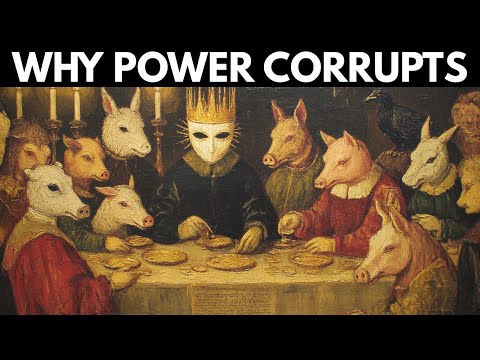
Why People Worship Corrupt Leaders – Nietzsche's Dark Truth
Introduction to the Phenomenon of Corruption and Leadership
The video begins by posing a thought-provoking question: why do people support leaders they know to be corrupt? This inquiry is not merely political; it serves as a psychological warning sign that reflects more about societal tendencies than the leaders themselves. The speaker highlights examples from around the world, such as former Malaysian Prime Minister Najib Razak, who was accused of embezzling $4.5 billion from the State Fund. Despite the evidence against him, many supporters defended him as a patriot prioritizing national development over Western-style accountability. Similarly, in Italy, crowds have rallied behind Mussolini, who centralized power and abandoned democratic principles. This pattern of supporting openly corrupt leaders is not confined to history; it is a contemporary issue observed in various regions and contexts.
Research Insights on Voter Behavior
Research conducted by Harvard and the University of Chicago reveals that a significant portion of voters—40%—knowingly support corrupt candidates, often justifying their decisions by claiming that such leaders are effective in getting things done. This phenomenon leads to a deeper exploration of the psychological mechanisms at play, particularly through the lens of Friedrich Nietzsche's insights into human nature. The video suggests that these mechanisms extend beyond politics, influencing areas such as toxic relationships, cult followings, and celebrity obsessions. The speaker encourages viewers to reflect on their own admiration for individuals who may have crossed ethical lines.
The Human Condition and the Will to Power
According to Nietzsche, the human condition is characterized by chaos and unpredictability, leading individuals to seek control and mastery over their existence. This concept, termed the "will to power," is not merely about domination over others but encompasses a broader desire for control and understanding of one's environment. When individuals feel a lack of control—due to economic instability or social upheaval—they become susceptible to charismatic leaders who appear to offer a solution. The speaker references social psychologist Jennifer Witson's study, which found that individuals deprived of control are more likely to endorse conspiracy theories and gravitate toward leaders who project certainty, even at the cost of ethical compromise.
Moral Frameworks: Master vs. Slave Morality
Nietzsche's theory of moral psychology introduces two competing moral frameworks: master morality and slave morality. Master morality values strength, achievement, and dominance, defining good as that which demonstrates power and bad as weakness. In contrast, slave morality, which emerged among oppressed groups, values humility, empathy, and equality, labeling the powerful as evil. While modern democratic societies espouse slave morality, there exists a tension where many individuals secretly admire displays of unapologetic power. This contradiction is evident in how society often rewards dominant leaders despite professing a desire for ethical governance.
The Role of Resentiment
Nietzsche's concept of "ressentiment" describes a psychological condition stemming from perceived powerlessness and suppressed vengeance. This condition leads individuals to support leaders who promise retribution against perceived oppressors, even if those leaders engage in corrupt practices. The speaker illustrates this with examples of communities devastated by economic decline, where charismatic figures gain support by acknowledging their suffering and promising to address it, regardless of their ethical shortcomings.
Psychological Comfort and Leadership
The video emphasizes the psychological comfort that comes from following decisive leaders during times of uncertainty. When faced with complex ethical dilemmas, many individuals prefer the relief of deferring decision-making to authoritative figures rather than confronting the burden of moral responsibility themselves. This dynamic explains why corrupt leaders who offer simple solutions often gain support, particularly during periods of social or economic stress.
Tribalism and Social Cohesion
Humans, as inherently social beings, have evolved to seek safety in collective identity and consensus. This tribal instinct can lead to dangerous outcomes when corrupt leaders position themselves as protectors of the group, overriding individual moral judgment. The speaker discusses how whistleblowers, like Sharon Watkins during the Enron scandal, often face social ostracism for challenging group cohesion, despite exposing wrongdoing. The herd instinct can compel individuals to defend corrupt behavior to maintain group belonging, illustrating the tension between social nature and individual ethics.
The Crisis of Meaning and Hero Worship
Nietzsche's declaration that "God is dead" signifies a profound psychological crisis in the absence of divine authority for moral guidance. This void leads to a persistent human need for something to worship, which corrupt leaders exploit by cultivating an image of exceptionalism. The speaker notes how this hero worship manifests in contemporary discussions of leaders, where their flaws are minimized or reframed as signs of strength. This psychological manipulation can create a cult of personality, where supporters defend leaders' actions as part of their national identity.
Contrasting Archetypes: The Ubermensch and the Last Man
Nietzsche introduces two archetypes: the Ubermensch, who creates their own values and embraces life's challenges, and the Last Man, who seeks comfort and security at the expense of personal responsibility. This dichotomy helps explain why societies often support leaders who promise to shield them from life's complexities. The speaker warns of the dangers of conflating genuine populist leaders with corrupt figures who exploit grievances for personal gain.
Examples of Resisting Corruption
The video concludes with examples of societies that have recognized and resisted the psychological vulnerabilities that lead to corrupt leadership. Post-apartheid South Africa, under Nelson Mandela, chose reconciliation over vengeance, while Iceland's response to the 2008 financial crisis involved direct citizen action against corrupt officials. These examples illustrate that acknowledging psychological forces can lead to healthier expressions of power and community engagement.
Conclusion: The Path to Self-Awareness and Responsibility
Ultimately, the video calls for self-awareness in understanding why individuals support certain leaders. It challenges viewers to confront their emotional needs for strength, simplicity, and belonging, urging them to develop authentic values rather than relying on corrupt authority figures. By recognizing these psychological patterns, individuals can work towards transcending their vulnerabilities and fostering healthier communities. The speaker encourages viewers to share their insights and engage in conversations that promote a more conscious approach to leadership and societal dynamics.
In the provided transcript, bad leadership is described through the actions and behaviors of leaders who engage in corruption and disregard ethical standards. The speaker highlights instances where leaders openly break rules yet still garner public support. This contradictory relationship illustrates a disturbing reality in which the populace overlooks moral failings in favor of perceived results or strength.
Several character traits associated with bad leadership are identified, including:
- Corruption: Leaders like former Malaysian Prime Minister Najib Razak, accused of embezzling billions, are defended by supporters who see them as patriots, despite clear evidence of wrongdoing.
- Authoritarianism: The admiration of figures like Mussolini, who centralized power and abandoned democratic principles, reflects a willingness to support leaders who exhibit dominance and control.
- Exploitation of Vulnerability: Bad leaders often manipulate public sentiment, especially during times of uncertainty or economic hardship, which can lead citizens to overlook their moral failings in favor of the promise of stability or retribution.
The consequences of such leadership are profound, as they foster an environment where ethical standards are compromised. This normalization of corruption can lead to a cycle where public demand for accountability diminishes, and the populace becomes complicit in perpetuating these corrupt systems. The tension between moral character and leadership effectiveness thus becomes a critical issue, as the effectiveness of such leaders is often measured by their ability to deliver results, regardless of the ethical implications.
- [01:01] 'This isn’t just ancient history.'
- [04:19] 'This contradiction reveals something profound about our relationship with power.'
- [08:19] 'Addressing corruption takes a backseat to the psychological relief of having one's pain recognized and avenged.'
The transcript indicates several personal qualities associated with bad leaders, focusing on traits that are often overlooked or even celebrated by their supporters. These qualities include:
- Corruption: Leaders like Najib Razak are described as engaging in unethical behavior, specifically embezzlement, yet are still seen as patriots by their supporters.
- Authoritarianism: Figures such as Mussolini are admired for their strong, decisive nature, despite their disregard for democratic principles.
- Lack of Empathy: The support for leaders who promise retribution, even if they engage in corrupt practices, suggests a disconnect between the leader's actions and the moral standards expected by the public.
Moreover, the transcript hints at attributes like charisma and decisiveness as appealing characteristics that can mask deeper flaws. Supporters may idolize these leaders for their apparent strength and ability to bring about results, even if those results stem from unethical methods.
Overall, arrogance, dishonesty, and a lack of accountability are traits that characterize bad leaders, leading to admiration from those who value strength and decisiveness over moral integrity.
- [01:30] '...these same mechanisms explain everything from toxic relationships to cult followings.'
- [05:41] 'Many people secretly admire displays of unapologetic power.'
- [06:10] 'They said he’s a man of destiny who transcends ordinary moral boundaries.'
Yes, the transcript discusses how bad leaders can be attractive to voters and other selectors, highlighting their traits such as confidence, decisiveness, and charisma. The speaker explains that during times of uncertainty or crisis, people often gravitate toward leaders who project absolute certainty and who seem capable of taking control, even if they possess low moral standards.
This phenomenon can be observed in various contexts:
- Confidence: Leaders who exhibit strong, confident behavior can create a sense of security among their followers, leading to a willingness to overlook ethical transgressions.
- Decisiveness: The appeal of leaders who offer simple solutions to complex problems can be particularly strong, as they provide psychological relief from uncertainty.
- Charisma: Charismatic leaders often inspire loyalty and admiration, even in the face of moral failings, because they present themselves as capable of navigating chaos effectively.
Thus, the allure of these leaders is not just based on their actions but on the psychological needs of their followers, who seek strength and control during turbulent times. This attraction can lead to a dangerous cycle where the electorate prioritizes perceived effectiveness over ethical integrity, resulting in the selection of leaders who may ultimately harm their interests.
- [02:25] '...we exist in a universe with no inherent meaning or structure, facing uncertainty at every turn.'
- [03:07] 'Humans don’t primarily seek happiness or pleasure. We seek control.'
- [11:17] '...they’re offering liberation from the existential burden of figuring it out ourselves.'
The transcript provides insights into why people might select or support a leader despite being aware of their low moral standards. The speaker emphasizes several factors driving this behavior:
- Short-term Interests: Often, voters may prioritize immediate benefits or results over long-term ethical considerations, particularly in times of crisis.
- Fear: Individuals facing economic instability or social upheaval may support leaders who promise decisive action, even if that requires ethical compromises.
- Group Identity: People may align with leaders who resonate with their group identity, leading to a rejection of accountability for the sake of cohesion and belonging.
- Political Loyalty: Loyalty to a political ideology or party can blind individuals to the moral failings of their leaders, as they prioritize allegiance over ethics.
- Desperation: In times of struggle, the belief that results matter more than morality can become a compelling justification for supporting corrupt leaders.
Ultimately, this dynamic reflects a complex interplay of psychological needs and societal pressures, where the relief of having one's pain acknowledged and avenged can eclipse the necessity for ethical leadership. The transcript highlights a troubling reality: addressing corruption becomes secondary to the psychological satisfaction derived from a leader's perceived strength and capability to act.
- [08:29] '...they don’t just want solutions. They want vindication.'
- [09:09] '...they’re choosing emotional vindication over practical benefit.'
- [19:15] '...voters consistently gravitate toward leaders who offer simple solutions and scapegoats.'
The transcript suggests that there is a complex relationship between moral character and leadership effectiveness. While moral integrity is often seen as essential for good leadership, the speaker points out that immoral individuals can sometimes appear effective or produce attractive short-term results. This duality is key in understanding why societies may support corrupt leaders.
Several critical points illustrate this relationship:
- Perceived Effectiveness: Leaders who achieve results, even through unethical means, can gain admiration from the public. For instance, Napoleon Bonaparte's conquests were celebrated as evidence of his greatness despite the destruction they caused.
- Public Justification: Supporters may rationalize a leader's corrupt practices by emphasizing their decisiveness and ability to navigate complex situations, suggesting that achieving results outweighs moral considerations.
- Social Norms: In modern democratic societies, while there is a public embrace of values like equality and compassion, many individuals harbor a secret admiration for displays of power, reflecting a tension between stated values and actual behavior.
This indicates that while moral integrity is crucial for sustainable leadership, the efficacy of leadership can sometimes be perceived through a lens of immediate results. As the transcript emphasizes, the psychological comfort derived from strong leadership can lead to the acceptance of unethical behavior, complicating the relationship between morality and effectiveness.
- [05:28] 'Modern democratic societies officially embrace slave morality.'
- [06:32] 'We tell pollsters we want ethical leaders, but our actual behavior often rewards dominance displays.'
- [12:54] 'The psychological cost of standing apart from our social group often feels greater than the cost of compromising our ethics.'
[00:04] Have you ever wondered why people[00:05] willingly cheer for leaders they know[00:07] are corrupt? Why the same public that[00:10] demands justice will turn around and[00:12] idolize someone who openly breaks the[00:14] rules? It's not just a political[00:16] curiosity. It's a psychological warning[00:19] sign. One that says more about us than[00:22] the leaders we choose.[00:24] Take former Malaysian Prime Minister[00:26] Najab Razak, accused of embezzling $4.5[00:30] billion from the State Fund. Despite[00:33] overwhelming evidence, supporters[00:35] defended him as a patriot who[00:37] prioritized national development over[00:39] Western style[00:41] accountability. In Italy, millions[00:44] poured into the streets chanting[00:45] Mussolini's name as he abandoned[00:47] democratic principles and centralized[00:49] power. We've witnessed this phenomena[00:52] across continents and eras. Leaders who[00:56] don't hide their corruption, but flaunt[00:58] it and are celebrated for it. This isn't[01:01] just ancient history. Harvard and[01:03] University of Chicago researchers[01:05] studying voter behavior in regions where[01:08] politicians with criminal records[01:09] consistently win elections made a[01:12] startling discovery. 40% of voters[01:15] knowingly supported corrupt candidates.[01:18] their[01:19] justification. Sometimes you need[01:22] someone willing to break the rules and[01:24] they get things done when others[01:26] can't. Welcome to philosophy[01:29] coded. Today we're exploring Nichch's[01:32] controversial insights into this[01:33] psychological phenomenon. And this isn't[01:36] merely political analysis. These same[01:39] mechanisms explain everything from toxic[01:42] relationships to cult followings. From[01:44] our celebrity obsessions to why business[01:47] titans often face no consequences for[01:49] their actions. Have you ever caught[01:51] yourself admiring someone despite[01:53] knowing they've crossed ethical lines?[01:56] Or wondered why societies repeatedly[01:58] elevate leaders with obvious character[02:00] flaws? By the end of this video, you'll[02:03] recognize these patterns in your own[02:05] decision-making and understand what[02:07] Nichzche knew about human nature that[02:09] many of us are still reluctant to[02:15] admit. Imagine standing at the edge of a[02:18] precipice. Below you stretches the[02:20] unknown, chaotic, unpredictable,[02:23] potentially threatening. According to[02:25] Nze, this isn't just a physical[02:27] scenario. It's the fundamental human[02:30] condition.[02:31] We exist in a universe with no inherent[02:34] meaning or structure, facing uncertainty[02:36] at every turn. How do we[02:39] respond? Nichch's insight was what he[02:42] called the will to power. Not simply[02:45] domination over others, but mastery over[02:48] existence itself.[02:50] My idea is that every specific body[02:53] strives to become master over all space[02:56] and to extend its force, its will to[02:59] power, he[03:00] wrote. This isn't abstract philosophy.[03:04] It's practical psychology. Humans don't[03:07] primarily seek happiness or pleasure. We[03:10] seek[03:11] control. We desperately want to feel[03:13] that we understand our world and can[03:15] navigate it[03:17] effectively. When personal control feels[03:20] impossible during economic instability,[03:23] social upheaval, or personal failure, we[03:26] become susceptible to anyone who offers[03:28] us a share in their apparent power. Look[03:31] at modern political rallies where[03:33] thousands chant a leader's name despite[03:35] knowing of their ethical[03:37] transgressions. These supporters aren't[03:40] ignorant. They're finding vicarious[03:42] power through association with someone[03:43] who appears to master chaos.[03:46] Social psychologist Jennifer Witson[03:48] discovered something fascinating about[03:50] this dynamic. In a 2008 study,[03:54] participants deprived of control were[03:56] 40% more likely to see illusory patterns[03:59] and endorse conspiracy[04:01] theories. Similarly, they gravitate[04:04] towards leaders who project absolute[04:06] certainty even when that certainty[04:09] requires ethical compromise.[04:12] When was the last time you admired[04:13] someone for getting results using[04:16] methods you'd personally consider wrong?[04:19] This contradiction reveals something[04:20] profound about our relationship with[04:22] power. During times of uncertainty, our[04:25] standards often shift without our[04:27] conscious[04:32] awareness. What is good? All that[04:36] heightens the feeling of power, the will[04:38] to power, power itself in man. This[04:41] provocative statement from the[04:43] antichrist introduces Nichzche's[04:45] controversial theory of moral[04:47] psychology. Nichza identified two[04:50] competing moral frameworks that exist[04:52] throughout human history. Master[04:55] morality values strength, achievement,[04:59] dominance, and excellence. It defines[05:02] good as whatever demonstrates power and[05:05] bad as whatever reveals weakness. Slave[05:09] morality, which Nichzche believed[05:11] emerged among oppressed peoples, prizes[05:14] humility, empathy, equality, and[05:17] compassion. It labels the powerful as[05:20] evil and the humble as[05:23] good. Modern democratic societies[05:25] officially embrace slave morality. We[05:28] publicly praise equality, compassion,[05:30] and fairness. Yet beneath this consensus[05:34] lies a fascinating tension. Many people[05:38] secretly admire displays of unapologetic[05:41] power. They condemn exploitation Monday[05:44] through Friday, but binge watch[05:46] succession on weekends, secretly[05:49] thrilled by ruthless corporate[05:50] maneuvering. This isn't merely[05:52] hypocrisy. It reveals a deeper[05:55] psychological reality that shapes our[05:57] relationship with the leadership.[05:59] Napoleon Bonapart, though responsible[06:01] for wars that killed millions, inspired[06:04] devotion not despite his conquests, but[06:06] because of them. His admirers didn't say[06:10] he's a good man despite his flaws. They[06:12] said he's a man of destiny who[06:15] transcends ordinary moral boundaries.[06:18] A 2019 study in the Journal of[06:20] Personality and Social Psychology[06:22] confirmed this[06:24] contradiction. Researchers found[06:26] participants who claimed to value[06:27] equality still rated dominant power-[06:30] seeking individuals as more charismatic[06:32] and effective leaders. We tell pollsters[06:35] we want ethical leaders, but our actual[06:37] behavior often rewards dominance[06:40] displays. Think about how you respond[06:42] when someone successfully breaks rules[06:44] that constrain everyone else. Do you[06:47] feel outrage or a twinge of admiration[06:50] when supporters defend a corrupt[06:52] leader's actions by saying at least[06:54] they're strong? They're not making an[06:57] error. They're revealing the master[06:59] morality values that operate beneath[07:01] their conscious egalitarian[07:07] principles. Perhaps Nichze's most[07:09] illuminating concept for today's[07:11] political landscape is what he called[07:13] resentiment.[07:15] This French term describes more than[07:17] simple resentment. It's a festering[07:19] psychological condition born from[07:21] perceived powerlessness, suppressed[07:23] vengeance, and redirected[07:26] rage. Man would rather will nothingness[07:29] than not will at all. Nze wrote, "In[07:32] simpler terms, humans would prefer[07:35] destructive action over feeling[07:36] completely powerless to affect their[07:38] world. This explains why people[07:40] sometimes support leaders who tear down[07:42] institutions rather than feeling they[07:44] have no influence at all. Imagine a[07:47] community devastated by factory closures[07:50] and economic decline. For years,[07:53] residents watch their town deteriorate[07:54] while feeling ignored by mainstream[07:57] institutions. Then a charismatic figure[07:59] arrives who does something no one else[08:01] has done, acknowledges their suffering,[08:04] and promises retribution against those[08:08] responsible. Even if this figure engages[08:10] in corrupt practices themselves, they[08:13] often gain fervent[08:14] support. Why? Because addressing[08:17] corruption takes a backseat to the[08:19] psychological relief of having one's[08:21] pain recognized and[08:24] avenged. When people feel their values[08:27] undermined, their economic security[08:29] threatened, or their status diminished,[08:31] they don't just want solutions. They[08:33] want[08:35] vindication. Political scientist[08:37] Katherine Kramer's field research in[08:38] Wisconsin revealed exactly this[08:41] dynamic. Rural residents supported[08:44] policies that sometimes worked against[08:45] their economic interests because those[08:48] policies punish the urban elites they[08:50] blamed for their marginalization.[08:53] The emotional payoff of seeing perceived[08:55] enemies suffer outweighed material[08:57] concerns. This helps explain why[08:59] struggling communities sometimes rally[09:01] behind leaders who objectively damage[09:03] their material interests. These[09:06] communities aren't[09:07] miscalculating. They're choosing[09:09] emotional vindication over practical[09:11] benefit. Have you ever supported someone[09:14] not because they helped you, but because[09:15] they hurt someone you felt had wronged[09:17] you?[09:19] This impulse, which we all share to[09:21] varying degrees, becomes particularly[09:23] dangerous when manipulated by corrupt[09:30] leadership. Freedom is the will to be[09:32] responsible for ourselves, wrote Nichza.[09:36] This simple statement contains a[09:37] profound insight. True freedom carries[09:40] with it the heavy burden of[09:42] responsibility. When we make our own[09:44] moral choices, we can no longer blame[09:47] others for the outcome. In thus spoke[09:50] Zarathustra, Nitz describes three[09:53] spiritual transformations that humans[09:55] can undergo. First comes the camel that[09:58] dutifully carries burdens imposed by[10:01] others. Next is the lion that fights for[10:04] freedom from those burdens. But only the[10:07] third stage, the child, can create new[10:10] values and meaning. Most people niche[10:13] observed remain camels throughout their[10:15] lives, preferring the weight of external[10:18] authority to the terrifying freedom of[10:20] creating their own[10:21] meaning. Psychologist Eric from later[10:24] expanded on this insight in his book,[10:27] Escape from Freedom, arguing that the[10:29] anxiety of moral responsibility drives[10:33] people toward authoritarian systems that[10:35] relieve them of decision-making burdens.[10:39] Think about facing a complex ethical[10:41] dilemma with no clear right answer.[10:45] Which feels more comfortable? Making the[10:48] decision yourself and bearing all[10:50] responsibility for the consequences or[10:52] having a strong authority figure simply[10:55] tell you what to do. For most of us, the[10:58] latter provides profound relief. This[11:00] psychological mechanism helps explain[11:02] why corrupt but decisive leaders often[11:05] gain support during times of complexity[11:07] and uncertainty. When a charismatic[11:10] figure confidently proclaims, "I alone[11:13] can fix it," or "The solution is[11:15] simple," they're offering liberation[11:17] from the existential burden of figuring[11:20] it out ourselves. During Germany's[11:22] chaotic Vimar period, many citizens[11:25] embraced leadership that offered clear[11:27] narratives and decisions despite[11:28] mounting evidence of corruption. The[11:31] psychological relief of not having to[11:33] navigate moral complexity themselves[11:36] outweighed concerns about[11:38] integrity. Ask yourself, when was the[11:41] last time you deferred a difficult moral[11:43] choice to an authority figure? That[11:46] comfort you felt, that relief of not[11:49] deciding for yourself connects directly[11:51] to how societies sometimes embrace[11:53] corrupt but decisive[11:58] leaders. The shest way to corrupt a[12:01] youth is to instruct him to hold in[12:03] higher esteem those who think alike than[12:05] those who think differently.[12:08] This observation from Nichzche's the[12:10] dawn captures a fundamental aspect of[12:12] human psychology. Our deeply social[12:15] nature. Humans evolved as tribal[12:18] creatures. Our ancestors survived not[12:21] through individual strength but through[12:23] group[12:24] cohesion. This evolutionary heritage[12:27] makes us instinctively seek safety in[12:30] collective identity and consensus. What[12:32] NZ called the herd instinct. This[12:35] instinct serves many positive functions.[12:38] It enables cooperation, builds[12:41] communities, and creates shared meaning.[12:44] But it becomes dangerous when a corrupt[12:46] leader successfully positions themselves[12:49] as the voice or protector of the group.[12:52] When this happens, our instinct for[12:54] conformity can override our individual[12:56] moral judgment. The psychological cost[12:59] of standing apart from our social group[13:01] often feels greater than the cost of[13:03] compromising our ethics. We see this[13:06] dynamic clearly in how whistleblowers[13:08] are treated, even when they expose clear[13:11] wrongdoing. Consider the Enron scandal.[13:14] When Sharon Watkins warned CEO Kenneth[13:17] Lei about accounting irregularities, she[13:20] was marginalized and faced career[13:22] threats despite being proven right. Our[13:24] social programming runs so deep that we[13:27] often punish those who challenge group[13:29] cohesion, even when they're objectively[13:31] right. The power of this herd instinct[13:34] intensifies when corrupt leaders[13:36] deliberately stoke tribal identity by[13:40] framing criticism as an attack on the[13:42] group rather than on their actions. They[13:45] transform accountability into betrayal.[13:48] The social cost of breaking from the[13:49] group becomes so high that many people[13:52] will defend increasingly corrupt[13:54] behavior rather than face[13:58] exclusion. Social psychologist Jonathan[14:00] height observed this dynamic in his[14:03] research. When sacred values are[14:05] threatened, we become intuitive[14:07] theologians rather than intuitive[14:09] scientists, defending our group's[14:11] beliefs regardless of evidence.[14:14] Where in your life have you felt[14:16] pressure to support something you[14:17] privately question simply to maintain[14:19] group belonging? This tension between[14:22] our social nature and our individual[14:24] moral compass shapes our relationship[14:26] with all forms of[14:31] leadership. God is dead proclaimed[14:34] Nichzche's madman in the gay science.[14:37] With this famous declaration, he wasn't[14:39] simply making a statement about[14:40] religious skepticism, but announcing a[14:43] profound psychological crisis. Without[14:46] divine authority, who or what provides[14:49] meaning and moral guidance despite the[14:52] decline of traditional religion in many[14:54] societies, Nichze observed that our[14:56] psychological need for something to[14:58] worship remains[15:00] unchanged. In thus spoke Zerahustra, he[15:04] offered a warning that resonates today.[15:07] Beware that a statue does not crush you.[15:10] We can see this hero worship impulse in[15:12] how we discuss certain leaders and[15:14] innovators in our culture. She's playing[15:17] 4D chess. He sees around corners.[15:21] They're 10 steps ahead of everyone else.[15:24] These aren't descriptions of capable[15:26] humans. They're modern mythmaking. A[15:29] corrupt leader who understands this[15:30] psychology doesn't present themselves as[15:32] merely competent. They cultivate an aura[15:36] of exceptionalism and[15:38] destiny. Their corruption becomes[15:40] reframed not as a character flaw but as[15:43] evidence of their extraordinary nature.[15:46] Normal rules don't apply to great men[15:49] and women. History is made by those[15:51] willing to break[15:52] conventions. Take Vladimir Putin.[15:55] Despite widespread reports of corruption[15:58] and vast personal wealth, many of his[16:00] supporters reframe these as signs of[16:02] strength and necessity for Russia's[16:04] resurgence. His lavish lifestyle is not[16:07] seen as mere greed, but as a symbol of[16:10] national[16:11] pride. By linking personal power to[16:14] patriotic narratives, Putin turns what[16:16] might otherwise be condemned into[16:18] something some Russians defend as part[16:20] of their national[16:21] identity. The cultivation of a cult of[16:24] personality isn't just vanity. It's[16:26] strategic[16:28] psychology. When we elevate leaders to[16:30] heroic or even quasi religious status,[16:33] we become invested in defending their[16:35] mythic image rather than evaluating[16:37] their actual behavior. Psychologist Dan[16:41] McAdams discovered something remarkable[16:43] in his research. Supporters of[16:45] controversial leaders often integrate[16:47] their personal identity with narratives[16:49] about the leader's greatness. Abandoning[16:52] the leader would require reconstructing[16:54] their own identity, making criticism[16:56] feel like self- betrayal. Do you have[16:59] heroes whose flaws you find yourself[17:01] defending or minimizing? Our need for[17:04] idealized figures is deeply human, but[17:07] it's also a vulnerability that corrupt[17:09] leaders readily exploit.[17:15] And thus spoke Zerahustra. Nze[17:18] introduces two opposing human archetypes[17:20] that illuminate our relationship with[17:22] leadership. The uber mench, often[17:25] translated as Superman or overman, and[17:29] the last man. The Uber Mench represents[17:33] Nichzche's ideal, someone who creates[17:36] their own values, embraces life's[17:38] challenges, and takes full[17:40] responsibility for their choices.[17:43] The last man by contrast seeks only[17:46] comfort, security and the absence of[17:50] difficulty. They have left the regions[17:52] where it was hard to live for one needs[17:55] warmth. Nze writes, one still loves[17:58] one's neighbor and rubs against him for[18:00] one needs[18:02] warmth. This vivid description helps[18:05] explain another paradox of leadership.[18:08] We often support leaders who promise to[18:10] protect us from life's hardships and[18:12] complexities. This is particularly[18:14] dangerous when distinguishing between[18:16] populist leaders addressing genuine[18:18] grievances and corrupt leaders[18:20] exploiting them. The FIFA corruption[18:23] scandal provides a perfect example. Many[18:26] football fans knew FIFA officials were[18:28] corrupt, but supported them anyway[18:30] because they delivered what fans wanted,[18:33] exciting tournaments and national pride[18:35] without demanding difficult changes to[18:37] the sports economics or[18:39] governance. Imagine two political[18:41] speeches. One says, "The challenges we[18:44] face are complex and will require[18:46] difficult choices and sacrifices from[18:48] all of us." The other proclaims, the[18:52] problems are simple. I alone can fix[18:54] them without any sacrifice from you.[18:57] Which consistently wins elections across[19:00] cultures and time periods. The evidence[19:02] is clear. Political scientists studying[19:06] voter behavior have found something[19:08] revealing. During periods of economic or[19:11] social stress, voters consistently[19:13] gravitate toward leaders who offer[19:15] simple solutions and scapegoats rather[19:19] than those acknowledging complexity.[19:22] Even when they recognize the simple[19:24] solutions are unlikely to work, the[19:27] psychological comfort outweighs[19:29] practical[19:30] considerations. What comforts do you[19:32] seek from leadership? What complexities[19:35] are you tempted to avoid? In recognizing[19:38] our own desire for simple answers, we[19:40] begin to understand our vulnerability to[19:43] those who would exploit this desire.[19:49] The psychological patterns we've[19:51] explored aren't inevitable. Some[19:53] societies have recognized these[19:55] vulnerabilities and developed effective[19:57] immunities against corrupt[19:59] leadership. Consider post-aparttheid[20:01] South Africa under Nelson Mandela.[20:04] Despite strong incentives for vengeance[20:07] and exploitation after decades of[20:09] oppression, the very conditions that[20:11] typically fuel support for corrupt[20:13] leadership, South Africa chose a[20:16] different path. Mandela's truth and[20:19] reconciliation commission channeled[20:21] resentment toward healing rather than[20:23] retribution.[20:25] By acknowledging people's pain while[20:27] rejecting vengeance as a solution, South[20:30] Africa created a model for transcending[20:33] the psychology that typically enables[20:35] corruption. Iceland's response to the[20:38] 2008 financial crisis offers another[20:41] example. When corrupt bankers and[20:43] politicians threatened their economy,[20:46] citizens launched the kitchen wear[20:48] revolution surrounding parliament with[20:50] ordinary people banging kitchen[20:52] implements. They forced resignations,[20:55] jailed banking executives, and rewrote[20:57] their constitution through direct[20:59] citizen[21:00] involvement. Iceland succeeded by[21:02] cultivating collective efficacy, the[21:06] shared belief that citizens together can[21:08] reshape their[21:09] circumstances. This directly counteracts[21:12] the psychological helplessness that[21:14] drives support for corrupt strong men.[21:17] At the individual level, resistance[21:20] begins with self-awareness. Ask[21:22] yourself, am I supporting a leader[21:25] because they deliver practical benefits[21:27] or because they satisfy deeper[21:29] psychological cravings for vengeance,[21:32] simplicity, or tribal[21:34] belonging? The women of Liberia's Jiar[21:37] Polo County offer another[21:39] example. After enduring corrupt[21:41] leadership that exploited tribal[21:43] divisions, women across different ethnic[21:46] groups formed cross tribal councils that[21:48] created new accountability systems.[21:51] By deliberately building relationships[21:54] across group boundaries, they[21:56] neutralized the tribal psychology that[21:58] corrupt leaders had manipulated. These[22:01] examples share a common thread. They[22:03] don't deny the psychological forces[22:05] Nichze identified. Instead, they[22:08] acknowledge these vulnerabilities and[22:10] build structures to channel them toward[22:12] healthier[22:13] expressions. The drive for power becomes[22:16] democratic participation. The need for[22:18] heroes shifts to celebrating everyday[22:21] citizens performing acts of integrity.[22:24] Have you noticed how your own community[22:26] either reinforces or resists these[22:29] patterns? Our vulnerability to corrupt[22:31] leadership isn't a personal failing.[22:34] It's deeply human. Our strength comes[22:37] from creating communities that help us[22:39] transcend these tendencies together.[22:45] Nze didn't just expose our psychological[22:48] vulnerabilities. He offered a way to[22:50] rise above them. Become who you are, he[22:54] wrote, urging us to develop ourselves[22:57] authentically rather than be shaped by[22:59] the will of others. To do that, we must[23:02] first understand the forces within us.[23:05] our will to power, our resentment, our[23:08] fear of freedom, our hurt instinct, our[23:11] craving for idols, and our longing for[23:13] comfort as the last man. These aren't[23:16] just abstract ideas. They're the very[23:19] impulses that corrupt leaders[23:21] exploit. Nichza challenges us to embrace[23:24] Amorati, a love of fate. Instead of[23:28] seeking leaders who promise to rescue us[23:30] from hardship, he calls on us to[23:32] confront life's difficulties directly[23:35] and to create our own values, not borrow[23:38] them from authority. But this path[23:40] demands honesty. Why do we support the[23:44] leaders we do? Is it because of reasoned[23:47] judgment or because they satisfy deeper[23:49] emotional needs for strength, for[23:53] simplicity, for belonging or even[23:56] revenge?[23:57] These are not easy questions. They[24:00] threaten our self-image as rational and[24:03] independent. But Nze believed we could[24:05] face them and[24:07] transform not by denying our instincts[24:10] but by understanding and integrating[24:12] them. That's how we evolve. Man is[24:16] something that shall be overcome. He[24:18] wrote and maybe, just maybe,[24:21] understanding why we worship corrupt[24:23] leaders is the first step in that[24:25] overcoming. If this exploration sparked[24:28] something in you, don't keep it to[24:31] yourself. Share it with someone whose[24:33] mind you respect. The conversations that[24:35] follow might help us all become more[24:37] conscious about who we follow and[24:40] why. And before you go, tell me, which[24:44] of these psychological forces do you see[24:46] most clearly in yourself or[24:48] society? Leave a comment. Let's continue[24:51] this conversation, not just to[24:53] understand the world, but to change how[24:55] we live in it. Until next time, remember[24:59] the most dangerous power we can give any[25:01] leader is the power to remain[25:04] unquestioned.[25:06] [Music][25:16] [Music]
Katherine Cramer | The Politics of Resentment in contemporary US | Populism Conference Amsterdam
Hello, good morning. The speaker expresses gratitude for the warm welcome received at the conference in Amsterdam, noting that it is their first visit to the city and highlighting the uplifting atmosphere of the event. They appreciate the opportunity to share the day with faculty, students, and members of the public, indicating a collaborative spirit in addressing important issues.
The speaker's purpose is to share their personal journey, the insights gained from their research, and how a localized study can have broader implications for understanding political dynamics, particularly in Europe. They acknowledge that the topic may not be uplifting but emphasize the importance of gathering to discuss significant issues, which instills hope in them.
As a public opinion scholar, the speaker clarifies that their interest extends beyond traditional public opinion surveys, which often focus on quantitative data. Instead, they are fascinated by the qualitative aspects—why people think the way they do, how they interpret their political environment, and how these interpretations influence their political beliefs. They aim to understand the narratives and conversations that shape public opinion, particularly in the context of social class identity.
The speaker's research is rooted in their experiences in North America, specifically Wisconsin, where they sought to explore the intersection of social class and political interpretation. They embarked on a project to investigate how social class influences political perspectives by engaging with diverse communities across the state. This endeavor was both a professional pursuit and a personal journey, allowing the speaker to connect with various social strata while enjoying the culinary offerings of the region.
To conduct their research, the speaker sampled 27 communities throughout Wisconsin, aiming to capture a broad spectrum of social class identities. They sought to engage with groups that represented different economic backgrounds, from low-income to high-income areas, including farming communities and urban centers. The methodology involved immersing themselves in local conversations, often in informal settings like diners, gas stations, and community centers, where people gather to discuss their lives and concerns.
The speaker's approach involved reaching out to local newspaper editors and university extension offices to identify groups that regularly convene. This grassroots strategy allowed them to access authentic conversations about political issues and community dynamics. They emphasized the importance of listening to these discussions, as they reveal the underlying sentiments and concerns of the populace.
As the research progressed, the speaker began to notice a recurring theme of resentment among individuals in smaller communities. This sentiment, which they refer to as the "politics of resentment," emerged as a significant factor influencing political attitudes. When asked about their concerns, many individuals expressed feelings of being overlooked and marginalized by urban centers like Madison and Milwaukee, which they perceived as the epicenters of political and economic power in Wisconsin.
The speaker describes how residents articulated their frustrations regarding the perceived inequities in resource distribution and political attention. They felt that decisions made in urban areas often failed to consider the needs and perspectives of rural communities. This disconnect fostered a sense of injustice, as individuals believed they were not receiving their fair share of resources, respect, or recognition.
Specifically, the speaker highlights how individuals in rural communities expressed resentment towards urban elites, government officials, and the Democratic Party, which they increasingly associated with urban interests. This resentment was compounded by a historical context where rural areas had experienced economic decline and a loss of status, leading to a longing for a return to a more prosperous past.
The speaker emphasizes that this resentment is not merely a reaction to economic hardship but is intertwined with cultural and social identities. Individuals in these communities often felt that their values and ways of life were dismissed or devalued by those in urban areas. This sense of cultural alienation contributed to a growing divide between rural and urban populations, which has significant implications for political polarization.
As the speaker delves deeper into the implications of these sentiments, they note that the politics of resentment have been skillfully harnessed by political figures like Scott Walker and Donald Trump. They argue that these leaders tapped into the existing frustrations of rural voters, framing their messages in ways that resonated with the feelings of neglect and injustice experienced by these communities.
The speaker recounts how Scott Walker's controversial legislation, Act 10, which aimed to limit collective bargaining rights for public employees, was met with starkly different reactions from urban and rural populations. While urban residents protested vehemently against the legislation, many rural residents expressed support, viewing it as a long-overdue correction to perceived inequalities in public sector benefits.
This divergence in response illustrates the broader political realignment occurring in the United States, where rural voters increasingly align with conservative candidates who promise to address their grievances. The speaker notes that this trend is not isolated to Wisconsin but reflects a national phenomenon where rural resentment has become a potent force in American politics.
Transitioning to a broader context, the speaker draws parallels between the sentiments observed in Wisconsin and similar trends in Europe. They reference the rise of right-wing populist parties in various European countries, highlighting how rural areas have shown stronger support for these movements. The speaker suggests that the urban-rural divide is not unique to the United States but is a global issue, with significant implications for democratic governance and social cohesion.
In discussing the relationship between globalization and populism, the speaker raises critical questions about the underlying drivers of these sentiments. They argue that both economic and cultural anxieties contribute to the rise of populist movements, as individuals grapple with feelings of insecurity and displacement in an increasingly interconnected world.
The speaker concludes by emphasizing the importance of understanding the perspectives through which individuals interpret their political realities. They advocate for a shift in focus from blaming voters for their choices to examining the political elites and institutions that shape these narratives. By recognizing the complex interplay of social, economic, and cultural factors, scholars and policymakers can better address the root causes of political polarization and resentment.
In summary, the speaker's insights reveal the intricate dynamics of rural resentment, the impact of social class on political interpretation, and the broader implications for democratic governance. Their research underscores the need for a nuanced understanding of public opinion, one that considers the lived experiences and cultural identities of individuals in diverse communities. Through this lens, we can begin to address the challenges posed by political polarization and work towards a more inclusive and equitable society.
The source discusses the concept of "bad" leadership in the context of political dynamics, particularly through the lens of public sentiment and rural consciousness. Bad leadership is reflected in the disconnect between leaders in urban centers, such as Madison and Milwaukee, and the populations in rural areas of Wisconsin. This disconnect manifests in various behaviors and consequences that are perceived negatively by these communities.
One significant aspect of bad leadership is the lack of listening and engagement between urban leaders and rural constituents. The speaker highlights that rural residents feel ignored, stating, [11:40] "...there’s no listening going on in reverse. People don’t come out here...except you Kathy, you seem a little odd." This quote underscores the sentiment that rural voices are often overlooked, leading to a feeling of disenfranchisement.
Moreover, the speaker indicates that bad leadership often results in feelings of resentment and injustice among those in rural areas. They express a belief that decisions are made without understanding their realities, which fosters a sense of anger and betrayal among constituents. The speaker notes that rural individuals often feel they are not receiving their fair share of resources or respect, stating, [12:24] "...we don’t get our fair share of respect...we work hard. We deserve more.” This illustrates the consequences of poor leadership, where communities feel marginalized and undervalued.
In summary, bad leadership is characterized by a lack of connection and respect for rural communities, leading to feelings of resentment and a belief that their needs and voices are disregarded. These sentiments are critical in understanding the political landscape and the rise of populist sentiments in rural areas.
- [11:40] "...there’s no listening going on in reverse. People don’t come out here...except you Kathy, you seem a little odd."
- [12:24] "...we don’t get our fair share of respect...we work hard. We deserve more."
In the source, the speaker does not explicitly define personal qualities associated with bad leaders, such as arrogance, dishonesty, narcissism, ruthlessness, insecurity, incompetence, or a lack of empathy. However, the traits that could be interpreted as indicative of poor leadership are inferred through the discussion of public sentiment and rural consciousness.
The speaker suggests that urban leaders, particularly in Madison and Milwaukee, are perceived as disconnected from the struggles and values of rural communities. This disconnection implies a lack of empathy for the realities faced by these populations. For instance, rural individuals express feelings of being judged and misunderstood by urban elites, as noted in the quote, [12:46] "...they think we’re uneducated, they think we’re stupid..." This reflects a perception of arrogance and a general lack of understanding of rural lifestyles among urban political leaders.
Another aspect that can be associated with bad leadership is the tendency for urban leaders to prioritize their own interests over those of rural communities. The speaker mentions, [12:10] "...they’re telling me we’re not getting our fair share...we’re not getting our fair share of attention or power..." This assertion highlights a perceived lack of integrity and consideration for the needs of all constituents, suggesting that the leaders may be more focused on their agendas rather than serving the public effectively.
While the transcript does not provide a detailed exploration of specific personality traits of bad leadership, it implies that the failure to connect with and respect rural constituents can be viewed as a significant shortcoming in leadership effectiveness.
- [12:46] "...they think we’re uneducated, they think we’re stupid..."
- [12:10] "...they’re telling me we’re not getting our fair share...we’re not getting our fair share of attention or power..."
The source indicates that although bad leaders can have low moral standards and exhibit negative traits, they can still be attractive to voters. The speaker illustrates this through the concept of resentment felt by rural populations towards urban elites and government. Rural individuals express a desire for leaders who promise to address their grievances, even if those leaders do not possess high moral integrity.
For instance, the speaker discusses how sentiments of resentment can lead people to support leaders like Scott Walker and Donald Trump, who tap into this discontent. The speaker notes, [10:08] "...what I want to argue to you is that remember that I am hearing this sentiment in 2007...long before Donald Trump..." This indicates that the allure of certain leaders stems from their ability to resonate with the frustrations of the electorate, regardless of their moral character.
Moreover, the speaker highlights the idea that these leaders project an image of strength and decisiveness, appealing to constituents who feel powerless. For example, leaders who promise to "drain the swamp" or challenge the status quo can seem charismatic and capable of taking control, thus drawing support from individuals who are seeking change. The speaker reflects this when mentioning that voters believed their hard work was not recognized, saying, [16:34] "I’m not getting what I deserve." This quote encapsulates the idea that voters may gravitate towards leaders who validate their feelings of disenfranchisement.
In conclusion, while the source does not classify leaders as bad explicitly, it suggests that low moral standards do not necessarily deter voter support if those leaders can effectively communicate confidence and promise change in line with constituents' desires.
- [10:08] "...what I want to argue to you is that remember that I am hearing this sentiment in 2007...long before Donald Trump..."
- [16:34] "I’m not getting what I deserve."
The source provides insights into why individuals might select or support leaders despite recognizing their low moral standards. The speaker emphasizes that sentiments of resentment and feelings of being overlooked play a significant role in this decision-making process. Rural populations express a strong sense of being marginalized, stating that they feel decisions are made in urban centers without consideration of their needs.
For example, many rural constituents believe that their concerns are disregarded, leading them to support leaders who they feel represent their interests, even if those leaders are perceived as morally questionable. The speaker notes, [11:42] "...people don’t come out here and ask us what we’re thinking about. Instead, they tell us, they regulate us..." This indicates a deep-rooted frustration that can lead to political loyalty towards leaders who promise to change this dynamic.
Additionally, the speaker mentions that individuals may support leaders based on political loyalty or group identity. When a leader resonates with the experiences and frustrations of a particular group, they may overlook moral failings in favor of perceived benefits. The speaker articulates this sentiment, saying, [12:12] "...we’re not getting our fair share of attention or power..." This longing for recognition and respect can compel voters to support leaders who they believe will advocate for their interests, even if those leaders lack ethical standards.
Furthermore, the transcript suggests that feelings of desperation can drive individuals to support leaders who promise immediate results. In rural areas, where economic stagnation and social challenges are prevalent, the urgency for change can overshadow concerns about a leader's moral integrity. The speaker highlights this in the context of electoral politics, illustrating how leaders like Trump have been able to mobilize support based on the promise of addressing longstanding grievances.
In summary, the source indicates that support for leaders with low moral standards can be attributed to feelings of resentment, political loyalty, group identity, and a desire for promised benefits in the face of desperation.
- [11:42] "...people don’t come out here and ask us what we’re thinking about. Instead, they tell us, they regulate us..."
- [12:12] "...we’re not getting our fair share of attention or power..."
The source addresses the complex relationship between moral character and leadership effectiveness. The speaker emphasizes that while moral integrity is often viewed as essential for effective leadership, there are instances where immoral individuals may still appear to be effective or produce attractive short-term results. This dichotomy can create a challenging dynamic for voters and constituents.
The speaker illustrates this by discussing how leaders like Scott Walker and Donald Trump have been able to resonate with rural populations despite their perceived ethical shortcomings. For example, the speaker notes that during the implementation of Walker’s policies, there was significant support from rural constituents who felt their interests were being represented, stating, [22:03] "It’s about time." This reflects a sentiment that, despite moral reservations, the effectiveness of leadership can be measured by the immediate benefits perceived by constituents.
Moreover, the speaker suggests that the connection between moral character and leadership effectiveness is influenced by the broader political context. The perception of leaders as decisive and capable can sometimes overshadow their moral failings, particularly in times of economic or social distress. The speaker notes, [35:18] "...there’s something has happened and it’s been taken away by others," indicating that leaders who promise to address these grievances can gain support even if their actions are ethically questionable.
In conclusion, while moral integrity is traditionally seen as vital for effective leadership, the source suggests that leaders can exploit their perceived effectiveness in the short term, capitalizing on the desires and frustrations of constituents. This presents a nuanced view of leadership where moral character and effective governance can be at odds.
- [22:03] "It’s about time."
- [35:18] "...there’s something has happened and it’s been taken away by others."
[00:02] Hello, good morning. I can you all hear[00:04] me okay? Okay, great. It is such an[00:07] honor to be here. Thank you all so much[00:10] for having me, for inviting me, and for[00:13] your warm welcome. It's been delightful[00:15] to be in your wonderful city for the[00:18] first time. I confess this is my first[00:20] time to Amsterdam and I've just found it[00:22] delightful. And how great to share this[00:25] day with you. I I love the idea of this[00:28] conference, your uplifting new facility,[00:31] just the brightness, you can tell ideas[00:34] will be fostered in such an environment.[00:37] And to share this day with your great[00:39] faculty and students and members of the[00:41] public. So,[00:43] my purpose today is to share with you um[00:46] a little bit of who I am, what I did and[00:50] what I learned, um and then to talk[00:53] about how my study of one corner of the[00:56] world has relevance to[00:59] the broader world environment. And so, I[01:02] will um start off by talking about a[01:05] very specific place in the world, but[01:07] then broaden my remarks to talk about[01:09] Europe in particular.[01:11] So, thank you again for having me. Um my[01:14] my topic is not very uplifting,[01:18] I confess,[01:19] but I would just say[01:21] um[01:23] throughout the day, probably, throughout[01:24] my remarks, but throughout the day to[01:26] keep in mind what a great thing it is[01:29] that all of you are giving up your[01:31] Saturday to gather together to talk[01:33] about these issues and learn about them.[01:36] I think it that gives me a lot of hope.[01:38] So, without further ado,[01:41] um I'm going to make sure I know how to[01:43] forward this right.[01:45] Okay, so a little bit about me. I am a[01:48] public opinion scholar, which when I say[01:51] that phrase automatically you think of[01:53] public opinion survey polls, right?[01:55] Scientific sampling polls either[01:57] conducted in person or by telephone.[02:00] Those things are very important to me.[02:02] They are our best way of capturing what[02:04] a cross-section, a broad cross-section[02:06] of people think.[02:08] But the thing that fascinates me most is[02:11] why people think what they do, how they[02:14] interpret the political world, how they[02:15] interpret the world around them, and how[02:17] that matters for how they think about[02:19] politics. And you might guess from the[02:22] titles of my books, which all seem to[02:24] have the word talking in them, I have[02:26] found that one of the best ways to study[02:29] how people interpret the world is to[02:31] listen to them talk with one another[02:35] about life, about politics too, but talk[02:38] with one another with the people that[02:39] they know in the places that they[02:41] normally gather.[02:43] I come from a discipline or a a section[02:45] of a discipline that is typically asking[02:48] this question, why is it that people[02:52] vote against their interests? How can[02:54] people be so so stupid, right?[02:57] Yeah, that's a less charitable way of[02:59] putting it, right? Yes.[03:01] And my interest in why people think what[03:03] they do kind of comes out my discomfort[03:06] with this question, because I, maybe[03:08] naively still, I've studied this for my[03:11] whole career, but I still believe in[03:12] democracy. And I still believe that the[03:15] ordinary person can,[03:18] hopefully, with the right information,[03:21] perhaps, make a a rational, a good[03:24] decision.[03:26] And so, in my work, rather than ask this[03:29] question, why do people vote against[03:31] their interests?[03:33] I am trying to ask, and not, I should[03:36] say, not what are people getting wrong,[03:39] but instead, how are people[03:41] understanding their world?[03:43] So, that's a little bit about where I'm[03:45] coming from.[03:47] More specifically, geographically,[03:48] here's where I'm coming from, North[03:50] America, right? My university is in the[03:52] state of Wisconsin, which is a[03:54] Midwestern state in the Great Lakes[03:56] region of the United States, which I've[03:58] circled here.[04:00] And when I was sprinting for tenure back[04:04] about 10 years ago, which will become[04:06] important in a moment,[04:08] I was[04:09] very interested in how social class[04:11] identity matters for the way people[04:13] interpret politics.[04:15] And I also wanted to study what I study[04:19] in this place that I love, this corner[04:21] of the world that I love, the state of[04:23] Wisconsin.[04:24] So, my question was, how does social[04:26] class matter for the way people[04:28] interpret politics? And I used Wisconsin[04:30] as my window because, honestly, I wanted[04:33] a good excuse to drive around my state,[04:36] spend time with the people who live[04:37] there, and discover great places to eat[04:40] pie.[04:42] So, what I wanted to do[04:45] was to find conversations and invite[04:48] myself into them in communities that[04:52] ranged broadly in terms of social class.[04:55] So, places where low-income places,[04:58] high-income places, people where they[05:00] were farmers, people where they were[05:02] urban professionals.[05:04] My strategy was I was going to sample[05:07] communities across my state, and then in[05:09] each of those communities ask around for[05:12] a group of people that I could invite[05:13] myself into. And my thinking was that if[05:17] I sampled some farming communities,[05:19] small towns, urban centers, that that[05:22] strategy would lead me to a broad range[05:24] of people with respect to social class.[05:26] And I'm thinking of social class very[05:28] broadly here, both in terms of[05:29] occupation and income. Um[05:32] And so, these are the communities that I[05:34] sampled, 27 across the state. I will[05:37] show you in a moment which ones are more[05:39] urban and which ones are more rural, but[05:41] um mainly, the urban ones are in the[05:44] southern part of the state for now.[05:46] There 27 communities in all. I started[05:49] back in 2007.[05:51] My intention was to visit find a group[05:53] in each of these places and then invite[05:55] myself into this group periodically for[05:58] a couple of years.[05:59] So, I ended up doing this longer than a[06:02] couple of years as you might guess cuz[06:03] the book didn't come out until 2016.[06:07] But, you'll see why in a moment.[06:09] When I had sampled a place, I called up[06:12] a local newspaper editor or someone who[06:14] works in our broad university extension[06:17] system. So, I work for a public[06:18] university and that university has an a[06:21] branch to it or the university system[06:23] has a branch to it in which there's an[06:26] office in all each of the 72 counties[06:28] across the state. So, the state is[06:30] carved up into 72 different subregions[06:33] and there's a university office in each[06:34] of those and those folks do a lot of[06:37] public outreach, a lot of collaboration[06:39] with local people and so they know those[06:41] communities really well. I called up the[06:43] office and I said, "Where in such and[06:45] such Wisconsin can I go to find people[06:48] who talk with one another regularly in a[06:51] place that I could get access to?"[06:54] And I will show you some of the pictures[06:55] of the places that they sent me.[06:58] They were diners, cafes.[07:01] In a lot of the smaller communities,[07:03] they sent me to gas stations or service[07:05] stations because in the smallest town[07:08] there's no cafe.[07:10] There's no McDonald's even, believe it[07:12] or not.[07:14] Um, and there's no restaurant. Sometimes[07:16] I was meeting up with people in the[07:18] basement of a church because there[07:19] wasn't even a service station. You had[07:21] to drive quite a way to quite a way to[07:23] get gas or petrol.[07:25] And in the church, even if you weren't a[07:28] member of the congregation, people sort[07:29] of knew that once a week for example,[07:32] there were folks meeting in the basement[07:34] and everyone was welcome and they turned[07:35] on the coffee machines and there you go.[07:38] So, what I did was to for example, say a[07:41] a small community, someone said, "Okay,[07:43] at dawn every day there's a group of[07:46] folks meeting on their way to work or a[07:48] bunch of retirees. I would drive out,[07:52] stay in the closest hotel,[07:54] get up early in the morning, drive over[07:56] to the gas station, take a deep breath,[08:00] walk in and say, "Hi, I'm Kathy from the[08:03] University of Wisconsin, Madison. Do you[08:05] mind if I join you this morning?"[08:10] Thank you for laughing cuz yes, they[08:11] would laugh.[08:13] And they'd say, "Sure, we've got nothing[08:15] better to do."[08:17] And I would uh[08:19] did sort of sit down if it was possible,[08:21] give them a business card so they knew[08:23] who I was and how to contact me. I gave[08:26] them a token of my appreciation such as[08:29] a pen or a pad of Post-it notes or a[08:32] football schedule, American football[08:34] schedule. Um and someone would say, "Are[08:36] my taxpayer dollars paying for this?"[08:39] And I'd say, "No, no, no, they're[08:41] donated by the alumni association." And[08:43] then I would say, "Do you mind if I turn[08:45] on my recorder?" I had a recorder that[08:47] was maybe twice this size when I started[08:49] out. Things have become much more[08:50] efficient. I use my iPhone now. But I[08:52] still put this recorder in the middle of[08:55] the table so it's very clear that[08:57] something unusual's going on.[08:59] And then I would say, "So tell me, what[09:02] are your big concerns around here?[09:05] What are you all talking about?"[09:07] And they would tell me.[09:09] And I had some focus questions to follow[09:11] up, a few specific issues that I knew[09:13] that I wanted to elicit their thoughts[09:16] on, issues that I knew would generate[09:18] talk that was somehow bring in social[09:21] class identity because remember, I'm[09:23] focused on social class identity at this[09:25] point.[09:26] But about a year in, so there I should[09:29] back up to say there were 39 groups in[09:31] all over these 27 communities. And so my[09:34] first year I was back around to about[09:37] half of them three times, some less than[09:39] that.[09:40] About a year in, it was undeniable that[09:44] what I was hearing in the smaller[09:45] communities was shocking to me and[09:50] important.[09:52] And it is what I refer to when I talk[09:54] about the politics of resentment. So,[09:57] I'm going to to to describe that[09:59] resentment for you and then talk about[10:02] how it[10:03] became quite obviously important for our[10:05] politics as time went on. So, the[10:08] resentment sounded like this. When I[10:11] said to folks, "Tell me, what are the[10:13] big concerns in this community?" They[10:15] would describe what was going on in[10:17] their town or their city or their suburb[10:20] in a way that referred to a map of[10:22] Wisconsin that basically looked sounded[10:25] like Madison and Milwaukee versus the[10:27] rest of us or so-called outstate[10:29] Wisconsin. And this is what they were[10:31] saying. So, Madison is the state capital[10:34] with the star here down in the bottom[10:36] tier of the state. And that is where my[10:39] university is located. That is one of[10:41] the main metropolitan centers in the[10:43] state. Milwaukee is the other. Milwaukee[10:46] is the industrial city in the state.[10:48] Those are the two main metropolitan[10:50] areas and Chicago is kind of here.[10:54] And so, this southern corner, it's kind[10:57] of mainly southeast but southern central[10:59] corner, is the very urban part of the[11:02] state. The rest of the state is quite[11:04] rural. And all of the other communities[11:07] on here, it's a little bit deceiving in[11:09] that the type and the dots are all the[11:10] same size because those communities are[11:12] much smaller than Madison and Milwaukee.[11:15] And so, people would say to me, "Look,[11:16] there's basically Madison and[11:18] Milwaukee." And sometimes they'd say the[11:20] M&M's,[11:22] Madison, Milwaukee, and then there's the[11:23] rest of us.[11:24] That was one clue that something was[11:26] going on, but there was so much more to[11:29] the way people talked about this urban[11:31] versus rural divide.[11:33] They were telling me also that all of[11:35] the decisions are made in Madison and[11:38] Milwaukee and they're communicated out[11:40] to us and there's no listening going on[11:42] in reverse. People don't come out here[11:45] except you Kathy, you seem a little odd.[11:47] People don't people don't come out here[11:48] and ask us what we're thinking about.[11:51] Instead, they tell us, they regulate us,[11:54] they communicate to us, not with us.[11:57] They were also telling me that Madison,[12:00] the state capital, pulls in all of our[12:02] taxpayer dollars, spends them on itself[12:06] or on Milwaukee and we never see that[12:08] money in return.[12:10] So, they're telling me we're not getting[12:12] our fair share. We're not getting our[12:14] fair share of attention or power and[12:16] we're not getting our fair share of[12:18] stuff, of money.[12:20] And finally, they were telling me and I[12:22] think that this is most important in[12:24] light of the presidential election, this[12:25] past presidential election, they were[12:27] telling me we don't get our fair share[12:30] of respect. Because those people making[12:32] decisions,[12:34] they don't know us.[12:36] They they've never lived in a place like[12:39] this. They don't understand us and they[12:41] don't actually even like us.[12:44] They think we're uneducated, they think[12:46] we're stupid, they think we're sexist[12:49] and racist and homophobic and[12:52] Islamophobic and those are terms I'm[12:54] putting on the sentiments that they were[12:55] conveying to me. But, they were saying[12:57] we don't get our fair share of respect.[13:00] We work hard. We deserve more.[13:04] So, all of that together is what I mean[13:06] by rural consciousness in the subtitle[13:08] of my book, which is just a social[13:09] science term for a combination of a and[13:12] identity with a social group[13:15] that's infused with this sense of[13:17] injustice, of distributive injustice or[13:19] injustice with respect to power and[13:22] attention and respect.[13:25] All of those things together.[13:27] And that's what I mean by resentment.[13:30] It's this Sometimes it's anger, right?[13:33] But it's this slow boiling sense of[13:38] long over a long period of time not[13:41] getting what we deserve. Not getting[13:44] what we deserve. And it's resentment[13:46] towards cities and city people.[13:49] But there's so many different layers to[13:50] it, which is partly why I think it's so[13:53] powerful. Because a politician can tap[13:55] into one corner of it and ignite the[13:58] rest of it. So, resentment towards city[14:01] and city people, but it's also[14:02] resentment toward elites, government[14:05] elites, corporate elites sometimes,[14:07] higher education elites,[14:10] people in the health industry, so forth[14:12] and so on.[14:13] But it's also resentment toward[14:15] Democrats, which people increasingly[14:17] Democratic Party our left-leaning party,[14:19] right? Um[14:21] increasingly seen as an urban party.[14:24] The Democrats are affiliated with the[14:26] cities. And it's also resentment toward[14:29] racial and ethnic minorities.[14:31] Especially in Wisconsin, in my part of[14:34] the country, and in Wisconsin in[14:35] particular, it's heavily, heavily[14:37] racially segregated. So that in these[14:39] rural areas, there are very few racial[14:42] or ethnic minorities. In the southern[14:44] tier, there are some Latino immigrants.[14:46] They are There's quite a few employed in[14:49] the dairy industry. We have great cheese[14:51] in Wisconsin, not as great as here.[14:53] Don't tell anyone, but it's a you know,[14:55] a very much a dairy state. Um and there[14:58] is also a substantial Native American[15:01] population in Wisconsin, primarily in[15:03] the northern third of the state. But for[15:05] the most part, um most of racial and[15:08] ethnic minorities, especially the[15:09] African American population, is[15:11] concentrated in Milwaukee and Madison.[15:14] And so all of these things together are[15:16] going on when people are exhibiting[15:19] their resentment toward the cities.[15:22] And here's how it mattered um[15:25] for politics. So,[15:27] what I want to do here is sort of lay[15:29] out how this sentiment[15:32] kind of just characterize the sentiment[15:33] a little bit more so that you can see[15:35] how politicians have tapped into it.[15:38] Because what I want to argue to you is[15:40] that remember that I am hearing this[15:43] sentiment in 2007[15:46] or even before the Great Recession at[15:48] this point.[15:49] Long before Donald Trump, right? And so[15:52] this sentiment is here is there and long[15:55] before I'm driving around the state[15:57] having coffee in gas stations, right?[15:59] It's been growing, it's been building.[16:02] But[16:04] while I'm in the field, our local[16:06] politicians meaning I should say local[16:08] to the state, Scott Walker in the[16:09] subtitle is a governor, uh the executive[16:12] of the state um who's elected during[16:15] this time. And then Donald Trump, they[16:16] figured out how to tap into it.[16:19] So, here's what I mean. Here's setting[16:21] the stage. So, if you're looking at the[16:24] world through this perspective,[16:27] you're the sentiment is very ripe for[16:29] divisive messages because what you're[16:31] saying is, "I am working so hard. I'm[16:34] working so hard to make ends meet and[16:36] I'm not getting what I deserve."[16:38] It's really um often especially me[16:41] driving around the state as a public[16:44] employee. I'm a state employee and[16:46] people would say to me, "So,[16:49] you're a full-time professor down[16:52] there?"[16:53] "And you're you're driving around having[16:55] coffee with people like us? How is that[16:58] hard work, right? How is that hard[17:01] work?"[17:02] Or sometimes they'd ask me, "So, and[17:04] this not a many times but like two or[17:06] three times, people would say to me,[17:08] 'When do you take a shower?'"[17:11] I'd say, "This is getting uncomfortable,[17:13] right?" And mind you, I mean, many of[17:14] these groups are[17:16] predominantly men if not all men, and so[17:19] it's a little bit of an odd dynamic at[17:21] times anyway, but they're asking me,[17:22] "When do I take a shower?" and I say,[17:24] "Well, in the morning before I go to[17:25] work." and they'd say, "Exactly.[17:28] Exactly. See, I work so hard that the[17:31] first thing I do when I get home is take[17:33] a shower.[17:35] Right? And so in their mind, like[17:37] sitting behind a desk, looking at a[17:38] computer all day, or teaching a couple[17:40] classes a week,[17:42] how is that hard compared to the work[17:44] that I do? Two or three jobs, breaking[17:46] my body, so that by the time I get to[17:49] retirement, and I don't have a pension,[17:51] Kathy,[17:53] by the time I get to retirement, I'm not[17:54] going to be able to do much. I'm going[17:57] to be worn out. And so in all those[17:59] different ways they're saying to me,[18:01] "You city people,[18:03] you're not working hard. I'm working[18:05] hard, and my taxpayer dollars are going[18:07] to pay for your healthcare, and your[18:10] pension, and your relatively high[18:12] salary."[18:15] Yeah.[18:17] So,[18:18] that's partly setting the stage, right?[18:21] Okay. Another is this sense of[18:24] people in many of these communities have[18:26] had long ties to where they live, if not[18:28] that precise place, somewhere nearby.[18:31] And what they remember was a more[18:33] vibrant community. You can drive through[18:36] these communities and see the main[18:37] streets, and see the way they're boarded[18:39] up, and know that there was a better[18:41] time in the past. Right? It was a more[18:43] vibrant time, more prosperous first[18:45] time. And people remember that, and they[18:47] have a sense something has happened.[18:49] Some- one or some group has taken away[18:53] that good quality of life.[18:56] And they're looking for explanations.[18:58] They're looking, if you you might say,[19:00] for targets of blame.[19:03] And there's also a sense in which, I[19:05] mean, it's very much about status.[19:08] I think I learned over time there's a[19:09] better way to talk about what's going on[19:12] than social class even because people[19:14] have a sense that we were in better[19:16] standing. For example, we white working[19:21] class folks, that's my label, they[19:23] wouldn't use those terms.[19:25] It used to be the case that doing the[19:26] job that we do in this particular place[19:31] meant a good life.[19:32] How can it be that I can live right here[19:34] doing the job that my dad did or my[19:36] grandfather did? They would be saying to[19:39] me,[19:40] and[19:41] not have the same life. Something has[19:44] happened to my status. It's been[19:45] threatened, it's being threatened, and[19:47] it's been taken away.[19:49] And it also, these sentiments have been[19:51] very fertile ground for[19:54] a desire for a massive change in[19:56] government.[19:58] Because people are both telling me,[20:00] "Look around at my town. Whatever[20:04] government is doing is clearly not[20:06] working or not working for people like[20:09] me, right?" And they see government as[20:11] an urban thing. So, even if there are[20:13] public employees in their town, which[20:15] there are, I mean, across all of[20:17] Wisconsin,[20:19] roughly 10% of the the population works[20:22] for some level of government, either[20:24] local, county, state, national.[20:27] And[20:28] those, even if those people live right[20:31] there in their community, people[20:32] perceive that the way they do their jobs[20:34] or the decisions that regulate their[20:36] jobs, those decisions are made in the[20:39] cities by people steeped in urban values[20:42] and urban experience. And so, they see[20:44] government as an urban entity.[20:47] And they don't think uh government's[20:50] listening.[20:53] So, my state was a bellwether. And I say[20:57] that because what happened in my state[20:59] has happened in various other states,[21:01] and you could argue in the country as a[21:04] whole, and perhaps in other countries[21:06] around the globe, right? So, what[21:08] happened was there's these sentiments,[21:10] right? And then this person, Scott[21:12] Walker,[21:14] runs for governor as a Republican and[21:16] wins in 2010.[21:18] And within a month after taking office[21:20] in early 2011, he proposes this[21:23] legislation called Act 10, which was[21:25] part of a budget reconciliation or[21:27] budget repair bill, I should say.[21:30] And what it did was to outlaw collective[21:34] bargaining bargaining for basically all[21:37] public employee unions.[21:40] And in Madison, this was the reaction.[21:43] Thousands of people protesting week[21:46] after week, sleeping overnight in the[21:49] capital, so occupying the capital.[21:53] But 20 miles, if that, outside of[21:55] Madison, the reaction was not, "This is[21:58] the worst piece of legislation ever[21:59] known to humankind." The reaction was,[22:03] "It's about time."[22:05] It is about time.[22:06] Because these public employees sitting[22:09] behind their desks all day,[22:11] they have health care, they have[22:12] pensions,[22:14] and we're paying for them to have all[22:16] that stuff. And they have these salaries[22:18] that are higher than ours. In a lot of[22:20] the smaller communities, that's[22:21] empirically true.[22:22] People were saying, "It is about time."[22:26] And Scott Walker was subject to a recall[22:28] election. He's the first governor ever[22:30] in the United States to survive a recall[22:33] election. And he's won re-election, and[22:36] now he's running again in 2018.[22:40] And then we had Donald Trump come on the[22:42] scene.[22:43] And I'll briefly I won't dwell on him[22:46] too much, but I'll briefly explain how I[22:49] perceive that he tapped into similar[22:51] kind types of resent or sentiments[22:53] and resentment. And mind you, so it's[22:56] not the rural population that is[22:58] responsible for[23:00] the the Donald Trump win. I mean, he did[23:03] very well in rural areas and I'll show[23:04] you some maps in a moment, but[23:07] um[23:09] it was a it was an important part of the[23:11] electoral coalition that brought him[23:13] into office. And so, I should just say[23:16] briefly that we often you hear a lot[23:18] these days about how the white working[23:20] class was[23:22] um important or responsible for the[23:25] Donald Trump vote. And I can say more[23:27] about that later, but keep in mind that[23:29] the the majority of people who voted for[23:31] Trump were quite um well-off in terms of[23:34] income. And so, we'll probably have[23:36] discussions across the course of the day[23:38] about what do we mean by the working[23:40] class, right? Um but[23:43] the rural resentment mattered for Donald[23:46] Trump in that it was an he he could not[23:48] have won without it. So,[23:51] a little bit more on how I think that he[23:53] tapped into the sentiment. So,[23:56] this idea that people want a change in[23:58] government, I mean, Donald Trump spoke[24:00] to that in a variety of ways, right? And[24:02] I'll just share with you some of his[24:03] slogans. So, this slogan of draining the[24:05] swamp, right? Like, wanting to come into[24:07] Washington, D.C. and completely just[24:11] deliver something totally different in[24:13] terms of federal government. Draining[24:15] the swamp was his shorthand for wanting[24:16] to do that. And also, it's it's[24:18] meaningful that his opponent was Hillary[24:21] Clinton, who many people in my field[24:23] work in 2007 despised her.[24:27] There's a lot of gender involved in[24:30] those comments, sexism, um but also,[24:33] people saw Hillary Clinton as someone[24:36] who was steeped in the Washington, D.C.[24:38] establishment. This idea that she had[24:40] been in D.C. government for 30 years[24:43] definitely was part of the way people[24:44] were talking and thinking about her. And[24:47] with her as her opponent, the chance at[24:49] his rallies of lock her up tapped right[24:52] into that sentiment of we don't want[24:55] more of this. Like, we want to jail it,[24:58] put it away, lock it away.[25:01] Also,[25:02] the Trump campaign brought to light just[25:05] how[25:06] um divisive, racist, nativist,[25:11] um[25:12] that this resentment can be.[25:15] And need I'm sorry to rehash this, um[25:18] but birtherism, right? We have to[25:20] remember that Donald Trump is the person[25:23] who popularized this idea that Barack[25:26] Obama was not[25:28] eligible to be president of the United[25:30] States because he wasn't one of us,[25:32] right? He was not He was a foreigner.[25:35] The idea that he was not even an[25:36] American citizen[25:39] caught fire because of Donald Trump,[25:41] right? He tapped into a sense of[25:44] where is this country going?[25:46] Where is the United States going? Um[25:49] it's something has happened and it's[25:51] been taken away[25:53] by others.[25:55] Those others, right? And this idea that[25:57] you could argue that the sitting[25:59] president of the United States was not[26:01] actually even[26:02] one of us.[26:04] The fact that that idea was so powerful[26:07] is one example of[26:10] the ability, um[26:12] or the power of this idea of resentment[26:14] to[26:15] to[26:16] be fertile ground for arguments that[26:18] there's an us and there's a them and[26:21] them, they are to blame.[26:24] Birtherism was one part of that.[26:25] Building a wall was another, right? The[26:27] strident anti-immigrant sentiments in[26:30] his campaign.[26:32] Um and then since taking office, the[26:35] Muslim travel ban and also the ban[26:38] against transgendered folks uh serving[26:41] in the military. In all of these ways,[26:44] Trump is is tapping into this sense that[26:48] something has happened.[26:50] We're looking for targets of blame and[26:53] it seems to us that[26:56] uh it's those others who are at fault.[27:00] Making America great again, finally.[27:03] This idea that there was a better time[27:06] in the past and if only we could return[27:08] to it, we would all be better off,[27:11] right? It's kind of you think about[27:13] those folks sitting in a diner on a main[27:15] street in Michigan, look out the window[27:17] and see the boarded up shops.[27:21] Resonates with that pretty strongly.[27:25] Before I go on,[27:27] I want to share what this sounded like[27:30] in the views of the people that I spent[27:32] time with. So, you[27:34] heard me, but now I want to share with[27:36] you some of the conversations briefly.[27:41] I'm going to give you a few examples and[27:43] this is before Trump is around. This is[27:45] before Scott Walker is around even.[27:48] But,[27:49] these are examples of what the the rural[27:51] resentment sounded like. Um,[27:54] the the first example I'll give you[27:57] is from a group of women who meet once a[27:59] week um in a in a diner.[28:03] Well, they now they meet in the basement[28:05] of a church, but initially they were[28:06] meeting in the back room of a restaurant[28:08] and they're in the far northwest corner,[28:10] very small town. It's a tourist town and[28:12] I'm asking these folks what they think[28:15] about the university.[28:16] And so,[28:18] um I've asked them, "What do you think[28:20] the university does well?" And now I'm[28:21] asking them, "What do you think the[28:22] university does not do so well?"[28:25] And Teresa, actually I'm going to use my[28:26] hands to represent different speakers.[28:28] So, this is me and these are different[28:30] speakers just so I can[28:32] give you a better sense of the[28:33] conversation. As a former educator, I[28:36] resented highly comments such as,[28:38] "There's no education north of Highway[28:40] 8." Highway 8's a a highway that runs[28:42] east-west about the top across about the[28:44] top third of the state.[28:46] We send them such such absolutely[28:49] excellent and well-prepared students[28:51] there. The attitude that we are the hick[28:53] area or the country bumpkin area of the[28:56] state, it was painful. So, who did you[28:58] get that from? From recruiters to the[29:01] university? No, from professors. Really?[29:04] When they would visit here?[29:06] Yeah, or publish in newspaper articles[29:09] or other, you know, and that was a[29:10] little dis- distressful because I think[29:12] northern Wisconsin feels a little far[29:14] away from Madison anyway. And we keep[29:16] waving our hands and saying, "Yoo-hoo,[29:19] there's another half of a state up here.[29:21] Up north is not Wausau." Wausau is a[29:24] state in the middle of the a city in the[29:26] middle of the state.[29:27] Here's another example. Group of people[29:29] meeting once a week in a church[29:31] basement. It's men, women, some[29:32] stay-at-home moms, some farmers, some[29:34] business owners. Um and they everybody[29:36] knows in the community gather every uh[29:39] Tuesday morning at 10:30.[29:42] This is These are all women responding[29:44] again. I'm asking them again, "What do[29:46] you think the university does not do so[29:48] well?" Represents our area. I mean,[29:51] we're like we're strange to Madison.[29:53] They want us to do everything from[29:54] Madison's laws and the way they do[29:56] things, but we totally live differently[29:58] than the city people live. So, they need[30:01] to think more rural instead of all this[30:03] city area. We can't afford to educate[30:06] our children like they can in the[30:07] cities. Simple as that. We don't have[30:09] the advantages. All the things they do[30:13] Madison and Milwaukee. Never us. Based[30:16] on Madison and Milwaukee.[30:18] Yeah, we don't have the advantages that[30:20] they give their local people there. I[30:22] think a lot of times. And it's probably[30:24] because they don't understand how rural[30:26] people live and what we deal with and[30:28] our problems.[30:30] Okay, now I'm going to read to you a[30:31] more comical one because this has been[30:33] depressing enough, right? Okay. So, this[30:37] group of people, this is all men and[30:40] they meet in central Wisconsin in a[30:42] small town in one of the lowest income[30:44] counties in the state and I had a hard[30:46] time finding a group in this town. No[30:48] one seemed to know of a group of people[30:51] that gets together regularly until[30:53] someone confessed to me, well, there is[30:55] the dice game. This group of people that[30:57] get together to gamble every morning.[31:00] And they it's a group of men who meets[31:02] in the back of a restaurant and if[31:04] you're told that they're there, you[31:06] know, you go into the restaurant and you[31:08] walk to the back of the room and you go[31:10] through a curtain and lo and behold[31:12] there's a group of guys gambling every[31:13] morning and they start at 6:30 and they[31:16] end at 7:30 and at 7:25 there's a dollar[31:19] round. So, that's part of the[31:21] background. Another part of the[31:22] background is that there's a horse[31:23] auction going on in town on this day and[31:26] they're asking me about the horse[31:28] auction. Um so, they're all men and me.[31:31] Why don't you buy one of them horses? I[31:33] got a trailer for you. And they're[31:35] talking to me. Well, I'm not sure where[31:37] I would keep them. They know I live in[31:38] Madison and there's there's not room for[31:40] a horse much less a trailer and and and[31:43] um and this guy says, huh? I said, well,[31:45] I'm not sure where I would keep him. Oh,[31:47] you keep him in Madison. That's where[31:50] they keep all the[31:51] Yeah.[31:52] Well, basically all you got to do is buy[31:54] the front end of the horse. They got the[31:56] back end in Madison, right?[31:59] So, very funny. But, the problem is I'm[32:01] playing dice with these folks[32:04] because the first time I spent time with[32:06] them, they stopped playing dice and at[32:07] the end of the game they said, so, do[32:08] you know how to play ship, captain, and[32:10] crew, which is the dice game that they[32:12] play and I said, yeah, I do. I mean, I[32:14] grew up in Wisconsin. Yeah, I know how[32:15] to play that game. Okay, well, bring[32:16] your money cuz if you want to come back,[32:19] you have to gamble with us, right? So,[32:20] I'm gambling with them. Yes, all kinds[32:22] of ethical questions, I know.[32:24] Yes. Um[32:26] I come with I come and I ask for your[32:28] thoughts and I take your money. Oh, I[32:30] tell you what, that's good though[32:31] because we have so little of it and it[32:33] all goes to Madison anyway, right? Ha ha[32:35] ha. Yeah, so, I'm joking along with them[32:38] cuz I'm super uncomfortable, right? Uh[32:40] well, we expect nothing less from[32:42] Madison. Uh at least it won't cost any[32:45] postage to get it down there now.[32:48] All right. So, now that you're laughing,[32:51] I'm going to turn to Europe. Sorry.[32:54] Um[32:55] So, this is a uh a map of the 2016[32:59] returns, presidential returns in the[33:00] United States. And if you're familiar[33:03] with the United States, you know that[33:05] the the coasts are where most of the[33:07] urban areas are.[33:09] And this map, the blue counties are[33:11] those that went for Hillary Clinton, and[33:13] the red counties are those that went for[33:15] Donald Trump, and the the shading shows[33:17] just the intensity of the vote.[33:19] And basically, as you probably all know,[33:22] rural America went for Donald Trump,[33:24] coastal urban America largely for[33:26] Hillary Clinton.[33:28] Here's another map though that that is[33:30] to make the point that this isn't new.[33:34] The ur- urban versus rural divide in[33:37] terms of party leanings is not new. And[33:39] this map shows you change um increases[33:43] in Republican votes since 1996. And you[33:46] also might say, "Yes, but there's been a[33:48] rural versus urban divide in the United[33:50] States since Reconstruction for sure or[33:52] before that." Or there's been a rural[33:54] versus urban divide in human society[33:56] since we had things called cities. We[33:58] can talk about that more later, but my[34:00] short answer is that there's something[34:02] different about what's going on now. And[34:04] that we're not just talking a[34:07] correlation here, but a kind of[34:10] a correspondence between cultural[34:12] perspectives and political leanings that[34:15] coincides with this ur- urban versus[34:18] rural split. This is just to show the[34:19] darker red areas are where the[34:22] Republican Party has made the most gains[34:24] since uh 1996.[34:27] Turning to Germany, right? Just briefly[34:30] to show some recent results which you[34:32] all are familiar with but[34:34] you know, great stronger support for[34:37] right-wing so-called populist parties in[34:40] the more rural parts of Germany, right?[34:43] Um[34:44] but here's also just it's more another[34:47] map showing the shift[34:49] right during in recent time period so[34:51] it's not just that we see a correlation[34:53] but that the correspondence has been[34:54] growing.[34:56] In the French election too, probably[34:58] these are all[34:59] familiar to you I imagine. Um[35:03] that in the that we see a correspondence[35:06] again with the right-wing populist[35:08] candidates in more rural areas. Um[35:11] Brexit too.[35:15] Right.[35:18] So[35:20] I want to end with three thoughts[35:23] and then look forward to your comments.[35:25] One is[35:26] there's this recurring question of[35:29] what's the relationship between[35:31] globalization and populism? So we see[35:33] this in Wisconsin, the United States,[35:35] Germany, France, uh the UK[35:39] um[35:40] other places around the world as well,[35:43] right? What is it that's driving this[35:45] relationship between globalization and[35:47] populism? And oftentimes the way this[35:49] question gets put is[35:51] is it economic anxiety or is it cultural[35:54] anxiety?[35:56] And my answer to this is well, it's[35:59] both.[36:00] What I hear in the conversations that[36:03] I've witnessed is people saying to me[36:06] both[36:08] um[36:10] an expression of um concern about their[36:13] economic welfare and expressions of uh[36:17] perceptions that[36:19] the reason that they are not very well[36:22] off is due to other population groups.[36:26] And so there are these claims about[36:28] we're not doing so well um and worrying[36:31] about their own economic standing that[36:34] both their status and their their[36:36] economic security, but also placing[36:38] blame on specific population groups[36:41] including racial and ethnic minorities,[36:43] but also including public employees,[36:46] urban elites.[36:48] But I say that they're intertwined uh[36:51] based on some other just fabulous work[36:54] that's being done around the world with[36:56] respect to globalization and populism.[36:58] I'll just give you a few examples that[37:01] um[37:02] I'm really struck by Kirk Bansak's work[37:04] out of the Immigration Policy Lab in[37:06] Zurich where[37:08] he talks about the he's he and his lab[37:11] has shown that um[37:14] people[37:16] there's an aversion to immigrants,[37:18] right? But people seem to be more[37:19] willing to allow in immigrants who are[37:24] going to they perceive are going to[37:25] benefit their economy.[37:27] And I think that's an interesting way in[37:29] which the the both the cultural anxiety[37:32] and economic anxiety are intertwined,[37:34] right? Or Sascha Becker's work out of[37:36] the University of Warwick um where he's[37:39] looking at the UK and he's looking at uh[37:42] migration patterns and looking at how um[37:47] yes, so there's anti-immigrant[37:49] sentiment, but it's also um[37:52] you know, an aversion to the way in[37:54] which uh places that have received the[37:58] um the um[37:59] largest migrant populations have been um[38:03] related to slower growth in wages. And[38:06] so, you know, what's the driver here? Is[38:08] it the change in the in wages or is it[38:11] the change in immigration? um[38:15] I want to say that um right in the[38:18] audience today, Brian Professor Brian[38:20] Bergoon's work I've learned a great deal[38:22] from and really enjoyed learning about,[38:24] too, which gives us this very important[38:27] lesson that[38:30] we have to keep in mind that it's not[38:33] just um[38:35] economic as objective economic[38:38] circumstances that are an important[38:40] driver, but people's perceptions of[38:43] relative standing. So, his work, if[38:44] you're not familiar with it, you should[38:46] go to the panel. I think he's talking[38:47] about it today.[38:49] Um[38:50] is it shows that, you know, it it's the[38:52] relative gains or losses when you look[38:54] across different income categories in[38:56] the population that seem to matter. And[38:59] people's kind of standing over time with[39:01] respect to other population deciles or[39:04] categories, and then it's not just[39:07] static measures of income or[39:09] unemployment that are the drivers, but[39:10] these relative gains or losses losses, I[39:13] think, is a really important insight.[39:15] Another thing I wanted touch on is um[39:20] our[39:23] I'm a public opinion scholar, and I've[39:25] spent a lot of time talking thinking and[39:27] and talking about um populist sentiments[39:30] within public opinion, but I'm[39:32] increasingly wondering if that's where I[39:34] should be placing my focus. Meaning, so,[39:37] Larry Bartels um I should back up to say[39:41] what I'm going to argue briefly here in[39:43] a just um a few more minutes is that[39:46] typically, I started off by saying I[39:49] didn't want my question to be how what[39:51] are people getting wrong, but instead[39:53] how are people understanding the world,[39:55] but I find myself increasingly involved[39:57] in conversations that are about what is[39:58] wrong with these people. Why are they[40:01] voting the way they are? How could they[40:03] vote for Donald Trump? Right?[40:05] And I wonder if that's the right[40:07] question.[40:09] Should we be asking, "What is wrong with[40:11] these people?" Or should we be asking[40:12] instead, "What is wrong with the[40:14] political elites?"[40:17] Who have used these sentiments in a way[40:21] um who have argued when I talk about the[40:23] politics of resentment, what I'm talking[40:25] about is a style of politics in which[40:27] people are selling policy or selling[40:30] themselves on the basis of saying there[40:33] is us and there is them and it's them[40:36] that is to blame. And vote for me and I[40:39] will make that right.[40:44] As opposed to[40:46] selling us policies or themselves on the[40:49] basis of[40:51] here are the policies that I'm going to[40:53] stand up for and here's how they are[40:55] going to make us all better.[40:57] That's the kind of politics I dream of[41:00] but it's not happening.[41:02] Um[41:03] I[41:04] one So to make this argument that I I'm[41:06] wondering about this question, should I[41:08] be asking what is wrong with these[41:10] people? Should we be asking what is[41:11] wrong with these people? Is that these[41:13] views are in place before the Great[41:14] Recession, right? So I'm starting my[41:16] field work before 2007.[41:19] And that's um helpful[41:22] I think because the pol-[41:24] the politics have happened after these[41:27] views were in place.[41:29] Also, my colleague Larry Bartels at the[41:32] University of Vanderbilt who had been at[41:34] University of Princeton[41:36] has recently this is I should say just a[41:39] blog post but I think it's really[41:40] important. What he did was to analyze[41:43] European Social Survey data and his[41:45] argument is that look[41:47] populism might not be on the rise. What[41:50] might be on the rise is a different form[41:52] of politics perhaps.[41:55] And what this graph is showing you, this[41:56] is Larry's graph. He's showing us these[41:58] six different measures of populist[42:00] attitudes and he's basically arguing,[42:02] you know what? They've been sort of[42:04] constant[42:06] since 2002 to 2015.[42:09] And I would love[42:11] to hear your reactions to this across[42:13] the course of the day.[42:15] Um, but here's another graph. He also[42:18] charted out kind of the level of support[42:20] for populist candidates across these[42:22] countries and is arguing here in this[42:24] graph that it's just a small segment of[42:27] the population.[42:29] Again, I'd love to hear your reaction.[42:31] But it's part of my my wondering, you[42:33] know,[42:35] is it more elites, the parties, the[42:37] choices that they're making that should[42:39] be where we're focusing our attention?[42:43] Finally, just one brief word[42:46] um, about the importance of focusing on[42:49] the perspectives through which people[42:50] are viewing the world and the political[42:52] world. Oftentimes we talk about people's[42:54] political preferences, meaning their[42:56] their policy choices, their candidate[42:58] choices. But to understand those[43:00] choices, I think it's really necessary[43:02] to think about the lens through which[43:04] they're viewing the world.[43:06] That's a bit harder to capture through[43:08] public opinion polls.[43:10] But I think what we're finding in the[43:12] United States context is that it's that[43:15] stuff. It's It's the[43:17] way people are interpreting the[43:19] candidates and the way they're[43:20] interpreting their world that helps[43:22] understand why people voted for Donald[43:25] Trump. Why they make the vote choices[43:28] that they did.[43:31] So, thank you all so much for your[43:33] attention and I really look forward to[43:36] your comments and questions. So, thank[43:38] you. Thank you.[43:40] Thank you.[43:41] Thank you.
On the Issues: Professor Katherine Cramer
Introduction
In this engaging conversation, Mike USA from Marquette University Law School hosts Professor Kathy Kramer, the director of the Morgridge Center for Public Service at the University of Wisconsin-Madison. The discussion revolves around her book, "The Politics of Resentment: Rural Consciousness in Wisconsin and the Rise of Scott Walker." This book explores the dynamics of rural consciousness and the sentiments that have shaped political attitudes in Wisconsin, particularly in the context of the state's political landscape and the rise of figures like Scott Walker. The conversation delves into the motivations behind the book, the research methodology, key themes, and the implications for contemporary politics.
Motivation for the Book
Professor Kramer expresses her deep affection for Wisconsin, having grown up in Grafton and serving as a political science professor at Madison since 2000. Her initial motivation for writing the book was personal, stemming from her love for the state and a desire to explore its political landscape. However, she also emphasizes a more academic motivation: her interest in public opinion. Throughout her career, she has found that the best way to understand people's political beliefs is to engage them in conversation within their communities. This approach led her to embark on a project that would allow her to visit various communities across Wisconsin, listen to people's thoughts, and understand their perspectives on politics.
Research Methodology
Kramer began her fieldwork in May 2007, sampling 27 communities throughout Wisconsin. She divided the state into different regions based on political leanings, demographics, and types of industry and agriculture. This diverse sampling aimed to capture a wide range of voices and experiences. In each community, she sought out groups of regular individuals who frequented local gathering places, such as diners and gas stations, where conversations about politics naturally occurred. She often collaborated with local Cooperative Extension offices to identify these gathering spots.
During her research, Kramer engaged with a variety of demographics, including older middle-aged white men, retirees, and younger individuals in rural communities. She also made efforts to reach out to underrepresented groups, such as Native Americans and Latino immigrants, by participating in community events and pro bono health clinics. This approach allowed her to gather a rich tapestry of opinions and experiences that informed her understanding of rural consciousness in Wisconsin.
Engaging in Conversations
When entering these communities, Kramer faced the challenge of initiating conversations with strangers. Despite her natural shyness, she approached individuals with a friendly demeanor, introducing herself as a professor from the University of Wisconsin-Madison. She often used humor to break the ice, and her openness was generally met with warmth and willingness to engage. To facilitate the conversations, she provided participants with tokens of appreciation, such as pens or football schedules, while clarifying that these were not funded by taxpayer dollars. This transparency helped establish trust and encouraged participants to share their thoughts openly.
Thematic Findings
Throughout her research, Kramer identified several key themes that emerged from her conversations with community members. One of the most significant themes was the concept of "rural consciousness." This term refers to a collective identity among rural residents, characterized by a sense of being marginalized and overlooked by urban centers like Madison and Milwaukee. Many individuals expressed feelings of resentment towards these cities, believing that decisions made there often disregarded the needs and perspectives of rural communities.
Rural consciousness encompasses three primary aspects: a lack of representation in decision-making processes, a perception of unequal resource distribution, and a sense of disrespect from urban populations. Many rural residents felt that their voices were not heard in political discussions, leading to a belief that decisions were made without consideration for their needs. Additionally, there was a pervasive sentiment that taxpayer dollars were disproportionately allocated to urban areas, leaving rural communities feeling neglected and underfunded.
Resentment and Political Identity
Another critical theme in Kramer's research is the role of resentment in shaping political identities. She notes that for many individuals, their political beliefs were less about specific issues and more about their identities as rural residents. When discussing political candidates, people often focused on whether they felt represented by those candidates rather than their policy positions. This identity-driven approach to politics highlights the emotional and psychological factors that influence voting behavior in rural communities.
As the political landscape in Wisconsin became increasingly polarized, particularly during the events surrounding Act 10 and the rise of Scott Walker, Kramer's conversations revealed that many individuals were willing to engage in heated discussions about politics. While some groups established agreements to avoid political topics to preserve friendships, others embraced the opportunity to debate and express their frustrations. This dynamic illustrates the complexity of political discourse in rural communities, where long-standing relationships can both facilitate and hinder open discussions about contentious issues.
Impact of the Great Recession
During her research, Kramer also explored the impact of the Great Recession on rural communities. Interestingly, many individuals reported that their lives had not significantly changed during the recession, as they had already been experiencing economic challenges for years. Some residents expressed a sense of resignation, stating that they had been in a state of recession for decades, long before the national economic downturn. This perspective highlights the unique economic struggles faced by rural communities, which often go unnoticed in broader discussions about economic recovery.
Healthcare emerged as a prominent concern for many individuals, with discussions revealing that access to affordable healthcare was a significant issue. However, when the topic of government intervention in healthcare arose, many residents expressed skepticism about the effectiveness of government solutions. This skepticism stemmed from a belief that government involvement often led to inefficiencies and failures, reinforcing the notion that local communities should be self-reliant rather than dependent on government assistance.
Education and Aspirations
Education was another area of concern for rural residents, with many expressing doubts about the educational opportunities available to their children. Conversations revealed a sense of disparity between rural and urban educational resources, with rural communities often lacking access to advanced placement courses and college preparatory programs. This perceived disadvantage contributed to feelings of frustration and hopelessness among parents who wanted their children to succeed but felt that systemic barriers hindered their opportunities.
Interestingly, while some individuals expressed aspirations for their children to pursue higher education, others viewed education as merely a means to secure employment rather than a pathway to personal growth. This dual perspective on education underscores the varying attitudes towards educational attainment in rural communities and the impact of socioeconomic factors on individuals' aspirations.
Resentment Towards Fellow Citizens
One of the more troubling findings from Kramer's research was the transfer of resentment from government entities to fellow citizens. Many individuals expressed frustration not only towards government policies but also towards other groups within society. This resentment often manifested in narratives that blamed specific populations for perceived injustices, leading to a divisive atmosphere within communities. The notion of deservingness became a central theme, with individuals feeling that their hard work was not being recognized or rewarded while others were perceived as receiving unearned benefits.
This shift in resentment highlights the potential for social fragmentation and the dangers of scapegoating, as individuals seek to explain their hardships by attributing blame to others. Kramer's observations suggest that addressing these underlying resentments will require a concerted effort to foster understanding and empathy among different groups within society.
Political Ramifications and the Role of Leaders
Kramer's research also touches on the political ramifications of these sentiments, particularly in the context of the 2010 gubernatorial race and the subsequent rise of Scott Walker. She notes that Walker was adept at tapping into the resentment felt by rural residents, framing his policies as a means of addressing their grievances. His opposition to initiatives like the high-speed train between Madison and Milwaukee resonated with constituents who believed that urban areas were siphoning resources away from rural communities. This strategic use of resentment played a significant role in shaping political discourse and mobilizing support for Walker's agenda.
Moreover, Kramer's observations extend to the broader national political landscape, where figures like Donald Trump have similarly capitalized on feelings of resentment among rural voters. Trump's rhetoric often aligns with the sentiments expressed by Kramer's interviewees, as he positions himself as a champion of the working class and a critic of the political establishment. This alignment underscores the enduring relevance of Kramer's research in understanding contemporary political dynamics.
Race and Resentment
Addressing the sensitive topic of race, Kramer acknowledges that discussions about race and resentment are complex and multifaceted. While some individuals expressed resentment towards urban populations, particularly in Milwaukee, she emphasizes that it would be a mistake to label all Trump supporters as racist. Instead, she argues that resentment is often intertwined with broader economic and social injustices, and that simplistic narratives fail to capture the nuances of people's experiences and beliefs. This perspective encourages a more nuanced understanding of the factors driving political behavior and the need for open dialogue about race and inequality.
Conclusion and Future Directions
As the conversation draws to a close, Kramer reflects on the future of her research and the ongoing relevance of her findings. She expresses a commitment to continuing her work in Wisconsin, as many individuals have expressed a desire for her to keep highlighting the voices and experiences of ordinary people. The discussion underscores the importance of listening to diverse perspectives and fostering understanding in a politically charged environment. By engaging with communities and addressing the underlying issues of resentment and inequality, there is potential for meaningful dialogue and positive change in Wisconsin and beyond.
In the transcript, bad leadership is indirectly described through the discussion of political sentiments and community concerns in Wisconsin. The speaker illustrates that individuals often feel disconnected from decision-making processes that affect their lives, which can lead to a sense of resentment towards political leaders. This disconnect is evidenced by community members expressing feelings that their needs and opinions are ignored by those in power, particularly in urban centers like Madison and Milwaukee.
Moreover, the consequences of this disconnect manifest in a lack of trust in leadership. For instance, individuals express that decisions are made without considering the opinions of rural communities, leading to a perception that leaders are out of touch with the realities of their constituents. This can result in political polarization and a breakdown in community trust. The mention of people feeling that their taxpayer dollars are not being utilized fairly further illustrates the perceived poor leadership that fails to address constituents' needs and concerns.
- [10:09] "decisions are made down state in Madison and Milwaukee and communicated out and there isn’t listening going on in Reverse."
- [10:34] "this perception that you know Madison sucks in all the taxpayer dollars spends them on itself or on Milwaukee and we don’t see it in return."
The transcript does not explicitly mention personal qualities such as arrogance, dishonesty, narcissism, ruthlessness, insecurity, incompetence, or lack of empathy in the context of leadership. However, it suggests that leaders may be perceived as out of touch with the needs of their constituents, particularly those in rural areas. This disconnect could imply a lack of empathy and understanding, which are critical traits for effective leadership.
For example, the speaker notes that many individuals feel that their voices are not heard in the political process. This indicates a potential insecurity in leadership, as leaders may not be willing to engage with or consider the opinions of those who disagree with them. The resulting feelings of resentment among community members could suggest that these leaders are perceived as lacking the essential qualities required for good governance, such as empathy and a genuine concern for the well-being of their constituents.
- [10:26] "we have to abide by the decisions they make down there but they’re not listening to us when they make those decisions."
- [11:01] "City people just don’t get it they don’t get our way of life or what we’ve value they don’t respect who we are."
The transcript suggests that bad leaders can indeed be attractive to voters, particularly when they resonate with the feelings of resentment experienced by certain communities. The speaker highlights how individuals often feel that their struggles are not recognized by political leaders, which can lead them to support candidates who they perceive as authentic or rebellious.
For instance, the speaker describes how Donald Trump has effectively tapped into the sentiments of individuals who feel marginalized by traditional political structures. Trump’s ability to convey messages that resonate with voters’ frustrations—such as feeling overlooked or disrespected—demonstrates how leaders with questionable moral standards can still attract significant support. The narrative illustrates that voters might prioritize a leader’s charisma and ability to articulate their grievances over their ethical considerations.
- [30:26] "Donald Trump has been a master at breezing through and saying you’re right you are getting screwed."
- [31:08] "he’s been very Adept at tapping into resentment."
The transcript indicates that people might select or support a leader with low moral standards due to a variety of factors. One significant reason highlighted is the desire for short-term interests to be addressed, as individuals often prioritize immediate needs over long-term ethical considerations. The speaker illustrates that many individuals feel that their concerns are not being adequately represented by the current political leadership, leading them to support candidates who promise immediate change, even if that change comes from an ethically questionable source.
Additionally, the notion of group identity plays a crucial role in this selection process. The speaker notes that individuals often seek leaders who they believe will represent people like them, focusing less on moral integrity and more on whether the leader acknowledges and addresses their grievances. This phenomenon can result in a willingness to overlook low moral standards as voters align with leaders who appear to champion their interests, further reinforcing their political loyalty despite potential ethical shortcomings.
- [22:06] "I’m working so hard to make ends meet and my money is going to people who don’t deserve it who aren’t working as hard as I do."
- [22:35] "whatever government is doing is not working for us why would we want more of it?"
The relationship between moral character and leadership effectiveness is subtly explored in the transcript. While the speaker does not provide a definitive stance on whether moral integrity is essential for effective leadership, there is an implication that immoral leaders can occasionally yield attractive results or satisfy the immediate needs of their constituents. This is particularly evident in the support for leaders like Donald Trump, who, despite being perceived as having low moral standards, resonates strongly with voters' feelings of dissatisfaction and resentment.
Furthermore, the speaker emphasizes that even when leaders exhibit questionable ethical behavior, they can still be viewed as effective if they deliver results that align with the constituents' desires. This suggests a complex dynamic where voters may sometimes prioritize outcomes over moral considerations, especially when they feel neglected by more traditional political figures. The transcript highlights how the effectiveness of a leader can be measured not just by their moral standards but also by their ability to connect with and address the immediate concerns of the electorate.
- [23:37] "public workers sit behind a desk all day most of them have these desk jobs where they’re working on a computer they’re not breaking their back like I am."
- [24:54] "but honestly people kind of dove in and went at it a little bit more than I think we might expect."
[00:00] all right it's 12:15 I guess we'll get[00:02] underway good afternoon everyone welcome[00:04] again to markit University law school[00:05] exin hall I'm Mike USA and this is on[00:08] the issues this is our continuing series[00:10] of conversations with news and policy[00:12] makers people we say are doing[00:14] interesting and important work in this[00:16] region and Beyond today we are joined by[00:19] the director of the morgridge center for[00:21] public service at the University of[00:22] Wisconsin Madison she is a professor in[00:25] the department of political science at W[00:27] Madison and she is the author of this[00:29] book it's called the politics of[00:31] resentment Royal Consciousness in[00:33] Wisconsin and the rise of Scott Walker[00:35] we're going to be talking about what's[00:37] in this book today it's pretty[00:38] fascinating and pretty timely I think[00:40] for our election year and we're going to[00:42] uh begin that conversation in just a[00:44] moment but first please give a warm[00:45] welcome to Professor Kathy[00:53] Kramer good to have you with us today oh[00:55] it's an honor thank you for inviting me[00:57] yeah uh thanks for making the drive over[00:59] from Madison today today um let's begin[01:01] with the motivation for this book and[01:03] this project why did you do it well I[01:06] love Wisconsin is the honest answer I[01:08] grew up here in Grafton and um have been[01:11] a political science professor at Madison[01:13] since 2000 and while I was sprinting for[01:16] tenure I was dreaming up in my mind some[01:18] project that would allow me to go out[01:20] about in the state and uh find great pie[01:24] and bakeries and such um there's a lot[01:27] of that know more right there is um the[01:31] the more technical answer is that I[01:33] study public opinion and over the course[01:36] of my career I found that um the best[01:39] way for me to understand why people[01:42] think the way they do about politics is[01:44] to listen to them talk with one another[01:47] in the places that they normally spend[01:49] time in so I wanted to find a way to go[01:52] to different communities around the[01:54] state and invite myself into[01:56] conversation so that was that was the[01:58] main motivation for started in May of[02:01] 2007 you started inviting yourself into[02:03] these conversations how many places did[02:05] you visit how many groups of people did[02:07] you talk to who were they well I sampled[02:10] 27 communities at the start um by[02:14] carving up the state into different[02:15] regions depending on political leanings[02:18] uh demographics type of Industry type of[02:20] Agriculture I just wanted a wide range[02:22] of places so there were 27 different[02:25] municipalities and then in each of those[02:27] places I tried to find a group of[02:29] regular[02:30] people who hung out in a place that I[02:33] could easily get access to on a regular[02:35] basis and so uh what I did sometimes[02:40] that the place was obvious it sort of[02:42] everybody in that Community knew that[02:44] that's where you go to get the news[02:45] other times I called up a local[02:47] Cooperative Extension Office in you we[02:50] have Cooperative Extension offices in[02:51] each of the 72 counties currently and[02:54] those folks know their communities[02:56] really well and I would say where in[02:58] such and such Wisconsin can I go to get[03:01] the news where is it that people hang[03:03] out and visit with one another and share[03:04] share the news and I ended up spending a[03:07] lot of time in diners and um gas[03:11] stations which was a surprise to me I[03:13] grew up in Grafton not not a very large[03:16] community but uh it was a surprise to me[03:18] that in many communities across[03:20] Wisconsin a gas station is where people[03:22] hang out right that's the that's kind of[03:24] the place you go for coffee and um[03:26] sometimes it's the only place that's not[03:28] a home or a church[03:30] and so the people that I spent time with[03:33] were um the average person was uh uh[03:37] older middle-age white man but that[03:40] doesn't characterize the the range of[03:42] people so most of these groups were[03:44] groups of people that were a mix of[03:45] people on their way to work and some[03:47] retirees um they were a mix of men and[03:50] women um uh as time went on I spent time[03:55] with four AG groups because I became[03:57] very interested in what younger people[03:59] in our our rural communities were[04:00] thinking um and in some cases I had to[04:04] be a little bit more creative but um to[04:06] reach certain communities um such as[04:09] Native Americans in the State uh sort of[04:11] a friend of a friend set me up with some[04:13] folks here in Milwaukee I uh spent time[04:16] in a pro bono Health Clinic to talk to[04:18] Latino immigrants so forth and so on so[04:22] um Ordinary People really so tell us how[04:25] this this worked I mean how do you[04:28] you're from the University of Wisconsin[04:29] how do you start that conversation hi[04:32] I'm here you know let's talk you know[04:34] how do you do it exactly like that[04:37] so um I'm pretty shy normally and so[04:42] really what I did was to take a deep[04:44] breath so let me rewind a little bit and[04:47] say so say for example uh someone an[04:50] extension educator has told me well in[04:52] such and such a gas station at 5:30 on[04:55] weekdays you'll find the regulars and so[04:58] I pull up in my car[05:00] take a deep breath walk inside and say[05:03] and find the group which they're usually[05:05] around the coffee it's not hard to do[05:07] and say hi I'm Kathy from the University[05:10] of Wisconsin Madison do you mind if I[05:12] join you this[05:14] morning and they laugh exactly yeah they[05:17] laugh and then they'd say sure I mean[05:21] some of the best responses were like oh[05:25] sure we got nothing else to talk[05:28] about um but were very welcoming and[05:30] then I'd give them a business card so[05:32] that they kind of could see my name and[05:35] know how to contact me and then I'd say[05:38] um do you mind if I turn on my recorder[05:40] this is just for my own use I'm not[05:42] going to play it for anyone it's just so[05:44] I can transcribe conversation most time[05:46] people are very comfortable with that[05:48] and then I would give them a token of my[05:49] appreciation like a pen or a pad of[05:52] Post-it notes or a football schedule[05:54] from youw Madison and and this will[05:56] become relevant shortly um I learned[06:00] very quickly that I had to follow that[06:02] up i' I'd give a a football schedule or[06:05] a pen and I'd follow up right away by[06:07] saying this is not paid for by your tax[06:11] [Music][06:12] dollars because people asked me right[06:15] away they say are my taxpayer dollars[06:16] paying for this pen and I say no this is[06:19] donated by the Alumni Association um and[06:22] then we'd start to talk and I would[06:23] always ask what are the big concerns in[06:26] your community today what are the big[06:28] concerns here and we'd go from there and[06:30] I had other questions that I wanted to[06:32] ask for sure but really I wanted to[06:35] follow what they told me was on their[06:37] minds so these conversations I'm sure[06:40] got they might have gotten even a little[06:42] heated at times did people you know they[06:44] just agreed to disagree or they would uh[06:46] yeah how what was the experience[06:49] like I was in the field I mean I'm still[06:52] going back to some of these groups so[06:53] you could say I'm still in the field[06:55] doing this work now but the bulk of my[06:57] field workor for this book anyway was[06:59] between 2007 and[07:02] 2012 and and nothing has happened in[07:04] Wisconsin politics during that time[07:07] right I did not expect this to be a long[07:09] project but 2010 our politics got really[07:13] interesting and very heated yeah so one[07:16] thing that I saw was most of these[07:19] groups were groups of people who had[07:21] known each other a long time whether[07:23] we're talking rural urban Suburban[07:25] settings and they um had figured out how[07:29] to do the dance of you know disagreeing[07:33] and still being kind to one another but[07:37] when Act 10 rolled around um I saw[07:40] groups some people just stop coming some[07:43] people getting kicked out some people[07:46] just I would walk in the door and they'd[07:48] say and they kind of take a deep breath[07:50] and say just so you know we don't talk[07:53] about politics we've agreed to not talk[07:54] about politics because we value our[07:56] friendships more so it it over time it[08:00] got intense and depending on the topic[08:02] even even before Act 10 it would get[08:04] intense at times but[08:06] people they had figured out a way to[08:10] disagree agree to disagree or certain[08:12] topics they knew to avoid um but[08:14] honestly people kind of dove in and went[08:18] at it a little bit more than I think we[08:20] might expect and sometime they like you[08:23] know they're a part of these groups[08:24] because it is fun for them to have these[08:27] disagreements you said uh in your book[08:29] that uh after you spent time with these[08:32] different groups of folks there were a[08:34] couple of themes that emerged for you[08:36] and and let's talk about that you in the[08:40] book talk about something you call a[08:41] rural[08:42] Consciousness but you also talked about[08:45] the important role of resentment in the[08:47] way people view their politics today[08:51] begin with rural Consciousness what do[08:52] you mean by that sure basically it's uh[08:56] social sciency term for two pretty not[08:59] rocket science things so one is just[09:03] rural Consciousness is an identity as a[09:05] rural person not that people um in that[09:09] I'm talking about walked around saying I[09:11] identify as a rural person but they[09:13] would say things to me like people like[09:15] us or people from here or people in[09:19] small town Wisconsin sometime they use[09:22] that phrase or sometimes they would use[09:24] Geographic markers to talk about[09:26] Wisconsin and they'd say you know those[09:28] of us North of Highway 8 or you know[09:31] those of us North of Highway 20 or they[09:34] talk about how those people you know[09:36] they they contrast themselves with with[09:38] us people in Madison Milwaukee Metro[09:41] areas and and kind of make claims about[09:43] what we think about them and so it was[09:46] partly that identity but then the other[09:48] part of rural Consciousness was this[09:49] feeling that you know people in towns[09:52] like ours are on the short end of the[09:54] stick in so many different ways and in[09:57] the many different ways really you can[09:59] boil down to about three things one is[10:02] this sense that people um people don't[10:07] ask us what we think that decisions are[10:09] made down state in Madison and Milwaukee[10:12] and communicated out and there isn't[10:15] decision- making going on in Reverse[10:16] there isn't listening going on in[10:18] Reverse so that we have to abide by the[10:21] decisions they make down there but[10:23] they're not listening to us when they[10:24] make those decisions that was one part[10:26] of it another was about resources this[10:29] sense that we're on the short end of the[10:31] stick in terms of who gets the money[10:34] this perception that you know Madison[10:36] sucks in all the taxpayer dollars spends[10:39] it spends them on itself or on Milwaukee[10:42] and we don't see it in return so they[10:45] the it was the resources the[10:47] decision-making power but then also um[10:50] this perception of respect and this[10:52] sense that you know City people just[10:55] don't get it they don't get um our way[10:57] of life or what we've value they don't[10:59] respect who we are and and what[11:01] smalltown life in Wisconsin is like so[11:04] that's rural Consciousness basically[11:06] that identity and that feeling of just[11:08] injustice the sense that we don't we[11:10] don't get our fair share it's[11:12] interesting I think you said in the book[11:13] that the way people make sense out of[11:15] their politics that in many cases maybe[11:18] issues are secondary to[11:21] identities yeah I A lot of[11:23] times when they're talking about um[11:27] politicians I mean probably the easiest[11:29] way to think about is when people are[11:30] assessing a[11:32] candidate I very rarely heard people[11:34] talk about where that candidate stood on[11:37] this or that or that but instead you[11:39] know is this person going to get people[11:41] like me is this person going to[11:43] represent people like me do they respect[11:45] people like me it was much more at an[11:48] identity level more than an issue level[11:50] yeah and I want to walk through and[11:52] follow up on some of the things you said[11:53] here this some of the the things that[11:55] you heard um the the feelings about[11:59] Madison and Milwaukee very strong as[12:01] someone who lived in Wasa in the early[12:02] part of my career uh and and spent a lot[12:05] of time in northern Wisconsin those[12:07] feelings existed then it sounds like[12:09] they may be even stronger today that[12:11] that people just are not fans of those[12:14] two cities right and I don't know if[12:16] they've strengthened over time I've[12:17] tried to get that that in different ways[12:19] but people will tell me regularly yes[12:22] it's strengthened but I I don't know for[12:24] sure but I was really struck by the[12:27] intensity of that and I have to say I[12:29] feel a little naive saying that now and[12:33] you know some of the responses I've[12:34] gotten typically Mike and I were just[12:36] talking before about social media but[12:38] some of the responses I get through[12:39] social media and through uh emails are[12:42] along the lines of no kidding lady like[12:46] how could you not know this right how[12:49] could you not know that gas prices are[12:51] such a huge deal for those of us out[12:54] here in Wisconsin but you know I started[12:57] this field workor introducing myself as[12:59] this person from small town Wisconsin[13:02] and I'm from Grafton and I got corrected[13:06] on that pretty quickly like wait a[13:07] minute how many people are in Grafton[13:10] you know and they say no no no small[13:11] town Wisconsin is you know the people in[13:14] the town can fit on one floor of a W[13:17] Madison dorm you know it's not 7,000 as[13:19] Grafton was when I was growing up but I[13:22] the the intensity of the resentment[13:25] towards Madison and Milwaukee um really[13:28] surprised me their feelings about[13:30] government uh one of the things in the[13:32] book that I found really interesting was[13:35] you're talking about going back and and[13:37] talking to them about the Great[13:38] Recession and how that had affected uh[13:41] these people in especially in what I'll[13:44] call outstate Wisconsin I know some[13:45] people hate that term but y parts that[13:48] are not in real Madison and Milwaukee[13:50] but um and you and you say in the book[13:53] that they didn't see a lot of difference[13:55] in their lives when the Great Recession[13:57] hit prior their lives were pretty much[14:00] the same during they were pretty much[14:02] the same not a big difference right and[14:04] one example conversation I think I write[14:06] about this in the book was I was asking[14:09] them about you know how how are things[14:10] going here how's the econom like the[14:12] local economy feeling how are you all[14:13] doing and oh not you know pretty good[14:17] and I was really intrigued and I said so[14:20] do you think things are kind of picking[14:21] up around here things and like no no no[14:24] no see we've been in recession for 30[14:26] years so better you know yeah that was[14:31] um surprising yet it seemed Great[14:33] Recession they you know talked about it[14:36] increasingly over the time that we all[14:38] started talking about it more but it[14:41] really it was sort of like well here it[14:44] comes again it interesting you hear[14:46] people talk very openly about not having[14:48] health insurance just kind of this is[14:49] just couldn't afford it couldn't do it[14:51] right trying to balance the the[14:52] checkbook every month and you just can't[14:54] do it it was it was very common it was[14:56] not uncommon at all it was not uncommon[14:59] yep and that that was surprising too I[15:01] mean I am very fortunate to be you know[15:05] working for a great University and have[15:08] a great health care policy myself and[15:11] that would come up often you know people[15:13] would say to me so you have healthcare[15:16] insurance don't you and do you know how[15:18] much it cost me and I would you know[15:22] from initially say well no I don't[15:24] actually and they'd explain you know[15:27] 1,200 bucks for for my family a month to[15:30] pay for a health insurance really quite[15:32] shocking but then just as common would[15:34] be people well I you know say to me I[15:36] can't afford it and I I've never had[15:38] health insurance I just sort of you know[15:42] and then they sometimes be very proud[15:44] about saying I've never called in sick a[15:46] day in my life but then they were very[15:49] mindful that it's a risky Endeavor you[15:51] know that they're kind of just um Bing[15:54] their time till some kind of Health[15:57] catastrophe then that would really[15:58] really be a hardship it was interesting[16:00] though they they in your um[16:03] conversations they weren't asking[16:05] government to step in and and help oh[16:09] yeah tell us about that well great[16:13] question when I first started my[16:15] fieldwork and I'd ask this question you[16:17] know what are your big concerns in this[16:18] community healthcare almost always came[16:20] up so Healthcare is a great example[16:23] whether people were talking about it as[16:25] people who were employers and um didn't[16:29] obtain healthcare insurance through[16:30] their work or they were small business[16:32] owners and were struggling to pay for[16:34] health insurance for their workers or[16:36] unemployed people I mean across the[16:38] board[16:40] um but then when the 2008 presidential[16:44] election happened um and then that the[16:47] healthcare debate kind of ramped up once[16:49] President Obama was in office um people[16:54] people took partisan sides in terms of[16:56] what should be done with with respect to[16:59] Health Care um but maybe that's not the[17:03] best way to answer your question I think[17:06] a better way to say is in general[17:09] whether we're talking about health care[17:10] or education or some other policy area[17:14] where you might on the one hand think[17:15] well wouldn't people want more of that[17:17] right wouldn't they want more government[17:19] in that[17:20] respect often what I heard was people[17:23] saying look around at our community[17:27] whatever government is doing is not[17:30] working for us why would we want more of[17:34] it and with respect to[17:36] healthare a a common refrain was anytime[17:40] G government gets involved in something[17:42] they mess it up we don't want government[17:45] to be the ones taking charge of[17:48] healthcare um aspirations uh this was uh[17:51] striking to me that when you talk about[17:55] uh education in these smaller[17:57] communities and whether students would[17:59] think about going on to college whether[18:01] they would go to the University of[18:02] Wisconsin Madison a theme that emerged[18:05] was that people didn't feel like they[18:08] had even the same educational[18:09] opportunities in their hometowns that[18:11] the kids weren't prepared to go that[18:13] maybe they didn't want to go very[18:15] interesting and and even how they what[18:18] they thought was possible for kids in[18:20] those[18:21] communities that's true[18:24] um that sometimes uh[18:30] education I I I feel as though I had two[18:33] very different conversations about[18:35] education across these different you[18:38] know years of conversations with people[18:40] in different communities across the[18:41] state sometimes it would be very[18:43] aspirational people would um ask all[18:47] kinds of questions of me about W Madison[18:49] how could their kid get in and and then[18:51] talk about kind of the trajectory of[18:53] their of their kids' lives and at other[18:55] times the conversation was much more[18:57] along the line[18:59] of[19:02] how how quickly can my can I help my kid[19:06] get into um a means of supporting him or[19:10] herself so education was much more a[19:13] means to an end um and on in some[19:17] respects and something sort of like a[19:19] paper you had to get uh something you[19:22] had to do in order to get into a salary[19:24] job um as opposed to education as a as a[19:28] as aspirational I guess as something[19:30] that would allow people to become you[19:34] know themselves or become human or great[19:38] citizen you know they're two very[19:40] different Visions but in some of our[19:43] smaller communities um even if people[19:47] had the sort of aspirational view of[19:51] Education there was this sense that you[19:53] know we're we're just we're[19:56] disadvantaged from the GetGo because in[19:58] our local school system we don't have AP[20:02] courses or we maybe have Spanish but we[20:05] sure don't have German and French or[20:07] Latin and our kids are disadvantaged[20:10] right off the bat or we don't have[20:11] College Prep courses and you know a[20:14] common re refrain was we just don't have[20:17] the advantages those people in the[20:19] cities do our kids just don't have those[20:22] advantages so what one of the things[20:26] that uh I wanted to ask you about was so[20:29] it it sounds like they they have[20:30] frustrations clearly they don't feel[20:32] like U they're being[20:34] heard but I don't necessarily hear you[20:37] saying they're blaming government it[20:38] sounds like some of their feelings have[20:40] been transferred to fellow citizens in[20:43] in our communities so that's the[20:46] resentment part and I think that's the[20:48] part that was most troubling to me that[20:52] for all of us I mean we're definitely at[20:56] a particular moment in history right[20:59] politically economically socially[21:01] changes in the way we communicate with[21:03] one another there's so much change going[21:05] on and so much of it is so bewildering[21:08] that we're all looking for explanations[21:10] we're all seeking answers for why is all[21:15] of this happening and where are we going[21:17] as a[21:18] population[21:21] um and for some folks the answer it has[21:26] become to blame other groups group in[21:28] the population right it's um in their[21:31] minds it's a story about who's to blame[21:34] for the hardships that they are[21:36] facing and so when people are saying I'm[21:39] not getting my fair share a lot of times[21:42] part of that story or the narrative that[21:44] they're telling me is about you know I'm[21:47] not getting my my fair share people like[21:48] me aren't getting my fair share and[21:51] somebody else is getting more than they[21:53] deserve and these certain groups in the[21:55] population are are getting more than[21:57] they deserve and a lot of times that[22:00] notion of deservingness was linked into[22:03] who's working hard that I'm you know[22:06] they would tell me I'm working so hard[22:08] to make ends meet and my money is going[22:11] to people who don't deserve it who[22:13] aren't working as hard as I[22:15] do um politically speaking[22:21] um certain I I think elected officials[22:24] understand there is this feeling out[22:26] there that exists in our State um did we[22:30] see policies during the time you were in[22:31] the field doing this research did we see[22:33] policies that sort of tapped in to that[22:35] to that feeling that that those people[22:37] that you talked to had absolutely I mean[22:41] Act 10 is a great example but also the[22:43] high-speed train right so um during the[22:47] 2010 gubernatorial race I'm sure many of[22:49] you recall the debate over the[22:51] high-speed train line between Madison[22:53] and Milwaukee and um Scott Walker very I[22:57] I mean very Savvy about tapping into[23:00] that resentment that people in the city[23:02] get everything the people down there in[23:04] the cities get everything and basically[23:06] when he was arguing about the high-speed[23:08] train line he was saying things during[23:10] the primary and during the general[23:11] election you know I'm not going to take[23:13] that money because that money is money[23:16] that could go to pay for roads in other[23:19] parts of the state that people in oir[23:21] Black River Falls they're not going to[23:23] see the benefit of that train line[23:25] between Madison and Milwaukee so that[23:27] was you know one one use of that kind of[23:30] resentment but then act 10 um the[23:34] resentment that I'm talking about was[23:36] very fertile ground for that legislation[23:39] because um one interpretation of it was[23:44] that look public[23:47] workers um well I'll tell it to you in[23:49] the words of the people that I talked[23:50] with so they'd say thanks to me[23:54] like when do you take a shower they[23:57] would ask me they say so you know Kathy[23:59] when do you take a shower and I'd say ah[24:02] I'm not sure where this is going um uh[24:06] in the morning and they'd say[24:09] see I take a shower at the end of the[24:11] day I work so hard Kathy that the first[24:15] thing I have to do when I come home is[24:16] take a shower and you're telling me that[24:20] and I'm saying this in a blunter fashion[24:22] than any one person said to me but[24:24] basically what they're saying is public[24:27] workers sit behind a desk all day most[24:29] of them have these desk jobs where[24:31] they're working on a computer they're[24:33] not breaking their back like I am in the[24:35] lumber industry or what have you um and[24:41] they have health care insurance and they[24:44] have pensions and so what they would say[24:47] to me is how is it that I'm working two[24:51] three jobs to make ends meet I'm[24:53] breaking my body and I can't get ahead[24:57] and my tax tax money is going to pay for[25:00] those people who have those cushy jobs[25:02] and they have pensions in[25:04] healthcare and Scott Walker Act 10 and[25:08] people say finally and a lot of people[25:11] said that to you directly didn't they[25:13] absolutely he's right on target he[25:14] should be doing this AB ABS it's about[25:17] time mhm this is really a fairness[25:20] argument in many respects the argument[25:21] they're making so here's the question[25:23] are they right I mean um well I[25:28] because it's a fair question and and[25:29] there's some interesting things even in[25:31] the last day or so the sensus SP came[25:32] out we found out that last year was a[25:35] pretty good year for income growth for[25:37] Americans one of the highest in in[25:38] recent times um but if you look inside[25:41] those numbers it was really good for[25:43] people living in cities and in larger[25:45] Metro areas and not too good for people[25:47] living in rural areas so there is this[25:50] feeling out there on the part of some[25:51] people that forgive my French we really[25:53] are getting[25:54] screwed um right is there evidence of[25:57] that[25:58] ah it's probably it's not a simple[26:00] question I'm sure it's not a simple[26:01] question so one piece of one type of[26:05] evidence that I've spent a lot of time[26:07] looking at is where are our taxpayer[26:09] dollars allocated and um looking at the[26:15] the how rural on the county level how[26:17] rural a county is and how much um State[26:21] dollars or federal dollars go to[26:23] particular County it's on a per cap a[26:28] basis it's not actually the case that[26:30] rural folks get fewer taxpayer dollars[26:34] and it's and it also does not appear and[26:38] I'm talking primarily about $210 here it[26:41] does not appear that there that rural[26:43] folks are paying more into the pot that[26:46] they're paying more taxes than um than[26:49] people in suburban and and urban areas[26:52] and when you sort of combine those two[26:55] things together to make a fair share[26:57] calcul meaning are people paying in more[27:00] than they're getting back again it[27:01] doesn't look like rural counties are[27:03] disadvantaged on a per people living in[27:05] rural counties so you might look at that[27:09] and say well see they don't know what[27:10] they're talking about and they're[27:12] they're not right[27:14] well there's that but then there's also[27:17] when you look at the level of poverty[27:19] and unemployment and median household[27:21] income in the state all those things are[27:23] worse in our rural[27:25] counties and so our rural count counties[27:27] are in a really hard[27:30] spot is it I don't feel comfortable[27:32] saying they're getting screwed because I[27:34] think people in all count I many people[27:37] in All Counties feel like they're in a[27:39] really hard spot these days right and if[27:41] you look at I[27:43] mean according like uh there there's a[27:46] higher percentage of the population in[27:49] Wisconsin counties in in in rural[27:51] counties that are under the poverty line[27:54] than people in urban areas but you look[27:56] at our Urban areas and say well it's not[28:00] like people in urban Milwaukee or[28:03] Madison are are you know living high off[28:06] the hog um[28:10] it's it's it's it is hard to go to rural[28:15] Wisconsin though and look around and not[28:20] think these people are getting screwed[28:23] mhm do they ever think about leaving I[28:27] mean that's the life they know the life[28:28] that they feel strongly about the values[28:31] they hold but do they think about going[28:33] elsewhere in search of other[28:35] opportunities yes and no[28:38] so they oftentimes hope that their kids[28:42] find a better life and at the same time[28:44] lament that the kids if they're going[28:47] away to college or going away for a job[28:49] don't return to the community so yes and[28:52] no they want their you know they want[28:53] their kids to go but they don't want[28:55] their kids to go they sometimes will say[28:58] things like you know but I'm glad I live[29:00] here because I sure don't want to live[29:01] in those[29:02] cities but they will also have said[29:05] things to me like[29:08] um we don't we don't have enough to move[29:11] we don't make enough to be able to move[29:13] and and I don't know honestly if they're[29:15] talking about their mortgages or just[29:18] you know there's there's an expense you[29:20] incur when you when you move to a new[29:22] place that they just can't scrape it[29:24] together to do that um[29:29] so but part of the answer too is that[29:33] you know like all of us if you've lived[29:35] in a place for a[29:36] while especially if you're someone who[29:38] identifies as a small town[29:40] wisconsinite it's it's a part of you[29:44] it's not just so easy to pick up like[29:46] you know we could look be a you know a[29:49] very um take all of the emotion all of[29:53] the identity all of the personality out[29:55] of it and say well they should just[29:57] moveed to where the jobs are right it's[29:59] not that simple right people love love[30:02] their home mhm want to talk again about[30:05] the the political ramifications of what[30:08] you found you wrote an interesting piece[30:09] I think in USA Today back in uh April[30:12] near the the primary and you said really[30:14] you know the results of this primary[30:16] will determine which politician is best[30:19] able to harness this this politics of[30:21] resentment that you you discovered out[30:24] there that's still very much part of the[30:26] election cycle isn't it I mean Donald[30:28] Trump plays very well in a lot of the[30:30] areas you visited AB people who were[30:32] unhappy see him as offering them an[30:35] opportunity they do they do yeah and um[30:39] yes and in My Mind Donald Trump has been[30:42] a master at breezing through and saying[30:47] you're right you are getting[30:51] screwed um and and I'm going to tell you[30:55] in a very blunt fashion just who it is[30:59] who is to blame and[31:03] um yes so he's been very Adept at[31:06] tapping into resentment and the groups[31:08] that I've gone back to to give copies of[31:11] this book and just to revisit see what's[31:13] going on with them um kind of pp I mean[31:19] yes they're the ones who I would have[31:22] expected would be supporting Trump are[31:23] pretty strong supporters I want to take[31:26] up an issue that's sensitive uh but you[31:28] have uh written about it and and this is[31:31] the issue of race and and you know[31:34] there's[31:35] this in this campaign there's been sort[31:38] of the implication that that some of Mr[31:40] Trump's supporters are racist and and[31:44] you said you know people who you talk[31:47] with really that that was a sensitive[31:49] subject for them they they did not like[31:51] being portrayed in that way and and they[31:54] really resented and you said it would be[31:55] a mistake um uh that that we would look[31:58] at say well Donald Trump supporters are[32:00] racist in in some way yeah well and I[32:04] thank you for bringing up at this point[32:06] in our conversation because um it's[32:10] absolutely a part of what's going on[32:12] here and we just collectively need to[32:15] address it but I am am I try to be very[32:20] careful about addressing it carefully[32:22] because if we simply[32:25] say um those people are stupid or those[32:28] people are racist we don't get anywhere[32:32] and so um with another way of saying[32:35] what I'm saying[32:38] is people's resentment so white folks[32:41] resentment towards people of color is[32:44] absolutely a part of what's going on[32:46] when they say those people in Milwaukee[32:49] or you know we know through analyses of[32:52] stereotypes like stereotypes of who is[32:54] lazy in the population are often very[32:56] strongly connected to racial[32:59] stereotypes um and yet there's so much[33:02] more that's going on here right it's[33:05] partly about those people in Milwaukee[33:08] is partly about race it's partly about[33:11] economic[33:12] Injustice um and really what working on[33:17] this book has taught me and and watching[33:21] how uh President Obama has been received[33:25] and honestly disrespected in many ways[33:28] and the appeal that Donald Trump has had[33:31] uh especially among say the so-called[33:34] alt-right um has just made it very[33:39] apparent that we have we have so[33:43] absolutely never dealt with race in this[33:46] country right we have never dealt with[33:48] the fact that from the gecko our[33:50] conversations about[33:52] redistribution and the role of the[33:54] government in terms of social welfare or[33:57] our Notions of who should get what have[33:59] been intertwined with race you know and[34:02] my my sense of um controversies over how[34:06] big the government should be and and[34:08] redistribution is that when the federal[34:11] government finally became big enough to[34:13] actually have some say over[34:15] redistribution you know after the Civil[34:17] War during[34:19] Reconstruction[34:21] um almost immediately race became a part[34:25] of those conversations when[34:27] um newly freed slaves and and um uh[34:33] Farmers there was a potential for a[34:35] coalition there people who do not want[34:37] that coalition to happen used race as a[34:39] way to to separate those folks and that[34:42] kind of legacy is still with us when we[34:44] talk about you know what should be the[34:47] role of government and and who's[34:49] deserving or not and it's um it's[34:53] bubbling up you uh have said that uh you[34:56] sort of grew up with this notion as a a[34:59] native wisconsinite that we were[35:01] Wisconsin nice uh do you think those[35:04] days are gone forever are we not so nice[35:08] now that is a great question I[35:15] mean it's different now right I mean[35:18] something has[35:20] shifted but I[35:22] still you know so when I started my[35:25] field work I was driving a Volkswagen[35:27] Jetta now I'm driving a Prius[35:32] so I still walk into these gas stations[35:35] and here I am this woman social science[35:40] Professor from Madison and folks are[35:43] super nice to me you know[35:49] they people are still I[35:52] mean there's something extra going on in[35:56] our state in the way we interact with[35:58] other um with each other um and I should[36:02] say driving my Prius around Northern[36:06] Wisconsin with my W Madison mortgage[36:09] center for public service bumper sticker[36:11] I've encountered more road rage that[36:14] maybe I'm just more hyp sensitive to it[36:16] but[36:18] um there so there is something else[36:20] going on but we're still pretty darn[36:23] nice[36:24] people yeah I mean really you[36:28] know I get a kick out of your car story[36:30] I have I have to tell a quick story here[36:32] I have a friend so he's coming to visit[36:35] and he and his wife pull up and they're[36:36] in a Subaru um and uh and he said so he[36:41] was down in Oklahoma with his[36:42] brother-in-law and his brother-in-law is[36:44] a Republican and said to him you know so[36:47] do those things come out of the plant[36:49] with the Obama bumper sticker right on[36:52] [Music][36:54] them so we do four[36:57] judgments on the cars we drive and[36:59] things like that so[37:03] um they might I don't know[37:05] it's um maybe just a final question or[37:08] two and we'll take some audience[37:09] questions but um so um you've done this[37:14] body of work what's next is there a[37:16] logical project that follows this[37:19] project for[37:20] you or can you talk about it well sure I[37:23] can I the the honest answer is I'm not[37:26] completely[37:27] sure um I've thought[37:31] about do some doing something outside of[37:34] Wisconsin but um I have to say I've been[37:38] shocked at how much people in in the[37:41] state are interested in this book and[37:44] want me to talk about it invite me to[37:46] come and talk with Mike gue I mean you[37:48] know it's pretty pretty fabulous yeah[37:52] but[37:54] um what what I keep hearing hearing[37:56] people say uh is please keep doing this[38:01] like please keep writing about our state[38:03] please keep drawing attention to what[38:06] Ordinary People are thinking and so[38:10] I it's going to be hard for me to focus[38:13] anywhere other than Wisconsin for a[38:15] while because[38:17] uh that's just maybe it's another aspect[38:20] of our Wisconsin nice that we so deeply[38:22] care about the state that we live in and[38:26] me[38:27] mhm and and I i' be remiss if I didn't[38:29] ask you a question part of this was you[38:31] were getting some research for the[38:32] University of Wisconsin and and there's[38:34] so much talk now about the U System and[38:36] what does its future look like and how[38:38] do people feel about the U System what[38:41] were their feelings oh they love it and[38:44] they want more of it you know they love[38:46] it and they feel a distance from it so[38:49] it depends on what part you're asking[38:51] about you so I asked um Point Blank[38:55] about you W Madison and then I ALS I[38:57] heard a lot about other system schools[38:59] and[39:00] extension uh including public radio and[39:05] um[39:06] people you know they love Badger Sports[39:10] and I and I say that with all sincerity[39:12] and I and I say that in as a very[39:15] positive thing like there are hundreds[39:17] of thousands of people in the state who[39:19] feel a deep connection to W[39:22] Madison even if they've never gone to[39:25] school here don't have a relative gone[39:26] to school at W Madison[39:30] um and they[39:32] also respect that ww Madison is a great[39:35] school and that system is a great it's a[39:39] great institution that the fact that we[39:41] have so many different four-year[39:43] colleges and 2-year colleges um it's[39:47] just people do recognize it as a great[39:50] resource and yet there is uh I[39:53] encountered often a feeling of um[39:56] distance from W Madison and sometimes[40:00] the other system schools too along the[40:01] lines of it's so expensive it's very[40:04] hard to get in the faculty are lazy[40:07] liberal and elitist including me you[40:10] know I've given them my business card[40:11] they know that you we're talking about[40:13] you honey[40:16] um you know they uh in my mind it's the[40:21] that the WW system has been such a[40:24] strong part of the ident identity of[40:26] Wisconsin that to the extent that people[40:28] feel like they're not getting their fair[40:31] share of it it has created an its own[40:35] form of resentment interesting let's[40:38] take some questions from the audience[40:39] for those of you who've been here before[40:41] you know how it works in the seating bow[40:44] you press down on the rim not on the[40:45] ball but on the rim if you keep your[40:47] finger down on that we'll all be able to[40:49] hear your question if you're in the back[40:51] uh Ryan uh has a microphone he will walk[40:54] over to you and hold the microphone so[40:56] you you can ask your question and[40:57] everyone could hear uh preferably no[41:00] speeches today uh but just brief[41:02] questions and we'll get to them as many[41:04] as we can I'm going to start in the back[41:06] and then we'll come down yes[41:08] sir uh I can't help but think about[41:11] another book about a state uh what's the[41:14] matter with[41:15] Kansas uh good academic question please[41:19] compare and contrast uh uh what you[41:22] found in Wisconsin compared to that book[41:25] I'm sort of assuming you know what it's[41:27] about yes[41:29] um I disagree with um some of the[41:34] arguments of that book what's the matter[41:36] with Kansas though Focus much more on[41:39] kind of fundamental Christian religion[41:42] and its influence on Kansas politics[41:44] than I came across in Wisconsin so it[41:47] seems like a little bit of a different[41:49] story but my disagreement with that book[41:51] is that the way I read it Thomas Frank[41:54] was saying you people have been fooled[41:57] you know they've been snowed they've[41:59] been sold a bill of goods through uh[42:02] being convinced to vote for rep[42:03] Republicans on the basis of cultural[42:05] so-called cultural issues and I that[42:10] that doesn't accurately describe what I[42:12] found I didn't find I I didn't come[42:16] across people who have been fooled in my[42:19] mind I[42:21] mean when people if we just talk about[42:25] votes for the Republican party and slice[42:27] off kind of that part that was like the[42:29] Thomas Frank argument basically was[42:31] saying you know um people are voting[42:34] against their interests right why why[42:36] would someone vote for the Republican[42:37] party when clearly they would benefit[42:39] from bigger government[42:41] well people had explanations for me[42:44] about why they didn't want bigger[42:46] government along the lines of you know[42:48] look around whatever government's doing[42:50] is not working for us or for example[42:52] with respect to education is a great[42:53] example where people would say of course[42:56] we value education of course we want[42:58] better schools in our community but I[43:00] tell you what you raise our taxes to pay[43:02] for better education we're not going to[43:04] see that money it's all going to go to[43:06] Madison and Milwaukee so people you know[43:10] they whether that's accurate or not we[43:12] can have a debate about that um but[43:15] people you know they look around and see[43:19] great AP offerings in Suburban Milwaukee[43:22] right where are they up here um I so I[43:27] the the biggest contrast I would say is[43:29] I'm not saying people are stupid or have[43:32] been[43:33] fooled let me uh let me go I'll go you[43:37] have a question[43:38] yes press down on that if you would on[43:40] the oh yeah on the rim yeah um I'm a[43:43] retired teacher so I feel like I'm[43:46] Public Enemy Number One For The Walker[43:48] Administration but um I'm wondering you[43:51] you kind of you grew up here you have[43:53] this kind of vision of what was[43:54] Wisconsin and do you see a road back[43:58] there there's so much resentment is[44:00] there some way back from[44:02] there yeah I think there is I mean the[44:06] fact that you all are here today and[44:09] like I said you know people really want[44:12] to talk about this topic I think that[44:15] says to me people don't people are not[44:19] happy with the the our current politics[44:23] and I'm and I'm saying that I mean I[44:25] hear that from Republicans as well as[44:27] Democratic leaning people so I'm not[44:29] people aren't necessarily saying I don't[44:31] like Scott Walker but I I hear across[44:35] the partisan Spectrum people saying we[44:37] don't like this divisiveness we don't[44:40] like the way we're doing business[44:42] politically right now and to me like[44:45] that's the start of the turnaround right[44:47] when there's a broad enough sense that[44:51] whatever it you know whatever we have in[44:53] place right here right now is not[44:55] working and is not consistent with the[44:58] Wisconsin that we know and identify with[45:02] you know specifically policy wise what's[45:04] the[45:05] turnaround yeah I I don't[45:09] have I don't have great concrete answers[45:13] other than uh vote um get involved and[45:18] [Music][45:19] um ask more of our elected officials[45:24] right I mean then that's all on the[45:26] individual[45:27] level always keep forgetting this side[45:29] of the room I feel badly about that I'm[45:30] going to go back uh there are a couple[45:33] of questions right there in the back if[45:34] you can hang on there's one and there's[45:36] one right behind you and we'll have Ryan[45:38] uh go over there you know you mentioned[45:42] the sense of uh inequity around Act 10[45:46] particularly where those people have a[45:48] pension those people have health care[45:50] did you encounter much feeling of how do[45:54] I get mine rather than how do I take it[45:56] from them I mean is that a a different[45:59] level of[46:02] equity I usually when I encounter that[46:06] question it's um in forums like this[46:10] like when people raise the question and[46:12] in these conversations it really people[46:15] did[46:16] not I didn't come across it kind of[46:18] naturally you might say it didn't just[46:20] come up in the conversation but when I[46:22] would ask people um one question I[46:25] started to use was so tell me[46:28] why why are we talking about this in[46:31] terms of public employees versus private[46:34] employees um versus say like the halves[46:37] and the Have[46:38] Nots and people would say to me well[46:41] public employees are the[46:43] Hales and so there there really the the[46:47] question of you know how is it that all[46:50] workers could be the halves just what[46:54] really was not[46:56] in in folks Consciousness it just wasn't[47:00] a part of the[47:01] conversation[47:03] yes I was going to ask about uh you were[47:06] saying that all the you know all the[47:09] counties seem to be getting about the[47:12] same amount of money um you know from[47:17] either the feds or from the state but[47:20] that the people in the rural areas felt[47:24] like that they were getting uh[47:26] screwed um what where is their money[47:30] going yeah so I'll I'll just say just[47:33] add on that a little bit what I was[47:34] saying is that on a per capita basis it[47:37] didn't didn't vary substantially and if[47:40] anything it looked like rural areas are[47:42] getting a little bit more per capita in[47:43] terms of state and federal[47:45] dollars[47:47] um[47:49] but when it's it's really kind of an[47:52] economies of scale thing so rural[47:56] communities[48:00] um when I say you can you can go to[48:03] rural Wisconsin and look around and[48:06] think yeah looks like they're not[48:10] something is off here they're not[48:12] getting their fair share they're getting[48:13] screwed however you want to put it is[48:15] partly because the the demands that are[48:18] being put on our municipalities these[48:21] days[48:23] um in some respects it's easier for the[48:26] larger places to meet them because of[48:28] their tax base because of economies of[48:30] scale and there are things that rural[48:33] communities[48:35] just are just falling through the cracks[48:37] that they can't um they don't have the[48:42] tax base to pull together the resources[48:45] to kind of provide the things that maybe[48:47] a Suburban or even an urban community[48:50] can and it's so it's part ofly the[48:53] demands being put on on the local[48:55] governments but also it's you know the[48:57] changes in agriculture is part of the[48:59] story the changes in just the[49:02] urbanization of society and the fact[49:04] that our jobs increasingly are located[49:06] in urban areas and then yes there's[49:09] telecommuting but you know Broadband is[49:11] a huge issue in this state and a lot of[49:13] our small communities just don't don't[49:15] have the ability to to support[49:17] telecommuting so um just in a variety of[49:21] ways there's our rural communities are[49:24] experiencing this sense of us and so[49:28] their money isn't necessarily going[49:31] someplace else but in their minds you[49:34] know they don't see change for the[49:36] better in it right and in a lot of our I[49:38] mean a lot of our smaller communities in[49:40] Wisconsin our tourist communities right[49:42] and so they're[49:44] faced they see it up close and personal[49:47] that there is wealth somewhere and it[49:49] seems to be coming from those people who[49:51] live in the cities right so they go to[49:53] their grocery store and see the woo holy[49:56] fancy food and holy fancy liquor section[49:59] and that's not for us that's for those[50:02] people from the cities and so their[50:05] their sense of where the money is going[50:08] is to the cities yeah yes right I'll get[50:11] there I'm going to do the woman next to[50:13] you and then I'll get to your question[50:16] yes this is great thank you and it's[50:19] wonderful listening to you really the[50:21] conversations that you had with them and[50:23] the attitudes that you perceived from[50:25] them if we had some of the folks that[50:28] you spoke with here today talking to[50:31] what they would see as a Milwaukee[50:32] audience what do you think they would[50:34] want to say to us what do they want us[50:36] to know yeah that's great question[50:39] sometimes I ask them that like I I'll[50:41] say you know I was down in Milwaukee and[50:44] I heard this and how do you respond and[50:47] um it it kind of varies across groups so[50:50] one thing that often comes up is um just[50:54] kind of a a requested to consider like[50:57] or to to notice what's going on in their[51:00] communities you know sort of a um would[51:04] you please just not pass through as a[51:06] tourist but understand what our[51:08] challenges[51:09] are does that make sense sort of like[51:13] take notice of us is kind of the general[51:16] valid to[51:19] understand yes sir[51:22] great yeah right on the rim just keep[51:24] your finger right down on it hold uh[51:26] thanks Professor thanks for thanks for[51:28] coming to Marquette today and look[51:29] forward to read book um the the[51:32] attitudes you described at least in this[51:35] conversation um seem to to fit the[51:40] narrative you've also outlaid that[51:42] describes how Governor Walker has[51:44] benefited from these attitudes but[51:46] clearly Democrats even even liberal[51:48] Democrats have won the state of[51:50] Wisconsin Statewide Barack Obama Tammy[51:53] Baldwin herb coil uh her Cole[51:56] russold um how does that fit the The[51:59] Narrative you've described and and are[52:01] they doing something differently what[52:04] what do what do those that maybe don't[52:07] as[52:07] obviously uh benefit from those[52:09] attitudes that you you've described need[52:11] to do to to win the state um or are they[52:16] also tapping into some of that[52:18] resentment in a way that's a little less[52:20] obvious MH great question well you have[52:23] at your disposal a great resource here[52:25] at Marquette in the form of Charles[52:28] Franklin so Charles Franklin and the[52:30] Marquette poll have taught us a lot[52:32] about what's going on there and one[52:34] thing is that um the electorates in in[52:38] those in the different elections so[52:40] Governor Walker has been elected in[52:42] so-called off-ear elections right and[52:44] the who turns out for an offe election[52:47] is different than who turns out in a[52:49] presidential election and the[52:51] composition of those electorates have a[52:52] lot to do with the different who wins[52:55] and so offe elections currently um[52:58] Advantage Republican candidates and[53:00] presidential elections Advantage uh[53:03] Democratic candidates but also when you[53:05] look at um the the de the campaigns of[53:09] the Democrats who have won these kind[53:12] Statewide offices it seems to me that[53:15] one thing that they've done is[53:16] successfully tapped into this desire of[53:20] people to to be listened to or to have a[53:24] candidate who seems to resonate with who[53:27] they are so Tammy Balwin for example um[53:31] it seems to be sort of uh a pundit's[53:35] consensus that one thing that was very[53:38] useful or very effective in her her[53:40] campaign was this portraying of Tommy[53:43] Thompson as someone who's no longer on[53:46] your side he's no longer a wisconsinite[53:48] right he went away to DC he's no longer[53:50] somebody who's going to get you in the[53:52] famous way that Tommy Thompson used to[53:54] get get you or understand you and so[53:57] it's and with Barack Obama I I was very[54:02] surprised to find in some of these[54:03] groups I mean the same people who had[54:05] been um conveying this resentment and[54:08] this so-called rural Consciousness to me[54:10] were very supportive of Barack Obama you[54:12] know in 2008 in particular 2012 it had[54:15] started to shift a bit but um they would[54:18] say things to me[54:19] like he seems genuine or he seems like[54:24] he's a listener um or um he seemed[54:29] different enough and I think partly his[54:31] race was a signifier to people like this[54:33] is a different kind of politician and so[54:35] there was a like a moment of hopefulness[54:38] that maybe he's not like the rest of[54:40] them and he's actually going to care[54:41] about us in your opinion real quickly[54:43] and we'll take a couple questions from[54:44] the center section here um was Bernie[54:47] Sanders tapping into the politics of[54:49] resentment or is that different than[54:51] what Donald Trump has tapped[54:53] into it's different 71 of 72 counties in[54:57] the different but similar so similar in[55:01] the sense that this presidential[55:04] campaign had I mean both Sanders and[55:07] Trump have shown us that a lot of folks[55:10] really really dislike politics right and[55:15] are really not Happ yeah they're very[55:18] really not happy with the Democratic[55:20] party or the Republican party but the[55:24] the[55:26] Sanders was not um making the argument[55:29] you know I I hear you you're right[55:32] you're not getting your fair share and[55:34] so therefore you know government we need[55:37] less government uh clearly I mean[55:39] standards is not that form of a[55:42] candidate and um really wasn't tapping[55:45] into resentment in the same respect of[55:47] sort of pointing fingers at particular[55:50] population groups and saying it's their[55:51] fault so we need[55:53] to um[55:55] build a wall or you know implement this[55:58] type of policy to make sure that those[56:00] folks don't get their unfair share um so[56:05] different little different yeah let me[56:07] take a couple questions from the center[56:08] section let me go back here in the[56:12] middle we like to give the people who[56:14] aren't seated down here in the bowl a[56:15] chance to to weigh in back there hi uh[56:19] two very brief questions the first one[56:21] um I was wondering uh you started off[56:24] talking about community iations and uh I[56:26] have family from Gaye Mills down in the[56:29] southwest of the state um how much of[56:31] cell phone access and highp speed or[56:33] cheap internet is that an entrance[56:35] barrier not only to communication and[56:36] small business Etc but also for[56:38] education and is that being voiced um[56:41] and the second part is I know you spoke[56:43] about this a little bit um what were[56:45] outliers or themes where people are[56:47] united I know I tell folks that I went[56:48] to W and they kind of Gran similar to[56:50] your experience but I say I'm a badger[56:52] and people say oh there's nothing more[56:54] important than badger football you know[56:55] I watched what going to the Rose Bowl I[56:57] watched every game with my grandpa and[56:59] my father I'm a badger but I don't like[57:00] w and so there's kind of that that that[57:03] oscillation or that tension but um were[57:06] there things that you're surprised about[57:07] or or themes or things that we're moving[57:09] that are actually unifying us okay that[57:11] great questions so I heard a lot more[57:13] about Broadband than cell phones uh you[57:17] cell phone coverage isn't great in some[57:19] parts of the state but it didn't seem to[57:20] be as much of an issue to people as[57:22] broadband and uh[57:26] I I I don't have much more to say other[57:28] than that where it well one thing I can[57:31] tell you is just how striking it was to[57:34] me in[57:36] um[57:39] the uh what the the evolution of um[57:44] social media in different parts of the[57:46] state so in say Milwaukee metro area you[57:51] know I'd be talking with people and[57:53] they'd be doing their faceb Facebook[57:55] while they're talking to me you know on[57:56] their on their phone or whatever um but[58:00] in other parts of the state people would[58:01] ask me so what's this Facebook thing you[58:06] know and[58:07] so there's you know there's the a lot of[58:11] variation in just how kind of logged in[58:14] people are I think and it and it has a[58:16] big they perceive that it has a big[58:19] influence on their job opportunities for[58:21] sure the unifying themes I mean Packers[58:25] are still[58:27] um one thing I[58:29] learned and this was new to me but the[58:32] Brewers so growing up in in Grafton[58:35] Brewers I mean Bob uker I have that[58:38] man's voice on in my home every possible[58:42] moment you know it's just it's a part of[58:44] being a wisconsinite right I[58:48] found this this would be an interesting[58:50] project in and of itself but kind of a[58:52] resentment toward Brewers in certain[58:54] parts the state because it's such a[58:56] Milwaukee thing which surprised me and I[58:58] don't know if it's the nature of the[59:00] media markets or um but that Brewer is[59:04] not so unifying maybe maybe is that[59:07] seriously yeah it could be it could be[59:10] there is some of that y but the Packers[59:13] unifier one final question yeah go ahead[59:16] sorry or maybe two if we can keep it[59:19] real brief could you comment on the[59:21] perception of local government[59:28] sure[59:29] one one thing that really shocked me was[59:34] um in some communities I would be say[59:38] it' be my third time visiting with a[59:40] group of folks and it would be a group[59:43] of folks who had filled my ear about the[59:46] government and the university and public[59:49] workers and then someone would say yeah[59:51] you know on all my time on the County[59:53] Board I blah blah[59:56] blah right or you know and one one[01:00:00] occasion one person said to me yeah as[01:00:03] the mayor I just don't[01:00:05] know you know but so that's that's one[01:00:08] comment but and that I can't say that[01:00:10] that's typical but that shocked me that[01:00:12] sometimes people would themselves be[01:00:14] elected officials and and be criticizing[01:00:17] government but then on a more positive[01:00:19] note when people did pipe up and and[01:00:24] talk talk about places where government[01:00:26] is working right it was almost always on[01:00:29] the local level where people were saying[01:00:31] things like well here it's different[01:00:33] because we're in charge right final[01:00:37] question yes right Ryan right right[01:00:38] there right behind you[01:00:42] yes hi thank you um given the level of[01:00:45] spatial segregation in the state both[01:00:47] between rural and urban Suburban Urban[01:00:50] um I'm assuming you agree that that[01:00:52] would have a role in that resentment you[01:00:55] see any hope for overcoming that[01:00:57] resentment given the level of spatial[01:01:01] segregation it will take some effort[01:01:03] right I mean it's not going to happen[01:01:05] just by chance that we're going to[01:01:07] understand each other better and I[01:01:12] really the the best way I know of to[01:01:16] overcome misunderstanding and resentment[01:01:19] is to actually know other human beings I[01:01:21] mean that was my experience doing this[01:01:23] project and that's just my sense of[01:01:26] being a social scientist that what the[01:01:28] way we overcome Prejudice and and hatred[01:01:32] and misunderstanding is actually putting[01:01:35] in the effort to get to know other human[01:01:37] beings and so the spatial segregation[01:01:41] it's going to be there and and you know[01:01:44] we we have to put in some effort to to[01:01:47] bridge it I'm going to wrap things up[01:01:49] there uh a couple of things before we go[01:01:52] um Professor Kramer mentioned the[01:01:54] Marquette law school poll under the[01:01:55] direction of Charles Franklin and our[01:01:58] next poll will come out a week from[01:02:00] today I believe I think the 21st is the[01:02:02] next poll so if you're interested in[01:02:03] that you're welcome to join us as we[01:02:05] release the results and uh again I just[01:02:08] want to thank everybody in the room for[01:02:09] your interest today your attention your[01:02:11] your good questions we really appreciate[01:02:13] it it's always great to have you here[01:02:14] and again our our thanks to Professor[01:02:16] Kathy Kramer for her time today the name[01:02:18] of the book the politics of[01:02:21] res thank you very much thank you so[01:02:25] much
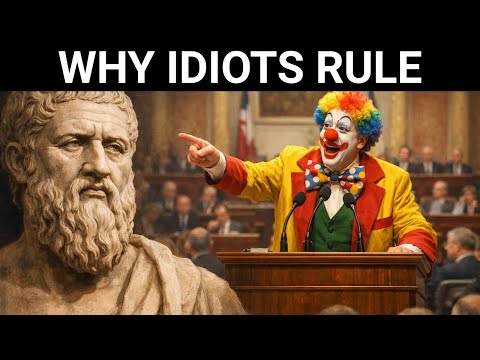
Why Democracy Rewards Idiots — Plato Saw It Coming 2,400 Years Ago
Introduction
The video begins by posing critical questions about the nature of political leadership and the electoral process. It highlights a disturbing trend where the most qualified individuals rarely ascend to leadership positions, while less competent but more charismatic figures often prevail. This phenomenon raises concerns about the effectiveness of democratic systems in selecting capable leaders.
Research Findings on Facial Judgments
In 2005, researchers at Princeton conducted an experiment that revealed people's ability to judge political candidates' competence based solely on their facial features. Participants viewed photographs of candidates from foreign elections for just one second and were able to predict the election outcomes with 70% accuracy. This startling finding suggests that superficial judgments can significantly influence political outcomes.
Further research in 2009 by Swiss scientists involved children aged 5 to 13, who were asked to choose a captain for a boat based on pairs of adult faces. Remarkably, their predictions matched adult accuracy rates in forecasting election winners, indicating that even children rely on instinctual judgments rather than informed analysis.
Historical Context and Plato's Observations
The video draws on historical insights from Plato, who observed similar patterns in ancient Athens over 2,300 years ago. He noted that democracy often rewards charisma over competence, leading to poor leadership choices. Plato's critique stemmed from witnessing the collapse of Athenian democracy, where decisions driven by charismatic leaders resulted in disastrous outcomes, including the execution of Socrates, his mentor.
Plato's observations serve as a cautionary tale about the dangers of electing leaders based on their ability to sway public opinion rather than their qualifications or expertise.
The Metaphor of the Ship
Plato's metaphor of a ship navigating dangerous waters illustrates the inherent risks of electing unqualified leaders. In this analogy, a confident but inexperienced individual is chosen to captain the ship, while a knowledgeable navigator is ignored due to his cautious demeanor. This scenario mirrors the electoral process, where voters often favor charismatic candidates who promise simplicity over those who present complex but realistic assessments of challenges.
Media Influence on Elections
The video highlights pivotal moments in modern electoral history, such as the first televised presidential debate in 1960 between Richard Nixon and John F. Kennedy. While radio listeners favored Nixon, television viewers were swayed by Kennedy's appearance, demonstrating how visual media can distort public perception of candidates' capabilities. Similarly, the Brexit referendum illustrates how simple, emotionally resonant slogans can overshadow complex economic analyses, leading to decisions that may not align with voters' best interests.
Democracy's Systematic Flaws
The speaker questions the rationale behind allowing individuals with no qualifications to lead nations, contrasting this with the rigorous training required for professions such as medicine and aviation. Plato's term for those who thrive in democratic systems, "sophists," refers to individuals skilled in persuasion but lacking genuine understanding of governance. This disconnect between appearance and expertise poses a significant threat to effective leadership.
Psychological Insights and Decision-Making
The video delves into psychological concepts such as the Dunning-Kruger effect, which explains why individuals with the least expertise often display the most confidence. This phenomenon aligns with Plato's observations about sophists, who project authority without possessing substantive knowledge. The speaker emphasizes that democracy tends to favor those skilled in public speaking and charisma rather than those with the necessary expertise to govern effectively.
Emotional Decision-Making and Biases
Psychological research reveals that voters often rely on emotional responses and instinctual judgments rather than logical analysis when making electoral decisions. The speaker discusses how cognitive biases, such as availability bias and coherence bias, can distort public perceptions of candidates and issues. This reliance on emotional narratives over factual complexity further exacerbates the challenges of democratic decision-making.
Historical Examples of Democratic Collapse
The video references historical instances where democracies have collapsed due to the rise of charismatic leaders who exploit public discontent. The example of Julius Caesar illustrates how a confident leader can gain popular support despite lacking the necessary qualifications for governance. The subsequent transition from the Roman Republic to autocratic rule under Augustus serves as a cautionary tale about the fragility of democratic systems.
Plato's Proposed Solutions
Plato's solution to the problems of democracy was the establishment of "philosopher kings," leaders who possess deep knowledge of governance and ethics. He argued that individuals who have dedicated their lives to understanding complex systems should be entrusted with leadership roles, rather than allowing the general populace to make uninformed decisions. While this idea may seem elitist, it underscores the importance of expertise in governance.
Contemporary Democratic Challenges
The speaker acknowledges that while democracy has produced significant advancements, it is essential to recognize its inherent flaws. Current experiments in democratic reform, such as citizens' assemblies and ranked-choice voting, aim to address some of these issues. However, the core problem of selecting leaders based on popularity rather than qualifications remains a significant challenge.
Conclusion
The video concludes by urging viewers to reflect on their role in perpetuating the cycle of electing confident amateurs over qualified experts. It emphasizes the need for a collective reevaluation of how we approach leadership selection in democratic systems. Ultimately, the question remains whether society can overcome these ingrained biases and prioritize knowledge and expertise over charisma and confidence in future elections.
In the source, "bad" leadership is characterized by a range of traits and behaviors that undermine effective governance. The speaker highlights a recurring theme in which leaders who excel at winning votes often possess qualities that are detrimental to their effectiveness in office. These traits include:
- Charisma over Competence: The transcript discusses how charismatic individuals often receive more votes than those who are genuinely qualified. This dynamic is exemplified through Plato's observations about democracy, where he noted that "charisma triumphs over competence". This suggests that emotional appeal can overshadow the essential skills needed for effective leadership.
- Confidence without Knowledge: The speaker illustrates a scenario where a confident amateur is favored over a cautious expert. This highlights that leaders may project an air of certainty, even when they lack the necessary expertise. As stated, "confidence feels better than competence", indicating that voters may prioritize a leader's self-assuredness over their actual ability to govern.
- Failure to Address Complexity: The source emphasizes that simplistic promises and oversimplified narratives often attract voters. It cites the example of the Brexit campaign, where a straightforward slogan like "Take back control" was more appealing than complex economic analyses. This tendency leads to poor decision-making based on superficial understanding rather than informed judgment.
Ultimately, the consequences of electing such leaders can be dire, ranging from ineffective governance to societal chaos, as illustrated by Plato's warning of democracy's potential to collapse under its own contradictions.
- [02:03] "Plato told a story that explains everything."
- [06:24] "Why do we treat leading a nation as the one job that requires zero qualifications?"
- [14:41] "Democracy doesn’t just reward the wrong people. It eventually destroys itself because of them."
The source identifies several personal qualities that are commonly associated with bad leaders, particularly traits that detract from their effectiveness and moral integrity. These qualities often include:
- Arrogance and Insecurity: The source implies that leaders who display a high level of confidence without the requisite knowledge are often arrogant. This arrogance can mask their insecurities about their qualifications and ability to lead effectively.
- Incompetence: The transcript discusses the phenomenon of leaders who are ultimately incompetent yet succeed in gaining power through their persuasive skills. These individuals, referred to as sophists, can "argue any side of any position with equal conviction" to gain influence, showcasing a lack of true expertise in governance.
- Lack of Empathy: While not explicitly stated, the focus on charismatic leaders who make emotionally appealing promises suggests a lack of empathy for the complexities of governance. Such leaders prioritize their own appeal over the needs and voices of the people they are meant to serve.
- Dishonesty: The tendency of leaders to oversimplify complex issues into catchy slogans implies a level of dishonesty. They manipulate public perception to gain votes, which can lead to a betrayal of trust when their promises prove unrealistic.
These traits contribute to a leadership style that may be more focused on self-interest and public approval rather than genuine governance and ethical responsibility.
- [08:12] "They could project expertise and governance while being catastrophically ignorant of how states actually function."
- [09:18] "It elevates people who are brilliant at campaigning and often incompetent at governing."
- [11:00] "It’s being certain while being wrong."
Yes, the source indicates that bad leaders can indeed be attractive to voters and other selectors. Several characteristics contribute to this phenomenon:
- Confidence: The transcript highlights that bad leaders often exude confidence, which can be alluring to the electorate. This confidence can create an illusion of competence, even if the individual lacks the necessary skills or knowledge for effective governance. As noted, "the confident amateur is favored over the cautious expert".
- Charisma: Charismatic leaders tend to captivate audiences and are often seen as more relatable or inspiring. The source emphasizes that this charisma can overshadow the need for actual qualifications, leading to the election of individuals who may not be fit to govern.
- Decisiveness: The ability to appear decisive and take bold actions can be attractive to voters, especially during times of uncertainty or crisis. This decisiveness is often mistaken for strong leadership, even when it lacks a foundation in sound policy.
- Simplicity: The allure of simplicity in messaging is another factor. Voters may find straightforward, catchy slogans more appealing than complex policy discussions. For example, during the Brexit campaign, the "Take back control" slogan resonated more than detailed economic analyses, demonstrating how simple messages can effectively attract support.
This tendency for voters to favor confident, charismatic individuals can lead to the election of leaders who are not necessarily equipped to handle the complexities of governance, thereby perpetuating a cycle of ineffective leadership.
- [09:11] "Winning a popularity contest requires a completely different skill set than running a country."
- [12:19] "Our system one brain does most of the work. We get gut feelings, emotional reactions, instant judgments."
- [22:20] "Our brains evolved to trust confidence and fear complexity."
The source provides insight into why individuals might select or support leaders despite knowing their low moral standards. Several factors contribute to this phenomenon:
- Short-term Interests: Voters may prioritize immediate benefits that a leader promises over long-term ethical considerations. The desire for quick solutions can overshadow moral integrity, leading citizens to support candidates who offer appealing but unrealistic proposals.
- Fear: The emotional responses driven by fear can heavily influence voter behavior. Leaders who exploit fears, whether about economic instability or social unrest, can gain traction by presenting themselves as strong figures capable of taking control.
- Group Identity: Political loyalty and group identity can compel individuals to support leaders who align with their existing beliefs, even if those leaders lack moral character. Voters may feel a stronger connection to a charismatic leader who embodies their group's values, regardless of the leader's ethical qualifications.
- Desperation: In times of crisis or uncertainty, voters may become desperate for solutions and thus more willing to overlook a leader's moral failings. The transcript notes that during chaotic periods, populations often seek order and stability, leading them to embrace leaders who promise to restore that order.
These factors suggest that the interplay between emotional responses and rational decision-making can significantly affect electoral outcomes, resulting in the support of leaders whose moral standards may not be aligned with the best interests of the populace.
- [14:38] "Democracy doesn’t just reward the wrong people. It eventually destroys itself because of them."
- [18:41] "When a system asks people to make decisions without giving them the expertise needed, bad outcomes follow."
- [20:57] "Every time we vote for the candidate who makes us feel good rather than the one who’s demonstrably more qualified, we’re feeding the cycle."
The relationship between moral character and leadership effectiveness is a complex theme explored in the source. The speaker conveys that while moral integrity is crucial for effective leadership, it is often overshadowed by the performance of leaders who may be morally questionable yet appear to produce short-term results. This dichotomy can be examined through several points:
- Moral Integrity as Essential: The source suggests that moral integrity is foundational for genuine leadership effectiveness. Leaders who prioritize ethics and a long-term vision tend to create sustainable governance and positive societal outcomes.
- Immoral Leaders Appearing Effective: The transcript acknowledges that immoral leaders can sometimes seem effective, particularly in the short term. Their ability to make bold promises and create appealing narratives can lead to immediate gains, even if these gains are not sustainable or ethical. For instance, the discussion of charismatic leaders who win votes without the necessary qualifications illustrates this point.
- Attractive Short-term Results: The source highlights how voters may be swayed by leaders who offer simple solutions to complex problems, which may yield short-term satisfaction but can ultimately harm long-term governance. This is exemplified through the Brexit campaign, where simplistic messaging resonated more than detailed economic analysis.
- Systemic Flaws in Democracy: The transcript emphasizes that the democratic system itself often rewards those who can project confidence and charisma rather than moral character. This systemic issue can result in the election of leaders whose actions may contradict ethical standards but who appear effective due to their communication skills and public appeal.
In summary, while moral character is essential for effective leadership, the source suggests that the electoral process frequently elevates leaders who can generate attractive short-term results without a commitment to ethical governance.
- [07:01] "Plato had a name for the people who thrive in democratic systems, sophists."
- [19:04] "It’s not that most people are stupid. It’s that most of us are understandably ignorant about the specifics of governance."
- [23:18] "Understanding Plato’s warning is one thing. Escaping the trap might be impossible."
[00:04] Have you ever wondered why the most[00:05] qualified people rarely end up leading[00:07] countries? Why does it feel like we keep[00:09] electing leaders who promise everything[00:11] and deliver nothing? Why do experts get[00:14] ignored while confident blowhards rise[00:16] to the top? Here's something that'll[00:18] blow your mind. In 2005, researchers at[00:22] Princeton ran an experiment that should[00:24] terrify anyone who votes. They showed[00:27] people photographs of political[00:28] candidates from foreign elections. Just[00:30] faces, no names, no policies, no[00:34] context. The participants had never[00:36] heard of these politicians or their[00:38] countries. They saw each face for[00:40] exactly 1 second. Then researchers asked[00:44] one simple question. Who do you think[00:47] won the election? The participants[00:49] guessed correctly about 70% of the time[00:52] based purely on facial features. 1[00:55] second. Judgments about competence based[00:58] on jaw width and facial symmetry[01:00] predicted real election outcomes with[01:02] terrifying accuracy. Then in 2009, Swiss[01:07] researchers did something even more[01:08] disturbing. They ran a similar[01:11] experiment with children aged 5 to 13.[01:13] They showed kids pairs of adult faces[01:15] and asked, "Who would you want as[01:17] captain of your boat?" They weren't told[01:20] these were politicians. They didn't know[01:21] it was an election prediction task. They[01:23] were just picking faces. The children[01:26] predicted French parliamentary election[01:27] winners at rates statistically identical[01:29] to adults. Let that sink in. We're[01:32] choosing who controls nuclear weapons,[01:34] economies, and millions of lives using[01:37] the same instant facial judgments as a[01:39] kindergarter deciding which adult looks[01:41] friendlier. And this isn't some modern[01:43] problem caused by social media or[01:45] 24-hour news cycles. A Greek philosopher[01:49] named Plato watched this exact pattern.[01:52] Charisma triumphing over competence.[01:55] Destroy the world's first democracy over[01:57] 2,300 years ago. He wrote it all down.[02:01] He explained exactly how and why[02:03] democracy would keep rewarding the worst[02:05] possible leaders. Nobody listened then.[02:08] Judging by how we still run elections[02:10] today, nobody's listening now. Plato[02:13] didn't criticize democracy because he[02:15] was some elitist snob who hated common[02:17] people. He lived through the collapse.[02:20] He watched Athens make catastrophically[02:23] stupid decision after catastrophically[02:25] stupid decision because charismatic[02:27] speakers convinced crowds to vote[02:28] against their own interests. He watched[02:31] them execute Socrates, his mentor, a man[02:34] whose only crime was asking[02:35] uncomfortable questions because he made[02:37] powerful people look foolish. Plato grew[02:41] up in the shadow of Athens greatest[02:42] military disaster, the Sicilian[02:45] expedition, where over 40,000 Athenian[02:48] soldiers and allies died in a doomed[02:50] invasion sold to the public by a[02:52] charismatic general named Alabiades, who[02:55] promised easy conquest and vast riches.[02:59] The expedition was a catastrophe born[03:01] from beautiful speeches and wishful[03:03] thinking. After witnessing democracy[03:06] fail in the most predictable, avoidable[03:08] ways, Plato laid out a warning that's[03:10] been sitting in libraries for 24[03:12] centuries while we keep repeating the[03:14] same mistakes. So, let's talk about why[03:16] democracy keeps handing power to people[03:18] who excel at winning votes but fail at[03:20] governing, why our brains are wired to[03:22] choose the wrong leaders, and why the[03:25] system itself creates this disaster.[03:31] Plato told a story that explains[03:33] everything. Imagine you're about to[03:35] cross a dangerous ocean. The ship's[03:37] owner is rich but knows nothing about[03:39] sailing. The crew starts arguing about[03:41] who should captain the vessel. One guy[03:44] steps forward. He's never navigated[03:46] before, but he doesn't know enough about[03:48] navigation to realize he's unqualified.[03:50] He's confident, not because he's[03:52] competent, but because he's never[03:54] encountered the complexity that would[03:56] make him humble. He tells everyone[03:58] exactly what they want to hear. The seas[04:00] will be calm. The journey will be quick.[04:03] Everyone will get rich. He believes this[04:06] not because it's true, but because he[04:08] genuinely doesn't understand what he[04:10] doesn't know.[04:12] Meanwhile, there's an actual experienced[04:14] navigator standing in the corner. He's[04:16] trying to explain that storms are[04:17] coming, the route is dangerous, they[04:20] need to prepare for difficulties.[04:22] But he sounds uncertain because he[04:24] actually understands the complexities.[04:26] He talks about contingencies, backup[04:28] plans, things that could go wrong. The[04:30] crew votes. They choose the confident[04:33] amateur over the cautious expert because[04:35] confidence feels better than competence.[04:38] They mistake certainty for knowledge.[04:40] They confuse a good speech for good[04:41] seammanship. The ship sinks. This wasn't[04:45] a cute metaphor for Plato. This was[04:47] Athens. The ship was the state. The crew[04:51] was the voters. and he watched them[04:53] choose charismatic amateurs over[04:55] qualified experts again and again until[04:57] the whole thing collapsed. And we're[04:59] still doing it. September 1960, the[05:03] first televised presidential debate in[05:04] American history. Richard Nixon versus[05:07] John F. Kennedy.[05:09] On radio, listeners thought Nixon won.[05:12] But on television, Kennedy dominated.[05:15] Why? Nixon looked pale, sweaty,[05:18] uncomfortable. Kennedy was tan, rested,[05:22] telegenic. He looked presidential.[05:25] People who watched on TV overwhelmingly[05:27] picked Kennedy as the winner of the same[05:29] debate that radio listeners thought[05:31] Nixon won. The same words, the same[05:34] arguments, different medium, different[05:36] winner. Appearance changed everything.[05:38] Or take Brexit in 2016. The leave[05:41] campaign had three words plastered on[05:43] buses. Take back control. The Rimman[05:47] campaign had economists detailed reports[05:49] about trade consequences, complex[05:52] analyses of economic integration.[05:55] The simple story beat the complicated[05:57] truth. Voters admitted afterward they[06:00] didn't fully understand the economic[06:02] implications,[06:04] but take back control felt right. This[06:07] pattern isn't unique to one country or[06:09] political ideology. From Italy to the[06:11] Philippines, from the UK to the United[06:13] States, the same dynamic plays out.[06:16] Charismatic simplicity beats[06:18] knowledgeable complexity every single[06:21] time. Here's the question Plato forces[06:24] us to confront. Why do we treat leading[06:26] a nation as the one job that requires[06:29] zero qualifications?[06:31] We demand that doctors study for over a[06:33] decade before touching a patient. We[06:36] require pilots to log thousands of hours[06:38] before flying commercial aircraft. We[06:41] need licenses to cut hair, drive cars,[06:43] sell real estate. But running a country[06:46] and making decisions that affect[06:48] millions of lives. Just be popular[06:50] enough to win a vote, no experience[06:53] required, no competency test, no[06:55] demonstration of actual knowledge.[07:02] Plato had a name for the people who[07:04] thrive in democratic systems, sophists.[07:07] These were masters of persuasion who[07:09] cared more about winning arguments than[07:11] finding truth. They could argue any side[07:14] of any position with equal conviction as[07:16] long as it got them power, money, or[07:17] influence. Now, here's what made them[07:20] dangerous. They weren't stupid people.[07:22] Many were intellectually capable, even[07:25] brilliant in certain areas. But when it[07:27] came to governance, understanding[07:29] economics, ethics, justice, the[07:32] long-term consequences of policy, they[07:34] were operating completely outside their[07:36] expertise. Yet, their skill at rhetoric[07:39] made them appear qualified. They knew[07:41] how to sound wise without being wise.[07:45] They knew how to project authority[07:46] without possessing knowledge. To Plato,[07:49] this was the most dangerous combination.[07:52] intelligence without wisdom, confidence[07:55] without competence, persuasive skill[07:57] without genuine expertise. These people[08:00] didn't know what they didn't know.[08:02] They'd mastered the appearance of[08:04] knowledge without acquiring actual[08:06] understanding. They could convince[08:08] crowds they understood economics without[08:10] understanding economics.[08:12] They could project expertise and[08:14] governance while being catastrophically[08:16] ignorant of how states actually[08:17] function. Think about what this means[08:20] for democracy. The system doesn't select[08:22] for people who understand governance. It[08:25] selects for people who can win[08:26] popularity contests. And winning a[08:29] popularity contest requires a completely[08:32] different skill set than running a[08:33] country. What skills does a democratic[08:35] election reward? Public speaking,[08:38] charisma, the ability to simplify[08:40] complex issues into memorable slogans,[08:43] looking good on camera, projecting[08:45] confidence, making people feel good.[08:48] These are legitimate skills, just not[08:50] the ones you need to govern effectively.[08:52] The skills needed for governing,[08:54] understanding economic systems,[08:56] navigating complex foreign policy,[08:59] managing massive bureaucracies, making[09:01] difficult trade-offs between competing[09:03] values, acknowledging uncertainty,[09:06] accepting that some problems have no[09:08] good solutions, only less bad ones. Say[09:11] any of that in a campaign and you lose[09:13] to someone promising simple fixes. So[09:15] democracy creates a systematic mismatch.[09:18] It elevates people who are brilliant at[09:20] campaigning and often incompetent at[09:22] governing, not because they're generally[09:25] stupid, but because they've spent their[09:26] lives developing the wrong expertise.[09:33] Here's what's remarkable. Plato[09:35] identified the exact same pattern 2400[09:38] years before psychologists gave it a[09:40] name. Remember the Dunning Krueger[09:42] effect? Psychologists David Dunning and[09:45] Justin Krueger found that people with[09:47] the least expertise in an area often[09:50] display the most confidence because they[09:52] lack the knowledge to recognize how much[09:54] they don't know. That's exactly what[09:57] Plato said about sophists. They were[09:59] confident because they hadn't studied[10:01] deeply enough to encounter real[10:02] complexity. An actual philosopher,[10:05] someone who spent years studying[10:07] governance, ethics, economics, would be[10:10] humble because they understood how[10:11] intricate these systems are. But the[10:13] softest, he's never gone deep enough to[10:16] discover his own ignorance. So he[10:18] radiates certainty. He has simple[10:20] answers because he's never understood[10:22] the complicated questions. And in a[10:24] democracy, that certainty wins[10:26] elections. Plato called this the[10:29] difference between doca and epistem[10:32] opinion versus knowledge. Epistem is[10:35] hard one understanding gained through[10:37] years of rigorous study. It's knowing[10:40] how systems actually work, recognizing[10:42] unintended consequences, understanding[10:45] trade-offs. It's the expertise that[10:47] makes you competent at governance.[10:50] DOCA is surface level thinking, gut[10:52] feelings, confident assertions based on[10:55] limited understanding. It's what happens[10:57] when we confuse our feelings about[10:59] something with knowledge about[11:00] something. It's being certain while[11:02] being wrong. Democracy runs on DOCA, not[11:06] Epis. Elections reward Doca. Campaigns[11:10] are built on DOCA and DOCA always beats[11:13] Epis team because it's easier, faster,[11:17] and more emotionally satisfying. The[11:19] candidate with Epis team will say, "This[11:21] problem is complicated. Here are three[11:24] possible approaches, each with[11:26] significant trade-offs. I'll need to[11:28] consult experts and adjust based on[11:30] results." A candidate with DOCA will[11:33] say, "I alone can fix this. The solution[11:36] is simple. Trust me. Guess who wins? The[11:40] confident amateur every time. Not[11:43] despite lacking expertise, because[11:45] lacking expertise lets them project[11:47] simple certainty. And here's where[11:50] modern psychology explains why this[11:51] keeps working. Psychologist Daniel[11:54] Conaman won the Nobel Prize in economics[11:56] for discovering that our brains operate[11:58] on two systems. System one is fast,[12:02] automatic, runs on emotion and instinct.[12:05] System two is slow, deliberate, runs on[12:10] logic and analysis. When we watch[12:13] political debates or see campaign ads,[12:14] our system one brain does most of the[12:16] work. We get gut feelings, emotional[12:19] reactions, instant judgments. System two[12:23] might kick in later to rationalize what[12:25] system one already decided, but the[12:27] initial choice happens in seconds. The[12:29] sophists, the confident amateurs, are[12:32] system one experts. They trigger[12:34] emotional responses, create memorable[12:37] narratives, project authority. The[12:39] actual experts try to engage system two.[12:42] They want us to think carefully,[12:44] consider complexity, acknowledge[12:46] uncertainty.[12:47] But system 2 is slow, requires effort,[12:51] and our brains evolved to be energy[12:53] efficient.[12:55] Here's another trap. Availability bias.[12:58] Our brains judge the importance of[13:00] issues based on how easily we can[13:02] remember examples.[13:04] Three news stories about crime make us[13:06] think crime is our biggest problem. Even[13:08] if crime rates are at historic lows,[13:11] sophists exploit this relentlessly. They[13:14] dominate our attention with specific[13:16] problems, make those problems feel[13:18] enormous, then promise simple solutions.[13:21] Our brains also prefer coherence over[13:23] accuracy. We favor explanations that[13:26] sound good and fit together nicely over[13:27] explanations that are messy but true. A[13:30] sophist who spins a simple emotionally[13:33] satisfying story beats an expert who[13:36] explains complex causes every time. This[13:40] is why scapegoating works. Real[13:42] solutions are usually messy, full of[13:44] contradictions and uncomfortable[13:46] trade-offs. But simple villains and[13:48] simple heroes, that's what our emotional[13:51] brain craves.[13:53] Studies analyzing US presidential[13:55] elections from 1789 to 2008 found that[13:58] the taller candidate won 58% of the[14:00] time. When the height difference[14:02] exceeded 3 in, the win rate jumped to[14:05] 67%.[14:07] Research shows that candidates with[14:08] deeper voices are rated as stronger[14:11] leaders. Attractive candidates regularly[14:14] outperform equally qualified opponents.[14:16] We're choosing who controls nuclear[14:18] weapons based partly on jawline, height,[14:21] and voice pitch. The system is designed[14:23] to make expertise irrelevant and[14:25] appearance decisive.[14:31] Here's the darkest part of Plato's[14:33] warning. Democracy doesn't just reward[14:35] the wrong people. It eventually destroys[14:38] itself because of them. In the Republic,[14:41] Plato described democracy not as the end[14:43] point of political evolution, but as an[14:46] unstable stage that collapses under its[14:48] own contradictions.[14:50] The pattern democracy's freedom becomes[14:53] chaos. Sophists compete by making bigger[14:56] promises and simpler solutions. Chaos[14:59] becomes unbearable. People become[15:01] desperate for order. A strong man[15:04] emerges. The ultimate sophist promising[15:07] to fix everything. The exhausted[15:10] population willingly hands over power.[15:13] Democracy dies with applause. Let's look[15:16] at Rome. By the first century BCE, the[15:20] Roman Republic was collapsing. Political[15:22] gridlock, violent factionalism, economic[15:26] inequality spiraling out of control. The[15:28] Senate couldn't agree on anything.[15:31] Nothing worked. The people were[15:33] desperate. Enter Julius Caesar,[15:35] charismatic general, brilliant military[15:37] commander, champion of the people[15:39] against the corrupt Senate elite. Was he[15:42] stupid? Absolutely not. Was he qualified[15:45] to govern in military matters? Yes. In[15:49] understanding Republican institutions,[15:51] economics, long-term political[15:53] stability. He had no expertise. And more[15:56] dangerously, he didn't think he needed[15:58] it. He had confidence and popular[16:00] support. That was enough. He crossed the[16:03] Rubicon with his army, an act of[16:05] treason. And the people cheered. The[16:08] Senate assassinated him to save the[16:09] Republic. The people rioted. They didn't[16:12] want the republic back. They wanted[16:14] Caesar. His adopted son, Augustus,[16:17] learned the lesson. Keep the appearance[16:18] of Republican institutions while holding[16:20] all real power. The Senate still met.[16:23] Elections still happened. Augustus[16:26] controlled everything. And the Roman[16:27] people accepted it gratefully because[16:29] after decades of chaos, at least there[16:31] was order. The republic died not with[16:34] rebellion, but with applause. This[16:37] pattern has repeated in dozens of[16:38] countries where exhausted populations[16:40] traded freedom for the promise of[16:42] stability.[16:43] Always with popular support. Always[16:46] because the system had elevated so many[16:48] confident amateurs that people couldn't[16:50] tell the difference between demagoguery[16:51] and leadership anymore. Why does this[16:54] keep happening? Because at every stage,[16:57] democracy's selection process filters[16:59] for exactly the wrong qualities. Who[17:02] decides to run for office? often people[17:05] who crave power and attention. Who[17:07] succeeds? Those willing to say whatever[17:10] it takes to win. Who makes it to the[17:12] top? People who've mastered persuasion[17:15] without developing governance expertise.[17:17] The actual experts can't compete. They[17:20] won't promise what they can't deliver.[17:22] They won't pretend to have simple[17:23] answers. They won't exploit people's[17:25] fears, so they lose. And the confident[17:28] amateurs win until those amateurs[17:31] destroy the very system that elevated[17:33] them.[17:37] So what was Plato's answer? Stop letting[17:40] people choose who don't understand[17:42] governance. His ideal system,[17:44] philosopher kings, sounds elitist,[17:46] because it is. He wanted leaders who'd[17:49] spent decades studying philosophy,[17:52] ethics, mathematics, governance. People[17:55] who understood the difference between[17:57] knowledge and opinion. People who loved[17:59] wisdom more than power. and critically[18:03] selected through rigorous testing and[18:05] education, not popular vote. Before you[18:08] dismiss this as undemocratic elitism,[18:11] understand his logic. It's not that most[18:13] people are stupid. It's that most of us[18:16] are understandably ignorant about the[18:17] specifics of governance. And why[18:19] wouldn't we be? We're busy with our[18:21] actual jobs and lives. We don't have[18:24] time to become experts in economics,[18:26] foreign policy, constitutional law. But[18:29] democracy asks us to make incredibly[18:32] complex decisions anyway. It's like[18:34] asking someone who's never studied[18:36] medicine to perform surgery. We're not[18:38] incapable. We're just being asked to do[18:41] something we're not trained for. And[18:43] when a system asks people to make[18:45] decisions without giving them the[18:46] expertise needed, bad outcomes follow.[18:49] Plato's solution, let people who've[18:51] dedicated their lives to understanding[18:53] governance do the governing. Don't put[18:56] it to a popular vote among people who[18:57] haven't studied it. Is that elitist?[19:00] Yes. Is it also logical? Uncomfortably[19:04] so. We don't let random people perform[19:06] surgery just because they have opinions[19:08] about medicine. Why do we let people[19:10] choose leaders just because they have[19:12] opinions about politics?[19:14] Winston Churchill said, "Democracy is[19:16] the worst form of government except for[19:18] all those other forms that have been[19:20] tried." He's probably right. Every[19:23] alternative, monarchy, oligarchy,[19:26] dictatorship has produced worse[19:28] outcomes. Democracy has created[19:30] unprecedented prosperity and peaceful[19:32] power transfers.[19:34] But acknowledging democracy is the least[19:36] bad option doesn't mean we should ignore[19:38] its systematic failures.[19:41] Some democracies are experimenting with[19:42] improvements. Citizens assemblies where[19:45] randomly selected people deliberate with[19:48] expert input. ranked choice voting to[19:51] reduce extremism,[19:53] better debate formats that test policy[19:55] knowledge instead of performance.[19:57] Ireland used citizens assemblies for[19:59] constitutional questions. Ancient Athens[20:02] used random selection for many[20:04] positions, but these are marginal[20:06] adjustments to a system whose core flaw[20:08] runs deeper. We're not victims of[20:11] democracy's flaws. We're participants.[20:14] Every time we vote for the candidate who[20:16] makes us feel good rather than the one[20:18] who's demonstrabably more qualified,[20:19] we're feeding the cycle. Every time we[20:22] share outrage headlines without reading[20:24] the substance, we're rewarding[20:25] simplification over truth. The trap is[20:28] that recognizing these patterns doesn't[20:30] automatically fix them. Understanding[20:33] our biases doesn't eliminate them.[20:35] Knowing how we're being manipulated[20:37] doesn't stop the manipulation from[20:39] working.[20:41] Here's[20:45] what really makes Plato's critique sting[20:47] after 24 centuries. We're still doing[20:50] it. We're still elevating confident[20:52] amateurs over humble experts. And the[20:54] system still rewards this mismatch. We[20:57] get the leaders we choose. Not because[20:59] we're bad people, but because we're[21:01] human. Our brains evolved for survival[21:03] in small tribes, not for evaluating[21:06] complex policy proposals. Those ancient[21:09] instincts, trust the confident face,[21:12] follow the charismatic voice, prefer the[21:14] simple story, served us well for[21:16] hundreds of thousands of years. They're[21:18] catastrophically mismatched to choosing[21:20] leaders in modern democracies.[21:23] Plato watched this pattern destroy[21:25] Athens 24 centuries ago. We're watching[21:28] similar patterns play out globally. The[21:30] confident amateurs promising simple[21:33] solutions. The public's exhaustion with[21:36] complexity. the willingness to trust[21:38] charismatic strongmen over cautious[21:40] experts. The uncomfortable question is[21:42] whether we're capable of anything[21:44] different. Can we actually choose[21:46] episteem over doxa, knowledge over[21:49] confident ignorance, expertise over[21:51] charisma, or are we trapped, a system[21:55] that makes intelligent people choose[21:57] poorly because our brains evolved for a[21:59] completely different world?[22:01] We are the crew on Plato's ship of[22:03] fools. The same argument is happening on[22:06] deck right now. The confident amateurs[22:08] are promising easy voyages. The[22:11] experienced navigators are warning of[22:13] complexity. And we keep choosing the[22:16] amateurs not because we're stupid, but[22:18] because the system makes this choice[22:20] feel rational.[22:22] Our brains evolved to trust confidence[22:24] and fear complexity. The question isn't[22:27] whether Plato's warning was valid. The[22:30] evidence overwhelmingly suggests he was[22:32] right. The question is whether[22:35] understanding the trap is enough to[22:36] escape it or whether these flaws are so[22:39] deeply embedded in how democracy works[22:41] that there's no real escape. Maybe[22:43] democracy's fatal flaw isn't that it[22:45] gives power to the people. Maybe it's[22:48] that it gives power to people whose[22:50] brains are optimized for tribal survival[22:52] decisions, not complex policy[22:54] evaluation.[22:55] We're playing a game our evolutionary[22:57] hardware wasn't designed for, and the[23:00] confident amateurs know exactly how to[23:02] exploit that mismatch. If this[23:04] challenged how you think about[23:05] democracy, share it and tell me in the[23:08] comments. Are we actually capable of[23:11] choosing knowledge over charisma,[23:12] expertise over confidence, or will we[23:15] keep choosing the confident amateurs[23:17] until they destroy what they've[23:18] inherited?[23:20] Because understanding Plato's warning is[23:22] one thing. Escaping the trap might be[23:24] impossible.
BOX - DONALD TRUMP’S SECOND TERM
The patterns described in this article do not belong only to the world of corporate management or historical case studies. They are visible, in real time, in the conduct of one of the world’s most powerful leaders. The following text is not based on video sources but on questions posed to AI to relate the actions of the politician to the findings of this article.
Donald Trump’s second term as President of the United States, which began in January 2025, offers a striking illustration of several of the mechanisms this article describes – not as a clinical diagnosis, but as a case study in how the dynamics of confident incompetence can operate at the highest level of national governance.
LOYALTY ABOVE EXPERTISE
Perhaps the most consistent feature of Trump’s cabinet selections in his second term has been the primacy of personal loyalty over professional qualification. Several appointees were chosen not for their expertise in the relevant policy area, but for their public alignment with Trump’s political positions and their demonstrated willingness to defend him personally. The article describes leaders who "surround themselves with compliant followers and yes-people," creating an echo chamber that "filters reality." The result, this article warns, is that "the leader is protected from discomfort, but also from learning."
THE ACTION FALLACY IN THE OVAL OFFICE
Trump’s governing style has been characterised by a high volume of executive orders, dramatic announcements and rapid interventions across multiple policy areas simultaneously – from trade tariffs to federal workforce reductions to foreign policy reversals. This matches precisely what this article calls the "action fallacy": the assumption that visible movement and decisive gestures are proof of effective leadership. The spectacle of constant action can make a leader appear in control, even when the underlying decisions have not been carefully assessed for consequences.
BLAME, EXTERNALISATION AND THE ABSENT APOLOGY
Throughout his political career and into his second term, Trump has shown a consistent pattern of externalising blame. Policy difficulties are attributed to predecessors, opponents, the media, the judiciary or international partners. This article identifies this as one of the most corrosive features of poor leadership: "When a leader refuses to accept responsibility, the problem must be located elsewhere." The cost, this article notes, is cumulative – citizens lose confidence in institutions that appear incapable of acknowledging error.
DISSENT AS DISLOYALTY
Officials who have publicly disagreed with Trump – including members of his own administration – have typically been removed, marginalised or publicly attacked. This pattern reflects this article’s warning about leaders who reframe criticism as a threat to belonging: "The national leader may say: ’You are challenging the nation.’" When disagreement is treated as betrayal, the space in which evidence can be discussed independently of loyalty narrows significantly.
EXPLOITING RESENTMENT
This article draws on research into rural consciousness and political disenfranchisement to describe how genuine grievances can be channelled into division rather than addressed. Trump’s political base has consistently included communities that feel overlooked by urban elites and coastal institutions. This article acknowledges that such grievances can be real. The danger it identifies is when a leader "cultivates the emotion produced by discontent" rather than addressing its causes – using resentment as a source of loyalty rather than as a signal requiring a policy response.
A NOTE OF CAUTION
This comparison is not a verdict. The article’s framework is drawn from research into leadership psychology and organisational behaviour, not from political science or journalism. Applying it to a sitting president involves interpretation, and reasonable people may weigh the evidence differently.
What the framework does offer is a set of questions worth asking of any leader, regardless of political affiliation: Are warnings being heard? Is dissent being protected? Is blame being externalised? Is loyalty being valued above truth?
Those questions do not belong to one side of the political spectrum. They belong to anyone who wants to understand whether the leader they are watching is building something – or consuming it.
BOX - DUTCH POLITICS
The mechanisms described in this article are not confined to the United States. Dutch politics offers its own instructive examples – two figures in particular whose public conduct illuminates several of the article’s central themes. The following text is not based on video sources but on questions posed to AI to relate the actions of the two politicians to the findings of this article.
GEERT WILDERS AND THE RHETORIC OF THREAT
Geert Wilders, leader of the Party for Freedom (PVV) and the largest party in the Dutch parliament after the November 2023 elections, has built a political identity around a single, consistent message: the Netherlands is under existential threat from asylum seekers and Islam, and only he is willing to say so.
This article describes how leaders can exploit genuine public anxiety by offering a simple explanation for complex problems. Wilders’ rhetoric about asylum seekers and asylum seeker centres – including repeated calls to "close the borders" and inflammatory comparisons that have led to multiple legal proceedings – fits the pattern this article calls the "seduction of certainty." Complex questions of migration policy, housing, integration and international law are reduced to a single enemy. The leader who names the enemy most loudly appears to understand the problem most clearly.
This article warns that this dynamic is particularly powerful "during economic uncertainty or social upheaval, when a promise of decisive action may carry more weight than detailed competence or ethical consistency." Wilders has governed – as the dominant coalition partner in the Dutch government in parts of 2024 and 2025 – in precisely such a climate, with housing shortages, rising costs and institutional distrust creating fertile ground for the politics of threat.
Equally relevant is this article’s observation about dissent. Within the PVV, there is effectively no internal democracy: Wilders is the party’s sole member, and parliamentary candidates serve at his discretion. This article describes leaders who eliminate the possibility of opposition, creating an echo chamber in which "the leader is protected from discomfort, but also from learning." A party structure that makes disagreement structurally impossible is a textbook example of this mechanism.
CAROLINE VAN DER PLAS AND THE POLITICS OF RESENTMENT
Caroline van der Plas, former leader of the Farmer-Citizen Movement (BBB), rose to national prominence by giving voice to Dutch farmers during the nitrogen crisis – a genuine and painful policy conflict that threatened the livelihoods of thousands of agricultural families. Her appeal was real, and the grievances she articulated were legitimate.
But this article draws a careful distinction between a leader who addresses the conditions that produced resentment and one who cultivates the emotion for political gain. Drawing on research into rural consciousness, the article notes that communities which feel overlooked by urban elites are vulnerable to leaders who "recognise their anger" without necessarily resolving its causes.
Van der Plas has been notably effective at performing solidarity with farmers – the tractors, the flags, the language of the "forgotten Netherlands" – while her party’s actual policy influence in coalition negotiations has been modest. This article’s framework raises a pointed question here: is the resentment being addressed, or is it being preserved as a source of loyalty?
There is also a pattern worth noting in Van der Plas’s public communication style. She has consistently presented herself as an outsider, a plain-speaker and an opponent of the political establishment – while simultaneously operating as a coalition partner within that establishment. This article describes this as a recognisable form of political performance: the leader who "controls the story rather than doing the work."
A SHARED MECHANISM
What connects Wilders and Van der Plas – despite their very different styles and constituencies – is the underlying dynamic this article identifies most clearly: the transformation of genuine public grievance into personal political capital.
This article does not suggest that the grievances are invented. Housing pressure, migration policy and the nitrogen crisis are real problems that Dutch institutions have handled imperfectly. The question the article poses is a different one: does the leader use the grievance to build something, or to build themselves?
A leader who addresses resentment creates policy, accepts trade-offs and explains complexity. A leader who cultivates resentment keeps the wound open, because a wound that heals is no longer useful.
THE SAME CAUTION APPLIES
As with the analysis of Trump’s second term, this comparison is not a verdict. It is an application of a framework – one drawn from leadership psychology and organisational research – to publicly observable behaviour. Reasonable people will interpret that behaviour differently, and political context always matters.
What the framework offers is not a conclusion but a set of questions. Are the grievances being addressed or amplified? Is complexity being explained or eliminated? Is the leader building institutional capacity – or personal dependency?
Those questions are worth asking in The Hague as much as in Washington.
Methodological Justification: The Human-AI Architecture
Introduction: From Execution to Architecture
The production of this report serves as another practical case study in the evolution of modern work. A first similar report was published about the impact of AI. The text of this report, largely compiled by AI from video sources, shows that the successful application of Artificial Intelligence is not a replacement for human agency, but a mandate for its evolution. The human researcher involved transitioned from a traditional "executor" of analysing and writing tasks to a "Director" or an "Architect of Outcomes". In an era where AI can process vast transcripts and draft complex analyses, the human value-add has shifted to Meta-Cognition - identifying which geopolitical and economic problems are worth exploring - and Strategic Synthesis - combining disparate AI-generated insights into this coherent and relevant report. This collaboration represents a "Human-in-the-Loop" methodology, where the algorithm provides the analytical muscle while the human provides the ethical and strategic compass.
DATA ACQUISITION AND AUTOMATED TRANSCRIPTION
The foundation of this research was a curated selection of high-level video content (YouTube).
To manage the scale of the data, a custom PHP-based automation was developed to interface with the TranscriptAPI.
- The Process: This script systematically retrieved raw transcripts, ensuring that metadata - such as video titles, author information, and precise timestamps - was preserved.
- The Goal: By automating the "execution" of data retrieval, the researcher was freed to focus on the "architecture" of the inquiry.
INTERROGATIVE ANALYSIS (THE Q&A FRAMEWORK)
Rather than allowing the AI to generate generic summaries, a rigorous interrogative method was employed using GPT-4o. The AI was asked to collect information about some ten different topics and contributed to this selection based on the video sources.
The AI was strictly constrained to the provided transcript. This ensured that the resulting data remained grounded in the primary source material, preventing "hallucinations" and preserving the unique nuances of the expert speakers.
The outputs were consolidated into a structured CSV format, creating a searchable and verifiable knowledge base for the final drafting phase.
The results of the AI analyses on the videos from a playlist are available via this link:
NARRATIVE SYNTHESIS AND EDITORIAL REFINEMENT
The final stage involved the synthesis of these structured insights into the report. This was performed using Gemini 3 Flash and GPT 5.1 and 5.2, acting as a sophisticated research assistants:
- Strategic Synthesis: The AI integrated the collected data with the broader available full transcripts. The human architect guided this process by defining the narrative arc and ensuring that the tone remained professional and aligned with British English (UK) standards.
- Citations and Verification: A systematic referencing system was maintained throughout, ensuring that every claim in the report can be traced back to the original video source via the consolidated reference list. However, some hallucinations were noticed, so the referencing may contain errors.
THE SYNERGY OF INTELLIGENCE
This methodology demonstrates that the future of high-level research lies in the synergy between human and machine. The AI provided the speed and scale necessary to process thousands of minutes of video to an acceptable non-scientific report, while the human researcher provided the Empathy, Ethics, and Strategic Vision required to turn raw data into a meaningful contribution to the discourse on in this case the Younger Dryas Impact Hypothesis.
ABOUT VIDSTANCE.COM
This report, more information about this report, the video sources and other reports (work in progress) are availabe on vidstance.com free for everyone interested. VidStance captures, structures this "oral living knowledge." It is also a tribute to the creators of high-quality content published on YouTube; their work provides intellectual raw material for the public debates of the 21st century.