

































































































































































































Competing Narratives of Injustice
Podcast VidS-012 Competing Narratives of Injustice
Competing Narratives of Injustice
Why did the Hamas-led attacks of 7 October 2023, and Israel’s subsequent military campaign in Gaza, produce such sharply different reactions across the world? For many, the answer begins not with the events of one day, but with the long and unresolved history that preceded them.
This article explores the Israeli-Palestinian conflict through the competing narratives of injustice that have shaped it. It traces demographic change in late Ottoman Palestine, the rise of Zionism and Palestinian national identity, and the decisive role of British policy during and after the First World War. Britain’s commitments to Arab independence, its arrangements with other imperial powers and the Balfour Declaration created expectations that could not easily be reconciled. The resulting mistrust became one of the conflict’s enduring legacies. At the centre of the article is 1948: remembered by Israelis as the creation of a Jewish state and refuge after centuries of persecution, and by Palestinians as the Nakba, the catastrophe of mass displacement. It also considers the displacement of Jewish communities from Arab countries, the territorial and political consequences of 1967, Palestinian political fragmentation, the rise of Hamas, the failures of the Oslo process and the worsening humanitarian conditions in Gaza.
The purpose is not to declare one historical narrative entirely right and the other entirely wrong. Rather, it is to show why the same events can carry radically different meanings. For Palestinians, the dominant memory is one of dispossession, foreign intervention, displacement and denied national rights. For Israelis, it is one of persecution, insecurity, national revival and the need to protect a Jewish homeland.
Understanding these narratives does not justify violence against civilians by any party. It does, however, help explain why the conflict has proved so resistant to resolution. The article asks readers to look beyond immediate headlines and consider how historical trauma, competing claims to self-determination and the failure to recognise the other side’s suffering continue to shape the present.
AI-director: Eric Wassink
Published: 5 August 2026
The present as a mirror of the past
The Hamas-led attacks of 7 October 2023 and Israel’s subsequent military campaign in Gaza did not emerge from a historical vacuum. They were the latest and most devastating episode in a conflict shaped by competing national projects, displacement, foreign intervention and mutually reinforcing memories of injustice. To understand why the events of 7 October were interpreted so differently around the world, it is necessary to look at the history that preceded them.
For many Palestinians and their supporters, the conflict is fundamentally a colonial struggle in which an indigenous population was displaced and subjected to continuing systems of control. In this view, the establishment of Israel in 1948 was inseparable from the forced displacement of Palestinians and from the political decisions of Britain and other external powers. [20974][20975]
For many Israelis and their supporters, the central story is different. Israel is understood as a Jewish state created after centuries of persecution, culminating in the Holocaust, and as a necessary refuge in which Jews could exercise collective self-determination. From this perspective, the country has repeatedly faced existential threats and has a right to defend its population against armed organisations that seek to destroy it. [20978][20980]
These perspectives do not merely describe different interpretations of the same history. They shape the meaning attached to almost every major event: the arrival of Jewish immigrants, the British Mandate, the United Nations partition proposal, the 1948 war, the Palestinian refugee question, the occupation of territories after 1967, the Oslo peace process and the wars involving Hamas.
The conflict is therefore not only a dispute over territory. It is also a dispute over legitimacy, identity and historical responsibility. Each side tends to see its own violence as defensive or unavoidable and the other side’s violence as evidence of an underlying project of domination or destruction.
The result is a political landscape in which historical trauma continues to influence contemporary judgments. The Palestinian memory of the Nakba–the mass displacement associated with the 1948 war–remains central to Palestinian identity and political demands. Israeli memory is shaped by persecution, antisemitism, the Holocaust, attacks on Jewish communities and the conviction that Jewish security cannot safely be entrusted to others. The displacement of Jews from Arab and Muslim-majority countries after the establishment of Israel is also part of the Israeli historical narrative. [20977][20978][20979]
The two histories are often presented as mutually exclusive. Yet both have become essential elements of the conflict’s political reality.
Demographic change: a long-term transformation
The demographic development of Palestine is central to understanding the tensions that intensified during the late nineteenth and early twentieth centuries.
• In the nineteenth century, the population was predominantly Arab, with Muslims forming approximately 80 to 95 per cent of the population. The Jewish population was estimated at around 3 per cent, or approximately 25,000 people. [20988]
• By 1914, the Jewish population had increased to approximately 85,000. [20990]
• By 1936, it had grown to nearly 400,000, representing roughly one third of the total population. [20986]
• In 1947, Jews constituted about one third of the population while owning less than 10 per cent of the land. [20985]
These figures were interpreted in sharply different ways. Zionists saw Jewish immigration as the return of a people to its historical homeland and as the creation of a secure national centre in response to European antisemitism. Many Arabs in Palestine experienced the same process as the rapid transformation of their country by an immigrant population supported by international political power.
The demographic shift therefore became more than a matter of population statistics. It became a question of who had the right to decide the future of the country. For the growing Jewish community, demographic growth represented the possibility of national revival and security. For the Arab majority, it increasingly appeared to threaten political control, land ownership and social continuity. The fact that the Jewish population had reached approximately one third of the total by 1936, while Jewish land ownership remained below 10 per cent in 1947, contributed to conflicting perceptions of both vulnerability and entitlement. [20985][20986]
The aftermath of the 1948 war transformed these figures once again. Approximately 700,000 Palestinian Arabs were displaced, either fleeing or being expelled, according to the for this article selected video source material. This displacement is remembered by Palestinians as the Nakba, or catastrophe. [20987][20990]
At the same time, around 800,000 Jews were forced out of Arab countries, with most resettling in Israel. [20985] Israeli accounts use this history to emphasise that the establishment of Israel was followed not only by Palestinian displacement but also by the uprooting of Jewish communities across the region. Palestinian accounts generally reject the idea that the two experiences can simply be equated, pointing to differences in causes, circumstances and political consequences. [20977][20978][20979]
The demographic legacy remains visible in the contemporary population between the Jordan River and the Mediterranean Sea, where the source material describes approximately seven million Jews and seven million Arabs. [20993] The balance underlines why questions of political control, equality, self-determination and national identity remain so contested.
The rise of Zionism and the formation of national identities
Jewish historical narratives connect the Jewish people to the land through biblical history and the emergence of Hebrew tribes around the first millennium BC. [20985] This historical connection was given a modern political form by Zionism, which developed in late nineteenth-century Europe. Zionism sought to establish a national home for the Jewish people at a time when antisemitism and exclusion were widespread.
The First Zionist Congress, convened by Theodor Herzl in 1897, marked a significant stage in the organisation of the movement. [20991][20992] Jewish immigration to Palestine increased from the late nineteenth century and is identified in the source material as beginning in 1882. By the end of that century, approximately 30,000 Jews had settled in Palestine. [20991]
New Jewish communities were established, including Tel Aviv, founded in 1909. [20992] These settlements represented the practical construction of a Jewish national society, with its own institutions, economic networks and political aspirations.
For Palestinians, however, the same developments occurred within an existing Arab society. The population in the late nineteenth and early twentieth centuries was predominantly Muslim and Christian Arab. [20986] A distinct Palestinian national identity became more strongly consolidated in response to the growth of Zionism, British rule and the arrival of increasing numbers of Jewish immigrants.
This did not mean that Palestinian identity emerged in isolation from wider Arab politics. Palestinian political activity was affected by broader Arab nationalism and by relations with surrounding countries. Nevertheless, the developments of the Mandate period increasingly produced a specifically Palestinian political demand: that the Arab population of Palestine should determine the future of the country in which it formed the majority.
The emergence of two national movements created a structural conflict. Zionism sought a Jewish national home, while Palestinian Arab nationalism opposed the transfer of political power to a movement that it regarded as externally supported and increasingly dominant. Both movements understood the land as central to their collective identity, but they attached different meanings to history, immigration and sovereignty.
Britain’s contradictory promises
The role of Britain during and after the First World War became one of the main sources of Palestinian mistrust. British policy was interpreted as inconsistent, imperial and driven more by strategic interests than by a stable political settlement. [20978][20979]
The onset of World War I saw the Ottoman Empire align with Germany, placing Palestine, Syria, and Iraq at the forefront of military strategies. Britain aimed not only to defeat Germany but also to dismantle the Ottoman Empire, which had ruled these regions for centuries. The Suez Canal, a crucial route for British trade and military logistics to India, became a focal point for British interests, influencing their decisions in the region throughout the war.
As Britain faced military setbacks, such as the disastrous Gallipoli campaign, they sought new alliances. British officials in Cairo approached Sharif Hussein of Mecca, offering support for Arab independence in exchange for an uprising against the Ottomans. This led to a series of letters exchanged between Hussein and British High Commissioner Henry McMahon, wherein Britain appeared to promise Arab independence across vast territories, although ambiguities regarding specific regions, including Palestine, left room for interpretation and future disputes.
Simultaneously, Britain was negotiating with France and Russia through the Sykes-Picot Agreement, which divided the Ottoman territories between the British and French empires. This secret pact directly contradicted the promises made to Hussein, as it predetermined the fate of the region without Arab input. The existence of this agreement remained hidden until it was revealed by Russian revolutionaries, further complicating the situation for Britain.
In 1917, as the war reached a critical juncture with Russia on the verge of collapse, Britain sought to secure Jewish support for the Allied cause. Key Zionist figures, including Chaim Weizmann, advocated for a British declaration supporting a Jewish homeland in Palestine, arguing it would galvanize Jewish communities in America and Russia. This culminated in the Balfour Declaration, issued on November 2, 1917, which expressed Britain’s support for establishing a national home for the Jewish people in Palestine, while also stating that the civil and religious rights of non-Jewish communities should not be harmed.
The declaration was significant not only for its content but also because Britain did not yet control Palestine, which was still under Ottoman rule. This promise to a minority population in a land promised to others set the stage for future conflicts. Following the war, the Allied powers incorporated the Balfour Declaration into international law, granting Britain a mandate over Palestine, which led to protests from Arab leaders who felt betrayed by the abandonment of McMahon’s promises. [20988][20989]
The Declaration created expectations that could not easily be reconciled. Arab leaders understood British promises as pointing towards independence. Zionists viewed the Balfour Declaration as an important international recognition of the Jewish national project. For the Arab population of Palestine, the prospect that Britain might facilitate a Jewish national home raised the fear that an external power was preparing to determine the political future of the country without the consent of its Arab majority.
The British Mandate did not resolve these tensions. Instead, it became the framework within which Jewish immigration increased, Palestinian opposition intensified and the two national movements competed for political authority. British involvement was therefore remembered by Palestinians as a form of colonial intervention and by many others as an example of a power making promises to different parties while prioritising its own strategic interests. [20978][20979]
The colonial legacy also affected the wider region. The source material links Western involvement to the weakening of democratic development in the Middle East and argues that international law and institutions have often been subordinated to geopolitical interests. The United States is criticised in this context for lacking neutrality. [20974][20975][20976]
British policy shifted again in 1939. The White Paper restricted Jewish immigration and promised the creation of an Arab-majority state within ten years. [20985] This change frustrated the Zionist movement, particularly at a time when the persecution of Jews in Europe was intensifying. It also did not satisfy Palestinian Arab aspirations, because the political future remained controlled by Britain and the promised state was not immediately established.
The policy reversal reinforced the perception among both sides that Britain had repeatedly used their aspirations for its own purposes and then abandoned them when circumstances changed.
From revolt to partition
Tensions reached a new level during the Great Arab Revolt of 1936. [20986] The revolt reflected growing opposition to British rule, Jewish immigration and the political project associated with the Zionist movement. It also demonstrated the difficulties facing Palestinian leadership, which had to confront British power while trying to organise resistance within a divided political environment.
In 1937, the Peel Commission proposed partition. [20985][20988] Partition represented an attempt to turn competing national claims into separate political entities. Yet it also confirmed the fears of both sides: Palestinians faced the division of a country in which Arabs remained the majority, while Zionists faced uncertainty over the territorial scope and security of a future Jewish state.
The Holocaust transformed the international context. The destruction of European Jewry intensified the demand for a Jewish sanctuary and strengthened support for the establishment of a Jewish state. [20978] For Palestinians, however, the fact that they had not caused the persecution of European Jews did not make them responsible for its consequences. They experienced the international response as a process in which the Palestinian population was expected to bear the political and territorial cost of a European crime.
In 1947, the United Nations proposed a partition plan. [20985][20986] The proposal became a decisive moment in the conflict. Supporters regarded partition as a practical response to two incompatible national projects. Opponents saw it as an unjust allocation of land and political authority, particularly given the demographic balance and patterns of land ownership described above.
The disagreement over partition was not simply a disagreement about borders. It concerned the legitimacy of dividing the country, the right of each population to national self-determination and the status of communities that would find themselves inside a state dominated by the other national movement.
1948: independence, war and the Nakba
On 14 May 1948, the State of Israel was declared. [20987] War followed, and approximately 700,000 Palestinians were displaced. [20987][20990] Palestinians remember this as the Nakba: a foundational rupture in which communities were emptied, families were separated and the possibility of returning to their homes was denied. The interpretation of the displacement remains one of the central historical disputes.
The ethnic-cleansing interpretation argues that displacement was not merely an unintended consequence of war but formed part of a premeditated strategy connected to a settler-colonial project. This interpretation refers to military archives and pre-war planning as evidence that the removal of Palestinians was integral to the creation of a Jewish state. [20974][20975][20980]
The opposing interpretation argues that displacement resulted primarily from Arab resistance, the outbreak of war and the urgent need to create a Jewish refuge after the Holocaust. According to this view, the chaos of war contributed significantly to the displacement and it should not be understood exclusively as the outcome of a pre-existing plan. [20978][20982]
The difference between these interpretations is not a minor historical disagreement. If displacement is understood as deliberate policy, the founding of Israel is connected to an ongoing structure of dispossession. If it is understood primarily as a consequence of war and Arab hostility, Israel’s creation is more closely associated with survival and self-defence.
The displacement of Jews from Arab countries forms an important part of the second narrative. Around 800,000 Jews were forced out of Arab countries, with most resettling in Israel. [20985] This history is used to challenge accounts that present Jewish displacement as the only population movement associated with the conflict. It is also used to emphasise that the creation of Israel did not occur in a regional environment in which only Palestinians experienced insecurity and uprooting.
However, the existence of two histories of displacement does not resolve the question of responsibility or equivalence. The source material notes that there is substantial debate about whether the Jewish and Palestinian experiences can be equated. [20977][20978][20979] Each community views its own displacement through a distinct historical and political framework. The events of 1948 therefore created two foundational narratives: Israeli independence and Palestinian catastrophe. These narratives have remained central to the political identities of both communities and continue to shape their responses to later events.
1948 - 2023
1948: Israel is established; approximately 700,000 Palestinians are displaced. [20987]
1949: Armistice Agreements establish the Green Line as the de facto boundary. [20993]
1964: The Palestine Liberation Organisation is formed. [20987]
1967: The Six-Day War creates a new stage in the territorial and political conflict. [20985][20993]
1970: The PLO is expelled from Jordan. [20987]
1973: The Yom Kippur War becomes a turning point in the regional conflict. [20991]
1978-79: The Camp David Accords mark a major stage in diplomatic relations between Israel and an Arab state. [20987]
1987: The First Intifada brings Palestinian opposition to international attention. [20987]
1993: The Oslo Accords attempt to establish a framework for peace but fail to resolve the central disputes. [20985][20987]
2000: The Second Intifada begins. [20991]
2005: Israel withdraws from Gaza. [20987]
2006-07: Hamas wins elections and takes control of Gaza. [20987]
2020: Israel normalises relations with the United Arab Emirates and Bahrain. [20987][20988]
7 October 2023: Hamas launches a major offensive, followed by Israel’s military campaign in Gaza. [20987]
After 1948: borders, occupation and competing political projects
The Armistice Agreements of 1949 established what became known as the Green Line. [20993] It functioned as the de facto boundary between Israel and the territories that remained outside Israeli control at that time.
The political consequences of 1948 included the continuing Palestinian refugee question, the consolidation of Israel and the fragmentation of Palestinian political life. Palestinian political demands were often absorbed into broader Arab-nationalist projects. The source material also points to internal divisions and leadership weaknesses, including what it describes as a gerontocracy. These weaknesses limited the ability of Palestinian leaders to develop a unified and effective political strategy and were exploited by outside actors. [20974][20977]
The Palestine Liberation Organisation was formed in 1964. [20987] In 1970, the PLO was expelled from Jordan, another event that affected the geographical and political organisation of the Palestinian movement. [20987]
In 1967, the Six-Day War marked another decisive turning point. [20985][20993] The war intensified the conflict over territory and placed the future of the Palestinian population within a new framework of military control and competing claims to sovereignty.
The Yom Kippur War of 1973 was followed by a period of diplomatic change. [20991] The Camp David Accords of 1978-79 represented a major stage in the development of formal relations between Israel and an Arab state. [20987] Yet diplomatic progress between states did not settle the broader Israeli-Palestinian conflict.
The First Intifada began in 1987. [20987] It brought Palestinian opposition to occupation and political subordination back to international attention. The uprising demonstrated that the Palestinian issue could not be resolved solely through agreements between Israel and neighbouring Arab governments.
The Oslo Accords of 1993 created expectations of a political settlement, but the peace process failed to overcome deep power imbalances and ideological rigidity. [20974][20982] Critics argue that Oslo left the fundamental structures of control and inequality unresolved. Others place greater responsibility on Palestinian rejectionism, Israeli policies or the failure of both leaderships to make the compromises required for peace.
The Second Intifada began in 2000. [20991] Israel withdrew from Gaza in 2005, but the broader conflict continued. [20987] Hamas won elections in 2006 and took control of Gaza in 2007. [20987] Hamas’s position and armed activity became central to Israeli security concerns, while the political division between Gaza and other Palestinian territories further weakened the prospect of a unified Palestinian strategy.
In 2020, Israel established normalisation agreements with the United Arab Emirates and Bahrain. [20987][20988] These developments showed that relations between Israel and Arab states could improve even while the Palestinian question remained unresolved. For Palestinians and their supporters, such normalisation could therefore appear to bypass the underlying conflict rather than solve it.
Gaza and the human cost of the conflict
Gaza became a particularly concentrated expression of the wider conflict. Its political isolation, humanitarian conditions and relationship with Hamas formed the background to repeated confrontations and competing interpretations of violence.
The Great March of Return in 2018 illustrates the difficulty of separating civilian protest from armed politics in Gaza. The movement is presented in the source material as a civilian-led response to humanitarian conditions and the demand for the right of return, although its interpretation was complicated by Hamas’s involvement. [20978][20979]
For Palestinians and critics of Israel, the protests represented opposition to blockade, deprivation and the denial of basic political rights. The involvement of Hamas did not, in this view, remove the underlying civilian grievances. For Israel, the presence and influence of Hamas contributed to the security risks surrounding the protests and to the argument that apparent civilian actions could be connected to an armed organisation.
The same competing narratives shaped reactions to later military operations. Critics of Israel argued that the high civilian death toll, destruction and restrictions placed on Gaza amounted to disproportionate force, collective punishment and a broader strategy of control. [20974][20977] Israeli security perspectives argued that civilian casualties were a tragic consequence of fighting in densely populated areas and of armed groups operating near or within civilian infrastructure, rather than evidence of an intention to target civilians. [20979][20982]
These arguments became even more sharply opposed after 7 October 2023. The Hamas-led attack was interpreted by Israel and its supporters as an existential security threat and as confirmation of the danger posed by Hamas. Israel responded with a military campaign in Gaza. [20980] Critics interpreted the campaign within the longer history of displacement, occupation, blockade and systemic inequality, arguing that the response intensified the humanitarian crisis and represented collective punishment. [20974][20975][20977]
The immediate events were therefore absorbed into pre-existing narratives. For many Israelis, 7 October reinforced the belief that security must be guaranteed through military strength and that concessions can create greater danger. For many Palestinians and their supporters, the subsequent campaign reinforced the belief that Israel’s military power operates within a system in which Palestinian civilian life is treated as less valuable and Palestinian political demands are denied.
The human cost is not only measured in deaths and destruction. It also includes the persistence of fear, displacement, political fragmentation and the inability of either population to imagine that the other’s national project can be reconciled with its own.
Why the conflict remains unresolved
The conflict has resisted settlement because the core questions have never been resolved to the satisfaction of both populations.
Who has the right to self-determination? Does Jewish self-determination require a specifically Jewish state, or can it be achieved only through a political system that gives equal status to Jews and Palestinians? Can Palestinian self-determination exist while Israel retains decisive control over territory and security? How should the refugee question be addressed? Who bears responsibility for the displacement associated with 1948? And can the two peoples recognise each other’s historical trauma without surrendering their own claims?
Some interpretations argue that Palestinian ideology, in its current form, is fundamentally incompatible with the existence of a Jewish state. [20981] In this view, the conflict cannot be resolved unless Palestinian political forces accept Jewish national self-determination and renounce the aim of eliminating Israel.
Other interpretations argue that the central obstacle is not Palestinian ideology alone but the unequal distribution of power. From this perspective, peace cannot be achieved through demands placed primarily on the weaker side while Israel retains military, territorial and political dominance. [20974][20976]
The failures of peace negotiations have strengthened both conclusions. Israelis may see failed diplomacy as proof that Palestinian leaders are unwilling or unable to accept Israel’s existence. Palestinians may see it as proof that negotiations have been structured around an unequal relationship and have not addressed the continuing consequences of displacement and control. [20974][20982]
The two-state solution has consequently been described by some critics as an "Orwellian hoax": a formula that appears to promise self-determination while leaving unresolved the deeper structures of power and dispossession. [20974][20976] Others continue to view two states as the most realistic way to protect the national aspirations of both populations.
An alternative approach would involve dismantling structures of supremacy and establishing equal rights and mutual recognition. [20974][20976] Yet the feasibility of such a solution remains uncertain. Both societies have developed political identities around historical grievance, security and national survival. The ideological positions of both sides have become deeply entrenched, while the leaderships have repeatedly failed to produce a settlement capable of overcoming the legacy of violence.
Conclusion
The events of 7 October 2023 can only be understood against the history that preceded them. The conflict grew through demographic transformation, competing national movements, British promises and policy reversals, the 1948 war and the displacement of Palestinians, the uprooting of Jews from Arab countries, territorial changes after 1967, Palestinian political fragmentation, failed diplomacy and the repeated humanitarian crises in Gaza.
This history does not provide a simple justification for the actions of either side. It does, however, explain why the same events produce radically different moral and political conclusions. For Palestinians, the central history is one of dispossession, foreign control, displacement and the denial of national rights. For Israelis, it is one of persecution, national revival, insecurity and the struggle to maintain a Jewish refuge in a hostile environment. The conflict continues because each narrative contains experiences that the other side often treats as either irrelevant or illegitimate. The challenge is therefore not only to negotiate borders or security arrangements. It is to confront the historical memories that shape the political present and to acknowledge that neither population can build a durable future by denying the other’s existence, suffering or national aspirations.
The two histories remain intertwined. Until a political framework addresses both Palestinian self-determination and Jewish security, the legacy of the past will continue to shape the present–and the possibility of another violent turning point will remain.
Perspectives on the Israel and Palestine conflict
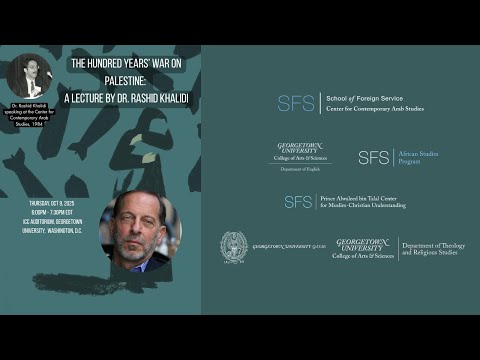
The Hundred Years’ War on Palestine: A Lecture by Dr. Rashid Khalidi
Introduction
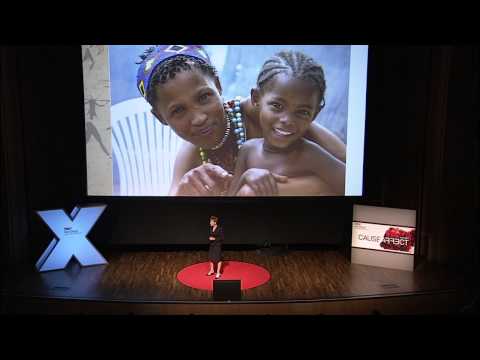
In a recent lecture at Georgetown University, Dr. Rashid Khalidi, a prominent historian and scholar of Middle Eastern studies, addressed the ongoing conflict in Palestine, particularly in light of the events that have unfolded since October 7, 2023. The lecture was part of the Karima Khoury Memorial Lecture series and was introduced by Fida Adely, the director of the Center for Contemporary Arab Studies at Georgetown. Dr. Khalidi's talk, titled "The Hundred Years' War on Palestine," delved into the historical context of the conflict, the recent escalation of violence, and the implications for Palestinian identity and resistance.
Context of the Lecture
Dr. Khalidi began by reflecting on his past experiences at Georgetown, emphasizing the importance of academic discourse in understanding complex geopolitical issues. He acknowledged the grim nature of his topic, which revolves around the historical and ongoing violence faced by the Palestinian people. He framed his discussion within the context of his book, "The Hundred Years' War on Palestine," which posits that the events in Palestine since 1917 have been shaped by a long colonial war waged against the indigenous Palestinian population by the Zionist movement and its international supporters.
Recent Events and Their Significance
Dr. Khalidi highlighted the catastrophic events that have transpired since October 7, 2023, describing them as a new phase in the ongoing conflict. He noted that these events have been characterized by unprecedented levels of violence, destruction, and displacement, which he argues can only be understood through the lens of historical colonialism and resistance. He referred to the recent atrocities as potentially representing a "new Nakba," a term used to describe the mass displacement of Palestinians during the 1948 Arab-Israeli War.
He emphasized that the scale of violence and the global response to it are extraordinary, indicating a shift in international perceptions regarding the Israeli-Palestinian conflict. Dr. Khalidi argued that the current situation cannot be viewed as an isolated incident but rather as part of a century-long struggle against colonialism and oppression. He criticized the narrative that frames the conflict as an age-old struggle between Arabs and Jews, asserting that it is fundamentally a product of imperialism and settler colonialism.
Framework of Understanding
Dr. Khalidi's framework for understanding the conflict is rooted in the historical context of settler colonialism. He argued that the Zionist movement, while a national movement, was inherently a colonial project aimed at displacing the Palestinian people. He pointed out that this struggle has always involved the intervention of major world powers, which have consistently sided with the Zionist movement and later the state of Israel. He emphasized that there has never been an equivalence between the two sides, as the power dynamics are heavily skewed in favor of the Zionist project.
Casualty Figures and Humanitarian Impact
In discussing the humanitarian impact of the recent violence, Dr. Khalidi provided alarming statistics regarding casualties and displacement. He noted that since October 7, 2023, the number of Palestinians killed and wounded has reached approximately 260,000, representing about 12% of the Gaza Strip's population. He highlighted the disproportionate ratio of Palestinian to Israeli casualties, which he estimated to be at least 35 to 1, and possibly higher as recovery efforts continue.
Dr. Khalidi also addressed the psychological and social ramifications of the violence, particularly for children in Gaza, who have been subjected to trauma and loss on an unprecedented scale. He emphasized the need for comprehensive humanitarian aid and support for mental health services to address the long-term effects of the conflict on the population.
Political Dynamics and Leadership
Throughout his lecture, Dr. Khalidi critiqued the current Palestinian leadership, arguing that the absence of a unified and effective political movement has hindered the Palestinian struggle for self-determination. He noted that the leadership has often been characterized by fragmentation and a lack of coherent strategy, which has been exacerbated by external pressures and internal divisions.
He pointed out that the Palestinian Authority, led by Fatah, has become increasingly viewed as a collaborator with Israeli authorities, further alienating the Palestinian populace. Dr. Khalidi called for a revitalization of Palestinian leadership that is representative of the people's aspirations and capable of articulating a clear vision for the future.
International Response and Shifts in Public Opinion
Dr. Khalidi observed that the global response to the recent violence has been marked by a significant shift in public opinion, particularly in the West. He noted that for the first time, polls indicate a majority of Americans oppose Israel's actions in Gaza and view the situation as genocidal. He attributed this change to the efforts of activists, scholars, and artists who have worked tirelessly to raise awareness about the Palestinian cause.
He cautioned, however, that public sentiment can be fleeting and that sustained advocacy is necessary to maintain momentum and push for political change. Dr. Khalidi emphasized the importance of grassroots movements and the need for a unified Palestinian voice to effectively challenge the status quo.
Conclusion and Future Prospects
In concluding his lecture, Dr. Khalidi expressed cautious optimism about the potential for change, but he also acknowledged the formidable challenges that lie ahead. He emphasized that any resolution to the conflict must be rooted in justice, equality, and mutual recognition of rights. He called for a decolonial approach that dismantles the structures of oppression and discrimination that have long defined the Israeli-Palestinian relationship.
Dr. Khalidi's lecture served as a powerful reminder of the ongoing struggles faced by the Palestinian people and the urgent need for a just and lasting resolution to the conflict. His insights into the historical context, current dynamics, and future prospects provide a valuable framework for understanding the complexities of the situation in Palestine.
The speaker, Dr. Rashid Khalidi, presents a nuanced understanding of the 1948 war and the subsequent displacement of Palestinians, arguing that it was not merely a consequence of war but a result of premeditated policies aimed at ethnic cleansing. He posits that the events leading to the Nakba, or catastrophe, of 1948 were driven by a systematic effort to remove Palestinians from their land, facilitated by both the Zionist movement and the support of powerful allies.
Dr. Khalidi emphasizes that the displacement of Palestinians was an integral aspect of Zionism, which he describes as a settler colonial project. The speaker states, [09:49] "This war has never been one just between Zionism and Israel on one side and the Palestinians on the other. It has always involved the massive intervention of the greatest powers of the age on the side of the Zionist movement and later on the side of the state of Israel." This highlights the role of external powers in exacerbating the conflict and facilitating the displacement of the Palestinian people.
Furthermore, he contends that this historical foundation is crucial for understanding the current dynamics of the conflict, arguing that the ongoing violence and occupation are rooted in the long history of settler colonialism. He notes that the violence since 1948 has not been an isolated or spontaneous eruption, but rather a continuation of established practices aimed at displacing Palestinians. Khalidi classifies his position as broadly pro-Palestinian, as he emphasizes the injustices faced by Palestinians and the need for recognition of their rights.
- [09:49] "This war has never been one just between Zionism and Israel on one side and the Palestinians on the other."
- [12:26] "Everything started on October 7th. No, everything did not start on October 7th."
- [11:09] "In this war between colonizer and colonized, oppressed oppressor and oppressed, there has been no equivalence between the two sides."
Dr. Khalidi takes a strong position regarding the role of population transfer within Zionist thought and practice during the 1948 war, asserting that it is integral to the Zionist project rather than a marginal discussion. He argues that the idea of displacing Palestinians has been a consistent element of Zionism from its inception. He explains that the Zionist movement openly viewed itself as a settler colonial project, aiming to replace the indigenous Palestinian population with Jewish settlers.
Dr. Khalidi elucidates this point by stating that Zionism, while being a national movement, operated under a framework that unabashedly proclaimed its intentions as a colonial endeavor. He mentions, [09:01] "A project that aimed to replace the Palestinian people in their ancestral homeland with what became the Israeli people." This framing suggests that the displacement of Palestinians is not an accidental byproduct of conflict but rather a planned strategy.
He further reinforces this view by discussing how the actions during the 1948 war were not merely contingent wartime policies but were part of a broader strategy to establish a Jewish state at the expense of the Palestinian population. Khalidi's classification of this position is broadly pro-Palestinian, as he emphasizes the historic injustices faced by Palestinians and the need for a critical examination of Zionist policies.
- [09:01] "A project that aimed to replace the Palestinian people in their ancestral homeland with what became the Israeli people."
- [09:17] "This struggle is first a product of the eruption of imperialism into the Middle East after World War I."
- [09:47] "Zionism...was one which unabashedly proclaimed itself a Western settler colonial project."
Dr. Khalidi assigns significant responsibility for the failure of major peace negotiations, particularly the 2000 Camp David process, to both the Israeli leadership and the United States. He argues that the negotiations were fundamentally flawed from the outset, shaped by the asymmetrical power dynamics between the parties involved. He indicates that the Israeli government, supported by the U.S., did not genuinely engage with the Palestinian leadership in a manner conducive to reaching a fair resolution.
He notes that the U.S. has historically played a role in undermining Palestinian leadership and efforts at unity. Khalidi states, [20:27] "The United States has...systematically exacerbated this conflict." This reflects his position that U.S. foreign policy has not acted as a neutral mediator but has favored Israeli interests at the expense of Palestinian rights.
Moreover, he acknowledges that there are failures on the Palestinian side as well, particularly the lack of a coherent and unified leadership capable of presenting a strong front during negotiations. He refers to the division between Hamas and Fatah as detrimental to the Palestinian cause, suggesting that without unity, the Palestinians cannot effectively negotiate. Thus, his position can be classified as mixed, recognizing failures on both sides while emphasizing the predominant influence of external actors, particularly the U.S., in perpetuating the conflict.
- [20:27] "The United States has...systematically exacerbated this conflict."
- [24:01] "The greatest liability of the Palestinians in recent decades has been the absence of a unified, political leadership."
- [24:06] "The absence of an agreed-upon, clear strategy, which is a problem... mirrored in the stands of both of these and every other political force in the Palestinian arena."
Dr. Khalidi's assessment of international law in relation to the Israel-Palestine conflict indicates that he regards it as selectively applied and often ignored in practice. He critiques the failure of international law to provide adequate protections for Palestinians, particularly in the context of ongoing military actions and human rights violations. He suggests that the international community, including the U.S., has not held Israel accountable for its actions, which he characterizes as violations of international law.
He stresses that the legal framework surrounding the conflict is often manipulated to justify actions that contravene established norms. For example, he mentions the disproportionate civilian casualties in Gaza and questions the legitimacy of Israeli claims of self-defense, stating, [11:07] "In this war between colonizer and colonized, oppressed oppressor and oppressed, there has been no equivalence between the two sides." This indicates that he believes international law should be a binding guideline for all parties but is not treated as such.
Furthermore, Khalidi critiques the narrative that positions Israel's military actions as lawful under self-defense while ignoring the scale of Palestinian suffering. He argues that such a framing undermines the legal principles meant to protect civilians in conflict zones. His position can be classified as broadly pro-Palestinian, as he highlights the need for adherence to international law and accountability for violations against Palestinians.
- [11:07] "In this war between colonizer and colonized, oppressed oppressor and oppressed, there has been no equivalence between the two sides."
- [12:13] "We can properly understand them only within the context of the century-long war waged on Palestine."
- [12:24] "Everything started on October 7th. No, everything did not start on October 7th."
In his characterization of the Hamas-led attacks on October 7 and Israel's subsequent military campaign in Gaza, Dr. Khalidi employs strong legal and moral terms, framing the events as part of a broader genocidal campaign. He emphasizes that the scale of violence, particularly against civilians, is unprecedented and challenges the narrative of self-defense often put forth by Israel.
He argues that the attacks and the ensuing military operations have resulted in catastrophic humanitarian consequences, stating, [13:43] "The official figure...of Palestinians killed and wounded...amounts to about 12% of the Gaza Strip population of 2.2 million." This statistic underlines the severity of the situation and the disproportionate impact on the civilian population. He describes the military actions as a series of war crimes, particularly due to the high civilian casualties, and he categorizes the campaign as a form of collective punishment, which he equates with genocide.
Moreover, he points out that the media portrayal of these events often minimizes the suffering of Palestinians while amplifying Israeli narratives, stating, [28:55] "The resulting outraged response...has been universal across the Arab world and the countries of the global south." This indicates that he believes the global perception of these events is crucial for understanding the political ramifications. Khalidi's position is clearly pro-Palestinian, as he focuses on the rights of Palestinians and condemns the actions of Israel as unjustifiable violations of human rights.
- [13:43] "The official figure...of Palestinians killed and wounded...amounts to about 12% of the Gaza Strip population of 2.2 million."
- [28:55] "The resulting outraged response...has been universal across the Arab world and the countries of the global south."
- [11:38] "The ratio of Palestinians to Israelis killed is at least 35 to 1."
[00:00] Good evening everyone, and welcome.[00:03] My name is Fida Adely, and I am the[00:05] director of the Center for Contemporary[00:07] Arab Studies and the Clovis and Hala[00:09] Salaam Maksoud Chair in Arab Studies at[00:12] Georgetown.[00:14] Before we begin, and before I introduce[00:16] our distinguished speaker, I'd like to[00:18] remind everyone of Georgetown's[00:20] um Georgetown University's speech and[00:22] expression policy. This is something we[00:24] read at all of our events.[00:26] Thank you for joining us this evening.[00:28] Georgetown University is committed to[00:30] standards promoting speech and[00:32] expression that fosters the exchange of[00:34] ideas and opinions.[00:35] While it is recognized that not everyone[00:37] may share the same views as the[00:38] speakers, it is expected that everyone[00:40] in attendance at this event respects the[00:43] right of speakers and the organizing[00:45] groups to share their perspectives and[00:47] ideas by not causing a disruption to the[00:49] event's activities. You all look like a[00:52] disruptive bunch.[00:55] At the conclusion of each panel or this[00:58] panel,[01:00] um or actually the talk by our[01:02] distinguished speaker, there will be a[01:04] question and answer session in which you[01:06] can ask questions. We'll have mics set[01:08] up, they're already set up in the[01:10] aisles, and we'll ask you to to[01:13] uh limit your comments to a question,[01:15] and in the interest of time, we ask that[01:17] each person be concise and only ask one[01:19] question. I'll remind us of that at the[01:22] end.[01:23] So, back to my welcome. It's a great[01:26] honor to introduce Dr. Rashid Khalidi,[01:28] who will deliver the 2025[01:31] Karima Khoury Memorial Lecture,[01:33] a public series that has brought eminent[01:35] scholars of the Arab world to speak at[01:37] Georgetown since 1988.[01:40] Past distinguished lectures lecturers[01:42] have included Kamal Boullata, Janet[01:44] Abu-Lughod, Noura Erakat, Hisham[01:47] Sharabi, Edward Said, Ibrahim Oweiss,[01:50] and Julia Clancy-Smith, amongst many[01:53] others.[01:55] Karima Khoury was born on July 30th,[01:57] 1904[01:59] in Beirut, where she was where she was[02:01] raised and educated.[02:03] She was one of eight children, six of[02:05] whom immigrated to the US. One of her[02:08] brothers served in the Air Corps and[02:10] died in action during World War II.[02:13] Karima was extremely generous to her[02:15] family, taking on such responsibilities[02:17] as a sponsoring a nephew to come to the[02:19] US and subsequently supporting him[02:22] throughout his education.[02:24] From 1948 to '67, she worked as a[02:27] translator at the Library of Congress.[02:29] In addition, she was very active in the[02:31] Lutheran Church throughout her life.[02:33] Karima Khoury passed away on March 13th,[02:36] 1986.[02:38] Her Her family, who hailed from the[02:40] Khoury, Armani, and Maqdasi families,[02:43] generously endowed this lecture series[02:45] in her name.[02:48] How wonderful that Karima's family saw[02:49] fit to endow a lecture series that would[02:52] enable generations to come together and[02:54] learn from some of the most important[02:56] intellectuals of our time.[02:58] We in CCAS and the Georgetown community[03:01] continue to be the privileged[03:03] beneficiaries of their generosity and[03:05] vision, and Karima Khoury's memory will[03:07] be kept alive through this gift. We're[03:09] also honored to have members of her[03:11] family in the audience with us today.[03:14] Now, as to our esteemed guest, Dr.[03:17] Rashid Khalidi received his BA from Yale[03:19] in 1970, his doctorate from Oxford 1974.[03:23] He was the editor of the journal[03:24] Palestine Studies, the president of the[03:27] Middle East Studies Association, and[03:29] advisor to the Palestinian delegation to[03:31] the Madrid and Washington Arab-Israeli[03:33] peace negotiations from 1991 to June[03:36] 1993.[03:38] He is the author of the widely acclaimed[03:40] The Hundred Years' War on Palestine, A[03:42] History of Settler Colonialism and[03:44] Resistance, 1917 to 2017,[03:48] which was published in 2020, as well as[03:51] several other books and edited volumes.[03:53] He's also written more than 80 articles[03:55] on Middle East history and politics,[03:57] including pieces in the New York Times,[03:59] the Boston Globe, the Los Angeles Times,[04:01] the Chicago Tribune, and a range of[04:03] scholarly outlets. Professor Khalidi has[04:06] received prestigious fellowships and[04:07] grants, including from the John D. and[04:10] Catherine T. MacArthur Foundation, the[04:12] Ford Foundation, and the Woodrow Wilson[04:14] International Center for Scholars.[04:17] Professor Khalidi has also been a guest[04:18] on numerous radio shows,[04:21] and I forgot to mention he also[04:22] previously taught at the Center for[04:24] Contemporary Arab Studies in the '80s[04:26] when he first came to the US from[04:28] Beirut,[04:29] um he was on our faculty.[04:33] So,[04:34] this year's lecture is being held Oh, I[04:37] should Sorry, I skipped one important[04:38] thing. So, I provided you just a glimpse[04:40] of his career and his distinguished[04:43] career as a scholar, teacher, and public[04:45] intellectual.[04:47] This year's lecture is being held as[04:49] part of our CCAS's 50th 50th anniversary[04:52] programming, and as a preeminent[04:54] historian of the Middle East who[04:56] previously taught here, there's no one[04:58] more fitting to be this year's[04:59] distinguished speaker.[05:01] This lecture is also co-hosted by the[05:04] Gaza Lecture Series, a year-long series[05:07] co-sponsored with the Alwaleed Center[05:09] for Muslim-Christian Understanding,[05:10] Georgetown University Qatar, the African[05:13] Studies Program here at Georgetown, and[05:15] the Department of Theology and Religion.[05:18] Dr. Khalidi will begin with his lecture,[05:20] and then we'll open it up for Q&A.[05:23] Please join me in welcoming Dr. Khalidi[05:25] this evening.[05:47] Thank you.[05:50] Uh thank you all for for coming this[05:52] evening. Um[05:54] It's a pleasure to be back at Georgetown[05:55] at CCAS, as Fida just told you.[05:59] I taught here as an adjunct[06:02] in 1983-84, and again uh for a semester[06:05] in '84-'85. So, it was my first[06:08] experience of teaching in American in an[06:10] American university, and it was a[06:11] pleasure. Um[06:12] students were wonderful.[06:14] The my colleagues were were welcoming,[06:17] and I got a book done in the time I was[06:19] here. So, it worked out very well for[06:21] me.[06:22] Um[06:25] I'm going to be talking about a grim[06:27] topic.[06:28] Um I titled my talk The Hundred Years'[06:31] War on Palestine, which of course is the[06:32] title of my book.[06:34] But that title applies to everything[06:36] that's happened since the book was[06:37] published, as I'm going to as I'm going[06:39] to suggest this evening.[06:42] Um[06:43] In the two years since October 7th,[06:46] 2023,[06:48] we've witnessed seemingly endless scenes[06:51] of horror,[06:53] in many cases on our phones or other[06:54] screens.[06:56] We can hope that these scenes may be in[06:58] an end, even if only temporarily,[07:01] but hopefully permanently.[07:03] Due to the shocking[07:05] uh uh[07:06] Sorry. Do[07:08] the shocking events of these past two[07:10] years represent a rupture, or are they[07:14] unprecedented? Historians are going to[07:15] be debating that question for a very,[07:17] very long time.[07:19] Certainly, the in seemingly interminable[07:22] atrocities and the endless devastation,[07:26] and the intensity of the global response[07:29] to all of this, to what many people have[07:31] called a new Nakba, are extraordinary,[07:34] both the atrocities and the response to[07:37] them.[07:38] We appear to have entered a new phase in[07:40] Palestine during these two years,[07:43] where violence, occupation, and[07:45] colonization are intensifying,[07:48] where in international law is further[07:50] ignored,[07:51] and where criticism of Israel is growing[07:54] in an unprecedented fashion.[07:57] And finally, where long-fixed tectonic[08:01] plates seem to be moving slowly.[08:05] While much has changed, uh I've argued[08:07] that these events, the events of the[08:09] past two years, can only be comprehended[08:12] as a cataclysmic new phase[08:15] in a war that has lasted for[08:16] generations.[08:19] This is the thesis of my book, The[08:20] Hundred Years' War, that uh that uh[08:23] Professor Adely mentioned. Um[08:26] a thesis which argues that events in[08:28] Palestine, at least since 1917, have[08:31] resulted from a long colonial war waged[08:35] on the indigenous Palestinian people by[08:38] the Zionist movement and its great power[08:40] patrons.[08:41] Not just the Zionist movement, but by[08:43] both.[08:45] Zionism, of course, was a national[08:47] movement, but it was one which[08:49] unabashedly proclaimed itself a Western[08:51] settler colonial project. They had no[08:55] compunctions about saying this for[08:57] decades and decades.[08:59] A project that aimed to replace the[09:01] Palestinian people in their ancestral[09:03] homeland with what became the Israeli[09:06] people.[09:07] Throughout this long war, the[09:09] Palestinians have fiercely resisted[09:12] the usurpation of their country and[09:14] their dispossession.[09:16] I would argue that this framework[09:17] explains the history of the past century[09:19] and more, without which the events of[09:21] the past two years are, in my view,[09:24] utterly incomprehensible.[09:26] Seen in this light, this is not an[09:30] age-old struggle between Arabs and Jews[09:33] that has been underway since time[09:35] immemorial. You hear this idiotic cliché[09:37] repeated by almost every American[09:39] politician.[09:41] Um[09:43] and it's not simply a conflict between[09:44] two peoples, though it is also that, of[09:46] course.[09:47] This struggle is first a product of the[09:51] eruption of imperialism into the Middle[09:52] East[09:54] after World War I,[09:56] and of the rise of modern nation-state[09:58] nationalisms, both Arab and Jewish, in[10:00] the period around World War I, before[10:02] and after.[10:03] It is secondly a product of the violent[10:06] European settler colonial methods[10:08] employed by Zionism to quote transform[10:12] Palestine into the lands of Israel, in[10:14] the words of Ze'ev Jabotinsky, one of[10:16] the founders of modern political[10:17] Zionism. Finally, it's a product of[10:21] stubborn Palestinian resistance to these[10:23] methods.[10:27] This war has never been one just between[10:30] Zionism and Israel on one side and the[10:32] Palestinians on the other. It has always[10:35] involved the massive intervention of the[10:38] greatest powers of the age on the side[10:41] of the Zionist movement and later on the[10:43] side of the state of Israel.[10:45] These powers were never neutral or[10:48] honest brokers or mediators. They were[10:51] always active participants in the war[10:54] alongside the Zionist movement and later[10:56] alongside the state of Israel.[10:59] In this war between colonizer and[11:02] colonized, oppressed oppressor and[11:04] oppressed, there has been no equivalence[11:07] between the two sides, but instead[11:09] always, invariably, a vast imbalance in[11:12] favor of Zionism and Israel.[11:15] I would argue that this thesis has been[11:17] starkly confirmed by a number of things[11:20] that we've been watching over the past 2[11:21] years. The disproportionate levels of[11:24] death, destruction, and displacement[11:27] since October 7th.[11:29] The ratio of Palestinians to Israelis[11:33] killed is at least 35 to 1.[11:38] Probably much higher when the thousands[11:40] of dead buried beneath the rubble[11:43] are recovered.[11:45] I would argue that the thesis that I put[11:46] forward is reinforced by the[11:49] overwhelming level of US and Western[11:51] European political, diplomatic, and[11:53] military support for Israel throughout[11:55] this war, in contrast with the very[11:57] limited external support received by the[11:59] Palestinians.[12:02] The events of these[12:04] 2 years, while dramatic and extreme, are[12:06] I would argue therefore not unique and[12:09] they do not stand outside of history. We[12:11] can properly understand them only within[12:13] the context of the century year[12:15] century-long war waged on Palestine,[12:19] notwithstanding the efforts by Israel[12:21] and its supporters in this country to[12:22] deny the relevance of context.[12:24] Everything started on October 7th. No,[12:26] everything did not start on October 7th.[12:30] Far from representing a departure, what[12:32] has happened since October 7th, 2023, is[12:35] consistent with decades of Israeli[12:38] ethnic cleansing, military occupation,[12:40] attacks on civilians, and theft of[12:43] Palestinian land, with years of the[12:46] siege of the Gaza Strip, and with[12:48] Palestinian resistance to these actions.[12:52] These 2 years have been described as I[12:54] quote one of the most intense civilian[12:57] punishment campaigns in history, and I[12:59] would agree with that[13:01] estimation.[13:03] We know that scores of families have[13:05] been completely wiped out.[13:07] We know that many many people were[13:08] killed by starvation as a result of[13:11] untreated wounds and as a result of[13:13] disease, all of this intentionally[13:15] caused by crippling Israeli restrictions[13:18] on the transit of water, food, medicine,[13:21] fuel, and electricity into the Gaza[13:23] Strip, and by the intentional[13:25] destruction of 25 of the 38 hospitals in[13:29] the Gaza Strip, leaving the rest of them[13:32] barely functioning and without supplies[13:34] in many cases.[13:36] Since October 7th, 2023,[13:38] the official figure, and this isn't[13:41] estimate, but this is the official[13:43] figure given by the Hamas government of[13:44] Gaza,[13:45] of Palestinians killed and wounded,[13:47] roughly 260,000[13:50] people, amounts to about 12%[13:53] of the Gaza Strip population of 2.2[13:55] million, and this is undoubtedly an[13:58] undercount,[13:59] with perhaps 20,000 of those killed[14:02] children.[14:03] The Gaza Strip has a population which is[14:05] 40% children. So, it's no surprise that[14:08] if 70,000 people have been killed,[14:10] 20,000 of them are children.[14:12] This is the highest total[14:14] of killed and wounded in any phase of[14:17] this century-old war. It's the highest[14:19] proportion of killed and wounded in any[14:22] phase of this war.[14:24] The overwhelming majority of those[14:26] killed were civilians. Do not believe[14:28] the lies produced by this country's[14:30] government and by the Israeli[14:32] government. By Israeli military[14:34] estimates, which you can find in the[14:35] Israeli press,[14:37] civilians came to over 83% of the total[14:40] number of killed, one of the highest[14:42] percentages of civilian casualties in[14:44] any war in the modern era, and in most[14:46] wars in the 20th century, for that[14:48] matter.[14:49] Meanwhile, never have such large numbers[14:52] of Palestinians been driven from their[14:53] homes,[14:54] most of which have been destroyed,[14:57] since October 7th. Israel has[14:59] displaced at least 1.7 million[15:02] Palestinians, and that's an old[15:03] statistic. The number increased with the[15:05] offensive on Gaza City. Most of those[15:07] people having been displaced multiple[15:09] times.[15:11] The war has also had a searing effect on[15:14] Israel.[15:15] Israel's civilian death toll of 800 is[15:19] the highest civilian death toll of[15:21] Israelis since the 1948.[15:24] The total of 1,200 Israeli soldiers and[15:27] security personnel killed and 20,000[15:29] wounded together is probably the highest[15:32] total in Israel's history[15:34] of military killed and wounded.[15:36] The 250 Israeli civilians and soldiers[15:39] and foreign nationals who were taken[15:40] captive are unique in Israel's history.[15:43] Thousands of Israelis were displaced[15:45] from their homes in the north and south[15:46] of the country and many of them have not[15:48] yet returned.[15:50] In Israel,[15:51] the violence of October 7th, especially[15:53] of the day of October 7th, with the[15:55] gruesome results live-streamed via[15:57] social media and repeatedly played on[15:59] Israeli television, has had a visceral[16:02] impact on the entire country,[16:04] engendering a burning desire for revenge[16:07] that has been weaponized by the Israeli[16:08] government to prolong this war to 2[16:11] years.[16:12] This attack shattered the sense of[16:14] security that the state of Israel[16:16] supposedly provided for its citizens,[16:18] that the Israeli military supposedly[16:19] provided for its citizens, and it has[16:22] reinforced a pre-existing sense of[16:24] perpetual victimhood that has evoked[16:26] historical memories of persecution.[16:30] The attack of October 7th and the[16:32] cascading Israeli battlefield failures[16:35] that followed exposed the weaknesses of[16:37] Israel's military planning, of its[16:39] intelligence service, and of its vaunted[16:41] surveillance technology.[16:44] I would argue this was the worst defeat[16:46] in Israel's military history, worse than[16:47] 1983.[16:49] It was a fiasco that also represented a[16:51] temporary collapse of Israel's security[16:54] doctrine.[16:56] Now, the experts misname this doctrine[16:58] deterrence,[16:59] but in fact this doctrine is derived[17:02] from a much older set of teachings.[17:05] It's derived from the aggressive[17:07] approach that was taught to the founders[17:09] of Israel's armed forces, chosen members[17:11] of Zionist militias like Moshe Dayan,[17:13] Yitzhak[17:16] Yigal Allon, and others,[17:19] who were trained in the late 1930s by[17:21] veteran British counterinsurgency[17:23] specialists like Orde Wingate and Sir[17:25] Charles Tegart.[17:27] These experts in meeting out violence to[17:30] colonial subjects had previously honed[17:32] their trade in Ireland, India, Sudan,[17:35] Egypt, and other parts of the empire.[17:38] The doctrine of colonial warfare that[17:39] they propounded and passed on to these[17:42] trainees, people like Dayan and Allon,[17:46] holds that by attacking and terrorizing[17:49] civilian populations supportive of[17:51] insurgents, thereby imposing what they[17:55] called a moral effect. You have to have[17:57] a moral effect[17:58] on the native, as the British would say.[18:01] A people can be decisively defeated,[18:03] permanently intimidated, and forced to[18:06] accept the colonizer's terms. This is[18:09] the doctrine of the Israeli army,[18:10] derived from British colonial[18:13] counterinsurgency manuals, textbooks,[18:15] and practices.[18:17] While the events of October 7th, the[18:20] fiasco of October 7th in in military[18:22] terms for the Israeli army,[18:24] should have exposed the bankruptcy of[18:26] such a force-based approach to an[18:28] essentially political problem,[18:31] the Israeli leadership has apparently[18:33] learned nothing.[18:34] Instead, for 2 years, it doubled down on[18:37] previous practices, in keeping with the[18:39] well-known Israeli adage, if force[18:41] doesn't work, use more force.[18:44] Driven by a desire for revenge for a[18:46] humiliating military defeat, Israel's[18:49] leaders have ignored Clausewitz's dictum[18:51] that war is a continuation of politics[18:54] by other means.[18:56] Since October 2023, the Israeli[18:58] government planned to exploit the[19:00] opportunity provided by the war to carry[19:02] out the ethnic cleansing of Gazans, or[19:04] as many of them as was possible, via[19:07] their expulsion to Egypt or Jordan. At[19:10] the outset, the Biden administration[19:12] tried to persuade both countries to go[19:14] along with the plan, which they[19:16] categorically refused to do. The Office[19:17] of Management and Budget put in a budget[19:19] request for money for people displaced[19:22] from the Gaza Strip in October and[19:23] November of 2023. They went along with[19:27] this. This is not an Israeli plan. It[19:28] was an Israeli-American plan.[19:32] While the Trump administration initially[19:34] endorsed this objective, Trump's[19:36] Riviera,[19:38] they which[19:39] sorry, while the Trump administration[19:41] initially endorsed this objective to the[19:43] delight of the Netanyahu government.[19:45] Netanyahu was sitting alongside the[19:46] president when he said this and he was[19:48] he couldn't have been happier,[19:49] obviously. The Trump administration may[19:51] now have dropped this after the[19:53] president thought better of it.[19:56] And that's certainly not part of the[19:58] plan that was signed last night.[20:01] The Israeli government declared[20:03] throughout this war[20:04] that its goal was the complete[20:06] elimination of Hamas.[20:08] Now think about that for a minute.[20:10] Hamas[20:12] is a political, military, ideological[20:15] entity[20:16] with branches throughout Palestine[20:19] and the Palestinian diaspora.[20:21] And if you think about that for 2[20:23] seconds, it's clear that eliminating[20:25] Hamas is manifestly impossible.[20:28] After 2 years of war[20:30] failed to eliminate Hamas's military[20:32] capabilities. It did degraded them. It[20:35] killed most of its leaders, but it[20:36] failed to eliminate them utterly.[20:39] The best that can be said is that Israel[20:42] can claim a Pyrrhic victory.[20:45] Now this is one that came at an[20:47] astronomical cost in Palestinian lives.[20:50] And I would remind you that[20:53] as Henry Kissinger once wrote[20:56] the guerrilla, I'm quoting Henry[20:58] Kissinger now. I don't do this often,[20:59] but[21:01] it's worth it in this instance. As[21:03] Kissinger once wrote, and I quote, the[21:04] guerrilla wins if he does not lose, the[21:07] conventional army loses if it does not[21:10] win. We'll be able to estimate to what[21:13] extent Kissinger was right.[21:14] Perhaps after the passage of some time.[21:16] In any case, whatever the fate of Hamas,[21:19] the philosophy of armed resistance to[21:22] colonization, to occupation is likely to[21:26] re-emerge sooner or later as long as[21:29] there is no prospect of an end to[21:31] military occupation[21:33] of colonization and of the oppression of[21:35] Palestinians and no political horizon[21:38] promising them self-determination and[21:40] equality with Israelis.[21:44] Self-determination does not mean a[21:45] string of bantustans in the West Bank[21:47] under Israeli control[21:49] with Israeli superiority maintained. It[21:51] means self-determination and it means[21:54] equality. And unless those things[21:55] happen, sooner or later I would predict[21:58] resistance will re-emerge.[22:00] Nevertheless[22:02] whatever one might say about the[22:03] prospects for Israel, I think the[22:05] post-war war political horizon for the[22:07] Palestinians is also bleak in many[22:09] respects.[22:11] In military terms, it's true, the scale[22:13] of Hamas's October attack was[22:15] unprecedented, although it triggered a[22:17] catastrophe for Gaza's civilian[22:20] population. But going back again to[22:22] Clausewitz, it's hard to discern what[22:25] Hamas's long-term political objectives[22:28] were.[22:29] In various times, Hamas has proclaimed[22:32] its willingness to accept the[22:34] Palestinian state alongside Israel as in[22:36] its 2017 statement of principles which[22:39] revised its charter[22:41] of 20 years before.[22:43] This statement considered, and now I'm[22:45] quoting from the statement, considered,[22:48] quote, the establishment of a fully[22:49] sovereign and independent Palestinian[22:51] state with Jerusalem as its capital[22:53] along the lines of June 4th, 1967[22:56] with the return of refugees and the[22:57] displaced to their homes from which the[22:59] way they were from which they were[23:01] expelled to be a formula of national[23:04] consensus. This is an acceptance of a[23:05] two-state solution. Hamas leaders have[23:08] repeated this mantra recently, while at[23:10] different times in the past they've[23:12] offered Israel a long-term truce.[23:14] Sheikh Ahmed Yassin called for a[23:15] 100-year truce before he was[23:17] assassinated.[23:18] In the same, however, in the same 2017[23:22] document, Hamas called for, quote, the[23:24] full and complete liberation of[23:26] Palestine from the river to the sea. And[23:29] Hamas has consistently refused to accept[23:31] Israel's legitimacy or to give up its[23:33] arms until a Palestinian state is[23:35] established. Both of these tendencies[23:38] have been present in contradictory[23:40] statements made by Hamas leaders over[23:42] time.[23:44] The main political alternative to Hamas,[23:46] Fatah, is even more incoherent[23:48] strategically. It has allowed the[23:50] Palestinian Authority it controls to[23:51] become a despised, subservient[23:54] subcontractor for the Israeli occupation[23:57] while projecting no strategy or[23:59] political vision whatsoever except[24:01] negotiation from position of abject[24:04] weakness with an Israel that refuses to[24:06] negotiate with the Palestinians at all.[24:08] That's not a strategy.[24:10] The greatest liability of the[24:12] Palestinians in recent decades has been[24:14] the absence of a unified, political[24:17] leadership.[24:18] And the absence of an agreed-upon, clear[24:22] strategy, which is a problem, frankly, I[24:24] see mirrored in the stands of both of[24:26] these and every other political force in[24:29] the Palestinian arena.[24:31] For over a century, going back to 1917[24:35] Palestinians have most often not been[24:36] allowed to choose who represents them or[24:39] been allowed to sit at the table. Or if[24:42] they did, they sat at a table where the[24:44] rules were[24:45] designed by the United States and Israel[24:48] or other great powers. When we went to[24:49] Madrid and when we came to Washington,[24:52] the Palestinian delegation, we were[24:53] sitting at a table where all the rules[24:56] for what we could do had been decided[24:58] upon beforehand by the United States and[25:00] Israel.[25:01] I could go into this in detail. If[25:03] you're interested, it's covered in my[25:04] book.[25:06] If the Palestinian people cannot agree[25:08] rapidly on a unified, credible political[25:10] voice representing a national consensus[25:13] and cannot impose their choice[25:15] of those who represent them in any[25:18] negotiations that may take place, there[25:20] is a great risk that crucial decisions[25:23] about the future of Palestine will once[25:25] again be made entirely by outsiders[25:28] while ignoring Palestinian rights and[25:30] interests.[25:32] Let me go back to the war.[25:35] Israel has presented its war on Gaza as[25:38] being targeted exclusively at Hamas.[25:42] It's claimed that it has scrupulously[25:44] obeyed international humanitarian law[25:47] using proportional and discriminate[25:50] force[25:51] and that the deaths of civilians were[25:53] unintentional collateral damage because[25:56] I've in scare quotes because Hamas used[25:59] these civilians as, again in scare[26:01] quotes, human shields.[26:03] Western governments and the corporate[26:06] mainstream media have constantly[26:09] repeated these false claims.[26:12] Although they are belied by the killing[26:13] and wounding of over a mi- a quarter of[26:16] a million people[26:17] mostly civilians, by the mass[26:19] displacement of Gaza's population and by[26:22] the intentional destruction of most of[26:24] the Gaza Strip's infrastructure through[26:26] the targeting of hospitals water[26:28] purification and sewage plants with[26:30] these shields?[26:32] Water purification plants?[26:34] Electric stations? Sewage? Sewage[26:37] systems?[26:39] Uh as well as the electrical, telephone,[26:41] and internet systems, as well as[26:43] schools, as well as universities. Every[26:45] university in Gaza has been either[26:47] destroyed or put out of commission.[26:50] Not to speak of mosques and churches and[26:52] antiquities, all of which were targeted.[26:55] As any serious student of the Israeli[26:57] military can attest, and I've already[26:58] talked about the origins of Israeli[27:00] military doctrine, since the infancy of[27:03] the militias, the Palmach, the Haganah[27:05] that later became the Israeli army, such[27:08] savage practices directed against[27:10] civilians[27:12] always directed against civilians,[27:14] rooted in British counterinsurgency[27:16] doctrine, have been central to[27:18] everything that military has ever done.[27:21] And I can list massacre after massacre[27:24] after massacre. I can list attack after[27:26] attack after attack on targets in[27:28] Lebanon. I could go on and on and on.[27:32] The only good news[27:34] is that this reality, that this is in[27:36] fact the truth, that this lying nonsense[27:39] about human shields is no more than a[27:40] cover for genocide. This reality has[27:43] reverberated around the world as the[27:45] atrocities Israel has inflicted on[27:47] Gazans have been viewed in real time, 4[27:50] months on end, on independent,[27:53] alternative, and social media. Breaking[27:56] through the fog of groupthink[27:58] perpetuated by Western governments and[28:00] by the corporate media that parrot[28:02] deceitful Israeli talking points.[28:05] This is the first time that people have[28:07] watched genocide live-streamed on their[28:10] devices.[28:11] Rather than getting their information[28:13] from the offerings of the mainstream[28:15] media, which mainly present the news[28:18] through an Israeli lens, the New York[28:19] Times starts everything it writes on[28:21] this with what the Israelis say, what[28:23] the Israelis think, and what's happening[28:24] to the Israelis. A very important part[28:26] of the story.[28:28] 35 to 1 casualty ratio and you start[28:31] with the Israelis? But that's the way[28:33] they That's what they do.[28:34] Everything Everything starts with an[28:37] Israeli lens in that media.[28:39] Ignoring all of this, people now have[28:42] access to ample images of the hell that[28:44] Israel has created in Gaza.[28:47] People in this country, people the world[28:48] over. As a result[28:50] Palestine has become a central cause for[28:52] activists young and old, inflicting a[28:55] mounting toll on Israel's increasingly[28:57] tarnished image and its already impaired[29:00] global legitimacy. Even President Trump[29:02] said that to Netanyahu in his phone call[29:03] the other day. Everybody's against you.[29:06] Trump has figured it out, then that[29:08] means it is true.[29:11] The resulting outraged response[29:14] I'm sorry. Majorities everywhere[29:17] now correctly see this war directed[29:20] against Gaza's population in a[29:23] vengeance-driven form as a[29:25] vengeance-driven form of genocidal[29:28] collective punishment. The resulting[29:30] outraged response to these atrocities[29:32] has been universal across the Arab world[29:35] and the countries of the global south[29:37] and in almost every Western country.[29:41] Unfortunately, a related element has[29:43] emerged since October 2023. A perception[29:47] of the unequal value that Western elites[29:50] place on Israeli lives, which are coded[29:52] as white,[29:53] on the one hand, and Arab lives, coded[29:56] as brown, on the other.[29:58] This racist double standard has produced[30:00] a toxic toxic repressive atmosphere in[30:04] the spaces dominated by these elites in[30:06] the United States and Europe, whether in[30:08] the political arena, in the media, and[30:10] on university campuses. I I I I see[30:14] every reason for the there to be a focus[30:16] on Israeli hostages, of whom there were[30:18] over 250.[30:19] There were thousands of Gazans just[30:21] arrested for no reason. Over 1,700 of[30:24] whom are still held and who will be[30:26] hopefully released in a few days. We[30:28] have gotten granular individualized[30:31] portraits of every single hostage. What[30:33] about the 1,700 hostages? They're[30:35] hostages. They're just arrested, just[30:37] picked up in Gaza. And many many of them[30:40] have already been released. There's[30:41] still over a thousand of them in[30:42] detention. For some reason, those 250[30:45] people got more attention than 1,700.[30:48] Why is that? And people have I think[30:51] begun to realize this. Unfortunately,[30:53] it's produced this toxic repressive[30:56] atmosphere. The resulting wave of[30:59] congressional, cultural, and university[31:01] witch hunts has centered on accusations[31:04] that advocacy of Palestinian freedom and[31:06] critiques of Israeli policies are[31:08] anti-Semitic.[31:11] This assertion accepts the folk false[31:13] contention that Israel is coterminous[31:16] with Judaism.[31:18] While ignoring the growing number of[31:20] Jews who support Palestinian rights and[31:22] oppose the Israeli government's actions.[31:24] It ignores as well the enormous number[31:27] of Jews in modern history who have been[31:29] opposed to Zionism or were not Zionists.[31:32] It is utterly absurd to claim that[31:35] opposition to Israeli settler[31:37] colonialism is anti-Semitic in[31:39] principle.[31:41] If those who chose to colonize Palestine[31:45] were persecuted Scandinavian Christians.[31:48] I pick them because they're especially[31:50] blond.[31:51] If they were persecuted Scandinavian[31:54] Christians who chose to colonize[31:55] Palestine and who saw themselves on a[31:58] divinely mandated mission to seize the[32:01] country from its indigenous population[32:03] and turn it into a Christian[32:05] commonwealth, it would be ludicrous to[32:08] claim that resistance to their efforts[32:10] was anti-Christian.[32:12] But somehow resistance to what's going[32:14] on in Palestine is coded as anti-Semitic[32:17] in the same absurd manner.[32:21] Notwithstanding this ferocious wave of[32:24] repression of Palestinian advocacy in[32:26] the public sphere,[32:27] on campuses, we've seen it in[32:29] particularly harsh form at Columbia and[32:31] elsewhere,[32:33] there have been unprecedented shifts in[32:35] American public opinion. I I was born in[32:38] this country. I have lived here my whole[32:40] life. I've had the misfortune to read[32:41] the New York Times since I was a child.[32:44] And I have never[32:45] in my wildest dreams expected a shift[32:49] such as I have seen in the last few[32:51] years. Never in my wildest dreams.[32:54] A majority of Americans now oppose[32:57] Israel's war on Gaza.[32:59] A number that reached 60% in a Gallup[33:02] poll in July. The number would have been[33:04] higher by[33:05] end of September.[33:07] Growing numbers consider this war[33:09] genocide. In a In a Quinnipiac poll in[33:12] August, 50% of those polled said this[33:15] was genocide.[33:16] A poll by the University of Maryland in[33:18] October and that Quinnipiac poll I just[33:21] mentioned, both showed more support for[33:24] the Palestinians than for Israel for the[33:26] first time in polling history.[33:30] Think about that for a minute.[33:32] For the first time in the history of[33:33] this country, first time in polling[33:35] history, but I would say going back to[33:36] Woodrow Wilson, there is more sympathy[33:39] for Palestinians[33:40] than for Israelis.[33:43] Meanwhile, the Washington Post a few[33:45] days ago reported that 60% of American[33:48] Jews who were polled considered that[33:51] Israel is committing war crimes in Gaza.[33:53] 60% of of American[33:57] members of the American Jewish community[33:58] who were polled. Nearly 40% of them[34:01] consider that it's committing genocide.[34:03] And that proportion that proportion[34:05] rises to 50% among those under 35. 50%[34:10] of American Jews under 35 polled by the[34:13] Washington Post consider that Israel is[34:15] committing genocide in[34:17] was committing genocide in Gaza.[34:20] Similar dramatic shifts in European[34:22] opinion have also been reported. A[34:24] YouGov poll showed that in five six[34:27] European countries, Britain, France,[34:29] Spain, Germany, Italy, and Denmark, I[34:32] think, uh support for Israel barely rose[34:35] above 20% in any one of those six[34:37] countries.[34:38] That's a that's a shift similar to what[34:40] we've seen in the United States. In[34:41] fact, even greater.[34:43] In spite of these momentous shifts, the[34:45] moneyed elites that dominate American[34:47] politics, media, and the universities[34:49] remain unmoved in their dedication to a[34:52] blatantly Israeli narrative. We've seen[34:54] this[34:55] in spades at Columbia.[34:58] And they have shown an utter unconcern[35:00] for Palestinian rights. Even the call[35:02] that some have emitted recently for a[35:05] two-state solution, so-called, rings[35:08] hollow.[35:09] There is no sign in anything anybody has[35:11] said in the months of chatter about a[35:13] two-state solution, nothing,[35:15] that suggests that it involves[35:17] implementation of the essential[35:19] prerequisites for a real two-state[35:21] solution, which be which would be a[35:23] rapid and complete end to Israel's[35:25] 58-year-old military occupation and a[35:29] rapid and complete end to its usurpation[35:31] and colonization of Palestinian land[35:34] that has planted about 500 3/4 of a[35:36] million Israeli settlers[35:39] in the West Bank and East Jerusalem.[35:42] Without enforcement of these measures,[35:44] an end to occupation[35:46] and an end to colonization, a call for a[35:49] two-state solution is a cruel Orwellian[35:52] hoax[35:53] or self-deception on the part of many[35:55] politicians.[35:57] Instead of Palestinian[35:58] self-determination,[36:00] statehood and sovereignty, the status[36:02] quo in Palestine under a so such a[36:04] so-called two-state solution would[36:06] continue with a quisling Palestinian[36:08] authority lacking jurisdiction or[36:10] authority replaced by a quisling[36:12] Palestinian state similarly devoid of[36:15] the sovereignty attached to a real[36:17] state. It would be a travesty.[36:19] A disjointed archipelago of Bantustans[36:21] under the control of apartheid Israel[36:24] and under the supervision of United[36:25] States and its European and Arab allies.[36:30] This, incidentally,[36:31] is basically what the Trump plan, as far[36:34] as we can tell, uh essentially offers.[36:39] The events of the past two years mark[36:44] a tragic new abyss[36:47] in the struggle over Palestine.[36:50] While this phase reflects the underlying[36:52] liniments of previous phases in this 100[36:54] years war, its violent intensity[36:57] and the scale of loss are unique.[37:00] Even if the ferocious carnage of the[37:02] past two years ends, which we all hope[37:05] it will,[37:07] and even if the shift of global public[37:09] opinion in favor of Palestine continues,[37:11] neither of which things is certain,[37:14] there seems to be no viable path in the[37:16] short term towards a just, lasting,[37:18] sustainable resolution in Palestine[37:21] between the Palestinian and Israeli[37:22] peoples.[37:24] Such a just resolution, in my opinion,[37:26] can only be based on the decolonial[37:28] dismantling of entrenched structures of[37:31] supremacy and discrimination and on[37:34] justice, equal rights, and mutual[37:36] recognition.[37:38] These are processes that have begun in[37:39] South Africa and Ireland, but are still[37:42] far away in Palestine.[37:44] In the future, a great deal, in my view,[37:47] will depend on the ability of a revived[37:48] Palestinian national movement and its[37:50] allies to translate the shift that has[37:53] taken place in global opinion,[37:55] especially in the Western metropole of[37:58] the Israeli colonial project, and turn[38:00] it into tangible political change. Thank[38:03] you very much.[38:37] So, I'm going to invite folks to line up[38:39] at either one of these mics, and I ask[38:41] you again to please[38:43] keep your comments uh to a question or[38:46] make your or keep Yes, keep your[38:48] comments to a question. Um yeah, and I'm[38:51] just going to open it up and[38:55] hand you the[39:00] some water first before[39:02] Okay.[39:05] Okay.[39:07] Leon,[39:08] you want to just say Yeah.[39:10] Go right ahead. Go ahead.[39:12] Yeah.[39:16] I think it's not, yeah.[39:29] Hi, Dr. Khaled. Thank you so much for[39:31] your lecture. Um I was wondering if you[39:34] can respond to[39:36] the people who place the blame on Hamas[39:38] for the atrocious genocide that Israel[39:40] has carried out against the Palest the[39:43] people[39:44] The people who blame who place the blame[39:46] on Hamas for the atrocious genocide that[39:49] Israel has carried out against the[39:51] Palestinians over the past 2 years and[39:54] speak maybe to their motivations.[39:58] I mean, I I can't tell you anything[39:59] about the motivation of people I don't[40:00] know.[40:01] Obviously. So, I don't know what their[40:03] motivation is.[40:05] Um I know that there are many people who[40:07] are[40:08] outraged at the cost that this war has[40:12] inflicted on the Palestinians. And I[40:14] know that some of them, including some[40:15] Gazans that I know,[40:16] blame this on Hamas. They argue that[40:18] Hamas did nothing to protect the[40:20] civilian population.[40:21] Um they argue that they miscalculated.[40:25] They argue that um[40:28] the the cost was greater than the[40:31] benefit.[40:32] Um and I don't think that the people who[40:33] argue that had necessarily have bad[40:35] intentions.[40:36] Uh I don't know the intentions of the I[40:38] know the people I people I know in Gaza[40:40] who feel that way feel that way because[40:42] they feel that their their loss was[40:43] unbearable.[40:44] And they don't see that the that the[40:46] whatever may have been gained is worth[40:48] it. Um I don't think we can assess it[40:50] very well at the moment. I think you[40:52] have to see how this war finally[40:54] plays out. Uh the the the achievement of[40:59] an enormous sympathy for the[41:00] Palestinians may in in a in the end[41:03] prove to be a really important factor[41:06] and may change realities on the ground[41:08] in Palestine. In which case years from[41:10] now people may say this was a terrible[41:12] blunder in some ways, but it was worth[41:14] it. But I think that today it's[41:16] impossible to say. I I I honestly don't[41:18] know what to say about it. I can tell[41:20] you that I said I said in my talk it it[41:24] it inflicted the greatest military[41:25] defeat on Israel that it suffered in its[41:27] entire history.[41:28] But you have to put that against the[41:30] cost.[41:31] And you also have to say to what extent[41:33] were there mistakes made.[41:35] I think that if you launch an attack[41:38] you have to control the battlefield. You[41:40] have to make sure that atrocities are[41:42] not committed against the civilian[41:43] population or you give your enemy[41:47] tools with which to delegitimize you.[41:49] That was not done in this case. Uh I I I[41:52] I was I was in Lebanon in 2000 uh when[41:55] Israeli army withdrew. Hezbollah[41:57] controlled that battlefield. Nobody was[41:59] killed. People who had collaborated with[42:01] the Israelis since before 1982 had not a[42:04] hair on their heads touched.[42:07] And that was the way that[42:10] a a a military operation should take[42:11] place. That did not happen in this case.[42:13] You've seen the the video of the fences[42:16] open and thousands of people streaming[42:17] through. These were not militants. These[42:19] were not These were just people.[42:21] And what then happened you may disagree[42:24] with the fact that everything the[42:26] Israelis put forward was accurate. I'm[42:29] sure not all of it was accurate. Some of[42:30] it was accurate. I mean, I've talked to[42:33] people who've told me what they[42:34] themselves saw.[42:35] And so I think you have to weigh that. I[42:38] think you have to weigh the degree to[42:39] which non-combatants were were were[42:43] targets uh as against the way the the[42:45] pretext that that provided for Israel to[42:48] do what it has always done. I mean, I it[42:50] does it as a matter of doctrine.[42:52] I argue that. This is counterinsurgency[42:55] doctrine. They were trained to do this.[42:58] The British trained them to do it. 35[43:01] generals from the Israeli army were in[43:03] the Jewish Brigade of the British army.[43:05] 35 people who later became generals.[43:07] They were trained to do these things.[43:10] This was British counterinsurgency[43:11] doctrine. I can tell you the book in[43:13] which it first was published in 1896, a[43:15] book called Small Wars, which was taught[43:18] for years in the British military[43:19] academies and is taught at the Command[43:21] and Staff College at Fort Leavenworth[43:23] today[43:25] to the US Army. And that's what that[43:26] book says. You attack their their crops.[43:29] You attack their villages. You burn[43:31] their villages. Well, that's Israeli[43:32] doctrine. And if we don't know that and[43:35] then give Israel a pretext by attacking[43:38] civilians, then we're[43:40] unleashing a a a[43:42] horrible things on our own head. So, I[43:44] think a lot can be said about this,[43:46] which doesn't mean uh resistance isn't[43:49] legitimate or that I have argued every[43:51] colonization, every occupation[43:53] invariably engenders resistance. And[43:56] that will be resistance of all forms.[43:58] That's not something I want or don't[43:59] want. That is inevitable. That has[44:02] happened in every single case in[44:03] history. Find me one case in history[44:05] when it didn't.[44:06] There isn't one. So, that's not the[44:09] issue. The issue is not the legitimacy[44:11] or illegitimacy or inevitability of[44:13] resistance. It's how you resist. It's[44:15] how It's It's It's and it's also how the[44:18] calculations you made. There were[44:20] calculations made. I know this for a[44:21] fact that there would be various things[44:24] happening from the axis of resistance[44:26] and from other Palestinians, which had[44:28] no possibility of happening and which[44:30] didn't happen.[44:31] And which meant that the brunt of this[44:33] was on the Gaza Strip, its population[44:35] and also on Lebanon to a secondary[44:37] extent. Well, those those were[44:39] miscalculations. Grave miscalculations.[44:42] Now, in the end, how are we going to[44:44] judge this? This is for historians, the[44:46] next generation of historians to tell[44:48] us.[44:49] But I think that that[44:52] having this debate[44:54] is not particularly fruitful, frankly.[44:57] You know, should we should we fight[44:58] amongst ourselves about whether this was[45:00] a good idea or not or should we figure[45:01] out how do we change the political[45:03] realities that confront us? The problem[45:05] is not people in our ranks, I promise[45:07] you. The problem is people who deny the[45:09] very existence of the Palestinian[45:10] people. The problem is people who[45:12] support whatever Israel does. That's the[45:14] problem. How do you unify and and[45:16] organize to deal with them should be[45:18] what we're thinking about in my view[45:19] anyway.[45:23] Final questions. Yeah. Hello.[45:26] Hi, thank you so[45:30] Hi, thank you so much for your time. We[45:31] greatly appreciate having you here. Um[45:33] we understand as you stated earlier that[45:35] the patrons of Zionism are as complicit[45:38] in waging a war on the Palestinian[45:40] people as Zionism itself. Um as a[45:42] professor who has worked within elite[45:44] institutions, can you talk about how the[45:45] university operates as a patron of[45:47] Zionism and do you view divestment as[45:50] necessary?[45:51] And do I what? View divestment as[45:53] necessary.[45:55] Well, very easy answer to the last part.[45:57] Yes, of course.[45:58] Um[46:00] in the absence of a unified cohesive[46:02] Palestinian national movement[46:04] which we have unfortunately not had for[46:07] the better part of a couple of decades[46:09] uh civil society has had to shoulder the[46:11] burden and it's done a remarkable job.[46:14] Whether it's the boycott, divestment,[46:16] sanctions movement, whether it's student[46:18] activism, whether it's all kinds of[46:19] other campaigns. I mean, it it this[46:22] change in public opinion didn't just[46:24] happen because people saw[46:25] videos. It happened because there was[46:28] activism and there was there was[46:29] organization and there were efforts,[46:31] some of them less successful and some of[46:33] them more successful.[46:34] Uh so, yes, I think that the the[46:37] BDS has been extraordinarily useful. And[46:40] has actually had[46:41] an impact on Israel, not so much an[46:44] economic impact as a psychological[46:45] impact. When they're kicked out of or[46:48] threatened with being kicked out of[46:49] Univision, I promise you that bothers[46:51] people.[46:52] When it's when it's difficult for cruise[46:54] ships to land in Greek ports, I promise[46:57] you that's difficult for Israel.[46:59] And I I could go on and on with minor[47:01] examples like this that show the[47:03] importance of these kinds of campaigns.[47:05] Now, the first part of your question,[47:07] how are universities complicit? Well[47:11] very very very simply, um[47:14] by investing in in companies that[47:17] support the Israeli war effort[47:19] which is why divestment is important.[47:21] Um by uh[47:23] allowing their uh[47:26] their institutions, university[47:28] institutions to be used as platforms for[47:30] propaganda[47:31] uh by[47:33] in many other ways privileging one[47:36] narrative as against another narrative.[47:38] Now, they have a problem[47:39] universities, which is that the[47:41] overwhelming majority of scholars now[47:44] don't believe most of the traditional[47:46] Israeli narrative. The Arabs were not[47:49] told to flee by their leaders. They were[47:50] driven out at bayonet point by massacres[47:53] in 1948. Uh I could go on and on.[47:56] Uh the the Israel did not make the[47:57] desert bloom. There were orange groves[47:59] in Jaffa before the first immigrant[48:01] landed and so on and so forth. Um but[48:05] those academics who[48:07] now dominate the field of not only[48:09] Middle East studies but postcolonial[48:10] studies and many other fields in[48:12] anthropology and so and so on uh are up[48:14] against institutional[48:16] pressure, particularly now. I mean,[48:18] we've seen it at Columbia. We have a[48:20] narrative that's deeply rooted in[48:23] an element of our Board of Trustees that[48:25] Columbia is inherently anti-Semitic.[48:28] What does that mean? It means there are[48:30] people who are critical of Israel.[48:32] And that's that's something that the[48:33] university has been[48:34] has been pushing a a a a a line that the[48:37] university has been pushing ever since[48:39] this war began. And that's true in many[48:41] other universities. And it was true at[48:42] Harvard. They kicked out the two heads[48:44] of the the director and the associate[48:46] director of the Middle East Center. They[48:47] shut down a program with Birzeit. They[48:50] shut down a program at the Divinity[48:51] School before the Trump administration[48:53] asked them to do anything. Anticipatory[48:56] obedience.[48:57] And Columbia was doing the same thing.[49:00] Um so, I I think that that that that[49:03] tendency[49:04] to favor a certain political line is a[49:08] deep deep problem in many many[49:10] universities and it's a function of[49:12] the nature of our Boards of Trustees or[49:14] in the case of state universities, the[49:15] natures of our state legislatures.[49:20] I just want to say I want to say that[49:21] I'm reminded of when I was a grad[49:23] student at Columbia and when you first[49:24] came, Rashid[49:26] just like how how deep and how much[49:27] resistance there was to you coming to[49:30] Columbia, right? And then when you tried[49:32] to speak to teachers in New York City,[49:34] they canceled the entire program, an[49:36] outreach program for professors to speak[49:38] to teachers in New York City, and they[49:40] canceled it. So the So this suppression[49:42] is long and deep, even though it's[49:44] intensified uh in the last couple of[49:46] years.[49:47] Yeah, please. Uh thank you very much. I[49:49] just have a quick question if you could[49:50] share some of your thoughts about the[49:52] current peace agreement that's happening[49:55] and the terms.[49:57] What do you make of it?[49:58] That's not a brief question.[50:02] Um[50:03] Yeah, you you you[50:04] you made it quick, but it's hard for me[50:06] to answer it quickly. Um[50:09] I mean[50:10] all that we really have is a phase,[50:12] which is hopefully a ceasefire.[50:16] Hopefully an exchange of the thousands[50:18] of prisoners for the for the remaining[50:20] hostages.[50:21] And hopefully the enter of humanitarian[50:23] aid to the Gaza Strip.[50:26] Everything beyond that is not really[50:27] decided. So we don't have a peace plan.[50:29] We have a ceasefire plan. That's all[50:31] that's really been agreed. Now, I assume[50:34] they've agreed on other things. I I[50:36] found out today they've agreed on[50:38] assistance to Hamas and Islamic Jihad in[50:41] finding the bodies of of hostages who[50:43] were who have killed who were killed.[50:45] So that There There are other elements[50:47] to it that we're going to find out[50:48] about. But everything beyond that in the[50:50] original Trump plan is yet to be is yet[50:53] to be negotiated, let alone decided.[50:56] The original Trump plan is a neocolonial[50:58] plan which would have instituted a new[50:59] mandate over Palestine. Instead of by[51:01] the League of Nations with Britain as[51:04] the mandatory, it would be some godawful[51:07] body headed by of all people Trump and[51:10] that vulture[51:11] Sir Tony Blair.[51:14] Uh the the vulture of Iraq. Uh[51:17] I can say many other nasty things about[51:19] him. But I think there's no necessary[51:21] likelihood that any of that is going to[51:23] come to pass. We may not get beyond[51:25] phase one. And how phases two and three[51:28] will be negotiated, if they are, is[51:30] impossible to tell.[51:32] I think things happened in the[51:33] negotiation of phase one which were[51:36] surprising.[51:37] Both concessions from Hamas and[51:39] concessions from the Israelis.[51:40] How that happened, I'm not entirely[51:42] sure, and I think it'll take us a long[51:44] time to figure that out. And[51:47] figuring that out will help us determine[51:48] what will or will not happen in the[51:50] second and third phase, if they happen.[51:53] Um so I can't I can't say more than[51:55] that.[51:56] Ask me in 5 years. I'll give you an[51:58] answer.[52:02] Hi. Um I'll try and keep it brief. Uh[52:04] one,[52:06] does a[52:07] >> question.[52:12] How do we imagine self-determination[52:14] without partition? How do we imagine[52:16] self-determination in a one-state[52:18] solution?[52:19] That's a really good question.[52:21] Um[52:22] I think there are many ways you can do[52:24] it.[52:25] Uh[52:25] remember the original British[52:28] statement in the Balfour Declaration[52:29] what they were creating was a national[52:31] home[52:32] for the Jewish people in Palestine.[52:34] I can see Palestine being a national[52:36] home for two peoples. How you would do[52:38] it[52:39] in judi- in in judiciary and[52:41] constitutional and legislative and so on[52:43] terms[52:45] um would be really hard. Whether you[52:46] would do it in terms of cantons, whether[52:48] you would do it in terms of two elected[52:50] assemblies with a federal whatever at[52:52] the I don't know. I We're so far away[52:54] from it that I don't think it's urgent[52:57] to to uh to try and say this, that, or[53:00] the other. It would be interesting for[53:02] people to think about that. Because[53:03] anybody who thinks that either of these[53:05] two peoples can be eliminated is living[53:07] in another fantasy world.[53:09] Understandably, the anger and the[53:11] bitterness and the and the the the[53:14] hatred[53:16] that has developed on both sides as a[53:18] result of this war is going to make any[53:20] solution harder in the in the long in[53:23] the short term.[53:24] But the Germans and the French[53:26] eventually settled it after three wars.[53:29] Um and I could give you other examples[53:32] where things have been settled. Look at[53:34] Ireland.[53:35] I mean the British started the[53:36] colonization of Ireland in the 1172.[53:39] Okay? It's still not solved. They still[53:42] control Northern Ireland.[53:43] And yet[53:45] very slowly, with halting steps, the[53:48] Irish, the British, the Northern Irish[53:51] have begun to figure out possible ways[53:54] to square that circle,[53:55] which started with settler colonialism.[53:58] Uh and which may hopefully end in a[54:00] better better future for everybody on[54:03] the island. Um the South Africans are[54:05] trying to chart the same path. So it's[54:08] not I don't think it's impossible.[54:10] Um and it in in many ways it's going to[54:11] be harder because Ireland's important[54:14] and South Africa's important, but[54:15] Palestine is really really important. It[54:17] has been strategically important since[54:19] the Hyksos and the and and and the and[54:21] the Pharaohs and the Hittites, it's been[54:23] important. And it's at least as[54:25] important today. I'm talking about[54:26] strategically. I'm not even talking[54:28] about spiritually or whatever. So[54:31] solving this means everybody and his[54:33] brother-in-law is going to get their[54:34] finger into it.[54:36] Um the number of parties that were at[54:38] Sharm el-Sheikh negotiating, you had the[54:40] Turkish chief of intelligence, the[54:41] Egyptian chief of intelligence, the[54:43] Qatari prime minister,[54:45] the brother-in- the son-in-law of the[54:47] president of the United States and his[54:49] real estate partner,[54:52] and you had[54:53] Netanyahu's closest confidant, Ron[54:55] Dermer. I mean, that's five parties[54:57] negotiating[54:59] with Hamas[55:01] also represented. So you had six parties[55:03] negotiating. Um[55:05] that's an indication of how complicated[55:08] it's going to be. And[55:10] the important thing is that[55:12] at the end of the day there be a[55:14] recognition that whatever solution you[55:16] have has to give equal rights to both[55:18] both peoples and to all individuals. I[55:20] think that's the That has to be the the[55:22] absolute keystone. Otherwise, you don't[55:24] have a sustainable long-term solution.[55:30] Hello. Um it's an honor to have learned[55:33] from you today. Um I have a question[55:35] just about Western institutions being[55:38] complicit in the genocide. Um last month[55:41] Georgetown invited a representative from[55:43] Palantir. Dean Hellman, Dean of the SFS,[55:46] um issued that invitation to the student[55:47] body.[55:49] Um and Georgetown has over $15 million[55:52] invested in companies providing cloud[55:54] computing services for the Israeli[55:56] military, um[55:58] including Alphabet, Amazon, et cetera,[56:01] $50 million. Um so I wanted to ask how[56:04] we can reject the normalization of the[56:06] military-industrial complex in our[56:09] institutions, in our universities,[56:11] um and how we can hold institutions like[56:14] Georgetown accountable for the[56:16] complicity in this genocide, and not[56:18] just complicity, but active investment.[56:21] I[56:31] Well, the Dean is sitting here and he[56:33] heard you, so, you know.[56:35] Um[56:36] I mean, I already I answered the the[56:38] part of your question about about[56:39] boycott, divestment, sanctions. But let[56:41] me say something further, which is that[56:44] I think we have to recognize[56:46] that what's at stake[56:49] in terms of this war, this conflict,[56:51] this struggle[56:52] is not just something between Israelis[56:54] and Palestinians.[56:56] It has to do with what you what you[56:57] mentioned, the military-industrial[56:58] complex. I rode here on a train that[57:01] took 3 hours to get from Washington to[57:04] from New York to Washington.[57:05] Why do we not have trains like almost[57:07] every other country on Earth[57:09] which would bring me from New York to[57:12] Washington in 1 hour?[57:14] In Japan,[57:16] in Malaysia, in Egypt, in any country I[57:19] have ever been in,[57:21] you have better train service,[57:23] better light rail. Marseille, Nice,[57:26] anywhere you go. Spain, takes you takes[57:29] you 2 hours to go from Madrid to[57:31] Barcelona.[57:32] That's farther than New York to Boston.[57:35] And it takes 6 hours to get from one to[57:38] the other.[57:39] That Why don't we have these things?[57:41] Well, one reason is a third of our[57:42] budget is the military.[57:44] And if we don't deal with that as a[57:45] people, we are condemned to the worst[57:48] services in the developed world and[57:50] worse services than much of the less[57:52] developed world. So the problem is not[57:54] just Palestine-Israel. And and and we[57:57] make a mistake when we think that this[57:59] is all about lobbies or this is all[58:02] about influence campaigns. It's all[58:05] about guns and money is what it's really[58:08] all about.[58:09] Uh whether it's Palantir or whether it's[58:11] Lockheed Martin. Um that's what it's[58:14] really all about.[58:15] Uh and I I We have to have a shift in[58:17] our in our national conversation about[58:20] all of these issues. Uh these are the[58:22] people who fund our politicians. These[58:25] are the people who fund our[58:26] universities, whether as individuals or[58:28] as institu- as as corporations. Um and[58:32] of course Columbia or Georgetown or any[58:34] private university is going to end up[58:36] doing things that I find I personally[58:38] find reprehensible.[58:40] But it's not just Columbia or[58:41] Georgetown.[58:42] And it's not just the universities. It's[58:44] a much larger system. And I think there[58:46] has to be a that has to we can't stay in[58:49] a in a in a Palestinian-Israeli ghetto.[58:52] We have to get out of that and and and[58:54] speak to these larger issues, or we're[58:56] going to have the worst train service on[58:58] Earth for the rest of our the rest of[59:00] your lives. I'm old, but you guys are[59:01] young. You're going to have to suffer[59:02] with this for another for 50 years[59:05] if we don't do something about it.[59:09] Salaam alaykum, Dr. Khalidi.[59:11] Um[59:13] thank you for this session. Uh[59:15] after October 7th, I was working for Al[59:17] Jazeera in the newsroom,[59:19] and it was around that time that I had[59:21] the good fortune of reading your book.[59:23] Uh my question in particular is about a[59:25] theme in your book that you also spoke[59:27] about in your lecture,[59:28] which is about the leadership or lack[59:30] thereof of Palestinians,[59:32] from the Sharif of Jerusalem to Fatah to[59:36] Hamas who've been critical of the[59:37] leadership compared to Zionists where[59:40] you see from Theodore Herzl all the way[59:42] to Ben Gvir and Netanyahu, you see a[59:44] pretty consistent thought leadership. My[59:46] question is for the future where do you[59:49] see the leadership of Palestine coming[59:50] from? Is it coming from Gaza or is it[59:52] coming from the West Bank?[59:55] Um yeah, it's a good point you raise and[59:58] I don't have any real[01:00:01] It will come from a younger generation.[01:00:03] I think this generation has failed[01:00:05] utterly and it should do the decent only[01:00:07] decent thing and get off the stage as[01:00:09] quickly as possible.[01:00:10] Uh without exception. I think the[01:00:12] movements that have led Palestinian[01:00:13] politics in the past may have had some[01:00:16] successes, some failures, but I don't[01:00:18] think they have anything much more to[01:00:19] offer frankly and especially the[01:00:22] leaderships. Uh the younger generation[01:00:24] is smarter, the younger generation is uh[01:00:26] I think more in touch with the means of[01:00:29] of getting a message across. It[01:00:31] understands the global nature of this[01:00:33] conflict. It it it is not as it doesn't[01:00:36] have the kind of tunnel vision that I[01:00:38] saw in the PLO leadership and I see in[01:00:40] the Fatah and Hamas leaderships of[01:00:41] today.[01:00:42] Um the other thing I would say is the[01:00:45] people who I think are the most[01:00:47] enlightened about some of this are[01:00:49] neither people of the West Bank nor[01:00:51] people of Gaza but people from Manara[01:00:54] Palestinian citizens of the state of[01:00:55] Israel. They have lived with Israelis in[01:00:58] Israel under Israeli colonial rule even[01:01:01] though they're citizens under[01:01:03] discriminatory conditions for their[01:01:05] entire lives.[01:01:07] And I find some of them the savviest and[01:01:10] the most far-sighted among Palestinians.[01:01:13] Uh they understand some things that[01:01:15] people who only know the Israelis[01:01:16] through military checkpoints or through[01:01:18] bomb bombardments don't know and can't[01:01:21] see can't be expected to see. I mean,[01:01:23] the only Israeli you've ever seen is[01:01:24] pointing a gun at you and asking for[01:01:26] your how we had a at a hajjis at a[01:01:27] checkpoint, then you have a view of[01:01:29] Israel which is a bit narrow. It's it's[01:01:31] partially correct but it's a bit narrow.[01:01:33] Whereas Palestinians inside Israel see[01:01:35] the whole[01:01:37] kitten caboodle as my mom used to say.[01:01:40] Um[01:01:42] and the other place that it will come[01:01:43] from is the diaspora.[01:01:45] Um you know, Palestinian nationalism was[01:01:48] reborn after 1948 in the diaspora[01:01:51] essentially. That's where a lot of[01:01:54] nationalist movements got their[01:01:55] leadership. Armenian Zionism, I mean,[01:01:58] you could go on and on. Uh the diaspora[01:02:00] plays an enormous role in liberation[01:02:02] movements generally.[01:02:03] Um and I think we have in the United[01:02:06] States and Europe and some other[01:02:07] countries where you have a large[01:02:08] diaspora um a lot of people who are very[01:02:11] very savvy[01:02:12] about the fact that any[01:02:15] colonial struggle requires[01:02:18] an attention to the metropole that the[01:02:20] leadership of the 20s and the 30s had no[01:02:23] idea about[01:02:25] and that frankly the leadership of the[01:02:26] PLO and after it the leadership of Hamas[01:02:28] really only perceived dimly.[01:02:31] Uh and I think that that's something[01:02:32] that people inside Palestinians inside[01:02:34] Israel and Palestinians who live[01:02:37] in the West especially but generally in[01:02:38] the Palestinian diaspora might have a[01:02:40] better grasp on.[01:02:42] So, that's the best answer I can give[01:02:44] you.[01:02:48] Back.[01:02:49] Thank you Dr. Halley for your talk. Um[01:02:51] my question is reflecting on your[01:02:53] personal and professional life, what has[01:02:55] changed about public discourse towards[01:02:58] Palestine and what are some hurdles that[01:03:00] still need to uh overcome to change the[01:03:03] public discourse even further? Right. Um[01:03:07] I mean look, my my my parents both[01:03:10] worked in something called the Institute[01:03:12] of Arab American Affairs. We're talking[01:03:14] about 1940s.[01:03:16] In those days there were no books on[01:03:17] Palestine and there was a flood of[01:03:20] material on Israel in the 40s and the[01:03:22] 50s. A flood, I mean[01:03:25] a tidal wave. There were only books on[01:03:27] Israel essentially and the only point of[01:03:29] view in the American media and in[01:03:32] American publishing and in American[01:03:34] cinema[01:03:35] was an Israeli point of view.[01:03:37] I mean[01:03:38] uh when a book was published it[01:03:40] disappeared. It didn't exist.[01:03:42] It just disappeared. You couldn't find[01:03:43] it in the library. Nobody had copies um[01:03:46] and there were very few books published.[01:03:48] Well, I mean, look at academic[01:03:50] publishing today.[01:03:51] There is a flood of books on Palestine[01:03:54] and on Israel which reflects a in my[01:03:56] view a scholarly academic objective[01:04:00] sensible intelligent grounded view which[01:04:04] is completely different from the the the[01:04:07] the narrative that prevailed up until 20[01:04:10] or 30 years ago. So, I think that[01:04:12] there's been an enormous shift uh in[01:04:14] academia.[01:04:16] Uh and I I I think that's one big[01:04:19] change.[01:04:20] A second change is that[01:04:23] your generation the generation of most[01:04:25] of the students in this room[01:04:28] um has complete and utter contempt[01:04:30] justified for the mainstream corporate[01:04:33] media. They lie through their teeth on[01:04:36] this issue.[01:04:37] They simply do not relay the reality.[01:04:41] Most of them, there are few exceptions.[01:04:43] Um and they don't get most people[01:04:45] younger people under 35 or 30 do not get[01:04:48] their news by and large from the[01:04:50] corporate mainstream media. They have[01:04:52] ways of getting news independent uh[01:04:55] alternative social media, whatever. Um[01:04:58] which gives them a better picture.[01:05:00] Sometimes a worse picture but some[01:05:02] frequently a better picture and[01:05:03] certainly a different picture than the[01:05:05] one that the mainstream corporate media[01:05:07] gives and I think that's a that's an[01:05:09] enormous change.[01:05:10] Um and it it it has unfortunately not[01:05:13] yet hit the corporate mainstream media[01:05:16] and I don't think it will very soon. I[01:05:18] mean,[01:05:18] you mentioned Columbia.[01:05:20] When I arrived at Columbia in 2003,[01:05:23] there was a campaign led by somebody a[01:05:25] student at Barnard by the name of Bari[01:05:27] Weiss.[01:05:28] She has just taken over the news[01:05:30] division of CBS.[01:05:32] So, we're in for a little a little while[01:05:35] longer of brainwashing uh by at least[01:05:38] that corporate outlet and I think the[01:05:40] same the Ellison family is trying to[01:05:42] take over CNN. So[01:05:44] good luck[01:05:46] with expecting anything but a certain[01:05:47] specific slanted point of view at least[01:05:50] the those two[01:05:52] you know[01:05:53] pillars of the mainstream media but[01:05:55] fortunately most people under the the[01:05:57] age of whatever it is 30 35 don't take[01:05:59] their news from there and that's an[01:06:00] enormous shift. Um it means that that a[01:06:04] Palestinian narrative is now[01:06:06] you know, Edward Said talked about[01:06:08] permission to narrate. Well, the[01:06:09] Palestinians don't really still have[01:06:11] permission to narrate in the corporate[01:06:13] mainstream media. If they do, there has[01:06:15] to be an Israeli voice attached. It's[01:06:17] like saying if you want to talk about[01:06:18] slavery, you have to have a slave holder[01:06:19] there. No. There's a slave narrative.[01:06:22] Now, that's being reversed in this city[01:06:24] as we speak of course[01:06:26] and we're getting back the slave holders[01:06:27] narrative.[01:06:28] God bless. Um but[01:06:32] in the non-mainstream media and[01:06:34] alternative space[01:06:35] there is a Palestinian narrative that[01:06:37] people are have access to. Um look at[01:06:39] the Amazon best-seller list for Middle[01:06:43] East or Palestine Israel[01:06:45] and you will see scads of books on[01:06:47] Israel and scads of books on Palestine.[01:06:50] For the first time that narrative is[01:06:52] accessible and those books are selling[01:06:54] or I promise you the great giants of of[01:06:58] publishing would not be publishing those[01:07:00] books.[01:07:02] So, there's still the Israeli narrative[01:07:03] is out there. Anybody who wants to[01:07:05] access it can access it. But there is[01:07:08] for the first time in the last couple of[01:07:09] decades, in fact, as far as publishing[01:07:11] is concerned in the last decade a an[01:07:14] alternative narrative in terms of[01:07:15] poetry, in terms of prose, in terms of[01:07:18] memoirs, in terms of novels, in terms of[01:07:21] all kinds of essays that that give you[01:07:24] access to something at this generation[01:07:26] access to something that earlier[01:07:28] generation just couldn't get at without[01:07:30] very narrow specialist research. So,[01:07:33] there are enormous changes that have[01:07:35] taken place.[01:07:36] Thank you.[01:07:39] Um uh[01:07:41] thank you Dr. Halley for for your talk.[01:07:43] Such an honor to be here. Um so, I was[01:07:46] hoping I you could share your thoughts[01:07:48] on this issue that I've been thinking[01:07:49] about lately with uh genocide seeming[01:07:52] seemingly coming to an end[01:07:54] or at least with a temporary ceasefire[01:07:56] like you said. Um so, what hope do you[01:07:58] think remains for the what hope do you[01:08:00] think remains for the future of Gaza and[01:08:02] the people of Gaza? And I'm not just[01:08:04] talking about like rebuilding or[01:08:05] reconstruction uh although that's an[01:08:08] important component to it uh but more[01:08:09] importantly the incredibly traumatized[01:08:11] generation of children and youth um who[01:08:14] a big percentage of them have seen their[01:08:17] either their family or friends being[01:08:18] more brutally killed and the majority[01:08:20] have been displaced under constant[01:08:22] bombardment and now after the complete[01:08:25] and targeted uh destruction of Gaza's[01:08:26] civil institutions what future do you[01:08:28] think awaits them especially with uh[01:08:31] currently no path leading to the[01:08:33] uh ending the occupation and also in[01:08:35] light of your comments about uh this[01:08:37] younger generation being the potential[01:08:39] leaders of the Palestinian cause?[01:08:41] That was a long question.[01:08:44] Um[01:08:45] you know, I could easily dodge this[01:08:47] question by saying that the job[01:08:48] description of historian doesn't include[01:08:51] predicting the future. I don't know[01:08:52] what's going to happen.[01:08:54] Um nobody does.[01:08:56] Uh I don't know if we're going to get[01:08:58] beyond the ceasefire.[01:08:59] I don't know if we're even going to[01:09:01] really see humanitarian aid go in. And[01:09:03] that's[01:09:04] not even to do with the question you've[01:09:06] asked which is the the future.[01:09:08] Um[01:09:09] a great deal will depend[01:09:11] on the tenacity[01:09:13] of the parties that were involved in[01:09:14] this mediation[01:09:16] and I mentioned all of them. There's[01:09:18] five or six of them. I mean, obviously[01:09:20] the United States but also Turkey, Egypt[01:09:22] Qatar, my guess is other parties were[01:09:25] involved.[01:09:26] Um[01:09:27] in in[01:09:29] pusing for[01:09:30] going to others following stages and in[01:09:33] seeing to it that these stages are not[01:09:35] determined by the United States and[01:09:36] Israel.[01:09:37] Because Israel will maintain its control[01:09:39] over Gaza if it can,[01:09:41] if it's allowed to. And it the only[01:09:42] party that can really force it not to is[01:09:44] the United States. And frankly, I'm not[01:09:46] terribly optimistic about that.[01:09:48] Um even if there's a change in[01:09:50] government. I mean, if you read what the[01:09:51] opposition says, it's very little[01:09:53] they're different in very little very[01:09:55] few respects from what this current[01:09:57] government says.[01:09:58] Um[01:10:00] so a lot depends on these imponderables[01:10:02] and these things that are impossible to[01:10:04] say. In the best of all possible worlds,[01:10:06] you will have a technocratic Palestinian[01:10:09] government which can without in too much[01:10:11] foreign interference start a process of[01:10:14] rebuilding.[01:10:15] Um you're going to need medical support.[01:10:18] The largest number of child amputees in[01:10:20] the world is in Gaza.[01:10:22] You have a population of children that[01:10:24] has been traumatized as[01:10:27] very few populations have been. I mean,[01:10:29] I can imagine in World War there were[01:10:30] urban populations that were traumatized[01:10:32] in similar ways by constant bombardment.[01:10:34] But there are not many examples of this.[01:10:36] I I remember that my own children[01:10:39] who went through a much less intense[01:10:41] Israeli bombardment of Beirut[01:10:44] felt the effects for years afterwards.[01:10:46] My three children[01:10:48] felt that way. And I could tell there[01:10:50] were but that that was nothing compared[01:10:52] to what children in Gaza have gone[01:10:54] through. We we went through a couple of[01:10:56] months. They've gone through two full[01:10:57] years.[01:10:59] Um so a great deal is going to be[01:11:01] required. And that's going to require[01:11:03] the rebuilding of institutions, not just[01:11:05] structures,[01:11:06] but doctors, psychiatrists,[01:11:09] rehabilitation specialists. And we're[01:11:11] just talking now about health and mental[01:11:12] health.[01:11:13] There's so much else that would have to[01:11:15] be done.[01:11:16] Um[01:11:18] I would point though to the resilience[01:11:20] of Gazans.[01:11:22] Um I'm giving a lecture series free[01:11:26] instead of teaching a course that I[01:11:28] decided I couldn't teach at Columbia at[01:11:30] a place called the People's Forum in New[01:11:31] York. And all of the proceeds[01:11:35] of the donations and book sales are[01:11:38] going to a pro project called Isnad[01:11:42] which supports the three main Gazan[01:11:44] universities.[01:11:45] Uh and has already sent $6 million uh[01:11:48] $6 million[01:11:50] which pays the salaries of professors[01:11:51] who are teaching in Gaza right now.[01:11:54] And of students who are studying in Gaza[01:11:56] right now. So under the most intense[01:12:02] under the most[01:12:04] intense bombardment I think any place[01:12:06] ever has seen. Maybe Dresden, maybe[01:12:08] Hamburg, I don't know.[01:12:10] Um you have people actually managing to[01:12:12] continue their studies, university[01:12:13] studies.[01:12:15] There are still some kids in what's left[01:12:17] of the wrecks of their schools who are[01:12:19] still studying. In the tiny bit of Gaza[01:12:22] that the Israeli military hasn't[01:12:23] occupied, there are people actually[01:12:25] trying to plant.[01:12:27] Um so uh the resilience of people is is[01:12:30] the[01:12:32] the asset[01:12:34] that the Palestinian people have. Um or[01:12:37] they wouldn't still be there.[01:12:39] I mean, the idea of getting rid of them[01:12:41] was always there. You cannot create a[01:12:43] Jewish state in a majority Arab country[01:12:45] without getting rid of the majority.[01:12:47] Clear. Uh Herzl understood it. Everybody[01:12:50] else Ben-Gurion understood it. They all[01:12:52] understood it. And they're still there.[01:12:54] There are as many Palestinians in what[01:12:56] used to be mandatory Palestine as there[01:12:57] is the Israeli Jewish population. So[01:13:00] that[01:13:01] resilience in spite of everything is[01:13:04] something that maybe is a is a is a[01:13:06] positive sign. But it'll depend on[01:13:07] circumstances that we cannot, you know,[01:13:09] predict.[01:13:10] Thank you so much.[01:13:12] Can I take advantage of my prerogative[01:13:14] and ask a follow-up question about this[01:13:16] cuz part of your answer to him was[01:13:18] about, you know, the how much lies in[01:13:20] the hands of the United States, right,[01:13:21] for this next phase. And I wonder what[01:13:23] you think about this administration, the[01:13:25] Trump administration, cuz there's[01:13:27] I see it that there's a bit of[01:13:28] unpredictability with this[01:13:30] administration that we we haven't had[01:13:33] But on this issue in particular, right?[01:13:35] And in terms of his own base as compared[01:13:38] to a previous Democratic[01:13:39] administrations, right, who really held[01:13:41] a very strong line and didn't really[01:13:43] shift. So we see some shift happening[01:13:46] with, you know, a few members of the[01:13:47] Democratic Party. So I I just wonder, do[01:13:49] you see[01:13:51] the unpredictability[01:13:52] of this moment as a possibility?[01:13:56] That may not have been possible[01:13:57] otherwise, yeah. Yeah. I mean,[01:14:00] let me say two words about the[01:14:01] Democratic Party before I really answer[01:14:02] your question.[01:14:04] There is a Democratic Party which is[01:14:06] made up of the donors, the party[01:14:09] machine,[01:14:10] the leadership, you know, Senator[01:14:12] Schumer, the Clintons, you know, the[01:14:14] usual tired old[01:14:16] warhorses who should have been[01:14:18] discredited and kicked out long ago, but[01:14:19] who are still unfortunately still[01:14:21] controlling the party.[01:14:23] And they are separated by a gulf as wide[01:14:25] as the Gulf of Mexico[01:14:27] from the party base, which is[01:14:29] overwhelmingly critical of Israel,[01:14:31] which was represented in a majority of[01:14:32] Democratic senators voting to stop arms[01:14:34] to Israel, something that would have[01:14:36] been inconceivable[01:14:38] two years ago. This is a tectonic plate[01:14:42] change shifting.[01:14:44] It's people who are listening to their[01:14:46] constituents instead of the party[01:14:48] machine and the donors.[01:14:50] And that's unprecedented. Now, will it[01:14:52] continue? I don't know. Will it will[01:14:55] will the will the leadership listen to[01:14:56] the base? Will the base change? I don't[01:14:58] know. That's the Democratic Party.[01:15:00] Um now, as far as the Trump[01:15:02] administration is concerned,[01:15:04] um[01:15:06] I think unpredictability is is is the[01:15:08] key to this.[01:15:10] Uh this is clearly a man who doesn't[01:15:12] seem and and it we're talking now about[01:15:15] a imperial regal presidency uh which is[01:15:19] being run by people who really believe[01:15:21] in concentrating all powers in the[01:15:23] executive. I mean, they basically want[01:15:24] to go back to King George 2.0.[01:15:28] The exact thing that the founders and[01:15:30] the framers were terrified of.[01:15:32] This clique of people around the[01:15:34] president is trying to reinstantiate[01:15:37] a monarchical presidency, which means[01:15:40] that[01:15:41] the the the personality and the whims of[01:15:44] the president are infinitely more[01:15:46] important than they were ever before.[01:15:49] Now, in wartime you have this.[01:15:51] Uh war is the handmaid of executive[01:15:53] aggrandizement. Is something that[01:15:55] Alexander Hamilton said 200 years ago.[01:15:58] So in World War Roosevelt had those[01:16:00] powers. In World War Wilson had those[01:16:02] powers. Churchill had those powers in[01:16:03] Britain in World War World War II. Um[01:16:07] but[01:16:08] traditionally our Constitution has[01:16:10] prevented that to a certain extent.[01:16:12] Um and what this presidency is trying to[01:16:15] do, and it's not the the personality[01:16:16] only of the president, it's the it's the[01:16:19] the tendency that is now in power in in[01:16:21] in charge in the in the Republican Party[01:16:23] is to create a unitary and an all[01:16:25] powerful executive. And in that[01:16:27] situation, the unpredictability of the[01:16:30] man is really important. And then the[01:16:32] other thing is his attention span.[01:16:34] I mean, will he continue to pay[01:16:36] attention to this issue?[01:16:38] And if he does, will he stay on the same[01:16:40] course that he appears to be on today?[01:16:43] He appears to have decided that it is[01:16:45] harmful to the American national[01:16:47] interest, to his personal[01:16:49] interest, his personal wealth,[01:16:52] and to the interest of Israel, for all[01:16:54] of which he has some concern,[01:16:56] to have a continuation of this war.[01:16:59] That seems clear. The things that he[01:17:01] said to to Netanyahu, the things that[01:17:03] he's had his envoys do, indicate that he[01:17:06] feels that those three things are[01:17:07] negatively affected by a continuation of[01:17:09] the war. Will he feel that way in[01:17:12] December?[01:17:13] Who knows?[01:17:14] Who knows? And that's part of the[01:17:16] problem. I mean, you could say whatever[01:17:18] you want to say about Biden or Bush or[01:17:20] or Obama or whatever, but they were[01:17:22] pretty much consistent from the[01:17:24] beginning of their presidency to the end[01:17:25] of their presidency.[01:17:27] And with this president, you cannot be[01:17:28] sure of that consistency. You cannot be[01:17:31] sure that his attention will not hop to[01:17:33] something entirely different. And he's[01:17:35] doing so much on so many fronts[01:17:38] that you could sort of understand this[01:17:39] would happen even to a much more[01:17:41] focused, dedicated, principled,[01:17:43] organized individual, none of which he[01:17:45] is.[01:17:47] So I mean, it's impossible to say. Um I[01:17:51] I I I know that you have had an[01:17:55] influence[01:17:56] of Gulf monarchies on this president[01:17:59] partly because of his own personal[01:18:03] interests.[01:18:05] But I think there is also a sense of the[01:18:07] American national interest there.[01:18:09] And I know his critics would never[01:18:10] accept that that's a possibility. But I[01:18:13] think somewhere in his mind or in the[01:18:15] mind of some of his advisers, all of[01:18:17] whom are[01:18:19] categorically pro-Israel,[01:18:21] there is a sense that Israel might have[01:18:23] gone too far and is now harming American[01:18:25] interests. And something that a man with[01:18:27] that ego doesn't like, the tail is[01:18:30] wagging the dog.[01:18:31] It just may have gotten through the[01:18:33] barrier of Zionists all around him, his[01:18:36] own person his own family, his[01:18:38] son-in-law, Kushner and so on and so[01:18:40] forth, the billionaires that he hangs[01:18:42] out with. It may have just gotten[01:18:43] through that this guy is jerking you[01:18:45] around.[01:18:47] This guy is doing things that are[01:18:48] harmful to his own country's interests,[01:18:50] let alone to American interests, and[01:18:52] that are harmful to your interests.[01:18:54] Now, I don't know how long that will[01:18:55] motivate him. I don't know how long that[01:18:57] barrier[01:18:58] will allow those thoughts to come[01:19:00] through. Uh every president is[01:19:02] surrounded by a praetorian guard which[01:19:04] will not let[01:19:06] certain things through. Uh somebody was[01:19:09] writing about something that he wrote,[01:19:11] somebody who worked I believe in the[01:19:12] Clinton administration.[01:19:14] And he was it was uh it doesn't matter[01:19:17] who it is. And he sent up a memo saying[01:19:19] Israel is doing this, this, and this to[01:19:20] the Palestinian economy. By the time it[01:19:22] got to the president, the Praetorian[01:19:24] Guard had made sure that that nothing[01:19:26] could come of that.[01:19:27] And we have a very powerful Praetorian[01:19:29] Guard around every president. So, who[01:19:31] knows?[01:19:35] Thank you for coming.[01:19:37] Thank you for coming. Uh so, in regards[01:19:40] to whoever the Democrats nominate as for[01:19:43] presidential ticket in 2020, how do you[01:19:45] think their policy should change or or[01:19:46] better address as well as stop the[01:19:48] Palestinian genocide? What are the[01:19:50] policies? How should their policies[01:19:52] should change to better address and stop[01:19:55] the Palestinian genocide in the future?[01:19:58] Yeah.[01:20:00] I mean, we're so far away from this[01:20:02] happening that it we're talking about[01:20:03] never-never land. But let me throw out a[01:20:05] few things.[01:20:07] Um[01:20:09] The first[01:20:11] is that the United States has to stop[01:20:14] helping Israel to keep the Palestinians[01:20:15] divided and leaderless.[01:20:17] Israel has systematically assassinated[01:20:19] Palestinian leaderships for 50, 40[01:20:21] years.[01:20:22] I mean, one reason[01:20:24] that Palestinian leadership is so poor[01:20:26] is that the best are dead.[01:20:28] And they're not dead of heart attacks.[01:20:30] They're dead of Israeli assassination[01:20:32] attempts. A lot were killed back in the[01:20:34] day by Arab dictatorships. The Libyans[01:20:37] and the Iraqis and the Syrians knocked[01:20:39] off a lot of Palestinian leaders. But[01:20:41] the Israelis did the lion's share of[01:20:43] that and they are still doing it.[01:20:45] So, you you you you have to and the[01:20:47] United States has systematically worked[01:20:49] to prevent any kind of unified[01:20:51] Palestinian leadership. I mean, an[01:20:52] election in 190 in 1906 Sorry, I'm a[01:20:55] historian. I can't help it. I'm My[01:20:57] dissertation was on 1906.[01:20:59] Um[01:21:01] in in 2006 produced a coalition[01:21:05] government that was willing to negotiate[01:21:07] with Israel.[01:21:09] It was a Hamas-Fatah coalition[01:21:10] government. The United States vetoed it.[01:21:13] And it made sure that that government[01:21:14] was split up and made sure that there[01:21:16] was an attempt to take over by Fatah[01:21:18] thugs and that led to a Hamas coup,[01:21:21] which led to a split between the[01:21:22] Palestinians. West Bank[01:21:24] PA, Gaza Strip Hamas. That's partly[01:21:27] American engineered.[01:21:29] Well, you continue doing that and you[01:21:31] are destroying the possibility of an[01:21:33] agreement. You are making sure the[01:21:35] conflict continues. I've argued this in[01:21:37] a book,[01:21:38] which is the United States has has[01:21:39] exacerbated this conflict. It's made[01:21:42] peace between Egypt or helped to make[01:21:43] peace between Egypt and Israel, yes. So,[01:21:45] it's not that the United States hasn't[01:21:47] worked for peace in the Middle East. But[01:21:48] the core issue, the Palestinian-Israeli[01:21:51] issue, the United States has[01:21:52] systematically exacerbated. That's just[01:21:54] one example. I could go on and on and on[01:21:57] and on.[01:21:58] 501c3 charities that funnel money into[01:22:02] illegal settlements.[01:22:04] What is charitable about that? It's[01:22:06] supposed I mean, under this[01:22:07] administration, it's no longer quite as[01:22:09] severe a violation of nominal US foreign[01:22:12] policy. But under every administration[01:22:13] until the Trump administration, Israeli[01:22:15] settlements were illegal and yet funding[01:22:18] was going but by people who got[01:22:20] tax-exempt status for their 501c3s to to[01:22:23] to build illegal settlements in occupied[01:22:25] territory.[01:22:26] I mean, you stop that. That's that's[01:22:28] that can be done by the Treasury[01:22:30] Department. You don't even need a law to[01:22:31] do that. Just switch the tap off. You[01:22:33] can send money, but it's not tax-exempt.[01:22:37] We're we're about to see the opposite[01:22:38] happen.[01:22:39] The 501c3s that do anything to advocate[01:22:42] for Palestine are going to be going to[01:22:44] have may lose their tax-exempt status.[01:22:46] Uh so, that's another I could go on and[01:22:49] on. I mean, the weapons, the Leahy law.[01:22:53] These bombings are self-defense?[01:22:56] You killed and wounded 260,000[01:23:00] people by Israeli estimates, 83% of whom[01:23:03] are civilians, in self-defense?[01:23:06] Please.[01:23:08] These are gross violations of US law.[01:23:11] And the people who allowed it to happen[01:23:13] should be actionable. They are in[01:23:16] violation of US law. Every Defense[01:23:18] Department official, every every State[01:23:21] Department, every AID official who[01:23:23] signed off on this or didn't stop it is[01:23:26] in violation of US law. I mean, those[01:23:28] are[01:23:29] the easiest examples I can give you. I[01:23:31] could give you dozens of others.[01:23:33] Thank you.[01:23:42] Thank you, Dr. Khalidi, for your[01:23:43] presentation. Uh at the end of it, you[01:23:46] uh highlighted the importance of uh the[01:23:48] Palestinian national movement or the[01:23:50] importance of there being one uh[01:23:53] uh and especially in the West Bank. How[01:23:55] do you explain the weakness or the[01:23:58] kind of the the the fact that in the[01:24:00] '80s, as you said, or 20 years ago, you[01:24:02] had such a strong one[01:24:04] and today it's uh virtually nonexistent.[01:24:06] Is it the leadership you you you[01:24:09] mentioned or you discussed the role of[01:24:11] the leadership, the absence of[01:24:12] leadership in the West Bank?[01:24:14] Or or how do you explain the fact that,[01:24:16] for example, there is no grassroots[01:24:18] movement now? Or is it your your view[01:24:21] that leadership is essential for its[01:24:23] emergence? Yeah. Thanks. Um[01:24:26] It's not an easy question. It's a good[01:24:28] question.[01:24:29] Um there are many, many[01:24:32] elements to an answer. One of them I[01:24:33] already mentioned, assassination and[01:24:35] imprisonment. I mean, there's a whole[01:24:37] generation of leadership behind bars[01:24:39] in Israel.[01:24:40] Um[01:24:42] Another is the demobilization that[01:24:45] happened as a result of the Oslo[01:24:46] process.[01:24:47] I've written a book where I talk about[01:24:49] this. It's called Brokers of Deceit.[01:24:51] And it's mainly about the negotiations[01:24:52] process, but it's also about the[01:24:54] disaster of the Oslo process. It[01:24:56] completely demobilized the Palestinian[01:24:58] people. It led people to think that a[01:25:00] state was around the corner, which it[01:25:01] wasn't ever which it never was.[01:25:04] And that they had basically they were on[01:25:06] the, you know, on the on the brink of[01:25:09] liberation, which they never were.[01:25:12] Um and it has been very, very hard to[01:25:15] mobilize ever since then.[01:25:16] Um the division that I talked about in[01:25:19] answer to the previous question, uh[01:25:21] which has been systematically[01:25:24] weaponized by Israel and the United[01:25:27] States is yet another element in this.[01:25:30] And finally, the the the gerontocracy[01:25:32] that controls the levers of power,[01:25:34] certainly in the Palestinian Authority,[01:25:36] is another problem. You have people who[01:25:38] refuse to leave the stage[01:25:40] after they have they they should long[01:25:42] ago have have have gone.[01:25:44] Um there are many other there are many[01:25:46] other elements to this. Um you have a[01:25:48] regime of surveillance and control[01:25:51] which has very, very few parallels in[01:25:53] world history in the occupied[01:25:54] territories.[01:25:56] Um I remember when the Israeli army[01:25:57] invaded Beirut, um[01:26:00] they found a map which had every single[01:26:03] building in Beirut numbered.[01:26:05] Which is to say they had they had some[01:26:07] idea of[01:26:08] the the the degree of surveillance and[01:26:10] the degree of control over the occupied[01:26:13] territories has just gone[01:26:15] thousands of years into the future[01:26:17] compared to what they were able to do in[01:26:18] Lebanon in 1982.[01:26:20] Um and that makes any doing anything[01:26:23] very, very hard. Everybody is in their[01:26:25] database, every single person. They're[01:26:27] listening to every single phone call.[01:26:30] They[01:26:32] they they interrogate everybody when[01:26:34] they go in and they go out. And so, you[01:26:36] have a[01:26:38] you have a a nexus of control, a matrix[01:26:40] of control,[01:26:42] which is very, very hard to operate[01:26:43] against. It's one of the reasons that I[01:26:45] could not understand why the entire PLO[01:26:47] walked inside a prison[01:26:50] in after 1993 and why it didn't remain[01:26:53] at least part of it in exile.[01:26:55] How can you run a liberation movement[01:26:56] under occupation? Well, there are[01:26:58] certain clandestine things, underground[01:26:59] things you can do. But that the entire[01:27:01] leadership sitting there where the[01:27:02] Israelis can do whatever they want with[01:27:04] them makes no sense.[01:27:07] So.[01:27:10] You getting one more? We're going to be[01:27:11] able to take a one more question. Yes.[01:27:16] I'm sorry. Please. Yes. Oh, thank[01:27:18] goodness. Sorry.[01:27:19] I made it. I'm sorry.[01:27:23] Um[01:27:24] Uh[01:27:24] last sorry.[01:27:29] Uh that's okay.[01:27:32] Two more. Last uh[01:27:34] Last uh[01:27:41] Go ahead. Go ahead. All right. Thank you[01:27:43] for coming and speaking. Um[01:27:46] My mom also had the great privilege of[01:27:48] growing up in the US as a Palestinian[01:27:51] and um she got to see[01:27:55] the way that public sentiment has kind[01:27:57] of changed over time. I'm curious[01:28:00] um[01:28:02] it's something that you talked about as[01:28:03] well and it's something that she[01:28:04] frequently reminds me of when I'm[01:28:06] feeling[01:28:08] pessimistic about everything that's[01:28:09] happened[01:28:11] um is that[01:28:13] the sentiment has come a long way[01:28:16] since she was a kid[01:28:19] and[01:28:20] just since 1948.[01:28:22] Um how do we take that change in[01:28:25] sentiment and that unprecedented kind of[01:28:28] public support for Palestine and turn it[01:28:31] into some real political action?[01:28:34] >> Yeah.[01:28:34] Good question. Yeah. Um I'll try and[01:28:36] answer it quickly.[01:28:38] First of all, it's a result of decades[01:28:40] of work[01:28:42] by artists and writers and and scholars[01:28:45] and activists and that work has to[01:28:47] continue.[01:28:49] Secondly,[01:28:51] public opinion[01:28:52] can shift.[01:28:54] People can[01:28:55] stop focusing on this and will stop[01:28:58] focusing on this. If if the ceasefire[01:29:00] lasts, they will.[01:29:01] Um and thirdly, public opinion in and of[01:29:04] itself, especially on issues of foreign[01:29:06] policy, is not uppermost in the minds of[01:29:09] most people[01:29:11] in a democratic system.[01:29:13] They're more concerned with the fact the[01:29:14] trains don't work and the hospitals[01:29:16] don't work and the health care system is[01:29:18] a nightmare[01:29:19] and so on and so forth. Daily issues of[01:29:21] life. Foreign policy is way down on the[01:29:24] list. And it has it it requires a[01:29:27] building of a movement that actually can[01:29:28] speak to ordinary people[01:29:30] in ways that they can sympathize with.[01:29:32] Which means not an ultra-left, you know,[01:29:36] I I'm I'm I was an ultra-leftist when I[01:29:38] was a student. I every time people[01:29:40] complain about the students are too this[01:29:43] or to that, I say, "Good God, you don't[01:29:44] know how bad we were when we were[01:29:46] undergraduates. We were crazy. And that[01:29:49] was good, actually. It helped to stop[01:29:51] the Vietnam War, eventually. It helped[01:29:54] to to push this country towards a better[01:29:56] treatment of issues of race. But[01:30:00] you have to have a politics that brings[01:30:01] people in[01:30:02] and speaks to people's ordinary[01:30:03] concerns. And that means working in ways[01:30:06] sometimes with people you don't[01:30:08] necessarily agree with about everything.[01:30:10] Imagine that.[01:30:12] Which means that there's no need for a[01:30:13] purity test. Can you answer these 20[01:30:16] questions correctly? If not, well, we[01:30:17] can't possibly ally with you. No. No.[01:30:20] That is a guarantee of ghetto status for[01:30:23] any political any political movement.[01:30:25] It's a guarantee you will never win if[01:30:28] you do that. You have to speak to these[01:30:29] issues in ways that ordinary people[01:30:31] understand. This money should go to[01:30:34] schools, railways, and hospitals. It[01:30:37] should not go to 2,000-lb bombs, for[01:30:40] example.[01:30:43] So[01:30:44] that's my answer.[01:30:46] Thank you.[01:30:49] I think it's the last word. Thank you[01:30:50] for giving me the chance. Dr. Khalidi,[01:30:53] how do you see the current genocidal war[01:30:56] on Gaza shaping Palestinian political[01:30:59] identity?[01:31:01] That's a good question. I was just[01:31:02] thinking about it in answer to a[01:31:04] question somebody asked me in an[01:31:05] interview.[01:31:07] Um you know, Palestinian consciousness I[01:31:09] wrote a book called Palestinian identity[01:31:12] the rise of modern national[01:31:14] consciousness. And in answer to that[01:31:15] question, I what I realized was that you[01:31:18] know, consciousness develops over time.[01:31:20] It's shaped by different events. It[01:31:22] started off, you know, turn of the 20th[01:31:24] century, late 19th, early 20th. It had a[01:31:27] certain characteristics it developed.[01:31:29] And it is particularly shaped[01:31:32] by others, by an other. In other words,[01:31:35] the way in which the French saw[01:31:37] themselves was partly shaped by their[01:31:38] conflict with Germany[01:31:40] over the course of from 1870 to 1945,[01:31:43] three wars.[01:31:44] Um Palestinian consciousness has been[01:31:46] shaped, for example, by the 36-39[01:31:49] revolt.[01:31:50] Uh which was a defeat, but which welded[01:31:53] Palestinian national consciousness in[01:31:55] ways that it hadn't been[01:31:57] uh welded before. By the Nakba.[01:32:00] By the the withdrawal of the PLO from[01:32:03] from Beirut, the the forced expulsion of[01:32:05] the PLO from Beirut in 1982. All of[01:32:08] these helped to shape a collective sense[01:32:10] of identity. And this Nakba, this this[01:32:13] this genocide[01:32:14] is going to will unquestionably have[01:32:17] something of the same effect. I mean,[01:32:18] Palestinians everywhere. I think[01:32:20] actually people everywhere[01:32:22] have felt it[01:32:24] in ways that I don't think the Nakba was[01:32:25] felt. I don't think any of the earlier[01:32:27] things that I've mentioned were felt.[01:32:29] Everybody felt the Nakba. The the[01:32:31] there's no question. '48. Everybody.[01:32:33] Everybody was affected. Even the[01:32:35] minority of Palestinians who were not[01:32:37] expelled from their homes, it whether in[01:32:39] the West Bank or in the Gaza Strip or in[01:32:41] the men of rain inside Israel, were[01:32:43] affected.[01:32:44] But this has affected everybody even[01:32:48] more intensely, I think, in some ways[01:32:50] than the Nakba.[01:32:51] Fewer people were displaced[01:32:52] proportionately, but more people were[01:32:54] displaced absolutely. Fewer people more[01:32:57] more people were killed proportionately[01:32:59] and absolutely and and maimed and will[01:33:01] be scarred forever psychologically if[01:33:04] not physically. So it's going to have[01:33:06] cascading effects. And we all have[01:33:08] relatives in Gaza. I have relatives in[01:33:10] Gaza. Everybody I know, even people from[01:33:12] Jerusalem and from men of rain and from[01:33:14] the West Bank and from the Yeah, they[01:33:15] have relatives. Everybody feels it[01:33:18] viscerally. So it will have an effect.[01:33:21] What effect? Ask a historian 10, 20[01:33:23] years from now. Don't ask me. I don't[01:33:25] know what effect it will have. And the[01:33:27] and the the hardest question to answer[01:33:29] is what will the political effect be?[01:33:31] How will it affect senses of resistance?[01:33:33] How will it affect senses of what[01:33:36] Palestinians want? How will it affect[01:33:39] how they visualize what relationship[01:33:41] they will have or won't have with[01:33:43] Israelis?[01:33:44] That's going to be Those are really hard[01:33:46] questions. I I have no idea what the[01:33:48] answers are. And a lot depends on what[01:33:50] happens in the next few months,[01:33:52] actually. If this thing turns out to be[01:33:54] more than a ceasefire and prisoner[01:33:56] exchange and the allowing humanitarian[01:34:00] aid in and it begins another process,[01:34:02] the nature of that process will[01:34:03] determine a lot about how Palestinians[01:34:06] see the war see the genocide but also[01:34:09] see their their identity as a people and[01:34:12] see their future. And I I don't know how[01:34:14] that's going to go.[01:34:15] Thank you. Thank you. Thank you.[01:34:48] Thank you all for joining us.[01:34:50] And thanks again to Dr. Khalidi.
The Potential and Limits of International Law in Achieving Accountability in Gaza by Noura Erakat
In this event, a distinguished audience gathered to hear a talk by Nura, a prominent human rights attorney and associate professor at Roger's University. The evening was dedicated to discussing the potential limits of international law in achieving accountability in Gaza, particularly in light of the ongoing humanitarian crisis and allegations of genocide against Palestinians. The event commenced with an introduction highlighting Nura's extensive background in human rights law, her scholarly contributions, and her active role in advocating for Palestinian rights. The speaker emphasized the importance of Nura's work, which combines legal expertise with a deep commitment to social justice, and set the stage for a critical examination of international law's role in addressing the plight of Palestinians.
Nura began her talk by framing the current situation in Gaza as a genocide that has persisted for 173 days, marked by the suffering of children and families who have faced starvation and violence. She described the harrowing images of victims, including children, who have died from dehydration and malnutrition, emphasizing the urgency of the situation. Nura articulated the dissonance between the lived experiences of Palestinians and the narratives propagated by powerful states, which often downplay or deny the severity of the crisis. She criticized the gaslighting tactics employed by colonial and nuclear powers that seek to undermine the legitimacy of Palestinian suffering and resistance.
As Nura delved into the complexities of international law, she acknowledged the challenges in holding Israel accountable for its actions. She pointed out that while international law has the potential to serve as a tool for justice, it is often constrained by political realities and the interests of powerful states. Nura highlighted the recent International Court of Justice (ICJ) decision regarding Israel's actions, noting that while it recognized the plausibility of genocide, it fell short of demanding a ceasefire or immediate accountability. This lack of decisive action from the ICJ reflects broader systemic issues within international law, where legal frameworks can be manipulated or ignored by those in power.
Nura's analysis of the ICJ's decision revealed the complexities surrounding the legal definitions of genocide and the difficulties in proving intent. She explained that the legal framework for genocide, as defined by the 1948 Genocide Convention, presents significant challenges for advocates seeking to hold Israel accountable. The historical context of the Israeli-Palestinian conflict complicates the application of international law, as the narratives surrounding genocide and apartheid are often influenced by geopolitical considerations and historical precedents.
Throughout her talk, Nura emphasized the need for a critical examination of the legal frameworks that govern the situation in Gaza. She argued that the failure to adequately address the realities of Palestinian suffering within the context of international law reflects a broader pattern of dehumanization and systemic racism. Nura called for a re-evaluation of how international law is applied, advocating for a framework that centers the experiences and voices of those most affected by violence and oppression.
In discussing the implications of the ICJ's decision, Nura noted that while it acknowledged the possibility of genocide, it did not provide a clear path for accountability. She expressed concern that the legal standards for proving genocide are often set impossibly high, requiring concrete evidence of intent that may be difficult to obtain in the context of ongoing conflict. This creates a situation where the suffering of Palestinians is rendered invisible within the legal framework, perpetuating a cycle of impunity for those responsible for violence.
Nura's reflections on her experiences as a legal advocate in the field underscored the importance of grounding legal analysis in the realities faced by individuals on the ground. She recounted her early experiences in Gaza, where she witnessed the devastating impact of military operations on civilian populations. These experiences shaped her understanding of international humanitarian law and the limitations of legal frameworks that fail to account for the lived realities of those affected by conflict.
As the talk progressed, Nura addressed the need for accountability in a broader sense, emphasizing that accountability must center the voices of survivors and victims. She argued that true accountability involves acknowledging the harm inflicted upon individuals and communities, rather than merely focusing on punitive measures against perpetrators. Nura called for a collective response that honors the stories of those affected by violence and seeks to address the root causes of conflict.
The discussion then shifted to the role of international law in shaping political outcomes. Nura highlighted the importance of using legal frameworks as tools for advocacy and mobilization, rather than as ends in themselves. She argued that while international law may not always provide immediate solutions, it can serve as a platform for raising awareness and galvanizing support for justice. Nura urged the audience to engage with international law critically, recognizing its limitations while also leveraging its potential to effect change.
In response to questions from the audience, Nura elaborated on the complexities of legal accountability for the Palestinian leadership. She emphasized that while there are avenues for pursuing justice through international law, the political will to act on these issues remains a significant barrier. Nura argued that the Palestinian leadership must prioritize the use of international legal mechanisms to advocate for their rights and hold Israel accountable for its actions.
As the Q&A session unfolded, Nura addressed various questions related to the application of international law in the context of the Israeli-Palestinian conflict. She clarified that international law recognizes the right of oppressed peoples to resist occupation, including through armed struggle, but emphasized that such resistance must adhere to principles of distinction and proportionality. Nura reiterated that the legal framework must not be used to justify indiscriminate violence against civilians, regardless of the circumstances.
In conclusion, Nura's talk served as a powerful reminder of the urgent need for accountability and justice in the face of ongoing violence and suffering in Gaza. She called upon the audience to engage with the complexities of international law critically and to advocate for a framework that centers the experiences and voices of those most affected by conflict. Nura's insights highlighted the importance of solidarity and collective action in the pursuit of justice, urging the audience to remain vigilant and committed to the struggle for Palestinian rights.
The event concluded with a sense of hope and determination, as Nura's message resonated with the audience, inspiring them to continue advocating for justice and accountability in the face of overwhelming odds. The discussion underscored the importance of recognizing the humanity of all individuals affected by conflict and the need for a collective response that seeks to address the root causes of violence and oppression.
The speaker elucidates the causes of the 1948 war and the subsequent displacement of Palestinians by framing it as a complex interplay of planned policy and wartime consequences. This duality is essential to understanding the historical context of the Palestinian plight. The speaker posits that the displacement was not merely incidental to the war, but rather a systematic approach taken by Zionist forces to establish a Jewish state at the expense of the local Arab population.
Key arguments include references to historical documents and actions that indicate a strategic intent behind the displacement. The speaker suggests that the violence inflicted upon Palestinians during this period was not just a byproduct of conflict but was also facilitated by an overarching colonial agenda aimed at ethnic cleansing. This perspective positions the displacement as integral to the Zionist project, rather than an accidental outcome of war.
Moreover, the speaker emphasizes that the violence and displacement experienced by Palestinians were not isolated incidents, but rather part of a broader historical pattern of colonial violence. This reinforces the argument that the 1948 war was characterized by a calculated policy of displacement rather than just an unfortunate consequence of military actions.
Some quotes that support this position include:
- [12:14] "...what would have happened had the world listened to us when we repeated that Zionism is a form of racism and that Israel oversees an apartheid regime..."
- [14:15] "...we must demand accountability for every life shattered for every future stolen..."
This position can be classified as broadly pro-Palestinian, as it underscores the systematic nature of the violence and displacement faced by Palestinians and advocates for their recognition and rights.
- [12:14] "...what would have happened had the world listened to us when we repeated that Zionism is a form of racism and that Israel oversees an apartheid regime..."
- [14:15] "...we must demand accountability for every life shattered for every future stolen..."
The speaker takes a critical stance on the role of population transfer within Zionist thought and practices leading up to and during 1948. They argue that this transfer was not a marginal discussion but rather a fundamental component of the Zionist project. The speaker suggests that the systematic removal of Palestinians was integral to the establishment of a Jewish state, indicating that this was a deliberate strategy rather than a contingent wartime policy.
Supporting this viewpoint, the speaker references historical documents and events that demonstrate how the displacement of Palestinians was planned and executed as part of a broader ideological framework. By highlighting the continuity of this policy, the speaker asserts that it reflects a colonial mindset aimed at ethnic cleansing, thus framing it as a central aspect of the Zionist endeavor rather than an afterthought.
Relevant quotes that encapsulate this position include:
- [12:14] "...Zionism is a form of racism and that Israel oversees an apartheid regime..."
- [14:25] "...we must demand accountability for every life shattered for every future stolen..."
This position is classified as broadly pro-Palestinian due to its emphasis on the systemic nature of displacement and its framing as a deliberate act within the framework of colonialism.
- [12:14] "...Zionism is a form of racism and that Israel oversees an apartheid regime..."
- [14:25] "...we must demand accountability for every life shattered for every future stolen..."
The speaker assigns responsibility for the failure of major peace negotiations, particularly the 2000 Camp David process, to multiple parties, reflecting a nuanced understanding of the complexities involved. They argue that both Palestinian and Israeli leadership played significant roles in the breakdown of these negotiations, acknowledging that the dynamics of power and interests were not solely one-sided.
In their assessment, the speaker suggests that while the Palestinian leadership had opportunities to leverage international support and diplomatic avenues, they often chose paths that did not effectively challenge Israeli actions. This dual accountability implies that both sides contributed to the stagnation of the peace process, which has lasting implications for the region.
Quotes that highlight this perspective include:
- [12:14] "...what would have happened had the world listened to us when we repeated that Zionism is a form of racism..."
- [14:25] "...we must demand accountability for every life shattered for every future stolen..."
This position can be classified as mixed, as it recognizes the failures and responsibilities on both sides while emphasizing the need for accountability and change.
- [12:14] "...what would have happened had the world listened to us when we repeated that Zionism is a form of racism..."
- [14:25] "...we must demand accountability for every life shattered for every future stolen..."
The speaker adopts a critical perspective on the role of international law concerning the Israeli-Palestinian conflict. They view international law as a tool that can be employed to advocate for justice and accountability, yet they also acknowledge its limitations and the selective application of legal principles. The speaker emphasizes that while international law holds potential for addressing the violations faced by Palestinians, it often falls short in providing effective remedies or enforcement.
Furthermore, the speaker posits that international law is frequently subordinated to political considerations and security concerns, which complicates its application in the context of the Israeli-Palestinian conflict. This reflects a broader critique of how international law can be manipulated or ignored depending on the geopolitical landscape.
Key quotes that illustrate this viewpoint include:
- [12:14] "...the law is not a thing... it’s a battleground for us to adjudicate our own preferences for a particular outcome..."
- [14:25] "...we must demand accountability for every life shattered for every future stolen..."
This analysis positions the speaker as broadly pro-Palestinian, as they advocate for the application of international law in support of Palestinian rights while highlighting its inadequacies.
- [12:14] "...the law is not a thing... it’s a battleground for us to adjudicate our own preferences for a particular outcome..."
- [14:25] "...we must demand accountability for every life shattered for every future stolen..."
The speaker characterizes the Hamas-led attacks of October 7 as a significant escalation in the ongoing conflict, framing them as acts of resistance against a backdrop of prolonged oppression. They contextualize Israel's military campaign in Gaza as a disproportionate response that raises legal and moral questions about self-defense and the legitimacy of warfare. The speaker emphasizes that the scale of violence against civilians during this military campaign constitutes what they describe as genocide.
In their assessment, the speaker argues that the actions taken by Israel cannot be justified under the guise of self-defense and highlight the need for a critical evaluation of what constitutes legitimate military action. They invoke international law to critique Israel's military response, suggesting that it falls short of acceptable standards, particularly regarding the protection of civilians.
Quotations that encapsulate this position include:
- [14:25] "...we must demand accountability for every life shattered for every future stolen..."
- [14:30] "...this atrocity is inevitable as if our acceptance of it is a given..."
This position is classified as broadly pro-Palestinian, as it condemns the violence inflicted upon Palestinians and advocates for their recognition and rights in the context of international law.
- [14:25] "...we must demand accountability for every life shattered for every future stolen..."
- [14:30] "...this atrocity is inevitable as if our acceptance of it is a given..."
[00:13] good evening what a beautiful[00:15] crowd uh it's great to see all of you[00:18] and uh it's really wonderful to have you[00:20] with us this evening for a very special[00:23] event with[00:25] n uh who is going to give a talk on the[00:29] potential limits of international law in[00:32] achieving accountability in Gaza uh nura[00:35] will come to the podium after I[00:36] introduce her and then uh after she[00:39] gives her talk she will be interviewed[00:43] there will be a moderated discussion[00:46] with Professor NOA ABAB whom I will also[00:49] introduce in due course uh nurat is[00:54] known uh to all of us I think and that's[00:57] what brings us all over here this[00:59] evening[01:00] um Nora is a human rights attorney and[01:03] an associate professor at Rodger's[01:06] University in the department of Africana[01:09] studies and in the program in CRI[01:11] criminal justice she served as[01:15] subcommittee legal council in the US[01:17] House of[01:18] Representatives as legal advocacy[01:21] coordinator for the badil center for[01:23] refuge and residency rights and as a new[01:27] voices fellow at the US campaign for for[01:30] Palestinian[01:31] rights she has been an editorial[01:33] Committee Member of the journal for[01:35] Palestine studies and is a co-founding[01:39] editor of Jalia with her husband Bassam[01:43] Hadad who's also with us here uh Jalia[01:47] as many of you know is an electronic[01:49] magazine that's focused on the region uh[01:53] and which brilliantly combines local[01:55] knowledge and scholarly[01:57] expertise Nora is widely published[02:00] including her most recent book Justice[02:03] for some law and the question of[02:05] Palestine which was published by[02:07] Stanford University press in[02:10] 2019 she won the 2019 Palestine book[02:14] award in the academic award category for[02:16] the[02:17] book um she[02:20] also won the independent Publishers book[02:23] awards bronze medal in current events[02:26] foreign affairs in addition to her[02:28] scholarly publication s Nora's[02:31] multimedia Productions include the black[02:34] Palestinian solidarity video and and[02:37] website and the Gaza in context[02:39] pedagogical project her current research[02:43] seeks to examine the activist practices[02:45] in contemporary renewals of black[02:47] Palestinian solidarity as well as[02:50] Technologies of surveill surveillance[02:53] and counter surveillance in Greater East[02:56] Jerusalem I'm assuming abis which is[02:59] where where Nora's family comes from uh[03:03] Nora is a frequent commentator on CNN[03:06] BBC NPR and[03:09] MSNBC and she has published essays in[03:11] the Washington Post Los Angeles Times[03:14] and the New York Times she earned her JD[03:17] and undergraduate degrees from the[03:19] University of California at Berkeley and[03:22] an llm in National Security from the[03:24] Georgetown University Law[03:27] Center it gives me really personally[03:30] great pleasure to have you with us here[03:34] uh Nora and to have you here for the[03:36] entire week along with basam and your[03:40] daughter[03:41] NAA um you we feel like you're part of[03:44] the family and U your interactions with[03:48] the community which included uh visits[03:51] in classes today uh guest lectures uh a[03:54] workshop with students that will take[03:56] place I think tomorrow uh Bam's fac[04:00] seminar earlier in the week and the[04:02] screening of your book on Arab Arabs and[04:06] terorism um 2007 series um it just[04:10] enriches our soul and enriches our[04:15] intellect and um it really is wonderful[04:18] to have you here now many of us have[04:20] admired Nora from afar and when you come[04:25] to know her up close um it is those same[04:28] qualities that that draw us to her that[04:31] make her really very special uh lending[04:34] a critically important voice to[04:36] Palestinians and the struggle for[04:39] Liberation those qualities really the[04:42] way I would summarize them she is bold[04:46] courageous smart and[04:49] fearless she is also warm witty engaging[04:54] and this is important she is[04:57] accessible so I think to[05:01] producers on television who dare to[05:03] invite her uh one has to give them[05:06] credit for their courage because to have[05:08] you on their show is really to be in uh[05:13] for a treat and they better be prepared[05:15] for it as you have shown again and again[05:18] now following nura's talk as I mentioned[05:20] there'll be a discussion including Q&A[05:22] with the audience moderated by NOA Abu[05:25] daab who is assistant professor of[05:27] international law here at Georg toown[05:29] University Qatar uh NOA is an[05:32] award-winning specialist in transitional[05:34] Justice her work covers the fields of[05:36] international law foreign policy human[05:39] rights and transitional Justice she's[05:42] the author of transitional Justice and[05:45] the prosecution of political leaders in[05:47] the Arab region which was published by[05:49] heart publishing in[05:51] 2017 her forthcoming book examines how[05:54] Arab diasporas have expanded the[05:56] political intellectual and socio legal[05:59] spaces[06:00] of international law and transitional[06:03] Justice um so we look forward to hearing[06:06] from Nora and then we look forward to a[06:08] very rich discussion between NOA and[06:11] Nora you're all here to hear Nora so[06:14] please join me in welcoming her to the[06:17] [Applause][06:25] podium not kind[06:28] enough[06:56] I trust[06:57] me uh let me begin[07:00] I'm going to read so that I can uh stick[07:02] to notes and leave as much time as[07:04] possible for the Q&A um and again a[07:07] special thank you especially to[07:09] Georgetown University Qatar uh to Dr[07:13] safan alri and to the faculty and the[07:16] community that have welcomed us so[07:18] warmly today is day[07:21] 173 of[07:24] genocide we have gone from witnessing[07:27] children asphyxiated from homes[07:30] collapsed on top of them for 5 and a[07:33] half months to now witnessing images of[07:37] babies children and adults who have[07:41] starved to death or who could not[07:44] survive because of severe[07:48] dehydration perhaps like many of you I[07:52] had no idea what a starving baby looked[07:55] like in their last[07:57] moments I had noide[08:00] idea the way that they move their mouths[08:03] and lips rapidly as if trying to tell us[08:06] something in their last seconds of[08:09] gasping for air and for life but now I[08:13] know as most of us as many of us know[08:18] because we have witnessed this genocide[08:20] in real time from the victims of it who[08:24] have pleaded with the world to do what[08:27] they must to end it[08:30] worse Colonial and nuclear powers are[08:34] gaslighting[08:36] us they tell us that our eyes are not[08:41] reliable that the pain that subsumes us[08:45] and makes us wonder how on Earth did our[08:50] ancestors and our living relatives[08:53] survive the[08:55] neba they tell us they make us doubt[08:59] that our protests are the source of[09:03] danger that our[09:05] complacency is peace and Justice that[09:09] anti-colonialism is genocide and that[09:14] Liberation is[09:16] racist and yet no one has relented in[09:20] our demands for Liberation and in our[09:23] protest because our humanity is at[09:28] stake because the worst possible thing[09:32] that can happen to any people today to[09:35] be ref rendered refugees stateless to be[09:39] placed under siege for nearly two[09:42] decades to be subject to systematic[09:45] Warfare and then genocided by air and by[09:49] land with Advanced weapons Technologies[09:53] is happening to Palestinians[09:57] today may we stop it it and ensure that[10:01] in fact it never happens to anyone else[10:05] and that it never happens[10:08] again and now even as[10:12] babies in tents whose entire families[10:15] have been annihilated by precision air[10:17] strikes the invasion of raah the last[10:21] standing City ofda looms[10:25] large and pundits are already discussing[10:30] what happens the day after as if this[10:35] atrocity is[10:37] inevitable as if our acceptance of it is[10:40] a given but that discourse obfuscates[10:45] the work the immediate work ahead of us[10:49] we must demand[10:52] accountability for every life shattered[10:56] for every future stolen[11:00] not to exact[11:02] Revenge not to exact Revenge because[11:05] Revenge will not heal us or make us[11:09] whole or ensure that indeed this never[11:13] happens[11:15] again but so that we build a future that[11:20] unequivocally[11:21] rejects this expression of sovereignty[11:25] This Racist Colonial expression of[11:28] sovereign y that claims the right to[11:31] kill babies so that they cannot grow to[11:34] demand their[11:36] freedom whomever should Express their[11:39] sovereignty in such a barbaric and[11:41] dangerous[11:43] way for what it's[11:46] worth many of us especially[11:50] Palestinians have been trying to teach[11:52] these Les lessons as Scholars and uh as[11:57] advocates here I share with you you one[12:00] of my first experiences on the ground in[12:05] where only four years out of law school[12:08] I joined a legal mission to Res in the[12:12] aftermath of what they describe as[12:14] operation castled between December 2008[12:18] and January[12:20] 2009 I quit my job in Congress to join[12:25] this[12:26] delegation to travel to the region it is[12:29] on the ground where I learned laws of[12:33] war and international humanitarian law[12:36] not in a classroom and it is where I was[12:40] first introduced to the grotesque[12:43] talking points that we remain subject to[12:46] In This[12:48] Moment or when what would have happened[12:52] had people listened to us in 2009 when[12:55] we were using this to demand that the US[12:58] cease its weapons transferred to Israel[13:00] according to US law the Ley law the arms[13:04] uh export Control Act and[13:07] otherwise what would have[13:09] happened had the world listened to us[13:12] when we repeated that Zionism is a form[13:16] of racism and that Israel oversees an[13:20] apartheid[13:21] regime imagine if people had listened to[13:25] that call rather than to smear us and to[13:29] say that Israel cannot be[13:31] racist because it is a form of National[13:34] Liberation for A persecuted[13:37] people but here we are[13:40] 173 days onwards of genocide[13:45] precisely because of a dehumanizing[13:48] discourse that has made 14,000 children[13:53] deceased a matter of some common sense[13:57] or the outcome of tragic War rather than[14:01] an alarming siren that has stopped the[14:04] world that should have stopped the world[14:06] in its tracks so that we oppose it[14:11] unequivocally it is for this reason I[14:14] want to address the[14:15] potential uh the potential of and the[14:18] limits of international law this evening[14:20] for the sake of accountability and I[14:22] know it's a difficult place to start[14:25] from to even say that it has potential[14:27] when only two days ago there is finally[14:30] a security Council resolution that has[14:33] demanded ceasefire and yet we continue[14:35] to see uh Palestinians being massacred[14:40] in their makeshift[14:43] tents and I won't I won't stand here to[14:45] try to tell you why you should believe[14:47] in the law I'm I'm a critical legal[14:50] scholar but I will[14:52] illuminate how it could be a tool for us[14:56] in this[14:57] fight I'll begin by by reviewing the[14:59] icj's decision of the outcome of January[15:02] 26 2024 and then examine Israel's[15:06] defense against the charge of genocide[15:08] taking it as seriously as I possibly can[15:12] they have made it very[15:13] hard in doing so I will highlight the[15:16] historical and legal context that makes[15:18] genocide clear in this instance but that[15:22] also demonstrates how that Clarity will[15:24] be obfuscated before the international[15:26] court of justice establishing a very[15:29] strong likelihood that at the Merit[15:31] stage of proceedings on this question[15:34] that the court will not find that Israel[15:36] is committing genocide so this is a bit[15:39] of a warning and to also manage our[15:42] expectations although Israel continues[15:44] to surprise us so this is not written in[15:47] stone and I will conclude with thoughts[15:51] on where we can place more of our hope[15:54] so as a[15:56] note this analysis in particular regard[15:59] to genocide as a legal framework in[16:02] particular as inscribed in the 1948[16:06] convention right raises some[16:09] problematics for us the primary[16:11] challenge is that something that legal[16:16] scholar wrote about brilliantly and[16:18] published in the nation when the Harvard[16:19] Law review refused to publish it even[16:22] after its editors accepted it when he[16:25] said namely that the neba is not an[16:28] international recognized crime in[16:30] international law the neba features[16:33] ethnic cleansing apartheid and more[16:36] recently genocide it combines hot and[16:40] cold violence as it accomplishes[16:42] territorial consolidation and genocidal[16:45] expansion and failure to examine the[16:48] neba on its own terms has created this[16:50] legal and analytical challenge for us[16:53] now which is a problem of legal[16:55] translation we have to describe the p[16:58] Palestinian condition through analogy[17:02] and through drawing on legal Frameworks[17:04] that come from other Geographic social[17:07] political[17:09] contexts and although genocide and apari[17:12] are Universal they remain closely[17:14] associated with Thea case studies that[17:16] canonize them namely the shaah at the[17:19] hands of the Nazi regime and apartheid[17:22] rule in South Africa that is why we are[17:26] often distracted by comparisons to[17:29] either case studies as somehow[17:32] relevant as somehow telling us that[17:36] 30,000 killed is not enough to prove[17:41] genocide as somehow telling us that[17:44] because 20% of the Palestinian[17:46] population that wasn't ethnically[17:48] cleansed has second class citizens[17:51] citizenship that it's not a[17:54] parde but we have to examine these as we[17:57] do as legal Scholars[17:59] as treaties taken to a high level of[18:02] abstraction and[18:04] application and still absent the[18:07] legibility of the nebba and criminal[18:10] law and absent a racial Colonial[18:13] analysis of Zionism historically[18:16] enshrined in UN General Assembly[18:18] resolution[18:19] 3379 of 1975 that condemned Zionism as a[18:23] form of racism and racial discrimination[18:26] and later rescinded by the pales[18:29] Liberation Organization in 1991 as a[18:31] precondition for entering into the Oslo[18:34] sovereignty[18:35] trap we are making our arguments today[18:39] in[18:40] Translation as genocide and[18:44] apartheid so I'm not going I think we're[18:47] we're far out enough from the icj[18:49] decision of January 26 2024 that I won't[18:53] review the application of the genocide[18:55] convention but just point out a couple[18:57] of things there was a tremendous amount[19:00] of disappointment with the icj decision[19:02] for what it did not do because it did[19:04] not call for a ceasefire but there has[19:07] been too little emphasis on what it did[19:10] and it did a lot first and foremost it[19:13] accepted that the court had jurisdiction[19:16] despite Israel's arguments to the[19:18] contrary insisting that this should be[19:20] regulated by International humanitarian[19:23] law as opposed to the genocide[19:25] convention secondly it rejected the[19:28] argument ments that everything that was[19:30] said to incite Israelis to genocide was[19:33] so far removed from the Battleground as[19:36] to be non-consequential when in fact the[19:38] court found that there was a direct[19:40] relationship between these highest uh[19:44] members of the military and political[19:46] establishment and the Warfare on the[19:49] ground it rejected Israel's arguments[19:53] that there were prec that it's[19:54] precautionary measures of dropping[19:57] leaflets and telling people where to go[19:59] and creating safe zones that weren't[20:01] safe in fact belide the intent to kill[20:05] members of the group to cause serious[20:09] bodily harm or mental harm to[20:11] deliberately inflict conditions of Life[20:15] calculated to bring about the[20:17] Palestinian group's physical destruction[20:19] in whole or in part and to impose[20:22] measures intended to prevent births in[20:26] the[20:27] group in order to the stem of future in[20:30] order to destroy a people in so doing[20:34] the court rejected every single one of[20:37] Israel's arguments most significantly[20:40] that this was a legitimate war of self[20:43] uh of self-defense that make feature war[20:45] crimes and crimes against humanity and[20:48] why does that[20:49] matter why does it matter that there is[20:52] a distinction between finding that this[20:54] is plausible genocide as opposed to war[20:57] crimes and crimes against humanity which[20:59] are awful and in some cases just as[21:03] awful just as awful but the difference[21:06] is is that crimes against humanity are[21:10] grave and genocide was considered a[21:12] crime against humanity during the[21:13] nurburg trials two years before it[21:16] becomes enshrined in the treaty and it[21:19] it later as a result becomes it develops[21:22] and crystallizes into an international[21:25] crime whereas crimes against humanity[21:27] are committed during wartime and feature[21:30] systematic attacks on civilians genocide[21:33] can be committed during war or peace[21:36] time and that it targets entire groups[21:39] based on their racial National ethnical[21:41] or religious identity it is the[21:44] targeting the specific targeting of the[21:46] group in the formulation of genocide for[21:49] the sake of Destruction that makes it an[21:51] illegitimate form of combat and not[21:54] merely a legitimate War featuring[21:57] illegal and illegitimate tactics it is[22:00] the difference between civilians killed[22:02] as collateral damage and civilians[22:05] killed because their destruction is the[22:08] purpose of the[22:10] operation the icj declared that Israel[22:14] was most likely waging a genocidal[22:15] campaign and found that Israel's[22:18] measures taken were inadequate and not[22:20] dispositive of a genocidal intent or the[22:23] ACT to commit it at least at the pla at[22:25] the plausibility level as and and then[22:29] said in its provisional orders that[22:32] Israel must not commit mass killings of[22:35] civilians must not engage in activities[22:38] intended to prevent births in the group[22:40] must not cause serious bodily or[22:42] mentally harm must not create the[22:44] conditions intended to bring about the[22:46] destruction of the group in whole or in[22:48] part and must punish incitement to[22:51] genocide because one of the most[22:53] operative articles of the genocide[22:55] convention is its[22:57] prevention not its punishment its[23:00] purpose is to prevent[23:02] genocide not to punish it in retrospect[23:06] as put by the South African legal team[23:08] the icj order to ceasefire in everything[23:11] but[23:11] name Israel must impede an un must uh[23:16] Implement an unimpeded flow of[23:19] humanitarian Aid must not bomb safe[23:23] zones must not bomb hospitals should not[23:26] be laying Siege to alifa hospital[23:28] hospital to Al hospital right now must[23:32] not bomb residential areas must not[23:35] commit field executions and further Mass[23:39] displacement either Israel must conduct[23:41] its War entirely differently or not[23:44] conduct it at all a ceasefire and[23:49] everything but[23:51] name so why not demand a ceasefire if so[23:55] if this is so neither the icj decision[23:58] or the five uh separate opinions really[24:02] tell us why they declined to demand a[24:05] ceasefire there's no logic that's[24:06] expressed in the documents themselves so[24:08] all I can share with you is my guess my[24:11] learned[24:12] guess I'll spare you that but tell you[24:15] one one important takeaway at least in[24:18] my opinion which is that it's not[24:20] Divergent from existing IJ jurist[24:23] Prudence most people have pointed out[24:25] that unlike in the Russia versus um or[24:28] the Ukraine versus Russia case where the[24:30] court did ask for demand to ceasefire[24:32] that this represents a double standard[24:35] but that was a completely different fact[24:37] pattern there the Ukraine brought the[24:40] case in order to challenge Russia's[24:43] declaration of war where Russia insisted[24:46] that Ukraine was committing genocide[24:48] against Russian Nationals in the Ukraine[24:51] thereby giving it a legitimate right to[24:53] use force and so when the court found[24:57] that there was no Ukrainian and genocide[24:58] of Russian[25:00] Nationals that there was no genocide[25:02] that Israel had no purpose to start the[25:05] war and therefore must impose a[25:08] ceasefire the more similar fact pattern[25:11] is in fact found in The Gambia versus[25:14] Myanmar very similar fact pattern of an[25:18] operation that takes place in August[25:20] 2016 that leads to what becomes an[25:22] ethnic cleansing and genocidal campaign[25:25] by[25:25] 2017 and in that case the the court also[25:29] did not demand a ceasefire in its[25:31] provisional order and I don't say this[25:33] to rehabilitate the court but I say this[25:35] that if we are to call out a double[25:36] standard this is not where it is in my[25:40] estimation now that said the court could[25:43] have created a workaround it could have[25:46] created a workaround one of the[25:48] arguments is that because Hamas is not a[25:50] state actor the icj couldn't impose uh[25:52] cease fire on both parties but the icj[25:55] does order Hamas to release the hostages[25:58] which means that it's speaking to it as[26:02] a legal subject which means it could[26:04] have spoken to it to demand a ceasefire[26:07] had it wanted to right giving us a[26:11] glimpse that a workaround was possible[26:13] so here one can say Well then why not[26:16] perhaps here is where we can take more[26:19] issue but even had the court created[26:22] that workaround even had the court[26:25] demanded a unanimous ceasefire it would[26:27] not have the authority to enforce it the[26:30] icj has no enforcement[26:33] Authority Russia continues its War[26:37] despite a demand for ceasefire that's[26:40] not Israel or the United States it[26:42] certainly is power but it also indicates[26:45] to us that the icj does not have this[26:48] Authority and so we should not have[26:50] expected it to do the work that it[26:52] cannot do we are the only ones that can[26:56] do that work as we have been doing so[27:00] consider how the icj has been used the[27:03] icj provided a tool to agitate for[27:06] ceasefire not to find genocide in[27:10] individual countries it enabled those[27:12] countries to impose weapon sanctions[27:15] think Belgium think Japan think the[27:17] Netherlands think Colombia it enabled[27:20] countries to cut diplomatic ties think[27:23] Bolivia think Brazil think the African[27:25] Union and its entirety it enabled[27:28] countries to initiate criminal cases[27:31] under un Universal jurisdiction in their[27:33] National courts think of the lawsuits in[27:36] Switzerland against Isaac herzo the[27:38] standing Israeli president in France in[27:41] the Netherlands and now in Germany to[27:43] take place next week to begin on April[27:45] 4th and to continue to isolate the[27:48] United States and Israel politically so[27:51] isolated that the US actually pivoted[27:54] and now Israel is further[27:56] isolated it is no no surprise that[27:59] Israel has tried to spin the icj[28:01] decision as a victory as well as to[28:04] deflect from it in order uh to punish[28:08] and demonize unwa even[28:10] further in all cases this will be far[28:13] more difficult to prove so this was all[28:16] done on the level of plausibility which[28:18] is a very low[28:20] standard you're not proving it as[28:23] criminal case would Beyond A Reasonable[28:25] Doubt is it[28:26] plausible that that Israel is trying to[28:30] destroy the Palestinian people had the[28:32] court not found based on the evidence[28:35] available to us that that was not true[28:38] it would have been a case against the[28:39] icj and its legitimacy[28:42] entirely that almost was[28:46] impossible but at the Merit stage of[28:49] proceedings which will happen anywhere[28:51] between 6 and 12 years in the case of[28:53] Bosnia versus Serbia I think it happened[28:56] 12 years 1994 it was brought and then[28:59] 2006 it was heard right at that stage of[29:01] proceedings this standard is much higher[29:05] and more difficult to overcome there[29:08] there if there is not a Smoking Gun from[29:12] the top level of government that says[29:16] destroy the[29:18] Palestinians which there isn't I know[29:20] it's hard for us to believe given the[29:22] racist rhetoric The Tick Tock Channel 2[29:25] Channel 12 given the dehumanization but[29:29] there isn't in all of their documents[29:32] they have protected again themselves[29:34] against this accusation insisting that[29:38] this is not against the Palestinian[29:39] civilians that this is against Hamas[29:42] right so we know that there is likely[29:44] not a Smoking Gun that indicates this[29:48] intent in that case the intent to[29:51] destroy can only be inferred from quote[29:55] a pattern of conduct only and this word[29:58] is operative in law[30:00] only if the only reasonable inference[30:03] that can be drawn there from is that[30:06] this was genocidal intent and this comes[30:08] from the Bosnia versus Serbia case and[30:11] if you're interested to really have your[30:14] stomach[30:15] turn and read what the court does and[30:18] how it operates and probably hate all[30:20] lawyers even[30:22] more you'd read Bosnia versus Serbia[30:25] where the court draws a hair thin line[30:30] between the intent to ethnically cleanse[30:34] and the intent to[30:37] destroy and now what we're seeing[30:40] another intent that Israel is displaying[30:42] to us an intent to force Hamas to[30:46] surrender using terrorist tactics but[30:49] surrender versus ethnically cleanse[30:52] versus destroy are examined very[30:56] distinctly have different legal[30:59] consequences in the law and[31:02] so for the rest of my that that's really[31:06] sad yeah I've disappointed you of what's[31:07] to come well that's what I've come to do[31:10] okay I'll end slightly on a different[31:12] note but that's what I've come to do but[31:14] let let me now shift I said I'm going to[31:16] do my best to to share with you the[31:20] Israeli arguments now the Israeli[31:22] arguments before the icj were quite[31:24] laughable most of them were ad hamim[31:25] attacks and disparaging[31:28] right but if you take them to a level of[31:30] abstraction and I'm doing that for our[31:32] sake not for their sake right I want to[31:36] show how how the court itself how their[31:39] arguments still fall flat but why the[31:42] court won't be able to refute them why[31:45] the law is not going to be sufficient to[31:47] overcome their[31:48] argument note that the Israeli argument[31:51] in general is based on the fact that[31:54] this is an that the outcomes are an[31:56] unfortunate War[31:58] okay it's just a war and all wars are[32:01] tragic remember Dresden not taking[32:04] account any of the irony that Dresden[32:07] leads to the post 1945 international[32:10] human rights legal regime right anyway[32:14] they don't take us seriously but I'm[32:16] going to do it for them their two main[32:18] arguments in this war of why this is not[32:20] genocide are number one Palestinians are[32:23] not targeted for who they are they're[32:26] targeted for what they did[32:29] right they're not targeted because[32:31] they're Palestinians they're targeted[32:33] because they attacked Hamas and POS a[32:35] threat uh sorry they attacked Israel and[32:37] and pose a threat to the state and its[32:39] civilians okay number two it's an[32:42] argument in just War theory that if the[32:46] purpose of the war is legitimate then[32:48] all means of warfare can also be[32:51] justified very similar to the way that[32:54] the atomic bombing of Nagasaki in[32:56] hirosima[32:58] indiscriminate Warfare a[33:01] disproportionate excessive use of force[33:03] generational harm to Japan and Japanese[33:07] civilians was never punished but[33:10] considered in retrospect as legitimate[33:13] and and even in revisionist history[33:16] would have saved more lives than had the[33:19] war continued okay so these are Israel's[33:21] two arguments let me start with the[33:23] first one that they're not attacking[33:25] Palestinians for who they are they're[33:27] attacking them for what they did let's[33:29] look at what the what the numbers tell[33:32] us 32,000 Palestinians have been killed[33:35] 250 a day not including those still[33:38] missing under the rubble 40% of those[33:41] fatalities have been children killing an[33:43] average of a 100 children a day Ming at[33:47] least 10 children who have lost one or[33:49] both limbs to amputation[33:52] daily including[33:54] today over a 100 journalists have been[33:57] killed who Now understand themselves as[34:00] targets 1.9 Palestinians are internally[34:03] displaced[34:05] 250,000 homes have been totally or[34:07] partially destroyed all of the 35[34:10] hospitals have been attacked 326 schools[34:13] all of the four major universities[34:15] leveling them to the ground 247 mosques[34:20] three churches 199 Heritage sites 1,690[34:24] factories libraries cultural centers[34:27] bakeries even 16 cemeteries have been[34:31] bulldozed because of the deprivation of[34:33] food and water four out of five starving[34:35] people in the entire world today are in[34:39] Gaza and 335,000 children are at risk of[34:43] irreparable cognitive development[34:45] disability because of dehydration new[34:49] words have been created to describe the[34:51] scope of this destruction uh domicide[34:54] epistemicide[34:55] scolastici as put by Professor sh say[34:58] Ali quote any honest Observer of this[35:00] war understands the target of Israeli[35:02] force and its us supplied weapons is the[35:06] Palestinian[35:08] civilian Hamas combatant are collateral[35:12] damage Israel does not dispute these[35:15] numbers but wants to cast them as[35:17] hamas's responsibility for shielding[35:20] that even if they were targeted in the[35:22] course of attacks they were targeted[35:23] because Hamas placed themselves in the[35:26] hospitals buried its weapons uh dug its[35:28] tunnels under certain homes thereby[35:30] making everything a legitimate Target[35:32] I'll get to why this makes absolutely no[35:35] sense even in you know modern laws of[35:38] war but I just want to point out one[35:40] thing that has been taken for for[35:42] granted especially in the media which is[35:45] that Israel has[35:48] insisted that Palestinians who are[35:51] support Hamas who are members of Hamas[35:55] even if they do not have a role Ro in[35:57] its political or military leadership[35:59] even if they are not combatants that[36:01] their adherence to a Hamas ideology[36:05] makes them legitimate targets and in the[36:08] genocide convention genocide does not[36:10] protect political groups thereby making[36:13] them legitimate targets and yet this is[36:17] absolutely not true civilians do not[36:20] lose their impunity their immunity[36:23] excuse me for what they believe you can[36:25] have the worst thoughts in this room if[36:28] you are not picking up arms you are a[36:30] civilian and cannot be[36:34] targeted thankfully the icj recognized[36:37] Palestinians as a national group and[36:39] rejected this argument in part but now[36:42] let me go back into something that the[36:44] court is not going to take into[36:46] consideration which is what Palestine[36:48] studies offers us which is the[36:51] historical offering that Palestinians[36:54] have been constructed as a threat not[36:57] because of what they do but precisely[36:59] because of who they are they have been[37:03] presumed Guilty by virtue of their[37:06] refusal to disappear or Surrender their[37:08] claims to sovereignty Palestinians are[37:11] racialized as dangerous not because of[37:14] how they may individually harm Israel[37:17] but because their National existence[37:20] challenges Zionist settler sovereignty[37:23] consider for example how the right of[37:25] Return of Palestinian refugees is framed[37:28] as an existential[37:30] threat calling for the right of return[37:33] is equated to calling for the[37:35] destruction of Israel in this[37:38] construction the use of violence and the[37:41] logic of collective punishment against[37:42] Palestinians has underpinned Israel's[37:46] military uh strategy in the founding[37:48] years of the Israeli State even in cases[37:51] where they posed no military threat this[37:54] is plan doot introduced in March 19 47[37:58] that sanctioned the targeting of[38:00] Palestinian Villages accused of[38:02] providing assistance to Palestinian[38:04] militants or that might serve as[38:06] strategic basis for attacks in the name[38:08] of achieving a defensive system so even[38:11] since 1947 the attack of Palestinians[38:15] not because of what they did and[38:17] precisely because of who they are has[38:19] been framed as defensive Force later[38:23] Israel adopted Britain's military[38:25] emergency regulations that were[38:26] established during during the Great[38:28] Palestinian great Revolt of 36 to39 when[38:32] Israel was established its First Act of[38:34] government was to adopt these military[38:37] regulations almost in whole and to apply[38:40] them exclusively to the[38:42] Palestinians that remained a year[38:46] afterwards a military commission[38:47] determined that they posed no threat to[38:50] Israel and yet founding Prime Minister[38:53] David buuran insisted that emergency[38:56] regime remain in place that marshal law[39:00] that you all might be more familiar with[39:02] as it's applied to the West Bank and[39:04] previously in Gaza remain in place for[39:07] the sake I quote of establishing Jewish[39:11] settlement in all parts of the[39:14] state and so that military regime[39:16] remained in place for 18[39:19] years before it was applied to the West[39:21] Bank in Gaza in ' 67 securitization of[39:24] Palestinians becomes ins sconed in[39:26] police and Military discourse in the[39:28] early 2000s since the second intifa in[39:32] the early 2000s Israel began to develop[39:34] legal technologies that would allow it[39:36] to use greater military force against[39:39] the population that it occupied a[39:41] Cornerstone of this technology in legal[39:44] language is to shrink who counts as a[39:47] civilian what I describe as the[39:49] shrinking civilian that doesn't mean[39:52] that Palestinians shrink in size but it[39:54] shrinks who can be counted as a pal pal[39:58] inian and we see that even today[40:00] becoming much worse that Israel for[40:03] example is[40:04] calculating that uh that its military[40:07] Advantage shouldn't be measured in any[40:09] single attack but across the entire[40:11] operation for example in other example[40:14] it redefines who can be considered a[40:16] direct participant in hostilities in[40:18] irregular combat I'm sorry if this is[40:20] too legal but let me just give you this[40:22] example that civilians who pick up arms[40:25] can be targeted during the time that[40:26] they pick up the those arms well Israel[40:28] in 2006 in a Supreme Court decision[40:31] changed removed the temporal scope so it[40:34] doesn't matter if they put down their[40:37] arms they that becomes rest for them and[40:40] it's a continuous combat function which[40:42] enables the targeting of those[40:43] Palestinians who chose to fight even[40:46] when they're not fighting thus making[40:48] them their families their neighborhoods[40:50] targetable and collateral damage[40:52] shrinking civilian there's a lot on that[40:55] but let let me skip ahead and you can[40:57] asked me about that in the Q&A and move[41:00] to the second argument if the attack is[41:03] legitimate then all forms of all means[41:06] of warfare are legitimate now here this[41:09] entire argument is based on Israel's[41:12] claim that hamas's operation on October[41:16] 7th was uh basically raised the right[41:21] right triggered article 51 of the U uh[41:24] of the UN Charter which is the exception[41:26] to the prohibition on the use of force[41:28] enshrined in article two of the charter[41:32] right and even and and Israel is drawing[41:34] on the president that the United States[41:36] set when alqa attacks Al-Qaeda attacks[41:40] the United States in 2001 where up until[41:44] 2001 non-state actors could not be[41:48] considered as actually launching an[41:50] armed attack they had to be met with uh[41:54] law enforcement not with military force[41:57] but res un security council's[41:59] resolutions 1368[42:01] 1373 May gave the US the right to[42:04] respond to Al-Qaeda by responding to to[42:07] attack[42:08] Afghanistan which anyways I'll pause[42:11] there and get to the point here Israel[42:14] is trying to use this argument to use[42:17] the right of self-defense in responding[42:19] to the Hamas operation but they[42:23] cannot they cannot in 2004 the[42:27] International court of justice already[42:28] responded to this argument Israel made[42:31] it in its uh in its justification its[42:33] legal justification for the route of the[42:35] apari wall or the annexation wall 85% of[42:38] which runs through the West[42:40] Bank when the court said very clearly[42:44] that unlike in 2001 when Al-Qaeda[42:47] attacked the United States right that in[42:51] this case in this case the armed attack[42:54] originates from within the territory[42:57] that Israel has effective control over[43:01] therefore the failure to prevent this[43:03] attack is Israel's[43:05] failure that's a legal argument but the[43:08] some of it is that Israel does not have[43:10] the right to self-defense against[43:11] territory that it occupies period[43:16] period um but it the attack has to be[43:20] attributable to a sovereign state now[43:23] Israel wants to argue that Gaza is not[43:25] sovereign but it could be attributable[43:27] to as a sovereign because it withdrew[43:30] its forces and its settlers in[43:33] 2005 but here I want to bring up other[43:36] exceptions that Israel is making Israel[43:39] usurped Palestinian sovereignty in the[43:41] West Bank in Gaza and has a duty and a[43:43] responsibility to protect those[43:45] civilians under its occupations until[43:47] the reversion of that sovereignty that[43:49] means that any insecurity and disorder[43:52] in the territories is attributable to[43:54] Israel itself rather than a foreign[43:56] state[43:57] and the proper level of force should be[43:59] regulated by occupation law rather than[44:02] the laws of war but because Israel[44:04] desires Palestinian lands without the[44:06] Palestinians on them it has insisted[44:09] since[44:10] 1967 that there is no Sovereign in the[44:13] West Bank in Gaza this is the missing[44:16] reversioner argument the argument goes[44:18] that because Egypt never laid claim to[44:20] Gaza and because only the UK and[44:22] Pakistan recognize Jordan's claim of[44:25] sovereignty over the West Bank that[44:27] there is no Sovereign in these[44:29] territories because they never recognize[44:31] Palestinians as a people therefore the[44:33] territory is disputed and not occupied[44:36] what's the outcome of that if it's[44:38] disputed you don't have to apply[44:41] occupation law including its prohibition[44:43] on the settlement of civilians in the[44:45] territory that you occupy as a matter of[44:47] law you can just cherry-pick and apply[44:51] occupation law as a matter of fact[44:54] Israel is claiming that the Gaza and the[44:56] West Bank are sui generous Latin for[44:59] unlike anything else where there it's an[45:02] exceptional legal framework there's no[45:04] analogy there's no precedent so this is[45:06] how legal thinking works you get a fact[45:08] pattern you see what that fact pattern[45:11] looks like and something is the closest[45:14] to it as a matter of analogy or[45:16] something that happened before it as a[45:17] matter of precedent when Israel claims[45:19] that the West Bank and Gaza are SOI[45:21] generous it's saying that there is no[45:24] existing law that it applies there by[45:27] giving itself the authority to create[45:29] new[45:30] law which is what it has been doing and[45:33] under this exceptional framework Israel[45:36] in 2000 uh 2001 during the second in[45:40] described the Palestinian in as neither[45:44] a civilian Uprising that should be met[45:46] with police force nor is it an[45:49] international armed conflict of a nent[45:51] sovereign struggling for its Liberation[45:54] right because the former it would have[45:55] to acknowledge that it governs over a[45:57] population that doesn't have any voting[45:59] rights[46:00] awkward or it would have to recognize[46:02] that Palestinians are actually a[46:04] sovereign with the right to[46:05] self-determination very awkward and[46:08] instead its military lawyers created new[46:12] law insisting that its challenge was so[46:14] generous and called it and I quote an[46:17] armed conflict short of War they made it[46:21] up which enabled Israeli military to use[46:25] military force lead lethal Force against[46:27] the population where the population[46:29] could not fight back legitimately[46:31] whether they target soldiers and[46:34] military installations or they target[46:37] civilians all of it becomes illegitimate[46:39] criminal and[46:41] terroristic uh and upon its[46:43] disengagement of Gaza in 2005 Israel[46:46] then declared Gaza was suig generous it[46:49] was neither independent because the[46:51] occupation ended nor was it occupied[46:54] because it maintained effective control[46:56] but[46:57] it was a hostile[46:59] entity the international criminal court[47:02] rejected that argument in 2014 in its[47:05] dicta declaring that Gaza remains[47:08] occupied territory so if we then reject[47:12] Israel's first argument that this is a[47:15] legitimate War based on self-defense[47:18] then what else can we make of its[47:21] operation let's examine what its[47:23] operation is attempting to do we are[47:26] told we are told that Israel has three[47:29] military goals in Gaza which is to[47:34] decimate Hamas to retrieve the captives[47:37] and to turn the Palestinian population[47:39] against Hamas right 5 and a half months[47:43] of no red lines and Israel is nowhere[47:46] closer to achieving any of these[47:48] military goals Hamas is launching[47:50] operations from the middle of Gaza City[47:53] has the Arsenal to[47:55] continue the hostages and the captives[47:58] that have been retrieved have been[47:59] retrieved through diplomacy not the[48:02] military operations and from what we[48:04] understand Israel doesn't really care[48:07] about the hostages as they've shot them[48:09] with white flags raised as they've[48:12] allowed them to starve to death and[48:15] certainly this idea of turning[48:16] Palestinians against Hamas is not true[48:18] not only has Hamas become more popular[48:20] amongst Palestinians they've become much[48:22] more popular in the Arab world and in[48:24] fact across the globe[48:27] according to us[48:32] intelligence so what then if if not if[48:37] th if that is not what Israel either[48:39] Israel is trying to achieve these goals[48:40] and its[48:42] Army sucks I'm sorry I was looking for[48:44] the[48:45] word its Army is[48:48] inept right and frankly maybe maybe they[48:52] should just stay on Tik Tok right or[48:56] that not the goal of the operation at[48:59] all that's not the goal of the operation[49:01] at all and and for many of us it has[49:05] raised the presumption that that's not[49:06] the goal of the operation that Israel[49:08] has an other less explicit military goal[49:11] framed explicitly as the[49:13] removal of all Palestinians in Gaza to[49:16] achieve sustainable security or less[49:19] explicitly as the tacit suggestion that[49:21] the decimation of Hamas is so worthwhile[49:24] that 2.3 million Palestinian Ians are a[49:27] justifiable register of harm in both[49:30] iterations it is the establishment of[49:32] what I describe as neba[49:35] peace neba peace I know that seems odd[49:38] neba catastrophe peace but think this is[49:41] Zionist math so it doesn't add[49:45] up um but it has a historical precedent[49:48] in Palestine and in fact the former[49:51] shinb director and National Security[49:53] member AI D explained in November who by[49:55] the way we sued in the United States in[49:56] the southern district of New York in[49:58] 2005 so he remains here as well because[50:02] of a lack of accountability but a said[50:04] in November 2023 quote we are now[50:08] rolling out a Gaza neba Gaza neba[50:11] 2023 that's how it will end and in fact[50:15] that's precisely what we're seeing now[50:17] it's a battle and what they're[50:19] considering right is the equation is it[50:22] the retrieval of the[50:25] captives is it the ret reval of the[50:27] captives and a return to a very[50:29] destructive status quo anti that was[50:31] never normal life for Palestinians or is[50:34] it the sacrifice of their captives in[50:36] order to reoccupy the north of[50:40] Gaza this is literally what is on the[50:44] table before us in very explicit term[50:46] this logic says that the proximity of[50:48] Gaza inhabited by 2.3 million[50:50] Palestinians 2third of whom are refugees[50:52] seeking return to their original homes[50:55] makes the entirety of Gaza and its[50:57] population civilian and otherwise a[50:59] threat that needs to be removed or[51:02] permanently subdued accordingly Israel[51:06] has insisted that to achieve its[51:07] military purpose of sustainable[51:09] self-defense it should not be subject to[51:11] Red Lines which it has not been subject[51:12] to red lines and in turn it has a[51:15] sovereign right a sovereign right[51:18] because in international law there's[51:19] this conundrum we think it's about us we[51:23] think it's about you and me and[51:24] individuals but International law[51:27] primarily protects[51:29] States and so our existence is[51:32] constantly being challenged which is why[51:35] for example the US imprisons one out of[51:39] every three black adult[51:42] men right it's why we see countries like[51:46] Myanmar commit genocide against their uh[51:50] rohinga population it's why we see China[51:54] Place its weager population in camps to[51:57] re-educate them how is it that this can[52:00] take place many of you say because[52:03] laws a fiction but in fact the law is[52:07] protecting the state because the states[52:10] have this right and Israel is claiming[52:12] that it is its Sovereign right as every[52:14] other Colonial and settler colonial[52:16] power has before it to commit genocide[52:19] in order to achieve its[52:22] security I'll spare you with the[52:23] historical precedent where this comes up[52:26] in the early early 2000s and competes[52:28] with the withdrawal plan this was[52:30] presented by Gora elans and competed[52:32] with Ariel chiron's plan for withdrawal[52:34] obviously the latter um the latter[52:37] prevailed but what I what I I will say[52:41] is that we are witnessing a NECA we are[52:45] witnessing a neba that features removal[52:47] exclusion Colonial settlement framed as[52:51] necessary for Israel's durable security[52:53] as exclusive as Zionist sovereignty and[52:56] the recent icj decision concluding that[52:58] Israel is plausibly advancing a genocide[53:01] is part of the effort to reject this[53:03] exception it's another exception of sui[53:06] generous unlike anything before right[53:10] however given the invisibility of the[53:12] neba and international criminal law the[53:14] law will probably not save[53:17] anybody moreover the neba was committed[53:20] in the shadows of the drafting of the[53:22] genocide convention this we're talking[53:24] about between 1946 and 48[53:27] right and the neba was committed between[53:29] 47 and 49 Palestinians whose[53:32] self-determination was forcefully[53:34] thwarted a key feature of the neba could[53:37] not assed to the newly drafted genocide[53:40] convention and Israel viewed as[53:42] genocides canonical victims could not be[53:45] conceived as its first[53:48] accused the International Community has[53:51] continued since then to normalize this[53:53] neba to actually make it precedent[53:57] through the recognition of Israel[53:59] through resolution 181 through[54:01] resolution 242 through even more[54:03] recently the icj case that's[54:05] contemplating the legal status of the[54:07] occupied territories as forceful as that[54:10] was the key logic of that[54:13] argument is that there should be two[54:15] states there was no challenge of the[54:19] neba that that happened and it could be[54:21] accepted and it's an exception to all[54:24] the violations as long as you recognize[54:26] a Palestinian state in the West Bank in[54:28] Gaza so this exception has been[54:32] normalized in the law and even by Allied[54:35] States as well as the formal Palestinian[54:38] leadership and today Israel is[54:40] continuing its tradition of exception[54:43] the exception that the territories are[54:45] not occupied but disputed its exception[54:48] that its Warfare against Palestinians is[54:50] not an international armed conflict or a[54:53] a civil Uprising but an armed conflict[54:55] short of War an exception that the Gaza[54:59] Strip is a hostile entity and now an[55:03] exception that what it's doing in the[55:05] Gaza Strip is not[55:07] genocide but in fact[55:12] self-defense so how do we reject that[55:16] exception how do we reject that[55:18] exception I do I would not Place My Hope[55:20] at the[55:21] icj and as much as I said I thought I[55:24] liked what the icj did I I exalted it to[55:27] some extent and I supported it amongst[55:29] the legal teams that wanted to bring it[55:31] but I didn't do it in order to find[55:33] genocide I supported it be because it[55:35] became becomes a tool for us in order to[55:38] agitate for[55:39] ceasefire so often times we use the law[55:42] in counterintuitive ways and I look[55:43] forward to getting into that with[55:45] Professor Abu dhab uh more on that and I[55:47] also skipped over the laws of War and[55:49] why Israel's uh war is actually outside[55:52] of the bounds of accepted um Warfare[55:55] that regulates gorilla combat since[55:57] 1977 but let me close on this[56:01] note oh I was just showing that the[56:04] world knows what's happening let me[56:05] close on this[56:06] note we can argue as much as we'd like[56:10] about what Israel is doing and the[56:12] precise meaning and I I you must be[56:14] frustrated even in this moment and know[56:16] who cares what it's called it's wrong[56:19] right well the law cares and the law[56:22] will split hairs which is why that's the[56:26] law will follow what you do in the in on[56:29] the streets in these auditoriums in your[56:33] classrooms in your places of worship in[56:36] places where you have access to[56:38] diplomatic[56:39] fora that's where it[56:42] matters um but what we're witnessing is[56:46] precisely that we are witnessing an[56:49] unprecedented Mass mobilization across[56:52] the globe millions and millions of of[56:56] people who I think I'm convinced they[56:59] were the reason even that the Republic[57:02] of South Africa felt empowered to bring[57:05] its case not the other way[57:08] around we we know this from also polling[57:11] Youth and racialized minorities in the[57:13] United States which is really[57:14] significant not just because that's[57:16] where I'm coming from sorry but it's[57:18] really significant because this is a US[57:21] War it's not us complicity this is a US[57:24] war on Palestinians and so what we're[57:27] doing matters in order to stem that war[57:31] Youth and racialized minorities in the[57:33] US who for the past 20 years have led[57:36] movements for racial and gender justice[57:38] who have led movements for gun reform[57:41] who have led movements against climate[57:43] catastrophe have been primed to distrust[57:46] government and to distrust the adults[57:49] all of us who have failed them they see[57:53] Israel together with white supremacy and[57:55] capitalism as a threat to their future[57:57] in recent polling 67% of respondents[58:00] under 35 and 64% of respondents of color[58:04] opposed Israel's actions in Gaza high[58:07] school students high school students who[58:10] have not even received a college[58:12] education and have not studied Palestine[58:14] as much as those with phds who still[58:16] can't decide who still tell you this is[58:19] complicated understand that there is[58:21] nothing[58:22] complicated about the murder of[58:25] babies[58:27] and about starving them to death and[58:30] high school students have staged[58:32] walkouts Rising calls around the world[58:36] for a free Palestine voice more than the[58:39] commitment to ethical solidarity with[58:41] Palestinians free Palestine has become a[58:45] rallying cry for colle Collective[58:47] Liberation around the[58:50] world this dramatic shift is likely a[58:53] generational one and it may not bring[58:56] Improvement immediately the Improvement[58:58] that we need to see in a meaningful[59:01] change especially for the Palestinians[59:03] in Gaza but it does signal hope for in[59:08] the future of our Humanity the question[59:11] of Palestine will likely be at the[59:13] center of that commitment to a future[59:16] and it's being reshaped Forever by this[59:19] rebellious new generation and that is a[59:22] very good thing so with that free pal[59:26] free us all thank[59:27] [Applause][59:39] you thank you on can you hear me no[59:45] hello hello hello yes[59:48] good okay all[59:50] right good evening everyone nura thank[59:53] you[59:54] for such such a powerful presentation[59:58] very lucid very[01:00:00] informative very important[01:00:04] um I have a lot of[01:00:07] questions I'm gonna give what I thought[01:00:09] it was so clear give you a minute give[01:00:11] you a minute to no no go ahead to have[01:00:13] your water um maybe I should put this[01:00:15] over here okay my first question and I[01:00:19] have a very quick follow-up question to[01:00:21] it you say we need[01:00:24] accountability can you explain what that[01:00:27] accountability exactly looks like or[01:00:29] should look like what do you mean by[01:00:31] that that's an excellent question what[01:00:34] does it mean when we hold someone to[01:00:36] account right well first of all it means[01:00:40] first and for most it means centering a[01:00:45] victim and a Survivor and hearing their[01:00:48] story to explain to us what they've[01:00:51] experienced it means the opposite of[01:00:53] gaslighting but it means being able to[01:00:55] honor these stories it means actually[01:00:59] taking Collective action on behalf of[01:01:02] those survivors so that we don't leave[01:01:05] it to vigilante justice in order to[01:01:08] achieve the necessary components that[01:01:11] will make them whole now that can look[01:01:13] like different things in different cases[01:01:15] but I think at the very very least in[01:01:17] this case it means an[01:01:19] acknowledgement without controversy that[01:01:22] what we've seen for the past 5 and a[01:01:24] half months is genocide side is[01:01:26] illegitimate that Palestinians in this[01:01:29] case deserve reparations deserve to be[01:01:33] made whole again frankly deserve Freedom[01:01:36] although I don't think that that's going[01:01:37] to be the direct that's the that's what[01:01:38] we have to continue to do um and for[01:01:42] many many people that means punishment[01:01:44] of Israel I might diverge on that[01:01:46] punishment of Israel and Israelis I[01:01:49] think it's far more important for us to[01:01:51] be[01:01:52] acknowledged right um and to be[01:01:56] recognized and to have the world act on[01:01:58] our behalf rather than continuing to act[01:02:01] on our own behalf with a a few allies[01:02:04] here and there I think so think about[01:02:06] the way think about you[01:02:09] know International[01:02:11] tribunals those have been sites of[01:02:14] accountability right and that resulted[01:02:17] for example in and just recognizing the[01:02:20] stories that weren't heard before the[01:02:23] confrontation with those who caused you[01:02:25] harm in this case I would imagine that[01:02:27] it it results in a complete shift in[01:02:29] policy arms embargo on states that you[01:02:33] know commit genocide it means cutting of[01:02:35] diplomatic sanctions it might be the[01:02:37] exclusion of a state or its removal from[01:02:40] the United Nations you know it's return[01:02:42] upon certain these things can be[01:02:45] negotiated but the whole idea and the[01:02:47] way that I see it is that it's it's a[01:02:50] where centering the Survivor is followed[01:02:53] by a collectivity that takes on[01:02:57] responsibility for them so that it[01:02:59] becomes universalized and not just[01:03:01] individualized because you say you you[01:03:03] also say that now is not the time to[01:03:06] talk about the day after or that it sort[01:03:07] of[01:03:09] obfuscates but can you can you really[01:03:12] separate the two I mean isn't isn't this[01:03:15] accountability that you were just[01:03:16] talking about integral to what happens[01:03:18] after well here's why I say that because[01:03:21] most people who talk about the day after[01:03:22] put us in this Loop that they put[01:03:24] Palestinians in for now seven decades[01:03:27] right what's your plan what's the[01:03:30] blueprint when they're really asking us[01:03:33] if we allow you to be free can you[01:03:35] promise that Israelis will be[01:03:38] safe that's literally what they're[01:03:40] asking us when they say the day after so[01:03:42] give us the political Arrangement that[01:03:44] would work that would Center Israeli[01:03:46] prerogatives right and even now right[01:03:49] the discussion is around one state two[01:03:51] State a collectivity what happens and I[01:03:54] just feel that that's so[01:03:56] offensive when we can't even tell[01:03:58] Palestinians there is a world that[01:04:00] exists where you are safe from[01:04:04] harm and so accountability is that is[01:04:07] the guarantee that the right to life is[01:04:10] not a threat and they're the only ones[01:04:13] whose right to life is actually under[01:04:15] threat whose actual right to life whose[01:04:19] children who can survive is under threat[01:04:22] and so when I when we're talking about[01:04:23] the day after it's making that[01:04:24] distinction that before we get into the[01:04:27] politics how will we you know and what[01:04:29] is politics politics is the negotiation[01:04:32] over scarce[01:04:33] resources right before we get into that[01:04:36] discussion and hear the scarcity is land[01:04:38] and sovereignty over it that there has[01:04:40] to be a discussion about[01:04:44] fundamental rights in our natural world[01:04:46] that stem from religion be it the Quran[01:04:50] or the Torah or the Bible whatever what[01:04:52] have you that guarantee a right to life[01:04:54] and dignity[01:04:56] and and here is where I feel like we[01:04:58] can't J we can't skip that stage and I[01:05:01] think that too fast I think that too[01:05:04] fast people the world leaders in[01:05:06] particular want to sweep this under the[01:05:09] rug and not deal with it and not look[01:05:12] let Palestinians look them in the eye to[01:05:15] hold them to hold us responsible we're[01:05:18] responsible and I think that has to[01:05:20] happen and then we can talk[01:05:23] about now what do we do right[01:05:26] but I there there's a desire to just[01:05:28] move past this almost completely um and[01:05:31] and I think that that's I think that[01:05:33] that's really offensive okay okay and[01:05:36] you outlined very clearly how Israel um[01:05:42] creates new laws right you gave a few[01:05:44] examples the shrinking of the civilian[01:05:46] which I know you've written extensively[01:05:48] about um this whole idea of an armed[01:05:51] conflict short of War Etc but don't you[01:05:54] think I mean so Israel can create all[01:05:57] the new laws that it[01:05:59] wants then you have certain cases such[01:06:02] as the 2004 wall opinion which has[01:06:05] proven to be quite you know crucial in[01:06:09] simply in debunking the right to[01:06:11] self-defense argument so should we[01:06:15] really be worrying so much about Israel[01:06:17] creating new laws is that a rhetorical[01:06:21] question I'm trying to basically I'm[01:06:24] asking you do you think that given the[01:06:27] limits of the icj and international law[01:06:30] in general these cases such especially[01:06:33] the 2004 wall opinion and it's[01:06:35] significance to the right to[01:06:36] self-defense argument yeah what what is[01:06:41] could you expand on that sure two things[01:06:44] number one absolutely we have to be[01:06:46] worried about the exceptions that Israel[01:06:48] is trying to create in the law because[01:06:50] once they create the exception for[01:06:51] Palestinians they become exceptions[01:06:53] everywhere else in the world what's to[01:06:55] stop Myanmar from saying Israel did[01:06:58] it we do it right think about the way[01:07:02] that Israel created an exception for[01:07:04] extrajudicial assassinations prohibited[01:07:06] in order to kill somebody you need to[01:07:08] have some sort of hearing right guilty[01:07:11] not guilty some sort of fair trial which[01:07:13] you know you can say all you want about[01:07:15] that but the idea is that outside of the[01:07:18] law you can't assassinate people well[01:07:20] Israel started assassinating people in[01:07:24] 2001 and one and initially it was[01:07:28] opposed even though the Bush[01:07:30] Administration picked up the policy of[01:07:32] extrajudicial assassinations and it's[01:07:33] so-called war on terror right um and[01:07:37] initially it was opposed but once the[01:07:40] Obama Administration picked up that[01:07:43] policy and committed more extrajudicial[01:07:47] assassination in its first year of[01:07:50] office than all of the Bush[01:07:51] administrations four years now suddenly[01:07:53] with a Democratic Leadership and a BR in[01:07:56] office th that we saw the steady[01:07:58] normalization of extrajudicial[01:08:00] assassinations now become targeted[01:08:03] killings that have not only been[01:08:05] accepted but have been exalted as the[01:08:09] better more Humane approach to war right[01:08:13] and the idea of the unlawful combatant[01:08:15] the unlawful combatant I mean these[01:08:17] exceptions are dangerous for the entire[01:08:20] world right so I do think that the[01:08:22] exceptions that Israel creates matters[01:08:25] very much but then you ask me about the[01:08:27] 2004 decision which is like okay fine[01:08:30] you get a legal ruling that said you[01:08:31] can't do it right so what's the purpose[01:08:34] of the law let me Place responsibility[01:08:37] where it needs to be placed the court[01:08:39] did what it needed to do which is[01:08:41] basically tell us its interpretation of[01:08:43] the law that's all the court does it[01:08:44] doesn't have enforcement Authority right[01:08:47] the responsibility is on us and in 2004[01:08:51] had the Palestinian[01:08:53] leadership ran with that decision in a[01:08:56] diplomatic Marathon across the[01:08:58] globe to impose sanctions to use it to[01:09:02] say that Israel is building this wall[01:09:05] illegally you cannot engage with the[01:09:07] state you cannot engage in trade you[01:09:09] cannot uh even you know just even[01:09:11] limited to the settlements to settlement[01:09:13] products then we might you cannot sell[01:09:17] concrete and I won't name names of who[01:09:19] sells concrete to Israel to build its[01:09:23] wall you can name them it's okay[01:09:30] Palestinian leaders sold that[01:09:34] concrete so when we think about the[01:09:37] inefficacy of the 2004 icg decision that[01:09:40] inefficacy is not in the law that[01:09:42] inefficacy is in our[01:09:44] leadership that failed to use that[01:09:46] decision as it should have properly been[01:09:49] used and they don't just stop in 2004 in[01:09:53] 2009 the go Richard Goldstone the South[01:09:56] African jurist who basically studied the[01:09:59] same went and did the same legal[01:10:00] research we did in in as the national[01:10:02] lawyers Guild came back and found listen[01:10:06] this wasn't just collateral damage this[01:10:08] is the Goldstone report right a[01:10:09] commission of inquiry that's established[01:10:11] by the Human Rights Council that finds[01:10:14] Israel targeted[01:10:19] civilians we the Palestinian leadership[01:10:21] dropped it because they were promised a[01:10:24] better negotiating position[01:10:27] so there's this idea that the law is not[01:10:30] doing its work but the law doesn't do[01:10:33] anything the law is a tool and the[01:10:37] Palestinian leadership has forfeited[01:10:39] this tool in order to be to pursue a[01:10:44] politics of acquiescence rather than a[01:10:46] politics of resistance has sought to be[01:10:49] within the US and Israeli sphere of[01:10:51] influence rather than to be opposed to[01:10:53] it and so instead of using this tool has[01:10:58] instead used it as a[01:11:00] threat give us a state or we will punish[01:11:03] you or we will pursue this and so again[01:11:06] I that's why that's why this is why we[01:11:09] have these tools that we haven't used[01:11:11] adequately and it's really difficult for[01:11:13] civil society to do it again this is[01:11:16] this is a this is about diplomacy and[01:11:18] state interactions so I in my capacity[01:11:22] as a legal Advocate that represented a[01:11:23] Palestinian human rights organiz ation[01:11:25] at the United Nations took the Goldstone[01:11:28] report to un security council member[01:11:31] representatives in New York and said it[01:11:33] was your[01:11:35] obligation to apply these findings that[01:11:38] included an arms embargo on Israel and[01:11:42] their response was[01:11:44] simple the Palestinian Authority has[01:11:46] told us not[01:11:48] to W so this is the the the the space[01:11:53] that we're in and and I I kind of sound[01:11:55] like like I'm defending the law I'm[01:11:57] not I I'm you know I just want us to[01:12:00] understand that we want we want to be[01:12:02] angry because nothing is[01:12:04] working but we have to know where our[01:12:06] anger should be directed right and[01:12:09] targeting The Well of course but[01:12:13] targeting the law is shooting down one[01:12:15] of the tools that we have available to[01:12:17] us ex so why would I want to do that as[01:12:20] opposed to pointing it at at the[01:12:22] leadership that needs to be frank[01:12:26] yes yeah okay um I'm going to ask you[01:12:30] two more questions and then I will turn[01:12:32] it to the audience for Q&A can I go can[01:12:33] we go to 8:45 is that okay because we[01:12:35] did start later[01:12:40] so[01:12:47] okay well okay tell so I have a question[01:12:52] about okay I want sort of zoom out a[01:12:53] little bit about international law um we[01:12:59] know that the Palestinians and this is[01:13:02] the case for many other oppressed people[01:13:04] around the world have been ex suffering[01:13:07] Mass atrocities over a very long period[01:13:10] of time and they are punctuated with uh[01:13:14] episodes of spectacular violence and[01:13:16] crisis right um we also know that when[01:13:21] there is such a[01:13:22] crisis um for example when Russia[01:13:25] invaded Ukraine international law is in[01:13:27] the spotlight right everyone's talking[01:13:29] about international law we're talking[01:13:31] about establishing a special tribunal on[01:13:32] the crime of aggression we're going to[01:13:34] the ICC we're going to the[01:13:36] icj do you think that international[01:13:40] law and this might be a rhetorical[01:13:42] question[01:13:44] um said the international lawyer fails[01:13:47] in a particularly bad way when[01:13:49] atrocities are when it when it in its in[01:13:53] its uh in the way that it address es or[01:13:56] not these slow atrocities over an[01:13:59] extended period of time as opposed to[01:14:01] during times of Crisis and do you think[01:14:03] that international law could and should[01:14:07] play a better role in addressing these[01:14:09] at Mass atrocities that hope happen over[01:14:11] an extended period of[01:14:13] time no and[01:14:16] yes okay okay um here here's here's[01:14:20] that's the really the short answer but[01:14:22] this is what I want to also remind folks[01:14:24] international law is is[01:14:25] not uh is not a thing right you don't go[01:14:29] to an office and talk to international[01:14:31] law is not an Agent of Change[01:14:34] international law is a material that we[01:14:38] use and in the way that I think about[01:14:40] international law it means nothing[01:14:42] really no matter what it says no matter[01:14:45] what it says it means nothing its[01:14:48] meaning will be determined in an[01:14:50] adversarial process right either you[01:14:54] know for for a position for a position[01:14:58] against using you know evidence facts[01:15:02] argumentation logic that get then gets[01:15:06] interpreted by a a Judicial panel one[01:15:09] judge up to nine judges however many 16[01:15:12] judges in some cases who then apply[01:15:14] their own interpretation of it based on[01:15:17] their biases their fact the political[01:15:19] outcomes that they want to then tell us[01:15:21] what international law is so all[01:15:24] International La is at the end of the[01:15:26] day is a[01:15:28] Battleground period it's a[01:15:30] Battleground it's not a destination it's[01:15:33] not a it's not a set of values it's not[01:15:36] when people say we're all we all have to[01:15:38] live under international law I'm like[01:15:40] really right it's a Battleground for us[01:15:44] to adjudicate our own preferences for a[01:15:48] particular outcome and so so much of it[01:15:51] is contingent on the balance of economic[01:15:55] military and Social Power so much of it[01:15:58] is contingent on uh historical[01:16:02] circumstances have we just recovered[01:16:04] from fascism and atrocity or are we on[01:16:06] the brink of fascism and[01:16:08] atrocity so much of it revolves around[01:16:11] the characters in leadership the[01:16:13] individuals who are bringing the[01:16:15] material forward and so this idea when[01:16:18] we start to you know take this to a[01:16:19] level of of great abstraction I think[01:16:22] loses the Nuance of of what what we have[01:16:25] before us so in this particular moment[01:16:28] right I actually think we need to be[01:16:31] using international law not necessarily[01:16:34] to prove genocide right but in order to[01:16:38] agitate for a ceasefire to give us a[01:16:40] tool I think that we need to use[01:16:42] international law I was part of a team[01:16:45] that brought an application in front of[01:16:46] the international criminal court you all[01:16:49] I didn't even talk about the ICC can you[01:16:51] imagine how long that would have been[01:16:54] but the IC[01:16:55] is its own disaster of bias and[01:17:00] politicization and Kareem Khan the[01:17:02] current office of of of the prosecutor[01:17:04] the current prosecutor is is I you know[01:17:07] I can give you the receipts to explain[01:17:09] why but you might already know has said[01:17:11] nothing about Gaza and genocide in fact[01:17:16] what we understand what he's preparing[01:17:17] is just the war crime of[01:17:19] starvation in the light of all of these[01:17:22] atrocities but I was part and in 2015 I[01:17:25] wrote the article and published it in[01:17:26] jedia that argued why you know the ICC[01:17:29] if it ever took on Palestine as a case[01:17:32] would prosecute Hamas militants[01:17:35] first and may or may not prosecute[01:17:37] Israelis and guess who the first to be[01:17:40] prosecuted Hamas right but I still[01:17:43] brought the application in early[01:17:45] November why because I wanted a bigger[01:17:49] stage and a greater controversy in order[01:17:51] to make the argument of why it's[01:17:53] genocide so sometimes we use the law in[01:17:56] counterintuitive ways Franchesca[01:17:58] albanesi the un uh special rur to the[01:18:01] opt yesterday presented her findings on[01:18:04] genocide this was a wonderful[01:18:06] mobilization of international law[01:18:09] Nicaragua just Su recently sued Germany[01:18:12] for its complicity in genocide Mexico[01:18:14] and Chile just referred uh Israel and[01:18:17] Hamas to the ICC there's an agitation[01:18:19] that's also revealing the other thing[01:18:21] that law is doing here is revealing a[01:18:23] politics that colonialism never[01:18:26] ended and there's still a struggle[01:18:28] between a global North and a global[01:18:29] South and the global South embedded in[01:18:31] the global North right and so here you[01:18:34] have a different terrain of politics[01:18:36] that's taking place using the law as a[01:18:39] language and a Battleground but it's not[01:18:41] really about the law yeah okay thank you[01:18:45] um one last question and I promise I'll[01:18:48] come to you you mentioned I tried to[01:18:50] answer short no yes this one please do[01:18:53] keep it short okay you said earlier[01:18:56] during your remarks it is on and I'm I[01:18:59] quote it is on the ground where I[01:19:01] learned the laws of war not in the[01:19:04] classroom and I can now Envision all of[01:19:06] my students unenrolling from my law[01:19:09] courses this fall so please explain um[01:19:13] what you meant by[01:19:15] that[01:19:17] sorry um you know there's this I I I[01:19:21] love I am I am a professor and it's so[01:19:24] so ironic I tell my students you know[01:19:26] you really have to read this is the one[01:19:28] job you have and you'll regret it that[01:19:30] you don't read Because later you're[01:19:31] going to be too busy and you're going to[01:19:33] wish you had as much time as you did to[01:19:35] do all this reading yes right because[01:19:37] there's so much it's available in AB[01:19:39] you're ring yourself already[01:19:41] now um that you well I went I go back to[01:19:44] school I I I Vindicated my own[01:19:47] experience right yeah I went back to[01:19:50] school because I also felt I was like[01:19:51] wow I did so well but I really didn't[01:19:53] learn in the classroom I SP more of my[01:19:55] time learning in you know agitating as[01:19:57] in okay sorry now I'm I'm working[01:19:59] against your[01:20:01] interests um but in order to vindicate[01:20:03] that experience now what happens is many[01:20:07] of us and many academics no offense but[01:20:09] many academics often times stay on the[01:20:11] track of Academia and that's really what[01:20:13] they know so they're engaged in the text[01:20:16] and engaged in the footnotes and engaged[01:20:17] in discussions with one another and[01:20:19] there is an entire world from which[01:20:22] those texts are coming um that provide[01:20:24] context and richness abolutely that[01:20:27] actually reshapes the way that we[01:20:28] understand those texts so I could very[01:20:30] well read the Fourth Geneva Convention[01:20:33] the hag regulations 1897[01:20:36] 1907 the 77 additional protocols right[01:20:39] the genocide convention the apartheid[01:20:41] convention but I'm on the ground I'm on[01:20:45] the ground um in a or in I think was[01:20:51] really hard for me because that's where[01:20:53] I'm learning about families that were[01:20:56] anyway um but that's where I'm learning[01:21:00] about people who[01:21:01] were targeted with white flags and[01:21:05] having to explain that and looking in[01:21:07] the law to explain how is it that they[01:21:10] can be targeted and what is the[01:21:12] distinction between Reckless targeting[01:21:14] and what is the distinction between[01:21:16] direct that and direct targeting and[01:21:18] them as collateral[01:21:21] damage um yeah so you come back and you[01:21:24] learn these Les lessons so that when you[01:21:26] know uh Dr uh musri says that I'm[01:21:32] fearless it's not so it's that it's just[01:21:35] that I've seen[01:21:37] it I've seen it I know they're[01:21:41] lying and I want to share that with as[01:21:43] many people who want to hear about it[01:21:46] yeah extremely well put n thank[01:21:53] you[01:21:57] okay finally Q&A um do we have mics yes[01:22:02] all right so please raise your hand we[01:22:04] have one here okay wow I'm going to take[01:22:08] I really thought I was[01:22:10] clear clearly[01:22:13] not can I take three questions we should[01:22:16] have done a discussion I'm sorry I three[01:22:19] questions at a time is that okay with[01:22:20] you sure okay I think there's a big[01:22:24] concent ation over here so let's do one[01:22:27] here in the second oh say one in the[01:22:29] first row one in the second row and one[01:22:31] in the third row please and if you could[01:22:34] please very quickly introduce yourselves[01:22:36] and keep your questions super[01:22:39] short concise[01:22:42] concise hi my name is hanni I am[01:22:44] Palestinian Jordanian Canadian lived[01:22:46] here for four years uh question for you[01:22:49] uh it's very enlightening to see that[01:22:51] you've highlighted our Palestinian[01:22:53] leadership with the different aenue[01:22:54] they've had and the choices they've made[01:22:57] and a lot of them would argue that they[01:22:59] they use those as a as a negotiation and[01:23:02] app obviously for how many years we're[01:23:04] not going to say how many years this has[01:23:05] been it's not been working so what legal[01:23:08] routes is left for them to explore is[01:23:11] are can we say some I'm not a very legal[01:23:13] person I'm an engineer by background so[01:23:14] I don't know much about law but are[01:23:16] there like an like an expired date for[01:23:18] some of the atrocities that has happened[01:23:20] and they couldn't could take them back[01:23:22] to court or some of the things that[01:23:23] they've negotiated that they've agreed[01:23:25] with them they're not going to bring it[01:23:26] to court and they they can't bring it[01:23:27] anymore and so so basically summary what[01:23:30] very briefly what are the vehicles or[01:23:33] routes legal routes that the Palestinian[01:23:35] Authority can take thank you excellent[01:23:41] yeah uh hi my name is Sama I'm[01:23:43] Palestinian Jordanian as well and I'm a[01:23:45] first year here at guq um my question is[01:23:48] more about Hamas in terms of legal[01:23:51] framework and international law so as[01:23:53] you said Gaz is by according to[01:23:56] international law nu1 conventions an[01:23:58] occupied territory so wouldn't that[01:24:01] basically classify Hamas as a group that[01:24:04] has the international right to defend[01:24:07] itself against its occupier by any means[01:24:10] necessary including arms thank[01:24:16] you thanks so much for your riveting[01:24:19] talk um I'm Aron mandas and a[01:24:21] distinguished visiting professor at hbku[01:24:24] um and I I feel that you've described uh[01:24:30] international law as basically an[01:24:32] everchanging social construction that's[01:24:34] really rooted in power dynamics right[01:24:37] and I'm wondering I've written on the[01:24:41] the mo the movement for an a rules a[01:24:43] more principled and just[01:24:45] based order coming out of coming out of[01:24:49] Gaza and the icj case uh as well and I'm[01:24:53] just curious how you would[01:24:54] describe or how you think international[01:24:56] law can contribute to a new rules-based[01:24:59] order so really what's the distinction[01:25:01] between rules and and law and[01:25:06] politics if if that makes sense thank[01:25:08] you thank[01:25:09] you yeah great questions um so let me[01:25:13] just say you know there is this question[01:25:15] about the Palestinian leadership and[01:25:16] what it's doing and and the fact that[01:25:19] the truth is is that our great greatest[01:25:21] source of potential comes from the[01:25:24] status of Palestine um as a state[01:25:27] recognized by the general assembly as[01:25:29] such right that it actually because of[01:25:31] that is why it becomes a party to the[01:25:35] Rome statute and is able to bring a case[01:25:37] at the ICC it's you know why it could[01:25:40] refer a case um at the ICC as well and[01:25:44] and be recognized so there is a[01:25:45] tremendous amount of potential there the[01:25:48] question is it's political will do they[01:25:50] want to do that so for example at this[01:25:54] you know the idea of um no atrocities[01:25:56] have an expiration date they never[01:25:58] expire they never expire unlike other[01:26:02] cases that would come under you know[01:26:03] domestic law so we can prosecute these[01:26:06] cases[01:26:08] forever and we must and we must uh and[01:26:13] and so you know one I one thing that[01:26:16] came out of and this is the work of of[01:26:17] Professor Victor Katan you know I I was[01:26:20] critical of the recent icj uh case on[01:26:23] the legal status of occupied territories[01:26:26] because I felt like it normalized the[01:26:27] neba that it took all this work that[01:26:30] we've been doing for decades in order to[01:26:32] demonstrate the false nature of a[01:26:34] partition between you know Israel[01:26:37] doesn't have a[01:26:39] border and they don't have a border so[01:26:41] why are we pretending like they have a[01:26:42] border and insisting there's a border[01:26:44] when there's a false partition rather[01:26:45] than the one state reality that we see[01:26:47] in front of us right and so I thought[01:26:49] that it would have been more strategic[01:26:51] as did other people to actually bring a[01:26:53] case that challenged them on apartheid[01:26:55] and a single jurisdiction they didn't[01:26:57] right now from that here's how you can[01:27:00] be strategic from that even that[01:27:03] shortcoming the fact that we have at[01:27:06] this icj hearing I think it was 19[01:27:09] states that recognized that Israel[01:27:12] oversees an apartheid regime in the[01:27:15] territories now it gives us[01:27:16] opportunities to create new legal[01:27:18] committees in order to investigate that[01:27:21] racist Colonial structure right[01:27:24] so this is an opportunity that becomes[01:27:27] available even if it wasn't the purpose[01:27:29] of the case itself the purpose of the[01:27:31] case is to establish the illegality of[01:27:34] the occupation what comes out of the[01:27:36] case now that we know that there's a[01:27:37] sufficient number of states who believe[01:27:39] it's apartheid who are signatories are[01:27:42] parties to the aparti convention to[01:27:44] actually resuscitate and establish[01:27:47] committees standing committees working[01:27:50] groups that continue to study Israeli[01:27:52] apartheid in order to dismantle it right[01:27:54] so how did this law and this legal[01:27:57] hearing create the political opportunity[01:28:01] to[01:28:02] mobilize I don't have faith in the[01:28:05] Palestinian leadership to do it but[01:28:08] Civil Society has been doing all this[01:28:10] work look at all these protests they've[01:28:12] been led by Civil Society they've been[01:28:15] LED mostly by Young Palestinians across[01:28:17] the globe by the diaspora who have done[01:28:19] this work right and it and it goes back[01:28:22] to this idea that that you know our our[01:28:26] Palestinian struggle at the height at[01:28:29] the Apex of its revolutionary fervor was[01:28:32] led by young people you know when yasat[01:28:35] takes the Helm of the PLO and wrestles[01:28:38] it from the control of of Egypt at the[01:28:40] time in' 68 was 44 years old I mean[01:28:45] that's relatively young consider[01:28:48] now do you know what I[01:28:50] mean but this idea that you know we tend[01:28:54] to only take the Diplomatic approaches[01:28:56] the most seriously and yet it's the[01:28:58] young who are leading us and so even[01:29:02] absent this leadership I still think[01:29:03] that there's ample opportunity and there[01:29:05] are some here very creatively very[01:29:08] creatively[01:29:10] Hamas okay I agree this is a legal[01:29:14] argument let me give you the legal[01:29:15] argument Hamas is a nent[01:29:19] sovereign they're the last[01:29:20] democratically elected Palestinian[01:29:22] leadership since 2006 as far as the[01:29:25] world is concerned they're the[01:29:26] Palestinian government as far as the[01:29:29] world is concerned when they use Force[01:29:32] they are using force and this is the[01:29:33] work of George abis who um NOA mentioned[01:29:37] Professor Abu daab mentioned yesterday[01:29:39] call no okay um you know he was one of[01:29:44] the he was one of the drafters of the 77[01:29:47] protocols that recognize guerillas as[01:29:49] combatants and he describes right the[01:29:52] main distinguishing factor between[01:29:54] legitimate and illegitimate use of force[01:29:56] is whether or not you're using it for[01:29:57] private gain or public good when Hamas[01:30:01] is using force on behalf of the[01:30:04] Palestinian people it's not using it in[01:30:05] order to enrich themselves as a[01:30:07] political party in fact some may argue[01:30:10] that they've actually relinquished the[01:30:11] right to govern after this right and[01:30:13] their authority to govern but they have[01:30:15] used that right on be as a public good[01:30:17] on behalf of the entirety of the[01:30:19] Palestinian people right international[01:30:23] law recognizes that as legitimate not by[01:30:25] any means necessary as you describe but[01:30:28] in fact by really strict regulation[01:30:31] right that that use of force enshrined[01:30:33] you know in Article 1 subsection 4 of[01:30:36] the 77 you know first editional protocol[01:30:39] right describes that peoples who live[01:30:42] under alien occupation um and racist[01:30:44] regimes rist regimes have the right to[01:30:46] use Force they certainly do but that[01:30:49] Force has to be regulated also by[01:30:52] principles of distinction between[01:30:53] civilian and combatant by[01:30:55] proportionality to achieve a military[01:30:57] Advantage you know by other rules of not[01:30:59] actually you know uh showing your[01:31:01] weapons so that you uh don't conceal[01:31:04] them what the operations look like and[01:31:05] so on and so forth so no if we are going[01:31:08] to take make the legal argument even you[01:31:11] know those that are using the force for[01:31:14] what you may consider a more noble cause[01:31:16] have to also regulate it within that[01:31:18] framework as[01:31:19] well okay the last question law as a[01:31:23] social construction yes that's exactly[01:31:27] right and the Law changes meaning over[01:31:29] time to for example Security Council[01:31:31] resolution 242 in 1967 was considered as[01:31:34] an instrument of[01:31:35] defeat to the Palestinians because it[01:31:38] didn't recognize them as a political as[01:31:40] a judical people they recognized them as[01:31:42] a refugee population and recognized[01:31:44] Israel as a matter of fact and then[01:31:47] enshrine this quid proquote arrangement[01:31:49] of Peace for land so Palestinians for[01:31:52] years every sing single de you know year[01:31:55] the PNC decried it as a a tool of[01:31:59] Imperial liquidation of the Palestinian[01:32:01] people until[01:32:05] 1987 right or 1988 specifically in the[01:32:08] Palestinian Declaration of Independence[01:32:10] where Palestine is which is written by[01:32:11] Mahmud derish right um or translated[01:32:15] into Arabic by Mahmud derish and written[01:32:17] by Edward S amongst others who described[01:32:20] 242 and 181 as the basis of the[01:32:22] Palestinian State and 242 gets[01:32:25] rehabilitated so look at how 242 changes[01:32:27] meaning across time right okay so yes to[01:32:31] the social construction but this idea of[01:32:33] rules law and politics just the last[01:32:36] thing on this and maybe this is a[01:32:37] question somebody will ask we can say as[01:32:40] much as we want about our rules-based[01:32:43] order but those rules don't apply the[01:32:46] same to all[01:32:47] people and we've seen that most vividly[01:32:49] in this case and so I'm setting somebody[01:32:51] else up to ask me about racism[01:32:56] okay can we take another round of[01:32:58] questions okay all right over here uh[01:33:02] one two three fourth row over here put[01:33:05] your hand up up high and then in yes[01:33:09] over[01:33:14] here[01:33:18] [Laughter][01:33:22] oh[01:33:24] okay and uh o over there in the back[01:33:30] okay maybe we'll take a fourth one okay[01:33:33] since you're waving your arms all right[01:33:35] you're number four I don't have to[01:33:36] answer that you're number four I'm just[01:33:38] conscious of the time I don't have to[01:33:39] answer I don't want the organizers to be[01:33:40] mad at me so that's true Dean musri has[01:33:43] said it's okay Halas it's okay all right[01:33:45] go ahead short please concise um thank[01:33:48] you very much uh my name is Muhammad I'm[01:33:52] um uh here[01:33:55] yeah uh my name is Muhammad I'm a[01:33:57] Georgetown University qar alumni and yes[01:34:02] I am going to ask you about the racism[01:34:04] part but[01:34:05] indirectly you ended the talk which was[01:34:09] very clear by saying free Palestine has[01:34:13] become a cry for Collective Liberation[01:34:16] and we've tapped into something there[01:34:18] something truly powerful and remarkable[01:34:20] that's connecting Native American dances[01:34:22] to the Palestinian dep[01:34:24] that's connecting the Irish famine to[01:34:25] the starvation that we're seeing now how[01:34:28] do we take this forward how do we[01:34:31] mobilize it how do we keep it alive and[01:34:33] how do we remember what we feel now the[01:34:35] anger everything that comes with it in[01:34:38] order to push this forward whether it's[01:34:39] through international law whether it's[01:34:41] through Civil Society whether it's[01:34:42] through Collective Collective action[01:34:44] thank you thank you number two over[01:34:52] here can you put your hand up yeah yes[01:34:56] thank[01:34:58] you okay um my name is Muhammad Al Fat[01:35:02] I'm actually a high school student and[01:35:04] it's really a pleasure meeting you and I[01:35:07] really consider you as a superhero so[01:35:15] oh so since October 7th it's been it's[01:35:19] been 173 days of non-stop genocides 17 3[01:35:24] days filled with brutality and massacr[01:35:25] there's more than[01:35:27] 32,200 death every day and the ones[01:35:30] under the the rebels are not considered[01:35:33] mostly Women's and Children I mean it's[01:35:35] a deadly War uh for the Palestinian[01:35:37] people what Israel is doing is what[01:35:39] America have done with its originals but[01:35:42] worse[01:35:43] because we're talking about uh soldiers[01:35:46] killing civilians for Nores and IDE of[01:35:48] soldiers sniping miners in the head and[01:35:50] document them for fun we're talking[01:35:52] about torturing men and for absolutely[01:35:54] no reason so again and and we don't need[01:35:57] to forget about the endless Israeli um[01:36:00] uh racist regime so again my question um[01:36:03] Miss nura as you're a human right[01:36:05] attorney do you really think after all[01:36:07] of this brutal years especially this[01:36:09] years war um do you think human rights[01:36:12] does apply to the Palestinians I mean if[01:36:13] it does it's been 75 years since the[01:36:16] since the establishment of the human[01:36:18] rights in 75 years since the occupation[01:36:20] of Palestine thank you thank you number[01:36:24] three over there in the back you've got[01:36:26] okay perfect thank you U my name is[01:36:29] mahel mmud and I'm in Professor abb's[01:36:31] public international law class and we've[01:36:35] talked a lot about um hi uh we've talked[01:36:37] a lot about the difference between the[01:36:40] laws of occupation and the laws of armed[01:36:42] conflict and Israel claims that they[01:36:46] don't exercise effective control over[01:36:48] the Gaza strips after their so-called[01:36:50] withdrawal in 2005 um and for that[01:36:53] reason the laws of armed conflict would[01:36:55] apply to this[01:36:57] situation however uh we know that if you[01:37:00] do exercise effective control over a[01:37:02] territory you can't claim that that[01:37:04] territory poses a threat to you uh we[01:37:06] read something that you wrote um um in[01:37:09] for our class where you distinguished[01:37:11] between these two U principles and said[01:37:14] that when you're dealing with an[01:37:15] occupying power then the laws of armed[01:37:19] conflict are in fact the ones that[01:37:20] should take precedent if I understood[01:37:22] that correctly um um but would you[01:37:26] say first of all I just I was wondering[01:37:28] if you could explain that is it really[01:37:29] one or the other uh because if you want[01:37:32] to exercise um the principle of[01:37:35] proportionality and distinction should[01:37:37] you not um look at the laws of ir[01:37:40] conflict as well as the law of[01:37:42] occupation okay thank you and then the[01:37:46] last one over here please go ahead yeah[01:37:48] I'm going to stand up so you can see me[01:37:50] hi my name[01:37:52] is uh I'm also from Palestine uh[01:37:55] Jerusalem and nais hybrid uh my first[01:37:58] question is can you be my lawyer if I[01:38:00] ever need one and my second question is[01:38:03] about the shrinking shrinking the[01:38:05] civilian if I understood it correctly[01:38:07] basically I mean anyone in the West Bank[01:38:10] in Gazza if they ever kind of like held[01:38:13] arms or something that means they never[01:38:15] go back to a civilian in which they[01:38:17] can't be targeted is that right so does[01:38:20] that also apply to the Israeli[01:38:23] population and their citizens where it's[01:38:25] an entire population that is one[01:38:27] enlisted in that is once enlisted in the[01:38:29] Army so can't you apply the same to them[01:38:32] where they were once you know in the IDF[01:38:35] so do they ever go back to just a[01:38:37] regular citizen status thank you thank[01:38:40] you yep great easy questions thanks[01:38:45] everyone I'm going to answer this young[01:38:48] man's question first and I just want to[01:38:50] tell you that you are so wonderful and[01:38:54] so strong and so[01:38:57] inspiring thank you for being here thank[01:39:00] you for using your voice and for showing[01:39:03] us I really appreciate your[01:39:09] question you asked given all of these[01:39:12] atrocities do human rights really apply[01:39:13] to Palestinians after all this time and[01:39:16] you're bringing up a question about this[01:39:18] contradiction of who counts right which[01:39:21] really gets us into what we were[01:39:23] answering before which is what is the[01:39:24] work that racism is doing here we can't[01:39:27] ignore that it actually exists right[01:39:31] racism is racism is is is a poit you[01:39:35] know a form of political economy that[01:39:37] stratifies humans based on whose lives[01:39:41] are worthy and it functions on a basis[01:39:44] of certain assumptions where for example[01:39:47] the worst of a group Becomes emblematic[01:39:50] of that group right where they are[01:39:52] presumed guilty y until proven innocent[01:39:55] this is all the work of racism right[01:39:57] you're Prov guilty until you're proven[01:40:00] innocent an invert logic that we we[01:40:03] normally understand it makes the person[01:40:06] who's racialized less trustworthy as an[01:40:09] interlocutor we don't believe them we[01:40:12] want people to speak for them right it[01:40:15] makes their lives less worthy it makes[01:40:18] the numbers uh by which they die somehow[01:40:21] rational right so this is all the work[01:40:23] work of you know and I know we don't[01:40:25] talk a lot about race in the Middle East[01:40:27] although that's also growing in in uh[01:40:29] Middle East studies and in our own[01:40:31] scholarship and even in Palestine[01:40:33] studies as part of the work that I'm[01:40:34] doing but it's real here too right and[01:40:37] so here in order to respond to your[01:40:40] question do human rights[01:40:42] apply yes[01:40:45] absolutely absolutely because our[01:40:48] dignity[01:40:49] precedes the law and the way that it's[01:40:52] enshrined[01:40:53] right and it's a way that um James[01:40:56] Baldwin who is an africanamerican[01:41:00] essayist um you know leader orator um um[01:41:06] spoke at one point when he was asked uh[01:41:09] what do you make of the Negro problem[01:41:12] and he responded and he said black[01:41:15] people don't have the[01:41:17] problem it's not our problem it's in[01:41:21] what how white people see see us right[01:41:25] and so here I want to invert this is not[01:41:28] that human rights whether or not they[01:41:30] apply to us you know it's not that we[01:41:32] have been dehumanized it's that the[01:41:35] world has lost its[01:41:37] humanity and Palestinians are teaching[01:41:40] us what dignity is what humanity is what[01:41:44] it means to take care of one another in[01:41:47] the in the moments of greatest distress[01:41:49] and so yeah here I would say that the[01:41:52] problem isn't whether human human rights[01:41:53] apply or not it would be the category of[01:41:55] whoever got to decide because I would[01:41:58] say that Palestinians are the[01:41:59] paradigmatic example of of of what's[01:42:03] wrong with it not what's wrong with[01:42:05] them which brings me to the question[01:42:08] about um let me do the loak occupation[01:42:11] law shrinking civilian and leave the[01:42:12] other Muhammad's question last would be[01:42:14] a nice note to end on so occupation law[01:42:18] is actually a form is part of the law of[01:42:20] armed conflict so it's it's a Continuum[01:42:23] but but it follows after the use of[01:42:24] force right so that you then have a use[01:42:27] in Bellow and now you have an end of[01:42:29] hostilities that basically mandates how[01:42:32] a situation after the end of hostilities[01:42:34] should be regulated until the reversion[01:42:37] to the status quo anti and basically[01:42:39] what it means is that now only one[01:42:42] belligerent has the right of force and[01:42:44] has usurped the right the all the police[01:42:47] powers that exist from the the people[01:42:49] who are occupied what does that matter[01:42:51] if I translate from legal[01:42:54] it means that the occupying power can no[01:42:56] longer use lethal force that the first[01:42:59] use of for that lethal force is the last[01:43:01] measure of Resort not the first measure[01:43:03] of Resort and that's why it actually[01:43:06] does matter that's why it actually does[01:43:09] matter um in this situation that we're[01:43:11] seeing in front of us this situation is[01:43:14] is quite different because we're told[01:43:17] that this is prolonged military[01:43:18] occupation but actually what this is is[01:43:21] the annexation of territory by by[01:43:24] force and so that's why these become[01:43:27] complicated but in the way that I've[01:43:28] explained it at least when I've been[01:43:30] asked to explain it is that fine use[01:43:32] distinction proportionality but the[01:43:34] whole problem is that it's the whole[01:43:35] operation is illegitimate because it's[01:43:38] genocidal on the shrinking civilian if[01:43:40] it applies to us does it apply to them[01:43:44] all right so I'm going to complicate[01:43:45] this a little bit first I'll tell you[01:43:47] what they'll they say Americans and[01:43:49] Israelis of course not of course not and[01:43:53] and they wouldn't even say that they[01:43:54] this would apply to other state[01:43:55] belligerant but they're saying that it[01:43:57] applies to non-state actors so that's[01:43:59] how they make that distinction now[01:44:01] here's how I would answer this which is[01:44:03] to say I actually think we're much[01:44:05] better than[01:44:07] them and I think that we have higher[01:44:09] morals and I think that it's precisely[01:44:12] because of that higher moral High Ground[01:44:15] that we are the side of Justice not[01:44:18] because of the oppression that we suffer[01:44:20] but because of the morality and the[01:44:22] future that we represent so I would not[01:44:26] invert that equation to make all[01:44:28] Israelis legitimate[01:44:30] targets right it becomes incumbent upon[01:44:33] us to think about what is the duty of[01:44:35] the oppressed is it merely to acquire[01:44:38] power and to use it however they feel[01:44:40] necessary to vindicate themselves or is[01:44:43] it to apply lessons so that no one would[01:44:45] do it[01:44:47] again[01:44:52] yeah[01:44:53] um and then finally Muhammad free[01:44:55] Palestine I'm I'm quoting you I need[01:44:58] your last name so I could do that[01:44:59] properly and in a a citational practice[01:45:03] how do we remember what we feel how do[01:45:06] we remember what we feel and I think[01:45:08] that that would be a great thing you[01:45:10] know I think I've heard a lot coming[01:45:12] from the United States we're in the[01:45:14] heart of Empire where there's a lot for[01:45:16] us to do and a lot for us to protest and[01:45:20] a lot for us to boycott and a lot for us[01:45:23] you know to get arrested for and then so[01:45:24] I come here and folks are like what do[01:45:26] we do you know what I mean what do we do[01:45:30] um and I think that that might be[01:45:33] something for folks here to do which is[01:45:36] to create these Collective monuments[01:45:39] that capture how you feel and what we[01:45:42] feel in this moment and that can be in[01:45:46] in a collective Writing Practice and a[01:45:48] Manifesto that becomes enshrined it[01:45:51] could be in a sculpture that's created[01:45:54] it could be in a quilt that's done[01:45:56] collectively it could be in a form of[01:45:58] letter writing that you know is all[01:46:01] placed together you know[01:46:03] um is actually um has evacuated at least[01:46:07] 1,500 Palestinian injured children and[01:46:10] their families what does it mean to do[01:46:12] this work with them so that it remembers[01:46:16] that they are not passive recipients of[01:46:18] our affection and you know our our you[01:46:22] know sympathy but they're agents of[01:46:24] change that also help us feel and create[01:46:27] that you know that momentto for the[01:46:29] future that will ensure that we also do[01:46:31] not forget so I encourage you um to do[01:46:35] that I encourage you to do that as much[01:46:37] as you can thank you thank[01:46:45] you Nora thank you so much for this[01:46:48] fantastic fantastic talk and for[01:46:51] engaging with our students and and the[01:46:53] community here[01:46:56] um it it's we we expected nothing less[01:47:00] and so thank you maybe if I talk less[01:47:02] you expected maybe a shorter talk that's[01:47:03] true that's true that's true no we can[01:47:06] listen to you I think forever um and[01:47:09] thanks also for taking time out of your[01:47:11] very busy schedule to come and be here[01:47:13] with us and this at this especially[01:47:16] difficult and horrendous and tragic time[01:47:19] as we witness genocide in real time as[01:47:21] you said thank you thank you thank you[01:47:23] for having me thank[01:47:30] you

Memory, Inequality and Power: Palestine and the...
Opening Remarks
The program begins with opening remarks from Chancellor Robert Berdahl of the University of California, Berkeley. He emphasizes the importance of the lecture series in light of recent global events that have made the world feel smaller and more interconnected. He notes that the community has been forced to confront issues that were once perceived as distant, highlighting the urgency of understanding complex global issues, particularly those related to security and human rights.
Berdahl expresses gratitude for the attendance and interest in the series, indicating that the demand for knowledge and diverse perspectives is a hallmark of a university community. He acknowledges the efforts of Professor Nazar Alad, who has worked diligently to bring the distinguished guest, Professor Edward Said, to Berkeley. The Chancellor concludes his remarks by welcoming Said to the podium.
Introduction of Edward Said
Professor Nazar Alad takes the stage to introduce Edward Said, noting the significant interest in the lecture series, which has drawn a large audience. Alad recounts Said's background, mentioning his upbringing in Jerusalem and Cairo, his education at Princeton and Harvard, and his long tenure at Columbia University. He describes Said as a multifaceted scholar, writer, critic, and political activist whose work spans various disciplines and cultures.
Alad highlights Said's seminal work, "Orientalism," which revolutionized the field of postcolonial studies and critiqued Western perceptions of the East. He emphasizes the impact of Said's scholarship on understanding the complexities of cultural representation and power dynamics. Alad also notes Said's activism regarding the Palestinian cause, his critiques of Israeli policies, and his efforts to promote understanding between cultures. He concludes by expressing admiration for Said's resilience and intellectual vigor, despite his health challenges.
Edward Said's Lecture: "The Universal Palestine and the Universality of Human Rights"
Edward Said begins his lecture by acknowledging the warm welcome and expressing his gratitude for the opportunity to speak. He addresses the fraught nature of discussing human rights, particularly in the context of Palestine, amidst ongoing conflicts and military interventions in the Middle East. Said contextualizes his discussion within the backdrop of U.S. military actions in Iraq and the broader implications for human rights in the region.
Said critiques the imperialistic motivations behind U.S. interventions, arguing that the rhetoric of promoting democracy often masks underlying interests in controlling resources and geopolitical dominance. He asserts that the suffering of the Iraqi people, exacerbated by war, is a reflection of a broader disregard for human rights in the region. He emphasizes that the discourse surrounding human rights must be universal, applying equally to all peoples, regardless of their political or cultural contexts.
He argues that the denial of human rights, including the rights of Palestinians, cannot be justified by any claims of historical victimization or exceptionalism. Said calls for a recognition of the universality of human rights, asserting that all individuals and collectives deserve protection from abuses such as torture, discrimination, and forced displacement. He emphasizes that no government, regardless of its power, is exempt from accountability for human rights violations.
The Palestinian Experience and Global Solidarity
Said discusses the Palestinian experience as emblematic of a broader struggle for human rights and dignity. He highlights the importance of recognizing the historical and cultural significance of Palestine, arguing that it is a site of universal values of coexistence and justice. He notes that the Palestinian struggle is not merely a local issue but resonates with global movements for justice and equality.
He reflects on the evolution of Palestinian identity and solidarity, emphasizing that despite the challenges of statelessness and dispossession, Palestinians have developed a strong sense of national identity. Said argues that this identity is rooted in shared experiences of suffering and resilience, which have fostered a collective consciousness that transcends geographical boundaries.
Said also points to the emergence of transcultural solidarities that connect Palestinians with global movements for justice. He cites the role of cultural production, including literature and cinema, in preserving Palestinian narratives and fostering international awareness of their plight. He emphasizes the importance of cultural representation in shaping perceptions of the Palestinian experience and advocating for their rights.
Critique of U.S. Foreign Policy
Said critiques U.S. foreign policy, particularly its unconditional support for Israel, which he argues has contributed to the ongoing violations of Palestinian rights. He highlights the hypocrisy of U.S. officials who condemn human rights abuses in other countries while ignoring similar practices in Israel. He calls for a reevaluation of U.S. complicity in the oppression of Palestinians and urges a more consistent application of human rights principles in foreign policy.
He argues that the U.S. has historically supported repressive regimes in the Arab world, undermining democratic movements and contributing to instability. Said emphasizes that the struggle for Palestinian rights is intertwined with broader issues of justice and equality in the region, and that addressing these issues requires a fundamental shift in U.S. policy.
Prospects for Peace and Coexistence
Said concludes his lecture by acknowledging the complexities of the Israeli-Palestinian conflict and the challenges of achieving peace. He argues that a genuine resolution must involve recognizing the rights and aspirations of both peoples. He emphasizes the need for dialogue, understanding, and mutual recognition as essential components of any peace process.
He expresses hope for a future where Palestinians and Israelis can coexist peacefully, but stresses that this requires a commitment to justice and equality. Said calls for a collective effort to dismantle the structures of oppression and violence that perpetuate the conflict, urging individuals and communities to engage in activism and advocacy for human rights.
Question and Answer Session
Following the lecture, Professor Alad joins Said for a question and answer session. The questions cover a range of topics, including the prospects for democracy in the Arab world, the impact of globalization on identity, and the role of American citizens in promoting peace and justice.
In response to questions about democracy in the Arab world, Said argues that external interventions and imperialism have historically undermined democratic movements. He emphasizes the importance of grassroots struggles for democracy and self-determination, asserting that these efforts must be recognized and supported.
Regarding the question of identity and displacement, Said acknowledges the challenges faced by individuals navigating multiple cultural contexts. He emphasizes the importance of community and belonging, noting that the search for identity is a universal human experience that transcends specific cultural or national boundaries.
In response to a question about the role of American citizens in promoting peace, Said calls for courage in speaking out against injustices and advocating for Palestinian rights. He emphasizes the need for open dialogue and a willingness to confront uncomfortable truths about U.S. foreign policy and its implications for the Middle East.
As the session concludes, Said reiterates the importance of solidarity and collective action in the struggle for justice. He expresses gratitude for the opportunity to engage with the audience and encourages continued dialogue and activism in support of human rights.
The speaker discusses the events surrounding the 1948 war and the displacement of Palestinians, framing it as a complex interplay of planned policies and the consequences of war. They suggest that the displacement was not merely incidental but rather a significant component of the Zionist project, which sought to create a Jewish state in Palestine at the expense of the existing Palestinian populace.
In their view, the planning and execution of such policies were systematic, indicating a deliberate effort to displace Palestinians. This perspective is supported by references to historical actions taken during the war, which they argue were aimed at ensuring Jewish sovereignty in the region. The speaker asserts that the narrative surrounding the 1948 events often overlooks the structured nature of these displacements, emphasizing that it was a calculated strategy rather than a chaotic aftermath of war.
The speaker’s position is articulated through several key arguments:
- They assert that the policies leading to displacement were part of a broader strategy to establish a Jewish homeland.
- They reference the systematic nature of these displacements, suggesting that it was not merely a consequence of conflict but rather a central aim.
- The speaker emphasizes that understanding the historical context is crucial for grasping the ongoing implications for Palestinians today.
Notably, they provide examples and evidence of systematic actions taken against Palestinians during and post-1948, reinforcing the idea that these were not isolated incidents but part of a larger agenda.
In terms of classification, the position leans towards being pro-Palestinian, as it highlights the injustices faced by Palestinians and challenges the narratives that frame their displacement as a natural outcome of war.
- [36:00] 'The Palestinian people... were there as a humbled and scarcely perceptible presence ruled by military government inside Israel until 1966.'
- [28:35] 'Palestinians have gone from the status of non-persons to that of a universally acknowledged National collectivity.'
- [04:20] 'It is particularly chilling that... archaeology was complicit in the making over of the land and its markers as if there had never been any Arab Palestinians there.'
The speaker addresses the role of population transfer within Zionist thought and practice before and during the 1948 conflict, suggesting that it is integral to the Zionist project. They characterize the transfer of populations as not just a contingent wartime policy but a fundamental aspect of the Zionist vision for a Jewish homeland.
In their analysis, the speaker indicates that the concept of transfer was embedded within the broader goals of Zionism, which sought to establish a Jewish state while removing or displacing the indigenous Palestinian population. They argue that this was not a marginal discussion but rather central to the strategies employed during the period leading up to and following the war.
The speaker's key arguments include:
- The assertion that the idea of population transfer was deeply rooted in early Zionist ideology.
- The acknowledgment that policies implemented during the war reflect a systematic approach to displacing Palestinians.
- They highlight that the consequences of these policies were not merely incidental but rather a calculated part of the Zionist agenda to create a Jewish state.
There is an emphasis on the historical context and the need to understand the long-term implications of such actions for Palestinian identity and rights. The speaker’s position is primarily pro-Palestinian, as it underscores the injustices faced by Palestinians and critiques the narratives that minimize the significance of population transfer.
- [07:13] 'The question of Palestine is perhaps of all places on Earth the one most densely saturated with cultural and religious significance.'
- [36:10] 'Much of the pre-state Zionist ideology that mobilized Eastern European communities was premised on the virtual absence of inhabitants.'
- [32:20] 'It wasn’t peace that they wanted but pacification.'
The speaker reflects on the failure of major peace negotiations, particularly the Camp David process in 2000, attributing responsibility to multiple parties involved in the negotiations. They argue that the failure cannot be solely placed on one side, but rather must be understood as a complex situation with contributions from both Israeli and Palestinian leadership.
Key aspects of their argument include:
- The acknowledgment that both sides had their own interests and agendas that influenced the negotiation process.
- The speaker suggests that Israeli leadership at the time was not genuinely committed to a two-state solution, as evidenced by ongoing settlement expansions and policies that undermined Palestinian sovereignty.
- They imply that Palestinian leadership was also constrained and not fully empowered to negotiate effectively, which contributed to the breakdown of talks.
In discussing these dynamics, the speaker emphasizes the need for mutual recognition and understanding, suggesting that the lack of genuine dialogue and compromise on both sides led to the failure of peace efforts. The position is characterized as mixed, as it does not assign blame to one side exclusively but rather highlights systemic issues that hinder peace.
- [25:20] 'The idea of building a wall or carving out little cantons for Palestinians to live in is going to work in the long run.'
- [27:15] 'No two states or anything of the sort... the facts are unfortunately quite different.'
- [21:24] 'The Palestinians have a tremendous balance of power in their favor.'
The speaker engages with the concept of international law in relation to the Israeli-Palestinian conflict, asserting that it is often selectively applied and not given the binding authority that it should possess. They argue that international law should be a guiding principle in the resolution of conflicts, particularly regarding human rights, but often fails to hold powerful states accountable.
Key points made by the speaker include:
- The assertion that international law is often ignored or misapplied in the context of the Israeli occupation and the treatment of Palestinians.
- They highlight how the United States' foreign policy tends to prioritize political and strategic interests over adherence to international legal standards.
- The speaker emphasizes that the lack of consistent application of international law undermines efforts toward achieving justice and resolution in the conflict.
This perspective suggests that the speaker views international law as central to the discourse on human rights and justice in the region, but is critical of its practical relevance due to the power dynamics at play. Their position can be classified as broadly pro-Palestinian, as it advocates for Palestinian rights and critiques the failures of international frameworks to protect those rights.
- [16:34] 'No power, no matter how strong, is exempt from accusation and judgment.'
- [12:15] 'The war planned for resources and for strategic control... has very little to do with the enhancements of human rights.'
- [19:19] 'The United States has not only supplied Israel with the weapons for such practices but has also given Israel upwards of $135 billion in economic aid.'
The speaker characterizes the Hamas-led attacks on October 7 and Israel's subsequent military campaign in Gaza as part of a larger cycle of violence that reflects deep-rooted grievances and the complex reality of the Israeli-Palestinian conflict. They express concern over the legal, moral, and political implications of both actions, emphasizing the need for a nuanced understanding of self-defense and resistance.
Key arguments presented include:
- The speaker suggests that the attacks cannot be viewed in isolation, as they are rooted in historical injustices faced by Palestinians.
- They highlight that Israel's response, while framed as self-defense, raises serious questions about the proportionality and legality of its military actions.
- The speaker calls attention to the humanitarian impact of such military campaigns, suggesting that they may constitute violations of international law.
In terms of classification, the speaker's portrayal of the events is primarily pro-Palestinian, as they urge recognition of the Palestinian plight while also critiquing the Israeli military response. Their nuanced approach acknowledges the complexities of the situation without reducing it to simplistic narratives.
- [10:11] 'This is a very fraught moment to be speaking about human rights in the Middle East.'
- [13:15] 'The rest of the international community has been expressing varying degrees of disquiet and occasionally urgent disapproval.'
- [14:47] 'An abuse of human tolerance and human values.'
[00:14] our program this evening will'll begin[00:17] with opening remarks from Chancellor[00:20] berdal he will be followed by UC[00:26] Berkeley he will be followed by UC[00:28] Berkeley professor profor nzar nzar[00:32] alsaed chair of the center for Middle[00:34] Eastern studies who will introduce[00:36] tonight's guest speaker Columbia[00:39] University Professor Edward[00:49] Saed at the conclusion of Professor s's[00:52] lecture he will be joined by Professor[00:55] alsaed for a question and answer session[00:59] based on the questions you have written[01:01] on the cards that were provided as you[01:04] entered the[01:05] auditorium hope that you enjoy the[01:08] program and Now ladies and Gentlemen[01:11] please welcome the chancellor of the[01:13] University of California Berkeley Robert[01:15] M[01:17] [Applause][01:25] berdal not supposed to hiss[01:30] on behalf of the entire Berkeley[01:33] Community I want to welcome everyone[01:35] here tonight to this important[01:37] lecture over the past year and a half in[01:41] countless ways each day we've been[01:44] forced to recognize that we no longer[01:46] enjoy the security we once[01:49] possessed our personal Universe defined[01:53] by Freedom the freedom of action and[01:56] movement it it provided has been[01:59] substantially[02:00] reduced as well the world itself has[02:03] become[02:04] smaller as we come to recognize that[02:07] struggles that once seemed remote are[02:10] now quite[02:11] immediate and now it would appear we[02:14] stand on the threshold of a war that may[02:17] change us and our place in the world in[02:20] ways we cannot begin to[02:24] contemplate it is important therefore[02:27] that as a community of Learners we try[02:29] to educate ourselves about the[02:31] complexity of the issues that the world[02:34] confronts this forum today along with[02:38] others we've had on the campus is a part[02:41] of that[02:42] effort given the attendance at the[02:44] lectures and the demand for[02:47] tickets these[02:49] forums uh held in the course of this[02:51] year make it clear that there is a[02:54] hunger for information a desire to be[02:57] informed by opposing points of view[03:00] this is what it means to be a[03:03] university and thus the campus is[03:05] co-sponsoring this[03:07] event uh in this zerbach Hall with a[03:11] tape delayed television broadcast and a[03:13] screening and Wheeler Auditorium for the[03:15] Overflow[03:17] audience and I think this represents uh[03:20] a really wonderful opportunity for us to[03:24] extend our learning it gives me great[03:26] pleasure to welcome Professor Edward SED[03:29] from Columbia University as our[03:31] distinguished visitor today we're[03:34] delighted that he's been able to join us[03:37] we know that this trip has been a[03:39] difficult and an arduous one for[03:41] Professor SED and we're most grateful[03:44] for his coming to[03:47] Berkeley the our own Professor Nazar[03:50] alad the Berkeley of the Berkeley Center[03:53] for Middle Eastern studies worked very[03:55] hard to bring about this talk and indeed[03:57] has been working for several years to[04:00] bring Professor SED back to the[04:03] campus Professor elad who is chair of[04:06] the center for Middle Eastern studies is[04:09] a prominent scholar of architecture and[04:11] urban planning as head of the Berkeley[04:14] Center he is a leading force in cultural[04:17] studies please join me in welcoming to[04:20] the podium professor elad[04:24] [Applause][04:35] good evening everybody and welcome to[04:37] the spring lecture series of the center[04:39] for Middle Eastern[04:41] studies it is my great pleasure and[04:43] honor to introduce our distinguished[04:46] guest rarely does an academic lecture[04:50] organized by an area study center Garner[04:53] such[04:54] attention in the week that the lecture[04:56] was first announced hundreds of students[04:59] facult[05:00] staff and members of the Berkeley[05:02] Community lined up outside the center[05:04] and this Hall and in a matter of days[05:08] 2200 free tickets were gone[05:12] today we all fill this Hall and there[05:15] are others a thousand or so awaiting a[05:18] rebroadcast of this lecture[05:21] elsewhere how then to introduce such a[05:24] commanding[05:25] presence Edward S presents many[05:28] different things to many different[05:29] people people so perhaps a few words are[05:34] Justified Edward S was born and raised[05:36] in Jerusalem he spent his childhood[05:39] years in Cairo Egypt before moving to[05:41] the United States attending Princeton[05:43] and later Harvard where he earned his Ma[05:46] and PhD[05:47] degrees in 1963 he began teaching at[05:50] Columbia University where he currently[05:52] holds the position of University[05:53] professor of English and comparative[05:56] literature Edward S is a writer scholar[06:00] a literary critic and a political[06:02] activist as a writer his work has an[06:05] extraordinary range possibly because he[06:08] has lived on the cusp of so many[06:10] cultures and has striven to connect[06:13] desparate areas of experience from the[06:15] musical to the literary from the first[06:18] world to the third world and from the[06:20] Orient to the[06:21] West his writings in popular media like[06:24] the Arabic newspapers Alam and alhat and[06:27] the nation here in the United States are[06:30] a testament to his tremendous[06:31] intellectual energy he has written more[06:34] than 20 books and his work has been[06:36] translated into 35 different[06:39] languages as a scholar Edward S has been[06:42] a major Force his seminal book[06:44] orientalism published in[06:46] 1978 revolutionized academic inquiry and[06:50] gave form to an to entirely new forms of[06:53] scholarship like postcolonial[06:56] theory in that book s shows how the[06:59] orent was produced and managed[07:01] militarily sociologically scientifically[07:05] imaginatively and above all discursively[07:08] by Europe today the concept of[07:11] orientalism is common parlance in[07:13] academic and popular discourses breaking[07:16] down the divisions between history and[07:18] critique between knowledge and[07:20] geopolitics and between Theory and[07:22] action two important books the question[07:25] of Palestine un covering Islam followed[07:28] soon thereafter[07:30] then there was the important book[07:32] cultural imperialism published in[07:34] 1993 and the very touching Memoir out of[07:37] place in[07:39] 1999 this body of scholarship was[07:42] Radical for it showed that one cannot[07:46] understand Western history culture and[07:48] politics without giving a central place[07:51] to colonialism and[07:53] imperialism as an activist and a[07:55] political figure s has also emerged as[07:58] the most articulate voice voice of the[08:00] Palestinian[08:01] question although a Critic of Israel's[08:03] occupation of the West Bank on Gaza s[08:06] has often parted ways with the[08:07] Palestinian Authority over many issues[08:10] and has used his prominence in the Arab[08:12] world to educate its people about the[08:15] reality of the Jewish[08:17] experience as a public intellectual s[08:20] has been widely recognized and honored[08:22] he is a member of the American Academy[08:24] of Arts and Sciences the American[08:26] Academy of Arts and letters the Royal[08:28] Society of literature among many others[08:31] he has been awarded numerous honorary[08:33] doctorates by several universities[08:34] including the University of Chicago the[08:36] University of Michigan the University of[08:38] Edinburgh in Scotland beate University[08:40] in Palestine and jawahar Neu University[08:43] in India his books of course have won a[08:46] plethora of awards too many to list here[08:50] somehow in his spare time this[08:52] remarkable man has the time to play the[08:55] piano and write about music and Opera as[08:58] many of you know know Professor s has[09:01] not been very well in recent years but[09:03] in this case mortal diseases recede in[09:07] the face of his rigorous intellectual[09:09] life and his impassioned political[09:11] engagement with the[09:12] world I would like to end this[09:14] introduction with a small[09:16] anecdote like many of us on this campus[09:18] I go every morning to Cafe Strada to get[09:21] my[09:23] cappuccino every day between the hours[09:25] of 8 and 9 a.m. stands a poor and[09:28] dignified man pen handling outside the[09:32] cafe through the years he has come to[09:35] see and know what I do on this[09:39] campus I do not know what made him[09:42] decide never to extend his hand to beg[09:45] for[09:46] me a few days ago as I left the cafe he[09:49] did in fact extend his hand for the very[09:52] first time I expected to hear can you[09:56] spare some change instead he said loud[09:59] LLY do you have an Edward S ticket for[10:07] [Applause][10:11] me some of us would like to think of[10:13] this as a Berkeley story but but I think[10:17] of it as an Edward S Story please join[10:20] me in welcoming Edward S to our campus[10:35] thank[10:45] you thank you very much[11:01] well I'm uh incredibly uh moved and[11:07] flattered um first of all to be have[11:10] been invited here in the first place[11:13] second to see all of you here tonight[11:17] you could be doing much more exciting[11:19] things I'm sure than attending a lecture[11:22] and then uh lastly to the chancellor and[11:26] Professor sad for their really superb[11:29] introductions far too generous and uh[11:32] and[11:35] flattering my topic tonight is uh the[11:39] universal Palestine and the universality[11:41] of Human[11:43] Rights this is a very fraught moment to[11:46] be speaking about human rights in the[11:48] Middle East and those of the Palestinian[11:50] people in[11:51] particular but it does seem to be a[11:54] symbolically useful time for the[11:57] purposes of my lecture[12:00] the United States has already sent a[12:04] hugely intimidating military force to[12:07] various Arab and non-arab countries in[12:09] the region surrounding[12:12] Iraq the frankly Imperial idea behind[12:15] that is to disarm Iraq forcibly and also[12:19] to change its Dreadful[12:22] regime the rest of the International[12:24] Community not least most of the Arab[12:27] countries of the region as well as some[12:28] of the other members permanent members[12:31] of the security Council has been[12:33] expressing varying degrees of disqui and[12:36] occasionally urgent[12:39] disapproval although it is also clear[12:41] that most governments in the Arab world[12:44] are too unpopular and intimidated to do[12:48] anything but to go[12:50] along certainly it's the case that no[12:52] one outside of Iraq has suggested any[12:56] iota of concern about Saddam Hussein and[12:59] his government it is the people of Iraq[13:02] who stand to suffer the most and whose[13:04] doubly and triple miserable fate is of[13:07] the deepest interest to people all over[13:09] the[13:10] world I'm sorry to say that one of this[13:14] that none of this has had the slightest[13:17] effect on what is a granitic will on the[13:20] part of a tiny number of members of[13:23] George Bush's Administration to go[13:25] forward with plans for a war among whose[13:29] stated Imperial intentions is the[13:32] unilateral wish to bring American style[13:34] democracy to Iraq and the Arab world[13:37] redrawing maps overturning governments[13:40] and states and modes of life on a[13:43] fantastically wide scale in the[13:46] process that all this has very little to[13:49] do with the enhancements of human rights[13:51] in a part of the world especially r with[13:53] their abuse is patently obvious where[13:57] Iraq to have been the world's largest[13:59] exporter of oranges or apples there[14:01] would have been no concern over its[14:03] purported possessions of weapons of mass[14:07] destruction or its extraordinarily cruel[14:10] and tyrannical regime this is a war[14:13] planned for resources and for strategic[14:16] control and whether or not it occurs the[14:19] US has at very least asserted its[14:22] strategic dominance over the center of[14:25] the world's largest known energy[14:27] reserves from the[14:29] to the Caspian Sea and plans to reshape[14:33] the area by pacifying threats to its[14:35] dominance in countries like Syria Iran[14:39] and some of the gulf[14:40] Emirates to threaten war with such[14:42] belligerence and such a wasteful[14:44] deployment of military resources is an[14:47] abuse of human tolerance and human[14:49] values that it might in the end turn out[14:51] to be only a display rather than an[14:53] actual use of force only deepens anxiety[14:56] about the kind of world we we are moving[14:59] toward note also that by the end of the[15:02] decade China will be importing as much[15:04] oil as the US and by[15:07] 2025 the United States will need to[15:09] import a full 75% of its oil needs from[15:12] the Gulf region principally as against[15:16] those Mighty facts whether people are[15:18] prevented from getting an education or[15:21] from being allowed to move Express[15:23] themselves and organize freely without[15:24] fear either of intimidation Collective[15:27] punishment or straight up[15:29] assassination may seem therefore like[15:31] relatively humdrum if not trivial issues[15:35] but they do pertain with a frightening[15:37] parallelism to both the people of[15:39] Palestine and the people of[15:40] Iraq and either in both cases my point[15:43] here is to assert the universal[15:46] applicability of human rights to those[15:48] unfortunate people given that since[15:51] World War II there has grown up an[15:53] impressive even formidable worldwide[15:56] consensus that each individual or[15:59] collectivity no matter his or her color[16:01] ethnicity religion or culture is to be[16:04] protected from such horrific practices[16:06] as starvation torture forced transfer of[16:10] population discrimination on the basis[16:12] of religion or ethnos humiliation[16:15] extrajudicial political assassinations[16:17] land expropriations and all manner of[16:20] similar cruel and unusual[16:22] punishment I want to affirm also that no[16:25] power no matter how special or how[16:28] developed or how strong or how urgent[16:30] its claims of past victimization is[16:34] exempt from accusation and judgment if[16:36] that government practices such[16:39] things and[16:42] finally and finally no people or[16:46] individuals can be singled out as[16:48] exceptions to these general rules so as[16:51] to be considered in fact liable for such[16:53] abrogations of human rights as those[16:55] I've[16:56] mentioned once big powers[16:59] start to dream of regime change a[17:02] process already begun by the pearls and[17:05] woler wites of this country there's[17:07] simply no end in sight isn't it[17:10] outrageous that people of such a dubious[17:12] caliber actually go on blathering about[17:15] bringing democracy modernization and[17:17] liberalization to the Middle East heaven[17:20] knows that the area needs it as so many[17:23] Arab and Muslim intellectuals and[17:24] ordinary people have said over and over[17:27] but who appointed these characters[17:29] as agents of progress anyway and what[17:32] entitles them to pontificate in so[17:34] Shameless a way when there are already[17:35] so many injustices and abuses in our own[17:38] country to be[17:39] remedied it's particularly ging that[17:42] Pearl about as unqualified a person as[17:45] it is imaginable to be on any subject[17:48] except I'm told[17:51] sus and any subject touching on[17:53] democracy and Justice should have been[17:55] an election advisor to Benjamin[17:57] netanyahu's extreme right-wing[17:59] government during the 1996 99 period in[18:03] which he counseled the right-wing[18:05] Israeli to scrap any and all peace[18:07] attempts to Annex the West Bank in Gaza[18:10] and try to get rid of as many[18:11] Palestinians as possible this man and[18:15] his colleagues now talk about bringing[18:17] democracy to the Middle East and do and[18:20] does so without provoking the slightest[18:22] objection from any of the media pundits[18:24] who politely if not abjectly quit him on[18:28] National[18:30] television Colin Powell's speech at the[18:34] UN despite its many weaknesses its[18:36] plagiarized and manufactured evidence[18:39] its confected audio tapes which anybody[18:42] who knows Arabic are completely[18:44] senseless as well as its doctored[18:46] pictures was correct in one thing Saddam[18:49] Hussein's regime has violated numerous[18:52] human rights and un resolutions there[18:55] can be no arguing about that and no[18:58] excuse uses but what is so tremendously[19:02] hyp[19:03] hypocritical about the official US[19:06] position in the US is that literally[19:08] everything Powell has accused the Iraqi[19:11] bassis of has been the stock and trade[19:14] of every Israeli government since[19:23] 1948 and at no time more flagrantly[19:27] since the occupation of[19:29] 1967 torture illegal detention[19:33] assassination assaults against civilians[19:35] with missiles helicopters and jet[19:37] fighters the annexation of territory the[19:40] transportation of civilians from one[19:42] place to another for the purpose of[19:44] imprisonment Mass killing as in Kan[19:47] Janine subra and chatila to mention only[19:49] the most obvious the denial of rights to[19:51] free passage and unimpeded civilian[19:54] movement education Medical Aid the use[19:58] of civilians for for human Shields[20:00] humiliation punishment of families house[20:03] demolitions on a mass scale destruction[20:05] of agricultural land expropriation of[20:08] water illegal settlement economic[20:10] popularization attacks on hospitals[20:13] medical workers and ambulances the[20:15] killing of un Personnel to name only the[20:18] most outrageous abuses all these it[20:21] should be noted with emphasis have been[20:23] carried on with the total unconditional[20:26] support of the United States which is[20:28] not[20:30] only which has not only supplied Israel[20:34] with the weapons for such practices and[20:36] every kind of military and intelligence[20:38] aid but has also given Israel upwards of[20:42] $135 billion dollar in economic aid on a[20:45] scale that Beggars the relative amount[20:48] per capita spent by our government on[20:50] its own citizens this is an[20:53] unconscionable record to hold against[20:55] the US and the Secretary of State as as[20:58] its human symbol in particular as a[21:02] person in charge of US foreign policy[21:04] it's his specific responsibility to[21:06] uphold the laws of this country and to[21:08] make sure that the enforcement of Human[21:11] Rights and the promotion of freedom is[21:13] applied uniformly without exception or[21:16] condition how he and his co-workers can[21:19] stand up before the world and[21:21] righteously sermonize against Iraq while[21:24] at the same time completely ignoring the[21:27] ongoing American partnership in human[21:29] rights abuses with Israel defies[21:32] credibility and yet no one in all the[21:35] Justified critiques of the US position[21:37] that have appeared since Powell made his[21:39] great UN speech has focused on this[21:42] point and that is what I want to do this[21:46] [Applause][21:52] evening[21:55] history is made by[21:59] men and[22:03] women excuse[22:12] me[22:13] and the world we live in is a secular[22:17] and historical world as a result history[22:20] is therefore the product of human labor[22:22] choice and will nothing transcendental[22:27] or Divine can supersede that truth or[22:30] suspend the consequences that flow from[22:32] its[22:34] application there simply is no con[22:37] convincing way to assert special claims[22:41] whose origin is the Divine claims that[22:45] supposedly legitimate high altitude or[22:48] smart bombing or the use of 60 ton[22:51] bulldozers to demolish the houses of[22:53] poor and defenseless people who don't[22:55] happen to belong to the right religion[22:58] or[22:59] race just as I feel as an American that[23:01] the United States has not been divinely[23:03] endowed with a special errand Into the[23:05] Wilderness and that its practices are[23:08] endorsed by God I feel it's my moral[23:11] intellectual duty to oppose the unjust[23:14] use of its immense military economic and[23:17] political power abroad for what is it[23:21] claims falsely to be its National[23:23] Security interests I have no power so I[23:27] must resort to the tools of Education to[23:29] writing and speaking by the same token I[23:32] want to reiterate my conviction here[23:35] that the specific case of the denial of[23:37] the human rights of the Palestinian[23:39] people by the state of Israel cannot at[23:41] all be justified on any of the grounds[23:44] routinely accepted by far too many[23:46] individuals and governments who would be[23:48] the first to object to similar behavior[23:51] in other cases so far from Israel and[23:54] the Palestinians being a special case of[23:56] unusual circumstances ansers I think the[23:59] exact opposite is true that because[24:02] Palestine is perhaps of all places on[24:03] Earth the one most densely saturated[24:06] with cultural and religious significance[24:08] precisely that[24:10] reality makes it an instance of[24:12] universality thwarted and flouted the[24:16] universality of human coexistence human[24:19] acceptance of the other and the human[24:21] construction of a just and fair Society[24:24] for all and certainly not only some of[24:27] its residents the point is that no state[24:30] no State at[24:33] all has in my opinion is[24:37] entitled legitimately to object to these[24:39] formulations and certainly no leader can[24:42] state unarguably for example[24:46] as uh as George Bush has that uh I'm[24:51] sorry I'm kind of confused with where[24:53] I'm going and where I'm coming here and[24:56] I'm h as George Bush has that the United[25:00] States is good and its enemies evil or[25:03] as general cheron has announced and I[25:05] quote we are placing no restrictions on[25:07] our operations in the Palestinian[25:10] territories Israel is under no pressure[25:13] no one is criticizing us or has the[25:15] right to do so I would submit that such[25:18] sweeping statements of higher purpose[25:20] and extraordinary impunity must be[25:23] opposed and intellectually dismantled[25:26] for the thuggish boulder Dash that such[25:29] pronouncements really are especially if[25:31] they're intended to cover or explain or[25:33] excuse or somehow justify barbaric[25:36] Devastation and vast[25:38] ruin yet the contrast between the[25:41] immensely powerful and the relatively[25:43] powerful is not powerless is not so[25:45] simple since the great outcry all over[25:48] the world against unilateral us War and[25:51] the felt need by even US government[25:53] spokespeople to reiterate a general[25:55] American commitment to democracy and[25:57] human rights[25:58] does in fact reveal a profoundly worldly[26:02] awar awareness that aside from comfort[26:05] and convenience human beings today[26:09] expect rightly to be respected their[26:12] requirements for a decent life met their[26:15] wish recognized not to be tortured or to[26:18] detained unlawfully their concern for[26:21] their children and their livelihoods[26:24] accepted despite the supposedly higher[26:26] priorities asserted by great[26:28] power all these in theory at least are[26:31] rarely challenged headon and considered[26:33] to be human entitlements even if such[26:36] terrible abstractions as the national[26:39] interests and National Unity are[26:41] affirmed as superseding individual[26:45] rights this unattractive and[26:48] unacceptable argument certainly now[26:50] prevails in the US where education and[26:53] history for example has become a[26:55] profoundly ideological battle between[26:57] prop opponents of a kind of primitive[26:59] heroic white American nationalism and[27:03] the much more sensible Advocates of the[27:05] Multicultural multi-racial realities[27:07] stressed for instance in his work by The[27:10] prominent historian Howard Zin this[27:12] other American history includes a bitter[27:15] Legacy of domestic slavery Imperial[27:18] conquest and terrible class[27:20] inequality so the universally accept[27:23] widespread conviction that everyone on[27:25] Earth deserves a modum of human rights[27:27] as own only a symbolic moral power[27:30] perhaps too ill endowed to take on so[27:32] redoutable a force as American global[27:35] reach and all is all too numerous local[27:38] henchmen and fearsome neoconservative[27:41] spokespeople who want so-called American[27:43] values to rule the world resistance and[27:46] objections not[27:48] withstanding to speak about Palestinian[27:51] rights in so skewed a context therefore[27:55] may seem[27:56] quixotic and certainly the current[27:58] impression that Israel and the US have[28:00] borne all before them in their[28:02] stubbornly ingrained hostility to[28:05] Palestinian self-determination[28:07] reinforces The Superficial[28:10] impression but I want to argue that is[28:13] not at all there is to the whole truth[28:17] there are other accomplishments and[28:18] realities also to be noted with positive[28:21] approbation and admiration during my own[28:24] lifetime Palestinians since the[28:27] climactic events of[28:29] 1948 when their society was destroyed[28:32] and the establishment of Israel occurred[28:35] Palestinians have gone from the status[28:37] of[28:38] non-persons to that of a universally[28:40] acknowledged National collectivity I.E a[28:44] people by virtue not of Force of Arms[28:47] but of other means some of which I want[28:50] to rehearse here if for now Palestinians[28:54] are still stateless dispossessed and for[28:57] the most part exiled it is because by[29:00] those very unmilitary means some of[29:02] which are the mobilized force of memory[29:05] the power of images and the hero heroism[29:08] and Ingenuity of sheer persistence[29:10] Palestinians embody perhaps the most[29:13] visible and certainly the most universal[29:15] case of Human Rights abuses on Earth[29:19] today there's no desire on my part to be[29:21] fetishistically competitive about such a[29:23] claim so I won't go on about it any[29:26] further but I do want to be able to talk[29:29] about the visibility not only of the[29:31] Palestinian presence as victims of[29:33] Injustice and human rights denial but of[29:36] the equal force they represent on the[29:38] world stage of a wrong that must be[29:43] wred in an extremely suggest suggestive[29:46] lecture that appeared in[29:48] 1995 the Welsh political scientist Ken[29:51] Booth draws attention to the existence[29:54] of a growing number of what he calls[29:56] transcultural moral and political[29:58] solidarities that have acted the part of[30:01] what he calls sovereignty free agents[30:04] that is to say actors and institutions[30:06] not bound by the borders between[30:08] countries that set the International[30:10] System since the Peace of West[30:13] failure that focus seems to me an[30:15] excellent way of characterizing the[30:17] overall human achievement of the[30:18] Palestinian people in the period after[30:20] 1948 until the present note that in all[30:24] the many different places conditions and[30:27] politics[30:28] that the approximately 7 and A5 million[30:30] Palestinians now live in as citizens of[30:33] Israel as people under military[30:35] occupation in the West Bank and Gaza as[30:37] refugees and stateless persons several[30:39] Arab countries as refugees with various[30:43] acquired nationality scattered all over[30:45] the world and as members of a[30:47] dispossessed people Palestinians have[30:49] developed a moral and political[30:51] solidarity with each other nothing less[30:54] in fact than a national identity that it[30:57] has been the goal of Israel to deny[31:00] obliterate and refuse to acknowledge as[31:04] Sovereign to argue backwards for a[31:07] moment let me cite only one recent[31:10] example of what I mean by denial and a[31:13] refusal to[31:14] acknowledge it was precisely that[31:16] refusal that flawed the Oslo process[31:20] from the moment it was undertaken in[31:22] 1993 alas with unqualified and[31:26] unprepared Palestinian represent pres[31:28] atives delegated to a task which was[31:31] designed not to restore but to further[31:33] postpone and deflect the Fulfillment of[31:36] Palestinian[31:37] aspirations in this neither Israel nor[31:40] the United States was moved by an[31:43] acknowledgment of past injustices nor by[31:46] a spirit of[31:47] Contrition or of[31:49] reconciliation with their batteries of[31:52] legal experts backed by disproportional[31:54] military weight in both countries and at[31:58] the same time as more than double the[31:59] pre-existing number of settlements were[32:01] being created on Palestinian land and[32:03] More Human Rights abused Israel and the[32:07] United States divided and[32:10] subdivided occupied and ever diminishing[32:13] bits of Palestinian territory into[32:15] smaller and less viable units for the[32:18] unfortunate Palestinian Authority to[32:20] take over and misrule all under the[32:23] misleading not to say willfully[32:26] deceptive rubric of the a peace[32:28] process was there any other intention at[32:32] any at any time I don't think so it[32:36] wasn't peace that they wanted but[32:39] pacification for a[32:41] Time the oso Accords were far too much[32:46] of a hole with several PRI prior Decades[32:48] of Palestinian dispossession house[32:50] demolitions land expropriations and[32:53] attacks on civil[32:55] society as against that as as I said a[32:58] moment ago there's been a moral and[32:59] political solidarity building up between[33:01] Palestinians all over the world some of[33:05] it was evident in the past week's[33:08] worldwide protests one of its[33:10] manifestations and perhaps not its most[33:12] significant one is that today for[33:14] example there is a Palestinian Cinema[33:17] and with it a kind of transnational[33:19] visibility of the Palestinian[33:21] person that would have been Unthinkable[33:24] three decades[33:25] ago visual symbols have played an[33:28] extraordinary role in this reappearance[33:30] of the Palestinian individual after[33:32] years of absence and programmed National[33:36] effacement I don't want to rehearse here[33:38] the steps taken by Israel inside former[33:40] Palestine to systematically obliterate[33:43] the centuries old Arab presence along[33:45] with its symbols and structures I've[33:48] described some of these on the juridical[33:50] level so far as a taking over of land[33:52] and property was concerned in my book[33:54] the question of Palestine but the[33:56] overall plan beginning in 1948 was to[33:59] start Israel as if aresh a state arising[34:03] from nothing to take its place among the[34:06] nations in the affirmation of its[34:09] renewed Millennial identity Israel[34:11] managed for quite a while to remove the[34:13] traces of Palestinian life for the most[34:16] part even though of course a large[34:17] number of these traces who remained as a[34:20] remnant of people despite the expulsions[34:22] of[34:23] 1948 were there as a humbled and[34:26] scarcely perceptible presence ruled by[34:29] military government inside Israel until[34:33] 1966 even so apparently simple uh sorry[34:37] innocent a discipline as[34:39] archaeology thereafter was complicit in[34:42] the making over of the land and its[34:44] markers as if there had never been any[34:47] Arab Palestinians there this is[34:50] chillingly described by NAD Abul in her[34:53] recent book facts on the ground AR[34:56] archaeological practice ractice and[34:58] territorial self-fashioning in Israeli[35:00] Society her argument is that in the[35:03] process of providing Israel with an[35:06] ancient objectivized history visible in[35:08] archaeological evidence the traces of[35:11] other more historically adjunct[35:14] histories were ignored or simply moved[35:17] away what remained became evidence she[35:20] says of a kind of essential Israelite[35:24] Israel likeness giving the state a[35:27] pedigree in a long distance past with[35:30] the intervening cultures and peoples[35:32] pushed[35:33] aside moreover in a Trilogy of powerful[35:36] books entitled a land without people the[35:40] expulsion of the Palestinians and the[35:41] third one the Imperial Israel and the[35:44] Palestinians the politics of expansion[35:46] 1967 to 2000 the Palestinian Israeli[35:50] scholar n masalha has Unearthed both the[35:53] practice and theory of emptying the land[35:55] of Israel and it of its indigenous[35:58] inhabitants much of the pre-state[36:00] Zionist ideology that mobilized Eastern[36:03] European communities for the track to[36:05] mandatory Palestine was premised on the[36:08] virtual absence of inhabitants on what[36:10] was often depicted as either a[36:12] completely empty or a hopelessly arid[36:15] land awaiting[36:16] Redemption later or in some case[36:19] simultaneously with that contention when[36:20] the discovery of actual Palestinians[36:22] could no longer be deferred or denied[36:26] there was a concerted effort to devise[36:28] ways of spiriting them away for which[36:31] the war of 1948 provided field[36:34] commanders and David Boran himself with[36:37] a rich[36:38] opportunity these are amply attested to[36:40] in the Israeli military archived as[36:43] combed assiduously by a number of Jewish[36:45] as well as numerous Arab researchers[36:47] including masalha himself since[36:50] 1967 the desire to efface or repress[36:54] what has remained of an[36:55] institutionalized Palestinian life in[36:57] the cities and Villages of the West Bank[36:59] and Gaza has remained an often[37:01] explicitly stated Israeli goal recently[37:05] hidden inside the pmics of a war for[37:07] Israel's survival and a defense against[37:11] extremist[37:12] terrorism but whether its new Jewish[37:15] citizens liked it or not Israel was[37:17] always encumbered by Palestinian memory[37:20] which is one of my themes here it's not[37:23] as if a whole existence of a people can[37:24] be easily wiped away like a footprint in[37:26] the sand[37:28] the sheer banality of such a b[37:30] possibility is too obvious to require[37:32] more comment here what I would like to[37:34] note however is that as the resourceful[37:36] Palestinian Israeli sociologist Ahmed[37:39] Sai has shown in a brilliant piece of[37:41] historical and social synthesis the more[37:44] Israel has unilaterally exerted its[37:47] considerable Force to bury the[37:49] Palestinian past as it were there has[37:51] been a painstaking Collective and yet[37:54] uncoordinated Palestinian memory that[37:57] has Main retained Palestinian history[37:59] since the NABA of 1948 as a tremendously[38:02] potent site of memory Cinema is one[38:06] result what has remained of the vastly[38:08] dispersed and disjunctive fragments of[38:10] history since 1948 have been[38:13] painstakingly collected over time by[38:16] individuals as object of memory such[38:18] objects as house keys title Deeds[38:21] photographs[38:23] letters newspaper clippings embroideries[38:26] and so forth and through film fiction[38:29] poetry oral discourse critical and[38:31] political analysis significant or[38:34] traumatic Collective experiences like[38:36] the da Yin kuf kasum Sabra and chatila[38:39] and Janine events the significant[38:41] episodes of Palestinian suffering have[38:44] been preserved along with a national[38:46] life that bore and outlived them I[38:51] remember writing in 1982 that whenever[38:53] one of us had an opportunity to speak[38:54] publicly there was a felt requirement to[38:57] start narrating the national Collective[39:00] narrative as if from scratch no[39:03] freestanding Palestinian story was[39:05] available that could place before the[39:07] world the chronological sequence of[39:10] dispossession and catastrophic loss that[39:12] is so disfigured and mutilated[39:15] contemporary Palestinian life such a[39:18] sequence has been interdicted in all[39:20] sorts of ways far too many times by such[39:24] things as the carting off by Israeli[39:26] soldiers of palestin archives in Beirut[39:29] during the 1982 in Invasion and only the[39:32] other day the Israeli occupation Army[39:36] similarly removed records computers hard[39:38] drives statistics from Palestinian[39:41] offices at the Central Bureau of[39:43] Statistics the Ministry of Education and[39:46] elsewhere in the West Bank whether This[39:49] was meant to put a stop to Palestinian[39:51] national life just short of full ethnic[39:54] cleansing I don't want to speculate here[39:56] but that such procedure Es are of a[39:58] peace with claims that Israel is[40:00] fighting for its life and that in[40:02] occupying and destroying everything[40:04] possible by tanks bulldozers f-16s and[40:07] Apache helicopters it is defending[40:10] itself against ter terrorists who happen[40:12] to have no army or viable means of[40:14] defense or means of Waging War of any[40:17] description that seems totally obvious[40:20] in any event the great Narrative of[40:23] Palestinian life hasn't yet been[40:26] achieved any more than the Fulfillment[40:28] of its logical National aspirations have[40:30] been fulfilled although it seems just as[40:33] obvious that there is no regression no[40:36] flagging among Palestinians everywhere[40:38] on that inexorable Drive despite all[40:42] this a Palestinian nation in Exile has[40:45] emerged with an unmistakable outline and[40:48] personality of its own the vast network[40:51] of Institutions groups and[40:52] collectivities scattered all over the[40:54] world that sustains the continuity of[40:56] Palestinian national life is an amazing[40:59] thing it has drawn not only on the[41:02] mobilized energies of Palestinians[41:04] everywhere but also on the dazzlingly[41:07] widespread commitment to them of their[41:09] friends allies and comrades all over the[41:12] world the obstacles placed before the[41:16] path of Palestinians on a minute on a[41:18] daily minute-by-minute basis cannot be[41:21] overestimated each of them a conscious[41:24] willful abuse of Human Rights collect[41:27] from everywhere literally in the history[41:30] of colonial brutality against indigenous[41:32] people but now protracted into several[41:35] regimes simultaneous regimes of[41:38] Oppression note please the utter[41:41] inequality of power between stateless[41:43] and dispersed Palestinians and the[41:45] collection of Arab states who offend[41:47] their Humanity who dehumanize them but[41:50] who nevertheless house them in Lebanon[41:52] for example 400,000 Palestinians are[41:55] kept stateless their medical needs[41:58] largely unattended to their ability to[42:00] work study and reside as they please all[42:03] of them universally accorded human[42:06] rights these are scandalously curtailed[42:08] by statutory laws designed expressly for[42:11] that purpose in Syria and Egypt similar[42:15] conditions apply only with smaller[42:17] numbers of Palestinians involved in[42:19] countries where Palestinians have been[42:21] fortunate enough to acquire citizenship[42:24] there are invidious laws that[42:26] discriminate against them somehow[42:27] different from the rest of the[42:29] population this is sadly true even in[42:34] this[42:35] country in the practice for example of[42:38] racial profiling or singling out[42:40] Palestinians uh in universities and in[42:43] lines in at the airport inside Israel[42:47] non-jewish Palestinians are under[42:49] repesentative they are juridically not[42:51] allowed rights of immigration land[42:53] ownership and buying these rights are[42:55] automatically accorded the Jewish[42:57] citizen of the state and indeed of[42:59] Jewish people everywhere in the world[43:02] since late 2001 extra pressure on the[43:06] Palestinians as a community has been[43:07] applied to them inside Israel even[43:10] though they represent over 20% of[43:12] Israel's[43:14] population as for the West Bank in Gaza[43:17] Gaza in particular the[43:19] 35-year-old military occupation now the[43:22] longest and most brutally sustained in[43:23] modern history has taken a terrific toll[43:27] in the human condition of the[43:28] Palestinians on every level in fact[43:31] short of genocide itself I cannot think[43:33] of a single one of their human rights as[43:35] a people that has not been[43:36] violated with a kind of refined[43:39] viciousness designed to dehumanize break[43:42] their spirit and humiliate them to[43:45] degree that is even to someone who has[43:47] been carefully but helplessly aware of[43:49] this taking place simply[43:51] Stupify what's made it worse is how much[43:54] of this has been willfully shielded from[43:55] witnessing eyes[43:57] by Propaganda about fighting for[43:59] survival and against terrorism claims[44:02] that in any other instance would defy[44:04] the credulity of the most gullible[44:06] intelligence the sheer inequality[44:08] between the average Palestinian and the[44:10] average Israeli is[44:12] breathtaking you will say something[44:14] disapproving about those terrible[44:16] suicide bombers and I will agree but how[44:21] many Israelis have had to live through[44:23] the demolition by bulldozing of entire[44:26] villages blocks of flats shopping[44:29] districts how many Israelis have had to[44:31] endure missile attacks by Apache[44:33] helicopter or Rockets from americanmade[44:37] F16 Fighters how many Israelis have have[44:41] to be stripped and searched at 300[44:45] checkpoints on an hourly basis during[44:48] the first three weeks of the present[44:50] intifada 1 million bullets were fired by[44:53] Israeli military personnel at[44:55] Palestinian civilians neither Indians[44:58] demonstrating against the British nor[45:01] South African blacks fighting against[45:03] apartheid faced anything like this nor[45:06] for that matter that they have to reckon[45:08] with missiles hundred of Tanks[45:10] helicopters and f-16s and Rocket attacks[45:13] fired into civilian areas as well as[45:16] refugee camps with no defenses or arms[45:20] whatever consider that on the internet[45:23] for January the 23rd one can read that[45:27] 836 Muslim pilgrims to Mecca from Gaza[45:30] were denied permission to leave that the[45:33] Catholic Cardinal who's a Palestinian[45:36] was detained at Tel Aviv airport that[45:39] some towns on the West Bank have already[45:42] sustained[45:44] 244 days of consecutive curfew that 150[45:49] dunams of fertile agricultural land were[45:52] raised in Gaza that three people two of[45:55] them civilians were killed and six homes[45:57] demolished that 62 shops in nzl Isa were[46:01] flattened to the ground and that[46:03] literally thousands of people on that[46:05] day many of them pregnant women sick and[46:07] aged men and women children trying to[46:09] get to school doctors hoping to reach[46:11] their patients and their hospitals[46:13] professors and undergraduates desperate[46:15] to get to their classes with three[46:17] universities closed and ordinary human[46:19] beings shopping looking for food or work[46:23] all these detained every single one of[46:25] them by the endless number number of[46:27] checkpoints that punctuate the existence[46:29] of Palestinians in the occupied[46:31] territories two or three days ago 12[46:34] Palestinians were killed as a result of[46:36] an Israeli incursion into Gaza dozens[46:38] more injured tens of houses demolished[46:41] in varying degrees of sity and brutality[46:43] this sort of thing has been going on[46:45] there every day for 35 years as in the[46:49] meantime dozens and dozens of new[46:52] settlements have been set up by uh on[46:55] Palestinian land and if you look[46:57] on a daily basis at the newspaper[47:01] accounts of what's taking place in[47:02] Israel the Israeli elections uh the[47:05] resignation of some Minister and the[47:07] introduction of another you read down to[47:09] the end of the column in papers like the[47:11] New York Times and you find two or three[47:13] Palestinians were killed a pregnant[47:15] woman was died at a checkpoint uh a[47:18] family was detained there was one in the[47:21] uh in the in the paper this morning of[47:24] of a group of young women and their[47:26] parents detained uh the house raid at 2:[47:29] in the morning taken off to jail for[47:31] detention and interrogation because they[47:33] were suspected of terrorists this takes[47:36] place all the time conversely how many[47:40] Palestinian settlements have infringed[47:41] on Israeli property how many daily armed[47:45] incursions sometimes with 60 tanks at a[47:47] time have penetrated Israeli towns and[47:50] Villages how many Israeli Fields have[47:53] been burned with all the ritual and fuss[47:56] surrounding the planting of trees in[47:58] Israel does anyone bother to recall that[48:01] an average of[48:02] 896 Palestinian trees per day have been[48:07] uprooted by Israeli settlers and[48:09] soldiers since the beginning of the[48:10] intifada in October[48:13] 2000 for this kind of brutalizing[48:16] assault the United States and Israel[48:18] designed a peace process that lasted 10[48:21] years which was not even supposed to put[48:23] a stop to all this but rather to make it[48:25] seem slightly less[48:27] unbearable yes a peace process requiring[48:31] thousands of hours of[48:35] negotiations to make Israel stop which[48:38] of course it didn't at all you have to[48:41] use your[48:42] memory to keep in mind that since the[48:46] current intifa began representations of[48:48] all this have been available on the[48:50] international media simply do not render[48:53] but they simply do not render anything[48:54] like the harsh awfulness of what life is[48:57] like for a Palestinian on a daily basis[49:00] Tim luell and a well-respected veteran[49:02] BBC reporter has recently shown that[49:04] when one terrible suicide bombing in in[49:07] December took place it was reported he[49:09] says as if it were the beginning of a[49:11] new cycle of violence whereas the fact[49:13] that 75 Palestinians had been killed in[49:16] the preceding month 14 of them children[49:19] under the age of 18 went unmentioned as[49:22] the the fact of military occupation and[49:24] resistance to it[49:27] making the astonishing illegality and[49:29] inhumanity of Israel's policy of[49:32] Palestinian IM miseration even more[49:34] difficult to recall or even to[49:37] see not only for Outsiders so to speak[49:39] but even for Israelis themselves is that[49:44] as Amir has writes in harat I quote her[49:47] here a person could travel the length[49:49] and breadth of the West Bank without[49:52] ever knowing not only the names of The[49:53] Villages and cities whose lands were[49:56] confiscated to build the Jewish[49:57] settlements in neighborhood but the even[49:59] the fact that they exist most of their[50:02] names cannot be found on the road signs[50:06] a Jew traveling on the almost empty[50:08] roads of the West Bank would think that[50:11] there are no longer any Arabs they do[50:13] not travel on the wide roads used by[50:16] Jews end of[50:18] quote it's equally significant of the[50:20] assault on memory and visible reality[50:22] that the entire Gaza Strip which[50:25] contains 1.3 million Palestinians and a[50:28] mere 7,000 Israeli settlers who control[50:30] the Water Resources as they do also on[50:32] the west on the other occupied[50:34] territories and are protected by[50:36] thousands of Israeli Soldiers the whole[50:39] of Gaza is surrounded by an electrified[50:41] wire fence making Gaza as an Israeli s[50:45] journalist has noted in effect a[50:48] gigantic[50:50] prison both Barak and now shaon have[50:53] pressed ahead with a building of a[50:55] fantastically expensive ensive wall[50:58] which quite apart from destroying more[51:00] Arab land and separating towns from[51:02] their Farm acreage on a vast scale is[51:04] designed to blot out the existence of[51:07] the[51:09] Palestinians all of this has gone on[51:11] with a full[51:12] support of the United States and its[51:16] passive[51:17] taxpayers this tremendous assault on[51:20] memory to say nothing about current[51:21] realities is quite without precedent or[51:24] analogy in our postmodern times not in[51:27] former Yugoslavia nor in Africa nor[51:30] elsewhere in Asia and Australia with the[51:32] kind of approvation that Israel has[51:36] gotten by contrast however I'd like to[51:39] remark that all these efforts have not[51:43] achieve their goal because in every[51:45] possible way the diverse affirmation of[51:48] Palestinian identity far from being a[51:50] negative or passive thing has grown[51:52] first and foremost a culture of Human[51:54] Rights and Democratic processes at the[51:57] grassroot level that has included a[51:59] sensitive register of the claims of[52:01] memory as well as a demand for attention[52:04] and Justice despite the world's[52:05] indifference and a healthy awareness of[52:08] the ironies of unequal[52:11] power the other fact I'd like to note is[52:14] that even though in the US and parts of[52:16] Europe the notion of Palestine is[52:18] associated invidiously with Terror and[52:21] violence there is as I said earlier a[52:24] serious contradiction to that super[52:26] official Association in an ongoing[52:29] recognized Palestinian national life[52:32] with a quite peculiar if not outright[52:35] eccentric tenacity to it that has simply[52:38] overcome all the terrible ordeals placed[52:41] in its past there is today a Palestinian[52:44] literature A Palestinian legal political[52:47] and scholarly discourse a Palestinian[52:49] Cinema a Palestinian theater a[52:52] Palestinian oral tradition a large[52:54] number of Palestinian Grassroots[52:56] organizations all over the world in[52:58] short a Palestinian style that[53:02] invigorates and informs all aspects of[53:05] this far-flung community's existence the[53:07] main thing about it that I want to[53:09] assert is that it is quite[53:11] irreversible and is fully an organic[53:14] part of the universal debates on human[53:17] rights Injustice and The Narrative of[53:19] human[53:20] Freedom moreover it's situated in[53:23] contemporary awareness in all sorts of[53:25] interesting ways[53:27] the habit of considering everything[53:28] about Palestinian as at bottom being[53:30] anti-israel does an extreme disservice[53:33] to the richness of the achievement I've[53:35] been discussing as rashed khaldi has[53:37] pointed out in his book Palestine and[53:39] the Palestinians there was a coherent[53:41] Palestinian National Life well before[53:43] the onset of Zionism at the beginning at[53:46] the end of the 19th[53:48] century and this has never been broken[53:51] moreover the universality of the drive[53:53] for Palestinian self-determination has[53:55] acquired a an unbudgeable place in the[53:58] world's agenda for Liberation[54:00] sustainability and resistance every[54:03] major un conference for the past two[54:05] decades whether concerning the place of[54:07] women the environment racism human[54:10] rights disarmament health human[54:12] development economic sustainability has[54:15] had an important place in it for the[54:17] question of[54:18] Palestine paradoxical though it may seem[54:21] the Davos meetings last month for[54:24] governmental and corporate leaders had[54:26] an important component of its agenda[54:28] devoted to Palestine while at the other[54:30] end of the world in Porto Allegre in[54:33] Brazil the anti-globalization meetings[54:36] featured the presence of a large[54:38] Palestinian conent whose presence[54:40] assures an additional Progressive[54:42] Dimension to the debates there any[54:45] discussion of Middle East[54:47] peace turns out inevitably to be mainly[54:50] about the question of[54:52] Palestine if in the period after 1948 as[54:55] part of the post-war reemergence of[54:58] Europe Israel had the status of a[54:59] progressive cause it is now Palestine[55:02] that has taken that place[55:05] [Applause][55:09] one one need only think of the support[55:12] Israel had from such people as Jean Paul[55:15] sat and Simon De to gauge how far from[55:19] that position it has today Fallen as[55:21] some of its homegrown critics like[55:23] amason and abishai Margalit have noted[55:25] sadly[55:26] but since the first inat of 1987 Israel[55:30] has been transformed dramatically into a[55:32] symbol of Oppression and inj Injustice[55:35] lumped together with the United States[55:37] for its Imperial arrogance its[55:40] supremacist attitudes and its inhumane[55:42] policies towards the Palestinians over[55:45] which it has ruled for so long[55:48] divestment campaigns reminiscent of the[55:51] anti-apartheid movement[56:05] have become an important item on[56:07] American campuses Berkeley has a place[56:10] of honor in this effort and in[56:14] [Applause][56:16] Europe numerous academics and[56:18] intellectuals artists and writers[56:19] discuss boycotts of Israel that were[56:21] Unthinkable a mere 20 years ago[56:24] problematic and humanly a very[56:25] compelling issue the challenge posed to[56:27] conscious and Consciousness by the[56:30] Palestinian people raises a whole raft[56:32] of question about the post coldw war[56:35] political order that are quite unique in[56:38] their ID density and difficulty[56:41] contentious and noisy though some of[56:43] these may be I want to bring this[56:44] lecture to a close by looking at three[56:47] of them as dispassionately as I can I[56:51] won't minimize the fact that I'm a[56:53] partisan uh and that I believe that the[56:55] cause of of Palestine and Palestinian[56:57] human rights is one of the great[56:59] idealizing symbols of our time but it's[57:02] just as true that it's bristling uh[57:05] complex nature is what makes it so so[57:08] there are three at least three very[57:10] difficult very[57:12] thorny oppositions or Sy syntheses that[57:15] I want to look at now not from the[57:16] Viewpoint of a policy expert offering[57:19] Solutions and pragmatic answers but from[57:22] the perspective I can bring that of a[57:24] humanist and intellectual profoundly[57:26] engaged in the matter but who is[57:28] independent and I would like to think as[57:31] free as it's practically possible to be[57:33] of unshakable doctrinal or ideological[57:37] hobbles take the matter of[57:39] victimhood as a[57:41] start for a Palestinian like myself[57:44] who's had the most fortunate and the[57:45] most luxurious of Life compared with the[57:48] overwhelming number of my Refugee[57:50] compatriots or those who've had to live[57:52] under Israeli rule for decades it's[57:55] still difficult for me to minimize how[57:56] much more Palestinians have been sinned[57:59] against than as a whole they have sinned[58:02] how much they have suffered terribly in[58:04] an unacknowledged silence even[58:06] today as of this moment not a single[58:10] major Israel political or intellectual[58:13] figure has articulated any serious[58:17] Contrition to say nothing of accepting[58:20] responsibility for the disaster and[58:22] sustained human suffering of the[58:24] Palestinian people I know nothing at all[58:28] in contemporary history quite like this[58:30] amazing stone wall of obduracy and[58:33] desire and denial and yet I must also[58:37] say that the legacy of persecution[58:39] genocide and anti-Semitism that is so[58:41] much a part of Israel's history is a[58:43] background to be figured in and[58:45] contended with with just the same two[58:48] communities of[58:49] sufferings I've called them in the past[58:52] but one must I think make clear that the[58:54] present time one community has a[58:56] tremendous balance of f power in its[58:58] favor the other is so to speak the[59:01] victim of the former[59:03] victim Israeli policies as well as the[59:06] meditation of many Western liberals who[59:08] feel a collective guilt for Christian[59:10] and European anti-Semitism nevertheless[59:13] must be able to disentangle the Past[59:16] from the present to make very clear[59:17] distinctions between respecting the[59:20] appalling past injustices heaped on Jews[59:22] historically on the one hand and on the[59:24] other simply excus using what the state[59:26] of the Jews has done to the entire[59:29] Palestinian people ever since there is[59:32] simply no earthly or Divine dispensation[59:35] that would excuse a state or a people[59:38] for wreaking havoc upon another while[59:40] pleading through the travails of its own[59:43] past as an[59:46] excuse my argument here is to say that[59:49] no that such claims do not at all[59:51] correspond with universalism or the idea[59:54] that human rights cannot be manipulated[59:56] to accommodate what is a record of payon[59:59] brutality and cruelty in the[01:00:01] past Palestinians have been displaced[01:00:03] they have had their society shattered[01:00:05] they have had to live under military[01:00:06] occupation their lands and lives are[01:00:09] today systematically torn apart there[01:00:12] are no two ways about it I believe which[01:00:14] is not to say that we must simply[01:00:16] Overlook the tragic history of the Jews[01:00:18] on the contrary I would always want to[01:00:21] say that as a Palestinian I should make[01:00:23] my case to Defenders of Israel on the[01:00:25] basis of[01:00:26] taking full account of making due[01:00:28] acknowledgement of the history of[01:00:30] discrimination against Jews that kind of[01:00:33] policy should never ever be visited on[01:00:36] anyone for any reason at all least of[01:00:38] all by Jews in the name of their safety[01:00:41] and[01:00:50] Independence the second opposition is[01:00:52] the one that uh see sees the contest[01:00:57] between Palestinians and Israelis as a[01:00:59] contest of nationalisms which at their[01:01:03] most feverish and embattled uh fail The[01:01:06] crucial test of awareness the awareness[01:01:08] of the[01:01:09] other historically Palestine is a palum[01:01:13] sest of an enormous number of peoples[01:01:15] and civilizations each of them serially[01:01:19] leaving traces and effects that have[01:01:21] lasted for several[01:01:22] centuries it must be said again and[01:01:25] again[01:01:27] that everything we know about ancient[01:01:29] Palestine speaks to a rich multiplicity[01:01:32] of peoples and tribes not just of[01:01:34] Israelites but also of Canaanites[01:01:37] Philistines jebusites moabites and many[01:01:41] others to extrapolate from that and say[01:01:45] that only one people dominated is[01:01:47] therefore entitled to lay exclusive[01:01:49] claim to Palestine today is simply a[01:01:52] tragic misinterpretation and betrayal of[01:01:55] something far richer and interesting one[01:01:58] can interpret that history therefore[01:02:00] inclusively giving rise to complexity[01:02:02] and universalism or far more[01:02:05] narrowly as the exclusive possession of[01:02:08] only one people in culture who seem to[01:02:11] prefer unending war against others to[01:02:14] Mutual recognition and[01:02:16] coexistence Civil Wars are much more[01:02:19] bitter and unyielding than any other[01:02:20] kind I think that's the essence of the[01:02:23] problem we face today NE namely whether[01:02:25] somebody believe Palestine ought to[01:02:27] become and thereafter Remain the[01:02:29] homeland of just one dominant people or[01:02:32] whether it can become the homeland of[01:02:33] the people who actually live there[01:02:35] regardless of race and religion even[01:02:38] though for the time being they are[01:02:39] locked in Mortal[01:02:42] Combat I don't know I don't know the[01:02:46] answer to that question but it seems to[01:02:48] me that their potentially lies the[01:02:50] universality of the appeal for[01:02:52] Palestinian human rights now A second[01:02:55] class dis possessed and downtrodden[01:02:57] people for the past Century and a half[01:02:59] the Palestinians have been struggling[01:03:00] for equality in that land much as the[01:03:03] non-white people of South Africa waged[01:03:05] the battle for Liberation and equality[01:03:08] uh[01:03:10] there I don't think building a wall is[01:03:13] going to solve the problem of course[01:03:16] there will be[01:03:18] disagreements over how and what sort of[01:03:20] equality in for and Method must be[01:03:22] achieved but that it is the desired[01:03:24] result is as far as I'm concerned the[01:03:27] great truth of our undiminished energies[01:03:30] as a people that simply that has simply[01:03:32] refused to go under and go and give up[01:03:36] the final point I'd like to mention is[01:03:40] the antithesis between present[01:03:42] antagonism bitter present antagonism and[01:03:45] future[01:03:47] reconciliation[01:03:49] antagonism is the structure that today[01:03:52] binds Palestinians with Israelis in the[01:03:55] land[01:03:56] and in the[01:03:58] diaspora neither people has been blessed[01:04:01] with a Mandela nor even a de[01:04:04] cleric we are very far from a Truth and[01:04:08] Reconciliation[01:04:10] Commission the number of Visionaries who[01:04:13] have articulated thoughts that go beyond[01:04:15] a wretched impoverished opposition is[01:04:18] Tiny if they exist at all yet there have[01:04:21] been yes there have been Israelis and[01:04:24] Palestinians who have tried together to[01:04:26] work against Injustice and intolerance[01:04:29] but they are a minority a baguer[01:04:32] outnumbered minority with very limited[01:04:35] influence[01:04:37] now but that need not always be so and[01:04:41] there are other models than that of[01:04:44] Civil War let me conclude on a modest[01:04:47] personal note not because I want to[01:04:49] prophesy a brilliant future but because[01:04:52] circumstances sometimes create new[01:04:54] things to see and new models to[01:04:58] follow about a decade ago through a[01:05:01] rather amusing coin coincidence I met[01:05:04] the great Israeli pianist and conductor[01:05:06] Daniel barboy in the lobby of a London[01:05:09] hotel where we both happened to be[01:05:11] staying he to give a concert with Pierre[01:05:14] boues at the barbacan I'd already bought[01:05:16] a ticket for the event I to record the[01:05:19] wreath lectures for the[01:05:21] BBC we recognized each other we quickly[01:05:24] befriended each other for temporal[01:05:26] mental reasons of of course but also as[01:05:29] an amateur pianist and musician I had a[01:05:31] g great passion for the art and was[01:05:33] fasinated by Daniel's ulent gifts and[01:05:38] personality music brought us together[01:05:40] but so of course did our common[01:05:41] background in the Middle East it turned[01:05:44] out that he and his family arrived in[01:05:45] Israel from Argentina in[01:05:48] 1950 shortly after my extended family[01:05:51] had completely left[01:05:53] Palestine over time and given our[01:05:56] itinerant schedules we developed a very[01:05:58] warm special friendship one result of[01:06:01] which is a book of conversations that[01:06:03] has just been[01:06:04] published um and is called parallels and[01:06:08] paradoxes a phrase that goes some way to[01:06:10] describe the way our interests in music[01:06:12] culture Politics the piano and life in[01:06:15] general cross and crisscross sometimes[01:06:18] in harmony sometimes with Divergence and[01:06:22] difference it's important for me to say[01:06:24] that our friendship has become[01:06:26] tremendously important for me and I dare[01:06:28] say for[01:06:29] him he has now visited the encircled and[01:06:33] occupied West Bank on his own several[01:06:36] times first time he went I was with him[01:06:39] in the early part of 1999 where he gave[01:06:43] a recital at bate[01:06:45] University this year he went twice[01:06:49] donating his talents to a starved and[01:06:51] deprived Palestinian public in[01:06:53] ramala where as EAS naturalness of being[01:06:56] has made him a great number of friends[01:06:58] and[01:06:58] admirers no other Israeli or Jewish[01:07:01] artist has done anything so generous or[01:07:04] compassionate as Barbor in addition he[01:07:07] has taken under his wing two[01:07:09] tremendously talented young pal[01:07:11] Palestinian pianist made himself[01:07:13] available to them as teacher and Mentor[01:07:15] as well as helping to arrange concerts[01:07:17] and teachers for[01:07:19] them but the main story I want to tell[01:07:22] concerns what we have called the viar[01:07:24] project or the East West[01:07:27] Devon in early 1999 shortly after viar[01:07:31] formerly in East Germany had been[01:07:33] designated European cultural capital for[01:07:36] that year I happened to be in Berlin[01:07:37] visiting Baron borne when he was offered[01:07:40] the chance to perform in viar that[01:07:43] summer after a short discussion between[01:07:45] us and with yoyo ma who also happened to[01:07:48] be there we decided to use the[01:07:50] opportunity instead to do something[01:07:51] different namely in facilities generally[01:07:55] generously provided by viar and the[01:07:58] federal government of Germany we would[01:08:01] first addition a whole set of young[01:08:02] musicians aged 17 to[01:08:05] 25 with one exception a 10-year-old[01:08:08] Palestinian piano Prodigy who also[01:08:10] happened to be my my great[01:08:14] nephew to audition a whole set of young[01:08:17] musicians all across the Arab world and[01:08:19] Israel by the end of the auditions we[01:08:21] had the making of seever makings of[01:08:23] several excellent chamber ensembles as[01:08:26] well as a fine Orchestra made up of[01:08:27] instrumentalists from seven or eight[01:08:29] Arab countries and Israel we convened in[01:08:33] August of that year in viar and for[01:08:36] three weeks they were drilled and[01:08:37] rehearsed and fashioned into a[01:08:39] remarkably proficient Orchestra by Baron[01:08:41] Bo who devoted six or seven hours a day[01:08:44] to the task as well as going back and[01:08:46] forth three times a week to conduct[01:08:48] Vagner operas at nearby byid my role was[01:08:52] to lead nightly discussions in which[01:08:54] everyone participated every subject from[01:08:56] music to literature history and of[01:08:58] course politics in viar we were not only[01:09:01] generously taken care of by the cultural[01:09:03] capitals offices but figuratively[01:09:06] speaking we were under the wing of[01:09:09] Gerta VI's most famous inhabitant who[01:09:12] had written there his great mature[01:09:14] Masterpiece the West urer Divan the west[01:09:17] east Divan an extraordinary Act of[01:09:20] homage to Islam generally and to the[01:09:22] Persian poet halfz in particular[01:09:25] gerter was I believe the first great[01:09:27] modern European to attempt some kind of[01:09:29] artistic synthesis and involvement[01:09:31] between what in those days were called[01:09:33] the Orient and Europe his accomplishment[01:09:37] was the Magnificent Devon[01:09:39] itself as well as for our purposes the[01:09:41] use of art so to speak to create an[01:09:45] imaginative reordering of polarities[01:09:47] differences and oppositions on the basis[01:09:50] not of politics but of affinity[01:09:52] spiritual generosity and aesthetic[01:09:56] self-renewal we also exposed our[01:09:58] students to[01:09:59] binal one of the most notorious of the[01:10:02] Nazi death camps which lies only about[01:10:04] six kilometers outside viar thus serving[01:10:08] us to point out how very close together[01:10:10] the Great Heights of culture can easily[01:10:12] coexist the deepest and basest evil the[01:10:17] point of all this is that a new paradigm[01:10:20] emerged for us and our students who word[01:10:21] should go without saying from differing[01:10:23] and sometimes jarringly an agonistic[01:10:26] backgrounds and whose interests[01:10:28] Ambitions histories and commitments[01:10:30] during the three week weeks were[01:10:31] suspended as it were in the interests of[01:10:35] music music I don't need to insist on[01:10:37] this too much as a silent art what and[01:10:40] how it articulates in sound are totally[01:10:42] independent of the world of ideas[01:10:45] Concepts and words themselves yet also[01:10:48] dependent on them and that those very[01:10:50] things suspended by music's enactments[01:10:52] are paradoxically the very worldly[01:10:54] commit Circ cumstances that bring[01:10:56] musicians together but that opposition[01:10:58] and symbiosis between music and the[01:11:00] world so to speak proved amazingly[01:11:03] fertile we did another summer in viar[01:11:05] the next year 2000 in 2001 we went to[01:11:08] Chicago and last year and for the next[01:11:11] few years including this one our East[01:11:14] West Devon has been adopted by the[01:11:16] Andalusian government as well as a[01:11:18] private Foundation of three cultures[01:11:21] sevil has become our new home from viar[01:11:25] to sevil is I deeply believe a totally[01:11:28] different trajectory in Paradigm for[01:11:30] Arabs and Israelis there's no political[01:11:33] program to what we do since everything[01:11:35] is subordinated to music which for three[01:11:37] weeks possesses everyone in addition of[01:11:39] course to the Practical matter of living[01:11:41] and working and talking[01:11:44] together the point of telling you this[01:11:46] story is to S Suggest how despite the[01:11:50] incredibly polarized antagonistic and[01:11:53] discordant World in which we live[01:11:55] there's always the possibility of[01:11:57] another alternative type of social model[01:12:01] Baron is no ordinary Israeli of course[01:12:04] and I like to think perhaps I'm not an[01:12:06] ordinary Palestinian[01:12:08] either but in our work and commitment to[01:12:11] our friendship and to music making and[01:12:13] to the ongoing viar civil project[01:12:17] there's been an amazing Crossing of[01:12:18] borders and A disruption of the rigid[01:12:20] lines that have circumscribed and[01:12:22] organized our public as well as private[01:12:24] lives Liv if it weren't for the rich and[01:12:28] emblematic status of Palestine and[01:12:30] Israel none of this would have been[01:12:32] possible since it is because the complex[01:12:35] issue itself whose core from my point of[01:12:38] view is the struggle for Palestinian[01:12:40] human rights in a land Sanctified by the[01:12:43] three great monotheistic religions is so[01:12:46] fertile with possibilities ones that[01:12:49] reach into culture politics history and[01:12:52] personal relations that we've been able[01:12:55] to do what we[01:12:56] do presiding over our efforts students[01:12:59] and teachers alike has been the spirit[01:13:01] of Music which I would want to insist is[01:13:04] neither a Sentimental Panacea nor a faal[01:13:06] solution for every problem but rather a[01:13:10] practical Utopia whose presence and[01:13:12] practice in our Riven world is sorely[01:13:14] needed and in all sorts of ways[01:13:16] intensely[01:13:18] instructive at least therefore another[01:13:20] world emerges as a result against the[01:13:24] backdrop of[01:13:25] Andalusia itself an Al an alternative[01:13:28] model for coexistence between the three[01:13:31] monotheisms and if it isn't immediately[01:13:33] available on the world stage it can at[01:13:35] least signal the arrival of a new[01:13:37] attitude whose example might soon[01:13:39] provide us with many others many[01:13:41] salutary changes many profound new[01:13:44] interpretations of what is now only an[01:13:46] appallingly polarized completely inhuman[01:13:50] conflict in our work and planning and[01:13:52] discussions our main principle is that[01:13:54] sep oparation between[01:13:57] peoples war between peoples is not a[01:14:00] solution for any of the problems that[01:14:02] divide them and certainly ignorance of[01:14:06] the other provides no help whatever[01:14:08] cooperation and coexistence of the kind[01:14:10] that music lived as we have lived[01:14:13] performed shared and loved it together[01:14:16] might be I for one am full of optimism[01:14:20] despite the darkening sky and the[01:14:23] seemingly hopeless situation for the the[01:14:25] time being that encloses us all thank[01:14:33] you to the questions and answers part of[01:14:35] this event uh the staff at zelar Hall[01:14:39] was kind enough to pass on to all of you[01:14:41] some cards about 40 cards or so of[01:14:44] questions were passed on to me we[01:14:47] received another 40 by email in the last[01:14:49] week or so at the Middle East Center uh[01:14:51] clearly Professor s will not be able to[01:14:53] answer 80 questions[01:14:56] um however I I did what I'm trained to[01:14:58] do as an academic uh particularly under[01:15:00] pressure and with very little light and[01:15:03] I classified these questions into three[01:15:05] types um the first actually deals mainly[01:15:08] with issues of the Arab Israeli conflict[01:15:10] the second deals with issues of[01:15:12] scholarship uh and Professor s's[01:15:14] contribution to scholarship and the[01:15:15] third deals fundamentally with personal[01:15:18] questions uh and his opinions about um[01:15:22] issues of identity so I'm actually going[01:15:24] to start uh with a few of the questions[01:15:26] that we got and I have to say that I'm[01:15:27] going to present uh these questions in[01:15:30] um the same kind of raw language in[01:15:33] which they were written uh and I beg[01:15:35] forgiveness from Professor s for[01:15:38] that um I'm talking to a a professor of[01:15:42] of of English literature here so I have[01:15:43] to watch my English uh but this is not[01:15:46] my English unfortunately this is the[01:15:47] English of some members of the[01:15:51] audience um a recent study suggested[01:15:54] that the Arab world has made very little[01:15:56] progress towards democracy in recent[01:15:58] years while other parts of the third[01:15:59] world particularly have become a lot[01:16:01] more[01:16:02] democratic what are the prospects of[01:16:04] democracy in the Arab world what is it[01:16:07] about Arab culture that seems so[01:16:09] antagonistic to[01:16:11] democracy well I I think the last point[01:16:14] is kind of um well you say raw I think[01:16:17] it's kind of stupid I don't I don't[01:16:19] think there's there's[01:16:21] any I don't I don't think there's[01:16:23] anything about any culture that commits[01:16:25] it either to democracy or tyranny or[01:16:27] anything else I as I said cultures are[01:16:30] made by people and people can do[01:16:32] everything uh I mean had had one asked[01:16:34] the question uh say 50 years ago in[01:16:37] Europe what is it about Europeans that[01:16:39] makes them so bloody[01:16:42] minded[01:16:44] uh or about Germans that makes them you[01:16:47] know uh prone to genocide for example[01:16:50] the question would have you know would[01:16:52] have been dismissed after a bit as not[01:16:55] the right way to ask it but the fact is[01:16:58] that there is um in various ways um of[01:17:03] struggle in the Arab world involving[01:17:06] democracy which has been largely[01:17:07] concealed from outside[01:17:10] eyes I think one has to accept as a[01:17:13] premise first of all that all people[01:17:14] want as I said in my talk want to live[01:17:18] um as freely as they can uh in[01:17:21] Traditions of their own and in[01:17:23] governments of Their Own[01:17:25] the idea for example that that can be[01:17:28] brought in from the outside by an[01:17:30] invading Army as presumably we're going[01:17:32] to do in Iraq is kind of[01:17:35] ludicrous um because democracy comes as[01:17:38] a result of uh you might say minute[01:17:42] struggles uh by the micr logic of people[01:17:46] uh in struggles involving workers[01:17:49] involving women and involving[01:17:51] disadvantaged[01:17:53] minorities um[01:17:55] who gain uh victory over time I think[01:17:59] there is a there is a kind of meristic[01:18:01] uh perspective here but I think in the[01:18:04] specific case of the Arabs if I might[01:18:05] just make one uh important um[01:18:09] observation a lot of people um[01:18:12] especially amongst[01:18:14] um academics in this country who say[01:18:17] that you know um and I suppose in in in[01:18:20] the Arab world who say you know when or[01:18:23] or people like nle who who say you know[01:18:25] it's the time has come to stop blaming[01:18:27] others we have to blame[01:18:30] ourselves I I think that's a very false[01:18:33] statement and a quite superficial it has[01:18:35] an appeal to people saying well these[01:18:36] are your own self-inflicted wounds in[01:18:38] the case of the Arab world I just want[01:18:40] to draw attention to something that the[01:18:42] Arab world has never been free at least[01:18:46] in my lifetime and the lifetime of my[01:18:48] parents and Grandparents has never been[01:18:50] free of outside intervention of one kind[01:18:52] or another imperialism is still alive[01:18:55] and and well you don't have a a military[01:18:59] force of the size that the United States[01:19:01] this very moment has in the middle of[01:19:02] the Arab world and call it you know[01:19:05] self-inflicted violence it is imported[01:19:07] from the outside the same has happened[01:19:10] in the[01:19:13] middle the same has happened in the[01:19:15] Middle East since the uh since the early[01:19:19] uh 20th century there's been a struggle[01:19:21] for democracy and Independence that has[01:19:23] been thwarted[01:19:25] first by the British and the French then[01:19:27] by the Israelis and then the Americans[01:19:29] which is continuing every day and is[01:19:30] created now this here we get to the[01:19:34] self-incrimination we get distorted[01:19:38] societies uh the in the wave of uh of of[01:19:42] Independence politics that overtook the[01:19:45] Arab world after World War II when the[01:19:47] rest of the world was being decolonized[01:19:50] it was being recolonized the Arab world[01:19:52] was I mean don't forget the sez invasion[01:19:54] of 198 86 of[01:19:55] 1956 the establishment of Israel in 1948[01:19:59] the great number of military coups in[01:20:02] countries like Syria and Egypt and Libya[01:20:04] and Iraq and so on and so forth H which[01:20:07] has all contributed to a distortion of[01:20:10] human life which of which democracy is[01:20:14] one of the great losses so there are[01:20:16] there is a very powerful outside[01:20:18] argument for it which suggests that[01:20:20] democracy has always been thed and[01:20:23] indeed one of the things that I've[01:20:25] studied over time is how the uh the[01:20:28] antagonism of the United States to Arab[01:20:31] nationalism which continues to this very[01:20:32] day which is an expression of[01:20:34] self-determination and democracy has[01:20:36] made for a very impoverishing dialectic[01:20:40] and has allowed for and the final point[01:20:42] I want to make for support of some of[01:20:45] the most regressive dictatorships in the[01:20:47] Arab world don't forget that only 10[01:20:49] years 20 years ago Saddam Hussein was[01:20:52] specially favored by this country that[01:20:54] the Taliban in Afghanistan were the[01:20:57] Freedom Fighters that we President[01:21:00] Reagan called them the founding fathers[01:21:02] of Afghanistan when he invited them to[01:21:04] the White House in the 80s to fight the[01:21:06] Soviets you know so this this kind of[01:21:09] thing has created a tremendously a[01:21:11] tremendously distorted situation uh and[01:21:15] I I think therefore it's wrong to to[01:21:17] Simply say that this is some innate[01:21:19] fault of Arab culture or Islam as a[01:21:22] religion Etc because you can point to[01:21:23] other moments in the history of the[01:21:25] Arabs and of Islam in which a completely[01:21:28] different situation obtained so these[01:21:30] are matters of historical Evolution and[01:21:33] above all of historical struggle and[01:21:35] what I want to say also is that the[01:21:38] media in its concentration on terrorism[01:21:41] and violence and as Pat Robertson and[01:21:45] you know the Telly evangelists and[01:21:48] Graham was Franklin Graham and all the[01:21:50] others concentrate on the evil of Islam[01:21:52] and so on and so forth they tend to[01:21:54] obscure the picture of what I called[01:21:56] this whole series of micro struggles[01:21:59] over voting rights over uh Privileges[01:22:03] and rights for women over rights for[01:22:05] workers over the right to certain kinds[01:22:08] of social and political entitlements[01:22:11] which is taking place all over the Arab[01:22:13] world so I say rather than use the[01:22:15] snapshot approach and then generalize[01:22:17] from that back to some evil civilization[01:22:20] or religion look at the dynamic presence[01:22:23] and the dialectic and and the[01:22:24] difficulties which Arabs have to face[01:22:27] every day given this tremendous[01:22:29] Onslaught largely caused by oil not[01:22:31] oranges as I said earlier uh which has[01:22:34] made them the victims of this kind of[01:22:38] intervention[01:22:39] [Applause][01:22:41] um there's actually two questions merged[01:22:44] in one given that a two-state solution[01:22:46] looks logistically impossible what do[01:22:49] you see as a viable alternative and do[01:22:52] you really believe that a one state[01:22:55] multi-ethnic multi-religious is possible[01:22:57] in Israel[01:22:59] Palestine I I don't think it's you know[01:23:01] I don't think it's possible now uh there[01:23:04] there is uh very I can't speak for[01:23:06] Israelis but U my impression is that[01:23:09] they want a state on their own uh to[01:23:12] practice their sense of Jewish identity[01:23:15] on their own and and I I know that[01:23:17] Palestinian wants want the same thing I[01:23:19] mean they want to have an independent[01:23:21] National existence uh with land over[01:23:24] which they have sovereignty which they[01:23:26] haven't got and the land is getting less[01:23:28] every day and you know the settlements[01:23:30] as I said have now taken up most of the[01:23:32] land and the policies of the present[01:23:34] government of the Sheron government are[01:23:36] anything but interested in Palestinian[01:23:38] Independence or two states or anything[01:23:39] of the sort but the facts are uh[01:23:42] unfortunately quite different from that[01:23:44] or fortunately uh there will be[01:23:46] demographic parity in the land of[01:23:48] historical Palestine by the end of this[01:23:50] decade there will be as many Jews as[01:23:52] there are Arabs or vice versa many Arabs[01:23:54] as there are Jews um they are more and[01:23:57] more intertwined with each other as I've[01:23:59] said on other occasions the history of[01:24:01] Israel and the history of Palestine are[01:24:03] inextricable from each other and I don't[01:24:06] think that the idea of building a wall[01:24:08] or you carving out little cantons for[01:24:11] Palestinians to live in uh is going to[01:24:14] work in the long run there there are too[01:24:16] many popular pressures there too many[01:24:18] there too many interactions that have[01:24:20] gone on for that kind of Separation now[01:24:23] I'm not a political scientist nor am I a[01:24:25] Visionary of some sort that can imagine[01:24:27] schemes for resolving this deep[01:24:30] political struggle but I do think that[01:24:33] education and understanding of the other[01:24:36] those things can operate on both sides[01:24:38] of course it's much harder for palestin[01:24:40] I mean you can't tell a Palestinian[01:24:41] farmer whose land is being bulldozed by[01:24:45] uh by the Israeli Army to widen the road[01:24:49] things that I've seen many times in my[01:24:51] travels in Palestine you can't tell a[01:24:53] Palestinian farmer well think about[01:24:54] coexistence think about the horrors of[01:24:57] the of the Jewish past you know it'll[01:24:59] all work that's very difficult but I[01:25:02] think I think why I told the story at[01:25:05] the end I think that a different model[01:25:07] than just separation um which is I think[01:25:11] much more utopian to be honest with you[01:25:13] than finding a way to live in equality[01:25:17] and coexistence uh is I mean I I think[01:25:20] separation is the is the uh is the[01:25:22] utopian and quite unrealistic IC scheme[01:25:24] because they do in fact live together[01:25:27] and therefore I think equality ought to[01:25:30] be the the the um the the the the[01:25:33] keynote of uh of the future equality and[01:25:38] self-determination for both people there[01:25:40] are two people in one land which is very[01:25:42] small which cannot be realistically[01:25:45] partitioned anymore than you can build[01:25:47] settlements with thousands of yards of[01:25:49] electrical wire around them and expect[01:25:51] people just to want to leave and go and[01:25:54] then they're not there so I all I'm[01:25:56] saying using the model of the Andalucia[01:25:59] and the viar that I talked about at the[01:26:00] end is can we not find more imaginative[01:26:04] models for coexistence given that these[01:26:07] are two people who are[01:26:09] tragically but not necessarily only[01:26:11] tragedy uh involved hopelessly with each[01:26:14] other for now and for the[01:26:21] future I want to make sure that I get U[01:26:23] basically to all three types of[01:26:25] questions so I'm going to move on here[01:26:27] uh this question is about orientalism as[01:26:29] a discourse as an academic discourse why[01:26:31] has orientalism had more of an impact on[01:26:35] South Asian studies and on the South[01:26:37] Asian context more than on Middle[01:26:39] Eastern studies in other words[01:26:41] orientalism helped saalan studies take[01:26:43] off why didn't a similar movement take[01:26:46] place in Middle Eastern studies I think[01:26:47] it did I mean I think that the the[01:26:49] Middle Eastern not being a you know a[01:26:52] practitioner of Middle Eastern studies[01:26:53] myself[01:26:55] I can only talk about it from the[01:26:56] outside but if you look at the types of[01:26:59] books that were written um in the 60s[01:27:03] and 70s uh and the types of books that[01:27:06] were written after orientals came out I[01:27:08] mean I don't want to you know claim the[01:27:10] credit for all this but it you know[01:27:11] there was a a seismic change I think in[01:27:15] the attitude of younger Scholars um of[01:27:20] the Middle East uh after orientalism[01:27:22] came out that is quite dramatic I think[01:27:24] I mean there's a much for one thing uh[01:27:27] an actual involvement with the people of[01:27:29] the Arab and Islamic world is now much[01:27:31] more common among Scholars than it was[01:27:33] say in the generation of uh F gabal and[01:27:37] Golder and Bernard Lewis who lives on[01:27:39] you know past uh every other Generation[01:27:43] Um without changing I should add I mean[01:27:45] he's a um so so I I I don't agree with[01:27:49] that stipulation I think there's been a[01:27:51] quite extraordinary change in the social[01:27:54] studies in the humanities where gender[01:27:56] studies in or in what used to be called[01:27:58] oriental studies where uh literary um[01:28:01] literary analysis of a kind that was[01:28:03] never attempted by people plus the sense[01:28:05] and the most important thing is that the[01:28:07] culture of the Middle East for people[01:28:10] who read and write about it in the in in[01:28:13] in the academic setting is a living[01:28:15] thing it used to be for you know[01:28:17] orientalist it used to be the dead[01:28:19] cultures that uh what what was much more[01:28:21] important was you know uh a Century Arab[01:28:25] poem rather than a poem written by uh a[01:28:27] living poet today I think that's been[01:28:30] completely changed as a very Lively for[01:28:33] thousands of other reasons you know the[01:28:34] involvement of the world in the Middle[01:28:36] East has become much greater of course[01:28:39] but I think what's happened is that[01:28:40] there's been a a a vivation of the of[01:28:44] the field that is really quite dramatic[01:28:47] and really quite quite as interesting[01:28:49] and quite as deep-seated as that that[01:28:51] has taking place in South Asian studies[01:28:54] your autobiography eloquently describes[01:28:57] the shaping of the identity of someone[01:28:59] who is in important ways out of place in[01:29:02] the world today being denied a Homeland[01:29:05] Palestinians have an especially severe[01:29:07] situation but with increasing[01:29:09] globalization and geographical Mobility[01:29:12] are not more and more people in the[01:29:14] world becoming out of place oh I think[01:29:16] so yeah I think that's true but I think[01:29:18] there's remains[01:29:20] nevertheless uh an attachment of people[01:29:23] to[01:29:25] their in many cases imagined backgrounds[01:29:28] I mean the search for roots uh the fact[01:29:31] uh for example that so many people now[01:29:33] uh in this country go to churches and[01:29:35] synagogues and mosques and so on has a[01:29:38] lot more to do with uh the need for[01:29:41] community and finding Community than it[01:29:43] does I think with uh religious Dogma so[01:29:46] I so I think you know the the[01:29:47] rootlessness and the dispossession and[01:29:49] the[01:29:50] displacement is is a fact of of life as[01:29:54] of course people travel more and there[01:29:55] are vast new po migrant populations in[01:29:58] places like Germany and Italy and and[01:30:01] even Sweden uh than there were say 25[01:30:04] years ago is a fact of life but so also[01:30:07] I think is the whole idea of trying to[01:30:10] locate oneself nationally in all of this[01:30:14] and to find you know uh some kind of uh[01:30:17] political and ethnic identity that uh[01:30:20] that that can live with others I think[01:30:22] that's that's the difference[01:30:24] uh the positive aspect of it is that uh[01:30:27] that you can imagine an identity not in[01:30:29] Endless conflict with every other but[01:30:31] sort of Amalgamated to others and that's[01:30:33] why I think the United States ought to[01:30:36] be a much more attractive model than we[01:30:38] seem to be for the rest of the world but[01:30:41] precisely because this is an immigrant[01:30:42] society and I think the idea of turning[01:30:44] it into a judeo-christian kind of savage[01:30:48] God of Revenge and we're going to write[01:30:49] the world's injustices and we're going[01:30:51] to go to war does a tremendous[01:30:54] disservice to the reality of this[01:30:55] country but for[01:31:02] Palestinians what what I've been trying[01:31:04] to say about Palestine is that the[01:31:06] struggle over Palestine and the struggle[01:31:08] for Palestinian rights is not just about[01:31:10] you know um finding a place to uh to uh[01:31:14] to to to go back to which of course many[01:31:17] refugees do want to do that that's[01:31:19] perfectly understandable it has a much[01:31:21] more[01:31:22] Universal uh reach I think than that and[01:31:26] it's come to represent a struggle for a[01:31:30] particular kind of recognition that has[01:31:32] been denied it for for for for many[01:31:35] years particularly in the setting you[01:31:37] might say of sort of East versus West I[01:31:40] mean because the Palestinians are an[01:31:42] Arab[01:31:44] um an Arab uh outside people precisely[01:31:49] locked in combat with a people that had[01:31:52] been precisely that kind of people[01:31:54] before I mean the Jews used to be the[01:31:56] model of the diasporic exilic people and[01:32:00] now they the two of them are locked in a[01:32:01] in a kind of com the the in a kind of[01:32:03] combat which which is very which is you[01:32:06] know has attracted a great deal of[01:32:07] attention and for that reason I think uh[01:32:10] there's a great deal at stake in that in[01:32:12] that particular struggle which uh which[01:32:15] is why I think it has the universality[01:32:16] and appeal which it which it[01:32:19] does um I have two more time for two[01:32:21] more questions what can we as ordin[01:32:24] American citizens do to promote peace[01:32:26] with Justice for both Palestinians and[01:32:28] Israelis well I think first of all is to[01:32:31] have the courage to speak out everybody[01:32:34] knows[01:32:40] now everybody knows that we as American[01:32:45] citizens are the suppliers and the[01:32:48] guarantors of the Israeli War Machine[01:32:52] which keeps you know which keeps keeps[01:32:54] things going as they are and yet in[01:32:57] circles in which I live you know the[01:32:59] academic and intellectual circles it's[01:33:01] it's great to be against the war in Iraq[01:33:03] I think it's important to be against the[01:33:04] war in Iraq but let's not forget that[01:33:06] the war in Iraq is linked to[01:33:10] Israel and[01:33:13] that and that the problem of Palestine[01:33:17] and the distortions that have taken[01:33:18] place in Middle East society which have[01:33:20] led to the emergence of a[01:33:24] uh pathological leadership in uh in in[01:33:28] Iraq and to the rise of Islamic[01:33:32] extremism have very important roots in[01:33:35] Palestine in the in the struggle for[01:33:37] Palestine and the denial of rights to a[01:33:40] people uh just because there were[01:33:42] another people that said that they their[01:33:43] rights were more important so I think I[01:33:47] think uh speaking out is extremely[01:33:49] important that Palestine and Israel have[01:33:51] been kept Under Wraps because it's[01:33:54] you're afraid to offend people because[01:33:55] so many powerful people would maybe deny[01:33:58] you a job or not publish your article I[01:34:00] think that has to go out we have to talk[01:34:03] openly about[01:34:05] it remembering that a we have[01:34:07] responsibilities as Citizens for the[01:34:10] money that we spend you know in Israel[01:34:13] and in the Middle East in the most um[01:34:17] proplate and destructive ways not only[01:34:20] propping up un undemocratic governments[01:34:23] uh uh all over the place uh but but also[01:34:26] in fighting Wars that are tremendously[01:34:29] costly and humanly impoverishing in the[01:34:32] worst possible way and lastly I think I[01:34:35] think we ought to also have an[01:34:37] understanding that um looking the other[01:34:41] way and pretending that that's a problem[01:34:42] well it's it's you know those people[01:34:45] have hated each other I mean you hear it[01:34:47] all the time this is it'll never be[01:34:49] solved not in our lifetime these people[01:34:50] have hated each other for for[01:34:52] Generations it goes back back to time in[01:34:54] Memorial that's simply not true that is[01:34:56] simply not true all human conflict is[01:35:00] created by humans and it can be resolved[01:35:02] by humans and I think we have to feel[01:35:03] ourselves as part of[01:35:07] [Applause][01:35:10] this uh this is the last question and[01:35:12] this is actually coming from one of our[01:35:14] own PhD students what advice would you[01:35:17] give to the next generation of American[01:35:19] Scholars of the Middle[01:35:21] East well um gee I don't really[01:35:29] know I I[01:35:31] it's I think that the idea of[01:35:34] scholarship with especially of the kind[01:35:37] that involves living cultures is[01:35:41] difficult to maintain without a sense of[01:35:46] Engagement uh and[01:35:48] commitment but also of a certain kind of[01:35:51] Detachment and skepticism I think what[01:35:53] is I mean in my own lifetime I've been[01:35:56] teaching now for almost 40 years and of[01:35:58] course Fashions come and go[01:35:59] structuralism poststructuralism[01:36:01] modernism[01:36:03] postmodernism uh all of that stuff uh[01:36:06] and right across you know in all the[01:36:08] humanistic Fields um I think what has[01:36:11] always been in rare Supply is is uh a[01:36:14] commitment to Independence of judgment[01:36:17] and and and and mind skepticism you know[01:36:21] I mean I never believed authorities[01:36:23] always the worst ones uh and third and[01:36:26] most important as I said is an[01:36:28] engagement in the ongoing social[01:36:30] struggles which one as a student of the[01:36:33] humanities or the social sciences has to[01:36:35] identify and and and take sides in I'm[01:36:38] not talking about you know uh the[01:36:41] absence of objectivity I'm not talking[01:36:43] about you know just uh political[01:36:44] ideology I'm talking about human[01:36:47] commitments the commitments to Justice[01:36:49] to truth to fairness to the end of[01:36:52] discrimination and uh and human abuse I[01:36:55] think I mean these are all involved very[01:36:58] much I think in study and above all this[01:37:00] is the last point I want to make I think[01:37:02] it is the special role of[01:37:04] universities I don't think I don't think[01:37:07] universities are places where social and[01:37:09] political problems can be solved I I've[01:37:11] never believed that I've never taught[01:37:12] the Middle East in my own uh in my own[01:37:16] life but I think they are important[01:37:19] place for the open and free discussion[01:37:21] of[01:37:22] ideas and where controversy ought not to[01:37:25] be you know uh shied away from I think[01:37:28] it's a very good thing to debate matters[01:37:31] in a in a in a in a in a polarized and[01:37:34] pical way so long as it's understood[01:37:37] that it's still within the community of[01:37:39] learning and investigation but the idea[01:37:43] of not listening to somebody because we[01:37:45] don't like their ideas or not having a[01:37:47] speaker because he or she doesn't say[01:37:50] the right thing or not wanting to hear[01:37:54] um unpopular opinions all of that I[01:37:56] think is the worst thing for a[01:37:58] university and very often our[01:38:00] universities have been shy not Berkeley[01:38:02] but other but other[01:38:12] universities Professor s thank you very[01:38:14] much for your very graceful appearance[01:38:16] here[01:38:16] [Applause][01:38:22] this for
Sari Nusseibeh on Palestine: what next?
The speaker begins by establishing their perspective as a Palestinian Jerusalemite, emphasizing their personal experience and connection to the region. They clarify that they are not an academic expert but rather someone who has lived through the complexities of the Israeli-Palestinian conflict for most of their life. They note that they are younger than the state of Israel itself, which adds a historical context to their insights.
As they reflect on the current state of affairs, the speaker expresses a grim outlook regarding the future of the conflict. They describe the past two years as marked by "grotesque horrors," indicating a significant escalation in violence and tension. They assert that they do not foresee a resolution to the conflict in the near future, suggesting that the ongoing situation is unlikely to lead to meaningful change or peace. The speaker emphasizes that the current dynamics do not address the root problems at home, implying that superficial solutions will not suffice.
Next, the speaker delves into the nature of the conflict, characterizing it as one where the Jewish side increasingly seeks to assert ethnic control over the entirety of Palestine, which includes Israel, the West Bank, and Gaza. They argue that this desire for control has intensified over the years, particularly in the last decade or two. The speaker notes that while both sides profess a desire for peace, their visions of what that peace entails are fundamentally different, complicating any potential for resolution.
The speaker raises a critical question regarding the essence of Zionism. They ponder whether the current trajectory of Zionism, particularly its expansionist tendencies, is an inherent aspect of its ideology. This inquiry leads them to conclude that if Zionism is indeed fundamentally expansionist, the prospect for resolving the conflict diminishes significantly. They highlight the demographic reality of approximately seven million Jews and seven million non-Jews living between the river and the sea, suggesting that the growing messianic extremism in Israel poses a significant barrier to coexistence with the vibrant Palestinian population.
In discussing the potential for separation between Israeli nationalism and the expansionist elements of Zionism, the speaker contemplates whether such a distinction could pave the way for a more peaceful future. They suggest that if a separation could be achieved, it might open avenues for exploring solutions such as a two-state or one-state arrangement, or even a confederation that respects the rights and freedoms of both Jews and non-Jews. The speaker emphasizes the importance of equality and freedom as foundational principles for any sustainable peace.
Reflecting on the late 1980s and early 1990s, the speaker recalls a time when reconciliation between Zionism and Palestinian nationalism seemed possible, particularly in the context of a two-state solution. However, they lament that this opportunity has since been lost, with both sides failing to make meaningful progress toward peace. The speaker notes that the Palestinian Authority has struggled to advance negotiations, while the situation in Gaza has deteriorated, leading to a reliance on violence as a means of resistance.
As the conversation shifts to the speaker's current situation in East Jerusalem, they provide context about their living conditions. They explain that East Jerusalem was part of the West Bank until its annexation by Israel in 1967, which has led to ongoing tensions and restrictions for Palestinian residents. The speaker describes the past two years as challenging, marked by increased pressure on freedoms and constant surveillance by Israeli authorities. They highlight the difficulties faced by Palestinians in expressing dissent or engaging in activism, noting that even innocuous actions can lead to harassment or arrest.
The speaker contrasts their situation in East Jerusalem with the more severe conditions experienced in the West Bank and Gaza. They acknowledge that while they have not faced the same level of physical violence, the psychological toll of living under occupation and the constant threat of oppression is significant. They express concern about the ongoing violence against Palestinian farmers and villagers, particularly during the olive-picking season, where settlers often attack those attempting to harvest their crops.
When discussing the Palestinian side of the conflict, the speaker describes a fragmented landscape. They note the existence of the Palestinian Authority in Ramallah, which advocates for a two-state solution through negotiations, but has been largely ineffective in achieving tangible results. The speaker conveys a sense of disillusionment among Palestinians regarding the peace process, with many viewing negotiations as futile. They also mention Hamas's control over Gaza, suggesting that its popularity has waned over time, leading to a lack of cohesive representation for the Palestinian people.
The speaker highlights recent attempts at unity among various Palestinian factions, including a meeting in Cairo aimed at fostering collaboration. However, they express skepticism about the feasibility of these efforts, especially given the ongoing divisions and the influence of external powers like the United States. The speaker emphasizes that the Palestinian people are not united and that any formal representation is complicated by internal strife and differing ideologies.
As the conversation progresses, the speaker addresses the question of communication between Palestinians in different regions. They explain that the borders have become increasingly closed off since Hamas took control of Gaza, isolating its residents from those in the West Bank and East Jerusalem. While there are some exceptions for individuals who manage to travel, the overall situation remains one of significant separation and disconnection. The speaker notes that while telecommunication allows for some degree of interaction, the physical barriers and checkpoints complicate direct contact.
In response to inquiries about the motivations behind the ongoing conflict, the speaker suggests that both political and religious factors play a role. They argue that the Israeli side has increasingly adopted a messianic ideology that seeks to assert control over all of Palestine, while the Palestinian response is rooted in resistance to this oppression. The speaker emphasizes that the conflict is not merely a religious struggle but rather a complex interplay of historical grievances, territorial disputes, and competing national identities.
As the discussion draws to a close, the speaker reflects on the despair felt by many regarding the future of the conflict. They acknowledge the pervasive sense of hopelessness but maintain a belief in the potential for dialogue and cooperation between ordinary people on both sides. The speaker expresses a desire for a future where both Israelis and Palestinians can coexist peacefully, emphasizing the need for serious discussions about rights, freedoms, and the possibility of a shared future.
In summary, the speaker's insights provide a nuanced understanding of the Israeli-Palestinian conflict, highlighting the complexities of identity, ideology, and the challenges of achieving lasting peace. Their perspective as a Palestinian Jerusalemite adds depth to the discussion, illustrating the human impact of the ongoing struggle and the urgent need for dialogue and reconciliation.
The speaker reflects on the complexities surrounding the 1948 war and the subsequent displacement of Palestinians, suggesting that these events cannot be ascribed to a single cause. Instead, they indicate a combination of factors including both planned policies and the consequences of war. The speaker, identifying as a Palestinian Jerusalemite, shares a deeply personal perspective on the historical context, revealing their own life experience as intertwined with the fate of Palestinians.
They argue that while the creation of Israel led to a significant displacement of the Palestinian population, this was not merely an incidental outcome of war; rather, it appears to have been influenced by a broader agenda aimed at controlling the territory. This idea is supported by the speaker's assertion that the conflict's resolution seems elusive, suggesting that the root problems remain unaddressed. The speaker states, [01:38] "I don’t actually at the moment foresee that the conflict is going to be resolved..." This reflects a belief that the underlying issues are not simply a matter of wartime consequence but are tied to long-standing policies and ideologies.
Furthermore, they express concern about the nature of Zionism, pondering whether it is inherently driven towards territorial expansion, which complicates the narrative of displacement as a mere consequence of conflict. This nuanced view indicates an understanding that while there were indeed wartime dynamics at play, the displacement of Palestinians was also a product of intentional policies shaped by Zionist ideology. Thus, the speaker’s position can be classified as broadly pro-Palestinian, emphasizing the need for recognition of the Palestinian narrative in historical accounts.
-
- [01:38] "I don’t actually at the moment foresee that the conflict is going to be resolved..."
-
- [02:32] "Each side says it wants peace but each side has its own vision of what that peace looks like."
The speaker presents a perspective that suggests the population transfer was not a marginal discussion within Zionist thought but rather an integral part of its strategy before and during the 1948 war. They imply that the displacement of Palestinians was influenced by the aims of Zionism to control the territory. The speaker expresses skepticism about the notion that this population transfer was merely a result of wartime policy.
They indicate that the current trajectory of Israeli policies reflects a continuation of these goals, suggesting that there is a systematic effort to expand control over Palestinian territories. This perspective is articulated when the speaker asserts, [02:11] "the Jewish side... becoming more and more ethnicented and more and more out to basically retain control over the entire territory of Palestine." This observation points to a belief that the displacement process is not just incidental but rather an ongoing process linked to the foundational ideology of Zionism.
Moreover, the speaker raises questions about whether Zionism, as it currently manifests, is inherently expansionist, indicating that this ideological component is crucial to understanding the historical and ongoing displacement of Palestinians. They state, [03:43] "whether Zionism is by nature... an ideology that cannot stop at any one point before in fact taking over the entire territory." This assertion underscores the argument that the population transfer is integral to the Zionist project rather than a series of isolated incidents.
In summary, the speaker's position can be classified as broadly pro-Palestinian, emphasizing that the population transfer is a fundamental aspect of Zionist ideology and practice rather than a marginal or contingent issue.
-
- [02:11] "the Jewish side... becoming more and more ethnicented and more and more out to basically retain control over the entire territory of Palestine."
-
- [03:43] "whether Zionism is by nature... an ideology that cannot stop at any one point before in fact taking over the entire territory."
When discussing the failure of significant peace negotiations, particularly the 2000 Camp David process, the speaker assigns responsibility to both sides, indicating a recognition of the complexity involved. They suggest that both the Palestinian Authority (PA) and the Israeli government bear some blame for the lack of progress towards a lasting peace agreement.
The speaker notes that the Palestinian Authority, which has been negotiating for a two-state solution, has not succeeded in moving forward in negotiations over the past twenty years. They express skepticism towards the PA's effectiveness, stating, [14:56] "Palestinians basically look upon the whole process of negotiations to be a total waste of time..." This sentiment points to a widespread disillusionment among Palestinians regarding the PA's capacity to deliver meaningful results.
On the Israeli side, the speaker implies that the political landscape has not been conducive to serious negotiations, indicating that the ideological divide and the hardline positions adopted by various factions complicate the peace process. They mention the presence of extremist elements and the increasing messianic sentiments among some Israeli groups, suggesting that these factors contribute to a lack of willingness to compromise.
In this light, the speaker presents a nuanced view, recognizing that while both sides have played roles in the negotiation failures, there is a larger context of political, ideological, and historical factors that inhibit progress. Therefore, the classification of their position can be seen as mixed, acknowledging the shortcomings of both the PA and the Israeli government while highlighting the broader conflict dynamics.
-
- [14:56] "Palestinians basically look upon the whole process of negotiations to be a total waste of time..."
-
- [14:39] "The Palestinian Authority... hasn’t been elected for I don’t know how many years..."
The speaker discusses the role of international law in the context of the Israeli-Palestinian conflict, suggesting that it is often viewed as selectively applied or subordinate to direct negotiations and security considerations. They seem to imply that legal frameworks do exist but are not fully embraced or acted upon by either side.
The speaker does not explicitly mention specific legal statutes or frameworks but does indicate that the international community's response to the situation in Israel and Palestine has been inadequate. They suggest that international law is recognized, but its application is inconsistent. This is evident in their observation that both sides often prioritize their immediate security needs over legal considerations.
For example, they state, [19:01] "the PA... will continue to be in control... but it’s so difficult and far-fetched at the moment I don’t see this happening." This reflects a belief that while international law could theoretically provide a framework for resolution, practical realities on the ground overshadow legal considerations.
Moreover, the speaker seems to express a degree of skepticism regarding the effectiveness of international law in fostering peace, indicating that without genuine commitment from both sides to uphold legal principles, the prospects for a resolution remain bleak. Thus, their perspective can be classified as mixed, recognizing the potential role of international law while highlighting its limitations in the current geopolitical context.
-
- [19:01] "the PA... will continue to be in control... but it’s so difficult and far-fetched at the moment I don’t see this happening."
-
- [20:26] "It’s possible that some people in the army... had knowledge... but didn’t take that seriously enough..."
The speaker characterizes the Hamas-led attacks of October 2023 and Israel's subsequent military campaign in Gaza in a manner that reflects deep concern for the humanitarian implications of the conflict. They acknowledge the complexity of the situation by considering both the legal and moral dimensions of the actions taken by both parties.
In addressing the attacks, the speaker implies that Hamas's actions can be viewed as a form of resistance, albeit one that has severe consequences for civilian populations. They state, [42:56] "the Palestinian people do not have the same kind of religious fundamentalist ideology that... Hamas itself has," suggesting that there is a distinction between the broader Palestinian populace and the militant actions of Hamas. This indicates a recognition of the diverse viewpoints within the Palestinian community regarding the conflict.
On the other hand, the speaker expresses significant concerns regarding Israel's military response, which they imply could be classified as excessive or even as potential war crimes. The use of the term genocide is not explicitly stated in their remarks, but the speaker highlights the severity of the humanitarian crisis in Gaza, suggesting that the military campaign is disproportionately affecting civilians.
Ultimately, the speaker's position appears to reflect a broadly pro-Palestinian stance, emphasizing the need for accountability and a recognition of the humanitarian consequences of military actions. They suggest that a peaceful resolution is imperative for both sides to coexist, stressing the importance of equality and freedom for all peoples involved.
-
- [42:56] "the Palestinian people do not have the same kind of religious fundamentalist ideology that... Hamas itself has."
-
- [43:55] "this is what it is. And on the Palestinian side, it’s resistance to this. It’s very simple, very straightforward."
[00:15] [music][00:21] want to begin by saying I'm not really[00:24] talking about something about which I'm[00:26] a an academic expert. I'm talking from[00:30] the uh background or point of view of uh[00:33] just being a Palestinian Jerusalemite[00:36] and uh from the point of view of having[00:38] lived here for most of my life.[00:42] And thirdly, I want to just add that I'm[00:45] um one year younger in fact than the[00:49] state of Israel. So it's been a long[00:51] life but a very sort of uh uh relevant[00:55] one.[00:57] So the one thing I want to say uh in[01:00] relation to the future is that um[01:06] you know in in in uh especially in the[01:09] context of what we've gone through the[01:11] past two years[01:14] uh I won't give it a name but whatever[01:17] however you name it let me say the[01:19] grotesque horrors we've seen over the[01:22] past two years.[01:24] Um my first comment is that I don't[01:27] actually at the moment uh foresee[01:32] uh that the end of conflict is going or[01:35] that the conflict is going to be uh uh[01:38] resolved or that it will be subsiding uh[01:42] in the in the in the near future. So[01:45] what we have going on today I believe is[01:48] not going to take us very far in[01:52] addressing the uh the root uh problem uh[01:57] at home here. Now the second um comment[02:02] I want to make is that perhaps my first[02:05] comment has to do really with the nature[02:08] of the conflict here. The nature of the[02:11] conflict here being as I see it uh[02:14] conflict between[02:16] one side, namely the uh uh let me call[02:19] it the Jewish side uh becoming more and[02:22] more uh ethnicented and more and more uh[02:27] out to basically uh retain control over[02:32] the entire territory of Palestine.[02:35] that's Israel plus the West Bank plus[02:38] Gaza[02:40] uh retain this territory under its[02:42] control. Um[02:45] this is not always been the case that[02:48] Israel or that Zionism was like this.[02:50] But I'm opening this uh for discussion.[02:53] Um and in that context therefore I don't[02:56] see the conflict in fact uh resolving.[03:01] Each side of course says it wants peace[03:04] but each side has its own vision of what[03:08] that peace looks like.[03:11] Um the third thing I want to say is[03:15] something that uh bothers me really and[03:17] maybe you know through the discussion[03:20] um you may enlighten me about this I[03:24] can't enlighten you[03:26] um whether uh the nature of Zionism it's[03:31] the DNA of Zionism[03:34] uh to be going in the direction it's[03:37] been going in particular in the last say[03:40] 10 or 20 years. In other words, whether[03:43] Zionism is by nature by some essential[03:46] property inside it or of it in it[03:49] uh[03:51] um an ideology that cannot stop at any[03:56] one point before in fact taking over the[03:59] entire territory. Now if this is the[04:01] case then that explains why would[04:04] explain why I say the conflict is uh not[04:08] one that can one can envisionage uh uh[04:11] one that can be solved.[04:14] Um, today we have I I don't know the[04:16] exact numbers, but I believe something[04:18] like maybe 7 million uh Jews, 7 million[04:22] non-Jews, Arabs, Palestinians if you[04:24] call them, in the territory between the[04:26] river and the sea. and in a context in[04:30] which this kind of extremist[04:34] messianism that has manifested itself[04:37] more and more in the past 101 15 years[04:40] in Israel. It is very hard to see how in[04:44] fact uh the the uh the problem between[04:48] the uh Jewish ethos here or the[04:52] messianic ethos here on the one hand and[04:55] the on the other hand the vibrant[04:58] Palestinian indigenous population. How[05:01] these can actually uh somehow see eye to[05:04] eye with one another at any one point[05:06] and in what way. And this leads me in[05:10] fact to make my maybe last comment at[05:12] this point which is um just to raise the[05:16] question in fact and it's one that I am[05:19] not you know I didn't come up with it.[05:21] I've seen it uh in fact being brought up[05:24] by various uh Israelis in fact uh here[05:29] and there people I know who have in who[05:32] have argued for a kind of separation[05:36] between Israel and Israeli nationalism[05:39] if you like on the one hand and this uh[05:44] part that has accompanied the creation[05:46] and the birth and the life of Israel so[05:49] far which is expansion[05:52] Zionism.[05:53] Uh because if this can be done, if one[05:56] could separate between these two,[05:59] uh perhaps then one could think uh that[06:04] it is possible to think about a future[06:07] in which either we have two states or[06:09] one state or in which there's some[06:12] confederation between uh states or what[06:15] have you. But anyway, a future in which[06:19] uh people both Jews and non-Jews, Arabs,[06:21] Palestinians can all enjoy their[06:25] freedoms on the one hand and between[06:28] whom Israelis and Palestinians or Jews[06:30] and non-Jews there should be equality[06:33] between all. Now it seems to me that[06:35] that you know what I just said at the[06:38] end is probably the basic principle that[06:42] um must underline any kind of real peace[06:46] between the two sides.[06:49] Um one last thing I want to add um so[06:53] that I'm not totally misunderstood here[06:56] is the following that uh in fact there[06:59] was a time I believe uh back in the late[07:03] 80s early 90s when it looked like uh[07:08] Zionism and Palestinian nationalism[07:11] could be reconciled with one another in[07:13] the context of two states at least there[07:16] was sufficient support in the two[07:18] populations[07:20] uh for that kind of uh outcome. But[07:23] unfortunately that fell through and[07:25] since then things have been uh going[07:28] from bad to worse. Neither on the side[07:32] of the Palestinian Authority has the[07:34] authority been able to move forward[07:37] towards making that peace uh real the[07:40] two-state solution through negotiations.[07:42] And on the other side in Gaza, as we[07:45] saw, I mean, there was this uh the march[07:49] of return several years ago when no[07:53] violence was used by the Palestinians[07:55] coming up to the to the borders with[07:58] Israel, but basically peacefully uh and[08:02] in fact uh you know being shot at uh by[08:05] the Israeli army. And that was a few[08:08] years ago. But I think it gave a lesson[08:10] to people in Gaza or to the leadership[08:12] there that uh the only way to go forward[08:15] is the use of force. Unfortunately[08:18] leading to what happened on the uh uh a[08:22] couple of years ago. I'll stop here and[08:25] um I'll open I'll I'm I'm ready to[08:28] respond or to if you have sort of ways[08:32] to enlighten me uh about what is[08:35] happening what I'm living in and I'm[08:37] very serious about really feeling very[08:40] very lost at this point in time[08:43] uh having gone through all these years[08:46] trying to uh participate in uh making[08:50] peace happen but it hasn't uh happened[08:52] yet and It doesn't look like the chances[08:55] are that at all. I'll stop here. Thomas,[08:59] I think you have probably more questions[09:01] and critiques than I have of myself. So[09:03] please[09:05] >> I've got many questions but I think one[09:07] thing we could start with perhaps is if[09:09] you say a little bit about your current[09:12] situation and uh because you are in[09:15] Jerusalem on the Israeli side of things[09:18] as I understand it and what has it been[09:22] like living through the last two years[09:25] uh there where you are and with people[09:27] who are in the same sort of position as[09:30] you are.[09:32] Well, uh just as a as a kind of u[09:36] clarification, I I live in East[09:38] Jerusalem.[09:39] >> I live in East Jerusalem, which actually[09:42] uh was uh until 1967[09:46] uh part and parcel of the West Bank that[09:49] was conquered by Israel.[09:52] And uh in 1967 when East Jerusalem was[09:55] conquered and the West Bank, what Israel[09:58] did was to go ahead and enex East[10:01] Jerusalem, apply its laws to East[10:03] Jerusalem in addition to enlarging its[10:07] uh its its territory. So they ate into[10:11] bits of the West Bank and made that all[10:14] part of the East Jerusalem to which I[10:16] belong. Uh but the difference between[10:19] East Jerusalem and the rest of the West[10:21] Bank visa v Israel is that in addition[10:24] to what I just mentioned about laws and[10:26] annexation is that the uh there are no[10:29] borders between where I live[10:32] next to what used to be the border for[10:34] 20 years between 48 and 67 and um the[10:39] Israeli side or uh the Israeli side of[10:42] the border, West Jerusalem. Now, um it's[10:47] not been a very nice time as you may[10:50] imagine. [clears throat] Uh we haven't[10:53] been under the same kind of uh physical[10:56] direct uh pressure that we've seen in[11:00] other places uh in the West Bank or in[11:03] Gaza. Uh but we've been very much part[11:06] uh of what's been happening over the[11:08] past two years. you know the um I I[11:12] think there's been a lot of pressure on[11:13] all of us uh in in Jerusalem. there's[11:17] been more pressure on uh on the freedoms[11:20] of the people in East Jerusalem for[11:22] instance uh you know being being always[11:26] hunted if you like uh picked out by[11:29] soldiers the policemen for either uh[11:32] having a kofi or having a thing a[11:35] necklace around our necks or going[11:37] around with phones that uh have messages[11:41] about what's going on in the war showing[11:43] pictures of the horrors that are taking[11:45] place in Gaza Uh I mean these were all[11:48] things that were outlawed and so you[11:50] could easily be picked up by uh uh[11:52] soldiers or policemen. You could be[11:54] harassed. You could be depending on your[11:57] age and and your disposition you know[11:59] all kinds of things might happen to you[12:02] but it's generally been much better than[12:05] uh the situation in the West Bank and[12:08] certainly than that situation in Gaza[12:10] which was under direct attack. Now the[12:13] other thing is that uh talking about the[12:16] West Bank, the rest of uh the area that[12:18] was conquered in ' 67, you must have[12:20] heard it's been uh there's been more and[12:23] more uh attacks on uh on villagers, on[12:28] farmers, on uh properties, uh[12:31] confiscations, uh developing[12:33] settlements.[12:35] Uh as you probably know, we've now we're[12:38] now in the season when very often there[12:41] is the pick uh the olive picking season[12:44] when villagers will go out to their uh[12:47] olive groves and try to uh pick their[12:49] olives. And there's been a lot of[12:52] attacks on on villagers trying to do[12:54] that to reap their own uh olives. Uh the[12:57] attacks have been by extremist settlers,[12:59] but they've been supported by uh the[13:03] Israeli uh soldiers around them. Um so,[13:07] you know, it's a constant pressure.[13:09] We've I don't want to say we've gotten[13:11] used to it, but it's a very depressing[13:14] depressing uh situation. Um contacts[13:18] between people on this side and and for[13:21] instance, Israeli colleagues or friends,[13:24] we've maintained that to some extent.[13:26] I've maintained this to some extent, but[13:28] it's been very much on a on a a low a[13:32] low fire. Uh I haven't cut off any kind[13:35] of relations I've had with Israeli[13:38] colleagues. Um but you know, things[13:40] haven't been normal.[13:44] >> And can you say a little bit about the[13:45] Palestinian side? You spoke about the[13:48] two sides to the conflict and so on. Is[13:50] there a Palestinian side that is[13:53] somewhat organized that has spokespeople[13:56] or[13:58] I mean we hear about negotiations with[14:00] Hamas. We don't hear much about other[14:03] Palestinian voices that might also be[14:05] relevant to the[14:08] >> Well, the truth is the truth is I that I[14:10] I feel I feel that the Palestinian side[14:13] is very scattered, never been so[14:16] scattered as[14:18] >> as now. Um, as you know, we have the PA[14:22] on the one hand in in Ramallah[14:24] and uh the the PA basically stands for[14:30] negotiating with Israel for a two-state[14:32] solution. That's what it stands for[14:34] through peaceful means, nonviolent[14:36] means. But, you know, it's not really[14:39] brought uh any kind of uh settlement. It[14:43] hasn't succeeded in those negotiations[14:46] uh over the past 20 years. who haven't[14:48] moved forward. So Palestinians basically[14:51] look upon the whole process of[14:53] negotiations to be a total waste of time[14:56] or have come to see this. They also see[14:59] the authority itself as um you know you[15:03] hear people say that it's corrupt. You[15:06] hear people say it's ineffective. It[15:09] hasn't been elected for I don't know how[15:10] many years. So there's all that uh on[15:13] the on the Palestinian side with or visa[15:16] v the authority in Ramallah and in Gaza[15:20] of course uh Hamas has been in charge[15:22] for I don't know how long since the most[15:25] recent elections more than 15 years ago[15:28] and um[15:30] they are now also I think in a scattered[15:33] uh situation. I mean, I I don't think[15:36] they're as popular within Gaza as they[15:39] used to be earlier, or at least that[15:42] their philosophy, if you like, is not as[15:44] popular or ideology as it was before.[15:48] Um,[15:50] factions representing different bits and[15:52] pieces of the Palestinian[15:54] uh landscape are trying to get together.[15:57] Um, they but they've tried this for many[16:00] years and they've never succeeded. The[16:02] most recent attempt we heard of was a[16:06] meeting in Cairo a few days ago where[16:09] you know the representatives of pro uh[16:13] Palestinian Authority Fata faction and[16:17] other factions you know from the right[16:18] or from the left all met in Cairo with[16:22] the uh parties that are trying to put[16:25] something together. uh they've come out[16:28] with a with a with a with consensus with[16:31] a with a conclusion that they want to go[16:34] ahead with what is essentially the basic[16:37] elements contained in the Trump plan.[16:40] namely we want to give over the[16:43] authority over Gaza to a uh uh uh you[16:47] know to a new leadership a technocratic[16:50] leadership that will uh uh control the[16:54] transitional period that's expected[16:56] ahead the period in which things will[16:59] happen to within Gaza[17:01] uh basically people uh Hamas giving up[17:05] its arms uh subsistence uh food and so[17:10] aren't coming in[17:12] uh looking after the children, looking[17:14] after the uh people's homes, looking[17:17] after everything, education, you know,[17:19] you name it. Uh building things up. So,[17:22] you know, there's this kind of attitude[17:24] that we want to do this, but it's it's[17:26] very fragile all of it. And it's very[17:28] fragile given the fact that Israel still[17:31] controls, you know, I think about 45 or[17:34] whatever percent of Gaza. It hasn't[17:37] actually withdrawn its forces.[17:40] And the Americans are now Trump is[17:42] trying to make sure that the uh[17:45] ceasefire he worked out will not uh will[17:48] not collapse. So he's there the[17:50] Americans are there to make sure the[17:53] phase this phase of the uh ceasefire at[17:55] least will succeed. It might well do[17:57] for, you know, for some time, but[18:01] underneath it or beyond it, uh, as I was[18:04] saying earlier, the Palestinian people[18:06] at present are all over the place.[18:09] They're not totally united with one[18:11] another. But in terms of formal[18:14] representation, of course, the PA, the[18:16] Palestinian Authority is the authority[18:19] that uh formally that uh internationally[18:22] represents us and behind it the PLO as[18:25] you probably know um is the uh formal[18:29] authority that represents us. But um and[18:33] you know hopefully you know that[18:34] authority will continue to be in control[18:38] will take things over at some point uh[18:40] that there will be some kind of[18:42] reconstruction of it a reconstruction of[18:44] the PA itself of the authority[18:47] um in in such a way as to bring in all[18:51] the different attitudes factions uh of[18:54] of society of the population but it's[18:57] it's so difficult and far-fetched at the[18:59] moment I don't see this happening[19:01] Um and you know anything can just blow[19:04] everything up at the moment.[19:06] >> Mhm. Yeah. Uh I have two more things[19:09] that I wanted to raise and I hope that[19:11] there are other questions from the[19:12] audience. Uh one is there is a lot of[19:16] discussion about whether the attack the[19:19] Hamas attack of October 2023 whether[19:22] that was something that was known by the[19:25] Israelis beforehand.[19:28] And uh there seems to be a lot of[19:30] evidence to that effect. Was is there[19:32] any insight that you have into that[19:35] question beyond what is being debated?[19:39] >> I don't actually have access to any uh[19:43] information uh of that kind[19:46] >> except you know what one reads in the[19:48] papers and there have been uh people[19:51] that have uh said that uh Israel had[19:55] knowledge. But as you probably know um[20:01] there's a kind of difference between uh[20:04] of of knowing if you like. I mean[20:07] >> some people in the army some people[20:09] somewhere might have had you know[20:13] knowledge that there are some things[20:14] that are happening but then did not take[20:16] that seriously enough for instance. Um,[20:20] so they didn't know in the full sense of[20:22] the word that the whole that the[20:24] movements and so on were really serious[20:26] and that Hamas was intending to. So[20:29] that's that's possible. Um, I can't[20:31] really believe that Israel just allowed[20:34] or people in Israel who were in charge[20:36] just allowed[20:38] um what happened uh to to to have taken[20:42] place. It it's uh I mean the people who[20:46] claim this of course uh say that uh they[20:50] did this in order to uh maintain[20:53] the uh the government you know or to[20:56] make the government uh find ways to[20:59] maintain its authority over the over the[21:02] uh you know Netanyahu was was in a bad[21:05] state still is.[21:07] >> Uh it's possible but I don't have any[21:09] access to intelligence information.[21:11] >> Okay. I mean the two things that are[21:12] cited here are the statement by the wife[21:15] of the army chief of staff who said in[21:19] an interview that when her husband left[21:22] home that morning he said this is the[21:24] day when we get rid of the Gaza problem[21:26] for good and the other is that the[21:29] Gulani brigade was told to stand down[21:32] during the morning of the day of the[21:35] attack and they were given three hours[21:38] in which they were supposed to not[21:40] patrol the the area. Anyway, uh[21:44] >> that's scary what you're saying, but[21:46] anyway, yeah, as you say,[21:47] >> uh the the other thing I wanted to ask[21:49] you is how much communication is there[21:52] sort of apart from the leadership level[21:55] between the West Bank Palestinians and[21:59] uh you and the Gaza Palestinians? Are[22:02] they can you communicate? You can't[22:03] travel there, right? Uh do you have open[22:07] communications to the two sides? How[22:09] much uh can the two sides West Bank and[22:13] Gaza communicate with each other[22:14] ordinary people? How much can they can[22:18] you know how much of a Palestine is[22:20] really left a united Palestine?[22:23] >> Yeah, you're right. It's a good[22:25] question. Uh first of all, you know,[22:27] when Hamas took over[22:29] uh you know, after the with the with the[22:33] uh in the elections and I think it was[22:35] 2015 or thereabouts,[22:38] >> the borders were totally closed off.[22:40] Gaza became an isolated uh territory,[22:45] isolated from the people in the West[22:47] Bank or from East Jerusalem. And so for[22:50] instance uh take talking about myself[22:53] you know I haven't been to Gaza at all[22:56] and not only just myself but[22:59] Palestinians from Jerusalem in general[23:01] >> and the West Bank have not actually been[23:04] able to visit uh Gaza. People in Gaza[23:08] some of them who would leave Gaza, go[23:11] out to Egypt for instance might come[23:13] round through Jordan and come to Ramla[23:16] where the PA is. And there been some of[23:18] them[23:19] >> that have done that. Uh most recent[23:21] example is Nasud[23:24] who used to be a member and returned to[23:27] become a member of the fat central[23:29] committee. He's the person that's been[23:31] appearing with Ahud Ulmer in different[23:34] uh platforms to talk about two-state[23:36] solution and peace. Um because he came[23:39] out from Gaza, he went to I think Egypt,[23:42] France, then came back to the West Bank.[23:45] But these are exceptions.[23:47] Now having said this uh well just in[23:50] addition to this as far as we are[23:52] concerned in East Jerusalem we have[23:54] access to the West Bank.[23:56] >> Of course we can visit the West Bank.[23:58] The people from the West Bank cannot[24:00] easily visit us. So we can visit them.[24:04] But there are so many[24:06] um uh road uh checkpoints now[24:10] surrounding a lot of the villages and[24:12] towns in the West Bank that actually[24:14] it's very hard to get to anywhere[24:18] uh in one day and come back and it's[24:20] very hard even for people within the[24:22] West Bank to go through the roadblocks[24:25] and so on to get from one town or[24:27] village to another. So communication has[24:29] been at that level physical[24:31] communication has been very difficult.[24:34] Now of course telephones uh media of[24:36] course have been open so we've been you[24:38] know people have been able to talk on[24:40] the phone with each other or send uh[24:43] messages emails and so on with with one[24:45] another. Um I want to just emphasize[24:49] here that uh I I don't want people maybe[24:52] people you know sitting over there may[24:56] think that um the people in Gaza are[24:59] different from the people in the West[25:01] Bank and different from the people in uh[25:04] the in Jerusalem and also different say[25:07] even from the Palestinians within Israel[25:09] who are Israelis. But the fact is that a[25:12] lot of us are actually intermarried[25:15] uh with the people in uh with with Gaza.[25:18] I mean a lot of people here my case is[25:21] one example[25:23] uh on my mother's side of the family you[25:26] know they are Gaza people and so we've[25:30] been you know worried about what was[25:31] happening to uh my side of uh my[25:35] mother's side of the family[25:36] [clears throat] and it's the same with[25:38] with other people. So there's been[25:40] contact over the phone uh and we've[25:43] actually been sharing the pain, the[25:46] horror, the the the difficulty of living[25:49] this this war with the people in Gaza,[25:52] not only in theoretic terms, but also in[25:55] direct uh in direct terms as people as[25:59] affecting people that are uh close to us[26:03] in in by blood.[26:07] Okay, we have a question from[26:12] uh R. Ali.[26:16] Can you unmute yourself?[26:19] >> Um hello, Professor Pog, this is Ramsha.[26:22] Um thank you for allowing me to speak.[26:25] I'm so sorry I've joined the[26:27] conversation a bit late. Um but I I[26:30] definitely have a question that was[26:32] going on in my mind since a very long[26:34] time period and it seems like an[26:35] excellent platform to address that. Um[26:39] now that the most of us already know[26:41] about the Gaza problem, the Palestinian[26:42] Israel conflict and I guess there has[26:45] been tons of volumes of awareness about[26:49] the um conflict itself, the root causes[26:52] and everything. I want to know that[26:54] there has been a discussion among the[26:56] intellectuals[26:58] um that the two-state solution is no[27:00] more a tangible solution to resolve the[27:02] conflict. I want you to know if the[27:05] two-state solution is no more possible[27:08] um is there a tangible solution inside[27:10] at the moment or as professor P just[27:13] mentioned that some of the people are[27:14] saying they have gotten rid of the Gaza[27:16] problem. it's discarded in the power[27:19] lobbies already and would just lead to[27:22] more buildup frustrations in the[27:25] activists and people who want a tangible[27:27] solution for the conflict.[27:30] >> Yeah, thank you.[27:33] Um[27:36] well I think there are a lot of[27:37] Palestinians and Israelis in fact uh[27:40] wondering about you know the whole[27:42] business about peace and whether uh the[27:45] only way to get there if it's if it's a[27:48] two-state solution or not. Uh one of the[27:51] problems about a two-state solution of[27:54] course is a practical problem namely the[27:58] fact that over the past uh you know all[28:01] the years of the occupation but in[28:02] particular the last 10 20 30 years[28:05] uh the profile of the West Bank in[28:09] particular has actually changed. So for[28:12] instance, there are probably close to[28:16] close, I would say, to a million Israeli[28:19] settlers living[28:22] uh in East Jerusalem and the West Bank[28:25] uh in a population that's, you know,[28:27] maybe about 4 million Palestinians. So[28:29] already you have a very large population[28:33] of uh Israelis living uh on the on this[28:37] side of the green border, that's to say[28:38] in the 67 area. uh the infrastructure,[28:42] the confiscations, the settlements that[28:44] have taken place over all those years[28:47] uh makes it very hard now for even the[28:51] most imaginative of us uh to see how one[28:55] can draw the picture the the the the uh[29:00] you know the plan or map for uh uh two[29:05] states, two separate states. Um so[29:08] that's a that's a physical problem but[29:10] then there's another problem and the[29:13] other problem is this whether which I[29:16] mentioned right at the beginning of[29:19] talking which is whether in fact the[29:22] readiness in the first place exists on[29:26] specifically on the Israeli side[29:29] uh to uh reach such a solution with the[29:34] Palestinians or indeed any solution[29:37] in which the principles that will uh[29:40] govern such a solution are those to do[29:44] with the freedom uh freedoms for all and[29:48] equality between all. I mean this is a[29:50] different problem. It's to do with[29:52] ideology and in particular with how[29:57] Zionism has more and more come to[30:00] express itself in its uh uh in its[30:04] position with regard to Palestinians.[30:06] Now if that is the case and uh therefore[30:11] will continue to be the case then of[30:13] course um not only is it difficult to[30:17] envisage a two-state solution, it's[30:19] difficult to envisage uh you know a one[30:23] democratic state solution in the near[30:25] future. Let me put it this way. Um[30:30] you know one would have to think about[30:32] uh such a solution if it ever comes[30:34] about. uh in the very long-distant[30:37] future uh and requiring a lot of uh as[30:41] you put it uh discussion between people[30:45] that are serious that seriously care[30:49] about our ourselves and our our[30:52] neighbors. uh the two populations[30:56] um who really ser by seriously cares[30:59] seriously care about our about how the[31:03] future generations will be living here[31:05] because if uh there's no chance for[31:09] instance of uh this extremist mezionism[31:14] disappearing[31:15] and no chance of people who now Israeli[31:18] Zionist[31:20] becoming uh open to the idea of somehow[31:24] dividing up the rights here whether[31:28] territorially or in terms of individuals[31:31] uh between Israelis and Palestinians. If[31:33] if that's if that isn't uh going to[31:35] happen then I think as I said earlier at[31:38] the beginning I think you know we're[31:41] we're still in for a very very long and[31:44] difficult u uh confrontation teach[31:47] between each other. Um,[31:52] I think the more Israelis thinking about[31:54] the possible uh peaceful one state, the[31:58] more Palestinians thinking about that[32:00] and talking about it. But um, you know,[32:03] there's also the immediate need or needs[32:07] that both societies want. Uh, I don't[32:11] think either society really wants uh to[32:13] go on shedding blood.[32:17] um it's not a normal situation.[32:20] Uh so I hope there will be some peace in[32:23] which people intellectuals on either[32:25] side or intellectuals together on both[32:28] sides will sit together and think again[32:32] of how the future should look like so[32:34] that we can all live a peaceful and[32:37] dignified life and fulfilling[32:40] satisfactory life.[32:42] Good.[32:42] >> We have Anatki and Christopher Gocei.[32:47] I thanks a lot. Thanks, Ari. Um, you've[32:51] always been among between the two of us[32:54] the optimist. Uh, I have been desparing[32:57] for many years, but now the despair has[32:59] taken over completely with what you[33:02] might call the radical left or whatever,[33:04] even though people are still doing[33:05] things as you say. And it's good to hear[33:07] you thinking that maybe there could be a[33:11] real dialogue and real cooperation. But[33:14] I did want to just add one more point[33:17] here which is perhaps one of the reasons[33:20] for the despair and that's the word and[33:22] the practice of genocide. Um there is[33:26] something[33:28] intolerable and inconceivable[33:32] um in realizing that one's own side is[33:35] engaged in genocide and what we're[33:38] seeing on the Israeli side um with very[33:42] very crazy um numbers. I mean, this is[33:47] in the 80 and 90%[33:50] um high line that Israelis do not care[33:57] or do not talk or do not know about what[34:01] is really going on in Gaza. I have so[34:05] many friends who would call themselves[34:07] leftists,[34:09] but uh they'll say things like, "Oh, I[34:12] have so much there's so much pain for my[34:14] side that I can't now even think of the[34:17] other side." Things like that, which are[34:19] which are cliches almost, but this is[34:23] the general Israeli way of looking at[34:25] things. You said before something about[34:27] seeing things on TV. So Al Jazzer is um[34:31] forbidden in Israel, but any Israeli[34:33] could have opened up CNN, BB BBC. I[34:37] mean, you could know what's going on out[34:39] there. And there is a complete denial.[34:42] You might call it a psychological[34:44] denial, except for the ideology of[34:46] course, but there's a denial that the[34:49] Israeli side that our side could be[34:52] engaged in genocide. So that almost[34:55] doesn't exist. or think of the of last[34:58] week when the hostages came back and I[35:02] don't put that down the joy there or or[35:05] or or the terrible suffering before but[35:08] at the same time there were um over a[35:11] thousand uh Palestinians who came back.[35:15] You didn't see that on Israeli[35:17] television. It was not part of the[35:20] conversation of the discourse at all. So[35:23] there's something that my good friend[35:25] Anatmatar who is very very um devoted to[35:29] this cause of what you're saying living[35:31] together one state one confederation[35:34] doesn't matter what you call it but Anat[35:35] Matar who's active in being a real[35:40] dialogue setting person with Palestine[35:43] used the word just last week narcissism.[35:46] She said that the Israeli side is a[35:49] narcissistic[35:50] society and that's an interesting[35:52] concept. It doesn't come up usually when[35:55] you talk about real political dialogue,[35:59] but that's what we saw is Israelis have[36:02] come into and this is all Israelis as I[36:04] say 80 to 90% where it is all about us[36:08] about what Israel is suffering from and[36:12] what Israel is doing and the concept of[36:15] genocide not to mention the real[36:17] practice of genocide. Um, Israelis think[36:20] this is far-fetched. They don't know why[36:23] we're even using that word, they're[36:25] certainly denying that it's genocide.[36:28] Whereas people who are working or who[36:30] have some sort of connection with a real[36:33] connection with what's going on in[36:35] Israel and um Alex Dwal who works on[36:38] famine all over the world comes to mind.[36:40] He's written about this. Omar Bartov um[36:43] the these are people in the United[36:45] States obviously working on these[36:47] things. Um, when I talk to them, I have[36:50] this feeling they don't believe that[36:52] this is going on, but they can't deny[36:55] it. So, when you when you talk about the[36:59] two sides somehow talking together, I[37:02] see that as a dream. Um, and uh, it's[37:08] not that I want to get everybody here in[37:10] a state of deep despair. I'm just sort[37:12] of reporting on deep despair that is[37:16] deeply ingrained there now on what you[37:19] might call the radical left or those in[37:21] Israel who think like you and you've[37:24] never claimed to be radical left but you[37:27] you have been the reasonable voice in[37:30] this conversation and I wonder how you[37:32] keep reasonable and not drop deep into[37:35] despair[37:38] >> you know thank you[37:39] >> sorry about all that[37:40] >> no not at Well, look, I I think what you[37:43] said, all that you said is true. I mean,[37:45] I can't I can't disagree with what you[37:47] said. There's a lot of despair[37:50] uh at the moment, and it affects me as[37:53] it affects you. Uh but I actually uh[37:58] still uh I don't know. I'm I'm a born[38:00] optimist as you said. So uh I'm still[38:04] hoping that over time and I don't say[38:07] you know tomorrow or the day after[38:10] uh I believe that things you know will[38:13] have to be worked on of course to change[38:15] and maybe uh we can make them change u[38:20] since the you know the alternative is is[38:23] is really horrible. I mean, if you think[38:26] that we're not going to get there, um,[38:29] then we're talking we're we're looking[38:31] at the apocalypse or something and I[38:34] don't want us to get there and so one[38:36] has to keep up the hope that[38:39] uh to work towards something[38:42] realizing that it will take time uh a[38:45] long time perhaps. Um,[38:49] now you know there are many Israelis. I[38:51] I know you mentioned some, but I know I[38:53] mean did you for instance look or see[38:56] the[38:57] statement that was actually uh produced[39:01] the other day I think by Peter Bayard[39:03] and um and and a very good friend of[39:05] mine Aram Borg uh who is who is very[39:10] sort of outspoken and has been out in[39:13] demonstrations and has[39:15] >> I mean the[39:17] I think that you know that kind of[39:19] Israeli whether he's left or right but[39:22] uh what I would call[39:25] uh human being a proper human being I[39:28] still believe in the existence of such[39:30] people and I see them I mean uh here I[39:35] see them in direct interaction and not[39:38] you know whether I'm going into a[39:41] hospital or into a bus or you know[39:43] coming across someone I mean yes there[39:45] are a lot horrible people around but but[39:48] there are some who are uh who are[39:50] actually normal and I think we just have[39:53] to work together to um to to make sure[39:58] that it is the normal people normal[40:00] human beings who at the end of the day[40:03] uh will be the winners in this because[40:05] the as I said the alternative is is is[40:09] too crazy too uh dangerous[40:13] uh to leave and you know if you go back[40:16] uh to the 80s9s[40:20] um you know neither the Israeli people[40:22] nor the the Palestinian people started[40:24] out wanting two states side by side for[40:27] instance[40:28] uh we wanted it all without the Israelis[40:31] probably and the Israelis wanted it all[40:33] without the Palestinians probably but[40:35] then there's a lot of work done and you[40:37] know at some point there's a critical[40:40] mass of the population on the Israeli[40:43] side as well as on the Palestinian[40:45] to try that peace experiment. I mean,[40:47] there was some kind of now it didn't[40:50] work. We should just learn from that[40:53] experience and see how things can work[40:56] for the future, you know, whatever it[40:58] is, however it is. Nobody has I don't[41:01] have a kind of uh I'm no longer a big[41:04] fan of a Palestinian state, by the way.[41:05] I never was. Although I'm not an a[41:08] radical left but you know I've never[41:11] really you know been a big fan of but I[41:13] went along with the two states because[41:15] it seemed to me to be a logical thing[41:17] Palestinians Israelis wanted but you[41:20] know everything you know human beings[41:23] can find ways to live with one another[41:26] and we just have to work towards[41:29] getting there. So don't lose all our[41:32] hope keep working or not.[41:35] Last question from Christopher Goa and[41:38] then we go on to Isabelle Ortiz who has[41:40] already joined us. Christopher.[41:44] >> Okay. H how is everyone doing?[41:48] >> All good.[41:50] >> Okay. This is Christopher Angosa from[41:52] Zambia.[41:54] My question is a quick one[41:57] from the presentation. I've been trying[42:00] to follow[42:02] the war. what's happening Israel and[42:06] Pakistan.[42:08] My question is twofold. Is the war[42:11] politically motivated or it is[42:14] religiously motivated? What's the actual[42:18] cause?[42:20] >> Is it politically or or what?[42:24] >> Is it politically motivated or[42:27] religiously motivated? What's the actual[42:29] cause?[42:32] I still didn't get the second one.[42:35] >> Uh, religiously motivated.[42:37] >> Religious. I see. I see. Yeah. Yeah. I[42:39] see. Sorry.[42:41] I think by now it's it's both actually[42:44] at least from the Israeli side. U[42:48] mostly. I think that uh on the[42:51] Palestinian side, although of course[42:52] Hamas now is in the in the forefront of[42:55] the Palestinian[42:56] say resistance movement, um the[43:00] Palestinian people do not have the same[43:02] kind of religious[43:04] uh fundamentalist uh ideology that uh[43:09] for instance Hamas itself has or that[43:11] for instance on the Israeli side the now[43:14] unfortunately the majority majority of[43:17] Israelis have uh so you know but since[43:23] it is there this religiosity on the[43:25] Israeli side or on then it it becomes[43:29] religious in a way but it's basically a[43:32] conflict I think maybe anat can correct[43:36] us but I think it's from the Israeli[43:39] messianic side it's the fight to take[43:42] over the entire country and to get rid[43:44] of as many Palestinians as possible or[43:47] if not to get rid of them but to sort of[43:50] uh subdue them, put them under the uh[43:52] boots of the of the conqueror. This is[43:55] what it is. And on the Palestinian side,[43:56] it's resistance to this. It's very[43:58] simple, very straightforward.[44:01] >> I could just add to that, Thomas, can I[44:03] just But in just for one minute,[44:05] >> um on the Israeli side, what we are[44:07] seeing is just a growth, a great growth[44:10] of you called it messianic before, but[44:13] it's just religiosity. It doesn't[44:15] doesn't have to be messian messianic. uh[44:18] the army used to have 1% of the officers[44:22] religious whether it's the small keepa[44:24] or the big keepa or the or or or the[44:26] fundamentalists it used to be 1% of army[44:30] officers now over 50% are religious so[44:34] the country itself has become much more[44:37] religious it doesn't have to be what we[44:39] used to call extreme messianic Jews that[44:42] were mostly in Jerusalem it's all over[44:44] the schools um last year even not this[44:47] year. Last year, first graders over 60%[44:51] of first graders were in religious[44:52] schools. So there is something in the[44:55] whole society that has become much more[44:57] religious. Uh there are there are um[45:01] secular people of course there are many[45:03] of them but um but[45:07] Zionism has become in a sense a[45:09] religion. So, so it's hard to I think[45:13] even analyze exactly what we're talking[45:15] about when you ask about a society and[45:17] its religious uh background and roots[45:21] and whatever. But it's worse than it was[45:23] certainly worse even than well I[45:25] shouldn't say worse because some people[45:26] might think that it's okay to have a[45:28] religious society but it's more[45:30] religious uh than it was in 48 in ' 67[45:34] uh even in the 80s and 90s when you're[45:36] talking about so this is this is[45:38] something that has changed[45:40] sociologically in the Israeli um psyche[45:43] and that's a very different discussion[45:46] but it's taken [clears throat] over the[45:48] military discussion.[45:50] >> Yeah. And it's a religion of[45:52] agrandisement. I mean this is what I[45:54] mean forget about calling it messianic[45:56] but it's a religion that is actually[45:58] pushing Israeli society towards taking[46:01] all everything under its wing. Anyway,
i24news sits down with Prof. Anita Shapira
In this insightful discussion, the complexities surrounding Zionism are explored, highlighting its controversial nature and the varied perceptions it elicits. The conversation begins with an acknowledgment of Zionism as a historical movement that has sparked significant debate and criticism, particularly in the context of the Israeli-Palestinian conflict. Professor Anita Shapira, a distinguished historian and expert on Jewish history, articulates the duality of Zionism's perception, where it is seen as both a legitimate national movement for Jews and a source of contention in the Middle East.
Shapira notes that the negative connotation associated with Zionism has been prevalent for many years, with critics emerging from various backgrounds, including Jews themselves. This criticism is not a recent phenomenon; rather, it has been a characteristic of Zionism since its inception. The professor emphasizes that despite the small size of the Zionist movement, it has generated strong emotions and reactions, indicating its profound impact on regional dynamics.
The discussion shifts to the current political climate in Israel, where frustrations regarding the stagnation of the peace process have led some Jews to feel embarrassed about identifying as Zionists. Shapira argues that while there are legitimate concerns regarding Israeli politics, the core principles of Zionism—identity, belonging, and rejuvenation of the Jewish people—remain positive for the majority of Jews and Israelis. She asserts that the negative perceptions of Zionism should not overshadow its historical significance and the sense of pride it instills in many.
As the conversation progresses, Shapira addresses the narratives that shape the Israeli-Palestinian conflict. She acknowledges the existence of two competing national movements and the difficulty in presenting a balanced historical account that encompasses both perspectives. While she expresses an understanding of the Palestinian narrative, she admits to her inability to fully identify with it, highlighting the deep-seated divisions that complicate the discourse. Shapira reflects on past attempts to create a unified historical narrative, which ultimately failed due to the entrenched differences in perspectives.
When discussing Israel's historical mistakes, Shapira points to specific incidents that have marred its reputation, such as the treatment of Arab Israelis and various controversial military actions. She emphasizes the importance of acknowledging these missteps as part of a broader historical narrative that seeks to understand the complexities of the Israeli experience.
In conclusion, Shapira expresses a cautious optimism regarding the future of Zionism and the potential for peace in the region. She quotes a sentiment that while belief in Zionism may seem irrational at times, it is essential for fostering hope and resilience among its supporters. This nuanced conversation sheds light on the intricate relationship between history, identity, and politics in the context of Zionism and the ongoing Israeli-Palestinian conflict.
The transcript does not explicitly address the causes of the 1948 war or the displacement of Palestinians. However, it provides insights into the broader perceptions of Zionism and its implications in contemporary discourse. Professor Anita Shapira acknowledges that Zionism has become a contentious term, often regarded negatively in the context of Israeli politics and its perceived failures in the peace process. She suggests that historical narratives around Zionism evoke strong emotions and critiques from various groups, including Jews themselves.
While she does not delve into the specifics of displacement during the 1948 war, she emphasizes the ongoing complexity of the Israeli-Palestinian narrative, stating that both sides have competing claims. Shapira mentions the frustration surrounding Israel's political actions and the expectation for it to accommodate Palestinian demands, indicating a nuanced understanding of the conflict's dynamics.
Thus, the speaker's position can be characterized as not clearly classifiable, as it lacks a definitive stance on the historical events of 1948 and instead reflects a broader concern about contemporary implications of Zionism.
- [01:58] "It made it made commotion in the Middle East no doubt about it."
- [02:43] "The fact remains that most of the Jews and most of Israelis the largest the very large majority still think that this is a very positive movement a rejuvenation movement."
- [04:20] "This combination of frustration and expectation I would say leads to the feeling that Israel should be different."
The transcript does not directly address the role of population transfer in Zionist thought and practice before and during 1948. Professor Anita Shapira focuses on the contemporary discourse surrounding Zionism, noting how the term has become controversial and is often viewed negatively. She reflects that the complexity of the Israeli-Palestinian conflict and the narratives surrounding it are deeply intertwined, suggesting that historical interpretations are shaped by current political realities.
Shapira does not explicitly label population transfer as an integral part of the Zionist project, nor does she dismiss it as marginal. Instead, she emphasizes the emotional reactions and criticisms that Zionism evokes, indicating that these discussions have historical roots but are heavily influenced by the current political landscape. This suggests a view that is mixed, recognizing the historical complexities without definitively categorizing the population transfer as a central tenet of Zionist ideology.
- [01:30] "I would say the punching bag of all the... of the Middle East but nothing new about it."
- [02:32] "This idea brought happiness and brought a feeling of identity and belonging to millions of people all over the world."
- [05:40] "I accept the basic fact that there are in this land two national movements that compete for their rights."
The transcript does not provide specific details on the Camp David process or the failure of major peace negotiations. However, Professor Anita Shapira does address the feelings of frustration and expectation surrounding Israel's role in the peace process. She emphasizes that the lack of progress in negotiations has led to disillusionment among many, including Jews and Israelis, who feel a disconnect from their national identity as Zionists due to the political climate.
Shapira highlights that the perception of Israel as the stronger party in the conflict creates an expectation for it to yield to Palestinian demands. This indicates an acknowledgment of shared responsibility in the ongoing strife, albeit framed within the context of Israel's political decisions. Her thoughts suggest that the failure of negotiations is a result of both historical complexities and current political dynamics, classifying her position as mixed regarding responsibility.
- [02:29] "The frustration of the fact that we don't move forward in the peace process is one of the reasons that people feel that Israel is not something that they should be proud of."
- [04:05] "Israel is the strongest party in the conflict with the Palestinians and people expect it to be the part that would give way to Palestinian demands."
- [02:55] "Most of the Jews and most of Israelis... still think that this is a very positive movement."
The transcript does not directly address the role of international law in relation to the Israeli-Palestinian conflict. Professor Anita Shapira focuses more on the emotional aspects of Zionism and the complexities of the narratives surrounding the conflict. She discusses the perceptions of Zionism as a movement, the expectations placed on Israel, and the frustrations that arise from the stalled peace process.
While Shapira notes the strong emotions tied to the conflict and the need for a resolution, she does not explicitly categorize international law as binding, limited, or selectively applied. Instead, her comments suggest a preference for direct negotiations and political solutions over legal frameworks, which implies that her stance may align with treating international law as subordinate to practical considerations and the realities of the conflict.
- [02:43] "Most of the Jews and most of Israelis... still think that this is a very positive movement."
- [04:20] "This combination of frustration and expectation I would say leads to the feeling that Israel should be different."
- [05:47] "There are in this land two national movements that compete for their rights."
The transcript does not explicitly characterize the Hamas-led attacks of 7 October or Israel's military campaign in Gaza. However, Professor Anita Shapira discusses the emotional and political landscape surrounding Zionism and the Israeli-Palestinian conflict. She mentions the strong reactions to Zionism and the frustration with the lack of progress in peace negotiations, indicating that these dynamics might influence how events like the attacks are perceived.
Shapira’s comments imply a recognition of the complexities involved in such conflicts, but she does not provide specific legal or moral assessments regarding self-defense, resistance, or accusations of war crimes. As such, her position on these particular events remains not clearly classifiable, as she refrains from engaging directly with these issues in the transcript.
- [01:01] "Zionism became a bad word when you’re saying a Zionist it’s immediately people are taking it to a bad definition."
- [04:30] "This combination of frustration and expectation I would say leads to the feeling that Israel should be different."
- [02:21] "The politics of Israel in the last decade... is one of the reasons that people feel that Israel is not something that they should be proud of."
[00:00] [Music][00:06] welcome back to the news today this is[00:08] one onone Zionism one of the most[00:10] controversial movements in our times for[00:13] some an historical idea that led the[00:15] Jewish people back to their Homeland and[00:17] for others a symbol for everything that[00:20] is wrong in the Middle East the history[00:22] of Israel and the Middle East is very[00:25] rich one and enough to fill several[00:28] history book books just in the last few[00:30] decades joining me tonight is a woman[00:33] who knows this history perhaps better[00:34] than anyone Professor Anita shapira is[00:37] an ezali prize lored in history has[00:40] written extensively on Jewish history in[00:43] the 20 20th century and is a senior[00:46] fellow at the Israeli democracy[00:48] Institute thank you very much for coming[00:50] to our studio it's a great pleasure and[00:52] a great honor having you um let me start[00:56] you know for the last few years maybe[00:58] for the last um 10 years Zionism became[01:02] a bad word when you're saying a Zionist[01:05] it's immediately people are taking it to[01:09] um a bad definition well but this is[01:13] nothing new because this was one of the[01:17] features of Zionism from the very[01:19] beginning at the beginning it was mostly[01:22] Jews that criticized[01:25] Zionism then it became the a catch word[01:30] I would say the punching bag of all the[01:33] e of the Middle East but nothing new[01:36] about it[01:39] Communists ER Arab nationalists etc etc[01:44] all criticize[01:46] Zionism and and it's amazing that such a[01:50] small national[01:52] movement aroused so strong emotions yes[01:58] it it made it made commotion in the[02:00] Middle East no doubt about it how come[02:04] how come it[02:05] became so um I I interview some people[02:10] and it seems and I meet people around[02:12] the world and Jewish around the world[02:14] who are sometimes embarrassed to say[02:16] that they're[02:17] zionists well I would say that the[02:21] politics of Israel in the last decade[02:25] the frustration of the fact that we[02:29] don't move forward in the peace process[02:32] is one of the reasons that people[02:35] feel that Israel is not something that[02:39] they should be proud of but the fact[02:43] remains that most of the Jews and most[02:47] of Israelis the largest the very large[02:51] majority still think that this is a very[02:55] positive movement a Rejuvenation[02:58] movement a Renaissance movement movement[03:00] of the Jewish people so yes politics[03:04] should be different maybe we we hope so[03:09] it would be different[03:11] soon however this should not H make us[03:17] discard the whole idea of Zionism[03:20] because this idea brought happiness and[03:23] brought a feeling of identity and[03:27] belonging to millions of people all over[03:30] the world is it a problem of advocacy or[03:32] is it a problem of um not sending the[03:36] message right what is exactly the[03:39] problem I think it's a combination of[03:42] bad[03:44] politics[03:45] frustration World frustration with the[03:48] fact that we don't move forward with the[03:51] peace process especially after the[03:55] decade of the 90s that seemed that peace[03:59] was around the[04:01] corner and the fact that Israel is the[04:05] strongest party in the conflict with the[04:08] Palestinians and people expect it to be[04:13] the the part that would give way to[04:17] Palestinian demands so this combination[04:20] of[04:22] frustration and expectation I would say[04:26] h leads to the the feeling that Israel[04:30] should be different in your last book uh[04:33] which is uh the name the title is Israel[04:36] your current book The Israel uh history[04:39] um you're maybe describing uh better[04:43] than anyone the Israeli narrative the[04:45] Jewish Narrative of this uh country and[04:48] and of course there is you know this[04:50] country you mentioned the Palestinian[04:52] Israeli conflict and this country is[04:54] basically based on two narratives the[04:57] Palestinian one and the Israeli one and[04:59] it seems that they're actually connected[05:02] one to the to the other and you cannot[05:04] actually disconnect them but although in[05:07] this book you are focusing only on the[05:10] Israeli narrative why is that well first[05:13] of all I was commissioned to write this[05:16] side of the story second this is my[05:21] specialty third I did not see it a[05:25] historian that is capable to objectively[05:31] tell both narratives at the same time[05:35] yes I try to very much to understand the[05:40] Palestinian[05:42] narrative I accept the basic fact that[05:47] there are in this land two national[05:50] movements that that compete for er um[05:55] for their rights but I I cannot[06:01] identify with part of the Palestinian[06:05] claims and I'm sure that Palestinians[06:09] cannot accept my way of thinking by the[06:14] way in the[06:16] 90s in the late 990s there was an[06:19] attempt to write a history book with[06:24] both[06:25] narratives and it did not work out the[06:29] different in[06:30] opinions was still too deep and I[06:34] believe that only after the conflict is[06:38] solved only after we have peace both[06:42] sides would be amenable to to accept[06:47] viewing the other sides will they will[06:49] they will they accept to see the other[06:52] sides or actually maybe accept the real[06:54] truth and see the real story well you[06:57] see the real story must have[07:00] must be with elements of both sides[07:04] there is no absolute truth only on one[07:07] side[07:10] so both sides feel in a I would say in a[07:14] defensive[07:16] position these days when peace comes[07:20] maybe there'll be more H truthful in[07:25] their presentation of the narrative you[07:29] know you define yourself as a Zionist as[07:32] an Israeli um and you're saying right[07:35] now that your your mission is to tell[07:37] the Israeli story and the Israeli[07:39] narrative and as a person who is writing[07:42] the history and you're seeing the[07:45] mistakes and uh the goods that Israel is[07:48] doing I want to focus on the mistakes[07:50] because we are in a period of time where[07:53] well uh there is a peace process that[07:55] will or will not eventually bring peace[07:58] to the region what are the mistakes that[08:00] Israel did well first of all on the road[08:06] to this point there were a few incidents[08:10] that[08:14] were that I would say that we should be[08:17] ashamed of like the Kia incident like[08:22] the ER kafm incident like the fact that[08:27] there was a um[08:30] that there still is a[08:32] [Music][08:35] a the treatment of Arab Israelis not[08:41] as not as H equal[08:45] citizens in the allocation of funds etc[08:50] etc so these are things that I do write[08:54] about are you[08:55] optimistic I must be optimistic you know[08:59] once somebody said that you don't have[09:04] to be crazy to believe in Zionism but it[09:09] helps I cannot finish this better than[09:14] than this sentence uh Professor Anita[09:16] shapira Israel a history a new book uh I[09:22] thank you very much for coming to our[09:24] studio thank you for uh explaining us uh[09:26] things maybe that uh people are like to[09:29] understand thank you very much and thank[09:31] you our viewers for being with us[09:32] tonight tomorrow we will be here at the[09:34] same time same place from the jaff port[09:37] the news today have a great night[09:55] [Music]

"That's NONSENSE!" Historian Exposes 9 Lies on Israel-Palestine | Benny Morris
Introduction
The discussion begins with a strong assertion regarding the nature of the conflict between Israel and Palestine, particularly focusing on the role of Hamas and the Palestinian Authority (PA). The speaker emphasizes the complex historical and political context that shapes the current situation in Gaza and the West Bank.
The Palestinian Perspective
The speaker reflects on the mindset of individuals born and raised in the Palestinian territories, particularly in Gaza, under the control of Hamas. They suggest that given the oppressive conditions and the violence inflicted by Israel, many Palestinians might feel compelled to join Hamas as a form of resistance against what they perceive as an invader responsible for the deaths of their families. This sentiment is rooted in a long history of conflict, particularly since the Israeli occupation began in 1967, which is characterized as a settler colonial enterprise that displaced many Arabs.
Benny Morris: A Controversial Historian
Benny Morris, a prominent historian, is introduced as an expert on the Israel-Palestine conflict. He has authored numerous books on the subject and is known for his controversial views. The interviewer seeks Morris's insights on common pro-Israel talking points, beginning with the assertion that Israel cannot make peace with enemies like Hamas, who are ideologically committed to its destruction.
Peace Negotiations with Hamas
Morris acknowledges that peace deals can be made between enemies, but he expresses skepticism about the potential for successful negotiations with Hamas. He argues that Hamas's ideological commitment to Israel's destruction makes genuine peace unlikely. Instead, he advocates for dialogue with more moderate Palestinian voices who may be open to negotiations, as was attempted in the 1990s and early 2000s.
The Palestinian Authority's Role
The discussion shifts to the Palestinian Authority (PA) and its leader Mahmoud Abbas. Morris suggests that while many in the PA may harbor anti-Israel sentiments, there are also those who recognize the necessity of coexistence with Israel. He expresses uncertainty about Abbas's sincerity in pursuing peace, questioning whether his calls for a two-state solution are genuine or merely a strategic maneuver.
The 1948 Palestinian Exodus
The conversation then addresses the narrative surrounding the 1948 Palestinian exodus during the war that led to the establishment of Israel. Morris refutes the claim that Arab leaders instructed Palestinians to flee, asserting that most left due to the violence of the war and the fear of Israeli troops. He emphasizes that while some Palestinians were expelled, the majority left of their own accord, driven by the immediate threat of conflict.
The Historical Existence of Palestine
The next talking point concerns the historical existence of Palestine as a state. Morris argues that while Palestine has never been a sovereign state in the modern sense, it has been recognized as a distinct geographical and cultural entity. He notes that the region has been subject to various forms of governance throughout history, but never as an independent state.
Palestinian Identity
On the topic of Palestinian identity, Morris contends that while the concept of a distinct Palestinian identity has evolved, it is rooted in the historical presence of Arabs in the region. He explains that the term "Palestinian" gained prominence in the 20th century as a response to Zionism and the struggle for national self-determination.
Ethnic Cleansing and Genocide
The discussion transitions to the contentious issue of whether Israeli actions constitute ethnic cleansing or genocide. Morris argues against labeling the situation as genocide, emphasizing that while there have been significant civilian casualties, the intent to systematically destroy the Palestinian people is not present. He distinguishes between military actions aimed at Hamas and the broader implications for the Palestinian population.
Media Bias and Global Perception
The speaker addresses claims of media bias against Israel, noting that while coverage of the Israeli-Palestinian conflict is extensive, it often overshadows other global crises. Morris suggests that this focus is partly due to the historical and religious significance of the land to both Jews and Muslims, as well as ongoing anti-Semitic sentiments in various parts of the world.
Hamas's Use of Human Shields
The conversation also touches on the tactics employed by Hamas, particularly the use of human shields. Morris acknowledges that Hamas has strategically placed military assets in civilian areas, complicating Israel's military response and leading to civilian casualties. He notes that while this tactic is effective for Hamas, it raises serious ethical questions about the conduct of warfare.
Zionism: National Liberation or Colonialism?
The discussion delves into the nature of Zionism, with Morris asserting that it began as a national liberation movement aimed at establishing a Jewish homeland in response to centuries of persecution. He acknowledges that while Zionism has elements of colonialism, particularly in its later stages, it was primarily driven by the desire for self-determination and safety for Jews.
British Support for Zionism
Morris explains the British Empire's initial support for Zionism through the Balfour Declaration, which aimed to establish a Jewish national home in Palestine. He notes that this support was motivated by both altruistic and strategic interests, including the desire to secure Jewish backing during World War I. However, he also highlights the eventual shift in British policy as they sought to maintain relations with the Arab world.
The 1948 War and Its Aftermath
The conversation shifts to the events of the 1948 war, where Morris clarifies that the conflict began with violence from both sides. He emphasizes that the Arab states' invasion of Israel following its declaration of independence led to significant displacement of Palestinians. Morris points out that the refugee crisis created by the war is a complex issue with shared responsibility among various parties.
Current Israeli Policy and Leadership
The discussion concludes with reflections on the current Israeli leadership under Prime Minister Netanyahu. Morris criticizes Netanyahu's government for its handling of the conflict and the ongoing violence in Gaza. He expresses concern over the rise of extremist elements within the Israeli government and their impact on the peace process.
Conclusion
In summary, the conversation highlights the multifaceted nature of the Israeli-Palestinian conflict, emphasizing historical grievances, the complexities of identity, and the challenges of achieving lasting peace. Morris's insights provide a nuanced perspective on the ongoing struggles faced by both Israelis and Palestinians, underscoring the need for dialogue and understanding in addressing the deep-rooted issues at play.
The speaker provides a nuanced perspective on the causes of the 1948 war and the resulting displacement of Palestinians, primarily characterizing it as a consequence of war rather than a planned policy. The speaker argues that the displacement of Palestinians was not solely a result of organized expulsion but occurred due to the chaos and violence of war. They acknowledge that while some Palestinians left due to direct actions by Israeli forces, many fled as a reaction to the conflict engulfing their communities.
Key points made include:
- The majority of Palestinians who fled during the war did so in response to the immediate dangers of conflict rather than through direct orders from Arab leaders.
- The speaker refutes the notion that the exodus was primarily due to a systematic plan, labeling such claims as 'Zionist propaganda.' They state, '[06:16] This is nonsense. This is a Zionist propaganda first propagated in fact in the course of the 48 war.'
- They highlight that the violence and fear instigated by the war led to mass displacement, with the speaker stating that most left their homes due to the war reaching their doorstep.
This position is portrayed as mixed, as it acknowledges the complexity of the situation without fully aligning with either pro-Israeli or pro-Palestinian narratives. The speaker’s comments reflect an understanding of the conflict's intricacies while remaining critical of oversimplified narratives surrounding the war and displacement.
- [06:16] 'This is nonsense. This is a Zionist propaganda first propagated in fact in the course of the 48 war.'
- [06:59] 'Most Arabs who fled... were evacuated... mostly as a result of the war reaching their doorstep or about to reach their doorstep.'
- [07:22] 'A small number also left as a result of instructions or advice by their own leaders.'
The speaker presents a critical perspective on the role of population transfer within the context of Zionist thought and practice before and during the 1948 war. They argue that while the displacement of Palestinians was significant, it was not a preordained or integral aspect of the Zionist project. Instead, the speaker suggests that the Zionist movement initially focused on establishing a national home for Jews rather than on the expulsion of Arabs.
Key arguments made include:
- The speaker asserts that the Zionist leaders did not originally conceptualize their movement as one centered on colonization, stating that 'from the origin, it was a national liberation project.'
- They clarify that the early Zionist endeavors were aimed at re-establishing a Jewish state in a land historically tied to Jewish identity, emphasizing that many Arabs were living in Palestine at that time.
- While the speaker acknowledges that some acts of violence occurred, they refrain from categorizing these as reflective of a broader Zionist strategy, indicating a distinction between the ideals of Zionist leaders and the actions taken during wartime.
The speaker’s analysis appears to be broadly pro-Israeli as it emphasizes the national liberation aspect of the Zionist movement while downplaying the intention behind population transfer as integral to the project.
- [10:54] 'From the origin, it was a national liberation project.'
- [12:01] 'They were living there and they were the population of the land and the Jews were a very small minority.'
- [11:34] 'Zionism did not intend to exploit the resources of Palestine.'
The speaker addresses the failure of major peace negotiations, particularly the 2000 Camp David process, assigning responsibility to both sides. They emphasize that while the Palestinian leadership, including Yasser Arafat, rejected offers made at the time, there were also failures on the Israeli side in terms of concessions and understanding Palestinian aspirations.
Key points include:
- The speaker notes that Arafat's rejection of the proposals was based on a perceived lack of adequate offers, stating, '[04:11] ...they rejected the peace deals on offer,' indicating a view that Palestinian rejectionism played a role in the breakdown of negotiations.
- However, they also suggest that Israeli leaders must take responsibility for not addressing the core issues that drove Palestinian discontent, thus portraying a shared blame for the lack of progress.
- The speaker expresses uncertainty regarding the future of peace negotiations, highlighting a potential for new Palestinian leadership that could be more conciliatory.
This perspective reflects a mixed classification, as it recognizes failures on both sides while calling for more constructive dialogue in the future.
- [04:11] '...they rejected the peace deals on offer...'
- [02:12] '...hopefully new Palestinians will emerge who will be more conciliatory.'
- [05:49] 'I think Israel must give the thing a shot.'
The speaker discusses international law in the context of the Israeli-Palestinian conflict, suggesting that it holds a certain relevance but is often subordinated to immediate political and security considerations. They indicate that while international law provides frameworks for understanding the rights and responsibilities of states, its application is often selective and influenced by broader geopolitical dynamics.
Key discussions include:
- The speaker mentions that international law is not disregarded but rather seen as limited in practical relevance when it comes to ongoing conflicts, stating, '[22:44] ...it's a complex question with complex answers.'
- They suggest that while Israel may be legally challenged under international law, the realities of security concerns often overshadow these legal frameworks, indicating a pragmatic approach to international relations.
- There is an acknowledgment that decisions are frequently made based on immediate security needs, rather than strictly adhering to legal principles.
This perspective can be classified as mixed, as it recognizes the importance of international law while also critiquing its application in real-world scenarios.
- [22:44] 'It's a complex question with complex answers.'
- [19:12] 'Most countries still at the moment don't question Israel's right to exist.'
- [19:18] '...growingly among some of the publics in the west this too is being adopted as a stance.'
The speaker characterizes the attacks led by Hamas on October 7, 2023, and Israel's subsequent military campaign in Gaza as part of a broader conflict with complex legal, moral, and political implications. They express that while Israel's actions may lead to significant civilian casualties, labeling these actions as genocide is not accurate in their view.
Key arguments include:
- The speaker differentiates between military actions and the intention behind them, asserting that while Israel aims to dismantle Hamas and Islamic Jihad, it does not intend to kill civilians. They say, '[21:22] ...there has not been... intention to kill Gaza civilians.'
- They argue that the killing of civilians is often a side effect of military operations targeting militant groups, not a deliberate act of genocide, emphasizing, '[21:01] ...expulsion is not genocide.'
- Furthermore, the speaker acknowledges potential war crimes committed by Israeli forces but emphasizes that these actions should not be conflated with systematic genocide.
This position can be classified as broadly pro-Israeli as it seeks to justify Israeli military actions while recognizing the tragic consequences for civilians in Gaza.
- [21:22] 'There has not been... intention to kill Gaza civilians.'
- [20:56] 'Genocide is the act of trying to destroy and kill a people... this is not happening in Gaza.'
- [21:03] 'Expulsion is not genocide.'
[00:00] This is nonsense. This is a Zionist.[00:02] This is Zionist propaganda.[00:04] >> If you were in their position right now,[00:06] you're born into the Palestinian[00:07] territories in Gaza and you are raised[00:10] through all of this where you have Hamas[00:11] controlling this dictatorship sort of[00:14] Islamic uh like you said organization[00:16] plus you have what Israel is doing to[00:18] you as well. Would you be in the mindset[00:20] of okay, I also want to join Hamas?[00:23] I probably would certainly I would feel[00:26] the urge to resist the Israeli invader[00:28] and killer of my family. From 1967 on,[00:32] the Israeli colonial enterprise in the[00:34] West Bank and the Gaza Strip was a[00:37] settler colonial enterprise. It settled[00:40] Israelis and Jews inside territory which[00:43] was initially all Arab.[00:46] >> Benny Morris is one of Israel's most[00:48] well-known and controversial historians.[00:50] He was a professor of history in the[00:52] Middle East studies department at[00:54] Bengoran University. He's also written[00:56] several books on the conflict on Israel[00:58] Palestine conflict. All of which are[01:00] very popular and widely quoted in[01:02] academic texts. Thanks so much for[01:04] joining Benny. Um I want to start off[01:07] >> my my pleasure and I think I wrote about[01:09] nine books on the conflict.[01:11] >> That's that's quite a lot. Um, so I want[01:14] to start by just asking you uh about[01:17] these common talking points that pro[01:19] Israel people constantly use and get[01:21] your thoughts on it. Um, if they're[01:23] true, false, or otherwise. Is that okay?[01:25] >> Okay.[01:26] >> Okay. So, I've got nine of them. There's[01:28] much more, but I've got nine. Um, so the[01:30] first one is uh people say Israel can't[01:32] make a peace deal with enemies who want[01:34] to destroy them such as Hamas. Is that[01:37] what do you think of that?[01:40] Well, peace deals are always made[01:42] between enemies after wars, before wars,[01:45] during wars.[01:47] Hamas, unfortunately, has an ideology[01:50] and doctrine which calls for Israel's[01:52] destruction.[01:54] I doubt if peace talks with the kamas,[01:57] if they were ever engaged, would lead to[01:59] a peace agreement. But Israel must[02:01] definitely talk to the Palestinians, not[02:04] the kamas, which at the moment seems to[02:06] represent them. But there are also more[02:09] moderate voices among the Palestinians[02:11] and we should definitely be talking to[02:12] them as we did in the 90s, as we did in[02:15] 2000. Unfortunately, they at the time[02:18] rejected the peace deals on offer, but[02:20] hopefully um new Palestinians will[02:22] emerge will be more consiliatory.[02:26] >> You you said you said the whole point of[02:27] a peace deal is with enemies. So why[02:28] doesn't that apply to Hamas?[02:31] Well, Hamas is an enemy who[02:34] vows firstly, it's a it's an enemy which[02:37] is Islamist. In other words, doctrinary[02:40] religious absolute values. And one of[02:42] its absolute values is the destruction[02:45] of Israel and its replacement by a[02:47] Palestinian Arab state, theocratic,[02:51] religious, etc. I don't think they will[02:53] make peace with Israel. I may be wrong,[02:56] but um I don't think they will. as one[02:59] perhaps might have expected of Hitler in[03:01] the 1930s. He wouldn't actually make[03:03] peace. He would sign documents and[03:06] supposed agreements, but he didn't[03:08] actually make peace with the Western[03:10] democracies and in the end he attacked[03:12] them and they had to destroy him. This[03:14] might be the the case with Hamas. So,[03:17] just to be clear, you're saying that the[03:18] whole point of peace deals is with[03:19] enemies, but Hamas is too far. you[03:22] should be able to do with more moderate[03:23] voices within the Palestinians who are[03:25] still technically enemies of Israel.[03:28] >> Yes, I think that's the situation. There[03:30] are a Palestinians, they are the enemy,[03:32] but there are more moderate and less[03:34] moderate Palestinians. Absolutist[03:38] enemies such as the kamas I don't[03:40] believe will make peace. That's their[03:41] religious belief. They must destroy the[03:43] Jewish state. This is what Allah[03:45] commanded them to do. And I don't I[03:47] don't see them making peace. They have[03:49] occasionally um hinted that they're[03:51] willing to make a truce, a five-year[03:53] truce, a one-year truce, what they call[03:55] a hudna with Israel, but they have[03:57] never, of course, said they would[03:58] entertain the idea of actually[04:00] peacemaking with Israel and a two-state[04:03] solution, Israel alongside a independent[04:06] Palestine.[04:07] >> So, let's f let's talk about the more[04:09] moderate voices then. So, another point[04:11] that people say is that the Palestinian[04:12] Authority and Mahmud Abbas, who leads[04:14] the Palestinian Authority, uses moderate[04:17] language in public, but really behind[04:18] the scenes, they're just as radical as[04:20] Hamas with their pay to slay law. What[04:22] do you think of that?[04:24] >> Well, I think there are different people[04:26] in the Palestinian Authority.[04:29] I think in their hearts, most[04:31] Palestinians, probably including most[04:33] officials in the Palestinian Authority[04:35] or the Palestine National Authority as[04:38] it's called, most of them would like to[04:40] see Israel disappear. Some of them, I[04:42] think, understand Israel is not going to[04:44] disappear anytime soon and they must[04:47] make peace with it. Some of them. And it[04:49] could be that Kamas is among them. He[04:51] not Kamas, sorry. Abbas is among them.[04:53] Abbas also says he wants to make peace[04:56] with Israel on the basis of a two-state[04:59] solution. I don't know if he's being[05:01] sincere. I don't know if he wants to[05:03] establish a Palestinian state alongside[05:05] Israel in the hope that it will be a[05:08] springboard to further assault on Israel[05:11] once it's established. I don't know. But[05:14] as I say, probably in the Palestinian[05:16] Authority among the Palestinians, there[05:18] are people who understand that Israel is[05:20] not going to go away. that they must[05:23] make peace with Israel if they want to[05:25] live in peace as well.[05:27] >> Because what I'm trying to work out is[05:28] like you said Israel can make peace[05:30] deals but just not with Hamas. So I'm[05:32] wondering can they make peace deals with[05:34] the PA?[05:37] >> Probably. How sincere the PA will be[05:40] once it signs such a deal and[05:42] establishes a state of its own alongside[05:45] Israel. I don't know. This time will[05:47] tell. But I think Israel must give the[05:49] thing a shot. It must try it because[05:51] just living in constant warfare with our[05:54] neighbors is no solution to anything.[05:57] >> Amazing. Okay, so we'll go to the third[05:59] common pros talking point which is that[06:01] Palestinians mainly fled the home during[06:03] the 1948 war um because uh the Arab[06:07] leaders told them to run away so the[06:09] Arab countries could e more easily[06:11] attack Israel. What do you think of[06:13] that?[06:14] >> This is nonsense. This is a Zionist.[06:16] This is Zionist propaganda first[06:18] propagated in fact in the course of the[06:20] 48 war. Most Arabs who fled and some[06:24] 700,000 out of 1.2 or 1.3 million Arabs[06:28] who lived in Palestine now called[06:30] Palestinians um 700,000 of them were um[06:34] um evacuated their homes, fled their[06:37] homes mostly as a result of the war[06:40] reaching their doorstep or about to[06:42] reach their doorstep. um a small number[06:44] of them were expelled by Israel, a[06:48] physically expelled and a small number[06:50] also left as a result of um instructions[06:53] or advice by their own leaders or by[06:56] Arabs from outside Palestine but mostly[06:59] by their own leaders. Um those are more[07:02] or less the proportions. Um they[07:04] certainly did not leave and on mass as[07:07] Israeli propaganda said at the time as a[07:10] result of instruction or orders or um[07:14] invitations by Arab leaders to leave[07:16] their homes as they did not leave also[07:19] as a result mainly of expulsion by[07:22] Israeli troops.[07:24] >> So where did where did it come from? How[07:25] did it already arise within the within[07:27] the war that the only reason they're[07:28] leaving is be is to let the Arab states[07:30] come in and and invade?[07:33] Oh no, this this was maybe some Zionist[07:37] leaders believed that that was the case[07:38] in the course of the 48 war, but[07:41] certainly it was promulgated um partly[07:44] as a result of what happened in Hifa in[07:47] April 1948 by the Zionist leaders who[07:50] said it was the Arab leaders who told[07:52] them to leave. in Hifa in late April[07:55] 1948.[07:56] The local leadership more or less told[07:59] the the Arabs who remained in Hifa to[08:02] leave because the Zionists were winning[08:04] and about to take over a Hifa[08:08] and the Arab states would soon go to war[08:10] against Israel. And it was was best that[08:12] they leave the Arabs leave that town a[08:15] war a potential future war zone and not[08:19] be hurt by the oncoming Arab armies or[08:22] by the Zionists. This did happen in[08:25] Hifa, but this is a small proportion of[08:27] the Palestine Arabs. Many of Hifer's[08:30] residents left before the local[08:32] leadership announced that they should[08:34] leave, which happened on the 22nd of[08:36] April. And many of them left with no[08:39] with no connection to what their local[08:41] leaders said. They simply feared Israeli[08:44] um war making, feared life under Israel[08:47] should they come under Israeli rule and[08:50] they left.[08:52] >> As as rel as relates to the rest of[08:54] Palestine, this simply wasn't the case.[08:57] There were some leaders in villages in[09:00] certain areas who instructed all the[09:02] villagers to leave or at least the women[09:04] and children to leave their homes. But[09:06] this only occurred in a small proportion[09:08] of Palestine's um villages and towns.[09:12] >> So this just grew. The uh people in[09:15] Israel just started spreading this after[09:16] the war and just um it just grown grew[09:19] and grew until everyone more or less[09:21] believes that's what happened. That was[09:22] the Arab. I don't know if I don't know[09:24] if I don't know if everyone more or less[09:26] believed this. Many many Israelis came[09:30] to believe this because this was the[09:31] official Zionist line that the Arab[09:33] leaders had asked the Arabs to leave and[09:35] that's why they fled and that what was[09:37] why there was a Palestine refugee[09:40] problem. But this is not historically[09:42] true.[09:43] >> Okay. So let's go on to the fourth[09:44] common pros talking point which is that[09:46] uh Palestine as a country has never[09:49] existed.[09:50] What do you think? This isn't a this is[09:52] not a talking point. This is true.[09:54] Palestine has never been a state.[09:57] Um Palestine has been an area so[10:00] designated by the Romans after they[10:02] crushed the first and second Jewish[10:04] revolts in the first and second[10:06] centuries AD.[10:08] Palestine[10:10] under Arab rule from the 7th century[10:13] until the middle ages um was divided[10:17] into a number of provinces. Um after the[10:22] middle the middle during the middle ages[10:23] it was conquered by Christians called[10:26] crusaders. Afterwards various Muslim[10:31] entities conquered Palestine but they[10:33] never designated Palestine as a separate[10:37] even administrative zone. It was only[10:40] part of Syria or it was part of Lebanon.[10:43] It was never a separate zone. So it was[10:44] never a state at any point and it was[10:46] wasn't even a a separate distinct[10:49] province under for most of the period of[10:52] Islamic rule of the country. What about[10:55] from uh during the Brit Britain's[10:57] mandate of it[10:59] >> in in the Brit British conquered[11:02] Palestine from the Turks in 1917 1918[11:06] and they um instituted what they called[11:10] a mandate given permission to do so by[11:12] the League of Nations and from that[11:15] point on the whole area from the river[11:17] to the sea what is more or less historic[11:20] Palestine became the British ruled area[11:23] of mandate Palestine at that time it was[11:27] one[11:28] >> at that time it was one designated[11:30] distinct area.[11:32] >> Oh but you wouldn't call it a country at[11:34] that point[11:35] >> during[11:38] the question isn't the area was called[11:40] Palestine from Roman days then by the[11:43] Christians um as a as an area not not as[11:46] a distinct state or administrative zone.[11:49] It became a distinct administrative zone[11:52] under the British during the British[11:54] mandate from 191718 until 1948. But[11:58] before then and after then there was no[12:01] Palestine Arab state. There was no[12:03] Palestinian state and there was no[12:06] almost for throughout this 2,000 years[12:09] since the Romans there was no distinct[12:12] um[12:13] provincial um administered entity called[12:17] Palestine.[12:18] >> Okay. So, I'll go into the next point.[12:19] Like I said, it's up to you to tell me[12:21] if they're true or false. And the next[12:22] point is that Palestinians as an ethnic[12:24] group has never existed. And they only[12:26] started to exist um when the PLO, the[12:29] Palestinian Liberation Organization was[12:31] founded by the Arab States in 1964.[12:36] >> This this isn't really true either. It's[12:39] true that the people who lived in[12:41] Palestine, were they were they um[12:44] Muslims and Christians, Arabs or Jews or[12:49] even Jews? And there was a small number[12:50] of Jews living there, none of them[12:52] called themselves Palestinians. Um the[12:55] Arabs of in Palestine, the Christian the[12:57] Christian ones and the majority Muslim[13:00] ones regarded themselves as Arabs.[13:02] regarded themselves as Muslims thought[13:04] of themselves basically as residents of[13:07] a certain area in the country hifa jaffa[13:09] whatever as jaffites and hifites but not[13:12] as palestinians that wasn't the term[13:14] used during the British mandate 1917 181[13:18] 1948 the people who lived in the area[13:21] the British of the British mandate[13:22] territory of Palestine were Palestinians[13:25] and were issued Palestinian um identity[13:29] cards but these were British mandate[13:32] identity cards and this referred to[13:33] Arabs and Jews. Both the Jews and the[13:36] Arabs who lived in the country were[13:38] regarded as residents of British ruled[13:40] Palestine. Um, the term Palestinian with[13:44] in reference to Arabs of Palestine who[13:46] lived here only began to come into some[13:50] form of existence in the 1920s when the[13:52] Arabs of Palestine began to see[13:54] themselves as separate from at least in[13:57] terms of a potential political[13:59] trajectory separate from the Arabs of[14:02] Syria or the Arabs of Jordan or the[14:04] Arabs of Lebanon. Regarding Lebanon and[14:07] Syria which came under French rule,[14:09] their destiny would be governed by their[14:11] relationship with France. The p the[14:14] Arabs in Palestine from 1920 on began to[14:17] think as their destiny in relation to[14:20] what would happen with the Zionists and[14:23] with the British who ruled Palestine.[14:25] And from that point on, some of them[14:27] began to think of themselves as distinct[14:29] from their Syrian and other neighbors as[14:32] Palestinian Arabs. But the term[14:34] Palestinian only came into common use[14:36] after 1948 as a a a a description of the[14:41] Arabs who had lived in Palestine or[14:43] still lived in Palestine. That term[14:45] Palestinian Palestinian Arabs only came[14:47] into real existence post 1948. In fact,[14:51] post their dispersion in large numbers[14:54] from Palestine. So just to be clear,[14:56] they started almost like forming[14:58] together during the mandatory period and[15:00] after 48 become it started to become[15:02] common usage.[15:03] >> Yes.[15:04] >> And would you call them at what point[15:06] did they become an ethnic group or it[15:08] doesn't really make a difference what or[15:10] I don't know like what would you say[15:11] about that? Did was any specific point[15:12] they became an ethnic group or they just[15:14] are an ethnic group?[15:17] >> I don't know how to answer that. Um as I[15:20] said they were Arabs. They were mainly[15:22] their identity was Arabs and Muslim and[15:25] as I say residents of a certain locality[15:28] in the area which the Christians and[15:30] they themselves sometimes called[15:32] Palestine.[15:34] Um were they a separate ethnic groups?[15:36] Well, they spoke the same language. They[15:38] prayed to the same God as the Arabs in[15:40] Syria, the Arabs in Lebanon or some of[15:43] the Arabs in Lebanon and the Arabs in[15:45] Jordan. Um a a separate e ethnic group.[15:48] I suppose the moment a a group of people[15:51] a large group of people consider[15:53] themselves distinct from different from[15:56] their neighbors um they are recognized[15:59] usually as a separate people and[16:02] therefore have a separate identity that[16:04] that's the norm and as I say among Arabs[16:07] in Palestine this became certainly true[16:10] um growingly from the 1920s[16:13] predominantly true from the 1930s 1940s[16:18] or post 1948.[16:20] >> Okay. Yeah. No, that makes sense. Um,[16:23] >> I don't know if that answers your qu I[16:24] don't know if it answers your question,[16:26] but that that's I think the best way of[16:27] describing it.[16:28] >> Well, no, I'll tell you why I'm asking[16:30] it because when I when I've sp spoken to[16:32] some people, they said, "Well, there[16:34] Israel can't be do there's no chance[16:36] there's there's not even a possibility[16:37] that Israel is doing an ethnic cleansing[16:39] regardless whether regardless of what[16:41] actually happening in Gaza is because[16:43] there's no such thing as Palestinians as[16:45] ethnic groups. They can't be targeting[16:46] anyone.[16:48] This is this is nonsense.[16:52] If the Israelis want to and were[16:56] actually trying to commit ethnic[16:58] cleansing and and they were kicking out[17:00] the Arabs from Gaza or and or from the[17:03] West Bank, this would be ethnic[17:05] cleansing. Obviously, it doesn't matter[17:08] what the wording is, you know, how[17:10] people define Palestinians or not. This[17:12] would be ethnic cleansing. The qu the[17:14] real question with regard to the Gaza[17:16] Strip and perhaps with the the West Bank[17:19] is is is ethnic cleansing Israeli policy[17:23] and is it being implemented in Gaza and[17:26] in the West Bank? And this is a a[17:30] complex question with complex answers.[17:32] >> Yeah, hopefully we'll get into it a bit[17:34] nearer to the end. So there's a So we'll[17:37] go on to the sixth point which is that[17:39] when pro Palestinian supporters are[17:42] being interviewed on radio or TV, the[17:44] most common question they're asked is,[17:46] "Do you support Israel's right to[17:47] exist?" But I want to ask you, what's it[17:49] mean to for a country to have a right to[17:52] exist?[17:55] >> Well, Israel is unique in the world, I[17:57] think, more or less at least in um its[18:01] existence being questioned. It's unique[18:03] in this sense that some people many[18:05] people perhaps certainly many Arabs[18:07] believe that it has no right to exist[18:10] and growingly unfortunately among some[18:12] of the publics in the west this too is[18:15] being adopted as a stance a political[18:18] position. Um whether a nobody asks this[18:21] about France or Germany or Italy or[18:24] perhaps even San Marino or Andor do they[18:26] have a right to exist? Everybody takes[18:29] it for granted they have a right to[18:30] exist. Certainly[18:33] members of the United Nations, nobody[18:35] questions their right to exist. There is[18:37] a question about Israel in this respect[18:39] and this is unusual.[18:41] Um I I I don't know how to answer. I[18:45] think countries have a right to exist if[18:47] they exist. I don't think countries[18:48] should be destroyed. Russia may be at[18:51] the moment trying to destroy Ukraine,[18:53] but this isn't seen as legitimate.[18:56] Russia's aim, if that is its aim, it[18:58] isn't seen as legitimate by the world[19:00] international community, maybe except[19:03] for North Korea. And most countries[19:06] still at the moment don't um um um[19:10] question Israel's right to exist.[19:12] Though, as I say, there are growing[19:13] publics certainly in the Arab world who[19:16] do question Israel's right to exist.[19:18] Because I saw I think it was UN special[19:20] report of the Palestinian territories[19:22] Francesa Albanesi being asked this[19:25] question and she said in a response what[19:27] does it mean do I have a right to exist?[19:28] It mean Israel exists. The question is[19:30] how does it exist? Does it exist as a[19:32] Jewish state? Does it exist? That that's[19:34] the bigger question rather does it have[19:35] a right to exist? Because like you said[19:37] every country just exists.[19:39] >> No no that that she's being um too[19:43] subtle. Um, the question really is[19:46] whether Israel as a Jewish state has the[19:48] right to exist. That's really the[19:49] question. Whether it has a right to[19:51] exist and then the name would of course[19:53] change as a Arab majority state, as an[19:56] Arab majority democratic state.[19:59] That's a different question. But the[20:01] question really is, does Israel have the[20:03] right to exist as a Jewish state[20:05] presently between the river and the sea[20:08] or in large parts of the area between[20:10] the river and the sea? That's the[20:12] question.[20:12] >> Yeah. Okay. So the seventh point that I[20:15] want to go through is um[20:18] people often say this anti-semitic to be[20:21] against the Jewish state of Israel to be[20:22] anti-ionist. What do you make of that?[20:26] >> There is a problem here. There is an[20:28] overlap between being anti-Israeli and[20:30] being anti-semitic. There's an obvious[20:32] overlap. The overlap is that most[20:35] anti-semmites, people who for some[20:37] reason hate Jews, would also like Israel[20:40] not to exist. That's a big overlap.[20:43] There is there are among those who are[20:45] anti-Israeli, don't like Israel's[20:47] behavior or don't want it to exist.[20:49] There are among them those who are also[20:51] anti-Semmites. But not all anti-ionists[20:54] are anti-semmites. There are people who[20:56] don't like the state of Israel or don't[20:58] like object to the way it's behaving or[21:00] has behaved in the past. And they are[21:02] not anti-semmites. They don't dislike[21:04] Jews or hate Jews. But as I say, there[21:07] is an overlap between the two[21:09] >> because the definition by anti-Zionist[21:11] here isn't like against Israeli policy,[21:13] but against the existence of Israel as a[21:15] Jewish state.[21:16] >> Okay. No, that that you can be both. You[21:18] can be either or both. You can be[21:20] against the Israeli government's[21:22] policies in the territories or[21:24] elsewhere. You can be against Israel's[21:27] existence or you can be both. It's that[21:30] that's um[21:32] it's not anti-semitic. There are good[21:34] reasons. I would say there are good[21:37] reasons, reasonable reasons for people[21:39] to dislike the existence of the Jewish[21:42] state. It has been in some way at the[21:44] expense of the local Arab population,[21:46] the establishment and existence of the[21:49] state of Israel. Some people think the[21:51] whole um enterprise, the Zionist[21:53] enterprise has been impractical. It's[21:55] not something which will last and[21:57] therefore it shouldn't have begun.[21:59] Some as I say, some also have a moral[22:02] reason for[22:03] repudiating Zionism because as I say it[22:06] in some way has been at the expense of[22:08] the local Arab population. Um but there[22:11] are also um people who as I say oppose[22:14] Israel's existence for anti-semitic[22:16] reasons.[22:18] >> Okay. No, that makes sense. So the[22:20] eighth point is that um people often say[22:23] that[22:25] >> Okay. Sorry. Go ahead. Yeah. Sorry.[22:27] >> Okay. Okay. So the eighth point is that[22:28] people often say that the media is[22:29] biased against Israel because they focus[22:31] so much against on Israel whilst there's[22:33] other things uh happening in Sudan in[22:36] other areas of the world which is also[22:37] really bad and therefore it's[22:39] anti-semitic or is biased against[22:41] Israel. What would you say to that?[22:44] Well, not necessarily anti-semitic, but[22:46] there is a tendency in the world press[22:49] and I recently wrote yesterday, in fact[22:52] today I posted it um about the Irish[22:54] press, the press in Ireland um where you[22:57] will find in a major Irish newspaper on[23:00] a given day, four or five articles about[23:03] the Gaza Strip and starvation in the[23:05] Gaza Strip or Israeli um policy visa v[23:09] the Gaza Strip and so on. five articles[23:11] in one day in a major newspaper which[23:13] doesn't devote an inch of space to what[23:16] is happening in Sudan where there's a[23:18] civil war with hundreds of thousands of[23:20] people apparently being killed or[23:22] displaced or whatever and there's a war[23:25] in Ukraine to which also at most the the[23:28] newspaper will devote one article a day[23:31] or one article a week to what is[23:32] happening in Ukraine which has been[23:34] assaulted by the Soviet by Russia. Um,[23:38] Israel has given Israel and Gaza, the[23:40] Gaza war in the last year and a half[23:42] have been given[23:45] far more space than any of the crises[23:47] enveloping the world or enveloping[23:50] countries in the world over the past two[23:53] years in some of which more many more[23:55] people have been slaughtered as in Syria[23:58] or Sudan. Um um[24:02] so the there seems to be um an obsession[24:05] with Israel. The obsession incidentally[24:07] didn't begin of course with the Gaza[24:09] war. This has been going on for decades[24:11] and it's to do with the the Israel[24:14] sitting on what is called for the[24:15] Christians the holy land and for Muslims[24:18] a sacred piece of territory called[24:20] Philstine.[24:22] That is one reason for the object[24:24] obsession with Israel. Another seems to[24:27] be that there is anti-semitism rampant[24:29] in both the Christian and the Muslim[24:32] worlds and therefore a a focus on Jews[24:35] and what they're doing in Israel or[24:37] elsewhere is um um[24:40] exaggerated I would say. Um but there is[24:44] definitely in the western media um some[24:47] of which I follow there is a an[24:50] obsessive focus on Israel and its[24:53] behavior.[24:55] Why is that? Is it because like you[24:56] said, it's such a holy place to so many[24:58] and it's so important to so many.[25:01] >> Yeah, it's partly to do with that. It's[25:02] partly to do in the West also with the[25:05] Bible and the New Testament and Jesus[25:08] Jesus's existence and preachings in the[25:11] the Holy Land. Um this is where the the[25:15] monotheistic religions in some way[25:17] emerged. Um um that's one reason.[25:20] Another as I said is probably[25:22] anti-semitism.[25:24] Um there is also a a good economic[25:28] reason which is to do with the west's[25:30] relationship with the Arab world and its[25:32] economic reliance on the Arab world and[25:34] the power the growing power of Arab[25:37] money Arab the Arab economies as a[25:39] result of their um store storehouses of[25:43] um oil. um this and and their interest[25:47] of course in Palestine is in a sense[25:49] natural because they regard the Arab[25:51] states and peoples regard the Arabs of[25:54] Palestine as their brothers even if they[25:56] don't do too much for them haven't done[25:58] too much for them over the decades but[26:00] they they have a also a a sense of um um[26:05] brotherhood with the Palestinian Arabs[26:07] because they're fellow Muslims and Arabs[26:10] and and this leads to some form of[26:13] obsessiveness which as I[26:15] has also affected the western countries[26:18] which have to take account of what is[26:20] said and done and believed in the Arab[26:22] world in general.[26:24] >> Okay. Um so the ninth uh the ninth point[26:28] is that Hamas is at fault for you know[26:31] the majority or many of the civilian[26:33] deaths in Gaza for using human shields[26:35] uh because they place themselves near or[26:37] next to or even underneath uh mosques,[26:41] religious sites, schools, uh residential[26:44] areas, etc. What do you think of that?[26:46] And what do you think about the counter[26:47] response to that which is that it's such[26:50] a small space in Gaza that they just[26:52] don't have much of a choice?[26:54] Both both things you're saying are[26:56] probably true. The Hamas and Islamic[26:59] Jihad, the two Islamist terrorist[27:02] organizations who control the Gaza Strip[27:05] before October 7th, 2023,[27:09] um[27:11] built their fortifications, their[27:13] underground tunnels, their um rocket[27:17] storage sites, etc. in public spaces in[27:22] the hope that Israel would not attack[27:24] them there. Public spaces being mosques[27:26] or under mosques[27:28] um school buildings, universities, um[27:32] UNRA sites um they used all of these to[27:37] great benefit. During the war itself, um[27:40] the kamas and um Islamic jihad fighters[27:43] hid often in tunnels underneath um[27:47] public buildings such as hospitals and[27:50] mosques or among refugees who also um[27:56] resettled if you like in these public[27:58] spaces such as schools. And for Israel[28:01] to get at them, Israel had to attack[28:04] these public spaces, killing Kamasnik,[28:06] but also um um killing the people among[28:10] whom they were located. In in short, the[28:14] kamas made use of this is a human[28:17] civilian shield[28:19] very successfully um partly as a[28:23] succeeding in hiding among them knowing[28:26] that Israel wouldn't attack them or[28:28] hiding among them and knowing that[28:30] Israel would attack them, killing[28:32] civilians, which could be translated[28:34] into international uproar against Israel[28:36] for killing civilians. Um this has been[28:39] going on for the last two years in the[28:41] Gaza Strip. The Hamas incidentally and[28:44] the Islamic Jihad used a second human[28:47] shield which was of course the hostages[28:49] these organizations took from Israel,[28:52] mostly civilians, 251 of them um during[28:56] their attack on Israel on the 7th of[28:58] October. They took them back to the Gaza[29:00] Strip and relied on their presence, the[29:02] hostages presence among them to go to to[29:05] protect them from Israeli air strikes or[29:08] Israeli ground attack. Um, and this has[29:12] been true too. So the kamas and the[29:14] Islamic Jihad incidentally, which[29:16] prevented all Arab civilians from[29:18] entering the tunnel network, this was[29:20] reserved only for their fighters. um[29:23] they they use this as a policy and it's[29:26] been very successful for them.[29:28] >> So just to be clear, so Hamas and[29:30] Islamic Jihad, which I presume you're[29:31] referring to Palestinian Islamic Jihad.[29:34] >> Yeah. Yeah. Yeah. Of course.[29:37] >> So Hamas and PJ they took they take in[29:40] uh the hostages and they place them and[29:42] they use them as human shields and they[29:43] also place themselves um within like[29:46] scores and other places for to be to act[29:48] which act as human shields for them.[29:50] Anyway, but would you say but what about[29:52] the point um about that there's just not[29:55] much space in Gaza? Do you think that[29:56] has any validity?[29:58] >> Yeah, it's also true. Look, all almost[30:00] anywhere the kamas would site a rocket[30:03] launcher would be near a civilian[30:07] residential or public area. There's the[30:11] place is so small that if they wanted to[30:15] site storage sites and and rocket[30:19] launchers anywhere, it would have to be[30:21] or would often be next to civilian[30:24] habitation or civilian public buildings.[30:28] And this is true if you you're you're[30:29] saying that well they they argue that[30:32] there's nowhere else to place all these[30:33] things and it's probably partly true.[30:37] >> Okay. Uh so let's move on to what is[30:39] Zionism as a concept. So um how would[30:43] you describe Zionism? Would you say it's[30:45] only a national liberation project?[30:46] Would you say it's somewhat a colonial[30:48] project founded helped only made[30:51] possible by an imperial power or I don't[30:53] know what would you describe as?[30:56] >> Well, here we're going into a big issue.[30:58] Isra is Israel a a settler or Zionism a[31:02] settler colonial project or is it as you[31:04] say a national liberation movement?[31:07] Well, from the origin, it was a national[31:11] liberation project. A project which[31:13] would try to get Jews away from the[31:16] clause of anti-semitic violence in[31:18] Eastern Europe, and reestablish a Jewish[31:21] state in the ancient Jewish homeland of[31:24] Judea, which is later called today[31:28] called Israel, the area of um today[31:31] called also Palestine. They wanted to[31:34] reestablish a state there to be free of[31:36] attack from anti-semmites in Europe. And[31:39] this is what Zionists did and this was[31:41] their aim.[31:44] They came and settled in a land which[31:46] already had civilian inhabitants who[31:49] were Arabs. Wasn't crowded but there[31:51] were at the beginning of Zionism close[31:53] to 500,000 Arabs living in the area we[31:56] define as Palestine alongside some[31:58] 25,000 Jews. Gradually more and more[32:01] Jews arrived as I say as a result of[32:04] persecution and ideology and arrived in[32:07] Palestine in order to establish a state[32:09] there. Um and this while purchasing the[32:13] land from very willing Arab sellers they[32:17] eventually began to push[32:20] Arab neighbors[32:23] aside either through purchase of land[32:25] and then demanding to be able to settle[32:27] on that land and cultivate it etc. From[32:30] 1948, Israel also captured areas[32:33] inhabited by Arabs[32:36] and and settled there. Um and again the[32:39] same thing has happened since 1967[32:42] um um[32:44] Israel occupying a territory planting[32:48] Jewish settlements there and gradually[32:51] pushing back Arab habitation on their[32:54] fringes gradually expanding more and[32:56] more of the settler area the area of[32:58] settlement of Jews. This has happened in[33:00] the West Bank um and growingly in the[33:03] last few years[33:06] from the beginning. I would define the[33:08] Jew the Zionist enterprise as a national[33:12] liberation movement and not a colonial[33:14] enterprise because colonial secular[33:17] colonial enterprises were um[33:19] masterminded by imperial powers like[33:23] Britain and France, France and Algeria,[33:25] Britain and America or other places um[33:28] in which they sent their sons. The[33:30] empire sent its sons to settle in a[33:33] certain place to establish their[33:35] sovereignty, the imperial sovereignty in[33:37] that area and to exploit the natives and[33:40] the resources in those territories.[33:43] Zionism did not intend to exploit the[33:46] resources of Palestine because there are[33:48] natural no natural resources in[33:50] Palestine and also more or less shunned[33:53] from exploiting the local natives. In[33:56] fact, the Zionist settlers for decades[33:59] wanted a separate economy from the[34:01] Arabs. They didn't want to use Arab[34:02] labor and they didn't want to be[34:04] dependent on Arab labor or on Arab[34:06] produce. They wanted to run themselves[34:09] autonomously. And this is what they did[34:10] basically until 1948. So, in that sense,[34:14] it wasn't a an imperial settler colonial[34:18] project. They weren't sent there by the[34:20] British Empire. They weren't sent there[34:21] by the Russian Empire or the French[34:23] Empire. But it is true that from 1917 on[34:27] the British Empire which conquered[34:28] Palestine was friendly at least until[34:31] 193738[34:33] was friendly to the Zionist enterprised[34:35] and helped it and the Jews were happy to[34:37] receive this help but they weren't[34:39] agents of the British and as it turned[34:41] out the British turned against Zionism[34:43] and the Zionists turned turned[34:45] eventually against the British and even[34:47] rebelled against them in 1944 4547.[34:52] Um so it wasn't an agent. Zionism and[34:55] the Zionists were not agents of the[34:56] British. Were helped by the British for[34:59] some of the period until as they say[35:00] 1937[35:02] but weren't agents of the British and[35:04] weren't serving British purposes. They[35:06] were serving Zionist Jewish purposes.[35:08] And that's the the key thing here. After[35:11] 1948, let let me just continue this if[35:13] we're talking about this. After 1948,[35:16] Israel eventually aligned in some way[35:18] with France, receiving armaments from[35:20] France and political cover from France.[35:23] And after 1960 something[35:27] aligned with America, the United States[35:30] and received armaments and political[35:33] cover from America. In that sense, we[35:36] had imperial allies, but we weren't[35:38] agents of these imperial allies in the[35:40] 50s and 60s and 70s and so on. we were[35:44] just um partners or allies of these[35:47] imperial powers. So in that sense you[35:49] can't say that Zionism was an imperial[35:52] agent. What you can say and this is[35:54] important to stress from 1967 on the[35:58] Israeli colonial enterprise in the West[36:00] Bank and the Gaza Strip was a settler[36:03] colonial enterprise. It settled Israelis[36:06] and Jews inside territory which was[36:09] initially all Arab and and um as I say[36:14] also gradually pushed back Arabs and it[36:16] took over more and more territory from[36:18] the Arab their Arab neighbors in these[36:21] territories. In that sense the Zionist[36:24] enterprise became a settler colonial um[36:27] enterprise but only after 67 and[36:30] pertaining to the West Bank and the Gaza[36:33] Strip.[36:34] Okay. So what about so looking at it[36:36] before you said you you were looking at[36:38] what what are the benefits? What is[36:40] Israel trying what are the designers[36:41] trying to do by creating a state? Were[36:43] they trying to exploit the people there[36:45] um in Palestine? So I want to ask from[36:47] the other perspective from the[36:49] perspective of the British um who like[36:51] like you said were very friendly towards[36:53] the Zionist venture for the first 20[36:54] years or so um if if not around 20 years[36:58] or so. Um what why were they friendly[37:00] towards designers? Was there any benefit[37:02] for them as a as such a power? Did they[37:04] let did they want to control let's say[37:07] the sewers canal or that or was that too[37:09] far away to have any difference? Like[37:10] what why were they trying to do this?[37:12] >> Okay, the British in the course of World[37:14] War I and specifically in 1917 issued[37:18] what is called the Balfur declaration[37:20] supporting the emergence of a national[37:22] or Jewish national home as they called[37:24] it, but meaning in effect a Jewish state[37:26] in Palestine. And they did this partly[37:29] for altruistic reasons. Um because Jews[37:33] have been persecuted so so frequently in[37:36] the Christian world. The British if some[37:38] of them may have felt guilty that they[37:39] were partners to this persecution or[37:42] oppression over the previous 2,000[37:44] years. But they also did it for imperial[37:47] reasons. Apparently thinking that um[37:50] settling Jews in Palestine and[37:52] establishing some form of Jewish um[37:55] political entity in Palestine,[37:57] ultimately a state, would benefit[37:59] British interests by because the British[38:01] would be beholden to the um sorry the[38:04] Jews would be beholden to the British[38:06] for setting up this entity. Um the Jews[38:09] would help Britain protect the Sewish[38:11] Canal from the east. um this entity[38:14] would help the British protect the Swiss[38:16] canal from the east. This was one thing,[38:18] one one element. Another element was[38:20] that the British felt that by issuing[38:22] the P bow for declaration, they would um[38:25] be doing the Jews a big favor and the[38:28] Jews who were powerful they thought in[38:30] America and in Moscow would um help[38:34] persuade the um government in Washington[38:37] and the government in Moscow to support[38:40] the Allied cause in World War II. this[38:43] World War I. This this was the British[38:44] thinking during um the weeks in debating[38:50] the um issue of the Balffor Declaration[38:53] in November 1917.[38:56] They were probably wrong in these[38:57] thoughts that this would help persuade[38:59] Moscow to turn or remain inside the[39:03] coalition during World War I, the[39:05] anti-German coalition in World War I,[39:07] and would help persuade the Americans to[39:09] send their troops more quickly to the[39:12] Western Front um to confront the Germans[39:14] alongside the British and the French.[39:16] But uh nonetheless the British when they[39:18] issued the balf for declaration thought[39:20] this for the first 20 years of Zionism[39:23] from 19 of British rule of Palestine and[39:26] Zionism 1917 1937 the British apparently[39:30] cons continued to consider um the[39:33] existence and the enlargement increase[39:36] of the Zionist presence in Palestine as[39:39] beneficial to the British Empire. By[39:41] 3738 they changed their minds and they[39:44] began to think that this was all a big[39:46] mistake. Supporting Zionism was[39:48] antagonizing the Arab world, turning the[39:50] Arab world against them. They needed the[39:52] Arab world's at least neutrality if not[39:56] support in the forthcoming war which was[39:59] um apparent[40:01] the world war against Germany and Italy[40:03] and Japan. they would need um Arab[40:06] neutrality at their backs in their rear[40:09] and maybe even Arab support to beat the[40:11] Germans, the Italians and the Japanese[40:13] and changed policy and be turned[40:15] anti-ionist which is why they issued in[40:18] 1939 the the famous white paper[40:22] of May 1939 which restricted Jewish[40:25] immigration to Palestine and basically[40:28] envisioned a the emergence of an Arab[40:30] majority state in Palestine and no[40:32] Jewish state which they had supported[40:34] previously[40:35] >> if Britain were allowing Jews to go over[40:38] to to Palestine to slowly create a state[40:40] of the next over the next years um for[40:43] their own benefits so the Jews could[40:44] support them in World War I or whatever[40:46] it is but also that they could have[40:48] control over Sewers Canal not to exploit[40:50] the people in Palestine but for those[40:52] other benefits and the Jews were willing[40:54] to do that. At what point would you call[40:56] it sett set settler col colonization or[40:59] does it have to only be if it's British[41:01] people going over?[41:03] >> No, I don't think that's settler colon[41:06] col colonization. The Jews were coming[41:08] to Palestine and in some way supporting[41:11] the British though not very much. um in[41:14] the 1920s and 30s. Um um but the British[41:18] didn't understood that they weren't[41:20] really the Zionists weren't really their[41:23] agents and therefore not the same as[41:26] Brit British youngsters coming and[41:28] settling in Palestine and holding the[41:30] fort for the British Empire. This isn't[41:32] what was happening. And the British[41:34] understood this very pretty probably[41:35] pretty quickly especially after the[41:38] beginning of the Arab revolt in[41:39] Palestine in spring 1936. From that[41:44] point on the British were seen by the[41:46] Arabs as antagonists and the Zionists[41:49] were seen as a problem by the British[41:51] because they were supporting the[41:52] Zionists and the Arabs for that reason[41:54] were attacking the British troops and[41:57] officials in Palestine. The British[41:59] began to understand that this wasn't[42:01] going to work for them and therefore as[42:04] I say from 3738 they changed policy[42:08] 180 degrees they simply reversed policy.[42:12] >> What do you think when you hear original[42:14] Zionist leaders calling it colonization?[42:16] So for example, Zev Japotinski, not sure[42:19] if I pronounced it right. I'm sure you[42:20] know what I'm about to say, but I'll say[42:22] anyway. So he was a leader of[42:23] revisionist Zionism, a very early leader[42:25] of Zionism. He said in his 1923 essay,[42:29] the Iron Wall, every native population[42:31] in the world resists colonialists. That[42:33] is what the Arabs and Palestine are[42:34] doing. Yeah. No, Jabotinsky understood[42:37] what was happening and how the Arabs[42:39] would view it. But the word[42:41] colonization, there's a problem here in[42:43] terms of the Hebrew the the Zionist[42:45] leaders were thinking in Palestine were[42:47] thinking in term in Hebrew terminology.[42:49] And the Hebrew terminology[42:52] for a settlement, a village with 100[42:55] families, 200 families is called a[42:57] moshav or moshava, initially moshava,[43:00] later moshav. That's and that translates[43:03] into the word colony. In other words,[43:05] each settlement was a colony in Hebrew[43:08] and that's how in English also people[43:11] use that term. So the fact that they[43:13] were settling in these colonies didn't[43:15] make them colonialists in terms of[43:17] empires and the establishment or[43:19] disestablishment of states. It was to do[43:21] with actual settlement in a place.[43:25] The word moshav incidentally or moshava[43:27] comes from the word to settle somewhere[43:29] in Hebrew.[43:31] It doesn't mean a colony in the sense of[43:34] Virginia or or Massachusetts as British[43:38] colonies in America in the 17th 18th[43:40] centuries. Um um that's in terms of the[43:44] Hebrew. So the the word colonization[43:47] when they translated their usage of[43:49] Hebrew into English, they kept using the[43:52] word colonization or all they meant was[43:54] settling people in villages around[43:57] Palestine. It didn't mean exploiting or[43:59] taking as taking over um the the um the[44:04] local population as settler colonialist[44:07] societies, British agents did as I say[44:10] in America or French in Algeria or[44:12] Belgians wherever it was in the Congo.[44:15] >> Okay. So I I want to go on to the next[44:17] point which is you know um I guess I I[44:20] guess it's it's really indisputable that[44:22] even before Israel was founded in 1948[44:25] even from 1917 uh the Arabs or the[44:29] Palestinians however you want to call[44:30] them they rejected uh peace opt options[44:34] to get to peace again and again and[44:35] again they rejected the Balffor[44:37] declaration 1917 they rejected as not[44:40] enough um the Brit Britain's offer of[44:43] peace offering of trans Jordan you know[44:45] 70% of Palestine for the Arabs and they[44:47] rejected saying no they want 100% of[44:49] Palestine. Um they rejected the Peel[44:51] Commission in 1936 they rejected like[44:53] you said just before the 1939 white[44:56] paper which was very much in favor of[44:58] them. Um they rejected the UN partition[45:01] plan in 47 and more and more like but[45:03] from their pers looking at it from their[45:05] perspective where they saw their land as[45:07] entirely theirs and they're not willing[45:09] to give up any land for people who came[45:12] in to invade their land. Does it make[45:14] sense for them to have that perspective?[45:17] >> It does. Um, the Arabs saw these[45:19] Europeans who didn't know Arabic, who[45:22] weren't[45:23] Muslims. They were Jews, infidels. In[45:26] fact, in their eyes, they saw them as[45:28] invaders, um, European invaders. They[45:31] couldn't care whether they were really[45:33] agents acting,[45:35] explicitly, um, deliberately as agents[45:38] of an empire or not. They saw them as[45:40] European invaders. And from 1917 18 they[45:43] also understood the British supported[45:44] them. So it was natural that they would[45:46] see it that way. They believed that the[45:49] land the Arabs of Palestine and the[45:51] Arabs in fact in the societies around[45:53] Palestine believed Palestine was an Arab[45:55] land. It had been conquered by the Arabs[45:58] in the 7th century. It wasn't naturally[46:00] Arab. People before the 7th century in[46:02] Palestine did not speak Arabs and Arabic[46:04] and they weren't Arabs. They were[46:06] something else. They were pagans. They[46:07] were Christians. They were Jews. They[46:08] were not Arabs. But from the 7th century[46:10] on um they when they after they[46:14] conquered the country the the Muslims[46:16] they be began to relate to the country[46:18] as sacred Muslim territory and as an[46:21] Arab land even after the crus why the[46:24] crusaders had been there for a century[46:25] or so. But nonetheless this was an Arab[46:28] land. The Arabs reconquered it from the[46:30] crusaders and then then forward it was[46:33] always under Muslim rule until the[46:35] British took over in 1917. So it was[46:38] natural that they would regard the land[46:41] as Arab and Muslim and that the Jews as[46:44] interlopers who didn't belong there and[46:46] as I say as infidels and and see them[46:48] also as agents of a foreign power and[46:51] this is how Arabs were brought up[46:54] in their education system in their homes[46:57] from 1917 in fact until the present day[47:00] they see the Zionists as robbers and[47:02] interlopers and Europeans who've come[47:05] here even though many of the Israelis[47:07] today aren't Europeans, they're about[47:09] 50% or 40% at least um descendants of[47:13] Jews from Arab lands, but they basically[47:16] see Israel as a strong po stronghold or[47:19] or outpost of Europe in the Middle East,[47:22] which shouldn't be there. The Middle[47:23] East belongs to the Arabs and to the[47:24] Muslims. That's how they see it. And[47:28] >> wrong for seeing it like that.[47:30] >> It's not a matter of right or wrong.[47:31] It's a matter of how they're brought up.[47:33] We Jews see the land as something which[47:36] used to belong to us and see believe it[47:39] is a right our right to establish a[47:41] Jewish state there. But the Arabs say[47:43] this is at their expense and this is all[47:45] unnatural. It is Arab and Muslim land.[47:48] In 1917 when the British issued the bow[47:50] for declaration they more or less[47:52] referred to the Arabs not more or less[47:54] they explicitly referred to the Arabs[47:56] living in Palestine as non-Jews. In[47:59] other words, people who were not Jews[48:01] and the declaration offered the Jews[48:04] some form of political trajectory[48:07] towards statehood as they called it a[48:09] national home. Whereas it didn't offer[48:11] the Arabs living in Palestine, who were[48:13] then the the great majority of[48:14] inhabitants of Palestine, any political[48:17] trajectory for independence.[48:20] At the time, the Arab nationalist[48:22] movements were gaining power and the[48:24] Arabs of Palestine were touched by this[48:27] spirit in the neighboring Arab states[48:30] and began to think also certainly from[48:32] 1920 on in terms of independence and[48:36] removal of imperial control and they saw[48:40] the Zionists as an enemy. So when when[48:43] the the the British Peel Commission[48:45] arrived in 36 and in 1937 issued its[48:49] proposal for a two-state solution, the[48:51] Arabs said, "Why should we agree to a[48:53] two-state solution? We are still the[48:55] majority of the population in the[48:56] country. The Jews are interlopers and[48:59] robbers supported by an imperial power.[49:02] We want them all out. We want the[49:03] British out and we want the Zionists[49:05] out. This is our land." And so they said[49:07] the same in 1947. From an objective[49:10] perspective, the Arabs made a mistake[49:12] because they weren't on the winning[49:13] side. They couldn't couldn't beat they[49:16] weren't able to beat the Zionists and[49:18] they certainly weren't able to confront[49:20] and beat the British. Um so they kept um[49:24] banking on on rebellion and warfare[49:27] which they couldn't win. And from an[49:29] objective perspective, perhaps they[49:32] should have conceded and said, "Oh,[49:34] okay. let's compromise and agree to some[49:36] form of partition of the land between[49:38] the Jews and and the Arabs. But they[49:40] never agreed to that.[49:42] >> So I mean from their perspective they'd[49:43] say well it's not about which is be[49:46] about being on the winning side. It's[49:47] about being right or wrong which I guess[49:49] leads onto the next question like who[49:51] technically has rights to the land. Is[49:52] it the Arabs, Jews or both?[49:55] >> Both. The simple answer is both. the[49:57] Arabs who were living there and for many[50:00] generations had been living there as I[50:02] say since the 7th century they weren't[50:05] all newcomers as some Zionist[50:07] propagandists made out in recent years[50:10] they were living there and they were the[50:11] population of the land and the Jews were[50:13] a very small minority and then came[50:15] Zionism and the Jewish numbers grew but[50:17] from their perspective it it was theirs[50:20] and they were right in believing that[50:22] they could have been a little generous[50:24] and a little um I don't[50:27] altruistic and thought in terms of[50:29] Jewish suffering in the world and[50:31] anti-semitism[50:33] of which the Arabs also were part they[50:35] could have thought in those terms as[50:37] well but nations don't often do that[50:38] they don't usually[50:41] feel generous towards their neighbors[50:42] especially when it comes to landm so the[50:45] Arabs didn't do that and the Jews for[50:47] their point from their perspective[50:49] persecuted everywhere around the world[50:51] culminating in a holocaust said we must[50:54] have this land or at least a large part[50:56] of it for a homeland and a haven for the[50:59] Jews. And um the Jews were right also.[51:02] Both sides were right.[51:04] >> Are the Jews based their right also not[51:07] just off the persecution but to this[51:09] specific land because they lived there[51:10] 2,000 years ago.[51:12] >> Yeah. Yes. Yes. Yes. is to do both with[51:14] persecution and unlivability an[51:17] inability to live somewhere else in[51:19] safety and the positive on the positive[51:23] side on the fact that the land for over[51:26] a thousand years between 1200 BC and the[51:29] the 2n century AD was populated by Jews[51:32] and in parts in part part of this time[51:35] also ruled by Jews. This was the Jews[51:37] land. Incidentally, the Arab mayor of[51:40] Jerusalem, one of the Khaledi family[51:44] at some point wrote a letter to Herzel.[51:46] We're talking about 1890 something, 1897[51:49] perhaps. He wrote to Herzel and said,[51:51] "Yes, yes, we know this Khaledi wrote,"[51:54] one of the Arab notables, nationalists[51:56] if you like, at the time, wrote to[51:58] Herzel, "Yes, yes, we understand this is[52:00] the Jews land." That's what he called[52:02] it. But at the moment, it's it's full of[52:04] Arab inhabitants, not Jews. and if you[52:07] come and try and take it, it will mean[52:08] bloodshed and therefore you mustn't do[52:10] that. But but there was a recognition at[52:13] that time in the 19th century that this[52:15] was traditionally the Jews land. This is[52:17] how it was seen also in the Quran and[52:20] certainly um in the Old Testament and[52:22] the New Testament. This is where the[52:24] Jews lived and as I say had lived and[52:26] ruled. that um um that after the the[52:30] start of Arab nationalism and Arab[52:33] violence, antagonism towards the Zionist[52:36] enterprise um the Arabs began to forget[52:39] that this was in their view the Jews[52:42] land. They nullled this. They they[52:44] erased this from their textbooks and[52:47] from their um propaganda. And as Arafat[52:50] said when discussing the the country in[52:54] the Camp David talks in July 2000,[52:56] Arafat, the head of the PLO, the[52:58] Palestine National Authority or the the[53:01] Palestinian National Movement, in fact,[53:03] he said to to um Clinton, President[53:06] Clinton over dinner, this isn't the Jews[53:09] land. There was no temple here. In other[53:10] words, the Jews were never here. This is[53:12] all a legend. denying the facts of[53:15] archaeology and history because in in[53:18] favor of Arab nationalism.[53:20] >> So I guess my question is if Jews have[53:22] any right to the land because they live[53:24] there uh thou 2,000 years ago. Well,[53:26] they kicked out 2,000 years ago and they[53:28] lived like you said for over a thousand[53:30] years uh there beforehand. Um, does that[53:32] mean that they don't just that they[53:34] don't just have a right to Israel where[53:36] they live in now, but to all of ancient[53:38] Israel, all of Canaan, which where they[53:40] lived, which includes Israel, the[53:42] Palestinian territory, southwestern[53:44] Syria, Jordan, uh, of parts of Western[53:46] Jordan, sorry, Lebanon, which is what[53:48] Israel used to be? So, if they have any[53:49] rights to Israel, shouldn't it be for[53:51] all of it?[53:53] >> I don't know. Look,[53:57] firstly, nobody knows the exact[53:58] boundaries of ancient Israel and it[54:01] changed all the time. There was the[54:02] original conquest by Joshua and there[54:05] were the judges and then there were the[54:06] kings and then there was a division of[54:08] the the land into two Jewish kingdoms,[54:10] Israel and Judea and then it expanded[54:13] and contracted and one of them fell and[54:15] then the second one fell then it was[54:16] reborn and it's the the boundaries[54:19] continuously changed. What is true is[54:22] that when the Paris Peace Conference[54:25] convened in 1918, 1919 at the end of[54:29] World War I, the Zionist representatives[54:32] came with a map to the victors of World[54:35] War I and said, "This is what we want."[54:38] And the map did include all of Palestine[54:40] from the river to the sea and as you say[54:43] part of southern Lebanon up to at least[54:45] the Lethania River and a little bit of[54:48] southwestern Syria and part of Jordan,[54:53] the western edge of the kingdom, what is[54:56] today the Kingdom of Jordan as well as[54:58] of course Palestine itself. Um um and[55:01] this was in line in some way with how[55:04] they saw the boundaries etched during[55:07] the Israelite and Judean kingdoms 2 and[55:10] a half thousand years ago. And the the[55:13] the victors in World War I didn't accept[55:16] this map and didn't in fact at that time[55:19] at that moment endorse the establishment[55:22] of a Jewish state. Though as I said the[55:24] British had issued the bow for[55:26] declaration in some way pointing the way[55:28] to a Jewish state but included the[55:31] phrase in the bow for declaration a[55:33] Jewish a national home should arrive in[55:36] Palestine not turn all of Palestine into[55:39] a Jewish national home. And the British[55:41] understood this distinction very clearly[55:43] and so did the Zionists. The British[55:45] were saying you can have part of[55:46] Palestine not all of Palestine. So the[55:49] the world community, the international[55:51] community rejected the idea of an[55:53] expanded Jewish state, a greater Israel[55:55] if you like um post World War I.[56:00] >> Okay. So um also like f talking about um[56:04] Theodor Herzol before I mean how[56:06] important was it that the World Zionist[56:07] organization when they said they wanted[56:09] to create a Jewish state that they[56:10] focused specifically on Palestine, not[56:12] Uganda or any other places that they[56:14] focused specifically on Palestine. um[56:16] like would it have would a Jewish state[56:18] have succeeded anywhere else or the only[56:20] long-term success would have been in[56:22] Palestine where Jews have a connection[56:23] to[56:25] I think Herzel understood Herzel in the[56:28] beginning actually um was ambivalent he[56:31] thought maybe the Jews should settle in[56:33] Argentina for example on the Pampas[56:35] maybe there weren't a lot of natives[56:37] there and there were large areas which[56:39] could just be settled by Jews Jewish[56:41] immigrants from Europe and he also[56:43] looked at Palestine but eventually him[56:45] and Zionist movement understood the Jews[56:48] would not go anywhere but to Palestine[56:51] if they want to reestablish a Jewish[56:53] state. They wouldn't go to the Pampas[56:55] and they wouldn't go to Uganda or[56:57] Tanganiko or wherever that was supposed[56:58] to be. Nobody, it's not that clear. They[57:01] wouldn't go anywhere else. They wouldn't[57:02] come in droves and settle there if that[57:05] was what was on offer. Palestine on the[57:08] other hand had this historic religious[57:10] attraction to Jews and would draw at[57:13] least some numbers and as it proved[57:15] sufficient numbers to establish a Jewish[57:18] state there and that's why it ended up[57:20] in Palestine.[57:21] >> Could it have succeeded anywhere else or[57:24] you don't think there would have been[57:26] >> okay?[57:26] >> Probably not unless the United States[57:28] had agreed to give one of the states or[57:31] established a territory and turned it[57:33] into a state for the Jews. But the[57:35] United States never really contemplated[57:37] that. They may have given Utah, whatever[57:39] it is, to to Mormons, but it wasn't[57:41] going to give the Jews a large chunk of[57:44] the North American continent. And it[57:46] wasn't realistic elsewhere. It was even[57:48] less realistic. I assume that the end of[57:51] a Jewish state in Uganda or East Africa[57:54] would have been quite violent and[57:57] unpleasant.[57:58] [Music][57:59] This doesn't mean necessarily, of[58:01] course, that the Jewish state where it[58:02] is today is going to last forever.[58:04] Nothing, incidentally, lasts forever.[58:06] Neither did the Roman Empire.[58:09] >> Okay. So, I I want to move on to 1948.[58:11] So, I've got a big jump here. Are you[58:13] able to give like a brief uh overview? I[58:16] know it's asking for a lot, but like a[58:17] brief overview.[58:18] >> No, it's it's going to take it's going[58:19] to take hours and hours.[58:21] >> Okay. So, I I'll just quickly summarize[58:23] and you tell me if I've got this wrong[58:24] then.[58:24] >> Okay.[58:25] >> Okay. After the UN partition plast in[58:27] 194 November of 1947, the Arabs and[58:30] Palestine launched a civil civil war[58:33] sort of it bec they started protest and[58:35] then it became into a civil war[58:37] especially um once uh the Zionist[58:41] paramilitary groups and Ley responded.[58:44] Um then a few months later around six[58:46] months later in May of 1948, Israel[58:48] declared independence. The Arab states[58:50] then came into Israel. They attacked[58:53] Israel and over time Israel won and[58:55] that's and during that whole time period[58:57] was the exodus of 750,000 Palestinians.[59:00] Is that like a short o okay overview?[59:04] >> Uh one or two small corrections.[59:05] Firstly, I think the true number is[59:07] probably closer to 700,000 Arabs who[59:10] were uprooted from their homes in the[59:12] course of the war from the territory[59:14] which ended up being the state of[59:15] Israel. The second thing is didn't the[59:18] Arab response[59:21] against the passage of the United[59:23] Nations partition resolution on the 29th[59:27] of November 1947 wasn't protests. It was[59:30] initially from the very start killing[59:33] Jews. They started shooting and that's[59:35] how the civil war[59:36] >> that's how the civil war began. It[59:38] didn't begin with protests. They[59:39] protested before the passage of the[59:41] resolution. Once it passed, the Arabs of[59:44] Palestine moved over to shooting. That's[59:47] how the civil war began and steamroll[59:50] snowballed into a full-scale civil war[59:52] between the Arab and Jewish communities[59:54] in Palestine while the British were[59:57] nominally the sovereigns of the land[59:59] until they left in mid midway 1948.[01:00:03] Secondly, the Arab states invaded[01:00:05] Palestine. Some of the Arab neighbors,[01:00:07] not Lebanon. Everybody always includes[01:00:08] Lebanon. It didn't. But the other Arab[01:00:10] states invaded Palestine, Syria, Jordan,[01:00:14] Egypt, and Iraq invaded the area of[01:00:17] Palestine. And three of them at least,[01:00:20] the Iraqis, the Syrians, and the[01:00:22] Egyptians also invaded the the area[01:00:25] designated by the United Nations[01:00:28] partition plan for Jewish statethood. So[01:00:30] they invaded Israel[01:00:33] the day after Israel was established,[01:00:36] declared to be established, which was[01:00:38] the 14th of May. They invaded on the[01:00:40] 15th. The the Arab state of Jordan, the[01:00:44] Kingdom of Jordan, didn't actually[01:00:46] attack the Jewish state. So people often[01:00:48] say they were also among those who[01:00:50] assaulted the Jewish state on the 15th[01:00:52] of May alongside their Arab brothers.[01:00:54] They didn't. They simply tried to occupy[01:00:57] the West Bank and East Jerusalem.[01:00:59] Jerusalem itself wasn't part of the[01:01:02] Jewish state. The Jews lived in the[01:01:05] western half of the city. Arabs lived in[01:01:08] the eastern half of the city. The whole[01:01:10] of the city was supposed to be um[01:01:12] sovereign basically a United Nations[01:01:15] territory, trusteeship territory, not[01:01:17] part of the Jewish or Arab states[01:01:20] envisioned in the partition resolution.[01:01:22] The Jordanians invaded and occupied the[01:01:24] West Bank and eventually East Jerusalem[01:01:27] as well. And in in doing so, they ended[01:01:29] up fighting the Israelis as well in and[01:01:31] around Jerusalem. But the Jordanians did[01:01:34] not attack the Jewish state. It was the[01:01:35] other Arab states which did. Now that's[01:01:38] just several points of clarification.[01:01:40] >> Sure. No. Amazing. Um, so I just want to[01:01:42] focus specifically on the exodus of the[01:01:44] 750,000 Palestinians.[01:01:47] >> 700,000.[01:01:48] >> 700,000. Sorry. Yeah, I've got that[01:01:50] right now. 700,000. Now, I know it's a[01:01:52] very complex question to ask, but who[01:01:54] would you mainly assign the blame to for[01:01:56] that?[01:01:58] Everybody, the blame can be shared by[01:02:01] everyone um usefully. Um[01:02:06] had the Arabs not launched the[01:02:08] hostilities in November 1947 and had the[01:02:12] Arab states not invaded Palestine,[01:02:14] Israel in in mid 1948, there wouldn't[01:02:17] have been a refugee problem. No war, no[01:02:20] refugee problem. So that that in that[01:02:22] sense it's the Arab Arab of Arabs of[01:02:25] Palestine who started the war and the[01:02:27] Arab states who invaded who continued[01:02:29] the war their responsibility for the[01:02:31] creation of the refugee problem. The[01:02:33] Arabs would respond to that quite[01:02:36] justly. It was the Jewish attacks on[01:02:40] Arab villages, on Arab militias, on Arab[01:02:43] traffic in Palestine during the civil[01:02:45] war and the counteratt attacks against[01:02:48] the Arab invading Arab armies from after[01:02:52] from June 1948 onwards in which Arab[01:02:56] villagers and towns people fled or were[01:03:00] even expelled. that the Jews were[01:03:02] responsible for the um emergence of a[01:03:05] Palestine[01:03:07] refugee problem.[01:03:09] Both things are true. You know, I don't[01:03:12] I don't um and therefore the[01:03:14] responsibility should be shared. Let me[01:03:16] add the one thing which is commonly not[01:03:19] referred to in descriptions of the war.[01:03:22] The war also created two additional[01:03:25] refugee problems apart from the[01:03:27] Palestine Arab refugee problem which is[01:03:29] with us today with 6 million Arabs today[01:03:33] registered on United Nations roles as[01:03:36] Palestinian refugees. Those two refugee[01:03:39] problems were 70,000 Jews were um um[01:03:45] uprooted from their homes in the course[01:03:47] of the 48 war um and create creating a[01:03:51] Israeli refugee problem in the middle of[01:03:54] 1948 in the middle of the war. Now, the[01:03:56] number 70,000 of course is much smaller[01:03:58] than 700,000, but it's still quite large[01:04:01] compared to the population, the Jewish[01:04:03] population of Palestine in 1948, which[01:04:06] was about 650 700,000. In other words,[01:04:10] 10% of the Jews living in Palestine were[01:04:12] uprooted from their homes and became[01:04:14] refugees in the course of the 48 war. If[01:04:17] say 10% of Americans were at war and[01:04:20] were turned into refugees, today 35[01:04:23] million Americans would be refugees. So[01:04:26] 70,000 Jews turning into refugees in[01:04:29] Palestine in 1948 was a serious refugee[01:04:32] problem. But most of these, almost all[01:04:34] of these were returned to their homes at[01:04:36] the end of the war after Israel won the[01:04:39] war and reconquered the villages which[01:04:41] they had been forced out of or had[01:04:43] abandoned or been kicked out of.[01:04:46] that was and that refugee problem[01:04:48] vanished uh by the end of the the the[01:04:52] signing of the Israel Arab Israeli Arab[01:04:55] armist disagreements in the course of[01:04:57] the first half of 1949. The second[01:05:00] though the third refugee problem created[01:05:02] by the 48 war was that of the Arab the[01:05:05] Jewish communities from Arab lands.[01:05:07] there were large Jewish communities[01:05:09] living in Arab lands more or less um[01:05:11] from long before Arabs existed in in[01:05:15] these areas from say 2500 BC there was a[01:05:19] community of Jews living in Iraq in the[01:05:21] area which became eventually Iraq but[01:05:23] there were large Jewish communities in[01:05:25] the Arab lands in the 20th century[01:05:28] hundreds of thousands in Morocco tens of[01:05:30] thousands in Egypt Syria Yemen Iraq so[01:05:33] on all these communities vanished as a[01:05:36] result of the 48 war they were either[01:05:38] kicked out by the Arab states[01:05:40] intimidated into flight by the Arab[01:05:43] governments or by the societies amid[01:05:45] whom they lived and most most of them[01:05:47] fled in 1948 4950[01:05:50] they fled these countries and some as I[01:05:53] say as in Egypt were actually kicked out[01:05:55] by the governments[01:05:58] um and these most of these refugees[01:06:00] arrived in Israel and were resettled in[01:06:03] Israel hundreds of thousands maybe as[01:06:05] many as 700,000 800,000 were resettled[01:06:08] in Israel and became Israeli citizens. A[01:06:11] small number arrived in Egyp in England[01:06:13] and in France. all of these the Arab[01:06:16] Jewish refugees and we're talking as I[01:06:19] say over 800,000 people um ceased to be[01:06:23] refugees and therefore there was no[01:06:26] [Music][01:06:28] Jewish Arab refugee problem in the wake[01:06:30] of 48 though it was created in the 48[01:06:33] war but as I say over the years they[01:06:35] were absorbed and became citizens of[01:06:37] other countries principally Israel. So[01:06:39] the war created three refugee problems.[01:06:41] Two of them were solved. The Israeli[01:06:43] refugee problem and the Arab Jewish[01:06:45] refugee problem. But the third problem,[01:06:47] the Palestine Arab refugees continued[01:06:50] and in fact um virgin in the course of[01:06:52] the decades since 1948.[01:06:55] >> Why wasn't it solved? Could the[01:06:56] Palestinians all those 700,000 um Arabs[01:07:00] could they have just started their new[01:07:02] lives in the new Palestinian territories[01:07:04] and created a state and and could they[01:07:06] have just why didn't other Arab states[01:07:08] accept them?[01:07:10] Look, theoretically they could have[01:07:12] turned into citizens of a Palestinian[01:07:15] Arab state had it arisen in the area of[01:07:17] the West Bank and the Gaza Strip which[01:07:19] had been conquered and were occupied by[01:07:21] Jordan and Egypt respectively.[01:07:24] No Palestinian Arab state came into[01:07:26] being. But still they could have been[01:07:28] resettled and absorbed as citizens by[01:07:31] Jordan, the Kingdom of Jordan or by the[01:07:33] Kingdom of Egypt or the Republic of[01:07:34] Egypt as it eventually became or they[01:07:36] could have been accepted as citizens in[01:07:39] Lebanon and in Syria where most of them[01:07:42] ended up.[01:07:45] The fact is that only Jordan gave them[01:07:47] citizenship and to a certain degree[01:07:49] absorbed them into its economy and into[01:07:52] the state structures. But other states,[01:07:54] Lebanon and Syria and Egypt, did not[01:07:57] absorb the Palestinians under their[01:08:00] Palestinian refugees under their control[01:08:02] post 1948. and they remained as in Gaza[01:08:06] very embittered and very impoverished um[01:08:09] refugees and[01:08:12] exploded periodically into violence[01:08:15] against Israel and in Lebanon against[01:08:17] the Lebanese state and the Christians in[01:08:19] Lebanon and in Jordan against the[01:08:21] Hasheite Kingdom in the 1970s. Um um so[01:08:25] this is what happened. They weren't[01:08:26] absorbed for part part of the reason for[01:08:29] this was that the Palestine Arab[01:08:31] refugees wanted to return to their homes[01:08:33] and lands. They didn't want to become[01:08:34] Jordanians or Syrians or Lebanese. They[01:08:37] wanted to be Palestinians living in[01:08:39] their state in Palestine. But it never[01:08:41] came into being. So they remained[01:08:44] refugees partly for that reason. They[01:08:46] didn't want to um settle resettle[01:08:49] properly in an organized fashion[01:08:50] anywhere. The other reason was another[01:08:53] major reason was that the Arab states[01:08:55] wanted them to remain refugees[01:08:57] especially Syria, Egypt and Lebanon to[01:09:01] use these refugees, miserable refugees[01:09:04] as a tool propaganda wise and eventually[01:09:07] also in in the form of terrorism against[01:09:10] the state of Israel. Here were the[01:09:11] people kicked out by Israel and want to[01:09:13] return and Israel won't let them back[01:09:15] and Israel is an evil entity. Um so the[01:09:19] there were these two major reasons for[01:09:21] the non-absorption of the Palestine Arab[01:09:24] refugees in the Arab states. Um in[01:09:27] addition returning 700 or resettling[01:09:30] 700,000 sorry resettling 700,000[01:09:33] refugees with large birth rate inc large[01:09:36] birth rates meaning there would be[01:09:37] larger numbers. As I say, there are 6[01:09:40] million Palestinian refugees today[01:09:42] involved enormous um e expenditure and[01:09:45] nobody was actually willing to lay out[01:09:47] the billions and billions of dollars[01:09:48] would that would be necessary to[01:09:50] resettle these people properly in the[01:09:52] Arab states or anywhere beyond.[01:09:55] >> Okay. So al I mean you mentioned Jordan[01:09:58] there about how they sort of the only[01:10:00] the only Arab country to sort of[01:10:02] integrate them. So I want to focus on[01:10:03] that. So by so by the end of the war[01:10:05] like you said they uh Jordan annexed um[01:10:09] the West Bank. Now only two countries I[01:10:11] believe it was around the world or only[01:10:13] very few countries around the world[01:10:14] listened to it and agreed to it. Um and[01:10:16] Egypt took Gaza but they kept it[01:10:18] separated. Why did the international[01:10:21] world refuse to accept the West Bank as[01:10:25] Jordans? Who who did they think it[01:10:27] belonged to at that time?[01:10:29] Well, the UN had passed a UN General[01:10:32] Assembly had passed a resolution[01:10:35] dividing Palestine into two states and[01:10:37] the West Bank was supposed to be the[01:10:39] core of the Arab state which was to have[01:10:41] emerged. The Jordanians occupied the[01:10:43] territory and didn't allow the emergence[01:10:46] of a Palestine Arab state. Um so in that[01:10:49] sense the the world refused to accept[01:10:52] the Jordanian occupation and annexation[01:10:55] of the West Bank and East Jerusalem was[01:10:57] supposed to be something else altogether[01:10:59] according to the UN General Assembly[01:11:02] 1947 and the same applies um to the Gaza[01:11:06] Strip. The Gaza Strip was supposed to be[01:11:08] part of the the Arab state created by[01:11:11] the UN partition resolution. um the um[01:11:16] world wouldn't accept its annexation by[01:11:18] is by Egypt. Israel I don't Egypt I[01:11:21] think didn't formally annex the[01:11:22] territory and administered it militarily[01:11:25] as a separate zone but never gave the[01:11:28] inhabitants[01:11:29] citizenship or even rights to move into[01:11:32] or through Egypt. Very few people from[01:11:35] the Gaza Strip were actually allowed to[01:11:37] leave the Gaza Strip and go to Egypt say[01:11:39] for studies or to go further beyond[01:11:41] outside Egypt. So the place was just a[01:11:44] terrible um enclave which later[01:11:47] everybody called a concentration camp, a[01:11:49] large concentration camp. But if it was[01:11:51] a concentration camp, it began with[01:11:53] Egypt between the years 1948 and 1967[01:11:57] when it controlled the Gaza Strip.[01:11:59] >> Why did Egypt do that? Did they were[01:12:01] they trying to keep it for a future[01:12:02] state or or did they not[01:12:04] >> Egypt? Egypt Egypt was a poor country.[01:12:07] didn't want to absorb hundreds of[01:12:09] thousands, but at the start there were[01:12:10] 250,000 Arabs in the Gaza Strip by 1949,[01:12:14] most of them refugees. They didn't want[01:12:16] to start paying for absorbing refugees.[01:12:19] They did receive international aid which[01:12:21] they siphoned off probably for their own[01:12:23] use as well through the fact that there[01:12:26] were refugees there. So that was[01:12:28] beneficial to Egypt. Keeping them as[01:12:30] refugees, as I say, was a good political[01:12:32] weapon against Israel, political and[01:12:34] eventually terroristic. They hired[01:12:36] terrorists to attack Israel from the[01:12:39] Gaza refugee community. Um, but they[01:12:43] didn't want to absorb them. Egypt was[01:12:44] very poor. It didn't want to absorb[01:12:46] large numbers of non-Egyptians. And they[01:12:48] always regarded the Arabs of Palestine[01:12:51] as non-Egyptian and ultimately as[01:12:54] subversive. The Arab the the the[01:12:57] Palestinian refugee populations wherever[01:12:59] they ended up were always in some way[01:13:01] subversive. They were miserable. They[01:13:03] were homeless. They were stateless. They[01:13:06] they um were never regarded as um either[01:13:10] proper Egyptians or proper Lebanese or[01:13:12] proper Syrians or even proper[01:13:14] Jordanians.[01:13:16] Nobody really wanted them.[01:13:18] >> So So basically the West Bank and Gaza[01:13:20] was that's almost supposed to be[01:13:22] dedicated towards a future Palestinian[01:13:24] state.[01:13:25] >> Yes. and still is when the world and the[01:13:28] when the world talks about a two-state[01:13:29] solution to the Israel Palestine[01:13:31] problem, they still envision the West[01:13:34] Bank and the Gaza Strip as being the[01:13:36] territories on which this state would[01:13:38] emerge.[01:13:39] >> Okay. So that's that's why when you said[01:13:41] before that um Israelis going in and[01:13:44] settling in the West Bank and Gaza or[01:13:46] Gushkif or in different places around[01:13:48] West Bank is is you know sort of settler[01:13:51] colonization.[01:13:53] Well, it's certainly an obstacle to a[01:13:55] two-state solution. The major obstacle[01:13:57] to the emergence of a two-state solution[01:13:59] has always been Arab antagonism,[01:14:02] resistance uh to the existence of a[01:14:05] Jewish state in any part of Palestine.[01:14:07] That's always been the major stumbling[01:14:08] block to reaching an agreement between[01:14:10] Israel and the Palestinians. But the[01:14:13] second major stumbling block has been[01:14:15] the introduction by Israel of a large[01:14:18] settlement enterprise especially in the[01:14:21] West Bank. Which means that the Arabs in[01:14:23] the West Bank should they ever try to[01:14:26] become the core of a Palestine Arab[01:14:28] state would have to face a situation in[01:14:30] which there were hundreds of thousands[01:14:32] today between 500 and 700 is thousand[01:14:36] Israeli settlers. they would face these[01:14:38] settlers who were sitting on much of the[01:14:41] land of the West Bank and in some ways[01:14:43] controlling large parts of it. How do[01:14:46] you establish a Palestine Arab state[01:14:48] with this a large settler community of[01:14:51] Jews in its midst?[01:14:54] >> Okay. So, I want to look at a different[01:14:55] part of the 1948 which is mainly focus[01:14:59] just to ask a question on Arugan and[01:15:01] Allei. Um would you call them war[01:15:03] criminals or like the people who did uh[01:15:07] >> well they're not war criminals but they[01:15:09] did pro probably commit war crimes in[01:15:11] the course of their terrorist attacks on[01:15:14] the um Palestinian Arabs but also[01:15:16] incidentally on the British in their[01:15:18] rebellion against the British during the[01:15:20] years 1937[01:15:22] 1948. These two dissident organizations[01:15:26] as the mainstream Zionist called them[01:15:28] were terroristic. They killed innocent[01:15:31] civilians, if there is such a thing as[01:15:33] innocent civilians incidentally, but[01:15:35] they killed civilians deliberately[01:15:39] um in their terrorist attacks in[01:15:41] marketplaces and and buses and so on.[01:15:46] So they they they were there and a[01:15:48] problem both for the mainstream Zionist[01:15:51] community and for the Arabs whom they[01:15:53] were attacking in the course of the 48[01:15:56] war but also in the years before. So I[01:15:58] if so if they are they did all those[01:16:00] different uh things is it concerning at[01:16:03] all that the leader of the the leader of[01:16:08] command of Ley later became prime[01:16:10] ministers I know it's much later on and[01:16:11] it's a different time era different time[01:16:13] period but is it concerning at all that[01:16:15] these things which might have been just[01:16:16] more of extremist things to do became[01:16:19] became main could have become much more[01:16:22] mainstream[01:16:24] >> well in some ways it's concerning but in[01:16:25] some way it's natural National[01:16:28] liberation movements, organizations[01:16:30] often their leaders eventually become[01:16:32] prime ministers of the states which[01:16:34] emerge. This occurred in South Africa in[01:16:36] some way. This occurred in Kenya where[01:16:39] the leaders of the the movements[01:16:42] described by the imperial conquerors as[01:16:44] terrorists eventually become you know[01:16:47] suited leaders who sound like normal[01:16:51] people. And this is true about Israel[01:16:53] begging from a terrorist leader in 1948[01:16:56] and he didn't regard himself as a[01:16:58] terrorist. He regarded himself himself[01:16:59] as a resistant you know a resistor of[01:17:02] imperialism when he fought against the[01:17:04] British. um he became a prime minister[01:17:08] by the 1977 elections and um um was[01:17:13] well-mannered in civil and various other[01:17:16] things um a a leader and the same appear[01:17:19] happened to Shamir who was one of the[01:17:21] heads of the Lei became prime minister[01:17:24] as a successor to to Begin they were[01:17:27] hardliners they wanted to occupy and[01:17:29] continue to occupy to annex the West[01:17:32] Bank but um this aside they were normal[01:17:36] leaders.[01:17:37] >> Uh going going all the way forward to[01:17:40] today, would you say Prime Minister[01:17:42] Netanyahu is some sort of follower of[01:17:44] those sort of perspectives or was it[01:17:46] even more extreme than that?[01:17:48] >> I don't know about more extreme. He's[01:17:50] corrupt. That's the the core the essence[01:17:53] of Netanyahu.[01:17:55] And he's in some ways pragmatic more[01:17:57] than they were. They were hardline[01:17:59] right-wing ideologues. He is a[01:18:01] right-winger by nature, but he's not I[01:18:03] don't think he's quite as hardline when[01:18:05] it comes to his deepest self, but he's[01:18:08] totally corrupt, a totally corrupt[01:18:10] politician. um um injecting into the[01:18:14] power structure in Israel other corrupt[01:18:17] even criminal elements including the[01:18:19] present head of um the Israel police[01:18:22] force the man the minister in charge of[01:18:24] the police or what's called national[01:18:25] security[01:18:27] was committed by Israeli committed by[01:18:30] Israeli courts convicted by Israeli[01:18:32] courts as a supporter of Jewish[01:18:34] terrorism but this goes all all the way[01:18:36] down the line that the head of the the[01:18:38] Israel prison system the present[01:18:40] ambassador of Israel in the United Arab[01:18:45] Emirates who's just been expelled by the[01:18:48] Arab United Arab Emirates for um acting[01:18:52] inappropriately with apparently women in[01:18:55] a bar in Abu Dhabi or Dubai. There's a[01:18:58] whole list of these people who are half[01:19:00] criminal, totally corrupt people who are[01:19:03] um important in government in the[01:19:05] government run by Netanyahu and he puts[01:19:08] them in these um positions of power[01:19:10] deliberately because he has this hold[01:19:12] over them because they are corrupt and[01:19:15] he can use that against them. But he[01:19:17] himself of course faces corruption[01:19:19] charges um in an Israeli court at the[01:19:22] moment constantly postponing the trial,[01:19:25] the the testimony he has to give, etc.[01:19:28] and trying to undermine the Israeli[01:19:29] judiciary at the same time as running a[01:19:31] war in Gaza, a war in Iran, a war in[01:19:34] Lebanon. Um it's actually quite a quite[01:19:37] an act this juggling act which he he[01:19:39] runs. It shows us a certain amount of um[01:19:43] um ability, a large amount of ability in[01:19:46] running a country while at the same time[01:19:48] standing trial on bribery and other[01:19:51] charges.[01:19:53] >> Um okay. So, so you mentioned Gaza. I[01:19:55] want to focus on that. Um once again,[01:19:57] complex question, but would you say[01:19:59] what's happening in Gaza is a genocide?[01:20:03] >> No, I've always opposed this definition.[01:20:05] And people use that definition in order[01:20:07] to um[01:20:09] in order to um um compare Israel to Nazi[01:20:14] Germany, in order to in some way deflect[01:20:17] the whole message and heritage of the[01:20:20] the Holocaust which which favored[01:20:22] Israel's existence and continued[01:20:24] existence.[01:20:26] You start saying Israelis are committing[01:20:28] genocide, you can forget about the[01:20:30] Holocaust and focus on Israel's[01:20:32] wrongdoing. A genocide is um um the act[01:20:37] of trying to destroy and kill a people[01:20:41] or the actual killing of these people[01:20:43] with intention with deliberation[01:20:45] systematically. None of this has[01:20:47] occurred in Gaza or anywhere else by[01:20:49] Israel. Israel has not tried to kill or[01:20:52] intended to kill the Palestinian people.[01:20:55] It may eventually want to expel them,[01:20:58] but this is not the same as genocide.[01:21:01] Ethnic cleansing, expulsion is not[01:21:03] genocide. It's even allowed incidentally[01:21:06] by the Geneva Conventions. That is the[01:21:08] removal of populations in the course of[01:21:11] war. Um with certain limitations of[01:21:14] course but genocide which means intent[01:21:17] the intent and the desire and the[01:21:19] implementation of killing a people this[01:21:21] is not is what is happening in Gaza.[01:21:23] Israel has killed lots of civilians. I[01:21:26] don't think most of them or almost all[01:21:28] of them deliberately[01:21:30] but as a side effect of trying to kill[01:21:33] Hamas and Islamic Jihad fighters. Um[01:21:36] there have been I'm sure war crimes[01:21:38] committed by Israeli troops in the Gaza[01:21:41] Strip and only lightly punished if at[01:21:44] all by the Israeli military judicial[01:21:47] authorities. But genocide a far cry from[01:21:50] that.[01:21:51] >> At what point would you say it is?[01:21:54] Oh, it's not as a matter of point. It's[01:21:56] a matter of is there a policy, desire,[01:21:59] intention, policy and implementation of[01:22:02] the killing of the people, the the[01:22:04] Palestinian people. There has not been[01:22:07] there is no such intention. Some[01:22:09] ministers may speak loosely about Amal[01:22:11] or this or that driving out everybody,[01:22:15] demolishing the Gaza Strip, but none of[01:22:17] this is policy. the the policy has been[01:22:21] to demolish the Hamas and the Islamic[01:22:23] Jihad while allowing for accepting the[01:22:27] the danger of killing a lot of Gazan[01:22:31] civilians in so doing, but it's never[01:22:33] been the intention to kill Gaza[01:22:35] civilians.[01:22:37] >> So why do so many genocide experts and[01:22:39] historians come out almost like on a[01:22:41] daily basis at this point saying it is?[01:22:44] I'm not sure that there's that many[01:22:46] genocide experts actually saying that.[01:22:48] There are some who've been saying that.[01:22:50] I disagree with them. I don't think you[01:22:52] think it's just overblown.[01:22:54] >> Well, what they what what they do in in[01:22:55] in saying this, they understand there's[01:22:57] not been an intention or a policy or[01:23:00] actual implementation of a policy of[01:23:02] killing the Palestinian people. But what[01:23:04] they say is that certain definitions of[01:23:06] genocide and there are a number of[01:23:08] definitions include destroying their[01:23:10] cultural at artifacts,[01:23:13] removing them from certain areas etc. In[01:23:15] other words, things much below killing[01:23:18] of a people and they say well this also[01:23:20] is accepted as a definition of genocide.[01:23:22] I don't accept it as a definition of[01:23:24] genocide. I think people understand what[01:23:26] genocide is. Common sense tells you what[01:23:29] genocide is and this is not genocide. So[01:23:32] what is Israel's aim in Gaza then? Like[01:23:35] if they're there still. I know that[01:23:37] you're probably criticize it, but what[01:23:39] do[01:23:40] >> you know? That's the key question.[01:23:41] Nobody knows what the aim is except for[01:23:44] destroying the kamas and the Islamic[01:23:46] jihad. This Israel, this is Israeli[01:23:48] policy. whether it will be accomplished,[01:23:51] whether it's possible to do that[01:23:53] completely, whether having destroyed[01:23:55] much of Kamas's infrastructure, you've[01:23:57] actually already done this and you don't[01:23:59] have to kill every last Kamasnik in[01:24:01] every last underground tunnel.[01:24:05] It's not it's it's not that clear what[01:24:07] Israeli intentions are. The government[01:24:09] of Netanyahu is at the moment. But it[01:24:13] continues to say it wants to destroy the[01:24:16] these terrorist organizations and they[01:24:18] deserve being destroyed. They should be[01:24:20] destroyed because their existence means[01:24:22] that there will never be peace between[01:24:24] Israel and the Palestinians. Their[01:24:26] existence and their actions prevent any[01:24:28] possibility of movement towards peace.[01:24:32] Um, but what is being done at the moment[01:24:34] is unclear. Partly because the Arabs,[01:24:36] the Palestinians are still holding[01:24:38] hostages, which Israel says it also[01:24:40] wants released, but cannot actually[01:24:42] achieve their release militarily because[01:24:45] going after the people who are holding[01:24:48] them would mean killing the hostages as[01:24:50] well. And so the Israeli military is[01:24:52] very um restricted in some of the things[01:24:56] it has been trying to do during the past[01:24:58] two years.[01:25:00] So can you has Israel like destroyed[01:25:03] Hamas as a military and government or[01:25:05] not as a military and government[01:25:06] organization in Gaza already?[01:25:09] Not not really. It it has managed to[01:25:13] take apart Kamas's military[01:25:16] organization. It's killed most of its[01:25:18] commanders and leaders in in Gaza. um[01:25:22] it's disassembled all of its so-called[01:25:25] brigades and battalions in the Gaza[01:25:27] Strip or almost all of them but there[01:25:29] remain thousands perhaps 10,000 perhaps[01:25:31] even as many as 20,000 because they've[01:25:34] replenished their ranks in the course of[01:25:36] these two years[01:25:39] they've killed most probably most of the[01:25:42] veteran kamas and Islamic jihad fighters[01:25:44] but thousands remain in the tunnels and[01:25:47] can foray from the tunnels and fire RP[01:25:51] PGs and plant IEDs and kill Israeli[01:25:54] soldiers who are occupying large parts[01:25:57] of the Gaza Strip today. So whether[01:25:59] these organizations are actually[01:26:01] completely finished or not um it's[01:26:04] unclear but they are still their[01:26:05] fighters are still able to inflict[01:26:07] damage and probably more important[01:26:10] inflict damage on Israel but more[01:26:12] importantly are able through terror and[01:26:15] maybe through um acceptance by the Gaza[01:26:18] population of control of the Gaza[01:26:21] civilian population by intimidation,[01:26:23] terrorism and as I say much of the[01:26:25] civilian population accepts Ga Kamas's[01:26:29] leadership and doctrines.[01:26:32] And so long as they control in this way[01:26:34] the Gaza population, the civilian[01:26:36] population, Israel can't be said to have[01:26:39] won the war.[01:26:41] >> But if if they're just going in and[01:26:43] they're just killing Hamas members, if[01:26:44] that's the aim to kill Hamas members,[01:26:46] but like you said, they just replenish.[01:26:48] It seems like a a loop here cycle.[01:26:51] >> Yes, you're right. It's a loop and cycle[01:26:53] because there's no way of stopping the[01:26:56] um kamas the remainder of kamas[01:27:00] replenishing their ranks because all[01:27:02] they have to do is offer $200 or a[01:27:04] couple of sacks of flour or something to[01:27:06] a 17 or 18 year old youngster and there[01:27:09] are still hundreds of thousands of Gazan[01:27:12] youngsters waiting to join the ranks of[01:27:14] kamas to kill Israelis because the urge[01:27:17] for revenge against Israel must be[01:27:19] enormous among all Arabs in the Gaza[01:27:22] Strip. so they can replenish the ranks.[01:27:23] And there'll still be tens of thousands[01:27:26] in the tunnels, in the public spaces,[01:27:28] hiding behind civilians and among[01:27:30] civilians who will control the civilian[01:27:34] population and shoot at Israelis. So, I[01:27:37] don't really know how you get out of[01:27:38] this.[01:27:39] >> And and what you ask me for a solution[01:27:42] to the Gaza problem today, I have none.[01:27:45] >> Well, don't worry. I won't ask you about[01:27:46] that. Um, but I want I want to ask you[01:27:49] so what do you put as what do you think[01:27:50] of as well when you hear Beng and and[01:27:53] Smutridge say statements and I'll read[01:27:55] out some of them and you probably heard[01:27:56] them already before. So Smutri said[01:27:58] there are two million Nazis in the West[01:28:00] Bank. There are no half measures total[01:28:02] annihilation. Ben G said when we say[01:28:04] Hamas should be destroyed it also means[01:28:06] that those who sing, those who support[01:28:08] those who who give out candy they're all[01:28:10] terrorists they should all be destroyed.[01:28:11] When you hear that and knowing they are[01:28:13] part of the government, knowing that if[01:28:14] they both leave the government, they[01:28:16] will topple the government. So they're[01:28:17] not not just in any they're just not[01:28:19] that they have a lot of power. They're[01:28:21] not of course not on a day-to-day power.[01:28:22] They do have a lot of power on a big[01:28:24] decision and that if you don't follow[01:28:26] up, we we say then we're leaving the[01:28:28] government and it all collapses. When[01:28:29] you hear those statements and then when[01:28:31] you hear as well that when you said just[01:28:33] now that Isra killing people, but it's,[01:28:36] you know, it's just replenishing. How do[01:28:38] you put all of that together?[01:28:40] I don't know how you put it together.[01:28:41] Look, Netanyao put together this stupid,[01:28:44] incompetent,[01:28:46] vile government coalition. He could have[01:28:49] opted for a different coalition. He[01:28:51] preferred to have these people, Smutri[01:28:53] and Ben in in positions of power and[01:28:56] able to topple the government when they[01:28:57] when the government or Netanyahu objects[01:28:59] to things they demand. And he's the one[01:29:02] who's responsible for the this situation[01:29:04] which people as I say Smutric who barely[01:29:08] served in the Israeli army probably[01:29:10] never did. People say was on some desk[01:29:12] job for two months or something. And[01:29:14] Bengir who never served in the army[01:29:16] because army didn't want him because he[01:29:17] had been convicted by Israeli courts[01:29:19] repeatedly of helping Jewish terrorists[01:29:22] kill Arabs at least inciting them to do[01:29:24] so. These people shouldn't be in[01:29:27] government and they are in government by[01:29:28] virtue of the will of Binyamo and he put[01:29:32] together this cabinet and is facing the[01:29:35] consequences in various ways.[01:29:38] >> You mentioned before that whenever Hamas[01:29:40] need new fighters it's so easy to get[01:29:41] them on board. There's so many people[01:29:42] waiting to line up. I want to ask more[01:29:44] of a interesting question. If you were[01:29:47] in their position right now, you're born[01:29:49] into the Palestinian territories in Gaza[01:29:51] and you are raised through all of this[01:29:53] where you have Hamas controlling this[01:29:55] dictatorship sort of Islamic uh like you[01:29:57] said organization plus you have what[01:30:00] Israel is doing to you as well. Would[01:30:02] you be in the mindset of okay, I also[01:30:04] want to join Hamas?[01:30:06] >> I probably would. Look, I I'll quote[01:30:08] Barak, Israeli prime minister and[01:30:10] probably the most decorated Israeli[01:30:12] soldier ever. used to be the chief of[01:30:14] general staff, used to be prime[01:30:16] minister. He had himself said in one[01:30:17] interview later people criticized him[01:30:19] for it. If I were one of the Arabs, I[01:30:21] would join the Fatak as well. I would[01:30:23] join a resistance movement. I don't[01:30:25] think I would ever join something like[01:30:27] the Kamas because I'm not a religious[01:30:28] person. I'm not a believer. Certainly[01:30:30] not a religious fanatic like they are.[01:30:33] But certainly I would feel the urge to[01:30:35] resist the Israeli invader and killer of[01:30:38] my family.[01:30:40] How[01:30:40] >> how can Israel do anything to change[01:30:42] that?[01:30:44] I don't know. As you say, that demands a[01:30:46] solution, a political solution, and I[01:30:48] don't know if we're going to get there.[01:30:50] Certainly not with the Israeli[01:30:51] government of the day.[01:30:53] >> And I presume you think the best choice[01:30:55] would be to get in someone, a Democrat[01:30:57] like Yahoo Golan is the best sort of[01:30:59] like pathway to get. He would certainly[01:31:03] Golan who was deputy chief of the[01:31:05] general staff of the Israeli army would[01:31:07] definitely be a much better[01:31:10] prime minister than Binyamin Netanyahu.[01:31:12] I can think of another 5 million[01:31:14] Israelis who would be better prime[01:31:16] ministers in Netanyahu was proved[01:31:18] extremely incompetent both because of[01:31:20] his responsibility for the 7th of[01:31:22] October and for mismanaging this war[01:31:24] over two years except the the the se[01:31:28] sectors dealing with theaha and Iran[01:31:31] which were done well but this was of[01:31:32] course the Israeli army and air force[01:31:34] not binyamin Netanyao[01:31:36] >> I'm going if you in the past few weeks[01:31:38] so many countries have been coming out[01:31:42] uh saying you or in the past few days[01:31:43] almost saying, you know, we want we're[01:31:45] going to recognize a Palestinian state.[01:31:47] Does it make a difference to Israel? Are[01:31:49] they facing their biggest diplomatic[01:31:50] threat or does it not make a difference[01:31:51] as long as America is on their side?[01:31:54] >> It's both a diplomatic threat and a a[01:31:56] problem and nothing. Um, it's symbolic.[01:31:59] These are symbolic gestures. A[01:32:01] Palestinian state is not going to come[01:32:02] into existence anytime soon with these[01:32:06] declarations or without declarations. Um[01:32:09] but there is an undermining of Israel's[01:32:12] um position in on the world stage and[01:32:15] among the public in the west by the what[01:32:18] is going on the killing of babies the[01:32:20] the um[01:32:24] starvation in certain pockets probably[01:32:26] in the Gaza Strip. Um certainly the the[01:32:29] lack of food in many areas of the Gaza[01:32:32] Strip. All of this is undermining[01:32:34] Israel's position in the public in the[01:32:38] west and among governments because the[01:32:40] governments are of course democratic[01:32:41] governments who have to in some way[01:32:42] respond to the will of the public and um[01:32:46] that will is demonstrated on the streets[01:32:48] of London and Paris and Dublin quite[01:32:50] often. So it's a problem.[01:32:53] >> Uh thank you so much for coming on[01:32:55] Benny.[01:32:56] >> My pleasure. My pleasure.

11th Eminent Speaker Series Talk by Prof Efraim Inbar
In this 11th Eminent Speaker Series lecture, Professor Ephraim Inbar, a prominent figure in Israeli strategic studies and the president of the Jerusalem Institute for Strategic Studies, addresses the ongoing conflict between Israel and Hamas. He begins by expressing gratitude for the opportunity to speak to members of the Indian Air Force and acknowledges the deep-rooted ties between India and Israel, particularly in military and strategic cooperation.
Professor Inbar outlines the historical context of the conflict, emphasizing that Hamas took control of the Gaza Strip in 2007 after violently ousting the Palestinian Authority (PA). This takeover marked a significant shift in the dynamics of Israeli-Palestinian relations, as Hamas established itself as a governing entity characterized by its radical Islamist ideology and commitment to the destruction of the Jewish state. He notes that coexistence with Hamas has been fraught with challenges, including numerous terrorist attacks and missile strikes targeting Israeli civilians.
On October 7, 2023, a pivotal moment occurred when Hamas launched a large-scale attack on Israel, resulting in the deaths of over 1,300 Israelis, including civilians of all ages. This attack was unprecedented in its scale and brutality, marking a turning point in the conflict. Professor Inbar describes this day as one of the darkest in Israeli history, likening the trauma to that experienced during the Holocaust. He emphasizes that the Israeli response to this attack is not driven by a desire for revenge but rather by a necessity for survival and deterrence in a hostile region.
Inbar elaborates on the concept of deterrence, explaining that in the Middle East, perceived weakness invites aggression. He argues that Israel's military operations aim to restore deterrence by dismantling Hamas's military capabilities. The Israeli government has articulated a modest goal: to neutralize Hamas's military infrastructure rather than eliminate the organization entirely, which he deems impossible due to its entrenched support within Palestinian society. Recent polls indicate that approximately 60% of Palestinians support Hamas, illustrating the organization's significant popularity.
The professor outlines the military strategy Israel intends to employ, which includes ground operations in Gaza. He acknowledges the complexity of urban warfare and the extensive network of tunnels utilized by Hamas, which complicates aerial assaults. Inbar stresses that achieving military objectives will require a ground invasion, as air power alone cannot effectively dismantle the tunnel infrastructure or eliminate Hamas fighters who are well-embedded within civilian areas.
In discussing the current state of the conflict, Inbar notes the postponement of the ground invasion, attributing this delay to strategic considerations, including requests from the United States for additional time to bolster the defense of American forces in the region and to facilitate the evacuation of American citizens. He expresses frustration with the delay, emphasizing the urgency of the situation for Israel, which has suffered significant losses.
Inbar also highlights the role of Iran in the conflict, describing Hamas as an Iranian proxy that receives funding, training, and military technology from Tehran. He argues that Iran's influence extends beyond Hamas to various militant groups across the region, complicating the security landscape for Israel. Additionally, he points to Qatar's financial support for Hamas as a contributing factor to the ongoing violence, criticizing the international community's lack of accountability for these state sponsors of terrorism.
As the discussion shifts to the international response, Inbar acknowledges that many countries, particularly in the democratic world, support Israel's right to defend itself against Hamas. However, he also notes the challenges posed by the media narrative, which often emphasizes Palestinian suffering while downplaying Israeli casualties. He expresses concern over the potential for international pressure to impose ceasefires that could hinder Israel's military objectives.
In response to questions about Israel's intelligence capabilities, Inbar admits that the October 7 attack was a strategic surprise and that there will be an investigation into the failures that led to this oversight. He suggests that over-reliance on technology and a lack of understanding of Hamas's motivations contributed to the intelligence failure. He emphasizes the need for a balanced approach that incorporates both high-tech and low-tech intelligence-gathering methods.
Inbar's remarks also touch upon the broader implications of the conflict for regional stability and the future of Israeli-Arab relations. He asserts that many Arab states view Hamas as a threat to their own stability and are therefore supportive of Israel's efforts to defeat the organization. He warns that a failure to decisively defeat Hamas could jeopardize peace treaties and the normalization of relations between Israel and Arab nations.
In conclusion, Professor Inbar reiterates the importance of restoring deterrence as a means of ensuring Israel's survival in a volatile region. He expresses hope for a swift resolution to the conflict that will allow for the continuation of diplomatic relations and cooperation between Israel and its allies, including India. He emphasizes that the war against Hamas is not merely a military campaign but a critical struggle for the future of the Israeli state.
As the session transitions to a Q&A format, Inbar addresses various concerns raised by the audience, including the humanitarian situation in Gaza and the complexities of military operations in densely populated areas. He maintains that while Israel must act decisively against Hamas, it also seeks to minimize civilian casualties and provide humanitarian assistance where possible.
Overall, the lecture provides a comprehensive analysis of the current conflict, the historical context of Israeli-Palestinian relations, and the strategic considerations guiding Israel's military response to Hamas. Professor Inbar's insights reflect a deep understanding of the challenges facing Israel and the broader implications for regional security and international relations.
The speaker does not explicitly address the causes of the 1948 war or the displacement of Palestinians in the provided transcript, focusing instead on the contemporary conflict with Hamas. However, they do reference the historical context of Israel's military engagement with Hamas and the ongoing legacy of violence in the region. The speaker implies that the situation is rooted in a long-standing conflict marked by cycles of violence and military responses to perceived threats.
While there is no detailed exploration of the 1948 war, the speaker's narrative suggests a perspective where the historical context of conflict is critical to understanding current hostilities. They emphasize the importance of military strength and deterrence in the Middle East, which may indirectly allude to historical patterns of conflict, including the displacement of populations as a byproduct of warfare. The analysis provided predominantly reflects a pro-Israeli stance, as the speaker emphasizes Israel's right to defend itself and the necessity of military action against Hamas.
- [12:31] "...this was probably the worst day for the Jewish people since the Holocaust."
- [13:01] "...in order for us to survive in our troubled region we must restore deterrence..."
The speaker does not provide a direct analysis of population transfer in Zionist thought and practice during the 1948 period. Instead, the focus of the discussion is on contemporary issues surrounding Hamas and Israel's military responses. The transcript reflects a narrative that prioritizes military strategy and deterrence over historical considerations of population transfer, thereby suggesting that such discussions may be viewed as peripheral to the current conflict.
However, the speaker's acknowledgment of Hamas's ideology and its implications for the Israeli-Palestinian conflict indicates a belief that the motivations behind actions taken by both sides are deeply rooted in historical and ideological contexts. The speaker does not explicitly classify population transfer as a central component of Zionist ideology but does imply that the ongoing conflict is shaped by long-standing historical grievances.
- [15:12] "...their goal is to destroy the Jewish State..."
- [16:07] "...if you will have a new elections they'll win again..."
The speaker does not specifically address the failure of major peace negotiations, such as the 2000 Camp David process, in the provided transcript. The focus remains on the immediate conflict with Hamas and Israel's military strategy rather than a historical analysis of peace efforts. There is a general implication that the ongoing military actions are a response to failures in previous negotiations, suggesting a cyclical nature of violence as a consequence of unmet political aspirations and security concerns.
While the speaker does not explicitly assign responsibility for the failure of peace negotiations, their emphasis on military strength and deterrence points to a belief that past diplomatic efforts may have fallen short due to the aggressive actions of Hamas and the necessity for Israel to respond to existential threats. This perspective indicates a predominantly pro-Israeli stance, prioritizing security and military responses over political dialogue.
- [14:32] "...the goal as announced by the government is to dismantle the military capabilities of Hamas..."
- [19:32] "...Urban Warfare is protracted and costly..."
In the transcript, the speaker does not specifically reference international law or its application to the Israeli-Palestinian conflict. Instead, the focus is on military strategy, deterrence, and the necessity for Israel to respond effectively to threats posed by Hamas. The absence of discussion regarding international legal frameworks suggests that the speaker prioritizes practical security considerations over legalistic approaches in addressing the conflict.
The speaker emphasizes the importance of military action as a means of ensuring Israel's survival and deterrence in the region, implying that while international law may exist, it is subordinate to the immediate needs of national security. This perspective aligns with a pro-Israeli position that seeks to justify military operations as essential for the protection of the state, sidelining legal considerations that might impose constraints on such actions.
- [13:05] "...weaklings are not surviving in the Middle East..."
- [22:38] "...is pounding Hamas positions..."
The speaker characterizes the Hamas-led attacks on October 7 as a pivotal moment in the ongoing conflict, describing them as unprecedented and catastrophic for Israel. The transcript highlights the substantial loss of life and the scale of the attack, which the speaker portrays as a direct assault on civilians, reinforcing a narrative of victimhood for Israel. This framing suggests a clear moral dichotomy where Hamas is depicted as the aggressor, and Israel's military response is framed as a necessary act of self-defense.
In discussing Israel's subsequent military campaign, the speaker emphasizes the goal of dismantling Hamas's military capabilities, which they argue is crucial for restoring deterrence in the region. The language used indicates a justification for military actions as not merely retaliatory but essential for survival. The moral implications of such military actions, including potential civilian casualties, are acknowledged but appear to be secondary to the imperative of national security. This perspective is distinctly pro-Israeli, as it centers on the narrative of self-defense against terrorism.
- [11:12] "October 7 is a turning point..."
- [12:40] "...this is about the necessary requirement for surviving in the Middle East..."
[00:00] former[00:01] Chiefs senior serving officers Air[00:04] Warriors military veterans ladies and[00:06] gentlemen good evening and welcome to[00:09] this 11th eminent speaker series lecture[00:13] we are indeed privileged to have[00:15] Professor ephra inbar an old friend of[00:17] India he's the president of Jerusalem[00:21] Institute for strategic strategy and[00:23] Security in Israel he was the professor[00:26] of political studies at bar Ilan[00:29] University[00:30] and the founding director of the begin[00:33] begin satat Center for strategic studies[00:36] the position he held for 23 years from[00:38] 1993 to[00:41] 2016 he's been a visiting professor at[00:43] Georg toown John's uh John Hopkins and[00:47] Boston University the visiting scholar[00:49] at the woodro Wilson International[00:51] Center for Scholars a man Fred daor[00:54] natto fellow and a visiting fellow at[00:57] the London based International Institute[00:59] for strategy IC studies he was president[01:02] of the Israeli Association of[01:04] international studies a member of the[01:05] political[01:07] strategic Committee of the national[01:09] planning Council and chairman of the[01:11] National Security curriculum committee[01:13] of the Ministry of[01:14] Education he's authored five books[01:17] Outcast countries in the world Community[01:20] 1985 War and Peace in Israeli politics[01:23] and labor party positions on National[01:25] Security[01:27] 1991 Rin and Israel's[01:30] National Security 1999 Israel's Turkish[01:34] at 2001 and Israel's National Security[01:38] issues and challenges since y kipur War[01:42] 2008 and he's addited 14 collections of[01:45] over 100 scholarly[01:47] articles inba's areas of specialization[01:51] is the Middle Eastern strategic issues[01:53] with special interest in politics and[01:56] strategy of Israeli National Security he[01:59] is an expert on Israeli strategic[02:01] Doctrine public opinion on National[02:03] Security issues us Middle East policy on[02:07] Israel Palestinian issues and Israel[02:10] turkey[02:11] relations after finishing the[02:14] undergraduate studies in political[02:16] science and English literature at Hebrew[02:18] University in Jerusalem oted his M and[02:21] PhD from the University of[02:23] Chicago paropa in the Israeli Defense[02:26] Forces Professor inbar later served as[02:29] idf's academic Committee of the historic[02:34] uh history studies uh since the[02:36] beginning of current Hamas Israel[02:38] conflict on October 7 he has been he has[02:42] written articles such as Israel DRS from[02:45] shock Hamas attack and Wars of a long[02:49] difficult war is written about Hamas war[02:52] crimes a strategic weapon for Israel in[02:54] the international Arena he written about[02:57] Israel Hamas War analysis and Comm mes[03:00] and what military experts say to look[03:02] out for in the Israel Hamas war and many[03:05] many more other articles some of which I[03:07] happen to have read Professor is also an[03:10] old friend of caps having visited caps[03:13] as an institution back in[03:15] 2010 and more recently in 2012 22 jss[03:21] and caps formerly affiliated with each[03:24] other uh since we have had since then we[03:27] have had two webinars uh professor[03:30] nbar had visited India in February last[03:34] year this year and he was arranged we[03:37] had arranged a talk for him in the Air[03:38] Force Auditorium conference h on 6[03:40] February[03:42] 2013 uh I myself was all booked to visit[03:45] Israel and deliver a talk at GS[03:47] International seminar early November[03:49] this year the conflict has forced ephra[03:52] to postpone the event most reluctantly[03:54] to next year India and Israel have an[03:57] extensive and comprehensive massive[04:00] economic military and political[04:02] relationship India formerly established[04:04] relations with Israel when it opened its[04:06] Embassy in tviv in January[04:09] 1992 1996 the defense ring was[04:12] established with the within the embassy[04:14] and we had the ever since we have had an[04:17] Air Force defense attacher there AAR[04:20] wisman became the first Israeli[04:22] president to visit India in[04:24] 1997 you would recall that wisman served[04:26] as the commander of the Israeli Air[04:28] Force between 19 58 and[04:31] 1966 in 2000 LK adwani became the first[04:35] Indian minister to visit the state of[04:37] Israel and relations have further[04:39] expanded during the current Indian prime[04:41] minister modi's Administration he has[04:42] also become the first Indian Prime[04:44] Minister to visit isra and the relations[04:47] have been dehy from the those with the[04:50] Arab Nations today we are both in i22[04:54] grouping Indian Israeli governments have[04:56] stated they have deep rooted ties and[04:59] India looks up to Israeli technology[05:01] applications India is the largest buyer[05:03] of Israeli military equipment and Israel[05:05] among the top three suppliers of[05:06] military equipment to India if has[05:09] Israeli uavs Falcon Radars for the aw[05:13] andc air defense systems Radars missiles[05:16] electronic warfare equipment and[05:18] avionics among many other things[05:19] military and strategic ties between the[05:21] two Nations uh have extended to[05:24] intelligence sharing and joint military[05:26] training Indian Air Force has been[05:27] participating in Israeli Air Forces[05:30] blue flag exercise since[05:33] 2017 there is a significant cooperation[05:35] in space there's an is data on India's[05:38] reset satellites in 2005 Israel's[05:42] tear you know satellite it was first[05:45] synthetic aparture radar Imaging[05:46] satellite which was launched by India's[05:48] pslv India Israel have significant trust[05:51] in Information Technology biotechnology[05:54] and agriculture the West Asian Regional[05:57] paths continue to fight prox Wars in[06:00] sectarian lines pumping large amounts of[06:02] money and weapons to bolster their own[06:05] favorite groups yet some some sort of[06:08] reproach has been taking place most[06:11] Indians led by the Prime Minister have[06:13] been very openly supporting and[06:15] sympathizing with Israel in the current[06:17] conflict yet we all want a long-term[06:21] Equitable solution for peace in the[06:23] region for all we could not have had a[06:25] better person to speak on the Genesis of[06:28] the isra Palestine conflict present[06:31] situation and the way[06:34] ahead other than the speaker and myself[06:36] all will be uh to mute after his talk we[06:40] will have a Q&A session which will be[06:42] conducted by uh air Vice Marshal Anil[06:45] gulani who the additional director[06:46] General in caps you all are requested to[06:49] put your questions in the chat box now I[06:52] hand you over to Professor ifra INB over[06:55] to you[06:57] sir thank you very much[07:00] um I really uh[07:04] appreciate uh your attitude toward the[07:07] Israel and uh your friendship personal[07:11] friendship and friendship to to my[07:14] country I'm very honored to speak to so[07:17] many members of the Indian Air[07:21] Force I want to tell you that my[07:25] encounter with the Israeli Air Force[07:28] always had a certain[07:30] twist since I was a paratrooper I had to[07:34] jump out of the airplanes and not land[07:36] with an air airplane which you know was[07:41] sometimes a bit awkward so uh but uh I[07:46] appreciate the power of the Air Force[07:48] and a good friend of mine was very proud[07:53] that Vice har Marshall Singh very proud[07:58] that the Israel Air Force and the Indian[08:00] Air Force has the same[08:02] acronym so now[08:04] I'll try to brief you on on the war on[08:10] Hamas by[08:12] Israel and first of all I want to uh to[08:16] you[08:17] to understand the importance of this[08:20] particular war in contrast to[08:24] other rounds of violence which we had[08:27] with Hamas Hamas took[08:30] over the Gaza Strip in a military CP in[08:38] 2007 and uh from you know[08:43] they literally you know threw the PA[08:47] Personnel out of Windows of highrises[08:50] and they took over and since then they[08:52] ruled over the Gaza[08:55] strep and we try to coexist with the[08:59] this uh[09:01] semi State uh[09:05] entity it was not a very successful[09:08] coexistence let's be blunt about it we[09:12] were faced we were we experienced many[09:16] terrorist[09:17] acts um we were successfully in[09:21] minimizing their effect and also their[09:23] number H and we were also uh[09:31] experiencing tens of thousand of missile[09:34] attacks on our civilian[09:38] population over time they[09:41] perfected their missile[09:44] Arsenal and actually most of the country[09:48] is covered by their[09:52] missiles and we are talking about[09:55] millions of people that are being wake[09:58] up by s they go to[10:02] a special room which[10:05] is able to[10:07] absorb some kind of explosion next to it[10:10] or even a direct[10:12] hit[10:14] and after 10 minutes they go out unless[10:17] there is a new siren waking them up this[10:21] type of experience has been[10:25] particularly very Vivid for the South of[10:29] our country which is close to the Gaza[10:32] Street close to the Gaza[10:35] border and uh from time to time Israel[10:40] used its military in[10:42] order what we call in the Israeli[10:46] parlons M the grass we entered we tried[10:50] to punish the bad guys we tried[10:56] to destroy their arm arms their[11:00] factories and uh they produced the[11:03] missiles and went[11:07] home October 7 is a turning point[11:12] October 7 as probably all of you[11:15] know was a day full of[11:19] atrocities it is the first time since[11:22] Israel's independence when[11:26] civilian[11:27] settlements were taken over capture by[11:33] Hamas[11:34] terrorists and[11:37] uh many civilians were killed over[11:43] 1,300 including babies elderly[11:47] women children and uh they also hijacked[11:53] about[11:56] 220 civilians we don't know exactly the[12:00] exact number because they are not[12:03] willing to give us a[12:04] list and uh we took a terrible beating[12:09] we lost as I mentioned 1,300 people[12:12] killed almost 4,000 were[12:17] wounded and we are a small country where[12:19] are just 10 million[12:23] people and this was probably the worst[12:26] day for the Jewish people since the[12:28] Holocaust[12:31] and um our Ro on Hamas is not about[12:36] revenge is not about[12:40] retribution it is[12:42] about the[12:46] necessary[12:47] requirement for surviving in the Middle[12:51] East and this is[12:54] deterrence basically weaklings are not[12:59] surviving in the Middle East it's a[13:01] tough neighborh you have to be strong to[13:04] be seen as[13:05] strong in order to make sure that you[13:10] are deterring[13:11] aggression if you are seen weak you[13:14] invite aggression it's[13:17] simple and of course Israeli Palestinian[13:21] you know conflict is not the only[13:23] conflict we have other Wars in in the[13:26] Middle East and this is always a rule[13:28] unless you are able to deter your rival[13:32] your enemy you are in[13:35] trouble therefore in order for us to[13:39] survive in our troubled[13:42] region we must restore deterrence and[13:46] deterrence means a simple thing that you[13:49] instill[13:50] fear into your enemies that they and[13:55] nowadays what we have to do is to exact[13:58] a heavy[14:00] price from our neighbors in[14:04] Gaza in order to make sure that nobody[14:08] in our region in the near future has the[14:12] appetite to attack us it's[14:17] simple so we have to be strong we have[14:20] to Vanquish[14:24] Kamas in this[14:26] war the goal[14:29] as announced by the government is to[14:32] dismantle the military capabilities of[14:36] Hamas this is it may sound strange it's[14:41] a modest goal we do not want to destroy[14:46] Hamas as an[14:47] organization because we understand that[14:50] this is Mission[14:53] Impossible Hamas is an idea Kamas is a[14:59] organization that has a very radical[15:03] extreme islamist[15:06] ideology that its goal is to destroy the[15:11] Jewish[15:12] State they are not bashful about it[15:16] their Charter says it the instructions[15:19] given to the their operatives the 2 to[15:22] Israel mentioned it and we have the[15:25] document so they want to destroy the the[15:28] Jewish[15:30] State this organization[15:34] unfortunately is very popular among the[15:38] Palestinian[15:41] Society a recent poll[15:45] September shows that[15:48] 60% I repeat 60 60% of the Palestinians[15:53] support[15:56] Hamas not uh[15:59] Abu ma if there are today elections in[16:04] the Palestinian territories Hamas wins[16:07] the[16:08] elections they won by the way the last[16:12] elections[16:14] in[16:19] 2005 and if you will have a new[16:21] elections they'll win[16:23] again so it is impossible to destroy the[16:27] idea[16:29] we want to destroy all their military[16:32] capabilities which the meaning is[16:36] clear we catch their weapons we[16:40] kill their military[16:44] leadership[16:46] we find the factories that produce[16:50] missiles destroys[16:53] them all military CET are going to be[16:57] destroyed[16:59] Search and Destroy This is a mission of[17:04] everything that[17:06] has a Famas signature on[17:10] it and so[17:13] politically our[17:15] goal is modest militarily it is[17:20] ambitious um and[17:22] uh this[17:25] goal requires a ground operation[17:30] with all due respect to the Air Force[17:32] Israeli Air Force the Indian Air Force[17:35] we realize that not every military goal[17:39] can[17:40] be[17:41] achieved with air power[17:45] only and you have to realize that in[17:50] Gaza there is a network of[17:54] tunnels we don't know exactly its length[17:57] it's several hundred kilometers maybe[17:59] more maybe over a[18:02] thousand which[18:05] provides refuge for much of the Kamas[18:11] force and you cannot always destroy a[18:14] tunnel from above you don't know exactly[18:17] what it is you have to go into[18:19] Gaza to find those[18:22] tunnels and it's going to be Urban[18:25] Warfare tunel Warfare and to uh get rid[18:30] of the Kamas[18:33] elements[18:36] therefore ground operation is needed[18:39] Israel understands[18:41] it we understand that it's going to be[18:45] lengthy you can't do it's not a Six Day[18:51] War you Urban Warfare is[18:55] protracted tunnel Warfare is protracted[18:59] and is[19:00] costly and Israel understands it and[19:03] despite the fact that we know that it's[19:06] going to be a difficult[19:10] War we'll probably go[19:13] for and uh I'll say a few about about[19:17] the mood in the country[19:20] immediately for the time being we[19:23] see a postponement of the war of the[19:29] Invasion and uh believe me it's very[19:35] frustrating it's very frustrating for me[19:39] that I usually[19:42] charge it's very frustrating for many[19:45] Israelis and many Israeli many friends[19:48] of[19:49] Israel and the reason for the[19:52] postm[19:54] are strategic and Tactical I'm not[19:58] sitting in the room that decides on the[20:03] timing of the attack but I can[20:05] understand the[20:07] deliberations first of all our important[20:10] Ally the United States is asking us for[20:14] more time in order to improve the[20:19] defense of the American forces in the[20:21] Middle[20:24] East they also want to[20:26] prepare for an evacuation[20:30] operation to evacuate their citizens[20:33] from from Gaza from Lebanon from other[20:36] places in the Middle East that might be[20:39] in[20:40] danger um[20:44] basically ER the Americans also want to[20:49] free the some of the host agents at[20:53] least[20:54] that have an American citizenship we[20:58] don't know exactly but about a a third[21:02] of the hostages have double citizenship[21:05] there Israelis but also citizens of[21:08] other[21:09] countries and the Americans want to take[21:12] care of their citizens don't forget we[21:15] are getting soon[21:17] into an election year in America[21:21] and President Biden want to show[21:24] something to to his[21:26] people h this is one reason another[21:30] reason is the hope that maybe there is[21:35] now a window opportunity to exchange[21:39] prisoners to get out some of the[21:43] hostages[21:45] um this is I must say a secondary cons[21:50] consideration but it's[21:53] there politicians want to show[21:56] success humanitarian[22:01] also I think there is a[22:03] clear belief[22:07] that the longer the air campaign is[22:11] taking place it will be easier for the[22:14] ground forces to move[22:19] inside and therefore is pounding Kamas[22:23] positions is leveling[22:26] part the northern part of Gaza[22:29] where we plan to operate[22:34] primarily and this also takes[22:38] time um Is it wise to[22:43] wait I'm not[22:46] sure my temperament is[22:49] different but I can[22:52] understand that people some of our[22:56] leadership are more C cautious than I[23:00] and Netanyahu has a clear record of[23:04] being very cautious in the use of[23:07] for he might be sometimes over cautious[23:11] but he he was a prime[23:14] minister I was a spectator an[23:20] analyst so we have this[23:22] pform and I would like to mention also[23:27] the role of[23:28] [Music][23:30] Iran[23:32] Iran is behind the attack in many ways[23:37] first of all[23:40] Hamas is to some extent Iranian[23:45] proxy it has an independent decision[23:48] making but is very close to Teran to the[23:52] islamist mil[23:54] militias to Islamic guards ER Iran has[24:00] funded for years[24:03] Hamas Iran has trained for years Hamas[24:10] troops Hamas received missile Building[24:15] Technology from[24:18] Iran Iran is also[24:22] smuggling weapons and missiles into the[24:24] Gaza[24:26] Strip via Egypt[24:29] primarily um for[24:34] years and it[24:37] is part Iran is part maybe the head of[24:41] the program to destroy the Jewish State[24:45] Iran as well as Hamas as well[24:49] asalah have a population Centric[24:54] strategy they understand that the[24:57] Israeli AR cannot be overcome by their[25:00] forces therefore they aim consistently[25:04] at the population centers in order to[25:07] make the Israelis citizens[25:12] uncomfortable and they hope that will[25:16] leave I think it's the wrong diagnosis[25:20] but this is what they[25:22] see and this is what explains their[25:26] attacks on civilian targets all the[25:31] time um there is another bad guy in the[25:35] Middle East that is connected to uh[25:40] Hamas and this is[25:42] qat[25:44] Qatar[25:46] um pours money into radical Islamic[25:53] movements Qatar hosts the leadership[25:58] of[26:00] Kamas they live nicely in five star six[26:05] star hotels in[26:08] Qatar very close to the American base of[26:13] udate Qatar also has a[26:17] tremendous influence in the Muslim World[26:21] particularly in the Arab world with its[26:25] voice El jazer Al jazer[26:30] is the mouthpiece of Hamas of Islamic[26:36] radicals[26:38] encouraging every radical islamist group[26:42] in the World to Change the[26:48] regime katar is part of[26:51] it[26:53] and I must say I[26:56] am um[26:59] disappointed with American[27:03] policy the Americans President Biden[27:07] did mention that Hamas is the enemy of[27:14] humanity because of its barbaric[27:17] acts I[27:19] agree but what about its[27:22] sponsor Iran[27:26] Qatar not too many words[27:31] about I want[27:33] to I know that there is concern about[27:37] this word being[27:40] expanded about[27:44] escalation um this is a clear[27:48] possibility we see[27:50] already that on the Northern[27:53] frontal is attacking[27:55] Israeli targets[27:58] at this time at a very low level there[28:01] is low intensity in the attacks on[28:05] Israel but it seems to signal to[28:10] Israel that if Israel will[28:13] go and on a for a ground operation they[28:18] may escalate in order to make the life[28:22] of Israel more[28:24] difficult nowal is a clear[28:28] Iranian[28:30] proxy in inah I don't think it has an[28:34] independent decision[28:37] making capability they take orders from[28:41] from from[28:43] Teran um and if we're talking about the[28:47] multif front War we are talking not only[28:51] about hisa we are talking also[28:55] about Iranian militias[28:58] in Syria on Israel's[29:01] border and we are talking also about[29:05] Hamas cells in the West[29:08] Bank and even among Israeli Arabs you[29:12] know to make it perfectly clear most[29:15] Israeli Arabs are low abiding[29:18] citizens but it's enough to have a few[29:21] thousand of[29:22] them making trouble rioting blocking[29:26] roads[29:30] this is a problem for[29:32] Israel so the possibility the potential[29:37] for escalation is decided in[29:41] Teran if Teran[29:44] believes that at this moment Israel is[29:48] weak[29:49] enough and a multi front war will bring[29:53] about an exodus of Israelis from Israel[29:58] they may the[30:00] site to ignite a multi front[30:04] War it's not an Israeli decision it's an[30:07] Iranian decision and will it remains to[30:11] be[30:11] seen how it will uh this issue will[30:17] develop much depends of course on the[30:20] success of the operation of the ground[30:23] uh operation if we are very successful[30:25] in a rather short time maybe this will[30:29] deter the Iranians for going for a[30:35] multi the only what I described is a[30:39] difficult situation for Israel the only[30:41] light in the situation is the Israeli[30:45] Spirit Israeli[30:48] mood is divided into two one very gloomy[30:52] because of the losses we have taken very[30:56] disappointed[30:57] it's a[30:59] initial surprise how can it[31:04] happen and at the same time determined[31:08] to go to war and Vanquish[31:11] Kamas and you have to understand[31:14] Israelis many of them have military[31:17] experience and understand very well the[31:21] consequences of such a ground operation[31:25] particularly when having to deal with[31:28] Urban Warfare and tunnel[31:30] workare it's everybody understand that[31:34] there will be a lot of[31:35] funerals within the war and after the[31:38] war and still we are ready to go you can[31:44] see in many[31:46] airports throughout the[31:48] world Israel is staying in line for a[31:53] day two three to be able to board an[31:57] Israeli airplane to go home and[32:02] fight those are young people that could[32:06] stay abroad no they go home[32:10] and report to their units actually in[32:13] some units we have over[32:16] 120% reports what does it mean 120 so[32:20] are people that were discharged from[32:22] their unit because of a variety of[32:24] reasons age health reasons they still[32:27] come back and to report to their[32:31] Union so this is the spirit of the of[32:34] the[32:35] nation and[32:39] uh hopefully everybody hopes that only[32:45] win a few words about the international[32:48] Arena of[32:50] course um there is a lot of support in[32:55] many capitals particular in the[32:57] Democratic[32:58] world for Israel after seeing the[33:01] atrocities committed by[33:05] Hamas so there is support[33:09] for a war against[33:11] samas many in many in capitals or just[33:17] people understand that[33:20] Hamas is bad news for[33:25] Humanity uh[33:27] and they hope that Israel will deal with[33:31] this issue in an effective[33:34] manner the Americans showed great[33:37] support they sent two[33:42] aircrafts but the American support and[33:47] involvement is also a bear's[33:53] hug they are as I mentioned before[33:56] trying to postpone to delay the[33:59] attack they[34:01] [Music][34:02] are they take care of their own[34:05] interests[34:07] obviously their most important interest[34:12] is that there will be no escalation they[34:15] don't want an escalation because it will[34:16] threaten American troops in the region[34:20] they don't want an escalation because an[34:22] escalation might bring about a multi war[34:27] in which Iran's role will be very[34:32] clear and America this[34:35] Administration wants to keep maintain[34:39] the tcid nuclear deal with Iran this is[34:42] one of the[34:44] successes of the Biden Administration[34:47] perceived[34:48] successes so they want to keep it they[34:51] don't want too much trouble in the[34:52] Middle East of course they don't say[34:55] anything about Iran that don't say[34:57] anything about[34:59] K if[35:02] Hamas is the enemy of humanity what[35:06] about their sponsors they're quiet about[35:09] also the Americans[35:13] are pushing us into position we don't[35:16] want for example to provide humanitarian[35:21] Aid to the gazin that fled South we[35:25] eventually agreed that humanitarian a[35:28] will come from Egypt today the issue I'm[35:31] not sure you are[35:34] aware gazans want also[35:38] gasoline gasoline is needed for the[35:41] Hamas military[35:43] effort we don't want to strengthen Hamas[35:48] we don't want to lose our leverage over[35:51] Hamas and Biden is pushing Israel into[35:55] accepting[35:59] ER the flow of gasoline into Gaza Street[36:05] I hope we'll be strong enough to tell[36:07] the[36:08] Americans we like[36:11] you we appreciate your support but[36:14] certain things we say[36:16] no we are a small state we have to you[36:19] know it's not easy to say no to our main[36:23] Ally[36:25] superpower so[36:28] um the American[36:31] role which is welcome is also[36:35] problematic and um we have to to deal[36:40] with it I[36:41] hopefully we'll deal with it in a in the[36:45] smartest way possible there's another[36:48] problem with American involvement and[36:51] this is what we call in Israel the[36:54] political clock in every[36:57] that Israel was involved[36:59] in after a certain time the[37:03] International Community particularly the[37:06] United State said enough and imposed[37:11] upon Israel a[37:14] CI and I'm afraid that this[37:19] time because of the postponing of the[37:22] ground operation we may have not enough[37:26] time[37:28] to accomplish our[37:30] mission it will be a disaster if we are[37:33] not able to accomplish our mission but[37:37] we should be aware that particularly[37:40] after you know pictures will come out of[37:43] Gaza the International Community which[37:46] is[37:47] sensitive to um Palestinian suffering[37:53] less so to Jewish suffering I'm not sure[37:56] you are aware[37:57] there are over a million refugees in[38:01] Israel that cannot live next to the[38:08] Border theal Community cares less about[38:11] the Jewish refugees than about the[38:13] Palestinian refuges so we may see at a[38:17] certain point that Israel will have to[38:20] agree to a[38:22] fire um before finishing the job we have[38:26] to finish the[38:28] job[38:31] and[38:34] because and I started with it we need[38:39] deterrence unless we accomplish[38:43] deterrence[38:45] and we may lose our[38:49] country we may lose our state and this[38:52] is why this[38:53] war is so extremely important for[38:59] Israel I want to thank Indian support to[39:03] for us I'm ready to take questions[39:12] now if for a wonderful talk you know[39:17] you've given us gani here I couldn't[39:20] meet you last time as I was traveling[39:22] when you had come to CS for the talk I[39:25] was in Singapore so what I'll do is I[39:27] will I will just look at the questions[39:30] and maybe combine two of them so that[39:33] you can give an answer so that we can[39:35] get more questions uh you know more[39:38] information from you uh the the first uh[39:41] question is about you know the human[39:43] intelligence uh capabilities that Israel[39:46] has inside Gaza and how did the Israelis[39:50] failed to predict that you know uh this[39:54] kind of an attack of 5,000 OD rocket[39:56] would take place on October 7th and the[39:59] second is uh is it because of you know[40:02] too much Reliance on technology or[40:04] intelligence replacing uh technology[40:07] with the man or the soldier or[40:11] overconfidence or internal politics uh[40:15] in in in Israel your comments on[40:19] this uh first of all we were indeed[40:21] surprised it was a strategic[40:24] surprise um we don't know it[40:28] exactly[40:29] why I'm sure this will[40:34] be thoroughly investigated after the[40:39] war one reason for being[40:42] surprised was the the Assumption or the[40:46] concept conception that[40:49] Kamas being not only a terrorist[40:52] organization but also a governing body[40:58] ER will take care will take into[41:03] consideration the needs of their[41:05] population and will be deterred they[41:09] will not like to pay heavy cost for[41:12] aggression we are[41:15] wrong um and uh I think partly it[41:21] is[41:23] because secular[41:25] Elites do not understand the power of[41:29] religion Hamas is a religious[41:33] organization they believe that God is on[41:37] their[41:38] side and you cannot really have a better[41:40] alies than[41:42] God God is infallible God is going to[41:47] Prevail so um this is the main reason[41:52] probably there will be[41:54] more reasons uh[41:56] after the investigation we[41:59] decided all this will be dealt after the[42:02] war[42:05] and about low Tech and[42:09] Hightech I think that there is an[42:13] addiction to Hightech among[42:16] many military[42:20] establishments and[42:23] um we should have you know rrange[42:26] rearrange the balance between low Tech[42:29] and high-tech you cannot rely only on on[42:32] high-tech[42:34] it's and we learned a lesson definitely[42:38] this is quite[42:39] clear they were successful in blinding[42:42] all[42:43] our sensors you know just by[42:48] snipers which is low Tech I'm not sure[42:51] you know if you are aware we of course[42:54] have full coverage electronic coverage[42:57] over the whole area West Bank Gaza there[42:59] is nothing that has a electronic[43:02] signature that we do not[43:05] detect but I some Palestinian[43:08] organizations use pigeons for[43:12] communications and we know pigeon is low[43:14] Tech and they are not detected by raders[43:17] what can we[43:18] do so this is indeed an important issue[43:22] that has to be addressed by all[43:25] military[43:28] thank you uh uh Professor eam the the[43:31] you did speak about the role of Qatar in[43:34] this crisis if you can uh elaborate a[43:37] little bit on that as well as your[43:40] thoughts on uh the recent changes in[43:44] relations between Israel and the Arab[43:46] states do in your opinion has this[43:49] contributed to this uh conflict which is[43:52] ongoing[43:54] now well to make it perfectly clear most[43:58] Arab[43:59] states are hoping for us to win the war[44:04] the tamas is an offsho of the Muslim[44:09] Brotherhood a radical[44:12] organization that tries to[44:15] change the regime in most of the Arab[44:19] world so Egypt[44:22] Jordan Saudi Arabia the Gulf States with[44:25] the exception of Qatar are all hoping[44:29] for an Israeli[44:31] Victory they're not going to say you[44:33] know there is difference in the Middle[44:35] East from what you say and what you[44:38] do they are not going to say it but they[44:40] hope that you'll do it by the way I'm[44:43] pretty sure that[44:46] unless we'll have a resounding Victory[44:50] the peace treaties are it in[44:54] danger the a Accords are predicated upon[44:59] a strong Israel that could help them[45:03] against Iran particularly when the[45:05] United States seems to leave[45:08] the so they want a strong Israel they[45:12] don't whatever they say whatever their[45:16] press is[45:17] saying it's their survival interest of[45:22] of the elites is a beating[45:26] of[45:29] Kamas by the way katar was isolated for[45:33] some time by the Arab[45:36] countries but this isolation process[45:39] failed because the qataris have a lot of[45:42] money you can buy many things with[45:46] money and of course they buy influence[45:50] in America they bu influence in Europe[45:53] you know many[45:56] soccer teams football teams carry C[45:59] Airways you know they have a lot of[46:03] influence they built a very effective[46:07] Lobby in[46:09] Washington and even Washington[46:13] declared Qatar as a nonn[46:18] Ally um when[46:22] katal[46:23] is er helping Iran to circumvent[46:28] American[46:31] sanctions when[46:33] Qatar[46:36] subsidizes radical Islamic movements in[46:41] America[46:42] still despite in my view being very[46:47] clearly a very[46:49] hostile element in the international[46:53] Arena they still buy their way[46:57] out and um I think that[47:03] Israel should exact a price from[47:06] Kat you[47:09] know gas Fields you know you come with[47:13] matches can cause a lot of trouble a few[47:15] matches[47:18] so unlawfully occupied their land and[47:22] you know uh the other thing is the the[47:26] question on the anti-israel feeling[47:28] which is not limited to individuals but[47:31] is an ideology with the Palestinian[47:34] people and uh if you look at the United[47:37] States it was not successful in[47:39] eradicating the Taliban ideology or Isis[47:43] ideology uh in more than 20 years and do[47:46] you think Israeli approach will succeed[47:49] and what is the end state of at which[47:52] you know Israel will call off operations[47:55] of what is Israel looking[47:58] at[48:00] um I I understand very well that the[48:03] Americans who[48:05] were unsuccessful in in Afghanistan[48:08] unsuccessful in[48:10] Iraq their attempt at political[48:12] Engineering in creating you know[48:15] democracies those countries was an utter[48:18] failure actually uh when I was in[48:21] Washington telling my friends what they[48:23] should do I always also[48:26] I always told them go[48:31] in beat the hell out of of the[48:36] leaders try to put your own son of a bit[48:39] General in power and get[48:42] out I'm talking you know in in military[48:45] terms of[48:48] punitive Expeditions Roman[48:52] style there are certain areas in the[48:55] world you cannot[49:00] fix not every country is able to become[49:03] a democr democracy let's face it we have[49:08] no ambition[49:11] whatsoever to fix the[49:15] Palestinians that's quite clear we said[49:19] already quite clearly the government[49:22] said after the ground operation we have[49:25] have no plan to stay in Gaza we have[49:30] no ambition to rule over[49:36] gazin we want[49:40] them to be responsible for their own[49:44] future they are not very good at that by[49:47] the way it's not only[49:49] them they established in the West Bank a[49:55] failed[49:56] State they Gaza is[50:00] an product of a failed[50:03] State a state is Monopoly over use of[50:08] force the Palestinian Authority was not[50:10] able to have Monopoly over use of force[50:14] and the militia named byas took over[50:17] Gaza in the West[50:20] B they lost control over several cities[50:24] J nabl[50:26] the Palestinian Authority hardly[50:29] controls effectively[50:32] ramala there are people that think that[50:34] okay the Gaza should be given to the[50:38] Palestinian Authority that's[50:42] nonsense many Arab countries are failed[50:45] states with no ability to exercise[50:48] Monopoly over a use of force look at[50:51] Syria look at Iraq look at Yemen look at[50:55] Libya this is a political[51:00] illness this is part of the very[51:04] problematic Arab political[51:07] culture so we are not in the business[51:14] of governing over over the Palestinians[51:18] or uh trying to make them a nice[51:23] democracy so uh[51:26] what will happen in Gaza after we finish[51:29] the[51:30] job to put it very bluntly it's not my[51:34] problem I want only one[51:38] thing to maintain freedom of military[51:43] action to hit the bad guys again and[51:47] again when it is[51:50] needed we don't mind a Somalia type of[51:54] Chaos[51:56] it's their problem it's their[51:57] responsibility to establish an effective[52:01] government it's not our[52:08] responsibility uh thank you Professor[52:10] amam the next two questions you know are[52:12] related uh one is uh considering that[52:15] Iran has less control over Hamas as[52:19] compared to the Hezbollah do you feel[52:22] Russia would have a role to play in this[52:25] you know to shift Focus from Ukraine and[52:28] uh what in your opinion was missing in[52:32] deterrence till now which embolden the[52:36] Hamas to carry out this[52:40] attack first of all you know I[52:47] hello yeah we can hear you we okay here[52:50] your good yes[52:54] the I was the architect of the mowing[52:57] the grass[52:59] strategy understanding that you cannot[53:02] change[53:06] Hamas and I uh advocated always military[53:11] action in order to minimize the military[53:17] capabilities of[53:22] Kamas the failure of deterrence is[53:26] tied to our[53:29] reluctance to use frequently enough[53:34] Force to eliminate the military[53:37] capability of[53:38] Kamas we became addicted to a formula[53:43] which said quiet for[53:46] quiet but[53:48] quiet gave Kamas the[53:52] time to Arms to train[53:55] to improve their military[53:59] capabilities and I understand for[54:01] politician it's not difficult it's not[54:04] easy to command the military to go to[54:08] war and to have you know[54:11] funerals it's costly War[54:15] financially and it's easy to falls for[54:20] the[54:22] illusion that if we allow them to live[54:26] well they'll allow us to live[54:30] well with Kamas it didn't[54:33] work so the basic in my view the basic[54:38] reason for[54:40] not having deterrence is that we did not[54:44] maintain the deterrence maintaining[54:47] deterrence requires demonstration of use[54:50] of fors not only capability but also[54:54] political[54:58] will and despite of having the military[55:03] capability to[55:05] hit Kamas once in a while we did not[55:09] have the political will and this is why[55:13] we had a deterrence[55:24] failure you are muted I don't hear[55:32] you you're muted yeah yeah yeah yeah[55:35] yeah I[55:37] am I there is a perception that Israel[55:41] is uh losing the narrative because with[55:45] every passing day uh it is only the[55:48] sufferings of the[55:50] Palestinian which is being depicted what[55:53] about the suffering of the Israelis[55:55] abducted and displaced and what is uh[55:58] Israel doing to stop this uh narrative[56:02] and do you feel in your opinion as a[56:05] permanent solution uh to this problem[56:07] could could NATO play a role in[56:12] this you know there are situations in[56:14] life which there is no[56:16] solution you know probably you know most[56:19] of our audience today is is[56:22] married and in marriage you live with[56:25] continuous[56:28] friction families you know have the[56:31] prerogative[56:32] of[56:35] divorce Hamas doesn't want to[56:39] divorce they want[56:41] us so I don't think that there is a a[56:45] clear solution in in[56:48] the near[56:50] future about the narrative What's called[56:53] the narrative[56:56] um I uh I agree with the[57:00] diagnosis that we may[57:03] lose the narrative[57:06] war and one of the reasons I'm talking[57:09] to you you know and talking most of the[57:12] day to various audiences is try to[57:16] recapture the moral[57:20] ground but the international[57:23] media is[57:25] very left[57:29] leaning um and uh we don't get a fair[57:34] hearing it's not something[57:37] new I'm not sure the Indians get a fair[57:40] Hearing in the international[57:42] media so[57:47] um we cannot shoot a[57:50] journalists so it is you know they are[57:54] with us we do our best to try to explain[57:57] to them but uh it's terrible what's[58:01] happening in universities what's[58:03] happening journalist schools they[58:06] grow with a[58:09] twisted view of life[58:13] and so I complain many Israelis complain[58:16] probably some Indians also complain[58:18] about the international[58:19] media[58:21] um that's life what is important[58:27] is uh what's happening on the ground[58:32] Less on the[58:34] screens correct and the screens I do not[58:37] belittle their importance I do not[58:39] belittle the importance of of[58:44] of the newspapers of the[58:47] media but what really will determine the[58:52] result is what what we are doing on the[58:56] ground and uh hopefully we'll do[59:02] well thank you thank you[59:05] Professor Mar Chopra DJ wants you know[59:08] his question is that Israel practically[59:11] controls water electricity food gasoline[59:15] supplies into Gaza and also the airports[59:18] and the Sea ports are under Israeli[59:20] control to what extent can Palestinians[59:23] start operating as an independent state[59:26] if this is a situation that is going to[59:30] continue well they have a clear[59:33] choice first of all it's not a full full[59:37] quarantine they have a border also with[59:39] Egypt so but the Egyptians[59:44] actually participate in our struggle[59:47] against Hamas in in a more limited[59:50] way the Famas has a choice[59:55] Hamas uh can say we don't want to fight[59:59] Israel any[01:00:01] longer we'll change our education system[01:00:05] we'll try to teach[01:00:10] coexistence and[01:00:12] then there will be no problem from us[01:00:16] will not why is there a[01:00:18] quarantine because we don't want them to[01:00:20] get[01:00:21] weapons by the way we are are I must say[01:00:27] stupid in providing them water and[01:00:31] electricity why should[01:00:34] we equip Kamas with water and[01:00:38] electricity I don't remember the Allies[01:00:41] in World War II providing Germany with[01:00:44] water and[01:00:46] electricity it's an[01:00:48] enemy we are at war with[01:00:52] them we are behaving in a very[01:00:55] humanitarian way we tell the citizens of[01:00:59] Northern Gaza move away this is going to[01:01:02] be a war[01:01:04] zone we tell them by radio by lifl lets[01:01:07] by telephone we call them in Arabic we[01:01:10] tell them move be careful we are taking[01:01:14] care you know we don't want you to[01:01:18] die what more can we do Kamas can say[01:01:23] enough is enough but they cannot they[01:01:26] they are ideologically committed to the[01:01:28] destruction of the[01:01:29] state so we don't want a state next to[01:01:33] us that wants our[01:01:38] death[01:01:39] simple so we do what we can in order to[01:01:42] prevent them becoming stronger I don't[01:01:45] think we didn't do enough we should have[01:01:48] done much more[01:01:50] before if the Palestinians want to be a[01:01:53] good neighbor[01:01:55] Sal sure go ahead change your education[01:02:01] system don't inight anymore against Jews[01:02:05] against Israel and will be a[01:02:09] partner but they are not doing[01:02:15] that if they'll do it we[01:02:19] can cooperate and have a wonderful[01:02:22] Middle East we cooperate to other Arab[01:02:25] country for the mutual[01:02:27] benefit why don't[01:02:30] the Palestinians[01:02:32] emulate what Abu Dhabi is doing the[01:02:36] Emirates why why what Bahrain is[01:02:40] doing or even[01:02:43] Egypt they are not interested in having[01:02:47] peace with Israel[01:02:50] simple so we are not going to help them[01:02:53] you know to become[01:02:55] strong it would be[01:02:59] idiotic to help them to become[01:03:05] strong uh Professor the next question is[01:03:09] as the Hamas has taken the war to the[01:03:12] tunnel[01:03:13] infrastructure and going inside by the[01:03:16] Israeli Defense Forces would uh[01:03:19] certainly entail heavy casualties like[01:03:21] you also mentioned uh your[01:03:24] are are the cbrn options on the[01:03:27] discussion table to take on Hamas inside[01:03:29] the Turnal[01:03:31] infrastructure with safety and efficacy[01:03:34] uh it'll use ensure safe usage of CBR[01:03:37] and options inside the tunnel and also[01:03:39] lead to a early termination of the issue[01:03:43] of[01:03:45] conflict Israel has a very good[01:03:49] technology in locating[01:03:53] tunnels[01:03:55] moreover the Israeli Army is training[01:04:00] for[01:04:01] tunnel[01:04:03] combat it's developing doctrines a[01:04:06] Doctrine to fight in a tunnel and how to[01:04:08] do it we build tunnels in Israel and the[01:04:12] military is training[01:04:15] them[01:04:19] um that's what Israel is trying of[01:04:22] course if we can uh[01:04:25] bomb some of the tunnels from Air we do[01:04:27] it if we can you know every tunnel has[01:04:30] an opening can destroy the opening[01:04:35] block you know electricity what whatever[01:04:39] those are very intricated sophisticated[01:04:42] tunnels it's not just you know you know[01:04:45] I've been in the DMZ of Korea you know[01:04:47] it's it's not a Korean tunnel it's it's[01:04:50] much more[01:04:51] elaborate so um[01:04:55] it's not going to be easy but we have to[01:04:57] do[01:05:00] it uh what in your opinion is the best[01:05:05] outcome of the war for Israel and what[01:05:07] is the worst outcome that it Israel[01:05:10] doesn't want or is not expecting I think[01:05:13] you did talk about it in your talk but[01:05:15] if you could you know elaborate Upon[01:05:17] This[01:05:18] World the best outcome is simply to uh[01:05:23] Vanquish to annihilate the military[01:05:28] capabilities of Hamas this is the best[01:05:31] outcome this is a goal of[01:05:35] course Very Bad outcome will be if we'll[01:05:38] have not enough time or talent to do the[01:05:43] job yeah this is would be very bad[01:05:47] because it will further erode our[01:05:50] deterrence which is critical[01:05:54] for our[01:06:00] surviv understanding that one of the[01:06:02] goal of the Hostile elements is to[01:06:05] derail the convergence of the Arab world[01:06:09] and Israel and you talked about about[01:06:12] the Abraham Accords is there any hope[01:06:14] that convergence is retained after the[01:06:17] conflict is[01:06:20] over if we win the war against Hamas[01:06:24] everybody in the or most of the people[01:06:26] in the Middle East with the exception of[01:06:28] Iran Qatar will be very happy and we[01:06:31] will go back to business as[01:06:34] usual that's that's the best outcome[01:06:37] most of the countries in the Middle East[01:06:39] are hoping[01:06:42] for[01:06:43] also vanquishing Hamas will weaken Iran[01:06:48] which is very feared by most Arab[01:06:53] countries[01:06:55] um a victory over[01:06:58] Hamas will[01:07:01] weaken the Russian[01:07:05] Chinese Iranian AIS in the Middle[01:07:11] East which[01:07:13] is something that the Americans should[01:07:18] share an interest maybe you and IND the[01:07:20] Indians should share an[01:07:22] interest[01:07:24] there is a[01:07:27] growing presence Chinese presence in the[01:07:30] Middle East which is not viewed in[01:07:33] Israel as[01:07:36] positive the Chinese position on this[01:07:39] conflict was terrible they even didn't[01:07:43] say one word against the atrocities[01:07:45] committed by Hamas and they called for a[01:07:49] cire they voted at the UN for a cire the[01:07:52] Chinese the Russian[01:07:55] is basically tries[01:08:00] to tie the hands of Israel so this is[01:08:05] their position and I uh I have[01:08:08] recommended already to my[01:08:12] government that the policy to China[01:08:15] should be[01:08:21] reconsidered thank you we we is running[01:08:24] out[01:08:49] of I don't hear any[01:08:52] question yeah there is[01:08:54] some problem on his audio uh can you[01:08:59] hear us anel yes I do hear you yeah no[01:09:03] you can hear me but can we hear yeah[01:09:06] anel are you there I'm there sir I'm[01:09:10] there yeah yeah okay you can put the[01:09:13] question again because we couldn't hear[01:09:14] you yes yeah I think you you talked[01:09:19] about the uh you know aial attacks[01:09:23] without any ground operations uh don't[01:09:25] isn't in[01:09:32] your when you sympathy or[01:09:41] the understand the question you know[01:09:44] yeah so the question is that I[01:09:47] understand you know more important than[01:09:49] the sympathy of the world is to Vanquish[01:09:53] tamas[01:09:56] ER the Jewish people have lived with not[01:09:59] much sympathy for much time of its[01:10:03] history particularly European history so[01:10:07] uh we can manage if we are not very much[01:10:10] liked we are used to it what is[01:10:13] important is to destroy our enemy and[01:10:17] this is what should be done is it too[01:10:20] late it's never too late to do the right[01:10:27] thing I understand that[01:10:31] the circumstances may be less[01:10:36] auspicious but still we'll have to do it[01:10:40] the Israel in my view has no[01:10:44] alternative but to go[01:10:47] in and eradicate[01:10:50] Kamas the military capability I I made[01:10:54] it clear in in my[01:10:56] talk so what has to be done this has to[01:10:59] be done if the world likes it fine if[01:11:02] they don't like it too[01:11:07] bad yeah okay it's so thank you yeah[01:11:12] thank you Professor ephra for that talk[01:11:15] and I think we in India do understand[01:11:18] the position of Israel because we[01:11:20] ourselves have been victims of uh Terror[01:11:22] and with you with we are with you at[01:11:25] this point of time and uh on behalf of[01:11:29] uh director General uh caps and the[01:11:32] entire Indian Air Force former Chiefs[01:11:34] and the fraternity who's listening today[01:11:37] I would like to thank you once again uh[01:11:39] for this wonderful talk and uh[01:11:51] uh uh for[01:11:58] yeah thank you thank you Professor if[01:12:01] always a pleasure listening to you and[01:12:03] we are looking forward to the war coming[01:12:05] to an end quickly so that we can do some[01:12:08] more events together between caps and JS[01:12:11] and you know all the very best to you[01:12:14] all and we hope that not too many lives[01:12:18] get lost on either side in the coming[01:12:20] days[01:12:21] yes I am at your service always thank[01:12:25] you thank you so very much and all the[01:12:26] very best to you and to Israel yes thank[01:12:30] you and thank you ladies and gentlemen[01:12:32] for being part of this talk and God[01:12:35] bless you all and have a great night[01:12:38] bye-bye[01:12:42] yes
Dr. Einat Wilf: Palestinianism has to die, in order for people to live.
Introduction
In a recent podcast, Dr. Anot shared insights into his background, experiences, and views on the Israeli-Palestinian conflict. The discussion began with Dr. Anot's upbringing in Jerusalem, his military service as an intelligence officer, and his academic pursuits in the United States. He expressed a long-standing fascination with the intersection of Israel, the Jewish people, and global politics, which has shaped his career as a writer and speaker on these issues.
Political Background and Ideological Shift
Dr. Anot identified himself as a left-leaning individual in Israeli politics, particularly during the 1990s when the Israeli left was associated with the belief that peace with the Palestinians could be achieved through the establishment of a Palestinian state. He articulated that the prevailing hypothesis among the Israeli Peace Camp was that the only barrier to peace was the occupation of the West Bank and Gaza, and the building of settlements. He opposed these actions, believing that the land should be designated for a future Palestinian state.
Throughout his career, Dr. Anot witnessed multiple attempts to negotiate peace, including significant efforts by Israeli Prime Ministers Ehud Barak and Ehud Olmert, who engaged in direct negotiations with Palestinian leaders Yasser Arafat and Mahmoud Abbas. Despite these efforts, he noted that Palestinian leaders walked away from the negotiations, leading him to question what the Palestinians truly wanted and what stood in the way of peace. He began to explore the notion that the desire for a Palestinian state was not the sole issue at hand.
His research culminated in his book, "The War of Return," where he argued that Palestinians have historically expressed their desires, often in ways that were not taken seriously by the Israeli side. He cited the slogan "From the River to the Sea, Palestine will be free," which he interpreted as a clear indication of the Palestinian aspiration for a state that excludes Jewish sovereignty.
Historical Context and British Parliamentary Insight
Dr. Anot referenced a quote from British Foreign Minister Ernest Bevan in February 1947, which described the Israeli-Palestinian conflict as "irreconcilable." He emphasized that this statement was made before the establishment of settlements, occupation, or any of the contemporary issues often cited as causes of the conflict. Bevan articulated that the Jews sought a sovereign state, while the Arabs aimed to prevent the establishment of any Jewish sovereignty in the land. This fundamental divergence, according to Dr. Anot, renders the conflict irreconcilable.
He further explained that the conflict is not merely a territorial dispute but rather a clash of existential aspirations—where one side desires a state, and the other seeks to negate that existence. This perspective has led Dr. Anot to reassess his views on the Israeli-Palestinian conflict, moving away from the belief that a Palestinian state would automatically lead to peace.
Shift in Israeli Political Landscape
Dr. Anot observed that the traditional divisions between the left and right in Israeli politics have blurred, particularly in light of recent events, such as the violence following the breakdown of negotiations. He noted a growing consensus in Israeli society regarding the intentions of their adversaries, suggesting that many now recognize the Palestinian leadership's goals as fundamentally opposed to the existence of a Jewish state.
He articulated that the left's historical position—that peace could be achieved through concessions—has been challenged by the realities of ongoing violence and the lack of genuine Palestinian interest in coexistence. Dr. Anot expressed a desire for peace but emphasized that achieving it requires a transformation in Palestinian ideology, which he views as a significant and daunting challenge.
Palestinian Ideology and the Role of UNRWA
Dr. Anot discussed the role of the United Nations Relief and Works Agency (UNRWA) in perpetuating the Palestinian refugee status and the broader conflict. He criticized the agency for its failure to settle refugees and for reinforcing the narrative of a right of return, which he argues undermines the possibility of peace. He compared UNRWA's approach to historical instances where refugee populations were integrated into new societies, highlighting the contrast with the Palestinian situation.
He emphasized that the Palestinian identity has been hijacked by the ideology of Palestinianism, which negates Jewish self-determination. This ideology, according to Dr. Anot, must be dismantled for any meaningful resolution to the conflict to occur. He argued that the ongoing support for UNRWA by countries like Norway contributes to the perpetuation of this ideology and the conflict itself.
Perceptions of Anti-Zionism and the Jewish Diaspora
Throughout the podcast, Dr. Anot addressed the rise of anti-Zionism and its implications for Jewish communities worldwide. He noted that anti-Zionist sentiments often manifest as a form of betrayal among Jews, particularly those who align themselves with narratives that undermine the legitimacy of the Jewish state. He expressed concern about the pressures faced by Jews in the diaspora, particularly in Europe, where anti-Zionism can lead to increased anti-Semitism.
Dr. Anot articulated that the Jewish community must navigate a complex landscape where dissenting voices are often amplified, creating divisions within the community. He emphasized the importance of solidarity among Jews and the need to confront anti-Zionist narratives that threaten their collective identity and safety.
Conclusion: The Path Forward
In conclusion, Dr. Anot's insights provide a multifaceted understanding of the Israeli-Palestinian conflict, emphasizing the historical, ideological, and political dimensions that shape current realities. He advocates for a recognition of the fundamental differences in aspirations between Israelis and Palestinians, urging a reevaluation of the narratives that dominate discussions around peace. His call for a transformation of Palestinian ideology and a reassessment of international support mechanisms like UNRWA highlights the complexities of achieving a sustainable resolution to the conflict. Ultimately, Dr. Anot's perspective underscores the need for a candid dialogue about the realities on the ground, the historical context of the conflict, and the implications of ideological commitments on both sides.
The speaker discusses the causes of the 1948 war and the ensuing displacement of Palestinians, framing it primarily as a consequence of war rather than a planned policy. They reference the historical context of the conflict, particularly emphasizing the failure of the Palestinian leadership to accept the establishment of a Jewish state. The speaker highlights that the conflict existed before significant events such as the displacement of Arabs, suggesting that the roots of the conflict are not merely based on actions taken during the 1948 war but are deeply entrenched in a longstanding opposition to Jewish sovereignty.
One of the main arguments presented is that the Arab states and leaders had a declared intention to prevent the establishment of a Jewish state, which contributed to the conflict's irreconcilable nature. The speaker mentions the historical narrative that the Arabs attempted to hijack the name 'Palestine,' which had previously been associated with Jews. This historical perspective is intended to illustrate that the conflict's origins predate the war itself, contributing to the complexity of the displacement issue.
While the speaker acknowledges that displacement occurred, they suggest it was a byproduct of the broader conflict rather than a systematic attempt to transfer populations. This viewpoint implies that the actions taken during the war were reactions to the existing tensions and were not premeditated policies aimed at displacing Palestinians.
- [07:15] "...the conflict is not between the Jews wanting a state the Arabs wanting a state and just having a border issue... he's basically saying the conflict is irreconcilable..."
- [07:32] "...for the Jews the point of principle is to establish a sovereign Jewish State... for those Arabs the top priority is to resist to the last the establishment of any Jewish sovereignty in the land..."
The speaker's perspective on the role of population transfer in Zionist thought and practice before and during 1948 suggests that it is integral to the Zionist project rather than a marginal discussion or merely a contingent wartime policy. The speaker states that the ideology of Palestinianism, which negates Jewish sovereignty, has been a core issue since the establishment of the state. They argue that the failure of the Palestinian leadership to accept a Jewish state fundamentally shaped the events of 1948, indicating that the population transfer was not merely incidental but closely tied to the Zionist aims of establishing a sovereign Jewish state.
The speaker insists that the discussions surrounding population transfer were inherent in the Zionist project, arguing that the Jewish desire for self-determination conflicts directly with the Arab opposition to it. They present this view as a historical fact rather than an opinion, suggesting a systematic denial of Jewish sovereignty by Arab leaders at the time.
Furthermore, the speaker emphasizes that the conflicts have been misrepresented by those who portray them solely as a reaction to Jewish policies, stating that this narrative oversimplifies the historical context. They argue that the situation in 1948 was shaped by a long-standing Arab refusal to accept Jewish claims to the land.
- [01:44] "...my own personal journey is... the only thing standing between us and peace was the establishment of a Palestinian state..."
- [02:10] "...the top priority is to resist to the last the establishment of any Jewish sovereignty in the land by definition irreconcilable..."
The speaker assigns primary responsibility for the failure of major peace negotiations, particularly the 2000 Camp David process, to the Palestinian leadership. They argue that despite multiple attempts by Israeli Prime Ministers, specifically Ehud Barak and Ehud Olmert, to negotiate peace settlements that included significant concessions such as the establishment of a Palestinian state, the Palestinian leaders consistently walked away from these negotiations. The speaker illustrates this by stating that in both 2000 and 2008, the Palestinian leadership failed to accept offers that would have resulted in an independent state, including control over significant territories and East Jerusalem.
The speaker's position suggests a belief that the Palestinian refusal to engage meaningfully in the peace process reflects a deeper ideological commitment to opposing the existence of a Jewish state rather than a genuine desire for peace. This is articulated through their emphasis on the repeated opportunities that were presented to the Palestinians, which they claim were dismissed.
While the speaker maintains a critical stance towards the Palestinian leadership, there is an implicit acknowledgment that the Israeli side also has responsibilities in the peace process. However, the predominant focus remains on the decisions made by Palestinian leaders, indicating a view that their actions were the primary obstacles to achieving lasting peace.
- [03:30] "...the Palestinian leaders walked away to no dissent among Palestinians..."
- [10:36] "...the hypothesis was actually tested several times... the Jews want a state and the Arabs want the Jews not to have a state as their top priority..."
The speaker addresses the role of international law in relation to the Israeli-Palestinian conflict, suggesting that they view it as selectively applied and subordinate to direct negotiations and security considerations. They imply that while international law is often cited in discussions about the conflict, its practical relevance is limited by the realities on the ground and the political context. The speaker indicates that the legal frameworks surrounding the conflict are often used to support particular narratives or agendas rather than serving as objective measures of justice.
Moreover, the speaker's commentary suggests that international law is often manipulated in the context of the conflict, particularly in relation to the actions of both parties. They argue that the narratives surrounding occupation and rights of return are frequently employed to delegitimize Israel while overlooking the complexities of the situation. This perspective suggests a skepticism towards the effectiveness of international legal mechanisms in resolving the conflict.
Overall, the speaker portrays international law as a tool that is utilized selectively by different actors in the conflict, rather than as a binding framework that can facilitate genuine peace. This aligns with their broader view that the ideological foundations of the conflict, particularly Palestinianism, must be addressed for any meaningful resolution to occur.
- [02:01] "...the only thing standing between us and peace was the establishment of a Palestinian state..."
- [10:04] "...the hypothesis was actually tested several times... the Jews want a state and the Arabs want the Jews not to have a state..."
The speaker characterizes the Hamas-led attacks on October 7 and Israel's subsequent military campaign in Gaza as a clear manifestation of the ongoing conflict characterized by violence and self-defense. They describe the attacks as a form of aggression that necessitated a strong Israeli response, framing it within the context of self-defense against terrorism. The speaker emphasizes the brutality of the attacks, suggesting that they were not merely military actions but part of a larger ideological battle against the existence of the Jewish state.
In discussing the moral and legal implications of the conflict, the speaker appears to justify Israel's military response as a necessary and proportional reaction to the existential threat posed by Hamas. They imply that such responses are not just about immediate security but also about a broader struggle against an ideology that seeks to negate Jewish sovereignty. The speaker does not seem to acknowledge any significant moral ambiguity in Israel's actions, framing them instead as a legitimate defense against terrorism.
Moreover, the speaker's characterization of the situation suggests a clear dichotomy between the aggressors (Hamas and Palestinian militants) and the defenders (Israel), reinforcing a narrative that sees the conflict in black and white terms, with less focus on the complexities of civilian casualties or broader humanitarian concerns.
- [04:11] "...the day of October 7th... is the most dramatic day in Israel's history since its founding..."
- [20:29] "...the evil on October 7th was the kind of monstrous evil that gets unleashed when it comes to Jews..."
[00:00] Dr anot will thank you so much for being[00:02] with me on my podcast today thank[00:06] you it's um interesting times that we[00:09] live in and you're in are you in[00:11] Jerusalem right now in Tel Aviv in Tel[00:14] Aviv yes um can you please tell our[00:18] audience a little bit about uh your[00:20] background and where you grew up and um[00:24] how you[00:25] started sure uh I was born and raised in[00:29] Israel I grew grew up in[00:32] Jerusalem um had a very typical Israeli[00:36] childhood the English is thanks to two[00:38] years that my parents spent in the US[00:41] when uh I was a child uh I served in the[00:45] military as an intelligence officer I[00:48] studied in the US for my undergraduate[00:51] uh worked a bit there and I've been[00:54] fascinated from a fairly early age about[00:57] everything that would stand at the[01:00] intersection of Israel the Jewish people[01:04] and the World At Large uh I have some[01:06] background in politics I worked with[01:09] Shimon Perez I was a member of the[01:12] Israeli Parliament and ever since being[01:14] out of politics uh which is about 12 13[01:18] years by now I've been uh writing and[01:21] speaking on issues relating to Israel[01:24] the conflict the path to peace I've[01:27] written uh seven books and um that[01:30] brings us to the[01:32] present would you say that you've been[01:34] mostly on the left side of politics in[01:36] in[01:37] Israel uh I still consider myself on the[01:40] left side uh but my own personal journey[01:44] is uh I grew up uh in terms of uh the[01:47] Israeli political left at the time when[01:50] the Israeli political left especially in[01:52] the 90s uh became associated with the[01:56] idea that uh Israel has a path to peace[02:01] and especially uh when it comes to the[02:05] Palestinians Israel path to peace[02:08] depends on the establishment of a[02:10] Palestinian state so the idea was that[02:14] basically the only thing standing[02:15] between us and peace was the[02:18] establishment of a Palestinian state in[02:20] the West Bank in Gaza uh and that meant[02:24] that I was against Israel's military[02:26] presence in the West Bank in Gaza What's[02:28] called the occupation I was against a[02:30] settlement building thinking this should[02:32] be territory for a palestin state[02:36] and this is what you could C uh could[02:39] say the reigning[02:41] hypothesis of uh the Israeli Peace Camp[02:45] uh give the Palestinian estate and we[02:47] will have[02:48] peace and my story is that I lived[02:53] through the repeated efforts to test[02:56] this today people pretend as if it was[03:00] never tried but we actually had two[03:04] Israeli Prime Ministers eud Barack in[03:07] 2000 and uh and aood Almer in 2008 Who[03:13] directly negotiated with Arafat and abum[03:16] maen for a Palestinian state in the West[03:19] Bank in Gaza no occupation no[03:21] settlements capital in East Jerusalem[03:24] including holy sites and in both cases[03:28] the Palestinian leaders walked away to[03:31] no[03:32] dissent uh among[03:34] Palestinians uh I was in the Coalition[03:38] working with Shimon Paris and the[03:41] Coalition with Ariel Chiron when Israel[03:43] disengaged from[03:46] Gaza you know they are now talking about[03:49] all these like European and Palestinian[03:52] Authority monitors who will monitor the[03:56] Rafa Crossing well I was on the negot NE[03:59] iting team that was negotiating the[04:03] excruciating details of that agreement[04:07] only to see everybody run away to[04:10] ashalon all these European monitors just[04:14] run away to ashalon as soon as Hamas[04:17] took over the Gaza Strip uh so so I I[04:21] had very personal experience of the vast[04:24] gap between the high rhetoric the good[04:28] intentions the detailed negotiated[04:32] agreements and their complete[04:34] failure um so as I'm living through that[04:39] and I'm living through the violence that[04:42] followed every breakdown of[04:44] negotiations I live through what the[04:46] Palestinians have done with Gaza after[04:49] Israel[04:50] completely uh retreated from it and I[04:54] begin to ask a very simple question so[04:56] what do the Palestinians want what[04:58] stands between us and peace because it's[05:00] clearly not a Palestinian State that's[05:03] something they could have had multiple[05:05] times and they didn't take it and during[05:09] this time uh I begin to ask questions uh[05:14] I do research the research is what[05:16] became the book The War of return I um I[05:20] meet Palestinians oh thank you[05:24] um and I realized that they've always[05:27] told us what they wanted uh we just[05:29] didn't listen or when we listened it[05:32] sounded so outrageous that we didn't[05:34] think that they really meant it uh but[05:37] they've always told us you know from The[05:39] River To The Sea Palestine will be free[05:43] and if you're wondering free of what uh[05:45] in Arabic it's very clear they say from[05:48] water to water Palestine will be Arab[05:52] exclusively um and as I do the research[05:56] uh I come across a great quote uh it's a[05:59] quote by the U British uh foreign[06:03] minister after World War II uh Ernst[06:06] Bevan um it's from February 1947 when he[06:10] goes to the British Parliament to[06:12] explain why Britain failed to fulfill[06:16] the trust the Mandate that it received[06:18] unanimously from the League of Nations[06:21] you know once the Ottoman Empire[06:23] collapsed there was an understanding in[06:26] the spirit of ending world wars uh that[06:29] the peoples of the empires will have[06:31] Independence the Arabs the Jews the[06:35] Kurds the Armenians the Turks and the[06:39] Arabs got their states the Turks did[06:41] what they did to the Kurds and the[06:43] Armenians and got a state that was twice[06:45] as much as it was supposed to be and um[06:49] the Arabs tried to do to the Jews what[06:51] the Turks uh did to the Armenians and[06:53] the Kurds um but and and they succeeded[06:58] in preventing a Jewish state from[07:01] emerging so basically the British[07:03] failed and he needs to explain why they[07:07] failed so he goes to the British[07:09] Parliament and he says his Majesty's[07:11] government is faced with an[07:13] irreconcilable conflict now the reason[07:16] I've come to love and use this quote so[07:18] much is that it's from February[07:21] 1947 in February of 1947 there are no[07:24] settlements there's no occupation[07:27] there's no blockade of Gaza there's no[07:29] BB there's no smotrich there's no benang[07:32] there's no displaced Arabs uh you know[07:36] sometimes people tell you that the[07:38] original sin of the conflict is the[07:40] displacement of Arabs there's no[07:42] displaced Arabs in February[07:45] 1947 so this is a moment that he goes[07:49] and he says look his Majesty's[07:51] government is faced with an[07:52] irreconcilable conflict so he's calling[07:56] the conflict[07:57] irreconcilable irreconcilable[08:00] before a single thing has happened that[08:02] we are told today are the causes of the[08:05] conflict and then he goes on to explain[08:08] he says in the Land There are Jews and[08:10] Arabs as you know no one was called a[08:12] Palestinian at this point and he said[08:15] look each one of those groups has[08:18] something that they care about more than[08:19] anything he calls it the point of[08:21] principle so he says for the Jews the[08:24] point of principle is to establish a[08:26] sovereign Jewish State great so the Jews[08:28] want to exercise the universal principle[08:32] of self-determination right that's the[08:34] principle based on the breakdown of the[08:36] Ottoman Empire so the universal[08:38] principle of self-determination for the[08:41] Jewish people in their Homeland and then[08:44] he goes on to say and for the Arabs the[08:46] point of principle and these are not any[08:49] Arabs these are the Arabs that will one[08:51] day hijack the name Palestine which up[08:53] until that point was associated with[08:55] Jews to be called Palestinians and he[08:59] says for those Arabs the top priority is[09:02] to resist to the last the establishment[09:06] of any Jewish sovereignty in the land by[09:10] definition irreconcilable he's basically[09:12] saying the conflict is not between the[09:15] Jews wanting a state the Arabs wanting a[09:18] state and just having a border issue you[09:21] know they want 70% they want 70% we need[09:24] to divide the land somehow no he's[09:26] saying as a matter of top priority the[09:29] Jews want a state and the Arabs want the[09:32] Jews not to have a state that does make[09:34] the conflict[09:36] irreconcilable so you know sometimes[09:38] people listen to my talks and they say[09:41] things like oh a not youve changed your[09:44] views you've changed your opinions and[09:47] I'm like it's not an opinion uh it's not[09:51] a view I like think of it as a scientist[09:54] there was a hypothesis the hypothesis[09:58] was what stands between us and peace is[10:00] a Palestinian State okay good[10:03] hypothesis then comes the part that[10:05] Everyone likes to kind of uh erase it[10:08] was tested the hypothesis was actually[10:11] tested several times in a variety of[10:14] ways you know if you're good a scientist[10:15] to try in all kinds of ways direct[10:18] negotiations unilateral disengagement it[10:21] was tried and it[10:23] failed so if you're a good scientist you[10:25] say okay the data doesn't fit with the[10:28] hypothesis What alternative hypothesis[10:31] could fit the data and the alternative[10:34] hypothesis proposed already by bevon in[10:36] February 47 is the Jews want a state and[10:39] the ARs want the Jews not to have a[10:41] state as their top priority and[10:43] amazingly this hypothesis meets all the[10:46] data it actually has the best[10:49] explanatory and predictive power Bon[10:52] said this in February 47 but it[10:55] predicted the behavior of the signs from[10:58] his speech to the present so it's not a[11:01] view I tell people it's not a view it's[11:03] it's a description that meets the data[11:06] and if you think there's a better[11:08] description by all means but this as far[11:11] as I tried this one actually meets the[11:13] data so that's kind of my uh my personal[11:16] story and I've been writing and speaking[11:19] about these issues ever since what would[11:22] you think is the like the main[11:24] difference between the right side in[11:26] Israel and the left side on these topics[11:28] that you mention[11:31] now[11:33] H so I don't[11:36] know that there's much of a difference[11:40] now historically used to be the[11:42] difference that the rights would say we[11:46] don't care what the Palestinians want[11:49] because we want all of it and we're[11:50] going to find a way the Palestinians[11:52] will have an atomy or they can you know[11:56] um be taken by Jordan by but by and[11:59] large uh the Palestinians cannot have a[12:02] state uh we want to ennex most of the[12:05] territories and give them some you know[12:07] autonomy and the west and then the left[12:10] would say h no the Palestinians are[12:12] merely a people who want estate and[12:15] enter the occupation and therefore[12:17] that's what we need to do to get to[12:19] peace I don't know that this this[12:22] difference like stands any longer[12:26] because because I think today certainly[12:29] after October 7th there's a much broader[12:33] Acceptance in Israeli[12:35] society that this is what our enemies[12:38] want uh and then the question is what to[12:42] do with it how to best handle the[12:46] situation um but I think it's uh the[12:50] kind of division we used to have between[12:52] left and right in Israel um I think I[12:56] don't know that it exists much anymore[12:59] so you would say that the left and right[13:00] has actually come closer together and[13:02] has more of a um a similar approach to[13:07] this so let me tell you for many years[13:10] when I would give my talk about the[13:12] conflict and I would say look I as I[13:14] said I'm still of the left I still want[13:17] peace I call myself sometimes a[13:20] long-term peace activist saying look I[13:22] want peace I'm happy to share the land[13:27] um but I understand that what stands[13:31] between us and peace is not an entity[13:33] occupation or no settlements or get rid[13:36] of BBY you know all things that I'm[13:38] happy to do I just understand that they[13:40] have nothing to do with what the[13:42] Palestinians want um so I say I still[13:47] want peace I just understand that what[13:50] stands between us and peace now is[13:52] something much bigger and much harder[13:54] than what we thought in the beginning[13:56] you know even if it's difficult to[13:58] remove s ments or ultimately these are[14:01] things that can be done and that Israel[14:03] did several times[14:06] but now what I tell people is what what[14:09] stands between us and peace is the[14:11] transformation of the Palestinian[14:14] ideology the people really that's a much[14:18] much bigger borderline impossible uh ask[14:21] but but that's what stands between us[14:24] and peace that's it so um over the years[14:27] I would tell people look I'm happy to[14:30] make peace if tomorrow morning the[14:32] Palestinians are transformed into Arabs[14:36] who just simply want to live next to a[14:38] Jewish State I don't mind living next to[14:41] Palestinian State it's not like I'm not[14:43] like religiously or ideologically[14:45] opposed to it um you know as long as the[14:49] Jews have one state it could be smaller[14:52] I'm I'm okay with it you know as long as[14:54] it's really peace and not[14:57] pretend um so over the years people told[14:59] me who has your views in Israel not[15:03] because on the one hand I'm like[15:05] supposedly very left-wing right happy to[15:07] share and all that on the otherwi on the[15:10] other hand I'm very right-wing because I[15:13] say things that sound really hard for[15:16] people I basically tell them on this[15:19] issue of no Jewish State there are no[15:23] Palestinian exceptions this is the one[15:26] thing that I say that people have the[15:27] hardest time with because they're like[15:30] oh you're exaggerating you're[15:32] generalizing you're painting it with a[15:34] broad brush Strokes you know we the[15:37] Palestinians have their extremist you[15:39] have your extremist you know extremists[15:40] on both sides and and I'm like no[15:44] actually it's not the case on the[15:47] Palestinian side there are no[15:50] exceptions uh over 20 years of working[15:55] on this writing about it reading[15:57] researching I found only three[16:00] Palestinians who will clearly accept the[16:03] Jewish right to self-determination in[16:05] the land with all the implications that[16:07] there will be no return and no[16:09] refugeehood and all that um so that[16:13] sounds very right-wing you know[16:15] something so hard that basically you[16:18] know I even say things like Hamas[16:20] represents the Palestinians it's not[16:22] like some outside group that hijacked an[16:25] innocent bystander so on the one hand[16:27] that sounds very right-wing so people[16:29] would tell me a not who has your views[16:31] in Israel and I would always say look[16:33] it's either five people who by now are[16:36] my best friends because it's such a[16:38] boutique[16:39] combination or it's 80% of the Israeli[16:43] public because so let's go for a moment[16:46] with the[16:48] 80% I think that is where the broad[16:51] Israeli consensus lies which means as[16:55] long as the Palestinian vision is from[16:57] The River To The Sea the what do you[16:59] want from us that's not a negotiable[17:01] position okay so there's nothing just[17:04] there's nothing to ask us to[17:06] do but if they really finally end their[17:11] Century long war against Jewish[17:14] sovereignty then we'll talk we're happy[17:16] to negotiate we'll compromise we'll[17:18] share but but we need to know that it's[17:21] real so I think this is where this is[17:24] why I say that I I think this cuts[17:26] across right-wing leftwing I think this[17:28] is where most Israelis[17:31] are and also um the developments that[17:35] have been in Israel since October 7th[17:39] has that do you think that has brought[17:41] Israel closer together the inhabitants[17:44] of the people of Israel the Jewish[17:46] people has brought people close together[17:48] or does it also divide people in um in[17:52] differences of opinions regarding[17:54] this both um so some some part some[17:59] elements have definitely grown closer[18:02] together[18:04] especially uh what you would call the[18:06] serving and fighting elements of Israeli[18:09] Society so there there are clearly now[18:12] stronger divisions between what I call[18:15] um the th you know the servers those who[18:19] actually serve in the military who[18:21] defend the country and those who[18:24] don't um so on the Jewish side it's the[18:27] ultra orthodox on the Arab side it's[18:30] most Arabs especially Arab Muslims[18:34] um uh but it has brought that kind of[18:38] the the Israelis who serve their country[18:41] it has generally brought them together[18:44] uh I do think there is a broader and[18:47] better understanding of what our enemies[18:49] want but uh you know uh we're Jews so uh[18:54] you also have this very intense[18:56] argumentation precisely because of[18:58] October[19:00] 7th we by the way we're so far from even[19:04] processing what happened on that day[19:06] we're gonna have movies and[19:08] documentaries and books and research and[19:11] phds for the next 50 years at least on[19:16] what happened on that single day and[19:19] what brought it about and you know the[19:22] aftermath uh so we're we're far from[19:24] processing or even beginning to process[19:27] what happened that day but we do[19:30] understand that something dramatic[19:33] happened that day that in many ways it[19:35] is the darkest and perhaps the most[19:38] important day in Israel's history since[19:40] its[19:42] founding because you know that day is a[19:47] day of of of Holocaust imagery you know[19:50] entire families people basically losing[19:54] families you know until October 7th when[19:57] we read stories of the Holocaust of like[20:00] he came back from he came from the[20:02] Holocaust and lost his entire family uh[20:06] all his children the brother and the[20:07] sisters and like they and suddenly this[20:11] happened and you really you literally[20:14] had a had colleague who described what[20:17] the Palestinians did that day as Ein[20:19] sculpin just arabic speaking Ein sculpin[20:22] you know going door[20:24] too uh shooting people looking for them[20:27] in the safe room in the closets the idea[20:30] of people hiding in the closets like you[20:32] really got all this like Holocaust pgr[20:36] farhood[20:37] imagery and it happened in the sovereign[20:41] state of[20:42] Israel so this is the most dramatic day[20:47] in Israel's history since its founding[20:52] and I think a lot of the way we're still[20:56] dealing with it is yelling at each other[20:59] you know about whose fault it is and uh[21:03] so that's also[21:07] happening yeah it's almost like the[21:09] history books came alive right that's[21:11] how I view it because my family also I[21:14] live here in Norway but I'm Jewish as[21:16] well and my great-grandmother was[21:18] deported from Norway here and killed in[21:20] owitz uh so I always felt like this was[21:23] such a long time ago this was like seen[21:26] black and white pictures of them and it[21:28] all felt like this could never happen[21:30] again right this is like we're done with[21:31] that there's no more anti-Semitism right[21:33] people are people aren't that stupid[21:35] that they would like do that again and[21:38] then we come to 2023 and then we see the[21:42] same kind of thing happening again[21:44] granted not that the Six Million Jews[21:47] scale but still the same amount of evil[21:50] and the same the same intention right of[21:53] people are talking about this word[21:55] genocide all the time that's that was a[21:57] genocide an attempted gen asde to kill a[21:59] whole people it was certainly the plan[22:02] right you know the the biggest part by[22:04] the way people have people have now[22:06] misuse the word which is again is very[22:08] typical every word from occupation to[22:12] everything gets abused so that you can[22:14] blame Israel apartheid occupation these[22:16] words are all misused in order to blame[22:20] Israel uh the same of course with[22:22] genocide but one of the key issues in[22:24] genocide is[22:25] intent it's actually the most important[22:28] thing that's that's kind of what[22:30] separates it from Just War um is the[22:34] intent and it goes back to kind of how[22:36] we started our discussion that no one[22:38] takes the Palestinians seriously when[22:40] they declare their intent but they[22:43] declare their intent they did they[22:45] actually[22:47] did why don't we take them seriously why[22:49] why why don't we believe them when they[22:51] say it so I've struggled with that[22:54] question a lot um part of it is um okay[23:01] I think it has several parts uh part of[23:03] it I think is that if we had to take[23:06] them seriously there's something very[23:08] scary about[23:09] it like like I told you when I tell[23:12] people this is what they want and[23:14] there's no exceptions it's the I've seen[23:17] how people again and again are really[23:20] struggling with what I say because the[23:23] implications are are just very scary[23:26] that this is what we're standing with um[23:29] the other part is that it means that we[23:31] have a lot of hard work to do and[23:33] there's no easy solutions which is just[23:35] get rid of bb or just force Israel to[23:38] get out of the West Bank I'm like you[23:40] can do all those and it will make no[23:42] difference because that's not what they[23:44] care about and and I think the other[23:48] thing another element is I call it like[23:51] modern Neo colonialism sometimes people[23:54] call it the bigotry of low expectations[23:57] I actually had that happen happened[23:58] recently do you know um Colona there was[24:01] this Colona report to whitewash unus[24:04] crimes and uh I was asked to testify[24:07] before her and you know as I was[24:10] speaking I could see that she was really[24:12] unhappy but what I said because the her[24:14] mandate was officially to see how unra[24:18] can be can maintain its neutrality and I[24:21] was like it can't it's a Palestinian[24:23] organization devoted to the[24:24] non-existence of a Jewish state it can't[24:27] maintain neutrality[24:29] um and so I kept explaining it but I[24:31] could see she really didn't like hearing[24:33] what I had to say so at the end I said[24:35] you know what I see you're not happy[24:37] listening to me so don't listen to me[24:39] listen to what the Palestinians are[24:41] saying they're clearly telling you and[24:43] then she stood up and she left me[24:46] speechless because she said the most[24:47] neoc Colonial thing possible and she[24:50] said it in a very French neocolonial[24:52] tone they don't get to decide I'm like[24:57] uh they kind of do but it[25:01] was like so but but it's it's something[25:05] I struggle with um or and let me just[25:09] introduce the last element which is the[25:12] darkest one uh everything I said up[25:14] until now is is not dark in the sense[25:17] that[25:18] ultimately they don't want to really[25:20] listen because it's hard work because[25:22] it's a hard message because uh you know[25:26] neoc colonialism But ultimately itely[25:28] not that's not dark the dark explanation[25:31] that I definitely had to begin to[25:34] consider after October 7th is that that[25:37] it's not that they're not listening to[25:38] them it's that they listen they very[25:41] well they know exactly what they're[25:44] saying and doing and they just want them[25:46] to continue but it but they just want to[25:49] pretend that they don't understand[25:51] what's going on yeah I think there's a[25:54] part[25:55] ofely yeah we we also have to we can[25:58] stay on under a little bit for since[26:00] we're since I'm here in Norway and I'm[26:02] so ashamed to say that my government is[26:04] like one of the very few governments who[26:06] still support on financially and uh they[26:10] just announced that they were going to[26:12] send 275 million Norwegian croners um[26:16] down to to unra which is like I guess[26:19] like $27[26:20] million um what are your what are your[26:23] comments on that on on a country like[26:25] Norway supposed to be an enlightened[26:28] country uh Western count still doing[26:32] that so first of all you're right that[26:35] Norway is one of the most committed if[26:39] not the most committed country to HRA[26:43] and the one that is also the[26:46] most uh open about its support for[26:51] Andre's Miss political Mission so Norway[26:56] is on the record of saying that that the[26:59] refugees have a right of return which[27:02] again they don't but Norway supports[27:04] that and and that Norway uh you know[27:07] supports that politically so first of[27:09] all you're absolutely right that Norway[27:12] is one of the the most[27:14] committed uh supporters and Defenders of[27:17] unra uh including its political Mission[27:21] uh the only thing I have to say that is[27:23] that it's[27:25] terrible uh I was in the Norwegian go[27:29] Parliament I don't know three years ago[27:31] maybe something like that definitely[27:33] before October[27:34] 7 and I did this briefing before[27:38] Norwegian members of parliament and I[27:42] told to and I explained to them how how[27:46] terrible Andre's impact is I did it[27:49] comparing comparing it a bit to World[27:52] War I and World War II uh in very broad[27:56] brushstrokes one of the main problems at[27:59] the end of World War I is that it ends[28:01] with an with armistices right with a[28:04] bunch of ceasefires armistices[28:06] and as a result Germany can say we[28:10] didn't[28:11] lose uh and why why is everyone behaving[28:15] as if we lost we didn't lose it's an[28:18] Armistice and that created the whole[28:21] story of the stolen Victory and that[28:24] kind of lay the stage for appeasement[28:27] and the rise of Na[28:28] ISM so in World War II what the Allies[28:32] wanted to make clear is that this time[28:34] there will be no question about who won[28:37] and who lost there would there would not[28:39] be an Armistice there would not even be[28:41] just regular surrender there would be[28:43] unconditional surrender that they were[28:46] very clear and they were very ruthless[28:48] about making it clear that the losers[28:52] knew that they were[28:54] losers so what and and you know[28:57] sometimes I'm annoyed when Europeans um[29:00] are not aware that they are the[29:03] beneficiaries of some pretty ruthless[29:06] leaders and ideas you know over the[29:09] years I would have like delegations[29:11] coming let's say from Europe and people[29:14] be like why can't you get along look at[29:16] us you know French and German getting[29:18] along and I'm like let me remind you how[29:22] it happened that you got to get along[29:25] first of all I say you know for about a[29:27] thousand years you butchered each other[29:29] in a way that we're not even coming[29:30] close but more recently you got along[29:34] because Nazi Germany was completely and[29:37] utterly destroyed and defeated and[29:40] occupied and now you can get along so[29:45] and and I would tell them look that's[29:46] what I want what did HRA do actually[29:49] what HRA did[29:52] is rather than allow the Arabs like tens[29:56] of millions of refugees GES throughout[29:59] Europe and the Indian subcontinent and[30:02] Africa that basically we told look it's[30:06] tough It's tragic but this is over the[30:08] war is over these are the borders and[30:11] that's it you can settle where you are[30:13] you can find a new life but you don't go[30:16] back that's it like these are new states[30:18] new borders and it's over rather than[30:22] give them that message which was[30:23] actually a good message it was a tough[30:25] message but it was a good message uh[30:28] what the Arab refugees received through[30:31] unra is a message that said no no you[30:33] actually didn't lose the war and going[30:36] back to beon this war was fought on the[30:40] Arab side we're going back to intent for[30:43] the declared purpose of preventing the[30:46] Jewish state from declaring independence[30:48] and from coming into being that was[30:51] their purpose right otherwise there[30:53] would have been no need for war there[30:54] could have been an Arab state next to a[30:56] Jewish State no so their declared intent[30:59] in that war was to prevent the[31:01] establishment of a Jewish State given[31:03] that this was their declared intent they[31:06] lost but no one gave them the memo that[31:09] they[31:09] lost so rather than like telling them[31:13] look it's tough It's tragic you lost and[31:16] it's over nobody goes back you're not[31:19] refugees settle in Syria and Lebanon and[31:21] Jordan[31:22] Egypt they didn't get the memo and anra[31:25] is at the heart of not getting the memo[31:29] unra is basically like the Armistice for[31:32] Germany after World War I is the thing[31:34] that basically told them you didn't[31:36] really lose your Victory is delayed you[31:40] your victory was stolen from you uh and[31:43] and that creates[31:45] monsters but and that's what happened so[31:48] I I presented all that in the Norwegian[31:51] Parliament as you can sure people were[31:53] deeply deeply shocked um because I told[31:57] them the nicest things you can do for[31:59] Palestinians is to tell them that they[32:01] lost it's actually the nicest thing you[32:03] can finally tell them it's the nicest[32:05] thing that the world did for the Germans[32:07] and it's the nicest thing you can do for[32:09] the[32:09] Palestinians and then I highlighted[32:12] something and I said and I think it's[32:13] especially correct for Norway I told[32:16] them look I've come to appreciate that[32:18] in foreign policy just like parenting[32:21] and governance there's doing good and[32:25] there's feeling good now I was like you[32:28] just want to feel good you give money to[32:31] anra the poor Palestinians that makes[32:34] you feel really really good about[32:36] yourselves it does no good it does the[32:39] opposite of good and by the way you[32:42] Norwegians are not paying the price I'm[32:44] paying the price my people are paying[32:47] the price by the way Palestinians too[32:49] are paying the price we're paying the[32:52] price here but you and Oslo get to feel[32:55] all good about yourself like with a[32:57] little Halo[32:58] I have a colleague who told me once that[33:00] Norway before it became nominally[33:03] secular was the number one exporter of[33:06] missionaries to the world per[33:09] capita so and and[33:12] basically Norway merely secularized that[33:15] sentiment it still has this kind of[33:17] missionary Spirit just a secular[33:19] missionary Spirit but it was like you're[33:22] actually not doing good you think you're[33:24] being good missionaries spreading good[33:26] you're not you're fueling the conflict[33:30] as you could imagine that didn't[33:31] necessarily go well but that's what I[33:34] said but it's it's victim culture right[33:37] it's and it's also I think after having[33:39] spent a lot of time thinking about it I[33:41] think it's just about how people[33:42] identify with who they perceive as the[33:45] victim because they feel like victims[33:47] themselves so it's like oh I want to be[33:49] on that side I want to I want to support[33:51] that because I also feel like a little[33:53] bit of a victim so I'm going to root for[33:55] that team I'm going to be the good[33:56] person I'm going to be[33:58] the one who who's on the right side of[34:00] history as they love to say right but[34:03] unra um why is it that uh a status as a[34:08] refugee is able to go through[34:10] generations and be inherited to the next[34:13] generation is that is that isn't that[34:15] unique is that the case in any other[34:17] situation in the world that the their[34:19] victim status can be[34:21] inherited so what is really unique hon[34:24] created something that is absolutely[34:26] unique Al explain what are the not[34:28] unique things and how it becomes unique[34:31] what's not unique is that people become[34:34] refugees in war not special not unique[34:37] the Arab refugees are not[34:39] special uh what's not special of course[34:42] is that in the transition from Empires[34:44] to states there was war Bloodshed[34:47] refugees not special at all not special[34:51] is even the establishment of a temporary[34:54] agency to settle the refugees I always[34:57] bring the example that at the same time[34:58] of unra uh another temporary agency's[35:01] established called anra The Cha is for[35:05] Korea um if there were about 700,000[35:08] Arab refugees there were 3.1 million[35:11] Korean ones anra settles all of them in[35:15] four years with a third of hre's budget[35:19] nobody returns home and look at South[35:21] Korea today has its problems but by and[35:24] large a very successful country could[35:26] have been the the[35:28] Palestinians so that was not special[35:30] having a temporary agency is not special[35:33] what is special is keeping that agency[35:36] alive for 75 years and how did that[35:41] happen the[35:42] Arabs because they refused to accept[35:45] that they lost a war against the[35:47] establishment of a Jewish State what[35:49] they did is they hijacked anra the first[35:52] of many hijackings they hijacked anra to[35:56] serve as a weapon in that ongoing War[36:00] how did they do[36:01] that uh first they made sure that honor[36:05] will not settle a single Arab Refugee[36:09] they would torch down the the kind of[36:11] the offices they attacked the staff[36:15] which at that time was still foreign and[36:17] they made it clear that not a single[36:20] Arab Refugee will be settled That's[36:23] Unique the refusal to settle even a[36:26] single one when it became clear that HRA[36:30] cannot settle a single Arab refugees uh[36:33] the funders of hre at the time which[36:35] were mostly the US and the UK wanted to[36:37] close it down and the Arab countries[36:40] were like you're not going to close it[36:42] down why and this goes to your question[36:44] at the same time that unra was created[36:46] to settle the Arab refugees the UN[36:49] created the actual Refugee agency called[36:52] the UN High Commissioner for refugees[36:54] the UN High Commissioner for refugees is[36:57] in trusted with implementing the refugee[37:00] convention the refugee convention seeks[37:03] to settle[37:05] refugees however possible if they can go[37:09] home that's great but they don't have to[37:12] they cannot be forced to and it's and[37:15] it's not a priority if they can that's[37:18] great but if not it doesn't sit for 75[37:22] years and saying we're going to like no[37:25] they move on and they say can you you[37:27] settle where you are now great and if[37:31] not can we get you to settle in a[37:34] different country but basically the[37:37] refugee convention seeks to individually[37:41] end the refugee status for people now[37:44] the Arabs realized that very quickly[37:47] they realized that if the Arab refugees[37:50] would be treated according to the[37:53] refugee convention according to the[37:55] international standards that were just[37:57] being established within a few years[37:59] there would be no Arab[38:01] refugees so they created a loophole and[38:04] the loophole goes like[38:06] this it says that unhcr will take care[38:09] of all refugees in the world except[38:13] those that have an[38:16] agency and the only way to keep this[38:20] unra loophole is to make sure that hre[38:23] never closes because if hre closes they[38:26] all revert back to the international[38:29] standards so they created this loophole[38:33] and once they created this loophole a[38:35] bizarre thing was created whatever anra[38:38] does is legitimate so anra perpetuates[38:42] and inflates the number of refugees[38:44] generation after generation against[38:46] International standards it can do it[38:49] because it has a[38:50] loophole uh it doesn't settle a single[38:52] Arab Refugee it can do it it counts[38:56] refugees people who have citizenship in[38:58] Jordan and Germany it can do it um it[39:03] counts refugees people who live in rala[39:05] and gazam it can do it basically as soon[39:08] as anra had this loophole it can do[39:11] whatever it wants and what it wants[39:13] because it was hijacked by the[39:15] Palestinians and Arabs to serve the goal[39:17] of no Jewish State what it does is in[39:20] the service of destroying the Jewish[39:25] State uh and then as of late than Israel[39:28] and um the knesset right determined that[39:31] uh unra was supposed to be or will be[39:34] closed down is this a unilateral[39:36] decision that both the left and the[39:38] right in Israel agreed on to close down[39:41] unra so it's important to note Israel[39:45] cannot close down HRA that would be nice[39:47] but it can't H operates based on a[39:49] mandate and because it's temporary that[39:52] gets renewed every two to three years in[39:54] the UN General Assembly[39:57] what Israel can do and that's what it[40:00] did is to decide that it will no longer[40:03] cooperate with unra you know until 1967[40:07] Israel had no contact with unra because[40:10] unra operated in the West Bank Gaza[40:13] Jordan Syria and Lebanon all areas that[40:16] were not Israel after 1967 the West Bank[40:20] and Gaza come under Israeli military[40:22] control and Israeli agreed to an ad hoc[40:27] voluntary cooperation with HRA but it[40:31] was agreed that within a week's notice[40:34] each side can stop the[40:36] cooperation so uh 57 years too late uh[40:40] Israel basically said that it's no[40:42] longer cooperating with onra it cannot[40:44] close it[40:45] down uh but it can basically tell anra[40:48] we're not cooperating with you so[40:51] sometimes people tell me oh so if this[40:53] does not close down[40:55] HRA what good does it do and I compare[40:58] it to removing uh Iran's air defenses in[41:02] itself not enough but it sets the stage[41:07] for an effective campaign so one of the[41:11] big messages for decades by many[41:14] countries including Norway of why they[41:16] fund onra was that Israel supports onra[41:19] that Israel likes onra that Israel[41:21] cooperates with Andra and that was[41:23] actually true uh the Israeli[41:25] establishment both security and the[41:29] government uh believed in two Lawns the[41:33] first is that anra is a stabilizing[41:35] force in the region which it's not it's[41:38] actually the opposite it's a[41:39] destabilizing force because it keeps as[41:42] I said it's like the Armistice in[41:45] Germany post World War I it keeps[41:46] telling the Palestinians you didn't law[41:49] you didn't lose your Victory is merely[41:50] delayed one day there will be no Jewish[41:52] State and you will have return and in[41:56] parenthesis in case that anyone thinks[41:58] that the Palestinian vision of return is[42:00] just some innocent Nostalgia October 7th[42:04] is how Palestinians imagine return um[42:09] so uh so Israel uh had one lie that uh[42:16] onra is a stabilizing force and it's not[42:18] it's a destabilizing force and the other[42:20] lie was that it's the lesser of two[42:23] evils that HRA is better than Kamas that[42:25] HRA is not good but it's better than[42:27] Kamas which again is not true it's[42:30] actually worse for two reasons it's[42:32] worse because it actually gives birth to[42:35] a lot of chases you know the[42:38] perpetrators of the massacre of the[42:40] Israeli Olympics and the Munich and the[42:42] Munich Olympics the Israeli athletes[42:45] that was those were those were people[42:47] who came out of the refugee camps who[42:49] were educated in honor schools uh the[42:53] planner was an honor teacher so and[42:56] there was no Kamas then[42:58] uh this was the fat so this was Black[43:00] September so unra is like the basically[43:03] the soil that constantly gives grows to[43:07] new terrorist organizations which makes[43:09] it worse and the other thing that makes[43:12] it worse is everyone thinks it's a nice[43:13] organization because it has the letters[43:15] un which makes it harder to fight you[43:19] know for years when I would like speak[43:22] against honor and write about it be like[43:24] a not enough enough with this Obsession[43:27] what do you want from this nice[43:29] organization that has the letters un and[43:31] just helps people um so what the Israeli[43:37] knesset did and I have to emphasize[43:39] especially as a former member of knesset[43:42] how amazing is what the knesset did they[43:45] passed legislation which wasn't[43:48] necessary the government could have just[43:49] decided to stop cooperating with unra[43:52] but the members of knesset began to[43:54] realize uh that the government is now[43:56] moving moving that also goes to the[43:59] change in the Israeli public the Israeli[44:01] public I think is much less tolerant now[44:03] of[44:04] laes so uh so we we just we don't want[44:08] to live with lies anymore uh and[44:11] especially not the comforting lies oh[44:13] unre is good Kamas is like uh deterred[44:16] like we we don't want to hear lies from[44:18] our leadership anymore so the members of[44:20] Kess said began to realize that the[44:22] government is not moving so they they[44:26] passed legisl[44:27] against the government wishes against[44:30] International insane pressure uh I was[44:34] for examplea asked to meet with the[44:36] Scandinavian ambassadors who expressed[44:39] concern about legislation and I was like[44:42] not only should you not express concern[44:44] you should write back to your foreign[44:45] Ministries that they should support the[44:47] law um but um it was against[44:50] International pressure against the will[44:52] of the government that didn't want this[44:54] headache it was Coalition and opposition[44:58] all the parties of the Israeli[45:00] Parliament excluding the Arab parties[45:03] who voted against but it really shows[45:06] you where the Israeli public is there is[45:08] this broad consensus that says enough is[45:11] enough so I think it's actually a very[45:14] dramatic Milestone[45:18] um yeah and we've also seen evidence uh[45:22] for example from the work of Hill noer[45:25] and un watch seeing how many people who[45:27] were actually involved in October 7th or[45:30] rooted for October 7th and um thought[45:34] that was a good thing that that happened[45:36] in the unra system and and I'm curious[45:39] like just as an example when when[45:41] Norwegian government sends $27 million[45:45] to unra how much of that money would you[45:48] hypothetically say goes to actually goes[45:51] through anra and then forward to Hamas[45:53] and terrorists and actually ends up[45:55] buying weapons and funding terrorism[45:57] like practically actually funding[46:01] terrorism I'll explain why it's all of[46:03] it uh because you know uh when you when[46:08] you uh learn Finance the first thing[46:11] they teach you about money is that it's[46:13] fungible right the quality of money is[46:15] that you Mo you move it around if you[46:18] don't use it there use it there so um[46:20] okay what does giving money to unra[46:23] basically does it basically relieves[46:27] the government of Gaza which was Hamas[46:31] from the need to spend money on[46:35] education on health care and allows them[46:39] to[46:41] focus on butchering Jews so that's why[46:46] the man the money is so valuable because[46:49] it basically[46:50] releases the government from any[46:54] responsibility you know I'm on the[46:56] record for decades together with my[46:58] co-writer ad Schwarz we went to[47:01] parliaments all over Europe in the US in[47:03] the UK before October 7th to tell them[47:06] the following don't give money to unra[47:10] because it feeds the Palestinian vision[47:13] of return which is not some innocent[47:15] idea it's a violent vision and because[47:19] this is the Palestinian ideology if you[47:22] give money to that again I can show you[47:24] essays of Britain before October 7 on[47:27] the record saying this will go to[47:29] tunnels this will go to weapons we now[47:33] also have data that unre for years[47:36] demanded that the payment uh to teachers[47:39] in Gaza will come in in cash uh cash was[47:43] actually the only way to bribe the[47:46] Egyptians to get the weapons through the[47:49] tunnels from Egypt uh so hre's[47:53] insistence on getting paid in cash was[47:55] also key to the operation of bringing in[47:59] the weapons so you know when people said[48:04] oh but if we won't give money to unra[48:07] what will Kamas run the schools I I said[48:10] that's actually better and that made me[48:13] sound like a crazy person but I said[48:15] look why is it better first of all Kamas[48:18] runs the schools anyway so at least this[48:20] way it won't have the letters un and[48:22] we'll we'll all you know I'm talking[48:23] about no longer believing in lies at[48:26] least we'll get rid of La line but it's[48:28] important in a deeper level if Hamas had[48:31] to pay teacher salaries they might have[48:35] had fewer billions of dollars for[48:38] Tunnels for weapons so when I say that[48:41] all the money of unra goes to weapons[48:45] it's because money is[48:46] fungible so if if you're allowing the[48:51] people of Gaza if you're allowing the[48:53] government of Gaza to avoid[48:56] responsibility for paying teachers[48:58] salaries for paying for health care then[49:01] they have all the money they need to[49:03] focus on building tunnels and buying[49:07] weapons so basically the Norwegian[49:09] government is funding[49:11] terrorism of course it is worse than[49:14] that it's funding the soil for[49:17] terrorism uh you know uh before October[49:20] 7th I was in a panel which discussed[49:23] terrorism funding and it had some um[49:26] Europe an Parliament members and they[49:29] were like oh we have all these ways to[49:32] check that the money doesn't go to[49:34] terrorist groups and I was like I was[49:36] like this is stupid I was like you need[49:39] to understand that for the Palestinians[49:41] it's one ideology from The River To The[49:44] Sea no Jewish State and terrorism is[49:48] merely the executive arm but it's a[49:51] single[49:52] ideology so you can't like separate it[49:56] and I said to I said to them you want to[49:57] give money to Palestinians great ask[50:00] them a simple question do you recognize[50:03] the equal right of the Jewish people to[50:05] self-determination in their ancestral[50:07] Homeland do you want to live in an Arab[50:10] Palestinian state next to a Jewish State[50:12] rather than from The River To The Sea do[50:14] you understand this means you're not[50:16] refugees and there's no right of[50:17] returning to Israel I told them look if[50:20] the organization applying for your[50:22] funding says yes great give them money I[50:25] was like but if they're not willing to[50:27] say yes then don't give them money even[50:30] if they tell you that it's for Orphans[50:32] and food because that's how Palestinians[50:36] fund their war against Israel by getting[50:39] the West to pay for everything so that[50:42] they can focus on the[50:45] war we also have to get into the term[50:48] Palestinian ISM which you've coined in[50:51] your work and in your book can you[50:52] describe what is Palestinian[50:55] ISM yes the more I understood that the[50:59] complete negation of Jewish sovereignty[51:03] is what connects Arabs living in Gaza[51:06] Arabs living in the West Bank Arabs[51:08] living in Jordan in Syria and Lebanon in[51:11] Norway and in Colombia University that[51:14] the Palestinian identity is organized[51:17] around the negation of Jewish[51:19] sovereignty I began to think that the[51:21] most precise term for that is[51:23] Palestinian ISM and Palestinian ISM as[51:26] an[51:27] ideology uh and unfortunately also by[51:30] now an identity has four core tenants uh[51:33] from The River To The Sea there will be[51:35] no Jewish State and therefore we are[51:38] refugees through the generations until[51:41] return now these are all essentially[51:44] synonyms but they work[51:47] together to towards the goal of no[51:51] Jewish State and I've come to call this[51:53] Palestinian ISM and I found this a very[51:55] useful term to really highlight what[51:59] this is all[52:02] about yeah that's that's so interesting[52:04] because it seems like just from seeing[52:07] there are so many conflicts in the world[52:09] and how Obsessed the especially the[52:11] Western world is with the Israeli Gaza[52:14] situation when you could just as if you[52:16] were to be a rational being with logical[52:18] consistency people would be just as[52:20] concerned even more concerned perhaps[52:22] with the situation in Sudan with Iran[52:25] women's rights in Iran and there there's[52:27] so many different situations what do you[52:29] think is the cause of this this[52:31] Obsession that the Western world has[52:33] with Israel and the Gaza[52:36] situation so first we'll start with what[52:38] you said rationally you're absolutely[52:40] right for years I would tell people who[52:42] would come you know so many delegations[52:44] come to Israel which again that's my job[52:47] so I'm happy to talk to people and give[52:49] lectures but all these you know all[52:52] these students come from all these[52:53] universities they have you know they're[52:55] not Jewish they're not connected to this[52:57] region and they would come here and I[53:00] would tell them look rationally there's[53:01] no reason for you to be here I said if[53:04] what you want in life is to reduce human[53:07] suffering I was like objectively you're[53:10] wasting your time here this is not this[53:13] is not a place of major human suffering[53:17] you know and by any objective scale[53:20] number of deaths and all that like this[53:23] is not an important[53:25] conflict um[53:27] so it's clearly not objective and[53:31] rational and here we went I talked a bit[53:34] about how Norway has secularized a[53:36] missionary impulse um there's no doubt[53:40] that the West has secularized a lot of[53:44] theological ideas about Jews and they[53:47] became secularized into an obsession[53:49] with Israel um but of course it's there[53:53] uh I have a colleague who says notice[53:56] how in no other conflict do you get a[53:59] daily description of the dead children[54:03] but which again all you have to say is[54:06] the children in Gaza and you kind of uh[54:11] Connect into a long history of lials[54:15] about how Jews have a ritual desire for[54:19] the blood of non-jewish children I mean[54:22] it's it's these are very ancient ideas[54:25] the Jew je being nefarious up to no good[54:30] um so these are very ancient[54:34] ideas and even if they come in a secular[54:38] kind of uh kind uh Garb they're still[54:42] the same ideas and clearly the source of[54:45] obsession is from there uh otherwise[54:48] you're right it's not rational would you[54:50] say that the these ideas are so deep and[54:52] so ancient that people mostly have them[54:56] subconsciously that they're not even[54:57] aware what they're doing oh for sure not[55:01] only that by now people don't understand[55:06] how they operate they're like but this[55:08] is what I read they will say but this is[55:10] what I read on the[55:11] news but no one ever stops to say why is[55:15] this what I'm reading in the news why is[55:18] this what I'm constantly fed what why is[55:21] this on my front[55:24] pages like and[55:27] you know adults are not very different[55:29] from children we like to hear the same[55:31] stories again and again and again it[55:33] gives us Comfort to hear the same[55:36] stories um I'm sure you know Matty[55:38] fredman a wonderful writer and[55:40] journalist nearly 20 years ago he wrote[55:43] a seminal piece about his um time[55:46] writing for the Associated[55:49] Press and he said how he wanted to write[55:52] all these stories about Israel and[55:54] nothing would filter up through the[55:56] editorial process that the only stories[56:00] that would filter would be the ones that[56:02] he said that would fit the mold of the[56:05] moral failing of the Jew that's it and[56:09] those are the only stories that would[56:10] filter up so a lot of people just take[56:14] what's given and they assume that the[56:17] reason that they read so much about the[56:19] conflict is because this is a really[56:21] terrible conflict and nothing more[56:23] important is happening in the world and[56:26] very few people stop to say why is this[56:30] the story I'm constantly getting what[56:34] value exists in keeping telling me this[56:38] story but you're right it's very deep[56:41] it's like there's a sense of comfort of[56:43] hearing the same stories again now they[56:45] are[56:47] secularized but they're basically the[56:49] same stories and finally people have a[56:52] place to place their guilt all their[56:55] shame and guilt bu ah the Jew the[56:57] archetypal Black Sheep finally we know[57:00] where we can place all the evils of the[57:02] world[57:03] right of course but that's an old one[57:06] right who killed Jesus really the Romans[57:09] right but the Romans were like they they[57:11] became the Christian Empire right the[57:13] Romans took Christianity so they can't[57:16] be the ones who killed Jesus so you know[57:19] blame it on somebody else do you see[57:21] many parallels in our society in the[57:23] Western World now in 2025 if if you[57:26] compare it to let's say uh Europe in the[57:29] 1930s before um Hitler Rose to power and[57:33] in the same atmosphere the same way of[57:36] speaking about Jews and do you see many[57:38] parallels[57:40] there so the big parallel that I see[57:43] it's one that I've been tracking for the[57:44] last 20 years um I've come to call it[57:47] the placard strategy because you see it[57:50] on placards and anti-israel[57:52] demonstrations and it's ingenious the[57:54] placard strategy is very simple it uh[57:58] it's built like an equation and it says[58:00] Israel Zionism starve David then an[58:04] equation sign and the placard strategy[58:07] has been so successful that I've yet to[58:09] see a placard that says Zionism equals[58:12] the political movement for[58:13] self-determination and liberation of the[58:15] Jewish people in their ancestral[58:17] Homeland right it's a long plard but[58:19] it's the only true one the plr strategy[58:23] is so successful that that we all know[58:26] what's on the other side of the equation[58:28] sign right Zionism Israel star of David[58:31] equals uh imperialism colonialism racism[58:35] aarth white supremacy then it escalates[58:39] Nazism genocide[58:41] Holocaust now these words are not chosen[58:44] because they reflect reality if anything[58:47] they're the inversion of reality right[58:49] the Jews have been the victims of[58:51] literally each one of those from[58:53] imperialism to genocide to Nazism[58:55] they've the victims of all[58:57] that the words are chosen not because[59:01] not only because they invert reality but[59:03] because they are synonyms for evil so[59:07] what people are constantly exposed to is[59:09] that Israel Zionism starve David equals[59:11] evil Israel Zionism starve David equals[59:14] evil now what do you do with evil you[59:17] eradicate evil right you don't negotiate[59:20] with evil you don't negotiate a[59:21] two-state solution with evil so after[59:24] October 7th in New blackard[59:27] appeared and it said keep the world[59:30] clean and it had an image of a star of[59:33] David in the[59:34] trashin and I remember seeing that[59:37] placard and saying Bingo That's The[59:40] Logical conclusion of the plaer[59:43] strategy because if you build the story[59:48] that there is an evil out there then[59:51] what you create is the notion that there[59:53] is a Utopia a clean War World a[59:57] beautiful world and between us in this[01:00:01] terrible world and Utopia[01:00:04] salvation what stands between us and[01:00:07] salvation is the collective Jew that[01:00:09] needs to be placed in the trash bin by[01:00:12] any means necessary we also heard that I[01:00:15] mean if you go back to Nazi Germany that[01:00:17] was the foundational[01:00:19] ideology that there is a better world a[01:00:23] clean[01:00:24] world and what stands between us and the[01:00:27] clean world like if anyone has the[01:00:29] patience to actually read Nazi texts[01:00:33] Hitler's text he's very[01:00:36] clear you know anti-Semitism was not[01:00:38] just any normal racism yeah the the[01:00:42] Nazis had this whole uh uh have a friend[01:00:46] called it junk science of race but the[01:00:49] other races they did[01:00:51] not put through the final solution the[01:00:53] other races they wanted to conquer to[01:00:56] enslave but it was just the normal[01:00:59] hierarchy of races of of kind of control[01:01:02] but they needed to destroy the Jews[01:01:07] because the Jews stood between the Nazis[01:01:10] and salvation or their version of[01:01:13] Salvation um the same idea is here the[01:01:19] idea that between a perfect world a[01:01:22] clean world and this world stands the[01:01:25] collective Je Jew is the most ancient[01:01:28] and the most dangerous idea when it[01:01:30] comes to the Jewish people um and it's[01:01:34] no coincidence that while all the evil[01:01:37] words are on the side of Israel's[01:01:40] Zionism Star of David all the good words[01:01:44] Justice equality Freedom rights they're[01:01:47] on the side of the negation which is[01:01:50] Palestinian ISM right so you PA it here[01:01:53] a good versus evil a clean World Utopia[01:01:58] salvation and the destruction of the[01:02:00] collective Jew as necessary to get to[01:02:03] that Utopia so yeah it's a very[01:02:05] dangerous idea but but why aren't people[01:02:08] able to see what they're doing[01:02:09] themselves like uh you know educated[01:02:12] people in the Western World Europe it's[01:02:15] only been like 80 years since the end of[01:02:17] second world war why aren't people able[01:02:19] to see these patterns and see what[01:02:21] they're actually doing and wake up and[01:02:23] see hey what am I a part of here what am[01:02:25] I doing here[01:02:26] do you have any thoughts about why[01:02:28] people aren't able to see that in[01:02:31] themselves um It's a combination first[01:02:34] of all I'm not sure I know but I I can[01:02:37] point to some things first of all it[01:02:41] comes in in you in new clothes right[01:02:45] just like anti-Semitism came in new[01:02:48] clothes so the secular scientific[01:02:52] educated people of the 19th century and[01:02:55] early 20 Century could say oh I have[01:02:58] nothing with these old religious ideas[01:03:01] about the Jews I'm an educated modern[01:03:04] secular scientific person and[01:03:06] anti-Semitism is scientific you know for[01:03:09] many years um especially with young[01:03:12] people I would struggle to tell the[01:03:15] history of anti-Semitism because they're[01:03:17] very smug everybody thinks like oh I[01:03:20] would know for sure like anti-Semitism[01:03:23] is so obviously a bad idea like clear I[01:03:26] would know and like you're saying they[01:03:28] don't realize that they're going through[01:03:30] that now because they're so smug about[01:03:34] the past and I would always struggle to[01:03:37] tell them in its time anti-Semitism was[01:03:41] considered respectable educated[01:03:45] scientific um obviously it got[01:03:49] discredited and then it came back in a[01:03:51] new kind of new cloes by the way from[01:03:55] the same tailor uh I always say that the[01:03:58] Soviet Union and sist Russia don't get[01:04:00] enough credit for their contribution to[01:04:02] taking Jew ha Global right Sarah strasia[01:04:05] literally wrote the book The Protocols[01:04:08] of the Elders of Zion which the Nazis[01:04:10] didn't invent they just adopted and[01:04:12] again the world is not inventing[01:04:14] anything it's just adopting what the[01:04:16] Soviets created and the Soviets[01:04:17] literally created the placr strategy[01:04:20] laundering it through educational[01:04:22] institutions right you can get a PhD in[01:04:24] Zionism is colonialism you get tenured[01:04:26] for Israel's committing[01:04:28] apartheid uh they would launder it[01:04:31] through the UN through the international[01:04:34] court of justice Criminal Court that's[01:04:36] how the placard strategy works by giving[01:04:38] it respectability and when things are[01:04:41] respectable people fall for it uh and[01:04:45] and they're just too smug they don't see[01:04:49] that they're literally going through the[01:04:50] same[01:04:51] thing is it also about not being willing[01:04:55] to accepting the evil parts of yourself[01:04:58] and being accepting that if this was[01:05:01] 1940s that the person in the Gestapo or[01:05:06] in the Nazis that could be yourself[01:05:09] right that that unwillingness to accept[01:05:11] that the evil character of the story[01:05:14] could be[01:05:16] yourself so I have a colleague who[01:05:19] defined evil very beautifully he said[01:05:22] that evil or for evil to take place[01:05:26] you need to[01:05:28] believe that a person or a group of[01:05:31] people stands between you and[01:05:34] salvation because only that belief can[01:05:37] lead you to the greatest acts of evil if[01:05:39] you think you're on the way to doing the[01:05:41] greatest good right you're on the way to[01:05:44] Bringing Utopia and salvation to this[01:05:46] world then for that you're willing to[01:05:49] commit the greatest[01:05:50] atrocities um I've been struggling a lot[01:05:54] especially we're not a lot after after[01:05:56] um International Holocaust uh[01:05:59] day um I've been following very closely[01:06:03] uh how this day was hijacked too right[01:06:07] it started earnestly as an international[01:06:10] Holocaust commemoration day and then it[01:06:12] descended to what I came to call[01:06:15] International some bad people did[01:06:17] something bad to other people day and[01:06:20] then especially this year it descended[01:06:23] into let's show that the are Nazis day[01:06:27] uh and you can combine two and three but[01:06:30] never one and Ellie weizel has uh an[01:06:34] amazing phrase where he said that the[01:06:36] Holocaust was not about man's in[01:06:38] humanity to man it was about man's in[01:06:41] humanity to[01:06:43] Jews and again and again I've come[01:06:47] across the[01:06:49] universalizing element kind of let's[01:06:51] show that the Holocaust is about a[01:06:53] universal story about evil[01:06:56] Vil and and you also said you know is it[01:06:59] about people not willing to recognize[01:07:01] evil and I'm asking these days I'm[01:07:04] asking myself a deeper question what[01:07:06] makes it so difficult for people to[01:07:07] accept that it was that it was about[01:07:10] Jews why is that people are willing to[01:07:13] accept that evil is possible that they[01:07:15] are capable of[01:07:17] evil but there seems to be a massive[01:07:20] blind spot about Jews there's some they[01:07:24] somehow don't think that they're capable[01:07:26] of that kind of evil even though that is[01:07:29] literally the evil staring them in the[01:07:31] eye and I notic that pattern to in in[01:07:35] international media in this Holocaust[01:07:37] Memorial Day how they how almost none of[01:07:39] them were mentioning the word Jew they[01:07:41] were saying like six million people were[01:07:43] killed six million so and so but never[01:07:46] the word Jew I saw that[01:07:48] everywhere yeah and and I I'm it's it's[01:07:52] my thought in the last few days and[01:07:54] weeks what are people running away from[01:07:59] because Ellie wiel is right the[01:08:02] Holocaust was not about Universal evil[01:08:05] it was not man s Humanity to man it was[01:08:11] about it was about Jews and it was about[01:08:14] how insane societies become when it[01:08:18] comes to Jews we go back to October 7th[01:08:21] the pal you know if you look at the[01:08:23] Kamas Charter it's 50% Muslim[01:08:26] Brotherhood 50% Nazi uh you can you know[01:08:29] there's a lot of scholarship Professor[01:08:31] Jeffrey HF about the impact of the Nazi[01:08:33] propaganda and Arabic radio on the[01:08:36] Muslim Brotherhood and with implications[01:08:38] to the[01:08:39] present the evil on October 7th was the[01:08:44] kind of monstrous evil that gets[01:08:48] Unleashed when it comes to[01:08:50] Jews why is that a blind spot why are[01:08:53] people now willing to admit that there's[01:08:55] something there why is there an effort[01:08:58] again and again to universalize it it's[01:09:00] just some general cruelty or so it's[01:09:05] something I'm thinking a lot about what[01:09:06] are people running away from what don't[01:09:08] they want to[01:09:10] see is it too shameful or are they[01:09:12] unwilling to look into themselves that[01:09:15] it's easier to pretend that it isn't[01:09:18] there I don't know but there's clearly[01:09:22] something there that they don't want to[01:09:24] touch[01:09:26] yes definitely also um yeah here in[01:09:29] Norway speaking of the Holocaust[01:09:31] Memorial Day we had we have a lot of[01:09:33] Institutions who whose job it is to take[01:09:36] care of and and um remember and remind[01:09:40] people of the the memory of the[01:09:42] Holocaust to shua and everything that[01:09:44] happened there and we've seen the[01:09:46] pattern this year that who who are they[01:09:48] inviting to give speeches and so they[01:09:51] inviting those Jews who are anti-zionist[01:09:54] Jews the Jews that have the opinion that[01:09:56] they want them to have the good Jews[01:09:58] right the and thereby um causing a[01:10:01] divide and a split between the good and[01:10:03] the bad Jews so that we see that pattern[01:10:05] going on what do you think about what[01:10:07] are your thoughts about you know anti-[01:10:10] zionis Jews people who who are who go[01:10:14] along with this whole Palestinian ISM[01:10:17] like the the felstein phenomena almost[01:10:20] what what are your thoughts about what[01:10:21] is that about Jews doing[01:10:23] that so start by saying that it's the[01:10:26] permanent feature of Jewish life uh[01:10:29] again it's the secular conversion you[01:10:31] know during the medieval[01:10:33] debates who would the Jew debate the Jew[01:10:37] would debate the converted Jew right on[01:10:39] the other side representing the church[01:10:42] were always Jewish converts because you[01:10:44] know they were the ones that would bring[01:10:46] the talmudic quot quotes and all that um[01:10:50] so I'll start by saying that it's an old[01:10:52] phenomena and a permanent feature of[01:10:53] Jewish life um the tragic part of it is[01:10:58] the part that because Jews are a[01:11:01] minority there is always immense[01:11:03] pressure and tremendous rewards for[01:11:06] selling out your[01:11:08] people uh you know if to quote uh[01:11:12] Churchill una appeasement you know it's[01:11:14] feeding the crocodile hoping you'll be[01:11:16] uh fed you know you'll be fed last um[01:11:20] the notion that if you sell out your[01:11:23] people you will somehow be saved has[01:11:26] never proven to be true um and well[01:11:31] maybe individually but then people have[01:11:33] to live had to live with that all their[01:11:34] lives um but it's it's that it's when[01:11:39] you're in a minority and there's massive[01:11:42] pressure and rewards you know many many[01:11:45] years ago sitting in a knesset[01:11:47] discussion there was a young student who[01:11:49] said look I'm now looking into PHD[01:11:52] programs and my options are as follows I[01:11:55] can do an anti-zionist PhD in America[01:11:59] and I could do a post Zionist PhD in[01:12:01] Israel but she's like those are[01:12:02] basically my options uh the the tenure[01:12:07] the rewards the platforming like you[01:12:09] said getting invited to speak come to[01:12:13] selling out your people and[01:12:15] unfortunately there will be always those[01:12:18] who respond to those um incentives yeah[01:12:22] because we've had discussions here in[01:12:24] Norway in the jewry here in nor what[01:12:26] we're what our thoughts about this and[01:12:28] and and in one sense I think that it's[01:12:30] important especially in Jewish culture[01:12:32] to allow lots of differences of opinion[01:12:35] and have debates and discussions and and[01:12:37] you know that's a typical um part of[01:12:41] Jewish life is to disagree and and um[01:12:44] honor disagreement but but I think[01:12:46] there's something different about going[01:12:48] out and and[01:12:51] um and selling out your people yeah as[01:12:54] you said it's like that that's that[01:12:55] doesn't fall under the umbrella of[01:12:57] disagreement anymore that's something[01:12:58] about betraying your own[01:13:00] people yeah it pretends to be an honest[01:13:03] disagreement but you're right it's not[01:13:06] yeah uh also you know people here in[01:13:09] Norway you know I think like in in[01:13:11] general Society here believe that if[01:13:13] Netanyahu is kicked out of office then[01:13:16] Hamas will release the hostages and the[01:13:18] war will be over and people here believe[01:13:20] you know uh and that the that he and the[01:13:23] right-wing cabinet is the driving force[01:13:25] behind the war what would you say to[01:13:27] that that kind of[01:13:29] belief so first of all this is why I[01:13:31] bring the quote from February 47 because[01:13:34] as I said there's no BB there's no[01:13:37] excuses they just like so it's really[01:13:40] good like this is what they are but you[01:13:43] know uh this uh first of all the whole[01:13:46] hostage situation uh to me shows a real[01:13:49] betrayal of the world but and people[01:13:51] calling it a deal it's not a deal it's[01:13:54] Ransom it's extortion you know if if you[01:13:57] agree to pay a ransom you're not going[01:13:59] to go home and say I did a good deal[01:14:01] right you know you paid a ransom under[01:14:04] duress okay[01:14:06] so we're paying this Ransom in just a[01:14:09] terrible arrangement of this drip drip[01:14:11] drip week after week and every week[01:14:14] Kamas is now putting on Productions[01:14:16] right they have uh printing presses and[01:14:20] all that which again shows you like all[01:14:22] the lies about famine and gen side and[01:14:25] suffering and like but and again people[01:14:29] never ask why are those the lies that[01:14:31] I'm willing to believe what why am I so[01:14:34] eager to believe that let's put that[01:14:36] aside okay so they put on these[01:14:38] Productions and when they were uh[01:14:41] releasing when we ransomed our four um[01:14:45] Soldiers the female soldiers the[01:14:47] spotters they put a big[01:14:49] stage now those soldiers were very[01:14:53] dominant in the Israeli consciousness[01:14:55] they knew that they had all of Israel[01:14:58] watching their production right and they[01:15:01] put a big sign which they had a printing[01:15:03] press working um in Hebrew which which[01:15:07] means that this was intended for us to[01:15:09] read for the Israelis so when all of[01:15:12] Israel is watching them in the Hebrew[01:15:15] language what are they writing on the[01:15:18] poster the day of our freedom will come[01:15:21] we will one day have a state gaza's ours[01:15:24] for ever what they chose to write when[01:15:28] they have the attention of all Israelis[01:15:31] is Zionism will not win right they're[01:15:35] basically they're not saying anything[01:15:37] positive for themselves this goes to[01:15:40] back to what Palestinian ism is[01:15:42] Palestinian ism is about negating what[01:15:44] the Jews have built so they're not[01:15:48] they're not proposing a positive Vision[01:15:50] they're saying you will not get what you[01:15:53] want you will not have your Sovereign[01:15:56] Jewish State Zionism will not win that's[01:15:59] what they said so they're being very[01:16:02] clear at this moment they did not write[01:16:05] please get rid of netan that's seriously[01:16:08] not what they said right they could have[01:16:10] said get rid of netan and you're getting[01:16:13] the rest of the hostages right they[01:16:15] could have printed that that's not what[01:16:17] they're saying so we're getting back to[01:16:19] just listen to them they're telling us[01:16:21] in prime time in Hebrew we just need to[01:16:25] listen and read in in your opinion do[01:16:29] you think Netanyahu has been hard enough[01:16:31] on Hamas has he done enough to get rid[01:16:33] of that Terror[01:16:36] organization quite the opposite we are[01:16:39] ending a almost a year and a half of[01:16:44] fighting when Hamas is standing I I[01:16:47] think the problem was in the[01:16:50] beginning that Hamas was defined as the[01:16:52] enemy to me that was the First[01:16:56] Fundamental mistake and once you make[01:16:58] that mistake you you can't you can't[01:17:01] save anything I compare it to the[01:17:03] Americans declaring in December[01:17:06] 1941 war against Japanese Pilots they're[01:17:10] like sure Japan you go about your[01:17:13] Imperial racial supremacist ideology[01:17:16] we're cool with that we're just going to[01:17:18] go and find pilots and kill them that's[01:17:21] basically what Israel said when it said[01:17:24] that the war is against Hamas no Hamas[01:17:27] is merely the executive arm of[01:17:30] Palestinian ISM a brutal[01:17:33] one but just the executive arm of[01:17:35] Palestinian ISM they did not hijack the[01:17:39] peaceloving minding their own business[01:17:42] people of Gaza they were from them of[01:17:45] them they represent them um they share[01:17:50] the the their vision is the Palestinian[01:17:53] vision so when the Prime Minister agreed[01:17:57] to pretend that the war is merely[01:18:00] against Hamas at that moment we[01:18:04] lost yeah because how how how is one pos[01:18:08] how is it possible to designate and[01:18:10] differentiate between like civilian[01:18:13] people in Gaza and people who are Hamas[01:18:17] and that whole gray area in between like[01:18:20] are there is the data on this do we know[01:18:23] how many people actually support tamas[01:18:25] and want them to to to to eradicate the[01:18:28] Jewish State and how do we know and do[01:18:31] you know the is there data on[01:18:34] this what we know very[01:18:37] clearly is that even when you have[01:18:40] voices that criticize Kamas and you have[01:18:42] some of those voices they don't[01:18:44] criticize Palestinian ISM typically[01:18:47] their criticism of Kamas is that Kamas[01:18:49] failed like look at the destruction look[01:18:52] at the mess look at what you let but[01:18:55] they're not s but you don't hear voices[01:18:57] and again I've made it my business to[01:18:59] listen very carefully you know because[01:19:02] we're so eager to hear different things[01:19:07] you know if you just hear someone[01:19:08] criticizing Kamas you like there's[01:19:10] immediately news articles about them and[01:19:13] all that so I read all of them and I and[01:19:15] I read the quotes and I'm like none of[01:19:18] the quotes question the fundamental[01:19:22] ideology no one says[01:19:25] why have we spent the last century[01:19:27] fighting the Jewish state or Gaza could[01:19:30] have been a heaven we could have made it[01:19:33] into a flourishing Global Hub of export[01:19:37] and trade and instead we invested[01:19:41] everything and turning Gaza into an[01:19:43] integrated war machine where like you[01:19:45] said there's no differentiating line[01:19:48] between uh fighter and civilian because[01:19:50] the whole fighting I methodology based[01:19:55] on blurring that line uh that's not what[01:19:59] you hear people[01:20:00] saying so the criticism is that Kamas[01:20:04] didn't do it didn't succeed but when[01:20:08] they thought Kamas was successful on[01:20:10] October 7th what you had was[01:20:13] Euphoria and you did not see at the[01:20:17] moment when they thought Kamas was[01:20:18] successful in destroying the Jewish[01:20:20] state or at least beginning the[01:20:22] process they did not not only did they[01:20:25] not criticize Kamas nobody said what are[01:20:27] you doing murdering people there was[01:20:30] Euphoria all across the Gaza Strip in[01:20:32] the West Bank all across the the[01:20:36] Palestinian World University campuses[01:20:38] everything you did not see a single[01:20:41] poster in any demonstration in London in[01:20:45] Colombia I'm not that saying in Gaza you[01:20:47] know in London you did not see a single[01:20:49] sign by a Palestinian standing and[01:20:52] saying not in my name you had a billion[01:20:56] Jewish signs saying not in my name even[01:20:59] before Israel started doing[01:21:01] something but there was no Palestinians[01:21:03] saying not in my name you do not murder[01:21:06] people not in my name there was one guy[01:21:10] on Twitter he's my he's great and he's[01:21:12] one of the three that I know but but[01:21:14] yeah but like so that's the data the[01:21:18] data is that nobody speaks[01:21:21] up and how much of that would you say[01:21:23] that is the actual like real data versus[01:21:27] how much of that could also be because[01:21:29] if they speak of or they afraid to speak[01:21:32] up because of the consequences if they[01:21:33] say something against Hamas while living[01:21:35] in Gaza or these areas where Hamas[01:21:39] controls it at this point it's an excuse[01:21:42] this is why I say London Colombia fine[01:21:45] you know I'm like we see the Iranian[01:21:48] diaspora the Iranian diaspora they speak[01:21:51] up they love Israel they like you have[01:21:53] people in Iran[01:21:55] you had people in Nazi Germany trying to[01:21:57] assassinate Hitler okay you even had[01:22:00] that you're not seeing any of that you[01:22:03] didn't see anyone trying to help um to[01:22:07] help um hostages Escape yeah you don't[01:22:10] have stories of righteous among the[01:22:14] Nations so at one point you need to stop[01:22:17] making excuses and just accept that this[01:22:21] is what they[01:22:22] want and that's what I've heard from[01:22:24] from the hostages who have been released[01:22:26] also saying that the ones who have[01:22:27] stayed with families over there in Gaza[01:22:29] saying that you know what everybody[01:22:31] there is a terrorist everybody was in on[01:22:33] it and that's that's the impression I've[01:22:35] got from listening to them as well[01:22:38] Y and also if um if it is it possible to[01:22:43] explain like if you were to explain it[01:22:45] to a kid like the the actual historical[01:22:47] nature of the Israel Palestinian[01:22:49] Conflict for for like a child to[01:22:52] understand is it is it a way to SU Miz[01:22:55] that and so that people could understand[01:22:57] it simply oh it's actually really easy[01:23:00] uh I remember uh my son uh when he was[01:23:03] uh very young he used to come to me with[01:23:05] me to Television Studios and all that[01:23:07] and and at one point he said I want to[01:23:09] understand it was like he really want to[01:23:10] know and I sat with him and all you have[01:23:12] to do is show the partition map um Maybe[01:23:15] not maybe you can one of my favorite[01:23:18] visuals to show is um the one where you[01:23:23] show the partition map next to okay so[01:23:28] I'll you can then do it more[01:23:29] professionally but what you see is the[01:23:31] partition map and next to it the[01:23:33] incidence of[01:23:34] malaria in early 20th century in the[01:23:38] land so basically the land that was[01:23:41] allocated to the Jewish state was the[01:23:44] land that the Jews reclaimed from[01:23:46] malaria plus desert right and this is[01:23:48] after the Arabs were able to prevent the[01:23:50] Jewish state from emerging in the 30s[01:23:52] they had a lot of Victories along the[01:23:54] way closing the Jewish the pre um the[01:23:57] pre-state embryonic Jewish yesu to[01:24:01] Jewish[01:24:02] immigration uh basically they were[01:24:05] almost successful in preventing the[01:24:07] establishment of a Jewish State and[01:24:09] ultimately kind of the Jews were able to[01:24:12] secure a vote so that they can get the[01:24:15] lands reclaimed from malaria plus[01:24:17] desert and even that the Arabs said[01:24:20] absolutely not so it's really easy for a[01:24:23] child you say the Jews were willing to[01:24:25] share and the Arabs said absolutely not[01:24:29] you get nothing that's it that's the[01:24:31] easiest thing to explain to a[01:24:34] child one side is willing to share and[01:24:37] one side says you get[01:24:39] nothing I have some questions here that[01:24:41] my Jewish friend sent to me that I[01:24:44] wanted to ask you if you have the time[01:24:46] uh sure let's do it quickly yes uh one[01:24:50] question is that uh how can we reach[01:24:52] through with the message that Israel and[01:24:54] sanism is actually a legit cause how can[01:24:56] we get that message[01:24:59] through um my only uh my only suggestion[01:25:03] just keep at it because what I've uh[01:25:06] what I found over the years is because[01:25:09] anti Zionism is not really criticism of[01:25:13] Israel it really is about the placard[01:25:16] strategy and this idea that what stands[01:25:19] between us and Utopia is the collective[01:25:22] Jew they always[01:25:25] push and at one point what I found is if[01:25:30] people are not willing to listen[01:25:32] normally but then something will happen[01:25:35] they'll be like oh these anti-zionists[01:25:37] are or these Palestinian ISS you know[01:25:40] they're they're a little crazy they're[01:25:42] they're they're moving you know I have[01:25:44] friends telling me you know uh seeing[01:25:46] all these Kamas[01:25:48] Productions this like this mob uh like[01:25:52] with the hostages is an old man a young[01:25:56] woman a lot of people are like what's[01:25:58] going on there those are the moments[01:26:00] when people are like ah this is not[01:26:02] criticism of Israel those are the[01:26:04] moments when you can get through with[01:26:06] this message so my an my answer is keep[01:26:09] at it be consistent and there will be[01:26:13] moments when people are suddenly willing[01:26:15] to listen because they they will begin[01:26:17] to see things because the other side is[01:26:20] really not interested in peace two[01:26:22] states blah blah blah they're they're[01:26:24] their goal is no Jewish State they they[01:26:27] they cannot help themselves and Al and[01:26:29] that's when people are willing to[01:26:31] listen also what should we do in the[01:26:34] Jewish diaspora in general like and also[01:26:37] in Norway is it too late for us in the[01:26:39] diaspora do you are you worried about[01:26:41] the Jews in the[01:26:43] diaspora I'm worried about Jews[01:26:45] everywhere that's that's kind of what I[01:26:47] do um I'm worried about Jews here I'm[01:26:50] worried about Jews in the diaspora I'm[01:26:52] worried precisely because of that idea[01:26:54] AA of uh you are what stands between us[01:26:57] and a clean world it's a very dangerous[01:27:00] idea I have a colleague who like is an[01:27:02] anti-zionist and all that you know[01:27:04] doesn't care but but he says you know he[01:27:08] said like he's in Ai and he thinks that[01:27:11] we're in grave danger here in Israel[01:27:13] because he's like AI is moving quickly[01:27:16] and as long as people believe that you[01:27:18] are what stands between them in a better[01:27:21] world they'll find ultimately they'll[01:27:23] find the weapons and the means to make[01:27:25] you to kill you all[01:27:28] [Music][01:27:29] um so so yeah of course once once you[01:27:33] introduce the idea this is again a[01:27:35] person who's not lover of Israel but he[01:27:37] can recognize the danger in the idea[01:27:42] that you are what stands between us and[01:27:46] a better world uh so I I can't tell you[01:27:50] where the greatest danger is here there[01:27:52] anywhere but but that's the nature of[01:27:54] the danger uh and we need to be aware of[01:27:58] it that's um that's the most I can say[01:28:01] at this point what do you think of[01:28:04] people in journalism and Academia like[01:28:06] in Norway and in Europe who end up[01:28:08] supporting Hamas Hezbollah as like a[01:28:10] movement uh fighting for a just cause or[01:28:14] responding to oppression like what do[01:28:17] you think of[01:28:19] those so I hope that the moment that[01:28:22] they will realize that they should be[01:28:24] ashamed of themselves will happen before[01:28:27] too much[01:28:28] damage uh happens to the Jewish people[01:28:31] that's the most I can hope[01:28:33] for um and hypothetical question here if[01:28:36] the Oslo agreements would have been[01:28:39] accepted as Clinton proposed them in[01:28:41] 2001 at Camp David do you think we'd now[01:28:44] have a peace and a two-state[01:28:47] solution so it is literally uh a[01:28:51] non-existent hypothetical that was[01:28:54] everything I talked[01:28:55] about the the Palestinians could not[01:28:58] have said the what what was what made[01:29:01] the OA accord's work is that it did not[01:29:04] demand that the Palestinians give up on[01:29:07] the core tenants of Palestinian ISM they[01:29:10] kept perpetuating the refugee Hood they[01:29:13] kept believing in the right of return[01:29:16] all of these things were left for the[01:29:18] end which is why they could sign the oo[01:29:21] Accords but because it didn't force the[01:29:24] to forgo Palestinian[01:29:26] ISM when the time came to sign that's[01:29:30] when they ran away because that's when[01:29:33] Israel said you know this is it you have[01:29:36] to end your Century long war against[01:29:40] Jewish sovereignty and they were like uh[01:29:42] actually that's the one thing we We[01:29:44] can't agree to because that's our core[01:29:47] foundational ideology so what the[01:29:51] question basically assumes that the[01:29:53] Palestinians sto being Palestinian so[01:29:56] yes the answer is if one[01:29:59] day the Arabs will finally have an[01:30:02] identity that is no longer a Palestinian[01:30:07] identity no longer an identity that[01:30:09] negates Jewish self-determination then[01:30:11] absolutely we can have an agreement[01:30:14] that's what I hope for but during the[01:30:17] Alo years Unfortunately they they still[01:30:20] held to that ideology so in retrospect[01:30:23] there was no way they could sign an[01:30:25] agreement that forced them to let go of[01:30:29] them uh in the west one always assumes[01:30:32] that Israel is the one who holds the key[01:30:34] to peace is that the[01:30:37] case[01:30:39] um let me put it this way the one way[01:30:41] that Israel holds the key to peace is[01:30:43] that if Israel disappeared not that[01:30:46] there would be peace but at least this[01:30:48] conflict would no longer exist so yes we[01:30:50] have the key to committing suicide and[01:30:52] in that sense I agree[01:30:55] but Israel doesn't actually Israel again[01:30:59] except for its Sovereign existence has[01:31:01] never been the problem I say that Israel[01:31:04] always agreed to a two-state solution if[01:31:07] one of the two is the Jewish State and[01:31:10] the Arabs have always rejected any[01:31:12] two-state solution if one of the two is[01:31:14] the Jewish State that's why we're kind[01:31:16] of stuck that's the irreconcilable[01:31:18] conflict so we ex accept our Sovereign[01:31:23] existence our our one non-negotiable is[01:31:25] that we want a Jewish State[01:31:28] unfortunately their one non-negotiable[01:31:30] is that there should be no Jewish State[01:31:32] and again that's why we're stuck but[01:31:35] beyond that we've been flexible smaller[01:31:38] yeah I showed you the map malaran desert[01:31:40] I mean like it could be a smaller State[01:31:42] you know as long as we're Sovereign but[01:31:45] if the other side's position is[01:31:48] no you you need to have zero then we're[01:31:52] you know that's a problem[01:31:54] what do you believe personally like as a[01:31:57] solution for Gaza going forward and in[01:32:00] regards to like a two-state solution or[01:32:03] one- state solution or like who and who[01:32:06] should rule Gaza after all of this do[01:32:08] you have thoughts about that so I say[01:32:11] not who but what what should rule Gaza[01:32:15] is anyone who doesn't want to destroy[01:32:18] the Jewish State that's it that's that's[01:32:21] my condition just like I said for just[01:32:23] like for the terrorist funding I was[01:32:25] like stop trying to create all these B[01:32:28] just find if they're really if they[01:32:31] really want to live next to a Jewish[01:32:32] State and you know until that happens[01:32:34] you can find all kinds of Arrangements[01:32:37] in the Jordan or Egypt or something but[01:32:40] but it's very clear that if Gaza will[01:32:43] continue to be ruled by an ideology that[01:32:46] negates Jewish sovereignty then Gaza[01:32:48] will continue to be a platform for[01:32:51] War what about the two-state solution do[01:32:54] you have do you believe in that in in[01:32:56] the long term I'm agnostic I say look I[01:33:01] just want the Arabs of the West Bank and[01:33:03] Gaza to no longer want to destroy the[01:33:05] Jewish State once that[01:33:08] happens how they want to govern[01:33:12] themselves uh by being uh annexed to[01:33:15] Jordan or Egypt by creating seven[01:33:18] Emirates I have a colleague who proposes[01:33:20] seven Emirates but I don't know they[01:33:23] want whatever it is I'm agnostic they[01:33:26] want a state great as long as that state[01:33:30] is not about destroying the Jewish state[01:33:33] so I say I'm those are not important[01:33:36] issues how we arrange the polit make the[01:33:39] political Arrangement what's important[01:33:41] is does the ideology of Palestinian ISM[01:33:44] not the people the ideology can the[01:33:47] ideology finally die just like Nazism[01:33:52] was killed as an ideology[01:33:54] but most Germans lived to become a[01:33:58] pillar of world peace[01:34:01] but that's it that's what needs to[01:34:03] happen Palestinian ISM as an ideology[01:34:06] needs to die so that the people can[01:34:11] live yeah and I have I have a final[01:34:13] question here um the UN what's your[01:34:18] what's your perspective on the UN are[01:34:20] they trustworthy are they what are your[01:34:22] thoughts about the UN in general[01:34:25] General so like everything that[01:34:27] Palestinian ISM has hijacked from[01:34:30] airplanes to the UN they destroy it[01:34:32] because again it's a destructive[01:34:34] ideology so it brings destruction[01:34:37] everywhere um whether it's Arab[01:34:39] countries like Jordan or Lebanon whether[01:34:41] it's the Gaza Strip it's it's a[01:34:43] destructive ideology so it brings[01:34:46] destruction uh so I have so I have now a[01:34:50] crazy idea for the UN how to save the UN[01:34:53] from from complete destruction because[01:34:55] this is clearly where it's going like it[01:34:57] corrupted the UN the insertion of[01:34:59] Palestinian ISM by the Soviets in the[01:35:01] Muslims in the 70s really corrupted the[01:35:04] UN it's corrupting its institutions uh[01:35:07] so I have an idea to give Israel um a[01:35:10] spot on the UN Security Council a[01:35:13] permanent seat[01:35:15] because we go back a bit to the[01:35:17] international Holocaust day societies go[01:35:21] mad when they believe that the[01:35:24] collective Jews stands between them and[01:35:26] salvation so maybe if we actually put[01:35:30] the Jews give them a seat at the UN[01:35:33] Security Council maybe then the UN can[01:35:36] go back to actually doing what it was[01:35:38] supposed to do rather than being[01:35:40] obsessed with the Jewish Day so that's[01:35:44] my crazy I agree I agree Dr an W thank[01:35:48] you so much for your time and for[01:35:49] joining me on the podcast today it was[01:35:51] enlightening and so interesting[01:35:54] thank you my[01:35:55] pleasure all right thanks guys and[01:35:57] thanks for everybody who's been[01:35:58] listening and watching this podcast[01:36:01] thank you I'm is[01:36:03] hi absolutely
Israel-Palestine Debate: Finkelstein, Destiny, M. Rabbani & Benny Morris | Lex Fridman Podcast #418
Introduction
The discussion begins with a light-hearted comment about the speaker's slow speaking pace, which is often criticized by viewers who suggest increasing playback speed. The speaker explains that the reason for this deliberate pace is the value they place on each word spoken. This sets the tone for a debate filled with facts, historical context, and differing perspectives on the Israeli-Palestinian conflict.
Debate Overview
The debate features four participants: Norman Finkelstein, Benny Morris, Mouin Rabbani, and Steven Bonnell (Destiny). Each participant brings a unique perspective to the discussion, with Finkelstein and Morris being historians, Rabbani a Middle East analyst, and Bonnell a political commentator. The aim of the debate is not to win or score points but to explore the complex history, present circumstances, and potential future of Israel and Palestine in an open conversation.
Historical Context: The Year 1948
The conversation shifts to the pivotal year of 1948, a significant date for both Israelis and Palestinians. For Israelis, it marks the establishment of the state of Israel and the War of Independence, while for Palestinians, it represents the Nakba, or catastrophe, which resulted in the displacement of approximately 700,000 Palestinians from their homes. The participants are asked to reflect on the importance of understanding the events surrounding 1948 to grasp the ongoing conflict.
Norman Finkelstein's Perspective
Finkelstein provides an overview of the political landscape post-World War II, explaining that the British no longer wanted to manage the Palestine question, which led to the involvement of the United Nations. He emphasizes that the UN was not attempting to arbitrate rights and wrongs but was faced with a practical problem of two national communities with irreconcilable differences. The UN's Partition Resolution recommended the establishment of two states, one Jewish and one Arab, which Finkelstein supports as the correct decision given the historical context.
He cites the UN Special Committee on Palestine, which insisted that both states guarantee full equality of all citizens regarding political, civil, and religious rights. However, he questions the clarity of what it meant to label a state as Jewish or Arab if full equality was guaranteed. Finkelstein argues that the partition was the only viable option at the time, as he believes that coexistence was not practical due to the tensions between the two communities.
Benny Morris's Response
Benny Morris responds by discussing the UN's recommendation for partition, linking it to earlier proposals made by the Peel Commission in 1937. He highlights that the Arabs rejected the partition plan outright, which led to the civil war between the Jewish and Arab communities. Morris argues that the Arab rejectionism of the partition plan and subsequent attacks on the Jewish community contributed to the displacement of Palestinians during the 1948 war.
Morris asserts that had the Arabs accepted the partition, a Jewish state with a significant Arab minority could have emerged. He emphasizes that the conflict escalated due to Arab aggression and that the resulting refugee problem was a consequence of the war initiated by the Arab states against Israel.
Mouin Rabbani's Analysis
Mouin Rabbani provides a critical perspective on the historical context of Zionism and the concept of transfer. He references Chaim Weizmann's assertion that the objective of Zionism was to make Palestine as Jewish as England is English. Rabbani argues that the establishment of a Jewish state necessitated Jewish political, demographic, and territorial supremacy, which inherently led to the displacement of Palestinians.
He also critiques the notion that the Holocaust should be used to justify the establishment of a Jewish state in Palestine, emphasizing that the responsibility for the Holocaust should not fall on the Palestinians, who had no role in the events of World War II. Rabbani argues that the partition resolution was deeply unjust, given the demographic realities of Palestine at the time.
Steven Bonnell's Perspective
Steven Bonnell, known as Destiny, challenges the narrative that places all blame for the conflict on Zionism. He argues that the historical context is often cherry-picked to support a moral narrative, neglecting the fact that the Arab leadership rejected multiple peace offers and partition plans. Bonnell emphasizes that the land acquired by Jewish organizations was often purchased from Palestinian Arabs and that the rejection of coexistence was not solely a result of Zionist ideology but also of Arab resistance to Jewish statehood.
The Role of International Law
The discussion transitions to the role of international law in the conflict, particularly regarding the legitimacy of Israeli actions and Palestinian claims. Morris argues that international law has often been disregarded in practice, while Finkelstein emphasizes the importance of preserving the historical record and recognizing the suffering of both sides. The participants debate the effectiveness of international law in resolving the conflict and whether it has been applied fairly to both parties.
October 7th Attacks and Their Implications
The conversation shifts to the recent attacks by Hamas on October 7th, which resulted in significant civilian casualties in Israel. Morris characterizes the attacks as genocidal, citing the Hamas charter's call for the eradication of Jews from Palestine. He argues that the ideology behind the attacks is rooted in a genocidal intent, while Bonnell counters that the historical context and the actions of both sides must be considered when discussing the legitimacy of the attacks.
Rabbani emphasizes the need for an independent investigation into the events of October 7th and the subsequent Israeli response, arguing that both sides have committed atrocities and that a balanced perspective is necessary for understanding the conflict.
Hope for the Future
As the debate progresses, the participants are asked to share their thoughts on the possibility of peace in the region. Finkelstein expresses skepticism about the potential for a two-state solution, given the current political climate and the actions of the Israeli government. He raises concerns about the increasing violence and the dehumanization of Palestinians in Israeli society.
Rabbani shares a similar sentiment, stating that the Palestinian people have shown resilience and determination in the face of adversity. He believes that while the situation is bleak, the struggle for Palestinian rights will continue, and there is hope for a future where both peoples can coexist peacefully.
Bonnell argues that a genuine peace settlement will require a change in leadership on both sides, with leaders willing to engage in meaningful negotiations and compromise. He emphasizes that the current trajectory of violence is counterproductive and that a focus on diplomacy and dialogue is essential for achieving lasting peace.
Conclusion
The debate concludes with a recognition of the complexities and challenges facing both Israelis and Palestinians. The participants acknowledge the need for continued dialogue and understanding, even in the midst of deep-seated divisions and historical grievances. The hope for peace remains, albeit tempered by the realities of the ongoing conflict and the political landscape.
The speakers present a complex narrative regarding the causes of the 1948 war and the subsequent displacement of Palestinians. Their positions suggest a blend of both planned policy and consequences of wartime dynamics. The discussion begins with Norman Finkelstein, who emphasizes that the aftermath of World War II left the British unwilling to manage the Palestine issue, leading to the United Nations' involvement. According to Finkelstein, the UN was faced with a practical problem rather than adjudicating rights and wrongs, given the irreconcilable differences between the two national communities in Palestine.
Finkelstein asserts that the Partition Resolution was a practical decision, concluding that neither side was committed to the resolution, as both acted on their national interests during the war. He cites the acceptance of the Partition Plan by Jews as evidence against the notion that they uniformly rejected coexistence with Palestinians. He states, "[05:51] 'The Partition Resolution was the correct decision.'" This indicates his belief that the Jewish community's acceptance of partition was a crucial turning point.
Benny Morris, on the other hand, suggests that the war's onset was precipitated by mutual hostilities, stating that the Arab states and Palestinians outright rejected the partition plan. He mentions, "[15:11] 'The Arab side rejected outright the Partition Resolution.'" Morris argues that the conflict was exacerbated by the Arab side's military actions against the Jewish community, which he claims led to displacements during the war.
Overall, the speakers provide a nuanced view that portrays the displacement of Palestinians as a multifaceted result of both intentional policies and the chaos of war, indicating a mixed classification in their perspectives, with Finkelstein leaning towards a pro-Palestinian stance and Morris reflecting a more pro-Israeli viewpoint.
- [05:51] 'The Partition Resolution was the correct decision.'
- [15:11] 'The Arab side rejected outright the Partition Resolution.'
In discussing the role of population transfer in Zionist thought and practice before and during 1948, the speakers present differing perspectives on its significance. Norman Finkelstein posits that although there were discussions of transfer within Zionist ideology, it was not a formal policy prior to the violence of 1947-48. He acknowledges that the concept existed but argues it was not central to the broader Zionist project. He states, "[41:29] 'Transfer was never policy of the Zionist movement before '47.'" Finkelstein stresses that the violence and the subsequent displacement were primarily reactions to the war's dynamics rather than a premeditated plan of the Zionist leadership.
In contrast, Benny Morris presents a more intricate view of the population transfer as integral to the Zionist project. He argues that the establishment of a Jewish state inherently required a significant reduction of the Arab population in the territory. Morris has been quoted saying, "[13:31] 'Transfer was inevitable and inbuilt into Zionism...'" This suggests that he sees the transfer not merely as a consequence of conflict but as a necessary outcome of the Zionist goal of establishing a Jewish state.
The discussion highlights a key tension between the two speakers. Finkelstein emphasizes the lack of intention behind transfer before the war, while Morris provides evidence of a historical inevitability tied to Zionist ideology. As such, their positions can be classified as mixed, with Finkelstein's perspective leaning towards a pro-Palestinian interpretation, while Morris's aligns more closely with a pro-Israeli narrative.
- [41:29] 'Transfer was never policy of the Zionist movement before '47.'
- [13:31] 'Transfer was inevitable and inbuilt into Zionism...'
The speakers offer a multifaceted examination of the failure of major peace negotiations, particularly focusing on the 2000 Camp David process. Norman Finkelstein attributes the breakdown of these negotiations partly to the Israeli leadership's unwillingness to offer a genuine two-state solution that acknowledged Palestinian rights. He states that Arafat, despite recognizing Israel, could not agree to terms that would imply a permanent acceptance of a Jewish state, indicating a psychological barrier on his part. He reflects, "[04:11:32] 'He was constitutionally, psychologically incapable of signing off on a two-state deal.'" This portrays Arafat as a figure trapped by the expectations and sentiments of his constituents.
Benny Morris, however, places more blame on the Palestinian side for rejecting what he considers reasonable offers from Israel. He asserts that during the Camp David negotiations, Israel was prepared to relinquish significant portions of land, but the Palestinians did not reciprocate. He mentions, "[15:50] 'The Arabs rejected partition and the Arabs of Palestine launched... war against the resolution.'" Morris suggests that the Arab refusal to accept partition deeply influenced their negotiating position and the subsequent violence.
Both speakers acknowledge the complexity of the situation but differ in their assignment of blame. Finkelstein emphasizes psychological and historical factors contributing to Arafat's decisions, while Morris attributes the failure largely to the Palestinian leadership's choices. This leads to a classification of their positions as mixed, with Finkelstein leaning more pro-Palestinian and Morris adopting a more pro-Israeli stance.
- [04:11:32] 'He was constitutionally, psychologically incapable of signing off on a two-state deal.'
- [15:50] 'The Arabs rejected partition and the Arabs of Palestine launched... war against the resolution.'
The speakers present varying viewpoints on the role and application of international law in relation to the Israeli-Palestinian conflict. Norman Finkelstein treats international law as a crucial framework for understanding the legitimacy of claims made by both sides. He emphasizes that international resolutions, like UN Resolution 242, are binding and should guide negotiations and actions. He states, "[04:20:31] 'Every United Nations Security Council resolution irrespective of under which chapter it was adopted, is by definition binding.'" This positions Finkelstein as someone who regards international law as central to the discourse surrounding the conflict.
Benny Morris, however, expresses skepticism about the practical relevance of international law. He suggests that while international law may exist, it often does not reflect the realities on the ground and is often ignored by both parties. He implies that international law has little impact on the negotiations and outcomes of the conflict, arguing that "[04:20:59] 'Nobody cares about international law.'" This indicates a more pragmatic approach, suggesting that political realities often supersede legal frameworks.
Mouin Rabbani seems to navigate a middle ground, acknowledging the importance of international law while also recognizing that it has been selectively applied and often dismissed in favor of direct negotiations. His position highlights the tension between legal standards and the political dynamics that shape the conflict. Thus, the classification of their positions can be seen as mixed, with Finkelstein advocating for the importance of international law, while Morris views it as limited in practical relevance.
- [04:20:31] 'Every United Nations Security Council resolution irrespective of under which chapter it was adopted, is by definition binding.'
- [04:20:59] 'Nobody cares about international law.'
The speakers discuss the Hamas-led attacks on October 7 and Israel's subsequent military campaign in Gaza with a focus on moral, legal, and political implications. Benny Morris characterizes the attacks as brutal and intentional, stating that the objective was the mass murder of civilians. He describes the events as a culmination of Hamas's genocidal ideology, referencing the charter of Hamas which calls for the eradication of Jews from the land. He states, "[02:09:06] 'the Jews must be eradicated...the driving ideology behind the massacre of the Jews on October 7th.'" This perspective portrays the attacks as a clear act of aggression with genocidal implications.
Norman Finkelstein, however, emphasizes the context of resistance and self-defense, suggesting that while the attacks were morally reprehensible, they were also a response to the ongoing oppression faced by Palestinians. He argues for a nuanced understanding of the situation, implying that the cycle of violence stems from broader systemic issues rather than a simple narrative of good versus evil. Finkelstein articulates that the situation has escalated due to continuous Israeli aggression and oppression, leading to desperation on the Palestinian side.
Additionally, the speakers discuss the legal ramifications of the actions of both sides. Morris states that Hamas's actions are outright war crimes, while Finkelstein calls for accountability on both sides, suggesting that Israel's military actions also warrant scrutiny under international law. This indicates a complexity in their positions, as both recognize the brutality of the conflict but differ in their interpretations of intent and justification. The classification of these positions is mixed, with Morris leaning towards a pro-Israeli narrative and Finkelstein advocating for a pro-Palestinian viewpoint.
- [02:09:06] 'the Jews must be eradicated...the driving ideology behind the massacre of the Jews on October 7th.'
- [04:22:56] 'the attacks were morally reprehensible, but they were also a response to the ongoing oppression faced by Palestinians.'
[00:00] - That's a good point. No, no, that's a good point. - Now, some people accuse me of speaking very slowly[00:06] and they're advised on YouTube to turn up the speed twice to three times whenever I'm on.[00:13] One of the reasons I speak slowly is because I attach value to every word I say.[00:20] - Norm will say this over and over and over again. "I only deal in facts. I don't deal in hypotheticals. I only deal in facts. I only deal in facts."[00:27] And that seems to be the case, except for when the facts are completely and totally contrary to the particular point you're trying to push.[00:32] The idea that Jews would've out of hand rejected any state that had Arabs on it[00:37] or always had a plan of expulsion is just betrayed by the acceptance of the '47 Partition Plan. - I don't think you understand politics.[00:43] - They forced the British to prevent immigration of Jews from Europe and reaching safe shores in Palestine. That's what they did. - Again, was Palestine-[00:50] - And they knew that the Jews were being persecuted in Europe- - Was Palestine the only spot of land on Earth?[00:56] - Yes, basically that was the problem. The Jews couldn't immigrate the world. - What about your great friends in Britain,[01:02] the architects of the Balfour Declaration? - By the late 1930s- - What about the United States? - They weren't happy to take in Jews[01:07] and the Americans weren't happy to take in Jews. - And why are Palestinians who were not Europeans,[01:13] who had zero role in the rise of Nazism, who had no relation to any of this,[01:18] why are they somehow uniquely responsible for what happened in Europe and uniquely- - They were helping to close[01:23] the only safe haven for Jews. - Professor Morris, because of your logic,[01:29] and I'm not disputing it, that's why October 7th happened. - [Steven] Oh my God. - Because there was no options left for those people.[01:38] - The Hamas guys who attacked the kibbutzim, apart from the attacks on the military sites,[01:44] when they attacked the kibbutzim, were out to kill civilians and they killed family after family, house after house.[01:51] - Talk fast so people think that you're coherent. - I'm just reading from the UN. - [Norman] Yeah, but you see- - I know you like them sometimes.[01:56] Only when they agree with you though. But you've lied about this particular instance in the past. Those kids weren't just on the beaches[02:01] as often stated in the article. Those kids were literally coming out of a previously identified Hamas compound that they had operated from.[02:07] They literally- - Mr. Borelli- - You can Google it. - Mr. Borelli, with all due respect. - Mr. Finkelsteiver. - With all due respect, you're such a fantastic moron,[02:15] it's terrifying. - Uh-huh. - The following is a debate on the topic of Israel and Palestine[02:22] with Norman Finkelstein, Benny Morris, Mouin Rabbani and Steven Bonnell, also known online as Destiny.[02:29] Norm and Benny are historians. Mouin is a Middle East analyst, and Steven is a political commentator and streamer.[02:37] All four have spoken and debated extensively on this topic. The goal for this debate[02:42] was not for anyone to win or to score points. It wasn't to get views or likes.[02:49] I never care about those. And I think there are probably much easier ways to get those things if I did care.[02:57] The goal was to explore together the history, present and future of Israel and Palestine[03:02] in a free flowing conversation. No time limits, no rules.[03:07] There was a lot of tension in the room from the very beginning, and it only got more intense as we went along.[03:15] And I quickly realized that this very conversation in a very real human way was a microcosm[03:22] of the tensions and distance and perspectives on the topic of Israel and Palestine.[03:28] For some debates, I will step in and moderate strictly to prevent emotions from boiling. For this, I saw the value in not interfering[03:36] with the passion of the exchanges because that emotion in itself spoke volumes.[03:42] We did talk about the history and the future, but the anger, the frustration, the biting wit,[03:48] and at times respect and camaraderie were all there. Like I said, we did it in an perhaps all too human way.[03:59] I will do more debates and conversations on these difficult topics and I will continue to search for hope[04:05] in the midst of death and destruction to search for our common humanity[04:10] in the midst of division and hate. This thing we have going on, human civilization,[04:17] the whole of it, is beautiful and it's worth figuring out[04:23] how we can help it flourish together. I love you all.[04:29] This is a Lex Fridman podcast. To support it, please check out our sponsors in the description. And now, dear friends, here's Norman Finkelstein,[04:37] Benny Morris, Mouin Rabbani, and Steven Bonnell. First question is about 1948.[04:45] For Israelis, 1948 is the establishment of the state of Israel and the war of independence.[04:51] For Palestinians, 1948 is a Nakba, which means catastrophe, or the displacement of 700,000 Palestinians from their homes[05:00] as a consequence of the war. What to you is important to understand about the events of 1948 and the period around there,[05:07] '47 '49, that helps us understand what's going on today[05:12] and maybe helps us understand the roots of all of this that started even before 1948.[05:18] I was hoping that Norm could speak first and Benny, then Mouin and then Steven. Norm.[05:24] - After World War II, the British decided that they didn't want to deal[05:32] with the Palestine question anymore, and the ball was thrown into the court[05:37] of the United Nations. Now, as I read the record, the UN was not attempting[05:45] to arbitrate or adjudicate rights and wrongs, it was confronting a very practical problem.[05:55] There were two national communities in Palestine[06:00] and there were irreconcilable differences on fundamental questions.[06:06] Most importantly, looking at the historic record on the question of immigration[06:12] and associated with the question of immigration, the question of land.[06:19] The UN Special Committee on Palestine, which came into being before the UN[06:26] 181 Partition Resolution, the UN Special Committee,[06:32] it recommended two states in Palestine. There was a minority position[06:39] represented by Iran, India, Yugoslavia.[06:45] They supported one state, but they believed that if forced to,[06:54] the two communities would figure out some sort of modus vivendi and live together.[07:03] United Nations General Assembly supported partition between what it called a Jewish state and an Arab state.[07:13] Now, in my reading of the record, and I understand there's new scholarship in the subject,[07:18] which I've not read, but so far as I've read the record, there's no clarity[07:25] on what the United Nations General Assembly meant[07:31] by a Jewish state and an Arab state, except for the fact[07:36] that the Jewish state would be demographically, the majority would be Jewish,[07:43] and the Arab state demographically would be Arab.[07:49] The UNSCOP, the UN Special Committee on Palestine, it was very clear and it was reiterated many times[08:00] that in recommending two states, each state, the Arab state and the Jewish state,[08:09] would have to guarantee full equality of all citizens[08:14] with regard to political, civil, and religious matters.[08:19] Now, that does raise the question if there is absolute full equality of all citizens,[08:27] both in the Jewish state and the Arab state with regard to political rights,[08:33] civil rights, and religious rights, apart from the demographic majority,[08:41] it's very unclear what it meant to call a state Jewish or call a state Arab.[08:49] In my view, the Partition Resolution was the correct decision.[08:56] I do not believe that the Arab and Jewish communities could at that point be made to live together.[09:06] I disagree with the minority position of India, Iran, and Yugoslavia.[09:12] And that not being a practical option, two states was the only other option.[09:20] In this regard, I would want to pay tribute to what was probably the most moving speech[09:28] at the UN General assembly proceedings by the Soviet Foreign Minister Gromyko.[09:36] I was very tempted to quote it at length, but I recognized that would be taking too much time[09:48] so I asked a young friend, Jamie Stern-Weiner, to edit it and just get the essence[09:56] of what Foreign Minister Gromyko had to say. "During the last war," Gromyko said,[10:04] "the Jewish people underwent exceptional sorrow and suffering.[10:12] Without any exaggeration, this sorrow and suffering are indescribable.[10:21] Hundreds of thousands of Jews are wandering about in various countries of Europe[10:28] in search of means of existence and in search of shelter.[10:34] The United Nations cannot and must not regard this situation with indifference.[10:42] Past experience, particularly during the Second World War,[10:48] shows that no western European State was able to provide adequate assistance[10:56] for the Jewish people in defending its rights and its very existence[11:03] from the violence of the Hitlerites and their allies.[11:08] This is an unpleasant fact, but unfortunately, like all other facts,[11:15] it must be admitted." Gromyko went on to say, in principle,[11:23] he supports one state, or the Soviet Union supports one state.[11:28] But he said, "If relations between the Jewish and Arab populations of Palestine proved to be so bad[11:39] that it would be impossible to reconcile them and to ensure the peaceful coexistence[11:44] of the Arabs and the Jews, the Soviet Union would support two states."[11:53] I personally am not convinced that the two states[11:59] would have been unsustainable in the long term. If, and this is a big if,[12:07] the Zionist movement had been faithful to the position it proclaimed[12:13] during the UNSCOP public hearings, at the time, Ben-Gurion testified,[12:23] "I want to express what we mean by a Jewish state.[12:29] We mean by a Jewish state simply a state where the majority of the people are Jews,[12:36] not a state where a Jew has in any way any privilege more than anyone else.[12:45] A Jewish state means a state based on absolute equality[12:52] of all her citizens and on democracy."[12:57] Alas, this was not to be. As Professor Morris has written,[13:06] "Zionist ideology and practice were necessarily and elementally expansionist."[13:16] And then he wrote in another book, transfer, the euphemism for expulsion,[13:24] "transfer was inevitable and inbuilt into Zionism[13:31] because it sought to transform a land which was Arab[13:37] into a Jewish state. And a Jewish state could not have arisen[13:43] without a major displacement of Arab population.[13:48] And because this aim automatically produced resistance among the Arabs, which in turn persuade[13:57] the Yeshuv's leaders," the Yeshuv being the Jewish community, "the Yeshuv's leaders that a hostile Arab majority[14:06] or a large minority could not remain in place[14:11] if a Jewish state was to arise or safely endure."[14:16] Or as Professor Morris retrospectively put it,[14:22] "a removing of a population was needed.[14:27] Without a population expulsion, a Jewish state would not have been established."[14:39] The Arab side rejected outright the Partition Resolution.[14:44] I won't play games with that. I know a lot of people try to prove it's not true. It clearly, in my view, is true.[14:52] The Arab side rejected outright the Partition Resolution[14:58] while Israeli leaders acting on the compulsions[15:04] inevitable and inbuilt into Zionism,[15:11] found the pretext in the course of the first Arab-Israeli war[15:16] to expel the indigenous population and expand its borders.[15:22] I therefore conclude that neither side was committed to the letter of the Partition Resolution,[15:32] and both sides aborted it. - Thank you, Norm. Norm asked that we make a lengthy statement[15:38] in the beginning. Benny, I hope it's okay to call everybody by their first name in the name of camaraderie.[15:44] Norm has quoted several things you said. Perhaps you can comment broadly on the question of 1948[15:50] and maybe respond to the things that Norm said. - Yeah. UNSCOP, the United Nations Special Committee on Palestine[15:59] recommended partition, the majority of UNSCOP recommended partition which was accepted by the UN General Assembly[16:05] in November 1947. Essentially, looking back to the Peel Commission in 1937,[16:13] 10 years earlier, a British Commission had looked at the problem of Palestine, the two warring national groups[16:19] who refused to live together, if you like, or consolidate a unitary state between them.[16:29] And Peel said there should be two states. That's the principle. The country must be partitioned in two states.[16:35] This would give a modicum of justice to both sides, if not all their demands, of course.[16:41] And the United Nations followed suit, the United Nations, UNSCOP, and then the UN General Assembly[16:47] representing the will of the international community said two states is the just solution[16:53] in this complex situation. The problem was that immediately with the passage[16:58] of the resolution, the Arab states and the Arabs of Palestine said no,[17:04] as Norman Finkelstein said. They said no, they rejected the partition idea,[17:10] the principle of partition, not just the idea of what percentage which side should get, but the principle of partition they said no to.[17:17] The Jews should not have any part of Palestine for their sovereign territory.[17:23] Maybe Jews could live as a minority in Palestine. That also was problematic in the eyes of the Palestinian Arab leadership.[17:29] Husseini had said only Jews who were there before 1917 could actually get citizenship and continue to live there.[17:37] But the Arabs rejected partition and the Arabs of Palestine launched, in very disorganized fashion, war against the resolution,[17:45] against the implementation of the resolution, against the Jewish community in Palestine.[17:51] And this was their defeat in that civil war between the two communities, while the British were withdrawing from Palestine[17:59] led to the Arab invasion, the invasion by the Arab states in May 1948 of the country.[18:06] Again, basically with the idea of eradicating or preventing the emergence of a Jewish state[18:12] in line with the United Nations decision and the will of the international community.[18:18] Norman said that the Zionist enterprise, and he quoted me, meant from the beginning[18:25] to transfer or expel the Arabs of Palestine or some of the Arabs of Palestine.[18:31] And I think he's sort of quoting out of context. The context in which the statements were made[18:38] that the Jewish state could only emerge if there was a transfer of Arab population[18:44] was preceded in the way I wrote it and the way it actually happened, by Arab resistance[18:51] and hostilities towards the Jewish community. Had the Arabs accepted partition, there would've been a large Arab minority[18:57] in the Jewish state, which emerged in '48, '47. And in fact, Jewish economists and state builders[19:05] took into account that there would be a large Arab minority and its needs would be cared for, et cetera.[19:13] But this was not to be because the Arabs attacked and had they not attacked, perhaps, a Jewish state with a large Arab minority[19:21] could have emerged but this didn't happen. They went to war. The Jews resisted. And in the course of that war,[19:28] Arab populations were driven out, some were expelled, some left because Arab leaders advised them to leave[19:36] or ordered them to leave. And at the end of the war, Israel said they can't return 'cause they just tried to destroy the Jewish state.[19:45] And that's the basic reality of what happened in '48. The Jews created a state,[19:50] the Palestinian Arabs never bothered to even try to create a state before '48 and in the course of the 1948 war,[19:58] and for that reason, they have no state to this day. The Jews do have a state 'cause they prepared to establish a state, fought for it,[20:06] and established it, hopefully lastingly.[20:11] - When you say hostility, in case people are not familiar, there was a full on war where Arab states invaded[20:20] and Israel won that war. - Let me just add to clarify. The war had two parts to it.[20:28] The first part was the Arab community in Palestine, its militiamen attacked the Jews from November 1947.[20:37] In other words, from the day after the UN Partition Resolution, it was passed, Arab gunmen were busy shooting up Jews[20:44] and that snowballed into a full scale civil war between the two communities in Palestine.[20:49] In May 1948, a second stage began in the war in which the Arab states invaded the new state,[20:56] attacked the new state and they too were defeated and thus, the state of Israel emerged.[21:03] In the course of this two stage war, a vast Palestinian refugee problem occurred.[21:11] - And so after that, the transfer, the expulsion, the thing that people call the Nakba, happened.[21:19] Mouin, could you speak to 1948 and the historical significance of it? - Sure. There's a lot to unpack here.[21:27] I'll try to limit myself to just a few points.[21:32] Regarding Zionism and transfer, I think Chaim Weizmann,[21:38] the head of the world's Zionist organization, had it exactly right when he said that the objective of Zionism[21:46] is to make Palestine as Jewish as England is English or France as French.[21:53] In other words, as Norman explained,[22:00] a Jewish state requires Jewish political, demographic,[22:08] and territorial supremacy. Without those three elements,[22:13] the state would be Jewish in name only. And I think what distinguishes Zionism is its insistence,[22:22] supremacy and exclusivity. That would be my first point. The second point is I think[22:29] what the Soviet foreign minister at the time, Andre Gromyko, said is exactly right, with one reservation.[22:39] Gromyko was describing a European savagery unleashed against Europe's Jews.[22:46] At the time, you know, it wasn't Palestinians or Arabs. The savages and the barbarians were European to the core.[22:55] It had nothing to do with developments in Palestine or the Middle East.[23:04] Secondly, at the time that Gromyko was speaking, those Jewish survivors of the Holocaust and others[23:13] who were in need of safe haven were still overwhelmingly on the European continent[23:20] and not on Palestine, not in Palestine. And I think given the scale of the savagery,[23:31] I don't think that any one state or country should have borne the responsibility[23:39] for addressing this crisis, I think it should have been an international responsibility.[23:46] The Soviet Union could have contributed, Germany certainly could and should have contributed,[23:52] the United Kingdom and the United States, which slammed their doors shut[23:57] to the persecuted Jews of Europe as the Nazis were rising to power,[24:03] they certainly should have played a role. But instead, what passed for the international community at the time[24:11] decided to partition Palestine. And here I think we need to judge the Partition Resolution[24:18] against the realities it obtained at the time. Two thirds of the population of Palestine was Arab.[24:28] The Yishuv, the Jewish community in Palestine, constituted about one third of the total population[24:35] and controlled even less of the land within Palestine.[24:42] As a preeminent Palestinian historian, Walid Khalidi has pointed out the Partition Resolution[24:51] in giving roughly 55% of Palestine to the Jewish community[24:57] and I think 41, 42% to the Arab community,[25:03] to the Palestinians, did not preserve the position of each community[25:09] or even favor one community at the expense of the others.[25:15] Rather, it thoroughly inverted and revolutionized the relationship[25:22] between the two communities. And as many have written,[25:28] the Nakba was the inevitable consequence of partition[25:34] given the nature of Zionism, given the territorial disposition,[25:39] given the weakness of the Palestinian community whose leadership had been largely decimated[25:46] during a major revolt at the end of the 1930s, given that the Arab states were still very much[25:53] under French and British influence, the Nakba was inevitable,[26:00] the inevitable product of the Partition Resolution.[26:05] And one last point also about the UN's Partition Resolution[26:11] is yes, formally that is what the international community decided[26:16] on the 29th of November 1947. It's not a resolution that could ever have gotten[26:22] through the UN General Assembly today for a very simple reason. It was a very different General Assembly.[26:28] Most African, most Asian states we're not yet independent.[26:34] Were the resolution to be placed before the international community today,[26:39] and I find it telling that the minority opinion was led by India, Iran, and Yugoslavia,[26:47] I think they would've represented the clear majority. So partition, given what we know about Zionism,[26:57] given that it was entirely predictable what would happen, given the realities on the ground in Palestine,[27:06] was deeply unjust. And the idea that either the Palestinians[27:11] or the Arab states could have accepted such a resolution[27:17] is I think, an illusion. That was in 1947. We saw what happened in '48 and '49.[27:26] Palestinian society was essentially destroyed. Over 80%, I believe, of Palestinian's residents[27:34] in the territory that became the state of Israel were either expelled or fled,[27:40] and ultimately were ethnically cleansed because ethnic cleansing consists of two components.[27:45] It's not just forcing people into refuge or expelling them, it's just as importantly preventing their return.[27:53] And here, and Benny Morris has written, I think a article about Yosef Weitz[27:58] and the transfer committees. There was a very detailed initiative to prevent the return and it consisted[28:05] of razing hundreds of Palestinian villages to the ground, which was systematically implemented and so on.[28:11] And so Palestinians became a stateless people. Now, what is the most important reason[28:18] that no Arab state was established in Palestine? Well, since the 1930s, the Zionist leadership[28:27] and the Hashemite leadership of Jordan,[28:32] as it's been thoroughly researched and written about by the Israeli British historian Avi Shlaim,[28:39] essentially colluded to prevent the establishment of an independent Arab state in Palestine in the late 1940s.[28:52] There's much more here, but I think those are the key points I would make about 1948.[28:59] - We may talk about Zionism, Britain, UN assemblies, and all the things you mentioned, there's a lot to dig into.[29:06] So again, if you can keep it to just one statement moving forward. - Sure.[29:11] - After Steven, if you wanna go a little longer. Also, we should acknowledge the fact that the speaking speeds of people here are different.[29:18] Steven speaks about 10 times faster than me. Steven, if want to comment on 1948.[29:25] - Yeah, I think it's interesting where people choose to start the history. I noticed a lot of people like to start at either '47 or '48[29:33] because it's the first time where they can clearly point to a catastrophe that occurs on the Arab side that they want to ascribe 100% of the blame[29:40] to the newly emergent Israeli state to. But I feel like when you have[29:46] this type of reading of history, it feels like the goal is to moralize everything first and then to pick and choose facts[29:52] that kind of support the statements of your initial moral statement afterwards. Whenever people are talking about '48[29:58] or the establishment of the Arab state, I never hear about the fact that a civil war started in '47[30:05] that was largely instigated because of the Arab rejectionism of the '47 partition plan.[30:10] I never hear about the fact that the majority of the land that was acquired happened by purchases from Jewish organizations[30:17] of Palestinian Arabs of the Ottoman Empire before the mandatory period in 1920 even started.[30:24] Funnily enough, King Abdullah of Jordan was quoted as saying, "The Arabs are as prodigal in selling their land as they are in weeping about it."[30:31] I never hear about the multiple times that Arabs rejected partition, rejected living with Jews,[30:39] rejected any sort of state that would've even had any sort of Jewish exclusivity. It's funny because it was brought up before[30:45] that the partition plan was unfair and that's why the Arabs rejected it as though they rejected it because it was unfair,[30:51] because of the amount of land that Jews were given and not just due to the fact that Jews were given land at all, as though a 30% partition or a 25% partition[30:59] would've been accepted when I don't think that was the reality of the circumstances. I feel like most of the other stuff has been said,[31:04] but I noticed that whenever people talk about '48 or the years preceding '48,[31:09] I think the worst thing that happens is there's a cherry-picking of the facts where basically all of the blame is ascribed[31:15] to this built-in idea of Zionism that because of a handful of quotes[31:20] or because of an ideology, we can say that transfer or population expulsion or basically the mandate[31:26] of all of these Arabs being kicked off the land was always going to happen when I think there's a refusal sometimes as well to acknowledge that regardless of the ideas[31:33] of some of the Zionist leaders, there is a political, social and military reality on the ground that they're forced to contend with.[31:39] And unfortunately, the Arabs, because of their inability to engage in diplomacy and only to use tools of war[31:45] to try to negotiate everything going on in Mandatory Palestine, basically always gave the Jews a reason or an excuse to fight[31:52] and acquire land through that way because of their refusal to negotiate on anything else. Whether it was the partition plan in '47,[31:57] whether it was the Lausanne Peace Conference afterwards where Israel even offered to annex Gaza in '51,[32:03] where they offered to take in a hundred thousand refugees, every single deal is just rejected out of hand[32:08] because the Arabs don't want a Jewish state anywhere in this region of the world. - I would like to engage Professor Morris.[32:14] If you don't mind, I'm not with the first names. It's just not my way of relating. - You can just call me Morris. You don't need the professor.[32:21] - Okay. (Lex laughs) There's a real problem here and it's been a problem I've had over many years[32:29] of reading your work. Apart perhaps from a grandchild, I suspect nobody knows your work better than I do.[32:37] I've read it many times. Not once, not twice, at least three times, everything you've written.[32:43] And the problem is, it's a kind of quicksilver. It's very hard to grasp a point and hold you to it.[32:55] So we're gonna try here to see whether we can hold you to a point.[33:00] And then you argue with me the point. I have no problem with that.[33:07] Your name please. - Steven Bonnell. - Okay. Mr. Bonnell referred to cherry-picking[33:13] and handful of quotes. Now, it's true that when you wrote your first book[33:21] on the Palestinian refugee question, you only had a few lines on this issue of transfer.[33:28] - Four pages. - In the first book? - In the first book. Four pages. - Maybe four. You know, I'm not gonna quarrel. My memory's not clear.[33:35] We're talking about 40 years ago. I read it, I read it, but then I read other things by you.[33:41] And you were taken to task, if my memory is correct, that you hadn't adequately documented[33:49] the claims of transfer. Allow me to finish. And I thought that was a reasonable challenge[33:56] because it was an unusual claim for a mainstream Israeli historian to say,[34:03] as you did in that first book, that from the very beginning,[34:08] transfer figured prominently in Zionist thinking. That was an unusual,[34:13] if you read Anita Shapira, you read Shabtai Teveth. That was an unusual acknowledgement by you.[34:21] And then I found it very impressive[34:27] that in that revised version of your first book,[34:32] you devoted 25 pages to copiously documenting[34:40] the salience of transfer in Zionist thinking.[34:47] And in fact, you used a very provocative and resonant phrase.[34:55] You said that transfer was inevitable[35:02] and inbuilt into Zionism. We're not talking about circumstantial factors,[35:10] a war, Arab hostility. You said it's inevitable and inbuilt into Zionism.[35:21] Now, as I said, so we won't be accused of cherry-picking,[35:27] those were 25 very densely argued pages.[35:35] And then in an interview, and I could cite several quotes, but I'll choose one, you said,[35:44] "Removing a population was needed." Let's look at the words.[35:51] "Without a population expulsion,[35:56] a Jewish state would not have been established."[36:01] Now, you are the one, again, I was very surprised when I read your book.[36:09] Here I'm referring to "Righteous Victims." I was very surprised when I came to that page 37[36:17] where you wrote that territorial displacement[36:23] and dispossession was the chief motor[36:28] of Arab resistance to Zionism. Territorial displacement and dispossession[36:35] were the chief motor of Arab resistance to Zionism. So you then went on to say[36:43] because the Arab population rationally feared[36:49] territorial displacement and dispossession, it of course opposed Zionism.[36:56] That's as normal as Native Americans opposing the Euro-American manifest destiny[37:05] in the history of our own country. Because they understood it would be at their expense.[37:12] It was inbuilt and inevitable. And so now for you to come along and say[37:20] that it all happened just because of the war, that otherwise the Zionists made all these plans[37:28] for a happy minority to live there, that simply does not gel, it does not cohere,[37:37] it is not reconcilable with what you yourself have written.[37:42] It was inevitable and inbuilt. Now in other situations you've said that's true,[37:50] but I think it was a greater good to establish a Jewish state[37:56] at the expense of the indigenous population. That's another kind of argument.[38:01] That was Theodore Roosevelt's argument in our own country. He said, "We don't want the whole of North America[38:08] to remain a squalid refuge for these wigwams and teepees.[38:15] We have to get rid of them and make this a great country." But he didn't deny that it was inbuilt and inevitable.[38:25] - I think you've made your point there. First, I'll take up something that Mouin said. He said that the Nakba was inevitable-[38:32] - As have you. - And predictable. No, no, no. I've never said that. It was inevitable and predictable[38:39] only because the Arabs assaulted the Jewish community and state in 1947/48.[38:45] Had there been no assault, there probably wouldn't have been a refugee problem. There's no reason for a refugee problem to have occurred,[38:52] expulsions to have occurred, a dispossession, massive dispossession to occur. These occurred as a result of war.[38:59] Now, Norman has said that I said that transfer was inbuilt into Zionism[39:06] in one way or another. And this is certainly true. In order to buy land, the Jews bought tracts of land[39:14] on which some Arabs sometimes lived. Sometimes they bought tracts of land on which there weren't Arab villages,[39:20] but sometimes they bought land on which there were Arabs. And according to Ottoman law, and the British, at least in the initial years[39:27] of the British mandate, the law said that the people who bought the land[39:33] could do what they liked with the people who didn't own the land, who were basically squatting on the land, which is the Arab tenant farmers.[39:39] We're talking about a very small number, actually, of Arabs who were displaced as a result of land purchases in the Ottoman period[39:47] or the mandate period. But there was dispossession in one way. They didn't possess the land, they didn't own it,[39:53] but they were removed from the land and this did happen in Zionism. And there's, if you like,[39:59] an inevitability in Zionist ideology of buying tracks of land and starting to work it yourself[40:06] and settle it with your own people and so on, that made sense. But what we're really talking about is what happened in '47/'48.[40:14] And in '47/'48, the Arabs started a war. And actually, people pay for their mistakes.[40:20] And the Palestinians have never actually agreed to pay for their mistakes. They made mistakes, they attack, they suffer as a result[40:27] and we see something similar going on today in the Gaza Strip. They do something terrible, they kill 1200 Jews,[40:34] they abduct 250 women and children and babies and old people and whatever.[40:40] And then they start screaming, please save us from what we did, because the Jews are counterattacking.[40:46] And this is what happened then and this is what's happening now. There's something fairly similar in the situation here.[40:53] Expulsion, and this is important, Norman, you should pay attention to this. You didn't raise that.[40:58] Expulsion transfer were never policy of Zionist movement before '47,[41:04] it doesn't exist in Zionist platforms of the various political parties[41:09] of the Zionist organization, of the Israeli state, of the Jewish Agency. Nobody would've actually made it into policy[41:17] because there was always a large minority. If there were people who wanted it, always a large minority of Jewish politicians and leaders[41:24] who would've said no, this is immoral. We cannot start a state on the basis of an expulsion.[41:29] So it was never adopted and actually was never adopted as policy even in '48, even though Ben-Gurion wanted as few Arabs[41:36] in the course of the war staying in the Jewish state after they attacked it. He didn't want disloyal citizens staying there[41:43] 'cause they wouldn't have been loyal citizens. But this made sense in the war itself.[41:48] But the movement itself and its political parties never accepted it. It's true that in 1937 when the British,[41:56] as part of the proposal by the Peel Commission to divide the country into two states, one Arab, one Jewish,[42:04] which the Arabs of course rejected, Peel also recommended most of the Arabs[42:10] in the Jewish state to be should be transferred because otherwise, if they stayed[42:15] and were disloyal to the emergent Jewish state, this would cause endless disturbances, warfare,[42:22] killing and so on. So Ben-Gurion and Weizmann latched onto this proposal[42:27] by the most famous democracy in the world, the British democracy,[42:32] when they proposed the idea of transfer side by side with the idea of partition 'cause it made sense.[42:40] And they said, well, if the British say so, we should also advocate it. But they never actually tried to pass it as Zionist policy[42:47] and they fairly quickly stopped even talking about transfer after 1938. - So just to clarify, what you're saying[42:54] is that '47 was an offensive war, not a defensive war.[43:01] - By the Arabs, yes. - By the Arabs. - Yeah. - And you're also saying that there was never a top-down[43:07] policy of expulsion. - Yes. - Just to clarify the point. - If I understood you correctly,[43:15] you're making the claim that transfer expulsion and so on[43:20] was in fact a very localized phenomenon resulting from individual land purchases.[43:29] And if I understand you correctly, you're also making the claim[43:35] that the idea that a Jewish state requires a removal or overwhelming reduction[43:46] of the non-Jewish population was- - If the Arabs are attacking you. Yes.[43:51] - But let's say prior to 1947, it would be your claim[43:57] that the idea that a significant reduction or wholesale removal of the Arab population[44:05] was not part of Zionist thinking. Well, I think there's two problems with that.[44:11] I think what you're saying about localized disputes is correct,[44:17] but I also think that there is a whole literature[44:23] that demonstrates that transfer was envisioned[44:29] by Zionist leaders on a much broader scale than simply individual land purchases.[44:35] In other words, it went way beyond we need to remove these tenants so that we can farm this land.[44:41] The idea was we can't have a state where all these Arabs remain and we have to get rid of them.[44:47] And the second, I think, impediment to that view is that long before the UN General Assembly convened[44:57] to address the question of Palestine, Palestinian and Arab and other leaders as well[45:03] had been warning ad infinitum that the purpose of the Zionist movement[45:08] is not just to establish a Jewish state, but to establish an exclusivist Jewish state,[45:15] and that transfer forced displacement was fundamental to that project.[45:25] And just responding to, sorry, was it- - Steven. - Bonnell or- - Or Bonnell, yeah.[45:31] - With a B? - Yeah. - Yeah. - You made the point that the problem here[45:39] is that people don't recognize is that the first and last result for the Arabs[45:45] is always war. I think there's a problem with that. I think you might do well to recall[45:52] the 1936 general strike conducted by Palestinians[45:58] at the beginning of the revolt, which at the time was the longest recorded general strike in history.[46:05] You may want to consult the book published last year by Lori Allen, "A History of False Hope,"[46:13] which discusses in great detail the consistent engagement[46:18] by Palestinians, their leaders, their elites, their diplomats, and so on, with all these international committees.[46:25] If we look at today, the Palestinians are once again going to the International Court of Justice.[46:33] They're consistently trying to persuade the chief prosecutor[46:39] of the International Criminal Court to do his job. They have launched widespread boycott campaigns.[46:46] So of course the Palestinians have engaged in military resistance.[46:53] But I think the suggestion that this has always been their first and last resort and that they have somehow spurned civic action,[47:02] spurned diplomacy, I think really has no basis in reality.[47:07] - I'll respond to that and then a question for Norm to take into account I think when he answers Benny because I am curious. Obviously I have fresher eyes on this[47:14] and I'm a newcomer to this arena versus the three of you guys for sure. A claim that gets brought up a lot has to do[47:20] with the inevitability of transfer in Zionism, or the idea that as soon as the Jews[47:25] envisioned a state in Palestine, they knew that it would involve some mass transfer population, perhaps a mass expulsion.[47:32] I'm sure we'll talk about Plan Dalet or Plan D at some point. The issue that I run into is,[47:38] while you can find quotes from leaders, while you can find maybe desires expressed in diaries, I feel like it's hard to truly ever know[47:45] if there would've been mass transfer in the face of Arab peace because I feel like every time there was a huge deal on the table[47:52] that would've had a sizable Jewish and Arab population living together, the Arabs would reject it out of hand.[47:58] So for instance, when we say that transfer was inevitable, when we say that Zionists would've never accepted sizable Arab population, how do you explain[48:06] the acceptance of the 47 partition plan that would've had a huge Arab population living in the Jewish state?[48:11] Is your contention that after the acceptance of that, after the establishment of that state, that Jews would've slowly started to expel[48:17] all of these Arab citizens from their country? Or how do you explain that in Lausanne a couple years later[48:23] that Israel was willing to formally annex the Gaza Strip and make 200,000 or so- - Of course it was. - People those citizens.[48:29] But I'm just curious how do we get this idea of Zionism always means mass transfer when there were times,[48:37] at least early on in the history of Israel and a little bit before it, where Israel would've accepted a state[48:43] that would've had a massive Arab population in it. Yeah, is your idea that they would've just slowly expelled them afterwards or?[48:48] - Is that question to me or Norm? - To either one, I'm just curious for the incorporation of the answer, yeah. - There is some misunderstandings here.[48:56] So let's try to clarify that. Number one, it was the old historians[49:04] who would point to the fact, and Professor Morris' terminology, the old historians,[49:09] what he called not real historians, he called them chroniclers, not real historians.[49:14] It was the old Israeli historians who denied[49:20] the centrality of transfer in Zionist thinking.[49:26] It was then Professor Morris who contrary to Israel's historian establishment,[49:35] who said, now you remind me it's four pages, but it came at the end of the book. - No, no, it's at the beginning of the book.[49:42] - [Norman] Transfer. - Transfer is dealt with in four pages at the beginning of my first book[49:47] on the Palestinian refugee problem. - It's a fault of my memory but the point still stands, it was Professor Morris who introduced this idea[49:55] in what you might call a big way. - Yeah, but I didn't say every, it was a central to the Zionist experiment or experience.[50:03] You're saying centrality. - Okay. - I never said it was central- - Okay. - I said it was there. - Okay. - The idea. - By the way, it's okay to respond back and forth.[50:09] This is great. And also, just a quick question if I may. You're using quotes from Benny, from Professor Morris.[50:18] It's also okay to say those quotes do not reflect the full context of the- - That would be fine. - So if we go back to quotes we've said in the past,[50:26] and you've both here have written, the three of you have written on this topic a lot,[50:31] is we should be careful and just admit like, "Well, yeah- - Real quick, just to be clear that the contention[50:37] is that Norm is quoting a part and saying that this was the entire reason for this whereas Benny saying it's a part of that.[50:42] - I'm not quoting a part, I'm quoting 25 pages[50:49] where Professor Morris was at great pains to document the claim[50:56] that appeared in those early four pages of his book. Now, you say it never became part[51:06] of the official Zionist platform. - It never became part of policy.[51:12] - Fine. Okay. - I know what you're saying, But it wasn't policy. - We're also asked, well, this is true, why did that happen?[51:18] Why did that happened? It's a very simple fact which everybody understands.[51:24] Ideology doesn't operate in a vacuum. There are real world practical problems.[51:32] You can't just take an ideology and superimpose it on a political reality[51:38] and turn it into a fact. It was the British mandate.[51:45] There was significant Arab resistance to Zionism.[51:51] And that resistance was based on the fact, as you said, the fear of territorial displacement and dispossession.[52:00] So you couldn't very well expect the Zionist movement to come out in neon lights and announce, "Hey,[52:09] we're going to be expelling you the first chance we get." That's not realistic.[52:14] - Okay. Can I- - Norm. - Let me respond. Look, you've said it a number of times that the Arabs from fairly early on in the conflict[52:26] from the 1890s or the early 1900s said the Jews intend to expel us.[52:31] This doesn't mean that it's true. It means that some Arabs said this, maybe believing it was true,[52:36] maybe using it as a political instrument to gain support to mobilize Arabs against the Zionist experiment.[52:43] But the fact is transfer did not occur before 1947.[52:48] And Arabs later said then and since then have said that the Jews want to build a third temple[52:55] on the Temple Mount as if that's what really the mainstream of Zionism has always wanted[53:01] and always strived for. But this is nonsense. It's something that Husseini used to use as a way to mobilize masses for the cause,[53:10] using religion as the way to get them to join him.[53:15] The fact that Arabs said that the Zionists want to dispossess us doesn't mean it's true,[53:21] it just means that there's some Arabs thought that, maybe said it sincerely or maybe even insincerely.[53:27] - Professor Morris- - Later it became a self-fulfilling prophecy. This is true. - Professor Morris- - Because the Arabs[53:33] attacked the Jews. - Professor Morris, I read through your stuff. Even yesterday, I was looking through "Righteous Victims."[53:40] - You should read other things. You're wasting your time. - No, no, actually no. I do read other things, but I don't consider it[53:47] a waste of time to read you. Not at all. You say that this wasn't inherent in Zionism.[53:59] Now, would you agree that David Ben-Gurion was a Zionist? - A major Zionist leader. - Right.[54:06] Would you agree Chaim Weizmann was a Zionist? - Yeah. - Okay. I believe they were.[54:12] I believe they took their ideology seriously. It was the first generation.[54:17] Just like with the Bolsheviks, the first generation was committed to an idea. By the 1930s, it was just pure realpolitik.[54:25] The ideology went out the window. The first generation, I have no doubt about their convictions. Okay?[54:32] They were Zionists. Transfer was inevitable and inbuilt in Zionism.[54:39] - You keep repeating the same thing. - Because as I said, Benny, Mr. Morris, I have a problem reconciling what you're saying.[54:48] It either was incidental or it was deeply entrenched.[54:54] Here I read it's deeply entrenched, two very resonant words, inevitable and inbuilt.[55:03] - Deeply entrenched I never wrote it. - Well, I'm not sure- - It's something you just invented. - Okay. - But it was there.[55:09] - Inevitable and inbuilt. - No, no. The idea. - Fine. - Let me concede something. The idea of transfer was there.[55:16] Israel Zangwill, a British Zionist talked about it early on in the century.[55:23] Even Herzl in some way talked about transferring population- - According to your 25 pages everybody talked about.[55:30] - Hold on a second, we keep bringing up this line, the 25 pages and the four pages.[55:36] We're lucky to have Benny in front of us right now. We don't need to go to the quotes. We can legitimately ask, how central is expulsion to Zionism[55:47] in its early version of Zionism and whatever Zionism is today,[55:53] and how much power, influence the Zionism and ideology have[55:59] in Israel and the influence, the philosophy, the ideology of Zionism have on Israel today?[56:06] - The Zionist movement up to 1948, Zionist ideology was central[56:11] to the whole Zionist experience, the whole enterprise up to 1948.[56:17] And I think Zionist ideology was also important in the first decades of Israel's existence.[56:25] Slowly, the hold of Zionism, if you like, like Bolshevism held the Soviet Union, gradually faded[56:35] and a lot of Israelis today think in terms of individual success and then the capitalism[56:40] and all sorts of things, which had nothing to do with Zionism. But Zionism was very important.[56:45] But what I'm saying is that the idea of transfer wasn't the core of Zionism. The idea of Zionism was to save the Jews[56:53] who had been vastly persecuted in Eastern Europe, and incidentally in the Arab world,[57:00] the Muslim world, for centuries and eventually ending up with the Holocaust.[57:05] The idea of Zionism was to save the Jewish people by establishing a state or reestablishing a Jewish state[57:12] on the ancient Jewish homeland, which is something the Arabs today even deny that there were Jews in Palestine[57:18] or the land of Israel 2000 years ago. Arafat famously said, "What temple was there on Temple Mount?[57:24] Maybe it was in Nalus," which of course is nonsense. But they had a connection,[57:30] a strong connection for thousands of years to the land to which they wanted to return and returned there.[57:35] They found that on the land lived hundreds of thousands of Arabs and the question was how to accommodate the vision of a Jewish state in Palestine[57:44] alongside the existence of these Arab masses living on,[57:49] were indigenous in fact, to the land by that stage. And the idea of partition[57:55] because they couldn't live together because the Arabs didn't want to live together with the Jews. And I think the Jews also didn't want to live together[58:02] in one state with Arabs in general. The idea of partition was the thing which the Zionists accepted,[58:09] okay, we can only get a small part of Palestine. The Arabs will get in '37.[58:14] Most of Palestine in 1947, the ratios were changed, but we can live side by side with each other[58:23] in a partitioned Palestine. And this was the essence of it. The idea of transfer was there,[58:29] but it was never adopted as policy. But in 1947/48, the Arabs attacked,[58:35] trying to destroy essentially the Jewish Zionist enterprise and the emerging Jewish state.[58:40] And the reaction was transfer in some way. Not as policy, but this is what happened on the battlefield[58:48] and this is also what Ben-Gurion at some point began to want as well. - Mouin. - Well, one of the first books on this issue I read[59:00] when I was still in high school because my late father had it, was "The Diaries of Theodor Herzl."[59:06] And I think you know, Theodore Herzl, of course, was the founder of the contemporary Zionist movement.[59:14] And I think if you read that, it's very clear for Herzl the model upon[59:20] which the Zionist movement would proceed, his model was Cecil Rhodes.[59:28] I think Rhodes, from what I recall, correct me if I'm wrong, has quite a prominent place in Herzl's diaries.[59:35] I think Herzl was also corresponding with him and seeking his support.[59:40] Cecil Rhodes of course, was the British colonialist[59:47] after whom the former white minority regime in Rhodesia was named.[59:54] And Herzl also says explicitly in his diaries that it is essential to remove[01:00:02] the existing population from Palestine. - Can I respond to this? - In a moment, please.[01:00:08] He says we shall have to spirit the penniless population across the borders and procure employment for them elsewhere or something.[01:00:15] And Israel Zangwill who you mentioned, a land without a people for a people without a land.[01:00:21] They knew damn well it wasn't a land without a people. I'll continue, but please, go ahead.[01:00:27] - Just to this, there is one small diary entry in Herzl's vast- - It's five volumes.[01:00:34] - Yeah, five volumes. There's one paragraph which actually mentions the idea of transfer. There are people who think that Herzl[01:00:41] was actually pointing to South America when he was talking about that, the Jews were going to move to Argentina[01:00:47] and then they would try and buy out or by off or spirit the penniless natives to make way for Jewish settlement.[01:00:56] Maybe he wasn't even talking about the Arabs in that particular passage. That's the argument of some people. Maybe he was.[01:01:02] But the point is it has only a 100th of a 1% of the diary,[01:01:10] which is devoted to the subject. It's not a central idea. - I'll defer- - In Herzl's thinking.[01:01:15] What Herzl wanted, and this is what's important, not Rhodes, I don't think he was the model.[01:01:21] Herzl wanted to create a liberal democratic western state[01:01:26] in Palestine for the Jews. That was the idea. Not some imperial enterprise serving some imperial master,[01:01:34] which is what Rhodes was about. But to have a Jewish state which was modeled on the western democracies in Palestine.[01:01:41] And this incidentally was more or less what Weizmann and Ben-Gurion wanted. Ben-Gurion was more of a socialist,[01:01:48] Weizmann was more of a liberal westerner, but they wanted to establish a social democratic[01:01:54] or liberal state in Palestine. And they both envisioned through most of the years[01:02:00] of their activity that there would be an Arab minority in that Jewish state. It's true that Ben-Gurion strived to have[01:02:07] as small as possible an Arab minority in the Jewish state because he knew that if you want a Jewish majority state,[01:02:14] that would be necessary but it's not something which they were willing to translate into actual policy.[01:02:20] - Just a quick pause to mention that for people who are not familiar, Theodor Herzl we're talking about over a century ago,[01:02:27] and everything we've been talking about has been mostly 1948 and before. - Yes. Just one clarification on Herzl's diaries.[01:02:34] The other thing that I recall from those diaries is he was very preoccupied with in fact[01:02:41] getting great power patronage. Seeing Palestine, the Jewish state in Palestine,[01:02:47] I think his words, an outpost of civilization against barbarism. - [Benny] Yes. - In other words,[01:02:52] very much seeing his project as a proxy[01:02:57] for western imperialism- - That's not the right word. - In the Middle East. - Not proxy. He wanted to establish a Jewish state[01:03:03] which would be independent. To get that, he hoped that he would be able to garner support from major imperial power.[01:03:10] - Including the Ottoman Sultan- - Yes. - Who he tried to cultivate. I just wanna respond to a point you made earlier,[01:03:18] which was that people expressed the rejection of the Partition Resolution[01:03:25] on the grounds that it gave the majority of Palestine to the Jewish community, which formed only a third.[01:03:33] Whereas in fact, if I understood you correctly, you're saying the Palestinians and the Arabs[01:03:38] would have rejected any Partition Resolution. - Yeah. - I think- - A couple things. The one they would've rejected any, two,[01:03:45] a lot of that land given was in the Negev, it was pretty terrible land at the time. And three, the land that would've been partitioned to Jews[01:03:52] I think would've been, I think I saw it would've been 500,000 Jews, 400,000 Arabs,[01:03:57] and I think like 80,000 Bedouins would've been there. So the state would've been divided pretty closely. - Well, I think you raised a valid point[01:04:04] because I think the Palestinians did reject the partition of their homeland in principle.[01:04:11] And I think the fact that the United Nations General Assembly then awarded the majority of their homeland[01:04:21] to the Zionist movement only added insult to injury. I mean, one doesn't have to sympathize with the Palestinians[01:04:30] to recognize that they have now been a stateless people for 75 years.[01:04:36] Can you name any country, yours for example, or yours,[01:04:42] that would be prepared to give 55%, 25%, 10%[01:04:48] of your country to the Palestinians? Of course not. And so the issue was not the existence of Jews in Palestine.[01:04:58] They had been there for centuries. And of course they had ties to Palestine[01:05:03] and particularly to Jerusalem and other places going back centuries if not millennia.[01:05:10] But the idea of establishing an exclusively Jewish state[01:05:17] at the expense of those who are already living there, I think it was right to reject that.[01:05:23] And I don't think we can look back now 75 years later and say, "Well, you should have accepted[01:05:30] losing 55% of your homeland because you ended up losing 78% of it and the remaining 22% was occupied in 1967."[01:05:38] That's not how things work. - Yeah. - And I can imagine[01:05:44] an American rejecting giving 10% of the United States[01:05:49] to the Palestinians, and if that rejection leads to war and you lose half your country,[01:05:56] I doubt that 50 years from now you're going to say, "Well, maybe I should have accepted that." - Sure, so I like this answer more[01:06:04] than what I usually feel like I'm hearing when it comes to the Palestinian rejection of the '47 Partition Plan.[01:06:09] 'Cause sometimes I feel like a weird switch happens to where the Arabs in the area are actually presented as entirely pragmatic people[01:06:16] who are simply doing a calculation and saying like, "Well, we're losing 55% of our land. Jews are only maybe one third of the people here[01:06:23] and we've got 45 and nah, the math doesn't work," basically. But it wasn't a math problem. I think, like you said-[01:06:28] - It was a matter of principle. - It was an ideology problem. - No, it was a matter of principle. - Yeah, ideologically driven, that they as a people[01:06:35] have a right to or are entitled to this land that they've never actually had an independent state on, that they've never had even a guarantee[01:06:41] of an independent state on, that they've never actually ruled a government. - That last point is actually not correct because for all its injustice,[01:06:50] the mandate system recognized Palestine as a class A mandate[01:06:55] which provisionally recognized the independence of that territory. - Of what would emerge from that territory,[01:07:02] but of not the Palestinians- - It was provisionally recognized. - The territory itself was, but not of the Palestinian people to have a right[01:07:10] or a guarantee to a government that would emerge from it. - Well, it was a British mandate of Palestine, not the British mandate of Israel. - The word exclusive which you keep using is nonsense.[01:07:18] The state which Ben-Gurion envisioned would be a Jewish majority state as they accepted the 1947 Partition Resolution,[01:07:27] as Steven said, that included 400,000 plus Arabs in a state which would have 500,000 Jews.[01:07:34] So the idea of exclusivity wasn't anywhere in the air at all among the Zionist leaders in '47, '48.[01:07:40] They wanted a Jewish majority state, but were willing to accept a state which had 40% Arabs.[01:07:46] That's one point. The second thing is the Palestinians may have regarded the land of Palestine as their homeland,[01:07:53] but so did the Jews. It was the homeland of the Jews as well. The problem was the Arabs were unable[01:07:58] and remain to this day unable to recognize that for the Jews, that is their homeland as well.[01:08:04] And the problem then is how do you share this homeland? Either with one binational state[01:08:10] or partitioned into two states. The problem is that the Arabs have always rejected[01:08:15] both of these ideas. - Absolutely. - The homeland belongs to the Jews as Jews feel[01:08:20] as much as it does if not more- - I would say Zionists- - than for the Arabs. - Not Jews. - I would say for the Jews. It's the Jewish people's homeland.[01:08:26] - Real quick, I just want for both of you guys, 'cause I haven't heard these questions answered. I really want these questions to be, I'm just so curious how to make sense of them.[01:08:33] It was correctly brought up that I believe that Ben-Gurion had, I think Shlomo Ben-Ami describes that[01:08:38] as an obsession with getting validation or support from Western states, Great Britain and then a couple decades later it becomes-[01:08:44] - That explains the Suez War, The Suez Crisis. - Yeah, exactly. Correct. That was one of the major motivators, the idea to work with Britain and France[01:08:50] on a military operation- - An imperial stooge. - But then the question again I go back to, if that is true,[01:08:56] if Ben-Gurion, if the early Israel saw themselves as a Western-fashioned nation, how could we possibly imagine[01:09:03] that they would've engaged in the transfer of some 400,000 Arabs after accepting the partition plan?[01:09:08] Would that not have completely and totally destroyed their legitimacy in the eyes of the entire Western world? - No. - Would there not have been-[01:09:13] How not? - Well, first of all, I think that the Zionist leadership's acceptance[01:09:20] of the Partition Resolution, and I think you may have written about this,[01:09:26] that they accepted it because it provided international endorsement of the legitimacy[01:09:34] of the principle of Jewish statehood. And they didn't accept the borders.[01:09:39] And in fact, later expanded the borders. Second of all- - No, they didn't- - The borders were expanded[01:09:45] At war. - They accepted the UN Partition Resolution, borders and all. That's how they accepted it.[01:09:50] You can say that some of the Zionists, deep in their hearts had the idea that maybe at some point,[01:09:55] - Including their most, - They'd be able to get more. - Including their most senior leaders who said so and I think you've quoted them saying so.[01:10:00] - They begrudgingly accepted what the United Nations, the world community had said, "This is what you are going to get."[01:10:06] - Yes. And second of all, I mean, removing dark people? Darker people? - Jews are dark.[01:10:12] - It's intrinsic. - In Israel, Jews as dark as Arabs. - It's intrinsic to Western history.[01:10:17] So the idea that Americans or Brits or the French would have an issue with, I mean, French had been doing it[01:10:25] in Algeria for decades. The Americans have been doing it in North America for centuries. So how would Israel forcibly displacing Palestinians[01:10:36] somehow besmirch Israel in the eyes of the West? - In fact, even in the 1944 resolution of the Labor Party,[01:10:45] and at the time, even Bertrand Russell was a member of the Labor Party, it endorsed transfer of Arabs out of Palestine.[01:10:54] As Mouin's pointed out, that was a deeply entrenched idea in Western thinking[01:10:59] that there was nothing, it doesn't in any way contradict or violate or breach any moral values[01:11:06] to displace the Palestinian population. Now, I do believe there's a legitimate question.[01:11:15] Had it been the case, as you said, Professor Morris, that the Zionists wanted to create a happy state[01:11:24] with a Jewish majority, but a large Jewish minority.[01:11:29] And if by virtue of immigration, like in our own country. In our own country, given the current trajectories,[01:11:37] non-whites would become the majority population in our United States quite soon.[01:11:43] And according to Democratic principles, we have to accept that. So if that were the case,[01:11:50] I would say maybe there's an argument that had there been mass Jewish immigration[01:11:56] that changed the demographic balance in Palestine, and therefore Jews became the majority,[01:12:05] you can make an argument in the abstract that the indigenous Arab population should have been accepting of that[01:12:13] just as whites in the United States, "whites" have to be accepting of the fact[01:12:18] that the demographic majority is shifting to non-whites in our own country.[01:12:23] But that's not what Zionism was about. I did write my doctoral dissertation on Zionism,[01:12:30] and I don't wanna get now bogged down in abstract ideas, but as I suspect you know, most theorists of nationalism[01:12:39] say there are two kinds of nationalism. One is a nationalism based on citizenship.[01:12:45] You become a citizen, you're integral to the country. That's sometimes called political nationalism.[01:12:52] And then there's another kind of nationalism, and that says the state should not belong to its citizens,[01:13:01] it should belong to an ethnic group. Each ethnic group should have its own state.[01:13:09] It's usually called the German romantic idea of nationalism. Zionism is squarely in the German romantic idea.[01:13:21] That was the whole point of Zionism. We don't wanna be bundists[01:13:27] and be one more ethnic minority in Russia. We don't wanna become citizens[01:13:34] and just become a Jewish people in England or France.[01:13:42] We want our own state. - Like the Arab 23 states. - No, wait.[01:13:50] Before we get to the Arabs, let's stick to the Jews for a moment. Or the Zionists. "We want our own state."[01:13:58] And in that concept of wanting your own state,[01:14:05] the minority, at the best, lives on sufferance[01:14:11] and at worst, gets expelled. That's the logic of the German romantic[01:14:19] Zionist idea of a state. That's why they're Zionists.[01:14:25] Now, I personally have shied away from using the word Zionism[01:14:31] ever since I finished my doctoral dissertation because- - It was that painful.[01:14:37] - Because as I said, I don't believe it's the operative ideology today.[01:14:43] It's like talking about Bolshevism and referring to Khrushchev.[01:14:48] I doubt Khrushchev could have spelled Bolshevik. But for the period we're talking about, they were Zionists,[01:14:59] they were committed to their exclusive state with a minority living on sufferance[01:15:08] or at worst expelled. That was their ideology.[01:15:13] And I really feel there's a problem with your happy vision[01:15:19] of these Western Democrats like Weizmann and they wanted to live peacefully with the Arabs.[01:15:27] Weizmann described the expulsion in 1948 as, "the miraculous clearing of the land."[01:15:35] That doesn't sound like somebody shedding too many tears at the loss of the indigenous population.[01:15:42] - Let me just respond to the word on sufferance. - Let him respond. - The sufferance I don't agree with. I think that's wrong.[01:15:47] The Jewish state came into being in 1948. It had a population which was 20% Arab[01:15:53] when it came into being, after Arab refugees, many of them had become refugees but 20% remained in the country.[01:16:00] 20% of Israel's population at inception in 1949 was Arab.[01:16:06] - 80% went missing. - No, no, no, no. I was talking about what remained in Palestine/Israel[01:16:12] after it was created. The 20% who lived in Israel received citizenship and all the rights of Israelis,[01:16:20] except of course, the right to serve in the Army, which they didn't want to. And they have Supreme Court Justices,[01:16:26] they have Knesset members. They enjoyed basically- - They lived under emergency laws until 1966.[01:16:32] - For a period, sure. They lived under emergency. - So they didn't have citizenship- - No, no wait a second. - This is just fantasy.[01:16:37] - At the beginning. It's not fantasy. At the beginning, they received citizenship, could vote in elections for their own people,[01:16:43] and they were put into parliament. But in the first years, the Israeli, the Jewish majority suspected[01:16:50] that maybe the Arabs would be disloyal 'cause they had just tried to destroy the Jewish state. Then they dropped the military government[01:16:57] and they became fully equal citizens. So if the whole idea was they must have a state[01:17:03] without Arabs, this didn't happen in '49, and it didn't happen in subsequent decades.[01:17:11] - Professor Morris. - Yes. - Then why did you say without a population expulsion,[01:17:18] a Jewish state would not have been established? - You're missing the first section of that paragraph,[01:17:24] which was they were being assaulted by the Arabs and as a result, a Jewish state could not have come into being[01:17:31] unless there had also been an expulsion of the population which was trying to kill them. - Norm, I'm officially forbidding you[01:17:37] referencing that again. Hold on a second, wait. We responded to it so the main point you're making,[01:17:44] we have to take Benny at his word, is there was a war[01:17:50] and that's the reason why he made that statement. - I think, just one last point on this.[01:17:55] I remember reading your book when it first came out and reading one incident after the other[01:18:04] and one example after the other and then getting to the conclusion where you said[01:18:10] the Nakba was a product of war, not design, I think were your exact words. And I remember reacting almost in shock to that,[01:18:17] that I felt you had mobilized overwhelming evidence that it was a product of design, not war.[01:18:25] And I think our discussion today very much reflects, let's say, the dissonance[01:18:33] between the evidence and the conclusion. You don't feel that the research[01:18:40] that you have conducted and published demonstrates that it was in fact inherent and inbuilt and inevitable.[01:18:50] And I think the point that Norm and I are making is that your own historical research[01:18:56] together with that of others indisputably demonstrates that it does. I think that's a fundamental disagreement we're having here.[01:19:02] - Can I wait, yeah. Can I actually respond to that? 'Cause this is actually, I think this is emblematic of the entire conversation.[01:19:09] I watched a lot of Norm's interviews and conversations in preparation for this. And I hear Norm will say this over and over and over again.[01:19:16] "I only deal in facts. I don't deal in hypotheticals. I only deal in facts. I only deal in facts." And that seems to be the case, except for when the facts[01:19:22] are completely and totally contrary to the particular point you're trying to push. The idea that Jews would've out of hand rejected[01:19:29] any state that had Arabs on it or always had a plan of expulsion is just betrayed by the acceptance of the 47 partition plan. - I don't think you understand politics.[01:19:37] Did I just say that there is a chasm that separates your ideology[01:19:45] from the limits and constraints imposed by politics and reality?[01:19:53] Now, Professor Morris I suspect would agree that the Zionist movement from fairly early on[01:20:02] was committed to the idea of a Jewish state. I am aware of only one major study,[01:20:09] probably written 40 years ago, the Binational Idea in Mandatory Palestine by a woman.[01:20:16] I forgot her name now. You remember her? - I'm trying to. - Yeah. Okay, but you know the book.[01:20:22] - I think so. - Yeah. She is the only one who tried to persuasively argue[01:20:28] that the Zionist movement was actually, not formally,[01:20:33] actually committed to the binational idea. But most historians of the subject agree[01:20:41] the Zionist movement was committed to the idea of a Jewish state. Having written my doctoral dissertation on the topic,[01:20:50] I was confirmed in that idea because Professor Chomsky, who was my closest friend for about 40 years,[01:20:57] was very committed to the idea that bi-nationalism was the dominant trend in Zionism,[01:21:04] I could not agree with, I couldn't go with him there. But Professor Morris, you are aware[01:21:10] that until the Biltmore Resolution in 1942, the Zionist movement never declared[01:21:17] it was for a Jewish state. Why? Because it was politically impossible at the moment[01:21:25] until 1942. There's your ideology, there are your convictions,[01:21:30] there are your operative plans. And there's also, separately, what you say in public.[01:21:38] the Zionist movement couldn't say in public, "We're expelling all the Arabs." They can't say that.[01:21:44] And they couldn't even say "We support a Jewish state" until 1942.[01:21:51] - You're conflating two things. The Zionists wanted a Jewish state, correct?[01:21:56] That didn't mean expulsion of the Arabs. It's not the same thing. They wanted a Jewish state with a Jewish majority,[01:22:02] but they were willing, as it turned out, both in '37 and in '47 and subsequently,[01:22:08] to have an Arab minority- - In '37 was supposed to be a transfer. - A large Arab minority. - In '37 there was a transfer.[01:22:14] - They were willing to have a large Arab minority- - Oh, come on. In the country. And they ended up with a large Arab minority in the country.[01:22:20] 20% of the population- - They ended up- - In '49 was Arab and it still is 21%. - They ended up for about five minutes before they were expelled.[01:22:28] They agreed to it up until '47 and then they were gone by March 1949. - No they weren't. - What happened in between[01:22:35] the rejection of the partition plan and the expulsion of the Arabs? - The Arabs launched the war. - Well, yeah. It wasn't random.[01:22:41] There's a potential that even- - I agree. It wasn't random. I totally agree with that. It was by design.[01:22:46] It wasn't random. - You can say that but in this case, the facts betray you. There was no Arab acceptance of anything[01:22:53] that would've allowed for a Jewish state to exist. - Of course not. - Number one and number two, I think that it's entirely possible[01:22:58] given how things happen after war, that this exact same conflict could have played out and an expulsion would've happened[01:23:04] without any ideology at play, that there was a people that disagreed on who had territorial rights to a land,[01:23:09] there was a massive war afterwards, and then a bunch of their friends invaded after to reinforce the idea that the Jewish people in this case couldn't have a state.[01:23:16] There could have been a transfer regardless. - Anything could have been, but that's not what history is about.[01:23:22] - History is about Palestinian rejectionism to any peace deal over and over and over again. - As I said, when the war was thrown into the court[01:23:32] of the United Nations, they were faced with a practical problem.[01:23:37] And I, for one, am not going to try to adjudicate[01:23:42] the rights and wrongs from the beginning. I do not believe that if territorial displacement[01:23:51] and dispossession was inherent in the Zionist project, I do not believe[01:23:56] it can be a legitimate political enterprise. Now, you might say that's speaking from 2022 or 2020-[01:24:06] where are we? - Four I think. - Okay. But we have to recognize that from nearly the beginning,[01:24:15] for perfectly obvious reasons having nothing to do with antisemitism,[01:24:23] anti-Westernism, anti-Europeanism, but because no people that I am aware of[01:24:32] would voluntarily cede its country. - Except for all the people that sold land voluntarily.[01:24:39] - You can perfectly understand Native American resistance[01:24:45] to Euro-colonialism. You can perfectly well understand it without any anti-Europeanism, anti-whiteism,[01:24:53] anti-Christianism. They didn't wanna cede their country to invaders.[01:24:59] That's completely understandable. - You're minimizing the antisemitic element- - You minimized it. - In Arab nationalism-[01:25:06] - In all your books you minimized it. - No, no, no. Husseini was an antisemite.[01:25:11] The leader of the Palestinian national movement in the thirties and forties was an antisemite.[01:25:17] This was one of the things which drove him and also drove him in the end to work in Berlin for Hitler for four years,[01:25:24] giving Nazi propaganda to the Arab world, calling on the Arabs to murder the Jews. That's what he did in World War II.[01:25:30] That's the leader of the Palestinian Arab National Movement. And he wasn't alone. He wasn't alone.[01:25:36] - Professor Morris, why is it if you read your book, "Righteous Victims," you can read it and read it[01:25:43] and read it and read it, as I have, you will find barely a word[01:25:49] about the Arabs being motivated by antisemitism. - It exists, though. - I didn't say it doesn't exist.[01:25:55] - Ah, you agree that it exists? - Hey, I don't know a single non-Jew who doesn't harbor antisemitic sentiments.[01:26:01] - [Benny] We're talking about Arabs now. - Yeah, but I don't know anybody. That's just part of the human condition.[01:26:08] - Antisemitism? - Yes- - Husseini was an ordinary antisemite? - And among the Arabs. - So Professor Morris, here's my problem.[01:26:16] I didn't see that in your "Righteous Victims." Even when you talked about the First Intifada,[01:26:22] and you talked about the Second Intifada, and you talked about how there was a lot of influence[01:26:29] by Hamas, the Islamic movement. You even stated that there was a lot of antisemitism[01:26:35] in those movements. But then you went on to say, "But of course, at bottom, it was about the occupation.[01:26:44] It wasn't about," and I've read it. - Yeah, but you're moving from different ages- - No, I'm not moving. - Across the ages.[01:26:50] - I'm talking about your whole book. - The occupation began in '67. - Your whole book. - [Benny] The one you're talking about.[01:26:55] - I looked and looked and looked for evidence of this antisemitism as being a chief motor of Arab resistance to Zionism,[01:27:05] I didn't see it. - You like- - Did he make that claim? - I don't remember the word chief. - Yeah. - It's one of the elements.[01:27:11] - You have a very binary thinking when it comes to the- - Binary? - Yes. Binary. - Don't give me this postmodernism binary.[01:27:18] You're the one- - No, but you are thinking in terms of black and white. - You're the one that said the chief motor- - Steven has a point. - Do you have your book here? - You talk about black and-[01:27:25] - Page 137. - You talk in black and white. - [Norman] Excuse me, page 37. - You're talking in black and white concepts[01:27:30] when history is much grayer. Lots of things happen because of lots of reasons, not one or the other.[01:27:35] And you don't seem to see that. - Can I ask you a quick, 'cause it's for them to talk too. Just a very quick question. - Yes.[01:27:40] - What do you think the ideal solution was on the Arab side from '47? What would they have preferred[01:27:46] and what would've happened - They were explicit. - And then the second one, what would've happened if Jews would've lost the war in '48? What do you think would've happened[01:27:52] to the Israeli population or Jewish population? - I think the Palestinians and the Arabs were explicit,[01:27:58] that they wanted a unitary, I think federal state.[01:28:04] And they made their submissions to UNSCOP. They made their appeals at the UN General Assembly.[01:28:12] - What do you mean by unitarian and federal? I don't get that. They wanted an Arab state. They wanted Palestine to be an Arab state.[01:28:19] - Yes, yes. - Put it simply. - But I think- - Not the word unitary, federal, they wanted Palestine as an Arab and exclusively Arab state.[01:28:26] - No, it wasn't an exclusively Arab state. I think we have to distinguish[01:28:31] between Palestinian and Arab opposition to a Jewish state in Palestine on the one hand,[01:28:37] and Palestinian and Arab attitudes to Jewish existence in Palestine[01:28:44] and there's a fundamental difference. - Well Husseini, the leader of the movement, said that all the Jews who had come since 1917,[01:28:51] and that's the majority of the Jews in Palestine in 1947- - That's correct. - Shouldn't be there.[01:28:56] - Well, he did say- - They shouldn't be citizens and they shouldn't be there. - He did say that. - PLO said that in '64 - Yes, they said the same. - I'm not gonna deny it.[01:29:02] - PLO said that. - It's true. I can understand the sentiment, but I think it's wrong. - But also, you guys are the ones-[01:29:07] - We agree on this. I also agree. - You guys had used the words earlier that it was supremacy and exclusivity that the Zionist-[01:29:14] - Well, I wanna answer your question. As you mentioned, Husseini did say that, and I'm sure there was a very substantial body[01:29:22] of Palestinian Arab public opinion that endorsed that. But by the same token, I think unitary Arab states,[01:29:33] as you call it, or a Palestinian state, could have been established with arrangements,[01:29:39] with guarantees to ensure the security and rights[01:29:45] of both communities. How that would work in detail had been discussed and proposed, but never resolved.[01:29:54] And again, I think Jewish fears about what would've happened- - A second Holocaust. That's what we're talking-[01:30:01] - [Mouin] Well, no I think that- - That was the Jewish fear, a second Holocaust. - That may well have been the Jewish fear,[01:30:06] it was an unfounded Jewish fear. - It was unfounded? - Of course it was unfounded. - What about in '48 and '56-[01:30:12] - You really think that the Palestinians, had they won the war, were going to import[01:30:19] ovens and crematoria from Germany? - I don't know about that but there were pogroms in almost every single Arab state[01:30:24] where there were Jews living after '48, after '56, after '67, there were always pogroms,[01:30:30] there were always flights from Jews from those countries to Israel afterwards. I don't think it would be- - I wouldn't say there were always pogroms[01:30:35] in every Arab state. I think there was flight of Arab Jews for multiple reasons.[01:30:43] In some cases, for precisely the reasons you say. If you look at the Jewish community in Algeria,[01:30:48] for example, their flight had virtually nothing to do with the Arab-Israeli conflict.[01:30:55] The issue of Algerian Jews was that the French gave them citizenship[01:31:00] during their colonial rule of Algeria and they increasingly became identified with French rule.[01:31:07] And when Algeria became independent and all the French ended up leaving out of fear[01:31:16] or out of disappointment or out of whatever, the Jews were identified as French rather than Algerian.[01:31:22] - This is a bit of a red herring. There were pogroms in the Arab countries, in Bahrain even where there's almost no Jews, there was a pogrom in 1947.[01:31:31] There was a pogrom in Aleppo in 1947. - [Mouin] I'm not denying any of that history. - There were killings of Jews in Iraq and Egypt[01:31:38] in 1948/49. - I'm not denying any- - But the Jews basically fled the Arab states,[01:31:44] not for multiple reasons, they fled because they felt that the governments there and the societies amid which they had lived[01:31:52] for hundreds of years no longer wanted them. - Look, without getting into the details, I think we can both agree that ultimately[01:31:59] a clear majority of Arab Jews who believed that after having lived in these countries for centuries-[01:32:06] - Way before the Arabs. Way before the Arabs arrived there. - For centuries. - Way before the Arabs arrived[01:32:12] in Iraq. - For centuries, if not millennia, came to the unfortunate conclusion[01:32:17] that their situation had become untenable. - [Benny] Yes. - I also think that we can both agree[01:32:24] that this had never been an issue prior to Zionism and the emergence of the state of Israel. - [Benny] There were pogroms prior to Zionism.[01:32:30] - [Mouin] Look, I'm not- - The pogroms didn't begin with Zionism in the Arab world. - The issue is the point I raised,[01:32:37] which is whether these communities had ever come to a collective conclusion[01:32:42] that their position had become untenable in this part of the world. No, they were Arab Jews.[01:32:48] - Well, because untenable meant there was no alternative. But with the creation of Israel, there was an alternative, right? A place where they could go and not be discriminated against[01:32:55] or live as second class citizens or be subject to Arab majority states. I also think it's interesting that when you analyze[01:33:01] the flight of Jewish people, and I've seen this, that it wasn't just, I agree with you, it wasn't just a mass expulsion from all the Arab states,[01:33:08] there were definitely push factors. There were also pull factors. Now I don't know how you guys feel about the Nakba, but when the analysis the Nakba comes in,[01:33:14] again, it's back to that, well, that was actually just a top-down expulsion. You know, the retreat of wealthy Arab people[01:33:20] in the thirties, didn't matter. Any of the messaging from the surrounding Arab states didn't matter, it was just an expulsion from Jewish people[01:33:27] or people running from their lives from Jewish massacres. Again, I feel like it's selective critical analysis-[01:33:33] - I'm a little uncomfortable with the term Jewish here. Because it wasn't the Jews of England or the Soviet Jews.[01:33:40] - I say Jewish because prior to '48 saying Israeli, the issue, whatever. - I think it's useful to refer to Zionists before 1948[01:33:49] and Israelis after '48. We don't need to implicate Jews elsewhere. - Well, sure, but the Jewish people that were being attacked[01:33:55] in Arab states weren't Zionists, they were just Jews living there. - I need to just comment on that. I was rereading Shlomo Ben-Ami's last book.[01:34:05] And he does at the end discuss at some length the whole issue of the refugee question bearing on the so-called peace process.[01:34:12] And on the question of '48 and the Arab immigration, if you'll allow me, let me just quote him.[01:34:19] "Israel is particularly fond of the awkwardly false symmetry[01:34:25] she makes between the Palestinian refugee crisis and the forced immigration of 600,000 Jews[01:34:32] from Arab countries following the creation of the state of Israel as if it were,[01:34:38] 'an unplanned exchange of populations.'"[01:34:43] And then Mr. Ben-Ami, for those of you who are listening, he was Israel's former foreign minister,[01:34:49] and he's an influential historian in his own right. He says, "In fact, envoys from the Mossad[01:34:56] and the Jewish Agency worked underground in Arab countries and Iran[01:35:05] to encourage Jews to go to Israel. More importantly, for many Jews in Arab states,[01:35:13] the very possibility of immigrating to Israel was the combination of millennial aspirations.[01:35:21] It represented the consummation of a dream to take part in Israel's resurgence as a nation."[01:35:29] So this idea that they were all expelled after 1948,[01:35:36] that's one area, Professor Morris, I defer to expertise. That's one of my credos in life.[01:35:43] I don't know the Israeli literature, but as it's been translated in English,[01:35:49] there's very little solid scholarship on what happened in 1948 in the Arab countries[01:35:55] and which caused the Jews to leave. - Arab Jews. - The Arab Jews. Right. But Shlomo Ben-Ami knows the literature,[01:36:04] he knows the scholarship. - He also come from Tangiers. - Yeah. - He's from Morocco. And you have Avi Shlaim from Iraq[01:36:10] has written on this issue as well. - And the Jews in the Arab lands were not pro-Zionists, they weren't Zionists at all.[01:36:17] Certainly Avi Shlaim's family was anti-Zionist. - And Avi Shlaim when he was interviewed by Marin Rappaport on this question,[01:36:23] he said, "You simply cannot say that the Iraqi Jews were expelled. It's just not true."[01:36:29] And he was speaking as an Iraqi Jew who left with his family in 1948.[01:36:35] - They were pushed out. They weren't expelled. That's probably the right phrase. They were pushed out. - I think it's more complex than that.[01:36:42] I think it was, sorry, I interrupted you. - No, you're not interrupting me 'cause I only know what's been translated into English.[01:36:49] And the English literature on the subject is very small and not scholarly.[01:36:56] Now, there may be Hebrew literature, I don't know. But I was surprised that even Shlomo Ben-Ami,[01:37:04] stalwart of his state, fair enough, on this particular point, he called it false symmetry.[01:37:10] - No, no. Steven is right. There was a pull and a push mechanism in the departure of the Jews from the Arab lands post '48.[01:37:17] But there was also a lot of push, a lot of push. - That's indisputable. There was push, yeah. - And on the point of agreement,[01:37:24] on this one brief light of agreement, let us wrap up with this topic of history[01:37:32] and move on to modern day but before that, I'm wondering if we can just say[01:37:38] a couple of last words on this topic. Steven? - Yeah, I think that when you look at the behaviors of both parties[01:37:44] in the time period around '48, or especially '48 and earlier, there's this assumption[01:37:51] that there was this huge built-in mechanism of Zionism and that it was going to be inevitable from the inception[01:37:57] of the first Zionist thought I guess that appeared in Herzl's mind that there would be a mass violent population transfer[01:38:03] of Arab Palestinians out of what would become the Israeli state. I understand that there are some quotes that we can find[01:38:10] that maybe seem to possibly support an idea that looks close to that, but I think when you actually consult the record[01:38:16] of what happened, when you look at the populations, the massive populations that Israel was willing to accept[01:38:22] within what would become their state borders, their nation borders, I just don't think that the historical record agrees with the idea[01:38:29] that Zionists would've just never been okay living alongside Arab Palestinians.[01:38:34] But when you look at the other side, Arabs would out of hand reject literally any deal that apportioned any amount of that land[01:38:41] for any state relating to Jewish people or the Israeli people. I think it was said even on the other end of the table[01:38:47] that Arab Palestinians would've never accepted, the Arabs would've never accepted any Jewish state whatsoever.[01:38:52] So it's interesting that on the ideology part where it's claimed that Zionists are people of exclusion[01:38:57] and supremacy and expulsion, we can find that in diary entries but we can find that expressed in very real terms[01:39:04] on the Arab side, I think in all of their behavior around '48 and earlier where the goal was the destruction of the Israeli state,[01:39:10] it would've been the dispossession of many Jewish people. It probably would've been the expulsion of a lot of them back to Europe and I think that very clearly plays out[01:39:16] in the difference between the actions of the Arabs versus some diary entries of some Jewish leaders. - Benny?[01:39:22] - Well, one thing which stood out and I think Mouin made this point, is that the Arabs had nothing to do with the Holocaust,[01:39:30] but then the world community forced the Arabs to pay the price for the Holocaust. That's the traditional Arab argument.[01:39:38] This is slightly distorting the reality. The Arabs in the 1930s did their utmost[01:39:44] to prevent Jewish immigration from Europe and reaching Palestine, which was the only safe haven available[01:39:51] 'cause America, Britain, France, nobody wanted Jews anywhere and they were being persecuted in central Europe[01:39:56] and eventually would be massacred in large numbers. So the Arab effort to pressure the British[01:40:03] to prevent Jews reaching Palestine's safe shores contributed indirectly[01:40:09] to the slaughter of many Jews in Europe 'cause they couldn't get to anywhere and they couldn't get to Palestine[01:40:14] 'cause the Arabs were busy attacking Jews in Palestine and attacking the British to make sure they didn't allow Jews to reach the safe haven.[01:40:23] That's important. The second thing is, of course, there's no point in belittling the fact that the Palestinian-Arab National Movement's leader,[01:40:31] Husseini, worked for the Nazis in the 1940s. He got a salary from the German foreign ministry,[01:40:38] he raised troops among Muslims in Bosnia for the SS, and he broadcast to the Arab world[01:40:45] calling for the murder of the Jews in the Middle East. This is what he did. And the Arabs since then[01:40:51] have been trying to whitewash Husseini's role. I'm not saying he was the instigator of the Holocaust,[01:40:59] but he helped the Germans along in doing what they were doing[01:41:06] and supported them in doing that. So this can't be removed from the fact that the Arabs,[01:41:12] as you say, paid a price for the Holocaust, but they also participated in various ways in helping it happen.[01:41:21] - Mouin. - I'll make two points. The first is, you mentioned Hajj Amin al-Husseini[01:41:28] and his collaboration with the Nazis, entirely legitimate point to raise.[01:41:34] But I think one can also say definitively had Hajj Amin al-Husseini never existed,[01:41:41] the Holocaust would've played out precisely- - Certainly. - As it did. - Certainly. - As far as[01:41:48] Palestinian opposition to Jewish immigration to Palestine during the 1930s is concerned,[01:41:55] it was of a different character than, for example, British and American rejection of Jewish immigration.[01:42:04] They just didn't want Jews on their soil. - Objectively, it helped the Germans kill the Jews. - In the Palestinian case,[01:42:10] their opposition to Jewish immigration was to prevent the transformation of their homeland[01:42:16] into a Jewish state that would dispossess them and I think that's an important distinction to make.[01:42:22] The other point I wanted to make is we've spent the past several hours talking about Zionism, transfer and so on[01:42:31] but I think there's a more fundamental aspect to this, which is that Zionism, I think would have emerged[01:42:40] and disappeared as yet one more utopian political project[01:42:46] had it not been for the British. What the preeminent Palestinian historian Walid Khalidi[01:42:52] has termed the British Shield. 'Cause I think without the British sponsorship,[01:42:58] we wouldn't be having this discussion today. The British sponsored Zionism for a very simple reason,[01:43:08] which is that during World War I, the Ottoman armies attempted to march on the Suez Canal.[01:43:15] Suez Canal was the jugular vein of the British Empire[01:43:20] between Europe and India. And the British came to the conclusion[01:43:25] that they needed to secure the Suez Canal from any threat.[01:43:31] And as the British have done so often in so many places, how do you deal with this? Well, you bring in a foreign minority,[01:43:41] implant them amongst a hostile population, and establish a protectorate over them.[01:43:47] I don't think a Jewish state in Palestine had been part of British intentions[01:43:54] and the Balfour Declaration very specifically speaks about a Jewish national home in Palestine.[01:43:59] In other words, a British protectorate. Things ended up taking a different course.[01:44:07] And I think the most important development was World War II.[01:44:13] And I think this had maybe less to do with the Holocaust and more to do with the effective bankruptcy[01:44:20] of the United Kingdom during that war and its inability to sustain its global empire.[01:44:26] It ended up giving up India, ended up giving up Palestine. And it's in that context, I think,[01:44:34] that we need to see the emergence of a Jewish state in Palestine.[01:44:40] And again, a Jewish state means a state in which the Jewish community enjoys[01:44:48] not only a demographic majority, but an uncontestable demographic majority,[01:44:55] an uncontestable territorial hegemony, and an uncontestable political supremacy.[01:45:03] And that is also why after 1948, the nascent Israeli state confiscated,[01:45:10] I believe, up to 90% of lands that had been previously owned by Palestinians[01:45:19] who became citizens of Israel. It is why the new Israeli state imposed a military government[01:45:25] on its population of Palestinian citizens between 1948 and 1966.[01:45:34] It is why the Israeli state effectively reduced[01:45:41] the Palestinians living within the Israeli state as citizens of the Israeli state to second class citizens,[01:45:49] on the one hand, promoting Jewish nationalism and Jewish nationalist parties, on the other hand, doing everything within its power[01:45:56] to suppress and eliminate Palestinian or Arab nationalist movements.[01:46:02] And that's why today there's a consensus among all major human rights organizations[01:46:08] that Israel is an apartheid state, what the Israeli human rights organization[01:46:14] B'Tselem describes a regime of Jewish supremacy between the river and the sea.[01:46:19] - You're really tempting a response from the other side on the last few sentences and- - Propaganda, yeah, okay.[01:46:25] - [Lex] We'll talk about the claims of apartheid and so on. It's a fascinating discussion. We need to have it.[01:46:31] Norm. - On the question of the responsibility[01:46:36] of the Palestinian Arabs for the Nazi Holocaust, direct or indirect. I consider that an absurd claim.[01:46:45] As Gromyko said, and I quoted him, "The entire Western world turned its back on the Jews."[01:46:53] To somehow focus on the Palestinian strikes me as completely ridiculous.[01:47:00] Number two, as Mouin said, there's a perfectly understandable reason why[01:47:07] Palestinian Arabs wouldn't want Jews, because in their minds and not irrationally,[01:47:14] these Jews intended to create a Jewish state, which would quite likely have resulted in their expulsion.[01:47:21] I'm a very generous person. I've actually taken in a homeless person for two and a half years.[01:47:27] But if I knew in advance that that homeless person was going to try to turn me out of my apartment,[01:47:35] I would think 10,000 times before I took him in.[01:47:42] As far as the actual complicity of the Palestinian Arabs,[01:47:49] if you look at Raul Hilberg's three volume classic work, "The Destruction of the European Jewry,"[01:47:56] he has in those thousand plus pages, one sentence,[01:48:02] one sentence on the role of the Mufti of Jerusalem. And that I think is probably an overstatement,[01:48:10] but we'll leave it aside. The only two points I would make aside from the Holocaust point is, number one,[01:48:17] I do think the transfer discussion is useful because it indicates that there was a rational reason[01:48:25] behind the Arab resistance to Jewish or Zionist immigration to Palestine,[01:48:31] the fear of territorial displacement and dispossession. And number two, there are two issues.[01:48:39] One is the history, and the second is being responsible for your words.[01:48:47] Now, some people accuse me of speaking very slowly, and they're advised on YouTube[01:48:53] to turn up the speed twice to three times whenever I'm on. One of the reasons I speak slowly[01:49:01] is because I attach value to every word I say.[01:49:06] And it is discomforting, disorienting where you have a person who's produced of voluminous corpus[01:49:17] rich in insights and rich in archival sources[01:49:25] who seems to disown each and every word[01:49:32] that you pluck from that corpus by claiming that it's either out of context[01:49:37] or it's cherry-picking. Words count.[01:49:43] And I agree with Lex, everybody has the right to rescind what they've said in the past,[01:49:50] but what you cannot claim is that you didn't say what you said.[01:49:56] - I'll stick to the history, not the current propaganda. 1917, the Zionist movement began way before the British[01:50:06] supported Zionist movement for decades. In 1917, the British jumped in and issued the Balfour Declaration[01:50:13] supporting the emergence of a Jewish national home in Palestine, which most people understood to mean[01:50:18] eventual Jewish statehood in Palestine. Most people understood that, in Britain and among the Zionists and among the Arabs.[01:50:27] But the British declared the Balfour Declaration, or issued the Balfour Declaration not only because of imperial self-interest,[01:50:34] and this is what you're basically saying, they had the imperial interests, a buffer state, which would protect the Suez Canal from the East.[01:50:42] The British also were motivated by idealism. And this incidentally is how Balfour described[01:50:48] the reasoning behind issuing the declaration. And he said, "The Western world, Western Christendom owes the Jews a great debt,"[01:50:56] both for giving the world and the West, if you like, values, social values as embodied in the Bible,[01:51:06] social justice, and all sorts of other things, "and the Christian world owes the Jews because it persecuted them for 2000 years."[01:51:14] This debt we're now beginning to repay with the 1917 declaration favoring Zionism.[01:51:21] But it's also worth remembering that the Jews weren't proxies[01:51:26] or attached to the British imperial endeavor. They were happy to receive British support in 1917[01:51:34] and then subsequently when the British ruled Palestine for 20, 30 years,[01:51:41] but they weren't part of the British imperial design or mission. They wanted a state for themselves.[01:51:47] The Jews happy to have the British support them, happy today to have the Americans support Israel.[01:51:53] But it's not because we're stooges or extensions of American imperial interests.[01:51:59] The British incidentally always described in Arab narratives of propaganda as consistent supporters of Zionism, they weren't.[01:52:07] The first British rulers in Palestine, 1917, 1920. - Herbert Samuel. - No, before Herbert Samuel.[01:52:13] Samuel came in 1920. The British ruled there for three years previously. And most of the leaders, the British generals and so on[01:52:21] who were in Palestine were anti-Zionist. And subsequently, in the twenties and thirties, the British occasionally curbed[01:52:29] Zionist immigration to Palestine, and the 1939 switched horses and supported the Arab National Movement and not Zionism,[01:52:36] they turned anti-Zionist and basically said, "You Arabs will rule Palestine within the next 10 years.[01:52:42] This is what we're giving you by limiting Jewish immigration to Palestine." But the Arabs didn't actually understand[01:52:48] what they were being given on a silver platter, Husseini again. And he said, "No, no, we can't accept[01:52:54] the British White Paper of May 1939," which had given the Arabs everything they wanted basically,[01:52:59] self-determination in an Arab majority state. So what I'm saying is the British at some point[01:53:06] did support the Zionist enterprise, but at other points were less consistent in the support.[01:53:12] And in 1939 until 1948, when they didn't vote even for partition for Jewish statehood in Palestine[01:53:19] in the UN resolution, they didn't support Zionism during the last decade of the mandate.[01:53:24] It's worth remembering that. - I'd like to respond to that. Speaking of propaganda,[01:53:31] I find it simply impossible to accept that Balfour,[01:53:37] who as British Prime Minister in 1905, was the chief sponsor of the Aliens Act,[01:53:44] which was specifically- - He changed his mind. - Which was specifically designed to keep persecuted Eastern European Jews[01:53:52] out of the streets of UK. - He changed his mind. - And who was denounced as an antisemite[01:53:58] by the entire British Jewish establishment. A decade later, all of a sudden-[01:54:03] - [Benny] Changed his mind. - People change their minds, but when the changing of the mind[01:54:11] just coincidentally happens to coincide with the British imperial interest,[01:54:18] I think perhaps the transformation is a little more superficial[01:54:24] than he's being given credit for. It was clearly a British imperial venture.[01:54:30] And if there had been no threat to the Suez Canal during World War I,[01:54:35] regardless of what Balfour would've thought about the Jews and their contribution to history[01:54:41] and their persecution and so on, there would've been no Balfour Declaration. - May I ask real quick, it's a question on that, why did the British ever cap immigration then[01:54:49] from Jews to that area at all? - Well, we're talking now about 19-[01:54:54] - Twenties to thirties. - Sure, but I'm saying that if the whole goal was just to be an imperialist project, like there were terrorist attacks from Jewish, from-[01:55:01] - Yes. But I'll answer you. - Yeah, in the forties. Yeah. - And we're talking now about 1917[01:55:07] and as I mentioned earlier, I don't think the British had a Jewish state in mind.[01:55:13] That's why they used the term Jewish national home. I think what they wanted was a British protectorate[01:55:19] loyal to and dependent upon the British. I think an outstanding review[01:55:27] of British policy towards these issues during the mandate has been done by Martin Bunton[01:55:33] of the University of Victoria. And he basically makes the argument[01:55:39] that once the British realized the mess they were in, certainly by the late twenties, early thirties,[01:55:47] they recognized the mess they were in, the irreconcilable differences[01:55:54] and basically pursued a policy of just muddling on. And muddling on in the context of British rule in Palestine,[01:56:05] whose overall purpose was to serve for the development of Zionist institutions, Yeshuv's economy and so on,[01:56:15] meant even if the British were not self-consciously doing this,[01:56:21] preparing the groundwork for the eventual establishment of a Jewish state. I don't know if that answers your question.[01:56:26] - Except they did turn anti-Zionist in 1939. - Yes, of course. - And maintained- - They were being shot up by- - And maintain that Zionist-[01:56:33] No, no, before they were being shot up. But maintain that anti-Zionist posture until 1948. - Okay.[01:56:39] - And if I may just also one point, you mentioned Hajj Amin al-Husseini during World,[01:56:45] entirely legitimate. But what I would also point out[01:56:51] is that you had a Zionist organization, the Lehi. - 300 people were-[01:56:57] - 300 people, one of whom happened to become an Israeli prime minister, an Israeli foreign minister, speaker of Israeli parliament.[01:57:04] - Maybe you should give his name. - Yitzhak Shamir, proposing an alliance[01:57:10] with Nazi Germany in 1941. - Shamir proposed an- - Well no, the Lehi proposed-[01:57:16] - Some people in the Lehi proposed- - [Mouin] Of which Shamir was a prominent leader. - Yeah, but that this is a red herring also. - No, no. Okay well, if he's a red herring,[01:57:24] Hajj Amin al-Husseini is a red whale. I'm sorry. - The Lehi was an unimportant organization in the Yeshuv.[01:57:30] 300 people versus 30,000 belonged to the Haganah. So it was not a very important organization.[01:57:35] It's true before the Holocaust actually began, they wanted allies against the British where they could find them- - Were talking 1941 here-[01:57:41] - 1940. - Not 1931. - Before 1940. - '41 from what I recall. - 1940. They approached the German emissary in Istanbul[01:57:49] or something. - Yes. - [Benny] Istanbul. - And if I may, proposed an alliance with Nazi Germany[01:57:56] on what the Lehi described as on the basis of- - Reviled by- - Shared ideological,[01:58:01] shared ideological principles. - No, they didn't share ideological. - Well, they said they did. - [Benny] No, they reviled-[01:58:06] - Why are you doing these things? Of course they said that. - The Lehi was reviled by the majority- - But you know what the statement said,[01:58:13] on the basis of a shared ideology. Why do you say no? - Do you think that the Lehi people were Nazis?[01:58:20] Is that what you're saying? - I'm saying- - They said they were. - They said. - No you're saying that. Forget statements. You like to quote things.[01:58:27] - I do like to quote things- - But were they Nazis? - It's called facts. - Were the Lehi Nazis? That's what I'm asking.[01:58:32] - What did he just say? - [Benny] Some of them supported Stalin, incidentally. - Did he say that the basis of the pact was their agreement on ideology?[01:58:38] - There wasn't any pact. They suggested. - I said wasn't there- - They proposed an agreement. - Right. And what did the agreements say?[01:58:43] - They wanted arms against the British. That's what they wanted. - What did the agreement say? - Well, that's what Hajj Amin al-Husseini wanted also.[01:58:48] That's what- - No, no, but they didn't- - Others in India- - Lehi people didn't work in Berlin helping the Nazi regime.[01:58:54] - It's what the IRA wanted also. - No, but this is what Hajj Amin al-Husseini did. You know that he was an antisemite,[01:59:00] you've probably read some of his works. Yes, he wasn't just anti-British- - Yes and- - He was also antisemitic.[01:59:06] He had a common ground with Hitler. Simple as that. - I think we can agree- - Not every anti-Semite is a Hitlerite.[01:59:12] - I think we could- - That part- - He literally worked with the Nazis to recruit people. He wasn't just a guy posting-[01:59:18] - And he was absolutely revolting, disgusting human being. - [Benny] There's something happen here.[01:59:24] - But the problem is you're saying that Husseini was as influent- you're saying the Mufti was- - I don't even understand of all the crimes[01:59:32] you want to ascribe to the Palestinian people, trying to blame them directly, indirectly,[01:59:38] indirectly or indirectly three times removed for the Nazi Holocaust is completely lunatic.[01:59:46] - Hold on. Wait, he's not blaming them for the Holocaust. He's saying that from the perspective. Wait, wait, wait. No, he's saying that from the perspective[01:59:51] of Jews in the region, Palestinians would've been part of the- - That's not what he's saying. - That is exactly what he said. - You've not read him, I've read him.[01:59:57] - You've read him and you don't understand him! He's sitting right here. - Believe me, I'm a lot more literate than you, Mr. Barelli.[02:00:03] - [Steven] I'm gonna believe the guy that wrote the stuff! - You read what Wikipedia said. - That's great. - I read Benny Morris- - And you don't even speak Hebrew and you call yourself an Israeli historian.[02:00:10] We're all on different grounds. Okay. - If I could just respond to you. - Well, no, I'm just saying that there were two tricks.[02:00:16] - Saying nothing as always. - That's fine. There were two tricks that are being played here that I think is interesting. One is you guys claim that the Lehi[02:00:21] was trying to forge an alliance with Nazi Germany because of a shared ideology. - That's what they said. - Yeah, but hold on. No, no, no, no. Wait, wait.[02:00:27] No, no. It's about what you said. You brought that up to imply that Zionism must be inexorably linked.[02:00:33] - No, I'm sorry. - Oh, come on. - No, you're putting words in my mouth. - No, no. Okay, wait. Well then what was the purpose of saying[02:00:39] that the Lehi claimed that they, the Lehi who were- - The reason I brought it up- - Small group of people that were reviled by many in Israel- - Not many by everybody, practically.[02:00:45] They were called terrorists. The Zionist movement called them terrorists. - Yes. Yes. - And hunted them.[02:00:51] - And Shamir called himself a terrorist. They were so irrelevant that their leader[02:00:57] ended up being kicked upstairs to the leader of the Israeli parliament. - That's Israeli politics 50 years in.[02:01:02] - To Israeli foreign minister. - And Begin was also a part- - Yes. You wanna you wanna characterize him as irrelevant as well?[02:01:09] Go ahead. - No, no. Characterize him as relevant or irrelevant based on what happens decades later. The timeline matters.[02:01:14] The question is what is the point of saying that the Lehi tried to forge an alliance- - Why is, why is, why is-[02:01:19] - The fact that it's relevant is bringing up the Mufti of Jerusalem and trying to blame the Holocaust indirectly-[02:01:26] - The Holocaust- - The Mufti was the leader of the Palestine Arab National Movement.[02:01:31] - And he had about as much as- - The Lehi was 300 people. - And he had as much to do with the Nazi Holocaust as I did. - No, he recruited people for the SS.[02:01:38] How can you get away from that? - No, he recruited soldiers in the Balkans, mostly Kosovars,[02:01:45] which was disgusting. I have no doubt about that. But he had one- - He even wrote letters to foreign ministers saying don't let the Jews out.[02:01:53] - Can I say something? - Hungarian foreign minister, Italian foreign Minister received letters from Husseini[02:01:59] during the Holocaust. - One sentence. One sentence. - During the Holocaust. "Don't let the Jews out." Don't let the Jews out.[02:02:05] I'm not saying he was a major architect of the Holocaust. - He wasn't even minor. - But if we're agreed- - One sentence.[02:02:11] - If we're agreed that Hajj Amin al-Husseini, the Mufti of Jerusalem,[02:02:17] collaborated with the Nazis during World War II and actively sought their sponsorship, why is it irrelevant-[02:02:23] - [Benny] And probably wanted the destruction of European Jewry. - He probably wanted a lot of things. - Okay. - Okay?[02:02:30] If that's relevant, why is it irrelevant that a prime minister of Israel-[02:02:35] - Not prime minister. In 1941, he wasn't prime minister of Israel. He was a leader of a very small terrorist group.[02:02:42] - So do you consider- - Denounced as terrorists by the mainstream of Zionists. - Do you consider it irrelevant that many years ago,[02:02:49] Mahmoud Abbas wrote a doctoral thesis, which is basically tantamount- - Show me something about Mahmoud Abbas. - Okay but- - But I didn't bring it up.[02:02:56] You're the one who's bringing it up. - [Mouin] Yes, but do you consider that- - Belittling the Holocaust. That's what you're saying. The president of the Palestinian National Authority[02:03:04] belittled the Holocaust saying it didn't happen- - I think that- - Or only a few Jews died. - I think that's a fair characterization of Mahmoud-[02:03:09] - But I didn't bring it up. - I brought it up. - Yeah. - Okay. Because my question is, then why is Shamir's antecedence irrelevant?[02:03:18] - He was a terrorist leader of a very small, marginal group. - Who became Israel- - Hajj Amin al-Husseini[02:03:23] was the head of the movement at the time. - Also, the point of bringing Husseini- - There's no comparison. - The point of bringing up Husseini stuff wasn't to say[02:03:29] that he was a great further of the Holocaust, it's that he might have been a great further in the prevention of Jews fleeing to go to Palestine[02:03:36] to escape the Holocaust. - Yes, but the point I made- - That was the point. - And I explained why I think[02:03:41] that's not an entirely accurate characterization.[02:03:47] And then I wanted to make another point. If it's legitimate to bring up his role during World War II,[02:03:53] why is it illegitimate to bring up a man who would become Israel's Speaker of Parliament, foreign minister-[02:04:01] - 40 years hence. - Yes. Why is it? And also- - He was a young terrorist. - And was also responsible for the murder[02:04:08] of the United Nations' first international envoy, Bernadotte, Folke Bernadotte.[02:04:15] Why is all that irrelevant? - I don't think anybody- - I don't understand. - I think the reason why he was brought up[02:04:20] was because Jewish people in this time period would've viewed it as there was a prevention of Jews[02:04:26] leaving Europe because of the Palestinians pressuring the British to put a curb, that 75,000 immigration limit, yes.[02:04:33] But it's not about them furthering the Holocaust or being an architect major, minor player in the Holocaust. - Well, actually- - He was a major player[02:04:39] in that region. So if you wanted to bring up- - Benny Morris made the specific claim that the Palestinians played an indirect role[02:04:46] in the Holocaust. - The indirect role would've been the prevention of people escaping from- - Yes. - Europe to Palestine. - And my response to that is, first of all,[02:04:54] I disagree with that characterization, but second of all- - How can you disagree with that? They forced the British[02:05:01] to prevent immigration of Jews from Europe and reaching safe shores in Palestine. That's what they did.[02:05:07] And they knew that the Jews were being persecuted in Europe. - Was Palestine the only spot of land on Earth?[02:05:14] - Yes, basically that was the problem. The Jews couldn't immigrate anywhere else. - What about your great friends in Britain,[02:05:19] the architects of the Balfour Declaration? - By the late 1930s they weren't happy- - [Mouin] What about the United States? - To take in Jews and the Americans[02:05:25] weren't happy to take Jews. - And why are Palestinians, who were not Europeans, who had zero role in the rise of Nazism,[02:05:33] who had no relation to any of this, why are they somehow uniquely responsible[02:05:38] for what happened in Europe and uniquely- - They were helping close the only safe haven for Jews. That's all. - Oh really? The United States wasn't a potential safe haven?[02:05:47] The only one was Palestine? - [Benny] At the time. - The United States had no room[02:05:52] From the Atlantic to Pacific- - It did have room. - For Jews? - [Benny] It did have room, but it didn't want Jews. - So that wasn't the only safe haven.[02:05:59] - Shouldn't you be focusing your anger and outrage- - America, it should be blamed for not letting Jews in during the 30s and 40s.[02:06:04] - They are blamed but nobody blames them for the Holocaust. - Well, indirectly. - I've never heard it said that Franklin Delano Roosevelt[02:06:13] was indirectly responsible for the Holocaust. I never heard that. Now maybe it's in Israeli literature[02:06:19] because the Israelis have gone mad. Yes, your prime minister said the whole idea[02:06:24] of the gas chambers came from the Mufti of Jerusalem. - That's nonsense. We all know that's nonsense.[02:06:30] - But we also know that Netanyahu said it, correct? - Netanyahu says so many things which are absurd.[02:06:36] - And he happens to be the longest serving Prime Minister of Israel. - I can't be responsible. - You're not responsible for them but it is relevant[02:06:44] that he's the longest serving Prime Minister of Israel. - Unfortunately it says something about the Israeli public. I agree. - Yes and he gets selected[02:06:50] not despite saying such things, but because he says such. - His voters don't care about Hajj Amin al-Husseini[02:06:56] or Hitler, they know nothing about his voters, his base know nothing about anything[02:07:02] and he can say what he likes and they'll say yes so they don't care if he says these things. - You may well be right, but anyway,[02:07:09] not to beat a dead horse. But I still don't understand- - [Benny] Let's not beat a dead horse. You're right.[02:07:14] - I'll just conclude by saying I don't understand why the Mufti of Jerusalem is relevant. - He is relevant, he is relevant.[02:07:20] The head of the national- - But Shamir is not relevant. - Because Shamir wasn't the head of the national movement.[02:07:26] He represented 100 or 200 or 300 gunmen who were considered terrorists by the Zionist movement at the time.[02:07:32] The fact that 30 years later he becomes prime minister, that's the crux of history. - And his history- - Hajj Amin al-Husseini[02:07:39] was the head of the Palestine Arab National Movement at the time. - Anyway, I- - What can you do? - I think we're speaking past each other.[02:07:45] - We're not, I'm talking facts. - Let's move to the modern day and we'll return to history,[02:07:51] maybe '67 and other important moments but let's look to today in the recent months.[02:07:56] October 7th. Let me ask sort of a pointed question. Was October 7th attacks by Hamas on Israel genocidal?[02:08:05] Was it an act of ethnic cleansing? Just so we lay out the moral calculus[02:08:11] that we are engaged in. - The problem with October 7th is this,[02:08:18] the Hamas fighters who invaded Southern Israel were sent,[02:08:28] ordered to murder, rape, and do all the nasty things that they did and they killed some 1200 Israelis that day[02:08:35] and abducted them as we know, something like 250 mostly civilians, also some soldiers,[02:08:44] took them back to Gaza, dungeons in Gaza. But they were motivated, not just by the words of their current leader[02:08:52] in the Gaza Strip, but by their ideology, which is embedded in their charter from 1988,[02:08:59] if I remember correctly. And that charter is genocidal. It says that the Jews must be eradicated[02:09:06] basically from the land of Israel, from Palestine. The Jews are described there as sons of apes and pigs.[02:09:13] The Jews are a base people, killers of prophets, and they should not exist in Palestine.[02:09:20] It doesn't say that they necessarily should be murdered all around the world, the Hamas charter, but certainly the Jews should be eliminated from Palestine.[02:09:27] And this is the driving ideology behind the massacre of the Jews on October 7th,[02:09:35] which brought down on the Gaza Strip. And I think with the intention by the Hamas[02:09:40] of the Israeli counter offensive 'cause they knew that that counteroffensive would result in many Palestinian dead[02:09:47] because the Hamas fighters and their weaponry and so on were embedded in the population in Gaza.[02:09:53] And they hoped to benefit from this in the eyes of world public opinion as Israel chased these Hamas people[02:09:59] and their ammunition dumps and so on and killed lots of Palestinian civilians in the process.[02:10:05] All of this was understood by Sinwar, by the head of the Hamas and he strived for that.[02:10:10] But initially, he wanted to kill as many Jews as he could. in the border areas around the Gaza Strip.[02:10:18] - I'll respond directly to the points you made and then I'll leave it to Norm[02:10:23] to bring in the historical context. That Hamas charter is from the nineties, I think.[02:10:30] - [Benny] 1988. - 1988. So it's from the eighties.[02:10:35] I think your characterization of that charter as antisemitic[02:10:40] is indisputable. I think your characterization of that charter[02:10:47] as genocidal is off the mark. - It's implicit. - And more importantly,[02:10:54] that charter has been superseded by a new charter. In fact has been, well, there is a-[02:11:01] - There is no new charter. - There is a- - There is an explanation, a statement they made- - 2018- - In 2000 and something.[02:11:07] - 2018. - 2018, supposedly clarifying things which are in the charter, but it doesn't actually step back[02:11:13] from what the charter says, eliminate Israel, eliminate the Jews from the land of Israel. - And in 2018, the Hamas charter,[02:11:21] if we look at the current version of the charter- - It's not called a charter. You're calling it a charter. It wasn't.[02:11:26] The only thing called the charter is what was issued in 1988 by Yassin himself. - Anyway, it makes a clear distinction[02:11:33] between Jews and Zionists in 2018. Now you can choose to dismiss it, believe it.[02:11:40] It's sincere, it's insincere. Whatever. - Insincere is the probably the right word. - Secondly, I am really unfamiliar with fighters[02:11:50] who consult these kinds of documents before they go on- - No, they're brought up on this in their education system.[02:11:56] In the kindergarten, they're told, "Kill the Jews." They practice with make-believe guns and uniforms[02:12:02] when they're five years old in the kindergartens of the Hamas- - At the instruction of the commissioner general[02:12:07] of UNRWA, right? - I didn't say that. I said the Hamas has kindergartens and summer camps[02:12:13] in which they trained to kill Jews, children aged five and six. - Secondly, you keep saying Jews,[02:12:19] to which I would respond- - They use the word Jews. - To which I would respond that Hamas does not have a record[02:12:26] of deliberately targeting Jews who are not Israelis. And in fact, it also doesn't have a record[02:12:33] of deliberately targeting either Jews or Israelis outside Israel and Palestine.[02:12:38] So all this talk of- - Unlike the Hezbollah, which has started targeting Jews[02:12:45] outside Palestine. - We're talking about October 7th and Hamas. If you'd also like to speak about Hezbollah,[02:12:51] let's get to that separately if you don't mind.[02:12:56] So again, genocidal, well, if that term is going to be discussed,[02:13:04] my first response would be let's talk about potentially genocidal actions against Israelis[02:13:12] rather than against Jews for the reasons that I just mentioned. And again, I find this constant conflation[02:13:18] of Jews, Israel, Zionism to be a bit disturbing. Secondly, I think there are quite a few indications[02:13:30] in the factual record that raise serious questions about the accusations of the genocidal intent[02:13:38] and genocidal practice of what happened on October 7th. And my final point would be,[02:13:44] I don't think I should take your word for it, I don't think you should take my word for it. I think what we need here[02:13:51] is a proper independent international investigation. And the reason we need that- - Of what?[02:13:57] - Of genocide during this conflict, whether by Palestinians on October 7th or Israel thereafter.[02:14:04] And the reason that we need such an investigation is because Hamas is, there won't be any hearings[02:14:13] on what Hamas did on October 7th at the International Court of Justice because the International Convention[02:14:21] on the Prevention and Punishment of the Crime of Genocide deals only with states and not with movements.[02:14:27] I think the International Criminal Court, and specifically its current prosecutor, Karim Khan lacks any and all credibility.[02:14:35] He's been an absolute failure at his job. He's just been sitting on his backside for years on this file.[02:14:41] And I think I would point out that Hamas has called for independent investigations of all these allegations.[02:14:51] Israel has categorically rejected any international investigation, of course fully supported by the United States.[02:14:58] And I think what is required is to have credible investigations of these things.[02:15:06] Because I don't think you're going to convince me, I don't think I'm going to convince you. And this is two people[02:15:12] sitting across the table from each other. - There's certain things you don't even have to investigate. You know how many citizens, civilians died[02:15:19] in the October 7th assault- - Yes. But that's not, - You know that there are lots of allegations of rape. I don't know how persuaded you are of those.[02:15:26] They did find bodies without heads, which is- - There were no beheadings of infants.[02:15:31] - There were some beheadings, apparently. - The Israelis didn't even claim that in the document they submitted before the ICJ.[02:15:39] Go read what your government submitted. It never mentioned beheadings. - Well as far as I know, some people were beheaded.[02:15:45] - We could bring it up right now. - You also deny that there were rapes there. - I didn't deny, I said I've not seen convincing evidence[02:15:53] that confirms it. I've said that from day one and I'll say it today, four and a half months later. - Do you know that they killed eight[02:15:59] or 900 civilians in their assault? - Absolutely. That seems to me indisputable. - Oh, okay. Well I'm glad that you're considering something.[02:16:06] - I've said that from day one. - Well, to be clear, you haven't. You did a debate, I don't remember the talk show,[02:16:12] but you seem to imply that there was a lot of crossfire and that it might've been the IDF that killed a lot of- - I said that there is no question[02:16:18] because the names were published in Haaretz. There is no question that roughly of the 1200 people killed,[02:16:26] 800 of them were civilians. - 850. - 850, fine. So I never said that.[02:16:31] But then I said, "No, we don't know exactly how they were killed." But 800 civilians killed, 850, no question there.[02:16:40] And I also said on repeated occasions, there cannot be any doubt, in my opinion as of now,[02:16:47] with the available evidence, that Hamas was responsible for significant atrocities and I made sure to include the plural.[02:16:54] - There's a lot of tricky language being employed here. Do you think of the 850- - There's nothing tricky. It's called attaching value to words[02:17:01] and not talking like a motor mouth. I am very careful about qualifying[02:17:07] because that's what language is about. - That's great. Then let me just ask a clarifying question. Do you firmly believe that the majority of the 850 civilians[02:17:14] were killed by Hamas? - My view is, even if it were half, 400 is a huge number by any reckoning.[02:17:24] - Why not- - Okay, wait. You didn't- - I said even if- - Wait, wait, wait- - Because Benny, because Professor Morris, I don't know.[02:17:34] I agree with Mouin Rabbani. I'm not sure if he concedes the 400. I'll say-[02:17:40] - Why 400? - Because I have- - Whoever thought up the 400? - As I said- - 800 of the 850[02:17:45] were slaughtered by Hamas. Maybe a couple of individuals were killed in Israeli action.[02:17:51] - I don't know. - You're saying from day one- - Professor Morris- - You believe this particular thing- - Professor Morris- - You clearly don't,[02:17:56] you clearly don't believe this thing. You don't. - From day one I said- - You said people died. That's not controversial.[02:18:02] - [Mouin] Wait, hold on, hold on. If I may. - That's not controversial. - Mr. Bonnell. Mr. Bonnell, I attach value to words.[02:18:10] - Yes, you've said that. If you value them, then stop repeating so much. - Mr. Bonnell, please slow down the speech[02:18:15] and attempt to listen. When I was explicitly asked by Piers Morgan,[02:18:21] I said, "There can be no question that Hamas committed- - Committed atrocities. I've heard this, yes.[02:18:27] - On October 7th. If you want me to pin down a number, I can't do that-[02:18:33] - [Steven] I didn't ask you to pin down a number. You can listen to what I'm saying. No, my question is, I'll ask a very precise- - Mr. Bonnell, I cannot speak to you because you're not-[02:18:40] - It's a very easy question. - Excuse me. If I understood your question correctly- - My question is do you think the majority of the people that were killed on October 7th,[02:18:46] the civilians were killed by Hamas or are we subscribing to the idea that the IDF killed hundreds, four or 500 in crossfire?[02:18:52] - Let me explain why that's a difficult question to answer. The total number of civilians killed was 800, 850.[02:19:00] We know that Hamas is responsible probably for the majority of those killings.[02:19:07] We also know that there were killings by Islamic Jihad.[02:19:12] We also know- - We're bunching together the Islamic Jihad and Hamas, that's splitting hairs now. - [Norman] The question was specifically-[02:19:17] - No but he means the raiders. He means the raiders. - I'm speaking in opposition to the conspiracy theory[02:19:23] that people like, do you prefer Norm or Professor Finkelstein or what do you, I don't know what you're, how do you prefer-[02:19:29] - Well, it's not a conspiracy theory- - Well, the conspiracy theory is the idea that the IDF killed the majority of them. - [Mouin] It's not a conspiracy theory.[02:19:34] - And then there's also a theory that as Norm pointed out on the show that he was on, that he thought that it was very strange[02:19:40] that given how reputable Israeli services are when it comes to sending ambulances, retrieving bodies,[02:19:47] he thought it was very strange that that number was continually being adjusted. - And do you know why? - So when you say that in combination with, "Well, I'm not sure[02:19:53] how many were killed by Hamas and the IDF-" - Do you know why the number went down? The number went down because the Israeli authorities[02:20:00] were in possession of 200 corpses that were burned to a crisp that they assumed were Israelis[02:20:10] who had been killed on October 7th. They later determined that these were in fact Palestinian fighters.[02:20:18] Now, how does a Palestinian fighter get burnt to a crisp? - No, you're mixing two things.[02:20:23] Some of the bodies they weren't able to identify and eventually they ruled that some of them were actually Arab marauders[02:20:31] rather than Israeli victims. A few of them also of the Jews were burnt to a crisp.[02:20:36] And it took 'em time to work this out. And they came out initially with a slightly higher figure, 1400 dead and eventually reduced it to 1200 dead Israelis.[02:20:45] - And the reason is that a proportion of Israeli civilians killed on October 7th, I don't believe it was a majority.[02:20:51] We don't know how many. Some were killed in crossfire, some were killed by Israeli shell fire,[02:21:00] helicopter fire, and so on, and the majority were killed by Palestinians.[02:21:07] And of that majority, we don't know. I mean, again, I understood your question[02:21:13] as referring specifically to Hamas, which is why I tried to answer it that way. But if you meant generically Palestinians, yes.[02:21:21] If you mean specifically Hamas, we don't have a clear breakdown of how many- - No, I don't mean specifically Hamas.[02:21:26] But I just think when you use the word some, that's doing a lot of heavy lifting. - [Norman] Who used some? - That's fine, but some can mean anywhere from 1% to 49%.[02:21:32] - Who used some? - But we don't know. - So the numbers here in the details are interesting[02:21:37] and important almost from a legal perspective, but if we zoom out, the moral perspective,[02:21:43] are Palestinians from Gaza justified in violent resistance? - Well, Palestinians have the right to resistance.[02:21:52] That right includes the right to armed resistance. At the same time, armed resistance[02:21:59] is subject to the laws of war. And there are very clear regulations that separate[02:22:06] legitimate acts of armed resistance from acts of armed resistance that are not legitimate-[02:22:13] - The attacks of October 7th, where did they land for you? - There's been almost exclusive focus[02:22:19] on the attacks on civilian population centers and the killings of civilians on October 7th.[02:22:29] What is much less discussed to the point of amnesia[02:22:35] is that there were very extensive attacks on Israeli military and intelligence facilities[02:22:42] on October 7th. I would make a very clear distinction between those two.[02:22:48] And secondly, I'm not sure that I would characterize[02:22:56] the efforts by Palestinians on October 7th[02:23:02] to seize Israeli territory and Israeli population centers[02:23:07] as in and of themselves illegitimate. - You mean attacking Israeli civilians legitimate?[02:23:13] - [Mouin] No, no. That's not what I said. - I didn't understand what you said. - I think what you had on October 7th was an effort by Hamas[02:23:21] to seize Israeli territory and population centers- - And kill civilians. - That's not what I said.[02:23:26] What I said is I think, I would not describe the effort to seize Israeli territory[02:23:34] as in and of itself illegitimate as a separate issue from the killing of Israeli civilians[02:23:41] where in those cases, where they had been deliberately targeted. That's very clearly illegitimate. - All families were slaughtered in kibbutzim.[02:23:48] - But I'm making- - Wait, wait, quick, quick. - Many of them left wingers incidentally who helped Palestinians go to hospitals in Israel and so on.[02:23:55] - Again- - Even drove Palestinian cancer patients to hospitals. - Again, I'm making a distinction here.[02:24:01] - [Benny] But you don't seem to be very condemnatory of what Hamas did. - Well, I don't do selective condemnation.[02:24:06] - [Benny] I'm not talking about selective- - I don't do selective outrage. - But specific condemnation of this specific- - Well, you know what it is? - Assault of civilians.[02:24:12] I would, for example, condemn Israeli assaults on civilians, deliberate assaults on civilians.[02:24:19] - Yes. - I would condemn them. But you're not doing that with Hamas. - [Mouin] You know what the issue is? - What?[02:24:24] - I've been speaking in public now, I would say since the late 1980s and interviewed and so on.[02:24:30] I have never on one occasion ever been asked to condemn any Israeli act.[02:24:37] When I've been in group discussions, those supporting the Israeli action or perspective,[02:24:43] I have never encountered an example where these individuals are asked to condemn[02:24:49] what Israel is doing. The demand and obligation of condemnation[02:24:55] is exclusively applied, in my personal experience over decades,[02:25:00] is exclusively applied to Palestinians. - But this is not. Israel is condemned day and night[02:25:06] on every television channel, on every, and has been for the last decades. - I'm telling you about personal experience lasting decades.[02:25:13] - You said quote: - Uh-oh. Oh no. - I'm trying to quote what you just said.[02:25:18] - I shouldn't have said anything at any point. - Professor Morris? - Yes. - You just said, "I would condemn[02:25:26] anytime Israel deliberately attacks civilians." - Yes. - Okay?[02:25:33] The problem, Professor Morris, is over and over again,[02:25:39] you claim in the face of overwhelming evidence,[02:25:45] that they didn't attack civilians. - That's not true. I've said Israel has attacked civilians.[02:25:50] - Professor Morris. - In Qibya, Israel attacked civilians. - [Norman] Right, right. Professor Morris- - And I've written extensively about it. - Okay. I know that. - In Kafr Qasim,[02:25:56] they killed civilians and I've written about it. - Now lets- - So you're just eliminating. You're selecting. As Steven said, you cherry-pick.[02:26:04] - If I were you- - You cherry-pick. - Let's fast forward when you were an adult.[02:26:09] What did you say about the 1982 Lebanon War? - What did I say? - You don't remember?[02:26:16] Okay. Allow me. - Uh-oh. - Okay. So it happens that I was not at all by any,[02:26:25] I had no interest in the Israel-Palestine conflict as a young man until the 19- - This is true. - Until the 1982 Lebanon war.[02:26:34] - Yeah. He lost the passage. - I'll find it. - Okay real quick, while he's searching for that, - Yeah allow me- - You bring up something[02:26:39] that's really important that a lot of people don't draw a distinction between in that there is just causes for war[02:26:45] and there is just ways to act within a war. And these two things principally do have a distinction from one another. - [Mouin] Correct. - However, while I appreciate[02:26:52] the recognition of the distinction, the idea that the cause for war that Hamas was engaged in,[02:26:58] I don't believe if we look at their actions in war or the statements that they've made, it doesn't seem like it had to do with territorial acquisition.[02:27:04] - [Mouin] No, no, no, no. The point I was making was- - Like taking land back.[02:27:10] - What was Hamas trying to achieve militarily on October 7th.[02:27:16] And I was pointing out that the focus has been very much on Hamas attacks on civilians and atrocities and so on.[02:27:25] And I'm not saying those things should be ignored. What I'm saying is that what's getting lost in the shuffle[02:27:32] is that there were extensive attacks on military and intelligence facilities.[02:27:38] And as far as the other aspects are concerned,[02:27:44] because I think either you or Lex asked me about the legitimacy of these attacks.[02:27:49] I said I'm unclear whether efforts by Hamas[02:27:55] to seize Israeli population centers in and of themselves are illegitimate as opposed to actions[02:28:04] that either deliberately targeted Israeli civilians or actions that should reasonably have been expected[02:28:15] to result in the killings of Israeli civilians. Those strike me as by definition illegitimate.[02:28:21] And I want to be very clear about that. I have where I- - Illegitimate means you condemn them?[02:28:26] - Illegitimate means they are not legitimate. I have a problem- - Condemning your side, yes.[02:28:31] - No, not condemning my side. I have a problem with selective outrage and I have a problem with selective condemnation.[02:28:38] And as I explained to you a few minutes ago, in my decades of appearing in public and being interviewed,[02:28:46] I have never been asked to condemn an Israeli action,[02:28:52] I've never been asked for a moral judgment on an Israeli action. Exclusive request for condemnation[02:28:59] has to do with what Palestinians do more and just as importantly, I'm sure if you watch BBC or CNN,[02:29:07] when is the last time an Israeli spokesperson has been asked to condemn an Israeli act?[02:29:12] I've never seen it. - I don't think we condemn the Arab side either though. I don't think there's any condemnation. - No, but now that we're talking about Israeli victims,[02:29:20] all of a sudden morality is central. - Well, I think the reason why it comes up is because there's no shortage of international condemnation for Israel.[02:29:26] As Norm will point out a million times that there are 50 billion UN resolutions, you've got Amnesty International, you've got multiple bodies of the UN,[02:29:33] you've got now this case for the ICJ so there's no question of if there's condemnation- - Sorry, if I can interrupt you. In 1948, the entire world stood behind[02:29:42] the establishment of a Jewish state and the entire world- - No, except Arab states and the Muslim states. - Well- - Not the entire world.[02:29:48] - Okay. But I think you know what I mean by that. - The Western democracies. That's what you're saying. - Well, and then also just my quick question.[02:29:54] - Western democracies supported the establishment of Israel. - My quick question was you said that you believe that, it's a very short one you don't have to, it's just that you think that there's an argument to be made[02:30:02] that the people in Gaza, that Hamas and Islam Jihad, or whoever participated had a just cause for war. Maybe they didn't do it in the correct way,[02:30:07] but they maybe had a just cause for war. - I don't think there's a maybe there. The Palestinians- - Okay, do you think they absolutely had a just cause.[02:30:12] Do you think that Israel has a just cause for Operation Swords of Iron? - No, of course not. - Okay. - Alright.[02:30:18] You can say your quote. - Okay. First of all, on this issue of double standards,[02:30:25] which is the one that irks or irritates Mouin,[02:30:31] you said that you are not a person of double standards, unlike people like Mouin.[02:30:38] You hold high a single standard and you condemn deliberate Israeli attacks on-[02:30:46] - Civilians. - On Civilians. - [Benny] When they occur, yeah. - And I would say that's true for the period up till 1967.[02:30:55] And I think it's accurate your account of the First Intifada.[02:31:02] There, it seems to me you were in conformity with most mainstream accounts[02:31:08] and the case of the First Intifada, you also used, surprisingly,[02:31:13] he used Arab human rights sources like Al-Haq, which I think Mouin worked for, during the Intifada.[02:31:21] That's true. But then something very strange happens.[02:31:27] So let's illustrate it. - Wait, there's something strange which happened is the Arabs rejected- - Okay, wait. - Peace offers.[02:31:33] That's what happened. - By accepting the Oslo agreements. - By rejecting, he's talking about Camp David and Taba. - Talking about Camp David.[02:31:39] - If we have time, I know the record very well. I'd be very happy to go through it with you.[02:31:45] But let's get to those double standards. So this is what you have to say[02:31:50] about Israel's invasion of Lebanon in 1982. You said, "Israel was reluctant to harm civilians,[02:32:00] sought to avoid casualties on both sides,[02:32:06] and took care not to harm Lebanese[02:32:11] and Palestinians civilians." You then went on to acknowledge[02:32:17] the massive use of IDF firepower against civilians during the siege of Beirut,[02:32:24] which traumatized Israeli society. Morris quickly enters the caveat the Israel[02:32:31] "tried to pinpoint military targets, but inevitably many civilians were hit."[02:32:39] That's your description of the Lebanon War. As I say, that's when I first got involved in the conflict.[02:32:47] I am a voracious reader. I read everything on the Lebanon War.[02:32:53] I would say there's not a single account of the Lebanon War[02:32:58] in which the estimates are between 15 and 20,000 Palestinian Lebanese were killed, overwhelmingly civilians.[02:33:08] The biggest bloodletting until the current Gaza genocide.[02:33:14] Biggest bloodletting. I would say I can't think of a single mainstream account[02:33:21] that remotely approximates what you just said. So leaving aside, I can name the books,[02:33:29] voluminous huge volumes. I'll just take one example. Now you will remember,[02:33:35] 'cause I think you served in Lebanon in '82. Am I correct on that? - Yeah, yeah. - Yeah. So you will remember that Dov Yermiya kept a war diary.[02:33:44] So with your permission, allow me to describe what he wrote during his diary.[02:33:52] So he writes, "The war machine of the IDF is galloping[02:33:58] and trampling over the conquered territory, demonstrating a total insensitivity[02:34:06] to the fate of the Arabs who are found in its path. A PLO-run hospital suffered a direct hit.[02:34:15] Thousands of refugees are returning to the city. When they arrive at their homes,[02:34:21] many of which have been destroyed or damaged, you hear their cries of pain[02:34:26] and their howls over the deaths of their loved ones. The air is permeated with the smell of corpses,[02:34:32] - Oh, I think we- - Destruction and death are continuing- - Yeah, point made. - Does that-[02:34:37] - [Benny] The point you're making actually- - Does that sound like your description of the Lebanon War? - Forget my descriptions.[02:34:43] - Forget it? - The point you're making- - Words are important. We can't just forget them. - Let me just finish my sentence.[02:34:48] The point you're making, which you somehow forget, is that there are Israelis who strongly criticize their own side[02:34:55] and describe how Israelis are doing things which they regard as immoral. You don't find that on the Arab side.[02:35:02] - I'm talking about you. - You don't find that. - Mr. Morris. I'm not talking about Dov Yermiya. - [Benny] Don't hear me out is the left wing-[02:35:08] - I'm talking about you, the historian. How did you depict the Lebanon War? - 'Cause I believe that the Israeli military[02:35:15] tried to avoid committing a civilian casualty. - So Dov- - Sabra and Shatila as well? - And I think they- - All the accounts[02:35:22] by Robert Fisk and "Pity the Nation"- - Robert Fisk is an anti-Zionist journalist. - I know. - Has always been.[02:35:29] - Right. So that's why you can say with such confidence[02:35:34] that you don't condemn deliberate Israeli attacks on civilians because there weren't any.[02:35:41] - No, I didn't say there weren't any. - Yeah, you didn't? - And you agreed that I have condemned Israeli attacks- - Yes, there are- - On civilians.[02:35:47] - I never quarrel with facts. Your description of the 1982 war is so shocking,[02:35:55] it makes my innards writhe. And then your description of the Second Intifada,[02:36:01] your description of Defensive Shield- - When the Arabs were bombing- - They are worse[02:36:06] than apologetics. - When Arab suicide bombers- - That's like the Stalinist- - Were destroying Jews - School of falsification. - En masses in buses and in restaurants.[02:36:15] That's the Second Intifada. Do you remember that? - You can try everything- - Suicide bombers in Jerusalem's buses and restaurants and in Tel Aviv-[02:36:21] - I am completely aware of that. But if you forgot the numbers- - I don't forget. - It was three to one,[02:36:28] the number- - They killed mostly armed Palestinian gunmen. - That's what you say in your book.[02:36:34] - That's what I say. - But that's not what Amnesty International said. That's not what Human Rights Watch said.[02:36:40] - I don't remember what they said. - I do. That's not what B'Tselem said. - [Benny] I don't know whether their figures are right.[02:36:45] - Listen, listen. - My figures are right. - In the Second Intifada, some 4,000 Palestinians were killed-[02:36:51] - Professor Morris. - Most of them armed people. And Israelis, a thousand Israelis were killed,[02:36:57] almost all of them civilian. - No Professor, Professor Morris, Fantasy. But I'm not gonna argue with here,[02:37:03] here's a simple challenge. You said not to look at the camera. - Sometimes. - It scares the people. I'll make the open challenge.[02:37:09] - You are going to scare them. - No. Professor Morris. - Open challenge. - Words are in print.[02:37:16] I wrote 50 pages analyzing all of your work.[02:37:21] I quote, some will say cherry-pick, but I think accurately quote you.[02:37:28] Here's a simple challenge. Answer me in print.[02:37:33] Answer what I wrote and show where I'm making things up. Answer me in print. - I'm not familiar. I'm sorry.[02:37:40] - Okay. - I'm not familiar with- - No, that's no problem. You're a busy man. You're an important historian.[02:37:45] You don't have to know everything that's in print, especially by modest publishers.[02:37:51] But now you know. And so here's the public challenge. You answer and show where I cherry-picked,[02:38:00] where I misrepresented. - Send me the article, I'll respond. - And then we can have a civil scholarly discussion.[02:38:07] - [Benny] I'm not sure we will agree, even if I- - We don't have to agree. - Yeah, understand. Okay. - It's for the reader to decide, looking at both sides,[02:38:15] where this truth stands. - Norman, and if I may ask, it's good to discuss ideas[02:38:21] that are in the air now as opposed to citing literature that was written in the past as much as possible[02:38:27] because listeners who are not familiar with the literature. So whatever was written, just express it,[02:38:34] condense the key idea and then we can debate the ideas or discuss the ideas. - No, there are two aspects. There's a public debate, but there's also written words.[02:38:42] - Yes, I'm just telling you that you as a academic historian put a lot of value in the written word[02:38:47] and I think it is valuable. But in this context- - He's incidentally not the only historian who puts value to words.[02:38:53] I also do actually. - Yes. But in this- - More than just one or two sentences at a time. - But in this context,[02:39:00] just for the educational purpose of teaching people- - Well, the educational purpose is, why would people commit what I have to acknowledge?[02:39:08] Because I am faithful to the facts. Massive atrocities on October 7th.[02:39:14] Why did that happen? And I think that's the problem. The past is erased[02:39:21] and we suddenly went from 1948 to October 7th, 2023.[02:39:28] And there is a problem there. - So first of all, you have complete freedom to backtrack and we'll go there with you.[02:39:34] Obviously we can't cover every single year, every single event. But there's probably critical moments in time.[02:39:39] - Can I respond to something relating to that? The Lebanon War. I looked at the book that he got this from, or what the quote was from.[02:39:45] It sounds cold to say it, but war is tragic and civilians die. There is no war that this has not happened in,[02:39:52] in the history of all of humankind. The statement that Israel might take care[02:39:57] not to target civilians is not incompatible with a diary entry from someone who said they saw civilians getting killed.[02:40:03] I think that sometimes we do a lot of weird games when we talk about international humanitarian law or laws that govern conflict where we say things like[02:40:09] civilians dying is a war crime or civilian homes or hospitals getting destroyed is necessarily a war crime[02:40:15] or is necessarily somebody intentionally targeting civilians without making distinctions between military targets or civilian ones.[02:40:21] I think that when we analyze different attacks or when we talk about the conduct of a military, I think it's important to understand perspectively[02:40:28] from the unit of analysis of the actual military committing the acts, what's happening[02:40:33] and what are the decisions being made, rather than just saying retrospectively, "Oh well, a lot of civilians died.[02:40:39] Not very many military people died comparatively speaking, so it must have been war crimes." Especially when you've got another side.[02:40:47] I'll fast forward to Hamas, that intentionally attempts to induce those same civilian numbers because Hamas is guilty of any war crime[02:40:54] that you would potentially accuse and this is according to the Amnesty International, people that Norm loves to cite, Hamas is guilty of all of these same war crimes,[02:41:00] of them failing to take care of the civilian population, of them essentially utilizing human shields to try to fire rockets, free from attacks-[02:41:06] - Essentially? - Essentially, yes. I'm just saying that essentially as in terms[02:41:11] of how international law defines and not how Amnesty International defines it, but Amnesty International describes times of human shielding, but they don't actually apply[02:41:17] the correct international legal standard. - You don't know what's the correct international law. - I absolutely do, Norm. - You haven't a clue.[02:41:22] - [Steven] I absolutely do. But I'm just saying- - Can't find it on Wikipedia. - I'm just saying- - You can't find it on Wikipedia. - Believe it or not, Norm,[02:41:28] the entire Geneva Convention is all on Wikipedia. It's a wonderful website. But I'm just saying that on the Hamas side, if there's an attempt to induce[02:41:34] this type of military activity, attempt to induce civilian harm, that's not just enough to say like, "Well, here's a diary entry[02:41:39] where a guy talks about how tragic these attacks are." - I think the problem with your statement[02:41:45] is that if you go back and listen to it, the first part of it is "War as hell. Civilians die.[02:41:52] It's a fact of life." And you state that in a very factual matter. Then when you start talking about Hamas,[02:42:00] all of a sudden you've discovered morality and you've discovered condemnation and you've discovered intent[02:42:06] and you are unfortunately far from alone in this. You know who for me is a perfect example?[02:42:13] - Well wait, hold on just for second. We don't need examples. - Go ahead. - The false equivalency of the two sides is astounding.[02:42:19] When Hamas kills civilians in a surprise attack on October 7th, this isn't because they are attempting to target[02:42:25] military targets and they happen to stumble into a giant festival of people that- - Well, they did happen to stumble into it. - They did, but- - And they killed 300 people.[02:42:32] - But when they stumbled into it, that wasn't an issue of trying to figure out a military target or not, they weren't failing a distinction.[02:42:38] There wasn't a proportionality assessment done, it was just to kill civilians. Even the Amnesty International in 2008 and in 2014,[02:42:44] and even today will continue to say these types of attacks- - I don't think you'll find anyone who will deny that Hamas has targeted civilians.[02:42:51] - Sure. - You gave the example of- - [Steven] But there's a difference because- - Of suicide bombings during the Second Intifada.[02:42:57] I mean, facts are facts. - Sure and I'm just saying that the Hamas targeting of civilians is different than the incidental loss of life[02:43:03] that occurs when Israel does- - You know, genocide is the intentional mass murder.[02:43:08] - Genocide is a entirely separate claim. - Yeah, but the idea that Israel is not in the business of intentionally targeting civilians,[02:43:16] I know that's what we're supposed to believe. But the historical record stands-[02:43:24] - No, no. - Very clearly. - I don't believe it does. - You've written it yourself. - When you say historical, do you mean like in the forties to the sixties[02:43:30] or do you mean like over the past- - I would say from the thirties of the last century to the twenties of this century.[02:43:36] I just like to make you know, the way you characterized it.[02:43:41] I think the best example of that I've come across during this specific conflict is John Kirby,[02:43:47] the White House spokesman. I've named him Tears Tosterone for a very good reason.[02:43:53] When he's talking about Palestinian civilian deaths, war is hell, it's a fact of life, get used to it.[02:44:02] When he was confronted with Israeli civilian deaths on October 7th, he literally broke down in tears in public.[02:44:07] - But he understood that one is deliberate and one isn't. He understood that. - [Mouin] No, that's what he tried to make us understand.[02:44:12] - No, no. He was speaking facts. The Hamas guys who attacked the kibbutzim,[02:44:18] apart from the attacks on the military sites, when they attacked the kibbutzim, were out to kill civilians.[02:44:24] And they killed family after family, house after house. The Israeli attacks on Hamas installations-[02:44:31] - You know better. - And fight, I don't know better. No, you don't know Israeli pilots, that's the problem. - [Norman] Thank God.[02:44:36] - No, you don't know Israeli pilots. - [Norman] I know, thank God. - They believe that they are killing Hamas snakes.[02:44:42] They're given certain objectives- - I'm sure they believe it. - And that's who they attack. And if the Hamas is hiding behind civilian, civilians die.[02:44:48] - Every time they target- - Simple as that. - Every time they target a kid, I'm sure they believe it's Hamas. When they kids, when they, yeah.[02:44:54] When they killed the four kids in the- - They believe- - I know they believed it. Even though they were diminutive size,[02:45:03] - From that angle you don't see the sizes. - Yeah, no. They saw the size. - You don't see the size. - Let's see the size. - Oh, I know what he's quoting.[02:45:08] You've lied about this particular instance in the past. Those kids weren't just on the beaches as often stated in articles, those kids were literally coming out[02:45:14] of a previously identified Hamas compound that they have operated from. They literally did. You could could Google it. - Mr. Borelli. Mr Borelli.[02:45:20] With all due respect. - Mr. Finkelsteiver. - With all due respect, you're such a fantastic moron, it's terrifying. - Uh-huh.[02:45:27] - That wharf was filled with journalists. There were tens scores of journalists.[02:45:35] That was an old fisherman's shack. What are you talking about? It's so painful.[02:45:42] - Hamas naval- - It's so painful to listen to this idiocy. - And to be clear on the other side,[02:45:48] you're implying that a strike was okayed on the Israeli side where they said, "We're just gonna kill four Palestinians today for no reason."[02:45:54] - Do you believe that? - Do you believe that? Do you believe that? After you said rightfully, there was a hotel of journalists,[02:45:59] do you think that they would intentionally kill- - That they were out to kill four children? - Here we go. - [Steven] He will never answer that question. - I will answer the question. - Pilots were out to kill-[02:46:05] - I will even answer- - Four children. - Moron's question. - Because that was a strike, that was a drone strike. That was approved all way up the chain[02:46:11] that we're gonna kill children today. We're gonna kill Palestinian children today. - Do you want me to answer or do you want your motor mouth to go?[02:46:16] Okay? Answer. In 2018, there was the Great March of Return in Gaza.[02:46:25] By all reckonings of human rights organizations and journalists who were there,[02:46:32] it was overwhelmingly non-violent. - Organized by the Hamas. - With whoever organized it.[02:46:39] - It was organized by Satan. Let's start with that. - No, by Hamas. - Okay, Satan. I agree. Let's go for the big one, the big magilla.[02:46:46] It's Satan. Okay? Overwhelmingly nonviolent. Resembled at the beginning-[02:46:53] - With bombs here and there. - The First Intifada, represented the First- - They threw bombs here and there, yeah. - Yeah, okay. Not bombs. - They tried to make holes in the defense.[02:47:00] - Okay. - Obviously. - Let's continue. - Yeah. - So- - But I'm not sure Israel behaved morally in that respect.[02:47:06] - Okay, okay. But you're- - No, no, no. - [Norman] Okay, wait, wait, wait, wait. - I'm willing to grant you that. - Please, please.[02:47:11] - I'm willing to grant you- - Allow me- - You don't have to proceed- - Allow me to- - I'm willing to grant- - Allow me to finish. - I don't know anything about this I'd like to hear.[02:47:17] - Okay. So as you know, along the Gaza perimeter,[02:47:24] there was Israel's best trained snipers, correct? - I don't know best trained. There were snipers.[02:47:30] - Fine. - Snipers. - Okay. All right? - Editorializing story. - Hey, laugh. It's hilarious.[02:47:35] The story's so funny. - You're lying about, the Great March of Return had aspects of violence to it, even the UN says it themselves.[02:47:41] - [Norman] Okay, okay. - But you only select what the UN says that you like. - You see, the problem Mr. Morelli is,[02:47:47] is you don't know the English language. - I can read from the UN website itself. In regards to the Great March of Return they said-[02:47:53] - Please stop with your- - "While the vast majority of protests were enacted in a peaceful manner, - Listen to what he's saying. - During most protests, dozens have approached the fence,[02:47:59] attempting to damage it, burning fires, throwing stones, and Molotov cocktails towards Israeli forces[02:48:06] and flying incendiary kites and balloons into Israeli territory. The latter results in extensive damage to agricultural land[02:48:12] and nature reserves inside Israel and risked the lives of Israeli civilians. Some instance of shooting, throwing an explosive also-"[02:48:18] - Talk fast, talk fast so people think that you're coherent. - I'm just reading from the UN! - [Norman] Yeah, but you're saying- - I know you like them sometimes,[02:48:24] only when they agree with you though. - You got the months wrong. You got the months wrong. We're talking about the beginning in March 30th, 2018.[02:48:32] - You just described that march as mostly people. - Okay, allow me to finish. So there were the snipers.[02:48:38] Now you find it so farfetched, Israelis purposely deliberately targeting civilians?[02:48:46] That's such a farfetched idea. An overwhelmingly non-violent march.[02:48:53] What did the international investigation- - It wasn't a march, it was a campaign- - Whatever you wanna call it. - Going on for months. - Whatever you wanna call it. - For months.[02:48:59] - Yeah. What did the UN investigation find? - Well, he just read it to you.[02:49:05] - I read the report. I don't read things off of those machines. I read the report. What did it find?[02:49:13] Brace yourself. You thought it was so funny the idea of IDF targeting civilians.[02:49:21] It found, go look this up on your machine. - I already know what you're gonna say. You're gonna say they found only one or two of them[02:49:27] were justified killings. - Targeted children, targeted journalists, targeted medics.[02:49:34] And here's the funniest one of all. It's so hilarious. They targeted disabled people[02:49:41] who were 300 meters away from the fence[02:49:47] and just standing by trees- - If this is true, if what you're saying is true- - If it's true- - If what you say is true- - Just quick pause.[02:49:54] I think everything was fascinating to listen to except the mention of hilarious. Nobody finds any of this hilarious.[02:50:00] And if any of us are laughing, it's not at the suffering of civilians or suffering of anyone,[02:50:06] it's at the obvious joyful comradery in the room. So I'm enjoying it. And also the joy of learning.[02:50:12] So thank you. - Can we talk about the targeting civilian thing a little bit? I think there's an important underlying,[02:50:17] not necessarily that I just, I think it's important to understand. Yeah, I think it's important to understand there's three different things here that we need to think about.[02:50:23] So one is a policy of killing civilians. So I would ask the other side, I'm gonna ask all three 'cause I know there won't be a short answer.[02:50:29] Do you think there is a policy top-down from the IDF to target civilians? That's one thing. - Yeah. - A second thing is-[02:50:35] - He said yes. - When I under, yeah, sure. Okay, that's fine. - Mouin answered yes. - But then the second thing is- Or there's two distinctions I wanna draw between.[02:50:41] I think Benny would say this, I would say this, I am sure undoubtedly there have been cases[02:50:47] where IDF soldiers for no good reason have targeted and killed Palestinians that they should not have done.[02:50:53] That would be prosecutable as war crimes as defined by Rome Statute- - And some have been prosecuted. - Yeah. And I'm absolutely sure-[02:50:58] - According to you with your book, practically none. - [Steven] I'm sure, I'm sure, I'm sure. - According to you in your books, probably not. - I'm sure that we would all agree for soldiers[02:51:05] that that happens. But I think that it's important. I think that it's important that when we talk about military strikes or we talk about things[02:51:11] especially involving bombings or drone attacks, these are things that are signed off by multiple different layers of command,[02:51:18] by multiple people involved in an operation, including intelligence gathering, including weaponeering. And there also have typically lawyers involved.[02:51:24] When you make the claim that an idea of a soldier shot a Palestinian, those three people, the three hostages that came up with white flags[02:51:30] and something horrible happened, I think that's a fair statement to make and I think a lot of criticism is deserved. But when you make the statement that four children were killed by a strike,[02:51:38] the claim that you're making- Yeah. - Deliberately, yes. - The claim that you're making is that multiple levels of the IDF signed off.[02:51:44] - I never- - On just killing- - I have no idea what motivate them. - If you don't understand the process, then let me educate you, I can tell you.[02:51:49] - [Norman] No, you don't understand the process. - I do understand the process, I'm telling you. I'm trying to explain to you right now. - You're in the IDF? - No, it's basic milli-[02:51:54] You can ask anybody to talk about- - Aside from Wikipedia, can you tell me what your knowledge of the IDF is? - You can talk to people-[02:52:00] - Apart from Wikipedia, - Who work in the military- - What's your knowledge of the IDF? - Your audience can look this up. Do you think that bombing and strikes[02:52:06] are decided by one person in the field? Do you think one person- - Can I respond? - Takes control of an airplane on a drone strike- - A pilot doesn't do it on his own-[02:52:12] - Strike cells have entire apparatuses that are designed to figure out how to strike and who to strike. So when you say that four children are targeted,[02:52:19] you're saying that a whole apparatus is trying to murder- - You made my argument- - Four Palestinian children. - You make my argument better than me.[02:52:24] - [Steven] Which is a ridiculous argument. - Because, oh really? That it's impossible at the command level.[02:52:30] It's impossible at the command level. But you said that they couldn't have done it at the bottom if it weren't also at the top.[02:52:36] - You don't understand the strength of the claim that you're making. You're saying that from a top-down level that lawyers, multiple commanders, intelligence,[02:52:42] all these people signed off. - [Norman] Do not tell me what I don't understand. - On killing four Palestinians. - It's true- - Children.[02:52:47] - It's true I don't spend my nights on Wikipedia. I read books. I admit that as a- - A waste of time.[02:52:54] - Yeah, I know, books are a waste of time. With all due regard- - Clearly you think they are[02:52:59] if the only thing take from them are two or three quotes that you use to push people around. - I completely respect the fact, and I'll say it on the air.[02:53:06] As much as I find totally disgusting what's come of your politics,[02:53:13] a lot of the books are excellent. And I'll even tell you because I'm not afraid of saying it.[02:53:19] Whenever I have to check on the basic fact, the equivalent of going to the Britannica,[02:53:25] I go to your books. I know you got a lot of the facts right. - Benny Morris' books for the listener. - I would never say books are a waste of time.[02:53:35] And it's regrettable to you that you got strapped with a partner- - I never said books were a waste of time.[02:53:40] - [Norman] Who thinks that all the wisdom- - Only your books. - He didn't say they're a waste of time. - I'd like to respond to what you were saying.[02:53:49] I think the question that we're trying to answer, I think- - I think you don't understand Israel, you know?[02:53:55] Neither of you- - Let me finish, please. - Really understands Israel. - I think we're all- - And how it works. - I think we're all agreed that Palestinians[02:54:03] have deliberately targeted civilians. Whether we're talking about Hamas and Islamic Jihad today[02:54:09] or previously. - I prefer the word murdered and raped rather than targeted. Targeted is too soft for what the Hamas did.[02:54:16] - I'm okay with it. - I'm not talking about- - I'm talking about this now. - Yeah, but I'm trying to answer his question.[02:54:21] - [Benny] Yeah, yeah. - Historically, there is substantial evidence[02:54:27] that Palestinians have targeted civilians. Whether it's been incidental or systematic[02:54:34] is a different discussion, I don't wanna get into that now. For some reason there seems to be a huge debate[02:54:40] about whether any Israeli has ever sunk so low as to target a civilian.[02:54:47] - No, agreed both said that- - We just agreed, we concede- - This has happened here and there. - And I think- - We've agreed on that. - [Mouin] Okay. I think-[02:54:53] - What we're saying is it's not policy, which is what you guys are implying, that they kill civilians deliberately.[02:54:59] - If I understand you correctly, you're basically making the claim that none of these attacks could have happened[02:55:06] without going through an entire chain of commands- - For strike cells that are involved in drone attacks or plane attacks or, yes. - Yes.[02:55:13] My understanding of the Israeli military and you could perhaps, you've served in it,[02:55:18] you would know better, it's actually a fairly chaotic organization. - No, no, that's not true. Especially not the Air Force.[02:55:24] Extremely, extremely organized. The Air Force works in a very organized fashion.[02:55:29] As he says, with lawyers, a chain of command, and ultimately the pilot drops the bomb where he's told to drop it. - Protective Edge,[02:55:35] was that 200 strikes in like 60 seconds, I think? I think at the opening of Protective Edge?[02:55:41] Yeah, the coordination between- - You're talking about 2008? - I think Protective Edge was 2014. But I'm just saying that the coordination in the military[02:55:48] is pretty tight. - Well, my understanding of the Israeli military- - [Benny] It's very organized. Very organized. - Is that it's quite chaotic[02:55:54] and there's also a lot of testimonies from Israel. But be that as it may, okay,[02:56:00] I'm prepared to accept both of your contentions that it's a highly organized[02:56:06] and disciplined force. - Especially Air Force. - Air Force under any scenario is going to be more organized than the other branches.[02:56:13] And you're saying such a strike would've been inconceivable. - Well, I'm not necessarily saying inconceivable, I'm just saying that would've required-[02:56:19] - Okay you're basically- - Murderous intent on so many different levels. - Yes. You're- - I don't think good evidence has presented to say that's- - Your basic claim is it would be fair to assume[02:56:28] that such a strike could have only been carried out with multiple levels of authorization and signing off.[02:56:36] Okay, let's accept that for the sake of argument. We have now seen incident after incident[02:56:45] after incident after incident where entire families are vaporized in single strikes.[02:56:52] - Who is in the families? Who lives in the house- - Family members. - Inside. - Family members. - Or next to the house-[02:56:57] - [Mouin] Family members. - In which these families are killed? - We have seen incident after- - Do you know that Hamas weren't in that house?[02:57:03] Do you know that their ammunition dumps were in those houses? - Why do I have to prove a negative? - You are saying that the deliberately targeted families.[02:57:10] If Israel wanted to kill civilians in Gaza, they could have killed 500,000 by now[02:57:17] with the number of strikes they've done. - [Mouin] And therefore- - And the fact that they've only killed a certain small number- - 30,000 is a small number?[02:57:23] - [Benny] Small number in proportion- - [Mouin] You consider 30,000 a number? - Small number in proportion over four months. Probably is an indication that it's targeted[02:57:31] and that there Hamas targets in these places. - So I've given- - 12,000 children is only,[02:57:38] and if that's the case, why is it- Yeah, you said only. Only.[02:57:44] So Professor Morris, here's a question for you. If we take every combat zone in the world[02:57:51] for the past three years, every combat zone in the world. - In Vietnam, the Americans killed a million people.[02:57:56] - I'm not talking about Vietnam. - They could have killed 40 million. - I wasn't, yeah, I was again in the anti-war movement.[02:58:01] So don't strap me. - Americans killed a million people in Vietnam. - Fine, fine. And 30 million Russians were killed during World War II[02:58:09] so everything else is irrelevant. Okay. Here's the question. - Stick to proportionality.[02:58:15] - Professor Morris, here's a question. It's very perplexing. If you take every combat zone in the world[02:58:22] for the past three years and you multiply the number of children killed by four,[02:58:31] every combat zone in the world, you get Gaza. Okay? So when you say-[02:58:36] - What is that supposed to prove? - Okay, I'm gonna tell you- - Firstly, you're lying. - [Norman] Just shut up. - You're relying on Hamas numbers.[02:58:42] - No, I'm not lying. - Hama numbers are not necessarily true. - I'm lying in the numbers. I'm not lying in the numbers. - Even if we take the numbers though, what does that prove?[02:58:48] - Those are Hamas numbers. - Okay. Okay. - Which may not be true. - Fine, fine. - They could invent anything. - Fine. - Anything 'cause you know[02:58:54] that they are mendacious organization. - I know mendacious. Believe me. - You like words. - Mendacious as in[02:59:00] the Israeli Ministry of Foreign Affairs. Okay, so here's the thing.[02:59:06] You say they could have killed 500,000, but they only killed only. That's your words.[02:59:11] - I'm not saying- - They only killed 30,000. - If you believe that they deliberately target civilians, they would've killed many, many more.[02:59:18] The fact is that Hamas targets civilians. - Professor Morris. For a hist-[02:59:24] - And you don't understand Israeli society. - I don't want to understand Israeli society if you wanna know the truth. I don't want to. I don't wanna get inside their heads.[02:59:31] - That's the problem. - 90% of the- - A good historian tries to get into the heads[02:59:38] - There's a limit. - Of the Protagonist. - There's a limit. When 90%- - [Benny] That's what a good historian does. - When 90% of Israelis think that Israel's using enough[02:59:47] or too little force in Gaza, I don't wanna get inside that head.[02:59:52] 40% think that Israel's using insufficient force in Gaza.[02:59:57] I don't wanna get inside that head. I don't wanna get inside the head of people who think[03:00:03] they're using insufficient force. - Historians must understand- - Against the population. Against the population, half of which is children.[03:00:10] I don't wanna get inside that head. But here's the point, because your partner wants to know the point.[03:00:18] You don't understand political constraints. One of your ministers said,[03:00:23] "Let's drop an atomic bomb on Gaza." - You think he really meant that? - He said it three times. - No, no, no.[03:00:29] It was said in a sort of a- - Professor Morris- - Very questionable way. He didn't say they should drop the atomic bomb. - He said it the day after- - I'm not supporting,[03:00:35] he's an idiot. - Mr. Morris- - This minister. This minister is a Messianic idiot.[03:00:41] He didn't say drop an atomic bomb. - None other than Israel's chief historian.[03:00:48] The famed, justifiably famed, Benny Morris thinks we should be dropping nuclear weapons on Iran.[03:00:56] - Iran has for years, its leaders for years have said, "We should destroy Israel." You agree with that? They said, "We should destroy Israel.[03:01:04] Israel must be destroyed." Is that correct? This is what the Iranian leaders have been saying[03:01:09] since Khomeini. - I would say Iranian leaders have sent mixed messages. - Okay, okay. But some of them have said, including-[03:01:15] - Mr. Burelli. - Khomeini- - If you don't know the evidence, why are you laughing? - The slightest skepticism, it's very funny.[03:01:21] - It's funny because- - Iran that supports Hezbollah and the Houthis and Hamas. Maybe they want Israel destroyed. - Brace yourself. - Wait, wait, wait.[03:01:27] - To the extent- - It's complicated. that the Houthis are trying- - Its complicated. - To the extent that the Houthis are trying to stop the genocide in Gaza-[03:01:34] - There's no genocide. They don't have the right to attack civilian ships. I know you selectively support international law[03:01:40] when it agrees with you. And then when it doesn't, you decide to throw international law to win. - There's no genocide in Gaza. - If you like-[03:01:45] - Hold on a second. Norm, Norm. - Want me read what you said? - Norm, Norm. Stop, please. Norm, just for me, please.[03:01:51] Just give me a second. You said that there's no genocide going on in Gaza. Let me ask that clear question.[03:01:56] The same question I asked on the Hamas attacks. Is there, from a legal, philosophical, moral perspective,[03:02:02] is there genocide going on in Gaza today? - Is there a genocide going on in Gaza?[03:02:09] Well, in several years we will have a definitive response- - But at the moment- - To that question.[03:02:14] - What has happened thus far is that on the 29th of December, the Republic of South Africa[03:02:20] instituted proceedings against Israel[03:02:26] pursuant to the 1948 Convention on the Prevention and Punishment of the Crime of Genocide.[03:02:33] South Africa basically accused Israel of perpetrating genocide in the Gaza Strip.[03:02:41] On the 26th of January, the court issued its initial ruling.[03:02:50] The court at this stage is not making a determination[03:02:56] on whether Israel has or has not committed genocide. So just as it has not found Israel guilty,[03:03:04] it certainly also hasn't found Israel innocent. What the court had to do at this stage[03:03:11] was take one of two decisions, either South Africa's case was the equivalent[03:03:18] of a frivolous lawsuit and dismiss it and close the proceedings, or it had to determine[03:03:25] that South Africa presented a plausible case that Israel was violating its obligations[03:03:34] under the genocide convention and that it would on that basis hold a full hearing.[03:03:40] Now, a lot of people have looked at the court's ruling[03:03:46] of the 26th of January and focused on the fact that the court did not order a ceasefire.[03:03:52] I actually wasn't expecting it to order a ceasefire. And I wasn't surprised that it didn't,[03:03:57] because in the other cases that the court has considered, most prominently Bosnia and Myanmar,[03:04:06] it also didn't order a ceasefire. And South Africa in requesting a ceasefire[03:04:13] also didn't ask the court to render an opinion on the legitimacy or lack thereof[03:04:19] of Israel's military operation. From my perspective, the key issue on the 26th of January[03:04:27] was whether the court would simply dismiss the case or decide to proceed with it.[03:04:33] - And decided to proceed. - And it decided to proceed. And I think that's enormously- - I thought that was beautiful-[03:04:38] - You said they committed genocide. You already said they committed genocide. That Israel is committing genocide.[03:04:44] - But if I can just- - Allow me, - Use that word. - That's correct.[03:04:49] - Now- - I don't run away. - So Norman, you did say Israel committed genocide? - Norm, can you let Mouin finish? - Well the end of the story is you specifically asked[03:04:57] whether I think Israel is committing genocide. I explained formally there is no finding,[03:05:02] and as you said, we won't know for a number of years. And I think there's legitimate questions to be raised.[03:05:08] I mean, in the Bosnia case, which I think all four of us would agree, was clearly a case of genocide.[03:05:14] The court determined- - You mean by the Serbs? - Yes. In the Bosnia case, the court determined[03:05:20] that of all the evidence placed before them, only Srebrenica qualified as genocide[03:05:26] and all the other atrocities committed did not qualify as genocide.[03:05:31] You know, international law is a developing organism. I don't know how the court is going to respond in this case[03:05:39] so I wouldn't take it as a foregone conclusion how the court is going to respond.[03:05:44] - But Norman has determined already. - I have too because you are asking my personal opinion. - Personal opinion is also-[03:05:49] - So as a matter of law, I wanna state very clearly, it has not been determined[03:05:55] and won't be determined for several years. Based on my observations and the evidence before me,[03:06:05] I would say it's indisputable that Israel is engaged in a genocidal assault[03:06:11] against the Palestinian people with the Gaza Strip. - Which is a PLO line. - Get with the program. The PLO is long passed.[03:06:17] - Okay, the Palestinian authority. - As you were saying, genocide is not a body count.[03:06:27] Genocide consists of two elements. The destruction of a people in whole or in part.[03:06:35] So in other words, you can commit genocide by killing 30,000 people. - Or five- - It doesn't have, well, five probably is below threshold.[03:06:41] - There is a problem of numbers. - Yes, but I think 30,000 crosses the threshold and not reaching 500,000 is probably irrelevant.[03:06:49] And the second element is there has to be an intent. In other words- - And you believe there's an intent?[03:06:55] - Yes, if there is any other plausible reason for why all these people are being murdered,[03:07:02] it's not genocide. And as far as intent is- - What about hiding behind a human shield?[03:07:08] You don't think that's the reason for them being killed? - Well, let's get the intent part out of the way first.[03:07:13] South Africa's- - Forget South Africa. - I'd like to finish. - Hamas government.[03:07:19] That's got nothing to do with anything. - I think they're pro-Satan as well last time I checked. - [Benny] No, they're pro Hamas.[03:07:25] - You know, for some reason you don't have a problem with people being pro-Israeli at the time of this,[03:07:31] but if they support Palestinians' right to life or self-determination, they get demonized[03:07:37] and de-legitimized as pro-Hamas? - They supported an organization which murdered 1200 people deliberately.[03:07:42] That's my problem. - But supporting a state that has murdered 30,000- - But they haven't because these are 30,000 are basically human shields used by the Hamas[03:07:49] in which the Hamas wanted killed. They wanted them killed. - Alright. If I could- - Hamas wanted these people killed.[03:07:55] - Sure. If I could just get- - [Benny] You don't think they wanted them killed? - No, I don't. - They didn't provide them with shelters. They build tunnels for their fighters, but not one shelter-[03:08:03] - Can I get back to my point? for their own civilian. - [Mouin] You asked me about intent. - Of course they want them killed. - You asked me about intent.[03:08:08] And the reason that I bought in the South African application is because it is actually exceptionally detailed on intent[03:08:17] by quoting numerous- - All sorts of idiotic ministers in Israel. - Well, yeah, including the prime minister,[03:08:23] the defense minister- - The prime minister didn't say kill- - The chief of staff- - Didn't say genocide. - No, he said Amalek. He said Amalek. - Used the word Amalek.[03:08:30] Since the Hamas are a really evil organization. - If I may- - According to Asa Kasher, the philosopher of the IDF,[03:08:39] he said that Netanyahu was vowing genocide.[03:08:45] Now he's an idiot? - I didn't say he's an idiot but he's passed it. - So the reason I raised the South African application[03:08:52] is twofold, Hamas or no Hamas. It's exceptionally detailed on the question of intent.[03:08:59] And secondly, when the International Court of Justice issues a ruling, individual justices have the right,[03:09:08] can give their own opinion. And I found the German one to be the most interesting on this specific question because he was basically saying[03:09:17] that he didn't think South Africa presented a persuasive case. But he said their section on intent was so overpowering[03:09:29] that he felt he was left with no choice but to vote with the majority. So I think that answers the intent part of your question.[03:09:38] - So for the ICJ case that South Africa's brought, I think there's a couple things that need to be mentioned. One is, and I saw you two talk at length about this,[03:09:46] the plausibility standard is incredibly low. The only thing we're looking for is a basic presentation of facts that make it conceivable,[03:09:53] possible that- - Plausible. - Plausible, which legally, this is obviously below criminal conviction, below-[03:10:00] - Yes, of course. - Yeah. Below- - Think of it as an indictment. - Sure. Possibly. Maybe even a lower level than even an indictment.[03:10:08] So plausibility is an incredibly low standard, number one. Number two, if you actually go through[03:10:13] and you read the complaint that South Africa filed, I would say that if you go through the quotes,[03:10:21] and you even follow through to the source of the quotes, the misrepresentation that South Africa does[03:10:26] and their case about all of these horrendous quotes, in my opinion, borders on criminal.[03:10:31] - Well, 16 ICJ judges disagree with you. - That's fine if 16 ICJ judges disagree- - They must be awfully incompetent.[03:10:37] - You know, they could be, but- - You must be, oh, even the American judge, she must have been awful incompetent[03:10:44] if she was unable to see the misrepresentations that Mr. Bonnell, based on his Wikipedia entry,[03:10:52] was able to find. - So this is based on the official ICJ report that was released, I'm not sure if you read the entire thing[03:10:58] or not. - I read every- - Okay, that's great. - Aspect. - Did you go through and actually identify any of the sources of the underlying quotes?[03:11:03] - Actually, brace yourself for this and Mouin could confirm it. Yaniv Kogan, an Israeli,[03:11:10] and Jamie Stern-Weiner, half Israeli, they checked every single quote in the Hebrew original[03:11:20] and Yaniv Kogan, love the guy, he has terrifying powers of concentration.[03:11:27] He checked every single quote. Is that correct, Mouin? And Jamie checked every single quote[03:11:35] in the English in the context. And were there were any contextual questions,[03:11:42] they told us. - I think they found one. - Yeah, I think they found one. So I do not believe that those 16, 15 judges,[03:11:52] it was 15 to two. - 16 to two I think. - They are 15 in the court, plus two so it's 17.[03:11:58] So it's 15 to two. I don't think those 15 judges were incompetent[03:12:05] and I certainly don't believe the president of the court, an American,[03:12:14] would allow herself to be duped. - Well, let me, let me- - You might recall-[03:12:20] - Let me read, let me read - Mr. Burrell- - Let me read it, let me read it! - Hey, hey, let him read. - Sure, so this was taken from the South African complaint.[03:12:28] There's tons of these. But, so here's one. In the complaint for the ICJ they said, "That on the 12th of October 2023,[03:12:35] President Isaac Herzog made clear that Israel was not distinguishing between militants and civilians in Gaza[03:12:42] stating in a press conference to foreign media, in relation to Palestinians in Gaza, over 1 million of whom are children,[03:12:50] 'It's an entire nation out there that is responsible. It is not true this rhetoric about civilians[03:12:56] not aware, not involved- - I saw that. - It's absolutely not true. And we will fight until we break their backbone.'"[03:13:03] If you actually go to the news article they even state, they even link it in their complaint.[03:13:08] The full context for the quote was, "It is an entire nation out there that is responsible.[03:13:14] It's not true this rhetoric about civilians not being aware, not involved, it's absolutely not true. They could have risen up,[03:13:19] they could have fought against that evil regime, which took over Gaza in a coup d'etat, but we are at war. We are defending our homes. We are protecting our homes.[03:13:27] That's the truth. And when a nation protects its home, it fights and we will fight until we break their backbone."[03:13:32] He acknowledged that many Gazans had nothing to do with Hamas, but was adamant that others did. "I agree there are many innocent Palestinians[03:13:39] who don't agree with this, but you have a missile in your goddamn kitchen and you wanna shoot it at me. Am I allowed to defend myself? We have to defend ourselves.[03:13:47] We have the right to do so." This is not the same as saying there's no distinction between militants and civilians in Gaza.[03:13:53] His statement here is actually fully compliant with international law to the letter. Because if you are storing military supplies[03:14:00] in civilian areas, these things become military targets and you're allowed to do proportionality assessments afterwards.[03:14:05] So this is supposed to be one of many quotes that they've shown that is supposed to demonstrate genocidal intent, but it is very easily explained[03:14:13] by military intent or by a conflict between two parties- - I saw that press conference. - Wait, let me just say something.[03:14:19] All of this talk is a bit irrelevant because it may sound to the listeners that the court in the Hague[03:14:26] has ruled that Israel is committing genocide. - No, I think we- - But it hasn't. It's just going in the next few years[03:14:32] to look at the whole subject. There has been no determination at all. And as Steven says,[03:14:39] some of the quotes are not exactly accurate quotes or taken out context. - They're total mischaracterization. - Yes. - Okay.[03:14:46] It is correct as Mouin put it, that'll be several years[03:14:52] before the court makes a determination. - And my guess is that it'll determine there was no genocide.[03:14:59] That's my guess. I'm just giving you my guess. - I can't predict. I got it all wrong, actually as Mouin will attest,[03:15:06] I got all wrong the first time. I never thought the American judge would vote in favor of plausibility.[03:15:12] - So you admit that you were wrong? - Yeah, of course. I think I tell Mouin twice a day I was wrong about this[03:15:18] and I was wrong about that. I'm not wrong about the facts. I try not to be, but my speculations, they can be wrong.[03:15:25] Okay, leaving that aside. First of all, as Mouin pointed out, there's a difference between the legal decision, the ruling,[03:15:34] and an independent judgment. Now, South Africa was not filing a frivolous case.[03:15:41] That was 84 pages. It was single spaced- - Even 84 pages can be frivolous.[03:15:46] - It takes an hour and a half to read. It was not a massive case. - It was single spaced[03:15:51] and it had literally hundreds of footnotes- - It can still be frivolous. - It's possible. - Of course,[03:15:57] but this one wasn't. - Yeah, I read the report. To tell you the truth, I followed very closely[03:16:03] everything that's been happening to October 7th, I was mesmerized. I couldn't believe the comprehensiveness[03:16:09] of that particular report. Number two, there are two quite respected judges. Excuse me.[03:16:15] There were two quite respected experts of international law sitting on the South African panel,[03:16:22] John Dugard and Vaughan Lowe. Vaughan Lowe, as you might know, he argued the wall case in 2004[03:16:30] before the International Court of Justice. Now, they were alleging genocide,[03:16:37] which in their view means the evidence in their minds, not yet at the court. The evidence in their minds[03:16:44] compels the conclusion that genocide is being committed. I am willing, because I happen to know[03:16:51] Mr. Dugard personally and I correspond with Vaughan Lowe, I've heard their claim, I've read the report.[03:16:57] I would say they make a very strong case. But let's agree plausible.[03:17:04] Now, here's a question. If somebody qualifies for an Olympic team,[03:17:14] let's say a regional person qualifies for Olympic team, it doesn't mean they're going to be on the Olympic team.[03:17:22] It doesn't mean they're gonna win a gold medal, a silver medal, or a bronze medal.[03:17:27] - But they can swim. That's what you're saying? - No, I would say that's a very high bar- - You're saying they can swim. - To even qualify.[03:17:33] - They can swim well enough to have a realistic prospect at winning a medal. - So to even make it to plausible-[03:17:41] - That is not true. That is not what plausible means. It is absolutely not. You're dead wrong.[03:17:46] - Mr. Berelli, please don't teach me about the English language. - So the declaration judge- - I said, I said-[03:17:54] Plausibility- - Said the court is not asked at this present phase - Is the same concept as qualifying. - The court is not asked at this present phase of the proceedings[03:18:01] to determine whether South Africa's allegations of genocide are well founded. They're not well founded.[03:18:06] They're not even well-founded. The court is- You said that plausible was a high standard. It's absolutely not.[03:18:12] It is a misrepresentation of the strength of the case against Israel just like the majority of the quotes they have in this case are. - Not every-[03:18:18] - And also you said it was an extremely well-founded case, they spend like one fourth of all of the quotations, some even pulled from the Goldstone Report,[03:18:24] that actually deal with the intent part. Which is, by the way, I think you guys,[03:18:29] I don't know if you used the phrase the dolus specialis, that the intentional part of genocide- - Sorry, I don't know that term. - I think it's called dolus specialis.[03:18:36] It is the most important part of genocide, which is proving the special, it is a highly special intent to commit genocide.[03:18:42] It's possible that Israel could- - That's mens rea. - No. - It should prove the mens rea. - Yes, I understand the state of mind,[03:18:48] but for genocide it's called dolus specialis. It's a highly special intent. Did you read the case?[03:18:53] - Yeah. - It's a highly special intent depicted of genocide. - I'm gonna ask you again. Please stop displaying your imbecility.[03:19:01] - Okay, I'm sorry if you think the declaration of the charge is imbecility. - Don't put on public display that you're a moron.[03:19:07] At least have the self possession to shut up. Did I read the case? - I'm comfortable putting my[03:19:12] display on camera if you're comfortable putting yours in books. - Mr. Berelli. I read the case around four times.[03:19:18] I read all of the majority opinion, the declarations.[03:19:24] I read Aharon Barak's declaration. - Then why are you lying and saying plausible is a high standard?[03:19:30] - Because I said even reaching the benchmark of plausibility[03:19:38] is a very high standard in the world. It's the equivalent of a regional player[03:19:45] qualifying for an Olympics. It's still two steps removed. You may not be on the team, and you may not get a medal,[03:19:54] but to get qualified, which in this context is the equivalent of plausible,[03:20:00] you must be doing something pretty horrible. - But the court- - And as it happens-[03:20:06] - The court will rule- - Professor Morris- - There was no genocide. That's what the court will rule.[03:20:11] Remember what I just told you. The court will rule- - I don't expect to be even around when the court reaches[03:20:16] its final decision. - Why? - Why? It'll take a long, long time. - [Benny] Two years, three years. - No, I don't think they'll take two or three years.[03:20:22] - Bosnia, which was admittedly a special type of case because they were accusing Serbia[03:20:29] of sponsoring the Bosnian Serbs, that took I think 17 years from '90-[03:20:35] - I assume they'll take two or three years. - But the point you're making, so this is a legal- - I'm saying that something horrible must be happening[03:20:42] to even achieve- - It is horrible, it's a war. - Yeah. - That is true, yes. - It's horrible. - But I think- - Except they weren't rendering a ruling on the war,[03:20:50] they were rendering a ruling on the genocide. - And I think the suggestion- - They said it was plausible. They also said it was plausible[03:20:56] that Israel is committing a military operation as well. - Yeah, but I think the problem with your characterization is you're saying in so many words,[03:21:03] the South Africans basically only have to show up in court with a coherent statement. - Right. - That is correct. - In today's atmosphere, that's probably correct.[03:21:10] - They needed to do a lot more. They needed to persuade- - The American judge. - Today's atmosphere. - The American judge.[03:21:16] - They needed to persuade- - Judges go according to what the majority want to hear. - Yeah, but they need- - She was the president.[03:21:22] - They needed to persuade the court that it was worth investing several years of their time[03:21:28] in hearing this case. - They're probably well paid- - They're well paid whether take this case or not.[03:21:34] They have a full docket whether they accept or reject this case. And I don't think we should-[03:21:41] - Remember what I just said. They won't rule there was genocide. Remember what I said. - Also, I recommend people actually read the case[03:21:47] and follow through a lot of the quotes, that they just don't show genocidal intent. - Mr. Berelli, brace yourself. - The Israeli minister of finance[03:21:53] on the 8th of October, 2023. This is taken from the ICJ, this is from South Africa submission, Bezalel Smotrich, I can't read this.[03:22:00] Stated, there you go. Okay. - Bezalel Smotrich. - At a meeting of the Israeli cabinet, that quote, "We need to deal a below that hasn't been seen in 50 years[03:22:06] and take down Gaza." But again, if you click through and you read the source, their own linked source, it says, as per this own source,[03:22:13] "The powerful finance minister, settler leader, Bezalel Smotrich," I can't pronounce this, demanded at the cabinet meeting late Saturday[03:22:19] that the army "hit Hamas brutally and not take the matter of the captives into significant consideration."[03:22:25] "As in war you have to be brutal." He was quoted as saying, "We need to deal a blow that hasn't been seen in 50 years and take down Gaza."[03:22:33] You can't strip the quotation of Hamas, a entity you have war with, and then pretend that there's genocidal intent.[03:22:38] That's not how- - That's not genocidal intent. - So when the Ukrainians say we need to defeat Russia-[03:22:44] - Take down Gaza? That's not genocidal? - No. When Ukraine says we need to defeat Russia, is that genocidal?[03:22:49] Do they mean killing all Russian citizens? - Professor Morris, here's another one. - It's ridiculous. - When the defense,[03:22:54] yeah, ridiculous? - Yes. Ridiculous. - The American judge- - He also doesn't determine policy,[03:22:59] but that's neither here nor there. - The American judge read- - You are holding the American judge to, you know-[03:23:05] - Well, she was the president. - He'll appeal to authority when it agrees with him and we won't deal with the actual facts of the matter ever.[03:23:11] - The American judge read several of the quotes. - Look at the American Supreme Court today,[03:23:17] they may support Trump. Shows you how worthy American judges are. - Professor Morris, without going too far afield,[03:23:25] if you heard a statement by the defense minister, the defense minister said, "We are going to prevent[03:23:35] any food, water, fuel, or electricity from entering Gaza." - They do that. Did Israel do that?[03:23:41] - [Norman] Okay. No I'm wondering- - What he said- - I'm asking you- - Isn't Israeli government policy. - But we're talking about statements now, intent.[03:23:48] How would you interpret that? - After 1200 of your citizens are murdered the way they were, I would expect extreme statements[03:23:55] by lots of politicians. By lots of politicians. - But you don't accept extreme Palestinians. - That's not Israeli policy. - Wait. But you don't accept-[03:24:01] - What he said isn't Israeli policy. - But you don't, please. - They let in water, they let in gas. - I'm sure- - But you don't accept- - They in let electricity.[03:24:06] - But you don't accept extreme Palestinian statements after they lost their entire country, not just 1200 people.[03:24:12] - That's a good point. No, no, that's a good point. - And on that (laughs),[03:24:18] on that brief moment of agreement, let's just take a quick pause. We need a smoke break, we need a water break,[03:24:24] a bathroom break. - [Norman] Take down Gaza is not a genocide. - [Steven] Defeat Russia is a genocidal statement. - What does take down Gaza mean? - When we went to war with Iraq[03:24:30] and we wanted to destroy Iraq, that was a genocidal statement. There's a reason why genocide is so, is such an importantly guarded concept[03:24:36] and it's not to condemn every nation that goes to war. - [Norman] Mr. Bonnell. - Wait, you do know how to pronounce my name.[03:24:41] Are you mispronouncing it intentionally? - He made you into an Italian all the time. - [Norman] I'm so assured by your solicitude[03:24:47] for international laws. - You should try learning it sometime. It would help you sort out a lot of the civilian deaths. - [Norman] Unfortunately 15 judges disagree.[03:24:55] - You could keep citing the judges. You should actually try reading the actual statements. - [Benny] This is tiring.[03:25:01] You've invited us to a tiring session. - [Lex] Yeah, there you go. How are you guys doing?[03:25:06] - [Benny] Okay. Okay. There are major things to discuss here, not just what some court is doing and gonna judge[03:25:13] in two years time. - Yes. Okay. So what you just said is my whole, one of the reasons why I feel so strongly[03:25:19] about this particular conflict is because there are really important things to discuss, but they will never be discussed. - They're not going to be discussed-[03:25:25] - We're not gonna talk about area A, B, and C or what a transference of territory, instead we're gonna talk about apartheid.[03:25:30] We're not gonna talk about the differences in how do you conduct war in an urban environment where people using, we're just gonna talk about genocide.[03:25:36] We're not gonna talk about- - No, no, no. - What's a good solution for the Palestinians? We're just gonna say ethnic cleansing. - [Lex] Is it possible to talk,[03:25:41] be productive over the next two hours and talk about solutions? - About solutions, I have no idea what to say.[03:25:47] I mean, I don't see any solutions on, if you wanted a positive end to this discussion,[03:25:52] which is what you said at the beginning, I can't contribute to that 'cause I'm pessimistic. I don't see any way forward here.[03:25:59] - But the lack of, the solution is easy, the reason why the solution is hard is 'cause the histories and the myths are completely,[03:26:05] there's a different factual record, right? - [Lex] One of the things would be good to talk about solutions with the future[03:26:10] is going back in all the times that it's failed. So every time- - But even at that, we're probably not gonna agree.[03:26:15] He's gonna say, you could write that, I can predict the whole line. He's gonna say from '93 to '99, he's gonna say Israel didn't adhere to the Oslo courts ever,[03:26:21] settlement expansion continued, raids happened into the West Bank, that there was never a legitimate,[03:26:27] that Netanyahu came in and violated the Wye memorandum, the transference.[03:26:32] He's gonna say all of this and he's not gonna bring up anything on the Palestinian side. And then for Camp David, he's gonna say that yeah, that Arafat was trying, that the maps[03:26:38] and the territorial exchange wasn't good enough, that they were asking Palestinians to make all the concessions, that Israel would've-[03:26:44] Yeah. Oh God. - Well, lay it all out. Lay it out. - You do talk quickly. - Yeah, I know, yeah.[03:26:51] - Anyhow, my future book should interest you guys. - Oh, what are you working on? - No, not working on, it's actually going to come out.[03:26:59] - [Mouin] Ah. - It deals with Israeli and Arab atrocities, war crimes, I call them, in the '48 war.[03:27:06] - Oh really? - That's the book. Yeah. Just deals with that subject. - Is this, 'cause I know you've also talked about[03:27:14] the closure of the archives and stuff. - Well, it's marginal. It deals with that as well,[03:27:20] but they have tried to seal off documents, which I've already used and seen.[03:27:25] Now they don't let people see them. That's happened. But it's marginal in terms of its effect on production-[03:27:32] - [Mouin] Were the British archives useful for you for this new book? - Yeah. Well, for this list it's mostly Israeli archives.[03:27:38] The British and the Americans and the UN did deal with these subjects, but not as well as Israeli documents.[03:27:44] - What's your casualty count for Deir Yassin? - It's about a hundred. I think there's agreement on that by Israelis and Arabs.[03:27:51] - Yeah. - A hundred, 105. - Because before they were- - They used to say 245 or 254.[03:27:57] Those were the figures. The British and the Arabs and the Haganah agreed on it at the beginning- - Because the Red Cross,[03:28:03] I think was the one that first put out that number. - I don't remember. Maybe it was, what's his name? Jacques de Reynier, maybe.[03:28:10] Maybe he came up with that number, but they didn't count. They didn't count bodies. They just threw the number out.[03:28:17] And everybody was happy to blame the Irgun and the Lehi for killing more Arabs than actually-[03:28:23] - Well, and they put it to good use as well. - Well, they said that it helped precipitate more evacuation so they were happy.[03:28:30] - I think Begin in his memoirs - Yeah, yeah, they also used that number. - [Mouin] Yeah. - Yeah. - So first of all, thank you for that heated discussion[03:28:37] about the present. I would love to go back into history[03:28:44] in a way that informs what we can look for[03:28:49] by way of hope for the future. So when has in Israel and Palestine have we been closest[03:28:55] to something like a peace settlement, to something that where both sides would be happy[03:29:03] and enable the flourishing of both peoples? - Well, from my knowledge of the 120 years or so[03:29:12] of conflict, the closest I think the two sides have been to reaching some sort of settlement[03:29:18] appears to have been in the year 2000 when Barak and then subsequently Clinton offered a two-state settlement[03:29:29] to PLO Palestinian Authority Chairman Yasser Arafat. And Arafat seemed to waver.[03:29:36] He didn't immediately reject what was being offered,[03:29:42] but ultimately came down at the end of Camp David in July 2000, he came down against the proposals.[03:29:48] And Clinton who said he wouldn't blame him, later blamed Arafat for bringing down the summit[03:29:54] and not reaching a solution there. But I think there on the table,[03:30:01] certainly in the Clinton parameters of December 2000, which followed the proposals by Barak in July,[03:30:10] the Palestinians were offered the best deal they're ever going to get from Israel unless Israel is destroyed[03:30:16] and then there'll just be a Palestinian Arab state. But the best deal that Israel could ever offer them,[03:30:22] they were offered, which essentially was 95% of the West Bank, East Jerusalem, half of the Old City of Jerusalem,[03:30:30] some sort of joint control of the Temple Mount and the Gaza Strip, of course, in full.[03:30:36] And the Palestinians said no to this deal. And nobody really knows why Arafat said no.[03:30:41] Some people think he was trying to hold out for slightly better terms.[03:30:47] But my reading is that he was constitutionally,[03:30:52] psychologically incapable of signing off on a two-state deal, meaning acceptance of the existence[03:30:58] of a Jewish state. This was really the problem and- - Of Israel or of a Jewish state? - Of a Jewish state. The Jewish state of Israel.[03:31:04] He wasn't willing to share Palestine with the Jews and put his name to that. I think he just couldn't do it. That's my reading.[03:31:12] But some people say it was because the terms were insufficient and he was willing, but was waiting for slightly better terms.[03:31:19] I don't buy that. I don't think so. But other people disagree with me on this. - What do you think?[03:31:25] - Well, just briefly in response, Arafat formally recognized Israel in 1993.[03:31:35] - [Benny] Yeah, earlier. - I don't think actually that in 2000, 2001,[03:31:41] a genuine resolution was on offer because I think the maximum Israel was prepared to offer,[03:31:50] admittedly more than it had been prepared to offer in the past, fell short of the minimum[03:31:55] that the Palestinians considered to be a reasonable two state settlement. Bearing in mind that as of 1949,[03:32:05] Israel controlled 78% of the British mandate of Palestine. The Palestinians were seeking a state on the remaining 22%[03:32:15] and this was apparently too much for Israel. My response to your question would be-[03:32:20] - Wait, they were being offered something like 22 or 21%. - They were being offered, I think less than a withdrawal[03:32:28] to the 1967 borders with mutual and minor and reciprocal land swaps and the just resolution of-[03:32:37] - The refugee problem was one of the problems. - Yes. I worked for a number of years[03:32:43] with international crisis group, and my boss at the time was Rob Malley,[03:32:48] who was one of the American officials present at Camp David- - Who was recently thrown out of the State Department or whatever.[03:32:55] - The point I want to make about Rob was he wrote,[03:33:00] I think, a very perceptive article in 2001 in "The New York Review of Books." I know that you and Ehud Barak have had a debate with them,[03:33:07] but I think he gives a very compelling reason of why and how Camp David failed.[03:33:15] But rather than going into that, I'll- - He wrote that together with Hussein Agha - Hussein Agha, yes. Who was not at Camp David.[03:33:24] But in response to your question, I think there could have been a real possibility[03:33:33] of Israeli-Palestinian and Arab-Israeli peace in the mid 1970s, in the wake of the 1973 October War.[03:33:45] I'll recall that in 1971, Moshe Dayan,[03:33:50] Israel's defense minister at the time, full of triumphalism about Israel's victory in 1967,[03:34:00] speaking to a group of Israeli military veterans, stated, "If I had to choose between[03:34:08] Sharm el-Sheikh without peace, or peace without Sharm el-Sheik," this is referring to the-[03:34:14] - Sinai. - Resort in Egyptian Sinai, which was under Israeli occupation. Dayan said "I will choose for Sharm el-Sheik without peace."[03:34:25] Then the 1973 war came along, and I think Israeli calculations[03:34:32] began to change very significantly. And I think it was in that context[03:34:37] that had there been a joint US-Soviet push[03:34:45] for an Arab-Israeli and Israeli-Palestinian resolution[03:34:53] that incorporated both an Israeli withdrawal to the 1967 lines[03:34:58] and the establishment of a Palestinian state in the occupied territories,[03:35:05] I think there was a very reasonable prospect for that being achieved.[03:35:11] It ended up being aborted, I think for several reasons. And ultimately, the Egyptian President Anwar Sadat[03:35:22] decided for reasons we can discuss later to launch a separate unilateral initiative[03:35:31] for Israeli-Egyptian rather than Arab-Israeli peace. And I think once that set in motion,[03:35:39] the prospects disappeared because Israel essentially saw its most powerful adversary[03:35:47] removed from the equation and felt that this would give it a free hand in the occupied territories, also in Lebanon[03:35:54] to get rid of the PLO and so on. And you ask when were we closest?[03:36:02] And I can't give you an answer of when we were closest. I can only tell you when I think we could have been close[03:36:10] and that was a lost opportunity. If we look at the situation today,[03:36:16] there's been a lot of discussion about a two-state settlement. My own view, and I've written about this,[03:36:24] I don't buy the arguments of the naysayers that we have passed the so-called point of no return[03:36:32] with respect to a two-state settlement. Certainly if you look at the Israeli position[03:36:39] in the occupied territories, I would argue it's more tenuous than was the French position in Algeria in 1954,[03:36:48] than was a British position in Ireland in 1916, than was the Ethiopian position in Eritrea in 1990.[03:36:57] And so as a matter of practicality, as a matter of principle, I do think the establishment of a Palestinian state[03:37:09] in the occupied territories remains realistic. I think the question that we now need to ask ourselves,[03:37:15] it's one I'm certainly asking myself since October 7th[03:37:22] and looking at Israel's genocidal campaign, but also looking at larger questions, is it desirable?[03:37:28] Can you have peace with what increasingly[03:37:35] appears to be an irrational genocidal state[03:37:40] that seeks to confront and resolve each and every political challenge with violence?[03:37:47] And that reacts to its failure to achieve solutions[03:37:52] to political challenges with violence by applying even more violence,[03:37:57] that has an insatiable lust for Palestinian territory,[03:38:03] that a genocidal apartheid state that seems increasingly incapable[03:38:10] of even conceiving of peaceful coexistence with the other people on that land?[03:38:18] So I'm very pessimistic that a solution is possible.[03:38:23] I grew up in Western Europe in the long shadow of the Second World War.[03:38:31] I think we can all agree that there could have been no peace in Europe[03:38:36] had certain regimes on that continent not been removed from power.[03:38:42] I look at Southeast Asia in the late 1970s, and I think we're all agreed[03:38:48] that there could not have been peace in that region had the Khmer Rouge not been ousted.[03:38:55] I look at Southern Africa during the 1990s, and I think we can all be agreed[03:39:01] that had the white minority regimes that ruled Zimbabwe in South Africa not been dismantled,[03:39:08] there could not have been peace in that region. And although I think it's worth having a discussion,[03:39:15] I do think it's now legitimate question to ask, can there be peace[03:39:22] without dismantling the Zionist regime?[03:39:28] And I make a very clear distinction between the Israeli state and its institutions on the one hand,[03:39:34] and the Israeli people who I think, regardless of our discussion about the history,[03:39:41] I think you can now talk about an Israeli people and the people that have developed rights over time[03:39:48] and a formula for peaceful coexistence with them[03:39:55] will need to be found, which is a separate matter from dismantling the Israeli state and its institutions.[03:40:03] And again, I haven't reached clear conclusions about this except to say as a practical matter,[03:40:09] I think a two-state settlement remains feasible.[03:40:14] But I think there are very legitimate questions about its desirability[03:40:21] and about whether peace can be achieved in the Middle East[03:40:26] with the persistence of an irrational genocidal apartheid regime.[03:40:33] Particularly because Israeli society is beginning to develop[03:40:42] many extremely, extremely distasteful supremacist, dehumanizing aspects[03:40:49] that I think also stand in the way of coexistence that are being fed by this regime.[03:40:58] - So if you look back into history when we were closest to peace and do you draw any hope from any of them?[03:41:06] - I feel like in 2000, I feel like the deal that was present, at least at the end of the Taba Summit,[03:41:12] I think in terms of what Israel, I think had the appetite to give and what the Palestinians would've gotten,[03:41:17] would've definitely been the most agreeable between the two parties.[03:41:22] I don't know if in '73, I'm not sure if the appetite would've ever been there for the Arab states to negotiate alongside the Palestinians.[03:41:30] I know that in Jordan, there was no love for the Palestinians after 1970, after Black September.[03:41:36] I know that Sadat had no love for the Palestinians due to their association with the Muslim Brotherhood's[03:41:43] attempted assassinations in Egypt. - Sorry, which? PLO and the Muslim Brotherhood?[03:41:49] - Sadat was upset because there were attempted assassinations by people in, oh no, an assassination.[03:41:54] It was a personal friend of his, Yusuf Al-Sibai, I can't pronounce that, he was assassinated by a- - Cyprus. - Palestinian-[03:41:59] - He was killed by the Abu Nidal organization. - Sure. - Which was not part of- - Admittedly, he says as much belongs to center group, not PLO directly, but I think that there was a history[03:42:08] of the Palestinians sometimes fighting with their neighboring states that were hosting 'em[03:42:13] if they weren't getting the political concessions they wanted. The assassination of the Jordanian king in '51 might be another example of that in Jordan.[03:42:20] It feels like over a long period of time, it feels like the Palestinians have been kind of told[03:42:25] from the neighboring Arab states that if they just continue to enact violence, whether in Israel or abroad,[03:42:32] that eventually a state will materialize somehow. I don't think it's gotten them any closer to a state.[03:42:37] If anything, I think it's taken them farther and farther and farther away from one. And I think as long as the hyperbolic language[03:42:43] is continually employed internationally, the idea that Israel is committing a genocide, the idea that there is an apartheid,[03:42:49] the idea that they live in a concentration camp, all of these words, I think further the narrative for the Palestinians[03:42:54] that Israel is an evil state that needs to be dismantled. I mean, you said as much about the institution, at least to the Zionist government.[03:43:00] Israel's government is probably not going anywhere. All of the other surrounding Arab states have accepted that, or at least most of them down in the Gulf,[03:43:06] Egypt and Jordan have accepted that, the Palestinians need to accept it too. The Israeli state[03:43:12] or the state apparatus is not going anywhere. And at some point they need to realize like, "Hey, we need a leader that's gonna come out and represent us,[03:43:18] represent all of us, is willing to take political risks, is willing to negotiate some lasting piece for us."[03:43:23] It's not gonna be the international community or some invocation of international law[03:43:28] or some invocation of morality or justice that's going to extricate us from this conflict, it's gonna take some actual difficult political maneuvering[03:43:35] on the ground- - Of accepting Israel. - [Steven] Of accepting Israel. Yeah. - Which they formally did in 1993.[03:43:41] - Which they formally did in 1993. Yeah but then no lasting piece came after that in 2000.[03:43:46] - No, because 1993 was not a peace agreement. - Sure, the Oslo accords weren't- - Were an interim. - Didn't have final solution-[03:43:53] - Were an interim agreement. And Palestinians actually began clamoring[03:43:59] for commencing the permanent status resolutions on schedule[03:44:06] and the Israelis kept delaying them. In fact, they only began, I believe in '99[03:44:12] under American pressure on the Israelis and- - I think you're being a bit one sided. Both sides didn't fulfill the promise of Oslo[03:44:21] and the steps needed for Oslo. There was Palestinian terrorism, which accompanied Israel's expansion of settlements[03:44:28] and other things. The two things fed each other and led to what happened in 2000,[03:44:34] which was a breakdown of the talks altogether when the Palestinians said no. But I don't agree incidentally[03:44:41] with this definition of Israel or the Israeli state as apartheid, it's not.[03:44:46] There is some sort of apartheid going on in the West Bank. The Israeli regime itself is not an apartheid regime.[03:44:52] That is nonsense. By any definition of apartheid which- - Well, by the formal definition, I think it qualifies.[03:44:58] - No, it doesn't qualify. Apartheid is a race-based distinction[03:45:03] between different segments of the population. - Correct. - And some of them don't have any representation at all,[03:45:09] like the Blacks in South Africa. - That's not a requirement. - No rights at all. In Israel itself, the minority,[03:45:16] the Arabs do have representation, do have rights and so on. I don't think Israel is also genocidal,[03:45:21] I don't think it's been genocidal. It wasn't so in '48, it wasn't so in '67, and it hasn't been recently in my view.[03:45:29] And talk about dismantling Israel, and that's what you're talking about, I think Steven said it correctly, is counterproductive.[03:45:38] It just pushes Israelis further away from willing to give Palestinians anything.[03:45:44] - Please Norm, tell me you have- - Something optimistic to say. - Optimistic to say. - No, even though I agree, I've thought about it a lot[03:45:52] and I agree with Mouin's analysis. I'm not really in the business of punditry.[03:46:00] I'd rather look at the historical record where I feel more comfortable and I feel on terra firma.[03:46:06] So I'd like to just go through that. I don't quite, I agree and I disagree with Mouin[03:46:12] on the '73 issue. After the 1973 war, it was clear that Israel was surprised[03:46:21] by what happened during the war and it took a big hit.[03:46:28] The estimates are, I don't know what numbers you use, but I hear between two and 3000 Israeli soldiers were killed[03:46:35] during the 19- - It was 2,500? - Yeah, 2700. - Yeah. Okay. So I got it right. I read different numbers.[03:46:41] It's a very large number of Israelis who were killed.[03:46:47] There were moments at the beginning of the war where there was a fear that this might be it, in fact-[03:46:52] - [Benny] No, there wasn't. There wasn't. - No, the Israelis. - Everybody forgets Israel's atomic weaponry. - I know, but-[03:46:58] - So how could they have been defeated? - Because Dayan- - Didn't Dayan talk about the collapse of the third temple- - He did, but it was hysterical and silly.[03:47:05] - Well, I can't- - Because Israel had atomic weapons. They wanted to stop the Syrians or the Egyptians. - But we're talking about perceptions here.[03:47:12] - I can't tell you if he was hysterical or not. - No, he was. - I wasn't in the same room with him. - For a day he was hysterical.[03:47:17] - Let's not bog down on that. The war is over. And when President Carter comes into power,[03:47:25] Carter was an extremely smart guy. Jimmy Carter, extremely smart guy. And he was very fixed on details.[03:47:31] He was probably the most impressive of modern American presidents, in my opinion, by a wide margin.[03:47:37] And he was determined to resolve the conflict on the big scale, on the Arab-Israeli scale.[03:47:44] On the Palestinian issue, he wouldn't go past what he called a Palestinian homeland, he wouldn't accept-[03:47:51] - Palestinian national home. - On the Palestinian national home. He wouldn't go as far as the Palestinian state.[03:47:56] I'm not going to go into the details of that. I don't think realistically given the political balance of forces[03:48:03] that was going to happen, but that's a separate issue. Let's get to the issue at hand, namely,[03:48:09] what is the obstacle or what has been the obstacle since the early 1970s? Since roughly 1974,[03:48:16] the Palestinians have accepted the two-state settlement and the June 1967 border.[03:48:21] Now, as more pressure was exerted on Israel,[03:48:28] because the Palestinians seemed reasonable, the Israelis, to quote the Israeli political scientist, Avner Yaniv,[03:48:34] he since passed from the scene. Yaniv in his book, "Dilemmas of Security,"[03:48:39] he said that the big Israeli fear was what he called the Palestinian peace offensive.[03:48:47] That was their worry, that the Palestinians were becoming too moderate.[03:48:53] And unless you understand that, you can't understand the June 1982 Lebanon War.[03:49:00] The purpose of the June 1982 Lebanon War was to liquidate the PLO in Southern Lebanon,[03:49:07] because they were too moderate. The Palestinian peace offensive.[03:49:13] I'm going to have to fast forward. There are many events. There's the First Intifada, then there's the Oslo Accord.[03:49:20] And let's now go to the heart of the issue, namely the 2000-2001 negotiations.[03:49:30] Well, the negotiations are divided into three parts[03:49:36] for the sake of listeners. There's Camp David in July 2000, there are the Clinton parameters in December 2000,[03:49:45] and then there are negotiations in Taba in Egypt in 2001.[03:49:52] Those are the three phases. Now, I have studied the record probably to the point of insanity,[03:50:00] because there are so many details you have to master. - I'll vouch for that. The insanity part, yeah,[03:50:06] - Actually, I will vouch for it. I will personally vouch for it.[03:50:12] There is one extensive record from that whole period, from 2000 to you could say 2007.[03:50:21] And that is what came to be called the Palestine Papers, which were about 15,000 pages[03:50:28] of all the records of the negotiations. I have read through all of them, every single page.[03:50:36] And this is what I find. If you look at Shlomo Ben-Ami's book, which I have with me.[03:50:42] "Prophets Without Honor," it's his last book. He says going into Camp David, that means July.[03:50:50] Going into Camp David, July 2000, he said the Israelis were willing to return about,[03:50:59] not return, but will withdraw from- - Relinquish. - Relinquish. 92% of the West Bank.[03:51:04] - Ben-Ami was at Camp David. - Yeah. He was at Taba. Oh yeah, he was also at Camp David.[03:51:13] Israel wanted to keep all the major settlement blocks.[03:51:18] It wanted to keep roughly 8% of the West Bank.[03:51:24] They were allowing for, you put it at 84 to 90% in your books.[03:51:31] They put it at roughly 92% Israel was willing to give up. - It also depends how you calculate.[03:51:39] - It depends what stage Camp David 'cause it was two weeks- - [Norman] Yeah, I'll get to that.[03:51:44] - The proposals changed during those two weeks. - So Israel wants to keep all the major settlement blocks.[03:51:49] - [Benny] Means the border area of the West Bank. - Well, not the border. We have Ari'el, we have Ma'ale Adumim,[03:51:57] Condoleeza Rice called Ari'el, she said it was a dagger into the heart of the West Bank.[03:52:05] So they want to keep 8% of the land, they want to keep the settlement blocks,[03:52:13] they want to keep 80% of the settlers. They will not budge an inch on the question of refugees.[03:52:22] To quote Ehud Barak in the article he co-authored with you in "The New York Review of Books,"[03:52:28] "We will accept," and I think the quote's accurate, "no moral, legal or historical responsibility[03:52:34] for what happened to the refugees." So forget about even allowing refugees to return, we accept no moral, legal or historical responsibility[03:52:42] for the refugees. And on Jerusalem, they wanted to keep large parts of Jerusalem.[03:52:50] Now, how do we judge who is reasonable and who is not?[03:52:56] Ben-Ami says, "I think the Israeli offer was reasonable." That's how he sees it.[03:53:02] But what is the standard of reasonable? My standard is, what does international law say?[03:53:10] International law says the settlements are illegal. Israel wants to keep all the settlement blocks.[03:53:19] 15 judges, all 15, in the wall decision in 2004,[03:53:25] in July 2004, all 15 judges, including the American judge, Buergenthal,[03:53:31] ruled the settlements are illegal under international law.[03:53:36] They want to keep 80% of the settlers. Under international law,[03:53:42] all the settlers are illegal in the West Bank. They want to keep large parts of East Jerusalem.[03:53:53] But under international law, East Jerusalem is occupied Palestinian territory.[03:54:00] That's what the international- - No, not Palestinian because- - Excuse me. - There was no Palestine. - Okay. Under- - There's never been[03:54:05] a Palestinian state. How could it be Palestinian? - I listened patiently to you. - [Benny] Sorry.[03:54:11] - Under international law, if you read the decision, all territory, the 2004 wall decision,[03:54:20] all territory beyond the green line, which includes East Jerusalem,[03:54:27] is occupied Palestinian territory. - With the exception of the Golan Heights.[03:54:34] - The designated unit, according to the International Court of Justice, the designated unit for Palestinian self-determination.[03:54:43] And they deny any right whatsoever on the right of return.[03:54:49] The maximum. I don't wanna go into the details now. The maximum formal offer was by Ehud Olmert in 2008.[03:54:59] He offered 5,000 refugees could return under what was called family reunification,[03:55:07] 5,000 in the course of five years and no recognition of any Israeli responsibility.[03:55:15] So if you use as the baseline what the UN General Assembly has said[03:55:25] and what the International Court of Justice has said, if you use that baseline, international law,[03:55:33] by that baseline, all the concessions came from the Palestinian side.[03:55:41] Every single concession came from the Palestinian side. None came from the Israeli side.[03:55:49] They may have accepted less than what they wanted,[03:55:56] but it was still beyond what international law[03:56:01] allocated to them. Now, you say- - Allocated to the Palestinians. - Allocated to Palestinians, yes.[03:56:08] Thank you for the clarification. Now, about Arafat.[03:56:14] Like the Mufti, never liked the guy. I think that was one of the only disagreements[03:56:19] Mouin and I had when Arafat passed. You were a little sentimental, I was not.[03:56:25] Never liked the guy. But politics, you don't have to like the guy. There was no question, nobody argues it[03:56:32] that whenever the negotiation started up, the Palestinians just kept saying the same things.[03:56:39] - No. - No. - They kept saying no. - No. Professor Morris, with due respect, incorrect.[03:56:46] They kept saying international legitimacy, international law, UN resolutions.[03:56:53] They said, "We already gave you what the law required." We gave that in 1988, November 1988,[03:57:01] and then ratified again at Oslo in 1993. And they said, "Now we want what was promised us[03:57:13] under international law." And that was the one point where everybody on the other side agreed.[03:57:19] Clinton, don't talk to me about international law. Livni, during the Olmert administration,[03:57:27] she said, "I studied international law. I don't believe in international law." Every single member on the other side,[03:57:35] they didn't want to hear from international law. And to my thinking that that is the only reasonable baseline[03:57:45] for trying to resolve the conflict and Israel has along with the US- - When has international law been relevant[03:57:55] to any conflict basically in the world? - Hey, that's why- - Over the last 150 years. - That's why the Palestinians have to recognize Israel,[03:58:01] because that's international law. - Yeah, but international law is meaningless. - That was UN resolution 242. - Conflicts are not solved[03:58:06] by international law or in accordance with international law. - Yeah, but then. Professor Morris, for argument's sake,[03:58:15] let's agree on that, strictly for argument's sake. What's the alternative?[03:58:20] Dennis Ross said, "We're going to decide who gets what on the basis of needs."[03:58:30] So he says, "Israel needs this, Israel needs that. Israel needs that." Dennis Ross decide to be the philosopher king.[03:58:38] He's going to decide on the basis of needs. Well, if you asked me,[03:58:45] since Gaza's one of the densest places on earth, it needs- - Tel Aviv. - Yes it needs-[03:58:51] - It needs part of Sinai. - It needs a nice big chunk- - Of Sinai. - Well, not Sinai- - [Benny] That's what it actually needs.[03:58:57] - Okay. I don't even wanna go there. It needs a nice big chunk. But I have to accept international law says no. Okay?[03:59:06] - [Benny] International law is irrelevant. - Now, Ben-Ami says- - Well, the- - "I think the Israeli offer was reasonable."[03:59:15] Okay, that's your- - And he's a reasonable guy. - He seems it even though, okay, I don't I'm wanna go there. I've debated him and partly agree with you.[03:59:24] But who decides what's reasonable? I think the international community[03:59:30] in its political incarnation, the General Assembly,[03:59:35] the Security Council, all those UN Security Council resolutions saying[03:59:40] the settlements are illegal, annexation of East Jerusalem is null and void,[03:59:45] and the International Court of Justice, that to me is a reasonable standard.[03:59:52] And by that standard, the Palestinians were asked to make concessions, which I consider unreasonable[03:59:59] or the international community considers unreasonable. - I think that the issue is when you apply international law[04:00:05] or international standards, I wouldn't say what Benny Morris says that they're irrelevant, but I think that these have to be seen[04:00:11] as informing the conversation, I don't think these are the final shape of the conversation. I don't think historically Israel has ever negotiated[04:00:17] within these strict bounds of, whether we're talking Resolution 242, whether we're talking about any General Assembly resolutions.[04:00:24] That's just not how these negotiations tend to go. You might consider international opinion on things[04:00:29] but at the end of the day, it's the bilateral negotiations oftentimes historically started in secret, independent of the international community,[04:00:36] that end up shaping what the final agreements look like. I think the issue with this broad appeal to international law is, again,[04:00:42] going back to my earlier point about all of the euphemistic words, all it simply does is drive Palestinian expectations[04:00:48] up to a level that is never going to be satisfied. For instance, you can throw that ICJ opinion all you want.[04:00:54] It was an advisory opinion. That came in 2004. How Palestinians gained more or less land[04:00:59] since that 2004 advisory opinion was issued. - What would your standard be then? - Both sides have to have a delegation[04:01:05] that confronts each other and they assess the realistic conditions on the ground and they try to figure out within the confines[04:01:11] of international law, then both sides are reasonable for it. But like for instance, this statement of full retreat[04:01:16] from the West Bank, what is it, 400,000 settlers? How many settlers live on the West Bank now? - Probably half a million. - Yeah, you're gonna- - Depends if you include[04:01:22] the Jerusalem suburbs of- - Yeah. Four or 500,000 people have never- - [Benny] I think its 700,000. - With the Jerusalem suburbs perhaps.[04:01:27] - Half a million people- - Jerusalem, not settlements. - I know that, but that's not what the law,[04:01:32] the law calls it null and void. - You can say whatever we want until we're blue in the face, but there's half a million Israeli people[04:01:39] are not being expelled from the West Bank, it's not gonna happen. - You're basically saying if I understand correctly, there's only one way to resolve this[04:01:45] and that is through direct bilateral negotiations? - Probably. Yeah. - Okay. So- - Or ideally, but- - I've taken over your house.[04:01:54] You're not gonna go to the police because you know, the law's only of limited value.[04:01:59] So you come over and sit in what is now my living room that used to be your living room and we negotiate.[04:02:07] The problem there is that you're not gonna get anything unless I agree to it.[04:02:12] And standards and norms and law and all the rest of it be damned. So you need to take into account[04:02:20] that when you're advocating bilateral negotiations that effectively, that gives each of the parties veto power.[04:02:29] And in the current circumstances, the Palestinians have already recognized Israel.[04:02:36] They have- - What, you keep bringing that up like it's a significant confession. - It's not true. It's not. - And even if it- - Not even true.[04:02:44] - The recognition from Palestine isn't doing anything for- - You're- - Hama totally rejects-[04:02:49] - [Mouin] I'm not talking about Hamas. - Hamas is the majority among the Palestinian people. They won the elections in 2006. Every opinion-[04:02:56] - [Mouin] They won the majority of the seats. - Yes, exactly. - They didn't win a majority of the votes. - Every opinion poll today says the majority of Palestinians-[04:03:02] - That sounds right. - Support the Hamas. - That sounds right. - But Hamas absolutely rejects Israel. - But, but- - So if Arafat in 2003, 1993 or whatever,[04:03:11] issued a sort of recognition of Israel- - [Mouin] It wasn't a sort of recognition. - Okay, a recognition of Israel. It doesn't, it's meaningless. It's meaningless.[04:03:17] - It's meaningless. - And anyhow, I don't believe that Arafat was sincere about it. - Does it matter what you or I think about what you felt?[04:03:23] - [Benny] Well, most Israelis do, and that does matter. - Okay, so- - That does matter. But Hamas says no and Hamas is the majority state.[04:03:28] - So for years the Israeli and the US demand[04:03:34] was that the Palestinians recognize 242 and 338, they did.[04:03:39] But you're saying, okay, we demanded that they do this but it was meaningless when they did it. Then the demand was that-[04:03:46] - [Benny] It was a tactical thing, yes. - Then the demand was that the PLO recognizes Israel.[04:03:51] - [Benny] Tactical. - Okay, we demanded that they did this and they did it, but it's meaningless. - And they never changed their charter, the PLO.[04:03:57] You may remember that. - In fact, in 19- - They supposedly abrogated the old charter, but never came up with a new one.[04:04:02] - No, but- - There's no new charter. - But in 1996- - And Faruq Qaddoumi said, of course the old charter is still enforced. - Yes, yes.[04:04:08] But the point is the Palestinians, demands are constantly made of them.[04:04:15] And when they- - As is Israel. - And when they exceed to those demands, they're then told, "Actually, what you did is meaningless,[04:04:21] so here's a new set of demands." I mean, you know, it's like a hamster. - [Benny] There's no new set of demand. - It's like a hamster. - Let me, let me- - It's like a hamster[04:04:27] stuck in a wheel - Let me tell you- - That will be told if you run fast enough, you'll get out of the cage. - No, no.[04:04:32] The bottom line is that Israel would like a Palestinian Sadat.[04:04:38] It wants the Palestinians- Listen, listen. Just let me finish. - [Mouin] This is really a worst case scenario. - Okay, let me just, yeah. 'cause they shot Sadat.[04:04:44] But anyhow, - For good reason. The Israelis want- - For good reason? - The Palestinians, Israelis want the Palestinians[04:04:52] to actually accept the legitimacy of the state of Israel and the Zionist project[04:04:58] and then live side by side with them in two states. That's what the Israelis, I don't even know it's true- - And what is the formal position-[04:05:03] - [Benny] I don't even know if that's true today. - And what is the formal position of this Israeli government? - [Benny] No, I'm saying I don't know if it exists today.[04:05:10] - Its predecessor and its predecessor and its predecessor. - Professor Morris. - Come on. - That's what Israelis want.[04:05:15] They want a change of psyche among the Palestinians. - Mouin has an interesting- - If that doesn't happen, there won't be a Palestinian state.[04:05:22] - Professor Morris, Mouin has an interesting point. - [Benny] Forget international law.[04:05:28] - I know you wanna forget it just like you wanna forget the genocide charge. I know you wanna forget that.[04:05:34] - [Steven] Well, the Palestinians wanna forget it too and it doesn't suit them as well. - But here's the problem. And it's exactly the problem that Mouin just brought up.[04:05:42] Now, I read carefully your book, "One State, Two States." With all due respect, absolutely a disgrace.[04:05:47] Coming from you- - Most reviewers didn't agree with you. - Yeah. Coming from you it was like you wrote it in your sleep.[04:05:55] It's nothing compared to what you wrote before. I don't know why you did it. In my opinion, you ruined your reputation.[04:06:01] Not totally, but you undermined it with that book. But let's get to the issue that Mouin wrote.[04:06:08] Here's what you said. You said formally, you said yes, it's true.[04:06:14] The Palestinians recognize Israel. But then you said viscerally in their hearts,[04:06:20] they didn't really recognize Israel. So I thought to myself, how does Professor Morris[04:06:28] know what's in the hearts of Palestinians? I don't know. I was a little- - You don't accept-[04:06:33] - I was explained, I was surprised as a historian you would be talking about[04:06:39] what's lurking in the hearts of Palestinians. But then you said something which was really interesting.[04:06:44] You said, "Even if in their hearts they accepted Israel,"[04:06:50] you said, "Rationally, they could never accept Israel because they got nothing."[04:06:57] They had this beautiful Palestine, and now they're reduced to just a few parcels of land.[04:07:03] - They will never accept it. - So yes. So you said there's no way they can accept it.[04:07:08] - I would say that as well. - Yeah. - The two-state solution as proposed doesn't make any sense.[04:07:14] - Exactly as Mouin said, you keep moving the goalpost.[04:07:20] - No, no, no. - Until we reach the point where we realize, according to Benny Morris,[04:07:26] there can't be a solution. So why don't you just say that outright? Why don't you say it outright?[04:07:33] That according to you, the Palestinians can never be reasonable, because according to you-[04:07:42] - They want all of Palestine. - According to you, they couldn't possibly, they couldn't possibly agree to a two-state summon,[04:07:51] because it's such a lousy settlement. That's what you say. - They want all of Palestine. - But you said rationally they couldn't accept it.[04:07:58] Not their feelings. - It's both. - You said rational. You went from formally, viscerally, rationally.[04:08:06] So now we're reaching the point where according to Benny Morris, the Palestinians can't be reasonable[04:08:15] because reasonably, they have to reject two states. - They want all of Palestine. - Mouin is absolutely correct.[04:08:22] There's no way to resolve the problem according to your logic. - They want all of Palestine. He said that himself. He said they should dismantle Israel.[04:08:28] That's what he's saying. - What I said- - Dismantle Israel. - What I said and I've written-[04:08:34] - I'm glad you didn't deny it. Go ahead. - I've written extensively on this issue on why a two-state settlement is still feasible[04:08:44] and I came out in support of that proposition. Perhaps in my heart you can see[04:08:49] that I was just bullshitting, but that's what I actually wrote. That was a number of years ago.[04:08:56] And just as a matter of historical record, beginning in the early 1970s, there was fierce debate[04:09:04] within the Palestinian national movement about whether to accept or reject.[04:09:10] And there were three schools of thought. There was one that would accept nothing less than the total liberation of Palestine.[04:09:17] There was a second that accepted what was called the establishment of a fighting national authority[04:09:22] on Palestinian soil, which they saw- - As a springboard. - As a springboard for the total liberation of Palestine.[04:09:28] And there was a third school that believed that under current dynamics and so on,[04:09:33] that they should go for a two-state settlement. And our friend and correspondent, Colter Louwerse,[04:09:42] has written a very perceptive article on when the PLO already in 1976 came out in open support[04:09:50] of a two-state resolution at the Security Council.[04:09:56] PLO accepted it, Israel, of course, rejected it, but the resolution didn't pass[04:10:01] because the US and the UK vetoed it. It was both of them. - I think it was nine to five. - Ah, okay. Yeah.[04:10:08] But fact of the matter is that the PLO came to accept[04:10:16] a two-state settlement. Why they did it, I think is irrelevant.[04:10:21] And subsequently, the PLO acted on the basis of seeking to achieve a two-state settlement.[04:10:27] The reason I think, and I think Norm, you've written about this, the reason that Arafat was so insistent[04:10:35] on getting minimally acceptable terms for a two-state settlement at Camp David and afterwards[04:10:44] was precisely because he knew that once he signed, that was all the Palestinians were going to get.[04:10:49] If his intention had been, I'm not accepting Israel, I simply want to springboard,[04:10:56] he would've accepted a Palestinian state in Jericho. But he didn't. He insis- - That's something I've never understood.[04:11:02] He should have logically accepted the springboard and then from there, launched his next stage. - [Norman] No, he understood what-[04:11:07] - He should have done that. - International law would put a real constraint on him.[04:11:13] Once he accepted, it was over. - Constitutionally, he was incapable of signing that. - [Norman] I know all that.[04:11:18] - You're right, that he should accepted it. - But if you're correct, okay, that he was really out to eliminate Israel,[04:11:26] then he wouldn't have cared about the borders. He wouldn't have cared about what the thing said about refugees.[04:11:32] He would've gotten a sovereign state and used that to achieve that purpose. - The springboard. - But I think it was precisely because he recognized[04:11:39] that he was not negotiating for a springboard, he was negotiating permanent status. That he was such a stickler about the details.[04:11:47] The second, yeah. - Just as a factual matter, he wasn't such a stickler.[04:11:52] When they asked him how many refugees, the numbers- - It was the principle rather than the numbers. - The principle.[04:11:58] - [Benny] He said, "I would be pragmatic about it." - Yes and the numbers that were used at Annapolis[04:12:05] were between 100 and 250,000 refugees over 10 years.[04:12:10] That was the number. Arafat, when he was asked at Camp David, he kept saying,[04:12:16] "I care about the Palestinian refugees in Lebanon," which came to about 300,000. - It was his priority.[04:12:23] - Which was a large concession from the, whether you accept the number or not,[04:12:28] that he wasn't talking about 6 million. He was talking about between 100 and 250,000 over 10 years.[04:12:36] Now, the best offer that came from the Palestinians, excuse me, the best offer that came from Israel[04:12:42] was the Olmert offer. - Can we just pretend like we didn't all lay out[04:12:47] the exceptionally pessimistic view of a two-state- Hold on a second. Two-state solution.[04:12:53] Let's pretend that in five years, in 10 years, a two-state peace settlement is reached[04:13:01] and as historians, you'll still be here and writing about it 20 years from now. How would it have happened?[04:13:08] - I think that historically, I think that the big issue is I think that both sides have had their own internal motivations to fight[04:13:15] 'cause they feel like they have something to gain from it. But I think as time has gone on, unfortunately the record proves[04:13:20] that the Palestinian side is delusional. The longer that the conflict endures, the worse position they'll be in.[04:13:26] But for some reason, they've never had a leader that convinced them of that as much. That Arafat thought that if he held on,[04:13:32] there was always a better deal around the corner. Abbas is more concerned with trying to maintain any legitimacy amongst Palestinians[04:13:38] than actually trying to negotiate anything realistic with Israel, that Palestinians are always incentivized[04:13:43] to feel like as long as they keep fighting, either the international community is going to save them with the five millionth UN resolution condemning whatever,[04:13:50] that another ICJ advisory opinion is finally going to lead to the expulsion of half a million Jews from the West Bank,[04:13:56] or that some other international body, the ICJ and the genocide charge is gonna come and save the Palestinians. As long as they in their mind feel like[04:14:02] somebody is coming to save them, then they feel like they're going to have the ability to get something better in the future. But the reality is, is all of the good partners for peace[04:14:09] that the Palestinians had have completely and utterly abandoned them. Egypt, Jordan, the Gulf States,[04:14:16] whether you're talking bilateral peace or the Abraham Accords, most of the Arab leaders in negotiating peace with Israel[04:14:22] have just not had as much of an interest in maintaining the rights and the representations[04:14:27] of what the Palestinian people want and the only people they have today to draw legitimacy from or to have on their side to argue with them[04:14:34] are people that I guess write books or tweet or people in the international community that do resolutions or Amnesty International reports.[04:14:42] And the reality is, we can scream until we're blue in the face on these things, none of it has gotten any closer to helping the Palestinians in any sense of the word.[04:14:48] The condition has only gotten worse. The settlements only continue to expand. The military operations are only gonna get more brutal.[04:14:54] The blockade is gonna continue to have worse effects as long as we use international law as the basis[04:14:59] and there isn't a strong, a Sadat-like Palestinian leader that's willing to come up and confront Israel with the brave peaceful negotiations[04:15:06] to force them to acquiesce, nothing is gonna happen. And I think that the issue you come up with is, you know, whether it's people like Norm[04:15:12] that talk about how brave the October 7th attacks were or how much respect they have for those fighters,[04:15:18] Israel, in a way, and I think people have said as much about Netanyahu, the right wants violence from the Palestinians 'cause it always gives them[04:15:25] a perpetual excuse to further the conflict. Well, we have to go in on October 7th and we've got to remove Hamas. Well, we can't trust these people in the West.[04:15:31] We have to do the night raids because of the Second Intifada made us feel like the Palestinian people didn't want trust with us.[04:15:38] I feel like the biggest thing that would force Israel to change its path would be an actual, a real, not for like two weeks,[04:15:45] but an actual peaceful Palestinian leader, somebody committed to peace that is able to apply those standards[04:15:51] and hold the entire region of Palestine to those standards. Because I think over time, the mounting pressure from[04:15:57] without the international community and the mounting pressure from within, because Israel hosts a lot of its own criticism.[04:16:02] We talked about B'Tselem, we talked about Haaretz, Israel will host a lot of its own criticism. I think that that pressure would force Israel towards[04:16:08] an actual peace agreement, but it's never gonna come through violence. Historically It hasn't. And in the modern day, violence has just hurt[04:16:15] the Palestinians more and more. - If you paint a picture of the future, now's a good moment for both Palestine and Israel to get new leadership.[04:16:23] Netanyahu is on the way out, Hamas possibly is on the way out. Who should rise to the top[04:16:29] such that a peaceful settlement can be reached? - The problem is like Benny said, yeah, it's difficult because Hamas enjoys so much widespread support[04:16:39] amongst the Palestinian people. I think that the, well, I don't know. There's opinions on whether democracy are pushing them towards elections was the right or wrong idea,[04:16:45] but with an Islamic fundamentalist government for Hamas, I don't know if a negotiation with Israel[04:16:50] ever happens there. And then when the international pressure is always, you know, 67 borders, infinite right of return for refugees[04:16:57] and a total withdrawal of Israel from all these lands to even start negotiations, I just don't see realistically on the Palestinian side[04:17:04] no negotiations are ever gonna start in a place that Israel's willing to accept. - If you want to dismiss international law, that's fine,[04:17:14] but then you have to do it consistently. You can't set standards for the Palestinians,[04:17:22] but reject applying those standards to Israel.[04:17:27] If we're gonna have the law of the jungle, then we can all be beasts and not only some of us.[04:17:34] So it's either that or you have certain agreed standards[04:17:40] that are intended to regulate our conduct. All of our conduct. Not just some of us.[04:17:45] - What standards you think I'm saying to abandon? - Well, you're saying international law and the millionth UN resolution,[04:17:51] you're being very dismissive about all this. - Well, I'm saying- - And that's fine. - Well, I'm not being- - [Mouin] But then you have to be dismissive. - I'm saying for instance 242- - Across the board.[04:17:57] - That was a Chapter VI resolution. That's non-binding. But 242 is- - Of course it's binding. - It's absolutely not binding.[04:18:03] - What is binding? Do you know anything about how the UN system works? - If you read the language of the resolution,[04:18:09] binding is typically if it commits you to uphold a particular international law or if it establishes a new rule- - You just throw out words. You hear binding, not binding-[04:18:17] - Does 242 mention a Palestinian state? Norm. - Of course not- - That's part of the problem.[04:18:23] - That was the reason why the Palestinians didn't wanna recognize 242 'cause they only referred at the very end[04:18:28] the refugee problem. - Yeah, but the PLO recognized 181 and 242 when they say they're- - Yeah, hold on, on hold on. Every United Nations Security Council resolution[04:18:35] irrespective of under which chapter it was adopted, is by definition binding.[04:18:41] Binding not only on the members of the Security Council, but on every member state of the UN.[04:18:48] Read the UN charter. It's black and white. - Sure. People could look that up. - Now regarding, yes. - But the language even of 242[04:18:54] is kept intentionally vague such that it doesn't actually provide, again, the final concourse- - It's actually not that vague[04:18:59] because the term land for peace originates in 242.[04:19:05] - Sure but the talk about- - The idea is- territorial acquisition and Israel's need to give it up was kept vague. That's why in '79, Israel thought they had fulfilled[04:19:12] their obligations under 242 in terms of withdraw- - [Norman] Allow me points of information. - (sighs) Yeah.[04:19:17] - The first principle in UN Resolution 242 is that the inadmissibility of the acquisition[04:19:24] of territory by force- - Which is meaningless. - It may be meaningless to you, Mr. Bonnell.[04:19:29] - It was meaningless to everyone in the region. - Mr. Bonnell, that principle was adopted[04:19:36] by the Friendly Nations Resolution, the UN General Assembly in 1970.[04:19:41] That resolution was then reiterated in the International Court of Justice,[04:19:48] this ruling advisory opinion in 2004. That was the basis of the coalition against Iraq[04:19:58] when it acquired Kuwait and then declared it a province of Kuwait. - [Steven] Yep. Which Arafat supported.[04:20:04] - That's what's called- - [Benny] That's true. Arafat. - Arafat did support it. - Arafat did support it. - That's why it's a shitty deal with the Oslo Accords.[04:20:10] - That's not accurate. I'm not gonna go there. I'm not gonna go there. - It's not accurate that Arafat endorsed? - Okay, I'm not gonna go there.[04:20:17] It's called under international law jus cogens or peremptory norms of international law,[04:20:24] the inadmissibility of the acquisition of territory by war. That is not controversial. It's not vague.[04:20:31] You couldn't put it more succinctly. You cannot acquire territory by force[04:20:38] under international law. - On the West Bank before '67. Who owned the strip before '67? - Mr. Bonnell, don't change the subject.[04:20:47] If you don't know what you're talking about- - It's not about changing- - At least have the- - I'm curious- - At least have the humility.[04:20:52] - How close has 242 gotten to the Palestinian peace? - You don't know Chapter VI from tweet five.[04:20:59] You have no idea what you're talking about. It's just so embarrassing. At least have some humility.[04:21:06] Between us who have read maybe 10,000 books on the topic and you've read two Wikipedia entries[04:21:13] and you start talking about Chapter VI. Do you know what Chapter VII is? - Answer me- - Do you know what Chapter VII is? - Norm, answer the question.[04:21:20] How close has 242 got in the Palestinians to a state? How close has the 2004 advisory opinion gotten the West Bank settlements-[04:21:26] - [Mouin] What's your alternative? - The alternative is it's not this, whatever this making money off the conflict is.[04:21:31] The actual alternative. The actual alternative- - Destiny should talk about making money off of idiocy. - Yeah, your media list[04:21:37] where you go and talk to 50 million different people about your awesome solution, right? - But he has a point there. - The issue is you have to negotiate- - All these resolutions[04:21:43] have gotten the Palestinians no closer to a state. - Because they haven't been enforced because of the US veto.[04:21:49] - They're not gonna be enforced. - [Mouin] Wait, wait, wait, wait. If I may, if I may. - Not been enforced, the ICJ doesn't even enforce[04:21:55] their mechanism. - You know what, Professor Morris? - Talking about the case for genocide. - Professor Morris, because of your logic, and I'm not disputing it,[04:22:03] that's why October 7th happened. - [Steven] Oh my God. - Because there was no options left for those people.[04:22:11] Exactly what Mouin said- - And now what options are left after October 7th- - This has been the Palestinian mentality for 60 years.[04:22:18] The only option is conflict. - Listen to this. Mr. Bonnell- - The only option is combat. - Is now an expert on Palestinian mentality.[04:22:24] - You're contradicting yourself. - [Steven] I only deal with facts. I only deal with facts. Egypt didn't find it necessary.[04:22:29] - Tell me about chapter five. - Egypt didn't find it necessary to negotiate peace for the Palestinians. Jordan didn't find it necessary[04:22:35] to negotiate peace for Palestinians. - If I may- - Abraham Accords didn't- - You're contradicting- - You talk faster and faster and faster.[04:22:40] - Everybody, Mouin. - You're contradicting yourself. On the one hand you're saying all the Palestinians do[04:22:47] is fight and violence and terrorism and all the rest of it, but on the other hand you're saying[04:22:52] they're expecting salvation from UN resolutions[04:22:57] and international court. Those aren't violent. - No, but it's part of maintaining- - [Norman] It's the law.[04:23:02] - It's the continual putting off of negotiating any solution. - They've negotiated- - As in when Arafat takes 10 days to respond.[04:23:09] When Arafat takes 10 days to respond and hops on a jet all over the world to visit his friends. Yes. Putting the conflict off indefinitely.[04:23:14] - Mouin said they accepted two states in 1975. Brace yourself. - They didn't. - Then why didn't they accept the Taba Summit then?[04:23:21] Why didn't they accept the Camp David? - That's a half century ago. - They didn't accept the two state solution-[04:23:26] - [Norman] He quoted a very good article- - You can quote Arafat talking about how he's lying and he's just gonna use in '94 and in '95[04:23:32] when he's making trips around the world how he just wanted to use this as the starting ground- - Talk faster. - I'm sorry, I can't talk slow.[04:23:38] You can watch it and slow down to 0.5 speed if you don't understand what I'm saying. - There's a very lengthy history[04:23:44] of Israeli-Palestinian negotiations. You wanna deny that those negotiations took place-[04:23:49] - Where it feels like there was a good faith effort where there was a good faith effort,[04:23:54] where it was a good faith effort. - We have a written record. - With all due respect- - We have a written record. - Mr. Pop historian. You can't even read the written records.[04:24:00] I don't know why you're referring to it. - Excuse me. I just just said there are 15,000 pages on Annapolis.[04:24:06] - And I'm sure you cherry-picked your favorite quotes from all of them. - I don't cherry-pick. - That's great. That's great. - Mr. Burrell, at least I had a quote to cherry-pick.[04:24:13] - That's great. - All you have is Wikipedia. - I gave you quotes- - All you have is Wikipedia. - You want quotes?[04:24:19] Find me the information that shows the Palestinian cause has been furthered by any international law. You can't do it. - I think the problem is different.[04:24:26] You you want to say the Palestinians were only fighting and then when I point out they've also gone to the court[04:24:34] and the UN and say, "Well, all they do then is these things and they should be negotiating." And I demonstrate that there was a lengthy record[04:24:43] of negotiations, you said, "Yeah, but they didn't go in good faith," again, you're placing the hamster in the wheel[04:24:49] and telling him if he runs fast enough, maybe one day he'll get out of the cage. - [Steven] What was the best good faith negotiation[04:24:54] on the side of the- - If I could just finish. I think the fundamental problem here is not what the Palestinians have and haven't done[04:25:02] and it's perfectly legitimate to have a discussion about whether they could have been more effective.[04:25:08] Of course they could have been more effective. Everyone could have always been more effective. The fundamental issue here[04:25:15] is that Israel has never been prepared to concede the legitimacy of Palestinian national rights in the land[04:25:26] of the former British Mandate of Palestine. - How do you explain Taba Summit? How do you explain the Camp David? - Barak and Olmert did-[04:25:33] - How do you explain Olmert's offer to Abbas? - Legitimacy of Palestinian demands. - Well, those- - But they just didn't want[04:25:39] to give the Palestinians all of Palestine, that's all. - No, all of Palestine? - All of Palestine. - You mean all of the occupied territories?[04:25:46] - You're talking about all of Palestine- - Well, wait, what is the occupied territories? - The occupied territories- - All of Israel?[04:25:52] - The occupied territories are those territories that Israel occupied in June of 1967.[04:25:58] - Palestinians often use- - Could you show me- - That term to define the whole of Palestine. - Could you show me- - Not just the West Bank.[04:26:03] - Could you show me Professor Morris, in all the negotiations,[04:26:09] all of the negotiations, and all the accounts that have been written, can you show me one[04:26:16] where the Palestinians in the negotiations, 'cause that's what we were talking about, wanted all of Israel.[04:26:22] The maximum I- - They can't say that 'cause international community won't accept it. - They didn't say it, they didn't ask for it.[04:26:29] - Hamas did. Hamas always had all of it. - Hamas only negotiated with Israel about prisoner exchanges and the blockade.[04:26:36] - I know, but they represent a lot of the Palestinian people, you will agree. - The only place I saw pieces of Israel were the land swaps.[04:26:45] And the land swaps accounted for about two to 5% of Israel. Nobody asked for all of Israel.[04:26:51] Why do you say- - What do you mean? They asked for all of Israel in '48. They asked for all of Israel in '67. What do you think those reports were about?[04:26:57] - You talk so- - You're not gonna respond to anything I'm saying 'cause you have no answer. - I'll respond to you. - That's correct. Okay. Yeah. - Mr. Bonnell,[04:27:03] we were talking about the diplomatic negotiations beginning with 2000, 2001-[04:27:10] - I understand but you can't pretend that the first ask for Israel was in diplomacy. It was through war.[04:27:15] - You don't know what you're talking about. - Is the international law argument ever going to get the Palestinians closer to state? Is the Israeli state ever gonna be dismantled?[04:27:22] Do you think that's like realistic coming up, ever in the next 20 years? - Again, I'm posing a question[04:27:29] and the question is regardless of what's feasible or realistic today,[04:27:36] the question I'm posing is can you have peace in the Middle East with this militant, irrational,[04:27:45] genocidal, apartheid state and power? - Hamas? I don't think so, no.[04:27:50] - Okay and the question I'm asking is, can you have peace with this regime[04:27:56] or does this regime and its institutions need to be dismantled similar to the examples I gave[04:28:03] of Europe and Southern Africa. - How do you contend with the fact that most of the surrounding Arab states seem to agree[04:28:08] that you can? - Yeah, you're correct. Several of them, most importantly, Egypt,[04:28:14] Jordan have made their peace with Israel. I should add that Israel's conduct since then[04:28:22] has placed these relations under strain. I had very little,[04:28:29] I didn't take the reports of a Saudi-Israeli rapprochement particularly seriously before October 7th,[04:28:37] the reason being that it was really a Saudi-Israeli-US deal, which committed the US[04:28:44] to make certain commitments to Saudi Arabia that would probably never get through Congress. - Do you not consider the Egypt-Israeli peace deal[04:28:50] legitimate then since the United States made a great financial contribution to Egypt? - I don't think the question[04:28:56] is whether that deal is legitimate or not. I think that deal exists.[04:29:03] But the point is whether, the core of this conflict is not between Israel and Egypt.[04:29:12] The core of this conflict is between Israel and the Palestinian people.[04:29:18] And the reason that Israel agreed to relinquish the occupied Egyptian Sinai[04:29:25] and the reason that Egyptian-Israeli peace treaty was signed in 1979 is because Israel in 1973 recognized[04:29:35] that its military superiority was ultimately no match for Egypt's determination[04:29:42] to recover its occupied territories and that there would come a point when Egypt would find a way to extract an unbearable price.[04:29:48] - Maybe just Israelis wanted peace. - [Mouin] Well, the Israelis wanted- - Not just because they were afraid of what Egypt might do at some point.[04:29:54] - If you're talking about the average Israeli citizen, I think that's a fair characterization. If you're talking about the Israeli leadership,[04:30:01] I think they looked at it in more strategic terms. How do you remove the most powerful Arab military states-[04:30:07] - Two points. Simple points. - From the equation? What was the terms of that Egypt-Israel peace treaty?[04:30:14] International law. Egypt demanded every- - Nobody's scared about international law.[04:30:20] - Allow me to finish. Every single inch of Egyptian- - Nobody talked about international law.[04:30:27] Begin and Carter and Sadat talked about the reality of- - No, Professor- - Israel occupying territory[04:30:32] and wanting peace. - Professor Morris. Professor Morris. I know the record.[04:30:39] They demanded, as you know, 'cause you've written about it, they demanded every square inch.[04:30:45] As you know, they demanded the oil fields be dismantled. - No, that's in the- - The airfield be dismantled[04:30:50] - No, not dismantled. They wanted the oil fields. - [Norman] And they wanted the settlements dismantled. - They wanted the settlements dismantled.[04:30:55] - The settlements, the oil fields and the airfield. They demanded all three back. You can't have-[04:31:01] - What do you mean back? The airfields weren't there when the Egypt were there. - Okay. That's incorrect. You're incorrect. They built an air airfield.[04:31:08] The Israelis built an airfield in the occupied Sinai- - Yes. - And they wanted it back-[04:31:13] - They didn't want it back, it wasn't theirs. - [Norman] No. Okay. - They wanted the territory in which the airfields- - Okay. - Israel had built back.[04:31:19] - The oil fields, the air fields, the settlements have to be dismantled. - Yes. - Begin said,[04:31:24] "I don't wanna be the first prime minister to dismantle- - But he did. - A settlement." But he did. Why? - But he did.[04:31:30] - Because of the law. - No. - No. It was because of- It was normalization- - Nobody cares about the law. The law had nothing to do with anything.[04:31:36] It was a negotiation. - Mr. Morris, Mr. Morris- - Two states, each of which wanted certain things. - [Norman] The Palestinians wanted-[04:31:42] - The law had nothing to do with anything. - As was said repeatedly in the negotiations- - [Benny] You're not listening. You're missing my point. - I've read the negotiation.[04:31:48] - The law has nothing to do with anything. - There are two foreign relations of US volumes on it. - [Benny] Nobody cared about the law.[04:31:54] - The Palestinians kept saying we want exactly- - Forget the Palestinians. They weren't there. - Allow me to finish.[04:32:00] The Palestinians kept saying, "We want what Egypt got. We want what Egypt got."[04:32:06] - Yeah. - Egypt got everything back. - But nothing to do with the law. - Okay. - Nothing to do with the law. - And number two, I'm not saying it's the whole picture,[04:32:14] but as Foreign Minister Moshe Dayan said at the time, he said, "If a car has four wheels[04:32:23] and you remove one wheel, the car can't move."[04:32:29] And for them, removing Egypt from the Arab front[04:32:34] would then remove any Arab military threat to Israel. - It's got nothing to do with international law.[04:32:40] - No, the first part did. And that's what the Palestinians kept saying- - I don't know what the first part is.[04:32:46] - [Norman] We want what Egypt got from the settlement. - Yeah, that's true. But forget international law. - And by the way- - Had nothing to do[04:32:51] with these negotiations. - One last thing. Last thing on a personal note. The quote about Sharm el-Sheik without peace-[04:32:57] - Yeah. Yeah. - Okay. That's the only thing you ever cited from a book of mine.[04:33:04] - I cited from your book? - Yes. I was absolutely shocked at your betrayal of your people.[04:33:10] That was pure treason. It was one- - I apologize for that. I apologize.[04:33:16] - [Norman] Okay, I accept. I accept. - All right. Well, let me try once again.[04:33:21] For the region and for just entirety of humanity, what gives you hope? We just heard a lot of pessimistic cynical takes.[04:33:29] What gives you hope? - People don't like war. That's a good reason. That's hope. In other words, the fear of war,[04:33:34] the disaster of war should give people impetus to try and seek peace.[04:33:41] - When you look at people in Gaza and people in the West Bank, people in Israel- - They should want- - Fundamentally,[04:33:46] no, but fundamentally they hate war. - [Benny] Yes, I think so. - What gives you hope?[04:33:52] - There is no hope, no. It's an extreme. No, I'm, hey, I'm not happy to say that.[04:33:58] - Of course you are. - It's a very bleak moment right now because-[04:34:06] - That I agree with, I agree with that. - Israel believes it has to restore what it calls[04:34:11] its deterrence capability. I think you've written about it actually, I just realized.[04:34:18] Israel has to restore its deterrence capability. And after the catastrophe of October 7th,[04:34:25] restoring its deterrence capacity means, this part you didn't write about, the annihilation of Gaza[04:34:31] and then moving on to the Hezbollah. - No, no, that- - So the Israelis[04:34:37] are dead set on restoring that deterrence capability.[04:34:42] On the Arab side, and I know Mouin and I have disagreed on it, and we're allowed to disagree.[04:34:49] I think the Arab side, the lesson they learned from October 7th is Israelis aren't as strong as we thought they were.[04:34:57] - That would be an they unfortunate message, if that's really what the Arabs come to believe.[04:35:02] - And they think that there is a military option though. And I think it's a zero-sum game at this point[04:35:10] and it's very, very bleak. And I'm not going to lie about that. Now, I will admit my predictive capacities[04:35:19] are not perfect- - Are limited. - Are limited. But for the moment, it's a very bleak situation.[04:35:25] - That I agree with. - And I don't see right now a way out. However, at the very minimum,[04:35:33] permanent ceasefire ended in human and illegal blockade of Gaza. And-[04:35:38] - Why is it illegal? - Free the hostages. They were shooting rockets at Israel for 20 years. Why is that illegal to blockade Gaza?[04:35:45] - [Steven] He thinks it's bottle rockets, that's what he calls them multiple times. - Why is it illegal? I'll tell you why. - You don't rocket your neighbor.[04:35:50] You rock your neighbor, expect consequences. - I'll tell you why. - Expect consequences. - But that works both ways. - I know. I expect that.[04:35:58] - Professor Morris. - Works both ways. - I'll tell you why. Because every human rights, humanitarian[04:36:05] and UN organization in the world has said- - Nobody cares about amnesty. - That the blockade[04:36:11] is a form of collective punishment- - Nobody cares about amnesty - Which is illegal under international law. - Forget illegal.[04:36:17] - You think a blockade which- - You don't understand the way the world works. These things are irrelevant.[04:36:23] - And you think confining, because that's the blockade. - [Benny] Yes, you don't shoot rockets at your neighbor.[04:36:29] - Confining a million children. - That's the choice of Hamas. - Confining. Confining a million children- - That's Hamas' choice.[04:36:36] - In what "The Economist" called- - Okay. - A human rubbish heap. - "The Economist" supported Israel in this war[04:36:43] and continues to support Israel. - What International Committee of Red Cross called[04:36:48] a sinking ship. What the UN High Commissioner for Human Rights called a toxic slum, you think-[04:36:55] - It is a slum, of course a slum. - You think- - But it's caused by Hamas. - Under international law, you think it's legitimate.[04:37:01] - [Benny] Forget the law. - Hey, I know you wanna forget the law. - What about morality? - It's the one thing that every Is- - What about morality?[04:37:07] - It's whatever Israeli fears the most. - What? - The law. - No, no, no. - As Tzipi Livni said,[04:37:15] "I studied international law, I oppose international law." Of course you don't want to hear about the law.[04:37:21] - That's got nothing to do with anything. - Okay, so here's the thing. - [Benny] Yeah. - Then don't complain about October 7th.[04:37:28] If you don't want to- - You hear me complaining? - [Norman] If you wanna say forget about the law- - What I said was they acted like barbarians. - Then there is no international humanitarian law,[04:37:37] there's no distinction between civilians and combatants. - There should be. - And so-[04:37:42] - There should be but- - Now you're doing what Mouin said. You're becoming very selective about the law.[04:37:49] If you wanna forget about the law, Hamas had every right to do what it did. It had every right to do what it did.[04:37:55] According to you. Not to me. 'Cause you want to forget the law. - Do you still support the Houthis shooting random ships?[04:38:01] - Absolutely. - Okay, that's a violation of international law so you play the same games. - Absolutely.[04:38:06] And were there a power during World War II who had the courage of the Houthis,[04:38:13] were there a power that had that kind of coverage- - So courageous to be bombing merchant ships[04:38:18] while tens of thousand people died of actual starvation. Not the starvation that exists in the Gaza Strip where people before October 7th don't die of starvation.[04:38:25] Not the concentration camp at the Gaza Strip- - What about starvation in Yemen? Don't they have something better to do?[04:38:30] - Hey, that was the Houthis. - Yes, I know. - That was the Houthis. - [Benny] Don't they have anything better to do? - And you know in three years they lost 180,000-[04:38:37] - Shouldn't they be feeding the Yemenis? - 60,000 Yemenis died- - Why fight- - [Norman] In starvation?[04:38:42] - Why fight the Western powers in Israel when you should be taking care of your problems at home? The Houthis.[04:38:47] - Often the only allies of the dispossessed are those who experience similar circumstances.[04:38:53] - Don't you think that they should take care of the Yemeni problems? - As I said- - I'm very happy,[04:38:59] I'm very happy they're helping out the Palestinians. Anyone who helps the people- - It's at the expense of the Yemenis.[04:39:04] - Anybody- - They'll pay for it. - Anybody who comes to the aid of those suffering genocide half of whom- - There's no genocide.[04:39:09] - Half of whom are children. Yeah, according to the most current UN reports, as of of today, one quarter of the population of Gaza-[04:39:18] - Is starving. - That means 500,000 children- - Are starving. - Are on the verge of famine.[04:39:25] - They keep saying on the verge of- - On the verge of- - I have not seen- - Didn't you recall that they said it was unlivable? - I have not seen one Palestinian die of starvation[04:39:33] in these last four months. Not one. - There have been- - They're always on the verge. - Documented cases. - On the verge. - There have been documented cases.[04:39:38] - [Benny] I haven't seen it. - Yesterday Al Jazeera said six and the day before that they said two. So those are the two.[04:39:43] - That number probably died in Israel of starvation also. - I don't think there's famine in Israel.[04:39:49] - There isn't. There isn't in the Gaza Strip either. - You're so laid back. - That's something which is produced for the Western-[04:39:54] - There are infants dying due to a engineered lack of access to food and nutrition.[04:40:01] - I don't think it's engineered, I think the Hamas stopped shooting perhaps or- - Unfortunately- - As you said, engineered.[04:40:08] - I think Amnesty Inter, excuse me, Human Rights Watch called it using starvation as a weapon.[04:40:14] That's called engineering. - Okay. - That's what they did but you were pushed on this by Coleman Hughes to bring up an example of why is the Gaza strip, by what metric are they starving?[04:40:22] By what metric is it so behind the rest of the world? - [Mouin] You know, if we're gonna bring up- - [Steven] I wanna hear an answer that,[04:40:27] 'cause he didn't answer it before. - I'm happy to answer it. I just quoted you from the humanitarian organizations.[04:40:33] They said one quarter of the population of Gaza is now verging on famine. - Before October 7th. - Okay. - Before October 7th.[04:40:38] - [Norman] I'm not going before October 7th. - You use that as justification for Hamas fighting. You say the conditions were unlivable. They had to fight.[04:40:44] - I said to him- - So my question is what made it unlivable prior to October 7th? What are the metrics that you're using?[04:40:49] - There were about five, six or seven reports issued by UNCTAD, issued by the World Bank,[04:40:57] issued by the International Monetary Fund, and they all said that's why, that's why-[04:41:03] - Why did they say why? Why did they say that? - That's why "The Economist," not a radical periodical,[04:41:09] described Gaza as a human rubbish heap. - So tell me by what metrics.[04:41:15] If you're a historian, if you do all this work, then tell me what they said. Don't just tell me a sentence. - Mr. Bonnell.[04:41:20] - Tell me by one metric. - Mr. Bonnell. - He's not gonna answer again. - I don't think I've avoided any of your questions.[04:41:25] except when they breached the threshold of complete imbecility.[04:41:31] - So you're about to tell me by what metric the Gaza Strip is a humanitarian crisis. - You remember what I said a moment ago[04:41:36] I said to Professor Morris, I deferred to expertise? I look at what the organizations say.[04:41:44] I look at what the United Nations High Commissioner for Human Rights said. - You're saying more words that you don't know. You don't know or you don't care. - And I don't know. - Okay, that's fine.[04:41:49] - You know how complicated, have you ever investigated how complicated is the metric for hunger,[04:41:56] starvation, and famine? It is such a complicated metric they figured out.[04:42:02] If you asked me to repeat it now, I couldn't do it. - And yet we have a human development index where we rank countries[04:42:08] that we can still measure infant mortality, life expectancy. We could measure all of these things.[04:42:13] - Mouin, I'm holding out for you here. You still didn't answer the hope question. What gives you a source of hope about the region?[04:42:22] - Well, first of all, I would agree with Benny Morris and Norman Finkelstein,[04:42:29] that the current situation is bleak. And I think it would be unreasonable to expect it[04:42:37] to not get even bleaker in the coming weeks and months. And we now, this conflict really,[04:42:46] it originated in the late 19th century. It's been a more or less active conflict[04:42:54] since the 1920s, 1930s. And it has produced a tremendous amount of suffering[04:43:02] and regional conflict and geopolitical complications and all of that.[04:43:09] But what gives me hope is that throughout their entire ordeal,[04:43:14] the Palestinian people have never surrendered. And I believe they never will surrender[04:43:20] to overwhelming force and violence. They have taken everything that Israel has thrown at them.[04:43:27] They have taken everything that the West has thrown at them. They have taken everything[04:43:32] that those who are supposed to be their natural allies have on occasion thrown at them.[04:43:39] But this is a people that never has and I believe never will surrender.[04:43:45] And at a certain point, I think Israel and its leaders[04:43:53] will have to come to the realization that by hook or by crook, these people are going to achieve[04:44:03] their inalienable and legitimate national rights.[04:44:09] And that is going to be a reality. As I was-[04:44:14] - Well, what do you mean by that? You mean all of Palestine? Is that what you mean? - No and- - From the river to the sea?[04:44:20] - Well, ideally, of course, yes. And what I was- - Those inalienable rights?[04:44:25] - No, what I was saying earlier, and then the discussion got sidetracked, is that I did believe that a two-state settlement,[04:44:36] a partition of Palestine along the 1967 boundaries[04:44:43] would've been a reasonable solution because I think it also[04:44:49] would have opened pathways to further-[04:44:54] - But now you believe what? - Further nonviolent engagement between Israel and the Palestinians that could create other forms of coexistence[04:45:03] in a federal or binational or other- - What do you think about refugees in regards to that? Do you think there has to be a resettlement[04:45:09] of the five or 6 million, whoever wants to claim to be the sentence of- - Return. - I think there has to be an explicit acknowledgement-[04:45:19] - Of responsibility. - Of the responsibility - And the return. - And of the rights.[04:45:24] I think that in the framework of a two-state settlement, I think a formula would need to be found[04:45:32] that does not undermine the foundations[04:45:38] of a two-state settlement. And I don't think it would be that difficult because I suspect that there are probably large numbers[04:45:47] of Palestinian refugees who, once their rights are acknowledged,[04:45:53] will find it exceptionally distasteful. - [Benny] To return from Canada. - Exceptionally distasteful to have to live[04:46:00] among the kind of sentiments that we've heard around this table today, to be quite frank.[04:46:06] I was previously unfamiliar with you and I watched one of your preparation videos.[04:46:14] Very disconcerting stuff, I have to say. You were explaining two days ago in the discussion about apartheid and how absurd it was[04:46:21] that in your view, Jim Crow was not apartheid. Jim Crow was not apartheid,[04:46:27] but Arab states not giving citizenship to Palestinian refugees is apartheid.[04:46:32] - My position- - That's what I meant with my earlier comments about white supremacy. - So my issue. That's great, the white supremacy comment.[04:46:38] - And if I- - Hold on. Let me respond. My issue is that I feel like we have jumped on this euphemistic treadmill.[04:46:44] And I think that's part of the reason why this conflict will never get solved. Is because on one end you've got a people[04:46:50] who are now convinced internationally that they're victims of apartheid, genocide, concentration camp conditions, ethnic cleansing,[04:46:58] they're forced to live in an open air prison with all of these things that are stacked against them, all of these terms that are highly specific[04:47:04] that refer to very precise things. And then when people like you said that they should- - I would expect nothing less[04:47:10] from someone who doesn't think Jim Crow is apartheid. - I don't know if Jim- - But who does think the Arab states- - The problem is - Is not giving- - You're morally loading.[04:47:15] For you, apartheid is when racists do bad things. - [Mouin] No, no. There's definition of apartheid.[04:47:21] - That's great. - [Mouin] There's a very clear definition of apartheid. - Specific top-down racial domination enacted through top-down,[04:47:26] like federal legislative policies or whatever, means that I don't know if Jim Crow[04:47:32] would've qualified for apartheid. That doesn't make it any less, excuse me. Finkelstein, I'm talking right now. - Have you ever heard- - Excuse me, excuse me.[04:47:37] Twinklestein, I'm talking to your friend over here. I don't know if it would've qualified as the crime of apartheid.[04:47:42] Just like if Israel were to literally nuke the Gaza Strip and kill 2 million people, I don't know if that would qualify for the crime of genocide- - In your eyes, probably not.[04:47:48] - I don't, well, yeah, but because genocide requires special intent. I think the issue is instead of, and I think this conversation actually,[04:47:54] is emblematic of the entire conversation. I don't think anything- - But let me finish answering Benny Morris' question. - But you accused me of[04:48:00] supporting racism, so yeah. - Well, you did and you are. - Do you think I support Jim Crow laws?[04:48:06] - Look, when- - The fact that you can't even answer that honestly, right? - It doesn't matter what- - You could say that 800 civilians were killed by Hamas,[04:48:12] you said, "Well, maybe 400 were killed by Israel." - No, I didn't say that. No, I didn't say that. - You said 400. - No, I didn't say that.[04:48:17] - You co-signed the opinion. - No, I didn't. No, I didn't. - Well, wait, how many, I think the word was some.[04:48:23] That's what I heard. - Well, you weren't listening. - How many people do you think approximately, if you had to ballpark it,[04:48:28] how many do you think were killed by Hamas on October 7th? - I think it's pretty clear that the majority of civilians[04:48:35] that were killed on- - 51% or 90%? - Don't ask me to put a number- - I just want a ballpark. - On something I don't know.[04:48:41] - Two very different intuitions. - First of all, are you, when you say Hamas, do you mean Palestinians or do you mean Hamas specifically? - I mean the invading Palestinian force.[04:48:47] I don't like to say Palestinians because I don't think all Palestinian civilians were involved. - No. - In fact, I'll say Hamas, Islamic Jihad, whatever-[04:48:53] - But that's how this discussion started. You said Hamas and I began to answer that and then Benny Morris said,[04:48:59] "Actually, he means Hamas in addition to Jihad and the others," so. - So of the invading Palestinian force,[04:49:06] how many do you think killed civilians versus the IDF? What do you think the ballpark, the percentage? - Well, the figures we have are that about a third[04:49:12] of the casualties on October 7th were military. - That's not what I asked- - Two third were. What's your question?[04:49:18] - What percentage of civilians do you think were killed by the invading force? A ballpark. - I think a clear majority,[04:49:23] but I can't give you a specific figure. - If you thought it was closer to 51% or 99% were killed by-[04:49:29] - Why would he he know that. How would he know that? - Because it's interesting to actually stake out a position. - It's interesting- - If you wanna be completely[04:49:34] and totally agnostic on it, that's fine. - Based on complete ignorance, because we don't know. Professor Morris doesn't know. Mouin Rabbani doesn't know.[04:49:40] - And yet you can speak with absolute certainty that the IDF is targeting and murdering Palestinian children intentionally.[04:49:46] Do you see the double standard? - No, I don't. You see- - I know you don't. That was a rhetorical question. Obviously you don't don't know. - You know why? Because-[04:49:52] - You're uneducated on the matter. - I looked at the UN report, I looked at the- - The Goldstone report? - No.[04:49:58] The UN report on the Great March of Return in 2018.[04:50:03] And they said that the snipers were targeting children, medics, journalists, and disabled people.[04:50:11] - Just as they are now in this context. - Exactly. - More journalists have been killed[04:50:17] in the last several months in Gaza than in any other conflict. - [Steven] Do you acknowledge that Hamas- - In all of the World War II. Than in all of World War II.[04:50:23] - [Steven] That's great, the comparison is fun. - Hamas is not killing journalists in Gaza. - Do you agree that they operate in civilian uniforms?[04:50:29] That their goal is to induce that confusion? That that's the way that they conduct themselves militarily? - Let me finish my point. More journalists-[04:50:36] - I understand- - Have been. More UN- - [Steven] Children and the- - He doesn't wanna hear, it's so boring. - No, because you're not having a material,[04:50:42] - Virtue signaling. - A substantial- It is virtue signaling. - Yeah. - Yes, like when you say children over and over again, that's virtue signaling. - We're talking about[04:50:47] - You have this- - Talking about how many Israelis were killed, that's not virtue signaling[04:50:53] 'cause that's human life. - I don't care about, I don't care if a hundred are killed or a thousand. - You just said- - I'm curious who you're assigning blame to.[04:50:59] - 51%. 90%. - I'm curious who you're- The question, yes. - And then Mouin- - That's not the number, that's the responsibility, Norm.[04:51:05] - And then Mouin mentions that more journalists were killed in Gaza[04:51:11] than in all of World War II. - [Steven] That doesn't further any part of the conversation- - And more medics were killed.[04:51:16] - No, no, that's silly. Journalists- - And then he says it's virtue signaling.[04:51:21] But when Israelis get killed, that's serious. - I never said, it's serious on both sides.[04:51:26] I didn't say respectfully- - You're calling it virtue signaling. - I'm not virtue signaling. - You're virtue signaling. - I'm asking a substantive question[04:51:32] of who do you assign blame to or do you play into Norm Finkelstein's conspiracies that the ambulances should have known[04:51:37] immediately who was dead, that the numbers were changed 'cause they were faked- - Mr. Burrell- - Or that maybe 51% of the people were killed. - Mr. Burrell.[04:51:43] - By Hamas and Islamic Jihad, but 49% were killed by IDF helicopters. - You asked me a direct question[04:51:49] and you got a direct answer. - I didn't. I got majority, which could be 51- - I said a clear- - To 99- - A clear majority- - What percent[04:51:55] is a clear majority as opposed to- - [Steven] They live in ambiguity. - A clear majority, in my view, is well over 50%.[04:52:01] Please don't ask me to be more precise because I- - You could say 80, 90, 95%.[04:52:06] - [Mouin] If I knew that, I would say it. - I think it's reasonable. - Perhaps it is, but I- - Professor Morris,[04:52:11] you're not the best person to be asking that question. I read when you described Operation Defensive Shield[04:52:20] and you said a few dozen homes were destroyed. - You're talking about what happened in Jenin Refugee camp. - And you said- - No, the Arabs said 500.[04:52:27] You guys said 500 Palestinians were killed in Jenin. - I never said that. - And then the, no, but that was the statement of the PLO,[04:52:34] the Palestinian Authority. - You said a few dozen homes - And that there were massacres there. - A few dozen homes-[04:52:39] - Yes, a few dozen homes. - Well, it turned out 140 buildings were destroyed,[04:52:44] 5,000 people were left homeless. - How many were killed? - 5,000.[04:52:50] You described it- - How many were killed? - No, I'm talking about homes destroyed. So you're not the best person to be criticizing[04:52:57] what Mouin says when he says clear majority, but he can't say more. You know why he can't say more?[04:53:03] - He doesn't know. - Doesn't know. - [Benny] Yeah, yeah. I understand that. - I hope as a historian- - If I was trying to belittle,[04:53:10] I would give you a very different answer. I would just say, I don't know. I do know that some were- - You know what the right phrase there would be?[04:53:16] The overwhelming majority were killed by Arab gunmen and very small number were killed by Israelis,[04:53:23] by accident or whatever. - You're not speaking- - That's probably true. - You don't know that. - That's probably true.[04:53:28] - I can state with confidence a clear majority, overwhelming majority. You may be correct, but I can't state that with certainty.[04:53:35] I think there's a very easy way to find out is to have a independent- - Forget independent.[04:53:41] - [Mouin] Of course you forget independent. - Forget that doesn't mean anything. - [Norman] Forget the law. - Independent means UN High Commission[04:53:46] for Human Rights, whatever it's called. - Not necessarily. - Just repeat the numbers. - They're all from barbaric countries.[04:53:53] Syrian was the head of the UN Commission for Human Rights. - But if it wasn't Israeli, it would've been okay?[04:53:58] - He certainly would've been more honest than a Syrian. - Of course. Oh yeah, from your perspective. - Well, to disagree with Steven,[04:54:03] I thought this was extremely valuable and at times really like the view of history, the passion.[04:54:13] I'm really grateful that you would spend your really valuable time.[04:54:19] And just one more question, since we have two historians here.[04:54:25] Well, just briefly, from a history perspective,[04:54:30] what do you hope your legacy is as historians, Benny and Norm, will be of the work that you've put out there?[04:54:37] Maybe Norm you can go first and try to just say briefly. - I think there's a value to preserving the record.[04:54:44] I'm not optimistic about where things are going to end up. There was a very nice book written by a woman[04:54:51] named Helen Hunt Jackson at the end of the 19th century[04:54:56] describing what was done to the Native Americans. She called it a century of dishonor.[04:55:02] And she described in vivid, poignant detail what was done to the Native Americans.[04:55:09] Did it save them? No. Did it help them? Probably not.[04:55:15] Did it preserve their memory? Yes. And I think there's a value to that.[04:55:20] There was a famous film by Eisenstein, Sergei Eisenstein.[04:55:26] It was either "Battleship Potemkin" or "Mother," I can't remember which one. The last scene was the Tsar's troops[04:55:35] mowing down all the Russian people. And he pans the scene. - [Benny] Not all the Russian people, just a few of them.[04:55:41] - Yeah. Well he pans the massacre. He pans the massacre. - But he could have killed a lot more.[04:55:48] - And the last words of the movie were, "Proletarians" exclamation point,[04:55:55] "Remember," exclamation point. And I've seen it as my life's work to preserve the memory[04:56:02] and to remember, I didn't expect that anyone would read my book on Gaza.[04:56:08] It's very dense. It gives me even a bit of a headache to read at least one of the chapters.[04:56:14] - You wrote a book on Gaza? - But I thought that the memory deserves to be preserved.[04:56:21] - Amen. - Well, I would just say very briefly, unlike my colleague, I think writing the truth about what happened in history[04:56:30] in various periods of history, if I've done a little bit of that, I'm happy.[04:56:36] - Thank you, Norm. Thank you Benny. Thank you Steven. Thank you, Mouin. Thanks for listening to this conversation[04:56:42] with Norman Finkelstein, Benny Morris, Mouin Rabbani, and Steven Bonnell.[04:56:48] To support this podcast, please check out our sponsors in the description. And now let me leave you with some words[04:56:53] from Lyndon B. Johnson. "Peace is a journey of a thousand miles[04:56:58] and it must be taken one step at a time." Thank you for listening and hope to see you next time.
Palestine - history
Did Jews steal Palestine?
Introduction to the Conflict
The video begins with a provocative question: "Did Jews steal Palestine?" This question encapsulates a deeply contentious issue that has sparked heated debates among activists on both sides. The speaker, Ken Lort, acknowledges his initial confusion regarding the historical context of the conflict and expresses a desire to explore its origins comprehensively. He aims to present a balanced view of how both Jews and Arabs came to believe that the land in question is rightfully theirs, emphasizing the complexity of the narrative.
Historical Overview
Lort traces the history of the land now known as Israel or Palestine, noting that it has been inhabited for over 10,000 years. Archaeological evidence indicates that hunter-gatherers lived there during the Stone Age, followed by some of the earliest agricultural settlements, such as Jericho, which dates back to around 9,000 BC. During the Bronze Age, around 3000 BC, the region was known as Canaan, characterized by a mosaic of city-states inhabited by various peoples, including Egyptians, Hittites, Assyrians, and Babylonians, all vying for control due to its strategic trade routes.
By 1200 BC, the political landscape shifted dramatically as Hebrew tribes emerged in the hill country of Canaan, establishing their own kingdoms. King David made Jerusalem his capital, and his son Solomon constructed the first temple, solidifying the city's significance in Jewish history. However, Jewish sovereignty was short-lived, as subsequent conquests by the Persians, Greeks, and Romans led to the eventual renaming of Judea to Syria Palestina, a move some historians interpret as an attempt to erase Jewish identity.
By the 600s, the arrival of Muslim armies brought Arabic language and Islamic governance to the region, resulting in the construction of significant religious sites in Jerusalem, such as the Dome of the Rock and Al-Aqsa Mosque. The region remained predominantly Islamic for centuries, with small Christian and Jewish communities persisting. The Christian Crusades in the 11th century saw Jerusalem captured and later lost again, followed by Ottoman rule from the early 1500s until World War I.
The British Mandate and Conflicting Promises
In the early 20th century, the Holy Land was a rural, impoverished area under Ottoman control, with a predominantly Muslim population. During World War I, Britain encouraged Arab revolts against the Ottomans, promising independence post-war. However, Britain simultaneously made conflicting promises to Jews and French interests regarding the same territory. The Balfour Declaration of 1917 became a pivotal moment, as it expressed British support for a "national home for the Jewish people," while also committing to protect the rights of non-Jewish communities.
This declaration ignited tensions, as it marked the first time a major power publicly favored one group over another in the region. The League of Nations later granted Britain the mandate to govern, leading to increased Jewish immigration and land purchases, often from absentee Arab landlords. While these transactions were legally executed, local Arabs perceived them as encroachments on their ancestral lands, leading to rising tensions and violence.
Escalation of Conflict
Throughout the 1920s and 1930s, tensions escalated into violent confrontations, including riots and the Arab Revolt aimed at halting Jewish immigration. The British response was brutal, leading to significant casualties among Arabs and the eventual realization that reconciling the two sides was increasingly untenable. The British Peel Commission of 1937 proposed partitioning Palestine into separate Jewish and Arab states, which was reluctantly accepted by Jews but outright rejected by Arabs.
As World War II unfolded, the plight of European Jews intensified, culminating in the Holocaust. Despite this, British policies limited Jewish immigration to Palestine, leading to frustration among Zionist groups, who began attacking British targets. By 1947, Britain, exhausted and financially strained, referred the issue to the United Nations, which proposed partitioning Palestine into Jewish and Arab states, a plan that was met with mixed reactions.
The 1948 War and Its Aftermath
On November 29, 1947, the UN General Assembly voted for partition, granting approximately 55% of the land to the Jewish state, despite Jews constituting only about one-third of the population. The plan was seen as a lifeline for Jews but a betrayal by Arabs, leading to immediate civil unrest and violence. Following the declaration of the state of Israel in 1948, neighboring Arab countries invaded, resulting in a protracted conflict that saw Israel expand its territory significantly beyond the UN's original borders.
This conflict led to the mass displacement of approximately 700,000 Palestinians, an event referred to as the Nakba, or "catastrophe." Concurrently, around 800,000 Jews were expelled from Arab countries, many resettling in Israel. The aftermath of the war solidified the divide between Israelis and Palestinians, with the latter left stateless and scattered across refugee camps.
Evolution of Palestinian Identity
Before 1948, Palestinians did not identify as a separate nation but rather as local communities within the broader Arab identity. However, the events of the Nakba and subsequent struggles fostered a distinct Palestinian identity, particularly as the Palestinian Liberation Organization (PLO) emerged as a representative body. The PLO's actions, including armed resistance and international diplomacy, brought global awareness to the Palestinian cause, yet the conflict persisted, characterized by cycles of violence and failed peace attempts.
Conclusion
The video concludes by reflecting on the complexity of the Israeli-Palestinian conflict, emphasizing that it is not merely a story of victims and villains but a nuanced historical narrative involving two national movements with deep-rooted histories and traumas. Ken Lort encourages viewers to seek a deeper understanding of the conflict, acknowledging the challenges of summarizing such a multifaceted issue in a brief format.
The transcript outlines the changes in the size of the Jewish and non-Jewish populations in Palestine through various historical epochs. Initially, during the late 19th century and early 20th century, the Jewish population in Palestine was relatively small, forming about one-third of the overall population by the time of the UN partition proposal in 1947. The speaker notes that the Jewish community owned less than 10% of the land at that time. Conversely, the Arab population was significantly larger, comprising approximately 80% to 95% of the population in the 19th century, predominantly Muslim, with smaller Christian and Jewish communities.
As Jewish immigration increased during the late 19th and early 20th centuries, particularly following the Balfour Declaration of 1917, tensions arose due to a growing perception among the Arab population that their land was being progressively appropriated. The transcript mentions that the Jewish population's growth was facilitated by land purchases made legally, often from absentee landlords, which created fears among local Arab peasants who had historically cultivated the land.
By the time of the 1948 war, the Jewish population had swelled due to the influx of Jewish refugees following the Holocaust, increasing their numbers significantly. The establishment of the State of Israel in 1948 resulted in the displacement of around 700,000 Palestinians, drastically reducing the non-Jewish population within Israel's newly defined borders. This marked a significant demographic shift, as the Jewish population established a sovereign state while many Palestinians became stateless refugees.
- [01:21] "The land that we now call Israel or Palestine has been inhabited for over 10,000 years."
- [10:02] "The rest would go to an Arab state. But some argue that statistic can be a little misleading because much of the Jewish portion was the Ngev Desert."
- [12:36] "Roughly 700,000 of them, more than half of their population, fled or were expelled."
The transcript describes various actions taken by European powers, particularly the United Kingdom and their role in shaping the geopolitical landscape of Palestine between 1850 and 1948. Initially, during the late Ottoman period, the region was characterized by a lack of distinct national borders, and the population was a mix of Arabs, Jews, and Christians living under Ottoman rule.
In 1915, as World War I commenced, Britain encouraged Arabs to rise up against the Ottoman Empire with the promise of supporting their independence after the war. However, during the same period, Britain also made conflicting promises, including the Balfour Declaration in 1917, which expressed support for a Jewish national home in Palestine. This declaration was pivotal as it marked the first time a major power publicly committed to establishing a Jewish presence in the region.
Following the war, Britain was given the mandate to govern Palestine by the League of Nations, tasked with balancing the interests of Jewish and Arab communities. The British government's attempts to manage tensions between these groups often resulted in violent clashes, notably in 1920 and 1929, due to perceived threats to Muslim holy sites. By the mid-1930s, the Arab Revolt emerged in response to increasing Jewish immigration and land purchases, leading to violent suppression by British authorities.
The situation became increasingly strained, culminating in the 1937 Peel Commission's proposal to partition Palestine into separate Jewish and Arab states. This proposal was reluctantly accepted by Jewish leaders but outright rejected by Arab leaders. The British response was further limitation of Jewish immigration through the 1939 White Paper, which marked a significant reversal of earlier commitments. The culmination of these conflicting policies and actions by the British and other European states led to increased animosity and conflict that shaped the future of the region.
- [03:12] "In 1915, at the beginning of World War I, Britain encouraged the Arabs to rise up against the Turks to help defeat the crumbling Ottoman Empire and promised to back their independence after the war."
- [04:10] "In 1917, they made perhaps the most famous promise of all, the Balfour Declaration. It pledged support for a national home for the Jewish people."
- [07:03] "The Arabs rejected it. By 1939, as Hitler rose in Europe, Britain issued a white paper limiting Jewish immigration and promising an Arab majority state within 10 years."
The transcript elucidates the complex identities and ancestral connections of Jewish and Palestinian communities residing in Palestine during the early twentieth century. The historical context provided indicates that the land has been inhabited for over 10,000 years, with various peoples and cultures influencing its development.
By the 1800s, the Holy Land was predominantly Arab, with a population that was approximately 80% to 95% Muslim, alongside smaller Christian and Jewish communities. The speaker notes that there was no independent Palestine or Jewish state during this time; it was essentially a rural area within the Ottoman Empire. As Jewish immigration began to rise, particularly in the late 19th century, it was driven by Zionist aspirations for a national homeland, which were formalized with the Balfour Declaration in 1917.
Throughout the early 20th century, the Jewish population in Palestine began to identify more strongly with their ancestral homeland, which they viewed as a sacred connection to their historical roots, particularly centered around Jerusalem, where King David established a Jewish capital. Conversely, the Palestinian identity was still in a formative stage, as many individuals identified more closely with their localities or religious affiliations rather than as a distinct national group.
However, the struggles against British colonial rule and Jewish immigration catalyzed a more defined Palestinian identity. The collective experiences of displacement and opposition to external control contributed to a growing sense of unity and shared identity among Palestinians, eventually leading to a more organized political representation in the later decades.
- [12:43] "For the Arabs, the outcome was devastating. Roughly 700,000 of them, more than half of their population, fled or were expelled."
- [14:27] "Their sense of belonging was local. They were members of their city or religious. They were Muslims, Christians, or Jewish."
- [15:09] "Early on, it was geographic. Anyone living in the British mandate could be called Palestinian."
The transcript outlines various aims, strategies, decisions, and internal divisions among Zionist organizations and Palestinian leaders before and after the establishment of the State of Israel in 1948. Throughout the late 19th and early 20th centuries, Zionist leaders aimed to establish a national homeland for the Jewish people in Palestine, which was articulated through legal land purchases and the establishment of new settlements. The Balfour Declaration of 1917 was pivotal, as it publicly endorsed the creation of a Jewish national home, energizing Zionist efforts and increasing Jewish immigration.
In the early 1930s, tensions escalated between Jewish and Arab communities, leading to a series of violent confrontations, notably in 1920 and 1929, which were driven by fears among Arabs about Jewish intentions regarding holy sites. By the mid-1930s, the Arab Revolt emerged as a coordinated response to British rule and Jewish immigration, which the British suppressed with brutal force, ultimately leaving the Palestinian leadership fragmented and weakened.
The British Peel Commission in 1937 proposed partitioning Palestine into separate Jewish and Arab states, a plan that was reluctantly accepted by Jewish leaders but categorically rejected by Arab leaders. The conflicting promises and actions of the British government culminated in the 1939 White Paper, which limited Jewish immigration and promised an Arab majority state within ten years, a significant reversal of their earlier commitments.
After World War II and the Holocaust, the urgency for a Jewish homeland intensified, leading to the declaration of the State of Israel in 1948. This declaration was met with immediate military responses from neighboring Arab states, resulting in a protracted conflict that saw the displacement of approximately 700,000 Palestinians. The internal divisions within both the Jewish and Arab communities, along with the external pressures of colonial powers, shaped the trajectory of the conflict and continue to influence the politics of the region today.
- [07:01] "In 1937, the British Peel Commission proposed a fix. Partition Palestine into separate Jewish and Arab states."
- [12:51] "The Jewish leadership declared the independent state of Israel. Within hours, five Arab armies invaded."
- [10:25] "The Jews accepted it reluctantly. The Arabs rejected it."
The transcript discusses several significant historical events from 1948 to the present day, each playing a critical role in shaping the current situation in Israel and Palestine. The first major event is the establishment of the State of Israel in 1948. This declaration led to immediate military conflict as five Arab armies invaded, a response to the perceived illegitimacy of the new state and its implications for the Palestinian population, resulting in the displacement of around 700,000 Palestinians, which is referred to as the Nagba, or catastrophe.
Another significant event is the Six-Day War in 1967, during which Israel expanded its territory significantly, gaining control over the Sinai Peninsula, Gaza Strip, the West Bank, East Jerusalem, and the Golan Heights. This war established a long-lasting military occupation of Palestinian territories, further complicating the conflict and leading to the establishment of Israeli settlements in these areas.
Throughout the decades following these events, numerous attempts at peace negotiations have occurred, but none have resulted in a lasting resolution. The transcript notes that there are still significant divides, as the territories of Gaza and the West Bank remain divided and governed separately. The ongoing Israeli occupation and settlement expansion continued to be contentious issues, preventing the establishment of a Palestinian state, despite various international efforts and peace treaties.
Overall, these events highlight the deep-seated complexities and historical grievances that continue to define the Israeli-Palestinian conflict today.
- [12:51] "The Jewish leadership declared the independent state of Israel. Within hours, five Arab armies, Egypt, Trans Jordan, Syria, Iraq, and Lebanon invaded."
- [16:24] "It was the Six-Day War in 1967, and it changed everything."
- [14:08] "1948 cemented the divide that defines the conflict to this day."
[00:00] Did Jews steal Palestine? It's a[00:02] conflict that so many people argue about[00:05] and I've heard activists on both sides[00:06] make statements that just sounded off.[00:09] But I realized that I didn't really[00:11] understand the history of how it began.[00:13] And when you hear the arguments about[00:15] it, they all have this element of yes,[00:17] but before that this happened. So it's a[00:20] long history and it's understandable to[00:22] be confused. I decided to start at the[00:25] beginning of recorded human history and[00:27] see what I could learn. I'm Ken Lort. My[00:29] deal here is that I find a question I[00:31] find interesting, research it, and do my[00:34] best to present it to you as fairly as I[00:36] can manage. And this is one of the most[00:38] complicated and argued over stories in[00:41] human history. So, here's what I learned[00:43] about how both Jews and Arabs came to[00:46] believe that the world's most contested[00:48] real estate is rightfully theirs. I also[00:51] tried hard to make it digestible without[00:53] dumbing it down. And I really believe[00:55] that within 20 minutes, you're going to[00:57] be a lot smarter about this whole thing.[00:59] We'll start with the very beginning that[01:02] saw a lot of players from history[01:03] converge into one place. Then we'll look[01:06] at Britain's impossible balancing act[01:08] after World War I. A history of[01:10] partition, war, and displacement that[01:12] followed, and how a Palestinian identity[01:15] was born. So, let's start as close to[01:17] the beginning as we can. The land that[01:19] we now call Israel or Palestine has been[01:21] inhabited for over 10,000 years.[01:23] Archaeological evidence shows hunter[01:25] gatherers living there in the Stone Age,[01:27] followed by some of the world's first[01:29] agricultural settlements. Jericho, one[01:31] of the oldest continuously inhabited[01:33] cities on Earth, was founded around[01:36] 9,000 BC. These weren't nations or[01:39] kingdoms. They were more like scattered[01:41] communities. By the Bronze Age, around[01:43] 3000 BC, the land was called Canaan. It[01:47] was a patchwork of city states and[01:49] various peoples. Egyptians, Hittites,[01:51] Assyrians, and Babylonians. They all[01:53] fought for control of it because of its[01:55] trade routes. By around 1,200 BC, the[01:58] Bronze Age collapsed and the political[02:00] map was once again redrawn. Out of that[02:03] chaos, sometime around 1,000 BC, Hebrew[02:06] tribes emerged in the hill country of[02:08] Canaan and began forming their own[02:11] kingdoms. King David made Jerusalem his[02:13] capital and his son Solomon built the[02:15] first temple there. That's how the city[02:17] became sacred for Jews. But Jewish rule[02:20] didn't last long. Their kingdoms fell[02:22] and they were exiled. Persia took over[02:24] next and let the Jews return and[02:26] rebuild. Then came the Greeks, the[02:28] Romans, then the Byzantines. Each empire[02:31] left behind language, culture, and[02:33] architecture. After crushing two major[02:35] Jewish revolts, the Romans renamed the[02:37] province from Judea to Syria Palestina.[02:41] Some historians say it was intended as[02:42] an insult meant to erase the Jewish[02:45] identity. But in any event, Jewish[02:47] sovereignty essentially ended there for[02:49] almost 2,000 years. By the 600s, Muslim[02:52] armies came in, bringing the Arabic[02:54] language and Islamic rule. Jerusalem[02:56] gained the Dome of the Rock and the[02:58] Alaka mosque, which are holy to Muslims[03:00] as the site of Muhammad's night journey.[03:02] For centuries, Islam defined the region[03:05] with small groups of Christians and Jews[03:07] still in the mix. Then came the[03:09] Christian crusaders who captured[03:11] Jerusalem and slaughtered thousands only[03:13] to lose it again to Saladine. The[03:15] Ottomans took it over in the early 1500s[03:17] and ruled it for the next 400 years. By[03:20] the 1800s, the Holy Land was really a[03:23] little corner of the Ottoman Empire. It[03:25] was rural, poor, mostly Arab. It was[03:28] roughly 80 to 95% Muslim with small[03:31] Christian and Jewish communities. There[03:33] was no independent Palestine, no Jewish[03:35] state, and no national borders, just one[03:38] big empire that was starting to have[03:40] trouble. In 1915, at the beginning of[03:43] World War I, Britain encouraged the[03:45] Arabs to rise up against the Turks to[03:47] help defeat the crumbling Ottoman Empire[03:49] and promised to back their independence[03:51] after the war. [music] Actually, during[03:53] the war, Britain promised the same land[03:55] to three different groups, Arabs,[03:57] French, and Jews. Soon though, the[04:00] Ottoman Empire did fall apart, and[04:02] Britain took over during the war. For[04:04] Britain, it would [clears throat] turn[04:05] out to be an impossible balancing act.[04:07] And in 1917, they made perhaps the most[04:10] famous promise of all, the Balffor[04:12] Declaration. It pledged support for a[04:14] national home for the Jewish people. It[04:17] also vowed to protect the civil and[04:19] religious rights of existing non-Jewish[04:21] communities. Now, Britain had various[04:23] political reasons to do it, and the[04:25] declaration excited Zionists, and it[04:27] horrified local Arabs. For the first[04:30] time, a major power publicly promised[04:32] the area to one group. And in doing so,[04:35] it came face tof face with an unsolvable[04:38] problem. The League of Nations gave[04:39] Britain the mandate to govern the land[04:41] and to turn that vague national home[04:43] into reality while somehow keeping Arab[04:46] majorities calm. The Jewish National[04:48] Fund and other Zionist groups began[04:50] buying tracks of land in Ottoman and[04:52] later British Palestine. Now, they did[04:54] it legally according to Ottoman and[04:56] later British law. They often bought the[04:58] land from absentee Arabs or Ottoman[05:00] landlords, and they paid a lot of money[05:02] for it. They called it Aaliyah,[05:04] literally ascent, and it meant waves of[05:06] immigrants who built new towns,[05:08] including Tel Aviv. But for the Arabs[05:10] already living there, the sight of[05:12] newcomers buying land, fencing it off,[05:14] and setting up self-contained[05:15] settlements was frightening. The sales[05:17] were legit. I mean, money was paid,[05:19] deeds were signed, but to the local[05:21] farmers, it being legal was well beside[05:24] the point. For century, these Arab[05:26] families had worked the same plots under[05:28] a patchwork of Ottoman laws that weren't[05:30] very clear on ownership versus use. Land[05:33] was tied to your lineage, not paperwork.[05:36] If your grandfather and your father[05:37] plowed and planted it, it was yours, no[05:39] matter whose name was on some record.[05:41] So, when wealthy absentee landlords sold[05:44] those same fields to Jewish people,[05:46] peasants realized they were now living[05:47] on land someone else legally owned. They[05:50] didn't see it as a real estate[05:51] transaction. They saw foreign investors[05:53] using foreign rules to take the ground[05:56] beneath their feet. Over time, what[05:58] looked to Zionists like progress,[06:00] draining swamps, building roads,[06:02] planting orchards, looked to Arabs like[06:04] encroachment. So Britain found itself[06:06] trapped between two truths. Jews[06:08] believed their land purchases and[06:10] development proved legitimacy. Arabs[06:12] believed their continuous presence and[06:14] cultivation did. The British tried to[06:16] honor both, and no surprise, they[06:19] managed to make everyone unhappy.[06:21] Tensions erupted again and again in 1920[06:25] 1929. Rumors that Jews were trying to[06:27] take over the Muslim holy sites sparked[06:29] riots that left hundreds of people dead.[06:31] By the mid 1930s, those clashes had[06:34] evolved into the Arab Revolt. An[06:36] insurgency aimed at halting Jewish[06:38] immigration and forcing Britain out.[06:41] Britain crushed the revolt brutally,[06:42] killing thousands, exiling the leaders,[06:45] and leaving the Arab side without a[06:46] leader right before another world war.[06:49] and also realizing that they just[06:51] couldn't reconcile the two sides. In[06:53] 1937, the British Peel Commission[06:56] proposed a fix. Partition Palestine into[06:59] separate Jewish and Arab states. The[07:01] Jews accepted it reluctantly. The Arabs[07:03] rejected it. By 1939, as Hitler rose in[07:07] Europe, Britain issued a white paper[07:09] limiting Jewish immigration and[07:11] promising an Arab majority state within[07:13] 10 years. It was a total reversal of[07:15] their Balffor pledge. Then came World[07:17] War II. 6 million Jews were murdered in[07:20] Europe while British ships turned away[07:22] Jewish refugees at Palestine's ports.[07:24] Underground Zionist groups began[07:26] attacking British targets. And by 1947,[07:30] exhausted and broke, Britain had had[07:32] enough. They handed the entire problem[07:34] to the UN and walked away. After three[07:37] decades of ruling Palestine, the empire[07:40] that once dominated the world couldn't[07:42] control that sliver of land. Hey, I[07:44] researched this carefully, but but I'm[07:46] not a Middle East scholar, and I'm[07:48] trying to unpack thousands of years of[07:50] history in a fairly short video, so I'm[07:52] going to leave stuff out. Now,[07:53] nevertheless, if I make a mistake or if[07:56] I leave out something super important,[07:57] let me know and I'll address it in the[07:59] comments. I also want to take a quick[08:00] break to talk about how the media twists[08:03] the truth. Not by what they say, but by[08:06] what they leave out. Think about it. If[08:08] a reporter makes something up, they'll[08:10] be fired. Outright lies are rare. But[08:14] leave out one key fact. Skip a crucial[08:16] quote and suddenly the truth bends. It's[08:19] like watching a movie with half the[08:20] scenes missing. You can walk out[08:22] thinking the hero is a villain. That's[08:24] where today's sponsor, Ground News,[08:26] comes in. They collect and compare[08:27] stories from over 50,000 sources,[08:30] showing how the same event is framed[08:31] across the political spectrum. You see[08:33] who covers what and who ignores it. And[08:36] with one click, you can see what they[08:38] call blind spots. Stories that get[08:40] covered more by one side than the other.[08:42] Take this story out of Montana. A[08:44] Democrat running for city commissioner[08:46] had left voicemails with Senator Tim[08:48] Sheihy repeatedly wishing death on him.[08:51] Things like, "I hope one day you get[08:53] pancreatic cancer and it spreads[08:55] throughout your body." It's no surprise[08:57] the conservative media was all over that[08:59] story, but only one outlet on the left[09:01] covered it, and that was a local[09:02] newspaper. Or another story that seems[09:04] pretty important, Vladimir Putin is[09:06] having his deputies drop plans to resume[09:08] nuclear testing because of Trump's[09:10] recent pledge to do the same. Over twice[09:12] as much coverage was found on the left[09:14] than there was on the right. To me,[09:16] seeing stories like these and blind[09:18] spots is totally worth the subscription[09:20] price. It lets you avoid being[09:22] manipulated. I use the Vantage plan[09:24] every day. And if you want to give it a[09:26] try, you can get 40% off with my link in[09:28] the description, ground.news/elephants,[09:30] news/elephants[09:32] or scan the QR code here. I think it's a[09:34] mustave. Okay, so Britain literally gave[09:37] their headache to the UN which came up[09:40] with a simple solution, at least in[09:41] theory. On November 29th, 1947, the[09:45] General Assembly voted to partition[09:47] Palestine into two states, one Jewish,[09:50] one Arab, with Jerusalem set aside as an[09:53] international city. That was supposed to[09:55] settle everything. Again, the Jewish[09:57] state would get about 55% of the land,[10:00] even though Jews made up only about 1/3[10:02] of the population by then and own less[10:04] than 10% of it. The rest would go to an[10:06] Arab state. But some argue that[10:08] statistic can be a little misleading[10:10] because much of the Jewish portion was[10:11] the Ngev Desert. It was empty, dry, and[10:14] mostly uninhabitable. The Arab state[10:17] would have gotten most of the fertile[10:18] land and towns, a decision made in part[10:20] to avoid displacing large Arab[10:23] populations. Jews saw the plan as a[10:25] lifeline, a legal and moral foundation[10:28] for the country they've dreamed of for a[10:30] long time. Arabs saw it as a betrayal.[10:33] It was their land and their majority,[10:35] and now half of it was being handed over[10:36] to people they saw as recent arrivals[10:39] backed by a colonial power. The UN vote[10:41] triggered celebration in Jewish towns[10:43] with dancing and singing. But in the[10:45] Arab towns, it triggered rage. The day[10:47] after the resolution passed, civil war[10:49] broke out between Arabs and Jews inside[10:52] Palestine. For about 6 months, violence[10:55] consumed the region while British troops[10:57] stood by. They were ready to leave. Arab[10:59] militias blocked the road to Jerusalem,[11:01] cutting off food and supplies to 100,000[11:03] Jews in the city. Jewish convoys were[11:05] ambushed. Dozens of doctors and nurses[11:08] were killed on their way to the Hadisa[11:09] hospital. By spring, the Jewish forces[11:12] regrouped under a unified command,[11:14] launching what they called plan D, an[11:17] effort to secure the territory the UN[11:19] had assigned them, plus some strategic[11:21] areas beyond that. That plan remains one[11:23] of the most debated parts of the war. In[11:26] April, Jewish paramilitaries attacked an[11:28] Arab village near Jerusalem. Roughly a[11:30] 100 villagers were killed, including[11:32] women and children. The massacre was[11:34] condemned by Jewish leaders, but[11:36] broadcast across the Arab world as proof[11:39] of what lay ahead. Panic spread and tens[11:42] of thousands of Palestinians fled their[11:44] home. Some from fear, others being[11:46] pushed out by fighting or by direct[11:48] expulsions. Shortly after, Jewish[11:51] leadership declared the independent[11:53] state of Israel. Within hours, five Arab[11:57] armies, Egypt, Trans Jordan, Syria,[11:59] Iraq, and Lebanon invaded. The Arab[12:02] state said they were coming to defend[12:04] Palestine, but really they were probably[12:06] also competing for it. The war seessawed[12:08] for months, but Israel held its ground[12:10] and over the next year pushed back on[12:13] nearly every front. By the time a peace[12:15] deal was signed in early 1949, Israel[12:18] had expanded well beyond the UN's[12:20] original borders, and they now[12:22] controlled about 78% of the former[12:24] mandatory Palestine. The rest, the West[12:27] Bank and Gaza, they were taken over by[12:30] Jordan and Egypt. For the Arabs, the[12:33] outcome was devastating. Roughly 700,000[12:36] of them, more than half of their[12:37] population, fled or were expelled.[12:40] Entire villages were emptied, and only[12:42] about 150,000 Arabs remained within[12:45] Israel's new borders, and they became[12:47] the Arab citizens of the new state. That[12:49] exodus was known as the Nagba, the[12:51] catastrophe. But not as many people seem[12:53] to remember that there was another[12:55] exodus happening literally at the same[12:57] time. Between 1948 and the early 1950s,[13:01] Jews had a knock of their own. Roughly[13:03] 800,000 Jews were forced out of Arab[13:06] countries, many from places like Iraq,[13:08] Yemen, and Egypt, where their families[13:10] had lived for centuries. Most resettled[13:12] in Israel, which then doubled in[13:14] population in 3 years. Two groups of[13:17] people lost their homes almost[13:18] simultaneously. One side built a new[13:21] nation. The other side was left[13:22] stateless, scattered across refugee[13:24] camps in Gaza, the West Bank, Lebanon,[13:27] and Syria. After the war, Jordan took[13:29] over the West Bank and gave many Arabs[13:31] citizenship. Egypt controlled Gaza, but[13:33] never offered any citizenship there. No[13:36] Palestinian state emerged, and when the[13:38] UN later called for the refugees return[13:40] or compensation, neither Israel nor the[13:42] Arab states made that happen. Most Arab[13:45] states didn't let the displaced[13:46] Palestinians relocate within their[13:48] borders. I did a video about why, and so[13:50] far it's the most popular video I've[13:52] ever made. So, the 1948 war determined[13:55] that a Jewish state would exist. But[13:57] what would happen to the Palestinians[13:58] who had lost their land? Israelis saw[14:00] the war as a matter of survival and[14:02] independence. To Palestinians, it was[14:05] dispossession. Either way, 1948 cemented[14:08] the divide that defines the conflict to[14:10] this day. Now, let me pull back and talk[14:13] about the Palestinian identity for a[14:15] minute, because it's changed a lot over[14:17] the past century. Before 1948, Arabic-sp[14:20] speakaking Muslims and Christians who[14:22] lived in Palestine, they didn't really[14:23] think of themselves as a separate[14:25] nation. Their sense of belonging was[14:27] local. They were members of their city[14:29] or religious. They were Muslims,[14:31] Christians, or Jewish. Under Ottoman[14:33] rule, the area wasn't even an official[14:35] province called Palestine. Most people[14:38] saw themselves as Ottoman subjects, but[14:40] gave their real loyalties to their[14:42] family, their clan, and their hometown[14:44] rather than to a nation. Under British[14:46] rule, the word Palestinian still didn't[14:49] mean what it does today. Early on, it[14:51] was geographic. Anyone living in the[14:53] British mandate could be called[14:54] Palestinian. In fact, some of the best[14:56] known Palestinian institutions were[14:58] actually Jewish, like the Palestine Post[15:01] newspaper, which later became the[15:02] Jerusalem Post, and the Palestinian[15:04] Symphony Orchestra. Palestinian[15:07] basically described where you lived. But[15:09] newspapers, political committees, local[15:11] leaders, they started using the term[15:13] Palestinian to describe themselves as a[15:16] distinct community within the Arab[15:17] world, even though they remained Arab[15:20] just like you could be both French and[15:21] European. Then that Arab revolt against[15:24] the British rule and Jewish immigration[15:26] helped solidify their identity. Peasants[15:28] from villages fought alongside urban[15:30] militants and the shared struggle gave[15:33] birth to a more unified sense of a[15:35] Palestinian people.[15:36] >> [music][15:36] >> Then came 1948 and the Nagba turned[15:39] Palestinians literally into a far-flung[15:42] group of people. The old landowning[15:44] families and the village hierarchies[15:45] collapsed. They were replaced by refugee[15:48] camps and scattered groups abroad. And[15:50] for 20 years, the Palestinian cause was[15:53] folded into a larger Arab cause. Leaders[15:56] like Egypt's president Nasser promised[15:58] that all Arabs would unite and that one[16:00] day they would liberate Palestine. They[16:02] tried and once again made things worse.[16:06] The war came when President Nasser[16:08] kicked out UN peacekeepers from the[16:10] Sinai, closed the Straits of Tea,[16:12] Israeli shipping, and gathered troops on[16:14] Israel's border. Syria and Jordan joined[16:16] in a military pack with Egypt, and[16:18] Israel saw what was coming and struck[16:21] first. It was the Six-Day War in 1967,[16:24] and it changed everything. The result[16:26] was devastating for the Arab side.[16:28] Israel destroyed Egypt's air force while[16:30] it sat on runways and Israeli ground[16:33] forces took huge amounts of land. When[16:35] the ceasefire came, Israel controlled[16:37] the Sinai, Gaza, the West Bank, East[16:40] Jerusalem, and the Golan Heights.[16:42] Roughly 1 million Palestinians were then[16:44] under Israeli military rule. In less[16:46] than a week, Israel tripled its[16:48] territory and created the occupation[16:50] that defines the conflict today,[16:52] although they didn't keep all that land.[16:54] Israeli settlement started going up in[16:55] occupied territories almost immediately.[16:58] By the 1970s, what began as military[17:01] outposts became permanent civilian[17:03] communities. For Israelis, the[17:06] occupation was about security. For[17:08] Palestinians, the occupation was theft.[17:10] In slow motion, Yaser Arafat and the[17:12] Palestinian Liberation Organization[17:14] became the political and symbolic home[17:17] of Palestinian identity. And through the[17:19] 70s, the PLO's armed struggle and global[17:21] diplomacy made Palestinian a household[17:24] word. The PLO staged hijackings and[17:27] terrorist attacks against Israelis and[17:29] Western targets. Another Palestinian[17:31] faction attacked Jewish athletes at the[17:33] Munich Olympics, killing nine of the[17:35] athletes. This terrorism hardened Israel[17:38] and a lot of American attitudes, and it[17:40] made peace seem impossible. More cycles[17:43] of armed resistance and terror attacks[17:45] followed over the decades, as well as[17:47] peace deals that have always looked[17:49] promising and then faded away. There's[17:51] still no Palestinian state. Israeli[17:53] settlements have multiplied and Gaz and[17:56] the West Bank, they're still divided.[17:58] Was it thievery or really a clash of two[18:01] national movements with lots of shared[18:03] history and trauma? Too many people want[18:05] stories with simple victims and simple[18:07] villains. I usually can't give that to[18:10] you and I certainly can't give that to[18:11] you here. The world is too nuanced and[18:14] now you're among a very small percentage[18:16] of people who actually have a handle on[18:18] how this whole thing really began. You[18:20] know, I never expected to do so many[18:22] videos on the Middle East, but people[18:24] seem to like them, and I certainly[18:26] learned a lot in producing them. If[18:28] you're interested in more, here's my[18:29] playlist for the whole batch. Thanks so[18:32] much for watching, and if you think[18:33] these videos are worthwhile, consider[18:35] telling a friend. That would be pretty[18:37] cool. Until next time.

The 5,000-Year History Behind the Israel-Palestine Conflict
Historical Context of the Israeli-Palestinian Conflict
In 1948, two groups, Israelis and Palestinians, both claimed the right to the same land, asserting it as their ancestral home. This situation is not merely a contradiction but highlights a complex conflict rooted in two truths that cannot coexist in the same space. To grasp the current state of affairs, particularly the war in Gaza as of October 2023, one must delve into a history that spans 5,000 years, tracing the various peoples who inhabited the region now known as Israel and Palestine.
The conflict is not a recent phenomenon but rather the culmination of millennia of history, where each layer of occupation and settlement has contributed to the present-day claims and grievances. Understanding this historical context is crucial in comprehending why the conflict remains unresolved.
Early Inhabitants and Civilizations
The earliest known inhabitants of the region were not identifiable by name, as they lived around 9,000 years before Christ in Jericho, one of the oldest permanent settlements. These early people constructed stone walls and towers, establishing a community long before monumental structures like the Great Pyramid of Giza were built. Their legacy is found in tools, structures, and human remains, rather than written records.
A significant civilization emerged around 3,500 years before Christ, referred to as the Canaanites. This group was not a monolithic entity but a collection of independent city-states that shared cultural and linguistic traits. They engaged in trade with neighboring civilizations, including Egypt, and had a rich cultural life characterized by polytheism and temple worship. A pivotal study in 2020 revealed that modern Jews and Arabs share over half of their genetic ancestry with the ancient Canaanites, suggesting that both groups are descendants of the same ancient population, complicating the narrative of foreign versus native claims to the land.
The Rise of the Israelites
As the Canaanite civilization began to fragment around 1,220 years before Christ, a new group known as the Israelites emerged. The origins of the Israelites are debated among historians, with biblical accounts describing an exodus from Egypt and a subsequent conquest of Canaan. However, archaeological evidence suggests that the Israelites likely emerged from within the Canaanite civilization itself, developing a distinct identity over time, including the revolutionary concept of monotheism.
By around 900 years before Christ, two Israelite kingdoms, Israel and Judah, were established. The kingdom of Israel, located in the north, had its capital in Samaria, while Judah, in the south, was centered in Jerusalem. The existence of these kingdoms is supported by archaeological findings and inscriptions from neighboring empires. However, both kingdoms faced conquests, with the Assyrian Empire conquering Israel in 722 BC and the Babylonian Empire destroying Jerusalem and the First Temple in 586 BC, leading to the exile of the Jewish elite.
The Jewish Diaspora and Return
Unlike many ancient nations that dissolved into the cultures of their conquerors, the Jewish people maintained their identity and religious practices during the Babylonian exile. They codified their laws and rituals, creating a framework for survival without a homeland. In 538 BC, the Persian Empire, under Cyrus the Great, allowed Jews to return to their land and rebuild their temple, marking the beginning of the Jewish diaspora and the gradual return of some Jews to Jerusalem.
Over the following centuries, the region changed hands multiple times, including conquests by Alexander the Great and the Romans. The Roman occupation led to significant Jewish revolts, culminating in the destruction of the Second Temple in 70 AD and the renaming of Judea to Syria Palestina by Emperor Hadrian in 135 AD, an act intended to erase Jewish identity from the region.
The Islamic Conquest and Arabization
In 636 AD, the Muslim conquest of the region began, leading to the gradual Islamization and Arabization of the population. Importantly, the Arab populations residing in Palestine today are largely descendants of the same ancient peoples who lived there, rather than newcomers. This continuity is crucial for understanding the current demographic and cultural landscape.
The Crusades and Ottoman Rule
The arrival of the Crusaders in 1099 marked a violent chapter in the region's history, with significant massacres of Muslims and Jews. The Crusaders established the Kingdom of Jerusalem, which lasted nearly a century before being retaken by Saladin in 1187. The region then fell under the control of various empires, including the Ottomans, who ruled from 1516 to 1917, during which time the population was predominantly Muslim and Christian Arabs, with a small Jewish community.
The Rise of Zionism
In the late 19th century, European Jews faced increasing anti-Semitism, prompting the rise of Zionism as a response to the need for a Jewish homeland. The movement gained momentum with waves of Jewish immigration to Palestine, leading to the establishment of agricultural communities and the revival of Hebrew as a spoken language. This influx raised concerns among the Arab population, who began to perceive the growing Jewish presence as a threat to their own national aspirations.
The British Mandate and Partition Plan
After World War I, Britain took control of Palestine and issued the Balfour Declaration, expressing support for a Jewish national home while also promising to protect the rights of existing non-Jewish communities. This contradictory mandate set the stage for escalating tensions between Jewish and Arab populations. The demographic changes during the British Mandate, coupled with the aftermath of the Holocaust, intensified Jewish immigration and further complicated the situation.
In 1947, the United Nations proposed a partition plan to create separate Jewish and Arab states. While Jewish leaders accepted the plan, Arab leaders rejected it, leading to civil unrest and violence. The declaration of the State of Israel in May 1948 was met with immediate conflict, resulting in the displacement of hundreds of thousands of Palestinians, an event known as the Nakba, or catastrophe.
Conclusion
The historical narrative of the Israeli-Palestinian conflict is complex, with both sides holding deep-rooted claims to the land based on their respective histories. The events following the 1948 partition attempt have led to ongoing violence and instability, with the question of how to reconcile these competing narratives remaining unresolved. Understanding this intricate history is essential for any meaningful dialogue about the future of the region.
The transcript discusses the changes in the size of the Jewish and non-Jewish populations in Palestine, particularly during the late 19th and early 20th centuries. By the end of the 19th century, the Jewish population in Palestine was relatively small, making up about 3% of the total population. However, significant changes began to occur with the waves of Jewish immigration, known as aliyah, that started around the late 1800s. The first aliyah (1882-1903) saw approximately 25,000 to 35,000 Jewish immigrants settle in Palestine. This influx continued with the second aliyah (1904-1914), which brought another 35,000 to 40,000 Jews, leading to a growing Jewish community.
By 1936, the Jewish population had reached nearly 400,000, accounting for about one-third of the total population of Palestine. This dramatic increase was facilitated by various factors, including rising anti-Semitism in Europe, particularly during the Holocaust from 1939 to 1945, which further accelerated Jewish immigration. During this period, many Jewish immigrants brought not only their numbers but also capital and resources that contributed to the development of Jewish institutions, including schools, hospitals, and agricultural communities.
In contrast, the Arab population, which included Christians and Muslims, remained the majority before the establishment of the State of Israel in 1948. The demographic transformation resulting from these migrations created tensions, as Arab Palestinians began to see the establishment of a national project that threatened their own claims to the land.
- [14:04] "About 3% were Jewish. A small but continuous Jewish community present for millennia concentrated in sacred cities like Jerusalem, Sephed, Hebrin, and Tiberius."
- [20:22] "By 1936, the Jewish population of Palestine had reached nearly 400,000, about one-third of the total population."
- [22:51] "The solution to European anti-semitism, a Jewish state, would be built on the territory of people who had not committed European anti-semitism."
The transcript outlines several crucial actions taken by the governments of the United States, the United Kingdom, and other European powers that significantly influenced developments in Palestine from 1850 to 1948. One of the pivotal moments was the Balfour Declaration issued by the British government on November 2, 1917. This declaration expressed support for the establishment of a national home for the Jewish people in Palestine, while also stating that nothing should undermine the civil and religious rights of existing non-Jewish communities in the area. However, it failed to address the political rights of the Arab population, who constituted about 90% of the population at that time. This ambiguity set the stage for future conflicts.
Following World War I, the League of Nations granted Britain the mandate over Palestine in 1920, which included an obligation to implement the Balfour Declaration while protecting the rights of local inhabitants. This dual responsibility proved challenging and led to tensions between Jewish and Arab communities as Jewish immigration increased, particularly during the 1920s and 1930s.
In the context of rising anti-Semitism in Europe, especially during the Holocaust, Jewish immigration surged. The transcript notes that by 1936, the Jewish community had grown to approximately 400,000, significantly affecting the demographic balance in Palestine. The pressure from Jewish communities in Europe for a safe haven further complicated the situation, as local Arab populations began to feel threatened by the increasing presence and influence of Jewish settlers.
In summary, the actions of European powers, especially the Balfour Declaration and subsequent governmental mandates, played a crucial role in shaping the demographic and political landscape of Palestine leading up to 1948, setting the stage for enduring conflict.
- [18:11] "His Majesty's government view with favor the establishment in Palestine of a national home for the Jewish people..."
- [19:23] "The League of Nations grants Britain the mandate over Palestine with the explicit mission of implementing the Balfour Declaration while protecting the rights of the local inhabitants."
- [22:37] "The pressure to open Palestine to Jewish immigration becomes morally irresistible."
The transcript provides insight into the origins, identities, and social relationships of Jewish and Palestinian communities in the early 20th century. It highlights that the Jewish community in Palestine, though small in size, had been continuously present for millennia, constituting about 3% of the population by the late 19th century. This community had strong historical and religious ties to the land, which were deeply rooted in their ancestral connections to the region, as indicated by the notion of Palestine being the biblical land of their ancestors.
On the other hand, Palestinian Arabs, who made up about 90% of the population, were depicted as descendants of the same ancient peoples who had lived in the region for thousands of years, including Canaanites, Israelites, Greeks, and Romans. The transcript notes that the Arab populations currently living in Palestine did not arrive with the 7th-century Muslim conquests, but are rather descendants of earlier inhabitants who gradually adopted Arabic and Islam over centuries of coexistence.
This historical continuity created a complex social fabric where both communities had deep-rooted connections to the land, complicating the political landscape. The early 20th century saw rising tensions as both Jewish and Palestinian communities began to articulate their national aspirations amid the backdrop of increasing immigration and demographic changes.
- [02:48] "In other words, the two peoples who today dispute this land are, in large part, descendants of the same people who lived there 4,000 years ago."
- [11:41] "Most are descendants of the same populations that were always there: Canaanites, Israelites, Greeks, Romans who progressively adopted Arabic and Islam over centuries of coexistence and cultural assimilation."
- [14:04] "About 3% were Jewish. A small but continuous Jewish community present for millennia concentrated in sacred cities like Jerusalem, Sephed, Hebrin, and Tiberius."
The aims, strategies, and internal divisions of both the Zionist organizations and Palestinian political leaders are discussed in the context of the events leading up to and following the establishment of the State of Israel in 1948. The transcript highlights the emergence of Zionism as a response to rising anti-Semitism in Europe. The movement was notably galvanized by the actions of figures like Theodore Herzl, who, after witnessing anti-Semitic violence, concluded that the only solution to anti-Semitism was the establishment of a Jewish state. Herzl organized the first Zionist Congress in 1897, marking the formalization of the Zionist movement.
As waves of Jewish immigration began to flow into Palestine, the Jewish community established various institutions and began to buy land, aiming to create a national home. The aliyah movements facilitated this process, with significant immigration occurring between 1882 and 1936. However, this influx of Jewish settlers led to increasing tensions with the Arab population, who felt threatened by the growing national project being developed within their homeland.
On the Palestinian side, the transcript notes that the Great Arab Revolt began in April 1936, as local Arab Palestinians reacted to the demographic changes and the perceived threat posed by Jewish immigration. This revolt highlighted the fragmentation and lack of cohesive leadership among Palestinian political factions, which would prove detrimental in the face of impending challenges during the critical years of 1947-1948.
When the UN proposed the Partition Plan in November 1947, the Jewish community accepted it, viewing it as a starting point for future negotiations, while Palestinian leaders and Arab states rejected it due to the disproportionate allocation of land. The subsequent outbreak of violence and the civil war that followed led to the declaration of the State of Israel on May 14, 1948, culminating in the Nakba for Palestinians, marking a profound division between both communities.
- [16:00] "Zionism, the Jewish national movement, is born as a political response to a European problem."
- [20:50] "The Great Arab revolt begins with a general strike. It evolves into armed conflict against both the British and the Jews."
- [24:12] "The Jewish agency, the proto government of the future Jewish state, accepts the plan with reservations viewing it as a starting point, not a final boundary."
The transcript highlights several important historical events from 1948 to the present day, illustrating the ongoing conflict and complexities surrounding the region. Here are key events discussed:
- 1948: The establishment of the State of Israel occurred on May 14, when David Ben-Gurion proclaimed its formation. This event marked the beginning of the Arab-Israeli conflict, leading to the first Arab-Israeli war when neighboring Arab states invaded, which Palestinians refer to as the Nakba or catastrophe, due to the mass displacement of Palestinians.
- 1949: The war concluded with Israel controlling 78% of the territory of mandatory Palestine, significantly more than the 56% allocated by the UN partition plan. Between 600,000 and 700,000 Palestinians became refugees, which has had lasting implications for the region.
- 1948-2023: The ongoing narrative of wars, occupations, peace agreements, uprisings, attacks, and settlements reflects the inability to resolve the conflict. Each step in this timeline has contributed to an entrenched situation and recurring violence.
These events illustrate the profound and evolving nature of the conflict, shaped by historical grievances, territorial disputes, and profound human loss, underlining the challenges that have persisted for over seven decades.
- [26:16] "For Palestinians, it was the Nakba, in Arabic, the catastrophe."
- [26:31] "Israel controls 78% of the territory of mandatory Palestine, significantly more than the 56% allocated by the UN plan."
- [29:15] "What happened after 1948? The wars, the occupations, the peace agreements, the attacks, the uprisings, the settlements, and October 7th, 2023 is the story of how that attempt failed and why it keeps failing."
[00:00] In 1948, two groups claimed the right to[00:02] the same land using the same argument.[00:05] This is our ancestral home. Both were[00:08] right and both were only partially[00:10] right. That's not a contradiction. That[00:13] is exactly the problem. Because the[00:15] conflict between Israelis and[00:16] Palestinians is not a dispute between a[00:19] truth and a lie. It is a dispute between[00:22] two truths that cannot occupy the same[00:24] space at the same time. And to[00:27] understand how we got here to October[00:29] 2023, to the war in Gaza, to an impass[00:32] that seems to have no exit, you need to[00:35] go back much further than 1948. You need[00:38] to go back 5,000 years. In this video,[00:42] we are going to trace the entire history[00:44] of the region we now call Israel and[00:46] Palestine. Who lived there? Who[00:48] conquered it? Who was expelled? and how[00:51] each layer of history created a new[00:53] claim that was never fully resolved.[00:56] Because what is happening today is not a[00:59] conflict that came out of nowhere. It is[01:01] the result of 5,000 years of history[01:03] compressing into a single place. And[01:06] once you understand that, you will[01:08] understand why this conflict is so[01:10] difficult to resolve.[01:12] Let's start with a simple question. Who[01:14] were the first inhabitants of this[01:16] region? The archaeological answer is[01:18] nobody you know by name. Jericho, today[01:22] a city in the West Bank, is one of the[01:24] oldest permanent human settlements in[01:26] the world. Around 9,000 years before[01:29] Christ, people were already living there[01:31] in an organized way. They built stone[01:33] walls, a tower, a community. To put that[01:37] in perspective, the Great Pyramid of[01:39] Giza was built about 4,500 years ago.[01:42] Jericho is twice as old. These people[01:46] had no recorded name. They left no[01:48] texts. What they left behind were tools,[01:51] structures, and bones. Later, around[01:54] 3,500 years before Christ, a more[01:57] recognizable civilization emerges in[01:59] this same region. Historians call it[02:02] Canaanite. The Canaanites were not a[02:04] single people. They were a collection of[02:07] independent citystates similar to the[02:09] ancient Greek cities spread across what[02:11] is today Israel, Palestine, Lebanon,[02:14] Jordan, and parts of Syria. They spoke[02:17] Semitic languages, traded with Egypt,[02:19] had gods, temples, and a rich cultural[02:22] life. And here is the first thing that[02:24] will surprise many people. In 2020, a[02:28] study published in the scientific[02:29] journal Cell analyzed the DNA of 93[02:33] ancient individuals from this region.[02:35] The result, modern Jews and modern Arabs[02:39] share more than half of their genetic[02:40] ancestry with the Bronze Age Canaanites.[02:43] In other words, the two peoples who[02:45] today dispute this land are, in large[02:48] part, descendants of the same people who[02:50] lived there 4,000 years ago. This is not[02:54] a dispute between foreigners and[02:55] natives. It is a dispute between very[02:58] distant cousins who lost contact for[03:00] millennia. Remember that, it will matter[03:03] later. Around 12,200 years before[03:05] Christ, the Canaanite civilization[03:07] begins to fragment. The Bronze Age[03:10] collapse, a mysterious event that[03:12] brought down entire empires across the[03:14] Mediterranean within decades, weakens[03:16] the Canaanite citystates. And it is into[03:19] that vacuum that a new group emerges,[03:21] the Israelites. Where did the Israelites[03:24] come from? That is a question historians[03:26] and archaeologists still debate. The[03:29] Bible describes an escape from Egypt, a[03:32] generation in the desert, a conquest of[03:34] Canaan. The archaeology tells a[03:36] different story, or at least a more[03:38] complicated one. Israel Finkelstein, one[03:41] of the leading Israeli archaeologists of[03:43] our time, reached a conclusion that many[03:45] find unsettling. The Israelites probably[03:48] did not come from outside. They emerged[03:51] from within the Canaanite civilization.[03:53] They are in large measure Canaanites who[03:56] developed a distinct identity over time,[03:58] including one of the most radical[04:00] innovations in human history,[04:02] monotheism, the worship of a single god.[04:06] This does not deny the Israelite[04:07] identity. It makes it more complex and[04:10] deeper. Around 900 years before Christ,[04:13] there is clear archaeological consensus.[04:16] Two Israelite kingdoms dominated the[04:18] region. The kingdom of Israel in the[04:20] north with its capital at Samaria. the[04:22] kingdom of Judah in the south with its[04:25] capital at Jerusalem. The Bible speaks[04:27] of an earlier united kingdom under David[04:29] and Solomon. Historians debate the[04:32] extent of that kingdom. What is not[04:34] debated is that from the 9th century BC[04:37] onward, Israel and Judah existed as[04:39] functioning states. That is confirmed by[04:42] inscriptions on stone, records from[04:44] neighboring empires, archaeological[04:46] evidence. But independence did not last[04:48] long. In 722 BC, the Assyrian Empire[04:53] conquers the kingdom of Israel. The[04:55] capital Samaria falls. Part of the[04:58] population is deported to other[04:59] territories of the empire and disappears[05:02] from history. These are the so-called 10[05:05] lost tribes. The kingdom of Judah[05:07] survives for another 136 years. In 586[05:12] BC, the Babylonian king Nebuchadnezzar[05:14] II marches on Jerusalem. He destroys the[05:17] city, destroys the first temple, the[05:20] spiritual center of Judaism, and deports[05:22] the elite of Judah to Babylon. It is the[05:25] end of the first independent Jewish[05:27] state. But it is not the end of the[05:29] Jewish people. And here is what makes[05:32] this moment extraordinary. Unlike[05:34] virtually every other ancient nation[05:36] that suffered mass deportations, the[05:39] Jews did not dissolve into the culture[05:40] of their conquerors. They kept their[05:43] religion, their written language, their[05:45] identity. In Babylon, without a temple,[05:48] without land, without a state, they[05:50] codified their stories, their laws,[05:53] their rituals. They created a way to[05:55] survive without territory. That will be[05:58] relevant 2,500 years from now. In 538[06:02] BC, a new power changes the game. Cyrus[06:06] the Great, King of the Persian Empire,[06:08] conquers Babylon and issues a historic[06:11] decree. The Jews may return to their[06:13] land and rebuild their temple. The Cyrus[06:16] cylinder, a physical artifact that[06:18] exists to this day housed at the British[06:20] Museum in London, records Cyrus's[06:23] broader policy of returning displaced[06:25] peoples to their homelands. Some Jews[06:28] return. The second temple is built, but[06:31] most stayed in Babylon, and other Jewish[06:34] communities already existed in Egypt.[06:37] The diaspora, the dispersal of the[06:39] Jewish people across the world, had[06:41] begun. In the centuries that follow, the[06:44] region passes from hand to hand.[06:46] Alexander the Great conquers it in 332[06:49] BC. Greece gradually helanizes the[06:52] culture, Greek language, Greek[06:54] philosophy, Greek architecture. But in[06:58] 167 BC, the Seucid King Antiochus IV[07:02] makes a catastrophic strategic mistake.[07:05] He desecrates the temple in Jerusalem[07:07] and bans Jewish religious practices. The[07:10] response is the Makabian revolt, an[07:13] armed uprising led by the Makabe family[07:15] that against all odds expels the Greek[07:18] occupiers. In 164 BC, the Mcabes retake[07:23] and purify the temple. This is the event[07:26] that Jews commemorate to this day in the[07:29] holiday of Hanukkah. In 142 BC, the Jews[07:33] achieve full political independence[07:35] under the Hasminian dynasty. And here is[07:38] a fact that very few people know.[07:41] Between the fall of Jerusalem in 586 BC[07:45] and the creation of the state of Israel[07:47] in 1948, there was exactly one period of[07:50] independent Jewish sovereignty over this[07:52] land, the Hasminian dynasty. From 142 to[07:58] 63 BC, 80 years after that, Rome. In 63[08:04] BC, the Roman general Pompei enters[08:07] Jerusalem. Rome does not destroy the[08:10] temple, at least not yet. It governs[08:12] through client kings, collects taxes,[08:15] maintains order with violence when[08:17] necessary. For a century, Jews live[08:20] under Roman rule with relative autonomy.[08:23] But the tension is constant. In 66 AD,[08:27] it explodes. The first Jewish revolt[08:30] begins with a massacre of Jews in[08:32] Cesaria, a violation of the temple by[08:34] Roman officials and a refusal to pay[08:37] tribute. At first, the Jews win. They[08:40] drive the Romans out of Jerusalem. They[08:42] establish an independent government.[08:45] Rome responds with the general Vespasian[08:47] and then with his son Titus. In 70 AD,[08:51] after a devastating siege, Titus enters[08:54] Jerusalem. What follows is one of the[08:57] most defining catastrophes in Jewish[08:59] history. The second temple is destroyed[09:01] to its foundations. The Western Wall,[09:04] the only remnant that exists to this[09:06] day, is what remained of the retaining[09:09] walls of the temple complex. Jews are[09:12] killed, enslaved, deported. The diaspora[09:15] accelerates dramatically. But the final[09:18] blow comes 65 years later. In 132 AD,[09:23] Simeon Bar Kokba leads the second Jewish[09:26] revolt against Rome. For three years,[09:29] Jewish forces control significant parts[09:31] of Judea. In 135, Rome crushes the[09:35] revolt. Emperor Hadrien makes a[09:38] calculated decision to ensure this never[09:41] happens again. He renames the province[09:43] of Judea to Syria Palestina, derived[09:46] from the Philistines, the ancient[09:48] biblical rivals of the Israelites. a[09:50] deliberately humiliating choice. He[09:53] rebuilds Jerusalem as a Roman city, Alia[09:56] Capalina, and bans Jews from entering[09:59] it. The name Palestine, which will carry[10:01] such enormous weight millennia later,[10:04] does not have Arab origins. It has Roman[10:07] origins, and it was chosen specifically[10:10] to erase the Jewish identity from the[10:12] region. In the centuries that follow,[10:15] the composition of the region changes[10:16] gradually. The Roman Empire adopts[10:19] Christianity in the 4th century.[10:21] Palestine becomes a Christian holy land.[10:24] Churches are built in Bethlehem,[10:26] Nazareth, Jerusalem. The local[10:29] population is majority Christian with[10:31] Jewish and Samaritan minorities. But in[10:34] 636 AD, everything changes again. In the[10:38] summer of 636, a Muslim general named[10:41] Khaled Iben Alwalid commands the army of[10:44] the Rashidan Caliphate against the[10:46] Byzantine Empire along the banks of the[10:49] Yarmmuk River. The battle lasts 6 days.[10:53] The Byzantine army, larger in number, is[10:55] destroyed. With that single victory, the[10:58] entire region lies open. Jerusalem holds[11:01] out for another year. In 637 the city[11:04] surrenders not to armies but personally[11:08] to the caiff Umar who travels from[11:10] Medina to receive the capitulation.[11:13] Umar does something unexpected for the[11:15] era. He guarantees the safety of[11:17] Christian churches and allows Jews[11:20] banned from the city since the year 135[11:23] to return and live in Jerusalem. The[11:27] Islamization of the region happens[11:29] gradually over the following centuries.[11:31] The Arabization is faster. And here is[11:34] something important for understanding[11:35] this conflict. The Arab populations that[11:38] live in Palestine today did not arrive[11:41] with the 7th century armies. Most are[11:43] descendants of the same populations that[11:46] were always there. Canaanites,[11:48] Israelites, Greeks, Romans who[11:51] progressively adopted Arabic and Islam[11:54] over centuries of coexistence and[11:56] cultural assimilation. They are not the[11:59] outsiders who came later. They are a[12:01] layer of historical continuity. In 1099,[12:05] the crusaders arrive. Knights from[12:07] Western Europe in the name of Pope Urban[12:09] II cross the Mediterranean to liberate[12:13] Jerusalem from the Muslims. What happens[12:15] when they take the city is a massacre.[12:18] Sources from the time, including[12:20] crusader sources, describe the[12:22] extermination of much of the Muslim and[12:24] Jewish population of Jerusalem. The[12:27] crusaders establish the kingdom of[12:29] Jerusalem. They rule for nearly a[12:31] century. In 1187, a Kurdish Syrian[12:35] Muslim leader named Saladin defeats the[12:37] crusaders at the Battle of Hatin in July[12:40] and takes Jerusalem in October. Saladin[12:44] does not massacre the Christian[12:45] population. He allows the inhabitants to[12:48] leave the city safely upon payment of a[12:50] ransom. That distinction between the[12:54] crusader violence of 1099 and the[12:56] relative clemency of 1187 is remembered[13:00] to this day. The crusaders attempt to[13:03] reconquer. There will be other crusades,[13:06] but they never retake Jerusalem[13:08] permanently. The region passes through[13:10] the Iubids, the Mammlukes, the Mongols,[13:13] and then the Ottomans arrive. In 1516,[13:18] the Ottoman Empire conquers the region[13:20] from the Mammlukes. For approximately[13:22] 400 years, from 1516 to 1917, Palestine[13:28] is an Ottoman province, not a nation,[13:31] not a state, a collection of[13:33] administrative districts within an[13:35] empire. Who lived there? We have[13:38] estimates. They are imperfect. Ottoman[13:42] censuses were inaccurate by nature with[13:44] Bedawin populations going uncounted and[13:47] widespread tax evasion. But the best[13:50] academic estimates based on records from[13:52] the period suggest around 1880 the total[13:56] population of the region was[13:58] approximately 468,000[14:01] people. About 87% were Muslim and[14:04] Christian Arabs. About 3% were Jewish. A[14:09] small but continuous Jewish community[14:11] present for millennia concentrated in[14:14] sacred cities like Jerusalem, Sephed,[14:16] Hebrin, and Tiberius.[14:19] The coexistence was not idyllic. There[14:22] were tensions, discrimination, episodes[14:24] of violence, but there was also[14:26] commerce, neighborhood, decades and[14:29] decades of shared life. And then in the[14:32] second half of the 19th century,[14:34] something begins to change. Not in[14:37] Palestine, in Europe. In the late 19th[14:40] century, Jews across Europe live under[14:43] constant threat. In the Russian Empire,[14:46] pograms organized mass attacks tolerated[14:49] or sponsored by the state, kill and[14:52] displace entire Jewish communities. In[14:55] 1881,[14:57] following the assassination of Zsar[14:59] Alexander II, a wave of anti-Jewish[15:02] violence sweeps Eastern Europe. In[15:05] France, considered the most enlightened[15:07] and liberal nation in Europe, a Jewish[15:10] officer named Alfred Drifus is falsely[15:13] convicted of treason in 1894[15:16] in the midst of a public outbreak of[15:18] anti-semitism that shocks the continent.[15:21] An Austrohungarian journalist named[15:23] Theodore Herzel covers the Drifus case[15:26] in Paris. What he witnesses changes him[15:29] forever. If France France allows this,[15:34] then no Jew is safe anywhere in Europe.[15:37] Herzel reaches a conclusion. The only[15:40] solution to anti-semitism is a Jewish[15:43] state. In 1896, he publishes Dear[15:47] Udenat, the Jewish state. In 1897, he[15:51] organizes the first Zionist Congress in[15:54] Basil, Switzerland. Zionism, the Jewish[15:57] national movement, is born as a[16:00] political response to a European[16:02] problem. Herzel was not necessarily[16:04] religious. He even considered other[16:06] territories, including Uganda. But the[16:09] emotional and historical pool of[16:11] Palestine, the biblical land of the[16:13] ancestors, where a Jewish community[16:15] still existed, was irresistible to most[16:18] of the movement. Palestine was the[16:20] destination.[16:22] And so the aliot begin the waves of[16:25] Jewish immigration to Ottoman Palestine.[16:28] The first aliyah from 1882 to 1903[16:32] between 25,000 and 35,000 immigrants[16:35] settle permanently mostly from Russia.[16:39] The second aliyah from 1904 to 1914[16:43] another 35 to 40,000. They buy land.[16:47] They found agricultural communities.[16:49] They revive Hebrew as a spoken language,[16:52] one of the most extraordinary linguistic[16:54] achievements in modern history,[16:56] transforming a language of sacred text[16:59] into a language of markets and[17:00] conversation.[17:03] And the Arab Palestinians who live[17:04] there, they begin to see what is coming[17:07] and they begin to worry. In 1914, the[17:11] First World War begins. The Ottoman[17:14] Empire enters on the losing side[17:16] alongside Germany and Austrohungary.[17:19] Britain fighting the Ottomans in the[17:21] Middle East makes promises to everyone.[17:24] It promises Arab leaders, including[17:26] Sharif Hussein of Mecca, that if the[17:28] Arabs revolt against the Ottomans,[17:31] Britain will support Arab independence[17:33] after the war. At the same time, it[17:36] secretly negotiates with France an[17:38] agreement to divide the Middle East[17:40] between the two empires after the war.[17:43] The Sykes Pico agreement of 1916 draws[17:46] lines on the map that will define[17:48] borders to this day. And on November the[17:51] 2nd, 1917, the British Foreign Secretary[17:55] Arthur Balffor sends a letter to Lord[17:58] Rothschild, the leader of the British[18:00] Jewish community. The letter contains 67[18:04] words. Those 67 words will change the[18:08] world. His Majesty's government view[18:11] with favor the establishment in[18:13] Palestine of a national home for the[18:15] Jewish people and will use their best[18:18] endeavors to facilitate the achievement[18:20] of this object. It being clearly[18:22] understood that nothing shall be done[18:25] which may prejudice the civil and[18:27] religious rights of existing non-Jewish[18:29] communities in Palestine or the rights[18:32] and political status enjoyed by Jews in[18:35] any other country. Look at what that[18:37] declaration does and what it does not[18:39] do. It promises a national home for the[18:43] Jewish people, not a state. It defines[18:46] no borders. It promises not to undermine[18:50] the civil and religious rights of the[18:51] Arabs, who were 90% of the population,[18:55] but it says nothing about their[18:56] political or national rights. And it[18:59] does not even call them by name. An[19:01] ambiguous promise made without[19:04] consulting the people who lived there.[19:06] This is the Bowfor declaration. It[19:09] exists to this day as one of the most[19:11] consequential and contested documents of[19:14] the 20th century. In 1917, British[19:18] troops enter Jerusalem. After the war in[19:20] 1920, the League of Nations grants[19:23] Britain the mandate over Palestine with[19:26] the explicit mission of implementing the[19:28] Balffor Declaration while protecting the[19:30] rights of the local inhabitants.[19:33] Two contradictory obligations,[19:35] one single power responsible for[19:38] fulfilling both. What could go wrong?[19:41] During the 1920s and 30s, British[19:43] mandatory Palestine undergoes a[19:45] demographic transformation without[19:47] precedent. The third aliyah from 1919 to[19:52] 1923 40,000 immigrants. The fourth[19:55] aliyah from 1924 to 1928[19:59] around 80,000. And then in 1933[20:04] Adolf Hitler comes to power in Germany.[20:06] The numbers explode. 1933,000[20:11] immigrants. 1934[20:14] 42,000.[20:15] 1935[20:17] 61,000.[20:18] By 1936, the Jewish population of[20:22] Palestine had reached nearly 400,000,[20:26] about onethird of the total population.[20:28] The arrival in mass was not just people.[20:32] It was capital, institutions, a national[20:35] infrastructure under construction,[20:37] hospitals, universities, newspapers,[20:40] paramilitary forces. Arab Palestinians[20:43] watch a national project being built[20:46] inside their land. In April 1936, the[20:50] tension explodes. The Great Arab revolt[20:53] begins with a general strike. It evolves[20:56] into armed conflict against both the[20:58] British and the Jews. It lasts 3 years.[21:02] It leaves approximately 5,000[21:04] Palestinian Arabs and 500 Jews dead. But[21:08] beyond the death toll, the revolt has a[21:10] less visible and more devastating[21:12] consequence for the Palestinians. Arab[21:15] political leadership is fragmented,[21:17] exiled, weakened, precisely when it[21:20] would need to be most united. When the[21:23] decisive moment arrives in 1947 and 48,[21:27] the Palestinians will not have a[21:29] cohesive leadership to face it. From[21:32] 1939 to 1945, Europe lives through the[21:36] Holocaust. 6 million Jews murdered by[21:38] Nazi Germany and its collaborators.[21:41] Onethird of the entire Jewish people on[21:43] Earth, entire families, entire[21:46] communities, the Jewish cultural world[21:49] of central and eastern Europe, which had[21:51] flourished for centuries destroyed.[21:54] After 1945, the world faces a question[21:57] that has no easy answer. What do you do[22:00] with the survivors? Hundreds of[22:03] thousands of Jews lived in displaced[22:05] persons camps across Europe with no[22:08] home, no family, no country willing to[22:11] take them back. Many nations, including[22:14] the United States, maintained[22:16] immigration quotas that excluded most of[22:18] them. And Zionism, which before the war[22:21] was an important but minority movement[22:24] within Judaism, becomes the dominant[22:26] aspiration of a generation that had seen[22:29] with its own eyes what happens to a[22:31] people without a state. The pressure to[22:34] open Palestine to Jewish immigration[22:37] becomes morally irresistible. But there[22:40] are 1.2 million Arabs living in[22:42] Palestine. And here is the structural[22:45] tragedy of the problem. The solution to[22:48] European anti-semitism, a Jewish state,[22:51] would be built on the territory of[22:53] people who had not committed European[22:56] anti-semitism.[22:57] There is no way to present that fact[23:00] that is comfortable for everyone because[23:02] there isn't one. In 1947, Britain,[23:06] exhausted, indebted, unable to control[23:09] the escalating violence from all sides,[23:12] announces it will hand the problem over[23:14] to the United Nations. The UN creates a[23:17] special committee. The committee travels[23:19] to Palestine. It listens to Jews. It[23:22] listens to Arabs. It assesses the[23:25] territory. And it arrives at a solution.[23:28] Divide Palestine into two states. On[23:31] November the 29th, 1947, the UN General[23:35] Assembly passes resolution 181, the[23:39] Partition Plan. A Jewish state would[23:42] receive 56% of the territory. An Arab[23:46] state would receive 43%.[23:48] Jerusalem would be placed under[23:50] international administration. At that[23:52] moment, Jews were about 1th3 of the[23:55] total population and owned less than 7%[23:58] of the land in Palestine. The Jewish[24:01] agency, the proto government of the[24:03] future Jewish state, accepts the plan[24:07] with reservations viewing it as a[24:09] starting point, not a final boundary.[24:12] Arab Palestinian leaders and the[24:14] neighboring Arab states reject it. For[24:16] the Palestinians who were about 70% of[24:19] the population, receiving 43% of the[24:22] territory was unacceptable. They had not[24:25] been consulted on the Balffor[24:27] Declaration. They had not committed the[24:29] Holocaust. And now they were expected to[24:32] seed more than half their land to solve[24:35] a problem that Europe had created. That[24:38] argument has a clear logic. The Jewish[24:40] argument has one too. With the passage[24:43] of the partition plan, the war begins[24:46] immediately.[24:48] Not in May 1948.[24:50] In December 1947,[24:53] attacks and counterattacks between[24:55] Jewish and Arab communities erupt across[24:58] the territory. It is a civil war that[25:01] precedes the international war. In April[25:04] 1948, Jewish military forces launched[25:07] what is known as Plan Dallet, an[25:10] offensive to consolidate control over[25:12] the territories allocated to the future[25:14] Jewish state and some areas beyond those[25:17] boundaries. On April the 9th, 1948,[25:21] Jewish militias attack the village of[25:23] Der Yasin on the outskirts of Jerusalem.[25:27] More than 100 Palestinians are killed.[25:30] The massacre at Der Yasin is a turning[25:33] point. News spreads through Arab[25:36] communities across Palestine. Panic[25:38] accelerates what was already an ongoing[25:41] flight. On May the 14th, 1948, at 4 in[25:46] the afternoon, David Bengurian gives a[25:49] speech at the Tel Aviv Museum. He[25:52] proclaims the state of Israel. 11[25:54] minutes later, the United States[25:56] recognizes the new state. The next day,[26:00] May the 15th, the armies of Egypt,[26:03] Jordan, Iraq, Syria, and Lebanon cross[26:06] the borders and attack. For Israel, what[26:09] followed was the Muhammmed hats, the war[26:13] of independence. For Palestinians, it[26:16] was the Nakba, in Arabic, the[26:18] catastrophe. Both names describe the[26:21] same set of events. The difference is[26:24] the point of view. When the war ends in[26:27] 1949, the numbers tell the story. Israel[26:31] controls 78% of the territory of[26:34] mandatory Palestine, significantly more[26:37] than the 56% allocated by the UN plan.[26:42] And between 600,000 and more than[26:45] 700,000 Palestinians left their homes.[26:48] Some fled out of fear of the fighting[26:50] and the violence. Some were expelled by[26:53] Israeli military forces. Some left their[26:56] homes intending to return when the war[26:58] was over and found they could not go[27:01] back. Since the 1980s, Israeli[27:03] historians known as the new historians,[27:06] gained access to declassified Israeli[27:08] military archives. Benny Morris, one of[27:10] the most important among them,[27:12] documented that there were deliberate[27:14] expulsions in several cases alongside[27:16] flight driven by fear and the chaos of[27:18] war. The debate about the precise causes[27:21] of each individual case continues to[27:24] this day. What is not in debate is the[27:27] outcome. 700,000 people without a home.[27:32] In December 1948, the United Nations[27:34] passes resolution 194 recognizing the[27:38] right of return of Palestinian refugees.[27:41] More than 75 years later, that right has[27:44] never been implemented. The refugees and[27:46] their descendants, today counted at more[27:49] than 5 million by UNRWA,[27:52] the UN Agency for Palestinian refugees,[27:55] live in camps in Lebanon, Jordan, Syria,[27:58] the West Bank, Gaza, waiting. About[28:03] 150,000 Palestinians remained inside the[28:06] borders of the new state of Israel. They[28:08] and their descendants make up today[28:10] about 21% of the Israeli population.[28:14] They are Israeli citizens with voting[28:16] rights and representation in parliament[28:18] with a history that does not fit easily[28:21] into any simple narrative. Let's return[28:23] to the question we started with. How did[28:26] the same strip of land accumulate such[28:28] deep and legitimate claims from two[28:31] different peoples at the same time? The[28:34] answer is 5,000 years of history. The[28:37] Israelites lived here, were expelled,[28:40] never forgot. The Arabs arrived,[28:43] intermingled, stayed. They built lives,[28:46] families, cities for centuries.[28:50] The Jewish diaspora carried the memory[28:52] of a home that had not existed as a[28:54] state since the year 135 AD.[28:58] Palestinians carry the memory of a home[29:00] that existed and was lost in 1948.[29:04] Two kinds of longing, two kinds of loss[29:08] in a space that cannot hold them both at[29:10] the same time.[29:12] In 1948, humanity attempted to solve[29:15] that problem by dividing the land. It[29:18] did not work. What happened after 1948?[29:22] the wars, the occupations, the peace[29:24] agreements, the attacks, the uprisings,[29:27] the settlements, and October 7th, 2023[29:31] is the story of how that attempt failed[29:34] and why it keeps failing. That is the[29:36] subject of the next video. But before[29:39] you go, one question with no right[29:41] answer. If you had been a delegate at[29:44] the United Nations in November 1947,[29:47] knowing everything we know now, how[29:49] would you have voted? And what does that[29:52] say about the impossibility of certain[29:54] historical decisions? The history we[29:57] just covered spans 5,000 years. Every[30:00] period we looked at, the Canaanites, the[30:03] Israelite kingdoms, Rome, Islam, the[30:06] Crusaders, the Ottomans, the British[30:08] mandate, 1948 has been simplified. There[30:13] is a lot more. If you want to go deeper[30:16] into any of these periods, the sources[30:18] are in the description, including the[30:20] historians who disagree with each other,[30:22] because they do, and you deserve to know[30:24] that. The next video starts in 1948 and[30:27] goes to the present day. It is harder,[30:30] more recent, more painful, and more[30:34] important.

The History Behind Today's Israel-Palestine Conflict
In September 2020, a significant diplomatic event occurred when Israeli Arab officials signed documents on the White House lawn, marking the end of decades of hostility between Israel and several Arab nations. This moment was hailed by commentators as the dawn of a new Middle East. However, just three years later, the region witnessed the deadliest and most destructive period in its history, with a death toll surpassing that of all previous conflicts combined. The documentary seeks to explore why attempts to resolve this conflict often lead to even worse outcomes.
The narrative begins in 1948, a pivotal year when Israel declared independence, resulting in approximately 700,000 Palestinians becoming refugees, a tragedy known as the Nakba, or "catastrophe." This year marked the beginning of a long-standing conflict, with both sides interpreting the events from their perspectives. Following this, a prolonged period of tension ensued, characterized as a 'war on pause' until the Six-Day War in June 1967, which drastically altered the geopolitical landscape by adding the West Bank and Gaza to Israeli control.
In the aftermath, the United Nations proposed a simple formula: land for peace. However, it took over a decade and another devastating war before any serious attempts were made to implement this idea. The PLO, after being expelled from Jordan during Black September, re-established itself in Lebanon, only to face further challenges from Israel in subsequent conflicts, including the Yom Kippur War in 1973.
Despite military victories, Israel began to seek peace, culminating in the 1978 Camp David Accords, where Egypt became the first Arab nation to recognize Israel. However, this peace was between governments, not the peoples involved, leaving unresolved tensions. The 1982 invasion of Lebanon aimed to eliminate the PLO but led to tragic civilian casualties in the Sabra and Shatila refugee camps, further complicating the situation.
The first Intifada began in 1987, sparked by a tragic incident in Gaza, leading to widespread protests and the emergence of Hamas. By 1993, secret negotiations in Oslo resulted in mutual recognition between Israel and the PLO, representing the closest the conflict had come to resolution. However, the assassination of Israeli Prime Minister Yitzhak Rabin in 1995 by a right-wing Israeli undermined the peace process, leading to further violence.
In 2000, the Camp David Summit failed to resolve key issues, particularly regarding Jerusalem, igniting the second Intifada, which was marked by increased violence on both sides. By 2005, Israel unilaterally withdrew from Gaza, but this did not lead to lasting peace. Instead, Hamas gained control after winning elections in 2006, leading to a blockade that has persisted, exacerbating the humanitarian crisis.
Over the years, multiple rounds of conflict ensued, with significant casualties on both sides. Each cycle of violence ended with temporary ceasefires but failed to address the underlying issues, leading to a continuous state of tension. The Abraham Accords in 2020, which saw the UAE and Bahrain normalize relations with Israel, further sidelined the Palestinian issue, causing feelings of abandonment among Palestinians.
The situation escalated dramatically on October 7, 2023, when Hamas launched a coordinated attack on Israel, resulting in the deadliest day in Israeli history. Israel's subsequent military response initiated a new phase of conflict, leading to unprecedented destruction in Gaza. The humanitarian toll has been catastrophic, with estimates of casualties reaching alarming numbers.
As the conflict continues, international bodies have become involved, with the International Criminal Court issuing warrants against Israeli leaders for alleged war crimes, and the International Court of Justice addressing accusations of genocide. Despite these developments, the situation remains unresolved, with ongoing violence and humanitarian crises persisting.
The documentary concludes by reflecting on the cyclical nature of the conflict, where each peace attempt has inadvertently sown the seeds for future violence. The peace agreements have often excluded the voices of the people directly affected, leading to a persistent cycle of conflict. As the situation remains fluid, the documentary leaves viewers with a poignant question: what fundamental changes are necessary for a lasting resolution to this enduring conflict?
The transcript does not provide specific details regarding the changes in the size of the Jewish and non-Jewish populations in Palestine over the past centuries. It starts its narrative with the year 1948, when a new state declared independence, coinciding with a significant displacement of approximately 700,000 people who became refugees. This event marked a pivotal moment in the demographic landscape of the region but does not delve into the historical population changes leading up to that point.
- [00:05] "...ending decades of official hostility."
- [00:55] "...roughly 700,000 people become refugees."
- [01:03] "...Israelis call it their war of independence. Palestinians call it the Nagba, the catastrophe."
The transcript highlights the impact of various actions taken by foreign governments on the developments in Palestine between 1850 and 1948, although it does not provide exhaustive details. The narrative begins with the establishment of the State of Israel in 1948 and reflects on the historical context leading up to this event. Notably, it mentions that in the 12 months surrounding Israel's declaration of independence, roughly 700,000 Palestinians became refugees, marking a significant outcome of international political actions. The transcript emphasizes the dual narratives of this period, with Israelis referring to it as their 'war of independence,' while Palestinians label it as the 'Nakba,' meaning catastrophe. It indicates that the decisions made by European powers and the United States during this period played a part in shaping the conflict and the demographic realities of the region.
- [00:41] "...we're not starting in 2023. We're starting in the same 12 months that created one nation and unmade another."
- [01:31] "...the UN handed down a formula that sounds simple on paper. Trade the land for peace."
- [02:30] "...notice who wasn't at that table. Two peoples were sharing a piece of land the size of a small US state."
The transcript does not delve deeply into the origins, identities, ancestral connections, or social and political relationships of Jewish and Palestinian communities in Palestine during the early twentieth century. It begins its discussion around 1948, focusing on specific events such as the declaration of independence by the Jewish state and the resulting refugee crisis for Palestinians. It does imply that both groups have historical claims to the land, with the Israelis framing their conflict as a struggle for independence, while Palestinians view it as a disaster. However, the transcript does not provide specific details about the earlier histories or identities of these communities.
- [01:12] "...they're just describing the same event from opposite ends of it."
- [01:47] "In Jordan, the PLO was crushed and expelled in what's remembered as Black September."
- [03:59] "It called itself Hamas. Remember that name."
The transcript outlines several key aims and actions of Zionist organizations and Palestinian leaders before and after the establishment of Israel in 1948. In 1948, Israel declared independence, which the transcript notes was accompanied by the displacement of around 700,000 Palestinians. This duality is reflected in the terms used by each side: Israelis view the event as their 'war of independence,' while Palestinians call it the 'Nakba,' highlighting the conflicting narratives that have shaped their respective histories.
In the years that followed, significant events unfolded. For instance, the PLO was expelled from Jordan in 1970 during Black September and later rebuilt in Lebanon. The transcript mentions that in 1978, Egypt's President Anwar Sadat and Israeli Prime Minister Menachem Begin agreed to peace with U.S. President Jimmy Carter mediating, leading to Egypt becoming the first Arab nation to recognize Israel. However, it notes that the peace was between governments and did not involve the Palestinian people directly.
Further, the Oslo Accords in 1993 marked a significant moment when the PLO and Israel recognized each other and aimed toward Palestinian self-governance. However, this process was undermined by internal divisions, as the assassination of Israeli Prime Minister Yitzhak Rabin in 1995 by an Israeli radical demonstrated. The transcript indicates that the ongoing strategies of both Israeli and Palestinian leaders often resulted in vacuums of power, as seen with the rise of Hamas in Gaza after the Israeli withdrawal in 2005.
- [00:48] 'A new state declares independence.'
- [01:08] 'Palestinians call it the Nakba, the catastrophe.'
- [04:17] 'In secret talks in Oslo, Israel and the PLO agreed to recognize each other and build toward Palestinian self-government.'
The transcript discusses several critical historical events from 1948 to the present day, emphasizing their significance in the ongoing Israeli-Palestinian conflict. Each event marks a distinct phase in the protracted struggle between the two groups:
- 1948: The establishment of Israel led to the displacement of approximately 700,000 Palestinians, a pivotal moment known as the Nakba or catastrophe for Palestinians.
- 1967: The Six-Day War resulted in Israel's acquisition of the West Bank and Gaza Strip, adding to the existing tensions.
- 1978: The Camp David Accords resulted in Egypt becoming the first Arab nation to recognize Israel, but it did not address Palestinian rights.
- 1993: The Oslo Accords represented a major breakthrough as the PLO and Israel recognized each other and aimed for Palestinian self-governance, although this peace was later disrupted by internal conflict.
- 2000: The Camp David Summit failed to resolve key issues, particularly concerning Jerusalem, leading to a second intifada.
- 2005: Israel unilaterally withdrew from Gaza, which eventually led to Hamas taking control of the territory.
- 2020: The Abraham Accords facilitated normalization between Israel and several Arab states, sidelining the Palestinian issue and contributing to further unrest.
- 2023: The October 7th attack by Hamas initiated a significant escalation in violence, marking one of the deadliest chapters in the conflict.
These events illustrate the complex interplay of diplomatic efforts, military actions, and their profound implications for both Israeli and Palestinian communities.
- [01:00] "...In 1948, a new state declares independence."
- [02:21] "...Egypt became the first Arab nation to recognize Israel."
- [05:00] "...Camp David again. Clinton, Israeli Prime Minister Ahoud Barack and Yaser Arafat trying to finish what Oslo started."
[00:00] In September 2020, Israeli Arab[00:02] officials stood on the White House lawn[00:03] and put their names on a set of[00:05] documents, ending decades of official[00:07] hostility. Handshakes, flags side by[00:10] side. Commentators called it the dawn of[00:12] a new Middle East. Three years later,[00:15] this conflict entered the deadliest,[00:17] most destructive stretch in its entire[00:19] history. Not the worst week, the worst[00:21] years. with a death toll higher than[00:24] every previous war and uprising in this[00:26] conflict combined and a war that as of[00:28] this video still hasn't ended. So here's[00:31] the question this documentary is built[00:33] around. Why does every attempt to end[00:36] this conflict seem to plant the seeds of[00:38] the next one, a worse one? To answer[00:41] that, we're not starting in 2023. We're[00:43] starting in the same 12 months that[00:45] created one nation and unmade another.[00:48] 1948, a new state declares independence.[00:52] In the same 12 months, roughly 700,000[00:55] people become refugees. No home to[00:58] return to, no country of their own. Two[01:00] names exist for that one war. Israelis[01:03] call it their war of independence.[01:05] Palestinians call it the Nagba, the[01:08] catastrophe. Neither side is wrong.[01:10] They're just describing the same event[01:12] from opposite ends of it. For 18 years,[01:14] what followed wasn't peace. It was a war[01:17] on pause. Then in June 1967, six days[01:22] changed the map completely. Israel[01:24] didn't just win. It inherited two more[01:26] populations it hadn't planned for. The[01:28] West Bank and Gaza. That November, the[01:31] UN handed down a formula that sounds[01:33] simple on paper. Trade the land for[01:36] peace. It would take 11 more years, one[01:39] more devastating war, and thousands of[01:41] lives before anyone actually tried it.[01:44] First though came the reckoning. In[01:47] Jordan, the PLO was crushed and expelled[01:49] in what's remembered as Black September.[01:51] It rebuilt itself next door in Lebanon.[01:54] 3 years later, Egypt and Syria hit[01:56] Israel with a surprise attack on its[01:58] holiest day of the year. Israel won. But[02:02] for the first time, it didn't feel[02:03] invincible. And that shock did something[02:06] unexpected. It made peace for the first[02:09] time look possible. In 1978, Egypt's[02:13] president and Israel's prime minister[02:15] sat down with an American president as[02:16] referee. And a year later, Egypt became[02:19] the first Arab nation to recognize[02:21] Israel. It was real. It held. Egypt got[02:25] its land back. Israel got a neighbor who[02:27] no longer wanted a war. But notice who[02:30] wasn't at that table. Two peoples were[02:33] sharing a piece of land the size of a[02:35] small US state. And this peace treaty[02:38] was between two governments, not between[02:40] the people actually living on it. That[02:42] gap wouldn't stay empty for long. In[02:45] 1982, Israel invaded Lebanon to crush[02:48] the PLO once and for all. By September,[02:51] it had worked. The PLO evacuated,[02:53] relocating all the way to Tunisia, over[02:56] a thousand miles from home. But[02:58] something happened in Beirut before the[03:00] PLO even finished leaving. A Lebanese[03:02] militia allied with Israel entered two[03:05] refugee camps. Sabra and Chhatila and[03:08] killed civilians over three days.[03:10] Estimates range from several hundred to[03:12] well over 3,000 depending on who's[03:14] counting. Israel's own commission of[03:17] inquiry called its army indirectly[03:19] responsible. The defense minister[03:21] resigned. Here's what actually mattered[03:23] for what came next. The PLO, the[03:26] movement that had led Palestinian[03:28] resistance for two decades, was now a[03:30] continent away. Back home in the actual[03:33] West Bank in Gaza, there was a[03:35] leadership vacuum. Someone was about to[03:38] fill it. In December 1987, a car[03:41] accident in a Gaza refugee camp killed[03:43] four Palestinians. Within days, the West[03:46] Bank and Gaza were in open revolt. This[03:49] was the first inifat. Years of strikes[03:52] and protests that Israel struggled to[03:54] put down. And in the middle of it, a new[03:57] group announced itself in a leaflet. It[03:59] called itself Hamas. Remember that name.[04:03] It will matter more than anyone in 1987[04:05] could have guessed. For now, though, the[04:08] story was still moving toward hope. By[04:11] 1993, exhaustion on both sides opened a[04:14] door that had been shut for 45 years. In[04:17] secret talks in Oslo, Israel and the PLO[04:20] agreed to recognize each other and build[04:22] toward Palestinian self-government.[04:24] Rabbine and Arafat shook hands on the[04:26] White House lawn. It was by most[04:28] measures the closest this conflict has[04:31] ever come to a real negotiated peace.[04:34] Two years later was shot dead, not by a[04:37] Palestinian, but by an Israeli who[04:40] believed giving up land was a betrayal[04:42] of his own people. The peace process[04:44] didn't legally end that night, but[04:46] something did. In July 2000, one more[04:49] attempt. Camp David again. Clinton,[04:52] Israeli Prime Minister Ahoud Barack and[04:54] Yaser Arafat trying to finish what Oslo[04:57] started. It collapsed mainly over[05:00] Jerusalem. Who's to blame is still[05:02] argued today. Israeli and American[05:05] accounts point to Arafat. Palestinian[05:07] accounts and a number of independent[05:09] historians say all three sides share[05:12] responsibility.[05:14] Two months later, a visit to a site[05:16] sacred to both religions lit the match.[05:18] The second inifat was far bloodier than[05:21] the first. Suicide bombings in Israeli[05:23] cities, Israeli military operations in[05:26] Palestinian ones. It finally wound down[05:28] in 2005, not with a peace deal, with[05:32] Israel walking away, unilaterally,[05:34] pulling every soldier and every settler[05:37] out of Gaza. It looked for a moment like[05:40] deescalation.[05:42] It wasn't a resolution. And in politics,[05:45] the difference between those two things[05:47] has a way of showing up later. In[05:49] January 2006, Palestinians voted and[05:52] Hamas won. Not a coalition seat, a[05:56] majority. The world's response was[05:58] sanctions. 18 months later, Hamas didn't[06:02] wait for another election. It took Gaza[06:04] by force. Israel and Egypt sealed the[06:07] borders. What had been an occupation[06:09] without soldiers on the ground became[06:11] something else. A blockade that has[06:13] never fully lifted since. A group born[06:16] in a leaflet in 1987 now governed 2[06:20] million people. Nobody watching in 2007[06:23] knew yet how far this would go. What[06:26] followed was the same sequence four[06:28] times in 13 years. Rockets, a major[06:31] Israeli operation, a ceasefire that[06:34] solved nothing underneath it. 2008 and[06:37] 2009, roughly 1,200 to 1,400[06:41] Palestinians killed, 13 Israelis. 2012,[06:45] about 167 Palestinians, six Israelis.[06:50] 2014, the worst of the four, around[06:53] 2,200 Palestinians, most of them[06:56] civilians, and 72 Israelis, mostly[06:59] soldiers. 2021, at least 260[07:03] Palestinians, roughly 13 Israelis in[07:06] just 11 days.[07:09] Every round ended the same way. An[07:12] informal truce and the underlying[07:14] pressure left completely untouched. The[07:17] blockade stayed. Gaza's economy kept[07:19] collapsing, and each cycle reset the[07:22] clock instead of stopping it. Then in[07:25] 2020, something shifted that had nothing[07:28] to do with Gaza at all. The UAE and[07:30] Bahrain normalized relations with[07:32] Israel, the first Arab states to do so[07:35] since Egypt and Jordan decades earlier.[07:38] Israel agreed to shelve a plan to annex[07:41] parts of the West Bank. Analysts called[07:43] it historic proof that Arab recognition[07:46] of Israel no longer had to run through a[07:48] Palestinian state first. For the 2[07:51] million people in Gaza and the millions[07:53] more in the West Bank, it looked like[07:55] something else entirely. the rest of the[07:58] region making peace and moving on[08:00] without them in the room. That's where[08:02] we started this video. A handshake, a[08:05] photo op, a sense that this conflict was[08:07] finally becoming smaller, more[08:09] manageable, more contained. It wasn't.[08:13] On the morning of October 7th, 2023,[08:16] Hamas and Allied fighters launched a[08:18] coordinated assault from Gaza. Rockets[08:20] and fighters breaching the border fence[08:22] by land, sea, and air. Around 1,200[08:27] people were killed inside Israel, most[08:29] of them civilians. Roughly 250 were[08:32] taken hostage back into Gaza. It was the[08:34] deadliest single day in Israel's history[08:37] since its founding in 1948.[08:40] This is usually where a documentary[08:42] about this conflict would end its[08:44] climax. It's not where this one ends.[08:47] Because what followed wasn't just[08:49] Israel's response to that day. It became[08:51] the deadliest, most destructive chapter[08:54] this conflict has ever produced, and it[08:57] is still unfolding as this video is[08:59] being made. Israel declared war the next[09:02] day with a stated goal of destroying[09:04] Hamas and freeing the hostages. What[09:07] followed was a ground invasion and a[09:09] bombing campaign at a scale this[09:11] conflict had never seen. The numbers are[09:14] contested and every serious source[09:16] frames them differently. Gaza's health[09:18] ministry has identified more than 72,000[09:21] people by name. In January 2026,[09:25] Israel's own military accepted that[09:27] figure as plausible for the first time.[09:29] Independent researchers using[09:31] statistical modeling, not just body[09:33] counts, estimate the true toll,[09:36] including deaths from collapsed[09:38] hospitals and starvation, may be well[09:40] over 100,000. On the Israeli side, the[09:43] Defense Ministry has recorded more than[09:45] 1,150[09:46] total fatalities connected to the war.[09:48] Soldiers, reserveists, security[09:50] personnel. In October 2024, Israeli[09:53] forces killed Yaha Sinoir. The Hamas[09:56] leader believed to have engineered the[09:57] October 7th attack in a firefight in[10:00] southern Gaza. One month later, the[10:02] International Criminal Court did[10:04] something it had never done before. It[10:06] issued arrest warrants for the sitting[10:08] leader of a westernbacked democracy,[10:10] Israeli Prime Minister Benjamin[10:11] Netanyahu, and his former defense[10:13] minister, alleging war crimes, including[10:16] the use of starvation as a method of[10:18] warfare. Israel rejects the court's[10:20] jurisdiction entirely and denies the[10:22] allegations. At the same time, a[10:24] separate case was unfolding at the[10:26] International Court of Justice, where[10:28] South Africa accused Israel of genocide.[10:30] In January 2024, the court ruled it was[10:34] plausible that Palestinians rights under[10:36] the genocide convention were at risk and[10:38] ordered Israel to prevent genocidal acts[10:41] and allow humanitarian aid. That is not[10:44] a final ruling that genocide occurred.[10:46] As of this recording, the case is still[10:48] open and the court has not decided it.[10:51] In August 2025, the UN's hunger[10:54] monitoring system made a declaration it[10:56] had made only four times before anywhere[10:59] in the world. famine confirmed in Gaza[11:02] City. The UN Secretary General called it[11:05] a man-made disaster. Israel's government[11:07] called the finding an outright lie. In[11:10] September 2025, a ceasefire framework[11:13] was announced. It took effect on October[11:16] 10th. Within 3 days, every living[11:19] Israeli hostage came home. Palestinian[11:21] prisoners were released. For a moment,[11:23] it looked like an ending. It wasn't one.[11:26] Not fully. Israel's withdrawal stalled[11:28] at roughly half of Gaza. Talks over[11:31] disarming Hamas and governing what's[11:33] left of the territory broke down almost[11:35] immediately. Strikes continued. So did[11:39] the deaths. As of this video, nobody[11:42] involved in this war is calling it[11:44] peace. The most anyone will say is that[11:46] it's a pause. So, back to the question[11:50] we started with. Why does every attempt[11:53] to end this conflict seem to plant the[11:55] seeds of the next one? Look at the[11:57] pattern. Egypt's peace with Israel was[12:00] real and it left the Palestinians out of[12:02] the room entirely. Oslo's peace was the[12:05] closest this conflict ever came to[12:07] resolution and it was undone by an[12:09] assassin from inside the country that[12:11] signed it. Gaza's withdrawal looked like[12:14] retreat from occupation and it left a[12:16] vacuum that Hamas filled within 2 years.[12:19] The Abraham Accords looked like the[12:21] region moving past this conflict. And[12:24] three years later, this conflict[12:26] produced its deadliest chapter in[12:28] history. Every one of those solutions[12:30] solved something real. A war between two[12:33] states, a diplomatic standoff, a[12:37] security threat. But every single one of[12:39] them solved it for governments. while[12:42] leaving the actual people living on this[12:44] land on both sides of every line ever[12:47] drawn here outside the negotiation.[12:50] That's the seed every time. There's a[12:54] ceasefire in place right now as you're[12:56] watching this. It might hold. It might[12:59] become the seed of the next chapter[13:01] instead. Nobody currently involved in[13:03] this conflict can honestly tell you[13:05] which one it will be. What do you think[13:08] would actually have to change after more[13:10] than 75 years for the answer to finally[13:14] be

The Israeli-Palestinian Conflict explained on a map
Understanding the Israeli-Palestinian Conflict: A Historical Overview
The Israeli-Palestinian conflict is deeply rooted in a complex history that spans centuries, involving various peoples, cultures, and political dynamics. To grasp the nuances of this conflict, it is essential to explore the historical narrative of the Jewish people, as presented in Israel and as interpreted by historians.
Jewish Historical Narrative in Israel
In Israel, the history of the Jewish people is largely derived from biblical texts. According to this narrative, the Hebrews were enslaved in Egypt and, during their exodus, received the Torah from God, along with the promise of a homeland in Canaan. Following their conquest of this land, they established the Kingdom of David and Solomon, which included the construction of Solomon's Temple in Jerusalem. However, this kingdom eventually fractured into the separate Kingdoms of Israel and Judah. In the 6th century BC, the region fell under Babylonian control, leading to the destruction of Solomon's Temple and the exile of the Jewish people to Babylon. After fifty years, they were permitted to return and constructed the Second Temple in Jerusalem.
Historically, the narrative aligns with archaeological findings. By the 13th century BC, the New Kingdom of Egypt dominated Canaan, but as Egypt weakened due to external pressures, the Kingdoms of Israel and Judah emerged, likely founded by local populations. The Babylonian conquest in the 6th century BC led to further upheaval, with Jerusalem being razed and the elite exiled. Following Persian conquest, the Jewish people returned to Jerusalem, where the Second Temple was built, and the Torah was likely codified from oral traditions and ancient texts.
Hellenistic and Roman Periods
In 333 BC, Alexander the Great conquered the region, which subsequently fragmented into Hellenistic dynasties. The Torah was translated into Greek, facilitating its spread throughout the Eastern Mediterranean. A Jewish revolt led to the establishment of the Hasmonean dynasty, which expanded Jewish territory and converted neighboring populations to Judaism. However, this dynasty was eventually conquered by the Romans, who suppressed major revolts in 70 AD and 132 AD, leading to the destruction of the Second Temple and the renaming of Jerusalem to Aelia Capitolina. Jews were banned from the city but remained in the region, which was now called Syria-Palaestina.
During the subsequent centuries, Jews faced marginalization, particularly after the rise of Christianity in the 4th century. The Arab conquests in the 7th century brought a degree of tolerance for Jews and Christians, provided they paid a special tax. The 8th century saw the conversion of the Khazar elite to Judaism, while in the Iberian Peninsula, Jews faced persecution following the Catholic reconquista, leading many to migrate to the Maghreb and the Ottoman Empire.
The Rise of Modern Zionism
By the 18th century, the Jewish population worldwide was approximately one million, with a significant number residing in the Polish-Lithuanian Commonwealth. However, the partitions of Poland between 1772 and 1795 displaced many Jews into Russia, where they faced severe repression, particularly after the assassination of Tsar Alexander II in 1881, which triggered a wave of pogroms. This violence prompted some Jews to consider migrating to Palestine, leading to the formation of groups like the "Lovers of Zion." At that time, around 25,000 Jews, primarily Sephardic, lived in the Ottoman Empire's major cities, forming the "Old Yishuv." From 1882 onwards, waves of Ashkenazi Jewish migrants from Europe established the "New Yishuv," arriving through organized migrations known as Aliyahs.
The Dreyfus Affair in France in the late 19th century highlighted the pervasive anti-Semitism in Europe and galvanized Jewish nationalism. Theodore Herzl, an Austrian-Jewish journalist, emerged as a key figure in the Zionist movement, advocating for a Jewish state in Palestine. The First Zionist Congress in 1897 marked a significant step in this direction, despite initial rejections from the Ottoman Empire and offers from other regions, such as British East Africa.
World War I and the Balfour Declaration
As World War I commenced, the Ottoman Empire sided with the Central Powers. The British sought to undermine Ottoman control by encouraging Arab revolts while simultaneously promising support for a Jewish homeland in Palestine through the Balfour Declaration of 1917. Following the war, the Ottoman Empire was dismantled, and Britain established a mandate over Palestine, despite the presence of a significant Arab population.
During this period, Jewish immigration surged, leading to tensions with the Arab population, who viewed the newcomers as invaders. The British administration struggled to manage the growing conflict, which escalated into violence and civil unrest. The Arab Higher Committee was formed in response to the influx of Jewish immigrants, leading to organized strikes and guerrilla warfare against British and Jewish targets. In retaliation, Jewish paramilitary groups, such as Irgun, began to conduct their own attacks.
The Interwar Years and World War II
The rise of Adolf Hitler in Germany and the subsequent persecution of Jews led to another wave of Jewish migration to Palestine. The Arab response included the formation of the Arab Higher Committee, which demanded an end to Jewish immigration. The British, realizing the difficulty of governing a bi-national state, proposed partitioning Palestine into separate Jewish and Arab states, a plan met with opposition from both sides.
World War II brought further challenges, as the Holocaust revealed the extent of Nazi atrocities against Jews. Despite the urgency to assist Holocaust survivors, British policies continued to restrict Jewish immigration. In response to British intransigence, Jewish armed groups intensified their campaigns against British authorities, leading to violent confrontations.
The Creation of Israel and Subsequent Conflicts
In 1947, the United Nations proposed a partition plan that was accepted by the Zionists but rejected by the Arab states, leading to civil war in Palestine. On May 14, 1948, David Ben-Gurion proclaimed the establishment of the State of Israel, prompting immediate military intervention from neighboring Arab countries. The ensuing conflict resulted in significant territorial gains for Israel and the displacement of approximately 700,000 Arabs, creating a refugee crisis that persists today.
In the years following independence, Israel faced ongoing conflict with its Arab neighbors and internal strife, including the rise of the Palestine Liberation Organization (PLO) and various militant groups. The Six-Day War in 1967 further altered the landscape, with Israel capturing the West Bank, Gaza Strip, and Golan Heights, leading to increased tensions and settlement activities in occupied territories.
Recent Developments and Ongoing Challenges
In the late 20th and early 21st centuries, peace efforts, including the Oslo Accords, sought to address the conflict but were often undermined by violence and political divisions. The rise of Hamas in Gaza and the ongoing Israeli settlement expansion have complicated peace negotiations. The humanitarian situation in Gaza remains dire, exacerbated by blockades and military actions.
As of October 2023, the conflict has reached a critical juncture, with a recent major offensive by Hamas resulting in significant casualties and further military escalation by Israel. The unresolved issues of refugee status, the future of Jerusalem, and the rights of settlers continue to pose formidable challenges to achieving lasting peace in the region.
In conclusion, the Israeli-Palestinian conflict is characterized by a complex interplay of historical grievances, national aspirations, and geopolitical dynamics. The path to resolution remains fraught with difficulties, requiring sustained dialogue, mutual recognition, and a commitment to addressing the legitimate rights and concerns of both peoples.
The transcript illustrates significant fluctuations in both the Jewish and non-Jewish populations in Palestine over several centuries. These changes are marked by historical migrations, conflicts, and political decisions that shaped demographic trends.
In the early periods, around the 18th century, the Jewish population in the area, primarily Sephardic Jews, was relatively small, estimated at about 25,000. This population was concentrated in major cities within the Ottoman Empire, particularly near holy sites.
From 1882 onwards, waves of Jewish migration, known as Aliyahs, began, mainly driven by persecution in Eastern Europe and the rise of Zionism. These migrations saw an influx of Ashkenazi Jews, which led to the formation of the New Yishuv. This demographic shift was significant as it contributed to the establishment of Jewish agricultural communities and urban development.
By the eve of World War I, the Jewish population had increased, although they still constituted a minority compared to the approximately 600,000 Muslims and 70,000 Christians living in the region. This minority status was maintained even as Jewish immigration accelerated post-World War I, particularly following the Balfour Declaration in 1917, which supported the establishment of a Jewish homeland in Palestine.
After the establishment of the State of Israel in 1948, the demographic landscape shifted dramatically. About 700,000 Arabs became refugees due to the conflict, while the Jewish population grew significantly, doubling within three years to approximately 1.4 million. This increase included new immigrants from Yemen, Iraq, and other regions, as Jewish communities sought refuge from persecution.
The current situation depicts a complex demographic landscape where about 5.9 million Palestinian refugees still aspire to return to their ancestral lands, highlighting the ongoing tensions and unresolved issues regarding population movements in the region.
- [05:52] "From 1882, the new migrants, mainly Ashkenazi Jews from Europe, form the 'New Yishuv.'"
- [19:32] "Within just three years, Israel's population doubles to about 1.4 million people."
- [32:00] "First, there is the status of the 5.9 million refugees, 1.5 million of whom still live in camps with the hope of one day returning to the land of their ancestors."
The transcript outlines a series of pivotal actions taken by the governments of the United States, the United Kingdom, and other European countries that significantly influenced developments in Palestine between 1850 and 1948. These actions included political promises, military interventions, and immigration policies that shaped the trajectory of Jewish and Arab relations in the region.
In 1917, the British government issued the Balfour Declaration, expressing support for the establishment of a national home for the Jewish people in Palestine. This declaration marked a significant turning point, as it provided international legitimacy to the Zionist movement, despite the opposition from the local Arab population.
During World War I, the United Kingdom sought alliances in the region. It encouraged Hussein bin Ali, the Sharif of Mecca, to revolt against the Ottoman Empire, promising him an independent Arab state. However, this promise was not fulfilled after the war, leading to disillusionment among Arab leaders.
Post-war, the League of Nations granted Britain a mandate over Palestine, further entrenching British control. The United Kingdom facilitated Jewish immigration, which alarmed the Arab population, leading to rising tensions and violence. In 1933, the rise of Adolf Hitler in Germany prompted many Jews to flee to Palestine, intensifying the demographic changes in the region. The Arabs, perceiving this influx as an invasion, organized opposition, leading to further conflict.
As the 1940s progressed, the United Kingdom grappled with the increasing violence and demands from both communities. By 1947, faced with the untenable situation, Britain referred the Palestinian issue to the newly formed United Nations, which proposed partitioning the territory into separate Jewish and Arab states. This proposal was met with fierce opposition from Arab nations, setting the stage for further conflict.
Ultimately, these geopolitical maneuvers by Western powers deeply impacted the sociopolitical fabric of Palestine, contributing to a complex legacy of conflict that resonates to this day.
- [08:57] "The Foreign Minister, Arthur Balfour, publishes an open letter in which he announces that the country is favorable to the creation of a national home for the Jewish people in Palestine."
- [14:24] "The United Kingdom fails to forge an agreement between the Zionists and the Arab nationalists, and decides to transfer the Palestinian problem to the UN, which had just been created."
- [12:40] "At the start of World War II, Italy bombs Palestine, and launches an offensive from Libya towards Egypt."
The transcript provides insights into the origins, identities, ancestral connections, and social or political relationships of Jewish and Palestinian communities in Palestine during the early twentieth century. It highlights a complex interplay of historical narratives and migration patterns that shaped these communities.
Jewish communities in Palestine, by the early twentieth century, consisted of approximately 80,000 Jews, primarily organized into two distinct groups: the Old Yishuv and the New Yishuv. The Old Yishuv mainly included Sephardic Jews who had lived in the region for generations, often maintaining ties to their religious heritage and traditional practices. These communities were concentrated in urban centers and near holy sites, embodying a historical connection to the land.
In contrast, the New Yishuv, which began forming from 1882 onwards, was primarily composed of Ashkenazi Jews migrating from Europe. This group was driven by the desire to escape persecution and establish a Jewish homeland in Palestine, following the rise of the Zionist movement. Their arrival marked a significant demographic transformation, as they instigated agricultural development and modernized Hebrew, which had been primarily used for religious purposes into a spoken language.
On the other hand, the Palestinian population at the same time was predominantly composed of Muslims and Christians, totaling around 600,000 individuals. These communities had deep-rooted connections to the land, with historical ties that predated the arrival of Jewish immigrants. The Arab populace viewed the new Jewish immigrants as encroachers on their land, leading to growing tensions.
Social and political relationships between these two communities were characterized by conflict and misunderstanding. While Jewish organizations began to establish themselves with the intent of creating a national home, the local Arab population perceived these developments as a threat to their own aspirations for self-determination and sovereignty.
This complex historical backdrop set the stage for the tumultuous events that would follow in the mid-twentieth century, as both communities sought to assert their identities and claims to the land.
- [05:42] "They form what is called the 'Old Yishuv.'"
- [05:44] "From 1882, the new migrants, mainly Ashkenazi Jews from Europe, form the 'New Yishuv.'"
- [09:29] "Despite the opposition of the 600,000 Muslims and 70,000 Christians living there."
The transcript details the aims, strategies, decisions, and internal divisions of Zionist organizations and leaders, as well as Palestinian political leaders and organizations, particularly before and after the establishment of the State of Israel in 1948.
In the late 19th century, the Zionist movement gained momentum under the leadership of figures such as Theodore Herzl, who is noted for organizing the First Zionist Congress in 1897. His aim was to create a national homeland for the Jewish people, initially considering options like Palestine and Argentina. Herzl's efforts marked the beginning of organized Zionist activity, emphasizing the need for a Jewish state as a refuge from anti-Semitism.
Following Herzl, the Zionist movement became more structured, with the formation of various organizations, including the Haganah, which was established as a self-defense group for the Jewish community. As Jewish immigration increased, the Haganah also played a crucial role in organizing and protecting these new arrivals from Arab opposition.
On the Palestinian side, the emergence of the Arab Higher Committee in the 1930s, led by figures such as Amin al-Husseini, signified an organized response to Jewish immigration and the British mandate. The committee sought to unify Arab efforts against the increasing Jewish presence and advocated for the cessation of Jewish immigration.
After World War II and the Holocaust, the urgency for a Jewish homeland intensified, leading to a clandestine campaign by the Haganah and other groups to facilitate Jewish immigration to Palestine, defying British restrictions. The Irgun, a more radical faction, also conducted violent reprisals against British authorities to secure Jewish interests.
On May 14, 1948, David Ben-Gurion proclaimed the establishment of the State of Israel. This moment was marked by immediate conflict, as neighboring Arab states opposed the new state. Ben-Gurion's military strategies aimed at territorial expansion and population displacement further complicated the situation, as they were often characterized by violence against Arab communities.
In summary, the internal divisions within both Jewish and Palestinian leadership, alongside their differing objectives, significantly influenced the trajectory of the conflict, with the Jews aiming for statehood and the Palestinians striving for self-determination and recognition.
- [06:55] "On August 29th, 1897, he organizes the First Zionist Congress in Basel, Switzerland, with the goal of preparing for the establishment of a homeland for the Jewish people."
- [11:41] "For the first time, neighboring Arab countries unite and announce that they oppose the partitioning of Palestine and the creation of a Jewish state."
- [17:34] "On May 14th, 1948, in Tel Aviv, Ben-Gurion proclaims the independence of the State of Israel."
The transcript discusses several pivotal historical events from 1948 to the present day, each of which has played a significant role in shaping the ongoing Israeli-Palestinian conflict.
- 1948: The establishment of the State of Israel was proclaimed by David Ben-Gurion on May 14, marking a critical turning point in the conflict. This event led to the first Arab-Israeli war, resulting in approximately 700,000 Arabs being displaced and becoming refugees.
- 1967: The Six-Day War resulted in Israel capturing significant territories, including the Sinai Peninsula, Golan Heights, and Palestinian territories. The subsequent establishment of Israeli settlements in these areas further complicated the conflict.
- 1978: The Camp David Accords, mediated by U.S. President Jimmy Carter, led to a peace treaty between Israel and Egypt, where Egypt recognized Israel in exchange for the return of the Sinai Peninsula.
- 1993: The Oslo Accords marked a historic agreement between Israel and the Palestine Liberation Organization (PLO), where both sides recognized each other and aimed for a two-state solution. However, this agreement faced opposition from hardline factions on both sides, leading to ongoing violence.
- 2000: The second Intifada erupted following Ariel Sharon's visit to the Temple Mount, which Palestinians viewed as a provocation. This uprising resulted in a significant escalation of violence.
- 2006: Hamas won elections in Gaza, leading to increased tensions with Fatah and resulting in a blockade imposed by Israel on the Gaza Strip, exacerbating humanitarian crises.
- 2020: The normalization of relations between Israel and several Arab countries, facilitated by President Donald Trump, occurred without Palestinian involvement, leading to further marginalization of Palestinian aspirations.
- 2023: On October 7, Hamas launched a significant offensive against Israel, leading to extensive violence and a retaliatory bombing campaign by Israel in Gaza, resulting in high casualties on both sides.
These events illustrate the deep-rooted and multifaceted nature of the Israeli-Palestinian conflict, with each incident contributing to the ongoing tensions and challenges in achieving peace in the region.
- [17:34] "On May 14th, 1948, in Tel Aviv, Ben-Gurion proclaims the independence of the State of Israel."
- [24:13] "With the southern border secured, Israel now focuses on Lebanon, where political instability benefited the PLO, which continues its attacks against Israel."
- [31:52] "As of the writing of this text, at least 32,000 Palestinians have died."
[00:01] To fully understand the Israeli-Palestinian conflict,[00:04] I will first briefly summarize the history of the Jews,[00:08] first as it is taught in Israel, and then as it is generally established by historians.[00:15] In Israel, the history of the Jews is mainly inspired by biblical texts.[00:20] According to this account, the Hebrews were enslaved in Egypt.[00:25] During their flight to Sinai, they received the Torah from God, and a promised land in Canaan.[00:32] After conquering it, the Kingdom of David and Solomon was founded,[00:37] and Solomon's Temple was built in Jerusalem.[00:41] The kingdom then split to form the Kingdoms of Israel and Judah.[00:45] But in the 6th century BC, the region was conquered by the Babylonians,[00:51] who destroyed Solomon's Temple, and took the people into exile in Babylon.[00:57] Fifty years later, they were allowed to return to Jerusalem, where they built the Second Temple.[01:03] In 70 AD and again in 132 AD, while the region was under Roman control,[01:09] two major revolts were violently suppressed.[01:13] Jerusalem was destroyed, and the Jews were expelled from Judaea, condemned to live in exile, far from their land.[01:22] If we now rely solely on historical facts, confirmed notably by archaeological discoveries,[01:29] in the 13th century BC, the New Kingdom of Egypt dominates the region called Canaan.[01:36] But the empire is weakened by the Hittites to the north, and by the Philistines, sea peoples who settle on the coasts.[01:44] Egypt gradually withdraws from the region, and the Kingdoms of Israel and Judah appear,[01:50] probably founded by local populations.[01:53] In the 6th century BC, the Babylonians conquer the region, raze Jerusalem,[01:58] and forcibly take the elite to Babylon.[02:02] After conquest by the Persians, they are allowed to return to Jerusalem.[02:07] The Second Temple is then built, and it is likely that the Torah is written during this period,[02:13] based on ancient texts and orally transmitted stories.[02:17] In 333 BC, Alexander the Great conquers the region, which is then divided into Hellenistic dynasties.[02:26] The Torah is then translated into Greek, which is spoken throughout the Eastern Mediterranean.[02:32] After a Jewish revolt, the Hasmonean dynasty is founded, which conquers neighboring territories[02:38] and converts the people there to Judaism.[02:41] Hasmoneans are then conquered by the Romans,[02:45] who, in 70 AD, suppress a major revolt in Jerusalem and destroy the Second Temple.[02:52] In 132, another revolt is violently suppressed.[02:56] Jerusalem is renamed Aelia Capitolina and Jews are banned from it,[03:02] but they are not expelled from Judaea, now called Syria-Palaestina.[03:07] However, it is well established that by this time there are already many Jewish communities[03:13] all around the Mediterranean basin,[03:15] resulting from migrations and conversions.[03:19] In the 4th century, Emperor Constantine converts to Christianity[03:23] and spreads the religion throughout the empire.[03:26] Jews are progressively marginalized.[03:29] In the 7th century, during the Arab conquests, Jews and Christians in the conquered territories are tolerated[03:36] and allowed to practice their faith, provided they pay an additional tax.[03:41] In the 8th century, the Khazar King Bulan and his elite convert to Judaism.[03:47] In the Iberian Peninsula, after the Catholic reconquista, a significant Jewish community, called Sephardic,[03:54] must convert to Catholicism or leave the territory.[03:59] Many go to the Maghreb and the Ottoman Empire, where they are tolerated.[04:04] In Europe, starting from the period of the Crusades, Jews are regularly persecuted.[04:10] Many take refuge in Poland, where they are well-received, and where they form what is called the Ashkenazi Jews.[04:17] By the 18th century, there are about one million Jews in the world.[04:22] Most live in the Polish-Lithuanian Commonwealth,[04:26] but the country is threatened by its powerful neighbors Russia, Prussia, and Austria.[04:35] Between 1772 and 1795, Poland-Lithuania is entirely partitioned among its three neighbors.[04:45] The majority of Jews now find themselves in Russia, where they are tolerated but heavily controlled.[04:51] In 1881, following the assassination of Tsar Alexander II,[04:56] his son and heir Alexander III ascends to the throne and begins to implement authoritarian and repressive policies,[05:05] targeting Jews in particular.[05:07] As a result, about a hundred pogroms - meaning violent and often deadly attacks against Jews -[05:13] break out across the country, with no reaction from the state.[05:18] Many Jews then flee to the United States and Western Europe.[05:21] But some consider migrating to Palestine.[05:25] There they form the group “the Lovers of Zion”, Zion being a hill in Jerusalem.[05:31] At that time, about 25,000 Jews, mainly Sephardic, live in the major cities of the Ottoman Empire,[05:39] close to the holy places of Judaism.[05:42] They form what is called the "Old Yishuv."[05:44] From 1882, the new migrants, mainly Ashkenazi Jews from Europe, form the "New Yishuv".[05:52] They arrive in waves of migration called Aliyahs.[05:56] However, the vast majority of Jews fleeing the pogroms in Russia prefer to go to the United States,[06:02] the United Kingdom, and France.[06:08] In France, Alfred Dreyfus, a Jewish captain, is falsely accused of providing secret information to the Germans.[06:17] The affair gains prominence as anti-Semitism rises in the country.[06:22] In 1895, Dreyfus is publicly cashiered in Paris.[06:26] Among the crowd is Theodore Herzl, an Austrian-Jewish journalist.[06:32] The following year, the latter publishes a book in which he unites Jews worldwide into a single People[06:38] who are not assimilable, and who, to escape persecution, must establish their own state, in Palestine or Argentina.[06:47] On August 29th, 1897, he organizes the First Zionist Congress in Basel, Switzerland,[06:55] with the goal of preparing for the establishment of a homeland for the Jewish people.[07:01] Herzl then goes to Constantinople to defend his cause with the Ottoman Sultan, but without success.[07:08] London then offers to provide lands in British East Africa for a Jewish colony,[07:14] but the offer is refused, with the Zionists now interested only in Palestine.[07:21] At the same time, in Russia, a new wave of very deadly pogroms occur,[07:25] prompting new departures.[07:28] This time, over roughly 10 years, about 40,000 Jews settle in Palestine.[07:34] On the coast, they found Tel Aviv, and in the countryside they buy lands and marshes,[07:40] which they develop to form autonomous agricultural communities without private property.[07:47] Additionally, Hebrew, which for nearly 15 centuries has been used only for religious worship,[07:53] is gradually modernized, so as to be spoken again within the Jewish community.[08:03] In 1914, World War I begins.[08:06] The Ottoman Empire sides with the Central Powers.[08:10] Several fronts open against the United Kingdom,[08:13] one towards the strategic Suez Canal, another in the Dardanelles, where an Allied landing is repelled,[08:20] and a third in Mesopotamia, where a significant British army is defeated.[08:26] Finding itself in a difficult situation, the United Kingdom searches for new support in the region.[08:32] On the one hand, the country encourages Hussein bin Ali, the Sharif of Mecca, to revolt against the Ottoman Empire,[08:40] promising him an independent Arab state.[08:43] On the other hand, a secret agreement is signed with France[08:47] for the partitioning of the Ottoman Empire after its defeat.[08:51] And finally, in 1917, as the British army is about to enter Palestine,[08:57] the Foreign Minister, Arthur Balfour, publishes an open letter in which he announces[09:02] that the country is favorable to the creation of a national home for the Jewish people in Palestine.[09:09] At the end of the war, the Ottoman Empire is dismantled, mainly to the benefit of France and the United Kingdom.[09:16] Winston Churchill then places two sons of Hussein bin Ali at the heads of Transjordan and Iraq,[09:23] and retains Palestine west of the Jordan to establish a national home for the Jewish people,[09:29] despite the opposition of the 600,000 Muslims and 70,000 Christians living there.[09:40] Although in the minority, the 80,000 Jews living in Palestine organize themselves.[09:46] They create a union for Jewish workers, set up the Haganah, an armed self-defense group,[09:52] and create the Jewish Agency for Palestine, which serves as an unofficial government for the Yishuv.[10:00] Jewish immigration from Europe accelerates with the support of the United Kingdom.[10:05] However, the Arabs perceive these new migrants as invaders and organize demonstrations[10:11] that often degenerate into massacres of Jews.[10:14] But, although largely in the majority, the Arabs do not have a strong common structure,[10:20] and are divided by conflicts between influential families.[10:25] In 1933, in Germany, Hitler comes to power, and begins a policy of persecution of Jews[10:32] with the aim to excluding them from society.[10:35] Many then flee to Palestine.[10:38] Faced with this new influx, the Arabs come together to create the Arab Higher Committee,[10:44] with Amin al-Husseini, the Grand Mufti of Jerusalem, at its head.[10:48] He organizes a general strike against the British administration[10:53] and demands the immediate end of Jewish immigration.[11:01] The strike rapidly degenerates into guerrilla warfare,[11:04] and a series of attacks are organized against the British and the Jews.[11:09] In reaction, the Irgun, a military organization founded by the most radical members of the Haganah,[11:15] avenges the assaults by organizing its own attacks.[11:20] On its side, the United Kingdom sends significant military reinforcements to violently suppress the revolt.[11:27] But the country realizes that it would be complicated to create a state that encompass both communities,[11:34] and considers for the first time dividing Palestine into a Jewish state and an Arab state,[11:41] while retaining under British mandate a strip of land up to Jerusalem.[11:45] But, for the first time, neighboring Arab countries unite and announce that they oppose the partitioning of Palestine[11:53] and the creation of a Jewish state.[11:56] However, on the eve of World War II, the United Kingdom needs allies in the region[12:01] to maintain control of the Eastern Mediterranean through which Iraqi oil passes,[12:07] and also to protect the Suez Canal.[12:10] The country then radically changes its policy and commits to create, within the next ten years,[12:16] a unified state which will not be comprised of more than one-third Jews.[12:22] As a result, Jewish immigration is now heavily restricted.[12:27] While this turnaround eases tensions with the Arabs, and ends the revolt,[12:32] on the other side it provokes the anger of the Jews, who feel betrayed.[12:40] At the start of World War II, Italy bombs Palestine, and launches an offensive from Libya towards Egypt.[12:48] But after being repelled by the British, significant German reinforcements land and take the upper hand.[12:54] Fearing an invasion of Palestine, the Haganah creates the Palmach, an elite unit trained for war.[13:01] Finally, the Germans are repelled from Egypt.[13:05] Around 1943, information about the genocide of Jews by Nazi Germany begins to circulate.[13:12] David Ben-Gurion, the president of the Jewish Agency,[13:17] prepares a plan to allow the immigration of one million Jews to Palestine,[13:21] with the main goal of strengthening the Zionist project.[13:25] At the end of the war, at least 250,000 Jewish Holocaust survivors want to join Palestine,[13:33] but the United Kingdom maintains its policy and blocks their arrival.[13:38] The Haganah then clandestinely organizes Jewish immigration.[13:42] Those intercepted by the British are sent to camps in Cyprus.[13:47] Faced with British intransigence, the Palmach, the Irgun, and the Lehi,[13:52] a new armed terrorist group dreaming of establishing a Jewish state between the Nile and the Euphrates,[13:58] organizes a campaign of sabotage and bombings against the British.[14:07] On July 22, 1946, in Jerusalem, the Irgun commits a very deadly attack against the British administration.[14:17] Put in some difficulty, the United Kingdom fails to forge an agreement between the Zionists and the Arab nationalists,[14:24] and decides to transfer the Palestinian problem to the UN, which had just been created.[14:31] The latter set up an international committee that proposes dividing the territory into two states,[14:38] with Jerusalem under international control.[14:41] The plan, which is supported by the United States, is adopted, despite the opposition of Muslim countries.[14:48] For the Zionists, this is an important victory, as they obtain their first international recognition.[14:55] But on the other side, the entire Arab world opposes this plan and the creation of a Jewish state.[15:02] In major cities, violence quickly escalates between Jews and Arabs, and turns into a civil war.[15:10] Ben Gurion, aware that the Arab States will enter the war after the departure of the British,[15:15] prepares the Yishuv for war.[15:18] The population of fighting age is conscripted,[15:21] emissaries are secretly sent to Europe to buy arms, immunition, and surplus equipment from World War II.[15:28] And finally Golda Meir, an influential woman originally from Kyiv, is sent to the United States,[15:34] where she obtains - from the very important Jewish community there -[15:39] nearly 30 million dollars in donations for the war.[15:46] Quickly, the conflict moves from the cities to the countryside.[15:51] With the Jewish community scattered, the Arabs attack supply convoys and take control of the roads.[15:57] The 100,000 Jews living in Jerusalem find themselves besieged,[16:02] while the first volunteers from the brand new Arab Liberation Army enter the territory.[16:08] Faced with the escalating violence, the United States contemplates reconsidering the UN partition plan.[16:15] For Ben Gurion, there is urgency, and he initiates a military plan aimed at establishing territorial continuity.[16:23] The idea is that no Arab village behind the line should be an internal threat or a support point for future Arab armies.[16:32] Therefore, they must be destroyed, or their populations expelled, or strictly controlled.[16:38] There is still debate today as to whether this plan is solely military, or whether it has a purpose of ethnic cleansing.[16:46] The Haganah, which begins to clandestinely receive arms from Czechoslovakia, goes on the offensive.[16:53] It regains control of the road to Jerusalem, and takes over the Arab villages that overlook it.[17:00] The Irgun and Lehi then commit a massacre at Deir Yassin,[17:04] which provokes terror among the Arab population, pushing many to flee.[17:10] On their side, the neighboring Arab countries prepare for war, but each defends its own interests.[17:16] Abdullah I wants to integrate Palestine into Jordan, promising to protect the Jews living there.[17:23] The other states insist on control of their own armies, meaning the attack will not be coordinated.[17:34] On May 14th, 1948, in Tel Aviv, Ben-Gurion proclaims the independence of the State of Israel.[17:43] At midnight, the British mandate ends, and the next day, Arab armies enter the war against Israel.[17:50] Ben-Gurion, now Prime Minister, unifies all Jewish armed forces into a national army[17:56] called the Israel Defense Forces, or IDF.[18:01] On June 11th, the UN secures a truce that primarily benefits Israel, as the country continues to import arms,[18:09] notably heavy weaponry from Czechoslovakia, with Moscow's support.[18:14] At the end of the ceasefire, over just 10 days, the IDF captures major cities between Tel Aviv and Jerusalem,[18:22] expelling the Arab populations eastward.[18:25] Nazareth in the north is also taken, this time without expelling its important Christian population.[18:33] A second truce then begins, during which a Palestinian government is formed in Gaza,[18:38] supported by Arab countries with the exception of Jordan, which still wants to annex the territory.[18:45] Separate negotiations start with Israel leading to the signing of different armistices.[18:51] Israel gains numerous territories, including West Jerusalem.[18:56] Egypt takes control of the Gaza Strip, and Jordan integrates the West Bank into its territory.[19:03] Approximately 700,000 Arabs were displaced or fled the war, and are now refugees in camps in Gaza,[19:11] the West Bank, and neighboring countries.[19:13] The Arab League and the UN want to allow their return, but Israel refuses.[19:19] Only 150,000 Arabs now live in Israel.[19:24] The country opens up to Jewish immigration, notably from Yemen and Iraq,[19:29] where ancient Jewish communities are targeted.[19:32] Within just three years, Israel's population doubles to about 1.4 million people.[19:42] With the new border being porous, some Arab refugees attempt to return to their former villages,[19:49] while others organize looting raids, or attack Jews.[19:53] Israel then creates Unit 101, led by Ariel Sharon, to organize retaliations.[20:00] On October 14, 1953, this unit launches a nighttime raid against the village of Qibya,[20:07] which is razed, its population massacred.[20:11] In the south, tensions are also high around the Egyptian border, where many raids and attacks occur.[20:18] In 1956, Egypt's new president, Gamal Abdel Nasser, nationalizes the Suez Canal,[20:25] to the detriment of France and the United Kingdom.[20:28] In response, these countries secretly approach Israel to organize an offensive against Egypt.[20:35] The Israeli army quickly conquers the Sinai.[20:38] However, in the context of the Cold War, the USSR and the United States intervene to put an end to the offensive.[20:46] Israel must return the Sinai to Egypt, but gains a significant alliance with France, which provides weapons,[20:55] and helps build a nuclear reactor.[20:57] In 1963, this reactor is inaugurated, allowing for the production of plutonium.[21:04] But Israel maintains ambiguity about its nuclear program, leaking no information.[21:15] In 1964, the Arab League unites the main Palestinian groups[21:20] to form the Palestine Liberation Organization, or PLO.[21:25] It begins an armed struggle against Israël via terrorist attacks.[21:29] One target is the brand-new aqueduct that diverts some of the waters from the Sea of Galilee[21:35] to help develop agriculture and populate the country's center.[21:39] Arab countries try to block this project by starting construction of canals to divert the lake's sources.[21:46] However, taking advantage of a border incident, Israel bombs this construction site.[21:52] Tensions rise again, and Nasser deploys his troops to the border with Israel,[21:57] and organizes the blockade of the Straits of Tiran, closing access to the port of Eilat.[22:03] Israel sees this as a declaration of war, and launches an offensive against Egypt and its allies Syria and Jordan,[22:12] who are bombing Israel.[22:13] In just six days, Israel wins and takes control of the Sinai, the Golan Heights, and Palestinian territories.[22:22] The first Israeli settlers begin establishing communities there,[22:26] despite the UN's call for withdrawal from what it calls the occupied territories.[22:32] Yasser Arafat, the new strongman of the PLO, takes refuge in Jordan, where he intensifies attacks against Israel.[22:41] He gains power, and even attempts to overthrow the Jordanian king, but without success.[22:48] The latter then attacks the Palestinians in the country.[22:51] Yasser Arafat then flees to Lebanon, where he continues the armed struggle against Israel,[22:58] including terrorist attacks worldwide.[23:00] In 1972, during the Munich Olympics,[23:04] a Palestinian commando team takes the Israeli delegation hostage and kills 11 athletes.[23:15] On October 6, 1973, Egypt and Syria launch a surprise attack against Israel,[23:22] with the goal of recovering the Sinai and the Golan Heights.[23:26] Initially, Israel is at a disadvantage, but within a week manages to gain the upper hand,[23:32] notably with the support of the United States, which sends weapons via an airlift.[23:37] In response, Arab oil-producing countries reduce production to raise the price of oil,[23:43] and also impose an oil embargo on Israel's allies.[23:48] A ceasefire is then signed, and initial negotiations take place between Israel and Egypt.[23:54] In 1977, Egyptian President Anwar el-Sadat becomes the first Arab head of state to make an official visit to Israel.[24:04] Two years later, the two countries sign a peace treaty.[24:08] Egypt recognizes Israel, in exchange for which the country regains the Sinai.[24:13] With the southern border secured, Israel now focuses on Lebanon,[24:18] where political instability benefited the PLO, which continues its attacks against Israel,[24:24] with Syria's support.[24:26] Israeli forces invade southern Lebanon, and after the siege of Beirut, obtain the departure of the PLO to Tunisia.[24:35] But in 1985, Israel bombs the new PLO headquarters in Tunis.[24:44] At the end of 1987, in the Gaza Strip, the Palestinian population revolt against the Israeli occupation,[24:53] armed with stones and Molotov cocktails, marking the start of the First Intifada.[24:59] The violence quickly escalates, and spreads across all occupied territories.[25:04] The spontaneous revolt is taken over by more radical organizations,[25:09] such as Hamas, an islamist organization created for the occasion by members of the Muslim Brotherhood,[25:17] advocating jihad against Israel.[25:19] In contrast, Yasser Arafat softens his policy.[25:23] In Algiers, he proclaims the State of Palestine, recognizes Israel, and renounces all forms of terrorism against it.[25:32] Within a year, 87 countries recognize Palestine.[25:37] Initial meetings then take place, and culminate in 1993[25:42] with the signing of an historic first agreement between Yasser Arafat and Yitzhak Rabin, the Israeli Prime Minister.[25:49] They mutually recognize each other, and Israel commits to gradually withdrawing from major Palestinian cities.[25:57] However, radicals from both sides oppose this rapprochement, seeking to thwart any agreement.[26:04] On February 25th, 1994, in Hebron, an Israeli terrorist kills 29 Palestinians in a mosque.[26:13] The following year, a Jewish extremist student assassinates Yitzhak Rabin in Tel Aviv.[26:19] Conversely, Hamas, which opposes the recognition of Israel,[26:24] organizes a wave of terrorist attacks across the country.[26:32] In 2000, U.S. President Bill Clinton invites the new Israeli Prime Minister, Ehud Barak,[26:39] and Yasser Arafat, for new negotiations.[26:42] This time, they fail on more sensitive issues, such as the return of Palestinian refugees,[26:48] the status of Jerusalem, which each wants as their capital, and the control of the city's holy sites.[26:55] Muslims control the Temple Mount, which houses the Dome of the Rock and the al-Aqsa Mosque.[27:02] But the place is also a Holy site for Jews,[27:05] as the ruins of the Second Temple and perhaps those of Solomon's Temple are located there.[27:10] On September 28th, 2000, Ariel Sharon, now a politician, visits the site.[27:17] For Palestinians, this is seen as a provocation.[27:20] Protests are organized and quickly degenerate.[27:24] Faced with violent Israeli repression, a new wave of terrorist attacks is organized across the country.[27:31] The Arab League then offers Israel peace, the recognition of the country,[27:36] and the normalization of their relationship, in exchange for a complete withdrawal from the occupied territories.[27:44] But Ariel Sharon, now Prime Minister, refuses,[27:48] and even instructs the Israeli army to retake full control of the West Bank.[27:53] Concurrently, he begins the construction of a separation barrier all along the border,[27:58] officially to protect against terrorist attacks, but its route incorporates new territories.[28:05] The barrier is widely condemned, including by the UN and the International Court of Justice.[28:11] To ease tensions, Ariel Sharon dismantles the 21 Israeli settlements in the Gaza Strip and evacuates the territory.[28:23] In 2006, Palestinian elections are held.[28:28] Hamas, considered a terrorist organization by the European Union and the United States,[28:34] wins, and its leader Ismail Haniyeh becomes Prime Minister.[28:38] But soon, armed conflict breaks out between Hamas and its main rival Fatah.[28:44] The latter takes control of the West Bank, while Hamas takes full control of the Gaza Strip.[28:51] Israel then imposes a blockade on the territory, supported by Egypt.[28:56] Two million people are trapped on a strip of land 365 kilometers square,[29:02] without international aid, and in the hands of Hamas, which regularly fires rockets into Israel.[29:10] In retaliation, the Israeli army bombs and then invades the Gaza Strip.[29:15] After destroying any infrastructure that could be used by Hamas, including public facilities, the IDF withdraws.[29:24] In 2012, Palestine obtains the status of a non-member observer state at the UN.[29:31] The following year, new peace negotiations are organized at the call of U.S. President Barack Obama.[29:37] But these fail, partly because during the negotiations,[29:41] Israeli Prime Minister Benjamin Netanyahu accelerates colonization of the occupied territories,[29:48] and additionally because Fatah and Hamas attempt to reconcile,[29:52] which angers Netanyahu, who ends the negotiations.[29:56] Netanyahu then launches a new offensive against the Gaza Strip in response to rockets fired into Israel by Hamas.[30:05] 18,000 homes are destroyed, along with much public infrastructure, including the only power plant.[30:12] After the war, Israel begins the construction of a wall along the entire border,[30:18] which also reaches tens of meters deep into the ground to prevent tunnel passage.[30:27] In 2017, Donald Trump becomes President of the United States.[30:33] That same year he recognizes Jerusalem as the capital of Israel, and prepares to move his embassy there.[30:40] For Palestinians, this is seen as a new provocation.[30:44] In the Gaza Strip, an officially peaceful march is organized,[30:49] also demanding an end to the blockade, and the return to their land for the many refugees.[30:55] But Israel retaliates to some attacks by firing on the crowd.[31:00] In 2020, Trump achieves the normalization of relations between Israel,[31:06] the United Arab Emirates, Bahrain, Morocco, and Sudan.[31:10] But the Palestinians are ignored during these meetings and gain no advantage.[31:15] On October 7, 2023, Hamas launches a major offensive against Israel.[31:22] The security wall is breached and the terrorists massacre 1,139 people and about 250 people are taken hostage.[31:31] It takes Israel a week to regain control.[31:34] It then retaliates by massively bombing the entire Gaza Strip, and begins an invasion of the territory.[31:42] As of the writing of this text, at least 32,000 Palestinians have died.[31:52] Today, more than ever, the Israeli-Palestinian conflict seems to be without resolution.[31:57] Many questions remain unresolved.[32:00] First, there is the status of the 5,9 million refugees, 1,5 million of whom still live in camps[32:08] with the hope of one day returning to the land of their ancestors.[32:12] There is also the status of Jerusalem, which each side would like as its capital,[32:17] as well as control of the holy sites located there.[32:21] Some Jews today dream of building a Third Temple on the Temple Mount.[32:25] There is also the question of the 700,000 Jewish settlers living in the West Bank and East Jerusalem.[32:32] They are subject to Israeli law and therefore have more rights than Palestinians,[32:37] who, for example, risk 10 years in prison if they demonstrate.[32:42] In the event of peace, what will happen to the settlers, and how will the border between Israel and Palestine be defined?[32:50] In the Gaza Strip, the current humanitarian situation is catastrophic,[32:56] and everything will need to be rebuilt.[32:59] Internationally, the United States and the European Union remain Israel's biggest allies.[33:04] Conversely, Iran is its greatest enemy.[33:07] The country militarily supports Hezbollah, which regularly attacks from Lebanon,[33:14] the Houthis of Yemen who target Israeli and its allies’ ships in the Red Sea,[33:19] and Palestinian groups such as Hamas and Islamic Jihad.[33:24] Hamas also receives significant support from Qatar, which hosts its leaders.
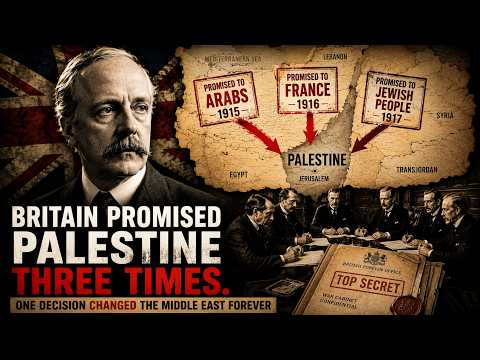
Britain Promised Palestine Three Times. One Decision Changed the Middle East Forever
Historical Context of British Promises in Palestine
In 1915, Britain made a promise to the Arabs regarding Palestine, which was followed by a secret agreement in 1916 with France for the same territory. By 1917, Britain extended its promises to the Jewish people, creating a complex web of commitments concerning a single piece of land. This situation arose during World War I, a conflict that significantly altered the geopolitical landscape of the Middle East.
The onset of World War I saw the Ottoman Empire align with Germany, placing Palestine, Syria, and Iraq at the forefront of military strategies. Britain aimed not only to defeat Germany but also to dismantle the Ottoman Empire, which had ruled these regions for centuries. The Suez Canal, a crucial route for British trade and military logistics to India, became a focal point for British interests, influencing their decisions in the region throughout the war.
As Britain faced military setbacks, such as the disastrous Gallipoli campaign, they sought new alliances. British officials in Cairo approached Sharif Hussein of Mecca, offering support for Arab independence in exchange for an uprising against the Ottomans. This led to a series of letters exchanged between Hussein and British High Commissioner Henry McMahon, wherein Britain appeared to promise Arab independence across vast territories, although ambiguities regarding specific regions, including Palestine, left room for interpretation and future disputes.
Simultaneously, Britain was negotiating with France and Russia through the Sykes-Picot Agreement, which divided the Ottoman territories between the British and French empires. This secret pact directly contradicted the promises made to Hussein, as it predetermined the fate of the region without Arab input. The existence of this agreement remained hidden until it was revealed by Russian revolutionaries, further complicating the situation for Britain.
In 1917, as the war reached a critical juncture with Russia on the verge of collapse, Britain sought to secure Jewish support for the Allied cause. Key Zionist figures, including Chaim Weizmann, advocated for a British declaration supporting a Jewish homeland in Palestine, arguing it would galvanize Jewish communities in America and Russia. This culminated in the Balfour Declaration, issued on November 2, 1917, which expressed Britain's support for establishing a national home for the Jewish people in Palestine, while also stating that the civil and religious rights of non-Jewish communities should not be harmed.
The declaration was significant not only for its content but also because Britain did not yet control Palestine, which was still under Ottoman rule. This promise to a minority population in a land promised to others set the stage for future conflicts. Following the war, the Allied powers incorporated the Balfour Declaration into international law, granting Britain a mandate over Palestine, which led to protests from Arab leaders who felt betrayed by the abandonment of McMahon's promises.
As Jewish immigration to Palestine increased throughout the 1920s and surged in the 1930s due to the rise of Nazi Germany, tensions escalated between Jewish and Arab populations. This culminated in a violent uprising against British rule in 1936, which took years for Britain to suppress. By the end of World War II, Britain was financially and politically exhausted, leading to its decision to transfer the issue of Palestine to the newly formed United Nations in 1947.
In May 1948, Israel declared independence, with Weizmann becoming its first president. The initial promises made by Britain during the war evolved into one of the most enduring conflicts in modern history. The Balfour Declaration remains a pivotal document, still referenced in contemporary discussions about the Israeli-Palestinian conflict. The overlapping claims established during this period have persisted, shaping the region's political landscape and continuing to influence international relations today.
This historical analysis underscores the complexities and contradictions inherent in Britain's wartime promises, which were made to secure strategic advantages without fully accounting for the long-term consequences. The Sykes-Picot Agreement and the Balfour Declaration exemplify the tangled web of diplomacy that has left a lasting impact on the Middle East.
The transcript provides a succinct overview of the demographic changes in Palestine, particularly focusing on the Jewish and non-Jewish populations. It notes that by the time of the Balfour Declaration in 1917, the Jewish community represented "less than 10% of the people already living there" while the vast majority, approximately "90%", were non-Jewish communities. This significant imbalance highlights the complex socio-political landscape of the region during this period.
Throughout the early twentieth century, particularly in the 1920s and 1930s, there was a notable increase in Jewish immigration to Palestine. This surge in immigration was largely a response to the rising anti-Semitism and the brutal conditions faced by Jewish communities in Europe, particularly during the rise of Nazi Germany. The influx of Jewish immigrants contributed to a growing Jewish population in Palestine, which began to alter the demographic composition of the territory.
As tensions escalated, the Arab population observed this demographic shift with increasing concern, feeling that their position in their homeland was being compromised. The transcript notes that this growing tension culminated in a full uprising against British rule in 1936, indicating a direct result of the changing population dynamics and the policies surrounding Jewish immigration and settlement.
- [08:54] "...to a population that made up less than 10% of the people already living there while having already promised the same land to two other parties entirely."
- [10:30] "...the Arab population, watching its position in its own homeland shift under policies it had never agreed to, responded with growing protest."
The transcript details a series of significant actions taken by the governments of the United States, the United Kingdom, and other European countries from the mid-19th century until 1948 that shaped the developments in Palestine. Starting in 1915, Britain made a commitment to the Arab leader Sharif Hussein, promising support for an independent Arab state, which implied a recognition of Arab claims to Palestine.
However, in 1916, Britain secretly negotiated the Sykes-Picot Agreement with France, which divided the Ottoman territories in the Middle East between them, including Palestine, which was marked for international administration. This clandestine agreement contradicted the promises made to the Arabs.
In 1917, the Balfour Declaration emerged as a pivotal moment. Britain, under Prime Minister David Lloyd George and Foreign Secretary Arthur Balfour, promised to support the establishment of a "national home for the Jewish people" in Palestine. This declaration was perceived as a betrayal by Arab leaders who had relied on the earlier British promises.
By 1920, the Balfour Declaration was incorporated into international law during the San Remo Conference, establishing Britain's mandate over Palestine, which led to increased Jewish immigration and further tensions with the Arab population. The British mandate lasted until 1948, during which time the situation in Palestine became increasingly unmanageable, leading to Britain handing the issue over to the newly formed United Nations. The culmination of these actions directly influenced the eventual establishment of the State of Israel in May 1948.
- [00:12] "...it promised it again, this time to the Jewish people."
- [08:21] "For Zionist leaders, it was the moment they’d worked toward for decades."
The transcript discusses the complex identities and relationships of the Jewish and Palestinian communities in early twentieth-century Palestine. The Jewish community, having a historical connection to the land, was represented by leaders such as Chaim Weizmann, a prominent Zionist who advocated for a Jewish homeland. The transcript notes that this community had spent years building relationships with British officials, highlighting their active political engagement in the region.
On the other hand, the Palestinian community, led by figures such as Sharif Hussein, who was a descendant of the Prophet Muhammad, sought to assert their own claims to self-determination as they faced the threat of external colonial ambitions from European powers. Hussein believed that Palestine was included in the promises made by the British for Arab independence, which fueled the Arab revolt against Ottoman rule. This revolt was characterized by a coalition of local leaders and fighters who aimed to resist external control and assert their rights to the land.
The transcript highlights that the Arab population consisted of the vast majority of those living in Palestine, approximately 90%, while Jewish individuals constituted less than 10%. This demographic reality set the stage for the emerging conflicts over national identity and territorial claims, illustrating the competing narratives and historical grievances that would shape the region's future.
- [02:30] "...Hassin and the British High Commissioner Henry McMahon traded 10 letters."
- [03:33] "Hassin believed Palestine was included."
The transcript outlines the aims and strategies of both Zionist organizations and Palestinian leaders in the tumultuous years leading up to and following the establishment of the State of Israel in 1948. The Zionist movement, represented by figures like Chaim Weizmann, sought to establish a Jewish homeland in Palestine. In 1917, they successfully lobbied the British government to issue the Balfour Declaration, which promised to support the establishment of a national home for the Jewish people in Palestine. This was a strategic move aimed at garnering support from Jewish communities globally, particularly in the United States and Russia, as the Allies needed their backing during World War I.
On the other side, Palestinian leaders, including Sharif Hussein, were engaged in their own struggle for independence from Ottoman rule, believing that they had been promised autonomy by the British. The Arab revolt, which began in 1916, was an effort to assert their claims and was supported by British officers, including Lawrence of Arabia.
However, internal divisions also plagued both groups. The Zionist movement was divided over the means and extent of their ambitions, while the Palestinian leadership faced pressures from both local and external pressures, leading to a lack of cohesive strategy. After the Balfour Declaration and the subsequent British mandate, tensions escalated as Jewish immigration increased, leading to widespread protests and violence from the Arab population.
The ultimate decision to establish the State of Israel in May 1948 marked a significant outcome of these competing ambitions and the unresolved contradictions of British promises. Weizmann, who was instrumental in securing the Balfour Declaration, became the first president of Israel, while Palestinian aspirations for statehood were unmet, sowing the seeds for ongoing conflict.
- [07:55] "...Britain would use its best efforts to make that happen."
- [09:05] "This is the moment the three promises collided..."
The transcript captures several critical historical events from 1948 onwards that significantly impacted the region. In 1948, the State of Israel declared its independence. This declaration followed a complex backdrop of conflicting promises made by the British government during the previous decades and resulted in a dramatic shift in the geopolitical landscape of the Middle East.
The transcript notes that the events leading up to this moment were characterized by increasing tensions between Jewish and Arab populations, as well as the responses of British governance. British officials had handed over the problem of Palestine to the newly formed United Nations in 1947, marking a pivotal point in international involvement in the region.
Following the establishment of Israel, the transcript does not provide explicit details about events occurring after 1948, suggesting that the focus remains primarily on the lead-up to the state's founding and the implications of British promises. The ongoing conflict that emerged as a result of the establishment of Israel is acknowledged, but specific events post-1948 are not mentioned in the provided transcript.
- [11:08] "...the state of Israel declared its independence."
- [11:16] "...the man who had lobbied for that 125-word letter three decades earlier became its first president."
[00:00] In 1915,[00:02] Britain promised Palestine to the Arabs.[00:05] In 1916,[00:07] it secretly promised the same land to[00:09] France. In 1917,[00:12] it promised it again, this time to the[00:15] Jewish people. Three promises, one piece[00:18] of land. Britain never planned to keep[00:20] all three. To understand this, you need[00:23] to go back to 1914.[00:26] World War I had just started. By[00:29] November of that year, the Ottoman[00:31] Empire had joined the war on Germany's[00:33] side. That single decision put[00:36] Palestine, Syria, and Iraq directly on[00:39] the front line of a European war. Three[00:42] regions that had lived under Ottoman[00:45] rule for four centuries. Britain didn't[00:48] just want to beat Germany. It wanted the[00:50] Ottoman Empire gone for good. The Sewish[00:52] Canal ran through Egypt and it was[00:54] Britain's lifeline to India. Losing[00:57] control of that route wasn't an option.[00:59] Every ship carrying troops, grain, or[01:02] gold between London and the East had to[01:04] pass through it, protecting that canal[01:06] shaped almost every decision Britain[01:09] made in the region for the next four[01:11] years. It's the single fact that[01:13] explains why a small desert territory[01:16] like Palestine suddenly mattered so much[01:19] to an empire fighting a war thousands of[01:22] miles away in the trenches of France.[01:24] So, Britain started making deals, lots[01:27] of them. And here's the detail most[01:29] people miss. The men negotiating these[01:32] deals barely talked to each other. They[01:35] worked out of different offices,[01:37] answered to different ministers, and[01:40] often had no idea what the others had[01:43] already agreed to. The Foreign Office[01:45] ran one set of negotiations. The India[01:48] office ran another. Military[01:51] intelligence in Cairo ran a third.[01:54] Different offices, different priorities,[01:56] same land promised three separate times.[01:59] That's where the story really begins. By[02:02] mid 1915, Britain was losing ground at[02:05] Galipoli. Tens of thousands of soldiers[02:08] were dying for barely any territory, and[02:11] the campaign was turning into a[02:13] humiliating stalemate. London needed a[02:16] new front against the Ottomans fast. So,[02:19] British officials in Cairo reached out[02:22] to Shahiff Hassin, the ruler of Mecca[02:25] and a man with real religious authority[02:27] across the Arab world as a direct[02:30] descendant of the prophet Muhammad.[02:33] Their offer was simple. Rise up against[02:36] the Ottomans and Britain will back an[02:39] independent Arab state. Over 10 months,[02:42] Hassin and the British High Commissioner[02:44] Henry McMahon traded 10 letters. In[02:48] October 1915,[02:51] Mcmahan wrote that Britain was ready to[02:54] recognize Arab independence across huge[02:57] stretches of the Middle East. It sounded[03:00] like a real commitment, but the wording[03:02] left room to argue. Certain regions were[03:05] excluded for reasons that were never[03:07] fully explained. Nobody defined the[03:10] borders with any precision, and whether[03:13] Palestine itself was actually included[03:15] in that promise. That question would[03:18] haunt British diplomacy for decades, and[03:21] historians are still arguing about it[03:23] today. Some later British officials[03:26] insisted Palestine had never been part[03:28] of the deal. Others admitted privately[03:30] that it clearly had been. Hassin[03:33] believed Palestine was included. He[03:37] launched the Arab revolt in 1916 on that[03:41] belief, sending his own sons into battle[03:43] against Ottoman forces supported by[03:46] British officers, including the man[03:48] later known as Lawrence of Arabia.[03:51] Thousands of Arab fighters died in a[03:54] brutal desert campaign. But while Hassin[03:57] was preparing to fight, and while his[03:59] men were dying for a promise he thought[04:01] was solid, London was making a very[04:04] different deal behind his back. In May[04:07] 1916,[04:08] two diplomats, Britain's Mark Sykes and[04:11] France's France Georgees Picot signed a[04:15] secret agreement with Russia's approval.[04:18] It carved up the Ottoman Middle East[04:20] between the British and French empires[04:23] drawn out on a map with a ruler and a[04:25] colored pencil in rooms Hassin never[04:28] saw. Britain would control areas around[04:31] Iraq. France would take Syria and[04:34] Lebanon and Palestine. It was marked out[04:37] for some form of international[04:39] administration controlled by neither[04:41] power outright with the exact[04:43] arrangement left deliberately vague.[04:46] This agreement directly contradicted[04:49] what Britain had just promised Hassin.[04:52] Arab fighters were dying for[04:54] independence while the men in London had[04:57] already quietly split their homeland[04:59] between two European powers.[05:02] Hassin didn't know this deal existed.[05:05] Almost nobody did. It stayed secret for[05:09] over a year until Russian[05:11] revolutionaries seized power, found the[05:13] agreement in the old Sarist archives,[05:16] and published it specifically to[05:18] embarrass Britain and France. But this[05:21] is only two promises. A third one was[05:24] coming, and it would be the one that[05:26] changed history. What no one expected[05:29] was who Britain would turn to next. By[05:32] 1917,[05:34] the war had reached a breaking point.[05:36] Russia was collapsing into revolution[05:39] and its army was falling apart on the[05:42] Eastern Front. If Russia dropped out of[05:45] the war entirely, Germany could move its[05:48] eastern armies west and threatened to[05:50] overwhelm Britain and France before[05:53] American troops arrived in any real[05:55] numbers. The United States had just[05:58] entered the war in April, but its[06:00] soldiers were still months away from[06:03] reaching Europe. Britain's new prime[06:05] minister, David Lloyd George, wanted[06:08] every possible advantage he could find[06:10] on every front, financial, political,[06:13] and psychological. One man saw an[06:17] opening. Shame Wisman, a chemist and[06:19] leading Zionist based in Manchester, had[06:22] spent years building relationships with[06:24] British officials, including Balfur[06:27] himself, whom he'd first met back in[06:30] 196.[06:31] Wiseman and fellow Zionist leader Nahim[06:34] Sakalo argued that a British promise to[06:36] support a Jewish homeland in Palestine[06:39] could rally Jewish opinion across[06:40] America and Russia behind the Allied war[06:43] effort at the exact moment Britain[06:45] needed that support most. Foreign[06:47] Secretary Arthur Balfur already[06:50] personally sympathetic to Zionism took[06:52] the idea to the war cabinet in the[06:54] summer of 1917.[06:57] For months, the cabinet argued over the[06:59] exact wording. Every phrase mattered.[07:02] Every word would be read by Arabs, by[07:05] French officials watching their own[07:07] claims in the region, and by Jewish[07:09] communities around the world, all[07:12] searching the text for what it meant for[07:14] them. Cabinet ministers debated draft[07:17] after draft, softening some language,[07:20] sharpening other parts, fully aware that[07:23] whatever they published couldn't be[07:25] taken back. On November 2nd, 1917,[07:31] Balfur signed a short letter addressed[07:33] to Lord Rothsky, a leader of Britain's[07:36] Jewish community. It was barely 125[07:40] words long, but those words would[07:42] reshape the Middle East for the next[07:44] century. The letter said Britain viewed[07:47] in its own words with favor the[07:50] establishment in Palestine of a national[07:52] home for the Jewish people. It promised[07:55] Britain would use its best efforts to[07:57] make that happen. And then it added a[08:00] condition that nothing would be done to[08:02] harm the civil and religious rights of[08:04] Palestine's non-Jewish communities who[08:07] at the time made up the vast majority of[08:09] the population living there close to[08:12] 90%.[08:13] The declaration became public a week[08:16] later, printed in newspapers across[08:18] Britain and around the world. For[08:21] Zionist leaders, it was the moment[08:23] they'd worked toward for decades. For[08:26] Arab leaders who'd trusted Mcmahan's[08:28] promise just two years earlier, it read[08:31] like a betrayal in plain sight. Here's[08:34] what makes this moment so extraordinary.[08:36] Britain didn't even control Palestine[08:39] when it made this promise. The Ottomans[08:42] still ruled it. British troops wouldn't[08:44] take Jerusalem for another 5 weeks.[08:47] Britain was promising land it hadn't[08:49] conquered yet to a population that made[08:52] up less than 10% of the people already[08:54] living there while having already[08:57] promised the same land to two other[08:59] parties entirely. This is the moment the[09:02] three promises collided and Britain[09:05] never publicly resolved the[09:07] contradiction. It just moved forward[09:10] betting the details could be worked out[09:12] later. They couldn't. By the end of[09:15] 1918,[09:16] Britain and its allies had defeated the[09:18] Ottoman Empire. Palestine was now[09:21] Britain's to govern. In 1920,[09:25] the Allied powers met at San Ramo and[09:28] folded the Balfur declaration directly[09:30] into international law. 2 years after[09:33] that, the League of Nations made it[09:35] official, handing Britain a mandate over[09:38] Palestine built directly on Balfur's[09:40] promise. Arab leaders protested almost[09:44] immediately. They pointed back to[09:46] Mcmahan's letters and asked why that[09:48] promise had been quietly abandoned while[09:51] Balfur's had become official policy.[09:54] Britain never gave a clean answer.[09:56] Officials argued for years over whether[09:59] Palestine had truly been included in the[10:01] Hussen agreement in the first place.[10:04] That argument was never fully settled[10:06] and it still shapes how each side[10:09] remembers this history. The[10:11] contradiction didn't stay theoretical[10:13] for long. Jewish immigration to[10:16] Palestine grew steadily through the[10:18] 1920s[10:20] and sharply after the rise of Nazi[10:23] Germany in the 1930s.[10:26] The Arab population, watching its[10:28] position in its own homeland shift under[10:30] policies it had never agreed to,[10:33] responded with growing protest. By 1936,[10:37] that tension exploded into a full[10:39] uprising against British rule. One that[10:41] took years and tens of thousands of[10:44] troops for Britain to put down. By the[10:46] time the Second World War ended, Britain[10:49] was exhausted financially and[10:52] politically, and Palestine had become[10:55] close to ungovernable. In 1947,[10:59] Britain finally handed the entire[11:01] problem to the newly formed United[11:03] Nations and withdrew. The following[11:05] year, in May of 1948, the state of[11:08] Israel declared its independence. Chame[11:10] Wisman, the man who had lobbed for that[11:13] 125 word letter three decades earlier,[11:16] became its first president. What started[11:19] as three wartime promises made by[11:22] different British offices for different[11:24] strategic reasons became the foundation[11:27] for one of the long distrunning[11:30] conflicts of the modern era. The letter[11:33] that Balfur signed in just 125 words is[11:37] still cited today in speeches in legal[11:40] arguments in history classrooms over a[11:43] century after he wrote it. Remember that[11:46] map from the beginning. Those three[11:48] overlapping claims never went away. They[11:51] just moved from paper into reality and[11:54] they are still being contested right[11:56] now. Britain made these promises to win[11:59] a war. It never fully answered for what[12:02] came after. If you want to understand[12:05] how the Sykesote agreement carved up the[12:08] rest of the Middle East, that's a story[12:10] on its own and it's just as messy as[12:13] this one. Subscribe if you want more[12:16] deep dives like this into the decisions[12:19] that quietly built the world we live in
How the Israeli-Palestinian Conflict Began | History
Israel: A Historical Overview
Israel is recognized as the only Jewish nation globally, officially established in 1948. However, its existence is often overshadowed by the ongoing conflict with Palestine, which centers around disputes over land, political control, and resources. To comprehend the roots of this conflict, it is essential to delve into history, tracing back approximately 4,000 years to Abraham, who is regarded as the patriarch of both Judaism and Islam.
According to the Old Testament, God instructed Abraham and his descendants to inhabit a region known as Canaan, which corresponds to modern-day Israel. In 1,000 BCE, King Saul founded the Israelite monarchy, which was succeeded by King David and his son Solomon, who constructed the first Jewish temple in Jerusalem. This historical narrative forms a significant part of the Jewish claim to the land of Israel.
The region has experienced numerous conquests and governance by various groups, including Persians, Greeks, Romans, Arabs, Egyptians, Fatimids, Seljuks, Crusaders, Mamluks, and Ottomans, who referred to the area as Palestine. Throughout these changes, many Jews were forced to flee, resulting in a diaspora that spread Jewish communities across the globe.
In Europe, the Jewish diaspora faced severe oppression and persecution, prompting many to return to their ancestral homeland in the 1880s, during the Ottoman Empire's control of Palestine. By 1914, the Jewish population in the area had grown to over 75,000. Following World War I, Great Britain assumed control over modern-day Israel, Palestine, and Jordan, and in 1922, the League of Nations endorsed a British declaration promising a national home for the Jewish people in Palestine. However, it took over two decades for this promise to materialize.
The outbreak of World War II in 1939 led to the Holocaust, during which over six million Jews were murdered, and millions more were displaced. In 1947, the United Nations proposed a partition plan to create two states: a Jewish state of Israel and an Arab state of Palestine. While Israel accepted the partition, many Arab residents viewed it as unjustly favoring the Jewish population, leading to violence.
On May 14, 1948, Israel was declared a state, with David Ben-Gurion as its prime minister. The Arab League immediately rejected the partition and launched an attack, resulting in a protracted conflict. After nine months of fighting, Israel's armed forces occupied much of the land designated for the Arab state of Palestine, while Egypt and Jordan took control of the Gaza Strip and the West Bank, respectively. This conflict is remembered in Hebrew as the War of Independence and in Arabic as The Catastrophe, with around 720,000 Arabs fleeing or being expelled from their homes.
The subsequent decades saw ongoing tensions and conflicts between Jews and Arab Muslims. The Palestine Liberation Organization (PLO) was formed in 1964 to unify various Palestinian factions. The Six-Day War in 1967 resulted in Israel defeating the armies of Egypt, Syria, and Jordan, significantly expanding its territory. In 1987, the First Intifada erupted following an incident involving the Israeli defense forces, leading to widespread violence and casualties.
Following the First Intifada, peace efforts culminated in the Oslo Accords, which aimed to establish a framework for peace. However, further negotiations in 2000 failed to resolve critical issues, including the status of Jerusalem and the rights of refugees. The Second Intifada was triggered by Ariel Sharon's visit to the Temple Mount, leading to violent protests and attacks that lasted nearly five years, effectively ending the peace process initiated by the Oslo Accords.
In 2005, Israel withdrew from Gaza, but the region remained volatile. In 2006, Hamas, a militant group, won the Palestinian legislative elections, and its refusal to recognize Israel led to ongoing conflicts. Hamas has been labeled a terrorist organization by many countries due to its violent tactics and calls for Israel's destruction.
In 2017, Hamas proposed the establishment of a Palestinian state based on the 1967 borders but did not recognize Israel, resulting in Israel's rejection of the proposal. Today, Palestine continues to strive for statehood amidst ongoing Israeli settlement activities in the West Bank. Various nations have advocated for peace agreements, often proposing a two-state solution. Despite these efforts, a lasting peaceful resolution remains elusive, and the region continues to hold significant importance for diverse ethnic and religious groups.
The transcript outlines significant changes in the Jewish and non-Jewish populations in Palestine over the centuries, particularly emphasizing the historical context that influenced these demographic shifts. Beginning with the establishment of the Israelite monarchy around 1,000 BCE, it notes that both Jews and Muslims have maintained a long-standing connection to the region, tracing their ties to approximately 4,000 years ago with Abraham, a pivotal figure in both religions.
As history progressed, various conquests and rule by empires such as the Persians, Greeks, Romans, and the Ottomans led to a Jewish diaspora, where Jews were forced to leave their homeland, resulting in the dispersion of their population. This diaspora was compounded by persecution faced in Europe, prompting a significant return of Jewish people to Palestine in the 1880s. By 1914, the Jewish population in the area had grown to more than 75,000.
Following World War I and the end of Ottoman control, the British took over the region, and in 1922, the League of Nations endorsed a British declaration to support a Jewish national home in Palestine. This support catalyzed further Jewish immigration, albeit amidst rising tensions with the Arab population who felt this favoring of Jewish interests was unjust.
The partition plan proposed by the United Nations in 1947 aimed to create separate Jewish and Arab states, which led to violence and conflict as many Arab residents viewed the arrangement as biased. The establishment of Israel in 1948 was marked by the displacement of approximately 720,000 Arabs, further altering the demographic landscape of Palestine.
- [00:12] "A violent dispute over land, political control, and resources."
- [01:58] "Approximately 720,000 Arabs fled or were expelled from their homes, many taking refuge in the Gaza Strip and the West Bank."
- [02:22] "The United Nations decided to partition Palestine into two countries, the Jewish state of Israel and the Arab state of Palestine."
The transcript provides a concise overview of the actions taken by the United States, the United Kingdom, and other European countries regarding developments in Palestine between 1850 and 1948. It mentions that the Jewish diaspora faced significant oppression and persecution in Europe, which led to a wave of Jewish emigration back to Palestine in the 1880s. During this period, the Ottoman Empire controlled Palestine, and the returning Jewish population sought to establish a presence in the region.
Following World War I, the geopolitical landscape shifted dramatically when Great Britain took control of modern-day Israel, Palestine, and Jordan from the Ottomans in 1919. The British government endorsed a declaration in 1922 approved by the League of Nations, which promised a national home for the Jewish people in Palestine. This declaration marked a significant turning point, as it provided a political backing for Jewish aspirations in the region, despite growing tensions with the Arab population.
In 1947, the United Nations intervened further by proposing a partition plan to create separate Jewish and Arab states. While Israel accepted this plan, many Arab residents opposed it, seeing it as disproportionately favoring the Jewish population. This culminated in violence and conflict, leading to the establishment of Israel in 1948, an action that was met with immediate military opposition from neighboring Arab nations, further impacting the demographics and political situation in Palestine.
- [01:38] "So in the 1880s many Jewish people started emigrating back to the promised land in Ottoman controlled Palestine."
- [01:52] "After World War I, Great Britain took control of modern day Israel, Palestine, and Jordan from the Ottomans."
- [02:22] "In 1947 after the war was over, the United Nations decided to partition Palestine into two countries, the Jewish state of Israel and the Arab state of Palestine."
The transcript describes the origins, identities, and ancestral connections of Jewish and Palestinian communities living in Palestine in the early twentieth century, highlighting their deep historical ties to the region. Both groups trace their roots back approximately 4,000 years to Abraham, who is recognized as a foundational figure in Judaism and Islam. This connection is central to both communities' claims to the land.
As the transcript mentions, the Jewish people experienced a significant diaspora due to various conquests and persecutions over the centuries, leading to their dispersion from their homeland. However, during the 1880s, a notable return of Jewish individuals to Palestine began, driven by the desire to establish a national home in response to oppression in Europe.
By 1914, more than 75,000 Jews had settled in the area. This influx was facilitated by the British mandate post-World War I, which aimed to create a national home for Jews in Palestine, as endorsed by the League of Nations in 1922. In contrast, the local Arab population, which had long inhabited the land, began to feel increasingly marginalized and threatened by the growing Jewish presence.
The political and social relationships between the Jewish and Palestinian communities became increasingly complex as tensions escalated over land, cultural identity, and political rights, particularly following the establishment of Israel in 1948. This period marked a pivotal moment in the evolving identities of both groups, as they navigated the challenges of nationalism, statehood, and communal rights within a fraught geopolitical landscape.
- [00:20] "Both Jews and Muslims have strong religious and cultural ties to the region dating back about 4,000 years to Abraham considered the father of the two religions."
- [01:33] "During these transitions Jews were forced to flee the area creating a diaspora, dispersion of people from their homeland."
- [02:06] "In 1922 the League of Nations approved a British declaration that promised a national home for the Jewish people in Palestine."
The transcript outlines the aims, strategies, and significant decisions made by both Zionist organizations and Palestinian political leaders before and after the establishment of the State of Israel in 1948. The Zionist movement, which sought to establish a Jewish homeland in Palestine, gained momentum in the late nineteenth century, particularly after the persecution faced by Jews in Europe. By the 1880s, many Jewish individuals began emigrating to Palestine, motivated by both religious and nationalistic aspirations.
Following World War I, the British took control of Palestine, and in 1922, the League of Nations endorsed a declaration supporting a Jewish national home. This political backing was pivotal for Zionist leaders who aimed to consolidate Jewish immigration and establish settlements in the region. However, this strategy faced opposition from the Arab population, leading to rising tensions.
In 1947, the United Nations proposed partitioning Palestine into Jewish and Arab states. Zionist leaders accepted the plan, but Arab residents rejected it, leading to violence. When Israel was established on May 14, 1948, under Prime Minister David Ben-Gurion, the Arab League attacked, marking the beginning of significant conflict. The ensuing war resulted in Israel occupying much of the land designated for the Arab state, leading to the displacement of approximately 720,000 Arabs, an event known in Hebrew as the War of Independence and in Arabic as The Catastrophe.
In the following decades, Palestinian political organizations, including the Palestine Liberation Organization (PLO) formed in 1964, aimed to consolidate efforts among various Palestinian factions. Despite sporadic peace efforts, including the Oslo Accords post-First Intifada, divisions within both the Jewish and Palestinian communities hindered lasting resolutions.
- [02:11] "In 1947, the United Nations decided to partition Palestine into two countries, the Jewish state of Israel and the Arab state of Palestine."
- [02:58] "Almost immediately the Arab League rejected the partition and attacked."
- [04:23] "After the First Intifada Israel and the PLO created a timetable for peace, the Oslo Accords."
The transcript discusses several important historical events from 1948 to the present day, which have significantly shaped the Israeli-Palestinian conflict. Here are the key events:
- 1948: The establishment of the State of Israel occurred on May 14, 1948, led by Prime Minister David Ben-Gurion. This event marked the culmination of Zionist efforts but resulted in immediate conflict, as neighboring Arab countries rejected the partition plan and attacked Israel. This war is referred to in Hebrew as the War of Independence and in Arabic as The Catastrophe.
- 1964: The Palestine Liberation Organization (PLO) was formed to unify the Palestinian factions and represent their interests in the struggle for statehood.
- 1967: The Six-Day War took place, during which Israel defeated the armies of Egypt, Syria, and Jordan, gaining significant territory that altered the geopolitical landscape further.
- 1987: The First Intifada began in response to Israeli military actions, leading to a Palestinian uprising that resulted in hundreds of deaths and highlighted the ongoing tensions between the two communities.
- 2000: Peace talks aimed at resolving the conflict following the Oslo Accords failed, primarily over disputes regarding Jerusalem, refugee rights, and the status of Jewish settlements in Palestinian territories.
- 2005: Israel withdrew its forces from Gaza, marking a significant shift in the conflict dynamics.
- 2006: Hamas won the Palestinian legislative elections, further complicating the political situation as many countries classify Hamas as a terrorist organization due to its methods and objectives.
- 2017: Hamas called for the formation of a Palestinian state using the 1967 borders but did not formally recognize Israel, perpetuating the conflict.
These events illustrate the complexity and ongoing nature of the Israeli-Palestinian conflict, which remains unresolved despite numerous attempts at peace.
- [02:44] "On May 14th, 1948 the state of Israel was established With David Ben-Gurion as it's prime minister."
- [04:41] "Later that year Ariel Sharon... visited the Temple Mount, home to the Al-Aqsa Mosque in Jerusalem, an act many Palestinians found offensive."
- [05:08] "The violence ended in 2005 when Israel withdrew from Gaza."
[00:00] NARRATOR: Israel.[00:01] It's the only Jewish nation in the world,[00:04] and it didn't officially exist until 1948.[00:07] But many people associate Israel with its ongoing conflict[00:10] with Palestine.[00:12] A violent dispute over land, political control,[00:14] and resources.[00:16] To understand why, we have to look back a few thousand years.[00:20] [00:23] Both Jews and Muslims have strong religious and cultural[00:26] ties to the region dating back about[00:28] 4,000 years to Abraham considered the father[00:31] of the two religions.[00:34] According to the Old Testament, God told Abraham and his people[00:38] to settle in a land called Canaan,[00:40] which is in the approximate region of modern day Israel.[00:44] In 1,000 BCE King Saul established[00:46] the Israelite monarchy, which continued under King David[00:50] and his son, Solomon who built the first Jewish temple[00:54] in Jerusalem.[00:55] This historical legacy became part of the Jewish claim[00:58] to the land of Israel.[01:02] The land would continue to be conquered and ruled[01:04] by various groups, including Persians, Greeks, Romans,[01:08] Arabs, Egyptians, Fatimids, Seljuks,[01:11] Crusaders, Mamluks, and the Ottomans, who[01:13] called the region Palestine.[01:15] It would become home to many sites[01:17] considered sacred by Jews, Muslims, and Christians alike.[01:23] During these transitions Jews were[01:24] forced to flee the area creating a diaspora, dispersion[01:28] of people from their homeland.[01:29] [01:33] But in Europe, the Jewish diaspora also faced[01:36] oppression and persecution.[01:38] So in the 1880s many Jewish people[01:40] started emigrating back to the promised land in Ottoman[01:43] controlled Palestine.[01:46] By 1914 there were more than 75,000 Jews in the area.[01:52] After World War I, Great Britain took control of modern day[01:55] Israel, Palestine, and Jordan from the Ottomans.[02:00] In 1922 the League of Nations approved a British declaration[02:03] that promised a national home for the Jewish people[02:06] in Palestine, but it would be more than two decades[02:08] before that promise was fulfilled.[02:11] In 1939 World War II broke out.[02:13] More than 6 million Jews were murdered in the Holocaust[02:16] with millions more displaced.[02:18] [02:22] In 1947 after the war was over, the United Nations[02:25] decided to partition Palestine into two[02:27] countries, the Jewish state of Israel[02:30] and the Arab state of Palestine.[02:33] Israel agreed to the partition and borders were drawn for two[02:36] states, but many Arab residents thought the partition unfairly[02:40] favored the Jewish population.[02:42] Violence soon broke out.[02:44] On May 14th, 1948 the state of Israel[02:47] was established With David Ben-Gurion[02:49] as it's prime minister.[02:51] Almost immediately the Arab League,[02:53] a group of surrounding Arab countries,[02:55] rejected the partition and attacked.[02:58] Israel fought back and after more than nine months[03:01] of conflict, it's armed forces occupied[03:03] much of the land designated to become[03:05] the Arab state of Palestine.[03:08] Egypt took control of the Gaza Strip.[03:10] Jordan, then called Transjordan, took control of the West Bank.[03:14] The original plan for a Palestinian state was scrapped.[03:18] This historic event was a victory for many Jewish people,[03:22] but approximately 720,000 Arabs fled or were expelled[03:26] from their homes, many taking refuge in the Gaza Strip[03:30] and the West Bank.[03:31] This war would be remembered in Hebrew[03:33] as the War of Independence and in Arabic as The Catastrophe.[03:38] Tension between Jews and Arab Muslims in the region[03:41] would continue for decades.[03:42] [03:45] Fighting between Israel and its Arab neighbors[03:47] continued on and off for the next 60 years.[03:50] In 1964 the Palestine Liberation Organization[03:53] formed to consolidate the power of[03:56] many small Palestinian groups.[03:59] In the 1967 six-day war Israel defeated the armies[04:02] of Egypt, Syria, and Jordan, and gained control[04:05] of significant territory.[04:09] In 1987 following an incident with the Israeli defense forces[04:13] that left four Palestinian refugees dead,[04:15] Palestinian militia led a violent uprising[04:18] known as the First Intifada that resulted in hundreds of deaths.[04:23] After the First Intifada Israel and the PLO[04:26] created a timetable for peace, the Oslo Accords.[04:30] Further peace talks in 2000 proved unsuccessful[04:33] when agreements could not be reached[04:35] on issues like the status of Jerusalem,[04:36] the rights of refugees, and increased Jewish settlements[04:39] in Palestinian lands.[04:41] Later that year Ariel Sharon, who[04:43] would become Israel's prime minister,[04:45] visited the Temple Mount, home to the Al-Aqsa Mosque[04:48] in Jerusalem.[04:49] An act many Palestinians found offensive.[04:52] Violent protests, riots, attacks,[04:55] and suicide bombings broke out.[04:59] This period of violence called the Second Intifada[05:01] lasted nearly five years and marked[05:03] the end of any peace that had come from the Oslo Accords.[05:08] The violence ended in 2005 when Israel withdrew from Gaza.[05:14] In 2006, a militant Sunni Islamist group, Hamas,[05:17] won the Palestinian legislative elections.[05:20] Many countries consider Hamas a terrorist group because[05:22] of their methods, such as carrying out suicide bombings,[05:25] and calling for the destruction of Israel.[05:28] Hamas and Israel continued to clash violently.[05:32] [05:37] In 2017, Hamas called for the formation[05:39] of a Palestinian state using the 1967 borders,[05:43] but it did not formally recognize Israel as a state.[05:46] So Israel did not accept.[05:48] Today, Palestine continues to fight for statehood.[05:52] The conflict is further complicated[05:53] by Israelis who continue to settle in the West Bank.[05:57] Several countries have pushed for peace[05:59] agreements in recent years, and many[06:01] suggest a two state solution.[06:03] Though a peaceful solution has yet to be achieved,[06:06] the region remains a place of significance[06:08] for people of many ethnic and religious backgrounds.[06:12]

The ENTIRE History of Israel (Documentary)
The History of Israel: A Comprehensive Overview
The history of Israel is a complex tapestry woven from threads of faith, power, and survival. This land, once a beacon of prophecy and promise, has been the focal point of empires, the birthplace of religions, and the catalyst for unending conflict. From the enslavement of its people by the Egyptians to the destruction of its temples by the Babylonians and the Romans' attempts to obliterate its identity, Israel's history is marked by a relentless struggle for survival and identity. Despite the many conquerors who sought to claim it, none could truly possess it. Revolts shattered empires, exiles nurtured resilience, and generations fought to reclaim what was lost. Yet, with each triumph came new adversaries, and with each resurrection, new challenges arose. To comprehend the wars, the faith, and the indomitable spirit of its people, we must journey back to the very beginning.
The narrative commences on the eastern coast of the Mediterranean Sea, in the region known as the Levant, specifically in Canaan. This area, bordered by the Mediterranean Sea and the Jordan River, has left an indelible mark on the contemporary world as it sits at the crossroads of civilizations. To the west, the sea connected it with Europe; to the south, the Arabian Peninsula; to the east, Mesopotamia; and to the north, it linked with the ancient civilizations of Anatolia and the Caucasus. This crossroads facilitated trade and cultural exchange, with the Phoenicians emerging as adept traders who gifted the world with a phonetic alphabet still in use today.
During the late Paleolithic and early Neolithic periods, life thrived in this fertile region. The abundance of fertile plains, highlands, and crucial coastal access naturally attracted prehistoric settlers. One of the earliest continuously inhabited cities in the world, Jericho, located in the Jordan River valley, stands testament to this early flourishing. Archaeological evidence reveals that Jericho's inhabitants constructed defensive walls and towers nearly 11 millennia ago, making it one of the oldest cities still in existence today. Over these millennia, various tribes inhabited the land, but the emergence of the Canaanites in the third millennium BC marked a significant turning point. These Semitic peoples established city-states, and trade flourished as they communicated with neighboring Mesopotamian states and Egypt.
As the crossroads of civilizations, Canaanite states absorbed foreign cultural customs while also disseminating their own. The ancient Canaanites practiced polytheism, worshipping multiple deities akin to their Egyptian neighbors. However, a transformative shift occurred in this land destined to become the Holy Land, heralding the inception of the world's first monotheistic religion. This pivotal moment is encapsulated in the story of Abraham, a figure born in the Chaldees of Mesopotamia. According to tradition, Abraham received a divine message instructing him to journey to Canaan and propagate God's word. Leaving the security of his father's home, he was promised that the land of Canaan would belong to him and his descendants, accompanied by God's blessings.
Abraham's journey was fraught with challenges, including harsh weather and treacherous landscapes. His adventures, though often fragmented in narrative, include a sojourn in Egypt. Abraham's grandson, Jacob, fathered twelve sons who became the progenitors of the twelve tribes of Israel. Jacob, who also adopted the name Israel, faced numerous trials, including a seven-year famine that compelled him to relocate to Egypt, where he was welcomed by Pharaoh due to the presence of his son Joseph, who had risen to prominence after being sold into slavery by his brothers.
The narrative of Moses emerges from the shadows of oppression in Egypt. After fleeing to Midian, Moses encountered a burning bush from which God commanded him to liberate the Israelites from their bondage. Confronting Pharaoh with God's decree to "let my people go," Moses unleashed a series of plagues upon Egypt, culminating in the death of all firstborn Egyptian children, including Pharaoh's own. Relenting, Pharaoh allowed the Israelites to leave, but soon changed his mind, sending his army after them. In a miraculous event, Moses parted the Red Sea, enabling the Israelites to escape while the pursuing Egyptian forces were drowned. This Exodus not only established Moses as a leader but also as a prophet, as he received the Ten Commandments atop Mount Sinai. Despite facing numerous hardships during decades of wandering in the desert, Moses led his people to the brink of the Promised Land, though he himself was forbidden to enter it. He died on Mount Nebo, leaving behind a legacy as one of history's most revered leaders.
After Moses' death, the Israelites, under the leadership of Joshua, entered the Promised Land. However, the presence of Canaanites necessitated a campaign of conquest, with Jericho being one of the first cities to fall. Yet, unity among the tribes was short-lived, leading to the era of the judges, a time characterized by leaders who were both warriors and prophets, emerging during crises to restore temporary stability. This period was marked by a cyclical pattern of faithfulness, sin, oppression, and redemption that persisted for generations.
In the 11th century BC, a significant transformation occurred with the rise of a unified kingdom of Israel, as chronicled in the Old Testament. Although not entirely reliable, the biblical narrative serves as a primary source for this era. The kingdom is believed to have been established in the late 11th century BC, when the twelve tribes of Israel, scattered across Canaan, unified under the leadership of Saul. The primary impetus for this unification was the need for protection against external threats, particularly from the Philistines, a formidable people with a powerful navy who frequently raided the southern coastal regions.
Saul, hailing from the tribe of Benjamin, was initially reluctant to accept kingship despite being anointed by the prophet Samuel. His reign, which some historians date to around 1020 BC, was marked by military successes against the Ammonites and Philistines. However, Saul's disobedience to God's commands led to his rejection as king, culminating in his defeat and death at Mount Gilboa around 1000 BC. Following a period of turmoil, David, Saul's son-in-law, ascended to the throne.
David's origins were humble; he was the youngest son of a shepherd family. His life took a dramatic turn when he confronted Goliath, a giant Philistine warrior. Armed only with a sling and five stones, David's faith in God led him to victory, slaying Goliath and earning the respect of the Israelites. However, this victory sowed seeds of jealousy in Saul, who viewed David as a threat and sought to kill him. David fled, living as an outlaw for years until Saul's death allowed him to become king. Initially ruling from Hebron, David eventually consolidated power and established Jerusalem as the new capital around 993 BC, marking a golden age for Israel.
David's reign, characterized by prosperity and centralization, saw the expansion of Israel's territory at the expense of traditional enemies like the Philistines and Moabites. However, personal scandals, including his affair with Bathsheba and the murder of her husband, led to internal strife and rebellion. Consequently, God forbade David from constructing a monumental temple in Jerusalem, a task that would fall to his son Solomon, who inherited the throne around 970 BC.
Solomon's reign was marked by peace and extensive building projects, including the completion of the First Temple in Jerusalem around 957 BC. This temple, built on Mount Moriah, became the spiritual heart of Israel, housing the Ark of the Covenant and symbolizing the nation's wealth and power. However, as Solomon's rule progressed, heavy taxation and forced labor led to widespread discontent among the populace. Following Solomon's death, his son Rehoboam's refusal to alleviate these burdens resulted in a schism, with ten northern tribes forming the Kingdom of Israel under Jeroboam I, while Rehoboam retained control over Judah in the south.
The division of the kingdom weakened both states, making them vulnerable to external threats. In 722 BC, the Kingdom of Israel fell to the Assyrian Empire after a three-year siege, leading to the forced deportation of its inhabitants, known today as the Lost Tribes of Israel. The southern Kingdom of Judah survived longer but faced its own challenges, culminating in the Babylonian conquest of Jerusalem in 586 BC. The Babylonians destroyed the First Temple and exiled many prominent figures to Babylon, marking a significant crisis for the Israelite people and their faith.
Despite the hardships of exile, the Jewish community maintained their traditions and faith, giving rise to new prophets like Ezekiel and Jeremiah. The long-awaited return to their homeland was realized in 539 BC when the Persian ruler Cyrus the Great conquered Babylon and allowed the Jews to return. Led by Zerubbabel, a descendant of the Davidic line, they began the arduous task of rebuilding the temple, facing hostility from neighboring peoples and internal doubts. The construction of the Second Temple commenced in 516 BC, symbolizing resilience and the revival of Jewish identity.
During this transformative period, the foundation of Judaism as it is known today began to take shape. The Torah was compiled and canonized, providing a written form to the oral traditions that had sustained the Jewish people through exile. Synagogues emerged as centers for worship and learning, proving vital for the survival of Judaism in subsequent centuries. Ezra the scribe played a pivotal role in this era, leading a second wave of exiles back to Jerusalem and reestablishing the laws of Moses as central to Jewish life.
Ezra's efforts to renew Jewish identity through public readings of the Torah and the establishment of the Great Assembly helped formalize prayers and blessings, ensuring the teachings reached the community. His dedication to the Torah earned him the title "Father of Judaism," as he awakened a renewed sense of religious identity among the Jewish people.
However, the period of Persian rule was not without challenges. As the Jewish community thrived, tensions arose with non-Jewish populations, leading to controversies over intermarriage and strict adherence to the Torah. The fragile peace of the Persian era would soon be disrupted by the rise of a new power in the west: Greece, united under Macedonian rule and led by Alexander the Great.
Alexander's conquests in the 4th century BC brought new cultural influences to Israel, as Hellenization began to permeate Jewish society. While some Jews embraced this blending of cultures, others resisted, leading to tensions that would culminate in the Maccabean Revolt against the Seleucid king Antiochus IV Epiphanes, who sought to impose Hellenistic practices and suppress Jewish religious observance.
The revolt, ignited by the refusal of the priest Matathias to sacrifice to a pagan god, marked a significant turning point in Jewish history. Under the leadership of his son Judah Maccabee, the Jewish forces employed guerrilla tactics to achieve remarkable victories, culminating in the liberation of Jerusalem and the rededication of the temple, an event commemorated by the festival of Hanukkah. However, the revolt also exposed internal divisions within the Jewish community, as differing factions emerged.
Following the Maccabean Revolt, the Hasmonean dynasty was established, granting the Jewish people a rare period of self-rule. However, internal strife and external pressures from the expanding Roman Republic ultimately led to the annexation of Judea by Rome in 6 AD. Roman rule in Judea was marked by tension, as heavy taxation and oppression fueled resentment among the Jewish population.
The first Jewish-Roman War erupted in 66 AD, sparked by discontent over taxation and Roman governance. Initially, Jewish rebels achieved significant victories, liberating Jerusalem and establishing a brief period of independence. However, the Roman response was brutal, culminating in the siege of Jerusalem in 70 AD, which resulted in the destruction of the Second Temple and the scattering of the Jewish people across the empire.
Despite the devastation, the Jewish community remained resilient, continuing to practice their faith and traditions in exile. The aftermath of the war saw the rise of new Jewish leadership, with figures like Rabbi Yohanan ben Zakkai advocating for the preservation of Jewish identity through the study of the Torah and the establishment of synagogues.
As centuries passed, the Jewish diaspora spread across Europe, North Africa, and the Middle East, often facing persecution and marginalization. The rise of Christianity in the Roman Empire further complicated the situation for Jews, as they became scapegoats for societal ills and faced increasing restrictions on their rights and practices.
The arrival of Islam in the 7th century brought a new dynamic to the region. Under Muslim rule, Jews experienced periods of relative tolerance and prosperity, particularly during the Golden Age of Jewish culture in Spain. However, the rise of anti-Semitism in Christian Europe, particularly during the Crusades, led to widespread violence and persecution against Jewish communities.
Despite these challenges, Jewish life continued to evolve, with communities adapting to their circumstances while maintaining their distinct identity. The 19th century saw the emergence of modern Zionism, a movement advocating for the establishment of a Jewish homeland in Palestine, driven by a desire for self-determination and safety in the wake of rising anti-Semitism.
Theodor Herzl, a key figure in the Zionist movement, convened the First Zionist Congress in 1897, laying the groundwork for the establishment of a Jewish state. The movement gained momentum as waves of Jewish immigrants arrived in Palestine, seeking to rebuild their homeland amidst growing tensions with the Arab population, who viewed the influx as a threat to their land and way of life.
World War I marked a turning point for the Jewish community in Palestine. The British government's Balfour Declaration in 1917 expressed support for a national home for the Jewish people, but it also ignited tensions with the Arab population, leading to conflict over competing national aspirations. The end of the war saw Britain assume control over Palestine under a League of Nations mandate, further complicating the situation as Jewish immigration continued to rise.
As the 1930s unfolded, the rise of Nazism in Germany prompted a surge of Jewish refugees seeking safety in Palestine, exacerbating tensions with the Arab population. The Arab revolt of 1936-1939 highlighted the growing discontent among Arabs over Jewish immigration and British policies, leading to violent clashes between the two communities.
The Holocaust during World War II underscored the urgent need for a Jewish homeland, as millions of Jews perished in the genocide. The aftermath of the war saw a renewed push for Jewish statehood, culminating in the United Nations' proposal to partition Palestine into separate Jewish and Arab states in 1947. While the Jewish community accepted the plan, the Arab community rejected it, leading to escalating tensions.
On May 14, 1948, David Ben-Gurion declared the establishment of the State of Israel, fulfilling a long-held dream for the Jewish people. However, this declaration was met with immediate opposition from neighboring Arab states, leading to the outbreak of the 1948 Arab-Israeli War. Despite being outnumbered, Israeli forces fought valiantly to defend their newly established state, ultimately securing territorial gains beyond the UN partition plan.
The war resulted in the displacement of over 700,000 Palestinian Arabs, creating a refugee crisis that persists to this day. The aftermath of the conflict left deep scars on both sides, as Israelis celebrated their independence while Palestinians mourned the loss of their homeland, a narrative that continues to shape the Israeli-Palestinian conflict.
In the years following independence, Israel faced numerous challenges, including ongoing hostilities from neighboring Arab states and internal divisions within its own society. The geopolitical landscape remained fraught with tension, as Israel navigated its relationships with both allies and adversaries.
The 1967 Six-Day War marked a significant turning point, as Israel achieved a stunning military victory against its Arab neighbors, capturing territories such as the West Bank, Gaza Strip, and Golan Heights. However, this victory also brought new dilemmas, as the Palestinian issue remained unresolved, and Arab states sought revenge for their losses.
The Yom Kippur War of 1973 further underscored the fragility of peace in the region, as Arab forces launched a surprise attack on Israel. Although Israel ultimately repelled the invasion, the war shattered the illusion of invincibility and highlighted the need for diplomatic solutions.
The Camp David Accords in 1978 marked a historic moment in Israeli-Arab relations, as Egypt became the first Arab nation to recognize Israel in exchange for the return of the Sinai Peninsula. However, tensions persisted, and the Palestinian struggle for self-determination continued to evolve, particularly under the leadership of Yasser Arafat and the Palestine Liberation Organization (PLO).
The Oslo Accords of 1993 represented a significant step toward peace, as Israel officially recognized the PLO and granted limited autonomy to the Palestinian Authority. However, the peace process faced numerous obstacles, including internal divisions within both Israeli and Palestinian societies, leading to renewed violence during the Second Intifada in the early 2000s.
In the years that followed, Israel continued to grapple with the complexities of its geopolitical situation, facing threats from groups like Hamas and Hezbollah, as well as ongoing tensions with Iran. The rise of new technologies and the strengthening of alliances, particularly with the United States, have played a crucial role in shaping Israel's modern identity as a regional power.
Today, Israel stands as a testament to resilience and renewal, a nation that has transformed from a fledgling state into a technological powerhouse. Despite the challenges that persist, the story of Israel is one of survival, innovation, and a quest for peace amidst a tumultuous history.
As we reflect on the journey of Israel and its people, we recognize the enduring significance of their history, shaped by the struggles and triumphs of generations. The path forward remains fraught with challenges, but the hope for a peaceful resolution to the Israeli-Palestinian conflict endures, as both sides seek to navigate the complexities of their shared history and aspirations for the future.
The transcript illustrates a complex narrative of demographic changes in Palestine, particularly highlighting the shifts in the Jewish and non-Jewish populations over centuries. Initially, the Jewish presence in Palestine was significant, but after the destruction of the Second Temple in 70 AD and subsequent events, including the Roman conquests, the Jewish population began to dwindle. This decline was exacerbated by the dispersal of Jews throughout the Roman Empire, leading to what is known as the Jewish diaspora.
In the following centuries, the land saw a gradual influx of various non-Jewish groups, particularly Arabs, who settled in the region over time. The transcript notes that during the Ottoman Empire's rule, which began in the 16th century, the demographic landscape shifted as the Arab population increased, further marginalizing the Jewish community.
By the late 19th century, the rise of Zionism prompted a new wave of Jewish immigration, known as the First Aliyah, with approximately 30,000 Jews arriving in Palestine between 1882 and the early 20th century. This was driven by the desire to escape persecution in Europe and reclaim their ancestral homeland. The Jewish population started to establish agricultural settlements, leading to tensions with the existing Arab communities.
As the 20th century progressed, particularly after World War II and the Holocaust, the Jewish population surged again due to the influx of Holocaust survivors seeking refuge. In contrast, the Arab population began to feel threatened by the growing Jewish presence, leading to conflict and the eventual displacement of over 700,000 Palestinian Arabs during the 1948 Arab-Israeli War. This demographic transformation underscores the historical complexities of Jewish and non-Jewish relationships in Palestine and sets the stage for ongoing conflicts.
-
- [12:05] "...this led to open mutiny and 10 northern tribes formed the kingdom of Israel with Jeroboam I as the king while Rihoboam retained control over Judah in the south."
- [12:32] "...the kingdom of Israel fell to the Assyrian Empire after a 3-year siege. People were forcibly deported and scattered across the empire."
- [13:36] "...the Persian conquest of Babylon was actually a liberation. The moment the Persian king Cyrus the Great entered Babylon meant the world for all the people forcibly exiled into Babylon, including Jews."
The transcript outlines the significant roles played by the governments of the United States, the United Kingdom, and other European countries in shaping the developments in Palestine between 1850 and 1948. In the mid-19th century, the rise of nationalism across Europe, including the Jewish nationalist movement known as Zionism, became a focal point for the Jewish population in Europe. This period saw increased interest in establishing a Jewish homeland, particularly in Palestine, which was then part of the Ottoman Empire.
In 1917, the British government issued the Balfour Declaration, expressing support for a national home for the Jewish people in Palestine. This declaration was pivotal as it marked a significant shift in British foreign policy and directly influenced Jewish immigration to Palestine. The Balfour Declaration effectively ignored the rights of the Arab population, leading to rising tensions in the region.
Further complicating matters, the Sykes-Picot Agreement of 1916 divided the Ottoman territories between Britain and France, establishing mandates that facilitated European control over Middle Eastern lands. The British mandate for Palestine, sanctioned by the League of Nations in 1920, aimed to prepare the territory for self-rule while simultaneously supporting the establishment of a Jewish homeland.
Throughout the 1920s and 1930s, Jewish immigration increased, driven by the rise of anti-Semitism in Europe, particularly with the advent of Nazi Germany. This influx heightened tensions with the Arab population, leading to violent outbreaks against Jewish settlers and British authorities. The British, caught in a precarious position, attempted to manage the escalating conflict by imposing immigration quotas and land purchase restrictions through the White Paper of 1939, which promised to establish an independent Arab state.
By the end of World War II, increasing pressures from both Jewish and Arab populations, coupled with the dire consequences of the Holocaust, placed immense strain on British rule in Palestine, ultimately leading to their withdrawal in 1948. The impact of these international actions set the stage for the establishment of the State of Israel and the ongoing conflict in the region.
-
- [55:40] "This document, just 67 words long, carried the seed of many changes and conflicts."
- [56:11] "...this declaration completely ignored the Arab population, the overwhelming majority of Palestine's inhabitants."
- [58:01] "This declaration created a conflict that lasted for more than a century and is far from any solutions."
The transcript provides a detailed examination of the Jewish and Palestinian communities in Palestine during the early twentieth century, focusing on their origins, identities, and social relationships. The Jewish community, which had faced centuries of displacement and persecution, was invigorated by the rise of Zionism, a nationalist movement seeking to re-establish a Jewish homeland in their ancestral land of Palestine. This movement gained momentum in the late 19th and early 20th centuries, particularly in response to rising anti-Semitism in Europe.
Many Jews immigrated to Palestine during this period, primarily from Eastern Europe, driven by the desire for a safe haven after enduring pogroms and systemic discrimination. This influx was part of the First Aliyah, which began in 1882 and saw about 30,000 Jews arrive in Palestine. The Jews viewed their settlement in Palestine not merely as a return to their homeland but as a revival of their national identity and cultural heritage.
Conversely, the Palestinian Arab population, which had been living in the region for generations, viewed the influx of Jewish immigrants with growing trepidation. They felt as though their land and livelihoods were being threatened by what they perceived as colonization. The transcript indicates that the Arab community was largely composed of Muslims and Christians, who had deep historical and cultural ties to the land.
As tensions escalated between the Jewish immigrants and the Arab residents, the two communities began to develop distinct identities shaped by their respective historical narratives and experiences. The Jewish community sought to reclaim their historical heritage and establish a state, while the Palestinian Arabs aimed to protect their rights and existence in their homeland. This complex interplay of identities and aspirations laid the groundwork for the ongoing conflict that would emerge in the years to come.
-
- [49:39] "...the first aliyah, a Hebrew word meaning ascent, referring to immigration to the Holy Land. It began in 1882 and lasted into the early 20th century."
- [50:17] "...the settlers needed help. That help came from wealthy Jewish philanthropists in Europe."
- [51:13] "...the dream of Zionism was running into the harsh reality of geopolitics."
The transcript delineates the aims and strategies of both Zionist organizations and Palestinian political leaders in the turbulent years leading up to and following the establishment of the State of Israel in 1948. During the late 19th century, the rise of Zionism, advocated by figures such as Theodor Herzl, aimed to secure a Jewish homeland in Palestine as a response to rampant anti-Semitism in Europe. Herzl convened the first Zionist Congress in 1897, where the movement unified under the creation of a Jewish state, laying the groundwork for future immigration waves.
As the 20th century unfolded, particularly following World War I, Jewish immigration increased significantly, encouraged by the Balfour Declaration of 1917, which expressed British support for a Jewish homeland in Palestine. This influx led to the establishment of agricultural settlements and heightened tensions with the local Arab population, who viewed these developments as a colonial threat. The Arab community began to organize politically in response, culminating in the formation of the Palestine Liberation Organization (PLO) in 1964, which aimed to represent Palestinian interests.
After the Holocaust and the end of World War II, the urgency for a Jewish state intensified. In 1947, the United Nations proposed a partition plan to create separate Jewish and Arab states, which the Jewish community accepted but the Arab community rejected. On May 14, 1948, David Ben-Gurion proclaimed the establishment of the State of Israel, leading to immediate conflict with neighboring Arab states.
During the war that followed, known as the Arab-Israeli War, many Palestinians were displaced, leading to a refugee crisis that persists today. The actions of both sides during this period set the stage for ongoing conflict, with internal divisions emerging within both the Jewish and Arab communities. In the Jewish community, differing opinions arose regarding the treatment of Arabs and the future of the occupied territories, while Palestinian leaders struggled to unify their efforts against the new Israeli state.
-
- [48:01] "...the first Zionist Congress in 1897, uniting Jewish leaders and thinkers under one purpose, the creation of a Jewish homeland."
- [56:11] "...the overwhelming majority of Palestine's inhabitants."
- [12:24] "...the one who started the era in Egypt was Joseph."
The transcript outlines several important historical events from 1948 to the present day, each of which has had significant implications for the Israeli-Palestinian conflict and the broader Middle East. Here are some key events:
- 1948 - Establishment of the State of Israel: On May 14, David Ben-Gurion declared the establishment of Israel, marking the end of Jewish exile from their ancestral homeland. This declaration prompted immediate military intervention from surrounding Arab states, leading to the Arab-Israeli War.
- 1948 - Arab-Israeli War: Following Israel's declaration of independence, a war broke out against neighboring Arab nations, resulting in significant territorial gains for Israel and the displacement of over 700,000 Palestinian Arabs, which they refer to as the Nakba.
- 1967 - Six-Day War: On June 5, Israel launched a preemptive strike against Egypt, Syria, and Jordan, capturing vast territories, including the Sinai Peninsula, Gaza Strip, West Bank, and Golan Heights. This war fundamentally changed the regional balance of power.
- 1973 - Yom Kippur War: On October 6, Egypt and Syria launched a surprise attack against Israel during the Jewish holy day of Yom Kippur, aiming to reclaim lost territories. The war highlighted the vulnerability of Israel and led to subsequent peace negotiations.
- 1978 - Camp David Accords: A landmark peace agreement between Egypt and Israel, mediated by U.S. President Jimmy Carter, where Egypt became the first Arab nation to officially recognize Israel, in exchange for the return of the Sinai Peninsula.
- 1993 - Oslo Accords: A significant step towards peace, these accords established mutual recognition between Israel and the PLO, granting limited autonomy to Palestinians in some areas, though many issues remained unresolved.
- 2000-2005 - Second Intifada: A period of intensified violence and conflict sparked by Ariel Sharon's visit to the Al-Aqsa Mosque, leading to significant casualties on both sides and a deepening of mutual distrust.
- 2023 - Ongoing Conflict with Hamas: Recent escalations of violence, including military operations and terrorist attacks, indicate that the conflict remains unresolved, with the potential for further instability in the region.
These events illustrate the enduring complexities and challenges that have shaped the Israeli-Palestinian conflict and the geopolitical landscape of the Middle East.
-
- [09:20] "...the establishment of the State of Israel..."
- [20:22] "...Israel launched a preemptive strike..."
- [22:38] "...a landmark moment. Peace once unimaginable was now within reach..."
[00:01] The history of Israel has always been a battleground of faith, power, and[00:06] survival. Once a land of prophecy and promise, it became the obsession of empires, the birthplace of religions,[00:13] and the spark of endless conflict. The Egyptians enslaved its people, the Babylonians burned its temples, and the[00:20] Romans sought to erase its identity. Yet, no conqueror could truly claim it.[00:25] Revolts shattered empires, exiles fueled resilience, and generations fought to[00:30] reclaim what was lost. But with each victory came new enemies, and with each rebirth, new struggles. But what[00:37] happened next in the history of Israel? To understand the wars, the faith, and[00:45] the unbreakable will of its people, we must go back to the very beginning.[00:59] The story starts on the eastern coast of the Mediterranean Sea known as the Levant, more specifically in Canaan.[01:06] Bordered by the Mediterranean Sea and the Jordan River in the east, Canaan has left a lasting legacy on today's world[01:12] since it is settled at a crossroads of civilizations. On the west, the sea connected it with Europe. On the south[01:19] there was the Arabian Peninsula. On the east there was Mesopotamia and on the north Canaan was connected with the old[01:26] civilizations in Anatolia and the Cauasus region. And that crossroad could lead on many sides. Phoenicians became[01:33] skillful traders who gifted the world with a phonetic language known as the alphabet that is still used today.[01:40] During the late Paleolithic and early Neolithic periods, life flourished in this part of the world. With a lot of[01:46] fertile plains, highlands, and most importantly, coastal access, it was natural that the prehistoric people[01:52] would settle in Canaan. The main center and one of the earliest continuously inhabited cities in the world was[01:59] Jericho in the valley of the Jordan River. Archaeological discoveries show that people living in Jericho even had[02:05] defensive walls and towers. Almost 11 millennia old, Jericho still exists[02:10] today, which makes it one of the oldest continuously inhabited cities in the world. During these millenniums, many[02:17] different tribes lived in these lands. But the emergence of Canaanites in the 3rd millennium BC changed everything.[02:24] Very soon, these Semitic people founded city states and trading began to flourish. Their states, including[02:31] Jericho, Megado, and others communicated with Mesopotamian states and Egypt.[02:37] Being the crossroads of these civilizations, these Canaanite states accepted some foreign cultural customs,[02:43] but also spread theirs. And the ancient Canaanites also worshiped multiple deities like their neighbors in Egypt.[02:50] But in this crossroad that was destined to become the Holy Land, something soon changed. And the stories of the founding[02:56] of the world's first monotheistic religion. These stories cross the thin line between ancient history and[03:02] mythology, mystifying even more the origins of Judaism. It all started with[03:08] Abraham, a man born in of the Chaldes in Mesopotamia. The myth further says that[03:13] he received a message from God to travel to Canaan and spread God's word. Abraham[03:19] left the safety of his father's home and he was promised that the land of Canaan would become his and his family's along[03:25] with God's blessing. His journey was full of obstacles like weather conditions and long wandering through[03:31] inhospitable lands. Stories of his adventures are incoherent and some even state that he visited Egypt. Jacob later[03:39] had 12 sons who became the founding fathers of 12 tribes of Israel. Jacob also introduced the name Israel, but[03:46] circumstances like the 7-year famine and especially finding his son Joseph made him relocate to Egypt where he was[03:53] greeted by the Pharaoh himself. With Jacob, the period of the patriarch was concluded and the Israeli people entered[04:00] the new era in Egypt. The one who started the era in Egypt was Joseph.[04:05] Sold in slavery by his brother, Joseph quickly broke his shackles and became wellresected by Pharaoh who trusted[04:12] Joseph to interpret Pharaoh's dreams. Moses' story begins in the shadows of the greatest oppression. After that, he[04:19] fled Egypt to Midian and the history of the people of Israel was changed. One[04:24] day, a burning bush caught his attention, and from that bush, God spoke, appointing Moses to deliver the[04:30] Israelites from Egypt's oppression. Moses confronted the new Pharaoh with God's command to let my people go. After[04:38] a negative response, Moses unleashed a series of plagues upon Egypt. The one that made the Pharaoh allow them to[04:44] leave was the angel's killing of all firstborn Egyptian children, including Pharaohs. The Pharaoh soon changed his[04:51] mind and ordered the army to kill the Israelites. But Moses spread the Red Sea with his stick, saving his people. The[04:59] sea later drowned the Egyptian army. In this Exodus, Moses became not only a[05:04] leader, but also a preacher, receiving the Ten Commandments at top Mount Si.[05:09] Although there were some hard times and choices, Moses led his people through decades of wandering in the desert. As[05:16] they neared the promised land, his journey came to an end. Forbidden to enter Canaan himself, he climbed Mount[05:22] Nebo, where he saw the land from afar. There he died, leaving behind a legacy[05:27] as one of history's greatest leaders. After Moses' death, the Israelites, led by Joshua, entered the promised land.[05:35] Since there were already Canaanites there, the settling of the promised land turned into conquest. Jericho was one of[05:41] the first cities to fall under their rule. However, their unity soon fractured and the era of the judges[05:48] began. These leaders who were both warriors and prophets rose during times of crisis. These people brought[05:54] temporary stability. But the cycle of faithfulness, sin, oppression, and[06:00] redemption marked this period for generations. But everything changed in the 11th century BC when from the ashes[06:07] of chaos rose a dynasty that united the tribes and carved their names in the Israeli national identity.[06:13] [Music][06:23] To study closely the period of the unified kingdom of Israel, we once again must consult the Old Testament.[06:31] Although it is not a very reliable source in the lack of any other, we must turn to it.[06:38] The kingdom of Israel is said to have been formed in the late 11th century BC.[06:43] Then the 12 tribes of Israel scattered across the land of Canaan finally unified under the rule of Saul.[06:51] There are a few reasons why the tribes did that and the main one was protection from external threats mostly from the[06:57] Philistines. The Philistines were a very powerful people with a formidable navy in that[07:03] time and they often raided the southern coastal regions. Now the first real state could finally[07:10] resist their attacks and Saul was in charge. Saul from the tribe of Benjamin, like Moses before him, was reluctant to[07:17] unify the tribes and become a king, although anointed by the prophet Samuel.[07:22] It is uncertain when this exactly happened, but some historians give us the year 1,20 BC. Saul proved himself in[07:30] battles against the Ammonites and Philistines. But the problem was that during his[07:35] reign, Saul didn't work according to God's plan and God didn't accept him as king anymore. Saul became too[07:43] disobedient and the punishment soon arrived. Somewhere around the year 1,000[07:48] BC, Saul lost a battle, his army, and his life in the battle at Mount Gilboa[07:54] against the Philistines when he intentionally fell on his sword, aware of inevitable defeat.[08:00] Three of Saul's sons also perished in the battle and after two years of turmoil, David, his son-in-law, became[08:07] the new king. David had modest origins.[08:12] Although when God rejected Saul as king, the prophet Samuel selected David, his life didn't change. The youngest son in[08:20] his household and a humble shepherd, David had little chance for any notable life before he encountered Goliath.[08:28] Goliath was a Philistine warrior of imposing size. Although the height of 9[08:33] ft was clearly exaggerated, Goliath was a giant and the greatest weapon of the Philistine army. No one was brave enough[08:41] to challenge him. David had come to the battlefield only to deliver food to his[08:46] brothers. There he heard Goliath cursing God. And that is when David lost sight[08:52] of Goliath's size. He was sure God was on his side and even refused any weapons[08:58] except for five stones. While approaching Goliath, David taunted him[09:03] and aimed with his sling. One shot in the forehead was enough to beat Goliath,[09:08] whom David beheaded with his own sword. Israel won, and David became very[09:14] respected and King Saul's son-in-law. Soon, they became enemies. Although[09:19] unaware of David's destiny, Saul was afraid of David's influence and possible power and wanted him dead. Saul's[09:27] attempts to kill him forced David to flee, leading to years of living as an outlaw.[09:34] After Saul's untimely death, David was initially accepted as king only by his[09:39] own tribe, Judah, ruling from Hebron for 7 years. As time passed, David managed[09:45] to consolidate power and became king of Israel, supported by all tribes. It was[09:50] he who established a new capital around 993 BC.[09:56] This new capital, Jerusalem, is one of the most important cities, if not the[10:01] most important of all time. Living his life according to God's wishes, David's[10:07] reign was prosperous and is still remembered as the golden age of Israel.[10:12] The state was centralized and the old enemies like the Philistines and Moabites lost some of their land in[10:18] Israel's favor. Yet, there were some problems, especially in his personal life. David's[10:26] affair with Ba Sheeba and the murder of her husband were scandalous and even led to some rebellions.[10:32] Because of the bloodshed, God didn't allow David to construct a monumental temple in Jerusalem.[10:38] That task was left to his son from Ba Sheeba Solomon who inherited his father[10:43] somewhere around 970 BC. Unlike his father, Solomon's rule was[10:50] marked by peace and building projects. The state of Israel was rapidly developing.[10:56] Following David's death, his son Solomon inherited the throne, and the first temple in Jerusalem was finally[11:02] completed around 957 BC.[11:08] Built on Mount Mariah, the temple became the spiritual heart of Israel. Almost[11:14] immediately after the construction was finished, the temple became home to the Ark of the Covenant. The luxury of the[11:20] temple clearly showed how wealthy Solomon and Israel had become.[11:25] Still, by the end of his rule, Solomon wasn't universally loved anymore. Heavy taxation needed to finance his[11:32] projects turned the people against Solomon and forced labor on these projects made them hate their king. He[11:39] wasn't one of them anymore. He became distant. Also, many foreigners moved to[11:44] Israel and Solomon declared religious tolerance which was one more thing the Israelites didn't like.[11:52] an already unhappy kingdom completely fragmented after Solomon's death because his son Rehoboam refused to reduce taxes[11:59] and forced labor. Although there were not many projects anymore, this led to[12:05] open mutiny and 10 northern tribes formed the kingdom of Israel with Jeroboam I as the king while Rihoboam[12:12] retained control over Judah in the south. These two kingdoms of the same people[12:17] became rivals, though both much weaker than a once united nation. Soon, both kingdoms became prey for[12:24] powerful empires in their neighborhood. In 722 BC, the kingdom of Israel fell to the[12:32] Assyrian Empire after a 3-year siege. People were forcibly deported and[12:37] scattered across the empire. Today they are known as the lost tribes of Israel[12:42] and their fate is still unknown. The southern kingdom survived the[12:48] Assyrian Empire but in 586 BC the Babylonian Empire conquered Jerusalem.[12:55] The Babylonians burned the city, destroyed the first temple and exiled many important figures to Babylon.[13:03] This loss of independence and another period of exile really represented a challenge for the Israelite people and[13:10] their faith. However, the Jewish community in exile stuck to their faith and continued[13:16] practicing their traditions only without the temple. There were even new prophets[13:21] like Ezekiel and Jeremiah. Returning to the homeland was the dream they achieved in 539 BC after almost 50[13:30] years of exile. The one who saved them was another conqueror.[13:36] Only this time it was the Persian ruler who conquered Babylon.[13:42] They came back home. But their world was forever changed and the Israelite people needed to come to terms with that.[13:55] For the Jewish people, the Persian conquest of Babylon was actually a liberation. The moment the Persian king[14:02] Cyrus the Great entered Babylon meant the world for all the people forcibly exiled into Babylon, including Jews.[14:11] Interestingly, even the Babylonian elite had little problems with foreign rule. For Israelis, it was a return to their[14:18] old ways of faith. Words of prophets Ezekiel and Jeremiah turned out to be true.[14:25] They promised that their suffering would end and that a return to Zion was just around the corner. Cyrus the Great[14:32] proclaimed tolerance and he allowed the Jews returning from exile to rebuild their temple. Among those who journeyed[14:39] back was Zerubbabel, a descendant of the Davidic line who took up the leadership in the formidable task of rebuilding the[14:46] temple. Imagine the scene. caravans winding[14:51] their way through deserts and valleys, carrying not only supplies, but also the hopes and prayers of scattered people.[14:58] The challenges were difficult to overcome, similar to those when the Jewish people first arrived. Hostility[15:04] from neighboring peoples, resource shortages, and internal doubts. But the[15:09] vision of a restored Zion was above everything.[15:15] The second temple's construction began in 516 BC.[15:21] This new temple, though less luxurious than Solomon's, symbolized a new beginning and resilience of the people[15:27] of Israel. The prophet Hagi spoke passionately to the people, urging them[15:32] to complete the work despite their hardships. Is it time for you to live in your[15:38] houses while this house lies in ruins? The return to Zion was not merely[15:44] physical as it was deeply spiritual and cultural as well. During this period, the foundation of[15:51] Judaism as we know it today began to take shape.[15:56] The Pentatuk or Torah was compiled and canonized, finally giving a written form[16:02] to the oral traditions that had sustained the Jewish people through exile. During this era, besides the[16:08] temple that was being built, believers started to construct synagogues as centers for worship and learning.[16:15] The development of synagogues later proved very important for the survival of Judaism in later centuries.[16:24] One figure who stands out during this transformative period is Ezra the writer.[16:30] A scholar and priest, Ezra led a second wave of exiles back to Jerusalem decades after the temple's reconstruction. His[16:38] mission was clear to reestablish the laws of Moses as the most important for Jewish life.[16:44] One of the first things Ezra did when he arrived in Jerusalem was to gather people on the square and read the Torah.[16:53] These words from the sacred text were a reminder to the people who they were[16:59] a renewal of identity. From that moment, the Torah was no longer a distant relic,[17:04] but a living guide for the community. In that way, during the uncertain times[17:10] for the temple, Judaism became the fate more turned to the sacred texts rather than to the one special sacred monument.[17:19] And Ezra still influences the Jewish community because he founded the great assembly where 120 leaders gathered to[17:25] codify all the Jewish customs. Under Ezra's guidance, the great[17:31] assembly formalized prayers and blessings and also added public readings of the Torah.[17:38] that helped the teachings to reach the community. Ezra's dedication to the Torah was above all else. For Ezra had[17:45] set his heart to study the law of the Lord and to do it and to teach its statutes and rules in Israel. The[17:52] scriptures note, Ezra's efforts once again awakened Jewish religious identity. With public[17:59] reading of the Torah, Ezra brought all people to the only righteous path, and that gave him the nickname father of[18:06] Judaism. His reforms were not without controversy. Marriages with non-Jewish populations had become common, and[18:13] Ezra's insistence on strict obedience to the Torah created tensions within the community. That period of Persian rule[18:20] was full of respect for local customs and religions that allowed for a relatively harmonious coexistence of[18:26] cultures. The Jews as loyal subjects thrived under[18:32] Persian patronage while maintaining their distinct identity. They also had a degree of autonomy under the governance[18:38] of high priests and local leaders. But that time didn't last forever. The return to Zion and religious tolerance[18:45] were not the end of the story. Something was changing and soon their world would be overwhelmed by an unknown power. The[18:52] fragile piece of the Persian era would give way to the storm of wars and conquests, setting the stage for a new[18:58] chapter of survival of Jewish people.[19:05] In 336 BC, a new threat from the west emerged.[19:11] Greece was finally united under Macedonian rule and the new young king wanted to even the score with Persia[19:18] more than 100 years after Persia attacked the Greek world.[19:24] His name was Alexander and this name will remain in the echoes of history for eternity.[19:31] Besides conquering Persia, Alexander the Great influenced Israel in many ways.[19:36] First, once again, these people got new foreign masters. But this one also wanted to change the culture of many[19:43] nations that he ruled over and blend them into one nation.[19:48] Born in Macedonia, Alexander was tutored by Aristotle and raised in Greek traditions.[19:54] From a young age, he believed he was destined for greatness. Alexander was a military genius and very[20:01] ambitious in his quest for glory. Still, he was surprised that something that had begun as a mere Greek campaign to avenge[20:09] earlier Persian invasions soon became something monumental that changed the course of history in this part of the[20:14] world. From Greece, Alexander led his armies across Asia Minor, Syria, and Egypt[20:22] before striking deep into Persia and eventually reaching as far as the Indis Valley. And among all those places was[20:29] Israel. And that's how the hellistic period began where Greek language, art, and[20:36] philosophy influenced societies from Egypt to India. This influence also[20:41] affected Judea, but with significant resistance. Although some Jews accepted this[20:47] blending of Greek and Eastern cultures, others fiercely defended their traditions, openly opposing the[20:53] Macedonian rulers. The highlight of this tension happened[20:58] almost two centuries after Alexander when his empire was already divided by his officers.[21:04] Seucid king Antiochus IV epiphanies decided to completely unify his kingdom[21:10] through helenization although his predecessors had tolerated Jewish faith.[21:15] Antiochus forbold Jewish religious practices and even desecrated the temple in Jerusalem where he put an altar[21:22] dedicated to Zeus. In a matter of days, the whole of Judea rose to revolt.[21:30] The revolt began in the town of Modian where the authorities demanded that the Jewish priest Matathias sacrificed to a[21:37] pagan god. Matathias refused and killed both the officer and a Jewish[21:42] collaborator. Soon he led the guerilla resistance.[21:48] After Mattathias's death in 166 BC during the second year of the revolt,[21:54] the leadership passed to his son Judah Makabe, also known as Judah the Hammer[21:59] for his ferocity in battle. This Makabian revolt got its name from this[22:04] leader. Judah Makabe was a skillful military leader who masterfully used guerilla tactics to attack the stronger[22:12] Seucid forces. Rebel forces grew stronger by the day, strong enough to attack fortified cities[22:18] and even liberate Jerusalem after the battle of Bethzour. This wellorganized ambush in64[22:26] BC allowed the Mcabes to liberate their capital and once again restore the[22:31] temple to its original purpose. That victory is marked by the festival of Hanukkah, still celebrated today among[22:38] the Jewish community. Sadly, the revolt was also partially a[22:44] civil war between anti-Greek and Greek friendly Jews. Although Judah Makabe[22:49] perished in 160 BC, the revolt did not end with his death as his brothers took[22:55] over. Eventually, this revolt secured fragile autonomy followed by occasional[23:01] skirmishes between the Mcabes and Seucids. During this period, Simon Thasi, one of[23:08] the brothers, was recognized as both the high priest and ruler of Judea. He[23:13] established the Hasminian dynasty. But one new power also took part in this[23:20] Jewish struggle. The Roman Republic used diplomatic means to help Judea against[23:25] the Seucids and in doing so gained influence in this semi-independent[23:30] state. Still, this was a rare period of self-ruule for the Jewish people. But[23:37] like it always happened before, internal divisions swed the seeds of downfall, and Rome also helped. For decades, Rome[23:45] had been expanding eastward, eventually conquering the Seucid Empire. In the 70s[23:51] BC, two brothers from the Hasminian dynasty, Hercanis II and Aristobulus,[23:58] claimed the throne and both factions turned to Pompy for support, practically inviting Rome to establish influence.[24:08] Pompy saw the opportunity to bring Judea under Roman control. Initially attempting diplomacy, he was[24:15] met with resistance when Aristobulus fortified Jerusalem. Pompy marched on the city leading to a[24:22] brutal siege. After 3 months, the city walls fell and bloodshed followed. From[24:28] that moment, Judea became a client kingdom ruled by Roman controlled figures like Herod the Great.[24:35] His reign showed that the fire shines the brightest before the end. Grand projects like the expansion of the[24:42] second temple, the fortress at Msada, and the port city of Cesaria Maritima stand as proof of this.[24:49] Yet his heavy taxation and allegiance to Rome made him hated among his subjects.[24:56] After Herod's death in 4 BC, the kingdom was divided among his sons who couldn't control the state and Rome annexed Judea[25:04] in 6 AD. Roman rule in Judea was fraught with tension as the Jewish people[25:09] resisted another foreign domination. Although some governors like Pontius[25:15] Pilate occasionally cooperated with Jewish leaders, it all led to open rebellion in the following decades.[25:23] In 66 AD, the first Jewish Roman war started due to heavy taxation.[25:29] At first, the Jewish rebels surprised the Romans and achieved significant success. Led by groups such as the[25:36] Zealots and the Sakari, they even liberated Jerusalem. For four years, they defied Rome's[25:42] might, but their ultimate defeat brought unprecedented punishment. The Romans won[25:48] the siege of Jerusalem in 70 AD by starving the city and breaching the walls of its severely weakened[25:54] defenders. The punishment was the destruction of the second temple, the most devastating[26:00] event any Jew had to witness and endure. The only part still remaining is the[26:06] Western Wall, today known as the Whailing Wall, probably the most sacred place for any Jew.[26:13] Before being destroyed, the temple was robbed and its treasures were carried off to Rome. The Arch of Titus, who led[26:20] the Roman army and later became emperor, clearly depicts these events.[26:26] The Jews scattered across the empire. However, they once again rebelled four decades later during the Kos War. But[26:33] the Roman response was even harsher and Emperor Trajan quickly suppressed the rebellion. Yet the Jewish people were[26:40] not done resisting. In 132, under the leadership of Simon Bar Kokba, they[26:47] launched another desperate revolt against Rome. Initially successful, Bar[26:52] Kokba's forces even reclaimed Jerusalem. However, the Romans methodically destroyed fortresses one by one. The[27:00] last one standing was Betar, where Bar Kokba met his end in a brutal massacre.[27:07] After this revolt, Rome erased Judea's name, renaming it Syria Palestina and[27:13] banned Jews from Jerusalem. The Jewish population was forcibly dispersed throughout the Roman Empire. From that[27:21] moment on, Jewish history continued beyond Israel, shaping the diaspora legacy.[27:28] Eventually, Rome fell and new nations arose on its ruins. In the neighborhood[27:33] of Judea, a new religion and a new strong nation decided to make its mark.[27:39] What came next was not merely the continuation of history, but the beginning of a transformative new[27:45] chapter for humanity.[27:54] In the next few centuries, Jerusalem stood as another proud Roman city, Alia[27:59] Capalina, with pagan temples standing where the Jewish temple once was. For[28:05] the remaining Jews in Palestine, life became a quiet struggle to preserve their traditions in the ruins of a[28:11] shattered society. Soon, they became a minority.[28:16] Jewish villages still existed in Galilee and other rural and far-reachable areas where small communities tried to rebuild[28:23] lives centered on agriculture and local trade. They gathered in small synagogues[28:29] clinging to their faith and shared history.[28:34] As the centuries passed, Rome paved the way for the Christian Bzantine Empire and Jerusalem was also a holy city for[28:41] Christians. This new religion, a state religion, represented a new challenge for Jews and[28:48] some new restrictions for them were imposed. They were forbidden to work in[28:53] administration and the construction of synagogues was strictly limited. In Jerusalem, Christian leaders[29:00] reinforced the ban on Jewish entry, turning the city into a symbol of exclusion, blaming Jews for the[29:06] crucifixion of Jesus Christ. By the 6th century, emperors, especially[29:11] Justinian the Breurst, added harsher measures, including interference in Jewish religious practices.[29:19] This made many more leave their homeland. In exile, Jewish life evolved in remarkable ways.[29:26] Once again, they found peace under Persian rule, especially in Babylon, where they had religious freedom.[29:33] There, rabbis compiled the Babylonian Talmud, further codifying religious practices. Elsewhere in the[29:39] Mediterranean world, Jewish communities adapted to their circumstances.[29:46] In Egypt, North Africa, and parts of Europe, Jews worked as merchants, artisans, and scholars, contributing to[29:53] the economies of the cities they inhabited. But their safety was never guaranteed.[29:59] The arrival of Islam and the Muslim conquest of Judea in the 7th century[30:04] changed the landscape of Jewish life in the Levant and beyond. When Muslim armies swept through Palestine, they[30:11] ended Bzantine rule and started a new era. Once again, the change of foreign[30:17] masters influenced the remaining Jews in Palestine and improved their position.[30:22] Under the Rashidun and Umayad caliphates, Jews were allowed to return to Jerusalem.[30:28] Although they paid a special tax, they were protected as people of the book, which was much better than under the[30:34] Byzantine Empire. In cities like Tiberius and Saf, Jewish[30:40] communities began to revive. Galilee became a hub for Jewish mysticism and study with scholars[30:47] interpreting ancient texts and preserving traditions. Still, this period of relative calm was not without[30:53] its challenges. Whenever there were problems under the Abbassad caliphate, economic hardship,[31:01] increased taxes, and occasional persecution disrupted the fragile balance between Muslim rulers and their[31:07] Jewish subjects. Diaspora, on the other hand, experienced much harsher anti-semitism, but in some[31:15] places unprecedented freedom. In Spain, under Muslim rule, Jewish[31:22] communities experienced the golden age of cultural flourishing. Jewish poets, philosophers, and[31:29] scientists became integral to the intellectual life of Alandaloo. In Christian Europe, anti-semitism[31:36] prevailed. As medieval Christendom solidified its power, Jews found themselves[31:42] increasingly marginalized. Restrictions on professions, accusations[31:47] of heresy, and violent outbreaks were common. Blood liels, false accusations that Jews[31:54] use the blood of Christian children in rituals spread fear and hatred, setting the stage for centuries of persecution.[32:03] And that persecutions maximally increased at the end of the 11th century.[32:08] The series of wars nobody expected shook the Holy Land. And although the Jews didn't directly participate, they were[32:14] very important pieces in the puzzle of history.[32:23] Western Europe survived the dark ages stronger and more devout, which heavily influenced the Jewish people, not in a[32:29] good way. The pope in Rome became the main political force in Europe. On the false pretext of helping the Bzantines,[32:36] Pope Urban II decided to show his might. His goal became Jerusalem, now the holy[32:42] city for all three major religions under Muslim fatimid control. The crusader[32:47] call to arms promised liberation of the holy land, though only for Christians, and the people responded. Christian[32:53] fanatics even went on foot even though they were not soldiers. As this so-called people's crusade marched[33:00] through the Rhineland, these mobs turned against Jews who were massacred. Some Jews chose martyrdom over forced[33:06] conversion. It was just a sinister prelude to what followed. When the crusaders finally captured Jerusalem in[33:12] 1099, they started slaughtering randomly. Tens of thousands of Muslims and Jews were killed. In one of the[33:18] city's synagogues, Jews who had taken refuge were burned alive by the invaders. Jerusalem, once the hope of[33:24] restoration, became a city of death for its Jewish inhabitants. The kingdom of Jerusalem was established alongside[33:31] other crusader states like Antioch, Tripoli, and Adessa. Christian knights[33:36] governed a population that included Muslims and Jews. At times, trade and cultural exchange flourished, but[33:42] occasional violence was always a possibility. The first one to fall was Adessa less than 50 years after the[33:49] Crusade, which led to the new one. This one was a complete failure, but the second crusade also included a campaign[33:55] in Iberia, where they captured Muslim-held cities like Lisbon and Alriia, severely limiting any rights of[34:02] the Jewish population. Under crusader rule, Jerusalem was transformed into the heart of the Latin Kingdom. Governed by[34:09] feudal lords and defended by military orders such as the Knights Templar, it was a real embassy of Western Europe in[34:15] the east. While Christians celebrated their dominance, the city's Jewish and Muslim populations faced oppression.[34:22] Jews were once again expelled from the city and stripped of religious freedoms while Muslims endured heavy taxation and[34:28] the desecration of sacred sites like the Dome of the Rock. The lack of any resistance from the Jews showed the[34:34] desperate situation they were in. But nothing lasts forever. By the mid12th century, Muslim unity began to[34:41] crystallize under strong leaders who sought to reclaim the Holy Land. Among them, Nure Alin Zeni played a crucial[34:48] role in consolidating power in Syria and northern Iraq. His successor, Saladine,[34:53] expanded this legacy dramatically. An intellectual who could have possibly become a scholar if he wanted to. A[34:59] charismatic and devout leader, Saladine became the Sultan of Egypt and Syria, uniting much of the Islamic world under[35:06] his banner. He was the best thing that could have happened to the Muslim world at the time of the Crusades. Righteous[35:12] and a military genius, Saladine prioritized the religious and strategic importance of Jerusalem as both a[35:18] political goal and a sacred duty. The crusader states, meanwhile, were suffering from deep internal problems[35:24] and external threats. The kingdom of Jerusalem was weakened by a succession crisis and a lack of strong leadership.[35:31] King Baldwin IV suffered from leprosy which limited his ability to lead. After his death in 1185, the rivalry for[35:39] succession began. This disunityity made the kingdom increasingly vulnerable to Saladine's expanding power. After a[35:45] dominant win in the Battle of Hatton in 1,187, Saladine launched a campaign against the[35:52] crusader states. During the battle, the crusaders were surrounded, exhausted, and without access to water. Most of the[35:59] crusader army was either killed or captured. Saladin followed this victory with a series of attacks, capturing[36:05] Jerusalem in October of the same year. He was much more merciful, allowing the Christians to leave the city unharmed[36:11] after paying ransom. This led to the third crusade led by the king of England, Richard the Lionheart. After he[36:18] arrived in Acre, Richard wanted to conquer Jerusalem, but eventually decided to secure Jaffa where after a[36:24] few battles, he signed the Treaty of Jaffa. There they decided that Jerusalem would remain in Muslim hands while[36:30] Christians had open access to their churches unarmed. Jews were not mentioned in this arrangement, but[36:36] something was changing. Something that would ignite a new age of exploration, trade, and conquest. The world was about[36:42] to be overwhelmed by an unknown power and the age of empires was just beginning.[36:50] After the Crusades, the Holy Land was depleted. Since it was a battleground for so many[36:56] decades with slaughtering and massacres that followed, many villages basically disappeared from the face of the earth.[37:03] Still, Jerusalem was the spiritual heart of three great religions, and no one wanted to give up.[37:10] Christians still had their small and weakened crusade states while the Muslims were on the rise. The Jews, on[37:17] the other, had only had a dream. A dream of their city once again in their possession. A dream that was more than a[37:24] thousand years long at that point. The crusader states continued to weaken, losing territories in favor of Muslim[37:31] rulers. By 1291, the last stronghold, Acre, fell, marking the end of crusader[37:38] rule in the Holy Land. and how expelled them. Once enslaved[37:43] soldiers from the Caucasian region who were probably Turks rose and became leading figures in many Muslim states,[37:50] especially in the Iubid Sultanate in Egypt. They were known as the Mamlukes[37:55] and they managed to overthrow the Iubid dynasty in 1250 creating the Mamluke[38:00] Sultanate. They were a strong military state that even managed to fight with the Mongols. After consolidating their[38:08] power in Egypt, the Mamluks turned their attention to the remaining crusader states and in 1291 finally destroyed the[38:15] last political legacy of these wars. This victory was more than just a military triumph as it represented[38:22] Islamic dominance in a region that had been a battleground between Christian and Muslim forces for two centuries. But[38:29] three decades before the expulsion of the crusaders, Mammlukes took control of Jerusalem when they entered the city[38:35] after the victory in the battle of Ain Jalut. The period between 1230 and 1260[38:42] was particularly unstable and Jerusalem had few sieges and even a brief Christian rule. The Mamlux triumph[38:49] brought an era of stability since the Mammluks ruled their possessions with a firm grip, constantly being afraid of[38:56] rebellion. However, this era had many bright sides for Jerusalem and its[39:01] population. It was during the Mamluke rule that the important defensive project of the fortification of[39:08] Jerusalem's walls was being done. Also, the Islamic rule in these centuries[39:13] could be considered as much more prosperous than the European with the Mluks encouraging trade, learning and[39:19] architectural development. But there were some downsides also. The Mamluk's[39:25] encouragement of trade didn't include Jerusalem and it became only a religious center where people of other religions[39:31] had to pay special heavy taxes other than the Muslims. Also, the persecutions[39:37] in 1267 and forcible conversions in the 14th century didn't help the Jewish[39:42] community in the city. The region remained restless with tensions between Muslims, Christians, and Jews. Although[39:50] the Mamluks tried to establish the time of peace, for the time being they imposed strict Muslim rule. But as their[39:57] nation started to weaken, the new Muslim nation wanted their territory, including Jerusalem.[40:04] The Ottoman Empire, now firmly in control of the Balkans and most of Panonian plain, still wasn't considered[40:11] the Muslim powerhouse nation. And Sultan Salem, oh, I decided to change that.[40:19] Also known as Salem the Grim, he was very ambitious and ruthless. The most[40:24] important thing during his rule was his authority imposed by harsh measures if needed. The other important trait was[40:31] Salem's deep devotion to religion and he viewed himself as a protector of Sunni Islam. Also, he was a brilliant military[40:39] leader offended by some Mamluk's actions. His answer was swift. Selim[40:45] lured the Mammluks to the battlefield at Marge Dabik and in one decisive battle effectively ended the existence of their[40:52] nation in 1516.[40:57] The Ottomans took control of Palestine including Jerusalem. The fall of the[41:02] Mammluks and the Ottoman takeover changed everything in this region. The Ottomans brought with them new[41:08] administrative structures, architectural designs, and a shift in governance that[41:13] would have a lasting impact on the region. One thing though didn't change.[41:19] The holy city was still under Islamic rule. Unlike the Mamlukes, the Ottomans were[41:26] careful to respect the religious significance of Jerusalem to Jews, Christians, and Muslims, at least in the[41:31] beginning. This would allow the city to maintain its status as a center of pilgrimage for all three Abrahamic[41:37] faiths. Under Ottoman rule, the region experienced a period of real stability[41:43] because for the first time since being a part of the Roman Empire, Jerusalem was in the hands of one of, if not the[41:50] mightiest nation in the world. The Jews still had to pay the protection tax, but were allowed to practice their[41:56] faith freely. And the Jewish community flourished, especially after the expulsion of Jews from Spain and[42:02] Portugal. These people who left Europe mostly settled in Thessaloniki or back[42:07] home in Jerusalem. The Ottomans focused on developing the infrastructure and constructed roads, bridges, and markets.[42:15] Sultan Sullean once again repaired the walls. Still from time to time there[42:20] were periods of hardship for the Jews and the city itself faced economic decline starting from the early 17th[42:27] century. But other Jewish centers progressed at least in a religious way.[42:33] Cities like ST or Tiberius also had strong religious leaders and groups particularly in Saft where Cabala the[42:40] mystical interpretation of the Torah began to take root. As the centuries progressed, the Ottoman[42:48] Empire started to lose the technology race against the European powers. That also led to their military defeats. Once[42:56] mighty empire became a battleground for the European powers looking to establish influence and take as much wealth as[43:02] possible from the Ottomans. Also, these European powers became very interested[43:07] in the Holy Land. Britain, France, and Russia began to fight for influence in[43:13] Palestine, using religious and political alliances to further their agendas. This[43:18] foreign interest had a direct impact on the region's Jewish population as it led to an increase in Jewish immigration.[43:25] Although many Jews already returned from all across Europe in previous centuries, as the Ottoman Empire weakened, Jews[43:32] from Eastern Europe and the Russian Empire began to rush to Palestine, seeking to build new lives in the land[43:38] they considered their home. The weakening of Ottoman control over Palestine, unsettled local populations,[43:44] particularly the Jews and Arabs, who began to seek greater autonomy. But what happens next will change the[43:52] Jewish world forever. Only Jews themselves could fight for their cause. And the spark came from the[43:59] most unexpected place.[44:07] After so much destruction and devastation in Judea, particularly under Roman rule, Jewish communities were[44:13] scattered across the globe in what became known as the Jewish diaspora.[44:18] For centuries, they lived as minorities in foreign lands. sometimes tolerated but often persecuted. By the 19th[44:26] century, their longing for a homeland had not vanished. It remained a quiet undercurrent in Jewish life, a memory[44:33] passed through generations. And then came a turning point.[44:38] The 19th century was the age of nationalism. Across Europe, multithnic empires ruled[44:45] over diverse populations, and many of these groups began demanding self-determination.[44:51] The checks, the Poles, the Hungarians, the Serbs, nations without states[44:56] started to rebel against imperial rule, asserting their right to form independent homelands. But they weren't[45:03] alone. The Jews, though scattered and stateless, also felt the stirrings of national revival.[45:10] In this era, people began to define themselves not just by religion or local identity, but by language, shared[45:18] history, and the dream of nationhood. For Jews, however, things were far more[45:23] complex. Living as a minority in every country with no territory to call their[45:29] own, they were often regarded as outsiders, suspect, alien, and sometimes[45:35] dangerous. In many nationalist movements, anti-semitism was not an accidental feature. It was a defining[45:42] element. Anti-semitism was spreading rapidly across Europe. And it was no longer just[45:48] confined to old religious prejudices. It took new racial and political forms. It[45:55] wasn't just about social exclusion or legal restrictions. It turned violent.[46:00] Pros, organized massacres and riots swept through Eastern Europe, especially[46:05] in the Russian Empire. Synagogues were torched, Jewish homes looted, and[46:11] communities destroyed. It was terror, and it was often state sanctioned or[46:16] ignored. Western Europe, though more liberal, was not immune. The Drifus affair in France[46:23] became a symbol of this growing hatred. Captain Alfred Drifus, a Jewish officer[46:29] in the French army, was falsely accused of treason in 1894. Despite the lack of credible evidence,[46:36] he was convicted and sent into exile. Why? Because he was Jewish. The French[46:43] public was bitterly divided. Even when Drifus was proven innocent, many refused[46:48] to admit it. The scandal revealed a deep rot in even the most enlightened European societies. Jews could never[46:56] truly belong. This rising tide of hatred convinced many Jews that they could no longer rely[47:03] on the promise of assimilation. Among them was Theodore Herzel, a Jewish journalist and playwright born in[47:09] Budapest in 1860. He was highly educated, well integrated into European[47:15] society, and at first believed that Jews could find acceptance by adopting the customs of the majority. But the Drifus[47:23] affair shattered that illusion. Reporting from Paris as a correspondent, Herzel saw firsthand how fragile Jewish[47:30] safety truly was. For Herdzel, the answer became painfully[47:36] clear. The Jews needed their own homeland, a place where they could live free of fear, rebuild their identity,[47:43] and control their future. He imagined a state, not just a refuge, but a rebirth.[47:49] In 1897, he turned vision into action. He convened the first Zionist Congress[47:54] in Basil, Switzerland, uniting Jewish leaders and thinkers under one purpose, the creation of a Jewish homeland. At[48:01] the end of the Congress, Herdzel wrote in his diary, "At Basil, I founded the Jewish state. If not in 5 years, then[48:08] certainly in 50, everyone will see it." The proposed homeland was in Palestine,[48:15] or as Jews often called it, Erits Israel, the land of Israel. At the time,[48:21] Palestine was still under Ottoman rule. The once mighty Ottoman Empire was in decline, struggling to hold on to its[48:28] distant provinces. Palestine had become a backwater, rural, underdeveloped, and[48:33] overlooked. Cities like Jerusalem, Jaffa, and Hifa were small, fragmented[48:39] places surrounded by villages populated by Muslims, Christians, and a small number of Jews.[48:46] But to Zionist thinkers, Palestine was not just a piece of land. It was the historical and spiritual homeland of the[48:52] Jewish people, where kings like David and Solomon once ruled, where prophets walked, and where the Jewish temple once[48:59] stood. The vision of return, long cherished in Jewish prayers and texts, now began to take political form.[49:07] In the 1880s, long before Herdzel's Congress, the first Jewish migrants had already begun arriving. Many came not as[49:15] ideologues, but as refugees. Pgrams tore through towns and villages. Jewish[49:21] communities were devastated. The trauma forced many to leave. Some went to[49:26] America, others to Western Europe. But a small group turned south toward[49:32] Palestine. This wave became known as the first aliyah, a Hebrew word meaning ascent,[49:39] referring to immigration to the Holy Land. It began in 1882 and lasted into[49:45] the early 20th century. About 30,000 Jews arrived in Palestine during this[49:50] period, mostly from Eastern Europe and Yemen. Many were driven by ideology Zionist dreamers who believed they were[49:57] rebuilding the Jewish homeland. Others were simply escaping the horrors of pgrams.[50:03] But life in Palestine was not easy. The climate was harsh, the land unfamiliar[50:09] and disease widespread. Many of the settlers were urban Jews who had no farming experience.[50:17] Struggled to cultivate the land and clashed with local populations. Tensions emerged not only with Muslims[50:23] who made up the majority in Palestine, but sometimes with Christians and even existing Jewish communities who viewed[50:29] the newcomers with suspicion. To survive, the settlers needed help.[50:36] That help came from wealthy Jewish philanthropists in Europe. Chief among them was Baron Edmund Rothschild, a[50:43] French Jewish banker who believed in the Zionist cause. He funded agricultural[50:48] settlements, built infrastructure, and sent European experts to guide the colonists. Rothschild's support was[50:56] crucial. Without it, many early communities might not have survived. But[51:01] his involvement also came with strings attached. He exercised heavy control over the settlements, limiting their[51:07] independence. Some settlers resented this, feeling like employees instead of pioneers.[51:14] Still, despite hardship, disease, and local hostility, the first aliyah laid[51:19] the groundwork for what would come. New towns were established, such as Rishon Lejon, Petatikva, and Zikron YaKov. A[51:28] new Jewish presence was forming, not just spiritual, but physical. The Ottoman Empire, already suspicious[51:35] of foreign influence, viewed Zionist immigration with growing alarm. Fearing[51:41] unrest in a religiously sensitive area like Palestine, the Ottomans began placing restrictions on Jewish land[51:47] purchases and immigration. But their control, especially in distant provinces, was limited. In many areas,[51:55] local Arab leaders and communities held more sway than the government in Istanbul.[52:00] And they too began to see the Zionists not as mere refugees, but as colonizers[52:05] with a political agenda. Tensions grew. The dream of Zionism was running into[52:10] the harsh reality of geopolitics. The early Zionists believed in peaceful[52:16] settlement, diplomacy, and cooperation. Herzel envisioned negotiations with the[52:21] Ottomans, the European powers, and even local Arabs. But history would soon show[52:27] how fragile that dream was. Competing nationalisms, Jewish and Arab, would begin to clash in the decades to come.[52:35] And so as the 19th century faded into the 20th, Zionism stood at a crossroads.[52:41] It had transformed from a dream into an organized movement. It had planted roots[52:46] in the soil of Palestine. But the land was complex, crowded, and contested. The[52:52] road ahead would be full of obstacles, rival empires, political resistance, and[52:58] violent conflict. But for many Jews, there was no turning back. The old world[53:04] had shut its doors. The promise of equality in Europe had failed. Zionism[53:09] had become not just a hope but a necessity. As Herzel once wrote, "If you will it,[53:16] it is no dream." Now the challenge was to turn that dream into reality in a land sacred to many and watched closely[53:23] by the world. [Music][53:39] World War I began in 1914 during the time of Jewish migration to their ancestral home. Still belonging to the[53:46] Ottoman Empire. The Ottoman Empire sided with Germany and its territories became desirable for[53:53] the Allied powers. The Ottoman provinces were very diverse[53:58] in ethnicities, languages, and faiths. Palestine, a fertile yet strategically[54:05] modest region, suddenly became a prize. The war reality transformed life for all[54:12] its inhabitants, including the Jewish community. The Ottoman administration in Jerusalem,[54:18] led by the harsh military governor Jamal Pasha, implemented oppressive policies.[54:25] Jews, particularly recent Zionist immigrants from Russia and Europe, found themselves in an awful position.[54:32] The Ottomans, suspicious of foreign loyalties, deported many Jews as enemy nationals, while others were conscripted[54:39] into the Ottoman army under harsh conditions. The Jewish community, estimated at[54:46] 85,000 in 1914, suffered under wartime shortages, disease, and poverty, and the[54:53] constant flow of funds from Jewish philanthropies abroad declined due to war difficulties.[54:59] Zionist organizations struggled to maintain agricultural colonies, many of which faced ruin.[55:06] On the other side, major European forces shared the Ottoman Empire, including Palestine among themselves.[55:15] The 1916 Sykes Pico agreement divided the region between Britain and France.[55:21] This new circumstance had one important consequence, decades and decades of unrest because they didn't care about[55:28] the people inhabiting them. But there was another promise, a public[55:33] one that carried even more consequences. In 1917, the British government issued[55:40] the Bow for Declaration, a statement of support for a national home for the[55:45] Jewish people in Palestine. This document, just 67 words long,[55:51] carried the seed of many changes and conflicts. Jews fleeing European persecution viewed[55:57] Palestine as both a sanctuary and a rebirth of biblical promises.[56:03] Yet, this declaration completely ignored the Arab population, the overwhelming majority of Palestine's inhabitants.[56:11] But why did the Brits do that? There were two reasons.[56:17] The first one was Palestine's proximity to the Suez Canal, the most important route of the British imperial trade and[56:24] military operations. By supporting Zionist aspirations, Britain hoped to secure influence in the[56:31] region post war and the second one was of a personal nature.[56:37] Some of the leaders of the Zionist movement like Kim Widesman developed close relations with influential British[56:43] leading politicians. Vitzman was a chemist who had many connections with high society and he[56:50] used that to promote Zionists cause. Britain's government saw an opportunity[56:56] to influence this area economically promoting humanitarian causes.[57:01] That way with the declaration, Great Britain clearly chose a side in the rising Arab Jewish conflict.[57:09] The British Declaration came as a fulfillment of a long awaited dream for all the Zionists.[57:16] Jewish people who lived in Palestine got hope of a better tomorrow under the protection of the world's largest[57:22] empire. The moment of a long awaited national home was just around the corner. From[57:29] this point on, many more Jews decided to move to Palestine, feeling the support they would have. But some other people[57:36] also lived there and they were not Jewish and they were far from happy. The[57:42] Arab population in Palestine saw the Balffor Declaration as an attack on their homeland.[57:48] They lived for generations in that place and didn't want to live in the Jewish state. They also started the question of[57:55] Britain's right to divide other nations lands especially without consulting anyone like the Arab leaders.[58:01] This declaration created a conflict that lasted for more than a century and is far from any solutions. Although in the[58:09] time of the fragmentation of empires, it would be very hard to resolve that mixture of people in Palestine without[58:15] conflicts. Obviously, everpresent tensions between Arab and Jewish communities soon[58:21] escalated into violence. Even Arthur Balffor himself later[58:27] confirmed that the area of the Holy Land is very complex and the declaration didn't help in resolving any problems.[58:34] But from Britain's point of view, it was the best possible decision.[58:40] Actually, Balffor and the British government only cared about their interests and influence in the region[58:45] and the Middle East in general. And one more important thing, Balffor's[58:50] declaration was just a promise of hope, nothing else. But it shaped one of the most stubborn and bloodstained conflicts[58:57] in the 20th century. As the Great War drew to a close,[59:03] British forces under General Edmund Allenbe advanced into Palestine, expelling the Ottoman armies.[59:10] The fall of Jerusalem was especially celebrated in Britain.[59:15] Today, Alan B proclaimed, "The crusaders have returned."[59:21] These words couldn't be far from the truth since Great Britain was an empire that split nations with straight lines[59:27] on the map. With the League of Nations blessing in 1920, Britain assumed the[59:32] mandate for Palestine, tasked with preparing the territory for self-ruule,[59:38] also using the resources from the land. This mandate had a lot of problems[59:43] because the British wanted to make the Jewish home possible and also protect the rights of the Arabs who were the[59:49] majority by the way. And on top of all that, the Jewish migrations continued[59:55] and intensified. These new settlers drained swamps and built collective farms.[01:00:02] One of their main achievements was the establishment of the new urban center on the seaside.[01:00:07] Tel Aviv became a modern city from the moment of its foundation, showing the European customs of these settlers.[01:00:16] Arabs in Palestine couldn't allow the loss of their land since they viewed these migrations as colonization, taking[01:00:23] their land and threatening their way of life. "We are not against Jews as people, but we reject their colonial[01:00:30] ambitions in our land," said Amin al- Husini, the Grand Mui of Jerusalem.[01:00:36] Riots started almost immediately in Jerusalem in 1920 and Jaffa in 1921 left[01:00:42] hundreds dead and wounded on both sides. The British couldn't handle the situation and tried to ease the Arabs by[01:00:49] declaring immigration quotas for the Jews in order to slow down the migration.[01:00:56] That didn't help but enraged the Zionists. In the 1930s, it became even worse.[01:01:03] The greatest evil in the history of our planet was on the rise in Germany, targeting especially Jews. Many sought[01:01:10] refuge in Palestine, fleeing from the Nazis, which led to thousands more arriving.[01:01:15] Each arrival added to Arab fears of demographic and political displacement. So they revolted.[01:01:22] The Arab revolt of 1936 lasted until 1939 and was pointed against the Jews,[01:01:28] but also against the British. These two Allied and the British forces relied on Jewish militias to help them[01:01:35] fight the Arabs. Atrocities against civilians became regular on both sides. Finally, Arabs[01:01:43] couldn't fight anymore and the revolt crashed, but the British changed their policy by issuing the white paper. The[01:01:50] white paper severely restricted the migration of Jews and put restrictions on their buying of land. It also[01:01:56] promised the Arabs their own state. The moment couldn't be worse for the Jews since their world in Europe was[01:02:03] crashing and they were trying to find home. But that was just the beginning and the[01:02:09] worst episode in the history of the Jewish people was about to start.[01:02:23] The year was 1933 in the government change in Germany. A moment that happened so often in every European[01:02:29] nation, but also the moment that shaped the history of the world and led to the annihilation of Jews. Adolf Hitler took[01:02:37] power in Germany and started fulfilling his ambition. People without their homeland became persecuted. Hitler, an[01:02:43] unsuccessful painter, spread his agenda about the betrayal that led to the loss of the Great War and the Jews as the[01:02:50] ones who committed that betrayal. In his plans and in the Nazi program, he proclaims the purity of the race and the[01:02:56] Jewish menace. Although he was not taken seriously by many, from that cold January morning in 1933,[01:03:04] everything changed for the Jews in Europe. From the first moment, Jews in Germany[01:03:09] were increasingly marginalized by a series of anti-semitic laws that restricted their rights. Many lost jobs,[01:03:16] scholarships, and the right to participate in public life. The next step was the Nazis launching their[01:03:22] infamous Nuremberg laws in 1935, which excluded Jews from all aspects of public[01:03:28] life, including citizenship, professions, and cultural participation.[01:03:33] But besides his personal war against Jews, Hitler also worked on increasing Germany's size. Soon, the situation Jews[01:03:41] had to endure in Germany became mirrored in the countries occupied by the Nazis. Actually, in the occupied territories,[01:03:48] the Nazis were even more brutal, and a systematic approach was taken. The spread of Nazi Germany is very[01:03:54] wellknown, so there is no need to get into many details about that. During[01:03:59] this yet relatively peaceful period in 1938 and 1939, they annexed Austria and[01:04:06] most of Czechoslovakia. Of course, this period wasn't at least peaceful, especially the one night in 1938.[01:04:14] It was a breezy autumn day when a Polish Jew named Hershel Ginspon heard the news about his parents. They were expelled[01:04:20] from Germany, stuck on the border, homeless and hopeless. His reaction was quick and without thought because he[01:04:27] decided to assassinate the German diplomat in France where Grin Pon lived.[01:04:32] The Nazis couldn't wish for a better excuse to unleash brute terror on Jews, the terrorist element in their country.[01:04:39] The night between the 9th and 10th of November was lawless. That night, across Germany and Austria, the SS and[01:04:46] civilians started a bloody orgy of death and destruction through Jewish neighborhoods. Synagogues were burned,[01:04:52] Jewish owned businesses were smashed and looted, and their glass storefronts shattered, looked like crystals, giving[01:04:58] the pag its grim name. Homes were invaded, and families were dragged into the streets, beaten and humiliated. The[01:05:07] summary of the night was devastating. Over 1,400 synagogues had been[01:05:12] destroyed, plus numerous Jewish businesses and homes. Almost 100 Jews[01:05:18] were murdered, while 30,000 Jewish men were arrested and sent to concentration camps. On top of all that, the Jewish[01:05:25] community had to pay a hefty fine for the damage. And it was just the beginning of even more sinister plans in[01:05:32] the following years. After 1939 and the beginning of World War II, Germany and[01:05:38] its satellites controlled most of Europe and the Jews living in those places had to run for their lives, mostly failing.[01:05:45] The Nazis were not just at war with other nations. They were at war with an entire race of people. And the man who[01:05:51] was one of the main architects of Cristalln had new ideas, even darker than before.[01:05:58] Reinhardt Hydrich was a very intelligent man whose intelligence could only be measured by his ambition. Also, the lack[01:06:06] of moral compass and human compassion helped in shaping this man as one of the most memorable Nazi leaders. Born in[01:06:14] 1904, Hydrich was described as brilliant and arrogant. After a scandal ruined his[01:06:20] career in the Navy in 1931, his only chance was the SS and Hinrich Himmler.[01:06:27] There he again progressed with astonishing speed and Hitler even gave him a nickname, the man with the iron[01:06:34] heart. Soon Heddrich became one of the architects of the Holocaust.[01:06:39] His cold efficiency where he observed people as numbers made him perfect for that new plan made in 1941.[01:06:47] After all, he truly believed in the Nazi vision of racial purity. With Hdrich's[01:06:52] help, the Nazis started working on their plan for the final solution, which was a systematic genocide.[01:06:59] Systematic genocide that should have wiped the Jewish name from the face of the earth. People were dehumanized,[01:07:06] treated as numbers, killed on the spot, buried at mass graves, and sent in cargo[01:07:11] trains to places like Avitz and Trebinka. There, millions of Jews were killed in gas chambers through[01:07:17] starvation and by brutal force. It was gut-wrenching and no one was[01:07:23] spared, not even children. Brutal sadists even made these dying moments of[01:07:28] poor people even worse. And as the war progressed, it became clear the[01:07:33] Holocaust was not spontaneous, but the culmination of years of escalation.[01:07:38] And when they started losing the war, the full extent of the Holocaust became tragically clear. Everyone was shocked.[01:07:47] Still, the question remains. Was the anti-semitism present in other nations that some of them turned a blind eye to[01:07:53] the horrific reports? Or did everything seem too incredible for them? 6 million[01:07:58] Jews became victims of deranged culture along with millions of other victims of various nations. It is the most tragic[01:08:06] story of the 20th century. With so many Jewish communities destroyed, the[01:08:11] survivors were scattered across Europe. The question of what to do with the Jewish refugees was often brought up.[01:08:19] The Jews mostly wanted to go to the place they called home and create a Jewish state in Palestine.[01:08:26] By the end of World War II, the British were under enormous pressure from both Jews and Arabs who wanted this territory[01:08:32] for themselves. For the Jews, the Holocaust clearly showed they would never be protected[01:08:38] without their own state. The Zionist movement also gained many followers after the war. Jewish survivors of[01:08:46] concentration camps rushed to Palestine and the British eventually decided to withdraw after they created large[01:08:52] problems in Palestine. They messed up and let the international community resolve it. In 1947, the[01:09:01] United Nations proposed a division of Palestine into separate Jewish and Arab states. The Jewish community accepted[01:09:08] the plan, but the Arab community rejected it. In 1948, as British rule[01:09:13] officially ended, the Jews barely survived probably the world's worst genocide organized in just a few years.[01:09:20] But their struggle was far from over, and they had to fight once again. But even in the shadow of this darkest[01:09:27] chapter, the Jewish people found a way to rise again. Their journey was not[01:09:32] over. It had just begun. And in 1948, everything changed for the better.[01:09:48] It was the spring of 1948 and the British had left the Holy Land after three decades of colonial rule. Jews and[01:09:54] Arabs were left to solve their differences alone without anyone in between. The main problem was that these[01:10:00] differences were irreconcilable. Although the Jewish side agreed to the division a year before and since there[01:10:06] was no possibility of compromise, one side decided to take drastic actions.[01:10:11] These drastic actions became monumental, a fulfillment of a two millennium long dream of an independent Jewish state and[01:10:19] all that in the middle of the century that saw the worst that could possibly happen to any nation. The state of[01:10:25] Israel was born from the ashes of a century filled with persecution and warfare. All the centuries of wandering,[01:10:31] suffering, and hope led to this moment. And although it may look like an impulsive and drastic action taken[01:10:37] without worries about any consequences, nothing could be further from the truth. The moment when the Israeli side went in[01:10:44] the direction of completely taking control of the disputed land was after the United Nations partition plan of[01:10:51] 1947 fell through. To further explain, the UN proposed a solution that[01:10:56] satisfied no one. But it was a compromise. The partition of Palestine into two states, one Jewish and one[01:11:04] Arab. And while these two states should have been completely independent, the actual city of Jerusalem awaited a[01:11:10] different fate, particularly the international administration. This proposal was passed as a resolution by[01:11:16] the United Nations General Assembly in November 1947. Still, these two states[01:11:22] wouldn't have been of equal size. The proposed Jewish state would stretch to around 55%.[01:11:28] While the Arab counterpart would hold 45%. Although the plan was supposed to[01:11:33] balance these two sides, it had its flows. The Jewish community completely let the Zionist movement represent its[01:11:40] side, and they mostly accepted this plan. Jews were tired of war, conflicts,[01:11:45] escalations, and massacres. They were still healing their wounds from the Holocaust and weren't ready to jump[01:11:51] right into another conflict. Also, it was a crucial step toward the establishment of a Jewish state[01:11:57] internationally recognized. And after already mentioned Kim Visman, who still[01:12:02] held a large role, and Theodore Herzel, there was another important figure who took the leading role in establishing an[01:12:09] independent state. His name was David Bengurion, a leader of the Jewish Agency. Born as David Grun in 1886 in[01:12:17] the Russian Empire, he grew up surrounded by the ideas of Zionism, but also socialism. Since the state in the[01:12:24] collapsing Russian Empire wasn't good even for the Russians, not to mention Jews, Bengurion immigrated to Palestine[01:12:31] when he was 20. There he worked physical jobs as a laborer and soon became a leader of the workers movement. Yet his[01:12:38] dream was to lead the Zionist movement and he worked tirelessly to achieve it. Since 1920, when he already established[01:12:45] a name for himself, Bengurion dedicated himself to one goal only, the free state[01:12:51] of Israel. During the hard years, he became an undisputed leader of Jews in Palestine, building infrastructure and[01:12:58] preparing this area for independence. His choice for the leader of the new state was obvious. But there was one[01:13:04] problem. The Arabs and their allies in the neighboring states didn't accept the partition. And since the British had[01:13:09] already left, there was only one solution. On May 14th, 1948, David[01:13:15] Bengurion declared the establishment of the state of Israel. This proclamation made from Tel Aviv was both a triumph[01:13:22] and a challenge. It marked the end of Jewish exile from their ancestral homeland. But although this exile[01:13:28] reached an end, it was not time for celebration. It was a time for defending the declaration since it met with[01:13:35] violent opposition. The surrounding Arab nations launched a military intervention with only one goal, to prevent the[01:13:41] foundation of Israel and eradicate it from the map. What happened next would ignite a conflict that would shape the[01:13:47] future of the region for decades. The war of independence has begun. The new Israeli state, which had an untrained[01:13:54] military force, had to face large armies of five much stronger armies at once.[01:13:59] There was the shortage of everything, especially military equipment. In the first few days of the war, this[01:14:05] difference was quite visible and the outnumbered Jewish forces struggled to defend the borders of their young state.[01:14:11] But there was one thing that drove Israelis. Their forces fought to keep the dream alive. Determined to protect[01:14:17] their homeland and their survival, they fought with everything they had very effectively. And piece by piece, the[01:14:24] tide had turned and they took the upper hand, gradually securing crucial territories. At this point, the front[01:14:30] lines extended from the northern border with Lebanon through central Palestine and down into the Ngev Desert in the[01:14:37] south. The Israeli forces, however, managed to reclaim key cities such as Hifa, Jaffa, and Jerusalem. But the[01:14:44] victory wasn't complete. Jerusalem had to be divided into two parts. One under[01:14:49] Israeli control and the other under Jordanian control. The year was 1949 and[01:14:54] Israel defended its independence. The Arabs got much less than the UN partition plan intended for them. But[01:15:01] the Israeli side paid a costly price for this victory. Still recovering from the Holocaust, this war added new scars to[01:15:08] these tormented people. But the Arabs also had to recover. They lost everything. It was also their homeland,[01:15:13] and their options were to become a minority under foreign rule or leave. And some were forced to leave. More than[01:15:20] 700,000 Palestinian Arabs were displaced from their homes during the conflict,[01:15:25] many of whom became refugees in neighboring Arab countries. The crisis was far from over. It was just a round[01:15:32] one. At that moment, Israeli people finally had time to breathe again and recover from their wounds. But what was[01:15:39] next? And how much time until the Arab nations once again form an alliance against Israel? And what if, like every[01:15:45] time, Jews destroy their own nation from the inside in internal conflicts? The Palestine area was still very restless[01:15:52] and always on the edge of conflict and international diplomacy would become closely involved in Middle Eastern[01:15:58] politics.[01:16:05] Against all odds and through intense military conflict, Israel not only survived the 1948 Arab-Israeli war, but[01:16:13] expanded its territory beyond what had been granted by the United Nations. Despite this military success, the[01:16:19] future remained uncertain. Israel was surrounded by hostile neighbors, all refusing to accept the legitimacy of a[01:16:26] sovereign Jewish state. The territorial gains Israel made during the war, while unplanned, created new complications.[01:16:33] Ironically, some Palestinian Arabs who had initially rejected the UN partition plan were now willing to accept it. But[01:16:41] Israel had changed its stance. Victorious on the battlefield, Israeli leaders saw little reason to accept[01:16:47] anything less than the territory they had secured. Now Israel faced enormous challenges. The state was permanent, but[01:16:54] its survival depended on addressing serious problems, closed borders, trade isolation, and constant threats. Yet one[01:17:02] issue took priority, absorbing an overwhelming influx of Jewish immigrants. In the aftermath of the[01:17:08] Holocaust, Jews from across Europe and the Middle East flocked to the new state, seeking safety and a fresh start.[01:17:15] These new citizens came from diverse cultures, many speaking no Hebrew, and integration proved difficult. But they[01:17:22] had no alternative. The Israeli government had to lead with resolve to unify the population. Although the[01:17:28] process was painful, the everpresent external threats created a strong sense of solidarity among the people. In 1956,[01:17:36] one of those threats escalated into war. Egyptian President Gaal Abdel Nasser, a[01:17:42] military officer who had led the 1952 revolution that overthrew Egypt's monarchy, nationalized the Suez Canal.[01:17:49] Nasser was a passionate Arab nationalist, a fierce opponent of Israel, and a staunch anti-imperialist.[01:17:56] His move aimed to reclaim Egypt's resources and prestige, but it provoked Britain and France who depended on the[01:18:02] canal for trade. At the same time, Egypt blocked the Straits of Tyran, critically damaging Israel's economy. In response,[01:18:10] Israel joined Britain and France in a secret plan to invade Egypt. Nasser was also supporting Palestinian Fedí,[01:18:17] operating against Israel. Israel launched Operation Cadesh, quickly advancing through the Sinai Peninsula.[01:18:23] The initial military success was impressive. However, international reaction was harsh. In one of the rare[01:18:30] moments during the Cold War, both the United States and the Soviet Union demanded an immediate halt to[01:18:35] hostilities. Under pressure, the three invading nations agreed to a ceasefire. While the blockade was lifted, Nasser[01:18:42] emerged as a symbol of Arab resistance. Israel won militarily, but it paid a diplomatic price. Many began viewing it[01:18:49] as a belligerent state seeking expansion. As the 1960s began, Israel turned to secrecy and intelligence. One[01:18:57] man embodied this new strategy. Eli Cohen, a legendary spy. Born in Egypt in[01:19:03] the 1920s to a Jewish family, Cohen faced persecution and moved to Israel in 1957. There he was recruited by Mossad[01:19:11] and sent undercover to Syria. Assuming the identity of a wealthy Syrian businessman, Cohen skillfully[01:19:17] infiltrated the country's military and political elite. Cohen gained access to top secret information, even touring[01:19:23] military positions in the Golan Heights. In a clever act of espionage, he proposed planting trees to shade Syrian[01:19:30] troops, unwittingly marking military locations for Israeli intelligence. Over[01:19:35] time, Cohen transmitted detailed maps and defense plans back to Israel. But in 1965, during a radio transmission,[01:19:43] Syrian authorities traced his signal. He was arrested, tortured, and publicly executed in Damascus despite[01:19:50] international appeals. To this day, Syria has refused to return his body. While Israel conducted covert[01:19:56] operations, Arab hostility remained overt. Border clashes between Israel and Syria intensified. Meanwhile, Nasser[01:20:04] sought to reassert his leadership in the Arab world by once again blocking the Straits of Thran, cutting Israel off[01:20:10] from the Red Sea. War seemed inevitable. Egypt, Syria, and Jordan mass troops on[01:20:16] Israel's borders. On June 5th, 1967, Israel launched a preemptive strike. The[01:20:22] result was stunning. In just 6 days, Israel defeated the combined Arab forces, capturing vast territories. the[01:20:29] Sinai Peninsula, Gaza Strip, West Bank, and Golan Heights. In Golan, Israeli[01:20:35] forces had an edge. Thanks to Cohen, they knew Syrian soldiers were stationed under trees. The 6-day war radically[01:20:42] altered the regional balance. Israel's survival was no longer in question. Arab leaders now faced the difficult truth of[01:20:48] a permanent Jewish state in their midst. Despite securing its existence, Israel was now burdened with new dilemmas. The[01:20:55] Palestinian issue remained unresolved and Arab states yearned for revenge. That opportunity came 6 years later. In[01:21:02] the meantime, Israel's newly expanded borders became points of tension and the Arab world planned a coordinated strike.[01:21:09] On October 6th, 1973, Yom Kipur, Judaism's holiest day Egypt[01:21:15] in Syria, launched a surprise attack. The objective was not to destroy Israel, but to reclaim lost land and restore[01:21:23] pride. This time the Arab militaries were better organized and equipped with Soviet arms. Israel was caught off[01:21:29] guard. In the early days, Arab forces made alarming progress. But with critical support from the United States,[01:21:36] Israel rebounded. After weeks of fierce combat, Israeli troops crossed the Suez Canal, threatening Cairo and[01:21:43] simultaneously advanced toward Damascus. The tables had turned. What began as a war to force Israel into negotiations[01:21:50] now forced the Arab states to seek international mediation. By the end of October, the war ended. Israel had[01:21:57] repelled the invasion, but its confidence was shaken. The illusion of invincibility had vanished. Both sides[01:22:03] had suffered too much to continue down the path of endless war. Diplomacy was now essential. 5 years later, diplomacy[01:22:10] triumphed. In 1978, under the mediation of US President Jimmy Carter, Egyptian[01:22:16] President Anoir Sadat, and Israeli Prime Minister Menachim, Began signed the historic Camp David Accords. After 13[01:22:24] days of tense negotiations, Egypt became the first Arab nation to recognize Israel. In exchange, Israel withdrew[01:22:31] from the Sinai Peninsula. It was a landmark moment. Peace once unimaginable was now within reach, though it required[01:22:38] bitter compromises. Still, the peace was fragile. Tensions persisted. Some Arab[01:22:44] groups and nations continued to reject Israel's right to exist. And for them,[01:22:49] there was no room for negotiation. With them, war took a more shocking and unpredictable form.[01:23:03] When Israel declared independence, all Arabs living in the neighborhood acted against it and it ended badly for them.[01:23:11] And after the wars, Israel became even larger and the Arab people in the country became even more numerous. They[01:23:18] were still against any new Jewish migration to Israel, but had no power to prevent it. And they were under foreign[01:23:24] rule, treated like a minority, treated like an enemy. In 1948, the Jewish paramilitary forces[01:23:33] massacred villagers of Deer Yasin, although the village was part of the non-aggression pact. Although the[01:23:39] official Israeli state wasn't involved, the death of 107 civilians spread fear[01:23:45] throughout the Palestinian villages that were just waiting to be next in line. Many families fled their homes, taking[01:23:52] only the necessities, hoping for a quick return that never came.[01:23:58] By the end of the 1948 Arab-Israeli war, over 750,000 fled or were expelled. The[01:24:06] Jews were not a minority in their state anymore. More than 400 villages were destroyed and what was left of goods was[01:24:13] taken by Israeli forces. By law, those who left were forbidden to return.[01:24:19] The refugees turned to friendly countries that hated Israel, and even more spread that hatred against the ones[01:24:25] who made them leave their homes. The West Bank, Gaza, Jordan, Lebanon, and[01:24:31] Syria were full of refugee camps that became permanent settlements for the people who had nowhere else to go.[01:24:38] The conditions in these were different, but nowhere good. The memory of this event, known as the Nagba, still hurts[01:24:45] all generations of Palestinians and still fuels the tensions. They want to[01:24:50] return and erase this symbol of injustice. On the other hand, Israelis see these events as a fight for the[01:24:56] survival of a nation surrounded by enemies. But the Palestinians didn't want to[01:25:02] leave the matter without a response. In 1964, the Palestine Liberation[01:25:08] Organization was formed. At first, it was under the tutorship of neighboring Arab governments and had more of a[01:25:14] symbolic status without any real influence. The moment a new young and charismatic[01:25:21] leader took charge of the PLO was in 1969 when all seemed lost. But he[01:25:26] changed the course of the organization and the region's history. His name was Yaser Arafat.[01:25:33] He was the salvation for Palestinians after the disaster of the 6- day war and the Israeli occupation of almost all the[01:25:40] refugee camps in the West Bank and Gaza among other territories. Although born[01:25:46] in Cairo in 1929, Arafat's family had ties to Jerusalem and he felt the urge[01:25:51] of the homeland. Orphaned as a young boy, he didn't have an easy early life.[01:25:58] During the greatest conflicts in 1948, Arafat was a student in Cairo studying[01:26:03] civil engineering where he firsthand witnessed the growing hatred towards Jews. It was then that he became[01:26:09] politically active, organizing protests and fighting for the Palestinian cause.[01:26:14] He also turned to military tactics and in 1959 he became one of the founders of[01:26:20] Fata aiming to wage guerilla war and free Palestine.[01:26:26] Fata was different. It was independent and didn't rely on Arab nations money. So it didn't need to obey them. They[01:26:32] wanted Palestinians to fight for Palestine. Arafat became highly influential and[01:26:38] instantly recognizable, always wearing a kei draped around his head. People[01:26:43] either saw him as the symbol of Palestinian resistance and suffering or as a dangerous terrorist unwilling to[01:26:50] negotiate. He wasn't afraid to organize attacks on Israel, which brought attention to the Palestinian cause[01:26:56] internationally. He gained both followers and enemies.[01:27:01] Those closest to him described him as warm and inspiring. He was the face of the movement, or at least the one they[01:27:08] wanted to show the world. Their suffering drew the attention of the UN, especially after the 6- day war[01:27:16] when more problems arose, particularly in refugee camps now under Israeli control. There, the Israeli government[01:27:23] began building new settlements for Jewish settlers. The UN issued resolution 242,[01:27:30] clearly siding with the Palestinians and urging Israel to withdraw from newly occupied territories.[01:27:37] The PLO didn't give up and continued its guerilla war from Jordan, but problems arose when the PLO started acting[01:27:43] independently. Tensions with Jordan escalated and eventually led to military incidents involving the Syrian army[01:27:50] while Israel remained a constant threat. After the events of Black September,[01:27:56] which could be described as a Jordanian civil war, Arafat and his forces were forced out of Jordan and relocated to[01:28:03] Lebanon, now Israel's new enemy, number one. After the Camp David Accords,[01:28:09] Palestinians felt betrayed and responded with continued violent actions, some called terrorism, others liberation.[01:28:17] This led to the Israeli Lebanese war of 1982. Israel devastated Lebanon's economy and[01:28:24] massacres occurred on all sides. This war also involved the PLO whom[01:28:30] Israel blamed for the conflict. Meanwhile, Lebanese militias fought for power and the Syrian army again tried to[01:28:38] intervene. Ultimately, Israel demonstrated its military power and occupied South Lebanon for 15 years,[01:28:46] securing its borders but giving rise to a new enemy, Hezbollah.[01:28:51] As the 1980s progressed, so did the tensions. The political situation in the[01:28:56] Holy Land was like a knot pulling tighter. There seemed to be no solution that could satisfy more than one side,[01:29:03] and neither was willing to compromise. Then everything changed in 1987. On[01:29:10] December 9th, a truck driven by a Jew collided with a vehicle in the Jabalia refugee camp, killing four Palestinians.[01:29:18] Just days earlier, an Israeli had been killed by a Palestinian. Many viewed the incident as revenge. Combined with poor[01:29:26] living conditions and police treatment, this event was the final spark.[01:29:32] Palestinians began revoling, showing civil disobedience, spraying graffiti, chanting, barricading roads, and[01:29:39] throwing Molotov cocktails at Israeli forces. Settlements and towns became[01:29:44] targets. The Inifatada had begun. Although Israel had superior military[01:29:51] technology, Palestinians showed remarkable resistance, sometimes throwing stones at tanks. The first[01:29:57] inifat wasn't as bloody as earlier clashes, but brought persistent fear on both sides. Israelis feared hidden[01:30:04] bombs. Palestinians couldn't know if they'd be treated as civilians or combatants.[01:30:11] More than 2,000 people lost their lives, but there were countless other victims. Teenagers and children were regularly[01:30:18] beaten with clubs and eventually the UN had to intervene.[01:30:23] The conference in Madrid in 1991 is considered the first attempt since 1948[01:30:29] to reconcile some of the differences between these two nations. This conference once again united the United[01:30:35] States and the Soviet Union in a common cause, stopping the conflict in the Holy[01:30:40] Land. During these two days, the Israelis negotiated with Palestinian, Jordanian, Lebanese, and Syrian[01:30:48] diplomats. All sides were satisfied as some big loans were promised to help heal the[01:30:54] economy, and a few new countries recognized Israel, including Qatar, Oman, and Tunisia, all Arab nations.[01:31:03] On the other hand, the Palestinians were happy to hear that they were recognized as a people who had been oppressed and[01:31:09] that their matter needed to be resolved. Although the Madrid conference didn't end the conflict, it was the beginning[01:31:15] of peace talks that would culminate in 1993 in the very north of Europe.[01:31:21] The Israeli side also had a towering figure to match Arafat. Born in 1922,[01:31:27] Yeetszak Rabin was a Jerusalem native born in a settler's family. From early[01:31:32] childhood, he adopted the vision of a free Israel state. He was part of the war in 1948 where he became known as a[01:31:39] capable leader, pragmatic and calm. By 1967, he became chief of staff of the[01:31:45] Israel Defense Forces and one of the main heroes of the victory in the 6-day war.[01:31:51] Still, he wasn't satisfied with the direction Israel was going, establishing rule by brute force. That's why Robin[01:31:59] entered politics and even became Israel's first native-born prime minister in 1974.[01:32:05] It was during his second term that he paved his way into the history books with his peaceful intentions.[01:32:12] From the Madrid conference, the secret negotiations continued, mostly in Oslo.[01:32:18] Curiously, even though these treaties are named after the Norwegian capital, they were signed elsewhere, mainly in[01:32:23] Washington and Taba in Egypt. Norway was the mediator in the process.[01:32:30] And although the Oslo Accords of 1993 didn't actually resolve the conflict,[01:32:35] they were the beginning of the process of reconciliation, a process that was never completed.[01:32:42] Some of the main outcomes were that Israel for the first time officially recognized the PLO and Arafalt as the[01:32:49] ones who represent the Palestinian people. The Palestinian Authority was also established and the Palestinians[01:32:55] got some autonomy in specific areas while others remained disputed.[01:33:00] The handshake between Rabin and Yazer Arafat became a powerful symbol of hope[01:33:06] and courage and brought them the Nobel Prize for peace. But many didn't see it[01:33:11] that way. Many Palestinians felt betrayed by their leadership and continued with terrorist actions and[01:33:17] planting bombs. Others were happy because they were allowed to return to their homes.[01:33:24] In Israel, the treaty also had mixed reception. Many felt that Rabin gave away territories that were conquered by[01:33:31] Israeli blood. One group even organized and carried out the assassination of Robin, who left the stage of life in[01:33:37] 1995. Like Robin's life, after the Accords, the peace was short-lived. But before[01:33:45] his death, Rabin made one more step toward peace. This one was with King Hussein of Jordan. These two leaders[01:33:52] signed an agreement formally ending a 46-year state of war between the two nations.[01:33:59] Unlike the one with the Palestinians, this treaty remained firm. But with[01:34:04] Palestine, the most important questions weren't resolved.[01:34:09] Uncertainty continued and soon enough the second inifatada began. Unlike the[01:34:15] first one, this uprising which broke out in September 2000 was much bloodier on both sides. Ariel Sharon, the leader of[01:34:23] the opposition in Israel, decided to visit the Al Axa mosque. Sharon, a former military commander during the[01:34:29] wars, was known for his firm and often violent approach to the crisis. Although the visit itself was peaceful, it was[01:34:36] seen as a provocation and riots began almost immediately.[01:34:42] Protests turned into conflict and the massive uprising lasted for 5 years.[01:34:48] Sharon became prime minister the following March and led the Israeli side. Palestinian militants began using[01:34:54] suicide bombings and armed attacks against Israeli civilians. On the other hand, Israel started assassinating[01:35:01] notable Palestinian figures and occupied key areas, often violently.[01:35:07] The West Bank was the main place of violence. There, Israel had a military objective. Destroy Palestinian military[01:35:15] structures and disarm people. Fertile soil for atrocities. They created the[01:35:20] West Bank barrier, which made the Palestinians feel even worse. As the years passed, nothing changed.[01:35:29] The expansion of Israeli settlements in the West Bank continued, and Palestinian factions were divided over how best to[01:35:35] achieve their goals. Yaser Arafat couldn't establish control over these groups, and he passed away in 2004.[01:35:44] After his death, the Islamist group Hamas became the main Palestinian organization in Gaza. While Fata[01:35:51] controlled the West Bank, the peace process stopped and Israel returned to unilateral solutions.[01:35:59] The Inifata ended in 2005 in Sharm Elshik, Egypt, where Sharon and[01:36:05] Palestinian President Mahmud Abbas signed a treaty pledging to contain their forces, but without any real[01:36:11] arrangements. Israel promised to leave the once again occupied territories and[01:36:16] released 900 Palestinian prisoners. Still the problems and disputes remained.[01:36:23] But during these wars, Israel survived and progressed, even becoming the main force in the region. And these people[01:36:31] have only themselves to thank for that. Because the progress of a nation that was and still is surrounded by enemies[01:36:37] and with limited natural resources is astonishing.[01:36:55] Today, Israel is one of the most technologically advanced nations in the world. And the Jews are one of the most[01:37:01] efficient executives in the world. And how come the nation that faced so much oppression and genocide survived all[01:37:08] that and rose above it to become what it is today?[01:37:16] Well, the rapid transformation of Israel into a technological powerhouse started from bare necessity. This nation was[01:37:24] surrounded by enemies who didn't want anything to do with them. So, any trade was out of the question.[01:37:33] So, the Israelis were on their own. The next step was to find people who were creative. Luckily, there were and still[01:37:41] are many Jewish people who are among the most talented people in the world. The last thing was a national strategy to[01:37:47] improve the nation in these fields needed for great functioning and progress.[01:37:53] The first and the most important task in 1948 was to become self-reliant.[01:38:00] And one of the most important figures in this progress to innovation was Shimon Perez.[01:38:07] Paris, today mostly known as the architect of Israel's nuclear power as the prime minister of Israel in the[01:38:14] 1980s and the '90s, was one of the pioneers of the vital cooperation between the government, scientists, and[01:38:21] the private sector. His actions led to the creation of the Iron Dome Missile Defense System, a technological marvel,[01:38:28] but also a necessity for Israel and its development under pressure.[01:38:35] However, military advancement in technology are not everything, and some of the budget for inventions needed to[01:38:41] go in the direction of other technologies. Technologies that would make the Israeli[01:38:46] name famous in the world.[01:38:51] And this is the moment where the story leads us to Yosi Vardy. Yosi Vardy was a[01:38:57] dreamer who saw potential in every situation, no matter how difficult the circumstances were. Born in Israel, he[01:39:04] started his journey believing in the power of ideas. In the mid 1990s, he became the most[01:39:12] important person in the company that created ICQ, the world's first instant messaging platform. This possibility[01:39:20] changed the world of the internet in a matter of seconds.[01:39:25] His success was something that inspired others. Soon his discovery was sold to[01:39:31] AOL and after him Israel became the startup nation.[01:39:38] But Vardy isn't just a man in pursuit of profit. His passion for innovation is his driving force.[01:39:46] Also, Vardy proved to be a great mentor capable of spotting talent among others.[01:39:51] His journey personified Israel's desire to become what it is today.[01:39:58] Following his footsteps or even going in front of him, many Jews started founding startups in the 1990s and early 2000s.[01:40:07] And many major high-tech companies established centers in Israel because it is fertile soil for ideas among them[01:40:14] Intel and Microsoft. And the results soon arrived in[01:40:19] technologies like ways, mobile and checkpoint software.[01:40:25] Yet, it is very symptomatic that these technologies mostly involve security, which is connected with the Israeli[01:40:32] situation and possible terrorist attacks. But Israel today is so much more than[01:40:38] just technological advancement. Many people who consider Israel a home today[01:40:43] have descendants who arrived in the Holy Land from all across Europe and even other continents.[01:40:54] in their families and their way of thinking and life. There are still many habits typical of their former[01:40:59] homelands. This cultural diversity and mixture of ideas plays an equally significant role[01:41:05] in the nation's character as technology. Each of these groups of settlers contributes to the society with unique[01:41:12] traditions, cuisines, and artistic expressions.[01:41:17] Figures such as Amos Oz and David Grossman have used literature to explore the complexities of Israeli identity.[01:41:24] And in music, artists like Aiden Rachel mix traditional sounds with modern influences, showing how tradition can[01:41:31] always be modern. Many famous world stars today are from Israel or have[01:41:36] roots in Israel and among them Galgado and Natalie Portman. Some other Jewish[01:41:42] actors have ties with Israel like Jeff Goldblum. But this diversity also made some[01:41:48] internal divisions, especially economic differences. This economic inequality[01:41:53] and the ever growing gap between the country's prosperous high-tech sector and its peripheral agricultural[01:42:00] communities. Also, there are political differences,[01:42:05] especially the question of how much religion should be included in state politics. Current Prime Minister[01:42:11] Benjamin Netanyahu is also a polarizing figure among the people where most of the nation is happy with how he conducts[01:42:18] times of external crisis and his actions while there are many dissatisfied with his internal politics and his actions[01:42:24] that led to festering this economic polarization of the society.[01:42:29] Still, despite all other problems, the main preoccupation for Israel remains the geopolitical situation dynamics[01:42:36] surrounding Israel, which is much more dangerous than its internal affairs.[01:42:42] As the years progressed, the main partner and ally for Israel became the United States. The most powerful nation[01:42:48] in the world helped Israel beat the political regional isolation. The Abraham Accords, mostly supported by the[01:42:55] United States under President Donald Trump, really changed these regional relations. These agreements normalized[01:43:02] ties between Israel and several Arab nations, including the United Arab Emirates and Bahrain.[01:43:09] These nations now have flights between them and even started trade relations as the safest path to peace. Figures such[01:43:16] as Jared Kushner and Yosi Cohen, former head of Mossad, were the leaders of these negotiations that could bring more[01:43:23] certainty to this region in the future. Still, there are always new or old[01:43:29] enemies. Iran and Turkey have disputes over[01:43:34] territory with Israel. These are powerful nations, and the tensions with them are never easy.[01:43:43] The main advantage that Israel has is its relationship with the United States as a diplomatic protector that can[01:43:49] provide military aid tied with shared research initiatives and economic agreements.[01:43:56] But that's not all. Israel also improved its relations with India where Israeli experts helped in developing the[01:44:03] technology of this most populous nation. But the problem remains in the[01:44:08] neighborhood. And that not only remains, it intensifies.[01:44:14] And the story will once again take a sinister turn[01:44:27] today. Although there are some exceptions, Israel is still surrounded by hostile nations. Even if the[01:44:33] governments of these nations sign treaties with Israel, there is still hatred among people. And some of these[01:44:38] people who hate Israel even live in Israel in refugee camps in bad conditions, not fearing anything because[01:44:45] they have nothing to lose. The most well-known and one that is the most difficult to resolve is the Israeli[01:44:50] Palestinian conflict. After the partial resolution, after the second inifat, the deep mistrust between the two people[01:44:57] remained, fueled by occasional massacres committed by either of these sides. The construction of the West Bank barrier,[01:45:04] like the Berlin Wall of the East, physically represents that barrier and the division between the two[01:45:09] communities. And from that moment, it all went from bad to worse. The main problems of the conflict are the status[01:45:16] of Jerusalem, the expansion of Israeli settlements in the West Bank, and the[01:45:21] blockade of the Gaza Strip. These three differences today seem inevitable. Jerusalem, a city sacred to all three[01:45:28] major religions, remains a flash point since it is the capital city of Israel. The Israeli side claims over the entire[01:45:35] city and won't accept any other solution. While the Palestinian aspirations for East Jerusalem as their[01:45:41] capital, some negotiations between the two sides, led by SAB Ericat, a longtime[01:45:47] Palestinian negotiator, and successive Israeli prime ministers, including Benjamin Netanyahu, ultimately failed.[01:45:54] There is also the blockade of Gaza enforced by Israel in 2007 since that is[01:46:00] the year when Hamas took control over this territory. This blockade further heightened the tensions. The Hamas side[01:46:06] claims that this blockade causes humanitarian catastrophe while the Israeli side has a different explanation[01:46:13] in order to avoid militant attacks from this aggressive group. Hamas leaders like Ismile Haneier and Yaha Sinoir have[01:46:20] led the organization towards both governance and armed confrontation. leading to repeated cycles of violence.[01:46:26] Israel's military operations such as the 2014 Gaza war highlight its strategy of[01:46:32] preemptive strikes and robust defense, exemplified by the Iron Dome missile defense system. And the last terrorist[01:46:39] attack on Israeli civilians at the music festival started a new war that is still in progress and this time bloodier than[01:46:46] ever. Historians have yet to give their opinion on this moment in time, but this is far from the only problem in the[01:46:52] close proximity. In the last few decades, Israel's main rival in the region became the Islamic Republic of[01:46:58] Iran, and the tensions just rise. Iran is very different from the other Arab[01:47:03] nations, and Israel's alliance with the US even more fuels the hatred. Iran's[01:47:08] ideological opposition to Israel's existence and its support for groups like Hezbollah and Hamas have created[01:47:14] even more hostilities. Iran's nuclear program is an existential threat to Israel and the number one subject of[01:47:21] every Israeli security concern. Covert operations, including cyber attacks and targeted strikes on Iranian facilities,[01:47:29] show Israel's approach to preventing Iran from acquiring nuclear capabilities. New missiles from both[01:47:35] sides launched in the last few months brought these two nations to the very edge of war. On the other side,[01:47:41] Hezbollah, as an Iranian ally, operates from southern Lebanon and presents a[01:47:46] significant security challenge. Its leader, Hassan Nasalla, has transformed[01:47:51] the organization into a dangerous military force supported by Iranian funding and weaponry. The 2006 Lebanon[01:47:59] war showed how dangerous this enemy is. Preventive air strikes against it didn't[01:48:04] neutralize the organization. Unlike these, the tensions with Turkey are not that dangerous, and these are more[01:48:10] diplomatic than and change from time to time. The same applies to the relations with the Gulf states. The main reason[01:48:17] why Israel still exists is the Mossad and their operations. As one of the most capable secret intelligence in the[01:48:24] world, from the abductions of the infamous Nazis to the assassination of the main enemies, this organization does[01:48:31] everything to protect Israel, no matter what it takes. In 2018, Mossad managed[01:48:37] to extract Iranian nuclear documents and weaken their nuclear program. Today,[01:48:42] when we look back on the history of Israel and its people, their very existence is an act of heroism and a[01:48:48] testament to resilience and renewal. A story that begins in the biblical era as the beginning of monotheism. Notable[01:48:55] people like King David and Solomon still remain very important in the history of the world, and the destruction of this[01:49:01] state still captivates artists. Many nations ruled over the holy land from the Romans to Christians and Muslims up[01:49:08] until the modern era and Israel. All of them carved their presence in the spirit of this land. But the moment that[01:49:15] changed everything happened with the modern rebirth of Israel in 1948.[01:49:20] After centuries of diaspora, persecution, and struggle against all odds, this state survived the horrors of[01:49:27] the Holocaust and successfully defended its statethood in the early days. Over time, the defender became the attacker[01:49:34] who significantly enlarged its nation and grew into a technological powerhouse and a beacon of innovation, balancing[01:49:40] ancient traditions with modern achievements. Still, there are many challenges along the road, especially[01:49:46] the Israeli Palestinian conflict that need to be resolved. In these relations, lies the key to peace in the Middle[01:49:52] East. But this area was never peaceful. Today, Israel is not only a regional power, but also an important player in[01:49:59] the world scene. With cuttingedge technology and strong alliances, it still remains one of the most important[01:50:05] nations in the world in every way.
How Israel Was Created
The Book of Genesis and the Origins of the Jewish People
The Book of Genesis, which marks the beginning of the Hebrew Bible, is believed by researchers to have been composed over a span of approximately 500 years, from the 10th to the 5th century B.C.E. This foundational text narrates the story of the creation of humanity and the emergence of a distinct group known as the Jews, who were promised a land by a singular creator God, the creator of the earth. At the time the Hebrew Bible was written, its authors were living in a region characterized by competition and conflict, which contributed to a stressful existence for the Jewish people.
Historical Context of Jewish Existence
The Jewish people faced significant challenges throughout their history. They were displaced by the Assyrians from the northern kingdom of Israel to the southern kingdom of Judah. Subsequently, they were exiled by the Babylonians, allowed to return under Persian rule, and later governed by the Hellenistic and Roman empires. Following a revolt against the Romans, Jews were largely expelled from their homeland, leading to a continued existence marked by stress and persecution. This pattern of displacement and minority status persisted as Jews spread across the globe, maintaining their identity through the common text of the Hebrew Bible while often living apart from the societies around them.
Throughout history, Jews received protection in both Christian and Muslim societies, yet they also faced persecution from these same groups. By the 18th and 19th centuries, the majority of Jews resided in Europe. The philosophical movements of this era presented Jews with a unique opportunity to redefine their identities, allowing them to assimilate into the nations surrounding them. However, this opportunity was met with controversy, as many Jews and non-Jews rejected the idea of assimilation.
The Rise of Anti-Semitism and the Birth of Zionism
As the 19th century progressed, anti-Semitism in Europe intensified, leading some Jews to abandon the idea of assimilation altogether. In response to growing resentment and persecution, a movement emerged advocating for Jews to unite as a distinct nation, seeking to establish a homeland where they could govern themselves. This movement became known as Zionism, with its proponents choosing Palestine, the biblical home of the Jews, as the desired territory for their nation. However, Palestine was already inhabited, raising questions about the implications of Zionism for the existing population.
The groundwork was laid for a dual struggle: one for Jewish self-determination and another for the land that was already home to a diverse population. The movement gained momentum under the leadership of Theodore Herzl, who was profoundly affected by the anti-Semitism he witnessed in Europe. Herzl believed that the Jewish question was not going to disappear but was instead worsening, awakening a sense of Jewish nationalism that necessitated the establishment of a Jewish state.
Herzl's Vision and the First Zionist Congress
In 1896, Herzl articulated his vision for a Jewish state in his pamphlet titled "The Jewish State." Despite facing significant opposition from many Jews who were still committed to assimilation, Herzl's ideas began to resonate with a growing number of supporters. To formalize the movement, he organized the first Zionist Congress, where delegates from around the world convened to discuss and promote the goals of Zionism. The Congress officially stated that the aim of Zionism was to create a home for the Jewish people in Palestine, secured by public law. The wording intentionally avoided the term "state," opting for the more ambiguous "home" to present their goals as reasonable and less ambitious.
Despite Herzl's efforts, he faced numerous challenges, including a lack of support from wealthy Jewish patrons and the need for funding to sustain the movement. He attempted to secure financial backing from influential figures like Baron Edmund de Rothschild, who had previously funded Jewish colonization efforts in Palestine. However, Rothschild viewed Herzl's political ambitions as a threat and refused to support him. In response, Herzl established the World Zionist Organization, which generated funds through membership fees, enabling the movement to continue its activities and discussions about the future of a Jewish state.
The Challenges of Establishing a Jewish State
Herzl's vision for a Jewish state faced significant obstacles in a modern, bureaucratic world. The establishment of a Jewish state in Palestine conflicted with the wishes of the majority of the population living there. Herzl disapproved of the colonization methods being employed, which he referred to as "infiltration." Instead, he advocated for a more direct approach, focusing on lobbying powerful authorities to gain official support for the establishment of a Jewish state.
Herzl sought the backing of the Ottoman Sultan, who controlled Palestine, but the Sultan was unwilling to grant any territorial concessions. Herzl then turned to other powers, including Germany and Russia, but found limited success. The British Empire emerged as a potential ally for the Zionist movement, given their interests in the region and their cultural sympathies towards the Jewish cause. However, both Britain and France were cautious about taking actions that might alienate the Ottomans, who were still considered a significant geopolitical player.
Despite Herzl's death in 1904, his efforts brought greater visibility and organization to the Zionist movement. The movement gained recognition from major world powers, and in 1903, Britain even offered Zionists unrestricted immigration to a territory they controlled, referred to as Uganda. However, this proposal was met with strong opposition from Russian Jews, who were deeply committed to the idea of returning to Palestine. The Uganda proposal was ultimately abandoned, and the Zionist movement entered a period of relative quiet without a clear leader.
The Growth of Jewish Nationalism and Tensions with Arabs
During this time, Jewish immigration to Palestine continued, albeit on a smaller scale. The establishment of Tel Aviv in 1909 marked a significant milestone, as it represented the first all-Jewish city in the region. The city symbolized a break from European influence and a step towards self-determination. Socialism became a dominant ideology among Zionists, allowing them to implement their ideals with relatively little resistance. However, tensions began to rise between the Jewish settlers and the Arab population, primarily over land disputes.
As the 1910s progressed, organized resistance from the Arab population began to emerge. A newspaper owned by Greek Orthodox Arabs published excerpts from Herzl's "Jewish State" and warned that Zionism aimed not just for immigration but for the takeover of Palestine. This marked the beginning of Palestinian nationalism, which was initially linked to broader Arab nationalist sentiments. However, the number of organized Arab nationalists remained small, and their influence was limited.
The Impact of World War I
World War I presented both challenges and opportunities for the Zionist movement. The Ottoman Empire, which sided with Germany, faced significant internal strife, and Zionists sought to capitalize on this situation. A prominent Zionist named Chaim Weizmann played a crucial role during the war by offering the British a solution to their acetone shortage, which was vital for munitions production. In return for his assistance, Weizmann lobbied for support for the Jewish cause.
Weizmann's efforts led to the issuance of the Balfour Declaration in 1917, which expressed the British government's support for the establishment of a national home for the Jewish people in Palestine. This declaration was met with mixed reactions; while it was celebrated by Zionists, it also fueled outrage among the Arab population, who felt betrayed by the British promises made during the war regarding their own aspirations for independence.
The Aftermath of World War I and the British Mandate
After the war, the Ottoman Empire collapsed, and the legal status of Palestine became uncertain. The British were granted a mandate over Palestine in 1922, which they viewed as a duty rather than an asset. The British attempted to balance the interests of both Jews and Arabs while implementing the Balfour Declaration. The Jewish Agency was established to represent Jewish interests, while Arabs were offered advisory councils, which they largely rejected.
Despite the British efforts to maintain a balance, tensions continued to escalate. Jewish immigration increased significantly due to rising anti-Semitism in Europe, particularly following the Bolshevik Revolution in Russia. The Arab population, feeling threatened by the growing Jewish presence, began to organize politically and assert their own national identity.
The Rise of Arab Nationalism
As Arab nationalism gained momentum, it became increasingly linked to the opposition against Zionism. The Arab population in Palestine began to articulate their grievances and resist the imposition of a Jewish state. The first Palestinian Arab Congress in 1919 marked a significant step in organizing Arab political identity, although their initial focus remained tied to a broader Arab identity linked to Syria.
As the 1920s progressed, the dynamics between Jews and Arabs in Palestine shifted. The Jewish community, buoyed by immigration and the support of the British, sought to establish a foothold in the region. In contrast, the Arab population, feeling marginalized, began to view the Jewish presence as a direct threat to their rights and identity.
The 1929 Riots and Escalating Violence
The tensions culminated in the 1929 riots, sparked by disputes over access to holy sites in Jerusalem. The violence that erupted resulted in significant casualties on both sides, with British authorities struggling to maintain order. In the aftermath, the British government launched an investigation and decided to further limit Jewish immigration and land purchases, leading to increased despondency among the Jewish population.
The Rise of Revisionist Zionism
In response to the challenges faced by the Zionist movement, a more militant faction emerged, known as revisionist Zionism, led by figures like Vladimir Jabotinsky. This group advocated for a more assertive approach to Zionism, emphasizing the need for a strong military presence to secure Jewish interests in Palestine. Jabotinsky argued that the only way to achieve Zionist goals was through force, advocating for an "iron wall" to protect Jewish settlers from Arab resistance.
As the 1930s progressed, the political landscape in Palestine became increasingly polarized. The British government shifted its policies in response to the rising tensions, ultimately leading to the 1939 White Paper, which limited Jewish immigration and sought to appease Arab concerns. This shift further alienated the Jewish community, who felt increasingly threatened by both British policies and Arab nationalism.
The Impact of World War II and the Holocaust
World War II brought about significant changes in the dynamics of the Jewish population in Europe, as anti-Semitic policies intensified under Nazi Germany. The Holocaust resulted in the systematic extermination of millions of Jews, leading to a humanitarian crisis that further fueled the urgency for a Jewish homeland. In Palestine, the Jewish community mobilized to assist Jewish refugees fleeing Europe, leading to increased tensions with the Arab population.
The Creation of the State of Israel
As the war came to an end, the political landscape in Palestine shifted dramatically. The United Nations proposed a partition plan to create separate Jewish and Arab states, which was met with mixed reactions. The Jewish leadership, recognizing the opportunity for statehood, voted in favor of the plan, while Arab leaders rejected it outright. The declaration of the state of Israel on May 14, 1948, marked a pivotal moment in Jewish history, but it also ignited conflict as neighboring Arab states launched an attack against the newly established nation.
Conclusion
The complex history of the Jewish people and their quest for a homeland is marked by resilience, conflict, and the interplay of national identities. The establishment of Israel in 1948 was not merely the culmination of Zionist aspirations but also the beginning of a new chapter fraught with challenges and ongoing struggles for both Jews and Arabs in the region. The historical context surrounding the creation of Israel continues to shape the political landscape of the Middle East today.
The transcript outlines a historical overview of the Jewish and non-Jewish populations in Palestine, detailing the shifts and changes over centuries. Initially, it notes that the Jewish people, described as a distinct chosen people, faced numerous challenges and were often persecuted, leading to a scattered diaspora. The transcript states, "[01:11] A stressed existence would continue to categorize the Jewish people going forward. They spread across the earth, held together by a common text, the Hebrew Bible, but living apart, living as minorities everywhere." This highlights that Jews often lived as minorities, which influenced their population dynamics.
As the 18th and 19th centuries progressed, many Jews began to live in Europe, where they encountered both opportunities and rising antisemitism. The transcript notes, "[01:34] By the 18th and 19th century, most Jews lived in Europe," indicating a significant demographic shift. The emergence of Zionism in the late 19th century aimed to establish a Jewish homeland in Palestine, a territory that was already inhabited. This created a complex demographic situation, as the Jewish population's aspirations for a state conflicted with the existing Arab population.
The transcript also indicates that Jewish immigration to Palestine increased, particularly in the early 20th century due to rising antisemitism in Europe, with many fleeing to escape persecution. By 1909, the transcript mentions, "[12:21] the first all-Jewish city was founded, Tel Aviv," emphasizing the establishment of Jewish communities during this period. However, the growth of the Jewish population was met with resistance from the Arab inhabitants, leading to tensions that would characterize the region's history.
- [01:11] "A stressed existence would continue to categorize the Jewish people going forward. They spread across the earth, held together by a common text, the Hebrew Bible, but living apart, living as minorities everywhere."
- [01:34] "By the 18th and 19th century, most Jews lived in Europe."
- [12:21] "By 1909, the first all-Jewish city was founded, Tel Aviv."
The transcript describes the significant impact of actions taken by various governments, particularly the United States and the United Kingdom, on the developments in Palestine from 1850 to 1948. It begins by highlighting the emergence of Zionism as a response to antisemitism in Europe, which led to calls for a Jewish homeland in Palestine. During the late 19th century, Theodore Herzl became a pivotal figure, advocating for Jewish statehood. However, he faced substantial opposition from both Jewish and non-Jewish communities. The transcript mentions, "[04:19] Zionism was widely even seen as a threat to them" as many Jews were committed to assimilation rather than nationalism.
As the 20th century unfolded, the geopolitical landscape shifted dramatically. The British government, recognizing its interests in the region, issued the Balfour Declaration in 1917, which stated, "[26:11] His majesty's government view with favor the establishment in Palestine of a national home for the Jewish people." This declaration was significant as it marked the first official endorsement of a Jewish homeland by a major power, directly impacting the political landscape of Palestine. It was meant to garner support among Jews worldwide, particularly during World War I.
The transcript further illustrates the complexities of British policy, noting that it aimed to balance the interests of both Jews and Arabs while managing the mandate over Palestine. However, this balancing act soon proved untenable as tensions escalated, leading to increased violence and conflict. The resistance from Arab populations against Jewish immigration and land purchases is emphasized, creating an environment of hostility and unrest that characterized the region leading up to the establishment of Israel in 1948.
- [04:19] "Zionism was widely even seen as a threat to them."
- [26:11] "His majesty's government view with favor the establishment in Palestine of a national home for the Jewish people."
The transcript elaborates on the origins, identities, and relationships of Jewish and Palestinian communities in early 20th-century Palestine. It establishes that the Jewish people, who had long faced persecution and displacement, began to rally around the idea of a national homeland through the Zionist movement. The text describes how, in the late 19th century, many Jews in Europe felt the need for a state, influenced by rising antisemitism. Herzl's vision for a Jewish state was a response to these pressures, as he believed that Jews needed their own nation for safety and self-determination.
On the other hand, the Palestinian Arab community was also beginning to form its nationalist identity. The transcript states, "[14:04] It is a gross error to believe that Arab and Jew may come to an understanding if only each of them exchanges his code of extremism for another of moderation." This quote reflects the growing realization among Palestinian leaders that the ambitions of Zionism were incompatible with their own aspirations for self-determination. The Palestinian identity began to crystallize as a reaction to the Jewish immigration and the policies of foreign powers.
Furthermore, the transcript highlights that the local dynamics were heavily influenced by the intercommunal relationships between Jews and Arabs, which, prior to this period, had been more mingled. However, as national identities solidified, tensions increased. The text notes, "[38:00] Social life in Palestine had previously been heavily mingled," suggesting that social interactions were common, yet the emergence of distinct national narratives led to estrangement. This shift in identity and community dynamics set the stage for the conflicts to come, as both groups sought to assert their rights over the land of Palestine.
- [14:04] "It is a gross error to believe that Arab and Jew may come to an understanding if only each of them exchanges his code of extremism for another of moderation."
- [38:00] "Social life in Palestine had previously been heavily mingled."
The transcript provides insight into the aims, strategies, decisions, and internal divisions of Zionist organizations and leaders, as well as Palestinian political leaders and organizations, before and after the establishment of the State of Israel in 1948. Initially, Zionist leaders like Theodore Herzl focused on promoting Jewish nationalism and establishing a homeland in Palestine. Herzl's publication of "The Jewish State" in 1896 helped galvanize the movement, despite facing significant opposition from both Jews who preferred assimilation and from traditionalists who awaited a messianic return to Palestine.
The first Zionist Congress in 1897 solidified the aims of Zionism, officially stating, "[05:41] The aim of Zionism is to create for the Jewish people a home in Palestine secured by public law." This event marked a crucial organizational milestone, though the wording was intentionally ambiguous, reflecting a strategic decision to temper ambitions to gain broader support.
As tensions escalated, both communities began to organize politically. The Palestinian Arab response to Zionism began to coalesce into a nationalist movement, albeit in its infancy. The transcript notes the emergence of organized resistance by Arabs, as shown when a newspaper published excerpts from Herzl's writings, indicating growing awareness of Zionist goals among Palestinians. By the time World War I began, the situation had intensified, with both communities increasingly at odds over land and governance. The British mandate further complicated these dynamics, as both sides sought to assert their claims in the tumultuous political landscape.
Post-1948, the establishment of Israel was met with immediate conflict, as Arab states opposed the newly declared Jewish state. Palestinian leaders, having previously fragmented in their responses to Zionist ambitions, faced the challenge of creating a unified front against the burgeoning Israeli state. The internal divisions within both the Zionist and Palestinian movements, as well as their distinct strategies for statehood, would continue to shape the conflict in the decades to come.
- [05:41] "The aim of Zionism is to create for the Jewish people a home in Palestine secured by public law."
- [12:15] "Immigration continued, but on a relatively small scale."
The transcript covers a range of significant historical events from 1948 to the present day, detailing their implications for the Israeli-Palestinian conflict. The most pivotal moment mentioned is the establishment of the State of Israel in 1948. This event marked the culmination of the Zionist movement's efforts to create a sovereign Jewish state, which was met with immediate opposition from neighboring Arab nations, leading to conflict. The transcript states, "[01:04:24] David Bengurian declared the establishment of the state of Israel," indicating a decisive shift in the geopolitical landscape of the region.
Following the establishment of Israel, the transcript does not provide specific subsequent events or years, leaving a gap in the timeline of significant occurrences. It notes the immediate military responses from Arab states, indicating that the conflict was far from resolved. The lack of comprehensive details regarding events post-1948 suggests a focus on the establishment itself rather than the ensuing decades of conflict.
Overall, while the transcript articulates the founding of Israel as a crucial turning point, it does not delve into the subsequent historical developments leading up to the present day, leaving the reader with an incomplete picture of this ongoing conflict.
- [01:04:24] "David Bengurian declared the establishment of the state of Israel."
[00:03] The book of Genesis, the beginning of[00:05] the Hebrew Bible, was written,[00:08] researchers think, across about a[00:10] 500year period between 10th and 5th[00:13] [music] century B.C.E.[00:15] It tells the story of the creation of[00:17] humanity. From that humanity emerges a[00:20] distinct chosen people known now[00:23] collectively [music] as Jews.[00:26] It was a people in Genesis who were[00:28] promised [music] a land, a land promised[00:31] by a single creator God, the creator of[00:34] earth.[00:36] When the Hebrew Bible was written, its[00:38] writers were living in that land. But[00:40] they lived in a competitive area leading[00:42] to a stressed existence in that area.[00:45] They were pushed by the Assyrians from[00:47] the northern kingdom of Israel down to[00:50] the southern kingdom of Judah. Jews were[00:52] then exiled by the Babylonians, allowed[00:55] to return under the Persians, ruled[00:57] under the [music] Helens, then under the[00:59] Romans, then after revoling against the[01:02] Romans, were pushed more or less out of[01:05] the region entirely.[01:07] A stressed [music] existence would[01:09] continue to categorize the Jewish people[01:11] going forward. They spread across the[01:13] earth, held together by a common text,[01:15] the Hebrew Bible, but living apart,[01:19] living as minorities everywhere.[01:21] Typically receiving protection in[01:23] Christian and Muslim societies on one[01:25] hand, but also historically enduring[01:28] persecution from those same societies on[01:30] the other. By the 18th and 19th century,[01:34] most Jews lived in Europe. The[01:36] philosophy of the time then gave them a[01:38] historic chance, a chance to stop[01:41] thinking of themselves primarily as Jews[01:44] and to assimilate [music] into the[01:45] nations forming around them, into the[01:48] nations in which they lived. It was a[01:50] controversial opportunity that many[01:53] Jewish and non-Jewish rejected. Towards[01:56] the end of the 19th century, popular[01:58] resentment and popular action against[02:01] Jews grew and grew, causing some to give[02:05] up. They renounced assimilation and[02:07] decided to go their own way, forming a[02:09] movement, a movement calling for Jews of[02:12] the world to band together as their own[02:14] nation, to live on a territory where[02:17] they could govern [music] themselves as[02:18] Jews. The movement was given a name,[02:21] Zionism.[02:23] The territory they chose was their[02:25] biblical home, the land that was then[02:28] called Palestine.[02:30] Palestine though was inhabited. What[02:33] Zionism meant exactly for the[02:35] inhabitants of Palestine at the time was[02:38] an open question, but it clearly spelled[02:40] a problem in the least [music] for even[02:42] the remotely politically aware. Within[02:45] that, the groundwork was set on one hand[02:47] for a struggle. a struggle for Jews, the[02:50] ones who wanted to escape persecution[02:52] and form their own nation, their own[02:55] state, their own homeland, and on the[02:58] other, a conflict. A conflict over the[03:01] homeland they chose, Palestine.[03:07] Where we left off last time, a man,[03:09] Theodore Herzel, had been shocked by[03:11] anti-semitism in Europe. He believed[03:14] that the Jewish question wasn't going[03:16] away. It was worsening. It had awakened[03:19] a sense of Jewish nationalism in him[03:21] which made him believe that as a matter[03:23] of national pride and even for questions[03:26] of safety, Jews needed their own state.[03:29] But it was an idea in its infancy. He[03:31] believed that a mass movement needed to[03:33] sweep that state into being and that a[03:35] leader, him needed to head it. He began[03:39] by publishing a short book to popularize[03:41] his ideas called the Jewish state. We're[03:45] going to trace now how that went from[03:46] being an idea in Herzel's pamphlet to[03:49] becoming a reality with the state of[03:50] Israel in 1948. And we're going to start[03:53] by putting ourselves in Theodar Herzel's[03:56] shoes.[03:58] Herzel in 1896 had articulated his dream[04:01] but had a number of technical factors[04:03] preventing him from realizing it. For[04:06] one, even the Jews of the world at the[04:08] time were overwhelmingly against him.[04:11] For most Jews still, the anti-semitism[04:14] in Europe was not enough to shake their[04:16] commitment to assimilation. Zionism was[04:19] widely even seen as a threat to them. If[04:21] Jews were a nation with a land somewhere[04:23] else, it seemed to undermine the[04:25] relation that many Jews felt with the[04:27] nation in which they lived. Zionism was[04:30] even thought of as a tool for[04:31] anti-semites, who could now point out[04:34] that Jews, [music] by their own[04:35] admission, were not one of them. They[04:37] were strangers in the midst of other[04:39] nations. The novelist [music] Stefan Zv[04:42] summed up the Jewish reaction around him[04:44] in Vienna to Herzel by saying, "What has[04:48] happened to this otherwise intelligent,[04:50] witty, and cultivated writer? Why should[04:52] we go to Palestine? Our language is[04:55] German, not Hebrew, and beautiful[04:57] Austria is our homeland." For[04:59] traditionalists, Zionism was essentially[05:02] heresy, as they still believed that a[05:04] messiah [music] needed to guide their[05:06] return to the homeland. But still,[05:08] Herzel benefited from being relatively[05:10] known in the Jewish world, both as a[05:12] journalist and a playwright. His turn to[05:15] Zionism was seen as surprising, but to[05:17] some it was inspiring. His book was[05:20] widely circulated, and a following[05:22] formed around him. His next major step[05:24] was to hold an event that would announce[05:26] Zionism [music] to the world. An event[05:28] that would imbue it with respect,[05:30] cohesion, and legitimacy. It was the[05:32] first Zionist Congress where Zionists[05:35] from around the world met and debated.[05:38] In that congress, [music] choosing their[05:39] words carefully, they made the goal of[05:41] Zionism official. It read, "The aim of[05:45] Zionism [music][05:45] is to create for the Jewish people a[05:47] home in Palestine secured by public[05:50] law." It's worth pointing out that they[05:52] just say a home in Palestine and not a[05:54] state. It was ambiguous wording that[05:57] they thought made their goal sound less[05:58] ambitious and more reasonable. It was a[06:01] conscious strategy of publicly[06:02] downplaying their goal, a theme in[06:05] Zionism from the start and a continuous[06:07] theme going forward. Herzel soon noted[06:10] that his heart was behaving erratically.[06:12] His heart was in fact [music] failing[06:14] him. He spent the rest of his life[06:17] almost singularly focused on trying[06:18] [music] to bring a Jewish state into[06:20] being. Another technical problem he had[06:23] to deal with was a lack of funds. He[06:26] petitioned wealthy Jewish patrons around[06:28] the world, but was disappointed by their[06:30] support. Baron Edmund de Rothschild had[06:34] funded the discrete colonization of[06:36] Palestine up until that point. But he[06:38] saw Herzel's overt politics as a [music][06:41] threat, and when Herzel approached him[06:43] for funding, they fought. "You were the[06:45] keystone of the entire combination,"[06:47] Herzel told him. "If you refuse,[06:49] everything I have fashioned so far will[06:51] fall to pieces. I shall then be obliged[06:54] to do it in a different way. I shall[06:56] start a mass agitation. Herzel then did[06:59] look for funds in his own way as he put[07:01] it to a supporter. After all, all the[07:04] Jews combined have more money than the[07:06] Rothschilds.[07:07] He then gave Zionism steady [music][07:09] revenue by creating the World Zionist[07:11] organization and charging its members a[07:14] shekele. Combined with Herzel investing[07:16] his own money, it was enough for Zionism[07:18] under Herzel to get by during the early[07:21] years, allowing them, for example, to[07:23] repeatedly meet and decide on things,[07:26] like what they thought a flag for a[07:27] future Jewish state should look like. A[07:29] flag that ended up being rather close to[07:31] the one that Israel actually chose.[07:34] There was then easily the biggest[07:36] problem of all, the problem of bringing[07:38] a Jewish state into being in a modern,[07:41] international, and bureaucratic world. a[07:44] state no less that quite clearly[07:46] conflicted with the wishes of the[07:48] overwhelming majority of people living[07:49] there. Herzel disapproved of the style[07:52] of colonization that was happening in[07:54] Palestine, a style he called[07:56] infiltration. He believed that the best[07:59] path forward was a slightly more[08:01] straightforward one where Zionists would[08:03] deal directly with official authorities[08:05] which essentially meant shifting their[08:07] focus to lobbying. They would work to[08:09] gain the support of the highest, most[08:11] powerful authorities possible. The goal[08:14] was to get official sanction to build a[08:16] Jewish state. If they could officially[08:18] build their own state, then they could[08:20] set their own immigration policies in[08:22] regard to Jews in the diaspora. It also[08:25] meant that anything they built would be[08:26] permanent and legally respected. It is[08:29] stupid, as Herzel put it, to build a[08:31] house without getting title to the[08:33] building plot.[08:35] The support he needed most, the support[08:37] that would more or less solve his[08:39] problem was that of the Ottoman Sultan,[08:42] the man who legally controlled[08:44] Palestine.[08:45] But that support would not be[08:46] forthcoming. The Ottoman Empire was[08:49] deeply in debt. As the Ottomans were[08:51] weakening across the 19th century,[08:53] European states vied for power in the[08:55] region. The French took control of much[08:58] of Ottoman northwest Africa while the[09:00] British took Egypt from the Ottomans,[09:02] giving them control of the Suez Canal.[09:05] Herzel saw the Ottomans weakness and[09:07] debt problem as a potential political[09:09] opening and approached the Sultan,[09:11] apparently at least [music] to some[09:13] extent bluffing, offering to use[09:15] Rothschild wealth to solve the Ottomans[09:17] debt problem in exchange for territorial[09:20] concessions for Jews [music] in[09:21] Palestine. But the Sultan was close to[09:24] negotiating. He responded, "The Turkish[09:27] Empire belongs not to me but to the[09:29] Turkish people. I cannot give away any[09:31] part of it. Let the Jews save their[09:34] billions. When my empire is partitioned,[09:37] they may get Palestine for nothing. Our[09:39] corpse will be divided." Herzel tried[09:42] the Germans, petitioning the Kaiser, who[09:44] met with Herzel and expressed interest[09:46] in developing a protectorate for Jews in[09:48] Palestine. But the Kaiser ultimately[09:50] drew closer to the Sultan, pulling him[09:52] away from Zionist's interests. Herzel[09:55] petitioned the Russian government,[09:56] hoping to find a mutual interest in that[09:58] both parties wanted to move Jews out of[10:00] Russia. And in response, they[10:02] acknowledged that Jews were living bad[10:04] lives in Russia, but were unwilling to[10:07] do anything, deviating from their[10:08] existing policies. The United States was[10:11] still an isolated country. So, in terms[10:13] of major powers, Zionists were left with[10:16] Britain and France. Of the two, the[10:19] British seemed to show greater interest.[10:21] They were seen to have greater regional[10:23] interests [music] as having a friendly[10:25] power in Palestine would give them a[10:27] buffer to the Suez Canal, which in turn[10:29] [music] gave them a pathway by water to[10:31] their treasured colony of India. The[10:34] British also culturally seemed to[10:36] empathize with Zionists. But crucially[10:38] for the Zionists, neither Britain or[10:40] France were willing to make a strong[10:42] move that would alienate the Ottomans or[10:45] Turkey, as they were still a potential[10:47] powerful geopolitical ally in the[10:49] region.[10:51] The diplomatic [music] breakthrough that[10:52] Herzel was looking for in his lifetime[10:54] never happened. He died in 1904.[10:58] But still, [music] his actions brought[11:00] Zionism greater cohesion, greater[11:03] visibility, organization, greater public[11:06] legitimacy. It was becoming something[11:09] that people, Jewish or non-Jewish, had[11:11] to take notice of. The great powers of[11:14] the world were granting Zionists[11:15] audience. They were paying them the[11:18] honor of granting their interests[11:19] attention. One of those powers had even[11:22] made an offer. In 1903, Britain had[11:25] offered Zionists [music] unrestricted[11:27] immigration to a territory they[11:28] controlled, what they called Uganda. It[11:32] was land east of Lake Victoria. So in[11:34] our contemporary terms, they were[11:36] actually talking about Kenya. Herzel[11:38] urged Zionists to consider it even as a[11:41] temporary solution for Jews who needed[11:43] it most. By which he then mostly meant[11:45] Russian Jews who by then had suffered[11:47] yet another pilgrim in 1903.[11:50] But Russian Jews were an especially[11:52] religious block and were especially[11:54] devoted to Palestine and only Palestine.[11:57] So they ironically formed the largest[11:59] block against Herzel and even called him[12:02] a traitor against Zionism. And the[12:04] Uganda idea, as they called it, was[12:07] scrapped shortly after Herzel's death.[12:10] Zionism then went through a relatively[12:12] quiet leaderless period. In Palestine,[12:15] immigration continued, but on a[12:17] relatively small scale. By 1909, the[12:21] first allJewish city was founded, Tel[12:23] Aviv. Its name in Hebrew, roughly[12:26] translating to a spring on a hill,[12:28] marking an ancient site. It symbolized[12:31] for Jews in a way a clean break, a city[12:35] they could build away from European[12:36] influence and away from Arab influence.[12:40] Socialism among Zionists was popular,[12:42] even [music] dominant. There was little[12:44] in the way of, you could say, bourgeoa[12:47] resistance there, or built up power[12:48] structures. [music] No revolution needed[12:51] to occur. They could take socialism[12:53] under the influence of Europe [music][12:55] and face relatively little resistance[12:57] implementing their ideals. Most[12:59] popularly taking shape in the form of a[13:01] collective farm, a kabutz.[13:04] Disputes happened between Arabs and[13:06] Jews, but usually on a local level,[13:08] typically over individual plots of land.[13:11] There was some violence, typically from[13:13] the native population towards the[13:15] oncoming settlers. But for the entire[13:17] history of Zionism up until 1909, almost[13:20] three decades, only around 13 Jews were[13:23] killed in that way and only two for[13:25] apparently national reasons.[13:28] Around that [music] time, after about 3[13:30] decades, the first signs of organized[13:32] resistance began [music] to appear. In[13:35] 1910, a newspaper owned by Greek[13:37] Orthodox Arabs published excerpts from[13:39] Herzel's [music] Jewish state and some[13:41] resolutions from the Zionist Congress[13:43] the year after. Its editor wrote a[13:45] pamphlet explaining the aims of Zionism[13:47] [music] and warned that its goal was not[13:49] just immigration, but to take over[13:51] Palestine. He pleaded to Arabs not to[13:54] sell [music] land to the colonists.[13:56] Palestinian nationalism was beginning to[13:58] take shape, but typically in the broader[14:00] form of Arab nationalism. For the[14:03] moment, it was [music] even then a small[14:04] sentiment held by so few that academics[14:07] have literally tried to count them.[14:09] perhaps 126 or 180 around that [music][14:12] time in the region, making about three[14:14] for every 100,000 people living in[14:16] Palestine.[14:18] A well-known Arab nationalist in[14:20] Jerusalem wrote his analysis of the[14:22] scene in [music] his diary in 1914.[14:25] What I despise is this principle which[14:27] the Zionist movement has set up, which[14:29] is that it should subjugate another[14:31] national movement to make [music] itself[14:32] strong and that it should kill an entire[14:35] nation so that it might live. because[14:37] this is as if it is trying [music] to[14:39] steal its independence and take it by[14:41] deceit out of hand of destiny. This[14:44] independence [music][14:44] which is acquired by cash whereby the[14:47] opportunity of other nations lethargy,[14:49] weakness and indolence is exploited[14:51] [music] is indeed a feeble independence[14:54] founded on sand. What will the Jews do[14:57] if the national feeling of the Arab[14:58] nation is aroused? How will they be able[15:01] to stand up to the Arabs?[15:03] A question we'll return to.[15:11] That same year, World War I began.[15:15] As more and more powers were drawn[15:17] [music] into the conflict, Turkey joined[15:19] and joined Germany's side.[15:22] In that decision for Zionists, an[15:24] opportunity was made. An opportunity[15:26] that was spotted and capitalized on[15:28] [music] by a rising Zionist named Heim[15:32] Visman, a chemist who came from a small[15:35] town, as he put it, from one of the[15:37] darkest and remote corners of the pale[15:39] of settlement.[15:41] In 1915, [music][15:42] the British were running low on acetone,[15:45] a chemical compound needed for[15:47] explosives. Visman had already made a[15:49] discovery with acetone. When he learned[15:52] of Britain's problem, he positioned[15:53] himself to [music] the British as the[15:55] man who could solve it. He met with[15:58] Lloyd George, the soon-to-be prime[16:00] minister, but at that time the minister[16:02] of munitions, and claimed that he could[16:04] devise for the British a method [music][16:06] that would let them produce acetone[16:08] themselves on an industrial scale. How[16:11] long can you give me? [music] Visman[16:12] asked. Lloyd George responded, "I cannot[16:15] give you very long. It is pressing."[16:18] Visman replied, "I will go at it [music][16:20] night and day."[16:22] Viseman did successfully industrialize[16:24] acetone for the British, a method he[16:27] gave them free of charge. The British[16:29] asked how they could honor the service[16:31] in return. And Viseman replied, [music][16:33] "There is nothing I want for myself. I[16:36] would like you to do something for my[16:38] people." What that effectively gained[16:40] for Visemen and Zionists [music] was not[16:42] a direct breakthrough, but access.[16:45] access to lobby their interests [music][16:47] within the highest circles of the[16:49] British political elite. His sense of a[16:52] wartime opportunity with the British was[16:54] correct. Early in his lobbying, with[16:56] hardly any proddding, a high-ranking[16:58] official told him what he wanted to[17:00] hear. Since Turkey had entered the war,[17:02] he had given the problem much[17:04] consideration. Realization of the[17:06] Zionist dream was [music] possible. Big[17:09] things would have to be done in[17:10] Palestine.[17:12] Visman then requested a meeting with[17:14] Arthur Balfur, a former [music] British[17:16] prime minister and member of the[17:18] parliament. Visman focused on Balfur for[17:21] a reason. Balfur was a devout Christian[17:24] who believed that Jews had been[17:26] historically wronged and that Christians[17:28] [music] owed Jews an immeasurable debt.[17:32] Viseman had previously met him, but now[17:34] felt that it was time to advance his[17:35] interests more fully. He explained to[17:38] him the Zionist position on jewelry in[17:40] Europe. And Balffor, [music] he[17:42] recalled, was moved to tears. He took me[17:45] by the hand, Viseman said, and said I'd[17:48] eliminated for him the road [music][17:50] followed by a great suffering nation.[17:54] Herzel and Viseman had a similar[17:56] diplomacy forward take on Zionism,[17:58] lobbying the great powers of the world[18:00] to try to get official sanction to build[18:02] a Jewish state. But they had differences[18:04] in their approach. And one could begin[18:07] to understand that by looking at the[18:08] fact that while Herzel urged Zionists to[18:12] keep an open mind and explore the Uganda[18:14] issue, Viseman led the opposition[18:16] against Herzel, holding the stance that[18:18] Zionists shouldn't even consider it.[18:21] To pause for a moment and spoil where[18:23] this is going, the story of Zionism has[18:26] an arc. It's a story of a group of[18:28] people moving farther and farther to the[18:30] right. To say that isn't controversial.[18:33] It's the common understanding of it. But[18:35] in all my research, I've never seen[18:37] anyone say what exactly it means to move[18:39] to the right. What in Zionist politics[18:41] is right. So before we go any further, I[18:44] think I should try to sort this out. You[18:47] might say right means more[18:48] nationalistic. But all Zionism is[18:51] nationalism. Zionism is a nationalist[18:53] movement. It's just Jewish nationalism[18:55] that says its home is in Palestine.[18:57] Others might say, well, okay, left means[18:59] there's more socialism. That works as a[19:02] supplemental consideration, but it's not[19:04] necessary. Again, Zionism is a[19:06] nationalist movement. All major[19:08] ideologies can be put on their own[19:10] leftright spectrums without bringing in[19:12] others as supplements. And nationalism[19:14] is no exception. For example, with[19:16] socialism, farther left means you want[19:18] flatter hierarchies and more equality.[19:21] With the farthest left, like communism,[19:23] it's theoretically perfectly flat. While[19:25] farther right, like democratic[19:27] socialism, is more tolerant of[19:28] hierarchies and inequality relative to[19:31] other socialists. With liberalism,[19:34] farther left means you're more in favor[19:35] of controlling mechanisms, say to[19:37] stabilized markets, while farther right[19:40] means you want fewer controlling[19:41] mechanisms in your society, like a freer[19:44] market. So, what about nationalism then?[19:47] I've seen academics hint at it, so I'm[19:49] not entirely making this up, but I've[19:51] never seen anyone clearly spell it out,[19:52] and I think for our purposes, I should[19:54] do it. The only leftright access that[19:57] makes sense to me for nationalism is to[19:59] put universalism on the left and[20:02] particularism on the right.[20:05] Universalists try to think broadly. They[20:08] think of their own needs, but they also[20:09] think of needs outside of their own[20:11] nation. They typically emphasize things[20:13] like international cooperation, building[20:16] up and protecting weak nations, and[20:17] peace and solidarity between nations.[20:20] The United Nations, for example, is a[20:22] left-wing nationalist idea. It's an[20:25] organization that sees the world as made[20:26] up of sovereign nations, but believes[20:29] those nations should communicate with[20:30] one another, cooperate, especially to[20:33] help weaker nations, and peacefully work[20:36] out their conflicting needs.[20:38] Woodro Wilson was an earlier left-wing[20:41] nationalist thinker, essentially laying[20:43] the intellectual framework that would[20:45] eventually lead to the United Nations.[20:48] Simone Bolivar with his wars of[20:50] liberation across the Americas was[20:52] another great example. And the French[20:54] revolutionaries were arguably the first[20:56] example as they invented modern[20:58] nationalism and then tried in theory to[21:01] create a Europe of sovereign equal[21:03] nations going on what they call the[21:05] crusade for universal freedom.[21:08] Particularists in comparison are much[21:11] more concerned with the specific[21:12] characteristics and the needs of their[21:14] own nation. Germany provided an early[21:17] and leading example of particularism[21:20] emphasizing their own particular[21:21] culture, their language, their feelings,[21:24] and their national needs.[21:26] So, particulars have a more inward view[21:29] on nationalism. They're more inclined to[21:31] be interested in other nations in so far[21:33] as they could benefit them or be a[21:35] potential ally or enemy. In extreme[21:38] cases, they might strive for the[21:40] supremacy of their own nation, sometimes[21:42] justified on racial grounds. Germany[21:45] would continue to be the leading[21:46] particularist until the middle of the[21:48] 20th century.[21:50] Herzel came from a Europe where[21:52] universalist nationalism was popular and[21:54] embodied in his Zionism left-wing[21:57] nationalism. He believed that Jews[21:59] deserved equal footing with other[22:00] nations of the world. He believed that[22:02] Jews needed to act carefully in a way[22:05] that would bring [music] them respect[22:06] and honor in the eyes of the rest of the[22:08] world. He could be criticized for having[22:11] a perhaps intentional blind spot towards[22:14] the effect Zionism would have on the[22:15] Arabs of Palestine. And there's an often[22:18] quoted passage in his diary about[22:20] someday spiriting the penniles[22:22] population across the border. But for[22:24] what it's worth, I think the biggest[22:26] [music] public statement he made was in[22:27] a fictionalized novel he wrote about a[22:30] future Jewish state where an Arab sums[22:32] up their relationship by saying, "The[22:34] Jews have brought us wealth and health.[22:36] Why should we harbor evil thoughts about[22:38] them? They live among us like brothers.[22:41] Why should we not return their kindly[22:42] feelings?" A relationship that's, you[22:45] could say, perhaps naive, but clearly[22:47] universalist.[22:49] By Visman's time, nationalist politics[22:52] were shifting. By the 1930s, the term[22:55] nationalism became associated almost[22:57] exclusively with particularist movements[23:00] with right-wing principles.[23:02] Right-wing Zionism got its start from a[23:05] man named Asher Ginsburg, best [snorts][23:07] known by his pen name Ahad Haam, who[23:10] developed what became known as cultural[23:12] Zionism. His main idea was that Zionists[23:15] needed to emphasize and develop their[23:17] own particular Jewish character. For[23:20] Zionism to succeed, he thought they[23:22] needed to focus on their Jewishness and[23:24] go through a Jewish cultural revival.[23:27] Visman was heavily influenced by both[23:29] Herzel and Aadhaam.[23:32] His politics were somewhere in between[23:33] the two. Not fully particularist and not[23:36] fully universalist. But he importantly,[23:39] for our purposes, took a step away from[23:41] Herzel, a step politically to the right.[23:44] It was a direction, a rightward shift in[23:47] Zionist politics that would begin under[23:49] him and will go on to be a more or less[23:52] continuous theme across the rest of the[23:55] series.[23:58] Going back to our story, in the context[24:00] of Viseman courting the British to get[24:02] support for Zionism, it meant he often[24:04] did it with a particularist view, doing[24:07] whatever he thought he needed to do to[24:08] achieve Zionist goals, regardless of[24:11] external consequences, which sort of[24:13] inherently brought controversy to his[24:15] actions. Probably the most extreme[24:17] example of that was his ongoing effort[24:19] to prevent a peace deal that would have[24:21] ended World War I.[24:23] The balance of power in the first world[24:24] war was remarkably even. But among the[24:28] central powers, the Ottomans [music] or[24:30] Turkey didn't have anywhere near the[24:32] unity or the resolve to fight that the[24:33] Germans did. Many efforts were made by[24:36] the Allies to form [music] a peace deal[24:37] with Turkey, which would have upset the[24:39] balance of power in the war and almost[24:42] certainly ended it. But in Visman's[24:44] particularist eyes, [music] the peace[24:46] was a threat to Zionism.[24:48] The best outcome for Zionists, he[24:50] thought, would be if Turkey lost the war[24:52] and lost the war badly. If that[24:54] happened, the ownership of Palestine[24:56] might be opened up and Zionists might be[24:58] able to claim it.[25:01] So, as he learned of attempts by the[25:02] Allies to make a peace deal with Turkey,[25:04] Visman would actively work to undermine[25:06] [music] them. That doesn't mean that he[25:08] alone was necessarily responsible for[25:10] preventing a peace deal from happening.[25:12] For example, at one point, the British[25:14] tasked [music] him with blocking an[25:15] American diplomat. So with him out of[25:17] the way, they could readily send their[25:18] own.[25:20] But it does show his behaving in a way[25:22] that I think is hard to imagine under[25:23] Herzel. We're talking about prolonging a[25:26] war costing millions of lives [music][25:28] for the sake of potential political[25:30] gains in Palestine.[25:32] But for better, for worse, for Zionists,[25:34] there were gains that were realized. In[25:36] the later years of the war, Lloyd George[25:38] became prime minister. By then, Visman[25:41] had three key allies in the upper[25:42] echelons of the British government.[25:44] Lloyd George, Arthur Balffor and Winston[25:47] Churchill. Leveraging them, he was able[25:49] to get the British to issue an official[25:51] statement of support. Zionists prepared[25:53] a statement for the British, which they[25:55] then gave to a high status Britain, a[25:58] Rothschild who [music] had converted to[25:59] Zionism to gift to the British[26:01] government. The British then in 1917[26:04] [music][26:05] issued what became known as the Balffor[26:07] Declaration. The key passage read, "His[26:11] majesty's government view with favor the[26:13] establishment in Palestine of a national[26:15] home for the Jewish people, and will use[26:17] their best endeavors to facilitate the[26:19] achievement of this object. It being[26:21] clearly understood that [music] nothing[26:23] shall be done which may prejudice the[26:24] civil and religious rights of existing[26:27] non-Jewish communities in Palestine, or[26:29] the rights and political status enjoyed[26:31] by Jews in any other country."[26:34] We could go quickly into why the[26:35] declaration was made. For some it was[26:38] propaganda.[26:39] Visman had played into a stereotype and[26:41] had convinced the British government[26:43] that international jury or world jury[26:46] was this immense underground power that[26:48] supported Zionism and would rally behind[26:50] the British if they made a declaration[26:52] in favor of it which as far as I'm aware[26:54] isn't true on any level and perhaps[26:57] needless to say didn't happen. Others[26:59] genuinely wanted to help Jews and were[27:01] convinced that Zionism was the means to[27:03] do it. Viseman had also convinced the[27:05] British, again falsely, that Germany was[27:08] about to issue their own Zionist[27:09] declaration, which made the British[27:11] believe they had to beat Germany to it.[27:14] Importantly, for our purposes, the[27:15] declaration was made, and once it was[27:18] made, it was something the British felt[27:19] they couldn't go back on. Britain,[27:21] furthermore, was the country that was[27:23] poised to inherit and did inherit[27:25] custodianship of Palestine in the[27:27] aftermath of the First World War. Among[27:29] Zionists, it was celebrated as a major[27:31] breakthrough. the first major promise of[27:34] a concrete legal existence in Palestine.[27:38] Arabs, though, for more than one reason,[27:40] were outraged. To understand why, we[27:43] need to rewind a little. Arabs were in[27:46] the process of forming their own[27:48] nationalist movements. It was unclear[27:50] exactly what would come from it. It was[27:52] held by many that Arabs should form one[27:54] large nation stretching across the[27:56] Middle East.[27:57] >> [music][27:57] >> The British were interested because it[27:59] potentially meant yet another source of[28:01] pressure against the Ottomans. Arabs in[28:04] turn wanted [music] British support to[28:05] help stage an uprising that would free[28:07] them from the Ottomans. They initiated[28:09] contact with the British and the British[28:11] in turn in a series of messages gave[28:14] them a pledge of support. They would[28:16] help the Arabs overthrow the Ottomans[28:18] and afterwards they would support an[28:20] Arab kingdom across the Middle East, a[28:23] kingdom that Arabs believed included[28:25] Palestine. The author of the messages[28:28] later insisted that the British never[28:29] meant to include Palestine, but the[28:31] reality was that his wording was[28:33] intentionally vague. "What we have to[28:35] arrive at now is to tempt the Arab[28:37] people into the right path," he told a[28:39] colleague. "Detach them from the enemy[28:41] and bring them on to our side. This, on[28:43] our part, is at present largely a matter[28:45] of words. And to succeed, we must use[28:48] persuasive terms and abstain from[28:50] academic haggling over conditions."[28:53] Based on that correspondence, the Arabs[28:55] went into action, staging a small war[28:57] against the Ottomans with British[28:59] support, famously depicted in Lawrence[29:02] of Arabia. It also meant that they went[29:04] to war with misconceptions regarding[29:05] Palestine. Misconceptions that the[29:08] British never corrected.[29:10] If that wasn't all enough, in the chaos[29:12] and insecurity of the period, there was[29:14] yet another development. France and[29:17] Britain had historically been rivals and[29:19] had only recently become allies. trying[29:22] to ease tensions between one another[29:23] about their intentions in the Middle[29:25] East. Two representatives met named[29:27] Sykes from Britain and Pico from France[29:30] who drew up a secret agreement sketching[29:33] on a map [music] two broad spheres of[29:34] influence for the powers to be[29:36] implemented at the war's end. A design[29:39] that conflicted with promises [music][29:40] made both to Arabs and Zionists.[29:43] What that all meant in practice was that[29:45] at the end of World War I, the Ottoman[29:47] Empire fell and [music] the legal status[29:49] of Palestine became an open question.[29:52] There were then three conflicting ideas[29:54] about the shape of power in the Middle[29:56] East. Zionist ideas, Arab nationalist[29:59] ideas, and ideas arrived at privately[30:02] between Britain [music] and France. A[30:04] new map of the Middle East was drawn at[30:06] the Paris Peace Conference of 1919.[30:09] In it, new polities were created [music][30:11] and placed under the supervision of more[30:14] powerful foreign states in a setup[30:16] called a mandate. The great powers would[30:19] supervise these new polities, help them[30:21] develop, and eventually theoretically[30:23] [music][30:24] give them autonomy. Britain was given a[30:26] mandate over Palestine in 1922. To them,[30:30] it [music] was perhaps more of a duty[30:31] than an asset, as it was quickly[30:32] becoming clear that governing Palestine[30:34] would require an immense amount of[30:35] resources.[30:37] In an attempt [music] to implement the[30:39] Balffor Declaration, they tried to[30:41] govern Palestine with balance. Giving[30:43] voice to both Arabs and Jews while not[30:46] overtly favoring one or the other. Jews[30:49] were allowed to establish a national[30:50] representative body, the Jewish Agency,[30:53] which could now manage the affairs of[30:55] Jews in Palestine with British oversight[30:58] essentially acting as a provisional[30:59] government. It was a major achievement[31:02] for Zionism. Jews had gone from having[31:04] theoretical power to now having an[31:06] official voice in Palestine [music][31:08] legitimized by Britain and its mandate.[31:11] Arabs were offered councils, bodies to[31:13] advise the British on policy. For the[31:15] most part, their offers were rejected,[31:17] though Arabs did create a supreme Muslim[31:19] council, [music] giving Arabs leadership[31:21] through the lens of religion, headed by[31:24] a mufty of Jerusalem.[31:26] Despite obvious Arab reticence, there[31:28] was hope among the British that it was[31:30] an arrangement that would work for[31:31] everyone. Visman and the head of the[31:33] Arab revolt, Prince Visel, [music] had[31:36] exchanged pledges of mutual support.[31:38] There was an expectation that Arabs and[31:40] Jews would talk with one another to[31:42] peacefully work out their differences[31:44] and [music] perhaps even cooperate.[31:46] Winston Churchill visiting Palestine and[31:49] speaking to a group of Jews in 1922[31:52] tried to begin the mandate on an[31:53] optimistic note saying, "Every step you[31:56] take should be for the moral and[31:58] material benefit of all Palestinians. If[32:00] you do this, Palestine will be happy and[32:03] prosperous and peace and concord will[32:05] always reign. It will turn into a[32:07] paradise and will become, as is written[32:09] in the scriptures you have just[32:10] presented to me, a land flowing with[32:12] milk and honey in which sufferers of all[32:15] races and religions will find a rest[32:17] from their sufferings. You Jews of[32:20] Palestine have a very great[32:21] responsibility. You are the[32:23] representatives of the Jewish nation all[32:25] over the world, and your conduct should[32:27] provide an example for and do honor to[32:30] Jews in all countries. I am now going to[32:33] plant a tree and I hope that in its[32:35] shadow peace and prosperity may return[32:38] once more to Palestine. As the tree was[32:40] handed to Churchill, it broke. There was[32:43] no spare. Balffor visited Palestine for[32:46] the first time 3 years later in 1925.[32:50] During his trip, he stayed at a hotel in[32:51] Damascus. Arabs learned where he was and[32:54] thousands gathered. Violence broke out[32:56] between the protesters and law[32:58] enforcement. Balffor's Arab companion[33:00] tried to explain to him what was[33:01] happening while Balffor looked on musing[33:04] that it was extraordinarily interesting.[33:07] What Balfur was witnessing was the rise[33:10] of Arab nationalism.[33:12] The Arab uprising against the Ottomans,[33:14] what became known as the great Arab[33:16] revolt, served as a foundational story[33:18] for that nationalism, helping unite and[33:21] spread it across the Arab world. As it[33:24] took shape, it took on a particularist[33:26] character and in its particularist view,[33:29] [music] it became highly[33:30] anti-imperialistic.[33:32] Something helped along by Britain's[33:34] perceived betrayal during the uprising[33:36] regarding Palestine and the removal of[33:38] an Arab nationalist government in Syria[33:40] [music] in 1920 by France as France was[33:42] given a mandate and essentially[33:44] implemented Sykes Pico.[33:47] as Arab nationalism organized in[33:49] Palestine. [music] They created their[33:50] first Congress in 1919 independent of[33:53] the British, a body that enabled them,[33:55] like the Zionists, to make official[33:57] statements. But their nationalist[34:00] identity at first [music] was linked to[34:02] Syria, which had historically been[34:04] linked to Palestine. As the first[34:06] Palestinian Arab [music] Congress put[34:08] it, "We consider Palestine as part of[34:10] Arab Syria, as it has never been[34:12] separated from it at [music] any time.[34:14] We are connected with it by national,[34:16] religious, linguistic, natural,[34:18] economic, and geographical bonds. But[34:21] when France took over Syria, Arab[34:23] Palestinians gave up on the idea,[34:26] focusing their identities instead on[34:27] Palestine. As a leading politician put[34:30] it, after the recent events in Damascus,[34:33] we must change our plans entirely.[34:35] Southern Syria is no more. We must[34:37] defend Palestine.[34:40] As all nationalist movements were doing,[34:41] they needed a shared narrative around[34:43] which [music] to build their identity.[34:45] And the Jewish and British imposition in[34:47] Palestine was the natural and even[34:49] obvious issue to [music] focus on. And[34:52] the story it told, you could say again[34:54] naturally, was not a happy one. Arabs[34:57] had tolerated a Jewish presence in[34:59] Palestine for centuries. But it was a[35:01] small presence almost entirely in[35:03] Jerusalem [music] and there for[35:04] religious purposes. It was entirely[35:07] different to expect Arabs to tolerate a[35:09] rapidly growing Jewish presence. One[35:11] that demanded [music] in that moment[35:12] something like equal political voice in[35:14] Palestine and one that wanted perhaps[35:16] someday to take over Palestine entirely.[35:19] It was more than Arabs or perhaps any[35:21] people would be willing to bear. They[35:23] believed it was unjust and identified[35:25] the Balffor Declaration as the tipping[35:27] point, the imperial decision that[35:30] imposed Zionism on them.[35:32] The British mandate in Palestine began[35:34] with visible tension. Jews, happy with[35:37] how things were developing, found it was[35:39] in their interest to generally cooperate[35:41] with the British through immigration,[35:43] greater prosperity, and a greater and[35:45] greater presence in Palestine. They[35:47] could gradually take over more and more[35:49] of it, eventually they thought, forming[35:51] a majority and somehow creating a state.[35:55] As Visman put it in a Zionist meeting[35:57] after the declaration was made, we all[36:00] agree on the final aim and from now it[36:02] is simply a question of tactics as to[36:04] how to achieve it. We need an[36:06] evolutionary tactic. The declaration[36:08] affords us the opportunity to become the[36:10] masters of Palestine. As long as we do[36:13] not have people and money, we cannot[36:15] demand more than that. There is a[36:17] British proverb about the camel in the[36:19] tent. At first, the camel sticks in one[36:21] leg and eventually it occupies the whole[36:24] tent. This must be our policy.[36:27] Arabs held essentially the opposite[36:29] view. Every advance that Jews made in[36:32] their [music] eyes was a loss. Something[36:35] that further threatened their claim to[36:36] their homeland. They believed that if[36:39] they cooperated with the British, it[36:41] would recognize the legitimacy of the[36:42] mandate, which in turn would recognize[36:44] legitimacy of the Jewish presence there.[36:47] Arabs, therefore, took a stance of[36:49] non-ooperation.[36:51] They focused instead on spreading their[36:52] message, on creating a unified,[36:55] energized political body that could[36:57] stand up to the challenge of Zionism.[36:59] They had numbers on their side, but[37:01] faced challenges. Perhaps most[37:03] significantly, only a small minority[37:05] were literate, making it difficult for[37:07] Arabs to follow news outside of their[37:09] local politics. For example, even a[37:12] decade later in the 1930s, a Palestinian[37:15] teacher tried rallying locals in Trans[37:16] Jordan in a protest against Balffor as[37:19] he and his students chanted down with[37:21] Balffor, more joined and started[37:24] uncomprehendingly chanting the name of a[37:26] local shoemaker.[37:28] But still, Arab nationalism spread and[37:31] as it spread, it brought a new dynamic[37:33] to Palestine. There were now two[37:35] concrete nations competing for power. a[37:38] Palestinian nation made up of Arabs and[37:40] a Jewish nation. The Jewish nation had[37:43] been organized for decades thanks to[37:44] Zionism. The Palestinian nation too was[37:48] becoming organized. As the 20s went on,[37:51] both sides clarified and polarized, each[37:53] side seeing itself in relation to and in[37:56] contrast of the other.[38:00] Social life in Palestine had previously[38:02] been heavily mingled. If you look at[38:04] photographs from before then, for[38:05] example, it's often hard to tell who is[38:08] Arab or Jewish or a Christian. But as[38:11] identities crystallized into[38:13] particularist nationalisms, [music] and[38:15] nationalisms framed each other as[38:16] opponents, things changed. As a leading[38:19] Zionist at the time put it, "What[38:21] continually worries me is the[38:23] relationship between Jews and Arabs in[38:25] Palestine. Superficially, it has[38:27] improved in so much as there is no[38:29] danger of pilgrims. But the two people[38:31] have become much more estranged in their[38:33] thinking. Neither has any understanding[38:35] of the other. In 1924, the Palestinian[38:39] Arab Congress commented from their side.[38:42] It is a gross error to believe that Arab[38:44] and Jew may come to an understanding if[38:46] only each of them exchanges his code of[38:48] extremism for another of moderation.[38:50] When the principles underlying two[38:52] movements do clash, it is futile to[38:54] expect their meeting halfway. Many[38:57] Zionists still ignored the conflict. But[38:59] when it was discussed, it was, in a[39:02] historical irony, broadly referred to as[39:04] the Arab question.[39:08] Across the 1920s, [music] Zionist[39:10] progress seemed to stall. Developments[39:12] in Palestine didn't seem to be bringing[39:14] them closer to a Jewish state.[39:16] Immigration increased significantly[39:17] under the British thanks to their more[39:20] open policies, but also due to a rise of[39:22] anti-semitism in Europe. European Jews[39:25] were blamed for all sorts of things[39:27] after the Bolevik takeover in Russia and[39:29] were most damningly [music] blamed for[39:30] the Bolevik Revolution itself. In the[39:33] chaotic civil war that followed the[39:35] Russian Revolution, Jews were brutally[39:37] attacked from all sides. Something like[39:39] 100,000 or 200,000 were killed.[39:43] Many fled to Palestine, but immigration[39:45] quotas kept Jews from building towards a[39:47] majority. The Arab population growth was[39:50] still higher. The lack of a sense of[39:52] progress [music] then gave Zionism its[39:54] first major internal challenger. It was[39:57] a group that took the Jewish claim[39:59] towards Palestine and vocally drove it[40:01] to an extreme.[40:04] For context, Jews have been thought of[40:06] for a long time stereotypically as a[40:08] meek group of people. people who were[40:11] submissive and physically weak. But it[40:14] was something that Zionists were[40:15] starting to depart from and even[40:17] disdain. For example, Ahad Haam[40:20] critiqued the behavior of Jews in a[40:21] Russian pilgrim by saying, "It is a[40:24] disgrace for 5 million human souls to[40:26] unload themselves in others, to stretch[40:28] their necks to the slaughter and cry for[40:30] help without as much as attempting to[40:32] defend their honor and lives."[40:35] It was thought that there was a new type[40:37] of Jew being fashioned in Palestine.[40:39] what a prominent Zionist called muscular[40:42] Judaism. Tough and assertive. Zionism in[40:46] general can be thought of as an[40:47] expression of that. Jews becoming active[40:50] and assertive, moving to Palestine and[40:52] building up the land with hard labor.[40:54] But some believed they weren't going far[40:56] enough. They needed to be even tougher,[40:59] more assertive. There was a key[41:01] ingredient they believed Zionists were[41:02] missing. Violence.[41:06] A man from Odessa named Vladimir[41:08] Jabatinsky emerged as the leading figure[41:11] of that belief. In two essays in 1923[41:14] and 1925,[41:16] he unlike other Zionists dealt with the[41:18] Arab question headon and gave it a clear[41:21] policy. First, like other Zionists,[41:23] [music][41:24] he believed that Jews around the world[41:26] were suffering and needed somewhere to[41:27] go. It is said that we Jews number 15[41:31] million people scattered throughout the[41:32] world. He said half of them are now[41:35] literally homeless, poor, hunted[41:37] wretches.[41:39] One could fault them for choosing[41:40] Palestine as the Jewish home over[41:42] somewhere else like Uganda. But if we[41:45] look more closely into the matter, he[41:46] said, we shall find that the same evil[41:49] exists there, too. At that point in[41:51] time, all habitable land on Earth was[41:54] taken. Everywhere Jews went, they would[41:56] be a [music] colonizer and all native[41:59] populations would resist them. Which[42:01] meant that the problems they were having[42:02] in Palestine [music] now would be a[42:05] problem anywhere. Every native[42:07] population in the world, he said,[42:09] resists colonists as long as it has the[42:11] slightest hope of being able to rid[42:13] itself of the danger of being colonized.[42:15] That is what the Arabs in Palestine are[42:17] doing and what they will persist in[42:19] doing as long as there remains a[42:20] solitary spark of hope that they will be[42:23] able to prevent the transformation of[42:24] Palestine [music] into the land of[42:26] Israel. So Arabs could not be expected[42:29] to cooperate with Zionists. They could[42:31] only [music] be expected to resist.[42:34] From there, Jabotinsky was willing to[42:36] say something that other Zionists[42:38] wouldn't say out loud. Zionism was[42:41] moving forward anyway without Arab[42:43] consent. even against Arab consent. For[42:46] Japotinsky, that wasn't a problem.[42:49] Considering Jews situation, he believed[42:51] it was the right thing to do. There is[42:53] no other morality, he said.[42:55] The logic to Jabotinsky [music][42:57] then was simple. Since Zionism couldn't[43:00] operate in Palestine through the[43:01] politics [music] of consent, all that[43:03] was left were the politics of force.[43:06] Zionism needed to operate, as he put it,[43:09] behind an iron wall, something that[43:12] would protect them from the native[43:13] population while they expanded into it.[43:17] He argued that as a sort of bonus, it[43:19] was the only path that would ever bring[43:21] moderation from Arabs. When a living[43:23] people yields in matters of such a vital[43:25] character, he said, [music] it is only[43:27] when there is no longer any hope of[43:28] getting rid of us, because they can make[43:30] no breach in the Iron Wall. Not till[43:33] then will they drop their extremist[43:34] leaders whose watchword is never and the[43:37] leadership will pass to the moderate[43:38] groups who will approach us with a[43:40] proposal that we should [music] both[43:41] agree to mutual concessions.[43:44] In other words, the only way to reach an[43:46] agreement in the future is to abandon[43:47] [music] all idea of seeking an agreement[43:50] at present.[43:52] This is considered a decidedly[43:53] right-wing take on Zionism. It concerns[43:56] itself with the particular interests of[43:58] Jews [music] and says it's willing to do[43:59] just about anything to achieve them. in[44:02] this case by subjugating another[44:04] population by force. It was that[44:06] emphasis on violence that set Jabatinsky[44:08] apart from other leaders of his time. Of[44:11] all the necessities of national rebirth,[44:13] he said shooting is the most important[44:15] of them. This wasn't happening in a[44:17] vacuum. Jabotinsky was influenced by the[44:20] rise of right-wing nationalisms in[44:21] Europe that also emphasized violence as[44:23] a means to their ends, especially Italy[44:26] where Italian fascism had just taken[44:28] power under Mussolini. There had also[44:31] been a trend towards militarism and[44:33] right-wing thinking among Jews in[44:34] Palestine for decades. Perhaps the first[44:37] clear example was the Hashim, Hebrew for[44:40] the watchmen, a guard organization that[44:42] predicted and even glorified an armed[44:44] struggle over Palestine. Their slogan[44:47] went, "In blood and fire, Judea fell. In[44:50] blood and fire, Judea shall arise."[44:54] As this new way of thinking emerged,[44:56] Jabatinsky became established as the[44:58] figure at the head of it. Serving as[45:00] something of a moderate within a range[45:02] of militant voices, their politics[45:04] became known as revisionism, meaning[45:07] they wanted to revise Zionist policies,[45:10] typically in a more assertive, less[45:11] compromising direction.[45:14] Their stance towards what was then[45:15] called Trans Jordan served as a[45:17] prominent example. The British had[45:20] originally meant to include Trans Jordan[45:21] as part of Palestine in the mandate. But[45:24] when Arabs lost Syria to the French, the[45:26] British gave them Trans Jordan as an[45:28] attempt at compensation. Revisionists[45:31] uncompromisingly believed it was theirs.[45:34] There are two banks to the Jordan went[45:36] their slogan referencing the river. One[45:38] is ours and so is the other.[45:42] As revisionism became established,[45:44] militant groups sprung up across[45:45] Palestine. The biggest of which was the[45:48] Hagana, Hebrew for defense.[45:52] Two other notable groups were the[45:54] Urggon, a solidly revisionist group in[45:56] Palestine, and Petar, [music][45:59] a youth group more heavily concentrated[46:01] in Europe. Politically in Palestine,[46:04] revisionists were still a minority,[46:06] [music] but for a minority, they were[46:08] loud. There had been a slow escalation[46:10] in violence in Palestine all the way up[46:12] until the British assumed the mandate in[46:14] 1922.[46:16] Then there was a quiet period, a period[46:18] that was technically peaceful but with[46:20] rising tension. Land sales and[46:23] immigration were the key issues driving[46:25] it. And of the two, immigration proved[46:28] to be the biggest source of tension. The[46:30] British tried to open immigration enough[46:32] to appease Jews, but limited enough to[46:35] protect the Arab majority in Palestine.[46:37] Both parties were left perpetually[46:39] unsatisfied. Jews always wanted more[46:42] immigration, and Arabs always wanted[46:44] less.[46:45] As the Jewish population grew and grew[46:48] in Palestine, they became more and more[46:50] assertive about their claim to it, which[46:52] in turn made Arabs feel ever more[46:55] threatened. As tensions rose and rose,[46:58] attention became focused on the whailing[47:00] wall in Jerusalem. To Jews, an ancient[47:03] retaining wall for their sacred second[47:05] temple and a wall to Muslims where[47:07] Muhammad tied his horse before ascending[47:09] to heaven.[47:11] Muslims accuse Jews of violating the[47:13] status quo by installing a gender[47:15] barrier during Yam Kapor. The Muslims of[47:18] Palestine are determined to sacrifice[47:20] body and soul in order to safeguard[47:22] their religious rights, warned a[47:23] newspaper. It is enough that their[47:25] national rights have been stolen from[47:27] them. The Muy then encouraged a rumor.[47:30] He warned of the unlimited greedy[47:32] aspirations of the Jews who were[47:34] plotting to gradually take possession of[47:36] the mosque on the Temple Mount. As[47:38] tensions kept rising, Jews held a large[47:41] demonstration at the wall that broke[47:43] their permit, making political speeches,[47:45] [music] waving the Zionist flag and[47:47] singing their national anthem, the[47:49] Hitikva.[47:51] The year was 1929, and a tipping point[47:54] was reached. Arab protests broke out and[47:57] spread and spread, developing into[47:59] rioting and violence across Palestine.[48:03] Revisionists were still a minority and[48:05] the Jewish response was dictated by[48:07] moderates. who insisted on the usual[48:09] policy [music] of Havla, self-restraint,[48:12] even when attacked.[48:15] By the time the British regained order,[48:17] more than 100 were killed on both sides,[48:19] most of the Arabs, by British police.[48:22] In the aftermath of the violence,[48:24] Britain launched an investigation and[48:26] decided to further limit Jewish[48:27] immigration and land purchases.[48:30] Jews were becoming despondent. Visman[48:33] acknowledged the lack of progress with[48:34] his British policy and resigned as the[48:36] head of the Jewish agency.[48:39] Revisionists had been present at the[48:40] wall demonstrations and were blamed by[48:42] the British for the uprising.[48:44] Jabatinsky, while abroad, was banned[48:46] from returning to Palestine.[48:49] Visman was declining in health and[48:51] influence. His major contribution to[48:53] Zionism had already been made. Questions[48:56] about his replacement and the future of[48:58] Zionism were surfacing. There were two[49:00] major contenders. revisionism led by[49:03] Japotinsky from abroad and the politics[49:06] of David Bengurian, a man who built his[49:08] political base by allying the socialist[49:10] left of Zionism. As a socialist,[49:13] Bengurian was center-le essentially[49:15] wanting strong public services. Like the[49:18] other Zionists of his time, though,[49:20] nationalism was the pressing issue. Jews[49:23] needed to come together as a nation and[49:24] create a state. Everything else was[49:26] secondary.[49:28] As a nationalist, Bengurian wasn't far[49:30] from Heindbisman's politics, perhaps a[49:33] little farther right. He focused more on[49:35] national segregation. A major issue for[49:38] him was emphasizing Hebrew labor, which[49:40] was a soft way of saying, excluding[49:42] Arabs from the Jewish economy. Without[49:45] Hebrew labor, he said, there is no way[49:47] to absorb the Jewish masses. Without[49:50] Hebrew labor, there will be no Jewish[49:52] economy. Without Hebrew labor, there[49:54] will be no homeland. And anyone who does[49:57] anything counter to the principle of[49:58] Hebrew labor harms the most precious[50:01] asset we have for fulfilling Zionism.[50:04] Bengurian's leftist coalition proved to[50:06] be successful. By 1935, he was elected[50:10] by the Zionist Congress to be the head[50:11] of the Jewish agency, making him[50:14] effectively the next leader of Zionism.[50:18] Meanwhile, in Europe in 1933, Hitler[50:21] came to power.[50:24] It was unclear exactly where things were[50:25] heading, but their anti-Semitic platform[50:28] made many German Jews [music] anxious to[50:30] leave.[50:31] Their leaving suited the Germans so long[50:33] as they gave up much of their wealth and[50:35] belongings. The Jewish agency penned a[50:38] controversial agreement with Hitler's[50:39] government, using Jewish German money to[50:42] buy German goods and fund Jewish German[50:45] immigration to Palestine.[50:47] The increase in immigration led[50:49] Palestinians to respond with riots.[50:54] The outlook for Jews worsened and[50:56] worsened in Europe. Jews on mass tried[50:59] to flee. Immigration continued into[51:02] Palestine at unprecedented rates for 3[51:04] years.[51:06] As it continued, tensions rose and rose[51:09] between [music] Arabs and Jews until it[51:11] reached a boiling point. In April 1936,[51:15] Arabs [music] stopped two cars on the[51:16] road, killing two Jewish civilians.[51:20] This time, militant Jews gave an [music][51:21] aggressive response, killing two random[51:24] Arabs in return. If they imagined that[51:26] would put an end to the bloodshed,[51:28] commented the Hagana in retrospect. They[51:30] were soon to be disappointed.[51:33] More killings [music] followed with[51:34] revenge killings that escalated into an[51:37] Arab riot spreading across the country.[51:40] A general strike [music] was called.[51:42] The British sent a prestigious[51:44] commission, a royal commission, to try[51:46] to find a solution [music] to[51:47] Palestine's problems. In 1937, they gave[51:51] their report. An irrepressible conflict[51:53] has arisen between [music] two national[51:55] communities within the narrow bounds of[51:57] one small country. About a million Arabs[52:00] are in strife, open or latent, with some[52:02] 400,000 [music] Jews. There is no common[52:05] ground between them. Partition seems to[52:07] offer at least some chance of ultimate[52:09] peace. We can see none in any other[52:12] plan. The plan would have ended the[52:14] mandate and split Palestine into two[52:16] states. Palestinians [music] would have[52:18] the much bigger state. Jews were offered[52:21] around 20% of Palestine. Zionists[52:24] debated it. For evisionists, it [music][52:26] was ridiculous. The state being offered[52:28] was far too small. Viseman and Bengurian[52:31] were in favor of it. To them, borders[52:33] could be expanded later. As Bengurian[52:35] put it, Herzel would have accepted as a[52:37] godsend a charter for any part of[52:39] Palestine and put his stake in the[52:41] Jewish state without any commitment that[52:43] this and only this will always be the[52:46] Jewish [music] state. There were two[52:48] words of huge consequence to Bengurian[52:50] as he put it in the plan forced[52:53] transfer.[52:54] Arabs would be forced [music] to[52:55] immigrate out of Jewish lands.[52:58] Arabs as usual rejected any compromise.[53:01] An Arab Congress met in Syria and made a[53:03] statement. Palestine was an integral[53:06] part of the Arabian homeland. Britain[53:08] had to choose between our friendship and[53:10] the Jews. The Arab revolt continued.[53:14] Arabs had made their first provisional[53:16] government, the Arab higher committee at[53:18] the start of the revolt. Britain saw it[53:20] as being behind the revolt and banned[53:21] it, exiling many of its members. The[53:25] Arab revolt intensified, now attacking[53:27] not just Jewish targets, but the British[53:29] as well.[53:31] Towards the end of 1938, a British[53:33] general officer summed up the situation[53:35] by saying, "The rebel gangs have now[53:38] acquired by terrorist methods. Such a[53:40] hold over the mass of the population[53:42] that it is not untrue to say that every[53:44] Arab in the country is a potential enemy[53:46] of the government."[53:48] Germany, meanwhile, spread at surprising[53:50] speed, taking Austria and the Sudatan[53:53] land of Czechoslovakia,[53:55] then followed that with its first[53:56] pilgrim, a crystal knocked.[53:59] The leadup to World War II was[54:01] beginning. Britain believed [music] it[54:03] needed order in Palestine. Through a[54:05] massive show of force, the Arab revolt[54:07] was crushed. About a tenth of Arab males[54:10] between 20 and [music] 60 were killed,[54:13] wounded, or exiled. In Britain's [music][54:16] eyes, maintaining order was their[54:18] foremost concern. Visman's politics had[54:20] made it clear to them that they had[54:22] Zionist support. Arab support they could[54:24] still lose. [music] So, it was on that[54:26] which they concentrated. Britain shifted[54:28] its policy. In a white paper, they[54:31] announced that an independent Jewish[54:32] state was out of the question. They[54:34] severely limited Jewish land sales and[54:36] immigration and pledge that in 5 years[54:39] all immigration would be subject to Arab[54:41] consent.[54:42] Zionists were outraged, increasingly[54:45] seeing enemies in both the British and[54:47] the fascist powers of Europe. Viseman,[54:50] closing the Zionist Congress that year,[54:52] spoke to the impending dark time that[54:54] Jews seemed to be faced with everywhere.[54:57] If, as I hope, we are spared in life and[55:00] our work continues, who knows, perhaps a[55:03] new light will shine upon us from the[55:05] thick black gloom.[55:08] Germany, meanwhile, took the rest of[55:11] Czechoslovakia and began World War II[55:13] with its invasion of Poland.[55:16] For most of the war, Palestine was[55:18] relatively quiet. Arabs and Jews[55:21] essentially sat as spectators to bigger[55:23] events happening across the world. For[55:26] Arabs, the British white paper didn't go[55:28] far enough. During the war, they[55:30] overwhelmingly sided with the Axis[55:32] powers. The MUI openly allied with[55:35] Mussolini and Hitler and did so fully[55:38] understanding their intentions. Hitler[55:40] had told him that Germany was resolved[55:42] step by step to ask one European nation[55:44] after another to solve its Jewish[55:46] problem. As soon as German armies[55:49] reached the southern exit of Caucasia,[55:51] he said, Germany's objective would then[55:53] solely be the destruction of the Jewish[55:55] element residing in the Arab sphere.[55:58] Arab public opinion, meanwhile, [music][56:00] sat around 88% in favor of the German[56:03] war effort. Though for most Arabs, it[56:05] was probably a matter of their simply[56:07] being against Britain. A musician in[56:09] Jerusalem recalled the mood there. They[56:12] hated the British for their injustice,[56:14] dishonesty, and the Balffor declaration[56:16] and hoped Germany would win the war.[56:19] They used to sit listening to the news,[56:21] waiting for headlines of German victory,[56:23] grieving over good news for England. For[56:26] Jews in general, the dynamic was[56:28] reversed. As Germany spread and its[56:31] anti-semitic politics became more and[56:33] more extreme, more Jews than ever wanted[56:36] to flee Europe, but found immigration[56:39] virtually everywhere had closed.[56:41] Palestine included. Jews in Palestine[56:44] found the situation intolerable.[56:47] Many focused on illegal immigration,[56:49] trying to get as many Jews out of Europe[56:51] as possible.[56:52] Jabatinsky, meanwhile, visiting a petar[56:55] camp in New York, died of a heart[56:56] attack.[57:00] Germany appeared unstoppable. As its[57:03] armies entered Egypt, moving closer and[57:05] closer to Palestine, Jews there had[57:08] nowhere to go.[57:10] They prepared for the worst. There was[57:12] talk among Jews of mass suicide while[57:15] the Hagana drew up plans for a last[57:17] stand in Hifa.[57:19] Tens of thousands volunteered to help[57:21] the British fight in Africa. The Jews of[57:24] Palestine were, of course, spread from[57:26] disaster. Germany never made it there.[57:29] It was in Europe where Germany found,[57:31] you could say, the most success,[57:34] spreading itself through 1941 and 1942[57:37] [music] across the length and breadth of[57:39] it, taking France, most of Scandinavia[57:42] and the Balkans, and crucially for Jews,[57:45] virtually all of Eastern Europe. The[57:48] Jews on the continent of Europe were[57:49] trapped.[58:04] When news of the Holocaust emerged, then[58:07] it shocked the world. No one was[58:09] prepared for what happened.[58:11] It was in a sense the ultimate[58:14] vindication of Zionism. It was harder[58:16] than ever to argue that Jews could be[58:18] kept safe if their fate was left to[58:20] other nations. But even the most[58:22] pessimistic Zionists [music] hadn't[58:24] predicted the magnitude, the extremity[58:26] of what happened.[58:28] Anti-semitism before then had been so[58:31] widespread that it was normal, even[58:33] mundane.[58:34] Now much of the world experienced[58:37] something like closure to the Jewish[58:38] question, at least closure in the realm[58:41] of public debate.[58:43] Jews suddenly experienced unprecedented[58:46] levels of sympathy and approval. The[58:49] access powers of course lost the war,[58:51] but the temperature of politics in[58:53] Palestine was rising. Arabs believed[58:56] they couldn't concede [music] victimhood[58:57] status to Jews. To do so would risk[59:00] their home. A shakeup of power had just[59:02] occurred and statethood in Palestine was[59:04] becoming an open question. There were[59:07] many displaced Jews to consider and many[59:09] of them did not want to go back to[59:11] Europe. Jews in Palestine were inflamed.[59:14] They wanted to be free from the British[59:16] and they wanted their own state for[59:18] [music] themselves and for the refugees[59:19] of the world to immigrate. They were[59:21] tired of waiting. They wanted it now.[59:24] During the Second World War,[59:26] revisionists had already been attacking[59:27] the British. Now, moderates with the[59:30] Hagana joined with them. In 1946,[59:33] [music][59:33] they essentially started a terror[59:35] campaign, carrying out a series of[59:37] attacks on the British, including[59:39] damaging the railway network and[59:41] destroying the prestigious King David[59:43] Hotel in Jerusalem, something that[59:45] Hagana helped plan but didn't[59:47] participate [music] in.[59:49] Britain was exhausted from Palestine and[59:51] exhausted from the war. It felt it was[59:54] losing control. It decided then to[59:56] surrender the question of Palestine to[59:58] the newly created United Nations.[01:00:03] The United Nations created a commission[01:00:04] to study the issue, intentionally led by[01:00:07] disinterested states. After 3 months, it[01:00:10] presented its preferred plan, what it[01:00:12] considered the best course of action for[01:00:14] Palestine to take to partition Palestine[01:00:17] into separate Arab and Jewish states[01:00:19] with Jerusalem kept under international[01:00:21] control. This time, Jews would get a[01:00:24] little more than half of Palestine[01:00:25] [music] thought to make room for[01:00:27] European refugees. It was space mostly[01:00:29] created by including the negative[01:00:31] desert.[01:00:33] The issue then was put to a vote. The[01:00:36] conflict had in a span of 50 years gone[01:00:39] from being a subtle one, infiltration as[01:00:41] Herz called it, to being in the[01:00:43] spotlight of world affairs. A yes vote[01:00:46] from the UN would mean that Jews and[01:00:48] Arabs would both have international[01:00:49] sanction to build their own states. The[01:00:52] vote had two major supporters. the[01:00:54] Soviet Union, which was historically[01:00:56] anti-ionist, but thought the vote would[01:00:58] give them leverage over the British in[01:01:00] the Middle East. The other major[01:01:02] supporter was the United States. When[01:01:05] the United States entered the Second[01:01:06] World War, vitzmen, Bengurian, and the[01:01:09] majority of the Zionist lobby recognized[01:01:11] it was about to emerge on the world[01:01:13] stage as the next dominant power. They[01:01:15] shifted their lobbying efforts into the[01:01:17] US in 1941.[01:01:19] Between their efforts and the pressure[01:01:21] from the public, which by then had[01:01:22] become radically more in favor of[01:01:24] Zionism, American politicians felt[01:01:27] unprecedented levels of pressure.[01:01:29] President Truman later recalled that it[01:01:31] was the most pressure and propaganda he[01:01:32] had experienced during his presidency.[01:01:35] The United States voted yes and lobbyed[01:01:37] for other powers to do the same. Despite[01:01:40] their support, the vote needed a[01:01:41] twothirds majority. And even with the[01:01:44] widespread sympathy Jews were[01:01:45] experiencing as an effect of the[01:01:46] Holocaust, it was widely expected to[01:01:49] fail. Uruguay filibustered, buying time[01:01:52] for the Zionist lobby to convince more[01:01:54] states.[01:01:56] The delay worked. When the vote was[01:01:58] held, the resolution to partition[01:02:00] Palestine narrowly passed. 33 countries[01:02:04] for 13 against with 10 abstensions.[01:02:07] >> Britain being one. abstain.[01:02:10] [clears throat][01:02:10] >> Arab and Muslim states had been the[01:02:12] opposition and were outraged. A Syrian[01:02:15] delegate acted as a spokesman. Lobbying[01:02:18] had forced a result on Palestine that[01:02:20] the majority living there did not want.[01:02:22] It was the greatest political scandal of[01:02:23] the century. He said Bengurian shouted[01:02:26] from the balcony of the Jewish agency,[01:02:28] "We are a free people."[01:02:30] Palestinians could have used the[01:02:32] opportunity to build their own state,[01:02:34] but to do so would recognize legitimacy[01:02:36] of the UN vote and the Jewish state it[01:02:38] endorsed. They had for decades been[01:02:41] maximalist and absolutist. They would[01:02:43] accept nothing but sovereignty over all[01:02:45] of Palestine. As the Muy put it, the[01:02:48] vote was null and void.[01:02:51] Arabs rided in Jerusalem and back and[01:02:54] forth violence quickly escalated.[01:02:57] The British mostly remained neutral[01:02:59] while Palestine entered a state of civil[01:03:01] war.[01:03:04] Arabs though were more or less in a[01:03:06] state of anarchy. They had little in the[01:03:08] way of governing institutions or an[01:03:10] authority that could hold them together.[01:03:12] The middle and upper classes widely fled[01:03:14] from the chaos and violence into[01:03:16] neighboring Arab countries.[01:03:18] Arabs fought guerrilla warfare against[01:03:20] the far better organized and far better[01:03:22] equipped Hagana.[01:03:25] After months of fighting, it became[01:03:27] clear that without help, they would be[01:03:28] [music] crushed.[01:03:30] A newly created League of Arab states[01:03:32] decided to intervene. With the combined[01:03:35] might of Iraq, Egypt, Syria, Lebanon,[01:03:39] and [music] Jordan, they would attack[01:03:40] from all sides as soon as the British[01:03:42] withdrew, saving Palestinians and[01:03:44] demonstrating to the world their Arab[01:03:46] unity.[01:03:48] Seeing the Arab armies building on[01:03:49] [music] the border, Jews faltered.[01:03:52] In Tel Aviv, 10 leaders gathered in a[01:03:55] room. A vote was held. Should they[01:03:57] create a state now and almost [music][01:03:59] certainly provoke an Arab attack or wait[01:04:02] for a safer opportunity?[01:04:04] The vote to create a state narrowly[01:04:06] passed. 64 for against. As Bengurian[01:04:10] argued, the opportunity to create a[01:04:12] state may not come again. It was perhaps[01:04:15] now or never. On May 14th, 1948, Britain[01:04:20] withdrew. As it happened, David[01:04:22] Bengurian declared the establishment of[01:04:24] the state of Israel.[01:04:26] Arabs surrounding Israel gave the order[01:04:29] to attack.[01:04:32] To be continued.
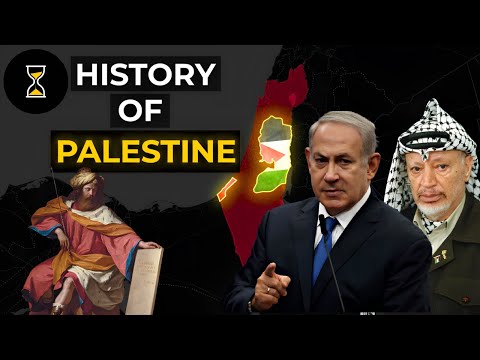
The ENTIRE History of Palestine | Documentary
Comprehensive Summary of the Video Transcript on the History of Palestine
The documentary presents a detailed exploration of Palestine's historical significance, tracing its evolution over three millennia, from ancient city-states to modern geopolitical conflicts. The narrative begins with an overview of Palestine's rich and complex history, characterized by a tapestry of cultures, empires, and religious traditions. The documentary aims to provide a strictly informational and nonpartisan account, utilizing maps, archival materials, and contextualized testimonies to present verifiable facts, while avoiding graphic imagery.
Palestine's historical narrative is introduced with the olive tree, a symbol of endurance and peace, revered across various cultures and religions, including ancient Egyptian, Greek, Hebrew, Christian, and Islamic traditions. The documentary asserts that the name "Palestine" predates its Roman origins, being referenced by the Greek historian Herodotus to describe the southern Levant. The term likely derives from the "Paliset," a group mentioned in ancient texts, indicating that the identity of this land has been multifaceted throughout history.
The narrative begins in the Neolithic period, progressing through the Bronze Age, where Palestine evolved into a complex society with urban and rural settlements influenced by major powers such as Egypt and Mesopotamia. Canaanite cities engaged in trade and cultural exchanges, and the late Bronze Age saw the emergence of the Sea Peoples, including the Peliset, linked to the name "Palestine." The documentary challenges traditional views of mass invasions causing the Bronze Age collapse, suggesting instead a transition to a decentralized Iron Age.
During the Iron Age, Palestine became a mosaic of diverse cultures and political entities, including the kingdoms of Moab, Edom, and Israel. The documentary notes the first mention of Israelites outside biblical texts in the 13th century BCE, with the kingdoms of Israel and Judah emerging, supported by archaeological evidence for figures like King David. Religious practices transitioned during this time, with monolatric worship of Yahweh becoming more prominent amidst a backdrop of polytheism.
The narrative continues through the late Iron Age, detailing interactions between Israel, Judah, and neighboring kingdoms, as well as the influence of empires such as Assyria and Babylon. The fall of the kingdom of Israel in 720 BCE and Judah in 586 BCE marked significant turning points, leading to the Babylonian exile, which transformed Judaism from a regional sect to a more monotheistic faith influenced by various cultures.
The documentary discusses the return of Jewish elites to Palestine under Persian rule, the construction of the Second Temple, and the emergence of new religious practices. It highlights cultural and intellectual exchanges during this period, including the influence of Zoroastrianism on Jewish thought.
As the narrative progresses, it covers the Hellenistic period following Alexander the Great's conquests, the subsequent cultural schisms within Judaism, and the establishment of the Hasmonean dynasty. The Roman period is described as pivotal for Jewish identity, marked by the rise of various Jewish factions and the eventual destruction of the Second Temple in 70 CE, leading to significant demographic changes and the Jewish diaspora.
The documentary notes the complex interplay of Jewish, Christian, and pagan communities in Palestine during late antiquity, culminating in the Christianization of the region under Constantine. It outlines the religious and cultural transformations that occurred, including the construction of significant Christian sites and the continued presence of Jewish communities, despite periods of persecution.
As the narrative enters the early Islamic period, it describes the arrival of Islam in Palestine, beginning with Muhammad's night journey to Jerusalem. The subsequent Arab conquests, particularly the Battle of Yarmouk in 636 CE, are detailed, emphasizing the peaceful surrender of Jerusalem and the establishment of Islamic rule under the Umayyad Caliphate. The construction of the Dome of the Rock is highlighted as a significant architectural achievement and a symbol of Islamic presence in the region.
The documentary concludes this segment by discussing the prosperity and cultural synthesis that characterized Palestine under early Islamic rule, including the flourishing of trade, agriculture, and scholarship. It emphasizes the region's strategic importance and the continued coexistence of diverse religious communities, setting the stage for the subsequent historical developments that would shape Palestine's complex identity.
Medieval Military Architecture and Daily Life in Crusader Palestine
The documentary then shifts its focus to the Crusader period, discussing the evolution of military architecture, daily life, cultural exchanges, and significant historical events during this time, as well as the subsequent Ottoman rule.
Medieval Military Architecture
During the Crusader period, military architecture reached new heights with the construction of formidable castles such as Kra de Shavalier, Belvoir, and Montfort. These stone fortresses featured concentric walls, towers, and advanced defensive mechanisms, enabling small garrisons to manage extensive territories and endure long sieges. The architectural innovations of this era reflected the military needs of the Crusaders while also showcasing the cultural influences of the region.
Daily Life in Crusader Palestine
Despite the backdrop of religious conflict, daily life in Crusader Palestine was marked by cultural exchange and coexistence. The Frankish settlers, numbering around 120,000 at their peak, governed a diverse population of approximately 350,000 Muslims, Eastern Christians, and Jews. Arab chronicler Usama Ibn Monqid noted that some Franks had acclimatized and integrated with the local Muslim population, distinguishing between established crusader families and newcomers from Europe. Intermarriage between Frankish nobles and local Christians led to a unique Levantine nobility that blended European and Middle Eastern traditions.
Cultural Synthesis and Trade
Crusader courts adopted local customs, including food and clothing, and many Frankish nobles learned Arabic, employing Muslim administrators. Trade thrived despite military conflicts, with Muslim merchants operating in Crusader ports and Frankish traders establishing networks throughout the eastern Mediterranean. Italian maritime republics like Venice, Pisa, and Genoa set up permanent trading posts in Crusader cities, fostering wealth that supported military campaigns and cultural exchanges.
Architectural Legacy
The architectural legacy of this period reflects cultural synthesis, with Crusader churches incorporating Islamic elements and vice versa. Notably, the Church of the Holy Sepulchre underwent extensive reconstruction, combining Romanesque and Byzantine styles with local traditions. This blending of architectural styles illustrates the complex interactions between different cultures during the Crusader period.
Initial Muslim Response to Crusader Conquest
The Muslim response to the Crusader conquest was initially fragmented due to divisions among the Islamic world, including the Sunni Abbasid Caliphate in Baghdad and the Shiite Fatimid Caliphate in Cairo. This disunity allowed Crusaders to establish their states. However, the concept of jihad gradually gained traction as a response to the Crusader presence. Notable leaders like Imad ad-Din Zengi began organizing resistance, with Zengi capturing Edessa in 1144, prompting the Second Crusade.
Rise of Saladin
Saladin, a Kurdish military commander, rose to prominence under Nur ad-Din, who emphasized military victory and Islamic unity. Saladin's conquest of Damascus in 1154 solidified his control over Muslim Syria. He became known for his piety, generosity, and chivalrous treatment of prisoners, earning respect even from his enemies. His strategic focus was on reclaiming Jerusalem, culminating in the decisive Battle of Hattin on July 4, 1187, where Saladin's forces defeated the Crusaders, leading to the fall of Jerusalem on October 2, 1187.
Contrast in Conquest
Saladin's capture of Jerusalem starkly contrasted with the Crusader conquest of 1099, where the latter had massacred the city's population. Saladin, however, showed restraint, allowing Christians to leave safely and even paying ransoms for the poor. His actions sent shockwaves through Western Europe, leading to the Third Crusade.
The Third Crusade
The Third Crusade, led by powerful monarchs like Richard the Lionheart, aimed to reclaim Jerusalem. The siege of Acre became a focal point, marked by controversy when Richard ordered the massacre of Muslim prisoners. Despite mutual respect between Richard and Saladin, Richard's ultimate goal of retaking Jerusalem was thwarted by logistical challenges and political pressures back in England. The Third Crusade concluded with the Treaty of Ramla in 1192, establishing a truce and defining territorial boundaries, allowing Christian pilgrimage rights to Jerusalem.
Decline of Crusader Presence
Following Richard's departure, Saladin's death in 1193 led to the fragmentation of his empire, weakening Muslim resistance. Subsequent Crusades, including the Fourth and Fifth, faced challenges, with the Fourth Crusade diverting to Constantinople. The Mamluks eventually conquered remaining Crusader strongholds, culminating in the fall of Acre in 1291, marking the end of Crusader states in Palestine.
Ottoman Rule and Transformation
The Ottoman conquest began in 1516, ending Mamluk rule. Sultan Selim I's campaign aimed to control pilgrimage routes and assert Sunni leadership. The Ottomans established a system of religious autonomy for Christians and Jews, integrating existing governance structures. Under Suleiman the Magnificent, Palestine experienced prosperity, marked by architectural achievements like the reconstruction of Jerusalem's walls and the Dome of the Rock.
Economic and Cultural Flourishing
The early Ottoman period saw economic prosperity, with Palestine integrated into vast trade networks. Agricultural developments, particularly in olive oil and citrus production, thrived. However, the empire faced challenges in the late 16th century, leading to local autonomy and the rise of strongmen like Zahir al-Umar.
European Influence and Jewish Immigration
The 19th century witnessed increased European involvement in Palestine, with consulates proliferating and archaeological interests rising. Jewish immigration, driven by anti-Semitism and Zionist ideology, began to reshape the demographic landscape. The establishment of agricultural settlements faced challenges, leading to tensions with Arab peasants.
World War I and British Mandate
World War I brought devastation to Palestine, with the Ottoman Empire's involvement leading to suffering and economic decline. The British conquest began with the capture of Jerusalem in December 1917, followed by the establishment of military administration. However, conflicting promises made during the war, including the Balfour Declaration, created tensions that would shape future British policies in the region.
Conclusion
The Ottoman legacy left a rich architectural and administrative heritage in Palestine, fostering a complex society that would face challenges from emerging national movements and colonial influences in the 20th century. The British conquest marked a new chapter, but the Ottoman influence continued to resonate in Palestine's turbulent modern history.
The British Mandate and Rise of Nationalism
The documentary then delves into the complex historical events surrounding the British mandate in Palestine, the rise of nationalist movements among both Jews and Arabs, and the subsequent conflicts that arose from these tensions.
Initially, a British official noted the dilemma of promising the same land to two different peoples, highlighting the challenges of reconciling the conflicting aspirations of Jewish and Arab communities in Palestine. The end of Ottoman rule catalyzed nationalist movements, with both groups envisioning different futures for the region. The Zionist movement, bolstered by the Balfour Declaration, saw British rule as a chance to establish a Jewish national home. Key figures like Chaim Weizmann, who led the Zionist commission to Palestine in 1918, emphasized a vision of building rather than destroying, though this vision implied significant demographic and political changes.
The third Aliyah (1919-1923) saw an influx of 35,000 Jewish immigrants, primarily young Labor Zionists committed to creating a new society based on collective principles. The Histadrut Labor Federation emerged, providing essential services to the Jewish community. David Ben-Gurion, who would later become Israel's first prime minister, articulated a vision of returning to their ancestral land as masters rather than guests.
In response, Arab nationalism also intensified. The first Palestine Arab Congress in 1919 rejected the Balfour Declaration and called for independence, asserting that Palestine was an integral part of Arab Syria. Musa Kazim al-Husini emerged as a prominent leader, advocating for representative government and boycotting British institutions, arguing that the mandate violated self-determination principles.
The clash of these nationalisms led to violence, exemplified by the Nebi Musa riots in April 1920, which were sparked by inflammatory speeches during a Muslim pilgrimage. The riots resulted in anti-Jewish violence, and Jewish self-defense units were formed in response. British reports attributed the disturbances to the collision of rival nationalisms.
The San Remo Conference in April 1920 formalized the British mandate over Palestine, incorporating the Balfour Declaration into international law. The mandate stipulated that Britain was responsible for establishing a Jewish national home while ensuring the rights of existing populations. Herbert Samuel, the first high commissioner, was a Jewish appointee, which raised suspicions among Arabs. Samuel's attempts to balance competing claims were met with limited success, as Arab boycotts of British institutions hampered effective governance.
Jewish immigration continued to rise, with subsequent Aliyahs bringing tens of thousands of Jews fleeing persecution in Europe. This influx transformed Palestine's demographics and economy, heightening Arab fears of displacement. The Jewish National Fund's land purchases displaced Arab tenant farmers, exacerbating tensions. The Arab community, lacking unified leadership, responded by establishing their own institutions, such as the Supreme Muslim Council.
The Western Wall incident in 1929, which revolved around Jewish prayer rights at a site Muslims considered sacred, escalated into violence, resulting in significant casualties on both sides. British investigations into the violence highlighted the underlying Arab grievances regarding political and economic aspirations.
The Great Arab Revolt from 1936 to 1939 marked a significant challenge to British rule, fueled by mass Jewish immigration and land purchases. The Arab Higher Committee demanded an end to Jewish immigration and land sales, leading to a general strike and violent confrontations. The British response included harsh counterinsurgency tactics, which further alienated the Arab population.
World War II and its aftermath brought new challenges. The British white paper of 1939 limited Jewish immigration and promised a Palestinian state with an Arab majority, provoking outrage among Jewish leaders. Despite opposition, many Jews volunteered for British military service during the war, while Arab leaders like Hajj Amin al-Husini collaborated with Nazi Germany, complicating the Palestinian cause.
Post-war, pressures mounted for Jewish immigration, especially for Holocaust survivors. The Anglo-American Committee of Inquiry recommended admitting 100,000 refugees, but British resistance continued. Jewish resistance to British rule intensified, leading to coordinated attacks against British infrastructure.
The UN's partition plan in 1947 proposed dividing Palestine into Jewish and Arab states, which was accepted by Jewish leaders but rejected by Arab leaders, leading to immediate violence. The civil war between Jewish and Arab communities escalated as both sides prepared for the British withdrawal.
The conflict culminated in the establishment of the state of Israel on May 14, 1948, followed by an invasion from neighboring Arab states. Despite initial advantages, the Arab armies faced challenges in coordination and equipment. The Israeli forces, motivated and organized, ultimately gained control over a significant portion of the territory.
The aftermath of the 1948 war resulted in the displacement of approximately 750,000 Palestinians, a traumatic event referred to as the Nakba (catastrophe) by Palestinians. The conflict established a refugee crisis that persists today, with many Palestinians living in various countries across the region.
The British mandate ended, leaving behind a legacy of unresolved tensions and conflicts that would shape the Middle East for generations. The establishment of Israel marked the beginning of a new chapter in the long and troubled history of Palestine, leading to ongoing conflicts that would define the region throughout the 20th century and beyond.
The Israeli-Palestinian Conflict from the 1970s to Present
The documentary concludes by discussing the complex history of the Israeli-Palestinian conflict, focusing on key events and shifts in power dynamics from the 1970s to the present.
Initially, it highlights the growing power of the Palestine Liberation Organization (PLO) in Jordan, which led to tensions with King Hussein's government. The PLO's influence resulted in the establishment of a "state within a state," controlling refugee camps and challenging Jordanian sovereignty. King Hussein expressed his concerns, stating, "The Fedí have created a state within my state." This tension culminated in the violent conflict known as Black September in 1970, during which Jordanian forces suppressed the PLO presence, resulting in approximately 3,000 Palestinian deaths and forcing PLO leadership, including Yasser Arafat, to relocate to Lebanon. Arafat's defiance was evident as he stated, "They want to liquidate the Palestinian resistance, but we will never surrender."
The narrative then transitions to the October War of 1973, where Egypt and Syria launched a surprise attack on Israel, shattering the perception of Israeli invincibility. Egyptian President Anwar Sadat articulated a strategy focused on reclaiming occupied land. The aftermath of the war saw significant diplomatic developments, including the Arab oil embargo, which underscored the strategic importance of the Palestinian cause to Arab states. Arafat's historic address to the UN in 1974 marked a pivotal moment for Palestinian recognition, where he famously stated, "I have come bearing an olive branch and a freedom fighter's gun."
Following the PLO's relocation to Lebanon, the weak Lebanese government allowed Palestinian factions to operate autonomously, launching attacks against Israel. The Cairo Agreement of 1969 had granted the PLO considerable autonomy in Lebanese refugee camps. A Palestinian commander expressed determination, stating, "From Lebanon, we will liberate Palestine." This led to Israeli military operations, including Operation Litani in 1978 and Operation Peace for Galilee in 1982, aimed at dismantling the PLO's infrastructure in Lebanon. Defense Minister Ariel Sharon's aggressive stance culminated in the siege of Beirut, where Arafat vowed, "We will not surrender. Beirut will be the Stalingrad of the Arabs." The Sabra and Shatila massacre in September 1982, where thousands of Palestinian civilians were killed by Christian Phalangist militias under Israeli control, became a highly controversial event, leading to the Kahan Commission's conclusion that Israeli leaders bore responsibility for the massacre.
The PLO's evacuation to Tunisia marked the end of its military presence on Israel's borders. Arafat's declaration upon leaving Beirut emphasized the enduring Palestinian claim to their homeland. The first Intifada began in December 1987, sparked by a traffic incident that killed four Palestinians. This uprising was characterized by civil disobedience and mass protests, with a Palestinian youth declaring, "We have nothing left to lose. We will throw stones until we are free." The Intifada represented a shift towards popular resistance rather than armed struggle, with calls for strikes and boycotts.
The emergence of Hamas in 1987, founded by Sheikh Ahmed Yassin, introduced a new Islamic nationalist alternative to the secular PLO. Hamas's charter declared that Palestine is an Islamic land, emphasizing religious claims over nationalistic ones. In response to the Intifada, Israeli Defense Minister Yitzhak Rabin adopted a policy of force, resulting in significant casualties on both sides. The Intifada garnered international sympathy for the Palestinian cause and highlighted the urgent need for a political solution.
The PLO's Declaration of Independence in 1988 marked a strategic shift towards accepting a two-state solution, with Arafat proclaiming the establishment of the State of Palestine. The PLO's renunciation of terrorism opened dialogue with the United States, leading to the Oslo Accords in 1993, which represented a significant breakthrough in Israeli-Palestinian relations. The secret negotiations in Norway resulted in mutual recognition and a framework for Palestinian self-government, culminating in a historic handshake between Rabin and Arafat, witnessed by President Bill Clinton.
The Oslo II agreement in 1995 established the Palestinian Authority and divided the West Bank into areas with varying degrees of control. However, Israeli settlement expansion continued during this period, leading to tensions. The assassination of Prime Minister Yitzhak Rabin by a Jewish extremist in 1995 severely impacted the peace process, with Rabin's final speech warning against violence.
The election of Benjamin Netanyahu in 1996 slowed the peace process, as he prioritized security over concessions. The Camp David Summit in 2000 represented a final attempt at a comprehensive agreement, with significant Israeli concessions offered, including 91% of the West Bank. However, Arafat's refusal to compromise on key issues, such as the right of return for refugees and sovereignty over East Jerusalem, led to the collapse of negotiations.
The second Intifada began in September 2000, following Ariel Sharon's visit to the Temple Mount, escalating into violence that included suicide bombings and armed attacks. The death of a young Palestinian boy became a poignant symbol of the conflict's toll on civilians. Israeli military responses intensified, leading to operations that reoccupied West Bank cities and besieged Arafat's compound.
The construction of a security barrier by Israel in 2002, justified as a means to prevent attacks, became a controversial aspect of the conflict, with significant implications for Palestinian communities. The International Court of Justice ruled that the barrier's construction violated international law.
Ariel Sharon's Gaza disengagement plan in 2005, which involved withdrawing settlements and military forces from Gaza, faced intense opposition from settlers. The victory of Hamas in the 2006 Palestinian legislative elections shocked the international community, as Hamas refused to recognize Israel and rejected conditions for engagement. The subsequent Gaza civil war in 2007 resulted in Hamas taking control of Gaza, leading to a blockade imposed by Israel and Egypt.
The ongoing conflict between Israel and Hamas saw several military operations, including Operation Cast Lead in 2008-2009, Operation Pillar of Defense in 2012, and Operation Protective Edge in 2014, each resulting in significant casualties. The international community remained divided on the conflict, with calls for peace processes failing to gain traction.
The demographic landscape of historic Palestine continues to evolve, with approximately equal populations of Jews and Arabs, and settlement expansion ongoing. The international community's recognition of Palestine as a state remains contentious, with calls for Palestinian rights growing amid continued Israeli settlement activity.
The narrative concludes with reflections on the enduring nature of the conflict, emphasizing the human toll and the persistent hope for peace among ordinary people on both sides. Palestinian and Israeli voices express a desire for reconciliation and a better future, highlighting the complexities and challenges that continue to shape the story of Palestine. The olive tree, a symbol of resilience and hope, represents the enduring connection to the land and the aspiration for peace amidst ongoing struggles.
The transcript outlines the fluctuations in the Jewish and non-Jewish populations in Palestine, particularly focusing on the 20th century. It indicates that significant demographic changes occurred, especially during the waves of Jewish immigration driven by various socio-political factors. These changes were marked notably by the Aliyahs, which were waves of Jewish immigration to Palestine. The first Aliyah occurred in the late 19th century, while the fifth Aliyah took place during the rise of Nazi persecution in Europe, bringing approximately 250,000 Jewish immigrants to Palestine.
As a result of these immigration waves, the Jewish population expanded dramatically, doubling between 1948 and 1951, with an influx of around 700,000 immigrants during that period. This growth was facilitated by the Law of Return, which granted automatic citizenship to any Jew immigrating to Israel. In contrast, the Arab population faced displacement and demographic changes due to the establishment of the State of Israel in 1948, which led to approximately 750,000 Palestinians becoming refugees.
The transcript emphasizes that by the end of the British mandate in 1948, the Jewish population had increased significantly, while the Arab population was characterized by loss and displacement as many were forced to flee their homes during the conflicts surrounding the establishment of Israel. The historical context highlights that the dynamics of population changes in Palestine were deeply intertwined with the political struggles and conflicts of the era.
- [01:44:22] "We hereby declare the establishment of a Jewish state in Israel..."
- [01:54:29] "Israel will not be complete until every Jew in the world has the opportunity to immigrate."
- [12:50] "The destruction of the first temple and the Babylonian conquest marked the end of the first great chapter in Palestine's history."
The transcript outlines several significant actions taken by the governments of the United States, the United Kingdom, and other European countries, which greatly impacted developments in Palestine from 1850 to 1948. One major event was the British Balfour Declaration issued on November 2, 1917, where Britain promised support for the establishment of a national home for the Jewish people in Palestine. This declaration was pivotal as it encouraged Jewish immigration and settlement in the region, altering the demographic landscape.
Additionally, the McMahon-Hussein Correspondence during World War I indicated Britain's promise of Arab independence, which subsequently clashed with the Balfour Declaration's commitment to the Jewish community. The Sykes-Picot Agreement further complicated matters by secretly dividing the Middle East between Britain and France, disregarding the aspirations of the Arab population.
As British forces gained control over Palestine following World War I, they established the Palestine Mandate in 1920, which incorporated the Balfour Declaration into international law. This created tensions between Jewish and Arab communities, as the British attempted to balance the conflicting promises made to both groups. The transcript notes that throughout the mandate period, the British struggled to manage these competing nationalisms, leading to unrest and violence.
In summary, the actions of these foreign governments, particularly Britain's conflicting promises, significantly influenced the political landscape in Palestine, setting the stage for ongoing conflict and tension which persisted through the establishment of Israel in 1948.
- [01:21:52] "We have promised the same land to two different peoples, and now we must somehow make it work."
- [01:21:40] "The mandatory shall be responsible for placing the country under such political, administrative, and economic conditions as will secure the establishment of the Jewish national home."
- [01:22:10] "The Zionist movement energized by the Balfour declaration saw British rule as an opportunity to build the Jewish national home."
The transcript provides an insightful depiction of the origins, identities, and social relationships of Jewish and Palestinian communities in early 20th century Palestine. It highlights that the Jewish community, invigorated by the Zionist movement, viewed Palestine as their ancestral homeland and sought to establish a national home there. This movement was characterized by waves of immigration, particularly during the Aliyahs, which were driven by persecution and the desire for self-determination.
On the other hand, the Palestinian Arab community had deep historical ties to the land, viewing it as an integral part of their national identity. The transcript reveals a duality of aspirations: while Jews aimed to reconstruct their national identity in their historical homeland, Palestinians strove to preserve their rights and existence amidst growing Jewish settlement.
The social and political dynamics were further complicated by the conflicting national aspirations. The Palestinian Arab Congress of 1919 rejected the Balfour Declaration, asserting Palestine as part of Arab Syria and demanding independence. Key figures like Musa Kazim al-Husini emerged to voice Palestinian nationalism, advocating for representative government and self-determination.
This tense relationship between the communities evolved as Jewish immigration increased, leading to fears among Palestinians of displacement and loss of their cultural identity. The community’s response included the establishment of political organizations aimed at defending their rights and seeking autonomy, creating a complex social landscape filled with both cooperation and conflict between these two distinct groups.
- [01:22:13] "The Zionist movement energized by the Balfour declaration saw British rule as an opportunity to build the Jewish national home."
- [01:23:39] "We consider Palestine as part of Arab Syria... connected with it by national, religious, linguistic, natural, economic, and geographical bonds."
- [01:21:37] "The Palestinian Arab Congress convened in 1919 rejected the Balfour declaration and demanded independence."
The transcript highlights the aims, strategies, and internal divisions of both Zionist organizations and Palestinian political leaders in the tumultuous period leading up to and following the establishment of the State of Israel in 1948. The Zionist movement, particularly through figures like David Ben-Gurion, aimed to establish a Jewish state in Palestine, viewing British rule as an opportunity to fulfill their national aspirations. Ben-Gurion's declaration upon the establishment of Israel emphasized the hope and continuity of Jewish life in the land.
Prior to 1948, the Zionist movement was characterized by various factions, some emphasizing labor and socialist principles while others focused on political advocacy and negotiation. The Jewish Agency played a crucial role in organizing immigration and settlement, while the Haganah and groups like Irgun utilized armed struggle as tensions escalated.
On the Palestinian side, the political landscape was more fragmented. Leaders like Hajj Amin al-Husini sought to unify Palestinian Arabs against the Zionist influx and British policies. The Palestinian Arab Congress formed in 1919 rejected the Balfour Declaration, asserting their claims to independence and opposing Jewish immigration. Despite their aspirations, the Palestinian leadership lacked the organizational cohesion that characterized the Zionist movement.
Following the establishment of Israel, the conflict intensified, leading to significant violence and the displacement of Palestinians. The Nakba, or catastrophe, saw mass exodus and the destruction of Palestinian society. The differences in strategy and leadership between the two communities became pronounced, with Zionist leaders advocating for statehood while Palestinian leaders struggled to articulate a unified response to the ongoing crisis.
- [01:44:20] "We hereby declare the establishment of a Jewish state in Israel..."
- [01:23:22] "We are not coming to Palestine as guests, but as masters, returning to their inheritance."
- [01:23:38] "The scheme of partition is inadmissible for it prejudices the right of the people of Palestine against the will of the majority."
The transcript discusses several pivotal historical events from 1948 to the present day that have shaped the ongoing Israeli-Palestinian conflict. Each event is crucial in understanding the complexities and challenges that have persisted over the decades:
- 1948 - Establishment of Israel: On May 14, 1948, David Ben-Gurion proclaimed the establishment of the State of Israel, leading to the Nakba, where approximately 750,000 Palestinians were displaced, marking a significant turning point in the conflict.
- 1967 - Six-Day War: From June 5 to 10, 1967, Israel engaged in a conflict with its Arab neighbors, resulting in the occupation of the West Bank and Gaza Strip, significantly altering the territorial landscape and creating an influx of 200,000 Palestinian refugees.
- 1973 - October War: In October 1973, Egypt and Syria launched a surprise attack on Israel, challenging the notion of Israeli invincibility and leading to significant diplomatic developments in subsequent years.
- 1993 - Oslo Accords: The Oslo Accords, signed in September 1993, marked a historic attempt at peace, establishing mutual recognition and a framework for Palestinian self-governance, though the peace process faced significant challenges thereafter.
- 2000 - Second Intifada: Triggered by Ariel Sharon's visit to the Temple Mount on September 28, 2000, this uprising saw escalated violence and a shift in Palestinian resistance strategies.
- 2021 - Gaza Conflict: In May 2021, tensions around the Sheikh Jarrah neighborhood and Al-Aqsa Mosque escalated into an 11-day conflict, marking the most recent outbreak of violence, highlighting the ongoing volatility of the situation.
These events illustrate the long-standing and multifaceted nature of the conflict, demonstrating how historical actions and responses have shaped the current realities faced by both Israelis and Palestinians.
- [01:44:22] "We hereby declare the establishment of a Jewish state in Israel..."
- [02:00:42] "The war's aftermath saw significant diplomatic developments..."
- [02:08:36] "The Oslo Accords... represented the most significant breakthrough in Israeli Palestinian relations since 1948."
[00:00] On a narrow hinge of land between desert[00:02] and sea, a story of faith, empire, and[00:05] modern warfare has unfolded.[00:09] Palestine was forged across three[00:10] millennia. Bronze Age citystates, the[00:14] kingdoms of Israel and Judah,[00:16] Hellenistic dynasts, Roman and Byzantine[00:19] provinces, early Islamic caliphates,[00:22] crusader fortresses, Mamluke roads, the[00:25] long Ottoman centuries.[00:28] In the last 100 years, the map was[00:30] redrawn again and again. British mandate[00:33] 1948 1967.[00:36] Interarders, shifting borders, sieges[00:39] and ceasefires, missiles and drones,[00:42] targeted raids and air strikes,[00:44] propaganda and counter propaganda,[00:47] turning words into weapons. Homes,[00:50] schools, and screens became part of the[00:52] battlefield.[00:54] This documentary is strictlyformational[00:56] and nonpartisan. No advocacy, only[00:59] context, sources, and verifiable facts.[01:03] To comply with YouTube's guidelines, and[01:05] audience sensitivities, we will not show[01:08] graphic imagery. We'll rely on maps,[01:11] archival material, declassified records,[01:14] satellite analysis, and carefully[01:17] contextualized testimony.[01:21] But how did one of history's oldest[01:22] crossroads become the most dramatic[01:25] place of our time?[01:27] This is the entire history of Palestine.[01:39] The olive tree stands as one of[01:41] humanity's most enduring symbols.[01:45] sacred to Isis in ancient Egypt called[01:48] liquid gold by Homer's Greeks, a symbol[01:51] of peace in the Hebrew Psalms. For[01:54] Christians, it evokes Gethsemane where[01:56] Christ prayed. For Muslims, it connects[01:59] to the prophet Muhammad himself.[02:01] Cultivated as early as the 8th[02:03] millennium BCE in the Levant, this[02:06] ancient tree has witnessed the rise and[02:08] fall of civilizations across a land[02:11] known by many names. Canaan, Eretz,[02:14] Israel, and Palestine.[02:17] Contrary to common misconceptions, the[02:20] name Palestine appears in texts far[02:22] older than its supposed Roman origin.[02:25] The Greek historian Heroditus, writing[02:28] centuries before Rome's dominance, used[02:30] this name to describe the southern[02:32] Levant. The word likely derives from the[02:35] Paliset, one of the mysterious sea[02:38] peoples who appeared in both[02:39] Mesopotamian and Egyptian sources during[02:42] the late Bronze Age. The name Palestine,[02:45] when referring to both place and people,[02:48] predates its Roman usage by millennia.[02:51] Yet, this land has carried many[02:53] identities throughout history.[02:56] Israel, the land of Israel, appears in[02:59] biblical sources with boundaries that[03:01] sometimes included parts of Lebanon and[03:04] Syria while excluding southern regions[03:06] the Bible called the land of Edom. The[03:09] Holy Land emerged as a Christian[03:11] designation in the Middle Ages, focusing[03:14] primarily on Jerusalem and other sites[03:16] sacred to Christianity. Canaan broadly[03:19] referred to the southern Levant in[03:21] ancient texts.[03:23] The historical kingdoms of Israel and[03:26] Judah ruled parts of this territory, but[03:28] never reigned over all of Canaan or the[03:31] promised land.[03:33] Throughout the ages, the boundaries of[03:35] what people considered Israel,[03:36] Palestine, Canaan, Judea, and the Holy[03:39] Land shifted dramatically, sometimes[03:42] including various parts of modern[03:44] Israel, Palestine, contracting or[03:47] expanding beyond them at different[03:48] times.[03:52] The story begins in the Neolithic Stone[03:54] Age when agricultural societies were[03:56] already forming along the Levventine[03:59] coast. By the Bronze Age, these[04:01] settlements had grown in size and[04:03] complexity and Palestine entered a long[04:05] period of contact with the eastern[04:07] Mediterranean world.[04:10] Bronze Age Palestine or Canaan was[04:13] primarily a clan-based society, a[04:16] collection of urban and rural[04:17] settlements decorating the rich[04:19] countryside. These would eventually[04:22] develop into the various kingdoms known[04:24] from biblical sources. Moab, Edom,[04:27] Israel, and Judah. The religious[04:30] composition of the time was likely a[04:32] broader Semitic polytheism, much like[04:34] their northern cousins who had become[04:36] the Phoenetians.[04:39] The interplay of this common religious[04:41] millure appears in how the storm god[04:43] Bal, a popular Phoenician deity,[04:46] influenced later deities like L and[04:48] Yahweh. Their hybridization would[04:52] eventually lead to the god of the Hebrew[04:54] Bible. Like any land straddling the[04:56] crossroads between empires, Canaan was[04:59] caught in the geopolitics of the[05:01] period's giants.[05:03] Throughout the Bronze Age, ancient Egypt[05:06] proved to be a steady influence on the[05:08] broader Near East, while Canaanite[05:10] cities continued trading with both Egypt[05:13] and ancient Mesopotamia as the trade[05:15] networks of the epoch expanded.[05:20] As the late Bronze Age dawned in the[05:23] 1500s B.CE, CE the sun god of the[05:25] Egyptians. Ra wrestled in the sky with[05:29] the storm god of the Hittites. Tarhuna[05:32] for control of the lands where Yahweh[05:35] and L would emerge. Canaan became one of[05:38] the battlegrounds between the mighty[05:40] Hittite and Egyptian empires. During[05:42] this period, eventually falling under[05:44] Egyptian control.[05:47] The Egyptians left a physical mark on[05:49] the region, building various[05:51] administrative complexes throughout[05:53] Canaan. Under Egyptian rule, local[05:56] Canaanite clan structures survived,[05:59] though the local culture became infused[06:01] with Egyptian elements. This cultural[06:04] entanglement was common throughout the[06:05] late Bronze Age. Canaanite populations[06:08] during this time worshiped a mixture of[06:11] Egyptian and local deities as evidenced[06:14] in the Fos Temple at Tel Lakish where a[06:17] local protoculted with worship of the[06:20] Egyptian goddess Hor.[06:23] The end of the Bronze Age in the 1200s[06:25] B.CE brought significant turbulence and[06:28] marked a crucial turning point for the[06:30] region. During this period, a name[06:33] approximating Palestine appears,[06:35] possibly through the Peliset tribe of[06:37] the so-called sea peoples. The Peliset[06:40] may have originated from Greece, though[06:42] this remains unconfirmed, and their name[06:45] first appears in Egyptian records.[06:49] The Sea Peoples are often blamed for[06:50] causing the Bronze Age collapse through[06:53] mass raids. However, modern scholars[06:56] question the paradigm of mass invasions[06:58] and migrations as well as the notion[07:00] that these were one cohesive ethnic[07:02] group. Cultural mixture between new[07:05] arrivals and existing populations was[07:08] probably extensive. While evidence[07:11] exists for social disruption, it's[07:13] better understood as Palestine[07:15] undergoing a transition into the more[07:17] decentralized Iron Age.[07:22] Throughout the Iron Age, Palestine[07:24] became a diverse tapestry of many[07:26] cultures.[07:28] This was also an era of political[07:30] consolidation when kingdoms began[07:32] appearing along the coast and in the[07:34] hintterlands.[07:36] In the coastal region of Pentapoulos, a[07:39] confederation of five primarily[07:41] Philistine cities formed.[07:44] In the south, the kingdom of Edom[07:46] reigned over what is today the Negv[07:48] desert. In the east, the kingdom of Moab[07:50] controlled the east bank of the Jordan[07:53] River.[07:55] In 1208 B.CE, the first mention of[07:58] Israelites as a people outside the[08:00] Hebrew Bible appears in the Meptasale.[08:03] During this period, biblical accounts[08:06] begin to correspond more definitively[08:08] with historical events. In the central[08:11] hintterlands and the north, the kingdoms[08:14] of Judah and Israel form from the[08:17] consolidation of tribal clans.[08:20] The biblical King David is likely a real[08:23] historical figure from the 9th century[08:25] BCE as archaeologists have discovered[08:28] records mentioning him by name in the[08:31] land of the historical kingdom of Israel[08:34] dating to a few decades after his[08:36] supposed reign.[08:38] Religious life across the Levventine[08:40] realms during this time was in[08:43] transition. Rituals like keeping kosher[08:46] appeared, but polytheism remained the[08:48] norm in most kingdoms. Canaanite[08:51] polytheism was similar to Phoenician[08:53] religion as they were related peoples[08:56] whose languages both belong to the[08:58] Semitic family. However, Phoenician and[09:02] Canaanite religions had regional[09:04] differences.[09:06] As kingdoms consolidated, a single god[09:09] would emerge from their polytheistic[09:10] pantheons as the chief and patron deity[09:13] of each kingdom. The first temple of[09:16] Judaism appeared in Jerusalem during[09:18] this period, a religious complex devoted[09:21] to Yahweh, the patron god of Israel.[09:26] First temple Judaism differed[09:28] significantly from later Judaism. The[09:31] Jewish people during this period were[09:33] monolatric, meaning they believed in[09:35] other gods, but devoted their worship[09:38] specifically and singularly to Yahweh.[09:41] The various kingdoms of the region[09:43] traded and wared with each other as[09:45] frequently as their Mediterranean[09:46] neighbors did.[09:49] The two kingdoms of Israel and Judah[09:51] were most likely one kingdom that split[09:53] into two sometime in the 10th century[09:56] BCE due to internal strife. However,[10:00] recent scholarly debates consider the[10:02] opposite possibility that the two[10:04] kingdoms merged at some point during the[10:06] reigns of kings Josiah and Hezekia,[10:10] though the exact timing remains[10:11] uncertain.[10:15] As the early Iron Age transitioned into[10:17] the late Iron Age, Palestine's kingdoms[10:19] fought one another while empires began[10:22] forming around them. During this era,[10:24] biblical sources become more useful as[10:27] historical primary sources with the[10:29] Kingdom of Judah taking center stage.[10:33] A PaleoHebrew writing system based on[10:36] the Phoenician alphabet began appearing[10:38] during this period. Pentapoulos, Moab,[10:42] and Edom continued to exist and interact[10:44] with both the kingdoms of Israel and[10:46] Judah.[10:48] Biblical stories of kings like Josiah[10:51] who probably initiated the shift toward[10:53] monotheism in Judaism and Hezekia who[10:56] withstood a siege by the Assyrian king[10:58] Senakaribb come to the four during this[11:00] period.[11:02] However, many of these biblical books[11:05] were written centuries after these kings[11:06] reigns.[11:08] The historical legacy of these legendary[11:11] Jewish kings is sometimes evident in the[11:13] archaeological record, such as in the[11:16] systems underneath Jerusalem, which were[11:18] built during Hezekiah's reign.[11:22] Eventually, the heyday of the Hebrew[11:24] kingdoms ended when the armies of Marduk[11:27] marched from Babylonia, sweeping into[11:29] the Levant, the Babylonian Empire[11:32] descended from Syria and destroyed the[11:34] kingdom of Israel around 720 B.CE. CE.[11:38] Judah survived for two more centuries[11:41] until 587 B.CE. when it too was[11:44] destroyed and the first temple in[11:47] Jerusalem was ruined. Other local[11:49] Canaanite kingdoms were also annexed by[11:52] the Babylonians.[11:54] For Judaism, this marked the start of[11:57] the Babylonian exile, where biblical[11:59] sources claimed the Jewish people were[12:01] expelled from Palestine to Babylon.[12:04] However, it was primarily the elites who[12:06] were exiled to Babylon.[12:09] This would prove a seminal turning point[12:11] in Judaism's history, transforming it[12:14] from a regional sect with roots in local[12:16] Canaanite religious ideals to one[12:19] influenced by Canaanite, Babylonian, and[12:22] eventually Iranian sources.[12:25] The destruction of the first temple and[12:28] the Babylonian conquest marked the end[12:30] of the first great chapter in[12:32] Palestine's history. The land that had[12:34] seen the rise of Bronze Age city states,[12:37] the emergence of the Israelite and[12:39] Judahite kingdoms, and the development[12:41] of early Judaism now faced a new era[12:44] under foreign rule.[12:47] Yet, the seeds of return and restoration[12:50] were already being planted in the exile[12:52] communities of Babylon, setting the[12:54] stage for the next chapter in[12:56] Palestine's long and complex history.[13:07] The destruction of Jerusalem in 586 BCEE[13:11] marked not an ending but a[13:13] transformation.[13:15] As smoke rose from the ruins of[13:17] Solomon's temple, the Jewish elite found[13:19] themselves in the sophisticated cities[13:21] of Babylon, one of the ancient world's[13:24] great cultural hubs. This exile would[13:26] fundamentally reshape not only Judaism[13:29] but the entire character of Palestine[13:31] itself.[13:33] Babylon was a cosmopolitan center where[13:36] local Jewish elites were allowed to[13:37] trade and purchase land. While in exile,[13:40] they encountered Babylonian intellectual[13:43] traditions resulting in a cultural[13:45] cross-pollination that revolutionized[13:48] Jewish religion through the innovations[13:50] of Jewish priests and judges.[13:53] Judaism emerged from this period rigidly[13:56] monotheistic having evolved into[13:58] something more recognizable as the[14:00] Judaism known today. The coming of the[14:04] Persian Akeid Empire to the Levant under[14:06] Cyrus the Great allowed the exiled[14:08] elites to return and consolidate local[14:11] rule in Palestine.[14:14] Called a Messiah in the Hebrew Bible,[14:16] Cyrus allowed the return of the elites[14:19] in 538 B.CE CE and is celebrated for[14:23] this in Jewish tradition. During this[14:26] era, the name Palestine first appears in[14:29] Heroditus' histories to describe at[14:31] least the coastal region.[14:34] The second temple of Jerusalem was built[14:36] during this period, serving as the[14:38] center of a now fully monotheistic faith[14:41] with elaborate rituals such as Yum[14:43] Kipur, where the divine name of Yahweh[14:45] was uttered in the Holy of Holies within[14:48] the temple. While not celebrated in[14:50] exactly the same way, this festival[14:53] survives in Judaism to this day,[14:56] testament to the antiquity of the Jewish[14:58] tradition.[15:00] Judaism's theology underwent a major[15:02] shift during Persian rule as[15:04] Zoroastrianism's moral and dualistic[15:07] cosmology gave birth to notions of[15:09] angels and demons within Jewish[15:12] religion.[15:14] In Palestine itself, Persian satraps[15:16] cooperated with local Jewish and[15:18] Canaanite elites to rule the region. The[15:22] Persians maintained a policy of[15:24] religious tolerance and preferred to[15:26] rule their outlying territories through[15:28] native intermediaries.[15:30] By this time, the Philistine Confederacy[15:33] of Pentapoulos was no more, likely[15:35] destroyed after the Babylonian Empire's[15:37] conquest and incorporated into the[15:40] Persian Empire's administrative[15:42] apparatus.[15:44] Another intriguing development during[15:46] this period was the emergence of the[15:48] Samaritans, cousins to the Jews. This[15:51] sect claims descent from the kingdom of[15:53] Israel like the Jews and maintains its[15:56] own version of sacred texts and laws.[15:59] They conduct rituals including[16:01] sacrifices on Mount Gerisim.[16:04] Trade played a significant role during[16:06] this period as various cities and[16:08] peoples competed for trading privileges[16:11] including the Phoenetians to the north[16:13] and the Kdorites in the south.[16:18] In the 4th century BCE the armies of[16:21] Alexander the Great marched into[16:23] Palestine after devastating tire on[16:25] their way to Egypt. In Jewish legends,[16:29] the Macedonian world conqueror is said[16:31] to have prostrated before the high[16:33] priest of the second temple upon[16:35] arriving in Jerusalem, though this may[16:37] be propaganda.[16:40] After Alexander's death and his empire's[16:42] fragmentation, the wars of the diadeoki[16:45] began. During this time, the kingdom of[16:49] Nabata, ruled by northern Arabian[16:51] peoples, took control of the southern[16:53] Levant around the Nekv desert. The north[16:57] was initially controlled by the Tamies,[16:59] then by the Seucids, two Hellenistic[17:02] kingdoms ruled by Greekeaking elites[17:04] based in Egypt and Syria, respectively.[17:08] Judaism and Henism became complex for[17:10] enemies, just as Babylonian and Persian[17:13] religion had influenced Judaism before.[17:16] Henistic philosophy now shaped Jewish[17:19] thought, as did Greek theater on[17:21] biblical tales. The cultural influence[17:24] that the Hellenistic Seucids exerted[17:27] over Judea soon caused a cultural schism[17:30] between more helanized Jews and more[17:32] conservative Jews.[17:34] This alongside issues such as the Seucid[17:37] King Antiochus IV attempting to extract[17:40] money from the second temple caused the[17:42] Makabian revolt in 161 BCE. This revolt[17:48] which was also a civil war between[17:50] helanized and traditional Jews.[17:53] This dynasty was initially a powerful[17:55] regional player asserting independence[17:57] from the Seucids and even conquering[18:00] Edom supposedly converting the region to[18:02] Judaism. Eventually the Hasminian[18:06] dynasty was replaced by the Herodian[18:08] kingdom.[18:10] This kingdom ruled by Herod the great[18:12] eventually became part of the Roman[18:14] Empire after over two centuries of on[18:17] andoff vaselage between the Tmies,[18:19] Seucids, Paththeians and eventually the[18:22] Romans.[18:26] The Roman period proved seminal for[18:28] Judea and the world. New Jewish factions[18:31] had appeared in the previous period. The[18:33] Pharisees, Sadducees, Zealots and[18:36] Essenes.[18:38] Eventually, Henistic and Jewish thought[18:41] continuously in conflict and dialogue[18:44] produced two new religious movements.[18:47] One was rabbitic Judaism, the Judaism[18:50] that dominates today and places emphasis[18:53] on legal and ritual obligations.[18:56] The other was early Christianity whose[18:58] founding figure Jesus of Nazareth was[19:01] educated in these very rabbitical[19:03] circles as evidenced by his knowledge of[19:05] Jewish law or Haka in the New Testament.[19:09] The Nabotan kingdom continued to thrive[19:12] as a hub of Arabian and Henistic culture[19:15] while the Herodian dynasty splintered[19:17] into the Herodian tetrarchy.[19:20] Judaism continued to be present in the[19:22] region as Christianity grew. But after[19:25] the Jewish revolt of 66 CE and bloody[19:29] battles like the one fought at Msada[19:32] Fortress, the Romans ethnically cleansed[19:35] parts of Judea Palestine of its Jewish[19:38] populations.[19:40] The Jewish diaspora, already present[19:42] since the Babylonian exile and further[19:45] grown through trade in the Roman Empire,[19:47] was already more populous and received[19:50] additional numbers in various[19:51] Mediterranean and Middle Eastern cities.[19:55] Despite their losses, the Jewish people[19:57] continued to rebel against the Romans,[20:00] such as in the Ketos war of 115 to 117[20:05] CE and eventually the Bar Cockba revolt[20:09] of 132 to 136 CE, compelling the Romans[20:14] to continue their crackdowns and ethnic[20:17] cleansing of Jews in the region.[20:20] Contrary to popular belief, there is no[20:23] definitive evidence that Hadrien[20:24] forcibly changed the region's name from[20:27] Judea to Syria Palestina. It is more[20:30] likely that the names Judea and[20:32] Palestina had coexisted in the region[20:35] for centuries with Palestine becoming[20:38] more dominant after the Jewish revolts.[20:41] However, despite the demographic impact[20:44] of Roman rule in Palestine, rabbitic[20:46] Judaism survived in the region and[20:49] remained active in judicial and communal[20:52] debates among Jewish communities.[20:56] As late Roman antiquity dawned upon[20:59] Palestine, increasing numbers of[21:01] Christians of various sects changed the[21:03] region's religious and cultural[21:05] ecosystem alongside the Jewish community[21:08] that continued to exist there. By the[21:11] time of Constantine, Palestine was as[21:14] diverse as it had been in the Bronze Age[21:16] with Jews, Samaritans, Pagans, Gnostics,[21:19] and Christians living side by side in a[21:21] tapestry of Greek, Egyptian, Semitic,[21:25] Jewish, and Neareastern cultural[21:27] influences.[21:29] The Eastern Roman Empire, which survived[21:32] into the Middle Ages after the fall of[21:33] its Western counterpart, established[21:36] three separate provinces. Palestina[21:38] Primer, Palestina Skakunda and Palestina[21:42] Salutaris, controlling the local[21:44] territories from Constantine's reign to[21:46] the Arab conquest with a brief Cissanian[21:50] interreknum in the 600s.[21:53] Constantine's conversion to Christianity[21:56] and the Christianization of the empire[21:58] brought dramatic changes to Palestine.[22:01] The construction of the church of the[22:03] holy sephila and the development of[22:06] Christian pilgrimage transformed[22:08] Jerusalem into a major Christian center.[22:11] Monasticism flourished in the Judeian[22:13] desert and the translation of the Bible[22:16] into local languages spread Christian[22:18] influence throughout the region.[22:22] Despite the Christianization of the[22:23] empire, Jewish communities persisted[22:26] throughout Palestine. Jews were[22:28] generally banned from Jerusalem except[22:30] on Tishab, the day commemorating the[22:33] destruction of the temple. Occasional[22:36] persecution and forced conversions[22:38] occurred, but Jewish life.[22:41] The Persian invasion of 614 CE brought[22:46] temporary relief for some Jewish[22:48] communities as Persian forces supported[22:51] by some local Jews conquered much of[22:54] Palestine from the Byzantines. The[22:57] Sassinid conquest resulted in the deaths[23:00] of an estimated 26,000 Christians and[23:03] the destruction of many churches,[23:05] including the Holy Sephila.[23:08] However, the Persian occupation was[23:09] brief. In 628 CE, the Byzantine Emperor[23:14] Heraclus reconquered Palestine, restored[23:17] the true cross to Jerusalem, and[23:19] initiated persecution of Jews for their[23:22] alleged collaboration with the Persians.[23:25] This weakening of both empires through[23:27] constant warfare would prove crucial as[23:30] it left the region vulnerable to the[23:32] next great transformation that was[23:34] already stirring in the Arabian[23:36] Peninsula.[23:37] By the early 7th century, Palestine had[23:40] experienced nearly a millennium of[23:42] foreign rule. The land had been shaped[23:45] by Persian administrative practices,[23:47] Henistic cultural influences, Roman[23:50] legal systems, and Christian religious[23:53] transformation.[23:54] Yet through all these changes, the[23:56] diverse communities of Palestine,[23:59] Jewish, Samaritan, Christian, and Pagan,[24:02] had maintained their distinct identities[24:05] while adapting to successive imperial[24:07] overlords.[24:09] The stage was now set for another[24:11] dramatic transformation. As Byzantine[24:14] and Persian forces exhausted themselves[24:16] in their final conflicts, a new power[24:19] was emerging from the south. The message[24:21] of Islam carried by Arab armies would[24:24] soon reach the walls of Jerusalem,[24:26] bringing yet another chapter to[24:28] Palestine's complex history.[24:43] In the scorching heat of August 636[24:47] CE, two armies faced each other across[24:50] the dusty plains of Yarmmuk.[24:53] On one side stood the disciplined[24:54] legions of Bzantium, heirs to a thousand[24:57] years of Roman military tradition. On[25:00] the other, the swift cavalry of the Arab[25:02] tribes, united under the banner of a new[25:05] faith that had emerged from the Arabian[25:07] Peninsula. The outcome of this battle[25:09] would determine not just the fate of[25:10] Palestine, but the entire course of[25:13] Middle Eastern history.[25:17] The story of Islam's arrival in[25:19] Palestine begins not with conquest, but[25:21] with a miraculous night journey.[25:23] According to Islamic tradition, the[25:26] prophet Muhammad was transported from[25:27] the sacred mosque in Mecca to the[25:30] farthest mosque, Al- Mashid alaka, in[25:33] Jerusalem, from where he ascended to[25:35] heaven. This event known as the Isra and[25:38] Mirage established Jerusalem's sacred[25:40] status in Islam from the religion's[25:43] earliest days. The Quran refers to[25:46] Palestine as Alard al- Mukadasar, the[25:49] Holy Land, connecting the new faith to[25:51] the ancient traditions of the region.[25:53] When Muhammad died in 632 CE, his[25:57] successors, the Rashidun caiffs, began[26:00] expanding beyond the Arabian Peninsula[26:02] with remarkable speed and success.[26:05] The Byzantine Empire, exhausted by[26:08] decades of warfare with Persia, proved[26:10] unable to resist the Arab advance. At[26:13] the battle of Yamuk, the brilliant[26:15] tactics of Khalidwalid, known as Sallall[26:19] Allah al- Maslul, the drawn sword of[26:21] God, shattered Bzantine resistance. The[26:24] victory opened the path to Jerusalem and[26:27] all of Palestine.[26:29] The conquest of Jerusalem itself was[26:32] notably peaceful. In 638 CE, Khiff Umar[26:37] Katab personally traveled to the city to[26:40] receive its surrender from the Byzantine[26:42] patriarch Sphronius. The pact of Umar,[26:45] as this agreement became known,[26:47] guaranteed the safety and religious[26:49] freedom of Jerusalem's Christian[26:51] population.[26:53] Jews who had been largely banned from[26:55] the city under Bzantine rule were once[26:58] again permitted to live and worship in[27:00] Jerusalem.[27:02] Umar's first act upon entering the city[27:04] was to clear the temple mount which had[27:06] been used as a garbage dump by the[27:08] Byzantines. He ordered the construction[27:11] of a simple wooden mosque on the site,[27:14] laying the foundation for what would[27:16] become the magnificent dome of the rock[27:18] and Alexa mosque.[27:22] Under the Umiad Caliphate with its[27:25] capital in Damascus, Palestine[27:27] experienced unprecedented prosperity and[27:30] architectural achievement. The Umayad[27:33] califfs, particularly Abdal Malik Iban[27:36] Marwan, invested heavily in Palestine,[27:39] seeing it as a crucial part of their[27:41] empire's heartland.[27:43] The construction of the Dome of the[27:45] Rock, completed in 691 CE, stands as one[27:49] of the greatest architectural[27:51] achievements in human history. This[27:55] magnificent octagonal structure with its[27:57] golden dome and intricate mosaics was[28:00] not merely a religious building, but a[28:02] political statement. Its inscriptions[28:05] taken from the Quran subtly challenged[28:08] Christian doctrines while affirming[28:10] Islamic monotheism.[28:12] The Dome of the Rock was complemented by[28:15] the construction of Alaka Mosque,[28:17] creating a vast religious complex on the[28:20] Temple Mount that could accommodate[28:22] thousands of worshippers. These[28:24] buildings transformed Jerusalem's[28:26] skyline and established the city as[28:29] Islam's third holiest site after Mecca[28:32] and Medina.[28:34] The Umiad period saw remarkable[28:36] religious tolerance and cultural[28:38] synthesis.[28:40] Christians continued to serve in high[28:42] administrative positions. Jewish[28:44] communities flourished and Samaritans[28:46] maintained their ancient traditions. The[28:48] Arabic language gradually became the[28:50] lingua frana of administration and[28:53] commerce, though local languages and[28:56] customs persisted.[28:58] Archaeological evidence from this period[29:00] reveals a thriving economy based on[29:03] agriculture, trade, and craftsmanship.[29:07] Palestinian olive oil, soap and textiles[29:10] were exported throughout the Islamic[29:11] world. The famous knobless soap made[29:14] from local olive oil and ash became[29:16] renowned from Spain to Central Asia.[29:23] Cities like Ramla, founded by the Umiads[29:26] as an administrative capital, grew[29:28] rapidly. Gaza flourished as a major port[29:32] connecting Palestine to Egypt and the[29:34] broader Mediterranean world. Jerusalem[29:37] while maintaining its religious[29:39] significance also became an important[29:41] center of Islamic learning and[29:43] juristprudence.[29:46] The Abbassid revolution of 750 CE[29:50] brought significant changes to[29:52] Palestine. With the caliphate's capital[29:55] moved from Damascus to Baghdad,[29:57] Palestine found itself on the periphery[30:00] rather than at the center of Islamic[30:02] power. However, this did not diminish[30:04] the region's prosperity or significance.[30:08] Under Abbisid rule, Palestine became[30:11] increasingly integrated into the broader[30:13] Islamic world's intellectual and[30:15] commercial networks. Scholars from[30:18] Palestine traveled to Baghdad's House of[30:20] Wisdom, while students from across the[30:22] Islamic world came to study in[30:24] Jerusalem's religious schools.[30:26] The Abbassid period saw the development[30:29] of sophisticated agricultural[30:31] techniques, including the introduction[30:33] of new crops from Asia and Africa.[30:36] Sugarcane, cotton, and various fruits[30:39] transformed Palestine's agricultural[30:41] landscape.[30:42] The famous terrace hillsides that still[30:45] characterize much of the Palestinian[30:46] landscape were largely developed during[30:49] this period.[30:51] Trade flourished under Abbisid rule.[30:54] Palestinian merchants established[30:56] networks stretching from Spain to India,[30:59] dealing in everything from spices and[31:01] silk to manuscripts and precious stones.[31:05] The port cities of Gaza, Ascalon and[31:08] Akre became major commercial hubs while[31:10] inland cities like Nablus and Hebron[31:13] prospered as manufacturing centers.[31:18] The early Islamic period in Palestine[31:20] was marked by remarkable cultural[31:22] creativity and religious development.[31:25] The region became a meeting point where[31:27] Islamic, Christian, and Jewish[31:29] traditions interacted and influenced[31:32] each other.[31:33] Islamic scholarship flourished in[31:35] Palestine during this period. The Alaka[31:38] mosque became a major center of Islamic[31:40] learning, attracting scholars from[31:42] across the Muslim world. Legal schools[31:45] developed distinctive Palestinian[31:47] characteristics and local scholars made[31:50] significant contributions to Islamic[31:53] juristprudence, theology, and[31:55] philosophy.[31:57] Christian communities adapted to Islamic[32:00] rule while maintaining their distinct[32:02] identity. Many Christians learned Arabic[32:05] and participated in the broader Islamic[32:07] cultural renaissance. Some Christian[32:10] scholars translated Greek philosophical[32:12] and scientific works into Arabic,[32:15] contributing to the preservation and[32:17] transmission of classical knowledge.[32:21] Jewish communities experienced a[32:23] renaissance under early Islamic rule.[32:27] After centuries of persecution under[32:29] Bisantine rule, Jews found new[32:32] opportunities in the Islamic world,[32:35] Jewish scholars in Palestine contributed[32:37] to the development of Hebrew poetry,[32:40] biblical commentary, and Jewish law. The[32:43] Karit movement, which rejected rabbitic[32:45] authority in favor of direct[32:48] interpretation of scripture, found[32:50] particular support in Palestine.[32:53] The Samaritan community, though much[32:55] reduced from its ancient size, continued[32:58] to maintain its unique traditions.[33:00] Samaritan scholars produced important[33:03] works on their history and religious[33:05] practices, many of which survive to this[33:08] day.[33:11] The early Islamic period brought[33:13] unprecedented economic prosperity to[33:15] Palestine. The region's strategic[33:18] location between the Islamic heartlands[33:20] and the Mediterranean made it a crucial[33:23] link in international trade networks.[33:26] Agriculture formed the backbone of[33:28] Palestine's economy. The Islamic[33:30] agricultural revolution introduced new[33:33] crops, improved irrigation techniques,[33:36] and more efficient farming methods. The[33:39] famous Palestinian olive groves expanded[33:41] significantly during this period and[33:44] olive oil became one of the region's[33:46] most important exports.[33:48] Manufacturing also flourished.[33:51] Palestinian craftsmen became renowned[33:53] for their skill in producing soap,[33:55] textiles, glassear, and metal work. The[33:59] soap industry of Nablas based on local[34:02] olive oil became particularly famous and[34:04] profitable.[34:06] Urban centers grew rapidly during this[34:09] period. The development of sophisticated[34:13] financial instruments, including letters[34:15] of credit and banking networks,[34:17] facilitated long-distance trade.[34:21] Palestinian merchants established[34:23] trading houses in cities from Cordoba to[34:25] Samakand, creating wealth that funded[34:28] the construction of mosques, schools,[34:30] and other public buildings.[34:35] In 969[34:37] CE, Palestine came under the rule of the[34:39] Fatimid Caliphate based in Cairo. The[34:43] Fatimids who claimed descent from the[34:45] prophet Muhammad's daughter Fatima[34:47] brought Shiite rule to a predominantly[34:50] Sunni region. However, their rule was[34:53] generally tolerant and pragmatic.[34:56] Under Fatimid rule, Palestine continued[34:59] to prosper economically and culturally.[35:02] The Fatimids invested heavily in trade[35:04] and commerce and Palestinian merchants[35:07] benefited from improved access to Indian[35:10] Ocean trade routes through Egypt.[35:13] The Fatimid period saw continued[35:15] religious tolerance. Christians and Jews[35:18] maintained their communities and[35:19] institutions while Sunni Muslims were[35:22] generally left undisturbed in their[35:24] religious practices. This tolerance[35:26] extended to various Islamic sects and[35:29] schools of thought, creating a diverse[35:31] and vibrant religious landscape.[35:35] Jerusalem remained a major pilgrimage[35:37] destination for Muslims, Christians, and[35:41] Jews alike. The Fatimids maintained and[35:43] improved the city's religious buildings,[35:46] including renovations to the Dome of the[35:49] Rock and Alaxa Mosque.[35:52] Christian pilgrimage to the Holy Land[35:54] continued, bringing both religious[35:56] significance and economic benefit to the[35:59] region.[36:09] On a scorching July morning in 1099, the[36:13] walls of Jerusalem echoed with the clash[36:15] of steel and the cries of battle. After[36:19] 3 years of marching across Europe and[36:20] Anatolia, the armies of the First[36:23] Crusade had finally reached their[36:24] ultimate goal, the Holy City.[36:28] What followed would be remembered as one[36:30] of history's most brutal conquests,[36:32] marking the beginning of two centuries[36:34] of conflict that would reshape Palestine[36:37] and leave scars lasting to this day.[36:42] The call to crusade had originated in[36:44] the papal court of Urban II in 1095.[36:48] Responding to a request for aid from the[36:50] Bzantine Emperor Alexio I, the Pope[36:53] proclaimed a holy war to reclaim the[36:56] Holy Land from Muslim rule.[36:58] Deos Vult, God wills. It became the[37:01] battlecry that echoed across Western[37:03] Europe as nobles, knights, and common[37:06] people took up the cross. The first[37:09] crusade was unlike anything the Islamic[37:11] world had experienced. Previous[37:13] Christian Muslim conflicts had been[37:15] largely political or territorial.[37:19] This was different. A religiously[37:21] motivated war of conquest that combined[37:23] spiritual fervor with military ambition.[37:27] The crusader armies that reached[37:28] Palestine in 1099 were hardened by 3[37:31] years of warfare. They had captured[37:33] Antioch after a grueling siege and had[37:36] learned to adapt their European fighting[37:38] techniques to Middle Eastern conditions.[37:41] When they reached Jerusalem, they found[37:43] a city defended by a fatimid garrison[37:46] under the command ofikar aldawa.[37:50] The siege of Jerusalem lasted 5 weeks.[37:53] The crusaders constructed massive siege[37:55] towers and employed sophisticated[37:57] military engineering.[37:59] On July 15th, 1099, they breached the[38:02] walls near Herod's gate. What followed[38:04] was a massacre that shocked even[38:07] medieval sensibilities. Contemporary[38:10] accounts describe scenes of unimaginable[38:13] brutality.[38:14] Raymond of Aguiler, a crusader[38:17] chronicler, wrote, "Men rode in blood up[38:20] to their knees and bridal reigns.[38:22] Indeed, it was a just and splendid[38:24] judgment of God that this place should[38:26] be filled with the blood of the[38:27] unbelievers."[38:29] Muslim chronicler Iben al-Ayia recorded[38:33] the population of the holy city was put[38:35] to the sword and the Franks spent a week[38:37] massacring Muslims.[38:40] Modern estimates suggest that between[38:41] 10,000 and 70,000 people were killed in[38:45] the conquest of Jerusalem. The Jewish[38:48] community which had fought alongside the[38:50] Muslims in defending the city was burned[38:52] alive in their synagogue. The massacre[38:55] sent shock waves throughout the Islamic[38:57] world and created a legacy of bitterness[39:00] that would influence Christian Muslim[39:01] relations for centuries.[39:06] Following their conquest of Jerusalem,[39:08] the crusaders established four states in[39:10] the Levant. The Kingdom of Jerusalem,[39:13] the Principality of Antioch, the county[39:16] of Adessa, and the county of Tripoli.[39:19] These became known collectively as[39:21] Utramare, the land beyond the sea.[39:25] The kingdom of Jerusalem, stretching[39:27] from Beirut to the Red Sea, became the[39:30] most important of these states.[39:33] Godfrey of Buong, one of the crusades[39:35] leaders, became its first ruler, though[39:37] he refused the title of king, preferring[39:40] to be called defender of the Holy[39:42] Sephila.[39:44] His brother Baldwin I who succeeded him[39:46] in 1100 had no such qualms about royal[39:49] titles and established the kingdom on a[39:52] firm footing. The crusade states faced[39:55] enormous challenges from the beginning.[39:57] They were surrounded by hostile Muslim[39:59] territories dependent on reinforcements[40:02] and supplies from Europe and ruled by a[40:04] small Frankish minority over a[40:07] predominantly Muslim and Eastern[40:09] Christian population.[40:11] To address these challenges, the[40:13] crusaders developed innovative military[40:15] and administrative solutions. The most[40:18] famous of these were the military[40:20] orders, the Knights Templar, founded in[40:23] 1119 and the Knights Hospitaler, which[40:26] evolved from a medical order into a[40:28] military one. These orders combined[40:30] monastic vows with military service,[40:33] creating elite fighting forces that[40:35] became the backbone of crusader defense.[40:39] The Templars, taking their name from[40:41] their headquarters near the Temple[40:42] Mount, became legendary for their[40:44] discipline and fighting proess. Their[40:47] rule stated to each knight are assigned[40:50] three horses and one squire. And if the[40:52] squire wishes to bring more horses, he[40:55] may do so with the permission of the[40:57] master. These warrior monks took vows of[41:00] poverty, chastity, and obedience, yet[41:03] collectively amassed enormous wealth and[41:05] political influence.[41:10] The crusaders also constructed an[41:12] impressive network of fortifications[41:13] across Palestine. Castles like Kra de[41:16] Shavalier, Belvoir and Montfor[41:19] represented the pinnacle of medieval[41:21] military architecture.[41:23] These massive stone fortresses with[41:25] their concentric walls, towers, and[41:28] sophisticated defensive features allowed[41:30] small garrisons to control large[41:32] territories and withstand prolonged[41:35] sieges.[41:36] Despite the religious rhetoric and[41:38] military conflicts, daily life in[41:40] Crusader Palestine was characterized by[41:42] remarkable cultural exchange and[41:45] coexistence. The Frankish settlers[41:48] numbering perhaps 120,000 at their peak[41:51] ruled over a population of roughly[41:53] 350,000 Muslims, Eastern Christians, and[41:57] Jews.[41:58] The Arab chronicler Usama Ibn Monkid who[42:01] spent considerable time in crusader[42:03] territories observed[42:06] among the Franks there are some who have[42:07] become acclimatized and have associated[42:10] long with the Muslims.[42:12] These are much better than the recent[42:14] comas from the Frankish lands.[42:17] This distinction between established[42:19] crusader families and new arrivals from[42:21] Europe became increasingly important as[42:24] the decades passed.[42:26] Intermarriage between Frankish nobles[42:28] and local Christian families was common,[42:31] creating a unique Levantine nobility[42:34] that blended European and Middle Eastern[42:36] traditions.[42:38] The crusader courts adopted local[42:40] customs, foods, and even clothing[42:42] styles. Many Frankish nobles learned[42:45] Arabic and employed Muslim[42:47] administrators and advisers.[42:50] Trade flourished despite the military[42:52] conflicts. Muslim merchants continued to[42:55] do business in crusader ports while[42:57] Frankish traders established networks[42:59] throughout the eastern Mediterranean.[43:01] The Italian maritime republics Venice,[43:04] Pisa, and Genua established permanent[43:06] trading posts in crusader cities,[43:09] creating wealth that funded both[43:11] military campaigns and cultural[43:13] exchange.[43:14] The architectural legacy of this period[43:17] reflects this cultural synthesis.[43:19] Crusader churches incorporated Islamic[43:22] architectural elements while Muslim[43:24] buildings in crusader territories[43:26] sometimes adopted European features. The[43:30] church of the holy sephila was[43:32] extensively rebuilt during this period[43:34] combining romanesque and bzzantine[43:36] styles with local traditions.[43:41] The initial Muslim response to the[43:43] crusader conquest was fragmented and[43:46] ineffective.[43:47] The Islamic world was divided between[43:49] the Sunni Bassid caliphate in Baghdad,[43:52] the Shiite Fatimid Caliphate in Cairo[43:55] and various Turkish Emirates in Syria[43:57] and Anatolia.[43:59] This disunityity allowed the crusaders[44:01] to establish and consolidate their[44:04] states.[44:05] However, the concept of jihad, holy war[44:09] in defense of Islam, gradually gained[44:11] momentum as a response to the crusader[44:14] presence. Immadin Zeni, the Turkish[44:17] Atabbeg of Mosul and Aleppo, became the[44:20] first Muslim leader to effectively[44:22] organize resistance to the crusaders. In[44:24] 1144, he captured Adessa, the first[44:28] crusader state to fall, sending shock[44:30] waves through Western Europe and[44:32] prompting the second crusade.[44:35] Zeni's son, Nur Adin, continued his[44:38] father's work with even greater success.[44:40] Nur Adin understood that military[44:43] victory alone was insufficient. He also[44:45] needed to present himself as the[44:47] champion of Islamic orthodoxy and unity.[44:51] He promoted the ideology of jihad while[44:53] working to unify the fractured Muslim[44:55] territories of Syria and northern[44:58] Mesopotamia.[45:00] Nuradin's greatest achievement was his[45:02] conquest of Damascus in 1154 which[45:05] brought most of Muslim Syria under his[45:07] control. He also promoted religious and[45:10] educational reforms, founding madrasas,[45:13] religious schools and promoting Sunni[45:15] Orthodoxy.[45:17] His court became a center of Islamic[45:19] learning and culture, attracting[45:21] scholars and poets from across the[45:22] Muslim world.[45:26] The most famous Muslim leader of the[45:28] crusader period was Salah Adin Yusf Iban[45:31] Aub known in the west as Saladin, a[45:34] Kurdish military commander who had[45:36] served under Nur Adin. Saladine rose to[45:39] power in Egypt in 1169 initially as[45:42] Vizier to the last Fatimid caiff.[45:45] Saladine's rise to power was marked by[45:47] political brilliance as much as military[45:50] skill. After the death of the last[45:52] Fatimid caiff in 1171, he abolished the[45:56] Shiite caliphate and restored Egypt to[45:59] Sunni Orthodoxy, nominally under the[46:02] authority of the Abbassid caiff in[46:03] Baghdad. This move won him support from[46:06] Sunni Muslims throughout the region.[46:09] Following Nur Adin's death in 1174,[46:13] Saladine moved to unite Egypt and Syria[46:15] under his rule. This process took over a[46:19] decade and involved as much diplomacy as[46:22] warfare. Saladine presented himself as[46:24] the heir to Nuradin's legacy and the[46:27] champion of Islamic unity against the[46:29] crusader threat.[46:34] Saladine's character impressed even his[46:36] enemies. He was known for his personal[46:39] piety, his generosity to the poor, and[46:42] his chivalous treatment of prisoners and[46:44] non-combatants.[46:45] These qualities combined with his[46:47] military and political successes made[46:50] him a legendary figure in both Islamic[46:52] and Western traditions.[46:54] Contemporary sources reveal Saladine's[46:56] strategic thinking. He wrote, "I have[46:59] not slept one night in comfort, nor have[47:01] I eaten one meal with pleasure since the[47:03] Franks took Jerusalem." This statement,[47:06] whether literally true or not, captures[47:08] his single-minded focus on reclaiming[47:11] the holy city.[47:15] The decisive confrontation between[47:17] Saladin and the crusaders came at the[47:19] Battle of Hatin on July 4th, 1187.[47:24] The battle was the culmination of a[47:25] carefully planned campaign by Saladin to[47:28] draw the crusader army away from its[47:30] fortified positions and into the open[47:32] field.[47:34] The immediate cause of the battle was a[47:36] raid by Reald of Shationg, the Lord of[47:39] Karak, against a Muslim caravan. Reald,[47:42] known for his aggressive and often[47:44] reckless behavior, had repeatedly[47:46] violated truses with Saladin. When he[47:49] allegedly captured Saladin's sister in[47:52] one of these raids, it provided the[47:54] perfect pretext for war.[47:57] King Guy of Lucin, the weak and[47:59] indecisive ruler of Jerusalem, was[48:02] pressured by his nobles to respond to[48:04] Saladin's invasion of the Galilee.[48:07] Against the advice of experienced[48:09] commanders like Raymond of Tripoli, Guy[48:11] decided to march his entire army to[48:14] relieve the besieged fortress of[48:15] Tiberius.[48:17] Saladin's strategy was masterful. He[48:20] positioned his forces to cut off the[48:22] crusader army from water sources while[48:25] subjecting them to constant harassment[48:27] by mounted archers. The crusaders,[48:30] weighed down by heavy armor and[48:32] suffering from thirst in the July heat,[48:34] became increasingly desperate.[48:37] The battle itself was a catastrophe for[48:39] the crusaders. Trapped on the horns of[48:42] Hatin, a double peaked hill near the Sea[48:44] of Galilee, the crusader army was[48:47] systematically destroyed. King Guy was[48:49] captured along with most of his nobles[48:52] and the relic of the true cross which[48:54] had been carried into battle. Iban[48:57] Alathya described the aftermath.[49:00] This was the most severe blow that the[49:02] Muslims inflicted on the Franks since[49:04] they conquered the coast.[49:06] The victory at Hatin opened the way for[49:09] Saladin's reconquest of most crusader[49:11] territories, including Jerusalem itself.[49:17] On October 2nd, 1187, after a brief[49:20] siege, Jerusalem surrendered to Saladin.[49:23] The contrast with the crusader conquest[49:25] of 1099 could not have been more stark.[49:29] Where the crusaders had massacred the[49:31] city's population, Saladin showed[49:33] remarkable restraint and mercy. Saladin[49:37] initially threatened to treat the city[49:39] as the crusaders had in 1099, but he was[49:42] persuaded by the city's defender, Balian[49:44] of Ebellin, to accept a negotiated[49:47] surrender. The terms were generous.[49:49] Christians could leave safely upon[49:51] payment of a ransom, and those who could[49:54] not pay would be allowed to depart[49:56] anyway. Saladine personally paid the[49:59] ransoms for many poor Christians and[50:01] provided safe conduct to the coast. The[50:03] Muslim chronicler Immadin al-Isvahani[50:07] recorded Saladin's orders regarding the[50:09] dome of the rock. Saladin ordered that[50:12] the crosses on top of the cup be cast[50:14] down and the templars had adorned the[50:17] outside with marble which they had[50:19] covered with gold so that it caught the[50:21] rays of the sun and could be seen from a[50:23] great distance. This was all cleaned[50:26] off. The recapture of Jerusalem sent[50:29] shock waves through Western Europe and[50:31] prompted the third crusade led by three[50:34] of Europe's most powerful monarchs.[50:36] Frederick Barbarosa of the Holy Roman[50:39] Empire, Philip II, Augustus of France,[50:42] and Richard I lionheart of England.[50:49] The third crusade represented the high[50:51] watermark of crusader military effort.[50:54] The arrival of Richard the Lionheart in[50:56] particular brought new energy and[50:58] tactical innovation to the crusader[51:00] cause.[51:01] The siege of Achre became the focal[51:04] point of the Third Crusade. This 2-year[51:06] siege involved some of the largest[51:08] armies ever assembled in the medieval[51:11] Middle East.[51:13] The city's eventual fall to the[51:14] crusaders was marked by controversy when[51:17] Richard ordered the massacre of 2,700[51:20] Muslim prisoners, an act that tarnished[51:23] his reputation even among his own[51:25] followers.[51:27] The relationship between Richard and[51:28] Saladine became the stuff of legend.[51:31] Despite being enemies, they developed a[51:33] mutual respect that was unusual for the[51:35] period. Richard reportedly said of[51:38] Saladine, "He is the greatest and most[51:40] powerful leader in Islam and beyond[51:43] doubt the most merciful."[51:45] Saladine, for his part, praised[51:47] Richard's courage and military skill.[51:53] The Battle of Ars, September 7th, 1191,[51:57] demonstrated Richard's tactical[51:59] brilliance. Facing Saladin's mobile[52:02] army, Richard maintained strict[52:04] discipline among his troops, absorbing[52:07] repeated cavalry charges before[52:09] launching a devastating counterattack[52:11] that scattered the Muslim forces.[52:14] However, Richard's ultimate goal, the[52:16] recapture of Jerusalem, proved beyond[52:18] his reach. Two factors prevented this.[52:22] the enormous logistical challenges of[52:24] besieging such a well-fortified city so[52:27] far from the coast and the political[52:29] situation in England which demanded[52:31] Richard's return.[52:33] The Third Crusade ended not with a[52:35] decisive battle but with a negotiated[52:38] settlement. The Treaty of Ramla signed[52:41] on September 2nd, 1192 established a[52:45] three-year truce and defined the[52:47] boundaries between Crusader and Muslim[52:49] territories.[52:50] Under the treaty's terms, the Crusaders[52:53] retain control of a coastal strip from[52:55] Ty to Jaffa, while Saladin kept[52:58] Jerusalem and the interior.[53:01] Crucially, the treaty guaranteed[53:02] Christian pilgrimage rights to[53:04] Jerusalem, allowing unarmed pilgrims to[53:07] visit the holy sites.[53:09] The treaty text stated, "There shall be[53:12] peace between the Muslims and the Franks[53:14] in all the land." This phrase captured[53:17] the warw weariness of both sides and[53:19] their recognition that neither could[53:21] achieve total victory.[53:23] Richard's departure from the Holy Land[53:26] in October 1192 marked the end of the[53:28] most famous phase of the Crusades. He[53:31] never returned to Palestine, dying in[53:34] France in 1199 from a crossbow wound[53:37] received while besieging a minor castle.[53:42] Saladin's death in 1193 led to the[53:45] fragmentation of his empire among his[53:47] sons and brothers, weakening Muslim[53:49] resistance to future crusader[53:51] expeditions. The fourth crusade was[53:54] diverted to Constantinople where the[53:56] crusaders sacked the Byzantine capital,[53:59] but subsequent expeditions did target[54:01] the Holy Land. The fifth crusade focused[54:04] on Egypt, recognizing that control of[54:07] the Nile Delta was key to controlling[54:09] Palestine. The crusaders captured[54:12] Dametta, but were ultimately forced to[54:14] withdraw after their advance on Cairo[54:16] was halted by flooding.[54:19] The Sixth Crusade was unique in that it[54:21] was led by the excommunicated Holy Roman[54:24] Emperor Frederick II, who achieved[54:27] through diplomacy what his predecessors[54:29] had failed to accomplish through[54:30] warfare. Frederick negotiated with[54:33] Saladine's nephew, Al Camel, and secured[54:36] the return of Jerusalem to Christian[54:38] control for 10 years. Frederick's[54:42] success was temporary. In 1244,[54:45] Jerusalem was recaptured by Quarresmian[54:47] Turks allied with the Aubids and the[54:50] city's Christian population was[54:51] massacred.[54:53] The battle of Laorby later that year saw[54:55] the destruction of the largest crusader[54:57] army ever assembled, effectively ending[55:00] crusader hopes of reconquering[55:01] Jerusalem.[55:05] The final chapter of the crusader[55:07] presence in Palestine was written by the[55:08] Mamluks, the slave soldier dynasty that[55:12] had overthrown the Aubids in Egypt under[55:15] Sultans like Bibbars I and al- Ashraf[55:18] Khalil. The Mamluk systematically[55:20] conquered the remaining crusader[55:22] strongholds.[55:23] Bibbar's known as Albundukari[55:26] the crossbow was a master of siege[55:28] warfare and psychological intimidation.[55:31] His letter to the prince of Antioch[55:33] after capturing that city in 1268 gives[55:36] a sense of his methods.[55:38] You would have seen your knights[55:40] prostrate beneath the horse's hooves,[55:42] your houses stormed by pillagers. Your[55:45] women sold four at a time and bought for[55:47] a diner of your own money.[55:50] The fall of Achre on May 18th, 1291[55:54] marked the end of the crusader states.[55:57] Alashshraf Khalil ordered the city to be[56:00] raised to the ground so that should the[56:02] Franks return, they would find no[56:04] foothold there. The last crusader[56:07] strongholds fell shortly afterward,[56:10] ending nearly two centuries of Frankish[56:12] rule in the Levant.[56:14] The crusader period left an indelible[56:16] mark on Palestine and the broader Middle[56:18] East. The physical legacy is still[56:21] visible today in the massive castle[56:23] ruins that dot the landscape and in the[56:26] architectural influences that can be[56:28] seen in both Christian and Muslim[56:29] buildings.[56:31] More importantly, the Crusades[56:33] fundamentally altered the relationship[56:35] between Christianity and Islam. The[56:37] initial massacre at Jerusalem in 1099[56:40] created a legacy of bitterness while the[56:43] subsequent period of coexistence[56:46] demonstrated the possibility of peaceful[56:48] interaction between the faiths.[56:51] The crusades also had profound effects[56:53] on European society, introducing new[56:56] ideas, technologies, and goods from the[56:58] east. The military orders pioneered new[57:01] forms of banking and finance while the[57:04] cultural exchanges of the crusader[57:05] period contributed to the European[57:08] Renaissance.[57:10] For the Islamic world, the crusades[57:12] strengthened the concept of jihad and[57:15] contributed to the eventual unification[57:17] of Egypt and Syria under single rulers.[57:21] The period also saw a flowering of[57:23] Islamic culture and learning as rulers[57:26] like Nuradin and Saladin patronized[57:29] scholars and artists.[57:31] Perhaps most significantly, the Crusader[57:33] period established patterns of conflict[57:35] and coexistence that would influence the[57:37] region for centuries to come. The memory[57:40] of the Crusades would be invoked by[57:42] later rulers and movements, while the[57:45] example of leaders like Saladin would[57:47] inspire future generations of Muslim[57:49] leaders.[57:51] As the last crusader ship disappeared[57:53] over the Mediterranean horizon in 1291,[57:57] Palestine entered a new phase of its[57:59] history under Mamel rule. The age of the[58:02] Crusades was over, but its legacy would[58:04] continue to shape the Holy Land for[58:06] centuries to come.[58:16] In the winter of 1516, as snow fell on[58:19] the Anatolian highlands, Sultan Salim[58:22] the first, the Grim, prepared for a[58:25] campaign that would reshape the Middle[58:26] East. His target was not the familiar[58:30] enemy of Christian Europe, but his[58:32] fellow Muslims, the Mamluk Sultanate[58:35] that had ruled Egypt and the Levant for[58:37] over two centuries. By the time the[58:39] campaign ended, Palestine would begin[58:42] four centuries under Ottoman rule. An[58:45] era that would see the land transform[58:47] from a medieval backwater into a[58:49] province of one of the world's great[58:51] empires.[58:52] The battle of Marge Davik on August[58:55] 24th, 1516 marked the end of Mamluk rule[58:58] in the Levant.[59:01] Sultan Kansu algawa, the aging Mamluk[59:04] ruler, died on the battlefield as his[59:06] traditional cavalry was shattered by[59:08] Ottoman firearms and disciplined[59:10] janisary infantry. The victory[59:13] demonstrated the military revolution[59:15] that had made the Ottomans the dominant[59:17] power in the Islamic world. Selim the[59:21] first's conquest was driven by both[59:22] strategic and religious considerations.[59:26] The Mamluks had allied with the[59:27] Safavidid Persians. the Ottomans Shiite[59:30] rivals, making them enemies of the Sunni[59:33] Ottoman state. Moreover, control of the[59:36] Levant would give the Ottomans dominion[59:38] over the pilgrimage routes to Mecca and[59:41] Medina, enhancing their claim to[59:43] leadership of the Islamic world. The[59:46] conquest of Jerusalem in December 1516[59:50] was notably peaceful. The city's[59:52] notables, recognizing the futility of[59:55] resistance, opened the gates to the[59:57] Ottoman forces. An Ottoman chronicler[01:00:00] recorded, "The holy city opened its[01:00:02] gates to the commander of the faithful[01:00:04] without resistance." As if welcoming a[01:00:07] long-awaited liberator,[01:00:09] Selim the First's approach to governing[01:00:11] his new territories reflected Ottoman[01:00:13] administrative genius.[01:00:16] Rather than imposing wholesale changes,[01:00:18] he adapted existing systems while[01:00:20] integrating them into the broader[01:00:22] Ottoman framework. Palestine was divided[01:00:25] into sanjacks of Jerusalem, Gaza, and[01:00:28] Safad, all part of the Damascus Ilet.[01:00:32] The famous Ottoman millet system granted[01:00:34] religious autonomy to Christians and[01:00:36] Jews, allowing them to govern their[01:00:38] internal affairs according to their own[01:00:40] laws and customs.[01:00:42] In my state, the Christians shall be as[01:00:45] safe as in their mother's arms, Selenoi[01:00:48] proclaimed, establishing a policy of[01:00:50] religious tolerance that would[01:00:52] characterize much of Ottoman rule in[01:00:54] Palestine.[01:00:57] The reign of Sullean the Magnificent[01:01:00] marked the zenith of Ottoman power and[01:01:02] brought unprecedented prosperity to[01:01:05] Palestine. Known in the Islamic world as[01:01:08] Sullean al- Kanuni, he combined military[01:01:11] conquest with administrative reform and[01:01:14] architectural patronage.[01:01:16] Sulleman's most visible legacy in[01:01:18] Palestine was the reconstruction of[01:01:20] Jerusalem's walls between 1537 and 1541.[01:01:25] These magnificent fortifications, which[01:01:27] still define the old city today, were[01:01:29] built not for military purposes.[01:01:31] Jerusalem was no longer a frontier city,[01:01:34] but as a symbol of Ottoman grandeur and[01:01:37] Islamic piety. The walls incorporated[01:01:40] seven gates with an eighth sealed[01:01:42] according to Jewish and Islamic[01:01:44] traditions regarding the day of[01:01:45] judgment.[01:01:47] I have rebuilt the walls of Jerusalem[01:01:49] for the honor of Islam and the[01:01:50] protection of the faithful, Sullean[01:01:52] declared. Though protection was less[01:01:54] important than prestige in this peaceful[01:01:57] era. The Dome of the Rock received[01:02:00] extensive renovations during Sullean's[01:02:02] reign, including the beautiful blue and[01:02:05] white tile work that adorns its exterior[01:02:07] today. Calligraphic inscriptions were[01:02:10] renewed proclaiming, "There is no God[01:02:13] but Allah. Muhammad is the messenger of[01:02:15] Allah."[01:02:17] These renovations transformed the dome[01:02:19] into one of the world's most beautiful[01:02:21] buildings, a fitting crown jewel for the[01:02:23] Ottoman Empire's holiest city after[01:02:26] Mecca and Medina.[01:02:30] The Ottoman millet system created a[01:02:32] unique form of religious pluralism in[01:02:35] Palestine. Each religious community was[01:02:38] granted autonomy over its internal[01:02:40] affairs, including marriage, divorce,[01:02:44] inheritance, and religious education.[01:02:47] This system allowed diverse communities[01:02:49] to coexist while maintaining their[01:02:51] distinct identities.[01:02:54] The Muslim majority followed the Hannafi[01:02:56] school of Islamic law, which was the[01:02:58] official legal tradition of the Ottoman[01:03:00] Empire. A cardi appointed from Istanbul[01:03:04] administered Islamic law while a local[01:03:06] muti provided religious guidance. As[01:03:09] Ottoman law stated, "The Sultan is the[01:03:13] shadow of Allah on earth and the refuge[01:03:15] of all the people in the world."[01:03:18] Christian communities flourished under[01:03:20] Ottoman rule, often enjoying more[01:03:22] freedom than they had experienced under[01:03:24] previous crusader or Mamlook[01:03:26] administrations. The Greek Orthodox[01:03:29] community centered around the patriarch[01:03:32] of Jerusalem formed the largest[01:03:34] Christian denomination.[01:03:36] Armenian apostolic Christians though[01:03:39] smaller in number became vital players[01:03:41] in trade and crafts. Meanwhile, Latin[01:03:44] Catholics maintained their presence[01:03:46] through the Franciscan custody of the[01:03:48] Holy Land, which had been established[01:03:50] during the Crusader period but now[01:03:52] operated under Ottoman protection.[01:03:55] Under the Turk, we enjoy more freedom[01:03:58] than we ever did under the Latins, noted[01:04:00] a Franciscan chronicler, reflecting the[01:04:03] Ottoman policy of religious tolerance[01:04:05] that contrasted sharply with the[01:04:07] religious wars then ravaging Europe. The[01:04:10] Jewish community experienced a[01:04:12] remarkable renaissance during this[01:04:13] period. Sephardic Jews expelled from[01:04:16] Spain in 1492 found refuge throughout[01:04:19] the Ottoman Empire, bringing advanced[01:04:22] knowledge of medicine, printing, and[01:04:24] commerce to Palestine. They were joined[01:04:26] by smaller Ashkanazi communities from[01:04:29] Eastern Europe, all finding new[01:04:31] opportunities in Ottoman Palestine.[01:04:34] Safe emerged as a major center of Jewish[01:04:37] mysticism during the 16th century. Rabbi[01:04:41] Isaac Lura, known as the Ahri, developed[01:04:44] revolutionary forms of cabalistic[01:04:46] thought that would influence Jewish[01:04:48] spirituality worldwide. In the same[01:04:51] city, Rabbi Joseph Caro authored the[01:04:54] Schulchan Aruk, which became the[01:04:56] standard code of Jewish law. As he[01:04:58] wrote, "The heir of the land of Israel[01:05:01] makes one wise."[01:05:05] The early Ottoman period brought[01:05:06] unprecedented economic prosperity to[01:05:09] Palestine, integrating it into vast[01:05:12] trade networks that stretched from the[01:05:14] Balkans to the Indian Ocean. The[01:05:16] Damascus Cairo caravan route passing[01:05:19] directly through Palestine became one of[01:05:21] the empire's most important commercial[01:05:23] arteries. Impressive stone caravan sur[01:05:26] were constructed at regular intervals[01:05:28] serving as hotels, warehouses, and[01:05:30] trading centers. Many of which survive[01:05:33] today as testaments to this golden age[01:05:35] of commerce.[01:05:37] Mediterranean ports like Jaffa, Hifer,[01:05:39] and Akre thrived as export hubs.[01:05:42] Palestinian olive oil, soap, cotton, and[01:05:46] citrus fruits found eager markets[01:05:48] throughout the empire and beyond. An[01:05:50] Ottoman tax register proudly noted. The[01:05:54] revenues of Jerusalem Sanjuk have[01:05:56] increased three-fold since the conquest.[01:05:59] Agricultural development transformed the[01:06:01] landscape. Olive groves expanded across[01:06:04] the hill country, providing raw material[01:06:07] for Palestine's renowned soap industry.[01:06:10] Neblas became the epicenter of soap[01:06:12] production. Its distinctive olive oil[01:06:14] based products reaching markets from[01:06:16] Istanbul to Venice. Cotton cultivation[01:06:19] in the coastal plane supplied textile[01:06:22] workshops in Damascus and Aleppo. While[01:06:24] the naent citrus export trade to Europe[01:06:27] laid foundations for what would become[01:06:29] one of Palestine's defining industries.[01:06:32] The Ottomans invested heavily in[01:06:34] infrastructure, improving roads,[01:06:37] constructing bridges, and establishing[01:06:39] postal systems that bound Palestine ever[01:06:41] more closely to the broader Ottoman[01:06:43] world.[01:06:47] Sulleman the Magnificent's death in 1566[01:06:49] marked a turning point as the empire[01:06:52] faced mounting challenges from European[01:06:54] powers, internal rebellions and economic[01:06:57] difficulties. Central authority weakened[01:07:00] the Dev Shurmer system which had[01:07:02] recruited Christian boys for the elite[01:07:04] Janisary Corps and Ottoman[01:07:06] administration was abandoned in the late[01:07:08] 16th century. The Janiseries transformed[01:07:11] into a hereditary cast, more interested[01:07:14] in protecting their privileges than[01:07:16] serving the state.[01:07:18] The empire that once struck fear into[01:07:20] the hearts of kings now struggles to[01:07:22] collect taxes from its own subjects,[01:07:24] lamented an Ottoman historian, capturing[01:07:27] the spirit of decline in Palestine. This[01:07:30] vacuum of central authority gave rise to[01:07:33] local strongmen known as Ayan. The most[01:07:36] remarkable was Zahir al- Umar who ruled[01:07:40] the Galilee from 1750 to 1775.[01:07:44] Operating from his base in Akre, Zahir[01:07:47] transformed the city into a major[01:07:49] commercial center while asserting[01:07:51] virtual independence from Istanbul. He[01:07:53] rebuilt Akre's fortifications, courted[01:07:56] European merchants, and promoted[01:07:58] agricultural development.[01:08:01] I am the master of this land and[01:08:02] Eastanbul is far away, Zahir reportedly[01:08:05] declared, embodying the era's spirit of[01:08:08] local autonomy.[01:08:10] His successor, Ahmad Pasha Al Jazza,[01:08:13] continued these policies despite his[01:08:15] fearsome nickname, proving an effective[01:08:17] administrator from 1775 to 1804.[01:08:22] Al Jazza's finest hour came in 1799 when[01:08:26] he successfully defended Achre against[01:08:27] Napoleon siege effectively ending the[01:08:30] French emperor's eastern ambitions.[01:08:33] Yet this period also brought significant[01:08:35] hardships. Bedawin tribes from the[01:08:38] Arabian Peninsula increasingly raided[01:08:40] settled areas during periods of weak[01:08:43] authority, disrupting agriculture and[01:08:46] forcing villages to abandon their homes.[01:08:49] Urban centers shrank as commerce[01:08:51] declined and security deteriorated.[01:08:54] The once fertile plains lie waste and[01:08:57] the villages are abandoned to jackals,[01:08:59] observed a French consul.[01:09:02] European commercial penetration further[01:09:04] undermined local prosperity. The[01:09:06] capitulation system granted European[01:09:09] merchants extr territorial privileges[01:09:11] and favorable trading terms, allowing[01:09:14] cheap manufactured goods to flood[01:09:16] Ottoman markets and destroy local[01:09:18] crafts.[01:09:20] European manufacturers have destroyed[01:09:22] the native industries of Palestine,[01:09:24] noted a British consul with[01:09:26] characteristic understatement.[01:09:30] The most dramatic interruption of[01:09:32] Ottoman rule came in 1831 when Muhammad[01:09:35] Ali of Egypt having established virtual[01:09:38] independence sent his son Ibrahim Pasha[01:09:41] to conquer the Levant. This Egyptian[01:09:44] occupation brought sweeping[01:09:46] modernization efforts, centralized[01:09:48] bureaucracy, modern taxation systems,[01:09:51] and Palestine's first systematic[01:09:53] population census. Roads improved,[01:09:56] postal systems expanded, and telegraph[01:09:59] lines were planned. "We shall bring the[01:10:01] light of civilization to these backward[01:10:04] provinces," declared an Egyptian[01:10:06] administrator.[01:10:08] Yet Ibrahim Pasha's policies of[01:10:09] conscription and heavy taxation proved[01:10:12] deeply unpopular, sparking the[01:10:14] Palestinian peasant revolt of 1834.[01:10:18] We will not give our sons to die in[01:10:20] foreign wars, declared a rebel leader,[01:10:23] capturing the widespread resistance to[01:10:25] Egyptian reforms.[01:10:27] The occupation ended in 1840 when[01:10:30] European powers concerned about[01:10:32] Mediterranean balance of power forced[01:10:34] Muhammad Ali's withdrawal. Lord[01:10:36] Palmerston explained, "The integrity of[01:10:38] the Ottoman Empire is essential to[01:10:40] European balance."[01:10:44] The restoration of Ottoman rule[01:10:46] coincided with the Tanzimat period. The[01:10:49] empire's ambitious attempt at[01:10:50] comprehensive reform. The Hat Sharif of[01:10:53] Gulhan and the Hati Hayan promised[01:10:56] revolutionary changes, equality before[01:10:59] the law regardless of religion, security[01:11:02] of life and property, and fair taxation.[01:11:06] These imperial concessions extend to all[01:11:08] our subjects, whatever religion or sect[01:11:12] they may belong to, proclaimed the Hati[01:11:14] Sharif, marking a radical departure from[01:11:17] traditional Islamic governance.[01:11:19] The land law of 1858 proved particularly[01:11:23] consequential, establishing private[01:11:25] property rights through the tapoo[01:11:27] system. This fundamentally altered land[01:11:29] tenure patterns and would later[01:11:31] facilitate Jewish land purchases by[01:11:34] creating a legal framework for[01:11:36] agricultural land sales.[01:11:38] The land shall belong to those who can[01:11:40] prove ownership and pay taxes, explained[01:11:43] an Ottoman official.[01:11:45] Municipal councils emerged in major[01:11:47] cities providing limited self-governance[01:11:49] with mixed religious membership.[01:11:52] The Jerusalem municipality established[01:11:55] in 1863[01:11:56] symbolized this new approach to urban[01:11:58] governance.[01:12:02] The 19th century witnessed dramatically[01:12:05] increased European involvement in[01:12:07] Palestine. Consulates proliferated in[01:12:09] Jerusalem as European powers competed[01:12:12] for influence over holy sites and local[01:12:15] Christian communities.[01:12:18] Every Christian in Palestine looks to[01:12:20] Europe for protection, observed the[01:12:23] British consul.[01:12:25] Archaeological interest exploded during[01:12:27] this period. Edward Robinson conducted[01:12:30] systematic surveys in 1838 and 1852,[01:12:34] while Charles Warren carried out[01:12:36] extensive Jerusalem excavations in 1867.[01:12:40] The Palestine Exploration Fund,[01:12:43] established in 1865,[01:12:45] sponsored numerous expeditions that[01:12:47] mapped and documented ancient sites.[01:12:51] Every stone in Jerusalem has a story to[01:12:53] tell, Warren wrote, capturing European[01:12:56] fascination with Palestine's biblical[01:12:58] heritage, though this activity also[01:13:00] reflected colonial attitudes that[01:13:02] Western scholars better understood the[01:13:04] land's significance than its current[01:13:06] inhabitants.[01:13:10] The final Ottoman decades witnessed[01:13:12] organized Jewish immigration motivated[01:13:15] by European anti-semitism and emerging[01:13:18] Zionist ideology.[01:13:20] Russian pgrams following Sar Alexander[01:13:22] II's assassination in 1881 prompted the[01:13:26] first Aaliyah.[01:13:28] Leo Pinska's auto emancipation[01:13:31] articulated the new thinking. We must[01:13:34] seek our own salvation in the[01:13:35] establishment of a Jewish nationality of[01:13:37] a people living upon its own soil. The[01:13:41] Hov Zion movement established[01:13:43] agricultural settlements like Rishon[01:13:45] Leeon, Zikron, Yaakov and Geda with[01:13:49] crucial support from Baron Edmund D.[01:13:51] Rothschild.[01:13:54] I have undertaken to support the Jewish[01:13:55] colonies in Palestine and I shall[01:13:57] continue to do so. he declared. These[01:14:01] settlements faced enormous challenges.[01:14:04] Malaria, harsh conditions, and land[01:14:06] disputes with Arab peasants.[01:14:09] We came to build and be built, but the[01:14:11] land is harder than we imagined, wrote[01:14:13] an early settler.[01:14:15] Arab responses grew increasingly[01:14:17] concerned. Najib Zuri preiently observed[01:14:20] in 1905.[01:14:22] Two important phenomena of the same[01:14:24] nature but opposed are emerging at this[01:14:27] moment in Asiatic Turkey. These are the[01:14:30] awakening of the Arab nation and the[01:14:32] latent effort of the Jews to[01:14:33] reconstitute on a very large scale the[01:14:36] ancient kingdom of Israel.[01:14:41] The second Aaliyah brought young[01:14:43] idealists committed to creating a new[01:14:44] Jewish society based on manual labor and[01:14:48] collective principles. future leaders[01:14:50] like David Bengurian arrived with[01:14:53] transformative visions.[01:14:55] We came to the land of Israel to build[01:14:57] and be built by it. He wrote a D Gordon[01:15:01] articulated labor Zionist ideology.[01:15:05] We come to our homeland in order to be[01:15:07] planted in our natural soil from which[01:15:09] we have been uprooted to strike our[01:15:11] roots deep into its life-giving[01:15:13] substances.[01:15:14] This period saw the establishment of[01:15:16] Deania in 1910 and Tel Aviv's founding[01:15:20] in 1909 as the first modern Hebrew city.[01:15:24] Eleaza Ben Yehuda's Hebrew revival began[01:15:28] transforming the ancient lurggical[01:15:30] language into modern speech. Hebrew in[01:15:33] the home, Hebrew in the school, Hebrew[01:15:36] in the street, he proclaimed. The[01:15:38] Hashima Self-Defense Organization,[01:15:41] founded in 1909, reflected new Jewish[01:15:44] emphasis on protection. Their oath[01:15:47] declared, "I will be faithful to my[01:15:49] people and my land until my last[01:15:51] breath."[01:15:55] World War I brought catastrophe to[01:15:57] Palestine. The Ottoman alliance with[01:15:59] Germany led to involvement in a global[01:16:02] conflict for which the empire was[01:16:04] unprepared. Jamal Pasha imposed harsh[01:16:08] military rule, declaring, "I will drive[01:16:11] the British into the sea and restore[01:16:13] Ottoman glory.[01:16:15] Instead, his policies brought suffering.[01:16:18] A 1915 locust plague destroyed crops[01:16:21] while Ottoman requisitions and[01:16:23] conscription devastated the economy.[01:16:25] Foreign nationals were expelled and[01:16:28] Jewish settlements faced suspicion.[01:16:30] Tel Aviv was evacuated in 1917 as Jamal[01:16:34] Pasha threatened.[01:16:36] I will make the Zionists forget their[01:16:38] dreams of a Jewish state.[01:16:40] The Arab revolt launched in June 1916[01:16:43] opened a new front. Shariff Hussein of[01:16:46] Mecca proclaimed, "We have decided to[01:16:49] sever our connection with the Turkish[01:16:51] government and to declare the[01:16:53] independence of the Arab nation." Te[01:16:56] Lawrence served as British liaison and[01:16:58] the capture of a carba in July 1917[01:17:02] brought Arab forces to Palestine's[01:17:04] doorstep.[01:17:05] On November 2nd 1917, Britain issued the[01:17:09] Balffor Declaration promising support[01:17:12] for the establishment in Palestine of a[01:17:14] national home for the Jewish people[01:17:17] while protecting the civil and religious[01:17:19] rights of existing non-Jewish[01:17:21] communities.[01:17:23] The British conquest began with the[01:17:25] battle of Beersa on October 31st, 1917[01:17:29] where Australian Lighor captured the[01:17:31] town in a dramatic cavalry charge.[01:17:34] General Edmund Alani advanced northward,[01:17:37] entering Jerusalem on December 11th,[01:17:40] 1917.[01:17:42] Dismounting to enter on foot, he[01:17:44] declared, "I enter the holy city with[01:17:46] reverence and humility." A calculated[01:17:49] contrast to Kaiser Wilhelm II's mounted[01:17:52] entry in 1898.[01:17:55] The Ottoman defeat at Megiddo in[01:17:56] September 1918 completed the conquest.[01:18:00] Four centuries of Turkish rule had[01:18:02] ended.[01:18:06] The Ottomans bequeethed Palestine a rich[01:18:08] architectural heritage. From Sulleman's[01:18:11] Jerusalem walls to countless mosques,[01:18:13] schools, and public buildings, their[01:18:15] administrative systems, including land[01:18:18] registration, and municipal governance,[01:18:20] provided foundations for future[01:18:22] development.[01:18:23] The millet system had allowed diverse[01:18:26] religious communities to coexist while[01:18:28] maintaining distinct identities,[01:18:30] creating a model of pluralism that would[01:18:33] face severe tests ahead. Economic[01:18:36] integration into global trade networks[01:18:38] during Ottoman rule established[01:18:40] agricultural techniques, commercial[01:18:43] relationships, and urban centers crucial[01:18:46] for Palestine's modern development.[01:18:48] Yet, this period also saw the emergence[01:18:50] of forces that would dominate the 20th[01:18:53] century. European colonialism, Zionist[01:18:56] settlement, and Arab nationalism.[01:19:00] As British forces assumed control in[01:19:02] 1917 to 1918, they inherited not merely[01:19:05] territory, but a complex society shaped[01:19:08] by Ottoman governance. The challenge of[01:19:10] administering this diverse land with its[01:19:13] competing religious communities and[01:19:15] emerging national movements would prove[01:19:17] far more difficult than military[01:19:19] conquest.[01:19:21] The Ottoman chapter had closed, but its[01:19:23] influence would resonate through[01:19:25] Palestine's turbulent modern history,[01:19:28] providing both foundation and[01:19:30] complication for all that followed.[01:19:43] On a crisp December morning in 1917,[01:19:45] General Edmund Alani walked through the[01:19:48] Jaffa gate into Jerusalem, becoming the[01:19:51] first Christian ruler to enter the holy[01:19:53] city since the Crusades.[01:19:55] His modest entrance on foot, carefully[01:19:58] choreographed to contrast with Kaiser[01:20:00] Wilhelm II's grandiose mounted[01:20:02] procession in 1898, symbolized Britain's[01:20:06] claim to be a different kind of imperial[01:20:08] power.[01:20:09] Yet within three decades, this same[01:20:11] empire would abandon Palestine in chaos,[01:20:14] leaving behind a legacy of conflicting[01:20:17] promises, communal violence, and[01:20:19] partition that continues to shape the[01:20:21] region today.[01:20:26] The British conquest of Palestine was[01:20:28] completed with remarkable speed.[01:20:30] Following the capture of Jerusalem in[01:20:32] December 1917, British forces under[01:20:34] Alenby pushed northward, defeating the[01:20:37] Ottomans at the Battle of Megiddo in[01:20:39] September 1918.[01:20:41] By October, all of Palestine was under[01:20:44] British military administration.[01:20:46] The Occupied Enemy Territory[01:20:48] Administration established by the[01:20:50] British maintained Ottoman[01:20:52] administrative structures while[01:20:54] introducing British military law. Alan's[01:20:57] proclamation to the inhabitants of[01:20:59] Jerusalem reflected the careful balance[01:21:01] the British sought to maintain. Every[01:21:04] sacred building, monument, holy spot,[01:21:07] shrine, traditional site, endowment,[01:21:10] pious bequest or customary place of[01:21:13] prayer will be maintained and protected.[01:21:16] However, the British faced an immediate[01:21:18] challenge. They had made contradictory[01:21:20] promises to different groups during the[01:21:22] war. The McMman Hussein correspondence[01:21:25] had promised Arab independence though[01:21:28] with ambiguous boundaries.[01:21:30] The secret Sykespico agreement had[01:21:32] divided the Middle East between Britain[01:21:34] and France. Most controversially, the[01:21:37] Balffor Declaration had promised British[01:21:40] support for a Jewish national home in[01:21:42] Palestine.[01:21:43] These conflicting commitments would[01:21:45] haunt British policy throughout the[01:21:47] mandate period. As one British official[01:21:50] later observed, "We have promised the[01:21:52] same land to two different peoples, and[01:21:54] now we must somehow make it work."[01:21:59] The end of Ottoman rule unleashed[01:22:00] powerful nationalist forces that had[01:22:03] been developing during the final decades[01:22:04] of Turkish administration. Both Arab and[01:22:08] Jewish communities had clear but[01:22:10] incompatible visions for Palestine's[01:22:13] future.[01:22:14] The Zionist movement energized by the[01:22:16] Balffor declaration saw British rule as[01:22:20] an opportunity to build the Jewish[01:22:22] national home. Kaim vitzman who had[01:22:25] played a crucial role in securing the[01:22:27] Balfur declaration led the Zionist[01:22:30] commission that arrived in Palestine in[01:22:32] 1918. We have come to Palestine to[01:22:35] build, not to destroy, Bitesman[01:22:37] declared. But his vision of building[01:22:39] necessarily involved fundamental changes[01:22:42] to Palestine's demographic and political[01:22:44] structure.[01:22:46] The third Aaliyah 1919 to 1923 brought[01:22:50] 35,000 Jewish immigrants to Palestine,[01:22:53] mostly young Labour Zionists, committed[01:22:55] to creating a new form of Jewish society[01:22:58] based on manual labor and collective[01:23:00] principles.[01:23:02] The Histadrret Labor Federation, founded[01:23:04] in 1920, became a state within a state,[01:23:08] providing employment, health care, and[01:23:10] education for the growing Jewish[01:23:12] community.[01:23:14] David Bengurian, who would later become[01:23:16] Israel's first prime minister,[01:23:18] articulated the Zionist vision. We are[01:23:21] not coming to Palestine as guests, but[01:23:24] as masters, returning to their[01:23:25] inheritance.[01:23:27] The Arab response was equally[01:23:28] determined. The first Palestine Arab[01:23:31] Congress convened in 1919 rejected the[01:23:35] Balffor declaration and demanded[01:23:37] independence. The Congress resolution[01:23:39] declared, "We consider Palestine as part[01:23:42] of Arab Syria as it has never been[01:23:44] separated from it at any time. We are[01:23:47] connected with it by national,[01:23:49] religious, linguistic, natural,[01:23:52] economic, and geographical bonds."[01:23:55] Musa Kazim al-Husini, elected president[01:23:58] of the Arab Executive Committee, became[01:24:00] the leading voice of Palestinian Arab[01:24:02] nationalism. The Arab Executive[01:24:04] boycotted British institutions and[01:24:07] demanded representative government,[01:24:09] arguing that the mandate violated the[01:24:11] principle of self-determination[01:24:13] proclaimed by President Wilson.[01:24:18] The collision between these competing[01:24:20] nationalisms produced immediate[01:24:22] violence. The Nebi Musa riots of April[01:24:25] 1920 saw anti-Jewish violence in[01:24:27] Jerusalem's old city sparked by[01:24:30] inflammatory speeches during the[01:24:32] traditional Muslim pilgrimage.[01:24:34] Haj Amin al- Husini who would later[01:24:36] become Grand Mui was among those who[01:24:39] incited the crowds.[01:24:41] Zev Jabatinski organized Jewish[01:24:43] self-defense units leading to his arrest[01:24:46] by British authorities. A British report[01:24:48] concluded the disturbances were the[01:24:51] result of a collision between two rival[01:24:53] nationalisms.[01:25:00] These early clashes established patterns[01:25:02] that would persist throughout the[01:25:04] mandate period. Arab fears of[01:25:06] displacement by Jewish immigration and[01:25:08] land purchases, Jewish determination to[01:25:11] build their national home regardless of[01:25:13] Arab opposition, and British attempts to[01:25:16] balance irreconcilable demands.[01:25:21] The Sanreo Conference of April 1920[01:25:24] formally awarded the Palestine mandate[01:25:26] to Britain, incorporating the Balffor[01:25:28] Declaration into international law. The[01:25:32] mandate text stated, "The mandatory[01:25:34] shall be responsible for placing the[01:25:35] country under such political,[01:25:38] administrative, and economic conditions[01:25:40] as will secure the establishment of the[01:25:42] Jewish national home." Herbert Samuel,[01:25:45] appointed as the first high commissioner[01:25:47] in 1920, was himself Jewish, a choice[01:25:50] that symbolized British commitment to[01:25:52] the Balffor declaration while creating[01:25:54] suspicions among Arabs. Samuel attempted[01:25:57] to balance competing claims, declaring,[01:26:00] "The British government's policy is to[01:26:02] foster the establishment of a Jewish[01:26:04] national home in Palestine while[01:26:06] ensuring that the rights of the existing[01:26:08] population are not prejudiced.[01:26:11] The mandate administration established[01:26:13] separate institutions for different[01:26:15] communities. The Jewish Agency[01:26:18] recognized as the representative body of[01:26:20] the Jewish community developed[01:26:22] sophisticated political and economic[01:26:25] institutions. The Arab community lacking[01:26:28] unified leadership and rejecting the[01:26:30] mandate's legitimacy remained[01:26:32] politically fragmented.[01:26:35] The British introduced the Palestine[01:26:37] pound as the official currency and[01:26:39] established an advisory council with[01:26:42] appointed members from different[01:26:43] communities. However, Arab boycott of[01:26:46] British institutions limited the[01:26:48] effectiveness of these arrangements.[01:26:53] Jewish immigration to Palestine[01:26:55] accelerated under British rule. The[01:26:58] third Aaliyah was followed by the fourth[01:27:00] Aaliyah which brought 82,000 immigrants,[01:27:03] mainly middleclass Jews, fleeing[01:27:05] economic difficulties in Poland and[01:27:08] restrictions on immigration to the[01:27:09] United States.[01:27:11] This wave differed from earlier labor[01:27:13] Zionist immigration, focusing more on[01:27:16] urban development and private[01:27:17] enterprise. Tel Aviv grew rapidly,[01:27:20] becoming a major city with a distinctly[01:27:23] Hebrew character. By 1925, it had 34,000[01:27:27] residents, making it larger than[01:27:29] Jerusalem.[01:27:31] The fifth aliyah brought 250,000[01:27:33] immigrants driven primarily by Nazi[01:27:36] persecution in Germany and growing[01:27:38] anti-semitism across Europe. This[01:27:42] massive influx transformed Palestine's[01:27:44] demographics and economy, but also[01:27:46] intensified Arab fears and opposition.[01:27:50] Kle Vitzman observed, "The world is[01:27:52] divided into two parts. Those places[01:27:55] where Jews cannot live and those where[01:27:57] they may not enter.[01:27:59] Jewish land purchases facilitated by[01:28:02] organizations like the Jewish National[01:28:04] Fund displaced Arab tenant farmers and[01:28:07] created new sources of tension. The[01:28:10] Zionist policy of Hebrew labor excluded[01:28:13] Arabs from employment in Jewish[01:28:15] enterprises, further deepening communal[01:28:17] divisions.[01:28:21] The Arab community developed its own[01:28:22] institutions in response to Zionist[01:28:24] growth. The Supreme Muslim Council[01:28:27] established in 1922 with Hajj Amin[01:28:30] Al-Husini as Grand MUI controlled[01:28:33] Islamic endowments and religious[01:28:35] affairs. Hajamin declared, "Palestine is[01:28:38] a sacred trust. We shall never allow it[01:28:41] to be alienated from the Muslim world."[01:28:44] The Arab Executive Committee[01:28:46] representing various Palestinian Arab[01:28:48] factions demanded representative[01:28:50] government and an end to Jewish[01:28:52] immigration. Their position was clear.[01:28:55] We demand the establishment of a[01:28:57] national government responsible to a[01:28:59] parliament elected by the people of[01:29:01] Palestine.[01:29:03] However, Arab political organization[01:29:06] remained fragmented, weakened by clan[01:29:08] rivalries, ideological differences, and[01:29:11] the fundamental rejection of the mandate[01:29:13] system that made constructive engagement[01:29:16] difficult.[01:29:19] The Western Wall incident of 1929[01:29:22] demonstrated how religious disputes[01:29:24] could escalate into communal violence.[01:29:27] The conflict began over Jewish prayer[01:29:29] rights at the Western Wall, which[01:29:31] Muslims considered part of the Haram al[01:29:33] Sharif and therefore Muslim property.[01:29:36] The Shaw Commission later observed, "The[01:29:39] question of the rights at the Wailing[01:29:40] Wall is one of great complexity and[01:29:43] difficulty."[01:29:45] On August 24th, 1929, Arab mobs attacked[01:29:49] the ancient Jewish community of Hebrin,[01:29:51] killing 67 Jews and forcing the[01:29:54] survivors to flee. The safe massacre[01:29:57] claimed 20 Jewish lives, while Jewish[01:29:59] retaliation resulted in 116 Arab deaths[01:30:03] overall.[01:30:10] A Hagana report noted, "We must defend[01:30:13] ourselves, but we must not become like[01:30:16] our enemies." The British response[01:30:18] included three major investigations. The[01:30:21] Shaw Commission report blamed Arab[01:30:23] feeling of disappointment of their[01:30:25] political and national aspirations and[01:30:28] fear for their economic future. The Hope[01:30:31] Simpson report concluded that there was[01:30:33] limited land available for additional[01:30:35] Jewish settlement without reducing Arab[01:30:37] living standards.[01:30:39] The Parsfield white paper proposed[01:30:42] restrictions on Jewish immigration, but[01:30:44] was effectively reversed by the[01:30:45] Macdonald letter following intense[01:30:47] Zionist pressure. Prime Minister Ramsey[01:30:50] Macdonald assured Zionist leaders. His[01:30:54] Majesty's government did not prescribe[01:30:55] the policy embodied in the Passfield[01:30:57] white paper.[01:31:01] The Great Arab revolt represented the[01:31:03] most sustained challenge to British rule[01:31:05] and Zionist settlement during the[01:31:07] mandate period. The revolt was triggered[01:31:10] by several factors. Massive Jewish[01:31:13] immigration during the fifth aliyah,[01:31:15] continued land purchases that displaced[01:31:18] Arab farmers, and the exclusion of Arabs[01:31:20] from the growing Jewish economy.[01:31:23] The revolt began in April 1936 with the[01:31:26] formation of the Arab Higher Committee[01:31:29] under Hajj Amin Al-Husini's leadership.[01:31:32] A general strike was declared and the[01:31:34] committee demanded an end to Jewish[01:31:36] immigration, prohibition of land sales[01:31:39] to Jews, and the establishment of[01:31:41] representative government. The Arab[01:31:44] Higher Committee proclaimed, "The Arabs[01:31:46] of Palestine will continue their general[01:31:47] strike until the British government[01:31:50] changes its present policy.[01:31:52] The revolt was inspired partly by the[01:31:54] martyrdom of Islasam,[01:31:58] a Syrian-born preacher who had organized[01:32:00] armed resistance against British rule[01:32:02] and Jewish settlement. Killed by British[01:32:05] forces in 1935,[01:32:07] Al-Cassum became a symbol of Palestinian[01:32:10] resistance. His final words were[01:32:12] reported as, "This is jihad, victory, or[01:32:15] martyrdom."[01:32:19] As the revolt intensified, the British[01:32:21] government appointed the Peel Commission[01:32:23] to investigate the situation. The[01:32:26] commission's report published in July[01:32:28] 1937 reached a momentous conclusion. The[01:32:32] mandate was unworkable and Palestine[01:32:34] should be partitioned into separate[01:32:36] Jewish and Arab states.[01:32:38] Lord Peele declared, "Partition offers a[01:32:41] chance of ultimate peace. No other plan[01:32:44] does."[01:32:46] The proposed partition would have given[01:32:48] the Jews a small state in the Galilee[01:32:50] and coastal plane comprising about 20%[01:32:53] of mandate Palestine while the Arabs[01:32:56] would receive the remainder minus a[01:32:58] British controlled corridor from[01:33:00] Jerusalem to the sea. The Zionist[01:33:03] response was mixed. David Bengurian[01:33:06] accepted the principle of partition[01:33:08] while harboring larger ambitions.[01:33:11] The acceptance of partition does not[01:33:13] commit us to renounce Trans Jordan. One[01:33:16] does not demand from anybody to give up[01:33:18] his vision. We shall accept a state in[01:33:20] the boundaries fixed today. But the[01:33:22] boundaries of Zionist aspirations are[01:33:25] the concern of the Jewish people and no[01:33:27] external factor will be able to limit[01:33:29] them. The Arab higher committee rejected[01:33:33] partition entirely.[01:33:35] The scheme of partition is inadmissible[01:33:38] for it prejudices the right of the[01:33:40] people of Palestine against the will of[01:33:42] the majority.[01:33:45] The rejection of partition led to an[01:33:47] escalation of the revolt. Voy Alcowgi, a[01:33:51] former Ottoman officer, arrived to[01:33:53] command Arab forces while the British[01:33:55] declared martial law and deployed[01:33:57] 100,000 troops to suppress the[01:34:00] rebellion.[01:34:01] The British employed harsh[01:34:03] counterinsurgency tactics, including[01:34:05] collective punishment, house[01:34:07] demolitions, and administrative[01:34:09] detention.[01:34:11] Villages suspected of harboring rebels[01:34:13] were fined or had their houses[01:34:14] destroyed. A British commander[01:34:16] explained, "We must show these people[01:34:18] that rebellion does not pay."[01:34:21] The Jewish community cooperated[01:34:23] extensively with British forces. The[01:34:26] Hagener provided intelligence and[01:34:28] manpower while Jewish settlement police[01:34:30] and supernumemerry police units totaling[01:34:33] 15,000 men assisted in suppressing the[01:34:36] revolt. Bengurian articulated the Jewish[01:34:39] position. We shall fight the war as if[01:34:42] there were no white paper and fight the[01:34:44] white paper as if there were no war.[01:34:47] Captain or Winggate, a British officer[01:34:50] who trained Jewish forces in[01:34:51] counterinsurgency tactics, became a[01:34:53] Zionist hero.[01:34:56] I count it as my privilege to help you[01:34:57] fight your battle. To that purpose, I[01:35:00] want to devote my life, Winggate[01:35:02] declared.[01:35:04] By 1939, the revolt had been crushed,[01:35:06] but at enormous cost. Approximately[01:35:09] 5,000 Arabs, 400 Jews, and 200 British[01:35:12] personnel had been killed. The Arab[01:35:15] political leadership was destroyed with[01:35:17] Hajamin al- Husini fleeing to Lebanon[01:35:20] and the Arab Higher Committee banned. A[01:35:23] British report concluded, "The Arab[01:35:25] rebellion has been crushed, but at[01:35:26] enormous cost to Arab society."[01:35:31] The suppression of the Arab revolt[01:35:32] coincided with the approach of World War[01:35:34] II, forcing Britain to reconsider its[01:35:36] Palestine policy. The white paper of[01:35:39] 1939, issued by Colonial Secretary[01:35:42] Malcolm Macdonald, represented a[01:35:44] dramatic reversal of British policy. The[01:35:48] white paper limited Jewish immigration[01:35:50] to 75,000 over 5 years, after which[01:35:53] further immigration would require Arab[01:35:56] consent. Land sales to Jews were[01:35:58] restricted and Britain promised to[01:36:00] establish an independent Palestinian[01:36:02] state within 10 years with an Arab[01:36:05] majority.[01:36:06] Macdonald explained, "His Majesty's[01:36:09] government believed that the framers of[01:36:11] the mandate could not have intended that[01:36:13] Palestine should be converted into a[01:36:14] Jewish state against the will of the[01:36:16] Arab population."[01:36:18] The Jewish response was one of outrage[01:36:20] and betrayal. The Jewish agency[01:36:23] declared, "The policy of the white paper[01:36:26] is a breach and repudiation of the Balfa[01:36:29] declaration and of the mandate."[01:36:32] Bengurian formulated the famous Zionist[01:36:35] strategy. Fight Hitler as if there were[01:36:38] no white paper. Fight the white paper as[01:36:40] if there were no Hitler.[01:36:44] The outbreak of World War II transformed[01:36:46] the Palestine situation. Despite their[01:36:49] opposition to the white paper, 27,000[01:36:52] Palestinian Jews volunteered for British[01:36:54] military service, including the Jewish[01:36:57] brigade formed in 1944.[01:37:00] Bengurian explained the Jewish position.[01:37:03] We must help Britain win the war, but we[01:37:05] must also prepare for the struggle that[01:37:07] will come after. The Holocaust, which[01:37:10] claimed 6 million Jewish lives,[01:37:12] fundamentally altered the moral and[01:37:14] political landscape. Chime Vitzman[01:37:17] argued, "Two things remain, the Jewish[01:37:20] people and the land of Israel. Hitler[01:37:23] has destroyed onethird of the Jewish[01:37:25] people. Let the other two/3s live in[01:37:27] their own land.[01:37:29] The Zionist movement organized illegal[01:37:32] immigration to bring Holocaust survivors[01:37:34] to Palestine. The Mossad Leali bet[01:37:38] coordinated refugee ships, though many[01:37:40] were intercepted by the British. The[01:37:43] Strummer disaster of 1942 in which 768[01:37:47] refugees drowned when their ship was[01:37:49] sunk became a symbol of British callir[01:37:53] declared, "We cannot and will not accept[01:37:56] that there should be no future for our[01:37:58] people." The Arab position during the[01:38:00] war was more complex. While most[01:38:03] Palestinian Arabs remained neutral, Hajj[01:38:05] Amin al-Husini's collaboration with Nazi[01:38:08] Germany damaged the Palestinian cause.[01:38:11] from Berlin. He broadcast Nazi[01:38:13] propaganda and recruited Muslim[01:38:15] volunteers for the German army. Hajamin[01:38:19] told Hitler, "The Arabs are Germany's[01:38:21] natural friends because they have the[01:38:23] same enemies, the English, the Jews, and[01:38:26] the Communists."[01:38:28] However, most Palestinian Arabs did not[01:38:30] support the Nazis, and some served in[01:38:32] British forces. As one Arab moderate[01:38:35] observed, "This is not our war, but we[01:38:38] will not help the Nazis.[01:38:42] The end of World War II brought new[01:38:44] challenges for British rule in[01:38:45] Palestine. President Harry Truman's[01:38:47] demand that 100,000 Holocaust survivors[01:38:51] be admitted to Palestine put additional[01:38:53] pressure on Britain. While the cost of[01:38:55] maintaining 100,000 troops in Palestine[01:38:58] strained the war exhausted British[01:39:00] economy. Truman declared, "I know what[01:39:03] it is to be a member of a persecuted[01:39:05] minority."[01:39:07] The Anglo-American Committee of Inquiry[01:39:09] recommended admitting the 100,000[01:39:11] refugees, but British Foreign Secretary[01:39:14] Ernest Beaven resisted. We cannot afford[01:39:17] to police Palestine indefinitely.[01:39:20] Jewish resistance to British rule[01:39:22] intensified after the war. The United[01:39:25] Resistance Movement coordinated actions[01:39:27] by the Haga, Urggon, and Lehi. The night[01:39:31] of the bridges saw simultaneous attacks[01:39:33] on transportation infrastructure while[01:39:35] the King David hotel bombing killed 91[01:39:37] people including British officials,[01:39:40] Arabs and Jews. Men Begin, leader of the[01:39:43] Urggon declared, "We fight, therefore we[01:39:46] are."[01:39:49] Unable to resolve the Palestine problem,[01:39:51] Britain announced its intention to[01:39:53] withdraw and referred the matter to the[01:39:55] United Nations. The UN special committee[01:39:58] on Palestine recommended partition with[01:40:01] a majority report favoring the creation[01:40:03] of separate Jewish and Arab states.[01:40:06] Yuncott concluded the mandate has proved[01:40:09] unworkable in practice and that the only[01:40:12] way of solving the Palestine problem is[01:40:14] by terminating the mandate and dividing[01:40:16] Palestine into two independent states.[01:40:20] On November 29th, 1947, the UN General[01:40:23] Assembly voted 33-13[01:40:26] to adopt resolution[01:40:29] 181, partitioning Palestine into Jewish[01:40:32] and Arab states, with Jerusalem under[01:40:34] international administration.[01:40:37] The proposed Jewish state would comprise[01:40:39] 56% of mandate Palestine despite Jews[01:40:42] constituting only onethird of the[01:40:45] population.[01:40:46] Soviet representative Andre Gromiko[01:40:49] supported partition.[01:40:51] The Jewish people have been closely[01:40:53] linked with Palestine for a considerable[01:40:55] period in history. The Jewish agency[01:40:58] accepted the partition plan though with[01:41:00] reservations about the proposed borders.[01:41:03] Benurian declared, "We accept the UN[01:41:05] decision.[01:41:07] Even though it gives us less than we[01:41:08] hoped for, it gives us the most[01:41:10] essential thing, a Jewish state in[01:41:13] Erits, Israel.[01:41:15] The Arab Higher Committee and Arab[01:41:17] League rejected partition entirely. The[01:41:20] Arab Higher Committee stated, "Palestine[01:41:22] Arabs will never accept the partition of[01:41:24] Palestine and will oppose it by all[01:41:26] means at their disposal."[01:41:30] Arab League Secretary General Abdul[01:41:32] Rahman Aam made an ominous prediction.[01:41:36] This will be a war of extermination and[01:41:38] momentous massacre which will be spoken[01:41:40] of like the Mongolian massacre and the[01:41:43] Crusades.[01:41:46] The UN partition vote triggered[01:41:48] immediate violence between Jewish and[01:41:50] Arab communities. The period from[01:41:53] November 1947 to May. 1948 saw[01:41:58] escalating civil war as both sides[01:42:00] prepared for the British withdrawal.[01:42:03] Initially, Arab forces had the[01:42:04] advantage, besieging Jewish settlements[01:42:07] and cutting off supply routes to[01:42:09] Jerusalem.[01:42:10] The convoy of 35, a Hagana relief force,[01:42:14] was wiped out attempting to reach[01:42:16] besieged settlements in the Hebrin[01:42:18] Hills. An Arab commander boasted, "We[01:42:22] will strangle the Jewish settlements one[01:42:24] by one."[01:42:26] However, the tide turned in spring 1948[01:42:29] with the implementation of plan Dallet,[01:42:31] the Hagenar strategy to secure the[01:42:34] borders of the proposed Jewish state and[01:42:36] establish territorial continuity between[01:42:39] Jewish settlements.[01:42:41] Plan Dale stated the operations will be[01:42:44] carried out in the following manner.[01:42:46] Encirclement of hostile bases and their[01:42:48] isolation from one another. The deer[01:42:51] Yasin massacre of April 9th, 1948 became[01:42:55] one of the most controversial events of[01:42:56] this period. Gun and Lehey forces killed[01:43:00] 107 Arab villagers, including women and[01:43:04] children, in an attack that the Hagana[01:43:06] condemned, but which had devastating[01:43:08] psychological effects on the Arab[01:43:09] population.[01:43:11] The Urgun announced, "This is the[01:43:13] beginning of the conquest."[01:43:16] The Hagana leadership condemned the[01:43:18] massacre. The Hagana Command expresses[01:43:21] its disgust and regret at the shameful[01:43:24] act committed by the dissident groups.[01:43:27] The massacre along with other military[01:43:29] operations and psychological warfare[01:43:31] contributed to the mass flight of[01:43:33] Palestinian Arabs. An Arab refugee later[01:43:36] recalled, "We left thinking we would[01:43:39] return in a few days when the Arab[01:43:41] armies drove out the Jews."[01:43:44] By May 1948, major Arab cities had[01:43:47] fallen to Jewish forces. Hifur fell on[01:43:50] April 23rd with 65,000 Arabs fleeing.[01:43:54] Golden Mayor observed, "I don't know[01:43:57] something more tragic than our having to[01:43:59] fight and shoot at Arabs who only a few[01:44:01] months ago worked with us." Jaffa fell[01:44:05] on May 13th with 50,000 Arabs fleeing.[01:44:08] The Arab mayor declared, "The city is[01:44:10] lost. Save yourselves.[01:44:15] On May 14th, 1948, as the British[01:44:18] mandate officially ended, David[01:44:20] Bengurian proclaimed the establishment[01:44:22] of the state of Israel at the Tel Aviv[01:44:24] Museum. The declaration of independence[01:44:27] stated, "We hereby declare the[01:44:29] establishment of a Jewish state in[01:44:32] Israel to be known as the state of[01:44:34] Israel."[01:44:35] The declaration promised that the new[01:44:37] state would be based on freedom, justice[01:44:41] and peace as envisaged by the prophets[01:44:43] of Israel and would ensure complete[01:44:46] equality of social and political rights[01:44:48] to all its inhabitants irrespective of[01:44:50] religion, race or sex.[01:44:54] President Truman recognized Israel de[01:44:56] facto within 11 minutes of the[01:44:58] declaration while the Soviet Union[01:45:00] granted the jur recognition 3 days[01:45:02] later. However, the Arab League had[01:45:05] already declared its intention to[01:45:06] prevent the establishment of a Jewish[01:45:09] state. As Bengurian spoke in Tel Aviv,[01:45:12] Arab armies were massing on Israel's[01:45:14] borders, preparing for what they hoped[01:45:16] would be the final battle for Palestine.[01:45:20] For Palestinians, the events of 1947 to[01:45:24] 1948 represented the Nagba, the[01:45:27] destruction of Palestinian society and[01:45:29] the creation of a refugee problem that[01:45:32] persists to this day. Approximately[01:45:34] 750,000 Palestinians were displaced from[01:45:37] their homes with 531 villages destroyed[01:45:41] or depopulated. Palestinian historian[01:45:44] Wal Khaledi observed the Palestinian[01:45:47] exodus was not a voluntary departure but[01:45:50] a flight induced by fear. Israeli[01:45:53] historian Benny Morris concluded the[01:45:56] refugee problem was born of war, not by[01:45:59] design, Jewish or Arab. It was largely a[01:46:02] byproduct of Arab and Jewish fears and[01:46:05] of the protracted bitter fighting that[01:46:08] characterized the first Israeli Arab[01:46:10] war. The UN relief and works agency[01:46:13] established in 1949 to provide temporary[01:46:16] assistance to Palestinian refugees found[01:46:19] itself administering a permanent[01:46:20] problem. An Unar report noted the[01:46:24] refugees live in the hope of return[01:46:27] sustained by the belief that their exile[01:46:29] is temporary. Sum the refugees were[01:46:32] distributed across the region. 200,000[01:46:35] in Gaza, 280,000 in the West Bank,[01:46:39] 100,000 in Lebanon, 75,000 in Syria, and[01:46:43] 70,000 in Jordan.[01:46:46] The British mandate for Palestine[01:46:48] officially ended at midnight. On May[01:46:50] 14th, 1948,[01:46:53] 31 years after General Alenbe's[01:46:55] triumphant entry into Jerusalem, the[01:46:58] last British high commissioner, Sir Alan[01:47:00] Cunningham, departed from Hifer Port[01:47:03] under cover of darkness. The mandate[01:47:06] period had seen remarkable achievements.[01:47:09] The development of modern institutions,[01:47:11] economic growth, and the establishment[01:47:13] of thriving Jewish and Arab communities.[01:47:17] Tel Aviv had grown from sandjunes to a[01:47:19] major city while Jerusalem had been[01:47:21] transformed from an Ottoman provincial[01:47:23] town into a modern capital. Yet the[01:47:26] mandate had also failed in its[01:47:28] fundamental purpose. The impossible[01:47:31] promise of the Balffor Declaration to[01:47:34] establish a Jewish national home while[01:47:36] protecting the rights of existing[01:47:38] non-Jewish communities had proved[01:47:41] exactly that impossible.[01:47:43] The British had governed Palestine for[01:47:45] 31 years, but they had never resolved[01:47:48] the fundamental contradiction at the[01:47:50] heart of their policy. They had promised[01:47:52] the same land to two peoples with[01:47:54] incompatible national aspirations. And[01:47:57] when forced to choose, they had chosen[01:47:59] neither, leaving both communities to[01:48:02] fight for their survival. As the last[01:48:04] British soldiers departed Palestine,[01:48:06] they left behind a land in flames.[01:48:10] The civil war that had begun with the UN[01:48:12] partition vote was about to escalate[01:48:14] into a full-scale regional conflict. The[01:48:18] state of Israel had been born, but its[01:48:20] Arab neighbors were determined to[01:48:22] strangle it in its cradle. The age of[01:48:24] the British mandate was over, but its[01:48:27] legacy would shape the Middle East for[01:48:29] generations to come.[01:48:31] The borders drawn by British officials,[01:48:34] the institutions they established, and[01:48:36] above all, the unresolved conflict[01:48:38] between Jewish and Arab nationalisms[01:48:41] would continue to influence events long[01:48:43] after the Union Jack was lowered for the[01:48:45] last time over the Holy Land. The stage[01:48:48] was now set for the next chapter in[01:48:50] Palestine's long and troubled history.[01:48:53] The Arab-Israeli conflict that would[01:48:55] define the region for the remainder of[01:48:57] the 20th century and beyond.[01:49:06] At 400 p.m. on May 14th, 1948, David[01:49:10] Bengurion's voice echoed through the Tel[01:49:12] Aviv Museum as he proclaimed the[01:49:14] establishment of the state of Israel.[01:49:17] Within hours, the armies of five Arab[01:49:19] nations were crossing Palestine's[01:49:21] borders, determined to prevent the birth[01:49:23] of the Jewish state.[01:49:25] What followed was not just a war, but[01:49:28] the beginning of a conflict that would[01:49:29] reshape the Middle East and capture the[01:49:31] world's attention for generations to[01:49:33] come.[01:49:36] The Arab invasion began at midnight on[01:49:38] May 15th, 1948 as the British mandate[01:49:42] officially ended. Egyptian forces[01:49:44] advanced toward Tel Aviv. Syrian troops[01:49:47] attacked Galilee settlements. Iraqi[01:49:50] forces crossed the Jordan River.[01:49:52] Lebanese units entered northern[01:49:53] Palestine. and the Arab Legion of Trans[01:49:56] Jordan moved toward Jerusalem. King[01:49:59] Abdullah of Jordan had declared, "We[01:50:01] will sweep the Jews into the sea."[01:50:04] Echoing the confident predictions of[01:50:05] Arab leaders who expected a swift[01:50:07] victory over the naent Jewish state.[01:50:11] However, the Arab armies faced[01:50:12] significant challenges. Despite their[01:50:15] numerical superiority on paper, they[01:50:18] lacked unified command, suffered from[01:50:20] poor coordination, and were often[01:50:22] equipped with outdated weapons. The[01:50:25] Israeli forces, though initially[01:50:27] outnumbered, were highly motivated,[01:50:29] better organized, and fighting for their[01:50:32] survival. Bengurian rallied his people.[01:50:36] We are fighting for our lives and our[01:50:37] future. There is no alternative to[01:50:40] victory.[01:50:41] The war's turning point came during the[01:50:43] first truce.[01:50:44] While Count Folk Bernardot, the UN[01:50:47] mediator, attempted to broke a peace,[01:50:50] both sides used the ceasefire to rearm[01:50:52] and reorganize.[01:50:54] The arms embargo favored the Arabs[01:50:56] initially, but Israeli agents managed to[01:50:58] acquire weapons from Czechoslovakia and[01:51:01] other sources. Bernardot observed, "The[01:51:04] right of innocent people uprooted from[01:51:06] their homes to return should be[01:51:08] affirmed."[01:51:09] The 10 days campaign saw Israeli forces[01:51:12] go on the offensive, capturing the[01:51:14] strategic towns of LA and Ramley. The[01:51:19] conquest of these towns resulted in the[01:51:21] expulsion of 50,000 Arab residents, an[01:51:24] event that would later become[01:51:25] controversial.[01:51:27] Yeetsak Rabin, then a young officer,[01:51:29] later recalled, "We walked outside[01:51:33] Bengurion accompanying us. Alan repeated[01:51:36] his question. What is to be done with[01:51:38] the population? Bengurian waved his hand[01:51:41] in a gesture which said, "Drive them[01:51:43] out." By the war's end in 1949, Israel[01:51:47] controlled 78% of mandate Palestine,[01:51:50] significantly more than the 56%[01:51:53] allocated by the UN partition plan. The[01:51:56] West Bank was occupied by Jordan while[01:51:59] Egypt controlled the Gaza Strip.[01:52:01] Jerusalem was divided with Israel[01:52:04] holding the western part and Jordan[01:52:06] controlling the eastern section[01:52:08] including the old city. Israeli[01:52:11] commander Mosha Dian reflected on the[01:52:13] outcome. We have no solution and you[01:52:16] will continue living like dogs and[01:52:18] whoever wants to can leave.[01:52:22] The 1948 war created approximately[01:52:25] 750,000 Palestinian refugees, an event[01:52:29] Palestinians call the Nagba. The causes[01:52:32] of this mass displacement remain[01:52:33] contentious, involving military[01:52:35] operations, psychological warfare,[01:52:38] direct expulsions, and voluntary flight[01:52:41] in expectation of a quick return.[01:52:43] Palestinian historian Wed Khaledi[01:52:45] concluded the Palestinian exodus was not[01:52:48] a voluntary departure, but a flight[01:52:51] induced by fear. Israeli historian Benny[01:52:54] Morris offered a more nuanced view. The[01:52:58] refugee problem was born of war, not by[01:53:00] design, Jewish or Arab. It was largely a[01:53:03] byproduct of Arab and Jewish fears and[01:53:06] of the protracted bitter fighting that[01:53:08] characterized the first Israeli Arab[01:53:10] war.[01:53:12] The United Nations Relief and Works[01:53:14] Agency established in 1949 was intended[01:53:17] to provide temporary assistance to[01:53:19] Palestinian refugees.[01:53:21] However, the temporary became permanent[01:53:24] as the refugees were distributed across[01:53:26] the region. 200,000 in Gaza, 280,000 in[01:53:31] the West Bank, 100,000 in Lebanon,[01:53:34] 75,000 in Syria, and 70,000 in Jordan.[01:53:38] An Unarawa report noted, "The refugees[01:53:42] live in the hope of return, sustained by[01:53:44] the belief that their exile is[01:53:46] temporary."[01:53:49] The armistice agreement signed in 1949[01:53:52] established the Green Line, which became[01:53:54] the de facto border between Israel and[01:53:56] its Arab neighbors. These agreements[01:53:59] were intended as temporary measures[01:54:00] pending a final peace settlement, but[01:54:03] they endured for nearly two decades.[01:54:06] Israel used this period to absorb[01:54:08] massive immigration. Between 1948 and[01:54:11] 1951,[01:54:13] 700,000 immigrants arrived, doubling the[01:54:16] Jewish population.[01:54:17] Operation Magic Carpet brought Yemeni[01:54:20] Jews while Operation Ezra and Nehemiah[01:54:23] evacuated Iraqi Jews. Bengurian[01:54:26] declared, "Israel will not be complete[01:54:29] until every Jew in the world has the[01:54:31] opportunity to immigrate.[01:54:33] The law of return granted automatic[01:54:36] citizenship to any Jew immigrating to[01:54:38] Israel.[01:54:40] Every Jew has the right to come to this[01:54:42] country as an Ole."[01:54:45] Meanwhile, Palestinian political[01:54:47] development took different paths in[01:54:49] different locations. The all Palestine[01:54:52] government established in Gaza in 1948[01:54:55] with Hajj Amin al- Husini as president[01:54:58] remained under Egyptian control and had[01:55:00] little real authority.[01:55:03] Jordan annexed the West Bank in 1950,[01:55:06] making Palestinians Jordanian citizens,[01:55:08] though this annexation was recognized by[01:55:11] only Britain and Pakistan. King Abdullah[01:55:15] justified the annexation. We are all[01:55:17] Arabs and Palestine is part of the Arab[01:55:20] nation.[01:55:23] The 1950s saw increasing tensions along[01:55:25] Israel's borders, particularly with[01:55:27] Egypt and Jordan. Palestinian Federin[01:55:31] self-sacrifices[01:55:32] launched crossber raids from Gaza and[01:55:34] the West Bank, prompting Israeli[01:55:37] retaliation operations. These raids[01:55:39] reflected Palestinian frustration with[01:55:42] their stateless condition and the[01:55:44] failure of Arab governments to achieve[01:55:46] their return. Israeli responses, often[01:55:49] disproportionate, were designed to[01:55:51] pressure Arab governments to control[01:55:53] Palestinian activities. Mosha Diane[01:55:56] explained Israeli strategy. We cannot[01:55:59] guard every water pipe from explosion or[01:56:01] every tree from uprooting. We cannot[01:56:04] prevent every murder of a worker in an[01:56:06] orchard or a family in their beds.[01:56:09] The Chibia massacre of October 1953[01:56:12] exemplified the cycle of violence.[01:56:14] Israeli unit 101 commanded by aerial[01:56:18] Sharon killed 69 Jordanian civilians in[01:56:22] retaliation for a Fedí attack. A UN[01:56:25] observer reported bullet riddled bodies[01:56:28] near the doorways and multiple bullet[01:56:30] hits on the doors of the demolished[01:56:32] houses indicated that the inhabitants[01:56:34] had been forced to remain inside until[01:56:37] their homes were blown up over them.[01:56:41] The Suez crisis of 1956 marked a[01:56:44] significant escalation in Arab-Israeli[01:56:47] tensions.[01:56:48] Egyptian President Gamal Abdel Nasa's[01:56:51] nationalization of the Suez Canal in[01:56:54] July 1956 combined with his arms deals[01:56:57] with the Soviet block and support for[01:56:59] Palestinian Fedí alarmed Israel and its[01:57:02] western allies. NASA declared, "We shall[01:57:06] build the high dam as we desire. The[01:57:08] annual income of the Suez Canal is $100[01:57:10] million. Why not take it?" The secret[01:57:14] sea protocol of October 1956 coordinated[01:57:18] Israeli, British and French action[01:57:20] against Egypt. Bengurion saw this as an[01:57:23] opportunity.[01:57:25] This is our opportunity to settle[01:57:27] accounts with NASA. Operation Kadesh,[01:57:30] Israel's invasion of Sinai, achieved[01:57:33] rapid success.[01:57:35] Israeli forces reached the Suez Canal[01:57:37] within 100 hours, demonstrating the[01:57:40] effectiveness of their military[01:57:41] doctrine, emphasizing speed, surprise,[01:57:45] and decisive action. Moshe Dian[01:57:48] reported, "Our forces have reached the[01:57:50] Suez Canal. The Sinai Peninsula is in[01:57:53] our hands." However, international[01:57:56] pressure, particularly from the United[01:57:58] States and Soviet Union, forced Israel[01:58:00] to withdraw from Sinai in March 1957.[01:58:04] President Eisenhower declared, "We[01:58:06] cannot have one law for the weak,[01:58:08] another for the strong." The crisis[01:58:11] established the UN Emergency Force in[01:58:13] Sinai and Gaza, providing a temporary[01:58:15] buffer between Egyptian and Israeli[01:58:18] forces. While Israel gained freedom of[01:58:20] navigation through the Straits of Thran,[01:58:22] the fundamental issues underlying the[01:58:24] ArabIsraeli conflict remained[01:58:27] unresolved.[01:58:30] The failure of Arab states to achieve[01:58:32] Palestinian goals led to the emergence[01:58:34] of independent Palestinian political[01:58:36] organizations.[01:58:38] The Palestine Liberation Organization,[01:58:41] PLO, founded in 1964 at the first[01:58:44] Palestinian National Council, marked a[01:58:47] new phase in Palestinian Nationalism.[01:58:50] Ahmad Shukeri, the PLO's first chairman,[01:58:53] articulated Palestinian aspirations in[01:58:56] the Palestinian National Charter. The[01:58:59] partition of Palestine in 1947 and the[01:59:02] establishment of the state of Israel are[01:59:04] entirely illegal regardless of the[01:59:06] passage of time.[01:59:09] More significant was the emergence of[01:59:11] Farta founded by Yasa Arafat and other[01:59:14] Palestinian exiles in 1959.[01:59:17] Unlike the PLO, which was initially[01:59:20] controlled by Arab governments, Fatar[01:59:22] emphasized Palestinian self-reliance and[01:59:25] armed struggle. Arafat declared, "We[01:59:28] will not bend or fail until the[01:59:30] Palestinian flag flies over the walls[01:59:32] and minouetses of Jerusalem."[01:59:35] Fat's first attack on January 1st, 1965[01:59:39] targeted an Israeli water installation.[01:59:42] Though the operation failed, it marked[01:59:44] the beginning of sustained Palestinian[01:59:46] guerrilla warfare. A Farta communique[01:59:49] proclaimed, "Revolution until victory."[01:59:53] The 6-day war of June 5th to 10th, 1967[01:59:58] fundamentally transformed the Middle[01:59:59] East. The war's origins lay in[02:00:02] escalating tensions between Israel and[02:00:05] its Arab neighbors, particularly Syria[02:00:07] and Egypt. In May 1967, NASA closed the[02:00:12] Straits of Tran to Israeli shipping and[02:00:14] demanded the withdrawal of UN forces[02:00:16] from Sinai. He declared, "The Jews[02:00:19] threaten war. We tell them, "You are[02:00:22] welcome. We are ready for war." Jordan's[02:00:26] King Hussein, despite Israeli warnings,[02:00:29] joined the Egyptian Syrian alliance. All[02:00:32] of the Arab nation is now prepared to[02:00:33] act as commandos in the battle for[02:00:36] Palestine.[02:00:37] Israel's preemptive strike on June 5th,[02:00:40] Operation Focus, destroyed the Arab air[02:00:43] forces on the ground. An Israeli pilot[02:00:45] recalled, "The entire Egyptian air force[02:00:49] was destroyed on the ground. It was like[02:00:51] a turkey shoot. The conquest of the West[02:00:54] Bank and Gaza brought over 1 million[02:00:56] Palestinians under Israeli military[02:00:59] occupation. The battle for Jerusalem was[02:01:02] particularly significant with Israeli[02:01:04] paratroopers reaching the Western Wall[02:01:06] for the first time since 1948.[02:01:09] Colonel Mugura's famous radio message[02:01:12] captured the moment. The Temple Mount is[02:01:15] in our hands. The Temple Mount is in our[02:01:18] hands. Defense Minister Mosha Diane[02:01:20] proclaimed, "We have returned to the[02:01:22] holiest of our holy places, never to[02:01:25] part from it again." The war created[02:01:28] 200,000 new Palestinian refugees, many[02:01:31] of whom had been displaced for the[02:01:33] second time. A Palestinian refugee[02:01:35] observed, "We became refugees twice.[02:01:38] once in 1948 and again in 1967.[02:01:43] UN Security Council resolution[02:01:45] 242 passed in November 1967 established[02:01:50] the land for peace formula that would[02:01:52] guide subsequent peace efforts. The[02:01:55] resolution called for withdrawal of[02:01:58] Israeli armed forces from territories[02:02:00] occupied in the recent conflict and[02:02:03] acknowledgement of the sovereignty,[02:02:05] territorial integrity, and political[02:02:08] independence of every state in the area.[02:02:13] The 1967 defeat discredited Arab[02:02:17] governments and strengthened Palestinian[02:02:19] organizations.[02:02:21] The Battle of Carame on March 21st,[02:02:23] 1968, where Palestinian fighters and[02:02:26] Jordanian forces jointly resisted an[02:02:29] Israeli raid, became a turning point for[02:02:31] Palestinian morale. Arafat declared,[02:02:34] "Carame was the turning point. We proved[02:02:37] that Arabs can fight." PLO membership[02:02:40] soared from 5,000 to 50,000 following[02:02:43] Carame. However, the PLO's growing power[02:02:46] in Jordan created tensions with King[02:02:49] Hussein's government.[02:02:50] Palestinian organizations established a[02:02:53] state within a state, controlling[02:02:55] refugee camps and challenging Jordanian[02:02:57] sovereignty.[02:02:59] King Hussein warned, "The Fedí have[02:03:02] created a state within my state." The[02:03:05] crisis culminated in Black September[02:03:08] when Jordanian forces crushed the PLO[02:03:10] presence in Jordan. Approximately 3,000[02:03:13] Palestinians were killed in the fighting[02:03:16] and the PLO leadership was forced to[02:03:18] relocate to Lebanon.[02:03:20] Arafat reflected, "They want to[02:03:22] liquidate the Palestinian resistance,[02:03:24] but we will never surrender." A[02:03:26] Palestinian fighter added, "We leave[02:03:28] Jordan, but we will return to[02:03:31] Palestine."[02:03:34] The October War of 1973 marked another[02:03:37] turning point in the Arab-Israeli[02:03:38] conflict. Egypt and Syria's coordinated[02:03:42] surprise attack on Yamapour caught[02:03:44] Israel unprepared and shattered the myth[02:03:46] of Israeli invincibility.[02:03:49] President Anoir Sadat explained his[02:03:51] strategy. We will fight until we recover[02:03:54] every inch of our occupied land. The[02:03:56] war's aftermath saw significant[02:03:58] diplomatic developments.[02:04:00] The Arab oil embargo demonstrated the[02:04:02] Palestinian strategic value to Arab[02:04:05] states. While Arafat's address to the UN[02:04:07] General Assembly in November 1974 marked[02:04:11] Palestinian diplomatic recognition, King[02:04:14] Fisel of Saudi Arabia declared, "We will[02:04:17] use oil as a weapon in the battle for[02:04:19] Jerusalem." Arafat's UN speech was[02:04:22] historic. I have come bearing an olive[02:04:25] branch and a freedom fighter's gun. Do[02:04:28] not let the olive branch fall from my[02:04:30] hand. The UN granted the PLO observer[02:04:33] status and recognized it as the sole[02:04:36] legitimate representative of the[02:04:37] Palestinian people.[02:04:41] The PLO's relocation to Lebanon after[02:04:43] Black September created new dynamics in[02:04:46] the Arab-Israeli conflict. Lebanon's[02:04:48] weak central government allowed[02:04:50] Palestinian organizations to establish[02:04:53] autonomous areas and launch attacks[02:04:55] against Israel. The Cairo Agreement of[02:04:59] 1969 had granted the PLO significant[02:05:02] autonomy in Lebanese refugee camps. A[02:05:06] Palestinian commander explained, "From[02:05:08] Lebanon, we will liberate Palestine."[02:05:12] Israel's operation Leani in 1978,[02:05:15] responding to the coastal road massacre,[02:05:17] was followed by the more ambitious[02:05:19] Operation Peace for Galilee in 1982.[02:05:22] Defense Minister Ariel Sharon's goal was[02:05:25] to destroy the PLO infrastructure in[02:05:27] Lebanon and install a friendly[02:05:29] government in Beirut. Sharon declared,[02:05:33] "We will destroy the PLO infrastructure[02:05:36] in Lebanon once and for all." The siege[02:05:39] of Beirut lasted 88 days with Israeli[02:05:42] forces surrounding the Lebanese capital.[02:05:45] Arafat vowed, "We will not surrender.[02:05:48] Beirut will be the Stalingrad of the[02:05:50] Arabs." the Sabra and Chhatila massacre[02:05:53] of September 1982 where Christian[02:05:56] Philangist militias killed between 800[02:05:59] and 3,500 Palestinian civilians while[02:06:03] Israeli forces controlled the area[02:06:06] became one of the most controversial[02:06:08] events of the conflict. The Israeli[02:06:10] Kahan Commission concluded[02:06:13] Israeli leaders bear personal[02:06:14] responsibility for the massacre. The[02:06:17] PLO's evacuation to Tunisia marked the[02:06:20] end of its military presence on Israel's[02:06:22] borders. Arafat declared as he departed[02:06:24] Beirut, "We will return. Palestine is[02:06:28] our homeland."[02:06:31] The first inifard began spontaneously in[02:06:34] Gaza following a traffic incident on[02:06:36] December 8th, 1987 when an Israeli truck[02:06:40] killed four Palestinians. The uprising[02:06:42] quickly spread throughout the occupied[02:06:44] territories characterized by civil[02:06:46] disobedience, stonethrowing, and mass[02:06:49] protests. A Palestinian youth explained,[02:06:52] "We have nothing left to lose. We will[02:06:55] throw stones until we are free." The[02:06:57] Interifard represented a new form of[02:06:59] Palestinian resistance, emphasizing[02:07:02] popular participation over armed[02:07:04] struggle. Interard leaflets called for[02:07:07] strikes, boycots, and civil[02:07:09] disobedience.[02:07:10] Strike, strike, strike until the[02:07:13] occupation ends. The uprising also saw[02:07:16] the emergence of Hamas in 1987. Founded[02:07:19] by Shik Ahmed Yasin, Hamas represented a[02:07:22] new Islamic nationalist alternative to[02:07:25] the secular PLO. The Hamas charter[02:07:28] declared Palestine is an Islamic wak[02:07:30] land consecrated for Muslim generations[02:07:33] until judgment day.[02:07:35] Israel's response directed by Defense[02:07:37] Minister Yeetszac Rabin emphasized force[02:07:40] over political solutions.[02:07:42] Rabin's ironfist policy resulted in over[02:07:46] 1,000 Palestinian and 100 Israeli[02:07:49] deaths. Rabin declared, "We will break[02:07:52] their bones." The Interard's[02:07:54] international impact was significant,[02:07:57] generating sympathy for Palestinian[02:07:59] suffering and pressure for a political[02:08:01] solution. The PLO's Declaration of[02:08:04] Independence in 1988 marked a strategic[02:08:07] shift toward accepting a two-state[02:08:10] solution. Arafat proclaimed, "In the[02:08:13] name of God and the Palestinian people,[02:08:15] the Palestine National Council declares[02:08:18] the establishment of the State of[02:08:19] Palestine.[02:08:21] The PLO's renunciation of terrorism[02:08:24] opened dialogue with the United States."[02:08:26] Arafat declared, "We totally and[02:08:29] absolutely renounce all forms of[02:08:31] terrorism."[02:08:34] The Oslo Accords signed in September[02:08:36] 1993 represented the most significant[02:08:39] breakthrough in Israeli Palestinian[02:08:42] relations since 1948.[02:08:44] The secret negotiations in Norway[02:08:46] produced a declaration of principles[02:08:48] that established mutual recognition and[02:08:51] a framework for Palestinian[02:08:52] self-government.[02:08:54] The White House ceremony on September[02:08:56] 13th, 1993[02:08:59] featured the historic handshake between[02:09:01] Rabin and Arafat witnessed by President[02:09:04] Bill Clinton. Rabin declared, "We who[02:09:08] have fought against you, the[02:09:09] Palestinians, we say to you today in a[02:09:12] loud and a clear voice, "Enough of blood[02:09:14] and tears. Enough." Arafat responded,[02:09:18] "The battle for peace is the most[02:09:20] difficult battle of our lives." Clinton[02:09:23] observed, "Today, we bear witness to an[02:09:26] extraordinary act in one of history's[02:09:28] defining dramas. A drama that began in a[02:09:31] time of our ancestors when the word went[02:09:33] forth from a sliver of land between the[02:09:36] River Jordan and the Mediterranean Sea.[02:09:39] The Oslo 2 agreement of 1995 established[02:09:42] the Palestinian Authority and divided[02:09:45] the West Bank into areas A, B, and C[02:09:48] with varying degrees of Palestinian and[02:09:51] Israeli control.[02:09:53] Arafat proclaimed, "We are building the[02:09:55] foundations of our state stone by[02:09:57] stone." However, Israeli settlement[02:10:00] expansion continued during the Oslo[02:10:02] period with the settler population[02:10:04] doubling. A settlement leader declared,[02:10:07] "Osslo will not stop us from building[02:10:09] our homeland."[02:10:12] The assassination of Prime Minister[02:10:14] Yitsak Rabbin on November 4th, 1995 by[02:10:18] Jewish extremist Yagal Amir dealt a[02:10:21] severe blow to the peace process. Amir[02:10:23] justified his action. I acted alone on[02:10:26] God's orders and I have no regrets.[02:10:29] Rabin's final speech had warned,[02:10:31] "Violence erodess the basis of Israeli[02:10:33] democracy. We must condemn it and[02:10:36] isolate it."[02:10:40] President Shiman Perez reflected. Yetsac[02:10:43] Rabin was murdered because he wanted to[02:10:45] make peace. The election of Benjamin[02:10:48] Netanyahu in 1996 slowed the peace[02:10:51] process significantly. Netanyahu[02:10:53] declared peace with security, not peace[02:10:57] at any price.[02:11:00] The Camp David Summit of July 2000[02:11:03] hosted by President Clinton represented[02:11:05] the final attempt to achieve a[02:11:06] comprehensive Israeli Palestinian[02:11:09] agreement based on the Oslo framework.[02:11:12] Israeli Prime Minister Ehoud Barak[02:11:14] offered significant concessions[02:11:17] including 91% of the West Bank and[02:11:19] shared sovereignty over Jerusalem. Barak[02:11:23] later claimed, "I offered Arafat[02:11:26] everything and he said no to[02:11:28] everything." Arafat's rejection was[02:11:30] based on his refusal to compromise on[02:11:32] core Palestinian demands, particularly[02:11:35] the right of return for refugees and[02:11:37] full sovereignty over East Jerusalem.[02:11:40] Arafat declared, "I will not be the one[02:11:42] to sign away Jerusalem and the right of[02:11:44] return."[02:11:48] The second inifada began on September[02:11:50] 28th, 2000 following Ariel Sharon's[02:11:53] visit to the Temple Mount Haram[02:11:56] al-Sharif. Sharon declared, "The Temple[02:11:59] Mount is in our hands and will remain in[02:12:02] our hands. It is the holiest site in[02:12:04] Judaism." The uprising quickly escalated[02:12:07] beyond the stonethrowing of the first[02:12:09] Inifard to include suicide bombings and[02:12:12] armed attacks. The death of 12-year-old[02:12:15] Muhammad Aldura, caught in crossfire[02:12:18] between Israeli and Palestinian forces,[02:12:20] became a symbol of the conflict's impact[02:12:23] on civilians.[02:12:24] The father's anguished cry was captured[02:12:27] on camera. They are killing my boy. They[02:12:30] are killing my boy. Palestinian suicide[02:12:33] bombings, including the Passover[02:12:35] massacre of 2002 that killed 30[02:12:37] Israelis, prompted massive Israeli[02:12:40] military responses. Hamas declared,[02:12:43] "This is the price of occupation."[02:12:46] Israel's operation defensive shield in[02:12:48] 2002 saw the reoccupation of West Bank[02:12:51] cities and the siege of Arafat's[02:12:53] compound in Ramala. Sharon declared,[02:12:56] "Israel will hunt down the terrorists[02:12:58] wherever they are."[02:13:01] Israel's construction of the security[02:13:03] barrier begun in 2002 became one of the[02:13:06] most controversial aspects of the[02:13:08] conflict. The 440 m barrier, combining[02:13:12] walls, fences, and electronic sensors,[02:13:15] significantly reduced suicide bombings,[02:13:17] but also separated Palestinian[02:13:18] communities and farmers from their land.[02:13:22] An Israeli official justified the[02:13:23] barrier. Good fences make good[02:13:26] neighbors. A Palestinian farmer[02:13:28] protested, "This wall separates me from[02:13:31] my olive trees, my livelihood, my life."[02:13:35] The International Court of Justice ruled[02:13:37] in 2004 that the barrier's construction[02:13:40] in occupied territory violated[02:13:42] international law. The construction of[02:13:45] the wall being built by Israel in the[02:13:47] occupied Palestinian territory is[02:13:50] contrary to international law.[02:13:54] Ariel Sharon's Gaza disengagement plan[02:13:56] of 2005 saw Israel withdraw all[02:13:59] settlements and military forces from[02:14:01] Gaza, evacuating 8,000 settlers. Sharon[02:14:05] explained, "It is not possible to[02:14:07] continue holding 3.5 million[02:14:09] Palestinians under occupation. It is bad[02:14:12] for Israel, bad for the Palestinians,[02:14:15] and bad for the Israeli economy."[02:14:18] Settler resistance was intense with one[02:14:20] leader declaring, "This is the beginning[02:14:23] of the end of the Zionist dream."[02:14:26] Hamas's victory in the 2006 Palestinian[02:14:29] legislative elections, winning 74 of 132[02:14:33] seats, shocked the international[02:14:35] community. Hamas leader Ismael Haneier[02:14:38] declared, "We will never recognize[02:14:40] Israel. This is a matter of principle."[02:14:43] The international community impose[02:14:45] conditions for engagement, recognize[02:14:48] Israel, renounce violence, and accept[02:14:51] previous agreements. Hamas responded,[02:14:54] "We will not sell our principles for[02:14:56] Western money." The 2007 Gaza civil war[02:14:59] saw Hamas take complete control of Gaza[02:15:02] while Fata retain control of the West[02:15:04] Bank. A Hamas commander declared, "Gaza[02:15:08] is liberated. Now we prepare to liberate[02:15:10] the West Bank and Jerusalem.[02:15:13] Israel and Egypt imposed a blockade on[02:15:15] Gaza, severely restricting movement of[02:15:17] people and goods. An Israeli official[02:15:20] explained, "We will put the people of[02:15:22] Gaza on a diet, but not make them die of[02:15:24] hunger."[02:15:27] The blockade and continued rocket[02:15:29] attacks led to a series of conflicts[02:15:31] between Israel and Hamas. Operation[02:15:34] Castle Lead was a 22-day war that killed[02:15:38] 1,400 Palestinians and 13 Israelis.[02:15:43] Prime Minister Ahudal Mert declared, "We[02:15:46] will not allow Hamas to continue[02:15:48] terrorizing our citizens." A Hamas[02:15:51] leader responded, "We will continue to[02:15:54] resist until the last breath." The UN's[02:15:57] Goldstone report alleged war crimes by[02:16:00] both sides.[02:16:01] Both sides committed actions amounting[02:16:04] to war crimes, possibly crimes against[02:16:06] humanity.[02:16:08] Operation Pillar of Defense 2012 was an[02:16:11] 8-day conflict triggered by the[02:16:13] assassination of Hamas's military chief.[02:16:16] Netanyahu declared, "Israel will not[02:16:19] tolerate rocket attacks on its[02:16:21] citizens."[02:16:22] Operation Protective Edge in 2014 was[02:16:26] the longest and most destructive Gaza[02:16:28] war, lasting 50 days and killing 2,200[02:16:32] Palestinians and 73 Israelis. The[02:16:35] conflict revealed Hamas's extensive[02:16:37] tunnel network beneath Gaza. An Israeli[02:16:40] soldier observed, "We found a city under[02:16:43] the city. Tunnels everywhere." A Gaza[02:16:46] resident lamented, "Where can we run?[02:16:49] There is nowhere safe in Gaza.[02:16:53] Despite numerous attempts, the peace[02:16:54] process remained stalled throughout the[02:16:56] 2000s and 2010s.[02:16:59] The road map for peace 2003 proposed by[02:17:03] the quartet failed to gain traction.[02:17:06] President Bush declared a call upon the[02:17:08] Palestinians to elect new leaders,[02:17:10] leaders not compromised by terror. The[02:17:13] Annapolis conference represented Bush's[02:17:16] final attempt at comprehensive peace,[02:17:18] but no agreement was reached.[02:17:20] Palestinian President Abbas stated, "The[02:17:23] time has come to end the suffering of[02:17:26] both peoples." The Obama[02:17:28] administration's efforts, including a[02:17:29] settlement freeze demand, and Secretary[02:17:32] of State John Kerry's intensive shuttle[02:17:34] diplomacy, also failed to achieve[02:17:36] breakthrough. Obama declared, "The[02:17:40] United States does not accept the[02:17:41] legitimacy of continued Israeli[02:17:44] settlements."[02:17:45] Kerry warned, "The window for a[02:17:47] two-state solution is closing.[02:17:52] The Trump administration brought[02:17:54] significant changes to US policy toward[02:17:56] the Israeli Palestinian conflict. The[02:17:59] recognition of Jerusalem as Israel's[02:18:01] capital and the relocation of the US[02:18:04] embassy in 2018 marked a dramatic shift.[02:18:08] Trump declared, "It is time to[02:18:10] officially recognize Jerusalem as the[02:18:13] capital of Israel."[02:18:15] Abbas responded, "These deplorable and[02:18:17] unacceptable measures deliberately[02:18:19] undermine all peace efforts." The deal[02:18:22] of the century peace plan released in[02:18:26] 2020 proposed Israeli sovereignty over[02:18:29] settlements and a Palestinian state on[02:18:31] 70% of the West Bank. Trump claimed this[02:18:35] is the opportunity of the last century.[02:18:38] Palestinians rejected the plan entirely.[02:18:41] While the Abraham Accords normalized[02:18:43] relations between Israel and several[02:18:45] Arab states, including the UAE and[02:18:48] Bahrain,[02:18:49] Netanyahu hailed the Accords. This is a[02:18:52] pivot of history. It heralds a new dawn[02:18:55] of peace. A Palestinian official[02:18:58] condemned them. This is a stab in the[02:19:01] back of the Palestinian people.[02:19:04] The May 2021 crisis demonstrated the[02:19:07] conflict's continued volatility.[02:19:10] Tensions over Shikjara.[02:19:12] Evictions and clashes at Al Axa Mosque[02:19:15] escalated into an 11-day war between[02:19:17] Israel and Hamas. A Palestinian resident[02:19:21] of Shik Jara declared, "This is our[02:19:24] home. We will not leave." The 11-day[02:19:28] conflict killed 250 Palestinians and 13[02:19:31] Israelis before a ceasefire brokered by[02:19:33] Egypt took effect. President Biden[02:19:36] affirmed, "Israel has a right to defend[02:19:38] itself."[02:19:40] The demographic landscape of historic[02:19:42] Palestine continues to evolve. Today,[02:19:46] approximately 7 million Jews and 7[02:19:49] million Arabs live between the Jordan[02:19:51] River and Mediterranean Sea, with the[02:19:54] Palestinian population growing faster[02:19:56] than the Jewish population. Israeli[02:19:59] settlement expansion has continued with[02:20:01] over 700,000 settlers now living in the[02:20:04] West Bank and East Jerusalem. A[02:20:06] settlement leader declared, "This is our[02:20:08] biblical homeland. We are here to stay."[02:20:12] Palestinian demographers note, "Time is[02:20:14] on our side. Demographics don't lie."[02:20:18] The physical reality on the ground has[02:20:20] changed dramatically since Oslo. The[02:20:23] West Bank is now divided by settlements,[02:20:25] bypass roads, and military checkpoints,[02:20:28] making the creation of a viable[02:20:30] Palestinian state increasingly[02:20:32] difficult.[02:20:34] The international community remains[02:20:36] divided on the conflict. The[02:20:38] international criminal court opened a[02:20:40] war crimes investigation in 2021[02:20:44] with the prosecutor stating, "Palestine[02:20:47] is a state party to the Rome Statute[02:20:50] since 2015.[02:20:52] Currently[02:20:54] 138 countries recognize the state of[02:20:56] Palestine, though major powers like the[02:20:58] United States remain opposed. A[02:21:01] Palestinian UN observer declared, "We[02:21:04] will continue our struggle for[02:21:06] recognition and statethood."[02:21:08] European Union policy has evolved toward[02:21:11] greater criticism of Israeli settlement[02:21:14] expansion and support for Palestinian[02:21:16] rights while maintaining Israel's right[02:21:18] to security. Young Palestinians and[02:21:20] Israelis have grown up knowing only[02:21:22] conflict. Yet some express hope for a[02:21:25] different future. A young Palestinian[02:21:27] activist declared, "We are the[02:21:29] generation that will see freedom. We[02:21:31] will not accept the status quo." A young[02:21:34] Israeli responded, "We want peace, but[02:21:37] we also want security. The question is[02:21:39] how to achieve both."[02:21:41] Social media and technology have[02:21:43] transformed how the conflict is[02:21:44] perceived and fought with both sides[02:21:47] using digital platforms to advance their[02:21:49] narratives and mobilize support.[02:21:53] The fundamental questions that have[02:21:55] defined the Israeli Palestinian conflict[02:21:57] remain unresolved. The viability of the[02:22:00] two-state solution, long considered the[02:22:03] international consensus, is increasingly[02:22:05] questioned by analysts and participants[02:22:07] alike. A Palestinian intellectual[02:22:10] observed, "The two-state solution is[02:22:12] dead. We must think of new paradigms."[02:22:15] An Israeli peace activist countered. "We[02:22:18] must not give up on the dream of two[02:22:20] peoples, two states. The status of[02:22:23] Jerusalem, the right of return for[02:22:25] Palestinian refugees, the future of[02:22:27] Israeli settlements, and the borders of[02:22:30] any future Palestinian state remain as[02:22:32] contentious as ever.[02:22:35] The conflict has exacted an enormous[02:22:37] human toll. Since 1948, an estimated[02:22:41] 100,000 people have died in various[02:22:44] Arab-Israeli wars and Palestinian[02:22:46] Israeli violence. Millions of[02:22:48] Palestinians remain refugees or[02:22:51] displaced persons, while Israelis have[02:22:53] lived under the constant threat of[02:22:54] terrorism and war. A berieved parent[02:22:58] from both sides might echo the same[02:23:00] sentiment. I have lost my child to this[02:23:02] conflict. When will it end?[02:23:05] Organizations like the Parents Circle[02:23:07] Families Forum and Combatants for Peace[02:23:10] bring together berieved families and[02:23:12] former fighters from both sides in[02:23:14] pursuit of reconciliation.[02:23:16] A berieved father declared, "I refuse to[02:23:19] hate. Hatred will not bring back my[02:23:22] son."[02:23:24] Despite the seemingly intractable nature[02:23:26] of the conflict, voices of hope persist[02:23:29] on both sides. Palestinian poet Mahmud[02:23:32] Darwish wrote, "We have on this earth[02:23:35] what makes life worth living. April's[02:23:37] hesitation, the aroma of bread at dawn,[02:23:40] a woman's point of view about men, the[02:23:42] works of Escilus, the beginning of love,[02:23:45] grass on a stone, mothers living on a[02:23:48] flute sigh, and the invader's fear of[02:23:50] memories." Israeli author Amos Oz[02:23:53] observed, "The Israeli Palestinian[02:23:56] conflict is not a war between right and[02:23:58] wrong, but a tragedy in the ancient[02:24:01] sense, a clash between right and right."[02:24:04] Now, the story of Palestine remains[02:24:06] unfinished. The ancient olive trees that[02:24:08] have witnessed millennia of history[02:24:10] continue to grow in the hills of[02:24:12] Palestine and Israel. their roots deep[02:24:14] in soil that has known Canaanites and[02:24:17] Israelites, Romans and Bzantines, Arabs[02:24:20] and Crusaders, Ottomans and British,[02:24:23] Palestinians and Israelis. An anonymous[02:24:26] Palestinian grandmother plants olive[02:24:28] trees. I plant olive trees not for[02:24:30] myself but for my grandchildren. One day[02:24:34] they will sit in their shade and[02:24:36] remember that their grandmother believed[02:24:37] in tomorrow. An anonymous Israeli[02:24:40] grandfather reflects, "I came here as a[02:24:43] refugee seeking a home. I pray my[02:24:45] grandchildren will live in peace with[02:24:47] their neighbors. That this land will[02:24:49] fainly know quiet." The sun sets over[02:24:52] the Mediterranean, casting long shadows[02:24:54] across a land where ancient dreams and[02:24:56] modern realities continue to collide,[02:24:59] where the past informs the present and[02:25:02] where the future remains unwritten. The[02:25:04] story of Palestine continues, shaped by[02:25:07] each generation that calls this[02:25:09] contested land home. From the Bronze Age[02:25:12] settlements of Jericho to the modern[02:25:14] cities of Tel Aviv and Ramala, from the[02:25:17] ancient temple of Solomon to the Dome of[02:25:19] the Rock. From the Crusader castles to[02:25:22] the Israeli settlements and Palestinian[02:25:24] refugee camps, Palestine's history is[02:25:27] one of continuous change, conflict, and[02:25:30] coexistence.[02:25:32] The olive tree endures, offering its[02:25:34] shade to all who seek shelter beneath[02:25:36] its branches, Christian, Jewish, Muslim,[02:25:40] or secular. In its persistence lies[02:25:43] perhaps the only certainty in[02:25:45] Palestine's uncertain future. That this[02:25:48] land, sacred to so many, will continue[02:25:50] to challenge and inspire those who call[02:25:52] it home. The entire history of Palestine[02:25:55] is not yet complete. Each day adds new[02:25:58] chapters to this ancient story. Written[02:26:00] by ordinary people seeking extraordinary[02:26:03] peace in a land that has known too much[02:26:05] war. The story continues one day at a[02:26:08] time, one generation at a time, one hope[02:26:10] at a time.
Methodological Justification: The Human-AI Architecture
Introduction: From Execution to Architecture
The production of this report serves as another practical case study in the evolution of modern work. A first similar report was published about the impact of AI. The text of this report, largely compiled by AI from video sources, shows that the successful application of Artificial Intelligence is not a replacement for human agency, but a mandate for its evolution. The human researcher involved transitioned from a traditional "executor" of analysing and writing tasks to a "Director" or an "Architect of Outcomes". In an era where AI can process vast transcripts and draft complex analyses, the human value-add has shifted to Meta-Cognition - identifying which geopolitical and economic problems are worth exploring - and Strategic Synthesis - combining disparate AI-generated insights into this coherent and relevant report. This collaboration represents a "Human-in-the-Loop" methodology, where the algorithm provides the analytical muscle while the human provides the ethical and strategic compass.
DATA ACQUISITION AND AUTOMATED TRANSCRIPTION
The foundation of this research was a curated selection of high-level video content (YouTube).
To manage the scale of the data, a custom PHP-based automation was developed to interface with the TranscriptAPI.
- The Process: This script systematically retrieved raw transcripts, ensuring that metadata - such as video titles, author information, and precise timestamps - was preserved.
- The Goal: By automating the "execution" of data retrieval, the researcher was freed to focus on the "architecture" of the inquiry.
INTERROGATIVE ANALYSIS (THE Q&A FRAMEWORK)
Rather than allowing the AI to generate generic summaries, a rigorous interrogative method was employed using GPT-4o. The AI was asked to collect information about some ten different topics and contributed to this selection based on the video sources.
The AI was strictly constrained to the provided transcript. This ensured that the resulting data remained grounded in the primary source material, preventing "hallucinations" and preserving the unique nuances of the expert speakers.
The outputs were consolidated into a structured CSV format, creating a searchable and verifiable knowledge base for the final drafting phase.
The results of the AI analyses on the videos from a playlist are available via this link:
NARRATIVE SYNTHESIS AND EDITORIAL REFINEMENT
The final stage involved the synthesis of these structured insights into the report. This was performed using Gemini 3 Flash and GPT 5.1 and 5.2, acting as a sophisticated research assistants:
- Strategic Synthesis: The AI integrated the collected data with the broader available full transcripts. The human architect guided this process by defining the narrative arc and ensuring that the tone remained professional and aligned with British English (UK) standards.
- Citations and Verification: A systematic referencing system was maintained throughout, ensuring that every claim in the report can be traced back to the original video source via the consolidated reference list. However, some hallucinations were noticed, so the referencing may contain errors.
THE SYNERGY OF INTELLIGENCE
This methodology demonstrates that the future of high-level research lies in the synergy between human and machine. The AI provided the speed and scale necessary to process thousands of minutes of video to an acceptable non-scientific report, while the human researcher provided the Empathy, Ethics, and Strategic Vision required to turn raw data into a meaningful contribution to the discourse on in this case the Younger Dryas Impact Hypothesis.
ABOUT VIDSTANCE.COM
This report, more information about this report, the video sources and other reports (work in progress) are availabe on vidstance.com free for everyone interested. VidStance captures, structures this "oral living knowledge." It is also a tribute to the creators of high-quality content published on YouTube; their work provides intellectual raw material for the public debates of the 21st century.